Tag: Diaspora

European Reckoning – Black ‘Greco-Roman’ Wrestler victimized for his hair

Go Lean Commentary

We did a reckoning of the European eco-system – called to account their prior actions; demanded they fulfill their obligations – as it relates to the past, present and future of Caribbean relations. We started this reckoning with a look at economic motivations of European society … at the time of the New World exploration and conquest. We wanted to start at the beginning and we assessed that would be economics, not religion.

Pray tell …

The Original Sin of the New World was not slavery, but rather Crony-Capitalism – where private-short-term profits are made at the expense of innocent people, moral values and/or long term benefits. This was the past; we have supposedly “come a long way, Baby”. But have we?

This commentary concludes this 5-part series on European Reckoning. This entry is 5 of 5 in this series from the movement behind the Go Lean book in consideration of White-Christian European interactions with the Caribbean; (White-Christian Europe includes the culture of the North American countries of the US and Canada). Previous submissions in this series addressed both the economic eco-system and the religious reality (hypocrisy); now this entry posits that modern Western society has not reformed as much as advertised. There continues to be racial inadequacies in the West. It raises the question: “when will European, African and Native American people truly live together in harmony?” The answer is not “Today”. But maybe, if we do the reckoning now, the answer can be “Soon”.  At least, this is our quest for the Caribbean.

The other commentaries in this 5-part series are cataloged as follows:

  1. European Reckoning: IMF Apologies
  2. European Reckoning: China seeks to de-Americanize the world’s economy
  3. European Reckoning: Settlers -vs- Immigrants
  4. European Reckoning: Christianity’s Indictment
  5. European Reckoning: Black “Greco-Roman” Wrestler victimized for his hair

A consistent theme in this series is that there is both an Old World and New World theater to the European actuality. We now consider that even the Old World was new compared to the previous societal influences – Greece and Rome:

The Greco-Roman worldGreco-Roman culture, or the term Greco-Roman, when used as an adjective, as understood by modern scholars and writers, refers to those geographical regions and countries that culturally (and so historically) were directly, long-term, and intimately influenced by the language, culture, government and religion of the ancient Greeks and Romans. It is also better known as the Classical Civilisation. In exact terms the area refers to the “Mediterranean world“, the extensive tracts of land centered on the Mediterranean and Black Sea basins, the “swimming-pool and spa” of the Greeks and Romans, i.e. one wherein the cultural perceptions, ideas and sensitivities of these peoples were dominant.

This process was aided by the universal adoption of Greek as the language of intellectual culture and commerce in the Eastern Mediterranean Sea, and of Latin as the tongue for public management and forensic advocacy, especially in the Western Mediterranean.

Culture
In the schools of art, philosophy and rhetoric, the foundations of education were transmitted throughout the lands of Greek and Roman rule. Within its educated class spanning all of the “Greco-Roman” eras, the testimony of literary borrowings and influences is overwhelming proof of a mantle of mutual knowledge.
Source: Retrieved January 21, 2019 from: https://en.wikipedia.org/wiki/Greco-Roman_world
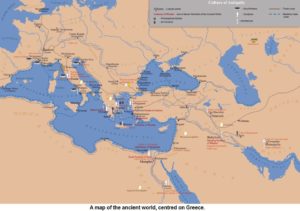
There was only one race that comprised that ancient world: White European. The Greco-Roman influences are not just ancient; there are a lot of cultural references in our modern world that derived from the formal Greco-Roman eco-system; sports too. There are many people in White European world that would like to keep it “White”. In fact, the purpose of this commentary is to report on the case of a Black (African-American) New Jersey teenage athlete who was participating in his school’s athletic program as a Greco-Roman wrestler.

Greco-Roman wrestling is a style of wrestling that is practiced worldwide. It was contested at the first modern Olympic Games in 1896 and has been included in every edition of the summer Olympics held since 1908.[2]This style of wrestling forbids holds below the waist; this is the major difference from freestyle wrestling, the other form of wrestling at the Olympics. This restriction results in an emphasis on throws because a wrestler cannot use trips to take an opponent to the ground, or avoid throws by hooking or grabbing the opponent’s leg.

According to United World Wrestling, Greco-Roman wrestling is one of the six main forms of amateur competitive wrestling practised internationally today. The other five forms are Freestyle wrestlingGrappling/Submission wrestlingBeach wrestlingPankration athlimaAlysh/Belt wrestling and Traditional/Folk wrestling.[3]

Source: Retrieved January 21, 2019 from: https://en.wikipedia.org/wiki/Greco-Roman_wrestling

How far has the New World evolved away from the mono-racial Greco-Roman Old World? Plenty. The New World (in this case the US and Canada) is a pluralistic democracy now, home to Europeans, Native Americans, Asians and Africans. But still not evolved enough; there are many segments in the North American population that would dissuade this pluralism.

See this reality portrayed in the news article here:

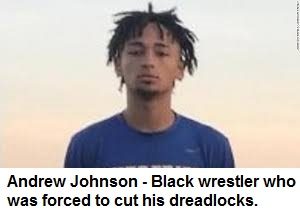
Title: N.J. wrestler forced to cut dreadlocks still targeted over hair, lawyer says
Sub-title: Video of Andrew Johnson’s haircut during a match last month led to a firestorm of criticism and accusations of abuse of power and racism.
By: Erik Ortiz
Video of a black high school wrestler in New Jersey who was forced to cut his dreadlocks at a match last month led to a firestorm of criticism against the referee and accusations of abuse of power and racism.

But following outcry from the community and the opening of a state civil rights investigation, an attorney for wrestler Andrew Johnson claims officials and referees are still giving him grief over his hair and have an “unrelenting fixation” with him.

In a letter sent Wednesday to the New Jersey Division on Civil Rights, the Johnson family’s lawyer, Dominic Speziali, wrote that Johnson initially took a break from competing with his team at Buena Regional High School in Atlantic County so he wouldn’t be a distraction after the Dec. 19 match grabbed national headlines.

During Johnson’s first match back last weekend, the 16-year-old varsity wrestler went through a routine weigh-in and check of his hair and skin. But then, Speziali said, a referee informed a Buena coach that Johnson would have to cover his hair before he could wrestle.

After Johnson’s mother questioned why, she was told “that there was some confusion and it was another wrestler that would have to wear a hair covering, not Andrew,” Speziali wrote.

“However, no wrestler for Buena or Buena’s first opponent wore any type of hair covering,” he continued. “Andrew wrestled in four matches without wearing a hair covering and without any referee raising an issue about his hair.”

Then, on Monday, an official with the state association that regulates athletics and conducts tournaments sent an email to state wrestling officials detailing which hairstyles require the hair to be covered. One image, according to NJ Advance Media, which reviewed the email, was of an unidentified black person with short, braided or dreadlocked hair and closely shaved sides.

But Elliott Hopkins, a director with the National Federation of State High School Associations, which writes the rules for competitions, told NJ Advance Media that the hair shown in the images would not require a covering despite what a state athletics association official had indicated. In general, if a wrestler’s hair “in its natural state” extends past the earlobe or touches the top of a shirt, a “legal hair cover” must be worn, the rules say.

Finally, Johnson’s team was set to compete again Wednesday at a home match. Speziali wrote in his letter that a day before, a referee had already warned Buena’s athletic director that he “planned to require Andrew to wear a hair covering if he intended on wrestling.”

As questions over hairstyle came up again, the match was abruptly canceled just hours earlier without reason.

Now, Speziali said he wants an explanation.

“Yet it appears, for reasons that the Division can hopefully soon unmask, that certain officials have a desire to unnecessarily escalate and prolong this ordeal due on an unrelenting fixation on the hair of a 16-year-old young man that asked for absolutely none of this,” he added.

On Wednesday, the New Jersey State Interscholastic Athletic Association announced it was also opening an investigation alongside the state to determine whether national rules in regard to hairstyle had been properly enforced.

The initial incident in December was condemned by New Jersey Gov. Phil Murphy, Olympic wrestler Jordan Burroughs and film director Ava DuVernay, among others.

The referee at that match, Alan Maloney, who is white, had told Johnson that his hair and headgear did not comply with rules, and that if he wanted to compete, he would have to immediately cut his dreadlocks — or forfeit.

Maloney, who was once accused of calling another referee a racial slur during a March 2016 social gathering, has been suspended pending the outcome of the state investigation. He has not commented publicly about the incident, but his supporters say he was merely enforcing the rules.

David Cappuccio, the superintendent of the Buena Regional School District, has said the district “will continue to support and stand by all of our students and student athletes.”

——–

Erik Ortiz is an NBC News staff writer focusing on racial injustice and social inequality.

Source: HuffingtonPost Online News – Posted January 10, 2018; retrieved January 21, 2018 from: https://www.nbcnews.com/news/nbcblk/n-j-wrestler-forced-cut-dreadlocks-still-targeted-over-hair-n957116

—————-

VIDEO # 1 – School Board meets over Wrestler forced to cut dreadlocks – https://www.today.com/video/school-board-meets-over-wrestler-forced-to-cut-dreadlocks-1410338883938

Published on December 27, 2018

—————-

VIDEO # 2 – Community speaks out after wrestler forced to cut hair during match – https://www.nbcnews.com/video/after-new-jersey-high-school-wrestler-forced-to-cut-hair-during-match-community-speaks-out-in-hurt-anger-1409805379516

Published on December 26, 2018
This is not just a story about sports.

It is not just a story about dreadlocks hairstyle.

It is not just a story about multi-culturalism.

This is a story about racial intolerance, and how some people of the White European persuasion are slow to accept “common ground” with people not of that racial alignment. The reality that we have to reckon with is that the European people have always been slow to accept non-Europeans as Brothers. Some of the people will cooperate all the time, and all the people some of the time, but never all the people all the time.

This is why the standards of right and wrong must be color-blind and enforced at all times. This is the quest for the new Caribbean, to embed this post-racial standard in all societal engines: economics, security and governance. We have always been pluralistic in population, though not pluralistic in power or economics.

The movement behind the Go Lean book has addressed this issue – pluralistic democracy – previously. Consider these prior submissions:

https://goleancaribbean.com/blog/?p=15664 Naomi Osaka’s recipe for success: Caribbean Meld for Sports
https://goleancaribbean.com/blog/?p=15121 Racist History of Loitering still Valid in US Today – ‘Time to Go’
https://goleancaribbean.com/blog/?p=14541 One Woman – Viola Desmond – Helped Canada become Pluralistic
https://goleancaribbean.com/blog/?p=13321 Making a ‘Pluralistic Democracy’ – Multilingual Realities
https://goleancaribbean.com/blog/?p=13299 Making a ‘Pluralistic Democracy’ – Respecting Hindu Festival of Diwali
https://goleancaribbean.com/blog/?p=8186 Respect for Minorities: ‘All For One’
https://goleancaribbean.com/blog/?p=7221 Street naming for Martin Luther King unveils the real America

Say it with me:

We hold these truths to be self-evident, that all men are created equal, that they are endowed by their Creator with certain unalienable rights, that among these are life, liberty and the pursuit of happiness …

This premise from the Age of Enlightenment is valid and true on both sides of the Atlantic Ocean, the Old World of Europe and the New World for Europe. Everybody know this (mentally), but not everyone practices this; there are even some that feel that the White race is superior – even some non-White people:

https://goleancaribbean.com/blog/?p=10933 White is Right – This fallacy is the consensus view for many people!
https://goleancaribbean.com/blog/?p=4840 Jamaican Poll: ‘Bring back the British!’

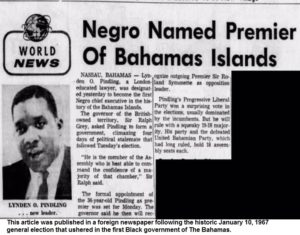
In the New World, most of the political leaders reflect White European ancestry, even in countries that are majority Black-and-Brown, i.e. Brazil and Mexico. Even when a non-White person becomes “Head of Government”, the international focus is only on the fact that a “minority” is leading the government, rather than the  governing policies or principles. See this conveyed in a sample archive from one Caribbean country:
The act of “Reckoning European” history needs to be done on both sides of the Atlantic, and by all the ethnicities. There is Good and Bad in every population, Black and White. So our societies simply need to do the heavy-lifting to practice being a pluralistic democracy.

There are people in society that do not want pluralism. We must work to foster a society that respects everyone as equal. This is not the America of today, but we can facilitate this more in the Caribbean. The book Go Lean … Caribbean provides a full roadmap of strategies, tactics, implementations and advocacies to elevate the societal engines of the Caribbean homeland.

Yes, we can … make the Caribbean, our homeland, a better place to live, work and play. 🙂

About the Book
The book Go Lean…Caribbean serves as a roadmap for the introduction and implementation of the technocratic Caribbean Union Trade Federation (CU), for the elevation of Caribbean society – for all member-states. This CU/Go Lean roadmap has these 3 prime directives:

  • Optimization of the economic engines in order to grow the regional economy to $800 Billion and create 2.2 million new jobs.
  • Establishment of a security apparatus to ensure public safety and protect the resultant economic engines.
  • Improve Caribbean governance to support these engines, including a separation-of-powers between the member-states and CU federal agencies.

The Go Lean book provides 370-pages of turn-by-turn instructions on “how” to adopt new community ethos, plus the strategies, tactics, implementations and advocacies to execute so as to reboot, reform and transform the societal engines of Caribbean society.

Download the free e-Book of Go Lean … Caribbean – now!

Who We Are
The movement behind the Go Lean book – a non-partisan, apolitical, religiously-neutral Community Development Foundation chartered for the purpose of empowering and re-booting economic engines – stresses that reforming and transforming the Caribbean societal engines must be a regional pursuit. This was an early motivation for the roadmap, as pronounced in the opening Declaration of Interdependence (Pages 12 – 13):

x. Whereas we are surrounded and allied to nations of larger proportions in land mass, populations, and treasuries, elements in their societies may have ill-intent in their pursuits, at the expense of the safety and security of our citizens. We must therefore appoint “new guards” to ensure our public safety and threats against our society, both domestic and foreign. …

xi. Whereas all men are entitled to the benefits of good governance in a free society, “new guards” must be enacted to dissuade the emergence of incompetence, corruption, nepotism and cronyism at the peril of the people’s best interest. The Federation must guarantee the executions of a social contract between government and the governed.

xix. Whereas our legacy in recent times is one of societal abandonment, it is imperative that incentives and encouragement be put in place to first dissuade the human flight, and then entice and welcome the return of our Diaspora back to our shores. This repatriation should be effected with the appropriate guards so as not to imperil the lives and securities of the repatriated citizens or the communities they inhabit. The right of repatriation is to be extended to any natural born citizens despite any previous naturalization to foreign sovereignties.

xx. Whereas the results of our decades of migration created a vibrant Diaspora in foreign lands, the Federation must organize interactions with this population into structured markets. Thus allowing foreign consumption of domestic products, services and media, which is a positive trade impact. These economic activities must not be exploited by others’ profiteering but rather harnessed by Federation resources for efficient repatriations.

xxii.  Whereas the heritage of our lands share the distinction of cultural tutelage from European and American imperialists that forged their tongues upon our consciousness, it is imperative to form a society that is neutral and tolerant of the mother tongue influences of our people to foster efficient and effective communications among our citizens.

xxxi.  Whereas sports have been a source of great pride for the Caribbean region, the economic returns from these ventures have not been evenly distributed as in other societies. The Federation must therefore facilitate the eco-systems and vertical industries of sports as a business, recreation, national pastime and even sports tourism – modeling the Olympics.

Sign the petition to lean-in for this roadmap for the Caribbean Union Trade Federation.
Share this post:
, , ,

European Reckoning – Settlers -vs- Immigrants

Go Lean Commentary

I have an older brother …

… he was born in 1962 while I was born in 1963. He is actually 18 months ahead of me. But for much of my youth, those 6 months every year after my birthday and before his, I felt as if I was catching up with him – being only 1 year behind. Then his birthday comes, and I was reminded that I can never really catch him. (This was the mind of a 4-year old boy).

There are a lot of things in life that are like this: We can get close but never quite catch up. One realizes that this is the same with immigrating to the United States. Despite being a Nation of Immigrants (NOI), new ones can never catch up with the Settlers. Consider the historicity of this distinction in the Appendix article below; composed by a “conservative” lawyer and published by the American Conservative Organization. (Conservatives are in contrast to liberals; while all conservatives are not racists, all racists are conservatives).

Yes, under the law (de jure), there is no difference between a First Generation American citizen and a Third Generation (or more) American citizen, but in reality (de facto) American society never really considers “you” as an Immigrant to be a full American.

Listen up you Black-and-Brown people of the Caribbean, yearning to emigrate to the US. You will never be a settler. Accepting this reality may dampen the “Welcome Sign” to those who aspire for an American life.

The movement behind the book Go Lean…Caribbean highlights the “Push and Pull” reasons why Caribbean people leave their homeland:

Push” refers to people who feel compelled to leave, to seek refuge in a foreign land. “Refuge” is an appropriate word; because of societal defects, many from the Caribbean must leave as refugees – think LGBTDisabilityDomestic-abuseMedically-challenged – for their life, liberty and pursuit of happiness. For these people, they are “on fire” and need to stop-drop-and-roll.

Pull”, on the other hand refers to the lure of a more prosperous life abroad; many times our people are emigrating for economics solely.

This is a Hot Topic today as Immigration Policy is all the rage. The current President of the US, Donald Trump, wants to curtail immigration into his country for the Black-and-Brown from Latin America and the Caribbean (LAC). In fact, as of this date, there is a Federal Government Shutdown as Mr. Trump would not approve an appropriations bill (budget) unless there is funding for his “Wall” along the 2,000-mile southern border with Mexico. He has even vocally advocated for a different immigration policy that invites people from North-West Europe while discouraging African and LAC people, derisively calling these ones as coming from “shit-hole” countries.

In addition, consider this AUDIO-Podcast here, which details the complexities of this issue: Settlers or Immigrants – The Historicity of Immigration in the United States. Listen here:

AUDIO-Podcast – How The 1965 Immigration Act Made America A Nation Of Immigrants – https://www.npr.org/2019/01/16/685819397/how-the-1965-immigration-act-made-america-a-nation-of-immigrants

Heard on Fresh Air

Published on January 16, 2019 – For many years, U.S. immigration favored immigrants from northern Europe. NPR correspondent Tom Gjelten explains how a 1965 law changed things — and led to the current debate about border security.

This foregoing AUDIO-Podcast conveys a consistent point: America was settled by Europeans (British, Dutch, French and German) founders; everyone else are immigrants. The immigrant legacy will NEVER catch up to the settler legacy. (The same as catching up to an older brother’s age). America is an European enclave. The rest of the world must reckon with this.

This commentary continues a 5-part series on European Reckoning. This entry is 3 of 5 in this series from the movement behind the book Go Lean … Caribbean in consideration of the past, present and future of European interactions. While this series is on reconciling the European experience, this submission is on the White European history of the US. Even though the Caribbean was settled and organized by European powers, the same as the US, the lack of organizational efficiency in the Caribbean is a glaring concern. We have 30 member-states in the Caribbean region and yet, there is no coordinated regional stewardship of the economic, security and governing concerns of our communities. The other commentaries in the series are cataloged as follows:

  1. European Reckoning: IMF Apologies
  2. European Reckoning: China seeks to de-Americanize the world’s economy
  3. European Reckoning: Settlers -vs- Immigrants
  4. European Reckoning: Christianity’s Indictment
  5. European Reckoning: Black “Greco-Roman” Wrestler victimized for his hair

In the first two submissions in this series, the European Great Powers were also identified as the Western Alliance. The world economic eco-system is based on this White/Christian European and North American (US & Canada) legacy. Despite the larger population in the world, the goal of so many Asian, African or Latin American people is to get to these nations – sometimes at the risk of death – and to engage the societal engines there. Despite any success in places like Europe and the US, the reality is the same: Immigrants are not settlers; only a second-class citizenship status will ever be accorded to them.

For the Caribbean, the Go Lean book distinguishes that America or Western Europe is not home for them. If we must seek refuge there, go … but remember to return home at some point; the sooner the better. These foreign shores will welcome your labor, but may never consider you as equal brothers-sisters. In their minds and hearts you are “Less Than“.

Considering the “Push and Pull” factors above, the purpose of this commentary is to lower the “Pull” reasons. While we must work on the “Push” factors ourselves, it does improve our prospects if our citizenry do not feel like “the grass is greener on the other side”. If they know that if they emigrate they can never catch up with the settlers, they may not welcome the  immigrant status. They may be more inclined to try to prosper where planted in the Caribbean homeland.

The reality of our Caribbean Diaspora in these foreign lands – the US in particular – have been elaborated upon in many previous Go Lean commentaries; see a sample list here:

https://goleancaribbean.com/blog/?p=16395 The Caribbean – A People or A Place?
It is limited how much Caribbean culture can be exported away from the homeland.
https://goleancaribbean.com/blog/?p=15121 ‘Time to Go’ – America’s Racist History of Loitering
The blatant racists were defeated militarily (Civil War) so their spirit of racial superiority simply rose again. They took out their angst on the Black community, exploiting every appearance of loitering in Southern communities. Even today, the Cop-on-Black shootings are indicative of this bad community ethos.
https://goleancaribbean.com/blog/?p=14746 Calls for Repatriation Strategy
The Caribbean region has suffered from acute societal abandonment to the point that there is the need to reverse the trend and urge people to return, to repatriate.
https://goleancaribbean.com/blog/?p=14413 Repairing the Breach: ‘Hurt People Hurt People’

When the Black-and-Brown populations of the Caribbean emigrate to the foreign lands, they live among the Black-and-Brown native populations. After long periods of oppression and repression, these communities have higher crime rates, drug usage and other abusive behaviors.

https://goleancaribbean.com/blog/?p=14087 Opioids and the FDA – ‘Fox guarding the Henhouse’
Due to lax FDA’s oversight, pharmaceutical companies seem to have free reign with dispensing addictive drugs on their populations. Even Caribbean Diaspora members have been victimized.
https://goleancaribbean.com/blog/?p=11420 ‘Black British’ and ‘Less Than’
A Black person speaking with a British accent gets more respect than a Black person speaking with a Caribbean slang or a ‘Hip-hop’ /‘Jive’ dialect. But even in Great Britain, accent or none, Blacks are still treated as “Less Than“.
https://goleancaribbean.com/blog/?p=13213 ‘Pulled’ – Despite American Guns
The US is the richest, most powerful democracy in the history of the world, but this country has some societal defects: guns, in addition to “Institutional Racism” and Crony-Capitalism. Yet still, Caribbean people flee there.
https://goleancaribbean.com/blog/?p=10654 Stay Home! Immigration Realities in the US
There are many people in the US that are not so welcoming to new immigrants. They protest in words and deeds to sour the experience for our Diaspora living there.
https://goleancaribbean.com/blog/?p=10494 A Lesson In History – Ending the Military Draft
The end of the draft in the US started the bad trend for Caribbean emigration to America – no need to sacrifice sons to the “Altar of War”.
https://goleancaribbean.com/blog/?p=1773 Miami’s Caribbean Marketplace Re-opens
The American immigrant experience is one of eventual celebration, but only after a “long train of abuses”: rejection, anger, protest, bargaining, toleration and eventual acceptance. While the experience in Miami today is one of celebration, and Miami does profit from this Caribbean Diaspora, their social disposition will never exceed the immigrant status – never a “settler”.

Caribbean people have fled their homeland. Our abandonment rate is atrocious, with one report estimating that 70 percent of our professional classes have emigrated and now live abroad. It is time now to conduct a reckoning with our European (and American) destinations – they are not home. Quite simply, the reference to “European” is a de facto reference to White-Christian. So we can never be settlers; we can never catch up in Americanism, since it is based not just on timeline, but also race.

So the solution for Caribbean people to elevate their lives and societal disposition is to double-down in reforming and transforming our Caribbean homeland. Now is the time for the Caribbean region to lean-in to this roadmap for the Caribbean Union Trade Federation, as described in the book Go Lean … Caribbean. The roadmap includes the empowerments, strategies and tactics to elevate the societal engines of the Caribbean homeland.

Yes, we can … make the Caribbean, our homeland, a better place to live, work and play. 🙂

About the Book
The book Go Lean…Caribbean serves as a roadmap for the introduction and implementation of the technocratic Caribbean Union Trade Federation (CU), for the elevation of Caribbean society – for all member-states. This CU/Go Lean roadmap has these 3 prime directives:

  • Optimization of the economic engines in order to grow the regional economy to $800 Billion and create 2.2 million new jobs.
  • Establishment of a security apparatus to ensure public safety and protect the resultant economic engines.
  • Improve Caribbean governance to support these engines, including a separation-of-powers between the member-states and CU federal agencies.

The Go Lean book provides 370-pages of turn-by-turn instructions on “how” to adopt new community ethos, plus the strategies, tactics, implementations and advocacies to execute so as to reboot, reform and transform the societal engines of Caribbean society.

Download the free e-Book of Go Lean … Caribbean – now!

Who We Are
The movement behind the Go Lean book – a non-partisan, apolitical, religiously-neutral Community Development Foundation chartered for the purpose of empowering and re-booting economic engines – stresses that reforming and transforming the Caribbean societal engines must be a regional pursuit. This was an early motivation for the roadmap, as pronounced in the opening Declaration of Interdependence (Pages 12 – 13):

xi. Whereas all men are entitled to the benefits of good governance in a free society, “new guards” must be enacted to dissuade the emergence of incompetence, corruption, nepotism and cronyism at the peril of the people’s best interest. The Federation must guarantee the executions of a social contract between government and the governed.

xix. Whereas our legacy in recent times is one of societal abandonment, it is imperative that incentives and encouragement be put in place to first dissuade the human flight, and then entice and welcome the return of our Diaspora back to our shores. This repatriation should be effected with the appropriate guards so as not to imperil the lives and securities of the repatriated citizens or the communities they inhabit. The right of repatriation is to be extended to any natural born citizens despite any previous naturalization to foreign sovereignties.

xx. Whereas the results of our decades of migration created a vibrant Diaspora in foreign lands, the Federation must organize interactions with this population into structured markets. Thus allowing foreign consumption of domestic products, services and media, which is a positive trade impact. These economic activities must not be exploited by others’ profiteering but rather harnessed by Federation resources for efficient repatriations.

Sign the petition to lean-in for this roadmap for the Caribbean Union Trade Federation.

——————-

Appendix – Title: The Nation of Immigrants Myth
By: Howard Sutherland

“We are a nation of immigrants.”

It is every American politician’s incantation, usually prefatory to some shibboleth lauding “strength in our diversity.” The creed of America as nation-of-immigrants (hereafter the “NOI creed”) is now unquestioned by Americans and foreigners alike.

The NOI creed’s assertion of national rootlessness justifies official multiculturalism and mass immigration. American schoolchildren are taught that the Statue of Liberty is a monument to immigration and that e pluribus unum on our currency celebrates the melting pot. Deutsche Bank recently published an analyst’s report, by a Polish immigrant in New York, lamenting a perceived rise in anti-immigration sentiments in the United States and instructing us that here “actually everybody is an immigrant,” so restricting immigration “would be devastating and virtually unthinkable.”

The creed is a half-truth but useful to social engineers transforming this country in ways alien to our history and heritage. Immigrants in the millions have come to the United States, most in waves beginning in the 1840s. Many immigrants and their descendants have contributed mightily to America. Others have contributed to the crime statistics. Some tried America, then went home. Nevertheless, the NOI creed is literally false: Despite thirty-plus years of mass immigration set off by the Immigration Reform Act of 1965, the vast majority of Americans are still American-born children of American-born parents. It is also historically false: Scores of millions of Americans are neither immigrants nor descendants of immigrants.

As for the Statue of Liberty, it is a gift from France to honor the centennial of American independence. Emma Lazarus’ “Give me your tired…”—a cri-de-coeur against Russian pogroms—is a later add-on. E pluribus unum explicitly commemorates the union of thirteen British colonies into one nation. The statue and the motto do not celebrate immigration; they salute the achievement of the settlers who founded those colonies and, in time, won independence from their Mother Country. It was the settlers’ nation, not empty wilderness, that later gave immigrants a new home.

To test the truth of the NOI creed, ask what a true nation of immigrants would be. Absent a founding group or majority, it would be no nation at all, but a random gathering of people of assorted races, religions, and nationalities, united only by their presence in the same land. With no native culture to provide national unity, the population would tend to fragment on racial and ethnic lines, ensuring division and strife as groups pursue their interests at each other’s expense. That may be our multicultural future. It is not the American past.

American history is the story of a varied nation with a distinct founding culture, one that remained dominant while assimilating—and being subtly changed by—later arrivals. That American culture is British, largely English, in origin, traditions, and religion. This article’s language is one small example.

By 1776, British colonists—mostly English, but with strong Scottish, Welsh, and Irish contingents, along with New York’s Dutch colonials and later German arrivals—had created an American branch of British civilization. At the time of the Declaration of Independence, they were long-settled: almost 170 years in Virginia, over 150 in Massachusetts. At great effort—and at the expense of the Indians they uprooted and the African slaves they imported—colonial Americans formed a nation in their own image. The diversity of their settlements reflected the variety of their British origins. David Hackett Fischer’s magisterial Albion’s Seed traces four great British colonial migrations that leave their mark still: Puritans from East Anglia to New England, Cavaliers from the West Country to Virginia, Quakers from the Midlands to the Delaware, and northern Britons, including the Scots-Irish, to the American backcountry.

Revolutionary Americans, the United States’ founders, were fairly homogeneous: 80 percent of British origin (60 percent English, 20 percent Scottish and Scots-Irish), most of the rest Dutch and German—the great majority American-born. Overwhelmingly Christian, 98 percent were Protestants. (Not included in these percentages are American Indians, who had no part in the political life of the colonies, and African slaves and freemen, who were largely excluded from political and social life.) These descendants of colonial settlers were American natives, if by America we mean the United States.

Samuel Huntington makes a useful distinction between the settlers of a country and immigrants to it. It helps answer whether the United States is truly a nation of immigrants or an organic nation with an ethnic and cultural core: a nation of the settlers’ posterity augmented by immigrants and their posterity. In Huntington’s words:

Immigrants are people who leave one country, one society, and move to another society. But there has to be a recipient society to which the immigrants move. In our case, the recipient society was created by the settlers who came here in the 17th and 18th centuries. … They came in groups to create new societies up and down the Atlantic seaboard. They weren’t immigrating to some existing society; indeed, they often did whatever they could to destroy whatever existed here in the way of Indian society. … It was [the settlers’ Anglo-Protestant] society and culture that…attracted subsequent generations of immigrants to this country.

One demographic study concluded that, had there been no immigration after 1790, the settlers’ posterity alone—including African slaves’ and freemen’s descendants—would have grown by 1990 to approximately half the size of the actual population, which implies roughly half of Americans still have roots in the founding stock whose existence the NOI creed denies.

The federal structure the Founding Fathers erected for the United States is firmly grounded in their British heritage and American experience. No surprise: they were overwhelmingly of British descent, mostly English. Those who signed the Declaration and the Constitution knew of Locke and Enlightenment philosophes but knew their native law best: the English Common Law. Common Law remains the bedrock of every state’s law, with the unique exception of Louisiana. The rights of Englishmen were the animating spirit of the Bill of Rights, meant to secure them more effectively in America than they often were in England.

Despite the evidence of American history, the NOI creed is entrenched, as is its corollary: the idea that the United States is a “propositional nation” with no ethnic basis, defined entirely by allegiance to the Declaration’s propositions. It is worth asking why. Acknowledging that America is a nation like others, with a native stock and traditions, does not deny the contributions of millions of immigrants and their descendants. Nor does it imply that Americans of immigrant descent are somehow lesser citizens. American success is the work of settler and immigrant alike. The propositional nation idea, that America’s British origins are immaterial to our national character, is also a half-truth. One has only to look at Mexico or Brazil to see how differently Spanish and Portuguese settler nations developed. An America that abandons its heritage and founding culture will be a different, and poorer, place. As Russell Kirk put it: “So dominant has British culture been in America, north of the Rio Grande, from the seventeenth century to the present (1993), that if somehow the British elements could be eliminated from all the cultural patterns of the United States—why Americans would be left with no coherent culture in public or in private life.”

Why, then, such pressure to pretend that the United States is not really a country but an inhabited idea? One reason may be the attractiveness of the propositional nation idea to immigrant groups that do not want to feel second-class next to the natives. A benign motive but unnecessary: the United States accords no preference to settlers’ descendants. Another is that the NOI, dedicated to a democratic proposition, provides a pretext for foreign interventionism: is it not the highest calling of such a state to democratize, through conquest and occupation if necessary, the less-fortunate rest of the world whence its immigrant-citizens came?

America’s integrity is strained by multiculturalism, affirmative action, and mass immigration. The NOI creed is most convenient for those in government, ethnic pressure groups, and academia who want to cut America loose from her history and traditions to recast her as a multicultural mélange they can rule by distributing spoils to contending groups. In short, the creed has become a weapon for those who would dissolve America as it has evolved and replace it with something else. Those who would conserve this country need to know enough history to refute it.
__________________________________________

Howard Sutherland is an attorney in New York.

Source: The American Conservative – Posted November 18, 2002; retrieved January 18, 2019 from: https://www.theamericanconservative.com/articles/the-nation-of-immigrants-myth/

—————

About Us

The American Conservative exists to promote a “Main Street” conservatism that opposes unchecked power in government and business; promotes the flourishing of families and communities through vibrant markets and free people; and embraces realism and restraint in foreign affairs based on America’s vital national interests.

The American Conservative is a nonprofit, nonpartisan, 501(c)(3) organization that presents a measured, pertinent, principled conservatism for our time. We believe in constitutional government, fiscal prudence, sound monetary policy, clearly delineated borders, protection of civil liberties, authentically free markets, and restraint in foreign policy mixed with diplomatic acuity. We adhere closely to our institutional maxim: ideas over ideology; principles over party.

Source: Retrieved January 19, 2019 from: https://www.theamericanconservative.com/about-us/

Share this post:
, , , ,
[Top]

On Martin Luther King’s 90th Birthday – America is still ‘Dreaming’ – ENCORE

Today – January 15, 2019 – would have been the 90th birthday for American Civil Rights hero Martin Luther King (1929 – 1968). Though an American drama, MLK was impactful for the entire world and every Civil Rights struggle. An assassin’s bullet ended his life of sacrifice on April 4, 1968.
“I have a dream …”

In contemplating the life and legacy of MLK, a great question comes to mind:

Has America achieved that vision of racial equality or is the country still dreaming?

This is an important question for the Caribbean, as more and more of our people “break down the door to get out” of their homeland to flee to America. Of our entire Diaspora, estimated between 10 and 25 million people, the United States of America is the Number 1 destination.

This question was asked and answered comprehensively in a previous blog-commentary on January 18, 2016. It is only appropriate to Encore that submission now, as follows:

============================================

Go Lean CommentaryStreet naming for Martin Luther King unveils the real America

We join the nation today to celebrate Dr. Martin Luther King Jr.’s birthday. This day is an opportunity to honor Dr. King and his legacy.CU Blog - Street naming for Martin Luther King unveils the real America - Photo 1

Born on January 15, 1929 in Atlanta, Georgia, Dr. King was a well-respected activist, scholar, pastor and humanitarian. Although his life was brief, Dr. King’s accomplishments in the civil rights movement and social justice are echoed throughout the world still today. Considered to be one of the greatest non-violent leaders in world history, Dr. King’s exceptional achievements used the power of legislation and social change.

As an advocate for freedom and non-violent resistance, Dr. King offered the power of words through public protests, grassroots organizing, and powerful sermons to achieve nearly insurmountable goals. He fought against racial segregation and poverty, advocated for international peace, and eliminated lasting barriers to voting for African-Americans.

In honor of his work, Dr. King received numerous awards during his lifetime including the Nobel Peace Prize in 1964. He continues to be remembered as one of the most lauded African-American leaders in history, often referenced by his 1963 speech, “I Have a Dream.” – Corporate Intranet Website for Credit Acceptance Corporation, Southfield (Detroit), Michigan; retrieved January 18, 2016.

Ditto”, for the promoters of the book Go Lean … Caribbean and accompanying blogs advocating for change in the Caribbean. Dr. Martin Luther King proved that “one man can make a difference” – a frequent theme of this Go Lean movement. He thusly serves as a role model for current and future Caribbean advocates, activists and humanitarians hoping to impact the Greater Good in their homeland.

Based on these accomplishments, one would think honoring Dr. King with a street-naming would be a simple task.

One would think!

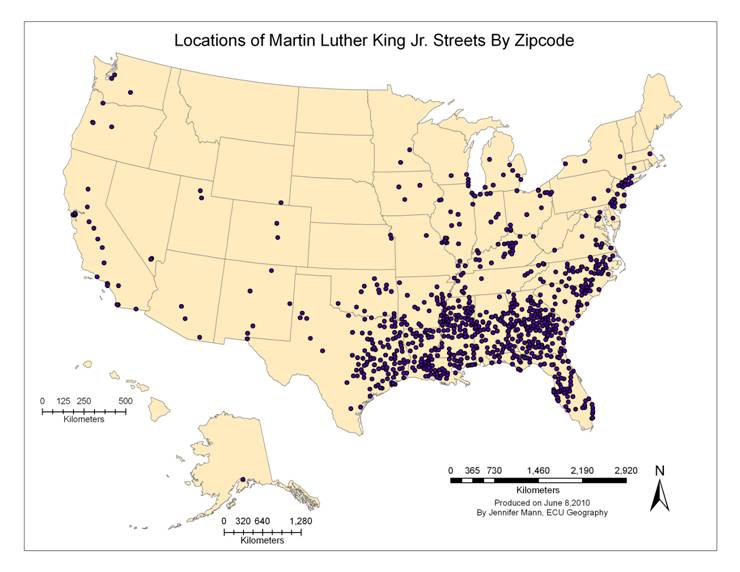
Let us see how far America has progressed regarding race relations, in the naming of streets after Martin Luther King, in one town after another!

Consider this encyclopedic source – a website:

Title: A street fit for a King?
Website: Politics of Naming Streets for Martin Luther King, Jr. – Retrieved January 18, 2016: http://mlkstreet.com/

Naming streets is one of the most widespread and contentious ways of commemorating Martin Luther King Jr.  Debates over whether to name a street for King and which specific street to identify with him have led to the boycott of businesses, protest marches, court actions, petition drives, the vandalizing of roads, and even activists chaining themselves to street signs.

Honoring King with a street name is often controversial when the road in question challenges long-standing racial and economic boundaries within communities.  While few scholars have studied the King street naming phenomena, the naming process is an important indicator of local political tensions as well as broader debates about race, memory, and place in America.

CU Blog - Street naming for Martin Luther King unveils the real America - Photo 2I have studied the politics of naming streets after King for the past several years, seeking to understand the obstacles that face street naming proponents and the various strategies that communities have pursued in finding a street fit for remembering King. In many instances (but not all), public opposition has led King’s name to be socially and geographically marginalized within cities, which has worked to stigmatize these streets and create public anxiety about renaming more prominent streets.  As a cultural geographer, my work stresses the importance that location–the street’s site, situation, and scale within the city’s larger social landscape–plays in shaping the meaning of King’s commemoration.    Believing that my research and perspectives can be of some help to the public, I have set up this web page as a resource for engaging and assisting the movement to remember the civil rights leader.

Below (Appendix A) are some research papers that I have written about naming streets for King as well as some questions that I frequently encounter in my discussions with journalists and street naming stakeholders (proponents and opponents).  If you have a question not listed here, email me and I will try to provide some feedback.

—-

Site established to spread information and commentary on the (re)naming of streets for slain civil rights leader Martin Luther King, Jr. with the hope of informing public debate.

If you use any information or statistics from this site, please cite the source (Appendix C) as: Derek Alderman, Professor of Geography, University of Tennessee, Knoxville TN.

To the uninitiated, one would think the year is 1956, rather than 2016; see the VIDEO (Appendix D) of the documentary “MLK Streets Project”. One would think that such a racially-charged society was only representative of the America of old; that now America has transformed, to the point that the President is of African-American descent. But it must be concluded that the more things change, the more they remain the same.

The issue in the foregoing encyclopedic source (and the below VIDEO) relates the true disposition of the America many Caribbean citizens emigrate to, or want to. There is a great lure for Black-and-Brown Caribbean immigrants to come to America. But these portrayals/depictions would be the atmosphere that the new arrivals would have to navigate. Perhaps the shining light of that Welcome Sign should be dulled a little.

This consideration is brought to focus by the book Go Lean … Caribbean. The book serves as a roadmap for the introduction and implementation of the technocratic Caribbean Union Trade Federation (CU), for the economic optimization in the region. One mission of the roadmap is to minimize the “push-and-pull” factors that contribute to the alarming high abandonment rate of Caribbean citizens – one report reflects a 70% brain drain rate.

The Go Lean book posits that when the economic engines are not sufficient that people will flee, abandon their homelands, despite the love of family, friends and culture and endure all obstacles to secure a better livelihood. This has been the reality for all of the Caribbean, even the American member-states (Puerto Rico & Virgin Islands). So is the “grass greener”, is life in the American urban communities better that the status quo in the Caribbean? Considering the actuality of Caribbean emigrants, and the fact that there is no migration in the opposite direction, the answer must be true.

Sad! If only, there would be a better option for the Caribbean?

The book and movement Go Lean…Caribbean present that option!

This CU/Go Lean roadmap provides the turn-by-turn directions with the following 3 prime directives:

  • Optimization of the economic engines in order to grow the regional economy to $800 Billion & create 2.2 million new jobs.
  • Establishment of a security apparatus to protect the resultant economic engines.
  • Improve Caribbean governance to support these engines.

The roadmap posits that the United States of America should not be viewed as the panacea for Caribbean ailments; that when the choices of a challenge is “fight or flight” that Caribbean society must now consider the “fight” options. (No violent conflict is being advocated, in emulation of Martin Luther King, but rather a strenuous effort, heavy-lifting, to compete and win economic battles).

Are there social issues in America that are more important than street naming?

CU Blog - Street naming for Martin Luther King unveils the real America - Photo 3Proponents for naming streets for King often encounter the argument that African Americans should concern themselves with civil rights issues “more important” than street naming.

No doubt, there are a large number of worthy social and economic issues in need of addressing. At the same time, it is worth thinking about how the naming of roads is not necessarily separate from the larger racial/social justice picture. Naming streets for King can signal something very important about the willingness (or unwillingness) of the larger community to invest in African Americans, thus providing (or failing to provide) a platform on which to bring about more “substantive” change and improvement. When that community refuses to do something as seemingly minor as naming street, what does that say about the degree to which the community is really ready or willing to take on the “tough” issues?

I have argued in my research that the street naming issue is about the struggle to be seen and heard within public space, an important civil right in and of itself and one arguably necessary for other rights to be realized. Plus, we can also think about how street naming can be coupled with other larger and “more important” social and economic campaigns on streets in America, such as community redevelopment.

The problem is NOT that street naming is inherently less important. Rather it is the limited ways in which we imagine street naming as a social and political tool.  The photo above, from a street naming struggle in Melbourne, Florida, captures the deep emotions that proponents and opponents attach to the street renaming issue.  Street naming proponents in Melbourne were especially vocal about how honoring King was part of a larger campaign against racism. – Professor Derek Alderman.

As related in the foregoing article/VIDEO, America is not so welcoming a society for the “Black and Brown” populations from the Caribbean – and yet they come, they are in the USA and their numbers cannot be ignored. Here is the need for the heavy-lifting, to effect change to dissuade further brain drain and in reverse to incentivize repatriation. While not ignoring the “push” reason that cause people to flee, the book stresses (early at Page 13) the need to be on-guard for this fight in the following pronouncements in the Declaration of Interdependence:

xix.    Whereas our legacy in recent times is one of societal abandonment, it is imperative that incentives and encouragement be put in place to first dissuade the human flight, and then entice and welcome the return of our Diaspora back to our shores. This repatriation should be effected with the appropriate guards so as not to imperil the lives and securities of the repatriated citizens or the communities they inhabit. The right of repatriation is to be extended to any natural born citizens despite any previous naturalization to foreign sovereignties.

xx.    Whereas the results of our decades of migration created a vibrant Diaspora in foreign lands, the Federation must organize interactions with this population into structured markets. Thus allowing foreign consumption of domestic products, services and media, which is a positive trade impact. These economic activities must not be exploited by others’ profiteering but rather harnessed by Federation resources for efficient repatriations.

xxi.    Whereas the preparation of our labor force can foster opportunities and dictate economic progress for current and future generations, the Federation must ensure that educational and job training opportunities are fully optimized for all residents of all member-states, with no partiality towards any gender or ethnic group. The Federation must recognize and facilitate excellence in many different fields of endeavor, including sciences, languages, arts, music and sports. This responsibility should be executed without incurring the risks of further human flight, as has been the past history.

xxvi.    Whereas the Caribbean region must have new jobs to empower the engines of the economy and create the income sources for prosperity, and encourage the next generation to forge their dreams right at home, the Federation must therefore foster the development of new industries, like that of ship-building, automobile manufacturing, prefabricated housing, frozen foods, pipelines, call centers, and the prison industrial complex. In addition, the Federation must invigorate the enterprises related to existing industries like tourism, fisheries and lotteries – impacting the region with more jobs.

This commentary previously related details of the Caribbean Diaspora experience, the “push-and-pull” factors in the US, and the American record on Civil Rights. Here is a sample from earlier Go Lean blogs:

https://goleancaribbean.com/blog/?p=7204 ‘The Covenant with Black America’ – Ten Years Later
https://goleancaribbean.com/blog/?p=6722 A Lesson in History – After the Civil War: Birthright Mandates
https://goleancaribbean.com/blog/?p=6434 ‘Good Hair’ and the Strong Black Woman
https://goleancaribbean.com/blog/?p=5527 American Defects: Racism – Is It Over?
https://goleancaribbean.com/blog/?p=5333 American Urban Segregation Legacies: Cause and Effect
https://goleancaribbean.com/blog/?p=2297 A Lesson in History – Booker T versus Du Bois
https://goleancaribbean.com/blog/?p=2222 Sports Role Model – Playing For Pride … And More
https://goleancaribbean.com/blog/?p=1896 American “Pull” Factors – Crisis in Black Homeownership
https://goleancaribbean.com/blog/?p=1596 Book Review: ‘Prosper Where You Are Planted’
https://goleancaribbean.com/blog/?p=1433 Caribbean loses more than 70 percent of tertiary educated to brain drain
https://goleancaribbean.com/blog/?p=546 Book Review: ‘The Divide’: American Injustice in the Age of the Wealth Gap
https://goleancaribbean.com/blog/?p=209 Muhammad Ali’s Greatest Fight

For the Caribbean Diaspora, fleeing from their homelands to reside in the US is akin to “jumping from the frying pan into the fire”. While we may not be able to change American society, we can – no, we must – impact our own society. How? What? When? Why? All of these questions are valid, because the answers are difficult. The Go Lean book details the heavy-lifting answers with a roadmap to implement new community ethos, strategies, tactics and operational advocacies to effectuate this goal:

Community Ethos – Deferred Gratification Page 21
Community Ethos – People Respond to Incentives Page 21
Community Ethos – Economic Systems Influences Choices & Incentives Page 21
Community Ethos – The Consequences of Choice Lie in the Future Page 21
Community Ethos – Job Multiplier Page 22
Community Ethos – Minority Equalization Page 24
Community Ethos – Lean Operations Page 24
Community Ethos – Ways to Foster Genius Page 27
Community Ethos – Ways to Impact the Greater Good Page 37
Strategy – Vision – Make the Caribbean the Best Address on Planet Page 45
Strategy – Mission – Repatriate Diaspora Page 46
Strategy – Mission – Dissuade Human Flight/“Brain Drain” Page 46
Tactical – Ways to Foster a Technocracy Page 64
Tactical – Separation of Powers – Federal Government versus Member-States Page 89
Implementation – Ways to Deliver Page 109
Implementation – Reasons to Repatriate Page 118
Planning – Lessons Learned from the Year 2008 Page 136
Planning – Lessons from the US Constitutional Laws and Processes Page 145
Advocacy – Ways to Grow the Economy Page 151
Advocacy – Ways to Create Jobs Page 152
Advocacy – Ways to Impact the Diaspora Page 217
Advocacy – Ways to Preserve Caribbean Heritage Page 218
Advocacy – Battles in the War on Poverty Page 222
Advocacy – Ways to Help the Middle Class Page 223
Advocacy – Ways to Impact US Territories Page 244
Appendix – Analysis of Caribbean Emigration Page 269
Appendix – Puerto Rican Population in the US Page 304

The scope of this roadmap is to focus on the changes we have to make in the Caribbean, not the changes for American society. The Caribbean can be the world’s best address. This success is conceivable, believable and achievable.  Now is the time for all of the Caribbean, the people and governing institutions, to lean-in to this Go Lean … Caribbean roadmap.

This is a big deal for the region. This roadmap is not just a plan, it’s a Dream. We want the same sense of possibility that was manifested by Dr. Martin Luther King. We too, have a dream that one day … [we would be] “free at last, free at last; thank God almighty we are free (and home) at last”. 🙂

Download the free e-Book of Go Lean … Caribbean – now!

———

Appendix A – Publications Related to MLK Place/Street Naming

Mitchell, Jerry and Derek H. Alderman. 2014. “A Street Named for a King: A Lesson in the Politics of Place-Naming.” Social Education 78(3): 137-142.

Alderman, Derek H. and Joshua F.J. Inwood. 2013. “Street Naming and the Politics of Belonging: Spatial Injustices in the Toponymic Commemoration of Martin Luther King, Jr.” Social & Cultural Geography 14(2): 211-233.

Dwyer, Owen J. and Derek H. Alderman. 2008. Civil Rights Memorials and the Geography of Memory.  Book from Center for American Places and University of Georgia Press.

Alderman, Derek H. 2008. “Martin Luther King, Jr. Streets in the South: A New Landscape of Memory.Southern Cultures 14(3): 88-105.

Alderman, Derek H., Steve Spina, and Preston Mitchell. 2008. “A Bumpy Road: the Challenges of Naming Streets for Martin Luther King, Jr.” Planning 74(1): 18-21. Contribution to American Planning Association magazine.

Alderman, Derek H. and Preston Mitchell. 2007. “A Sign of Changing Times: A Street Renaming Lesson from Chapel Hill, North Carolina.” Public Management  89(6): 37-38. Contribution to International City/County Management Association magazine as part of special feature entitled Street Naming: Not as Easy as You Might Think.

Mitchelson, Matthew, Derek H. Alderman, Jeff Popke. 2007. “Branded: The Economic Geographies of MLK Streets.” Social Science Quarterly 88(1): 120-145.

Alderman, Derek H. 2006. “Naming Streets after Martin Luther King, Jr.: No Easy Road.” In Landscape and Race in the United States, Routledge Press (edited by Richard Schein), pp. 213-236.

Alderman, Derek H. 2003. “Street names and the scaling of memory: The politics of commemorating Martin Luther King, Jr. within the African-American community.Area 35 (2): 163-173.

Alderman, Derek H. 2002. “Street Names as Memorial Arenas: The Reputational Politics of Commemorating Martin Luther King, Jr. in a Georgia County.”  Historical Geography 30: 99-120.

Alderman, Derek H. 2002. “School Names as Cultural Arenas: The Naming of U.S. Public Schools after Martin Luther King, Jr.Urban Geography 23(7): 601-626.

Alderman, Derek H. 2000.  “A Street fit for a King: Naming Places and Commemoration in the American South.”  Professional Geographer 52(4): 672-684.

Alderman, Derek H.  1996. “Creating a New Geography of Memory in the South: The (Re) Naming of Streets in Honor of Martin Luther King, Jr.”  Southeastern Geographer 36(1): 51-69.

———

Appendix B – MLK Street Naming Educational Pamphlet

Electronic copy (pdf) of community outreach pamphlet on MLK street naming (produced 2005). Note data is now old. Pamphlet distributed to various schools, activists groups, and civil rights; national meetings of the NAACP and SCLC; and MLK Historic Site in Atlanta, Georgia.

Outside cover of pamphlet

Inside content of pamphlet

———

Appendix C – About Professor Derek Alderman

Professor of Cultural and Historical Geography and Head of the Department of GeographyUniversity of Tennessee-Knoxville (formerly affiliated with East Carolina University)

CV/Resume

Homepage

Academia.edu Page 

Book on Civil Rights Memorials and Street Naming

Email at: dalderma@utk.edu

Follow on: @MLKStreet

———

Appendix D – Trailer MLK Street Projecthttps://youtu.be/dE73UMlqaIs


Uploaded on Sep 28, 2010 – Trailer for the documentary “The MLK Streets Project”. A film by One Common Unity and Straight No Chaser Productions

Share this post:
, , ,
[Top]

The Caribbean – A People or A Place?

Go Lean Commentary

Is your Caribbean homeland “a People or a Place?

Let’s deliberate…

If you love your homeland and you are a proud citizen, your allegiance should continue even though you no longer live there, right? This is the argument that your Caribbean homeland is a people, not just a place.

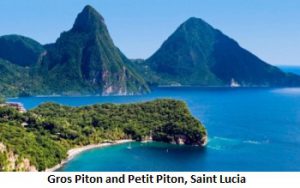
But place/terrain is of utmost importance to our culture; think: beaches, mountains (i.e. Pitons in St. Lucia), etc:

Song:
Oh, island in the sun
Willed to me by my father’s hand
All my days I will sing in praise
Of your forest, waters, your shining sand
– “Island in the Sun” – Harry Belafonte – AZLyrics.com

————

VIDEO – Song: “Island in the Sun” – https://youtu.be/Oi8fS0jkX84

Published on Dec 8, 2008 – 1957 hit song of Harry Belafonte.

Licensed to YouTube by: SME, WMG, Golden Dynamic (on behalf of ToCo Asia Ltd); Abramus Digital, CMRRA, SOLAR Music Rights Management, UBEM, BMG Rights Management, AdRev Publishing, Reservoir Media (Publishing), ASCAP, EMI Music Publishing, União Brasileira de Compositores, ARESA, and 11 Music Rights Societies

———— 

Even the name of our region comes from the 1,063,000 square miles of the Caribbean Sea.

Don’t get it twisted! Ours is the best address on the planet. The “place” is paramount to our identity.

This question “A People or A Place?” was asked of many Caribbean people. Here are their responses:

Caribbean Quotations
Is your Caribbean homeland “a People or a Place”?

  • Bahamas – Dr Donald McCartney, Educator: The Bahamas is a place, but its essence is found in the people who inhabit the place. In this regard, The Bahamas is both the place and the people. On the other hand, if the saying, a house is not a home is accepted, then one can conclude that The Bahamas, as place, cannot be construed to be a people. In the final analysis, The Bahamas is both the people and the place.
  • Bahamas – Anonymous – Diaspora – California Resident: In my personal opinion, the Bahamas is a place. Yes, i am a Bahamian, a proud one…It is a place where people with their culture reside, however the Bahamas is not a place that embrace and celebrate many of it’s people. Gays for one, and the poor is another… My allegiance will only go so far. My country does not accept my sexuality, for me that’s a big deal because my sexuality is a part of my life and I should not be discriminated against, in any form on a national level because of it. As a result, if I have an opportunity to seek citizenship elsewhere, of which I am pursuing I will embrace it. Although there are aspects of my background I want to continue throughout my life wherever I go, there are also aspects that I want to be a distant memory or forgotten.
  • Haiti – Louby Georges – Bahamian Resident of Haitian heritage: My personal take is the country should be a people. But for persons of other descendency, this country of the Bahamas has the characteristic that the culture is more of a place than it is the people. This country has it bad; they make it hard for anyone with an apparent foreign ancestry; they treat them like they do not belong, because they are not from this place. So the country has a warp sense that “home” is only for the people with long lineage of this place. So for me, I am forced to accept the realistic view that the Bahamas is a place.
  • Barbados – Florence Cheeks, Diaspora Member Pennsylvania Resident It’s both; it’s a place in that it identifies my spot on this earth, it’s also a people in that it expresses a history and a way of experiencing life. Barbados is my home. Even though I don’t live here, Barbados inhabits my psyche and I am always looking for opportunities to contribute to the continued growth of the nation. Ironically, I am writing this from my sister’s home in Barbados.
  • Jamaica – Pauline James, Diaspora Member Florida Resident: Jamaica is a people. Whenever you go in the world and Jamaicans are there, they are a force to be reckoned with. We do not hide the fact that we are Jamaican. “When we are good we are very good; when we are bad, we are very bad”.
  • Puerto Rico – Anonymous – Legacy – Florida Resident I would say PR is a place. I do have family there and they say Commonwealth and want all the benefits from the USA without wanting to become a State. I do not consider myself Puerto Rican since I do not live there. I consider myself North American. I can only claim that I have family from PR.

This is more than just an academic question. There is an actuality associated with the people of the Caribbean. The book Go Lean…Caribbean – available to download for free – addresses the reality of the Caribbean Diaspora (Page 26), identifying that when people continue to abandon their communities, the Diaspora pool gets bigger and bigger.

Ways to Impact the Future – Need People Too – Not All About Money, or is it?
The quality of life for the citizenry is very important, otherwise, people leave, and take their time, talents and treasuries elsewhere. Family, cultural pride is more important than economics, and yet when the economics are bad, people leave. This is evident by the large Caribbean Diaspora in foreign lands – where they re-assembled their culture and civic pride.

The Go Lean book laments this status quo but considers the Diaspora as stakeholders in the Caribbean experience, though they are not physically in the homeland. The hope of the Go Lean movement is to reduce the Diaspora and dissuade future societal abandonment. This is pronounced in the opening Declaration of Interdependence  (Pages 13) with these statements:

xix. Whereas our legacy in recent times is one of societal abandonment, it is imperative that incentives and encouragement be put in place to first dissuade the human flight, and then entice and welcome the return of our Diaspora back to our shores. This repatriation should be effected with the appropriate guards so as not to imperil the lives and securities of the repatriated citizens or the communities they inhabit. The right of repatriation is to be extended to any natural born citizens despite any previous naturalization to foreign sovereignties.

There are many opportunities to engage the Diaspora population in more and better ways. This quest was also an original motivation for the Go Lean book and for the proposed Caribbean Union Trade Federation (CU). The Declaration of Interdependence continues:

xx. Whereas the results of our decades of migration created a vibrant Diaspora in foreign lands, the Federation must organize interactions with this population into structured markets. Thus allowing foreign consumption of domestic products, services and media, which is a positive trade impact. These economic activities must not be exploited by others’ profiteering but rather harnessed by Federation resources for efficient repatriations.

The Go Lean book serves as a roadmap for the introduction and implementation of the technocratic CU Trade Federation, for the elevation of Caribbean society – for all member-states. This CU/Go Lean roadmap has these 3 prime directives:

  • Optimization of the economic engines in order to grow the regional economy to $800 Billion and create 2.2 million new jobs.
  • Establishment of a security apparatus to ensure public safety and protect the resultant economic engines.
  • Improve Caribbean governance to support these engines, including a separation-of-powers between the member-states and CU federal agencies.

The Go Lean book provides 370-pages of turn-by-turn instructions on “how” to adopt new community ethos, plus the strategies, tactics, implementations and advocacies to execute so as to reboot, reform and transform the societal engines of Caribbean society. Dynamics of the Diaspora have been elaborated in previous blog-commentaries; see Appendix A below.

To stop the brain drain and abandonment, we must fix the Caribbean homeland. This is the only way to improve our bad emigration trends, but despite being heavy-lifting, “Yes, we can“…make our homeland a better place to live, work and play. 🙂

Download the free e-book of Go Lean … Caribbean – now!

Sign the petition to lean-in for this roadmap for the Caribbean Union Trade Federation.

————–

Appendix A – Previous Go Lean commentaries on the Diaspora:

https://goleancaribbean.com/blog/?p=15126 ‘Time to Go’ – States must have ‘population increases’
This is part 11-of-11 of a long series urging the Caribbean Diaspora to consider repatriating. There are solid arguments that the “grass is not greener on the foreign side”. It will take less effort to reform and transform the Caribbean homeland than to make a better life abroad.
https://goleancaribbean.com/blog/?p=14911 Art Imitating Life – Was ‘Thanos’ Right?
Its a fallacy to think that if a society suffers from famine and poverty, then by eliminating half of the population that there will be plenty of resources left for the remaining people. The Caribbean situation has proven this again and again. With our Diaspora gone, our population resemble half, yet still we are failing. Truthfully, we need more, not less!
https://goleancaribbean.com/blog/?p=14746 Calls for Repatriation Strategy
There are some in Caribbean governance that “see the light”. They know that the region have suffered from acute societal abandonment and there is the need to reverse the trend and urge people to return, to repatriate.
https://goleancaribbean.com/blog/?p=13472 Future Focused – College, Caribbean Style
College
is good and college is bad! if a person emigrates while in college abroad, all the micro and macro benefits from advanced education transfer to the new country. We must therefore try to deliver college-education within the region.
·      https://goleancaribbean.com/blog/?p=13438

·https://goleancaribbean.com/blog/?p=13288

·https://goleancaribbean.com/blog/?p=13105

·https://goleancaribbean.com/blog/?p=13040

·https://goleancaribbean.com/blog/?p=12911

·https://goleancaribbean.com/blog/?p=10657

·   Grenada Diaspora – Not the Panacea

·   Dominica Diaspora – Not the Panacea

·   Haiti Diaspora – Not the Panacea

·   Jamaica Diaspora – Not the Panacea

·   Bahamas Diaspora – Not the Panacea

·   St. Lucia Diaspora – Not the Panacea

https://goleancaribbean.com/blog/?p=12369 Canada @ 150 – Happy Canada Day
There are many Caribbean people in Canada; it is the Number 3 destination for our Diaspora (behind the US and the UK). Why do they live in Canada and what can we learn from that experience?What can we gather for the Pros and Cons of Canadian life?There are “push and pull” reasons why Caribbean citizens have emigrated to places like Canada. We must lower these factors.
https://goleancaribbean.com/blog/?p=11989 The Dynamics of Diaspora Voting
Many in the Diaspora would still like to vote in their abandoned homeland, even though they may no longer be contributing to the society. That is “representation without taxation”. Once people divorce the homeland, it is hard to still try and dictate its governance.
·      https://goleancaribbean.com/blog/?p=11420

·      https://goleancaribbean.com/blog/?p=8099

·   ‘Black British’ and ‘Less Than’

·   Caribbean Image: ‘Less Than’?

https://goleancaribbean.com/blog/?p=11244 ‘To Live and Die in L.A.’ …
This has always been a subject of sharp debate and contrast. Is it better to live “fast & furious”, even though there might be a shorter mortality, or is it better to go slow and last longer, as far away from risky propositions as possible? Shockingly, this is also a Caribbean debate: is it better to emigrate to L.A., New York, Miami, Toronto, London, Paris or any other foreign destination for faster success, or prosper where planted in the Caribbean homeland?
If only we can prosper where planted in the Caribbean.
https://goleancaribbean.com/blog/?p=10820 Miami: Dominican’s ‘Home Away from Home’
One-fifth of the population of those with Dominican heritage live in the US. There appears to be no progress in any movement for repatriation to the island, rather there is progress in movement to the South, to Florida. Of the Top 7 US states that the Dominican Diaspora lives in, Florida is the only one in the Sunbelt. The tropical landscapes in Greater Miami is reminiscent of the DR for many people.
https://goleancaribbean.com/blog/?p=10654 Stay Home! Immigration Realities in “foreign lands”
This 3-part series relates that many foreign lands, like the US, have societal defects of “Institutional Racism” and “Crony-Capitalism“. These societal defects create a ‘Climate of Hate‘ that causes people to haze and blame-game the “Black-and-Brown” immigrants from the Caribbean.
https://goleancaribbean.com/blog/?p=9352 Courting Caribbean Votes – ‘Jamericans’

Caribbean people leaving their homeland is like the “genie leaving the bottle” – there is no returning. Now we see the ‘Jamaican-Americans’ doubling-down on this legacy, even trying to influence US federal elections for more liberal immigration policies to bring more “homies“. This is part 2 of 3 from this series:

·   Part 1 – Courting the Caribbean Votes – Puerto Ricans

·   Part 3 – Courting the Caribbean Votes – Cuban-Americans

https://goleancaribbean.com/blog/?p=2547 Miami’s Success versus Caribbean Failure
Greater Miami area has benefited from societal failures in the Caribbean region. Miami has increased in population, economy, culture and prestige while the Caribbean states have limped along.
https://goleancaribbean.com/blog/?p=1433 Caribbean loses more than 70 percent of tertiary educated to brain drain
According to the analysis by the Inter-American Development Bank, the people in the “Caribbean 6” countries of Bahamas, Barbados, Guyana, Jamaica, Suriname, and Trinidad & Tobago have wasted money on educating their populations, especially tertiary education. This is due to the fact that after the citizens leave, very little comes back fro the societal investments.


Share this post:
, ,
[Top]

Naomi Osaka’s recipe for success: Caribbean Meld

Go Lean Commentary

There is actually a recipe for success on the world stage, one that has just been applied by tennis superstar Naomi Osaka in winning the 2018 US Open over fan-favorite Serena Williams. The recipe:

Meld Caribbean distinctiveness with that of other cultures.

Wait what?!

This sounds so familiar, even fictionalized! Those who are fans of the science fiction franchise Star Trek will remember the mantra of the cybernetic life form “The Borg”. Their announcement when attacking potential victims were as follows:

”We are the Borg. Lower your shields and surrender your ships. We will add your biological and technological distinctiveness to our own. Your culture will adapt to service us. Resistance is futile.” – Source

This is “Art imitating Life”! We see this recipe at work with this new sports champion and beneficiary of this international melding: Naomi Osaka.

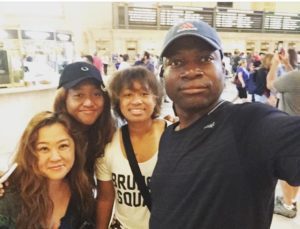
She is a professional tennis player who represents Japan internationally. She is the first Japanese citizen to winGrand Slam singles tournament, defeating Serena Williams in the final of the 2018 US Open.[6] Osaka has reached a career-high world ranking of No. 7.[4] She was born to a Haitian father, Leonard “San” François, and a Japanese mother, Tamaki Osaka .[7]

This story, beyond its relevance to sports, has a Caribbean relevance because of Osaka’s parentage. The meld – noun/verb: blend – had produced an end-product that has accomplished more than any one component has accomplished on its own. Osaka is the first Japanese citizen to win a Grand Slam event, and needless-to-say, the first Haitian.  It has not been easy:

In racially homogeneous Japan, Osaka is considered hāfu, which is Japanese for biracial.[10] Her Japanese grandfather was furious when he found out that her mother was romantically involved with a black man. As a result of the interracial relationship, her mother did not have contact with her family for over ten years.[8] In a 2016 interview, Osaka said: “When I go to Japan, people are confused. From my name, they don’t expect to see a black girl.”[11]Wikipedia

This biography provides a lesson-learned for the rest of the Caribbean, and the world for that matter:

  • To our Caribbean brothers and sisters, we entreat you to embrace pluralism; good things come from the embrace of our differences.
  • To the rest of world, we declare that the Caribbean identity is not “Less Than”. We bring a strength of character and ethos that adds value and elevates any community where we meld.

If we can successfully meld and conquer a challenge on the world stage, how much more so can we meld our distinctiveness here at home or in our regional neighborhood to accomplish greater feats. This is the message of the movement behind the book Go Lean…Caribbean, which asserts that great Caribbean progress is in store when we meld – integrate, collaborate and confederate. The book – available to download for free – serves as a roadmap for the introduction and implementation of the technocratic Caribbean Union Trade Federation (CU), for the elevation of Caribbean society – for all member-states.

This CU/Go Lean roadmap has these 3 prime directives:

  • Optimization of the economic engines in order to grow the regional economy to $800 Billion and create 2.2 million new jobs. There are many industrial expressions that we will have to make in order to reach these goals, including the facilitation of the Art & Science of Sports.
  • Establishment of a security apparatus to ensure public safety and protect the resultant economic engines.
  • Improve Caribbean governance to support these engines, including a separation-of-powers between the member-states and CU federal agencies.

The book stresses that reforming and transforming the Caribbean societal engines must be a regional pursuit. This was an early motivation for the roadmap, as pronounced in the opening Declaration of Interdependence (Pages 12 – 14):

xi. Whereas all men are entitled to the benefits of good governance in a free society, “new guards” must be enacted to dissuade the emergence of incompetence, corruption, nepotism and cronyism at the peril of the people’s best interest. The Federation must guarantee the executions of a social contract between government and the governed.

xvi. Whereas security of our homeland is inextricably linked to prosperity of the homeland, the economic and security interest of the region needs to be aligned under the same governance. Since economic crimes … can imperil the functioning of the wheels of commerce for all the citizenry, the accedence of this Federation must equip the security apparatus with the tools and techniques for predictive and proactive interdictions.

xxiv. Whereas a free market economy can be induced and spurred for continuous progress, the Federation must install the controls to better manage aspects of the economy: jobs, inflation, savings rate, investments and other economic principles. Thereby attracting direct foreign investment because of the stability and vibrancy of our economy.

xxxi. Whereas sports have been a source of great pride for the Caribbean region, the economic returns from these ventures have not been evenly distributed as in other societies. The Federation must therefore facilitate the eco-systems and vertical industries of sports as a business, recreation, national pastime and even sports tourism …

The Go Lean book provides 370-pages of turn-by-turn instructions on “how” to adopt new community ethos, plus the strategies, tactics, implementations and advocacies to execute so as to reboot, reform and transform the societal engines for all member-states in the Caribbean region.

The story of Naomi Osaka is about more than just her heritage. She is an excellent athlete of her own making. It takes blood, sweat and tears to excel at the highest level of her sport. For Osaka to beat Serena Williams – earning $3.8 million – that was no fluke; that was the full measure of her athletic prowess; that was heavy-lifting. Even now, all the attention is on Serena losing, rather than Osaka winning; see the VIDEO here and the related story in the Appendix below:

VIDEO – US Open Highlights – https://nyp.st/2CM60t5

Published September 8, 2018 – Serena has mother of all meltdowns in US Open final loss.

Heavy-lifting in sports is a familiar theme for this Go Lean movement; we recognize that there could be more economic rewards if the regional stewards do a better job of facilitating a viable sports eco-system – we have few expressions of professional sports and no intercollegiate system in the region. We have previously elaborated on how the Art & Science of sports can be used to help elevate our societal engines. Re-consider these previous blog-commentaries:

https://goleancaribbean.com/blog/?p=11287 Creating a legacy in pro-Surfing
https://goleancaribbean.com/blog/?p=8495 Basketball Great and Caribbean Role Model: Tim Duncan
https://goleancaribbean.com/blog/?p=7866 Caribbean Track & Field Athletes monetize their talents “elsewhere”
https://goleancaribbean.com/blog/?p=1446 Caribbean Players in the World Cup
https://goleancaribbean.com/blog/?p=1020 Advocates and Revolutionaries for Caribbean Sports

So how can we foster more people in our Caribbean region to be like Naomi Osaka, people who can help to elevate our society and the global image of Caribbean contributions to the world? The Go Lean book addressed this question; within its 370-pages of instructions for impacting society, in the specific details for fostering more world-class athletes. Consider the summaries, excerpts and headlines from this one advocacy in the book on Page 229 entitled:

10 Ways to Improve Sports

1 Lean-in for the Caribbean Single Market
This will allow for the unification of the region of 30 member-states into a single market of 42 million people and a GDP exceeding $800 Billion (per 2010). This market size and multi-lingual realities allows for broadcasting rights with SAP-style language options for English, Spanish, French and Dutch. This makes the region attractive for media contracts for broadcast rights, spectrum auctions and sports marketing. The Olympics have demonstrated that sports can be profitable “big business”, and a great source of jobs and economic activity. The CU will copy the Olympic model, and harness the potential in many other sporting endeavors, so as to make the region a better place to live, work and play.
2 CU Games
Promote the CU Games, every 2 years, as the ascension of the CARIFTA Games for Amateur and now Professional Athletes. The CU Games Administration will also partner with all National Olympic Committees. This administration applies to feeder games, trials and qualification events. The ultimate goal is to field a world-class competitive Olympic Team representing the entire Caribbean. While the CARIFTA Games are for track-and-field events only, the CU Games will resemble a mini-Olympics with multi-sports (boxing, football/soccer, tennis, volleyball, sailing, baseball/softball, etc.)
3 Fairgrounds as Sport Venues
The CU Fairgrounds (managed by the Interior Department) will have the infrastructure to fund, build and maintain sports arenas and “stadiums” (stadia) in local markets. The mantra is “build it and they will come”, so the CU building and managing world-class sport facilities will result in a more organized industry and the emergence of vertical markets.
4 Regulate Amateur, Professional & Academically-Aligned Leagues
5 Establish Sports Academies
6 “Super” Amateur Sport Association
7 Regulator/Registrar of Scholar-Athletes – Assuage Abandonment
8 Sports Tourism
9 Professional Agents and Player Management Oversight (a la Bar/Lawyer Associations).
10 Impanel the CU Anti-Doping Agency

Congratulation Naomi Osaka!

… and thank you … for making it easier for us to impress on the world that Caribbean-anything is not “Less Than”. That argument is now easier to make.

It is now also easier to convey the message that “Yes, we can” forge a “pluralistic” democracy and make our homeland a better place to live, work and play. 🙂

Download the free e-Book of Go Lean … Caribbean – now!

Sign the petition to lean-in for this roadmap for the Caribbean Union Trade Federation.

—————–

Appendix – It’s shameful what US Open did to Naomi Osaka
Opinion by: Maureen Callahan

Naomi Osaka, 20 years old, just became the first player from Japan to win a Grand Slam.

Yet rather than cheer Osaka, the crowd, the commentators and US Open officials all expressed shock and grief that Serena Williams lost.
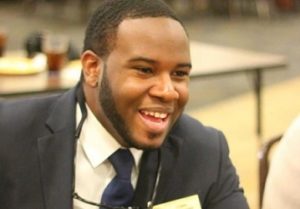
Osaka spent what should have been her victory lap in tears. It had been her childhood dream to make it to the US Open and possibly play against Williams, her idol, in the final.

It’s hard to recall a more unsportsmanlike event.

Here was a young girl who pulled off one of the greatest upsets ever, who fought for every point she earned, ashamed.

At the awards ceremony, Osaka covered her face with her black visor and cried. The crowd booed her. Katrina Adams, chairman and president of the USTA, opened the awards ceremony by denigrating the winner and lionizing Williams — whose ego, if anything, needs piercing.

“Perhaps it’s not the finish we were looking for today,” Adams said, “but Serena, you are a champion of all champions.” Addressing the crowd, Adams added, “This mama is a role model and respected by all.”

That’s not likely the case now, not after the world watched as Serena Williams had a series of epic meltdowns on the court, all sparked when the umpire warned her: No coaching from the side. Her coach was making visible hand signals.

“I don’t cheat to win,” Williams told him. “I’d rather lose.”

She couldn’t let it go, going back multiple times to berate the umpire. At one point she called him a thief.

“You stole a point from me!” she yelled.

After her loss, Williams’s coach admitted to ESPN that he had, in fact, been coaching from the stands, a code violation. The warning was fair.

Everything that followed is on Williams, who is no stranger to tantrums. Most famously, she was tossed from the US Open in 2009 after telling the line judge, “I swear to God I’ll take the f—king ball and shove it down your f—king throat.” John McEnroe was taken aback. Even Williams’s mother, Oracene Price, couldn’t defend her daughter’s outburst.

“She could have kept her cool,” Price said.

On Saturday, she also could have tried to be gracious in defeat. No matter how her fans try to spin this, Williams was anything but. Upon accepting her finalist award, she gave parsimonious praise to her competitor while telling the crowd she felt their pain.

“Let’s try to make this the best moment we can,” she said in part, “and we’ll get through it . . . let’s not boo anymore. We’re gonna get through this and let’s be positive, so congratulations, Naomi.”

Osaka accepted her trophy while choking back tears. She never smiled. When asked if her childhood dream of playing against Williams matched the reality, she politely sidestepped the question.

“I’m sorry,” Osaka said. “I know that everyone was cheering for her and I’m sorry it had to end like this.”

She turned to Williams. “I’m really grateful I was able to play with you,” Osaka said. “Thank you.” She bowed her head to Williams, and Williams just took it — no reciprocation, no emotion.

Osaka, a young player at the beginning of her career, showed grit, determination and maturity on that court and off.

She earned that trophy. Let’s recall that this wasn’t Osaka’s first victory over Williams — she beat Williams back in March, causing a hiccup in that great comeback narrative.

Osaka earned her moment as victor at the US Open, one that should have been pure joy. If anything was stolen during this match, it was that.

Source: New York Post Newspaper – Posted September 8, 2018; retrieved September 12, 2018 from: https://nypost.com/2018/09/08/its-shameful-what-us-open-did-to-naomi-osaka/

Share this post:
, , ,
[Top]

Sad: ‘Only the Good Die Young’ – ENCORE

What a sad story! The favorite son of a prominent family left his Caribbean home for college in the US. He excelled while matriculating there and stayed on after college. He was an up-and-coming professional in a dynamic metropolis – the Big City.

This sad story continues with the harsh reality of Urban America setting in. He was gunned down in his own apartment, by a Police Officer who was at the wrong address.

This sad story is the Caribbean version of the fable of the Country Mouse and the City Mouse – preferring security to opulence. Or that it is better to prosper where planted in the Caribbean than to venture to the Big City and live a Fast & Furious life. This was the assertion in a previous blog-commentary from the movement behind the book Go Lean…Caribbean; see below.

This sad story is actually a true story. The victim is St. Lucia born-and-raised Botham Jean. He was shot and killed this past Thursday at his residence in Dallas, Texas. See an aligning news story here:

Title: Government Extends Condolences to the Jean Family
Press Release:-  The Government of Saint Lucia extends deepest condolences to former Permanent Secretary Ms. Allison Jean following the sudden death of her son, Mr. Botham Shem Jean.

Acting Prime Minister Honourable Ezechiel Joseph, speaking on behalf of the Government of Saint Lucia, stated that the tragic circumstances leading to the death of the 26-year-old in Dallas, Texas, has come as a shock and stated that “our thoughts and prayers are with Ms. Jean, the Jean family and friends during this difficult time.”

Minister Joseph explained that The Embassy of Saint Lucia to the United States of America will do all within its power to assist the family in this time of great sorrow.

Ms. Jean is a long serving member of the Public Service and most recently served as Permanent Secretary in the Department of Education, Innovation and Gender Relations.
Source: Posted September 7, 2018; retrieved September 9, 2018 from: https://stluciatimes.com/2018/09/07/government-extends-condolences-to-the-jean-family/

Related news articles:

  1. https://abc13.com/police-dallas-officer-fatally-shoots-man-after-going-into-wrong-apartment/4171229/
  2. https://stluciatimes.com/2018/09/09/botham-jean-and-officer-amber-guyger-didnt-pose-together-for-a-photo/

Our deepest condolences to the Jean Family … who now have to endure this great loss.

See this previous blog-commentary that hypothesizes the theory that the Caribbean Diaspora would do better in their Caribbean homeland. They can actually work to reform and transform their ancestral communities, as opposed to contending with the societal defects in the US. Here-now is that previous submission from April 10, 2017:

——————-

Go Lean Commentary – To Live or Die in L.A.

CU Blog - 'To Live and Die in L.A.' - Photo 1b

“… live so fast and die so young…”
“… it’s like a jungle, sometimes it makes me wonder how I keep from going under…” – Rap Song: The Message – Grandmaster Flash & The Furious Five

Considering the edict of “life imitating art and art imitating life”, this has always been a subject of sharp debate and contrast. Is it better to live “fast & furious”, even though there might be a shorter mortality, or is it better to go slow and last longer, as far away from risky propositions as possible?

Shockingly, this is also a Caribbean debate: is it better to emigrate to L.A., New York, Miami, Toronto, London, Paris or any other foreign destination for faster success, or prosper where planted in the Caribbean homeland?

From an American perspective, this debate is best personified with a comparison of California versus the rest of the US. Los Angeles (L.A.) is the principal metropolis of the State of California and all of the West Coast for that matter.

But this debate is bigger than just a consideration of L.A. or California – see Appendix below – it spans the test of time. Even ancient philosopher Aesop presented this dilemma in the fable of “The Tortoise and The Hare”, in which the nimble jack-rabbit lost out to the slow-and-methodical tortoise in a race – this fable is universally accepted as a metaphor for the race of life.

Poets, songwriters, historians, and philosophers have all chimed in on this profound debate. Some claim that it is better to “live large”, make the “world your oyster”, even if that means having a short lifespan than to live a quiet ignoble life where the joys of life are rationed out for longevity instead.

Whenever a celebrity dies young, this debate rages anew. Consider some of the philosophical headlines:

The book Go Lean … Caribbean discusses this contrast; it draws reference to the American Dream versus the California Dream. Consider this excerpt from Page 223:

The Bottom Line on the American Dream
The American Dream is a national ethos of the United States, a set of ideals in which freedom includes the opportunity for prosperity and success, and an upward social mobility achieved through hard work. This idea of the American Dream is rooted in the US Declaration of Independence which proclaims that “all men are created equal… endowed by their Creator with certain inalienable rights” including “Life, Liberty and the pursuit of Happiness.” The meaning of the “American Dream” has changed over history, and includes components as home-ownership and upward mobility. A lot of people followed the American Dream to achieve a greater chance of becoming rich. For example, the discovery of gold in California in 1849 brought in 100,000 men looking for their fortune overnight—and a few did find it. Thus was born the California Dream of instant success. Historian H. W. Brands noted that in the years after the Gold Rush, the California Dream spread across the nation:

  • “The old American Dream … was the dream of the Puritans, of Benjamin Franklin’s “Poor Richard” … of men and women content to accumulate their modest fortunes a little at a time, year by year by year. The new dream was the dream of instant wealth, won in a twinkling by audacity and good luck. [This] golden dream . . . became a prominent part of the American psyche”. Today, some posit that the ease of achieving this Dream changes with technological advances, available infrastructure, regulations, state of the economy, and the evolving cultural values of the US demographics.

The Go Lean book serves as a roadmap to introduce the technocratic Caribbean Union Trade Federation (CU) to elevate the region’s societal engines – economics, homeland security and governance – of the 30 Caribbean member-states. In fact, the prime directives of the roadmap includes the following 3 statements:

  • Optimization of the economic engines in order to grow the regional economy to $800 Billion & create 2.2 million new jobs.
  • Establishment of a security apparatus to ensure public safety and protect the resultant economic engines.
  • Improve Caribbean governance for all people, even visiting tourists, to support these engines.

CU Blog - 'To Live and Die in L.A.' - Photo 2The quest is to minimize the paradox of future-planning/decision-making for Caribbean citizens. We want to make the Caribbean region better places to live, work and play; this way our citizens would not have to leave … to ‘live and die in L.A., or NYC, or Miami, or any other American, Canadian or European city. The truth of the matter is people die more readily in America due to gun-violence, and automobile accidents than they die in the Caribbean.

No doubt!

  • Visualizing gun deaths: Comparing the U.S. to rest of the world
    Whenever a mass shooting occurs, a debate about gun violence ensues. An often-cited counter to the point about the United States’ high rates of gun homicides is that people in other countries kill one another at the same rate using different types of weapons. It’s not true.
    Compared to other countries with similar levels of development or socioeconomic status, the United States has exceptional homicide rates, and it’s driven by gun violence.
    CU Blog - 'To Live and Die in L.A.' - Photo 3
    Another issue that gets less attention is how many people die from firearms accidentally. Again, the U.S. has much higher rates of unintentional death from firearms compared to other countries.
    CU Blog - 'To Live and Die in L.A.' - Photo 4
  • U.S. has highest car crash death rate, despite progress, CDC says
    More people die in car crashes each year in the United States than in other high-income countries, the Centers for Disease Control and Prevention said in a report …
    In 2013, more than 32,000 people died on U.S. roads, roughly 90 fatalities a day, according to the CDC.
    The U.S. has seen a 31% reduction in its motor vehicle death rate per capita over the past 13 years. But compared with 19 other wealthy countries, which have declined an average of 56% during the same period, the U.S. has the slowest decrease.

A previous Go Lean blog-commentary highlighted other statistics of premature deaths (and disability) in the US due to societal defects:

But the truth is a two-sided coin …

… on the flipside, life in America is more prosperous than in any Caribbean member-state.

The Go Lean book introduces the Caribbean Union Trade Federation (CU) as an inter-governmental agency for the 30 member-states, to provide a better – technocratic – stewardship for Caribbean life, to make it more prosperous … at home. The book identifies that we have a crisis – our failing societal engines – but asserts that this crisis would be a terrible thing to waste. We can use the urgency to introduce and implement effective community ethos, strategies, tactics, implementations and advocacies to reboot, reform and transform the engines of Caribbean society.

We do not want our people to ‘live and die in L.A. …’. We want them to prosper right here in the Caribbean. How sad when our families do move to the US (and other countries) and fall victim to fatalities. Consider these headlines:

There are good and bad people everywhere. Bad things happen to good people … everywhere. The Bible declares that “time and unforeseen occurrences befall us all” (Ecclesiastes 9:11). Yet still, post-mortem analyses (crash investigations and autopsies) are always necessary to ascertain the root-causes and the lessons-learned:

What could have been done to prevent the loss of life?

This commentary is not asserting that Caribbean people will not be hurt if they remain in the Caribbean. There are car accidents, murders, robberies, rapes and other assaults in the 30 member-states as well.

But follow the numbers!

We are not #1 for either gun violence or auto deaths, like our American counterparts. This is just a matter odds, probabilities and trends; the preponderance for fatalities cannot be ignored.

The Go Lean book contends that as a people, we must be prepared for accidents, emergencies and security risks (Page 196). It asserts that bad actors will emerge just as a result of economic successes in the region. This point is pronounced early in the book with the Declaration of Interdependence (Page 12) that claims:

x. Whereas we are surrounded and allied to nations of larger proportions in land mass, populations, and treasuries, elements in their societies may have ill-intent in their pursuits, at the expense of the safety and security of our citizens. We must therefore appoint “new guards” to ensure our public safety and threats against our society, both domestic and foreign. The Federation must employ the latest advances and best practices … to assuage continuous threats against public safety.

xvi. Whereas security of our homeland is inextricably linked to prosperity of the homeland, the economic and security interest of the region needs to be aligned under the same governance. Since economic crimes, including piracy and other forms of terrorism, can imperil the functioning of the wheels of commerce for all the citizenry, the accedence of this Federation must equip the security apparatus with the tools and techniques for predictive and proactive interdictions.

There is this expression of wisdom, commonly referred to as the Serenity Prayer; it is a prayer written by the American theologian Reinhold Niebuhr[1][2] (1892–1971). The best-known form is:

  • God, grant me the serenity to accept the things I cannot change,
  • Courage to change the things I can,
  • And wisdom to know the difference.

The Go Lean book describes the need for the Caribbean to appoint “new guards” to apply this wisdom – to change the things we can change. The purpose of this security pact is to ensure public safety as a comprehensive endeavor, encapsulating the needs of all Caribbean stakeholders: residents and visitors alike.

We cannot impact Los Angeles, the US or any other foreign city, more than messaging to our Diaspora there. But we can forge change in our Caribbean homeland.

Applying the edict of “life imitating art and art imitating life”, let’s ‘live and die’ here in the Caribbean. Let’s apply the wisdom from the fictional character Spock (the Vulcan Commander on the TV Show/films Star Trek):

May we live long and prosper.

Now is the time for all of the Caribbean – the people and leaders – to lean-in for the empowerments described here in the book Go Lean…Caribbean. It is conceivable, believable and achievable to prosper where planted here in the region; to make the Caribbean a better place to live, work and play. 🙂

Download the free e-book of Go Lean … Caribbean – now!

Sign the petition to lean-in for the roadmap for the Caribbean Union Trade Federation.

————-
Appendix Review – Book/Movie: To Live and Die in L.A.

Sub-title: A 1984 novel by former Secret Service agent Gerald Petievich is the basis for the 1985 movie of the same name.

CU Blog - 'To Live and Die in L.A.' - Photo 1

A harrowing tale of the dark underside of America’s West Coast metropolis. Two U.S. Treasury agents, partners and antagonists, are drawn into a matrix of violence and corruption, southern California-style, that becomes a journey through a sunlit hell – at the end of which they become experts on the thin line between what it takes to live – and die – in L.A. – Source: Retrieved 04-10-2017 from: https://www.amazon.com/Live-Die-L-A-Gerald-Petievich/dp/1466219645

The action thriller film was directed by William Friedkin and based on the novel by Petievich, and co-written by the both men. The film features William Petersen, Willem Dafoe and John Pankow among others. The film tells the story of the lengths to which two Secret Service agents go to arrest a counterfeiter. – Source: Retrieved 04-10-2017 from: https://en.wikipedia.org/wiki/To_Live_and_Die_in_L.A._(film)

See Trailer in the Appendix VIDEO below.

Storyline
Working largely in cases of counterfeiting, L.A. based Secret Service agent Richie Chance exhibits reckless behavior which according to his longtime and now former partner Jimmy Hart will probably land him in the morgue before he’s ready to retire. That need for the thrill manifests itself in his personal life by his love of base jumping. Professionally, it is demonstrated by the fact that he is sextorting a parolee named Ruth Lanier, who feeds him information in return for him not sending her back to prison for some trumped up parole violation. With his new partner John Vukovich, Chance is more determined than ever, based on recent circumstances, to nab known longtime counterfeiter Ric Masters, who is more than willing to use violence against and kill anyone who crosses him. Masters is well aware that the Secret Service is after him. Masters’ operation is somewhat outwardly in disarray, with Chance being able to nab his mule, Carl Cody, in the course of moving some of the fake money , and one of his associates, a lawyer named Max Waxman, probably stealing money from him. Partly with information from Ruth, Chance is trying to find and exploit the weaknesses in Masters’ operation. To accomplish his goal, Chance takes more and more unethical and illegal measures, which may be problematic for Vukovich, who comes from a family of police officers who are sworn to uphold the law. Written by Huggo

————-
VIDEO – To Live and Die in L.A. – http://www.imdb.com/videoplayer/vi1755645209

A fearless Secret Service agent will stop at nothing to bring down the counterfeiter who killed his partner.

Stars: William Petersen, Willem Dafoe, John Pankow

Share this post:
, ,
[Top]

‘Time to Go’ – States must have ‘population increases’

Go Lean Commentary

“We need more people” – News Article conclusion below.

Economics is a complex social science. But it all boils now to advanced variations of this simple law:

Supply and demand

Whether it’s a product, service or population, there must be a good measure of supply and demand for eco-systems to work. When either side of the equation becomes dysfunctional, the supply or the demand, the stewards of the eco-system (company leaders or community leaders) must effect change in either the supply-side or demand-side, or both.

This is the actuality of the US State of Vermont today. They need more people! They need more supply and more demand. ‘Things’ are bad now, but will get even worse going forward if there are no mitigations to the current trends.

  • Vermont’s aging population … the median age nationally has increased by almost five years to 37.8 while Vermont’s has increased by 10 years
  • rapidly shrinking tax base
  • 16,000 fewer workers [now] than [they had] in 2009
  • “Must think outside the box …”

So that State is willing to pay $10,000 to people to move into the State.

Wait, what?

See the full news article and related VIDEO here:

Title: Vermont will pay you $10,000 to move there and work from home
By: Abigail Hess

Considering leaving the big city behind in favor of somewhere scenic? Now could be the right time.

On Wednesday, Quartz reports, Vermont Governor Phil Scott signed a bill into law that will pay people $10,000 if they move to Vermont and work remotely for an employer out of state. The Remote Worker Grant Program will take effect on January 1, 2019, and will help cover moving, living and working expenses. Grants can be used for relocation, computer software and hardware, broadband internet and access to a co-working space.

Currently, Vermont has budgeted funds to support 100 grants for the first three years and 20 additional workers each year from then on. Grant recipients will receive $10,000 over two years that will be distributed on a first-come, first-served basis.

This policy is intended to address Vermont’s aging population. While the state may be rich in beautiful landscapes and maple syrup, it has a rapidly shrinking tax base.

“Vermont continues to age, and age faster than the nation as a whole,” writes Art Woolf for the Burlington Free Press. “Over the past quarter of a century, the median age nationally has increased by almost five years to 37.8 while Vermont’s has increased by 10 years.”

This trend has made Vermont one of the oldest states in the nation.

In addition to the remote worker grant program, the bill also launches the state’s Stay-to-Stay initiative. The program, aimed at convincing the state’s 13 million annual tourists to permanently relocate to Vermont, will be organized by the Vermont Department of Tourism and Marketing and will connect visitors with local employers, entrepreneurs, community leaders and potential neighbors.

“We have about 16,000 fewer workers than we did in 2009. That’s why expanding our workforce is one of the top priorities of my administration,” Scott said in a statement. “We must think outside the box to help more Vermonters enter the labor force and attract more working families and young professionals to Vermont. That’s exactly what the Department of Tourism and Marketing did with this program for out-of-state visitors who may be interested in living full-time in Vermont, and I’m excited to see it move forward.”

The initiative will take place over four weekends and will be piloted in three communities. One of those selected communities is Brattleboro, Vermont. “The one thing we need more of in Vermont is people,” says Adam Grinold, executive director of the Brattleboro Development Credit Corporation. “We need more visitors, we need more employees, we need more business owners. We need more people.”

Source: CNBC Consumer & Business News – posted May 31, 2018; retrieved June 27, 2018 from: https://www.cnbc.com/2018/05/31/vermont-will-pay-you-10000-to-move-there-and-work-from-home.html

————

VIDEO – Move to Vermont, make $10,000 –  https://youtu.be/Q5Pum5HfNkQ


Published on Jun 1, 2018 – Fox Business News’ Tracee Carrasco on a new bill signed in Vermont allowing the state to offer $10,000 to those who move there and work remotely for out-of-state employers.

  • Category: News and Politics
  • License: Standard YouTube License

Vermont has a problem and they are willing to throw money at it for resolution. This just might work! Another observed-and-confirmed principle in Economics is that:

People Respond to Incentives in Predictable Ways

Think about the viability for Vermont. There are candidate individuals (and families) out there. These ones do work from home and can reside/live anywhere. Why not do it – reside – in Vermont and work from Vermont? Especially if “someone” will pay for it. These candidates have to live somewhere:

… an entity will pay you $10,000 to do something – Reside –  that you would otherwise have to do for free, or pay for!

This challenge for Vermont parallels with challenges for the Caribbean homeland. This commentary continues the series on Time to Go back to the Caribbean homeland as residents. In this instance, we are considering the reality for life in communities that constantly lose their population. Things will go from bad to worse. Considering the assessment of our Caribbean member-states:

Oops, too late! We are already Failing!
(See Appendix F below for references to Failed-State Indices for Caribbean member-states)

We have lost, and will continue to lose, so many of our professional population – one report measured the abandonment rate at 70 percent. Something must be done! Solutions must be sought!

This is commentary Number 11 in this series from the movement behind the book Go Lean … Caribbean which started in September 2016 with the first 6 issues. Now, this commentary, examines the actuality of an American State trying to recruit “good” people away from their current abodes. This is something we must be conscious of. Our advocacy is simple:

  • Our Caribbean Diaspora need to plan to repatriate to the region – we need them back!
  • While our young people, in the homeland, many times set their sights on foreign (American) shores – we need to dissuade this.

So, is this a competition? Are we trying to recruit people to come to the Caribbean instead of going to Vermont?

Ready or not, we have a battle on our hands.

The Go Lean book – available to download for free – serves as a roadmap for the technocratic Caribbean Union Trade Federation (CU). The book specifically states (Page 49):

Who are our competitors and how do we stack up against them?

Considering the customers of the CU (citizens, governments, business community, Diaspora, visitors, bank depositors, investors, monitors, NGOs), who else will be competing for their attention? From the Trade Federation perspective, this “attention” includes their time, talents, and their treasuries. Even as basic as the citizens of the region, though we’d like to think that we have a captive audience, the truth of the matter is that other role-players are campaigning to the same marketplace and audience. Consider the aspect of media: Caribbean citizens can listen to radio, watch television and read newspapers/magazines from anywhere around the world. Also, consider the City of Miami – Florida; they brand themselves as the “gateway to the Americas”. So they would rather provide most of the services – for profit – that the CU intends to provide for its citizens.

The world is flat … and as such, all societies are now competitors for the resources of Caribbean society. …

(The US State of Kansas is also incentivizing people to move there. See here: https://youtu.be/d7Gj1wDfKFM)

Vermont is cold … in the winter months! The same as Canada, the UK and Europe; they are all cold-weather locations during the winter season, yet the Caribbean has lost large numbers to those countries – our Diaspora. Weather is therefore nullified as a competitive disadvantage; it’s all about economics … and security … and governance. See more here:

The Go Lean roadmap posits that the Caribbean region is in crisis now, and so many are quick to flee for refuge in foreign countries. But the “grass is not necessarily greener on the other side”. Those destinations need our “new blood” the same as we need our people to remain. But in those countries, racial disparities continue to present challenges for new immigrants, especially those of Black-and-Brown characteristics. It is therefore easier and better for all stakeholders, that our people remain in the homeland; plus for those that have departed, that they would repatriate to the homeland.

But words alone will not suffice, we must also compete.

No, we do not need to give $10,000 to each individual. But we do need to invest … in our people and our infrastructure! We must give the effort to reform and transform our societies. We do have defects; we do have inadequacies; we are flirting with a Failed-State status. So we have heavy-lifting to do! The Go Lean/CU roadmap is designed for that heavy-lifting … to optimize Caribbean society through economic, security and governing empowerments. The Go Lean roadmap has these 3 prime directives for optimizing our societal engines:

This is the conclusion (for now) on this series of commentaries on this theme Time to Go! There are 11 in total, starting in September 2016; those 6 submissions were as follows:

  1. Time to Go: Spot-on for Protest
  2. Time to Go: No Respect for our Hair
  3. Time to Go: Logic of Senior Immigration
  4. Time to Go: Marginalizing Our Vote
  5. Time to Go: American Vices; Don’t Follow
  6. Time to Go: Public Schools for Black-and-Brown

Now, we consider these 5 new entries along that same theme:

  1. Time to Go: Windrush – 70th Anniversary
  2. Time to Go: Mandatory Guns – Say it Ain’t So
  3. Time to Go: Racist History of Loitering
  4. Time to Go: Blacks Get Longer Sentences From ‘Republican’ Judges
  5. Time to Go: States must have Population Increases

All of these commentaries relate to Caribbean people and their disposition in foreign lands and why they need to Go Back Home. Communities need their populations to grow! Our Caribbean member-states need our populations to grow. So many macro-economic programs – pensions, unemployment insurance, etc. – need gradual increases to remain solvent!

This subject is a familiar theme for this Go Lean commentary. This movement has consistently related the economic realities from societal abandonment. Less is not more! Consider these prior submissions:

https://goleancaribbean.com/blog/?p=14954 Overseas Workers Programs are not the Panacea; they create crises
https://goleancaribbean.com/blog/?p=14746 Calls for Repatriation Strategy to reverse Abandonment
https://goleancaribbean.com/blog/?p=13391 After Hurricane Maria : Destruction and Defection for Puerto Rico
https://goleancaribbean.com/blog/?p=12996 After Irma, Failed-State Indicators: Destruction and Defection
https://goleancaribbean.com/blog/?p=9203 Where the Jobs Are – Employers in the United States – They want our cheap labor
https://goleancaribbean.com/blog/?p=8155 Referendum Outcome: Impact on the ‘Brain Drain’
https://goleancaribbean.com/blog/?p=5759 Bad Role Model: Pressed by Debt Crisis, Doctors Leave Greece in Droves
https://goleancaribbean.com/blog/?p=4278 Businesses Try to Stave-off Brain Drain as “Baby Boomers” Retire
https://goleancaribbean.com/blog/?p=4185 Caribbean Ghost Towns: It Could Happen…Again
https://goleancaribbean.com/blog/?p=2547 Miami’s Success versus Caribbean Failure
https://goleancaribbean.com/blog/?p=841 Having Less Babies is Bad for the Economy

To Caribbean people: do not move to Vermont. While they are good people there – they are a great role model to emulate in terms of Green Energy initiative – it is not home. The Black-and-Brown of the Caribbean may forever be a minority there as their demographics feature 90.5% Non-Hispanic White with only 1.2% Black, 2.3% Hispanic and 2.7% Asian. This is still America; a society not built for the Caribbean’s Black-and-Brown. It is a dangerous proposition to be Black in America.

But to better compete, we must still “take care of our business” at home. The Go Lean book identifies the reasons why people abandon their homeland as “push and pull”. While the “push” refers to the societal defects that people take refuge from, the “pull” is mostly due to messaging. Our people perceive that the US is better for them, and that landing in the US will assuage all societal short-comings.

This is far from the truth. And it’s cold … in the winter!

You see! Good messaging will help mitigate our societal abandonment rate.

The Go Lean book asserts that it is easier for the Black-and-Brown populations in the Caribbean to prosper where planted in the Caribbean, rather than in Vermont or any American State, or Canada or Europe.

We need our Caribbean people to remain in the homeland, and they need to Stay Home! This is the quest of the Go Lean/CU roadmap. The book presents 370 pages of instructions for how to reform and transform our Caribbean member-states. It stresses the key community ethos that needs to be adopted, plus the strategies, tactics, implementations and advocacies necessary to optimize the societal engines in a community.

No doubt, it is Time to Go! We urge all Caribbean stakeholder, in the homeland and in the Diaspora to lean-in to this Go Lean/CU roadmap. This is our quest to reform and transform our society and make it better to live, work and play. 🙂

Download the free e-Book of Go Lean … Caribbean – now!

Sign the petition to lean-in for this roadmap for the Caribbean Union Trade Federation.

————-

APPENDIX F – CU Indicators & Definitions

The Bottom Line on the Failed States Index  – Go Lean … Caribbean (Page 134)
The Failed States Index (Appendix F) is an annual ranking of 177 nations based on their levels of stability and capacity. The Index is compiled by the Fund for Peace Institute, an independent, nonpartisan, 501(c)(3) non-profit research and educational organization, based in Washington DC, that works to prevent violent conflict and promote sustainable security. As a leader in the conflict assessment and early warning field, the Fund for Peace focuses on the problems of weak and failing states. The strength of the Failed States Index is its ability to distill millions of pieces of information into a form that is relevant as well as easily digestible and informative, as an indicator code.

Each Indicator is rated on a 1 to 10 scale with 1 (low) being the most stable and 10 (high) being the most at-risk of collapse and violence. Think of it as trying to bring down a fever, with high being dangerous, low being acceptable. An obvious example, consider Somalia, the state’s complete inability to provide public services for its citizens would warrant a score of 10 for the Public Service indicator. Conversely, Sweden’s extensive provision of health, education & other public services would produce a 1 or 2 for that indicator. – Fund For Peace®

Source: Appendix F of Go Lean … Caribbean (Pages 271 – 272)

For the Caribbean Failed-State rankings, some states are too small for consideration (i.e. Antigua, St. Kitts, etc.) and the Overseas Territories (Aruba, St. Martin, etc.) are not considered due to the fact that their legacy countries are ranked. The rankings for 2012 are as following:

Failing Indicator:

REF – Massive Movement of Refugees or IDPs
Forced uprooting of large communities as a result of random or targeted violence and/or repression, causing food shortages, disease, lack of clean water, land competition, and turmoil that can spiral into larger humanitarian and security problems, both within and between countries. This indicator refers to refugees leaving or entering a country.
This indicator include pressures and measures related to: Displacement, Refugee Camps, IDP (Internally Displaced Persons) Camps, Disease Related to Displacement, Refugees per capita, and IDPs per capita.

HF – Chronic and Sustained Human Flight and Brain Drain
When there is little opportunity, people migrate, leaving a vacuum of human capital. Those with resources often leave before, or just as, conflict erupts. This “brain drain” of professionals, intellectuals and political dissidents fearing persecution or repression is an indicating of the failing status of a state. Other features are voluntary emigration of “the middle class”, particularly economically productive segments of the population, such as entrepreneurs, businesspeople, artisans and traders, due to economic deterioration. The end result is the growth of exile communities and Diasporas.
This indicator include pressures and measures related to: Migration per capita, Human Capital, and Emigration of Educated Population

Share this post:
, ,
[Top]

‘Time to Go’ – Blacks get longer sentences from ‘Republican’ Judges

Go Lean Commentary

“Tell me who your friends are and I will tell you who you are” – Old Adage

This Old Adage was drummed in me as a youth; I may have wanted to question its validity, but time has proven its accuracy. As humans, we are affected by the people we associate with; their values, principles, character, aspirations – or lack thereof – will have an effect on us. This statement even harmonizes with the Bible scripture at 1 Corinthians 15:33, which states:

“Bad companions ruin good character.” – Today’s English Version

This commentary highlights a disturbing trend in American jurisprudence; it turns out that among judges that associates with the conservative political parties or the liberal political parties, one group consistently sentences Black defendants to longer prison sentences. This is indicative of more than just the tolerance of criminality; this shows some hidden bias, that severely endangers the Black populations in America. These judges, despite claims of non-partisanship, are affected by their party.

Say it ain’t so!

The party with the harsher sentences is the Republican Party or GOP (for Grand Old Party).

Sometimes, we need to step back and look at the whole picture before we can notice trends and leanings. This is the common sense in the old expression: “One cannot see the forest for the trees”. This was the purpose of a study on judicial bias; it looked at a range of 500,000 cases to summarize its findings. Intelligence and wisdom can be gleaned from this data.

The numbers – and conclusions – must not be ignored. See the full story here:

Title: Black Defendants Get Longer Sentences From Republican-Appointed Judges, Study Finds
By: Adam Liptak

WASHINGTON — Judges appointed by Republican presidents gave longer sentences to black defendants and shorter ones to women than judges appointed by Democrats, according to a new study that analyzed data on more than half a million defendants.

“Republican-appointed judges sentence black defendants to three more months than similar nonblacks and female defendants to two fewer months than similar males compared with Democratic-appointed judges,” the study found, adding, “These differences cannot be explained by other judge characteristics and grow substantially larger when judges are granted more discretion.”

The study was conducted by two professors at Harvard Law School, Alma Cohen and Crystal S. Yang. They examined the sentencing practices of about 1,400 federal trial judges over more than 15 years, relying on information from the Federal Judicial Center, the United States Sentencing Commission and the Transactional Records Access Clearinghouse at Syracuse University.

Douglas A. Berman, an authority on sentencing law at Ohio State University, said the study contained “amazing new empirical research.”

“It’s an extraordinarily important contribution to our statistical understanding of sentencing decision making in federal courts over the last two decades,” he said.

It has long been known that there is an overall racial sentencing gap, with judges of all political affiliations meting out longer sentences to black offenders. The new study confirmed this, finding that black defendants are sentenced to 4.8 months more than similar offenders of other races.

It was also well known, and perhaps not terribly surprising, that Republican appointees are tougher on crime over all, imposing sentences an average of 2.4 months longer than Democratic appointees.

But the study’s findings on how judges’ partisan affiliations affected the racial and gender gaps were new and startling.

“The racial gap by political affiliation is three months, approximately 65 percent of the baseline racial sentence gap,” the authors wrote. “We also find that Republican-appointed judges give female defendants two months less in prison than similar male defendants compared to Democratic-appointed judges, 17 percent of the baseline gender sentence gap.”

The two kinds of gaps appear to have slightly different explanations. “We find evidence that gender disparities by political affiliation are largely driven by violent offenses and drug offenses,” the study said. “We also find that racial disparities by political affiliation are largely driven by drug offenses.”

The authors of the study sounded a note of caution. “The precise reasons why these disparities by political affiliation exist remain unknown and we caution that our results cannot speak to whether the sentences imposed by Republican- or Democratic-appointed judges are warranted or ‘right,’” the authors wrote. “Our results, however, do suggest that Republican- and Democratic-appointed judges treat defendants differently on the basis of their race and gender given that we observe robust disparities despite the random assignment of cases to judges within the same court.”

The study is studded with fascinating tidbits. Black judges treat male and female offenders more equally than white judges do. Black judges appointed by Republicans treat black offenders more leniently than do other Republican appointees.

More experienced judges are less apt to treat black and female defendants differently. Judges in states with higher levels of racism, as measured by popular support for laws against interracial marriage, are more likely to treat black defendants more harshly than white ones.

The Trump administration has been quite successful in stocking the federal bench with its appointees, and by some estimates the share of Republican appointees on the federal district courts could rise to 50 percent in 2020, from 34 percent in early 2017.

The study said these trends were likely to widen the sentencing gaps.

“Our estimates suggest that a 10 percentage point increase in the share of Republican-appointed judges in each court would increase the racial sentencing gap by approximately 5 percent and the gender sentencing gap by roughly 2 percent,” the authors wrote. “During an average four-year term, a Republican president has the potential to alter the partisan composition of the district courts by over 15 percentage points, potentially increasing the racial and gender sentencing gap by 7.5 and 3 percent, respectively.”

There are a couple of reasons to question that prediction. The Trump administration has been more energetic in appointing appeals court judges than trial judges. And in recent years many conservatives have started to shift positions on sentencing policy. The very scope of the study, which considered sentences imposed from 1999 to 2015, could mask trends in the later years.

Supreme Court justices like to say that partisan affiliation plays no role in judicial decision making.

“There’s no such thing as a Republican judge or a Democratic judge,” Justice Neil M. Gorsuch, President Trump’s Supreme Court appointee, said at his confirmation hearing last year. “We just have judges in this country.”

Political scientists have disagreed, finding that Republican appointees are markedly more likely to vote in a conservative direction than Democratic ones. Senate Republicans, by refusing to hold hearings for Judge Merrick B. Garland, President Barack Obama’s Supreme Court nominee, seemed to agree.

So has Mr. Trump. “We need more Republicans in 2018 and must ALWAYS hold the Supreme Court!” he tweeted in March.

But judicial ideology is one thing. The race and gender gaps identified by the new study present a different and difficult set of questions.

Professor Berman said the study should prompt both research and reflection. “It only begins a conversation,” he said, “about what sets of factors really influence judges at sentencing in modern times.”

Follow Adam Liptak on Twitter: @adamliptak.

Source: New York Times – published May 28, 2018; retrieved June 26, 2018 from: https://www.nytimes.com/2018/05/28/us/politics/black-defendants-women-prison-terms-study.html

This article alludes to a stereotype; one where women are sentenced lighter, but Blacks harsher. This stereotype transcends the entire history of the United States … right up to this day. The more things change, the more they remain the same!

This commentary continues the series on Time to Go, considering the reality for life of the Caribbean’s Black-and-Brown population in the US. This entry is Number 10 in this series from the movement behind the book Go Lean … Caribbean which started in September 2016 with the first 6 issues. Now, this revisit, this commentary, examines a disturbing trend with the sentences of federal court judges; these ones are appointed by the President of the United States. Needless to say, Presidents appoint judges that reflect and respect their values – it’s a natural expectation that they would have the same (virtual) association. So “we” can tell a lot about federal judges, just by knowing which President appointed them.

These were the 2016 submissions in this series:

  1. Time to Go: Spot-on for Protest
  2. Time to Go: No Respect for our Hair
  3. Time to Go: Logic of Senior Immigration
  4. Time to Go: Marginalizing Our Vote
  5. Time to Go: American Vices; Don’t Follow
  6. Time to Go: Public Schools for Black-and-Brown

Now, we consider these 5 new entries along that same theme:

  1. Time to Go: Windrush – 70th Anniversary
  2. Time to Go: Mandatory Guns – Say it Ain’t So
  3. Time to Go: Racist History of Loitering
  4. Time to Go: Blacks Get Longer Sentences From ‘Republican’ Judges
  5. Time to Go: States must have Population Increases

All of these commentaries relate to Caribbean people and their disposition in foreign lands – in this case in the US – and why they need to Go Back Home. Surely, it is obvious and evident that institutional racism is “Alive & Well” in the US. We can and must do better at home. The Go Lean book – available to download for free – serves as a roadmap for the technocratic Caribbean Union Trade Federation (CU) to assuage the societal defects in this region. It is “out of scope” for our movement to fix America; our efforts to reform and transform is limited to the Caribbean.

‘Republican’ Judges???

This is as opposed to Democratic Judges! Yes, this is a reference to specific political parties in the US. Yet, we are not making these assessments with any political leaning. Rather, this movement behind the Go Lean book and blogs, the SFE Foundation, is an apolitical organization with no favoritism for one political party over the other. In fact, the first 6 commentaries in this Time to Go series were published during the presidential administration of Barack Obama, a Democrat.

The subject of Optimized Criminal Justice is a failing for all previous presidential administrations – though Blacks lean more to the Democrats – see/listen to the AUDIO-Podcast in the Appendix below. This is a familiar theme for this Go Lean commentary. This movement have consistently related the lack of respect for those in America fitting the Black-and-Brown description; consider these prior submissions:

https://goleancaribbean.com/blog/?p=14627 Cop-on-Black Shootings – In America’s DNA
https://goleancaribbean.com/blog/?p=14413 Repairing the Breach: Hurt People Hurt People
https://goleancaribbean.com/blog/?p=8202 Lessons Learned from American Dysfunctional Minority Relations
https://goleancaribbean.com/blog/?p=8200 Climate of Hate for American Minorities
https://goleancaribbean.com/blog/?p=7221 Street naming for Martin Luther King unveils the real America
https://goleancaribbean.com/blog/?p=5527 American Defects: Racism – Is It Over?
https://goleancaribbean.com/blog/?p=4863 Video of Police Shooting: Worth a Million Words
https://goleancaribbean.com/blog/?p=4447 Probe of Ferguson, Missouri shows cops & court bias
https://goleancaribbean.com/blog/?p=546 Book Review – ‘The Divide’ – Injustice in the Age of the Wealth Gap
https://goleancaribbean.com/blog/?p=341 Hypocritical US slams Caribbean human rights practices

It is a dangerous proposition to be Black in America. This is why this movement consistently urges the Black-and-Brown of the Caribbean to Stay Home! In fact, The Bahamas urged its majority Black population (and the young men) to exercise extreme caution when traveling to the US and dealing with police authorities. There is no doubt that the America of Old – would have been no place for Caribbean people to seek refuge. But now we are asserting that the disposition is still the same:

  • Our Black-and-Brown Diaspora should plan to repatriate back to the Caribbean
  • While our young people, in the homeland, should plan to prosper where planted rather than setting their sights on American shores.

Despite the fact that this society – modern America – is still no place for Black-and-Brown Caribbean people to seek refuge, all 30 member-states of the region continue to suffer from an abominable brain drain rate – one report proclaims 70 percent – in which so many Caribbean citizens have emigrated to the US (and other places). We must resist this bad trend! How?!

  • Good messaging
  • Heavy-lifting to reform and transform the societal engines

The Go Lean book identifies the reasons why people abandon their homeland as “push and pull”. While the “push” refers to the societal defects that people take refuge from, the “pull” is mostly due to messaging. Our people perceive that the US is better for them, and that landing in the US is the panacea – cure-all – for all societal short-comings. Good messaging will mitigate that trend. Yet, still, we must do the hard work for fixing our society.

The Go Lean book asserts that it is easier for the Black-and-Brown populations in the Caribbean to prosper where planted in the Caribbean, rather than in the United States. Plus, we need these people’s help to reform and transform our society. We need some to lead, and some just to follow. We need some to produce, and some just to consume. We need growth! So abandonment is counter-productive.

This is the quest of the Go Lean/CU roadmap. The book presents 370 pages of instructions for how to reform and transform our Caribbean member-states. It stresses the key community ethos that needs to be adopted, plus the strategies, tactics, implementations and advocacies necessary to optimize the societal engines in a community. The CU/Go Lean roadmap has these 3 prime directives for optimizing our societal engines:

As related in this blog series, it is Time to Go! We have a better chance of optimizing our society in the Caribbean for our Black-and-Brown majority populations than the US will do for our people; we can actually be better than America. Just look, their distinguished judges are still adjudicating like its 1868, and not 2018. America has gone “2 steps forward and 1 step backwards”.

Now is the Time to Go and now is the time to lean-in to this Go Lean/CU roadmap. This quest is conceivable, believable and achievable. Yes, we can … reform and transform our society. We can make our homeland a better place to live, work and play. 🙂

Download the free e-Book of Go Lean … Caribbean – now

Sign the petition to lean-in for this roadmap for the Caribbean Union Trade Federation.

————–

AUDIO Podcast – Why Did Black Voters Flee The Republican Party In The 1960s? – https://www.npr.org/sections/codeswitch/2014/07/14/331298996/why-did-black-voters-flee-the-republican-party-in-the-1960s


Posted July 14, 2014 – If you’d walked into a gathering of older black folks 100 years ago, you’d have found that most of them would have been Republican.

Wait… what?

Yep. Republican. Party of Lincoln. Party of the Emancipation. Party that pushed not only black votes but black politicians during that post-bellum period known as Reconstruction.

Today, it’s almost the exact opposite. That migration of black voters away from the GOP reached its last phase 50 years ago this week.

Share this post:
, , ,
[Top]

‘Time to Go’ – Racist History of Loitering

Go Lean Commentary 

The cruel, inhumane institution of slavery finally ended in the United States … on which date?

This was not meant to be a multiple choice! But rather, these answers demonstrate the continuous flow of racist oppression that had befallen the African-American experience, despite these identifiable dates ending the practices and legacy of America’s Original Sin.

Why so lingering here, when the practice was so much more easily disbanded elsewhere; think British Empire in 1834.

This commentary asserts than the Southern United States – the former Confederate States/Slave States – never embraced the end of slavery because of this philosophical premise here:

“An empire toppled by its enemies can rise again, but one which crumbles from within, is dead forever. ” – Popular Quotation from the Character Baron Zemo in the Marvel film Captain America: Civil Wars

Say it ain’t so! The Confederate South was toppled by its enemies (the non-Slave Northern States), their same spirit of racial superiority rose again. If the South had evolved on their own to assuage their societal defects, things may have been different for the Black minority there among the White majority.

While racial disparity in the US is a national reality, attitudes in the Southern States continued to reflect blatant White Supremacy. Since this was tolerated in the South, there was spin-off in the rest of the country. Truthfully, oppression, suppression and repression of the African race became the community ethos in the whole country: blatant in the South; subtle in the North and in the West. Community ethos is defined as:

The fundamental character or spirit of a culture; the underlying sentiment that informs the beliefs, customs, or practices of a group or society; dominant assumptions of a people or period.

Considering the foregoing historic timeline, loitering laws against African-Americans, is the focus of this commentary. There have been a number of high profile cases of Blacks being discriminated against in general society. See related VIDEO‘s here:

VIDEO 1 – Racist History of Loitering – https://youtu.be/jQuT0gO2X0o


Splinter

Published on May 16, 2018 – What is the line between “loitering” and just “hanging out”? Turns out, the enforcement of loitering laws often has less to do with committing the act and more to do with the skin color of the person who does:

Subscribe to Splinter: https://goo.gl/BwuJiy

————-

VIDEO 2 – Somebody Called The Cops On Me In My Own Building – https://youtu.be/LzQsYc_k4Tk


HuffPost
Published on May 18, 2018 – Someone called the police on him for suspected armed robbery. The reality? He was moving into his New York City apartment.

Subscribe to HuffPost today: http://goo.gl/xW6HG

Get More HuffPost Read: https://www.huffingtonpost.com/

Racial disparity in the US is still a reality. As related in the above VIDEO‘s, “you’re already criminalized when you have Black skin”.

This commentary asserts that it is easier for the Black-and-Brown populations in the Caribbean to prosper where planted in the Caribbean, rather than emigrating to foreign countries, like the United States. So the urging is as follows:

All Black-and-Brown Caribbean people exiling in the US, we entreat you: It’s Time to Go!

All Black-and-Brown people in the Caribbean wanting to emigrate to the US, we entreat you to Stay Home!

This point aligns with the book Go Lean…Caribbean, which states that while the blatant racist attitudes and actions may now be considered politically incorrect, the foundations of institutional racism in the US are entrenched. The book supports the notion that the Caribbean can be an even better place to live for the Caribbean’s Black-and-Brown, once we make the homeland a better place to live, work and play. Our quest is to optimize the economic, security and economic engines in the Caribbean region so as to dissuade our people from leaving and encourage the Diaspora to repatriate.

This commentary – Number 9 – continues a series from the movement behind the book Go Lean … Caribbean, in consideration of the rationale to return back to the Caribbean homeland. The other commentaries – published in September 2016 and beyond – detailed in this series are as follows:

  1. Time to Go: Spot-on for Protest
  2. Time to Go: No Respect for our Hair
  3. Time to Go: Logic of Senior Immigration
  4. Time to Go: Marginalizing Our Vote
  5. Time to Go: American Vices; Don’t Follow
  6. Time to Go: Public Schools for Black-and-Brown

Now, we consider 5 new entries along that same theme; they are identified as follows:

  1. Time to Go: Windrush – 70th Anniversary
  2. Time to Go: Mandatory Guns – Say it Ain’t So
  3. Time to Go: Racist History of Loitering
  4. Time to Go: Blacks Get Longer Sentences From ‘Republican’ Judges
  5. Time to Go: States must have Population Increases

All of these commentaries in this series relate to the disposition of the Caribbean Diaspora in foreign countries; in the case of this one, the United States of America. The Go Lean book and movement serves as a roadmap for the introduction of the technocratic Caribbean Union Trade Federation (CU). The CU is set to optimize Caribbean society through economic, security and governing optimizations. Therefore the Go Lean roadmap has 3 prime directives:

  • Optimization of the economic engines in order to grow the regional economy to $800 Billion & create 2.2 million new jobs.
  • Establishment of a security apparatus to ensure public safety and protect the economic engines.
  • Improve Caribbean governance to support these engines.

The Go Lean roadmap posits that the Caribbean region is in crisis now, and so many are quick to flee for refuge in foreign countries. But the “grass is not necessarily greener on the other side”. Here in the Caribbean, Black-and-Brown people are not arrested for being Black-and-Brown – they are the majority population. But they are a minority in the US; and that society is definitely not optimized for Caribbean people.

The Go Lean book asserts that every community has bad actors. The Caribbean has bad actors; and the US has bad actors. But because of the obvious need for reform and to transform the region, it may be easier to effect change at home, than in the foreign country of the US. Besides, many (non-Black) people in the US, don’t even think they need to change anything. They think there is no problem – they are perfectly allowed to call the police because a Black person is in their presence … loitering, or drinking coffee, or studying, or moving.

African Americans may have no where else to go, but the Black-and-Brown of the Caribbean can go back to the Caribbean. This is the urging now: It’s Time to Go!

This was a motivation of the Go Lean roadmap, we have to prepare for the Diaspora’s return; we have to fix our defects and mitigate for our “bad actors”; bad actors always emerge. This point is pronounced early in the book with the Declaration of Interdependence (Page 12) that claims:

x. Whereas we are surrounded and allied to nations of larger proportions in land mass, populations, and treasuries, elements in their societies may have ill-intent in their pursuits, at the expense of the safety and security of our citizens. We must therefore appoint “new guards” to ensure our public safety and threats against our society, both domestic and foreign. The Federation must employ the latest advances and best practices of criminology and penology to assuage continuous threats against public safety. The Federation must allow for facilitations of detention for [domestic and foreign] convicted felons of federal crimes, and should over-build prisons to house trustees from other jurisdictions.

xvi. Whereas security of our homeland is inextricably linked to prosperity of the homeland, the economic and security interest of the region needs to be aligned under the same governance. Since economic crimes, including piracy and other forms of terrorism, can imperil the functioning of the wheels of commerce for all the citizenry, the accedence of this Federation must equip the security apparatus with the tools and techniques for predictive and proactive interdictions.

The Caribbean appointing “new guards”, or a security pact to ensure public safety and justice assurance is part of the comprehensive effort of reforming the societal engines in our region. Security lapses are among the reasons why people left – they were pushed to seek refuge. So better delivering on the Social Contract – citizens surrender some of their freedoms and submit to the authority of the State in exchange for protection of remaining natural and legal rights – sends the message that we are readying the homeland for our far-flung Diaspora to finally come home.

The Go Lean book provides 370-pages of turn-by-turn instructions on “how” to adopt new community ethos, plus the strategies, tactics, implementations and advocacies to execute so as to reform and transform the societal engines of Caribbean society. Accepting that we have been inadequate in delivering security needs to our citizens in the past, we must now do better, not just in security promises, but in security deliveries. In addition, the Go Lean movement have presented many previous blog-commentaries on regional security and the assurance of public safety; consider this sample here:

https://goleancaribbean.com/blog/?p=14482 International Women’s Day – Protecting Rural Women
https://goleancaribbean.com/blog/?p=14424 Repairing the Breach: Crime – Need, Greed, Justice & Honor
https://goleancaribbean.com/blog/?p=13664 Managing High Profile Sexual Harassment Accusations
https://goleancaribbean.com/blog/?p=13476 Future Focused – Policing the Police
https://goleancaribbean.com/blog/?p=13126 The Requirement for Better Security – ‘Must Love Dogs’
https://goleancaribbean.com/blog/?p=12400 Accede the Caribbean Regional Arrest Treaty
https://goleancaribbean.com/blog/?p=10959 See Something, Say Something … Do Something
https://goleancaribbean.com/blog/?p=10566 Funding the Caribbean Security Pact
https://goleancaribbean.com/blog/?p=10222 Waging a Successful War on ‘Terrorism’
https://goleancaribbean.com/blog/?p=9072 Securing the Homeland – A Series featuring “On the Ground, Air and Sea”
https://goleancaribbean.com/blog/?p=5002 Managing a ‘Clear and Present Danger’
https://goleancaribbean.com/blog/?p=4360 Dreading the American: ‘Caribbean Basin Security Initiative’
https://goleancaribbean.com/blog/?p=4308 911 – Improving Emergency Response

The Go Lean roadmap was composed with the community ethos of the Greater Good – the greatest good for the greatest number of people – Black, Brown, White, Yellow or Red. We advocate for a pluralistic democracy

… and justice for all.

While this is an American concept … in words only, we have the opportunity to manifest this in the Caribbean. America does many things right, but they feature a lot of societal defects still, so we have the opportunity to do a pluralistic democracy Better than America.

This is the quest of the Go Lean/CU roadmap. We urge all Caribbean stakeholders to lean-in to this roadmap to elevate the Caribbean; to make our homeland a better place to live, work and play. 🙂

Download the book Go Lean … Caribbean – now!

Sign the petition to lean-in for this roadmap for the Caribbean Union Trade Federation.

————

APPENDIX – The Bottom Line on Peonage – Book: Go Lean … Caribbean (Page 211)

Peonage, involuntary servitude, existed historically during the colonial period, especially in Latin America and areas of Spanish rule, as well as in the Southern United States … after slavery was abolished. These States passed “Black Codes” to control the freed “Black” population. Peonage was essentially debt slavery, where a person was held against their will to work off an alleged debt to someone who had purchased them. This was the language, buying and selling, that was used for inmates purchased from county jails and state prison systems. They often declared as vagrant those who were [simply] unemployed.
Under such laws, local officials arbitrarily arrested tens of thousands, and charged them with fines and court costs. (By the beginning of the 20th century, 40% of blacks in the South were imprisoned in peonage). Merchants, farmers or business owners could pay their debts, and the prisoners had to work off the debt. Prisoners were “sold” or leased as forced laborers to operators of coal mines, lumber camps, brickyards, railroads, quarries and farm plantations, with the fees for their labor going to the States. Overseers often used severe deprivation, beatings and other abuses as “discipline”.

By 1942, the jail/prison peonage system came to an end with public exposure of the abuses and atrocities, advances of the American Communist movement, congressional hearings and public outcry.

Share this post:
, , ,
[Top]

‘Time to Go’ – Mandatory Guns: “Say it Ain’t So”

Go Lean Commentary

There is that Biblical directive:

Live by the Sword; Die by the Sword – Matthew 26:52

While the reference is here to the weapon of a sword, the truism of this statement applies to any weapon.

So for our American counterparts, this version is apropos: “Live by the Gun; Die by the Gun”.

Consider the recent school shootings and mass shootings, is there any doubt to the fulfillment of these words: America and guns go hand in hand.

Here’s proof! See this news article here; here this town in Georgia tried to mandate that every home own a gun. This is real! See the article & VIDEO here:

Title: Georgia City Loses Battle Over Mandatory Gun Ownership Law, Affirms Right Not To Bear Arms
By: Nick Wing

The small city of Nelson, [Georgia], agreed Thursday to revise an ordinance passed earlier this year that required every household to own a gun.

The measure, passed in April, drew nationwide attention for attempting to make gun and ammunition ownership mandatory. The Brady Center to Prevent Gun Violence, a national gun control group, sued Nelson over the law, claiming it was unconstitutional to make those demands of its citizens.

Nelson settled the suit this week when the city council unanimously approved a motion to amend the ordinance, the Atlanta Journal-Constitution reported. Here are the additions to the text:

    WHEREAS, many members of the City Council believe that possessing a firearm in the home is an effective means to defend residents and the community; and
    WHEREAS, the City Council also recognizes that there are other means available to defend families and homes, and the Constitution protects the rights of Americans to choose not to possess a firearm or bring one into the home….

The Brady Center applauded the city council’s decision in a statement:

“The Constitution protects not just the right to bear arms, but the right not to bear arms,” said Jonathan Lowy, Director of the Legal Action Project at the Brady Center. “The Brady Center brought this lawsuit to establish that the Constitution protects the rights of gun owners and non-gun owners alike, and all of us must be respectful of each other’s rights. We are pleased that as a result of our lawsuit the City of Nelson has recognized that the Second Amendment protects the rights of the hundreds of millions of Americans who believe that the best way to keep themselves and their families safe is by keeping guns out of their homes.”

While the idea of mandatory gun ownership is clearly a divisive one, many people on both sides of the issue pointed out that Nelson’s push was never likely to have been enforced. As the Associated Press reported in April, the ordinance had exemptions for convicted felons, those who suffer from certain physical or mental disabilities, and anyone who generally objects to gun ownership.

Lamar Kellett, a Brady Center member and one of Nelson’s 1,317 residents, was concerned that the law could lead to his being punished for opting not to own a firearm, so he sued. On Thursday, he called Nelson’s changes an “acceptable solution.”

Other mandatory gun ownership laws, meanwhile, remain in place largely without controversy. Kennesaw, Ga. has had such a measure on the books since 1982, though the law is rarely enforced, and some residents reportedly opt to ignore it.

Source: Huffington Post; Posted August 23, 2013; retrieved June 22, 2018: https://www.huffingtonpost.com/2013/08/23/nelson-georgia-guns_n_3805292.html

—————

VIDEO – Guns for everybody: Georgia town makes firearm ownership mandatory – https://youtu.be/e6DELdrYZuI

RT America
Published on Apr 2, 2013 – The city council in the town of Nelson, Georgia voted unanimously in favor of every resident possessing a gun at their homes. Now it’s compulsory for all of them, and Nelson isn’t the only US town to vote for a measure like this. RT’s Liz Wahl explains.

Find RT America in your area: http://rt.com/where-to-watch/
Or watch us online: http://rt.com/on-air/rt-america-air/

Say it Ain’t So! Is this the life that Caribbean people want? It should not be!

Yet, we are losing so many of our people to this eventuality. Our people leave due to “Push and Pull” reasons. “Push” refers to the societal defects in the Caribbean that moves people to want to get way; and “pull” factors refer to the impressions and perceptions that America is better. Surely a mandatory gun culture is not better!

The purpose of this commentary is to relate two strong points of contention:

  • We need to dissuade the high emigration rates of Caribbean citizens to the American homeland.
  • We need to encourage the Caribbean Diaspora to repatriate back to their ancestral homeland.

According to the foregoing article, American life is to “live by the sword/gun and die by the sword/gun”. Despite all the efforts to change this disposition, America’s consistency with guns continue, even now to the point that some communities want to mandate that every household have a gun. This is not the case in the Caribbean.

Yippee! If only, we can “prosper where planted” there.  Yes, we can!

This commentary and the movement behind the book Go Lean … Caribbean asserts that “yes, we can” reform and transform our Caribbean homeland so as to be better places to live, work and play. Where as, Caribbean communities can be elevated and improved, we already comply with common sense gun control, there is no hope for this in America – guns are in their DNA. (Good luck to American Youth demanding change).

For all Caribbean people in America who want a more sound life – gun wise – we entreat you: It is Time to Go.

This commentary is a continuation of a series from the Go Lean movement, in consideration of reasons why the Diaspora should repatriate back to the Caribbean homeland. There was an original 6-part series in 2016, with these submissions:

  1. Time to Go: Spot-on for Protest
  2. Time to Go: No Respect for our Hair
  3. Time to Go: Logic of Senior Immigration
  4. Time to Go: Marginalizing Our Vote
  5. Time to Go: American Vices; Don’t Follow
  6. Time to Go: Public Schools for Black-and-Brown

Now, we consider 5 new entries along that same theme; they are identified as follows:

  1. Time to Go: Windrush – 70th Anniversary
  2. Time to Go: Mandatory Guns – Say it Ain’t So
  3. Time to Go: Racist History of Loitering
  4. Time to Go: Blacks Get Longer Sentences From ‘Republican’ Judges
  5. Time to Go: States must have Population Increases

All of these commentaries relate to the disposition of the Caribbean Diaspora in foreign countries. The Go Lean book and movement serves as a roadmap for the introduction of the technocratic Caribbean Union Trade Federation (CU). The CU is set to optimize Caribbean society through economic, security and governing optimizations. Therefore the Go Lean roadmap has 3 prime directives:

  • Optimization of the economic engines in order to grow the regional economy to $800 Billion & create 2.2 million new jobs.
  • Establishment of a security apparatus to ensure public safety – including regional gun violence abatements – and protect the economic engines.
  • Improve Caribbean governance to support these engines, including a separation-of-powers between the member-states and CU federal agencies.

The “push and pull” factors do imperil Caribbean life. We push our citizens out. Then the resultant effect is a brain drain and even more endangerment to our society: less skilled workers, less entrepreneurs, less law-abiding citizens, less capable public servants – we lose our best and leave the communities with the rest. This create a crisis. The Go Lean roadmap posits that the entire Caribbean is now in crisis; so many of our citizens have fled for refuge in the US and other foreign countries, but the refuge is a mirage. The “grass is not necessarily greener on the other side”. Life in the US, is definitely not optimized – can you imagine living in a community where everyone is mandated to have a gun.

Yes, there is a challenge to reform and transform communities in the US; and there is a challenge to reform and transform communities in the Caribbean. It is easier though, to fix the Caribbean than to fix the American eco-system. So it is Time to Go, so our Caribbean people can do the work to prosper where planted in their Caribbean communities.

Why not simply try to fix America?

The history and DNA of America may be beyond our reach.

Just consider:

Who benefits from a mandatory gun ownership policy?

The Retail Stores and gun manufacturers!

This is Crony-Capitalism at work – exploiting the public good for private profit.

Also underlying the Second Amendment (of the US Constitution) is the white supremacy defect. This ignominious Second Amendment; is a product of the previous Slave Culture, as one original motivation in 1791 was to suppress insurrection, allegedly including slave revolts [60][61][62]. A previous blog-commentary entitled 10 Things We Want from the US and 10 Things We Don’t Want from the US detailed this rationale:

The “right to bear arms” has a personal application beyond the country’s entitlement to maintain a militia. This “right” has been interpreted in a manner in which any normal “man” can get possession of guns and other armament. This proliferation of guns in society results in the highest rate of gun violence in the world, even an unconscionable rate of school shootings.

The Go Lean roadmap purports that this status has also caused discord – a gross abuse and availability of illegal guns – in bordering communities of Mexico, and Caribbean states of the Bahamas, and the DR. This propels our gun-related crime.

The US still has some societal defects – racism and Crony-Capitalism for example – that are so imbrued that they are tied to the country’s DNA. This is why the Go Lean movement posits that it is easier to effect change at home in the Caribbean, than in the foreign country of the US.

In a previous blog-commentary, a thesis was presented that for Caribbean citizens, it is NOT better to live “fast & furious” in the US, but rather it is better to prosper where planted in the Caribbean homeland. Life in the US may experience a shorter mortality due to the riskier reality, like this dangerous gun culture – this is not just theory, a Caribbean Diaspora’s daughter was killed in the Parkland School Shooting in February 2018. And yet, our Caribbean communities are losing people more and more to the US with our atrocious societal abandonment rates.

While we are declaring that it is “Time to Go“, we are also preparing for the return – fixing our economic, security and governing defects. Our goal is to be an American protégé and not a parasite; maybe to even be Better Than America.

If this is going to be, it starts with me – being residential in the Caribbean homeland. Time to Go!

The vision of the CU is a confederation of the 30 member-states of the Caribbean to do the heavy-lifting of championing better economic and security policies. There is the structure of a separation-of-powers between CU agencies and the individual member-states. So the CU will be able to do more independently than the regional status quo, while also helping to elevate the status quo security deliveries in the 30 member-states.

The Go Lean roadmap provides turn-by-turn directions on how to reform the Caribbean security apparatus to better secure Caribbean society as a whole. This roadmap concedes that the Caribbean is in crisis, but that this “crisis would be a terrible thing to waste”. As a planning tool, the roadmap commences with a Declaration of Interdependence, pronouncing the approach of regional integration (Page 12 – 13) as a viable solution to elevate the region’s societal engines:

x. Whereas we are surrounded and allied to nations of larger proportions in land mass, populations, and treasuries, elements in their societies may have ill-intent in their pursuits, at the expense of the safety and security of our citizens. We must therefore appoint “new guards” to ensure our public safety and threats against our society, both domestic and foreign. The Federation must employ the latest advances and best practices … to assuage continuous threats against public safety.

xi. Whereas all men are entitled to the benefits of good governance in a free society, “new guards” must be enacted to dissuade the emergence of incompetence, corruption, nepotism and cronyism at the peril of the people’s best interest. The Federation must guarantee the executions of a social contract between government and the governed.

xvi. Whereas security of our homeland is inextricably linked to prosperity of the homeland, the economic and security interest of the region needs to be aligned under the same governance. Since economic crimes, including piracy and other forms of terrorism, can imperil the functioning of the wheels of commerce for all the citizenry, the accedence of this Federation must equip the security apparatus with the tools and techniques for predictive and proactive interdictions.

xix. Whereas our legacy in recent times is one of societal abandonment, it is imperative that incentives and encouragement be put in place to first dissuade the human flight, and then entice and welcome the return of our Diaspora back to our shores

Change has now come. The driver of this change is globalization. Caribbean people have been emigrating in their search for a better life. Nelson, Georgia – from the foregoing article – should not be that destination. Nor should any community that refuses to implement common sense gun control. The bottom-line should not include sacrificing our children. The bottom-line motive should be the Greater Good – “the greatest good for the greatest number of people which is the measure of right and wrong – not profit, prejudice nor emigration.

The Go Lean book provides 370-pages of turn-by-turn instructions on “how” to adopt new community ethos, plus the strategies, tactics, implementations and advocacies to execute so as to transform the societal engines of Caribbean society, regarding guns and gun control. In addition, the Go Lean movement have presented many previous blog-commentaries on regional security and common-sense provisions to remediate and mitigate crime and violence. See this sample here:

https://goleancaribbean.com/blog/?p=14596 Forging Change – Corporate Vigilantism To Help with Guns
https://goleancaribbean.com/blog/?p=14556 Observing the Change … with Guns
https://goleancaribbean.com/blog/?p=13746 Failure to Launch – Security: Caribbean Basin Security Dreams
https://goleancaribbean.com/blog/?p=13476 Future Focused – Policing the Police
https://goleancaribbean.com/blog/?p=13213 Caribbean People ‘Pulled’ – Despite American Guns
https://goleancaribbean.com/blog/?p=13126 “Must Love Dogs”  – Providing K9 Solutions for Better Security
https://goleancaribbean.com/blog/?p=12400 Accede the Caribbean Arrest Treaty
https://goleancaribbean.com/blog/?p=11332 Boston Bombing Anniversary – Learning Lessons
https://goleancaribbean.com/blog/?p=11244 Live Fast; Die Young – The Fast & Furious Life in the US
https://goleancaribbean.com/blog/?p=11048 Managing the ‘Strong versus the Weak’ Series – Mitigating Bullies
https://goleancaribbean.com/blog/?p=9072 Model: Shots-Fired Monitoring – Securing the Homeland on the Ground
https://goleancaribbean.com/blog/?p=7485 Mitigating Interpersonal Violence Series – Street Crimes

In the Caribbean, we need to dissuade our people from leaving … and incentivize many of the Diaspora to return. We need our people to help us reform and transform our societies. Fleeing to America is not the answer! The grass is not greener on the other side. There are far too many guns in America for that society to be inviting. No, America is not the panacea for all of the Caribbean ills. To the contrary, we must reform and transform our own society.

The Go Lean/CU roadmap asserts that now is the time for all of the Caribbean – residents and Diaspora – to lean-in for the empowerments described here in the book Go Lean … Caribbean. This is conceivable, believable and achievable that we can elevate our homeland and to make our communities better places to live, work and play.

Now is the Time to Go … home! 🙂

Download the book Go Lean … Caribbean – now!

Sign the petition to lean-in for this roadmap for the Caribbean Union Trade Federation.

Share this post:
, , ,
[Top]