Category: Industries

Air Antilles Launches St. Maarten Service

Go Lean Commentary

This below news article is good news for the Caribbean region. A new airline option has stepped in to fill the void.

Express

See the news story here:

By the Caribbean Journal staff:

Air Antilles Express has launched its first-ever service between St. Maarten and Pointe-a-Pitre, Guadeloupe.

The service could provide a boost for Guadeloupe’s bid to attract more tourists from the United States market, as St Maarten is a major hub for flights from the United States.

The thrice-weekly service is being operated on Thursdays, Saturdays and Sundays. Air Antilles Express made its first flight between the two Caribbean destinations last week. The St Maarten-Guadeloupe service is part of a wider expansion for the company across the region.

The regional carrier launched another new flight out of Guadeloupe at the end of last year, serving Antigua.
Source: Caribbean Journal Online News Source (Retrieved 02/11/2014) –  http://www.caribjournal.com/2014/02/11/air-antilles-express-launches-guadeloupe-st-maarten-service/

This foregoing article is just the “tip of the iceberg”; this is the latest development in a long string of eruptions in the Caribbean Air Travel space. The first eruption was November 2011 when AMR Corporation filed for Chapter 11 bankruptcy reorganization. AMR Corporation, the Fort Worth, Texas based airline holding company was the parent company of American Airlines, American Eagle and Executive Airlines, the Puerto Rico based regional American Eagle carrier for the Caribbean. Executive/ American Eagle ceased operation on March 31 2013, leaving a gap of service for the Eastern Caribbean islands.

Change had come to the airline industry. American was the last of the remaining legacy airlines in the US to file for bankruptcy; the prior business model had become unsustainable for every American carrier. Along the way, AMR “spun off” all American Eagle regional carriers including Executive Airlines, shedding the debt and union contracts as a weight off its bottom-line. This step was too little, too late. Despite US$ 24.855 billion in revenues for 2012 and $4 billion in cash, the company still posted losses of $1.876 billion. The merger of AMR with US Airways Group on December 9, 2013 form the new entity, American Airlines Group, and a new lease on life. But still, there is no Eastern Caribbean resurrection!

The book Go Lean … Caribbean serves as a roadmap to navigate the changed landscape of the globalized air transport industry. It pronounces that change has come to the Caribbean and despite due warning the region is not prepared. The Go Lean roadmap portrays the need for regional integration, administration, and promotion for Caribbean air carriers. The book posits that transportation and logistics empowers the economic engines of a community. The above news article/Press-Release definitely asserts this premise. There must be air carrier solutions to service the transportation and tourism needs of the Caribbean islands. There is the expectation that air travel will continue to grow and impact Caribbean society – thus the need for more regional coordination. New models are detailed in the book in which tourism can be enhanced with “air lifts” to facilitate Caribbean events.

Now, for much of the Caribbean, air service is the only viable transportation option, but this Go Lean roadmap introduces the Caribbean Union Trade Federation (CU) and its Union Atlantic Turnpike initiative (Page 205) to offer more transportation solutions (ferries, toll roads, railways, and pipelines) to better facilitate the efficient movement of people and cargo.

Air Antilles Express is based at Pointe-à-Pitre International Airport in Guadeloupe. It is a regional airline operating scheduled and seasonal services in the French Antilles (Caribbean). The airline began operations in December 2002 owned by the Dubreuil Group, the same as French Guiana based Air Guyane Express, using the same call signs, IATA (3S) and ICAO (GUY).

This carrier’s strategy, tactical and operational plan is to fill some of the gap left from the American Eagle absence, as follows:

Air Antilles Express –Destinations*
American Eagle – Puerto Rico Hub Destinations*
Antigua
Antigua
British Virgin Islands – Tortola
Dominican Republic
  • Punta Cana (July–August only)
  • La Romana (July–August only)
  • Santo Domingo
Dominican Republic
  • Punta Cana
  • Santiago
  • Santo Domingo
French Guiana
Dominica
Guadeloupe
Guadeloupe
Martinique
Martinique
Saint Barthélemy
St Maarten
Saint Kitts and Nevis
St Maarten
Saint Lucia
U.S. Virgin Islands
  • Saint Croix
  • Saint Thomas

Information is retrieved from Wikipedia on February 11, 2014

Everyone is encouraged to lean-in to the best-practices and empowerments defined in the Go Lean book.
🙂

Download the book Go Lean … Caribbean now!!!
Share this post:
, ,

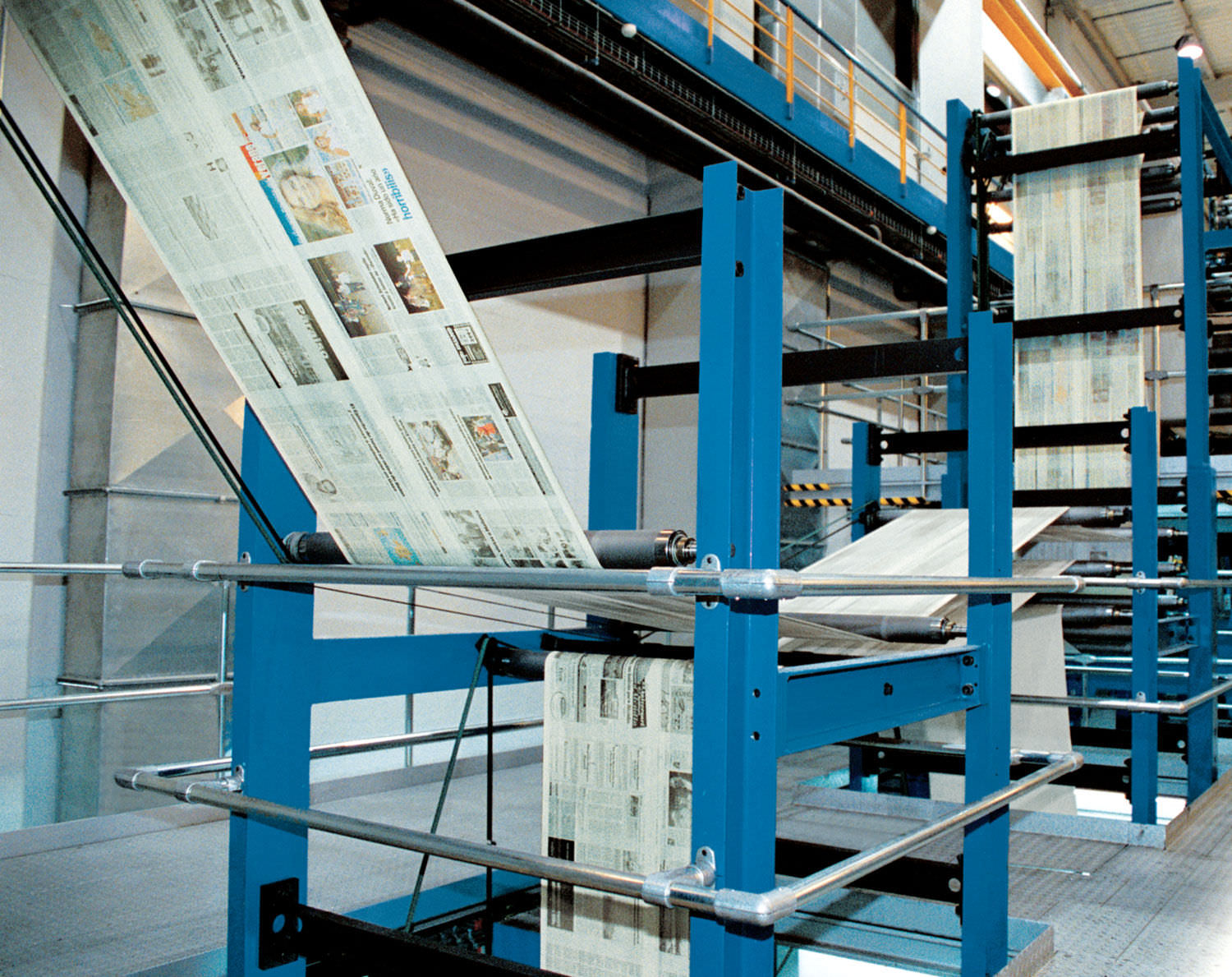
Print is not dead yet

Go Lean Commentary

high-volume-offset-printing-presses-40462-6118919

… well actually, one person’s opinion:

Print is not dead… yet? I almost didn’t notice!

If print is not dead yet, does that mean it is going to put up a fight? Will it make a comeback? I say “No”. It is just a matter of time. Print might experience only a slow death, but die … it will.

This is just an opinion of an Caribbean Diaspora member living in the US, who rarely buys newspapers and magazines only occasionally. But this does not mean that I’m ignorant of the news or the latest going-ons. I am completely up-to-date. Obviously I rely more on the electronic media for information, and entertainment.

The reference to electronic media does not only mean TV or radio. Rather the internet. A lot of consumers still read, just not in print, they now use internet websites, e-Readers, blogs and email. Even the radio and TV media is finding competition because of the internet. In the TV industries, more people are abandoning cable contracts for subscriptions services like Netflix and Hulu; they are still able to enjoy their favorite programming, just delivered by alternate means. For radio, the audience is shrinking due to the proliferation of mobile music options like Pandora, Rhapsody, Jango, Slacker, Roxio, etc.

The rate of change is fast!

I just started using the internet, email and Facebook two years ago. I’m obviously a late bloomer. During this time, I have not utilized any postal mail to connect with my Caribbean family. Instead of the weeks it took for a letter to arrive; I now connect in seconds.

I am not the only one. – SFE Foundation Stakeholder Leonora Hall. 

Truly, you are “not the only one“! Change has come…to America and other countries. According to the American Library Association, in a 2008 report  it stated that:

68% of Americans carry a library card, but they rarely use them to borrow books (print), but rather to use audio books, podcasts, digital references, and to consume computer time. They reported that since 2006 they have seen increases in internet usage (68%) for using email, chat, and IM; e-Books (52%); video (49%) and online instruction courses 43%). – (http://www.marketingvox.com/online-offerings-rise-at-us-libraries-68-of-americans-have-library-cards-041431/)

As stated in the below article, there is still a lot of upside to print, compared to electronic alternatives. A paper book is still a better experience compared to an e-Reader. But truth be told, there are no Research & Development (R&D) trying to make paper books better, but plenty of R&D activity for e-Readers. The article relates:

Title: Print is Not Dead Yet
By: Chandi Perera, CEO, Typéfi*

One of the earliest citations of the phrase “print is dead” comes from the 1984 movie Ghostbusters, but almost 30 years later, print is certainly not dead. Print publishing still drives on average 80% of revenues and close to 100% of the profits for general trade publishers. But among reference and science, technical and medical (STM) publishers, digital publishing was embraced quickly and openly at the expense of print.

Commercial digital products from large reference publishers started in the 1980s, and PDF was adopted as the preferred format for STM publishing in the 1990s. Digital-only publications were well-accepted by the turn of this century, and the PDF still holds unquestioned dominance. Digital production and distribution addressed a number of such publishers’ pain points, but print still maintains advantages for large trade publishers.

Take information that is published regularly, as in journals, or that must be kept up to date, like encyclopedias. Such information needs to be disseminated as quickly as possible. Print publications necessarily take longer to be produced and delivered than digital equivalents. But fiction titles, such as the Harry Potter series or The Da Vinci Code, have no information currency or updating requirements. Print still works for these books.

What about physical production and distribution costs? A typical reference or STM publisher could save tens to hundreds of dollars per unit by eliminating printing and mailing costs. For weekly journals this would be as high as $50-$100 per subscriber. The incentive to save on such costs is quite significant for publications containing information that is only valid for a limited time. However, large efficient trade publishers spend less than $2 to print and distribute a typical trade fiction book. Not much cost incentive for change there.

Or look at digital formats. STM publishers often use the same PDF file for both print and digital distribution. Trade digital delivery channels do not generally use PDF files, so a trade publisher needs to create an e-book file in addition to the print file. Complicating matters further, there are over 30 different popular device types, apps or file formats in use in the global publishing market. A publisher can achieve a basic level of compliance from creating one EPUB file and converting to other formats. But to take advantage of e-book device features for an exceptional reading experience, a publisher must invest in creating a dedicated file optimized for each device. The costs of doing this are substantial and in many cases are levels of magnitude above the print production cost.

Accessibility is one of the biggest advantages… of digital publishing from an STM reader’s perspective. With the rise of networked computers and the internet, readers no longer had to go to the library to access a publication. By the late 1980s most professional scientists had a networked desktop computer to access STM publications–usually for free as their institutional library would hold the subscription.

Accessibility is also a major advantage for digital trade publications. No longer will airline passengers have to settle for what the airport bookshop is selling before boarding the flight. They can purchase and download from online catalogs. However, unlike PDFs on desktops, the devices used to access this content are not ubiquitous, cheap (for the reader) or interchangeable.

In today’s e-book market, content purchased from some channels is only readable in devices linked in those channels. It is difficult for all but the most technically savvy to transfer a large iBooks collection to a Kindle or Samsung Galaxy device, and vice versa.

On the other hand, PDF provides a dependable rendering format for scholarly publications, regardless of technology upgrades and platform changes. The PDF user experience for reference and STM publications is no worse than the print product experience. Users could still do all they did with the traditional print product, with some added advantages , and none of the disadvantages (even on-screen reading, as many readers still print out the PDF for reading on paper).

But in trade publishing, the user experience of e-books is very different from print and varies from device to device; in almost all cases devices are more complex to use than a simple book. Even on popular devices like the Kindle, navigating through a book is cumbersome, unlike “flicking” back and forth. Even with perceived benefits like resizable text and backlit displays, it takes significantly more effort to use an e-book reader than a book.

Until there is more standardization of format, portability of libraries, and the reading experience is as good as, or better than, a physical book across devices, and until the cost and revenue equation makes sense for the publisher, print will have a long life yet in trade publishing. Nevertheless, there are many ventures seeking these outcomes, and technologies being developed to deliver them. Overall, digital publishing has a bright future.
Source: *Typéfi produces automated composition solutions for print and web. Visit http://www.Typéfi.com.
See http://www.oecd.org/internet/ieconomy/

CU Blog - Print is Dead - Photo 2

This commentary therefore concurs with the article’s conclusion: Overall, digital publishing has a bright future.

Are these future prospects true for the Caribbean as well? The book Go Lean…Caribbean serves as a roadmap to elevate the Caribbean economic, security and governance engines. The book asserts that the “world is flat” and the globalization has taken its toll on Caribbean consumerism. This indicates that we must plan for more and more electronic consumption of news and information. But with electronic delivery come the need for electronic payment systems, and thus the Go Lean roadmap is to establish the complete eco-system so that all of the Caribbean can more easily consume electronic media content legitimately. The roadmap also calls for the deployment of more libraries into the communities so as to facilitate the need for internet connectivity.

Lastly, the Go Lean roadmap posits that as a region, we cannot only expect to consume, but that we must create/compose as well. The end result of this roadmap is a complete eco-system to foster a viable media industry.

We can do this. We must do this!

Download the Book Go Lean … Caribbean – Now!!!

Share this post:
, , ,
[Top]

Tourism’s changing profile

Go Lean Commentary

ctdc.015The experiences in the Caribbean correspond to the observations of this article. Change has come to the Caribbean. Tourism continues to be the primary economic driver in the region; this is a static fact for the last 50 years, even though the dynamics of this industry is in constant flux. The Go Lean … Caribbean roadmap depicts that 4 major change agents have impacted this industry: technology, demographics, globalization, and climate change. This article affirms these issues.

Unfortunately the Caribbean region has not always planned for changes or adapted to them. There is still the expectation that the tourists visiting the islands would be North American or Western European and that the standard languages of Dutch, English, French and Spanish would suffice. Alas, this article depicted that the profile of modern tourism reflect a more global reach. Therefore, Caribbean communities must prepare for this change. They must accomodate the need for language translations, community education and racial/ethnic tolerance.

By: Lyndon Thompson

Tourism has shown remarkable staying power in recent years. Despite political instability, wars, natural disasters and a global financial crisis, the industry keeps getting up for another round. Japan is good example. After the 2011 earthquake and Fukushima nuclear accident, the number of visitors to the country plunged. But in 2013 more than 9 million tourists visited the country, a record high.

International tourist arrivals generally surpassed 1 billion in 2012 and are forecast to reach 1.8 billion by 2030. OECD countries account for nearly 60% of international tourist arrivals, but a shift in the global economy promises to change this picture somewhat as people in emerging economies travel more than before. Today, China spends eight times more on tourism than it did 12 years ago. Chinese tourists spent US$102 billion in 2012, a 37% increase over the previous year and more than any other country.

Russians are also more footloose, and rank fifth in terms of spending on outbound tourism. The number of tourists from India has also doubled since 2006. The UN World Tourism Organization estimates that by 2030, overall annual growth in outbound tourism will amount to 17 million in the Asia-Pacific region, 16 million in Europe, 5 million in the Americas, and a combined 5 million in Africa and the Middle East.

Emerging economies are drawing in more tourists, too. Over the next 15 years, the share of arrivals in emerging economies will increase by 4.4% annually, double the rate of arrivals in advanced economies, with South Asia topping the list. North America, on the other hand, will slip to the bottom.

Tourism directly accounts for 4.2% of GDP, 5.9% of employment and 21% of exports of services in OECD countries, enough for governments bruised by the financial crisis to see the industry as a catalyst for growth. They are becoming more dynamic, bringing in new business models and cutting red tape. They are shortening waiting times by offering online visa applications and automatic border checks, too: Turkey, for instance, introduced e-visa applications in 2013, reducing the need for tourists to queue on arrival.

The profile of today’s travelers differs sharply from that of their predecessors. Demographically, tourists are older–23% aged 55 or above–and more frugal, preferring shorter trips closer to home. Geographically, they tend to live in emerging economies rather than in developed ones. Most holidays are now booked online instead of through travel agencies. The holidays sought are often far off the beaten track and focus on a theme: adventure, culture and heritage, or food and wine. New niche markets have arisen, such as “diaspora”, gay and lesbian holidays, humanitarian tourism to work for good causes, and tourism for medical treatments.

Two other trends in tourism are also worth noting. First there is risky “dark tourism”, from hiking in Afghanistan to hunting pirates off the Somali coast, or even photographing conflict zones in Syria. This fashion should not be confused with the rather more solemn “memorial tourism”, which promotes trips to the scenes of great tragedies and wars, such as Ground Zero in New York, Auschwitz in Poland and war cemeteries across Europe.

With 2014 marking the 100th anniversary of the outbreak of the First World War, expect a rise in “memorial tourism” in the year ahead, particularly in Flanders in Belgium and the Somme region of France. In Japan there is a proposal to build a tourists’ village near the Fukushima nuclear plant, with fortified hotels to shield guests against any elevated radiation, the aim being to remind future generations of the 2011 tragedy there.

Such emotionally challenging trips allow travelers to reflect on the follies of humankind and the vulnerability of life. They can also serve to bond people together and build co-operation against future conflicts. Rather than an escape, they echo what the writer Samuel Johnson saw as the true reason for travelling: “to regulate imagination by reality, and instead of thinking how things may be, to see them as they are.”

Source: www.oecd.org/cfe/tourism/

The book Go Lean … Caribbean purports that the Caribbean is the greatest address in the world. In order to appeal to the global market, the book, as a roadmap, posits that regional tourism stakeholders must engage these other ethnic populations. The roadmap advocates the use of Internet Communications Technologies and Social Media for bookings, and to sell the attractions of Caribbean culture and amenities. The plan also calls for establishing Trade Mission Offices in divergent cities like Spain and Tokyo for outreach to Mid & Far Eastern markets.

The Go Lean roadmap also advocates 10-Step approaches for elevating events and fairgrounds in the region. The tactical approach is for a technocratic Trade Federation that would finance and construct facilities and amenities as amusement parks, arenas, stadia & other venues structure as Self- Governing Entities. These bordered grounds would be independent of actual member-state governments.

This magazine article was published in the OECD Observer “e-Zine”. This online journal is the public relations arm of the OECD – Organization of Economic Cooperation and Development – an international economic organization of 34 countries founded in 1961 to stimulate economic progress and world trade. It is a forum of countries committed to democracy and the free-market economy, providing a platform to compare policy experiences, seek answers to common problems, identify good practices, and co-ordinate domestic and international policies of its members. The OECD promotes policies designed to …
1). Achieve the highest sustainable economic growth and employment and a rising standard of living, while maintaining financial stability, and thus to contribute to the development of the world economy;
2). Contribute to sound economic expansion in Member as well as nonmember countries in the process of economic development; and
3). Contribute to the expansion of world trade on a multilateral, nondiscriminatory basis in accordance with international obligations.
Source: www.oecd.org/about/ (Retrieved November 2013).

Download the Book – Go Lean…Caribbean Now!!!

Share this post:
, ,
[Top]

John McPhee – LCD versus an Entrepreneurial Ethos

Go Lean Commentary

The book Go Lean … Caribbean is more than just a publication, it is a movement. This movement is designed to elevate the Caribbean’s economic, security and governing engines. The book serves as roadmap for the introduction and implementation for the Caribbean Union Trade Federation (CU). As such, we are proud to feature role models – institutions, companies and individuals – that extoll the values, community ethos, that we hold dear. This role model, John McPhee, is a prime example.

Among the many community ethos, strategies, tactics, implementation and advocacies in the book is the proposal for the consolidation and integration of the region’s Taxi & Limousine Regulatory Commissions. The book posits that many of the initiatives envisioned for the region are too big an undertaking for any one Caribbean member-state alone; therefore the roadmap call for this functionality to be consolidated and integrated into CU oversight.

plid_2291_ii_cancun.guide.getting.around.taxis_1_2_article_full_2John McPhee is on the frontline of Bahamian tourism – he is a taxi driver. But to call him just a taxi driver would be an insult; it would expose a blatant ignorance. John McPhee is the anti-taxi driver; he “zigs” while everyone else “zags”. The industry for taxi drivers is based on the Lowest Common Denominator (LCD); John, on the other hand, rises above the fray, he stands out like a stalk of wheat in a field of weeds. He drives a Chrysler Town & Country mini-van for its roominess, durability and fuel efficiency. (The is the same vehicle class as the Nissan NV200 depicted in Appendix-VIDEO below and on Page 328 of the Go Lean book).

Mr. McPhee also accepts credit cards. This is an anomaly among taxi drivers in the Bahamas.

Lastly, he arranges appointments and delivers on schedule. He is the walking embodiment of the vision for the Caribbean Union’s Taxi & Limousine Commission.

John McPhee delivers on a business model that can be profitable, efficient, and effective (as frontline ambassadors) for forging change in a region too accustomed to the status quo (failure); a region with governmental policies designed to benefit the LCD and thus they miss out on victories that one champion can achieve. This is the winning model of both the industrial and information revolutions, where individuals, entrepreneurs and industrialists transformed society with their innovations. John McPhee represents that new corps of Caribbean entrepreneurs.

In a person-to-person interview, recorded in the Go Lean book at Page 39, these were his responses:

What are the details of your project?

A Cashless Payment System for Taxi Cabs. This will allow for passengers to pay their fare by means of any major credit/debit cards. Considering the reality of The Bahamas where many citizens, even in the middle class, do not possess credit cards, the target market will be tourists, and the corporate sector. This service should empower taxi drivers to have a competitive advantage over their peers. This project’s goal is to have 50 cars within a fleet, and to provide all of their dispatch services.

Who are the competitors of this service?

There is the Bahamas Taxi Union, a cooperative among individual taxi drivers. Then there are other private entities like H. Forbes Charters and other similar companies.

Why did you not leave, like the many before you?

The Bahamas can still be a land of opportunity. This is what the people here deserve. This is a small country, I should be a big fish in this small pond, but I’m not. If I’m not the head-of-the class here, how can I expect to succeed as a small fish in a big pond somewhere else. So I do not intend to leave.

How do you feel about Bahamian/Caribbean Security?

A lot is lacking here. All citizens can easily be in danger of the pervasive crime and violence.

How do you feel about Bahamian/Caribbean Economy?

Even more is lacking. This country is not suited to encourage entrepreneurism. Economic growth is only going to come from the private sector, not the government. For the private sector to flourish there must be the appropriate structure, incentives and economic drivers. These ingredients are not here now. For my project, I had to sue the government agency (Taxi Commission) to force their hand in doing the right thing. The governing principle used here follows the policy of egalitarianism. This sounds good on paper, equal opportunity for all, but in practice, it’s a disservice for job creation. Catering to the LCD sets the bar low. Excellence does not emerge from that.

What areas are you most disappointed in when considering the last 20 years?

There is a trend towards social equality, which is good if the equal status is a high standard of living and high moral fortitude. But instead, there seems to be a steady decline in all aspects of Bahamian life in which we are all becoming equally mediocre, inadequate. This indicates a fault in leadership; there is a lack of vision and no plan to elevate, if not for all the people, then at least for an achiever class.

What do you want to see in The Bahamas in … 5 years?

Turn-around from the current path, otherwise there will be a collapse of the middle class.

What do you want to see in The Bahamas in … 10 years?

All societies must innovate, or be overrun with innovations from abroad. If the current trend continues, there will be a disenfranchisement of Bahamians in their own country.

What do you want to see in The Bahamas in … 20 years?

I want to see a social and political revolution; the status quo cannot continue. While a revolution denote a quick sudden change, perhaps an evolution (slow, steady and consistent) is better. But we must start now, by first abandoning these LCD policies and expectations.

What features of North American/Europe would you like to see here?

In addition to a NATO-like force, the Caribbean should be more connected/integrated; there should be a central trading/purchasing entity to represent the entire region.

Where do you consider to be the best place to live?

Canada. They seem open to growth, inviting foreign nationals. There is a common language – but respect for minorities – and plenty of opportunities in the areas that entrepreneurs seek.

How would you feel if your children emigrate?

Being a husband and father, I fear that my son will one day leave. He will need such a move to soar in his endeavors. If that happens, while we will miss him, we will simply accept and support him.

Download the book Go Lean … Caribbean – now!

————
Appendix – VIDEO: New York Proclaims “Hail Yes!” as First Nissan NV200 Taxicab Hits the Streets of Manhattan – https://youtu.be/za1xO3WcnQs

Published on Oct 29, 2013 – NEW YORK (October 29, 2013) — A new era in public transportation has begun with the Nissan NV200 taxi now in service on the streets of New York City. The meter on the first NV200 taxi fare officially kicked-off at JFK International Airport on October 23, dropping its inaugural passenger near 13th Street and 6th Avenue in Manhattan. Mr. Ranjit Singh, an owner/operator of Medallion No. 7F20, took delivery of his NV200 taxi from Koeppel Nissan in Queens on October 18.
AMC131029102.
 
Share this post:
, , , ,
[Top]