Go Lean Commentary
This is the headline, in case you missed it:
“Mozambique Braces for More Floods as Cyclone Deaths Climb”. Bloomberg News Source. Posted 19 March 2019. Retrieved 21 March 2019.
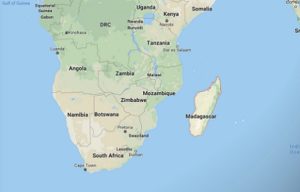 Mozambique is not a Caribbean country in the typical bulls-eye for hurricanes. No, this is a country in the South African region; not normally threatened by tropical cyclones or hurricanes. This is proof-positive that something is wrong with the earth’s climate. This is the reality of Climate Change.
In fact, we told you (in 2018) that climate conditions will go from bad to worse on a daily basis and that we only have 12 years, before the damage we are causing to the planet will be irreversible.
We did not give this warning about Africa; this is not our charter. But we can still learn by observing-and-reporting on developments there. See here, the consequential damage from this cyclone:
Reference: Cyclone Idai
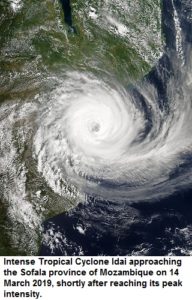
Intense Tropical Cyclone Idai is regarded as one of the worst tropical cyclones on record to affect Africa and the Southern Hemisphere as a whole. The storm caused catastrophic damage in multiple nations, leaving more than 400 people dead and hundreds more missing.[4] Its death toll is comparable to that of south-west Indian Ocean cyclones Eline in 2000, and Gafilo in 2004.[5] The tenth named storm and record-breaking eighth intense tropical cyclone of the 2018–19 South-West Indian Ocean cyclone season, Idai originated from a tropical depression that formed off the eastern coast of Mozambique on 4 March.
The depression made landfall in the aforementioned country later in the day and remained a tropical cyclone throughout the entirety of its trek over land. On 9 March, the depression reemerged into the Mozambique Channel and was upgraded into Moderate Tropical Storm Idai next day. The system then began a stint of rapid intensification, reaching an initial peak intensity as an intense tropical cyclone with winds of 175 km/h (110 mph) on 11 March. Idai then began to weaken due to ongoing structural changes within its inner core, falling to tropical cyclone intensity. Idai’s intensity remained stagnant for about a day or so before it began to re-intensify. On 14 March, Idai reached peak intensity with maximum sustained winds of 195 km/h (120 mph) and a minimum central pressure of 940 hPa (27.76 inHg). Idai then began to weaken as it approached the coast of Mozambique due to less favorable conditions. On 15 March, Idai made landfall near Beira, Mozambique, as an intense tropical cyclone, subsequently weakening into a remnant low on 16 March.
Idai brought strong winds and caused severe flooding in Madagascar, Mozambique, Malawi, and Zimbabwe that has killed 431 people – 268 in Mozambique, 104 in Zimbabwe, 56 in Malawi, and one in Madagascar – and affected more than 2.6 million others. Catastrophic damage occurred in and around Beira in southern Mozambique. The President of Mozambique stated that more than 1,000 people may have died in the storm.[3] A major humanitarian crisis unfolded in the wake of the cyclone, with hundreds of thousands of people in urgent need of assistance across Mozambique and Zimbabwe. In the former nation, rescuers were forced to let people die in order to save others.
…
Source: Wikipedia – retrieved March 21, 2019 from: https://en.wikipedia.org/wiki/Cyclone_Idai
Over 1,000 dead!!! Ouch!
While Climate Change is a global crisis, our focus, our scope is limited to the Caribbean member-states.
From our Caribbean homes, we can NOT reach across the oceans and fix the climate in Africa, What we can do is mitigate the environment here at home.
Then name, blame and shame the culprit nations that are crippling our planet with more pollutants.
Due to the laws of hypocrisy, we cannot “Cry Wolf” to anyone until we conform ourselves. This theme and assertion was elaborated in these other/previous blog-commentaries from the movement behind the book Go Lean…Caribbean:
| https://goleancaribbean.com/blog/?p=15511 | Plastics and Styrofoam – A Mitigation Plan |
| https://goleancaribbean.com/blog/?p=14925 | Climate Change Doubt?! Numbers Don’t Lie … |
| https://goleancaribbean.com/blog/?p=14832 | Manifesting Environmental Change |
| https://goleancaribbean.com/blog/?p=11858 | Islands are Disappearing – The Cautionary Tale of Kiribati |
| https://goleancaribbean.com/blog/?p=10367 | Science of Sustenance – Green Batteries for Fossil-Fuel-Free Energy |
| https://goleancaribbean.com/blog/?p=9455 | Fix ‘Climate Change’ – Yes, We Can |
| https://goleancaribbean.com/blog/?p=7103 | COP21 – ‘Climate Change’ Acknowledged |
| https://goleancaribbean.com/blog/?p=7056 | Electric Cars: ‘Necessity is the Mother of Invention’ |
| https://goleancaribbean.com/blog/?p=915 | Go ‘Green’ … Caribbean |
It is possible to mitigate the contributors to Climate Change. We can burn less fossil fuels; we can engage more alternative energy options (solar, wind, tidal); use electric cars and public transit. But the efforts must be executed across the whole world.
At a bare minimum, we must do our part; each individual, family, community and nation. No one can be excused. For this we must be prepared to name, blame and shame the dissenters.
This should be a national emergency. Check that! This is a global emergency!
There are still deniers of Climate Change. Those ones should not be debated; just ignored; we must proceed forward as if these ones are inconsequential. Think Flat-Earth theorists; see a related VIDEO in the Appendix below.
These ones should not even get an audience.
I assure you: No one in Mozambique is a Climate Change denier today. Can we say the same for Caribbean stakeholders … in government, security or economic leadership?
This must be a basic requirement for Caribbean leadership. If a politician dissents, we must vote them out of office. If a security/government official dissents, then we must replace them. If a business leader dissents, we must boycott their establishments. This is what is meant by name, blame and shame.
This is how we must now act to forge change in our communities. And then, the whole world. This is the quest of many young protesters around the world, today. They have indicted the older generation for mis-management; see story and VIDEO here:
Title: ‘It’s Literally Our Future.’ Here’s What Youth Climate Strikers Around the World Are Planning Next
By: Suyin HaynesInside the U.K. houses of parliament, the grown-ups were at work. Outside, thousands of others — many of whom were not old enough to vote — were doing their best to make sure business was anything but usual. With their chants echoing down the streets, they were among an estimated 1.6 million students in over 120 countries who left school on March 15 in protest of adult inaction on climate change. “It shocks me how great a length we have to go to be heard,” said 16-year-old Miranda Ashby, who’d traveled more than two hours to London with roughly 50 of her classmates. “We are protesting now because if not now, when?”
The school climate strikes started with teen activist Greta Thunberg standing vigil outside Sweden’s parliament one Friday last August. “When I first started this strike, I didn’t really expect anything,” Thunberg told TIME on March 14, shortly after Norwegian lawmakers nominated her for the Nobel Peace Prize.
Thunberg’s idea has grown into a global movement; the March 15 action was its biggest yet. Extensive coverage of the strikes by media outlets and individuals on social media have helped elevate the cause in the minds of people across the world. Meanwhile, the lack of a centralized organizational hub makes it easy for teenagers to arrange actions in their own towns and cities; rallies took place in more than 2,200 towns and cities worldwide on March 15. “We’re tired of waiting for politicians to care,” says Nosrat Fareha, an organizer for the Sydney strikes, where 30,000 young people turned out — more than three times Fareha’s expected estimate.
In Uganda, where drought and desertification are already devastating, the walk-out took place despite officials blocking strikers from an intended rally location in Kampala. “I realized that my country has to change too,” 14-year-old organizer Leah Namugerwa says. And in the U.S., 17-year-old Feliquan Charlemagne, National Creative Director of the U.S. movement, believes the energy of March for Our Lives, the 2018 student-led initiative for gun control, must be harnessed for this cause too. Born in the Caribbean island of St Thomas, Charlemagne and his family have personally suffered the powerful effects of climate change, after Hurricane Irma devastated the island in September 2017. “This is not something we can play around with,” he says. “This is literally our future.”
It’s also their present. The warning of the landmark October 2018 report from the United Nations’ Intergovernmental Panel on Climate Change, that the planet was only 12 years away from catastrophe unless “far-reaching and unprecedented changes” are taken, weighs heavily on the minds of young organizers, who are quick to point out that they are the ones who have to live in that world. The deadline means there’s a lot of work to be done, and they don’t have time to wait to grow up first.
Their most pressing hope is for immediate policy measures to meet the terms of the Paris Agreement, limiting the global temperature increase to 1.5° celsius this century, as well as specific local action. In Australia, campaigners want to halt the proposed construction of a controversial coal mine. For activists across the U.S., preservation of public lands and political implementation of the Green New Deal are top priorities. And in the U.K., organizers want a fair portrayal of the climate crisis in school curricula and government information. And they’ve had some success already: youth organizers have met with members of the European Parliament and their strikes have been welcomed by leaders including Angela Merkel and U.N. Secretary General Antonio Guterres. “It really has changed the discourse,” says Sini Harkki, program manager at Greenpeace Nordic.
But at least for now, that’s all they can change; the youth that draws them to the cause is also an obstacle. Most of the movement’s participants are not just battling the obvious challenges of political inertia, powerful fossil fuel lobbies and disbelieving critics—they are also too young to play a bigger role in business or politics. And so they are determined to continue the Friday strikes. The U.K. Student Climate Network is demanding a meeting with political leaders, U.S. activists are planning a mass strike for May 3 and a pan-European organizer meeting is also in the pipeline. And Thunberg, no longer on her own, is committed to striking every Friday until Sweden reduces its carbon emissions in line with the Paris Agreement. “I know I have something to say,” Thunberg says, referring to her frank speeches in front of international leaders. “I have a message I want to get out and I want people to listen.” Students worldwide have heard her loud and clear. It’s up to the world’s politicians to act.
Source: Time Magazine Online Edition – posted March 20, 2019; retrieved March 22, 2019 from http://time.com/5554775/youth-school-climate-change-strike-action/
———-
VIDEO – Youth Climate Strike – http://time.com/5554775/youth-school-climate-change-strike-action/
Posted March 20, 2019 – ‘It Will Be Too Late for My Generation.’ Meet the Teens Who Organized a Massive Climate Change Protest
These young people get it: name, blame and shame the culprits and bad actors affecting Climate Change and the urgent mitigation that must be done. And as for Africa? We hereby present them a role model to follow.
The Public Campaign of environmentalists and activists is Spot-On: “Think Global. Act Local.” 🙂
About the Book
The book Go Lean…Caribbean serves as a roadmap for the introduction and implementation of the technocratic Caribbean Union Trade Federation (CU), for the elevation of Caribbean society – for all member-states. This CU/Go Lean roadmap has these 3 prime directives:
- Optimization of the economic engines in order to grow the regional economy to $800 Billion and create 2.2 million new jobs.
- Establishment of a security apparatus to ensure public safety and protect the resultant economic engines.
- Improve Caribbean governance to support these engines, including a separation-of-powers between the member-states and CU federal agencies.
The Go Lean book provides 370-pages of turn-by-turn instructions on “how” to adopt new community ethos, plus the strategies, tactics, implementations and advocacies to execute so as to reboot, reform and transform the societal engines of Caribbean society.
Download the free e-Book of Go Lean … Caribbean – now!
Who We Are
The movement behind the Go Lean book – a non-partisan, apolitical, religiously-neutral Community Development Foundation chartered for the purpose of empowering and re-booting economic engines – stresses that reforming and transforming the Caribbean societal engines must be a regional pursuit. This was an early motivation for the roadmap, as pronounced in the opening Declaration of Interdependence (Pages 12 – 13):
i. Whereas the earth’s climate has undeniably changed resulting in more severe tropical weather storms, it is necessary to prepare to insure the safety and security of life, property and systems of commerce in our geographical region. As nature recognizes no borders in the target of its destruction, we also must set aside border considerations in the preparation and response to these weather challenges.
xi. Whereas all men are entitled to the benefits of good governance in a free society, “new guards” must be enacted to dissuade the emergence of incompetence, corruption, nepotism and cronyism at the peril of the people’s best interest. The Federation must guarantee the executions of a social contract between government and the governed.
xvi. Whereas security of our homeland is inextricably linked to prosperity of the homeland, the economic and security interest of the region needs to be aligned under the same governance. Since economic crimes … can imperil the functioning of the wheels of commerce for all the citizenry, the accedence of this Federation must equip the security apparatus with the tools and techniques for predictive and proactive interdictions.
xxiv. Whereas a free market economy can be induced and spurred for continuous progress, the Federation must install the controls to better manage aspects of the economy: jobs, inflation, savings rate, investments and other economic principles. Thereby attracting direct foreign investment because of the stability and vibrancy of our economy.
Sign the petition to lean-in for this roadmap for the Caribbean Union Trade Federation.
————
Appendix VIDEO – An Astronomer Responds To Flat Earth Theory – https://youtu.be/thxbiR-XfJo
Tech Insider
Published on Jan 9, 2018 – Business Insider UK sat down with Dr Stuart Clark, who spoke to us about a range of subjects regarding astronomy and astrophysics. We asked him what he thought of flat earth theory, a school of thought which believes that the earth is not spherical but flat.
“All our physics is constructed now, the physics of orbits of things going around the earth is all constructed with this three dimensional world. And the pictures from space show our world as a globe and yet somehow there are some people that still seem to believe the earth is flat.”
“My own pet theory is that they’re doing it for comic effect.”
Tech Insider tells you all you need to know about tech: gadgets, how-to’s, gaming, science, digital culture, and more.
Subscribe to our channel and visit us at: http://www.businessinsider.com/sai
TI on Facebook: https://www.facebook.com/techinsider
TI on Instagram: https://www.instagram.com/tech_insider/
TI on Twitter: https://twitter.com/techinsider
- Category: Science & Technology
 The twin-island nation of Antigua & Barbuda was granted independence from the United Kingdom on 1 November 1981. This status allows them to govern their own country; make decisions that they feel are in the best interest for their nation.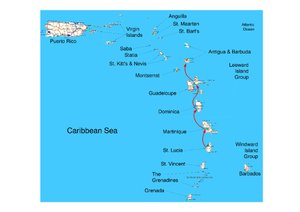
 Cruise Line Collective Bargaining – Setting Matters Straight

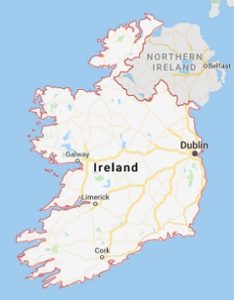

 The Irish Luck = Bad Luck? During Ireland’s past, many Irish were forced to emigrate due to the potato famine for instance. Often, abroad, the Irish were treated badly and had to struggle to make a living. Some emigrants didn’t even survive the sea crossing, others grew ill and with no health care, suffered badly. Childhood disease saw many families lose their children, with that their reason for succeeding was not so great and depression followed in many cases by alcohol abuse. Many of the original Irish settlers in the US, the UK and Australia never saw their family again. Indeed on the night before a person emigrated a party was held, a sort of ‘funeral’ wake which is a traditional Irish custom when someone dies. Therefore, some believe that the expression is rather an ironic one, stating that the Irish are not lucky after all.
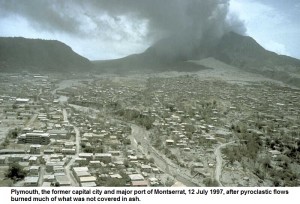 On 18 July 1995, the previously
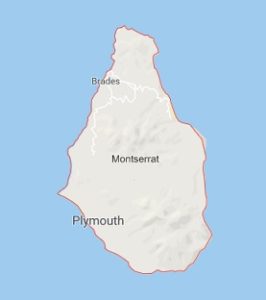
  Montserrat now has the model by which to follow: regional integration in a
  Now, we are learning that car-ride-sharing solutions – like Uber or Lyft – are actually working successfully. They are faster, better and cheaper than other transportation options, like taxi’s and rental cars.
 This is not some exercise in futility. For the Caribbean, we must pay more than the usual attention to this experience. The city in focus for this exercise is the tourist
  Uber is NOT in many Caribbean member-states … yet.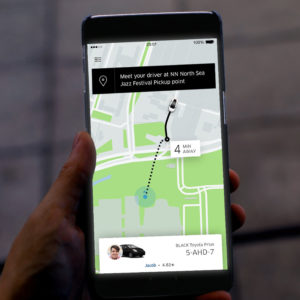
 The people need to change … some more than others. One group needs a lot of help:



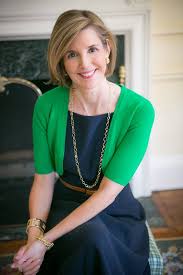 This submission is about Sallie Krawcheck …

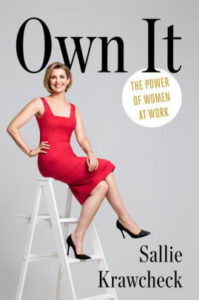 Weren’t women supposed to have “arrived”? Perhaps with the nation’s first female President, equal pay on the horizon, true diversity in the workplace to come thereafter? Or, at least the end of “fat-shaming” and “locker room talk”?
 A ‘Shero’ is quite simply a female hero. What is it that ‘Sheroes’ want?
 In honor of International Women’s Day 2019, the media conglomerate Disney Pictures is releasing a new film Captain Marvel under their subsidiary Marvel Studios – Marvel Cinematic Universe (MCU). This live-action movie – see Trailer below – renders the comic book superhero Carol Danvers, aka Captain Marvel, in a powerful role where she has to overcome immense odds to protect, promote and empower balance and peace in the galaxy. Forgive the spoiler, but in the film, Carol Danvers begins fighting for the Kree against the Skrulls, has to endure a hero’s journey in which she learns the truth of herself, her friends and her enemies. In the end, she helps and support the Skrulls; she fights for balance and in pursuit of the Greater Good!
 These prior commentaries portray how the Caribbean also need heroes and sheroes to impact our real communities – the facts, not just the fiction. This means protecting, promoting and empowering the sisters, mothers and daughters in our society. Our status quo is lacking …
 Who is the most powerful person in the world?
 Professor Donald Harris Kamala Harris’ Jamaican father, has vigorously dissociated himself from statements made on the New York Breakfast Club radio show earlier this week attributing her support for smoking marijuana to her Jamaican heritage. Professor Harris has issued a statement to
  This seeming lack of knowledge about the connection between her Indian and Jamaican heritage provides additional ammunition for some Jamaicans who are of the view that Ms. Harris tends to downplay her Jamaican heritage when it suits her, crediting her Tamil Indian mother with the most significant influence on her life and outlook and rarely talks about her father’s influence. Her father Donald, hardly ever gets credit except when mentioned alongside her mother, but rarely as an individual. Even when asked by her host in the now famous ‘marijuana interview’ about her motivation to enter the presidential race, Ms. Harris referenced ONLY her mother whom she said, raised her and her sister Maya with many beliefs and rules – one being never to sit and complain about something, but to do something about it. Yet, anyone who has read ‘Reflections of a Jamaican Father’ Donald Harris’ heart-warming account of how he raised his two daughters, will immediately realize that there is another side to the Kamala Harris story. In that article Donald Harris writes:
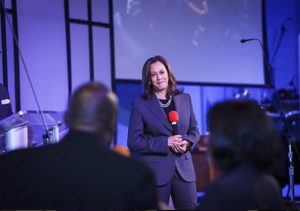 Kamala Harris will have trouble persuading black voters to make her president in 2020. First, the U.S. senator from California must explain why Donald Trump has a better prison-reform record than she had as the Golden State’s attorney general. Then she’ll have to overcome the perception she’ll do anything to climb to the top.
 Viola Desmond challenged racial segregation at a cinema in New Glasgow, Nova Scotia, in 1946. She refused to leave a whites-only area of the Roseland Theatre and was convicted of a minor tax violation for the one-cent tax difference between the seat she had paid for and the seat she used which was more expensive. Desmond’s case is one of the most publicized incidents of racial discrimination in Canadian history and helped start the modern civil rights movement in Canada.

 This is usually the order and process for change. Change doesn’t just start with Action; a lot more goes into it. It can be likened to a factory process; there is input and there is output. While Action is the output, “Thoughts, Feelings and Speech” qualify as input.
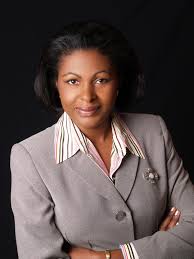 External Affairs Minister, Sarah Flood-Beaubrun has expressed concern about the playing of songs that are degrading to women.
 In this series, reference is made to a “Next Frontier” of Gender Relations – women are now on the verge of breaking all “glass ceilings” in society.