Tag: Antigua

Caribbean Cruise Port ‘Held Hostage’

Go Lean Commentary

So you think you’re independent?

The twin-island nation of Antigua & Barbuda was granted independence from the United Kingdom on 1 November 1981. This status allows them to govern their own country; make decisions that they feel are in the best interest for their nation.

But the primary industry in this country is tourism. So this means that there is dependence on external (foreign) stakeholders to provide transportation solutions, travel agency, lodging and/or leisure cruises. So the country’s attitude should never be arrogant, haughty or uncooperative. They cannot approach any negotiation with a cruise line with this attitude:

“My way or the Highway”!

The cruise line response would resemble some rendition of this spirit:

Hold my beer!
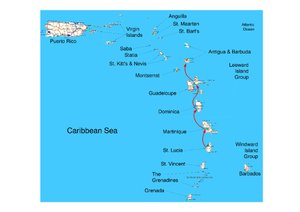
This is what is happening in some re-negotiations between Antigua and Carnival Cruise Lines. As reported by the Antigua Daily Observer newspaper on February 26, 2019, Prime Minister Gaston Browne accuses Carnival and the entire Florida-Caribbean Cruise Association (FCCA) of “exploiting Caribbean countries for lower visitor tax rates [(head tax)]”.

The country is attempting to influence this corporation with their offering of only one port-of-call – 2 piers in St. John – while the full region is 30 member-states. Rather than single government negotiations, the 2013 book Go Lean …Caribbean asserts that the region must adopt a collective bargaining strategy among the full universe of Caribbean ports-of-call, introducing the Caribbean Union Trade Federation (CU) as a collective bargaining agent. The book states (Page 32):

Cruise Line Collective Bargaining – Setting Matters Straight
The CU will collectively bargain with operators to garner more benefits and protections. In general, port cities are not gleaning much income from ship visits. In order to reboot the industry’s economic impact, changes need to be made, rescinding some exploitive rules the ships implemented and adding some new products, like smartcard e-purse options.

Carnival Cruise Line is overmatched compared to the small island nation of Antigua. The holding company, Carnival Corporation, is identified as a significant stakeholder in the global cruise industry in general and Caribbean tourism in particular; they own/market all of these cruise line brands (10):

  • Carnival Cruise Lines
  • Holland America
  • Cunard
  • Princess
  • P&O Cruises
  • P&O Cruises Australia
  • The Yachts of Seabourn
  • Costa Cruises
  • AIDA
  • IberoCruceros

To compete, Antigua needs interdependence with their Caribbean neighbors – confederation and collective bargaining. Carnival is holding Antigua hostage. See the news article here reporting this drama, and an aligning VIDEO:

Title: More Cruise Lines Pull Out of Caribbean Port
By: Ben Souza
A few days ago, Cruise Fever reported that Carnival Cruise Line had canceled all port stops to Antigua. Now, additional cruise lines have pulled out of the Caribbean port according to the Antigua Observer.

In addition to Carnival Cruise Line, Holland America Line and luxury line Seabourn have canceled future port stops in Antigua. All three cruise lines operate under the Carnival Corporation umbrella.

These two new cruise lines that canceled port stops each had two cruise ships scheduled to visit the Caribbean port during the next Caribbean season.

Why have these three cruise lines canceled their scheduled calls to Antigua? The cruise lines have stated that government officials have made the cruise lines feel unwelcome.

These new cancelations were somewhat expected. The Prime Minister gave the following statement when Carnival Cruise Line first announced they were pulling out of the port:

    “Once Carnival has started the cancellation, unfortunately, I expect to see cancellations from all of its brands. I wouldn’t be surprised to see Princess, Holland America, Seabourn and other European Lines making cancellations going forward.”

Antigua is a popular cruise destination in the Southern Caribbean, especially during winter months.

Cruise ships that have canceled a port stop in Antigua will visit an alternative port.

Cruise Fever will have all new information about this developing situation in Antigua when it becomes available.

Source: Posted and retrieved March 17, 2019 from: https://cruisefever.net/more-cruise-lines-pull-out-of-caribbean-port/

—-

Ben Souza has written thousands of articles on cruising and currently takes between 8-10 cruises a year. His writings have appeared and been cited in various media outlets such as Yahoo News, MSN, NPR, Drudge Report, CNN, and ABC News. Ben currently resides in Cincinnati, Ohio. Visit Ben Souza on Linkedin. You may email Ben at Ben@cruisefever.net.

—————–

VIDEO – Update: Antigua Government To Meet With Carnival Over Cruise Cancellations – https://youtu.be/3CQzQb_2vUQ


Travelling with Bruce

Published on Mar 16, 2019 – Update: Antigua Government To Meet With Carnival Over Cruise Cancellations Norwegian Cruise Lines and MSC Cruises have both backed the government and have committed to sailing to the country going forward. After Prime Minister Browne contacted Carnival’s CEO the two parties have agreed to have a face to face meeting with each other to try to resolve their differences. #antigua #carnivalcruiselines #norwegiancruisenews #mscnews #globalportsholdings #antiguanews #caribbeancruise #hollandamericanews #seabournnews #cruisenews

We told you! Any Way Forward for better cruise line negotiations must include collective bargaining. This theme aligns with previous blog-commentaries from the movement behind the Go Lean book; see a sample list here:

https://goleancaribbean.com/blog/?p=16645 Bad Partners – Cruise Lines Interactions
https://goleancaribbean.com/blog/?p=15380 Industrial Reboot – Cruise Tourism 2.0
https://goleancaribbean.com/blog/?p=11544 Forging Change in the Cruise eco-system: Collective Bargaining
https://goleancaribbean.com/blog/?p=6635 Security Chip in credit cards unveiled: Now Ready for Cruise eco-system
https://goleancaribbean.com/blog/?p=5210 Cruise Ship Commerce – Getting Ready for Change

We warned, alerted and cautioned you Caribbean stakeholders that “Big Cruise Line Abuse” would happen. Carnival seems to be counting on our disunity. This is not just our thoughts alone; others have opined:

Carnival holds all of the cards in situations like this.  The notion that a sovereign country like Antigua is an equal “partner” to an 800 pound gorilla like Carnival is fanciful.  If a cruise line can make a better deal with an island next door, which charges a lower head tax, has fewer environmental restrictions, or is willing to foot the bill for a larger dock, then it’s ‘see ya later’ as far as the cruise line goes.” – Source: CruiseLawNews
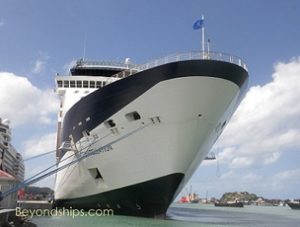
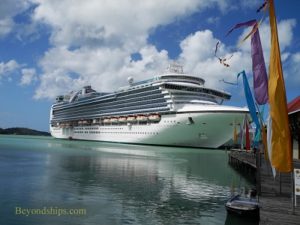
The solution (Way Forward) for this type of one-sided negotiation advantage is not secretive or proprietary; rather it is the stated purpose of the Go Lean book and this resultant roadmap: “Come together“; collaborate; consensus-build and confederate.

Prime Minister Browne explained that the only way for small countries like Antigua to fight the FCCA is to form a regional port facility.

“Unless the entire Caribbean comes together and forms a regional port facility and mandate that [the Cruise Associations] pay more, we will continue to end up in problems and have to subsidise that sector …” – Source: CruiseLawNews

Yes, we can … come together and make our homeland a better place to live, work and play. 🙂

About the Book
The book Go Lean…Caribbean serves as a roadmap for the introduction and implementation of the technocratic Caribbean Union Trade Federation (CU), for the elevation of Caribbean society – for all member-states. This CU/Go Lean roadmap has these 3 prime directives:

  • Optimization of the economic engines in order to grow the regional economy to $800 Billion and create 2.2 million new jobs.
  • Establishment of a security apparatus to ensure public safety and protect the resultant economic engines.
  • Improve Caribbean governance to support these engines, including a separation-of-powers between the member-states and CU federal agencies.

The Go Lean book provides 370-pages of turn-by-turn instructions on “how” to adopt new community ethos, plus the strategies, tactics, implementations and advocacies to execute so as to reboot, reform and transform the societal engines of Caribbean society.

Download the free e-Book of Go Lean … Caribbean – now!

Who We Are
The movement behind the Go Lean book – a non-partisan, apolitical, religiously-neutral Community Development Foundation chartered for the purpose of empowering and re-booting economic engines – stresses that reforming and transforming the Caribbean societal engines must be a regional pursuit. This was an early motivation for the roadmap, as pronounced in the opening Declaration of Interdependence (Pages 11 – 13):

vi. Whereas the finite nature of the landmass of our lands limits the populations and markets of commerce, by extending the bonds of brotherhood to our geographic neighbors allows for extended opportunities and better execution of the kinetics of our economies through trade. This regional focus must foster and promote diverse economic stimuli.

viii. Whereas the population size is too small to foster good negotiations for products and commodities from international vendors, the Federation must allow the unification of the region as one purchasing [or bargaining] agent, thereby garnering better terms and discounts.

x. Whereas we are surrounded and allied to nations of larger proportions in land mass, populations, and treasuries, elements in their societies may have ill-intent in their pursuits, at the expense of the safety and security of our citizens. We must therefore appoint “new guards” to ensure our public safety and threats against our society, both domestic and foreign. The Federation must employ the latest advances and best practices … to assuage continuous threats …

xi. Whereas all men are entitled to the benefits of good governance in a free society, “new guards” must be enacted to dissuade the emergence of incompetence, corruption, nepotism and cronyism at the peril of the people’s best interest. The Federation must guarantee the executions of a social contract between government and the governed.

xvi. Whereas security of our homeland is inextricably linked to prosperity of the homeland, the economic and security interest of the region needs to be aligned under the same governance. Since economic crimes … can imperil the functioning of the wheels of commerce for all the citizenry, the accedence of this Federation must equip the security apparatus with the tools and techniques for predictive and proactive interdictions.

xxiv. Whereas a free market economy can be induced and spurred for continuous progress, the Federation must install the controls to better manage aspects of the economy: jobs, inflation, savings rate, investments and other economic principles. Thereby attracting direct foreign investment because of the stability and vibrancy of our economy.

Sign the petition to lean-in for this roadmap for the Caribbean Union Trade Federation.

Share this post:
, , , ,

Making a ‘Pluralistic Democracy’ – Freedom of Movement

Go Lean Commentary

I have a personal confession!

At one point, recently, I had a California address, Michigan Drivers License and Florida car registration; all at the same time. This is demonstrative of a country – United States of America – where stakeholders have ‘Freedom of Movement’. This is a feature of a Single Market.
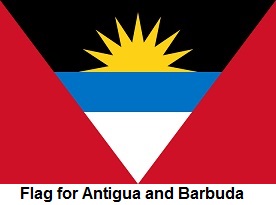
Live here … work there … play everywhere …

There are planners for a new Caribbean that wants a Single Market economy, where citizens have ‘Freedom of Movement’ from one member-state to another. This would be part-and-parcel of a “Pluralistic Democracy”, which means a society where the many different ethnic groups (or national origins) have respect, equal rights, equal privileges and equal protections under the law; where there are no superior rights to any majority and no special deprivations to any minority, despite the border or language consideration. This is pure Pluralism, whose legal definition of the political philosophy is as follows:

… the recognition and affirmation of diversity within a political body, which permits the peaceful coexistence of different interests, convictions and lifestyles.[1] While not all political pluralists advocate for a pluralist democracy, this is most common as democracy is often viewed as the most fair and effective way to moderate between the discrete values.[2]Wikipedia

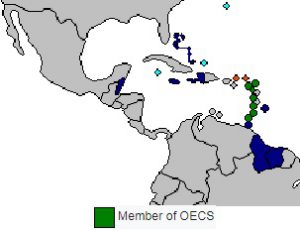
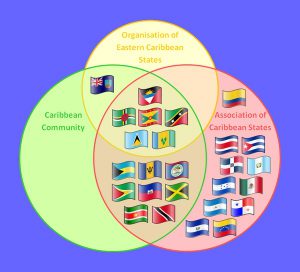
This vision of a Caribbean “Pluralistic Democracy” should be more than words, but action too. This need has manifested in recent days with the devastation of two Category 5 Hurricanes in the region: Irma and Maria. Consider the news article here depicting the post-hurricane ‘Freedom of Movement’ among the 6 OECS countries (Organization of Eastern Caribbean States: Antigua and Barbuda, Dominica, Grenada, St Kitts and Nevis, St Lucia, and St Vincent and the Grenadines):

Title – Antigua prepares for influx of Dominicans
Barbados Today – Antigua says it is anticipating an influx of Dominicans in the wake of catastrophic Hurricane Maria which has decimated that country.

Acting Prime Minister, Attorney General Steadroy Benjamin, on Saturday convened a meeting of the sub-committee of Cabinet responsible for managing the planning for natural disasters and their aftermath.
Government Chief of Staff Lionel Hurst described the meeting as “a proactive drive, intended to manage efficiently the anticipated flow of people from Dominica”.

Also in attendance where Ministers Molwyn Joseph, Asot Michael, Minister Melford Nicholas, Arthur Nibbs, the chief immigration officer and her deputy, law enforcement authorities, representative of the airlines association including LIAT, the head of the Red Cross, and officials from the ministry of social transformation.

The Acting Prime Minister directed the group to present a fixed set of policies that would apply to all those who are leaving Dominica for Antigua, and to plan the reception of those OECS/Dominican citizens who may choose Antigua.

It was agreed that there will be only two legitimate ports of entry – the V.C. Bird International Airport and the Montserrat Ferry Dock at Heritage Quay.

“The Coast Guard is to ensure that no vessel entering Antigua’s waters discharges its passengers at any other dock. Since no vegetables or other food items will be shipped from Dominica in the foreseeable future, all vessels must proceed to Heritage Quay,” Hurst said.

Citizens of Dominica have a right of entry into Antigua and other OECS countries and an automatic six-month stay and must present their passport, driver’s license or voter’s identification card to allow entry.

“A database of the Dominicans entering will be developed. Those citizens of Dominica who do not have any of the agreed identification will be permitted to enter Antigua, after completing a form which the Antigua and Barbuda Immigration Department has constructed specifically to meet the needs of those who have lost their documents in the hurricane. Those persons leaving Dominica who are not Dominican citizens must have onward tickets, or be prepared to purchase tickets for onward travel to their own countries,” Hurst said.

He added that the police and the ONDCP are to work closely to determine if any of the persons leaving Dominica are law-breakers. In this regard, the Dominica Police Force will also be asked to assist.

All Dominican citizens who enter Antigua will also be asked to provide certain health information so that continuing services can be provided or secured, in order to protect their health and the population’s.

“It is anticipated that women and children, the elderly of both genders and the infirm, are likely to be among the first wave of Dominican citizens to arrive [in] Antigua. It is also believed that many will choose to stay with family and friends, especially since a supportive group has already been formed. The entrants will be asked to provide names, addresses, telephone numbers and other contact information to the immigration authorities at both ports,” Hurst said.
He said consideration has been given to preparing shelters at various sites should the flow exceed the provision of housing by family and friends of the Dominicans who live on Antigua.

Hurst noted that the other four OECS countries – St Kitts and Nevis, St Lucia, St Vincent and the Grenadines and Grenada – are also likely to welcome Dominican citizens to their shores during this crisis.

Source: Posted September 24, 2017; retrieved October 22, 2017 from: https://stluciatimes.com/2017/09/24/antigua-prepares-influx-dominicans 

Normality is disrupted in Dominica  – due to Hurricane Maria – so the people, societal engines and systems of commerce have to transfer over to Antigua. While this is not good for Dominica’s economy, it is better than losing the population permanently to some foreign location – the Diaspora. The Dominican people going to Antigua for hurricane recovery is not the “One Way” societal abandonment, it is just ‘Freedom of Movement’.

The movement behind the book Go Lean…Caribbean has repeatedly related that there is a need for new stewardship of the Caribbean societal engines (economics, security and governance). The world has changed; the “World is Flat“! The Go Lean book considers these Agents of Change (Page 57) that have dynamically affected the Caribbean economic eco-systems:

  • Technology
  • Globalization
  • Aging Diaspora
  • Climate Change

The Agent of Change of Globalization implies that people can easily move from place-to-place to live, work or play; everywhere is “virtually” next door. Ours, in the Caribbean, is not the first region to contend with this ‘Freedom of Movement’ option. In fact, this practice for the OECS is modeled after the European Schengen Area – ‘Freedom of Movement’ of people, goods, services and capital across 26 European borders, not the USA. See more in the VIDEO here:

VIDEO – Schengen Area: History, Facts and Benefits – https://youtu.be/xffvPWmoWsQ

Europe Guide

Published on Apr 13, 2016 – Today, Schengen Area signifies a zone where the free movement of people, goods, services and capital between 26 European countries is not just a concept any longer. Watch this very interesting video about the chronological history of Schengen Area to learn about how the dream for a borderless Europe came true, leaving the opportunity for more than 400 million citizens to travel freely inside the Europe without any border check control.

Website: http://www.schengenvisainfo.com

Follow us on Facebook: http://smarturl.it/SchengenVisaInfoFCB

Subscribe to our YouTube channel: http://smarturl.it/EuropeGuideChannel

Imagine this Caribbean-wide version of the Schengen Area, for all 30 member-states, not just the 6 OECS countries. Imagine a Caribbean-wide Single Market. Imagine how beneficial before, during and after a natural disaster … like Maria.

The book Go Lean…Caribbean – available to download for free – serves as a roadmap for the introduction and implementation of the technocratic Caribbean Union Trade Federation (CU), for the elevation of Caribbean society in good times and bad – for all 30 member-states. This CU/Go Lean roadmap has these 3 prime directives:

  • Optimization of the economic engines in order to grow the regional economy to $800 Billion and create 2.2 million new jobs.
  • Establishment of a security apparatus to ensure public safety and protect the resultant economic engines.
  • Improve Caribbean governance to support these engines, including a separation-of-powers between the member-states and CU federal agencies.

The book stresses that reforming and transforming the Caribbean societal engines must be a regional pursuit, “all for one and one for all” member-state-wise. This was an early motivation for the roadmap, as pronounced in the opening Declaration of Interdependence (Pages 12 – 13):

xi. Whereas all men are entitled to the benefits of good governance in a free society, “new guards” must be enacted to dissuade the emergence of incompetence, corruption, nepotism and cronyism at the peril of the people’s best interest. The Federation must guarantee the executions of a social contract between government and the governed.

xvi. Whereas security of our homeland is inextricably linked to prosperity of the homeland, the economic and security interest of the region needs to be aligned under the same governance. Since economic crimes … can imperil the functioning of the wheels of commerce for all the citizenry, the accedence of this Federation must equip the security apparatus with the tools and techniques for predictive and proactive interdictions.

xxi. Whereas the preparation of our labor force can foster opportunities and dictate economic progress for current and future generations, the Federation must ensure that educational and job training opportunities are fully optimized for all residents of all member-states, with no partiality towards any gender or ethnic group. The Federation must recognize and facilitate excellence in many different fields of endeavor, including sciences, languages, arts, music and sports. This responsibility should be executed without incurring the risks of further human flight, as has been the past history.

xxiv. Whereas a free market economy can be induced and spurred for continuous progress, the Federation must install the controls to better manage aspects of the economy: jobs, inflation, savings rate, investments and other economic principles. Thereby attracting direct foreign investment because of the stability and vibrancy of our economy.

The Go Lean book provides 370-pages of turn-by-turn instructions on “how” to adopt new community ethos, plus the strategies, tactics, implementations and advocacies to execute so as to reboot, reform and transform the societal engines of Caribbean society. There is a lot of consideration in the book for the free movement of people, goods, services and capital in the Caribbean region. In fact, the organizational structure of the CU includes a “federal” Department of Labor with the charter to coordinate regional labor dimensions. Since one of the prime directives of the CU is the economic empowerment of the member-states – jobs – there are a lot of angles and views about delivering jobs that needs to be coordinated on a regional level. As such, there are proactive and reactive measures that this department will shepherd.

As related in the book (Page 89), this federal department also coordinates the activities for Labor Certifications in the region. This effort will be collaborated and in cooperation with the many member-state Labor Relations agencies. The CU‘s focus will be towards interstate activities and enterprises, as opposed to an intra-state focus. This Labor Certification is an important role for this agency as it requires monitoring the labor needs of the region to ascertain where skills are needed and where and who can supply the skills. The certification role involves rating the level of expertise needed for job and rating workers skill sets. (Consider a 10-point grading system for positions and personnel, where “apprentice” level ranges from 1 – 3, “journeyman” level ranges from 4 – 6, and “master” ranges from 7 – 10).

This certification role is vital to the strategy of preserving Caribbean human capital in the region, even if this involves some movement among the member-states. Notice these treatments from the book:

  • 10 Ways to Improve Interstate Commerce (Page 129)
    #8 – Labor Markets – Freedom of Movement
    The CU seeks to improve the transparency and mobility in the Caribbean labor markets to contend with the challenges of scarcity of skilled labor (openings can be staffed by any CU resident), innovation deficits (solutions come from a large educated market), and financial risks in social pension systems (need more young workers). The CU strives to offer an alternative Caribbean state to residents looking for a new address/dream. This will assuage risks of brain/capital drains.
  • 10 Ways to Model the EU (Page 130)
    #9 – Labor Issues
    The EU seeks to improve the transparency and mobility in European labor markets to contend with the challenges of an aging population, scarcity of skilled labor, innovation deficits, and financial risks in social security systems. The CU will have to contend with many of the same challenges plus the goal of repatriation. The EU model provides great lessons [for the Caribbean].
  • 10 Ways to Mitigate Black Markets (Page 165)
    #4 – Caribbean Dollar Realities
    The [CU] Federation plan … allows for mobility of labor from one Caribbean state to another. The CU will ensure protections for the work force (unemployment and health insurance benefits) thereby nullifying “black markets” for labor.
  • 10 Ways to Foster Empowering Immigration (Page 174)
    #1 – Lean-in for the Caribbean Single Market & Economy Initiative
    The Single Market structure allows for the controlled movement of labor from state to state, and the opportunity to correct actuarial imbalances. … The skills needed for today’s global economy may not be plentiful in the Caribbean and thus the need to invite empowering immigrants.
  • 10 Ways to Promote Contact Centers (Page 212)
    #6 – Capitalize on Multi-lingual Society
    With Dutch, English, French and Spanish speakers proliferating in the region, the CU will catalog bilingual (or multilingual) skills as an asset in the labor market. This will create more of a demand for this talent base as supply systems are implemented to showcase their skills. In macro-economics, the readiness of the labor market is called “capital”, and an offer (or fulfillment) of tele-services to foreign markets like Holland, France, Quebec (Canada), (Border States) and other former Dutch/French colonies will lead to growth of the industry and the CU’s GDP.
  • 10 Ways to Re-boot Haiti (Page 238)
    #8 – Labor, Immigration and Movement of People
    The recovery plan for Haiti would discourage the emigration of the population. Haiti has a population base (10 million) that can imperil other islands if too many Haitians relocate within the Caribbean. As a result, the CU will expend the resources and facilitate the campaign to dissuade relocation for the first 10 years of the ascension of the CU. During these first 10 years, Haitians visiting other CU member states, with Visa’s, with careful monitoring to ensure compliance.
  • 10 Ways to Impact The Guianas (Page 241)
    # 6 – Emigration Circuit Breaker
    Some chronic problems related to economic progress has been the shortage of skilled labor and a deficient infrastructure. The CU seeks to offer an alternative to citizens abandoning the region for EU or US shores. A diverse, well-managed economy of 42 million people, rather than the minimal 200,000 of Guyana alone and 160,000 of Suriname, offer more options to assuage pressures for Guianian talent fleeing. The whole CU can provide solutions to contend with the scarcity of skilled labor, innovation deficits, and financial risks in social pension systems.

The Go Lean…Caribbean roadmap presents the advocacy for Benefiting from Globalization (Page 119). Globalization has been exacerbated thanks to Free Trade Agreements – the CU Trade Federation is a Free Trade Agreement – so the goal is to master the art-and-science of Free Trade and the Free Movement of people, goods and capital. So these subjects are part-and-parcel of this comprehensive roadmap to elevate Caribbean society to be a better place to live, work and play..

Yes, this Go Lean roadmap considers the heavy-lifting of structuring Caribbean society to benefit more from Globalization. As individual member-states, there is no chance for success, but together, as a unified region, there is so much to leverage. The Go Lean roadmap seeks to unite the people of the entire Caribbean region (leveraging all 42 million people), diversify the regional economy (to create new 2.2 million jobs) and reverse the trend for our people to seek refuge in foreign lands. Let’s do better here at home. Let’s allow our citizens to prosper where planted here in the Caribbean.

Live here … work there … play everywhere …

Now is the time for all stakeholders in the Caribbean – governments and citizens – to lean-in to this Go Lean roadmap. We can do better and be better. This is part of our quest for a ‘Pluralistic Democracy’; this is Part 2 of a 3-Part series. The full collection is as follows:

  1. Making a ‘Pluralistic Democracy’ – Respect for Diwali
  2. Making a ‘Pluralistic Democracy’ – Freedom of Movement
  3. Making a ‘Pluralistic Democracy’ – Multilingual Realities

This ‘Pluralistic Democracy’ vision is a BIG deal, yet this is conceivable, believable and achievable. 🙂

Download the free e-book of Go Lean … Caribbean – now!

Sign the petition to lean-in for the roadmap for the Caribbean Union Trade Federation.

Share this post:
, , , ,
[Top]

After Irma, Barbuda Becomes a ‘Ghost Town’

Go Lean Commentary

CU Blog - After Irma, Barbuda Becomes a 'Ghost Town' - Photo 1a

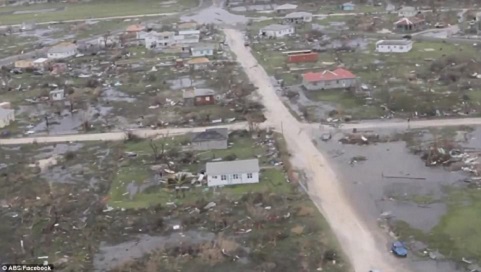
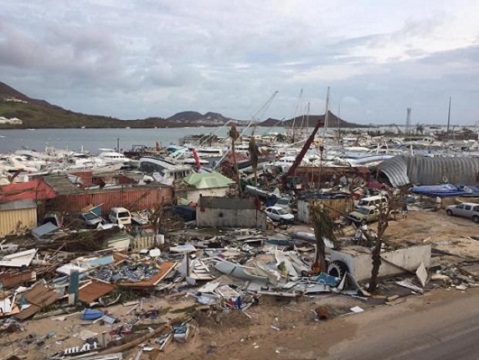
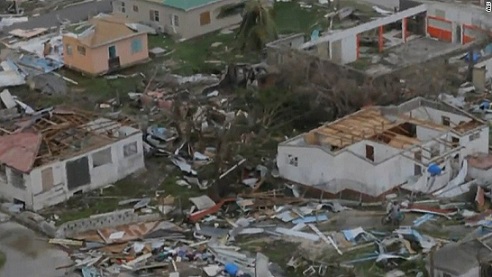
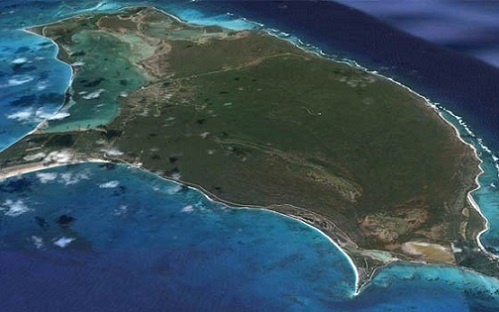
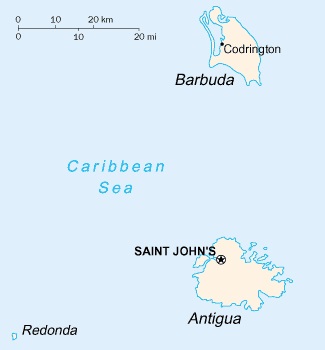
The Caribbean is in crisis today; we have just been devastated by Hurricane Irma; it has wreaked catastrophic havoc in certain islands, of which Barbuda is most notable. This is an official declaration; the Prime Minister of the country of Antigua and Barbuda has identified  90 percent of the structures on the island of Barbuda as uninhabitable and can now only be razed; see story in Appendix A below. See the news VIDEO here:

VIDEO – Barbuda, Destroyed By Hurricane Irma, Faces Jose Next | Rachel Maddow | MSNBChttps://youtu.be/2ewVgVDSuKg

Published on Sep 8, 2017 MSNBC
Michael Joseph, Red Cross president for Antigua and Barbuda, talks with Rachel Maddow about the utter devastation of the island of Barbuda by Hurricane Irma with Hurricane Jose just a day away. » Subscribe to MSNBC: http://on.msnbc.com/SubscribeTomsnbc About: MSNBC is the premier destination for in-depth analysis of daily headlines, insightful political commentary and informed perspectives. Reaching more than 95 million households worldwide, MSNBC offers a full schedule of live news coverage, political opinions and award-winning documentary programming — 24 hours a day, 7 days a week. Connect with MSNBC Online Visit msnbc.com: http://on.msnbc.com/Readmsnbc Find MSNBC on Facebook: http://on.msnbc.com/Likemsnbc Follow MSNBC on Twitter: http://on.msnbc.com/Followmsnbc Follow MSNBC on Google+: http://on.msnbc.com/Plusmsnbc Follow MSNBC on Instagram: http://on.msnbc.com/Instamsnbc Follow MSNBC on Tumblr: http://on.msnbc.com/LeanWithmsnbc Barbuda, Destroyed By Hurricane Irma, Faces Jose Next | Rachel Maddow | MSNBC

(Other impacted locales include Saint BarthélemySaint MartinAnguilla, Puerto Rico, the Virgin Islands and Florida).

Barbuda is a cautionary tale because it fulfills the forecast (prophecy) of this previous commentary, that if left unchecked, Caribbean crises get worse, completely dysfunctional, at the precipice of Failed-State status and communities emerge as …

Ghost Towns

A ghost town is an abandoned village, town or city, usually one which contains substantial visible remains. A town often becomes a ghost town because the economic activity that supported it has failed, or due to natural or human-caused disasters such as floods, government actions, uncontrolled lawlessness, war, or nuclear disasters. …

    “Things will always work themselves out” – Popular fallacy.

There is no guarantee of our survival. Communities and societies do fail; success is not assured; the work must be done, we must “sow if we want to reap”. …

How else would one explain why citizens from the most beautiful addresses on the planet are “breaking down the doors” to get out, either through legal means or illegal ones?

The book Go Lean … Caribbean stresses reboots, reorganizations and general turn-around of failing economic engines in favor of winning formulas. The book quotes a noted American Economist Paul Romer with this famous quotation:

    “A crisis is a terrible thing to waste”.

CU Blog - After Irma, Barbuda Becomes a 'Ghost Town' - Photo 1b

CU Blog - After Irma, Barbuda Becomes a 'Ghost Town' - Photo 1c

The movement behind the Go Lean book have often raised the subject of Ghost Towns. Just last month (August 22), this commentary was published:

Lessons from Colorado: Black Ghost Towns – “Booker T. turning in his grave”

So the future is not guaranteed for any Caribbean community. While our people may survive, our culture may not! We may have to supplant ourselves to some foreign destination. We may have to “take our talents to South Beach” … or South New York… or South Toronto, etc..

Prophecy: If we migrate to a foreign country, our grandchildren born there will NOT be identified as Caribbean.

So Ghost Towns have occurred and could happen in the Caribbean … again.

This commentary continues the 4-part series on the Aftermath of Hurricane Irma. This storm was devastating to the Atlantic tropical region, the Caribbean and US State of Florida. There are a lot of mitigation and remediation efforts that can be done to lessen the impact of storms. There are lessons that we must consider; there are reforms we must make; there are problems we must solve. The full list of the 4 entries of this series are detailed as follows:

  1. Aftermath of Hurricane Irma – America Should Scrap the ‘Jones Act’
  2. Aftermath of Hurricane Irma – Barbuda Becomes a ‘Ghost Town’
  3. Aftermath of Hurricane Irma – The Science of Power Restoration
  4. Aftermath of Hurricane Irma – Failed State Indicators: Destruction and Defection

We want to make the Caribbean homeland a better place to live, work and play. This is the quest of the book Go Lean … Caribbean – available to download for free – which serves as a roadmap for the introduction and implementation of the technocratic Caribbean Union Trade Federation (CU). Despite the threats of Climate Change, the CU is structured to turn-around failing Caribbean communities; it is proffered to provide economic, security and governance solutions for all 30 member Caribbean states. This mandate is detailed early on in the book’s Declaration of Interdependence, as follows (Page 11 – 13):

i. Whereas the earth’s climate has undeniably changed resulting in more severe tropical weather storms, it is necessary to prepare to insure the safety and security of life, property and systems of commerce in our geographical region. As nature recognizes no borders in the target of its destruction, we also must set aside border considerations in the preparation and response to these weather challenges.

xii. Whereas the legacy in recent times in individual states may be that of ineffectual governance with no redress to higher authority, the accedence of this Federation will ensure accountability and escalation of the human and civil rights of the people for good governance, justice assurances, due process and the rule of law. As such, any threats of a “failed state” status for any member state must enact emergency measures on behalf of the Federation to protect the human, civil and property rights of the citizens, residents, allies, trading partners, and visitors of the affected member state and the Federation as a whole.

xix. Whereas our legacy in recent times is one of societal abandonment, it is imperative that incentives and encouragement be put in place to first dissuade the human flight, and then entice and welcome the return of our Diaspora back to our shores. This repatriation should be effected with the appropriate guards so as not to imperil the lives and securities of the repatriated citizens or the communities they inhabit. The right of repatriation is to be extended to any natural born citizens despite any previous naturalization to foreign sovereignties.

The Go Lean book posits that failing Caribbean communities can be rescued, butt if “we do what we have always done, we get what we always got”. Therefore Caribbean communities must adopt different community ethos, plus the executions of key – and different – strategies, tactics, implementations and advocacies to reform and transform.

There is a Way Forward!

Consider this News Article in Appendix B relating the Prime Minister’s fundamental change in property laws for Barbuda:

Ownership is prohibited on the island of Barbuda; all lands in Barbuda are vested in the Crown on behalf of the people on the sister island. … “Whatever land they are occupying now, rather than having a license to occupy, we are saying that we will give … freehold ownership”.

Why should people invest in property they do not own?

Duh! This is such a basic societal factor; it is illogical that the government had not implemented this reform before.

In order to avoid the pitfalls and eventuality of “Ghost Towns”, the Go Lean book describes the heavy-lifting that all the community stakeholders must engage. These efforts are described as 3 prime directives:

Heavy-lifting and leverage!!!

Yes, since natural disasters – hurricanes, earthquakes and even volcanoes – are an inevitability in the Caribbean, we can better insure and assure the continuity of our communities’ societal engines, by spreading the risk across the wider region, not just one member-state. For relief-recovery-rebuilding communities like Barbuda after disasters, the goal is to spread the burden or heavy-lifting across the 30 member-states.

If there is a load you have to bear
That you can’t carry
I’m right up the road
I’ll share your load
If you just call me
Song: Lean On Me by Bill Withers – Go Lean Book (Page 5)

In summary, ghost towns could abound more and more if we continue with the status quo. Let’s not … continue with the more-of-the-same approach.

Let’s commit to this pledge to foster change in our region; we must reform and transform our societal engines. Everyone is hereby urged to lean-in to this CU/Go Lean roadmap to make the Caribbean a better place to live, work and play. 🙂

Download the free e-Book of Go Lean … Caribbean – now!

Sign the petition to lean-in for this roadmap for the Caribbean Union Trade Federation.

———-

Appendix ATitle: PM: 90 Percent of Barbuda ‘Destroyed’ by Hurricane Irma

Hurricane Irma has done catastrophic damage to “90 percent of Barbuda,” according to Gaston Browne, the Prime Minister of Antigua and Barbuda, after it barreled past the island nation and through the Caribbean on Wednesday. An official from the country’s Office of Disaster Services told ABC News said there was “widespread damage” across the island, which is home to 1,600 people. Authorities in St. Martin said 95 percent of the French part of the island was destroyed, with one local official saying the storm caused an “enormous catastrophe.” Irma made landfall as a Category 5 hurricane with sustained winds above 185 mph, and is expected to hit Florida on Saturday night.

Source: The Daily Beast Online Newswire posted September 7, 2017 from: http://www.thedailybeast.com/hurricane-irma-destroys-90-percent-of-barbuda

CU Blog - After Irma, Barbuda Becomes a 'Ghost Town' - Photo 3

CU Blog - After Irma, Barbuda Becomes a 'Ghost Town' - Photo 6

CU Blog - After Irma, Barbuda Becomes a 'Ghost Town' - Photo 5

CU Blog - After Irma, Barbuda Becomes a 'Ghost Town' - Photo 4

———-

Appendix BTitle: Barbudans to get title ownerships of lands they occupy

Antigua Observer – Barbudans will get the opportunity to own the lands they previously occupied as the island seeks to rebuild following the devastation caused by the passage of Hurricane Irma last week.

Prime Minister Gaston Browne made the disclosure yesterday during a special sitting of Parliament.

He said Barbudans would be given a crown grant of one dollar to obtain legal ownership of the lands on the 62-square mile island.

Currently, land ownership is prohibited on the island of Barbuda; all lands in Barbuda are vested in the crown on behalf of the people on the sister island.

The Land Department under the Barbuda Council is the main governing body.

“Whatever land they are occupying now, rather than having a license to occupy, we are saying that we will give you freehold ownership,” Browne said, noting that residents of the sister island are elated over the idea.

“When you give a Barbudan a freehold, they can go into the bank, they can borrow monies, they can get a mortgage, they can build. They can get a loan for student purposes, to do businesses, it is a form of empowerment,” Browne said.

The nation’s leader also suggested that protective mechanisms could be instituted to prevent Barbudans from transferring the freehold ownership without the approval of the Barbuda Council.

Browne told Parliamentarians in the Lower House that it is untenable for Barbuda to be exclusively dependent on Antigua.

According to Browne, it was never the intent of the central government to take full responsibility for the payment of salaries and wages and other expenses on the sister island.

He said the intention was for Barbuda to be able to generate some level of revenue while Antigua would provide a subsidy.

“It has become a dependent relationship. Now I know that the Barbudans are proud people and they don’t want to be coming, cap in hand, to Antigua begging for a salary cheque on a weekly or monthly basis when they can generate their income,” the PM concluded.

Over 1,000 people on Barbuda had to be evacuated from the island last week after the country’s leader described the situation as “uninhabitable” following the hurricane that has also been blamed for the death of a two-year old child.

The PM said the sister island could not progress until the land tenure question is settled, adding that no country can move forward without a proper rights system.

He said consultations would be held with the people of Barbuda on the way forward.

Meanwhile, the government has announced a tentative agreement with the United Arab Emirates to assist with the installation of 800-megawatt solar power  facility on Barbuda, as well as a medical health system.

Prime Minister Browne also said that he had instructed his bank to transfer EC$100,000  from his savings to a fund for the rehabilitation of the island.

Other Antigua & Barbuda Labour Party members have also pledged to dip into their pockets to fund the rebuilding effort.

PM Browne said that he expects other residents and businesses to step up to the plate.

Source: Posted September 12, 2017; retrieved September 16, 2017 from: https://stluciatimes.com/2017/09/12/barbudans-get-title-ownerships-lands-occupy

Share this post:
, ,
[Top]