Perhaps this was arguable in the past? Today? Hardly … see VIDEO here; (excuse the profanity):
VIDEO: America, the Greatest? –
Published on Oct 21, 2012 – Jeff Daniels, who portrays news anchor Will McAvoy in the HBO Series “The Newsroom”, delivered a stunning, hard-hitting, accurate, and intelligent monologue/response when asked why America is the greatest country in the world. A sobering outlook on the state of the USA. (CAUTION ON THE ADULT LANGUAGE).
Even in the past when the “Greatest” label was arguable, it didn’t apply to everyone! America was the Greatest Country, maybe, if you were:
White, Anglo-Saxon, Rich, Male and Straight
But if you were any of the following, then God help you:
Yes, building a multi-cultural society is not easy. The book Go Lean … Caribbean describes the challenge as heavy-lifting. America has failed at this challenge, hands-down. In previous blog- commentaries, many defects of American life were detailed, (including the propensity for Crony-Capitalism). See the list of defects here: Housing, education, job hunting, prisons, drug crime prosecutions, and racial profiling.
But despite this list and the reality of this subject, America tries …
This is an important consideration for the planners of Caribbean empowerment. The Caribbean, a region where unfortunately, we have NOT … tried.
The social science of Anthropology teaches that communities have two choices when confronted with endangering crises: fight or flight. The unfortunate reality is that we have chosen the option of flight; (we have no ethos for fighting for our homeland).
The book Go Lean … Caribbean asserts that no society can prosper with a high abandonment rate – reported at 70% for educated classes. The primary mission of the Go Lean book is to “battle” against the “push-and-pull” factors that draw so many of our Caribbean citizens away from their homelands to go to the US. While we cannot change/fix America, we can…
Lower the “push” factors!
The purpose of the Go Lean book is to fix the Caribbean, to be better than America. The Go Lean book serves as a roadmap for the introduction and implementation of the technocratic Caribbean Union Trade Federation (CU) to pursue the quest to elevate the Caribbean region through empowerments in economics, security and governance. It is the assertion that Caribbean citizens can stay home and effect change in their homelands more effectively than going to America to find the “Greatest Country in the World”. The book therefore asserts that the region can turn-around from failing assessments by applying best-practices, and forging new societal institutions to impact the Greater Good for all the Caribbean. This point was pronounced in the opening Declaration of Interdependence (Pages 10 – 14) with these acknowledgements and statements:
xi. Whereas all men are entitled to the benefits of good governance in a free society, “new guards” must be enacted to dissuade the emergence of incompetence, corruption, nepotism and cronyism at the peril of the people’s best interest. The Federation must guarantee the executions of a social contract between government and the governed.
xii. Whereas the legacy in recent times in individual states may be that of ineffectual governance with no redress to higher authority, the accedence of this Federation will ensure accountability and escalation of the human and civil rights of the people for good governance, justice assurances, due process and the rule of law. As such, any threats of a “failed state” status for any member state must enact emergency measures on behalf of the Federation to protect the human, civil and property rights of the citizens, residents, allies, trading partners, and visitors of the affected member state and the Federation as a whole.
xxxiii. Whereas lessons can be learned and applied from the study of the recent history of other societies, the Federation must formalize statutes and organizational dimensions to avoid the pitfalls of communities like … Detroit, Indian (Native American) Reservations… On the other hand, the Federation must also implement the good examples learned from developments/ communities like New York City, … Canada, the old American West and tenants of the US Constitution.
This is the quest of Go Lean…Caribbean roadmap, to reboot the region’s societal engines; employing best-practices and better strategies, tactics and implementations to impact its prime directives; identified with the following 3 statements:
Optimization of the economic engines in order to grow the regional economy to $800 Billion & create 2.2 million new jobs.
Establishment of a security apparatus to protect the resultant economic engines and mitigate challenges/threats to the region’s public safety.
Improvement of Caribbean governance to support these engines.
The Go Lean book stresses key community ethos, strategies, tactics, implementations and advocacies necessary to transform and turn-around the eco-systems of Caribbean society. These points are detailed in the book as follows:
Community Ethos – Economic Principles – Economic Systems Influence Individual Choices
Page 21
Community Ethos – Economic Principles – Consequences of Choices Lie in the Future
Page 21
Community Ethos – Governing Principles – Lean Operations
Page 24
Community Ethos – Ways to Impact the Future
Page 26
Community Ethos – Ways to Promote Happiness
Page 36
Community Ethos – Ways to Impact the Greater Good
Page 37
Strategy – Vision – Confederate all 30 member-states/ 4 languages into a Single Market
Page 45
Strategy – Mission – Build and foster local economic engines
Page 45
Tactical – Ways to Foster a Technocracy
Page 64
Tactical – Growing the Economy to $800 Billion GDP
Page 68
Tactical – Separation-of-Powers – CU Federal Government versus Member-State Governance
Page 71
Implementation – Assemble All Regionally-focus Organizations of All Caribbean Communities
Page 96
Planning – 10 Big Ideas – American Model:Kennedy’s Quest for the Moon
Page 127
Planning – Ways to Make the Caribbean Better
Page 131
Planning – Lessons Learned New York City – Managing as a “Frienemy”
Page 137
Planning – Lessons Learned from Detroit – Turn-around from Failure
Page 140
Planning – Lessons Learned from Indian Reservations – Pattern of Ethnic Oppression
Page 141
Planning – Lessons Learned from the American West – How to Win the Peace
Page 142
Planning – Lessons Learned from the US Constitution – America Tries – Each Generation Improves
Page 145
Advocacy – Ways to Grow the Economy
Page 151
Advocacy – Ways to Create Jobs
Page 152
Advocacy – Ways to Improve Governance
Page 168
Advocacy – Ways to Better Manage the Social Contract
Page 170
Advocacy – Ways to Impact Justice
Page 177
Advocacy – Ways to Improve Homeland Security
Page 180
Advocacy – Ways to Preserve Caribbean Heritage
Page 218
The threats of the repressive American past have not always been domestic; there have been times when American dysfunction have reached across borders, including Caribbean countries, and disrupted the peace and progress. This is an important lessons for the Caribbean to learn from considering the history of “American Greatness”; the following previous blog/commentaries apply:
Travel away from your children for an extended time period and you would notice something amazing: Change.
It turns out that change is constant; children grow. But you have to take a step back to notice the difference.
This is the experience of Disability Advocate Iris Adderley. She is a proud Bahamian – oldest child with 10 siblings who mostly all still live in the Bahamas – who served her country well; especially during the early days of nation-building (independence status was obtained in 1973). In a job assignment with the Bahamas Ministry of Tourism, Ms. Adderley spent many years abroad (Coral Gables, FL and Dallas, TX) promoting the Bahamas around the world as a tourist and convention destination. She was continuously called upon to sell a vision of the Bahamas that she discovered later to be out-dated, and irrelevant. The country had changed … and even declined, it seemed, in her absence.
Ms. Adderley returned to the Bahamas in the year 2000, but not to the homeland she had left behind, rather to this newly changed community. The changes were not all good. To complicate matters, she was now returning as a quadriplegic, a permanent disability.
Ms. Adderley endured a life-threatening car accident in Metropolitan Dallas in 1982, where she lived and worked for her Ministry of Tourism assignment. But she does not consider her injury as a national sacrifice. It was just “time and unforeseen occurrence” befalling her; (see Bible reference of Ecclesiastes 9:11 in the Appendix below). This taught her a very important lesson that everybody is vulnerable to injury and illness and can be rendered disabled. This new reality became her new advocacy, a quest to make sure people with disabilities have equal rights and opportunities to contribute to society. (This quest also applies as a population ages, the prevalence of disabilities increases proportionally; think Diabetes amputations, Hip replacements, etc.).
This conclusion aligns with the book Go Lean…Caribbean, that with just a reasonable accommodation, persons with disabilities can live a full and engaging life … and help to elevate their communities and make “home” better places to live, work and play.
What reasonable accommodations?
For starters, Ms. Adderley expressed that if her injury had occurred in her Caribbean homeland that she would now be dead!
The world is better … that she has survived.
The Go Lean book serves as a roadmap for the introduction and implementation of the technocratic Caribbean Union Trade Federation (CU). The CU is designed to elevate the region’s economic, security and governing societal engines. This includes healthcare. The CU roadmap calls for improvements to the region’s emergency management apparatus. There is a plan to deploy a network of 6 cutting-edge Trauma Centers throughout the Caribbean. With this mitigation and remediation, the region can more competently respond to trauma emergencies, like life-threatening auto accidents.
It is only reasonable to expect that Caribbean society would have caught up to finally being able this deliver on the social contract at this level, considering that Ms. Adderley trauma transpired 33 years ago.
Unfortunately, the experiences of so many in the Bahamas, specifically and the Caribbean as a whole, is that these countries are structured only for the lowest common denominator (LCD); anyone one with needs above-and-beyond this LCD level is just “out-of-luck”.
This is unacceptable … and unreasonable for Caribbean contributors like Iris Adderley. This is also unacceptable … and unreasonable for the planners of the new Caribbean. We must deliver better on the social contract, the implied covenant where citizens surrender some of their freedoms and submit to the authority of the State in exchange for protection of remaining natural and legal rights. Blatant failures on the delivery of this social contract lead to an undesirable destination: abandonment!
Ms. Adderley lived in the most advanced country in the world, in the US State of Texas. She would have been excused if she wanted to remain there for her sustained existence, considering her health disposition. But she showed a national sacrifice ethos and repatriated back to her Caribbean homeland. This is heroic!
In a structured interview, Iris Adderley made the following contributions to this discussion of the roadmap to elevate her community:
Bold = Author
What are the details of your advocacy?
There should be a stronger manifestation of “Human” and “Woman’s” rights in the Bahamas. It is deplorable that the country is so deficient in these offerings. Earlier in my career, I took the assignment in Dallas so as to leave the Coral Gables Office of the Ministry of Tourism because the spirit of gender discrimination was just so acute. I felt I could make a bigger impact in a more reasonable environment. I was proven correct and did indeed have a greater impact professionally there. Returning to the Bahamas in 2000 I wanted to nurture that same advocacy at home, but this time with a supplemental agenda for persons with disabilities.
What are your responsibilities now?
I serve as a Consultant at the Disability Affairs Division of the Ministry of Social Services and Community Development. I help to guide public policy to benefit those with disabilities in the country, even blending my prior role as a Tourism promoter by trying to create a great environment for persons with disabilities to come visit our shores and enjoy our hospitality.
What would you do if your project had 50% more funding?
Create rehabilitation centers, if not throughout the whole country, then at least in the capital city of Nassau. Persons with disabilities need help and support to get back to the point where they can contribute to society. Increased funding would allow more cultural education to message that persons with disabilities have the same rights in any society, to be more inclusive of the day-to-day affairs.
What do you want to see in The Bahamas in … 5 years?
More fulfilment of Sir Lynden’s Vision; (the first and longest-serving Prime Minister after majority rule, Sir Lynden O. Pindling). The young people need to know who we are as a people, where we came from and that we were a nation of beautiful, strong black people.
I want to see Bahamians own more of the Bahamas. This means diversifying from the main industries of tourism and financial services; all we’re doing there is servicing other people’s assets; we are not really owning or creating anything.
What do you want to see in The Bahamas in … 20 years?
The Bahamas needs a National Strategic Plan. This needs to reflect the values and best-practices that have been honed from experiences from around the world. The Bahamas has a global Diaspora – mostly of an elderly disposition now – their participation should be invited.
What features of North America/Europe would you like to see here?
The social safety nets (health, schools, food for the poor) are to be admired, especially in many European countries. Those communities extend themselves to care for their elderly, poor, sick and disabled citizens.
How would you feel if your children emigrate?
Though I don’t have any children directly, I’m blessed with many nieces, nephews and loving family members. So many of them are bright young all-stars and go-getters, studying abroad in colleges and universities. Unfortunately, far too often, these ones are not setting their sight on a return home to the Bahamas. Some would even rather go to a Latin American country than to come back here to the Bahamas. This is sad, as it does not reflect the great sacrifices that so many in the previous generations made to forge opportunities for this next generation.
Where do you consider to be the best place to live?
At one point, my answer would have been the Bahamas; but I’ve gotten to see the real country as it exists today; this is not what we sold to tourists in promotions and advertisements. The country has changed … downward. Instead of our next generation offering reassurance and hope, I am more troubled at their lack of proper training. We cannot expect greatness from the status quo of most of this generation today..
What areas are you most disappointed in when considering the last 20 years?
The lack of discernment is especially disappointing. Many times the wise course is presented to Bahamians, but they seem to like to ignore wisdom and instead proceed down a destructive path. I guess the proverb is true: “A prophet is not accepted at home”.
Your wisdom is discerned here Ms. Adderley!
The points from this Disability Advocate align with the CU/Go Lean roadmap. Our directive is similar: to elevate Caribbean society, including those persons with physical disabilities. The declarative statements of the prime directive are as follows:
Optimization of the economic engines in order to grow the regional economy.
Establishment of a security apparatus to prepare and protect stakeholders for natural, man-made and incidental emergencies.
Improvement of Caribbean governance to support these engines.
The book posits that one person, despite their field of endeavor, can make a difference in the Caribbean, and its impact on the world; that there are many opportunities where one champion, one advocate, can elevate society. In this light, the book features 144 different advocacies, one specifically for Persons with Disabilities (Page 228). We need advocates, vanguards and sentinels like Iris Adderley to ensure equal opportunities for all these relevant stakeholders.
The Go Lean roadmap specifically encourages the region, to lean-in to elevate society with these specific community ethos, strategies, tactics, implementations and advocacies:
Community Ethos – Economic Principles – Economic Systems Influence Individual Choices
Page 21
Community Ethos – Governing Principles – Minority Equalization
Page 24
Community Ethos – Governing Principles – Lean Operations
Page 24
Community Ethos – Governing Principles – Return on Investments
Page 24
Community Ethos – Ways to Promote Happiness – Gerontology/Aging Factors
Page 36
Community Ethos – Ways to Impact the Greater Good
Page 37
Strategy – Vision – Confederate all 30 Member-states
Page 45
Strategy – Mission – Repatriate the Diaspora, young and old …even those disabled
Page 46
Anatomy of Advocacies – Examples of Individuals Who Made Impact
Page 122
Planning – 10 Big Ideas – Homeland Security Pact
Page 127
Planning – Ways to Improve Failed-State Indices – Minority and Human Rights
Page 134
Planning – Lessons from US Constitution – Equal Protection for all Minorities
Page 139
Advocacy – Ways to Improve Healthcare – Caribbean [Persons] with Disabilities
Page 156
Advocacy – Ways to Improve Governance – For All Citizens
Page 168
Advocacy – Ways to Better Manage the Social Contract – Medical / Heath Endeavors
Page 170
Advocacy – Ways to Impact Justice – Ensure Rights for the Disabled Classes
Page 177
Advocacy – Ways to Remediate and Mitigate Crime – Hate Crime Qualifiers
Page 178
Advocacy – Ways to Impact Homeland Security – Emergency Management
Page 180
Advocacy – Ways to Improve Emergency Management – Trauma Art & Science
Advocacy – Ways to Protect Human Rights – Caribbean [Persons] with Disabilities
Page 220
Advocacy – Ways to Improve Elder-Care – Caribbean [Persons] with Disabilities
Page 225
Advocacy – Ways to Empower Women
Page 226
Advocacy – Ways to Impact Persons with Disabilities – ‘Americans with Disabilities Act’ Model
Page 228
Appendix – Trauma Center Definitions
Page 336
The Caribbean region wants a more optimized society … for all citizens. We want to mitigate human rights and civil rights abuses, and empower all for a better life, liberty and the pursuit of happiness.
The Go Lean book posits that economic measures and security measures must be in tandem for any societal empowerment effort. According to the foregoing interview/profile, after 30 years, our region is still behind with regards to servicing the needs of one specific minority group: persons with disabilities. We must do better!
Early in the book, the pressing need to optimize facilitations for this population group was pronounced in the Declaration of Interdependence (Pages 11 – 13), with these opening statements:
ix. Whereas the realities of healthcare and an aging population cannot be ignored and cannot be afforded without some advanced mitigation, the Federation must arrange for health plans …
xi. Whereas all men are entitled to the benefits of good governance in a free society, “new guards” must be enacted to dissuade the emergence of incompetence, corruption, nepotism and cronyism at the peril of the people’s best interest. The Federation must guarantee the executions of a social contract between government and the governed.
xvi. Whereas security of our homeland is inextricably linked to prosperity of the homeland, the economic and security interest of the region needs to be aligned under the same governance. … the accedence of this Federation must equip the security apparatus with the tools and techniques for predictive and proactive interdictions.
xviii. Whereas all citizens in the Federation member-states may not have the same physical abilities, reasonable accommodations must be made so that individuals with physical and mental disabilities can still access public and governmental services so as to foster a satisfactory pursuit of life’s liberties and opportunities for happiness.
The Go Lean book explicitly acknowledges that optimizing the needs of persons with disabilities is not easy; this requires strenuous effort, heavy-lifting. These persons with disabilities normally are not able to contribute as much to Caribbean society as they draw on the public resources. This is unfortunate! Other societies have provided great models and amenities for facilitating fuller lives for those with disabilities: motorized wheelchairs, cars equipped with hand controls, Braille and TeleType (TTY and/or TDD) devices. This is the quest of the CU/Go Lean roadmap to engage more people – even those persons with disabilities – into this effort to optimize Caribbean society. More innovations are forthcoming; see VIDEOs in the Appendix. This vision is only reasonable, but prudent, as this population can generate a positive Return on Investment (ROI); as demonstrated by Iris Adderley in the foregoing interview.
Many subjects related to this profile of role model Iris Adderley have been blogged in previous Go Lean…Caribbean commentary; they are sampled here:
American Human Rights Leaders Slams Caribbean Poor Record
The CU/Go Lean roadmap is designed to empower and enhance the economic engines for the full participation and benefit of all Caribbean people. This includes the number of citizens that may have some physical challenges (deaf, blind, lame/mobility, etc.) or mental challenges. The CU’s vision is that this population group represents a critical talent pool that is under-served and underutilized; they are therefore included in the Go Lean roadmap. Tactically there is the call for a Caribbean [Persons] with Disabilities (CDA) provision to be embedded in the Caribbean Union confederation treaty; the request is to have the edict of reasonable accommodations legally embedded in statures.
In addition to the economic missions, the CU treaty would also address security needs, with the mission to fortify homeland security and to mitigate societal threats and risks, including a solution for emergency management and medical trauma arts and sciences.
Lastly, the CU treaty addresses remediation for regional governance. The local governments are thusly spurred to adapt and enforce access standards for all public edifices and private structures providing commerce to the general public. This reasonable accommodations mandate is modeled after the Americans with Disabilities Act (ADA) feature in US federal law.
This roadmap is a fully comprehensive plan with consideration to all aspects of Caribbean life. All stakeholders – citizens, businesses, and institutions – are hereby urged to lean-in to this roadmap.
Yes, with all “hands on deck”, persons with disabilities as well, the Caribbean can truly become a better place to live, work and play. 🙂
2.Bible Reference – Ecclesiastes 9:11:
“I have seen something further under the sun, that the swift do not always win the race, nor do the mighty win the battle, nor do the wise always have the food, nor do the intelligent always have the riches, nor do those with knowledge always have success, because time and unexpected events overtake them all.” — New World Translation
Published on Mar 28, 2014 – Hugh Herr is building the next generation of bionic limbs, robotic prosthetics inspired by nature’s own designs. Herr lost both legs in a climbing accident 30 years ago; now, as the head of the MIT Media Lab’s Biomechatronics group, he shows his incredible technology in a talk that’s both technical and deeply personal — with the help of ballroom dancer Adrianne Haslet-Davis, who lost her left leg in the 2013 Boston Marathon bombing, and performs again for the first time on the TED stage.
Published on Nov 5, 2012 – A father who lost his arm in an accident six years ago has been given a new lease of life by a hi-tech bionic hand which is so precise he can type again. Nigel Ackland, 53, has been fitted with the Terminator-like carbon fibre mechanical hand which he can control with movements in his upper arm. The new bebionic3 myoelectric hand, which is also made from aluminium and alloy knuckles, moves like a real human limb by responding to Nigel’s muscle twitches. Incredibly, the robotic arm is so sensitive it means the father-of-one can touch type on a computer keyboard, peel vegetables, and even dress himself for the first time in six years. More info about this amazing prosthetic can be found here http://bebionic.com
Published on October 13, 2011 – Berkeley Bionics has rebranded. The company is now known as Ekso Bionics and eLEGS has become Ekso. To clarify, the device is an exoskeleton and the brand of the exoskeleton is Ekso, by Ekso Bionics.
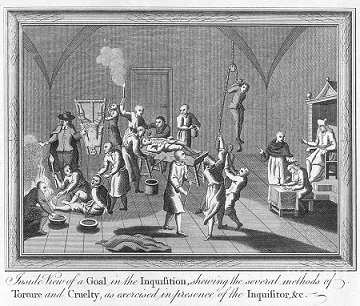
This is well represented in the historicity of the Spanish Inquisition (see Appendix * below), the campaign by the Roman Catholic Church to weed out the Jews and Muslims in Spain! This bad history of ethnic cleansing was at its worst in the 15th Century. See the tongue-in-cheek comedy VIDEO in the Appendix.
How does a community repent, forgive and reconcile from such a bad legacy?
Easier said than done!
For starters, do not proceed as if the events never happened. This is the lesson now being learned in modern day Spain. See the news article here:
MADRID (AP) — The tiny Spanish village of Castrillo Matajudios — which means “Camp Kill Jews” — on Monday officially changed its name back to Castrillo Mota de Judios (“Jews’ Hill Camp”) following a referendum and regional government approval.
The village, with about 50 inhabitants, voted to change the name in 2014 after the mayor argued that the term was offensive and that the village should honor its Jewish origins.
Documents show the villages’ original name was “Jews’ Hill Camp” and that the “Kill Jews” name dates from 1627, after a 1492 Spanish edict ordering Jews to become Catholics or flee the country. Those who remained faced the Spanish inquisition, with many burned at the stake.
The name change was approved by the regional government of Castilla y Leon and published in the region’s official gazette.
Although Jews were killed in the area, researchers believe the village got its recent name from Jewish residents who converted to Catholicism and wanted to reinforce their repudiation of Judaism to convince Spanish authorities of their loyalty.
Others suspect the change may have come from a slip of the pen.
Although no Jews live in the village today, many residents have ancient Jewish roots and the town’s official shield includes the Star of David.
Spain’s lower house of parliament this month approved a law setting a citizenship path for the descendants of Jews who were forced to flee the country centuries ago.
Spain also has an ancient southeastern town called Valle de Matamoros, which translate as “Kill Muslims Valley.” The town has said it has no plans to change its name. Matamoros is also a surname in Spain.
There is a need to reconcile a lot of bad episodes in Caribbean history. Think:
Haiti
Cuba
Guyana’s border with Venezuela
Belize’s border with Guatemala
The book Go Lean…Caribbean posits that any attempt at unification of the Caribbean 30 member-states region must consider the ancient and modern conflicts some member-states have with others. The book serves as a roadmap for the introduction and implementation of the Caribbean Union Trade Federation (CU). A mission of the roadmap is to reverse the societal abandonment and invite the repatriation of the Diaspora by flashing the “Welcome Home” signs. But “old parties” returning can also open “old wounds”. Therefore an additional mission is to facilitate formal reconciliations, much like the model in South Africa with their Truth & Reconciliation Commissions (TRC). This mission will assuage these Failed-State indicators and threats (Page 272):
“Revenge seeking” groups
Group Grievances
The foregoing article depicts a bad episode in history and the best-practices to repent, forgive and reconcile.
The approach is simple, correct the bad “community ethos” from the past. The Go Lean book defines “Community Ethos” as the fundamental character or spirit of a culture; the underlying sentiment that informs the beliefs, customs, or practices of a group or society; the dominant assumptions of a people or period. The Spanish town in the foregoing article continued to laud the bad actions of “killing Jews” by the continued use of that name. Though none of the villains or victims are alive today, it is just a bad spirit to imbrue from one generation to another. This town name “Camp Kill Jews” is such a bad image to uphold.
The CU/Go Lean vision to elevate Caribbean society must consider the issue of image. There is the need for a sentinel role for Caribbean image, as there are a lot of times that Caribbean life and people are denigrated in works of media arts: film, TV, books, magazines. The Go Lean roadmap calls for the CU to assume that role. Using cutting edge delivery of best practices, the CU will employ strategies, tactics and implementations to impact its prime directives; identified with the following 3 statements:
Optimization of the economic engines in order to grow the regional economy to $800 Billion & create 2.2 million new jobs.
Establishment of a security apparatus to protect the resultant economic engines.
Improvement of Caribbean governance to support these engines.
The Go Lean book speaks of the Caribbean as in crisis and posits that this crisis can be averted, that it is a “terrible thing to waste”. The Go Lean roadmap seeks to optimize the entire Caribbean economic/security/governance eco-system. This vision is defined early in the book (Page 12) in the following pronouncements in the Declaration of Interdependence:
xi. Whereas all men are entitled to the benefits of good governance in a free society, “new guards” must be enacted to dissuade the emergence of incompetence, corruption, nepotism and cronyism at the peril of the people’s best interest. The Federation must guarantee the executions of a social contract between government and the governed.
xii. Whereas the legacy in recent times in individual states may be that of ineffectual governance with no redress to higher authority, the accedence of this Federation will ensure accountability and escalation of the human and civil rights of the people for good governance, justice assurances, due process and the rule of law. As such, any threats of a “failed state” status for any member state must enact emergency measures on behalf of the Federation to protect the human, civil and property rights of the citizens, residents, allies, trading partners, and visitors of the affected member state and the Federation as a whole.
xiii. Whereas the legacy of dissensions in many member-states (for example: Haiti and Cuba) will require a concerted effort to integrate the exile community’s repatriation, the Federation must arrange for Reconciliation Commissions to satiate a demand for justice.
The Go Lean book details a lot more, a series of assessments, community ethos, strategies, tactics, implementations and advocacies to optimize the image of the Caribbean region:
Community Assessment – Dutch Caribbean – Integration & Secessions
Page 16
Community Assessment – French Caribbean – Organization & Discord
Page 17
Community Ethos – Economic Systems Influence Choices & Incentives
Page 21
Community Ethos – People Respond to Incentives
Page 21
Community Ethos – Consequences of Choices Lie in the Future
Page 21
Community Ethos – Ways to Impact Turn-Arounds
Page 33
Community Ethos – Ways to Manage Reconciliations
Page 34
Community Ethos – Ways to Promote Happiness
Page 36
Community Ethos – Ways to Impact the Greater Good
Page 37
Strategy – Vision – Confederating a Non-Sovereign Union of 30 Member-states
Page 45
Strategy – Mission – Keep the next generation at home; Repatriate Diaspora
Page 46
Tactical – Separation of Powers – State Department – Economic & Diplomatic Relations
Page 80
Tactical – Separation of Powers – Judiciary – Truth & Reconciliation Courts
Page 90
Implementation – Foreign Policy Initiatives at Start-up – Relationships with South & Central American Neighbors
Page 102
Implementation – Ways to Deliver
Page 109
Implementation – Reasons to Repatriate
Page 118
Anatomy of Advocacies
Page 122
Planning – Ways to Improve Image
Page 133
Planning – Improve Failed-State Indices
Page 134
Advocacy – Ways to Grow the Economy
Page 151
Advocacy – Ways to Better Manage the Social Contract
Page 170
Advocacy – Ways to Impact Justice – Truth & Reconciliation Commissions
Page 177
Advocacy – Ways to Impact Hollywood – Controlling Image
Page 203
Advocacy – Ways to Preserve Caribbean Heritage
Page 218
Advocacy – Ways to Protect Human Rights – Reconciliations
Page 220
Advocacy – Ways to Re-boot Cuba – Reconciliations
Page 236
Advocacy – Ways to Re-boot Haiti – Reconciliations
Page 238
Advocacy – Ways to Impact The Guianas – Venezuelan Foreign Policy Synchronizations
Page 241
Advocacy – Ways to Impact Belize – Guatemala Grand Bargain
The foregoing news article conveys that many Spanish/European communities had not come to grips with their discriminatory past. So there is the need for outreach. This relates to anti-Semitism and the historic abuses cast on the Jewish people. For the African Diaspora, the majority population of 29 of the Caribbean member-states, the experience is even more egregious. (French territory St. Barthélemy is the sole demographic exception).
Now is the time for all of the Caribbean, the people and governing institutions, to lean-in for the empowerments described in the book Go Lean … Caribbean. There is reason to believe that these empowerment efforts can be successful. The Go Lean roadmap conveys how single causes/advocacies have successfully been forged throughout the world (Page 122 – Anatomy of Advocacies). We can succeed here as well.
(This movement does not campaign for reparations from slavery nor colonization).
The CU will address past, present and future challenges of human rights abuses and defamation to the Caribbean image.
The Caribbean can succeed in the advocacy to improve the Caribbean image in the region and around the world. There are previous blog commentaries that delve into aspects of Caribbean image:
The foregoing consideration helps us to appreciate that reconciliation is possible only when the persons doing the wrong accept the forgiveness being offered and repents for what they have done. We applaud the tiny Spanish village of Castrillo Matajudios for showing the world their “Mea Culpa”; this is the best-practice for reconciliation.
This is now a new ethos for the Caribbean, to reconcile conflicts from the past; to repent, forgive and hopefully forget the long history of human rights abuses from the past. All of this effort, heavy-lifting, will make the region a better place to live, work and play. We urge all to lean-in to this roadmap.
The Tribunal of the Holy Office of the Inquisition (Spanish: Tribunal del Santo Oficio de la Inquisición), commonly known as the Spanish Inquisition (Inquisición española), was established in 1478 by Catholic Monarchs Ferdinand II of Aragon and Isabella I of Castile. It was intended to maintain Catholic orthodoxy in their kingdoms and to replace the Medieval Inquisition, which was under Papal control. It became the most substantive of the three different manifestations of the wider Christian Inquisition along with the Roman Inquisition and Portuguese Inquisition.
The Inquisition was originally intended in large part to ensure the orthodoxy of those who converted from Judaism and Islam. This regulation of the faith of the newly converted was intensified after the royal decrees issued in 1492 and 1501 ordering Jews and Muslims to convert or leave Spain.
Various motives have been proposed for the monarchs’ decision to found the Inquisition such as increasing political authority, weakening opposition, suppressing conversos, profiting from confiscation of the property of convicted heretics, reducing social tensions, and protecting the kingdom from the danger of a fifth column (clandestine activities involving acts of sabotage, disinformation, or espionage executed within defense lines by secret sympathizers of an external force).
The body was under the direct control of the Spanish monarchy. It was not definitively abolished until 1834, during the reign of Isabella II, after a period of declining influence in the previous century.
The Spanish Inquisition is often cited in literature and history as an example of Catholic intolerance and repression. Modern historians have tended to question earlier and possibly exaggerated accounts concerning the severity of the Inquisition. Although records are incomplete, estimates of the number of persons charged with crimes by the Inquisition range up to 150,000, with 2,000 to 5,000 people executed.
Published on Dec 8, 2012 – From Mel Brooks’ “History of the World Part 1”. This is a comedic parody, with song-and-dance! Category: Entertainment; License: Standard YouTube License
The book Go Lean…Caribbean describes a new regime for Caribbean economic circles: a world where most payments are conducted via electronic means. While this may be the future for the Caribbean, frankly it is already the reality for North America and Western Europe!
In the Caribbean, we are behind the times; we party like its 1969!
Electronic Payments schemes are no longer optional. These must be deployed, as soon as possible, to forge the change necessary to elevate Caribbean society. The trend has started; see the news article here of a card payment scheme deployed recently in the Bahamas:
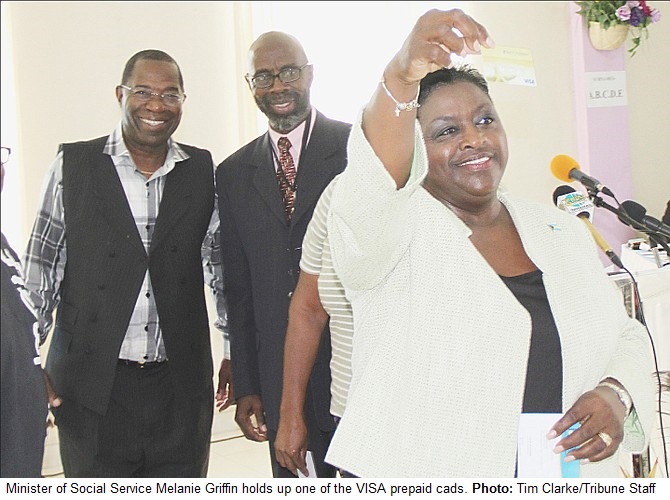
MORE than 4,000 residents of New Providence are now part of the Department of Social Services’ modernised food assistance programme.
Officials announced yesterday the approval of an extra 1,501 clients from the Horseshoe Drive Centre to the programme, joining 780 clients registered at the Wulff Road Centre, 874 at the Fox Hill Centre and 1,660 at the Robinson Road Centre, bringing the total to 4,365 in possession of the new pre-paid debit card.
Social Services Minister Melanie Griffin said that although the new pre-paid cards do not resolve all of the issues and problems that exist in the department’s food programme, they allow “clients that are truly in need the ability to shop and purchase needed food items with ease and comfort”.
Mrs Griffin explained that the cards provide users with the ability to not only to limit their contact with centres, but gives them more freedom by allowing them to determine how much they spend in one location and the ability to shop at different establishments in one payment period.
According to the Yamacraw representative, all three are features not allowed by the previous voucher system operated by the department.
“It was a long, hard road getting to this point but with the addition of each centre, we gained more experience and improved the processes involved,” said Mrs Griffin.
She added: “We now turn our efforts to the introduction of the card in Grand Bahama and the FamilyIslands as we intend for this payment method to be utilised throughout the Bahamas.”
Officials from the department indicated that the implementation process is already under way in Grand Bahama with people registered for assistance now being reassessed.
The department suggested that the new cards would first be issued at the Eight Mile Rock Centre and then throughout Freeport.
In November, officials introduced the new debit card in conjunction with Bank of The Bahamas (BOB).
It is designed to curb abuse of the food coupon system, and is seen as a key reform to how the government distributes aid to poor Bahamians.
Mrs Griffin said last year that the card was one feature of wide-ranging upgrades to the Bahamas’ social safety net, a programme being financed with $7.5m from the Inter-American Development Bank (IDB).
In January, the government had approved a five per cent increase in the Department of Social Services’ food assistance budget to counteract the impact of VAT on the poor.
Last June, the Department of Statistics said that since 2001, poverty levels in The Bahamas have risen by 3.5 per cent, while more than 40,000 people in the country live below the poverty line – defined as an annual income of less than $5,000 a year.
Other examples abound. The Go Lean book (Page 353) identifies the system deployed in American states and territories (including Puerto Rico and the US Virgin Islands) branded EBT (Electronic Benefits Technology).
We must therefore examine models used around the world to facilitate these payment systems. The Go Lean book specifically draws attention to the model of the Mastercard/Visa Interchange and Clearinghouse; (Page 172). The book serves as a roadmap for the introduction and implementation of the Caribbean Union Trade Federation (CU) and the Caribbean Central Bank (CCB). This Go Lean roadmap has 3 prime directives:
Optimization of the economic engines in order to grow the regional economy to $800 Billion & create 2.2 million new jobs.
Establishment of a security apparatus to protect the resultant economic engines.
Improvement of Caribbean governance to support these engines.
This Go Lean/CU/CCB roadmap defines that despite coins and notes, the regional currency, the Caribbean Dollar (C$), will be heavily-targeted as a cashless currency. So the CCB will settle all C$ electronic transactions in the style of the MasterCard-Visa Interchange & Clearinghouse. See the definition in the Appendix below. The book relates (Page 172) how this activity would be a fundamental revenue source for Caribbean governance; as the Mastercard/Visa model now enjoys interchange and clearance fees in excess of 1% – 2% of transaction amounts; (pricing is based on different transaction/industry/card types + flat fees). The Appendix summarizes total revenue for a recent year at $30 Billion for US operations alone. Yes, the pennies add up!
According to the foregoing news article, why would the Bahamas government pay interchange fees to the American entity that is the Mastercard/Visa clearinghouse. The money on deposit originates in the Bahamas, the currency is Bahamian Dollars and the merchants are Bahamian. Why is there a need to share the transaction revenue outside the border with an American entity?
This subject and application vividly depicts the need for a local Caribbean solution of the technology and processing for card transaction interchange. This is the quest of the Go Lean…Caribbean roadmap.
However, this issue is about more than just technology, it relates to economics as well. A previous blog/commentary related how electronic payments provide the impetus for M1, the economic measurement of currency/money in circulation (M0) plus overnight bank deposits. A mission of Go Lean is to increase M1 values, thereby facilitating the dynamic called the “money multiplier” – creating money “from thin-air”. This is a BIG deal!
The Go Lean/CU/CCB movement declares: “Move Over Mastercard/Visa!”
We must model the Mastercard/Visa clearinghouse and learn lessons from their good, bad and ugly history.
It is argued that this interchange is classic Crony-Capitalism, the use of the public trust for the pursuit of private profits. This is evident with their monopolistic integration of bankcard processing despite being two separate for-profit entities (association/ cooperative of banks). This is a familiar charge against this clearinghouse; they have been constantly accused of these abusive practices:
Price-fixing Regulators in several countries have questioned the collective determination of interchange rates and fees as potential examples of price-fixing. Merchant groups in particular, including the U.S.-based Merchants Payments Coalition and Merchant Bill of Rights, also claim that interchange fees are much higher than necessary,[14] pointing to the fact that even though technology and efficiency have improved, interchange fees have more than doubled in the last 10 years. Issuing banks argue that reduced interchange fees would result in increased costs for cardholders, and reduce their ability to satisfy rewards on cards already issued.
Consumer welfare A 2010 public policy study conducted by the Federal Reserve concluded the reward program aspect of interchange fees results in a non-trivial monetary transfer from low-income to high-income households. Reducing merchant fees and card rewards would likely increase consumer welfare.[15] The Merchants Payments Coalition is fighting for a more competitive and transparent card fee system that better serves American consumers and merchants alike. Because swipe fees are hidden, consumers are unable to weigh the benefits and costs associated with choosing a particular form of payment. Eliminating hidden swipe fees is advocated as a means to realize an open market system for electronic payments.[16]
Creating the optimized CU/CCB governance is “Step One, Day One” in the Go Lean roadmap. The strategy is to implement the CCB and C$ currency with a regulatory framework fortified by best-practices, technology and infrastructure, to facilitate the electronic payments needs of the Caribbean community.
The roadmap posits that to adapt and thrive in the new global marketplace there must be more strenuous management, technocratic optimizations, of the region’s governance … and payment systems. This is the charge of Go Lean roadmap, opening with the Declaration of Interdependence (Page 12 – 13) and these pronouncements:
xi. Whereas all men are entitled to the benefits of good governance in a free society, “new guards” must be enacted to dissuade the emergence of incompetence, corruption, nepotism and cronyism at the peril of the people’s best interest. The Federation must guarantee the executions of a social contract between government and the governed.
xii. Whereas the legacy in recent times in individual states may be that of ineffectual governance with no redress to higher authority, the accedence of this Federation will ensure accountability and escalation of the human and civil rights of the people for good governance, justice assurances, due process and the rule of law…
xxiv. Whereas a free market economy can be induced and spurred for continuous progress, the Federation must install the controls to better manage aspects of the economy: jobs, inflation, savings rate, investments and other economic principles. Thereby attracting direct foreign investment because of the stability and vibrancy of our economy.
xxv. Whereas the legacy of international democracies had been imperiled due to a global financial crisis, the structure of the Federation must allow for financial stability and assurance of the Federation’s institutions. To mandate the economic vibrancy of the region, monetary and fiscal controls and policies must be incorporated as proactive and reactive measures. These measures must address threats against the financial integrity of the Federation and of the member-states.
The foregoing article, demonstrates that this region is ready for a local payment-card clearinghouse solution. The Go Lean book details a series of community ethos, strategies, tactics, implementations and advocacies to foster the proper controls for electronic payments/virtual money in the Caribbean region:
Community Ethos – Economic Principles
Page 21
Community Ethos – Money Multiplier Principle
Page 22
Community Ethos – “Light Up the Dark Places”
Page 23
Community Ethos – Lean Operations
Page 24
Community Ethos – Cooperatives
Page 25
Community Ethos – Ways to Impact the Future
Page 26
Community Ethos – Promote Intellectual Property
Page 29
Community Ethos – Ways to Bridge the Digital Divide
Page 31
Tactical – Separation of Powers – Central Banking
Page 73
Implementation – Assemble Central Bank Cooperative
Page 96
Implementation – Ways to Deliver
Page 109
Implementation – Ways to Impact Social Media
Page 111
Planning – 10 Big Ideas –Currency Union / Single Currency
Page 127
Planning – Ways to Improve Interstate Commerce
Page 129
Anecdote – Caribbean Currencies
Page 149
Advocacy – Ways to Mitigate Black Markets – e-Payments
Page 165
Advocacy – Government Revenue Options – Interchange Fees
Page 172
Advocacy – Ways to Foster Cooperatives – Cooperative Banking
Page 176
Advocacy – Ways to Impact Cruise Tourism – Smartcard scheme
Page 193
Advocacy – Ways to Foster Technology – e-Government Services
Page 197
Advocacy – Ways to Foster e-Commerce – Card Culture
Page 198
Advocacy – Reforms for Banking Regulations – Credit Card Banking
Page 199
Appendix – Alternative Remittance Modes – Prepaid Card Option
Page 270
Appendix – Electronic Benefits Transfers in the Caribbean Region
Page 353
The points of effective, technocratic payment system stewardship, were further elaborated upon in these previous blog/commentaries:
Now is the time for all of the Caribbean, the people, the banking establishments and governing institutions, to lean-in for the empowerments described in the book Go Lean … Caribbean. We must “protect our own house” and work towards our own future. We do not need Mastercard/Visa clearinghouse to do what we can do ourselves; see the VIDEO here.
Uploaded on May 18, 2010 – Visa Bankcard TV Commercial demonstrating the substitution for cash, depicting characters from the Disney-PIXAR movie, TOY STORY 3: Woody and the gang tries to save Buzz.
The responsibility to transform the Caribbean’s payment systems should be that of Caribbean stakeholders; our duty and accountability alone. This is the attitude that leads to the ultimate goal: to make the Caribbean a better place to live, work and play. 🙂
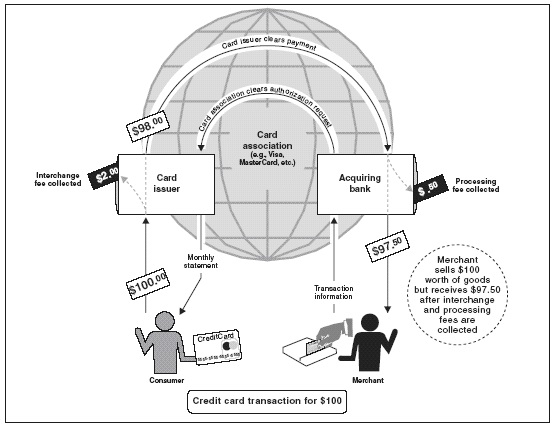
Interchange fee is a term used in the payment card industry to describe a fee paid between banks for the acceptance of card based transactions. Usually it is a fee that a merchant’s bank (the “acquiring bank”) pays a customer’s bank (the “issuing bank”) however there are instances where the interchange fee is paid from the issuer to acquirer, often called reverse interchange.
In a credit card or debit card transaction, [(like Mastercard and Visa)], the card-issuing bank in a payment transaction deducts the interchange fee from the amount it pays the acquiring bank that handles a credit or debit card transaction for a merchant. The acquiring bank then pays the merchant the amount of the transaction minus both the interchange fee and an additional, usually smaller, fee for the acquiring bank or independent sales organization (ISO), which is often referred to as a discount rate, an add-on rate, or passthru. For cash withdrawal transactions at ATMs, however, the fees are paid by the card-issuing bank to the acquiring bank (for the maintenance of the machine).
These fees are set by the credit card networks,[1] and are the largest component of the various fees that most merchants pay for the privilege of accepting credit cards, representing 70% to 90% of these fees by some estimates, although larger merchants typically pay less as a percentage. Interchange fees have a complex pricing structure, which is based on the card brand, regions or jurisdictions, the type of credit or debit card, the type and size of the accepting merchant, and the type of transaction (e.g. online, in-store, phone order, whether the card is present for the transaction, etc.). Further complicating the rate schedules, interchange fees are typically a flat fee plus a percentage of the total purchase price (including taxes). In the United States, the fee averages approximately 2% of transaction value.[2]
In recent years, interchange fees have become a controversial issue, the subject of regulatory and antitrust investigations. Many large merchants such as Wal-Mart have the ability to negotiate fee prices,[3] and while some merchants prefer cash or PIN-based debit cards, most believe they cannot realistically refuse to accept the major card network-branded cards. This holds true even when their interchange-driven fees exceed their profit margins.[4] Some countries, such as Australia, have established significantly lower interchange fees, although according to a U.S. Government Accountability study, the savings enjoyed by merchants were not passed along to consumers.[5] The fees are also the subject of several ongoing lawsuits in the United States.
Interchange fees are set by the payment networks such as Visa and MasterCard.
In the US Card issuers now make over $30 billion annually from interchange fees. Interchange fees collected by Visa[6] and MasterCard[7] totaled $26 billion in 2004. In 2005 the number was $30.7 billion, and the increase totals 85 percent compared to 2001.
The music business is first and foremost a business – Unknown Author
Caribbean people love music. The promoters of the roadmap for a new Caribbean, based on the book Go Lean…Caribbean, love music. The book identifies 169 genres of music pervasive in the Caribbean region, think Reggae, Merengue, Soca, Compas (Haiti). But the book and the news article/VIDEO below relate that the challenge in the music business is the business functionalities itself. Consider these additional quotations from musical greats about this current and historic dilemma:
Music is spiritual. The music business is not. – Van Morrison
Music and the music business are two different things. – Erykah Badu
I happened to come along in the music business when there was no trend. – Elvis Presley
The desire to hit a big home run is dominating the music business. – Billy Corgan
At the end of the day, there’s only a few major stars in the music business, and then there’s all these people that are aspiring to be that. – John Legend
One of the stars of contemporary music, Taylor Swift (see Appendix below), has now reached-out and reached-in to impact this industry, the music business. She has used her financial wherewithal, immerse popularity, huge influence and massive following to force change in this industry. Despite the historical abuse, this one person is making a difference … here and now!
This aligns with the book Go Lean…Caribbean which posits that one person can advocate in a community and transform it for change. The book serves asa roadmap for the introduction and implementation of the Caribbean Union Trade Federation (CU). The CU seeks to empower the economic engines of the region, including the music and performing arts industry. The book vividly depicts how Caribbean music is great, but the Caribbean music industry is in shambles. It is difficult for artists and stakeholders to make a living in this industry in this region. This assessment is not due to any lack of music consumption or music appreciation, but rather due to the lack of a music retailing eco-system.
As depicted in the following VIDEO, most music consumption now take place via the electronic media (internet downloads, streaming, mobile devices, etc.). This is a trend that has been undermining the music industry for 2 decades now, and yet the industry stakeholders have been slow to adapt to this transforming world. This is a parallel reality for Caribbean life in general: Agents of Change (Technology, Globalization) have “rocked” the societal engines, and yet the region has still not adapted adequately. The same as one person, Taylor Swift, is hereby making an impact; this commentary asserts that a similar transformation can occur here at home, in many different arenas in society. See this source news article and VIDEO here:
Update 12:00 a.m. Monday: A tweet posted late Sunday on the account belonging to Eddy Cue, Apple’s senior vice president who oversees Internet services and software, said: “#AppleMusic will pay artist for streaming, even during customer’s free trial period.” An Apple spokesman confirmed that the company has changed course.
Taylor Swift announced she won’t allow her latest album, “1989,” to be included in the new streaming service, Apple Music, because she says Apple won’t pay artists during the initial three-month trial period.
I’m sure you are aware that Apple Music will be offering a free 3 month trial to anyone who signs up for the service. I’m not sure you know that Apple Music will not be paying writers, producers, or artists for those three months. I find it to be shocking, disappointing, and completely unlike this historically progressive and generous company.
In an article in The Wall Street Journal last year, Swift wrote that she remained optimistic about the music industry, saying “In my opinion, the value of an album is, and will continue to be, based on the amount of heart and soul an artist has bled into a body of work, and the financial value that artists (and their labels) place on their music when it goes out into the marketplace.”
In Sunday’s message to Apple, the pop-culture superstar said she is speaking for “every artist, writer and producer in my social circles who are afraid to speak up publicly because we admire and respect Apple so much.” She wrote:
I realize that Apple is working towards a goal of paid streaming. I think that is beautiful progress. We know how astronomically successful Apple has been and we know that this incredible company has the money to pay artists, writers and producers for the 3 month trial period… even if it is free for the fans trying it out.
Swift, who has been photographed in the past while listening to her music on an Apple device, closed with: “We don’t ask you for free iPhones. Please don’t ask us to provide you with our music for no compensation.”
Swift’s label, Big Machine Records, confirmed she wrote the letter and that she is withholding the album from Apple Music.
The issue of Internet & Communications Technologies (ICT) and its effects on community commerce has been exhaustingly considered by the Go Lean movement (book and blog/commentaries). The old business models simply do not work anymore. There is the need to employ leading edge technologies to facilitate a better model for this new world of electronic commerce. This point has been of sharp debate in public forums. Consider a sample of the comments here from many on this Wall Street Journal article; across the board, they are both pro-and-con:
11:40 am June 21, 2015 – Dan wrote: These “artists” are paid entirely too much already. Produce a product once, and get paid every time it’s used.
11:42 am June 21, 2015 – Kevin wrote: Taylor got paid more than every CEO except 3 last year. Where’s the outrage from the left demanding she charges less for her albums to reduce inequity?
11:48 am June 21, 2015 – Fair is fair! wrote: Apple is marketing their sight. No reason the artists should pay Apples marketing.
Good for you Taylor to stand up for your fellow artists!
11:54 am June 21, 2015 – Steve wrote: I love Apple in many ways, but believe they should pay the artists during the free trial period. It doesn’t matter if the artist is already the highest paid or not. It is the principal, this progressive company which revolutionized the way we listen to music a decade ago, should adhere to. It should be a win / win situation for all involved.
12:24 pm June 21, 2015 – Michael Ball wrote: Apple is sitting on one of the biggest war chests on the planet. There is no reason that any artist should be forced into underwriting Apple’s R&D.
This is just bad behavior. Good on Taylor for calling them out. Takes a big voice to take down a big bully.
And to “Dan” above: that’s also the economic model of the software business… Do you take issue with that, as well?
12:35 pm June 21, 2015 – Johnny Nevo wrote: GREAT!!! I always loved her, but THIS is the best.. Screw Apple. Apple is attempting to CONTROL the music business… like in the old days of Payola. Without even hearing it I will buy this CD. I remember a great anecdote from a Bob Dylan . Club owner says to Bob, “you got a great sound, but you have to play here for FREE, to get some experience.”
The music industry, in the US and here at home, needs reform and to transform. The first step is to recognize that intellectual property is property. Far too often, people think that unless they can touch-and-feel, that the value appreciation is not the same. This is how our society values chattel goods. It is what it is!
The required change calls for a new “community ethos”:
“that fundamental character or spirit of a culture; the underlying sentiment that informs the beliefs, customs, or practices of a group or society; dominant assumptions of a people or period” – Go Lean … CaribbeanPage 20.
Early in the book, the contribution that intellectual property (music, film, electronic games, art exhibition, literature, etc.) can make to a society is pronounced as an ethos for the entire region to embrace. This is featured in the opening Declaration of Interdependence (Pages 15) with these statements:
xxxii. Whereas the cultural arts and music of the region are germane to the quality of Caribbean life, and the international appreciation of Caribbean life, the Federation must implement the support systems to teach, encourage, incentivize, monetize and promote the related industries for arts and music in domestic and foreign markets. These endeavors will make the Caribbean a better place to live, work and play.
Like Taylor Swift, the Caribbean has also featured transformative musical artist; (think Bob Marley, he impacted the music, culture and economics of the region). It would be sad if such intellectual property was not properly compensated in the world of commerce. This must be fixed, for the success of future generations of talented, inspirational and influential artists – musical geniuses – to follow. But it is only justice that past artists get due compensation for their talents and hard work as well. The music business dictates income, jobs and economic opportunities for its stakeholders. The opening Declaration of Interdependence addressed these concerns explicitly, (Page 13):
xxi. Whereas the preparation of our labor force can foster opportunities and dictate economic progress for current and future generations, the Federation must ensure that educational and job training opportunities are fully optimized for all residents of all member-states, with no partiality towards any gender or ethnic group. The Federation must recognize and facilitate excellence in many different fields of endeavor, including sciences, languages, arts, music and sports. This responsibility should be executed without incurring the risks of further human flight, as has been the past history.
The Go Lean/CU roadmap asserts that change has come to the Caribbean. The people, institutions and governance of the region are all urged to “lean-in” to this roadmap for change. We know there are musical talents in the Caribbean, a “new” Taylor Swift or a “new” Bob Marley; these ones are waiting to be fostered. But these ones need the eco-system of a music industry that is effective and efficient! Not the Crony-Capitalism of the past; (or according to the foregoing article, the crony practices that were proposed by Apple)!
One woman, in this case … made a difference! Her advocacy reminds us of the famous quotation:
“The only thing necessary for the triumph of evil is for good men to do nothing” – Edmund Burke.
“Kudos” to Taylor Swift!
The prime directive of the book Go Lean…Caribbean is to elevate the regional society, but instead of impacting America, the roadmap focus is the Caribbean first. In fact, the declarative statements are as follows:
Optimization of the economic engines in order to grow the regional economy and create 2.2 million new jobs, many in the arts and encompassing intellectual property.
Establishment of a security apparatus to protect the resultant societal engines against economic crimes, like digital piracy.
Improvement of Caribbean governance – with appropriate checks-and-balances – to support these engines.
The roadmap specifically encourages the region, to lean-in to open advocacy with these specific community ethos, strategies, tactics, implementations and advocacies:
Community Ethos – Economic Principles – Economic Systems Influence Individual Choices
Page 23
Community Ethos – Security Principles – Anti-Bullying and Mitigation
Page 23
Community Ethos – Security Principles – Intelligence Gathering
Page 23
Community Ethos – Governing Principles – Lean Operations
Page 24
Community Ethos – Ways to Foster Genius
Page 27
Community Ethos – Ways to Promote Intellectual Property
Page 29
Community Ethos – Ways to Close the Digital Divide
Page 31
Community Ethos – Ways to Promote Happiness – Appreciation of the Arts
Page 36
Community Ethos – Ways to Impact the Greater Good – Needs of the many outweigh the few
Page 37
Strategy – Vision – Single Market of 30 Member-States with optimized economic engines
Page 45
Strategy – Mission – Foster Currency System to allow for Electronic Payments
Page 45
Strategy – Mission – Enact a Security Apparatus Against Economic Crimes & Threats
Page 45
Strategy – Agents of Change – Technology
Page 57
Strategy – Agents of Change – Globalization
Page 57
Tactical – Separation-of-Powers – Department of Commerce – Communications & Media Authority
Page 79
Tactical – Separation-of-Powers – Department of Commerce – Performance Rights Organization
Page 81
Anatomy of Advocacies – Examples of Individuals Who Made Impact
Page 122
Planning – 10 Big Ideas – Cyber Caribbean
Page 127
Advocacy – Ways to Improve the Economy
Page 151
Advocacy – Ways to Create Jobs
Page 152
Advocacy – Ways to Improve Leadership – Individual Contributions
Page 171
Advocacy – Ways to Remediate and Mitigate Crime – Federal Jurisdiction for Economic Crimes
Page 178
Advocacy – Ways to Improve Intelligence Gathering & Analysis – Policing the Internet
Page 182
Advocacy – Ways to Foster Technology
Page 197
Advocacy – Ways to Foster e-Commerce
Page 198
Advocacy – Reforms for Banking Regulations – e-Purse and Internet Commerce
Page 199
Advocacy – Ways to Impact Hollywood – And the Media Industries
Page 203
Advocacy – Ways to Improve the Arts – Respect for Intellectual Property
Page 230
Advocacy – Ways to Promote Music – Payment Eco-System
Page 231
Appendix – Trade S.H.I.EL.D. – For Interdictions in Digital Piracy
Page 264
Appendix – Caribbean Musical Genres – 169 in the 30 Member-States
Page 347
Appendix – Copyright Infringement – Catching a Thief in Music
Page 351
The Caribbean region wants a more optimized economic and security apparatus, to protect citizens, their property and institutions; including the owners of intellectual property. This includes, among others, software developers, artists and musicians.
The music industry has often been victimized by Crony-Capitalism and the eventual “abuse of power”. We must do more now; we must do better. This Go Lean book posits that “bad actors” – even music company executives – will emerge to exploit inefficient economic, security and governing models.
The Go Lean book explicitly acknowledges that optimizing the needs for artists and their art is not an easy feat; this requires strenuous effort; heavy-lifting. This is the quest of the CU/Go Lean roadmap: an optimized technocracy with better oversight for the regional industrial footprint, including the music/art-related industries.
Other subjects related to art, music and intellectual property for the region have been blogged in other Go Lean…Caribbean commentary, as sampled here: commentaries:
10 Things We Do Not Want From the US – #9: Cultural Neutralizations
Caribbean music is great! Caribbean music business…not so much!
This is not just a Caribbean issue. Yet, we can show the world a better model. But our goal is not to change the world; only change the Caribbean; to make our homelands better places to live, work and play. 🙂
Taylor Alison Swift (born December 13, 1989; age 25) is an American singer-songwriter and actress. Raised in Wyomissing, Pennsylvania, Swift moved to Nashville, Tennessee, at the age of 14 to pursue a career in country music. She signed with the independent label “Big Machine Records” and became the youngest songwriter ever hired by the Sony/ATV Music publishing house. The release of Swift’s self-titled debut album in 2006 established her as a country music star. Her third single, “Our Song,” made her the youngest person to single-handedly write and perform a number-one song on the “Hot Country Songs” chart. She received a Best New Artist nomination at the 2008 Grammy Awards. In 2015, Taylor Swift has become the youngest woman ever to be included on Forbes most powerful women list. She made number 65 on the Forbes annual list of the most powerful women in the world.
Swift’s second album, Fearless, was released in 2008. Buoyed by the pop crossover success of the singles “Love Story” and “You Belong with Me,” Fearless became the best-selling album of 2009 in the United States. The album won four Grammy Awards, making Swift the youngest ever Album of the Year winner. Swift’s third and fourth albums, 2010’s Speak Now and 2012’s Red, both sold more than one million copies within the first week of their U.S release. Speak Now’s song “Mean” won two Grammy Awards, while Red’s singles “We Are Never Ever Getting Back Together” and “I Knew You Were Trouble” were worldwide hits. Swift’s fifth album, the pop-focused 1989, was released in 2014. It sold more copies in its opening week than any album in the previous 12 years, and made Swift the first and only act to have three albums sell more than one million copies in the opening release week. The singles “Shake It Off”, “Blank Space”, and “Bad Blood” have all reached number one on the Billboard Hot 100.
Swift is known for narrative songs about her personal experiences. As a songwriter, she has been honored by the Nashville Songwriters Association and the Songwriters Hall of Fame. Swift’s other achievements include seven Grammy Awards, twelve Billboard Music Awards, 11 Country Music Association Awards, eight Academy of Country Music Awards, and one Brit Award. She is one of the best-selling artists of all time, having sold more than 40 million albums—including 27.1 million in the U.S.—and 100 million single downloads. Swift has also had supporting roles in feature films including Valentine’s Day (2010) and The Giver (2014).
As of March 2011, it was reported that Swift had 5.7 million followers. That figure is now posted at 59,300,000. See here:
The field of Economics is unique! We all practice it every day, no matter the level of skill or competence. There is even the subject area in basic education branded Home Economics, teaching the students the fundamentals of maintaining, supporting and optimizing a home environment. Most assuredly, economics is an art and a science, albeit a social science.
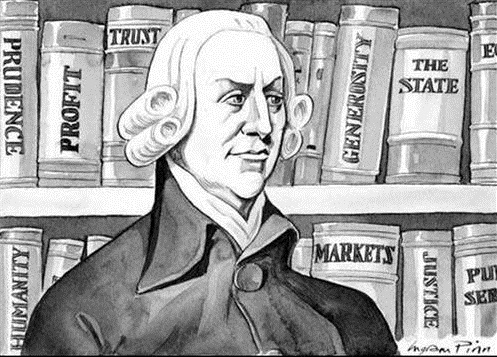
In a previous blog/commentary, Scotman’s Adam Smith was identified as the father of modern macro-economics. Though he lived from 1723 to 1790, his writings defined advanced economic concepts even in this 21st Century. His landmark book An Inquiry into the Nature and Causes of the Wealth of Nations qualified the divisions of income into these following categories: profit, wage, and rent.[4] We have previously explored profit-seeking (a positive ethos that needs to be fostered in the Caribbean region) and rent-seeking (a negative effort that proliferates in the Caribbean but needs to be mitigated), so now the focus of this commentary is on the activity of wage-seeking, and the concepts of governance and public choice theory to allow for maximum employment.
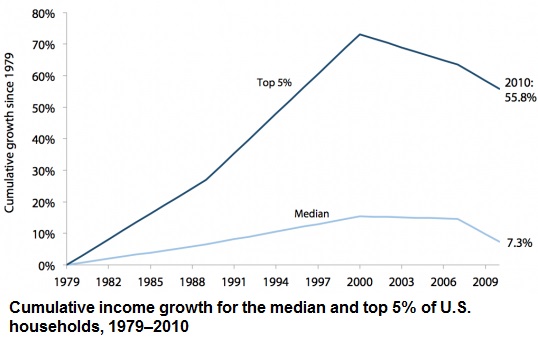
This is hard! Change has come to the world of wage-seekers – the middle classes are under attack; the labor-pool of most industrialized nations have endured decline, not in the numbers, but rather in prosperity. While wage-earners have not kept pace with inflation, top-earners (bonuses, commissions and business profits) have soared; (see Photo).
As a direct result, every Caribbean member-state struggles with employment issues in their homeland. In fact, this was an initial motivation for the book Go Lean…Caribbean, stemming from the fall-out of the 2008 Great Recession, this publication was presented as a roadmap for the introduction and implementation of the Caribbean Union Trade Federation (CU) to elevate the economic, security and governing engines of the Caribbean region to create 2.2 million new jobs, despite global challenges.
Needless to say, the global challenge is far more complex than Home Economics. The Go Lean book describes the effort as heavy-lifting; then proceeds to detail the turn-by-turn directions of a roadmap to remediate and mitigate wage-seeking.
The roadmap channels the Economic Principles and best-practices of technocrats like Adam Smith and 11 other named economists, many of them Nobel Laureates. A review of the work of these great men and woman constitute “Lessons in Economic Principles”. Why would these lessons matter in the oversight of Caribbean administration? Cause-and-effect!
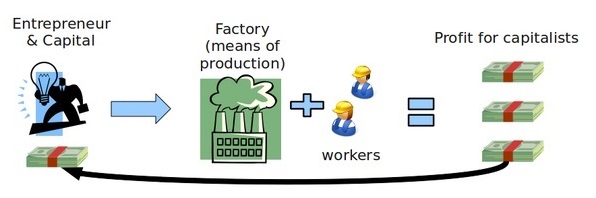
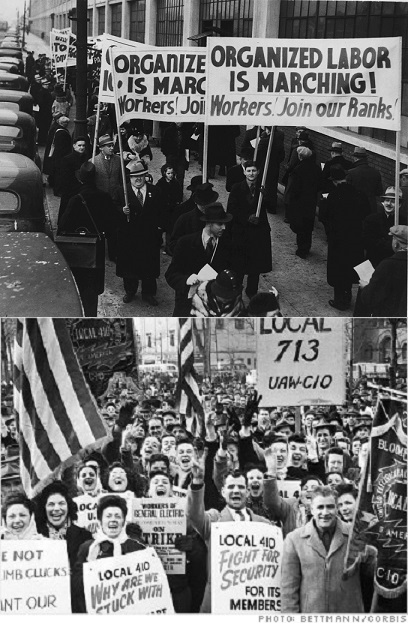
The root of the current challenge for wage-seekers is income equality; and this is bigger than just the Caribbean. It is tied to the global adoption of globalization and technology/ automation – a product of global Market Forces as opposed to previous Collective Bargaining factors. This relates back to the fundamental Economic Principle of “supply-and-demand”; but now the “supply” is global. This photo/”process flow” here depicts the ingredients of Market Forces. When there is the need for labor, the principle of comparative analysis is employed, and most times the conclusion is to “off-shore” the labor efforts, and then import the finished products. This is reversed of the colonialism that was advocated by Adam Smith; instead of the developed country providing factory labor for Third World consumption, the developed nation (i.e. United States) is now in the consumer-only role, with less and less production activities, for products fabricated in the Third World. This reality is not sustainable for providing prosperity to the middle classes, to the wage-seekers.
As a community, we may not like the laws of Economics, but we cannot ignore them. The Go Lean book explains the roles and significance of Economic Principles … with this excerpt (Page 21):
While money is not the most important factor in society, the lack of money and the struggle to acquire money creates challenges that cannot be ignored. The primary reason why the Caribbean has suffered so much human flight in the recent decades is the performance of the Caribbean economy. Though this book is not a study in economics, it recommends, applies and embraces these 6 core Economic Principles as sound and relevant to this roadmap:
People Choose: We always want more than we can get and productive resources (human, natural, capital) are always limited. Therefore, because of this major economic problem of scarcity, we usually choose the alternative that provides the most benefits with the least cost.
All Choices Involve Costs: The opportunity cost is the next best alternative you give up when you make a choice. When we choose one thing, we refuse something else at the same time.
People Respond to Incentives in Predictable Ways: Incentives are actions, awards, or rewards that determine the choices people make. Incentives can be positive or negative. When incentives change, people change their behaviors in predictable ways.
Economic Systems Influence Individual Choices and Incentives: People cooperate and govern their actions through both written and unwritten rules that determine methods of allocating scarce resources. These rules determine what is produced, how it is produced, and for whom it is produced. As the rules change, so do individual choices, incentives, and behavior.
Voluntary Trade Creates Wealth: People specialize in the production of certain goods and services because they expect to gain from it. People trade what they produce with other people when they think they can gain something from the exchange. Some benefits of voluntary trade include higher standards of living and broader choices of goods and services.
The Consequences of Choices Lie in the Future: Economists believe that the cost and benefits of decision making appear in the future, since it is only the future that we can influence. Sometimes our choices can lead to unintended consequences.
Source: Handy Dandy Guide (HDC) by the National Council on Economic Education (2000)
The Go Lean book describes the end result of the application of best-practices in this field of economics over the course of a 5-year roadmap: the CU … as a hallmark of technocracy. But the purpose is not the edification of the region’s economists, rather to make the Caribbean homeland “better places to live, work and play” for its citizens. This branding therefore puts emphasis on the verb “work”; the nouns “jobs” and “wages” must thusly be a constant focus of the roadmap.
This Go Lean book declares that the Caribbean eco-system for job-creation is in crisis … due to the same global dilemma. The roadmap describes the crisis as losing a war, the battle of globalization and technology. The consequence of the defeat is 2 undesirable conditions: income inequality and societal abandonment, citizens driven away to a life in the Diaspora. This assessment currently applies in all 30 Caribbean member-states, as every community has lost human capital to emigration. Some communities, like Puerto Rico and the US Virgin Islands have suffered with an abandonment rate of more than 50% and others have watched more than 70% of college-educated citizens flee their community for foreign shores. Even education is presented as failed investments as those educated in the region and leave to find work do not even return remittances in proportion to their costs of development. (See Table 4.1 in the Photo)
The Go Lean book therefore posits that there is a need to re-focus, re-boot, and optimize the labor/wage-seeking engines so as to create more jobs with livable wages. Alas, this is not just a Caribbean issue, but a global (i.e. American) one as well. See the following encyclopedic references for wage-seeking and Collective Bargaining to fully understand the complexities of these global issues:
A wage is monetary compensation paid by an employer to an employee in exchange for work done. Payment may be calculated as a fixed amount for each task completed (a task wage or piece rate), or at an hourly or daily rate, or based on an easily measured quantity of work done.
Wages are an example of expenses that are involved in running a business.
Payment by wage contrasts with salaried work, in which the employer pays an arranged amount at steady intervals (such as a week or month) regardless of hours worked, with commission which conditions pay on individual performance, and with compensation based on the performance of the company as a whole. Waged employees may also receive tips or gratuity paid directly by clients and employee benefits which are non-monetary forms of compensation. Since wage labour is the predominant form of work, the term “wage” sometimes refers to all forms (or all monetary forms) of employee compensation.
Determinants of wage rates Depending on the structure and traditions of different economies around the world, wage rates will be influenced by market forces (supply and demand), legislation, and tradition. Market forces are perhaps more dominant in the United States, while tradition, social structure and seniority, perhaps play a greater role in Japan.[6]
Wage Differences Even in countries where market forces primarily set wage rates, studies show that there are still differences in remuneration for work based on sex and race. For example, according to the U.S. Bureau of Labor Statistics, in 2007 women of all races made approximately 80% of the median wage of their male counterparts. This is likely due to the supply and demand for women in the market because of family obligations. [7] Similarly, white men made about 84% the wage of Asian men, and black men 64%.[8] These are overall averages and are not adjusted for the type, amount, and quality of work done.
Real Wage The term real wages refers to wages that have been adjusted for inflation, or, equivalently, wages in terms of the amount of goods and services that can be bought. This term is used in contrast to nominal wages or unadjusted wages. Because it has been adjusted to account for changes in the prices of goods and services, real wages provide a clearer representation of an individual’s wages in terms of what they can afford to buy with those wages – specifically, in terms of the amount of goods and services that can be bought.
See Table of European Model in the Appendix below. (The European Union is the model for the Caribbean Union).
Collective Bargaining is a process of negotiation between employers and a group of employees aimed at reaching agreements to regulate working conditions. The interests of the employees are commonly presented by representatives of a trade union to which the employees belong. The collective agreements reached by these negotiations usually set out wage scales, working hours, training, health and safety, overtime, grievance mechanisms, and rights to participate in workplace or company affairs.[1]
The union may negotiate with a single employer (who is typically representing a company’s shareholders) or may negotiate with a group of businesses, depending on the country, to reach an industry wide agreement. A collective agreement functions as a labor contract between an employer and one or more unions.
The industrial revolution brought a swell of labor-organizing in [to many industrialized countries, like] the US. The American Federation of Labor (AFL) was formed in 1886, providing unprecedented bargaining powers for a variety of workers.[11] The Railway Labor Act (1926) required employers to bargain collectively with unions. While globally, International Labour Organization Conventions (ILO) were ratified in parallel to the United Nations efforts (i.e. Declaration of Human Rights, etc.). There were a total of eight ILO fundamental conventions[3] all ascending between 1930 and 1973, i.e. the Freedom of Association and Protection of the Right to Organise Convention (1949).
The Go Lean book presents a roadmap on how to benefit from the above Economic Principles – and how to empower communities anew – in the midst of tumultuous global challenges. This roadmap addresses more than economics, as there are other areas of societal concern. This is expressed in the CU charter; as defined by these 3 prime directives:
Optimization of economic engines in order to grow the regional economy to $800 Billion and create 2.2 million new jobs.
Establishment of a security apparatus to protect the resultant economic.
Improvement of Caribbean governance to support these engines.
Early in the Go Lean book, the responsibility to create jobs was identified as an important function for the CU with these pronouncements in the Declaration of Interdependence (Pages 14):
xix. Whereas our legacy in recent times is one of societal abandonment, it is imperative that incentives and encouragement be put in place to first dissuade the human flight, and then entice and welcome the return of our Diaspora back to our shores.…
xxi. Whereas the preparation of our labor force can foster opportunities and dictate economic progress for current and future generations, the Federation must ensure that educational and job training opportunities are fully optimized for all residents of all member-states, with no partiality towards any gender or ethnic group. The Federation must recognize and facilitate excellence in many different fields of endeavor, including sciences, languages, arts, music and sports. This responsibility should be executed without incurring the risks of further human flight, as has been the past history.
xxiv. Whereas a free market economy can be induced and spurred for continuous progress, the Federation must install the controls to better manage aspects of the economy: jobs, inflation, savings rate, investments and other economic principles. Thereby attracting direct foreign investment because of the stability and vibrancy of our economy.
xxvi. Whereas the Caribbean region must have new jobs to empower the engines of the economy and create the income sources for prosperity, and encourage the next generation to forge their dreams right at home, the Federation must therefore foster the development of new industries, like that of ship-building, automobile manufacturing, prefabricated housing, frozen foods, pipelines, call centers, and the prison industrial complex. In addition, the Federation must invigorate the enterprises related to existing industries tourism, fisheries and lotteries – impacting the region with more jobs.
According to an article from the Economic Policy Institute, entitled The Decline of Collective Bargaining and the Erosion of Middle-class Incomes in Michigan by Lawrence Mishel (September 25, 2012), the challenges to middle class income are indisputable, and the previous solution – Collective Bargaining – is no longer as effective as in the past. (The industrial landscape of Michigan had previously been identified as a model for the Caribbean to consider). See a summary of the article here (italics added) and VIDEO in the Appendix:
In Michigan between 1979 and 2007, the last year before the Great Recession, the state’s economy experienced substantial growth and incomes rose for high-income households. But middle-class incomes did not grow. The Michigan experience is slightly worse than but parallels that of the United States as a whole, where middle-class income gains were modest but still far less than the income gains at the top. What the experience of Michiganders and other Americans makes clear is that income inequality is rising, and it has prevented middle-class incomes from growing adequately in either Michigan or the nation.
The key dynamic driving this income disparity has been the divergence between the growth of productivity—the improvement in the output of goods and services produced per hour worked—and the growth of wages and benefits (compensation) for the typical worker. It has been amply documented that productivity and hourly compensation grew in tandem between the late 1940s and the late 1970s, but split apart radically after 1979. Nationwide, productivity grew by 69.1 percent between 1979 and 2011, but the hourly compensation of the median worker (who makes more than half the workforce but less than the other half) grew by just 9.6 percent (Mishel and Gee 2012; Mishel et al. 2012). In other words, since 1979 the typical worker has hardly benefited from improvements in the economy’s ability to raise living standards and, consequently, middle-class families’ living standards have barely budged since then. This phenomenon has occurred across the nation, including in Michigan.
This divergence between pay and productivity and the corresponding failure of middle-class incomes to grow is strongly related to the erosion of collective bargaining. And collective bargaining has eroded more in Michigan than in the rest of the nation, helping to explain Michigan’s more disappointing outcomes.
Research three decades ago by economist Richard Freeman (1980) showed that collective bargaining reduces wage inequality, and all the research since then (see Freeman 2005) has confirmed his finding. Collective bargaining reduces wage inequality for three reasons. The first is that wage setting in collective bargaining focuses on establishing “standard rates” for comparable work across business establishments and for particular occupations within establishments. The outcome is less differentiation of wages among workers and, correspondingly, less discrimination against women and minorities. A second reason is that wage gaps between occupations tend to be lower where there is collective bargaining, and so the wages in occupations that are typically low-paid tend to be higher under collective bargaining. A third reason is that collective bargaining has been most prevalent among middle-class workers, so it reduces the wage gaps between middle-class workers and high earners (who have tended not to benefit from collective bargaining).
Collective bargaining also reduces wage inequality in a less-direct way. Wage and benefit standards set by collective bargaining are often followed in workplaces not covered by collective bargaining, at least where there is extensive coverage by collective bargaining in particular occupations and industries. This spillover effect means that the impact of collective bargaining on the wages and benefits of middle-class workers extends far beyond those workers directly covered by an agreement. … Source:http://www.epi.org/publication/bp347-collective-bargaining/
The siren call went out 20 years ago, of the emergence of an “Apartheid” economy, a distinct separation between the classes: labor and management. Former US Secretary of Labor Robert Reich (1993 – 1997 during the Clinton Administration’s First Term) identified vividly, in this 1996 Harvard Business Review paper, that something was wrong with the U.S. economy then; (it is worst now):
That something is not the country’s productivity, technological leadership, or rate of economic growth, though there is room for improvement in all those areas. That something is an issue normally on the back burner in U.S. public discourse: the distribution of the fruits of economic progress. For many, the rise in AT&T’s stock after it announced plans [on January 3, 1996] to lay off 40,000 employees crystallized the picture of an economy gone haywire, with shareholders gaining and employees losing as a result of innovation and advances in productivity.
Has the distribution of the benefits of economic growth in the United States in fact gone awry? Is the nation heading toward an apartheid economy—one in which the wealthy and powerful prosper while the less well-off struggle? What are the facts? What do they mean? Are there real problems—and can they be solved? …
Deploying solutions for the problem of income equality in the Caribbean is the quest of the Go Lean/CU roadmap. The book identified Agents of Change (Page 57) that is confronting the region, (America as well); they include: Globalization and Technology. A lot of the jobs that paid a “living wage” are now being shipped overseas to countries with lower wage levels, or neutralized by the advancement of technology. Yes, computers are reshaping the global job market, so even Collective Bargaining may fail to counter any eventual obsolescence of wage-earners, their valuation and appreciation; (see EncyclopedicArticle # 2). The Go Lean book, and previous blog/commentaries, therefore detailed the campaign to not just consume technology, but to also innovate, produce and distribute the computer-enabled end-products. Therefore industries relating to STEM (Science, Technology, Engineering and Mathematics/Medicine) are critical in the roadmap. Not only do these careers yield good-paying direct jobs, but also factor in the indirect job market, and the job-multiplier rate (3.0 to 4.1) for down-the-line employment (Page 260) opportunities.
The Go Lean… Caribbean book details the creation of 2.2 million new jobs for the Caribbean region, many embracing ICT/STEM skill-sets. This is easier said than done, so how does Go Lean purpose to deliver on this quest? By the adoption of certain community ethos, plus the executions of key strategies, tactics, implementations and advocacies. The following is a sample from the book:
Assessment – Puerto Rico – Extreme Unemployment – The Greece of the Caribbean
Page 18
Community Ethos – Deferred Gratification
Page 21
Community Ethos – Job Multiplier
Page 22
Community Ethos – Anti-Bullying and Mitigation
Page 23
Community Ethos – Lean Operations
Page 24
Community Ethos – Return on Investments
Page 24
Community Ethos – Ways to Impact the Future
Page 26
Community Ethos – Ways to Foster Genius
Page 27
Community Ethos – Ways to Help Entrepreneurship
Page 28
Community Ethos – Ways to Promote Intellectual Property – Key to ICT Careers
Page 29
Community Ethos – Ways to Impact Research and Development – Germaine for STEM jobs
Page 30
Community Ethos – Ways to Close the Digital Divide – Vital for fostering ICT careers
Page 31
Strategy – Mission – Education Without Further Brain Drain
Page 46
Strategy – Agents of Change – Technology
Page 57
Strategy – Agents of Change – Globalization
Page 57
Tactical – Fostering a Technocracy
Page 64
Tactical – Tactics to Forge an $800 Billion Economy – East Asian Tigers Model
Page 69
Tactical – Tactics to Forge an $800 Billion Economy – High Multiplier Industries
Page 70
Tactical – Tactics to Forge an $800 Billion Economy – Trade and Globalization
Page 70
Tactical – Separation of Powers – Commerce Department – Patents & Copyrights
Page 78
Implementation – Steps to Implement Self-Governing Entities – As Job-creating Engines
Page 105
Implementation – Ways to Benefit from Globalization – Technology: The Great Equalizer
Page 119
Planning – Ways to Improve Trade
Page 128
Planning – Ways to Model the EU
Page 130
Planning – Lessons Learned from 2008 – Income Equality Now More Pronounced
Page 136
Advocacy – Ways to Grow the Economy
Page 151
Advocacy – Ways to Create Jobs
Page 152
Advocacy – Ways to Improve Education – e-Learning Options
Page 159
Advocacy – Ways to Impact Labor Markets and Unions – Collective Bargaining Best-Practices
Page 164
Advocacy – Ways to Foster Empowering Immigration – STEM Resources
Page 174
Advocacy – Ways to Foster Technology – Credits, Incentives and Investments
Page 197
Advocacy – Ways to Foster e-Commerce – Optimize Remittance Methods
Page 198
Advocacy – Ways to Help the Middle Class – Exploit Globalization
Page 223
Appendix – Growing 2.2 Million Jobs in 5 Years
Page 257
Appendix – Job Multipliers – Direct & Indirect Job Correlations
Page 259
Appendix – Emigration Bad Example – Puerto Rican Population in the US Mainland
Page 304
The CU will foster job-creating developments, incentivizing many high-tech start-ups and incubating viable companies. The primary ingredient for CU success will be Caribbean people, so we must foster and incite participation of many young people into fields currently sharing higher job demands, like ICT and STEM, so as to better impact their communities. A second ingredient will be the support of the community – the Go Lean movement recognizes the limitation that not everyone in the community can embrace the opportunity to lead in these endeavors. An apathetic disposition is fine-and-well; we simply must not allow that to be a hindrance to those wanting to progress – there are both direct jobs and indirect jobs connected with the embrace of ICT/STEM disciplines. The community ethos or national spirit, must encourage and spur “achievers” into roles where “they can be all they can be”. Go Lean asserts that one person can make a difference … to a community (Page 122).
Other subjects related to job empowerments for wage-seekers in the region have been blogged in other Go Lean…Caribbean commentaries, as sampled here:
10 Things We Don’t Want from the US – Job Discrimination of Immigrations
The Caribbean is arguably the best address on the planet, but “man cannot live on beauty alone”, there is the need for a livelihood as well. This is the challenge, considering the reality of unemployment in the region; the jobless rate among the youth is even higher.
The crisis of income inequality for the US is a direct result of free trade agreements, like NAFTA, and China’s Preferential Trading Status. Despite this status, we can benefit from the realities of globalization; jobs are being moved to conducive locations with lower labor costs. We should invite these investors to look for cheaper labor options, here in the Caribbean region (Haiti, Dominican Republic, Jamaica, etc.). This is the same reality as in Europe with different wage levels for the different countries (see Appendix below); the Caribbean also has these wage differences.
The Go Lean roadmap seeks to foster higher-paying job options: Call Centers, Offshore Software Development Centers, R&D Medical campuses, light-manufacturing and assembly plants for “basic needs” products (food, clothing shelter, energy, and transportation) for Caribbean consumption. This is the successful model of Japan, China and the “East Asia Tigers” economies; these are manifestations of effective Economic Principles.
The Go Lean book therefore digs deeper, providing turn-by-turn directions to get to the desired Caribbean results: a better place to live, work and play. 🙂
2014 Annual values (in national currency) for a family with two children with one average salary, including tax credits and allowances.[1] Net amount is computed after Taxes, Social Security and Family Allowances; the result is provided in both the National Currency and the Euro, if different. The table, sorted from highest Net amount to the lowest, is presented as follows:
State
Gross
Net (Natl. Curr)
Net (Euro)
Switzerland
90,521.98
86,731.20
71,407.21
Luxembourg
54,560.39
52,041.36
52,041.36
Norway
542,385.96
415,557.87
49.,741.20
Denmark
397,483.78
289,292.48
38,806.20
Iceland
6,856,099.69
5,872.114.66
37,865.07
UNITED STATES
56,067
45,582
37,671
Sweden
407,974.45
335,501.45
36,874.37
Netherlands
48,855.70
36,648.71
36,648.71
United Kingdom
35,632.64
28,960.38
35,925.65
Belgium
46,464.41
35,810.55
35,810.55
Italy
41,462.67
24,539.93
35,539.93
Germany
45,952.05
36,269.23
35,269.23
France
38,427.35
30,776.75
34,776.75
Ireland
34,465.85
34,382.63
34,382.63
Austria
42,573.25
33,666.04
33,666.04
Finland
42,909.72
32,386.59
32,386.59
JAPAN
4,881,994.24
4,132.432.02
29,452.16
Spain
26,161.81
22,129.78
22,129.78
Greece
24,201.50
17,250.24
17,250.24
Slovenia
17,851.28
15,882.53
15,882.53
Portugal
17,435.71
15,140.25
15,140.25
Estonia
12,435.95
11,176.87
11,176.87
Czech Republic
312,083.83
306,153.76
11,118.31
Slovakia
10,342.10
9,778.16
9,778.16
Poland
42,360.01
34,638.77
8,278.27
Hungary
3,009,283.93
2,530.280.97
8,196.30
Turkey
28,370.00
21,072.12
7,250.00
————-
Appendix Video – Collective Bargaining and Shared Prosperity: Michigan, 1979 – 2009 http://youtu.be/PcT4jK89JmE
Published on September 27, 2012 – This VIDEO depicts the positive effects of Collective Bargaining on the quest for income equality in the US State of Michigan; and the sad consequence of the widening income inequality when Collective Bargaining is less pervasive.
This reflect the “Observe and Report” functionality of the Go Lean…Caribbean promoters in the Greater Detroit-Michigan area.
… not just because the 13 original British colonies declared their independence as the United States of America, but also the publication of the landmark book on Economic Principles, An Inquiry into the Nature and Causes of the Wealth of Nations by Adam Smith, the 18th century Scottish political economics pioneer. The publication is cited as a reference source in the book Go Lean…Caribbean – a roadmap for the introduction and implementation of Caribbean Union Trade Federation (CU) to elevate the economic, security and governing engines of the Caribbean region. A relevant quote from the Go Lean book follows (Page 67):
… usually abbreviated as “The Wealth of Nations“, this book is considered the first modern work of economics, and [Smith] is thusly cited as the “father of modern economics”, even today, and among the most influential thinkers in the field of economics. Through reflection over the economics at the beginning of the Industrial Revolution the book touches upon broad topics as the division of labor, productivity and free markets.
Smith attacked most forms of government interference in the economic process, including tariffs, arguing that these create inefficiency and high prices in the long run. It is believed that this theory, laissez-faire economic philosophy, influenced government legislation in later years.
Smith advocated a government that was active in sectors other than the economy. He advocated public education for poor adults, a judiciary, and a standing army—institutional systems not directly profitable for private industries.
The “Invisible Hand” is a frequently referenced theme from Smith’s book. He refers to “the support of domestic industry” and contrasts that support with the importation of goods. Neoclassical economic theory has expanded the metaphor beyond the domestic/foreign manufacture argument to encompass nearly all aspects of economics. The “invisible hand” of the market is a metaphor now to describe the self-regulating behavior of the marketplace. …
Adam Smith’s writings qualified many rules of economics, in particular the divisions of income into profit, wage, and rent.[4] In a previous commentary the concept of rent-seeking was fully explored.; also the global challenges of wage-seeking have been fully detailed in another commentary. Now, this commentary is about profit, and the concepts of governance and public choice theory, allowing for the pursuit of profit. Where there is the pursuit of profit, there is invariably a focus on greed. For the purpose of elevating the Caribbean economy, greed is good! (In this case “greed” is not being defined as excess, but rather the natural desire to possess wealth, goods, or objects of abstract value with the intention to keep it for one’s self. The dreaded excess of “greed”, on the other hand, is a “vice” that must be cautiously monitored and curtailed, i.e. Crony-Capitalism). See VIDEO in the Appendix below.
Actor Michael Douglas as Wall Street Corporate Raider Gordon Gekko in the 1987 film
The Caribbean features mixed economies, wherein greed or profit plays a pivotal motivator. A mixed economy is an economic system that is variously defined as containing a mixture of markets (profit-seeking) and economic planning, in which both the private sector and the State direct the economy; or as a mixture of free markets with economic interventionism.[1] Most mixed economies can be described as market economies with strong regulatory oversight and governmental provision of public goods. That “public good” is what Adam Smith focused on for the role of government – non-profit-seeking activities – that they should concentrate on the public availability and distribution of the non-excludable and non-rivalrous materials that satisfies human wants (infrastructure, education, judiciary, security, etc.) and are not directly profitable for private industries.
Economies ranging from the United States[3][4] to Cuba[5] – in effect all of the Caribbean – have been catalogued as mixed economies. Around the world, the most prosperous countries with the highest average standard of living tend to have mixed economic systems with democratically elected governments. Thusly, this consideration on the Economic Principles of Profit, as follows, is important for the roadmap to elevate Caribbean economies:
Encyclopedia Reference: Profit (Economic) Source: https://en.wikipedia.org/wiki/Profit_(economics)
In classical economics, profit is the return to an owner of capital goods or natural resources in any productive pursuit involving labor, or a return on bonds and money invested in capital markets.[3]
Related concepts include profitability and the profit motive, which is the motivation of firms to operate so as to maximize their profits. Mainstream microeconomic theory posits that the ultimate goal of a business is to make money. Stated differently, the reason for a business’s existence is to turn a profit. The profit motive is a key tenet of rational choice theory, or the theory that economic agents (actors or decision makers in some aspect of the economy) tend to pursue what is in their own best interests. Accordingly, businesses seek to benefit themselves and/or their shareholders by maximizing profits. In general the basic premise of rational choice theory is that aggregate social behavior results from the behavior of individual actors, each of whom is making their individual decisions.
Government intervention Often, governments will try to intervene in uncompetitive markets to make them more competitive. Antitrust or competition laws were created to prevent powerful firms from using their economic power to artificially create the barriers to entry they need to protect their economic profits.[7][8][9] This includes the use of predatory pricing toward smaller competitors.[6][9][10] With lower barriers, new firms can enter the market, making the long run equilibrium much more like that of a competitive industry, with no economic profit for firms.
(This consideration aligns with alternate Economic Principles regarding sources of income; other commentaries detailed the concepts of rent-seeking and wage-seeking).
This historic information regarding Economist Adam Smith is important in understanding the “Lessons in Economic Principles”. These lessons matter in assessing today’s Caribbean status and fate, as there is the need for the optimal balance of “free market” versus “interventionism”. The Go Lean book explains the significance of Economic Principles with this excerpt (Page 21):
While money is not the most important factor in society, the lack of money and the struggle to acquire money creates challenges that cannot be ignored. The primary reason why the Caribbean has suffered so much human flight in the recent decades is the performance of the Caribbean economy. Though this book is not a study in economics, it recommends, applies and embraces these 6 core economic principles as sound and relevant to this roadmap:
People Choose: We always want more than we can get and productive resources (human, natural, capital, etc.) are always limited. Therefore, because of this major economic problem of scarcity, we usually choose the alternative that provides the most benefits with the least cost.
All Choices Involve Costs: The opportunity cost is the next best alternative you give up when you make a choice. When we choose one thing, we refuse something else at the same time.
People Respond to Incentives in Predictable Ways: Incentives are actions, awards, or rewards that determine the choices people make. Incentives can be positive or negative. When incentives change, people change their behaviors in predictable ways.
Economic Systems Influence Individual Choices and Incentives: People cooperate and govern their actions through both written and unwritten rules that determine methods of allocating scarce resources. These rules determine what is produced, how it is produced, and for whom it is produced. As the rules change, so do individual choices, incentives, and behavior.
Voluntary Trade Creates Wealth: People specialize in the production of certain goods and services because they expect to gain from it. People trade what they produce with other people when they think they can gain something from the exchange. Some benefits of voluntary trade include higher standards of living and broader choices of goods and services.
The Consequences of Choices Lie in the Future: Economists believe that the cost and benefits of decision making appear in the future, since it is only the future that we can influence. Sometimes our choices can lead to unintended consequences. Source: Handy Dandy Guide (HDC) by the National Council on Economic Education (2000)
The Go Lean book presents a roadmap on how to better benefit from these economic principles – and how to increase profit-seeking opportunities in the Caribbean member-states and for the region as a whole. While “rent-seeking” – seeking to increase one’s share of existing wealth without creating new wealth – is a negative ethos, “profit-seeking” – the end product of investing in new opportunities – can be positive. The absence of profit-seeking is an absence of prosperity. Every Caribbean community suffers from an acute problem of societal abandonment. Those most capable of creating opportunities of prosperity, the educated classes, have mostly fled these lands, despite being labeled “the best address on the planet”. Why?
When people love their homelands yet begrudgingly leave, the defects – deficient economic opportunities – must be addressed. Caribbean member-states have tried, strenuously, over the decades, to diversify their economies; yet the preponderance of evidence point to adoption of “rent-seeking” in the region rather than the required profit-seeking. The requisite investment of the resources (time, talent, treasuries) for the goal of economic optimization may be too big for any one Caribbean member-state to conduct alone. Rather there is the need for a regional technocratic solution.
The Caribbean needs the evolutionary spirit (for one generation to do better than the previous one) of “profit-seeking” or “greed”. As portrayed in the VIDEO:
“Greed, for the lack of a better word, is good!” [Thus says the fictitious character in below VIDEO]. “Greed clarifies, cuts through and captures the essence of the evolutionary spirit. Greed in all of its forms – greed for life, greed for money, greed for love, knowledge has marked the upward surge of mankind; and greed will not only save [this company] but the other malfunctioning corporation called the USA”.
Posted commentary by Screen Name “fh downtheline”on the below VIDEO:
There is a better word than “greed” for this application. It may be “hunger”. Hunger is more present [in the Caribbean] and thusly more important than greed. Hunger keeps people hunting for progress. While greed ends up destroying the value of that progress. “Hunger” would refer to more than just food or economic dimension, but rather there is a hunger for knowledge, hunger for scientific thought. While “greed” says “I want” this, “Hunger” says “I need” this!
“Profit-seeking” is also a better word than “greed”; it too conveys the same concept as the definition above.
The consideration of the Go Lean book, as related to this subject is one of governance, the need for technocratic stewardship of the regional Caribbean society. This point was also pronounced in the opening Declaration of Interdependence (Pages 12 – 14) with these acknowledgements and statements:
xi. Whereas all men are entitled to the benefits of good governance in a free society, “new guards” must be enacted to dissuade the emergence of incompetence, corruption, nepotism and cronyism at the peril of the people’s best interest. The Federation must guarantee the executions of a social contract between government and the governed.
xii. Whereas the legacy in recent times in individual states may be that of ineffectual governance with no redress to higher authority, the accedence of this Federation will ensure accountability and escalation of the human and civil rights of the people for good governance, justice assurances, due process and the rule of law. As such, any threats of a “failed state” status for any member state must enact emergency measures on behalf of the Federation to protect the human, civil and property rights of the citizens, residents, allies, trading partners, and visitors of the affected member state and the Federation as a whole.
xxiv. Whereas a free market economy can be induced and spurred for continuous progress, the Federation must install the controls to better manage aspects of the economy: jobs, inflation, savings rate, investments and other economic principles. Thereby attracting direct foreign investment because of the stability and vibrancy of our economy.
xxvi. Whereas the Caribbean region must have new jobs to empower the engines of the economy and create the income sources for prosperity, and encourage the next generation to forge their dreams right at home, the Federation must therefore foster the development of new industries, like that of ship-building, automobile manufacturing, prefabricated housing, frozen foods, pipelines, call centers, and the prison industrial complex. In addition, the Federation must invigorate the enterprises related to existing industries like tourism, fisheries and lotteries – impacting the region with more jobs.
This Go Lean book serves as a roadmap for the introduction and implementation of the technocratic Caribbean Union Trade Federation (CU) to provide better stewardship for the 30 member-states of the Caribbean region. The CU is motivated by positive community ethos, designed to elevate Caribbean society and the economic opportunities there in. In general, the Go Lean roadmap stresses key community ethos, strategies, tactics, implementations and advocacies necessary to transform and turn-around the eco-systems of Caribbean society. These points are detailed in the book as follows:
Community Ethos – Deferred Gratification
Page 21
Community Ethos – Return on Investments
Page 24
Community Ethos – Ways to Impact the Future – Count on the Greedy to be greedy
Page 26
Community Ethos – Ways to Help Entrepreneurship – Fostering Incubators
Page 28
Community Ethos – Ways to Impact the Greater Good
Page 37
Strategy – Vision – Confederate all 30 member-states / 4 languages into a Single Market
Page 45
Tactical – $800 Billion Economy – How and When – Adam Smith Case Study
Page 67
Tactical – Fostering High Job Multiplier Industries
Page 70
Tactical – Separation-of-Powers – CU Federal Government versus Member-State Governance
Page 71
Implementation – Ways to Pay for Change – Award exploratory rights in exclusive territories
Page 101
Planning – 10 Big Ideas – #3: Proactive Anti-crime Measures
Page 127
Planning – Ways to Improve Trade
Page 128
Planning – Ways to Improve Interstate Commerce
Page 129
Planning – Ways to Make the Caribbean Better
Page 131
Advocacy – Ways to Grow the Economy
Page 151
Advocacy – Ways to Create Jobs
Page 152
Advocacy – Ways to Improve Education – Online Job Training
Page 159
Advocacy – Ways to Improve Governance
Page 168
Advocacy – Ways to Better Manage the Social Contract
Page 170
Advocacy – Ways to Better Manage Natural Resources
Page 183
Advocacy – Reforms for Banking Regulations – Tools to Stimulate/Control the Economy
Page 199
Advocacy – Ways to Impact Wall Street
Page 200
Advocacy – Ways to Impact Main Street
Page 201
Advocacy – Ways to Battle Poverty – Entrepreneurial Values
Page 222
Appendix – Job Multipliers
Page 259
In considering this economic history, the CU/Go Lean roadmap is motivated to create value for Caribbean communities, to foster good economic habits and principles. In general, the CU/Go Lean roadmap employs better strategies, tactics and implementations to impact its prime directives; identified with the following 3 statements:
Optimization of the economic engines in order to grow the regional economy to $800 Billion & create 2.2 million new jobs.
Establishment of a security apparatus to protect the resultant economic engines and mitigate internal and external threats.
Improvement of Caribbean governance – federal, national, municipal and corporate – to support these engines.
New jobs need not only originate from the big corporate entities; that is the multi-national corporations that are traded on Wall Street or the 9 stock exchanges in the Caribbean region. No, rather small-to-medium enterprises (SME) – and even the self-employment “hustle” – will play a role in the economic optimization process. These points were detailed in these previous commentaries:
Adherence to economic principles/best-practices, such as profit-seeking, would help us make our Caribbean community better to live, work and play. We need to optimize the “invisible hand” of the market to incentivize, retain and repatriate Caribbean “free market” enterprises. Everyone in the region – the people, entrepreneurs, business owners and governmental institutions – are all urged to lean-in to this roadmap to elevate the Caribbean economic engines. 🙂
Download the book Go Lean … Caribbean – now!
———–
Appendix VIDEO: Gordon Gekko “Greed is Good” – https://youtu.be/PF_iorX_MAw Uploaded on Dec 9, 2011 – Gordon Gekko, principal character in 1987 movie “Wall Street”, *unknowningly* describes the problems facing today’s private sector, while blasting the bureaucracy responsible for said problems in the first place. A classic speech, both in film and, also, within economic thought.
Imagine a person making a resolution to improve their health…
… but they smoke cigarettes.
The expectation first would be:
Quit smoking!
One does not have to be a medical doctor, a PhD or a genius to glean this logic. It is now just common sense. Alas, common sense is not so common!
This commentary is not about smoking. It is about economics and public choice theory; see VIDEO’s below. In particular this commentary is about the bad Economic Principle referred to as “rent-seeking”. (This aligns with alternate Economic Principles regarding sources of income; other commentaries detailed the concepts of profit-seeking and wage-seeking). This is a big deal! Imagine a government public health department gifting cigarettes to people as a public health policy. Yes, it is that bad! This is the formal definition of “rent-seeking”:
Rent-seeking is an attempt to obtain economic rent (i.e., the portion of income paid to a factor of production in excess of that which is needed to keep it employed in its current use) by manipulating the social or political environment in which economic activities occur, rather than by creating new wealth. Rent-seeking implies extraction of uncompensated value from others without making any contribution to productivity. The classic example of rent-seeking, according to Nobel Laureate Economist Robert Shiller, is that of a feudal lord who installs a chain across a river that flows through his land and then hires a collector to charge passing boats a fee (or rent of the section of the river for a few minutes) to lower the chain. There is nothing productive about the chain or the collector. The lord has made no improvements to the river and is helping nobody in any way, directly or indirectly, except himself. All he is doing is finding a way to make money from something that used to be free.[5]
“Finding a way to make money from something that used to be free”! How evasive is this practice? How can we identify it and how can we stop it?
The Caribbean is in crisis! Surveying the economic landscape of the region, we see a preponderance of rent-seeking as public policy in one member-state after another; see international Examples below. Alas, the book Go Lean…Caribbean, quoting famed economist Paul Romer (Page 8), declares that a crisis is a terrible thing to waste. Currently the region features unsustainable societal abandonment rates, exhaustive unemployment rates and near-Failed-State statuses.
The premise in this commentary is not an easy one. Just like it is common sense for a smoker to quit in order to preserve health/wellness, it is hereby acknowledged that this is “easier said than done”. Common sense is not so common! This heady discussion of advanced concepts in economics is an example of the heavy-lifting required to elevate Caribbean society.
The Go Lean book seeks to reboot and reform the economic engines of the Caribbean by being technocratic in applying best practices from the field of Economics. This intent is declared at the outset of the book with this Declaration of Interdependence (Page 10) for the region to work in unison to remediate the broken systems of commerce:
Preamble: As the colonial history of our region was initiated to create economic expansion opportunities for our previous imperial masters, the structures of government instituted in their wake have not fostered the best systems for prosperity of the indigenous people. Despite this past, we thrust our energies only to the future, in adapting the best practices and successes of the societies of these previous imperial masters and recognizing the positive spirit of their intent and vow to learn from their past accomplishments and mistakes so as to optimize the opportunities for our own citizenry to create a more perfect bond of union.
One of the basis of understanding this complex economic subject of “rent-seeking” is the review of the book The Rise and Decline of Nations by Economist Mancur Olson; in this publication, the writer traced the historic consequences of rent-seeking. He argued that the extremes of laissez-faire (the traditional economic philosophy in North American economies) and a command socialist economy (popular in Europe) would avoid rent-seeking, while a mixed economy would be subject to it. Dr. Olson claimed two distinct groups (actors) with separate agendas: an encompassing organization with the broader social collective interest, versus the narrower distributional coalition – the special interest – who would naturally be a rent-seeking group that would slow down economic growth. See this detailed encyclopedic definition of the width-and-breadth of rent-seeking, here:
In the field of Economics and public choice theory – the application of economic thinking to political issues – “rent-seeking” is seeking to increase one’s share of existing wealth without creating new wealth. The effects of these efforts are reduced economic efficiency [in the community] through poor allocation of resources, reduced actual wealth creation, lost government revenue, and increased income inequality,[1] and, potentially, national decline.
Attempts at capture of regulatory agencies to gain a coercive monopoly can result in advantages for the rent-seeker in the market while imposing disadvantages on competitors. (The term regulatory capture directly refers to a form of political corruption that occurs when a regulatory agency, created to act in the public interest, instead advances the commercial or special concerns of interest groups that dominate the industry or sector it is charged with regulating). The term “rent-seeking” itself is attributed to Economist Gordon Tullock in its modern sense with political connotation but with antecedents and common sense back to Ricardo.[2]
The idea of rent-seeking was developed by Gordon Tullock in 1967.[2] The expression rent-seeking was coined in 1974 by former World Bank Chief Economist Anne Krueger.[3] The word “rent” does not refer here to payment on a lease but stems instead from Adam Smith‘s division of incomes into profit, wage, and rent.[4] The origin of the term refers to gaining control of land or other natural resources.
Georgist economic theory – economic value derived from natural resources should belong equally to all residents of a community – describes rent-seeking in terms of land rent, where the value of land largely comes from government infrastructure and services (e.g. roads, public schools, maintenance of peace and order, etc.) and the community in general, rather than from the actions of any given landowner, in their role as mere titleholder. This role must be separated from the role of a property developer, which need not be the same person, and often is not.
In many market-driven economies, much of the competition for rents is legal, regardless of the harm it may do to an economy. However, some rent-seeking competition is illegal – such as bribery, corruption, smuggling, and even black market deals.
Rent-seeking is distinguished in economic theory from profit-seeking, in which entities seek to extract value by engaging in mutually beneficial transactions.[6] Profit-seeking in this sense is the creation of wealth, while rent-seeking is the use of social institutions such as the power of government to redistribute wealth among different groups without creating new wealth.[7] In a practical context, income obtained through rent-seeking may contribute to profits in the standard, accounting sense of the word.
Examples An example of rent-seeking in a modern economy is spending money on political lobbying for government benefits or subsidies in order to be given a share of wealth that has already been created, or to impose regulations on competitors, in order to increase market share.
A famous example of rent-seeking is the limiting of access to lucrative occupations, as by medieval guilds or modern state certifications and licensures. Taxi licensing is a commonly-referenced example of rent-seeking. To the extent that the issuing of licenses constrains overall supply of taxi services (rather than ensuring competence or quality), forbidding competition by livery vehicles, unregulated taxis and/or illegal taxis renders the (otherwise consensual) transaction of taxi service a forced transfer of part of the fee, from customers to taxi business proprietors. [Labor unions also fit the definition of rent-seeking].
The concept of rent-seeking would also apply to corruption of bureaucrats who solicit and extract ‘bribe’ or ‘rent’ for applying their legal but discretionary authority for awarding legitimate or illegitimate benefits to clients.[8] For example, tax officials may take bribes for lessening the tax burden of the tax payers; [and politicians take campaign contributions].
Regulatory capture is a related concept which refers to collusion between firms and the government agencies assigned to regulate them, which is seen as enabling extensive rent-seeking behavior, especially when the government agency must rely on the firms for knowledge about the market. Studies of rent-seeking focus on efforts to capture special monopoly privileges such as manipulating government regulation of free enterprisecompetition.[9] The term monopoly privilege rent-seeking is an often-used label for this particular type of rent-seeking. Often-cited examples include a lobby that seeks economic regulations such as tariff protection, quotas, subsidies,[10] or extension of copyright law.[11] Anne Krueger concludes that, “empirical evidence suggests that the value of rents associated with import licenses can be relatively large, and it has been shown that the welfare cost of quantitative restrictions equals that of their tariff equivalents plus the value of the rents” [12]
Economists have argued that innovation in the financial industry is often a form of rent-seeking.[13][14] [A common everyday examples in American life would be: Wall Street on the ‘right’ and labor unions on the ‘left’].
[A local example stems from the Bahamas 2nd city of Freeport. That city provides a monopoly to the local petroleum retailing company, Freeport Oil Company, Limited (FOCOL). On one occasion that retailer limited gasoline purchases to the more expensive premium option only, as opposed to the standard choices; see story here: http://www.tribune242.com/news/2013/aug/02/focol-comes-under-fire-grand-bahama-residents/]
Possible consequences From a theoretical standpoint, the moral hazard of rent-seeking can be considerable. If “buying” a favorable regulatory environment seems cheaper than building more efficient production, a firm may choose the former option, reaping incomes entirely unrelated to any contribution to total wealth or well-being. This results in a sub-optimal allocation of resources – money spent on lobbyists and counter-lobbyists rather than on research and development, on improved business practices, on employee training, or on additional capital goods – which retards economic growth. Claims that a firm is rent-seeking therefore often accompany allegations of government corruption, or the undue influence of special interests.[18]
Rent-seeking can prove costly to economic growth; high rent-seeking activity makes more rent-seeking attractive because of the natural and growing returns that one sees as a result of rent-seeking. Thus organizations value rent-seeking over productivity. In this case there are very high levels of rent-seeking with very low levels of output. Rent-seeking may grow at the cost of economic growth because rent-seeking by the state can easily hurt innovation. Ultimately, public rent-seeking hurts the economy the most because innovation drives economic growth.[19]
Government agents may initiate rent-seeking – such agents soliciting bribes or other favors from the individuals or firms that stand to gain from having special economic privileges, which opens up the possibility of exploitation of the consumer.[20] It has been shown that rent-seeking by bureaucracy can push up the cost of production of public goods.[21] It has also been shown that rent-seeking by tax officials may cause loss in revenue to the public exchequer.[8]
Mancur Olson traced the historic consequences of rent seeking in The Rise and Decline of Nations. As a country becomes increasingly dominated by organized interest groups, it loses economic vitality and falls into decline. Olson argued that countries that have a collapse of the political regime and the interest groups that have coalesced around it can radically improve productivity and increase national income because they start with a clean slate in the aftermath of the collapse. An example of this is Japan after World War Two. But new coalitions form over time, once again shackling society in order to redistribute wealth and income to themselves. However, social and technological changes have allowed new enterprises and groups to emerge in the past.[22]
A study by economists David Laband and John Sophocleus in 1988[23] estimated that rent-seeking had decreased total income in the US by 45 percent. Both economists William Dougan and Tullock affirmed (1991) the difficulty of finding the cost of rent-seeking. Rent-seekers of government-provided benefits will in turn spend up to that amount of benefit in order to gain those benefits, in the absence of, for example, the collective-action constraints highlighted by Olson.
Nobel Prize-winning Economist Joseph Stiglitz has argued that rent-seeking contributes significantly to income inequality in the United States through lobbying for government policies that let the wealthy and powerful get income, not as a reward for creating wealth, but by grabbing a larger share of the wealth that would otherwise have been produced without their effort.[26][27] (See related VIDEO here). Economists Thomas Piketty, Emmanuel Saez, and Stefanie Stantcheva (2011) had analyzed international economies and their changes in tax rates to conclude that much of income inequality is a result of rent-seeking among wealthy tax payers.[28]
This historic information is being considered in conjunction with the book Go Lean…Caribbean; a publication designed to elevate the region’s economy (create 2.2 million new jobs), security and governing engines. The book features a roster call for some All-stars of the field of Economics; (1700s, 1800s, 1900s & today). Consider this list of those quoted directly:
Paul Romer
1955 –
Page 8
Adam Smith
1723 – 1790
Page 67
Arthur Okun
1928 – 1980
Page 153
James M. Buchanan
1919 – 2013
Page 169
Elinor Ostrom
1933 – 2012
Page 183
Norman Girvan
1941 – 2014
Page 255
Alfred Marshall
1842 – 1924
Page 258
Jacob Mincer
1922 – 2006
Page 258
Gary Becker
1930 – 2014
Page 258
John Geanakoplos
1955 –
Page 276
David Hume
1711 – 1776
Page 318
John Maynard Keynes
1883 – 1946
Page 318
A review of the work of these great men and woman constitute “Lessons in Economic Principles”. Why would these lessons matter in assessing today’s Caribbean status and fate?
The Go Lean book explains the significance of Economic Principles with this excerpt (Page 21):
While money is not the most important factor in society, the lack of money and the struggle to acquire money creates challenges that cannot be ignored. The primary reason why the Caribbean has suffered so much human flight in the recent decades is the performance of the Caribbean economy. Though this book is not a study in economics, it recommends, applies and embraces these 6 core economic principles as sound and relevant to this roadmap:
People Choose: We always want more than we can get and productive resources (human, natural, capital) are always limited. Therefore, because of this major economic problem of scarcity, we usually choose the alternative that provides the most benefits with the least cost.
All Choices Involve Costs: The opportunity cost is the next best alternative you give up when you make a choice. When we choose one thing, we refuse something else at the same time.
People Respond to Incentives in Predictable Ways: Incentives are actions, awards, or rewards that determine the choices people make. Incentives can be positive or negative. When incentives change, people change their behaviors in predictable ways.
Economic Systems Influence Individual Choices and Incentives: People cooperate and govern their actions through both written and unwritten rules that determine methods of allocating scarce resources. These rules determine what is produced, how it is produced, and for whom it is produced. As the rules change, so do individual choices, incentives, and behavior.
Voluntary Trade Creates Wealth: People specialize in the production of certain goods and services because they expect to gain from it. People trade what they produce with other people when they think they can gain something from the exchange. Some benefits of voluntary trade include higher standards of living and broader choices of goods and services.
The Consequences of Choices Lie in the Future: Economists believe that the cost and benefits of decision making appear in the future, since it is only the future that we can influence. Sometimes our choices can lead to unintended consequences. Source: Handy Dandy Guide (HDC) by the National Council on Economic Education (2000)
In psycho-therapy the approach to forge change for an individual is defined as “starting in the head (thoughts, visions), penetrating the heart (feelings, motivations) and then finally manifesting in the hands (actions). The people of the Caribbean must change their feelings about elements of their society – elements that are in place and elements missing. This is referred to as “Community Ethos”, defined as: “the fundamental character or spirit of a culture; the underlying sentiment that informs the beliefs, customs, or practices of a group or society; dominant assumptions of a people or period; practices of a group or society; dominant assumptions of a people or period.
Rent-seeking is not one of the community ethos that is being urged for the Caribbean; just the opposite, it is a bad ethos to avoid!
Published on Jun 22, 2012 – For an alternative to our anti-democratic system check out Jim Rogers latest project to create a system that will hold politicians feet to the fire, and to put shackles on lobbyists so that they can no longer control the system. One day we might have a system that’s controlled by the people and is for the people.
This is an idea put forth for Americans but it can easily work in any other part of the world.
Most of the property and indigenous wealth of the Caribbean region is concentrated amongst the rich, powerful and yet small elite; an oligarchy. Many times these families received their property, corporate rights and/or monopolies by Royal Charter from the European monarchs of ancient times. These charters thus lingered in legacy from one generation to another … until …
The consideration of the Go Lean book, as related to this subject is one of governance, (national, municipal and corporate governance), the need for technocratic stewardship of the regional Caribbean society. This point was also pronounced in the opening Declaration of Interdependence (Page 12) with these acknowledgements and statements:
xi. Whereas all men are entitled to the benefits of good governance in a free society, “new guards” must be enacted to dissuade the emergence of incompetence, corruption, nepotism and cronyism at the peril of the people’s best interest. The Federation must guarantee the executions of a social contract between government and the governed.
xii. Whereas the legacy in recent times in individual states may be that of ineffectual governance with no redress to higher authority, the accedence of this Federation will ensure accountability and escalation of the human and civil rights of the people for good governance, justice assurances, due process and the rule of law. As such, any threats of a “failed state” status for any member state must enact emergency measures on behalf of the Federation to protect the human, civil and property rights of the citizens, residents, allies, trading partners, and visitors of the affected member state and the Federation as a whole.
xxxiii. Whereas lessons can be learned and applied from the study of the recent history of other societies, the Federation must formalize statutes and organizational dimensions to avoid the pitfalls of communities like East Germany, Detroit …. On the other hand, the Federation must also implement the good examples learned from developments/communities like … Germany, [and] Japan ….
This Go Lean book serves as a roadmap for the introduction and implementation of the technocratic Caribbean Union Trade Federation (CU) to provide better stewardship for the 30 member-states of the Caribbean region. The CU is motivated by the positive community ethos of the Greater Good!
In general the Go Lean roadmap stresses key community ethos, strategies, tactics, implementations and advocacies necessary to transform and turn-around the eco-systems of Caribbean society. These points are detailed in the book as follows:
Community Ethos – Deferred Gratification
Page 21
Community Ethos – Return on Investments
Page 24
Community Ethos – Ways to Impact the Future
Page 26
Community Ethos – Ways to Impact the Greater Good
Page 37
Strategy – Vision – Confederate all 30 member-states/ 4 languages into a Single Market
Page 45
Tactical – Fostering a Technocracy – Economists are Technocrats
Page 64
Tactical – Growing to $800 Billion GDP – Adam Smith Case Study: Father of Modern Economics
Page 67
Tactical – Separation-of-Powers – CU Federal Government versus Member-State Governance
Page 71
Implementation – Ways to Pay for Change – Award exploratory rights in exclusive territories
Page 101
Implementation – Start-up Benefits from the Exclusive Economic Zone (EEZ)
Planning – Lessons Learned from 2008 – Glass-Steagall Case Study
Page 136
Advocacy – Ways to Grow the Economy – Government’s Role: Protect Property Rights
Page 151
Advocacy – Ways to Create Jobs – 2.2 Million New Jobs
Page 152
Advocacy – Ways to Improve Governance
Page 168
Advocacy – Ways to Better Manage the Social Contract
Page 170
Advocacy – Ways to Better Manage Natural Resources
Page 183
In considering this economic history, the CU/Go Lean roadmap is motivated to create value for Caribbean communities, not skim off the top with rent-seeking practices. The mandate is simple:
Foster good economic habits; abandon bad habits.
(At one point, smoking was encouraged, but now it is universally assailed; this demonstrates that communities can mature).
This is not common ground; this is a higher ground!
With the proper stewardship, we can create jobs, value, wealth, trade networks, an educated society, plus develop new products and services that the world demands. Adherence to these best-practices – and aversion to bad community ethos like rent-seeking – would help us make our Caribbean community better to live, work and play. 🙂
The American Dream: You have to be asleep to believe it!
Thus the conclusion of famed comedian and society commentator, the late George Carlin*; see VIDEO in the Appendix below; (excuse the graphic profanity).
This conclusion also aligns with the familiar consideration of the planners for a new Caribbean society, the movement behind the book Go Lean … Caribbean and accompanying blogs.
The American Dream tends to be a nightmare for Caribbean citizens of Black and Brown ethnic persuasions that emigrate there. And yet, the Go Lean book relates that these people of the Caribbean have “beat down their doors” to get out of their beautiful homelands to live, work and play in America.
The book relates the reason for this societal abandonment as “push-and-pull”:
“pull factors” – alluring economic opportunities awaiting a life in America
“push factors” – lack of economic prospects in the Caribbean homeland.
The Go Lean book serves as a roadmap for the introduction and implementation of the technocratic Caribbean Union Trade Federation (CU). This roadmap seeks to reboot the region’s economic, security and governing engines; employing better strategies, tactics and implementations to impact its prime directives; identified with the following 3 statements:
Optimization of the economic engines in order to grow the regional economy to $800 Billion & create 2.2 million new jobs.
Establishment of a security apparatus to protect the resultant economic engines.
Improvement of Caribbean governance to support these engines.
Previous blog/commentaries have asserted that the American Dream is a nightmare for Americans as well. That this “Land of the Free and Home of the Brave” is often a sandbox for the rich and the powerful. This is qualified in the manifested threat of Crony-Capitalism.
This commentary therefore is a running inventory list of all the Crony-Capitalism models that proliferate in the Unites States of America:
Models of American Crony-Capitalism detailed in Go Lean…Caribbean blog/commentaries:
Many theorists indicate that the “follow the money” approach reveals the Military Industrial Complex work to undermine peace, so as to increase defense spending for military equipment, systems and weapons.
There are professionals who work to undermine the Greater Good by spewing doubt on scientifically-established causes; consider Climate Change, Tobacco and Concussions.
While lobbying for continuous tax subsidies, the industry have colluded to artificially keep prices high and garner record profits ($38+ Billion every quarter).
Retail chains impoverish small merchants on Main Street with Antitrust-like tactics, thusly impacting community jobs. e-Commerce, an area of many future prospects, is the best hope of countering these bad business tactics.
Despite the corrosiveness of salt on roads and the environment, it is the only tactic used to de-ice roads. Immediately after the weather warms, the roads must be re-constructed, thus ensuring a continuous economic cycle.
The For-Profit utility companies always lobby against regulations to “clean-up” fossil-fuel (coal) power plants or block small “Green” start-ups from sending excess power to the National Grid. Their motive is to preserve their century-long monopoly and their profits.
Even though it is evident that the promotion of Intellectual Property can help grow economies, the emergence of Patent Trolling parties (mostly lawyers) is squashing innovation. These ones are not focused on future innovations, rather just litigation. They go out and buy patents, then look for anyone that may consume any concepts close to those patents, then sue for settlements, quick gains.
Cruise ships are the last bastion of segregation with descriptors like “modern-day-slavery” and “sweat-ships”. Working conditions are poor and wages are far below anyone’s standards of minimum. Many ship-domestic staff are “tip earners”, paid only about US$50 a month and expected to survive on the generosity of the passengers’ gratuity. The industry staff with personnel from Third World countries, exploiting those with desperate demands. Nowhere else in the modern world is this kind of job discrimination encouraged, accepted or tolerated.
The private prison industry seem motivated more by profit than by public safety. They attempt to sue state governments when their occupancy levels go too low; a reduction in crime is bad for business.
Automakers, like General Motors (GM), conspired with oil and tire companies to eliminate streetcars in cities all across America. The conspiracy was to create an inferior urban transportation (bus) system that would drive the demand for automobiles. The end result was a guarantee of sales of tires, gasoline for these industry stakeholders
The American legacy is one of the institutional segregation in American cities. The practice was administered by real estate agents and housing officials executing policies to elevate property values and generational wealth for White families at the expense of a life of squalor for Non-Whites.
Big Not-For-Profit organizations that fleece the public under the guise of charities but retain vast majorities of the funding as administrative costs, thusly benefiting mostly the charities’ executives and staff rather than the intended benefactors.
For-Profit schools make a lot of profit while providing very little education to its customers: students. They charge tuition amounts higher than public colleges, while providing educational programs of little value and repute. The issue underpinning this dilemma is the easy availability of guaranteed student loans from the US federal government. The Crony in this case is a direct consequence of a rich pool of federal monies.
The music business is a bad business. Many in the industry exploit artists for their genius but fail to pay for their talent via legal loopholes. The latest case is that of Apple Music launching a new streaming service, where they choose to not bill the end-customer during the 3-month trial period so they also choose not to pay the artists. This is a clear disrespect of intellectual property, as if the music creation has no value.
The Mastercard/Visa interchange is a monopolistic collusion that ensures transaction fees remain high with no competitive downward pressure. They get a slice of every Mastercard/Visa debit and credit transaction.
Public financing of sports stadiums to benefit private owners of sport teams many times abuses the finances of communities, who may then struggle or shortchange vital services in order to service the debt/bond obligations for the stadiums.
The media has dictated what is beautiful in America and is making women comply…at all cost. Systematic messaging that Black Hair is less than preferred has resulted in a US$9 Billion industry for Black Women and their fake hair, weaves and chemical products.
Big Business lobby with their money to dictate their priorities, despite conflicts-of-interest for elected officials, at the expense of the Greater Good.
The H-1B program allows for foreign workers to be imported only if no local resources are available. This process is so corrupted! American corporations bring in STEM resources from countries like India and pay them less, after having American workers train them. Both the American and foreign workers are abused in the process.
Jones Act mandates that for a ship to go from one US port to another US port it must be American-made and American flagged. This protectionism guarantees excessive shipbuilding profits and a small number of shipping options for US Territories, so high consumer prices.
Follow the money …
The Caribbean must do better! And we must dissuade our citizens from emigrating to this broken American eco-system.
The Go Lean roadmap provides turn-by-turn directions on rebooting Caribbean society, the economic, security, and governing engines for each member-state and the region as a whole. (America is out-of-scope for our efforts). The roadmap features mitigations and remediation to lower the “push” factors so that Caribbean citizens do not feel the need to flee their homelands.
This is easier said than done. As a planning tool, the roadmap commences with a Declaration of Interdependence, pronouncing the dread of threats of the Caribbean Brain Drain(Page 13):
xix. Whereas our legacy in recent times is one of societal abandonment, it is imperative that incentives and encouragement be put in place to first dissuade the human flight, and then entice and welcome the return of our Diaspora back to our shores.
The book also acknowledges that all the reasons for societal flight may not be economic; sometimes there are security concerns as well. So this consideration, plus an aversion to local Crony-Capitalistic practices, is front-and-center in the same Declaration of Interdependence (Page 12):
xvi. Whereas security of our homeland is inextricably linked to prosperity of the homeland, the economic and security interest of the region needs to be aligned under the same governance. Since economic crimes … can imperil the functioning of the wheels of commerce for all the citizenry, the accedence of this Federation must equip the security apparatus with the tools and techniques for predictive and proactive interdictions.
Even a benign reason like education is factored in the Go Lean roadmap, recognizing that educational engagements may send good students/citizens to a “land of no return”. The opening Declaration of Interdependence therefore pronounces this requirement on Page 13:
xxi. Whereas the preparation of our labor force can foster opportunities and dictate economic progress for current and future generations, the Federation must ensure that educational and job training opportunities are fully optimized for all residents of all member-states, with no partiality towards any gender or ethnic group… This responsibility should be executed without incurring the risks of further human flight, as has been the past history.
The Caribbean is urged to do better. We can reboot and reform our society. We can succeed in elevating our communities and dissuading our most precious resources – our people – from abandoning our beautiful homeland.
The “grass is not greener on the other side”; America should not be the destination of our hopes and dreams. We can work on our Caribbean Dreams right here at home.
The people and governing institutions in the region are all urged to lean-in for the empowerments described in the book Go Lean … Caribbean. Let us all work to make our homeland better places to live, work, and play. 🙂
Appendix * – George Denis Patrick Carlin[1] (May 12, 1937 – June 22, 2008)
He was an American comedian, social critic, actor, and author. Carlin was noted for his “black comedy” and his thoughts on politics, the English language, psychology, religion, and various taboo subjects. Carlin and his “Seven dirty words” comedy routine were central to the 1978 U.S. Supreme Court case F.C.C. v. Pacifica Foundation, in which a 5–4 decision affirmed the government’s power to regulate indecent material on the public airwaves.
He is widely regarded as one of the most important and influential stand-up comedians: One newspaper called Carlin “the dean of counterculture comedians.”[2] In 2004, Carlin was placed second on the Comedy Central [Cable Network] list of the 100 greatest stand-up comedians, ahead of Lenny Bruce and behind Richard Pryor.[3] The first of his 14 stand-up comedy specials for [cable channel] HBO was filmed in 1977. From the late 1980s, Carlin’s routines focused on sociocultural criticism of modern American society. He often commented on contemporary political issues in the United States and satirized the excesses of American culture. He was a frequent performer and guest host on [TV show] The Tonight Show during the three-decade Johnny Carson era, and hosted the first episode of [sketch-comedy show] Saturday Night Live for broadcast network NBC]. His final HBO special, “It’s Bad for Ya”, was filmed less than four months before his death. In 2008, he was posthumously awarded the Mark Twain Prize for American Humor.
These issues: housing, education, job hunting, prisons, drug crime prosecutions, racial profiling and others are addressed here in this foregoing VIDEO. They are also important considerations for the planners of Caribbean empowerment. America is a “frienemy” for us! We are trading partners; we are aligned; we are allies; many of us live in America; studied in America; but we have to compete to dissuade our young people from setting their sights on American shores as a refuge and destination of their hopes and dreams. Yet the book Go Lean … Caribbean asserts that no society can prosper with a high abandonment rate – reported at 70% for educated classes. Therefore we must “battle” against the “push-and-pull” factors that draw many Caribbean citizens away to the US.
The Go Lean book pursues the quest to elevate the Caribbean region through empowerments in economics, security and governance. Since 29 of the 30 Caribbean member-states (“St. Barths” is the only exception) have majority Black population, the book pushes further on this subject of racism, positing that it is easier for Caribbean citizens to stay home and effect change in their homelands than to go to America and try to remediate that society. The book therefore asserts that the region can turn-around from failing assessments by applying best-practices, and forging new societal institutions to impact the Greater Good for all the Caribbean.
This consideration of the Go Lean book is one of technocratic stewardship of the regional Caribbean societal engines: economy, security and governance. This point of the current disposition of racism and this quest to improve was pronounced in the opening Declaration of Interdependence (Pages 10 – 14) with these acknowledgements and statements:
Preamble: As the history of our region and the oppression, suppression and repression of its indigenous people is duly documented, there is no one alive who can be held accountable for the prior actions, and so we must put aside the shackles of systems of repression to instead formulate efficient and effective systems to steer our own destiny.
xi. Whereas all men are entitled to the benefits of good governance in a free society, “new guards” must be enacted to dissuade the emergence of incompetence, corruption, nepotism and cronyism at the peril of the people’s best interest. The Federation must guarantee the executions of a social contract between government and the governed.
xii. Whereas the legacy in recent times in individual states may be that of ineffectual governance with no redress to higher authority, the accedence of this Federation will ensure accountability and escalation of the human and civil rights of the people for good governance, justice assurances, due process and the rule of law. As such, any threats of a “failed state” status for any member state must enact emergency measures on behalf of the Federation to protect the human, civil and property rights of the citizens, residents, allies, trading partners, and visitors of the affected member state and the Federation as a whole.
xxxiii. Whereas lessons can be learned and applied from the study of the recent history of other societies, the Federation must formalize statutes and organizational dimensions to avoid the pitfalls of [other] communities.
This is the quest of Go Lean…Caribbean. The book and accompanying blog/commentaries advocate learning lessons from many events and concepts from history and the present; from as far back as the patriarchal Bible times, to best-practices today employed by communities around the world that have successfully turned-around their societies. (Think: post-World War II in Germany and Japan; plus post-Apartheid in South Africa). The Go Lean book serves as a roadmap for the introduction and implementation of the technocratic Caribbean Union Trade Federation (CU). This roadmap seeks to reboot the region’s economic, security and governing engines; employing better strategies, tactics and implementations to impact its prime directives; identified with the following 3 statements:
Optimization of the economic engines in order to grow the regional economy to $800 Billion & create 2.2 million new jobs.
Establishment of a security apparatus to protect the resultant economic engines and mitigate challenges/threats to regional Justice Institutions.
Improvement of Caribbean governance to support these engines.
The Go Lean book stresses key community ethos, strategies, tactics, implementations and advocacies necessary to transform and turn-around the eco-systems of Caribbean society. These points are detailed in the book as follows:
Community Ethos – Economic Principles – Economic Systems Influence Individual Choices
Page 21
Community Ethos – Economic Principles – Consequences of Choices Lie in the Future
Page 21
Community Ethos – Governing Principles – Lean Operations
Page 24
Community Ethos – Ways to Impact the Future
Page 26
Community Ethos – Ways to Manage Reconciliations – South Africa’s Model
Page 34
Community Ethos – Ways to Impact the Greater Good
Page 37
Strategy – Vision – Confederate all 30 member-states/ 4 languages into a Single Market
Page 45
Strategy – Mission – Build and foster local economic engines
Page 45
Tactical – Ways to Foster a Technocracy
Page 64
Tactical – Growing the Economy – Post WW II European Marshall Plan Model
Page 68
Tactical – Growing the Economy – Post WW II Japan’s Turn-around Model
Page 68
Tactical – Separation-of-Powers – CU Federal Government versus Member-State Governance
Page 71
Implementation – Assemble All Regionally-focus Organizations of All Caribbean Communities
Page 96
Implementation – Ways to Better Manage Debt
Page 114
Anatomy of Advocacies – One Person can make a difference!
Page 122
Planning – 10 Big Ideas – Single Market / Currency Union
Page 127
Planning – Ways to Model the new European Union
Page 130
Planning – Ways to Make the Caribbean Better
Page 131
Planning – Ways to Improve Failed-State Indices – Minority and Human Rights
Page 134
Planning – Lessons Learned from the previous West Indies Federation
Page 135
Planning – Lessons Learned from 2008 – Optimizing Economic-Financial-Monetary Engines
Page 136
Planning – Lessons Learned New York City – Managing as a “Frienemy”
Page 137
Planning – Lessons Learned from Omaha – Human Flight Mitigations
Page 138
Planning – Lessons Learned from East Germany – Bad Examples for Trade & Security
Page 139
Planning – Lessons Learned from Detroit – Turn-around from Failure
Page 140
Planning – Lessons Learned from Indian Reservations – Pattern of Ethnic Oppression
Page 141
Planning – Lessons Learned from the American West – How to Win the Peace
Page 142
Advocacy – Ways to Grow the Economy
Page 151
Advocacy – Ways to Create Jobs
Page 152
Advocacy – Ways to Improve Governance
Page 168
Advocacy – Ways to Better Manage the Social Contract
Page 170
Advocacy – Ways to Impact Justice
Page 177
Advocacy – Ways to Improve Homeland Security
Page 180
Advocacy – Ways to Preserve Caribbean Heritage
Page 218
Appendix – Failed-State Index for Uneven Economic Development
Page 272
There are other lessons for the Caribbean to learn from considering the history of race/ethnic relations; the following previous blog/commentaries apply:
A Lesson in History: America’s War on the Caribbean
The Go Lean roadmap seeks to empower and elevate Caribbean societal engines. It is out-of-scope to impact America; our focus is only here in our homeland.
 Yes, building a multi-cultural society is not easy. The book Go Lean … Caribbean describes the challenge as heavy-lifting. America has failed at this challenge, hands-down. In previous blog- commentaries, many defects of American life were detailed, (including the propensity for Crony-Capitalism). See the list of defects here: Housing, education, job hunting, prisons, drug crime prosecutions, and racial profiling.