Month: February 2021

Zero Sum: Fixing Inequality with Offense and Defense

Go Lean Commentary

Enquiring minds want to know:

How do “we” fix Inequality?

After a long period of study – observing-and-reporting on the American societal defects – we find that we have to use Offense and Defense.

Yes, this is strenuous heavy-lifting …

… if “Inequality” was a candle that we needed to consume, then we would have to burn it at both ends. Our discussion on “Inequality” obviously refers to Income Inequality, yes but also other inequalities like:

  • Racial
  • Gender
  • Trade
  • Geographic Locations – Urban / Rural – and others

While observing-and-reporting on the America eco-system, we notice that racism was not the only societal defect  that the Caribbean needs to be concerned about. That country is equally infested with Crony-Capitalism, an exploitation of the Public Trust for private gain; (there are so many examples, i.e. Big Pharma, Big OilBig DefenseBig Tobacco, Big Banks, etc.). This problem in America results in more Income Inequality; more “Us vs Them”; “Us” as in a rich minority (Oligarchy) versus “Them”, as in the Middle Class (or poor) masses. This is another reflection of a defective Community Ethos – the underlying sentiment that informs the beliefs, customs, or practices of society.
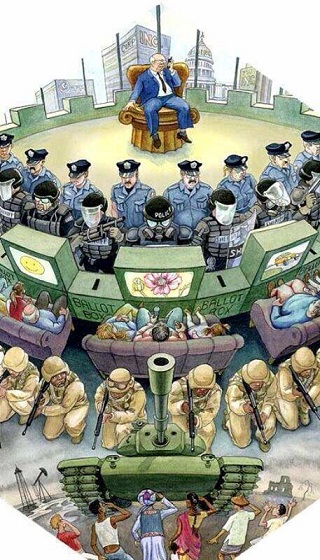
Crony-Capitalism is manifested when the rich in society is permitted (cuddled and protected) to get more-and-more while pushing back against the Middle Class, forcing them to end up with less-and-less.

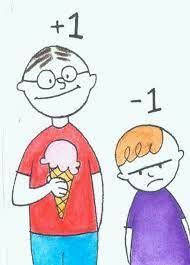
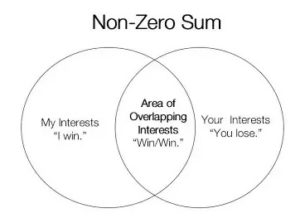
This is the continuation (and conclusion) of the February 2021 Teaching Series on Zero Sum Thinking; this is a fallacy that for one person to gain wealth, another person must lose. We find the opposite is the truth, that our New World Order is one of Non-Zero Sum, where Win-Win is actually possible; no need to re-distribute the pie’s slices, but rather grow a bigger pie for all to share … and/or introduce new pies that were not possible before.

This is all about the bad Community Ethos that persists in America … and here in Caribbean. We have a problem with Income Inequality too. To remediate and mitigate this problem, we must start with reforming and transforming our Community Ethos and then execute new strategies, tactics and implementation in our economic, security or  governing engines.

This February 2021 Teaching Series, from the movement behind the 2013 book Go Lean…Caribbean, is lamenting how the structures have crumbled that support the Middle Class; rather, the rich (Oligarchy) is getting richer while the poor is getting poorer.

This is not just an American problem. Think of Caribbean tourism:

There used to be a time, when tourists arriving by airplane at the airport would need to contract with an independent Service Provider – Taxi Driver – to get from Point A to Point B. But now, most of those tourists are arriving via cruise ships, right into the Downtown Ports, so there is no need for individual transportation. The economic activity therefore has shrunk, replaced with corporate-own Tour Bus Drivers, who is only earning the minimum wage or close to it.

This is not Win-Win. Instead, imagine the same economic activity but …

… with a Cooperative of Independently-owned, but collective-bargained Tour Bus Operators.

This is how Non-Zero Sum cooperation, collaboration, collusion, collective-bargaining and community-building is manifested. This is the advocacy of this Teaching Series. This is the final entry, 6-of-6. See here, how this consideration supplements the full catalog of discussions this month:

  1. Zero Sum: Lesson 101 – No more “Gold Standard”
  2. Zero Sum: Realities of Globalism  – “Non-Zero Sum” for the whole world
  3. Zero Sum: ICT as a tool, the “Great Equalizer”
  4. Zero Sum: Regional Tourism should not be a competition – Encore
  5. Zero Sum: Book Review – Racism is a factor; “Us vs Them”
  6. Zero Sum: How to fix “Inequality” – Raise the tide, all boats are elevated

We started this series on Zero Sum by looking at economic principles – the “Gold Standard” – now we conclude with a return to the economic perspective. We want to fix Income Inequality by “raising the tide for all boats in the harbor’; this way everyone gets to enjoy economic growth, a bigger pie, or even a 2nd pie, as in the Caribbean Union Trade Federation (CU).

How do we accomplish Non-Zero Sum for societal wealth, and ensure an equitable distribution – a strong Middle Class?

Before answering, we must acknowledge that there is a difference between wealth and power. See the Robert Reich commentary in the  Appendix VIDEO below, where he posits that:

Power is a Zero Sum game; for one person to get it, they have to take it from others.

To prevent all the wealth (and power) from consolidating in the hands of just a small minority – Oligarchy – there is the need to employ Offense and Defense strategies. These strategies allow us to proactively engage Best Practices to grow the economy while strenuously protecting the economic engines from abuse. We get to guard against the “Barbarians at the Gate“.

Yes, this subject is a grave issue for stakeholders in society to consider. This should be the quest for all societal stewards: to actively grow the Caribbean economy, while being “On Guard” for the negative influences that undermines universal opportunity or causes Income Inequality.

There is an Art & Science to fostering a healthy Middle Class. There is no need to research this topic anew. We have already addressed this in the pages of this Go Lean commentary. It is only apropos to Encore and Excerpt samples and examples of these previous postings – see 4 Offenses and 4 Defenses here:


>>> Offense #1 <<<

Two Pies: Economic Plan for a new Caribbean – February 23, 2017 –

There are a lot of money issues to contend with – but no one person’s hands are in another person’s pockets. So all the money issues for CU are exclusive to the CU. This is true of money-economics and other facets of Caribbean life: security and governance. …

In order to reboot the societal engines there must be these Two Pies. The CU Trade Federation is designed to lead, fund and facilitate regional empowerment plans. But the plan is NOT for the individual member-states to write checks to the CU so as to share one state’s treasuries with another state. Rather, the CU Trade Federation creates its own funding – from regionalized services – and then encumbers the funds for each member-state to deliver the economic, security and governing  mandates. This is analogized as Two Pies:

  • One ‘pie‘ to represent the existing budgets of the member-states and how they distribute their government funding between government services (education, healthcare, etc.), security measures (Police, Coast Guards)
  • One ‘pie‘ to represent the CU funding from exclusive activities (Spectrum Auctions, Lottery, Exploration Rights, Licenses, Foreign-Aid, etc.).

>> Defense #1 <<<

‘Mitigating Income Inequality’ – a Book Review’ – Sep 17, 2015 

Income Inequality = the rich becoming richer while the middle classes shrink. …

The desire to eliminate or reduce Income Inequality is a practical argument for social cohesion and to reduce social unrest; as such eruptions can weaken society. Income Inequality has a slippery slope that can lead to down to Failed-State status. Now after waging global conflicts of World War I, World War II plus countless regional conflicts and sectarian violence, it is important for societies to be “on guard” for encroachments in this regard. …

[Some politicians] opined … that an “upper-crust of extremely wealthy families are hell-bent on destroying the democratic vision of a strong middle-class which has made the United States the envy of the world. In its place they are determined to create an oligarchy in which a small number of families control the economic and political life of our country. …

Economic researchers John Schmitt and Ben Zipperer (2006) of the CEPR (Center for Economic and Policy Research) point to economic liberalism and the reduction of business regulation along with the decline of union membership as one of the causes of economic inequality. In an analysis of the effects of intensive Anglo-American liberal policies in comparison to continental European liberalism, where unions have remained strong, they concluded “The U.S. economic and social model is associated with substantial levels of social exclusion, including high levels of Income Inequality, high relative and absolute poverty rates, poor and unequal educational outcomes, poor health outcomes, and high rates of crime and incarceration. At the same time, the available evidence provides little support for the view that U.S.-style labor-market flexibility dramatically improves labor-market outcomes. Despite popular prejudices to the contrary, the U.S. economy consistently affords a lower level of economic mobility than all the continental European countries for which data is available.”[68] …

Ha-Joon Chang, Reader in the Political Economy of Development at Cambridge University, has written a fascinating book on capitalism’s failings. … Chang takes on the free-marketers’ dogmas and proposes ideas like – there is no such thing as a free market; the washing machine has changed the world more than the internet has; we do not live in a post-industrial age; globalisation isn’t making the world richer; governments can pick winners; some rules are good for business; US (and British) CEOs are overpaid; more education does not make a country richer; and equality of opportunity, on its own, is unfair.


>> Offense #2 <<<

Mineral Extraction 101 – Commerce of the [Caribbean] Seas – January 25, 2021 –

Opportunity is awaiting the Caribbean … for mineral extraction and oil exploration. …

Beaches are gravely important for the American East Coast. (They are important to Caribbean communities as well). So many communities depend on beach vacation and traffic during the spring/summer months (think Spring Break and the commercial summer season of Memorial Day to Labor Day). So when oil spills or predictable storms endanger beach sand, it becomes an urgent imperative for communities to assuage the crisis, even replace the sand …

Everyone has a price! So if the price goes up high enough, there may be interested parties among Caribbean member-states to take the money for allowing mineral/oil extraction in their offshore vicinity. There is a need to be alarmed at such proposals, as dredging sand or drilling for oil may endanger protected reefs or other underwater marine features.

With greater demand – imagine post hurricanes – the Laws of Supply-and-Demand will mandate that the prices for extracted minerals will only increase.

It will get more and more tempting!

The movement behind the book Go Lean…Caribbean wants to add other types of economic activities to the Caribbean landscape; we urgently want to use the sea as an industrial zone. This is because the Caribbean region is badly in need of jobs. The book urges communities to empower the economic engines of the Caribbean Sea, as in mineral & oil extraction.

The region’s economic driver is tourism. Tourism and “mineral extraction or oil exploration” are incompatible activities. Thus there is the need for the cautions in this commentary. The challenge is to embrace the commerce of mineral extraction for the positives, while avoiding the negatives.

Challenge accepted!


>>> Defense #2 <<<

Unequal Justice: Envy and the Seven Deadly Sins –  September 29, 2019 –
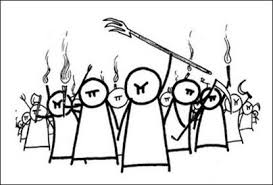
All the talk of economic inequality – the rich getting richer; the poor getting poorer; the middle-class shrinking – is really a discussion on justice & injustice.

After thousands of years of human history, we have come to an indisputable conclusion:

Inequality is never tolerated for long. Eventually the “Have-Nots” demand what the “Have’s” have!…

The Cardinal Sin of Envy forces the hand of the stakeholders in society to conform with programs that abate and mitigate Income Inequality.

The movement behind the book Go Lean…Caribbean have addressed Income Inequality on many occasions; the book introduced the roadmap for the implementation of the Caribbean Union Trade Federation (CU). This CU strives to reboot the economic engines in the region so as to create more opportunities (job-and-entrepreneurial) for everybody in the Caribbean region – men, woman, Black-Brown-and-White in all 30 member-states. This quest is designed to grow the Middle Class.


>>> Offense #3 <<<

BHAG – Infrastructure Spending … finally funding Toll Roads – March 16, 2020 –

Is it so “pie in the sky” to think that our Caribbean communities can organize, plan and execute infrastructure projects so that people can safely travel by road, mitigating traffic congestion, and get to their destinations to live, work and play?

“Pie in the sky” or just “sky” is the key reference here. This commentary asserts that some of the congested streets in the Caribbean member-states can find relief by building “skyways” and overpasses; and they can be Toll Roads.

This vision was always part of the roadmap, as described in the 2013 book Go Lean…Caribbean. This roadmap introduces the technocratic Caribbean Union Trade Federation (CU) as a super-national entity with Port Authority functionalities, to build highways, bridges, tunnels, docks and other Public Works (infrastructure) to facilitate the societal engines (economics, security and governance) of the Caribbean region. The book describes that transportation solutions must be embedded into any plan to elevate Caribbean society. …

The subject of Infrastructure is a Big Deal for the consideration of reforming or transforming the Caribbean region. The premise of the Go Lean roadmap is that the leverage of the 30 member-states and 42 million people will allow for Public Works initiatives that are bigger and better than any single (one) member-state alone. “Toll Roads” is one such example, though only a subset of the planned Union Atlantic Turnpike. The plan is for the Turnpike Authority to design and facilitate one North-South and one East-West highway as applicable in each island or coastal-state.

Yes, the highways will be Toll Roads; that charges fees for each ride. The “small pennies add up to millions” over time. This funding mechanism of the Turnpike Authority allows present infrastructure investments based on those future revenues; think bonds and loans.


>>> Defense #3 <<<

Taking from the Poor to Give to the Rich – December 20, 2017  –

The US Congress and White House have done it, they have successfully passed their Tax Reform bill that effectively “takes from the poor and gives to the rich”…

The Tax Reform strategy here double-downs on the concept of Supply-side economics. The hope is that corporate entities and wealthy people will receive tax breaks and then use the “wind fall” to re-invest in the community, thereafter creating jobs and economic growth. The Republicans in Washington (Congress and the White House) are betting on the success of this strategy even though there has been utter failures with this approach; for example just recently in the US State of Kansas.

Whether that re-investment occurs or not is the unknown. What is known is that the Rich will undoubtedly get the tax breaks. The Rich will win, at the expense of the Poor.


>>> Offense #4 <<<

Welcoming the Dreaded ‘Plutocracy’ – September 14, 2014 –

It is not nice to be called a plutocracy, it’s almost considered a derogatory term. It simply refers to the undue influence that a super-rich minority group can have on a nation.

The dread of plutocracies is not new, societies have contended with them since the dawn of civilization (Ancient Greece and Rome). Many countries in the Caribbean had de facto plutocracies during their colonial years (Montserrat, Belize and the Bahamas’s Bay Street Boys come to mind), just as a natural off-shoot from a mono-industrial economy (sugar, coffee, tobacco planters). Considering existing plutocracies today, like the City of London and Wall Street, we see that an appropriate strategy can allow a society to “bottle the plutocratic concept” and use it for good. …

The idea of “bottling” plutocratic institutions for the Greater Good is a “big idea” in the book Go Lean…Caribbean. How exactly is this envisioned? The answer provided in the book is that of Self-Governing Entities (SGE).

The Go Lean book delves into this approach of inviting the super-rich to establish industrial parks, corporate campuses and research parks in bordered territories in the Caribbean. These entities would be governed solely by the technocratic Caribbean Union Trade Federation (CU). The Go Lean book serves as a roadmap for the introduction and implementation of the CU and SGE’s.

The approach of the Go Lean roadmap is not to punish the super-rich for their success nor cower to any special interests group at the expense of the greater population.


>>> Defense #4 <<<

Forging Change – Opposition Research: Special Interest – January 30, 2020 –

The best offense is a good defense.

This is a winning strategy in football, yes (think NFL), but in nation-building as well. The actuality of the 30 Caribbean member-states is that we are losing … to the competition and opposition:

Who exactly are our competition or opposition? What do we know of their motives or designs? How can we overcome their hindrance?

These are important questions to consider – and answer – if we want to succeed in reforming and transforming the societal engines in our region. This activity is referred to as Opposition Research, where we study and gather intelligence on any adversarial opponent that may challenge us from reaching our goals. …

There is a name for our pain; there are named opponents that hinders us; one of them is the United States of America. This is NOT a Declaration of War; rather this is just an acknowledgement that many of the policies and practices of America works counter-productive to Caribbean hopes and dreams. We are frenemies. …

Who is the opposition? Needless to say, we are not talking about the common people on the street, rather we are referring to Crony-Capitalistic stakeholders in the country: Special Interest, Big Business, Corrupt Politicians. This is the Opposition.

How can we overcome the hindrance of the Opposition?

Answer: We overcome their hindrance by Forging Change in our society; we reform and transform the economic, security and governing engines despite the local opposition. We get the public to want the manifestation of this vision. We get the political leaders to lean-in this roadmap. This way we have Bottoms-Up and Top-Down pressure to make this roadmap succeed. Lastly, this dissuades our citizens from leaving the homeland as well; thereby sparing them from the American “nightmare” as the only available Dream – Caribbean people have dreams too!


The book Go Lean … Caribbean posits that America’s history (and present) has been plagued with Crony-Capitalism (and the other defect of Institutional Racism). This should not the role model the Caribbean would want to emulate, where the rich gets richer and the poor gets poorer. Rather, the book advocates for a Non-Zero Sum climate, to where we would NOT punish rich people, but still empower the Middle Class for more success.

In their homeland, the American Dream is now in jeopardy. How about in the Caribbean; is there a Caribbean Dream?

Yes, indeed. It is the quest to make the Caribbean a better place to live, work and play.

The Go Lean book stressed that there must be opportunities to fulfill the Caribbean Dream. To get an education, and a job, and a home, and good healthcare options and the preservation of our culture. This can be summarized as “prosper where planted” for our citizens … and our children and grandchildren too.

Yes, we can …

In addition to the above references, this commentary has submitted other posts related to Income Inequality, monitoring it, mitigating it and managing it. Consider this sample of other blog/commentaries:

https://goleancaribbean.com/blog/?p=19813 Good Leadership: Caring builds trust; trust builds caring
https://goleancaribbean.com/blog/?p=19572 MasterClass: Economics and Society
https://goleancaribbean.com/blog/?p=18371 Student Loans Could Dictate Justice
https://goleancaribbean.com/blog/?p=11598 Plea to Philanthropic Rich: Give us your Time, Talent and Treasuries
https://goleancaribbean.com/blog/?p=10043 Integration Plan for Greater Caribbean Prosperity
https://goleancaribbean.com/blog/?p=8669 Lesson from Detroit’s Action Plan: Make Community College Tuition-free
https://goleancaribbean.com/blog/?p=8370 A Lesson in Economic Fallacies – Austerity: Dangerous Idea?
https://goleancaribbean.com/blog/?p=7789 An Ode to Detroit – Lessons on Trade
https://goleancaribbean.com/blog/?p=5559 Economic Principle: Profit – When ‘Greed is Good’
https://goleancaribbean.com/blog/?p=5597 Economic Principle: Wages – Market Forces -vs- Collective Bargaining
https://goleancaribbean.com/blog/?p=5542 Economic Principle: Rent – Bad Ethos of Rent-Seeking

Zero Sum versus Non-Zero Sum

… this is an important consideration. Let’s go Non-Zero Sum. We need our people and institutions in the Caribbean region to cooperate, not compete; working together. There is opportunity for all of us, every citizen and resident in the 30 member-states of the region – “our pie will just grow, not splice”. This urging even corresponds with the Bible’s exhortation against competition – considering the actuality of the professed Christianity in the region:

“Let us not become egotistical, stirring up competition with one another, envying one another.”​— Galatians 5:26 NWT .

All persons in the Caribbean are hereby urged to lean-in for this Go Lean roadmap to cooperate, confederate, collaborate, collude, collective-bargain and community-build.

Now’s the time for these empowerments in our Caribbean homeland. Let’s build a better society. We now know how, by employing the strategies, tactics and implementations presented in the book Go Lean…Caribbean. These are conceivable, believable and achievable.

Yes, we can … 🙂

About the Book
The book Go Lean…Caribbean serves as a roadmap for the introduction and implementation of the technocratic Caribbean Union Trade Federation (CU), for the elevation of Caribbean society – for all member-states. This CU/Go Lean roadmap has these 3 prime directives:

  • Optimization of the economic engines in order to grow the regional economy to $800 Billion & create 2.2 million new jobs.
  • Establishment of a security apparatus to ensure public safety and protect the resultant economic engines.
  • Improve Caribbean governance to support these engines, including a separation-of-powers between the member-states and CU federal agencies.

The Go Lean book provides 370-pages of turn-by-turn instructions on “how” to adopt new community ethos, plus the strategies, tactics, implementations and advocacies to execute so as to reboot, reform and transform the societal engines of Caribbean society.

Download the free e-Book of Go Lean … Caribbean – now!

Who We Are
The movement behind the Go Lean book – a non-partisan, apolitical, religiously-neutral Community Development Foundation chartered for the purpose of empowering and re-booting economic engines – stresses that reforming and transforming the Caribbean societal engines must be a regional pursuit. This was an early motivation for the roadmap, as pronounced in the opening Declaration of Interdependence (Pages 12 – 13):

xi. Whereas all men are entitled to the benefits of good governance in a free society, “new guards” must be enacted to dissuade the emergence of incompetence, corruption, nepotism and cronyism at the peril of the people’s best interest. The Federation must guarantee the executions of a social contract between government and the governed.

xvi. Whereas security of our homeland is inextricably linked to prosperity of the homeland, the economic and security interest of the region needs to be aligned under the same governance. Since economic crimes … can imperil the functioning of the wheels of commerce for all the citizenry, the accedence of this Federation must equip the security apparatus with the tools and techniques for predictive and proactive interdictions.

xxiv. Whereas a free market economy can be induced and spurred for continuous progress, the Federation must install the controls to better manage aspects of the economy: jobs, inflation, savings rate, investments and other economic principles. Thereby attracting direct foreign investment because of the stability and vibrancy of our economy.

Sign the petition to lean-in for this roadmap for the Caribbean Union Trade Federation. 


Appendix VIDEO – The System: Who Rigged It, How We Fix It | Robert Reich – https://youtu.be/Y_sjfchNsiM

Robert Reich
Published March 24, 2020 –
Former Secretary of Labor Robert Reich presents the reader’s digest of his latest book, The System: Who Rigged It, How We Fix It. He explores the system of power in America that bails out corporations instead of people, even in times of crisis, and breaks down how we have socialism for corporations and the rich, and harsh capitalism for everybody else.

As power has concentrated in the hands of corporations and the wealthy few, those few have grabbed nearly all the economic gains — and political power — for themselves.

Meanwhile, workers have been shafted.

This isn’t a democracy, where all power is shared. It’s an oligarchy, where those at the top have the power to grab everything for themselves.

But history shows that oligarchies cannot hold on to power forever. They are inherently unstable. When a vast majority of people come to view an oligarchy as illegitimate and an obstacle to their wellbeing — which is happening before our very eyes as this crisis exacerbates — oligarchies become vulnerable.

Order Reich’s new book today: https://bit.ly/thesystemrbreich

Share this post:
, ,

Zero Sum: Book Review of “The Sum of Us” – Racism is a factor in “Us vs Them”

Go Lean Commentary

White America had it all wrong!

Racism was not a privilege, it cost them more than they had bargained for. In fact, pursuing a racist agenda deprived them of privileges that they were entitled to.

Imagine, denying yourself of a swimming pool on a hot day because by opening the pool, Black people would get to swim too.

This was bad … and yet, if lessons are not learned that same expensive consequence will be repeated again and again.

This is the lessons we glean from the new book by Heather McGhee, that the Zero Sum experience is expensive when Non-Zero Sum is so much cheaper, easier and … just.
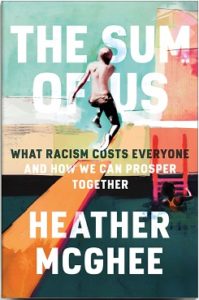
The movement behind the 2013 book Go Lean … Caribbean proclaims that people in the Caribbean – mostly Black and Brown – can benefit by consuming Heather McGhee’s book and the resultant lessons. The actual title-subtitle is as follows:

“The Sum of Us”: What Racism Costs Everyone and How We Can Prosper Together.

The book is about America, but we can apply these lessons in the Caribbean too.

See the full Book Review here:

Book Title: The Sum of Us: What Racism Costs Everyone and How We Can Prosper Together – By: Heather McGhee

Review by: Jennifer Szalai

Hinton Rowan Helper was an unreserved bigot from North Carolina who wrote hateful, racist tracts during Reconstruction. He was also, in the years leading up to the Civil War, a determined abolitionist.
His 1857 book, “The Impending Crisis of the South,” argued that chattel slavery had deformed the Southern economy and impoverished the region. Members of the plantation class refused to invest in education, in enterprise, in the community at large, because they didn’t have to. Helper’s concern wasn’t the enslaved Black people brutalized by what he called the “lords of the lash”; he was worried about the white laborers in the South, relegated by the slave economy and its ruling oligarchs to a “cesspool of ignorance and degradation.”

Helper and his argument come up early on in Heather McGhee’s illuminating and hopeful new book, “The Sum of Us” — though McGhee, a descendant of enslaved people, is very much concerned with the situation of Black Americans, making clear that the primary victims of racism are the people of color who are subjected to it. But “The Sum of Us” is predicated on the idea that little will change until white people realize what racism has cost them too.

The material legacy of slavery can be felt to this day, McGhee says, in depressed wages and scarce access to health care in the former Confederacy. But it’s a blight that’s no longer relegated to the region. “To a large degree,” she writes, “the story of the hollowing out of the American working class is a story of the Southern economy, with its deep legacy of exploitative labor and divide-and-conquer tactics, going national.”

As the pandemic has laid bare, the United States is a rich country that also happens to be one of the stingiest when it comes to the welfare of its own people. McGhee, who spent years working on economic policy for Demos, a liberal think tank, says it was the election of Donald Trump in 2016 by a majority of white voters that made her realize how most white voters weren’t “operating in their own rational economic self-interest.” Despite Trump’s populist noises, she writes, his agenda “promised to wreak economic, social and environmental havoc on them along with everyone else.”

At several points in McGhee’s book, I was reminded of the old saw about “cutting off one’s nose to spite one’s face,” though she prefers a less gruesome metaphor — the drained swimming pool. Grand public pools were sumptuous emblems of common leisure in the early decades of the 20th century, steadfastly supported by white Americans until they were told to integrate them. McGhee visited the site of one such pool in Montgomery, Ala., drained and cemented over since 1959 so that nobody, white or Black, could ever enjoy it again.

It’s a self-defeating form of exclusion, a determination not to share resources even if the ultimate result is that everyone suffers. McGhee writes about health care, voting rights and the environment; she persuasively argues that white Americans have been steeped in the notion of “zero sum” — that any gains by another group must come at white people’s expense. She talks to scholars who have found that white respondents believed that anti-white bias was more prevalent than anti-Black bias, even though by any factual measure this isn’t true. This cramped mentality is another legacy of slavery, McGhee says, which really was zero sum — extractive and exploitative, like the settler colonialism that enabled it. She writes that zero-sum thinking “has always optimally benefited only the few while limiting the potential of the rest of us, and therefore the whole.”

Recent books like Jonathan Metzl’s “Dying of Whiteness” have explained how racial animus ends up harming those who cling to a chimera of privilege. While reading McGhee I was also reminded of Thomas Frank’s argument in “What’s the Matter With Kansas?” (2004), about how the Republican Party had figured out a way to push through an unpopular economic agenda by stowing it inside a Trojan horse of social conservatism and cultural grievance.

But there are major differences between their books. Frank derides the idea that racism has anything to do with what he’s writing about. Not to mention that McGhee isn’t a stinging polemicist; she cajoles instead of ridicules. She appeals to concrete self-interest in order to show how our fortunes are tied up with the fortunes of others. “We suffer because our society was raised deficient in social solidarity,” she writes, explaining that this idea is “true to my optimistic nature.” She is compassionate but also cleareyed, refusing to downplay the horrors of racism, even if her own book suggests that the white readers she’s trying to reach can be easily triggered into seeking the safe space of white identity politics. Color blindness, she says, is just another form of denial.

One of the phenomena that emerges from McGhee’s account is that the zero-sum mentality tends to get questioned only in times of actual scarcity — when people are so desperate that they realize how much they need one another. She gives the example of the Fight for $15 movement: Already earning poverty-level wages, fast-food workers began to ask what they had to lose by organizing.

Against “zero-sum” she proposes “win-win” — without fully addressing how the ideal of win-win has been deployed for cynical ends. McGhee discusses how the subprime mortgage crisis was fueled by racism, but it was also inflated by promises of a constantly expanding housing market and rising prices. Once the credit dried up, win-win reverted to zero-sum, with the drowned (underwater homeowners) losing out to the saved (well-connected bankers).

“We live under the same sky,” McGhee writes. There is a striking clarity to this book; there is also a depth of kindness in it that all but the most churlish readers will find moving. She explains in exacting detail how racism causes white people to suffer. Still, I couldn’t help thinking back to the abolitionist Helper, who knew full well how slavery caused white people to suffer, but remained an unrepentant racist to the end.

Follow Jennifer Szalai on Twitter: @jenszalai.

Source: New York Times – posted February 23, 2021; retrieved February 25, 2021 from: https://www.nytimes.com/2021/02/23/books/review-sum-of-us-heather-mcghee.html

America has some reconciliations to do.

Their Good Old Days weren’t all so good 

Racism is embedded in the country’s DNA 

Institutional Racism is institutional … and weaved into many facets of the American eco-system …

For the Caribbean, the urging is to be On Guard while emulating and role-modeling America as the regional hegemony. Their preponderance for “Us versus Them” continues to proliferate.

This problem in America – racism as a factor in “Us vs Them” – continues as a defective Community Ethos – the underlying sentiment that informs the beliefs, customs, or practices of society. Despite the passage of time, the bad Community Ethos persists. This is why, for the Caribbean to learn from the American experience,  we must start with reforming and transforming Community Ethos before the consideration for any strategy, tactic or implementation in the economic, security or governing engines in Caribbean society.

“Us vs Them” …

… is the continuation of the February 2021 Teaching Series for the movement behind the 2013 book Go Lean…Caribbean. (Every month, we present a series relevant to Caribbean life, culture and economics). For this month, we are looking at the subject of Zero Sum Thinking and lamenting how “Us vs Them” thinking permeates so much of the Caribbean mindset. It is NOT true for us to win, someone else must lose. Not rather, it is possible for “Win-Win”. This is Non-Zero Sum cooperation, collaboration, collusion, collectivity and community. This is the fifth entry, 5-of-6, on this Teaching Series. Consider, how this seamlessly fits in with the full catalog for this month:

  1. Zero Sum: Lesson 101 – No more “Gold Standard”
  2. Zero Sum: Realities of Globalism – “Non-Zero Sum” for the whole world
  3. Zero Sum: ICT as a tool, the “Great Equalizer”
  4. Zero Sum: Regional Tourism should not be a competition – Encore
  5. Zero Sum: Book Review – Racism is a factor; “Us vs Them”
  6. Zero Sum: How to fix “Inequality” – Raise the tide, all boats are elevated

We started this series on Zero Sum by looking at economic principles, establishing  that since we are no longer on a “Gold Standard”, any view of “haves versus have-nots” should no longer be an issue. We, the full 30 Caribbean member-states, can now all win, gain and grow. There should be no “Us vs Them” strategizing. This is a great lesson we can learn from this American experience; (do not be misled, the blatant racial segregation in the Jim Crow South was also practiced in other New World countries, including many Caribbean destinations; in fact, Colorism persists even in this day).

The book Go Lean … Caribbean posits that America’s history (and present) has been plagued with institutional racism (and another defect Crony-Capitalism). This should not the role model for the Caribbean to emulate. Rather, the book advocates for a Non-Zero Sum climate, with no “Us vs Them” racially. No, the roadmap calls for reforming and transforming Caribbean society to be the just, equitable homeland that we all seek. The book stressed that to accomplish this goal, there are some key community ethos that the community must adapt, and then also some strategies, tactics, implementations and advocacies that must be executed.

Yes, we can …

In addition to the Go Lean book, this commentary has addressed this subject matter – reforming racial inequities – on many occasions. Consider this sample of previous blog-commentaries:

https://goleancaribbean.com/blog/?p=18963 Happy Chinese New Year – Honoring Sino people worldwide
https://goleancaribbean.com/blog/?p=20203 Black Image – Pluralism is the Goal
https://goleancaribbean.com/blog/?p=18749 Good Example of Diversity and a ‘Great Place to Work’: Mercedes-Benz
https://goleancaribbean.com/blog/?p=16102 Celebrating Diwali – A Glimpse of our Pluralistic Democracy
https://goleancaribbean.com/blog/?p=14558 A Role Model of Being the Change in Civil Rights – Linda Brown, RIP
https://goleancaribbean.com/blog/?p=14413 Repairing the Breach: ‘Hurt People Hurt People’ – Lynching History
https://goleancaribbean.com/blog/?p=7204 ‘The Covenant with Black America’ – Ten Years Later
https://goleancaribbean.com/blog/?p=5733 Better than America? Yes, We Can!
https://goleancaribbean.com/blog/?p=5527 American Defects: Racism – Is It Over?
https://goleancaribbean.com/blog/?p=1909 Using Music to Change Americas Race Relations – Berry Gordy

Heather McGhee is the American Author that penned this book, The Sum of Us, on the economic impact of racism in America. She did not only journalized the problems, she strategized solutions as well; see this depicted in an interview in the VIDEO here:

VIDEO – Heather McGhee – “The Sum of Us” & The True Cost of Racism | The Daily Social Distancing Show https://youtu.be/IZpse-90KTY

The Daily Show with Trevor Noah
Published on Feb 18, 2021 – Heather McGhee talks about examining the economic impact of racism in America in her new book “The Sum of Us,” and underlines the importance of having honest conversations about past and present racism at a community level. #DailyShow #TrevorNoah #HeatherMcGhee

Subscribe to The Daily Show: https://www.youtube.com/channel/UCwWh…

Follow The Daily Show: Twitter: https://twitter.com/TheDailyShow
Facebook: https://www.facebook.com/thedailyshow
Instagram: https://www.instagram.com/thedailyshow

Watch full episodes of The Daily Show for free: http://www.cc.com/shows/the-daily-sho…

Follow Comedy Central: Twitter: https://twitter.com/ComedyCentral
Facebook: https://www.facebook.com/ComedyCentral
Instagram: https://www.instagram.com/comedycentral

About The Daily Show: Trevor Noah and The Daily Show correspondents tackle the biggest stories in news, politics and pop culture. The Daily Show with Trevor Noah airs weeknights at 11/10c on Comedy Central.

Per Heather McGhee, the First Step in resolving society’s woes: Stop being racist; stop pitting “Us vs Them”; stop being Zero-Sum; try including everyone in the community in elevating the economic, social and governing engines.

Again, yes, we can … . While the American South languished during the Bad Old Days, other communities thrived, as they did better with universal community building. The South had a lot of work to do.

Consider this example from Sports: In 1947, the Owner of the Major League Baseball Team “The Brooklyn Dodgers”, Branch Rickey, was the first to hire a Black Man – Jackie Robinson – on a baseball team. What was his motivation? To win baseball games … and championships. He was successful with this goal with a World Series Championship in 1955 … and then some:

Jackie Robinson was named National League Rookie of the Year [in 1947, the year he broke the racial barrier]. In 1949 he was the league’s Most Valuable Player. Robinson led the Brooklyn Dodgers to six league championships and one World Series victory. He was inducted into the Baseball Hall of Fame in 1962. – https://www.britannica.com/biography/Jackie-Robinson

White-Only teams henceforth sacrificed the ability to win by discriminating against minorities. Today, Major League Baseball (MLB) is dominated by the best athletes in the world; the only thing that matters is talent, with little regards to ethnicity; (now Whites are the minority).

The Caribbean also, has some work to do. We must look for “Win-Win” with people who may be different.

The Go Lean book serves as a roadmap for effecting change in the Caribbean; it introduces the technocratic Caribbean Union Trade Federation (CU) as a vehicle to bring about desired change in the region’s economics, security and governing engines. We want to be a pluralistic democracy with opportunity, equal rights and justice for all. All persons in the Caribbean are hereby urged to lean-in for this Go Lean roadmap.

Now’s the time for these empowerments in the Caribbean! It is time to build our better society. The strategies, tactics and implementations proposed in the book Go Lean…Caribbean are conceivable, believable and achievable. Yes, we can … do this; we can make our homeland a better place to live, work and play.  🙂

About the Book
The book Go Lean…Caribbean serves as a roadmap for the introduction and implementation of the technocratic Caribbean Union Trade Federation (CU), for the elevation of Caribbean society – for all member-states. This CU/Go Lean roadmap has these 3 prime directives:

  • Optimization of the economic engines in order to grow the regional economy to $800 Billion & create 2.2 million new jobs.
  • Establishment of a security apparatus to ensure public safety and protect the resultant economic engines.
  • Improve Caribbean governance to support these engines, including a separation-of-powers between the member-states and CU federal agencies.

The Go Lean book provides 370-pages of turn-by-turn instructions on “how” to adopt new community ethos, plus the strategies, tactics, implementations and advocacies to execute so as to reboot, reform and transform the societal engines of Caribbean society.

Download the free e-Book of Go Lean … Caribbean – now!

Who We Are
The movement behind the Go Lean book – a non-partisan, apolitical, religiously-neutral Community Development Foundation chartered for the purpose of empowering and re-booting economic engines – stresses that reforming and transforming the Caribbean societal engines must be a regional pursuit. This was an early motivation for the roadmap, as pronounced in the opening Declaration of Interdependence (Pages 12 – 13):

xi. Whereas all men are entitled to the benefits of good governance in a free society, “new guards” must be enacted to dissuade the emergence of incompetence, corruption, nepotism and cronyism at the peril of the people’s best interest. The Federation must guarantee the executions of a social contract between government and the governed.

xvi. Whereas security of our homeland is inextricably linked to prosperity of the homeland, the economic and security interest of the region needs to be aligned under the same governance. Since economic crimes … can imperil the functioning of the wheels of commerce for all the citizenry, the accedence of this Federation must equip the security apparatus with the tools and techniques for predictive and proactive interdictions.

xxiv. Whereas a free market economy can be induced and spurred for continuous progress, the Federation must install the controls to better manage aspects of the economy: jobs, inflation, savings rate, investments and other economic principles. Thereby attracting direct foreign investment because of the stability and vibrancy of our economy.

Sign the petition to lean-in for this roadmap for the Caribbean Union Trade Federation. 

Share this post:
, , ,
[Top]

Zero Sum: Regional Tourism should not be a competition – Encore

Just recently in the Caribbean, we have had to contend with some superlative challenges to our regional tourism product. Consider:

The Clear and Present Dangers of doing business in the Caribbean have been “clear” and “present”.

There is the need for Non-Zero-Sum Thinking. For far too long, Caribbean member-states have been thinking Zero Sum – for one to gain, another one must lose – just trying to outshine each other, with no consideration as to how well or badly the other places fare:

I got mine; I don’t care if you get yours!

Your loss is my gain!

This reflects competition, when really what we need is cooperation, collaboration, convention, collective-bargaining, collusion, consensus-building, confederation …

The requested change is for a new cooperative Community Ethos – the underlying sentiment that informs the beliefs, customs, or practices of society – that we should adopt to coordinate our economic engine on a regional basis.

This is the continuation of the February 2021 Teaching Series for the movement behind the 2013 book Go Lean…Caribbean. (Every month, we present a series relevant to Caribbean life, culture and economics). For this month, we are looking at the subject of Zero Sum Thinking and lamenting how cooperation would be so much more preferred to competition. This fourth entry, 4-of-6, encores a previous blog-commentary that addressed this subject thoroughly; this aligned with the full treatment of this subject. Consider the full catalog of this series, as it is being presented:

  1. Zero Sum: Lesson 101 – No more “Gold Standard”
  2. Zero Sum: Realities of Globalism – “Non-Zero Sum” for the whole world
  3. Zero Sum: ICT as a tool, the “Great Equalizer”
  4. Zero Sum: Regional Tourism should not be a competition – Encore
  5. Zero Sum: Book Review – Racism is a factor; “Us vs Them”
  6. Zero Sum: How to fix “Inequality” – Raise the tide, all boats are elevated

We started this series on Zero Sum by looking at the economic principle that since we are no longer on a “Gold Standard”, any view of “haves versus have-nots” is no longer an issue. We, the full 30 Caribbean member-states, can now all win, gain and grow. Since we have been here and said this before, it is only apropos that we reconsider that previous blog-commentary from June 16 2018, as it relates this assertion.

———————-

Go Lean Commentary – Regional Tourism Coordination – No Longer Optional

No one can hide anymore!

There are 30 different member-states, with 5 different colonial legacies and 4 different languages, and yet people around the world only considers our region as One Caribbean:

Event Consequence to Perception
Devastating hurricane Oops, the Caribbean is unable to function commercially
Devastating earthquake Oops, the Caribbean is unable to function commercially
Emergence of a pandemic Oops, the Caribbean is unable to function commercially

All of the Caribbean member-states are in this “same boat”, so this is a matter of image and geographic misconceptions, more so than it is about disasters.

So, good or bad, the fate of one Caribbean member-state is tied to the other member-states, when it comes to tourism. See this point conveyed in this news article here:

Title: Geographic misconceptions hurting Caribbean economies
By Sarah Peter

Nassau, Bahamas – The mistaken perception among many travelers of the complete devastation of the Caribbean in the wake of the 2017 hurricane season caused further economic destruction to the region’s economy.
That’s according to the Chair of the Caribbean Tourism Organization (CTO), Joy Jibrilu. She raised the concern amid staggering losses among countries which were not impacted by the 2017 Hurricane season.

Jibrilu says following the devastation caused by hurricanes Irma and Maria to some islands in the region, many travelers called and canceled for countries who were not impacted by the storm.

This resulted in a significant drop in hotel room demand across the entire Caribbean. In light of that another disaster, an economic storm, was created which resulted in great losses in tourism revenue and a challenge for tourism officials.

“All our travel partners, all of them without exception called and said that we have heard the Caribbean  is closed.”

She further added that  Caribbean islands irrespective of if they were not actually impacted by the storm were economically  affected.

We all lost when people were not sure if or when to book if they canceled. You saw a dip in bookings because people thought that the islands which were not impacted were. We must quantify the figures of lost business so we can share the story with the world to tell them how serious it is. “

The chair of the CTO says that over one billion US dollars in tourism revenue was lost in the wake of last year’s hurricane season, the costliest hurricane season on record.

Jibrilu, who is also the Director of Tourism for the island of Barbados says the region’s reconstruction and recovery effort has been estimated at close to  6 billion dollars.

“Tourism is the region’s greatest driver of foreign exchange tax revenue and reliable vehicle of poverty reduction and human capital development for the region’s small island developing states. The tragedy is that the dampening of demand occurred even among islands that were not in the path of the storm.  This contributes to  an economic disaster as tourism visitation dropped of resulting in significant losses in revenue.”

Jilbrilu blamed the international media for the problem. She says their reports describes the region as if it was one country as opposed to several different islands. The chairman of the CTO says this inaccurate reporting is costing a region millions and negatively impacting lives in the region.

“First of all if we look at international news reporters when they talk about a hurricane they say the “Caribbean” has been impacted. They generalize and say the entire Caribbean. As a result, people look at the Caribbean as a whole unit as oppose to all these different countries, thousands of miles away from each other. To put it in context the Bahamas alone from north to south covers one hundred thousand square miles that is further than the distance of  Toronto to New York.  So if a storm happens in New York no one would say I am not going to Toronto. They just would not, it just does not make sense but when people lump the Caribbean  together as just one region ( as if it was just one country ) it  is negative.”

Jilbrilu says the region’s economy and people lives depend on accurate reporting and think making the international media more aware of this matter is a matter of economic prosperity or suffering for the region’s people.

“What we have done is to educate people of the geography of the Caribbean, that the same time it takes to travel from the Bahamas to Barbados is the same as traveling from London in the UK to Rome, Italy. So what happens to the Bahamas does not impact Barbados and vice versa.  We really  want to get that message out.”

Jilbrilu made the disclosure at the 2018 annual Caribbean Aviation Meetup in the Bahamas. Dubbed as the Caribbean region’s largest aviation conference the annual event brings together major players from the aviation and tourism industries aimed at tackling problems faced by the  World and the Caribbean’s Tourism and Aviation industries.
Source: Posted and retrieved June 15, 2018 from: https://stluciatimes.com/2018/06/15/geographic-misconceptions-hurting-caribbean-economies/

As related in the foregoing, the whole world knew of the 2017 devastation from Hurricanes Irma and Maria. But the affected (wiped-out) islands were only Barbuda, Grenada and Puerto Rico. And yet:

… following the devastation caused by hurricanes Irma and Maria to some islands in the region, many travelers called and canceled for countries who were not impacted.

Again, this is a matter of image and geographic misconceptions, more so than it is about disasters or even tourism. The world is telling the Caribbean: Better band together to assuage your challenges. We are united in affliction, we might as well be united in solutions. Yes, it is no longer optional for our region to confederate as a Single Market. This, we must do!

Confederation is not a bad thing! In a previous blog-commentary, it was asserted that our Caribbean member-states all suffer from the same inadequate image, and thusly we can all benefit from a regional elevation. Yes, the effect of regional integration could be an Increased Caribbean Tourism Market Share. That commentary quoted:

It’s time to take inventory of Caribbean tourism:

It has been weighed in the balance; it has been measured …
It has been found wanting!

Tourism is the current dominant industry; the goal is to “stand on the shoulders” of previous accomplishments, add infrastructure not possible by just one member-state alone and then reap the benefits. Imagine this manifestation in just this one new strategy: inter-island ferries that connect all islands for people, cars and goods.

The movement behind the book Go Lean … Caribbean seeks to reboot the economic engines of the Caribbean member-states. So while tourism is the region’s primary economic driver, it is inadequate for providing the needs of the people in the region, and inadequate for dealing with the crisis of natural disasters. We must do better!

The Go Lean book serves as a roadmap for the introduction and implementation of the Caribbean Union Trade Federation (CU). The CU is designed to be a technocratic intergovernmental entity that shepherds economic growth for the Caribbean region and mitigate against all security-disaster challenges. The goal is to reboot and optimize the region’s economic, security and governing engines with a regional focus.

The Go Lean/CU roadmap will employ strategies, tactics and implementations to impact its prime directives; identified with the following 3 statements:

  • Optimization of the economic engines in order to grow the regional economy to $800 Billion & create 2.2 million new jobs.
  • Establishment of a security apparatus to ensure public safety and protect the resultant economic engines. This includes a professional disaster planning and response organization.
  • Improvement of Caribbean governance to support these engines, including a separation-of-powers between the member-states and CU federal agencies, as in Self-Governing Entities.

The Go Lean book provides 370-pages of turn-by-turn instructions on “how” to adopt new community ethos, plus the strategies, tactics, implementations and advocacies to execute so as to elevate Caribbean image in good times and bad. One advocacy seeks to optimize the Caribbean tourism brand throughout the world; consider some specific plans, excerpts and headlines from the book on Page 133 entitled:

10 Ways to Better Manage Image

1 Lean-in for the Caribbean Single Market
This will allow for the unification of the region into one market of 42 million people across 30 member-states, with a GDP of $800 Billion (according to 2010 figures). In addition, the treaty calls for collective bargaining with foreign countries and industry representatives for causes of significance to the Caribbean community. There are many times when the media portray a “negative” depiction of Caribbean life, culture and people. The CU will have the scale to effectuate negotiations to better manage the region’s image, and the means by which to enforce the tenets.
2 Media Industrial Complex
The Caribbean Central Bank will settle electronic payments transactions; this will allow electronic commerce to flourish in the region. With the payment mechanisms in place, music, movies, TV shows and other media (domestic and foreign) can be paid for and downloaded legally. For a population base of 42 million, this brings a huge economic clout.
3 Respect for Intellectual Property
4 Sentinel in Hollywood
5 Anti-Defamation League
This Pro-Jewish organization provides a great model for marshalling against negative stereotypes that can belittle a race. The CU will study, copy, and model a lot of the successes of the Anti-Defamation League. This organization can also be consulted with to coach the CU’s efforts. (Consider the example of Uptown Yardies Rasta Gang in the game Grand Theft Auto [206]).
6 Power of the Boycott
The CU is an economic negotiating bloc. The power to ban, boycott and censure trade in intellectual property is a powerful deterrent for producers to be balanced in their media portrayals. A CU federal agency will assume the role to rate pending moves, as performed by MPAA in the US. While the content may not be banned outright, placing a Rated R, NC-17 or X label to a film will affect the economic results from the box office. This is the “power of the purse”.
7 Freedom of the Press
8 Libel and Slander Litigation and Enforcement
9 Public Relations and Press Releases
To facilitate effective communications, the CU’s agencies will embrace the role of “Press Secretaries” to disseminateaccurate records, news and portrayals of Caribbean life. This role is Offensive rather than the above Defensive tactics.
10 Image Award Medals and Recognition
Following the model of the NAACP Image Awards, the CU will recognize and give accolades for individual and institutions that portray a positive “image” of Caribbean life and CU initiatives. This would be similar to the Presidential Medal of … / Congressional Medal of …

The likelihood of more hurricanes in the Caribbean is undeniable. This is further exacerbated with the reality of Climate Change. Our Caribbean region must be prepared to Rinse & Repeat. It is no longer an option to maybe manage our image on a regional level. The world must know that we are bigger than just whatever island has been recently impacted by a natural disaster. This challenge is heavy-lifting because, as a region, we rarely muster an adequate response to our natural disasters.

The Go Lean book explains further that the Caribbean region must install a security apparatus with the directive to prepare and respond to natural disasters. The efficiency and effectiveness of a Caribbean Emergency Management Agency must be streamlined to ensure the world of the business continuity of our systems of commerce. This quotation is derived from the book at Page 184:

Modeled after FEMA in the US, this agency will be charged with the preparation, response and reconstruction for the regions for the eventual manifestations of hurricanes, earthquakes, tsunamis, flooding and other declared disasters, natural and man-made like medical epidemic, drought, pollution, oil spills, terrorism, etc.

This is what it means to be a technocracy, to promote the best delivery arts and sciences, in this case for Professional Emergency Management; as explained further at Page 64:

The CU treaty calls for a collective security agreement for the Caribbean member-states to prepare-respond to natural disasters, emergency incidents and assuage against systemic threats against the homeland. The CU employs the professional arts and sciences of Emergency Management to spread the costs and risks across the entire region. Outside of hurricanes or earthquakes, the emergency scope includes medical trauma, pandemic incidents and industrial accidents (i.e. oil or chemical spills) – any scenario that can impact the continuity of the economic engines and/or community.

This above scenario describes the dynamics of regional tourism promotion and protection. Yes, managing regional tourism means optimizing the planning and response for natural disasters. This is no longer optional for this homeland. We are compelled to invest in this integration and collaboration. We must have the leverage to spread the costs, risks and premium base across the entire region. Only then will the rest of the world know that any hurricane in the Caribbean does not mean a shutdown of the entire Caribbean region. Our image will then be:

Be our guests … in rain and shine.

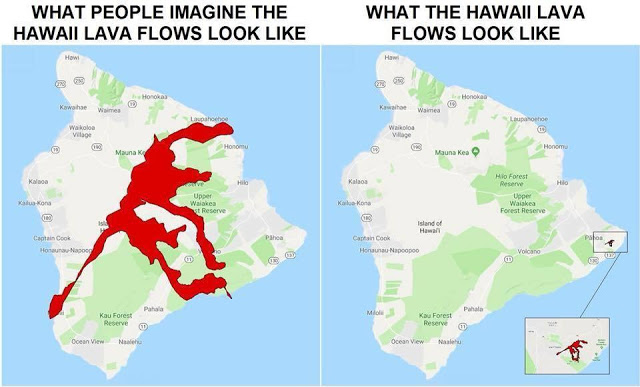
Consider this Hawaiian example; yes this problem of promoting tourism while contending with natural disasters is not just an issue for the Caribbean. Rather, the US State of Hawaii is contending with the same thing right now, with the active Kīlauea volcano. See related news VIDEO in the Appendix below.

There is the need for better stewardship of the economic engines on touristic islands, be it Hawaii or the Caribbean. It is what it is! And our situations will worsen; things will get worse before they get worst. This is due to the reality and eventuality of Climate Change. This need to assuage against the threats and realities of Climate Change was an original intent of the Go Lean roadmap. The opening Declaration of Interdependence stresses this (Page 11) in the first of many pronouncements:

i. Whereas the earth’s climate has undeniably changed resulting in more severe tropical weather storms, it is necessary to prepare to insure the safety and security of life, property and systems of commerce in our geographical region. As nature recognizes no borders in the target of its destruction, we also must set aside border considerations in the preparation and response to these weather challenges.

The Go Lean movement has previously detailed many related issues and advocacies for disaster awareness and abatement. Consider this sample of previous blog-commentaries:

https://goleancaribbean.com/blog/?p=15012 In Life or Death: No Love for Puerto Rico
https://goleancaribbean.com/blog/?p=14925 ‘Climate Change’ Reality!? Numbers Don’t Lie
https://goleancaribbean.com/blog/?p=14832 Example of Manifesting Environmental Change
https://goleancaribbean.com/blog/?p=13391 After Maria, Failed-State Indicators: Destruction and Defection for Puerto Rico
https://goleancaribbean.com/blog/?p=12996 After Irma, Failed State Indicators: Destruction and Defection
https://goleancaribbean.com/blog/?p=12977 After Irma, Barbuda Becomes a ‘Ghost Town’
https://goleancaribbean.com/blog/?p=12900 The Logistics of Disaster Relief
https://goleancaribbean.com/blog/?p=12879 Disaster Preparation: ‘Rinse and Repeat’
https://goleancaribbean.com/blog/?p=11858 Looking and Learning from the Cautionary Tale of Kiribati
https://goleancaribbean.com/blog/?p=9455 Fix ‘Climate Change’ – Yes, We Can
https://goleancaribbean.com/blog/?p=7103 COP21 – ‘Climate Change’ Acknowledged
https://goleancaribbean.com/blog/?p=6893 A Meteorologist’s View On Climate Change
https://goleancaribbean.com/blog/?p=4673 Climate Change‘ Merchants of Doubt … to Preserve Profits!!
https://goleancaribbean.com/blog/?p=2465 Book: ‘This Changes Everything: Capitalism vs. the Climate’
https://goleancaribbean.com/blog/?p=2276 Climate Change May Affect Food Supply Within a Decade
https://goleancaribbean.com/blog/?p=1883 Climate Change May Bring More Kidney Stones
https://goleancaribbean.com/blog/?p=1817 Caribbean grapples with intense cycles of flooding & drought

In summary, the issues in this commentary relate more to image and geographic misconceptions than they do tourism and natural disasters. Do we have the global reputation to “take a punch and stand back up”.

Unfortunately, no!

So we must reform and transform the Caribbean’s societal engines so as to assuage the dangers of Climate Change and natural disasters; pandemics too. This is the quest of the Go Lean roadmap, and this is not just a pipe dream; it is conceivable, believable and achievable for our regional stakeholders to do better and be better.

All Caribbean stakeholders – residents and tourists alike – are urged to lean-in to this roadmap for change … and empowerment. Yes, we can make the region a better place to live work and play. 🙂

Sign the petition to lean-in for this roadmap for the Caribbean Union Trade Federation.

—————-

Appendix VIDEO – Hawaii tourism hit hard by Kilauea volcano eruption – https://youtu.be/89ppKLS5ufI

CBS Evening News
Published on Jun 2, 2018 – As molten lava destroys more homes in Hawaii, police have been ordered to arrest people who refuse to evacuate. Thousands have already been forced to flee to safety. Now, dramatic images broadcast around the world are having another impact — on tourism. CBS News correspondent Carter Evans reports.

Share this post:
, , ,
[Top]

Zero Sum: ICT as a tool, the “Great Equalizer”

Go Lean Commentary

Not all countries are at the same level of modernity; in some places, people ride bullet trains while in other countries, people still use horses, camels and mules. This salient point was related in the 2013 book Go Lean … Caribbean on Page 69:



The idea of convergence in economics (also sometimes known as the catch-up effect) is the hypothesis that poorer economies’ per capita incomes will tend to grow at faster rates than richer economies. As a result, all economies should eventually converge in terms of per capita income. Developing countries have the potential to grow at a faster rate than developed countries because diminishing returns (in particular, to capital) are not as strong as in capital-rich countries. Furthermore, poorer countries can replicate the production methods, technologies, and institutions of developed ones.

There are many examples of countries which have converged with developed countries which validate the catch-up theory. In the 1960s and 1970s the East Asian Tigers rapidly converged with developed economies. These include Singapore, Hong Kong, South Korea and Taiwan – all of which are today considered developed countries or cities. In the postwar period (1945–1960) examples include West Germany, France and Japan, which were able to quickly regain their pre-war status.

The “catch-up” principle also applies to Internet Communications Technology (ICT). It is clearly evident that for one country to update their technology footprint, no other country have to lose theirs. Nope! ICT is naturally Non-Zero Sum.

There is another related concept: leapfrog. If you were operating at 1970’s technology, and then decide to upgrade, you do not move to 1980’s, then 1990’s, then 2000’s, then 2010’s. Nope, you jump straight to 2020’s technology. Leap-frog, not Catch-up.

In fact, migrating straight to the cutting-edge could be advantageous in other ways: there is no historic or intermediate baggage; there is nothing to unlearn.

The subject of technology adoption refers to strategy, tactics and implementation. The related issues were thoroughly defined in the Go Lean book, which serves as a roadmap for the introduction of the Caribbean Union Trade Federation (CU). That roadmap asserted that in a short 5-year period, all Caribbean member-states could update their technology investment and infrastructure. See this excerpt from Page 74 here:

From the outset, (Year 1 of the 5-year roadmap), the CU will build data centers and server farms across the regions, erect contact centers and harness the efficiencies of the internet for delivery of government products and services. Rather than looking backwards, there is the opportunity to apply “leap-frog” strategies and jump right to where data center trends are moving, like utilizing alternative energy sources such as Hydrogen Fuel Cells to ensure power in the case of downtime or natural disaster emergencies.

Here is the appeal of the Go Lean/CU roadmap, we get to leverage the whole region and deploy a technological solution not possible for any one member-state alone. This is the Way Forward for competing with the rest of the world in this new globalized footprint. Since the “world is now flat”, we must be better equipped to compete with other stakeholders; we cannot beat “them”, so we have to join together to compete with them.

This is Non-Zero-Sum Thinking

… this is the needed Community Ethos – the underlying sentiment that informs the beliefs, customs, or practices of society – that we must adopt before we can consider any strategy, tactic or implementation for deploying ICT in the Caribbean region as a great equalizer.

This is the continuation of the February 2021 Teaching Series for the movement behind the Go Lean book. For this month, we are looking at the subject of Zero Sum Thinking and trying to model good examples from the world of ICT so as to elevate Caribbean society. This third entry, 3-of-6, asserts that we can look, listen, learn from other institutions (enterprises, governments and institutions) and see that the problem for the Caribbean is bigger than just the Caribbean. Consider the full catalog of this series, has it is being presented:

  1. Zero Sum: Lesson 101 – No more “Gold Standard”
  2. Zero Sum: Realities of Globalism – “Non-Zero Sum” for the whole world
  3. Zero Sum: ICT as a tool, the “Great Equalizer”
  4. Zero Sum: Regional Tourism should not be a competition – Encore
  5. Zero Sum: Book Review – Racism is a factor; “Us vs Them”
  6. Zero Sum: How to fix “Inequality” – Raise the tide, all boats are elevated

We started this series on Zero Sum by looking at the economic principle drawn from the “Gold Standard”. Now, that we realize that the quantity of gold is inconsequential, we can now strategize to use ICT to level the “playing field” with the rest of the world, small or large countries, rich or poor. This is the mitigation plan for Globalization, as related in the Go Lean book:

The CU will level the playing field of global trade by fully deploying Internet & Communications Technology (ICT). The embrace of e-Delivery, e-Commerce and e-Payments systems allow firms and institutions in the Caribbean region an able-bodied chance of competing head-to-head with anyone in North America, Europe and Asia. – Page 119

We have addressed this issue before, many times over in assessing the needs of ICT in the Caribbean elevation plan. Our conscientizing efforts started in the 2013 book, and then continued in many related blog-commentaries. Consider this advocacy (headlines, summaries and excerpts) from the book’s Page 197, entitled:

10 Ways to Foster Technology

1 Lean-in for the Single Market treaty for the Caribbean Union Trade Federation (CU)

This treaty allows for the unification of the region into one market of 42 million people, across 30 member-states and an economic impact for a GDP of over $800 Billion (circa 2010). The CU will lead the industry efforts to create economies-of-scale to deploy technological investments, (such as Libraries and other Community Technology Centers), and generate justifiable benefits. The CU governance also provides the intellectual property protections such as patents and copyrights, and ensures their enforcement both locally and abroad. The technology initiatives are designed to include everyone in the region: the technically-savvy and the technically-ignorant. In addition to the CU providing community education services like the CTC’s, the CU incentivizes Not-For-Profit agencies, NGOs and Foundations to help the community efforts.

2 e-Learning Facilities and Industries

Though the CU is a Trade Federation with an economic empowering charter, it is accepted that education is vital to

growing the economy through technology endeavors. As such, the CU will foster public libraries, and partner with private and public schools to encourage and incentivize academic courses, training and continuing education via e-Learning channels. This effort will not only focus on the young or educated, but also on ubiquitous acceptance from the public.

3 STEM Charter Schools and STEM Teacher Recognitions
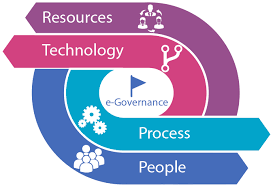
4 e-Government Services

The CU Trade Federation will provide government services. Where ever possible, these services will be delivered with the embrace of Internet and Communications Technologies (ICT). Therefore, Caribbean citizens can request and interact with CU government services via web & phone portals (contact centers), and when personal visits are mandated, service level agreements (SLA) will be implemented to set expectations for quality and timely response.

5 Public Access Wi-Fi
6 Incubators, Venture Capitalists Funds and IPO’s
7 Tax Credits for Technological Investments
8 Technology Expositions
9 Centers of Excellence

Quality assurance arts and sciences are important cultural influence within an economy, (think Swiss watches). Quality measurements like ISO-9000, CMM, and Six Sigma would be encouraged and incentivized thru the CU Trade Federation. The best-of-the-best in these endeavors should be recognized, elevated and rewarded.

10 Whistleblower Protections

Wile the Go Lean book has provided 370-pages of turn-by-turn instructions on “how” to adopt new Community Ethos, plus the strategies, tactics, implementations and advocacies to accomplish this goal, this commentary has highlighted many real world manifestations of technology efforts leveling the industrial and commercial playing field. Consider these 3 scenarios:

  1. e-Commerce – Changing how we transact business.

Uber: A Better ‘Mousetrap’ – March 13, 2019
We are learning that car-ride-sharing solutions – like Uber or Lyft – are actually working successfully. They are faster, better and cheaper than other transportation options, like taxi’s …

… it might be argued that local governments can simply ban ride-sharing companies like Uber, Lyft, etc..

Alas, the “genie is out-of-the-bottle”; ICT or Internet Communications Technologies (and smart-phones) make messaging and electronic commerce seamless and effortless. This is likened to holding back the tides. Resistance is futile! …

The [Go Lean] book asserts that no one Caribbean member-state can tackle any of these challenges alone; there is an urgent need – a Clear and Present Danger – to convene, collaborate, consolidate and confederate the response to these modern challenges – we need the economies-of-scale.

  1. e-Learning – Still learning despite no travelling

Keep the Change: Making e-Learning Work – April 24, 2020
In the Caribbean, this was always our BHAG – Big Hairy Audacious Goal – that we would terminate the strategy of sending our children off to college to only then watch them “never come back”. …

Thanks to the Coronavirus – COVID-19 crisis, the world is coming to the e-Learning party. It is April 2020 and the world is locked-down, sheltering-in-place. The majority of people in society have avoided gathering and all but essential contact for people – other than their immediate household – in order to “flatten the curve”. Schools are not essential: not primary, not secondary and not tertiary schools.

Education is essential; school (building, library, administration, etc.) is not.

We can only say that now … that e-Learning options [ i.e. Zoom] – are real and viable. …

The Go Lean book had originally asserted that e-Learning may be the answer for all the ills in the Caribbean education landscape. The book further states (Page 127) that “electronic commerce industries – Internet Communications Technology (ICT) – can be a great equalizer in economic battles of global trade [179]”. This is how and why we Keep the Change!

  1. e-Government – Bigger deliveries despite smaller footprint

e-Government 3.0 – June 20, 2018
What if we had the chance to “start all over again”, with the knowledge, wisdom and experience that we have now? Could we do “it” faster, stronger, better? Can we do more with less?

Absolutely! Yes, we can!

We will therefore be [are] in a position to “start all over again” and create an administrative regime that can make the Caribbean homeland faster, stronger, better as places to live, work and play. This regime can be dubbed: e-Government 3.0.

e-Government 1.0 refers to just the facilitation of government services via some electronic mode, the first attempt to embrace an online presence and processing; 2.0 refers to the quest for greater citizen participation in the governing/policy-making process, “putting government in the hands of citizens”.[54] This 3.0 brand however, refers to the penultimate e-Delivery, processing and optimization of ICT (Internet & Communications Technologies) among all the different roles and responsibilities. Imagine digital interactions …

  • between a citizen and their government (C2G)
  • between governments and other government agencies (G2G)
  • between government and citizens (G2C)
  • between government and employees (G2E), and …
  • between government and businesses/commercial entities (G2B).

If this sounds fantastical, just know that there are successful role model countries doing this e-Government 3.0 right now. For example, the Baltic Republic country of Estonia is widely recognized as e-Estonia, as a reference to its tech-savvy government and society.[98] [See the related VIDEO here].

VIDEO – Estonia Built the Society of the Future from Scratch – https://youtu.be/cHkIfiTGmzo


Beme News

Published on Jan 10, 2018 – A tech revolution is going down in Estonia…of all places. The tiny Baltic nation has built a futuristic, digital-first society. Lou explains how it works, why it works, and if it will work elsewhere.

Sources & Further Reading:
E-Estonia’ official website – https://e-estonia.com/
Estonia the Digital Republic – https://www.newyorker.com/magazine/20…
Is This Tiny European Nation a Preview of Our Tech Future? – http://fortune.com/2017/04/27/estonia…
How long it takes to file taxes in Estonia – http://www.politifact.com/truth-o-met…
How long it takes to file taxes in the U.S. – https://www.washingtonpost.com/blogs/…
Why Americans didn’t vote in 2016 – http://www.pewresearch.org/fact-tank/…

In addition to these above 3 examples of “leveling the playing field” with technology, we have published many other previous blog-commentaries on the related subjects of technology adoption and assimilation. Consider this sample list here:

https://goleancaribbean.com/blog/?p=18524 One Step Closer to an e-World: e-Money Solutions
https://goleancaribbean.com/blog/?p=16364 5 Year Technology Review: All the Caribbean now fully ready for ICT
https://goleancaribbean.com/blog/?p=15923 Industrial Reboot – Payment Cards 101
https://goleancaribbean.com/blog/?p=15875 Amazon: ‘What I want to be when I grow up’
https://goleancaribbean.com/blog/?p=14224 How are the Youth are Consuming Media Today? Hint, all ICT!
https://goleancaribbean.com/blog/?p=13999 First Steps – Deputize the CU for “Lean Operations” and SLA’s.
https://goleancaribbean.com/blog/?p=12532 Where the Jobs Are – Artificial Intelligence: Subtraction, not Addition
https://goleancaribbean.com/blog/?p=11314 Creating Addiction to Smartphones – One way to Forge Change
https://goleancaribbean.com/blog/?p=11184 Model: Wow, JPMorganChase spent $10 billion on ‘Fintech’ in 1 year
https://goleancaribbean.com/blog/?p=9839 Alibaba Cloud teaches how to reach the world with new Data Centers

Don’t get it twisted, Zero Sum thinking is still a reality in a lot of facets of modern life, but it does not have to be when it comes to ICT. The online (streaming) media industry is all based on the premise of Write Once Read Many (WORM), so it does NOT matter if 50 people consume a production or 500 million. The effort goes into the production, not the distribution. This means that Small Market productions can finally rival Big Market productions. Boom! That’s a  “level playing field” with equal opportunity for all competitors – small or large. See the related assertion in the Appendix VIDEO below.

The expression the “world is flat” does not only refer to globalization, but also to the emergence of communication technologies, in that across the planet can now interact with us as if they are next door. ICT flattens the round world.

“Get ready, here it comes’.

Oops, too late! If we are only now planning to address this actuality then we are already behind – playing catch-up. Let’s finally catch-up with a leap-frog approach.

Let’s get busy …

… let’s do the work to make our Caribbean homeland a better place to live, work and play. We hereby urge all Caribbean stakeholders – high tech, low tech or no tech – to lean-in to this Go Lean roadmap to elevate Caribbean society. 🙂

About the Book
The book Go Lean…Caribbean serves as a roadmap for the introduction and implementation of the technocratic Caribbean Union Trade Federation (CU), for the elevation of Caribbean society – for all member-states. This CU/Go Lean roadmap has these 3 prime directives:

  • Optimization of the economic engines in order to grow the regional economy to $800 Billion & create 2.2 million new jobs.
  • Establishment of a security apparatus to ensure public safety and protect the resultant economic engines.
  • Improve Caribbean governance to support these engines, including a separation-of-powers between the member-states and CU federal agencies.

The Go Lean book provides 370-pages of turn-by-turn instructions on “how” to adopt new community ethos, plus the strategies, tactics, implementations and advocacies to execute so as to reboot, reform and transform the societal engines of Caribbean society.

Download the free e-Book of Go Lean … Caribbean – now!

Who We Are
The movement behind the Go Lean book – a non-partisan, apolitical, religiously-neutral Community Development Foundation chartered for the purpose of empowering and re-booting economic engines – stresses that reforming and transforming the Caribbean societal engines must be a regional pursuit. This was an early motivation for the roadmap, as pronounced in the opening Declaration of Interdependence (Pages 12 – 14):

xi. Whereas all men are entitled to the benefits of good governance in a free society, “new guards” must be enacted to dissuade the emergence of incompetence, corruption, nepotism and cronyism at the peril of the people’s best interest. The Federation must guarantee the executions of a social contract between government and the governed.

xvi. Whereas security of our homeland is inextricably linked to prosperity of the homeland, the economic and security interest of the region needs to be aligned under the same governance. Since economic crimes … can imperil the functioning of the wheels of commerce for all the citizenry, the accedence of this Federation must equip the security apparatus with the tools and techniques for predictive and proactive interdictions.

xxiv. Whereas a free market economy can be induced and spurred for continuous progress, the Federation must install the controls to better manage aspects of the economy: jobs, inflation, savings rate, investments and other economic principles. Thereby attracting direct foreign investment because of the stability and vibrancy of our economy.

xxvii. Whereas the region has endured a spectator status during the Industrial Revolution, we cannot stand on the sidelines of this new economy, the Information Revolution. Rather, the Federation must embrace all the tenets of Internet Communications Technology (ICT) to serve as an equalizing element in competition with the rest of the world. The Federation must bridge the digital divide and promote the community ethos that research/development is valuable and must be promoted and incentivized for adoption.

xxx.   Whereas the effects of globalization can be felt in every aspect of Caribbean life, from the acquisition of food and clothing, to the ubiquity of ICT, the region cannot only consume, it is imperative that our lands also produce and add to the international community, even if doing so requires some sacrifice and subsidy.

Sign the petition to lean-in for this roadmap for the Caribbean Union Trade Federation.

——————–

Appendix VIDEO – SMW ’18: JD Fox Talks Making Small-Market Sports Streaming Look Big Leaguehttps://youtu.be/wq5x_0e3wDM

Posted Dec 12, 2018 – Streaming Media’s Tim Siglin interviews JD Fox, Director of Partnerships and Product Management at PrestoSports, at Sports Streaming Summit and Streaming Media West 2018.

Share this post:
, ,
[Top]

Zero Sum: Realities of Globalism

Go Lean Commentary

This is the goal of business decision-making … everywhere:

Choose the options that provide the most benefits with the least cost.

To accomplish this goal there is the need to employ the Comparative Analysis tactic; this was thoroughly defined in the 2013 book Go Lean … Caribbean; see here from Page 119:

Compare and Analyze Opportunity Costs
The comparative analysis conundrum is straight forward: an absolute trade advantage exists when countries can produce a commodity with less cost per unit than could its trading partner. By the same reasoning, it should import commodities in which it has an absolute disadvantage. For businesses, this is essential to remaining competitive.

When we combine the Theory of Comparative Analysis and Cross-Border Trade, we many times get to a situation of  Zero Sum Thinking, that is, there will be winners and losers.
But …

… when we approach the same scenario with Non-Zero-Sum Thinking , then we realize that we could have “win-win” … in the long-run. The Theory of Comparative Analysis allows for an international trade practice where producers can specialize in different roles in production and the supply vertical – the end result being “net gains in total output”.

So the country providing cheap labor can elevate their economy with more specialized labor and an elevation to the Middle Classes, thus becoming consumers, themselves, of the end-products of the production web. This is what happened in China … and “Asian Tiger” countries, lifting their Middle Classes from poverty in a short time. This was related in a previous Go Lean blog-commentary from June 20, 2019; see this excerpt:

‘Free Market’ Versus … China – Two Systems at Play
China elevated itself from poverty to prosperity for 1.3 Billion people in just 40 years. Well done. See VIDEO here:
VIDEO – How China became the world’s second largest economy – https://youtu.be/_sV5P_F3frY

CNN Business
Published on Oct 6, 2015 – More than 500 million people have been lifted out of poverty since China’s economic reforms began in 1978.

Just think of all the Chinese made products that you have enjoyed; i.e. Apple’s iPhones, Nike’s Sneakers, etc..

This “Non-Zero-Sum Win-Win” happens … eventually, but usually only after Long Train of Abuses. This is why this discussion is so important. Many times Global Trade is pursued only for the short-term gain of maximum benefit at minimum cost; we have observed-and-reported on this in Detroit, Michigan. But we have found, that if the motives are for everyone to benefit – the elusive win-win – then the misery could be avoided in the first place.

Some times that misery spurs hate, disgust, terrorism and even war.

This is the continuation of the February 2021 Teaching Series for the movement behind the 2013 book Go Lean…Caribbean. For this month, we are looking at the psychology and sociology of Zero Sum Thinking and trying to identify, qualify and correct the defects that it brings to Caribbean society. This second entry, 2-of-6, asserts that the problem for the Caribbean is bigger than just the Caribbean. The problem with Globalism is it affects the whole globe. Consider the full catalog of this series, has it is being presented:

  1. Zero Sum: Lesson 101 – No more “Gold Standard”
  2. Zero Sum: Realities of Globalism – “Non-Zero Sum” for the whole world
  3. Zero Sum: ICT as a tool, the “Great Equalizer”
  4. Zero Sum: Regional Tourism should not be a competition – Encore
  5. Zero Sum: Book Review – Racism is a factor; “Us vs Them”
  6. Zero Sum: How to fix “Inequality” – Raise the tide, all boats are elevated

We started this series on Zero Sum by looking at the economic principle drawn from the “Gold Standard”. Now, we expand the scope further to consider the needs of the whole planet – the actuality of Globalism.

There is a lot of literature conscientizing the benefits of Non-Zero-Sum Global Trade; see this sample essay:

Title: Trade is not zero-sum game

Introduction – “Trade is not a zero-sum game, in which those who win do so at the costs of others; it is, or least it can be, a positive-sum game, in which everyone can be a winner.”

We no longer live in a zero-sum world

By: Joseph E. Stiglitz
In general, free trade is an instrument with the help of which countries can increase productivity of their resources, develop their specialization in a certain product, and therefore increase volume of production. Sovereign states and its separate regions can benefit enormously by producing goods in which they have an advantage, while exchanging them on the goods that they are not able to produce as effectively as the other countries do.

Indeed, trade is an engine of growth, but still we have to answer a lot of questions to understand whether trade liberalization is good for economic performance, and whether it will lead the developing countries to further economic development. We should look back to the history of trade, draw lessons from it, and answer the central questions. What is the basis for international division of labor? What are the factors that determine competitiveness of the country on international trade arena? Is trade liberalization harmful for the developing countries or not, and what is the best way for them to achieve an economic development?

Participation in international trade brings a lot of advantages to the developing world. It helps to join other countries in the development of science and technology, effectively use the resources, to provide the country with a wide range of products from the other countries, and to implement the structural changes in the economy in a short period of time. Can the developing countries do so in such short periods of time? It took decades and generations for the developed countries to build what they have now. Is their experience suitable for the rest of the world? Are they pushing the “good policies” in order to help the developing world, or they are simply “kicking away the ladder” in order to save their own wealth? Let us see the two main points of view on these questions…

Is trade liberalization good for economic performance?

We can differentiate two mainstreams in international economic relations – liberalism and protectionism. The first who developed theoretical and practical approaches of protectionism were mercantilists. Politics of high tariffs, restrictions of imports, and financial support of infant industries took place in XVI -XVIII in many now developed countries. During the politics of protectionism industries of many developed countries expanded, and Great Britain, France, Germany, USA and other developed countries took their leading positions in the market. In the XVIII century mercantilism was strongly criticized by Adam Smith, and later by David Ricardo. They believed that other countries achieved their highest level of development and prospered only when they took away all the barriers and applied politics of free trade. Before the WWI trade was already developing with a high speed. It was quite easy at that time due to stable currencies, relatively free move of capital and labor, and macroeconomic stability. Between WWI and WWII attempts to liberalize trade were not that successful, but after the World War II all the questions concerning trade liberalization appeared in the center of agenda, many international trade organizations emerged, and a lot of agreements were signed.

In our days countries are more and more involved into the free trade: developed countries obviously see the benefits from free trade for themselves and they are trying to implement different politics (“good policies”, “good institutions”, free markets) for developing countries in order to foster economic development. Economic literature has a variety of works written by different economists concerning positive and negative effects of international trade on economic growth. For example, Ha-Joon Chang in his book “Kicking away the ladder” reviews the history of different now developed countries and argues that there are a lot of myths concerning the policies which were used by the governments of these countries on their way to economic growth. Especially, he mentions the economic policies of both Britain and the USA, which now seem to be really concerned about world free trade and opening markets. During different historical periods different instruments of protectionism were used by these countries: infant industry protection, export subsidies, export quality control by the state, tariff and nontariff barriers, etc. Looking back to different historical periods we can see that today’s developing countries are using protectionism much more less that developed countries did in the earlier times. For example, the World Bank argues that the average tariff on manufactures for developing countries is high enough, compared to the one industrialized countries used before, but the productivity gap increased which means that developing countries need to use much higher tariffs in order to promote economic growth for their industries.

As soon as the developed countries reached the necessary level of development they started using so called “pulling-away exercises”. “As soon as NDC’s reached the top, they used all kind of tactics to “pull-away” from the follower countries. Policies deployed were, of course, different according to the political status of the latter-colonies, semi-independent countries bound by unequal treaties, and independent competitor countries. Britain was particularly aggressive in preventing development in the colonies.”(Ha-Joon Chang “Kicking the ladder away”) One more important point arises from the history of institutional development. It took quite a long period of time for the developed countries to build their institutions, however now they are pushing developing countries to the “global standards”, demanding reforms in 5-10 year period, which is not that real and actually maybe even harmful. Chang in his work also states that developing countries were growing economically much faster when they were using “bad policies”, rather when they are using “good policies” right now. Drawing lessons from history then we can assume that developed countries are simply trying to prevent further development of other countries and save their own prosperity.

There are a lot of arguments among the economists concerning the question of harm that free trade can bring for domestic industries. No doubt, it is good for consumers, because they are getting goods for lower prices, but domestic industries will lose their profits due to lower prices of imported goods. This can slow down further development of domestic industries, lead to deindustrialization and specialization mainly on raw materials in a long run; though in a short run it can increase currency earnings from exports, help pay debts and decrease deficits. The strategy of exporting and liberalization of trade is not always suitable for the countries with transition economy, because it may lead to further gap in life level (poverty) and technological progress. Indeed, it can be really harmful for the developing world to open up their markets without finding a right policy, suitable for their specific situation inside the country, but countries can benefit as well.

An example of USSR shows us that politics of active government intervention and dirigiste politics doesn’t have a positive influence on economy as well; on the other hand we have an export oriented policy, policy of integration with the world economy of Japan and East Asia, which brought them to fast economic growth.

A lot of arguments in favor of free trade can also convince us that free trade can be an engine of economic growth and countries can benefit enormously. Joseph E. Stiglitz in his book “Making Globalization Work” brings us a lot of arguments of positive effects of free trade, especially for the developing world. It seems like right now we still haven’t got all the benefits out of it, because different instruments of unfair trade are still being used by the developed countries.

Free trade maximizes competition, which leads to the increase of output, as a result prices fall down and this has a positive effect for consumers. Openness may lead to economical growth, reduce of poverty, increase of health and education level, liberalization of labor markets can bring huge remittances to developing countries; development of institutions in a short period of time and it can help close the gap in knowledge and resources between developed and developing world, by providing developing countries with more opportunities. In today’s globalizing world countries with a closed economy are under the risk to stay far behind the developed world, stay undeveloped.

Conclusion
To trade or not to trade is not a question any more – it is obvious that countries need to trade in order to promote their economic performance. The problem that we should be concerned about is how we can make trade fairer for everybody and whether these specific policies are suitable for every country. Of course, those countries whose industries are more developed are voting in favor of free markets, trade liberalization and lower tariff barriers in order to get rid of extra production and open new markets for themselves. We can actually make this work without harming infant industries of developing countries. Trade liberalization can have a positive effect as well as negative, especially for developing world and we should be concerned to maximize positive effect, and take the most out of it.

“Allowing developing countries to adopt the policies and institutions that are more suitable to their stages of development and to other conditions they face will enable them to grow faster. This will benefit not only the developing countries, but also the developed countries in the long run, as it will increase the trade and investment opportunities available to the developed countries in the developing countries.” (Ha-Joon Chang “Kicking away the ladder”)

Literature:

  • Ha-Joon Chang “Kicking Away the Ladder”
  • L.Alan Winters “Trade Liberalization and Poverty. The Evidence So Far”
  • Ajit Singh “Special and Differential Treatment. The Multilateral Trading System and Economic Development in the Twenty-first Century”
  • Joseph E. Stiglitz “Making Globalization Work”
  • Moon “The theoretical and Historical Origins of Trade Issues”

Source: Retrieved February 21, 2021: https://www.ukessays.com/essays/economics/trade-is-not-ero-sum-game.php

Expanding trade in the Caribbean has always been a focus for the movement behind the Go Lean book. In fact, the book serves as an introduction to the Caribbean Union Trade Federation (CU); the emphasis is on Trade.

To participate in the game of Global Trade, we must be competent in some contributory role; we cannot only consume, we must add some value. This has been the consistent theme of the Go Lean book.

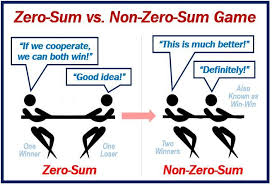
The book explained that the proper management of trade can increase wealth. This is related among the introductory Economic Principles, as follows (Page 21):

Voluntary Trade Creates Wealth: People specialize in the production of certain goods and services because they expect to gain from it. People trade what they produce with other people when they think they can gain something from the exchange. Some benefits of voluntary trade include higher standards of living and broader choices of goods and services.

If we want Non-Zero-Sum, a win-win, we must do our part to deliver some value-add to the trade dynamic. How do we go about in improving our trade prospects? The Go Lean book presents a detailed roadmap. It asserts that there are a series of community ethos, strategies, tactics, implementations and advocacies to better “Foster Trade” in the Caribbean region, among ourselves and the rest of the world. Consider this advocacy (headlines, summaries and excerpts) from the book’s Page 119, entitled:

10 Ways to Benefit from Globalization

1 Lean-in for the Single Market treaty for the Caribbean Union Trade Federation (CU)

The CU will allow for the unification of the region into one market, thereby creating a single economy of 30 member-states, 42 million people and a GDP of over $800 Billion. The CU will deploy and then empower the economic engines within the borders of the member-states and also petition the United Nations for a declaration of an Exclusive Economic Zone (EEZ) for the Caribbean Seas. The intra-island engines will include Free Trade Zones, Industrial Parks, Urban Enterprise Zones and other Self Governing Entities. The goal of these installations is to increase economic activity, more jobs from GDP growth and direct foreign investments.

2 Declare Interdependence

The region, as a whole, can compete with and exploit the benefits of globalization, but the CU member-states need to openly acknowledge that they are interdependent in providing offense and defense in this war for “global trade”. Many of the regions’ challenges are too big for just one nation-state alone, but rather leveraging the population of 42 million in 30 member-states provides more economies-of-scale and more shock absorption for the CU investments.

3 Join The Club – World Trade Organization (WTO)
4 Compare and Analyze Opportunity Costs
5 Act Locally, Think Globally

The region has the same needs as elsewhere for basic supplies like food. As such, the CU needs to produce more of its own foods, even if the opportunity cost is higher – the EU and US accomplish the same goal by granting subsidies to their domestic agricultural sector. The CU will do the same but also include aqua-culture for fisheries stock control.

6 Level the Playing Field with Technology

The CU will level the playing field of global trade by fully deploying Internet & Communications Technology (ICT). The embrace of e-Delivery, e-Commerce and e-Payments systems allow firms and institutions in the Caribbean region an able-bodied chance of competing head-to-head with anyone in North America, Europe and Asia.

7 Foster Developments in Culture and Sports
8 Control the Message and Media
9 Help Regional Businesses Find Foreign Markets – Export

Since labor is cheaper in the CU region, compared to many foreign trading partners, this can present advantages (using the Theory of Comparative Advantage) for providing certain services and products like tele-services and light manufacturing. These prospects are further enhanced with the infrastructure the CU will facilitate for communications, energy systems, and transportation – where the Atlantic Turnpike can nullify transit issues.

10 Reform Tax and Revenue Systems

The world is flat; this means that global trade proliferates. Some communities have already executed their roadmap for Non-Zero Sum Thinking. It is time we catch up in the Caribbean. See more here:

Title: The World Is Flat: A Brief History of the Twenty-first Century
This is an international best-selling book by[Economist] Thomas L. Friedman that analyzes globalization, primarily in the early 21st century. The title is a metaphor for viewing the world as a level playing field in terms of commerce, wherein all competitors, except for labor, have an equal opportunity. As the first edition cover illustration indicates, the title also alludes to the perceptual shift required for countries, companies, and individuals to remain competitive in a global market in which historical and geographic divisions are becoming increasingly irrelevant.

Friedman is a strong advocate of those changes, calling himself a “free-trader” and a “compassionate flatist”, and he criticizes societies that resist the changes. He emphasizes the inevitability of a rapid pace of change and the extent to which the emerging abilities of individuals and developing countries are creating many pressures on businesses and individuals in the United States; he has special advice for Americans and for the developing world. Friedman’s is a popular work based on much personal research, travel, conversation, and reflection. In his characteristic style, through personal anecdotes and opinions, he combines in The World Is Flat a conceptual analysis accessible to a broad public. The book was first released in 2005, was later released as an “updated and expanded” edition in 2006, and was yet again released with additional updates in 2007 as “further updated and expanded: Release 3.0”. The title was derived from a statement by Nandan Nilekani, former CEO of Infosys.[1] The World Is Flat won the inaugural Financial Times and Goldman Sachs Business Book of the Year Award in 2005.[2]

Source: Retrieved February 21, 2021 from: https://en.wikipedia.org/wiki/The_World_Is_Flat

Non-Zero Sum Thinking reflects the new Community Ethos that we in the Caribbean need to adopt. This means we have to look at the rest of the world as potential trading partners and new friends, not strangers or rivals. Can we pull this off?

Yes, we can …

The Go Lean book provides 370-pages of turn-by-turn instructions on “how” to adopt the new Community Ethos, plus the strategies, tactics, implementations and advocacies to accomplish this goal.  In addition, we have published many previous blog-commentaries on the effort to foster more Global and Free Trade. See a sample list here:

https://goleancaribbean.com/blog/?p=21138 Brexit Manifestation: Bad Model for Trade
https://goleancaribbean.com/blog/?p=18834 A Lesson in History: Free Trade Agreement of the Americas
https://goleancaribbean.com/blog/?p=16192 In Defense of Trade: China Realities
https://goleancaribbean.com/blog/?p=16206 In Defense of Trade – India’s Business Process Outsourcing
https://goleancaribbean.com/blog/?p=16208 In Defense of Trade – Bilateral Tariffs: No one wins
https://goleancaribbean.com/blog/?p=12146 Commerce of the Seas – Good Shipbuilding Model for Trade
https://goleancaribbean.com/blog/?p=12144 Commerce of the Seas – ‘Sea Power’ Countries Have Advantages
https://goleancaribbean.com/blog/?p=8799 Trade with China – Too Big to Ignore
https://goleancaribbean.com/blog/?p=7789 Lessons from Detroit on Trade
https://goleancaribbean.com/blog/?p=6867 How to address high consumer prices? Better Trade Deals
https://goleancaribbean.com/blog/?p=5597 Economic Principle: Market Forces overrides Collective Bargaining
https://goleancaribbean.com/blog/?p=4767 Welcoming World Trade Organization & Say Goodbye to Nationalism
https://goleancaribbean.com/blog/?p=4700 Rare Earths: The new ‘Rush’ for Valuable Trade Assets
https://goleancaribbean.com/blog/?p=2887 Caribbean States urged to work together to address rum subsidies
https://goleancaribbean.com/blog/?p=2435 Latin America and Caribbean’s “Korea-like” dreams
https://goleancaribbean.com/blog/?p=994 Bahamas rejects US demand for fairer Trade for American Imports

“No man is an island; no island is an island”.

The “world is flat”; we have to complete with the rest of the world, yes. But we can also cooperate, collaborate and combine efforts with other parties sprawl throughout the wide world.

Let’s get busy …

… let’s get serious on this quest.

This is how we will make our Caribbean homeland a better place to live, work and play. We hereby urge all Caribbean stakeholders – producers and consumers alike – to lean-in to this comprehensive Go Lean roadmap to elevate Caribbean society. 🙂

About the Book
The book Go Lean…Caribbean serves as a roadmap for the introduction and implementation of the technocratic Caribbean Union Trade Federation (CU), for the elevation of Caribbean society – for all member-states. This CU/Go Lean roadmap has these 3 prime directives:

  • Optimization of the economic engines in order to grow the regional economy to $800 Billion & create 2.2 million new jobs.
  • Establishment of a security apparatus to ensure public safety and protect the resultant economic engines.
  • Improve Caribbean governance to support these engines, including a separation-of-powers between the member-states and CU federal agencies.

The Go Lean book provides 370-pages of turn-by-turn instructions on “how” to adopt new community ethos, plus the strategies, tactics, implementations and advocacies to execute so as to reboot, reform and transform the societal engines of Caribbean society.

Download the free e-Book of Go Lean … Caribbean – now!

Who We Are
The movement behind the Go Lean book – a non-partisan, apolitical, religiously-neutral Community Development Foundation chartered for the purpose of empowering and re-booting economic engines – stresses that reforming and transforming the Caribbean societal engines must be a regional pursuit. This was an early motivation for the roadmap, as pronounced in the opening Declaration of Interdependence (Pages 12 – 13):

xi. Whereas all men are entitled to the benefits of good governance in a free society, “new guards” must be enacted to dissuade the emergence of incompetence, corruption, nepotism and cronyism at the peril of the people’s best interest. The Federation must guarantee the executions of a social contract between government and the governed.

xvi. Whereas security of our homeland is inextricably linked to prosperity of the homeland, the economic and security interest of the region needs to be aligned under the same governance. Since economic crimes … can imperil the functioning of the wheels of commerce for all the citizenry, the accedence of this Federation must equip the security apparatus with the tools and techniques for predictive and proactive interdictions.

xxiv. Whereas a free market economy can be induced and spurred for continuous progress, the Federation must install the controls to better manage aspects of the economy: jobs, inflation, savings rate, investments and other economic principles. Thereby attracting direct foreign investment because of the stability and vibrancy of our economy.

Sign the petition to lean-in for this roadmap for the Caribbean Union Trade Federation.

Share this post:
, ,
[Top]

Zero Sum: Lesson 101 – No More “Gold Standard”

Go Lean Commentary

Whether you realize it or not, Zero Sum Thinking is a real concern … and a real problem … in the Caribbean.

The default psychology of Zero-Sum Thinking refers to the perception that a situation is like a zero-sum game, where one person’s gain is another’s loss; (see the full encyclopedic treatment in the Appendix below).

This complex topic relates heavily to the economic discussions of “Supply and Demand“; actually it magnifies more on the different dynamics of Supply. The actuality is not everybody has the same level of supply – this is true despite whatever resource is being considered. If everyone had an adequate supply – if there was no scarcity – then this standard would not apply:

Golden Rule: He who has the gold, makes the Rules. – Old Adage

Just the premise of this Old Adage assumes a limited amount of gold, a “finite pie” and the challenge to get a slice of it. The term Zero Sum infers the same size pie and the activity to just change the slicing; the total mass of the pie never increases or decreases.

The actuality of a finite pie aligns with a primary Economic Principle, 1st among the 6 principles established in the orthodoxy of Economic Principles. This concept was explained in full details in the 2013 book Go Lean…Caribbean. See the excerpt here from Page 21:

  1. People Choose: We always want more than we can get and productive resources (human, natural, capital) are always limited. Therefore, because of this major economic problem of scarcity, we usually choose the alternative that provides the most benefits with the least cost.
  2. All Choices Involve Costs.
  3. People Respond to Incentives in Predictable Ways.
  4. Economic Systems Influence Individual Choices and Incentives.
  5. Voluntary Trade Creates Wealth.
  6. The Consequences of Choices Lie in the Future.

This Economic Principle (1-of-6) predates the Go Lean book; it is Classic Economics. See the encyclopedic definition here:

Scarcity as an economic concept “… refers to the basic fact of life that there exists only a finite amount of human and nonhuman resources which the best technical knowledge is capable of using to produce only limited maximum amounts of each economic good … .”[1] If the conditions of scarcity didn’t exist and an “infinite amount of every good could be produced or human wants fully satisfied … there would be no economic goods, i.e. goods that are relatively scarce…”[1] Scarcity is the limited availability of a commodity, which may be in demand in the market or by the commons. Scarcity also includes an individual’s lack of resources to buy commodities.[2] The opposite of scarcity is abundance.

The above points on scarcity are true and valid, when the supply of the limited resource – like gold – actually affects our life. But the world has actually moved away from Zero Sum Thinking, as there is no longer a Gold Standard for economic measurements. See more here:

gold standard is a monetary system in which the standard economic unit of account is based on a fixed quantity of gold. The gold standard was widely used in the 19th and early part of the 20th century. Most nations abandoned the gold standard as the basis of their monetary systems at some point in the 20th century, although many still hold substantial gold reserves.[1][2] – Source: Wikipedia

Unfortunately, the Caribbean has not caught up with this advanced thinking. There is no longer any excuses; we must now assimilate this concept that modern society has transformed to a Non-Zero Sum world. The sooner we accept this actuality, the better.

Many Caribbean people still believe that America is the “greatest” country in the world only because they have the largest Gold Reserves. But alas, as reported above, the Gold Standard no longer applies. The World now operates on a “Fiat Currency” principle, and so we can all grow, advance and win without someone else having to decline, lose or fail.

Let’s examine this closer! Every month, the movement behind the 2013 book Go Lean…Caribbean presents a Teaching Series to address issues germane to Caribbean society. For this month of February 2021, we are looking at the psychology and sociology of Zero Sum Thinking. It turns out that many of our societal defects are tied to this reality – (see the Appendix below). This first entry, 1-of-6, introduces the concept and then we drill deeper and climb higher.  The full catalog of this series is detailed as follows:

  1. Zero Sum: Lesson 101 – No more “Gold Standard”
  2. Zero Sum: Realities of Globalism – “Non-Zero Sum” for the whole world
  3. Zero Sum: ICT as a tool, the “Great Equalizer”
  4. Zero Sum: Regional Tourism should not be a competition – Encore
  5. Zero Sum: Book Review – Racism is a factor; “Us vs Them”
  6. Zero Sum: How to fix “Inequality” – Raise the tide, all boats are elevated

We start our discussion on Zero Sum by looking at the economic picture – the Gold Standard. This aligns with the assertions of the Go Lean book, that regional stewards can reform and transform Caribbean society by first rebooting the economy engines.

# 6 – Need People Too – Not All About Money, or is it?
The quality of life for the citizenry is very important, otherwise, people leave, and take their time, talents and treasuries elsewhere. Family, cultural pride is more important than economics, and yet when the economics are bad, people leave. This is evident by the large Caribbean Diaspora in foreign lands – where they re-assembled their culture and civic pride. – Go Lean book Page 26 – Title: “10 Ways to Impact the Future

The regional stewards need to pay more than the usual attention to this consideration. What regional stewards?

There is no such stewardship and this is the first step the political Caribbean needs to do to reform and transform the regional homeland. So that same Page 26 Go Lean Advocacy calls for this #1 “Way to Impact the Future“:

# 1 – Lean-in for the Caribbean Single Market & Economy initiative: Caribbean Union Trade Federation (CU)
This will allow for the unification of the region into a Single Market economy of 30 countries, 42 million people and a GDP of over $800 Billion (based on 2010 figures), thereby creating the world’s 29th largest economy. The CU will then forge multiple Agencies to foster technology growth and garner benefits from the economic “Catch-Up” principle. This should double the GDP after 5 years and help create the structures for the meaningful future that past visionaries had foreseen.

The European Union is the Model for the Caribbean Union

In addition to an integrated political stewardship – which must come first – the roadmap calls for an integrated economic stewardship. The Go Lean book (Page 32) introduces the Caribbean Central Bank (CCB) with this mandate:

CCB – Mixed Basket – Monetary Strength
An obscure Murphy’s Law states “when people claim that it’s the principle, and not the money, chances are, it’s the money”. There are more important things in life than money, but somehow all these things can be bought/sold … for money. The CU strategy is to consolidate monetary reserves for the region into one currency, the Caribbean Dollar, managed by the technocratic Caribbean Central Bank. The C$ will be based on a mixed-basket of foreign reserves (US dollars, Euros, British pounds & Yens). This strategy allows the CU to negotiate with sufficient economic strengths.

The Euro is the Model for the Caribbean Dollar

So if Gold is no longer the Reserve Standard, and we are not limited to Zero Sum Thinking, then nothing prevents us from growing and growing our economy – monetary reserves and Fiat valuations.

This concept was thoroughly explained in a previous blog-commentary from March 25, 2014 entitled:

How to Create Money from Thin Air
Something more amazing happens in our modern economic system, money is created out of “thin air” … . How is this possible? This is accomplished through the Commercial/Central Banking system.

First of all, banks are financial institutions that take in deposits from people and use their money to give out loans to others. The reason why banks provide this service [to the community] for free is because they earn a profit by letting people deposit their money. Banks charge higher interests rates on the money they lend out compared to the money deposited. All in all, banks are both borrowers and lenders. People trust banks to store their money. The deposits allow banks to lend out money with higher interest rates with the expectancy that the loans will be paid back.

Banks have something called a required reserve ratio, mandated by the Central Bank; (the “Fed” in the US). This is the ratio of reserves to total deposits that banks are supposed to keep as reserves. Banks also have the right to increase the reserve ratio. They lend out the remaining percentage. For example, the bank has a 10% reserve ratio meaning it reserves 10% of its total deposits. It will then lend out the remaining 90%. When a person deposits $100, the bank is able to lend out $90 and keeps $10 for reserves. The $10 does not count as money since it is used as a reserve and may not be used for lending. So far, the bank has $100 and $90 currency loaned out. This is a total of $190 created as opposed to $100 before. Currency held by the public is money.

Of course, the borrower doesn’t simply keep the $90 but he will spend it. For instance, he will spend his money for a pair of soccer cleats at the Nike store. Now the Nike store has $90 but it will then deposit it back into the bank. The cycle then repeats itself. If the bank has more borrowers, it will certainly make a profit. If it lends again, it will lend out $81 and keep $9 on reserves.

The way banks create money is a cycle and over time, the profit compounds on top of each other and the original $100 can be [extended] potentially [to as high as] $1,000.[a]

So the new $900, compared to the original $100, is created from “thin air”.

Surely, you see how this new fractional banking regime is better than the old Gold Standard. If the monetary regime had remained tied to “gold”, the only value that would have mattered would have been an original deposit of $100 in Gold, not the $1000 in Fiat Currency. Rather than a Zero Sum system where that $100 in Gold only changes hands between parties and still amounts to $100, we now have a Non-Zero Sum regime, in which the focus and emphasis is on $1000, not only the $1000 – we now have a much Bigger Pie.

In this series, a reference is made to the need for a comprehensive roadmap for elevating the societal engines of the 30 Caribbean member-states for the Greater Good. We need to ensure that institutional stewardship is in place to manage this new economic regime. The world is already doing this with Non-Zero Sum Thinking. It is time we catch up.

Zero Sum Thinking is actually a bad Community Ethos – the underlying sentiment that informs the beliefs, customs, or practices of society – while Non-Zero Sum Thinking reflects a new Community Ethos.

The dread of Zero Sum

The Go Lean book provides 370-pages of turn-by-turn instructions on “how” to adopt the new Community Ethos we need for progress, plus the strategies, tactics, implementations and advocacies to execute so as to reboot, protect, reform and transform the economic engines of Caribbean society. There is a lot of consideration in the book for establishing the CCB and the Single Currency (Caribbean Dollar or C$) in the region.  Plus, there have been a number of previous blog-commentaries by the Go Lean movement that have highlighted the ecosystem of monetary, central banking and currency best practices. See a sample list here:

https://goleancaribbean.com/blog/?p=19452 Big Hairy Audacious Goal: Regional Currency – ‘In God We Trust’
https://goleancaribbean.com/blog/?p=16530 China seeks to de-Americanize the world’s economy
https://goleancaribbean.com/blog/?p=16210 In Defense of Trade – The Real Threat of Currency Assassins
https://goleancaribbean.com/blog/?p=14248 Leading with Money Matters – Almighty Dollar
https://goleancaribbean.com/blog/?p=13744 Failure to Launch – Economics: The Quest for a ‘Single Currency’
https://goleancaribbean.com/blog/?p=13365 Case Study from West Africa: Single Currency for 8 Diverse Countries
https://goleancaribbean.com/blog/?p=10513 Case Study from India: Transforming Money Countrywide
https://goleancaribbean.com/blog/?p=8381 Case Study on Central Banking for Puerto Rico
https://goleancaribbean.com/blog/?p=7140 Case Study from Azerbaijan – Setting its currency to Free Float
https://goleancaribbean.com/blog/?p=6800 Case Study from Venezuela: Suing Black Market currency website
https://goleancaribbean.com/blog/?p=3858 Case Study from ECB: Unveiling 1 trillion Euro stimulus program
https://goleancaribbean.com/blog/?p=3814 Case Study from Switzerland: Unpegging the franc
https://goleancaribbean.com/blog/?p=360 Case Study on Central Banks: Creating Money from ‘Thin Air’
https://goleancaribbean.com/blog/?p=833 Case Study from the Euro: One Currency, Diverse Economies

This consideration is bigger than just a discussion on the “Gold Standard” and regional currencies. As related in Appendix below, there are psychological and sociological limitations associated with Zero and Non-Zero Sum Thinking:

  • Labor Negotiations – Winners does not have to mean losers.
  • Immigration – New Arrivals does not mean “less for the status quo”.
  • Academic Grading – On the curve?
  • Jury Deliberation – Evidence has point to more than one conclusion
  • Job Skills Competence – Jack of all trades, master of …
  • Inter-personal relations – Love more than one person (i.e. best friends)
  • International Trade – Trade Deficits do not mean losses

See this portrayal in this VIDEO Book Review:

VIDEO – Thomas Sowell – Zero-Sum Thinking – https://youtu.be/5dbrzo5-sdE

Posted June 1, 2017 – Excerpt from Thomas Sowell “Basic Economics A Citizen’s Guide to the Economy 2nd Edition”: http://amzn.to/2quYW9l

Subscribe to The War on Mind and Body: https://goo.gl/mGMe2a

– Video Upload powered by https://www.TunesToTube.com

In summary, it is inexcusable that the Caribbean has failed to adapt to this new monetary, economic, sociological and psychological growth that is associated with Non-Zero Sum Thinking.

Let move forward now!

We hereby urge all Caribbean stakeholders – stewards and subjects – to lean-in to this comprehensive Go Lean roadmap to elevate Caribbean society. This is the work we must do to make our homeland a better place to live, work and play. 🙂

About the Book
The book Go Lean…Caribbean serves as a roadmap for the introduction and implementation of the technocratic Caribbean Union Trade Federation (CU), for the elevation of Caribbean society – for all member-states. This CU/Go Lean roadmap has these 3 prime directives:

  • Optimization of the economic engines in order to grow the regional economy to $800 Billion & create 2.2 million new jobs.
  • Establishment of a security apparatus to ensure public safety and protect the resultant economic engines.
  • Improve Caribbean governance to support these engines, including a separation-of-powers between the member-states and CU federal agencies.

The Go Lean book provides 370-pages of turn-by-turn instructions on “how” to adopt new community ethos, plus the strategies, tactics, implementations and advocacies to execute so as to reboot, reform and transform the societal engines of Caribbean society.

Download the free e-Book of Go Lean … Caribbean – now!

Who We Are
The movement behind the Go Lean book – a non-partisan, apolitical, religiously-neutral Community Development Foundation chartered for the purpose of empowering and re-booting economic engines – stresses that reforming and transforming the Caribbean societal engines must be a regional pursuit. This was an early motivation for the roadmap, as pronounced in the opening Declaration of Interdependence (Pages 12 – 13):

xi. Whereas all men are entitled to the benefits of good governance in a free society, “new guards” must be enacted to dissuade the emergence of incompetence, corruption, nepotism and cronyism at the peril of the people’s best interest. The Federation must guarantee the executions of a social contract between government and the governed.

xvi. Whereas security of our homeland is inextricably linked to prosperity of the homeland, the economic and security interest of the region needs to be aligned under the same governance. Since economic crimes … can imperil the functioning of the wheels of commerce for all the citizenry, the accedence of this Federation must equip the security apparatus with the tools and techniques for predictive and proactive interdictions.

xxiv. Whereas a free market economy can be induced and spurred for continuous progress, the Federation must install the controls to better manage aspects of the economy: jobs, inflation, savings rate, investments and other economic principles. Thereby attracting direct foreign investment because of the stability and vibrancy of our economy.

Sign the petition to lean-in for this roadmap for the Caribbean Union Trade Federation.

—————–

Appendix – Title: Zero-Sum Thinking

Zero-Sum Thinking perceives situations as zero-sum games, where one person’s gain would be another’s loss.[1][2][3] The term is derived from game theory. However, unlike the game theory concept, zero-sum thinking refers to a psychological construct—a person’s subjective interpretation of a situation. Zero-sum thinking is captured by the saying “your gain is my loss” (or conversely, “your loss is my gain”). Rozycka-Tran et al. (2015) defined zero-sum thinking as:

A general belief system about the antagonistic nature of social relations, shared by people in a society or culture and based on the implicit assumption that a finite amount of goods exists in the world, in which one person’s winning makes others the losers, and vice versa … a relatively permanent and general conviction that social relations are like a zero-sum game. People who share this conviction believe that success, especially economic success, is possible only at the expense of other people’s failures.[1]

Zero-sum bias is a cognitive bias towards zero-sum thinking; it is people’s tendency to intuitively judge that a situation is zero-sum, even when this is not the case.[4] This bias promotes zero-sum fallacies, false beliefs that situations are zero-sum. Such fallacies can cause other false judgements and poor decisions.[5][6] In economics, “zero-sum fallacy” generally refers to the fixed-pie fallacy.

Examples
There are many examples of zero-sum thinking, some of them fallacious.

  1. When jurors assume that any evidence compatible with more than one theory offers no support for any theory, even if the evidence is incompatible with some possibilities or the theories are not mutually exclusive.[5]
  2. When students in a classroom think they are being graded on a curve when in fact they are being graded based on predetermined standards.[4]
  3. In a negotiation when one negotiator thinks that they can only gain at the expense of the other party (i.e., that mutual gain is not possible).[7]
  4. In the context of social group competition, the belief that more resources for one group (e.g., immigrants) means less for others (e.g., non-immigrants).[8]
  5. In the context of romantic relationships, the idea that loving more than one person at a time means loving each one less.[9]
  6. Jack of all trades, master of none: the idea that having more skills means having less aptitude (also known as compensatory reasoning).[10]
  7. In copyright infringement debate, the idea that every unauthorized duplication is a lost sale.[11][12][13]
  8. When politicians argue that international trade must mean that one party is “winning” and another is “losing” when transfer of goods and services at mutually-agreeable prices is in general mutually beneficial, or that a trade deficit represents “losing” money to another country.
  9. Group membership is sometimes treated as zero-sum, such that stronger membership in one group is seen as weaker membership in another.[14]

Causes
There is no evidence which suggests that zero-sum thinking is an enduring feature of human psychology. Game-theoretic situations rarely apply to instances of individual behaviour. This is demonstrated by the ordinary response to the prisoner’s dilemma.

Zero-sum thinking is the result of both proximate and ultimate causes.

Ultimate causes
In terms of ultimate causation, zero-sum thinking might be a legacy of human evolution. Specifically, it might be understood to be a psychological adaptation that facilitated successful resource competition in the environment of ancestral humans where resources like mates, status, and food were perpetually scarce.[4][15][3] For example, Rubin suggests that the pace of technological growth was so slow during the period in which modern humans evolved that no individual would have observed any growth during their lifetime: “Each person would live and die in a world of constant technology and income. Thus, there was no incentive to evolve a mechanism for understanding or planning for growth” (p. 162).[3] Rubin also points to instances where the understanding of laypeople and economists about economic situations diverge, such as the lump-of-labor fallacy.[3] From this perspective, zero-sum thinking might be understood as the default way that humans think about resource allocations, which must be unlearned by, for example, an education in basic economics.

Proximate causes
Zero-sum thinking can also be understood in terms of proximate causation, which refers to the developmental history of individuals within their own lifetime. The proximate causes of zero-sum thinking include the experiences that individuals have with resource allocations, as well as their beliefs about specific situations, or their beliefs about the world in general.

Resource-scarce environments
One of the proximate causes of zero-sum thinking is the experiences that individuals have with scarce resources or zero-sum interactions in their developmental environment.[16] In 1965, George M. Foster argued that members of “peasant” societies have an “Image of Limited Good,” which he argued was learned through by experiences in a society that was essentially zero-sum.

“The model of cognitive orientation that seems to me best to account for peasant behavior is the “Image of Limited Good.” By “Image of Limited Good” I mean that broad areas of peasant behavior are patterned in such fashion as to suggest that peasants view their social, economic, and natural universes—their total environment—as one in which all of the desired things in life such as land, wealth, health, friendship and love, manliness and honor, respect and status, power and influence, security and safety, exist in finite quantity and are always in short supply, as far as the peasant is concerned. Not only do these and all other “good things” exist in finite and limited quantities, but in addition there is no way directly within peasant power to increase the available quantities … When the peasant views his economic world as one in which Limited Good prevails, and he can progress only at the expense of another, he is usually very near the truth.” (pps. 67-68)[16]

More recently, Rozycka-Tran et al. (2015) conducted a cross-cultural study that compared the responses of individuals in 37 nations to a scale of zero-sum beliefs. This scale asked individuals to report their agreement with statements that measured zero-sum thinking. For example, one item on the scale stated that “Successes of some people are usually failures of others”. Rozycka-Tran et al. found that individuals in countries with lower Gross Domestic Product showed stronger zero-sum beliefs on average, suggesting that “the belief in zero-sum game seems to arise in countries with lower income, where resources are scarce” (p. 539).[1] Similarly, Rozycka-Tran et al. found that individuals with lower socioeconomic status displayed stronger zero-sum beliefs.

Resource scarcity beliefs
Related to experiences with resource-scarce environments is the belief that a resource is scarce or finite. For example, the lump of labour fallacy refers to the belief that in the economy there is a fixed amount of work to be done, and thus the allocation of jobs is zero-sum.[17] Although the belief that a resource is scarce might develop through experiences with resource scarcity, this is not necessarily the case. For example, individuals might come to believe that wealth is finite because it is a claim that has been repeated by politicians or journalists.[18]

Resource entitlement beliefs
Another proximate cause of zero-sum thinking is the belief that one (or one’s group) is entitled to a certain share of a resource.[19][9] An extreme case is the belief that one is entitled to all of a resource that exists, implying that any gains by another is one’s own loss. Less extreme is the belief that one (or one’s group) is superior and therefore entitled to more than others. For example, perceptions of zero-sum group competition have been associated with the Dominance sub-scale of the social dominance orientation personality trait, which itself has been characterized as a zero-sum worldview (“a view of human existence as zero-sum,” p. 999).[20] Individuals who practice monogamy have also been found to think about love in consensually nonmonogamous relationships as zero-sum, and it was suggested that this might be because they believe that individuals in romantic relationships have an entitlement to their partner’s love.[9]

Effects
When individuals think that a situation is zero-sum, they will be more likely to act competitively (or less cooperatively) towards others, because they will see others as a competitive threat. For example, when students think that they are being graded on a curve—a grading scheme that makes the allocation of grades zero-sum—they will be less likely to provide assistance to a peer who is proximate in status to themselves, because that peer’s gain could be their own loss.[2]

When individuals perceive that there is a zero-sum competition in society for resources like jobs, they will be less likely to hold pro-immigration attitudes (because immigrants would deplete the resource).[8] Zero-sum thinking may also lead to certain social prejudices. When individuals hold zero-sum beliefs about love in romantic relationships, they are more prejudiced against consensual nonmonogamists (presumably because the perception of zero-sumness makes consensual nonmonogamy seem inadequate or unfair).[9]

Share this post:
, , ,
[Top]

Black History – Pandemic-wise: A Lesson from the Ancestors

Go Lean Commentary

The Ancestors are speaking to us, telling us to remember them, remember their sacrifices and achievements, and then to follow their models on mitigating communicable diseases.
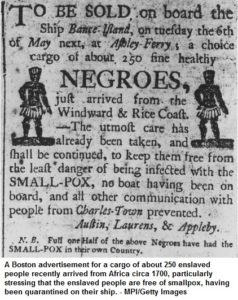
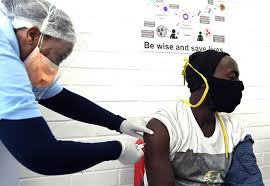
Listen carefully!

Listen, especially now during Black History Month 2021, in the middle of a global pandemic, to the lessons from previous generations, or forefathers and foremothers.

Listen, my son, to your father’s instruction and do not forsake your mother’s teaching. – The Bible; Proverbs 1:8 New International Version

There is no way to justify Slavery and the Slave Trade! It was an abominable stain on European society and the Church; see the Appendix VIDEO below.

But we cannot change that Bad History. Like all things historic, all we can do is study it, learn from it and change the present-future to optimize our lives and society based on those lessons. This aligns with the Old Adage:

Those who do not learn from history are forced to repeat it.

So now, we must listen to the lessons from our Ancestors in dealing with a modern day crisis – COVID-19 Coronavirus Pandemic. Our Ancestors told us, and the whole world how to mitigate, minimize and manage this and all epidemics. See this Lesson in History in the story here:

Title: How an Enslaved African Man in Boston Helped Save Generations from Smallpox
Sub-title:
In the early 1700s, Onesimus shared a revolutionary way to prevent smallpox.
By: Erin Blakemore

The news was terrifying to colonists in Massachusetts: Smallpox had made it to Boston and was spreading rapidly. The first victims, passengers on a ship from the Caribbean, were shut up in a house identified only by a red flag that read “God have mercy on this house.” Meanwhile, hundreds of residents of the bustling colonial town had started to flee for their lives, terrified of what might happen if they exposed themselves to the frequently deadly disease.

They had reason to fear. The virus was extremely contagious, spreading like wildfire in large epidemics. Smallpox patients experienced fever, fatigue and a crusty rash that could leave disfiguring scars. In up to 30 percent of cases, it killed.

But the smallpox epidemic of 1721 was different than any that came before it. As sickness swept through the city, killing hundreds in a time before modern medical treatment or a robust understanding of infectious disease, an enslaved man known only as Onesimus suggested a potential way to keep people from getting sick. Intrigued by Onesimus’ idea, a brave doctor and an outspoken minister undertook a bold experiment to try to stop smallpox in its tracks.

Smallpox was one of the era’s deadliest afflictions. “Few diseases at this time were as universal or fatal,” notes historian Susan Pryor. The colonists saw its effects not just among their own countrymen, but among the Native Americans to whom they introduced the disease. Smallpox destroyed Native communities that, with no immunity, were unable to fight off the virus.

Smallpox also entered the colonies on slave ships, transmitted by enslaved people who, in packed and unsanitary quarters, passed the disease along to one another and, eventually, to colonists at their destinations. One of those destinations was Massachusetts, which was a center of the early slave trade. The first enslaved people had arrived in Massachusetts in 1638, and by 1700, about 1,000 enslaved people lived in the colony, most in Boston.

In 1706, an enslaved West African man was purchased for the prominent Puritan minister Cotton Mather by his congregation. Mather gave him the name Onesimus, after an enslaved man in the Bible whose name meant “useful.” Mather, who had been a powerful figure in the Salem Witch Trials, believed that owners of enslaved people had a duty to convert enslaved people to Christianity and educate them. But like other white men of his era, he also looked down on what he called the “Devilish rites” of Africans and worried that enslaved people might openly rebel.

Mather didn’t trust Onesimus: He wrote about having to watch him carefully due to what he thought was “thievish” behavior, and recorded in his diary that he was “wicked” and “useless.” But in 1716, Onesimus told him something he did believe: That he knew how to prevent smallpox.

Onesimus, who “is a pretty intelligent fellow,” Mather wrote, told him he had had smallpox—and then hadn’t. Onesimus said that he “had undergone an operation, which had given him something of the smallpox and would forever preserve him from it…and whoever had the courage to use it was forever free of the fear of contagion.”

The operation Onesimus referred to consisted of rubbing pus from an infected person into an open wound on the arm. Once the infected material was introduced into the body, the person who underwent the procedure was inoculated against smallpox. It wasn’t a vaccination, which involves exposure to a less dangerous virus to provoke immunity. But it did activate the recipient’s immune response and protected against the disease most of the time.

Mather was fascinated. He verified Onesimus’ story with that of other enslaved people, and learned that the practice had been used in Turkey and China. He became an evangelist for inoculation—also known as variolation—and spread the word throughout Massachusetts and elsewhere in the hopes it would help prevent smallpox.

But Mather hadn’t bargained on how unpopular the idea would be. The same prejudices that caused him to distrust his servant made other white colonists reluctant to undergo a medical procedure developed by or for Black people. Mather “was vilified,” historian Ted Widmer told WGBH. “A local newspaper, called The New England Courant, ridiculed him. An explosive device was thrown through his windows with an angry note. There was an ugly racial element to the anger.” Religion also contributed: Other preachers argued that it was against God’s will to expose his creatures to dangerous diseases.

But in 1721, Mather and Zabdiel Boylston, the only physician in Boston who supported the technique, got their chance to test the power of inoculation. That year, a smallpox epidemic spread from a ship to the population of Boston, sickening about half of the city’s residents. Boylston sprang into action, inoculating his son and his enslaved workers against the disease. Then, he began inoculating other Bostonians. Of the 242 people he inoculated, only six died—one in 40, as opposed to one in seven deaths among the population of Boston who didn’t undergo the procedure.

The smallpox epidemic wiped out 844 people in Boston, over 14 percent of the population. But it had yielded hope for future epidemics. It also helped set the stage for vaccination. In 1796, Edward Jenner developed an effective vaccine that used cowpox to provoke smallpox immunity. It worked. Eventually, smallpox vaccination became mandatory in Massachusetts.

Did Onesimus live to see the success of the technique he introduced to Mather? It isn’t clear. Nothing is known of his later life other than that he partially purchased his freedom. To do so, writes historian Steven J. Niven, he gave Mather money to purchase another enslaved person. What is clear is that the knowledge he passed on saved hundreds of lives—and led to the eventual eradication of smallpox.

In 1980, the World Health Organization declared smallpox entirely eradicated due to the spread of immunization worldwide. It remains the only infectious disease to have been entirely wiped out.

Source: History Channel; posted Feb 3, 2021; retrieved Feb 13, 2021 from: https://www.history.com/news/smallpox-vaccine-onesimus-slave-cotton-mather

What is the take-away?

Get inoculated or vaccinated. The human body and immune system has a way of learning, in advance, how to counteract viruses. The Ancestors conveyed this lesson to the waiting world that there is a way to build up our personal defenses by introducing a virus in a controlled manner.

This is a Big Deal now, as many descendants of those same slaves – in the Americas and the Caribbean – refuse to consider the option of vaccinations for COVID-19. See this excerpt from a previous blog-commentary from August 29, 2020:

Title: Pandemic Playbook – COVID Vaccine: To Be or Not To Be

The world is enduring the Coronavirus COVID-19 pandemic crisis; it is wreaking havoc on the world’s economic engines – $250 Billion a day in losses – and Public Health deliveries. The only hope is a vaccine, of which there are a number of them in development (Phase I – Test Tubes, Phase II – Lab Mice, Phase III – Human Trials). Around $10bn is being spent on finding a vaccine for this Coronavirus.

Will you consume or ingest the eventual vaccine?

Will you allow your children to ingest? What percentage of people in the community will refuse to ingest?

What if consumption is a prerequisite for work, school, church, travel, etc.?

But don’t get it twisted! The Caribbean member-states boast a Service industrial economy – tourism. To participate in this industry space will require compliance. Tourists – by air for resort-based stay-overs or cruise line passengers – will not want to expose themselves to possible infections.

Lastly, individuals can simply chose to exit societal functioning – a self-imposed quarantine; think: Leper Colony. These ones will have to take a seat – with a view – and watch life pass them by.

Is this what you want for yourself, your family and your community? If you chose NO VACCINE, you have that right. But your children may choose differently. Especially those children that you invested so selflessly to get advanced education – college graduates. Already, this population have a higher than normal abandonment rate in the region.

The Caribbean region is in an epidemiological crisis. What are we to do?

We hereby urge all to listen to the Ancestors: Take the vaccine.

A lot of blood, sweat and tears have spilled to get us to this point; do not disregard those sacrifices.

Learning lessons from our Ancestors in Black History is always the motive every February of every year in the US and other countries. The movement behind the 2013 book Go Lean…Commentary have consistently participated in this quest to educate Caribbean communities on the merits of Black History. In fact, this commentary is our 326th submissions on a theme related to Black History and/or the African experience in the New World.

Consider this sample list from previous blog-commentaries:

https://goleancaribbean.com/blog/?p=16685 Ready for February – Black History Month
https://goleancaribbean.com/blog/?p=20237 Black Image – Slavery in History: Lessons from the Bible
https://goleancaribbean.com/blog/?p=18152 A Lesson from America’s Slavery History – Greatest Story Never Told
https://goleancaribbean.com/blog/?p=18093 400 Years of Slavery – International Day of Remembrance
https://goleancaribbean.com/blog/?p=17917 What Went Wrong? ‘7 to 1’ – Quantifying Caribbean ‘Less Than’
https://goleancaribbean.com/blog/?p=8724 Remembering Marcus Garvey: Still Relevant Today
https://goleancaribbean.com/blog/?p=4971 Authorizing Slavery – Royal Charters: Truth & Consequence
https://goleancaribbean.com/blog/?p=2297 A Lesson in History: Booker T versus Du Bois

Learning lessons from the past, from Black History, would mean acting in harmony with those lessons. While we may not be able to fix the historic past, surely we should apply the wisdom from the Ancestors and fix the present and ensure a brighter future.

The Go Lean movement is here to do more than just pique our collective conscience; we are here to act! The purpose of the Go Lean book is to usher in a Caribbean regional administrations to cooperate, collaborate and coordinate technocratic Homeland Security solutions for all 30 Caribbean member-states – the Caribbean Union Trade Federation (CU) – despite their historical legacies or governmental hierarchy.

See this synopsis here, as related in a previous Go Lean commentary from March 24, 2015:

Title: A Lesson in History – SARS in Hong Kong
The CU is not designed to just be in some advisory role when it comes to pandemic crises, but rather to possess the authority to act as a Security Apparatus for the region’s Greater Good. This is the mandate as pronounced in the opening Declaration of Interdependence (Page 11) related to climate change, but it applies equally to pandemics, to …

  • “protect the entire region it is necessary to prepare to insure the safety and security of life, property and systems of commerce in our geographical region. As nature recognizes no borders in the target of its destruction, we also must set aside border considerations in the preparation and response to these … challenges”.

Legally, each Caribbean member-state would ratify a Status of Forces Agreement that would authorize this role for the CU agencies (Emergency Management and Disease Control & Management) to serve as a proxy and deputy of the Public Health administrations for each member-state. This would thusly empower these CU agencies to quarantine and detain citizens with probable cause of an infectious disease. The transparency, accountability and chain-of-command would be intact with the appropriate checks-and-balances of the CU’s legislative and judicial oversight. This is a lesson learned from Hong Kong 2003 with China’s belligerence.

As concluded in that previous August 29, 2020 blog-commentary, we urge all Caribbean stakeholders – governments, citizens, doctors and patients – to participate in the global quest to eradicate this [COVID-19] pandemic. This is the roadmap for making the Caribbean homeland a better place to live, work, heal and play. [The slave named Onesimus did this with Smallpox in 1721]; Jonas Salk did it with Polio … eventually; we can too. So our vision, this quest is conceivable, believable and achievable.

Let’s do our part and learn these important lessons from our Ancestors. 🙂

About the Book
The book Go Lean…Caribbean serves as a roadmap for the introduction and implementation of the technocratic Caribbean Union Trade Federation (CU), for the elevation of Caribbean society – for all member-states. This CU/Go Lean roadmap has these 3 prime directives:

  • Optimization of the economic engines in order to grow the regional economy to $800 Billion & create 2.2 million new jobs.
  • Establishment of a security apparatus to ensure public safety and protect the resultant economic engines.
  • Improve Caribbean governance to support these engines, including a separation-of-powers between the member-states and CU federal agencies.

The Go Lean book provides 370-pages of turn-by-turn instructions on “how” to adopt new community ethos, plus the strategies, tactics, implementations and advocacies to execute so as to reboot, reform and transform the societal engines of Caribbean society.

Download the free e-Book of Go Lean … Caribbean – now!

Who We Are
The movement behind the Go Lean book – a non-partisan, apolitical, religiously-neutral Community Development Foundation chartered for the purpose of empowering and re-booting economic engines – stresses that reforming and transforming the Caribbean societal engines must be a regional pursuit. This was an early motivation for the roadmap, as pronounced in the opening Declaration of Interdependence (Pages 11 – 13):

ix. Whereas the realities of healthcare and an aging population cannot be ignored and cannot be afforded without some advanced mitigation, the Federation must arrange for health plans to consolidate premiums of both healthy and sickly people across the wider base of the entire Caribbean population. The mitigation should extend further to disease management …

x. Whereas we are surrounded and allied to nations of larger proportions in land mass, populations, and treasuries, elements in their societies may have ill-intent in their pursuits, at the expense of the safety and security of our citizens. We must therefore appoint “new guards” to ensure our public safety and threats against our society, both domestic and foreign. …

xi. Whereas all men are entitled to the benefits of good governance in a free society, “new guards” must be enacted to dissuade the emergence of incompetence, corruption, nepotism and cronyism at the peril of the people’s best interest. The Federation must guarantee the executions of a social contract between government and the governed.

xii. Whereas the legacy in recent times in individual states may be that of ineffectual governance with no redress to higher authority, the accedence of this Federation will ensure accountability and escalation of human and civil rights of the people for good governance, justice assurances, due process and the rule of law. As such, any threats of a “failed state” status for any member state must enact emergency measures on behalf of the Federation to protect the human, civil and property rights of the citizens, residents, allies, trading partners, and visitors of the affected member state and the Federation as a whole.

xvi. Whereas security of our homeland is inextricably linked to prosperity of the homeland, the economic and security interest of the region needs to be aligned under the same governance. Since economic crimes … can imperil the functioning of the wheels of commerce for all the citizenry, the accidence of this Federation must equip the security apparatus with the tools and techniques for predictive and proactive interdictions.

Sign the petition to lean-in for this roadmap for the Caribbean Union Trade Federation.

———————–

Appendix VIDEO: Life Aboard a Slave Ship | History – https://youtu.be/PmQvofAiZGA


HISTORY
Published on Feb 7, 2019 – From approximately 1525 to 1866, 12.5 million Africans were forcibly transported across the Middle Passage to serve as slaves in the New World. Life aboard slave ships was agonizing and dangerous; nearly 2 million slaves would perish on their journey across the Atlantic.

#HistoryChannel
Read More: http://po.st/slave_ship

Check out exclusive HISTORY content:

Website – http://www.history.com
Facebook – https://www.facebook.com/History
Twitter – https://twitter.com/history

HISTORY®, now reaching more than 98 million homes, is the leading destination for award-winning original series and specials that connect viewers with history in an informative, immersive, and entertaining manner across all platforms. The network’s all-original programming slate features a roster of hit series, epic miniseries, and scripted event programming. Visit us at http://www.HISTORY.com​ for more info.

Share this post:
, ,
[Top]

Happy Lunar New Year … Again – Encore

It’s Happy New Year … again, in China … and other Asian countries.

See this “Feature Article”:

Title: Lunar New Year’s Traditions and Superstitions, Explained
Sub-title:
The holiday’s about luck, health, and reuniting with family.
By 

When people talk about the “holiday season” in the U.S., they typically refer to that period between Thanksgiving dinner and New Year’s Day. But shortly after that, another massive holiday brings friends and family together in several Asian countries, with concurrent parties that carry on the traditions stateside. The Lunar New Year, most commonly associated with the Chinese New Year or Spring Festival, typically falls sometime between January 21 and February 20 annually. Lunar New Year 2021 is on February 12, and in terms of the Chinese zodiac animal, it’s the Year of the Ox.

“Google Doodle” for February 12, 2021

It’s called the Lunar New Year because it marks the first new moon of the lunisolar calendars traditional to many east Asian countries including China, South Korea, and Vietnam, which are regulated by the cycles of the moon and sun. As the New York Times explains, “A solar year—the time it takes Earth to orbit the sun—lasts around 365 days, while a lunar year, or 12 full cycles of the Moon, is roughly 354 days.” As with the Jewish lunisolar calendar, “a month is still defined by the moon, but an extra month is added periodically to stay close to the solar year.” This is why the new year falls on a different day within that month-long window each year.

In China, the 15-day celebration kicks off on New Year’s Eve with a family feast called a reunion dinner full of traditional Lunar New Year foods, and typically ends with the Lantern Festival. “It’s really a time for new beginnings, and family gathering,” says Nancy Yao Maasbach, president of New York City’s Museum of Chinese in America. Three overarching themes, she says, are “fortune, happiness, and health.”

Here’s what to know about Lunar New Year traditions, and what more than 1.5 billion people do to celebrate it.

Source:
Posted and retrieved Feb 12, 2021 from: https://www.oprahmag.com/life/a34892893/what-is-lunar-new-year-festival/

Why should we commemorate or even pay attention to this Sinophone culture? For one reason, as explained in the foregoing article: 1.5 Billion people.

Size matters

This is so familiar for the movement behind the 2013 book Go Lean…Caribbean; as we published a previous blog-commentary on the same topic last year, just as the Coronavirus Pandemic was blowing up round the worlds – it was hard to celebrate anything “Chinese” then. It is only apropos that we Encore that commentary again now, as we measure this milestone in the annals of Caribbean life.

The Wuhan, China-bred Coronavirus is still wreaking havoc on the world stage. But China has done better in managing this crisis.

A crisis is a terrible thing to waste

… China has not wasted this crisis. As the world’s economy has receded, China’s had expanded. Wow!

We need more of the Chinese actuality in our Caribbean actuality. We need to invite, retain and return China’s time, talent and treasuries. See how that previous blog-commentary presented that thesis last year; consume this commentary here/now:

—————-

Go Lean Commentary – Happy Chinese New Year

Happy New Year …

No, not the January 1st thing, but rather the January 25th thing – the Chinese New Year.

This is a Big Deal in China and among the Chinese Diaspora – Sinophone – throughout the world. There is great importance to this observation. See this VIDEO and encyclopedic reference here:

VIDEO – Everything you need to know about the Chinese New Year https://youtu.be/3I-R5S3czyw

TRT World
Posted January 24, 2020 – Here’s everything you need to know about the Chinese New Year – how it’s celebrated, it’s history, and what the animals represent.

#Chinese New Year #Spring Festival #metalrat

Subscribe: http://trt.world/subscribe
Livestream: http://trt.world/ytlive
Facebook: http://trt.world/facebook
Twitter: http://trt.world/twitter
Instagram: http://trt.world/instagram
Visit our website: http://trt.world

————————————

Title: Chinese New Year
Chinese New Year[a], also referred to as Lunar New Year, is the Chinese festival that celebrates the beginning of a new year on the traditional Chinese calendar. The festival is usually referred to as the Spring Festival in mainland China,[b] and is one of several Lunar New Years in Asia. Observances traditionally take place from the evening preceding the first day of the year to the Lantern Festival, held on the 15th day of the year. The first day of Chinese New Year begins on the new moon that appears between 21 January and 20 February.[2] In 2020, the first day of the Chinese New Year will be on Saturday, 25 January, initiating the Year of the Rat.

Chinese New Year is a major holiday in China, and has strongly influenced Lunar new year celebrations of China’s neighbouring cultures, including the Korean New Year (seol), the Tết of Vietnam, and the Losar of Tibet.[3] It is also celebrated worldwide in regions and countries with significant Overseas Chinese or Sinophone populations, including Singapore,[4]Indonesia, Malaysia, Myanmar,[5]Thailand, Cambodia, the Philippines,[6] and Mauritius,[7] as well as many in North America and Europe.[8][9][10]

Chinese New Year is associated with several myths and customs. The festival was traditionally a time to honour deities as well as ancestors.[11] Within China, regional customs and traditions concerning the celebration of the New Year vary widely,[12] and the evening preceding Chinese New Year’s Day is frequently regarded as an occasion for Chinese families to gather for the annual reunion dinner. It is also traditional for every family to thoroughly clean their house, in order to sweep away any ill-fortune and to make way for incoming good luck. Another custom is the decoration of windows and doors with red paper-cuts and couplets. Popular themes among these paper-cuts and couplets include that of good fortune or happiness, wealth, and longevity. Other activities include lighting firecrackers and giving money in red paper envelopes. For the northern regions of China, dumplings are featured prominently in meals celebrating the festival. It often serves as the first meal of the year either at midnight or as breakfast of the first day.

Festivities
New Year’s Eve
The biggest event of any Chinese New Year’s Eve is the annual reunion dinner. Dishes consisting of special meats are served at the tables, as a main course for the dinner and offering for the New Year. This meal is comparable to Thanksgiving dinner in the U.S. and remotely similar to Christmas dinner in other countries with a high percentage of Christians.

In northern China, it is customary to make jiaozi, or dumplings, after dinner to eat around midnight. Dumplings symbolize wealth because their shape resembles a Chinese sycee. In contrast, in the South, it is customary to make a glutinous new year cake (niangao) and send pieces of it as gifts to relatives and friends in the coming days. Niángāo [Pinyin] literally means “new year cake” with a homophonous meaning of “increasingly prosperous year in year out”.[44]

After dinner, some families go to local temples hours before the new year begins to pray for a prosperous new year by lighting the first incense of the year; however in modern practice, many households hold parties and even hold a countdown to the new year. Traditionally, firecrackers were lit to scare away evil spirits with the household doors sealed, not to be reopened until the new morning in a ritual called “opening the door of fortune” (开财门; 開財門; kāicáimén).[45]

Beginning in 1982, the CCTV New Year’s Gala is broadcast in China four hours before the start of the New Year and lasts until the succeeding early morning. Watching it has gradually become a tradition in China. A tradition of going to bed late on New Year’s Eve, or even keeping awake the whole night and morning, known as shousui (守岁), is still practised as it is thought to add on to one’s parents’ longevity.

First day
The first day is for the welcoming of the deities of the heavens and earth, officially beginning at midnight. It is a traditional practice to light fireworks, burn bamboo sticks and firecrackers and to make as much of a din as possible to chase off the evil spirits as encapsulated by nian of which the term Guo Nian was derived. Many Buddhists abstain from meat consumption on the first day because it is believed to ensure longevity for them. Some consider lighting fires and using knives to be bad luck on New Year’s Day, so all food to be consumed is cooked the days before. On this day, it is considered bad luck to use the broom, as good fortune is not to be “swept away” symbolically.

Most importantly, the first day of Chinese New Year is a time to honor one’s elders and families visit the oldest and most senior members of their extended families, usually their parents, grandparents and great-grandparents.

For Buddhists, the first day is also the designated holy day of MaitreyaBodhisattva (better known as the more familiar Budai Luohan), the Buddha-to-be. People also abstain from killing animals.

Some families may invite a lion dance troupe as a symbolic ritual to usher in the Chinese New Year as well as to evict bad spirits from the premises. Members of the family who are married also give red envelopes containing cash known as lai see (Cantonese dialect) or angpow (Hokkien, Chaozhou, and Fujian dialects), or hongbao (Mandarin), a form of blessings and to suppress the aging and challenges associated with the coming year, to junior members of the family, mostly children and teenagers. Business managers also give bonuses through red packets to employees for good luck, smooth-sailing, good health and wealth.

While fireworks and firecrackers are traditionally very popular, some regions have banned them due to concerns over fire hazards. For this reason, various city governments (e.g., Kowloon, Beijing, Shanghai for a number of years) issued bans over fireworks and firecrackers in certain precincts of the city. As a substitute, large-scale fireworks display have been launched by governments in such city-states as Hong Kong and Singapore. However, it is a tradition that the indigenous peoples of the walled villages of New Territories, Hong Kong are permitted to light firecrackers and launch fireworks in a limited scale.

Source: Retrieved January 25, 2020 from: https://en.wikipedia.org/wiki/Chinese_New_Year

What’s the Big Deal? Well, for starters, this relates to the 1.4 Billion people in China. That’s a market size that is bigger than North America and the European Union … combined. Consider the encyclopedic details in the Appendix below.

You see it, right? You do see why this is important; 1.5 Billion people (out of 7.7 Billion) in a world where Size Matters (as related in this previous blog-commentary from August 26, 2016):

For Hollywood – a metonym for the film-television-video industry – any access to large markets is a win-win.

Enter China…

… this country has 1.3 billion people. That’s a lot of “eye-balls”. This country, considering its history, used to be closed to western commerce and movie distributions. Now, its open … and advancing. Those 1.3 billion pairs of eye-balls are presenting a lot of opportunities and now starting to wield power.

For the Caribbean, this is a necessary discussion for the planners and stewards of a new Caribbean; this requires a consideration of the economic engines for our communities. This is the assertion of the movement behind the 2013 book Go Lean…Caribbean – that size matters when it comes to marketing your “Export Products & Services”. For us in the Caribbean, our primary export is tourism – we sell travel experiences to consumers around the world. – we must consider the 20-percent of the population that features Sinophone culture.

We must curry their favor!

So Happy New Year to our Sinophone friends and family.

Yes, we have Sinophone family members in the Caribbean. In a previous blog-commentary, it was detailed how Chinese immigrants were “recruited” to come and impact the Caribbean eco-system. Consider this excerpt:

10 Things We Want from China and 10 Things We Do Not Want
Like it or not, the Caribbean is in competition with the rest of the world – and we are losing! …

Now we must consider other countries … that compete with us and are doing MUCH BETTER jobs of contending in this competitive environment. We must consider China and India:

China … went from “zero to hero”, emerging as an economic Super Power in short order. We can look, listen and learn from the Chinese eco-system; their mainland (the Peoples Republic of China), the special territories of Hong Kong and Taiwan (the Republic of China). We can lend-a-hand in reforming and transforming our own Caribbean region – as China has had to do – and we can eventually lead a reboot and turn-around of Caribbean society; again as China has done. …

While Caribbean people are not fleeing their homeland to relocate to China. there is a Diaspora issue associated with Caribbean-China relations: Indentured Servitude. At the end of the era of Caribbean slavery (1830’s to 1840’s), the plantation system required a replacement labor source; many Chinese nationals were thusly “recruited” as Indentured Servants to the region – British, French and Spanish lands – see here:

  • There were two main waves of Chinese migration to the Caribbean region. The first wave of Chinese consisted of indentured labourers who were brought to the Caribbean predominantly Trinidad, British Guiana and Cuba, to work on sugar plantations during the post-Emancipation period. The second wave was comprised of free voluntary migrants, consisting of either small groups (usually relatives) to British Guiana, Jamaica and Trinidad from the 1890’s to the 1940’s. In fact the most modern Caribbean Chinese are descended from this second group. – Caribbean-Atlas.com

Derivatives of the 18,000-plus Chinese immigrants are still here in the Caribbean today. These descendants have grown in numbers and power (economic and political) in the region. They are part of the fabric of our society. They are home in the Caribbean; and we are at home with them

So we need to embrace the Sinophone world, here and abroad – we must “curry their favor”. The liberal view is to value what they value and honor what they honor, while the conservative view is to NOT disrespect this people-culture and allow them to co-exist, survive and thrive. Doing so extends hospitality to these people and incentivizes them to trade with us – come visit as tourists – and impact our economic prospects.

This is the same thing we said about India and the Indophone Diaspora, in a previous blog-commentary from October 2017:

Making a ‘Pluralistic Democracy’ – Respecting Diwali
A “Pluralistic Democracy” … means a society where the many different ethnic groups (and religions) have respect, equal rights, equal privileges and equal protections under the law; where there are no superior rights to any majority and no special deprivations to any minority. The expectation is for anyone person to be treated like everyone else. …

We fail so miserably in respecting non-standard traditions. The truth of the matter is that while religious toleration appears to be high in the Caribbean, this is really only true of European-styled Christian faiths. Other non-White religious traditions (let’s consider Hindu) are often ignored or even ridiculed in open Caribbean society, despite the large number of adherents. Of the 30 member-states to comprise the Caribbean Single Market, 3 of them have a large Indian-Hindu ethnicity. As a result, in these communities, though lowly promoted, one of the biggest annual celebrations for those communities is Diwali or Divali

… While Diwali is a religious celebration, many aspects of this culture spills-over to general society; see the detailed plans of a previous year (2009) in Appendix A below. This celebration, in many ways, is similar to Christmas spilling-over to non-Christian people in Christian countries. So the festivities carry a heavy civic-cultural “feel” as opposed to religious Hindu adherence. Plus, these values here are positive community ethos that any stewards in any society would want to promote: “the victory of light over darkness, good over evil, knowledge over ignorance, and hope over despair”.

What about the argument that this Chinese (and Indian) toleration – like celebrating the Chinese New Year – is not Christian?

Don’t get it twisted!

Christmas – the western equivalent to the Chinese New Year tradition – is not Christian either, consider – Four reasons Christmas is not Christian:

    1. Dec. 25 is the wrong day, and it’s celebrated for the wrong god. Dec. 25 is associated with many pagan birth myths—not Christ’s birth.
    2. Most Christmas traditions come from pagan religions, not the Bible.
    3. There is no Santa Claus. Parents shouldn’t lie to their children.
    4. Christians should keep the holy days that Jesus kept, not holidays that originated in paganism.

. Source:  January 25, 2020 from: https://lifehopeandtruth.com/god/blog/four-reasons-christmas-is-not-christian/

The movement behind the Go Lean book have always advocated this community ethos:

Live and let live.

Plus, we need to embrace China right now. They are one of the few groups of Direct Foreign Investors that have been showing interest in the Caribbean communities. We need all the help we can get to reform and transform our society. The heavy-lifting gets a little easier with a little help from our friends. Consider these previous blog-commentaries related to China’s investments in our region:

https://goleancaribbean.com/blog/?p=18301 After Hurricane Dorian, Rebuilding Partners: China Versus America
https://goleancaribbean.com/blog/?p=16192 In Defense of Trade – China Realities
https://goleancaribbean.com/blog/?p=8799 History of China Trade: Too Big to Ignore
https://goleancaribbean.com/blog/?p=8813 Why China will soon be Hollywood’s largest market
https://goleancaribbean.com/blog/?p=8815 China’s Organ Transplantation: Facts and Fiction
https://goleancaribbean.com/blog/?p=8817 Chinese Mobile Games Apps: The new Playground
https://goleancaribbean.com/blog/?p=8819 South China Seas: Exclusive Economic Zones??
https://goleancaribbean.com/blog/?p=8823 China’s WeChat: Model for Caribbean Social Media
https://goleancaribbean.com/blog/?p=6231 China’s Caribbean Playbook: America’s Script

What about the argument that China is a Communist state and advocates for communism?

We have addressed this issue before – June 20, 2019:

‘Free Market’ Versus … China – Two Systems at Play
China is on the verge of overtaking the US as the Number 1 Single Market economy in the world…

  • Wait, isn’t China a communist state?
  • Hasn’t communism failed to deliver on its promises to elevate societies that abide by its principles?

Yes, and yes …

But China demonstrates that there is a difference between principles and practices. China abides by communist principles, but their practice is more aligned with Free Market concepts, especially with their doubling-down in trade, World Trade.

Do we truly consider Hong Kong as a communist state? Far from it; yet it is China; it is part of the “One country, two systems” practice.

All in all, we have nothing to fear from China – not their culture, religion, politics nor their military power. We should simply embrace them for trade in a give-and-take relationship. We must export to China as well; we need Chinese tourism.

We have to make changes, on our end, to make this Chinese tourism viable. We have to work harder to “live and let live”:

“Make happy those who are near, and those who are far will come”.

- Photo 2

This is the charter of the Go Lean roadmap; we urge all stakeholders to lean-in to the strategies, tactics, implementations and advocacies to elevate our society. This is worth all the effort for us to do. This is how we make our Caribbean homeland a better place to live, work and play.  🙂

About the Book
The book Go Lean…Caribbean serves as a roadmap for the introduction and implementation of the technocratic Caribbean Union Trade Federation (CU), for the elevation of Caribbean society – for all member-states. This CU/Go Lean roadmap has these 3 prime directives:

  • Optimization of the economic engines in order to grow the regional economy to $800 Billion & create 2.2 million new jobs.
  • Establishment of a security apparatus to ensure public safety and protect the resultant economic engines.
  • Improve Caribbean governance to support these engines, including a separation-of-powers between the member-states and CU federal agencies.

The Go Lean book provides 370-pages of turn-by-turn instructions on “how” to adopt new community ethos, plus the strategies, tactics, implementations and advocacies to execute so as to reboot, reform and transform the societal engines of Caribbean society.

Download the free e-Book of Go Lean … Caribbean – now!

Who We Are
The movement behind the Go Lean book – a non-partisan, apolitical, religiously-neutral Community Development Foundation chartered for the purpose of empowering and re-booting economic engines – stresses that reforming and transforming the Caribbean societal engines must be a regional pursuit. This was an early motivation for the roadmap, as pronounced in the opening Declaration of Interdependence (Pages 12 – 13):

xi. Whereas all men are entitled to the benefits of good governance in a free society, “new guards” must be enacted to dissuade the emergence of incompetence, corruption, nepotism and cronyism at the peril of the people’s best interest. The Federation must guarantee the executions of a social contract between government and the governed.

xvi. Whereas security of our homeland is inextricably linked to prosperity of the homeland, the economic and security interest of the region needs to be aligned under the same governance. Since economic crimes … can imperil the functioning of the wheels of commerce for all the citizenry, the accedence of this Federation must equip the security apparatus with the tools and techniques for predictive and proactive interdictions.

xxiv. Whereas a free market economy can be induced and spurred for continuous progress, the Federation must install the controls to better manage aspects of the economy: jobs, inflation, savings rate, investments and other economic principles. Thereby attracting direct foreign investment because of the stability and vibrancy of our economy.

Sign the petition to lean-in for this roadmap for the Caribbean Union Trade Federation. 

—————

Appendix  – Reference: Sinophone

Chinese-speaking world or Sinophone or sinophone is a neologism that fundamentally means “Chinese-speaking”, typically referring to a person who speaks at least one variety of Chinese. Academic writers use Sinophone “Chinese-speaking regions” in two ambiguous meanings: either specifically “Chinese-speaking areas where it is a minority language, excluding China and Taiwan” or generally “Chinese-speaking areas, including where it is an official language”. Many authors use the collocation Sinophone world to mean the regions of Chinese diaspora outside of Greater China, and some for the entire Chinese-speaking world. Mandarin Chinese is the most commonly spoken language today, with over one billion people, approximately 20% of the world population, speaking it. …

Statistics (for populations outside of China and Taiwan)

Region Speakers Percentage Year Reference
 Anguilla 7 0.06% 2001 [1]
 Australia 877,654 3.8% 2016 [1][note 1]
 Austria 9,960 0.1% 2001 [1]
 Belize 2,600 0.8% 2010 [1]
 Cambodia 6,530 0.05% 2008 [1]
 Canada 1,290,095 3.7% 2016 [1]
 Cyprus 1,218 0.1% 2011 [1]
 Falkland Islands 1 0.03% 2006 [1]
 Finland 12,407 0.23% 2018 [1]
 Hong Kong 6,264,700 88.9% 2016 [1][note 2]
 Lithuania 64 0.002% 2011 [1]
 Macao 411,482 97.0% 2001 [1]
 Marshall Islands 79 0.2% 1999 [1]
 Mauritius 2,258 0.2% 2011 [1]
 Nepal 242 0.0009% 2011 [1]
 Northern Mariana Islands 14,862 23.4% 2000 [1]
 Palau 331 1.8% 2005 [1]
 Philippines 6,032 0.4% 2000 [1]
 Romania 2,039 0.01% 2011 [1]
 Russia 70,722 0.05% 2010 [1]
 Singapore 1,791,216 57.7% 2010 [1][note 3]
 South Africa 8,533 0.02% 1996 [1]
 Thailand 111,866 0.2% 2010 [1]
 Timor Leste 511 0.07% 2004 [1]
 United Kingdom 162,698 0.3% 2011 [1]
 United States 3,268,546 1.0% 2017 [2]

Source: Retrieved January 25, 2020 from: https://en.wikipedia.org/wiki/Sinophone

———————

In demographics, the world population is the total number of humans currently living, and was estimated to have reached 7.7 billion people as of April 2019.[2]

Source: Retrieved January 25, 2020 from: https://en.wikipedia.org/wiki/World_population

Share this post:
, , ,
[Top]

One Person Can Make a Difference – ENCORE

SuperBowl LV … on February 7, 2021 … Wow!!!

It was a fun watch. Check out these encyclopedic details:

  • The Game – The championship for the 2020 NFL season. The National Football Conference (NFC) champion Tampa Bay Buccaneers defeated the American Football Conference (AFC) champion Kansas City Chiefs, 31–9. The game took place at Raymond James Stadium in Tampa, Florida, the home stadium of the Buccaneers, marking the first time that a team played a Super Bowl in its home stadium.[7][8] Due to COVID-19 protocols limiting the stadium’s seating capacity to 25,000 fans, it was the least-attended Super Bowl.[9]
  • The Halftime Show – This was headlined by The Weeknd.[5][116][117] The show featured a number of the Weeknd’s hit songs, including “Can’t Feel My Face“, “Earned It“, and “Blinding Lights“, among others.[120]It was reported that the Weeknd spent US$7 million of his own money on the show, which featured men dressed in all black with red jackets and bandages on their face as backup dancers.[120]
  • The Commercials – The estimated cost of a 30-second commercial at Super Bowl LV remained steady with 2020, with [American TV Network] CBS reportedly charging around $5.5 million. The economic impact of COVID-19 prompted some brands to skip the game, including Avocados from MexicoBudweiser (who donated the airtime it purchased to the Ad Council for public service announcements regarding COVID-19 vaccination; Budweiser parent company Anheuser-Busch would still air ads for its other brands during the game, with a total purchase in line with that of Super Bowl LIV),[92] Coca-Cola, Hyundai, and Pepsi (focusing more on its halftime show sponsorship).[93][94]
    This is a familiar topic for the movement behind the 2013 book Go Lean…Caribbean in that we have exhausted the consideration of lessons-learned for the Caribbean ecosystem from SuperBowl commercials.

There is one more take-away:

The lesson-learned of the impact of One Person.

The SuperBowl winning team, Tampa Bay Buccaneers, had a losing record of 7 – 9 last year. But now, they were able to go from Zero to Hero. How?

One person made a difference: Quarterback Tom Brady.

[This is] his first season away from the New England Patriots; [bringing the winning culture with him]; he was the oldest player in this Super Bowl at 43. He extended his player records for Super Bowl appearances at 10 and wins at seven. He was named Super Bowl MVP for a record fifth time and was the first to receive the award with multiple franchises.[15][16][17] He became the oldest player to receive the honor and win a Super Bowl as the starting quarterback, breaking additional personal records.

It was all because of Tom Brady that this team went from Zero to Hero. This one player made a difference to this game, his team-franchise and the home-town-region. What he brought to the team was more than just a good strategy, more importantly, a good culture (discipline, attitude, respect, commitment to hard-work and a refusal to lose). We truly believe that culture eats strategy for breakfast.
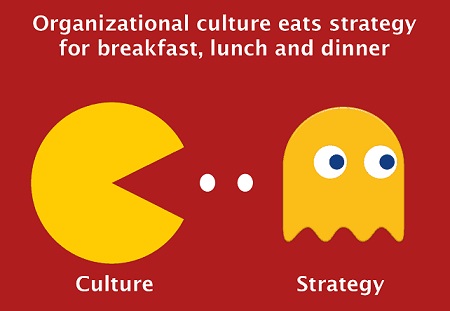
This is familiar. We had published a previous blog-commentary on the same topic on February 6, 2017. It is only apropos that we Encore that commentary again now, as it was a profile in courage for the same player Tom Brady and his previous team. We need more of this culture in the Caribbean; we need to recognize that One Person Can Make a Difference and be prepared to allow that person or those persons to “ply their trade” in the region. We need to invite them here, retain the ones – differences makers – we have and petition to return those ones that have emigrated. We need their impact here in the homeland.

See that previous Encore here/now:

————————-

Go Lean Commentary – ‘Culture Eats Strategy For Breakfast’

Congratulations to the New England Patriots of the National Football League. They won SuperBowl LI on Sunday February 5, 2017 – beating the Atlanta Falcons 34 to 28 in a dramatic comeback – in which they overcame a 28 to 3 deficit.

[Congratulations to the Tampa Bay Buccaneers of the National Football League. They won SuperBowl LV on Sunday February 7, 2021 – beating the Kansas City Chiefs 31 to 9 in a dramatic fashion.]

Their victory proved the validity of the business axiom:

Culture eats strategy for breakfast, lunch and dinner.

CU Blog - 'Culture Eats Strategy For Breakfast' - Photo 2This phrase was articulated by distinguished management consultant Peter Drucker and made famous by Mark Fields, a former President of Ford Motor Corporation. This corporate best-practice – good for nation-building as well – is that this axiom is more than just theory, it is an absolute reality! Any company, or community for that matter, disconnecting the two (culture and strategy) are putting their success at risk.

This expression made a leapfrog to NFL football in 2014 when the Head Coach of another team, Philadelphia Eagles, referred to the concept in a passing comment. See the full origin story in this link:

How ‘Culture Beats Scheme’ Became Eagles’ Motto

The New England Patriots SuperBowl win is proof-positive of the culture-first ethos. Talent abounds in the league; all 32 teams have the same opportunities and yet, none can boast the Patriots’ history of success. Why? This team has focused heavy on its culture … and has the success to show for it:

The Patriots have appeared in the Super Bowl nine times in franchise history, the most of any team, seven of them since the arrival of head coach Bill Belichick and quarterback Tom Brady in 2000. The Patriots have since become one of the most successful teams in NFL history, winning 14 AFC East titles in 16 seasons since 2001, without a losing season in that period. The franchise has since set numerous notable records, including most wins in a ten-year period (126, in 2003–2012), an undefeated 16-game regular season in 2007, the longest winning streak consisting of regular season and playoff games in NFL history (a 21-game streak from October 2003 to October 2004), and the most consecutive division titles won by a team in NFL history (won eight straight division titles from 2009 to 2016). The team owns the record for most Super Bowls reached (seven) and won (five) by a head coach-quarterback tandem, as well as being the first tandem to win the Super Bowl 13 years after the first. – Source: Wikipedia.
CU Blog - Culture Eats Strategy For Breakfast - Photo 1

The purpose of this commentary is the focus on culture. This definition of culture refers to community ethos; this is defined in the book Go Lean … Caribbean as …

… the fundamental character or spirit of a culture [group or community], the underlying sentiment that informs the beliefs, customs, or practices of a group or society; the dominant assumptions of a people or period.

Culture allows “you” to overcome obstacles; endure the heavy-lifting of a turn-around; invest in future success based on promising talents; stay the course of a roadmap, rather than “giving up” and fleeing for the appearance of greener pastures elsewhere. Culture dictates devoting “blood, sweat and tears” to a community cause, to give a full measure of devotion. We can learn so much by examining organizations and communities of great accomplishments. The New England Patriots is one such model. See VIDEO here describing the culture of the New England Patriots:

VIDEO – Chris Long of New England Patriots on Team, Winning, Unselfish Culture – https://youtu.be/ne-YkmXMN4M

Published on Jan 3, 2017 – Chris Long discusses the New England Patriot’s TEAM Culture, Winning Attitude, & Unselfishness on the NFL Network’s Game Day Prime with former NFL Head Coach Steve Mariucci on 1/1/17.

The Go Lean book relates that there are good ethos and bad ethos – the good ethos can be considered “culture” while the bad ethos may be deemed “defects”. The Caribbean member-states are not known as great societies, despite having the greatest “address on the planet” in terms of terrain, fauna/flora, hospitality, festivities, food, rum and cigars; this is due to our deficient community ethos, our organizational culture. There are role models for us to consider:

“Culture eats strategy for breakfast,” is a famous quotation attributed to the late business management guru Peter Drucker, and I can’t think of a better example that proves this than Enterprise Rent-A-Car’s acquisition of National Car Rental and Alamo.

They have been recognized numerous times for their customer service by J.D. Power. Business Week recognized them as one of the top 25 customer service brands in the world. In addition to running a wildly successful business, they obviously know how to take care of their customers, which means their customers want to come back.

All that is impressive, but not nearly as impressive as how they proved these top customer service awards weren’t a fluke. All of the awards and accolades they continue to receive don’t happen by accident. They aren’t just lucky. Everything Enterprise does is very purposeful. It is their culture. – Forbes Magazine Columnist Shep Hyken’s Profile Story.

One mission of the Go Lean book is to foster good community ethos – good culture – for the Caribbean region. We have great talent in our region and yet still we do not win; our people “take their talents to South Beach / South New York / South Toronto / South London, etc.”. What is missing here? Culture.

The Caribbean has a lot of people who have excelled on the world stage in their chosen professions, only because they fled their Caribbean homes seeking better opportunities abroad. Consider:

The Go Lean book serves as a roadmap for the introduction and implementation of the Caribbean Union Trade Federation (CU) to elevate Caribbean society and culture. The CU has 3 prime directives:

  • Optimization of the economic engines in order to grow the regional economy to $800 Billion and create 2.2 million new jobs.
  • Establishment of a security apparatus to protect the resultant economic engines.
  • Improve Caribbean governance to support these engines.

From the outset of the book, in the opening Declaration of Interdependence, the Go Lean roadmap posits that a target for the CU’s empowerments should be the Caribbean youth. This is the best way to foster a new culture, focus on the next generation. Then the remainder of society will assimilate … the new values within a short time. See the focus on youth in the opening pages of the book (Page 3), with this sample quotation:

Our youth, the next generation, may not be inspired to participate in the future workings of their country; they may measure success only by their exodus from their Caribbean homeland.

Thusly, the Go Lean/CU roadmap dictates how to reach, engage, and solicit the youth market to foster the new required attitudes. These other pronouncements in the opening Declaration of Interdependence, bear a direct reference to this quest for changing culture; consider these on Pages 11 & 13:

xix. Whereas our legacy in recent times is one of societal abandonment, it is imperative that incentives and encouragement be put in place to first dissuade the human flight, and then entice and welcome the return of our Diaspora back to our shores…

xxi.  Whereas the preparation of our labor force can foster opportunities and dictate economic progress for current and future generations, the Federation must ensure that educational and job training opportunities are fully optimized for all residents of all member-states, with no partiality towards any gender or ethnic group. The Federation must recognize and facilitate excellence in many different fields of endeavor, including sciences, languages, arts, music and sports. This responsibility should be executed without incurring the risks of further human flight, as has been the past history.

The book provides some turn-by-turn instructions for soliciting the different generation groups (Baby Boomers, Generation X and the current Millennials) who are at the frontline of the current Caribbean battles, that of societal abandonment, of which the region is sorely losing; (see this portrayed in a previous blog-commentary). The Go Lean book asserts new community ethos, strategies, tactics, implementation and advocacies. The following list from the book applies:

Community Ethos – Economic Principle – Economic Systems Influence Choices & Incentives Page 21
Community Ethos – Economic Principle – Voluntary Trade Creates Wealth Page 21
Community Ethos – Economic Systems Influence Choices & Incentives Page 21
Community Ethos – People Respond to Incentives Page 21
Community Ethos – Consequences of Choices Lie in the Future Page 21
Community Ethos – Ways to Help Entrepreneurship Page 28
Community Ethos – Ways to Impact Turn-Around Page 33
Community Ethos – Ways to Manage Reconciliations Page 34
Community Ethos – Ways to Promote Happiness Page 36
Community Ethos – Ways to Impact the Greater Good Page 37
Community Ethos – Lean Operations Page 24
Community Ethos – Cooperatives Page 25
Community Ethos – Ways to Impact the Future Page 26
Community Ethos – Impact the Greater Good Page 37
Strategy – Strategy – Keep Young People At Home in the Region Page 51
Strategy – Agents of Change – Technology Page 57
Strategy – Agents of Change – Globalization Page 57
Tactical – Fostering a Technocracy Page 64
Tactical – Separation of Powers – Postal Union Page 78
Anecdote – Turning Around the CARICOM governance Page 92
Anecdote – “Lean” in Government Page 93
Implementation – Ways to Pay for Change Page 101
Implementation – Ways to Deliver Page 109
Implementation – Ways to Impact Social Media Page 111
Implementation – Reasons to Repatriate Page 118
Advocacy – Ways to Improve Governance Page 168
Advocacy – Ways to Better Manage the Social Contract Page 170
Advocacy – Ways to Impact Events Page 191
Advocacy – Ways to Promote Fairgrounds Page 192
Advocacy – Ways to Foster e-Commerce Page 198
Advocacy – Ways to Impact the Diaspora Page 217
Advocacy – Ways to Impact Youth Page 227
Advocacy – Ways to Impact Sports Page 229
Advocacy – Ways to Impact Urban Living – Sports Leagues Page 234

The Go Lean book is a great guidebook for developing agile institutions – a recipe for the CU technocracy.

The Caribbean can succeed in our efforts to improve our community ethos. Consider this sample of previous blog-commentaries that delve into aspects of forging a better “culture” in Caribbean communities:

https://goleancaribbean.com/blog/?p=10220 Waging a Successful War on the BAD ethos of Rent-seeking
https://goleancaribbean.com/blog/?p=10218 Waging a Successful War on the BAD ethos of Stupidity
https://goleancaribbean.com/blog/?p=10216 Waging a Successful War on the BAD ethos of Orthodoxy
https://goleancaribbean.com/blog/?p=9595 Vision and Values for a ‘New’ Caribbean
https://goleancaribbean.com/blog/?p=9428 Forging Change: Herd Mentality
https://goleancaribbean.com/blog/?p=8186 Respect for Minorities: ‘All for One’
https://goleancaribbean.com/blog/?p=7646 Going from ‘Good to Great’
https://goleancaribbean.com/blog/?p=7628 ‘A Change Is Gonna Come’
https://goleancaribbean.com/blog/?p=5695 Repenting, Forgiving and Reconciling the Past
https://goleancaribbean.com/blog/?p=3915 ‘Change the way you see the world; you change the world you see’
https://goleancaribbean.com/blog/?p=3780 Forging an Ethos of ‘Blood, Sweat and Tears’
https://goleancaribbean.com/blog/?p=623 ‘Only at the precipice, do they change’

The vision for a new Caribbean is one that has a culture that could “eat strategy – scheme or talent – for breakfast”.

While the focus of this commentary is on culture, a lot can be said for the Sports eco-system as well. The Go Lean/CU roadmap is NOT a sports promotion plan but it does present the important role for sports in the vision to make the Caribbean a better place to live, work and play. As an expression of this vision, the Go Lean book states (Page 81):

“… a mission of the CU is to forge industries and economic drivers around the individual and group activities of sports and culture”.

Now is the time for all of the Caribbean, the people and governing institutions, to lean-in for the empowerments described in the book Go Lean … Caribbean. The benefits are too alluring: dawn of a new economy and new opportunities to preserve Caribbean culture for future generations. 🙂

Download the book Go Lean … Caribbean – now!

Share this post:
,
[Top]