Tag: Civil Rights

Juneteenth 2021 – Now it’s real – Encore

Hooray for progress!

President Biden signed a Bill on Thursday June 17, 2021 to make “Juneteenth” an official Federal holiday; it will be the Law of the Land

… effective immediately.

We were anticipating this … last year! We planned for it and advocated for the immediate adoption of the Juneteenth tradition to be recognized, accepted and celebrated by all Americans. See here, how relevant this is for the State of California – normally, a non-Slave State in history:

VIDEO – How California history fits into Juneteenth celebrations – https://youtu.be/ae3jZi6hO7M

Sacramento Bee
Juneteenth is the oldest known celebration marking the end of slavery in the United States. It was originally celebrated June 19, 1865. Here’s what to know about the event, and where California fits in.

More from The Sacramento Bee:

So, it is only apropos to Encore our blog-commentary from last year (2020). See that post here/now:

————–

Go Lean CommentaryHappy Juneteenth

Happy Juneteenth!

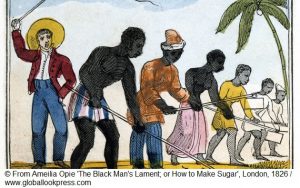
It’s an American thing, yet you in the Caribbean will still understand, resonate and empathize with this sentiment. This is true, based on the historicity that “Happy Juneteenth” is actually Happy Emancipation Day.

Despite the different legal history, all of the New World have the same social demographic history: same previous reality of an enslaved population of African people.

Most of these New World countries and territories endured abolition of their slavery institutions and have some form of an Emancipation Day to commemorate the “Sea Change”. These dates were identified in a previous commentary  from the movement behind the 2013 book Go Lean…Caribbean. See this excerpt here:

Chronology of the abolition of slavery in the Caribbean Basin

First abolition Final abolition of slavery Date of independence
Haiti 1793 1804
Dominican Republic  1801 1822 1844
Costa Rica 1824 1821
El Salvador 1824 1821
Guatemala 1824 1821
Honduras 1824 1821
Mexico 1829 1810
British West Indies
Anguilla
Antigua and Barbuda
Bahamas
Barbados
Belize
Cayman Islands
Dominica
Grenada
Guyana
Virgin Islands
Jamaica
Montserrat
Turks and Caicos Islands
Saint Kitts and Nevis
Saint Lucia
St. Vincent and Grenadines
Trinidad and Tobago
1833-1838
1833-1834
1833-1838
1833-1838
1833-1838
1833-1838
1833-1838
1833-1838
1833-1838
1833-1838
1833-1838
1833-1838
1833-1838
1833-1838
1833-1838
1833-1834
1833-1838
1981
1973
1966
1978
1974
1962
1979
1979
1962
Nicaragua 1838 1821
Danish Virgin Islands
Saint John
Saint Thomas
Saint Croix
1846-1848
1846-1848
1846-1848
Swedish Antilles
Saint Barthelemy
1847
French Antilles
Guaealoupe
Guiana
Martinique
Saint Martín (French zone)
1794 1848
1848
1848
1848
Colombia 1814 1851 1810
Panama 1851 1903
Venezuela 1816 1854 1811
Netherlands Antilles
Aruba
Curacao
Bonaire
Saba
Saint Eustatius
Suriname
St. Martin (Netherlands zone)
1863
1863
1863
1863
1863
1863
1863
1975
United States 1863-1865 1776
Puerto Rico 1873
Cuba 1880-1886 1898

Source: Retrieved August 28, 2019 from: http://atlas-caraibe.certic.unicaen.fr/en/page-117.html

———–
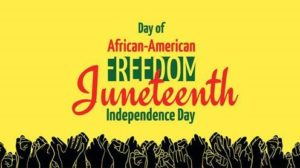
Let’s dive deeper in the American experience. So what date actually signified the abolition of slavery in the US? In a different previous commentary, these key dates were presented:

The cruel, inhumane institution of slavery finally ended in the United States … on which date?

This was not meant to be a multiple choice! But rather, these answers demonstrate the continuous flow of racist oppression that had befallen the African-American experience, despite these identifiable dates ending the practices and legacy of America’s Original Sin.

Doubling-down on the Juneteenth details, let’s consider this encyclopedic reference:

Juneteenth (a portmanteau of June and nineteenth;[2] also known as Freedom Day,[3] Jubilee Day,[4] and Liberation Day[5]) is an unofficial American holiday and an official Texas state holiday, celebrated annually on the 19th of June in the United States to commemorate Union army general Gordon Granger announcing federal orders in the city of Galveston, Texas, on June 19, 1865, proclaiming that all slaves in Texas were now free.[6] Although the Emancipation Proclamation had formally freed them almost two and a half years earlier and the American Civil War had largely ended with the defeat of the Confederate States in April, Texas was the most remote of the slave states, with a low presence of Union troops, so enforcement of the proclamation had been slow and inconsistent.[6]

A common misconception is that this day marks the end of slavery in the United States. Although this day marks the emancipation of all slaves in the Confederacy, the institution of slavery was still legal and existed in the Union border states after June 19, 1865.[7][8] Slavery in the United States did not officially end until the ratification of the Thirteenth Amendment to the Constitution of the United States on December 6, 1865, which abolished slavery entirely in all of the U.S. states and territories.[9]

Celebrations date to 1866, at first involving church-centered community gatherings in Texas. It spread across the South and became more commercialized in the 1920s and 1930s, often centering on a food festival. During the Civil Rights movement of the 1960s, it was eclipsed by the struggle for postwar civil rights, but grew in popularity again in the 1970s with a focus on African American freedom and arts.[10] By the 21st century, Juneteenth was celebrated in most major cities across the United States. Activists are campaigning for the United States Congress to recognize Juneteenth as a national holiday. Juneteenth is recognized as a state holiday or special day of observance in 49 of the 50 U.S. states.

Modern observance is primarily in local celebrations. Traditions include public readings of the Emancipation Proclamation, singing traditional songs such as “Swing Low, Sweet Chariot” and “Lift Every Voice and Sing“, and reading of works by noted African-American writers such as Ralph Ellison and Maya Angelou. Celebrations include rodeos, street fairscookoutsfamily reunions, park parties, historical reenactments, and Miss Juneteenth contests. The Mascogos, descendants of Black Seminoles, of CoahuilaMexico, also celebrate Juneteenth. – Wikipedia, retrieved June 19, 2020.

There is the need to reflect and remember the bad history of slavery and its abolition in the Americas.  There is also the need for a few other action verbs, all starting with  the letter “R”. Consider:

  • Reconcile
  • Repent

There is a lot of work to be done, in the US, throughout the Caribbean Basin, the New World and the whole world for that matter. Racial disharmony has been the world’s most troubling condition since the end of the Middle Ages. This was the consideration in many previous Encore productions. See these excerpts here:

https://goleancaribbean.com/blog/?p=18421 Title: Refuse to Lose – Introducing Formal Reconciliations

The practice of U.S. cities eschewing Columbus Day – because of the bad history associated with the Spanish Explorer’s atrocities – to celebrate Indigenous Peoples’ Day began in 1992”. [This is a form of] an informal reconciliation; it is time to pursue a formal reconciliation. (We have Indigenous People and oppressed people in the Caribbean too).

https://goleancaribbean.com/blog/?p=18096 Title: 400 Years of Slavery – Emancipation Day: Hardly ‘Free At Last’

America was forged on the blatant hypocrisy of a legal premise that “All men are created equal”, and yet the African-American population was never treated equally, fairly or justly. In fact, by some analysis, America is still not equal-fair-just for African-Americans. In fact, just naming a street after Martin Luther King creates friction in American communities even today, 56 years after that iconic speech.

https://goleancaribbean.com/blog/?p=18093 Title: 400 Years of Slavery – International Day of Rememberance

There is the need to reconcile the UGLY history of Slavery and the Slave Trade.

Reconciliation and remembrance are the motives of this series of blog-commentaries …. With a documented start date in America of August 23, 1619, today [(August 23, 2019)] marks 400 years exactly. [So] this August 2019 series focuses on this 400 Year History of Slavery – past, present and future.

https://goleancaribbean.com/blog/?p=6022 Title: Music Role Model ‘Ya Tafari’ – Happy Emancipation Day

All of these [Bristish Commenwealth] countries memorialize the abolition of slavery in the British Empire on August 1, 1834 with a National Holiday on the First Monday of August. (This holiday is commonly referred to as August Monday). The focus of this commemoration is not slavery, but rather a celebration of Caribbean culture – accentuating the positive.

For those in the Caribbean Diaspora (US, Canada and the United Kingdom), the holiday does not go un-recognized … nor uncelebrated.

https://goleancaribbean.com/blog/?p=5695 Title: Repenting, Forgiving and Reconciling the Past
How does a community repent, forgive and reconcile from such a bad legacy? Easier said than done!For starters, do not proceed as if the events never happened. This is the lesson now being learned in modern day Spain …There is a need to reconcile a lot of bad episodes in Caribbean history.
https://goleancaribbean.com/blog/?p=4971 Title: A Lesson in History – Royal Charters: Truth & Consequence

An earlier Papal Bull that sealed the fate and would prejudice the African Diaspora for 500 years. The African Slave Trade and institution of “Slavery” was legally predicated on a Papal Bull from Pope Innocent VIII (Giovanni Battista Cybo) in 1491; just months before Christopher Columbus’s historic first voyage.

https://goleancaribbean.com/blog/?p=2222 Title: Sports Role Model – Playing For Pride … And More

The calendar of Black America includes several specific holidays. Juneteenth, celebrated every June 19, honors the day the Union Army liberated slaves in Texas following the end of the Civil War. Kwanzaa, beginning on Dec. 26, is a seven-day festival of African heritage. On Dec. 31, which is called watch night, churches hold worship services to commemorate the way their forebears had stayed up all night awaiting the issuance of the ­Emancipation Proclamation on January 1, 1863.

We need the New World territories to do a better job of reconciling their bad racial history. This is the issue for America, yes, and for the Caribbean homeland too.

Should America make Juneteenth a National Holiday? See VIDEO here.

VIDEOJuneteenth recognized by more states, companies as a holidayhttps://abcn.ws/2YgZrXO

Posted June 19, 2020 – In the wake of the nationwide outcry over the killing of George Floyd, bipartisan calls have amplified to name Juneteenth — June 19, which commemorates the end of slavery — a federal holiday.

A group of Senate Democrats announced Friday that they would introduce the Juneteenth National Independence Day Act, legislation to designate the day, and if passed, would make Juneteenth the first new federal holiday since Martin Luther King Day was recognized in 1983.

While this is an American issue and outside our scope of the advocacy for Caribbean reformation, we do recommend such a focus for America to finally become a more just and equal society.

Will a Juneteenth commemoration accomplish that? Maybe not, but it’s a good move in the right direction. This country have had to contend with many atrocities to Black-and-Brown people. Just recently there have been a proliferation of protests and civil unrests due to an exhaustion of recent blatant incidences.

If advocates and activists are able to succeed with efforts for formal Juneteenth commemorations, then we recommend that they make festivities about more than just slavery. Rather it should be a celebration of African-American culture – as we attempt to do with our Caribbean Emancipation Celebrations, as related here-in.

But no doubt, all people need to remember, reflect, reconcile and repent for the bad racial history. And while our Caribbean activists may not be able to facilitate these action-verbs in the US, we can-must facilitate them here in the Caribbean.

We hereby urge all Caribbean stakeholders to lean-in to this Go Lean roadmap and to this advocacy to celebrate Juneteenth. This is how we can make our Caribbean homeland a better place to live, work and play.  🙂

———–

About the Book
The book Go Lean…Caribbean serves as a roadmap for the introduction and implementation of the technocratic Caribbean Union Trade Federation (CU), for the elevation of Caribbean society – for all member-states. This CU/Go Lean roadmap has these 3 prime directives:

  • Optimization of the economic engines in order to grow the regional economy to $800 Billion & create 2.2 million new jobs.
  • Establishment of a security apparatus to ensure public safety and protect the resultant economic engines.
  • Improve Caribbean governance to support these engines, including a separation-of-powers between the member-states and CU federal agencies.

The Go Lean book provides 370-pages of turn-by-turn instructions on “how” to adopt new community ethos, plus the strategies, tactics, implementations and advocacies to execute so as to reboot, reform and transform the societal engines of Caribbean society.

Download the free e-Book of Go Lean … Caribbean – now!

———

Who We Are
The movement behind the Go Lean book – a non-partisan, apolitical, religiously-neutral Community Development Foundation chartered for the purpose of empowering and re-booting economic engines – stresses that reforming and transforming the Caribbean societal engines must be a regional pursuit. This was an early motivation for the roadmap, as pronounced in the opening Declaration of Interdependence (Pages 11 – 13):

xi. Whereas all men are entitled to the benefits of good governance in a free society, “new guards” must be enacted to dissuade the emergence of incompetence, corruption, nepotism and cronyism at the peril of the people’s best interest. The Federation must guarantee the executions of a social contract between government and the governed.

xii. Whereas the legacy in recent times in individual states may be that of ineffectual governance with no redress to higher authority, the accedence of this Federation will ensure accountability and escalation of the human and civil rights of the people for good governance, justice assurances, due process and the rule of law. As such, any threats of a “failed state” status for any member state must enact emergency measures on behalf of the Federation to protect the human, civil and property rights of the citizens, residents, allies, trading partners, and visitors of the affected member state and the Federation as a whole.

xiii. Whereas the legacy of dissensions in many member-states (for example: Haiti and Cuba) will require a concerted effort to integrate the exile community’s repatriation, the Federation must arrange for Reconciliation Commissions to satiate a demand for justice.

xvi. Whereas security of our homeland is inextricably linked to prosperity of the homeland, the economic and security interest of the region needs to be aligned under the same governance. Since economic crimes … can imperil the functioning of the wheels of commerce for all the citizenry, the accedence of this Federation must equip the security apparatus with the tools and techniques for predictive and proactive interdictions.

xxiv.  Whereas a free market economy can be induced and spurred for continuous progress, the Federation must install the controls to better manage aspects of the economy: jobs, inflation, savings rate, investments and other economic principles. Thereby attracting direct foreign investment because of the stability and vibrancy of our economy.

Sign the petition to lean-in for this roadmap for the Caribbean Union Trade Federation.

Share this post:
,

“Black British” Reality Exposed – Encore

This has gotten heated…

Q: How dare Black People accuse British institutions of being racists. You can’t be serious?!?
A: Are you serious?! Just walk in our shoes!

This is a fitting summary of the global dialogue the last few days – after the bombshell March 7, 2021 interview on American TV with Prince Harry and his wife Meghan Markle. Yes, they went there and named, blamed and shamed Buckingham Palace of blatant racist thoughts, feelings, words and actions. See this portrayed in this short exchange here – this Twitter excerpt:

VIDEO – Good Morning Britain’s Piers Morgan vs Dr Shola Mos-Shogbamim –  https://twitter.com/GMB/status/1368831131764858881

————-

So Black people in Britain are NOT valued as equal citizens?!?! MMMmmmm?!?!

This assertion seems so familiar!

We had previously discussed the actuality of the Caribbean Diaspora who had fled to Great Britain. These ones had learned the harsh lessons that the “welcome mat” that were extended to their immigration did not include respect, hospitality, warmth nor love.  🙁

It is only apropos to Encore that April 21, 2017 commentary again here-now:

————-

Go Lean Commentary‘Black British’ and ‘Less Than’

Truth be told, a Black person speaking with a British accent gets more respect than a Black person speaking with a Caribbean slang or a ‘Hip-hop’ /‘Jive’ dialect.

cu-blog-10-things-we-from-the-uk-photo-1It is what it is! Notice this portrayal in the Appendix VIDEO where many Afro-Caribbean citizens in Britain, seem to self-identify more as British than their Caribbean heritage;  (POINT 5).

Does this mean that the Black British person is better off on the world stage? Sadly no! The actuality of Blackness still means “Less Than“.

The problem is not the Blackness, but rather Whiteness, the proliferation of White Supremacy … throughout the world.

This is the assertion of the movement behind the book Go Lean … Caribbean, in consideration of reasons why the Diaspora should repatriate back to the Caribbean homeland and why the Caribbean youth should not even depart their homelands in the first place. This thesis was presented in a 9-part series, with these submissions:

  1. Time to Go: Spot-on for Protest
  2. Time to Go: No Respect for our Hair
  3. Time to Go: Logic of Senior Immigration
  4. Time to Go: Marginalizing Our Vote
  5. Time to Go: American Vices; Don’t Follow
  6. Time to Go: Public Schools for Black-and-Brown
  7. Stay Home! Remembering ‘High Noon’ and the Propensity for Bad American Societal Defects
  8. Stay Home! Immigration Realities in the US
  9. Stay Home! Outreach to the Diaspora – Doubling-down on Failure

All of these prior commentaries related to the disposition of the Caribbean Diaspora in the United States; now we take a look at England, Britain or the United Kingdom. There is a difference … supposedly.

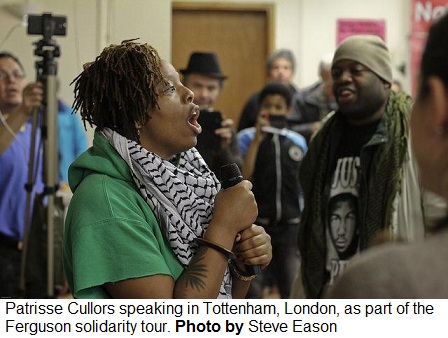
“Britain has done a great job as painting itself as the humanitarian, with the US being the torturer. But that shit ain’t true.” – Patrisse Cullors, co-founder of the Black Lives Matter movement.

The purpose of this commentary – considering these source materials below – is to relate the following 5 strong points of contention; (these labels are shown throughout this commentary where applicable):

  • POINT 1 – The world is not fair, equal or just; and if you are of the Black-and-Brown races, the injustice is even more pronounced.
  • POINT 2 – Charity begins at home! There is a need to reform and transform society wherever you are. No one else will reform your homeland; you must!
  • POINT 3 – Leaving home, hurts home.
  • POINT 4 – The children of the Diaspora identify more with their current home, than their parent’s ancestral home.
  • POINT 5 – When the children do not want to identify with your land of heritage, it is Time to Go, to take them back home.

See this interview here relating Black British reality, with VICE News (UK Desk), the provocative media outlet that exposes the harsh realities of daily life in the Third World and the “First World”; (find more on VICE in Appendix A):

Title: We Spoke to the Activist Behind #BlackLivesMatter About Racism in Britain and America
By: Michael Segalov

… Patrisse Cullors is co-founder of Black Lives Matter — the movement and oft-trending hashtag. Based in LA ([Los Angeles]), she’s been on the front line at uprisings across the US in response to a wave of high-profile deaths of black people in police custody.

CU Blog - Black British and 'Less Than' - Photo 1

[While] on a speaking tour of the UK and Ireland, heading to communities, universities, and holding meetings in Parliament. VICE caught up with Patrisse on the train from Brighton to London in the midst of a hectic schedule. VICE chatted [with her] about how she’s spreading the Black Lives Matter movement across the globe, what’s happening in the States at the moment, and why that’s relevant to the UK.

VICE: Tell us about the origins of the Black Lives Matter movement.
Patrisse Cullors:
 After George Zimmerman was acquitted of the murder of Trayvon Martin, back in July 2013, myself and two friends came up with the hashtag. My friend Alicia had written a love letter to folks, saying, “Our Lives Matter, Black Lives Matter.”

I put a hashtag in front—within days people were using it across the world. We’re talking about all black lives; we weren’t just talking about black men dying in the hands of the police. We’re talking about black women, black trans people, black queer people. We want to show that under the current system of white supremacy, anti-blackness has major consequences. Inside the US, and around the world, anti-black racism has global consequences. Black Lives Matter is a call to action—it’s a mantra, a testimony.

How did you end up at the heart of it?
I’ve been organizing since I was 16. I came out as queer, and was kicked out of home. Along with a bunch of other young queer women of color, we raised each other. We also dealt with poverty, being black and brown in the USA, and trying to figure out how to live our daily lives. My brother was incarcerated in LA county jails at 19, and he was almost killed by the sheriffs. They beat him. They tortured him and brutalized him. This was my awakening, seeing how far the state will go, and how they treat our families.

Most disturbing was the lack of support and absolute neglect that my brother and my family faced after he was brutalized. Part of my upbringing was a feeling of rage, but I also knew I could do something about it. With my mentors, and a civil rights organization, I learned my craft over 11 years. I focused on the school-to-prison pipeline [where young people go straight from school into the juvenile criminal justice system], environmental justice, and police violence.

You’ve been in the UK for a week, how has it been, and how does the situation here relate to the USA?

In theory the UK has a significant amount of structures to allow for accountability, of law enforcement in particular. That’s the theory. But in the US we don’t really have these structures to allow for accountability. There aren’t really independent investigators; its just very rare for prosecutions for law enforcement. And so, being here, I’ve realized, there are some systems in place that might actually be good for the US. It just seems those systems don’t work.

Then there are the similarities, the ways in which black people are treated—it’s outright racism. From Christopher Alder being brutalized on tape, hearing the officers calling him racist slurs, to the G4S guards who killed Jimmy Mubenga with racist texts on their phones. You have that same hatred, these white supremacist ideologies coming out of both of our countries. And here too, justice is not being served. We have Mike Brown, no justice. We have Eric Garner, no justice. Here we see the same: Mark Duggan, Sean Rigg. The list is vast.

Is this stuff talked about in the States, like how in the UK we’re aware over here about what’s going on in Ferguson?
Here’s the thing, black people in the US don’t know what’s happening here in the UK. I’m well read, well educated, and coming here and learning these stories I’m like, “Why don’t I know about this? Why haven’t we heard?” The US is very insular. The UK has an image of being better, a humane society in which there isn’t the same level of racism. But now I have a very different perspective that I’m going to take home and talk about. Britain has done a great job as painting itself as the humanitarian, with the US being the torturer. But that shit ain’t true.

Here in the UK there’ve been solidarity actions. People shut down the streets in London and Westfield shopping center too. What’s the impact of these things for people on the ground? Do you notice?
Yes, it was noticed. We’ve seen all the work folks are doing on the ground. From here, where you guys shut down Westfield, to Spain and Brazil. In Israel, African refugees are using the Black Lives Matter mantra to talk about law enforcement violence by the Israeli police. We see it, and we’re in awe. We wanted and needed it to go global.

Where is this going? What happens next?
There are 23 Black Lives Matter chapters right now, in the US, Canada, and Ghana. We need to uplift the local struggles across the country, as well as pushing for greater accountability for law enforcement.

We want legislation that will see divestment from law enforcement and investing in poor communities. We want to build a national project linking families who have been impacted by state violence, with a national database that looks at individual law enforcement officers and agencies. We also want to look at how to develop a system of independent investigation. We want to figure out a victim’s bill of rights, to counter the police bill of rights. Until then, we’re gonna shut shit down.
Source: VICE (UK) News; Posted February 2 2015; retrieved April 20, 2017 from: https://www.vice.com/en_us/article/patrisse-cullors-interview-michael-segalov-188?utm_source=vicetwitterus

See related VIDEO’s here on Britain’s Black History; (POINT 1 and POINT 4):

For Caribbean people, the world thinks of us as “Less Than”, whether we are in the Caribbean or in the Diaspora in the UK, Europe or North America. We take the “Less Than” brand with us wherever we go. This is a crisis! The movement behind the book Go Lean…Caribbean seeks to use this crisis, to elevate the Caribbean brand …. globally.

Why is the Caribbean brand perceived as “Less Than”?

Yes, first there is the reality check of being Black-and-Brown in a White world. But also due to our own mis-management of our homeland. It is the greatest address on the planet, and yet our people beat down the doors to get out. Already we have lost 70 percent of our professional classes. So we send this subtle message to the world that “we would foul up the ground wherever we stand”; (POINT 1).

We – the Caribbean region as a collective – must do better; be better! We can reboot, reform and transform from this bad history and bad image; (POINT 2). How?

While easier said than done, this is the comprehensive action plan of the Go Lean book. The book serves as a roadmap for the introduction of the technocratic Caribbean Union Trade Federation (CU). The CU is designed to optimize Caribbean society in the homeland – though there are many benefits to the Diaspora as well – through economic, security and governing optimizations. Therefore the Go Lean roadmap has 3 prime directives:

  • Optimization of the economic engines in order to grow the regional economy to $800 Billion & create 2.2 million new jobs.
  • Establishment of a security apparatus to ensure public safety and protect the economic engines.
  • Improve Caribbean governance – including empowerments for image promotion – to support these engines.

Reforming or transforming the UK, Britain or England is not within scope of the Go Lean/CU effort, notwithstanding the impact on our Diaspora there. But the subject of “Image” is inseparable from any discussion of elevating the Caribbean brand. So this commentary is on image, the facts and fiction of being a minority in a majority world or being an immigrant to a foreign country. This applies to any consideration of the Caribbean Diaspora in the British Isles, where their numbers have been reported between 4 and 5 percent of the population;  (POINT 4). Consider these encyclopedic details:

British African Caribbean (or Afro-Caribbean) people are residents of the United Kingdom who are of West Indian background and whose ancestors were primarily natives or indigenous to Africa. As immigration to the United Kingdom from Africa increased in the 1990s, the term has sometimes been used to include UK residents solely of African origin, or as a term to define all Black British residents, though the phrase “African and Caribbean” has more often been used to cover such a broader grouping. The most common and traditional use of the term African-Caribbean community is in reference to groups of residents’ continuing aspects of Caribbean culture, customs and traditions in the United Kingdom.

CU Blog - Black British and 'Less Than' - Photo 2A majority of the African-Caribbean population in the UK is of Jamaican origin; other notable representation is from Trinidad and Tobago, Saint Kitts and Nevis, Barbados, Grenada, Antigua and Barbuda, Saint Lucia, Dominica, Montserrat, Anguilla, Saint Vincent and the Grenadines, Guyana (which although located on the South American mainland is culturally similar to the Caribbean and was historically considered to be part of the British West Indies), and Belize.

African-Caribbean people are present throughout the United Kingdom with by far the largest concentrations in London and Birmingham.[1]  Significant communities also exist in other population centres, notably Manchester, Bradford, Nottingham, Coventry, Luton, Slough, Leicester, Bristol, Gloucester, Leeds, Huddersfield, Sheffield, Liverpool and Cardiff. In these cities, the community is traditionally associated with a particular area, such as Brixton, Harlesden, Stonebridge, Dalston, Lewisham, Tottenham, Peckham in London, West Bowling and Heaton in Bradford, Chapeltown in Leeds,[2] St. Pauls in Bristol,[3] or Handsworth and Aston in Birmingham or Moss Side in Manchester. According to the 2011 census, the largest number of African-Caribbean people are found in Croydon, south London.
Source: Retrieved April 20, 2017 from: https://en.wikipedia.org/wiki/British_African-Caribbean_people

There are a number of insights to glean looking at the demographics of the Afro-Caribbean population in the UK. (See Appendix B below). All in all, the Afro-Caribbean populations in the UK prefer to identify themselves more as British than as Caribbean;  (POINT 4).

See this portrayal in the Appendix VIDEO below.

Despite the 60 years of futility, our Caribbean people continue to leave, abandoning our homeland; (POINT 3). This is bad; bad for the people and bad for the homeland. Our people “jump from the frying pan to the fire”:

  • Distress continues …
  • Oppression persists …
  • Image: “Less Than”!

This commentary asserts that it is easier for the Black-and-Brown populations in the Caribbean to prosper where planted in the Caribbean, rather than emigrating to foreign countries, like the UK. The reasons for the emigration in the first place have been identified as “push and pull”. “Push” refers to the societal defects in the Caribbean that drive people to move away (POINT 2); and “pull” factors refer to the impressions and perceptions that life abroad, as in England, is better. More details apply regarding these elusive “pull” factors:

  • The UK is NOT the #1 destination for the English-speaking Caribbean Diaspora, not anymore; that distinction is now towards the US. Today’s trending is for more and more new immigration to the US as opposed to the UK; Canada is Number 2.
  • While the “pull” factor had been compelling in the past, the decision-making of Caribbean emigrants – looking to flee – now needs a reality check! (POINT 1)
  • “Pull” is further exacerbated by the “push” factors; all of these  continue to imperil Caribbean life; we push our citizens out. Then the resultant effect is a brain drain and even more endangerment to our society: less skilled workers; less entrepreneurs; less law-abiding citizens; less capable public servants – we lose our best and leave the communities with the rest. This creates even more of a crisis; (POINT 2).

The Go Lean roadmap posits that the entire Caribbean is in crisis now (POINT 3); so many of our citizens have fled for refuge in the UK and other countries, but the refuge is a mirage. The “grass is not necessarily greener on the other side”. Life in the UK is not optimized for Caribbean people. It is easier to fix the Caribbean than to fix the British eco-system. For our Diaspora there: it is Time to Go! For our populations in the Caribbean, looking to depart: Stay! Our people can more easily prosper where planted in the Caribbean … with the identified mitigations and remediation here-in.

The Go Lean book posits that Caribbean stakeholders made many flawed decisions in the past, both individually and community-wise;  (POINT 2). But now, the Go Lean/CU roadmap is new (and improved). This is a vision of the CU as a confederation of the 30 member-states of the Caribbean to do the heavy-lifting of championing better nation-building policies,  to reboot the region’s economic-security-governing engines. For one, there is the structure of a separation-of-powers between CU agencies and the individual member-states. So there are “two pies”, so citizens get to benefit from both their member-states’ efforts and that of the CU Trade Federation.

The Go Lean roadmap provides turn-by-turn directions on how to reform the society as a whole. This roadmap admits that because the Caribbean is in crisis, this “crisis would be a terrible thing to waste”. As a planning tool, the roadmap commences with a Declaration of Interdependence, pronouncing the approach of regional integration (Page 10 – 14) as a viable solution to elevate the regional engines:

Preamble: And while our rights to exercise good governance and promote a more perfect society are the natural assumptions among the powers of the earth, no one other than ourselves can be held accountable for our failure to succeed if we do not try to promote the opportunities that a democratic society fosters.
As the history of our region and the oppression, suppression and repression of its indigenous people is duly documented, there is no one alive who can be held accountable for the prior actions, and so we must put aside the shackles of systems of repression to instead formulate efficient and effective systems to steer our own destiny.

xi. Whereas all men are entitled to the benefits of good governance in a free society, “new guards” must be enacted to dissuade the emergence of incompetence, corruption, nepotism and cronyism at the peril of the people’s best interest. The Federation must guarantee the executions of a social contract between government and the governed.

xii. Whereas the legacy in recent times in individual states may be that of ineffectual governance with no redress to higher authority, the accedence of this Federation will ensure accountability and escalation of the human and civil rights of the people for good governance, justice assurances, due process and the rule of law. As such, any threats of a “failed state” status for any member state must enact emergency measures on behalf of the Federation to protect the human, civil and property rights of the citizens, residents, allies, trading partners, and visitors of the affected member state and the Federation as a whole.

xix. Whereas our legacy in recent times is one of societal abandonment, it is imperative that incentives and encouragement be put in place to first dissuade the human flight, and then entice and welcome the return of our Diaspora back to our shores

xx. Whereas the results of our decades of migration created a vibrant Diaspora in foreign lands, the Federation must organize interactions with this population into structured markets. Thus allowing foreign consumption of domestic products, services and media, which is a positive trade impact. These economic activities must not be exploited by others’ profiteering but rather harnessed by Federation resources for efficient repatriations.

The Go Lean book details the community ethos to adopt, plus the executions of the strategies, tactics, implementations and advocacies to impact the eco-systems in the Caribbean region.

The book provides these recommendations in regards to the dynamics of Diaspora living:

  • Encourage the Caribbean Diaspora to repatriate back to their ancestral homeland – (10 Reasons to Repatriate to the Caribbean – Page 118).
  • Dissuade the high emigration rates of Caribbean citizens to foreign stories – (10 Ways to Make the Caribbean Better – Page 131).

These subjects (Repatriation and Diaspora) have been frequently commented on in other Go Lean blogs  (POINT 4); as sampled here with these entries:

https://goleancaribbean.com/blog/?p=11244 ‘To Live and Die in L.A.’ or London …
https://goleancaribbean.com/blog/?p=9485 10 Things We Don’t Want from the UK
https://goleancaribbean.com/blog/?p=8099 Caribbean Image: ‘Less Than’?
https://goleancaribbean.com/blog/?p=7151 The Caribbean is Looking for Heroes … ‘to Return’
https://goleancaribbean.com/blog/?p=1683 British public sector workers strike over ‘poverty pay’

The book also relates the significance of image/brand management, as with this advocacy: “10 Ways to Better Manage Image” (Page 133):

The Bottom Line on Martin, Malcolm, Mandela, Muhammad and Marley
The majority of the Caribbean population descends from an African ancestry – a legacy of slavery from previous centuries. Despite the differences in nationality, culture and language, the image of the African Diaspora is all linked hand-in-hand. And thus, when Martin Luther King, Malcolm X, Nelson Mandela, Muhammad Ali and Bob Marley impacted the world with their contributions, the reverberations were felt globally, not just in their homelands. It is hard for one segment of the black world to advance when other segments have a negative global image. This is exemplified with the election of Barack Obama as US President; his election was viewed as an ascent for the entire Black race.

Overall, we must elevate the Caribbean brand. There are active movements now to accentuate the  image/brand; consider:

Proclaim ‘International Caribbean Day’

The African Renaissance Monument

Declared “Best in the World”

Accentuate Caribbean Image Tied to the Dreadlocks Hairstyles

Underlying to the Go Lean/CU prime directive of elevating the economics, security and governing engines of the Caribbean, is the desire to make the Caribbean homeland better, to reform and transform our society. If we can do this, we will dissuade the high emigration rate for our young people. But saying that it is “Time to Go“, must mean that we are ready to receive our Caribbean Diaspora from London and other British cities. Are we?

We are not! But this Go Lean roadmap gets us started. This is the intent of the book Go Lean … Caribbean.

The Go Lean/CU roadmap asserts that Britain should not be presented as the panacea for Caribbean ills – we must reform and transform our own society. While Britain or the UK does some things well, that country does not always act justly towards Black-and-Brown people of Caribbean descent;  (POINT 5). We must do this ourselves (POINT 2); our region needs the empowerments here-in (jobs, economic growth and brand/image enhancement).

Now is the time for all of the Caribbean, the people and governing institutions, to lean-in for the empowerments described in the book Go Lean … Caribbean. This is the roadmap to elevate the Caribbean; to make our homeland a better place to live, work and play. 🙂

Download the book Go Lean … Caribbean – now!

Sign the petition to lean-in for this roadmap for the Caribbean Union Trade Federation.

———–

Appendix A – Vice News

Vice News (stylized as VICE News) is Vice Media, Inc.‘s current affairs channel, producing daily documentary essays and video through its website and YouTube channel. It promotes itself on its coverage of “under-reported stories”.[1] Vice News was created in December 2013 and is based in New York City, though it has bureaus worldwide.

Background
In December 2013, Vice Media expanded its international news division into an independent division dedicated to news exclusively and created Vice News. Vice Media put $50 million into its news division, setting up 34 bureaus worldwide and drawing praise for its in-depth coverage of international news.[2] Vice News has primarily targeted a younger audience comprised predominantly of millennials, the same audience to which its parent company appeals.[3]

History
Before Vice News was founded, Vice published news documentaries and news reports from around the world through its YouTube channel alongside other programs. Vice had reported on events such as crime in Venezuela, the Israeli-Palestinian conflict, protests in Turkey, the North Korean regime, and the Syrian Civil War through their own YouTube channel and website. After the creation of Vice News as a separate division, its reporting greatly increased with worldwide coverage starting immediately with videos published on YouTube and articles on its website daily.[5]
Source: https://en.wikipedia.org/wiki/Vice_News

———–

Appendix B – British Afro-Caribbean Demographics

Based on a variety of official sources and extrapolating from figures for England alone, the estimates for the number of people in Britain born in the West Indies grew from 15,000 in 1951, to 172,000 in 1961 and 304,000 in 1971, and then fell slightly to 295,000 in 1981. The estimates for the population of ethnic West Indian in 1981 were between 500,000 and 550,000.[26]

In the UK Census of 2001, 565,876 people classified themselves in the category ‘Black Caribbean’, amounting to around 1 percent of the total population.[38] Of the “minority ethnic” population, which amounted to 7.9 percent of the total UK population, Black Caribbean people accounted for 12.2 percent.[38] In addition, 14.6 percent of the minority ethnic population (equivalent to 1.2 per cent of the total population) identified as mixed race, of whom around one third stated that they were of mixed Black Caribbean and White descent.[38]

In the latest, the 2011 Census of England and Wales, 594,825 individuals specified their ethnicity as “Caribbean” under the “Black/African/Caribbean/Black British” heading, and 426,715 as “White and Black Caribbean” under the “Mixed/multiple ethnic group” heading.[35] In Scotland, 3,430 people classified themselves as “Caribbean, Caribbean Scottish or Caribbean British” and 730 as “Other Caribbean or Black” under the broader “Caribbean or Black” heading.[36] In Northern Ireland, 372 people specified their ethnicity as “Caribbean”.[37] The published results for the “Mixed” category are not broken down into sub-categories for Scotland and Northern Ireland as they are for England and Wales.[36][37] The greatest concentration of Black Caribbean people is found in London, where 344,597 residents classified themselves as Black Caribbean in the 2011 Census, accounting for 4.2 per cent of the city’s population.[35]

The UK Census records respondents’ countries of birth and the 2001 Census recorded 146,401 people born in Jamaica, 21,601 from Barbados, 21,283 from Trinidad and Tobago, 20,872 from Guyana, 9,783 from Grenada, 8,265 from Saint Lucia, 7,983 from Montserrat, 7,091 from Saint Vincent and the Grenadines, 6,739 from Dominica, 6,519 from Saint Kitts and Nevis, 3,891 from Antigua and Barbuda and 498 from Anguilla.[39]

Detailed country-of-birth data from the 2011 Census is published separately for England and Wales, Scotland and Northern Ireland. In England and Wales, 160,095 residents reported their country of birth as Jamaica, 22,872 Trinidad and Tobago, 18,672 Barbados, 9,274 Grenada, 9,096 St Lucia, 7,390 St Vincent and the Grenadines, 7,270 Montserrat, 6,359 Dominica, 5,629 St Kitts and Nevis, 3,697 Antigua and Barbuda, 2,355 Cuba, 1,812 The Bahamas and 1,303 Dominican Republic. 8,301 people reported being born elsewhere in the Caribbean, bringing the total Caribbean-born population of England and Wales to 264,125. Of this number, 262,092 were resident in England and 2,033 in Wales.[40] In Scotland, 2,054 Caribbean-born residents were recorded,[41] and in Northern Ireland 314.[42]Guyana is categorised as part of South America in the Census results, which show that 21,417 residents of England and Wales, 350 of Scotland and 56 of Northern Ireland were born in Guyana. Belize is categorised as part of Central America. 1,252 people born in Belize were recorded living in England and Wales, 79 in Scotland and 22 in Northern Ireland.[41][42][40]
Source: Retrieved April 20, 2017 from: https://en.wikipedia.org/wiki/British_African-Caribbean_people#Demography

———–

Appendix VIDEO – Do you call yourself Black British? – https://youtu.be/i3dgzdsAZug

Published on Oct 21, 2016

Share this post:
, , ,
[Top]

Zero Sum: Book Review of “The Sum of Us” – Racism is a factor in “Us vs Them”

Go Lean Commentary

White America had it all wrong!

Racism was not a privilege, it cost them more than they had bargained for. In fact, pursuing a racist agenda deprived them of privileges that they were entitled to.

Imagine, denying yourself of a swimming pool on a hot day because by opening the pool, Black people would get to swim too.

This was bad … and yet, if lessons are not learned that same expensive consequence will be repeated again and again.

This is the lessons we glean from the new book by Heather McGhee, that the Zero Sum experience is expensive when Non-Zero Sum is so much cheaper, easier and … just.
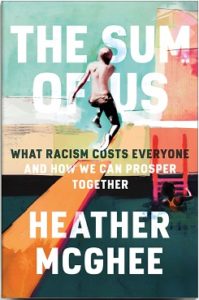
The movement behind the 2013 book Go Lean … Caribbean proclaims that people in the Caribbean – mostly Black and Brown – can benefit by consuming Heather McGhee’s book and the resultant lessons. The actual title-subtitle is as follows:

“The Sum of Us”: What Racism Costs Everyone and How We Can Prosper Together.

The book is about America, but we can apply these lessons in the Caribbean too.

See the full Book Review here:

Book Title: The Sum of Us: What Racism Costs Everyone and How We Can Prosper Together – By: Heather McGhee

Review by: Jennifer Szalai

Hinton Rowan Helper was an unreserved bigot from North Carolina who wrote hateful, racist tracts during Reconstruction. He was also, in the years leading up to the Civil War, a determined abolitionist.
His 1857 book, “The Impending Crisis of the South,” argued that chattel slavery had deformed the Southern economy and impoverished the region. Members of the plantation class refused to invest in education, in enterprise, in the community at large, because they didn’t have to. Helper’s concern wasn’t the enslaved Black people brutalized by what he called the “lords of the lash”; he was worried about the white laborers in the South, relegated by the slave economy and its ruling oligarchs to a “cesspool of ignorance and degradation.”

Helper and his argument come up early on in Heather McGhee’s illuminating and hopeful new book, “The Sum of Us” — though McGhee, a descendant of enslaved people, is very much concerned with the situation of Black Americans, making clear that the primary victims of racism are the people of color who are subjected to it. But “The Sum of Us” is predicated on the idea that little will change until white people realize what racism has cost them too.

The material legacy of slavery can be felt to this day, McGhee says, in depressed wages and scarce access to health care in the former Confederacy. But it’s a blight that’s no longer relegated to the region. “To a large degree,” she writes, “the story of the hollowing out of the American working class is a story of the Southern economy, with its deep legacy of exploitative labor and divide-and-conquer tactics, going national.”

As the pandemic has laid bare, the United States is a rich country that also happens to be one of the stingiest when it comes to the welfare of its own people. McGhee, who spent years working on economic policy for Demos, a liberal think tank, says it was the election of Donald Trump in 2016 by a majority of white voters that made her realize how most white voters weren’t “operating in their own rational economic self-interest.” Despite Trump’s populist noises, she writes, his agenda “promised to wreak economic, social and environmental havoc on them along with everyone else.”

At several points in McGhee’s book, I was reminded of the old saw about “cutting off one’s nose to spite one’s face,” though she prefers a less gruesome metaphor — the drained swimming pool. Grand public pools were sumptuous emblems of common leisure in the early decades of the 20th century, steadfastly supported by white Americans until they were told to integrate them. McGhee visited the site of one such pool in Montgomery, Ala., drained and cemented over since 1959 so that nobody, white or Black, could ever enjoy it again.

It’s a self-defeating form of exclusion, a determination not to share resources even if the ultimate result is that everyone suffers. McGhee writes about health care, voting rights and the environment; she persuasively argues that white Americans have been steeped in the notion of “zero sum” — that any gains by another group must come at white people’s expense. She talks to scholars who have found that white respondents believed that anti-white bias was more prevalent than anti-Black bias, even though by any factual measure this isn’t true. This cramped mentality is another legacy of slavery, McGhee says, which really was zero sum — extractive and exploitative, like the settler colonialism that enabled it. She writes that zero-sum thinking “has always optimally benefited only the few while limiting the potential of the rest of us, and therefore the whole.”

Recent books like Jonathan Metzl’s “Dying of Whiteness” have explained how racial animus ends up harming those who cling to a chimera of privilege. While reading McGhee I was also reminded of Thomas Frank’s argument in “What’s the Matter With Kansas?” (2004), about how the Republican Party had figured out a way to push through an unpopular economic agenda by stowing it inside a Trojan horse of social conservatism and cultural grievance.

But there are major differences between their books. Frank derides the idea that racism has anything to do with what he’s writing about. Not to mention that McGhee isn’t a stinging polemicist; she cajoles instead of ridicules. She appeals to concrete self-interest in order to show how our fortunes are tied up with the fortunes of others. “We suffer because our society was raised deficient in social solidarity,” she writes, explaining that this idea is “true to my optimistic nature.” She is compassionate but also cleareyed, refusing to downplay the horrors of racism, even if her own book suggests that the white readers she’s trying to reach can be easily triggered into seeking the safe space of white identity politics. Color blindness, she says, is just another form of denial.

One of the phenomena that emerges from McGhee’s account is that the zero-sum mentality tends to get questioned only in times of actual scarcity — when people are so desperate that they realize how much they need one another. She gives the example of the Fight for $15 movement: Already earning poverty-level wages, fast-food workers began to ask what they had to lose by organizing.

Against “zero-sum” she proposes “win-win” — without fully addressing how the ideal of win-win has been deployed for cynical ends. McGhee discusses how the subprime mortgage crisis was fueled by racism, but it was also inflated by promises of a constantly expanding housing market and rising prices. Once the credit dried up, win-win reverted to zero-sum, with the drowned (underwater homeowners) losing out to the saved (well-connected bankers).

“We live under the same sky,” McGhee writes. There is a striking clarity to this book; there is also a depth of kindness in it that all but the most churlish readers will find moving. She explains in exacting detail how racism causes white people to suffer. Still, I couldn’t help thinking back to the abolitionist Helper, who knew full well how slavery caused white people to suffer, but remained an unrepentant racist to the end.

Follow Jennifer Szalai on Twitter: @jenszalai.

Source: New York Times – posted February 23, 2021; retrieved February 25, 2021 from: https://www.nytimes.com/2021/02/23/books/review-sum-of-us-heather-mcghee.html

America has some reconciliations to do.

Their Good Old Days weren’t all so good 

Racism is embedded in the country’s DNA 

Institutional Racism is institutional … and weaved into many facets of the American eco-system …

For the Caribbean, the urging is to be On Guard while emulating and role-modeling America as the regional hegemony. Their preponderance for “Us versus Them” continues to proliferate.

This problem in America – racism as a factor in “Us vs Them” – continues as a defective Community Ethos – the underlying sentiment that informs the beliefs, customs, or practices of society. Despite the passage of time, the bad Community Ethos persists. This is why, for the Caribbean to learn from the American experience,  we must start with reforming and transforming Community Ethos before the consideration for any strategy, tactic or implementation in the economic, security or governing engines in Caribbean society.

“Us vs Them” …

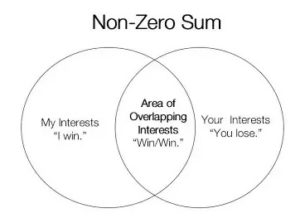
… is the continuation of the February 2021 Teaching Series for the movement behind the 2013 book Go Lean…Caribbean. (Every month, we present a series relevant to Caribbean life, culture and economics). For this month, we are looking at the subject of Zero Sum Thinking and lamenting how “Us vs Them” thinking permeates so much of the Caribbean mindset. It is NOT true for us to win, someone else must lose. Not rather, it is possible for “Win-Win”. This is Non-Zero Sum cooperation, collaboration, collusion, collectivity and community. This is the fifth entry, 5-of-6, on this Teaching Series. Consider, how this seamlessly fits in with the full catalog for this month:

  1. Zero Sum: Lesson 101 – No more “Gold Standard”
  2. Zero Sum: Realities of Globalism – “Non-Zero Sum” for the whole world
  3. Zero Sum: ICT as a tool, the “Great Equalizer”
  4. Zero Sum: Regional Tourism should not be a competition – Encore
  5. Zero Sum: Book Review – Racism is a factor; “Us vs Them”
  6. Zero Sum: How to fix “Inequality” – Raise the tide, all boats are elevated

We started this series on Zero Sum by looking at economic principles, establishing  that since we are no longer on a “Gold Standard”, any view of “haves versus have-nots” should no longer be an issue. We, the full 30 Caribbean member-states, can now all win, gain and grow. There should be no “Us vs Them” strategizing. This is a great lesson we can learn from this American experience; (do not be misled, the blatant racial segregation in the Jim Crow South was also practiced in other New World countries, including many Caribbean destinations; in fact, Colorism persists even in this day).

The book Go Lean … Caribbean posits that America’s history (and present) has been plagued with institutional racism (and another defect Crony-Capitalism). This should not the role model for the Caribbean to emulate. Rather, the book advocates for a Non-Zero Sum climate, with no “Us vs Them” racially. No, the roadmap calls for reforming and transforming Caribbean society to be the just, equitable homeland that we all seek. The book stressed that to accomplish this goal, there are some key community ethos that the community must adapt, and then also some strategies, tactics, implementations and advocacies that must be executed.

Yes, we can …

In addition to the Go Lean book, this commentary has addressed this subject matter – reforming racial inequities – on many occasions. Consider this sample of previous blog-commentaries:

https://goleancaribbean.com/blog/?p=18963 Happy Chinese New Year – Honoring Sino people worldwide
https://goleancaribbean.com/blog/?p=20203 Black Image – Pluralism is the Goal
https://goleancaribbean.com/blog/?p=18749 Good Example of Diversity and a ‘Great Place to Work’: Mercedes-Benz
https://goleancaribbean.com/blog/?p=16102 Celebrating Diwali – A Glimpse of our Pluralistic Democracy
https://goleancaribbean.com/blog/?p=14558 A Role Model of Being the Change in Civil Rights – Linda Brown, RIP
https://goleancaribbean.com/blog/?p=14413 Repairing the Breach: ‘Hurt People Hurt People’ – Lynching History
https://goleancaribbean.com/blog/?p=7204 ‘The Covenant with Black America’ – Ten Years Later
https://goleancaribbean.com/blog/?p=5733 Better than America? Yes, We Can!
https://goleancaribbean.com/blog/?p=5527 American Defects: Racism – Is It Over?
https://goleancaribbean.com/blog/?p=1909 Using Music to Change Americas Race Relations – Berry Gordy

Heather McGhee is the American Author that penned this book, The Sum of Us, on the economic impact of racism in America. She did not only journalized the problems, she strategized solutions as well; see this depicted in an interview in the VIDEO here:

VIDEO – Heather McGhee – “The Sum of Us” & The True Cost of Racism | The Daily Social Distancing Show https://youtu.be/IZpse-90KTY

The Daily Show with Trevor Noah
Published on Feb 18, 2021 – Heather McGhee talks about examining the economic impact of racism in America in her new book “The Sum of Us,” and underlines the importance of having honest conversations about past and present racism at a community level. #DailyShow #TrevorNoah #HeatherMcGhee

Subscribe to The Daily Show: https://www.youtube.com/channel/UCwWh…

Follow The Daily Show: Twitter: https://twitter.com/TheDailyShow
Facebook: https://www.facebook.com/thedailyshow
Instagram: https://www.instagram.com/thedailyshow

Watch full episodes of The Daily Show for free: http://www.cc.com/shows/the-daily-sho…

Follow Comedy Central: Twitter: https://twitter.com/ComedyCentral
Facebook: https://www.facebook.com/ComedyCentral
Instagram: https://www.instagram.com/comedycentral

About The Daily Show: Trevor Noah and The Daily Show correspondents tackle the biggest stories in news, politics and pop culture. The Daily Show with Trevor Noah airs weeknights at 11/10c on Comedy Central.

Per Heather McGhee, the First Step in resolving society’s woes: Stop being racist; stop pitting “Us vs Them”; stop being Zero-Sum; try including everyone in the community in elevating the economic, social and governing engines.

Again, yes, we can … . While the American South languished during the Bad Old Days, other communities thrived, as they did better with universal community building. The South had a lot of work to do.

Consider this example from Sports: In 1947, the Owner of the Major League Baseball Team “The Brooklyn Dodgers”, Branch Rickey, was the first to hire a Black Man – Jackie Robinson – on a baseball team. What was his motivation? To win baseball games … and championships. He was successful with this goal with a World Series Championship in 1955 … and then some:

Jackie Robinson was named National League Rookie of the Year [in 1947, the year he broke the racial barrier]. In 1949 he was the league’s Most Valuable Player. Robinson led the Brooklyn Dodgers to six league championships and one World Series victory. He was inducted into the Baseball Hall of Fame in 1962. – https://www.britannica.com/biography/Jackie-Robinson

White-Only teams henceforth sacrificed the ability to win by discriminating against minorities. Today, Major League Baseball (MLB) is dominated by the best athletes in the world; the only thing that matters is talent, with little regards to ethnicity; (now Whites are the minority).

The Caribbean also, has some work to do. We must look for “Win-Win” with people who may be different.

The Go Lean book serves as a roadmap for effecting change in the Caribbean; it introduces the technocratic Caribbean Union Trade Federation (CU) as a vehicle to bring about desired change in the region’s economics, security and governing engines. We want to be a pluralistic democracy with opportunity, equal rights and justice for all. All persons in the Caribbean are hereby urged to lean-in for this Go Lean roadmap.

Now’s the time for these empowerments in the Caribbean! It is time to build our better society. The strategies, tactics and implementations proposed in the book Go Lean…Caribbean are conceivable, believable and achievable. Yes, we can … do this; we can make our homeland a better place to live, work and play.  🙂

About the Book
The book Go Lean…Caribbean serves as a roadmap for the introduction and implementation of the technocratic Caribbean Union Trade Federation (CU), for the elevation of Caribbean society – for all member-states. This CU/Go Lean roadmap has these 3 prime directives:

  • Optimization of the economic engines in order to grow the regional economy to $800 Billion & create 2.2 million new jobs.
  • Establishment of a security apparatus to ensure public safety and protect the resultant economic engines.
  • Improve Caribbean governance to support these engines, including a separation-of-powers between the member-states and CU federal agencies.

The Go Lean book provides 370-pages of turn-by-turn instructions on “how” to adopt new community ethos, plus the strategies, tactics, implementations and advocacies to execute so as to reboot, reform and transform the societal engines of Caribbean society.

Download the free e-Book of Go Lean … Caribbean – now!

Who We Are
The movement behind the Go Lean book – a non-partisan, apolitical, religiously-neutral Community Development Foundation chartered for the purpose of empowering and re-booting economic engines – stresses that reforming and transforming the Caribbean societal engines must be a regional pursuit. This was an early motivation for the roadmap, as pronounced in the opening Declaration of Interdependence (Pages 12 – 13):

xi. Whereas all men are entitled to the benefits of good governance in a free society, “new guards” must be enacted to dissuade the emergence of incompetence, corruption, nepotism and cronyism at the peril of the people’s best interest. The Federation must guarantee the executions of a social contract between government and the governed.

xvi. Whereas security of our homeland is inextricably linked to prosperity of the homeland, the economic and security interest of the region needs to be aligned under the same governance. Since economic crimes … can imperil the functioning of the wheels of commerce for all the citizenry, the accedence of this Federation must equip the security apparatus with the tools and techniques for predictive and proactive interdictions.

xxiv. Whereas a free market economy can be induced and spurred for continuous progress, the Federation must install the controls to better manage aspects of the economy: jobs, inflation, savings rate, investments and other economic principles. Thereby attracting direct foreign investment because of the stability and vibrancy of our economy.

Sign the petition to lean-in for this roadmap for the Caribbean Union Trade Federation. 

Share this post:
, , ,
[Top]

Zero Sum: Lesson 101 – No More “Gold Standard”

Go Lean Commentary

Whether you realize it or not, Zero Sum Thinking is a real concern … and a real problem … in the Caribbean.

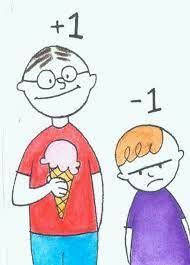
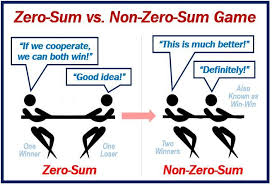
The default psychology of Zero-Sum Thinking refers to the perception that a situation is like a zero-sum game, where one person’s gain is another’s loss; (see the full encyclopedic treatment in the Appendix below).

This complex topic relates heavily to the economic discussions of “Supply and Demand“; actually it magnifies more on the different dynamics of Supply. The actuality is not everybody has the same level of supply – this is true despite whatever resource is being considered. If everyone had an adequate supply – if there was no scarcity – then this standard would not apply:

Golden Rule: He who has the gold, makes the Rules. – Old Adage

Just the premise of this Old Adage assumes a limited amount of gold, a “finite pie” and the challenge to get a slice of it. The term Zero Sum infers the same size pie and the activity to just change the slicing; the total mass of the pie never increases or decreases.
The actuality of a finite pie aligns with a primary Economic Principle, 1st among the 6 principles established in the orthodoxy of Economic Principles. This concept was explained in full details in the 2013 book Go Lean…Caribbean. See the excerpt here from Page 21:

  1. People Choose: We always want more than we can get and productive resources (human, natural, capital) are always limited. Therefore, because of this major economic problem of scarcity, we usually choose the alternative that provides the most benefits with the least cost.
  2. All Choices Involve Costs.
  3. People Respond to Incentives in Predictable Ways.
  4. Economic Systems Influence Individual Choices and Incentives.
  5. Voluntary Trade Creates Wealth.
  6. The Consequences of Choices Lie in the Future.

This Economic Principle (1-of-6) predates the Go Lean book; it is Classic Economics. See the encyclopedic definition here:

Scarcity as an economic concept “… refers to the basic fact of life that there exists only a finite amount of human and nonhuman resources which the best technical knowledge is capable of using to produce only limited maximum amounts of each economic good … .”[1] If the conditions of scarcity didn’t exist and an “infinite amount of every good could be produced or human wants fully satisfied … there would be no economic goods, i.e. goods that are relatively scarce…”[1] Scarcity is the limited availability of a commodity, which may be in demand in the market or by the commons. Scarcity also includes an individual’s lack of resources to buy commodities.[2] The opposite of scarcity is abundance.

The above points on scarcity are true and valid, when the supply of the limited resource – like gold – actually affects our life. But the world has actually moved away from Zero Sum Thinking, as there is no longer a Gold Standard for economic measurements. See more here:

gold standard is a monetary system in which the standard economic unit of account is based on a fixed quantity of gold. The gold standard was widely used in the 19th and early part of the 20th century. Most nations abandoned the gold standard as the basis of their monetary systems at some point in the 20th century, although many still hold substantial gold reserves.[1][2] – Source: Wikipedia

Unfortunately, the Caribbean has not caught up with this advanced thinking. There is no longer any excuses; we must now assimilate this concept that modern society has transformed to a Non-Zero Sum world. The sooner we accept this actuality, the better.

Many Caribbean people still believe that America is the “greatest” country in the world only because they have the largest Gold Reserves. But alas, as reported above, the Gold Standard no longer applies. The World now operates on a “Fiat Currency” principle, and so we can all grow, advance and win without someone else having to decline, lose or fail.

Let’s examine this closer! Every month, the movement behind the 2013 book Go Lean…Caribbean presents a Teaching Series to address issues germane to Caribbean society. For this month of February 2021, we are looking at the psychology and sociology of Zero Sum Thinking. It turns out that many of our societal defects are tied to this reality – (see the Appendix below). This first entry, 1-of-6, introduces the concept and then we drill deeper and climb higher.  The full catalog of this series is detailed as follows:

  1. Zero Sum: Lesson 101 – No more “Gold Standard”
  2. Zero Sum: Realities of Globalism – “Non-Zero Sum” for the whole world
  3. Zero Sum: ICT as a tool, the “Great Equalizer”
  4. Zero Sum: Regional Tourism should not be a competition – Encore
  5. Zero Sum: Book Review – Racism is a factor; “Us vs Them”
  6. Zero Sum: How to fix “Inequality” – Raise the tide, all boats are elevated

We start our discussion on Zero Sum by looking at the economic picture – the Gold Standard. This aligns with the assertions of the Go Lean book, that regional stewards can reform and transform Caribbean society by first rebooting the economy engines.

# 6 – Need People Too – Not All About Money, or is it?
The quality of life for the citizenry is very important, otherwise, people leave, and take their time, talents and treasuries elsewhere. Family, cultural pride is more important than economics, and yet when the economics are bad, people leave. This is evident by the large Caribbean Diaspora in foreign lands – where they re-assembled their culture and civic pride. – Go Lean book Page 26 – Title: “10 Ways to Impact the Future

The regional stewards need to pay more than the usual attention to this consideration. What regional stewards?

There is no such stewardship and this is the first step the political Caribbean needs to do to reform and transform the regional homeland. So that same Page 26 Go Lean Advocacy calls for this #1 “Way to Impact the Future“:

# 1 – Lean-in for the Caribbean Single Market & Economy initiative: Caribbean Union Trade Federation (CU)
This will allow for the unification of the region into a Single Market economy of 30 countries, 42 million people and a GDP of over $800 Billion (based on 2010 figures), thereby creating the world’s 29th largest economy. The CU will then forge multiple Agencies to foster technology growth and garner benefits from the economic “Catch-Up” principle. This should double the GDP after 5 years and help create the structures for the meaningful future that past visionaries had foreseen.

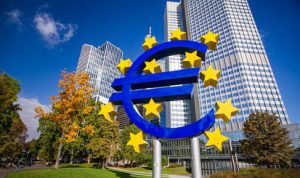
The European Union is the Model for the Caribbean Union

In addition to an integrated political stewardship – which must come first – the roadmap calls for an integrated economic stewardship. The Go Lean book (Page 32) introduces the Caribbean Central Bank (CCB) with this mandate:

CCB – Mixed Basket – Monetary Strength
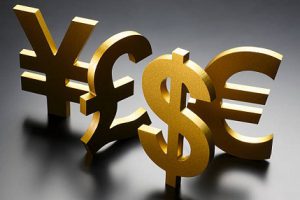
An obscure Murphy’s Law states “when people claim that it’s the principle, and not the money, chances are, it’s the money”. There are more important things in life than money, but somehow all these things can be bought/sold … for money. The CU strategy is to consolidate monetary reserves for the region into one currency, the Caribbean Dollar, managed by the technocratic Caribbean Central Bank. The C$ will be based on a mixed-basket of foreign reserves (US dollars, Euros, British pounds & Yens). This strategy allows the CU to negotiate with sufficient economic strengths.

The Euro is the Model for the Caribbean Dollar

So if Gold is no longer the Reserve Standard, and we are not limited to Zero Sum Thinking, then nothing prevents us from growing and growing our economy – monetary reserves and Fiat valuations.

This concept was thoroughly explained in a previous blog-commentary from March 25, 2014 entitled:

How to Create Money from Thin Air
Something more amazing happens in our modern economic system, money is created out of “thin air” … . How is this possible? This is accomplished through the Commercial/Central Banking system.

First of all, banks are financial institutions that take in deposits from people and use their money to give out loans to others. The reason why banks provide this service [to the community] for free is because they earn a profit by letting people deposit their money. Banks charge higher interests rates on the money they lend out compared to the money deposited. All in all, banks are both borrowers and lenders. People trust banks to store their money. The deposits allow banks to lend out money with higher interest rates with the expectancy that the loans will be paid back.

Banks have something called a required reserve ratio, mandated by the Central Bank; (the “Fed” in the US). This is the ratio of reserves to total deposits that banks are supposed to keep as reserves. Banks also have the right to increase the reserve ratio. They lend out the remaining percentage. For example, the bank has a 10% reserve ratio meaning it reserves 10% of its total deposits. It will then lend out the remaining 90%. When a person deposits $100, the bank is able to lend out $90 and keeps $10 for reserves. The $10 does not count as money since it is used as a reserve and may not be used for lending. So far, the bank has $100 and $90 currency loaned out. This is a total of $190 created as opposed to $100 before. Currency held by the public is money.

Of course, the borrower doesn’t simply keep the $90 but he will spend it. For instance, he will spend his money for a pair of soccer cleats at the Nike store. Now the Nike store has $90 but it will then deposit it back into the bank. The cycle then repeats itself. If the bank has more borrowers, it will certainly make a profit. If it lends again, it will lend out $81 and keep $9 on reserves.

The way banks create money is a cycle and over time, the profit compounds on top of each other and the original $100 can be [extended] potentially [to as high as] $1,000.[a]

So the new $900, compared to the original $100, is created from “thin air”.

Surely, you see how this new fractional banking regime is better than the old Gold Standard. If the monetary regime had remained tied to “gold”, the only value that would have mattered would have been an original deposit of $100 in Gold, not the $1000 in Fiat Currency. Rather than a Zero Sum system where that $100 in Gold only changes hands between parties and still amounts to $100, we now have a Non-Zero Sum regime, in which the focus and emphasis is on $1000, not only the $1000 – we now have a much Bigger Pie.

In this series, a reference is made to the need for a comprehensive roadmap for elevating the societal engines of the 30 Caribbean member-states for the Greater Good. We need to ensure that institutional stewardship is in place to manage this new economic regime. The world is already doing this with Non-Zero Sum Thinking. It is time we catch up.

Zero Sum Thinking is actually a bad Community Ethos – the underlying sentiment that informs the beliefs, customs, or practices of society – while Non-Zero Sum Thinking reflects a new Community Ethos.

The dread of Zero Sum

The Go Lean book provides 370-pages of turn-by-turn instructions on “how” to adopt the new Community Ethos we need for progress, plus the strategies, tactics, implementations and advocacies to execute so as to reboot, protect, reform and transform the economic engines of Caribbean society. There is a lot of consideration in the book for establishing the CCB and the Single Currency (Caribbean Dollar or C$) in the region.  Plus, there have been a number of previous blog-commentaries by the Go Lean movement that have highlighted the ecosystem of monetary, central banking and currency best practices. See a sample list here:

https://goleancaribbean.com/blog/?p=19452 Big Hairy Audacious Goal: Regional Currency – ‘In God We Trust’
https://goleancaribbean.com/blog/?p=16530 China seeks to de-Americanize the world’s economy
https://goleancaribbean.com/blog/?p=16210 In Defense of Trade – The Real Threat of Currency Assassins
https://goleancaribbean.com/blog/?p=14248 Leading with Money Matters – Almighty Dollar
https://goleancaribbean.com/blog/?p=13744 Failure to Launch – Economics: The Quest for a ‘Single Currency’
https://goleancaribbean.com/blog/?p=13365 Case Study from West Africa: Single Currency for 8 Diverse Countries
https://goleancaribbean.com/blog/?p=10513 Case Study from India: Transforming Money Countrywide
https://goleancaribbean.com/blog/?p=8381 Case Study on Central Banking for Puerto Rico
https://goleancaribbean.com/blog/?p=7140 Case Study from Azerbaijan – Setting its currency to Free Float
https://goleancaribbean.com/blog/?p=6800 Case Study from Venezuela: Suing Black Market currency website
https://goleancaribbean.com/blog/?p=3858 Case Study from ECB: Unveiling 1 trillion Euro stimulus program
https://goleancaribbean.com/blog/?p=3814 Case Study from Switzerland: Unpegging the franc
https://goleancaribbean.com/blog/?p=360 Case Study on Central Banks: Creating Money from ‘Thin Air’
https://goleancaribbean.com/blog/?p=833 Case Study from the Euro: One Currency, Diverse Economies

This consideration is bigger than just a discussion on the “Gold Standard” and regional currencies. As related in Appendix below, there are psychological and sociological limitations associated with Zero and Non-Zero Sum Thinking:

  • Labor Negotiations – Winners does not have to mean losers.
  • Immigration – New Arrivals does not mean “less for the status quo”.
  • Academic Grading – On the curve?
  • Jury Deliberation – Evidence has point to more than one conclusion
  • Job Skills Competence – Jack of all trades, master of …
  • Inter-personal relations – Love more than one person (i.e. best friends)
  • International Trade – Trade Deficits do not mean losses

See this portrayal in this VIDEO Book Review:

VIDEO – Thomas Sowell – Zero-Sum Thinking – https://youtu.be/5dbrzo5-sdE

Posted June 1, 2017 – Excerpt from Thomas Sowell “Basic Economics A Citizen’s Guide to the Economy 2nd Edition”: http://amzn.to/2quYW9l

Subscribe to The War on Mind and Body: https://goo.gl/mGMe2a

– Video Upload powered by https://www.TunesToTube.com

In summary, it is inexcusable that the Caribbean has failed to adapt to this new monetary, economic, sociological and psychological growth that is associated with Non-Zero Sum Thinking.

Let move forward now!

We hereby urge all Caribbean stakeholders – stewards and subjects – to lean-in to this comprehensive Go Lean roadmap to elevate Caribbean society. This is the work we must do to make our homeland a better place to live, work and play. 🙂

About the Book
The book Go Lean…Caribbean serves as a roadmap for the introduction and implementation of the technocratic Caribbean Union Trade Federation (CU), for the elevation of Caribbean society – for all member-states. This CU/Go Lean roadmap has these 3 prime directives:

  • Optimization of the economic engines in order to grow the regional economy to $800 Billion & create 2.2 million new jobs.
  • Establishment of a security apparatus to ensure public safety and protect the resultant economic engines.
  • Improve Caribbean governance to support these engines, including a separation-of-powers between the member-states and CU federal agencies.

The Go Lean book provides 370-pages of turn-by-turn instructions on “how” to adopt new community ethos, plus the strategies, tactics, implementations and advocacies to execute so as to reboot, reform and transform the societal engines of Caribbean society.

Download the free e-Book of Go Lean … Caribbean – now!

Who We Are
The movement behind the Go Lean book – a non-partisan, apolitical, religiously-neutral Community Development Foundation chartered for the purpose of empowering and re-booting economic engines – stresses that reforming and transforming the Caribbean societal engines must be a regional pursuit. This was an early motivation for the roadmap, as pronounced in the opening Declaration of Interdependence (Pages 12 – 13):

xi. Whereas all men are entitled to the benefits of good governance in a free society, “new guards” must be enacted to dissuade the emergence of incompetence, corruption, nepotism and cronyism at the peril of the people’s best interest. The Federation must guarantee the executions of a social contract between government and the governed.

xvi. Whereas security of our homeland is inextricably linked to prosperity of the homeland, the economic and security interest of the region needs to be aligned under the same governance. Since economic crimes … can imperil the functioning of the wheels of commerce for all the citizenry, the accedence of this Federation must equip the security apparatus with the tools and techniques for predictive and proactive interdictions.

xxiv. Whereas a free market economy can be induced and spurred for continuous progress, the Federation must install the controls to better manage aspects of the economy: jobs, inflation, savings rate, investments and other economic principles. Thereby attracting direct foreign investment because of the stability and vibrancy of our economy.

Sign the petition to lean-in for this roadmap for the Caribbean Union Trade Federation.

—————–

Appendix – Title: Zero-Sum Thinking

Zero-Sum Thinking perceives situations as zero-sum games, where one person’s gain would be another’s loss.[1][2][3] The term is derived from game theory. However, unlike the game theory concept, zero-sum thinking refers to a psychological construct—a person’s subjective interpretation of a situation. Zero-sum thinking is captured by the saying “your gain is my loss” (or conversely, “your loss is my gain”). Rozycka-Tran et al. (2015) defined zero-sum thinking as:

A general belief system about the antagonistic nature of social relations, shared by people in a society or culture and based on the implicit assumption that a finite amount of goods exists in the world, in which one person’s winning makes others the losers, and vice versa … a relatively permanent and general conviction that social relations are like a zero-sum game. People who share this conviction believe that success, especially economic success, is possible only at the expense of other people’s failures.[1]

Zero-sum bias is a cognitive bias towards zero-sum thinking; it is people’s tendency to intuitively judge that a situation is zero-sum, even when this is not the case.[4] This bias promotes zero-sum fallacies, false beliefs that situations are zero-sum. Such fallacies can cause other false judgements and poor decisions.[5][6] In economics, “zero-sum fallacy” generally refers to the fixed-pie fallacy.

Examples
There are many examples of zero-sum thinking, some of them fallacious.

  1. When jurors assume that any evidence compatible with more than one theory offers no support for any theory, even if the evidence is incompatible with some possibilities or the theories are not mutually exclusive.[5]
  2. When students in a classroom think they are being graded on a curve when in fact they are being graded based on predetermined standards.[4]
  3. In a negotiation when one negotiator thinks that they can only gain at the expense of the other party (i.e., that mutual gain is not possible).[7]
  4. In the context of social group competition, the belief that more resources for one group (e.g., immigrants) means less for others (e.g., non-immigrants).[8]
  5. In the context of romantic relationships, the idea that loving more than one person at a time means loving each one less.[9]
  6. Jack of all trades, master of none: the idea that having more skills means having less aptitude (also known as compensatory reasoning).[10]
  7. In copyright infringement debate, the idea that every unauthorized duplication is a lost sale.[11][12][13]
  8. When politicians argue that international trade must mean that one party is “winning” and another is “losing” when transfer of goods and services at mutually-agreeable prices is in general mutually beneficial, or that a trade deficit represents “losing” money to another country.
  9. Group membership is sometimes treated as zero-sum, such that stronger membership in one group is seen as weaker membership in another.[14]

Causes
There is no evidence which suggests that zero-sum thinking is an enduring feature of human psychology. Game-theoretic situations rarely apply to instances of individual behaviour. This is demonstrated by the ordinary response to the prisoner’s dilemma.

Zero-sum thinking is the result of both proximate and ultimate causes.

Ultimate causes
In terms of ultimate causation, zero-sum thinking might be a legacy of human evolution. Specifically, it might be understood to be a psychological adaptation that facilitated successful resource competition in the environment of ancestral humans where resources like mates, status, and food were perpetually scarce.[4][15][3] For example, Rubin suggests that the pace of technological growth was so slow during the period in which modern humans evolved that no individual would have observed any growth during their lifetime: “Each person would live and die in a world of constant technology and income. Thus, there was no incentive to evolve a mechanism for understanding or planning for growth” (p. 162).[3] Rubin also points to instances where the understanding of laypeople and economists about economic situations diverge, such as the lump-of-labor fallacy.[3] From this perspective, zero-sum thinking might be understood as the default way that humans think about resource allocations, which must be unlearned by, for example, an education in basic economics.

Proximate causes
Zero-sum thinking can also be understood in terms of proximate causation, which refers to the developmental history of individuals within their own lifetime. The proximate causes of zero-sum thinking include the experiences that individuals have with resource allocations, as well as their beliefs about specific situations, or their beliefs about the world in general.

Resource-scarce environments
One of the proximate causes of zero-sum thinking is the experiences that individuals have with scarce resources or zero-sum interactions in their developmental environment.[16] In 1965, George M. Foster argued that members of “peasant” societies have an “Image of Limited Good,” which he argued was learned through by experiences in a society that was essentially zero-sum.

“The model of cognitive orientation that seems to me best to account for peasant behavior is the “Image of Limited Good.” By “Image of Limited Good” I mean that broad areas of peasant behavior are patterned in such fashion as to suggest that peasants view their social, economic, and natural universes—their total environment—as one in which all of the desired things in life such as land, wealth, health, friendship and love, manliness and honor, respect and status, power and influence, security and safety, exist in finite quantity and are always in short supply, as far as the peasant is concerned. Not only do these and all other “good things” exist in finite and limited quantities, but in addition there is no way directly within peasant power to increase the available quantities … When the peasant views his economic world as one in which Limited Good prevails, and he can progress only at the expense of another, he is usually very near the truth.” (pps. 67-68)[16]

More recently, Rozycka-Tran et al. (2015) conducted a cross-cultural study that compared the responses of individuals in 37 nations to a scale of zero-sum beliefs. This scale asked individuals to report their agreement with statements that measured zero-sum thinking. For example, one item on the scale stated that “Successes of some people are usually failures of others”. Rozycka-Tran et al. found that individuals in countries with lower Gross Domestic Product showed stronger zero-sum beliefs on average, suggesting that “the belief in zero-sum game seems to arise in countries with lower income, where resources are scarce” (p. 539).[1] Similarly, Rozycka-Tran et al. found that individuals with lower socioeconomic status displayed stronger zero-sum beliefs.

Resource scarcity beliefs
Related to experiences with resource-scarce environments is the belief that a resource is scarce or finite. For example, the lump of labour fallacy refers to the belief that in the economy there is a fixed amount of work to be done, and thus the allocation of jobs is zero-sum.[17] Although the belief that a resource is scarce might develop through experiences with resource scarcity, this is not necessarily the case. For example, individuals might come to believe that wealth is finite because it is a claim that has been repeated by politicians or journalists.[18]

Resource entitlement beliefs
Another proximate cause of zero-sum thinking is the belief that one (or one’s group) is entitled to a certain share of a resource.[19][9] An extreme case is the belief that one is entitled to all of a resource that exists, implying that any gains by another is one’s own loss. Less extreme is the belief that one (or one’s group) is superior and therefore entitled to more than others. For example, perceptions of zero-sum group competition have been associated with the Dominance sub-scale of the social dominance orientation personality trait, which itself has been characterized as a zero-sum worldview (“a view of human existence as zero-sum,” p. 999).[20] Individuals who practice monogamy have also been found to think about love in consensually nonmonogamous relationships as zero-sum, and it was suggested that this might be because they believe that individuals in romantic relationships have an entitlement to their partner’s love.[9]

Effects
When individuals think that a situation is zero-sum, they will be more likely to act competitively (or less cooperatively) towards others, because they will see others as a competitive threat. For example, when students think that they are being graded on a curve—a grading scheme that makes the allocation of grades zero-sum—they will be less likely to provide assistance to a peer who is proximate in status to themselves, because that peer’s gain could be their own loss.[2]

When individuals perceive that there is a zero-sum competition in society for resources like jobs, they will be less likely to hold pro-immigration attitudes (because immigrants would deplete the resource).[8] Zero-sum thinking may also lead to certain social prejudices. When individuals hold zero-sum beliefs about love in romantic relationships, they are more prejudiced against consensual nonmonogamists (presumably because the perception of zero-sumness makes consensual nonmonogamy seem inadequate or unfair).[9]

Share this post:
, , ,
[Top]

Black History – Pandemic-wise: A Lesson from the Ancestors

Go Lean Commentary

The Ancestors are speaking to us, telling us to remember them, remember their sacrifices and achievements, and then to follow their models on mitigating communicable diseases.
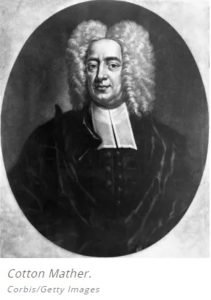
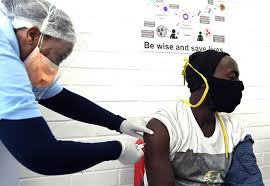
Listen carefully!

Listen, especially now during Black History Month 2021, in the middle of a global pandemic, to the lessons from previous generations, or forefathers and foremothers.

Listen, my son, to your father’s instruction and do not forsake your mother’s teaching. – The Bible; Proverbs 1:8 New International Version

There is no way to justify Slavery and the Slave Trade! It was an abominable stain on European society and the Church; see the Appendix VIDEO below.

But we cannot change that Bad History. Like all things historic, all we can do is study it, learn from it and change the present-future to optimize our lives and society based on those lessons. This aligns with the Old Adage:

Those who do not learn from history are forced to repeat it.

So now, we must listen to the lessons from our Ancestors in dealing with a modern day crisis – COVID-19 Coronavirus Pandemic. Our Ancestors told us, and the whole world how to mitigate, minimize and manage this and all epidemics. See this Lesson in History in the story here:

Title: How an Enslaved African Man in Boston Helped Save Generations from Smallpox
Sub-title:
In the early 1700s, Onesimus shared a revolutionary way to prevent smallpox.
By: Erin Blakemore

The news was terrifying to colonists in Massachusetts: Smallpox had made it to Boston and was spreading rapidly. The first victims, passengers on a ship from the Caribbean, were shut up in a house identified only by a red flag that read “God have mercy on this house.” Meanwhile, hundreds of residents of the bustling colonial town had started to flee for their lives, terrified of what might happen if they exposed themselves to the frequently deadly disease.

They had reason to fear. The virus was extremely contagious, spreading like wildfire in large epidemics. Smallpox patients experienced fever, fatigue and a crusty rash that could leave disfiguring scars. In up to 30 percent of cases, it killed.

But the smallpox epidemic of 1721 was different than any that came before it. As sickness swept through the city, killing hundreds in a time before modern medical treatment or a robust understanding of infectious disease, an enslaved man known only as Onesimus suggested a potential way to keep people from getting sick. Intrigued by Onesimus’ idea, a brave doctor and an outspoken minister undertook a bold experiment to try to stop smallpox in its tracks.

Smallpox was one of the era’s deadliest afflictions. “Few diseases at this time were as universal or fatal,” notes historian Susan Pryor. The colonists saw its effects not just among their own countrymen, but among the Native Americans to whom they introduced the disease. Smallpox destroyed Native communities that, with no immunity, were unable to fight off the virus.

Smallpox also entered the colonies on slave ships, transmitted by enslaved people who, in packed and unsanitary quarters, passed the disease along to one another and, eventually, to colonists at their destinations. One of those destinations was Massachusetts, which was a center of the early slave trade. The first enslaved people had arrived in Massachusetts in 1638, and by 1700, about 1,000 enslaved people lived in the colony, most in Boston.

In 1706, an enslaved West African man was purchased for the prominent Puritan minister Cotton Mather by his congregation. Mather gave him the name Onesimus, after an enslaved man in the Bible whose name meant “useful.” Mather, who had been a powerful figure in the Salem Witch Trials, believed that owners of enslaved people had a duty to convert enslaved people to Christianity and educate them. But like other white men of his era, he also looked down on what he called the “Devilish rites” of Africans and worried that enslaved people might openly rebel.

Mather didn’t trust Onesimus: He wrote about having to watch him carefully due to what he thought was “thievish” behavior, and recorded in his diary that he was “wicked” and “useless.” But in 1716, Onesimus told him something he did believe: That he knew how to prevent smallpox.

Onesimus, who “is a pretty intelligent fellow,” Mather wrote, told him he had had smallpox—and then hadn’t. Onesimus said that he “had undergone an operation, which had given him something of the smallpox and would forever preserve him from it…and whoever had the courage to use it was forever free of the fear of contagion.”

The operation Onesimus referred to consisted of rubbing pus from an infected person into an open wound on the arm. Once the infected material was introduced into the body, the person who underwent the procedure was inoculated against smallpox. It wasn’t a vaccination, which involves exposure to a less dangerous virus to provoke immunity. But it did activate the recipient’s immune response and protected against the disease most of the time.

Mather was fascinated. He verified Onesimus’ story with that of other enslaved people, and learned that the practice had been used in Turkey and China. He became an evangelist for inoculation—also known as variolation—and spread the word throughout Massachusetts and elsewhere in the hopes it would help prevent smallpox.

But Mather hadn’t bargained on how unpopular the idea would be. The same prejudices that caused him to distrust his servant made other white colonists reluctant to undergo a medical procedure developed by or for Black people. Mather “was vilified,” historian Ted Widmer told WGBH. “A local newspaper, called The New England Courant, ridiculed him. An explosive device was thrown through his windows with an angry note. There was an ugly racial element to the anger.” Religion also contributed: Other preachers argued that it was against God’s will to expose his creatures to dangerous diseases.

But in 1721, Mather and Zabdiel Boylston, the only physician in Boston who supported the technique, got their chance to test the power of inoculation. That year, a smallpox epidemic spread from a ship to the population of Boston, sickening about half of the city’s residents. Boylston sprang into action, inoculating his son and his enslaved workers against the disease. Then, he began inoculating other Bostonians. Of the 242 people he inoculated, only six died—one in 40, as opposed to one in seven deaths among the population of Boston who didn’t undergo the procedure.

The smallpox epidemic wiped out 844 people in Boston, over 14 percent of the population. But it had yielded hope for future epidemics. It also helped set the stage for vaccination. In 1796, Edward Jenner developed an effective vaccine that used cowpox to provoke smallpox immunity. It worked. Eventually, smallpox vaccination became mandatory in Massachusetts.

Did Onesimus live to see the success of the technique he introduced to Mather? It isn’t clear. Nothing is known of his later life other than that he partially purchased his freedom. To do so, writes historian Steven J. Niven, he gave Mather money to purchase another enslaved person. What is clear is that the knowledge he passed on saved hundreds of lives—and led to the eventual eradication of smallpox.

In 1980, the World Health Organization declared smallpox entirely eradicated due to the spread of immunization worldwide. It remains the only infectious disease to have been entirely wiped out.

Source: History Channel; posted Feb 3, 2021; retrieved Feb 13, 2021 from: https://www.history.com/news/smallpox-vaccine-onesimus-slave-cotton-mather

What is the take-away?

Get inoculated or vaccinated. The human body and immune system has a way of learning, in advance, how to counteract viruses. The Ancestors conveyed this lesson to the waiting world that there is a way to build up our personal defenses by introducing a virus in a controlled manner.

This is a Big Deal now, as many descendants of those same slaves – in the Americas and the Caribbean – refuse to consider the option of vaccinations for COVID-19. See this excerpt from a previous blog-commentary from August 29, 2020:

Title: Pandemic Playbook – COVID Vaccine: To Be or Not To Be

The world is enduring the Coronavirus COVID-19 pandemic crisis; it is wreaking havoc on the world’s economic engines – $250 Billion a day in losses – and Public Health deliveries. The only hope is a vaccine, of which there are a number of them in development (Phase I – Test Tubes, Phase II – Lab Mice, Phase III – Human Trials). Around $10bn is being spent on finding a vaccine for this Coronavirus.

Will you consume or ingest the eventual vaccine?

Will you allow your children to ingest? What percentage of people in the community will refuse to ingest?

What if consumption is a prerequisite for work, school, church, travel, etc.?

But don’t get it twisted! The Caribbean member-states boast a Service industrial economy – tourism. To participate in this industry space will require compliance. Tourists – by air for resort-based stay-overs or cruise line passengers – will not want to expose themselves to possible infections.

Lastly, individuals can simply chose to exit societal functioning – a self-imposed quarantine; think: Leper Colony. These ones will have to take a seat – with a view – and watch life pass them by.

Is this what you want for yourself, your family and your community? If you chose NO VACCINE, you have that right. But your children may choose differently. Especially those children that you invested so selflessly to get advanced education – college graduates. Already, this population have a higher than normal abandonment rate in the region.

The Caribbean region is in an epidemiological crisis. What are we to do?

We hereby urge all to listen to the Ancestors: Take the vaccine.

A lot of blood, sweat and tears have spilled to get us to this point; do not disregard those sacrifices.

Learning lessons from our Ancestors in Black History is always the motive every February of every year in the US and other countries. The movement behind the 2013 book Go Lean…Commentary have consistently participated in this quest to educate Caribbean communities on the merits of Black History. In fact, this commentary is our 326th submissions on a theme related to Black History and/or the African experience in the New World.

Consider this sample list from previous blog-commentaries:

https://goleancaribbean.com/blog/?p=16685 Ready for February – Black History Month
https://goleancaribbean.com/blog/?p=20237 Black Image – Slavery in History: Lessons from the Bible
https://goleancaribbean.com/blog/?p=18152 A Lesson from America’s Slavery History – Greatest Story Never Told
https://goleancaribbean.com/blog/?p=18093 400 Years of Slavery – International Day of Remembrance
https://goleancaribbean.com/blog/?p=17917 What Went Wrong? ‘7 to 1’ – Quantifying Caribbean ‘Less Than’
https://goleancaribbean.com/blog/?p=8724 Remembering Marcus Garvey: Still Relevant Today
https://goleancaribbean.com/blog/?p=4971 Authorizing Slavery – Royal Charters: Truth & Consequence
https://goleancaribbean.com/blog/?p=2297 A Lesson in History: Booker T versus Du Bois

Learning lessons from the past, from Black History, would mean acting in harmony with those lessons. While we may not be able to fix the historic past, surely we should apply the wisdom from the Ancestors and fix the present and ensure a brighter future.

The Go Lean movement is here to do more than just pique our collective conscience; we are here to act! The purpose of the Go Lean book is to usher in a Caribbean regional administrations to cooperate, collaborate and coordinate technocratic Homeland Security solutions for all 30 Caribbean member-states – the Caribbean Union Trade Federation (CU) – despite their historical legacies or governmental hierarchy.

See this synopsis here, as related in a previous Go Lean commentary from March 24, 2015:

Title: A Lesson in History – SARS in Hong Kong
The CU is not designed to just be in some advisory role when it comes to pandemic crises, but rather to possess the authority to act as a Security Apparatus for the region’s Greater Good. This is the mandate as pronounced in the opening Declaration of Interdependence (Page 11) related to climate change, but it applies equally to pandemics, to …

  • “protect the entire region it is necessary to prepare to insure the safety and security of life, property and systems of commerce in our geographical region. As nature recognizes no borders in the target of its destruction, we also must set aside border considerations in the preparation and response to these … challenges”.

Legally, each Caribbean member-state would ratify a Status of Forces Agreement that would authorize this role for the CU agencies (Emergency Management and Disease Control & Management) to serve as a proxy and deputy of the Public Health administrations for each member-state. This would thusly empower these CU agencies to quarantine and detain citizens with probable cause of an infectious disease. The transparency, accountability and chain-of-command would be intact with the appropriate checks-and-balances of the CU’s legislative and judicial oversight. This is a lesson learned from Hong Kong 2003 with China’s belligerence.

As concluded in that previous August 29, 2020 blog-commentary, we urge all Caribbean stakeholders – governments, citizens, doctors and patients – to participate in the global quest to eradicate this [COVID-19] pandemic. This is the roadmap for making the Caribbean homeland a better place to live, work, heal and play. [The slave named Onesimus did this with Smallpox in 1721]; Jonas Salk did it with Polio … eventually; we can too. So our vision, this quest is conceivable, believable and achievable.

Let’s do our part and learn these important lessons from our Ancestors. 🙂

About the Book
The book Go Lean…Caribbean serves as a roadmap for the introduction and implementation of the technocratic Caribbean Union Trade Federation (CU), for the elevation of Caribbean society – for all member-states. This CU/Go Lean roadmap has these 3 prime directives:

  • Optimization of the economic engines in order to grow the regional economy to $800 Billion & create 2.2 million new jobs.
  • Establishment of a security apparatus to ensure public safety and protect the resultant economic engines.
  • Improve Caribbean governance to support these engines, including a separation-of-powers between the member-states and CU federal agencies.

The Go Lean book provides 370-pages of turn-by-turn instructions on “how” to adopt new community ethos, plus the strategies, tactics, implementations and advocacies to execute so as to reboot, reform and transform the societal engines of Caribbean society.

Download the free e-Book of Go Lean … Caribbean – now!

Who We Are
The movement behind the Go Lean book – a non-partisan, apolitical, religiously-neutral Community Development Foundation chartered for the purpose of empowering and re-booting economic engines – stresses that reforming and transforming the Caribbean societal engines must be a regional pursuit. This was an early motivation for the roadmap, as pronounced in the opening Declaration of Interdependence (Pages 11 – 13):

ix. Whereas the realities of healthcare and an aging population cannot be ignored and cannot be afforded without some advanced mitigation, the Federation must arrange for health plans to consolidate premiums of both healthy and sickly people across the wider base of the entire Caribbean population. The mitigation should extend further to disease management …

x. Whereas we are surrounded and allied to nations of larger proportions in land mass, populations, and treasuries, elements in their societies may have ill-intent in their pursuits, at the expense of the safety and security of our citizens. We must therefore appoint “new guards” to ensure our public safety and threats against our society, both domestic and foreign. …

xi. Whereas all men are entitled to the benefits of good governance in a free society, “new guards” must be enacted to dissuade the emergence of incompetence, corruption, nepotism and cronyism at the peril of the people’s best interest. The Federation must guarantee the executions of a social contract between government and the governed.

xii. Whereas the legacy in recent times in individual states may be that of ineffectual governance with no redress to higher authority, the accedence of this Federation will ensure accountability and escalation of human and civil rights of the people for good governance, justice assurances, due process and the rule of law. As such, any threats of a “failed state” status for any member state must enact emergency measures on behalf of the Federation to protect the human, civil and property rights of the citizens, residents, allies, trading partners, and visitors of the affected member state and the Federation as a whole.

xvi. Whereas security of our homeland is inextricably linked to prosperity of the homeland, the economic and security interest of the region needs to be aligned under the same governance. Since economic crimes … can imperil the functioning of the wheels of commerce for all the citizenry, the accidence of this Federation must equip the security apparatus with the tools and techniques for predictive and proactive interdictions.

Sign the petition to lean-in for this roadmap for the Caribbean Union Trade Federation.

———————–

Appendix VIDEO: Life Aboard a Slave Ship | History – https://youtu.be/PmQvofAiZGA


HISTORY
Published on Feb 7, 2019 – From approximately 1525 to 1866, 12.5 million Africans were forcibly transported across the Middle Passage to serve as slaves in the New World. Life aboard slave ships was agonizing and dangerous; nearly 2 million slaves would perish on their journey across the Atlantic.

#HistoryChannel
Read More: http://po.st/slave_ship

Check out exclusive HISTORY content:

Website – http://www.history.com
Facebook – https://www.facebook.com/History
Twitter – https://twitter.com/history

HISTORY®, now reaching more than 98 million homes, is the leading destination for award-winning original series and specials that connect viewers with history in an informative, immersive, and entertaining manner across all platforms. The network’s all-original programming slate features a roster of hit series, epic miniseries, and scripted event programming. Visit us at http://www.HISTORY.com​ for more info.

Share this post:
, ,
[Top]

Happy Lunar New Year … Again – Encore

It’s Happy New Year … again, in China … and other Asian countries.

See this “Feature Article”:

Title: Lunar New Year’s Traditions and Superstitions, Explained
Sub-title:
The holiday’s about luck, health, and reuniting with family.
By 

When people talk about the “holiday season” in the U.S., they typically refer to that period between Thanksgiving dinner and New Year’s Day. But shortly after that, another massive holiday brings friends and family together in several Asian countries, with concurrent parties that carry on the traditions stateside. The Lunar New Year, most commonly associated with the Chinese New Year or Spring Festival, typically falls sometime between January 21 and February 20 annually. Lunar New Year 2021 is on February 12, and in terms of the Chinese zodiac animal, it’s the Year of the Ox.

“Google Doodle” for February 12, 2021
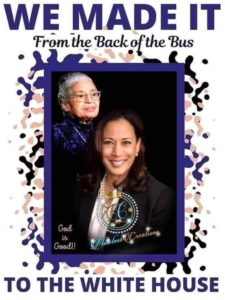
It’s called the Lunar New Year because it marks the first new moon of the lunisolar calendars traditional to many east Asian countries including China, South Korea, and Vietnam, which are regulated by the cycles of the moon and sun. As the New York Times explains, “A solar year—the time it takes Earth to orbit the sun—lasts around 365 days, while a lunar year, or 12 full cycles of the Moon, is roughly 354 days.” As with the Jewish lunisolar calendar, “a month is still defined by the moon, but an extra month is added periodically to stay close to the solar year.” This is why the new year falls on a different day within that month-long window each year.

In China, the 15-day celebration kicks off on New Year’s Eve with a family feast called a reunion dinner full of traditional Lunar New Year foods, and typically ends with the Lantern Festival. “It’s really a time for new beginnings, and family gathering,” says Nancy Yao Maasbach, president of New York City’s Museum of Chinese in America. Three overarching themes, she says, are “fortune, happiness, and health.”

Here’s what to know about Lunar New Year traditions, and what more than 1.5 billion people do to celebrate it.

Source:
Posted and retrieved Feb 12, 2021 from: https://www.oprahmag.com/life/a34892893/what-is-lunar-new-year-festival/

Why should we commemorate or even pay attention to this Sinophone culture? For one reason, as explained in the foregoing article: 1.5 Billion people.

Size matters

This is so familiar for the movement behind the 2013 book Go Lean…Caribbean; as we published a previous blog-commentary on the same topic last year, just as the Coronavirus Pandemic was blowing up round the worlds – it was hard to celebrate anything “Chinese” then. It is only apropos that we Encore that commentary again now, as we measure this milestone in the annals of Caribbean life.

The Wuhan, China-bred Coronavirus is still wreaking havoc on the world stage. But China has done better in managing this crisis.

A crisis is a terrible thing to waste

… China has not wasted this crisis. As the world’s economy has receded, China’s had expanded. Wow!

We need more of the Chinese actuality in our Caribbean actuality. We need to invite, retain and return China’s time, talent and treasuries. See how that previous blog-commentary presented that thesis last year; consume this commentary here/now:

—————-

Go Lean Commentary – Happy Chinese New Year

Happy New Year …

No, not the January 1st thing, but rather the January 25th thing – the Chinese New Year.

This is a Big Deal in China and among the Chinese Diaspora – Sinophone – throughout the world. There is great importance to this observation. See this VIDEO and encyclopedic reference here:

VIDEO – Everything you need to know about the Chinese New Year https://youtu.be/3I-R5S3czyw

TRT World
Posted January 24, 2020 – Here’s everything you need to know about the Chinese New Year – how it’s celebrated, it’s history, and what the animals represent.

#Chinese New Year #Spring Festival #metalrat

Subscribe: http://trt.world/subscribe
Livestream: http://trt.world/ytlive
Facebook: http://trt.world/facebook
Twitter: http://trt.world/twitter
Instagram: http://trt.world/instagram
Visit our website: http://trt.world

————————————

Title: Chinese New Year
Chinese New Year[a], also referred to as Lunar New Year, is the Chinese festival that celebrates the beginning of a new year on the traditional Chinese calendar. The festival is usually referred to as the Spring Festival in mainland China,[b] and is one of several Lunar New Years in Asia. Observances traditionally take place from the evening preceding the first day of the year to the Lantern Festival, held on the 15th day of the year. The first day of Chinese New Year begins on the new moon that appears between 21 January and 20 February.[2] In 2020, the first day of the Chinese New Year will be on Saturday, 25 January, initiating the Year of the Rat.

Chinese New Year is a major holiday in China, and has strongly influenced Lunar new year celebrations of China’s neighbouring cultures, including the Korean New Year (seol), the Tết of Vietnam, and the Losar of Tibet.[3] It is also celebrated worldwide in regions and countries with significant Overseas Chinese or Sinophone populations, including Singapore,[4]Indonesia, Malaysia, Myanmar,[5]Thailand, Cambodia, the Philippines,[6] and Mauritius,[7] as well as many in North America and Europe.[8][9][10]

Chinese New Year is associated with several myths and customs. The festival was traditionally a time to honour deities as well as ancestors.[11] Within China, regional customs and traditions concerning the celebration of the New Year vary widely,[12] and the evening preceding Chinese New Year’s Day is frequently regarded as an occasion for Chinese families to gather for the annual reunion dinner. It is also traditional for every family to thoroughly clean their house, in order to sweep away any ill-fortune and to make way for incoming good luck. Another custom is the decoration of windows and doors with red paper-cuts and couplets. Popular themes among these paper-cuts and couplets include that of good fortune or happiness, wealth, and longevity. Other activities include lighting firecrackers and giving money in red paper envelopes. For the northern regions of China, dumplings are featured prominently in meals celebrating the festival. It often serves as the first meal of the year either at midnight or as breakfast of the first day.

Festivities
New Year’s Eve
The biggest event of any Chinese New Year’s Eve is the annual reunion dinner. Dishes consisting of special meats are served at the tables, as a main course for the dinner and offering for the New Year. This meal is comparable to Thanksgiving dinner in the U.S. and remotely similar to Christmas dinner in other countries with a high percentage of Christians.

In northern China, it is customary to make jiaozi, or dumplings, after dinner to eat around midnight. Dumplings symbolize wealth because their shape resembles a Chinese sycee. In contrast, in the South, it is customary to make a glutinous new year cake (niangao) and send pieces of it as gifts to relatives and friends in the coming days. Niángāo [Pinyin] literally means “new year cake” with a homophonous meaning of “increasingly prosperous year in year out”.[44]

After dinner, some families go to local temples hours before the new year begins to pray for a prosperous new year by lighting the first incense of the year; however in modern practice, many households hold parties and even hold a countdown to the new year. Traditionally, firecrackers were lit to scare away evil spirits with the household doors sealed, not to be reopened until the new morning in a ritual called “opening the door of fortune” (开财门; 開財門; kāicáimén).[45]

Beginning in 1982, the CCTV New Year’s Gala is broadcast in China four hours before the start of the New Year and lasts until the succeeding early morning. Watching it has gradually become a tradition in China. A tradition of going to bed late on New Year’s Eve, or even keeping awake the whole night and morning, known as shousui (守岁), is still practised as it is thought to add on to one’s parents’ longevity.

First day
The first day is for the welcoming of the deities of the heavens and earth, officially beginning at midnight. It is a traditional practice to light fireworks, burn bamboo sticks and firecrackers and to make as much of a din as possible to chase off the evil spirits as encapsulated by nian of which the term Guo Nian was derived. Many Buddhists abstain from meat consumption on the first day because it is believed to ensure longevity for them. Some consider lighting fires and using knives to be bad luck on New Year’s Day, so all food to be consumed is cooked the days before. On this day, it is considered bad luck to use the broom, as good fortune is not to be “swept away” symbolically.

Most importantly, the first day of Chinese New Year is a time to honor one’s elders and families visit the oldest and most senior members of their extended families, usually their parents, grandparents and great-grandparents.

For Buddhists, the first day is also the designated holy day of MaitreyaBodhisattva (better known as the more familiar Budai Luohan), the Buddha-to-be. People also abstain from killing animals.

Some families may invite a lion dance troupe as a symbolic ritual to usher in the Chinese New Year as well as to evict bad spirits from the premises. Members of the family who are married also give red envelopes containing cash known as lai see (Cantonese dialect) or angpow (Hokkien, Chaozhou, and Fujian dialects), or hongbao (Mandarin), a form of blessings and to suppress the aging and challenges associated with the coming year, to junior members of the family, mostly children and teenagers. Business managers also give bonuses through red packets to employees for good luck, smooth-sailing, good health and wealth.

While fireworks and firecrackers are traditionally very popular, some regions have banned them due to concerns over fire hazards. For this reason, various city governments (e.g., Kowloon, Beijing, Shanghai for a number of years) issued bans over fireworks and firecrackers in certain precincts of the city. As a substitute, large-scale fireworks display have been launched by governments in such city-states as Hong Kong and Singapore. However, it is a tradition that the indigenous peoples of the walled villages of New Territories, Hong Kong are permitted to light firecrackers and launch fireworks in a limited scale.

Source: Retrieved January 25, 2020 from: https://en.wikipedia.org/wiki/Chinese_New_Year

What’s the Big Deal? Well, for starters, this relates to the 1.4 Billion people in China. That’s a market size that is bigger than North America and the European Union … combined. Consider the encyclopedic details in the Appendix below.

You see it, right? You do see why this is important; 1.5 Billion people (out of 7.7 Billion) in a world where Size Matters (as related in this previous blog-commentary from August 26, 2016):

For Hollywood – a metonym for the film-television-video industry – any access to large markets is a win-win.

Enter China…

… this country has 1.3 billion people. That’s a lot of “eye-balls”. This country, considering its history, used to be closed to western commerce and movie distributions. Now, its open … and advancing. Those 1.3 billion pairs of eye-balls are presenting a lot of opportunities and now starting to wield power.

For the Caribbean, this is a necessary discussion for the planners and stewards of a new Caribbean; this requires a consideration of the economic engines for our communities. This is the assertion of the movement behind the 2013 book Go Lean…Caribbean – that size matters when it comes to marketing your “Export Products & Services”. For us in the Caribbean, our primary export is tourism – we sell travel experiences to consumers around the world. – we must consider the 20-percent of the population that features Sinophone culture.

We must curry their favor!

So Happy New Year to our Sinophone friends and family.

Yes, we have Sinophone family members in the Caribbean. In a previous blog-commentary, it was detailed how Chinese immigrants were “recruited” to come and impact the Caribbean eco-system. Consider this excerpt:

10 Things We Want from China and 10 Things We Do Not Want
Like it or not, the Caribbean is in competition with the rest of the world – and we are losing! …

Now we must consider other countries … that compete with us and are doing MUCH BETTER jobs of contending in this competitive environment. We must consider China and India:

China … went from “zero to hero”, emerging as an economic Super Power in short order. We can look, listen and learn from the Chinese eco-system; their mainland (the Peoples Republic of China), the special territories of Hong Kong and Taiwan (the Republic of China). We can lend-a-hand in reforming and transforming our own Caribbean region – as China has had to do – and we can eventually lead a reboot and turn-around of Caribbean society; again as China has done. …

While Caribbean people are not fleeing their homeland to relocate to China. there is a Diaspora issue associated with Caribbean-China relations: Indentured Servitude. At the end of the era of Caribbean slavery (1830’s to 1840’s), the plantation system required a replacement labor source; many Chinese nationals were thusly “recruited” as Indentured Servants to the region – British, French and Spanish lands – see here:

  • There were two main waves of Chinese migration to the Caribbean region. The first wave of Chinese consisted of indentured labourers who were brought to the Caribbean predominantly Trinidad, British Guiana and Cuba, to work on sugar plantations during the post-Emancipation period. The second wave was comprised of free voluntary migrants, consisting of either small groups (usually relatives) to British Guiana, Jamaica and Trinidad from the 1890’s to the 1940’s. In fact the most modern Caribbean Chinese are descended from this second group. – Caribbean-Atlas.com

Derivatives of the 18,000-plus Chinese immigrants are still here in the Caribbean today. These descendants have grown in numbers and power (economic and political) in the region. They are part of the fabric of our society. They are home in the Caribbean; and we are at home with them

So we need to embrace the Sinophone world, here and abroad – we must “curry their favor”. The liberal view is to value what they value and honor what they honor, while the conservative view is to NOT disrespect this people-culture and allow them to co-exist, survive and thrive. Doing so extends hospitality to these people and incentivizes them to trade with us – come visit as tourists – and impact our economic prospects.

This is the same thing we said about India and the Indophone Diaspora, in a previous blog-commentary from October 2017:

Making a ‘Pluralistic Democracy’ – Respecting Diwali
A “Pluralistic Democracy” … means a society where the many different ethnic groups (and religions) have respect, equal rights, equal privileges and equal protections under the law; where there are no superior rights to any majority and no special deprivations to any minority. The expectation is for anyone person to be treated like everyone else. …

We fail so miserably in respecting non-standard traditions. The truth of the matter is that while religious toleration appears to be high in the Caribbean, this is really only true of European-styled Christian faiths. Other non-White religious traditions (let’s consider Hindu) are often ignored or even ridiculed in open Caribbean society, despite the large number of adherents. Of the 30 member-states to comprise the Caribbean Single Market, 3 of them have a large Indian-Hindu ethnicity. As a result, in these communities, though lowly promoted, one of the biggest annual celebrations for those communities is Diwali or Divali

… While Diwali is a religious celebration, many aspects of this culture spills-over to general society; see the detailed plans of a previous year (2009) in Appendix A below. This celebration, in many ways, is similar to Christmas spilling-over to non-Christian people in Christian countries. So the festivities carry a heavy civic-cultural “feel” as opposed to religious Hindu adherence. Plus, these values here are positive community ethos that any stewards in any society would want to promote: “the victory of light over darkness, good over evil, knowledge over ignorance, and hope over despair”.

What about the argument that this Chinese (and Indian) toleration – like celebrating the Chinese New Year – is not Christian?

Don’t get it twisted!

Christmas – the western equivalent to the Chinese New Year tradition – is not Christian either, consider – Four reasons Christmas is not Christian:

    1. Dec. 25 is the wrong day, and it’s celebrated for the wrong god. Dec. 25 is associated with many pagan birth myths—not Christ’s birth.
    2. Most Christmas traditions come from pagan religions, not the Bible.
    3. There is no Santa Claus. Parents shouldn’t lie to their children.
    4. Christians should keep the holy days that Jesus kept, not holidays that originated in paganism.

. Source:  January 25, 2020 from: https://lifehopeandtruth.com/god/blog/four-reasons-christmas-is-not-christian/

The movement behind the Go Lean book have always advocated this community ethos:

Live and let live.

Plus, we need to embrace China right now. They are one of the few groups of Direct Foreign Investors that have been showing interest in the Caribbean communities. We need all the help we can get to reform and transform our society. The heavy-lifting gets a little easier with a little help from our friends. Consider these previous blog-commentaries related to China’s investments in our region:

https://goleancaribbean.com/blog/?p=18301 After Hurricane Dorian, Rebuilding Partners: China Versus America
https://goleancaribbean.com/blog/?p=16192 In Defense of Trade – China Realities
https://goleancaribbean.com/blog/?p=8799 History of China Trade: Too Big to Ignore
https://goleancaribbean.com/blog/?p=8813 Why China will soon be Hollywood’s largest market
https://goleancaribbean.com/blog/?p=8815 China’s Organ Transplantation: Facts and Fiction
https://goleancaribbean.com/blog/?p=8817 Chinese Mobile Games Apps: The new Playground
https://goleancaribbean.com/blog/?p=8819 South China Seas: Exclusive Economic Zones??
https://goleancaribbean.com/blog/?p=8823 China’s WeChat: Model for Caribbean Social Media
https://goleancaribbean.com/blog/?p=6231 China’s Caribbean Playbook: America’s Script

What about the argument that China is a Communist state and advocates for communism?

We have addressed this issue before – June 20, 2019:

‘Free Market’ Versus … China – Two Systems at Play
China is on the verge of overtaking the US as the Number 1 Single Market economy in the world…

  • Wait, isn’t China a communist state?
  • Hasn’t communism failed to deliver on its promises to elevate societies that abide by its principles?

Yes, and yes …

But China demonstrates that there is a difference between principles and practices. China abides by communist principles, but their practice is more aligned with Free Market concepts, especially with their doubling-down in trade, World Trade.

Do we truly consider Hong Kong as a communist state? Far from it; yet it is China; it is part of the “One country, two systems” practice.

All in all, we have nothing to fear from China – not their culture, religion, politics nor their military power. We should simply embrace them for trade in a give-and-take relationship. We must export to China as well; we need Chinese tourism.

We have to make changes, on our end, to make this Chinese tourism viable. We have to work harder to “live and let live”:

“Make happy those who are near, and those who are far will come”.

- Photo 2

This is the charter of the Go Lean roadmap; we urge all stakeholders to lean-in to the strategies, tactics, implementations and advocacies to elevate our society. This is worth all the effort for us to do. This is how we make our Caribbean homeland a better place to live, work and play.  🙂

About the Book
The book Go Lean…Caribbean serves as a roadmap for the introduction and implementation of the technocratic Caribbean Union Trade Federation (CU), for the elevation of Caribbean society – for all member-states. This CU/Go Lean roadmap has these 3 prime directives:

  • Optimization of the economic engines in order to grow the regional economy to $800 Billion & create 2.2 million new jobs.
  • Establishment of a security apparatus to ensure public safety and protect the resultant economic engines.
  • Improve Caribbean governance to support these engines, including a separation-of-powers between the member-states and CU federal agencies.

The Go Lean book provides 370-pages of turn-by-turn instructions on “how” to adopt new community ethos, plus the strategies, tactics, implementations and advocacies to execute so as to reboot, reform and transform the societal engines of Caribbean society.

Download the free e-Book of Go Lean … Caribbean – now!

Who We Are
The movement behind the Go Lean book – a non-partisan, apolitical, religiously-neutral Community Development Foundation chartered for the purpose of empowering and re-booting economic engines – stresses that reforming and transforming the Caribbean societal engines must be a regional pursuit. This was an early motivation for the roadmap, as pronounced in the opening Declaration of Interdependence (Pages 12 – 13):

xi. Whereas all men are entitled to the benefits of good governance in a free society, “new guards” must be enacted to dissuade the emergence of incompetence, corruption, nepotism and cronyism at the peril of the people’s best interest. The Federation must guarantee the executions of a social contract between government and the governed.

xvi. Whereas security of our homeland is inextricably linked to prosperity of the homeland, the economic and security interest of the region needs to be aligned under the same governance. Since economic crimes … can imperil the functioning of the wheels of commerce for all the citizenry, the accedence of this Federation must equip the security apparatus with the tools and techniques for predictive and proactive interdictions.

xxiv. Whereas a free market economy can be induced and spurred for continuous progress, the Federation must install the controls to better manage aspects of the economy: jobs, inflation, savings rate, investments and other economic principles. Thereby attracting direct foreign investment because of the stability and vibrancy of our economy.

Sign the petition to lean-in for this roadmap for the Caribbean Union Trade Federation. 

—————

Appendix  – Reference: Sinophone

Chinese-speaking world or Sinophone or sinophone is a neologism that fundamentally means “Chinese-speaking”, typically referring to a person who speaks at least one variety of Chinese. Academic writers use Sinophone “Chinese-speaking regions” in two ambiguous meanings: either specifically “Chinese-speaking areas where it is a minority language, excluding China and Taiwan” or generally “Chinese-speaking areas, including where it is an official language”. Many authors use the collocation Sinophone world to mean the regions of Chinese diaspora outside of Greater China, and some for the entire Chinese-speaking world. Mandarin Chinese is the most commonly spoken language today, with over one billion people, approximately 20% of the world population, speaking it. …

Statistics (for populations outside of China and Taiwan)

Region Speakers Percentage Year Reference
 Anguilla 7 0.06% 2001 [1]
 Australia 877,654 3.8% 2016 [1][note 1]
 Austria 9,960 0.1% 2001 [1]
 Belize 2,600 0.8% 2010 [1]
 Cambodia 6,530 0.05% 2008 [1]
 Canada 1,290,095 3.7% 2016 [1]
 Cyprus 1,218 0.1% 2011 [1]
 Falkland Islands 1 0.03% 2006 [1]
 Finland 12,407 0.23% 2018 [1]
 Hong Kong 6,264,700 88.9% 2016 [1][note 2]
 Lithuania 64 0.002% 2011 [1]
 Macao 411,482 97.0% 2001 [1]
 Marshall Islands 79 0.2% 1999 [1]
 Mauritius 2,258 0.2% 2011 [1]
 Nepal 242 0.0009% 2011 [1]
 Northern Mariana Islands 14,862 23.4% 2000 [1]
 Palau 331 1.8% 2005 [1]
 Philippines 6,032 0.4% 2000 [1]
 Romania 2,039 0.01% 2011 [1]
 Russia 70,722 0.05% 2010 [1]
 Singapore 1,791,216 57.7% 2010 [1][note 3]
 South Africa 8,533 0.02% 1996 [1]
 Thailand 111,866 0.2% 2010 [1]
 Timor Leste 511 0.07% 2004 [1]
 United Kingdom 162,698 0.3% 2011 [1]
 United States 3,268,546 1.0% 2017 [2]

Source: Retrieved January 25, 2020 from: https://en.wikipedia.org/wiki/Sinophone

———————

In demographics, the world population is the total number of humans currently living, and was estimated to have reached 7.7 billion people as of April 2019.[2]

Source: Retrieved January 25, 2020 from: https://en.wikipedia.org/wiki/World_population

Share this post:
, , ,
[Top]

“From the back of the Bus to the White House” – No need to Imagine – Encore

We all know the history …

… yet it should still be vocalized; it should be shouted from the rooftops and from the steeples. There is a dramatic change in the administration of America today.

Congratulations Kamala Harris!

We applaud you … here and now … as we applauded you in the recent past. In fact, we had published a blog-commentary on March 7, 2019 shortly after Ms. Harris commenced her campaign for President of the United States (POTUS). Now today, she is the Vice-President.

    1. One step away…
    1. One heartbeat away …

Now is an appropriate time to Encore that previous blog-commentary; see it here-now:

——————–

Go Lean CommentaryWomen Empowerment – Kamala Harris: From Caribbean Legacy to the White House?

Who is the most powerful person in the world?

No doubt, the President of the United States. But this is not just an American drama, as the holder of that office is often considered the “Leader of the Free World“.

Free World?!

Q: Are there other worlds? A: Sure, countries like North Korea, Cuba, Venezuela, Yemen and others, may not consider the American Hegemony. But, most ironic, all those countries are considered Failed-States. So in summary, the President of the US is considered the Leader of all functioning societies on the planet – including our Caribbean member-states.

There is a chance, that a person of Caribbean heritage – an empowering woman: California Senator Kamala Harris – could assume that office. See the introductory news story / VIDEO here:

VIDEO – Who Is Kamala Harris? | 2020 Presidential Candidate | NYT News – https://youtu.be/cO_CZCebc5U

The New York Times
Published on Jan 21, 2019 – Senator Kamala Harris, Democrat of California, is joining the race for the White House. Ms. Harris becomes the fourth woman currently serving in Congress to announce her presidential ambitions.
Read the story here: https://nyti.ms/2FSqIHD Subscribe: http://bit.ly/U8Ys7n
More from The New York Times Video: http://nytimes.com/video

———-

Whether it’s reporting on conflicts abroad and political divisions at home, or covering the latest style trends and scientific developments, New York Times video journalists provide a revealing and unforgettable view of the world. It’s all the news that’s fit to watch.

So can she go from Caribbean Legacy to the White House? That would be shocking and empowering, considering that “Jamaican” comes with certain stereotypes. See a related news article here, detailing the affinity and conflict “she” has with her Jamaican father/heritage:

Title: Donald Harris slams his daughter Senator Kamala Harris for fraudulently stereotyping Jamaicans and accuses her of playing Identity Politics
By: Jamaican Global

Professor Donald Harris Kamala Harris’ Jamaican father, has vigorously dissociated himself from statements made on the New York Breakfast Club radio show earlier this week attributing her support for smoking marijuana to her Jamaican heritage. Professor Harris has issued a statement to jamaicaglobalonline.com in which he declares:

    “My dear departed grandmothers(whose extraordinary legacy I described in a recent essay on this website), as well as my deceased parents , must be turning in their grave right now to see their family’s name, reputation and proud Jamaican identity being connected, in any way, jokingly or not with the fraudulent stereotype of a pot-smoking joy seeker and in the pursuit of identity politics. Speaking for myself and my immediate Jamaican family, we wish to categorically dissociate ourselves from this travesty.”

This is the line – “Half my family’s from Jamaica. Are you kidding me?” – that has been repeated over by virtually every news media since Kamala Harris gave that response to the interviewer on New York’s Breakfast Club radio show when asked if she smoked marijuana.

Jamaica’s venerable Gleaner newspaper headlined:

    US Presidential Candidate Kamala Harris wants Marijuana Legalized, cites Jamaican roots.

While the locally based online news source Loop reported:

    Kamala Harris cites Jamaican roots in support of ganja legislation.

The Georgia based Macon Telegraph  was less subtle. Its report screamed:

    Kamala Harris supports legal pot. “Half my family’s from Jamaica. Are you kidding me?”

The 2020 presidential hopeful with a Jamaican heritage said she not only smoked but added “I inhale”. Perhaps said jokingly at first in the spirit of the interview, she proceeded to suggest that her Jamaican father’s side of the family would be disappointed in her if she did not support the legalization of marijuana. And that IS a serious statement. Now Harris’ father has come out vigorously dissociating himself from his daughter’s statement.

And well he might. V.G. McGee in a op ed piece published on January 12 in Urbanislandz writes “ Back in 2014 while running for re-election for California attorney general, she wasn’t in support of legalizing recreational use of the plant , but it is good that she has evolved on the issue and we can thank her Jamaican relatives for influencing her changing opinion.” So, the perception created by Ms. Harris’ statement is real and has caused some unease amongst Jamaicans at home and in the diaspora and now, it seems, her father and his Jamaican family. For some, it is more than mere unease; one Jamaican commenting on social media expressed the concern that “soon my job will be singling me out to drug test me since I am from Jamaica. What a stereotype”. Her concern is not unfounded given the experience of Jamaicans travelling to US ports having sniffer dogs around them in customs halls.

The Indian/Jamaican Marijuana connection: Did Kamala Harris deliberately and unfairly stereotype Jamaica as a nation of pot smokers? 

An ironic twist in Ms. Harris’ associating marijuana smoking with her Jamaican heritage that seems to have escaped her as well as media watchers is the fact that it is also very much a part of her Indian heritage that she is so proud of claiming. Is she aware that it was India that bequeathed a marijuana culture to Jamaica? In her authoritative Encyclopedia of Jamaican Heritage (2003) Oliver Senior writes:

    ‘The practice of cultivating, smoking and otherwise consuming the herb (marijuana) is believed to have been popularized by Indian indentured immigrants who began to arrive from 1845. The local name ‘ganja’ is Indian. The concept of ganja as a holy herb is a Hindu one; it is widely used to enhance the religious experience in parts of India (despite government prohibition).

This seeming lack of knowledge about the connection between her Indian and Jamaican heritage provides additional ammunition for some Jamaicans who are of the view that Ms. Harris tends to downplay her Jamaican heritage when it suits her, crediting her Tamil Indian mother with the most significant influence on her life and outlook and rarely talks about her father’s influence. Her father Donald, hardly ever gets credit except when mentioned alongside her mother, but rarely as an individual. Even when asked by her host in the now famous ‘marijuana interview’ about her motivation to enter the presidential race, Ms. Harris referenced ONLY her mother whom she said, raised her and her sister Maya with many beliefs and rules – one being never to sit and complain about something, but to do something about it. Yet, anyone who has read ‘Reflections of a Jamaican Father’ Donald Harris’ heart-warming account of how he raised his two daughters, will immediately realize that there is another side to the Kamala Harris story. In that article Donald Harris writes:
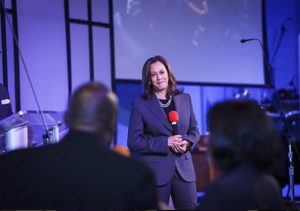
    “As a child growing up in Jamaica, I often heard it said by my parents and family friends ‘member whe you come fram’ (remember from where you came). To this day I continue to retain the deep social awareness and strong sense of identity which that grassroots Jamaican philosophy fed in me. As a father, I naturally sought to develop the same sensibility in my two daughters.”

Continuing, Harris says:

    “My message to them was that the sky is the limit on what one can achieve with effort and determination and that in the process, it is important not to lose sight of those who get left behind by social neglect or abuse and lack of access to resources or ‘privilege’.

If Kamala Harris inherits some of ‘that deep social awareness’ and heeds the advice of her Jamaican father, she will make an excellent President of the United States of America.

Source: Posted February 15, 2019; retrieved March 7, 2018 from: https://www.jamaicaglobalonline.com/donald-harris-slams-his-daughter-senator-kamala-harris-for-fraudulently-stereotyping-jamaicans-and-accusing-her-of-playing-identity-politics/

How realistic is the notion of a Kamala Harris presidency?

History is on her side!

“Last time we knocked on the door  – this time, we are going to kick the son-of-a-bitch in!”

In the last presidential election (2016) Democratic Candidate Hillary Clinton knocked-on-the-door and won the popular vote, but lost out in the Electoral College. (Today, investigations are concluding on the possibility that the eventual winner, Donald J. Trump, may have benefited from illegal campaign funding activities and collusion with the foreign government of Russia – he may have cheated). So yes, a woman can win the office.

Based on the “Blue Wave” of the 2018 General Election (Mid-terms) results, there is reason to believe that the 2020 race will have a Democratic Party winner, rather than the Republican incumbent. Plus, ex-President Barack Obama proved that a “Black” person can win the office.

Will this combination propel Kamala Harris to the Office of the Presidency?

There is still a long journey to go, with a lot of obstacles to overcome and challenges to meet. But many women have overcame obstacles and met challenges to obtain their goals to impact society. In fact, this is the very theme this month of this series of commentaries from the movement behind the book Go Lean … Caribbean. This is part 3 of 6 for Women History Month; this series addresses how one woman can make a difference in society; and how society can make a difference for women; this is because qualities like courage, problem-solving, determination and a zeal for justice flourishes with some women … as it does with some men.

Other commentaries in this series include these entries:

  1. Women History Month 2019: Thoughts, Feelings, Speech and Actions
  2. Women History Month 2019Viola Desmond – The Rosa Parks of Canada
  3. Women History Month 2019: Kamala Harris – Caribbean Legacy to the White House?
  4. Women History Month 2019: Captain Marvel – We need “Sheroes”
  5. Women History Month 2019Ellevest CEO: Sallie Krawcheck
  6. Women History Month 2019: Accepting Black Women As Is

For Kamala Harris to win the presidency, she will have to “win over” America; but first she must “win over” the Democratic Party; even before that, she must “win over” the Black community. Some people think that will be her biggest challenge; see a related news article/opinion-editorial here:

Title: Kamala Harris Can’t Count on the Black Vote in 2020
Opinion by: Luther Campbell

Kamala Harris will have trouble persuading black voters to make her president in 2020. First, the U.S. senator from California must explain why Donald Trump has a better prison-reform record than she had as the Golden State’s attorney general. Then she’ll have to overcome the perception she’ll do anything to climb to the top.
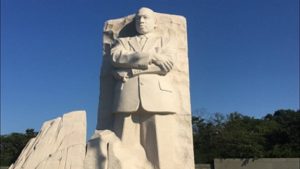
On the street, many blue-collar African-Americans, especially men, have already made up their minds not to vote for her. Between 2004 and 2016, when Harris worked as San Francisco’s district attorney and state attorney general, she supported legislation that sent kids who skipped school to jail. And she opposed federal supervision of California’s prisons after a U.S. Supreme Court ruling declared the overcrowded facilities inflicted cruel and unusual punishment on inmates.

When she appealed a court order to implement new parole programs, Harris cited the need to use prisoners as slave labor to fight wildfires and pick up highway trash.

Though black voters want politicians who’ll put away thugs and killers terrorizing the neighborhood, they don’t support those who deny defendants rehabilitation and send them to prison for crimes they didn’t commit to line private prison companies’ pockets.

Harris rose to prominence in California after an affair with married, but separated, former San Francisco Mayor Willie Brown, who recently wrote a column that mentioned their relationship. Brown said he influenced Harris’ career by appointing her to two state commissions when he was California Assembly speaker. He also helped her in her first race for San Francisco district attorney.

When Harris, whose mother is from India and father is from Jamaica, decided it was time to take her talents to Washington, D.C., she married Douglas Emhoff, a rich white lawyer. For better or worse, black men don’t want to vote for a black woman who married a white man or was the mistress of a powerful black man.

Like everyone else, black voters want help from one of their own. The Bushes made sure their people got oil money. Bill Clinton let the telecommunications industry gobble up small radio and TV stations. And Donald Trump is looking out for his developer buddies through a tax cut and opportunity zones that gentrify minority neighborhoods. Meanwhile, Harris has let black people know they can’t count on her.

Source: Posted February 5, 2019; retrieved March 7, 2019 from: https://www.miaminewtimes.com/news/kamala-harris-cant-count-on-the-black-vote-to-win-in-2020-11068985

(This foregoing writer is not endorsed by this commentary; his editorial seems misogynistic).

Women in Politics? To the highest office in the land? This theme aligns with previous Go Lean commentaries asserting that ” Yes, they can!”; see a sample list here:

https://goleancaribbean.com/blog/?p=14718 ‘At the Table’ or ‘On the Menu’
https://goleancaribbean.com/blog/?p=13063 Gender Equity without a ‘Battle of the Sexes’
https://goleancaribbean.com/blog/?p=12035 Fact & Fiction: Lean-in for ‘Wonder Woman Day’
https://goleancaribbean.com/blog/?p=8306 Women Get Ready for New Lean-In Campaign
https://goleancaribbean.com/blog/?p=6937 Women in Politics – Yes, They Can!
https://goleancaribbean.com/blog/?p=6836 #FatGirlsCan – Women do not have to be a ‘Ten’ to have impact

For those of us in the Caribbean, we have No Vote and No Voice in this 2020 presidential race. But we can observe-and-report. We can apply the proven “5-L” methodology: Look, Listen and Learn how to overcome orthodoxies to finally get the best person elected for the job, despite any race or gender.

We can also Lend-a-hand! (Many people of Caribbean heritage live in the US – many can vote). In fact, we – Jamaicans, Cubans, Puerto Ricans – were target demographics in the 2016 race.

Lastly, there is the opportunity to Lead – especially to define good leadership; recognizing attributes and personal qualities are bigger and of more importance than race and/or gender. We need to apply these lessons and leadership development in the Caribbean member-states.

So “Yes, we can” … learn from this American drama and learn to make our Caribbean homeland a better place to live, work and play. 🙂

About the Book
The book Go Lean…Caribbean serves as a roadmap for the introduction and implementation of the technocratic Caribbean Union Trade Federation (CU), for the elevation of Caribbean society – for all member-states. This CU/Go Lean roadmap has these 3 prime directives:

  • Optimization of the economic engines in order to grow the regional economy to $800 Billion and create 2.2 million new jobs.
  • Establishment of a security apparatus to ensure public safety and protect the resultant economic engines.
  • Improve Caribbean governance to support these engines, including a separation-of-powers between the member-states and CU federal agencies.

The Go Lean book provides 370-pages of turn-by-turn instructions on “how” to adopt new community ethos, plus the strategies, tactics, implementations and advocacies to execute so as to reboot, reform and transform the societal engines of Caribbean society.

Download the free e-Book of Go Lean … Caribbean – now!

Who We Are
The movement behind the Go Lean book – a non-partisan, apolitical, religiously-neutral Community Development Foundation chartered for the purpose of empowering and re-booting economic engines – stresses that reforming and transforming the Caribbean societal engines must be a regional pursuit. This was an early motivation for the roadmap, as pronounced in the opening Declaration of Interdependence (Pages 12 – 13):

xi. Whereas all men are entitled to the benefits of good governance in a free society, “new guards” must be enacted to dissuade the emergence of incompetence, corruption, nepotism and cronyism at the peril of the people’s best interest. The Federation must guarantee the executions of a social contract between government and the governed.

xvi. Whereas security of our homeland is inextricably linked to prosperity of the homeland, the economic and security interest of the region needs to be aligned under the same governance. Since economic crimes … can imperil the functioning of the wheels of commerce for all the citizenry, the accedence of this Federation must equip the security apparatus with the tools and techniques for predictive and proactive interdictions.

xxiv. Whereas a free market economy can be induced and spurred for continuous progress, the Federation must install the controls to better manage aspects of the economy: jobs, inflation, savings rate, investments and other economic principles. Thereby attracting direct foreign investment because of the stability and vibrancy of our economy.

Sign the petition to lean-in for this roadmap for the Caribbean Union Trade Federation.

Share this post:
, , , ,
[Top]

‘Land of the Free’ are only ‘Hollow Words’ – ENCORE

Today – January 15, 2021 – would have been the 92nd birthday for American Civil Rights hero Martin Luther King (1929 – 1968). Though an American drama, MLK was impactful for the entire world and every Civil Rights struggle everywhere. So his life and legacy has great meaning for us in the Caribbean homeland.

MLK died almost 53 years ago; he did not get to see the “racially equal” or the “universally free” America that he campaigned for or dreamed about. Even though a lot has been accomplished since, such as the 8-year term of the first Black President Barack Obama, can the country truly declare that it is racially equal today?

Free at last?
Not so much!

9 days ago there was an attempted insurrection at the US Capitol in Washington, DC. Thousands upon thousands descended on that building during a ceremony to formally accept the transfer of power from a well-documented bigoted President Donald Trump back to a more racially-liberal Joseph Biden and his half-Black Vice-President Kamala Harris. They were not having it!

The words describing America as the “Land of the Free” are still proving to be only hollow words.

Every time we think America is making real progress, we are reminded that the racial inequity in America is deeply rooted in the country’s DNA.

This is an important consideration for us in the Caribbean, as more and more of our people continue to “break down the door to get out” of their homeland to flee to America. The USA continues to be the Number One destination for our Diaspora, estimated between 10 and 25 million people.

These points were raised and addressed in a specific previous blog-commentary on August 27, 2019; (and in many other previous submissions over the 7 years of this blog site). It is only appropriate to Encore that submission here-now – being the 92nd birthday of Martin Luther King – as follows:

————-

“Free At Last, Free At Last; Thank God Almighty, We Are Free At Last”
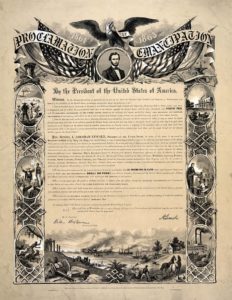
– Dr. Martin Luther King; “I Have a Dream” Speech; March on Washington, 1963

Considering that the Emancipation Proclamation took effect on January 1, 1863, it would have been expected that those powerful words from Dr. King may have been a reality long before 1963.

Regrettably, No!

This was the point of Dr. King’s theme:


Five score years ago, a great American [President Abraham Lincoln], in whose symbolic shadow we stand today, signed the Emancipation Proclamation. This momentous decree came as a great beacon light of hope to millions of Negro slaves who had been seared in the flames of withering injustice. It came as a joyous daybreak to end the long night of their captivity.

But one hundred years later, the Negro still is not free. One hundred years later, the life of the Negro is still sadly crippled by the manacles of segregation and the chains of discrimination. One hundred years later, the Negro lives on a lonely island of poverty in the midst of a vast ocean of material prosperity. One hundred years later, the Negro is still languishing in the corners of American society and finds himself an exile in his own land. So we have come here today to dramatize a shameful condition. …

See the Appendix VIDEO below of the actual speech in 1963.

America was forged on the blatant hypocrisy of a legal premise that “All men are created equal”, and yet the African-American population was never treated equally, fairly or justly. In fact, by some analysis, America is still not equal-fair-just for African-Americans. In fact, just naming a street after Martin Luther King creates friction in American communities even today, 56 years after that iconic speech.

How about other communities (nations in the New World)? Did they emancipate their slaves sooner or later? See the full list here of all the territories in the Caribbean region including the mainland coastal lands rimming the Caribbean Sea:

Chronology of the abolition of slavery in the Caribbean

First abolition Final abolition of slavery Date of independence
Haiti 1793 1804
Dominican Republic  1801 1822 1844
Costa Rica 1824 1821
El Salvador 1824 1821
Guatemala 1824 1821
Honduras 1824 1821
Mexico 1829 1810
British West Indies
Anguilla
Antigua and Barbuda
Bahamas
Barbados
Belize
Cayman Islands
Dominica
Grenada
Guyana
Virgin Islands
Jamaica
Montserrat
Turks and Caicos Islands
Saint Kitts and Nevis
Saint Lucia
St. Vincent and Grenadines
Trinidad and Tobago
1833-1838
1833-1834
1833-1838
1833-1838
1833-1838
1833-1838
1833-1838
1833-1838
1833-1838
1833-1838
1833-1838
1833-1838
1833-1838
1833-1838
1833-1838
1833-1834
1833-1838
1981
1973
1966
19811978
1974
196619621983
1979
1979
1962
Nicaragua 1838 1821
Danish Virgin Islands
Saint John
Saint Thomas
Saint Croix
1846-1848
1846-1848
1846-1848
Swedish Antilles
Saint Barthelemy
1847
French Antilles
Guaealoupe
Guiana
Martinique
Saint Martín (French zone)
1794 1848
1848
1848
1848
Colombia 1814 1851 1810
Panama 1851 1903
Venezuela 1816 1854 1811
Netherlands Antilles
Aruba
Curacao
Bonaire
Saba
Saint Eustatius
Suriname
St. Martin (Netherlands zone)
1863
1863
1863
1863
1863
1863
1863
1975
United States 1863-1865 1776
Puerto Rico 1873
Cuba 1880-1886 1898

Source: Retrieved August 28, 2019 from: http://atlas-caraibe.certic.unicaen.fr/en/page-117.html

———–

In summary, the dates of Final abolition of slavery in the New World territories started in 1801 and ended in 1886. (The difference between the First year and the Final year reflect the attempts of Empire stakeholders to re-introduce slavery – this is best exemplified by the experience in Haiti). The above chart reflect one issue, the abolition of slavery; what about full Civil Rights for these former enslaved populations? That’s another discussion of historic timelines.

(See the previous blog-commentary here from the movement behind the book Go Lean … Caribbean that details the American Civil Rights journey)

This is the focus of this series of blog-commentaries from the movement behind the Go Lean book for August 2019. This is the season to remember, reflect and reconcile the 400 Years of Slavery History in the American experience – 1619 until … today. It is also the time to review the Emancipation practices in the hemisphere and ascertain when the “Free At Last” declaration was sounded in the region – if it was ever sounded at all. The full series of these blogs-commentaries this month is cataloged as follows:

  1. 400 Years of Slavery: America, Not the first
  2. 400 Years of Slavery: International Day of Remembrance
  3. 400 Years of Slavery: Emancipation Day – Hardly ‘Free At Last’
  4. 400 Years of Slavery: Where is home?
  5. 400 Years of Slavery: Cop-on-Black Shootings in America’s DNA

Perhaps, “emancipation” is just a hollow word. It seems as if the people – African descended people there of – were never really free nor equal in American society. Finally in 2008, with the election of Barack Obama – the first African-American president, could the manifestation of freedom and equality “for all” finally be realized?

Not quite!

There are many examples of racial oppression, suppression and repression in the US. These experiences may be indicative that something deeper than equality is at stake; there is a Bad Community Ethos – fundamental character or spirit of a culture; the underlying sentiment that informs the beliefs, customs, or practices of a group or society – tied to religious mis-information.
Yes, this commentary went there! This theme – reconciling the bad track record of the Moral Leaders: the Church – have been exhaustingly studied in many previous Go Lean commentaries; see a sample list here:

https://goleancaribbean.com/blog/?p=16944 Bad Messaging – Rejecting Black Women ‘As Is’
https://goleancaribbean.com/blog/?p=16534 European Reckoning – Christianity’s Indictment
https://goleancaribbean.com/blog/?p=16512 On Martin Luther King’s 90th Birthday – America is still ‘Dreaming’
https://goleancaribbean.com/blog/?p=16477 Transforming Hindus versus Women – What it means for the Caribbean
https://goleancaribbean.com/blog/?p=16172 A Lesson in History: Rev Jim Jones and Jonestown, Guyana
https://goleancaribbean.com/blog/?p=15580 Caribbean Unity? Religion’s Role: False Friend
https://goleancaribbean.com/blog/?p=10216 Waging a Successful War on Religious-based Orthodoxy
https://goleancaribbean.com/blog/?p=9766 Rwanda’s Catholic bishops apologize for genocide
https://goleancaribbean.com/blog/?p=5695 Repenting, Forgiving and Reconciling the Past

There are many lessons for stakeholders of Caribbean society to learn in considering the history of 400 Years of Slavery in America. Considering that formal emancipation did not complete until the end of the 19th Century, we have a lot of derived lessons that we can further benefit from by considering these historic details:

  • The abolition of slavery was a long journey everywhere; slave-owners never wanted to give up their property – they wanted to continue to benefit from their previous investments. They were forced to give up the practice by a superior authority – The “State”.  This parallel’s the actuality of bullying … everywhere, everytime.
  • Underlying to slavery was the false precept of Natural Law. Adherents believed that they were somehow created better than other classes of people – think White Supremacy. While this is blatantly false, many people still hold on to these false precepts – religion and faith is involved. When religious dogma is involved, the appeal to logic rings hollow.
  • Admitting when you are wrong – don’t hold your breath – helps reconciliation. It is a human tendency to excuse, rationalize previous wrong courses of action of a people or society. Thusly, racism and anti-Semitism lingers to our day.
  • Religious institution did good! The Abolition and Civil Rights movements were energized by zealous religious groups; i.e. Reverend Dr. Martin Luther King was a Baptist Minister.
  • Religious institutions did bad! The teachings that Christian conversions – for Amerindians and imported slaves – were necessary for their Godly salvation was flawed, anti-Christian (Apostate) and imperiled society in the New World.

While we empathize, we are not America – Yippee!!!

… for our 30 Caribbean member-states, 29 of them feature a majority population of Black-and-Brown people. While this majority does not always equal political or economic power, universal suffrage (one man/woman, one vote) has been transformational in correcting social ills. Universal suffrage equals universal respect, so this should always be at the start of change in society. This teaches us that societal stewards should work to ensure voting rights and protections of the balloting process.

Reflecting on the 400 History of Slavery in America, reminds us that this bad institution affected the economic, security and governing engines of society. So too did emancipation! Changing the societal engines in any community requires brains (Art & Science) and brawn. So the study of Best Practices and the applications of Lessons Learned should always be prioritized for community leaders. This is the purpose of the Go Lean movement. We urge every Caribbean stakeholder to lean-in to our roadmap to bring change to this Caribbean region.

Free At Last? Hardly!

But, we can make our Caribbean homeland Free At Last and even a better place to live, work and play. Let’s get busy! 🙂

About the Book
The book Go Lean…Caribbean serves as a roadmap for the introduction and implementation of the technocratic Caribbean Union Trade Federation (CU), for the elevation of Caribbean society – for all member-states. This CU/Go Lean roadmap has these 3 prime directives:

  • Optimization of the economic engines in order to grow the regional economy to $800 Billion and create 2.2 million new jobs.
  • Establishment of a security apparatus to ensure public safety and protect the resultant economic engines.
  • Improve Caribbean governance to support these engines, including a separation-of-powers between the member-states and CU federal agencies.

The Go Lean book provides 370-pages of turn-by-turn instructions on “how” to adopt new community ethos, plus the strategies, tactics, implementations and advocacies to execute so as to reboot, reform and transform the societal engines of Caribbean society.

Download the free e-Book of Go Lean … Caribbean – now!

Who We Are
The movement behind the Go Lean book – a non-partisan, apolitical, religiously-neutral Community Development Foundation chartered for the purpose of empowering and re-booting economic engines – stresses that reforming and transforming the Caribbean societal engines must be a regional pursuit. This was an early motivation for the roadmap, as pronounced in the opening Declaration of Interdependence (Pages 12 – 13):

xi. Whereas all men are entitled to the benefits of good governance in a free society, “new guards” must be enacted to dissuade the emergence of incompetence, corruption, nepotism and cronyism at the peril of the people’s best interest. The Federation must guarantee the executions of a social contract between government and the governed.

xvi. Whereas security of our homeland is inextricably linked to prosperity of the homeland, the economic and security interest of the region needs to be aligned under the same governance. Since economic crimes … can imperil the functioning of the wheels of commerce for all the citizenry, the accedence of this Federation must equip the security apparatus with the tools and techniques for predictive and proactive interdictions.

xxiv. Whereas a free market economy can be induced and spurred for continuous progress, the Federation must install the controls to better manage aspects of the economy: jobs, inflation, savings rate, investments and other economic principles. Thereby attracting direct foreign investment because of the stability and vibrancy of our economy.

Sign the petition to lean-in for this roadmap for the Caribbean Union Trade Federation.

————–

Appendix VIDEO I Have a Dream speech by Martin Luther King .Jr HD (subtitled) (Remastered) – https://youtu.be/vP4iY1TtS3s

 RARE FACTS 
Published on Nov 7, 2017
– 
I Have a Dream” is a public speech that was delivered by American civil rights activist Martin Luther King Jr. during the March on Washington for Jobs and Freedom on August 28, 1963, in which he called for civil and economic rights and an end to racism in the United States. Delivered to over 250,000 civil rights supporters from the steps of the Lincoln Memorial in Washington, D.C., the speech was a defining moment of the civil rights movement and among the most iconic speeches in American history.

Under the applicable copyright laws, the speech will remain under copyright in the United States until 70 years after King’s death, through 2038.
  • Edited by: Binod Pandey
  • Caption author (Spanish): ALEJANDRA GONZALEZ
  • Caption author (Spanish (Latin America)): Adrian Roldan
  • Category: Nonprofits & Activism
Share this post:
, , , ,
[Top]

American Democracy? We can do better! – Encore

Supporters of President Donald Trump climb the west wall of the the U.S. Capitol on Wednesday, Jan. 6, 2021, in Washington. (AP Photo/Jose Luis Magana)

It does not take much to ascertain that there is something wrong in America – even a blind man can see it.

Everyone who pursues truth and justice can easily conclude:

We can do better!

The actuality is that Donald Trump is a failed experiment. This man lie, cheat and steal – past and present – yet he is perched on top of the American government structure and branded as the Leader of the Free  World.

Not this one; not this time! This President lost his re-election bid on November 3, 2020 and has since pursued a “scorched earth” approach to damage the American democracy that rejected him. This January 6 insurrection – see Appendix B VIDEO below – was the product of a direct urging to “go down Pennsylvania Avenue and take back our country”.

People shelter in the House gallery as protesters try to break into the House Chamber at the U.S. Capitol on Wednesday, Jan. 6, 2021, in Washington. (AP Photo/Andrew Harnik)

The Bible clearly shows that:

“If you are faithful in little things, you will be faithful in large ones. But if you are dishonest in little things, you won’t be honest with greater responsibilities.” – Luke 16:10 New Living Translation

Donald Trump “lied, cheated and stole” the little things entrusted to him over the years – businesses, education (as a student and as Trump University owner), marriages, foundations – we should not be surprised that he continues to do it now.

But this commentary is not about the failings of Donald Trump; it is about the failings of America. In a previous commentary – from November 14, 2020 – from the movement behind the 2013 book Go Lean…Caribbean, this salient point was made:

Decision 2020 – It is what it is; ‘we are who we are’
The four (4) years of the Trump Administration was a “circus and he proved to be a clown”; there was one infraction after another. …
America has not changed! The 2020 Decision for the President of the United States (POTUS) has not led to any reformation or transformation – it is what it was. American has doubled-down on being America.

This is a Cautionary Tale for Caribbean people, in the homeland and in the Diaspora. Many Caribbean people look to the US as a “city on the hill”, a role model for advanced democracies.

The election is over: Joe Biden defeated the incumbent Donald Trump at the November 3rd polling. He won, not by changing the hearts and minds of undecided people, but rather doubling-down on his base to get their electoral support; (Trump did likewise; this time with an even greater turnout than 2016, [5 million more votes]). The people in this country are still entrenched in their ideologies.

Surely, it is obvious here that the problem is the institutions of America, not just the individuals.

Surely, we can do better … here in the Caribbean homeland.

We presented this thesis before. It is only apropos to encore the thesis again … in this previous blog-commentary from June 30, 2015 with the title: “Better than America? Yes, we can!”. See that encore here-now:

————————–

Go Lean CommentaryBetter than America? Yes, we can!

Is America the “Greatest Country in the World”?

Perhaps this was arguable in the past? Today? Hardly … see VIDEO here; (excuse the profanity):

VIDEO: America, the Greatest? –


Published on Oct 21, 2012 – Jeff Daniels, who portrays news anchor Will McAvoy in the HBO Series “The Newsroom”, delivered a stunning, hard-hitting, accurate, and intelligent monologue/response when asked why America is the greatest country in the world. A sobering outlook on the state of the USA. (CAUTION ON THE ADULT LANGUAGE).

Even in the past when the “Greatest” label was arguable, it didn’t apply to everyone! America was the Greatest Country, maybe, if you were:

White, Anglo-Saxon, Rich, Male and Straight

But if you were any of the following, then God help you:

Black
Brown – Hispanic
Native American
Jewish
Catholic
Woman
Gay
Persons with Disabilities (Physical or Mental)
Slavic – Eastern European
Muslim
Communists
Atheist
Poor

CU Blog - Better than America - Yes We Can - Photo 2Yes, building a multi-cultural society is not easy. The book Go Lean … Caribbean describes the challenge as heavy-lifting. America has failed at this challenge, hands-down. In previous blog- commentaries, many defects of American life were detailed, (including the propensity for Crony-Capitalism). See the list of defects here: Housing, education, job hunting, prisons, drug crime prosecutions, and racial profiling.

But despite this list and the reality of this subject, America tries …

This is an important consideration for the planners of Caribbean empowerment. The Caribbean, a region where unfortunately, we have NOT … tried.

The social science of Anthropology teaches that communities have two choices when confronted with endangering crises: fight or flight. The unfortunate reality is that we have chosen the option of flight; (we have no ethos for fighting for our homeland).

The book Go Lean … Caribbean asserts that no society can prosper with a high abandonment rate – reported at 70% for educated classes. The primary mission of the Go Lean book is to “battle” against the “push-and-pull” factors that draw so many of our Caribbean citizens away from their homelands to go to the US. While we cannot change/fix America, we can…

Lower the “push” factors!

The purpose of the Go Lean book is to fix the Caribbean, to be better than America. The Go Lean book serves as a roadmap for the introduction and implementation of the technocratic Caribbean Union Trade Federation (CU) to pursue the quest to elevate the Caribbean region through empowerments in economics, security and governance. It is the assertion that Caribbean citizens can stay home and effect change in their homelands more effectively than going to America to find the “Greatest Country in the World”. The book therefore asserts that the region can turn-around from failing assessments by applying best-practices, and forging new societal institutions to impact the Greater Good for all the Caribbean. This point was pronounced in the opening Declaration of Interdependence (Pages 10 – 14) with these acknowledgements and statements:

xi.   Whereas all men are entitled to the benefits of good governance in a free society, “new guards” must be enacted to dissuade the emergence of incompetence, corruption, nepotism and cronyism at the peril of the people’s best interest. The Federation must guarantee the executions of a social contract between government and the governed.

xii. Whereas the legacy in recent times in individual states may be that of ineffectual governance with no redress to higher authority, the accedence of this Federation will ensure accountability and escalation of the human and civil rights of the people for good governance, justice assurances, due process and the rule of law. As such, any threats of a “failed state” status for any member state must enact emergency measures on behalf of the Federation to protect the human, civil and property rights of the citizens, residents, allies, trading partners, and visitors of the affected member state and the Federation as a whole.

xxxiii. Whereas lessons can be learned and applied from the study of the recent history of other societies, the Federation must formalize statutes and organizational dimensions to avoid the pitfalls of communities like … Detroit, Indian (Native American) Reservations… On the other hand, the Federation must also implement the good examples learned from developments/ communities like New York City, … Canada, the old American West and tenants of the US Constitution.

This is the quest of Go Lean…Caribbean roadmap, to reboot the region’s societal engines; employing best-practices and better strategies, tactics and implementations to impact its prime directives; identified with the following 3 statements:

  • Optimization of the economic engines in order to grow the regional economy to $800 Billion & create 2.2 million new jobs.
  • Establishment of a security apparatus to protect the resultant economic engines and mitigate challenges/threats to the region’s public safety.
  • Improvement of Caribbean governance to support these engines.

The Go Lean book stresses key community ethos, strategies, tactics, implementations and advocacies necessary to transform and turn-around the eco-systems of Caribbean society. These points are detailed in the book as follows:

Community Ethos – Economic Principles – Economic Systems Influence Individual Choices Page 21
Community Ethos – Economic Principles – Consequences of Choices Lie in the Future Page 21
Community Ethos – Governing Principles – Lean Operations Page 24
Community Ethos – Ways to Impact the Future Page 26
Community Ethos – Ways to Promote Happiness Page 36
Community Ethos – Ways to Impact the Greater Good Page 37
Strategy – Vision – Confederate all 30 member-states/ 4 languages into a Single Market Page 45
Strategy – Mission – Build and foster local economic engines Page 45
Tactical – Ways to Foster a Technocracy Page 64
Tactical – Growing the Economy to $800 Billion GDP Page 68
Tactical – Separation-of-Powers – CU Federal Government versus Member-State Governance Page 71
Implementation – Assemble All Regionally-focus Organizations of All Caribbean Communities Page 96
Planning – 10 Big Ideas – American Model: Kennedy’s Quest for the Moon Page 127
Planning – Ways to Make the Caribbean Better Page 131
Planning – Lessons Learned New York City – Managing as a “Frienemy” Page 137
Planning – Lessons Learned from Detroit – Turn-around from Failure Page 140
Planning – Lessons Learned from Indian Reservations – Pattern of Ethnic Oppression Page 141
Planning – Lessons Learned from the American West – How to Win the Peace Page 142
Planning – Lessons Learned from the US Constitution – America Tries – Each Generation Improves Page 145
Advocacy – Ways to Grow the Economy Page 151
Advocacy – Ways to Create Jobs Page 152
Advocacy – Ways to Improve Governance Page 168
Advocacy – Ways to Better Manage the Social Contract Page 170
Advocacy – Ways to Impact Justice Page 177
Advocacy – Ways to Improve Homeland Security Page 180
Advocacy – Ways to Preserve Caribbean Heritage Page 218

The threats of the repressive American past have not always been domestic; there have been times when American dysfunction have reached across borders, including Caribbean countries, and disrupted the peace and progress. This is an important lessons for the Caribbean to learn from considering the history of “American Greatness”; the following previous blog/commentaries apply:

https://goleancaribbean.com/blog/?p=5506 Edward Snowden Case Study: One Person Making a Difference
https://goleancaribbean.com/blog/?p=4166 A Lesson in History: Panamanian Balboa
https://goleancaribbean.com/blog/?p=789 A Lesson in History: America’s War on the Caribbean

The Go Lean roadmap seeks to empower and elevate Caribbean societal engines to make us better than the American eco-system. Tall order?

Yes, we can!

According to the foregoing VIDEO (and Appendix [A VIDEO] below), other communities have done it. Consider Europe, all grown up now.

We can apply these models and lessons from these societies to obtain success. This vision is conceivable, believable and achievable!

Yes we can … make the Caribbean region a better place to live, work and play.  🙂

Download the free e-Book of Go Lean … Caribbean – now!

———

Appendix A VIDEO – Comedic Commentary – Bill Maher: America Isn’t #1 – https://youtu.be/T8UqdPKbpWM

Uploaded on Jul 11, 2009 – Bill Maher rants on America letting people know we need to reclaim that title and to quit replying on old adages.

———

Appendix B VIDEO – Katy Tur Breaks Down the Breach of the U.S. Capitol – https://youtu.be/AZsP4C2RRPo

The Tonight Show Starring Jimmy Fallon
Posted January 7, 2021 – 
Katy Tur breaks down the events that unfolded during the official count of electoral votes, shares why Trump’s statement on the situation did more harm than good and explains why debunking conspiracy theories is a lost cause.

The Tonight Show Starring Jimmy Fallon. Stream now on Peacock: https://bit.ly/3gZJaNy

Subscribe NOW to The Tonight Show Starring Jimmy Fallon: http://bit.ly/1nwT1aN

Watch The Tonight Show Starring Jimmy Fallon Weeknights 11:35/10:35c

Get more The Tonight Show Starring Jimmy Fallon: https://www.nbc.com/the-tonight-show

Share this post:
, , , , , , ,
[Top]

Long Train of Abuses: Religious Character in Society – Human Rights

Go Lean Commentary

This is a continuation of the monthly Teaching Series from the movement behind the 2013 book Go Lean…Caribbean on the Long Train of Abuses that have molded our people and our society. We have a lot of defects that is obvious for all to see, within the region or from an external global view. After 525 years, our societal character is cemented; we have the greatest address on the planet and an abundance of hospitality, but we have many societal flaws that dominate.

People can see it and/or feel it without actually being here.

Did you know?

“Customers can hear a smile through the phone.” – Contact Center Experts

This is true because it is hard to fake sincerity; despite the senses, proof of a good/bad heart comes through. The actuality of a good/bad heart has been evident through out Caribbean history. The moral sense of right-wrong, good-bad and right-wrong for the Caribbean has been based on the Judeo-Christian standard. As related in the last blog-commentary in this series, the premise was established that Caribbean society was molded with a Christian expansion motivation; make that Christendom.

How do we know it is Christendom, instead of Christianity?

By the character fruitage of our society. That same Judeo-Christian standard, the Bible, clearly defines how to assess:

… love one another; just as I have loved you. By this all will know that you are my disciples, if you have love among yourselves.”​— John 13:34, 35 NWT

We have failed, far too often, to show love to our neighbors.

Many times, we have even fostered a Climate of Hate, especially for people different from the majority of the population in power. Thusly, many people in our society have had to endure a Long Train of Abuses. This is what was related in a previous blog-commentary from June 14, 2016:

Climate of Hate
Our Caribbean society, far too often, promotes a “climate of hate”. Consider these three examples:

  • Haitian Immigrants– Many Caribbean countries express vitriol towards Haitian migrants.
  • LGBT– Still clinging to the archaic “Buggery” laws, many countries persecute gays in their society as degenerates.
  • Equality-seeking Women– Just last week, a referendum failed in the Bahamas 3 to 1.

The Caribbean member-states, collectively and individually, need to curb its “climate of hate” and to pay more than the usual attention to the lessons from …

This discussion is important because our failures to exhibit a Christian character – or any religious influence – has led to a lot of societal defects – Human Rights abuses – and eventual societal abandonment. See here, as related in a different previous commentary from July 2, 2015 entitled “Buggery in Jamaica – ‘Say It Ain’t So’!”:

… this defect – LGBT Intolerance – was listed among the blatant Human Rights abuses in the region.

This is an important consideration for the planners of Caribbean empowerment. The Caribbean, a region where unfortunately, we have NOT … tried to be as tolerant as may be required, expected and just plain moral.

We must do better!

The book Go Lean … Caribbean asserts that Caribbean society’s prosperity has been hindered with a high abandonment rate – reported at 70% for educated classes region-wide, but an even higher 85% in Jamaica [some countries]. The primary mission of the Go Lean book is to “battle” against the “push-and-pull” factors that draw so many of our Caribbean citizens away from their homelands to go to more progressive countries.

The Go Lean book campaigns to lower the “push” factors!

The purpose of the Go Lean book is to fix the Caribbean; to be better. The Go Lean book serves as a roadmap for the introduction and implementation of the technocratic Caribbean Union Trade Federation (CU) to pursue the quest to elevate the Caribbean region through empowerments in economics, security and governance. It is the assertion that Caribbean citizens can stay home and effect change in their homelands more effectively than going to some foreign countries to find opportunities for life, liberty and the pursuit of happiness. The book therefore asserts that the region can turn-around from failing assessments by applying best-practices, and forging new societal institutions to impact the Greater Good for all the Caribbean.

Rather than promote “peace and love” or even Human Rights, the Christian communities have exacerbated a Climate of Hate.

A Long Train of Abuses, ouch!

Research shows that the men most likely to abuse their wives are evangelical Christians who attend church sporadically. Church leaders in Australia say they abhor abuse of any kind. But advocates say the church is not just failing to sufficiently address domestic violence, it is both enabling and concealing it.

Remember the bad religious orthodoxy that was discussed in the last entry in this blog series; how these ‘hatreds’ were embedded in national edicts (Law-and-Order) over the centuries, decades and years: Slavery, Colonialism , Patriarchy / Gender Rights, White Supremacy, Buggery / LGBT Rights, Child Abuse.

This monthly Go Lean Teaching Series always presents issues that are germane to Caribbean life and culture and how to address them. For this month of December 2020, we are looking at the Long Train of Abuses that have pushed our people away from the homeland. This is entry 4-of-6; this one asserts that the embedded religiosity in Caribbean society has real world consequences, bad consequences. The toxicity and dysfunction in our society is among the Long Train of Abuses that we have had to endure. The full catalog of the series this month is as follows:

  1. Long Train of Abuses: Enough Already – Colonialism Be Gone!
  2. Long Train of Abuses: Overseas Masters – Cannot See Overseas
  3. Long Train of Abuses: Religious Leadership in Government – Reconciling Trump
  4. Long Train of Abuses: Religious Character in Society – Human Rights
  5. Long Train of Abuses: Dutch Hypocrisy – Liberal Amsterdam vs Conservative Antilles
  6. Long Train of Abuses: Puerto Rico – “Take the Heat” or “Get out of the Kitchen”

All the defects identified and qualified here are reflective of Human Rights abuses.

Human Rights deficiencies despite the Christian premise. Wow! This is because it is not Christianity at work in the Caribbean; it is Christendom. So we need greater protections than just a copy of the Bible in everyone’s “night stand”. We need to reboot and end this Long Train of Abuses, now!

How?

The Go Lean book, serves as a roadmap for the introduction and implementation of the Caribbean Union Trade Federation (CU), an apolitical, religiously-neutral, economic-focused technocracy. The Go Lean book presents an action plan to better foster the Greater Good“the greatest good to the greatest number of people which is the measure of right and wrong” (Page 37). In addition, the book provides 370-pages of turn-by-turn instructions on “how” to adopt new community ethos, plus the strategies, tactics and implementations to execute so as to transform the Caribbean’s stance on Human Rights. In one specific advocacy (Page 220), there are action items for the heavy-lifting work that needs to be done. See here for summaries, excerpts and highlights from this Chapter entitled “10 Ways to Protect Human Rights“:

1 Lean-in for Caribbean Integration
This regional re-boot will allow for the unification of the region into one market, thereby creating a single economy of 30 member-states, 42 million people and a GDP of over $800 Billion. The CU will assume the primary coordination for the region’s economy and the requisite security to protect the resultant economic engines. While the CU is an economic initiative, there is a mission to monitor/mitigate Fail State Indices, and Human Rights violations constitute a Failed State Indicator.
2 Watchful World

A CU mission is to monitor the image of the Caribbean to the rest of the world. Not only will the world be watching the activities in the region, but the “story” being told will be directed to depict a positive behind-the-scenes view, that the region is the best place to live-work-play.

3 Caribbean [Persons] with Disabilities
4 Women & Youth

The CU will allow for empowerment and protections of women & children, orphans & widows, in compliance with Judeo-Christian precepts, Human Rights requirements, & natural instincts. These efforts will include the special needs for young girls, adult women and senior women.

5 LGBT Toleration

It is no longer acceptable to deny natural rights or Human Rights to those with alternate sexual orientation. In fact, qualifications for current EU grants depend on compliance of this requirement, (not granting rights for same-sex marriage), allowing this class to live free of discrimination, hazing, bullying and abuse. These rules are codified under Article 8 of the European Convention on Human Rights. This provides a right to respect for one’s “private and family life, his home and his correspondence” [248]. The CU federal oversight is mandatory as these clauses clash with pro-Christian values.

6 Reconciliations
7 Future Focus
8 Justice Focus
9 Tourist Omnipresence
10 Long-Form Journalism

Human Rights versus Christian Character?

It seems like such a “joke” that this advocacy is even necessary – but the need is great. Where is the Christian love? What a reproach to God that such behavior have brought a Climate of Hate in the name of God. Actually, this apostasy is exactly what the Bible prophesied for these times – the Last Days. See here:

You will be chased out of the synagogues. And the time will come when people will kill you and think they are doing God a favor. – John 16:2 Contemporary English Version

The Long Train of Abuses is predictable, but not good.
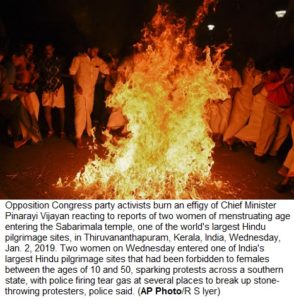
Other societies have done better; they have done the heavy-lifting for everyone – majority and minority – to prosper where planted in their homeland. We can, and must do it too; or watch our citizens – and those that love them – flee to those better lands.  These better lands has formulated Human Rights standards and conventions and expect all “Men/Women of Goodwill” to comply.

One such convention is CEDAW or the “Convention on the Elimination of All Forms of Discrimination Against Women”. See the full details in Appendix A below. (Also see Appendix B VIDEO as it relates the subject of gender-based violence being endured in the Caribbean region and around the world during this COVID-19 pandemic). Notice that one of the few countries that have not ratified CEDAW is the “Holy See” or the Vatican.

Holy See
The jurisdiction of the Bishop of Rome, known as the pope, which includes the apostolic episcopal see of the Diocese of Rome with universal ecclesiastical jurisdiction of the worldwide Catholic Church, as well as a sovereign entity of international law, governing the Vatican City. – Wikipedia

The Holy See being tolerant of a Long Train of Abuses is indicative of Christendom and not Christianity.

The Caribbean member-states must foster a better homeland that protects all of its residents and promotes prosperity, despite whatever the Churches are doing or not doing. What’s more, we must hold religious organizations accountable for their actions and violations of Human Rights standards and modern justice requirements.

This Go Lean movement has previously detailed many related issues and advocacies for Human Rights mandates in our region; consider this sample of previous blog-commentaries:

https://goleancaribbean.com/blog/?p=20561 How to mitigate Human Rights Abuses? Build on ‘Diversity & Inclusion’
https://goleancaribbean.com/blog/?p=20559 Toxic Environment – Homophobia: Hate not Fear
https://goleancaribbean.com/blog/?p=20557 Toxic Environment – It Infects Everything – Think “Cross” burnings
https://goleancaribbean.com/blog/?p=19002 Remembering Auschwitz – Still Relevant considering modern atrocities
https://goleancaribbean.com/blog/?p=15580 Caribbean Unity? Religion’s Role: False Friend
https://goleancaribbean.com/blog/?p=14482 International Women’s Day – Protecting Rural Women
https://goleancaribbean.com/blog/?p=11224 ‘Loose Lips Sink Ships’ – Fanatical Theologians Undermine Tourism
https://goleancaribbean.com/blog/?p=10216 Waging a Successful War on Orthodoxy
https://goleancaribbean.com/blog/?p=9766 Rwanda’s Catholic bishops apologize for genocide
https://goleancaribbean.com/blog/?p=6718 A Lesson in History Before the Civil War: Compromising Human Rights
https://goleancaribbean.com/blog/?p=5695 Repenting, Forgiving and Reconciling the Past
https://goleancaribbean.com/blog/?p=4971 A Lesson in Church History – Royal Charters: Truth & Consequence
https://goleancaribbean.com/blog/?p=341 US slams Caribbean human rights practices

Human Rights, the concept and the practice has been fleeting here in the Caribbean, not just among the governmental leaders but the citizenry as well. Leaders have not protected Human Rights for all and the citizenry have not demanded it … among the majorities – vocal outcries may be limited to minority groups only.

Enough already! It is time to think of the Greater Good for all people not just the most populous; from one aspect or another, anyone and everyone may be considered a minority.

There needs to be a force for moral good for all, but that has not come from the religious influences in the region, so it must come from the State (or Federal Government) instead, despite a formal Separation of Church and State.

This is not just a Christian indictment. We saw the same issue in India with the Hindu population (also a Caribbean minority):

Transforming Hindus versus Women – What it means for us?
Women of menstruating age were forbidden to pray at the temple until the [Indian] Supreme Court lifted the ban in September [2018]. The ban was informal for many years but became law in 1972.

Some devotees have filed a petition saying the court decision revoking the ban was an affront to the celibate deity Ayyappa. …”

The concept is simple for “States“, while they must allow for Freedom of Religion, they cannot allow religious intimidation of their citizens. No More!

This is an issue of Orthodoxy and it is not only a concern in India. Even here in the Caribbean we have to make progress. Clearly we understand the oppression, suppression and repression experienced in India prohibiting women to pray in the Temple, and so there is the acceptance that it is right for that State to act against continued abuse. There has always been a need for States to legislate morality in society over the years.

Based on the foregoing, Hindus suffer the same abuse record as Christianity and Islam towards women. Bad religious orthodoxies seem to always exist when matters of faith are involved, so the State must regulate the behavior of Churches to ensure no violation of basic Human Rights.

We must do better; we must pursue the Greater Good … always.

We hereby urge all stakeholders – the faithful and the faithless – to lean-in to this Way Forward – a formal separation of Church and State – for societal progress; this is the quest of the Go Lean roadmap. This is our plan to make our regional homeland a better place to live, work and play.  🙂

About the Book
The book Go Lean…Caribbean serves as a roadmap for the introduction and implementation of the technocratic Caribbean Union Trade Federation (CU), for the elevation of Caribbean society – for all member-states. This CU/Go Lean roadmap has these 3 prime directives:

  • Optimization of the economic engines in order to grow the regional economy to $800 Billion & create 2.2 million new jobs.
  • Establishment of a security apparatus to ensure public safety and protect the resultant economic engines.
  • Improve Caribbean governance to support these engines, including a separation-of-powers between the member-states and CU federal agencies.

The Go Lean book provides 370-pages of turn-by-turn instructions on “how” to adopt new community ethos, plus the strategies, tactics, implementations and advocacies to execute so as to reboot, reform and transform the societal engines of Caribbean society.

Download the free e-Book of Go Lean … Caribbean – now!

Who We Are
The movement behind the Go Lean book – a non-partisan, apolitical, religiously-neutral Community Development Foundation chartered for the purpose of empowering and re-booting economic engines – stresses that reforming and transforming the Caribbean societal engines must be a regional pursuit. This was an early motivation for the roadmap, as pronounced in the opening Declaration of Interdependence (Pages 12 – 13):

x. Whereas we are surrounded and allied to nations of larger proportions in land mass, populations, and treasuries, elements in their societies may have ill-intent in their pursuits, at the expense of the safety and security of our citizens. We must therefore appoint “new guards” to ensure our public safety and threats against our society, both domestic and foreign. The Federation must employ the latest advances and best practices … to assuage continuous threats against public safety.

xi. Whereas all men are entitled to the benefits of good governance in a free society, “new guards” must be enacted to dissuade the emergence of incompetence, corruption, nepotism and cronyism at the peril of the people’s best interest. The Federation must guarantee the executions of a social contract between government and the governed.

xxiv. Whereas a free market economy can be induced and spurred for continuous progress, the Federation must install the controls to better manage aspects of the economy: jobs, inflation, savings rate, investments and other economic principles. Thereby attracting direct foreign investment because of the stability and vibrancy of our economy.

Sign the petition to lean-in for this roadmap for the Caribbean Union Trade Federation.

—————–

Appendix A – Title: Convention on the Elimination of All Forms of Discrimination Against Women

The Convention on the Elimination of all Forms of Discrimination Against Women (CEDAW) is an international treaty adopted in 1979 by the United Nations General Assembly. Described as an international bill of rights for women, it was instituted on 3 September 1981 and has been ratified by 189 states.[1] Over fifty countries that have ratified the Convention have done so subject to certain declarations, reservations, and objections, including 38 countries who rejected the enforcement article 29, which addresses means of settlement for disputes concerning the interpretation or application of the Convention.[2] Australia’s declaration noted the limitations on central government power resulting from its federal constitutional system. The United States and Palau have signed, but not ratified the treaty. The Holy SeeIranSomaliaSudan, and Tonga are not signatories to CEDAW. …

See the full details at https://en.wikipedia.org/wiki/Convention_on_the_Elimination_of_All_Forms_of_Discrimination_Against_Women ; retrieved December 9, 2020.

—————–

Appendix B VIDEOSt. Lucia: #CaribbeanYouthAgainstCovid19​ and #YouthAgainstCovid19​ – Jasmyn Joseph https://youtu.be/FsDU7P1o_RM

UNFPA Caribbean
Due to #COVID19​, the health and safety of women and girls has been compromised. Women and girls are disproportionately impacted by this pandemic. In this last episode of the #youthagainstcovid19​ campaign Jasmyn Joseph talks about the ways this pandemic has been affecting women and girls around the world and the actions we as a community can take to promote #genderequality​ during covid-19.

Share this video, so other youth can get informed and take action against gender inequality during covid19!

Share this post:
, , , ,
[Top]