Does St. Patrick’s Day matter to us here in the Caribbean?
Yes, it does!
Or … Yes it should!
You see, despite the fact this is a cultural and religious celebration – held every 17th day of March – commemorating the foremost patron saint of Ireland, Saint Patrick’s Day recognition is really a recognition of Irish people.
This is a BIG Deal …
… not just to acknowledge the 6.5 million people on that island, but rather to acknowledge the 80 million people worldwide that herald some form of Irish heritage.
So to Ireland and Irish people the world over, we hereby declare:
Today (March 17) is Saint Patrick’s Day. Why do people wear green?
It’s a move of solidarity for Irish people and culture.
This is a big deal considering the real history.
This subject also has relevance for the Caribbean as Saint Patrick’s Day is a public holiday in the British Caribbean Territory of Montserrat, in addition to the Republic of Ireland,[10]Northern Ireland,[11] and the Canadian province of Newfoundland and Labrador. While not a holiday elsewhere, this day is venerated by the Irish Diaspora around the world, especially in Great Britain, Canada, Argentina, Australia, New Zealand and the United States. See a tribute here from an American job site:
Title: Happy St. Patrick’s Day! Southfield, Michigan – We hope you are showing your Irish spirit by wearing green!
Here are 5 fun facts about St. Patrick’s Day:
1. Of course with St. Patrick’s Day comes the massive appearance of shamrocks. Shamrocks have definitely become a central symbol for this day. In the olden days in Ireland, the shamrock was seen as sacred. The four leaves of the clover represent faith, love, hope, and of course, luck.
2. Good luck finding a four-leaf clover. The odds of finding a four-leafer on your first try are 1 in 10,000.
3. St. Patrick’s Day was traditionally a dry holiday. Irish law between 1903 and 1970 made St. Patrick’s Day a religious holiday for the entire country, which meant pubs were closed for the day. Today, St. Patrick’s Day is arguably one of the largest drinking holidays with an estimated $245 million spent on beer for March 17.
4. Green or Blue? Though green is a very popular color on St. Patrick’s Day, the original color that was very popular and often related back to St. Patrick was not green, but blue. In Irish folklore, green is known as being worn by immortals, and often signified new life and crop growth.
5. The Irish flag. The flag representing Ireland is green, white and orange. The green symbolizes the people of the south, and orange, the people of the north. White represents the peace that brings them together as a nation.
Source:Credit Acceptance Internal Staff Intranet site; retrieved March 17, 2015.
This subject also provides a case study for the Caribbean, as the Irish Diaspora is one of the most pronounced in the world. This is the model of what we, in the Caribbean, do not want to become.
According to information retrieved from Wikipedia, since 1700 between 9 and 10 million people born in Ireland have emigrated, including those that went to Great Britain. This is more than the population of Ireland at its historical peak in the 1830s of 8.5 million. From 1830 to 1914, almost 5 million went to the United States alone.
After 1840, emigration from Ireland became a massive, relentless, and efficiently managed national enterprise.[1] In 1890 40% of Irish-born people were living abroad. By the 21st century, an estimated 80 million people worldwide claimed some Irish descent; which includes more than 36 million Americans who claim Irish as their primary ethnicity. [2]
The city of Chicago, Illinois dyes the river green in tribute for St. Patrick’s Day
The White House in full St. Patrick Day tribute mode
London; on the Thames River
The Diaspora, broadly interpreted, contains all those known to have Irish ancestors, i.e., over 100 million people, which is more than fifteen times the population of the island of Ireland, which was about 6.4 million in 2011.
In July 2014, the Irish Government appointed Jimmy Deenihan as Minister of State for the Diaspora.[3]
Why this history?
In 1801 Ireland acceded to the United Kingdom (UK).
The Irish Parliament, charged with the heavy burden of directing Ireland’s destiny, was abolished in 1801 in the wake of the RepublicanUnited Irishmen Rebellion and Ireland became an integral part of a new United Kingdom of Great Britain and Ireland under the Act of Union. Without the power to direct their own affairs, the island found itself victimized by fate and bad fortune.
The Great Famine of Ireland during the 1840s saw a significant number of people flee from the island to all over the world. Between 1841 and 1851 as a result of death and mass emigration (mainly to Great Britain and North America) Ireland’s population fell by over 2 million. In the western province of Connacht alone, the population fell by almost 30%.
The Go Lean … Caribbean book relates that this is also the current disposition of so many of the Caribbean Diaspora; (10 million abroad compared to 42 million in the region). These ones love their country and culture, but live abroad; they want conditions to be different (better) in their homelands to consider any repatriation. The book details where in Puerto Rico, their on-island population in 2010 was 3,725,789, but Puerto Ricans living abroad in the US mainland was 4,623,716; (Page 303).
In a previous blog/commentary, a review of a book highlighted some strong lessons from Ireland’s past that are illustrative for the Caribbean’s future. The book is by Professor Richard S. Grossman entitled: Wrong: Nine Economic Policy Disasters and What We Can Learn from Them. The following excerpt is extracted from the book review by the London School of Economics:
As an example, we can take a closer look at the chapter on the Irish Famine, (1 of the 9 lessons), which took place from 1845-1852. Grossman not only describes what happened, but puts it into the perspective of other famines, starting from the BCE period. In terms of absolute numbers, the Great Hunger in Ireland was not the worst famine recorded but it did tragically lead to the death of twelve per cent of Irish population, forcing many others to emigrate. The author details how the potato – which originated in the Americas – arrived to a fertile Ireland, and that the poorest third of the Irish population consumed up to twelve pounds of potatoes per day (per capita). Only after this introduction the economic policy is mentioned. Grossman compares the responses of two Prime Ministers of the United Kingdom to the famine: Sir Robert Peel and Lord John Russell. Russell was so committed to the limited government intervention that he refused to buy food for the starving masses in order not to disturb the free formation of prices in the market. Similarly, he refused to increase the scale of public works that would give jobs to Irish workers so as not to disturb the free labour market. The paradox is that when the Great Famine occurred, Ireland was not a poor country. The Famine would not have been so ‘great’ if it were not for the free market ideology followed by the policymakers at that time. As it turns out, leaving things to the invisible hand of market is not always an optimal solution.
The Go Lean book serves as a roadmap for the introduction and implementation of the Caribbean Union Trade Federation (CU), a technocratic federal government to administer and optimize the economic/security/governing engines of the 30 member Caribbean states. The quest is to provide a better direct stewardship, applying lessons-learned from case studies like Ireland in the 1800’s.
Ireland has fared better since those dire days of the potato famine, but still its people, the Diaspora, endured a lot of misery, resistance and discrimination in their foreign homes. As reported in this previous commentary, the usual path for new immigrants is one of eventual celebration, but only after a “long train of abuses”: rejection, anger, protest, bargaining, toleration and eventual acceptance. Wearing green today – or any other March 17th’s – is a statement of acceptance and celebration of the Irish; as a proud heritage for what they have endured and accomplished.
The island of Ireland today is comprised of 2 countries: the independent Republic of Ireland and the territory of Northern Ireland, a member-state in the United Kingdom, with England, Wales and Scotland; (last year Scotland conducted a referendum in consideration of seceding from the UK; the referendum failed).
The Republic of Ireland ranks among the wealthiest countries in the world in terms of GDP per capita.[11] After joining the European Union, Ireland enacted a series of liberal economic policies that resulted in rapid economic growth. The country achieved considerable prosperity from 1995 to 2007, during which it became known as the Celtic Tiger. This was halted by an unprecedented financial crisis that began in 2008, in conjunction with the concurrent global economic crash.[12][13] Today, the primary source of tourism to Ireland – a primary economic driver – is from their Diaspora; see VIDEO in the Appendix below.
There are a lot of lessons in this issue for the Caribbean. Ireland did need better societal engines, economic-security-governance; this was accomplished with their assimilation into the EU. If only that option was available in the past.
This is the exact option being proposed now by the Go Lean roadmap, to emulate and model the successes of the European Union with the establishment of the Caribbean Union. It was not independence that brought success to Ireland, but rather interdependence with their neighboring countries “in the same boat”. This is the underlying theme behind the Go Lean movement, to “appoint new guards” to make the Caribbean homeland a better place to live, work and play. This Declaration of Interdependence is pronounced at the outset of the Go Lean book (Pages 11 & 13):
xi. Whereas all men are entitled to the benefits of good governance in a free society, “new guards” must be enacted to dissuade the emergence of incompetence, corruption, nepotism and cronyism at the peril of the people’s best interest. The Federation must guarantee the executions of a social contract between government and the governed.
xix. Whereas our legacy in recent times is one of societal abandonment, it is imperative that incentives and encouragement be put in place to first dissuade the human flight, and then entice and welcome the return of our Diaspora back to our shores. This repatriation should be effected with the appropriate guards so as not to imperil the lives and securities of the repatriated citizens or the communities they inhabit. The right of repatriation is to be extended to any natural born citizens despite any previous naturalization to foreign sovereignties.
xx. Whereas the results of our decades of migration created a vibrant Diaspora in foreign lands, the Federation must organize interactions with this population into structured markets. Thus allowing foreign consumption of domestic products, services and media, which is a positive trade impact. These economic activities must not be exploited by others’ profiteering but rather harnessed by Federation resources for efficient repatriations.
xxv. Whereas the legacy of international democracies had been imperiled due to a global financial crisis, the structure of the Federation must allow for financial stability and assurance of the Federation’s institutions. To mandate the economic vibrancy of the region, monetary and fiscal controls and policies must be incorporated as proactive and reactive measures. These measures must address threats against the financial integrity of the Federation and of the member-states.
The Go Lean movement declares solidarity with the culture and the people of Ireland.
The Go Lean book details a roadmap with turn-by-turn directions for transforming our homeland. The following is a sample of the community ethos, strategies, tactics, implementations and advocacies to impact the Caribbean region for this turnaround:
Community Ethos – Economic Principle – Economic Systems Influence Choices & Incentives
Page 21
Community Ethos – Economic Principle – Consequences of Choices Lie in the Future
Page 21
Community Ethos – Job Multiplier
Page 22
Community Ethos – Lean Operations
Page 24
Community Ethos – Ways to Promote Happiness
Page 36
Community Ethos – Ways to Impact the Greater Good
Page 37
Strategy – Vision – Confederating a Non-Sovereign Union
Page 45
Strategy – Mission – Keep the next generation at home
Page 46
Tactical – Fostering a Technocracy
Page 64
Tactical – Tactics to Forge an $800 Billion Economy
Page 67
Tactical – Separation of Powers
Page 71
Implementation – Ways to Pay for Change
Page 101
Implementation – Ways to Deliver
Page 109
Implementation – Reasons to Repatriate to the Caribbean
Page 118
Implementation – Ways to Promote Independence – Interdependence
Page 120
Planning – 10 Big Ideas – A Single Market in the G-20
Page 127
Planning – Ways to Make the Caribbean Better
Page 131
Planning – Ways to Better Manage Image – Not as Unwanted Aliens
Page 133
Advocacy – Ways to Grow the Economy
Page 151
Advocacy – Ways to Create Jobs
Page 152
Advocacy – Ways to Improve Governance
Page 168
Advocacy – Ways to Enhance Tourism
Page 190
Advocacy – Ways to Impact the Diaspora
Page 217
Advocacy – Ways to Impact the British Territories
Page 245
The Go Lean book posits (Page 3) that the Caribbean islands are among the greatest addresses in the world. But instead of the world “beating a path” to these doors, the people of the Caribbean have “beat down their doors” to get out; despite the absence of any famine, or war for that matter. This abandonment must stop … now!
May we learned from the history of Ireland in our quest to make our homeland a better place to live, work and play. And may we have the luck of the Irish, as conveyed in this Classic Irish Blessing:
Uploaded on Mar 8, 2011 – This short film is an ode to Ireland on St. Patrick’s Day (which means we used a little bit of poetic licence!). Hope you all enjoy it. Happy St Patrick’s day! http://www.discoverireland.com/
Q: How dare Black People accuse British institutions of being racists. You can’t be serious?!? A: Are you serious?! Just walk in our shoes!
This is a fitting summary of the global dialogue the last few days – after the bombshell March 7, 2021 interview on American TV with Prince Harry and his wife Meghan Markle. Yes, they went there and named, blamed and shamed Buckingham Palace of blatant racist thoughts, feelings, words and actions. See this portrayed in this short exchange here – this Twitter excerpt:
So Black people in Britain are NOT valued as equal citizens?!?! MMMmmmm?!?!
This assertion seems so familiar!
We had previously discussed the actuality of the Caribbean Diaspora who had fled to Great Britain. These ones had learned the harsh lessons that the “welcome mat” that were extended to their immigration did not include respect, hospitality, warmth nor love. 🙁
It is only apropos to Encore that April 21, 2017 commentary again here-now:
Truth be told, a Black person speaking with a British accent gets more respect than a Black person speaking with a Caribbean slang or a ‘Hip-hop’ /‘Jive’ dialect.
It is what it is! Notice this portrayal in the Appendix VIDEO where many Afro-Caribbean citizens in Britain, seem to self-identify more as British than their Caribbean heritage; (POINT 5).
Does this mean that the Black British person is better off on the world stage? Sadly no! The actuality of Blackness still means “Less Than“.
The problem is not the Blackness, but rather Whiteness, the proliferation of White Supremacy … throughout the world.
This is the assertion of the movement behind the book Go Lean … Caribbean, in consideration of reasons why the Diaspora should repatriate back to the Caribbean homeland and why the Caribbean youth should not even depart their homelands in the first place. This thesis was presented in a 9-part series, with these submissions:
All of these prior commentaries related to the disposition of the Caribbean Diaspora in the United States; now we take a look at England, Britain or the United Kingdom. There is a difference … supposedly.
“Britain has done a great job as painting itself as the humanitarian, with the US being the torturer. But that shit ain’t true.” – Patrisse Cullors, co-founder of the Black Lives Matter movement.
The purpose of this commentary – considering these source materials below – is to relate the following 5 strong points of contention; (these labels are shown throughout this commentary where applicable):
POINT 1 – The world is not fair, equal or just; and if you are of the Black-and-Brown races, the injustice is even more pronounced.
POINT 2 – Charity begins at home! There is a need to reform and transform society wherever you are. No one else will reform your homeland; you must!
POINT 3 – Leaving home, hurts home.
POINT 4 – The children of the Diaspora identify more with their current home, than their parent’s ancestral home.
POINT 5 – When the children do not want to identify with your land of heritage, it is Time to Go, to take them back home.
See this interview here relating Black British reality, with VICE News (UK Desk), the provocative media outlet that exposes the harsh realities of daily life in the Third World and the “First World”; (find more on VICE in Appendix A):
Title: We Spoke to the Activist Behind #BlackLivesMatter About Racism in Britain and America By: Michael Segalov
… Patrisse Cullors is co-founder of Black Lives Matter — the movement and oft-trending hashtag. Based in LA ([Los Angeles]), she’s been on the front line at uprisings across the US in response to a wave of high-profile deaths of black people in police custody.
[While] on a speaking tour of the UK and Ireland, heading to communities, universities, and holding meetings in Parliament. VICE caught up with Patrisse on the train from Brighton to London in the midst of a hectic schedule. VICE chatted [with her] about how she’s spreading the Black Lives Matter movement across the globe, what’s happening in the States at the moment, and why that’s relevant to the UK.
VICE: Tell us about the origins of the Black Lives Matter movement.
Patrisse Cullors: After George Zimmerman was acquitted of the murder of Trayvon Martin, back in July 2013, myself and two friends came up with the hashtag. My friend Alicia had written a love letter to folks, saying, “Our Lives Matter, Black Lives Matter.”
I put a hashtag in front—within days people were using it across the world. We’re talking about all black lives; we weren’t just talking about black men dying in the hands of the police. We’re talking about black women, black trans people, black queer people. We want to show that under the current system of white supremacy, anti-blackness has major consequences. Inside the US, and around the world, anti-black racism has global consequences. Black Lives Matter is a call to action—it’s a mantra, a testimony.
How did you end up at the heart of it? I’ve been organizing since I was 16. I came out as queer, and was kicked out of home. Along with a bunch of other young queer women of color, we raised each other. We also dealt with poverty, being black and brown in the USA, and trying to figure out how to live our daily lives. My brother was incarcerated in LA county jails at 19, and he was almost killed by the sheriffs. They beat him. They tortured him and brutalized him. This was my awakening, seeing how far the state will go, and how they treat our families.
Most disturbing was the lack of support and absolute neglect that my brother and my family faced after he was brutalized. Part of my upbringing was a feeling of rage, but I also knew I could do something about it. With my mentors, and a civil rights organization, I learned my craft over 11 years. I focused on the school-to-prison pipeline [where young people go straight from school into the juvenile criminal justice system], environmental justice, and police violence.
… You’ve been in the UK for a week, how has it been, and how does the situation here relate to the USA?
In theory the UK has a significant amount of structures to allow for accountability, of law enforcement in particular. That’s the theory. But in the US we don’t really have these structures to allow for accountability. There aren’t really independent investigators; its just very rare for prosecutions for law enforcement. And so, being here, I’ve realized, there are some systems in place that might actually be good for the US. It just seems those systems don’t work.
Then there are the similarities, the ways in which black people are treated—it’s outright racism. From Christopher Alder being brutalized on tape, hearing the officers calling him racist slurs, to the G4S guards who killed Jimmy Mubenga with racist texts on their phones. You have that same hatred, these white supremacist ideologies coming out of both of our countries. And here too, justice is not being served. We have Mike Brown, no justice. We have Eric Garner, no justice. Here we see the same: Mark Duggan, Sean Rigg. The list is vast.
Is this stuff talked about in the States, like how in the UK we’re aware over here about what’s going on in Ferguson? Here’s the thing, black people in the US don’t know what’s happening here in the UK. I’m well read, well educated, and coming here and learning these stories I’m like, “Why don’t I know about this? Why haven’t we heard?” The US is very insular. The UK has an image of being better, a humane society in which there isn’t the same level of racism. But now I have a very different perspective that I’m going to take home and talk about. Britain has done a great job as painting itself as the humanitarian, with the US being the torturer. But that shit ain’t true.
Here in the UK there’ve been solidarity actions. People shut down the streets in London and Westfield shopping center too. What’s the impact of these things for people on the ground? Do you notice? Yes, it was noticed. We’ve seen all the work folks are doing on the ground. From here, where you guys shut down Westfield, to Spain and Brazil. In Israel, African refugees are using the Black Lives Matter mantra to talk about law enforcement violence by the Israeli police. We see it, and we’re in awe. We wanted and needed it to go global.
Where is this going? What happens next? There are 23 Black Lives Matter chapters right now, in the US, Canada, and Ghana. We need to uplift the local struggles across the country, as well as pushing for greater accountability for law enforcement.
We want legislation that will see divestment from law enforcement and investing in poor communities. We want to build a national project linking families who have been impacted by state violence, with a national database that looks at individual law enforcement officers and agencies. We also want to look at how to develop a system of independent investigation. We want to figure out a victim’s bill of rights, to counter the police bill of rights. Until then, we’re gonna shut shit down. Source: VICE (UK) News; Posted February 2 2015; retrieved April 20, 2017 from: https://www.vice.com/en_us/article/patrisse-cullors-interview-michael-segalov-188?utm_source=vicetwitterus
See related VIDEO’s here on Britain’s Black History; (POINT 1 and POINT 4):
For Caribbean people, the world thinks of us as “Less Than”, whether we are in the Caribbean or in the Diaspora in the UK, Europe or North America. We take the “Less Than” brand with us wherever we go. This is a crisis! The movement behind the book Go Lean…Caribbean seeks to use this crisis, to elevate the Caribbean brand …. globally.
Why is the Caribbean brand perceived as “Less Than”?
We – the Caribbean region as a collective – must do better; be better! We can reboot, reform and transform from this bad history and bad image; (POINT 2). How?
While easier said than done, this is the comprehensive action plan of the Go Lean book. The book serves as a roadmap for the introduction of the technocratic Caribbean Union Trade Federation (CU). The CU is designed to optimize Caribbean society in the homeland – though there are many benefits to the Diaspora as well – through economic, security and governing optimizations. Therefore the Go Lean roadmap has 3 prime directives:
Optimization of the economic engines in order to grow the regional economy to $800 Billion & create 2.2 million new jobs.
Establishment of a security apparatus to ensure public safety and protect the economic engines.
Improve Caribbean governance – including empowerments for image promotion – to support these engines.
Reforming or transforming the UK, Britain or England is not within scope of the Go Lean/CU effort, notwithstanding the impact on our Diaspora there. But the subject of “Image” is inseparable from any discussion of elevating the Caribbean brand. So this commentary is on image, the facts and fiction of being a minority in a majority world or being an immigrant to a foreign country. This applies to any consideration of the Caribbean Diaspora in the British Isles, where their numbers have been reported between 4 and 5 percent of the population; (POINT 4). Consider these encyclopedic details:
British African Caribbean (or Afro-Caribbean) people are residents of the United Kingdom who are of West Indian background and whose ancestors were primarily natives or indigenous to Africa. As immigration to the United Kingdom from Africa increased in the 1990s, the term has sometimes been used to include UK residents solely of African origin, or as a term to define all Black British residents, though the phrase “African and Caribbean” has more often been used to cover such a broader grouping. The most common and traditional use of the term African-Caribbean community is in reference to groups of residents’ continuing aspects of Caribbean culture, customs and traditions in the United Kingdom.
A majority of the African-Caribbean population in the UK is of Jamaican origin; other notable representation is from Trinidad and Tobago, Saint Kitts and Nevis, Barbados, Grenada, Antigua and Barbuda, Saint Lucia, Dominica, Montserrat, Anguilla, Saint Vincent and the Grenadines, Guyana (which although located on the South American mainland is culturally similar to the Caribbean and was historically considered to be part of the British West Indies), and Belize.
African-Caribbean people are present throughout the United Kingdom with by far the largest concentrations in London and Birmingham.[1] Significant communities also exist in other population centres, notably Manchester, Bradford, Nottingham, Coventry, Luton, Slough, Leicester, Bristol, Gloucester, Leeds, Huddersfield, Sheffield, Liverpool and Cardiff. In these cities, the community is traditionally associated with a particular area, such as Brixton, Harlesden, Stonebridge, Dalston, Lewisham, Tottenham, Peckham in London, West Bowling and Heaton in Bradford, Chapeltown in Leeds,[2] St. Pauls in Bristol,[3] or Handsworth and Aston in Birmingham or Moss Side in Manchester. According to the 2011 census, the largest number of African-Caribbean people are found in Croydon, south London. Source: Retrieved April 20, 2017 from: https://en.wikipedia.org/wiki/British_African-Caribbean_people
There are a number of insights to glean looking at the demographics of the Afro-Caribbean population in the UK. (See Appendix B below). All in all, the Afro-Caribbean populations in the UK prefer to identify themselves more as British than as Caribbean; (POINT 4).
See this portrayal in the Appendix VIDEO below.
Despite the 60 years of futility, our Caribbean people continue to leave, abandoning our homeland; (POINT 3). This is bad; bad for the people and bad for the homeland. Our people “jump from the frying pan to the fire”:
Distress continues …
Oppression persists …
Image: “Less Than”!
This commentary asserts that it is easier for the Black-and-Brown populations in the Caribbean to prosper where planted in the Caribbean, rather than emigrating to foreign countries, like the UK. The reasons for the emigration in the first place have been identified as “push and pull”. “Push” refers to the societal defects in the Caribbean that drive people to move away (POINT 2); and “pull” factors refer to the impressions and perceptions that life abroad, as in England, is better. More details apply regarding these elusive “pull” factors:
The UK is NOT the #1 destination for the English-speaking Caribbean Diaspora, not anymore; that distinction is now towards the US. Today’s trending is for more and more new immigration to the US as opposed to the UK; Canada is Number 2.
While the “pull” factor had been compelling in the past, the decision-making of Caribbean emigrants – looking to flee – now needs a reality check! (POINT 1)
“Pull” is further exacerbated by the “push” factors; all of these continue to imperil Caribbean life; we push our citizens out. Then the resultant effect is a brain drain and even more endangerment to our society: less skilled workers; less entrepreneurs; less law-abiding citizens; less capable public servants – we lose our best and leave the communities with the rest. This creates even more of a crisis; (POINT 2).
The Go Lean roadmap posits that the entire Caribbean is in crisis now (POINT 3); so many of our citizens have fled for refuge in the UK and other countries, but the refuge is a mirage. The “grass is not necessarily greener on the other side”. Life in the UK is not optimized for Caribbean people. It is easier to fix the Caribbean than to fix the British eco-system. For our Diaspora there: it is Time to Go! For our populations in the Caribbean, looking to depart: Stay! Our people can more easily prosper where planted in the Caribbean … with the identified mitigations and remediation here-in.
The Go Lean book posits that Caribbean stakeholders made many flawed decisions in the past, both individually and community-wise; (POINT 2). But now, the Go Lean/CU roadmap is new (and improved). This is a vision of the CU as a confederation of the 30 member-states of the Caribbean to do the heavy-lifting of championing better nation-building policies, to reboot the region’s economic-security-governing engines. For one, there is the structure of a separation-of-powers between CU agencies and the individual member-states. So there are “two pies”, so citizens get to benefit from both their member-states’ efforts and that of the CU Trade Federation.
The Go Lean roadmap provides turn-by-turn directions on how to reform the society as a whole. This roadmap admits that because the Caribbean is in crisis, this “crisis would be a terrible thing to waste”. As a planning tool, the roadmap commences with a Declaration of Interdependence, pronouncing the approach of regional integration (Page 10 – 14) as a viable solution to elevate the regional engines:
Preamble: And while our rights to exercise good governance and promote a more perfect society are the natural assumptions among the powers of the earth, no one other than ourselves can be held accountable for our failure to succeed if we do not try to promote the opportunities that a democratic society fosters.
As the history of our region and the oppression, suppression and repression of its indigenous people is duly documented, there is no one alive who can be held accountable for the prior actions, and so we must put aside the shackles of systems of repression to instead formulate efficient and effective systems to steer our own destiny.
xi. Whereas all men are entitled to the benefits of good governance in a free society, “new guards” must be enacted to dissuade the emergence of incompetence, corruption, nepotism and cronyism at the peril of the people’s best interest. The Federation must guarantee the executions of a social contract between government and the governed.
xii. Whereas the legacy in recent times in individual states may be that of ineffectual governance with no redress to higher authority, the accedence of this Federation will ensure accountability and escalation of the human and civil rights of the people for good governance, justice assurances, due process and the rule of law. As such, any threats of a “failed state” status for any member state must enact emergency measures on behalf of the Federation to protect the human, civil and property rights of the citizens, residents, allies, trading partners, and visitors of the affected member state and the Federation as a whole.
xix. Whereas our legacy in recent times is one of societal abandonment, it is imperative that incentives and encouragement be put in place to first dissuade the human flight, and then entice and welcome the return of our Diaspora back to our shores …
xx. Whereas the results of our decades of migration created a vibrant Diaspora in foreign lands, the Federation must organize interactions with this population into structured markets. Thus allowing foreign consumption of domestic products, services and media, which is a positive trade impact. These economic activities must not be exploited by others’ profiteering but rather harnessed by Federation resources for efficient repatriations.
The Go Lean book details the community ethos to adopt, plus the executions of the strategies, tactics, implementations and advocacies to impact the eco-systems in the Caribbean region.
The book provides these recommendations in regards to the dynamics of Diaspora living:
Encourage the Caribbean Diaspora to repatriate back to their ancestral homeland – (10 Reasons to Repatriate to the Caribbean – Page 118).
Dissuade the high emigration rates of Caribbean citizens to foreign stories – (10 Ways to Make the Caribbean Better – Page 131).
These subjects (Repatriation and Diaspora) have been frequently commented on in other Go Lean blogs (POINT 4); as sampled here with these entries:
British public sector workers strike over ‘poverty pay’
The book also relates the significance of image/brand management, as with this advocacy: “10 Ways to Better Manage Image” (Page 133):
The Bottom Line on Martin, Malcolm, Mandela, Muhammad and Marley The majority of the Caribbean population descends from an African ancestry – a legacy of slavery from previous centuries. Despite the differences in nationality, culture and language, the image of the African Diaspora is all linked hand-in-hand. And thus, when Martin Luther King, Malcolm X, Nelson Mandela, Muhammad Ali and Bob Marley impacted the world with their contributions, the reverberations were felt globally, not just in their homelands. It is hard for one segment of the black world to advance when other segments have a negative global image. This is exemplified with the election of Barack Obama as US President; his election was viewed as an ascent for the entire Black race.
Overall, we must elevate the Caribbean brand. There are active movements now to accentuate the image/brand; consider:
Underlying to the Go Lean/CU prime directive of elevating the economics, security and governing engines of the Caribbean, is the desire to make the Caribbean homeland better, to reform and transform our society. If we can do this, we will dissuade the high emigration rate for our young people. But saying that it is “Time to Go“, must mean that we are ready to receive our Caribbean Diaspora from London and other British cities. Are we?
We are not! But this Go Lean roadmap gets us started. This is the intent of the book Go Lean … Caribbean.
The Go Lean/CU roadmap asserts that Britain should not be presented as the panacea for Caribbean ills – we must reform and transform our own society. While Britain or the UK does some things well, that country does not always act justly towards Black-and-Brown people of Caribbean descent; (POINT 5). We must do this ourselves (POINT 2); our region needs the empowerments here-in (jobs, economic growth and brand/image enhancement).
Now is the time for all of the Caribbean, the people and governing institutions, to lean-in for the empowerments described in the book Go Lean … Caribbean. This is the roadmap to elevate the Caribbean; to make our homeland a better place to live, work and play. 🙂
Sign the petition to lean-in for this roadmap for the Caribbean Union Trade Federation.
———–
Appendix A – Vice News
Vice News (stylized as VICE News) is Vice Media, Inc.‘s current affairs channel, producing daily documentary essays and video through its website and YouTube channel. It promotes itself on its coverage of “under-reported stories”.[1] Vice News was created in December 2013 and is based in New York City, though it has bureaus worldwide.
Background In December 2013, Vice Media expanded its international news division into an independent division dedicated to news exclusively and created Vice News. Vice Media put $50 million into its news division, setting up 34 bureaus worldwide and drawing praise for its in-depth coverage of international news.[2] Vice News has primarily targeted a younger audience comprised predominantly of millennials, the same audience to which its parent company appeals.[3]
History Before Vice News was founded, Vice published news documentaries and news reports from around the world through its YouTube channel alongside other programs. Vice had reported on events such as crime in Venezuela, the Israeli-Palestinian conflict, protests in Turkey, the North Korean regime, and the Syrian Civil War through their own YouTube channel and website. After the creation of Vice News as a separate division, its reporting greatly increased with worldwide coverage starting immediately with videos published on YouTube and articles on its website daily.[5] Source: https://en.wikipedia.org/wiki/Vice_News
———–
Appendix B – British Afro-Caribbean Demographics
Based on a variety of official sources and extrapolating from figures for England alone, the estimates for the number of people in Britain born in the West Indies grew from 15,000 in 1951, to 172,000 in 1961 and 304,000 in 1971, and then fell slightly to 295,000 in 1981. The estimates for the population of ethnic West Indian in 1981 were between 500,000 and 550,000.[26]
In the UK Census of 2001, 565,876 people classified themselves in the category ‘Black Caribbean’, amounting to around 1 percent of the total population.[38] Of the “minority ethnic” population, which amounted to 7.9 percent of the total UK population, Black Caribbean people accounted for 12.2 percent.[38] In addition, 14.6 percent of the minority ethnic population (equivalent to 1.2 per cent of the total population) identified as mixed race, of whom around one third stated that they were of mixed Black Caribbean and White descent.[38]
In the latest, the 2011 Census of England and Wales, 594,825 individuals specified their ethnicity as “Caribbean” under the “Black/African/Caribbean/Black British” heading, and 426,715 as “White and Black Caribbean” under the “Mixed/multiple ethnic group” heading.[35] In Scotland, 3,430 people classified themselves as “Caribbean, Caribbean Scottish or Caribbean British” and 730 as “Other Caribbean or Black” under the broader “Caribbean or Black” heading.[36] In Northern Ireland, 372 people specified their ethnicity as “Caribbean”.[37] The published results for the “Mixed” category are not broken down into sub-categories for Scotland and Northern Ireland as they are for England and Wales.[36][37] The greatest concentration of Black Caribbean people is found in London, where 344,597 residents classified themselves as Black Caribbean in the 2011 Census, accounting for 4.2 per cent of the city’s population.[35]
The UK Census records respondents’ countries of birth and the 2001 Census recorded 146,401 people born in Jamaica, 21,601 from Barbados, 21,283 from Trinidad and Tobago, 20,872 from Guyana, 9,783 from Grenada, 8,265 from Saint Lucia, 7,983 from Montserrat, 7,091 from Saint Vincent and the Grenadines, 6,739 from Dominica, 6,519 from Saint Kitts and Nevis, 3,891 from Antigua and Barbuda and 498 from Anguilla.[39]
Detailed country-of-birth data from the 2011 Census is published separately for England and Wales, Scotland and Northern Ireland. In England and Wales, 160,095 residents reported their country of birth as Jamaica, 22,872 Trinidad and Tobago, 18,672 Barbados, 9,274 Grenada, 9,096 St Lucia, 7,390 St Vincent and the Grenadines, 7,270 Montserrat, 6,359 Dominica, 5,629 St Kitts and Nevis, 3,697 Antigua and Barbuda, 2,355 Cuba, 1,812 The Bahamas and 1,303 Dominican Republic. 8,301 people reported being born elsewhere in the Caribbean, bringing the total Caribbean-born population of England and Wales to 264,125. Of this number, 262,092 were resident in England and 2,033 in Wales.[40] In Scotland, 2,054 Caribbean-born residents were recorded,[41] and in Northern Ireland 314.[42]Guyana is categorised as part of South America in the Census results, which show that 21,417 residents of England and Wales, 350 of Scotland and 56 of Northern Ireland were born in Guyana. Belize is categorised as part of Central America. 1,252 people born in Belize were recorded living in England and Wales, 79 in Scotland and 22 in Northern Ireland.[41][42][40] Source: Retrieved April 20, 2017 from: https://en.wikipedia.org/wiki/British_African-Caribbean_people#Demography
Today – January 15, 2021 – would have been the 92nd birthday for American Civil Rights hero Martin Luther King (1929 – 1968). Though an American drama, MLK was impactful for the entire world and every Civil Rights struggle everywhere. So his life and legacy has great meaning for us in the Caribbean homeland.
MLK died almost 53 years ago; he did not get to see the “racially equal” or the “universally free” America that he campaigned for or dreamed about. Even though a lot has been accomplished since, such as the 8-year term of the first Black President Barack Obama, can the country truly declare that it is racially equal today?
These points were raised and addressed in a specific previous blog-commentary on August 27, 2019; (and in many other previous submissions over the 7 years of this blog site). It is only appropriate to Encore that submission here-now – being the 92nd birthday of Martin Luther King – as follows:
“Free At Last, Free At Last; Thank God Almighty, We Are Free At Last”
– Dr. Martin Luther King; “I Have a Dream” Speech; March on Washington, 1963
Considering that the Emancipation Proclamation took effect on January 1, 1863, it would have been expected that those powerful words from Dr. King may have been a reality long before 1963.
… Five score years ago, a great American [President Abraham Lincoln], in whose symbolic shadow we stand today, signed the Emancipation Proclamation. This momentous decree came as a great beacon light of hope to millions of Negro slaves who had been seared in the flames of withering injustice. It came as a joyous daybreak to end the long night of their captivity.
But one hundred years later, the Negro still is not free. One hundred years later, the life of the Negro is still sadly crippled by the manacles of segregation and the chains of discrimination. One hundred years later, the Negro lives on a lonely island of poverty in the midst of a vast ocean of material prosperity. One hundred years later, the Negro is still languishing in the corners of American society and finds himself an exile in his own land. So we have come here today to dramatize a shameful condition. …
See the AppendixVIDEO below of the actual speech in 1963.
America was forged on the blatant hypocrisy of a legal premise that “All men are created equal”, and yet the African-American population was never treated equally, fairly or justly. In fact, by some analysis, America is still not equal-fair-just for African-Americans. In fact, just naming a street after Martin Luther King creates friction in American communities even today, 56 years after that iconic speech.
How about other communities (nations in the New World)? Did they emancipate their slaves sooner or later? See the full list here of all the territories in the Caribbean region including the mainland coastal lands rimming the Caribbean Sea:
Chronology of the abolition of slavery in the Caribbean
First abolition
Final abolition of slavery
Date of independence
Haiti
1793
1804
Dominican Republic
1801
1822
1844
Costa Rica
1824
1821
El Salvador
1824
1821
Guatemala
1824
1821
Honduras
1824
1821
Mexico
1829
1810
British West Indies
Anguilla
Antigua and Barbuda
Bahamas
Barbados
Belize
Cayman Islands
Dominica
Grenada
Guyana
Virgin Islands
Jamaica
Montserrat
Turks and Caicos Islands
Saint Kitts and Nevis
Saint Lucia
St. Vincent and Grenadines
Trinidad and Tobago
In summary, the dates of Final abolition of slavery in the New World territories started in 1801 and ended in 1886. (The difference between the First year and the Final year reflect the attempts of Empire stakeholders to re-introduce slavery – this is best exemplified by the experience in Haiti). The above chart reflect one issue, the abolition of slavery; what about full Civil Rights for these former enslaved populations? That’s another discussion of historic timelines.
(See the previous blog-commentary here from the movement behind the book Go Lean … Caribbean that details the American Civil Rights journey)
This is the focus of this series of blog-commentaries from the movement behind the Go Lean book for August 2019. This is the season to remember, reflect and reconcile the 400 Years of Slavery History in the American experience – 1619 until … today. It is also the time to review the Emancipation practices in the hemisphere and ascertain when the “Free At Last” declaration was sounded in the region – if it was ever sounded at all. The full series of these blogs-commentaries this month is cataloged as follows:
Perhaps, “emancipation” is just a hollow word. It seems as if the people – African descended people there of – were never really free nor equal in American society. Finally in 2008, with the election of Barack Obama – the first African-American president, could the manifestation of freedom and equality “for all” finally be realized?
Not quite!
There are many examples of racial oppression, suppression and repression in the US. These experiences may be indicative that something deeper than equality is at stake; there is a Bad Community Ethos – fundamental character or spirit of a culture; the underlying sentiment that informs the beliefs, customs, or practices of a group or society – tied to religious mis-information.
Yes, this commentary went there! This theme – reconciling the bad track record of the Moral Leaders: the Church – have been exhaustingly studied in many previous Go Lean commentaries; see a sample list here:
There are many lessons for stakeholders of Caribbean society to learn in considering the history of 400 Years of Slavery in America. Considering that formal emancipation did not complete until the end of the 19th Century, we have a lot of derived lessons that we can further benefit from by considering these historic details:
The abolition of slavery was a long journey everywhere; slave-owners never wanted to give up their property – they wanted to continue to benefit from their previous investments. They were forced to give up the practice by a superior authority – The “State”. This parallel’s the actuality of bullying … everywhere, everytime.
Underlying to slavery was the false precept of Natural Law. Adherents believed that they were somehow created better than other classes of people – think White Supremacy. While this is blatantly false, many people still hold on to these false precepts – religion and faith is involved. When religious dogma is involved, the appeal to logic rings hollow.
Admitting when you are wrong – don’t hold your breath – helps reconciliation. It is a human tendency to excuse, rationalize previous wrong courses of action of a people or society. Thusly, racism and anti-Semitism lingers to our day.
Religious institution did good! The Abolition and Civil Rights movements were energized by zealous religious groups; i.e. Reverend Dr. Martin Luther King was a Baptist Minister.
Religious institutions did bad! The teachings that Christian conversions – for Amerindians and imported slaves – were necessary for their Godly salvation was flawed, anti-Christian (Apostate) and imperiled society in the New World.
While we empathize, we are not America – Yippee!!!
… for our 30 Caribbean member-states, 29 of them feature a majority population of Black-and-Brown people. While this majority does not always equal political or economic power, universal suffrage (one man/woman, one vote) has been transformational in correcting social ills. Universal suffrage equals universal respect, so this should always be at the start of change in society. This teaches us that societal stewards should work to ensure voting rights and protections of the balloting process.
Reflecting on the 400 History of Slavery in America, reminds us that this bad institution affected the economic, security and governing engines of society. So too did emancipation! Changing the societal engines in any community requires brains (Art & Science) and brawn. So the study of Best Practices and the applications of Lessons Learned should always be prioritized for community leaders. This is the purpose of the Go Lean movement. We urge every Caribbean stakeholder to lean-in to our roadmap to bring change to this Caribbean region.
Free At Last? Hardly!
But, we can make our Caribbean homeland Free At Last and even a better place to live, work and play. Let’s get busy! 🙂
About the Book
The book Go Lean…Caribbean serves as a roadmap for the introduction and implementation of the technocratic Caribbean Union Trade Federation (CU), for the elevation of Caribbean society – for all member-states. This CU/Go Lean roadmap has these 3 prime directives:
Optimization of the economic engines in order to grow the regional economy to $800 Billion and create 2.2 million new jobs.
Improve Caribbean governance to support these engines, including a separation-of-powers between the member-states and CU federal agencies.
The Go Lean book provides 370-pages of turn-by-turn instructions on “how” to adopt new community ethos, plus the strategies, tactics, implementations and advocacies to execute so as to reboot, reform and transform the societal engines of Caribbean society.
Who We Are
The movement behind the Go Lean book – a non-partisan, apolitical, religiously-neutral Community Development Foundation chartered for the purpose of empowering and re-booting economic engines – stresses that reforming and transforming the Caribbean societal engines must be a regional pursuit. This was an early motivation for the roadmap, as pronounced in the opening Declaration of Interdependence (Pages 12 – 13):
xi. Whereas all men are entitled to the benefits of good governance in a free society, “new guards” must be enacted to dissuade the emergence of incompetence, corruption, nepotism and cronyism at the peril of the people’s best interest. The Federation must guarantee the executions of a social contract between government and the governed.
xvi. Whereas security of our homeland is inextricably linked to prosperity of the homeland, the economic and security interest of the region needs to be aligned under the same governance. Since economic crimes … can imperil the functioning of the wheels of commerce for all the citizenry, the accedence of this Federation must equip the security apparatus with the tools and techniques for predictive and proactive interdictions.
xxiv. Whereas a free market economy can be induced and spurred for continuous progress, the Federation must install the controls to better manage aspects of the economy: jobs, inflation, savings rate, investments and other economic principles. Thereby attracting direct foreign investment because of the stability and vibrancy of our economy.
Sign the petition to lean-in for this roadmap for the Caribbean Union Trade Federation.
————–
Appendix VIDEO – I Have a Dream speech by Martin Luther King .Jr HD (subtitled) (Remastered) – https://youtu.be/vP4iY1TtS3s
RARE FACTS
Published on Nov 7, 2017 – I Have a Dream” is a public speech that was delivered by American civil rights activist Martin Luther King Jr. during the March on Washington for Jobs and Freedom on August 28, 1963, in which he called for civil and economic rights and an end to racism in the United States. Delivered to over 250,000 civil rights supporters from the steps of the Lincoln Memorial in Washington, D.C., the speech was a defining moment of the civil rights movement and among the most iconic speeches in American history.
Under the applicable copyright laws, the speech will remain under copyright in the United States until 70 years after King’s death, through 2038.
Edited by: Binod Pandey
Caption author (Spanish): ALEJANDRA GONZALEZ
Caption author (Spanish (Latin America)): Adrian Roldan
The world is mourning the passing of David N. Dinkins, the former Mayor of New York City – the first and only Black Man to hold that position. We can tell a lot about the measure of the man by taking note of the honors given to him at the time of his death. In this case, it is a …
Double Honor
… especially from the point of view of the Caribbean Diaspora living in the decedent’s community.
There is so much to glean from these tributes.
First, review this obituary … of this great man in the Appendix below. The Bible speaks of death, for a Christian, as a rest from his/her labor.
‘Well done, good and faithful servant. You have been faithful over a little; I will set you over much. Enter into the joy of your master.’ – Matthew 25:23 English Standard Version
Blessed are the dead who die in the Lord from now on.” “Blessed indeed,” says the Spirit, “that they may rest from their labors, for their deeds follow them!” – Revelation 14:13 English Standard Version
David Dinkins labored. Though he had no direct connection to the Caribbean – not a descendant or a resident, other than his charitable outreach – he is being recognized as a “Hero” to Caribbean-Americans. Why? His primary motive was to improve the lives of Americans in his beloved New York City; for that he labored and toiled all his life. Therefore he is being lauded with this type of reverential language.
Mayor Bill de Blasio participates during the West Indian American Day Parade in the Brooklyn borough of New York, Monday, Sept. 2, 2019. (AP Photo/Jeenah Moon)
We are gathering from the theme of these honors to the dearly departed Mayor that the political leaders of the Caribbean American community are not Exiles. They are NOT sitting in the US, in New York City or wherever, waiting for conditions to improve in their homeland so that they can return, plant themselves there and finally prosper.
Nope! This foreign land here, the United States of America is accepted as their New Home. This is their destination. This is where they want to plant themselves and then prosper where they are planted. Just look at the accolades from the Caribbean-American community to their former Mayor in this article here:
Title: Caribbean American Legislators Pay Tribute to Former New York City Mayor Caribbean American legislators have paid tribute to New York City’s first and only Black Mayor, David N. Dinkins, who died Monday night at his home on the Upper East Side of Manhattan. He was 93.
“It’s hard to adequately express the impact of the life and work of New York City’s first Black Mayor, David Dinkins,” said New York City Public Advocate Jumaane Williams, the son of Grenadian immigrants.
“The city benefited from his leadership, and so many Black New Yorkers benefitted from his pioneering example,” he told the Caribbean Media Corporation (CMC).
“For me, a young man when he was elected, he was inspiring. I could not be the fourth citywide Black elected leader, if he were not the first. It was a privilege to have met and spent time with him, and it is an enduring honour to work in the building he did for so long, one that now bears his name.”
The Public Advocate noted that Dinkins assumed his role in City Hall and in history at a time when the city faced compounding crises of economic turbulence, racial injustice, and systemic failings in housing, policing and healthcare, among other things.
“The mayor sought to steer the city through the moment and move it forward. He took up that mission not with bombast or ego, but with deliberative determination to continue down the path of liberty, justice and equity,” Williams said, adding that Dinkins was “a moral center for the city with a clear vision for a better New York.”
In creating the Civilian Complaint Review Board (CCRB), in leading the Safe Streets, Safe City initiative, among many other areas, Williams said Dinkins “paved the way for progress we would later see and which others would try to claim credit for.
“He took strong interest in uplifting and supporting young people like myself, and he focused on creating direct and indirect opportunities for growth that I and others now try to build upon,” the Public Advocate said.
“And for his work, he was mercilessly attacked and vilified by those who would rather stoke resentment than solve problems.
“Through all of the criticism, he continued to do the work he knew to be right. After he left office, he continued to be a pillar of leadership, and a role model for people across the borough and the nation.”
Williams said losing Mayor Dinkins, just weeks after his beloved wife, Joyce.
“We owe him not only a debt of gratitude but a commitment to try and realize his vision for what the gorgeous mosaic of New York City can be – uplifting each piece, and recognizing that it is at its strongest and most beautiful when the pieces are brought together, as was Mayor Dinkins’ mission,” Williams said, adding “his passing leaves a gap in that mosaic as New York feels a historic loss.”
Brooklyn Democratic Party chair Assemblywoman Rodneyse Bichotte, the daughter of Haitian immigrants, said Mayor Dinkins, who served a single four-year term during the 1990s, will be remembered as “a pioneer in the history of our city.
“As New York’s first Black mayor, he broke barriers and sought to unify New Yorkers during a tense time in our city’s past,” said Bichotte, who represents the predominantly Caribbean 42nd Assembly District in Brooklyn.
She said Dinkins established the city’s first minority-owned Women Business Enterprise (MWBE) programme, “setting the course for minority and women entrepreneurs to prosper in the empire state.
“I am grateful for Mayor Dinkins’ contribution to our city, which helped pave the way for others, like myself, to serve,” Bichotte told CMC.
Under Dinkins’s term, she said the overall crime rate in the city fell 14 percent, and the homicide rate dropped 12 percent.
“It was the first time in more than a decade that the city became safer,” Bichotte said.
New York City Councilwoman Farah N. Louis, another Haitian American legislator in Brooklyn, said that, from the United States Marine Corps to city and state government, Mayor Dinkins was “a man of humility with a heart for service to others.
“During his mayoralty, he championed issues that disproportionately affected marginalized populations across our city,” said Louis, the daughter of Haitian immigrants, who represents the 45th Council District in Brooklyn.
“Today, we mourn the loss of a man who believed in building communities and preserving our city’s unparalleled cultural diversity,” she added.
Louis’s City Council colleague and compatriot, Dr. Mathieu Eugene, described Dinkins as “a trailblazer and compassionate public servant who made history as New York’s first African-American mayor.
“I want to express my deepest sympathies to his family and friends, and may God continue to bless and comfort them during this very difficult time,” said Councilman Eugene, representative for Brooklyn’s 40th Council District, the first Haitian to be elected to New York City Council.
Brooklyn Borough President Eric Adams said New York City has lost “a great champion for people of colour and a historic leader for a more inclusive city.
“Mayor Dinkins was not just the first Black mayor; he was not just a symbol. Through his actions on behalf of lower-income people, he was both our effective advocate and confirmation of a long-held hope that our lives mattered to our government.
“May we all follow in his large footsteps and add our bright stitch to the gorgeous mosaic of New York City that he so loved,” Adams urged.
The insights we have gathered – from these tributes and other facts of the Caribbean American experiences – are that these Caribbean-American leaders are already “home” in America. They have no plans to return or repatriate to the islands. This fight – elevating America – is now their fight; their cause for life-long devotion.
This thesis is supported by the legal facts. When someone becomes an American citizen, they make this oath:
I hereby declare, on oath, that I absolutely and entirely renounce and abjure all allegiance and fidelity to any foreign prince, potentate, state, or sovereignty, of whom or which I have heretofore been a subject or citizen; that I will support and defend the Constitution and laws of the United States of America. – Source: US Citizenship and Naturalization Service
Imagine this imagery from Social Media, that Caribbean person has to change their relationship status with their former homeland, to “someone you used to know”. See a poignant MUSIC VIDEO on that theme in the Appendix below.
The most prominent is the new Vice-President-Elect of the United States, Kamala Harris. She features a Jamaican heritage (Father). Yes, she can become the 47th President of the United States.
The current County Mayor in Broward County (Ft Lauderdale), Florida, Dale Holness, is a Jamaican Diaspora and the first cousin of the current Prime Minister of Jamaica, Andrew Holness.
City/Municipal
The current mayor of Miramar, Florida, Wayne Messam, proudly boasts his Jamaican heritage. (He was also a candidate for the 2020 Democratic Nomination for President).
This commentary continues the analysis of the impact of the Caribbean on America’s politics … and the impact and lessons of America’s politics on the Caribbean. (Though not in the scope of this commentary, there is impact on Canada as well).
In summary, “we are in a pickle”. Many Caribbean people emigrate to the United States with no intention or interest to return back home … some day or any day. These ones are gifted, talented and have a lot to offer any community. The have “come to America”; they Looked, Listened, Learned, Lend-a-hand and now ready to Lead. But they want to be like David Dinkins – good for them – not conquering heroes returning to their ancestral homelands – bad for us.
This is a continuation of the monthly Teaching Series from the movement behind the 2013 book Go Lean … Caribbean. This book serves as a roadmap of an advocacy to repatriate Caribbean people back to their homelands. These Teaching Series entries always address issues germane to Caribbean life and culture. This one is no different. We presented 5 entries in October 2020, plus four subsequent ones in November – this is the fifth. All of these entries are relevant for Decision 2020 as they relate the actuality of the US balloting on the Diaspora. See the full catalog of this multi-month Decision 2020 series here:
Decision 2020 will be analyzed ad naseum and remembered ad infinitum.
The take-away from all of these considerations is that American politics have a bearing on our Caribbean eco-system; and that Caribbean people – and causes – have a bearing on American politics.
There is a familiar theme in this commentary – Caribbean Diaspora not inclined to return or repatriate. The purpose of the Go Lean book and movement have always been to introduce the Caribbean Union Trade Federation (CU) to do the heavy-lifting for executing strategies, tactics and implementations that would elevate Caribbean society and finally present a inviting call for repatriation. We have repeatedly blogged on this subject; consider this sample of previous submissions:
America “sucks in immigrants” and never lets them go!
It is pragmatic and understandable that people may have to seek refuge … in a foreign land. So the advocacy of a repatriation quest is really “going against the tide”, a strong current. 🙁
We want Caribbean people to return to their Caribbean homelands whenever it is feasible and possible. If this is a dream, then it is a good one. The experiences show that this dream is improbable, if not impossible. This is a Biblical concept. In the Go Lean book, the reference is made to this Biblical precept with this excerpt from Page 144:
10 Lessons from the Bible #2 – Emigrate for Economic Reasons
The Bible provides great examples of people temporarily relocating/emigrating to foreign lands for economic reasons; the examples of patriarch Abraham, with his wife Sarah, going to Egypt to flee a famine in Canaan (Gen 12:10) and that of Joseph going ahead to Egypt to arrange relief for his family from a great famine prophesied for the land. This distress proved so great that Joseph’s Plan for “7 Fat Years and 7 Skinny Years” was welcomed by the Egyptian nation (Gen 41 – 42). The CU would apply such lessons in planning practical measures for the region’s food/water basic needs; there is the need for water management/reservoirs, storage and food preservation techniques like canning and frozen foods.
#3 – Repatriate When Distress is Relieved The example of the Hebrew Exodus from Egypt (the Promised Land was now flowing with “milk and honey”), and that of Ruth/Naomi returning to Bethlehem from Moab after a famine recovery gives the important principle that exiles should return home, eventually. (Even Joseph arranged, as a symbolism, for his own bones to return to the homeland when his people finally left Egypt). A CU mission is to facilitate the repatriation of the Caribbean Diaspora – welcome them home.
Is pursuing this quest to counter the reality of One Way Emigration a “bridge too far”? Is it an Impossible Dream?
Ours is not the first to pursue Impossible Dreams. This is the title of a hugely popular song, dating back to 1965 – an alternate title is “The Quest”; remember these lyrics:
The Impossible Dream (The Quest)
To dream the impossible dream,
To fight the unbeatable foe,
To bear with unbearable sorrow,
To run where the brave dare not go.
To right the unrightable wrong,
To love pure and chaste from afar,
To try when your arms are too weary,
To reach the unreachable star.
This is my quest,
To follow that star
No matter how hopeless,
No matter how far.
To fight for the right
Without question or pause,
To be willing to march
Into hell for a heavenly cause.
And I know if I’ll only be true, to this glorious quest,
That my heart will lie will lie peaceful and calm,
when I’m laid to my rest …
And the world will be better for this:
That one man, scorned and covered with scars,
Still strove, with his last ounce of courage,
To reach … the unreachable star …
Can these same words be assigned to the life and legacy of Mayor David Dinkins. He reached a pinnacle of success in his election in 1989; he may have considered such a quest, an Impossible Dream – many pundits did. This song does have a long history of inspiring political campaigns:
During Robert F. Kennedy‘s long shot campaign for the presidency in 1968, Senator George McGovern introduced him before a South Dakota stump speech by quoting from “The Impossible Dream”. Afterwards Kennedy questioned McGovern whether he really thought it was impossible. McGovern replied, “No, I don’t think it’s impossible. I just… wanted the audience to understand it’s worth making the effort, whether you win or lose.” Kennedy replied, “Well, that’s what I think.”[7] It was actually Robert Kennedy’s favorite song. One of Kennedy’s close friends, Andy Williams, was one of many vocal artists of the Sixties that recorded the song.[7] The song was also a favorite of younger brother Ted Kennedy and was performed by Brian Stokes Mitchell at his memorial service in 2009.[8]
The song was a favorite of Philippine hero Evelio Javier, the assassinated governor of the province of Antique in the Philippines, and the song has become a symbol of his sacrifice for democracy. Javier was shot and killed in the plaza of San Jose, Antique, during the counting following the 1986 Snap Elections, an act which contributed to the peaceful overthrow of Ferdinand Marcos by Cory Aquino in the People Power Revolution. Every year, Javier is remembered on Evelio Javier Day and the song is featured. The song’s lyrics are written in brass on a monument in the plaza where he was shot. – Source: Wikipedia
19 years later, in 2008, Barack Obama reached a pinnacle of electoral success, the Presidency of the USA. There you had it: Impossible Dream materialized!
Take your rest David Dinkins; you deserve these honors. RIP …
But let’s get busy in the Caribbean, reaching out for our Impossible Dream …
Yes, we can invite and welcome home our far-flung Diaspora to help us make our Caribbean homeland a better place to live, work and play. 🙂
About the Book
The book Go Lean…Caribbean serves as a roadmap for the introduction and implementation of the technocratic Caribbean Union Trade Federation (CU), for the elevation of Caribbean society – for all member-states. This CU/Go Lean roadmap has these 3 prime directives:
Optimization of the economic engines in order to grow the regional economy to $800 Billion and create 2.2 million new jobs.
Improve Caribbean governance to support these engines, including a separation-of-powers between the member-states and CU federal agencies.
The Go Lean book provides 370-pages of turn-by-turn instructions on “how” to adopt new community ethos, plus the strategies, tactics, implementations and advocacies to execute so as to reboot, reform and transform the societal engines of Caribbean society.
Who We Are
The movement behind the Go Lean book – a non-partisan, apolitical, religiously-neutral Community Development Foundation chartered for the purpose of empowering and re-booting economic engines – stresses that reforming and transforming the Caribbean societal engines must be a regional pursuit. This was an early motivation for the roadmap, as pronounced in the opening Declaration of Interdependence (Pages 12 – 13):
xi. Whereas all men are entitled to the benefits of good governance in a free society, “new guards” must be enacted to dissuade the emergence of incompetence, corruption, nepotism and cronyism at the peril of the people’s best interest. The Federation must guarantee the executions of a social contract between government and the governed.
xvi. Whereas security of our homeland is inextricably linked to prosperity of the homeland, the economic and security interest of the region needs to be aligned under the same governance. Since economic crimes … can imperil the functioning of the wheels of commerce for all the citizenry, the accedence of this Federation must equip the security apparatus with the tools and techniques for predictive and proactive interdictions.
xxiv. Whereas a free market economy can be induced and spurred for continuous progress, the Federation must install the controls to better manage aspects of the economy: jobs, inflation, savings rate, investments and other economic principles. Thereby attracting direct foreign investment because of the stability and vibrancy of our economy.
Sign the petition to lean-in for this roadmap for the Caribbean Union Trade Federation.
————–
Appendix Reference: David Dinkins
David Norman Dinkins (July 10, 1927 – November 23, 2020) was an American politician, lawyer, and author who served as the 106th Mayor of New York City from 1990 to 1993, becoming the first African American to hold the office.
Early life and education Dinkins was born in Trenton, New Jersey, the son of Sarah “Sally” Lucy and William Harvey Dinkins Jr.[4] His mother was a domestic worker and his father a barber and real estate agent.[2] He was raised by his father after his parents separated when he was six years old.[5] Dinkins moved to Harlem as a child before returning to Trenton. He attended Trenton Central High School, where he graduated in 1945.[6]
Upon graduating, Dinkins attempted to enlist in the United States Marine Corps but was told that a racial quota had been filled. After traveling the Northeastern United States, he finally found a recruiting station that had not, in his words, “filled their quota for Negro Marines”; however, World War II was over before Dinkins finished boot camp.[7] He served in the Marine Corps from July 1945 through August 1946, attaining the rank of private first class.[8][9][10] Dinkins was among the Montford Point Marines who received the Congressional Gold Medal from the United States Senate and House of Representatives.[7]
POLITICAL CAREER Early and middle career
While maintaining a private law practice from 1956 to 1975, Dinkins rose through the Democratic Party organization in Harlem, beginning at the Carver Democratic Club under the aegis of J. Raymond Jones.[2][12] He became part of an influential group of African American politicians that included Denny Farrell, Percy Sutton, Basil Paterson, and Charles Rangel; the latter three together with Dinkins were known as the “Gang of Four“.[13] As an investor, Dinkins was one of fifty African American investors who helped Percy Sutton found Inner City Broadcasting Corporation in 1971.[14]
Dinkins was elected in the wake of a corruption scandal that stemmed from the decline of longtime Brooklyn Democratic Party chairman and preeminent New York City political leader Meade Esposito‘s organized crime-influenced patronage network, ultimately precipitating the suicide of Queens borough president Donald Manes and a series of criminal convictions among the city’s Democratic leadership. In March 1989, the New York City Board of Estimate (which served as the primary governing instrument of various patronage networks for decades, often superseding the mayoralty in influence) also was declared unconstitutional under the Fourteenth Amendment‘s Equal Protection Clause by the Supreme Court of the United States; this prompted the empanelment of the New York City Charter Revision Commission, which abolished the Board of Estimate and assigned most of its responsibilities to an enlarged New York City Council via a successful referendum in November. Koch, the presumptive Democratic nominee, was politically damaged by his administration’s ties to the Esposito network and his handling of racial issues, exemplified by his fealty to affluent interests in predominantly white areas of Manhattan. This enabled Dinkins to attenuate public perceptions of his previous patronage appointments and emerge as a formidable, reform-minded challenger to Koch.[19] Additionally, the fact that Dinkins was African American helped him to avoid criticism that he was ignoring the black vote by campaigning to whites.[20] While a large turnout of African American voters was important to his election, Dinkins campaigned throughout the city.[2] Dinkins’ campaign manager was political consultant William Lynch Jr., who became one of his first deputy mayors.[21]
Mayoralty Dinkins entered office in January 1990 pledging racial healing, and famously referred to New York City’s demographic diversity as a “gorgeous mosaic”.[22] The crime rate in New York City had risen alarmingly during the 1980s, and the rate of homicide in particular reached an all-time high of 2,245 cases during 1990, the first year of the Dinkins administration. [23] The rates of most crimes, including all categories of violent crime, then declined during the remainder of his four-year term. That ended a 30-year upward spiral and initiated a trend of falling rates that continued and accelerated beyond his term.[24][25] However, the high absolute levels, the peak early in his administration, and the only modest decline subsequently (homicide down 12% from 1990 to 1993)[26] resulted in Dinkins’ suffering politically from the perception that crime remained out of control on his watch.[27][28] Dinkins in fact initiated a hiring program that expanded the police department nearly 25%. The New York Times reported, “He obtained the State Legislature’s permission to dedicate a tax to hire thousands of police officers, and he fought to preserve a portion of that anticrime money to keep schools open into the evening, an award-winning initiative that kept tens of thousands of teenagers off the street.”[28][29]
During his final days in office, Dinkins made last-minute negotiations with the sanitation workers, presumably to preserve the public status of garbage removal. Giuliani, who had defeated Dinkins in the 1993 mayoral race, blamed Dinkins for a “cheap political trick” when Dinkins planned the resignation of Victor Gotbaum, Dinkins’ appointee on the board of education, thus guaranteeing Gotbaum’s replacement six months in office.[30] Dinkins also signed a last-minute 99-year lease with the USTA National Tennis Center. By negotiating a fee for New York City based on the event’s gross income, the Dinkins administration made a deal with the US Open that brings more economic benefit to the City of New York each year than the New York Yankees, New York Mets, New York Knicks, and New York Rangers combined.[2] The city’s revenue-producing events Fashion Week, Restaurant Week, and Broadway on Broadway were all created under Dinkins.[31]
In 1991, when “Iraqi Scud missiles were falling” in Israel[33] and the Mayor’s press secretary said “security would be tight and gas masks would be provided for the contingent”,[34] Mayor Dinkins visited Israel as a sign of support.[35]
The Dinkins administration was adversely affected by a declining economy, which led to lower tax revenue and budget shortfalls.[36] Nevertheless, Dinkins’ mayoralty was marked by a number of significant achievements.[36] New York City’s crime rate, including the murder rate, declined in Dinkins’ final years in office; Dinkins persuaded the state legislature to dedicate certain tax revenue for crime control (including an increase in the size of the New York Police Department along with after-school programs for teenagers), and he hired Raymond W. Kelly as police commissioner.[36]Times Square was cleaned up during Dinkins’ term, and he persuaded The Walt Disney Company to rehabilitate the old New Amsterdam Theatre on 42nd Street.[36] The city negotiated a 99-year lease of city park space to the United States Tennis Association to create the USTA National Tennis Center (which Mayor Michael Bloomberg later called “the only good athletic sports stadium deal, not just in New York, but in the country”).[36] Dinkins continued an initiative begun by Ed Koch to rehabilitate dilapidated housing in northern Harlem, the South Bronx, and Brooklyn; overall more housing was rehabilitated in Dinkins’ only term than Giuliani’s two terms.[36] With the support of Governor Mario Cuomo, the city invested in supportive housing for mentally ill homeless people and achieved a decrease in the size of the city’s homeless shelter population to its lowest point in two decades.[28]
Although he never attempted a political comeback, Dinkins remained somewhat active in politics after his mayorship, and his endorsements of various candidates, including Mark J. Green in the 2001 mayoral race, were well-publicized. He supported Democrats Fernando Ferrer in the 2005 New York mayoral election, Bill Thompson in 2009, and Bill de Blasio in 2013.[46][47] During the 2004 Democratic presidential primaries, Dinkins endorsed and actively campaigned for Wesley Clark.[48] In the campaign for the 2008 Democratic presidential nomination, Dinkins served as an elected delegate from New York for Hillary Clinton.[49] During the 2020 Democratic presidential primaries, Dinkins endorsed former Mayor Michael Bloomberg for president on February 25, 2020, just before a Democratic debate.[50]
Dinkins sat on the board of directors and in 2013 was on the Honorary Founders Board of The Jazz Foundation of America.[51][52] He worked with that organization to save the homes and lives of America’s elderly jazz and blues musicians, including musicians who survived Hurricane Katrina. He served on the boards of the Children’s Health Fund (CHF), the Association to Benefit Children, and the Nelson Mandela Children’s Fund (NMCF). Dinkins was also chairman emeritus of the board of directors of the National Black Leadership Commission on AIDS.[41] He was a champion of college access, serving on the Posse Foundation National Board of Directors until his death in 2020.[53]
PERSONAL LIFE
Dinkins married Joyce Burrows, the daughter of Harlem political eminence Daniel L. Burrows, in August 1953.[54][55] They had two children, David Jr. and Donna.[56] When Dinkins became mayor of New York City, Joyce retired from her position at the State Department of Taxation and Finance. The couple were members of the Church of the Intercession in New York City. Joyce died on October 11, 2020 at the age of 89.[57]
Dinkins was a member of Alpha Phi Alpha and Sigma Pi Phi (“the Boule”), the oldest collegiate and first professional Greek-letterfraternities, respectively, established for African Americans. He was raised as a Master Mason in King David Lodge No. 15, F. & A. M., PHA, located in Trenton, New Jersey, in 1952.[58]
Dinkins was hospitalized in New York on October 31, 2013, for treatment of pneumonia.[60] He was hospitalized again for pneumonia on February 19, 2016.[61]
Uploaded December 28, 2014 – “Someone You Used To Know” by Collin Raye.
This is an old song that my father used to play in the house when I was a young child. My father loved to sing romantic country songs to my mother so I grew up with this genre 😀
Licensed to YouTube by: SME (on behalf of Epic/Nashville); LatinAutorPerf, LatinAutor – Warner Chappell, CMRRA, Warner Chappell, UNIAO BRASILEIRA DE EDITORAS DE MUSICA – UBEM, ASCAP, BMI – Broadcast Music Inc., PEDL, and 12 Music Rights Societies
We thought there would be a Great Reckoning!
It didn’t happen…
What happened America? We thought you would “clap back” at Donald Trump. We waited… you didn’t!
The four (4) years of the Trump Administration was a “circus and he proved to be a clown”; there was one infraction after another; consider just this short sample:
So finally the country got the opportunity to voice their discontent of Trump’s character and policies, with the 2020 General Election; we were waiting … and waiting.
Boink! Splatt!
It didn’t happen.
The election results are in and the headlines on America has emerged:
It is what it is; ‘we are who we are’.
The summary of the election analysis is that Americans didn’t change during the 4 years of Donald Trump:
“They doubled-down!” The Deep Blue states remained Blue; the Deep Red states remained Red.
The challenge of the election was not whether people would change their minds or opinions, but rather “would they show up to vote”. See this theme as presented in this news analysis/article by NBC News:
Title: In battleground states, few counties flipped even when states did Sub-title: Turnout was up in 99 percent of the counties in battleground states, while 97 percent voted the same way they voted in 2016. By: Kanwal Syed, Elliott Ramos, Ellie Frymire and Naitian Zhou
Voter turnout rose sharply during last week’s election in battleground states across the country.
Nearly every county in the 13 major battleground states had more voter turnout than in the 2016 election, according to an analysis of NBC News election results. Of those thousand-plus counties, only 12 had lower turnouts than in the last election, as of the latest results.
While Joe Biden was able to flip four of the 13 states from President Donald Trump and win three more states than Hillary Clinton won in 2016, the picture remains largely unchanged within the states themselves.
Out of 1,118 counties in battleground states, only 37 flipped, or 3.3 percent, which meant control of the states rested largely on parties’ turning out votes within counties they had won before.
Michigan
More than 70 percent of Michigan voters turned out, an increase of almost 10 percentage points over 2016. The state, part of the so-called blue wall, went to Biden after having flipped for Trump in 2016.
Jake Berlin, a first-time voter from Oakland County, teetered on the fence about his decision this year all the way up until he reached his polling place.
“I felt I could be tipping the scale one way or another and felt like I had a good amount of power,” Berlin said. “That was exciting.”
Berlin did not vote in 2016. He said he had a change of heart because of Michigan’s role as a swing state.
“You’ve kind of got to make sure your voice is heard, otherwise it’s just going to be everyone else’s voice heard,” he said.
Berlin said he voted for Trump. His county went for Biden.
Florida
Florida, a decisive state in many presidential elections, had a turnout of 64 percent, up from 57 percent in 2016.
A precinct within the University of Central Florida in Orange County even exceeded 100 percent voter turnout, which The New York Times attributed to a few voters who switched their addresses on Election Day and moved into the area.
Danaë Rivera-Marasco, a spokesperson for the Orange County Elections Commission, said the commission worked closely with the UCF student government association to encourage young voters to vote.
“It’s great to see young engagement and that they took responsibility,” Rivera-Marasco said. “We haven’t seen anything like that in past elections.”
Arizona
Arizona was one of the states with the greatest increases in voter turnout, up by 10 percentage points from 2016. Only four counties went to Clinton in 2016, and according to the latest results five have gone to Biden.
This year, 300,000 more Democratic voters turned out in Maricopa County than in 2016, flipping it to Biden, who holds a lead over Trump in the state. The region, which includes Phoenix, is the state’s most populous county.
North Carolina
Turnout in North Carolina, another such swing state, rose by 7 percentage points over 2016. Scotland County is one of three counties in the state to have flipped this year, having voted for Clinton in 2016 and switching to Trump this year.
Dell Parker, elections director of the Scotland County Board of Elections, said that even with the popularity of mail-in and absentee ballots, the board expected a larger outcome on Election Day.
“We had heard a lot of people talking about the election, so we kind of prepared for a big turnout,” Parker said. “We were actually a little disappointed that more people did not come.”
Out of 1,118 counties in battleground states, only 37 flipped, or 3.3 percent, which meant control of the states rested largely on parties’ turning out votes within counties they had won before.
America has not changed! The 2020 Decision for the President of the United States (POTUS) has not led to any reformation or transformation – it is what it was. American has doubled-down on being America.
This is a Cautionary Tale for Caribbean people, in the homeland and in the Diaspora. Many Caribbean people look to the US as a “city on the hill”, a role model for advanced democracies.
Yet the movement behind the 2013 book Go Lean…Caribbean has always maintained that America should not be considered as some land of refuge for Caribbean people – the grass is not necessarily greener on the American side. America should not be the destination. Rather than fleeing in search of refuge, we need to do the work to reform and transform our communities:
Surely, it is the conclusion of most people that 2017 has proven that America is not working for Caribbean priorities …
… they are not even working for their own priorities, as the country under Trump seems more and more divided with the President only supported by 33 percent of the people, the other 67% are outraged … i.e. the majority of the population are middle class, yet yesterday’s passage of the Tax Reform bill only benefits the rich.
Proudly, we say that for our societal elevation efforts, the quest of the Go Lean … Caribbean movement: we do not want to be America, we want to be better.
But despite this list and the reality of this subject, America tries …
This is an important consideration for the planners of Caribbean empowerment. The Caribbean, a region where unfortunately, we have NOT … tried.
The social science of Anthropology teaches that communities have two choices when confronted with endangering crises: fight or flight. The unfortunate reality is that we have chosen the option of flight; (we have no ethos for fighting for our homeland). …
We can apply these models and lessons from these [other] societies to obtain success. This vision is conceivable, believable and achievable!
Yes we can … make the Caribbean region a better place to live, work and play.
The election is over: Joe Biden defeated the incumbent Donald Trump at the November 3rd polling. He won, not by changing the hearts and minds of undecided people, but rather doubling-down on his base to get their electoral support; (Trump did likewise; this time with an even greater turnout than 2016). The people in this country are still entrenched in their ideologies. So now the question becomes: “Can Joe Biden bridge the huge divide between Blue and Red in America?” See this portrayal in this VIDEO here:
Sky News Posted November 7, 2020 – Joe Biden is set to become US president – but with the country in political gridlock, the Democratic former VP may have a tough task ahead.
The election is over but still, the analysis continues.
This commentary is such an analysis; it is a continuation of the monthly Teaching Series from the Go Lean movement on Decision 2020. The Teaching Series always addresses issues germane to Caribbean life and culture. This one is no different. We presented 5 entries in October 2020, plus two subsequent ones in November – this is the third. All of these entries are relevant for Decision 2020 as they relate to the impact of the Caribbean on America’s politics … and the impact and lessons of America’s politics on the Caribbean. See the full catalog of this multi-part, multi-month Decision 2020Teaching Series here as follows:
Decision 2020: It is what it is; ‘we are who we are’
The take-away from all of these considerations is that American politics have a bearing on our Caribbean ecosystem; their domestic policy affects our Foreign Policy. It would be nice to just mind our own business; but whether we have a vote or not in Decision 2020, we are affected. It is our business too and so, we must use our voices.
This is a familiar theme – our Foreign Policy and disposition with the rest of the world – for the Go Lean movement; we have repeatedly blogged on this subject; consider this sample of previous submissions:
America is what it is … they may not learn or apply any lessons from the failed Trump experiment. 🙁
From a Caribbean perspective, it is not our homeland, it is their homeland. They are not changing for us; we cannot make them change. We can only change ourselves, individually and collectively. If we were to change (reform and transform) then maybe our people would not need to flee in the first place … as they have done in the past, so many times in the past.
That would be a good change. Donald Trump cannot do it for us; neither can Joe Biden. We must do “it” ourselves.
Let’s get busy with doing the changes, doing the heavy-lifting to reform and transform our society. We can and should work to make our Caribbean homeland a better place to live, work and play. 🙂
About the Book
The book Go Lean…Caribbean serves as a roadmap for the introduction and implementation of the technocratic Caribbean Union Trade Federation (CU), for the elevation of Caribbean society – for all member-states. This CU/Go Lean roadmap has these 3 prime directives:
Optimization of the economic engines in order to grow the regional economy to $800 Billion and create 2.2 million new jobs.
Improve Caribbean governance to support these engines, including a separation-of-powers between the member-states and CU federal agencies.
The Go Lean book provides 370-pages of turn-by-turn instructions on “how” to adopt new community ethos, plus the strategies, tactics, implementations and advocacies to execute so as to reboot, reform and transform the societal engines of Caribbean society.
Who We Are
The movement behind the Go Lean book – a non-partisan, apolitical, religiously-neutral Community Development Foundation chartered for the purpose of empowering and re-booting economic engines – stresses that reforming and transforming the Caribbean societal engines must be a regional pursuit. This was an early motivation for the roadmap, as pronounced in the opening Declaration of Interdependence (Pages 12 – 13):
xi. Whereas all men are entitled to the benefits of good governance in a free society, “new guards” must be enacted to dissuade the emergence of incompetence, corruption, nepotism and cronyism at the peril of the people’s best interest. The Federation must guarantee the executions of a social contract between government and the governed.
xvi. Whereas security of our homeland is inextricably linked to prosperity of the homeland, the economic and security interest of the region needs to be aligned under the same governance. Since economic crimes … can imperil the functioning of the wheels of commerce for all the citizenry, the accedence of this Federation must equip the security apparatus with the tools and techniques for predictive and proactive interdictions.
xxiv. Whereas a free market economy can be induced and spurred for continuous progress, the Federation must install the controls to better manage aspects of the economy: jobs, inflation, savings rate, investments and other economic principles. Thereby attracting direct foreign investment because of the stability and vibrancy of our economy.
Sign the petition to lean-in for this roadmap for the Caribbean Union Trade Federation.
This is how this expression is often used, as the Peanut Gallery is a derisive dismissal of people thought to be inconsequential. Yep, in many people’s opinion, this is the disposition of the people and places of the Caribbean region. See more of the definition here:
A peanut gallery was, in the days of Vaudeville, a nickname for the cheapest and ostensibly rowdiest seats in the theater, the occupants of which were often known to heckle the performers. – Source: Wikipedia
Back in the old Vaudeville days, the section of seats way in the back, (aka, the cheap seats), where typically your rowdy, rude, hecklers sat, was known as the Peanut Gallery. Maybe these patrons were annoyed that they couldn’t see the performers or the stage well. Maybe they were envious of those who could afford front row, orchestra seats, or maybe they were just rude, judgy folks whose ignorance allowed them to take pot shots at people trying to do their best. Whatever the reason, the Peanut Gallery patrons had a reputation for being critical and rude. – Source: Retrieved November 13, 2020 from: https://www.awenestyofautism.com/blog/no-comments-from-the-peanut-gallery
The American hegemony is influx, they are undergoing their 2020 General Election and the decisioning for the President of the United States (POTUS). Only American citizens in the homeland – 50 states including Alaska and Hawaii – get to cast votes in this election. But other people have voices and opinions. In fact, residents of the two American territories in the Caribbean – Puerto Rico and the US Virgin Islands – only get to voice their preferences by voting for party candidates during the primaries. Despite no November 3rd General Election vote, the opinions of people in these US Territories may still have some audience, considering that high emigration rate for citizens of these islands. Their family and friends, who have since fled the islands, may still submit to Caribbean influences in their voting patterns.
This is also true of the non-American territories; these countries also feature a high societal abandonment rate. Many previous citizens now reside in the Diaspora; many in the USA.
This was the assertion in the recent blog series for October 2020, plus a subsequent one in November; that the Caribbean eco-system is affected and relevant for Decision 2020. This was the theme of the traditional Teaching Series for the movement behind the 2013 book Go Lean…Caribbean. The Teaching Series always addresses issues germane to Caribbean life and culture.
The full catalog of this 5-part Decision 2020Teaching Series were as follows:
The election is over – on November 3rd, Joe Biden defeated the incumbent Donald Trump – but still, the analysis continues.
The 2020 campaign for POTUS generated a lot of attention – and passion – in the full Caribbean region. But Caribbean people may find themselves as nothing more than “voices from the Peanut Gallery”. The same as in the Vaudevillian theaters, the Peanut Gallery in this case have a reputation for being critical and sometimes even rude in their analysis of American politics.
Caribbean people have published opinions as to which candidate they would prefer, or who would be better in the White House from their perspective.
Without a vote, these comments, criticism and support present themselves only as “voices from the Peanut Gallery”; as hecklers only; see the comedy portrayal of Peanut Gallery hecklers “Statler & Waldorf” in the Appendix VIDEO. See an actual opinion article here, that emerged from the Bahamas, by a creditable Economist and former Cabinet Member:
Title: Smith: Outcome of US election has implications on The Bahamas’ survival Sub-title: Leading economist says Bahamians better served with US administration which approaches COVID “more seriously”
NASSAU, BAHAMAS — Former Minister of State for Finance James Smith indicated yesterday that the US presidential election set for tomorrow has wide-sweeping implications for The Bahamas’ economic survival amid the coronavirus pandemic.
According to the former minister, the Trump administration’s handling of the pandemic leaves “much to be desired”.
“Generally speaking, it is in Bahamians’ interest to have an administration that would take this thing more seriously, clear it up for the United States and hence for us,” Smith told Eyewitness News.
He underscored the different approaches to the coronavirus pandemic between US President Donald Trump, the Republican candidate, and the proposed plans of former US Vice President Joe Biden, the Democratic candidate for US president.
For example, while Trump has been opposed to making mask-wearing mandatory, Biden has called for a national mask mandate.
Health experts, who project a “dark winter” with the virus, have pointed to growing evidence that wearing face masks reduce the risk of transmission of COVID-19.
The candidates have also taken different approaches to the campaign amid the pandemic, with Biden instituting social distancing measures and limiting attendees, while Trump has allowed large crowds to attend rallies.
The virus has killed more than 230,000 people in the US and more than 9 million Americans have contracted the virus.
“This election I think has another dimension to it because our main industry is tourism, which is dependent on the administration’s view of containing the pandemic in a sense that unless the US president can control, [the US] will continue to have a very depressed economy, meaning high unemployment, people not working, and people running down savings,” he said.
“When that happens, they’re unable to travel.”
Smith, a leading economist and former governor of the Central Bank of The Bahamas, continued: “The longer it takes them to get their pandemic under control the longer we have to wait to be able to successfully open our tourism economy, and we obviously depend on them for 80 percent of the tourists.”
Smith said in the past there was a belief that The Bahamas stood a better chance in the past with Republican administrations, which would not lockstep with the OECD’s policies and “tend to be not as hard with our financial services as democrats”.
But Smith said The Bahamas’ once robust financial services sector has contracted in half following a decade-long siege by the OECD.
Reflecting on the Obama administration, the economist said the former president was in lockstep with the international financial services watchdog and its KYC (Know Your Customer) AML/CTF compliance regime.
“Even though Bahamians would tend to generally favor the Democrats because of the multi-diversity of the party and etc. and of course the African Americas generally supportive of the Democrats that would have been our political choice, but we always felt the Republic administration were usually more favorable on the economic impact on The Bahamas,” he said.
“But with the course of this pandemic, I am thinking that the critical consideration for both the US and us is basically controlling or severely mitigating the impact of the pandemic.
“And as you know the current administration is almost pretending that it does not exist.”
He added: “Indeed it could be argued that if they had taken it more seriously, the US and world leaders, who have some of the best scientists in the world — and if they had kept along with the WHO — the entire globe could have been further advanced in dealing with the pandemic, which would have helped us as well because we are always able to get direct assistance from the United States in matters like this.”
In July, Trump announced the US withdrawal from WHO, declaring the organization had failed its mandate and “declined to adopt urgently needed reforms, starting with demonstrating its independence from the Chinese Communist Party”.
The US has continued to cut ties with the organization, which is expected to conclude in July 2021.
The economy has traditionally been a major issue in US presidential elections.
This time around, much of the debate has centered around the pandemic and the government’s handling of the health crisis.
The impact of the pandemic on today’s election, ranging from voter turnout to whether it will be a key point on which voters will base their choice, remains to be seen.
During a Foreign Press Center virtual tour of the US election hosted by the US Department of State, Quinnipiac University Poll Director and Vice President Dr Dough Schwartz noted that despite an impeachment of the president, racial justice protests, the pandemic and a contentious Supreme Court nomination, the US presidential race has remained “very stable”.
“The economy is usually a major issue in U.S. Presidential elections. This time around, I would add the COVID-19 pandemic being a major issue in the election. Simply because it affects people so directly in their daily lives and has had a big impact on the economy. That is something that is affecting the U.S. election.”
In the polls, Biden has led Trump nationally and in numerous key battleground states.
So in this editorial-article, the protagonist recommended the POTUS selection of Joe Biden from a pandemic protection perspective, but Donald Trump from a laissez-fare Offshore Banking regulation perspective.
What a pickle to be in?!
This is why the Go Lean roadmap has lamented the “parasite” status of all Caribbean member-states, not just the Bahamas. We are squeezed between “a rock and a hard place“. The threat of the COVID-19 Pandemic is a Clear-and-Present Danger; there must be remediation and mitigation in our communities. On the other hand, the jobs and economic output from the entire Offshore Banking industry should not be sacrificed.
A parasite disposition is a viable threat to our societal well-being. We are just “voices from the Peanut Gallery”. Instead, we need to be protégés of the American hegemony, not parasites. We need self-determination! This is a familiar theme – transforming from parasite to protégé – for the Go Lean movement; we have repeatedly blogged on this subject; consider this sample of previous submissions:
Being a Protégé: How to ‘Prosper Where You Are Planted’
Transforming from parasites to protégés – what a challenge?! But it is conceivable, believable and achievable.
There is an opportunity for us to deploy strategies, tactics and implementations. There have been Best Practices employed by others. Look at China, as depicted in a previous blog-commentary:
‘Free Market’ Versus … China – Two Systems at Play
… This is “two systems at play”. This Hong Kong/Macau reality is the most pointed Lesson from China for a new Caribbean. We can employ the Two Systems-One Country approach so as to introduce Self-Governing Entities with their “own governmental system, legal, economic and financial affairs, including trade relations with foreign countries”.
There is wisdom to this strategy. China elevated itself from poverty to prosperity for 1.3 Billion people in just 40 years. Well done.
China accomplished their transformation with “one hand tied behind their back” due to their embrace of Communism. It should be easier if we lead with Free Market principles. This is what we have learned from the better examples in American history.
The Go Lean movement posits that America will always pursue America’s best interest. So being a parasite of their ecosystem is not beneficial to us. Being a protégé means that we must develop (transform) our own ecosystem, so as to benefit ourselves.
Let’s get busy in doing the heavy-lifting to reform and transform our society … to be protégés and not parasites of the American hegemony. We do not want to only be considered the Peanut Gallery. We want our voice to be heard … and respected.
These cannot just be empty words. We really have to do the work, the heavy-lifting, to make our Caribbean homeland a better place to live, work and play. 🙂
About the Book
The book Go Lean…Caribbean serves as a roadmap for the introduction and implementation of the technocratic Caribbean Union Trade Federation (CU), for the elevation of Caribbean society – for all member-states. This CU/Go Lean roadmap has these 3 prime directives:
Optimization of the economic engines in order to grow the regional economy to $800 Billion and create 2.2 million new jobs.
Improve Caribbean governance to support these engines, including a separation-of-powers between the member-states and CU federal agencies.
The Go Lean book provides 370-pages of turn-by-turn instructions on “how” to adopt new community ethos, plus the strategies, tactics, implementations and advocacies to execute so as to reboot, reform and transform the societal engines of Caribbean society.
Who We Are
The movement behind the Go Lean book – a non-partisan, apolitical, religiously-neutral Community Development Foundation chartered for the purpose of empowering and re-booting economic engines – stresses that reforming and transforming the Caribbean societal engines must be a regional pursuit. This was an early motivation for the roadmap, as pronounced in the opening Declaration of Interdependence (Pages 12 – 13):
xi. Whereas all men are entitled to the benefits of good governance in a free society, “new guards” must be enacted to dissuade the emergence of incompetence, corruption, nepotism and cronyism at the peril of the people’s best interest. The Federation must guarantee the executions of a social contract between government and the governed.
xvi. Whereas security of our homeland is inextricably linked to prosperity of the homeland, the economic and security interest of the region needs to be aligned under the same governance. Since economic crimes … can imperil the functioning of the wheels of commerce for all the citizenry, the accedence of this Federation must equip the security apparatus with the tools and techniques for predictive and proactive interdictions.
xxiv. Whereas a free market economy can be induced and spurred for continuous progress, the Federation must install the controls to better manage aspects of the economy: jobs, inflation, savings rate, investments and other economic principles. Thereby attracting direct foreign investment because of the stability and vibrancy of our economy.
Sign the petition to lean-in for this roadmap for the Caribbean Union Trade Federation.
The Late Late Show with James Corden Published Jun 26, 2020 – James Corden is excited to try new technology that brings a virtual audience into his garage, and unfortunately for him he finds out his first audience is none other than Statler & Waldorf from “The Muppets.” And James learns quickly that you should be careful what you wish for.
Live your life in such a way that the entire planet doesn’t dance in the street when you lose your job.
The General Election for the President of the United States (POTUS) is now over. Yippee!! People, all over the world were dancing in the streets to celebrate … Donald Trump’s defeat, more so than Joe Biden’s victory.
So many people had been anxious that Donald Trump would be re-elected and continue his “reign of terror” for another 4 years. But now that the election results are in; it is official that its “Hasta La Vista Mr. Trump”. See this reported in this excerpt from USA Today the daily newspaper:
Opinion: People are pouring out in the streets, cheering Biden, Harris and democracy
… the last four years have been total chaos, as President Trump and his divisive rhetoric and politics have exposed deep divisions that exist in our country. As the vote counts continue to roll in, several things are becoming clear. First, more people than ever voted in this historical election. Totals continue to rise, but as of now almost 75 million people have cast ballots for Biden, while 70 million people voted for the sitting President. Second, Biden has gotten more votes than any another presidential candidate, including Barack Obama in 2008. While that margin is close, Biden is entering the White House with a clear mandate. Still, as vote totals indicate, we’re a deeply divided country, and that will not go away anytime soon.
This was the plan for the last year. 12 months ago, there were 28 candidates vying for the nomination for POTUS for the Democratic Party. That number whittled down to just a precious few; then the pandemic happened and the Trump dysfunction manifested as being mortally dangerous – see Appendix VIDEO – 230,000 Americans and rising – have since died due to mis-management of the pandemic. The remaining candidates all “stepped aside” to allow a Unity Candidate, Joe Biden, to more easily defeat Trump.
Mission Accomplished:
Hasta La Vista Mr. Trump.
Every month, the movement behind the 2013 book Go Lean…Caribbean presents a Teaching Series on issues germane to Caribbean life and culture. For this past month, October 2020, the theme of the Teaching Series was on the influence and input that the Caribbean Diaspora have with their voices and votes in the American General Election.
The full catalog of that 5-part Decision 2020Teaching Series were as follows:
This recent election was November 3, 2020; now we are able to analyze and evaluate the results; we are also able to …
Celebrate!
As related many times previously, Donald Trump was Bad for the Caribbean; see this chronological sample of excerpts from previous commentaries:
Trump’s Vision of the Caribbean: Yawn – March 17, 2017
The new American President, Donald Trump, has announced, proclaimed and repeated that he is “for America First”. Yet the rest of the world seems to be surprised when he promotes policies that ignores, disregards and denigrates foreign people and countries. …
1: Cuts to fighting drug trafficking …
2: [Cuts to] the Inter-American Foundation …
3: [Cuts to] the U.S. Trade and Development Agency …
4: The Overseas Private Investment Corporation … its budget of $83 million has been swiped away.
5: The Global Climate Change Initiative … has been wiped away.
6: [Cuts of US $70 million to] the Emergency Refugee and Migration Assistance Fund. …
7: [50 percent] Cuts To The State Department’s Bureau of International Organization Affairs.
——–
2017 Review – Mr. Trump shows the ‘Wrong Way’ – December 21, 2017
While this year 2017 has been a cliffhanger, it has … the new President – Donald Trump – proved the “perfect example of what NOT to do” to elevate society – economics, security and governing engines. Yet, this is the country that so many Caribbean people have fled to. We can learn a lot from America’s accomplishments, and even more from their failures. [See 17 blatant and egregious Trump actions].
——–
The Spoken and Unspoken on Haiti – January 16, 2018
Donald J. Trump – called Haiti a “shit-hole” country while negotiating the details for an immigration reform bill with his political opponents. …
For people to say something like the above about a Caribbean country shows that truly, they have no regard for that country. Take away their words and study their actions (i.e. policies) and we see a consistent trend – spoken or unspoken – that there is really no regard for Haiti – and other Caribbean member-states.
——–
2019: A ‘Year of Living Dangerously’ – December 31, 2019
From a Caribbean perspective, this year was truly eventful, a “year of living dangerously”; remember all of these bad episodes (10 listed from the most recent to the oldest):
#1 Trump Experiment Implodes – Concluded Impeachment impacts Caribbean member-states
——–
Good Leadership: Example – “Leader of the Free World”? – May 30, 2020
Donald Trump is not to be credited as the “Leader of the Free World”. He has not provided a good example of Good Leadership. He is not ready, willing nor able. This is not our opinion alone; [but that of the whole world].
It is good to see the sunsetting of this Trump administration, policies and hopefully influence:
Hasta La Vista Mr. Trump. Goodbye. Good Luck. And Good Riddance!
The foregoing USA Today quoted article stated this factoid of America and Americans: “as vote totals indicate, we’re a deeply divided country”. This is a troubling fact! In our opinion, the toxicity, chaos and dysfunctions of Donald Trump and his administration is so egregious that all “Men of Goodwill” should have been anxious to rid themselves of this “circus”, and yet the opposite happened – even more people voted for Trump this time than in 2016:
2016 – For Trump: 63 million. Against Trump: 66 million
2020 – For Trump: 71 million. Against Trump: 75 million .
(In 2016, Trump lost the popular vote but won the Electoral College with a 304 / 227 margin).
America is far from being a perfect society. Even less perfect for Caribbean stakeholders. Societal defects abound …
Despite all the above evidences, many more American still voted for Donald Trump. Even Latinos (Cubans, Nicaraguans, Colombians, Puerto Ricans and Venezuelans); even more so distressing, so many more Caribbean Hispanics doubled down and voted for Trump. See that story here:
Title: Trump saw gains among Florida Puerto Ricans. They say Democrats ‘don’t hear us’ Less than a month before Election Day, Democratic National Committee chairman Tom Perez stood in front of a mural in Miami commemorating the victims of Hurricane Maria and recalled the pleas of a man he met in the Puerto Rican city of Ponce after the 2017 storm devastated the island of over 3 million.
“Mr. President,” repeated Perez, “Boricuas son Americanos.”
Maria, which struck as a Category 4 monster of a hurricane, led to widely held expectations that it would reshape Florida’s political destiny by fueling a mass exodus, mostly to Central Florida, of hundreds of thousands of left-leaning Puerto Ricans disgusted with President Donald Trump’s response to the storm — an effort symbolized by Trump tossing paper towels to stranded victims of the storm.
Perez’s recollection — a storm victim reminding him that “Puerto Ricans are Americans” — was part of Democrats’ outreach in Wynwood, a part of Miami once considered a Boricua enclave. But the effort proved to be too late for many Puerto Ricans. Instead of gaining support among Puerto Ricans, Democrats lost ground. Four years after winning Florida by 113,000 votes, Trump won it again on Nov. 3 by triple that amount.
Much of the Florida focus in the wake of the election has been on Trump’s stunning improvement with Hispanic voters in Miami-Dade County. But according to a Miami Herald analysis of Hispanic-majority voting precincts in Orange and Osceola counties, two Central Florida counties with the largest Puerto Rican communities in the state, Trump also made unexpected gains in a community where he is broadly disliked.
And in one of the few Hispanic electorates in Florida where messages against socialism are not particularly effective, Trump’s gains raise questions about Democrats’ ability to connect with voters believed crucial to their chances of winning statewide elections in the future.
“The paper towel throwing and the hurricane were not the lens through which Puerto Ricans were looking at the election,” said Latino-focused research firm Equis Research co-founder Carlos Odio, noting the potential consequences for Democrats if they can’t connect with a community expected to help the party compete in the nation’s biggest battleground state. “Going forward, it opens up a lot of questions of what the Democratic coalition is going to look like.”
While President-elect JoeBiden largely won high support among Florida Puerto Ricans, reaching up to an estimated 68%, according to an exit poll by Edison Research, Trump improved his numbers in a community that Democrats have largely seen as crucial to win the state of Florida. Trump received as much as 39% of votes in some heavily Hispanic Orange County precincts, according to the Herald’s analysis. Overall, according to Odio’s own estimates, Trump received about 32% support from Puerto Ricans in Central Florida, about an 11-point gain since 2016.
Trump’s numbers even surpassed the number of Puerto Ricans who in Florida’s 2018 U.S. Senate race supported Republican Rick Scott. Odio said Scott received about 29% of the Puerto Rican vote after visiting the island seven times after Maria, ahead of his election. In that election, those numbers were enough to help Scott edge a win over former U.S. Sen. Bill Nelson in a razor-thin election that went to a recount.
The lack of Democratic gains in this growing electorate of independent voters underscored the theory of some Florida Puerto Ricans that Democrats had reached a ceiling with their anti-Trump message and failed to appeal to Puerto Ricans who were more worried about how to pay their bills and losing small businesses as a result of the pandemic.
Yes, Donald Trump needed to be repudiated by America, and yet on November 3rd, 5 million more people than in 2016 voted for him. That is not a repudiation, that is a concurrence!
Maybe the problem is not the player; maybe the problem is the game!
The United States of America is not home for Caribbean people; especially evident with the many Black-and-Brown emigrants suffering injustices. Rather than emigrating, what is needed is nation-building. Rather than fixing America, Caribbean people need to reform and transform all of the Caribbean homeland. This has been the theme of our advocacy before Donald Trump, and now will continue after him. See how this theme – fixing home to dissuade emigration and encouraging repatriation – has been detailed in so many previous Go Lean commentaries; consider this sample list here:
The Road to Reforming, Transforming and Restoring Cuba
The Go Lean movement posits that America will always pursue the American best interest. This may not always be – and rarely is – the Caribbean’s best interest. So we must do the heavy-lifting ourselves for our own society and not look to the American hegemony to do it for us. Those 4 years of Trump-ism taught us that America is for Americans. We must do our work, for our own interest.
It is what it is, but let’s not get it twisted. America is the only remaining Super Power; they are the “800-pound gorilla” in the Western Hemisphere. So, good, bad or indifferent, their Chief Executive continues to be the “Leader of the Free World”.
This is why people were dancing in the streets with the “firing” of the malevolent Trump.
The take-way from this 5-part October Teaching Series – and now this 6th entry – is that elections have consequences. We need to do more than just wish and pray. We need to advocate and vocalize our agenda in the American mainland and also in the Caribbean homeland. The heavy-lifting to reform and transform our society must be engaged.
Let’s get busy.. this Go Lean roadmap provides turn-by-turn directions on how to reform and transform our society. All stakeholders are urged to lean-in to this viable roadmap. This is the Way Forward. This is how we can make our Caribbean homeland a better place to live, work and play. 🙂
About the Book
The book Go Lean…Caribbean serves as a roadmap for the introduction and implementation of the technocratic Caribbean Union Trade Federation (CU), for the elevation of Caribbean society – for all member-states. This CU/Go Lean roadmap has these 3 prime directives:
Optimization of the economic engines in order to grow the regional economy to $800 Billion and create 2.2 million new jobs.
Improve Caribbean governance to support these engines, including a separation-of-powers between the member-states and CU federal agencies.
The Go Lean book provides 370-pages of turn-by-turn instructions on “how” to adopt new community ethos, plus the strategies, tactics, implementations and advocacies to execute so as to reboot, reform and transform the societal engines of Caribbean society.
Who We Are
The movement behind the Go Lean book – a non-partisan, apolitical, religiously-neutral Community Development Foundation chartered for the purpose of empowering and re-booting economic engines – stresses that reforming and transforming the Caribbean societal engines must be a regional pursuit. This was an early motivation for the roadmap, as pronounced in the opening Declaration of Interdependence (Pages 12 – 13):
xi. Whereas all men are entitled to the benefits of good governance in a free society, “new guards” must be enacted to dissuade the emergence of incompetence, corruption, nepotism and cronyism at the peril of the people’s best interest. The Federation must guarantee the executions of a social contract between government and the governed.
xvi. Whereas security of our homeland is inextricably linked to prosperity of the homeland, the economic and security interest of the region needs to be aligned under the same governance. Since economic crimes … can imperil the functioning of the wheels of commerce for all the citizenry, the accedence of this Federation must equip the security apparatus with the tools and techniques for predictive and proactive interdictions.
xxiv. Whereas a free market economy can be induced and spurred for continuous progress, the Federation must install the controls to better manage aspects of the economy: jobs, inflation, savings rate, investments and other economic principles. Thereby attracting direct foreign investment because of the stability and vibrancy of our economy.
Sign the petition to lean-in for this roadmap for the Caribbean Union Trade Federation.
LYRICS:
————-
TRUMP Sorry we’re gonna need that
MAILMAN Wait, our ELECTION’S gonna need these. Up to half of Americans are voting by mail
TRUMP Not my fault.
MAILMAN It kind of is.
TRUMP It was China!!
MAILMAN but look how fast they recuperated Now we need vote by mail to fix a problem you created: this pandemic – and mail in voting is saving lives
TRUMP All the real patriots will wait in line Less boxes, less fraud, that’s why I planned the removals
MAILMAN You’re pushing the envelope Donnie, that doesn’t get my stamp of approval You know you can’t win so you made us your scapegoat
TRUMP No – I hate’ fraud – no fake news, no fake votes
MAILMAN Thru depression and world wars, always deliver was the policy Even in a pandemic we’ll stand committed to democracy
TRUMP But someone could die and vote two times after/
MAILMAN You wanna defund mailmen – I thought blue lives matter?
TRUMP I only want to count the good votes!
MAILMAN we do too! But you don’t get to choose the voters, the voters choose you! you cheated on taxes, your wife, your SAT’s are in question But let’s get this straight – you cant cheat the election For 150 years we’ve been picking up the votes So when you lose, I’ll be there to deliver the results Speaking of…
TRUMP Positive?
————-
CREDITS
————-
Created by: Rhyme Combinator, 6 Point Harness, Loogaroo
Executive Producer: Reid Hoffman
Producers: Beau Lewis, Ian Alas
Director: Beau Lewis
Vocal Directors: Illmac, Frak Writers: Illmac, Frak, Pass
Music: Will Randolph V, Chase Moore
Mix/master: Nafets
Animation: 6 Point Harness, Loogaroo
———
CAST
———
Donald Trump: Jonathan Kite
Mailman: Pass
Here is good advice in terms of political strategy:
Distance yourself from Cuba and/or Venezuela.
Any affinity to their extreme socialism is a death sentence for political success in the US. This is the experience in the 2020 Presidential Race and just recently in the California gubernatorial race (2018).
2020 – See here this news VIDEO story for this current race for Decision 2020 for the President of the United States (POTUS):
… the aggressive tone of this accusation has generated a lot of excitement among conservatives. Here’s the background: Gavin Newsom is the Democratic Party’s nominee for Governor of California – the General Election will be November 6, 2018 – he is currently the Lieutenant Governor and also the former Mayor of San Francisco. He is a liberal icon in a liberal State.
Yet the one criticism that is sticking to candidate Newsom by Republican Party candidate John Cox is the fearful pattern of Venezuela.
Yes, Venezuela is “On the Menu” in California. But wait, that should be our ‘vantage point’ in the Caribbean!
This is the goal of the movement behind the 2013 book Go Lean…Caribbean, to reform the Caribbean member-states. This includes Cuba; Venezuela, not so much.
What’s next for Cuba … and Venezuela?
How do we fix Cuba? How will voting in the US General Election affect this quest?
This is the completion of the monthly Teaching Series from the movement behind the Go Lean book. This Teaching Series addresses issues germane to Caribbean life and culture; this is entry 5-of-5 for October 2020, closing out the thesis that many people from Caribbean member-states now have a voice in the American General Election for November 3. As related in the foregoing VIDEO, many Cuban-Americans do have a voice and a vote in the America’s policy debates. But these one are only concerned about one (1) issue – the only issue that matters to them: “Anti-Socialism”.
This, their sole issue started as Anti-Communism or Anti-Castro, but now that the Castros are gone (Fidel – dead; Raul – retired), the issue remains as just “Anti-Socialism”. (This is what aligns Cuban-Americans with Venezuelan-Americans as they are both protesting the dysfunctional socialism in their homelands).
So from a Caribbean perspective, Cubans differ from the rest of the Caribbean in their policy disputes:
So while Puerto Ricans are anxious to “clap back” at Mr. Trump for his “long train of abuses” towards their island, Cubans are mute.
While Haitians are anxious to voice their displeasure of the President labeling their island as a “Shithole” country, Cubans are mute.
While Latinos or Hispanics in general are disgusted of the Toxic Masculinity exhibited by the POTUS, Cubans are mute.
While Caribbean people are looking for More Liberal Immigration policies, Cubans are mute.
There is no unity or collaboration among the Caribbean Diaspora in the US. This is sad, because together, if such a collectivity was ever possible, the grouping of the Caribbean Diaspora could be an impactful voting bloc. They would have even more relevance in American campaigns due to the fact that their numbers are so strong – upwards of 22 million people, 7 percent of the US population. This is enough to have influence in any political race. This is the overall theme for this Decision 2020 blog-commentary Teaching Series; see the full catalog here:
Socialism continues in Cuba and Venezuela both. The revolutions in those countries have stalled. This has been the case for many years, decades and even generations. Perhaps more is needed than just influencing American Foreign Policy towards these countries; perhaps there is the need to impact domestic policy from inside the country. This is the approach of the Go Lean roadmap in regards to Cuba.
Yes, this is what is next for Cuba. (Venezuela is out-of-scope for the Go Lean roadmap). Cuba should be invited to join the regional integration movement, initially the Caribbean Community (CariCom) and then confederate with the Caribbean Union Trade Federation (CU).
The Go Lean presented this plan, an entire roadmap in effect for the introduction and implementation of the technocratic CU Trade Federation. Among the many strategies, tactics and implementations is one advocacy, specifically for Cuba, entitled: “10 Ways to Re-boot Cuba“. Consider these highlights, headlines and excerpts from that advocacy on Page 236:
1
Lean-in for the Caribbean Single Market – Ratify treaty for the CU.
This regional re-boot will allow for the unification of the region into one market, thereby creating a single economy of 30 member-states, 42 million people and a GDP of over $800 Billion. Following the model of European integration, the CU will be the representative and negotiating body for Cuba and the entire region for all trade and security issues. This helps to assuage the political adversity expected from Anti-Castro [and Anti-Socialists] groups.
2
Political Neutrality of the Union
Cuba is the only Communist-led state in the CU region. Other states have multiple party systems: left-leaning or right-leaning governments; many have more than 2 parties. The CU is officially neutral! The election of the popular leaders of each country is up to that country. The Election functionality of member-states can be outsourced to the CU as the organization structure will provide the systems, processes and personnel to facilitate smooth and fair election.
3
US Trade Embargo By-Pass
The US embargo against Cuba is an economic, and financial embargo imposed in October 1960. It was designed to punish Cuba to dissuade communism and the nationalization of private property during the revolution. To date, there are judgments of up to $6 billion worth of claims against the Cuban government. Despite this US action, the rest of the Caribbean, Canada and Europe do trade with Cuba, with no repercussions in their relationship with the US. It is expected that after Fidel and Raul Castro, there will be greater liberalization of trade and diplomacy with the US.
4
Marshall Plan for Cuba
5
Leap Frog Philosophy
There is no need to move Cuba’s 1950’s technology baseline to the 1960’s, then the 1970’s, and so on; rather, the vision is to leap-frog Cuba to where technology is going. This includes advance urban planning concepts like electrified light-rail, prefab house, alternative energies and e-delivery of governmental services and payment systems.
6
Repatriation and Reconciliation of the Cuban Diaspora
The goal will be to extend the “Welcome Mat” to people that may have left Cuba over the decades and want to return. The repatriation the CU advocates is for the Diaspora’s time, talents and treasuries. The CU will incentivize “ex-patriots” to at least have vacation homes on the island. The CU will provide the “re-patriots” with special status to assuage any victimization. Cuba’s repatriation is expected to differ from the other CU nations. After the Castro Brothers, there will be the expectation of reparation and reconciliation. In addition, the CU will convene a Truth and Reconciliation Commission to bring resolution to many issues from the revolution, Castro Brothers, previous coup attempts and the Bautista dictatorship – there will be the expectation of reparation. (South Africa had a successful reconciliation after Apartheid).
7
Access to Capital Markets
8
Optimization of Agricultural Exports
9
National Historic Places
10
World Heritage Sites
The truth of the matter is, Caribbean people are not doing enough for our own neighborhood. We cannot just expect America to do the heavy-lifting to reform and transform our homeland. We must act … united and together. Yes, Decision 2020 allows us to analyze the motivations and sensibilities of not just the American eco-system, but also that of the regional Caribbean.
We need regionalism; we need a confederacy … that includes Cuba. This exact theme has been detailed in many previous Go Lean commentaries; consider this list of samples here:
Cuba Approves New “Law on Foreign Investment” – a Start for Progress
The Go Lean movement posits that Cuba will soon transform away from its communistic leanings. In the last 10 years, they had been steadily moving in the direction of a Free Market system – their biggest “speed bump on this road” to freedom had been the 4 years of the Donald Trump administration. But still we can be confident that “Cuba sera Libre”!
The status quo for the Caribbean is deficient and defective. The status quo for Cuba is even more deficient and defective. This same assessment requires some of the same solutions. We – 30 member-states – all need each other.
The take-way from this 5-part October Teaching Series – now that it’s complete – is that elections have consequences but they do not substitute for the hard-work that needs to be done. The widely popular expression is true: “many hands make heavy loads lighter”; this is true, the heavy loads are still heavy, it is just that the leverage across more hands (people) makes the burden lighter.
America will not solve the Caribbean problems for us. No, the Caribbean must mitigate and remediate our problems ourselves. This is how we can make our Caribbean homeland a better place to live, work and play. 🙂
About the Book
The book Go Lean…Caribbean serves as a roadmap for the introduction and implementation of the technocratic Caribbean Union Trade Federation (CU), for the elevation of Caribbean society – for all member-states. This CU/Go Lean roadmap has these 3 prime directives:
Optimization of the economic engines in order to grow the regional economy to $800 Billion and create 2.2 million new jobs.
Improve Caribbean governance to support these engines, including a separation-of-powers between the member-states and CU federal agencies.
The Go Lean book provides 370-pages of turn-by-turn instructions on “how” to adopt new community ethos, plus the strategies, tactics, implementations and advocacies to execute so as to reboot, reform and transform the societal engines of Caribbean society.
Who We Are
The movement behind the Go Lean book – a non-partisan, apolitical, religiously-neutral Community Development Foundation chartered for the purpose of empowering and re-booting economic engines – stresses that reforming and transforming the Caribbean societal engines must be a regional pursuit. This was an early motivation for the roadmap, as pronounced in the opening Declaration of Interdependence (Pages 12 – 13):
xi. Whereas all men are entitled to the benefits of good governance in a free society, “new guards” must be enacted to dissuade the emergence of incompetence, corruption, nepotism and cronyism at the peril of the people’s best interest. The Federation must guarantee the executions of a social contract between government and the governed.
xiii. Whereas the legacy of dissensions in many member-states (for example: Haiti and Cuba) will require a concerted effort to integrate the exile community’s repatriation, the Federation must arrange for Reconciliation Commissions to satiate a demand for justice.
xvi. Whereas security of our homeland is inextricably linked to prosperity of the homeland, the economic and security interest of the region needs to be aligned under the same governance. Since economic crimes … can imperil the functioning of the wheels of commerce for all the citizenry, the accedence of this Federation must equip the security apparatus with the tools and techniques for predictive and proactive interdictions.
xix. Whereas our legacy in recent times is one of societal abandonment, it is imperative that incentives and encouragement be put in place to first dissuade the human flight, and then entice and welcome the return of our Diaspora back to our shores. This repatriation should be effected with the appropriate guards so as not to imperil the lives and securities of the repatriated citizens or the communities they inhabit. The right of repatriation is to be extended to any natural born citizens despite any previous naturalization to foreign sovereignties.
xx. Whereas the results of our decades of migration created a vibrant Diaspora in foreign lands, the Federation must organize interactions with this population into structured markets. Thus allowing foreign consumption of domestic products, services and media, which is a positive trade impact. These economic activities must not be exploited by others’ profiteering but rather harnessed by Federation resources for efficient repatriations.
xxiv. Whereas a free market economy can be induced and spurred for continuous progress, the Federation must install the controls to better manage aspects of the economy: jobs, inflation, savings rate, investments and other economic principles. Thereby attracting direct foreign investment because of the stability and vibrancy of our economy.
Sign the petition to lean-in for this roadmap for the Caribbean Union Trade Federation.
In 2016, many Caribbean people – i.e. Jamaicans – wanted the Democratic Party candidate, Hillary Clinton, to win the Presidency, hoping for a More Liberal Immigration policy.
That didn’t happen!
The Republican Party’s candidate, Donald Trump, won and he brought in an agenda of Anti-Immigration, both legal and illegal scenarios.
Perhaps, that selfish Caribbean expectation was wrong in other ways too. See an excerpt here from a previous Go Lean commentary:
Courting Caribbean Votes – ‘Jamericans’ – October 9, 2016
The term [‘Jamerican’] is defined as the Jamaican – American sub-culture that now thrives in many American urban communities; think Brooklyn’s Flatbush in New York City, or Kingston Hill in the Broward County (Florida) community of Lauderhill. These communities feature a thriving Jamaican Diaspora with empowered business leaders, elected politicians and cultural expressions. [A] previous blog … concluded with the analogy of a “genie leaving a bottle”, that there is no returning. Now we see the ‘Jamericans’ doubling-down on this legacy, even trying to influence US federal elections for more liberal immigration policies – to bring in more Jamaicans and grow the Jamerican population even more.
Most of the Jamaican Diaspora in the US – 61 percent – are American citizens; their tactic has always been to “naturalize” as soon as possible so that they can sponsor other family members. The number of the Jamaican Diaspora was estimated at 706,000 – an amazing statistic considering that the population in the Jamaican homeland is just 2.8 million (in 2010).
So many members of the Caribbean Diaspora living in the US are eligible to vote on November 8, 2016.
Who will they vote for? Who should they vote for?
What if the criterion for the vote is benevolence to Caribbean causes?
Hands-down, without a doubt, the Jamerican population – and other Caribbean groups (587K Haitians, 879K Dominicans & 500K Other*) – lean towards the Democratic Party – “they are with her: Hillary Clinton”. In fact, as prominent Jamerican personalities emerged in support of the opposing candidate, Donald Trump, they have received scorn and ridicule.
Donald Trump won in 2016 …
So many ‘Jamericans’, Jamaicans and Caribbean people in general had to endure 4 years of Trump’s anti-immigration policies.
Now for 2020, what will it be: “More Immigration or Less” by the 2 competing candidates vying for the presidential race?
From the beginning of his presidential political career, Donald Trump named, blamed and shamed America’s past federal administrations for their liberal immigration policies. He pulled the “welcome mat” to both legal and illegal immigrants. Just consider the experiences of those persons with H-1B Visas; as related in this VIDEO here:
VIDEO – Trump expanding immigration restrictions, suspending H-1B and other visas – https://youtu.be/8uOOkDEfjqg
CBS News
Posted June 22, 2020 – The Trump administration on Monday announced it will suspend certain visas that allow foreigners to move to the U.S. temporarily to work, saying the broad restrictions will ease the economic impact of the coronavirus. CBS News’ Skyler Henry joins CBSN’s Elaine Quijano with the latest.
Trump is on record as wanting to double-down on his current immigration policy – Less Liberal – for his second term. Remember his “Build The Wall” chant!
How about the other candidate: Joe Biden? What is his intent and vision on immigration? See here from his own campaign website:
Title: THE Biden Plan for Securing Our Values as a Nation of Immigrants It is a moral failing and a national shame when a father and his baby daughter drown seeking our shores. When children are locked away in overcrowded detention centers and the government seeks to keep them there indefinitely. When our government argues in court against giving those children toothbrushes and soap. When President Trump uses family separation as a weapon against desperate mothers, fathers, and children seeking safety and a better life. When he threatens massive raids that would break up families who have been in this country for years and targets people at sensitive locations like hospitals and schools. When children die while in custody due to lack of adequate care.
Trump has waged an unrelenting assault on our values and our history as a nation of immigrants.
It’s wrong, and it stops when Joe Biden is elected president.
Unless your ancestors were native to these shores, or forcibly enslaved and brought here as part of our original sin as a nation, most Americans can trace their family history back to a choice – a choice to leave behind everything that was familiar in search of new opportunities and a new life. Joe Biden understands that is an irrefutable source of our strength. Generations of immigrants have come to this country with little more than the clothes on their backs, the hope in their heart, and a desire to claim their own piece of the American Dream. It’s the reason we have constantly been able to renew ourselves, to grow better and stronger as a nation, and to meet new challenges. Immigration is essential to who we are as a nation, our core values, and our aspirations for our future. Under a Biden Administration, we will never turn our backs on who we are or that which makes us uniquely and proudly American. The United States deserves an immigration policy that reflects our highest values as a nation.
Today, our immigration system is under greater stress as a direct result of Trump’s misguided policies, even as he has failed to invest in smarter border technology that would improve our cargo screening.
His obsession with building a wall does nothing to address security challenges while costing taxpayers billions of dollars. Most contraband comes in through our legal ports of entry. It’s estimated that nearly half of the undocumented people living in the U.S. today have overstayed a visa, not crossed a border illegally. Families fleeing the violence in Central America are voluntarily presenting themselves to border patrol officials. And the real threats to our security–drug cartels and human traffickers–can more easily evade enforcement efforts because Trump has misallocated resources into bullying legitimate asylum seekers. Trump fundamentally misunderstands how to keep America safe because he cares more about governing through fear and division than common sense solutions.
Trump’s policies are also bad for our economy. For generations, immigrants have fortified our most valuable competitive advantage – our spirit of innovation and entrepreneurship. Research suggests that “the total annual contribution of foreign-born workers is roughly $2 trillion.” Key sectors of the U.S. economy, from agriculture to technology, rely on immigration. Working-age immigrants keep our economy growing, our communities thriving, and country moving forward.
The challenges we face will not be solved by a constitutionally dubious “national emergency” to build a wall, by separating families, or by denying asylum to people fleeing persecution and violence. Addressing the Trump-created humanitarian crisis at our border, bringing our nation together, reasserting our core values, and reforming our immigration system will require real leadership and real solutions. Biden is prepared on day one to deliver both.
As president, Biden will forcefully pursue policies that safeguard our security, provide a fair and just system that helps to grow and enhance our economy, and secure our cherished values. He will:
Take urgent action to undo Trump’s damage and reclaim America’s values
Modernize America’s immigration system
Welcome immigrants in our communities
Reassert America’s commitment to asylum-seekers and refugees
So Joe Biden proposes a More Liberal Immigration policy. But still, choosing the immigration policy of Joe Biden versus Donald Trump is not a discussion of “what is best for the Caribbean?” The answer is neither!
The choice of Joe Biden versus Donald Trump is one of the “lesser of the evils”.
Why? When people abandon their homeland and emigrate to another country, “some prospects” may get better for them, but most assuredly, things worsen for the homeland they leave behind – there will be no return on the historic investments into these now-departed people.
Alas, the “some better prospects” maybe more elusive as well. The movement behind the 2013 book Go Lean…Caribbean has consistently portrayed how the “grass is not necessarily greener on the other side”. Consider the excerpts from these 2 recent blog-commentaries (in reverse chronological order):
European Reckoning – Settlers -vs- Immigrants – January 19, 2019 … We can get close but never quite catch up. One realizes that this is the same with immigrating to the United States. Despite being a Nation of Immigrants (NOI), new ones can never catch up with the Settlers. Consider the historicity of this distinction in the Appendix article below; composed by a “conservative” lawyer and published by the American Conservative Organization. (Conservatives are in contrast to liberals; while all conservatives are not racists, all racists are conservatives).
Yes, under the law (de jure), there is no difference between a First Generation American citizen and a Third Generation (or more) American citizen, but in reality (de facto) American society never really considers “you” as an Immigrant to be a full American.
Listen up you Black-and-Brown people of the Caribbean, yearning to emigrate to the US. You will never be a settler. Accepting this reality may dampen the “Welcome Sign” to those who aspire for an American life.
This is not good for a family nor for a community. The truth of the matter is that communities need their populations to grow, not recede. So any human flight incidences would create havoc on the functionality of societal engines: economics, security and governance.
This is our status in the Caribbean, but it is not just an incident, not a trickle; it is a flood. The people are beating down the doors to get out of their Caribbean homeland, to seek refuge in places like the US, Canada and Western Europe. We have a sad state of affairs for our Caribbean eco-system so we are suffering from a bad record of societal abandonment –averaging a 70 percent brain drain rate. The reasons why people leave have been identified as “push and pull”.
… The movement behind the book Go Lean … Caribbean has consistently related that the United States of America functions as a Great Society but it has two societal defects: Institutional Racism and Crony-Capitalism. These societal defects can easily create a ‘Climate of Hate‘ that causes people to haze and blame-game the immigrant community.
In a previous blog-commentary, it was conveyed that America treats immigrants unappreciatedly – they are inflicted with a “long train of abuses”. The long-term Americans start towards the immigrants with hate and then eventually tolerate. After some decades they may then integrate with the immigrant community. But only after generations do they appreciate and celebrate the minority group. Think of the American experience of the Chinese, Italians, Jewish and Cuban populations.
This is also the reality of the Caribbean Black-and-Brown that has emigrated to the US, while they can more easily survive, the quest to thrive is more perplexing. They have to live in this environment filled with these societal defects.
… This commentary is one of the missions of the book Go Lean…Caribbean, to lower the “pull” attraction of life in the US. This is not being done with “smoke and mirrors” but rather this is just the truth. This is part 2 of 3 in a series on “Why Caribbean people need to Stay Home“, positing that the “grass is not greener on the other side”.
The truth of the matter is that immigrants are better able to survive in America – there is an abundance of minimum wage jobs – but to thrive is more of a challenge; consider the experiences in the foregoing news article. It would seem better for Caribbean people to work to remediate the problems in their homeland, rather than work to become immigrants in the US. But this is no easy task; and despite being necessary, it is hereby defined as heavy-lifting.
This is the continuation of the monthly Teaching Series from the movement behind the Go Lean book. These Teaching Series address issues germane to Caribbean life and culture; this is entry 4-of-5, continuing the thesis that many people from Caribbean member-states now have a voice in the American General Election for November 3; but our voice may at times pursue an agenda that is negative for a Caribbean escalation goal. We really should not look for a liberal US immigration policy as the panacea for Caribbean ills.
As related above, many of our Caribbean Diaspora do have a voice and a vote in this policy debate. These ones are relevant in America’s Decision 2020 due to the fact that our numbers in America are strong – upwards of 22 million people, 7 percent of the US population; this is enough to have relevance in any political race. (But we need to not forget the needs of the Caribbean ancestral homeland).
American citizens of Caribbean heritage should pursue the Greater Good in America and back in the Caribbean homeland. Consider here, how the role of Caribbean people is factored in for this theme of Decision 2020; see here the full catalog for this month’s Teaching Series:
Yes, Decision 2020 allows us to analyze the motivations and sensibilities of not just the American eco-system, but also the Caribbean’s motivations for their future.
Frankly, we need to keep our people at home!
We need to engage our own plan to elevate our society so that our people are less inclined to leave in the first place. The Go Lean roadmap provides such a plan. Its a plan that is conceivable, believable and achievable for making the Caribbean homeland a better place to live, work and play.
We urged everyone – every stakeholder: government and citizens alike – to lean-in to this roadmap.
Yes, we can … look at our Caribbean homeland as home, rather than looking for some foreign destination. 🙂
About the Book
The book Go Lean…Caribbean serves as a roadmap for the introduction and implementation of the technocratic Caribbean Union Trade Federation (CU), for the elevation of Caribbean society – for all member-states. This CU/Go Lean roadmap has these 3 prime directives:
Optimization of the economic engines in order to grow the regional economy to $800 Billion and create 2.2 million new jobs.
Improve Caribbean governance to support these engines, including a separation-of-powers between the member-states and CU federal agencies.
The Go Lean book provides 370-pages of turn-by-turn instructions on “how” to adopt new community ethos, plus the strategies, tactics, implementations and advocacies to execute so as to reboot, reform and transform the societal engines of Caribbean society.
Who We Are
The movement behind the Go Lean book – a non-partisan, apolitical, religiously-neutral Community Development Foundation chartered for the purpose of empowering and re-booting economic engines – stresses that reforming and transforming the Caribbean societal engines must be a regional pursuit. This was an early motivation for the roadmap, as pronounced in the opening Declaration of Interdependence (Pages 12 – 13):
xi. Whereas all men are entitled to the benefits of good governance in a free society, “new guards” must be enacted to dissuade the emergence of incompetence, corruption, nepotism and cronyism at the peril of the people’s best interest. The Federation must guarantee the executions of a social contract between government and the governed.
xvi. Whereas security of our homeland is inextricably linked to prosperity of the homeland, the economic and security interest of the region needs to be aligned under the same governance. Since economic crimes … can imperil the functioning of the wheels of commerce for all the citizenry, the accedence of this Federation must equip the security apparatus with the tools and techniques for predictive and proactive interdictions.
xix. Whereas our legacy in recent times is one of societal abandonment, it is imperative that incentives and encouragement be put in place to first dissuade the human flight, and then entice and welcome the return of our Diaspora back to our shores. This repatriation should be effected with the appropriate guards so as not to imperil the lives and securities of the repatriated citizens or the communities they inhabit. The right of repatriation is to be extended to any natural born citizens despite any previous naturalization to foreign sovereignties.
xx. Whereas the results of our decades of migration created a vibrant Diaspora in foreign lands, the Federation must organize interactions with this population into structured markets. Thus allowing foreign consumption of domestic products, services and media, which is a positive trade impact. These economic activities must not be exploited by others’ profiteering but rather harnessed by Federation resources for efficient repatriations.
xxiv. Whereas a free market economy can be induced and spurred for continuous progress, the Federation must install the controls to better manage aspects of the economy: jobs, inflation, savings rate, investments and other economic principles. Thereby attracting direct foreign investment because of the stability and vibrancy of our economy.
Sign the petition to lean-in for this roadmap for the Caribbean Union Trade Federation.
“… When Mexico sends its people, they’re not sending their best. … They’re sending people that have lots of problems, and they’re bringing those problems with us [them]. They’re bringing drugs. They’re bringing crime. They’re rapists. And some, I assume, are good people.” – Donald Trump Announcement of running for President June 16, 2015 – Source:WashingtonPost
From the beginning of his presidential political career, Donald Trump named, blamed and shamed Mexicans and by extension all Latinos (sometimes referred to as Hispanics or Chicanos). From this moment, Trump was strongly opposed by many Latinos for his entire presidential tenure. See here, from the previous blog-commentary on Celebrity Chef Jose Andrés:
A Latinos for Trump rally in Miami on Sunday October 18, 2020. Mario Cruz/EPA, via Shutterstock
“Trump was strongly opposed by many Latinos“, except for some men …
While there has been a consistent disgust towards Donald Trump, due to his Latin bashing, why has there been an exception among these men?
Blame it on Latin Machismo – Toxic Masculinity! See the rationale in the related Appendix VIDEO below … and in this New York Times article here:
Title: The Latino gender gap
It’s not just the public polls. Recent private polls conducted by political campaigns are filled with bad news for President Trump. He is doing eight to 10 percentage points worse in many congressional districts than he did in 2016, Dave Wasserman of The Cook Political Report writes.
His struggles have jeopardized the Republicans’ Senate majority and will probably lead to further Democratic gains in the House. “It would be a pleasant surprise if we only lost 10 House seats,” one Republican member of Congress told The Cook Political Report.
But there is one exception, and it will be familiar to regular readers of this newsletter: Trump and other Republicans don’t seem to be doing worse among Latino voters than in 2016. Nationwide, Republicans are still winning about one-third of the Latino vote, polls show.
As a result, Trump still has a good chance to win both Florida and Texas. Similarly, Senator John Cornyn of Texas continues to lead narrowly in his own re-election race, and House Republicans could hold onto districts in California, Florida and Texas.
Why is Trump holding steady with Latinos? There is no one answer, partly because Latinos are such a diverse group (many of whom also identify as white). But an important part of the explanation appears to involve gender.
Recent Times polls of battleground states show that the gender gap among Latino voters — 26 percentage points — is significantly larger than it is among Black, white or Asian voters:
Among Latina women, Biden leads Trump by a whopping 34 percentage points (59 percent to 25 percent). Among Latino men, Biden’s lead is only eight points (47 percent to 39 percent). These patterns are similar across both Latino college graduates and those without a degree.
Stephanie Valencia, the president of Equis Research, which focuses on Latino voters, told us that its polls suggest that Latino men may have even moved slightly toward Trump this year. If so, they are the only large demographic group to do so.
In effect, gender seems to be outweighing ethnicity for some Latino men.
Race may get more attention, but gender also plays a huge and growing role in politics: The gender gap, which was virtually zero in the 1960s and ’70s, could reach a record high this year. The trend — men moving to the right and women to the left — is occurring in other high-income democracies as well, for a complicated mix of reasons, as Eric Levitz explains in New York magazine.
My colleague Jennifer Medina recently wrote an eye-opening story called “The Macho Appeal of Donald Trump,” focused on Latino men. The whole story is worth reading, but here is a key passage:
… what has alienated so many older, female and suburban voters is a key part of Mr. Trump’s appeal to these men, interviews with dozens of Mexican-American men supporting Mr. Trump shows: To them, the macho allure of Mr. Trump is undeniable. He is forceful, wealthy and, most important, unapologetic. In a world where at any moment someone might be attacked for saying the wrong thing, he says the wrong thing all the time and does not bother with self-flagellation.
The story was set in Arizona — a state that could decide the election.
… what has alienated so many older, female and suburban voters is a key part of Mr. Trump’s appeal to these men, interviews with dozens of Mexican-American men supporting Mr. Trump shows: To them, the macho allure of Mr. Trump is undeniable. He is forceful, wealthy and, most important, unapologetic.
It is not just Mexican-American men alone; the same attributes are common for all Latin males. This is not good! (We have this actuality with Hispanic men in Cuba, Dominican Republic and Puerto Rico).
Toxic Environment ==> Toxic Masculinity – October 2, 2020 We find that in certain societies, the “man code” has penetrated all aspects of society, not just prisons; think “locker room talk”, “Blue Codes” for conduct among law enforcement officials or bonding among soldiers in foxholes or trench-warfare ; there is even a “code of silence” among gang members or organized crime figures.
Toxic Masculinity is just one more way that Toxic Environments have affected the “community quest” to live, work and play in the Caribbean. Needless to say, community stewards cannot allow Toxic Masculinity to dominate society; think bullying, domestic violence, sexual harassment in the workplace. It is unfortunate but true, “bad actors” will always seek to exploit any weakness for their own selfish gain. So we must be prepared to curb the toxicity and promote a positive community ethos instead.
This is sad that our Dirty Laundry in the Latin America and Caribbean region is being exposed to the world. It is our Bad Community Ethos that should be named, blamed and shamed.
So many of our Latin men love the personage of Donald Trump, even though it is obvious that he does not love “them/us” back!
That is pathetic; we must do better.
This is the continuation of the monthly Teaching Series from the movement behind the 2013 book Go Lean…Caribbean. These Teaching Series address issues germane to Caribbean life and culture; this is entry 3-of-5, continuing the thesis that many people from Caribbean member-states have a voice in the American General Election for November 3; but our voice may not be all that positive, as many of our people – who subscribe to the Latin male machismo ethos – are doubling-down on our negative community ethos. It is hard for us to vent about the disgust towards the words and actions (or inactions) of the Trump Administration these last 4 years when we are taking comfort in the same negative vibes.
Our Caribbean Diaspora is relevant in America’s Decision 2020 due to the fact that our numbers are strong – upwards of 22 million people, 7 percent of the US population; this is enough to have relevance in a political race. But we need to think, feel, say and act properly.
American citizens of Caribbean heritage should be pursuing the Greater Good right now; people are watching and listening; they are noticing the disregard for the threats affecting our regional homeland and they expect us to demand change, not validate the Status Quo. Consider here, how this thesis is cataloged in the Teaching Series this month:
Yes, Decision 2020 allows us to analyze the motivations and sensibilities of not just the American eco-system, but also the Caribbean’s heart.
The problems of Toxic Masculinity and/or Latin Machismo has been addressed and detailed in many previous commentaries; see this chronological sample here:
Bahamas Study: 58% Of Boys Agree to Female ‘Discipline’ – October 21, 2014 Many times people flee the region to mitigate abusive situations; even more troubling, as victims they may have encountered an attitude of complacency and indifference among public safety authorities. The following article [Study] posits that this attitude is deeply entrenched in society, even among the next (younger) generation:
FIFTY-eight per cent of high school boys and 37 per cent of high school girls participating in a recent academic survey believe men should discipline their female partners, according to a new College of the Bahamas study. …
Change has now come to the Caribbean. As the foregoing article [Study] depicts the problem of domestic violence is tied to a community ethos. This ‘negative’ ethos must be uprooted and replaced with a new, progressive spirit, starting at the adolescent level, when attitudes are pliable and sensitive to strategic messaging.
… this is a special group in the population of the New World, the Americas. This group has been victims and villains. To the point that academicians and clinicians alike can conclude that “hurt people hurt people”.
Societal defects within this group are higher than normal, compared to other populations groups. This includes violence, delinquencies, incarceration, repression and hopelessness. …
The New World experience for people of African descent is one of struggle; but our people have made a lot of progress over the last 2 centuries especially; that means we have “ruffled a lot of feathers” along the way. Caribbean music icon Bob Marley worded it perfectly in a song that was released posthumously: “Buffalo Soldier”. The lyrics say:
Fighting on arrival; fighting for survival.
That fight though, was not always successful.
The experience of the Black men and boys in the New World is that these ones have often been hurt. Consider just the US experience with Lynchings … where “a total of 4,733 persons had died by lynching since 1882”; (Black men and boys were almost always the victims, with a few sprinkling of women here and there).
There is no excusing, rationalizing or minimizing this injustice. This “hurt” was state-action, state-sponsored and extra-judicial via mob-violence. (Other countries in the Americas also had lynchings, not just the Southern States of the US).
With this above introduction, is there any wonder that the crime rate is higher for Black men and boys than any other sub-group in the population? This is the accepted premise that “hurt people hurt people”.
This fact causes breach in society. How do “we” repair this breach in societal dynamics? …
The Go Lean book presents 370 pages of instructions for how to reform and transform the Caribbean member-states. It stresses the key community ethos, strategies, tactics, implementations and advocacies necessary to shepherd a better society.
People do tend to be a product of their environment and their early molding. Most times the discipline and attitudes learned at home forms the adult character that people become.
This is good … and bad! …
This concept refers to the “ethos” (a Greek word meaning “character” that is used to describe the guiding beliefs or ideals); we see that it is not just a personal attribute but also refer to a community characteristic. Thus the word community ethos. …
“Charity begins at home”.
Everyone knows that and assumes that. The good actions you exert towards others – strangers – is an exercise that starts at home, towards family. This is also true in the reverse: the bad actions you exert towards strangers, tend to stem from the practice to malevolent behavior towards family. Thusly, domestic violence do connect to violent crimes, think rape.
This is not just some academic thesis; this is real life and real bad, in Jamaica right now. See these two supporting news stories:
Domestic Abuse – 15 percent of women experience violence – see Appendix Abelow.
Tourist Rapes – A Black-eye for hospitality towards foreigners – see Appendix Bbelow.
… The Go Lean book provides 370-pages of turn-by-turn instructions on “how” to adopt new community ethos, plus the strategies, tactics, implementations and advocacies to execute so as to reboot, reform and transform the societal engines of Caribbean society. Domestic violence and rape tend to victimize women. So the Go Lean book specifically – on Page 226 – presented an advocacy to help women; featuring this title: 10 Ways to Empower Women.
Unchecked, bad actors in the community become tyrants – they can even affect the local economic engine.
…
In this series commentary, reference is made to the fact that Tourism, as the Number 1 economic driver in the region, is vulnerable to Bad Actors disrupting peaceful hospitality trade – we must protect our societal engines from tyrants, bullies and terrorists. So there is always the need to ensure justice institutions are optimized in the region; visitors will refuse to come and enjoy our hospitality if there are active threats or perceived instabilities. (At the same time, residents flee to foreign shores in search of refuge). So the need for justice in the Caribbean tourism deliveries transcends borders, politics, class and race.
As a presidential candidate, Donald Trump presented himself as a tyrant, bully, yet he won in 2016 thanks to many Hispanic men. They doubled-downed on Toxic Masculinity!
This is not “putting our best foot forward”. We can/must do better than Trump, better than Toxic Masculinity.
How can we remediate and mitigate Toxic Masculinity? For one thing, we must start early. Then we must not settle for the bad orthodoxy of “boys will be boys”. It has been proven again and again that bad instincts can be corrected and weeded out of society. Yes, the solution is: reform and transform.
We must strive to do better in our homeland, otherwise our people will continue to flee in search of refuge. Toxic Masculinity exist in our society, we must work to dislodge it, message against it, coach it out of our young people and foster positive values and ethos in its place.
We definitely do not want to export our Toxic Masculinity to foreign lands, nor assimilate other people’s toxicity. We must recognize bad and filter it out of society.
Yes, we can …
Now, let’s abandon the toxic and work to make the Caribbean – our part of the world – a better place to live, work and play. 🙂
About the Book
The book Go Lean…Caribbean serves as a roadmap for the introduction and implementation of the technocratic Caribbean Union Trade Federation (CU), for the elevation of Caribbean society – for all member-states. This CU/Go Lean roadmap has these 3 prime directives:
Optimization of the economic engines in order to grow the regional economy to $800 Billion and create 2.2 million new jobs.
Improve Caribbean governance to support these engines, including a separation-of-powers between the member-states and CU federal agencies.
The Go Lean book provides 370-pages of turn-by-turn instructions on “how” to adopt new community ethos, plus the strategies, tactics, implementations and advocacies to execute so as to reboot, reform and transform the societal engines of Caribbean society.
Who We Are
The movement behind the Go Lean book – a non-partisan, apolitical, religiously-neutral Community Development Foundation chartered for the purpose of empowering and re-booting economic engines – stresses that reforming and transforming the Caribbean societal engines must be a regional pursuit. This was an early motivation for the roadmap, as pronounced in the opening Declaration of Interdependence (Pages 12 – 13):
xi. Whereas all men are entitled to the benefits of good governance in a free society, “new guards” must be enacted to dissuade the emergence of incompetence, corruption, nepotism and cronyism at the peril of the people’s best interest. The Federation must guarantee the executions of a social contract between government and the governed.
xvi. Whereas security of our homeland is inextricably linked to prosperity of the homeland, the economic and security interest of the region needs to be aligned under the same governance. Since economic crimes … can imperil the functioning of the wheels of commerce for all the citizenry, the accedence of this Federation must equip the security apparatus with the tools and techniques for predictive and proactive interdictions.
xxiv. Whereas a free market economy can be induced and spurred for continuous progress, the Federation must install the controls to better manage aspects of the economy: jobs, inflation, savings rate, investments and other economic principles. Thereby attracting direct foreign investment because of the stability and vibrancy of our economy.
Sign the petition to lean-in for this roadmap for the Caribbean Union Trade Federation.
The View Posted October 15, 2020 – A ‘New York Times’ report pointed out that despite a majority of Latino voters favoring Democrats, Hispanic men remain a stable part of Pres. Trump’s base due to his “macho allure” – Ana Navarro weighs in.
 Does St. Patrick’s Day matter to us here in the Caribbean?


 This has gotten heated…
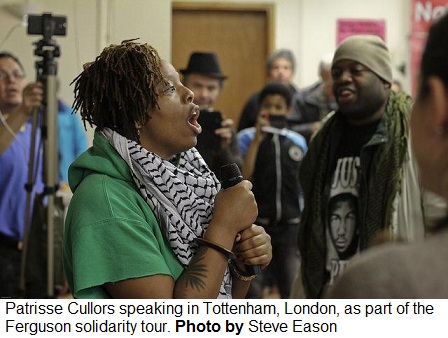


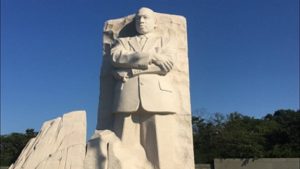 “Free At Last, Free At Last; Thank God Almighty, We Are Free At Last”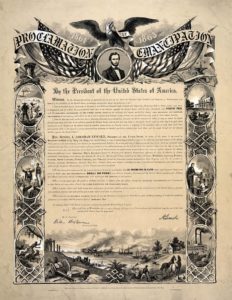
 (See the
  There are many examples of racial oppression, suppression and repression in the US. These experiences may be indicative that something deeper than equality is at stake; there is a Bad Community Ethos – fundamental character or spirit of a culture; the underlying sentiment that informs the beliefs, customs, or practices of a group or society – tied to religious mis-information.
 … for our 30 Caribbean member-states, 29 of them feature a majority population of Black-and-Brown people. While this majority does not always equal political or economic power, universal suffrage (one man/woman, one vote) has been transformational in correcting social ills. Universal suffrage equals universal respect, so this should always be at the start of change in society. This teaches us that societal stewards should work to
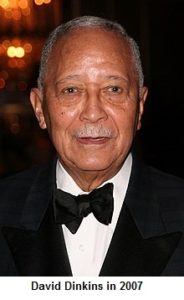 The world is mourning the passing of David N. Dinkins, the former Mayor of New York City – the first and only Black Man to hold that position. We can tell a lot about the measure of the man by taking note of the honors given to him at the time of his death. In this case, it is a …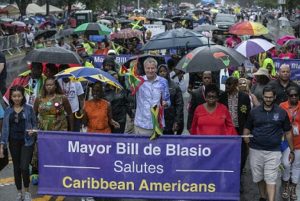
 Nope! This foreign land here, the United States of America is accepted as their New Home. This is their destination. This is where they want to plant themselves and then
 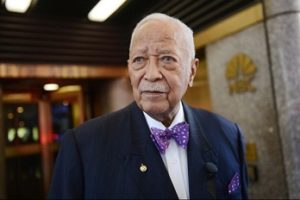 The Public Advocate noted that Dinkins assumed his role in City Hall and in history at a time when the city faced compounding crises of economic turbulence, racial injustice, and systemic failings in housing, policing and healthcare, among other things.
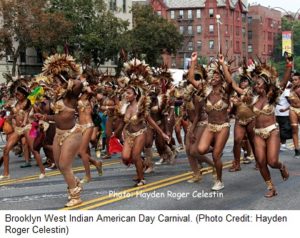
 Dinkins was born in
 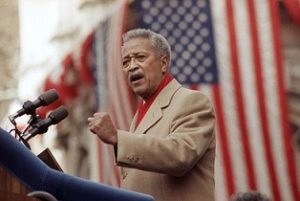 Dinkins entered office in January 1990 pledging racial healing, and famously referred to New York City’s demographic diversity as a “gorgeous mosaic”.
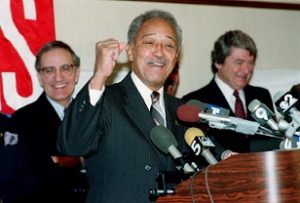 In 1993, Dinkins lost to
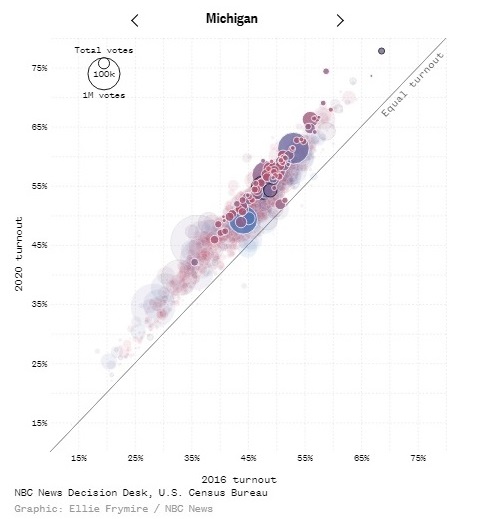
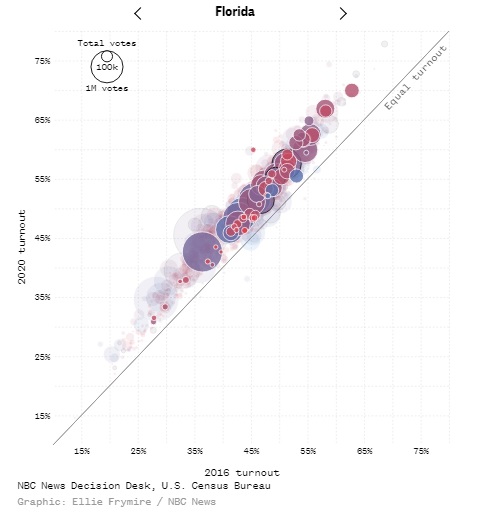
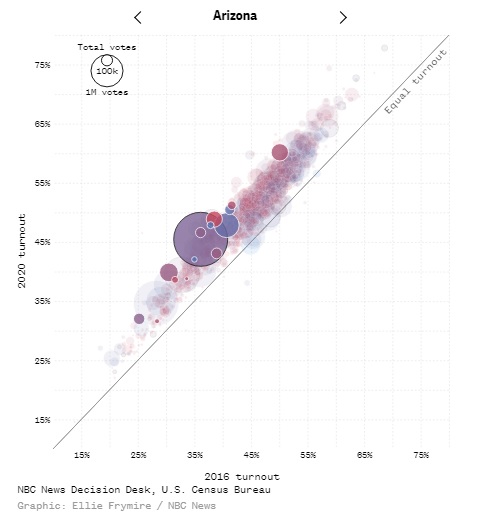
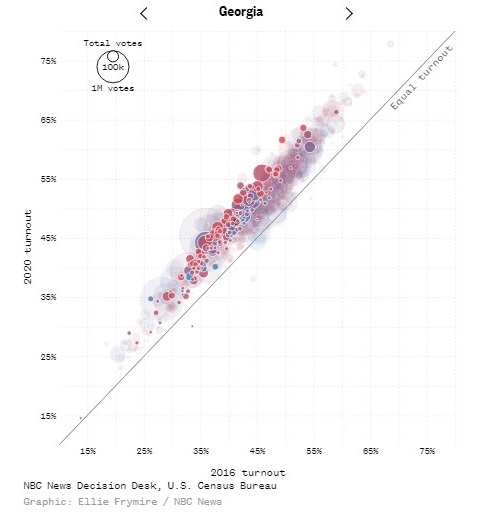
 Shut Up … all of you in the Peanut Gallery.
 “This election I think has another dimension to it because our main industry is tourism, which is dependent on the administration’s view of containing the pandemic in a sense that unless the US president can control, [the US] will continue to have a very depressed economy, meaning high unemployment, people not working, and people running down savings,” he said.
 The impact of the pandemic on today’s election, ranging from voter turnout to whether it will be a key point on which voters will base their choice, remains to be seen.
 So in this editorial-article, the protagonist recommended the POTUS selection of Joe Biden from a pandemic protection perspective, but Donald Trump from a laissez-fare Offshore Banking regulation perspective.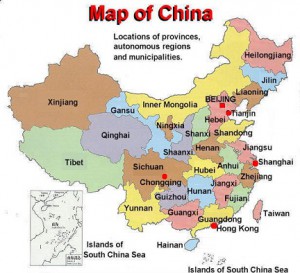
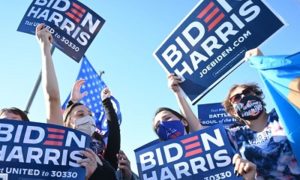
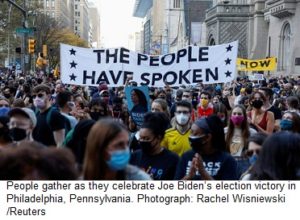
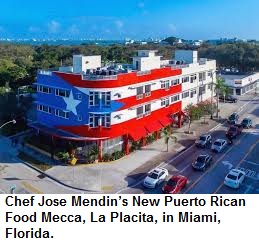 Perez’s recollection — a storm victim reminding him that “Puerto Ricans are Americans” — was part of Democrats’ outreach in Wynwood, a part of Miami once considered a Boricua enclave. But the effort proved to be too late for many Puerto Ricans. Instead of gaining support among Puerto Ricans, Democrats lost ground. Four years after winning Florida by 113,000 votes, Trump won it again on Nov. 3 by triple that amount.
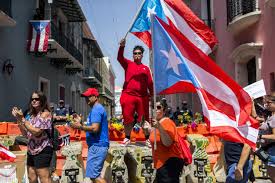 Trump’s numbers even surpassed the number of Puerto Ricans who in Florida’s 2018 U.S. Senate race supported Republican Rick Scott. Odio said Scott received about 29% of the Puerto Rican vote after visiting the island seven times after Maria, ahead of his election. In that election, those numbers were enough to help Scott edge a win over former U.S. Sen. Bill Nelson in a razor-thin election that went to a recount.
 Wanna get elected in the Unites States?
 Featured article quotation:
  What’s next for Cuba … and Venezuela?
 Socialism continues in Cuba and Venezuela both. The revolutions in those countries have stalled. This has been the case for many years, decades and even generations. Perhaps more is needed than just influencing American Foreign Policy towards these countries; perhaps there is the need to impact domestic policy from inside the country. This is the approach of the Go Lean roadmap in regards to Cuba.
 In 2016, many Caribbean people – i.e. Jamaicans – wanted the Democratic Party candidate, Hillary Clinton, to win the Presidency, hoping for a More Liberal Immigration policy.
  Most of the Jamaican Diaspora in the US –
 Unless your ancestors were native to these shores, or forcibly enslaved and brought here as part of our original sin as a nation, most Americans can trace their family history back to a choice – a choice to leave behind everything that was familiar in search of new opportunities and a new life. Joe Biden understands that is an irrefutable source of our strength. Generations of immigrants have come to this country with little more than the clothes on their backs, the hope in their heart, and a desire to claim their own piece of the American Dream. It’s the reason we have constantly been able to renew ourselves, to grow better and stronger as a nation, and to meet new challenges. Immigration is essential to who we are as a nation, our core values, and our aspirations for our future. Under a Biden Administration, we will never turn our backs on who we are or that which makes us uniquely and proudly American. The United States deserves an immigration policy that reflects our highest values as a nation.
 … We can get close but never quite catch up. One realizes that this is the same with immigrating to the United States. Despite being a Nation of Immigrants (NOI), new ones can never catch up with the Settlers. Consider the historicity of this distinction in the Appendix article
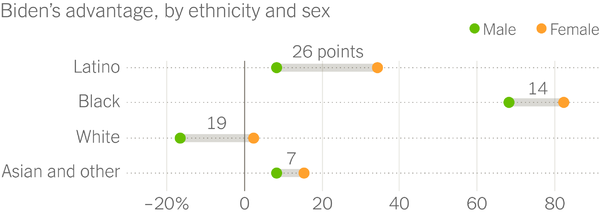
 We find that in certain societies, the “man code” has penetrated all aspects of society, not just prisons; think “locker room talk”, “Blue Codes” for conduct among law enforcement officials or bonding among soldiers in foxholes or trench-warfare ; there is even a “code of silence” among gang members or organized crime figures.
 Many times people flee the region to mitigate abusive situations; even more troubling, as victims they may have encountered an attitude of complacency and indifference among public safety authorities. The following
  … this is a special group in the population of the New World, the Americas. This group has been victims and villains. To the point that academicians and clinicians alike can conclude that “hurt people hurt people”.
 Most times the discipline and attitudes learned at home forms the adult character that people become.
 Analogies abound … as to why it is important to “nip bullying in the bud”. If we do nothing – or not enough – then conditions of Unequal Justice go from “bad to worse”. The bad actor can emerge from