Tag: Cruise

Food Security – Opportunity: “1 Iowa County Supplies all the Beef for a Cruise Line”

Go Lean Commentary

Supply and Demand

These are the bedrock principles of economic decision-making. Or should be …

… but when it comes to Caribbean economics, the rules seem to be different … 🙁

  • There is demand for food supplies for Caribbean foreign visitors
  • The supply to feed foreign visitors are also sourced from foreign originators.

In fact, as reported in this one article in November 2010, there is a sophisticated supply chain eco-system for just Carnival Cruise Lines – responsible for 8 to 9 million annual unique Caribbean visitors, per 2012. See the details of that article here:

Title: Amazing Cruise Food Facts
Ever wondered just how much food and drink is consumed on an average cruise? … Here are some amazing cruise food facts, according to the UK-based industry trade journal Cruise International.

  • Every day 2,550 fresh eggs are consumed by Holland America’s Eurodam, 2,100 guests and 900 crew.
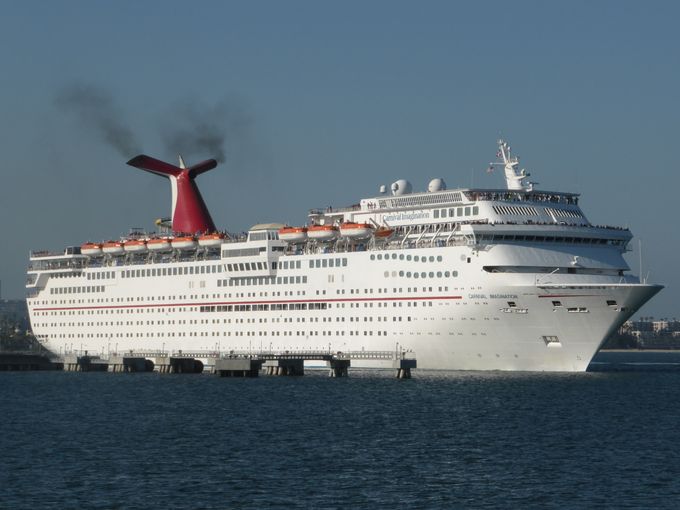
  • A whole county in Iowa raises all its cattle for sale to Carnival Cruise Lines.
  • On board Carnival Dream, passengers eat of 28,730 shrimp every week.
  • 6,200 cocktails and 15,000 coffees are drunk on Costa ships every week.
  • On board MSC Fantasia class ships, 2,000 different recipes are used on a seven-day cruise.
  • 280 bottles of free champagne, 10lbs of caviar and 120lbs of lobster are devoured on  Seabourn ships (Legend/Pride/Spirit) over seven nights.
  • On an average P&O Ventura 14-day cruise, 3,096 passengers and 1,200 crew will eat some 171,840 main meals.
  • During an eight-night cruise on board Fred. Olsen’s Boudicca630 litres of ice cream will be eaten.
  • On a typical 10-day cruise, the shopping list for Crystal Symphony includes over 60 tonnes of food-stuffs to be purchased and delivered to dock in the few hours on turnaround day.

It is not known exactly how much Spam was consumed by passengers on the stranded Carnival Splendor in November 2010; [it had to be towed to its San Diego-California home base after engines caught fire off the Mexican Rivera coast].

A whole county in Iowa? (This was reported back in 2010 reflecting activity for the years leading up to 2010, but it does give some insights as to scope of the operation). Iowa is part of the American Midwest region – the bread basket of America:

Iowa 101 

  • There are 99 counties in the U.S. state of Iowa.
  • Iowa Population: 3,156,145 (2,018)
  • Iowa’s main conventional agricultural commodities are hogs, corn, soybeans, oats, cattle, eggs, and dairy products. Iowa is the nation’s largest producer of ethanol and corn and some years is the largest grower of soybeans. In 2008, the 92,600 farms in Iowa produced 19% of the nation’s corn, 17% of the soybeans, 30% of the hogs, and 14% of the eggs.[131]

Midwest 101
Sometimes called “the breadbasket of America” the [American] Midwest serves as a center for grain production, particularly wheatcorn and soybeans.[3] …

In 1839 the Northeastern state of New York became the country’s leading dairy producer, a position it held until overtaken by Iowa in 1890. It wasn’t long after that Wisconsin emerged as the leading dairy producer.[5]

Beef and pork processing have long been important Midwestern industries. Chicago and Kansas City served as stockyards and processing centers of the beef trade and Cincinnati, nicknamed ‘Porkopolis’, was once the largest pork-producing city in the world.[6] Iowa is the center of pork production in the U.S.[citation needed] Meats were preserved by curing as in corned beef, sugar-cured ham and bacon, or smoked. – Source: https://en.wikipedia.org/wiki/Cuisine_of_the_Midwestern_United_States#Background retrieved December 28, 2019.

That was 2010; what is the status quo now? How does Carnival provision their beef needs today, as we approach 2020?

Posted September 18, 2010
… I understand that Carnival has cut a deal with an new meat supplier. I read that last April [2010], Carnival began using J&B Foods of Albertville, Minnesota as their meat supplier.

I didn’t know this until a couple of weeks ago A friend told me he is a Senior Butcher for the company and was he said that Carnival contract had increased their production over 30%. It’s a good company and they do a good job with meat. – Source: https://boards.cruisecritic.com/topic/1218077-what-was-your-experience-with-carnival-meat-in-the-mdr/

J&B Group
Even though sourcing all the beef from an entire county was impressive, enacting a supply contract with J&B Foods is even more so. See the corporate profile in the Appendix below and the VIDEO here:

VIDEO – J&B Group – Discover our capabilities – https://youtu.be/6Xkng_4MTQI

J&B Foods
From food service and retail to wholesale and third party logistics, discover what J&B Group can do for you!

Do you see the opportunity here, in supplying the demand for beef for the cruise ships traversing the Caribbean?

If one cruise line is willing to enact supply agreements that engage a whole region (Iowa), surely Caribbean stakeholders can deploy the necessary cattle operations (ranching, slaughter, butchering, warehousing and distribution) to satisfy the existing demand for a Caribbean cruise eco-system. We have one primary advantage that cannot be ignored:

Location, location and location.

Raising cattle is not “Rocket Science” – we can do it here! With the ability to transform one or more BIG member-states – Belize, Cuba, Guyana, and/or Suriname – into the region’s bread baskets, we can scale-up beef productions with minimal time, talent and treasures to supply the cruise industry’s demand; (and our own demand-supply needs).

If we cannot “have all of the pie, then maybe just some slices”.

This is how Industrial Reboots work!

This is the continuation of this teaching series for December 2019 from the movement behind the book Go Lean … Caribbean. As we present a series every month, this entry is commentary 3 of 5 considering Food Security for the Caribbean. The goal is first to Feed Ourselves after which we should foster Trade to an export market. Servicing the cruise industry is within this Trade strategy. Other Food Supply considerations are presented in  this series; see the full series catalog here:

  1. Food SecurityBread Baskets on Land and Sea
  2. Food SecurityTemperate Foods in the Tropics
  3. Food Security – Opportunity: 1 American County in Iowa raises all Beef for a Cruise Line
  4. Food SecurityFTAA: A Lesson in History
  5. Food SecurityBig Chicken

The 2013 Go Lean book presents a roadmap – an economic plan – to introduce and implement a regional solution – the Caribbean Union Trade Federation (CU) – to ensure Food Security. The book posits that we can satisfy the “supply and demand” dynamics. On the Supply-side, we can put the implementations in place to have our own bread baskets … finally. Among the 30 participating member-states there are some that are more suited – lower opportunity costs – to ramp-up an agri-business eco-system. The strategy is to make the regional investments there, in one or several of those states.

On the Demand-side, there is the tactic of collective bargaining. This activity is already planned in the quest to reform and transform the cruise tourism industry. This was related in a previous Go Lean blog-commentary; see an excerpt here:

Some of the most popular cruise destinations include the Bahamas, Jamaica, Cayman Islands and Saint Martin. Alone, these port cities/member states cannot effect change on this cruise line industry. But together, as one unified front, the chances for success improves exponentially. The unified front is the Caribbean Union Trade Federation (CU). The term Union is more than a coincidence; it was branded as such by design. The Go Lean book serves as a roadmap for the introduction and implementation of the CU.

The vision of this integration movement is for the region to function as a Single Market. The quotation from the Go Lean book continues in advocating that the Caribbean member-states (independent & dependent) lean-in to this plan for confederacy, convention and collaboration. This is Collective Bargaining 101.

This is a wise yet simple plan: Make the Caribbean Cruise industry an offer they cannot refuse

… the same or better quality for beef at a lower price (with minimal transport or logistical expenses).

As related in the first commentary in this series, the following organizational deployments make this business plan possible:

Organizational deployments are among the 370 pages of the roadmap, the turn-by-turn directions in the Go Lean book, on how to reform and transform the economic, security and governing engines for the Caribbean region and their member-states. This roadmap includes the new community ethos that must be adopted; plus the executions of new strategies, tactics, and implementations to deliver on this quest to reboot our industrial landscape and Feed Ourselves. In fact, this is the actual title of one advocacy in the Go Lean book. Consider the specific plans, excerpts and headlines here from Page 193, entitled:

10 Ways to Impact Cruise Tourism

1 Lean-in for the Caribbean Single Market Confederation Treaty
The unification of the region into one market will allow for collective bargaining with the cruise industry. No one single island nation-state would have the clout of a unified market – the industry needs the Caribbean more than the Caribbean needs the industry. The ports-of-calls need to be able to generate more revenue from the visiting passengers, but the cruise line have embedded rules/regulations designed to maximize their revenues at the expense of the port-side establishments, like on-board duty free shops, prohibitions against buying island alcohol and tobacco products. Such actions would often violate anti-trust rules/laws in most modern democracies.
2 Quality Assurance Programs
The CU will regulate and enforce high standards among the port-side establishments, therefore eliminating the need for cruise lines to “curry favor” with merchants. A Charge-back eco-system and quality assurance programs like surveys for passenger feedback will be used and the results published extensively.
3 e-Purse Settlement with Central Bank in Caribbean Dollars
4 Port-side Risk Mitigations
5 Disabled Passengers Accommodations
6 Emergency Management Proactive and Reactive Services
7 Medical Escalated Response
8 Co-Marketing with National Tourism Departments, Excess Inventory and One-Way Travel
9 Domestic Market
The CU market of 42 million people also has vacation needs. Cruises should be able to start/end locally in the region, for example a passenger should be able to join a cruise in the Bahamas and complete the circuit back in the Bahamas. The Caribbean represents different cultures, languages, urban and rural destinations, therefore many taste can be accommodated. An alignment with tender boats can also accommodate eco-tourism hand-off to/from cruise ships. These are among the service offerings for collective bargaining negotiations.
10 Shipbuilding Support Services

Raising cattle is not “Rocket Science” – we can do it here! What an opportunity? We can reform and transform our agricultural deliveries so as to better Feed Ourselves with lower costs and greater variety in our Food Supply. Then, we get to also improve our pocketbooks by trading foodstuffs with our Cruise Line business partners.

The issues in reforming and transforming our interactions with our Cruise Line business partners have been addressed in many previous blog-commentaries; consider this list of sample entries:

https://goleancaribbean.com/blog/?p=17072 One Case Study: Caribbean Cruise Port ‘Held Hostage’
https://goleancaribbean.com/blog/?p=15380 Industrial Reboot – Cruise Tourism 2.0
https://goleancaribbean.com/blog/?p=12126 America’s Maritime Laws – Stupidity of the ‘Jones Act’ on Tourism
https://goleancaribbean.com/blog/?p=11544 Forging Change: Collective Bargaining
https://goleancaribbean.com/blog/?p=5210 Cruise Ship Commerce – Getting Ready for Change
https://goleancaribbean.com/blog/?p=3889 Merchant Banks e-Payments – Ready for Cruise Industry Changes

Our intent – as communicated in the outset of the Go Lean book – is simple yet providential (Page 4):

The CU should better provide for the region’s basic needs (food, clothing, energy and shelter), and then be in position to help supply the rest of the world.

Tourism is a great business model; we get to generate a lot of foreign currency. But then, we “stupidly” turn around to give it away for products and commodities that we can/should really fulfill ourselves.

Not wise!

Let’s wisen up. Let’s lean-in to this Go Lean roadmap … and Feed Ourselves and our guest. This is how we make our Caribbean homeland a better place to live, work and play. 🙂

About the Book
The book Go Lean…Caribbean serves as a roadmap for the introduction and implementation of the technocratic Caribbean Union Trade Federation (CU), for the elevation of Caribbean society – for all member-states. This CU/Go Lean roadmap has these 3 prime directives:

  • Optimization of the economic engines in order to grow the regional economy to $800 Billion & create 2.2 million new jobs.
  • Establishment of a security apparatus to ensure public safety and protect the resultant economic engines.
  • Improve Caribbean governance to support these engines, including a separation-of-powers between the member-states and CU federal agencies.

The Go Lean book provides 370-pages of turn-by-turn instructions on “how” to adopt new community ethos, plus the strategies, tactics, implementations and advocacies to execute so as to reboot, reform and transform the societal engines of Caribbean society.

Download the free e-Book of Go Lean … Caribbean – now!

Who We Are
The movement behind the Go Lean book – a non-partisan, apolitical, religiously-neutral Community Development Foundation chartered for the purpose of empowering and re-booting economic engines – stresses that reforming and transforming the Caribbean societal engines must be a regional pursuit. This was an early motivation for the roadmap, as pronounced in the opening Declaration of Interdependence (Pages 12 – 14):

xi. Whereas all men are entitled to the benefits of good governance in a free society, “new guards” must be enacted to dissuade the emergence of incompetence, corruption, nepotism and cronyism at the peril of the people’s best interest. The Federation must guarantee the executions of a social contract between government and the governed.

xvi. Whereas security of our homeland is inextricably linked to prosperity of the homeland, the economic and security interest of the region needs to be aligned under the same governance. Since economic crimes … can imperil the functioning of the wheels of commerce for all the citizenry, the accedence of this Federation must equip the security apparatus with the tools and techniques for predictive and proactive interdictions.

xxiv. Whereas a free market economy can be induced and spurred for continuous progress, the Federation must install the controls to better manage aspects of the economy: jobs, inflation, savings rate, investments and other economic principles. Thereby attracting direct foreign investment because of the stability and vibrancy of our economy.

xxx.   Whereas the effects of globalization can be felt in every aspect of Caribbean life, from the acquisition of food and clothing, to the ubiquity of ICT, the region cannot only consume, it is imperative that our lands also produce and add to the international community, even if doing so requires some sacrifice and subsidy.

Sign the petition to lean-in for this roadmap for the Caribbean Union Trade Federation.

—————-

Appendix J&B Group: Foodservice Offerings

Quality starts at the center of your plate and J&B Group is the premier cold chain provider that can bring you the quality protein solutions you need, along with unparalleled customer service.

Serving up the best in protein solutions
In today’s hyper-complex foodservice world, you need a protein partner that can maximize your competitive advantages – from your kitchen to your menu to your bottom line. Turn to J&B Foodservice and our “5S Guarantee” to help solve your critical business challenges.

Buying Power
Our expert protein industry purchasing team understands the markets and successfully navigates fluctuations to bring you the highest value at the most competitive cost possible. They leverage over one hundred years of J&B buying experience to ensure a supply chain that brings excellent value and service to every one of our valued customers. Collaborating with our customers to understand their needs, our team provides recommendations and solutions to an ever changing global protein supply chain.

Manufacturing
J&B has a mission to be an innovative leader in protein produced goods, providing exceptional value in quality, cost, and service.

Cold Storage
J&B’s warehouse capabilities include blast freezing, order picking, speed tempering and re-stacking/re-palletizing. We guarantee temperature consistency, proper product handling with detailed documentation and reporting with superior cleanliness and secure facility.

Our Products
J&B Foodservice sells an extensive portfolio of foodservice proteins throughout the United States to both large restaurant chains as well as independent operators. We produce a wide variety of proteins, such as portion cut steaks, fresh and frozen portioned and bulk ground beef, injected sub-primals, and Thin Sliced Meats. We also offer a wide variety of raw material grades and brands to meet our customer’s quality and pricing needs.
Our Facilities


Source: Retrieved December 28, 2019 from: https://www.jbgroup.com/business-unit/foodservice/

Share this post:
, , ,

‘Free Market’ Versus … Communism – Lessons from History

Go Lean Commentary

The member-states of the Caribbean are “in a pickle”.

We are “bleeding”; we are losing our populations more and more. Our people are emigrating away in search of greater prosperity. Many times, our people leave for lands that promote Free Market economic principles, as opposed to what we are currently promoting here in our region.

Every society needs to continuously grow; so population “bleeding” is a bad thing. We need to better compete. What systems are we promoting … officially or unofficially? Let’s discuss …

First, let’s talk about Free Market as an economic principle. This is the system in which the prices for goods and services are only determined by the open market and by consumers and not forcibly determined by local governments – centrally controlled – see the encyclopedic references in the Appendices below.
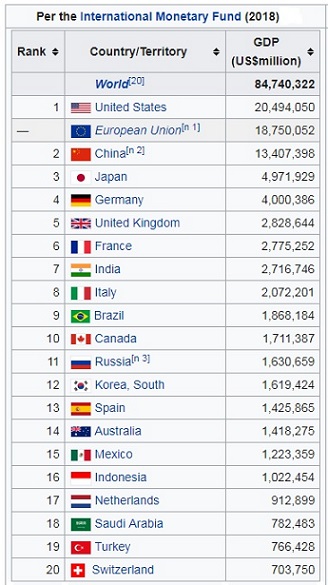
After some debate – 100 years – the judgment is that Free Market economies are more prosperous than centrally controlled economies, think Communist states. Even Russia, the former Head of the communist-bloc Union of Soviet Socialist Republics has transformed and is now a Free Market country. See the list here of “Countries by their GDP Rankings”:

In fact, few communist (pure socialist) states remain; think Laos, Vietnam, China and Cuba.

(China is a special consideration for this commentary – see below).

Cuba is not a Free Market economy, right now. But it might be soon. Cuba sera Libre!

Think back to 1959 in Cuba; truth be told, the United States of America really did not and does not care that much whether a society embraces central-controlled versus Free Market, Communism versus Capitalism. Just as long as governments do not take (nationalize) the assets that belong to Americans. (The US does huge business – Trade – with China, Vietnam and Laos; but Cuba alone remains in a trade embargo).

Truly, the problem in Cuba was the subsequent seizing of assets rather than the political – leftist – ideology. The seizing of  American businesses was in effect a de facto Act of War. (The US never engaged official warfare on Cuba because of the geo-political wrangling with the Soviet Union; the island remained a protectorate of that nuclear-armed Super Power; think Cuban Missile Crisis in 1962).
So as we contemplate the economic stewardship that exists in our Caribbean region now, this history should be front-and-center in our minds. (Cuba was not the first nor the last country to embrace leftist ideologies in the Caribbean; think Guyana, Antigua and Grenada. All these countries flirted with far extremes away from Free Market economies. Yet the US still  maintained a status quo in terms of diplomatic relations with them. (Leftist Grenada was invaded by the US in 1982 at the behest of the Organization of Eastern Caribbean States to rectify a military coup and for violating human and civil rights).

There is so much that the Caribbean can benefit from with a discussion on this history of Free Markets in this region; this is not just a dry lecture in economics, rather this is an energetic debate on the form of economic governance that the new Caribbean should be pursuing. In a recent blog-commentary regarding the American Big Box retailer Wal-Mart, the question was asked of a reader:

“Should the Caribbean economic stewards welcome Wal-Mart in the region?”.

The reader’s default answer was:

“No, they would imperil Main Street retailers”.

Such an innocent declaration is actually anti-Free Market. This scenario demonstrates why there is the need for this discussion – to better understand the economics and the history – in the following series of commentaries on the distinct differences of Free Market Versus … – see the related Music VIDEO in the Appendix below. This submission is entry 1-of-6 in a full series cataloged as follows:

  1. Free Market Versus: Communism – Can they both co-exist?
  2. Free Market Versus: China – Two systems at play in ‘Words and Actions’
  3. Free Market Versus: Socialism – Prevalent in the Caribbean
  4. Free Market Versus: Cooperatives
  5. Free Market Versus: Labor Unions – Junior Communists?
  6. Free Market Versus: Common Pool Resources – Simpler Cooperation

In this series, reference is made to the need for a comprehensive roadmap for elevating the societal engines of the Caribbean member-states. The book Go Lean…Caribbean – a roadmap for the implementation for the Caribbean Union Trade Federation (CU) – introduced a new roadmap by which Free Market exercises can exist and thrive right next door to alternative economic systems (i.e. central-controlled).

There is a lot for us to unwrap here.

This Go Lean strategy to consider is that of Self-Governing Entities (SGE). The book (Page 7) defines SGE’s as follows:

Bordered areas managed only under CU jurisdiction. These include Enterprise Zones, Industrial Parks, Technology Campuses, Medical Labs and others.

To better understand the co-existence of Self-Governing Entities, think of the military base that has been installed at Guantanamo Bay, Cuba since 1898; referred to as GITMO. Even though it is located physically in the Caribbean nation, it is 100% sovereign territory of the United States, legally established by a treaty – the 1903 Cuban–American Treaty of Relations. The Go Lean book (Page 177), in discussing the Justice requirements for a new Caribbean regime, details this background of this GITMO venue as follows:

The Bottom Line on Guantánamo Bay
Guantánamo Bay is a natural harbor, with superior attributes, south of the city of Guantánamo, in Eastern Cuba.

The harbor has been controlled by the United States as the Guantánamo Bay Naval Base since 1902, following the Platt Amendment decree. It is the site of the Guantanamo Bay detention camp. Control over the naval base was granted to the US in partial compensation for the sacrifices made by US military in obtaining Cuba’s independence from Spain, something which the Cuban people had been unable to do for themselves. The detention camp is a detainment and interrogation (with torture tactics) complex established in January 2002 by the Bush Administration to hold detainees that have been connected with opponents in the Global War on Terror. The military prison relevance is in itself controversial, as the February 1903 lease states that the US is allowed “generally to do any and all things necessary to fit the premises for use as coaling or naval stations only, and for no other purpose”. In 2007, Camp Justice was the informal name granted to the complex where Guantánamo captives would face charges before the Guantanamo military commissions.

So while one justice standard exists along-side another justice standard (US Military versus Cuba), can we truly expect a parallel structure with economics?

Absolutely! This is the very strategy of SGE’s for economic empowerment in the region.

Also, we have “it” now … already in place. (The “it” refers to alternating yet parallel economic systems).

Consider cruise ship commerce

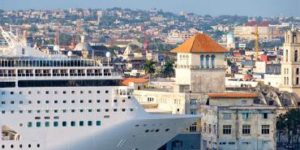
… while food and beverage is free for cruise ship passengers, hard alcohol is a premium charge. While cruise ships are in port in the different Caribbean member-states, they are not required to abide by local alcohol sales policies and regulations: drinking age, excessive drinking guidelines, no sales tax or VAT compliance. The cruise ships, operating under Maritime Laws can operate on the ship autonomously of local governments. The cruise ship, under this scenario, is a Self-Governing Entity.

Cruise ships do service the port cities in Cuba.
So yes, SGE’s can promote Free Market schemes, right along side communist regimes.

Are we encouraging communism? Are we tolerating societal defects and dysfunctions?

No … and No!

We simply realize that changing governing policies is not so easy and straight forward. Cuba has continued voluntarily with their communist priorities despite failures for 60 years. (It will take a Marshall Plan-type effort to reform their societal engines). The Go Lean book states (Page 4) that …

… the CU is a loose confederation, identified as a Trade Federation. There is no expectation of sovereignty with this entity, so a commitment to the goals and aspirations of this Federation must be voluntary.

Plus, if we are insinuating that communism is bad, truth be told, capitalism has a lot of defects too. For example, the crony-capitalism and institutional racism in American and Western European societies have been duly documented and lamented; (remember the derisive term: Plutocracy and references to “Foreign Investors as Dragons“).

There is no one perfect society.

The “co-exist strategy of SGE’s” may be ideal.

This theme – carefully balancing capitalism – aligns with many previous Go Lean commentaries; see a sample list here:

https://goleancaribbean.com/blog/?p=16000 Getting ‘Out of the Way’ of Local Economic Empowerment
Good Governance must reflect shepherding and oversight with an eye towards local needs, not just some distant economic controller. Growing the economy must include local economic empowerment as well, a reflection on the supply and demand of the marketplace.
https://goleancaribbean.com/blog/?p=2338 Welcoming the Dreaded ‘Plutocracy’
A mono-industrial economy creates a reality for industrial-corporate titans can have abusive effect on the societal engines in a community.
https://goleancaribbean.com/blog/?p=11057 Managing the ‘Strong versus the Weak’ – Book Review: Sold-Out!
Wealthy business interests try to control everything and make all the important decisions, so that they can get ‘more for themselves and less for everybody else’.
https://goleancaribbean.com/blog/?p=7372 Media Fantasies versus Weather Realities
There is some “bad intent” in the American media eco-system. Many believe that media hype over weather forecasts spurs retail spending (surplus food, gasoline, generators, and firewood) to benefit companies that contract media purchases (advertising) with the media outlets.
https://goleancaribbean.com/blog/?p=6819 The … Downside of ‘Western’ Diets
American food standards (Standard American Diet = SAD) is notorious for many physical-medical and mental repercussions. Many times the motivation is crony-capitalistic. We want to do better in our homeland.
https://goleancaribbean.com/blog/?p=5993 Carnival Cruise Lines to ban carry-on bottled beverages
Cruise lines rarely conform to labor, anti-trust and competition laws. Mandating bottled beverages to be exclusively delivered by the merchant ship is just one more example of their crony-capitalism.

Free Market capitalism versus …

(See Music VIDEO in the Appendix below).

The Caribbean region is urged to simply do better, to not just lean left (towards communism) or right (towards pure capitalism), but rather to pursue what is best for the Greater Good. This is defined as:

“It is the greatest good to the greatest number of people which is the measure of right and wrong”. – Jeremy Bentham (1748 – 1832)

All in all, our economic, security and political structures are defective and deficient, we must reboot and reform our society. There are role models to the left – think China – and to the right – think Iceland – where communities have succeeded in elevating their societal engines. Despite initial appearances, the “grass is not necessarily greener on the other side”, on these foreign shores; they should not be considered the panacea of our ills; nor should emigrating there be considered the destination of our hopes and dreams.

We must work on our Caribbean Dreams right here at home. We must study and observe these ‘other communities’. We can then deploy the best-practices we glean. Much is at stake; we must dissuade our young people from abandoning our beautiful homeland, as they are our most precious resource.

This is the quest of the Go Lean roadmap. We want to make our homeland a better place to live, work and play.

We hereby urge the people and governing institutions in the region to lean-in for the empowerments described here in the book Go Lean … Caribbean.  🙂

About the Book
The book Go Lean…Caribbean serves as a roadmap for the introduction and implementation of the technocratic Caribbean Union Trade Federation (CU), for the elevation of Caribbean society – for all member-states. This CU/Go Lean roadmap has these 3 prime directives:

  • Optimization of the economic engines in order to grow the regional economy to $800 Billion and create 2.2 million new jobs.
  • Establishment of a security apparatus to ensure public safety and protect the resultant economic engines.
  • Improve Caribbean governance to support these engines, including a separation-of-powers between the member-states and CU federal agencies.

The Go Lean book provides 370-pages of turn-by-turn instructions on “how” to adopt new community ethos, plus the strategies, tactics, implementations and advocacies to execute so as to reboot, reform and transform the societal engines of Caribbean society.

Download the free e-Book of Go Lean … Caribbean – now!

Who We Are
The movement behind the Go Lean book – a non-partisan, apolitical, religiously-neutral Community Development Foundation chartered for the purpose of empowering and re-booting economic engines – stresses that reforming and transforming the Caribbean societal engines must be a regional pursuit. This was an early motivation for the roadmap, as pronounced in the opening Declaration of Interdependence (Pages 12 – 13):

xi. Whereas all men are entitled to the benefits of good governance in a free society, “new guards” must be enacted to dissuade the emergence of incompetence, corruption, nepotism and cronyism at the peril of the people’s best interest. The Federation must guarantee the executions of a social contract between government and the governed.

xvi. Whereas security of our homeland is inextricably linked to prosperity of the homeland, the economic and security interest of the region needs to be aligned under the same governance. Since economic crimes … can imperil the functioning of the wheels of commerce for all the citizenry, the accedence of this Federation must equip the security apparatus with the tools and techniques for predictive and proactive interdictions.

xxiv. Whereas a free market economy can be induced and spurred for continuous progress, the Federation must install the controls to better manage aspects of the economy: jobs, inflation, savings rate, investments and other economic principles. Thereby attracting direct foreign investment because of the stability and vibrancy of our economy.

Sign the petition to lean-in for this roadmap for the Caribbean Union Trade Federation.

—————

Appendix – Reference: Free Market
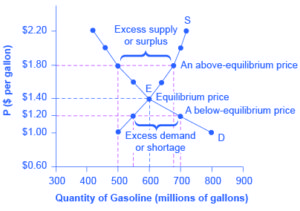
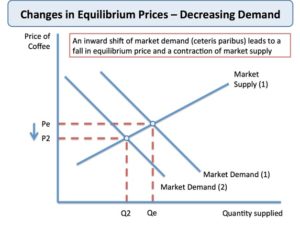
In economics, a free market is a system in which the prices for goods and services are determined by the open market and by consumers. In a free market, the laws and forces of supply and demand are free from any intervention by a government or other authority and from all forms of economic privilege, monopolies and artificial scarcities.[1] Proponents of the concept of free market contrast it with a regulated market in which a government intervenes in supply and demand through various methods such as tariffs used to restrict trade and to protect the local economy. In an idealized free-market economy, prices for goods and services are set freely by the forces of supply and demand and are allowed to reach their point of equilibrium without intervention by government policy. [Consider images here of Equilibrium curves for coffee and for gasoline].

Scholars contrast the concept of a free market with the concept of a coordinated market in fields of study such as political economynew institutional economicseconomic sociology and political science. All of these fields emphasize the importance in currently existing market systems of rule-making institutions external to the simple forces of supply and demand which create space for those forces to operate to control productive output and distribution. Although free markets are commonly associated with capitalism within a market economy in contemporary usage and popular culture, free markets have also been advocated by anarchistssocialists and some proponents of cooperatives and advocates of profit sharing.[2] Criticism of the theoretical concept may regard systems with significant market powerinequality of bargaining power, or information asymmetry as less than free, with regulation being necessary to control those imbalances in order to allow markets to function more efficiently as well as produce more desirable social outcomes.

Contents

Source: Retrieved June 11, 2019 from: https://en.wikipedia.org/wiki/Free_market

—————

Appendix VIDEO – CAPITALISM VS. SOCIALISM SONG | Economics & Politics Music Video – https://youtu.be/23p1AYq8jBA

Premiered Mar 4, 2019 – Excerpts of Lyrics:

“Systems with different ideas, opposite of each other
Both argue they manage production and resources better
But most modern countries use both systems blended together
Mixed economies, mixed economies …”

Lyrics and performance by Jam Campus
Instrumental composition by: https://www.fiverr.com/napbak

Share this post:
, , , , , ,
[Top]

Caribbean Cruise Port ‘Held Hostage’

Go Lean Commentary

So you think you’re independent?

The twin-island nation of Antigua & Barbuda was granted independence from the United Kingdom on 1 November 1981. This status allows them to govern their own country; make decisions that they feel are in the best interest for their nation.
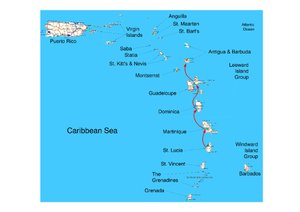
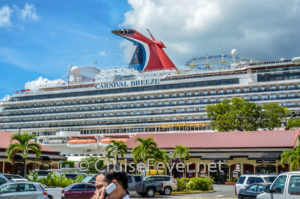
But the primary industry in this country is tourism. So this means that there is dependence on external (foreign) stakeholders to provide transportation solutions, travel agency, lodging and/or leisure cruises. So the country’s attitude should never be arrogant, haughty or uncooperative. They cannot approach any negotiation with a cruise line with this attitude:

“My way or the Highway”!

The cruise line response would resemble some rendition of this spirit:

Hold my beer!

This is what is happening in some re-negotiations between Antigua and Carnival Cruise Lines. As reported by the Antigua Daily Observer newspaper on February 26, 2019, Prime Minister Gaston Browne accuses Carnival and the entire Florida-Caribbean Cruise Association (FCCA) of “exploiting Caribbean countries for lower visitor tax rates [(head tax)]”.

The country is attempting to influence this corporation with their offering of only one port-of-call – 2 piers in St. John – while the full region is 30 member-states. Rather than single government negotiations, the 2013 book Go Lean …Caribbean asserts that the region must adopt a collective bargaining strategy among the full universe of Caribbean ports-of-call, introducing the Caribbean Union Trade Federation (CU) as a collective bargaining agent. The book states (Page 32):

Cruise Line Collective Bargaining – Setting Matters Straight
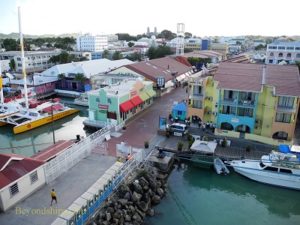
The CU will collectively bargain with operators to garner more benefits and protections. In general, port cities are not gleaning much income from ship visits. In order to reboot the industry’s economic impact, changes need to be made, rescinding some exploitive rules the ships implemented and adding some new products, like smartcard e-purse options.

Carnival Cruise Line is overmatched compared to the small island nation of Antigua. The holding company, Carnival Corporation, is identified as a significant stakeholder in the global cruise industry in general and Caribbean tourism in particular; they own/market all of these cruise line brands (10):

  • Carnival Cruise Lines
  • Holland America
  • Cunard
  • Princess
  • P&O Cruises
  • P&O Cruises Australia
  • The Yachts of Seabourn
  • Costa Cruises
  • AIDA
  • IberoCruceros

To compete, Antigua needs interdependence with their Caribbean neighbors – confederation and collective bargaining. Carnival is holding Antigua hostage. See the news article here reporting this drama, and an aligning VIDEO:

Title: More Cruise Lines Pull Out of Caribbean Port
By: Ben Souza
A few days ago, Cruise Fever reported that Carnival Cruise Line had canceled all port stops to Antigua. Now, additional cruise lines have pulled out of the Caribbean port according to the Antigua Observer.

In addition to Carnival Cruise Line, Holland America Line and luxury line Seabourn have canceled future port stops in Antigua. All three cruise lines operate under the Carnival Corporation umbrella.

These two new cruise lines that canceled port stops each had two cruise ships scheduled to visit the Caribbean port during the next Caribbean season.

Why have these three cruise lines canceled their scheduled calls to Antigua? The cruise lines have stated that government officials have made the cruise lines feel unwelcome.

These new cancelations were somewhat expected. The Prime Minister gave the following statement when Carnival Cruise Line first announced they were pulling out of the port:

    “Once Carnival has started the cancellation, unfortunately, I expect to see cancellations from all of its brands. I wouldn’t be surprised to see Princess, Holland America, Seabourn and other European Lines making cancellations going forward.”

Antigua is a popular cruise destination in the Southern Caribbean, especially during winter months.

Cruise ships that have canceled a port stop in Antigua will visit an alternative port.

Cruise Fever will have all new information about this developing situation in Antigua when it becomes available.

Source: Posted and retrieved March 17, 2019 from: https://cruisefever.net/more-cruise-lines-pull-out-of-caribbean-port/

—-

Ben Souza has written thousands of articles on cruising and currently takes between 8-10 cruises a year. His writings have appeared and been cited in various media outlets such as Yahoo News, MSN, NPR, Drudge Report, CNN, and ABC News. Ben currently resides in Cincinnati, Ohio. Visit Ben Souza on Linkedin. You may email Ben at Ben@cruisefever.net.

—————–

VIDEO – Update: Antigua Government To Meet With Carnival Over Cruise Cancellations – https://youtu.be/3CQzQb_2vUQ


Travelling with Bruce

Published on Mar 16, 2019 – Update: Antigua Government To Meet With Carnival Over Cruise Cancellations Norwegian Cruise Lines and MSC Cruises have both backed the government and have committed to sailing to the country going forward. After Prime Minister Browne contacted Carnival’s CEO the two parties have agreed to have a face to face meeting with each other to try to resolve their differences. #antigua #carnivalcruiselines #norwegiancruisenews #mscnews #globalportsholdings #antiguanews #caribbeancruise #hollandamericanews #seabournnews #cruisenews

We told you! Any Way Forward for better cruise line negotiations must include collective bargaining. This theme aligns with previous blog-commentaries from the movement behind the Go Lean book; see a sample list here:

https://goleancaribbean.com/blog/?p=16645 Bad Partners – Cruise Lines Interactions
https://goleancaribbean.com/blog/?p=15380 Industrial Reboot – Cruise Tourism 2.0
https://goleancaribbean.com/blog/?p=11544 Forging Change in the Cruise eco-system: Collective Bargaining
https://goleancaribbean.com/blog/?p=6635 Security Chip in credit cards unveiled: Now Ready for Cruise eco-system
https://goleancaribbean.com/blog/?p=5210 Cruise Ship Commerce – Getting Ready for Change

We warned, alerted and cautioned you Caribbean stakeholders that “Big Cruise Line Abuse” would happen. Carnival seems to be counting on our disunity. This is not just our thoughts alone; others have opined:

Carnival holds all of the cards in situations like this.  The notion that a sovereign country like Antigua is an equal “partner” to an 800 pound gorilla like Carnival is fanciful.  If a cruise line can make a better deal with an island next door, which charges a lower head tax, has fewer environmental restrictions, or is willing to foot the bill for a larger dock, then it’s ‘see ya later’ as far as the cruise line goes.” – Source: CruiseLawNews

The solution (Way Forward) for this type of one-sided negotiation advantage is not secretive or proprietary; rather it is the stated purpose of the Go Lean book and this resultant roadmap: “Come together“; collaborate; consensus-build and confederate.

Prime Minister Browne explained that the only way for small countries like Antigua to fight the FCCA is to form a regional port facility.

“Unless the entire Caribbean comes together and forms a regional port facility and mandate that [the Cruise Associations] pay more, we will continue to end up in problems and have to subsidise that sector …” – Source: CruiseLawNews

Yes, we can … come together and make our homeland a better place to live, work and play. 🙂

About the Book
The book Go Lean…Caribbean serves as a roadmap for the introduction and implementation of the technocratic Caribbean Union Trade Federation (CU), for the elevation of Caribbean society – for all member-states. This CU/Go Lean roadmap has these 3 prime directives:

  • Optimization of the economic engines in order to grow the regional economy to $800 Billion and create 2.2 million new jobs.
  • Establishment of a security apparatus to ensure public safety and protect the resultant economic engines.
  • Improve Caribbean governance to support these engines, including a separation-of-powers between the member-states and CU federal agencies.

The Go Lean book provides 370-pages of turn-by-turn instructions on “how” to adopt new community ethos, plus the strategies, tactics, implementations and advocacies to execute so as to reboot, reform and transform the societal engines of Caribbean society.

Download the free e-Book of Go Lean … Caribbean – now!

Who We Are
The movement behind the Go Lean book – a non-partisan, apolitical, religiously-neutral Community Development Foundation chartered for the purpose of empowering and re-booting economic engines – stresses that reforming and transforming the Caribbean societal engines must be a regional pursuit. This was an early motivation for the roadmap, as pronounced in the opening Declaration of Interdependence (Pages 11 – 13):

vi. Whereas the finite nature of the landmass of our lands limits the populations and markets of commerce, by extending the bonds of brotherhood to our geographic neighbors allows for extended opportunities and better execution of the kinetics of our economies through trade. This regional focus must foster and promote diverse economic stimuli.

viii. Whereas the population size is too small to foster good negotiations for products and commodities from international vendors, the Federation must allow the unification of the region as one purchasing [or bargaining] agent, thereby garnering better terms and discounts.

x. Whereas we are surrounded and allied to nations of larger proportions in land mass, populations, and treasuries, elements in their societies may have ill-intent in their pursuits, at the expense of the safety and security of our citizens. We must therefore appoint “new guards” to ensure our public safety and threats against our society, both domestic and foreign. The Federation must employ the latest advances and best practices … to assuage continuous threats …

xi. Whereas all men are entitled to the benefits of good governance in a free society, “new guards” must be enacted to dissuade the emergence of incompetence, corruption, nepotism and cronyism at the peril of the people’s best interest. The Federation must guarantee the executions of a social contract between government and the governed.

xvi. Whereas security of our homeland is inextricably linked to prosperity of the homeland, the economic and security interest of the region needs to be aligned under the same governance. Since economic crimes … can imperil the functioning of the wheels of commerce for all the citizenry, the accedence of this Federation must equip the security apparatus with the tools and techniques for predictive and proactive interdictions.

xxiv. Whereas a free market economy can be induced and spurred for continuous progress, the Federation must install the controls to better manage aspects of the economy: jobs, inflation, savings rate, investments and other economic principles. Thereby attracting direct foreign investment because of the stability and vibrancy of our economy.

Sign the petition to lean-in for this roadmap for the Caribbean Union Trade Federation.

Share this post:
, , , ,
[Top]

Bad Partners – Cruise Lines Interactions

Go Lean Commentary

So you got a partner …

… he/she should be working towards maximizing the returns for your partnership. Each one should be pursuing what’s best for “us”, not “me”. This is a basic premise for any partnership: think marriage, business, musical band …

partnership is an arrangement where parties, known as partners, agree to cooperate to advance their mutual interests. The partners in a partnership may be individuals, businesses, interest-based organizations, schools, governments or combinations. Organizations may partner to increase the likelihood of each achieving their mission and to amplify their reach. A partnership may result in issuing and holding equity or may be only governed by a contract. – Source: Wikipedia

Here is the partnership objectives that should be operating in our Caribbean marketplace:

Caribbean Port-of-Call: We need travelers to visit our shores and spend money to spur economic activity.

Cruise Line: We need passengers to book our cruises to consume Caribbean hospitality from onboard ships.

But a basic fault seem to be present in this partnership between the Cruise Line industry and their Caribbean ports-of-call:

The relationship appears to be one of détente – easing of strained relations – rather than a true partnership.

“I won’t destroy you if you don’t destroy me”.

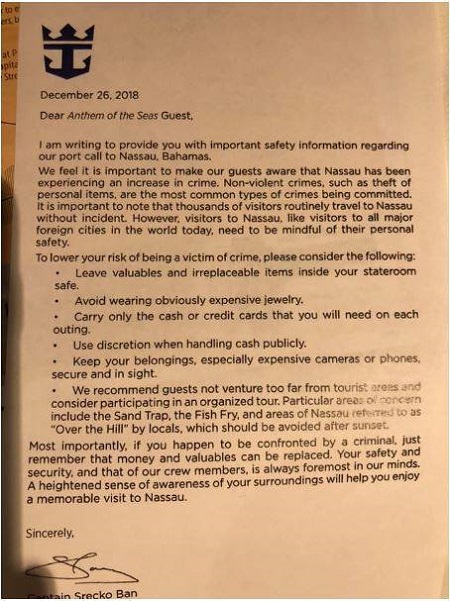
While the partnership model may mean hoping that all parties profit, the détente model assumes a posture of mitigating mutual destruction. Yet, destroying the image of a port city is exactly what this cruise ship Captain has appeared to have accomplished in Nassau, Bahamas in December (2018) with the release of this personal Crime-Warning letter:

Discouraging his passengers from consuming a port-city?! That seems counter-productive! That seems counter-partnering!

See this related news article here, depicting the complaint and rebuke of the Bahamas Tourism officials towards this cruise line:

Title: Bahamas persuades Royal Caribbean to tone down warnings about crime in Nassau

Royal Caribbean Cruise Line has agreed to stop warning its cruise passengers about increased crime in Nassau and identifying parts of the city to avoid.

Dionisio D’Aguilar, minister of tourism and aviation for the island nation, told the Nassau Tribune this week that he employed “gentle nudging” to persuade Royal Caribbean to drop an “unwarranted” passenger advisory being distributed to disembarking passengers of the cruise line’s Anthem of the Seas.

D’Aguilar reached out to Miami-based Royal Caribbean after several cruise industry websites reported on the letter, signed by Anthem of the Seas’ captain Srecko Ban.

“We feel it is important to make our guests aware that Nassau has been experiencing an increase in crime,” the letter said.

A copy of Ban’s letter posted on various websites, dated Dec. 26, pointed out that the most common types of crimes are nonviolent, “such as theft of personal items,” and noted that “thousands of visitors routinely travel to Nassau without incident.”

It went on to provide safety tips and urged visitors to Nassau to be mindful of their personal safety “like visitors to all major foreign cities in the world today.”

Among the tips:

— Leave valuables and irreplaceable items inside your stateroom safe.

— Avoid wearing obviously expensive jewelry

— Carry only cash and credit cards needed on each outing.

— Use discretion when handling cash publicly.

— Keep belongings, especially expensive cameras and phones, secure and in sight.

The letter also recommended guests “not venture too far from tourist areas,” and identified as “particular areas of concern” the Sand Trap, the Fish Fry at Arawak Cay, “and areas of Nassau referred to as ‘Over the Hill’ by locals, which should be avoided after sunset.”

After stories about the letter were posted by such sites as cruiseradio.net and travelpulse.com, D’Aguilar on Dec. 27 told a Bahamas newspaper, the Nassau Tribune, that he felt “blindsided.”

But the Tribune story noted that the Anthem captain’s warning mirrored a January 2018 travel advisory by the U.S. State Department, telling tourists to “exercise increased caution in the Bahamas because of crime” and avoid the Over the Hill and Fish Fry areas at night.

The Canadian government warned tourists to avoid the same two areas in its own advisory on Dec. 20. Both countries’ advisories listed armed robberies, burglaries, purse snatchings, theft, fraud and sexual assaults as the most common crimes against travelers.

The Tribune story quoted D’Aguilar saying he had never heard complaints about the Fish Fry in numerous meetings with cruise line executives.

“I don’t know of any major or significant crime happening to a cruise passenger in quite some time,” he said. “I don’t know about petty crime, but in my humble opinion Nassau is as safe as any other city.”

Despite the warnings, the State Department advisory also reported statistics from Royal Bahamas Police Force Commissioner Anthony Ferguson showing a 14 percent drop in overall crime and a 22 percent drop in violent crime. “The one exception was a 10 percent increased in murders,” the advisory said, adding most reported violent crimes took place in areas not frequented by tourists.

On Monday, the Nassau Tribune posted a follow-up story quoting D’Aguilar saying he convinced Royal Caribbean through “gentle nudging” to withdraw its crime warning and replace it with “a more generalized warning … that does not mention Nassau by name and could be taken as referring to any of its ports of call.”

A story posted Wednesday on BahamasLocal.com, a search engine site, quoted a statement by Royal Caribbean pledging to replace the letters with a generic statement in its daily newsletter urging travelers to “use the same common sense you would in any major city” and consult the U.S. State Department for specific information about any country on the cruise line’s itinerary.

Reached by email Wednesday, Royal Caribbean spokeswoman Tracy Quan verified that the story in BahamasLocal “is accurate.”

The story further quotes Michael Bayley, president and CEO of Royal Caribbean International, as saying Nassau remains the cruise line’s most popular port of call among more than 300 destinations.

Source:The Sun-Sentinel – South Florida Daily Newspaper – Posted January 2, 2019; retrieved January 24, 2019 from: https://www.sun-sentinel.com/business/fl-bz-royal-caribbean-bahamas-crime-warning-20190102-story.html

———–

VIDEO – ANTHEM OF THE SEAS – Highlights of Royal Caribbean’s amazing second Quantum-Class-Cruiseship – https://youtu.be/nwsS9PaF94w


Cruiseclips

Published on Nov 14, 2015 – A video produced by: Tobias Bruns in cooperation with: Oceanliner Pictures.com Schiffsjournal.de Special thanks to Royal Caribbean International! Want to book a cruise with the “Anthem of the Seas”? check out www.kreuzfahrten-mehr.de Informations about the ship (german langauge) ausfürhrliches Schiffsportrait auf Schiffsjournal.de: http://www.schiffsjournal.de/schiffsp…

Category: Travel & Events

———–

Related:

Bahamas unhappy with cruise passenger spending: no longer paying incentives to cruise lines.

It’s time to reboot the entire Cruise-Port-City eco-system. This is a familiar advocacy for the movement behind the 2013 book Go Lean … Caribbean, a roadmap for the Caribbean Union Trade Federation (CU). “Stop competing“, the book urges, and start working together – collaborate, cooperate, confederate – as true partners.

Are there problems? Let’s collaborate to solve them.

You’re not making any profit? Then what changes can we make so that everyone wins.

There are no Bad Guys here; just the need to reboot. The first step is this rebooting must be the strategy of Collective Bargaining. The Go Lean book detailed this strategy (Page 32) early, as follows:

Cruise Line Collective Bargaining – Setting Matters Straight

The CU will collectively bargain with operators to garner more benefits and protections. In general, port cities are not gleaning much income from ship visits. In order to reboot the industry’s economic impact, changes need to be made, rescinding some exploitive rules the ships implemented and adding some new products, like smartcard e-purse options.

In addition, here are some suggestions, as summarized and excerpted from this advocacy in the Go Lean book (Page 193) entitled – 10 Ways to Impact Cruise Tourism:

1 Lean-in for the Caribbean Single Market – Negotiate-Bargain as a Collective agent for the region.
2 Quality Assurance Programs
The CU will regulate and enforce high standards among the port-side establishments, therefore eliminating the need for cruise lines to “curry favor” with merchants. A Charge-back eco-system and quality assurance programs like surveys for passenger feedback will be used and the results published extensively.
3 e-Purse Settlement with Central Bank in Caribbean Dollars
4 Port-side Risk Mitigations
Economic crimes against tourists are the jurisdiction of the CU. Therefore crime prevention responsibility rest primarily with the CU for monitoring, investigations and interdictions of systemic and racketeering threats. As such the ship ID cards can feature NFC features for location tagging.
5 Disabled Passengers Accommodations
6 Emergency Management Proactive and Reactive Services

The cruise lines will not go at it alone for emergencies in the region. The CU Emergency Managers will collaborate with cruise line managers for best practices/tactics during hurricane threats. As of late, (2013), Carnival Cruise Lines had a number of bad incidents impacting their cruise operations and generating bad publicity. The CU will deploy emergency support barges on demand, for Cruise lines to quickly respond and return ships to normal services.

7 Medical Escalated Response
8 Co-Marketing with National Tourism Departments, Excess Inventory and One-Way Travel

The Cruise industry should not be considered a competitor of Caribbean tourism, but rather a cooperative partner and even a transportation mode, ship lines could help with sea-lifts. Travel planners should be able to plan one-way cruise travel coupled with air-hotel packages. This option could extend to excess inventory during the slow season.

9 Domestic Market

The CU market of 42 million people also has vacation needs. Cruises should be able to start/end locally in the region, for example a passenger should be able to join a cruise in the Bahamas and complete the circuit back in the Bahamas. The Caribbean represents different cultures, languages, urban and rural destinations, therefore many taste can be accommodated. An alignment with tender boats can also accommodate eco-tourism hand-off to/from cruise ships. These are among the service offerings for collective bargaining negotiations.

10 Shipbuilding Support Services

The CU roadmap calls for fostering a shipbuilding/maintenance industry, so transfer prices and rebates could be offered to cruise lines for in-sourcing shipyard and dry-dock engagements in the CU region. The travel time to CU area shipyards can minimize the downtime for active cruise ships, positively affecting cruise lines cash flows.

More and more cruise ships are equipped with amenities once only available at on-shore facilities; think: ice-skating rink, zip line, go-cart racing, etc. – see foregoing VIDEO. This sends the message to on-island resorts that cruise lines will do Caribbean hospitality without them. This undermines any precept of a partnership.

This theme – trouble in the Cruise-Port-City eco-system – aligns with previous Go Lean commentaries; see a sample list here:

https://goleancaribbean.com/blog/?p=15380 Industrial Reboot – Cruise Tourism 2.0
https://goleancaribbean.com/blog/?p=11544 Forging Change in Cruises: Collective Bargaining
https://goleancaribbean.com/blog/?p=6635 New Security Chip in Credit Cards Unveiled
https://goleancaribbean.com/blog/?p=5307 8th Violent Crime Warning to Bahamas Tourists
https://goleancaribbean.com/blog/?p=5210 Cruise Ship Commerce – Getting Ready for Change
https://goleancaribbean.com/blog/?p=4639 Tobago: A Model for Cruise Tourism
https://goleancaribbean.com/blog/?p=2207 Hotels undermining Cruise Competition with Resort-fees

The problems in cruise tourism are not just in the Bahamas alone; rather all Caribbean port-cities are affected; think Montego Bay, Jamaica; Saint Martin, Grand Cayman, etc.. In summary, the assumed partnership between cruise lines and port-cities needs to be rebooted. In fact, all the societal engines of the Caribbean – economics, security and governance – need to be rebooted. The defects are glaring! But a regional approach, rather than a national focus, allows us the opportunity to finally pursue better strategies, tactics and implementations to improve the tourism product for all.

The effort to improve the Cruise-Port-City eco-system is Day One/Step One in the Go Lean roadmap. These pursuits need to succeed sooner, rather than later.

Let’s do this! Let’s make our homeland a better place to live, work and play. 🙂

About the Book
The book Go Lean…Caribbean serves as a roadmap for the introduction and implementation of the technocratic Caribbean Union Trade Federation (CU), for the elevation of Caribbean society – for all member-states. This CU/Go Lean roadmap has these 3 prime directives:

  • Optimization of the economic engines in order to grow the regional economy to $800 Billion and create 2.2 million new jobs.
  • Establishment of a security apparatus to ensure public safety and protect the resultant economic engines.
  • Improve Caribbean governance to support these engines, including a separation-of-powers between the member-states and CU federal agencies.

The Go Lean book provides 370-pages of turn-by-turn instructions on “how” to adopt new community ethos, plus the strategies, tactics, implementations and advocacies to execute so as to reboot, reform and transform the societal engines of Caribbean society.

Download the free e-Book of Go Lean … Caribbean – now!

Who We Are
The movement behind the Go Lean book – a non-partisan, apolitical, religiously-neutral Community Development Foundation chartered for the purpose of empowering and re-booting economic engines – stresses that reforming and transforming the Caribbean societal engines must be a regional pursuit. This was an early motivation for the roadmap, as pronounced in the opening Declaration of Interdependence (Pages 12 – 13):

xi. Whereas all men are entitled to the benefits of good governance in a free society, “new guards” must be enacted to dissuade the emergence of incompetence, corruption, nepotism and cronyism at the peril of the people’s best interest. The Federation must guarantee the executions of a social contract between government and the governed.

xvi. Whereas security of our homeland is inextricably linked to prosperity of the homeland, the economic and security interest of the region needs to be aligned under the same governance. Since economic crimes … can imperil the functioning of the wheels of commerce for all the citizenry, the accedence of this Federation must equip the security apparatus with the tools and techniques for predictive and proactive interdictions.

xxiv. Whereas a free market economy can be induced and spurred for continuous progress, the Federation must install the controls to better manage aspects of the economy: jobs, inflation, savings rate, investments and other economic principles. Thereby attracting direct foreign investment because of the stability and vibrancy of our economy.

Sign the petition to lean-in for this roadmap for the Caribbean Union Trade Federation.


Share this post:
, ,
[Top]

Industrial Reboot – Cruise Tourism 2.0 – ENCORE


“If you can’t beat ’em, join ’em”

Tourism in the Caribbean has been impacted by the disrupting eco-system of Cruise ships. More and more visitors shift from stay-overs – flying in on a jet and taking it slow at a resort hotel – to consuming the Caribbean ports-of-call on cruise ships. This is not all good; there are some dire consequences. The economic engines are all in shambles because of this shift. The result is less economic impact to the local markets.

When a cruise ship arrives in port, over 4,000 passengers disembark – they are the 800-pound Gorilla – their presence is felt; the ship cannot be ignored and cannot be dismissed …
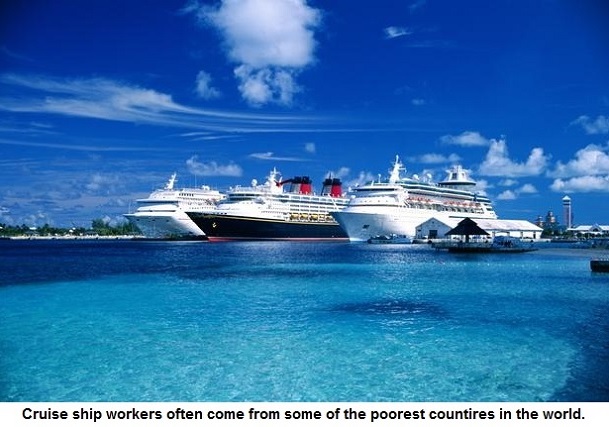
… we cannot beat this industrial giant, so we have to join them [… then beat them].

This “joining-beating” refers to an Industrial Reboot. Yes, as a region, we must first stop the bleeding, then reboot our industrial landscape so as to explore the opportunities associated with Cruise Tourism.

What? How? Why?

Rebooting the industrial landscape means understanding the macro-economic factors affecting a community and then applying changes to assuage negative developments and to exploit the positives. This 800-pound Gorilla is hard to “beat” alone, each Caribbean country will have to collectively-bargain with the Cruise industry – along with the other Caribbean countries – to have any hope of negotiating for changes to this industrial landscape.

This thought is what was related in a previous blog-commentary, from May 6, 2015, by the movement behind the book Go Lean…Caribbean:

The book … opens with the thesis (Page 3) that the problems of the Caribbean are too big for any one member-state to tackle alone. Some of the most popular cruise destinations include the Bahamas, Jamaica, Cayman Islands and Saint Martin. Alone, these port cities/member states cannot effect change on this cruise line industry. But together, as one unified front, the chances for success improves exponentially. The unified front is the Caribbean Union Trade Federation (CU). The term Union is more than a coincidence; it was branded as such by design. The Go Lean book serves as a roadmap for the introduction and implementation of the CU.

The vision of this integration movement is for the region to function as a Single Market.

The book Go Lean…Caribbean asserts that we cannot just maintain the status quo – 1.0 – with Cruise Tourism. The port-city merchants are not happy; the rest of the tourism landscape is not happy; the passengers are not happy; and the cruise line employees are not happy. The book relates:

The Bottom Line for the Caribbean Cruise Industry
The Caribbean is the number one (1) destination for the cruise line industry, with some 10 million passengers a year and an annual growth of 7.4% since 1980. But each cruise line serves multiple ports and so can play one market against the other. They are the “800 pound gorilla that can sleep wherever it chooses”. The cruise line industry “squeezes every bit of copper out of a penny”, challenging their stakeholders to optimize their business model more and more every year – they maximize revenues from the marketplace and minimize their spending. And yet, without the Caribbean as a whole, their product is far less appealing. – Page 193

The only people that are happy with cruise operations are the shareholders of the cruise lines. (It is doubtful that many of these one would be Caribbean stakeholders). The Cruise Tourism 1.0 business model needs to transform to 2.0.

This Go Lean book presents a roadmap to elevate the economic engines in Caribbean society; it details new strategies, tactics and implementations to reboot the Cruise Tourism eco-system. One tactic is to deploy a scheme for Passenger Payment Cards (smartcards or smart-phone applications) that function on the ships and at the port cities. This scheme will also employ NFC technology (Near Field Communications) – so as to glean the additional security benefits of shielding private financial data of the guest and passengers.

Another tactic is to double-down on Culture! We would want to overwhelm cruise passengers with our unique culture. Under 1.0, these passengers only consume a port-city for portions of 1 day. So we need to fill the port-side harbors, courtyards and verandas with so much locally-produced cultural expressions; think: art, parades, dance, song, storytelling, souvenirs …

    … modeling Walt Disney World’s 4 Parks and their afternoon character parades …

… we must overload our guests-passengers so that they feel underserved by the cruise experience, and would prefer a fuller experience. Cruises should be likened to Movie Trailers: “Previews of Coming Attractions”.

This new technological, cultural and economic scheme will usher in change for Cruise Commerce. The Go Lean book projects that 800 new direct jobs can be created just with the proposed Cruise Passenger Payment Card. (Even more indirect jobs – 3.75-to-1 multiplier rate – can be created). This is how the industrial landscape of the Caribbean region can be rebooted, by starting with this mandatory smartcard/chip-card for every cruise passenger.

For this month of July 2018, the phraseology “reboot” has been a consistent theme. This commentary has previously identified a number of different industries that can be rebooted under this Go Lean roadmap. See the list of previous submissions on Industrial Reboots here:

  1. Industrial RebootsFerries 101 – Published June 27, 2017
  2. Industrial RebootsPrisons 101 – Published October 4, 2017
  3. Industrial RebootsPipeline 101 – Published October 5, 2017
  4. Industrial RebootsFrozen Foods 101 – Published October 6, 2017
  5. Industrial RebootsCall Centers 101 – Published July 2, 2018
  6. Industrial RebootsPrefab Housing 101 – Published July 14, 2018
  7. Industrial RebootsTrauma 101 – Published July 18, 2018
  8. Industrial RebootsAuto-making 101 – Published July 19, 2018
  9. Industrial RebootsShipbuilding 101 – Published July 20, 2018
  10. Industrial RebootsFisheries 101 – Published July 23, 2018
  11. Industrial RebootsLottery 101 – Published July 24, 2018
  12. Industrial RebootsCulture 101 – Published July 25, 2018
  13. Industrial RebootsTourism 2.0 – Published July 27, 2018
  14. Industrial Reboots – Cruise Tourism 2.0 – Published Today – July 30, 2018

This 14th (and final) submission to the commentary considers the basics of economic stewardship (financial payments, collective bargaining and labor relations) for the Cruise Tourism industry and how it can harness many jobs if we reboot our industrial landscape to optimize the industry. There is no need for a new commentary; this subject had already been elaborated upon previously. See here the highlights of these two Encores of Go Lean commentaries:

  1. RBC EZPay – Ready for Change” from  January 23, 2015
  2. Cruise Ship Commerce – Getting Ready for Change” from May 6, 2015

See the Encores here:

————————-

1. Go Lean CommentaryRBC EZPay – Ready for Change

It’s time to introduce the Caribbean Dollar (C$) as a regional currency. Though there will be coins and notes, the primary focus will be on electronic transactions. This is the future!

Electronic Payments schemes (card-based & internet) are very important in the strategy to elevate the Caribbean economy, bring change and empower people, process and profits.

According to the subsequent news article, the regional banks – in this case the Royal Bank of Canada (RBC) – are ready for this change.

This Go Lean/CU/CCB roadmap looks to employ electronic payments schemes to impact the growth of the regional economy. There are two CU schemes that relate to this foregoing news story, as they require the demonstrated POS terminals:

  • Cruise Passenger Smartcards – The Go Lean roadmap posits that the cruise industry needs the Caribbean more than the Caribbean needs the industry. But the cruise lines have embedded rules/regulations designed to maximize their revenues at the expense of the port-side establishments. The CU solution is to deploy a scheme for smartcards that function on the ships and at the port cities.
  • e-Commerce Facilitation – The Go Lean roadmap defines that the Caribbean Dollar (C$) will be mostly cashless, an accounting currency. So the Caribbean Central Bank (CCB) will settle all C$ electronic transactions (MasterCard-Visa style or ACH style) and charge interchange/clearance fees. This scheme allows for the emergence of full-throttle e-Commerce activities.

The focus of these schemes is not technology, its economics.  These electronic payments provide the impetus for M1, the economic measurement of currency/money in circulation (M0) plus overnight bank deposits. As M1 values increase, there is a dynamic to create money “from thin-air”, called the money multiplier. The more money in the system, the more liquidity for investment and industrial expansion opportunities.

See the full blog-commentary here.

————————-

2. Go Lean Commentary – Cruise Ship Commerce – Getting Ready for Change

This is the focus of this commentary and advocacy. There are strict divisions of labor on cruise ships – wait staff and cabin stewards are reserved for citizens from Third World countries like the Caribbean and Asia – with terrible pay scales – while the officers/leadership roles are reserved for Europeans-only – Scandinavians proliferate. We appreciate the fact they set aside jobs for people of the Caribbean, but it is unacceptable that job advancements are unattainable. The resultant discrimination is real. Cruise ships, and other maritime vessels in general, are the last bastion of segregation. Descriptors like “modern-day-slavery”, “sweatships” and “extreme poverty” are far too common. Case in point, many ship-domestic staff are “tip earners”, paid only about US$50 a month and expected to survive on the generosity of the passengers’ gratuity.

This is a human resource matter and thusly will be within the sphere of influence for the new HR executive at [Royal Caribbean Cruise Lines or] RCL. While many ships are only governed by maritime laws, injustice is injustice. Good shepherding of Caribbean economic eco-system requires some focus to these bad practices.

The confederacy goal entails accepting that there is interdependence among the Caribbean member-states. Implementation-wise, this shifts the responsibility for cruise line negotiations to a region-wide, professionally-managed, deputized technocracy that can result in greater production and greater accountability.

An advocacy, in this case collective bargaining, on behalf of the oppressed workers in Caribbean waters is a just and honorable cause. The quest of this Go Lean movement is to make the Caribbean region better to live, work and play. Labor practices on cruise ships are therefore within scope of the CU.

This is the change … that now confronts the new RCL HR executive. But the CU quest to elevate Caribbean society should not run afoul of this or any cruise line’s modus operandii. The CU sets out to be their trading partner, not adversarial opponent. This should be win-win.

See the full blog-commentary here.

————-

Download the free e-Book of Go Lean … Caribbean – now!

Sign the petition to lean-in for this roadmap for the Caribbean Union Trade Federation.

Share this post:
, , , ,
[Top]

Commerce of the Seas – Stupidity of the Jones Act

Go Lean Commentary

CU Blog - Commerce of the Seas - Stupidity of the Jones Act - Photo 1In the Caribbean, we are surrounded by water (straits, banks, Atlantic Ocean, Caribbean Sea, etc); if you stare upon the waters in the middle of a sunny day, you start to see a mirage – a distortion in reality. In the Caribbean, we are also surrounded by a lot of stupidity. Make no mistake, this is not a mirage; it is mercantilism*.

In a previous blog, this commentary asserted that the historicity of a lot of stupidity in society is due to Crony-Capitalism:

Someone is getting paid!

This applies in so many areas of American life that Caribbean people can learn lessons from this history and distortion in reality. This commentary is 1 of 4 in a series considering the Lessons in Economic History related to “Commerce of the Seas”, the Crony-Capitalism in laws and practices around the maritime eco-system in the United States … and other countries. The full series is as follows:

  1. Commerce of the Seas – Stupidity of the Jones Act
  2. Commerce of the Seas – Book Review: ‘Sea Power’
  3. Commerce of the Seas – Shipbuilding Model of Ingalls
  4. Commerce of the Seas – Lessons from Alang (India)

The reference to “Commerce” refers to the economic interests of the 30 member-states in the Caribbean region. There are so many Lessons in Economic History for us to glean:

Around the world, countries that had access to the “Sea” have a distinct advantage economically versus countries that were land-locked; i.e. England versus Austria.

Mercantilism dictated that empires force rules and laws to preserve commerce for their home countries. This was also the case for the United States. One prominent law that was instituted was the Jones Act; see more in Appendix B below.

The Jones Act mandates that for a ship to go from one US port to another US port it must be American-made and American flagged. Also, for foreign ships to trade in US Territories, they must first journey to a foreign port before they could journey to another American port to transport goods. This seems “stupid”; but the adherence to this law keeps American maritime commerce options afloat; this means someone is getting paid; see VIDEO in Appendix A below, highlighting a distortion in the reality of Puerto Rico-to US Mainland trade.

How about the Caribbean, do we have or need maritime “protectionism” in the laws of the member-states of our region? The answer is affirmative for the dysfunctional US Territories; there is a need for economic regionalism, not protectionism.

The US Territories of Puerto Rico and the US Virgin Islands are also regulated by the Jones Act. According to the encyclopedic reference (in Appendix B below), this is not good; it hinders economic development!

In March 2013, the Government Accountability Office (GAO) released a study of the effect of the Jones Act on Puerto Rico that noted “freight rates are set based on a host of supply and demand factors in the market, some of which are affected directly or indirectly by Jones Act requirements.” The report further concludes … [that] freight rates between the United States and Puerto Rico are affected by the Jones Act.” The report also addresses what would happen “under a full exemption from the Act, the rules and requirements that would apply to all carriers would need to be determined.” The report continues that “while proponents of this change expect increased competition and greater availability of vessels to suit shippers’ needs” …

The American territories in the Caribbean are in the middle of the Caribbean geography, rimming the Caribbean Sea. The “Laws of the Sea” need to reflect this reality and not just political alignments. This is the purpose of the book Go Lean … Caribbean, to help reform and transform the societal engines for the 30 member-states of the Caribbean region. The book specifically addresses customization to the “Laws of the Sea” to benefit the Caribbean region. The book serves as a roadmap for the introduction and implementation of the Caribbean Union Trade Federation (CU). This would be the governmental entity for a regional Single Market that covers the land territories of the 30 member-states, and their aligning seas; (including the 1,063,000 square miles of the Caribbean Sea in an Exclusive Economic Zone). The Go Lean/CU roadmap features this prime directive, as defined by these 3 statements:

  • Optimization of the economic engines to grow the regional economy to $800 Billion & create 2.2 million new jobs.
  • Establishment of a security apparatus to protect public safety and ensure the economic engines of the region, including the seas.
  • Improvement of Caribbean governance to support these engines in local governments and in the Exclusive Economic Zone, including a separation-of-powers between the member-states and CU federal agencies.

The Go Lean roadmap allows for the regional stewardship and administration of the commerce on the Caribbean Seas in collaboration, conjunction and cooperation with US legal jurisdiction and foreign entities. The legal premise for this strategy is an Interstate Compact & Treaty – see details in the Go Lean book (Page 278) or the photo-excerpt in Appendix IA below  – legislated by the US Congress, independent Caribbean governments (17) and the colonial masters for the existing overseas territories:

  • France (Guadeloupe, Martinique, St. Martin, St. Barthélemy)
  • The Netherlands (Aruba, Bonaire, Curaçao, Saba, Sint Eustatius, Sint Maarten)
  • United Kingdom (Anguilla, Bermuda, Cayman Islands, Montserrat, Turks & Caicos and the British Virgin Islands)

Such a wide-ranging, fully-encompassing Compact-Treaty was an original intent of the Go Lean book – economic regionalism. The publication (published in November 2013) commenced with a Declaration of Interdependence, pronouncing the need for regional coordination and integration so as to reform and transform Caribbean society. See a sample of relevant stanzas here (Page 11 – 13):

v. Whereas the natural formation of our landmass and coastlines entail a large portion of waterscapes, the reality of management of our interior calls for extended oversight of the waterways between the islands. The internationally accepted 12-mile limits for national borders must be extended by International Tribunals to encompass the areas in between islands. The individual states must maintain their 12-mile borders while the sovereignty of this expanded area, the Exclusive Economic Zone, must be vested in the accedence of this Federation.

vi. Whereas the finite nature of the landmass of our lands limits the populations and markets of commerce, by extending the bonds of brotherhood to our geographic neighbors allows for extended opportunities and better execution of the kinetics of our economies through trade. This regional focus must foster and promote diverse economic stimuli.

xi. Whereas all men are entitled to the benefits of good governance in a free society, “new guards” must be enacted to dissuade the emergence of incompetence, corruption, nepotism and cronyism at the peril of the people’s best interest. The Federation must guarantee the executions of a social contract between government and the governed.

xxiii. Whereas many countries in our region are dependent Overseas Territory of imperial powers, the systems of governance can be instituted on a regional and local basis, rather than requiring oversight or accountability from distant masters far removed from their subjects of administration. The Federation must facilitate success in autonomous rule by sharing tools, systems and teamwork within the geographical region.

The foregoing Jones Act is an American legislation that probably needs to be repealed or revised to reflect the actuality of a globalized economy; (there are some good provisions related to injury of seamen). Consider this recent experience recorded by a commentator on a news site, below an article regarding the efforts to repeal the Jones Act:

John David Oct 25, 2016 at 7:38 pm

The Act does not Protect the Ports and Waterways, that task is left to the US Navy and US Coast Guard. We have Significant Ports on the US Mainland. None of them have had any security issues with Foreign Flagged Vessels. Trade is restrictive to and from places like Puerto Rico, Hawaii, Guam Etc.

Therefore business that could be entertained and cultivated providing a boost in their respective economies, those areas economically are suppressed. The United States has a significant Naval and Coast Guard presence in each of these areas. An example of how this stifles the economy would be to take a guitar manufacturer located on the Big Island of Hawaii. The Big Island has an abundance of Koa wood, a highly sought after wood for the manufacture of wooden guitars. However if they wanted to ship their guitars to a distributor in Australia, they have to first ship it to the USA mainland. They then Offload it and re-ship it to Australia, The interesting part of this story is that many times the costs for shipping it to Australia are less than it was to ship it to the US Mainland on the initial leg. So as you can see this stifles any possible USA productivity. And maybe that is why no one in Hawaii is Mfg guitars, or hardly anything else for that matter.

Original News Article: The Triton – Nautical News – Published January 26, 2015; retrieved June 8, 2017 from: http://www.the-triton.com/2015/01/mccain-repeal-jones-act/

CU Blog - Commerce of the Seas - Stupidity of the Jones Act - Photo 3

Reforming America is out-of-scope for the Go Lean movement, notwithstanding Puerto Rico and the US Virgin Islands. Our quest is to reform and transform the Caribbean … only. The Go Lean book provides 370-pages of turn-by-turn instructions on “how” to adopt new community ethos for economic regionalism, plus the strategies, tactics, implementations and advocacies to execute so as to reboot, reform and transform the maritime commerce to benefit Caribbean society.

The issue of rebooting maritime commerce has been a frequent subject for previous blog-commentaries; consider this list of sample entries:

https://goleancaribbean.com/blog/?p=11544 Forging Change in the Cruise Industry with Collective Bargaining
https://goleancaribbean.com/blog/?p=5210 Cruise Ship Commerce – Getting Ready for Change
https://goleancaribbean.com/blog/?p=4639 Tobago: A Model for Cruise Tourism
https://goleancaribbean.com/blog/?p=4037 One mission for Maritime Commerce: Expanding Shipbuilding
https://goleancaribbean.com/blog/?p=3594 Better Fisheries Management for Queen Conch
https://goleancaribbean.com/blog/?p=2003 Where the Jobs Are in Maritime Commerce? Consider Shipbreaking
https://goleancaribbean.com/blog/?p=673 Ghost ships – Autonomous cargo vessels without a crew

All Caribbean members are islands or coastal territories. There is a need to reform maritime commerce for the Caribbean region; we can get more economic activity from this sector; the Go Lean book projects 15,000 new direct jobs in the shipbuilding industry, 4000 in fisheries and 800 jobs by reforming payment systems for cruise passengers. The possibility of new jobs are positive economic fruitage from considering a reboot of maritime eco-system; it would be stupid not to try.

Previous generations in the Caribbean lived off the sea; we can again; it would be stupid not to try. This plan is conceivable, believable and achievable. We urge all Caribbean stakeholders – seafarers and land-lovers – to lean-in to this roadmap for economic empowerment. We can make the Caribbean homeland and seas better places to live, work and play. 🙂

Download the free e-book of Go Lean … Caribbean – now!

Sign the petition to lean-in for this roadmap for the Caribbean Union Trade Federation. 

————-

Appendix A VIDEO – The Jones Act And The Debt Crisis https://youtu.be/PFnrGcP1OyE

Published on Sep 27, 2016 – Nelson Denis talks about the Jones Act.

In addition, see the FULL Documentary on the Jones Act Explanation: https://youtu.be/GpwzoDGDGAQ

————-

Appendix B: Merchant Marine Act of 1920 aka Jones Act

The Merchant Marine Act of 1920 (P.L. 66-261), also known as the Jones Act, is a United States federal statute that provides for the promotion and maintenance of the American merchant marine.[1] Among other purposes, the law regulates maritime commerce in U.S. waters and between U.S. ports. Section 27 of the Jones Act deals with cabotage and requires that all goods transported by water between U.S. ports be carried on U.S.-flag ships, constructed in the United States, owned by U.S. citizens, and crewed by U.S. citizens and U.S. permanent residents.[2] The act was introduced by Senator Wesley Jones.

Laws similar to the Jones Act date to the early days of the nation. In the First Congress, on September 1, 1789, Congress enacted Chapter XI, “An Act for Registering and Clearing Vessels, Regulating the Coasting Trade, and for other purposes”, which limited domestic trades to American ships meeting certain requirements.[3]

The Merchant Marine Act of 1920 has been revised a number of times; the most recent revision in 2006 included recodification in the U.S. Code.[2] In early 2015 Senator John McCain filed for an amendment that would essentially annul the Act.[4] [The amendment failed].

The Jones Act is not to be confused with the Death on the High Seas Act, another United States maritime law that does not apply to coastal and in-land navigable waters.

Objectives and purpose
The intention of Congress to ensure a vibrant United States maritime industry is stated in the preamble to the Merchant Marine Act of 1920.[5]

Cabotage
Cabotage is the transport of goods or passengers between two points in the same country, alongside coastal waters, by a vessel or an aircraft registered in another country. Originally a shipping term, cabotage now also covers aviation, railways, and road transport. Cabotage is “trade or navigation in coastal waters, or the exclusive right of a country to operate the air traffic within its territory”.[6] In the context of “cabotage rights”, cabotage refers to the right of a company from one country to trade in another country. In aviation terms, for example, it is the right to operate within the domestic borders of another country. Most countries enact cabotage laws for reasons of economic protectionism or national security.[citation needed]

The cabotage provisions relating to the Jones Act restrict the carriage of goods or passengers between United States ports to U.S.-built and flagged vessels. It has been codified as portions of 46 U.S.C. [7] Generally, the Jones Act prohibits any foreign-built, foreign-owned or foreign-flagged vessel from engaging in coastwise trade within the United States. A number of other statutes affect coastwise trade and should be consulted along with the Jones Act. These include the Passenger Vessel Services Act, 46 USC section 289 which restricts coastwise transportation of passengers and 46 USC section 12108 restricts the use of foreign vessel to commercially catch or transport fish in U.S. waters.[8] These provisions also require at least three-fourths of the crewmembers to be U.S. citizens. Moreover, the steel of foreign repair work on the hull and superstructure of a U.S.-flagged vessel is limited to ten percent by weight.

Effects
The Jones Act prevents foreign-flagged ships from carrying cargo between the US mainland and noncontiguous parts of the US, such as Puerto Rico, Hawaii, Alaska, and Guam.[11] Foreign ships inbound with goods cannot stop any of these four locations, offload goods, load mainland-bound goods, and continue to US mainland ports. Instead, they must proceed directly to US mainland ports, where distributors break bulk and then send goods to US places off the mainland by US-flagged ships.[11] Jones Act restrictions can be circumvented by making a stop in a foreign country between two US ports, e.g., Anchorage–Vancouver–Seattle.

Puerto Rico
Studies by the World Economic Forum and Federal Reserve Bank of New York have concluded that the Jones Act hinders economic development in Puerto Rico.[12]

In March 2013, the Government Accountability Office (GAO) released a study of the effect of the Jones Act on Puerto Rico that noted “[f]reight rates are set based on a host of supply and demand factors in the market, some of which are affected directly or indirectly by Jones Act requirements.” The report further concludes, however, that “because so many other factors besides the Jones Act affect rates, it is difficult to isolate the exact extent to which freight rates between the United States and Puerto Rico are affected by the Jones Act.” The report also addresses what would happen “under a full exemption from the Act, the rules and requirements that would apply to all carriers would need to be determined.” The report continues that “[w]hile proponents of this change expect increased competition and greater availability of vessels to suit shippers’ needs, it is also possible that the reliability and other beneficial aspects of the current service could be affected.” The report concludes that “GAO’s report confirmed that previous estimates of the so-called ‘cost’ of the Jones Act are not verifiable and cannot be proven.”[13]

In the Washington Times, Rep. Duncan Hunter spoke to the need for the Jones Act and why it is not to blame for the island’s debt crisis. “With or without such an effort, it’s imperative not to conflate the unrelated issues of Puerto Rico’s debt and the Jones Act, and to fully grasp the importance of ensuring the safe transport of goods between American ports. There must also be acknowledgment of the dire consequences of exposing ports and waterways to foreign seafarers.”[14]

[See VIDEO in Appendix A above].

US shipbuilding
Because the Jones Act requires all transport between US ports be carried on US-built ships, the Jones Act supports the domestic US shipbuilding industry.[15][16]Critics of the act describe it as protectionist, harming the overall economy for the sake of benefiting narrow interests.[17][18] Other criticism argues that the Jones Act is an ineffective way to achieve this goal, claiming it drives up shipping costs, increases energy costs, stifles competition, and hampers innovation in the U.S. shipping industry[19] – however, multiple GAO reports have disputed these claims.[20]

Source: Retrieved June 8, 2017 from: https://en.wikipedia.org/wiki/Merchant_Marine_Act_of_1920

[See the FULL Documentary on the Jones Act Explanation: https://youtu.be/GpwzoDGDGAQ]

————-

Appendix IA – Interstate Compacts

Since Puerto Rico and the Virgin Islands are US Territories, their implementation of the provisions of the Caribbean Union Trade Federation must legally be construed as an Interstate Compact.

An Interstate Compact is an agreement between two or more states of the US. Article I, Section 10 of the US Constitution provides that “no state shall enter into an agreement or compact with another state” without the consent of Congress. Frequently, these agreements create a new governmental agency which is responsible for administering or improving some shared resource such as a seaport or public transportation infrastructure. In some cases, a compact serves simply as a coordination mechanism between independent authorities in the member states.

CU Blog - Commerce of the Seas - Stupidity of the Jones Act - Photo 2

Click on photo to enlarge

————-

Footnote Reference – * Mercantilism

A system of political and economic policy, evolving with the modern national state and seeking to secure a nation’s political and economic supremacy in its rivalry with other states. According to this system, money was regarded as a store of wealth, and the goal of a state was the accumulation of precious metals, by exporting the largest possible quantity of its products and importing as little as possible, thus establishing a favorable balance of trade.
Source: Retrieved June 8, 2017 from: http://www.dictionary.com/browse/mercantile-system

Share this post:
, , , , , ,
[Top]

Forging Change: Collective Bargaining

Go Lean Commentary

Want to re-negotiate? You must be prepared to  give the other party something they don’t currently have:

To the Caribbean Cruise industry, we present you: a Single Market of 42 million consumers.

CU Blog - Forging Change - Consuming Cruises - Photo 1

These 42 million people were always there, just not considered potential customers for the Cruise Line Industry. But money is money; it still spends the same way.

This seems so familiar!

This feels like the Southern US during the days of Jim Crow Racial Segregation. The US States practicing these policies where the “best place to live” if you were White. The Black people were there, facilitating and supporting commerce and industry, but were not supposed to be seen; they were 2nd Class citizens … in their own country. The Merchants wanted their money, just not their presence.

If you were Black and wanted to get lunch from a cafeteria, you had to “Go outback and get brown bag food from the kitchen”, while White customers got the hospitality of in-store dining.

Same money; different respect. The protests against this blatant wrong practice galvanized the US and the Civil Rights movement. See photos here:

CU Blog - Forging Change - Consuming Cruises - Photo 3

CU Blog - Forging Change - Consuming Cruises - Photo 2

CU Blog - Forging Change - Consuming Cruises - Photo 4

See the news article in the Appendix below, commemorating the 50th Anniversary of the Civil Rights Struggles of the early 1960’s. It has been 53 years now, since the abolition of this bad policy with the Civil Rights Act of 1964. This history is sitting here as a teaching moment for us in the Caribbean:

Has our region learned any lessons from this history?

It can be concluded that the answer is “No”! We have tolerated an unjust system here in our region in which the 42 million residents in the Caribbean have been treated as 2nd Class citizens … in their own countries regarding local cruise consumption.

Fact:
If you’re a Caribbean citizen and you want to take a Caribbean cruise, you have to fly to Miami, Ft. Lauderdale, Tampa, Port Canaveral, Baltimore, New York or Puerto Rico to originate the cruise, even though the ships itinerary may come right to your Caribbean port. This means you Nassau, Montego Bay, Grand Cayman, St Thomas, St. Martin and others.

Welcome to 1960’s … redux!

There is the need to forge change in the Caribbean; the same as there was the need to forge change in 1960’s America. Consuming cruises is just one of the challenges that we have to contend with in our region. This is reflective of the disrespect that exists in our society. We have dysfunctions in our economics, security and governing engines. We are 2nd class citizens on the world stage! We have the greatest address on the planet – demonstrated in that 80 million tourists consume our marketplace every year, 10 million via cruises – and yet our own people have to break down the doors to get out to find the respectful life that they need, want and deserve in foreign countries.

Enough! Time to change … here … now! But how?

This is the quest of the movement behind the book Go Lean…Caribbean. It presents a roadmap to change – to elevate – Caribbean society by rebooting the economic, security and governing engines in the 30 member-states that constitute the Caribbean. The book opens with the thesis (Page 3) that the problems of the Caribbean are too big for any one member-state to tackle alone. Cruise vacations are not one of our biggest problems, but the issues here-in are indicative of the lack of respect we have in our region and as a region of 30 separate entities. We need the change of being considered one entity; we need Collective Bargaining. Yes, it makes us more formidable in our negotiations with the Cruise Lines, but as stated in the opening, it also brings something new to the table that the Cruise Lines do not currently have: our 42 million local consumers.

According to a previous Go Lean blog-commentary, this could be a win-win for all stakeholders connected to the cruise tourism eco-system:

Some of the most popular cruise destinations include the Bahamas, Jamaica, Cayman Islands and Saint Martin. Alone, these port cities/member states cannot effect change on this cruise line industry. But together, as one unified front, the chances for success improves exponentially. The unified front is the Caribbean Union Trade Federation (CU). The term Union is more than a coincidence; it was branded as such by design. The Go Lean book serves as a roadmap for the introduction and implementation of the CU.

The vision of this integration movement is for the region to function as a Single Market. The quotation from the Go Lean book continues in advocating that the Caribbean member-states (independent & dependent) lean-in to this plan for confederacy, convention and collaboration. This is Collective Bargaining 101. From the outset, the book recognized the significance of our exercising authority over the Caribbean Seas. This point was pronounced in the opening Declaration of Interdependence (Page 11):

    v. Whereas the natural formation of our landmass and coastlines entail a large portion of waterscapes, the reality of management of our interior calls for extended oversight of the waterways between the islands. The internationally accepted 12-mile limits for national borders must be extended by International Tribunals to encompass the areas in between islands. The individual states must maintain their 12-mile borders while the sovereignty of this expanded area, the Exclusive Economic Zone, must be vested in the accedence of this Federation.

The confederacy goal entails accepting that there is interdependence among the Caribbean member-states. Implementation-wise, this shifts the responsibility for cruise line negotiations to a region-wide, professionally-managed, deputized technocracy that can result in greater production and greater accountability.

So this is one strategy for forging change in our region, in this case: collective bargaining, on behalf of the 42 million consumers in the Caribbean. This is a continuation of the various strategies, tactics and implementations that have been considered for forging change here in the homeland. These have been identified in a series of previous Go Lean blog-commentaries over the past 2 & 1/2 years, this is the tenth submission. These were presented as follows, in reverse chronological order:

  1. Forging Change – Collective Bargaining (Today)
  2. Forging Change – Addicted to Home (April 14, 2017)
  3. Forging Change – Arts & Artists (December 1, 2016)
  4. Forging Change – Panem et Circenses (November 15, 2016)
  5. Forging Change – Herd Mentality (October 11, 2016)
  6. Forging Change – ‘Something To Lose’ (November 18, 2015)
  7. Forging Change – ‘Food’ for Thought (April 29, 2015)
  8. Forging Change – Music Moves People (December 30, 2014)
  9. Forging Change – The Sales Process (December 22, 2014)
  10. Forging Change – The Fun Theory (September 9, 2014)

This commentary is urging Caribbean stakeholders to come together – to collaborate, convene and confederate – to better negotiate with Third Parties to forge change and impact the people that live, work and play here in the Caribbean.

This quest is conceivable, believable and achievable. Look at this news article here that depicts that one Cruise Line (Tropicana Cruises) and one port city (Port Castries, St. Lucia) who have implemented a strategy of local consumption. (The arrangement exists for other ports as well, as in Trinidad).

Title: New cost effective way for St. Lucians to cruise the Caribbean 

Saint Lucians now have a cost effective way to cruise the Caribbean.

Minister in the Office of the Prime Minister with responsibility for tourism, Hon. Dominic Fedee, was on hand to greet the crew of the MV Adriana for its maiden call to Port Castries.

Accompanied by the Executive Chairperson of the Saint Lucia Tourist Board (SLTB) Agnes Francis, the minister said he was pleased at what this new development means for the people of Saint Lucia.

“Saint Lucians will now have a chance to board a cruise from Port Castries without having to fly to any destination or any other home port but right here from Saint Lucia,” he said.

Owner of the MV Adriana Captain Sergey Poniatovsky gave a background to the rationale of the visa-free Caribbean cruise.

“This ship is very unique, it is not like any other cruise ship. The ship is specifically for Caribbean islands, it is like a discovery vessel, with a family and private yacht atmosphere. We have an incredible itinerary which allows people living within these West Indies to have a synergy between islands. We have the opportunity to show each island nation as a destination and bring families together.”

In addition to touring the ship, the minister and the ship captain exchanged gifts to mark the momentous occasion.

Information on the MV Adriana Caribbean cruise can be found at the Saint Lucia Tourist Board and local travel agents.
Source: St Lucia Times Daily Newspaper – Posted March 30, 2017; retrieved April 27, 2017 from: https://stluciatimes.com/2017/03/30/new-cost-effective-way-st-lucians-cruise-caribbean

CU Blog - Forging Change - Consuming Cruises - Photo 0

This quest for collective bargaining (negotiations) is both an art and a science. The Go Lean book describes this fact in a chapter on negotiations entitled  (Page 32):

10 Ways to Improve Negotiations

#2 – Bargain from Position of Strength
For the CU, negotiation is an art and a science. As a technocratic institution representing the economic integration of the region, we must project the Single Market as bigger than initial appearances. The CU represents 42 million people in 30 member-states, with a GDP of over $800 Billion, but also some 8 million [to 20 million] engaged members of the Caribbean Diaspora, scattered throughout the US, Canada and EU countries. There are also many visitors, one estimate is at 80 million yearly. The economic opportunities, catering to this market, can be quite enormous, once properly exploited.

What is the art?

The fact that different people get different results from negotiations is indicative of the fact that not all people are Negotiating Artist.

Sounds familiar?

This was the campaign line from Donald J. Trump, the 45th President of the United States. Previously as a successful business man and media star, he was proud of his artistic accomplishment in the arena of negotiations. His co-wrote this book to this effect:

Book title: “The Art of the Deal”

President Donald J. Trump lays out his professional and personal worldview in this classic work—a firsthand account of the rise of America’s foremost deal-maker.

CU Blog - Forging Change - Consuming Cruises - Photo 5

“I like thinking big. I always have. To me it’s very simple: If you’re going to be thinking anyway, you might as well think big.”—Donald J. Trump

Here is Trump in action—how he runs his organization and how he runs his life—as he meets the people he needs to meet, chats with family and friends, clashes with enemies, and challenges conventional thinking. But even a maverick plays by rules, and Trump has formulated time-tested guidelines for success. He isolates the common elements in his greatest accomplishments; he shatters myths; he names names, spells out the zeros, and fully reveals the deal-maker’s art. And throughout, Trump talks—really talks—about how he does it. Trump: The Art of the Deal is an unguarded look at the mind of a brilliant entrepreneur—the ultimate read for anyone interested in the man behind the spotlight.
Source: Amazon.com retrieved April 27, 2017 from: https://www.amazon.com/Trump-Art-Deal-Donald-J/dp/0399594493

What about the science?

Nobel Prize Winner John F. Nash (1928 – 2015) is best known for his landmark work in applying science to the process of collective bargaining and negotiations (Game Theory). He was the subject character in the Hollywood movie: A Beautiful Mind; see Movie Trailer in the Appendix VIDEO. These encyclopedia details relate:

He was a mathematician who made fundamental contributions to game theorydifferential geometry, and the study of partial differential equations.[2][3] Nash’s work has provided insight into the factors that govern chance and decision-making inside complex systems found in everyday life.

His theories are widely used in Economics. Serving as a Senior Research Mathematician at Princeton University during the latter part of his life, he shared the 1994 Nobel Memorial Prize in Economic Sciences with game theorists Reinhard Selten and John Harsanyi. …

Nash earned a Ph.D. degree in 1950 with a 28-page dissertation on Non-cooperative Games.[13][14] His thesis contained the definition and properties of the [now widely accepted] Nash Equilibrium.

—–

The Nash equilibrium – a subset of game theory – is a solution concept of a non-cooperative game involving two or more players in which each player is assumed to know the equilibrium strategies of the other players, and no player has anything to gain by changing only his or her own strategy.[1] If each player has chosen a strategy and no player can benefit by changing strategies while the other players keep theirs unchanged, then the current set of strategy choices and the corresponding payoffs constitutes a “Nash Equilibrium”. The Nash equilibrium is one of the foundational concepts in game theory. The reality of the Nash Equilibrium of a game can be tested using experimental economics methods.

Stated simply, Amy and Phil are in Nash Equilibrium if Amy is making the best decision she can, taking into account Phil’s decision while Phil’s decision remains unchanged, and Phil is making the best decision he can, taking into account Amy’s decision while Amy’s decision remains unchanged. Likewise, a group of players are in Nash equilibrium if each one is making the best decision possible, taking into account the decisions of the others in the game as long as the other party’s decision remains unchanged.

Applications
Game theorists use the Nash equilibrium concept to analyze the outcome of the strategic interaction of several decision makers. In other words, it provides a way of predicting what will happen if several people or several institutions are making decisions at the same time, and if the outcome depends on the decisions of the others. The simple insight underlying John Nash’s idea is that one cannot predict the result of the choices of multiple decision makers if one analyzes those decisions in isolation. Instead, one must ask what each player would do, taking into account the decision-making of the others.

Nash equilibrium has been used to analyze hostile situations like war and arms races[2] (see prisoner’s dilemma), and also how conflict may be mitigated by repeated interaction (see tit-for-tat). It has also been used to study to what extent people with different preferences can cooperate (see battle of the sexes), and whether they will take risks to achieve a cooperative outcome (see stag hunt). It has been used to study the adoption of technical standards,[citation needed] and also the occurrence of bank runs and currency crises (see coordination game). Other applications include traffic flow (see Wardrop’s principle), how to organize auctions (see auction theory), the outcome of efforts exerted by multiple parties in the education process,[3] regulatory legislation such as environmental regulations (see tragedy of the Commons),[4] analysing strategies in marketing[5] and even penalty kicks in football [(soccer)] (see matching pennies).[6]
Source: Retrieved April 27, 2017 from https://en.wikipedia.org/wiki/John_Forbes_Nash_Jr.; https://en.wikipedia.org/wiki/Nash_equilibrium

The Caribbean Union Trade Federation (CU) is presented in the Go Lean book as a technocratic organization, where best-practices (art) and scientific methods are the norm. The book features the following chapter (Page 64):

Fostering a Technocracy

#1 – Lean-in for the Caribbean Single Market.
This treaty calls for a technocratic confederation of the Caribbean region into a single market of 30 member-states and 42 million people. The term technocracy was originally used to designate the application of the scientific method to solving social & economic problems, in counter distinction to the traditional political or philosophic approaches. The CU must start as a technocratic confederation – a Trade Federation – rather than evolving to this eventuality due to some failed-state status or insolvency.

The art-and-science of negotiation is part-and-parcel of the heavy-lifting the Go Lean movement envisions for the Caribbean technocracy. Considering the natural law: “Reap what you sow”, we should be able to generate the benefits anticipated in the stated prime directives, identified with the following 3 statements:

  • Optimization of the economic engines in order to grow the regional economy to $800 Billion & create 2.2 million new jobs.
  • Establishment of a security apparatus to protect the resultant economic engines.
  • Improvement of Caribbean governance to support these engines.

Underlying to this issue of collective bargaining and negotiation is the quest to forge changes in the cruise industry – jobs and commerce are at stake. The Go Lean movement has frequently blogged on issues and efforts related to improving the cruise eco-system for the region. Consider these samples:

https://goleancaribbean.com/blog/?p=6635 New Security Chip in Credit Cards Unveiled
https://goleancaribbean.com/blog/?p=5993 Carnival to ban carry-on bottled beverages
https://goleancaribbean.com/blog/?p=5307 Cruise Passengers and Violent Crime Warnings
https://goleancaribbean.com/blog/?p=5210 Cruise Ship Commerce – Getting Ready for Change
https://goleancaribbean.com/blog/?p=4639 Tobago: A Model for Cruise Tourism
https://goleancaribbean.com/blog/?p=3889 Electronic Payments– Ready for Change in Cruise Commerce
https://goleancaribbean.com/blog/?p=3225 Regional aviation dysfunction leading to more cruise traffic

The elevation of cruise commerce in the region is one of 144 missions within the Go Lean roadmap. The book details the applicable community ethos, strategies, tactics, implementation and advocacies to succeed in these efforts. The Go Lean book explains that the benefits of this roadmap will not just happen, we must act; we must change and adapt to the changing world. The Cruise Line industry must also change, but we must present the end-result of these changes as win-win for all regional stakeholders.

In the end, the changes will be for the better; for the Greater Good and to promote a better partnership for all cruise industry stakeholders. These efforts will make Caribbean ports-of-call a better destination to live, work and play. 🙂

Download the free e-book of Go Lean … Caribbean – now!

Sign the petition to lean-in for the roadmap for the Caribbean Union Trade Federation.

————-

Appendix Title: Key Clubs and the Slow Death of Restaurant Segregation

Soon after President Johnson signed the Civil Rights Act of 1964 into law on July 2, hundreds of restaurants across the South integrated.

I wrote about some of them in a recent Garden & Gun feature:

On July 3, Cafe du Monde, the coffee and beignet stand in the French Quarter of New Orleans, served its first black customers without incident. On July 5, the Sun and Sand motel in Jackson, Mississippi, served its first black dining room client, but closed the swimming pool.

Dozens more refused to desegregate. In the years after, the names of those restaurant owners became infamous:  McClung in Alabama. Bessinger in South Carolina. Boyd in Georgia.

Their stories of defiance have long fascinated me.

One of the longest-running standoffs occurred in Shaw, Mississippi, where Dinty Moore owned and operated the Shady Nook. Over the course of a fifty-two year career, Dinty Moore, who died in 1984, never served a black man or woman in his restaurant’s dining room.

For an Oxford American column, published in 2000, I spoke with his son, Dana Moore:

“I talked to daddy about that back when the law was passed,” Dana told me. “I was serving in the legislature then and it seemed like everybody was looking for a way around the law. Things were different then. Daddy was thinking about making the café into a private club like some places were doing. I advised him that if he did, he needed to do it legally, to incorporate and get chartered as a bona fide private club. Next thing I knew, he was selling keys to the place for a dollar apiece and calling it the Shady Nook Key Club.”

Soon thereafter, the front door to the green masonry building was locked for good and a one-way mirror was installed so that Dinty Moore could see out but no one could see in. A door key or a smiling white face became the coin of the realm for those seeking admittance to the Shady Nook.

In this moment when we justly celebrate how far we have come since 1964, it’s also important to recognize that the struggle for equal access to public accommodations didn’t end on July 2 of that year.
Source: Posted July 1, 2014; retrieved April 27, 2017 from: https://www.southernfoodways.org/directors-cut-key-clubs-and-the-slow-death-of-restaurant-segregation/

—————

Appendix VIDEO – A Beautiful Mind Movie (2001) Official Trailerhttps://youtu.be/YWwAOutgWBQ

Share this post:
, , , ,
[Top]

New Security Chip in Credit Cards Unveiled

Go Lean Commentary

CU Blog - New Security Chip in Credit Cards Unveiled - Photo 1Big changes are coming to credit cards, as of today, Thursday, October 1, 2015.

The credit card industry is advancing, moving forward. The Caribbean should likewise be advancing, moving forward.

A previous blog-commentary demonstrated that the region’s banks are ready to accept electronic payment transactions, that their deployment of credit card terminals allow the introduction of the Caribbean Dollar (C$) as a regional currency. Well now, those terminals need to be upgraded …

… or the merchants will suffer the resultant risks.

CU Blog - New Security Chip in Credit Cards Unveiled - Photo 2The world has already moved forward from the standard of magnetic stripe cards. The present is now smart cards…or no card at all; (payment apps on Google’s Android and Apple’s iPhone devices proliferate). The future of the credit, debit and payment card is more than a card, it’s a “computer science laboratory” in a pocket or purse!

Yes, payment systems in the Caribbean region must be ready for this new world of electronic commerce.

Getting the region ready was the mission of the book Go Lean … Caribbean, a roadmap for the introduction and implementation of the Caribbean Union Trade Federation (CU) and the Caribbean Central Bank (CCB). This Go Lean roadmap depicts these entities as hallmarks of technocratic efficiency; agile to not just keep pace of technology and market changes but also to drive change as well. This ability is necessary for new payment systems, new cards and new settlement schemes. The Go Lean roadmap calls for a regional currency for the Caribbean Single Market, the Caribbean Dollar (C$), to be used primarily as an electronic currency. These schemes will impact the growth of the regional economy in both the domestic and tourist markets. Consider this one CU scheme to incentivize more spending among cruise line passengers:

CU Blog - New Security Chip in Credit Cards Unveiled - Photo 3The cruise industry needs the Caribbean more than the Caribbean needs the industry. But the cruise lines have embedded rules/regulations designed to maximize their revenues at the expense of the port-side establishments. The CU solution is to deploy a scheme for smartcards (or smart-phone applications) that function on the ships and at the port cities. This scheme will also employ NFC technology – (Near Field Communications; defined fully at Page 192 – so as to glean the additional security benefits of shielding private financial data of the guest and passengers.

This is an example of an electronic payment system facilitating more commerce (e-Commerce). So the CCB will settle all C$ electronic transactions – cashless or accounting currency – in a MasterCard-Visa-style interchange / clearinghouse system.

As of October 1, 2015 bankcards must possess a smartchip, or assume the risk of fraud transactions; see VIDEO below. The CU/CCB roadmap anticipated smartchips from the outset of the Go Lean book, as this covers more than just commerce, but addresses security as well. Commerce, security and (bank) governance – these are all societal engines that must be optimized for societal progress. In  fact, the Go Lean roadmap has these 3 prime directives:

  • Optimization of the economic engines in order to grow the regional economy to $800 Billion & create 2.2 million new jobs.
  • Establishment of a security apparatus to protect the resultant economic engines.
  • Improvement of Caribbean governance to support these engines.

So the electronic payments schemes being considered by the rest of the world in the following article, are already envisioned for deployment in the Caribbean region:

VIDEO – New Security Chip in Credit Cards Unveiled – http://abcnews.go.com/WNT/video/security-chip-credit-cards-unveiled-34114798

Posted September 28, 2015 – New law required each card to be outfitted with a credit card chip that makes it harder to steal personal information.

The benefits of these technologies, as related in the foregoing VIDEO, cannot be ignored for their security features. Previously this commentary explored the issues associate with cyber-security and data breaches. With tourism as the primary economic driver, the Caribbean region cannot invite millions of visitors to our homeland and then ignore their need for protection; the kind of protection that has become standard in this new world of heightened information security.

The Go Lean roadmap calls for the CU to regulate the region’s Communications and Media affairs – federal Department of Commerce – under a separation-of-power mandate with the member-states. This authority must be super-national and have purview for cross-border environments.

With the CCB taking the lead for this deployment, the effort is not meant to be technical, but rather economic. The greatest benefit of deploying these electronic payment scheme is the acceleration of M1 in the regional economy; this is the measurement of currency/money in circulation (M0) plus overnight bank deposits. As depicted in the Go Lean book, and subsequent blog-commentaries, M1 increases allow central banks to create money “from thin-air”; referring to the money multiplier.

The Caribbean region needs this benefit. The more money in the system, the more liquidity for investment and industrial expansion opportunities. Plus, the nullifying effects on Black Market spurns more benefits.

The Go Lean book posits that to adapt and thrive in the new global marketplace there must be more strenuous management and technocratic oversight of the region’s currencies, guests-tourists-ship-passenger payment cards and cyber security. This is the charge – economics, security and governance – of the Go Lean roadmap, opening with these pronouncements; Declaration of Interdependence (Page 13 and 14):

xxiv. Whereas a free market economy can be induced and spurred for continuous progress, the Federation must install the controls to better manage aspects of the economy: jobs, inflation, savings rate, investments and other economic principles. Thereby attracting direct foreign investment because of the stability and vibrancy of our economy.

xxv.  Whereas the legacy of international democracies had been imperiled due to a global financial crisis, the structure of the Federation must allow for financial stability and assurance of the Federation’s institutions. To mandate the economic vibrancy of the region, monetary and fiscal controls and policies must be incorporated as proactive and reactive measures. These measures must address threats against the financial integrity of the Federation and of the member-states.

xxvii. Whereas the region has endured a spectator status during the Industrial Revolution, we cannot stand on the sidelines of this new economy, the Information Revolution. Rather, the Federation must embrace all the tenets of Internet Communications Technology (ICT) to serve as an equalizing element in competition with the rest of the world. The Federation must bridge the digital divide and promote the community ethos that research/development is valuable and must be promoted and incentivized for adoption.

The Go Lean book details a series of community ethos, strategies, tactics, implementations and advocacies to foster the proper controls for electronic/mobile payments in the Caribbean region:

Community Ethos – Economic Principles Page 21
Community Ethos – Money Multiplier Principle Page 22
Community Ethos – Security Principles – Privacy versus Public Protection Page 23
Community Ethos – Governing Principles – Lean Operations Page 24
Community Ethos – Governing Principles – Cooperatives Page 25
Community Ethos – Promote Intellectual Property Page 29
Community Ethos – Ways to Bridge the Digital Divide Page 31
Community Ethos – Ways to Improve Sharing Page 25
Strategy – Mission – Fortify the monetary needs through a Currency Union Page 45
Tactical – Separation of Powers – Central Banking Page 73
Tactical – Separation of Powers – Department of Commerce – Communications and Media Authority Page 79
Implementation – Assemble Central Bank Cooperative Page 96
Implementation – Assemble Caribbean Regional Regulatory Organs – like CTU Page 96
Implementation – Ways to Deliver Page 109
Planning – 10 Big Ideas – #2: Currency Union / Single Currency Page 127
Anecdote – Caribbean Currencies Page 149
Advocacy – Ways to Grow the Economy Page 151
Advocacy – Ways to Create Jobs Page 152
Advocacy – Ways to Mitigate Black Markets Page 165
Advocacy – Ways to Foster Cooperatives Page 176
Advocacy – Ways to Enhance Tourism Page 190
Advocacy – Ways to Impact Cruise Tourism – Smartcard scheme Page 193
Advocacy – Ways to Foster Technology Page 197
Advocacy – Ways to Foster e-Commerce Page 198
Advocacy – Reforms for Banking Regulations – Central Banking Efficiencies Page 199
Advocacy – Ways   to Impact Main Street – Facilitating e-Commerce Page 201
Appendix – Assembling the Caribbean Telecommunications Union (CTU) Page 256

The points of effective, technocratic banking/currency stewardship and dynamic change in the mobile communications space were further elaborated upon in these previous blog/commentaries:

https://goleancaribbean.com/blog/?p=5668 Move over Mastercard/Visa
https://goleancaribbean.com/blog/?p=4425 Cash, Credit or iPhone …
https://goleancaribbean.com/blog/?p=3889 RBC EZPay – Ready for Change
https://goleancaribbean.com/blog/?p=3881 The Need for Regional Cooperation to Up Cyber-Security
https://goleancaribbean.com/blog/?p=3617 Bahamas roll-out of VAT leading more to Black Markets
https://goleancaribbean.com/blog/?p=2074 MetroCard – Model for the Caribbean Dollar
https://goleancaribbean.com/blog/?p=1350 PayPal expands payment services to 10 markets
https://goleancaribbean.com/blog/?p=906 Bitcoin virtual currency needs regulatory framework to change image
https://goleancaribbean.com/blog/?p=476 CARICOM urged on ICT, e-Commerce and e-Payments

CU Blog - New Security Chip in Credit Cards Unveiled - Photo 4The Caribbean need to not play catch-up with this new smartchip/smartcard requirement. We need to adjust and adapt to the changing world.

This is no longer the future. This is here and now.

This is good! The benefits of this new requirements are too enticing to resist this change: incentivizing more cruise-tourism spending, fostering more e-Commerce, enhancing security, increasing regional M1, mitigating Black Markets, regional oversight of this technology, growing the economy, creating jobs and optimizing governance.

Now is the time for all stakeholders of the Caribbean, (residents, visitors, merchants, vendors, bankers, and governing institutions), to lean-in for the empowerments described in the book Go Lean … Caribbean. This change can help to make the Caribbean a better place to live, work and play. 🙂

Download the book Go Lean … Caribbean – now!

Share this post:
, , , , ,
[Top]

Carnival to ban carry-on bottled beverages

Go Lean Commentary

CU Blog - Carnival to ban carry-on bottled beverages - Photo 1According to the news article below, Carnival Cruise Lines is now banning carry-on bottled beverages on their ships. They claim that this move “is not intended to raise beverage revenues”.

Does anybody believe that?

Hardly!

This is the consistent theme in the book Go Lean…Caribbean; it posits that cruise lines have progressively tighten their practices and policies to ensure more revenues for them and less for the port cities (Page 32).

Scratch a liar, catch a thief!

Why so harsh a criticism? Simple: the dynamics of the Crony-Capitalistic cruise industry in the past, present and future.

The cruise line industry was not always as reflective of this Crony-Capitalism … as they are today. There was a time when passenger shipping companies submitted to the laws of the land – the home countries of the ship owners, i.e. US, England, Netherlands, Greece. This compliance dictated that the shipping lines conformed to labor, anti-trust and competition laws. Then the Crony-Capitalistic influence was embedded and the shipping lines started seeking ship-registry third-party countries that are agnostic to community best-practices (Liberia, etc.).

Today the Caribbean cruise industry is dominated by 3 cruise companies (with large percentages of the passenger traffic; Carnival alone had 52% global market share in early 2012), and the fast-growing Disney Cruise Line. These companies are now all publicly-traded on Wall Street – see stock-symbols listing as follows – so they now answer to new bosses, whose goal is singular: increase shareholder value:

Symbol Name

Price Today

CCL Carnival Corporation

51.87

RCL Royal Caribbean Cruise Line

83.20

NCLH Norwegian Cruise Line

59.81

DIS Disney (Cruise Line)

118.80

The “modus operandi” is no longer a matter of extending hospitality to their guests, but rather the business ethos – fundamental spirit that informs the beliefs, customs, or practices of an enterprise – is simply to maximize profits. This means increasing revenues while simultaneously lowering costs. (In a previous blog/commentary the full extent of the industries’ labor practices were detailed).

This is not a good trend!

The Go Lean book serves as a roadmap for the introduction and implementation of the technocratic Caribbean Union Trade Federation (CU). The CU is a confederation of 30 Caribbean member-states with the mission to form a unified negotiating front in bargaining with the cruise line industry. The CU goal is simple: integrate the region into a Single Market.

Why a Single Market?

The Go Lean book posits (Page 3) that the problems of the Caribbean, cruise industry manifestations included, are too big for any one member-state to tackle alone. Even though some cruise destinations, (like the Bahamas, Jamaica, Cayman Islands and St Martin) have demonstrated some success with this business model, the trend is for the opposite direction. (Wall Street firms try to improve profits more and more for each passing fiscal quarter). As demonstrated in the following news article, the trending is for this cruise industry to extract more and more passenger spending, not share. See the news article here:

Title: Carnival to ban carry-on bottled beverages
By: KDSK Reporting

Carnival Cruise Line is trying to put a stop to alcohol being smuggled aboard its ships disguised as bottled water.

Beginning July 9, Carnival will effectively ban beverages in bottles from being brought onboard at embarkation. The only exception is a single bottle of fine wine or champagne.

Otherwise, beverages must [be] packaged in unopened cans or cartons, including water, sodas and juices, with a maximum number of 12 packed in carry-on luggage.

CU Blog - Carnival to ban carry-on bottled beverages - Photo 2The change means passengers can no longer tag beverages for embarkation as checked luggage. In addition, Carnival will restrict the size of coolers brought aboard to those measuring 12x12x12 or less.

In a letter being sent to passengers, Carnival said bottled beverages have become a prime means of bringing unauthorized alcohol on cruises. The line claims inspecting a growing number of bottles was bogging down embarkation, and that episodes of bad behavior on ships often trace back to smuggled alcohol. The letter also explained that cruise personnel cannot effectively monitor consumption of alcohol that isn’t sold on the ships, it said.

“We sincerely apologize for any disappointment these changes may cause,” said the letter, signed by Arlene Marichal, senior director, solutions and special services. “However, we firmly believe this will result in a safer environment while also improving the embarkation process and the overall guest experience.”

Concurrent with the policy change, Carnival has lowered the price of bottled water to $2.99 for a 12-pack of 500 ML bottles, if purchased in advance of the cruise, or $4.99 onboard. Carnival said the move is not intended to raise beverage revenues.
Source: KSDK NewsChannel 5 – St. Louis, Missouri Local NBC Affiliate – Posted June 9, 2015; retrieved July 22, 2015 from: http://www.ksdk.com/story/news/nation-now/2015/06/09/carnival-to-ban-carry-on-bottled-beverages/28744127/

The goal of the Go Lean roadmap is the Greater Good. This includes applying strategies and tactics to incite more spending at Caribbean ports-of-call.

Singlehandedly, these port cities-member states cannot effect change on this cruise line industry. But together, as one unified front, the chances for success improve exponentially.

The cruise lines “ply their trade” in the Caribbean region (waters and ports-of-call); this is our marketplace so it would be expected that we would have some jurisdiction. After all, the Caribbean is the attraction for Caribbean cruises.

The confederacy goal of the CU entails accepting that there is interdependence among the Caribbean member-states. The Go Lean book initiates with this quest for regional integration with an opening Declaration of Interdependence (Pages 11 – 13); consider these pronouncements:

v. Whereas the natural formation of our landmass and coastlines entail a large portion of waterscapes, the reality of management of our interior calls for extended oversight of the waterways between the islands. The internationally accepted 12-mile limits for national borders must be extended by International Tribunals to encompass the areas in between islands. The individual states must maintain their 12-mile borders while the sovereignty of this expanded area, the Exclusive Economic Zone, must be vested in the accedence of this Federation.

vi. Whereas the finite nature of the landmass of our lands limits the populations and markets of commerce, by extending the bonds of brotherhood to our geographic neighbors allows for extended opportunities and better execution of the kinetics of our economies through trade. This regional focus must foster and promote diverse economic stimuli.

viii. Whereas the population size is too small to foster good negotiations for products and commodities from international vendors, the Federation must allow the unification of the region as one purchasing [or bargaining] agent, thereby garnering better terms and discounts.

x. Whereas we are surrounded and allied to nations of larger proportions in land mass, populations, and treasuries, elements in their societies may have ill-intent in their pursuits, at the expense of the safety and security of our citizens. We must therefore appoint “new guards” to ensure our public safety and threats against our society, both domestic and foreign. The Federation must employ the latest advances and best practices … to assuage continuous threats

xi. Whereas all men are entitled to the benefits of good governance in a free society, “new guards” must be enacted to dissuade the emergence of incompetence, corruption, nepotism and cronyism at the peril of the people’s best interest. The Federation must guarantee the executions of a social contract between government and the governed.

xii. Whereas the legacy in recent times in individual states may be that of ineffectual governance with no redress to higher authority, the accedence of this Federation will ensure accountability and escalation of the human and civil rights of the people for good governance, justice assurances, due process and the rule of law

xxiv. Whereas a free market economy can be induced and spurred for continuous progress, the Federation must install the controls to better manage aspects of the economy: jobs, inflation, savings rate, investments and other economic principles. Thereby attracting direct foreign investment because of the stability and vibrancy of our economy.

xxv. Whereas the legacy of international democracies had been imperiled due to a global financial crisis, the structure of the Federation must allow for financial stability and assurance of the Federation’s institutions. To mandate the economic vibrancy of the region, monetary and fiscal controls and policies must be incorporated as proactive and reactive measures.

This Go Lean roadmap represents change for the Caribbean and all of our stakeholders, including sailing/cruising and flying visitors. But our quest in the CU to elevate Caribbean society is not designed to antagonize cruise line operators. Just the opposite; we set out to be their able-bodied trading partners, not adversarial opponents. We seek the Greater Good for their interest as well, a win-win.

The CU/Go Lean prime directive is identified with the following 3 statements:

  • Optimization of the economic engines in order to grow the regional economy to $800 Billion & create 2.2 million new jobs.
  • Establishment of a security apparatus to protect the resultant economic engines, including maritime activities on the Caribbean Sea.
  • Improvement of Caribbean governance to support these engines.

Collective bargaining is the key.

The Go Lean book promotes collective bargaining as a community ethos, so as to mitigate the perils of “going at it alone”. The book details the applicable community ethos, strategies, tactics, implementation and advocacies to elevate the benefits of regional cruise line industry in the region:

Community Ethos – People Respond to Incentives in Predictable Ways Page 21
Community Ethos – Economic Systems Influence Individual Choices & Incentives Page 21
Community Ethos – Consequences of Choices Lie in the Future Page 21
Community Ethos – Governing Principles – Lean Operations Page 24
Community Ethos – Governing Principles – Return on Investments (ROI) Page 24
Community Ethos – Governing Principles – Cooperatives Page 25
Community Ethos – Ways to Improve Negotiations Page 32
Community Ethos – Ways to Improve Sharing Page 35
Community Ethos – Ways to Impact the Greater Good Page 37
Strategy – Confederate 30 Caribbean Member-States Page 45
Strategy – Customers / Stakeholders – Governments, Businesses, and Citizens Page 47
Strategy – Customers / Stakeholders – Cruise Passengers Page 48
Strategy – Competitors – Choices for Cruise Passengers: Pacific Coast, Mediterranean, etc. Page 55
Strategy – Agents of Change – Technology Page 57
Strategy – Agents of Change – Climate Change – More Intense Tropical Storms Disrupting Cruises Page 57
Anecdote – Carnival Cruise Lines Strategy Report Page 61
Tactical – Foster a Technocracy Page 64
Tactical – Separation of Powers – Shared Portal: www.myCaribbean.gov for Cruise Marketing Page 74
Tactical – Separation of Powers – Regional Tourism Coordination Page 7?
Implementation – Year 1 / Assemble Phase – Consolidate Organs into CU Page 96
Implementation – Foreign Policy Mandates at Start-up – Collective Bargain with other Cruise Destinations Page 105
Implementation – Security Provisions at Start-up Page 106
Planning – 10 Big Ideas – Shared/Single Currency – Cooperative Central Bank & Cruise Line Pay cards Page 127
Advocacy – Ways to Grow the Economy Page 151
Advocacy – Ways to Create Jobs Page 152
Advocacy – Ways to Improve Governance Page 168
Advocacy – Ways to Better Manage the Social Contract – Ensure level playing field Page 170
Advocacy – Ways to Foster Cooperatives Page 176
Advocacy – Improve Homeland Security – Emergency Management Readiness Page 180
Advocacy – Ways to Improve Tourism – Cruise Passenger Pay Card/Currency Page 190
Advocacy – Ways to Improve Cruise Tourism – Fostering more Port-side Commerce Page 194
Advocacy – Ways to Improve Emergency Management – Cruise Ship Incidence Readiness Page 198
Advocacy – Reforms for Bank Regulations – Cruise Passenger Pay cards Page 199
Advocacy – Ways to Develop Ship-Building – Cruise Ship Dry-Dock Maintenance – Deal-making Page 209

The issues raised in the foregoing article weigh heavy on a lot of Caribbean commerce. For example, we have a thriving rum industry in the region, with products deemed the best in the world. An objective of rum producers is to market their wares to the 10-million-plus cruise visitors. An unchallenged cruise line policy, dissuading onshore beverage purchases, would undermine this rum industry goal.

The cruise lines have invested heavily in new amenities and duty-free shopping options on board their newer ships. See photos and VIDEO here:

CU Blog - Carnival to ban carry-on bottled beverages - Photo 3OLYMPUS DIGITAL CAMERACU Blog - Carnival to ban carry-on bottled beverages - Photo 6CU Blog - Carnival to ban carry-on bottled beverages - Photo 5


VIDEO – Disney Fantasy Shopping Areas on the Disney Cruise Line – https://youtu.be/OvjxlzoetrY

Published on Apr 22, 2012 – A look at shopping on the Disney Fantasy including Sea Treasures, Mickey’s Mainsail, Bibbidi Bobbidi Boutique, and White Caps. Visit http://www.wdwinfo.com for more information on Disney Cruise Line.

While these onboard retailers may be in direct competition with port-cities, it is the Go Lean assertion that there is market enough for all these stakeholders; onboard and onshore. There is no need for anti-trust practices.

Consider these previous blog/commentaries that drilled deep on the Go Lean vision and opportunities for the cruise industry:

https://goleancaribbean.com/blog/?p=5210 Cruise Ship Commerce – Getting Ready for Change
https://goleancaribbean.com/blog/?p=4639 Tobago: A Model for Cruise Tourism
https://goleancaribbean.com/blog/?p=3956 Art and Science of Collaboration
https://goleancaribbean.com/blog/?p=5307 8th Violent Crime Warning to Bahamas Tourists (including Cruises)
https://goleancaribbean.com/blog/?p=3889 RBC EZPay – Ready for Change and Cruise Industry Pay Cards

Issues Creating New Cruise Industry Opportunities

https://goleancaribbean.com/blog/?p=3225 Caribbean less competitive due to increasing aviation taxes
https://goleancaribbean.com/blog/?p=2207 Hotels are making billions from added fees
https://goleancaribbean.com/blog/?p=242 The Erosion of the Middle Class

The Caribbean region and the cruise line industry must do better … and work together to grow this industry.

In the end, these changes will be for the better; for the Greater Good and to promote a better partnership for all cruise industry stakeholders.

We welcome the 10 million cruise visitors and the many cruise ship operators. Let’s work together … to make the Caribbean destination a better place to live, work and play.  🙂

Download the book Go Lean … Caribbean – now!

Share this post:
, , , , ,
[Top]

8th Violent Crime Warning to Bahamas Tourists

Go Lean Commentary

An 8-ounce glass with 4 ounces of water is …

… half full.
… half empty.

It all depends on the perspective.

For an ambulance-chasing lawyer, that perspective needs to be “half empty”.

The foregoing article, a blog submission by Miami-based Maritime Lawyer Jim Walker – see Appendix – is not chasing ambulances, but rather cruise ships. So any assessment from him should be taken with a “grain of salt”. He has an agenda! He attempts to drum up business from cruise ship passengers that may have been hurt or abused in their experience venturing into the cruise industry – on the ship and/or on shore in the port cities.

Yet, in the middle of his “cry wolf” scenarios, there might just be some truth in his advocacy against the cruise lines.

For the stewards of new Caribbean economic eco-systems, we need to pay more than the usual attention to this “town crier”. His claims in this article here, must be fully vetted:

Title: 8th Violent Crime Warning for the Bahamas in 16 Months
By: Jim Walker
Cruise Law News Blog-Site – Posted May 15, 2015; Retrieved from: http://www.cruiselawnews.com/2015/05/articles/crime/8th-violent-crime-warning-for-the-bahamas-in-16-months/

CU Blog - 8th Violent Crime Warning to Bahamas Tourists - Photo 1The U.K.’s  Foreign and Commonwealth Office has issued “foreign travel advice” for travelers to the Bahamas. The U.K. crime warning says:

“There have been incidents of violent crime including robbery, which is often armed and sometimes fatal, in residential and tourist areas of New Providence, Grand Bahama and Freeport. The number of break-ins and robbery incidents reported to the High Commission has increased. There are police patrols in the main tourist areas.

Be vigilant at all times and don’t walk alone away from the main hotels, tourist areas, beaches and downtown Nassau, particularly after dark. Take care if travelling on local bus services after dusk on routes away from the main tourist areas. Do not carry large amounts of cash or jewellery. Robbers may be armed.”

I first learned of the crime warning from Travel Weekly.

Incredibly, this is the eighth crime warning for the Bahamas in the last 16 months.

In 2014, Bahamas was the subject of four critical crime warnings to U.S. citizens (one from the U.S. State Department and three from the U.S. Embassy) and one warning from Canada. There have been 2 prior crime warnings from the U.S. for the Bahamas this year. With this latest U.K. warning, that’s a total of 8 warnings.

I have never heard any country being the recipient of 8 crime warnings in such a short time period. The U.S. warnings are much more specific, mentioning that U.S. tourists have been raped and robbed at gunpoint.

We last wrote about the sorry state of affairs in the Bahamas earlier this month. We received a number of interesting comments to the article which you can read here. Many people avoid a cruise itinerary which includes the Bahamas, or they stay on the cruise ship when it reaches Nassau.

I picked Nassau as the most dangerous cruise destination in the world last year.

Have a thought? Please leave a comment below or join the discussion on our Facebook page.

According to the foregoing article, one Caribbean member-state, the Bahamas, needs to mitigate and remediate its crime activity.

From the publishers of the book Go Lean…Caribbean, our immediate response to Esquire Walker: Message received; warning heeded.

The Go Lean book and movement serves as a roadmap for the introduction of the technocratic Caribbean Union Trade Federation (CU). With the word ‘Trade‘ in the CU‘s branding, obviously the CU is set to optimize Caribbean society through economic empowerment; but the truth of the matter is that the security dynamics of the region are inextricably linked to this economic endeavor. Therefore the Go Lean roadmap has 3 prime directives:

  • Optimization of the economic engines in order to grow the regional economy to $800 Billion & create 2.2 million new jobs.
  • Establishment of a security apparatus to protect the resultant economic engines.
  • Improve Caribbean governance to support these engines.

The Go Lean roadmap posits that the Caribbean region must prepare its own security apparatus for its own security needs. So the request is that all Caribbean member-states form and empower a security force to execute a limited scope on their sovereign territories.  The goal is to confederate under a unified entity made up of the Caribbean to provide homeland security to the Caribbean. Homeland Security for the Caribbean has a different meaning than for our American counterparts. Though we must be on defense against military intrusions like terrorism & piracy, we mostly have to contend with threats that may imperil the region’s economic engines, and crime remediation and mitigation. Yes, The CU security goal is for public safety!

So in particular cruise passengers will benefit from new layers of security measures (Page 193) that are both up-front and also behind-the scenes. These will be administered by CU security agencies, and not limited to the authority of the member-states.

The book contends that bad actors will emerge just as a result of economic successes in the region. This point is pronounced early in the book with the Declaration of Interdependence (Page 12) that claims:

x.   Whereas we are surrounded and allied to nations of larger proportions in land mass, populations, and treasuries, elements in their societies may have ill-intent in their pursuits, at the expense of the safety and security of our citizens. We must therefore appoint “new guards” to ensure our public safety and threats against our society, both domestic and foreign. The Federation must employ the latest advances and best practices … to assuage continuous threats against public safety.

xvi. Whereas security of our homeland is inextricably linked to prosperity of the homeland, the economic and security interest of the region needs to be aligned under the same governance. Since economic crimes, including piracy and other forms of terrorism, can imperil the functioning of the wheels of commerce for all the citizenry, the accedence of this Federation must equip the security apparatus with the tools and techniques for predictive and proactive interdictions.

The Caribbean appointing “new guards”, or a security pact to ensure public safety is comprehensive endeavor, encapsulating the needs of all Caribbean stakeholders: residents and visitors alike.

We would like to direct Esquire Walker to a new line of work; or perhaps just a new target for his legal practice.

The Go Lean roadmap calls for a permanent professional force with naval forces, plus an Intelligence agency. The CU Trade Federation will lead, fund and facilitate the security force, encapsulating all the existing armed forces in the region plus exercising some regional oversight over law enforcement. This CU Homeland Security Force would get its legal authorization from a legal Status of Forces Agreement plus an Interstate Compact for US Territories signed at the CU treaty initiation; this means “Step One, Day One” in the Go Lean roadmap.

Covering all the complaints in the foregoing article about government corruption, the Go Lean roadmap “polices the Police” to ensure the optimization of justice institutions.

We are heeding your warnings Esquire Walker!

The Go Lean book details a series of community ethos, strategies, tactics, implementations and advocacies to provide increased public safety & security in the Caribbean region:

Economic Principle – Consequences of Choices Lie in Future Page 21
Community Ethos – Privacy –vs- Public Protection Page 23
Community Ethos – Intelligence Gathering Page 23
Community Ethos – “Crap” Happens Page 23
Community Ethos – Minority Equalization Page 24
Community Ethos – Cooperatives Page 25
Community Ethos – Ways to Manage Reconciliations Page 34
Community Ethos – Ways to Improve Sharing Page 35
Community Ethos – Ways to Impact the Greater Good Page 37
Tactical – Confederating a non-sovereign union Page 63
Tactical – Fostering a Technocracy Page 64
Tactical – Separation of Powers – Central Bank – Cruise e-Payment Cards Page 73
Tactical – Separation of Powers – Homeland Security Page 75
Implementation – Ways to Pay for Change Page 101
Implementation – Start-up Foreign Policy Initiatives Page 102
Implementation – Start-up Security Initiatives Page 103
Planning – Big Ideas – Regional Single Market Page 127
Planning – Ways to Make the Caribbean Better Page 131
Planning – Ways to Improve Failed-State Indices Page 134
Planning – Lessons Learned from the West Indies Federation Page 135
Planning – Lessons from New York – Port Authority Police Page 139
Planning – Lessons from the American West – Law & Order
Page 142
Planning – Lessons from Egypt – Keep Tourism Functional Page 143
Advocacy – Ways to Grow the Economy Page 151
Advocacy – Ways to Improve Governance Page 168
Advocacy – Ways to Better Manage the Social Contract Page 170
Advocacy – Ways to Improve Leadership Page 171
Advocacy – Ways to Impact Justice Page 177
Advocacy – Ways to Reduce Crime Page 178
Advocacy – Ways to Improve Homeland Security Page 180
Advocacy – Ways to Mitigate Terrorism Page 181
Advocacy – Ways to Improve Intelligence Gathering/Analysis Page 182
Advocacy – Ways to Improve for Natural Disasters Page 184
Advocacy – Ways to Enhance Tourism – Example: Natalee Holloway Page 190
Advocacy – Ways to Impact Event Tourism Page 191
Advocacy – Ways to Improve Cruise Tourism Page 193
Advocacy – Ways to Protect Human Rights Page 220
Advocacy – Ways to Impact Urban Living Page 234

Our region must do better to serve-and-protect visitors to our shores; tourism is still reeling from the failure to prosecute the crime against Spring Break Tourist Natalee Holloway in Aruba in 2005. – See Appendix VIDEO below.

Other subjects related to security and governing empowerments for the region have been blogged in other Go Lean commentary, as sampled here:

https://goleancaribbean.com/blog/?p=5304 Mitigating the Eventual Abuse of Power
https://goleancaribbean.com/blog/?p=5210 Cruise Ship Commerce – Getting Ready for Change
https://goleancaribbean.com/blog/?p=4639 Tobago: A Model for Cruise Tourism and a Plan to Optimize the Industry
https://goleancaribbean.com/blog/?p=4425 Cruise Payment Model: Electronic Cards and Smart Phones
https://goleancaribbean.com/blog/?p=4360 Dreading the American: ‘Caribbean Basin Security Initiative’
https://goleancaribbean.com/blog/?p=3889 Cruise Payment Model: RBC EZPay – Ready for Change
https://goleancaribbean.com/blog/?p=2782 Intelligence Model: Red Light Traffic Cameras Could Impact Millions
https://goleancaribbean.com/blog/?p=1487 Intelligence Model: Here come the Drones … and the Concerns
https://goleancaribbean.com/blog/?p=960 Intelligence Model: NSA records all phone calls in Bahamas – Model
https://goleancaribbean.com/blog/?p=599 Ailing Puerto Rico open to radical economic fixes
https://goleancaribbean.com/blog/?p=546 Bad Model: Book Review – ‘The   Divide’ – … Injustice in the Age of the Wealth Gap
https://goleancaribbean.com/blog/?p=535 Event Security: Remembering and learning from Boston
https://goleancaribbean.com/blog/?p=392 Jamaica to receive World Bank funds to help in crime fight
https://goleancaribbean.com/blog/?p=273 10 Things We Don’t Want from the US: # 6 Organized Crime

Underlying to the prime directive of elevating the economics, security and governing engines of the Caribbean, is the desire to make the Caribbean homeland, a better place to live, work and play for visitors and residents alike. We know “bad actors” will emerge – they always do! But we do not need these “bad actors” disrupting the peace of all Caribbean residents (42 million people), or the 10 million Diaspora as they frequent their tropical homeland or especially not the 80 million tourists that visit the region annually (including the 10 million cruise passengers).

The Go Lean roadmap was composed with the community ethos of the Greater Good foremost. The related quotation applies: “the needs of the many outweigh the needs of the few” (Page 37). All of the Caribbean are hereby urged to lean-in to this roadmap.

🙂

Download the book Go Lean … Caribbean – now!

=========

Appendix: About the Author: Jim Walker

CU Blog - 8th Violent Crime Warning to Bahamas Tourists - Photo 2Everything the cruise lines don’t want you to know” is the motto of this award winning maritime law blog authored by Miami lawyer Jim Walker.

The New York Times describes Jim as “a maritime lawyer in Miami who has attended more than half a dozen Congressional hearings about cruise ship crime and passenger safety.” Jim has been involved in maritime litigation since 1983.  Based in Miami, Florida, Jim represents passengers and crew members injured or assaulted on cruise ships around the world.

==========

Appendix: Jim Walker Blog Site Visitor Commentaries:

Selected Comments:

Mary – May 16, 2015 4:39 PM

I love the Bahamas! Sadly to say my family rented a house Dec 2014 into the New year and were robbed New Years Eve. Thankfully we were out at Junkanoo. I was very upset and frightened but will always go back to Nassau.

—————

Srgt. Thomas – May 16, 2015 6:13 PM

This morning 5/16/15, a fashion designer was murdered in his home and his house set on fire. And also four gang members battled it out in the streets with the police killing one gang member, injuring two, and one still out on the loose. Tourist, expats, workers, investors should leave ASAP, this country is on the verge of a civil uprising according to U.S. intelligence. Our government wants to thank you so much Mr. Jim Walker, you are helping us get the word out. You are a true American, and hope the rest of your Nation realizes this too.

—————

Michelle Farrington – May 16, 2015 6:58 PM

You never cease to amaze me. While you think nothing of writing about my beautiful country.

Ok so you say we have been cited 8 times for most dangerous. Well, the last time I checked the United States the land of the so called free… yet Americans have no privacy and the IRS continues to rob the hard working class of people.

Oh and what do you, Jim Walker have to say about the police continually killing black people, calling it self defense? oh and what about all these shootings in killings in schools and universities.

Let me remind you that when a country rapes and steals another countries resources in the name of bringing PEACE BY MEANS OF WARS, there are repercussions. How many families have been destroyed or ripped a part because the U.S.A. doesn’t care how many men/soldiers lives are sacrificed. These persons are someone’s father, husband, wife, son or daughter.

While there are murders and violence in Nassau, we don’t live in fear and don’t go out at night.. if this paranoia exist, then they are a small minority. These types of crimes are basically revenge, or domestic related. So you say, the USA does not have these types of crime? Really????? I don’t think so!

You need to get a life and leave us alone!

Go write on all the crime throughout your country!

I have been rushed, knocked to the ground and robbed in the parking lot of a hotel..yes, in the U.S. of A.
To this day Car Rentals are targeted and many Bahamians have been victim to this type of crime in your country.

So what say you?

Michelle D. Farrington

—————

Willa Kingsley – May 16, 2015 7:11 PM

My family and I are that the Atlantis hotel right now, I’m writing this comment with my IPhone as I speak. This morning at around 3-4 I believe we were awaken to gun fire in the distance, it sounded like a war. We just found out from the hotel’s lobby desk police had a confrontation with a group of gang members in the street. It’s still unclear if anyone was killed, but you should have heard the sounds, WOW! We are seriously thinking of leaving earlier than we hoped for, my kids are scared to death in leaving our room; this is nuts!

—————

Jim WalkerMay 16, 2015 9:09 PM

Michelle:

Thanks for your comments.

You make several good points.

Our U.S. Federal government over-reaches all of the time. The IRS, Homeland Security & FBI regularly violate the rights of U.S. citizens.

Our police (white and black) execute black men in the streets. It angers me greatly. It is a national disgrace. Travon Martin, Michael Brown and Freddy Grey are the martyrs of our going civil rights movement.

You’re wrong about the men and women in our military. They don’t “rape and steal” as you claim. The Bahamas would be under the thumb of the Nazi’s but for the U.S. military. We have protected the world for decades. I see you could care less aboout that and are filled with hate. But the Bahamas couldn’t protect itself much less other countries if a troop of girl scouts attacked.

The fact remains that Nassau is out-of-control dangerous. Your crime is widespread and increasing. Your government is corrupt. Your legal system is a joke. Your police are ineffective and corrupt. The Bahamas is dependant on tourism, primarily from the U.S., but you can’t stop from selling drugs to the cruise passengers or preying on them.

My blog is read by mostly cruise passengers and crew members. It is intended to warn them of the danger on cruises ships and ports of call that they may not be aware of. Over a million people read over 6 millions pages a year.

Most U.S. citizens think stepping off a cruise ship from Miami to the Bahamas is safe. It’s not. We report issues about the Bahamas which you and other delusioanal Bahamains try and keep secret. We have sent the messahge wide and far.

If you want to warn people about dangers in the U.S., by all means do so. We wish you the same success in warning travelers that we have achieved.

—————

Finely Tuned And Polished – May 16, 2015 9:41 PM

The reason quite simple: The Bahamians are deathly afraid of the Government, so they take out their frustrations of feeling like they are on a tight leash with the tourist.I have many Bahamian friends who are quite friendly and hard working Bahamians and church goers. Its a small group who honestly believe by staying together, between the drug lords and cons they will become rich in a short period of time. 50% go fishing.. and never return!!! Wake up !!!

==========

Appendix VIDEO: – Natalee Holloway Witness Comes Forward: ‘I Knew She Was Dead’ – http://bcove.me/ky8bglp1

Dave Holloway – the father of Natalee Holloway – is back in Aruba exclusively with INSIDE EDITION searching for answers in the disappearance of his 18-year-old daughter, Natalee. The main suspect in Natalee’s disappearance is the notorious Joran van der Sloot – now serving a life sentence for a different murder in Peru. They first met at the Holiday Inn Casino where he gambled regularly and she was staying with her high school classmates on their senior trip. A decade later the trail has gone cold, perhaps until now. A new witness emerges, Jurrien de Jong, a citizen of the Netherlands who lives in Amsterdam, says he was one of the last people to see Natalee alive. He claims to have seen the suspect, Joran, chasing Natalee, and later stash her body in the crawl space on a construction site.

Share this post:
, , , , ,
[Top]