Category: Implementation

Connery says Scottish independence a chance ‘too good to miss’

Go Lean Commentary

imgresA big star in the world of movies is asking for consideration in an area outside his sphere of influence: independence of his homeland. We have seen this movie before; same script, different cast!

Sir Sean Connery’s plea is similar to many other prominent people that had expatriated to a different country, awaiting more favorable conditions in their beloved homeland. (Charlize Theron from South America, Wyclif Jean from Haiti and Oscar De La Renta from the Dominican Republic). This is also the fate of so many of the Caribbean Diaspora. These ones love their country, but live abroad; they want conditions to be different (better) in their homelands to consider any repatriation.

London (AFP)

James Bond star Sean Connery urged his fellow Scots on Sunday to vote for independence in their referendum later this year, saying it was an opportunity “too good to miss”.

The 83-year-old actor, one of the most high-profile backers of the Scottish National Party’s campaign for a ‘yes’ vote in September, said independence would raise Scotland’s profile.

This could encourage more investment in the Scottish film sector and lead to the “international promotion of Scotland as an iconic location”, Connery wrote in the Sun on Sunday newspaper.

Connery, the star of 007 movies such as “Goldfinger” and “Dr No”, was born in Scotland but has not lived there for years, instead spending his time in Spain, the Bahamas and New York.

In 2003, he said he would not return until Scotland broke with the rest of the United Kingdom.

“I fully respect the choice facing Scotland in September is a matter for the people who choose to work and live there — that’s only right,” said the actor.

“But as a Scot with a lifelong love of Scotland and the arts, I believe the opportunity of independence is too good to miss.”

He added: “A Yes vote will capture the world’s attention. There will be a renewed focus on our culture and politics, giving us an unparalleled opportunity to promote our heritage and creative excellence.”

A YouGov poll published on Saturday found 53 percent of Scots want to stay part of the United Kingdom, compared to 35 percent who think Scotland should be an independent country.

http://news.yahoo.com/connery-says-scottish-independence-chance-too-good-miss-003358875.html

Yes, the plea of Sir Connery is parallel and similar to that of the Go Lean … Caribbean book, a roadmap for the introduction and implementation of the Caribbean Union Trade Federation (CU), a technocratic federal government to administer and optimize the economic, security, and governing engines of the 30 member Caribbean states. The same as Sir Connery pledged to not return until Scotland breaks with the UK, many Caribbean Diaspora have pledged not to return (for permanent residency) until their homeland breaks from their current ineffectual systems of governance, failing economic engines and inadequate security provisions.

There is a lot of history associated with both issues: Scotland and the CU. Sir Connery is advocating for Scotland’s independence. This has been a familiar call for centuries. This is life imitating art and art imitating life. The call for Scottish independence was the theme of the 1995 movie Braveheart, about Scottish Revolutionary William Wallace (played by Academiy Award winner Mel Gibson). In addition, the 2006 movie “The Last King of Scotland”, had that goal as a secondary theme. That despite the many failed attempts of Scotland to wrest independence from England, the country of Uganda under dictator Idi Amin (played by Academy Award winner Forrest Whitaker) was successful at gaining their independence from the same imperial masters. A line in that movie stated “maybe Amin should become King of Scotland because he knows how to wrestle independence from England”. Now, today, another Hollywood icon champions the same plea and revolutionary quest for his beloved Scotland.

Scotland has been “rocked” by the recent global financial crisis; they posit that London’s oversight of their economic interest has been flawed and shortsighted. But their demand today is different than for prior attempts in prior centuries. They now want a democratic solution, a referendum to secede Scotland from the United Kingdom. Then Scotland would join and become the 29th member-state of the European Union (EU) and 19th member of the Eurozone Monetary Union. Aligning with the success of the EU would make this petition feasible and logical. According to recent polling, so far the referendum is not favored.

There are a lot of lessons in this issue for the Caribbean. Despite Scotland’s demand for independence, their plan is not to “go at it alone, rather immediately confederate with the EU. This makes the referendum a demand for interdependence with the rest of Europe. The people of Scotland feel that aligning with the EU and submitting to the technocratic European Central Bank would be preferred to the failed economic and monetary policies from London. The underlying spirit behind this Scottish Independence movement is a quest to “appoint new guards” to make their homeland a better place to live, work and play.

The Caribbean’s quest for interdependence is similar; with this statement in the opening Declaration of Interdependence at the outset of the Go Lean book (Page 12):

xi. Whereas all men are entitled to the benefits of good governance in a free society, “new guards” must be enacted to dissuade the emergence of incompetence, corruption, nepotism and cronyism at the peril of the people’s best interest. The Federation must guarantee the executions of a social contract between government and the governed.

The Go Lean roadmap posits that the global financial crisis lingers to this day and trumpets that “a crisis is a terrible thing to waste”. Just like Sir Connery’s egging for Scotland, we in the Caribbean want our homeland to be a better place to live, work and play. The best hope for this outcome though is to confederate into the CU, an EU model, whereby real solutions can be forged, availing benefits like creating 2.2 million jobs across the integrated market of 42 million people and $800 Billion of GDP.

🙂

Download the book Go Lean … Caribbean – now!


Share this post:
,

‘10,000 Bahamians Living in Darkness in Grand Bahama’

Go Lean Commentary

Cruise Powe Outage(1)“10,000 in the dark” … is probably a hyperbole.

But there is something wrong in Freeport, the 2nd city in the Bahamas, on the island of Grand Bahama. This foregoing article is just the “tip of the iceberg”. There are some major issues being endured there that warranted the attention of the publishers of the book Go Lean … Caribbean, a roadmap to implement the Caribbean Union Trade Federation (CU). The book focuses on re-booting the economics of the Caribbean, a region of 42 million people in 30 member-states; and yet there is a special advocacy in the book just for re-booting Freeport (10 Ways to Re-boot Freeport; Page 112).

The underlying issues in Freeport stems from the Hawksbill Creek Agreement, the 1955 landmark legislation that created the City of Freeport under the guise of a private company, the Grand Bahama Port Authority. This agreement makes Freeport unique compared to all the other Bahamian communities. But some tax-free provisions of that agreement expire after 60 years in 2015; industrial development in Freeport depended on those provisions. Today, companies, developers, and investors do not know if there will be an extension of those provisions. Alas, a lot of industrial activity has come to a stand-still; the resultant unemployment is undeniably debilitating the community. One observer, a noted local Chartered Accountant Kevin Seymour, likens this state to a ‘Damocles Sword’ hanging over the city – an imagery from Greek mythology.

See this news story here:

By: Denise Maycock, Tribune Freeport Reporter; (with some re-formatting by the Go Lean promoters)

Families For Justice President Rev Glenroy Bethel says it is inhumane that over 10,000 families in Grand Bahama are living without power, and are unable to feed their children a hot meal.

He is calling on Grand Bahama Minister Dr Michael Darville to launch an investigation to determine just how many families have been disconnected by the Grand Bahama Power Company.

In a press statement issued on Wednesday [February 26, 2014], Rev Bethel said: ‘Families for Justice Organisation’ sent a letter to the Minister for Grand Bahama, Dr Michael Darville concerning the inhumane treatment the Grand Bahama Power Company have imposed on thousands of Bahamians in Grand Bahama. [His direct statement:]

“It has been reported from reliable sources that there is over 10,000 family members, throughout the community of Grand Bahama, living in their homes in the dark for months, and in some cases for over one to two years without power – some with newborn babies and small children.”

Rev Bethel claims that many families are unable to feed their children and themselves because they have no power in their homes. [He continued:]

“This is inhumane and we call on the Minister for Grand Bahama to take some action against the Grand Bahama Port Authority, which is the regulators for the Power Company in our community.”

The civic leader said that while researching the Hawksbill Creek Agreement, their legal team discovered that the Power Company in Grand Bahama was never supposed to be a profit-making company. He said, [about] the Power Company is making high profits and putting a great burden on families in Grand Bahama:

“We make this plea to the Minister of Grand Bahama on behalf of the thousands of family members who are finding it difficult to cook a meal for their families, to intervene on those families’ behalf.”

Source: http://www.tribune242.com/news/2014/feb/27/10000-bahamians-living-in-darkness-in-grand-bahama/

The book Go Lean … Caribbean advocates for change in the Caribbean in general, but also specifically for Freeport. It posits that the private company, the Grand Bahama Port Authority should go! That the interest of the private shareholders should be divested (bought at market prices) and sold to a democratic municipality, the City of Freeport. The roadmap states further that the City should then assume the rights and benefits of the Hawksbill Creek Agreement, and then the tax-free provisions should be extended. With the 1955 law expiring, the power in this negotiation is with the people of the Commonwealth of the Bahamas.

The functionality of the CU would then impact the model of Freeport better than anywhere else in the Bahamas. The roadmap describes the integration of a regional power grid (Page 113) with underwater pipelines and cabling (Page 107), allowing lower energy costs, ranking/ monitoring of monopolies (Page 202), establishment of Self Governing Entities (Page 105), and incubating a ship-building industry (Page 209). The book further introduces the Union Atlantic Turnpike (Page 205) for efficient transportation and logistics options to empower the economic engines of the region. Freeport would be on the frontline of these endeavors, due to its infrastructure and proximity to US trading centers.

How to pay for all of this change? The roadmap details initial funding options (Page 101), escalation of the economic money supply/M1 factors (Page 198), and the consolidation of the region’s capital markets (Page 200), in a manner that would provide liquidity for the community investments activities.

This Go Lean roadmap projects the creation of 2.2 million new jobs (Page 151). How many of those jobs will be in Freeport? This is open to debate; but this constitutes a better debate compared to this headline of how many thousands are left in the dark, due to the failures of the Freeport society.

Download the free e-book of Go Lean … Caribbean – now!


Share this post:
, ,
[Top]

Bahamas and China’s New Visa Agreement

Go Lean Commentary

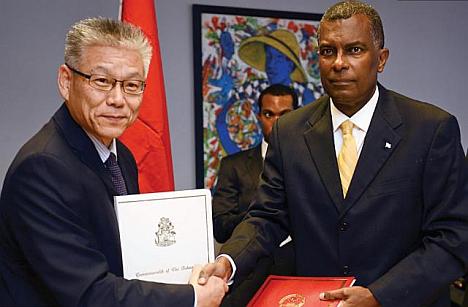
china_bahamas_visasSo the Bahamas has signed a new mutual visa exemption with China. At the SFE Foundation, we applaud the foreign policy initiative of the Bahamas Government and immediately ask some follow-up questions, as follows:

  • When Chinese tourists come to the Bahamas, will we be expecting them to bring currency in Yuan, Euros, Dollars, etc.?
  • Will there ever be a need for Chinese tourists to speak with the Bahamian population and are there any sorts of translation services available?
  • Why just the Bahamas? Why not the whole Caribbean region?
  • Why only China? There are other countries (Asian, Middle Eastern, European) where these types of agreements can benefit the region.

These questions show that opening new markets to different parts of the world are froth with challenges. But these are challenges that we must take on. In general, growth within the Caribbean for our traditional tourism target market, North America, has been flat or only slightly up; notwithstanding the years of decline during the Great Recession. We are only now approaching the type of numbers from before the 2008 financial crisis. This crisis taught us, or should have taught us, that we have to be more proactive and creative in managing our economic drivers. If we do what we’ve always done, then we would have learned nothing from the crisis. Perish that thought! So hooray for the efforts discussed in the foregoing article, but let’s not stop there!

By: The Caribbean Journal Staff

The new mutual visa exemption agreement between the Bahamas and China has officially taken effect.

The agreement, which was signed in December 2013, allows Bahamian and Chinese citizens to travel to one another’s country visa-free for up to 30 days. It does not allow the holder to engage in gainful employment, to study or reside in that country, however.

The move could be a boost for Chinese tourism to the Bahamas, particularly in light of the imminent opening of the China-funded Baha Mar resort project in New Providence at the end of this year [(2014)].

“While this Agreement will allow visa-free travel, visitors are still expected to meet general entry requirements when being processed by immigration authorities,” the Bahamian government said in a release. “Travelers are required to present a passport with valid relevant visas for transit States, and a round-trip ticket for entry and exit. Those that do not meet general entry requirements will be denied entry at any immigration check point.”

Those who wish to remain in the Bahamas for more than 30 days will still need a visa.

Source: http://www.caribjournal.com/2014/02/15/bahamas-china-visa-exemption-agreement-officially-begins/

This commentary harmonizes with the missions of the Caribbean Union Trade Federation as described in the book Go Lean … Caribbean. The book declares that “a crisis is a terrible thing to waste”, quoting American Economist Paul Romer. The book provides strategic, tactical and operational plans to expand and exploit the tourism outreach for Asia, specifically and the whole world in general. The book emphatically details 10-Step advocacies to enhance regional tourism, impact events, promote fairgrounds, improve for cruise tourism and to better market the specific location of Southern California. For regional economics, the book details how to better manage Foreign Exchange and to foster empowering immigration.

Lastly, the Go Lean roadmap calls for the establishment of Trade Mission Offices in far-flung power cities in the world so as to enable trade expansion with different countries, including the Far East. The end result of this roadmap is growth in regional GDP to $800 Billion, creation of 2.2 million new jobs (30,000 specifically in tourism-related industries) and the manifestation of a plan to make the Caribbean a better place to live, work and play.

Download the book Go Lean … Caribbean – Now!

Share this post:
,
[Top]

Print is not dead yet

Go Lean Commentary

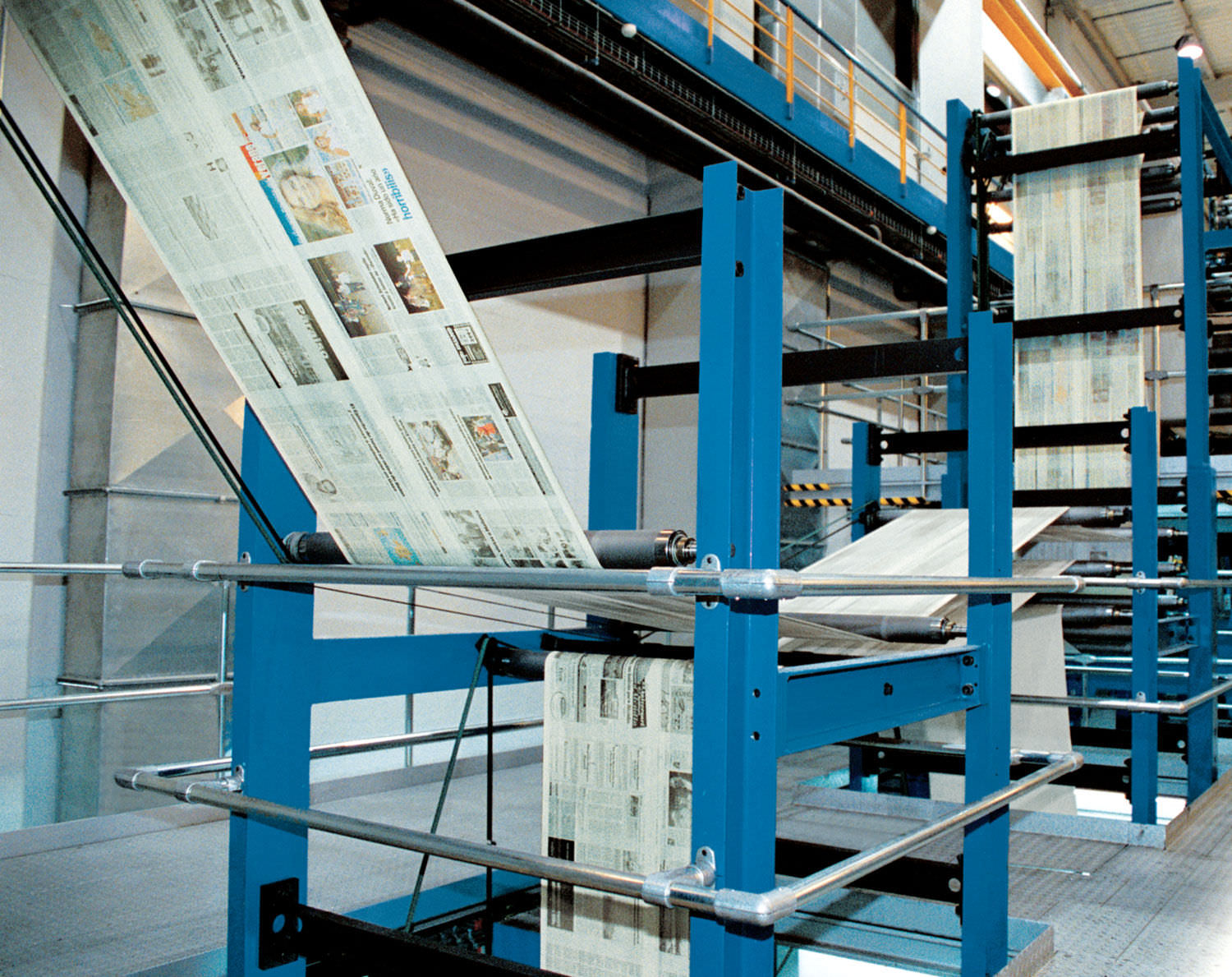
high-volume-offset-printing-presses-40462-6118919

… well actually, one person’s opinion:

Print is not dead… yet? I almost didn’t notice!

If print is not dead yet, does that mean it is going to put up a fight? Will it make a comeback? I say “No”. It is just a matter of time. Print might experience only a slow death, but die … it will.

This is just an opinion of an Caribbean Diaspora member living in the US, who rarely buys newspapers and magazines only occasionally. But this does not mean that I’m ignorant of the news or the latest going-ons. I am completely up-to-date. Obviously I rely more on the electronic media for information, and entertainment.

The reference to electronic media does not only mean TV or radio. Rather the internet. A lot of consumers still read, just not in print, they now use internet websites, e-Readers, blogs and email. Even the radio and TV media is finding competition because of the internet. In the TV industries, more people are abandoning cable contracts for subscriptions services like Netflix and Hulu; they are still able to enjoy their favorite programming, just delivered by alternate means. For radio, the audience is shrinking due to the proliferation of mobile music options like Pandora, Rhapsody, Jango, Slacker, Roxio, etc.

The rate of change is fast!

I just started using the internet, email and Facebook two years ago. I’m obviously a late bloomer. During this time, I have not utilized any postal mail to connect with my Caribbean family. Instead of the weeks it took for a letter to arrive; I now connect in seconds.

I am not the only one. – SFE Foundation Stakeholder Leonora Hall. 

Truly, you are “not the only one“! Change has come…to America and other countries. According to the American Library Association, in a 2008 report  it stated that:

68% of Americans carry a library card, but they rarely use them to borrow books (print), but rather to use audio books, podcasts, digital references, and to consume computer time. They reported that since 2006 they have seen increases in internet usage (68%) for using email, chat, and IM; e-Books (52%); video (49%) and online instruction courses 43%). – (http://www.marketingvox.com/online-offerings-rise-at-us-libraries-68-of-americans-have-library-cards-041431/)

As stated in the below article, there is still a lot of upside to print, compared to electronic alternatives. A paper book is still a better experience compared to an e-Reader. But truth be told, there are no Research & Development (R&D) trying to make paper books better, but plenty of R&D activity for e-Readers. The article relates:

Title: Print is Not Dead Yet
By: Chandi Perera, CEO, Typéfi*

One of the earliest citations of the phrase “print is dead” comes from the 1984 movie Ghostbusters, but almost 30 years later, print is certainly not dead. Print publishing still drives on average 80% of revenues and close to 100% of the profits for general trade publishers. But among reference and science, technical and medical (STM) publishers, digital publishing was embraced quickly and openly at the expense of print.

Commercial digital products from large reference publishers started in the 1980s, and PDF was adopted as the preferred format for STM publishing in the 1990s. Digital-only publications were well-accepted by the turn of this century, and the PDF still holds unquestioned dominance. Digital production and distribution addressed a number of such publishers’ pain points, but print still maintains advantages for large trade publishers.

Take information that is published regularly, as in journals, or that must be kept up to date, like encyclopedias. Such information needs to be disseminated as quickly as possible. Print publications necessarily take longer to be produced and delivered than digital equivalents. But fiction titles, such as the Harry Potter series or The Da Vinci Code, have no information currency or updating requirements. Print still works for these books.

What about physical production and distribution costs? A typical reference or STM publisher could save tens to hundreds of dollars per unit by eliminating printing and mailing costs. For weekly journals this would be as high as $50-$100 per subscriber. The incentive to save on such costs is quite significant for publications containing information that is only valid for a limited time. However, large efficient trade publishers spend less than $2 to print and distribute a typical trade fiction book. Not much cost incentive for change there.

Or look at digital formats. STM publishers often use the same PDF file for both print and digital distribution. Trade digital delivery channels do not generally use PDF files, so a trade publisher needs to create an e-book file in addition to the print file. Complicating matters further, there are over 30 different popular device types, apps or file formats in use in the global publishing market. A publisher can achieve a basic level of compliance from creating one EPUB file and converting to other formats. But to take advantage of e-book device features for an exceptional reading experience, a publisher must invest in creating a dedicated file optimized for each device. The costs of doing this are substantial and in many cases are levels of magnitude above the print production cost.

Accessibility is one of the biggest advantages… of digital publishing from an STM reader’s perspective. With the rise of networked computers and the internet, readers no longer had to go to the library to access a publication. By the late 1980s most professional scientists had a networked desktop computer to access STM publications–usually for free as their institutional library would hold the subscription.

Accessibility is also a major advantage for digital trade publications. No longer will airline passengers have to settle for what the airport bookshop is selling before boarding the flight. They can purchase and download from online catalogs. However, unlike PDFs on desktops, the devices used to access this content are not ubiquitous, cheap (for the reader) or interchangeable.

In today’s e-book market, content purchased from some channels is only readable in devices linked in those channels. It is difficult for all but the most technically savvy to transfer a large iBooks collection to a Kindle or Samsung Galaxy device, and vice versa.

On the other hand, PDF provides a dependable rendering format for scholarly publications, regardless of technology upgrades and platform changes. The PDF user experience for reference and STM publications is no worse than the print product experience. Users could still do all they did with the traditional print product, with some added advantages , and none of the disadvantages (even on-screen reading, as many readers still print out the PDF for reading on paper).

But in trade publishing, the user experience of e-books is very different from print and varies from device to device; in almost all cases devices are more complex to use than a simple book. Even on popular devices like the Kindle, navigating through a book is cumbersome, unlike “flicking” back and forth. Even with perceived benefits like resizable text and backlit displays, it takes significantly more effort to use an e-book reader than a book.

Until there is more standardization of format, portability of libraries, and the reading experience is as good as, or better than, a physical book across devices, and until the cost and revenue equation makes sense for the publisher, print will have a long life yet in trade publishing. Nevertheless, there are many ventures seeking these outcomes, and technologies being developed to deliver them. Overall, digital publishing has a bright future.
Source: *Typéfi produces automated composition solutions for print and web. Visit http://www.Typéfi.com.
See http://www.oecd.org/internet/ieconomy/

CU Blog - Print is Dead - Photo 2

This commentary therefore concurs with the article’s conclusion: Overall, digital publishing has a bright future.

Are these future prospects true for the Caribbean as well? The book Go Lean…Caribbean serves as a roadmap to elevate the Caribbean economic, security and governance engines. The book asserts that the “world is flat” and the globalization has taken its toll on Caribbean consumerism. This indicates that we must plan for more and more electronic consumption of news and information. But with electronic delivery come the need for electronic payment systems, and thus the Go Lean roadmap is to establish the complete eco-system so that all of the Caribbean can more easily consume electronic media content legitimately. The roadmap also calls for the deployment of more libraries into the communities so as to facilitate the need for internet connectivity.

Lastly, the Go Lean roadmap posits that as a region, we cannot only expect to consume, but that we must create/compose as well. The end result of this roadmap is a complete eco-system to foster a viable media industry.

We can do this. We must do this!

Download the Book Go Lean … Caribbean – Now!!!

Share this post:
, , ,
[Top]

Tourism’s changing profile

Go Lean Commentary

ctdc.015The experiences in the Caribbean correspond to the observations of this article. Change has come to the Caribbean. Tourism continues to be the primary economic driver in the region; this is a static fact for the last 50 years, even though the dynamics of this industry is in constant flux. The Go Lean … Caribbean roadmap depicts that 4 major change agents have impacted this industry: technology, demographics, globalization, and climate change. This article affirms these issues.

Unfortunately the Caribbean region has not always planned for changes or adapted to them. There is still the expectation that the tourists visiting the islands would be North American or Western European and that the standard languages of Dutch, English, French and Spanish would suffice. Alas, this article depicted that the profile of modern tourism reflect a more global reach. Therefore, Caribbean communities must prepare for this change. They must accomodate the need for language translations, community education and racial/ethnic tolerance.

By: Lyndon Thompson

Tourism has shown remarkable staying power in recent years. Despite political instability, wars, natural disasters and a global financial crisis, the industry keeps getting up for another round. Japan is good example. After the 2011 earthquake and Fukushima nuclear accident, the number of visitors to the country plunged. But in 2013 more than 9 million tourists visited the country, a record high.

International tourist arrivals generally surpassed 1 billion in 2012 and are forecast to reach 1.8 billion by 2030. OECD countries account for nearly 60% of international tourist arrivals, but a shift in the global economy promises to change this picture somewhat as people in emerging economies travel more than before. Today, China spends eight times more on tourism than it did 12 years ago. Chinese tourists spent US$102 billion in 2012, a 37% increase over the previous year and more than any other country.

Russians are also more footloose, and rank fifth in terms of spending on outbound tourism. The number of tourists from India has also doubled since 2006. The UN World Tourism Organization estimates that by 2030, overall annual growth in outbound tourism will amount to 17 million in the Asia-Pacific region, 16 million in Europe, 5 million in the Americas, and a combined 5 million in Africa and the Middle East.

Emerging economies are drawing in more tourists, too. Over the next 15 years, the share of arrivals in emerging economies will increase by 4.4% annually, double the rate of arrivals in advanced economies, with South Asia topping the list. North America, on the other hand, will slip to the bottom.

Tourism directly accounts for 4.2% of GDP, 5.9% of employment and 21% of exports of services in OECD countries, enough for governments bruised by the financial crisis to see the industry as a catalyst for growth. They are becoming more dynamic, bringing in new business models and cutting red tape. They are shortening waiting times by offering online visa applications and automatic border checks, too: Turkey, for instance, introduced e-visa applications in 2013, reducing the need for tourists to queue on arrival.

The profile of today’s travelers differs sharply from that of their predecessors. Demographically, tourists are older–23% aged 55 or above–and more frugal, preferring shorter trips closer to home. Geographically, they tend to live in emerging economies rather than in developed ones. Most holidays are now booked online instead of through travel agencies. The holidays sought are often far off the beaten track and focus on a theme: adventure, culture and heritage, or food and wine. New niche markets have arisen, such as “diaspora”, gay and lesbian holidays, humanitarian tourism to work for good causes, and tourism for medical treatments.

Two other trends in tourism are also worth noting. First there is risky “dark tourism”, from hiking in Afghanistan to hunting pirates off the Somali coast, or even photographing conflict zones in Syria. This fashion should not be confused with the rather more solemn “memorial tourism”, which promotes trips to the scenes of great tragedies and wars, such as Ground Zero in New York, Auschwitz in Poland and war cemeteries across Europe.

With 2014 marking the 100th anniversary of the outbreak of the First World War, expect a rise in “memorial tourism” in the year ahead, particularly in Flanders in Belgium and the Somme region of France. In Japan there is a proposal to build a tourists’ village near the Fukushima nuclear plant, with fortified hotels to shield guests against any elevated radiation, the aim being to remind future generations of the 2011 tragedy there.

Such emotionally challenging trips allow travelers to reflect on the follies of humankind and the vulnerability of life. They can also serve to bond people together and build co-operation against future conflicts. Rather than an escape, they echo what the writer Samuel Johnson saw as the true reason for travelling: “to regulate imagination by reality, and instead of thinking how things may be, to see them as they are.”

Source: www.oecd.org/cfe/tourism/

The book Go Lean … Caribbean purports that the Caribbean is the greatest address in the world. In order to appeal to the global market, the book, as a roadmap, posits that regional tourism stakeholders must engage these other ethnic populations. The roadmap advocates the use of Internet Communications Technologies and Social Media for bookings, and to sell the attractions of Caribbean culture and amenities. The plan also calls for establishing Trade Mission Offices in divergent cities like Spain and Tokyo for outreach to Mid & Far Eastern markets.

The Go Lean roadmap also advocates 10-Step approaches for elevating events and fairgrounds in the region. The tactical approach is for a technocratic Trade Federation that would finance and construct facilities and amenities as amusement parks, arenas, stadia & other venues structure as Self- Governing Entities. These bordered grounds would be independent of actual member-state governments.

This magazine article was published in the OECD Observer “e-Zine”. This online journal is the public relations arm of the OECD – Organization of Economic Cooperation and Development – an international economic organization of 34 countries founded in 1961 to stimulate economic progress and world trade. It is a forum of countries committed to democracy and the free-market economy, providing a platform to compare policy experiences, seek answers to common problems, identify good practices, and co-ordinate domestic and international policies of its members. The OECD promotes policies designed to …
1). Achieve the highest sustainable economic growth and employment and a rising standard of living, while maintaining financial stability, and thus to contribute to the development of the world economy;
2). Contribute to sound economic expansion in Member as well as nonmember countries in the process of economic development; and
3). Contribute to the expansion of world trade on a multilateral, nondiscriminatory basis in accordance with international obligations.
Source: www.oecd.org/about/ (Retrieved November 2013).

Download the Book – Go Lean…Caribbean Now!!!

Share this post:
, ,
[Top]