Category: Government

Restoration of Diplomatic Relations with Cuba

Go Lean Commentary

The subject matter in this blog’s title does not mean the end of the Castro regime, but rather the beginning of the struggle to integrate Cuba with the rest of the Caribbean.

Let’s get started!

The book Go Lean…Caribbean was designed with this intent: integrate and unify all of the Caribbean into a Single Market with technocratic stewardship and oversight. This stewardship is the Caribbean Union Trade Federation (CU). The book describes the process of working for Cuba as heavy-lifting, including all the economic, security and governing engines. The article here describes the catalyst for these changes:

Title: US to Normalize Relations With Cuba
By: Alexander Britell

CU Blog - Restoration of Diplomatic Relations with Cuba - Photo 1The Caribbean changed forever on Wednesday morning.

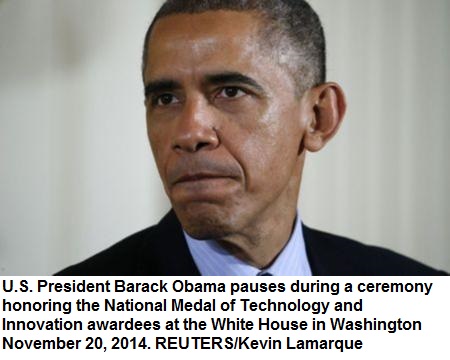
United States President Barack Obama announced a major shift in more than half-century of American politics, signaling the two countries’ desire to work toward normalizing relations.

The announcement came alongside a high-level prisoner swap of Alan Gross, a USAID contractor jailed for five years on espionage charges, for three Cubans convicted of spying on the United States.

Gross was released alongside an unnamed agent whom Obama called one of the most important intelligence agents the US has ever had in Cuba, who had been imprisoned for nearly two decades.

The imprisonment of all parties had been a point of major contention between the two countries.

In an address Wednesday, Obama said he had ordered US Secretary of State John Kerry to immediately begin discussions with Cuba to reestablish diplomatic relations severed since January 1961.

The US will also reestablish an embassy in Havana and “high-ranking officials will visit Havana.”

Obama said he had also asked Kerry to review Cuba’s designation as a state sponsor of terrorism.

He said the US was taking steps to increase travel, commerce and the flow of information to Cuba.

The plan includes the aforementioned re-establishment of diplomatic relations, a change in travel and remittance policies to increase people to people contact and the overall expansion of travel to Cuba.

That also includes expanded sales and exports of certain goods and services from the US to Cuba, along with the authorization of American citizens to import $400 goods from Cuba, with a maximum of $100 on alcohol and tobacco.

The White House also said US telecom providers will be allowed to establish “the necessary mechanisms, including infrastructure, in Cuba to provide commercial telecommunications and internet services,” in a country that has one of the lowest rates of Internet penetration on earth.

Obama said he would end an “outdated approach that for decades has failed to advance our interests.”

In a statement to the Cuban people, Cuban President Raul Castro said he and Obama had spoken by telephone on Tuesday to address “issues of interest to both nations.”

He also thanked Pope Francis and the government of Canada, who reportedly helped facilitate high-level talks between the two countries.

Of course, much of the President’s actions will take time and face roadblocks, with the biggest impediment, the Cuban Embargo, one that can only be changed with approval by the US Congress.

Indeed, the announcement was immediately met with criticism from a number of US lawmakers and the Cuban diaspora community, including US Senator Marco Rubio, the son of Cuban exiles who criticized the prisoner exchange and said Obama’s actions had “vindicated the brutal behavior of the Cuban government.”

Raul Castro himself confirmed the agreement, but noted the tough road ahead and that the announcement was by no means decisive.

“This does not mean the main matter is resolved,” Castro said. “The economic, commercial and financial blockade that causes enormous human and economic damage to our country must cease.”

“Recognizing that we have deep differences, mainly on national sovereignty, democracy, human rights and foreign policy, I reaffirm our willingness to discuss all these issues,” Castro said.

Castor said he urged “the government of the United States to remove obstacles that prevent or restrict the links between our peoples, families and citizens of both countries,” Castro said. “In particular, those relating to travel, direct mail and telecommunications.”

But what does a normalized relationship mean for the wider Caribbean?

Cuba welcomed around 2.85 million tourists last year, the vast majority from Canada and Europe, and a number that, with the proper development of tourist infrastructure and the like, could surpass the Dominican Republic, the current regional leader.

Indeed, that number will certainly increase if and when American travel becomes formally legalized; but will that mean travelers choosing Cuba over Jamaica or the Dominican Republic?

Or will a renewed Cuban tourism sector mean a larger tourism pie for the whole Caribbean?

There is another issue — notably, the impact of the massive size of the Cuban market on the rest of the region’s economy — how will potential Cuban exports to America impact Caribbean exports to Cuba?

The answers will soon become clear.
Caribbean Journal Regional News Site – December 17, 2014 (Retrieved 12/11/2014) –
http://www.caribjournal.com/2014/12/17/us-to-normalize-relations-with-cuba/#
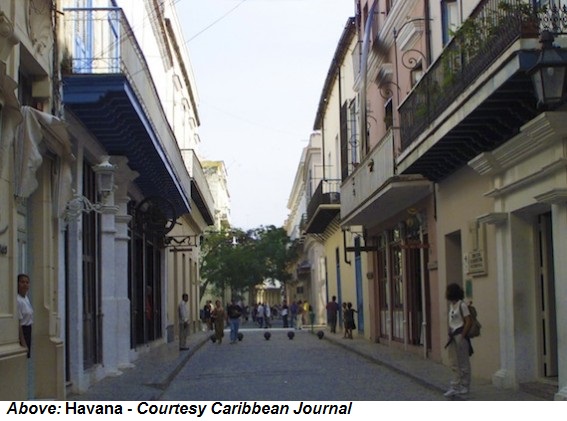
After news broke that President Obama would use Executive Powers to normalize diplomatic relations with Cuba, members of Miami’s Cuban and Cuban-American communities have “screamed in agony, cheered with joy, or vowed angrily to dismantle the decision”.

Here are some other headlines from the Miami Herald Daily Newspaper associated with this historic news:

Miami would be a natural choice should Havana want a consulate outside of Washington, D.C., but some elected officials expressed their opposition to such a move.

According to the Miami Herald, the public response was a mix of the opinionated, the emotional and the thoughtful.

“Depending on how old you were or how long you had lived in the United States, especially if you were U.S.-born, your view on Cuba and its politics might have been shaped generationally. [The Herald] asked South Florida Cubans and Cuban Americans for their thoughts on social platforms. This is some of what they shared:”

@Miamiblues – 1st gen immigrants are too stubborn and proud to admit that embargo was epic fail. In complete denial with blinders on.

@PedazosdelaIsla – It’s not a division of young/old, it’s a division of those who want 2 legitimize a brutal dictatorship & those who don’t #Cuba

@mannyafer  – Divide in Cuban-American community– old who lived thru Castro regime want embargo, while young gen wishes to do away with it.
(Source: http://www.miamiherald.com/news/nation-world/world/americas/cuba/article4623942.html)

The foregoing article stressed the potential of an imminent re-integration of Cuba. The current regional construct CariCom wants to consider the inclusion of Cuba as a member-state. But the Go Lean book asserts that CariCom is a failed institution and need to correct its own structural defects – they are in no position to claim the burdens of Cuba. The CU on the other hand is designed as a lean technocracy, mastering Delivery Arts and Sciences. This Go Lean book details the step-by-step roadmap for including Cuba in with the rest of the Caribbean to form a confederation of the 30 member-states of the region into the integrated Single Market. The prime directives of the CU are pronounced in these statements:

  • Optimization of the economic engines in order to grow the regional economy to $800 Billion & create 2.2 million new jobs.
  • Establishment of a security apparatus to protect the resultant economic engines.
  • Improve Caribbean governance to support these engines.

This re-boot roadmap commences with the recognition that Cuba and the rest of the Caribbean are in crisis; they are in the “same boat” despite their colonial heritage or language differences. One crisis is associated with the societal abandonment that has crippled so much of Caribbean societal engines. In Cuba, this transpired in mass, while the other countries experienced a steady draining. The CU member-states need to confederate, collaborate, and convene for repatriation and reconciliation. This pronouncement is made in the Declaration of Interdependence, (Page 12) is included as follows:

xiii.      Whereas the legacy of dissensions in many member-states (for example: Haiti and Cuba) will require a concerted effort to integrate the exile community’s repatriation, the Federation must arrange for Reconciliation Commissions to satiate a demand for justice.

The Go Lean book details the series of community ethos, strategies, tactics, implementations and advocacies designed to re-boot and integrate Cuba to the region:

Anecdote – Caribbean Single Market & Economy Page 15
Community Ethos – Economic Systems Influence Individual Choices & Incentives Page 21
Community Ethos – Job Multiplier Page 22
Community Ethos – “Crap” Happens Page 23
Community Ethos – Lean Operations Page 24
Community Ethos – Cooperatives Page 25
Community Ethos – Ways to Impact the Future Page 26
Community Ethos – Ways to Manage Reconciliations Page 34
Community Ethos – Ways to Impact the Greater Good Page 37
Strategic – Vision – Integrated Region in a Single Market Page 45
Strategic – Vision – Agents of Change Page 57
Tactical – Confederating a Non-sovereign Union Page 63
Tactical – Fostering a Technocracy Page 64
Tactical – Growing to $800 Billion Regional Economy Page 67
Tactical – Separation of Powers Page 71
Tactical – Separation of Powers – Office of Trade Negotiations Page 80
Tactical – Separation of Powers – Federal Courts – Truth & Reconciliation   Commissions Page 90
Anecdote – Turning Around CariCom Page 92
Anecdote – “Lean” in Government Page 93
Implementation – Assemble & Create Super-Regional Organs to   represent all Caribbean Page 96
Implementation – Ways to Pay for Change Page 101
Implementation – Foreign Policy Initiatives at Start-up Page 102
Implementation – Ways to Deliver Page 109
Implementation – Reasons to Repatriate to the Caribbean Page 118
Implementation – Ways to Benefit from Globalization Page 119
Planning – 10 Big Ideas – Cuba Page 127
Planning – Big Ideas for the Caribbean Region Page 127
Planning – Ways to Model the EU Page 130
Planning – Ways to Improve Failed-State Indices Page 134
Advocacy – Ways to Grow the Economy Page 151
Anecdote – Governmental Integration: CariCom Parliament Page 167
Advocacy – Ways to Improve Governance Page 168
Advocacy – Ways to Impact the Diaspora Page 217
Advocacy – Ways to Re-boot Cuba Page 236
Appendix – New CariCom Model Urged Page 255

The foregoing news article relates the bilateral move to re-instate Cuba’s diplomatic relations with the US; this was 55 years in the making – far too long. The next step: the Cuban Trade Embargo. Good luck with Congress … until the Castros (Fidel and Raul) are all gone from Cuban public life – expected for 2017.

This point is the strong theme of so many of these previous Go Lean commentaries/blogs that featured issues on Cuba’s eventual integration into the world’s economic networks; detailed here:

CARICOM Chair calls for an end to US embargo on Cuba
Miami’s Success versus Caribbean Failures
‘Raul Castro reforms not enough’, Cuba’s bishops say
Cuban Cigars – Declared “Among the best in the world”
Cuba mulls economy in Parliament session
America’s War on the Caribbean
Cuban cancer medication registered in 28 countries
Cuba Approves New “Law on Foreign Investment”

The news of President’s Obama Executive Order on Cuba is causing upheaval in the Cuban Diaspora, especially in Miami. But they are not the only stakeholders on guard of these pending changes. Another stakeholder of note is the US business community. What are their expectations? What are their fears? What is their hope? See AppendixVIDEO for a comprehensive report.

The Go Lean roadmap addresses the concerns of all Cuban and Caribbean stakeholders. The book posits that challenges that Cuba must face are too insurmountable for Cuba alone to contend with; there must be a regional solution, a super-national, professionally-managed, deputized technocracy to impact greater production and greater accountability than a re-invigorated Cuba can do alone. This deputized agency is the Caribbean Union Trade Federation. This CU structure is especially inviting to the Cuban and Caribbean Diaspora; it presents a workable plan for the contribution of their time, talents and treasuries in the repatriation to their homeland.

Now is the time for all Cuban stakeholders, the people, business community and governing institutions, to lean-in for the Caribbean/Cuban integration and re-boot. Now is the time to make this region as a whole, and Cuba specifically, a better place to live, work and play. 🙂

Download Go Lean … Caribbean – now!

——————

APPENDIX – The Nightly Business Report

The “Nightly Business Report produced by CNBC” (NBR) is an award-winning and highly-respected nightly business news program that airs on public television. Television’s longest-running evening business news broadcast, “NBR” features in-depth coverage and analysis of the biggest financial news stories of the day and access to some of the world’s top business leaders and policy makers.

Referenced Video – Nightly Business Report — December 17, 2014 – http://youtu.be/dnIEYPQ8K2A?t=8m43s

President Obama announces sweeping changes to U.S. policy with Cuba and it could, eventually, create opportunities for both investors and business.

 

Share this post:
, , , , ,

OECS diplomat has dire warning for Caribbean countries

Go Lean Commentary

CU Blog - OECS diplomat has dire warning for Caribbean countries - Photo 3There goes the begging again…

The below news article is indicative of the past 50 years of  Caribbean integration movements (West Indies Federation, OECS or Organization of Eastern Caribbean States and CariCom); their prime directive appears to be to solicit aid from the richer North American and European nations. This is sad!

When are “we” expected to grow up?

This theme is weaved throughout the book Go Lean…Caribbean. The book serves as a roadmap for the introduction and implementation of the technocratic Caribbean Union Trade Federation (CU) with the prime directive to elevate Caribbean society by optimizing the economic engines, establishing a security apparatus to protect the resultant economic engines, and improving Caribbean governance to support these engines.

50 years ago, most of the Caribbean member-states were petitioning for independence (Page 134). This status is naturally associated with some degree of maturity. Begging for money under the guise of international aid, does not reflect a readiness for  independence. As reported in the following article, “development funds” have been very important to the sub-region having been used as budgetary support at both the national and sub-regional levels.

By: Ernie Seon, Contributor

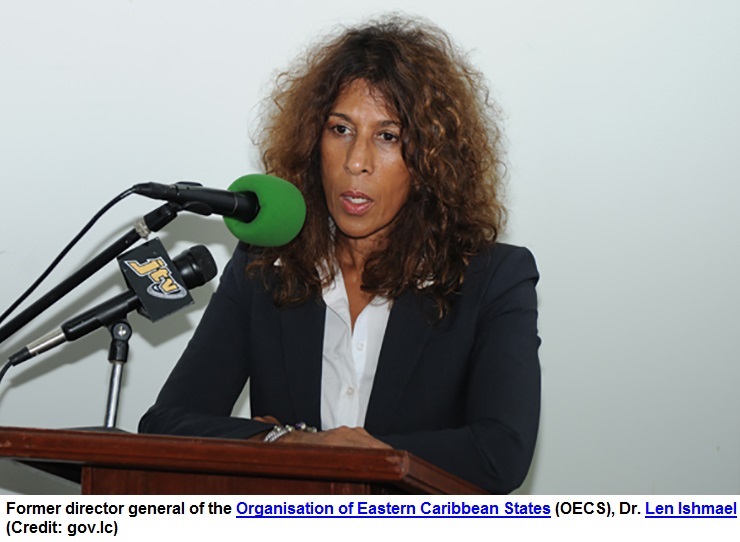
CU Blog - OECS diplomat has dire warning for Caribbean countries - Photo 1BRUSSELS, Belgium – The former director general of the Organisation of Eastern Caribbean States (OECS), Dr. Len Ishmael, says the Caribbean will never achieve the status of economic resilience, as long as the international community insist on graduating it to middle income status at the level of the European Partnership Agreement (EPA) negotiations.

Ishmael, who is now the OECS Ambassador to Belgium and the European Union, told the Caribbean Media Corporation (CMC) that European Development Funds (EDF) have been very important to the sub-region having been used as budgetary support at both the national and sub-regional levels.

“In the case of St. Kitts Nevis these funds have been vital through trade windows accompanying measures that seek to cushion the shock with the loss of the sugar market, and in the case of the Windwards, the banana market,” she told CMC on the sidelines of the just completed 100th African Caribbean and Pacific (ACP) Ministerial Summit.

But she said that over time, the islands have been graduated to middle income countries, given the fact the European Union has been using gross domestic product (GDP) per capital to undertake fresh comparative analysis with the rest of the world.

Ishmael told CMC that with that middle income status comes the loss of several privileges, and access to concessionary financing which inevitably makes capital more and more expensive.

As a result, she contends the islands are required to engage in commercial ventures so as to attract capital and loans which have been critical to support their development.

“We argue strenuously in this theatre that GDP as a means of speaking to the health and wealth of our countries is a bit of an artifice when you are dealing with islands that are naturally small.

“The fact that we are small mean that there are systemic vulnerabilities that come with our size, the fact that we have been able to emerge from cycles of real poverty, does not mean that the vulnerabilities associated with small size, are no longer there,” she noted.

The OECS diplomat said on one hand there is the European Union very much in favour of supporting vulnerability and providing finance to ensure sustainable development while on the other it is graduating the Caribbean out of the access to the very funds that it would use in pursuit of a life of sustainable development.

“So the issue of graduating is a very vital one in this theatre because GDP per capita is used not only in the EU but by the IMF (International Monetary Fund), the World Bank, multi-laterals, the WTO (World Trade Organization) and everywhere else to determine those countries which are graduated out of their ability to attract any new concessions for financing,” she said.

“In fact we have received word that St. Kitts Nevis will soon be graduated out entirely, you and I both know that as Small Islands Development States (SIDS) we are acutely vulnerable not just economically but environmentally and we don’t need to indulge in a conversation to know exactly what that means.

“Now we are not even safe from a wet weather event associated with last December’s tropical low pressure that wrecked St. Lucia and St. Vincent, not even a hurricane as a consequence of climate change, wrecked such havoc on our physical infrastructure including our livestock and crop supplies.

“The problem therefore for SIDS, is if we have no economic resilience, there is no way we can become economically resilient,” Ishmael noted.

She said that the paradox of all of this is that these small states are not saying that anyone else should be paying their way, but they argue that there should be across all theatres an understanding of the unique criteria that makes SIDS as vulnerable as they are.

“So it’s not all well and good to have a discussion on our vulnerability only when it comes to talking once every 10 years through Mauritius or the Barbados Plan of Action.

“These discussions should result in policy prescriptions that cut across all theatres, at the WTO, the UN General Assembly, post 2015 agenda for development or all of the global issues that directly impact us uniquely because of our small size.

“We will continue to ask that SIDS issues should be cross cutting and SIDS sensitivity is one that should be inherent to all national discussion on sustainable development,” she added.

The issue of graduating the Caribbean to middle income designation has been identified by the new ACP Secretary General Dr. P.I. Gomes as one of more challenging tasks of his five year term.

“We will need to resolve the principle of differentiation in the Cotonou agreement where Caribbean countries are being unjustly graduated to a middle income designation, and thereby excluded from grant assistance,” he told reporters.

“We need to fight graduation because of how it is calculated, it should not be on the basis of capital income alone, we are vulnerable because of the environment where we are located. One natural disaster and your GDP can be reduced to 60 per cent as happened in more recently in Grenada,” he added.

Gomes, Guyana’s Ambassador to Brussels and Europe, replaced Alhaji Muhammad Mumuni as Secretary General of the ACP group. He previously served as Chair of the Committee of Ambassadors a decision making body of the ACP group. He will serve as Secretary General for a five year period starting in 2015.

He said the Caribbean being considered largely middle income countries, with the exception of Haiti, which is the only lesser developed country (LDC) in the grouping, is a serious situation that needs to be addressed urgently.

“The Caribbean would also need to move very effectively in making optimal use of the development aid it receives in terms of ensuring that it has an impact, in addition to diversifying its sources of development assistance,” he said.

However Gomes said he did not share the view that aid is a big contributor to the GDP as the Cuban economy has shown.

“What I think is more important are the terms and conditions under which investments comes into your country and how they are able to help structural transformation of your economy,” he stated.
Caribbean 360 – Online Regional News Source (Retrieved 12-16-2014) –
http://www.caribbean360.com/news/oecs-diplomat-dire-warning-caribbean-countries

Make no mistake, all these references to development funds, concessions, support, privileges, grants and assistance, are just synonyms for the money the islands in the region want to continue to receive.

CU Blog - OECS diplomat has dire warning for Caribbean countries - Photo 2This is begging…plain and simple.

The book Go Lean … Caribbean describes that change has come to the region. There are stakeholders for the Caribbean that do not want to beg. These stakeholders do not consider success is leaving the homeland and obtaining prosperity in some foreign residence. No, the hope is to “prosper where planted” in the Caribbean.

This is possible. We believe we can fly – see VIDEO below.

Yet, the Caribbean member-states need monies. The Go Lean book delves into innovative ideas for funding member-states treasuries. The book describes the roles and responsibilities of the CU oversight and stewardship. Where as federal governments normally bring a new level of governmental overhead and tax on public finances, this one is different. The CU pledges to increase the Caribbean “pie not split the slices”. This is “give, not take”. This pledge is embedded in the Declaration of Interdependence, pronouncing as follows, (Page 12):

xiii. Whereas all men are entitled to the benefits of good governance in a free society, “new guards” must be enacted to dissuade the emergence of incompetence, corruption, nepotism and cronyism at the peril of the people’s best interest. The Federation must guarantee the executions of a social contract between government and the governed.

xiv. Whereas government services cannot be delivered without the appropriate funding mechanisms, “new guards” must be incorporated to assess, accrue, calculate and collect revenues, fees and other income sources for the Federation and member-states. The Federation can spur government revenues directly through cross-border services and indirectly by fostering industries and economic activities not possible without this Union.

The Go Lean book posits, within its 370 pages, that the “whole is worth more than the sum of its parts”, that from this roadmap Caribbean economies will grow individually and even more collectively as a Single Market. This roadmap calls for growing  the region’s economy from $378 Billion (2010) to $800 Billion in a 5 year time span. This growth will naturally result in increases in government revenues as well.

The following details from the Go Lean book relate the community ethos, strategies, tactics, implementation and advocacies to deploy efficient and effective government revenue options:

Community Ethos – Lean Operations Page 24
Community Ethos – Ways to Improve Sharing Page 35
Strategy – Customers – Member-State Governments Page 51
Strategy – Agents of Change – Globalization Page 57
Strategy – Agents of Change – Climate Change Page 57
Tactical – Fostering a Technocracy Page 64
Tactical – Separation of Powers Page 71
Anecdote – Turning Around the CARICOM construct Page 92
Anecdote – “Lean” in Government Page 93
Implementation – Ways to Pay for Change Page 101
Implementation – Foreign Policy Initiatives at Start-up Page 102
Implementation – Ways to Deliver Page 109
Implementation – Ways to Better Manage Debt Page 114
Implementation – Ways to Foster International Aid Page 115
Planning – Ways to Model the EU Page 130
Planning – Ways to Make the Caribbean Better Page 131
Planning – Reasons Why the CU Will Succeed Page 132
Planning – Lessons Learned from the W.I. Federation Page 134
Advocacy – Ways to Grow the Economy Page 151
Advocacy – Ways to Create Jobs Page 152
Advocacy – Ways to Improve Credit Reporting Page 155
Advocacy – Ways to Improve Governance Page 168
Advocacy – Better Manage the Social Contract Page 170
Advocacy – Revenue Sources … for Administration Page 172
Advocacy – Ways to Manage Federal Civil Service Page 173
Advocacy – Ways to Improve for Natural Disasters Page 184
Advocacies – Re-organize Industries & Stakeholders Page 188

The ‘shambled’ state of treasuries for Caribbean member-states and sub-regional organs has frequently been featured in previous Go Lean blog/commentaries. As sampled here:

https://goleancaribbean.com/blog/?p=3354 CARICOM Chair calls for Unity and an end to US embargo on Cuba
https://goleancaribbean.com/blog/?p=3225 Caribbean Tourism less competitive due to increasing aviation taxes
https://goleancaribbean.com/blog/?p=3090 Europe All Grown Up – Model for Caribbean Maturity
https://goleancaribbean.com/blog/?p=2887 Caribbean must work together to address rum subsidies
https://goleancaribbean.com/blog/?p=2359 CARICOM calls for innovative ideas to finance SIDS development
https://goleancaribbean.com/blog/?p=2041 NY/NJ Port Authority – Model for Caribbean Union Governance
https://goleancaribbean.com/blog/?p=1965 America’s Naval Security – Model for Caribbean Security
https://goleancaribbean.com/blog/?p=1193 EU willing to fund study on cost of not having CARICOM
https://goleancaribbean.com/blog/?p=1184 Bahamas Introducing 7.5 Percent VAT in 2015 to reboot treasuries
https://goleancaribbean.com/blog/?p=1014 Canadian assessment: All is not well in the sunny Caribbean
https://goleancaribbean.com/blog/?p=833 Model of One currency, versus divergent economies
https://goleancaribbean.com/blog/?p=816 The Future of CariCom
https://goleancaribbean.com/blog/?p=789 America’s War on the Caribbean; Not the Leadership role for region
https://goleancaribbean.com/blog/?p=467 Barbados Central Bank records $3.7m loss in 2013; need for C$ and CCB
https://goleancaribbean.com/blog/?p=451 CARICOM deliver address on reparations – Looking for $$$

CU Blog - OECS diplomat has dire warning for Caribbean countries - Photo 4Looking at the foregoing news article, there is too much attention on receiving international aid; it seems to be a fixation of the regional organs to “have their hands out” – a sense of entitlement. This is unbecoming; it reflects a negative ethos. The adoption of appropriate ethos is a strong focus of the Go Lean book.

All in all, we are not entitled to any foreign aid.

“Whoever does not work, neither shall he eat.” – Page 144 – this reflects a better, more mature ethos. This is a community ethos that fosters building effective economic engines, deploying an efficient security apparatus and organizing governing stewardship. The Go Lean roadmap describes the dependent (“hands out”) attitude as “parasite” but the mature, independent attitude as “protégé”.

The Go Lean book calls on the Caribbean region to be collectively self-reliant, both proactively and reactively, in the case of natural disaster events. The excuse related in the foregoing article: “one natural disaster and your GDP can be reduced” is a “tool of incompetence”.

Now is the time for all of the Caribbean, the people, governing institutions and regional organs, to lean-in for the empowerments described in the book Go Lean … Caribbean. We can make a Caribbean homeland a better place to live, work and play. 🙂

Download the book Go Lean … Caribbean – now!
————–
Appendix VIDEO I Believe I Can Flyhttp://youtu.be/43KirCJgrK0

For educational purposes only; no copyright infringement intended.


Share this post:
, ,
[Top]

M-1 Rail: Alternative Motion in the Motor City

Go Lean Commentary

Buy local!

This is the first mandate for any economic empowerment plan. Applying this logic would influence the City of Detroit to deploy public transportation options utilizing products and services of their local home-grown industries: The Big 3 auto makers.

And yet, Detroit is celebrating their initiation of a streetcar system – with no Ford, General Motors (GM) or Chrysler contributions; (they do no produce streetcars).

Yet, this is indisputably wise!

CU Blog - M1 Rail - Alternative Motion in the Motor City - Photo 2Streetcars were a common mode of transportation in many American cities, then something villainous happened: most systems were dismantled in the 1950’s & 1960’s as part of a switch to bus service. Detroit ceased their service in 1956, while Philadelphia never stopped and still continue to operate the same streetcars, even today. (The buses were manufactured by the Michigan-area auto companies; the Big 3). This plutocratic behavior proved a “greedy monster that ultimately ate itself”.[1] (In 2008 GM & Chrysler had to file for Bankruptcy Protection; 5 years later Detroit filed for Bankruptcy Protection as well).

The once great City of Detroit has to re-boot, remake and revive its metropolitan area, and streetcars are now part of the solution. There is the need to efficiently move people forward to facilitate live, work and play activities. See the M-1 Rail story here:

CU Blog - M1 Rail - Alternative Motion in the Motor City - Photo 1 M-1 RAIL is a non-profit organization formed in 2007 to lead the design, construction, and future operation of a 3.3-mile circulating streetcar along Woodward Avenue between Congress Street and West Grand Boulevard in Detroit, Michigan. M-1 RAIL is an unprecedented public-private partnership and model for regional collaboration Notably, the first major transit project being led and funded by both private businesses, philanthropic organizations, in partnership with local government, the State of Michigan, and U.S. Department of Transportation.

Mission
The mission of M-1 RAIL is to create a catalyst for investment, economic development and urban renewal that positively impacts the entire region through the construction of a streetcar circulator system running along and connecting Woodward Avenue from the Riverfront to the NewCenter and North End neighborhoods.

Vision
The M-1 RAIL Woodward Avenue Streetcar project is envisioned to be one element of a future modern, world-class regional transit system where all forms of transportation, including rail, bus, vehicle, bicycle and pedestrian, are considered and utilized to build a vibrant, walkable region that includes a thriving Downtown Detroit. This city center is envisioned by supporters of M-1 RAIL to become a foundation for growth and prosperity throughout the surrounding neighborhoods adjacent to the Central Business District, Midtown, NewCenter and North End.

———-

Video: M-1 Rail: Moving Forward Togetherhttp://vimeo.com/106327746

M-1 RAIL: Moving Forward Together from M-1 Rail on Vimeo.

CU Blog - M1 Rail - Alternative Motion in the Motor City - Photo 3Dallas, Minneapolis, Seattle, Portland, Salt Lake City, and soon Detroit.  All home to modern streetcar lines that serve as connectors throughout their respective regions, as well as economic catalysts, spurring investment and growth along their routes.

Construction will soon be underway for the M-1 RAIL streetcar connecting 20 stations serving 12 locations between Congress Street in Detroit’s Central Business District up to West   Grand Boulevard at the North End.

Stretching 3.3 miles along Detroit’s famed, Woodward Avenue, A National Byway®, the modern streetcar will travel between Congress Street in Downtown to West Grand   Boulevard, in the North End, providing access to hundreds of businesses and connecting neighborhoods and points of interest along the way including major cultural landmarks, sports stadiums, entertainment venues, restaurants, hospitals and universities.

When completed, whether going to work, going to lunch, or going to a game, visitors and residents alike will have the option to ride the M-1 RAIL Streetcar.
M-1 RAIL Project – Website; About Us – Retrieved December 11, 2014
http://m-1rail.com/about-m-1-rail/

This consideration by the publishers of the book Go Lean … Caribbean, a roadmap for the Caribbean Union Trade Federation (CU), is part-and-parcel of the effort to “observe and report” on the turn-around of the once great City of Detroit. Previous commentaries alluded that streetcars are also being considered for Caribbean deployment, especially since these member-states report very high fuel costs. In addition to streetcars, light-rail, natural-gas powered vehicles and toll roads are all part of the effort to empower the region through mass transit (Page 205).

CU Blog - M1 Rail - Alternative Motion in the Motor City - Photo 4It is the conclusion that the American auto industry played a key role is dissuading cities from streetcar deployments, but now that the dynamics have changed (oil price inflation, declining city residential populations/tax base, and re-gentrification to repatriate a middle class back to the inner city); this mode of transit is now “all the rage”. This is the consensus despite any objections or lobbying on behalf of auto manufacturers. After careful analysis, this commentary asserts that Detroit has been very kind to the Big 3 auto makers, but these companies have not reciprocated to Detroit. The references show that GM, Ford and Chrysler have grown their manufacturing footprint, many times globally, while decreasing their presence in Michigan[2][3][4].

There is a matter of self-interest. Though there is some interdependence, the Big 3 auto makers must execute strategies and tactics for their best interest while Detroit must execute strategies and tactics for its best interest; though these may not align. The ethos, the Greater Good was missing in prior iterations of city administrations, but it is hoped now that this lesson is learned; and if not in Detroit, then surely we must practice this ethos in the Caribbean.

The Go Lean roadmap anticipates the challenges that communities like Detroit – failed-states/failed cities – have had to endure and pledges to pursue a course of action for better outcomes on our end. These points were pronounced early in the book, in the opening Declaration of Interdependence (Pages 12 & 14), with these statements:

xii.     Whereas the legacy in recent times in individual states may be that of ineffectual governance with no redress to higher authority, the accedence of this Federation will ensure accountability and escalation of the human and civil rights of the people for good governance, justice assurances, due process and the rule of law. As such, any threats of a “failed state” status for any member state must enact emergency measures on behalf of the Federation to protect the human, civil and property rights of the citizens, residents, allies, trading partners, and visitors of the affected member state and the Federation as a whole.

xiv.    Whereas government services cannot be delivered without the appropriate funding mechanisms, “new guards” must be incorporated to assess, accrue, calculate and collect revenues, fees and other income sources for the Federation and member-states. The Federation can spur government revenues directly through cross-border services and indirectly by fostering industries and economic activities not possible without this Union.

xxvi.  Whereas the Caribbean region must have new jobs to empower the engines of the economy and create the income sources for prosperity, and encourage the next generation to forge their dreams right at home, the Federation must therefore foster the development of new industries, like that of ship-building, automobile manufacturing, prefabricated housing, frozen foods, pipelines, call centers, and the prison industrial complex. In addition, the Federation must invigorate the enterprises related to existing industries like tourism, fisheries and lotteries – impacting the region with more jobs.

xxx.   Whereas the effects of globalization can be felt in every aspect of Caribbean life, from the acquisition of food and clothing, to the ubiquity of ICT, the region cannot only consume, it is imperative that our lands also produce and add to the international community, even if doing so requires some sacrifice and subsidy.

xxxiii.   Whereas lessons can be learned and applied from the study of the recent history of other societies, the Federation must formalize statutes and organizational dimensions to avoid the pitfalls of communities like … Detroit…

The CU mission is to implement the complete eco-system to deliver on market opportunities of streetcars, as related in the foregoing article/website. There are many strategies, tactics, implementations and advocacies that will facilitate this readiness; a sample is detailed here:

Economic Principles – Economic Systems Influence Individual Choices Page 21
Economic Principles – People Choose because Resources are Limited Page 21
Economic Principles – All Choices Involve Costs Page 21
Economic Principles – People Respond to Incentives Page 21
Economic Principles – Economic Systems Influence Individual Choices Page 21
Community Ethos – Job Multiplier Page 22
Community Ethos – Lean Operations Page 24
Community Ethos – Return on Investments Page 24
Community Ethos – Ways to Impact the Future Page 26
Community Ethos – Ways to Help Entrepreneurship Page 28
Community Ethos – Ways to Impact the Greater Good Page 37
Tactical – Separation of Powers – Department of State – SGE’s Page 80
Tactical – Separation of Powers – Department of Transportation Page 84
Implementation – Security Initiatives at Start-up – Command-and-Control Page 103
Implementation – Steps to Implement Self-Governing Entities Page 105
Implementation – Ways to Improve Energy Usage – Electrified Buses/Trains Page 113
Implementation – Ways to Benefit from Globalization Page 119
Advocacy – Ways to Improve Trade Page 128
Advocacy – Ways to Create Jobs Page 152
Advocacy – Ways to Improve Governance Page 168
Advocacy – Ways to Foster Cooperatives Page 176
Advocacy – Ways to Foster Technology Page 197
Advocacy – Ways to Impact Main Street Page 201
Advocacy – Ways to Improve Transportation Page 205
Advocacy – Ways to Develop the Auto Industry Page 206
Advocacy – Ways to Impact Urban Living – Transit Options Page 234

The world, including Detroit (for 2016), is preparing for the change to more efficient mass transit options to make transit to urban areas more appealing to live, work and play. This ethos of adapting to change has also now come to the Caribbean.

This blog commentary touches on many related issues and subjects that affect planning for Caribbean empowerment in this transportation industry-space. Many of these issues were elaborated upon in these previous blog/commentaries:

DC Streetcars – Model For Caribbean Re-development
Mitigating the Dreaded ‘Plutocracy’, as GM practiced in the US in the past to quash Streetcar enterprises
The Criminalization/Abuses of American Business – Applying Lessons Learned
Preparing for the automotive future – Google self-driving cars to mitigate highway safety concerns
Go Green Caribbean – Streetcars are electric, less carbon footprint
Trains and Trucks play well together

The Go Lean book relates that the “greatest good to the greatest number of people is the measure of right and wrong”. This Greater Good mandate has a different charter for a city-community versus a for-profit corporation. This logic was lost during the modern history of Detroit; but we must ensure this principle is adhered to in the Caribbean future.

The Caribbean needs help…with transportation, jobs, urban renewal, growing the economy, and motivating our youth to impact their future here at home… in the Caribbean; as opposed to the recent history of societal abandonment. We have much to learn from Detroit.

Let’s pay more than the usual attention to these lessons; too much is dependent on our efforts.

The people of the region are urged to “lean-in” for the Caribbean empowerments as described in the book Go Lean … Caribbean. The benefits of this roadmap are very alluring: emergence of an $800 Billion single market economy and 2.2 million new jobs. That is a great destination in which we need the right vehicle to get the whole community there. Like the M-1 Rail in the foregoing article, let’s Move Forward Together.

🙂

Download the book Go Lean … Caribbean – now!

————–

Appendix:
1.   Erysichthon – The monster that devoured everything and then itself. Retrieved December 11, 2014 from: http://sonjablignaut.wordpress.com/2013/05/08/a-monster-that-devours-itself-a-capitalists-parable/
2.  List of General Motors factories. Retrieved December 11, 2014 from: http://en.wikipedia.org/wiki/List_of_General_Motors_factories
3.  List of Ford Motors factories. Retrieved December 11, 2014 from: http://en.wikipedia.org/wiki/List_of_Ford_factories
4.  List of Chrysler factories. Retrieved December 11, 2014 from: http://en.wikipedia.org/wiki/List_of_Chrysler_factories


Share this post:
, ,
[Top]

Detroit to exit historic bankruptcy

Go Lean Commentary

The publishers of the book Go Lean…Caribbean are here to “observe and report” the turn-around and rebirth of the once-great but now distressed City of Detroit. The book posits that the Caribbean can learn a lot from the strategies, tactics and implementations to mitigate this community’s “failed-state” status.

The quest starts now, as Detroit is now emerging from the Bankruptcy Court’s oversight, according to the following article and VIDEO:

By: Serena Maria Daniels
CU Blog - Detroit to exit historic bankruptcy - Photo 1DETROIT (Reuters) – Detroit will officially exit the biggest-ever U.S. municipal bankruptcy later on Wednesday, officials said, allowing Michigan’s largest city to start a new chapter with a lighter debt load.

The city, which filed for bankruptcy in July 2013, will shed about $7 billion of its $18 billion of debt and obligations.

“We’re going to start fresh tomorrow and do the best we can to deliver the kind of services people deserve,” said Mayor Mike Duggan.

Once a symbol of U.S. industrial might, Detroit fell on hard times after decades of population loss, rampant debt and financial mismanagement left it struggling to provide basic services to residents.

Later on Wednesday, payments to city creditors will be triggered under a debt adjustment plan confirmed by a U.S. Bankruptcy Court judge last month.

Most of the settlements with major creditors, including Detroit’s pension funds and bondholders, will be paid with a distribution of about $720 million of bonds. The city will also reissue $287 million of existing bonds and borrow about $275 million from Barclays Capital to finance its exit from bankruptcy.

Along with the debt, the exit plan relies heavily on the “Grand Bargain,” where foundations, the state and the Detroit Institute of Art will contribute $816 million over time to ease pension cuts and protect city-owned art work from sale. The plan also aims to provide Detroit with $1.7 billion through June 30, 2023, to improve city services and infrastructure.

Wednesday also marks the end of Kevyn Orr’s 21-month term as Detroit’s state-appointed emergency manager. He told reporters that the city was wrapping up wire transfers, disbursements and other matters to end the historic bankruptcy.

“There may be some other administrative things the court may have to handle but the city will have emerged from bankruptcy,” Orr said. “12:01 a.m. tomorrow morning the city will be out of bankruptcy. I will no longer be the emergency manager. I will be unemployed.”

Orr’s departure returns complete control of Detroit to Duggan and the nine-member city council. However, the city will have a nine-member, state-created oversight board in place to approve financial matters.

In confirming the bankruptcy plan, Judge Steven Rhodes raised questions about possible conflicts of interest from having Duggan and a city council member sit on the board.

“The city is running the city, with some financial oversight on budgetary matters,” said Michigan Governor Rick Snyder about the financial review commission. “My goal is probably to have (the commission) be as least active as possible.”

The Republican governor told Reuters in an interview that the commission will help ensure Detroit does not slip back into bankruptcy. He also ruled out direct financial aid to the city in the future.

“We’re not really aiming to be there as a backup to the city in terms of financial resources,” Snyder said. “We’re there to be a supportive partner.”

He added that many of the other 16 local governments and school districts under state oversight in Michigan are “transitioning out of their problems” without the aid of bankruptcy.

“People should not be aspiring to go into bankruptcy to solve your problems. It’s tough process and it’s a last resort.”

Orr said court-ordered mediation on fees paid to consultants during the bankruptcy process was continuing on Wednesday. Outside lawyers and consultants charged the city more than $140 million, sparking protests from Duggan. Orr said some of the issues were “resolved last week.”

With the exit, “all of the consultants are being phased out pretty quickly,” Duggan said.

(Writing and additional reporting by Karen Pierog in Chicago and Lisa Lambert in Washington; editing by Matthew Lewis)
Reuters News Service (Posted and retrieved 12-10-2014) –
http://news.yahoo.com/detroit-exit-historic-bankruptcy-later-wednesday-162728907.html;_ylt=AwrBEiEC54hUwgYAliTQtDMD

The Go Lean book relates that economic empowerment can be heightened to alleviate distressed communities by exercising mastery of destruction arts and sciences – salvage, removal, recycle, redevelopment, rebirth and reboot – activities that can greatly benefit a city by “right-sizing” the infrastructure to the population.

This impacts the Greater Good.

The Go Lean book serves as a roadmap for the introduction and implementation of the Caribbean Union Trade Federation (CU) to elevate Caribbean society. While Detroit is not in scope for this effort, an examination of the details of Detroit – fall and rebound – can be productive for the Caribbean effort. The CU/Go Lean roadmap therefore has these 3 prime directives:

  • Optimization of the economic engines in order to grow the regional economy to $800 Billion GDP and create 2.2 million new jobs.
  • Establishment of a security apparatus to protect the resultant economic engines.
  • Improve Caribbean governance to support these engines.

Early in the Go Lean book, the point of lessons from Detroit is pronounced in the opening Declaration of Interdependence (Page 14), with this opening statement:

xxxiii.   Whereas lessons can be learned and applied from the study of the recent history of other societies, the Federation must formalize statutes and organizational dimensions to avoid the pitfalls of communities like … Detroit…

According to the foregoing article and VIDEO below, the City of Detroit is now emerging from the Bankruptcy (BK) protection commenced in July 2013. Though the BK proceedings are over, the crisis continues. The city still has to create opportunities for their citizens, present and future, or risk further abandonment by its population. The possibility is very real that Detroit will invest heavily in the education of their youth, only to watch them leave and prosper in other communities. This is a disposition (brain drain, unemployment, urban blight and acute hopelessness) that is too familiar for Caribbean communities. This is why the study of Detroit is such an ideal model for the Caribbean region.

The foregoing article relates that the financial crisis was not just a problem for the one City of Detroit but also “16 local governments and school districts[1] under state oversight in Michigan”. This was a Michigan/regional challenge; all exacerbated by the 2008 Great Recession financial crisis.

Previous Go Lean blogs highlighted Michigan, Detroit and other failed-state-city dynamics; as detailed here:

Michigan Unemployment – Then and Now
Making a Great Place to Work® – Model of a Michigan Company
Where the Jobs Are – Entrepreneurism in Turn-around
A Lesson in History: Lessons of the Failed East Berlin
Urban Crisis – The Geography of Joblessness
A Lesson in History: Community Ethos of Once Great Detroit During WW II
JP Morgan Chase $100 million Detroit investment not just for Public Relations

The foregoing news article also relates the financing options for Detroit’s recovery, which are heavy focused on municipal bonds in the securities market. The Go Lean roadmap likewise presents a plan, beyond banking, to generate funding to Pay for Change (Page 101). This CU/Go Lean effort is focused on forging change in the region; this does not start with BK proceedings (which are not available in the Caribbean), rather it must start with attitudes and motivations to reject the status quo. This positive attitude is defined in the book as a community ethos. One such ethos is “turn-around”, defined as having a collective vision, demand for change and appropriate steps and actions.

The book details other ethos to adopt, plus the executions of the following strategies, tactics, implementations and advocacies to impact the rebirths, reboots and turn-around of Caribbean communities:

Community Ethos – Deferred Gratification Page 21
Community Ethos – People Respond to Incentives Page 21
Community Ethos – Job Multiplier Page 22
Community Ethos – Light Up the Dark Places Page 23
Community Ethos – “Crap” Happens Page 23
Community Ethos – Lean Operations Page 24
Community Ethos – Return on Investments (ROI) Page 24
Community Ethos – Ways to Impact the Future Page 26
Community Ethos – Ways to Help Entrepreneurship Page 28
Community Ethos – Ways to Impact a Turn-Around Page 33
Community Ethos – Impact the Greater Good Page 37
Strategy – Customers – Foreign Direct Investors Page 48
Tactical – Fostering a Technocracy Page 64
Tactical – Modeling Post WW II Germany – Marshall Plan Page 68
Tactical – Modeling Post WW II Japan – with no Marshall Plan Page 69
Separation of Powers – Public Works & Infrastructure Page 82
Separation of Powers – Housing and Urban Authority Page 83
Separation of Powers – Exclusive Federal   Bankruptcy Courts Page 90
Implementation – Ways to Pay for Change Page 101
Implementation – Ways to Re-boot Freeport – Sample Failed City Page 112
Planning – Ways to Improve Failed-State Indices Page 132
Planning – Lessons Learned from 2008 Page 136
Planning – Lessons from Detroit Page 140
Advocacy – Ways to Grow the Economy Page 151
Advocacy – Ways to Create Jobs Page 152
Advocacy – Ways to Improve Local Government Page 169
Advocacy – Ways to Better Manage the Social Contract Page 170
Advocacy – Ways to Improve Leadership Page 171
Advocacy – Ways to Preserve Caribbean Heritage Page 218

The foregoing news article aligns with the publishers of the Go Lean book, the SFE Foundation, a community development foundation chartered for the purpose of empowering and re-booting economic engines. The foundation does the heavy-lifting of working with individuals, families, communities and nation-states to turn-around financial viability.

Bankruptcy is not an option for the failing Caribbean member-states, yet the region can still explore formal reboots. The Go Lean roadmap provides a complete plan to reboot Caribbean economic-security-governing engines. The region is hereby urged to lean-in to this roadmap, to make the homeland a better place to live, work and play. 🙂

Download the book Go Lean…Caribbean now!

————

APPENDICES:
1
. Source References
Michigan municipalities under Emergency Management oversight: Allen Park, Benton Harbor, Detroit, Ecorse, Flint, Hamtramck City, Highland Park, Pontiac, Three Oaks Village, Detroit Public School District, Muskegon Heights Public School District, and Highland Park School District. Retrieved December 10, 2014 from: http://en.wikipedia.org/wiki/Financial_emergency_in_Michigan.

2. VIDEO Detroit emerges from bankruptcyhttp://www.clickondetroit.com/consumer/detroit-exits-historic-bankruptcy/30165290

The City of Detroit will officially emerge from bankruptcy on Wednesday. Emergency Manager Kevyn Orr said the city no longer will be in a financial emergency when it officially exits bankruptcy. The governor, emergency manager and Mayor Mike Duggan joined to make the official announcement Wednesday morning.

Share this post:
, , , ,
[Top]

Caribbean less competitive due to increasing aviation taxes

Go Lean Commentary

The book Go Lean … Caribbean relates the significance of supporting the airline industry so as to facilitate the region’s primary economic driver: Tourism.

Tourism is a leisure activity; many times participants in leisure are in no hurry to get to their destinations, they often drive. This relates to countries on a continental mainland; but for islands, not so much. For 27 of the 30 Caribbean member-states, island life is the reality. (Belize is in Central America; Guyana and Suriname are in South America).

If speed is not the requirement then boating should be an option. But the only boating/transport options for Caribbean tourists are cruise lines.

This following article relates the biggest threat to Caribbean tourism is Caribbean governments. These ones are authorized to assess taxes, but for far too often they have targeted airline tickets to generate needed revenues. This is such a flawed strategy, a betrayal of the public trust. They “cut off their nose to spite their face”, as the article here relates:

By: Ernie Seon, Caribbean-360 Contributor

CU Blog - Caribbean less competitive due to increasing aviation taxes - Photo 1ST. THOMAS, US Virgin Islands – The International Air Transportation Association (IATA) Tuesday urged regional aviation authorities to adhere to the key principles set out by International Civil Aviation Organization.

IATA’s regional vice president for the Americas, Peter Cerda said it is unfortunate that many governments had chosen to ignore the principles, a global issue that was particularly acute in the Caribbean.

Addressing tourism and industry officials gathered here on the occasion of World Aviation Day, Cerda noted that aviation taxes continue to increase the cost of travelling to the Caribbean. He said this made the region less competitive to other destinations.

“Taking the islands as a whole, each dollar of ticket tax could lead to over 40,000 fewer foreign passengers,” he said, adding that US$20 million of reduced tourist expenditure meant 1,200 fewer jobs across the region.

“Caribbean countries must therefore consider the aviation industry as a key element for tourism development,” he advised.

The IATA official noted that in terms of charges, two airports in the region, Montego Bay and Kingston, both in Jamaica, recently proposed airport tariff increases of over 100 per cent so as to attain a return of capital of around 20 per cent a year in US dollars.

He said that measures such as these do not encourage or support the development of the industry in the region.

“The regulators must act strongly and swiftly against such big increases. Governments have to foster positive business environments through consultation with the industry and transparency in order to ensure win-win situations for all,” he warned.

Cerda said the issue of taxes and charges in the region transcends the formal breaches of global standards and recommended practices and that the simple truth is that this region is a very expensive place for airlines to do business.

In the Caribbean, tourism and the aviation sector facilitate and support some 140,000 jobs and contribute US$3.12 billion, roughly 7.2 per cent of the Caribbean’s gross domestic product (GDP).

The airline industry is celebrating its 100th anniversary year in the black, according to industry figures released here. Globally, airlines are expected to earn a net profit of US$18 billion in 2014.

Cerda noted that while that might sound impressive, on revenues of US$746 billion, this is equivalent to a net profit margin of 2.4 per cent or US$5.42 per passenger carried.

“Looking only at Latin America and the Caribbean, the airlines in this region are expected to earn $1.1 billion.”This is a profit of US$4.21 per passenger and a net margin of three per cent. We are in a tough and very competitive business,” he added.

The aviation official said fuel expense across the Caribbean is estimated at 14 per cent higher than the world average, adding that this represents about a third of an airline’s operating costs.

He noted that in the case of the Dominican Republic, although fuel charges were recently reduced, tax on international jet fuel still remains high at 6.5 per cent.

“Another example is the Bahamas applying a seven per cent import duty on Jet fuel. Jet fuel supply is an issue in the region, the complexity of the fuel supply and the seasonal demand is costly and difficult, making fuel costs in the region a challenge for airlines.”

In addition, Cerda noted that airports are using the fuel concession fees as a source of revenue and they are still waiting to see any of these monies re-invested in improving fuel facilities.

On the issue of safety, he said that this has been in the spotlight in recent months, with July being an especially sad month for all involved with aviation.

However, Cerda said despite the recent tragedies, flying remains by far the safest mode of transportation.

“Every day, approximately 100,000 flights take to the sky and land without incident. Nonetheless, accidents do happen. Every life lost recommits us to improve on our safety performance.

“It is no secret that safety has been an issue in this region. Even though it is still under performing the global average, performance is improving,” he said.

The IATA official said that the aviation industry has come a long way since the very first flight from St. Petersburg to Tampa 100 years ago, turning this large planet into one small world.

He said through it all, one thing has remained constant: when governments support the conditions for a thriving industry the economic benefits are felt by all.

However Cerda cautioned that for the industry to deliver the most benefits to the citizens in the Caribbean and spur additional tourism and trade, “we need to be able to compete on a level playing field and have the infrastructure capacity needed to grow.”

He said he remains confident that if the Caribbean governments continue to strengthen their partnership with the aviation industry, “we will deliver the unique transformative economic growth only our industry can deliver, making the second century of aviation in this region even more beneficial than the first”.
Caribbean-360 Online News (Posted 09/17/2014; retrieved 12/06/2014) –
http://www.caribbean360.com/news/caribbean-less-competitive-due-to-increasing-aviation-taxes-iata-warns

This foregoing article highlights a defective premise, predatory taxing, and so thusly depicts the need for improved regional oversight of economic and governing engines.

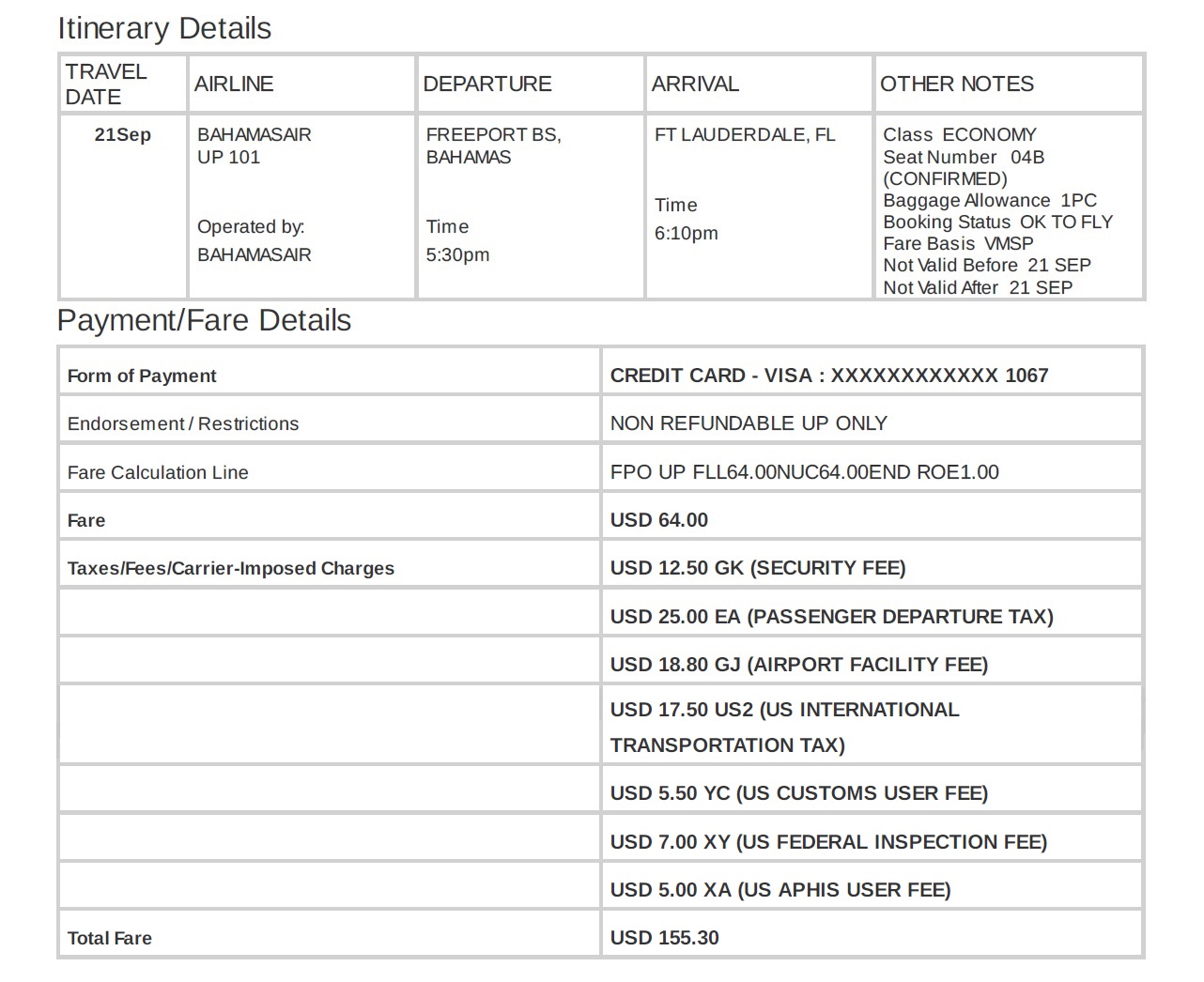
CU Blog - Caribbean less competitive due to increasing aviation taxes - Photo 2See this photo of a recent airline ticket (price breakdown), for one of the stakeholders in the Go Lean movement, who was travelling from a Caribbean island. The reality of these aviation taxes defies logic!

Yes, the governments need their revenues, but this should not be pursued at the expense of undermining viable economic engines; this is self-defeating. Likewise there was a recent conflict with British Aviation Authorities and their unilateral tax on Caribbean air transport. The solution there/then is the same as now: regional coordination and a heightened advocacy; see AppendixVIDEO.

Change has now come to the Caribbean. The book Go Lean … Caribbean serves as a roadmap for the introduction and implementation of the Caribbean Union Trade Federation (CU), an alliance of the 30 Caribbean member-states. This Go Lean roadmap has 3 prime directives:

  • Optimization of the economic engines in order to grow the regional economy to $800 Billion and create 2.2 million new jobs..
  • Establishment of a security apparatus to protect the resultant economic engines.
  • Improve Caribbean governance to support these engines.

The roadmap calls for the CU to navigate the changed landscape of the globalized air transport industry. There is the need for regional integration, administration, and promotion for Caribbean air travel among local and foreign carriers. The book posits that transportation and logistics empower the economic engines of a community. There must be air carrier solutions to service the transportation and tourism needs of the Caribbean islands. This point is fully appreciated by Caribbean tourism stakeholders; the book relates that the region’s Hotel and Tourism Association channel the vision of Robert Crandall, former Chairman of American Airlines, who remarked at a Caribbean Hotel and Tourism Investment Conference in May 2010 that the region is uniquely dependent on tourism:

“Everyone involved in travel and tourism knows that our [airline] industry is immensely important to the world economy, generating and supporting – either directly or indirectly – about one in eleven jobs worldwide. Here in the Caribbean, it is even more important. On a number of islands, travel and tourism accounts for more than 50% of all employment, and on some islands for more than 75%. Overall, about 20% of Caribbean employment is travel and tourism dependent – something on the order of 2.5 million jobs.” – Go Lean … Caribbean Page 60.

Go Lean asserts that air travel options must be optimized to impact Caribbean society – thus the need for more regional coordination, regulation and promotion of the Caribbean’s aviation industry. New models are detailed in the book in which tourism can be enhanced with “air lifts” to facilitate Caribbean events, and “Air Bridges” to allow for targeting High Net Worth markets. This roadmap also introduces the Union Atlantic Turnpike to offer more transportation solutions (ferries, toll roads, railways, and pipelines) to better facilitate the efficient movement of people and cargo.

This is one way the CU will empower the region’s economic engines. This is an example of the change that the CU technocracy will bring!

The Go Lean book presents a series of community ethos that must be adapted to forge this change. In addition, there are these specific strategies, tactics, implementation and advocacies to apply:

Community Ethos – Job Multiplier Page 22
Community Ethos – Lean Operations Page 24
Community Ethos – Cooperatives Page 25
Community Ethos – Ways to Improve Sharing Page 35
Community Ethos – Impacting the Greater Good Page 37
Strategy – Customers – Visitors Page 47
Strategy – Competitive Analysis – Event Patrons Page 55
Strategy – Core Competence – Tourism Page 58
Anecdote – Caribbean Hotel & Tourism Assoc. focus on Air Transport Page 60
Tactical – Fostering a Technocracy Page 64
Tactical – Commerce – Tourism Promotion Page 78
Tactical – Aviation Administration & Promotion Page 84
Implementation – Ways to Deliver Page 109
Implementation – Trade Mission Objectives Page 116
Planning – 10 Big Ideas for the Caribbean Region – #7: Virtual Turnpike Page 127
Planning – Ways to Improve Trade Page 128
Advocacy – Ways to Improve Governance Page 168
Advocacy – Ways to Optimize Government Revenue Sources Page 172
Advocacy – Ways to Enhance Tourism Page 190
Advocacy – Ways to Impact Events Page 191
Advocacy – Ways to Market Southern California – Air Bridge Page 194
Advocacy – Ways to Improve Transportation – Aviation Promotion Page 205
Appendix – Airport Cities – New Approach for Optimizing Business Model Page 287

This commentary posits that the status quo of Caribbean aviation taxes reflect a flawed economic policy, reflective of the dysfunction in the region. This commentary also relates to other lessons of economic optimizations and dysfunctions previously detailed in Go Lean blogs, as sampled here:

Caribbean must work together to address regional industry threats – Example of Rum Subsidies
A Lesson in Aviation History: Concorde SST and the Caribbean
New York-New Jersey Port Authority – Lessons from an Airport Landlord
Bahamas Re-organizing Government Revenues in 2015 with VAT Implementation
Lessons Learned from the American Airlines Merger
Book Review: ‘Wrong – Nine Economic Policy Disasters and What We Can Learn…’
Caribbean Changes – Air Antilles Launches St. Maarten Service
Tourism’s changing profile – Need for Competition and Comparative Analysis

The world loves the Caribbean; people want to come visit and enjoy our hospitality. It is better for them, and for us in the region that they come by air transport. But cruises are viable options, though the Caribbean communities get less benefits from cruise lines (Pages 61 & 193). We simply “fatten our frogs for snake”. The more dysfunction we create with air transport – like these excessive  aviation taxes – the more we push visitors to the cruise option; meaning less direct-indirect spending: hotels, taxis, restaurants, casinos, etc.

Now is the time to lean-in to this roadmap for Caribbean change, as depicted in the book Go Lean…Caribbean. We cannot afford to undermine our economic strengths with disabling tax policies. This is a public trust, betrayed. The Caribbean can – and must – do better.  🙂

Download the free e-Book of Go Lean … Caribbean – now!

APPENDIX Video: A Tax Too Far…? – http://youtu.be/Jbh8DJxUNC8

Uploaded on Oct 30, 2011 – A documentary on how the Air Passenger Duty instituted by the UK is affecting Caribbean Tourism, and the lobbying efforts of the Caribbean Tourism Organization to have it reduced, removed, or the Caribbean re-banded. Get more information about the APD on the CTO website: http://www.onecaribbean.org/our-work/advocacy/

Share this post:
, , , ,
[Top]

Blog # 200 – Ignorance is no excuse – Milestone in Enlightenment

Go Lean Commentary – Number 200

We have now reached a new milestone in the distribution of the blogs from the publishers of the book Go Lean…Caribbean, 200 submissions. That’s a lot of blogs and a lot of enlightenment, (see Appendix below); there is now no excuse for ignorance in the Caribbean region. (Enlightenment is defined here as the opposite of ignorance).

The Go Lean book stresses the subject of the “Age of Enlightenment” (Page 170); relating the cultural movement of intellectuals in the 17th and 18th centuries, (between 1650 to 1700). Enlightenment thinkers used logic and reason to challenge ideas grounded in nothing more than ignorance, superstition, arbitrary tradition and dogmatic faith. There is now a new need for an Age of Enlightenment for Caribbean society as ignorance, superstition, arbitrary tradition and dogmatic faith has re-emerged as a negative community ethos.

CU Blog - Ignorance is no excuse - Milestone in Enlightenment - Photo 1

The Go Lean book posits that 2008 is the pivotal year for Caribbean enlightenment (Page 136) – see the VIDEO below. Our Age of Enlightenment unfurled since 2008. This acknowledgement is recognized at the outset of the book with this Declaration of Interdependence (Page 11) opening statement:

xxi. Whereas the legacy of international democracies had been imperiled due to a global financial crisis, the structure of the Federation must allow for financial stability and assurance of the Federation’s institutions. To mandate the economic vibrancy of the region, monetary and fiscal controls and policies must be incorporated as proactive and reactive measures. These measures must address threats against the financial integrity of the Federation and of the member-states.

This roadmap was constructed with assessments, community ethos, strategies, tactics, implementation and advocacies to mitigate the ignorance, superstitions, arbitrary traditions and dogmatic faith of the Caribbean status quo.

One example of dogmatic faith, the focus of this commentary, is the elevation of the view that the United States of America is the panacea of Caribbean ills. As a result, the book and aligned blog commentaries elaborate on how the countries of the Caribbean region emerged as parasites to American-ism, rather than protégés for an advanced society. (The assessment is that even the US territories of Puerto Rico and the Virgin Islands are dysfunctional in their societal engines).

The Go Lean book is not anti-American, on the contrary, we look to the US as a role model of democracy and seek to emulate provisions of the US Constitution (Page 145). The book simply asserts that the Caribbean member-states must “man up” and assume our own destiny, not look for someone else, the US, to solve our problems of economic, security and governing dysfunction. This theme has been a frequent topic for blogging by the Go Lean promoters, as sampled here:

American-ism – Miami’s Success versus Caribbean Failure
A Lesson in History: Deferred Gratification as a Community Ethos of WW II
Protégé Model for Caribbean/Latin America: Korean Example
Applying Lessons from 2008 – Depth and Breath of Crises
Sports Role Model – US versus the World
America’s Navy – 100 Percent – Model for Caribbean
American Self-Interest – Senate bill targets companies that move overseas
‘Prosper Where You Are Planted’ – Book Review and Community Ethos
Caribbean loses over 70% of tertiary educated citizens to the brain drain – Mostly to the US
Open the Time Capsule: The Great Recession of 2008
Caribbean Reality – Only at the precipice, do they change
Ailing Puerto Rico open to radical economic fixes
Book Review: ‘Wrong – Nine Economic Policy Disasters and What We Can Learn…’
10 Things We Want from the US and 10 Things We Don’t Want from the US

Change has come to the Caribbean region; an upgrade to the Caribbean intelligentsia.

The book Go Lean…Caribbean serves as a roadmap for the introduction and implementation of the Caribbean Union Trade Federation (CU) and the Caribbean Central Bank (CCB). This Caribbean empowerment roadmap has 3 prime directives:

  • Optimization of the economic engines in order to grow the regional economy to $800 Billion & create 2.2 million new jobs.
  • Establishment of a security apparatus to protect the resultant economic engines.
  • Improve Caribbean governance to support these engines.

The book described both the CU and CCB as hallmarks of technocracy, a commitment to efficiency and effectiveness. The book itself is 370 pages and covers 144 different missions.

The following is a sample of these specific details from the book related to this commentary:

Community Ethos – Deferred Gratification Page 21
Community Ethos – Consequences of Choices Lie in the Future Page 21
Community Ethos – Return on Investments (ROI) Page 23
Community Ethos – Lean Operations Page 24
Community Ethos – Ways to Impact the Future Page 26
Strategy – Vision – Confederate 30 Member-States Page 45
Strategy – Missions – 144 Advocacies Page 457
Tactical – Confederating a Permanent Union Page 63
Tactical – Fostering a Technocracy Page 64
Implementation – Ways to Pay for Change Page 101
Implementation – Ways to Deliver Page 109
Planning – 10 Big Ideas for the Caribbean Region Page 127
Planning – Lessons Learned from 2008 Page 136
Advocacy – Ways to Grow the Economy Page 151
Advocacy – Ways to Create Jobs Page 152
Advocacy – Reforms for Banking Regulations Page 199
Advocacy – Ways to Impact Wall Street Page 200
Advocacy – Ways to Impact Main Street Page 201
Appendix – Credit Ratings Agencies in 2008 Page 276

It is understandable that the reference to “parasite” is negative. The book describes positive community ethos that we advocate for adoption. But the “parasite” reference is appropriate; the disposition of the host, directly impacts the disposition of the parasite. The financial crisis of 2008, initiated by American financial defects, severely crippled Caribbean economies. Even now, despite the recovery in the US, Caribbean economic malaise lingers.

A protégé disposition is so much more preferred. We should apply the best practices of American society, and other cultures as well. (The Go Lean book directly refers to Canada – Page 146 – and the European Union – Page 130).

This quest for Go Lean…Caribbean is huge, making our homeland a better place to live, work and play. This is not easy, this is heavy-lifting!

It is time for enlightenment, Caribbean style – too much is at stake!

CU Blog - Ignorance is no excuse - Milestone in Enlightenment - Photo 2

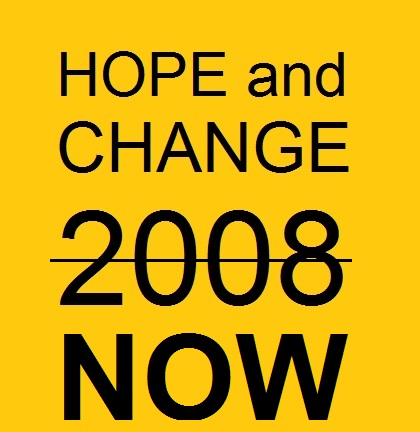
Yes, “Hope and Change” has come to the Caribbean; see the 2008 version of “Hope and Change” manifested in America, in the VIDEO below:

Video: 2008 Presidential Election Acceptance Speech – http://youtu.be/GNtJRPcPCcw

The new President-Elected Obama declared that night on November 4, 2008: “A new dawn of American leadership is at hand”…

For the Caribbean, we say: Ditto!

Download the book Go Lean … Caribbean – now!

———————————–

Appendix – Categories and Counts of all Go Lean Blogs (as of November 28, 2014); 1 Blog = Many Categories

Economics 76
Ethos 66
Government 63
Implementation 39
Industries 53
Locations 34
Planning 63
Social 58
Strategy 40
Tactical 29


Share this post:
,
[Top]

Geek the Library

Go Lean Commentary

First, understand the definition of “Geek”.

geek as a VERB

  1. To love, to enjoy, to celebrate, to have an intense passion for.
  2. To express interest in.
  3. To possess a large amount of knowledge in.
  4. To promote.

The following source material describes how impactful libraries are to modern living:

Whatever you geek, serious or fun, the public library supports you.

The ‘Geek the Library’ project is a community public awareness campaign aimed at spreading the word about the vital and growing role of public libraries, and to raise awareness about the critical funding issues many U.S. libraries face.

The goal of the campaign is to inspire a conversation about incredible public libraries and their urgent need for increased support. It is hoped that people will tell what they “geek”, how the public library supports them and their community, and that everyone benefits from the services their local library provides.

The campaign is sponsored by OCLC, a nonprofit library cooperative (see below) that has provided services to help libraries deliver more to their users for four decades. The campaign, supported by a grant from the Bill & Melinda Gates Foundation, is partnered with Chicago-based marketing communications agency Leo Burnett USA; this is a professional, technocratic endeavor.

Public libraries inspire and empower. Everyone is welcome. Almost anything can be explored. And they play an important role for individuals and for communities. Consider this sample:

  • Job Center – As the economy continues to struggle, many libraries are transforming into job centers. Online job application assistance is only the tip of the iceberg. Some libraries are developing specific job searching areas with helpful resources such as classes and online portals to help people sort through the clutter and get back to work faster.
  • Access For All – Historically, ‘access for all’ is what drove the establishment of most public libraries. This mission still rings true today. For many Americans, their local library is an important source for free public access to computers and the Internet in their communities—and for some, it is their only access.
  • A Personal Touch – Last year, librarians helped millions of people find out more about what they geek, discover new interests and search for jobs online. Librarians are passionate about their communities; they are passionate about what you geek and they are passionate about you.
  • The Possibilities Place – In addition to traditional library resources, such as books and children’s programs, many libraries offer innovative geeking opportunities for teens and adults. Live online homework help, genealogy research or financial planning classes.
  • Community Center – The public library is often the heart of the community—bringing people together in a way no other community organization can. You can get your geek on. You can hold a formal meeting. And you can gather with colleagues, friends and neighbors.
  • Return on Investment – More jobs, higher property values, better schools, increased wages … the public library plays a role in all of it. Many studies support the idea that dollars spent on libraries provide solid economic returns to the community.

OCLC Project: Geek The Library – Online Source (Retrieved 11/26/2014)
http://geekthelibrary.org/geek-the-library/index.html

Video: Geek the Library – http://youtu.be/5K-gKNIuaxA

——————————

Source – OCLC = Online Computer Library Center (www.oclc.org):

This nonprofit library cooperative provides research, programs and services that help libraries share the world’s knowledge and the work of organizing it.

In 1967, a small group of library leaders founded the OCLC as the Ohio College Library Center with an ambitious public purpose to:

  • improve access to the information held in libraries around the globe, and;
  • find ways to reduce costs for libraries through collaboration.

This vision launched an effort to share the world’s information via library collaboration—first in Ohio, then across North America and today in 113 countries. The first step was to combine technology with library cooperation through shared, computerized cataloging. Today, the OCLC cooperative helps libraries define their place in the digital world with new cloud-based services that amplify and extend library collections and resources.

OCLC members represent a cohesive hub of library data, activities and interests. This helps increase the collective influence of libraries, making it possible to develop partnerships and programs that would be impossible for most libraries to achieve alone.

The book Go Lean…Caribbean posits that libraries must play a role in the roadmap to elevate Caribbean society, to help bridge the Digital Divide. The book is published by the SFE Foundation, a community development foundation chartered to bring change back to the Caribbean. The book serves as a roadmap for the introduction and implementation for the technocratic Caribbean Union Trade Federation (CU). The prime directives of the CU are declared as following 3 statements:

  • Optimization of the economic engines in order to grow the regional economy to $800 Billion & create 2.2 million new jobs.
  • Establishment of a security apparatus to protect the resultant economic engines.
  • Improve Caribbean governance to support these engines.

CU Blog - Geek the Library - Photo 1Libraries fit in the vision of a technocratic federal government. There is more focus on virtual structures and technology. Multi-functional libraries fit the vision to allow stakeholders access to CU government data/information technology services, and serve as a portal for e-Learning solutions.

The roadmap identifies, qualifies and proposes the establishment of community libraries throughout the region (Page 187). The book posits that these libraries can be a portal to the new world of Internet Communication Technologies (Page 197); a means to bridge the Digital Divide (Page 31) and a delivery outlet for many e-Government services (Page 168).

The foregoing campaign, ‘Geek the Library‘, is motivated to raise additional funding for public libraries in the US. There is also the need for funding for Caribbean library endeavors. The Go Lean roadmap leads first with an optimization of the region’s economic engines. The book then details how to pay for these changes (Page 101), then how to maintain a consistent well-funded governing engine (Page 172), including public libraries.

Previously, Go Lean blogs commented on other developments related to Caribbean library endeavors:

Antigua Completes Construction of New National Library
The World as 100 People – Showing the Gaps – Need for Cyber Caribbean – Gates Foundation
Is Print Dead? No, but dying! Digital Media is the Future

Now is the time for all Caribbean stakeholders, all Geeks, to lean-in to this regional solution for Caribbean empowerment. Considering the foregoing definition of ‘geek’, this regional effort could be dubbed: ‘Geek the Caribbean‘. The end result, a better homeland; a better place to live, work and play. 🙂

Download the book Go Lean … Caribbean – now!

Share this post:
, , ,
[Top]

Introduction to Europe – All Grown Up

Go Lean Commentary

CU Blog - Introduction to Europe - All Grown Up - Photo 1The countries in the western hemisphere are considered the New World. Why “new”? Because none of the independent nations in this hemisphere are older than 250 years. Despite previous civilizations in the lands; the hemisphere’s modernity started as colonies of their European forebears: England, France, Portugal, Spain, and The Netherlands. The European lands are thusly referred to as the Old Country.

Well now, the Old Country has a new lesson for the New World: economic, security and governing integration of the European Union (EU). This structure is such an advancement in democracy, that it is now presented as a model for the Caribbean region to explore.

This is the quest of the book Go Lean…Caribbean, to get the Caribbean region to model their society to incorporate the best practices of the EU. The book urges the introduction and implementation of the Caribbean Union Trade Federation (CU). The book therefore serves as a roadmap for this goal, with turn-by-turn directions to integrate the 30 member-states of the region, forge an $800 Billion economy and create 2.2 million new jobs.

While this is a big idea for the nascent Caribbean, this is just a microcosm of the EU’s width and breadth – Europe is all grown-up. The EU has the economies-of-scale of 508 million people and a GDP of $15 Trillion (2012) in 28 member-states; (the EuroZone Currency Union is a subset of 18 states, 333 million people and $13.1 Trillion GDP). The EU is even larger than the Caribbean’s neighbor, the US, with its 50 states, 320 million people, and $14 Trillion integrated economy.

There is an even more important number in the discussion of EU dynamics: 100 million. That’s how many lives were lost prematurely due to the wars of the 20th Century, all spurred from European conflicts, think World War I and World War II. Since the European integration began, after WW II and completing with the EU charter in 1992, there has been no full continental or global wars. This absence is a testament of European economic-security-governing integration.

The continent of Europe has now “grown up”, organizationally. In fact, because of the success of this integration, the EU was awarded the coveted Nobel Peace Prize for 2012. This fact was detailed in the Go Lean book (Page 130).

Considering the EU example, the economic benefits are undeniable; shocks and dips in economic performance can be more easily absorbed and leveraged across the entire region. (The US provides a similar lesson).  Despite recent crises in the US (2008) and in Europe (Sovereign Debt of 2009 – 2011), the US is still the #2 economy, while the EU is the world’s #1 economy.

At the outset, the Go Lean roadmap identified an urgent need to collaborate and consolidate for economic resilience. This is pronounced in this clause in the opening Declaration of Interdependence (Page 13):

xxv.   Whereas the legacy of international democracies had been imperiled due to a global financial crisis, the structure of the Federation must allow for financial stability and assurance of the Federation’s institutions. To mandate the economic vibrancy of the region, monetary and fiscal controls and policies must be incorporated as proactive and reactive measures. These measures must address threats against the financial integrity of the Federation and of the member-states.

The biggest lesson for the Caribbean to glean from a consideration of the EU is the need for compromise in consensus-building. This is why there are asterisks on so many confederation clauses. See the details in this VIDEO here:

Direct Link: http://youtu.be/O37yJBFRrfg

The CU is modeled from the EU – see Page 130 in the Go Lean…Caribbean book, so as to provide good stewardship and shepherding of the Caribbean economic, security and governing engines.

The theme of applying models and best-practices from other countries/regions has been elaborated on in these previous blog commentaries:

Why India is doing better than most emerging markets
‘Too Big To Fail’ – Caribbean Version
A Lesson in European Dysfunctional History: 100 Years Ago – World War I
EU willing to fund study on cost of not having CARICOM
European Model: One currency, divergent economies
How Nigeria’s economy grew by 89% overnight
Book Review: ‘Wrong – Nine Economic Policy Disasters and What We Can Learn…’

The CU roadmap drives change among the economic, security and governing engines of the Caribbean region. The book presents the solutions to elevate Caribbean society as new community ethos, strategies, tactics, implementations and advocates; as follows:

Community Ethos – Forging Change Page 20
Community Ethos – Economic Principles Page 21
Community Ethos – Security Principles Page 22
Community Ethos – Governing Principles Page 24
Community Ethos – Impact the Future Page 26
Community Ethos – Impact the Greater Good Page 37
Strategy – CU Vision – Integrate Caribbean member-states modeling the European Union Page 45
Strategy – Facilitate a Currency Union, the Caribbean Dollar (C$), and the Caribbean Central Bank, modeled after the Euro and European Central Bank Page 48
Tactical – Fostering a Technocracy Page 64
Tactical – $800 Billion Economy – How and When Page 67
Tactical – Separation-of-Powers – Central Bank Page 73
Implementation – Assemble Caribbean Central Bank Page 96
Implementation – Ways to Better Manage Debt Page 114
Planning – Ways to Model the EU Page 119
Planning – Lessons Learned from 2008 Page 136
Anecdote – Caribbean Currencies Page 149
Advocacy – Ways to Grow the Economy Page 151
Advocacy – Ways to Create Jobs Page 152
Advocacy – Reforms for Banking Regulations Page 199

The Go Lean roadmap posits that modeling the EU is easier said than done. On the one hand, the economic optimizations are easy, just show up with investments (money) and jobs and any Caribbean community will acquiesce. On the other hand, the attempts to introduce empowerments for security and/or governing engines are doomed to be more complicated, requiring a political process, with a lot of compromise and consensus-building.

See a dissenting view of the EU structure, expressed here:

Dissenting View: Some people object to the structure of the EU. Notice this comment added to the same foregoing YouTube VIDEO above:

By: aalexmary – 1 month ago (October 2014):
So, explained. The European Union is US’s pathetic slave. The European Union is an unsuccessful organisation who took the sovereignty of the nations away. the European union is a monster (I mean its leaders) who carries out coups and bloody wars. The EU, NATO, US destroyed and blooded Ukraine and Novorrosia with the purpose of starting WWIII and to destroy Russia. The European Union hurts its own nations (eg: the illegal insane sanctions against Russia, and this is not the only example). Obama, Merkel and all the leaders of the EU are just pathetic war criminals. Not to mention Pigosenko and his clique. The “democrat” EU brought back the cruel Nazism. EU is ugly. It is not the European “dream” anymore. It is about EU’s leaders greed for power. In EU the individuals do not count. I will be so happy when EU and NATO will disappear. Useless organisations. It is time for the countries to regain their sovereignty.
YouTube Video Sharing Online Site – Posted July 2, 2013; retrieved November 26, 2014
http://youtu.be/O37yJBFRrfg

This heavy-lifting, navigating the dissent and overcoming opposition, is worth the effort. This is the mission of the CU: built for the heavy-lifting of integration and collaboration. With the successful execution of the deliveries in the Go Lean roadmap, the effect will be undeniable: a better homeland to live, work and play. 🙂

Download the book Go Lean … Caribbean – now!

Share this post:
, ,
[Top]

Obama’s immigration tweaks leave Big Tech wanting more

Go Lean Commentary

Caribbean stakeholders hereby comment on US President Barack Obama’s planned unilateral immigration reforms, and it’s not what you might naturally think:

We are hereby opposed!

Wait, wouldn’t a more liberal policy for Caribbean immigrants help our cause to improve the condition of many Caribbean families? “Yes” for the micro (individual), but “No” for the macro (community/country/region)!

Liberal US immigration practices are bad; they accentuate the “brain drain” for the Caribbean.

The focus in this discussion is on the STEM (Science, Technology, Engineering, and Mathematics) labor force. There is a demand for more workers with these qualifications; this demand is in the US and in the Caribbean. The US economy, and society, is more mature than all Caribbean countries; this makes it hard for Caribbean member-states to compete. And now…

… President Obama wants to extend invitations to STEM college students in the US to stay on in the US and NOT return to their home countries.

Say it ain’t so!

The publishers of the book Go Lean…Caribbean, which serves as a roadmap for elevating all 30 member-states of Caribbean society, calls for the need to fight the policy change that is depicted in this news article:

By: Noel Randewich and Roberta Rampton

s immigration tweaks leave Big Tech wanting more - Photo 1SAN FRANCISCO/WASHINGTON (Reuters) – President Barack Obama plans to make life a little easier for some foreign tech workers, but Silicon Valley representatives are disappointed his immigration rule changes will not satisfy longstanding demands for more visas and faster green cards.

In a speech on Thursday, Obama outlined plans to use executive authority to help millions of undocumented people. He also announced minor adjustments to cut red tape for visa holders and their families, including letting spouses of certain H-1B visa holders get work permits.

“I will make it easier and faster for high-skilled immigrants, graduates and entrepreneurs to stay and contribute to our economy, as so many business leaders have proposed,” Obama said.

The president’s moves will make it easier for entrepreneurs to work in the United States and extend a program letting foreign students who graduate with advanced degrees from U.S. universities to work temporarily in the United States.

But tech industry insiders said the changes, while positive, were limited.

“This holiday season, the undocumented advocacy community got the equivalent of a new car, and the business community got a wine and cheese basket,” complained one lobbyist, speaking on condition of anonymity.

Instead of more temporary H-1B visas, which allow non-U.S. citizens with advanced skills and degrees in “specialty occupations” to work in the country for up to six years, the 200,000-member U.S. chapter of the Institute of Electrical and Electronics Engineers (see VIDEO below) was hoping for measures to reduce the backlog of H-1B holders awaiting green cards.

“If this is all there is, then the president has missed a real opportunity,” said Russ Harrison, a senior legislative representative at the IEEE. “He could have taken steps to make it easier for skilled immigrants to become Americans through the green card system, protecting foreign workers and Americans in the process.”

For instance, IEEE and technology companies want spouses and children to be excluded from employment-based green-card allotments, thereby increasing availability for other foreign tech workers seeking green cards.

Tech companies from Microsoft Corp to Intel have complained about being unable to find enough highly skilled employees and want Washington to increase the availability of visas for programmers, engineers and other specialized foreign professionals.

“Our focus really is on H-1B visas and trying to expand the number of talented technical professionals that can come to the U.S.,” Qualcomm CFO George Davis said ahead of Obama’s announcement. “The way the regulations are drafted today there’s a lot of room for improvement.”

Major changes would require Congressional action, however, and tech industry executives are worried that partisan rancor over Obama’s unilateral action could set back chances for legislation.

“I don’t view this as a long-term solution, and I hope it doesn’t get in the way of a long-term solution,” said Dave Goldberg, chief executive of SurveyMonkey, a Palo Alto based company.

The AFL-CIO said in a statement it would seek to ensure visa workers are afforded rights and protections.

“We are concerned by the President’s concession to corporate demands for even greater access to temporary visas that will allow the continued suppression of wages in the tech sector,” the labor giant said.

While limited, Obama’s policy changes, such as letting more spouses work, will help some tech workers and their families.

Gayathri Kumar, 29, moved a year ago from India to Phoenix, Arizona, where her husband works at Intel. She has a masters degree in communications and wants to work in television, but Kumar spends much of her day at home, chatting with friends over social media.

“I really want to work. I came here with a passion to work, not to sit at home,” Kumar said. “I’m bored, I’m becoming depressed.”

(Reporting by Noel Randewich in San Francisco and Roberta Rampton in Washington. Additional reporting by Sarah McBride in San Francisco.; Editing by Eric Effron, Tom Brown and Ken Wills)

Reuters News Wire Online Source – Posted: November 21, 2014 –
http://news.yahoo.com/obamas-immigration-tweaks-leave-big-tech-wanting-more-002544241–finance.html

For this issue, “the enemy of my enemy is my friend”.

Caribbean stakeholders need to align with the opposition of Obama’s immigration policy, the Republicans. (The publishers of the Go Lean book, SFE Foundation, represent an apolitical, religiously-neutral, economic-focused movement, initiated at the grass-root
level to bring permanent change back to the Caribbean homeland – no one Caribbean member-state is favored over another). We need to pursue our own self-interest.

The book Go Lean…Caribbean posits that the Caribbean brain drain is already acute, (reported at exceeding 70%), due to “push and pull” factors. Many Caribbean STEM students matriculate in American universities, so allowing more liberal recruiting of our students to remain in the US would increase the “pull” factor. We cannot compete against this added pressure.

Why would the students want to concede to this pressure? Unfortunately, we have a variety of “push” conditions working against the Caribbean counter-defense; we have deficiencies. We have economic, security and governing deficiencies that “push” the native Caribbean student/worker to consider expatriating to the US, or to Canada and many EU countries.

But the Caribbean has its own needs for the STEM work force, and our needs cannot be ignored. This is war; (a Trade War).

The Caribbean is losing … every battle. We must not help our enemy. The book Go Lean…Caribbean serves as a roadmap for the introduction and implementation of the technocratic Caribbean Union Trade Federation (CU). The roadmap contains our battle plans, strategies and tactics for this Trade War. The roadmap’s states the prime directives of the CU as the following 3 statements:

  • Optimization of the economic engines in order to grow the regional economy to $800 Billion & create 2.2 million new jobs.
  • Establishment of a security apparatus to protect the resultant economic engines.
  • Improve Caribbean governance to support these engines.

The book posits that all of the Caribbean is in crisis with this brain drain problem, and so there is an urgent need to retain our existing STEM talent, and recruit even more. This point is stressed early in the book (Page 13) in the following pronouncements in the Declaration of Interdependence:

xix.   Whereas our legacy in recent times is one of societal abandonment, it is imperative that incentives and encouragement be put in place to first dissuade the human flight, and then entice and welcome the return of our Diaspora back to our shores. This repatriation should be effected with the appropriate guards so as not to imperil the lives and securities of the repatriated citizens or the communities they inhabit. The right of repatriation is to be extended to any natural born citizens despite any previous naturalization to foreign sovereignties.

xxi.   Whereas the preparation of our labor force can foster opportunities and dictate economic progress for current and future generations, the Federation must ensure that educational and job training opportunities are fully optimized for all residents of all member-states, with no partiality towards any gender or ethnic group. The Federation must recognize and facilitate excellence in many different fields of endeavor, including sciences, languages, arts, music and sports. This responsibility should be executed without incurring the risks of further human flight, as has been the past history.

This subject of mitigating the brain drain and adopting empowering immigration policies have been frequent topics for these Go Lean blogs, highlighted here in the following sample:

https://goleancaribbean.com/blog/?p=2907 Local Miami Haitian leaders protest Bahamian immigration policy
https://goleancaribbean.com/blog/?p=2809 A Lesson in History: Economics and Immigration Policy of East Berlin
https://goleancaribbean.com/blog/?p=1674 Obama’s Plans for $3.7 Billion Immigration Crisis Funds, stressing the need for reform in the US.
https://goleancaribbean.com/blog/?p=1596 Book Review: ‘Prosper Where You Are Planted’ – the Antithesis of Emigration
https://goleancaribbean.com/blog/?p=1470 College Of the Bahamas Master Plan 2025 – Lacking Response for Brain Drain
https://goleancaribbean.com/blog/?p=1296 Remittances from Diaspora to Caribbean Increased By 3 Percent in 2013 – Not a Good Economic Plan
https://goleancaribbean.com/blog/?p=1256 Is a Traditional 4-year College Degree a Terrible Investment? Yes, for Caribbean Communities Sending their Students Abroad.
https://goleancaribbean.com/blog/?p=1014 All is not well in the sunny Caribbean – Economic Deficiencies
https://goleancaribbean.com/blog/?p=599 Ailing Puerto Rico open to radical economic fixes – Need for Retention

As a counter-defense to the losing dispositions in the Caribbean Trade War with the US, the Go Lean book details a series of community ethos, strategies, tactics, implementations and advocacies to foster the best practices to incentivize STEM careers and mitigate further brain drain for the Caribbean region:

Community Ethos – Deferred Gratification Page 21
Community Ethos – Economic Systems Influence Choices & Incentives Page 21
Community Ethos – Job Multiplier Page 22
Community Ethos – Anti-Bullying and Mitigation – neutralizing STEM as Nerds Page 23
Community Ethos – Minority Equalization Page 24
Community Ethos – Return on Investments Page 24
Community Ethos – Ways to Impact the Future Page 27
Community Ethos – Ways to Foster Genius Page 26
Community Ethos – Ways to Help Entrepreneurship Page 28
Community Ethos – Promote Intellectual Property Page 29
Community Ethos – Ways to Impact Research & Development Page 30
Community Ethos – Ways to Close the Digital Divide Page 31
Community Ethos – Ways to Impact the Greater Good Page 37
Anecdote – Valedictorian and Caribbean Diaspora Member Page 38
Strategy – Customers – Citizens, Business Community & Diaspora Page 47
Strategy – Meeting Region’s Needs Today, Preparing For Future Page 58
Tactical – Separation of Powers – Patent, Standards, & Copyrights Page 78
Tactical – Separation of Powers – Education Department Page 85
Implementation – Assemble all Super-Regional Governing Entities Page 96
Implementation – Trends in Implementing Data Centers Page 106
Implementation – Ways to Deliver Page 109
Implementation – Better Manage Debt – Better Student Loans Dynamics Page 114
Planning – Ways to Improve Trade Page 128
Planning – Ways to Make the Caribbean Better Page 131
Advocacy – Ways to Grow the Economy Page 151
Advocacy – Ways to Create Jobs Page 152
Advocacy – Ways to Improve Education Page 159
Advocacy – Ways to Impact Student Loans – Forgivable Provisions Page 160
Advocacy – Ways to Foster Empowering Immigration – STEM Professionals Page 174
Advocacy – Ways to Foster Technology Page 197
Advocacy – Ways to Impact the Diaspora Page 217
Appendix – Alternative Remittance Modes Page 270

Now is the time for all of the Caribbean, the people and institutions, to lean-in for the elevations described in the book Go Lean … Caribbean. This means heavy-lifting to enhance the economic-security-governing engines to attract and retain our STEM graduates. We especially call on the Caribbean/Latin American chapters of the IEEE organization – depicted in the foregoing article and the VIDEO below – to join-in this empowerment effort. A CU mission aligns with this organization’s charter to promote STEM careers and developments in their members’ home regions. The Caribbean needs the regional delivery of this charter, and their lobbying efforts.

We must try and stop Obama’s unilateral policy reform; a liberal US immigration policy would accentuate the Caribbean brain drain.

The region needs the deliveries, described in the Go Lean roadmap. Otherwise, we have no hope to incite and retain our young people, especially those with STEM skill-sets. As a region, we would simply be condemned to a worsened future, simply “fattening frogs for snakes”. This Go Lean roadmap therefore is vital in the quest to make the Caribbean a better place to live, work and play. 🙂

Download the book Go Lean … Caribbean – now!

———–

Appendix VIDEO: What is IEEE? – http://youtu.be/fcmCpEpg0lQ
This is a short video presenting the overall organization of IEEE. This video was developed and published during the celebrations of IEEE Day 2012.

Share this post:
, , ,
[Top]

Justice Strategy: Special Prosecutors … et al

Go Lean Commentary

The quest to elevate Caribbean society is a three-prong approach: economics, security and governance.

Economic optimizations are easiest to introduce; show up with investments (money) and jobs and almost any community will acquiesce. But to introduce empowerments for security and/or governing engines is more complicated, as changes in these categories normally require a political process; implying consensus-building and compromise. (Think: Iraq – “A military solution to a political problem?”; see Footnote 1)

This is what the book Go Lean…Caribbean calls “heavy-lifting”.

This Go Lean book posits that “bad actors” will always emerge in times of economic optimizations to exploit opportunities, with bad or evil intent. In support of this argument, the book relates a number of law-and-order episodes from world history: Pirates of the Caribbean (Page 181) and the Old American West (Page 142). In addition to the direct book references, there are a number previously published blogs/commentaries that covered subjects and dimensions for Caribbean justice institutions:

Role Model for Justice – The Pinkertons
Economic Crime Enforcement – The Criminalization of American Business
America’s Navy – 100 Percent – Model for Caribbean
A Lesson in History: 100 Years Ago – World War I
Here come the Drones … and the Concerns
Caribbean “Terrorists” travel to Venezuela for jihadist training
Jamaica to receive World Bank funds to help in crime fight
US slams Caribbean human rights practices
10 Things We Want from the US and 10 Things We Don’t Want: Pax Americana

It is evident that justice is very important to this roadmap for societal elevation. We do not want to only react (after the fact) to episodes undermining public security or the integrity of law-and-order in the homeland. We want to have a constant sentinel. This will be accomplished with two regional agencies (defined later): Justice Department and Homeland Security Department.

The Caribbean governance structures were developed under the tutelage of 4 European legacies (British, Dutch, French, Spanish) and the United States of America (territories of Puerto Rico & US Virgin Islands and the dominant cultural influence in the region). We now have fitting role models of their societies for the management of justice institutions. This commentary urges their best-practices.

The Go Lean book serves as a roadmap for the introduction and implementation of the technocratic Caribbean Union Trade Federation (CU). Normally, when there are questions of integrity in the due-process in executive, legislative or judicial branches of government, the curative measure is a Special Prosecutor (American) or a Commission of Inquiry (European and United Nations).

As defined in the following encyclopedia source reference, these measures are normally reactive, but for the CU, the strategy is proactive…from Day One:

1. UNITED STATES

A Special Prosecutor generally is a lawyer from outside the government appointed by an Attorney General or, in the United States, by Congress to investigate a government official for misconduct while in office. A reasoning for such an appointment is that the governmental branch or agency may have political connections to those it might be asked to investigate. Inherently, this creates a conflict of interest and a solution is to have someone from outside the department lead the investigation. The term “Special Prosecutor” may have a variety of meanings from one country to the next, from one government branch to the next within the same country, and within different agencies within each government branch. Critics of the use of Special Prosecutors argue that these investigators act as a “fourth branch” to the government because they are not subject to limitations in spending or have deadlines to meet.

STARR

Federal government
Attorneys in the United States may be appointed/hired particularly or employed generally by different branches of the government to investigate. When appointed/hired particularly by the judicial branch to investigate and, if justified, seek indictments in a particular judicial branch case, the attorney is called Special Prosecutor. When appointed/hired particularly by a governmental branch or agency to investigate alleged misconduct within that branch or agency, the attorney is called Independent Counsel.

State government
Special Prosecutors may also be used in a state prosecution case when the prosecutor for the local jurisdiction has a conflict of interest in a case or otherwise may desire another attorney handle a case.
Source: Wikipedia Online Encyclopedia (Retrieved November 17, 2014) – http://en.wikipedia.org/wiki/Special_prosecutor

2. BRITISH DOMINION

A Royal Commission is a major ad-hoc formal public inquiry into a defined issue in some monarchies. They have been held in the United Kingdom, Australia, Canada, New Zealand, Bahrain, Malaysia, Hong Kong and Saudi Arabia. A Royal Commission is similar in function to a Commission of Enquiry (or Inquiry) found in other countries such as Ireland, South Africa, and Hong Kong; (all examples here are from the British Dominion).

CU Blog - Justice Strategy - Special Prosecutors - Photo 1

A Royal Commissioner has considerable powers, generally greater even than those of a judge but restricted to the Terms of Reference of the Commission. The Commission is created by the Head of State (the Sovereign, or his/her representative in the form of a Governor-General or Governor) on the advice of the Government and formally appointed by Letters Patent. In practice—unlike lesser forms of inquiry—once a Commission has started the government cannot stop it. Consequently governments are usually very careful about framing the Terms of Reference and generally include in them a date by which the commission must finish.

Royal Commissions are called to look into matters of great importance and usually controversy. These can be matters such as government structure, the treatment of minorities, events of considerable public concern or economic questions.

Many Royal Commissions last many years and, often, a different government is left to respond to the findings. In Australia—and particularly New South Wales—Royal Commissions have been investigations into police and government corruption and organised crime using the very broad coercive powers of the Royal Commissioner to defeat the protective systems that powerful, but corrupt, public officials had used to shield themselves from conventional investigation.

Royal Commissions usually involve research into an issue, consultations with experts both within and outside of government and public consultations as well. The Warrant may grant immense investigatory powers, including summoning witnesses under oath, offering of indemnities, seizing of documents and other evidence (sometimes including those normally protected, such as classified information), holding hearings in camera if necessary and—in a few cases—compelling all government officials to aid in the execution of the Commission.

The results of Royal Commissions are published in reports, often massive, of findings containing policy recommendations. These reports are often quite influential, with the government enacting some or all recommendations into law.
Source: Wikipedia Online Encyclopedia (Retrieved November 17, 2014) –
http://en.wikipedia.org/wiki/Royal_Commission

3. NETHERLANDS

Though never a member of British Dominion, the Kingdom of the Netherlands has a similar process. An example of a Commission of Inquiry in the Netherlands include this case study:

  • From mid-2010 to December 2011 the Commission of Inquiry carried out an independent study of the sexual abuse of minors in the Roman Catholic Church from 1945 to 2010.

Source: Investigation of Roman Catholic Church Online Site (Retrieved Nov. 17, 2014) –
http://www.onderzoekrk.nl/english-summery.html

4. UNITED NATIONS

a. Commissions and Investigative Bodies

The UN Security Council has established a wide-variety of Commissions to handle a variety of tasks related to the maintenance of international peace and security. Commissions have been created with different structures and a wide variety of mandates including investigation, mediation, or administering compensation. Below is a list of all commissions established by the Security Council, with a short description prepared on the basis of the Repertoire, as well as links to the sections covering them in the Repertoire (Public Relations Publication). They are organized by region, and then under relevant areas or sub-regions, placed chronologically starting with those established most recently:

1946-1951 1952-1955 1956-1958 1959-1963 1964-1965 1966-1968 1969-1971 1972-1974 1975-1980 1981-1984 1985-1988 1989-1992 1993-1995 1996-1999 2000-2003 2004-2007 2008-2009 2010-2011

U.N. peacekeepers drive tank as they patrol past deserted Kibati village

For more information on the investigative and fact-finding powers of the Security Council, see this section on Article 34:

  • Article 34 – Investigation of disputes & fact-finding.
    Article 34 of the UN Charter empowers the Security Council to investigate any dispute, or any situation that is likely to endanger international peace and security. The provision covers investigations and fact-finding missions mandated by the Security Council or by the Secretary-General to which the Council expressed its support or of which it took note. Furthermore, this section has also looked at instances in which Member-States demanded or suggested to the Council that an investigation be carried out or a fact-finding mission be dispatched.

b. UN Commission for Conventional Armaments

The Commission for Conventional Armaments was established on 13 February 1947 to formulate proposals for carrying out General Assembly resolution 41 (I) of 14 December 1946 concerning the general regulation and reduction of armaments. This was a standing Commission, but it was formally dissolved on 30 January 1952.

Source: United Nations Online Archive – Retrieved Nov. 17, 2014 – http://www.un.org/en/sc/repertoire/subsidiary_organs/commissions_and_investigations.shtml

Normally a Special Prosecutor assignment has a limited time expiration. Also a Commission of Inquiry refers to individuals employed, during conciliation (Footnote 2), to investigate the facts of a particular dispute and to submit a report stating the facts and proposing terms for the resolution of the differences. Such a commission is one of many bodies available to governments to inquire/investigate into various issues. The commissions may report findings, give advice and make recommendations; and while their findings may not be legally binding, they can be highly influential.

The declared assignment documents for Special Prosecutors and/or Commissions of Inquiries are called “Warrants”.

The foregoing encyclopedic source explains that “Warrants” may grant immense investigatory powers, including summoning witnesses under oath, offering of indemnities, seizing of documents and other evidence, holding hearings, and compelling aid from government officials. This description provides the role-model for the CU‘s effort in justice and security. The Trade Federation will feature a federal Justice Department, with a separation-of-powers, a ‘Divide’, with the regional member-states. On the CU side of the ‘Divide’ is the jurisdiction for economic crimes, systemic threats, regional escalations and marshaling of any offenses on the federally-regulated grounds, Self-Governing Entities.

This separation-of-powers mandate also dictates that the CU‘s Homeland Security apparatus is the local manifestation of the United Nations Security (Peacekeeping) Forces , except for a regional scope only. This specific federal department will handle a variety of tasks related to the maintenance of regional peace and security.

The book Go Lean…Caribbean posits that the region must prepare its own security apparatus for its own security needs. So the vision is that all Caribbean member-states will authorize the CU as Special Prosecutors and Commissions of Inquiries. These warrants would legally authorize the regional “Justice Institutions”, covering law enforcement and regional defense, all encompassed in the book’s Homeland Security roadmap.

The CU would thusly be set to optimize Caribbean society through economic empowerment, and the aligning security dynamics. In fact, the Go Lean roadmap has 3 prime directives:

  • Optimization of the economic engines in order to grow the regional economy to $800 Billion & create 2.2 million new jobs.
  • Establishment of a security apparatus to protect the resultant economic engines.
  • Improve Caribbean governance to support these engines.

There is the need to ensure the economic engines in all 30 Caribbean member-states; plus extractions (mining, drilling) in the Exclusive Economic Zone (EEZ) of the Caribbean Sea. This point is pronounced early in the book with the Declaration of Interdependence (Page 12) that claims:

x.   Whereas we are surrounded and allied to nations of larger proportions in land mass, populations, and treasuries, elements in their societies may have ill-intent in their pursuits, at the expense of the safety and security of our citizens. We must therefore appoint “new guards” to ensure our public safety and threats against our society, both domestic and foreign. The Federation must employ the latest advances and best practices … to assuage continuous threats against public safety.

xi.  Whereas all men are entitled to the benefits of good governance in a free society, “new guards” must be enacted to dissuade the emergence of incompetence, corruption, nepotism and cronyism at the peril of the people’s best interest. The Federation must guarantee the executions of a social contract between government and the governed.

xii. Whereas the legacy in recent times in individual states may be that of ineffectual governance with no redress to higher authority, the accedence of this Federation will ensure accountability and escalation of the human and civil rights of the people for good governance, justice assurances, due process and the rule of law. As such, any threats of a “failed state” status for any member-state must enact emergency measures on behalf of the Federation to protect the human, civil and property rights of the citizens, residents, allies, trading partners, and visitors of the affected member-state and the Federation as a whole.

xvi. Whereas security of our homeland is inextricably linked to prosperity of the homeland, the economic and security interest of the region needs to be aligned under the same governance. Since economic crimes, including piracy and other forms of terrorism, can imperil the functioning of the wheels of commerce for all the citizenry, the accedence of this Federation must equip the security apparatus with the tools and techniques for predictive and proactive interdictions.

The treaty to establish the “new guards”, the Homeland Security Force and Federal Justice Department within the Caribbean Union Trade Federation gets legal authorization from the provisions of Special Prosecutors and Commissions of Inquiries, therefore enacting a Status of Forces Agreement with the initiation of the confederation. This elaborate process would be “Step One, Day One” in the Go Lean roadmap. The Go Lean book also details a series of community ethos, strategies, tactics, implementations and advocacies to provide increased public accountability and security in the Caribbean region:

Community Ethos – Economic Principle – Consequences of Choices Lie in Future Page 21
Community Ethos – Security Principle – Privacy –vs- Public Protection Page 23
Community Ethos – Security Principle – Whistleblower Protection Page 23
Community Ethos – Security Principle – Witness Security & Protection Page 23
Community Ethos – Security Principle – Anti-Bullying and Mitigation Page 23
Community Ethos – Security Principle – Intelligence Gathering Page 23
Community Ethos – Governing Principle – Minority Equalization Page 24
Community Ethos – Governing Principle – Lean Operations Page 24
Community Ethos – Governing Principle – Cooperatives Page 25
Community Ethos – Ways to Manage Reconciliations Page 34
Community Ethos – Ways to Improve Sharing Page 35
Community Ethos – Ways to Impact the Greater Good Page 37
Strategy – Vision – Trade Federation with Proxy Powers of a Confederacy Page 45
Strategy – Mission – Defense Pact to Defend against Systemic Threats Page 45
Strategy – Mission – Protect Stakeholders   with Vigorous Law-and-Order measures Page 45
Tactical – Confederating a Non-Sovereign Union Page 63
Tactical – Fostering a Technocracy Page 64
Tactical – Separation of Powers – Homeland Security Page 75
Tactical – Separation of Powers – Justice Department – District Attorneys as Special Prosecutors Page 77
Tactical – Separation of Powers – Justice Department – CariPol: Marshals & Investigations Page 77
Tactical – Separation of Powers – Justice Department – Witness Protection Page 77
Tactical – Separation of Powers – Trade Anti-Trust Regulatory Commission Page 77
Implementation – Foreign Policy Initiatives at Start-up Page 102
Implementation – Start-up Security Initiatives Page 103
Implementation – Start-up Benefits from the EEZ – Security – Interdictions & Piracy Page 104
Implementation – Steps to Implement Self-Governing Entities – Security and Justice Page 105
Implementation – Ways to Foster International Aid – Military Aid Page 115
Planning – Ways to Make the Caribbean Better – Safety Measures for the Rich and Poor Page 131
Planning – Ways to Improve Failed-State Indices – Law Enforcement Oversight Page 134
Planning – Lessons Learned from the West Indies (WI)   Federation – Regiment on the Ready Page 135
Planning – Lessons from the American West – Law & Order Needed Enforcements Page 142
Advocacy – Ways to Grow the Economy Page 151
Advocacy – Ways to Create Jobs Page 152
Advocacy – Ways to Improve Governance Page 168
Advocacy – Ways to Better Manage the Social Contract Page 170
Advocacy – Ways to Improve Leadership Page 171
Advocacy – Ways to Impact   Justice Page 177
Advocacy – Ways to Reduce Crime Page 178
Advocacy – Ways to Improve Homeland Security Page 180
Advocacy – Ways to Mitigate Terrorism Page 181
Advocacy – Ways to Improve Intelligence Gathering & Analysis Page 182
Advocacy – Ways to Protect Human Rights Page 220
Appendix – Art of War Chapters – Chapter 7 – Engaging The Security Force Page 327

Everyone in the Caribbean, the people and institutions, are hereby urged to lean-in to this Go Lean roadmap for elevation of Caribbean society. The roadmap calls for the heavy-lifting so that the justice institutions (permanent Special Prosecutors/Commissions of Inquiries) of the CU can execute their role in a just manner, thus impacting the Greater Good; see VIDEO below of South Africa’s example. This produces the output of a technocratic system bent on efficiency and effectiveness. In practice, this would mean accountability, transparency, and checks-and-balances in the execution of the rule-of-law.

This is the change for the Caribbean: elevated Public Safety, Law Enforcement and Homeland Security, all necessary to make the Caribbean a better place to live, work and play.

Download the free e-Book of Go Lean … Caribbean – now!

————–

Footnote:
1 – Iraq: A military solution to a political problem?

2 – Conciliation: The process of adjusting or settling disputes in a friendly manner through extra judicial means.

————–

Video: Marikana Commission of Inquiry has concluded its hearings – http://youtu.be/k0XAfRzjSXc


The Marikana Commission of Inquiry in South Africa has concluded its hearings after two years of attempting to establish what happened during the violent Wage Strike at Lonmin Platinum Mine in August 2012. 34 people were shot and killed in a confrontation with the police. 10 others including 2 police officers and 2 Mine Guards were also killed in the days preceding the August 16th tragedy.


Share this post:
, ,
[Top]