Tag: Haiti

Local Miami Haitian leaders protest Bahamian immigration policy

Go Lean Commentary

“Why’s everybody always pickin’ on me?” – The Coasters – Charlie Brown Song; (see Appendix A).

It would seem that Haitians all around the world can sing the chorus to this above song. The history of Haiti is frequented with hardships in their own country and they have understandingly pursued a better life abroad. However, the Haitian Diaspora have also experienced oppression, discrimination and exclusionary treatment abroad and have had to endure a “hard welcome” in most foreign countries.

The book Go Lean…Caribbean serves as a roadmap for elevating Caribbean society, for all 30 member-states, including Haiti. As such there are direct references in the book regarding Haiti’s historicity; (Pages 238 & 306).

In addition to history, Haiti also has a different geography compared to most Caribbean nations. They share the same island with the Dominican Republic. The oppression, discrimination and exclusionary treatment of Haitians started on that island. Over the years, the governmental administrations of the Dominican Republic have favored “white” immigrant refugees over other races; Dominican troops often forcibly expelled illegal Haitians. Most notably, the 1937 Parsley Massacre of Haitian immigrants, a government-sponsored genocide in October 1937, at the direct order of then President Rafael Trujillo. He ordered the execution of the Haitian population living in the borderlands. The violence resulted in the killing of 20,000 ethnic Haitian civilians during approximately five days. (See Appendix B for additional historic references and inferences).

The US and other countries in the Caribbean neighborhood have also been harsh in their treatment of Haitian refugees. Consider this story of a conflict with the Bahamas, and the protests from the Haitian Diaspora in Miami:

1. News Article Title: Local Miami Haitian leaders protest Bahamian immigration policy
http://www.wsvn.com/story/27344225/local-haitian-leaders-protest-bahamian-immigration-policy – Posted: November 10, 2014

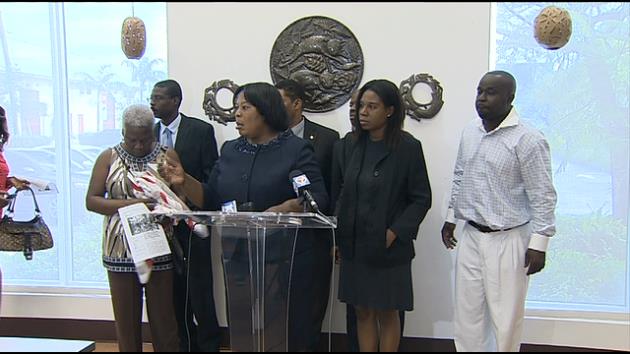
Miami Haitian Protesters 1

MIAMI (WSVN) — Local leaders are stepping up to stop a deportation dilemma regarding an immigration policy.

The policy forces families of Haitian descent out of the Bahamas.

Florida State Representative Daphne Campbell spoke out on the issue at a press conference in Little Haiti Monday morning. “I’m asking all, all cruises and all tourists, to make sure every industry boycotts the Bahamas to end discrimination against Haitian children,” Campbell stated. “Boycott Bahamas! Boycott Bahamas! Boycott Bahamas!”

Activists are now asking for the public’s support in helping to protect the future of Haitian families.
————

Video: WSVN Newscast – http://www.wsvn.com/story/27344225/local-haitian-leaders-protest-bahamian-immigration-policy?autoStart=true&topVideoCatNo=default&clipId=10832494
Though the leader of the accusing team has her detractors/problems, (South Florida state Rep. Daphne Campbell faces IRS investigation and she is already facing a Florida Medicaid fraud probe), the subject of her accusation may still have merit. What are the facts of the case regarding Haitian children in the Bahamas?

The Bahamas does not automatically grant citizenship to people born of foreign parentage in its homeland. There are special provisos even if one parent is a Bahamian citizen; many details of which are gender-biased. (There were attempts to correct these provisos in Parliament this past year, but this legislative reform was stalled).

This citizenship criteria is not standard … compared to the US, Canada, and most western European countries. Ironic as these countries are also the source of most tourists visiting the Bahamas, the #1 economic driver for the country. So any traction in this Boycott Bahamas campaign can potentially have a negative impact – remember “Boycott Apartheid in South Africa”.

What’s worse, the Universal Declaration of Human Rights or UDHR (as related in Go Lean book Page 220) have specific prohibitions against national governments enforcing laws that effectuate discrimination against minority groups.

(The UDHR was adopted by the United Nations General Assembly in 1948, partly in response to the atrocities of World War II, composed by a committee led by former American First Lady Eleanor Roosevelt. Although the UDHR was a non-binding resolution, it is now considered by some to have acquired the force of international customary law which may be invoked in appropriate circumstances by national and other judiciaries. The UDHR urges member nations to promote a number of human, civil, economic and social rights, asserting these rights as part of the “foundation of freedom, justice and peace in the world”).

This means you Bahamas! Are you ready to receive the onslaught of darts from the international community? Economic sanctions, formal or informal, are debilitating!

This is not just a Haitian -versus- Bahamian issue. The same immigration-border-encroaching issues are trending with the US, Dominican Republic and Puerto Rico. This following news article relates this controversy:

2. Title: Haitian Illegal Immigration Through Puerto Rico Is Skyrocketing Too  – http://news.yahoo.com/haitian-illegal-immigration-puerto-rico-skyrocketing-too-021611125.html;_ylt=AwrBJR6DB9dTyzoAHyzQtDMD – Posted: July 26, 2014

Haitians to PRWhile U.S. immigration agencies grapple with a recent surge of tens of thousands of illegal immigrants at the Mexican border, the number of Haitians trying to enter the U.S. illegally through Puerto Rico has skyrocketed as well.

In 2011, only 12 Haitians made the trek through the Dominican Republic to Puerto Rico, a U.S. territory in the Caribbean Sea. That number had ballooned to 1,760 as of last year, according to U.S. Coast Guard statistics, CBS News reports.

“That’s new, and that’s something we’re trying to target,” Capt. Mark Fedor, the Coast Guard’s chief of response for the Southeast and Caribbean, told CBS.

“Organized smugglers in the Dominican Republic are advertising their services to Haitians and saying, ‘We’ll smuggle you through the Dominican Republic, put you on a boat to Puerto Rico or to one of the islands in the Mona Pass – a much shorter journey and we can get you to the United States that way.’ And I think people are responding to that,” he said.

The Dominican smugglers often drop their Haitian charges off at Mona Island, an uninhabited Puerto Rican island 40 miles off of the Dominican coast in the Mona Pass.

“As soon as you’re in Puerto Rico, it’s like you’re in the United States,” Lolo Sterne, coordinator for Haiti’s Office of Migration, told the Associated Press last year.

Once in Puerto Rico, the illegal Haitian immigrants are able to fly to destinations in the U.S. without having to show a passport. All they need is a driver’s license, according to the Associated Press.

The new route through the Mona Pass is seen as more desirable as the U.S. Coast Guard has increased patrols of normal routes taken by immigrants from Haiti and the Dominican Republic. As the AP points out, it has become more difficult to travel directly to the U.S. mainland or through Miami, which has historically served as the choice destination for illegal immigrants from the Caribbean.

Haiti and its 9+ million residents need change. In fact, all of the Caribbean’s 42 million people need change/empowerment.

The purpose of the Go Lean roadmap is to turn-around the downward trends in the Caribbean today, to reverse course and elevate society in the Caribbean as a whole and Haiti in particular. The CU, applying best-practices for community empowerment has these 3 prime directives, pronounced as follows:

  • Optimization of the economic engines in order to grow the regional economy to $800 Billion & create 2.2 million new jobs.
  • Establishment of a security apparatus to protect the resultant economic engines.
  • Improve Caribbean governance, with consideration for minority equalization, to support these engines.

How exactly can the CU impact Haiti to reboot that failing state? The answer can be found in the history of post-war Europe, where the Marshall Plan was instrumental in rebooting that continent. The book Go Lean…Caribbean details a Marshall Plan-like roadmap for Haiti, and all other failing Caribbean institutions.

The related subjects of economic, security and governing dysfunction among European and Caribbean member-states have been a frequent topic for blogging by the Go Lean promoters, as sampled here:

https://goleancaribbean.com/blog/?p=2809 A Lesson in History: Economics of East Berlin
https://goleancaribbean.com/blog/?p=2480 A Lesson in History: Community Ethos of WW II
https://goleancaribbean.com/blog/?p=2330 ‘Raul Castro reforms not enough’, Cuba’s bishops say
https://goleancaribbean.com/blog/?p=1531 A Lesson in History: 100 Years Ago Today – World War I
https://goleancaribbean.com/blog/?p=1433 Caribbean loses over 70% of tertiary educated citizens to the brain drain
https://goleancaribbean.com/blog/?p=1014 All is not well in the sunny Caribbean
https://goleancaribbean.com/blog/?p=623 Only at the precipice, do they change
https://goleancaribbean.com/blog/?p=599 Ailing Puerto Rico open to radical economic fixes
https://goleancaribbean.com/blog/?p=451 CariCom Chairman to deliver address on slavery/colonization reparations

The goal of the Go Lean roadmap is simple: to make Haiti (and by extension the rest of the Caribbean) a better place to live, work and play so that citizens would not feel compelled to risk life-and-limb to flee for foreign shores. The goal extends further in the mission to reverse course and encourage the repatriation of the Haitian/Caribbean Diaspora. To accomplish these goals, the book details a series of community ethos, strategies, tactics, implementations and advocacies to empower all the factions of Haitian life in the Caribbean region and in the Diaspora:

Community Ethos – Economic Systems Influence Choices & Incentives Page 21
Community Ethos – Consequences of Choices Lie in the Future Page 21
Community Ethos – Anti-Bullying and Mitigation Page 23
Community Ethos – Minority Equalization Page 24
Community Ethos – Ways to Impact the Future Page 26
Community Ethos – Ways to Manage Reconciliations Page 34
Community Ethos – Ways to Impact the Greater Good Page 37
Strategy – Vision –  Integrate region into a Single Market Economy Page 45
Strategy – Agents of Change – Globalization Page 57
Tactical – Separation of Powers – Department of Homeland Security Page 75
Implementation – Ways to Foster International Aid Page 115
Planning – 10 Big Ideas … for the Caribbean Region – Haiti & Cuba Page 127
Planning – Ways to Ways to Model the EU Page 130
Planning – Reasons Why the CU Will Succeed – Germany Reconciliation Model Page 132
Planning – Ways to Improve Failed-State Indices – Haiti – first on the region list Page 134
Planning – Lessons from East Germany – European post-war rebuilding Page 139
Planning – Lessons from Canada’s History Page 146
Advocacy – Ways to Grow the Economy Page 151
Advocacy – Ways to Create Jobs Page 152
Advocacy – Ways to Foster Empowering Immigration Page 174
Advocacy – Ways to Impact Justice Page 178
Advocacy – Ways to Enhance Tourism Page 187
Advocacy – Ways to Impact the Diaspora – Haitians in Miami Page 217
Advocacy – Ways to Protect Human Rights Page 220
Advocacy – Ways to Help Women Page 226
Advocacy – Ways to Impact Youth Page 227
Advocacy – Ways to Impact the Dominican Republic Page 237
Advocacy – Ways to Re-boot Haiti Page 238
Advocacy – Ways to Impact US Territories Page 244
Appendix – Dominican Republic – Rafael Trujillo Regime Page 306

The conclusion of the Go Lean book relates the experiences and motivations of the US Supreme Court for the 1954 landmark decision Brown versus Board of Education. The unanimous wisdom of the 9 Justices on the Court should not be ignored, it was strewn from the experiences of modern society waging two world wars; they saw the rampage, devastation of 60 million deaths around the world and appreciated the wisdom that a downtrodden people would not stay down, that they would rise and revolt, that they would risk their lives and that of their children to pursue freedom.

How impactful is the Haitian Diaspora in the Bahamas? With a total national population of 320,000 and one estimate (July 2013) of 50,000 Haitian and/or Haitian-Bahamians, there is an imminent wave of dissent for the Bahamas to contend with. Don’t wait Bahamas, deal with your domestic issues now! Learn from the experiences of your neighbors, as depicted in the Go Lean book:

US: Lessons from the US Constitution (Page 145)
Canada: Reconciliation with First Nations (Page 146)
Guyana: Indo-Guyanese versus Afro-Guyanese (Page 174)
Trinidad: Indo-Trinidadians versus Afro-Trinidadians (Page 240)

Now is the time for all of the Caribbean to learn the lessons from [economic] history of other successful (US & Canada) and unsuccessful societies. The Go Lean book posits that the Caribbean is in a serious crisis, but asserts that this crisis would be a terrible thing to waste. The people and governing institutions of the Bahamas, Haiti and the region as a whole are hereby urged to lean-in for the empowerments described in the book Go Lean … Caribbean. This is a big deal for the region, we can all strive to make our Caribbean homeland a better place to live, work, and play.

Download the free e-book of Go Lean … Caribbean – now!

———–

Appendix A – The song: Charlie Brown by The Coasters – http://youtu.be/_UnPzp2lmNk

———–

Appendix B – Homework for additional credit: better understand the history of Haiti and its consequential impact on the world.

Video Title: Black In Latin America (Episode 1): Haiti and The Dominican Republic- The Roots of Division

This scholarly work was produced and narrated by noted Professor Henry Louis Gates. This was part of a series developed for the Public Broadcasting System (PBS) , a network of public TV stations in the US. The other features in the series, include:

Black In Latin America (Episode 2): Cuba: The Next Revolution
Black In Latin America (Episode 3): Brazil: A Racial Paradise?
Black In Latin America (Episode 4): Mexico & Peru: The Black Grandma in the Closet
 

Share this post:
, , , ,

Miami’s Success versus Caribbean Failure

Go Lean Commentary

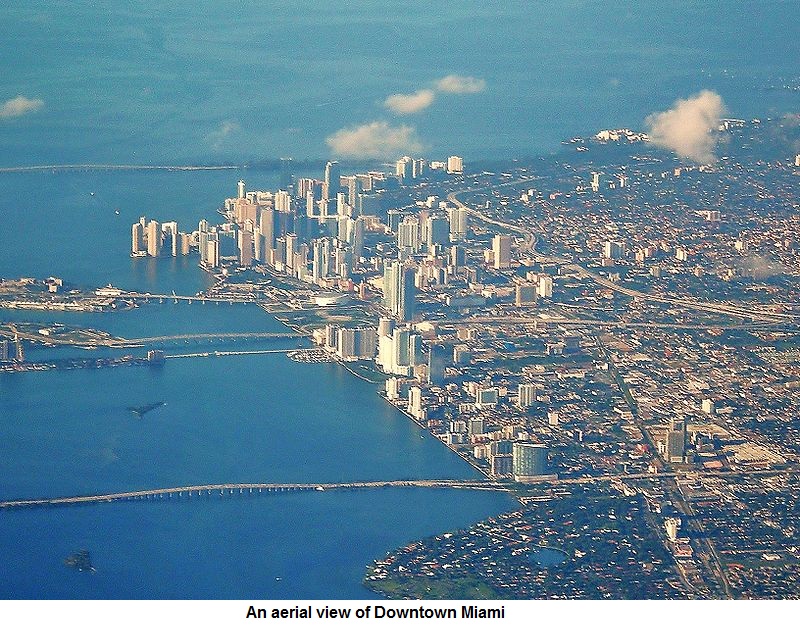
The Greater Miami Metropolitan Area has provided refuge to many of the Caribbean Diaspora.

Thank you Miami.

But make no mistake: Miami has benefited as well.

s Success versus Caribbean Failure - Photo 1

This fact is based on a proven economic principle that growth in population means growth in the economy. In parallel, declines in populations could lead to declines in economic growth. This point was vividly depicted in this previous blog commentary: Having Less Babies is Bad for the Economy; with this quoted reference:

We tend to think economic growth comes from working harder and smarter. But economists attribute up to a third of it to more people joining the workforce each year than leaving it. The result is more producing, earning and spending. – http://www.huffingtonpost.com/2014/05/07/birth-rate-economy_n_5281597.html

According to the below article (Appendix and VIDEOS below), the Miami Metropolitan Area has benefited greatly from the infusion of Caribbean refugees into its population. The benefits to the metropolitan area have been economic, cultural and also in governing leadership. This brings to the fore a compelling mission of the book Go Lean…Caribbean, to elevate Caribbean society so as to encourage the repatriation of the Diaspora back to their homelands.

Title: South Florida Caribbean’s – November 2006
The Caribbean Island Nations, has an overall population of over 40 million.

In the US, they number over 25 million (Strategy Research Corporation). The Caribbean population in the U.S. Diaspora has grown by over 6.4 million in the last decade.

SOUTH FLORIDA CARIBBEANS – November 2006
• An estimated 400,000 Caribbean nationals live in South Florida.

• More than 92,000 Jamaicans live in BrowardCounty and more than 32,000 Jamaicans live in Miami-Dade.

• Haitians make up the second-largest ethnic group in Miami-DadeCounty —109,817 — after Cubans, and are second to Jamaicans in Broward with 88,121.

North Miami, Dade County, Florida according to the 2000 census, has a population of 60,036 and is home to 18,656 Haitians, the most of any city in the county.

As at May 4, 2007 there are 10 Haitian elected officials now serving in the Florida Legislature and Miami-Dade municipalities. Another Haitian politician, North Miami Beach Councilman John Patrick Julien, won the primary but faces a runoff May 15, 2007 with developer Gary Goldman.

• Broward County added more new black residents (92,378) than any other county between 2000 and 2005, while Miami-Dade County added about 10,528, The surge is driven by Caribbeans.
• Broward’s black population grew 22 percent from 2000 to 2005; 34 percent among Caribbeans.
• Broward, Miami-Dade and Palm Beach counties are home to about one-fifth of the 785,771 Jamaicans living in the  United States.

Just as we argue that Cubans go to Miami and Mexicans to Texas for geographic and cultural blending in, we can make the same argument for West Indians in South Florida. It’s a natural habitat.”

SOURCE: U.S. Census
Editors note: The above figures are very conservative
Caribbean Business Community (North America) Inc.  (Retrieved 10-10-2014) –
http://www.caribbeanbusinesscommunity.com/newsletters/caribbeans_abroad.html

The book Go Lean…Caribbean champions the causes of retaining Caribbean citizens in the Caribbean, and inviting the Diaspora back to their homelands. These intentions were pronounced early in the book with these statements in the Declaration of Interdependence (Pages 13):

xix.      Whereas our legacy in recent times is one of societal abandonment, it is imperative that incentives and encouragement be put in place to first dissuade the human flight, and then entice and welcome the return of our Diaspora back to our shores. This repatriation should be effected with the appropriate guards so as not to imperil the lives and securities of the repatriated citizens or the communities they inhabit. The right of repatriation is to be extended to any natural born citizens despite any previous naturalization to foreign sovereignties.

xx.      Whereas the results of our decades of migration created a vibrant Diaspora in foreign lands, the Federation must organize interactions with this population into structured markets. Thus allowing foreign consumption of domestic products, services and media, which is a positive trade impact. These economic activities must not be exploited by others’ profiteering but rather harnessed by Federation resources for efficient repatriations.

Looking at this quest from the point-of-view of Miami introduces a paradox: Miami’s success versus Caribbean failure.

According to Miami’s history, the metropolitan area has benefited, population-wise, with every Failed-State episode in the Caribbean. This is describing a win-lose scenario, where the Caribbean losses resulted in Miami’s gains. The following list describes the Caribbean countries that experienced near-Failed-State status, detailed in the Go Lean book, that effected change (growth) in Miami:

Cuba (Page 236)
Dominican Republic (Pages 237, 306)
Haiti (Page 238)
Jamaica (Page 239)
Trinidad (Page 240)
US Territories – Puerto Rico & US Virgin Islands (Page 244)
British Caribbean Territories (Page 245)
Dutch Caribbean Territories (Page 246)
French Caribbean Territories (Page 247)

s Success versus Caribbean Failure - Photo 2

With Miami’s location at the bottom of the Florida peninsula, it protrudes into the tropics – 50 miles West from the Bahamas and 90 miles North from Cuba. For the local community, this Caribbean proximity was perceived as a disadvantage, a misfortune, but the Caribbean infusion instead has proven to be an asset, a win for Miami. As many Caribbean member-states flirted with failure, Miami succeeded, despite being on the frontlines and having to absorb many incoming refugees.

But now, change has now come to the Caribbean … as detailed in the Go Lean book.

The Go Lean book serves as a roadmap for the introduction and implementation of the technocratic Caribbean Union Trade Federation (CU) to bring positive change. The CU‘s prime directives are identified with the following 3 statements:

  • Optimization of the economic engines in order to grow the regional economy to $800 Billion & create 2.2 million new jobs.
  • Establishment of a security apparatus to protect the resultant economic engines.
  • Improve Caribbean governance to support these engines.

Will these changes reverse the patterns of success for Miami? Will more for Caribbean member-states mean less for Miami? Will Cuba’s return to democracy cause a crash for the Cuban-American investments in Miami? Will a stabilization of Haiti finally shift the successes of Haitian-Americans back to their homeland? Will an end of Caribbean Sclerosis (economic dysfunction) finally mean the English-speaking Caribbean will abandon Miami as their destination of hopes-and-dreams (see Appendix and VIDEOS below)? Will a successful execution of the Go Lean roadmap reverse the patterns of success for Miami? These ill-fated scenarios do not have to be the conclusion. The Go Lean roadmap for an elevated Caribbean, can be a win-win for Miami and the Caribbean.

The Go Lean book defines “luck” as the intersection of preparation and opportunity (Page 3). With the execution of the Go Lean roadmap, the change that comes to the Caribbean, and accompanying success should not mean failure for Miami. No, Miami can get “lucky” … purposely, with these impending changes. With Miami’s physical location it can continue to facilitate a lot of  trade and logistics for the Latin America and Caribbean region.

The Go Lean roadmap calls for elevating the Caribbean’s GDP from $378 Billion (2010) to $800 Billion. The Miami community can benefit from this regional growth, with some shrewd strategies on their part. (The Go Lean roadmap includes shrewd strategies for elevating the Caribbean, not Miami).

Caribbean stakeholders are hereby urged to lean-in to the community ethos, shrewd strategies, tactics, implementations and advocacies to finally re-boot Caribbean society; as detailed in the book Go Lean…Caribbean, sampled here:

Assessment – Anecdote – Caribbean Single Market & Economy Page 15
Assessment – Anecdote – Dutch Caribbean – Integration & Secessions Page 16
Assessment – Anecdote – French Caribbean – Organization & Discord Page 17
Assessment – Anecdote – Puerto Rico – The Greece of the Caribbean Page 18
Community Ethos – Economic Systems Influence Individual Choices & Incentives Page 21
Community Ethos – Voluntary Trade Creates Wealth Page 21
Community Ethos – Consequences of Choices Lie in the Future Page 21
Community Ethos – Minority Equalization Page 24
Community Ethos – Lean Operations Page 24
Community Ethos – Return on Investments Page 24
Community Ethos – Ways to Impact Turn-Arounds Page 33
Community Ethos – Ways to Manage Reconciliations Page 34
Community Ethos – Ways to Impact the Greater Good Page 37
Strategic – Vision – Integrating Region in to a Single Market Page 45
Strategic – Agents of Change – Globalization Page 57
Tactical – $800 Billion Economy – How and When Page 67
Tactical – Separation of Powers – State Department – Culture Administration Page 81
Implementation – Ways to Pay for Change Page 101
Implementation – Foreign Policy Initiatives at Start-up Page 102
Implementation – Ways to Deliver Page 109
Implementation – Trade Mission Objectives Page 117
Implementation – Reasons to Repatriate Page 118
Implementation – Ways to Benefit from Globalization Page 119
Planning – 10 Big Ideas – Cuba/Haiti Page 127
Planning – Ways to Make the Caribbean Better Page 131
Planning – Ways to Improve Failed-State Indices Page 134
Advocacy – Ways to Grow the Economy Page 151
Advocacy – Ways to Impact the Diaspora Page 217
Advocacy – Ways to Preserve Caribbean Heritage Page 218
Advocacy – Ways to Improve the Arts Page 230
Advocacy – Ways to Promote Music Page 231

This commentary previously featured subjects related to the Caribbean Diaspora in the Greater Miami Metropolitan Area. The following is a sample:

‘Raul Castro reforms not enough’, Cuba’s bishops say
Continued Discrimination for Latins/Caribbeans in Job Markets
Miami’s Caribbean Marketplace Re-opens
Caribbean loses more than 70 percent of tertiary educated to brain drain
Miami Sports – Franchise Values and Sports Bubbles in Basketball
eMerge conference aims to jump-start Miami tech hub

Today, Miami is a better place to live, work and play … due in many ways to the contributions of the Caribbean Diaspora. The Cuban, Dominican and Afro-Caribbean (Haitian, Jamaican, Bahamian) communities dominate the culture of South Florida, resulting in a distinctive character that has made Miami unique as a travel/tourist destination; see VIDEOS below that vividly describe the positive input of the Caribbean culture on Miami:

Video Title: The Miami Sound Machine – https://www.youtube.com/watch?v=CZkjeJKBI0M:

This is now a new day for the Caribbean; with the empowerments identified, qualified and proposed in the Go Lean book, the region will also be a better place to live, work and play. We urge all to lean-in to this roadmap, those residing in the region and the Diaspora, especially those in Miami.

The Caribbean and Miami. This can be a win-win!

Video Title: Miami-Broward Carnival – https://youtu.be/aT4hU85-lOk:

Download the book Go Lean … Caribbean – now!

—————

APPENDIX – Miami Demographic Analysis – http://en.wikipedia.org/wiki/Miami_metropolitan_area

Demographics

Miami Metropolitan Area Historical population
Census Pop.  
1900 4,955
1910 17,510 253.4%
1920 66,542 280.0%
1930 214,830 222.8%
1940 387,522 80.4%
1950 693,705 79.0%
1960 1,497,099 115.8%
1970 2,236,645 49.4%
1980 3,220,844 44.0%
1990 4,056,100 25.9%
2000 5,007,564 23.5%
2010 5,564,635 11.1%

Ethnicity:
The racial makeup of population of the Miami Area [5,334,685] as of 2010 [43]:

  • White: 70.3% [3,914,239]
    • White Non-Hispanic: 34.8% [1,937,939]
    • White Hispanic: 35.2% [1,976,300]
  • Black or African American (many from the Caribbean): 21% [1,075,174]
  • Native American: 0.3% [16,108]
  • Asian: 2.3% [125,564]; (0.7% Indian, 0.5% Chinese, 0.3% Filipino, 0.2% Vietnamese, 0.1% Korean, 0.1% Japanese, 0.4% Other Asian)
  • Pacific Islander: 0.0% [2,356]
  • Other races: 3.5% [197,183]
  • Two or more races: 2.5% [140,000]
  • Hispanic or Latino of any race were 41.6% [2,312,929] of the population

The city proper is home to less than one-thirteenth of the population of South Florida. Miami is the 42nd most populous city in the United States. [But] the Miami Metropolitan Area, which includes Miami-Dade, Broward and Palm Beach counties, had a combined population of more than 5.5 million people, ranked seventh largest in the United States,[44] and is the largest metropolitan area in the Southeastern United States. As of 2008, the United Nations estimates that the Miami Urban Agglomeration is the 44th-largest in the world.[45]

The 2010 US Census file for “Hispanic or Latino Origin” reports[46] that: 34.4% of the population had Cuban origin, 8.7% South American ( 3.2% Colombian), 7.2% Nicaraguan, 5.8% Honduran, and 2.4% Dominican origin. In 2004, the United Nations Development Program (UNDP) reported that Miami had the highest proportion of foreign-born residents of any major city worldwide (59%), followed by Toronto (50%).

As of 2010, there were 183,994 households of which 14.0% were vacant.[47] As of 2000, 26.3% had children under the age of 18 living with them, 36.6% were married couples living together, 18.7% have a female head of household with no husband present, and 37.9% were non-families. 30.4% of all households were made up of individuals and 12.5% had someone living alone who was 65 years of age or older. The average household size was 2.61 and the average family size was 3.25. The age distribution was 21.7% under the age of 18, 8.8% from 18 to 24, 30.3% from 25 to 44, 22.1% from 45 to 64, and 17.0% who were 65 years of age or older. The median age was 38 years. For every 100 females there were 98.9 males. For every 100 females age 18 and over, there were 97.3 males.

In 2009, the median income for a household in the city was $29,812, and the median income for a family was $33,814. The per capita income for the city was $19,846. About 21.7% of families and 26.3% of the population were below the poverty line.

In 1960, non-Hispanic whites represented 80% of Miami-Dade county’s population.[48] In 1970, the Census Bureau reported Miami’s population as 45.3% Hispanic, 32.9% non-Hispanic White, and 22.7% Black.[49] Miami’s explosive population growth has been driven by internal migration from other parts of the country, primarily up until the 1980s, as well as by immigration, primarily from the 1960s to the 1990s. Today, immigration to Miami has slowed significantly and Miami’s growth today is attributed greatly to its fast urbanization and high-rise construction, which has increased its inner city neighborhood population densities, such as in Downtown, Brickell, and Edgewater, where one area in Downtown alone saw a 2,069% increase in population in the 2010 Census. Miami is regarded as more of a multicultural mosaic, than it is a melting pot, with residents still maintaining much of, or some of their cultural traits. The overall culture of Miami is heavily influenced by its large population of Hispanics and blacks mainly from the Caribbean islands.

Source References:
43. American FactFinder, United States Census Bureau and Housing Narrative Profile: 2005. Factfinder.census.gov. Retrieved November 8, 2011.

44. “Annual Estimates of the Population of Metropolitan and Micropolitan Statistical Areas: April 1, 2000 to July 1, 2009” (XLS). 2009 Population Estimates. United States Census Bureau, Population Division. March 19, 2010. Retrieved October 18, 2010. 

45. “Table A.12. Population of urban agglomerations with 750,000 inhabitants or more in 2005, by country, 1950–2015” (PDF). World Urbanization Prospects: The 2005 Revision. United Nations Department of Economic and Social Affairs/Population Division. Retrieved January 1, 2008. 

46. “Race and Hispanic or Latino Origin: 2010 more information 2010 Census Summary File 1”. American FactFinder. US Census Bureau. Retrieved 2014-08-18. 

47. American FactFinder, United States Census Bureau. “Miami city, Florida – Census 2010:Florida – USATODAY.com –”. USA Today. Retrieved January 12, 2012. 

48. Demographic Profile, Miami-Dade County, Florida 1960–2000 ” (PDF). Miamidade.gov.

49. “Florida – Race and Hispanic Origin for Selected Cities and Other Places: Earliest Census to 1990”. U.S. Census Bureau. Retrieved April 21, 2012.

Share this post:
, , , , , ,
[Top]

Miami’s Caribbean Marketplace Re-opens

Go Lean Commentary

Make no mistake: having a warm welcome in a City of Refuge is not as good as being safe and secure at home. Yet, when conditions mandate that one take flight, a warm welcome is greatly appreciated.

According to the foregoing article, the City of Miami now extends a warm welcome … to the Caribbean Diaspora. While Miami profits from this embrace, the benefits for the Caribbean are not so great.

This is the American Immigrant experience, one of eventual celebration, but only after a “long train of abuses”: rejection, anger, protest, bargaining, toleration and eventual acceptance. The experience in Miami today is one of celebration.

The book Go Lean…Caribbean champions the cause of retaining Caribbean citizens in the Caribbean, even inviting the Diaspora back to their homelands. So the idea of celebrating a cultural contribution at a center in a foreign land is a paradox. Yes, we want the positive image, but no, we do not want to encourage more assimilation in the foreign land.

However, the book declares: It is what it is!

The book serves as a roadmap for the introduction and implementation of the Caribbean Union Trade Federation (CU), a technocratic federal government to administer and optimize the economic/security/ governing engines in the homeland of the region’s 30 member-states. The CU strives to elevate Caribbean image at home and abroad. There are many empowerments in the roadmap for the far-flung Diaspora to improve the interaction with the Caribbean community. So the cultural center in the foregoing article is germane to the Go Lean discussion.

The entire article is listed as follows:

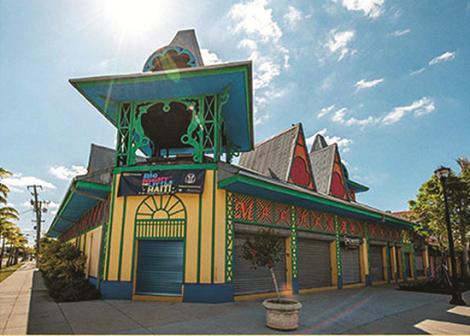
CU Blog - Miami's Caribbean Marketplace Re-opens - Photo 1 Sub-title: The Caribbean Marketplace has become a cultural icon in the Little Haiti community and re-opens with much fanfare….

By: Fabiola Fleuranvil | Noire Miami

The long awaited re-opening of the Caribbean Marketplace (CMP) is back as a cultural marker in the vibrant Little Haiti community. For years, the venue has been a strong figure along Little Haiti’s main corridor and has been easily identified by its bright colors and vibrant activity of vendors as well as Haitian and Caribbean culture. After undergoing a lengthy renovation to transform this cultural gem into a community staple for unique arts and crafts, Caribbean culture, special events, and community events, the highly anticipated reopening positions the Caribbean Marketplace as a vibrant addition to the Little Haiti Cultural Center next door and the burgeoning arts and culture spirit in Little Haiti.

The re-establishment of this Marketplace is a collaborative effort of the City of Miami in partnership with the Miami-Dade Department of Cultural Affairs, the Little Haiti Cultural Complex (LHCC), the Northeast Second Avenue Partnership (NE2P) and District 5 Commissioner Keon Hardemon.

The 9,500-square-foot space includes a refreshment and concession area, gift shops, arts and crafts, retail vendors and space available for private events. The renovations reflect the beautiful diversity of the Caribbean. Low rates, technical and marketing assistance will be provided to all vendors. It is anticipated that new businesses will be created in this cultural hub, resulting in employment opportunities for the local community.

Physical Address for the Caribbean Marketplace: 5925   NE 2nd Ave, Miami (Besides the Little Haiti Cultural Center) Hours: Thursday – Sunday, 11AM – 11PM
Miami Herald Daily Newspaper  (Retrieved 07-16-2014) –
http://www.miami.com/little-haiti039s-caribbean-marketplace-reopens-article

The Miami community is doing even more to embrace the exile populations in its metropolis, (including jurisdictions up to West Palm Beach). They have declared an entire month (June) for celebrating Caribbean communities; the term “month” is a loose definition, it starts in the Spring and forwards deep into the Summer. The following is a sample of events planned for this year (2014).

Caribbean-American Heritage “Month” events around South Florida:

CU Blog - Miami's Caribbean Marketplace Re-opens - Photo 2

3rd Annual Colors of the Caribbean

Saturday, June 14, 4PM – 11PM – Hollywood Arts Park – Hollywood Blvd & US1

What do you get when you blend the diverse, authentic ingredients of the Caribbean? You get a Caribbean inspired day of food, arts and culture, entertainment and irie vibes. Colors of the Caribbean features: Junkanoo procession, Moko Jumbies (Stilt walkers), Steelpan music, and live performances by Wayne Wonder (Jamaica), Midnite (Virgin Islands), Kevin Lyttle (St Vincent), Harmoniq (Haiti), music by DJ Majestic (DC/Trinidad & Tobago), and more.

AllSpice: Flavors of the Caribbean

Friday, June 20, 6PM – 10PM – Borland Center, 4885PGABlvd,Palm BeachGardens

The Caribbean Democratic Club of Palm Beach County presents a Taste of the Caribbean in celebration of Caribbean American Month.

Caribbean Style Week

June 23-29 – Westfield Mall Broward, 8000 West Broward Blvd, Plantation

The Caribbean American Heritage Foundation hosts a week-long showcase featuring both popular and upcoming Caribbean fashion designers and brands. Fashion pieces will be available for purchase during the fashion expo.

Caribbean Heritage Month Travel Experience/Travel Expo

June 28-29 – Westfield Mall Broward, 8000 West Broward Blvd, Plantation

The Caribbean Travel Expo celebrates and promotes each individual as a destination for your next vacation. The expo experience will also showcase live music, cultural performances, and special surprise giveaways over the weekend.

Caribbean: Crossroads of the World Exhibit

April 18 – Aug 17 – PerezArt MuseumMiami (PAMM), 1103 Biscayne Blvd, Miami

Highlighting over two centuries of rarely seen works — from paintings and sculptures to prints, photographs, installations, films, and videos — dating from the Haitian Revolution to the present, this exhibition advances our understanding of the Caribbean and its artistic heritage and contemporary practices.
http://www.miami.com/caribbean-american-heritage-month-events-around-south-florida-article)

The Go Lean…Caribbean clearly recognizes the historicity of Cuban and Afro-Caribbean (Haitian, Jamaican, Dominican, Bahamian, etc) exiles in Miami. They went through the “long train of abuses”. But today, their communities dominate the culture of South Florida, resulting in a distinctive character that has made Miami unique as a travel/tourist destination; see VIDEO below. The expression “take my talents to South Beach” now resonates in American society.

This commentary previously featured subjects related to the Caribbean Diaspora in South Florida. The following here is a sample:

https://goleancaribbean.com/blog/?p=1433 Caribbean loses more than 70 percent of tertiary educated to brain drain
https://goleancaribbean.com/blog/?p=1148 Sports Bubble – Franchise values in basketball
https://goleancaribbean.com/blog/?p=689 eMerge conference aims to jump-start Miami   tech hub
https://goleancaribbean.com/blog/?p=235 Tourism’s changing profile

At the outset, the Go Lean roadmap recognizes the value and significance of Cuban and Haitian exile communities in the pantheon of Caribbean life. Any serious push for Caribbean integration must consider Diaspora communities, like the Cuban/Haitian exiles in Miami. This intent was pronounced early in the book with these statements in the Declaration of Interdependence (Pages 12 & 13):

xiii.      Whereas the legacy of dissensions in many member-states (for example: Haiti and Cuba) will require a concerted effort to integrate the exile community’s repatriation, the Federation must arrange for Reconciliation Commissions to satiate a demand for justice.

xix.      Whereas our legacy in recent times is one of societal abandonment, it is imperative that incentives and encouragement be put in place to first dissuade the human flight, and then entice and welcome the return of our Diaspora back to our shores. This repatriation should be effected with the appropriate guards so as not to imperil the lives and securities of the repatriated citizens or the communities they inhabit. The right of repatriation is to be extended to any natural born citizens despite any previous naturalization to foreign sovereignties.

xx.      Whereas the results of our decades of migration created a vibrant Diaspora in foreign lands, the Federation must organize interactions with this population into structured markets. Thus allowing foreign consumption of domestic products, services and media, which is a positive trade impact. These economic activities must not be exploited by others’ profiteering but rather harnessed by Federation resources for efficient repatriations.

It was commonly accepted that Cuban exiles and other Caribbean Diaspora were sitting, waiting in Miami for change in their homelands; then they would return to claim their earned positions of respect. Along the way, the Survive-then-Thrive strategy was supplanted with a new Thrive-in-America strategy – credited to the next generation’s assimilation of the American Dream and the long duration of Caribbean dysfunctions, i.e. the Castros still reign after 55 years. Miami subsequently emerged as the trading post for the Caribbean and all of Latin America. The Caribbean is now hereby urged to lean-in to the community ethos, strategies, tactics, implementations and advocacies to finally re-boot Caribbean society; as detailed in the book Go Lean … Caribbean sampled here:

Community   Ethos – Economic Systems Influence Individual Choices & Incentives Page 21
Community   Ethos – Voluntary Trade Creates Wealth Page 21
Community   Ethos – Anti-Bullying and Mitigation Page 23
Community   Ethos – Minority Equalization Page 24
Community   Ethos – Lean Operations Page 24
Community   Ethos – Return on Investments Page 24
Community   Ethos – Ways to Impact Turn-Arounds Page 33
Community   Ethos – Ways to Manage Reconciliations Page 34
Community   Ethos – Ways to Impact the Greater Good Page 37
Strategic – Vision – Integrating Region in to a Single Market Page 45
Strategic – Agents of Change – Globalization Page 57
Tactical – Fostering a Technocrary Page 64
Tactical – Separation of Powers – State Department – Culture Administration Page 81
Tactical – Separation of Powers – Federal Courts – Truth & Reconciliation Commissions Page 90
Implementation – Ways to Pay for Change Page 101
Implementation – Foreign Policy Initiatives at Start-up Page 102
Implementation – Ways to Deliver Page 109
Implementation – Trade Mission Objectives Page 117
Implementation – Reasons to Repatriate Page 118
Implementation – Ways to Benefit from Globalization Page 119
Planning – 10 Big Ideas – Cuba/Haiti Page 127
Planning – Ways to Make the Caribbean Better Page 131
Advocacy – Ways to Grow the Economy Page 151
Advocacy – Ways to Impact the Diaspora Page 217
Advocacy – Ways to Preserve Caribbean Heritage Page 218
Advocacy – Ways to Improve the Arts Page 230
Advocacy – Ways to Promote Music Page 231
Advocacy – Ways to Re-boot Cuba Page 236
Advocacy – Ways to Re-boot Haiti Page 238

The foregoing article addresses the story of the Caribbean Marketplace facility to promote Caribbean culture in the South Florida market, and even provide some economic benefits (trade, job, import/export options). The Go Lean book focuses on these economic issues to the Nth degree, and also addresses the important issues regarding Caribbean societal elevation: music, sports, art, education, repatriation and heritage. This cultural center in the foregoing article aligns with the Go Lean roadmap.

Just like Miami grew, and prospered so much over the last 50 years, with help from our people, the Caribbean can also be a better place to live, work and play. This is a new day for the Caribbean!

It’s time now for change; not just change for change sake, but the elevations that were identified, qualified and proposed in the book Go Lean…Caribbean. It’s time to lean-in. Then we can move from celebrating the Diaspora in a foreign land to celebrating their return to the Caribbean, the best address in the world.

Download the book Go Lean…Caribbean now!

Share this post:
, , , , , , ,
[Top]