Month: June 2015

Role Model: Edward Snowden – One Person Making a Difference

Go Lean Commentary

Edward Snowden: Friend or Foe?

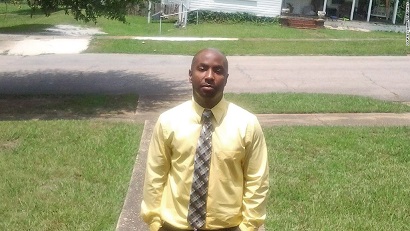
Snowden Photo 1This will be a subject of debate for the weeks, months, years and decades to come.

What is not debatable is the fact that he has been impactful. Yes, one man has made a difference.

The publishers of the book Go Lean…Caribbean recognize the contributions that Edward Snowden has made to the discussions of democratic principles: privacy versus security. The book serves as a roadmap for the introduction and implementation of the Caribbean Union Trade Federation (CU). The CU seeks to empower a security apparatus for the Caribbean region. The issues of data monitoring and eavesdropping will be a big consideration here as well. We thank Mr. Snowden for bringing many of these issues to the fore; as the Go Lean roadmap also seeks to employ leading edge technologies to interdict domestic and foreign threats that may imperil Caribbean societal engines – without an “abuse of power”. We therefore want to study the dramatic events of this episode so as to apply best-practices in the formation of our own administration.

See the following news article (and VIDEO in the Appendix below) that summarizes the Snowden drama into 8 lessons:

Title: The Snowden Effect: 8 Things That Happened Only Because Of The NSA Leaks
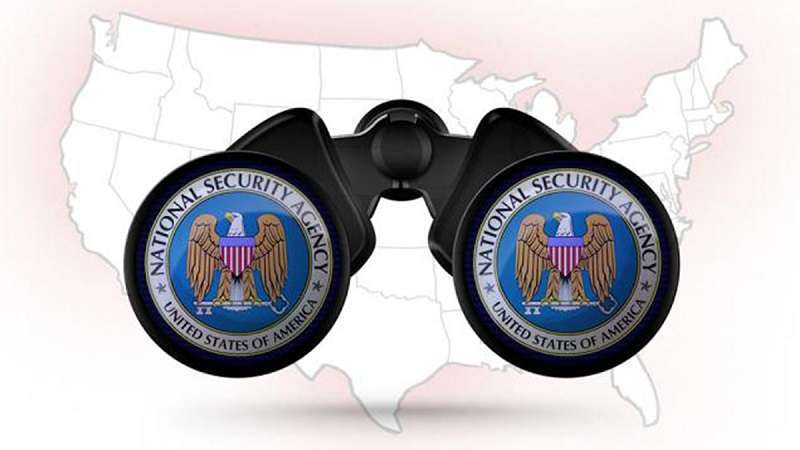
One year ago Thursday, one of the most consequential leaks of classified U.S. government documents in history exploded onto the world scene: The first story based on documents from former National Security Agency (NSA) contractor Edward Snowden was published. Americans finally knew the spy agency was sucking up virtually all of the data about who they called and when.

What followed was a torrent of articles based on the Snowden documents, as well as political and diplomatic reaction. Public debate was transformed by a new level of knowledge about the NSA — which Snowden himself said was mission accomplished. And in some modest ways Congress, companies and other countries also took concrete action. Here are the most consequential reactions to Snowden’s leaks.

1. Director of National Intelligence James Clapper had to admit he lied to Congress.
Three months before the Snowden leaks began, Sen. Ron Wyden (D-Ore.) asked the nation’s top intelligence official if the NSA collected data on millions, or hundreds of millions, of Americans.

“No, sir,” Clapper replied. “Not wittingly.”

By that point, of course, the NSA had quite wittingly been running a massive bulk telephone metadata collection program for years. The government had repeatedly asked a secret surveillance court for permission to do so, and it deemed every American’s phone record “relevant” to terrorism in the process.

Wyden fumed in secret about Clapper’s lie — but felt he could not reveal it because the metadata collection program was classified. That all changed after the publication of the first story on June 5, 2013, based off a Snowden leak.

Days later, Clapper gave the most halfhearted, or perhaps least forthcoming, admission that he had lied: “I responded in what I thought was the most truthful, or least untruthful manner by saying no.”

2. The House passed a bill (ostensibly) meant to stop bulk collection of phone metadata.
Americans were furious about the NSA’s sweeping phone metadata collection program. Even the man who wrote the original Patriot Act, Wisconsin Republican Rep. James Sensenbrenner, said the program went too far.

So last month the House passed a bill that its sponsors said would end bulk collection. Whether it actually does is a matter of dispute, since the White House and the spy agencies appear to have stripped out many of its toughest provisions. But its passage is nonetheless a clear signal that nobody in Congress wants to look like they’re doing nothing about the NSA.

3. A federal judge said the NSA phone surveillance program is unconstitutional.
In December, U.S. District Court Judge Richard Leon issued a ruling in a lawsuit against the NSA program that said its technology was “almost-Orwellian” and that James Madison “would be aghast.”

Because other judges in other districts have found differently — one in Manhattan dismissed an American Civil Liberties Union lawsuit citing the threat of terrorists’ “bold jujitsu” — the program still stands. And it had previously been approved, though behind closed doors, by the special Foreign   Intelligence Surveillance Court. But with Leon’s ruling on the books, the program could eventually wind up before the Supreme Court.

4. Tech companies finally got serious about privacy.
Big tech players had been paying lip service for years to the idea that they protect their customers’ privacy. But after the Snowden revelation that the NSA was accessing company servers via its PRISM program, privacy suddenly became a very tangible good. Cloud providers stand to lose $35 billion over the next three years in business with foreign customers afraid of storing their data with U.S. companies.

So the companies are responding by adding encryption measures such as Transport Layer Security. Google even announced on Tuesday that it is testing a new extension for the Chrome browser that could make encrypting email easier.

5. Britain held its first-ever open intelligence hearing.
If you thought intelligence oversight was weak in the United States, you won’t believe how it works with our closest ally. The powerful British spy agencies MI5 and GCHQ had never faced a public hearing in front of Parliament until Snowden’s stories dropped.

The November hearing was hardly confrontational. But it was a step forward for a country that has generally reacted to the Snowden leaks with little more than a shrug. And that step matters for Americans as well: In April, The Intercept revealed that the GCHQ had secretly asked for “unsupervised access” to the NSA’s data pools.

6. Germany opened an investigation into the tapping of Chancellor Angela Merkel’s cell phone.
The revelation that the NSA was monitoring the German chancellor’s cell phone came as a surprise to her — and to Senate Intelligence Chairwoman Dianne Feinstein (D-Calif.). Merkel was so outraged that she reportedly compared the surveillance to that of the Stasi, the former East German spy agency. (And she would know, having grown up in East Germany.)

On Wednesday, GermanFederalProsecutorHaraldRangeannounced that he is opening an investigation into the monitoring of Merkel’s phone calls. The investigation is proof positive that the Snowden leaks have frayed some U.S. diplomatic relations, but also that people the world over are starting to take surveillance seriously.

7. Brazil scotched a $4 billion defense contract with Boeing.
In another example of soured relations abroad, Brazil gave a massive fighter jet contract to Saab instead of the American company Boeing. Opinions varied as to how much that had to do with Snowden’s leaks, with one government source telling Reuters that he “ruined it for the Americans.” One analyst believed, however, that the Boeing jet simply cost too much.

The jet aside, Brazilian President Dilma Rousseff was clearly steamed, taking to the podium at the U.N. General Assembly to denounce the surveillance on her. Snowden’s leaks also helped propel the passage of an Internet bill of rights meant to protect privacy in the South American nation.

8. President Barack Obama admitted there would be no surveillance debate without Snowden.
In a major speech in January, Obama said he was “not going to dwell on Mr. Snowden’s actions or his motivations.” But he essentially acknowledged that the roiling, yearlong debate over surveillance would not have happened without him.

“We have to make some important decisions about how to protect ourselves and sustain our leadership in the world, while upholding the civil liberties and privacy protections that our ideals — and our Constitution — require,” Obama said.

The secretive Foreign Intelligence Surveillance Court also nodded toward the “considerable public interest and debate” that Snowden’s leaks created. And even Clapper acknowledged, “It’s clear that some of the conversations this has generated, some of the debate, actually needed to happen.”

The surveillance court finally started publicly posting some filings from its major cases. And in further acknowledgement of the need for a debate, the NSA and other agencies have posted declassified files to a new intelligence Tumblr — revealing for the first time aside from Snowden’s leaks documentary evidence of the inner workings of mass surveillance.
Source: Huffington Post Online News Source; posted June 5, 2015; retrieved June 7, 2015 from: http://www.huffingtonpost.com/2014/06/05/edward-snowden-nsa-effect_n_5447431.html
s Difference - Photo 2An important consideration related to Mr. Snowden is the priority on human/civil rights. The motive for mass surveillance from the US Patriot Act was national security, but in its execution, it became abusive to human and civil rights. That is the formula for tyranny! Yet the authorities refused to “stop, drop and roll”; there was no remediation.

The Patriot Act went into effect in 2001 (effective for 4 years), then re-authorized in 2005 and 2011 (for 4 years only) with little debate. But thanks to one man, Edward Snowden, the 2015 renewal was stalled, debated, re-visited, re-considered and eventually defeated. People asked questions, challenged disclosures, protested and resolved … to do better.

One man … made a difference!

This one man impacted his country … and the whole world.

“The only thing necessary for the triumph of evil is for good men to do nothing” – Edmund Burke; 1729 – 1797; an Irish statesman, member of the British Parliament and supporter of the American Revolution.

Edmund Burke! Edward Snowden! These two men – one from history and another of contemporary times – have more in common than what may have been obvious. Another expression Edmund Burke is credited for, is perhaps more apropos:

“People crushed by laws, have no hope but to evade power. If the laws are their enemies, they will be enemies to the law; and those who have most to hope and nothing to lose will always be dangerous”.

There is now a new security monitoring legislative provision!  Credit or not, this is a direct impact of the actions of Edward Snowden! This law allows for security monitoring, without the privacy violations. (The USA Freedom Act was passed on June 2, 2015 with a new expiration of 2019;[5] however, Section 215 of the law was amended to stop the NSA from continuing its mass phone data collection program.[6]). This end-product is better all around. In fact, “a White House investigation found that the prior NSA program may have never stopped a single terrorist attack”. This new provision is an elevation for society.

Like Edward Snowden’s advocacy, the prime directive of the book Go Lean…Caribbean is to elevate society, but instead of impacting America, the roadmap focus is the Caribbean. In fact, the declarative statements are as follows:

  • Optimization of the economic engines in order to grow the regional economy.
  • Establishment of a security apparatus to protect the resultant societal engines again foreign and domestic threats.
  • Improvement Caribbean governance – with appropriate checks-and-balances – to support these engines.

Edward Snowden is hereby recognized as a role model that the Caribbean can emulate. (He disclosed that telephone data for one Caribbean member-state, the Bahamas, was also being collected and analyzed by the NSA). He has provided a successful track record of forging change, resisting the “abuse of power”, managing crises to successful conclusions and paying forward the benefits for a tyranny-free society to all peoples; see his letter in the Appendix. The Go Lean book relates that Caribbean member-states do have a tyrannical past, considering examples of Cuba (236), Haiti (238), and the Dominican Republic (306).

The book posits that one person, despite their field of endeavor, can make a difference in the Caribbean, and its impact on the world; that there are many opportunities where one champion, one advocate, can elevate society. In this light, the book features 144 different advocacies, so there is inspiration for the “next” Edward Snowden or Edmund Burke to emerge and excel right here at home in the Caribbean. We need vanguards and sentinels against the dreaded “abuse of power”.

The roadmap specifically encourages the region, to lean-in to open advocacy with these specific community ethos, strategies, tactics, and implementations:

Community Ethos – Security Principles – Privacy vs Public Protection Page 23
Community Ethos – Security Principles – Whistleblower Protection Page 23
Community Ethos – Security Principles – Anti-Bullying and Mitigation Page 23
Community Ethos – Security Principles – Intelligence Gathering Page 23
Community Ethos – Governing Principles – Minority Equalization Page 24
Community Ethos – Governing Principles – Lean Operations Page 24
Community Ethos – Ways to Promote Intellectual Property Page 31
Community Ethos – Ways to Impact the Greater Good Page 37
Strategy – Vision – Confederate all 30 Member-states Page 45
Strategy – Mission – Enact a Security Apparatus Against Threats Page 45
Strategy – Mission – Protect Homeland with Anti-crime   Measures Page 45
Anatomy of Advocacies – Examples of Individuals Who Made Impact Page 122
Planning – 10 Big Ideas – Defense / Homeland Security Pact Page 127
Planning – Ways to Improve Failed-State Indices Page 134
Planning – Lessons from East Germany – Bad Checks-and-Balances Page 139
Advocacy – Ways to Improve Governance Page 168
Advocacy – Ways to Better Manage the Social Contract Page 170
Advocacy – Ways to Improve Leadership Page 171
Advocacy – Ways to Impact Justice Page 177
Advocacy – Ways to Remediate and Mitigate Crime Page 178
Advocacy – Ways to Impact Homeland Security Page 180
Advocacy – Ways to Mitigate Terrorism Page 181
Advocacy – Ways to Improve Intelligence Gathering & Analysis Page 182
Advocacy – Ways to Foster Technology Page 197
Advocacy – Ways to Protect Human Rights Page 220

The Caribbean region wants a more optimized security apparatus.

The region wants to mitigate human rights and civil rights abuses; in general all “abuse of power”.

This book posits that “bad actors” – even tyrants – will emerge to exploit inefficient economic, security and governing models.  Early in the book, the pressing need to streamline protections – for citizens and institutions – was pronounced in the Declaration of Interdependence (Page 12), with these opening statements:

x. Whereas we are surrounded and allied to nations of larger proportions in land mass, populations, and treasuries, elements in their societies may have ill-intent in their pursuits, at the expense of the safety and security of our citizens. We must therefore appoint “new guards” to ensure our public safety and threats against our society, both domestic and foreign.

xvi. Whereas security of our homeland is inextricably linked to prosperity of the homeland, the economic and security interest of the region needs to be aligned under the same governance. Since economic crimes, including … forms of terrorism, can imperil the functioning of the wheels of commerce for all the citizenry, the accedence of this Federation must equip the security apparatus with the tools and techniques for predictive and proactive interdictions.

The Go Lean book explicitly acknowledges that optimizing the needs for security, justice and privacy are not easy; they require strenuous effort; heavy-lifting. There needs to be a better balance of public protection versus privacy concerns. Balance? That is the quest of the CU/Go Lean roadmap: an optimized society with better checks-and-balances.

Other subjects related to civil/human rights checks-and-balances for the region have been blogged in other Go Lean…Caribbean commentary, as sampled here:

https://goleancaribbean.com/blog/?p=5304 Mitigating the Eventual ‘Abuse of Power’
https://goleancaribbean.com/blog/?p=4809 Using Surveillance to Interdict Americans Who Aided ISIS
https://goleancaribbean.com/blog/?p=4447 Abuse of Power Example: Ferguson-Missouri biased cops & courts
https://goleancaribbean.com/blog/?p=4360 Dreading the American ‘Caribbean Basin Security Initiative’
https://goleancaribbean.com/blog/?p=3881 Intelligence Agencies to Up Cyber Security Cooperation
https://goleancaribbean.com/blog/?p=1554 Status of Forces Agreement = Security Pact
https://goleancaribbean.com/blog/?p=960 NSA records all phone calls in Bahamas, according to Snowden
https://goleancaribbean.com/blog/?p=535 Remembering and learning from Boston
https://goleancaribbean.com/blog/?p=341 American Human Rights Leaders Slams Caribbean Poor Record

With a heightened focus on balanced justice institutions and the participation of many advocates on many different paths for progress, the Caribbean can truly become a better place to live, work and play.  🙂

Download the book Go Lean … Caribbean – now!

———-

Appendix – Edward Snowden Letter – June 5, 2015 – “This is the power of an informed public

Dear XXXXXXX,

Simple truths can change the world.

Two years ago today, in a Hong Kong hotel room, three journalists and I waited nervously to see how the world would react to the revelation that the National Security Agency had been collecting records of nearly every phone call in the United States.

Though we have come a long way, the right to privacy remains under attack. Join me in standing up for our rights: Tell President Obama to log off.

Last month, the NSA’s invasive call-tracking program was declared unlawful by the courts, and it was disowned by Congress. And, after a White House investigation found that the program never stopped a single terrorist attack, even President Obama ordered it terminated.

This is because of you. This is the power of an informed public.

Ending mass surveillance of private phone calls under the Patriot Act is a historic victory for the rights of every citizen. Yet while we have reformed this one program, many others remain.

We need to push back and challenge the lawmakers who defend these programs. We need to make it clear that a vote in favor of mass surveillance is a vote in favor of illegal and ineffective violations of the right to privacy for all Americans. Take action to ban mass surveillance today.

As I said at an Amnesty event in London this week, arguing that you don’t care about the right to privacy because you have nothing to hide is no different than saying you don’t care about free speech because you have nothing to say.

We can’t take the right to privacy for granted, just like we can’t take the right to free speech for granted. We can’t let these invasions of our rights stand.

While we worked away in that hotel room in Hong Kong, there were moments when we worried we might have put our lives at risk for nothing — that the public would react with apathy to the publication of evidence that revealed that democratic governments had been collecting and storing billions of intimate records of innocent people.

Never have I been so grateful to have been so wrong.

In solidarity,

Edward Snowden, for Amnesty International

———-

APPENDIX VIDEO – HuffingtonPost Analysis Video – http://www.huffingtonpost.com/2014/06/05/edward-snowden-nsa-effect_n_5447431.html


Share this post:
, , ,

For-Profit Education: Plenty of Profit; Little Education

Go Lean Commentary

Follow the money…

This is a familiar plot-line in Hollywood Police dramas. Its “life imitating art” because this is the same eventuality for the American For-Profit education industry. There is a lot of money available in the US for post-secondary education of American students. Federal Student Loans are available to any American citizen regardless of credit or income. This constitutes a fertile ground for abuse.

According to the following news article, this one education company Corinthian College – see Appendix A below – is a bad example of For-Profit schools making a lot of profit but providing very little education to its customers: students.

“Scratch a liar, catch a thief”.

The article is presented here:

1. Title: My college degree is worthless
CU Blog - For-Profit Education - Plenty of Profit; Little Education - Photo 1
Sub-title:
Students across the country are shelling out tens of thousands of dollars for degrees that end up being completely worthless.

CU Blog - For-Profit Education - Plenty of Profit; Little Education - Photo 2Rosalyn Harris, an unemployed single mother who had never gone to college, thought getting a degree would be the ticket to a new life. So at age 23, she enrolled in a two-year criminal justice program at for-profit Everest College in Chesapeake, Va.

But the wealth of job opportunities the school had touted never transpired, and all she ended up with was more than $22,000 in student loan debt. She said classes were terrible, she didn’t receive any of the training she needed, and as a result, she spent months after graduation searching for criminal justice jobs without ever getting a call back.

Desperate to start paying some of her bills, Harris eventually applied for any entry-level job she could find. A full year after she graduated, she finally found a minimum wage job stocking shelves at Victoria’s Secret.

“My sole purpose of going to school was bettering my life for me and my son,” she said. “But now I wish I had never gone.”

Everest is a member of for-profit behemoth Corinthian Colleges, which has been accused by federal agencies of operating a predatory lending scheme, preying on low-income students and falsely inflating job placement numbers. Corinthian is currently closing and selling its schools, leaving thousands of graduates on the hook for loans they took out.

A Corinthian spokesman confirmed that Harris graduated in good standing, but it was unable to place her in a job. He said the school did provide her with career assistance and claims the criminal justice program has a 75% job placement rate, which he said is “a strong outcome for any educational program.”

He also disputed the allegations against the school, noting that Corinthian’s student loan default rate (of up to 27% for its EverestCollege campuses) is lower than other community colleges and its graduation and job placement rates are higher.

And while Corinthian has a particularly bad reputation, the for-profit college industry as a whole is often criticized for luring low-income students with false promises and failing to provide educations that qualify students for jobs.

Not only that but for-profit schools are generally double or triple the cost of public institutions like community colleges, and the default rate (19% last year) was the highest of all sectors.

CU Blog - For-Profit Education - Plenty of Profit; Little Education - Photo 3Vantrell Echols, a 36-year-old from Georgia, wishes he never received a phone call from for-profit Lincoln College of Technology back in 2008. He said the school spent six months convincing him to enroll — promising to provide all the training and help he needed to find a high-paying computer science job. He had been unemployed for more than a year and he was desperate, so he gave it a shot.

But upon enrolling in the computer science program, he said the quality of education “was a complete joke” and job assistance was nonexistent.

“They sold many of us dreams about helping us, getting us qualified to work, to help us with jobs, [but] I had to ask fellow students to help me because the teachers wouldn’t. Many of us graduated with honors but didn’t learn anything in our fields,” he said.

Lincoln Educational Services president Scott Shaw defended the school’s reputation to CNNMoney, touting its 75% job placement rate and pointing to examples of successful graduates like the CEO of VMWare (who graduated in 1979).

But Echols said that after accumulating more than $20,000 in debt to attend the one-year program, he wasn’t able to find a single job in computer science. He’s still unemployed, is now homeless — and he is convinced he’d be better off without the degree even listed on his resume.

He says multiple employers have told him that they don’t view his degree as credible because of the for-profit industry’s reputation and because other people they’ve hired from the school haven’t had the necessary skills for the job.

“They’ve ruined my life and the lives of many of my classmates,” he said.

Shaw said extensive career assistance was provided to Echols and that he isn’t sure why Echols couldn’t find a job. “There’s only so much we can do — at some point the student has to partake,” he said.

But these kinds of stories are popping up so often that even the Obama Administration took action this week. Going forward, for-profit colleges will risk losing federal student aid if average loan payments of graduates exceed 20% of discretionary income or 8% of total earnings.

“Too many hard-working students find themselves buried in debt with little to show for it,” Secretary of Education Arne Duncan said in a statement.

Senators Jeff Merkley of Oregon and Tom Harkin of Iowa are pushing for legislation that goes a step further. They argue that a loophole in federal laws allow some institutions to offer programs that aren’t licensed or accredited at the state or federal level. That means graduates end up with degrees that may sound legitimate but are meaningless to many employers.

The two senators introduced legislation last month aimed at cracking down on these “worthless degrees.” The legislation would require courses to be licensed before allowing schools to accept federal money like student loan dollars or financial aid.

“Passing this bill will ensure that a college can no longer charge thousands of dollars for a degree that does not prepare them to work in the field they were promised‎,” according to a statement about the bill.

Related: U.S. sues Corinthian Colleges
2. Title: Embattled for-profit education behemoth Corinthian Colleges is facing yet another legal fight: This time, from the Consumer Financial Protection Bureau.

The consumer agency announced Tuesday it is suing Corinthian for “illegal predatory lending” and is demanding that the school forgive more than $500 million in private loans it has given to students since July of 2011.

According to the CFPB’s complaint, Corinthian convinced students to enroll in the school by inflating its job placement rates. It even paid employers to hire graduates for at least one day in order to boost its numbers.

Meanwhile, Corinthian’s tuition and fees — which can climb to as high as $75,000 for a bachelor’s degree — are higher than what federal loans generally cover, forcing many students to take out private loans from the school. These loans, called “Genesis loans,” came with origination fees of 6% and interest rates of around 15% as of 2011 — much higher than the 3% and 7% charged on federal loans.

CNNMoney (New York); posted September 16, 2014 from: http://money.cnn.com/2014/09/16/pf/college/cfpb-corinthian-lawsuit/index.html?iid=EL

The references to “low-income students” in the foregoing article are most commonly the “Black and Brown” of the American population. This is a frequent demographic for victimization in American life.

This issue in the article is just another example of Crony-Capitalism and institutional racism. The book Go Lean…Caribbean and subsequent blogs posit that the Caribbean must not be vulnerable to these negative American forces.

The dread of Crony-Capitalism and institutional racism have been highlighted and detailed in many previous blog commentaries; see the many Crony-Capitalism models in Appendix B below. Now we have to add the reality of Big Education to the discussion. The issue underpinning this dilemma is the easy availability of guaranteed student loans from the US federal government. Unfortunately this is not just an issue for For-Profit institutions, many not-for-profit colleges and university also exploit the federal student loan funds to garner revenues at the expense of innocent students. The Crony in this case is a direct consequence of a rich pool of federal monies.

Rich pool? This brings to mind the visual of an isolated pool/pond on the African Plain, a watering hole on the Serengeti where many animals seek hydration and refuge, but the terrain is endangered with predators: lions, crocodiles, hyenas, cheetahs, etc.. Yes, in the American commercial eco-system, “follow the money”, and you will find many “bad actors” looking to exploit the situation for unfair gain and quick profits.
CU Blog - For-Profit Education - Plenty of Profit; Little Education - Photo 4

VIDEO – Is the cost of college crippling? – http://money.cnn.com/video/news/2013/09/03/n-cost-of-college-rising-education-middle-class-jobs.cnnmoney/


The Caribbean must do better! We must also dissuade our citizens from emigrating to this American eco-system.

The consideration of Crony-Capitalism in the For-Profit Education industry aligns with the book Go Lean…Caribbean, a roadmap to elevate the economic, security and governing engines of the Caribbean. The Caribbean wants to model many of the good examples of the United States, and learn from the many bad models. Education is one such model. While optimization of education can systemically raise a country’s economy, the Caribbean experience has been more negative than positive. Too many of our students have left … to study abroad; then refused to return home, taking with them the return on community investments and repayment of their student loans. The Go Lean book has reported in detail on how traditional college career paths have been disastrous policies for the Caribbean in whole, and each specific country in particular.

This Go Lean book serves as a roadmap for the introduction and implementation of the technocratic Caribbean Union Trade Federation (CU). The CU has a complete education agenda, applying lessons learned from the consideration of the American models. This roadmap represents a big change for the region. The CU/Go Lean roadmap has 3 prime directives:

  • Optimization of the economic engines in order to grow the regional economy to $800 Billion & create 2.2 million new jobs..
  • Establishment of a security apparatus to police “bad actors” and protect the resultant economic engines.
  • Improvement of Caribbean governance, including a separation-of-powers, to support these engines.

The Go Lean roadmap provides turn-by-turn directions on how to reform the Caribbean tertiary education systems, economy, governance and Caribbean society as a whole. There is a plan for a regional student loan pool, where we mitigate the dangers that are so evident in the American eco-system. Our primary threat now is the constant abandonment rate among the college-educated populations. So as a planning tool, the roadmap commences with a Declaration of Interdependence, pronouncing the dread of societal threats and the Caribbean brain drain (Page 12):

xvi.  Whereas security of our homeland is inextricably linked to prosperity of the homeland, the economic and security interest of the region needs to be aligned under the same governance. Since economic crimes … can imperil the functioning of the wheels of commerce for all the citizenry, the accedence of this Federation must equip the security apparatus with the tools and techniques for predictive and proactive interdictions.

xix.  Whereas our legacy in recent times is one of societal abandonment, it is imperative that incentives and encouragement be put in place to first dissuade the human flight, and then entice and welcome the return of our Diaspora back to our shores

xxi.  Whereas the preparation of our labor force can foster opportunities and dictate economic progress for current and future generations, the Federation must ensure that educational and job training opportunities are fully optimized for all residents of all member-states, with no partiality towards any gender or ethnic group This responsibility should be executed without incurring the risks of further human flight, as has been the past history.

The Go Lean book posits that education is a vital consideration for Caribbean economic empowerment. The vision of the CU is a confederation of the 30 member-states of the Caribbean to do the heavy-lifting of championing better educational policies.  The book details those policies; and other ethos to adopt, plus the executions of the following strategies, tactics, implementations and advocacies to impact tertiary education in the region:

Community Ethos – Deferred Gratification Page 21
Community Ethos – Economic Systems Influence Individual Choices and Incentives Page 21
Community Ethos – Job Multiplier Page 22
Community Ethos – Lean Operations Page 24
Community Ethos – Return on Investments (ROI) Page 24
Community Ethos – Ways to Impact the Future – Apply Lessons of American Lax Oversight Page 26
Community Ethos – Ways to Foster Genius Page 27
Community Ethos – Ways to Help Entrepreneurship – Training & Mentoring Page 28
Tactical – Separation of Powers – Education Department Page 85
Tactical – Separation of Powers – Labor Department – On-the-Job-Training Regulator Page 89
Implementation – Ways to Better Manage Debt – Lessons of American Student Loan Crisis Page 114
Advocacy – Ways to Grow the Economy – Essential Role of Tertiary Education Page 151
Advocacy – Ways to Create Jobs – Vital Need for Better STEM Education Empowerments Page 152
Advocacy – Ways to Improve Education – Mitigating the Brain Drain Page 159
Advocacy – Ways to Impact Student Loans – Regional Pools for Cross-Border Enforcements Page 160
Advocacy – Ways to Improve Governance Page 169
Appendix – Education and Economic Growth Page 258
Appendix – Measuring Education Progress and Success Criteria Page 266
Appendix – New American Student Loan Debt Crisis – Now Over $1 Trillion in Debt Page 286

The American Tertiary Education Student Loan eco-system is badly broken; (tuition has increased 500% since 1985). The large pools of money has attracted “bad actors” or predators. The party in the foregoing news article – Corinthian Colleges – has been charged and adjudicated with predatory lending violations. Their victims: poor students who would have to repay these non-dischargeable federally-insured student loans. How sad? All of that time, talent and treasury and nothing to show for it. No wonder the economic effects of this affected population are now showing in other aspects of the economy, such as retarded home-buying output among the younger generations.

The Caribbean is urged to do better.

The people, educational and governing institutions in the region are urged to lean-in for the empowerments described in the book Go Lean … Caribbean. Education reform can suceed in elevating Caribbean society; we can make our Caribbean homeland a better place to live, work, learn and play. 🙂

Download the free e-Book of Go Lean … Caribbean – now!

———-

Appendix A – Corinthian Colleges, Inc.
(Source: http://en.wikipedia.org/wiki/Corinthian_Colleges)

Corinthian Colleges, Inc. (CCi) was a large for-profit post-secondary education company in North America. Its subsidiaries offered career-oriented diploma and degree programs in health care, business, criminal justice, transportation technology and maintenance, construction trades, and information technology.[1]

At its largest, CCi had over 100 Everest, Heald and WyoTech campuses throughout the United States and Canada.[2]

Corinthian’s campuses in Canada closed on February 19, 2015 after the Ontario government suspended their operation license. After a series of legal challenges by state and federal agencies, on April 26, 2015 Corinthian Colleges announced that they would cease operations at all remaining US locations effective April 27, 2015. The closure affected more than 16,000 students and employees.

Corinthian Colleges was founded in February 1995.[3] The five founders — David Moore, Paul   St. Pierre, Frank McCord, Dennis Devereux, and Lloyd Holland — were executives at National Education Centers, Inc. (NECI), a for-profit operator of vocational schools based in Irvine, California. The founders planned to acquire schools that were fundamentally sound, but which for one reason or another were performing below their potential.[4]

Historically, CCi grew rapidly through acquisitions and through organic growth, including opening new branch campuses, remodeling, expanding or relocating existing campuses, and adopting curricula into existing colleges.[3]

Acquired Schools
The following institutes and colleges were acquired [through the years]:[5]

  • American Motorcycle Institute
  • AshmeadCollege
  • Blair College
  • Bryman College
  • Bryman Institute
  • Duff’s Business Institute
  • Florida Metropolitan University
  • Georgia Medical Institute
  • Kee Business College
  • Las Vegas College
  • National Institute of Technology
  • National School of Technology
  • Olympia Career Training Institute
  • Olympia College
  • Parks College
  • Rochester Business Institute
  • Tampa College
  • Western Business College

Corinthian Colleges faced numerous investigations and lawsuits, including a federal criminal investigation.[6]

Financial Aid Financing
The Higher Education Act provides that a private, for-profit institution, such as CCi’s institutions, may derive no more than 90% of its revenue from the Title IV federal student aid programs.[39] In 2010, CCi reported that it received 81.9% of revenue from Title IV federal student aid programs. [40] Corinthian Colleges (CCI) acquired QuickStart Intelligence in summer 2012, an Irvine, California-based, privately held technology training company. As a B2B revenue stream; CCI acquired QuickStart Intelligence to leverage the 10%, non-government funding essential to back the additional student loans for CCi’s core adult learning programs.

Student Loan Default Rate
A significant requirement imposed by Congress is a limitation on participation in Title IV programs by institutions whose former students default on the repayment of federal student loans in excess of specified rates (“Cohort Default Rates”).[41] On March 25, 2013, CCi received a draft three-year Cohort Default Rates from the U.S. Department of Education for students who entered repayment during the federal fiscal year ending September 30, 2010 (the “2010 Cohort”), measured over three federal fiscal years of borrower repayment. The weighted average of CCi’s institutions was 19.0%, a 9.0 percentage point decrease from the 28.0% weighted average for the three-year cohort default rate for students who entered repayment during the prior fiscal year.[42] For the 2010 Cohort, none of CCi’s institutions exceeded the default threshold set by the U.S. Department of Education.[42]

———-

Appendix B – Models of American Crony-Capitalism

Big Defense Many theorists indicate that the “follow the money” approach reveals the Military Industrial Complex work to undermine peace, so as to increase defense spending for military equipment, systems and weapons.
Big Media Cable companies conspire to keep rates high; kill net neutrality; textbook publishers practice price gouging; Hollywood insists on big tax breaks/ subsidies for on-location shooting.
Big Oil While lobbying for continuous tax subsidies, the industry have colluded to artificially keep prices high and garner rocket profits ($38+ Billion every quarter).
Big Box Retail chains impoverish small merchants on Main Street with Antitrust-like tactics, thusly impacting community jobs. e-Commerce, an area of many future prospects, is the best hope of countering these bad business tactics.
Big Pharma Chemo-therapy cost $20,000+/month; and the War against Cancer is imperiled due to industry profit insistence.
Big Tobacco Cigarettes are not natural tobacco but rather latent with chemicals to spruce addiction.
Big Agra Agribusiness concerns bully family farmers and crowd out the market; plus fight common sense food labeling efforts.
Big Data Brokers for internet and demographic data clearly have no regards to privacy concerns.
Big Banks Wall Street’s damage to housing and student loans are incontrovertible.
Big Weather Overblown hype of “Weather Forecasts” to dictate commercial transactions.
Big Real Estate Preserving MLS for Real Estate brokers only, forcing 6% commission rates, when the buyers and sellers can meet without them.
Big Salt Despite the corrosiveness of salt on roads and the environment, it is the only tactic   used to de-ice roads. Immediately after the weather warms, the roads must be re-constructed, thus ensuring a continuous economic cycle.
Big Energy The For-Profit utility companies always lobby against regulations to “clean-up” fossil-fuel (coal) power plants or block small “Green” start-ups from sending excess power to the National Grid. Their motive is to preserve their century-long monopoly and their profits.
Big Legal Even though it is evident that the promotion of Intellectual Property can help   grow economies, the emergence of Patent Trolling parties (mostly lawyers) is squashing innovation. These ones are not focused on future innovations, rather just litigation. They go out and buy patents, then look for anyone that may consume any concepts close to those patents, then sue for settlements, quick gains.
Big Cruise Cruise ships are the last bastion of segregation with descriptors like “modern-day-slavery” and “sweat-ships”. Working conditions are poor and wages are far below anyone’s standards of minimum. Many ship-domestic staff are “tip earners”, paid only about US$50 a month and expected to survive on the generosity of the passengers’ gratuity. The industry staff with personnel from Third World countries, exploiting those with desperate demands. Nowhere else in the modern world is this kind of job discrimination encouraged, accepted or tolerated.
Big Jails The private prison industry seem motivated more by profit than by public safety. They attempt to sue state governments when their occupancy levels go too low; a reduction in crime is bad for business.
Big Housing The American legacy is one of the institutional segregation in American cities. The practice was administered by real estate agents and housing officials executing policies to elevate property values and generational wealth for White families at the expense of a life of squalor for Non-Whites.
Big Charities Big Not-For-Profit organizations that fleece the public under the guise of charities but retain vast majorities of the funding as administrative costs, thusly benefiting mostly the charities’ executives and staff rather than the intended benefactors.
Share this post:
, , , ,
[Top]

In Search Of The Red Cross’ $500 Million In Haiti Relief

Go Lean Commentary

“A crisis is a terrible thing to waste” – familiar expression coined by American Economist Paul Romer.

This expression is prominent in the introduction of the book Go Lean…Caribbean. The motives of the book publishers are to exploit the post-2008 economic crises to forge change in the Caribbean region. But in this case, it appears that another party has utilized a Caribbean crisis to exploit the public for monies for their own coffers; that party is the American Red Cross.

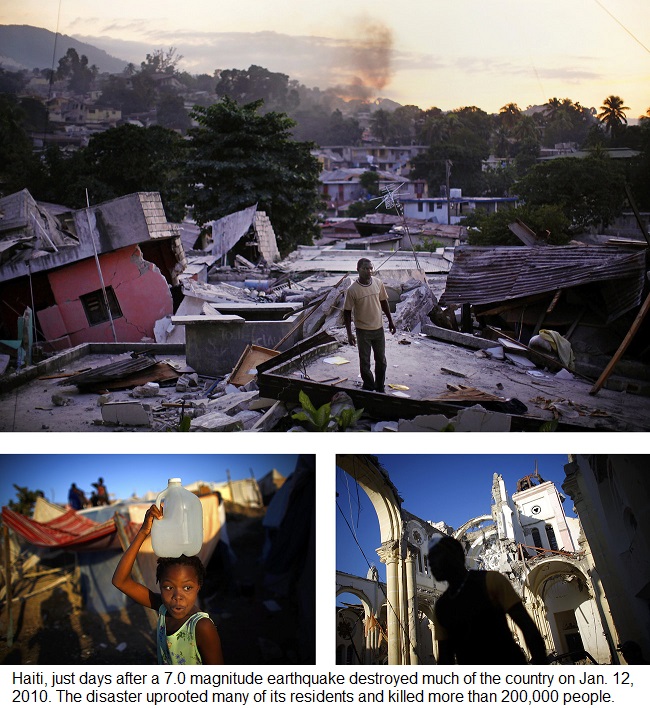
Immediately after the earthquake in Haiti on January 12, 2010 many Non-Government Organizations (NGO), including the American Red Cross, embarked on fundraising campaigns to raise money for the response, relief and rebuilding of Haiti. The Red Cross held a Telethon, complete with text message fundraising:

Text [the word] Haiti to 90999

… and boom, $10 would be billed to the respondent’s mobile phone account and encumbered for the American Red Cross’s Aid to Haiti. (Note: this writer contributed via text message in 2010).

$500 Million In Haiti Relief - Photo 1

How successful was this fundraising campaign? US$500 million! How successful was the relief and rebuilding of Haiti campaign? Still waiting…

VIDEO – Report highlights Red Cross aid failures in Haiti  https://youtu.be/cSAZ8cScwro

Published on Jun 3, 2015 – Following the devastating 2010 earthquake in Haiti, the American Red Cross raised close to 500 million dollars and promised to help rebuild the country’s communities. A new report by ProPublica and NPR unearth a number of confidential memos and insider accounts that stand in sharp contrast to the public picture painted by the organization. CBSN spoke to co-author of the report, Justin Elliott.

This consideration aligns with the strategies, tactics, implementations and advocacies of the book Go Lean…Caribbean. The declaration is that the Caribbean must be front-and-center in providing for our own solutions. The alternative, someone else taking the lead for our solution seems to be lacking…every time!

For us in the Caribbean, we need to grow up and more responsible ourselves! We need to stand up and be counted!

The Go Lean book declares (Page 115):

“Haiti should not be a perennial beggar; the Caribbean should not be perennial beggars, but we do need capital/money, especially to get started”.

There was the opportunity to raise $500 million to get started. We lost out!

Instead the American Red Cross provided the “adult supervision” and what do we have to show for it? According to the following AUDIO Podcast, next to nothing; (6 houses):

Appendix AUDIO Podcast: NPR’s ‘All Things Considered’ –  http://www.npr.org/player/v2/mediaPlayer.html?action=1&t=1&islist=false&id=411524156&m=411812821

By Laura Sullivan – When a devastating earthquake leveled Haiti in 2010, millions of people donated to the American Red Cross. The charity raised almost half a billion dollars. It was one of its most successful fundraising efforts ever.
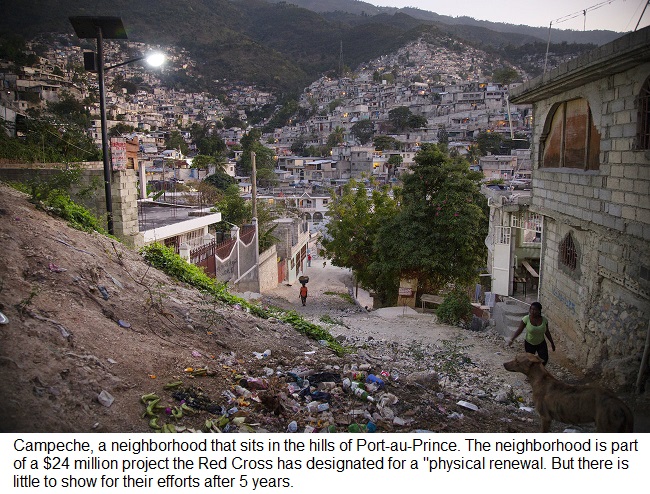
The American Red Cross vowed to help Haitians rebuild, but after five years the Red Cross’ legacy in Haiti is not new roads, or schools, or hundreds of new homes. It’s difficult to know where all the money went.
Source: National Public Radio (NPR) – Radio Podcast for Fresh Air; posted 06/03/2015; retrieved from: http://www.npr.org/2015/06/03/411524156/in-search-of-the-red-cross-500-million-in-haiti-relief

This is just another example of Crony-Capitalism.

This is not only the Go Lean commentary, but rather many of the general public voiced this same concern on the cited NPR website; see sample here:

Public Comment by “TheUnPossible” on June 3, 2015: Perhaps they should do what they do best. Serve coffee, give-out blankets and draw blood. This reminds me of a lot of the other high-profile charities like Susan G. Komen and United Way that just become a black-hole for donations. They’re like a church. They get people to give them tons of cash and promise salvation if people just believe in them.

Public Comment by “Unpartisan” on June 3, 2015: They’re like a church. They get people to give them tons of cash and promise salvation if people just believe in them.” Sounds like many politicians and government agencies as well, good analogy.

Public Comment by “James Hulsey” on June 3, 2015: I haven’t trusted the American Red Cross since 9/11, when they were fundraising for 9/11 relief efforts and then shunted the extra money into their general fund.

Public Comment by “TravelingOne” on June 4, 2015: No – the Red Cross: http://www.huffingtonpost.com/… And one of the reasons they no longer get any money from me; nor does United Way (UW) however.

Public Comment by “DCRich” on June 4, 2015: Local UW chapters often are worse. They coerce poorly paid employees of agencies they support to contribute with the implication that support to the agency is influenced by this. They try to engage new agencies with the same kind of appeal. Most of their money goes to orgs that have no trouble fundraising on their own like the Y and Scouts. Basically, they’re a middleman that allows the business community to interfere with and take credit or the work of “charity”. Giving money directly to some org[anization] you actually know something about is better than giving a cut to UW or CFC [(Combined Federal Campaign) for federal government employees].

The book and subsequent blogs posit that the Caribbean must not be vulnerable to American Crony-Capitalistic forces.

“We can do bad all by ourselves”.

The dread of Crony-Capitalism was highlighted and detailed in many previous blog commentaries; see Appendix below. Now we have to add the reality of Big Charity to the landscape; referring to the big organizations that fleece the public under the guise of charities but retain vast majorities of the funding as administrative costs, thusly benefiting mostly the charities’ executives and staff rather than the intended benefactors.

The Caribbean must do better! We need a Truth & Reconciliation Commission (TRC) on this issue.

The book Go Lean…Caribbean pursues the quest to elevate the Caribbean region through economic, security and governance empowerments. This includes oversight and guidance for NGO’s in the region. The book serves as a roadmap for the introduction and implementation of the technocratic Caribbean Union Trade Federation (CU) to provide better stewardship for the Caribbean homeland. The book describes that NGO’s are Caribbean stakeholders. Even though many of the 30 member-states may be considered independent nations, the premise of the book is that there must be an ethos of interdependence, rather than just independence. This all relates to governance, the need for technocratic – and better – stewardship of regional Caribbean society. This point was also pronounced in the opening Declaration of Interdependence (Pages 11 & 14) with these acknowledgements and statements:

xi. Whereas all men are entitled to the benefits of good governance in a free society, “new guards” must be enacted to dissuade the emergence of incompetence, corruption, nepotism and cronyism at the peril of the people’s best interest. The Federation must guarantee the executions of a social contract between government and the governed.

xii. Whereas the legacy in recent times in individual states may be that of ineffectual governance with no redress to higher authority, the accedence of this Federation will ensure accountability and escalation of the human and civil rights of the people for good governance, justice assurances, due process and the rule of law. As such, any threats of a “failed state” status for any member state must enact emergency measures on behalf of the Federation to protect the human, civil and property rights of the citizens, residents, allies, trading partners, and visitors of the affected member state and the Federation as a whole.

xxxiii. Whereas lessons can be learned and applied from the study of the recent history of other societies, the Federation must formalize statutes and organizational dimensions to avoid the pitfalls of [other] communities.

$500 Million In Haiti Relief - Photo 2This is the quest of CU/Go Lean roadmap: to provide new guards for a more competent Caribbean administration … by governmental organizations and non-governmental organizations. (NGO would be promoted, audited and overseen by CU administrators).

This crisis should not be wasted!

In general, the CU will employ better strategies, tactics and implementations to impact its prime directives; identified with the following 3 statements:

  • Optimization of the economic engines in order to grow the regional economy to $800 Billion & create 2.2 million new jobs.
  • Establishment of a security apparatus to protect the resultant engines and mitigate internal and external “bad actors”.
  • Improvement of Caribbean governance to support these engines.

The Go Lean book stresses key community ethos, strategies, tactics, implementations and advocacies necessary to turn-around the eco-systems of Caribbean governance. These points are detailed in the book as follows:

Community Ethos – Deferred Gratification Page 21
Community Ethos – Economic Principles – Respond to Incentives in   Predictable Ways Page 21
Community Ethos – Economic Principles – Economic Systems Influence   Individual Choices Page 21
Community Ethos – Economic Principles – Consequences of Choices Lie in   the Future Page 21
Community Ethos – Security Principles – Whistleblower Protection Page 23
Community Ethos – Security Principles – Intelligence Gathering Page 23
Community Ethos – Security Principles – “Crap” Happens Page 23
Community Ethos – Governing Principles – Lean Operations Page 24
Community Ethos – Governing Principles – Return on Investments Page 24
Community Ethos – Governing Principles – Cooperatives Page 25
Community Ethos – Ways to Impact the Future Page 26
Community Ethos – Ways to Impact Turn-Arounds Page 33
Community Ethos – Ways to Manage Reconciliations – South Africa TRC Model Page 34
Community Ethos – Ways to Improve Sharing – Emergency Response Page 35
Community Ethos – Ways to Impact the Greater Good Page 37
Strategy – Vision – Confederate all 30 member-states/ 4 languages into a Single Market Page 45
Strategy – Mission – Prepare for the eventuality of natural disasters Page 45
Strategy – Agents of Change – Climate Change Page 57
Tactical – Ways to Foster a Technocracy Page 64
Tactical – Growing the Economy – Post WW II European Marshall Plan/Recovery Model Page 68
Tactical – Separation-of-Powers – CU Federal Government versus Member-State Governance Page 71
Tactical – Separation-of-Powers – Treasury Department – Shared Property Recording Systems Page 74
Tactical – Separation-of-Powers – State Department – Liaison/Oversight for NGO’s Page 80
Tactical – Separation-of-Powers – Interior Department – Housing & Urban Authority Page 83
Tactical – Separation-of-Powers – Federal Courts – Truth & Reconciliation Commissions Page 90
Implementation – Assemble All Regionally-focus Organizations of All Caribbean Communities Page 96
Implementation – Ways to Pay for Change Page 101
Implementation – Ways to Foster International Aid Page 115
Planning – 10 Big Ideas – Homeland   Security Pact Page 127
Planning – Ways to Make the Caribbean Better Page 131
Planning – Ways to Improve Failed-State Indices – Governance and the Social Contract Page 134
Advocacy – Ways to Grow the Economy Page 151
Advocacy – Ways to Create Jobs Page 152
Advocacy – Ways to Improve Housing – Optimizing Property Registration Process Page 152
Advocacy – Ways to Improve Governance Page 168
Advocacy – Ways to Better Manage the Social Contract Page 170
Advocacy – Ways to Improve Homeland Security Page 180
Advocacy – Ways to Improve for Natural Disasters Page 184
Advocacy – Ways to Improve Technology Page 197
Advocacy – Ways to Develop a Pre-Fab Housing Industry – One solution ideal for Haiti Page 207
Advocacy – Ways to Impact Foundations – NGO’s can help deliver Social Contract Page 219
Advocacy – Ways to Re-boot Haiti Page 238
Appendix – Philanthropy Pledge Signatories – Billionaires willing to “give” to an optimized  technocracy Page 292

The Go Lean roadmap seeks to empower and elevate Caribbean societal engines. While it is out-of-scope to impact America, we do not want American institutions (or European or Asian for that matter) exploiting our crisis for their gain.

Charity begins at home. (And should be managed at home). Online crowd-sourcing may be a better tool.

The Go Lean book calls on the Caribbean region to be collectively self-reliant, both proactively and reactively. Natural disasters (i.e. earthquakes and hurricanes) will occur again. Considering our efforts in our disaster response, relief and rebuilding – there will be many opportunities to get it right. Once we do … get it right – with an optimized technocracy – there will be more philanthropic funds and charitable donations to help our Caribbean causes. NGO’s, billionaires and their well-funded foundations are attracted to efficiently managed entities:

Take care of the pennies and the dollars will take care of themselves – Old Adage.

Our quest is simple, a regional effort to make the Caribbean homeland a better place to live, work and play. 🙂

Download the book Go Lean … Caribbean – now!

————

Appendix – Models of American Crony-Capitalism

Big Defense Many theorists indicate that the “follow the money” approach reveals the Military Industrial Complex work to undermine peace, so as to increase defense spending for military equipment, systems and weapons.
Big Media Cable companies conspire to keep rates high; kill net neutrality; textbook publishers practice price gouging; Hollywood insists on big tax breaks/ subsidies for on-location shooting.
Big Oil While lobbying for continuous tax subsidies, the industry have colluded to artificially keep prices high and garner rocket profits ($38+ Billion every quarter).
Big Box Retail chains impoverish small merchants on Main Street with Antitrust-like tactics, thusly impacting community jobs. e-Commerce, an area of many future prospects, is the best hope of countering these bad business tactics.
Big Pharma Chemo-therapy cost $20,000+/month; and the War against Cancer is imperiled due to industry profit insistence.
Big Tobacco Cigarettes are not natural tobacco but rather latent with chemicals to spruce addiction.
Big Agra Agribusiness concerns bully family farmers and crowd out the market; plus fight common sense food labeling efforts.
Big Data Brokers for internet and demographic data clearly have no regards to privacy concerns.
Big Banks Wall Street’s damage to housing and student loans are incontrovertible.
Big Weather Overblown hype of “Weather Forecasts” to dictate commercial transactions.
Big Real Estate Preserving MLS for Real Estate brokers only, forcing 6% commission rates, when the buyers and sellers can meet without them.
Big Salt Despite the corrosiveness of salt on roads and the environment, it is the only tactic   used to de-ice roads. Immediately after the weather warms, the roads must be re-constructed, thus ensuring a continuous economic cycle.
Big Energy The For-Profit utility companies always lobby against regulations to “clean-up” fossil-fuel (coal) power plants or block small “Green” start-ups from sending excess power to the National Grid. Their motive is to preserve their century-long monopoly and their profits.
Big Legal Even though it is evident that the promotion of Intellectual Property can help   grow economies, the emergence of Patent Trolling parties (mostly lawyers) is squashing innovation. These ones are not focused on future innovations, rather just litigation. They go out and buy patents, then look for anyone that may consume any concepts close to those patents, then sue for settlements, quick gains.
Big Cruise Cruise ships are the last bastion of segregation with descriptors like “modern-day-slavery” and “sweat-ships”. Working conditions are poor and wages are far below anyone’s standards of minimum. Many ship-domestic staff are “tip earners”, paid only about US$50 a month and expected to survive on the generosity of the passengers’ gratuity. The industry staff with personnel from Third World countries, exploiting those with desperate demands. Nowhere else in the modern world is this kind of job discrimination encouraged, accepted or tolerated.
Big Jails The private prison industry seem motivated more by profit than by public safety. They attempt to sue state governments when their occupancy levels go too low; a reduction in crime is bad for business.
Big Housing The American legacy is one of the institutional segregation in American cities. The practice was administered by real estate agents and housing officials executing policies to elevate property values and generational wealth for White families at the expense of a life of squalor for Non-Whites.
Share this post:
, , , ,
[Top]

China Internet Policing – Model for Caribbean

Go Lean Commentary

Is anyone watching the store in the Caribbean? The e-Store that is! Are there open sales for illegal narcotics, weapons and paraphernalia on Caribbean-area web domains? How about stolen credit cards, or movies, or music?

China Internet Policing 2Just because these commercial transactions are on the internet, and may be electronically advanced, these facts do not make them benevolent. Rather, there is a lot of malevolence on the world-wide-web (WWW). Sometimes the moniker WWW is derisively dubbed the Wild-Wild-West; thusly referring to the olden days of the American West – in the 19th century – when law-and-order was many times absent from society; outlaws, duels and revenge-seeking were prevalent. The theme of the marketplace then was: “Let the buyer beware”.

The thinking is that we have now advanced a long way from those bad old days.

But yet, have you ever gotten an email from some Nigerian Tribal Chief … or Nigerian widow (or a Nigerian job; see Appendix VIDEO), who needs you to facilitate some financial transaction, using your money in the process but boasting how you will profit big in the end? Have you gotten one of these…lately? No; just check your Spam e-Mail folder; there are probably a few there now.

There is a Murphy’s Law on Technology that is apropos to this discussion:

A computer can make as many mistakes in 2 seconds as 20 men in 20 years.

A need therefore exists to regulate man and machine when it comes to technology-driven commerce:

o  There is the need for someone to watch the e-Store.

o  There is also the other extreme: freedom of speech
… it should not be curtailed by web censors.

But can the freedoms go too far; and conversely, can censorship go too far?

Can companies protect their reputation online from defamation? Or how about cyber-bullying by irate customers or some competitive agent? These are all real concerns and real threats. This following news article conveys that China recognizes the need for some policing in the internet marketplace:

Title: China’s ‘Internet police’ open a window on Web censorship

BEIJING (Reuters) – The branch of China’s police in charge of censoring “illegal and harmful” online information will make its efforts more visible to the public from Monday with the launch of their own social media accounts, the Ministry of Public Security said.

China Internet Policing – Model for Caribbean - Photo 1The Chinese government aggressively censors the Internet, blocking many sites it deems could challenge the rule of the Communist Party or threaten stability, including popular Western sites like YouTube, Instagram and Facebook, as well as Google Inc.’s main search engine and Gmail service.

Police in some 50 areas, from metropolises like Beijing and Shanghai to more obscure cities like Xuzhou in Jiangsu province, will open accounts on sites including Weibo, China’s answer to Twitter, the ministry said late on Sunday.

The move is a response to public concern about problems like online gambling and pornography and is aimed at increasing the visibility of the police presence online to “create a harmonious, cultured, clear and bright Internet”, it said.

“The Internet police are coming out to the front stage from behind the curtains, beginning regular open inspection and law enforcement efforts, raising the visibility of the police online, working hard to increase a joint feeling of public safety for the online community and satisfy the public,” the ministry said.

The cyber police are working to root out “illegal and harmful information on the Internet, deter and prevent cyber-crimes and improper words and deeds online, publish case reports and handle public tip-offs”, it said.

Problems such as fraud, defamation, gambling, the sale of drugs and guns, and “picking quarrels and provoking trouble” – a charge often used to lock up dissidents – have angered people and created a serious challenge to an orderly Internet, it said.

The police would issue warnings to those involved in minor offences and go after more serious cases.

“Just like in the real world, law violations in cyberspace will not go unaccounted for,” it said.

The government has already deleted some 758,000 pieces of “illegal and criminal information” from the Internet and investigated more than 70,000 cyber-crime cases since the start of this year, the ministry said.

(Reporting by Ben Blanchard; Editing by Paul Tait)
Reuters News Wire – Published May 31, 2015; retrieved June 2, 2015 from:
http://news.yahoo.com/chinas-internet-police-open-window-censorship-023422128–finance.html

Where do we stand in the Caribbean?

For starters, there is no call for censorship. But there is a need for responsible internet messaging.

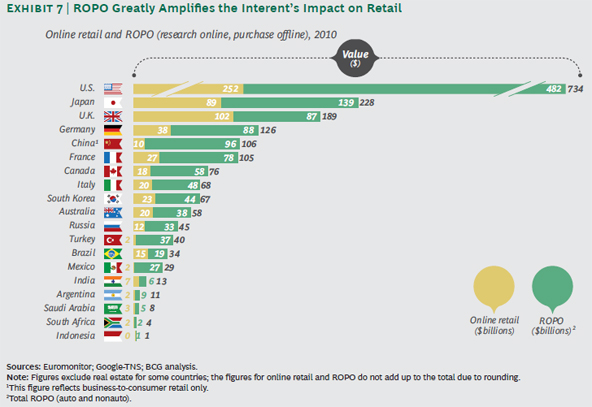
China Internet Policing 3Electronic Commerce is now all the rage in North America, Europe and certain key Asian markets (i.e. China, Japan, Indonesia, etc.). While the Caribbean has not fully embraced the world of e-Commerce, the internet via broadband, Wi-Fi and mobile has been fully assimilated – most adults have a mobile phone. So planners for Caribbean economic empowerments have contemplated the infrastructural deficiencies and proposed the remediation to better govern e-Commerce in this region. This is the assertion in the book Go Lean…Caribbean; it is the contemplation, proposal and remediation plan to reboot Caribbean economics, security and governance. This Go Lean book serves as a roadmap for the introduction and implementation of the technocratic Caribbean Union Trade Federation (CU) to facilitate the growth, promotion and regulatory oversight of electronic commerce in a regional Single Market.

The book posits that some issues are too big for any one Caribbean member-state to manage alone, that there are times when there must be a cross-border, multilateral coordination. The strategy is to confederate all 30 Caribbean member-states and appoint the CU as a deputized agency to oversee this important activity. In addition, attendant functions are included in the roadmap to facilitate e-Commerce: Central Bank adoption of Electronic Payment schemes and Postal Integration/Optimization. Without these functionalities, internet commerce would remain stagnant!

On the other hand, with the expected surge in this sphere of activity, many other challenges will come. In previous blogs, the following issues were detailed:

https://goleancaribbean.com/blog/?p=5353 US Presidential Politics and the Internet
https://goleancaribbean.com/blog/?p=4793 Online reviews – like Yelp and Angie’s List – can wield great power for services marketed, solicited and contracted online.
https://goleancaribbean.com/blog/?p=4381 Net Neutrality – The need for Caribbean Administration of the Issue.
https://goleancaribbean.com/blog/?p=4337 Crony-Capitalism Among the Online Real Estate Markets
https://goleancaribbean.com/blog/?p=3881 European and North American Intelligence Agencies to Ramp-up Cyber Security Cooperation
https://goleancaribbean.com/blog/?p=906 Bitcoin e-Payments needs regulatory framework to manage ‘risky’ image
https://goleancaribbean.com/blog/?p=308 Caribbean Communications Infrastructure Program (CARCIP) and the Caribbean Telecommunications Union (CTU) urges greater innovation and protection.

These commentaries demonstrate that there is the need for a governing body to better oversee and police Caribbean society to mitigate cyber-crimes and illicit activities initiated and/or continued in the online world. Policing the internet is too big for any one Caribbean member-state to manage alone. Too much is at stake.

Providing regional oversight for the Caribbean Single Market – a lean technocracy – for cross-border electronic media, governance of the Information Technology Arts and Sciences and Grievance Officiating are among the missions of Go Lean roadmap. The CU’s prime directives are identified with the following 3 statements:

  • Optimization of the economic engines in order to grow the regional economy to $800 Billion & create 2.2 million new jobs.
  • Establishment of a security apparatus to protect the people and processes (economic engines) of the region from threats and attacks (physical and electronic) that may originate from foreign or domestic sources.
  • Improvement of Caribbean governance to support these engines.

These prime directives will elevate Caribbean society. With this success comes the emergence of bad actors – foreign and domestic. The goal of preparing the appropriate security apparatus was envision in the Go Lean roadmap from the beginning; this was defined early in the book (Page 12 & 14) in the following pronouncements in the Declaration of Interdependence:

x.  Whereas we are surrounded and allied to nations of larger proportions in land mass, populations, and treasuries, elements in their societies may have ill-intent in their pursuits, at the expense of the safety and security of our citizens. We must therefore appoint “new guards” to ensure our public safety and threats against our society, both domestic and foreign. The Federation must employ the latest advances and best practices … to assuage continuous threats against public safety.

xv. Whereas the business of the Federation and the commercial interest in the region cannot prosper without an efficient facilitation of postal services, the Caribbean Union must allow for the integration of the existing mail operations of the governments of the member-states into a consolidated Caribbean Postal Union, allowing for the adoption of best practices and technical advances to deliver foreign/domestic mail in the region.

xvi. Whereas security of our homeland is inextricably linked to prosperity of the homeland, the economic and security interest of the region needs to be aligned under the same governance. Since economic crimes, including piracy and other forms of terrorism, can imperil the functioning of the wheels of commerce for all the citizenry, the accedence of this Federation must equip the security apparatus with the tools and techniques for predictive and proactive interdictions.

xxvii. Whereas the region has endured a spectator status during the Industrial Revolution, we cannot stand on the sidelines of this new economy, the Information Revolution. Rather, the Federation must embrace all the tenets of Internet Communications Technology (ICT) to serve as an equalizing element in competition with the rest of the world. The Federation must bridge the digital divide and promote the community ethos that research/development is valuable and must be promoted and incentivized for adoption.

The subjects of cyber-crimes and electronic commerce integrity feature economic, security and governing concerns. These fields will escalate in importance with the Go Lean roadmap as there is the call for deployment of a Social Media / Electronic Commerce offering for all Caribbean member-states, branded www.myCaribbean.gov. This Caribbean Cloud initiative is projected in the Go Lean book as a subset of the integrated postal operations, the Caribbean Postal Union.

China Internet Policing 4China is an emerging economy. Their economic growth has been impressive in the last 30 years. Despite their official Communism adherence, they model technocratic governmental administrations. There is much for the Caribbean region to learn from their model.

Of course the Caribbean will not boast the 1.3 Billion-population that China holds, but the same as we’re able to model the American example, there is much to consider from our Asian (Chinese) trading partners. The wisdom the Go Lean book gleans from these models is presented as a series of community ethos, strategies, tactics, implementations and advocacies; as highlighted in the following sample:

Community Ethos – Deferred Gratification Page 21
Community Ethos – People Choose Page 21
Community Ethos – People Respond to Incentives Page 21
Community Ethos – Economic Systems Influence Individual Choices Page 21
Community Ethos – Job Multiplier Page 22
Community Ethos – Privacy versus Public Protection Page 23
Community Ethos – Whistleblower Protection Page 23
Community Ethos – Lean Operations Page 24
Community Ethos – Ways to Help Entrepreneurship Page 28
Community Ethos – Promote Intellectual Property Page 29
Community Ethos – Ways to Bridge the Digital Divide Page 31
Community Ethos – Ways to Improve Sharing Page 35
Community Ethos – Ways to Impact the Greater Good Page 37
Strategy – Vision – Integrate a Single Market of entire region Page 45
Tactical – Fostering a Technocracy Page 64
Tactical – Separation of Powers – Caribbean Postal Union (CPU) Page 78
Tactical – Separation of Powers – Interstate Commerce Administration Page 79
Tactical – Separation of Powers – Communications and Media Authority Page 79
Implementation – Year 1 / Assemble Phase – Establish CPU Page 96
Anecdote – Implementation Plan – Mail Services – US Dilemma Page 99
Implementation – Improve Mail Services – Electronic Supplements Page 108
Implementation – Ways to Deliver Page 109
Implementation – Ways to Impact Social Media – Weibo Volumes Page 111
Planning – 10 Big Ideas for the Caribbean Region – Cyber Caribbean Page 127
Advocacy – Ways to Improve Interstate Commerce Page 129
Advocacy – Ways to Grow the Economy Page 151
Advocacy – Ways to Create Jobs Page 152
Advocacy –Ways to Improve Governance Page 168
Advocacy – Ways to Foster Technology Page 197
Advocacy – Ways to Foster e-Commerce Page 198
Advocacy – Ways to Impact Main Street – Wifi & Mobile Apps Page 201
Advocacy – Ways to Impact Urban Living Page 234

This commentary is not intended to make disparaging remarks about Nigeria. Also, this commentary is not intended to make disparaging remarks about Communist China. Rather, the Go Lean book asserts (Page 23) that there is good and bad in every country; no matter the time or place, bad actors will always emerge to exploit economic successes.

That place is now extended to cyber-space.

We, the Caribbean collectively and individually, must police cyber-space as well.

To keep pace with the latest and greatest cyber-criminals will require an advanced level of interdiction and technical competence. It is the assertion here that this is heavy-lifting and too much for any one Caribbean member-state alone. No, the Caribbean needs the effectiveness and efficiencies proposed in Go Lean…Caribbean. The Caribbean needs this technocracy!

This is a lesson we can learn … and apply from China, in our application and pursuit of the Greater Good.

🙂

Download the book Go Lean … Caribbean – now!

————–

Appendix – VIDEO: Nigerian Scammers Impersonate FBI Agent in Work-from-Home Scam – https://youtu.be/D82MzqwyK8A

Published on Mar 13, 2012 – The FBI’s Special Agent Tom Simon is warning about a new scam targeting Hawaii residents, which offers them a work-from-home position, but the company they reportedly will work for, and the financial transactions they are asked to perform, are fake.


Share this post:
, , , ,
[Top]