Tag: ICT

Sports Role Model – espnW.

Go Lean Commentary

Introducing a network without the “network”. This is espnW, the ESPN (see Appendix below) channel, without a channel, specifically catering to women’s sports; this network is delivered via the internet only. CU Blog - Sports Role Model - ESPN-W - Photo 3

Wow, how the world has changed.

So this commentary is a melding of ICT (Internet & Communications Technology), sports, television, gender equality and economics – this is a big deal for the Caribbean to consider.

espnW…

CU Blog - Sports Role Model - ESPN-W - Photo 2
espnW’s mission is to serve women as fans and athletes. espnW.com provides an engaging environment that offers total access to female athletes and the sports they play, takes fans inside the biggest events, and shares a unique point of view on the sports stories that matter most to women.

Founded in July, 2010, espnW lives across television, films, events, digital and social platforms. The annual espnW: Women + Sports Summit is the leading event of its kind in the sports industry. The Women’s Sports Foundation is a charity of choice for espnW.
ESPN W. – About Us Page – Official Website (Retrieved December 7, 2014) – http://espn.go.com/espnw/v1/about

VIDEO: espnW at the 2012 Olympic Games – http://youtu.be/z7vGVQAatig
Published on Aug 14, 2012
Alex Morgan sits down with Julie Foudy to talk about what it feels like to have her first Olympic gold

CU Blog - Sports Role Model - About ESPN-W - Photo 5

CU Blog - Sports Role Model - About ESPN-W - Photo 4

CU Blog - Sports Role Model - About ESPN-W - Photo 3

CU Blog - Sports Role Model - About ESPN-W - Photo 1

CU Blog - Sports Role Model - About ESPN-W - Photo 2

The Caribbean does not currently have an eco-system for sports business … for men nor women. There is no viable sporting enterprises, other than baseball development/winter leagues in Puerto Rico, Dominican Republic and Communist Cuba. There is absolutely no intercollegiate athletics arrangements. Only Amateur athletics abound in the region.

While so much of the sports business infrastructure is missing, the Caribbean is awash in the underlying assets: the athletes. The Caribbean supplies the world with the best-of-the-best in the sports genres of baseball, basketball, track-and-field, soccer-FIFA-football and other endeavors. This athletic supply applies equally to men and women.

The book Go Lean…Caribbean book serves as a roadmap for the introduction and implementation of the Caribbean Union Trade Federation (CU), a technocratic federal government to administer and optimize the economic/security/governing engines of the region’s 30 member-states. The roadmap recognizes and fosters the genius qualifiers of many Caribbean men and women. The goal now is to foster the local eco-system in the homeland so that  those with talent would not have to flee the region to garner the business returns on their athletic investments.

This Go Lean economic empowerment roadmap strategizes to create a Single Media Market to leverage the value of broadcast rights for the entire region, utilizing all the advantages of cutting edge ICT offerings. The result: an audience of 42 million residents (plus 10 million Diaspora) across 30 member-states and 4 languages. ESPN and espnW provides a great role model for this execution, see Appendix below, facilitating television, cable, satellite and internet streaming wherever economically viable.

At the outset, the roadmap recognizes the value of sports, for all genders, in the roadmap with these statements in the Declaration of Interdependence (Page 13 & 14):

xxvi.      Whereas the preparation of our labor force can foster opportunities and dictate economic progress for current and future generations, the Federation must ensure that educational and job training opportunities are fully optimized for all residents of all member-states, with no partiality towards any gender or ethnic group. The Federation must recognize and facilitate excellence in many different fields of endeavor, including sciences, languages, arts, music and sports. This responsibility should be executed without incurring the risks of further human flight, as has been the past history.

xxvii.      Whereas the region has endured a spectator status during the Industrial Revolution, we cannot stand on the sidelines of this new economy, the Information Revolution. Rather, the Federation must embrace all the tenets of Internet Communications Technology (ICT) to serve as an equalizing element in competition with the rest of the world. The Federation must bridge the digital divide and promote the community ethos that research/development is valuable and must be promoted and incentivized for adoption.

xxviii.      Whereas intellectual property can easily traverse national borders, the rights and privileges of intellectual property must be respected at home and abroad. The Federation must install protections to ensure that no abuse of these rights go with impunity, and to ensure that foreign authorities enforce the rights of the intellectual property registered in our region.

xxxi.      Whereas sports have been a source of great pride for the Caribbean region, the economic returns from these ventures have not been evenly distributed as in other societies. The Federation must therefore facilitate the eco-systems and vertical industries of sports as a business, recreation, national pastime and even sports tourism – modeling the Olympics.

The Go Lean roadmap calls for the market organizations and community investments to garner economic benefits of sports and talented athletes, men and women. One of the biggest contribution the CU will make is the facilitation of sports venues: arenas and stadia. Sports can be big business (and great educational opportunities) for the athletes, promoters, vendors and landlords. Still, even fans get great benefits: image, national pride, and entertainment. (The E in ESPN means Entertainment). The eco-system of sports is therefore inclusive in the roadmap’s quest to make the Caribbean region a better place to live, work and play.

Now is the time for all of the Caribbean to lean-in to the following community ethos, strategies, tactics, implementations and advocacies detailed in the book Go Lean…Caribbean to deliver the solutions to elevate the Caribbean region through sports:

Community Ethos – People Respond to Incentives in Predictable Ways Page 21
Community Ethos – Return on Investments Page 24
Community Ethos – Ways to Foster Genius Page 27
Community Ethos – Promote Intellectual Property Page 29
Community Ethos – Ways to Promote Happiness Page 36
Community Ethos – Ways to Impact the Greater Good Page 37
Strategic – Vision – Consolidating the Region in to a Single Market Page 45
Strategic – Staffing – Sporting Events at Fairgrounds Page 55
Tactical – Fostering a Technocracy Page 64
Tactical – Separation of Powers – Sports & Culture Administration Page 81
Tactical – Separation of Powers – Fairgrounds Administration Page 83
Implementation – Steps to Implement Self-Governing Entities (Fairgrounds) Page 105
Implementation – Ways to Deliver Page 109
Planning – 10 Big Ideas – #5 Four Languages in Unison / #8 Cyber Caribbean Page 127
Planning – Ways to Make the Caribbean Better Page 131
Advocacy – Ways to Grow the Economy Page 151
Advocacy – Ways to Create Jobs Page 152
Advocacy – Ways to Improve Education – Reduce Brain Drain Page 159
Advocacy – Ways to Improve Local Government – Parks & Recreation Page 169
Advocacy – Ways to Impact Events Page 191
Advocacy – Ways to Promote Fairgrounds Page 192
Advocacy – Ways to Foster Technology – Intellectual Property Protections Page 197
Advocacy – Ways to Empower Women Page 226
Advocacy – Ways to Impact Youth Page 227
Advocacy – Ways to Improve Sports Page 229
Advocacy – Ways to Impact Urban Living – Sports Leagues Page 234

The book Go Lean…Caribbean, and aligning blog commentaries (highlighted throughout this page in bold), asserts that the region can be a better place to live, work and play; that the economy can be grown methodically by embracing progressive strategies in sports and sports broadcasting/streaming at all levels: professional, amateur and intercollegiate.

The Go Lean…Caribbean roadmap is bigger than just sports, its a concerted effort to elevate all of Caribbean society, for all genders: men and women. The CU is the vehicle for this goal, this is detailed by the following 3 prime directives:

  • Optimization of the economic engines in order to grow the regional economy to $800 Billion & create 2.2 million new jobs (21,000 direct jobs at fairgrounds and sport venues).
  • Establishment of a security apparatus to protect the resultant economic engines.
  • Improve Caribbean governance to support these engines.

This roadmap adheres to economic principles of supply-and-demand. Similar to the foregoing website on espnW, the roadmap looks for the opportunities to foster interest that may exist in specific endeavors, in this case women’s sports, and then explore the business opportunities around servicing that demand. This is not limited to the domestic Caribbean, but rather can refer to local interest in sports abroad and foreign interest in Caribbean sports and athletes.

This is heavy-lifting. This is the quest of Go Lean/CU, to do the heavy-lifting to make the Caribbean homeland a better place to live, work and play. 🙂

Download the book Go Lean…Caribbean now!

———

AppendixEntertainment and Sports Programming Network (Source: http://en.wikipedia.org/wiki/ESPN)

ESPN is a U.S.-based global cable and satellite television channel that is owned by ESPN Inc., a joint venture between The Walt Disney Company (which operates the network, through its 80% controlling ownership interest) and Hearst Corporation (which holds the remaining 20% interest). The channel focuses on sports-related programming including live and recorded event telecasts, sports news and talk shows, and other original programming.

CU Blog - Sports Role Model - ESPN-W - Photo 1ESPN broadcasts primarily from studio facilities located in Bristol, Connecticut. The network also operates offices in Miami, New York City, Seattle, Charlotte, and Los Angeles. While ESPN is one of the most successful sports networks, it has been subject to criticism, which includes accusations of biased coverage[1] (not showing enough hockey or Women’s athletics), conflict of interest, and controversies with individual broadcasters and analysts.

As of August 2013, ESPN is available to approximately 97,736,000 pay television households (85.58% of households with at least one television set) in the United States.[2] In addition to the flagship channel and its seven related channels in the United States, ESPN broadcasts in more than 200 countries,[3] operating regional channels in Australia, Brazil, Latin America and the United Kingdom, and owning a 20% interest in The Sports Network (TSN) as well as its five sister networks and NHL Network in Canada.

Source References:

  1. Geography lesson: Breaking down the bias in ESPN’s coverage, ESPN.com, August 15, 2008.
  2. Seidman, Robert (August 23, 2013). “List of How Many Homes Each Cable Networks Is In – Cable Network Coverage Estimates As Of August 2013”. TV by the Numbers. Zap2it. Retrieved August 25, 2013.
  3. ESPN Inc Encyclopedia Britannica.
Share this post:
, , , ,

Robots help Amazon tackle Cyber Monday

Go Lean Commentary

To understand American commerce, one must learn the BIG shopping “days of the week” – Friday, Saturday, Monday, Tuesday, as follows:

    • Black Friday – This is the Friday following the Thanksgiving Day holiday in the US (the fourth Thursday of November). Since the early 2000’s, it has been regarded as the beginning of the Christmas shopping season, and most major retailers open very early and offer promotional sales. Black Friday is not a public holiday, but some states observe “The Day After Thanksgiving” as a holiday for state government employees, sometimes in lieu of another federal holiday such as Columbus Day.[5] Many non-retail employees and schools have both Thanksgiving and the day after off, followed by a weekend, thereby increasing the number of potential shoppers. In 2014, $50.9 billion was spent during the 4-day Black Friday weekend. While approximately 133 million U.S. consumers shopped during the same period.[6]
    • Small Business Saturday – This refers to the Saturday after Thanksgiving during one of the busiest shopping periods of the year. First observed in 2010, it is a counterpart to Black Friday and Cyber Monday, which feature big box retail and e-commerce stores respectively. By contrast, Small Business Saturday encourages holiday shoppers to patronize brick-and-mortar businesses that are small and local. Small Business Saturday is a registered trademark of American Express Corporation. Small Business Saturday UK began in the UK in 2013 after the success of Small Business Saturday in America.[7]
    • Cyber Monday – This is a marketing term for the Monday after the Thanksgiving holiday. The term was created by marketing companies to persuade people to shop online. The term made its debut on November 28, 2005, in a Shop.org press release entitled “‘Cyber Monday Quickly Becoming One of the Biggest Online Shopping Days of the Year”.[2] According to the Shop.org/Bizrate Research 2005 eHoliday Mood Study, “77 percent of online retailers said that their sales increased substantially on the Monday after Thanksgiving, a trend that is driving serious online discounts and promotions on Cyber Monday this year (2005)”. In 2014, Cyber Monday online sales grew to a record $2.68 billion, compared with last year’s $2.29 billion. However, the average order value was $124, down slightly from 2013’s $128.[3] The deals on Cyber Monday are online-only and generally offered by smaller retailers that cannot compete with the big retailers. Black Friday generally offers better deals on technology; with nearly 85% more data storage deals than Cyber Monday. The past Black Fridays saw far more deals for small appliances, cutlery, and kitchen gadgets on average than Cyber Monday. Cyber Monday is larger for fashion retail. On the past two Cyber Mondays, there was an average of 45% more clothing deals than on Black Friday. There were also 50% more shoe deals on Cyber Monday than on Black Friday.[4] Cyber Monday has become an international marketing term used by online retailers in Argentina, Canada, Chile, China, Colombia, Denmark, Germany, Ireland, Uganda, Japan, Portugal, Sweden and the United Kingdom.
    • Giving Tuesday – refers to the Tuesday after Thanksgiving. It is a movement to create a national day of giving at the beginning of the Christmas and holiday season. Giving Tuesday was started in 2012 by the “92nd Street Y” (Young Men’s and Young Women’s Hebrew Association in New York, NY) and the United Nations Foundation as a response to commercialization and consumerism in the post-Thanksgiving season (Black Friday and Cyber Monday).[8][9] This occasion is often stylized as #GivingTuesday for purposes of hashtag activism.

That’s a lot of commerce … and philanthropy too!

This encyclopedic discussion is necessary for the Caribbean to model the best-practices of American commerce. The focus of this commentary is the role of one company in the pantheon of Cyber Monday, Amazon. This firm has previously been featured in a Go Lean blog, and is identified as a model for Caribbean logistics, our means for delivering the mail; this is the vision for the Caribbean Postal Union (CPU).

The focus of the book Go Lean…Caribbean and the CPU is not just postal mail, but rather logistics. Mail requires logistics, but logistics encompasses so much more than just mail. So we would want to model a successful enterprise in this industry space, like Amazon, not just another postal operation, like the US Postal Service (Page 99).

Amazon provides a good example of lean technocratic efficiency. So Amazon is a good model, not just for the CPU but the entire Caribbean Union Trade Federation (CU). The Go Lean book, serves as a roadmap for the introduction and implementation of the technocratic CU.

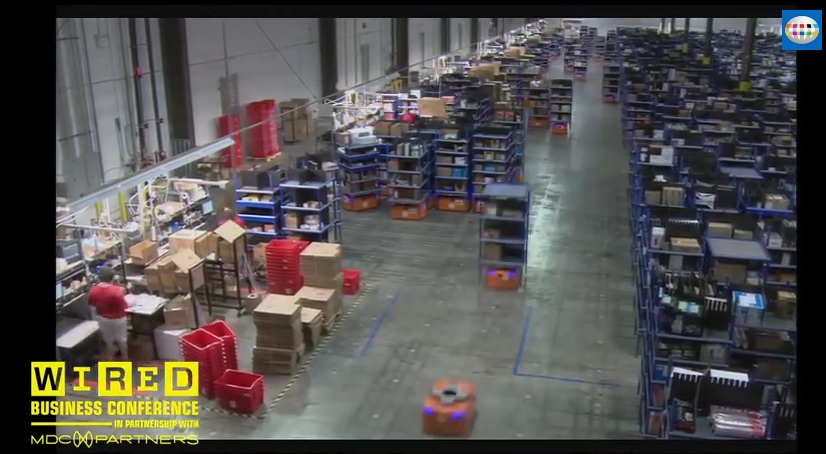
One reason why Amazon is modeled for their lean stature is their use of automation. This following VIDEO depicts the creative solution of using robots to facilitate logistics in a warehouse environment:

VIDEO: Robots help Amazon tackle Cyber Monday – http://www.cbsnews.com/videos/robots-help-amazon-tackle-cyber-monday/

December 1, 2014 – Cyber Monday is the biggest sales day of the year for online retail giant, Amazon. Last year, Amazon customers ordered 426 items every second on Cyber Monday, and this year that number is expected to grow. In addition to the 80-thousand seasonal workers they employ to fulfill orders, thousands of robots also crawl the warehouse floors. CNET.com’s KaraTsuboi takes us inside an Amazon fulfillment center to watch the robots in action. (VIDEO plays best in Internet Explorer).

Lean, automation, robotics, technocratic …

… welcome to the new Caribbean.

This is the mission of Go Lean roadmap, to elevate the economic engines of Caribbean society; industrial policy plays a key role in this roadmap. The region needs the jobs, so we need job creators: companies. These companies, or better stated, Direct Foreign Investors, need a pro-innovation environment to deploy their automated solutions. The Go Lean roadmap allows the structure of Self-Governing Entities (SGE) to incentivize industrial developments in the region. It is the expectation that robots and automated systems will flourish. The independence of the SGE structure neutralizes conflicts with “labor”.

Related issues have previously been detailed in these Go Lean commentaries listed here:

Disney World – Successful Role Model of a SGE
Using SGE’s to Welcome the Dreaded ‘Plutocracy’
Where the Jobs Are – Ship-breaking under SGE Structure
Fairgrounds as SGE and Landlords for Sports Leagues
Puerto Rico’s Comprehensive Cancer Center Project Breaks Ground – Model of Medical SGE

In addition to the roadmap encouraging robotic automation, the CU will directly employ such technologically innovative products and services to impact its own prime directives; the CPU is such a reflection; more automation and less labor. The CU’s prime directives are identified with the following 3 statements:

  • Optimization of the economic engines in order to grow the regional economy to $800 Billion & create 2.2 million new jobs.
  • Establishment of a security apparatus to protect the resultant economic engines.
  • Improve Caribbean governance to support these engines.

The CPU features economic, security and governing concerns.

The Go Lean roadmap seeks to change the entire eco-system of Caribbean logistics and resulting commerce  – the interaction with postal operations. This vision is defined early in the book (Page 12 & 14) in the following pronouncements in the Declaration of Interdependence:

xv. Whereas the business of the Federation and the commercial interest in the region cannot prosper without an efficient facilitation of postal services, the Caribbean Union must allow for the integration of the existing mail operations of the governments of the member-states into a consolidated Caribbean Postal Union, allowing for the adoption of best practices and technical advances to deliver foreign/domestic mail in the region.

xxvii. Whereas the region has endured a spectator status during the Industrial Revolution, we cannot stand on the sidelines of this new economy, the Information Revolution. Rather, the Federation must embrace all the tenets of Internet Communications Technology (ICT) to serve as an equalizing element in competition with the rest of the world. The Federation must bridge the digital divide and promote the community ethos that research/development is valuable and must be promoted and incentivized for adoption.

Amazon is not our only example. A previous blog/commentary identified Chinese company Alibaba as a fitting role model for Caribbean consideration. There are so many best-practices around the world for the region to study and glean insights and wisdom from. The successful application of this roadmap will foster such best-practices for the delivery of the CPU logistics in the Caribbean. The wisdom the Go Lean book gleans are presented as a series of community ethos, strategies, tactics, implementations and advocacies; a detailed sample is listed as follows:

Community Ethos – Deferred Gratification Page 21
Community Ethos – People Respond to Incentives Page 21
Community Ethos – Job Multiplier Page 22
Community Ethos – Intelligence Gathering Page 23
Community Ethos – Lean Operations Page 24
Community Ethos – Ways to Impact the Future Page 26
Community Ethos – Ways to Foster Genius Page 27
Community Ethos – Ways to Help Entrepreneurship Page 28
Community Ethos – Promote Intellectual Property Page 29
Community Ethos – Ways to Bridge the Digital Divide Page 31
Community Ethos – Ways to Improve Sharing Page 35
Strategy – Customers – Citizens and Member-states Governmental Page 47
Tactical – Separation of Powers – Postal Services Page 78
Tactical – Separation of Powers – Interstate Commerce Administration Page 79
Implementation – Year 1 / Assemble Phase – Establish   CPU Page 96
Anecdote – Implementation Plan – Mail Services – US Dilemma Page 99
Implementation – Steps to Implement   Self-Governing Entities Page 105
Implementation – Improve Mail Services – Electronic Supplements Page 108
Implementation – Ways to Deliver Page 109
Planning – 10 Big Ideas for the Caribbean Region Page 127
Advocacy – Ways to Improve Interstate Commerce Page 129
Advocacy – Ways to Grow the Economy Page 151
Advocacy – Ways to Create Jobs Page 152
Advocacy –Ways to Improve Governance Page 168
Advocacy – Ways to Foster Technology Page 197
Advocacy – Ways to Foster e-Commerce Page 198
Advocacy – Ways to Promote Call Centers Page 212
Advocacy – Ways to Impact Urban Living Page 234

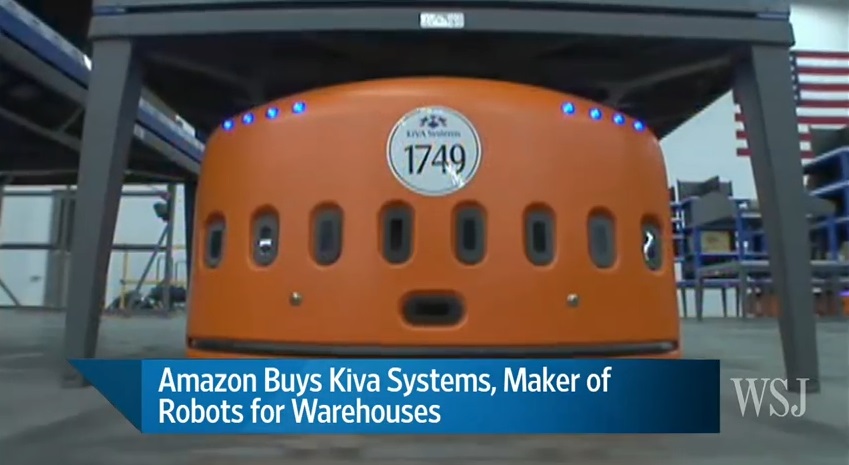
Following the Amazon’s example (and Alibaba’s example) will spur the Caribbean to embrace more robotic technologies. This field is new, fresh and ready for innovation. There is a level-playing-field for any innovator to earn market share. The underlying company in the foregoing VIDEO is Kiva Systems – a Massachusetts based company that manufactures mobile robotic fulfillment systems.[10][11] They rolled out a great product, then “Lo-and-behold”, they were acquired by a major e-Commerce company. Today, they are a subsidiary of Amazon, yet their material-handling systems are currently used by many other retailers including: The Gap, Walgreens, Staples, Gilt Groupe, Office Depot, Crate & Barrel, Saks 5th Avenue, and more.[12]

CU Blog - Robots help Amazon tackle Cyber Monday - Photo 3

CU Blog - Robots help Amazon tackle Cyber Monday - Photo 2

CU Blog - Robots help Amazon tackle Cyber Monday - Photo 1

CU Blog - Robots help Amazon tackle Cyber Monday - Photo 4

This commentary therefore features the subjects of commerce, logistics and entrepreneurship. The Caribbean can emulate this model from Amazon. The biggest ingredient missing in the region is the ‘will’. But the ‘will’ can be fostered anew in the Caribbean. This is the heavy-lifting for the CU, instituting such new community ethos.

Now is the time for all of the Caribbean, the people and governing institutions, to lean-in for the empowerments in the book Go Lean … Caribbean. This is a Big Idea for the region; that of a Cyber Caribbean, in which Cyber Mondays may become a big deal for our region – not only as consumers, but producers as well. Therefore, this roadmap is not just a plan for delivering the mail/packages, but rather a plan for delivering the future.

We must employ whatever tools and techniques, robotics included, to make the region a better homeland to live, work and play.

Does “play“include Robots? Yes, indeed. Consider this fun VIDEO here.  🙂

Supplemental VIDEO – The Nutcracker performed by Dancing Kiva Order Fulfillment Robots: http://youtu.be/Vdmtya8emMw

Download the book Go Lean … Caribbean – now!

————–

AppendixSource References:

2.    “‘Cyber Monday’ Quickly Becoming One of the Biggest Online Shopping Days of the Year”. Shop.org.
3.    “Fundivo – Cyber Monday Statistics”. Fundivo.
4.    “What’s the difference between Black Friday and Cyber Monday?”. Mirror.co.uk. Mirror.co.uk. Nov 28, 2013. Retrieved 2014-11-25.
5.    “Pima County in Arizona Replaces Columbus Day with Black Friday”. BestBlackFriday.com. 2013-08-07.
6.    “”Fundivo – Black Friday Statistics””. Fundivo.
7.    Small Business Saturday Hailed as Success. The Telegraph. 8 December 2013″. Telegraph.co.uk. 8 December 2013. Retrieved 2 December 2014.
8.   Fox, Zoe (October 23, 2012). “6 Inspiring Organizations Joining in #GivingTuesday”. Retrieved February 15, 2014.
9.    “#GivingTuesday: About”. Giving Tuesday. Retrieved February 15, 2014.
10.  http://www.kivasystems.com/about-us-the-kiva-approach/
11.   http://www.boston.com/business/technology/innoeco/2012/03/amazon_buys_warehouse_robotics.html
12.  http://www.kivasystems.com/about-us-the-kiva-approach/history/

Share this post:
, , , , ,
[Top]

Geek the Library

Go Lean Commentary

First, understand the definition of “Geek”.

geek as a VERB

  1. To love, to enjoy, to celebrate, to have an intense passion for.
  2. To express interest in.
  3. To possess a large amount of knowledge in.
  4. To promote.

The following source material describes how impactful libraries are to modern living:

Whatever you geek, serious or fun, the public library supports you.

The ‘Geek the Library’ project is a community public awareness campaign aimed at spreading the word about the vital and growing role of public libraries, and to raise awareness about the critical funding issues many U.S. libraries face.

The goal of the campaign is to inspire a conversation about incredible public libraries and their urgent need for increased support. It is hoped that people will tell what they “geek”, how the public library supports them and their community, and that everyone benefits from the services their local library provides.

The campaign is sponsored by OCLC, a nonprofit library cooperative (see below) that has provided services to help libraries deliver more to their users for four decades. The campaign, supported by a grant from the Bill & Melinda Gates Foundation, is partnered with Chicago-based marketing communications agency Leo Burnett USA; this is a professional, technocratic endeavor.

Public libraries inspire and empower. Everyone is welcome. Almost anything can be explored. And they play an important role for individuals and for communities. Consider this sample:

  • Job Center – As the economy continues to struggle, many libraries are transforming into job centers. Online job application assistance is only the tip of the iceberg. Some libraries are developing specific job searching areas with helpful resources such as classes and online portals to help people sort through the clutter and get back to work faster.
  • Access For All – Historically, ‘access for all’ is what drove the establishment of most public libraries. This mission still rings true today. For many Americans, their local library is an important source for free public access to computers and the Internet in their communities—and for some, it is their only access.
  • A Personal Touch – Last year, librarians helped millions of people find out more about what they geek, discover new interests and search for jobs online. Librarians are passionate about their communities; they are passionate about what you geek and they are passionate about you.
  • The Possibilities Place – In addition to traditional library resources, such as books and children’s programs, many libraries offer innovative geeking opportunities for teens and adults. Live online homework help, genealogy research or financial planning classes.
  • Community Center – The public library is often the heart of the community—bringing people together in a way no other community organization can. You can get your geek on. You can hold a formal meeting. And you can gather with colleagues, friends and neighbors.
  • Return on Investment – More jobs, higher property values, better schools, increased wages … the public library plays a role in all of it. Many studies support the idea that dollars spent on libraries provide solid economic returns to the community.

OCLC Project: Geek The Library – Online Source (Retrieved 11/26/2014)
http://geekthelibrary.org/geek-the-library/index.html

Video: Geek the Library – http://youtu.be/5K-gKNIuaxA

——————————

Source – OCLC = Online Computer Library Center (www.oclc.org):

This nonprofit library cooperative provides research, programs and services that help libraries share the world’s knowledge and the work of organizing it.

In 1967, a small group of library leaders founded the OCLC as the Ohio College Library Center with an ambitious public purpose to:

  • improve access to the information held in libraries around the globe, and;
  • find ways to reduce costs for libraries through collaboration.

This vision launched an effort to share the world’s information via library collaboration—first in Ohio, then across North America and today in 113 countries. The first step was to combine technology with library cooperation through shared, computerized cataloging. Today, the OCLC cooperative helps libraries define their place in the digital world with new cloud-based services that amplify and extend library collections and resources.

OCLC members represent a cohesive hub of library data, activities and interests. This helps increase the collective influence of libraries, making it possible to develop partnerships and programs that would be impossible for most libraries to achieve alone.

The book Go Lean…Caribbean posits that libraries must play a role in the roadmap to elevate Caribbean society, to help bridge the Digital Divide. The book is published by the SFE Foundation, a community development foundation chartered to bring change back to the Caribbean. The book serves as a roadmap for the introduction and implementation for the technocratic Caribbean Union Trade Federation (CU). The prime directives of the CU are declared as following 3 statements:

  • Optimization of the economic engines in order to grow the regional economy to $800 Billion & create 2.2 million new jobs.
  • Establishment of a security apparatus to protect the resultant economic engines.
  • Improve Caribbean governance to support these engines.

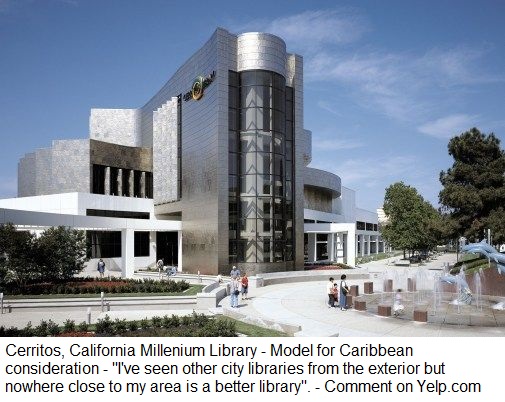
CU Blog - Geek the Library - Photo 1Libraries fit in the vision of a technocratic federal government. There is more focus on virtual structures and technology. Multi-functional libraries fit the vision to allow stakeholders access to CU government data/information technology services, and serve as a portal for e-Learning solutions.

The roadmap identifies, qualifies and proposes the establishment of community libraries throughout the region (Page 187). The book posits that these libraries can be a portal to the new world of Internet Communication Technologies (Page 197); a means to bridge the Digital Divide (Page 31) and a delivery outlet for many e-Government services (Page 168).

The foregoing campaign, ‘Geek the Library‘, is motivated to raise additional funding for public libraries in the US. There is also the need for funding for Caribbean library endeavors. The Go Lean roadmap leads first with an optimization of the region’s economic engines. The book then details how to pay for these changes (Page 101), then how to maintain a consistent well-funded governing engine (Page 172), including public libraries.

Previously, Go Lean blogs commented on other developments related to Caribbean library endeavors:

Antigua Completes Construction of New National Library
The World as 100 People – Showing the Gaps – Need for Cyber Caribbean – Gates Foundation
Is Print Dead? No, but dying! Digital Media is the Future

Now is the time for all Caribbean stakeholders, all Geeks, to lean-in to this regional solution for Caribbean empowerment. Considering the foregoing definition of ‘geek’, this regional effort could be dubbed: ‘Geek the Caribbean‘. The end result, a better homeland; a better place to live, work and play. 🙂

Download the book Go Lean … Caribbean – now!

Share this post:
, , ,
[Top]

Obama’s immigration tweaks leave Big Tech wanting more

Go Lean Commentary

Caribbean stakeholders hereby comment on US President Barack Obama’s planned unilateral immigration reforms, and it’s not what you might naturally think:

We are hereby opposed!

Wait, wouldn’t a more liberal policy for Caribbean immigrants help our cause to improve the condition of many Caribbean families? “Yes” for the micro (individual), but “No” for the macro (community/country/region)!

Liberal US immigration practices are bad; they accentuate the “brain drain” for the Caribbean.

The focus in this discussion is on the STEM (Science, Technology, Engineering, and Mathematics) labor force. There is a demand for more workers with these qualifications; this demand is in the US and in the Caribbean. The US economy, and society, is more mature than all Caribbean countries; this makes it hard for Caribbean member-states to compete. And now…

… President Obama wants to extend invitations to STEM college students in the US to stay on in the US and NOT return to their home countries.

Say it ain’t so!

The publishers of the book Go Lean…Caribbean, which serves as a roadmap for elevating all 30 member-states of Caribbean society, calls for the need to fight the policy change that is depicted in this news article:

By: Noel Randewich and Roberta Rampton

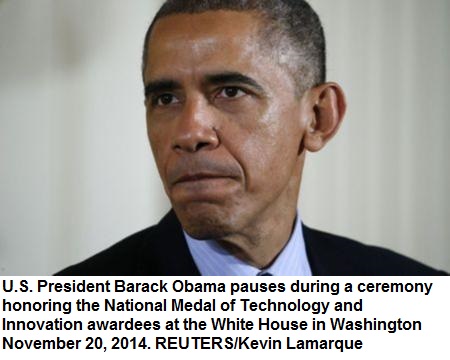
s immigration tweaks leave Big Tech wanting more - Photo 1SAN FRANCISCO/WASHINGTON (Reuters) – President Barack Obama plans to make life a little easier for some foreign tech workers, but Silicon Valley representatives are disappointed his immigration rule changes will not satisfy longstanding demands for more visas and faster green cards.

In a speech on Thursday, Obama outlined plans to use executive authority to help millions of undocumented people. He also announced minor adjustments to cut red tape for visa holders and their families, including letting spouses of certain H-1B visa holders get work permits.

“I will make it easier and faster for high-skilled immigrants, graduates and entrepreneurs to stay and contribute to our economy, as so many business leaders have proposed,” Obama said.

The president’s moves will make it easier for entrepreneurs to work in the United States and extend a program letting foreign students who graduate with advanced degrees from U.S. universities to work temporarily in the United States.

But tech industry insiders said the changes, while positive, were limited.

“This holiday season, the undocumented advocacy community got the equivalent of a new car, and the business community got a wine and cheese basket,” complained one lobbyist, speaking on condition of anonymity.

Instead of more temporary H-1B visas, which allow non-U.S. citizens with advanced skills and degrees in “specialty occupations” to work in the country for up to six years, the 200,000-member U.S. chapter of the Institute of Electrical and Electronics Engineers (see VIDEO below) was hoping for measures to reduce the backlog of H-1B holders awaiting green cards.

“If this is all there is, then the president has missed a real opportunity,” said Russ Harrison, a senior legislative representative at the IEEE. “He could have taken steps to make it easier for skilled immigrants to become Americans through the green card system, protecting foreign workers and Americans in the process.”

For instance, IEEE and technology companies want spouses and children to be excluded from employment-based green-card allotments, thereby increasing availability for other foreign tech workers seeking green cards.

Tech companies from Microsoft Corp to Intel have complained about being unable to find enough highly skilled employees and want Washington to increase the availability of visas for programmers, engineers and other specialized foreign professionals.

“Our focus really is on H-1B visas and trying to expand the number of talented technical professionals that can come to the U.S.,” Qualcomm CFO George Davis said ahead of Obama’s announcement. “The way the regulations are drafted today there’s a lot of room for improvement.”

Major changes would require Congressional action, however, and tech industry executives are worried that partisan rancor over Obama’s unilateral action could set back chances for legislation.

“I don’t view this as a long-term solution, and I hope it doesn’t get in the way of a long-term solution,” said Dave Goldberg, chief executive of SurveyMonkey, a Palo Alto based company.

The AFL-CIO said in a statement it would seek to ensure visa workers are afforded rights and protections.

“We are concerned by the President’s concession to corporate demands for even greater access to temporary visas that will allow the continued suppression of wages in the tech sector,” the labor giant said.

While limited, Obama’s policy changes, such as letting more spouses work, will help some tech workers and their families.

Gayathri Kumar, 29, moved a year ago from India to Phoenix, Arizona, where her husband works at Intel. She has a masters degree in communications and wants to work in television, but Kumar spends much of her day at home, chatting with friends over social media.

“I really want to work. I came here with a passion to work, not to sit at home,” Kumar said. “I’m bored, I’m becoming depressed.”

(Reporting by Noel Randewich in San Francisco and Roberta Rampton in Washington. Additional reporting by Sarah McBride in San Francisco.; Editing by Eric Effron, Tom Brown and Ken Wills)

Reuters News Wire Online Source – Posted: November 21, 2014 –
http://news.yahoo.com/obamas-immigration-tweaks-leave-big-tech-wanting-more-002544241–finance.html

For this issue, “the enemy of my enemy is my friend”.

Caribbean stakeholders need to align with the opposition of Obama’s immigration policy, the Republicans. (The publishers of the Go Lean book, SFE Foundation, represent an apolitical, religiously-neutral, economic-focused movement, initiated at the grass-root
level to bring permanent change back to the Caribbean homeland – no one Caribbean member-state is favored over another). We need to pursue our own self-interest.

The book Go Lean…Caribbean posits that the Caribbean brain drain is already acute, (reported at exceeding 70%), due to “push and pull” factors. Many Caribbean STEM students matriculate in American universities, so allowing more liberal recruiting of our students to remain in the US would increase the “pull” factor. We cannot compete against this added pressure.

Why would the students want to concede to this pressure? Unfortunately, we have a variety of “push” conditions working against the Caribbean counter-defense; we have deficiencies. We have economic, security and governing deficiencies that “push” the native Caribbean student/worker to consider expatriating to the US, or to Canada and many EU countries.

But the Caribbean has its own needs for the STEM work force, and our needs cannot be ignored. This is war; (a Trade War).

The Caribbean is losing … every battle. We must not help our enemy. The book Go Lean…Caribbean serves as a roadmap for the introduction and implementation of the technocratic Caribbean Union Trade Federation (CU). The roadmap contains our battle plans, strategies and tactics for this Trade War. The roadmap’s states the prime directives of the CU as the following 3 statements:

  • Optimization of the economic engines in order to grow the regional economy to $800 Billion & create 2.2 million new jobs.
  • Establishment of a security apparatus to protect the resultant economic engines.
  • Improve Caribbean governance to support these engines.

The book posits that all of the Caribbean is in crisis with this brain drain problem, and so there is an urgent need to retain our existing STEM talent, and recruit even more. This point is stressed early in the book (Page 13) in the following pronouncements in the Declaration of Interdependence:

xix.   Whereas our legacy in recent times is one of societal abandonment, it is imperative that incentives and encouragement be put in place to first dissuade the human flight, and then entice and welcome the return of our Diaspora back to our shores. This repatriation should be effected with the appropriate guards so as not to imperil the lives and securities of the repatriated citizens or the communities they inhabit. The right of repatriation is to be extended to any natural born citizens despite any previous naturalization to foreign sovereignties.

xxi.   Whereas the preparation of our labor force can foster opportunities and dictate economic progress for current and future generations, the Federation must ensure that educational and job training opportunities are fully optimized for all residents of all member-states, with no partiality towards any gender or ethnic group. The Federation must recognize and facilitate excellence in many different fields of endeavor, including sciences, languages, arts, music and sports. This responsibility should be executed without incurring the risks of further human flight, as has been the past history.

This subject of mitigating the brain drain and adopting empowering immigration policies have been frequent topics for these Go Lean blogs, highlighted here in the following sample:

https://goleancaribbean.com/blog/?p=2907 Local Miami Haitian leaders protest Bahamian immigration policy
https://goleancaribbean.com/blog/?p=2809 A Lesson in History: Economics and Immigration Policy of East Berlin
https://goleancaribbean.com/blog/?p=1674 Obama’s Plans for $3.7 Billion Immigration Crisis Funds, stressing the need for reform in the US.
https://goleancaribbean.com/blog/?p=1596 Book Review: ‘Prosper Where You Are Planted’ – the Antithesis of Emigration
https://goleancaribbean.com/blog/?p=1470 College Of the Bahamas Master Plan 2025 – Lacking Response for Brain Drain
https://goleancaribbean.com/blog/?p=1296 Remittances from Diaspora to Caribbean Increased By 3 Percent in 2013 – Not a Good Economic Plan
https://goleancaribbean.com/blog/?p=1256 Is a Traditional 4-year College Degree a Terrible Investment? Yes, for Caribbean Communities Sending their Students Abroad.
https://goleancaribbean.com/blog/?p=1014 All is not well in the sunny Caribbean – Economic Deficiencies
https://goleancaribbean.com/blog/?p=599 Ailing Puerto Rico open to radical economic fixes – Need for Retention

As a counter-defense to the losing dispositions in the Caribbean Trade War with the US, the Go Lean book details a series of community ethos, strategies, tactics, implementations and advocacies to foster the best practices to incentivize STEM careers and mitigate further brain drain for the Caribbean region:

Community Ethos – Deferred Gratification Page 21
Community Ethos – Economic Systems Influence Choices & Incentives Page 21
Community Ethos – Job Multiplier Page 22
Community Ethos – Anti-Bullying and Mitigation – neutralizing STEM as Nerds Page 23
Community Ethos – Minority Equalization Page 24
Community Ethos – Return on Investments Page 24
Community Ethos – Ways to Impact the Future Page 27
Community Ethos – Ways to Foster Genius Page 26
Community Ethos – Ways to Help Entrepreneurship Page 28
Community Ethos – Promote Intellectual Property Page 29
Community Ethos – Ways to Impact Research & Development Page 30
Community Ethos – Ways to Close the Digital Divide Page 31
Community Ethos – Ways to Impact the Greater Good Page 37
Anecdote – Valedictorian and Caribbean Diaspora Member Page 38
Strategy – Customers – Citizens, Business Community & Diaspora Page 47
Strategy – Meeting Region’s Needs Today, Preparing For Future Page 58
Tactical – Separation of Powers – Patent, Standards, & Copyrights Page 78
Tactical – Separation of Powers – Education Department Page 85
Implementation – Assemble all Super-Regional Governing Entities Page 96
Implementation – Trends in Implementing Data Centers Page 106
Implementation – Ways to Deliver Page 109
Implementation – Better Manage Debt – Better Student Loans Dynamics Page 114
Planning – Ways to Improve Trade Page 128
Planning – Ways to Make the Caribbean Better Page 131
Advocacy – Ways to Grow the Economy Page 151
Advocacy – Ways to Create Jobs Page 152
Advocacy – Ways to Improve Education Page 159
Advocacy – Ways to Impact Student Loans – Forgivable Provisions Page 160
Advocacy – Ways to Foster Empowering Immigration – STEM Professionals Page 174
Advocacy – Ways to Foster Technology Page 197
Advocacy – Ways to Impact the Diaspora Page 217
Appendix – Alternative Remittance Modes Page 270

Now is the time for all of the Caribbean, the people and institutions, to lean-in for the elevations described in the book Go Lean … Caribbean. This means heavy-lifting to enhance the economic-security-governing engines to attract and retain our STEM graduates. We especially call on the Caribbean/Latin American chapters of the IEEE organization – depicted in the foregoing article and the VIDEO below – to join-in this empowerment effort. A CU mission aligns with this organization’s charter to promote STEM careers and developments in their members’ home regions. The Caribbean needs the regional delivery of this charter, and their lobbying efforts.

We must try and stop Obama’s unilateral policy reform; a liberal US immigration policy would accentuate the Caribbean brain drain.

The region needs the deliveries, described in the Go Lean roadmap. Otherwise, we have no hope to incite and retain our young people, especially those with STEM skill-sets. As a region, we would simply be condemned to a worsened future, simply “fattening frogs for snakes”. This Go Lean roadmap therefore is vital in the quest to make the Caribbean a better place to live, work and play. 🙂

Download the book Go Lean … Caribbean – now!

———–

Appendix VIDEO: What is IEEE? – http://youtu.be/fcmCpEpg0lQ
This is a short video presenting the overall organization of IEEE. This video was developed and published during the celebrations of IEEE Day 2012.

Share this post:
, , ,
[Top]

Funding Caribbean Entrepreneurs – The ‘Crowdfunding’ Way

Go Lean Commentary

The Washington, DC-based World Bank believes that Caribbean entrepreneurs can be funded by networking with the Caribbean Diaspora. This objective aligns with the book Go Lean… Caribbean which serves as a roadmap for the introduction and implementation of the technocratic Caribbean Union Trade Federation (CU) with the charter to facilitate entrepreneurship and job-creation in the region.

Early in the Go Lean book, the responsibility to attract investors and create jobs was identified as an important function for the CU with these pronouncements in the opening Declaration of Interdependence (Pages 13, 14):

xxiv.  Whereas a free market economy can be induced and spurred for continuous progress, the Federation must install the controls to better manage aspects of the economy: jobs, inflation, savings rate, investments and other economic principles. Thereby attracting direct foreign investment because of the stability and vibrancy of our economy.

xxvi.  Whereas the Caribbean region must have new jobs to empower the engines of the economy and create the income sources for prosperity, and encourage the next generation to forge their dreams right at home, the Federation must therefore foster the development of new industries… In addition, the Federation must invigorate the enterprises related to existing industries … – impacting the region with more jobs.

Before stating an opinion on the plausibility of the World Bank’s proposal, first consider the article, as follows:

Title: Caribbean entrepreneurs need to look to Diaspora for funding – World Bank Group Exec

CU Blog - Funding Caribbean EntrepreneursBRIDGETOWN, Barbados — Caribbean entrepreneurs who are looking for funding to develop new or existing businesses are being encouraged to look to their own nationals living abroad.

“Diaspora financing should be explored as a source of funding for entrepreneurs”, said Aun Rahman, head of the infoDev Access to Finance Programme, at the World Bank Group.

Rahman was speaking on the topic “Access to Finance: Examining Non-Traditional Platforms for Funding”, during the final day of the Caribbean Exporters’ Colloquium 2014 in BridgetownBarbados today.

About 85 per cent of Caribbean people in the Diaspora have said they would “be interested in investing in business back home,” Rahman said adding that they are not only interested in their own countries – but those across the region.

But despite the high interest, Rahman said only a “very few” — about 13 per cent — have actually invested in the Caribbean. The Diaspora investors need a “trusted local partner,” he said.

Project co-ordinator for the Jamaica Venture Capital Programme at the Development Bank of Jamaica, Audrey Richards, also spoke on non-traditional investment sources.

“If we want to attract non-traditional finance, we need to start thinking in a non-traditional way,” she said.

Other participants in the session included Nelson Gray, special project director at LINC Scotland, Shadel Nyack Compton, managing director of Belmont Estate Group of Companies and Judith Mark, managing director and enterprise development consultant at CME Consulting Ltd.
Jamaica Observer Daily Newspaper – Online Site – Retrieved 11-14-2014
http://www.jamaicaobserver.com/business/Caribbean-entrepreneurs-need-to-look-to-Diaspora-for-funding—-World-Bank-Group-exec

“Say it ain’t so”. This assertion seems so out-of-touch. This plays into the fallacy that life is so much better outside the Caribbean, so that when a Caribbean resident emigrates and now lives in the US, Canada, or Europe that they thrive financially to the point that they have disposable income (beyond funding their own basic food-clothing-housing needs, plus support for their families left-behind) so as to be able to invest in entrepreneurs back in their ancestral homelands.

This is a distorted “view” from afar … as in Washington. This is not the true experience “on the ground”. (While a picture is worth a thousand words, it is no substitute to actually being “there”. A picture only describes the visual sense; there is so much more, there are the sounds, smells, touch and taste. All of that experience cannot be easily captured in words or pictures).

The book Go Lean…Caribbean, authored by Diaspora members, posits that while the Caribbean region is the greatest address in the world, (the tropical flora-fauna, islands landscapes-waterscapes, and Caribbean culture cannot be topped any where else on the planet), life “at home” is much harder than picturesque postcards depict. This is why residents leave in the first place,  “push and pull factors”, and join the Diaspora.

The Caribbean does need help from the Diaspora to fulfill the Go Lean vision; we need their Time, Talent and Treasuries. But in truth, the Caribbean Diaspora does not thrive financially in their foreign abodes; not with the first generation. Economic studies indicate that only at the 2nd generation, do the immigrant’s legacies (next generation) start to prosper financially[a]. At that point, these are no longer Diaspora (Nationals of the Caribbean member-states); and may not feel any attachment to their ancestral homelands. This is not just a Caribbean issue; it has been proven with other Diaspora groups: Irish, Italian, Chinese, etc. Added to the reality is the fact that Diaspora/legacy members can easily participate in Wall Street; with such an investment/economic engine, local Caribbean options cannot compete. The foregoing article concedes as much:

“only a ‘very few’ – about 13 per cent — have actually invested in the Caribbean”

The Go Lean roadmap is therefore realistic! We are not expecting the Diaspora to be some panacea of Caribbean societal ills. Rather, as a region, we must do the heavy-lifting ourselves. This roadmap proffers a unified, consolidated Caribbean effort, engaging all stakeholders: residents, Diaspora, Direct Foreign Investors, passive investors, NGOs and even governmental agencies, domestic and foreign. “All hands on deck”!

The foregoing article also states that “if we want to attract non-traditional finance, we need to start thinking in a non-traditional way”. This is the siren call of the Go Lean book, to effectuate change in the region, allowing for the following 3 prime directives:

  • Optimization of the economic engines in order to grow the regional economy to $800 Billion GDP and create 2.2 million new jobs.
  • Establishment of a security apparatus to protect the resultant economic engines.
  • Improve Caribbean governance/administration/oversight to support these engines.

The Go Lean book/roadmap reflects the recommended “non-traditional thinking” to attract non-traditional funding for Caribbean empowerment and entrepreneurial endeavors:

  • The book advocates for incubators… helping/coaching entrepreneurs to put together proper business plans and structures…
  • The book advocates for cooperatives…
  • The book advocates for the full exploration and exploitation of social media, identifying www.myCarribbean.gov  …

All these strategies allow for non-traditional funding methods such as crowdfunding[b] (already essentially practiced in the region as no-tech offerings: Asue, Partner, Asociacion); this is the practice of funding a project or venture by raising monetary contributions from a large number of people, typically via the internet.[1] One early-stage equity expert described crowdfunding as “the practice of raising funds from two or more people over the internet towards a common Service, Project, Product, Investment, Cause, and Experience or SPPICE.”[2]

(See crowdfunding definition/explanation in the below VIDEO in the Appendix).

The crowdfunding model is fueled by three types of actors:

  • the project initiator who proposes the idea and/or project to be funded;
  • individuals or groups who support the idea (inclusive of the Diaspora);
  • and a moderating organization (the “platform”, envisioned for the CU‘s www.myCarribbean.gov) that brings the parties together to launch the idea.[3]

This strategy has proven successful for many other endeavors. In 2013, the crowdfunding industry grew to over $5.1 billion worldwide;[4] (see Kickstarter Appendix below):

There are three primary types of crowdfunding:

  • Reward-based crowdfunding – entrepreneurs pre-sell a product or service to launch a business concept without incurring debt or sacrificing equity/shares. Reward-based crowdfunding has been used for a wide range of purposes, including motion picture promotion,[16] free software development, inventions development, scientific research,[17] and civic projects.[18] For a joint study between Toronto, Canada’s York University and Universite Lille Nord de France, in Lille, France, published on June 2, 2014, two types of reward-based crowdfunding were identified: “‘Keep-it-All’ (KIA) where the entrepreneurial firm sets a fundraising goal and keeps the entire amount raised regardless of whether or not they meet their goal, and ‘All-or-Nothing’ (AON) where the entrepreneurial firm sets a fundraising goal and keeps nothing unless the goal is achieved.”[19] The study’s researchers analyzed 22,875 crowdfunding campaigns, with targets of between US$5,000 and US$200,000, and concluded: “Overall, [all-or-nothing] fundraising campaigns involved substantially larger capital goals, and were much more likely to be successful at achieving their goals.” In its review of the study outcomes, the Inc.com publication explained that potential investors are more inclined to support “all-or-nothing strategy” initiatives, whereby a substandard product will not be released if the funding goal is not achieved. The Inc.com review concluded that “AON” campaign typically provide more detailed information on the campaign.[20]
  • Equity-based crowdfunding – the backer receives unlisted shares of a company, usually in its early stages, in exchange for the money pledged. The company’s success is determined by how successfully it can demonstrate its viability.[15] Equity-based crowdfunding is the collective effort of individuals to support efforts initiated by other people or organizations through the provision of finance in the form of equity.[21][22] In the United States, legislation that is mentioned in the 2012 JOBS Act will allow for a wider pool of small investors with fewer restrictions following the implementation of the act.[22]
  • Credit-based crowdfunding – In the U.S., credit-based crowdfunding from non-banks became more prominent as a form of crowdfunding in 2012, with the launch of the Lending Club, which had advanced more than US$500 million in loans via its website by April 2012. Prospective borrowers of  the Lending Club first submit their requirements, and are then matched with pools of investors who are willing to accept the credit terms. Platforms such as the Lending Club gained popularity, as banks increased interest rates or reduced their level of lending activity. Another credit-based platform, Prosper.com, was established in 2006 and had funded nearly US$325 million in personal loans by April 2012.[23]

There are many dynamics of this nascent industry that must be considered and mastered if the Caribbean is to benefit from crowdfunding. Consider the following:

  • Crowdfunding applications – Crowdfunding is being experimented with as a funding mechanism for creative work such as blogging and journalism,[51] music, independent film,[52][53] (See KickStarter Appendix below) and for funding startup companies.[54][55][56][57] Community music labels are usually for-profit organizations where “fans assume the traditional financier role of a record label for artists they believe in by funding the recording process”.[58] A Financialist article published in mid-September 2013 stated that “the niche for crowdfunding exists in financing films with budgets in the [US]$1 to $10 million range” and crowdfunding campaigns are “much more likely to be successful if they tap into a significant pre-existing fan base and fulfill an existing gap in the market.”[60]
  • Philanthropy and civic projects – A variety of crowdfunding platforms have emerged to allow ordinary web users to support specific philanthropic projects without the need for large amounts of money.[18]
  • Real estate crowdfunding (and REITs) – Real estate crowdfunding is the online pooling of capital from investors to fund mortgages secured by real estate, such as “fix and flip” redevelopment of distressed or abandoned properties, and equity for commercial and residential projects, acquisition of pools of distressed mortgages, home buyer down payments and similar real estate related outlets. Investment, via specialized online platforms, is generally completed under Title II of the JOBS Act and is limited to accredited investors. The platforms offer low minimum investments, often $100 – $10,000.[63][64]
  • Intellectual property exposure – One of the challenges of posting new ideas on crowdfunding sites is there may be little or no intellectual property (IP) protection provided by the sites themselves. Once an idea is posted, it can be copied. As Slava Rubin, founder of IndieGoGo said: “We get asked that all the time, ‘How do you protect me from someone stealing my idea?’ We’re not liable for any of that stuff.”[65] Inventor advocates, such as Simon Brown, founder of the UK-based United Innovation Association, counsel that ideas can be protected on crowdfunding sites through early filing of patent applications, use of copyright and trademark protection as well as a new form of idea protection supported by the World Intellectual Property Organization called Creative Barcode.[66]
  • Innovative new platforms, such as RocketHub, have emerged that combine traditional funding for creative work with branded crowdsourcing – helping artists and entrepreneurs unite with brands “without the need for a middle man.”[61]
  • Global Giving allows individuals to browse through a selection of small projects proposed by nonprofit organizations worldwide, donating funds to projects of their choice.
  • Microcredit crowdfunding platforms such as Kiva (organization) and Wokai facilitate crowdfunding of loans managed by microcredit organizations in developing countries.
  • The US-based nonprofit Zidisha offers a new twist on these themes, applying a direct person-to-person lending model to microcredit lending for low-income small business owners in developing countries. Zidisha borrowers who pass a background check may post microloan applications directly on the Zidisha website, specifying proposed credit terms and interest rates. Individual web users in the US and Europe can lend as little as one US dollar, and Zidisha’s crowdfunding platform allows lenders and borrowers to engage in direct dialogue. Repaid principal and interest is returned to the lenders, who may withdraw the cash or use it to fund new loans.[62]
  • DonorsChoose.org, founded in 2000, allows public school teachers in the United States to request materials for their classrooms. Individuals can lend money to teacher-proposed projects, and the organization fulfills and delivers supplies to schools.
  • There are also a number of own-branded university crowdfunding websites, which enable students and staff to create projects and receive funding from alumni of the university or the general public. Several dedicated civic crowdfunding platforms have emerged in the US and the UK, some of which have led to the first direct involvement of governments in crowdfunding.

The Go Lean…Caribbean roadmap asserts that the adoption of new community ethos, plus the executions of the following strategies, tactics, implementations and advocacies will foster the “crowdfunding”/investment industry in the region:

Community Ethos – Deferred Gratification Page 21
Economic Principles – People Choose because Resources are Limited Page 21
Economic Principles – People Respond to Incentives Page 21
Economic Principles – Economic Systems Influence Choices & Incentives Page 21
Economic Principles – Consequences of Choices Lie in the Future Page 21
Community Ethos – Job Multiplier Page 22
Community Ethos – Lean Operations Page 24
Community Ethos – Return on Investments   (ROI) Page 24
Community Ethos – Cooperatives Page 25
Community Ethos – Ways to Impact the Future Page 26
Community Ethos – Ways to Help Entrepreneurship Page 28
Community Ethos – Ways to Promote Intellectual Property Page 29
Community Ethos – Ways to Impact Research & Development (R&D) Page 30
Community Ethos – Ways to Bridge the Digital Divide Page 31
Community Ethos – Ways to Improve Sharing Page 35
Community Ethos – Ways to Impact the Greater Good Page 37
Strategy – Mission – Foster Local Economic Engines. Page 45
Strategy – Customers of the CU – Diaspora – Incentivize Investments Page 47
Tactical – Fostering a Technocracy Page 64
Tactical – Tactics to Forge an $800 Billion Economy – High Multiplier Industries Page 70
Tactical – Separation of Powers – Self-Governing Entities Page 80
Implementation – Ways to Pay for Change – SGE Licenses Page 101
Implementation – Steps to Implement Self-Governing Entities Page 105
Implementation – Ways to Deliver Page 109
Implementation – Ways to Impact Social Media Page 111
Planning – 10 Big Ideas – Self-Governing Entities / Cyber Caribbean Page 127
Planning – Ways to Improve Trade Page 128
Planning – Ways to Make the Caribbean Better Page 131
Advocacy – Ways to Grow the Economy Page 151
Advocacy – Ways to Create Jobs Page 152
Advocacy – Ways to Foster Cooperatives Page 176
Advocacy – Ways to Impact Wall Street – Adopt Advanced Products like REITs Page 200
Advocacy – Ways to Impact Main Street Page 201
Advocacy – Ways to Impact the Diaspora Page 217
Appendix – Job Multipliers Page 259

Under the Go Lean roadmap, there will be plenty of opportunities for entrepreneurial funding. The CU will solicit investors and foster entrepreneurism by featuring the structures of Self-Governing Entities (SGE); these are bordered grounds like high-tech R&D campuses, medical parks, and technology bases; but they will also include low-tech blue-collar activities like salvage yards and ship-breaking. The subjects of SGE’s, self-employment opportunities and entrepreneurial hustle has been directly addressed and further elaborated upon in these previous blog/commentaries:

https://goleancaribbean.com/blog/?p=2857 Where the Jobs Are – Entrepreneurism in Junk
https://goleancaribbean.com/blog/?p=2338 Using SGE’s to Welcome the Dreaded ‘Plutocracy’
https://goleancaribbean.com/blog/?p=2126 Where the Jobs Are – Computers Reshaping Global Job Market
https://goleancaribbean.com/blog/?p=2025 Where the Jobs Are – Attitudes & Images of the Caribbean Diaspora in US
https://goleancaribbean.com/blog/?p=2003 Where the Jobs Are – Ship-breaking under SGE Structure
https://goleancaribbean.com/blog/?p=1698 Where the Jobs Are – STEM Jobs Are Filling Slowly
https://goleancaribbean.com/blog/?p=1683 Where the Jobs Were – British public sector now strike over ‘poverty pay’
https://goleancaribbean.com/blog/?p=1596 Book Review: ‘Prosper Where You Are Planted’
https://goleancaribbean.com/blog/?p=1325 Puerto Rico Governor Signs Bill on Small-Medium-Enterprises
https://goleancaribbean.com/blog/?p=1214 Where the Jobs Are – Fairgrounds under SGE Structure as Landlords for Sports Leagues
https://goleancaribbean.com/blog/?p=599 Ailing Puerto Rico open to radical economic fixes – with focus on Informal Economy
https://goleancaribbean.com/blog/?p=398 Self-employment on the rise in the Caribbean – World Bank
https://goleancaribbean.com/blog/?p=273 10 Things We Don’t Want from the US – Job Discrimination of Immigrations
https://goleancaribbean.com/blog/?p=214 LCD versus an Entrepreneurial Ethos

The Caribbean is arguably the best address on the planet, but there are a lot of missing ingredients so as to be the best address for everyone. Due to this deficiency, the region has lost a large share of its human capital, one estimate of 70%, to the brain-drain. Some of the missing ingredients, “push” factors, have been jobs and opportunities for entrepreneurship.

No More! Change has come to the Caribbean. Starting first with the CU leadership – “thinking in a non-traditional way”.

The roadmap anticipates 150 million unique subscribers on www.myCarribbean.gov. This technocratic approach is more viable, more engaging than simply throwing our hopes over some wall to the far-flung Diaspora.

We must stop the floodgates of the debilitating brain-drain now and encourage our youth to seek a future in their homeland. While, we are at it, we must also encourage the far-flung Diaspora to repatriate back to the Caribbean.

This plan identified in the Go Lean book and blog/commentaries is a good start to create the missing opportunities for the region. The end result of this roadmap is a clearly defined destination: a better place to live, work and play. 🙂

Download the book Go Lean … Caribbean – now!

———-

Appendix A – Video – Crowdfunding:  http://youtu.be/8b5-iEnW70k

What is Crowdfunding? Crowdfunding planning? What, How, Why and When? One platform’s view:

Appendix B – Kickstarter Campaigns

On April 17, 2014, the UK-based Guardian media outlet published a list of “20 of the most significant projects” launched on the Kickstarter platform prior to the date of publication:

  • Musician Amanda Palmer raised US$1.2 million from 24,883 backers in June 2012 to make a new album and art book.[40]
  • American Hans Fex raised US$1,226,811 from 5,030 backers in March 2014 for his “MiniMuseum” project that he describes on his Kickstarter page: “For the past 35 years I have collected amazing specimens … I then carefully break those specimens down into smaller pieces, embed them in acrylic … Each mini museum is a handcrafted, individually numbered limited edition … The majority of these specimens were acquired directly from contacting specialists recommended to me by museum curators, research scientists and university historians”.[41]
  • Writer Rob Thomas raised $5.7 million from 91,585 backers in April 2013 to create a feature film version of the defunct television series Veronica Mars. The nine award levels were initially available to backers in 21 countries, including Brazil, Canada, Finland and Germany. Lead actress Kristen Bell explained on the launch date of the project: “I promise if we hit our goal, we will make the sleuthiest, snarkiest, it’s-all-fun-and-games-‘til-one-of-you-gets-my-foot-up-your-ass movie we possibly can.”[42]
  • Actor, writer and director Zach Braff raised US$3.1 million from 46,520 backers in May 2013 to create the feature film Wish I Was Here, which premiered at the Sundance Film Festival. Braff’s campaign was financially complemented by Worldview Entertainment.
  • Filmmaker Spike Lee raised US$1.4 million from 6,421 backers in August 2013 to make a feature film that, as of April 2014, is not titled. The film will feature actors Stephen Tyrone Williams, Zaraah Abrahams and Michael K. Williams.
  • YouTube celebrity Freddie Wong, who owns the company RocketJump, raised US$808,000 to produce the second series of the Web-based series Video Game High School. In February 2013, 10,613 backers committed funds to the project following the      series’ first season, which was also funded on Kickstarter.
  • Performance artist Marina Abramovic raised US$661,000 from 4,765 backers in August 2013 after paying US$950,000 to buy a building that would house the “Marina Abramovic Institute”. The building, as well as a corresponding organization, was foremost to the campaign, as Abramovic seeks to feature and maintain “long durational work, including that of performance art, dance, theatre, film, music, opera, and other forms that may develop in the future”.
  • The Kano technology company raised US$1.5 million from 13,387 backers in December 2013 to create a “computer and coding kit for all ages.” In June 2014, Kano will ship a case, a keyboard, a  speaker, a wireless server, and software that encourages children to learn the “Kano Blocks” coding language, a set of computer programming skills.
  • The Flint and Tinder company raised US$1.1 million from 9,226 backers in April 2013 for its “10-Year Hoodie” hooded sweatshirt that consists of 100%cotton and is made in the U.S. The company explains on its website: “Companies have systematically lowered your expectations to the point where it’s hard to know what to expect anymore. But while they’re busy off-shoring, out-sourcing and generally making things as cheaply and quickly as possible. It ends here.” According to Flint and Tinder, one million units of the product have been sold.[43][44]

———–

Appendix C – Source References:

a. http://www.urbandictionary.com/define.php?term=jamerican / http://www.nytimes.com/2013/04/21/sunday-review/hispanics-the-new-italians.html?pagewanted=all&_r=0
b.
http://en.wikipedia.org/wiki/Crowdfunding

Share this post:
, ,
[Top]

More Business Travelers Flock to Airbnb

Go Lean Commentary

The internet has changed everything.

…especially in the hospitality industry. (Remember Travel Agents?!)

The book and accompanying blog/commentaries for Go Lean…Caribbean posit that the Sharing Economy can emerge more fully in the Caribbean. The Internet & Communications Technology (ICT) provides the tools and techniques. Visitors/tourists will be able to easily search and book houses, condominiums and apartments by connecting directly to the homeowner. This will be a win-win for the homeowner and their guests.

CU Blog - More Business Travelers Flock to Airbnb - Photo

This change is ecstasy for some, but agony for others.

Navigating the world of change is a mission of the Go Lean book. The book posits that the Bed & Breakfast (B&B) industry has evolved with the emerging internet culture and now allow families to share their high-end homes with strangers (and business travelers), in lieu of resort properties (Page 35). This development, like many agents-of-change, brings winners and losers. Hotel room nights and collection of municipal hotel taxes can all be imperiled if this ICT-Sharing development proceeds unchecked. This is why Go Lean promotes “sharing” as a community ethos, so as to mitigate the perils of this industry. We need online sharing tools to target the Caribbean, especially during the peaks of event tourism (festivals, carnivals, fairs). But we need our hotel taxes too.

The challenge with the Sharing Economy, for room rentals and many other areas of life, is one-step forward-two steps-backwards.

See the foregoing news article and the following VIDEO, that depicts the emergence of the company Airbnb:

Video Source: NBC News TODAY Show (Retrieved October 8, 2014)

Corporate travelers are getting creative, using the Internet and home rental sites like Airbnb to find alternative housing rather than checking into hotels. NBC’s Joe Fryer reports. http://on.today.com/2x9Sicg

————–

Title: Democratizing the Sharing Economy – The Center for Popular Economics
By: Anders Fremstad

The internet has sharply reduced the cost of peer-to-peer transactions.  In the 1990s and 2000s, Craigslist and eBay made it much easier to buy and sell secondhand goods, and these sites now facilitate over a million transactions a day.  More recently, online platforms associated with the “sharing economy” are helping friends, neighbors, and even strangers borrow, lend, and rent goods.  Travellers can reserve a spare room through Airbnb or find a free place to crash on Couchsurfing.  People can find a ride on Uber or rent a neighbor’s car on RelayRides.  Neighbors can increasingly borrow tools, gear, and appliances free-of-charge on NeighborGoods, Sharetribe, and similar sites.

Most observers celebrate how the sharing economy lowers the cost of accessing goods, but there is a growing debate over how these online platforms should be regulated.  Unfortunately, this debate ignores how many of the fundamental problems with the sharing economy arise from its corporate nature.  The solution may not be to simply regulate the corporate sharing economy but to also democratize the sharing economy by empowering the people who use these platforms to determine how they work.

Source: http://www.populareconomics.org/democratizing-the-sharing-economy/  Posted 06-24-2014; retrieved 10-10-2014

The book serves as a roadmap for the introduction and implementation of the technocratic Caribbean Union Trade Federation (CU). The roadmap posits that many issues and challenges for a Sharing Economy can only be managed with feasible economies-of-scale. The CU market size of 30 member-states and 42 million people will allow for the leverage to consolidate, collaborate and confederate the organizational dynamics to tackle these issues.

The book Go Lean…Caribbean anticipates the compelling issues associated with room sharing in the emerging new economy.

The book asserts that before the strategies, tactics and implementations of the roadmap can be deployed, the affected communities must first embrace a progressive community ethos. The book defines this “community ethos” as the fundamental character or spirit of a culture; the underlying sentiment that informs the beliefs, customs, or practices of society; dominant assumptions of a people or period. The Go Lean book stresses that the current community ethos must change and the best way to motivate people to adapt their values and priorities is in response to a crisis. The roadmap recognizes this fact with the pronouncement that the Caribbean is in crisis, and that “a crisis is a terrible thing to waste”. The region is devastated from external factors: global economic recession, globalization and rapid technology changes.

Cause and effect!

The Go Lean roadmap promotes development activity for the new ICT global economy, first in the anticipation and then in response of the demands of the Sharing Economy. Even if there is no international trade realization, these developments are needed for the integrated domestic “Single Market”. The roadmap incubates these industrial initiatives to promote the practice:

  • Caribbean Cloud – The Go Lean roadmap calls for the establishment of the Caribbean Cloud, an online community and social media initiative dubbed as myCaribbean.gov. This effort will be exerted by the Caribbean Postal Union (CPU) so as to impact allCaribbean stakeholders: residents, businesses, Diaspora, trading partners, visitors – a universe of 150 million people. TheCaribbean region accommodates 80 million visitors every year. The strategy of maintaining contact with previous visitors steadily increases the universe … and potential customer-base.
  • Mobile Applications – The Go Lean roadmap defines the mastery of time-&-space as strategic for succeeding in mobile apps development and deployment for the region (Page 35). Products like AirBnB and competitors, master mobile apps so that dynamic decisions and impulse buying can be exploited on behalf of touristic properties. Imagine a customer seeing an advertising billboard for a Caribbean resort in a North American city, in the middle of a snow storm, at the moment the desire to partake of Caribbean hospitality may be a great inclination.

The book asserts that to adapt to the new Sharing Economy, there must be a new internal optimization of the region’s strengths. This is defined in the following statement of the opening Declaration of Interdependence (Page 14):

xxvii. Whereas the region has endured a spectator status during the Industrial Revolution, we cannot stand on the sidelines of this new economy, the Information Revolution. Rather, the Federation must embrace all the tenets of Internet Communications Technology (ICT) to serve as an equalizing element in competition with the rest of the world. The Federation must bridge the digital divide and promote the community ethos that research/development is valuable and must be promoted and incentivized for adoption.

Something old, something new, something borrowed, something blue – Old Adage regarding marriage and weddings.

The quest to elevate Caribbean society includes embracing the “New Economy” and also optimizing ongoing economic engines; in this case tourism. This can be likened to a marriage. The CU will employ technologically innovative products and services to marry the “New Economy” with the “Old Economy”. This impact is pronounced in the CU‘s prime directives, identified with the following 3 statements:

  • Optimization of the economic engines in order to grow the regional economy to $800 Billion & create 2.2 million new jobs.
  • Establishment of a security apparatus to protect the resultant economic engines.
  • Improve Caribbean governance to support these engines.

The subject in this blog/commentary, of focusing on the intersection of the “Old Economy” with the “New Economy”, the 100-year old tourism product with the brand new internet, is a big challenge, requiring brand new leadership. This Agent-of-Change is impacting all aspects of commerce in the modern world, including the tourism product.

This subject of “New Economy’s” shared hospitality services has been previously covered in these Go Lean blogs, highlighted here in the following samples:

https://goleancaribbean.com/blog/?p=1364 Car-Sharing Uber Demonstrations Snarl Traffic from London to Berlin
https://goleancaribbean.com/blog/?p=486 Incubator firm (Temasek) backs Southeast Asia cab booking app GrabTaxi

In line with the foregoing article and VIDEO, the Go Lean book details the applicable community ethos, strategies, tactics, implementation and advocacies as a roadmap to foster this change/empowerment in the region for the Sharing Economy and to impact the tourism product:

Community Ethos – Ways to Impact the Future Page 26
Community Ethos – Ways to Help Entrepreneurship Page 28
Community Ethos – Promote Intellectual Property Page 29
Community Ethos – Ways to Bridge the Digital Divide Page 31
Community Ethos – Ways to Improve Sharing Page 35
Strategy – Confederate 30 Caribbean Member-States Page 45
Strategy – Customers – Citizens, Diaspora and Visitors Page 47
Strategy – Agents of Change – Technology Page 57
Tactical – Separation of Powers – Caribbean Cloud Page 74
Tactical – Separation of Powers – Caribbean Postal Union   (CPU) Page 78
Implementation – Year 1 / Assemble Phase – Establish CPU Page 96
Implementation – 10 Trends in Implementing Data Centers Page 106
Implementation – Improve Mail Services – Electronic Supplements Page 108
Implementation – Ways to Impact Social Media Page 111
Advocacy – Ways to Benefit from Globalization – Level Playing Field with ICT Page 129
Advocacy – Ways to Grow the Economy Page 151
Advocacy – Ways to Create Jobs Page 152
Advocacy – Revenue Sources for Regional Administrations Page 172
Advocacy – Ways to Enhance Tourism Page 190
Advocacy – Ways to Impact Events Page 191
Advocacy – Ways to Market Southern California Page 194
Advocacy – Ways to Foster Technology Page 197
Advocacy – Ways to Foster e-Commerce Page 198
Advocacy – Ways to Impact Main Street Page 201
Advocacy – Ways to Promote Call Centers Page 212
Advocacy – Ways to Impact the Diaspora Page 217
Appendix – Urban Bicycle Sharing Model Page 352

The roadmap posits that the CU will foster and incubate the Shared Economy and the Mobile Apps industry, thereby forging entrepreneurial incentives and jobs. Under the right climate, innovations can thrive. We need that climate here in the Caribbean; we must remain competitive, as a people and as a tourism market. As related in the foregoing article and VIDEO, the general market is embracing the Shared Economy.

The world has changed!

This change can be good. We can make the Caribbean, a better place to live, work and play.

Download the book Go Lean … Caribbean – now!

Share this post:
, , ,
[Top]

Role Model Jack Ma brings Alibaba to America

Go Lean Commentary

The Chinese company Alibaba Group is another model for the Caribbean Postal Union (CPU): our logistics solution for delivering the mail … and modern commerce – 21st Century trade – to the Caribbean region.

The US Postal Service (USPS) is not the model for the Caribbean. The book Go Lean…Caribbean describes the USPS as a failing enterprise (Page 99). Alibaba, on the other hand, just went public on the New York Stock Exchange (NYSE), raising $25 Billion in the first week.

CU Blog - Role Model Jack Ma brings Alibaba to America - Photo 1Alibaba Group Holding Limited is a publicly traded Hangzhou-based group of Internet-based e-commerce businesses, including business-to-business online web portals, online retail and payment services, a shopping search engine and data-centric cloud computing services. The group began in 1999 when Jack Ma founded the website Alibaba.com, a business-to-business portal to connect Chinese manufacturers with overseas buyers. In 2012, two of Alibaba’s portals handled 1.1 trillion yuan ($170 Billion) in sales.[13] The company primarily operates in the People’s Republic of China (PRC), and at closing time, on the date of its historic initial public offering (IPO), 19 September 2014, Alibaba’s market value was measured as US$231 Billion.[14]. Analysts says that performance marketing will play a key role in meeting the financial markets’ expectations of such market valuation [15]

In September 2013, the company sought an IPO in the United States after a deal could not be reached with Hong Kong regulators.[16] Planning occurred over 12 months before the company’s market debut in September 2014. The NYSE Alibaba ticker symbol is “BABA.N”, while the pricing of the IPO initially raised US$21.8 billion,[17][14] which later increased to US$25 billion, making it the largest IPO in history.[18] However, buyers weren’t purchasing actual shares in the group, since China forbids foreign ownership, but rather just shares in a Cayman Islands shell corporation.[19]

Alibaba’s consumer-to-consumer portal Taobao Marketplace, similar to US-based eBay.com, features nearly a billion products and is one of the 20 most-visited websites globally. The Group’s websites accounted for over 60% of the parcels delivered in China by March 2013,[13] and 80% of the nation’s online sales by September 2014.[14] Alipay, an online payment escrow service, accounts for roughly half of all online payment transactions within China.[20]

Alipay.com is a third-party online payment platform with no transaction fees.[1] It was launched in China in 2004 by Alibaba Group and its founder Jack Ma. According to analyst research report, Alipay has the biggest market share in China with 300 million users and control of just under half of China’s online payment market in February 2014. According to Credit Suisse, the total value of online transactions in China grew from an insignificant size in 2008 to around RMB 4 trillion (US$660 billion) in 2012.[2]

Alipay provides an escrow service, in which consumers can verify whether they are happy with goods they have bought before releasing money to the seller. This service was offered for what the company says are China’s weak consumer protection laws, which have reduced consumer confidence in C2C (Consumer-to-Consumer) and even B2C (Business-to-Consumer) quality control.

The company says Alipay operates with more than 65 financial institutions including Visa and MasterCard[3] to provide payment services for Taobao and Tmall as well as more than 460,000 Chinese businesses. Internationally, more than 300 worldwide merchants use Alipay to sell directly to consumers in China. It currently supports transactions in 12 foreign currencies.

The payment methods are MasterCard, Visa, Boleto Bancário, Transferência Bancária, Maestro, WebMoney, and QIWI Кошелек as of May 2014.[4]

The PBOC (People’s Bank of China), China’s central bank, issued licensing regulations in June 2010 for third-party payment providers. It also issued separate guidelines for foreign-funded payment institutions. Because of this, Alipay, which accounts for half of China’s non-bank online payment market, was restructured as a domestic company controlled by Alibaba CEO Jack Ma in order to facilitate the regulatory approval for the license.[5] The 2010 transfer of Alipay’s ownership was controversial, with media reports in 2011 that Yahoo! and Softbank (Alibaba Group’s controlling shareholders) were not informed of the sale for nominal value. Chinese business publications Century Weekly criticised Ma, who stated that Alibaba Group’s board of directors was aware of the transaction.[6] The incident was criticized in foreign and Chinese media as harming foreign trust in making Chinese investments.[7] The ownership dispute was resolved by Alibaba Group, Yahoo!, and Softbank in July 2011.[8]

In 2013 Alipay launched a financial product platform called Yu’ebao.[9] As of June 2013 the company still had what it called “a minor paperwork problem” with the China Securities Regulatory Commission, but the company said that they planned to expand the product while these are sorted out.[10]
Wikipedia Online Encyclopedia – Retrieved October 2, 2014
http://en.wikipedia.org/wiki/Alipay

Source References:

  1. Zhe, Sun (Jan 2012). “From Stall to Mall”. News China.
  2. John Watling (14 February 2014). “China’s Internet Giants Lead in Online Finance”. The Financialist. Credit Suisse. Retrieved 15 February 2014.
  3. “About Alipay”. Alipay. Retrieved 10 October 2013.
  4. https://alipay.alibaba.com/checkout.htm (free registration required)
  5. Wang, Shanshan (27 May 2011). “Alipay Awarded Third-Party Payment License”. Caixin Online.
  6. “How Jack Ma’s Mistake Damaged China’s Market”. Caixin Online. 14 June 2011.
  7. “Jack Ma Talks To China Entrepreneur Magazine About The Alipay Case (UPDATED)”. DigiCha. 6 July 2011. Retrieved 10 October 2013.
  8. Rusli, Evelyn M. (29 July 2011). “Yahoo and Alibaba Resolve Dispute Over Alipay”. DealBook.
  9. Chohan, Usman W. “Financial Innovation in China: Alibaba’s Leftover Treasure – 余额宝”. McGillUniversity. Retrieved 14 May 2014.
  10. Hsu, Alex (27 June 2013). “Alipay’s Issue with CSRC Only a Paperwork Problem; Alipay Will Continue to Expand Yu E Bao”. BrightWire News.

Alibaba’s 2013 revenues amounted to USD 7.5 billion[11] with 22,000 employees (March 2014).[12] This Alibaba model relates to the Caribbean in so many ways, including the fact that it is a Cayman Islands incorporated business entity.

If the CPU can duplicate some of Alibaba’s success, that would be a win-win. The focus of the CPU is not just postal mail, but rather logistics. Alibaba does so much more than just sell Chinese manufactured goods online, it facilitates a complete eco-system for Small-Medium-Enterprises (SME’s) to thrive: finding customers for their wares and collecting payments. (The end result is the generation of $170 billion in commerce). We need that functionality in the Caribbean. Alibaba is therefore a good model, not just for the CPU but the entire Caribbean Union Trade Federation (CU). The book Go Lean…Caribbean, serves as a roadmap for the introduction and implementation of the technocratic CU.

Alibaba was the brainchild of just one person, Jack Ma.

This VIDEO demonstrates an additional theme from the Go Lean book, that one person can make a difference in transforming society:

VIDEO: CBS News 60 Minutes – (Posted 09-28-2014) –
http://www.cbsnews.com/news/alibaba-chairman-jack-ma-brings-company-to-america/

(VIDEO plays best in Internet Explorer).

Jack Ma and Alibaba have greatly impacted Chinese society, elevating the economic engines. This result synchronizes with the Go Lean roadmap for elevating Caribbean society. The CU will employ technologically innovative products and services to impact its prime directives; identified with the following 3 statements:

  • Optimization of the economic engines in order to grow the regional economy to $800 Billion & create 2.2 million new jobs.
  • Establishment of a security apparatus to protect the resultant economic engines.
  • Improve Caribbean governance to support these engines.

The Go Lean roadmap seeks to change the entire eco-system of Caribbean commerce and the interaction with postal operations. This vision is defined early in the book (Page 12 & 14) in the following pronouncements in the Declaration of Interdependence:

xv. Whereas the business of the Federation and the commercial interest in the region cannot prosper without an efficient facilitation of postal services, the Caribbean Union must allow for the integration of the existing mail operations of the governments of the member-states into a consolidated Caribbean Postal Union, allowing for the adoption of best practices and technical advances to deliver foreign/domestic mail in the region.

xxvii. Whereas the region has endured a spectator status during the Industrial Revolution, we cannot stand on the sidelines of this new economy, the Information Revolution. Rather, the Federation must embrace all the tenets of Internet Communications Technology (ICT) to serve as an equalizing element in competition with the rest of the world. The Federation must bridge the digital divide and promote the community ethos that research/development is valuable and must be promoted and incentivized for adoption.

Email and text messages have replaced “snail” mail in advanced economy countries for personal written communications. Electronic Bill Presentation & Payments (EBP&P) schemes are transforming business-to-consumer interactions, and electronic funds transfer/electronic commerce is the norm for payments. So ICT must be a prominent feature of any Caribbean empowerment plan. This is why creating the CPU and the Caribbean Cloud is “Step One, Day One” in the Go Lean roadmap. This is the by-product of assembling regional organs into a single entity with multilateral cooperation and a separation-of-powers (Page 71). The roadmap also includes establishment of the Caribbean Central Bank (CCB), as a cooperative among existing Central Banks, and its facilitation of electronic payments schemes so as to enable the region’s foray into electronic commerce and trade marketplaces, as depicted with the Alibaba/Alipay model in the foregoing article and VIDEO.

The Go Lean book details a series of community ethos, strategies, tactics, implementations and advocacies to foster the best practices for the delivery of the CPU and trade marketplaces in the Caribbean region:

Community Ethos – Deferred Gratification Page 21
Community Ethos – Economic Principles – All Choices Involve Costs Page 21
Community Ethos – Economic Principles – People Respond to   Incentives Page 21
Community Ethos – Economic Principles – Economic Systems Influence   Choices Page 21
Community Ethos – Economic Principles – Voluntary Trade Creates Wealth Page 21
Community Ethos – Economic Principles – The Consequence of Choice Lie   in Future Page 21
Community Ethos – Job Multiplier Page 22
Community Ethos – Lean Operations Page 24
Community Ethos – Cooperatives Page 25
Community Ethos – Ways to Impact the Future Page 26
Community Ethos – Ways to Help Entrepreneurship Page 28
Community Ethos – Promote Intellectual Property Page 29
Community Ethos – Ways to Bridge the Digital Divide Page 31
Strategy – Agents of Change – Technology Page 57
Strategy – Agents of Change – Globalization Page 57
Tactical – Fostering a Technocracy Page 64
Tactical – How to Grow the Economy to $800 Billion – ‘East Asian Tigers’ Model Page 67
Tactical – Separation of Powers – Postal Services Page 78
Tactical – Separation of Powers – Interstate Commerce Administration Page 79
Implementation – Year 1 / Assemble Phase – Establish CPU Page 96
Implementation – Anecdote – Mail Services – US Dilemma Page 99
Implementation – Ways to Pay for Change – Group Purchasing Organizations (GPO) Page 101
Implementation – Ways to Optimize Mail Service & myCaribbean.gov Marketplace Page 108
Implementation – Ways to Deliver Page 109
Implementation – Ways to Impact Social Media Page 111
Implementation – Ways to Benefit from Globalization Page 119
Planning – Ways to Improve Trade – GPO’s Page 128
Planning – Ways to Improve Interstate Commerce Page 129
Advocacy – Ways to Grow the Economy Page 151
Advocacy – Ways to Create Jobs Page 152
Advocacy – Ways to Mitigate Black Markets Page 165
Advocacy – Ways to Foster Cooperatives Page 176
Anecdote – Caribbean Industrialist – Role Model Butch Stewart Page 189
Advocacy – Ways to Foster Technology – Incubators Strategy Page 197
Advocacy – Ways to Foster e-Commerce Page 198
Advocacy – Reforms for Banking Regulations Page 199
Advocacy – Ways to Impact Wall Street Page 200
Advocacy – Ways to Impact Main Street Page 201

According to the foregoing article, trade business models can be very successful as a strategy to grow the regional economy. Increased trade will undoubtedly mean increased job opportunities. The CU/CPU/CCB/Go Lean plan is to foster and incubate key industries for this goal, incorporating many of the best practices as related in the foregoing article and VIDEO; imagine a Caribbean-based marketplace – www.myCaribbean.gov – with 150 million subscribers (Page 74). Alibaba is now worth over US$231 Billion, though it is a recent start-up. This is a role model for the CU/CPU/CCB/Go Lean roadmap to follow, a methodical start-up with technocratic efficiency.

Now is the time for all of the Caribbean, the people and governing institutions (like Postal Operations), to lean-in for the changes in the book Go Lean … Caribbean. This is a Big Idea for the region, that of a Cyber Caribbean effort (Page 127), in which trade marketplaces play a major role. This roadmap is not just a plan for delivering the mail; it is also the delivery of the hopes and dreams of generations of Caribbean stakeholders; it is about delivering the future: a better place to live, work and play.  🙂

Download the book Go Lean … Caribbean – now!

———————————

Appendix – Commentary References:

11. “Ali Group’s revenue in 2011 amounted to $ 2.8 billion over 40% profit margin”. Sohu.com – Chinese Internet Search Engine . Retrieved 2012-06-07 from: http://it.sohu.com/20120607/n344991768.shtml.

12. “Alibaba group FAQs”. Retrieved 2012-06-07 from: http://www.alibabagroup.com/en/about/faqs.

13. “E-commerce in China: The Alibaba phenomenon”. The Economist. Retrieved 23 March 2013 from: http://www.economist.com/news/leaders/21573981-chinas-e-commerce-giant-could-generate-enormous-wealthprovided-countrys-rulers-leave-it.

14. Lianna B. Baker, Jessica Toonkel, Ryan Vlastelica (19 September 2014). “Alibaba surges 38 percent on massive demand in market debut“. Reuters. Retrieved 20 September 2014 from: .

15. “How Alibaba can double sales“. Retrieved 30 September 2014.

16. “U.S. to get coveted Alibaba IPO after Hong Kong talks founder“. Reuters. 25 September 2013. Retrieved 26 September 2013 from: .

17. “IPO launch of Alibaba pushed back by a week“. China National News. 1 September 2014. Retrieved 1 September 2014.

18. Picker, Leslie; Chen, Lulu Yilun (22 September 2014). “Alibaba’s Banks Boost IPO Size to Record of $25 Billion“. Bloomberg. Retrieved 23 September 2014.

19. Solomon, Steven Davidoff (May 6, 2014). “Alibaba Investors Will Buy a Risky Corporate Structure“. New York Times (Dealbook blog).

20. “Alibaba: The world’s greatest bazaar“. The Economist. Retrieved 23 March 2013.


Share this post:
, , , ,
[Top]

Sports Role Model – Turn On the SEC Network

Go Lean Commentary

There is a new religion in the South (United States). It is SEC football. For many in the South, football is life, “everything else is details”. Now, (starting August 28) the SEC adherents can worship 7-24-365 on the SEC Network cable channel. This is a melding of sports, television, southern culture and economics – this is big business – and a religious-like devotion.

The SEC (South East Conference) is the Number 1 (American) football conference in the National Collegiate Athletic Association (NCAA). Their revenues, attendance, championships, NFL draft picks and TV ratings are the best-of-the-best of all other conferences. This last subject is the focus of this commentary: TV ratings and broadcast rights.

Title: Turn On the SEC
By: Jon Saraceno

CU Blog - Sports Role Model - Turn On the SEC - Photo 1In a melding of two powerful sports brands, cable-television behemoth ESPN and the football-crazed Southeastern Conference have joined forces to form the SEC Network, debuting August 14. ESPN Radio host Paul Finebaum, a veteran observer of all things SEC, believes ­audience response will be rabid. That view seems particularly valid given that college football is the unquestioned autumnal king of the South.

“SEC fans are an interesting bunch,” Finebaum observes. “They don’t like being subjected to other leagues [that have TV networks], like the Big Ten or the Pac-12. Now they can say, ‘Nothing else exists but us — the rest of the world can vaporize, for all we care.’ It is as irritating to non-SEC fans as it is pleasing to a son of the South.”

CU Blog - Sports Role Model - Turn On the SEC - Photo 3Finebaum understands the parochialism. The Memphis, Tenn., native worked for three decades in Birmingham, Ala., before relocating to Charlotte, N.C., as the SEC Network’s first on-air hire when ESPN announced the formation of the network last year. The network launches with a well-timed countdown to the start of the 2014 football season. Blastoff is Aug. 28, when Texas A&M travels to South Carolina. Brent Musburger, one of several marquee on-air hires, will call the game. But the SEC Network’s most popular personality might be former Florida Gators quarterback Tim Tebow.

Programming for the 24/7 multiplatform channel will be highlighted by 45 SEC football games. The network also will showcase men’s basketball (an estimated 100 games), women’s basketball (60 games) and baseball (75 games), along with select coverage from the league’s 21 sports. In all, more than 1,000 events will be aired across the network’s digital platform.

Following ESPN’s time-tested formula of bracketing programming and analysis around live events, the SEC Network will televise studio shows and live-event days such as spring football games and national signing day for college-football recruits.

Beyond content, the marriage between ESPN and the conference should be a match made in financial heaven. Disney-owned ESPN expects to reap untold hundreds of millions in advertising revenue during the 20-year deal. Increased exposure and lucrative media rights bode well for all 14 SEC schools.
American Way August 2014 – American Airlines Inflight Magazine –
http://hub.aa.com/en/aw/turn-on-the-sec

CU Blog - Sports Role Model - Turn On the SEC - Photo 2

The Caribbean does not currently have an eco-system for intercollegiate athletics. The book Go Lean…Caribbean, and aligning blog commentaries, asserts that the region can be a better place to live, work and play; that the economy can be grown methodically by embracing progressive strategies in sports at all levels: professional, amateur and intercollegiate.

While the Caribbean may not have the sports business eco-system, we do have the underlying assets: the athletes. The Caribbean supply the world, including the NCAA, with the best-of-the-best in the sports genres of basketball, track-and-field, soccer-FIFA-football and other endeavors. The Go Lean book recognizes and fosters the genius qualifiers of many Caribbean athletes.

The goal now is foster the local eco-system in the homeland so that  those with talent would not have to flee the region to garner the business returns on their athletic investments.

The Go Lean book serves as a roadmap for the introduction and implementation of the Caribbean Union Trade Federation (CU), a technocratic federal government to administer and optimize the economic/security/ governing engines of the region’s 30 member-states. At the outset, the roadmap recognizes the value of sports in the roadmap with these statements in the Declaration of Interdependence (Page 13 & 14):

xxvi. Whereas the preparation of our labor force can foster opportunities and dictate economic progress for current and future generations, the Federation must ensure that educational and job training opportunities are fully optimized for all residents of all member-states, with no partiality towards any gender or ethnic group. The Federation must recognize and facilitate excellence in many different fields of endeavor, including sciences, languages, arts, music and sports. This responsibility should be executed without incurring the risks of further human flight, as has been the past history.

xxxi. Whereas sports have been a source of great pride for the Caribbean region, the economic returns from these ventures have not been evenly distributed as in other societies. The Federation must therefore facilitate the eco-systems and vertical industries of sports as a business, recreation, national pastime and even sports tourism – modeling the Olympics.

The Go Lean roadmap calls for the market organizations to better garner the economic benefits of sports. One of the biggest contribution the CU will make is the facilitation of sports venues: arenas and stadia. Sports can be big business! But even when money is not involved, other benefits abound: educational scholarships, image, national pride, and something more, something non-tangible yet of utmost importance for the Go Lean roadmap: less societal abandonment. A mission of the CU is to reduce the brain drain and incentivize repatriation of the Diaspora.

Another area of the Go Lean economic empowerment roadmap that relates to the foregoing article is the strategy is to create a Single (Media) Market to leverage the value of broadcast rights for the region, the resultant consolidated market would cover 30 member-states, 4 languages and 42 million people. The successful execution of this strategy will elevate the art, science and genius of sport enterprises in the region. Now is the time for all of the Caribbean to lean-in to the following community ethos, strategies, tactics, implementations and advocacies detailed in the book Go Lean … Caribbean to re-boot the delivery of the regional solutions to elevate the Caribbean region through sports:

Community Ethos – People Respond to Incentives in Predictable Ways Page 21
Community Ethos – Return on Investments Page 24
Community Ethos – Ways to Foster Genius Page 27
Community Ethos – Ways to Improve Negotiations Page 32
Community Ethos – Ways to Promote Happiness Page 36
Strategic – Vision – Consolidating the Region in to a Single Market Page 45
Strategic – Staffing – Sporting Events at Fairgrounds Page 55
Tactical – Fostering a Technocracy Page 64
Tactical – Separation of Powers – Sports & Culture Administration Page 81
Tactical – Separation of Powers – Fairgrounds Administration Page 83
Implementation – Steps to Implement Self-Governing Entities (Fairgrounds) Page 105
Implementation – Ways to Deliver Page 109
Planning – Ways to Make the Caribbean Better Page 131
Advocacy – Ways to Grow the Economy Page 151
Advocacy – Ways to Create Jobs Page 152
Advocacy – Ways to Improve Education – Reduce Brain Drain Page 159
Advocacy – Ways to Improve Local Government – Parks & Recreation Page 169
Advocacy – Ways to Impact Events Page 191
Advocacy – Ways to Promote Fairgrounds Page 192
Advocacy – Ways to Foster Technology Expositions Page 197
Advocacy – Ways to Impact Youth Page 227
Advocacy – Ways to Improve Sports Page 229
Advocacy – Ways to Impact Urban Living – Sports Leagues Page 234

The Caribbean is the best-of-the-best address on the planet, but there are certain missing features, such as intercollegiate athletics… and jobs. The foregoing article aligns with this Go Lean…Caribbean roadmap to fill these voids. This effort is bigger than sports; this is about Caribbean life; we must elevate our own society. The CU is the vehicle for this goal, this is detailed by the following 3 prime directives:

  • Optimization of the economic engines in order to grow the regional economy to $800 Billion & create 2.2 million new jobs.
  • Establishment of a security apparatus to protect the resultant economic engines.
  • Improve Caribbean governance to support these engines.

The Go Lean roadmap anticipates 21,000 direct jobs at fairgrounds and sport venues throughout the region; plus 40,000 new jobs by re-optimizing the region’s educational engines, including colleges & universities.

Now is the time for all of the Caribbean, the people and governing institutions, to lean-in for the empowerments of the Caribbean Union Trade Federation. Now is the time to make this region a better place to live, work and play.

Download the book Go Lean…Caribbean now!

APPENDIX – SEC Conference Schools/Teams

CU Blog - Sports Role Model - Turn On the SEC - Photo 4

Share this post:
, , , , ,
[Top]

Where the Jobs Are – Computers Reshaping Global Job Market

Go Lean Commentary

The legend of John Henry [a] illustrated the struggle of man versus machine.

Man lost!

Was that story just an allegory or an anecdote of an actual person and actual events? While the setting of the story is true, the construction of the Chesapeake and Ohio Railway in the 1870s (shortly after the US Civil War), the rest of the account may be mere fiction and exaggeration. But the battle of man versus machine continues even today; and man continues to lose.

The below news article asserts that the next round of new jobs are to be found in the acceptance of that defeat, man conceding to the machine.

This point aligns with the book Go Lean…Caribbean which calls for the elevation of Caribbean economics. The book asserts that the Caribbean region has been losing the battle of globalization and technology. The consequences of our defeat is the sacrifice of our most precious treasure, our people. The assessment of all 30 Caribbean member-states is that every community has lost human capital to emigration. Some communities, like Puerto Rico and the US Virgin Islands have suffered with an abandonment rate of more than 50% and others have had no choice but to stand on the sideline and watch as more than 70% of college-educated citizens flee their homelands for foreign shores.
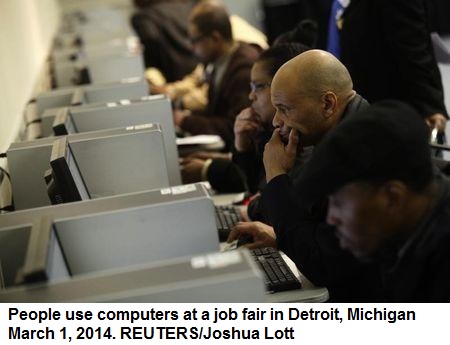
There are both “push and pull” factors as to why these ones leave. But the destination countries, North America and Western Europe, may not be such ideal alternatives. These communities have also been suffering from agents-of-change in the modern world and losing badly in the struggle of man-versus-machine, the industrial adoption of automation, and  the corporate assimilation of internet & communication technologies.

Everything has changed…everywhere! It is what it is! The poor is expanding, the middle class is shrinking, and the rich, the One Percent is growing in affluence, influence and power.

The Go Lean book therefore posits that there is a need to re-focus, re-boot, and optimize the engines of commerce so as to make the Caribbean a better place to live, work and play. Considering this article here, depicting that there is the opportunity to create jobs:

Title: Computers reshaping global job market, for better and worse
By: Ann Saphir (Editing by Lisa Shumaker)

CU Blog - Where the Jobs Are - Computers reshaping global job martket - Photo 2(Reuters) – Automation and increasingly sophisticated computers have boosted demand for both highly educated and low-skilled workers around the globe, while eroding demand for middle-skilled jobs, according to research to be presented to global central bankers on Friday.

But only the highly educated workers are benefiting through higher wages, wrote MIT professor David Autor in the paper prepared for a central banking conference in Jackson Hole, Wyoming. Middle- and lower-skilled workers are seeing their wages decline.

That is in part because as middle-skilled jobs dry up, those workers are more likely to seek lower-skilled jobs, boosting the pool of available labor and putting downward pressure on wages.

“(W)hile computerization has strongly contributed to employment polarization, we would not generally expect these employment changes to culminate in wage polarization except in tight labor markets,” Autor wrote.

Any long-term strategy to take advantage of advances in computers should rely heavily on investments in human capital to produce “skills that are complemented rather than substituted by technology,” he said.

Recounting the long history of laborers vilifying technological advances, Autor argues that most such narratives underestimate the fact that computers often complement rather than replace the jobs of higher-skilled workers.

People with skills that are easily replaced by machines, such as 19th-century textile workers, do lose their jobs.

In recent years computer engineers have pushed computers farther into territory formerly considered to be human-only, like driving a car.

Still, computer-driven job polarization has a natural limit, Autor argues. For some jobs, such as plumbers or medical technicians who take blood samples, routine tasks are too intertwined with those requiring interpersonal and other human skills to be easily replaced.

“I expect that a significant stratum of middle skill, non-college jobs combining specific vocational skills with foundational middle skills – literacy, numeracy, adaptability, problem-solving and common sense – will persist in coming decades,” Autor wrote.

Autor, who has been studying technology and its impact on jobs since before the dot-com bubble burst, notes that some economists have pointed to the weak U.S. labor market since the 2000s as evidence of the adverse impact of computerization.

Such modern-day Luddites are mistaken, he suggested. U.S. investment in computers, which had been increasing strongly, dropped just as labor demand also fell, exactly the opposite of what ought to happen if technology is replacing labor.

More likely, he said, globalization is to blame, hurting demand for domestic labor and, like technology, helping to reshape the labor landscape. While in the long run both globalization and technology should in theory benefit the economy, he wrote, their effects are “frequently slow, costly, and disruptive.”

The book Go Lean… Caribbean, serves as a roadmap for the introduction and implementation of the technocratic Caribbean Union Trade Federation (CU) with the charter to facilitate jobs in the region. The book posits that ICT (Internet & Communications Technology) can be a great equalizer for the Caribbean to better compete with the rest of the world, relating the experiences of Japan – the #3 global economy – who have competed successfully with great strategies and technocratic execution despite being a small country of only 120+ million people. This modeling of Japan, and other successful communities, aligns with the CU charter; as defined by these 3 prime directives:

  • Optimization of economic engines in order to grow the regional economy to $800 Billion and create 2.2 million new jobs.
  • Establishment of a security apparatus to protect the resultant economic.
  • Improve Caribbean governance to support these engines.

Early in the Go Lean book, the responsibility to create jobs was identified as an important function for the CU with these pronouncements in the Declaration of Interdependence (Pages 14):

xxvi.  Whereas the Caribbean region must have new jobs to empower the engines of the economy and create the income sources for prosperity, and encourage the next generation to forge their dreams right at home, the Federation must therefore foster the development of new industries, like that of ship-building, automobile manufacturing, prefabricated housing, frozen foods, pipelines, call centers, and the prison industrial complex. In addition, the Federation must invigorate the enterprises related to existing industries tourism, fisheries and lotteries – impacting the region with more jobs.

xxvii. Whereas the region has endured a spectator status during the Industrial Revolution, we cannot stand on the sidelines of this new economy, the Information Revolution. Rather, the Federation must embrace all the tenets of Internet Communications Technology (ICT) to serve as an equalizing element in competition with the rest of the world. The Federation must bridge the digital divide and promote the community ethos that research/development is valuable and must be promoted and incentivized for adoption.

xxviii. Whereas intellectual property can easily traverse national borders, the rights and privileges of intellectual property must be respected at home and abroad. The Federation must install protections to ensure that no abuse of these rights go with impunity, and to ensure that foreign authorities enforce the rights of the intellectual property registered in our region.

xxx.  Whereas the effects of globalization can be felt in every aspect of Caribbean life, from the acquisition of food and clothing, to the ubiquity of ICT, the region cannot only consume, it is imperative that our lands also produce and add to the international community, even if doing so requires some sacrifice and subsidy.

According to the foregoing article, computers are reshaping the global job market, for better and worse. The Go Lean book, and previous blog/commentaries, detailed the principle of job multipliers, how certain industries are better than others for generating multiple indirect jobs down the line for each direct job on a company’s payroll. Industries relating to STEM (Science, Technology, Engineering and Mathematics/Medicine) fields have demonstrated high job-multiplier rates of 3.0 to 4.1 factors (Page 260).

The Go Lean… Caribbean book details the creation of 2.2 million new jobs for the Caribbean region, many embracing ICT skill-sets. How? By adoption of certain community ethos, plus the executions of key strategies, tactics, implementations and advocacies. The following is a sample from the book:

Assessment – Puerto Rico – The Greece of the Caribbean Page 18
Community Ethos – Deferred Gratification Page 21
Community Ethos – Economic Principle – Economic Systems Influence Choices & Incentives Page 21
Community Ethos – Economic Principle – Voluntary Trade Creates Wealth Page 21
Community Ethos – Consequences of Choices Lie in the Future Page 21
Community Ethos – Job Multiplier Page 22
Community Ethos – Anti-Bullying and Mitigation Page 23
Community Ethos – Lean Operations Page 24
Community Ethos – Return on Investments Page 24
Community Ethos – Ways to Impact the Future Page 26
Community Ethos – Ways to Foster Genius Page 27
Community Ethos – Ways to Help Entrepreneurship Page 28
Community Ethos – Ways to Promote Intellectual Property Page 29
Community Ethos – Ways to Impact Research & Development Page 30
Community Ethos – Ways to Bridge the Digital Divide Page 31
Strategy – Mission – Education Without Further Brain Drain Page 46
Strategy – Agents of Change – Technology Page 57
Strategy – Agents of Change – Globalization Page 57
Tactical – Fostering a Technocracy Page 64
Tactical – Tactics to Forge an $800 Billion Economy – Japanese Model Page 69
Tactical – Tactics to Forge an $800 Billion Economy – High Multiplier Industries Page 70
Tactical – Separation of Powers – Commerce Department – Patents & Copyrights Page 78
Implementation – Ways to Pay for Change Page 101
Implementation – Trends in Implementing Data Centers Page 106
Implementation – Ways to Deliver Page 109
Implementation – Ways to Impact ICT and Social Media Page 111
Planning – Ways to Improve Trade Page 128
Advocacy – Ways to Grow the Economy Page 151
Advocacy – Ways to Create Jobs Page 152
Advocacy – Ways to Improve Education Page 159
Advocacy – Ways to Impact Labor Markets and Unions Page 164
Advocacy – Ways to Foster Empowering Immigration – STEM Resources Page 174
Advocacy – Ways to Foster Technology Page 197
Advocacy – Ways to Foster e-Commerce Page 198
Advocacy – Lessons from America’s Peonage History – John Henry Historicity Page 211
Advocacy – Ways to Promote a Call Center Industry Page 212
Advocacy – Ways to Impact Youth Page 227
Appendix – Growing 2.2 Million Jobs in 5 Years Page 257
Appendix – Job Multipliers Page 259

The CU will foster job-creating developments, incentivizing many high-tech start-ups and incubating viable companies. The primary ingredient for CU success will be Caribbean people, so we must foster and incite participation of many young people into STEM fields, so as to impact their communities. A second ingredient will be the support of the community – the Go Lean roadmap recognizes the limitation that not everyone in the community will embrace the opportunity to lead in these endeavors. An apathetic disposition is fine-and-well, we simply must not allow that to be a hindrance to those wanting to progress. The community ethos or national spirit, must encourage and spur “achievers” into roles where “they can be all they can be”. The book posits that one person can make a difference.

The Caribbean is arguably the best address on the planet, but the missing pieces for many people are jobs. The Go Lean roadmap starts with the assessment of the true status of the region, then the development of the plan to remediate the status quo, and finally the turn-by-turn directions to get to a new destination: a better place to live, work and play.

This Go Lean roadmap describes that the Caribbean is in crisis, a war with many battlegrounds. Our effort is worth any sacrifice, but this time our battle is not man versus machine, but rather man with the machine.

Download the book Go Lean…Caribbean now!

—————————————————
Footnote – a: John Henry

John Henry is an American folk hero and tall tale. He worked as a “steel-driver”—a man tasked with hammering a steel drill into rock to make holes for explosives to blast the rock away. He died during the construction of a tunnel for a railroad. In the legend, John Henry’s prowess as a steel-driver was measured in a race against a [machine], steam powered hammer, which he won, only to die in victory with his hammer in his hand and heart giving out from stress. The story of John Henry has been the subject of numerous songs, stories, plays, books and novels.

Historicity
The historicity of many aspects of the John Henry legend is subject to debate. Until recently it was generally believed that the race between a man and a steam hammer described in the ballad occurred during the construction of the Chesapeake and Ohio (C&O) Railway in the 1870s.

In particular, the race was thought to have occurred during the boring of Big Bend tunnel near Talcott, West Virginia between 1869 and 1871. Talcott holds a yearly festival named for Henry and a statue and memorial plaque have been placed along a highway south of Talcott as it crosses over the Big Bend tunnel.

CU Blog - Where the Jobs Are - Computers reshaping global job market - Photo 1

In the 2006 book Steel Drivin’ Man: John Henry, the Untold Story of an American Legend, Scott Reynolds Nelson, an associate professor of history at the College of William and Mary, contends that the John Henry of the ballad was based on a real person, the 20-year-old New Jersey-born African-American freeman, John William Henry (prisoner #497 in the Virginia penitentiary). Nelson speculates that Henry, like many African Americans might have come to Virginia to work on the clean-up of the battlefields after the Civil War. Arrested and tried for burglary, he was among the many convicts released by the warden to work as leased labor on the C&O Railway.

According to Nelson, conditions at the Virginia prison were so terrible that the warden, an idealistic Quaker from Maine, believed the prisoners, many of whom had been arrested on trivial charges, would be better clothed and fed if they were released as laborers to private contractors (he subsequently changed his mind about this and became an opponent of the convict labor system). Nelson asserts that a steam drill race at the Big Bend Tunnel would have been impossible because railroad records do not indicate a steam drill being used there.

Instead, Nelson argues that the contest must have taken place 40 miles away at the Lewis Tunnel, between Talcott and Millboro,  Virginia, where records indicate that prisoners did indeed work beside steam drills night and day. Nelson also argues that the verses of the ballad about John Henry being buried near “the white house”, “in sand”, somewhere that locomotives roar, mean that Henry’s body was buried in the cemetery behind the main building of the Virginia penitentiary, which photos from that time indicate was painted white, and where numerous unmarked graves have been found.

Prison records for John William Henry stopped in 1873, suggesting that he was kept on the record books until it was clear that he was not coming back and had died. The evidence assembled by Nelson, though suggestive, is circumstantial; Nelson himself stresses that John Henry would have been representative of the many hundreds of convict laborers who were killed in unknown circumstances tunneling through the mountains or who died shortly afterwards of silicosis from dust created by the drills and blasting.
 Songs
The well-known narrative ballad of “John Henry” is usually sung in at an upbeat tempo. The hammer songs (or work songs) associated with the “John Henry” ballad, however, are not. Sung slowly and deliberately, these songs usually contain the lines “This old hammer killed John Henry / but it won’t kill me.” Nelson explains that:

…workers managed their labor by setting a “stint,” or pace, for it. Men who violated the stint were shunned … Here was a song that told you what happened to men who worked too fast: they died ugly deaths; their entrails fell on the ground. You sang the song slowly, you worked slowly, you guarded your life, or you died.

There is some controversy among scholars over which came first, the ballad or the hammer songs. Some scholars have suggested that the “John Henry” ballad grew out of the hammer songs, while others believe that the two were always entirely separate.

(Source: Retrieved August 22 from: http://en.wikipedia.org/wiki/John_Henry_(folklore))

Share this post:
, , , ,
[Top]

Book Review: ‘Chasing Youth Culture and Getting It Right’

Go Lean Commentary

One mission of the book Go Lean…Caribbean is to sell the youth of the region on future prospects in the Caribbean.

The publishers of this book therefore must assume the role of Marketing Brand Managers.

Why is this important?

  • 65% of Caribbean population is under the age of 30[b][c]; 30% under the age of 15.[c]
  • 70% percent of Caribbean tertiary educated abandon their homeland and migrate to foreign shores.[d]

The job description for the publishers of the Go Lean book therefore become part-Marketer, part-Demographer, part-Drum Major; much like theCU Blog - Book Review - Chasing Youth Culture and Getting It Right - Photo 1 resource in this article here, Tina Wells, a writer, blogger and marketing firm founder:

By Alfred Edmond, Jr.

Black Enterprise Magazine – Book Review – April 19, 2011; Retrieved 07-06-2014 – http://www.blackenterprise.com/small-business/book-review-chasing-youth-culture-and-getting-it-right/

Subject: Buzz Marketing Group CEO Tina Wells urges you to market to teens, tweens and young adults not by age alone, but by tribe

In her new book Chasing Youth Culture and Getting It Right: How Your Business Can Profit by Tapping Today’s Most Powerful Trendsetters and Tastemakers, Buzz Marketing Group (Wiley, $16). Buzz Marketing CEO Tina Wells urges you to market to teens, tweens and young adults not by age alone, but by “tribe.” Citing her company’s research, as well as the success and failures of company’s marketing their goods and services to young consumers, Wells identifies four primary tribes:

  • The Wired Techie, driven by the need to be the first to discover, use and recommend new tech devices and gadgets.
  • The Conformist Yet Somewhat Paradoxical Preppy, traditional yet trendy buyers who are driven to want to fit in and belong.
  • The Always Mellow Alternative, who deviate from mainstream buying habits in order to pursue and support causes they believe in.
  • The Cutting Edge Independent, who deviate from the mainstream just for the sake of it.

While it’s difficult to accept that Wells’ tribes truly represent the totality of the thinking of tweens, teens and young adults, her book underscores an important reality of sales and marketing in the age of The Long Tail: Why The Future of Business is Selling Less of More ($10, Hyperion)–Chris Anderson’s must-read book about the changing nature of consumer choice and tastes in a largely digital marketplace: targeting consumers by age, race, gender and other traditional demographic markers alone is no longer enough for a business to be effective and, ultimately, profitable.

When it comes to marketing to youth, [Tina Wells] comes with unimpeachable bona fides. Already a 15-year veteran in the marketing business, she started Buzz Marketing as an 18-year-old, quickly carving out a niche and establishing a knack for understanding the trends, tastes and influences driving young consumers. Eventually graduating with honors with a B.A. in communication art from Hood College in 2002, and currently earning a marketing management degree at the Wharton School of Business, Wells creates marketing strategies for clients in the beauty, entertainment, fashion, financial and lifestyle sectors. Her clients have ranged from Sesame Street Workshop and PBS to American Eagle Outfitters and SonyBMG. Today, Wells, an expert contributor on entrepreneurship to BlackEnterprise.com, is well established as one of America’s most honored and celebrated young entrepreneurs.

So it’s no surprise that Wells brings and authoritative voice to Chasing Youth Culture and Getting It Right, confidently explaining the diverse world views of young consumers while smartly taking into account parents, as both their primary financial resource and the people with the most influence on their values. Wells also breezily illustrates, using vignettes of real young people who were subjects of her company’s survey, the impact of social media, globalization and the Great Recession on the “new millennials”. She also courageously weighs in on how young consumers feel about everything from environmentalism and corporate America to hypersexual content and America’s two-party political system.

In fact, sometimes Wells is over confident, making bold, sweeping overstatements about this or that aspect of the way young people think. For example, her description of “Global Mobiles” —young people who “live in a world without geographic or cultural boundaries” —is a stretch, conveniently overlooking the millions of young people, particularly low-income rural and urban Americans, who are hardly conscious of how people live on the other side of the tracks, much less the other side of the world. (Think Shawn Carter in the Brooklyn’s Marcy Projects before he became Jay-Z, the mogul and global citizen). While global mobiles absolutely exist, it’s too early to categorize them as a dominant factor in marketing.

The other major weakness of the book is [the] many examples of companies’ failed and/or successful efforts to market to youth culture; Wells ends up quickly glossing over most of them, causing them to lose some of their illustrative impact. I wish she’d used fewer examples, which would have allowed her to more effectively use those that remained as more enlightening and instructive case studies.

That said, if you’re a marketer or entrepreneur who wants to tap into the spending power of the generations of consumers who will drive the national and global economies over the next several decades (and come on, who doesn’t?), then you cannot afford to not read Chasing Youth Culture and Getting It Right. The book is both confirmation of Well’s formidable track record as an expert on the trends and tastes of young people, and powerful evidence of her prowess at using her immersion in her chosen area of expertise to peer around the corner into a future consumer marketplace, one that is evolving as unpredictably as it is quickly. Chasing Youth Culture and Getting It Right does solve all of the mysteries of marketing to young consumers, but it most certainly provides the most necessary, fascinating and useful clues.

——

Tina Wells is CEO of Buzz Marketing Group and is a columnist for BlackEnterprise.com [and Huffington Post]. Follow her on Twitter at @tinacwells and check out her new book, Chasing Youth Culture and Getting It Right, available now on amazon.com. (See Photo here).
CU Blog - Book Review - Chasing Youth Culture and Getting It Right - Photo 2
——

About the Review Author:

Alfred Edmond Jr. is SVP/Editor-at-large of BLACK ENTERPRISE. He is a content leader, brand representative and expert resource for all media platforms under the BLACK ENTERPRISE brand, including the magazine, television shows, web site, social media and live networking events. From 2008 through 2010, Edmond was SVP/Editor-in-chief of BlackEnterprise.com, helping to lead the transition of BLACK ENTERPRISE from single-magazine publisher to digital-first multimedia company. From 1995 through 2008, Edmond was chief editor of BLACK ENTERPRISE magazine. He also hosts The Urban Business Roundtable on WVON-AM in Chicago and Money Matters, a syndicated radio feature of American Urban Radio Networks.

Follow him on Twitter: alfrededmondjr; Facebook: http://facebook.com/alfrededmondjr; BE Insider: http://beinsider.ning.com/profile/Alfred

VIDEO: Inc. Magazine Entrepreneurial Reference Source  – http://videos.inc.com/index.php/kwidget/wid/1_5jek9891/uiconf_id/22577421

The book  Go Lean…Caribbean, parallels Chasing Youth Culture as it serves as a roadmap for the introduction and implementation of the Caribbean Union Trade Federation (CU) to elevate Caribbean society and culture. The idea of the CU must be marketed and sold to Caribbean stakeholders, young and old. The CU has 3 prime directives:

  • Optimization of the economic engines in order to grow the regional economy to $800 Billion and create 2.2 million new jobs.
  • Establishment of a security apparatus to protect the resultant economic engines.
  • Improve Caribbean governance to support these engines.

The Go Lean/CU effort is that of the legendary “Piped Piper”, in reverse to lead the children back home.

From the outset of the book, in the Introduction, the Go Lean roadmap (Page 10) posits that a target for the CU’s empowerments is Caribbean youth:

Our youth, the next generation, may not be inspired to participate in the future workings of their country; they may measure success only by their exodus from their Caribbean homelands.

Thusly, the CU must channel its inner “Tina Wells” to reach, engage, and sell to this youthful market.

There are other pronouncements that bear a direct reference to this foregoing article and source book, included here on Pages 11 & 13 of the Declaration of Interdependence:

vii. Whereas our landmass is finite and therefore limited as to population growth potential, it is imperative that prudent growth management be practiced so as to protect our legacy and still foster future opportunities for the hopes and fulfillment of a prosperous future for our children.

xix. Whereas our legacy in recent times is one of societal abandonment, it is imperative that incentives and encouragement be put in place to first dissuade the human flight, and then entice and welcome the return of our Diaspora back to our shores…

xxi. Whereas the preparation of our labor force can foster opportunities and dictate economic progress for current and future generations, the Federation must ensure that educational and job training opportunities are fully optimized for all residents of all member-states, with no partiality towards any gender or ethnic group. The Federation must recognize and facilitate excellence in many different fields of endeavor, including sciences, languages, arts, music and sports. This responsibility should be executed without incurring the risks of further human flight, as has been the past history.

The source book, Chasing Youth Culture and Getting It Right identifies the target demographic of millennials. This subset of youth population is identified as those born between the decades of the 1980’s and 2000’s[a]. Why so special? While every age group has always contended with a generation gap (Depression-era, Baby Boomers, Generation X), this current millennial generation is at the frontline of the current Caribbean battles, of which the region is sorely losing. The issues/crises dumbfounding Caribbean governance include: the impact of social media, globalization and the Great Recession.

Go Lean…Caribbean trumpets a call to the world of technology to impact Caribbean life. In addition to economic and security empowerments, this roadmap advocates the launch of a social media site – www.myCaribbean.gov – for all Caribbean stakeholders (residents, Diaspora, young students, business entities, and even visitors). This can create a universe of over 160 million unique profiles. The Go Lean roadmap is to deliver many government services via electronic modes, including public safety fulfillments, like Reverse 911 and Emergency Alert messaging.

The following lists details from the book Go Lean…Caribbean that parallels the advocacies of the source book Chasing Youth Culture and Getting It Right:

Community Ethos – Lean Operations Page 24
Community Ethos – Cooperatives Page 25
Community Ethos – Ways to Impact the Future Page 26
Community Ethos – Ways to Bridge the Digital Divide Page 31
Community Ethos – Impact the Greater Good Page 37
Strategy – Customers – Member-State Governments Page 51
Strategy – Agents of Change – Technology Page 57
Strategy – Agents of Change – Globalization Page 57
Strategy – Agents of Change – Aging Diaspora Page 57
Tactical – Fostering a Technocracy Page 64
Tactical – Separation of Powers – Postal Union Page 78
Anecdote – Turning Around the CARICOM governance Page 92
Anecdote – “Lean” in Government Page 93
Implementation – Ways to Pay for Change Page 101
Implementation – Ways to Deliver Page 109
Implementation – Ways to Impact Social   Media Page 111
Implementation – Reasons to Repatriate Page 118
Advocacy – Ways to Improve Governance Page 168
Advocacy – Ways to Better Manage the Social Contract Page 170
Advocacy – Ways to Foster Technology Page 197
Advocacy – Ways to Foster e-Commerce Page 198
Advocacy – Ways to Impact the Diaspora Page 217

The source book Chasing Youth Culture and Getting It Right is a great guidebook for developing participatory, agile institutions, enabled by advanced technology – a recipe for the CU. The Go Lean roadmap is also a great guidebook!

Now is the time for all of the Caribbean, the people (teenagers, adults & senior citizens) and governing institutions, to lean-in for the empowerments described in the book Go Lean…Caribbean. We cannot expect the youth to take their own lead; they must be led, but they will only respond to a certain style of leadership. Understanding that dynamic is the heavy-lifting involved in impacting change in the Caribbean region.

This is an art and a science!

There will be costs to incur for this advocacy, yes, but there are a lot of benefits too. The benefits are far too alluring to ignore: dawn of a new economy and new opportunities to preserve Caribbean culture for the Caribbean youth … and future generations.

🙂

Download the free e-Book of Go Lean … Caribbean – now!

———————

Appendix – Cited References:
a. Millennials (also known as the Millennial Generation or Generation Y) are the demographic cohort following Generation X. There are no precise dates when the generation starts and ends. Researchers and commentators use birth years ranging from the early 1980s to the early 2000s.
b. Example of Haiti; retrieved from http://populationaction.org/wp-content/uploads/2011/12/Haiti_Summary.pdf
c. Latin America & Caribbean Population 2005 retrieved from: http://www.eclac.cl/celade/noticias/documentosdetrabajo/6/48786/ Demographic_Trends_in_LAC_PAULO_SAAD_ED_12_7_09.pdf
d. Inter-American Bank report featured in CU Blog; retrieved from: https://goleancaribbean.com/blog/?p=1433


Share this post:
, , , , , ,
[Top]