Tag: Jobs

Book Review: ‘Prosper Where You Are Planted’

Go Lean Commentary

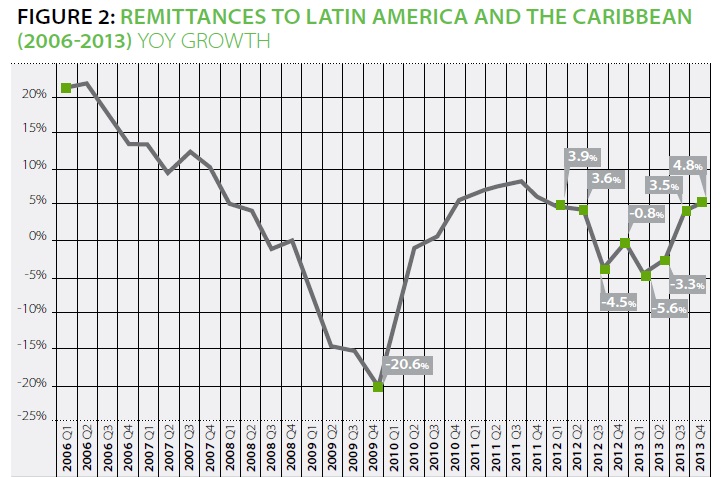
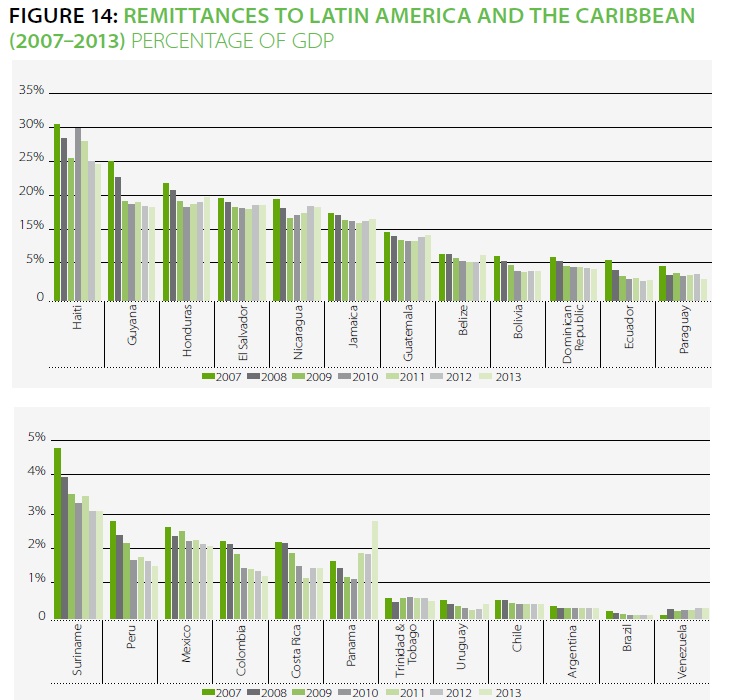
The Caribbean is in crisis; according to a report by the Inter-American Development Bank (IDB), over 70% of college educated citizens have fled the region, looking for better opportunity. The fact that the percentage is so high is evident that it is more prosperous abroad than at home. This is the harsh reality. This is also an economic fact as many Caribbean states get 4 to 7 percent of their GDP as remittances back to the homeland from the Diaspora living abroad, mostly in North America and Western Europe.

But this is a losing proposition for the Caribbean – no doubt it is better to get 100% of Gross Domestic Production. In the same report by the IDB, it was stated that Caribbean member-states lose 10 to 11 percent of GDP from emigration and the “spent” cost of education on those expatriates, (https://goleancaribbean.com/blog/?p=1433), so whatever the level of remittance from the Diaspora, the community is still losing. What we need is the option to prosper where we’re planted in the Caribbean. This goal obviously requires heavy-lifting and is easier said than done. This is the focus of the book Go Lean…Caribbean, to elevate the Caribbean economy so that there would be optimal opportunities at home and no need to supplant to another land.

So how do we prosper where we’re planted? While this is a simple question (based on the Bible principle of Psalms 1:3), the answer is more complex. One writer, Dani Johnson, has advocated this theme in a series of books:

Title ISBN                               
First Steps to Wealth 978-0-9789551-8-2
Grooming the Next Generation for Success 978-1-4587-9610-3
Spirit-Driven Success 978-0-7684-9651-2

The below article (and VIDEO) is a review of her last book First Steps to Wealth: it breaks down into bite-size morsels the big meal of wealth building.

The book Go Lean…Caribbean concurs with First Steps to Wealth, but rather than individual wealth, it serves as a roadmap for the introduction and implementation of the technocratic Caribbean Union Trade Federation (CU) to do the heavy-lifting of optimizing community wealth and nation-building for the region.

By: Sheryl Nance-Nash
Title: Dani Johnson Offers Her 12 Laws for Creating Wealth – and Keeping It
DailyFinance e-Zine (Posted 07/23/2013 Retrieved 06/30/2014) –
http://www.dailyfinance.com/2011/07/23/dani-johnson-offers-her-12-laws-for-creating-wealth-and-keepi/

CU Blog - Book Review - Prosper Where You Are Planted - Photo 1

Dani Johnson says she was groomed by her drug addict parents to fail — financially, emotionally and socially. She seemed well on her way to living down to that expectation — by 17 she was pregnant, at 21, homeless. Two years later though, she was a millionaire, thanks to the thriving company she built manufacturing and selling her own nutritional and skin care products. She sold that company in 1996. Then, she lost her fortune, spending almost all of it and trusting the wrong people with the rest.

Today, as a multimillionaire with six businesses that employ more than 30 people, she knows a thing or two about wealth. She says there are three things you need to know about money: how to make it and more of it; how to keep it; and how to turn it into your slave.

“Ninety-eight percent of the population will end up dead or broke by age 65. Only two percent of the population will succeed,” says Johnson in her new book, First Steps to Wealth. “Where do you want to be?” she asks. You need a financial vision.

When she started raking in the cash, she didn’t have the vision thing down yet. “I believed I had to wear Christian Dior suits and $500 shoes to be successful. I believed wealth was about a new Mercedes Benz convertible, and the 6,000 square-foot house with a swimming pool, view of the mountains and tennis courts. But when I got those things, I never felt successful. I had a $250,000 wardrobe and $250,000 in jewelry, and I still felt this gaping hole in my belly that made me feel I was a failure,” she writes.

Challenge Yourself to Apply the Laws to Your Life

Everything starts with a decision. “There’s a theory that if you find your passion that’s where you’ll be successful, but I believe you have to go with what’s in front of you. I saw a box of weight-loss products in the backseat of my car and though I had no interest in selling, I made a decision that I needed to find out how to sell those products because if I relied on being a cocktail waitress it would take months to be able to afford an apartment,” says Johnson, who was homeless and suicidal then. She started a business from the trunk of her car and a phone booth.

“If I didn’t make that decision, I would still be broke. I didn’t want to sell, but it was the door in front of me,” says Johnson. When her first sales call ended with a hang up, she called another weight-loss product company, observed how they handled her, and developed a script from that. She used their advertisements to shape her own. To make a long story short, in 45 days she had $18,000 in sales.

Johnson credits her fortune to what she calls the 12 Laws of Success — fundamental principles that moved her from an impoverished past to a prosperous present. She has spent the last two decades telling others how those principles can help them too.

Law No. 1 – The Law of Vision

In her book she asks, “What are the things you dreamed of doing in your life? Do you remember what those dreams looked like? What happened to those dreams? “If you want to be successful financially, expand your income to fit your dreams. This is the Law of Vision. “For without vision, we perish. It is important to list where we want to go, what we want to do, and with whom we want to do it. If you do not know what you want, no one can help you get it,” she writes. But what do you want?

Law No. 2 – The Law of the Mind

There is something very different about the wealthy: The way they think, how they make decisions, act upon them, and how they see circumstances and react to them. It’s their mindset, says Johnson. What’s the right mindset? “It’s saying every time you meet a roadblock, ‘How can I make it happen?'” You decide to go around a problem, or dig a hole underneath a problem to make things happen, instead of quitting. Watch the company you keep. “You’re a product of your environment. I listen to uplifting music and life-giving audios,” says Johnson.

Law No. 3 – The Law of Value

The marketplace pays for value. What determines your value? Your skill set. Quite simply, “If you increase your skill, you will increase your pay.” Your value is not personality, looks, or where you were born, but has everything to do with your skills, she writes. Everybody is in control of his or her skills.

“Go beyond the basics. If I had focused just on weight-loss products, I would have been like everybody else, but we decided to go a step further, to focus on people — what makes them tick, to deal with bigger issues,” says Johnson. Not only did delving deeper into the customer distinguish her from competitors, it birthed another business, a training program for personal and professional development.

Law No. 4 – The Law of Reaping and Sowing

This is the greatest of all the laws, she says. “You have been taught a lie that success is about being lucky or being in the right place at the right time. But the bottom line, says Johnson, we reap what we sow. “If you waste money, you are going to reap what you sow. If you feed your financial problems and are focused on stressing out and not being able to pay your bills, you will have more problems. Focus on finding answers. Feed the solution, not the problem,” she writes.

Giving is also key. “With our businesses, we give 10% of our gross sales right off the top — to the poor, orphans, widows, or for freeing children out of the sex trade. That is about 30% of our net profit. When we do that, we have found that even more comes back to us,” she writes. She co-founded the nonprofit King’s Ransom Foundation, which serves the needy globally. She spread her generosity on ABC’s Secret Millionaire earlier this year. Johnson says giving motivates her. “The only reason I work is to be able give to the kids, the orphans. I don’t have to work another day in my life. My kids are set.”

Law No. 5 – The Law of Desire

Johnson says desire always reveals design and destiny. Everyone was born with a design to succeed. You were born with everything in you. “You have enthusiasm, persistence, faith, adventurous spirit, and the gift to get over it,” says Johnson. The only thing you’re lacking is the skill to succeed. “That’s the part you have to learn and invest in,” she writes. You were designed with wealth in mind. Replace the poverty mentality with a whole new way of thinking. No amount of debt is too small to pay off. “If you invest your money is something that makes more money, you create wealth. If you spend that money, the money is gone. Your monthly income is supposed to grow something, just like seed. But most people live from paycheck to paycheck, which means they are eating all of their seed. They have nothing to plant and grow.”

Law No. 6 – The Law of Teachability

There are people around you who have success in some areas of their lives. When you are teachable, you find them. When you are unteachable, you think you are them. Being teachable means you are hungry, pursuing success, and willing to learn from masters. When you follow this law you will achieve whatever you pursue.

Law No. 7 – The Law of Forgiveness

When you do not forgive, you make decisions out of bitterness. “This kills your time for being productive and creating wealth,” says Johnson.

Law No. 8 – The Law of Promotion

If you can be faithful with the little things, if you grow and improve what you have, then you will be made a ruler over much more. Johnson insists, “Prosper where you are planted.” Your answer might be right in front of you, and maybe you don’t like it. “The road to success is often paved with things we do not want to do,” says Johnson.

Then too, “People are always trying to hit a home run. Life doesn’t work like that. They try to make one big jump and flop. Work with what you have. If you have a job that you might think is ‘little’, be the best at it, effect people there, make a difference wherever you are.” Instead of always seeking something else, focus on where you are, whether it’s your job, your business, your relationships. “You will never prosper if you don’t,” says Johnson.

Law No. 9 – The Law of Focus

It’s simple: Whatever you focus on is what you get good at. She asks, “Where is your focus?”

Johnson used to work 100 hour weeks. “My marriage was miserable and I didn’t deserve the title mother,” says Johnson, whose five children are now 12 to 24. After a nervous breakdown in the 1990s, her priorities changed. “I decided that family came first and that I would only work 20 hours a week — that required focus. I discovered I was wasting 80 hours a week.” When she started working less, she was so focused that her income tripled. She began delegating. “Don’t think you’re the only one who can do something,” says Johnson, whose businesses include danijohnson.com, publishing company Call to Freedom, investment, software, real estate and oil firms.

Law No. 10 – The Law of Honor

Honoring people is the key to successful relationships, personal and professional. Says Johnson, “It’s about honoring people, giving them what they want. When you honor people, they honor you back, but it is not always the one you honor who honors you back.”

Law No. 11 – The Law of Decision

Everything in life boils down to choices. When you finally make a decision, everything begins to click. Make a decision.

Law No. 12 – The Law of Action

When we sit with indecision, we invite our enemies — procrastination, fear, unbelief, and excuses — into our lives, writes Johnson. When you immediately follow your decisions with action, a funnel of favor begins. Doors begin to open. People begin to help. Your life’s purpose becomes clear, and self-motivation mobilizes you from the inside out.

If the thought of trying to put all 12 laws into play seems overwhelming, there’s one good place to start. Says Johnson, “Change your attitude.

Rather than 12 Laws, the Go Lean roadmap uses cutting-edge delivery of best practices to employ strategies, tactics and implementations to impact its prime directives; identified with the following 3 statements:

  • Optimization of the economic engines in order to grow the regional economy to $800 Billion & create 2.2 million new jobs.
  • Establishment of a security apparatus to protect the resultant economic engines.
  • Improve Caribbean governance to support these engines.

The successful execution of these directives will allow Caribbean stakeholders to prosper, while remaining as residents in their homeland. The Go Lean book seeks to optimize the entire Caribbean economic/security/governance eco-system to reach this goal. This vision is defined early in the book (Page 13 & 14) in the following pronouncements in the Declaration of Interdependence:

xix.   Whereas our legacy in recent times is one of societal abandonment, it is imperative that incentives and encouragement be put in place to first dissuade the human flight, and then entice and welcome the return of our Diaspora back to our shores. This repatriation should be effected with the appropriate guards so as not to imperil the lives and securities of the repatriated citizens or the communities they inhabit. The right of repatriation is to be extended to any natural born citizens despite any previous naturalization to foreign sovereignties.

xxvi.   Whereas the Caribbean region must have new jobs to empower the engines of the economy and create the income sources for prosperity, and encourage the next generation to forge their dreams right at home, the Federation must therefore foster the development of new industries… In addition, the Federation must invigorate the enterprises related to existing industries … – impacting the region with more jobs.

The Go Lean book details (Page Numbers included below) features of assessments, community ethos, strategies, tactics, implementations and advocacies to plant and exploit local opportunities in the Caribbean region. These features are listed here to correspond with references from Dani Johnson’s book in the foregoing article:

Prosper   Where You Are Planted References Go Lean…Caribbean References
Assessment – 98% of the population will end up dead or   broke by age 65. Impacting   Retirement (Page 221); Improving   Elder-Care (Page 225).
Learning from   competitors Lessons from New   York City (Page 137); Canada (Page 146)
A “Hustling” Attitude Entrepreneurship Ethos (Page 28)
Law No. 1 – The Law of Vision Strategy – Vision (Page 45)
Law   No. 2 – The Law of the Mind Advocacies – Overcoming Obstacles (Pages 121 – 124)
Law No. 3 – The Law of Value Community Ethos – Genius (Page 27), Intellectual Property (Page 29), Turn-around (Page 33)
Law No. 4 – The Law of Reaping and Sowing Community Ethos – Return on Investments (Page 24), Lean Operations (Page 24), Non-Governmental Organizations   (Page 25)
Law No. 5 – The Law of Desire Strategy – Missions (Page 45)
Law No. 6 – The Law of Teachability Planning – Lessons Learned from … (Pages 135 – 146)
Law No. 7 – The Law of Forgiveness Community Ethos – Reconciliation (Page 34)
Law No. 8 – The Law of Promotion Optimize Existing Competencies (Page 58) – Tourism (Page 190), Banking (Page 199), Agriculture (Pages 162, 183 & 208)
Law No. 9 – The Law of Focus Implementation – Fostering a Lean   Technocracy (Page 64), Delivery   Arts (Page 109)
Law No. 10 – The Law of Honor Advocacy – One Percent (Page 224), Foundations (Page 219)
Law No. 11 – The Law of Decision Community Ethos – Intelligence Gathering   & Analysis (Page 23);    Impact Research & Development – Big   Data Analysis (Page 30)
Law No. 12 – The Law of Action Implementation – Delivery Arts &   Sciences (Page 109)

Now is the time for all of the Caribbean, the people and governing institutions, to lean-in for the empowerments described in the book Go Lean … Caribbean. It is time for the region to prosper right here where we are planted.

The Caribbean can succeed in this effort to improve the Caribbean as a place to live, work and play. There are previous blog commentaries that delve into these same issues:

https://goleancaribbean.com/blog/?p=1325 Puerto Rico Governor Signs Bill on SME’s
https://goleancaribbean.com/blog/?p=1296 Remittances to Caribbean Increased By 3 Percent in 2013
https://goleancaribbean.com/blog/?p=1014 Jack M. Mintz Commentary: All is not well in the sunny Caribbean
https://goleancaribbean.com/blog/?p=623 Only at the precipice, do they change
https://goleancaribbean.com/blog/?p=599 Ailing Puerto Rico open to radical economic fixes
https://goleancaribbean.com/blog/?p=398 Self-employment on the rise in the Caribbean – World Bank
https://goleancaribbean.com/blog/?p=364 Time Value of Money

Caribbean Music icon Bob Marley advocated a similar pledge, based on Psalms 1:3, in his song “We’d be Forever Loving Jah” (Album: Uprisings 1980) with the following lyrical stanza:

‘Cause just like a tree, planted, planted by the rivers of water
That bringeth forth fruits, bringeth forth fruits in due season.
Everything in life got its purpose,
Find its reason in every season,
Forever, yeah!
(We’ll be forever loving Jah) We’ll be forever!

See Bob Marley Embedded VIDEO here: https://youtu.be/VuAXl1LYY6o

Download the book Go Lean … Caribbean – now!

Share this post:
, , , ,

Here come the Drones … and the Concerns

Go Lean Commentary

Drones - SurveillanceThe Gee-Whiz days are over … for drones.

The initial excitement and fascination period seems to have ended. Now people are trying to curb, protect and run from all-things-drone.

This point is evident from the two foregoing articles & VIDEOS. Here come the drones, and here come troubles.

Despite the foregoing articles, the old adage still applies: “The early bird gets the worm”.

Story 1 – By: CBS News & The Associated Press

http://www.cbsnews.com/news/government-moves-to-ban-drones-in-400-national-parks/

Title: Government moves to ban drones in 400 national parks

WASHINGTON — The National Park Service is taking steps to ban drones from 84 million acres of public lands and waterways, saying the unmanned aircraft annoy visitors, harass wildlife and threaten safety.

Jonathan Jarvis, the park service’s director, told The Associated Press he doesn’t want drones flushing birds from their nests, hovering over rock climbers as they cling to the sides of cliffs or buzzing across the face of Mount Rushmore.

Jarvis said he would sign a policy memorandum on Friday directing superintendents of the service’s 401 parks to write rules prohibiting the launching, landing or operation of unmanned aircraft in their parks.

Two large national parks, Grand Canyon in Arizona and Zion in Utah, have already changed their rules to ban drones. Some other parks have interpreted existing regulations to permit them to ban drone flights, but Jarvis said each park must change its “compendium” – a set of regulations unique to that park – if a ban is to be enforceable.

At Yosemite National Park in California, where officials announced last month they would adopt a policy prohibiting drone flights, hobbyists have been using unmanned aircraft to film the park’s famous waterfalls and capture close-up shots of climbers on its granite cliffs. Zion officials were spurred to take action after an incident in which an unmanned aircraft was seen harassing bighorn sheep and causing youngsters to become separated from their herd.

At Mount Rushmore in South Dakota, park rangers last September confiscated an unmanned aircraft after it flew above 1,500 visitors seated in an amphitheater and then over the heads of the four presidents carved into the mountain.

Drones - HoverFlowImagine you’re a big wall climber in Yosemite working on a four-day climb up El Capitan, and you’re hanging off a bolt ready to make a (difficult) move, and an unmanned aircraft flies up beside you and is hovering a few feet from your head with its GoPro camera running,” Jarvis said in an interview. “Think about what that does to your experience and your safety,”

Some drone operators have complained that a ban favors some park users over others. They also say many unmanned aircraft flights are made without incident and with respect for other park users and wildlife.

Unmanned aircraft range from no bigger than a hummingbird to the size of an airliner, and their capabilities are improving rapidly. Use is growing as their price tags decline. The park service wants to get out in front of that by putting rules in place now, Jarvis said.

“This is a different kind of aircraft, and it is being used in different ways than what we have seen from the (model aircraft) hobbyists,” he said. “We want to have some control over it now before it proliferates.”

The memorandum directs superintendents to continue to allow model aircraft hobbyists and clubs that already have approval to operate in some parks. Also, parks can continue to grant permits for drone flights for other purposes like research, search and rescue, and firefighting, he said. Commercial operators like moviemakers can also apply for a permit to operate a drone, he said.

“We would have to hear why they would necessarily need this type of equipment in order to accomplish their goals,” Jarvis said.

Brendan Schulman, a New York attorney representing several commercial drone operators, said the park service appears to be “overreaching its authority with respect to the existing regulations, which only address the use of passenger aircraft.”

“A penalty imposed on a personal drone operator could certainly be challenged on the basis that there does not appear to be a regulation addressing that activity,” he said.

While parks are changing their individual rules, the park service will be drafting its own rule to ban drone flights in parks nationwide, Jarvis said. He said he hopes to have a proposal ready in about 18 months.

The ban only affects what Jarvis described as “operations inside parks,” and not high altitude flights over parks.

The park service has been working closely with the Federal Aviation Administration, although the service’s action is separate from the FAA’s ban on commercial drone flights, he said.

The FAA ban is being challenged by drone operators represented by Schulman.

Two years ago, Congress directed the FAA to put regulations in place to provide for the safe integration of commercial drones into the national airspace. The regulations were supposed to be finished by September 2015, but the agency isn’t expected to make that deadline.

Last week, the FAA said it had granted the first permission for commercial drone flights over land.

Earlier this month, CBS News transportation correspondent Jeff Pegues reported that some Hollywood production companies are trying to win an exemption from the FAA to use drones in the U.S.

YouTube Video Sharing Site (Retrieved 06-25-2014) from: www.youtube.com/embed/kTZ94RujpEg

Story 2 – By: Miguel Almaguer, NBC News

Title: Police investigate claims of peeping drones

Seattle police responded to an apartment complex after a woman said a drone was spying on her. The complaint raises interesting questions about drones and privacy.

Even though owning and flying drones is legal, the police will respond to privacy violations and other concerns. This drone is owned by Skyris Imaging, which owns an entire fleet, to photograph property, farm land and real estate. No laws appear to have been broken.

Visit NBCNews.com for breaking news, world news, and news about the economy

http://www.today.com/video/today/55502613#55502613 (Retrieved 06-25-2014)

Unmanned aircrafts are just another area of autonomous vehicles that the book Go Lean … Caribbean and aligning blogs have highlighted as being a source of future growth and jobs; 2 examples are listed here:

https://goleancaribbean.com/blog/?p=1277 The need for highway safety innovations – here comes Google
https://goleancaribbean.com/blog/?p=673 Ghost ships – Autonomous cargo vessels without a crew

Autonomous vehicles are a subset of the field of robotics – this is science, not science fiction. This is the future direction for so many industrial endeavors. The Go Lean book identifies the returns on investment for communities that prepare and foster development in impending technology fields. The book asserts that there is a race to create solutions to ease the challenges associated with the agents of change (Technology, Aging Diaspora, Climate Change, Globalization). The question is: who will create the solutions for this marketplace? The book posits that Caribbean stakeholders cannot only consume, but must also create, produce, develop and help construct the “vehicles” to get its people to the future. This applies whether the vehicle is a physical or figurative application.

“Don’t be a ‘stock on the shelf’” – Caribbean music icon Bob Marley in the song: Pimpers’ Paradise (Uprising Album, 1980).

This book purports that a new industrial revolution is emerging and the Caribbean society must participate, not just spectate. This point is  pronounced early in the Declaration of Interdependence (Page 14), with these opening statements:

xxvi. Whereas the Caribbean region must have new jobs to empower the engines of the economy and create the income sources for prosperity, and encourage the next generation to forge their dreams right at home, the Federation must therefore foster the development of new industries… In addition, the Federation must invigorate the enterprises related to existing industries like tourism…– impacting the region with more jobs.

xxvii. Whereas the region has endured a spectator status during the Industrial Revolution, we cannot stand on the sidelines of this new economy, the Information Revolution. Rather, the Federation must embrace all the tenets of Internet Communications Technology (ICT) to serve as an equalizing element in competition with the rest of the world. The Federation must bridge the digital divide and promote the community ethos that research/development is valuable and must be promoted and incentivized for adoption.

The book Go Lean… Caribbean, serves as a roadmap for the introduction and implementation of the Caribbean Union Trade Federation (CU). This agency will assume jurisdiction for the Caribbean skies (airspace), much like the Federal Aviation Administration (FAA) performs for the US. This role is not intended as just a regulatory arm, but a promotional agency as well. We must be partners with the aviation industry; and we want to be on the cutting-edge of unmanned aviation. We cannot be just a “stock on the shelf”. The failure to advocate in the aviation industry has already devastated Caribbean commerce, as dysfunction in regional air carriers has negatively affected tourism and the transport of tourists to their island resorts. This is happening now; this is real!

These issues were highlighted in previous blogs as follows:

https://goleancaribbean.com/blog/?p=798 Lessons Learned from the American Airlines merger
https://goleancaribbean.com/blog/?p=254 Air Antilles Launches St. Maarten Service

So this blog, and the undergirding book, is pinning for more than just “Gee-Whiz” avionics; this is championing a bigger cause, that of empowering Caribbean society. In fact the CU/Go Lean roadmap has these 3 prime directives:

  • Optimization of the economic engines in order to grow the regional economy.
  • Establishment of a security apparatus to protect the resultant economic engines.
  • Improve Caribbean governance to support these engines.

There is a lot at stake for the Caribbean in considering this subject area. According to the foregoing articles and VIDEOS, research-and-development (R&D identified in Go Lean as a community ethos) has started to deploy economic and security solutions with drones as effective tools. While there are still many growing pains to work through, the early adopters have gotten benefits … and profits.

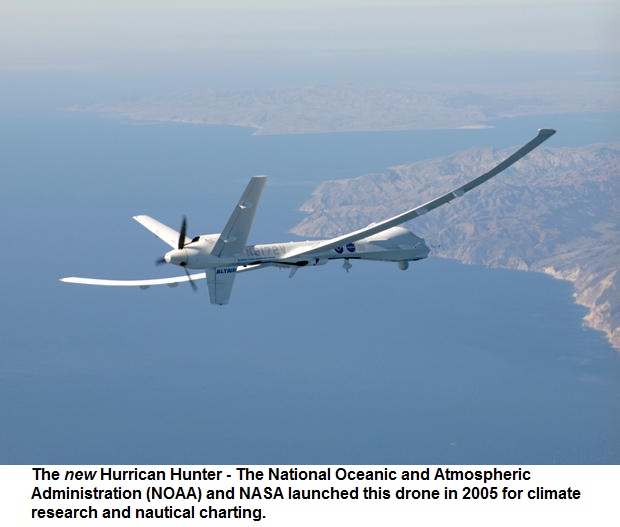
Drones - WeatherThere are proponents and opponents of unmanned aviation, as depicted in the foregoing articles and VIDEOS.  One thing for sure, those “sweating the details”, resolving the issues are sowing the field for the many harvest seasons due to come from this industry space. The Go Lean book and blogs are hereby urging the Caribbean region to lean-in to this discussion, development and industry. The “harvest is great, while the workers are few” – The Bible (Matthew 9:37).

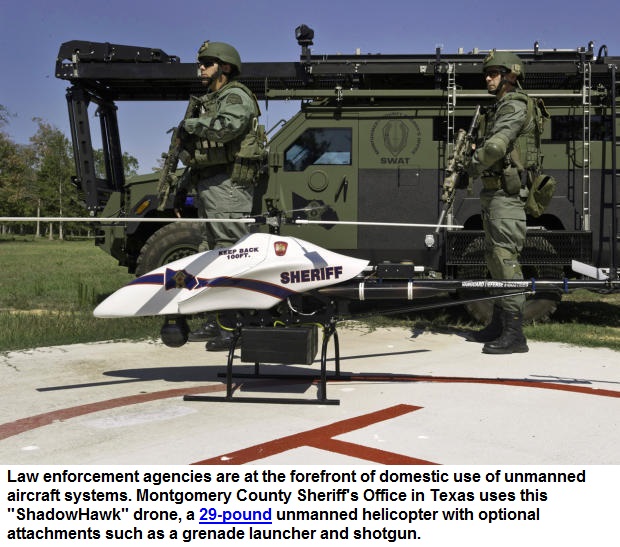
In the US, there is a 25-pound limit for “unmanned aerial systems”. This is regulated by the Federal Aviation Administration. The FAA has no jurisdiction in the Caribbean. Perhaps, the CU as the FAA counterpart can advocate a 30-pound limit, or some other rule changes that would be more industry-friendly. Also, testing-proving grounds abound in the Caribbean, with many remote islands and the 1,063,000 square-mile territory of the Caribbean Sea, which according to the roadmap would come under CU jurisdiction.

The Go Lean strategy is to confederate the 30 member-states of the Caribbean region to form the technocratic CU Trade Federation. The issues associated in this blog entry are too big for any one member-state, but a consolidated market of 42 million people allow for more economies-of-scale for generating returns on technological investments. Tactically, the Go Lean plan for a separation-of-powers allows the member-states to deputize authority of the Caribbean airspace to the one unified agency, with the mandate to promote, not just regulate. Operationally, there is no place with a greater need for unmanned aerial reconnaissance than the Caribbean. Every year, countless watercrafts become imperiled; the scanning & diagnostic capabilities on drones exceed human-eye capability for search-and-rescue. Other applications include pipelines, sea-bound wind farms, fairgrounds, isolated residents and Self-Governing Entities.

Drones - ShadowHawkIn general, there is the need for rules and public protection with evasive technologies like drones, but it is the assertion of the Go Lean book and subsequent blog entries that a protection mandate does not have to stifle technological innovation. A spirit of partnership in negotiations can foster a more productive business climate for R&D and a win-win for all stakeholders.

The book details community ethos to adopt, plus the executions of the following strategies, tactics, implementations and advocacies to forge R&D and industrial growth in Caribbean communities:

Community Ethos – Deferred Gratification Page 21
Community Ethos – All Choices Involve Costs Page 21
Community Ethos – Job   Multiplier Page 22
Community Ethos – Public Protection Over Privacy Concerns Page 23
Community Ethos – “Crap” Happens Page 23
Community Ethos – Lean Operations Page 24
Community Ethos – Return on Investments (ROI) Page 24
Community Ethos – Ways to Impact the Future Page 26
Community Ethos – Ways to Help Entrepreneurship Page 28
Community Ethos – Ways to Impact Research & Development Page 30
Community Ethos – Ways to Improve Negotiations Page 32
Community Ethos – Impact the Greater Good Page 37
Strategy – Vision – Confederating 30 Member-states in a Union Page 45
Strategy – Agents of Change – Technology Page 57
Strategy – Agents of Change – Aging Diaspora Page 57
Strategy – Agents of Change – Globalization Page 57
Strategy – Agents of Change – Climate Change Page 57
Tactical – Fostering a Technocracy Page 64
Tactical – Growing Economy – New High Multiplier Industries Page 68
Separation of Powers – Self Governing Entities Page 80
Separation of Powers – Interior Department Page 82
Separation of Powers – Regional Aviation Administration and Promotion Page 84
Implementation – Ways to Pay for Change Page 101
Implementation – Benefits from the Exclusive Economic Zone Page 104
Implementation – Steps to Implement Self-Governing Entities Page 105
Implementation – Ways to Deliver Page 109
Planning – 10 Big Ideas Page 127
Advocacy – Ways to Grow the Economy Page 151
Advocacy – Ways to Create Jobs Page 152
Advocacy – Ways to Improve Homeland Security Page 180
Advocacy – Ways to Improve Intelligence Gathering &   Analysis Page 182
Advocacy – Ways to Foster Technology Page 197
Advocacy – Ways to Improve Transportation Page 205
Advocacy – Ways to Improve Fisheries Page 210
Advocacy – Ways to Impact Urban Living Page 238
Advocacy – Ways to Impact Rural Living Page 239
Appendix – Industrial Sites at Sea-bound Wind Farms Page 335

Historically, forging change in the transportation sphere in the Caribbean has been burdensome – early adopters we are not. The region was very slow to adopt many provisions (seat belts, fast ferry, smoking on planes) that may be considered common sense by today’s standard. Managing change for the region must therefore be viewed as both an art and a science. The CU approach is different for spearheading this change of unmanned aviation – more technocracy, less democracy; (no need for consensus building).

The insights from the foregoing articles and embedded videos help us to appreciate that the future for unmanned aviation is now! We must therefore lean-in for the empowerments described in Go Lean … Caribbean. This roadmap allows us to build a better community and a better homeland to live, work and play. 🙂

Download the book Go Lean … Caribbean – now!

Share this post:
, , , , , ,
[Top]

Caribbean Players in the 2014 World Cup

FIFA 2014Go Lean Commentary

Soccer (Association Football) is the world’s most popular game. The book Go Lean … Caribbean contemplates greater exploration of the economic opportunities associated with the business of sports – the Caribbean has a failing record in this important area. This quest must therefore give consideration to the eco-system of the World Cup. As such, the news story in the foregoing article synchronizes with the Go Lean book in that it depicts the societal abandonment by so many Caribbean athletes and the lack of professional opportunities in the Caribbean homeland. The two issues: lack of opportunities and society abandonment is a cause-and-effect conundrum. See article here:

Caribbean Journal – Caribbean e-Zine Online Site (Posted 06/14/2014; retrieved 06/21/2014) –
http://www.caribjournal.com/2014/06/16/caribbean-players-in-the-2014-world-cup/
There aren’t any teams from the traditional Caribbean in the 2014 World Cup in Brazil (although there are several from the wider Caribbean Basin), but that doesn’t mean there isn’t a strong Caribbean contingent. From powerhouses like the Netherlands and England to up-and-coming teams like Costa Rica, there are a number of Caribbean footballers in Brazil this month. Here are some of the featured Caribbean athletes:

Raheem Sterling

Raheem SterlingThe 19-year-old phenom who plays for England was actually born in Kingston, Jamaica. A midfielder, he plays professionally for Liverpool.

Raphael Varane

, Raphael VaraneVarane who plays professionally for Real Madrid, is a centre back for the French World Cup team. He is of Martiniquais heritage, as his father comes from the island.



Daniel Sturridge

Daniel SturridgeThe England striker is of Jamaican heritage, as both sides of his grandparents are Jamaican. Like Sterling, he plays for Liverpool professionally. (And he keeps up his ties to Jamaica with a charity in Portmore).

Alex Oxlade-Chamberlain

Alex Oxlade-ChamberlainOxlade-Chamberlain, the son of former England international player Mark Chamberlain, is of Jamaican heritage. A winger and central midfielder, he plays professionally for Arsenal.

Jean Beausejour

Jean BeausejourBeausejour, a 30-year-old left winger for Chile, is the son of a Haitian father. He plays professionally for Wigan Athletic in England.

Nigel de Jong

Nigel de JongMuch of the Netherlands’ football success over the years has come from the Caribbean nation of Suriname, and the trend continues today. de Jong, of Surinamese heritage, is a defensive midfielder who plays professionally for Milan.

Jeremain Lens

Jeremain LensLens, a striker, is of Surinamese heritage (and has even played internationally for the country). He plays professionally for FC Dyanmo Kyiv.

Georginio Wijnaldum

Georginio WijnaldumWijnald is of Surinamese heritage, and plays for professionally for PSV in the Netherlands. For Oranje, he’s a midfielder.

Leroy Fer

Leroy FerThe Norwich City player is a central midfielder who plays for (and was born in) the Netherlands. His roots, however, come from Curacao, where he comes from a family of sporting talents.

Jozy Altidore

Jozy AltidoreThe Haitian-American Altidore is one of the leaders of the American World Cup squad. A striker by trade, he plays professionally for Sunderland.

Chris Smalling

Chris SmallingSmalling, of Jamaican heritage, is a centre back for England who plays professionally for Manchester United.

Patrick Pemberton

Patrick PembertonCosta Rica has a Caribbean coastline, and it’s an area with a distinct heritage and culture in large part due to an influx of immigration from Caribbean countries like Jamaica in the 19th [and early 20th century for the construction of the Panama Canal]. One result [has been] last names like Pemberton in a Spanish-speaking country. Patrick Pemberton, a native of Puerto Limon, and is the lead goalie for the Costa Rican World Cup side, playing professionally for LD Alajuelense.

Marvin Chavez

Marvin ChavezThe winger Chavez is part of a group of Garifuna players on the Honduran side, those who live on the Caribbean coast of the country — indeed, almost half of the team is comprised of those of Garifuna heritage. Chavez plays professionally in Chivas USA in MLS.

David Myrie

David MyrieDavid Myrie, a defender for the Costa Rican team, hails from the Caribbean area of Puerto Viejo. He plays professionally for the Costa Rican side Herediano.

Loic Remy

Loic RemyThe 27-year-old native of Lyon is of Martiniquais heritage and plays for France. Professionally, the striker plays for Queens Park Rangers in England.

Jonathan de Guzman

Jonathan de GuzmanThe midfielder for the Netherlands is the son of a Jamaican mother. He plays professionally for Swansea City, on loan from Spain’s Villareal.

The Go Lean book serves as a roadmap for the introduction and implementation of the Caribbean Union Trade Federation (CU), a technocratic federal government to administer and optimize the economic/security/ governing engines of the region’s 30 member-states. At the outset, the roadmap recognizes the value of sports with these statements in the Declaration of Interdependence (Page 13 & 14):

xxi.     Whereas the preparation of our labor force can foster opportunities and dictate economic progress for current and future generations, the Federation must ensure that educational and job training opportunities are fully optimized for all residents of all member-states, with no partiality towards any gender or ethnic group. The Federation must recognize and facilitate excellence in many different fields of endeavor, including sciences, languages, arts, music and sports. This responsibility should be executed without incurring the risks of further human flight, as has been the past history.

xxxi.     Whereas sports have been a source of great pride for the Caribbean region, the economic returns from these ventures have not been evenly distributed as in other societies. The Federation must therefore facilitate the eco-systems and vertical industries of sports as a business, recreation, national pastime and even sports tourism – modeling the Olympics.

The Go Lean roadmap posits that sport genius qualifiers are found throughout Caribbean society. With the planned market organizations of this roadmap, sports can be more lucrative for Caribbean residents, Diaspora and their legacies. This is big business! There is money to be made in sports endeavors like the World Cup, as stated here:

World Cup Brazil will generate $4 billion in total revenue for FIFA, or 66% more than the previous tournament in South Africa in 2010. The vast majority of the money will come from the sale of television and marketing rights. The World Cup generates more revenue for its association than any other sports tournament, save the Olympics. – Source: Forbes Magazine; retrieved June 5, 2014 from: http://www.forbes.com/sites/mikeozanian/2014/06/05/the-billion-dollar-business-of-the-world-cup/

This subject of sports and World Cup Soccer relates to many previous Go Lean blogs; highlighted here in the following samples, including tangential issues like societal abandonment/brain drain and Caribbean image:

a. https://goleancaribbean.com/blog/?p=1433 Caribbean   loses more than 70 per cent of tertiary educated to brain drain
b. https://goleancaribbean.com/blog/?p=1341 College   World Series Time
c. https://goleancaribbean.com/blog/?p=1214 The Art &   Science of Temporary   Stadiums – No White Elephants
d. https://goleancaribbean.com/blog/?p=1148 Sports Bubble –   Franchise values in   basketball
e. https://goleancaribbean.com/blog/?p=1020 Sports   Revolutionary: Advocate   Jeffrey Webb
f. https://goleancaribbean.com/blog/?p=857 Caribbean Image: Dreadlocks
g. https://goleancaribbean.com/blog/?p=498 Book Review: ‘The   Sports Gene’
h. https://goleancaribbean.com/blog/?p=334 Bahamians Make   Presence Felt In   Libyan League
i. https://goleancaribbean.com/blog/?p=318 Collegiate Sports   in the Caribbean
j. https://goleancaribbean.com/blog/?p=60 Could the Caribbean Host the Olympic Games?

The Caribbean already competes on the world stage, in all other aspects of life. But for the World Cup it is unfortunate that we have to compete with teams aligned to other countries, as shown in the foregoing article.

While it’s too late for this year, perhaps in the near future, at the end of this roadmap, there will be more recognition of the Caribbean contribution to the World Cup. Take the dream one step further and imagine a unified Caribbean team fielding its best athletes in competition with the rest of the world. This is the basic strategy of the CU, to confederate and collaborate as a unified team for sports and most other endeavors. The Go Lean roadmap asserts that no one Caribbean member-state can thrive alone.

Though Go Lean is an economic empowerment agenda, there are huge benefits for the region related to sports: optimization of eco-systems for amateur, intercollegiate and professional engagements. The CU facilitation is straight-forward: to supply the missing elements of the previous generations: applicable venues (stadia, arenas, fields, temporary structures) and broadcast/streaming capabilities.

Now is the time for all of the Caribbean to forge permanent change by implementing the Five Year roadmap advocated in the book Go Lean … Caribbean. The hope is to keep our “star” athletes at home, playing for the home team and home country. Then finally, with the Go Lean executions in place, the Caribbean can become a better place for all citizens to live, work and play.

Download the book Go Lean … Caribbean – now!

Share this post:
, , , , ,
[Top]

Caribbean loses more than 70 percent of tertiary educated to brain drain

Go Lean Commentary

The chart in the foregoing news article is more than troubling, it is just plain bad.

According to the analysis by the Inter-American Development Bank, the people in the “Caribbean 6” countries, including the Bahamas, Barbados, Guyana, Jamaica, Suriname, and Trinidad & Tobago have wasted money on educating their populations, especially tertiary (college) education.

“Say it aint so…”

Brain Drain 70 percent Chart

Title: IDB: T&T lost more than 70 per cent of tertiary educated from brain drain
T&T has lost more than 70 per cent of its tertiary level educated labour force through emigration to developed countries, according to an Inter-American Development Bank (IDB) report released Tuesday.

The report looks at events up to 2012.

The T&T labour force, according to statistics from the Central Statistical Office is made up of 635,100 persons as at the first quarter of 2013.

The report entitled, Is there a Caribbean Sclerosis? Stagnating Economic Growth in the Caribbean, said 79 per cent of the labour force in T&T who received tertiary level education up to 2011 migrated to member countries of the Organisation for Economic Co-operation and Development (OECD).

“The OECD has been called a think tank, monitoring agency, rich man’s club and un-academic university. Whatever you want to call it, the OECD has a lot of power. Over the years, it has dealt with a range of issues, including raising the standard of living in member countries, contributing to the expansion of world trade and promoting economic stability,” according to Investopedia. The term “OECD countries” is often used loosely in economics as a euphemism for developed countries.

“Euro sclerosis” was a term coined in the 1970s to describe stagnant integration, high unemployment, and slow job creation in Europe relative to the United States, authors of the report explained. Since then, the term has been used more generally to refer to overall economic stagnation, they said.
The Guardian – Trinidad Daily Newspaper (Retrieved 06/19/2014) –
http://m.guardian.co.tt/business-guardian/2014-06-19/idb-tt-lost-more-70-cent-tertiary-educated-brain-drain

There is a similar concern expressed in the book Go Lean…Caribbean that education in the Caribbean needs to undergo a total re-boot, to be re-evaluated/re-organized, since the region has for far too long “fattened frogs for snakes”. The book further charges that this issue is not just in the CariCom states as the Caribbean 6 group represents, but also in the Dutch, French, and Spanish Caribbean. This problem is a real crisis for the Caribbean.

Alas, the book posits that a “crisis is a terrible thing to waste” and thereafter proposes solutions and mitigations to effectuate change in the Caribbean. The book Go Lean…Caribbean serves as a roadmap for the introduction and implementation of the technocratic Caribbean Union Trade Federation (CU).

The roadmap is for the elevation of Caribbean society. The prime directives of the CU are presented as the following 3 statements:

  • Optimization of the economic engines in order to grow the regional economy to $800 Billion & create 2.2 million new jobs.
  • Establishment of a security apparatus to protect the resultant economic engines.
  • Improve Caribbean governance to support these engines.

The book posits that all of the Caribbean is in crisis with this brain drain problem. This point is stressed early in the book (Page 13) in the following pronouncements in the Declaration of Interdependence:

xix.   Whereas our legacy in recent times is one of societal abandonment, it is imperative that incentives and encouragement be put in place to first dissuade the human flight, and then entice and welcome the return of our Diaspora back to our shores. This repatriation should be effected with the appropriate guards so as not to imperil the lives and securities of the repatriated citizens or the communities they inhabit. The right of repatriation is to be extended to any natural born citizens despite any previous naturalization to foreign sovereignties.

xx.   Whereas the results of our decades of migration created a vibrant Diaspora in foreign lands, the Federation must organize interactions with this population into structured markets. Thus allowing foreign consumption of domestic products, services and media, which is a positive trade impact. These economic activities must not be exploited by others’ profiteering but rather harnessed by Federation resources for efficient repatriations.

This blog obviously relates to the now vibrant Caribbean Diaspora, the causes of emigration, and the continuous interaction with the “exile community”. These subjects have previously been covered in these Go Lean blogs, highlighted here in the following samples:

a. https://goleancaribbean.com/blog/?p=1296 Remittances to Caribbean Increased By 3 Percent in 2013
b. https://goleancaribbean.com/blog/?p=1256 Is a Traditional 4-year Degree a Terrible Investment?
c. https://goleancaribbean.com/blog/?p=1112 Zuckerberg’s  $100 Million for Newark’s Schools was a waste
d. https://goleancaribbean.com/blog/?p=607 Antigua Completes Construction of New National Library
e. https://goleancaribbean.com/blog/?p=599 Ailing Puerto Rico open to radical economic fixes
f. https://goleancaribbean.com/blog/?p=459 CXC and UK publisher hosting CCSLC workshops in Barbados
g. https://goleancaribbean.com/blog/?p=353 Book Review: ‘Wrong – Nine Economic Policy Disasters and What We Can Learn…’ – Example of Irish Famine leading to Emigration

The foregoing news article focuses on the tertiary emigration rates for Trinidad & Tobago, but the accompanying chart/photo demonstrates that many Caribbean countries have this same problem: 89% in Guyana, 61% in the Bahamas. These numbers validate the crisis.

How did this crisis come about? What are the past/present experiences and what are the future prospects of the Caribbean Diaspora? An examination of this subject is most effective using an analogy of a road journey. A review of the past helps us to better understand the roadmap. The road began at some point in the past and continued up to today. Where will the road end?

The Go Lean book posits that the Caribbean is the greatest address in the world. So why would people want to leave? The book answers by relating “push” and “pull” factors. Push, in that the dire economic conditions in the Caribbean homeland, plus governmental failures in response, caused responsible people to look elsewhere to fulfill their responsibilities and aspirations. On the other hand, pull factors came from the geo-political circumstances in the world. For the Anglophone Caribbean, the pull factors were tied to their British colonial status. At the end of the second World War, British labor markets were devastated and so the invitation went out to the Caribbean colonies to come to England for gainful employment opportunities. The 1948 British Nationality Act gave British citizenship to all people living in Commonwealth countries, and full rights of entry and settlement in Britain. Many West Indians were attracted by these better prospects in what was often referred to as the mother country. The ship MV Empire Windrush brought the first group of 492 immigrants to Tilbury near London on 22 June 1948. The Windrush was en route from Australia to England via the Atlantic, docking in Kingston, Jamaica. An advertisement had appeared in a Jamaican newspaper offering cheap transport on the ship for anybody who wanted to come and work in the UK [a].

Today, a majority of the African-Caribbean population in the UK is of Jamaican origin; other notable representation is from Trinidad & Tobago, Saint Kitts & Nevis, Barbados, Grenada, Antigua & Barbuda, Saint Lucia, Dominica, Montserrat, Anguilla, Saint Vincent & the Grenadines, Guyana, and Belize.

Parallel anecdotes exist for American, Dutch and French Caribbean colonies. (In total, there were over 60 million deaths from World War II; with very few losses in the Caribbean).

In the decades that followed European sclerosis, as cited in the foregoing article, the target of Caribbean emigrants shifted to North American destinations,

The Go Lean book posits that the recent global financial crisis has created economic stagnation in the very same countries in which the Caribbean Diaspora sought refuge. These countries are no longer a place of refuge – it is time to repatriate back to the Caribbean. But not back to the same parasite economies of 1948, or 1958, 1978, not even 2008. The Go Lean roadmap calls for a Caribbean re-boot, creating a Single Market of all Caribbean countries despite their European/American legacies; this is the plan for “Step One, Day One”. This approach allows for the optimizations discussed above for the economic, security and governing engines.

The Go Lean book details a series of community ethos, strategies, tactics, implementations and advocacies to foster the Caribbean re-boot:

Anecdote – Caribbean Single Market & Economy Page 15
Anecdote – Dutch Caribbean: Integration & Secessions Page 16
Anecdote – French Caribbean: Organization & Discord Page 17
Anecdote – Puerto Rico: The Greece of the Caribbean Page 18
Community Ethos – Deferred Gratification Page 21
Community Ethos – Economic Systems Influences Choices & Incentives Page 21
Community Ethos – The Consequences of Choice Lie in the Future Page 21
Community Ethos – Lean Operations Page 24
Community Ethos – Return on Investments Page 23
Community Ethos – Ways to Impact the Future Page 26
Community Ethos – Ways to Foster Genius Page 27
Community Ethos – Ways to Help Entrepreneurship Page 28
Community Ethos – Ways to Bridge the Digital Divide Page 31
Community Ethos – Ways to Manage Reconciliations Page 34
Strategy – Vision – Single Market & Economy Page 45
Tactical – Separation of Powers – Federal versus   Member-States Page 71
Implementation – Year 1 / Assemble Phase Page 96
Implementation – Year 4 / Repatriate Phase Page 98
Implementation – Ways to Pay for Change Page 101
Implementation – Ways to Deliver Page 109
Implementation – Reasons to Repatriate Page 118
Advocacy – Ways to Grow the Economy Page 151
Advocacy – Ways to Create Jobs Page 152
Advocacy – Ways to Improve Education Page 159
Advocacy – Ways to Impact Student Loans Page 160
Advocacy – Ways to Improve Governance Page 168
Advocacy – Ways to Better Manage the Social Contract Page 170
Advocacy – Ways to Reduce Crime – Repatriates’ Hate Crime Status Page 178
Advocacy – Ways to Impact the Diaspora Page 217
Advocacy – Ways to Preserve Caribbean Heritage Page 218
Advocacy – Ways to Impact Retirement Page 221
Advocacy – Ways to Improve Elder-Care Page 225
Appendix – Analysis of Caribbean Diaspora Page 267
Appendix – Analysis of Caribbean Remittances Page 268
Appendix – Analysis of Caribbean Emigration Page 269
Appendix – Alternative Remittance Modes Page 270
Appendix – Interstate Compacts Page 278
Appendix – Jamaica’s International Perception Page 297
Appendix – Nuyorican Movement Page 303
Appendix – Puerto Rican Population in the US Page 304

Now is the time for all of the Caribbean, the people and governing institutions, to lean-in for the regional re-boot described in the book Go Lean…Caribbean. This big deal for the Caribbean will neutralize the “push and pull” factors that contributed to previous emigration patterns and a vibrant Diaspora. Losing 60, 70 and 80 percent of the college educated population is not a formula for nation-building success.

(One solution is the adoption of e-Learning schemes for residential educational options).

Caribbean Beach #2The Caribbean region features the world’s best address. The world should be beating down the doors to come to the Caribbean, not the Caribbean people beating down doors to get out. Already the best place to play, the region now needs to become better places to live and work. This is possible, if we Go Lean.

Download the book Go Lean … Caribbean – now!

———–

Appendix – Cited Reference:
a. Retrieved June 21, 2014 from: http://en.wikipedia.org/wiki/British_African-Caribbean_people.


Share this post:
, , ,
[Top]

Amazon’s new FIRE Smartphone

Go Lean Commentary

Amazon 1The American company Amazon is the model for the Caribbean Postal Union (CPU): our means for delivering the mail.

This is surprising! One would think the American model would be the US Postal Service (USPS). No, the book Go Lean…Caribbean posits that the USPS is a failing enterprise, as of late; they lose money every year, have excessively high overhead expense base and an under-funded pension (Page 99). Why would anyone want to model that?

The focus of the CPU is not postal mail, but rather logistics. So we would want to model a successful enterprise in this industry space, like Amazon, not just another postal operation.

But Amazon does so much more than just sell books online. They are the epitome of an electronic commerce company. They operate a number of business operations online and off-line; and they run these companies well. They provide a good example of lean technocratic efficiency. So Amazon is a good model, not just for the CPU but the entire Caribbean Union Trade Federation (CU). The book Go Lean…Caribbean, serves as a roadmap for the introduction and implementation of the technocratic CU.

This concept of “lean” is very prominent in the book, even adapting the title, Go Lean, for the quest for excellence in Caribbean economic empowerment and governing efforts. The label “lean” is indicative of this quest; the word is used as a noun, a verb and an adjective. This point is pronounced early in the book (Page 4) with these statements:

The CU will lean on, lean in, lean over backwards, and then lean towards…The CU will embrace lean, agile, efficient organization structures – more virtual, less physical, more systems, less payroll.

The foregoing news article and VIDEO demonstrate Amazon’s commitment to a lean business model with their deployment of a proprietary smartphone.

By: Keith Wagstaff, Technology Reporter
The long-rumored Amazon smartphone was officially unveiled Wednesday and, yes, it has a 3-D screen. Well, technically Amazon CEO Jeff Bezos called it “dynamic perspective,” but it gives the new Fire Phone the illusion of depth with no glasses required thanks to four face-tracking cameras built into the front of the phone. While it features a 4.7-inch Gorilla Glass screen, users don’t necessarily have to touch the screen, thanks to controls that let people scroll through pages by tilting the phone. It also unveiled a service called Firefly, which makes it easier to buy items on Amazon by scanning and recognizing more “100 million different items” including books, movies and other products. The Fire Phone (32 GB), which ships July 25, is available now for pre-order for $199 with a two-year AT&T contract.

NBC News / CNBC – Cable News Channel (Posted 06-18-2014; retrieved 06/19/2014) –http://www.nbcnews.com/tech/gadgets/amazon-unveils-new-3-d-fire-smartphone-n134561

Visit NBCNews.com for breaking news, world news, and news about the economy

From the first glance, a benefit of the Fire smartphone is obvious for Amazon’s core business [a]. A consumer can scan “more than 100 million different items” and process a direct purchase directly from the phone – any electronic media would be delivered instantly to the phone, while a chattel good would be delivered within days, using Amazon’s already matured logistics network. Evidently, the execution of this business model requires hardware (smartphone) and not just some software (app).

This is win-win.

This entire model demonstrates the advantage of leading with technological innovations, even for non-technical endeavors.

This synchronizes with the Go Lean roadmap for elevating Caribbean society. The CU will employ technologically innovative products and services to impact its prime directives; identified with the following 3 statements:

  • Optimization of the economic engines in order to grow the regional economy to $800 Billion & create 2.2 million new jobs.
  • Establishment of a security apparatus to protect the resultant economic engines.
  • Improve Caribbean governance to support these engines.

The book posits that the Caribbean is in crisis, but that this crisis can be a good thing because a “crisis is a terrible thing to waste”. Therefore the roadmap seeks to change the entire eco-system of Caribbean commerce and the interaction with postal operations. This vision is defined early in the book (Page 12 & 14) in the following pronouncements in the Declaration of Interdependence:

xv. Whereas the business of the Federation and the commercial interest in the region cannot prosper without an efficient facilitation of postal services, the Caribbean Union must allow for the integration of the existing mail operations of the governments of the member-states into a consolidated Caribbean Postal Union, allowing for the adoption of best practices and technical advances to deliver foreign/domestic mail in the region.

xxvii. Whereas the region has endured a spectator status during the Industrial Revolution, we cannot stand on the sidelines of this new economy, the Information Revolution. Rather, the Federation must embrace all the tenets of Internet Communications Technology (ICT) to serve as an equalizing element in competition with the rest of the world. The Federation must bridge the digital divide and promote the community ethos that research/development is valuable and must be promoted and incentivized for adoption.

This roadmap changes everything … in the Caribbean:

  • The CPU will be the owner/operator of the Caribbean Cloud web-site dubbed as myCaribbean.gov.
  • The CPU will operate a marketplace (like EBay or Amazon.com) to facilitate business transactions for Caribbean-based businesses and consumers (in the homeland or the Diaspora).
  • The CPU will provide mobile apps to facilitate contact & commerce within the region, modeling this Amazon FIRE feature.
  • The CPU will provide logistics to deliver products (“wet and dry”) to every Caribbean address.
  • The CPU will be the owner/operator of the cutting-edge network planned for pneumatic capsule pipelines in the region.
  • The CPU will own/operate refrigerated warehouses throughout the region, to distribute “wet” merchandise to destinations.
  • The CPU will be the Number One client for the Union Atlantic Turnpike, providing the cargo/parcels on the vessels (ferries, etc.) and thoroughways/tollways/railways built to inter-connect the islands of the homeland and the coastal states.

Creating the CPU and the Caribbean Cloud is “Step One, Day One” in the Go Lean roadmap. This is the by-product of assembling regional organs with multilateral cooperation and a separation-of-powers. The roadmap identifies Service Level Agreements (SLA) that the CPU will adhere to in fulfilling the obligations to its stakeholders: residents and member-state governments. There will be financial penalties for failures to deliver “absolutely, positive” at the agreed-upon schedule. This is how technocracies are structured. The guarantee forms the community ethos that success is not optional!

The Go Lean book details a series of community ethos, strategies, tactics, implementations and advocacies to foster the best practices for the delivery of CPU logistics in the Caribbean region:

Community Ethos – Deferred Gratification Page 21
Community Ethos – People Respond to Incentives Page 21
Community Ethos – Job Multiplier Page 22
Community Ethos – Intelligence Gathering Page 23
Community Ethos – Lean Operations Page 24
Community Ethos – Cooperatives Page 25
Community Ethos – Ways to Impact the Future Page 26
Community Ethos – Ways to Help Entrepreneurship Page 28
Community Ethos – Promote Intellectual Property Page 29
Community Ethos – Ways to Bridge the Digital Divide Page 31
Community Ethos – Ways to Improve Sharing Page 35
Strategy – Customers – Citizens and Member-states Governmental Page 47
Tactical – Separation of Powers – Postal Services Page 78
Tactical – Separation of Powers – Interstate Commerce Administration Page 79
Implementation – Year 1 / Assemble Phase – Establish CPU Page 96
Anecdote – Implementation Plan – Mail Services – US Dilemma Page 99
Implementation – Ways to Develop a Pipeline Industry Page 107
Implementation – Improve Mail Services – Electronic Supplements Page 108
Implementation – Ways to Deliver Page 109
Advocacy – Ways to Improve Interstate Commerce Page 129
Advocacy – Ways to Grow the Economy Page 151
Advocacy – Ways to Create Jobs Page 152
Advocacy – Ways to Foster Technology Page 197
Advocacy – Ways to Foster e-Commerce Page 198
Advocacy – Ways to Promote Call Centers Page 212
Advocacy – Ways to Impact the Diaspora Page 217
Advocacy – Ways to Impact Urban Living Page 234
Advocacy – Ways to Impact Rural Living Page 235
Appendix – Alternative Remittance Modes Page 270
Appendix – Interstate Compacts Page 278

Now is the time for all of the Caribbean, the people and governing institutions, to lean-in for the changes in the book Go Lean … Caribbean. This is a big deal for the region. This roadmap is not just a plan; it is also the delivery of the hopes and dreams of generations of Caribbean residents…and their Diaspora.

The region needs this delivery. Otherwise, we have no hope to incite and retain our young people. This roadmap therefore is more than just delivering the mail; it is about delivering the future: a better place to live, work and play.

Download the book Go Lean … Caribbean – now!

———–

a. Appendix – Amazon.com
Amazon.com, Inc. is an American international electronic commerce company with headquarters in Seattle, Washington, United States. It is the world’s largest online retailer. Amazon.com started as an online bookstore, but soon diversified, selling DVDs, VHSs, CDs, video and MP3 downloads/streaming, software, video games, electronics, apparel, furniture, food, toys, and jewelry. The company also produces consumer electronics—notably the Fire Phone, Amazon Kindle e-book reader and the Kindle Fire tablet computer—and is a major provider of cloud computing services.

Amazon 2Jeff Bezos, the founder and CEO, incorporated the company (as Cadabra) in July 1994 and the site went online as Amazon.com in 1995. Bezos changed the name cadabra.com to amazon.com because it sounded too much like cadaver. Additionally, a name beginning with “A” was preferential due to the probability it would occur at the top of any list that was alphabetized.
Amazon has separate retail websites for United States, United Kingdom, France, Canada, Germany, Italy, Spain, Sri Lanka, Australia, Brazil, Japan, China, India and Mexico soon coming soon, other South East Asian countries, with international shipping to certain other countries for some of its products. In 2011, it had professed an intention to launch its websites in Poland, Netherlands, and Sweden, as well. An Austrian website operates as part of the German website. As of June 2014, it still does not service Australia or New Zealand.
According to 2008 data, the domain amazon.com attracted at least 615 million visitors annually, twice the number of competitor Walmart. Amazon attracts approximately 65 million customers to its US website per month. The company has also invested heavily on a massive amount of server capacity for its website, especially to handle the excessive traffic during the December Christmas holiday season.
For 2013, Amazon posted revenues of US$ 74.45 Billion; profit of US$ 745 million (before taxes) and US$ 274.0 million after taxes. They have 117,300 employees, as of January 2014.
Multi-level sales strategy – Amazon employs a multi-level e-commerce strategy. Amazon started off by focusing on Business-to-Consumer relationships between itself and its customers, and Business-to-Business relationships between itself and its suppliers but it then moved to incorporate Customer-to-Business transactions as it realized the value of customer reviews as part of the product descriptions. It now also facilitates customer to customer with the provision of the Amazon marketplace which act as an intermediary to facilitate consumer to consumer transactions. The company lets almost anyone sell almost anything using its platform. In addition to affiliate program that lets anybody post Amazon links and earn a commission on click through sales, there is now a program which let those affiliates builds entire websites based on Amazon’s platform.
Some other large e-commerce sellers use Amazon to sell their products in addition to selling them through their own websites. The sales are processed through Amazon.com and end up at individual sellers for processing and order fulfillment and Amazon leases space for these retailers. Small sellers of used and new goods go to Amazon Marketplace to offer goods at a fixed price. Amazon also employs the use of drop shippers or meta sellers. These are members or entities that advertise goods on Amazon who order these goods direct from other competing websites but usually from other Amazon members. These meta sellers may have millions of products listed, have large transaction numbers and are grouped alongside other less prolific members giving them credibility as just someone who has been in business for a long time. Markup is anywhere from 50% to 100% and sometimes more. [A disadvantage is that] these sellers maintain that items are in stock when the opposite may be true. As Amazon has increased their dominance in the marketplace these drop shippers have become more and more commonplace in recent years. [There is a fear that this practice will result in] damage to a supply and demand marketplace, but this remains to be seen, as advertising contracts with large search engines have eliminated smaller websites from overall exposure. So these practices have not had a negative effect on the industry as a whole.
Revenue model – Over the last decade, Amazon has developed a customer base of around 30 million people. Amazon.com is primarily a retail site with a sales revenue model. Amazon makes its money by taking a small percentage of the sale price of each item that is sold through its website. Amazon also allows companies to advertise their products by paying to be listed as featured products.
(Source: Retrieved 06/19/2014 from: http://en.wikipedia.org/wiki/Amazon.com)
Share this post:
, , , , , , ,
[Top]

Puerto Rico Governor Signs Bill on SME’s

PR SME - Photo 1Go Lean Commentary

This sentence in the news article below about small & medium-sized enterprises (SME’s) speaks volumes for Puerto Rico’s economy and all the Caribbean:

According to government data, 95 percent of companies in Puerto Rico are SMEs with 50 or fewer employees, and they employ around 25 percent of the jobs on the island.

So if there is a plan to grow jobs in Puerto Rico and the Caribbean, that plan must look to impact small businesses or SME’s.

By: The Caribbean Journal staff

Puerto Rico Governor Alejandro Garcia Padilla has signed a bill aiming to boost small and medium-sized enterprises on the island.
The new law has several provisions: it reserves part of government purchases for local businesses, encourages the integration of professional and new entrepreneurs and gives priority to SMEs “in discretionary public funds to subsidize payroll for new jobs or existing ones,” Garcia Padilla’s office said in a statement.

The bill, called the “Support for Microenterprise, Small and Medium Merchant Act” amends the island’s Procurement Reserve Act to 20 percent, and establishes a reserve of 60 percent for SMEs when granting subsidies under the Law of Security in Employment.

“This bill is for SMEs what the Law of Incentives for Economic Development and previous industrial incentive laws were for manufacturing in Puerto Rico. That’s how important it is,” the Governor said in a statement. “The country is undergoing the biggest transformation in its recent history.”

According to government data, 95 percent of companies in Puerto Rico are SMEs with 50 or fewer employees, and they employ around 25 percent of the jobs on the island.

“The path to sustainable economic development will necessarily have to include SMEs,” he said. “Encouraging SMEs is to boost local production and wealth creation that circulates and remains in the country.”

The government said the law also creates a board to support small retailers, among other aspects, and amends the country’s permitting act to grant permits for conditional or temporary activities that “pose no risk to health, the environment or security and conforms to the zoning requirements.”
Caribbean Journal– Caribbean Online News Source (Retrieved 06/13/2014) –
http://www.caribjournal.com/2014/06/12/puerto-rico-governor-signs-bill-on-small-medium-sized-enterprises/

The book Go Lean … Caribbean fulfills that requirement. The book serves as a roadmap to implement the Caribbean Union Trade Federation (CU), and with this effort, create 2.2 million new jobs over a 5 year period. Major consideration is given to entrepreneurship, small businesses (Main Street) and even optimizing existing industries. But Go Lean differs from government efforts, such as Puerto Rico’s as described in the foregoing article, in that it looks to provide complete incubation for SME’s. This includes fund development, technical assistance, coaching, management training and introductions to new global markets; a true public-private partnership.

This directive is embedded in the opening Declaration of Interdependence at the start of the book (Page 13/14), with these statements:

xxi.  Whereas the preparation of our labor force can foster opportunities and dictate economic progress for current and future generations, the Federation must ensure that educational and job training opportunities are fully optimized for all residents of all member-states, with no partiality towards any gender or ethnic group. The Federation must recognize and facilitate excellence in many different fields of endeavor, including sciences, languages, arts, music and sports. This responsibility should be executed without incurring the risks of further human flight, as has been the past history.

xxiv.   Whereas a free market economy can be induced and spurred for continuous progress, the Federation must install the controls to better manage aspects of the economy: jobs, inflation, savings rate, investments and other economic principles. Thereby attracting direct foreign investment because of the stability and vibrancy of our economy.

Whereas the Caribbean region must have new jobs to empower the engines of the economy and create the income sources for prosperity, and encourage the next generation to forge their dreams right at home, the Federation must therefore foster the development of new industries… In addition, the Federation must invigorate the enterprises related to existing industries … – impacting the region with more jobs.

This subject of entrepreneurship has been previously covered in these Go Lean blogs, highlighted here in the following samples:

a.   https://goleancaribbean.com/blog/?p=486 – Incubator firm backs Southeast Asia cab booking app

b.   https://goleancaribbean.com/blog/?p=398 – Self-employment on the rise in the Caribbean – World Bank

c.   https://goleancaribbean.com/blog/?p=214  – LCD versus an Entrepreneurial Ethos

As also depicted in the foregoing article, governments have employed strategies to promote small businesses like set-aside programs. While this is a good start, more is needed for true success. Go Lean relates that progress in entrepreneurship requires a new community ethos, an acceptance that intellectual property is just as essential as any real property requiring protection by government authorities and respect by the general public. This is key, as the book posits that new information-centric economy activities can be equally exploited from an address in the Caribbean or any address in North America or Europe. ICT (Internet & Communication Technologies) has emerged as the great equalizer!

PR SME - Photo 2The vision of the CU is a confederation of the 30 member-states of the Caribbean, including all 4 language groups, into an integrated “single market”, thereby fostering economic growth to raise the regional economy to $800 Billion GDP (from the 2010 base of $378 Billion). This growth would be the cause-and-effect of 2.2 million new jobs projected in the Go Lean roadmap. The following list details the series of community ethos, strategies, tactics, implementations and advocacies necessary to effectuate the change in the region to foster the small business environment:

Community Ethos – Job Multiplier Page 22
Community Ethos – Lean Operations Page 24
Community Ethos – Return on Investments Page 24
Community Ethos – Ways to Impact the Future Page 26
Community Ethos – Ways to Help Entrepreneurship Page 28
Community Ethos – Ways to Promote Intellectual Property Page 29
Strategic – Vision – Integrated Region in a   Single Market Page 45
Strategic – Vision – Agents of Change – Globalization Page 57
Tactical – Fostering a Technocracy Page 64
Tactical – Growing to $800 Billion Regional Economy Page 67
Tactical – Separation of Powers – Homeland Security Page 75
Tactical – Separation of Powers – Interstate Commerce Page 79
Tactical – Separation of Powers – Department of Labor Page 89
Implementation – Ways to Pay for Change Page 101
Implementation – Steps for Self-Governing   Entities Page 105
Implementation – Ways to Deliver Page 109
Implementation – Ways to Benefit from   Globalization Page 119
Planning – Big Ideas for the Caribbean Region Page 127
Planning – Ways to Improve Trade Page 128
Planning – Ways to Improve Interstate Commerce Page 129
Advocacy – Ways to Grow the Economy Page 151
Advocacy – Ways to Create Jobs Page 152
Advocacy – Ways to Foster Technology Page 197
Advocacy – Ways to Impact Main Street Page 201
Appendix – Job Multipliers Page 259

While the Go Lean roadmap is focused on small and medium-sized businesses, it also stresses the importance of protecting the economic engines against crime and emergency scenarios. The roadmap asserts that the economy of the region must be aligned with the security of the region; otherwise “bad actors” will emerge. The CU/Go Lean roadmap calls for “new guards for their future security”, so as to ensure that the regions hard-fought investments are not easily undermined. We must have return on our investments; we must have forward progress.

We do not want “to sow and have someone else reap” – The Bible.

All in all, the Go Lean … Caribbean roadmap posits that the problems of the Caribbean homeland are too big for any one member-state to solve, empowerments in Puerto Rico alone is too-little-too-late, but rather a regional solution is needed. The street-wise expression is so valid at this time: “You don’t bring a knife to a gun fight”. The Caribbean Union Trade Federation is a regional answer – the scope is bigger than just entrepreneurship, small businesses or jobs. While the effort will be fully exerted to promote and optimize SME’s, create jobs and forge every opportunity for success at home, a lot more is riding on these efforts. In addition to economic progress, we also have the whole future “hanging in the balance”, that of the Caribbean youth and their presence in the Caribbean. For this reason, the roadmap considers even more, that of making the Caribbean a better place to live, work and play.

Download the book Go Lean…Caribbean – now!

Share this post:
, , ,
[Top]

Remittances to Caribbean Increased By 3 Percent in 2013

Go Lean Commentary

Participation in Caribbean national elections seems to have an additional candidate to vote for: None of the Above.

This is the assertion of the book Go Lean…Caribbean, and many aligned blog submissions, that Caribbean citizens are voting with their “feet and wallet” and leaving their tropical homelands for life in foreign countries. In fact, the book posits that the Caribbean Diaspora amount to 10 million people, compared to 42 million residents in the homeland. A great measurement of the economic activity of this diasporic population is their remittance activity. (Though not all migrants remit back to their homelands).

This book Go Lean…Caribbean serves as a roadmap for the introduction and implementation of the technocratic Caribbean Union Trade Federation (CU). The CU will assume the role and responsibility of empowering the regional economy and measuring trade/financial/remittance activity. The following 3 prime directives are explored in full details in the roadmap:

  • Optimization of the economic engines in order to grow the regional economy to $800 Billion & create 2.2 million new jobs.
  • Establishment of a security apparatus to protect the resultant economic engines.
  • Improve Caribbean governance to support these engines.

A mission of the CU is to minimize the need for Caribbean labor force to migrate to foreign lands for work; and also to invite the Diaspora to repatriate. We need to expand the labor pool at home. But the reality of the Go Lean roadmap is the methodical implementation over a 5 year period, so in the interim, there may still be more prosperous opportunities abroad.

It is what it is! The CU/Go Lean plan then is to optimize the remittance process where possible: lowering the costs of transfers and managing the accompanying foreign currency and economic crime risks.

The reference source for the foregoing article came from the MIF (Multilateral Investment Fund), a member of the Inter-American Development Bank (IDB) Group; the MIF is funded by 39 donors and supports private sector-led development benefitting low-income populations and the poor –-their businesses, their farms, and their households. A core MIF mission is to act as a development laboratory in order to build and support successful micro and SME (Small-Medium-sized Enterprises) business models. [a]

By the Caribbean Journal staff

Table 1Remittances to the Caribbean region increased by 3 percent in 2013, according to a new report from the Inter-American Development Bank’s Multilateral Investment Fund.

Remittances to the region totaled $8.519 billion, a 3 percent improvement in US dollar terms, an 8.9 percent increase in local currency and a 3.3 percent improvement in local currency and adjusted for inflation.

“Remittance flows to Latin America and the Caribbean (LAC) remain an important source of income for millions of poor and vulnerable families,” said MIF General Manager Nancy Lee. “Remittance recipients need more access to financial tools that will help them use remittances to save and make investments for their future in areas like education, housing, and starting and growing businesses.”

The Dominican Republic received $3.333 billion USD in 2013, a 5.5 percent improvement, followed by Jamaica, which received $2.065 billion and Haiti, which received $2.017 billion.

Trinidad and Tobago was next with $131 million in remittances.

Of the group, the Dominican Republic saw the largest increase.

The Latin America and Caribbean region received a total of $61.251 billion last year, with the United States the source of about 75 percent of remittances to the region.

See the Table 1 (photo on this page) from the IDB for full details.

Caribbean Journal – Regional News Source (Retrieved 06/11/2014) –http://www.caribjournal.com/2014/06/10/remittances-to-caribbean-increased-by-3-percent-in-2013-report/

The reference source for the foregoing article came from the MIF (Multilateral Investment Fund), a member of the Inter-American Development Bank (IDB) Group; the MIF is funded by 39 donors and supports private sector-led development benefitting low-income populations and the poor –-their businesses, their farms, and their households. A core MIF mission is to act as a development laboratory in order to build and support successful micro and SME (Small-Medium-sized Enterprises) business models. [a]

Another mission of the CU/Go Lean roadmap is to apply lessons from the 2008 Great Recession financial crisis.

The MIF reports that in the years before the financial crisis of 2008-2009, remittances to the region as a whole experienced average annual growth of 17 percent. After a record high in 2008 of $64.9 billion, there was a sharp drop in 2009 of over 10 percent, followed by an increase in 2011 of 6 percent, and subsequent stagnation that continued up to 2013.

Figure 1

Figure 2

Figure 5

Figure 14

For 2014, macroeconomic projections show an encouraging landscape at the global level; it is predicted that the US economy will continue its path to recovery, as will EU countries, although at a slower pace. Employment data on LAC migrants, in both the United States and Spain, also show a recovery process enabling the prediction of growth in remittances sent from both countries. (See the accompanying charts, figures and tables on this page; sourced from the MIF/IDB report [b]).

This issue of continued fallout from the Great Recession has been a consistent theme of the Go Lean blogs entries as sampled here:

a. https://goleancaribbean.com/blog/?p=841 – Post 2008: Having Less Babies is Bad for the Economy

b. https://goleancaribbean.com/blog/?p=782 – Open the Time Capsule: The Great Recession of 2008

c. https://goleancaribbean.com/blog/?p=709 – Post 2008 Student Debt Holds Back Many Would-be Home Buyers

d. https://goleancaribbean.com/blog/?p=528 – Facebook plans to provide mobile payment services and remittances

e. https://goleancaribbean.com/blog/?p=378 – US Federal Reserve Releases Transcripts from 2008 Meetings

f. https://goleancaribbean.com/blog/?p=353 – Book Review: ‘Wrong – Nine Economic Policy Disasters and What We Can Learn…’

g. https://goleancaribbean.com/blog/?p=235 – Post 2008 Tourism’s changing profile

All in all, the roadmap commences with the recognition that all the Caribbean is in crisis, exacerbated after 2008, with defective business models, underemployment, globalization, and aging demographics. These acknowledgements are pronounced in the Declaration of Interdependence, (Page 13 & 14). The statements are included as follows:

xix.   Whereas our legacy in recent times is one of societal abandonment, it is imperative that incentives and encouragement be put in place to first dissuade the human flight, and then entice and welcome the return of our Diaspora back to our shores. This repatriation should be effected with the appropriate guards so as not to imperil the lives and securities of the repatriated citizens or the communities they inhabit. The right of repatriation is to be extended to any natural born citizens despite any previous naturalization to foreign sovereignties.  

xx.   Whereas the results of our decades of migration created a vibrant Diaspora in foreign lands, the Federation must organize interactions with this population into structured markets. Thus allowing foreign consumption of domestic products, services and media, which is a positive trade impact. These economic activities must not be exploited by others’ profiteering but rather harnessed by Federation resources for efficient repatriations.

xxi.   Whereas the preparation of our labor force can foster opportunities and dictate economic progress for current and future generations, the Federation must ensure that educational and job training opportunities are fully optimized for all residents of all member-states, with no partiality towards any gender or ethnic group. The Federation must recognize and facilitate excellence in many different fields of endeavor, including sciences, languages, arts, music and sports. This responsibility should be executed without incurring the risks of further human flight, as has been the past history.

 xxiv.   Whereas a free market economy can be induced and spurred for continuous progress, the Federation must install the controls to better manage aspects of the economy: jobs, inflation, savings rate, investments and other economic principles. Thereby attracting direct foreign investment because of the stability and vibrancy of our economy.

xxv.   Whereas the legacy of international democracies had been imperiled due to a global financial crisis, the structure of the Federation must allow for financial stability and assurance of the Federation’s institutions. To mandate the economic vibrancy of the region, monetary and fiscal controls and policies must be incorporated as proactive and reactive measures. These measures must address threats against the financial integrity of the Federation and of the member-states.

xxvi.   Whereas the Caribbean region must have new jobs to empower the engines of the economy and create the income sources for prosperity, and encourage the next generation to forge their dreams right at home, the Federation must therefore foster the development of new industries… In addition, the Federation must invigorate the enterprises related to existing … – impacting the region with more jobs.

The vision of the CU is a confederation of the 30 member-states of the Caribbean into an integrated “single market”, thereby fostering economic growth to grow the regional economy to $800 Billion (from the 2010 base of $378 Billion). This growth would be the cause-and-effect of 2.2 million new jobs. No more migrant culture! Tactically, the CU allows for a separation-of-powers between the member-state governments and the new federal agencies, so as to allow a technocratic management approach to simply “deliver” on the Go Lean roadmap, devoid of partisan politics! The following list details the series of community ethos, strategies, tactics, implementations and advocacies necessary to effectuate the change in the region to graduate from this migrant culture, described in the foregoing article and accompanying charts:

Community Ethos – Economic Systems Influence Individual Choices Page 21
Community Ethos – Job Multiplier Page 22
Community Ethos – Lean Operations Page 24
Community Ethos – Return on Investments Page 24
Community Ethos – Ways to Impact the Future Page 26
Community Ethos – Ways to Help Entrepreneurship Page 28
Strategic – Vision – Integrated Region in a Single Market Page 45
Strategic – Vision – Agents of Change Page 57
Tactical – Fostering a Technocracy Page 64
Tactical – Growing to $800 Billion Regional Economy Page 67
Tactical – Separation of Powers Page 71
Tactical – Interstate Commerce Admin – Econometrics Data Analysis Page 79
Implementation – Ways to Pay for Change Page 101
Implementation – Ways to Deliver Page 109
Planning – Big Ideas for the Caribbean Region Page 127
Planning – Lessons Learned from 2008 Page 136
Planning – Ways to Measure Progress Page 147
Advocacy – Ways to Grow the Economy Page 151
Advocacy – Ways to Create Jobs Page 152
Advocacy – Ways to Better Manage Foreign Exchange Page 154
Advocacy – Ways to Impact the Diaspora Page 217
Appendix – Job Multipliers Page 259
Appendix – Trade SHIELD – “Harvest“ Comprehensive Data Analysis Page 264
Appendix – Alternate (Cheaper & More Efficient) Remittance Modes Page 270

The Go Lean roadmap for the CU stresses the importance of a solid data foundation to analyze and measure progress. Since this is a 5-year roadmap, there must be milestones along the way, opportunities to plan-do-review. This approach allows for the proper adjustments to strategies, tactics and operations. The people of the Caribbean deserve every opportunity to deliver success. We need to be able to capture the traffic/data of remittances to all CU countries – only the large member-states were measured in these accompanying charts – and glean intelligence from the analysis. This approach reflects a true technocracy; this reflects the change that is coming to the region. Figure 15

Now is the time for all of the Caribbean, the people and governing institutions, to lean-in for the change that is the Caribbean Union Trade Federation. Now is the time for a viable plan for the millions abroad, and the next generation of young people, to work here at home … to make this region a better place to live, work and play.

Referenced Citations:

a. http://www.iadb.org/en/news/news-releases/2014-06-10/mif-2013-remittances-report,10838.html

b. http://idbdocs.iadb.org/wsdocs/getDocument.aspx?DOCNUM=38842219

Download the Book- Go Lean…Caribbean Now!!!


Share this post:
, ,
[Top]

The need for highway safety innovations – here comes Google

Go Lean Commentary

Don’t text and drive!

TM BlogNo serious, don’t text and drive.

In addition, don’t drink and drive. In fact, don’t subject yourself to any influences while driving: drugs (legal/illegal), distractions and even sleep deprivation. The public service announcements can go on and on. Perhaps what is needed is some tool, some technology that can assist weary drivers. Here comes Google…

… and Mercedes Benz, Nissan, GM, Ford, etc..

Bet your bottom dollar that other automakers will step up and forge a “space race” for progress in this industry sector. NBC’s Craig Melvin contributed this story – see VIDEO – on the Today Show on Tuesday June 10; (http://www.today.com/video/today/55372906), as a supplement to the foregoing news article fron the CNET trade journal.

To the victor goes the spoil.

By: Steven Musil
Title: Google unveils self-driving car

Google has built a self-driving car from scratch — a vehicle that has no steering wheel or accelerator or brake pedals.

A two-seater prototype of the vehicle was unveiled Tuesday by Google CEO Sergey Brin during an onstage interview at the Recode Code Conference in Palos Verdes, Calif. Instead of the car controls indispensable to today’s drivers, Google’s prototype relies on built-in sensors and a software system to safely maneuver the vehicle.

“We took a look from the ground up of what a self-driving car would look like,” Brin said.

The goal of the project is for self-driving cars to be “significantly” safer than human-driven cars in a few years, Brin said. He said that that the project has experienced no crashes during testing, but the cars only operate at speeds of around 25 miles per hour, which gives them more time to react to obstacles.

Google’s self-driving car is an ambitious project that hopes to end human error behind the wheel with a very Google-y solution: software. The tech titan’s robo-cars have logged more than 700,000 miles since it began working on the vehicles in 2009. Google expects to have them ready for public use between 2017 and 2020.

A demonstration earlier this month by Google’s Self-Driving Car Project team shows how the vehicle depends on a Google-made topographical map to get a sense of what it should expect. The map includes the height of the traffic signals above the street, the placement of stop signs and crosswalks, the depth of the sidewalk curb, the width of the lanes, and can differentiate lane markings from white and dashed to double-yellow.

The company announced major progress last month in improving how the system responds to objects not on a map. In a YouTube video, the Web giant demonstrated some of the circumstances its self-driving cars now handle, such as bicyclists signaling to move across a lane of traffic, railroad crossings, and parked cars protruding into the lane of traffic.

While Google has been at the forefront of developing and testing self-driving technologies, it’s not alone in its driverless vision for the future. Nissan, General Motors, and automotive supplier Continental expect self-driving cars on the road by 2020. Ford Motor Co. has unveiled a self-driving prototype car. Telsa Motors wants its system to handle 90 percent of driving duties by 2016 — a more aggressive schedule and one that’s more like what Google has said is attainable.

CNET – Tech Industry trade Magazine (Posted 05-27-2014; retrieved 06-10-2014) –
http://www.cnet.com/news/google-unveils-self-driving-car-sans-steering-wheel/

Visit NBCNews.com for breaking news, world news, and news about the economy

TM Blog 2Highway safety in the US is in crisis. Every state has banned texting-&-driving. Additionally, some states (i.e. California) even banned talking … on a mobile phone without a hands-free device. Just this past week, famed comedian Tracy Morgan was seriously injured in a car accident with a semi-trailer (18-wheeler) truck. The initial reports indicate that the truck driver may have worked/driven a 24-hour shift … with unavoidable fatigue factors. See related article at: http://www.foxnews.com/entertainment/2014/06/10/tracy-morgan-crash-walmart-truck-driver-center-accident-investigation/

This constitutes a crisis in highway safety; and a crisis, any crisis is a terrible thing to waste!

This is the premise of the book Go Lean…Caribbean, that a crisis can always be exploited to sieze opportunities. This race to create technological solutions is in response to dealing with the highway safety crisis – the resultant innovations will spurn new economic activity. This book purports that a new industrial revolution is emerging and the Caribbean people and society must engage. This is pronounced in the Declaration of Interdependence (Page 14), with this opening statement:

xxvii.  Whereas the region has endured a spectator status during the Industrial Revolution, we cannot stand on the sidelines of this new economy, the Information Revolution. Rather, the Federation must embrace all the tenets of Internet Communications Technology (ICT) to serve as an equalizing element in competition with the rest of the world. The Federation must bridge the digital divide and promote the community ethos that research/development is valuable and must be promoted and incentivized for adoption.

This book Go Lean… Caribbean, serves as a roadmap for the introduction and implementation of the Caribbean Union Trade Federation (CU). This effort will marshal the region to avail the opportunities associated with technology and automobiles – there is a plan to foster a local automotive industry. In fact The CU/Go Lean roadmap has these 3 prime directives:

  • Optimization of the economic engines in order to grow the regional economy.
  • Establishment of a security apparatus to protect the resultant economic engines.
  • Improve Caribbean governance to support these engines.

There is a lot at stake for the Caribbean in considering this subject area. According to the foregoing article and VIDEO, research-and-development (identified as a community ethos) has begun to deploy workable solutions. There is the need for a Caribbean solution. Engaging this process early can result in many new jobs, and most importantly, many new opportunities to save lives and impact the Greater Good.

The book details other ethos to adopt, plus the executions of the following strategies, tactics, implementations and advocacies to forge research-and-development and industrial growth in Caribbean communities:

Community Ethos – Deferred Gratification Page 21
Community Ethos – People Respond to Incentives Page 21
Community Ethos – Job Multiplier Page 22
Community Ethos – “Crap” Happens Page 23
Community Ethos – Lean Operations Page 24
Community Ethos – Return on Investments (ROI) Page 24
Community Ethos – Ways to Impact the Future Page 26
Community Ethos – Ways to Help Entrepreneurship Page 28
Community Ethos – Ways to Impact Research & Development Page 30
Community Ethos – Impact the Greater Good Page 37
Strategy – Agents of Change – Technology Page 48
Tactical – Fostering a Technocracy Page 64
Tactical – Growing Economy – New High Multiplier Industries Page 68
Separation of Powers – Public Works & Infrastructure Page 82
Separation of Powers – Department of Transportation Page 84
Implementation – Ways to Pay for Change Page 101
Implementation – Ways to Deliver Page 109
Planning – 10 Big Ideas Page 127
Planning – Lessons from Detroit Page 140
Advocacy – Ways to Grow the Economy Page 151
Advocacy – Ways to Create Jobs Page 152
Advocacy – Ways to Foster Technology Page 197
Advocacy – Ways to Improve Transportation Page 205
Advocacy – Ways to Develop the Auto Industry Page 206

Historically, forging change in the automotive sphere of the Caribbean has been a “tall order”. The region was very slow to adopt common sense provisions like mandatory seatbelts and unleaded gasoline. So managing change for the region must be viewed as both an art and a science. For change is something the region must adapt to; and managing this change is something the CU will spearhead.

The insights from the foregoing article and embedded VIDEO help us to appreciate that the future is now! (Though, there is no talk of flying cars). We must engage, empower and equip the people of the Caribbean if we want to make our home a better place to live, work and play. And we must do it now. Everyone in the Caribbean is urged to lean-in to this roadmap.

Download the book Go Lean … Caribbean – now!

Share this post:
, , , , , ,
[Top]

The Art & Science of Temporary Stadiums – No White Elephants

Go Lean Commentary

Learn from Greece – Why build expensive permanent stadiums for temporary (sports/cultural) events, when there is such an effective art and science with temporary stadiums?! This important lesson was ignored in Brazil for the FIFA World Cup 2014.

The book Go Lean…Caribbean, serving as a roadmap for the introduction and implementation of the technocratic Caribbean Union Trade Federation (CU), advocates this lesson and declares that “a mission of the CU is to forge industries and economic drivers around the individual and group activities of sports and culture”. There is the need for temporary stadiums for events and festivals; (see Temporary Structures Models & Systems Appendix below).

This temporary stadium was erected in Germany for the 2006 FIFA World Cup championship game.

This temporary stadium was erected in Germany for the 2006 FIFA World Cup championship game.

The need to optimize sports/cultural events & festivals have previously been addressed in the following Go Lean blogs entries:

a. https://goleancaribbean.com/blog/?p=1148 Sports Bubble – Franchise values in basketball
b. https://goleancaribbean.com/blog/?p=1020 Sports Revolutionary: Advocate Jeffrey Webb
c. https://goleancaribbean.com/blog/?p=676 PM Christie responds to critics of Bahamian ‘Carnival’
d. https://goleancaribbean.com/blog/?p=498 Book Review: ‘The Sports Gene’
e. https://goleancaribbean.com/blog/?p=334 Bahamians Make Presence Felt In Libyan League
f. https://goleancaribbean.com/blog/?p=318 Collegiate Sports in the Caribbean
g. https://goleancaribbean.com/blog/?p=60 Could the Caribbean Host the Olympic Games?

All in all, the book and accompanying blogs declare that the region needs to learn lessons from other sporting venues like Athens-Greece, South Africa and Brazil. The people of the Caribbean cannot afford such monumental mis-steps – see VIDEO below. So this Go Lean… Caribbean roadmap applies the lessons learned and details the following 3 prime directives:

  • Optimization of the economic engines in order to grow the regional economy to $800 Billion & create 2.2 million new jobs.
  • Establishment of a security apparatus to protect the resultant economic engines.
  • Improve Caribbean governance to support these engines.

This roadmap commences with the recognition that genius qualifiers can be found in many fields of endeavor, including music, sports and the performing arts. To exploit the economic benefits of these fields require some facilitation, like stadia, arenas and theaters. The roadmap pronounces the need for the region to confederate in order to invest in the facilitations for the Caribbean genius to soar. These pronouncements are made in the Declaration of Interdependence, (Pages 13 & 14) as follows:

xxi.      Whereas the preparation of our labor force can foster opportunities and dictate economic progress for current and future generations, the Federation must ensure that educational and job training opportunities are fully optimized for all residents of all member-states, with no partiality towards any gender or ethnic group. The Federation must recognize and facilitate excellence in many different fields of endeavor, including sciences, languages, arts, music and sports. This responsibility should be executed without incurring the risks of further human flight, as has been the past history.

xxii.      Whereas sports have been a source of great pride for the Caribbean region, the economic returns from these ventures have not been evenly distributed as in other societies. The Federation must therefore facilitate the eco-systems and vertical industries of sports as a business, recreation, national pastime and even sports tourism – modeling the Olympics.

The Go Lean vision is a confederation of the 30 member-states of the Caribbean forming a proxy organization to do the heavy- lighting of building, funding and maintaining sports/event venues. The strategy is to deploy temporary structures where appropriate on CU fairgrounds, as some events may require specific configurations, but only for a few days every year. Tactically, the Go Lean roadmap calls for a separation-of-powers between the member-state governments and the new federal agencies; so the CU will serve as the landlord for local, national and regional events.

The subsequent article and VIDEO (from the cable channel HBO’s documentary Real Sports) describes the folly for expensive permanent stadiums for short-term events; especially while the art and science of temporary stadiums is so effective.

Title: HBO’s Real Sports tackles the white elephants of the World Cup and Olympics
Posted by Joe Lucia on May 20, 2014 10:31
(http://awfulannouncing.com/2014/hbos-real-sports-tackles-the-white-elephants-of-the-world-cup-and-olympics.html)

The lead story of May’s episode of Real Sports on HBO tackles the World Cup, but in a different way

Next month’s World Cup in Brazil (starting June 12, 2014) has resulted in numerous brand new soccer stadiums being built all across the country. Once the World Cup ends, the stadiums will more than likely remain dormant – which is where the “white elephants” title of the segment comes into play. In South Africa four years ago, ten stadiums were built at the cost of billions of dollars. Nine of those stadiums stand relatively unused today.

The same thing happens when countries host the Olympics – it doesn’t take too much effort to find evidence of stadiums or arenas being built solely to hold events and then be used for nothing or razed years later. The 2004 Olympics in Athens are a stark example of the waste that goes into holding events like the Olympics and the World Cup, as many of the arenas and stadiums built for the events stand empty.

Perhaps even more shocking – the organizers of these events in those host countries openly admit to having no plan for the future of the venues. The Greek economy collapsed in large part to the massive amount of waste that went into the Olympics a decade ago, with the crumbling stadiums as reminders of that waste.

Today, Brazil is preparing by the World Cup by spending more money than any country in history. A brand new, $270 million stadium was built in the remote town of Manaus for just four games this World Cup. Manaus is so remote that many Brazilians can’t even drive there. Materials to build the stadium were shipped from Portugal, across the Atlantic Ocean and transported down the Amazon River. All that for four games in a town that HBO described as “a weigh station.”

The organizers are oblivious to this. The designer of the stadium in Manaus claims that when people watch the games on television, they will become aware of the city, and tourism and investment opportunities will increase. Apparently, eight hours of soccer over the month of June will create all of that goodwill.

For a country like Brazil, bathed in poverty, to burn away billions of dollars on stadiums and arenas for the World Cup and the 2016 Olympics is shameful. Once the World Cup ends and Olympics preparation begins, homes in Rio de Janeiro will be razed to make room for the venues, sending many Brazilian citizens into homelessness for the sake of a two week sporting event.

in a country like Brazil that is teetering on the edge of financial chaos, dumping billions of dollars into sports while a bulk of your citizens are poor, starving, and lacking healthcare seems like a recipe for a disaster, with nothing but empty stadiums and a page on Wikipedia to show for it when all is said and done.

VIDEO: Real Sports with Bryant Gumbel: Episode #206 Web Clip – White Elephants (HBO Sports) – http://youtu.be/lHUiyxKgg1s

Jon Frankel travels to Athens, Greece plus Manaus and Rio de Janeiro in Brazil and looks for answers to the question of: Are billions being wasted on World Cup and Olympic venues?

The Go Lean book details these series of community ethos, strategies, tactics, implementations and advocacies designed to re-boot the delivery of the regional solutions, so badly needed and hoped for:

Community Ethos – Ways to Foster Genius Page 27
Community Ethos – Ways to Promote Happiness Page 36
Strategic – Visitors – Snow Birds at RV Campgrounds Page 55
Strategic – Staffing – Events at Fairgrounds Page 55
Tactical – Fostering a Technocracy Page 64
Tactical – Separation of Powers – Sports & Culture Administration Page 81
Tactical – Separation of Powers – Fairgrounds Administration Page 83
Implementation – Steps to Implement Self-Governing Entities Page 105
Implementation – Ways to Deliver Page 109
Planning – Ways to Make the Caribbean Better Page 131
Advocacy – Ways to Grow the Economy Page 151
Advocacy – Ways to Improve Local Government – Parks & Recreation Page 169
Advocacy – Ways to Impact Events Page 191
Advocacy – Ways to Promote Fairgrounds Page 192
Advocacy – Ways to Foster Technology Expositions Page 197
Anecdote – Model of Miami-DadeCounty Youth Fair Page 227
Advocacy – Ways to Improve Sports Page 229
Advocacy – Ways to Improve the Arts Page 230
Advocacy – Ways to Promote Music Page 231
Advocacy – Ways to Impact Urban Living – Sports Leagues Page 234
Temporary Stadiums - Golf

This stadium is the Pakar Seating Grandstand system. It is so versatile that it’s suitable for any type of Golf Competition event.

The foregoing article discourages investment in permanent venues unless there is a solid long-term business plan. The Go Lean roadmap concurs – Greece did not recover from the flawed Olympic build-out for facilities that were never used again after the 2004 Games. On the other hand, here is the encouragement and recommendation to develop fairgrounds and deploy temporary stadia, arenas and theaters. Imagine a golf tournament; no one would expect bleachers and grandstands at the putting greens to be permanent structures. No, there is a place for temporary structures in the world of sports.

Temporary Stadiums - Beach Volleyball

The Bondi Beach Volleyball Stadium was constructed for the Sydney 2000 Olympic Games and stood for just six weeks. The temporary stadium was constructed on the world-famous Bondi Beach and had over 10,000 seats.

There is one sport, Beach Volleyball, which only uses temporary bleachers/grandstands – 100 percent.
So there is a place for the arts & sciences of temporary structures. There is the need for their economic impact.

The Go Lean roadmap anticipates 21,000 direct jobs at fairgrounds and sports enterprises throughout the region.

Now is the time for all of the Caribbean, the people and governing institutions, to lean-in for the empowerments of the Caribbean Union Trade Federation. Now is the time to make this region a better place to live, work and play. 🙂

Download the free e-Book of Go Lean … Caribbean – now!

========================

*** APPENDICES ***

Appendix A – Sample New Stadiums for Brazil
The permanent structures call for more elaborate construction schedules and risks. Some delays have been unavoidable – see this article (photos) on the Sao Paulo stadium slated for the opening game on June 12, 2014; posted and retrieved 06/04/2014:

http://www.businessinsider.com/bleachers-at-sao-paulo-world-cup-stadiums-2014-6#ixzz33iMAwtEf

Brazil prepares…
When Brazil drafted plans to host the upcoming World Cup, Natal, the Atlantic beach destination was exactly the type of city it wanted to show off. Five years later, and four weeks before kickoff, little besides the arena and a remote, untested airport are complete.

Almost half the more than $1.3 billion in promised developments [in Natal] never began. What did [begin] has languished, including ongoing road work that has rendered the stadium’s outskirts a raw sprawl of rebar, dust and concrete. (Reuters)

An aerial view of the Arena Pantanal soccer stadium in Cuiaba, April 25, 2014. Cuiaba is one of the host cities for the 2014 World Cup in Brazil. See photos here (REUTERS/Joel Marcos):

Temporary Stadiums - Natal

An Aerial view of the Arena das Dumas from January 22, 2014; this stadium will host matches for the 2014 soccer World Cup.

Temporary Stadiums - Cuiaba

This is the incomplete stadium in Natal; with 4 weeks before the first event, the infrastructural improvements for the surrounding areas have still not been completed.

Temporary Stadiums - Sao Paulo

People stand in the bleachers during an infrastructure test at Arena de Sao Paulo Stadium, one of the venues for the 2014 World Cup, in the Sao Paulo district of Itaquera April 26, 2014.

Appendix B – Temporary Structures Models & Systems
Many examples of successful temporary stadia, arenas and theaters abound – see photos here.

Here are 2 reputable vendors for providing these products and services.

1. PAKAR Grandstand is extremely versatile, therefore, it can be installed either as a PERMANENT or REMOVABLE Grandstand. It can be displaced and re-installed at any location quickly and easily. The system of frames is pre-assembled with an interlocking system, ties, braces, beams and deck units that locks together for fast assembly. Our Grandstand can be installed on any type of surface i.e. concrete, grass and sand (Desert). It can be installed on a slope depending on soil condition. Our system can be used both Outdoor and Indoor. For Outdoor use, it can be equipped with a roof system (Complete roofing or Semi-roofing). Source: http://www.pakar-seating.com/
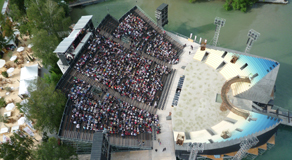
Temporary Stadiums - Padel

Padel is a relatively new racquet sport that is extremely popular in Spain. The logistics of this platform accommodates each individual sports event and is 600 square meters in size and has 3,000 seats around it.

Temporary Stadiums - Soccer

This stadium is a modular stadium built by NUSSLI who has developed flexible and sustainable concepts for popular global sports and cultural events

Temporary Stadiums - Theater

This stadium is not only for sporting events, but it is ideal for cultural activities as well.

Grandstand bleachers for a drag racing configuration

2. Temporary Stadium, Modular Stadium Construction, Stadia Expansion.

NUSSLI provides complete modular stadiums and arenas or additional grandstands – with or without roofing. We offer our stadium construction solutions for rental (temporary) or sale (permanent).

The experience gained from multifaceted stadium projects around the world makes NUSSLI a reliable partner in modular stadia construction and in stadium expansion. NUSSLI‘s mobile stadia fulfill the highest demands in regard to safety, functionality, and architecture.

The modular stadium® can be adapted to meet changing requirements and individual customer needs over and over again. The stadium can be installed in virtually no time and removed just as quickly after use.

The NUSSLI service range in stadium construction:
•Stadia and arenas (modular, temporary, permanent, mobile)
•Stadium expansion (modular, temporary, permanent)
•Additional grandstand, roofing
•Steel tube grandstand
•Service buildings

Modular Stadium® – a Convincing System.
Those who modularly build or expand stadiums and arenas enjoy considerable advantages over those using the traditional building method. The key factors of modular stadium construction are savings in cost and time.

Cost advantage: The use of modules can be temporally limited, therefore avoiding costs for possible surplus capacities. The standardization shortens planning and construction processes.

Fast and flexible: modular stadium constructions or expansions by NUSSLI beat any other system in regard to installation speed.
Source: http://www.nussli.us/services/stadium-construction.html

 Temporary Stadiums - Photo 1Temporary Stadiums - Grandstands Temporary Stadiums - Slopings 1 Temporary Stadiums - Slopings 2 Temporary Stadiums - Slopings 3

Share this post:
, , , , ,
[Top]

Trucks and Trains Play Well Together

Go Lean Commentary

Trucks 1Not In My Back Yard (NIMBY) – this refers to the dichotomy of modern living. Many people want all the convenience that modern industrial development brings to their communities, but they do not want it … in their back yards. The point is alluded to in the foregoing news article, as a strategic success for forging business opportunities while neutralizing the NIMBY opposition. In this case the strategy is to locate multiple industrial infrastructural projects (rail-yard-truck intermodal) – normally noise pollutants to neighbors – at the airport, the Charlotte Douglas International Airport (CLT) – 1 – rail, 2 – trucks and 3 – air all in the same vicinity, This proved to be a smart move, neutralizing oppositions.

This strategic development corresponds with the book Go Lean … Caribbean. This publication serves as a roadmap for the introduction and implementation of the Caribbean Union Trade Federation (CU), another smart move. There is no doubt that Trade and Transport goes hand-in-hand, so this issue is of utmost importance to this roadmap. Since, most of the CU is comprised of islands (and 3 coastal states), there is the need to add a 4th mode to the CU intermodal consideration: sea.

The prime directive of the CU is to optimize the economic engines of the Caribbean region. In the roadmap, this directive aligns with the Union Atlantic Turnpike, a virtual consolidation of all the above transportation modes, and the investments to build and optimize them. The biggest change of the CU transportation approach is the deployment of multi-functional ferry-boats. Now imagine one destination (one backyard) with intermodal exchange for air, rail, ferry, and trucks. Imagine too, the amount of cargo (including mail), passengers, jobs, and economic activity on the move. Now multiply that imagination for all 30 member-states, serving a Caribbean single market of 42 million people. The resultant growth to the region is undeniable.

By: Gina Carroll Howard

Trucks, trains, and planes mean hours of fun for children. But for Charlotte USA, they mean business.

Norfolk Southern Corporation is betting that road and rail cargo transport will play an increasing role in the Charlotte region’s economy.

Since intermodal facilities can take a decade or more to build, the railroad looks for cities that are ripe for significant growth. Charlotte fits that profile, thanks to its progressive nature and pro-business culture — not to mention its prime location in the middle of the railroad’s Crescent Corridor.

Norfolk Southern recently relocated its local intermodal operation from a landlocked 40-acre site with encroaching residential growth to 200 acres at Charlotte Douglas International Airport (CLT). With its main line running right past the airport and easy highway access for trucks, the location in the world’s second-largest hub is ideal. As planes taxi, take off, and land nearby, about 200,000 cargo containers will transfer annually between trucks and trains. And that’s just the beginning.

“From Charlotte, we can move domestic and international traffic from anywhere in the U.S.,” says Jeff Heller, Norfolk Southern vice president of intermodal and automotive marketing.

“The Charlotte region has a huge consumer base. It’s a magnet that pulls trade into the area. This new facility is a showcase and can be front and center in business development. It’s modern and has access to both coasts and all major manufacturing and distribution centers in the country. It helps reinforce Charlotte’s reputation as a viable manufacturing and distribution center.”

It also helps the Charlotte airport retain its low-cost status.

“Norfolk Southern’s lease provides the airport with a secondary revenue source that directly offsets airport operating costs,” says Brent Cagle, interim aviation director. “This is a tremendous benefit to our airline partners and ultimately to the passengers they serve.”

Trucks 2Cagle believes that complementary companies will locate distribution centers on surrounding properties that the airport has acquired. These leases would provide the airport with another secondary revenue source.

The airport/railroad relationship is a symbiotic one that benefits CLT, Norfolk Southern, and Charlotte USA. Both Cagle and Heller agree that the two operations are highly compatible.

“With the airport site, we’re not creating any more noise or lights than already are there,” Heller notes.

And Cagle predicts that Norfolk Southern’s intermodal facility and Charlotte Douglas International Airport “will be great neighbors.” It sounds like they’ll play well together.

US Airways Inflight Magazine – April 2014 http://charlotteusa.com/news-media/blog/trucks-and-trains-play-well-together-/

The Go Lean roadmap quantifies the economic growth, from this and other industrial initiatives, and counts 2.2 million new jobs and the elevation to an $800 Billion regional economy.

As the foregoing article highlights, as children play with trucks, trains, and airplanes, the CU treats these (and ships/boats) as serious business. This commitment is codified in the roadmap, with details of community ethos, strategies, tactics, implementations and advocates; as follows:

Community Ethos – Job Multiplier Page 22
Community Ethos – Return on Investments Page 24
Strategy – Agents of Change – Globalization Page 57
Separation of Powers – Transportation Dept. Page 84
Implementation –  Consolidating Mail Service Page 108
Implementation –  Benefit from Globalization Page 119
Planning – Ways to Improve Trade Page 128
Planning – Ways to Improve Interstate Commerce Page 129
Government – Impact Public Works & the Turnpike Page 175
Industries – Ways to Improve Transportation Page 205
Appendix – Model of a Marine Highway System Page 280

Welcome to a new Caribbean, that’s on the move. Go Lean!

Download the Book- Go Lean…Caribbean Now!!!

Share this post:
, , ,
[Top]