Tag: Play

Forging Change: The Fun Theory

Go Lean Commentary

The publishers of the book Go Lean…Caribbean wants to forge change in the Caribbean. How do we go about doing that?

The book identifies a number of best practices.

Here, now is another…

Consider this theory:

Video: The Fun Theory – Piano Staircase

The Fun Theory – an initiative of Volkswagen (VW). This is one of a series of experiments for a new brand campaign of VW. Have a look – the piano stairs are really funny. Fun can obviously change behavior for the better.
YouTube Video Sharing Site (Retrieved 09/08/2014) –
https://www.youtube.com/watch?v=SByymar3bds

The forgoing VIDEO depicts the challenge to people in a city to take the stairs more as opposed to riding the escalator. While this appears to be a small thing, the issue is bigger than initial appearances. Walking up a flight of stairs could be “just what the doctor ordered” for many people. It’s a great wellness initiative.

The book Go Lean…Caribbean serves as a roadmap for the introduction and implementation of the Caribbean Union Trade Federation (CU); an initiative to bring change, empowerment, to the Caribbean region; to make the region a better place to live, work and play. This Go Lean roadmap also has initiatives to improve wellness in the region, and more. In fact, the Caribbean empowerment roadmap has these 3 prime directives:

  • Optimization of the economic engines in order to grow the regional economy to $800 Billion & create 2.2 million new jobs.
  • Establishment of a security apparatus to protect the resultant economic engines.
  • Improve Caribbean governance to support these engines.

The book describes the CU as a hallmark of a technocracy, a commitment to efficiency and effectiveness; and a commitment to fun. Among the 144 different missions for the CU are many fun related activities, such as music, arts, sports, libraries, Hollywood (media related), heritage and overall happiness.

As depicted in the foregoing VIDEO, “fun” can be used to forge change. The Go Lean book declares that before any real change takes root in the Caribbean that there must be an adoption of new community ethos, the national spirit that drives the character and identity of its people. We must therefore use effective and efficient drivers to forge this change.

The roadmap was constructed with the following community ethos in mind, plus the execution of these strategies, tactics, implementation and advocacies to forge the identified permanent change in the region. The following is a sample of these specific details from the book:

Community Ethos – Deferred Gratification Page 21
Community Ethos – Economic Principles – People Choose Page 21
Community Ethos – Economic Principles – People Respond to Incentives in Predictable Ways Page 21
Community Ethos – Economic Principles – The Consequences of Choices Lie in the Future Page 21
Community Ethos – Governing Principles – Minority Equalization Page 23
Community Ethos – Governing Principles – Lean Operations Page 24
Community Ethos – Governing Principles – Cooperatives Page 25
Community Ethos – Ways to Impact the Future Page 26
Community Ethos – Ways to Help Entrepreneurship Page 28
Community Ethos – Ways to Promote Intellectual Property Page 29
Community Ethos – Ways to Impact Research & Development Page 30
Community Ethos – Ways to Bridge the Digital Divide Page 31
Community Ethos – Ways to Impact Turn-Arounds Page 33
Community Ethos – Ways to Improve Sharing Page 35
Community Ethos – Ways to Promote Happiness Page 36
Community Ethos – Ways to Impact the Greater Good Page 37
Strategy – Vision – Confederate 30 Member-States Page 45
Strategy – Mission – Celebrate the Music, Sports, Art, People and Culture of the Caribbean Page 46
Tactical – Confederating a Permanent   Union Page 63
Tactical – Fostering a Technocracy Page 64
Implementation – Ways to Pay for Change Page 101
Implementation – Ways to Deliver Page 109
Planning – 10 Big Ideas for the Caribbean Region Page 127
Planning – Ways to Make the Caribbean Better Page 136
Planning – Reasons Why the CU Will Succeed Page 137
Advocacy – Ways to Grow the Economy Page 151
Advocacy – Ways to Create Jobs Page 152
Advocacy – Ways to Improve Communications Page 186
Advocacy – Ways to Improve Libraries Page 187
Advocacy – Ways to Impact Hollywood Page 202
Advocacy – Ways to Impact Beauty Pageants Page 203
Advocacy – Ways to Preserve Caribbean Heritage Page 218
Advocacy – Ways to Improve Sports Page 229
Advocacy – Ways to Improve the Arts Page 230
Advocacy – Ways to Promote Music Page 231

Previously Go Lean blog/commentaries have stressed having fun and impacting the community through the “games people play”. The following sample applies:

https://goleancaribbean.com/blog/?p=2222 Sports Role Model – Playing For Pride … And More
https://goleancaribbean.com/blog/?p=2171 Sports Role Model – Turn On the SEC Network
https://goleancaribbean.com/blog/?p=1943 The Future of Golf; Vital for Tourism
https://goleancaribbean.com/blog/?p=1909 Music Role Model Berry Gordy – No Town Like Motown
https://goleancaribbean.com/blog/?p=1596 Book Review: ‘Prosper Where You Are Planted’
https://goleancaribbean.com/blog/?p=522 Financial Crisis Jokes
https://goleancaribbean.com/blog/?p=318 Collegiate Sports in the Caribbean

CU Blog - Forging Change - The Fun Theory - Photo 1The quest to change the Caribbean is more complex than just doing some fun activities. This is serious, maybe even life-and-death. But who wants to live in a world that is all life-and-death all the time. No, let’s have some fun too.

People come to the Caribbean to have fun – we welcome them all. Let the good times roll!

We must use “fun” to reach our audience – our communities – then grab their attention to send a message of the need for change and to lean-in to this roadmap to elevate Caribbean society. The change being advocated includes having fun; it includes making the Caribbean a better place to live, work and play. 🙂

We encourage all of the Caribbean to lean-in to this roadmap.

Download the book Go Lean … Caribbean – now!

Share this post:
, , ,

Sports Role Model – Playing For Pride … And More

Go Lean Commentary

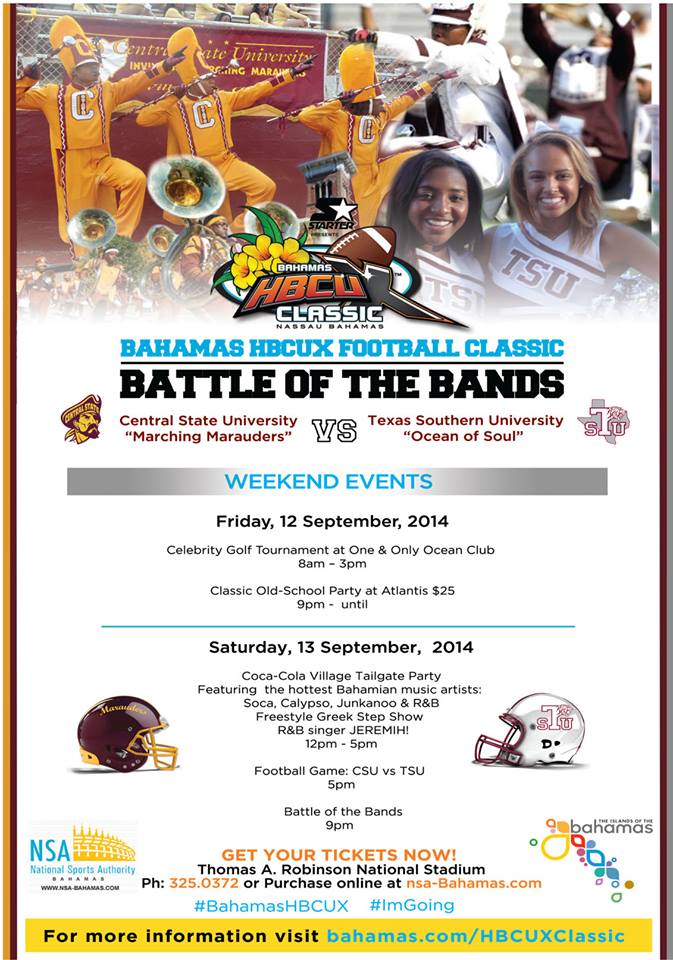
These blog/commentaries started in March 2014. But this source article was published on November 15, 2013. It never seemed appropriate to reach back and feature this article – until now. This marks the occasion of a Black College Football Game (Classic) being staged in Nassau, Bahamas on September 13, 2014 in the new Thomas A. Robinson National Stadium.

CU Blog - Playing For Pride - Photo 3

 CU Blog - Playing For Pride - Photo 2

The foregoing article was adapted from the book by Samuel G. Freedman, Breaking the Line: The Season in Black College Football That Transformed the Sport and Changed the Course of Civil Rights. (It is available at www.samuelfreedman.com and at bookstores nationwide).

Title: Playing for Pride
By: Samuel G. Freedman

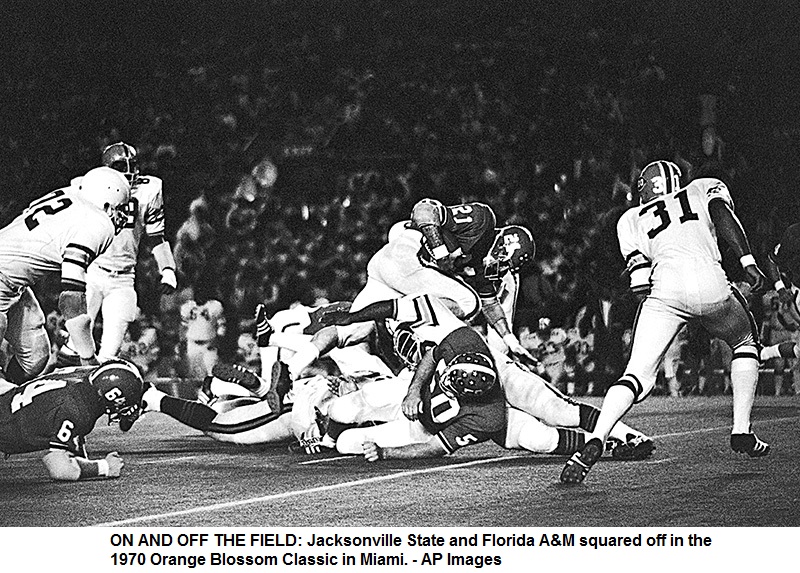
The yearly gridiron matchup known as the ORANGE BLOSSOM CLASSIC helped to even the playing field for black players, coaches and fans. But it was about so much more than football.

The calendar of Black America includes several specific holidays. Juneteenth, celebrated every June 19, honors the day the Union Army liberated slaves in Texas following the end of the Civil War. Kwanzaa, beginning on Dec. 26, is a seven-day festival of African heritage. On Dec. 31, which is called watch night, churches hold worship services to commemorate the way their forebears had stayed up all night awaiting the issuance of the ­Emancipation Proclamation on January 1, 1863.

And for a 30-year heyday beginning in the late 1940s, the Orange ­Blossom Classic football game and festival in Miami was the most important annual sporting event and the largest annual gathering of any kind for black Americans. For most of those years, more than 40,000 spectators attended the game in the Orange Bowl stadium, while tens of thousands more thronged to marching-band parades. Black tourists flocked to the hotels, restaurants and clubs of Miami’s Overtown and Liberty City neighborhoods. Pro-football scouts with binoculars, Ray-Bans and stingy-brim hats elbowed their way along the sidelines to scout prospects.

While the Orange Blossom Classic lives only in memory now — it served as the de facto black college championship until 1978 and was still played sporadically until 2004; it was ultimately the unexpected casualty of racial integration in sports and in society — its spirit persists in the dozens of “Classics” played between football teams from ­historically black colleges and universities (HBCUs). There are 37 on the schedule this season, and several of the most famous are coming up. Florida A&M University plays Bethune-Cookman University on Nov. 23 (2013) in the Florida Classic in Orlando, Fla., and Grambling State University faces Southern University and A&M College in the Bayou Classic on Nov. 30 (2013) in New Orleans. [2014 games are scheduled for the same corresponding weekends].

Football, though, is only part of a Classic. Marching bands, step shows, networking, gospel concerts and shopping excursions are all parts of the experience. These Classics continue to draw crowds as large as 70,000 for the on-field rivalry and a broader sense of affirmation.

“Historically speaking, there were not always so many opportunities for African-Americans to socialize in public,” says Todd Boyd, a University of Southern California professor who specializes in race and popular culture. “So the opportunities that did exist often took on added significance. Yet over time, the events became part of a larger tradition. I think the games now have a nostalgic feel. So it’s all about tradition and ritual once again.”

As sporting event and communal celebration, the Orange Blossom Classic rose as an answer to invisibility, the kind Ralph Ellison famously rendered in his novel, Invisible Man. In 1937, when Miami opened the Orange Bowl stadium, a public facility built with public funds, it excluded blacks from all but one section of the eastern end zone. No integrated football team was permitted onto the gridiron until the Nebraska Cornhuskers played Duke in the 1955 Orange Bowl. Blacks were barred from participating in any of the pageants and events related to the bowl game, much as they were barred from patronizing the resort hotels in Miami Beach. The black maids and janitors and cooks and bellhops who comprised the ­human infrastructure of those establishments had to obtain identification­ cards from the police. Even the black performers who drew the crowds — Sammy Davis Jr., Nat King Cole, Ella Fitzgerald — were forbidden from staying in the hotels where they entertained.

During the 1930s, Miami blacks began their own competitor to the Orange Bowl festivities, which they called the Coconut Festival. It had its own beauty queen, its own parade and its own football game, played in Dorsey Park, a segregated square block named for Miami’s first black millionaire. The Coconut Festival game, though, lacked much football pizzazz. That’s where J.R.E. Lee Jr., the son of Florida A&M University’s president, came in.

Even before Lee, black colleges had sought to create their own version of season-ending bowl games. In the 1920s, Lincoln University and Howard University began playing annually in the self-proclaimed Football Classic of the Year, and Tuskegee University met Wilberforce University yearly at Soldier Field in the Midwest Chicago Football Classic. Inspired by these ­examples, Lee conceived a “Black Rose Bowl,” naming it the Orange Blossom Classic. In the first game, in 1933, Florida A&M beat Howard by a score of 9-6 before 2,000 spectators at a blacks-only ballpark in Jacksonville, Fla. For the next 13 years, the contest migrated among the Florida cities of Jacksonville, Orlando and Tampa, becoming an itinerant attraction that gradually built its audience and reputation.

Then, in 1947, Lee linked the game’s fortunes to the Coconut Festival’s and settled it in Miami. Miami had the largest stadium in Florida. Miami also had the greatest concentration of media anywhere in the state. And Miami, as it entered the postwar boom, was beginning to shake off its rigid segregation, largely owing to the influx of Jews from the North, most of them either tacitly or actively supportive of civil rights.

The very first Classic game in Miami made racial history. For the first time, black fans were permitted to sit in the main stands of the Orange Bowl. And when a Florida A&M Rattler receiver named Nathaniel “Traz” Powell caught a 45-yard pass to break a 0-0 tie with Hampton Institute, he became the first black man to score a touchdown on the Orange Bowl’s previously whites-only gridiron. Powell had grown up in Miami as the son of a laundress and a laborer at the city’s incinerator. For years to come, blacks around the state would speak about his touchdown as if he’d been Rosa Parks refusing to surrender her seat.

The civil rights analogy was apt. Black colleges and their football teams operated in a kind of parallel universe during the segregation era. Even as they sent hundreds of players into the pros, the mainstream media rarely covered the schools. The proliferation of sports-focused talk radio and cable TV was decades away. So Jake Gaither, Florida A&M’s legendary coach, set about raising the Orange Blossom Classic to the status of a de facto black championship. Year in and year out, his Rattlers ranked near the top. And because Florida A&M hosted the Orange Blossom Classic, Gaither invited the strongest possible opponent.

As a result, the Orange Blossom Classic far outdrew the University of Miami’s football games and, later, those of the new National Football League (NFL) franchise, the Miami Dolphins. In Black America, it supplanted the Negro League All-Star game as the biggest single event. Florida A&M’s renowned “Marching 100” band pranced in two parades, one through the black neighborhoods and the other downtown, each drawing thousands upon thousands of spectators.

One year, comedian Nipsey Russell joined the Rattlers on their sideline; another time it was Sammy Davis Jr. All week long, the streets of Overtown and LibertyCity were “crowded like the state fair, music pouring out of doorways,” as one participant remembers. At the Zebra Lounge and the Hampton House, in the Harlem Square Club and the Rockland Palace and all along the stretch of Northwest Second Street called the Great Black Way, stars of jazz, soul and rhythm and blues headlined. Women spent a year’s savings on their Orange Blossom dresses, and beauty salons stayed open all night to handle the demand. When the parties ended near daybreak, people went their ways for breakfast before a sunrise snooze.

“The Classic was bigger than the Fourth of July,” says Marvin Dunn, author of the history book Black Miami in the Twentieth Century. “It was a black thing, and it was well done, and it added to the sense of pride. Even if you didn’t go to the game, you’d have all these people massed along the parade route. And the clothes — you had to get a new suit, a new dress for the Classic. There was not a seat to be had in a barber shop.”

No game brought more luster and historical significance than the 1967 matchup between Florida A&M and Grambling. They were the two greatest black college teams with the two greatest black college coaches (Jake Gaither and Eddie Robinson, respectively) and the two finest quarterbacks to play at each school (Ken Riley and James Harris, respectively). Robinson very deliberately was developing Harris to break the quarterback color line in the pros, to forever lay to rest the canard that no black man was smart enough to play that most intellectual of positions. As Leon Armbrister, the sports columnist of The Miami Times, the city’s weekly black newspaper, exalted, “The selection of Grambling adds Super Bowl status to the Classic.”

In many ways, the Orange Blossom Classic in 1967 also embodied the recent progress in race relations. The Grambling and Florida A&M teams both stayed in integrated hotels on Miami Beach. The P. Ballantine & Sons Brewing Company sponsored a tape-delayed broadcast of the game on television stations in Atlanta, Philadelphia, Washington, D.C., and New York. Buddy Young, the first black executive in the NFL’s front office, provided the on-air commentary. The local publicity for the game was handled by Julian Cole, a transplanted Jew who counted the ritziest Miami Beach hotels among his clients.

The Orange Blossom Classic’s souvenir program featured advertisements from major national companies, including Humble Oil, Prudential Insurance and RC Cola. Coca-Cola sponsored a float carrying the Grambling College queen and her court in the pregame parade. The celebrities in attendance included the first wave of black executives hired by corporations in search of black consumers. Pepsi-Cola, the leader in the field, dispatched its vice president for special markets, Charles Dryden, a bona fide war hero as one of the Tuskegee Airmen. Greyhound sent Joe Black, the former Brooklyn Dodgers pitcher, who recently had been ­appointed the bus company’s vice president of special markets. F.W. Woolworth, a company trying to repair a reputation damaged by its segregated lunch counters in Southern cities, dispatched Aubrey Lewis, a former Notre Dame football star and FBI agent it recently had hired as an executive recruiter.

The competitive tension built as the game approached. As Grambling ran through its practice session at a junior college, two busloads of Florida A&M players arrived. They jogged around the field, chanting, “It’s so hard to be a Rattler,” before haughtily driving off. Grambling’s Eddie Robinson, incensed, told his team, “The peace dove flies out the window tomorrow!” At a pregame banquet, he had to remind his players not to start jawing at the Florida A&M team, saying, “Take it out on the field.”

On the night of Dec. 2, 1967, before more than 40,000 spectators, Grambling and Florida A&M produced a classic for the Classic. The game went down to the final play, with the Tigers holding off a final drive by the Rattlers to win 28-25. Florida A&M compiled 396 yards of total offense, slightly more than Grambling’s 382. James Harris threw for 174 yards, and Ken Riley nearly matched him, with 110 yards passing and 62 more rushing.

CU Blog - Playing For Pride - Photo 1The scouts certainly noticed. Harris, then a junior, would be drafted by the NFL’s Buffalo Bills in January 1969. He went on to become the first black quarterback to regularly start in the NFL, leading the Los Angeles Rams to the conference title game twice in the mid-1970s. Every black quarterback to follow, from Doug Williams and Warren Moon to Russell Wilson and Robert Griffin III, came through the door that James Harris opened. As for Ken Riley, he was moved to cornerback in the NFL and had an illustrious 15-year career with the Cincinnati Bengals. Even now, 30 years after retiring, he ranks fifth in NFL history in career interceptions.

In the aftermath of the 1967 Orange Blossom Classic, Grambling was able to bring black college football to the nation as a whole. The following September, the Tigers played Morgan State before a sold-out crowd in Yankee Stadium in a fundraising game for the National Urban League, a prominent civil-rights organization. That example inspired the dozens of black-college classics being played today, keeping a precious thread of prideful history unbroken.
——
SAMUEL G. FREEDMAN is a professor at Columbia University’s Graduate School of Journalism and a New York Times columnist.

The foregoing article depicts reality for the Black American population for much of the 20th Century. Despite the differences in population, cultural heritage and language, much of the historical experiences were parallel in the Caribbean until majority rule and/or de-colonization came to fruition in these tropical homelands.

This foregoing article therefore relates to more than just sports, but history, culture and civil rights cause-and-effect. The foregoing therefore harmonizes with the book Go Lean…Caribbean which also stresses the need to Transform Sports and Change the Course of Civil Rights but this time for the Caribbean region. The Go Lean book studies the assessment of the 30 Caribbean member-states and posits that the region is in crisis, with the societal engines at the precipice due the an unsustainable rate of human flight. The African-American experience in the US has thusly improved over the last century, the current US President Barack Obama is of African-American descent; the dreaded co-existence (segregation) of Blacks along side Whites is no longer the status quo; their community is more color-blind. This creates strong motivation for Caribbean residents to consider an American migration. In fact 70% of the Caribbean college-educated population, some from American HBCU’s as depicted in the foregoing article, have abandoned their homeland and live abroad, mostly in the US.

The City of Miami, prominently featured in the foregoing article is largely comprised of the Caribbean Diaspora. (In the interest of full disclosure, this Go Lean blogger attended one of the schools prominently featured in this foregoing article, Florida A&M University, and separately lived in Miami for 17 years).

The underlying issue in this consideration is sports and the game of (American) football.  A compelling mission of the Go Lean book is to foster the eco-systems for sports enterprises in the region. The book posits that sports, collegiate sports included, can impact a community’s economics and surely its pride.

An important mission of this Go Lean message is to simply lower the “push and pull” factors that lead many to abandon their Caribbean homeland for American shores. The “pull” factors were miniscule in the mid-20th Century; Caribbean citizens of Black and Brown heritage may not have found the (southern) US so welcoming. But times have changed, and the minority experience in America is different; more enticing and appealing to Caribbean citizens seeking to relocate.

While the Caribbean may not have the sports business eco-system, we do have the underlying assets: athletes. The Caribbean supplies the world, including American colleges (NCAA), with the best-of-the-best in the sports genres of basketball, track-and-field, FIFA-soccer and a few football players (NCAA & NFL). The Go Lean book recognizes and fosters the genius qualifiers of many Caribbean athletes.

The Go Lean goal now is to foster the local eco-system in the homeland so that  those with talent would not have to flee the region to garner successful returns on their athletic investments.

The Go Lean book serves as a roadmap for the introduction and implementation of the Caribbean Union Trade Federation (CU), a technocratic federal government to administer and optimize the economic/security/ governing engines of the region’s 30 member-states. At the outset, the roadmap recognizes our crisis and the value of sports in the roadmap, with these statements in the Declaration of Interdependence (Page 13 & 14):

xix.    Whereas our legacy in recent times is one of societal abandonment, it is imperative that incentives and encouragement be put in place to first dissuade the human flight, and then entice and welcome the return of our Diaspora back to our shores. This repatriation should be effected with the appropriate guards so as not to imperil the lives and securities of the repatriated citizens or the communities they inhabit. The right of repatriation is to be extended to any natural born citizens despite any previous naturalization to foreign sovereignties.

xxvi. Whereas the preparation of our labor force can foster opportunities and dictate economic progress for current and future generations, the Federation must ensure that educational and job training opportunities are fully optimized for all residents of all member-states, with no partiality towards any gender or ethnic group. The Federation must recognize and facilitate excellence in many different fields of endeavor, including sciences, languages, arts, music and sports. This responsibility should be executed without incurring the risks of further human flight, as has been the past history.

xxxi. Whereas sports have been a source of great pride for the Caribbean region, the economic returns from these ventures have not been evenly distributed as in other societies. The Federation must therefore facilitate the eco-systems and vertical industries of sports as a business, recreation, national pastime and even sports tourism – modeling the Olympics.

The Go Lean roadmap calls for the market organizations to better garner the economic benefits of sports. One of the biggest contributions the CU will make is the facilitation of sports venues: arenas and stadia. Sports can be big business! But even when money is not involved, other benefits abound: educational scholarships, fitness/wellness, disciplined activities for the youth, image, and pride. No doubt an intangible yet important benefits is depicted in this Go Lean roadmap, that of less societal abandonment. A mission of the CU is to reduce the brain drain and incentivize repatriation of the Diaspora.

Another area of the Go Lean economic empowerment roadmap that relates to the foregoing article is the strategy is to create a Single (Media) Market to leverage the value of broadcast rights for the region, the resultant consolidated market would cover 30 member-states, 4 languages and 42 million people. The successful execution of this strategy will elevate the art, science and genius of sport enterprises in the region. Now is the time for all of the Caribbean to lean-in to the following community ethos, strategies, tactics, implementations and advocacies detailed in the book Go Lean … Caribbean to re-boot the delivery of the regional solutions to elevate the Caribbean region through sports:

Community Ethos – Deferred Gratification Page 21
Community Ethos – Economic Principle – Consequences of Choices Lie in the Future Page 21
Community Ethos – Return on Investments Page 24
Community Ethos – Ways to Impact the Future Page 26
Community Ethos – Ways to Foster Genius Page 27
Community Ethos – Ways to Impact the Greater Good Page 37
Strategy – Vision – Make Caribbean The Best Place to Live, Work and Play Page 46
Strategic – Staffing – Sporting Events at Fairgrounds Page 55
Tactical – Fostering a Technocracy Page 64
Tactical – Separation of Powers – Sports & Culture Administration Page 81
Tactical – Separation of Powers – Fairgrounds Administration Page 83
Implementation – Steps to Implement Self-Governing Entities (Fairgrounds) Page 105
Implementation – Ways to Deliver Page 109
Planning – Ways to Make the Caribbean Better Page 131
Planning – Ways to Better Manage Caribbean Image Page 133
Advocacy – Ways to Grow the Economy Page 151
Advocacy – Ways to Impact Hollywood Page 203
Advocacy – Ways to Impact the Diaspora Page 217
Advocacy – Ways to Improve Sports Page 229

With some measure of success, we should be able to reduce the “push and pull” factors that lead many to abandon the Caribbean region in the first place. We want our athletes to transform their sports and change our society, not some distant land.

Other subjects related to the sports world and it’s impact on society have been blogged in other Go Lean…Caribbean commentaries, as sampled here:

Date Published Blog Subject / Link
August 24 Sports Role Model – The SEC Network for College Sports Broadcasting
June 23 Caribbean Players Impact on the 2014 World Cup
June 22 Caribbean Crisis: More than 70 Percent of Tertiary- Educated Abandon Region
May 27 Sports Revolution for Advocate Jeffrey Webb
March 24 Collegiate Sports in the Caribbean
March 24 10 Things We Want from the US – #10 Sports Professionalism
March 21 Muhammad Ali and Advocate Kevin Connolly – Changing Society

The Caribbean has the capacity to be the best address on the planet, but there are certain missing features, such as intercollegiate athletics… and jobs. Why else would citizens choose to abandon their beloved homeland if not for the greater economic opportunities abroad. The foregoing article reminds us of the evolutionary nature of change, thereby aligning with this Go Lean…Caribbean roadmap. This effort is bigger than college sports; this is about Caribbean life; we must elevate our own society. The CU is the vehicle for this change, detailed here with the following 3 prime directives:

  • Optimization of the economic engines in order to grow the regional economy to $800 Billion & create 2.2 million new jobs.
  • Establishment of a security apparatus to protect the resultant economic engines.
  • Improve Caribbean governance to support these engines.

With the Go Lean roadmap, the people and institutions of the Caribbean can easily envision major sporting events like the Orange Blossom Classic of bygone days, having similar impact on society beyond the playing field. Sports can have that effect; we must therefore not ignore its significance and contributions.

The purpose of this roadmap is to make the Caribbean homeland, a better place to live, work and play. Sports falls under the “games people play” category. With the CU oversight on the economy, security and governing engines, our community can take time to play. As the Bible book of Ecclesiastes (Chapter 3 verses 1 – 8 of Young’s Literal Translation) relates, there is a right time, a season for “everything under the sun”:

  1. To everything — a season, and a time to every delight under the heavens:
  2. A time to bring forth, And a time to die. A time to plant, And a time to eradicate the planted.
  3. A time to slay, And a time to heal, A time to break down, And a time to build up.
  4. A time to weep, And a time to laugh. A time to mourn, And a time to skip [about].
  5. A time to cast away stones, And a time to heap up stones. A time to embrace, And a time to be far from embracing.
  6. A time to seek, And a time to destroy. A time to keep,  And a time to cast away.
  7. A time to rend, And a time to sew. A time to be silent, And a time to speak.
  8. A time to love, And a time to hate. A time of war, And a time of peace.

There was a time for the Orange Blossom Classic, for its impact on American society; there was also a time for the Classic to pass on, where it would no longer be required to showcase African-American athletic talent. The same applies for the Caribbean. Now is the time for all the Caribbean to lean-in for this roadmap to transform sports and changed the course of Caribbean society. Now is the season to Go Lean.

Download the free e-Book of Go Lean … Caribbean – now!

Share this post:
, , , , , ,
[Top]

Sports Role Model – Turn On the SEC Network

Go Lean Commentary

There is a new religion in the South (United States). It is SEC football. For many in the South, football is life, “everything else is details”. Now, (starting August 28) the SEC adherents can worship 7-24-365 on the SEC Network cable channel. This is a melding of sports, television, southern culture and economics – this is big business – and a religious-like devotion.

The SEC (South East Conference) is the Number 1 (American) football conference in the National Collegiate Athletic Association (NCAA). Their revenues, attendance, championships, NFL draft picks and TV ratings are the best-of-the-best of all other conferences. This last subject is the focus of this commentary: TV ratings and broadcast rights.

Title: Turn On the SEC
By: Jon Saraceno

CU Blog - Sports Role Model - Turn On the SEC - Photo 1In a melding of two powerful sports brands, cable-television behemoth ESPN and the football-crazed Southeastern Conference have joined forces to form the SEC Network, debuting August 14. ESPN Radio host Paul Finebaum, a veteran observer of all things SEC, believes ­audience response will be rabid. That view seems particularly valid given that college football is the unquestioned autumnal king of the South.

“SEC fans are an interesting bunch,” Finebaum observes. “They don’t like being subjected to other leagues [that have TV networks], like the Big Ten or the Pac-12. Now they can say, ‘Nothing else exists but us — the rest of the world can vaporize, for all we care.’ It is as irritating to non-SEC fans as it is pleasing to a son of the South.”

CU Blog - Sports Role Model - Turn On the SEC - Photo 3Finebaum understands the parochialism. The Memphis, Tenn., native worked for three decades in Birmingham, Ala., before relocating to Charlotte, N.C., as the SEC Network’s first on-air hire when ESPN announced the formation of the network last year. The network launches with a well-timed countdown to the start of the 2014 football season. Blastoff is Aug. 28, when Texas A&M travels to South Carolina. Brent Musburger, one of several marquee on-air hires, will call the game. But the SEC Network’s most popular personality might be former Florida Gators quarterback Tim Tebow.

Programming for the 24/7 multiplatform channel will be highlighted by 45 SEC football games. The network also will showcase men’s basketball (an estimated 100 games), women’s basketball (60 games) and baseball (75 games), along with select coverage from the league’s 21 sports. In all, more than 1,000 events will be aired across the network’s digital platform.

Following ESPN’s time-tested formula of bracketing programming and analysis around live events, the SEC Network will televise studio shows and live-event days such as spring football games and national signing day for college-football recruits.

Beyond content, the marriage between ESPN and the conference should be a match made in financial heaven. Disney-owned ESPN expects to reap untold hundreds of millions in advertising revenue during the 20-year deal. Increased exposure and lucrative media rights bode well for all 14 SEC schools.
American Way August 2014 – American Airlines Inflight Magazine –
http://hub.aa.com/en/aw/turn-on-the-sec

CU Blog - Sports Role Model - Turn On the SEC - Photo 2

The Caribbean does not currently have an eco-system for intercollegiate athletics. The book Go Lean…Caribbean, and aligning blog commentaries, asserts that the region can be a better place to live, work and play; that the economy can be grown methodically by embracing progressive strategies in sports at all levels: professional, amateur and intercollegiate.

While the Caribbean may not have the sports business eco-system, we do have the underlying assets: the athletes. The Caribbean supply the world, including the NCAA, with the best-of-the-best in the sports genres of basketball, track-and-field, soccer-FIFA-football and other endeavors. The Go Lean book recognizes and fosters the genius qualifiers of many Caribbean athletes.

The goal now is foster the local eco-system in the homeland so that  those with talent would not have to flee the region to garner the business returns on their athletic investments.

The Go Lean book serves as a roadmap for the introduction and implementation of the Caribbean Union Trade Federation (CU), a technocratic federal government to administer and optimize the economic/security/ governing engines of the region’s 30 member-states. At the outset, the roadmap recognizes the value of sports in the roadmap with these statements in the Declaration of Interdependence (Page 13 & 14):

xxvi. Whereas the preparation of our labor force can foster opportunities and dictate economic progress for current and future generations, the Federation must ensure that educational and job training opportunities are fully optimized for all residents of all member-states, with no partiality towards any gender or ethnic group. The Federation must recognize and facilitate excellence in many different fields of endeavor, including sciences, languages, arts, music and sports. This responsibility should be executed without incurring the risks of further human flight, as has been the past history.

xxxi. Whereas sports have been a source of great pride for the Caribbean region, the economic returns from these ventures have not been evenly distributed as in other societies. The Federation must therefore facilitate the eco-systems and vertical industries of sports as a business, recreation, national pastime and even sports tourism – modeling the Olympics.

The Go Lean roadmap calls for the market organizations to better garner the economic benefits of sports. One of the biggest contribution the CU will make is the facilitation of sports venues: arenas and stadia. Sports can be big business! But even when money is not involved, other benefits abound: educational scholarships, image, national pride, and something more, something non-tangible yet of utmost importance for the Go Lean roadmap: less societal abandonment. A mission of the CU is to reduce the brain drain and incentivize repatriation of the Diaspora.

Another area of the Go Lean economic empowerment roadmap that relates to the foregoing article is the strategy is to create a Single (Media) Market to leverage the value of broadcast rights for the region, the resultant consolidated market would cover 30 member-states, 4 languages and 42 million people. The successful execution of this strategy will elevate the art, science and genius of sport enterprises in the region. Now is the time for all of the Caribbean to lean-in to the following community ethos, strategies, tactics, implementations and advocacies detailed in the book Go Lean … Caribbean to re-boot the delivery of the regional solutions to elevate the Caribbean region through sports:

Community Ethos – People Respond to Incentives in Predictable Ways Page 21
Community Ethos – Return on Investments Page 24
Community Ethos – Ways to Foster Genius Page 27
Community Ethos – Ways to Improve Negotiations Page 32
Community Ethos – Ways to Promote Happiness Page 36
Strategic – Vision – Consolidating the Region in to a Single Market Page 45
Strategic – Staffing – Sporting Events at Fairgrounds Page 55
Tactical – Fostering a Technocracy Page 64
Tactical – Separation of Powers – Sports & Culture Administration Page 81
Tactical – Separation of Powers – Fairgrounds Administration Page 83
Implementation – Steps to Implement Self-Governing Entities (Fairgrounds) Page 105
Implementation – Ways to Deliver Page 109
Planning – Ways to Make the Caribbean Better Page 131
Advocacy – Ways to Grow the Economy Page 151
Advocacy – Ways to Create Jobs Page 152
Advocacy – Ways to Improve Education – Reduce Brain Drain Page 159
Advocacy – Ways to Improve Local Government – Parks & Recreation Page 169
Advocacy – Ways to Impact Events Page 191
Advocacy – Ways to Promote Fairgrounds Page 192
Advocacy – Ways to Foster Technology Expositions Page 197
Advocacy – Ways to Impact Youth Page 227
Advocacy – Ways to Improve Sports Page 229
Advocacy – Ways to Impact Urban Living – Sports Leagues Page 234

The Caribbean is the best-of-the-best address on the planet, but there are certain missing features, such as intercollegiate athletics… and jobs. The foregoing article aligns with this Go Lean…Caribbean roadmap to fill these voids. This effort is bigger than sports; this is about Caribbean life; we must elevate our own society. The CU is the vehicle for this goal, this is detailed by the following 3 prime directives:

  • Optimization of the economic engines in order to grow the regional economy to $800 Billion & create 2.2 million new jobs.
  • Establishment of a security apparatus to protect the resultant economic engines.
  • Improve Caribbean governance to support these engines.

The Go Lean roadmap anticipates 21,000 direct jobs at fairgrounds and sport venues throughout the region; plus 40,000 new jobs by re-optimizing the region’s educational engines, including colleges & universities.

Now is the time for all of the Caribbean, the people and governing institutions, to lean-in for the empowerments of the Caribbean Union Trade Federation. Now is the time to make this region a better place to live, work and play.

Download the book Go Lean…Caribbean now!

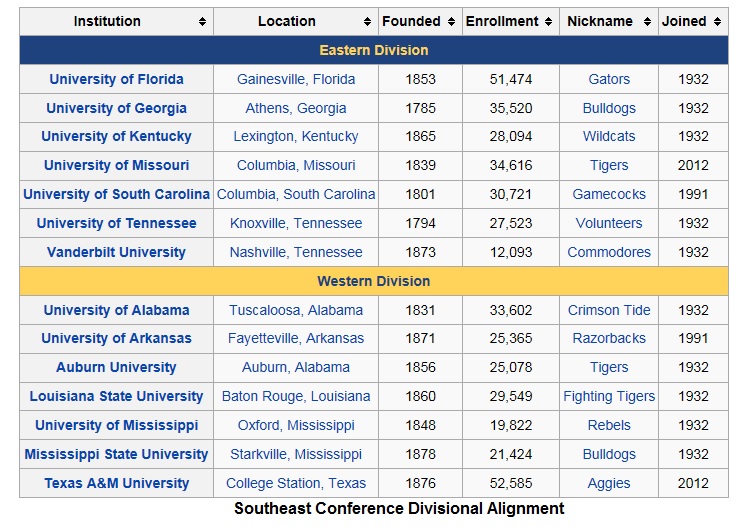
APPENDIX – SEC Conference Schools/Teams

CU Blog - Sports Role Model - Turn On the SEC - Photo 4

Share this post:
, , , , ,
[Top]

Sports Role Model – US versus the World

Go Lean Commentary

This is a big weekend in the world of sports, its the US versus the World … again. This time, its the Little League World Series, the baseball tournament in Williamsport, Pennsylvania. Even though baseball is played in many countries around the world, the expectation is that it takes an All-Star team from the rest of the world to compete against one American team.

This is the tournament’s Final Four teams, (see Appendix-Bracket below):

US: Chicago* -vs- Las Vegas
World: South Korea* -vs- Japan
* = Winner

The attitude of the US versus the World is the attitude in many other sports endeavors as well; sampled as follows:

  • The NCAA College Baseball Championship Tournament is called the College World Series.
  • The NBA Playoff Champion is referred to as World Champions.
  • Major League Baseball Championship Best-of-Seven Match-up is branded the World Series.
  • National Hockey League All-Star Game is a Match-up of North America (US and Canada) versus the World.

It is evident that the sports eco-system is bigger in the US, than anywhere else in the world. Needless to say, the Caribbean region pales in comparison in accentuating the business of sports. Deficient would not even be a fitting adjective, as there is NO arrangement for intercollegiate sports in the region, despite having 42 million people in 30 different countries. The Caribbean misses out on many opportunities associated with the games people play – especially economic ones: jobs, event bookings, media coverage.

This is the assertion of the book Go Lean…Caribbean, that the Caribbean can be a better place to live, work and play; that the economy can be grown methodically by embracing progressive strategies in recognizing and fostering the genius qualifiers of many Caribbean athletes. So many times, those with talent have had to flee the region to garner the business returns on their athletic investments.

It does not have to be.

The following news article indicates that even amateur Little League baseball is big business:

Title: Little League means big business as revenues soar
By: Josh Peter, USA Today

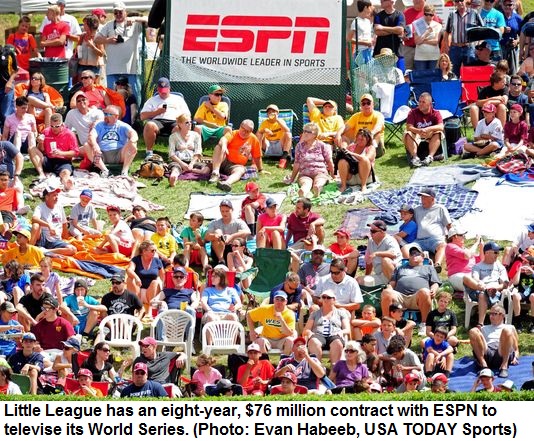
CU Blog - Sports Role Model - US versus the World - Photo 1The images remain quaint — kids sprinting around the base-paths, fans watching from grass hills, Norman Rockwell-like scenes abound at the Little League World Series in Williamsport, Pa., which culminates Sunday with the championship game. But make no mistake, Little League is big business.

Little League Inc. reported revenue of almost $25 million and assets of more than $85 million in 2012, according to the most recent publicly available tax return it must file to maintain tax-exempt status as a 501(c)(3) non-profit organization.

Over a five-year period, compensation for Little League Inc.’s CEO, Steve Keener, nearly doubled to $430,000 a year. And in 2012, the 100-person full-time staff made almost $7.5 million in salaries — a year before ESPN agreed to more than double broadcast fees as part of an eight-year, $76 million contract to televise the games during the two-week tournament.

“That’s a lot of money when all the grunt work is volunteer,” said Randy Stevens, president of the Little League in Nashville, Tenn., whose all-star team qualified for the World Series each of the past two years. “Now I’m wondering where it’s all going.”

Keener, elected as CEO in 1996, said revenue has grown at a steady pace and said new money is going back into the program.

“I’m not going to apologize for generating revenue to support the programming issues of this organization,” he told USA TODAY Sports. “But I would apologize if I felt we were not using it to the best of our ability in a prudent manner and getting the most out of the money to benefit this program.”

Keener said the majority of the organization’s costs stem from maintaining the national headquarters in Williamsport, five regional centers — in Connectcut, Georgia, Texas, California, Indiana — a full-time facility in Poland and offices in Hong Kong, Puerto Rico and Canada.

When Little League signed its contract with ESPN in 2007, Keener said, it lowered affiliation fees for the local leagues. He also said Little League pays for 125 criminal background checks for each local league and provides training program for coaches.

“Those are ways we try direct the funds right back to the local programs,” he said.

Little League also pays for travel, lodging and food costs for 16 teams, each of which include 13 players and three coaches. But Stevens, affiliated with the Nashville-based league, said families of the players should receive financial help for travel costs.

He estimated the parents of his players needed up to $35,000 to cover those expenses. A father with the team from Chicago said parents were unsure how they would pay for the trip until five Major League Baseball players offered to cover all travel expenses for the parents.

Keener said the idea of travel assistance is not under consideration.

“I’ve learned never to say never, but it’s unlikely at this point,” he said. “Our responsibility is to provide the travel, the accommodations and all the expenses related to participating in the World Series for the players and the coaches and the umpires who are here working the World Series.”

Keener said giving the players money that could be used for scholarships is not under consideration.

“Anything we would do for one group of kids, we would do for all of the kids. And it’s just not feasible to think that they’re all going to head off to college when they’re getting out of high school, particularly with the kids from the international region,” he said. “It’s just not something we feel is necessary for us to be thinking about when they’re 12 or 13 years old.”

Little League does not charge admission for games at the World Series, but officials do solicit donations while passing around cans during games.

“Whatever money they’re getting, they’re looking for more,” said Ellen Siegel, affiliated with the team from Philadelphia.

But Keener said the $25 million a year pales in comparison to organizations such as the Boys Scouts of America, which reported revenue of $240 million in 2012. He said Little League could not operate without the support of about 1,250,000 volunteers in 7,500 communities.

As far as his salary is concerned, he declined to comment other than to say his compensation is set by a committee of Little League Inc. board members.

Davie Jane Gilmour, Little League International Board of Directors Chairman, said Keener’s salary — and that of the other senior staff members, who in 2012 earned between $100,000 and $250,000 apiece — are in line with salaries at comparable non-profits.

“To be perfectly honest with you, there are many board members on that (compensation) committee who think that our senior staff, and in particular Steve, are underpaid at this point in time,” Gilmour said. “There’s a a pretty strong feeling on the compensation committee that they are highly marketable based on their success here in their work here at Little League.”

The claim of the book Go Lean … Caribbean is that excellence in sports requires a genius qualifier and that genius ability can be found in abundance in the Caribbean. Further that there is something bigger than sports alone at play here, that this is the full effect of globalization in which the Caribbean can export products and services to benefit the homeland.

This commentary has previously promoted the monetary benefits of the sports eco-systems and how Caribbean progeny participate on the world stage:

https://goleancaribbean.com/blog/?p=1508 St Croix’s Tim Duncan to Return to Spurs For Another Season
https://goleancaribbean.com/blog/?p=1446 Caribbean Players in the 2014 World Cup
https://goleancaribbean.com/blog/?p=1341 Sports Landlord Model of the College World Series Time
https://goleancaribbean.com/blog/?p=1148 Sports Bubble – Franchise values in basketball
https://goleancaribbean.com/blog/?p=1214 Sports Landlord Model – The Art & Science of Temporary Stadiums
https://goleancaribbean.com/blog/?p=1020 Caribbean Sports Revolutionary & Advocate: FIFA’s Jeffrey Webb
https://goleancaribbean.com/blog/?p=498 Sports Nature -vs- Nurture: Book Review of ‘The Sports Gene’
https://goleancaribbean.com/blog/?p=334 Bahamians Basketballers Make Presence Felt In Libyan League
https://goleancaribbean.com/blog/?p=318 The Need for Collegiate Sports Eco-System in the Caribbean
https://goleancaribbean.com/blog/?p=60 Could the Caribbean Host the Olympic Games?

The Go Lean book serves as a roadmap for the introduction and implementation of the Caribbean Union Trade Federation (CU), a technocratic federal government to administer and optimize the economic/security/ governing engines of the region’s 30 member-states. At the outset, the roadmap recognizes the value of sports in the roadmap with these statements in the Declaration of Interdependence (Page 13 & 14):

xxvi.      Whereas the preparation of our labor force can foster opportunities and dictate economic progress for current and future generations, the Federation must ensure that educational and job training opportunities are fully optimized for all residents of all member-states, with no partiality towards any gender or ethnic group. The Federation must recognize and facilitate excellence in many different fields of endeavor, including sciences, languages, arts, music and sports. This responsibility should be executed without incurring the risks of further human flight, as has been the past history.

xxxi.      Whereas sports have been a source of great pride for the Caribbean region, the economic returns from these ventures have not been evenly distributed as in other societies. The Federation must therefore facilitate the eco-systems and vertical industries of sports as a business, recreation, national pastime and even sports tourism – modeling the Olympics.

The Go Lean roadmap calls for the market organizations to better explore the economic opportunities for sports. Sports can be big business! But even when money is not involved, other benefits abound. As such the CU will enhance the engines to elevate sports at all levels: amateur, intercollegiate and professional.

The Go Lean book’s economic empowerment roadmap features huge benefits for the region related to sports. The strategy is create leverage for a viable sports landscape by consolidate the region’s 30 member-states / 4 languages into a Single Market of 42 million people. The CU facilitation of applicable venues (stadia, arenas, fields, temporary structures) on CU-owned fairgrounds plus the negotiations for broadcast/streaming rights/licenses will elevate the art, science and genius of sports as an enterprise in the region. As depicted in the foregoing article/VIDEO, even young children, Little League, will participate/benefit in the sports eco-system.

Now is the time for all of the Caribbean to lean-in to the following community ethos, strategies, tactics, implementations and advocacies detailed in the book Go Lean … Caribbean to re-boot the delivery of the regional solutions to elevate the Caribbean region through sports:

Community Ethos – People Respond to Incentives in Predictable Ways Page 21
Community Ethos – Return on Investments Page 24
Community Ethos – Ways to Foster Genius Page 27
Community Ethos – Ways to Improve Negotiations Page 32
Community Ethos – Ways to Promote Happiness Page 36
Strategic – Vision – Integrating Region in to a Single Market Page 45
Strategic – Staffing – Sporting Events at Fairgrounds Page 55
Tactical – Fostering a Technocracy Page 64
Tactical – Separation of Powers – Sports & Culture Administration Page 81
Tactical – Separation of Powers – Fairgrounds Administration Page 83
Implementation – Steps to Implement Self-Governing Entities (Fairgrounds) Page 105
Implementation – Ways to Deliver Page 109
Planning – Ways to Make the Caribbean Better Page 131
Advocacy – Ways to Grow the Economy Page 151
Advocacy – Ways to Improve Local Government – Parks & Recreation Page 169
Advocacy – Ways to Impact Events Page 191
Advocacy – Ways to Promote Fairgrounds Page 192
Advocacy – Ways to Foster Technology Expositions Page 197
Advocacy – Ways to Impact Youth Page 227
Advocacy – Ways to Improve Sports Page 229
Advocacy – Ways to Impact Urban Living – Sports Leagues Page 234

The foregoing VIDEO features many sub-stories associated with this year’s Little League World Series (LLWS) tournament, the compelling stories of the rise from the despair of the Chicago inner-city, and Philadelphia’s Mo’ne Davis, the only girl in the tournament. The drama of sports is a microcosm for the drama in life.

Despite the presence of a Caribbean team in this LLWS tournament, no compelling Caribbean stories have emerged. This is an American drama: the United States versus the World. This is not just an attitude in sports, but in many other endeavors as well. The drama and challenges in the Caribbean are of no consequence in the US, we are just a playground for their world.

We need our own tournament to foster Caribbean sports drama and economic benefits.

We need to lean-in to the Go Lean roadmap to build the sports eco-systems to make the Caribbean a better place to live, work and play. We must elevate our own society.

Download the free e-Book of Go Lean … Caribbean – now!

———–

APPENDIX – LLWS BRACKETS   (Double-Click for a legible Viewer)

CU Blog - Sports Role Model - US versus the World - Photo 2

Share this post:
, , , ,
[Top]

Caribbean Jobs – Attitudes & Images of the Diaspora

Go Lean Commentary

“Make fun of our work ethic. I dare you. I double dare you.”

The experience of new Caribbean Diaspora members is that their work ethic is appreciated by employers. So if an employer has a tie in decision-making to fill a job with Caribbean candidate or an African American candidate, the Caribbean prospects wins out. [a]

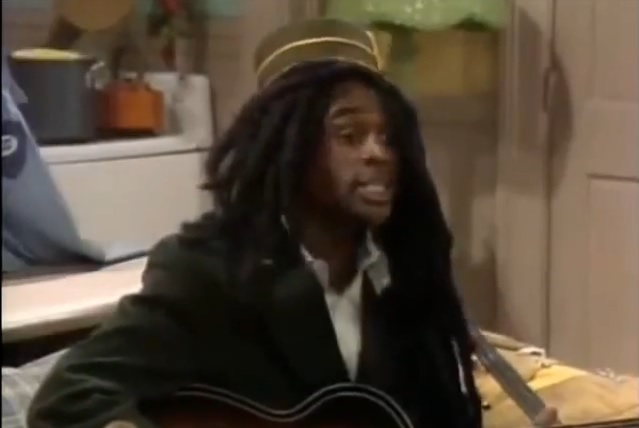
CU Blog - Caribbean Jobs - Attitudes - Images of the Diaspora - Photo 1The foregoing VIDEO/TV show from the 1990’s was a production by African Americans (Wayans brothers of Keenen, Damon, Kim, Shawn and others) for an African American audience. They laughed at Caribbean immigrants in Urban America. This is a population that have no basis to berate others. They have suffered since the 2008 Great Recession with a 21% unemployment rate [b]; even worse among Black youth where the unemployment rate is 49% [c].

This following video harmonizes with the book Go Lean…Caribbean which posits that Caribbean image should be monitored and guarded against defamation and disparaging stereotypes. While the VIDEO/TV show was produced in 1990, this Go Lean effort is recent, composed November 2013. The negative image aside, the following VIDEO is funny:

The sketch comedy television show In Living Color debuted on FOX-TV in September 1990. This skit emerged in Season 1 Episode 7 depicting a hardworking West Indian family (Father, Mother, Son and Daughter) all with multiple jobs.


The underlying issue in this consideration is jobs.  There is the need for more jobs – in the US urban communities and in the Caribbean. But there are more issues in consideration of this book. A compelling mission of the Go Lean book is to lower the “push and pull” factors that lead many to abandon the Caribbean homeland for American shores. The book posits that the region must create jobs so that its citizens do not have to leave to become aliens in a foreign land, to be ridiculed for their accents, hairstyles (dreadlocks) and work ethic. This goal is detailed in the Go Lean book as it serves as a roadmap for the introduction and implementation of the technocratic Caribbean Union Trade Federation (CU). So the CU would be set to optimize Caribbean society, starting with economic empowerment. In fact, the Go Lean roadmap has 3 prime directives:

  • Optimization of the economic engines in order to grow the regional economy to $800 Billion & create 2.2 million new jobs.
  • Establishment of a security apparatus to protect the resultant economic engines.
  • Improve Caribbean governance to support these engines.

The Go Lean roadmap calls for many changes and empowerments. One such example is the infrastructure of Self-Governing Entities (SGE), to allow for industrial developments in a controlled environment. There is so much that can be accomplished with the right climate, entrepreneurial spirit, access to capital and willing work force.

There are so many other defects of Caribbean life that need to be addressed. We do not want to be the “laughing stock” of the developed world. We want to be recognized as protégés, not parasites! This point is pronounced early in the book with the Declaration of Interdependence (Page 12) with many statements that demonstrate the need to remediate Caribbean communities and enhance the Caribbean world-wide image:

xix.      Whereas our legacy in recent times is one of societal abandonment, it is imperative that incentives and encouragement be put in place to first dissuade the human flight, and then entice and welcome the return of our Diaspora back to our shores. This repatriation should be effected with the appropriate guards so as not to imperil the lives and securities of the repatriated citizens or the communities they inhabit. The right of repatriation is to be extended to any natural born citizens despite any previous naturalization to foreign sovereignties.

xx.      Whereas the results of our decades of migration created a vibrant Diaspora in foreign lands, the Federation must organize interactions with this population into structured markets. Thus allowing foreign consumption of domestic products, services and media, which is a positive trade impact. These economic activities must not be exploited by others’ profiteering but rather harnessed by Federation resources for efficient repatriations.

xxi.      Whereas the preparation of our labor force can foster opportunities and dictate economic progress for current and future generations, the Federation must ensure that educational and job training opportunities are fully optimized for all residents of all member-states, with no partiality towards any gender or ethnic group. The Federation must recognize and facilitate excellence in many different fields of endeavor, including sciences, languages, arts, music and sports. This responsibility should be executed without incurring the risks of further human flight, as has been the past history.

xxiv.      Whereas a free market economy can be induced and spurred for continuous progress, the Federation must install the controls to better manage aspects of the economy: jobs, inflation, savings rate, investments and other economic principles. Thereby attracting direct foreign investment because of the stability and vibrancy of our economy.

xxv.      Whereas the legacy of international democracies had been imperiled due to a global financial crisis, the structure of the Federation must allow for financial stability and assurance of the Federation’s institutions. To mandate the economic vibrancy of the region, monetary and fiscal controls and policies must be incorporated as proactive and reactive measures. These measures must address threats against the financial integrity of the Federation and of the member-states.

xxvi.      Whereas the Caribbean region must have new jobs to empower the engines of the economy and create the income sources for prosperity, and encourage the next generation to forge their dreams right at home, the Federation must therefore foster the development of new industries, like that of ship-building, automobile manufacturing, pre-fabricated housing, frozen foods, pipelines, call centers, and the prison industrial complex. In addition, the Federation must invigorate the enterprises related to existing industries like tourism, fisheries and lotteries – impacting the region with more jobs.

CU Blog - Caribbean Jobs - Attitudes - Images of the Diaspora - Photo 2It is the strong urging of every Caribbean empowerment plan to minimize the size of the Diaspora. We would prefer to keep our people and our educated work force “home” in the homeland. But it is what it is. Wishing alone will not accomplish this goal – there must be real solutions. This is the purpose of the Go Lean…Caribbean roadmap: to compose, communicate and compel solutions back in the Caribbean homeland. How, what, when? The Go Lean book also details a series of community ethos, strategies, tactics, implementations and advocacies to impact the region, member-states, cities and communities economic prospects:

Community Ethos – Deferred Gratification Page 21
Community Ethos – Economic Principle – Economic Systems Influence Choices & Incentives Page 21
Community Ethos – Economic Principle – Voluntary Trade Creates Wealth Page 21
Community Ethos – Job Multiplier Page 22
Community Ethos – Lean Operations Page 24
Community Ethos – Ways to Impact the Future Page 26
Community Ethos – Ways to Foster Genius Page 27
Community Ethos – Ways to Help Entrepreneurship Page 28
Community Ethos – Ways to Impact Research & Development Page 30
Community Ethos – Ways to Promote Happiness Page 36
Community Ethos – Ways to Impact the Greater Good Page 37
Strategy – Mission – Facilitate Job-Creating Industries Page 46
Tactical – Fostering a Technocracy Page 64
Tactical – Tactics to Forge an $800 Billion Economy – High Multiplier Industries Page 70
Tactical – Separation of Powers – Self-Governing Entities Page 80
Implementation – Ways to Pay for Change Page 101
Implementation – Steps to Implement Self-Governing Entities Page 105
Implementation – Ways to Deliver Page 109
Implementation – Reasons to Repatriate to the Caribbean Page 118
Planning – Ways to Make the Caribbean Better Page 131
Planning – Ways to Better Manage Caribbean Image Page 133
Advocacy – Ways to Grow the Economy Page 151
Advocacy – Ways to Create Jobs Page 152
Advocacy – Ways to Improve Emergency Management Processes and Systems Page 196
Advocacy – Ways to Foster Technology Page 197
Advocacy – Ways to Impact Hollywood Page 203
Advocacy – Ways to Impact the Diaspora Page 217
Appendix – Job Multipliers Page 259

With some measure of success, we should be able to reduce the size of the Diaspora, repatriating many to return to the homeland. Even more so, we should reduce the “push and pull” factors that lead many to abandon the region in the first place. We want North America (and Europe) laughing with us, not at us!

Other subjects related to job empowerments (and job losses) for the region have been blogged in other Go Lean…Caribbean commentary, as sampled here:

https://goleancaribbean.com/blog/?p=2003 Where the Jobs Are – One Scenario for Creating Caribbean Jobs
https://goleancaribbean.com/blog/?p=1698 STEM Jobs Are Filling Slowly
https://goleancaribbean.com/blog/?p=1683 British public sector workers (Afro-Caribbeans) strike over ‘poverty pay’
https://goleancaribbean.com/blog/?p=1596 Book Review: ‘Prosper Where You Are Planted’
https://goleancaribbean.com/blog/?p=1433 Caribbean loses more than 70 percent of tertiary educated to brain drain
https://goleancaribbean.com/blog/?p=1256 Traditional 4-year Colleges – Terrible Investment for Region and Jobs
http://goleancaribbean.com/blog/?p=857   Caribbean Image: Dreadlocks
https://goleancaribbean.com/blog/?p=398 Self-employment on the rise in the Caribbean
https://goleancaribbean.com/blog/?p=273 10 Things We Don’t Want from the US – Discrimination of New Immigrations

CU Blog - Caribbean Jobs - Attitudes - Images of the Diaspora - Photo 3The purpose of this roadmap is to make the Caribbean homeland, a better place to live, work and play. Comedy falls under the “Play” category. With all the emphasis on jobs, work ethic, image and opportunities, there is room for fun too, or better stated: funny. This dialogue from the skit in the foregoing VIDEO is just plain funny:

Father: “What happened to that boy you were dating with those 100 jobs?”
Daughter: “Him dead now”
Father/Mother: “What?! That means there are 100 jobs open”.
Father: “Where’s my newspaper?”

If only we were not the “butt” of the joke!

Download the free e-Book of Go Lean … Caribbean – now!

—————————————————————————

Appendix – Cited References

a. Posted September 26, 2012; retrieved August 17, 2014 from:
http://m.ibtimes.com/caribbean-americans-invisible-minority-seeking-identity-affirmation-795709

b. Posted August 6, 2013; retrieved August 17, 2014 from: http://newsone.com/2662081/black-unemployment-rate-2/

c. Posted November 2013; retrieved August 17, 2014 from: http://www.laprogressive.com/african-american-teen-unemployment/


Share this post:
, , , ,
[Top]

Casinos Changing/Failing Business Model

Go Lean Commentary

Change has come to Atlantic City, New Jersey. Change has come to the world of casino gambling. For the US, there used to be a casino monopoly west of the Mississippi in Las Vegas, and another monopoly east of the Mississippi in Atlantic City.

No More!

Casinos have since popped up in many states (Pennsylvania, Florida, Connecticut, California, Louisiana, Mississippi, etc) all over the country, plus on many federally-legislated Indian Reservations. Additionally, there is the eco-system of casino riverboats and cruise ships leaving major US ports.

Now, the casino hot spots of Las Vegas and Atlantic City have to compete for their customers, and many times, they lose, as depicted in the foregoing news article, which reports that 2 casinos are closing in Atlantic City next month September.

“Who moved my cheese?”

Title: The Atlantic City’s Revel Casino to Close in September
Atlantic City, NJ – Aug 12, 2014, 3:42 PM ET
By: Wayne Parry, Associated Press

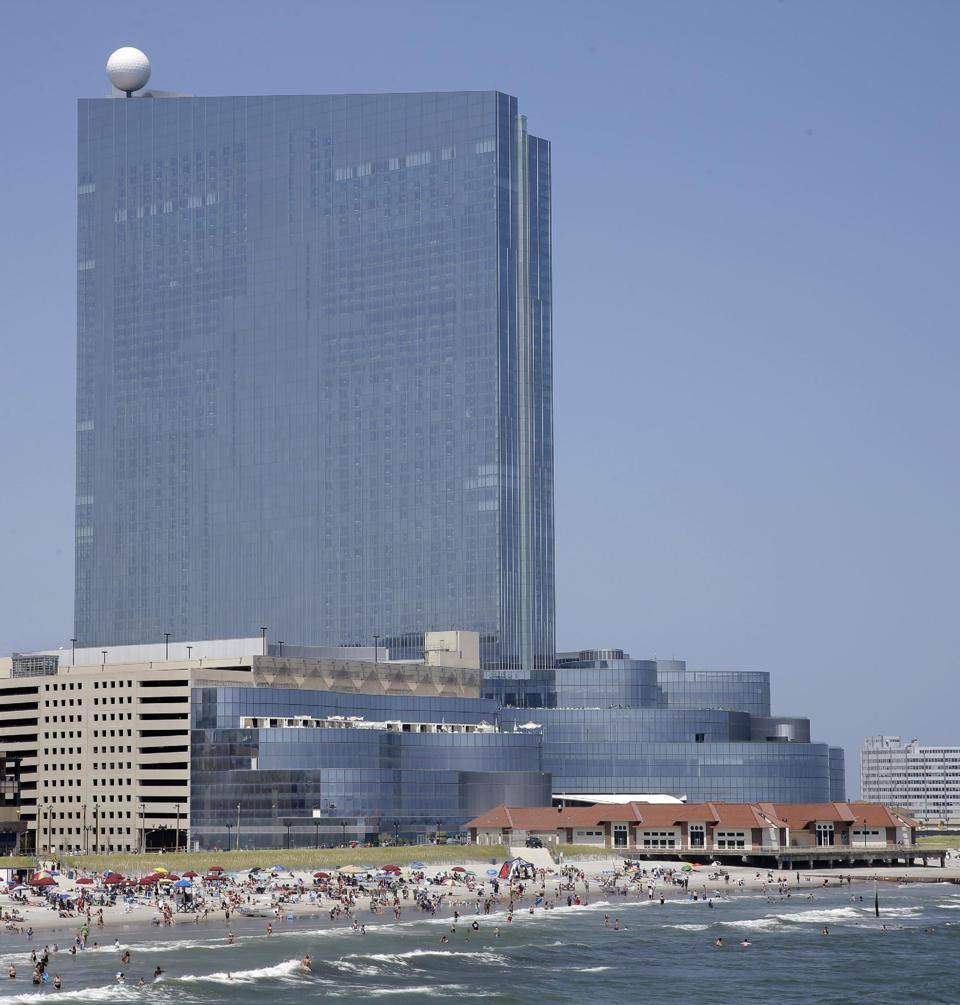
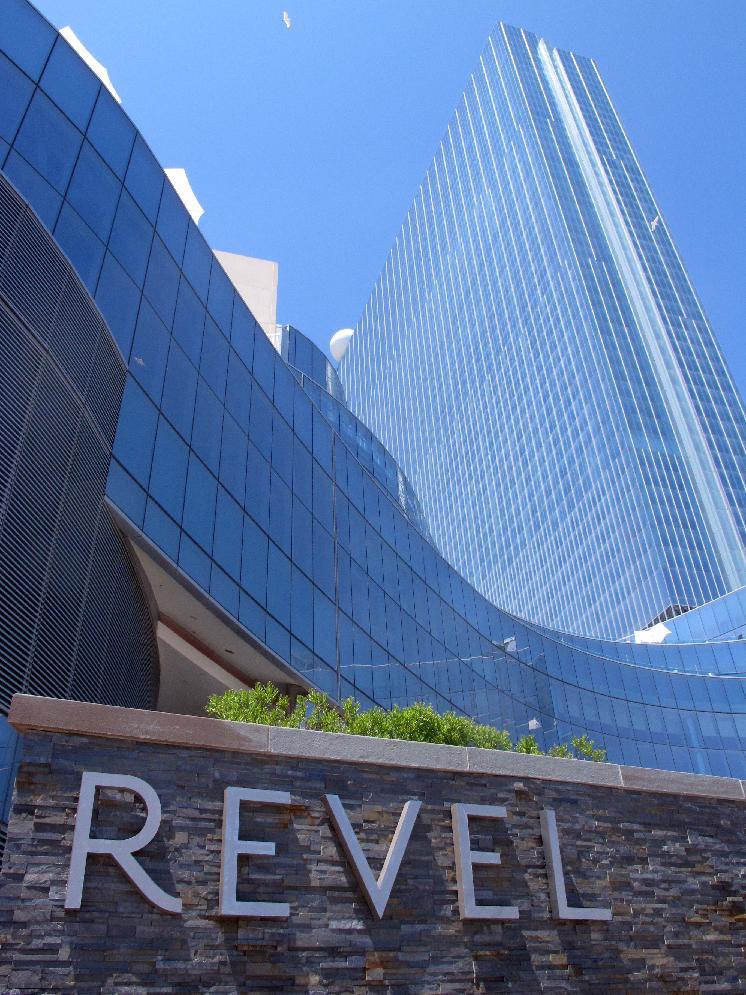
CU Blog - Atlantic City's Revel Casino to Close in September - Photo 1When it opened just over two years ago, many people hoped Revel would save Atlantic   City’s struggling casino industry, which has been bleeding money and jobs for years.

But now the $2.4 billion resort that was widely seen as the last, best chance for Atlantic City’s gambling market is shutting down, unable to find a buyer for even pennies on the dollar.

In addition to putting 3,100 people out of jobs and hurting state and local budgets, Revel’s demise shows just how cutthroat the East Coast casino market has become, and how difficult it is for even the newest and nicest gambling halls to survive in an oversaturated market.

Revel Entertainment said the casino and its 1,399 hotel rooms will close on Sept. 10, never having turned a profit.

“We regret the impact this decision has on our Revel employees who have worked so hard to maximize the potential of the property,” Revel said in a statement Tuesday. “We thank them for their professionalism and dedication; however we are faced with several unavoidable circumstances.

“Despite the effort to improve the financial performance of Revel, it has not proven to be enough to put the property on a stable financial footing,” the company wrote.

Revel’s most recent Chapter 11 filing listed assets of $486.9 million and liabilities of $476.1 million.

The company said its situation was compounded by a “considerable non-controllable expense structure” that financially burdened the property. It said it had no choice but “an orderly wind-down of the business at this time.”

Revel said it still hopes to find a buyer through the bankruptcy process. But it acknowledged that if that happened, it would be after the facility had already shut down.

Matthew Levinson, chairman of the New Jersey Casino Control Commission, called the closing “enormously disappointing,” but held out hope for a future sale.

“I sincerely hope that possibility materializes, especially for the employees who face the loss of their jobs,” he said.

Israel Posner, who runs a tourism and gambling study institute at RichardStocktonCollege, said he expects Revel to sell as a non-casino building.

“I still believe Revel will sell, for pennies on the dollar, to someone who will figure out that it is the most modern, beautiful structure that’s going to be built for generations to come,” he said.

The casino was due to be sold at a bankruptcy court auction last week, but that was postponed to allow casino officials to study bids that were received. After Revel’s board met on Monday, the decision was made to shutter the glittering glass-covered casino at the north end of the Boardwalk.

Revel opened in April 2012 as the first new casino in Atlantic City since the Borgata opened nine years earlier, and carried great hopes for many that it would be the catalyst to jolt what had been the nation’s second-largest gambling market back to life. Atlantic City has since slipped to third place behind Nevada and Pennsylvania, whose casinos touched off the New Jersey resort town’s revenue and employment plunge in 2007.

Since 2006, when the first Pennsylvania casino opened, Atlantic City’s casino revenue has fallen from $5.2 billion to $2.86 billion last year.

So far this year, the Atlantic Club closed in January, bought at a bankruptcy auction by the parent companies of Tropicana and Caesars and shuttered in the name of reducing competition. Caesars Entertainment will close the Showboat on Aug. 31, also to reduce the competition in Atlantic City, where it currently owns 4 of the 11 casinos. And TrumpPlaza is due to close Sept. 16.

CU Blog - Atlantic City's Revel Casino to Close in September - Photo 2Revel has ranked near the bottom of Atlantic City’s casinos in terms of the amount of money won from gamblers since the day it opened.

Its original owners envisioned it as a luxury resort that just happened to have a casino, and eschewed many staples of casino culture, including a buffet and bus trips for day-trippers. But that strategy — as well as the only overall smoking ban in Atlantic City — turned off customers, and Revel filed for bankruptcy in 2013, a little over a year after opening.

That led to new ownership and a “Gamblers Wanted” promotional campaign to emphasize the company’s new emphasis on its casino.

But despite some improvement, Revel’s finances never recovered enough, and it filed for bankruptcy a second time in June.
Associated Press News Source (Retrieved August 12, 2014) – http://abcnews.go.com/US/wireStory/atlantic-citys-revel-casino-close-september-24943242


CU Blog - Atlantic City's Revel Casino to Close in September - Photo 3

This article aligns with the book Go Lean…Caribbean, which calls for the elevation of Caribbean economics. The same challenges being experienced in Atlantic City are also affecting Caribbean casino resorts, especially since 2008. For example, the practice of Caribbean casino “junkets” is dead or dying [a].

The book posits that there is a need to re-focus, re-boot, and optimize the engines of commerce so as to make the Caribbean a better place to live, work and play. The tourism product, the mainstay of Caribbean economy, was accustomed to depending on certain amenities that have now come under attack by social change. Whereas golf was a popular day pastime for resort guests, and casino gambling was popular at night, both activities are experiencing decline and implosion in their individual industries. (See this previous blog commentary regarding the Future of Golf). The supply and demand of gambling/gaming options have equally encountered rapid evolutionary change, from lottery tickets, BINGO parlors, online poker,  area pari-mutuels (horse/dog racing, Jai-Alai) and Off-Track Betting.

If only there was an alternate roadmap to elevate Caribbean society without depending on the “games people play” to remain constant. Wait, there is! The book Go Lean… Caribbean, serves as a roadmap for the introduction and implementation of the technocratic Caribbean Union Trade Federation (CU) with the charter to effectuate change in the region with these 3 prime directives:

  • Optimization of the economic engines in order to grow the regional economy to $800 Billion and create 2.2 million new jobs.
  • Establishment of a security apparatus to protect the resultant economic engines and marshal against economic crimes.
  • Improve Caribbean governance to support these engines.

Early in the book, the responsibility to monitor, manage, and mitigate the risks and threats of job killing developments, (such as the reporting in the foregoing news article), were identified as an important function for the CU with this pronouncement in the Declaration of Interdependence (Pages 14):

xxvi.  Whereas the Caribbean region must have new jobs to empower the engines of the economy and create the income sources for prosperity, and encourage the next generation to forge their dreams right at home, the Federation must therefore foster the development of new industries… In addition, the Federation must invigorate the enterprises related to existing industries like tourism… – impacting the region with more jobs.

Many Caribbean tourism resort properties depend on casino gaming. The issue of declining growth or failing business models is an important discussion in the execution of this roadmap. This commentary previously related details of the changing macro-economic factors affecting the region’s economic engines. The following are samples of earlier Go Lean blogs:

https://goleancaribbean.com/blog/?p=1943 The Future of Golf; Vital for Tourism
https://goleancaribbean.com/blog/?p=841 Declining Economic Trends – Having Less Babies is Bad for the Economy
https://goleancaribbean.com/blog/?p=782 Open/Review the Time Capsule: The Great Recession of 2008
https://goleancaribbean.com/blog/?p=709 Econometric Analysis – Student debt holds back many would-be home buyers
https://goleancaribbean.com/blog/?p=356 Book Review: ‘How Numbers Rule the World’ – How Demographic Studies Dictate Policies
https://goleancaribbean.com/blog/?p=242 The Erosion of the Middle Class
https://goleancaribbean.com/blog/?p=235 Tourism’s changing profile

According to the foregoing article, the closing of this one property, the Revel, will directly impact 3,100 jobs. This article failed to mention however the effect on the local market with in-direct jobs. The Go Lean book details the principle of job multipliers, how certain industries are better than others for generating multiple indirect jobs down the line for each direct job on a company’s payroll. (The automotive manufacturing industry was a choice selection with a job-multiplier rate of 11.0 – Page 260)

The Caribbean must contend with many of these same issues as the city leaders of Atlantic City must now deal with. The State of New Jersey is one of the most prosperous in the US, so there’s the chance that many displaced workers can be absorbed into the regional economy. The Caribbean does not have this option – our situation is more dire, especially on self-contained islands. Our society is in desperate need of reform/reboot to insulate many of the macro-economic downward trends that are pending. On the one hand, we must double down on the tourism product. On the other hand, we must diversify our economy and avail other high job-multiplier industries, like automotive manufacturing. The Go Lean… Caribbean book details the community ethos to adopt to diversify our economy and proactively mitigate the dire effects of the changed demographic landscape, plus the executions of the following strategies, tactics, implementations and advocacies:

Community Ethos – Deferred Gratification Page 21
Community Ethos – Economic Principle – People Respond to Incentives Page 21
Community Ethos – Economic Principle – Consequences of Choices Lie in the Future Page 21
Community Ethos – Job Multiplier Page 22
Community Ethos – Lean Operations Page 24
Community Ethos   – Return on Investments (ROI) Page 24
Community Ethos – Ways to Impact the Future Page 26
Community Ethos – Ways to Foster Genius Page 27
Community Ethos – Ways to Help Entrepreneurship Page 28
Community Ethos – Ways to Promote Intellectual Property Page 29
Community Ethos – Ways to Impact Research & Development Page 30
Community Ethos – Ways to Bridge the Digital Divide Page 31
Community Ethos – Ways to Impact the Greater Good Page 37
Strategy – Integrate Region in a Single Market Page 45
Tactical – Fostering a Technocracy Page 64
Tactical – Tactics to Forge an $800 Billion Economy Page 67
Tactical – Separation of Powers Page 71
Implementation – Ways to Deliver Page 109
Planning – Ways to Make the Caribbean Better Page 131
Planning – Lessons Learned from 2008 Page 136
Advocacy – Ways to Grow the Economy Page 151
Advocacy – Ways to Create Jobs Page 152
Advocacy – Ways to Enhance Tourism Page 190
Advocacy – Ways to Impact Events Page 191
Advocacy – Ways to Foster Technology Page 197
Advocacy – Ways to Foster e-Commerce Page 198
Advocacy – Ways to Develop the Auto Industry Page 206
Advocacy – Ways to Help the Middle Class Page 223
Appendix – Job Multipliers Page 259

The CU will foster industrial developments to aid tourism, incorporate best practices and quality assurances to deliver the best hospitality in the world. But there is room for service improvement and enhancement of the regional tourism product.

This roadmap is not advocating the abandonment of casino gambling, though the practice is considered a vice. Rather, the community ethos being promoted is one of open competition and fostering world class deliveries in information technologies. The book posits that the tenets of Internet Communications Technology (ICT) is a great equalizer between large countries and smaller states. To reinforce this point, remember that Japan is far from being the largest population base in the world (only 126 million), yet they are the #3 economy worldwide. Size does not matter…as much, intelligent strategy and efficient delivery matters more.

This Japanese model is fully defined in the Go Lean roadmap, detailing their growth strategies (Page 69) and starting with this Declaration of Interdependence (Pages 14) statement, identified here:

xxxiii.  Whereas lessons can be learned and applied from the study of the recent history of other societies, the Federation must formalize statutes and organizational dimensions to avoid the pitfalls of [certain] communities… On the other hand, the Federation must also implement the good examples learned from developments/communities like … Japan.

The Caribbean can be a better place to live, work and play, perhaps even the best address on the planet.

Download the book Go Lean…Caribbean now!

————————————————————————————–

Appendix a:

Smart Gaming Magazine Article: INSIDE LOOK AT CASINO JUNKETS
By Henry Tamburin

Casino Junkets began in the mid-50’s as a way to entice players to Las Vegas to gamble. Junket programs in those days were pretty straightforward. Casino operators would hire junket reps to fill a plane with qualified gamblers. These players would get free airfare, free hotel accommodations, free meals, free shows (and just about anything else they wanted) in exchange for their commitment to gamble a specific number of hours per day at an explicit average bet size. The casinos of course were gambling that the players would lose more than their out of pocket expenses for bringing, housing and feeding them.

That was the past. To get a fresh look at how junkets operate in 2005 and what benefits they provide players, I interviewed junket rep Sandy Crammer, owner of S&S Casino Tours, and Jeffrey Hoss, Director of National Casino Marketing, for Harrah’s. What I learned about junkets might surprise you (it did me).

So let’s begin by defining what exactly does a Junket rep do?

Jeffrey Hoss: First off, in the Harrah’s organization we refer to our third party reps as Independent Agents rather than Junket Reps. Independent Agents send us customers (i.e. players) and in return they get a commission based on a player’s theoretical. We have about 185 Independent Agents representing 47 states and 5 international countries that have a specific territory that they can market and promote our properties to their customers. In total our Independent Agents have scheduled about 300,000 customer trips annually to Harrah’s properties.

Let me ask Sandy how she got started in this business.

Sandy Crammer: Before I started my own company, I ran a junket office as in-house employee for many years and I decided it was something I liked and wanted to try on my own. So my husband, Scott, and I started our own business and thankfully, Harrah’s decided to take a shot with us four years ago to represent them. We have three employees in our company and currently we are one of the top 5 Independent Agent producers for Harrah’s.
(Source: http://www.smartgaming.com/Articles/gambling_tips_inside_look_casino_junket.html)


Share this post:
, , , ,
[Top]

The Future of Golf; Vital for Tourism

Go Lean Commentary

The book Go Lean…Caribbean calls for the elevation of Caribbean society, to re-focus, re-boot, and optimize all the engines of commerce so as to make the Caribbean a better place to live, work and play.  “The games people play” therefore have relevance for our consideration. Golf is one of those games. But golf is more than just a game, it is an eco-system; but this eco-system is in peril.

“The financial bubble burst and the Tiger bubble burst as well”.
“Even as the economy recovered, golf is still in a nose dive”.
“Your house is on fire”.

These (above) are among the key phrases from the narration of the following HBO Real Sports documentary story:

Host Bryant Gumbel speaks with industry leaders, including Jack Nicklaus, the most accomplished golfer of all time, and executive Mark King about the state of the sport and what innovations should be embraced.

Full Length VIDEO:

YouTube Online Video Site (Published July 23, 2014; Retrieved August 9, 2014) –
https://www.youtube.com/watch?v=QFEYC4Z44v0

This subject is pivotal in the roadmap for elevation of the Caribbean economy, which maintains that tourism will continue to be the primary economic driver in the region for the foreseeable future. The game of “golf” plays a significant role in the business model of tourist resorts. The publisher of the book Go Lean…Caribbean posits that understanding the macro-economic patterns of the game/sport of golf is critical in the roadmap to grow the region’s GDP and creating jobs (2.2 million new jobs projected).

Also important in this discussion is the functionality of economic planning.

According to the foregoing VIDEO, there are major issues in the eco-system of golf. There are 4 major events during the year: The Masters, US Open, British Open and the PGA Championship. The viewership numbers for all 4 events have been declining in the last 7 years, since 2007, the eve of the Great Recession. Stakeholders in this industry cannot ignore this downward trend. For many, this discussion is not just about their past-time, but rather their livelihoods.

For the Caribbean perspective, the subject of golf encapsulates the activities of live, work and play. (Some of the most prime residential properties are on or overlooking golf courses).

Change is constant. Change can be lateral, forward and backwards too. Empires rise and fall, past-time activities change; new sports come into fashion, while others fade into obsolescence. (In the US, boxing is on the decline while Mixed Martial Arts are on the rise).

This book Go Lean… Caribbean, serves as a roadmap for the introduction and implementation of the technocratic Caribbean Union Trade Federation (CU). The CU/Go Lean roadmap has 3 prime directives:

  • Optimization of the economic engines in order to grow the regional economy to $800 Billion and create 2.2 million new jobs.
  • Establishment of a security apparatus to protect the resultant economic engines and marshal against economic crimes.
  • Improve Caribbean governance to support these engines.

Early in the book, the benefit of the “business of sports for community empowerment” is pronounced in the Declaration of Interdependence (Pages 13 & 14), with these opening statements:

xxvi.  Whereas the Caribbean region must have new jobs to empower the engines of the economy and create the income sources for prosperity, and encourage the next generation to forge their dreams right at home, the Federation must therefore foster the development of new industries… In addition, the Federation must invigorate the enterprises related to existing industries like tourism… – impacting the region with more jobs.

xxxi.  Whereas sports have been a source of great pride for the Caribbean region, the economic returns from these ventures have not been evenly distributed as in other societies. The Federation must therefore facilitate the eco-systems and vertical industries of sports as a business, recreation, national pastime and even sports tourism – modeling the Olympics.

CU Blog - The Future of Golf; Vital for Tourism - Photo 1The Caribbean tourism resort properties depend on golf amenities. Many times too, golf courses are built as municipal establishments, so as to benefit citizens through the Parks & Recreation infrastructure. The issues of sufficient returns on the public investments in golf is an important discussion in the execution of this roadmap.

This commentary previously related details of the changing macro-economic factors (like demographics) that affect the region’s economic engines. The following are samples of earlier Go Lean blogs:

https://goleancaribbean.com/blog/?p=1715 Lebronomy – Economic Impact of One Superstar on a Sport/Team’s Viability
https://goleancaribbean.com/blog/?p=1148 Sports Business and Sports Bubbles – Franchise values in basketball
https://goleancaribbean.com/blog/?p=841 Declining Economic Trends – Having Less Babies is Bad for the Economy
https://goleancaribbean.com/blog/?p=782 Open/Review the Time Capsule: The Great Recession of 2008
https://goleancaribbean.com/blog/?p=709 Econometric Analysis – Student debt holds back many would-be home buyers
https://goleancaribbean.com/blog/?p=498 Book Review: ‘The Sports Gene’ – Identifying and Fostering Sports Genius Abilities
https://goleancaribbean.com/blog/?p=356 Book Review: ‘How Numbers Rule the World’ – How Demographic Studies Dictate Policies
https://goleancaribbean.com/blog/?p=318 Empowering Collegiate Sports in the Caribbean
https://goleancaribbean.com/blog/?p=273 10 Things We Want from the US and 10 Things We Don’t Want from the US – # 2: Tourists
https://goleancaribbean.com/blog/?p=254 Air Transport Industry Changes – Air Antilles Launches St. Maarten Service
https://goleancaribbean.com/blog/?p=242 The Erosion of the Middle Class
https://goleancaribbean.com/blog/?p=235 Tourism’s changing profile

According to the foregoing VIDEO, the opulence of golf has not fared well in today’s real economy. The game costs too much, and takes too much time. There is a real chance that this sport will die off with older generations, unless reform can be incorporated to attract and retain younger generations to the sport. Many revisions have been tried – as depicted in the video – there is no tolerating the status quo.

The Caribbean must do the same. Our societies are also in need of reform/reboot to attract and retain the youth to consider their future in their Caribbean homelands. The homelands have been losing at this … badly. There are validated reports of over 70% of the college educated population fleeing the region (https://goleancaribbean.com/blog/?p=1433); this constitutes an undeniable brain drain. The Go Lean… Caribbean book details the community ethos to adopt to proactively mitigate the dire effects of the changed landscape, plus the executions of the following strategies, tactics, implementations and advocacies:

Community Ethos – Deferred Gratification Page 21
Community Ethos – Economic Principle – People Respond to Incentives Page 21
Community Ethos – Economic Principle – Consequences of Choices Lie in the Future Page 21
Community Ethos – Job Multiplier Page 22
Community Ethos – Lean Operations Page 24
Community Ethos – Return on Investments (ROI) Page 24
Community Ethos – Ways to Impact the Future Page 26
Community Ethos – Ways to Foster Genius Page 27
Community Ethos – Impact Research & Development Page 30
Community Ethos – Ways to Impact the Greater Good Page 37
Strategy – Integrate Region in a Single Market Page 45
Tactical – Fostering a Technocracy Page 64
Tactical – Trade and Globalization Page 70
Separation of Powers – Sports and Culture Administration Page 81
Planning – Ways to Make the Caribbean Better Page 131
Planning – Lessons Learned from 2008 Page 136
Advocacy – Ways to Grow the Economy Page 151
Advocacy – Ways to Create Jobs Page 152
Advocacy – Ways to Enhance Tourism Page 190
Advocacy – Ways to Preserve Caribbean Heritage Page 218
Advocacy – Ways to Impact the One Percent Page 224
Advocacy – Ways to Impact Youth Page 227
Advocacy – Ways to Improve Sports Page 229

The CU will foster industrial developments to aid and abet tourism. This is not planning for 1995, but rather 2015. The assumptions of the past, simply no longer apply today. It is what it is!

CU Blog - The Future of Golf; Vital for Tourism - Photo 2“Earlier this year, at the PGA Merchandise Show in Orlando, Mark King, the CEO of the company TaylorMade Golf announced the launch of Hack Golf, a TaylorMade-sponsored initiative that is, at heart, a worldwide call for fresh ideas. Over the next five years, operating in alliance with the Professional Golf Association (PGA) of America, King plans to pump $5 million of his company’s money into what amounts to a global brainstorm session. This constitutes a concerted effort to seek solutions to a demographic problem.” – (http://www.golf.com/tour-and-news/hack-golf-aims-grow-game-taylormade-sponsored-brainstorm-session)

Golf may have a future.

The 2014 PGA Championship was won by Rory McIlroy, a 25 year old golf “phenom”. After Tiger Woods, this sports needs all the young stars they can get a hold off. If only they can attract young viewers.

For the Caribbean, this issue is bigger than just the game of golf; this is life – Caribbean life. We must have a better future, inclusive of all of our young people. How? With the concerted effort as detailed in the 5 year Go Lean roadmap, this region can and will be a better place to live, work and play.

Download the free e-Book of Go Lean … Caribbean – now!

Share this post:
, , ,
[Top]

Role Model Berry Gordy – No Town Like Motown

Go Lean Commentary

CU Blog - Role Model Berry Gordy - No Town Like Motown - PhotoThis is a memorable dialogue:

Berry Gordy: You went from singing love songs to now anti-war songs. I understand you want to reflect change in society…

Marvin Gaye (interrupting): I don’t want to reflect change, I want to effect change.

Thus the alignment of the Broadway play Motown, The Musical and the book Go Lean…Caribbean. It is an established fact that any difficult subject can be more easily communicated if backed-up by a catchy melody and rhyming words. An underlying theme of the above-cited play, based on the autobiographical story of Motown founder Berry Gordy, is that music effected change in America and forged integration and elevation of society.

By: Robert Simonson

Title: No Town Like Motown: Navigating the Life, Times and Tunes of Starmaker Berry Gordy

First-time Broadway director Charles Randolph-Wright is at the helm of one of the more pulse-quickening titles of the season, Motown: The Musical, about record producer Berry Gordy’s heyday.

In terms of backstage politics, Charles Randolph-Wright may have the trickiest job of any director working on Broadway this spring. He is staging Motown: The Musical, a musically overflowing new show about the life and career of recording mogul Berry Gordy.

One of his producers is Berry Gordy as well. Gordy completes his hat trick by having written the libretto for the piece.

“Sometimes I’ll forget the person I’m talking to is the same person that is depicted on stage,” said Randolph-Wright.

One imagines such waters are difficult to navigate. What if Producer Gordy tells the director not to interfere with Writer Gordy’s work? “It’s something we talked about from the beginning,” said Randolph-Wright. “He’s very open as to what the story is.”

The show, which is playing at the Lunt-Fontanne Theatre, is largely based on Gordy’s 1995 memoir “To Be Loved: The Music, the Magic, the Memories of Motown.”

“He wrote the book 20 years ago,” Randolph-Wright explained. “Now he has an even different perspective on that. You have to ask, ‘How do we tell the story of this big character, who is based on this real person, and yet that person is involved with the creation of the show, and is working on it?’ It’s a challenge, but the way we have worked is a very open process.”

Randolph-Wright recalled one particular moment when Gordy confided in him an episode from his past when he was at his most vulnerable. “We were walking around and he told me this story. I couldn’t believe it. I said, ‘You want that on stage?’ I thought it was very brave. But at this point at his life, what does he have to prove?”

Randolph-Wright added that Gordy, now 83, has no trouble juggling his many roles. After all, it is something he’s been doing for decades. “In most cases that would be a challenge,” he said. “But he spent his whole career wearing so many different hats. When I’m with the writer, that’s who I’m with. The producer is a different person. I am always with the person who’s doing all those things, but in each separate instance I’m with who Berry is at that moment.”

Charles Randolph-Wright was one of several directors who interviewed with Gordy. From the start, he thought he was right for the project. “This is in my DNA,” he said. He doesn’t mean that he grew up with Motown’s music (as many of us did) — though that is part of it. His connection to the material is more complex. “I’ve done every angle of this story. I’ve been in a music group. I’ve danced to the music. I’ve sung it. And I’ve lived in all those worlds he did, though not the same way he did.”

When the marquee was hung on the Lunt-Fontanne, Randolph-Wright glanced down the street and noticed he was only yards away from the Imperial Theatre. In the early 1980s he passed through the stage door of that theatre every night as a member of the original cast of Dreamgirls — the fictional account of the rise of The Supremes, a group Gordy helped found. “What’s happened in those years from that show to this show, it’s been an amazing journey,” he mused. “From the Broadway musical version of this story to the real story.”

Motown‘s greatest asset is the iconic song­book the Detroit-based record label produced; and they’ll get ample helpings of that hit parade, including songs made famous by Smokey Robinson and The Miracles (“Shop Around”), Diana Ross and The Supremes (“Stop! In the Name of Love”), Marvin Gaye (“What’s Going On”), Stevie Wonder, The Temptations, and Michael Jackson and The Jackson Five (“I Want You Back”).

Randolph-Wright said it was hard, given the rich catalogue, deciding which songs to keep in the show and which to leave out. “Every song you hear in this show, you want to hear,” he said. “But how do you put this journey into two and a half hours? There’s so much, so many people. They’re all part of this story. But we found out how to take the story and condense what could easily have been a miniseries.” He said he wouldn’t know the exact song count until opening night, but promised the show would contain more numbers than does your average musical.

To sing the classic pop hits, the director has assembled a large cast, including Valisia LeKae as Diana Ross and Charl Brown as Smokey Robinson — both particular Gordy favorites. Brandon Victor Dixon will play Gordy himself.

Randolph-Wright said he didn’t want note-by-note recreations of their numbers, “I want [the actors] to evoke these artists, not copy them, not be an impersonator. But it has to be the Motown sound. The actors have been tremendous in finding those things that make them seem real as those people.”

The tunes will be used in various ways. Some will be presented as straightforward performances; others will be used as narrative tissue, to further along the story. In addition, the score will include three or four new songs, written by Gordy expressly for the musical.

The director has found it a particular delight to see Gordy returning to his songwriting roots. “We forget that he wrote a lot of those early hits. Over the years, as Motown grew, he became less about being an artist, and more about being a businessman. It’s thrilling to see him become completely creative again.”

(This feature appears in the March 2013 issue of Playbill magazine.)
Play Bill Broadway Magazine/Web Site (Posted March 10, 2013; Retrieved 08-06-2014) – http://www.playbill.com/news/article/175778-No-Town-Like-Motown-Navigating-the-Life-Times-and-Tunes-of-Starmaker-Berry-Gordy

Like Berry Gordy, the prime directive of the Go Lean book is also to elevate society, but in the Caribbean, not in America, by integrating a confederated brotherhood. In fact, the declarative statements are as follows:

  • Optimization of the economic engines in order to grow the regional economy to $800 Billion & create 2.2 million new jobs.
  • Establishment of a security apparatus to protect the resultant economic engines.
  • Improve Caribbean governance to support these engines.

Berry Gordy accomplished his mission through music/song and entertainment. The book Go Lean…Caribbean strives to accomplish its mission with the introduction and implementation of the technocratic Caribbean Union Trade Federation (CU). Berry Gordy is hereby recognized as a role model that the Caribbean can emulate. He has provided a successful track record of forging change, overcoming incredible odds, managing crises to successful conclusions and rebooting failing institutions. The Go Lean book, serving as a roadmap, initiates with a “Prologue” that identifies community ethos that must be embraced for any chance of success and permanent change. This list of ethos from the book corresponds with the history of Berry Gordy, as portrayed in the Motown, The Musical Broadway play:

Go Lean…Caribbean Berry Gordy Role Modeling
Job Multipliers Economic Opportunities
Future Focus Crossover / Integration
Foster Genius Producing Artists
Help Entrepreneurship New Record Labels, Movies
Promote Intellectual Property Music Business Excellence
Research & Development New Artists Development
Bridge the Digital Divide Embrace of New Media
Improve Negotiations Hollywood Interactions
Impact Turn-Around Move from Detroit
Manage Reconciliations Motown Reunions
Improve Sharing Common Studios/Producers
Promote Happiness Music Essential to Life
Greater Good Impact Society

“No town like Motown” is the title of the foregoing article from the PlayBill magazine. But the Berry Gordon legacy is not the town of Detroit, but rather the musical contributions of his movement. It should be noted that Gordy moved the record company, Motown, out of the failed-city of Detroit, early in the 1970’s. So Gordy’s legacy is really how he grew in his management of change!

According to the opening dialogue, Berry Gordy was a reluctant advocate of change; he tried to be a businessman first. In the end, he conducted a lot of business, but he effected change as well. Thank you Marvin Gaye for that inspiration, for impacting Berry Gordy with the lesson that “one man, and his music” can make difference.

The Go Lean book accepts that the business of music can have a major impact on Caribbean society and the world. Already, this commentary has analyzed how a Caribbean music artist has made an impact on the world scene, with this post:

https://goleancaribbean.com/blog/?p=866 Bob Marley: The legend lives   on!

In the Go Lean roadmap to elevate the Caribbean, the eco-systems of music get due respect. This point is detailed in the  Declaration of Interdependence at the outset of the book, pronouncing this need for regional solutions (Page 14):

xxxii. Whereas the cultural arts and music of the region are germane to the quality of Caribbean life, and the international appreciation of Caribbean life, the Federation must implement the support systems to teach, encourage, incentivize, monetize and promote the related industries for arts and music in domestic and foreign markets. These endeavors will make the Caribbean a better place to live, work and play.

The Go Lean roadmap accepts that change has come to the music business. It is no longer the same world that was dominated by Berry Gordy, and his cast of musical geniuses. Now, there is the need for some technocratic facilitations. The book posits that this burden is too big for any one Caribbean member-state, and thus the collaboration efforts of the CU is necessary, as the strategy is to confederate all the 30 member-states of the Caribbean despite their language and legacy, into an integrated “single market”. This will allow for better leverage of the consumer market for the consumption of music. From this eco-system, should emerge our own generations of Berry Gordy’s in the Caribbean to impact the world with their art, music, and contributions.

Today, most music is consumed digitally with a lot of retailing via the world wide web. This changed landscape now requires new tools and protections, like electronic payment systems, digital rights management and Performance Rights Organizations. The Go Lean/CU roadmap details these solutions. With these efforts and investments, the returns will be undeniable. The CU is designed to do the heavy-lifting of organizing Caribbean society, and interacting with the wide-world to better reap the benefits of music and related eco-systems. The following list details the strategies, tactics, implementations and advocacies to foster the next Motown movement, Caribbean style:

Community   Ethos – Forging Change Page 20
Community Ethos – Lean Operations Page 24
Community   Ethos – Return on Investments Page 24
Strategy –   Strategy – Caribbean Vision Page 45
Strategy –   Agents of Change – Globalization Page 57
Tactical –   Growing the Caribbean Economy to $800   Billion Page 67
Separation   of Powers – Central Bank – Electronic Payment Deployments Page 73
Tactical –   Separation of Powers – Patents & Copyrights Page 78
Separation   of Powers – Culture Administration Page 81
Planning –   Ways to Make the Caribbean Better Page 131
Planning    – Lessons Learned from Detroit Page 140
Advocacy   – Ways to Grow the Economy Page 151
Advocacy   – Ways to Create Jobs Page 152
Advocacy –   Reforms for Banking Regulations Page 199
Advocacy –   Ways to Impact Hollywood Page 203
Advocacy –   Ways to Promote Music Page 231
Appendix –   Caribbean Music Genres Page 347
Appendix –   Protecting Music Copyrights Page 351

The Go Lean roadmap has simple motives: enable the Caribbean to be a better place to live, work and play. One man, or woman, can make a difference in this quest. We want to foster the next generation of “stars’ in music and other fields of endeavor.

According to his autobiography and the Broadway musical, Berry Gordy was inspired by other role models in his youth, i.e. Joe Louis. Now the world in general, the Caribbean is particular, is being inspired by Berry Gordy.

This is how to reflect and effect change in society. That opening dialogue with Marvin Gaye and Berry Gordy is captured for our inspiration. The end result:

Mother, mother
There’s too many of you crying
Brother, brother, brother
There’s far too many of you dying
You know we’ve got to find a way
To bring some lovin’ here today

Father, father
We don’t need to escalate
You see, war is not the answer
For only love can conquer hate
You know we’ve got to find a way
To bring some lovin’ here today

Download the book Go Lean … Caribbean – now!

Share this post:
, , , , ,
[Top]

Lebronomy – Economic Impact of the Return of the NBA Great

Go Lean Commentary

The commentaries of the Go Lean…Caribbean blogs have often addressed sports issues. But mostly from the point-of-view as the business of sports, and its impact on the communities’ economic engines.

This commentary continues that pattern, plus it couples one more assignment: Mea Culpa.

CU Blog - Lebronomy - Economic Impact of the Return of the NBA GreatWe were wrong! The publishers of the Go Lean book (dated November 2013) included an anecdote on the Miami Heat (Page 42), stressing the “Not one, not two, not three, not four…” quotation from superstar free agent LeBron James when he joined the team in 2010. The Mea Culpa, (Latin verbiage for “My Bad”), obviously applies in that, there would only be 2 championships. Everything else of that anecdote applies, but a technocratic approach, different than previous Caribbean administrations, requires that we learn lessons from successes and failures. Already this commentary has congratulated the 2014 winner of the NBA Finals, San Antonio Spurs, who went on to beat the Miami Heat; as follows:

https://goleancaribbean.com/blog/?p=1508 St   Croix’s Tim Duncan to Return to Spurs For Another Season

What are the lessons that we learn from our failure to prognosticate the winning basketball team? Number one: Don’t bet!

The Bible words are correct: “Time and unforeseen occurrences befall us all” (Ecclesiastes 9:11). That’s what we got wrong, but what we got right is so much more impactful, the economic impact of sports on the local community:

By: ABC News

Title: Lebronomy: Economic Impact of the Return of NBA Great LeBron James

A ticket to the Cleveland Cavalier’s season opener used to go for $40, now goes for as much as $600.

Yahoo Video Sharing Site (Retrieved 07/14/2014) –
http://news.yahoo.com/video/lebronomy-economic-impact-return-nba-030818278.html

This discussion of sports and the basketball team in Cleveland is not just academic. Community pride, jobs, and the growth of the regional economy is involved; the foregoing VIDEO summarized that LeBron James’ absence was worth $50 million a season for this metropolitan area. This point aligns with the objections of the book Go Lean…Caribbean. This book serves as a roadmap for the introduction and implementation of the technocratic Caribbean Union Trade Federation (CU). This effort harnessed the individual abilities so as to elevate the athletes (micro) and also economic impact for their related communities (macros). Modern sports cannot be analyzed without considering the impact on “dollars and cents” for the community. In his essay to the people of Cleveland, announcing his return, after taking his talents to South Beach, this was the exact point LeBron James made:

“My relationship with Northeast Ohio is bigger than basketball. I didn’t realize that four years ago. I do now.”

“Before anyone ever cared where I would play basketball, I was a kid from Northeast Ohio. It’s where I walked,” James told SI (Sports Illustrated). “It’s where I ran. It’s where I cried. It’s where I bled. It holds a special place in my heart. People there have seen me grow up. I sometimes feel like I’m their son. Their passion can be overwhelming. But it drives me.

“I want to give them hope when I can. I want to inspire them when I can.”
(http://www.journalgazette.net/article/20140711/SPORTS20/140719891/-1/sports12)

These words in this eloquently written essay could have been concurred by so many of the Caribbean Diaspora that had taken their talents to “South Beach, South Toronto or South London”. The economic impact of their absence has been duly noted in research and analysis and the conclusion is bad:

https://goleancaribbean.com/blog/?p=1433 Caribbean loses over 70% of tertiary educated citizens to the   brain drain

The Go Lean roadmap attempts to impact change in the region, by elevating Caribbean society. The CU, using all the economic benefit that can be derived from sports in the region, will pursue a charter that is bigger than basketball, football, baseball or any other sport. Rather the CU will employ strategies, tactics and implementations to impact its prime directives; identified with the following 3 statements:

  • Optimization of the economic engines in order to grow the regional economy to $800 Billion & create 2.2 million new jobs.
  • Establishment of a security apparatus to protect the resultant economic engines.
  • Improve Caribbean governance to support these engines.

The Go Lean book identified this vision early in the book (Page 13 & 14) in the following pronouncements in the Declaration of Interdependence:

xix.   Whereas our legacy in recent times is one of societal abandonment, it is imperative that incentives and encouragement be put in place to first dissuade the human flight, and then entice and welcome the return of our Diaspora back to our shores…

xxi.   Whereas the preparation of our labor force can foster opportunities and dictate economic progress for current and future generations, the Federation must ensure that educational and job training opportunities are fully optimized for all residents of all member-states, with no partiality towards any gender or ethnic group. The Federation must recognize and facilitate excellence in many different fields of endeavor, including sciences, languages, arts, music and sports. This responsibility should be executed without incurring the risks of further human flight, as has been the past history.

xxxi.   Whereas sports have been a source of great pride for the Caribbean region, the economic returns from these ventures have not been evenly distributed as in other societies. The Federation must therefore facilitate the eco-systems and vertical industries of sports as a business, recreation, national pastime and even sports tourism – modeling the Olympics.

Now is the time for all of the Caribbean to lean-in to the following community ethos, strategies, tactics, implementations and advocacies detailed in the book Go Lean … Caribbean to foster the elevation and industrialization of sports in the Caribbean region:

Community   Ethos – People Respond to Incentives in Predictable Ways Page 21
Community   Ethos – Return on Investments Page 24
Community   Ethos – Ways to Foster Genius Page 27
Community   Ethos – Ways to Promote Happiness Page 36
Community   Ethos – Ways to Impact the Greater Good Page 37
Strategic   – Vision – Integrating Region in to a Single Market Page 45
Strategic   – Staffing – Sporting Events at Fairgrounds Page 55
Tactical   – Fostering a Technocracy Page 64
Tactical   – Separation of Powers – Sports & Culture Administration Page 81
Tactical   – Separation of Powers – Fairgrounds Administration Page 83
Implementation   – Steps to Implement Self-Governing Entities (Fairgrounds) Page 105
Implementation   – Ways to Deliver Page 109
Planning   – 10 Big Ideas for the Caribbean Region Page 127
Planning   – Ways to Make the Caribbean Better Page 131
Advocacy   – Ways to Grow the Economy Page 151
Advocacy   – Ways to Create Jobs Page 152
Advocacy   – Ways to Improve Local Government – Parks & Recreation Page 169
Advocacy   – Ways to Impact Events Page 191
Advocacy   – Ways to Promote Fairgrounds Page 192
Advocacy   – Ways to Foster Technology Expositions Page 197
Advocacy   – Ways to Improve Sports Page 229
Advocacy   – Ways to Impact Urban Living – Sports Leagues Page 234

Now is the time for all of the Caribbean, the people and governing institutions, to lean-in for the empowerments described in the book Go Lean…Caribbean. This is a big deal for regional sports. This book provides the turn-by-turn directions for how to get from Point A, where we can only hope and dream about foreign sports stars, to Point B, where we can finally celebrate our own sports stars.

Download the book Go Lean … Caribbean – now!

Share this post:
, , , ,
[Top]

Bad Tweet: Dutch airline angers Mexico soccer fans

Go Lean Commentary

“In 2 minutes a computer can make as many mistakes as 20 men in 20 years” – Murphy’s Law on Technology.

“Once posted, you can’t take it back” – Social Media Harsh Reality.

These two expressions are the new normal. Social media can be an effective communication tool to reach the general public and/or a dedicated controlled group. This can be a blessing and a curse. This fact was demonstrated after the recent World Cup Elimination Game between Mexico and The Netherlands. Mexico lost! In its haste to capitalize on all the fanfare, representatives at Dutch airline KLM committed this PR blunder of denigrating Mexican fans:

By: AP Writer Alan Clendenning
RIO DE JANEIRO (AP) — What was meant to be a joke has turned into a PR blunder for Dutch airline KLM after it angered Mexican soccer fans by taking to Twitter to celebrate the Netherlands’ dramatic comeback victory in the World Cup.

Netherlands v MexicoWithin minutes of the Netherlands’ 2-1 victory over the Tri, KLM let loose on its Twitter feed a picture of an airport departures sign under the heading “Adios Amigos!” Next to the word “Departures” is the image of a man with a mustache wearing a sombrero.

The post immediately went viral, with A-list Mexican actor Gael Garcia Bernal using not one but two expletives in a 140-character Tweet to tell his 2 million-plus followers that he’ll never fly the carrier again. Amid the widespread protest online, the post was pulled a half-hour later without an explanation.

“It was meant to be a joke,” KLM spokeswoman Lisette Ebeling Koning told The Associated Press, adding that the airline never intended to offend Mexicans, which it serves via a daily direct flight between Mexico City and Amsterdam. “But there was too much negative reaction.”

KLM issued a formal apology late Sunday.

“In the best of sportsmanship, we offer our heartfelt apologies to those who have been offended by the comment,” said Marnix Fruitema, director general of KLM in North America.

For its part, Mexican national carrier AeroMexico is also getting in on the fun, broadcasting on Twitter its support for the country’s soccer team under an arrivals sign.

“Thank you for this great championship,” AeroMexico said. “You’ve made us proud and we’re waiting for you at home.”
Associated Press (AP) News Wire Service (Retrieved 06/30/2014) –
http://news.yahoo.com/bad-tweet-dutch-airline-angers-mexico-soccer-fans-205929269.html

The expression “the post immediately went viral” could be a good thing or a bad thing. The book Go Lean…Caribbean posits that the power of social media must be harnessed strategically and tactically in order to explore all the benefits of Internet Communications Technologies. The book further asserts that the internet can be a great equalizer between large and small economy states, that talent and value can readily be searched and discovered.

The foregoing article depicts a Bad Tweet; then proceeds to describe how impactful response tweets can be, especially when wielded by an “Influencer” – a person with at least 100,000 followers – such as A-list Mexican celebrity Gael Garcia Bernal.

The book serves as a roadmap for the introduction and implementation of the technocratic Caribbean Union Trade Federation (CU). This effort will launch the Caribbean Postal Union to facilitate the region’s “mail” functionality. In 2014, the mail delivery cannot be seriously mentioned without considering electronic messaging options. Social media is an electronic messaging scheme. The CPU will administer the domain for www.myCaribbean.gov. The universe for this domain is scoped at 130 million unique users.

This strategy will elevate Caribbean society, and image. There is the need for a sentinel role for Caribbean image, as there are a lot of times that Caribbean life and people are denigrated in works of media arts: film, TV, books, magazines. Consider the example of Jamaican “Yardies”, or Dominican Cartels. The Go Lean roadmap calls for the CU to assume that role.

The CU, using cutting edge delivery of best practices, will employ strategies, tactics and implementations to impact its prime directives; identified with the following 3 statements:

  • Optimization of the economic engines in order to grow the regional economy to $800 Billion & create 2.2 million new jobs.
  • Establishment of a security apparatus to protect the resultant economic engines.
  • Improve Caribbean governance to support these engines.

Dutch KLM Photo

AeroMexico Photo

The Go Lean book speaks of a Caribbean crisis and posits that this crisis can be averted, the same way the non-malevolent jest on social media by KLM was quickly averted using stronger social media tactics. Considering the events in the foregoing article, an undeniable credo is reiterated that “a crisis is a terrible thing to waste”. The Go Lean roadmap seeks to optimize the entire Caribbean economic/security/governance eco-system. This vision is defined early in the book (Page 12 & 14) in the following pronouncements in the Declaration of Interdependence:

xv. Whereas the business of the Federation and the commercial interest in the region cannot prosper without an efficient facilitation of postal services, the Caribbean Union must allow for the integration of the existing mail operations of the governments of the member-states into a consolidated Caribbean Postal Union, allowing for the adoption of best practices and technical advances to deliver foreign/domestic mail in the region.

xxvii. Whereas the region has endured a spectator status during the Industrial Revolution, we cannot stand on the sidelines of this new economy, the Information Revolution. Rather, the Federation must embrace all the tenets of Internet Communications Technology (ICT) to serve as an equalizing element in competition with the rest of the world. The Federation must bridge the digital divide and promote the community ethos that research/development is valuable and must be promoted and incentivized for adoption.

xxx. Whereas the effects of globalization can be felt in every aspect of Caribbean life, from the acquisition of food and clothing, to the ubiquity of ICT, the region cannot only consume, it is imperative that our lands also produce and add to the international community, even if doing so requires some sacrifice and subsidy.

The Go Lean book details a lot more, a series of assessments, community ethos, strategies, tactics, implementations and advocacies to garner the benefits of ICT in the Caribbean region:

Community Ethos – Economic Systems Influence Choices & Incentives Page 21
Community Ethos – People Respond to Incentives Page 21
Community Ethos – Consequences of Choices Lie in the Future Page 21
Community Ethos – Return on Investments Page 24
Community Ethos – Ways to Impact the Future Page 26
Community Ethos – Ways to Foster Genius Page 27
Community Ethos – Ways to Impact Research & Development Page 30
Community Ethos – Ways to Bridge the Digital Divide Page 31
Community Ethos – Ways to Impact the Greater Good Page 37
Strategy – Vision – Confederating a Non-Sovereign Union Page 45
Tactical – Separation of Powers – Caribbean Postal Union Page 78
Implementation – Ways to Pay for Change Page 101
Implementation – Ways to Improve Mail   Services Page 108
Implementation – Ways to Deliver Page 109
Implementation – Ways to Impact Social   Media Page 111
Planning – Ways to Improve Image Page 133
Advocacy – Ways to Grow the Economy Page 151
Advocacy – Ways to Create Jobs Page 152
Advocacy – Ways to Foster Technology Page 197
Advocacy – Ways to Foster e-Commerce Page 198
Appendix – Measuring Media   Consumption Page 265

Now is the time for all of the Caribbean, the people and governing institutions, to lean-in for the empowerments described in the book Go Lean…Caribbean. There is reason to believe that these empowerment efforts can be successful. The Go Lean roadmap conveys how single causes/advocacies have successfully been forged throughout the world (Page 122 – Anatomy of Advocacies). With social media deployments, millions of people can be advocates. No defamation of Caribbean image will go unchallenged. We, in the Caribbean, can do the same as the Mexican power brokers when bad sportsmanship was displayed by the KLM airline.

The Caribbean can succeed in the advocacy to improve the Caribbean image and deployments of social media in the region. There are previous blog commentaries that delve into aspects of these same issues:

https://goleancaribbean.com/blog/?p=1416 Amazon’s new FIRE Smartphone
https://goleancaribbean.com/blog/?p=1404 Facebook goes down across multiple countries
https://goleancaribbean.com/blog/?p=857 Caribbean Image:   Dreadlocks

Congratulation to the Netherlands football/soccer national team in their pursuits of the FIFA World Cup. There is room for good sportsmanship for all.

Download the book Go Lean … Caribbean – now!

Share this post:
, , , , , ,
[Top]