Tag: Health

Pandemic Playbook – COVID Vaccine: To Be or Not To Be

Go Lean Commentary

To be or not to be; that is the question – Shakespeare’s Hamlet
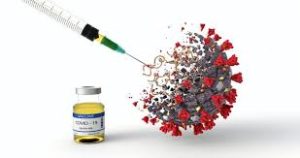
Is it worth it to “hang in there”? This is a question for us in the Caribbean as well. The world is enduring the Coronavirus COVID-19 pandemic crisis; it is wreaking havoc on the world’s economic engines – $250 Billion a day in losses – and Public Health deliveries. The only hope is a vaccine, of which there are a number of them in development (Phase I – Test Tubes, Phase II – Lab Mice, Phase III – Human Trials). Around $10bn is being spent on finding a vaccine for this Coronavirus.

Will you consume or ingest the eventual vaccine?

Will you allow your children to ingest? What percentage of people in the community will refuse to ingest?

What if consumption is a prerequisite for work, school, church, travel, etc.?

To be or not to be; that is the question
To be or not to be’ is a soliloquy of Hamlet’s – meaning that although he is speaking aloud to the audience none of the other characters can hear him. Soliloquies were a convention of Elizabethan plays where characters spoke their thoughts to the audience. Hamlet says ‘To be or not to be’ because he is questioning the value of life and asking himself whether it’s worthwhile hanging in there. He is extremely depressed at this point and fed up with everything in the world around him, and he is contemplating putting an end to himself. – Source
——
See Hamlet’s full Soliloquy in the Appendix below.

Do you want cultural suicide or do you want to be a part of the future world?
Please note: You will not be a Guinea Pig; those were the rodent-like creatures that functioned as Lab Mice. Also, you are not a part of the Human Trials. So at the point that the vaccine offer is made to you, many iterations of Quality Assurance would have already been executed.

When exactly will a vaccine be ready?

We are not certain of the Day/Time, but we can say SOON. See this VIDEO as it  addresses this and other related issues:

VIDEO – Covid-19: When will a vaccine be ready? | The Economist – https://youtu.be/FgR6t7vQtn8

The Economist
Posted August 14, 2020 – Around $10bn is being spent on finding a vaccine for coronavirus—it’s not nearly enough. And even when a covid-19 vaccine is found how should it be distributed fairly? Our experts answer your questions.

00:00 Covid-19: When will a vaccine be ready?
00:50 Will there ever be a “silver-bullet” vaccine?
01:41 How long would it take for the whole world to be vaccinated?
02:25 Who benefits financially from the vaccine?
03:54 How much will each vaccine cost?
05:10 What percentage of Americans do you estimate will choose not to get vaccinated & how much of an issue will this be?
06:44 In an ideal world, how should a vaccine be optimally distributed?
07:21 Will new versions of the vaccine be required periodically?
07:54 Will developing countries receive equal access to the vaccine, or will they be left behind?
08:50 Should richer countries pay for vaccines in the developing world?
10:01 How should we respond to crises like this one in the future?

Further reading:
Find The Economist’s most recent coverage of covid-19 here: https://econ.st/3iwmMMH

Sign up to The Economist’s daily newsletter to keep up to date with our latest covid-19 coverage: https://econ.st/2Ckne0X

Listen to “The Intelligence” podcast about the vaccine candidates and equitable distribution: https://econ.st/3aqh4Jl

How the world can think better about catastrophic and existential risks: https://econ.st/2CqYN28

Read our leader on how people must adapt to living in the covid-19 pandemic era: https://econ.st/3gSw0SS

How SARS-CoV-2 causes disease and death in covid-19: https://econ.st/33S1jcU

Covid-19 testing labs are being overwhelmed: https://econ.st/3iDGMx1

How the pandemic has shown the urgency of reforming care for the elderly: https://econ.st/2XUqfgh

Read about the hunt for the origins of covid-19: https://econ.st/3iAoX1L

This commentary addresses the Pandemic Playbook for the Caribbean region – asserting that it should include vaccines. This continues the Teaching Series for the month of August 2020 on the subject of Pandemic Playbooks – the need for them and the deficiency there of in the Caribbean. This is entry 5-of-6 from the movement behind the 2013 book Go Lean…Caribbean. The other commentaries in the series are cataloged as follows:

  1. Pandemic Playbook: Worldwide Leadership – Plan ==> Actual
  2. Pandemic PlaybookCaribbean Inadequacies – Missing the Bubble Opportunities
  3. Pandemic PlaybookBahamas Example – ‘Too Little Too Late’
  4. Pandemic PlaybookOnly at the Precipice ENCORE
  5. Pandemic Playbook: To Be or Not To Be – COVID Vaccine
  6. Pandemic Playbook: Success – Looks like New Zealand
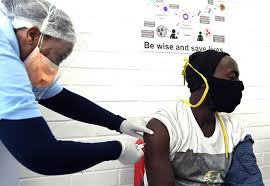
A big area of consideration must be past history:

  • COVID-19 is not the first pandemic
  • COVID-19 immunization would not be the first vaccine

What lessons can we learn from past considerations of this “To Be or Not To Be” vaccine drama?

Let’s consider the historicity (good, bad and ugly) of the Polio vaccine and the Lead Researcher Dr. Jonas Salk; see here:

Title 1: Polio Vaccine

During the early 1950s, polio rates in the U.S. were above 25,000 annually; in 1952 and 1953, the U.S. experienced an outbreak of 58,000 and 35,000 polio cases, respectively, up from a typical number of some 20,000 a year, with deaths in those years numbering 3,200 and 1,400.[62] Amid this U.S. polio epidemic, millions of dollars were invested in finding and marketing a polio vaccine by commercial interests, including Lederle Laboratories in New York under the direction of H. R. Cox. Also working at Lederle was Polish-born virologist and immunologist Hilary Koprowski of the Wistar Institute in Philadelphia, who tested the first successful polio vaccine, in 1950.[8][41] His vaccine, however, being a live attenuated virus taken orally, was still in the research stage and would not be ready for use until five years after Jonas Salk’s polio vaccine (a dead-virus injectable vaccine) had reached the market. Koprowski’s attenuated vaccine was prepared by successive passages through the brains of Swiss albino mice. By the seventh passage, the vaccine strains could no longer infect nervous tissue or cause paralysis. After one to three further passages on rats, the vaccine was deemed safe for human use.[39][63] On 27 February 1950, Koprowski’s live, attenuated vaccine was tested for the first time on an 8-year-old boy living at Letchworth Village, an institution for the physically and mentally disabled located in New York. After the child suffered no side effects, Koprowski enlarged his experiment to include 19 other children.[39][64]

Jonas Salk
The first effective polio vaccine was developed in 1952 by Jonas Salk and a team at the University of Pittsburgh that included Julius Youngner, Byron Bennett, L. James Lewis, and Lorraine Friedman, which required years of subsequent testing. Salk went on CBS radio to report a successful test on a small group of adults and children on 26 March 1953; two days later, the results were published in JAMA.[57] Leone N. Farrell invented a key laboratory technique that enabled the mass production of the vaccine by a team she led in Toronto.[65][66] Beginning 23 February 1954, the vaccine was tested at Arsenal Elementary School and the Watson Home for Children in Pittsburgh, Pennsylvania.[67]

Salk’s vaccine was then used in a test called the Francis Field Trial, led by Thomas Francis, the largest medical experiment in history at that time. The test began with about 4,000 children at Franklin Sherman Elementary School in McLean, Virginia,[68][69] and eventually involved 1.8 million children, in 44 states from Maine to California.[70] By the conclusion of the study, roughly 440,000 received one or more injections of the vaccine, about 210,000 children received a placebo, consisting of harmless culture media, and 1.2 million children received no vaccination and served as a control group, who would then be observed to see if any contracted polio.[39] The results of the field trial were announced 12 April 1955 (the tenth anniversary of the death of President Franklin D. Roosevelt, whose paralytic illness was generally believed to have been caused by polio). The Salk vaccine had been 60–70% effective against PV1 (poliovirus type 1), over 90% effective against PV2 and PV3, and 94% effective against the development of bulbar polio.[71] Soon after Salk’s vaccine was licensed in 1955, children’s vaccination campaigns were launched. In the U.S, following a mass immunization campaign promoted by the March of Dimes, the annual number of polio cases fell from 35,000 in 1953 to 5,600 by 1957.[72] By 1961 only 161 cases were recorded in the United States.[73]

Safety incidents

In April 1955, soon after mass polio vaccination began in the US, the Surgeon General began to receive reports of patients who contracted paralytic polio about a week after being vaccinated with Salk polio vaccine from Cutter pharmaceutical company, with the paralysis limited to the limb the vaccine was injected into. In response the Surgeon General pulled all polio vaccine made by Cutter Laboratories from the market, but not before 250 cases of paralytic illness had occurred. Wyeth polio vaccine was also reported to have paralyzed and killed several children. It was soon discovered that some lots of Salk polio vaccine made by Cutter and Wyeth had not been properly inactivated, allowing live poliovirus into more than 100,000 doses of vaccine. In May 1955, the National Institutes of Health and Public Health Services established a Technical Committee on Poliomyelitis Vaccine to test and review all polio vaccine lots and advise the Public Health Service as to which lots should be released for public use. These incidents reduced public confidence in polio vaccine leading to a drop in vaccination rates.[76]

Source: Retrieved August 29, 2020 from: https://en.wikipedia.org/wiki/Polio_vaccine#1950%E2%80%931955

Is there an alternative to taking a vaccine?
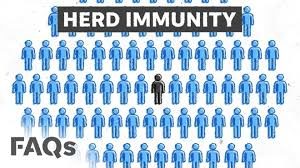
Yes, there is herd or community immunity – where if enough people are vaccinated, like 70 percent – then the rest will automatically benefit from the protections.

But don’t get it twisted! The Caribbean member-states boast a Service industrial economy – tourism. To participate in this industry space will require compliance. Tourists – by air for resort-based stay-overs or cruise line passengers – will not want to expose themselves to possible infections.

Lastly, individuals can simply chose to exit societal functioning – a self-imposed quarantine; think: Leper Colony. These ones will have to take a seat – with a view – and watch life pass them by.

Is this what you want for yourself, your family and your community? If you chose NO VACCINE, you have that right. But your children may choose differently. Especially those children that you invested so selflessly to get advanced education – college graduates. Already, this population have a higher than normal abandonment rate in the region.

One report estimates 70 percent of college educated Caribbean citizens have fled and live abroad in the Diaspora:

Caribbean loses more than 70 percent of tertiary educated to Brain Drain
According to the analysis by the Inter-American Development Bank, the people in the “Caribbean 6” countries, including the Bahamas, Barbados, Guyana, Jamaica, Suriname, and Trinidad & Tobago have wasted money on educating their populations, especially tertiary (college) education. …

The Go Lean book posits that the Caribbean is the greatest address in the world. So why would people want to leave? The book answers by relating “push” and “pull” factors. Push, in that the dire economic conditions in the Caribbean homeland, plus governmental failures in response, caused responsible people to look elsewhere to fulfill their responsibilities and aspirations. On the other hand, pull factors came from the geo-political circumstances in the world. … Many West Indians were attracted by these better prospects in what was often referred to as the mother country. …

The Caribbean region features the world’s best address. The world should be beating down the doors to come to the Caribbean, not the Caribbean people beating down doors to get out.

“To be or not to be? That is the question” …

There must be a Pandemic Playbook for inclusion and participation in the COVID-19 vaccine race.

We must have a seat at the table or we will be “on the menu“.

The Go Lean roadmap promotes, plans and prepares for that inclusion and participation.
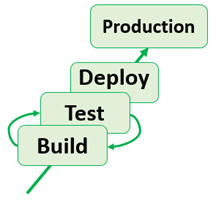
We want to start early in the participation cycle; the Go Lean roadmap calls for the full strategies, tactics and implementations for Research & Development. We also want full participation with Disaster (as in pandemic) Preparation & Response. These participations had already been embedded in this roadmap for reforming and transforming the Caribbean. These prime drivers are part of the vision for a Pandemic Playbook. These participations were presented as part of the New Guards for Homeland Security and Public Safety in the Caribbean region.

See the vision for Caribbean Research & Development (R&D) plus Disaster Preparation (and Response) as presented in previous blog-commentaries; consider this sample:

https://goleancaribbean.com/blog/?p=19568 Big Hairy Audacious Goal – Need ‘Big Brother’ for Pandemics
https://goleancaribbean.com/blog/?p=19189 We have people with genius qualifiers to do Research & Development
https://goleancaribbean.com/blog/?p=18243 The Need after Disasters? Regionalism – ‘How you like me now?’
https://goleancaribbean.com/blog/?p=16882 Exploring Medical School Opportunities for R&D and Economic Engines
https://goleancaribbean.com/blog/?p=16817 The Call for Caribbean R&D to Battle Cancer
https://goleancaribbean.com/blog/?p=15996 Good Governance: Stepping Up in an Emergency
https://goleancaribbean.com/blog/?p=15310 Industrial Reboot – Trauma 101
https://goleancaribbean.com/blog/?p=8943 Zika’s Drug Breakthrough – End-Game of an Playbook
https://goleancaribbean.com/blog/?p=7449 ‘Crap Happens’ – So What Now?
https://goleancaribbean.com/blog/?p=7822 A model for doing more Cancer R&D in the Caribbean
https://goleancaribbean.com/blog/?p=6580 On Guard for the Good, Bad & Ugly of Capitalism on Drug Patents
https://goleancaribbean.com/blog/?p=4720 Lesson Learned – Mitigating SARS in Hong  Kong
https://goleancaribbean.com/blog/?p=2397 Lesson Learned – Monitoring and Mitigating Ebola
https://goleancaribbean.com/blog/?p=1003 Painful and rapid spread of new virus – Chikungunya – in Caribbean
https://goleancaribbean.com/blog/?p=554 Cuba already had Head-start with Drug R&D – Let’s do more

The Coronavirus COVID-19 virus is the master; we are all just slaves, doing the master’s bidding.

Wanna take back control?
Vaccine or bust!

We have no other choice but to contend with these challenges that come with participating in a vaccine program.

We need this strategy in our Pandemic Playbook. A requirement for Good Governance mandates that we capitulate with one or many of these vaccines that have been researched and developed; lives and livelihoods are stake. Next time – and there will be a next time – we need our own people doing the research & the development.

We urge all Caribbean stakeholders – governments, citizens, doctors and patients – to participate in the global quest to eradicate this pandemic. This is the roadmap for making the Caribbean homeland a better place to live, work, heal and play. Jonas Salk did it with Polio … eventually; we can too. So our vision, this quest is conceivable, believable and achievable. 🙂

About the Book
The book Go Lean…Caribbean serves as a roadmap for the introduction and implementation of the technocratic Caribbean Union Trade Federation (CU), for the elevation of Caribbean society – for all member-states. This CU/Go Lean roadmap has these 3 prime directives:

  • Optimization of the economic engines in order to grow the regional economy to $800 Billion & create 2.2 million new jobs.
  • Establishment of a security apparatus to ensure public safety and protect the resultant economic engines.
  • Improve Caribbean governance to support these engines, including a separation-of-powers between the member-states and CU federal agencies.

The Go Lean book provides 370-pages of turn-by-turn instructions on “how” to adopt new community ethos, plus the strategies, tactics, implementations and advocacies to execute so as to reboot, reform and transform the societal engines of Caribbean society.

Download the free e-Book of Go Lean … Caribbean – now!

Who We Are
The movement behind the Go Lean book – a non-partisan, apolitical, religiously-neutral Community Development Foundation chartered for the purpose of empowering and re-booting economic engines – stresses that reforming and transforming the Caribbean societal engines must be a regional pursuit. This was an early motivation for the roadmap, as pronounced in the opening Declaration of Interdependence (Pages 11 – 13):

ix. Whereas the realities of healthcare and an aging population cannot be ignored and cannot be afforded without some advanced mitigation, the Federation must arrange for health plans to consolidate premiums of both healthy and sickly people across the wider base of the entire Caribbean population. The mitigation should extend further to disease management …

x. Whereas we are surrounded and allied to nations of larger proportions in land mass, populations, and treasuries, elements in their societies may have ill-intent in their pursuits, at the expense of the safety and security of our citizens. We must therefore appoint “new guards” to ensure our public safety and threats against our society, both domestic and foreign. …

xi. Whereas all men are entitled to the benefits of good governance in a free society, “new guards” must be enacted to dissuade the emergence of incompetence, corruption, nepotism and cronyism at the peril of the people’s best interest. The Federation must guarantee the executions of a social contract between government and the governed.

xii. Whereas the legacy in recent times in individual states may be that of ineffectual governance with no redress to higher authority, the accidence of this Federation will ensure accountability and escalation of human and civil rights of the people for good governance, justice assurances, due process and the rule of law. As such, any threats of a “failed state” status for any member state must enact emergency measures on behalf of the Federation to protect the human, civil and property rights of the citizens, residents, allies, trading partners, and visitors of the affected member state and the Federation as a whole.

xvi. Whereas security of our homeland is inextricably linked to prosperity of the homeland, the economic and security interest of the region needs to be aligned under the same governance. Since economic crimes … can imperil the functioning of the wheels of commerce for all the citizenry, the accidence of this Federation must equip the security apparatus with the tools and techniques for predictive and proactive interdictions.

Sign the petition to lean-in for this roadmap for the Caribbean Union Trade Federation.

————————

Appendix – Hamlet’s Soliloquy
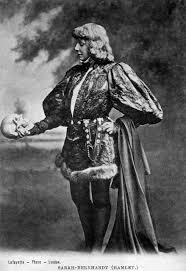
To be, or not to be, that is the question:
Whether ’tis nobler in the mind to suffer
The slings and arrows of outrageous fortune,
Or to take arms against a sea of troubles
And by opposing end them. To die—to sleep,
No more; and by a sleep to say we end

The heart-ache and the thousand natural shocks
That flesh is heir to: ’tis a consummation
Devoutly to be wish’d. To die, to sleep;
To sleep, perchance to dream—ay, there’s the rub:
For in that sleep of death what dreams may come,
When we have shuffled off this mortal coil,
Must give us pause—there’s the respect
That makes calamity of so long life.

For who would bear the whips and scorns of time,
Th’oppressor’s wrong, the proud man’s contumely,
The pangs of dispriz’d love, the law’s delay,
The insolence of office, and the spurns
That patient merit of th’unworthy takes,
When he himself might his quietus make
With a bare bodkin? Who would fardels bear,
To grunt and sweat under a weary life,
But that the dread of something after death,
The undiscovere’d country, from whose bourn
No traveller returns, puzzles the will,
And makes us rather bear those ills we have
Than fly to others that we know not of?

Thus conscience does make cowards of us all,
And thus the native hue of resolution
Is sicklied o’er with the pale cast of thought,
And enterprises of great pitch and moment
With this regard their currents turn awry
And lose the name of action.

Source: Retrieved Aigust 29, 2020 from: https://www.nosweatshakespeare.com/quotes/soliloquies/to-be-or-not-to-be/#:~:text=To%20be%20or%20not%20to%20be’%20is%20a%20soliloquy%20of,other%20characters%20can%20hear%20him.&text=Hamlet%20says%20’To%20be%20or,it’s%20worthwhile%20hanging%20in%20there.

Share this post:
, , , ,

Keep the Change: Being ‘Basic’ about Basic Needs

Go Lean Commentary

The strong urging to the Caribbean today is to:
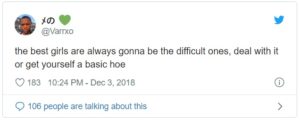

Be more Basic.

What exactly does this mean?

Sometimes the reference is good, sometimes bad, and sometimes ugly.

What does Basic Mean? – www.dictionary.com
In slang, basic characterizes someone or something as unoriginal, unexceptional, and mainstream. A basic girl—or basic bitch as she is often insulted—is said to like pumpkin spice lattes, UGG boots, and taking lots of selfies, for instance.

WHERE DOES BASIC COME FROM?

According to Green’s Dictionary of Slang, basic emerges as slang for someone or something as being “unexciting, unexceptional, or uneventful” in the 1970s. This is an outgrowth of the negative sense of basic as “plain and simple”.

The slang especially stuck to women. In their 1984 song “Meeting in the Ladies Room,” the R&B girl group Klymaxx call a woman basic for making moves on another’s boyfriend. [(See Appendix A below)].

The 2000s saw the rise of the term basic bitch, or a woman who is uninteresting and mainstream in her tastes, interests, style, or personality. Comedian Lil Duval had a 2009 video about the Basic Bitch. [(See Appendix B below)]. The 2011 song “Gucci Gucci” by Kreayshawn features the hook: “And we stunting like / Gucci Gucci, Louis Louis, Fendi Fendi, Prada / Basic bitches wear that shit so I don’t even bother.”

Basic has since become associated with unlikeable, predictable, and ordinary things, especially associated with young white women.

WHO USES BASIC?

While basic can describe anyone or anything considered disagreeably mainstream, it especially insults, as noted, young white women. As basic and basic bitch spread in popular culture, some women aren’t oblivious to their supposed basic-ness but ironically embrace it. But men, be very careful about calling a woman basic, let alone basic bitch. We don’t recommend it.

NOTE:
This is not meant to be a formal definition of basic like most terms we define on Dictionary.com, but is rather an informal word summary that hopefully touches upon the key aspects of the meaning and usage of basic that will help our users expand their word mastery.

The take-away from this foregoing “ugly” definition is that “basic is ‘plain and simple’”.

The plain and simple requirement is that the 30 member-states of the political Caribbean need to do a better job of fulfilling its basic needs: food, clothing, shelter and energy. Globalization has failed us – we must do the Basic ourselves. We do not necessarily need – though we might want – all the fancy solutions.

  • Hungry? Go Fish … or go outside and pluck from a family garden or a family farm. How about plucking eggs or tree-ripen selections from fruit trees (think tomatoes) or a fattened bull for slaughter?
  • Naked? Pull out the sewing machine and make a garment; sweatshops in low-wage countries are the breeding grounds for this virus. How about Personal Protection Equipment (PPE) garments; i.e. mask, gowns, tunics, jackets?
  • Homeless? Gather the building materials and construct a house. Zoning and HOA rules must be agile and flexible. How about allowing family gardens and/or community gardens in urban areas? Barn-houses in rural areas?
  • Stranded? Use the wind to move a turbine and/or move a vehicle (boat) from Point A to Point B. How about generating electricity from alternative sources (wind, sun, thermal and tidal), then powering electric cars?

Thanks to the Coronavirus – COVID-19 crisis, the world is re-thinking the fulfillment of these basic needs. Believe it or not, in every jurisdiction Food Service workers are now regarded as Essential Workers. This is a fundamental change – a shift in values – for jobs that had previously been valued as inconsequential or unworthy for most, except the lowest in society; think  the new immigrants (Migrant Workers) toiling in the fields and the packing houses.
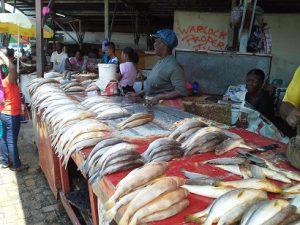
Are these ones now “essential” or sacrificial?

Or are they now … simply Basic?

It’s time to acknowledge the change … and Keep the Change to our value systems. It is time to acknowledge that fulfilling our basic needs is a basic requirement for survival as a people and a collective society.

So often, the basic needs for Caribbean survival were just delegated to others, only fulfilled through imports. But now that it is April 2020 and the world is locked-down, sheltering-in-place, the majority of people have had to avoid gathering for all but essential interactions in order to “flatten the curve”. Those who gather and distribute our food are now more valued and more expensive.

Have you noticed the increase in prices for our necessities? We can no longer be “cute”, only desiring the fancy brands. No, we now have to be basic. We need to Keep this Change.

The 2013 book Go Lean…Caribbean had originally asserted that doubling-down on Basic Needs was the key to reforming and transforming the societal engines in our Caribbean homeland. The book stated that the best way to reboot the economy and recover from the Global Crisis – that time it was the Great Recession of 2007 to 2009 – was to double-down on the Basics. There is an actual advocacy of this purpose in the Go Lean book; see here some of the specific plans, excerpts and headlines from Page 152, entitled:

10 Ways to Create Jobs … in the Caribbean Region

1 Lean-in for the Caribbean Single Market Confederation Treaty: Caribbean Union Trade Federation (CU)
The CU will allow for the unification of the region into one market, thereby creating a single economy of 30 member- states, 42 million people and a GDP of over $800 Billion. The CU’s mission is to create high-paying jobs for the region, beyond the minimum wage (defined below). Many high-wage industries would be promoted, incentivized and regulated at the federal level, even new industries created. Jobs come from trade; the CU goal is to improve trade. The CU will thus institute Enterprise Zones and Empowerment Zones – SGE’s – with tax benefits: rebates, abatements – as job creation pockets. The CU will capture data, micro and macro economic metrics, to measure the success/failure of these initiatives.
2 Feed Ourselves
The industries of agri-business allow structured commercial systems to grow, harvest and trade in food supplies. Many of the Caribbean member states (Lesser Antilles) acquire all their food in trade, the agricultural footprint is very small, though some countries (Greater Antilles, Belize, Guyana & Suriname) have a low opportunity cost for producing food. But with the Trade Federation in force, intra-region trade will be the first priority. When the demand is qualified, quantified and assured, the supply and quality there in, will catch up.
3 Clothe Ourselves
With textiles manufacturing; fashion merchandising and logistical industries, jobs can be created in the supply of apparel, shoes and accessories. Today, 90 – 99% of the supply is foreign trade. But once the CU regional demand is qualified, quantified and assured, the local supply will catch up further. 4
4 House Ourselves
In the US, it’s a truism of the National Association of Realtors® that “housing creates jobs” [239]. With the repatriation of the Caribbean Diaspora, local building supplies and new “housing starts” will emerge in the Caribbean. Plus, the CU will facilitate mortgage secondary market and pre-fabulous construction thereby fostering new housing sub-industries.
5 Update Our Own Infrastructure and the Industries They Spun
6 Help Regional Businesses Find Foreign Markets
7 Steer More People to S.T.E.M. Education and Careers
8 Welcome Home Emigrants [ or Repatriates]
9 Welcome “Empowering” Immigrants
10 Draw More Tourists

Every month, the movement behind the 2013 book Go Lean…Caribbean present a Teaching Series on a subject germane to Caribbean life. For this April 2020, our focus is on the impact of the Coronavirus on the Globe, region, each member-state (national), community and each family. There is the need to re-focus on the changes this crisis has ushered in and to Keep the Changes that were always needed for implementation. This is entry 4 of 5 for this series, which details that there is the need to double-down on Basic Needs (food, clothing, shelter and energy.

The full catalog for this month’s series is listed as follows:

  1. Keep the Change – Lower Carbon Consumption abating Climate Change
  2. Keep the Change – Working From Home & the Call Center Model
  3. Keep the Change Schools – Primary to Tertiary – making e-Learning work
  4. Keep the Change – Basic Needs: Cannot just consume; we must produce as well
  5. Keep the Change – Mono-Industrial Economy: ‘All eggs in 1 basket’

Don’t get it twisted, this Coronavirus-COVID-19 threat means death and devastation for many people and it has devastated the economic engines of most countries – our Caribbean homelands included. There are no Ands, Ifs or Buts; changes are afoot. Some good, some bad and some ugly.

Yes, we can … Keep the Change for the good benefits. We have always needed to do a better job for Food Security. In fact this was the subject of a whole series in December 2019 where we identified these issues, challenges and solutions:

  1. Food Security – Bread Baskets on Land and Sea
  2. Food Security – Temperate Foods in the Tropics
  3. Food Security – Opportunity: 1 County in Iowa raises all the Beef for a Caribbean Cruise Line
  4. Food Security – FTAA: A Lesson in History for servicing Local Foods
  5. Food Security – Big Chicken – Low-hanging fruit for all Poultry needs

The points of reforming and transforming the Caribbean eco-systems for other basic needs – think clothing, housing and energy – were also elaborated upon in many previous blog-commentaries; consider this sample:

https://goleancaribbean.com/blog/?p=19327 ‘Missing Solar’ – Inadequacies Exposed to the World
https://goleancaribbean.com/blog/?p=18287 The Housing Industry can save us – in Good Times and Bad
 https://goleancaribbean.com/blog/?p=17280 Way Forward – For Energy: ‘Trade’ Winds
https://goleancaribbean.com/blog/?p=13985 EU Assists Barbados in Renewable Energy Self-Sufficiency
https://goleancaribbean.com/blog/?p=14250 Leading with Money Matters – As Goes Housing, Goes the Market
https://goleancaribbean.com/blog/?p=11737 Robots Building Houses – More than Fiction
https://goleancaribbean.com/blog/?p=10373 Science of Sustenance: CLT Housing
https://goleancaribbean.com/blog/?p=10371 Science of Sustenance: e-Clothing
https://goleancaribbean.com/blog/? p=10367 Science of Sustenance: Energy
https://goleancaribbean.com/blog/?p=5155 Tesla unveils super-battery to enable Alternative Energy for homes
https://goleancaribbean.com/blog/?p=2726 Caribbean People have thrived in Fashion industry – Oscar De La Renta
https://goleancaribbean.com/blog/?p=665 Real Estate Investment Trusts – Solution for financing Housing industry

Call us Basic … I dare you.

Rather than an insult, we need to be proud to be more technocratic in the fulfillment of our basic needs. “Plain and simple”, we need to:
  • Feed Ourselves
  • Clothe Ourselves
  • House Ourselves

We should be insulted that we are NOT Basic.

This is why we must Keep the Change.

Coronavirus COVID-19 is not a good happenstance – people are dying.

However, if we can use this crisis to forge change in our society, force changes to our “community ethos” (the Will to Change) and to the societal engines for economics, security and governance, then those sacrifices would not have been in vain.

A crisis is a terrible thing to waste!

We hereby urge all Caribbean stakeholders to work to reform and transform our homeland. How? The strategies, tactics and implementations are all identified, qualified and proposed in the pages of the Go Lean book. It’s a full roadmap for change. A complete roadmap to make our homelands better places to live, work and play. 🙂

About the Book

The book Go Lean…Caribbean serves as a roadmap for the introduction and implementation of the technocratic Caribbean Union Trade Federation (CU), for the elevation of Caribbean society – for all member-states. This CU/Go Lean roadmap has these 3 prime directives:

  • Optimization of the economic engines in order to grow the regional economy to $800 Billion & create 2.2 million new jobs.
  • Establishment of a security apparatus to ensure public safety and protect the resultant economic engines.
  • Improve Caribbean governance to support these engines, including a separation-of-powers between the member-states and CU federal agencies.

The Go Lean book provides 370-pages of turn-by-turn instructions on “how” to adopt new community ethos, plus the strategies, tactics, implementations and advocacies to execute so as to reboot, reform and transform the societal engines of Caribbean society.

Download the free e-Book of Go Lean … Caribbean – now!

Who We Are

The movement behind the Go Lean book – a non-partisan, apolitical, religiously-neutral Community Development Foundation chartered for the purpose of empowering and re-booting economic engines – stresses that reforming and transforming the Caribbean societal engines must be a regional pursuit. This was an early motivation for the roadmap, as pronounced in the opening Declaration of Interdependence (Pages 11 – 14):

xi. Whereas all men are entitled to the benefits of good governance in a free society, “new guards” must be enacted to dissuade the emergence of incompetence, corruption, nepotism and cronyism at the peril of the people’s best interest. The Federation must guarantee the executions of a social contract between government and the governed.

xvi. Whereas security of our homeland is inextricably linked to prosperity of the homeland, the economic and security interest of the region needs to be aligned under the same governance. Since economic crimes … can imperil the functioning of the wheels of commerce for all the citizenry, the accedence of this Federation must equip the security apparatus with the tools and techniques for predictive and proactive interdictions.

xxiv.  Whereas a free market economy can be induced and spurred for continuous progress, the Federation must install the controls to better manage aspects of the economy: jobs, inflation, savings rate, investments and other economic principles. Thereby attracting direct foreign investment because of the stability and vibrancy of our economy.

xxx. Whereas the effects of globalization can be felt in every aspect of Caribbean life, from the acquisition of food and clothing, to the ubiquity of ICT, the region cannot only consume, it is imperative that our lands also produce and add to the international community, even if doing so requires some sacrifice and subsidy.

Sign the petition to lean-in for this roadmap for the Caribbean Union Trade Federation.

——————

Appendix A VIDEO – Klymaxx – Meeting In The Ladies Room (Official Video)  – https://youtu.be/_odTlZaoLCA

Klymaxx

Posted Dec 25, 2009 – Best of Klymaxx: https://goo.gl/QEYkmT

Subscribe here: https://goo.gl/2vDd9j

Music video by Klymaxx performing Meeting In The Ladies Room. (C) 1985 Geffen Records

#Klymaxx #MeetingInTheLadiesRoom #Vevo

Music in this video

Learn more

Listen ad-free with YouTube Premium

  • Song: Meeting In The Ladies Room (Radio Edit)
  • Artist: Klymaxx 
  • Licensed to YouTube by: UMG (on behalf of Geffen*); ARESA, UNIAO BRASILEIRA DE EDITORAS DE MUSICA – UBEM, BMG Rights Management (US), LLC, Sony ATV Publishing, CMRRA, Abramus Digital, EMI Music Publishing, LatinAutor – PeerMusic, LatinAutor, Audiam (Publishing), LatinAutor – SonyATV, BMI – Broadcast Music Inc., SOLAR Music Rights Management, and 4 Music Rights Societies

——————

Appendix B VIDEO – @LilDuval BASIC BITCH! – https://youtu.be/PUXt7N_TmdI

[This content of this VIDEO is profane, misogynistic and racist; highly inappropriate, but still considered art.]

Posted Aug 3, 2009

LILDUVAL TV SPOKENREASONS BASIC BITCH CALLING A WOMAN A BITCH YOUR A BITCH NO OFFENSE DRAMA FOR YO MAMA FUNNY COMEDY TWITTER LIL DUVAL NECOLE BITCHIE SKYPE BRAVE JB DA POET FUNNIEST BOY ALIVE FUNNIEST MAN ALIVE FUNNIEST YOUTUBER ALIVE STAND UP COMEDY DEF POETRY JAM BEST POET ALIVE TWITTER ME I LOVE TWITTER

Music in this video

Learn more

Listen ad-free with YouTube Premium


Share this post:
, , ,
[Top]

Keep the Change: Hope for the Environment

Go Lean Commentary

Change is unavoidable; the world will change, whether we want to or not.

Some changes will be good; some bad. Some change will be a reaction in response to other actions or events. When good reactionary change emerge to protect from an existential threat, then that is a good change.

We need to Keep that Change.
There is an existential threat today; there is a crisis: Coronavirus – COVID-19; we have reacted accordingly. Our reactions have been positive and beneficial for our environment. Though we needed to make these changes proactively; we should just be happy that the changes have happened anyway.

This highlights a problem we have had all the while with mankind; the problem is … man.

And God said, Let us make man in our image, after our likeness: and let them have dominion over the fish of the sea, and over the fowl of the air, and over the cattle, and over all the earth, and over every creeping thing that creepeth upon the earth. – The Bible; Genesis 1:26 King James Version (KJV)

Unfortunately, we have not done a good job in exercising this dominion over the earth.

Until 2 months ago, the great existential threat to human existence was Climate Change. Now the greatest threat is Coronavirus – COVID-19.

Hooray for the planet, as COVID-19 is only a threat to mammals (mankind, mostly) and not the fauna nor flora nor any “creeping thing that creepeth upon the earth”. While mankind has been dealing with this pandemic, we have done very little damage to the environment – Yippee!!

In fact, we have gotten a chance to see how to abate the existential threat of Climate Change. It is simple:

Less fossil fuel consumption.

While this had previously been theorized, today it is proven valid!

Hooray for science.

See this article-VIDEO here depicting the positive cleaning effect that has manifested as a result of the 2-month reduction in fossil fuel consumption:

Title: Wildlife in streets, less pollution in big cities: Earth looks different on Earth Day 2020
By: Jay Cannon
As we commemorate the 50th anniversary of Earth Day, this year’s event is unlike any other we’ve experienced.

While much of the globe hunkers down at home or in quarantine during the coronavirus pandemic, society looks quite different than it did on April 22, 1970 – or even April 22 of last year, for that matter.

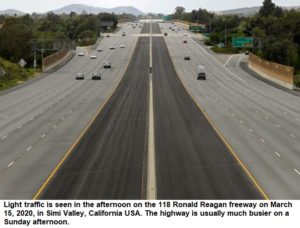
Amid closed restaurants, quiet office buildings and canceled sporting events, the new normal has had its fair share of environmental effects, with some areas in the U.S. reporting significant improvements in air quality.

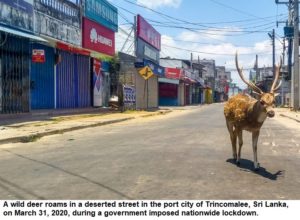
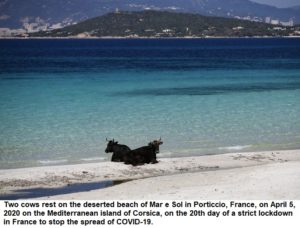
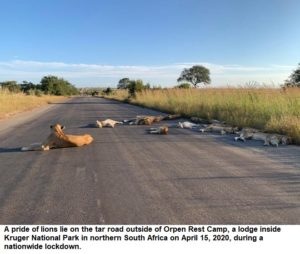
Animals have taken advantage of the absence of humans in some areas, too. Several lions were caught sunbathing on the road of a closed national park in South Africa. Meanwhile, penguins and dogs roamed through a nearly empty aquarium, leading to some incredible cross-animal interactions.

Here’s a look at some of the unique effects that coronavirus has had on our environment.


Source: Retrieved April 22, 2020 from: https://www.usatoday.com/story/news/world/2020/04/22/earth-day-2020-pollution-down-empty-highways-animals-major-cities/3002480001/

—————

VIDEO – Coronavirus: Wild animals wander through empty, lockdown towns – https://www.usatoday.com/videos/news/have-you-seen/2020/04/01/coronavirus-wild-animals-wander-through-empty-lockdown-towns/5102987002/

Posted April 22, 2020 – Wild Animals around the world have been spotted checking out urban spaces as humans lock down to prevent the spread of coronavirus.

What does the Caribbean need to do to Keep the Change:

Promote a greener economy, with jobs in renewable energy.

That’s it; let’s get started, as we reflect on this monumental Earth Day 2020 – the 50th iteration of this recognized and celebrated day.

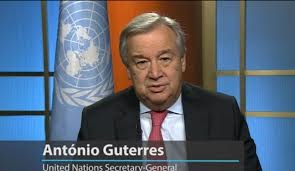
See how this directive was urged by António Guterres, the Secretary-General of the United Nations. See the story here:

Title: UN Secretary-General urges Climate Action in Coronavirus Recovery
APRIL 22, 2020 –
On the 50th anniversary of Earth Day, António Guterres, the secretary-general of the United Nations, had a message for the world: We face not one, but two global threats.
“We must act decisively to protect our planet from both the coronavirus and the existential threat of climate disruption,” said Guterres …

in a Video message.

The message, however, wasn’t that of hopelessness — the world has a chance to come together and fight both crises.

“We need to turn the recovery into a real opportunity to do things right for the future,” he said.

Restrictions aimed at reducing the spread of the novel coronavirus have drastically changed our lives and economies, creating a unique opportunity for us to invest in more sustainable societies.

The secretary-general offered some “climate-related actions to shape the recovery and work ahead.”

Guterres suggested directing coronavirus relief money into a greener economy, with jobs in renewable energy. Since taxpayer money helps businesses stay afloat in the economic downturn, the money should go toward more resilient and eco-conscious businesses.

“Public funds should be used to invest in the future, not the past,” said Guterres.

In the U.S., experts predict that the recent stimulus bills will only be temporary fixes, and we’ll need more policy changes by September to help us climb out of this recession. But as Guterres explains, since we’re already in the recession, we must take this opportunity to make our economy and energy systems more sustainable, reduce emissions and slow global warming.

Climate change will have economic consequences. We can expect billions of dollars in natural disaster damages, healthcare for pollution-related illnesses and unstable access to affordable food. But a lot of that cost can be prevented.

If we shift to renewable energy now, we can mitigate climate change and protect jobs in the energy industry when the oil runs out. Renewable energy is even cheaper once the infrastructure is in place.

To kick off a greener economy, Guterres recommends ending fossil fuel subsidies and taxing polluters to hold them accountable for their damage. He also recommends that climate risks be incorporated into economic systems like the stock market.

Above all else, the U.N. asks us to put aside our national affiliations and come together as people of Earth.

“Greenhouse gases, just like viruses, do not respect national boundaries,” said Guterres. “On this Earth Day, please join me in demanding a healthy and resilient future for people and planet alike.”

As the U.N. encourages us to invest in a healthy, resilient and sustainable economy, we can individually speed up the process by voting for leaders who prioritize the planet. Learn more at Earth Day Network’s Vote Earth campaign.

Source: https://www.earthday.org/un-secretary-general-urges-climate-action-in-coronavirus-recovery/ 

The foregoing refers to the reality and actuality of this Coronavirus crisis. Every month, the movement behind the 2013 book Go Lean…Caribbean presents a Teaching Series on a subject germane to Caribbean life. For this April 2020, our focus is on the actuality of the Coronavirus crisis and how some changes have been forced on our society. But being forced to change is not always bad; some good can come from it. This is entry 1-of-5 for this series, which details the kind of changes that we want to keep, not just for the global society but specifically here in the homeland.

Yes, we can … Keep the Change.

All the entries in this month’s series are cataloged as follows:

  1. Keep the Change – Lower Carbon Consumption abating Climate Change
  2. Keep the Change – Working From Home & the Call Center Model
  3. Keep the Change Schools – Primary to Tertiary – making e-Learning work
  4. Keep the Change – Basic Needs: Cannot just consume; we must produce as well
  5. Keep the Change – Mono-Industrial Economy: ‘All eggs in 1 basket’

There are no Ands, Ifs or Buts

… we need to do a better job of protecting our environment and optimizing our Carbon Footprint with Greenhouse gases. We needed to do this anyway but involuntarily we have been forced to comply these past months.

Once this crisis has past, is it possible to still consume less carbon? Indeed …

… this was the mandate of 2015 Paris Accord, – to lower global carbon output so as to abate Climate Change. There is now new hope. (Previously, in the 1990’s, the world came together, instituted and effectively complied with an accord to abate “Acid Rain”).

Our plan – strategies, tactics and implementations – must be ready for the Caribbean region … for Green Energy!

The points of reforming and transforming the Caribbean societal engines for Green Energy have been further elaborated upon in many previous blog-commentaries; consider this sample:

https://goleancaribbean.com/blog/?p=19351 ‘Missing Solar’ – Moral Authority to “Name, blame & shame” big polluters
https://goleancaribbean.com/blog/?p=18228 The Science of Power Restoration after catastrophic natural disasters
https://goleancaribbean.com/blog/?p=17280 Way Forward – For Energy: ‘Trade’ Winds
https://goleancaribbean.com/blog/?p=16361 5 Years Later – Climate Change: Coming so fast, so furious
https://goleancaribbean.com/blog/?p=14832 Counter-culture: Manifesting Change – Environmentalism
https://goleancaribbean.com/blog/?p=14174 Canada: “Follow Me” for Model on ‘Climate Change’ Action
https://goleancaribbean.com/blog/?p=13985 EU Assists Barbados in Renewable Energy Self-Sufficiency
https://goleancaribbean.com/blog/?p=12724 Lessons from Colorado: Water Management Arts & Sciences
https://goleancaribbean.com/blog/?p=10367 Science of Sustenance – Green Batteries
https://goleancaribbean.com/blog/?p=9455 Fix ‘Climate Change’ – Yes, We Can
https://goleancaribbean.com/blog/?p=7056 Electric Cars: ‘Necessity is the Mother of Invention’
https://goleancaribbean.com/blog/?p=5155 Tesla unveils super-battery to power homes with Green Energy options
https://goleancaribbean.com/blog/?p=4897 US Backs LNG Distribution Base in Jamaica for cleaner energy options
https://goleancaribbean.com/blog/?p=4587 Burlington, Vermont: Model city to be powered 100% by renewables
https://goleancaribbean.com/blog/?p=915 Go Green … Caribbean

Change … proactive or reactive – we will take it.

No one wanted the COVID-19 crisis – people have died and economies are wreaked – but if we are forced to change our carbon-consumption bad habits because of these external factors then we must “take the win”; our environment is a beneficiary.

A crisis is a terrible thing to waste!

This is serendipity – a good consequence from a bad incident. See these textbook definitions here:

Noun – Dictionary.com

  1. an aptitude for making desirable discoveries by accident.
  2. good fortune; luck

Noun – Merriam-Webster

  1. the faculty or phenomenonof finding valuable or agreeable things not sought for

This is also true for the advocacy of this Go Lean movement; we have always asserted that only at the precipice will people change; this pandemic is definitely a precipice – so let’s cement these changes. Let’s get the returns on our investments; and recovery from our sacrifices. This is how we can make progress and make our homeland a better place to live, work and play. 🙂

About the Book
The book Go Lean…Caribbean serves as a roadmap for the introduction and implementation of the technocratic Caribbean Union Trade Federation (CU), for the elevation of Caribbean society – for all member-states. This CU/Go Lean roadmap has these 3 prime directives:

  • Optimization of the economic engines in order to grow the regional economy to $800 Billion & create 2.2 million new jobs.
  • Establishment of a security apparatus to ensure public safety and protect the resultant economic engines.
  • Improve Caribbean governance to support these engines, including a separation-of-powers between the member-states and CU federal agencies.

The Go Lean book provides 370-pages of turn-by-turn instructions on “how” to adopt new community ethos, plus the strategies, tactics, implementations and advocacies to execute so as to reboot, reform and transform the societal engines of Caribbean society.

Download the free e-Book of Go Lean … Caribbean – now!

Who We Are
The movement behind the Go Lean book – a non-partisan, apolitical, religiously-neutral Community Development Foundation chartered for the purpose of empowering and re-booting economic engines – stresses that reforming and transforming the Caribbean societal engines must be a regional pursuit. This was an early motivation for the roadmap, as pronounced in the opening Declaration of Interdependence (Pages 11 – 14):

i. Whereas the earth’s climate has undeniably changed resulting in more severe tropical weather storms, it is necessary to prepare to insure the safety and security of life, property and systems of commerce in our geographical region. As nature recognizes no borders in the target of its destruction, we also must set aside border considerations in the preparation and response to these weather challenges.

xi. Whereas all men are entitled to the benefits of good governance in a free society, “new guards” must be enacted to dissuade the emergence of incompetence, corruption, nepotism and cronyism at the peril of the people’s best interest. The Federation must guarantee the executions of a social contract between government and the governed.

xvi. Whereas security of our homeland is inextricably linked to prosperity of the homeland, the economic and security interest of the region needs to be aligned under the same governance. Since economic crimes … can imperil the functioning of the wheels of commerce for all the citizenry, the accedence of this Federation must equip the security apparatus with the tools and techniques for predictive and proactive interdictions.

xxiv.  Whereas a free market economy can be induced and spurred for continuous progress, the Federation must install the controls to better manage aspects of the economy: jobs, inflation, savings rate, investments and other economic principles. Thereby attracting direct foreign investment because of the stability and vibrancy of our economy.

Sign the petition to lean-in for this roadmap for the Caribbean Union Trade Federation.

Share this post:
, , ,
[Top]

Coronavirus: ‘Clear and Present’ Threat to Economic Security

Go Lean Commentary

There is a Clear and Present Danger threatening the world’s economic establishments – Coronavirus. Everyone will be affected! If you catch this flu, you are affected. If you do not catch this flu, you are still affected!

Travel, transport and systems of commerce are preparing for the worst-case scenario. This is the …

Sum of All Our Fears.

Things will get worse before it gets worst. Expect a global recession!

For the 30 Caribbean member-states, the dangers are starting to materialize in this region and among the Diaspora:

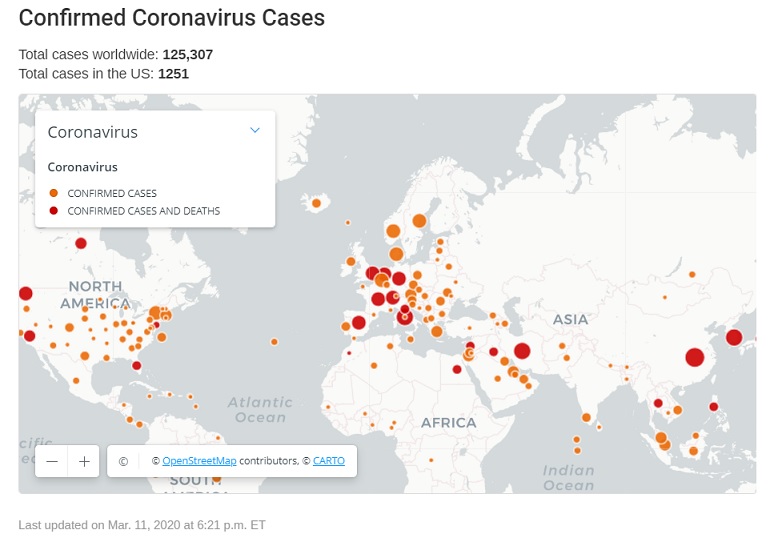
All in all, there is impact on the Caribbean region, and the whole world for that matter. These are not our words alone; these are the words of the cover story of this week’s edition of the globally iconic journal The Economist Magazine (March 7, 2020). This story looked at how governments should prepare for the spread of this virus, COVID-19. In truth, the pandemic threatens an economic crisis as well as a health crisis and both will need fixing. So far, as of this publication date, the disease is in 85 countries and territories, up from 50 a week earlier. More than 95,000 cases and 3,200 deaths have been recorded. See the full “The Economist” article here and a related VIDEO:

Title: COVID-19 – The right medicine for the world economy
Sub-Title: Coping with the pandemic involves all of government, not just the health system

It is not a fair fight, but it is a fight that many countries will face all the same. Left to itself, the COVID-19 pandemic doubles every five to six days. When you get your next issue of The Economist the outbreak could in theory have infected twice as many people as today. Governments can slow that ferocious pace, but bureaucratic time is not the same as virus time. And at the moment governments across the world are being left flat-footed.
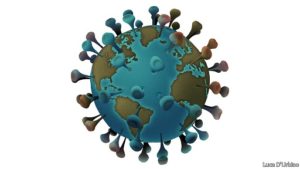
The disease is in 85 countries and territories, up from 50 a week earlier. Over 95,000 cases and 3,200 deaths have been recorded. Yet our own analysis, based on patterns of travel to and from China, suggests that many countries which have spotted tens of cases have hundreds more circulating undetected (see Graphic detail). Iran, South Korea and Italy are exporting the virus. America has registered 159 cases in 14 states but as of March 1st it had, indefensibly, tested just 472 people when South Korea was testing 10,000 a day. Now that America is looking, it is sure to find scores of infections—and possibly unearth a runaway epidemic.

Wherever the virus takes hold, containing it and mitigating its effects will involve more than doctors and paramedics. The World Health Organisation has distilled lessons from China for how health-care systems should cope (see Briefing). The same thinking is needed across the government, especially over how to protect people and companies as supply chains fracture and the worried and the ill shut themselves away.

The first task is to get manpower and money to hospitals. China drafted in 40,000 health workers to Hubei province. Britain may bring medics out of retirement. This week the World Bank made $12bn and the IMF $50bn available for COVID-19. The Global Fund, which fights diseases like malaria and tb, said countries can switch grants. In America Congress is allocating $8.3bn of funding. The country has some of the world’s most advanced hospitals, but its fragmented health system has little spare capacity. Much more money will be needed.

Just as important is to slow the spread of the disease by getting patients to come forward for testing when outbreaks are small and possible to contain. They may be deterred in many countries, including much of America, where 28 [million] people are without health coverage and many more have to pay for a large slug of their own treatment. People also need to isolate themselves if they have mild symptoms, as about 80% of them will. Here sick pay matters, because many people cannot afford to miss work. In America a quarter of employees have no access to paid sick leave and only scattered states and cities offer sickness benefits. Often the self-employed, a fifth of Italy’s workforce, do not qualify. One study found that, in epidemics, guaranteed sick pay cuts the spread of flu in America by 40%.

Sick pay also helps soften the blow to demand which, along with a supply shock and a general panic, is hitting economies. These three factors, as China shows, can have a dramatic effect on output. Manufacturing activity there sank in February to its lowest level since managers were first surveyed in 2004. In the quarter to March the economy as a whole could shrink for the first time since the death of Mao Zedong. The OECD expects global growth this year to be its slowest since 2009. Modelling by academics at the Australian National University suggests that GDP in America and Europe would be 2% lower than it would have been in the absence of a pandemic and perhaps as much as 8% lower if the rate of deaths is many times higher than expected. Financial markets are pricing in fear. The S&P 500 has fallen by 8% from its peak on February 19th. Issuance of corporate debt on Wall Street has more or less stopped. The yield on ten-year Treasuries dipped below 1% for the first time ever.
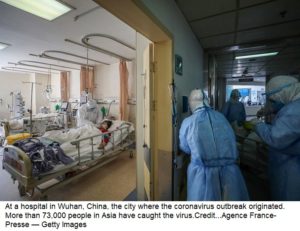
In rich countries, most of the economic effort has been directed towards calming financial markets. On March 3rd America’s Federal Reserve cut rates a fortnight before its monetary-policy meeting, and by an unusually large half-a-percentage point (see article). The central banks of Australia, Canada and Indonesia have also acted. The Bank of England and the European Central Bank are both expected to loosen policy, too.

Yet this slowdown is not a textbook downturn. Lower rates will ease borrowing costs and shore up sentiment, but no amount of cheap credit can stop people falling ill. Monetary policy cannot repair broken supply chains or tempt anxious people into venturing out. These obvious limitations help explain why stockmarkets failed to revive after the Fed’s cut.

Better to support the economy directly, by helping affected people and firms pay bills and borrow money if they need it. For individuals, the priority should be paying for health care and providing paid sick leave. The Trump administration is considering paying some hospital bills for those with the virus. Japan’s government will cover the wages of parents who stay at home to care for children or sick relatives; Singapore’s will help cab drivers and bosses whose employees are struck down. More such ideas will be needed.

For companies the big challenge will be liquidity. And although this shock is unlike the financial crisis, when the poison spread from within, that period did show how to cope with a liquidity crunch. Firms that lose revenues will still face tax, wage and interest bills. Easing that burden, for as long as the epidemic lasts, can avoid needless bankruptcies and lay-offs. Temporary relief on tax and wage costs can help. Employers can be encouraged to choose shorter hours for all their staff over lay-offs for some of them. Authorities could fund banks to lend to firms that are suffering, as they did during the financial crisis and as China is doing today. China is also ordering banks to go easy on delinquent borrowers. Western governments cannot do that, but it is in the interest of lenders everywhere to show forbearance towards borrowers facing a cash squeeze, much as banks did to public-sector employees during America’s government shutdown in 2018-19.

There is a tension. Health policy aims to spare hospitals by lowering the epidemic’s peak so that it is less intense, if longer-lasting. Economic policy, by contrast, aims to minimise how long factories are shut and staff absent. Eventually governments will have to strike a balance. Today, however, they are so far behind the epidemic that the priority must be to slow its spread. ■

This article appeared in the Leaders section of the print edition under the headline “The right medicine for the world economy”

Source: Retrieved March 5, 2020 from: https://www.economist.com/leaders/2020/03/05/the-right-medicine-for-the-world-economy?cid1=cust/ednew/n/bl/n/2020/03/5n/owned/n/n/nwl/n/n/NA/420030/n

————–

VIDEO – Coronavirus | Plunging stocks on Wall Street over COVID-19 outbreak anxiety –  https://youtu.be/Boof8NfPQRI

SABC Digital News
Mar 10, 2020 – A chaotic trading day on Wall Street ended with plunging stocks coupled with collapsing crude oil prices as the global anxiety from the Coronavirus continues to take hold. The Dow Jones industrial average ended over 2000 points lower while other indexes also followed suit. The stock deluge was intensified after a dispute between OPEC members and Saudi Arabia’s decision to slash its oil prices while boosting output in an angry response to Russia’s refusal to reduce production due to a fall in Chinese demand. For more news, visit sabcnews.com and also #SABCNews on Social Media.

The present Caribbean region is short-handed for the kind of cross-border coordination that is needed to manage this pandemic – and others like it. This is truly the Sum of All Our Fears. This is a crisis …

… alas, according to the noted Nobel-prized winning Economist Paul Romer, a crisis is a terrible thing to waste.

Now, more than ever, we need a super-national organizational structure, a technocracy, to shepherd the protection for the people and trading partners in the region.

Economists …
Economist Magazine

You see the trend, right? The Coronavirus is appearing on the radar screens for the world’s community of Economists. The world in general, and the Caribbean in particular, is about to “get hammered with the surge and tides of an economic tsunami”. Be afraid; be very afraid. (See the related experiences in the Appendix VIDEO below).

We have been here before …

This is very similar to the events of 2008, the exigency of the Great Recession and International Financial Crisis. This actuality inspired the composition of the 2013 book Go Lean…Caribbean. The book traced that crisis, and availed the opportunity to propose strategies, tactics and implementations to mitigate against future crises. The premise was that the Caribbean status quo was not equipped to contend with trans-border crises alone; that not one of the 30 member-states that constituted the political Caribbean is fortified for any serious economic upheavals or threats to homeland security.

This is our actuality today!

We need those mitigations, those strategies, tactics and implementations. We need “them” now!

The book presents a roadmap to introduce the Caribbean Union Trade Federation (CU), to empower the economic, security and governing engines of the region for when there is a “Clear and Present Danger”. We are there now!

We must not delay in confederating this regional technocracy.

This will not be the last. We must prepare for global, regional and national crises as the New Normal.

This was the assertion in many previous Go Lean blog/commentaries, that highlighted the theme of a “Clear and Present Danger”; see this sample list here:

https://goleancaribbean.com/blog/?p=18195 Disaster Planning – Rinse and Repeat
https://goleancaribbean.com/blog/?p=16836 Crypto-currency: Here comes ‘Trouble’ – Clear and Present Danger?
https://goleancaribbean.com/blog/?p=15796 Lessons Learned from 2008: Righting The Wrong
https://goleancaribbean.com/blog/?p=12348 Caribbean Economists: ‘Region is in Trauma’
https://goleancaribbean.com/blog/?p=8132 Venezuela: Watching a ‘Train Wreck in Slow Motion’
https://goleancaribbean.com/blog/?p=7345 The Urgency of ISIS reached the Caribbean Region
https://goleancaribbean.com/blog/?p=7327 The Exigency of Zika – Lessons Learned on Threat Management
https://goleancaribbean.com/blog/?p=7119 The Need for a Standby Force for Threats to the Homeland
https://goleancaribbean.com/blog/?p=6531 A Lesson in History – ‘Exigency of 2008’
https://goleancaribbean.com/blog/?p=5002 Managing a ‘Clear and Present Danger’
https://goleancaribbean.com/blog/?p=2397 Stopping the Clear and Present Danger from ‘Ebola’
https://goleancaribbean.com/blog/?p=1003 Painful and rapid spread of Chikungunya virus in the Caribbean
https://goleancaribbean.com/blog/?p=623 Harsh Reality: ‘Only at the precipice, do they change’

This Coronavirus threat will not subside anytime soon. We must prepare!

We are not the only entities around the world with this concern; States and governments everywhere have the same urgency. This is the whole premise of the standard Social Contract:

Citizens surrender some of their freedoms and submit to the authority of the State in exchange for protection of remaining natural and legal rights.

The Caribbean member-states are not equipped on the national level; they need a super-national solution. The CU ascension creates another layer of government hierarchy for the region. This is the long awaited Way Forward for Caribbean survival.

Let’s get to work.

This is very much so the theme of the 1970 song “Lean On Me” by Singer-Songwriter Bill Withers; this became the clarion call for the Go Lean moment. Be reminded of these lyrics, as quoted in the Go Lean book (Page 5):

Sometimes in our lives
We all have pain
We all have sorrow
But if we are wise
We know that there’s always tomorrow

Lean on me, when you’re not strong
And I’ll be your friend
I’ll help you carry on
For it won’t be long
‘Til I’m gonna need
Somebody to lean on

Please swallow your pride
If I have things you need to borrow
For no one can fill those of your needs
That you won’t let show
You just call on me brother, when you need a hand

(Chorus)

We all need somebody to lean on
I just might have a problem that you’d understand
We all need somebody to lean on

Second Verse

If there is a load you have to bear
That you can’t carry
I’m right up the road
I’ll share your load
If you just call me

Today’s reality is the manifestation of this song (lyrics). It is time for the Caribbean neighborhood to “lean on” each other, for the mitigation of this Coronavirus. This is how we make our regional homeland a better place to live, work, heal and play. 🙂

About the Book
The book Go Lean…Caribbean serves as a roadmap for the introduction and implementation of the technocratic Caribbean Union Trade Federation (CU), for the elevation of Caribbean society – for all member-states. This CU/Go Lean roadmap has these 3 prime directives:

  • Optimization of the economic engines in order to grow the regional economy to $800 Billion & create 2.2 million new jobs.
  • Establishment of a security apparatus to ensure public safety and protect the resultant economic engines.
  • Improve Caribbean governance to support these engines, including a separation-of-powers between the member-states and CU federal agencies.

The Go Lean book provides 370-pages of turn-by-turn instructions on “how” to adopt new community ethos, plus the strategies, tactics, implementations and advocacies to execute so as to reboot, reform and transform the societal engines of Caribbean society.

Download the free e-Book of Go Lean … Caribbean – now!

Who We Are
The movement behind the Go Lean book – a non-partisan, apolitical, religiously-neutral Community Development Foundation chartered for the purpose of empowering and re-booting economic engines – stresses that reforming and transforming the Caribbean societal engines must be a regional pursuit. This was an early motivation for the roadmap, as pronounced in the opening Declaration of Interdependence (Pages 12 – 13):

ix. Whereas the realities of healthcare and an aging population cannot be ignored and cannot be afforded without some advanced mitigation, the Federation must arrange for health plans to consolidate premiums of both healthy and sickly people across the wider base of the entire Caribbean population. The mitigation should extend further to disease management, wellness, mental health, obesity and smoking cessation programs. …

x. Whereas we are surrounded and allied to nations of larger proportions in land mass, populations, and treasuries, elements in their societies may have ill-intent in their pursuits, at the expense of the safety and security of our citizens. We must therefore appoint “new guards” to ensure our public safety and threats against our society, both domestic and foreign. The Federation must employ the latest advances and best practices of criminology and penology to assuage continuous threats against public safety. …

xi. Whereas all men are entitled to the benefits of good governance in a free society, “new guards” must be enacted to dissuade the emergence of incompetence, corruption, nepotism and cronyism at the peril of the people’s best interest. The Federation must guarantee the executions of a social contract between government and the governed.

xvi. Whereas security of our homeland is inextricably linked to prosperity of the homeland, the economic and security interest of the region needs to be aligned under the same governance. Since economic crimes … can imperil the functioning of the wheels of commerce for all the citizenry, the accedence of this Federation must equip the security apparatus with the tools and techniques for predictive and proactive interdictions.

xxiv.  Whereas a free market economy can be induced and spurred for continuous progress, the Federation must install the controls to better manage aspects of the economy: jobs, inflation, savings rate, investments and other economic principles. Thereby attracting direct foreign investment because of the stability and vibrancy of our economy.

Sign the petition to lean-in for this roadmap for the Caribbean Union Trade Federation.

———————-

Appendix VIDEO – The Impact of Coronavirus on Tourism Industry – https://www.nbcmiami.com/on-air/as-seen-on/coronavirus-impact-on-the-tourism-industry/2202976/

March 10, 2020 – NBC 6 Investigator Tony Pipitone reports on the Coronavirus’ impact on the cruise industry.

Share this post:
, ,
[Top]

Coronavirus – Facts and Fictions

Go Lean Commentary

There is a serious threat in the world … one that is imperiling life and systems of commerce: Coronavirus; see this news story-highlights, and related VIDEO here:

Title: Coronavirus is deadlier than flu, study finds
The fatality rate of the new coronavirus is far higher than that of the seasonal flu, according to a new analysis from the Chinese Center for Disease Control and Prevention.

The study found a fatality rate of 2.3 percent in China as of last week, though later figures suggest the rate has increased. In the U.S., flu fatality rates hover around 0.1 percent. Here are the latest updates and maps of where the virus has spread.

Yesterday: Americans flown home from a contaminated cruise ship in Japan said they were unaware until late that some evacuees were infected. “I didn’t know until we were in the air,” said Carol Montgomery. “I saw an area of plastic sheeting and tape.”

Closer look: Cambodia’s decision to let hundreds of passengers leave another cruise ship on which a person was infected could dramatically complicate the effort to contain the virus.

Another angle: HSBC, one of Hong Kong’s most important banks, said today that it would cut 35,000 jobs over the next three years, in part because of disruptions caused by the outbreak. On Monday, Apple cut its quarterly sales expectations and warned that the virus threatened global supply chains.

Related: The Tokyo Marathon, which planned to accept about 38,000 runners, will be restricted to about 200 elite participants. The race is scheduled for March 1.

Source: New York Times – Retrieved February 18, 2020 from: https://www.nytimes.com/2020/02/18/briefing/coronavirus-michael-bloomberg-boy-scouts.html

———–

VIDEO – China Coronavirus Death Toll Rises to 2,118 –  https://youtu.be/a_WeUpwJNVA

Bloomberg Markets and Finance
Feb.19 — China is saying the death toll from the coronavirus has climbed to 2,118, with the total amount of cases reaching 74,576. Bloomberg’s Tom Mackenzie and Yvonne Man report on “Bloomberg Markets: Asia.”

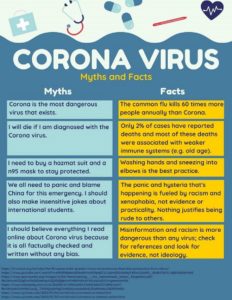
As with many threats in society, there abounds a lot of misinformation, half-truths and outright lies. Consider:

  • This new Coronavirus started in Wuhan Province, China. But not all Chinese are affected. In fact with a population of 1.4 billion, the near 75,000 afflicted people worldwide is less than 1/10 of 1 percent.
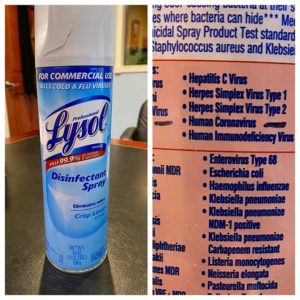
  • There have been previous Coronavirus strains. (Older cans of Lysol spray declare that they kill “coronavirus”; see photo below).
  • The disease is not automatically fatal – only 2,118 people have died so far – mostly those advanced in age and/or with depressed immune systems. Many more die every year with the “normal” seasonal flu.
  • Not all Chinese people are from China – Sinophone people amount to 1.5 Billion. Few Chinese Diaspora have had any exposure to the ailment.
  • The disease does not live away from mammals. Chinese made products pose no threats.
  • Communist China does not allow people to freely leave China, even under normal circumstances, unless there is some special reason to do so. Hong Kong is a Special Administrative region, governed like a separate country. The freedoms of movement there are not equated on the mainland.
  • Flu Season has a limited shelf-life; it is expected to naturally end in the northern hemisphere by late Spring 2020.
  • No Caribbean area cruise ships or passengers have been affected – the potential risk is not abated.

This disease poses a danger; there is the need for remediation and mitigation. There is the need for a hero … we need a hero. This sounds so much like a song from my formative years.

I’m holding out for a hero ’til the end of the night
He’s gotta be strong
And he’s gotta be fast
And he’s gotta be fresh from the fight
I need a hero
I’m holding out for a hero ’til the morning light
He’s gotta be sure
And it’s gotta be soon
And he’s gotta be larger than life
(Song by Bonnie Tyler 1984; see VIDEO & Lyrics at 
https://youtu.be/OBwS66EBUcY; see Appendix)

Alas, there is no hero … for this peril. There is no Superman, no Wonder Woman, no Avengers nor Captain Marvel. The remediation and mitigation that we need will not be miraculous; it must simply come from … us. Yes, we can … do the heavy-lifting ourselves to protect our society.

This was the quest as related in the 2013 book Go Lean…Caribbean. The book surveyed the world scene and saw the need for the 30 member-states of the Caribbean region to confederate, collaborate, consolidate its efforts to be able to deal with an actuality like this Coronavirus Epidemic.

We need that vision now!

The book related that a roadmap must be put in place to introduce and implement a deputized agency, a federal technocracy to act on behalf of all these countries and to do the heavy-lifting of Homeland Security, to remediate and mitigate all threats, foreign and domestic; this would naturally include Disease Control and Management. That roadmap called for the Caribbean Union Trade Federation (CU), with a Cabinet-level Department of Health. The functionalities of this “Security Apparatus” is described as follows:

  • Strategies – Comparing Strategies – Healthcare –vs- Bush Medicine (Page 50)
    The CU plans calls for some health care reform, under the guise of homeland and economic security, emergency management and cross border initiatives (disease management and organ transplantation).
  • Tactical – Separation of Powers –  I2: Department of Health – Disease Control & Management (Page 86)
    Due to the systemic threat, epidemic response and disease control will be coordinated at the CU level. This agency will manage the detailed inventory needs of pharmaceuticals (vaccinations, etc.) so that the Group Purchasing Organization can negotiate for volume-wholesale pricing/discounts and delivery schedules on the regional level.
    The data associated with Flu Shots, Vaccinations, STDs should be mined and published by the CU.
    This agency will also sponsor Disease Management schemes to identify, educate, treat patients with chronic diseases like diabetes, asthma, heart, COPD, and other ailments that tend to have no cure, but the affected could prosper with proper management.
  • Advocacy – 10 Ways to Improve Healthcare – Public Health Extension (Page 156)
    Due to the systemic threat, epidemic response and disease control will be coordinated at the federal level. Also, the acquisition of public-bound pharmaceuticals (vaccinations, etc.) can be negotiated at the regional level, using the Group Purchasing Organizations (GPO) envisioned in this roadmap. This will lead to a better supply and pricing dynamics. …
  • Advocacy – 10 Ways to Impact Cancer – Public Health Administration (Page 157)
    Not all [disease] cancer is hereditary or tied to lifestyle (smoking, obesity, diet), sometimes there are environmental agents. The CU treaty grants jurisdiction for systemic threats, epidemic response and/or disease control. Despite the pro-business ethos, the CU will assuage any threat of new/existing industrial endeavors with thorough environmental impact studies.

We have been here before …

This is turning out to be a very dangerous disease outbreak – an epidemic. However, this is not the first one … for the world or even to originate from China. In fact, Coronavirus is being compared sharply to the 2003 crisis with the SARS epidemic that imperiled Hong Kong. See  this excerpt from a previous blog-commentary on SARS:

A Lesson in History – SARS in Hong Kong
Sadly, we report – though it is only a reminder – that there is no cure for the common cold; nor its more debilitating “Big Brother”, influenza or “the flu”.

Sometimes the flu is just the flu. Symptoms may include cough, sore throat, fever, myalgia (muscle pain), and lethargy (fatigue or drowsiness, or prolonged sleep patterns). Unfortunately this normal start for influenza may morph into more serious concerns. For example, consider the SARS epidemic of 2003; see Appendix A.  The same symptoms, above, were the applicable descriptors at the start of the SARS outbreak.

Why would anyone think of anything more than the common/annual flu? How can a community – the Caribbean region in this case – manage such an epidemiological crisis?

For this, we have a well-documented lesson from Hong Kong in 2003. There is much for us to learn from this lesson in history.

The people, institutions and governance of the Caribbean need to pay more than the usual attention to the lessons of SARS in Hong Kong, not just from the medical perspective (see Appendix B), but also from an economic viewpoint.

During the “heyday” of the SARS crisis, travel and transport to Hong Kong virtually came to a grinding halt! Hong Kong had previously enjoyed up to 14 million visitors annually; they were a gateway to the world. The SARS epidemic became a pandemic because of this status. Within weeks of the outbreak, SARS had spread from Hong Kong to infect individuals in 37 countries in early 2003.

Prior to this SARS outbreak, the WHO [(World Health Organization)] had developed a Pandemic War Plan, reserved for the worst situations; see this link here, [which was presented then as Appendix C].  This features strategies and tasks to identify, isolate and eradicate a major virus outbreak … at the start. But the War Plan presents a cautionary warning: should the disease ever escape the isolation attempts, the result could be socio-economic disaster, with millions dead.

The possibility of this warning is the motivation of this commentary and the Go Lean movement.

In general, the CU will employ its own “War Plan”; its strategies, tactics and implementations to impact its prime directives. …

The issue in this commentary relates to economics, security and economic security; in effect this is a governance issue. This is an issue of business continuity for the region. …

The Go Lean movement posits that wisdom, prudence and best practices can be adopted by careful study of complex matters. This is defined … as a hallmark of a technocracy.

The Coronavirus is a serious threat; this is not the first and may not be the last! This is why the Go Lean movement urges the Caribbean to prepare now, with the implementation of the technocratic CU Trade Federation and its related agencies. How? Well, the book Go Lean…Caribbean – available to download for free – provides 370 pages of step-by step directions.

The points of effective, technocratic medical stewardship, gleaned from facts in medical and economic history, were further elaborated upon in these previous blog/commentaries:

https://goleancaribbean.com/blog/?p=15310 Industrial Reboot – Trauma 101
https://goleancaribbean.com/blog/?p=8943 Zika’s Drug Breakthrough
https://goleancaribbean.com/blog/?p=7822 Doing More in the Fight Against Cancer
https://goleancaribbean.com/blog/?p=7430 Brazilian Shrunken Head Babies: Zika or Tdap?
https://goleancaribbean.com/blog/?p=7327 Zika – A 4-Letter Word
https://goleancaribbean.com/blog/?p=5002 Managing a ‘Clear and Present Danger’
https://goleancaribbean.com/blog/?p=2397 Stopping Ebola
https://goleancaribbean.com/blog/?p=1003 Painful and rapid spread of Chikungunya virus in the Caribbean

Let’s hope this new Coronavirus threat subsides … soon.

The Go Lean movement (book and subsequent blog-commentaries) stresses that reforming and transforming the Caribbean societal engines must be a regional pursuit; no one member-states has the prowess to tackle these potential pandemics – like Coronavirus – alone. Therefore, we must heed the warnings in advance and prepare our economic, security and governing eco-system.

Tongue-in-cheek reference to Caribbean Cruises amidst the Coronavirus Outbreak

We must learn from China.

“There but for the Grace of God go I” – Old Expression

The Caribbean is very dependent on tourism. Our way of life would not endure so well if we were at the epicenter of Coronavirus, or some similar pandemic; so we empathize and sympathize with China.

Heavy-lifting indeed …

This is why the Go Lean book (Page 10) advocates for the people and governing entities of the Caribbean member-states …

… “to provide new guards for their future security” …

… by deputizing the authority and responsibility to the CU Trade Federation to do the heavy-lifting of protecting the member-states during pandemics. As related in a previous blog-commentary:

If there is a load you have to bear
That you can’t carry
I’m right up the road
I’ll share your load
If you just call me

This is how we make our homeland a better place to live, work and play. 🙂

About the Book
The book Go Lean…Caribbean serves as a roadmap for the introduction and implementation of the technocratic Caribbean Union Trade Federation (CU), for the elevation of Caribbean society – for all member-states. This CU/Go Lean roadmap has these 3 prime directives:

  • Optimization of the economic engines in order to grow the regional economy to $800 Billion & create 2.2 million new jobs.
  • Establishment of a security apparatus to ensure public safety and protect the resultant economic engines.
  • Improve Caribbean governance to support these engines, including a separation-of-powers between the member-states and CU federal agencies.

The Go Lean book provides 370-pages of turn-by-turn instructions on “how” to adopt new community ethos, plus the strategies, tactics, implementations and advocacies to execute so as to reboot, reform and transform the societal engines of Caribbean society.

Download the free e-Book of Go Lean … Caribbean – now!

Who We Are
The movement behind the Go Lean book – a non-partisan, apolitical, religiously-neutral Community Development Foundation chartered for the purpose of empowering and re-booting economic engines – stresses that reforming and transforming the Caribbean societal engines must be a regional pursuit. This was an early motivation for the roadmap, as pronounced in the opening Declaration of Interdependence (Pages 11 – 13):

ix. Whereas the realities of healthcare and an aging population cannot be ignored and cannot be afforded without some advanced mitigation, the Federation must arrange for health plans to consolidate premiums of both healthy and sickly people across the wider base of the entire Caribbean population. The mitigation should extend further to disease management, wellness, mental health, obesity and smoking cessation programs. …

x. Whereas we are surrounded and allied to nations of larger proportions in land mass, populations, and treasuries, elements in their societies may have ill-intent in their pursuits, at the expense of the safety and security of our citizens. We must therefore appoint “new guards” to ensure our public safety and threats against our society, both domestic and foreign. The Federation must employ the latest advances and best practices of criminology and penology to assuage continuous threats against public safety. …

xi. Whereas all men are entitled to the benefits of good governance in a free society, “new guards” must be enacted to dissuade the emergence of incompetence, corruption, nepotism and cronyism at the peril of the people’s best interest. The Federation must guarantee the executions of a social contract between government and the governed.

xvi. Whereas security of our homeland is inextricably linked to prosperity of the homeland, the economic and security interest of the region needs to be aligned under the same governance. Since economic crimes … can imperil the functioning of the wheels of commerce for all the citizenry, the accedence of this Federation must equip the security apparatus with the tools and techniques for predictive and proactive interdictions.

xxiv.  Whereas a free market economy can be induced and spurred for continuous progress, the Federation must install the controls to better manage aspects of the economy: jobs, inflation, savings rate, investments and other economic principles. Thereby attracting direct foreign investment because of the stability and vibrancy of our economy.

Sign the petition to lean-in for this roadmap for the Caribbean Union Trade Federation.

Share this post:
, ,
[Top]

Food Security – Big Chicken 101

Go Lean Commentary

We gotta eat!
So we should always have access to foods that are “delicious, nutritious and taste like Chicken”.

So many exotic foods taste like chicken: sea turtle, alligator, rattlesnake, frog legs, iguana, etc. These foods are viable sources of protein, and commonplace here in the New World (Western Hemisphere). Still, for the un-initiated, they may frown on the exotic nature of these foods – they would rather just “Eat Chicken”.

Everybody eats chicken or poultry; it is the staple protein of the Western global diet.

The chickens are simple and straight forward to cultivate; they are the most docile of domesticated animals:

  • The females – hens – give eggs every day.
  • It takes 8 to 12 weeks from hatching to slaughter.
  • In some Third World countries, there is the iconic imagery of chickens on buses, trains, and boats; people take their chickens with them alive for their journey, but they might slaughter and eat them during the course of the expedition.

Poultry varieties – chicken, turkey, Cornish hens, pheasant, quail, etc. – are universally prominent in diets around the globe. Plus, there tend to be few religious restrictions amongst meat-eaters:

i.e. compared to Muslims who do not eat pork; or Hindus who do not eat beef.

This is not new; chickens played a prominent role in ancient life, medieval iife and the recent colonial life. But “something” happened in the 20th Century and now chickens are omnipresent – 9 billion are raised in the US alone – in modern life. What was the “something” that happened?

Big Pharma: Antibiotics or Steroids … in the 1940’s.

This is the science:

Too many fowls (chicken, turkey, etc.) together almost always causes sickness, disease and death. Something more is needed to bolster the fowl’s immune system to allow them to thrive despite the closed quarters, surrounded by thousands of other birds, and with minimal exercise/movement.

This pharmaceutical product offering – antibiotics – which emerged in the late 1940’s, allows for more chicken production at lower costs. Since the late 1940’s – early 1950’s – poultry (eggs and chicken meat) became plentiful for breakfast, lunch and dinner; daily if that is the desire.

Now, anybody, anywhere can deploy Chicken Farms, endure the 8 to 12 weeks growth stage, slaughter and eat chicken. (It is best suited for rural areas). See the “How To” in the Appendix VIDEO below.

Anybody, anywhere”? This sounds like a business model for rural agri-business, so that a community can “Feed Itself”.

“The Caribbean must be able to Feed Ourselves” – this is the theme of the teaching series for December 2019 from the movement behind the book Go Lean…Caribbean. This submission is the conclusion of the series; this is commentary 5 of 5 considering the Food Security and Bread Baskets for the Caribbean. The Go Lean movement (book and blogs) posits that regional stakeholders must have the priority for us to Feed Ourselves, rather than depending solely on trade. Other Food Supply considerations are presented in this series; see the full series catalog here:

  1. Food SecurityBread Baskets on Land and Sea
  2. Food SecurityTemperate Foods in the Tropics
  3. Food SecurityOpportunity: 1 American County in Iowa raises all Beef for a Cruise Line
  4. Food SecurityFTAA: A Lesson in History
  5. Food Security – Big Chicken

The Go Lean movement presents a roadmap for an Industrial Reboot of our agricultural footprint. This relates to the Caribbean Union Trade Federation (CU) and how we can ensure Food Security for all 30 member-states by collaborating, integrating and leveraging – one community can service another. This way we can Feed Ourselves by creating our own bread baskets. This strategy allows for consideration among the 30 participating member-states as to who is more suited to ramp-up an agri-business eco-system. While we should be deploying Chicken Farms everywhere – in every community, in truth this is not always possible locally. However, there is the opportunity for a regional solution – one community can be deputized for another community.

All in all, our society must be able to Feed Ourselves and antibiotics-steroids help. But don’t get it twisted, antibiotics and steroids are not the heroes in this story; in fact they could be villains. See their historicity depicted in the book Big Chicken – consider the Book Review in the Appendix below and the interview with the Author in this AUDIO-PODCAST  here:

AUDIO-PODCASTHow Antibiotics Changed The Way The World Eatshttps://the1a.org/audio/#/shows/2017-09-26/how-antibiotics-changed-the-way-the-world-eats/112128/@00:00

How Antibiotics Changed The Way The World Eats

Posted September 26, 2017 – The Poultry industry taught us to want chicken more. Before the 1940’s, chicken was rarely seen on the dinner table.

Chickens play a prominent role in domestic life – they are omnipresent – but there are dire consequences from the excessive use of antibiotics. This is the peril of Big Pharma. This is not new! In fact, this is typical in modern life, “we” tend to go “2 steps forward, 1 step backwards” or worse yet: “1 step forward, 2 steps backwards”. We have addressed the dangers of antibiotics before; consider this excerpt from a previous blog-commentary from October 2014:

Antibiotics Use Associated With Obesity Risk
Big Pharma, the Pharmaceutical industry, dictates standards of care in the field of medicine, more so than may be a best-practice. (Picture the scene of a Pharmaceutical Salesperson slipping in the backdoor to visit a doctor and showcase latest product lines).
This subject of damaging health effects deriving from capitalistic practices in medicine aligns with Go Lean … Caribbean (Page 157), as it posits that Cancer treatment (in the US) has been driven by the profit motive, more so than a quest for wellness and/or a cure.

This is not the model we want to effect the well-being of our young children.

The Go Lean roadmap specifies where we are as a region (minimal advanced medicine options), where we want to go (elevation of Caribbean society in the homeland for all citizens to optimize wellness) and how we plan to get there – confederating as a Single Market entity. While the Go Lean book strategizes a roadmap for economic empowerment, it clearly relates that healthcare, and pharmaceutical acquisitions are important in the quest to make the Caribbean a better place to live, work and play.

We need more food production – this includes Chicken – in our Caribbean homelands. We import too much. Apparently, chickens can be hatched, raised, slaughtered and processed with little effort. Ideal for rural areas, there should be few “barriers to entry” for community stewards to launch this aspect of agri-business.

What could possibly be the problem?

There is one:

Agricultural pollution/odors – Normally limited to rural areas, have the potential of disturbing the natural beauty of the area or detract from the tourism/resort look, feel and smell. See the Appendix AUDIO-PODCAST below.

In addition, when considering any changes, there are always the “powers that be” that provide opposition; they profit from the Status Quo. Caribbean communities are consuming chicken – imported chicken, acquired through trade. To reboot the agri-business eco-system and foster a local industry will entail empowering new people-processes, at the expense of the old people-processes. This is the reality of Crony-CapitalismSpecial Interests that defy the Greater Good for personal gain.

Come what may, we must reboot. Change will come … anyway. We need to regulate, modulate and stipulate positive changes that society makes to ensure the Greater Good. This commitment might mean ignoring the Classical Economists and their Theory of Comparative Advantage – where greater benefits are derived to the trading partners by allowing the partner with the most value to execute the functionality – for a while. This Theory has caused globalization to run amok.

We may need subsidies to compensate and prop up the local agri-business establishments. The reasoning is simple: we must promote farmers and protect the independence of our Food Supply. We must unconditionally be able to Feed Ourselves … finally.

We must always be On Guard for the corruption of Crony-Capitalism. In fact, the issues in reforming and transforming our society to mitigate Crony-Capitalism have been addressed in many previous blog-commentaries; consider this list of sample entries:

https://goleancaribbean.com/blog/?p=14087 Opioids and the FDA – ‘Fox guarding the Henhouse’
https://goleancaribbean.com/blog/?p=12645 Back to the Future: Textbooks or Tablets in School?
https://goleancaribbean.com/blog/?p=11520 Managing the ‘Strong versus the Weak’ – Lower Ed.
https://goleancaribbean.com/blog/?p=11269 Managing the ‘Strong versus the Weak’ – An American Sickness
https://goleancaribbean.com/blog/?p=11057 Managing the ‘Strong versus the Weak’ – Book Review: Sold-Out!
https://goleancaribbean.com/blog/?p=7430 Brazilian Shrunken Head Babies: Zika or Tdap (Vaccine Abuse)?
https://goleancaribbean.com/blog/?p=6819 The Downside & Crony-Capitalism of ‘Western’ Diets
https://goleancaribbean.com/blog/?p=6580 Crony-Capitalism of Drug Patents
https://goleancaribbean.com/blog/?p=5993 Carnival Cruise Onboard Monopoly – Ban carry-on bottled beverages
https://goleancaribbean.com/blog/?p=4673 Book Review: ‘Merchants of Doubt’ Documentary
https://goleancaribbean.com/blog/?p=2522 The Cost of Cancer Drugs – Pure Crony-Capitalism

As related in every submission of this Food Supply series, our intent – as communicated in the outset of the Go Lean book – is simple yet providential (Page 4):

The CU should better provide for the region’s basic needs (food, clothing, energy and shelter), and then be in position to help supply the rest of the world.

We gotta eat! Chicken is good! It would be a good business model – government policy – to provide subsidies to grow, harvest and distribute locally raised chickens – all foods for that matter – for the people of our communities. We would save on the “Foreign Currency” and minimize “Trade Deficits”. This would be a win-win all around.

We urge all Caribbean stakeholders to lean-in to this Go Lean roadmap … to Feed Ourselves … finally. This is how we can make our Caribbean homeland a better place to live, work and play. 🙂

About the Book
The book Go Lean…Caribbean serves as a roadmap for the introduction and implementation of the technocratic Caribbean Union Trade Federation (CU), for the elevation of Caribbean society – for all member-states. This CU/Go Lean roadmap has these 3 prime directives:

  • Optimization of the economic engines in order to grow the regional economy to $800 Billion & create 2.2 million new jobs.
  • Establishment of a security apparatus to ensure public safety and protect the resultant economic engines.
  • Improve Caribbean governance to support these engines, including a separation-of-powers between the member-states and CU federal agencies.

The Go Lean book provides 370-pages of turn-by-turn instructions on “how” to adopt new community ethos, plus the strategies, tactics, implementations and advocacies to execute so as to reboot, reform and transform the societal engines of Caribbean society.

Download the free e-Book of Go Lean … Caribbean – now!

Who We Are
The movement behind the Go Lean book – a non-partisan, apolitical, religiously-neutral Community Development Foundation chartered for the purpose of empowering and re-booting economic engines – stresses that reforming and transforming the Caribbean societal engines must be a regional pursuit. This was an early motivation for the roadmap, as pronounced in the opening Declaration of Interdependence (Pages 12 – 14):

xi. Whereas all men are entitled to the benefits of good governance in a free society, “new guards” must be enacted to dissuade the emergence of incompetence, corruption, nepotism and cronyism at the peril of the people’s best interest. The Federation must guarantee the executions of a social contract between government and the governed.

xvi. Whereas security of our homeland is inextricably linked to prosperity of the homeland, the economic and security interest of the region needs to be aligned under the same governance. Since economic crimes … can imperil the functioning of the wheels of commerce for all the citizenry, the accedence of this Federation must equip the security apparatus with the tools and techniques for predictive and proactive interdictions.

xxiv. Whereas a free market economy can be induced and spurred for continuous progress, the Federation must install the controls to better manage aspects of the economy: jobs, inflation, savings rate, investments and other economic principles. Thereby attracting direct foreign investment because of the stability and vibrancy of our economy.

xxx.  Whereas the effects of globalization can be felt in every aspect of Caribbean life, from the acquisition of food and clothing, to the ubiquity of ICT, the region cannot only consume, it is imperative that our lands also produce and add to the international community, even if doing so requires some sacrifice and subsidy.

Sign the petition to lean-in for this roadmap for the Caribbean Union Trade Federation.

————-

Book Review – Big Chicken: The Incredible Story of How Antibiotics Created Modern Agriculture and Changed the Way the World Eats
By:
McKenna, Maryn
In this eye-opening exposé, acclaimed health journalist and National Geographic contributor Maryn McKenna documents how antibiotics transformed chicken from local delicacy to industrial commodity—and human health threat—uncovering the ways we can make America’s favorite meat safer again.
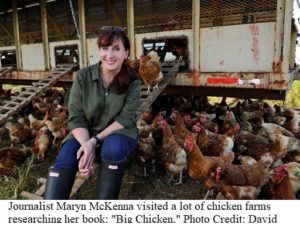
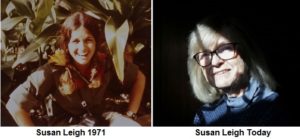
What you eat matters—for your health, for the environment, and for future generations. In this riveting investigative narrative, McKenna dives deep into the world of modern agriculture by way of chicken: from the farm where it’s raised directly to your dinner table. Consumed more than any other meat in the United States, chicken is emblematic of today’s mass food-processing practices and their profound influence on our lives and health. Tracing its meteoric rise from scarce treat to ubiquitous global commodity, McKenna reveals the astounding role of antibiotics in industrial farming, documenting how and why “wonder drugs” revolutionized the way the world eats—and not necessarily for the better. Rich with scientific, historical, and cultural insights, this spellbinding cautionary tale shines a light on one of America’s favorite foods—and shows us the way to safer, healthier eating for ourselves and our children.

In August 2019 this book will be published in paperback with the title Plucked: Chicken, Antibiotics, and How Big Business Changed the Way the World Eats.

Source: Retrieved December 29, 2019 from: https://www.amazon.com/Big-Chicken-Incredible-Antibiotics-Agriculture/dp/1426217668

————–

Appendix VIDEO – How to Start Chicken Farm Business – Organic Broiler Poultry Farming of Chickens & Goats – https://youtu.be/t8OGruo7DJs

Young Entrepreneurs Forum
Posted December 5, 2016 –
Full Process of How to Start Chicken Farm Business. Start Organic Broiler Poultry Farming of Chickens & Goats.

Chicken farming business is a very profitable business idea in 2016 & 2017. So, if you want to start chicken farm business then, must watch this video for starting organic broiler poultry farming business in your country. Start Chicken farming in India.

[Need 15 pieces of] Equipment of Organic Broiler Poultry Farming Business – Chicken Farm Business Equipment.

  1. Feeders
  2. Heaters or Brooders
  3. Incubator
  4. Chick box
  5. Fly Tray
  6. Poultry Plucker Rubber Finger
  7. Egg Tray
  8. Poultry Incubator Controller
  9. Ventilation Fan
  10. Laying Nest
  11. Egg Scale
  12. Egg Washer
  13. Water Pots and Drinkers
  14. Cages and Coops
  15. Dressing Machine

If you’ve any questions related to How to Start Chicken Farm Business – Organic Broiler Poultry Farming of Chickens & Goats then, feel free to leave it in comment box. Thanks for watching chicken farm business – organic broiler farming video.

————–

Appendix AUDIO-PODCAST – When A Chicken Farm Moves Next Door, Odor May Not Be The Only Problem – https://www.npr.org/sections/thesalt/2016/01/24/463976110/when-a-chicken-farm-moves-next-door-odor-may-not-be-the-only-problem

All Things Considered
Posted January 24, 2016 – As farms move closer to residential areas, neighbors are complaining that the waste generated is a potential health hazard.

Share this post:
, , ,
[Top]

War on Cancer: Survivors Emerge from ‘Better Battles’

Go Lean Commentary

In 1971, there was a War Declaration … against the dreaded disease of Cancer.

We all know someone that has battled cancer. Many of us know people who fought and lost. Truly, the designation of a War on Cancer is appropriate. Here is the historical details as related in the 2013 book Go Lean … Caribbean on Page 157:

The Bottom Line on Cancer Industrial Complex
Cancer strikes nearly 1 in every 2 men and more than 1 in every 3 women. When President Richard Nixon signed the landmark measure, National Cancer Act, in 1971, he declared it as America’s War on Cancer. After 40 years, the overall incidence of cancer in the U.S. has escalated to epidemic proportions, now striking 1.8 million, and killing about 550,000 annually. The median age for the diagnosis of cancer is 67 in adults, and six in children. The war is being lost, even though it is being fought at the public’s expense (medically & financially).
.
To win the war on cancer would mean preventing cancer. Yet cancer is a multi-billion dollar business and preventing cancer would be bad for business. It is bad for the pharmaceutical and mammography businesses. These industries have intricate ties to U. S. policy makers, directing research funds to insure their continued profits in cancer diagnosis/treatment. – Cancer Prevention Coalition’s www.PreventCancer.com.
.
There are many medical practitioners and general advocates alike, that feel that cancer treatment uses “slash and burn” technology. They claim that these treatment schemes are a racket, designed to fleece the public. They point out that chemo-therapy costs $10,000 – $30,000 a month, and its success rate today is no better than 40 years ago. “It’s firstly a business; as long as health is considered to be a profit center, there is no reason for the cancer-industrial complex to cure cancer”.

The Go Lean book does not portend to be a manual on diagnosing or treating cancer. But it does strategize a roadmap for economic empowerment. It clearly relates that healthcare, disease management, cancer treatments and medicines are germane to the Caribbean quest for health, wealth and happiness. The primary author of the book was inspired to write this roadmap, after his sister died after a 32-year battle with cancer – See Dedication (Page 2). This supplemented the fact that their mother died first of breast cancer, almost 50 years ago in 1970.

This is now war …

… battles continue … there are victors and victims.

Yes, some people do survive their battles with cancer. They live to share lessons with the rest of us. These lessons are not just medical, but emotional, social and yes: economic as well.

Examine the experiences here in this news article from the American Daily Newspaper “USA Today“. The story is too important to ignore; (despite the American settings, there is application for us in the Caribbean as well):

Title: Life after cancer: More survivors living longer, facing new health challenges
Sub-title:
More cancer patients are living longer. Few are getting the help they need to stay healthy
By: Kim Painter, USA TODAY

When Susan Leigh finished treatment for Hodgkin lymphoma back in 1972, she says, “no one knew what was going to happen.”

Certainly, no one knew that the Arizona woman would develop three more cancers and heart damage, all likely linked to the aggressive radiation and chemotherapy treatments that helped save her life.

Those treatments were new at the time. When Leigh finished them, apparently cancer-free, she was a pioneer.

“I remember saying to my radiation doctor, what do I do now?” recalls Leigh, 71, a retired cancer nurse. “What do I do to keep this from coming back and to recover?

“He said he really didn’t know. He said maybe I could try taking a good multivitamin pill.”

Four decades later, doctors know much more. They know that some cancer survivors are at increased risk for other cancers later, and for problems ranging from brittle bones to heart failure.

They also know more about how to help patients head off or manage those risks.

But few patients are getting that help – even 13 years after the influential Institute of Medicine warned that many survivors were “lost in transition,” and weren’t getting adequate follow-up care.

The number of cancer survivors continues to grow, yet high-quality, coordinated survivorship care is still infrequent,” experts from the National Academies of Sciences, Engineering, and Medicine said in a recent follow-up report (the nonprofit includes the former Institute of Medicine).

“Strides have been made, but there’s also been an acceleration in the demand,” says Neeraj Arora, associate director for science at the nonprofit Patient-Centered Outcomes Research Institute.

Arora, a 25-year survivor of non-Hodgkin lymphoma, helped write the report.

Even today, Leigh says, too many people “don’t get the kind of follow-up care they need.”

“Doctors say, ‘You are OK, we don’t need to see you anymore.’ ”

Numbers are growing – and so is the need
The American Cancer Society says more than 15.5 million Americans with a history of cancer were alive in 2016. By 2026, the group says, that number will rise to 20.3 million.

The population of survivors is also aging. Nearly two thirds are over age 65, meaning most face health challenges beyond those linked to their cancer.

And those over age 85 are the fastest growing segment – giving famous survivors such as Supreme Court Justice Ruth Bader Ginsburg, 85, and former President Jimmy Carter, 94, a lot of generational company.

Meanwhile, cancer patients, young and old, are living longer.

“Now, thanks to early detection and better treatment, we have a lot more people living many years beyond their initial diagnosis,” says Catherine Alfano, the cancer society’s vice president for survivorship.

The five-year survival rate for all cancers combined stands at 70 percent for whites and 63 percent for blacks, the society says. That’s up from 39 percent for whites and 27 percent for blacks in the 1960s.

People treated in 2019 might do still better. But they also might face unknown long-term risks, even from treatments meant to be less toxic and more targeted than those of the past.

Surviving cancer does not mean leaving health concerns behind.

Cancers can recur. And some survivors face an increased risk of other cancers, sometimes related to their treatment.

Some cancer treatments can damage bones, hearts and other organs in ways that might not show up for decades. Leigh and Arora can attest to that: both have been diagnosed with congestive heart failure.

Patients can leave initial treatment with ongoing symptoms. More than a quarter of patients in one study reported lingering problems such as fatigue, sleep disturbances and foggy thinking.

In another survey, 24 percent of survivors reported poor physical health and 10 percent reported poor mental health – roughly double the rates for other adults.

Psychologist Julia Rowland led the National Cancer Institute’s Office of Cancer Survivorship for 18 years.

“People are now thinking of cancer survival not just in terms of lifespan but health span,” she says. “There’s a growing recognition that it’s not just the length of life but the quality of life.”

The push for survivorship care plans
Arora, now 49, was diagnosed two decades after Leigh. But he also left treatment unprepared for his future.

“I got absolutely top-notch treatment. But when I left, after five years, my doctor said, ‘You are good.’ He said, ‘You don’t need to see anybody.’ Which today I know is not the right thing to say.  But that’s where the field was then.”

Under reforms first envisioned by the Institute of Medicine in 2006, patients are supposed to leave initial treatment with two things: A brief written summary that lists all treatments received and a survivorship care plan.

For a breast cancer survivor, the plan might prescribe regular mammograms and an exercise program. It might tell someone who took heart-toxic chemotherapy drugs to watch for cardiac symptoms. Some patients might be urged to keep seeing their cancer care team, often or occasionally; others might be told they face few cancer-related risks and can return to routine care by their regular doctors.

Ideally, advocates say, the plan starts a dialogue among providers, patients and caregivers and tells patients where to seek help with mental health, family matters, jobs and finances.

But when 53 top cancer centers were surveyed several years after the initial recommendation, fewer than half were using the plans.

The Commission on Cancer, which accredits cancer centers, started in 2015 to require them to phase in the plans. But uptake was so slow that the commission altered the standard in 2018 to allow more time for full implementation.

Costs, staffing shortages and inadequate electronic records all slow adoption, the National Academies reports.

Even where care plans have been adopted, their usefulness has not been proved.

“The data is not impressive,” Rowland says. One reason, she says, is that “people are treating this not as a conversation, but a piece of paper.”

Innovative cancer programs are now weaving survival planning into every phase of care, Alfano says. They’re also seeking better ways to use technology to track and guide patients.

But those innovations are not reaching enough patients, she says.

Progress for survivors
Leigh says much progress has been made since she became a founding member of the National Coalition for Cancer Survivorship in 1986.

“When we first started this, we were called cancer victims,” she says. “It was a way of looking a it that said you didn’t have any control.”

Today, the survivor community embraces everyone from newly diagnosed patients to the growing cadre of chronic cancer patients who stay on therapies for years.

Some, Leigh notes, reject the label “survivor,” for various reasons, including perceptions that it excludes those who will never be cancer-free. But even that debate, she says, is a sign that the movement has matured.

Another sign of progress: Most states now at least mention cancer survivors in their official cancer control plans, says Larissa Nekhlyudov, an associate professor of medicine at Harvard Medical School.

It’s not clear what impact state efforts have had, she says. But some states have launched innovative programs, often with funding from the federal Centers for Disease Control and Prevention.

In Kansas, for example, health officials worked with farmer’s markets for seniors to boost fruit and vegetable consumption among survivors. Iowa created educational materials for survivors facing sexual problems. Vermont trained survivors to counsel newly diagnosed patients as part of a program called Kindred Connections.

Volunteer David Cranmer says the program helps the volunteers almost as much as it helps those they counsel.

“We have training sessions with potluck suppers, and people get together and tell their stories,” says Cranmer, 70, of Williston, Vermont.

His own story includes a bone marrow transplant for chronic myeloid leukemia in 1999, followed by thyroid cancer. He’s now undergoing long-term chemotherapy for another condition, amyloidosis.

Despite his difficulties, he says, his story offers hope – and plants the idea that today’s cancer patients can and should plan for their futures.

“Most people aren’t thinking five or ten years from now. They are thinking about today,” he says. “But when I call up and say I’m a 20-year cancer survivor, that turns on a light that oh, there is life after cancer.”

Source: USA Today Newspaper; posted February 15, 2019; retrieved February 19, 2019 from: https://www.usatoday.com/in-depth/news/50-states/2019/02/13/life-after-cancer-survivors-oncology-survivorship-plans-long-term-health/2794121002/

————

Related: Advice for cancer patients: plan on surviving

————

VIDEO – Four-time cancer survivor pioneers recovery and advocacy – https://www.usatoday.com/videos/news/2019/02/13/four-time-cancer-survivor-pioneers-recovery-and-advocacy/2859322002/

USA TODAY – Susan Leigh has beaten multiple cancers and heart problems and now champions survivorship care plans for patients and their families.

Lessons abound – we must Battle Cancer Better:

  • We reap what we sow in this war. Hard work, smart work and better work pays off in victory.
  • Some places are better for surviving cancer than others.
  • The battle continues … even after cancer has been defeated … initially.
  • There are high-tech (advances drugs and surgical procedures) and low-tech solutions (diet, exercise, stress management, positivity, etc.).
  • The Caribbean must prepare and invest in Research & Development (R&D) and treatment deliveries for our people and visiting guests (patients) who may want to benefit from a new Caribbean commitment to Battle Cancer Better.

This theme has been elaborated upon in previous Go Lean commentaries; see a sample list here:

https://goleancaribbean.com/blog/?p=7822 Cancer: Doing More
Many Role Models want to invest their time, talent (business & entrepreneurship) and treasuries in this quest to impact the world of cancer R&D and treatment. This is good! This is better if/when we invite them to bring their operations to a Caribbean address. We have the perfect structure to Do More for cancer: Self-Governing Entities are detailed in the Go Lean roadmap.
https://goleancaribbean.com/blog/?p=3276 Role Model Shaking Up the World of Cancer
One person can make a difference in cancer R&D and treatment. We should always incentivizes innovators. In fact, the Go Lean roadmaps invites them to avail our Self-Governing Entity concepts for ful industrialization of medical research and delivery.
https://goleancaribbean.com/blog/?p=2522 The Cost of Cancer Drugs
The Americans eco-system may not be the best role model for emulating R&D and treatment for cancer. Their Crony-Capitalism is so acute  that their motives maybe profit more so than life.
https://goleancaribbean.com/blog/?p=554 Cuban cancer medication registered in 28 countries
Innovation in cancer drugs and treatment have already emerged from the Caribbean – Cuba or all places have doubled-down in their R&D ethos. Any apathy towards their politics should not deter medical progress – lives are at stake.
https://goleancaribbean.com/blog/?p=286 PR’s Comprehensive Cancer Center Project Breaks Ground
The Caribbean needs to facilitate an atmosphere for Cancer R&D and Treatment. There can be an organized industry for this quest. Jobs can be created, in addition to Battling Cancer Better.

Cancer is a crisis … everywhere. This is not just an American drama and solutions do not only emerge from America.

The Go Lean book demonstrates how developing the ethos that a “crisis is a terrible thing to waste”, could help save lives … and communities. There are winning battles in the War on Cancer, but we must do the heavy-lifting to succeed.

Let’s fight … and keep on battling!

Many of our loved ones have died trying. Let’s not allow their deaths to be in vain. Let’s work harder, smarter and better and win more battles in this War on Cancer. This is how we can make our homeland a better place to live, work, heal and play. 🙂

About the Book
The book Go Lean…Caribbean serves as a roadmap for the introduction and implementation of the technocratic Caribbean Union Trade Federation (CU), for the elevation of Caribbean society – for all member-states. This CU/Go Lean roadmap has these 3 prime directives:

  • Optimization of the economic engines in order to grow the regional economy to $800 Billion and create 2.2 million new jobs.
  • Establishment of a security apparatus to ensure public safety and protect the resultant economic engines.
  • Improve Caribbean governance to support these engines, including a separation-of-powers between the member-states and CU federal agencies.

The Go Lean book provides 370-pages of turn-by-turn instructions on “how” to adopt new community ethos, plus the strategies, tactics, implementations and advocacies to execute so as to reboot, reform and transform the societal engines of Caribbean society.

Download the free e-Book of Go Lean … Caribbean – now!

Who We Are
The movement behind the Go Lean book – a non-partisan, apolitical, religiously-neutral Community Development Foundation chartered for the purpose of empowering and re-booting economic engines – stresses that reforming and transforming the Caribbean societal engines must be a regional pursuit. This was an early motivation for the roadmap, as pronounced in the opening Declaration of Interdependence (Pages 11 – 13):

viii. Whereas the population size is too small to foster good negotiations for products and commodities from international vendors, the Federation must allow the unification of the region as one purchasing agent, thereby garnering better terms and discounts.

ix. Whereas the realities of healthcare and an aging population cannot be ignored and cannot be afforded without some advanced mitigation, the Federation must arrange for health plans to consolidate premiums of both healthy and sickly people across the wider base of the entire Caribbean population. The mitigation should extend further to disease management, wellness, obesity and smoking cessation programs.

xi. Whereas all men are entitled to the benefits of good governance in a free society, “new guards” must be enacted to dissuade the emergence of incompetence, corruption, nepotism and cronyism at the peril of the people’s best interest. The Federation must guarantee the executions of a social contract between government and the governed.

xvi. Whereas security of our homeland is inextricably linked to prosperity of the homeland, the economic and security interest of the region needs to be aligned under the same governance. Since economic crimes … can imperil the functioning of the wheels of commerce for all the citizenry, the accedence of this Federation must equip the security apparatus with the tools and techniques for predictive and proactive interdictions.

xxiv. Whereas a free market economy can be induced and spurred for continuous progress, the Federation must install the controls to better manage aspects of the economy: jobs, inflation, savings rate, investments and other economic principles. Thereby attracting direct foreign investment because of the stability and vibrancy of our economy.

Sign the petition to lean-in for this roadmap for the Caribbean Union Trade Federation.

Share this post:
, ,
[Top]

Industrial Reboot – Trauma 101

Go Lean Commentary

Define basic needs …

… no doubt this includes food, clothing and shelter. These are the age-old means of sustenance that every generation of mankind have had to contend with.

But in modern times, that list is expanded; add: energy, transportation, telecommunications and …

medical.

Can these be considered luxuries as opposed to basic needs?

An argument can be made of this point; many times even medical necessities are de-prioritized – think immunizations – until absolute emergencies. This latter scenario – medical emergencies – is the subject of Trauma medicine, an absolute necessity, vital service, and essential offering. Trauma becomes a basic need and not an optional luxury. So there will always be a demand for Trauma medicine; how will it be supplied?

This commentary – from the movement behind the book Go Lean … Caribbean (available to download for free) – continues the discussion on the economic principles of supply and demand; it focuses on fostering Industrial Reboots for the Caribbean homeland since the region is in dire straits economically. This Industrial Reboot is badly needed as our current economic landscape – based on Tourism – is in shambles! Our Supply-Demand dynamics are not optimized.

The Go Lean book serves as a roadmap for the introduction and implementation of the technocratic Caribbean Union Trade Federation (CU). It explains that Tourism is a service product that depends heavily on Supply-Demand dynamics. In Economics, higher demand and consistent supply results in higher prices; so in a normalized scenario, revenues should grow and grow. The Caribbean tourism is under assault in every member-state due to the fact that many visitors to the region have shifted from stay-overs to cruise arrivals. The Caribbean demand continues, but the supply is different. Cruises mean less economic impact to the local markets than stay-overs. So as a region, we must reboot our industrial landscape so as to create more jobs … from alternate sources. What options do we have?

The Go Lean book urges the region to reform and transform the economic engines around the delivery of basic needs, so we need to better prepare for medical-trauma emergencies. (There is the industrial sub-group of medical tourism). Medical-trauma needs are currently being supplied by other service providers … in foreign destinations. See the news article here portraying how the Joe DiMaggio Children Hospital in Ft. Lauderdale promotes its Neo-Natal and Pediatric treatments:

Title: World renowned Doctors convene in Saint Lucia
Press Release:–  Dr. Kak-Chen Chan, Pediatric Cardiologist and specialist in Adult Congenital Heart Disease and Dr. Steven Bibevski, Cardiothoracic surgeon who specializes in Pediatric and Congenital Heart Surgery, as well as heart transplantation and artificial heart support, will participate as speakers at the 33th Caribbean Cardiac Society in St. Lucia, from July 18th to July 21st, that will take place in the Royalton- Saint Lucia Resort and Spa.
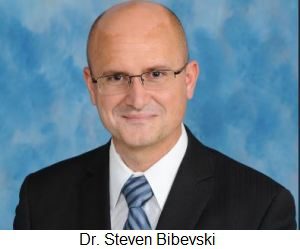
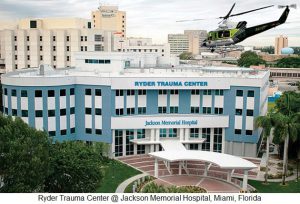

The doctors will share with their colleagues the knowledge, cutting edge procedures, and experiences performed at Joe DiMaggio Children’s Hospital, part of Memorial Healthcare System.

Since 1988, the Caribbean Cardiac Society has been a non-profit organization proud to be one of the most important gatherings of cardiac specialists from around the world, who are committed to providing services to cardiac patients in the Caribbean region, by sharing their experiences and exchange knowledge. This year’s theme is “Meeting the Challenges of Cardiac Care in an Ever-Changing Caribbean.”

One of the most common Congenital Heart Defects is Patent Ductus Arteriosus (PDA) defined when the two major blood vessels leading from the heart remain open after birth. PDA accounts for 5%-10% of all Congenital Heart Defects. To share more insight Dr. Kak-Chen Chan will present his lecture on Extreme Prematurity, chronic lung disease, persistent ductus arteriosus and pulmonary hypertension: The potentially deadly Quartet tamed.

Extreme premature infants are often affected by chronic lung disease, patent ductus arteriosus and pulmonary hypertension.  As medical science improves, more of these babies are surviving past their early infancy.  However, these disease process continues to be important causes of morbidity and mortality.

Dr. Steven Bibevski will be presenting a talk, showing data of survival rate on 10 years of surgical experience with patients from the Caribbean at Joe DiMaggio Children’s Hospital.

“I am very excited and honored to speak at this year’s CCS meeting. As physicians, our focus is on the health, well-being, and healing in of all patients. We are very fortunate to have an experienced team of doctors who work together to provide innovative treatments while delivering compassionate care to our patients,” stated Dr. Bibevski.
Source: St. Lucia News Daily Newspaper; posted & retrieved July 17, 2017 from: https://stluciatimes.com/2018/07/17/world-renowned-doctors-for-congress-in-saint-lucia/

There is the opportunity for a business model in the field of medical Trauma. Others are making money, why not Caribbean stakeholders. (Still, our motive must not just be profit, it must be the Greater Good). This is how and where jobs are to be forged for a new Caribbean economy.

There are other business models too, that the new Caribbean economy can deploy to grow the regional economy; we can, and must, reboot our industrial landscape. This commentary has previously identified a number of different industries that can be rebooted under this Go Lean roadmap. See this list of previous submissions under the title Industrial Reboots:

  1. Industrial RebootsFerries 101 – Published June 27, 2017
  2. Industrial RebootsPrisons 101 – Published October 4, 2017
  3. Industrial RebootsPipeline 101 – Published October 6, 2017
  4. Industrial RebootsFrozen Foods 101 – Published October 6, 2017
  5. Industrial RebootsCall Centers 101 – Published July 2, 2018
  6. Industrial RebootsPrefab Housing 101 – Published July 14, 2018
  7. Industrial Reboots – Trauma 101 – Published Today – July 18, 2018

The Go Lean book stresses that reforming and transforming the Caribbean economic engines and medical deliveries must be a regional pursuit. This was an early motivation for the roadmap, as pronounced in the opening Declaration of Interdependence (Pages 11 – 13):

ix. Whereas the realities of healthcare and an aging population cannot be ignored and cannot be afforded without some advanced mitigation, the Federation must arrange for health plans to consolidate premiums of both healthy and sickly people across the wider base of the entire Caribbean population. The mitigation should extend further to disease management, wellness, mental health, obesity and smoking cessation programs. The Federation must proactively anticipate the demand and supply of organ transplantation as developing countries are often exploited by richer neighbors for illicit organ trade.

xxiv.  Whereas a free market economy can be induced and spurred for continuous progress, the Federation must install the controls to better manage aspects of the economy: jobs, inflation, savings rate, investments and other economic principles. Thereby attracting direct foreign investment because of the stability and vibrancy of our economy.

xxvi.  Whereas the Caribbean region must have new jobs to empower the engines of the economy and create the income sources for prosperity, and encourage the next generation to forge their dreams right at home, the Federation must therefore foster the development of new industries, like that of ship-building, automobile manufacturing, prefabricated housing, frozen foods, pipelines, call centers … – impacting the region with more jobs.

Accordingly, a regional medical trauma eco-system can help to make the Caribbean a better place to live, work, heal and play. Many jobs could derive from these medical deliveries.

In addition, the CU will facilitate the eco-system for Self-Governing Entities (SGE), an ideal concept for Trauma Centers with its exclusive federal regulation/promotion activities. Imagine bordered campuses – with backup power generations, autonomy for professional standards, and autonomous air/sea transportation modes. The Go Lean movement (book and blogs) details the principles of SGE’s and job multipliers, how certain industries are better than others for generating multiple indirect jobs down the line (or off-campus) for each direct job on the SGE’s payroll.

According to the Go Lean book (Page 257) , there could be many jobs in the related fields of Trauma & Emergency Management – separate and apart from general health-care deliveries. The book quotes these figures:

Jobs from Trauma Centers, Emergency Managers, Volunteer Fire/Rescue: 4,000

The Go Lean book prepares the business model of Trauma Centers for consumption among Caribbean people. The book describes a scheme with 6 different Level I Trauma Centers – see Appendix below – throughout the region. This scheme will save lives, and also launch the new business model. Yes, business model refers to jobs, entrepreneurial opportunities, trade transactions, etc. In addition to these industry jobs; there is also the reality of indirect jobs – unrelated service and attendant functions – at a 3.75 multiplier rate would add another 15000 jobs.

This truly constitutes an Industrial Reboot. The Go Lean book details this business model, as such – see this quotation here from Page 196:

The Bottom Line on Trauma Medicine
A trauma center is a hospital facility equipped to provide comprehensive emergency medicine to victims suffering traumatic injuries. Trauma centers grew into existence out of the realization that traumatic injury is a disease process unto itself requiring specialized and experienced multidisciplinary treatment and specialized resources. According to the US Center for Disease Control (CDC), injuries are the leading cause of death for children and adults ages 1–44. The leading causes of trauma are motor vehicle accidents, falls, and assaults.

Trauma centers vary in their specific capabilities and are identified by “Level” designation: Level-1 being the highest, to Level-3 being the lowest (though some states have five designated levels, in which case Level-5 is the lowest). Higher levels of trauma centers will have trauma surgeons available; those trained in such specialties as Neurosurgery and Orthopedic surgery as well as highly sophisticated medical diagnostic equipment. Lower levels of trauma centers may only be able to provide initial care and stabilization of a traumatic injury and arrange for transfer of the victim to a higher level center.

The operation of a trauma center is extremely expensive. Some areas – especially rural regions – are under-served by trauma centers because of this expense. A variety of different methods have been developed for dealing with this. For example, many trauma centers have helipads for receiving patients that have been airlifted. The trauma level certification can directly affect the patient’s outcome and determine if the patient needs to be sent to a higher level center.

The strong point from this quotation is that “the operation of a trauma center is extremely expensive“; this allows for jobs.

According to the Go Lean book, societal engines refer to economics, security and governance. The industrial strategy of Trauma Centers relate to economics and security provisions. This CU/Go Lean roadmap has these 3 prime directives:

  • Optimization of the economic engines in order to grow the regional economy to $800 Billion & create 2.2 million new jobs.
  • Establishment of a security apparatus to ensure public safety and protect the homeland; and the economic engines.
  • Improve Caribbean governance to support these engines, including a separation-of-powers between the member-states and CU federal agencies.

The Go Lean book provides 370-pages of turn-by-turn instructions on “how” to adopt new community ethos, plus the strategies, tactics, implementations and advocacies to execute so as to reboot, reform and transform the societal engines of Caribbean society. One advocacy in rebooting the industrial landscape is to foster better Emergency Management, of which Trauma Centers are a subset. Consider the specific plans, excerpts and headlines from the book on Page 196 entitled:

10 Ways to Improve Emergency Management

1 Lean-in for the Caribbean Single Market
This treaty allows for the unification of the region into one market, thereby expanding to an economy of 30 countries, 42 million people and a GDP of over $800 Billion (according to 2010 metrics). This treaty calls for a collective security agreement for the Caribbean member-states so as to prepare-respond to natural disasters, emergency incidents and assuage against systemic threats against the homeland. The CU employs the professional arts and sciences of Emergency Management to spread the costs, risks and premium base across the entire region and refers to more  than  just medical scenarios, but rather any field of discipline that can impact the continuity of a community or an individual. The CU also has the direct responsibility for emergencies in the Exclusive Economic Zone and Self Governing Entities.
2 Trauma Centers

The CU envisions 6 strategically placed Level-1 trauma centers, and a series or lower level centers, placed throughout the region to service the entire population. The goal will be to ensure that every citizen is within a 1 hour transport from the closest trauma center. The trauma center may be physically located within a hospital campus, or stand-alone, but will be governed (and funded) by the CU and not the member-state’s public health system. (See Appendix ZM on Page 336).

3 Airlift / Sealift – Getting there by Helicopters, Airplanes and Boats

In addition to Air Ambulances (helicopters & airplanes), the CU will deploy Water Ambulances to quickly convey the injured to trauma centers among the islands. The vessels will all be equipped with certified and trauma-trained EMTs.

4 Mobile Surgical Centers and Tele-Medicine
5 Epidemiology – Viral & Bacterial Rapid Response
6 Mobile Command Centers
7 Intelligence Gathering & Analysis
8 Casualty Insurance Plans – Reinsurance “Sidecars”
9 Volunteer Fire – Rescue Brigades
10 ITIL – Information Technology Infrastructure Library

This formal discipline of ITIL is the art and science that describes processes, procedures, tasks and checklists used by organizations for managing risks associated with information technology deployments. This includes “focus areas” for Change Control, … Disaster Recovery, Problem and Access Management. (See Appendix ZN on Page 338).

This Go Lean book projects the roll-out of the 6 Trauma Centers as Day One / Step One of the Go Lean/CU roadmap. Over the 5-year implementation more and more of the features of the roadmap will be deployed and their effect on the region will be magnified and undeniable – think R&D. These will help to make the Caribbean a better place to live, work, heal and play.

This Go Lean roadmap seeks to foster best-practices in the administration of a Trauma Centers and Emergency Management. There is a lot of coordinate; there have been many issues detailed in previous Go Lean commentaries; see a sample here:

https://goleancaribbean.com/blog/?p=15012 Puerto Rico’s Trauma-Emergency Failings – A Lesson Learned
https://goleancaribbean.com/blog/?p=8815 Lessons from China – Managing Trauma & Organs Transplantation
https://goleancaribbean.com/blog/?p=7449 ‘Crap Happens’ – So What Now?
https://goleancaribbean.com/blog/?p=6103 Sum of All Fears – ‘On Guard’ Against Deadly Threats
https://goleancaribbean.com/blog/?p=5002 Managing a ‘Clear and Present Danger’
https://goleancaribbean.com/blog/?p=4308 911 – Emergency Response: Systems in Crisis

According to the foregoing news article, the Caribbean Cardiac Society (CCS) is meeting today through Saturday (July 18 – 21). They do meet annually. This year’s conference or congress – 33rd annual – is meeting in St. Lucia; last year (2017) was Trinidad, 2016 was Barbados, 2015 was Jamaica, 2014 was in the Bahamas and the 2013 conference was held in Curacao. So this organization already has a footprint in all the key destinations of the Caribbean. The CU formally launching 6 Trauma Centers can easily utilize the CCS’s infrastructure.

The subject of Trauma Centers is not a luxury; assuaging trauma is a basic need for the region. We are spending the money now – many times raising money through Bake Sales, Car Washes and Raffles – and enriching foreign entities. Making provisions to provide our own basic needs is just … mature. This is to be expected of emerging societies. This is the type of development that sends the message to Caribbean citizens, at home and in the Diaspora, that “one” can now prosper where planted in the Caribbean.

This plan – the roadmap to deploy a regional network of Trauma Centers – is conceivable, believable and achievable. We can deploy our own brand of Pediatric Hospitals in the Caribbean, much like the Joe DiMaggio one in the VIDEO here:

VIDEO – A Look At What We Like About Joe DiMaggio Children’s Hospital https://youtu.be/9r3pYZZ3UTE

Joe DiMaggio Children’s Hospital
Published on Jul 14, 2015
Joe DiMaggio Children’s Hospital is one of the region’s leading pediatric hospitals, offering a comprehensive scope of healthcare services and programs in a child-friendly atmosphere. A full-service hospital, we treat minor illnesses, trauma-related accidents and some of the most complex medical conditions.

Established in 1992, Joe DiMaggio Children’s Hospital combines advanced technology and the expertise of the largest, most diverse group of board-certified pediatric specialists in the region. With its summer 2011 expansion, Joe DiMaggio Children’s Hospital now has 204 beds and is South Florida’s newest freestanding children’s hospital.

In its first year of operation, Joe DiMaggio Children’s Hospital’s medical staff included 90 physicians and patient admissions numbered 2,000. Through the years, the hospital has enhanced and expanded its services and programs to help meet the growing and diverse needs of the community.

The hospital is staffed 24 hours a day by world-class pediatricians, pediatric specialists, specialty-trained nurses and ancillary support staff. Today, more than 650 physicians are on the medical staff, and during the 2014 fiscal year our team recorded:

  • 8,707 admissions and observations
  • 6,039 pediatric surgeries
  • 53,450 outpatient visits
  • 110,322 visits at three Joe DiMaggio Children’s Hospital Emergency Department locations

Uniquely inspired by and designed for kids and families, the freestanding building offers many amenities. The vibrant colors, whimsical décor and larger-than-life murals welcome children to an upbeat environment where the “Power of Play” is a healing force. Each floor reflects an individual theme of sports, arts, games or dreams. All patient rooms are private and are wired for movies, video games, the Internet and educational programs, and room-service meals are available any time of the day.

This four-story, 180,000-square-foot, environmentally friendly facility features six pediatric operating rooms, dedicated medical/surgical units, family resource centers, ambulatory services, imaging services that feature a CT scanner disguised as a pirate ship, and an entire floor dedicated to inpatient and outpatient pediatric oncology treatment.

A glass pedestrian skywalk connects to the Wasie Neonatal Intensive Care Unit, Pediatric Intensive/Cardiac Care Unit, and Level 1 Trauma Center and Children’s Emergency Department.

Conveniently located on the campus, Conine Clubhouse provides a special home away from home for families of hospitalized children. Accommodations are based on availability.

The team at Joe DiMaggio Children’s Hospital embraces a patient- and family-centered approach to care, working with families in the effort to best meet the needs of the child.

We should not just be “running to Florida” for any/every medical emergency; how long should the expectation be for our young nations to grow-up. The Go Lean roadmap declares that it is high time and past time for the region, to stand-up and step-up to satisfy the needs of our people. While this delivery may be too big for any one Caribbean member-state alone, surely together-united-integrated we can leverage the kinetics of a 42 million Single Market economy.

We urge all Caribbean stakeholders to lean-in to this roadmap for economic empowerment and medical delivery. We can make the Caribbean homeland better places to live, work, heal and play. 🙂

Download the free e-Book of Go Lean … Caribbean – now!

Sign the petition to lean-in for this roadmap for the Caribbean Union Trade Federation.

—————

Appendix ZM – Trauma Center Definitions

A trauma center is a hospital that is designated by a state or local authority or is verified by the American College of Surgeons (ACS) [a]. The details of these trauma levels are as follows:

Level I

A Level I Trauma Center provides the highest level of surgical care to trauma patients. Being treated at a Level I Trauma Center increases a seriously injured patient’s chances of survival by an estimated 20 to 25 percent. This has a full range of specialists and equipment available 24 hours a day and admits a minimum required annual volume of severely injured patients. A Level I trauma center is required to have a certain number of surgeons, emergency physicians and anesthesiologists on duty 24 hours a day at the hospital, an education program, and preventive and outreach programs. Key elements include 24-hour in-house coverage by general surgeons and prompt availability of care in varying specialties—such as orthopedic surgery, neurosurgery, plastic surgery (plastic surgeons often take calls for hand injuries),anesthesiology, emergency medicine, radiology, internal medicine, oral and maxillofacial surgery (trained to treat injuries of the facial skin, muscles, bones), and critical care—which are needed to adequately respond and care for various forms of trauma that a patient may suffer. Additionally, a Level I center has a program of research, is a leader in trauma education and injury prevention, and is a referral resource for communities in nearby regions.

Level II

A Level II trauma center works in collaboration with a Level I center. It provides comprehensive trauma care and supplements the clinical expertise of a Level I institution. It provides 24-hour availability of all essential specialties, personnel, and equipment. Minimum volume requirements may depend on local conditions. These institutions are not required to have an ongoing program of research or a surgical residency program.

Level III

A Level III trauma center does not have the full availability of specialists, but does have resources for emergency resuscitation, surgery, and intensive care of most trauma patients. A Level III center has transfer agreements with Level I or Level II trauma centers that provide back-up resources for the care of exceptionally severe injuries, Example: Rural or Community hospitals.

Level IV

A Level IV trauma center exists in some states where the resources do not exist for a Level III trauma center. It provides initial evaluation, stabilization, diagnostic capabilities, and transfer to a higher level of care. It may also provide surgery and critical-care services, as defined in the scope of services for trauma care. A trauma-trained nurse is immediately available, and physicians are available upon the patient’s arrival to the Emergency Department. Transfer agreements exist with other trauma centers of higher levels, for use when conditions warrant a transfer.

Level V

A Level V trauma center provides initial evaluation, stabilization, diagnostic capabilities, and transfer to a higher level of care. This type of center may provide surgical and critical-care services, as defined in the service’s scope of trauma-care services. A trauma-trained nurse is immediately available, and physicians are available upon patient arrival in the Emergency Department. If not open 24 hours daily, the facility must have an after-hours trauma response protocol.

Pediatric Trauma Centers

A facility can be designated an adult Trauma Center, a pediatric Trauma Center, or an adult & pediatric Trauma Center. If a hospital provides trauma care to both adult and pediatric patients, the Level designation may not be the same for each group. For example, a Level 1 adult Trauma Center may also be a Level 2 pediatric Trauma Center. This is because pediatric trauma surgery is a specialty unto itself. Adult trauma surgeons are not generally specialized in providing surgical trauma care to children, and vice versa, and the difference in practice is significant.

Cited Reference:

a. American College of Surgeons. “ACS Verification Site Visit Outcomes”. Retrieved April 2013 from: http://www.facs.org/trauma/verificationhosp.html


Share this post:
, , ,
[Top]

Counter-culture: Pushing for Change

Go Lean Commentary

The Change Agent cometh; … they always come.

The only constant is change itself.

A primary motivation of the movement behind the book Go Lean…Caribbean is to better cope with societal change. The book asserted that the region had been “steamrolled” by dynamic Agents of Change; these 4 agents are full explored in the book (Page 57) with this introduction:

Shakespeare described change as “an undiscovered country”. No one knows exactly what will happen next and when. The best practice is to monitor the developments in the marketplace, adapt and adjust as soon as possible. This description of a nimble response is the purpose behind “Agile” project management and other Lean management methodologies. … Assuming a role to “understand the market and plan the business” requires looking at the business landscape today and planning the strategic, tactical, and operational changes to keep pace with the market and ahead of competitors. Strategic changes that must be accounted for now, includes:

  • Technology
  • Globalization
  • Climate Change
  • Aging Diaspora

This commentary – entry 4 of 4 – is the final submission in this series on the counter-culture of the 1960’s/1970’s. This series from the Go Lean movement considers the experiences of how people deviated from the mainstream society to forge change in their communities. The people – think: Hippies – were scorned and ridiculed, but they persisted … and eventually manifested change on … everything and everybody. The other commentaries in the series are cataloged as follows:

  1. Counter-culture: Embracing the Change – Battling against Orthodoxy
  2. Counter-culture: Manifesting Change – Environmentalism & ‘Climate Change’ abatement
  3. Counter-culture: Monetizing the Change – Education, Workplace, Healthcare & Retirement Mandates
  4. Counter-culture: Pushing for Change – Is Ganja here to stay?

Today, it is clear that mainstream society has been assimilated by the counter-culture revolution with previously debated New Morals. Some people even claim that this New Morality is the same Old Immorality. For instance, consider recreational drugs, marijuana in particular; counter-culturists have always “pushed” for the freedom of marijuana use; see the VIDEO in the Appendix below. Despite all the efforts to outlaw it, authority figures are now starting to just accept, tolerate and legitimize its usage. This last commentary in this series asked the pointed question:

Is Ganja here to stay?

(We use the Caribbean branding here for marijuana; known by many different names: weed, cannabis, pot or reefer).

Is this change here to stay? Is this just another victory from the counter-culturists from the 1960’s/1970’s? They are still pushing! Though it may not be the same people, it is still the same counter-revolutionary attitudes.

As related in the previous submissions – in this series – the champions of the counter-culture were able to claim some measure of victory in their efforts. Therefore, all of these commentaries have conveyed “how” the stewards for a new Caribbean can shepherd our society for smoother change management.

The marijuana reality is pressing down on us. Notice the imminence as conveyed in this news article here from St. Lucia:

Title # 1: Mondesir says ganja unstoppable, here to stay

Former Health Minister, Doctor Keith Mondesir, asserting that ganja is here to stay and is unstoppable, has come out in support of its legalisation.

“The entire first world, Europe , the USA, have tried hard to stop it. They have given up now realising this is here to stay. So  we as a people in the Caribbean, we have to determine what policies  do we have right now and what policies should we adopt,” Mondesir declared.

“Are we going to have open policy like Holland? Are we going to have it restricted like the US in certain places? But we know that the world is now accepting the smoking of marijuana,” the former minister observed.

He pointed to the example of Canada which is heading towards legalisation,  noting that farmers there are preparing to cash in on the herb.

“If anyone planting marijuana here has any intention of making money, they are missing the boat,” Mondesir remarked.

Just last week National Security Minister and former Deputy Police Commissioner, Hermangild Francis, expressed support for ‘relaxing’ current ganja laws in Saint Lucia.

But the Cannabis Movement, which has been in the forefront of the push to decriminalise or legalise marijuana ‘outright’, has accused the authorities  here of being split and possibly ‘two-faced’ on the issue.
Source: Retrieved May 12, 2018 from: https://stluciatimes.com/2018/04/23/mondesir-says-ganja-unstoppable-here-to-stay/

Were you alive in the 1960’s or 1970’s?
Can you believe now that we are talking about how we can co-exist with legal marijuana use in our communities?

Such talk would have been considered crazy, just a few years or a decade ago.

But crazy is as crazy does; consider these quotes from Advertising Executive Rob Siltanen:

  1. “The people who are crazy enough to think they can change the world are the ones who do.”
  2. “Here’s to the crazy ones. The misfits. The rebels. The troublemakers. The round pegs in the square holes. The ones who see things differently. They’re not fond of rules. And they have no respect for the status quo. You can quote them, disagree with them, glorify or vilify them. About the only thing you can’t do is ignore them. Because they change things. They push the human race forward. And while some may see them as the crazy ones, we see genius. Because the people who are crazy enough to think they can change the world, are the ones who do.”

The stewards for a new Caribbean regional administration – the movement behind the Go Lean book, a roadmap for the introduction and implementation of the technocratic Caribbean Union Trade Federation (CU) – are not crazy. We know the dangers, risks and threats of drugs in society, and yet accept that this counter-cultural change may also be inevitable. So rather that dreading or running from the eventuality of marijuana decriminalization, we seek to prepare for it, but on a regional, super-national level. Amazingly, this strategy also aligns with a former government Cabinet member in St. Lucia; “he” made this siren call:

Title # 2: ‘Musa’ wants united Caribbean approach to ganja decriminalisation

Former Agriculture Minister, Moses ‘Musa’ Jn Baptiste, has expressed the view that the Caribbean should approach the issue of decriminalising marijuana in a united way.

‘It is something that we have spoken about even when we were in government. I was minister of agriculture and that question came up many times,’ Jn Baptiste recalled.

‘We were always of the view that the Caribbean should approach this in a united way because if you have decriminalisation in various countries and not in others, especially in an OECS economic union, you can envisage the challenges,’ the former minister told reporters Thursday.

He asserted that the decriminalisation process and the decriminalisation movement in the region are moving in a ‘particular direction.’

‘I am sure that all governments in the sub-region will quickly realise that instead of everybody doing it on their own, that we  should move on this,’ Jn Baptiste declared.

He expressed the hope that there would be widespread consultation.

‘The whole society has to sit down and talk about this – but certainly, this is moving in a particular direction and we see what is happening in the United States, we see what is happening in certain states in the United States and  we just noticed what has happened in Antigua and definitely I am sure all governments and people in the region, especially the OECS economic union, will be taking this seriously,’ Jn Baptiste stated.
Source: Retrieved May 12, 2018 from: https://stluciatimes.com/2018/04/06/musa-wants-united-caribbean-approach-to-ganja-decriminalisation/

Imagine a regional Caribbean coordination for the drama of marijuana decriminalization. “Yes, we can”!

The Go Lean book provides 370-pages of turn-by-turn instructions on “how” to adopt a regional community ethos, plus the strategies, tactics, implementations and advocacies to execute so as to transform the societal engines of Caribbean society (economics, security and governance), regarding the whole drug eco-system. As related in a previous blog-commentary:

… the Go Lean book asserts that every community has bad actors, and with a more liberal-progressive attitude towards a once-illegal drug, community attitudes must be paramount. There must be “new guards” to assuage any threats from this practice on society. This point is pronounced early in the book with the Declaration of Interdependence (Pages 12 – 13) that claims:

x. Whereas we are surrounded and allied to nations of larger proportions in land mass, populations, and treasuries, elements in their societies may have ill-intent in their pursuits, at the expense of the safety and security of our citizens. We must therefore appoint new guards to ensure our public safety and threats against our society, both domestic and foreign. The Federation must employ the latest advances and best practices of criminology and penology to assuage continuous threats against public safety. The Federation must allow for facilitations of detention for [domestic and foreign] convicted felons of federal crimes, and should over-build prisons to house trustees from other jurisdictions.

xi. Whereas all men are entitled to the benefits of good governance in a free society, “new guards” must be enacted to dissuade the emergence of incompetence, corruption, nepotism and cronyism at the peril of the people’s best interest. The Federation must guarantee the executions of a social contract between government and the governed.

xvi. Whereas security of our homeland is inextricably linked to prosperity of the homeland, the economic and security interest of the region needs to be aligned under the same governance. Since economic crimes, including piracy and other forms of terrorism, can imperil the functioning of the wheels of commerce for all the citizenry, the accedence of this Federation must equip the security apparatus with the tools and techniques for predictive and proactive interdictions.

So legalizing marijuana … will be about more than just managing change, it will also be about managing risks. The Go Lean book relates that managing risk is more than just “One Act”, there is lengthy, engaged process (Page 76):

  • Education
  • Mentoring
  • Monitoring
  • Mitigation
  • Licensing
  • Coordination

For this delicate matter of marijuana decriminalization, issues abound, in all facets of society. There are economic, security and governing complexities that must be considered. In  fact, these issues were addressed in many previous Go Lean blog-commentaries. Consider this list here:

https://goleancaribbean.com/blog/?p=13882 Managing Legal Marijuana ‘Change’ in California
https://goleancaribbean.com/blog/?p=12703 Rocky Mountain High – Marijuana management in Colorado
https://goleancaribbean.com/blog/?p=9646 ‘Time to Go’ – American Vices, i.e. Marijuana. Don’t Follow!
https://goleancaribbean.com/blog/?p=1386 Marijuana in Jamaica – Puff Peace

The Go Lean book and roadmap stresses that preparing the Caribbean region for change is possible, but heavy-lifting. All the societal engines will have to be reformed and transformed. Yet still, this is conceivable, believable and achievable.

As related in the foregoing news articles, the First World or Advanced Democracies are advancing – pushing – towards legal or decriminalized marijuana use.

Ready or not, here they come!

    … vacationing  tourists …
    … cruise passengers.
    … students studying abroad.
    … repatriated citizens.
    … Ouch!

These descriptions – First World or Advanced Democracies – apply to the US, Canada and many Western European nations (think: England, The Netherlands, France, Germany, etc.), our tourism target markets. These descriptors do not apply to any Caribbean member-states. All 30 countries and territories (islands or coastal states) are flirting with Failed-State status. Adding recreational drug use into the Caribbean mix may only be a recipe for disaster. And yet, the change “cometh” anyway.

Let’s get ready! Let’s confederate, cooperate and collaborate to install the empowerments to allow us to better manage Caribbean affairs. We urge all Caribbean stakeholders to lean-in to this Go Lean roadmap. It is a viable plan to make our  homeland a better place to live, work and play. 🙂

Download the free e-Book of Go Lean … Caribbean – now!

Sign the petition to lean-in for this roadmap for the Caribbean Union Trade Federation.

———-

Appendix VIDEO – Rick James – Mary Jane – https://youtu.be/PrPNwLuk0zQ

Published on Oct 16, 2015

Rick James – Mary Jane (Video)


Share this post:
, ,
[Top]

Counter-culture: Monetizing the Change

Go Lean Commentary

“Put your money where your mouth is” – Popular Challenge

It is appropriate to look back 50 years at the height of the counter-culture – Hippie movement – and ask the question:

Were the counter-culturists willing to pay for the change they were demanding?

As asserted in the last submission of this series of commentaries on the counter-culture of the 1960’s/1970’s, the counter-culturists didn’t just go away, they won! They had some relative victory and transformed the mainstream values of society.

A counter-culture typically involves criticism or rejection of the status quo powerful institutions, with accompanying hope for a better life or a new society. There was a subsequent shift in the Social Contract deliveries after this counter revolution.

But how did the advocates pay for the change?

In the height of the 1960’s counter-culture movement, this question was asked – by the Number 1 English-speaking band, The Beatles – and the answers didn’t emerge for years, decades and generations.

The question was in the form of a song – You say you want a Revolution – see here (and the lyrics in Appendix A below):

VIDEO – The Beatles: Revolution (1968) – https://youtu.be/BGLGzRXY5Bw

The Beatles

Published on Oct 20, 2015 – The Beatles 1 Video Collection is Out Now. Get your copy here: http://thebeatles1.lnk.to/DeluxeBluRay

“When you talk about destruction, don’t you know that you can count me out”

“I did the slow version and I wanted it out as a single: as a statement of The Beatles’ position on Vietnam and The Beatles’ position on revolution. For years, on The Beatles’ tours, Brian Epstein had stopped us from saying anything about Vietnam or the war.” – John Lennon.

“Plugging directly into the Abbey Road desk and pushing the needles into the red achieved the fuzz-guitar sound. According to George Martin “We got into distortion on that, which we had a lot of complaints from the technical people about. But that was the idea: it was John’s song and the idea was to push it right to the limit. Well, we went to the limit and beyond.”

“Revolution” was directed by Michael Lindsay-Hogg, and filmed on the 4th September 1968 at Twickenham Film Studios. “Don’t you know it’s gonna be all right”

Music video by The Beatles performing Revolution. (C) 2015 Calderstone Productions Limited (a division of Universal Music Group) / Apple Films Ltd.

Only now, 50 years later, are we able to look (back), listen and learn the lessons from those times. (This exercise is part-and-parcel of the popular 5 L’s methodology: Look, Listen, Learn, Lend-a-hand and Lead). Monetizing the change is easier said than done!

The Beatles stated:

“But if you want money for people with minds that hate … All I can tell is brother you have to wait”

What did the counter-culture movement do so as to monetize the change that they were protesting for? As these groups assimilated their victories into mainstream society, they forced changes to the financial-economic systems as well. For example, one innovation that emerged in the US was moving away from institutional pensions to a new scheme of Individual Retirement Accounts or the 401(k). See more here on the US program, though this term 401K has been used in many other countries as a generic term for Individual Retirement Accounts:

Reference Title: 401(k)
In the United States, a 401(k) plan is the tax-qualified, defined-contribution pension account defined in subsection 401(k) of the Internal Revenue Code.[1] Under the plan, retirement savings contributions are provided (and sometimes proportionately matched) by an employer, deducted from the employee’s paycheck before taxation (therefore tax-deferred until withdrawn after retirement or as otherwise permitted by applicable law), and limited to a maximum pre-tax annual contribution of $18,500 (as of 2018).[2][3]
Other employer-provided defined-contribution plans include 403(b) plans for nonprofit institutions, 457(b) plans for governmental employers, and 401(a) plans. These plans may provide total annual addition of $55,000 (as of 2018) per plan participant, including both employee and employer contributions.

History
In the early 1970s a group of high earning individuals from Kodak approached Congress to allow a part of their salary to be invested in the stock market and thus be exempt from income taxes.[4] This resulted in section 401(k) being inserted in the then taxation regulations that allowed this to be done. The section of the Internal Revenue Code that made such 401(k) plans possible was enacted into law in 1978.[5] It was intended to allow taxpayers a break on taxes on deferred income. In 1980, a benefits consultant and attorney named Ted Benna took note of the previously obscure provision and figured out that it could be used to create a simple, tax-advantaged way to save for retirement. The client for whom he was working at the time chose not to create a 401(k) plan.[6] He later went on to install the first 401(k) plan at his own employer, the Johnson Companies[7] (today doing business as Johnson Kendall & Johnson).[8] At the time, employees could contribute 25% of their salary, up to $30,000 per year, to their employer’s 401(k) plan.[9]

Taxation
Income taxes on pre-tax contributions and investment earnings in the form of interest and dividends are tax deferred. The ability to defer income taxes to a period where one’s tax rates may be lower is a potential benefit of the 401(k) plan. The ability to defer income taxes has no benefit when the participant is subject to the same tax rates in retirement as when the original contributions were made or interest and dividends earned. Earnings from investments in a 401(k) account in the form of capital gains are not subject to capital gains taxes. This ability to avoid this second level of tax is a primary benefit of the 401(k) plan. Relative to investing outside of 401(k) plans, more income tax is paid but less taxes are paid overall with the 401(k) due to the ability to avoid taxes on capital gains.

For pre-tax contributions, the employee does not pay federal income tax on the amount of current income he or she defers to a 401(k) account, but does still pay the total 7.65% payroll taxes (social security and medicare).

Source: Retrieved May 10, 2018 from: https://en.wikipedia.org/wiki/401(k)

This commentary continues the series on the counter-culture of the 1960’s/1970’s. This series from the movement behind the book Go Lean … Caribbean considers the experiences of how people deviated from the mainstream society to forge change in their communities. The other commentaries in the series are cataloged as follows:

  1. Counter-culture: Embracing the Change – Battling against Orthodoxy
  2. Counter-culture: Manifesting Change – Environmentalism & ‘Climate Change’ abatement
  3. Counter-culture: Monetizing the Change – Education, Healthcare & Retirement Mandates
  4. Counter-culture: Pushing for Change – Is Ganja here to stay?

All of these commentaries convey “how” the stewards for a new Caribbean can forge a change culture when established institutions are dysfunctional and defective; the status quo must be protested. This entry – 3 of 4 – considers the financial and economic changes that emerged as a result of the 1960’s counter-culture movement; subsequently a more independent spirit emerged for planning retirement, education and healthcare. Today there are solutions that deviated from the previous broken institutional offering.

The affected countries – United States, Canada and Western Europe – are in better financial dispositions now than they were in the 1960’s. There are lessons for us to learn and apply here in the Caribbean.

The book Go Lean…Caribbean – available to download for free – serves as a roadmap for the introduction and implementation of the technocratic Caribbean Union Trade Federation (CU), for the elevation of Caribbean society – for all member-states. This CU/Go Lean roadmap has these 3 prime directives:

  • Optimization of the economic engines in order to grow the regional economy to $800 Billion and create 2.2 million new jobs. The deficient delivery of Caribbean Jobs is a sore subject regionally; this is responsible for so much abandonment.
  • Establishment of a security apparatus to ensure public safety and protect the resultant economic engines.
  • Improve Caribbean governance to support these engines, including a separation-of-powers between the member-states and CU federal agencies.

As the foregoing details, 401(k) Individual Retirement Accounts (IRA) brought a revolutionary shift in American society for Middle Class economic values. No longer where citizens dependent on broken institutions to deliver their financial solutions late in life. This spirit was also manifested in other areas of American financial life:

  • Education / College Planning – A 529 plan is a tax-advantaged savings plan designed to encourage saving for future college costs. 529 plans, legally known as “qualified tuition plans,” are sponsored by states, state agencies, or educational institutions and are authorized by Section 529 of the Internal Revenue Code – Source: SEC.gov.
  • Health Savings Accounts – HSA‘s are tax-advantaged medical savings accounts available to taxpayers in the United States who are enrolled in a high-deductible health plan (HDHP).[1][2] The funds contributed to an account are not subject to federal income tax at the time of deposit. HSA funds may currently be used to pay for qualified medical expenses at any time without federal tax liability or penalty. Beginning in early 2011 over-the-counter medications cannot be paid with an HSA without a doctor’s prescription.[3] Withdrawals for non-medical expenses are treated very similarly to those in an individual retirement account (IRA) in that they may provide tax advantages if taken after retirement age, and they incur penalties if taken earlier. The accounts are a component of consumer-driven health care. Source: Wikipedia.

All of these financial-economic empowerments enhanced the Middle Class eco-system for young men … and women. The counter-culture brought a lot of opportunities for women … finally. Women in the workplace! It was real thing!

So society changed upwards … for the better by ushering in dual income households (DINC = Double Income No Children). Imagine all the additional capital added to the securities markets (Wall Street) because the Middle Class was now participating in deferred savings and investments schemes. Consider the Economic Study in Appendix B.

Household Budget Before the 1960’s Revolution.

Household Budget After the 1960’s Revolution; a Bigger Pie.

Society also changed downward … because less and less women were fulltime homemakers. Family harmony suffered!

Lessons abound by studying the pro’s and con’s of the after-effect of the counter-culture on Middle Class American life.

The Go Lean book stresses that quest to reform and transform Caribbean societal engines can benefit by looking, listening, learning about the American Middle Class experience; then the goal would be to lend-a-hand and lead with a regional focus. This was an early motivation for the roadmap, as pronounced in the opening Declaration of Interdependence (Pages 12 – 13):

xi. Whereas all men are entitled to the benefits of good governance in a free society, “new guards” must be enacted to dissuade the emergence of incompetence, corruption, nepotism and cronyism at the peril of the people’s best interest. The Federation must guarantee the executions of a social contract between government and the governed.

xxiv. Whereas a free market economy can be induced and spurred for continuous progress, the Federation must install the controls to better manage aspects of the economy: jobs, inflation, savings rate, investments and other economic principles. Thereby attracting direct foreign investment because of the stability and vibrancy of our economy.

The Go Lean book provides 370-pages of turn-by-turn instructions on “how” to adopt new community ethos, plus the strategies, tactics, implementations and advocacies to execute so as to reboot, reform and transform the societal engines of Caribbean society. Just “how” can the Caribbean region pay for our revolution, the empowerments to elevate our regional society. This is the actual title of one advocacy in the Go Lean book. Consider the specific plans, excerpts and headlines here from Page 101, entitled: “10 Ways to Pay for Change“. Consider the specific plans, excerpts and headlines here:

10 Ways to Pay for Change

1 Lean-in for the Caribbean Single Market
The [CU] treaty allows for the unification of the region into one market, expanding to an economy of 30 member-states of 42 million people, to impact a GDP of over $800 Billion. In order for the CU to reboot the economic engines of the region, the political entity of the unified Caribbean must be rebooted first. That entity is the CariCom. In a commissioned 159-page study, the Turning Around CariCom report published one recommendation after another, all with the same pre-amble: “the budget must be substantially increased”. The analysis of that report is a chicken-and-egg conundrum, the CariCom construct can effectively increase the economics of the region, IF the region increases the funding of the CariCom. The CU Trade Federation implodes that quandary, as the CU will generate its own initial funding, as listed here, below.
2 Spectrum Auctions
The CU will function as a government-owned multinational corporation to deliver services for an integrated Caribbean administration. Having the regional authority, the CU will hold auctions for the radio spectrum in the region. This will generate the CU’s own initial revenue stream, as only rights are being awarded; there is no performance – no fabrication of products or rendering of services. With this strategy, there will be revenues to return back to CU share-holders, member-states, even in the 1st year. (See Appendix IBPage 279 – for samples/examples).
3 SGE Licenses
4 GPO Logistic Fees
An important CU mission is the Group Purchasing Organization (GPO), an extension of the current Office of Trade Negotiations; but the CU will make purchases and fulfill delivery to member-states, for a handling fee.
5 Regional Lottery
6 EEZ Exploration Rights
7 Homeland Security – Private Protection Licensing
8 Homeland Security – Hurricane Insurance Fund
9 Warrants
Paying for Change first optimizes the payment terms. All CU payments to member-states will be in the form of warrants attached to bonds; this allows the CU to pay lower interest rates. These warrants make the bonds sellable to the public.
10 Foreign Aid & Grants including Non-Government Organizations (NGOs)

There have been a number of blog-commentaries by the Go Lean movement that highlighted the regional economic revolution; this is part-and-parcel to rebooting the Caribbean eco-system. See a sample list of those previous blogs-commentaries here:

https://goleancaribbean.com/blog/?p=13744 Caribbean Economics: The Quest for a ‘Single Currency’
https://goleancaribbean.com/blog/?p=13677 Economics of a Beach City: ‘South Beach’
https://goleancaribbean.com/blog/?p=10585 Two Pies: Economic Plan for a New Caribbean
https://goleancaribbean.com/blog/?p=6269 Education & Economics – Michigan Model
https://goleancaribbean.com/blog/?p=599 Ailing Puerto Rico open to radical economic fixes
https://goleancaribbean.com/blog/?p=242 The Erosion of the Middle Class

In summary, it is only logical that the stewards for a new Caribbean consider the practicalities of how to pay for or monetize “their revolution”. If we want to be serious about effecting change in our society – we do – then we must have a formidable strategic, tactical and operational plan. This is the modus operandi of the Go Lean roadmap: a plan that is conceivable, believable and achievable for making the Caribbean homeland a better place to live, work and play.

We urge all Caribbean stakeholders to lean-in to this roadmap. 🙂

Download the free e-Book of Go Lean … Caribbean – now!

Sign the petition to lean-in for this roadmap for the Caribbean Union Trade Federation.

————

Appendix A – Song Lyrics: Revolution (1968) by The Beatles

You say you want a revolution
Well, you know
We all want to change the world
You tell me that it’s evolution
Well, you know
We all want to change the world

But when you talk about destruction
Don’t you know that you can count me out
Don’t you know it’s gonna be
All right, all right, all right

You say you got a real solution
Well, you know
We’d all love to see the plan
You ask me for a contribution
Well, you know
We’re doing what we can

But if you want money for people with minds that hate
All I can tell is brother you have to wait
Don’t you know it’s gonna be
All right, all right, all right

You say you’ll change the constitution
Well, you know
We all want to change your head
You tell me it’s the institution
Well, you know
You better free you mind instead

But if you go carrying pictures of chairman Mao
You ain’t going to make it with anyone anyhow
Don’t you know it’s gonna be
All right, all right, all right
All right, all right

Songwriters: John Lennon / Paul Mccartney

Source: Retrieved May 10, 2018 from: http://www.lyricsfreak.com/b/beatles/revolution+1_10026331.html

————

Appendix B – The Effects of Pension Funds on Markets Performance: A Review

Abstract – The worldwide reforming process of pension systems triggered by the demographic transition and globalization has led several countries to implement multi‐pillar pension systems and enhance pension funds. For this reason the studies on the effects that pension funds exert on markets performance have been flourishing in the last decades. In this paper, we provide an updated review of the empirical advances in this field of study, with particular focus on the effects that pension funds produce on labour markets, financial markets and economic growth.

Read the full report at: https://doi.org/10.1111/joes.12085

Source: Posted August 22, 2014; retrieved May 10, 2018 Wiley Online Library

Share this post:
, , ,
[Top]