Canada: “Follow Me” for Model on ‘Climate Change’ Action

Go Lean Commentary

It is good to have friends …

    … people who share comradery with you, empathize with your challenges and are willing to collaborate with you on solutions.

For the Caribbean, when it comes to Climate Change concerns, we have that friend … Canada. Yippee!
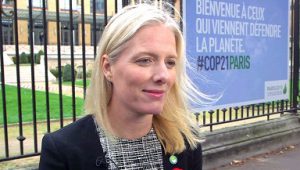
But that was not always the case. This is now only possible because of new leadership. Back in 2015, Canada elected a new government and Prime Minister – Justin Trudeau. Out with the old, in with the new; see 2015 news article in Appendix below. Rather than “sticking their head in the sand” – this means you United States of America – Canada is “taking the reins” to forge attitudinal change among the world’s Great Powers.

But Canada’s motivation is more than just being the “leader of the pack”, they have real concerns, risks and threats:

Canada, the second largest country in the world by total area, is comprised by ten provinces and three territories. Canada also has the longest total coastline among all of the countries of the world, at 125,567 miles.
Countries With The Most Coastline – World Atlas 

If Climate Change is to continue unabated, this country has a lot to lose – catastrophic storms, melting ice caps, thawing permafrost and rising sea level.

Ditto for the Caribbean. (We similarly have lots of coastlines).

Truly, Canada can look at their Caribbean brethren – Canada’s shares the same British Colonial heritage with 18 of the 30 Caribbean member-states – and pronounce: Follow Me!

This declaration was truly the theme of the presentation by Catherine McKenna, Minister of Environment and Climate Change as she visited the US cities of Miami, Florida and Houston, Texas. Listen to the full AUDIO-Podcast news story here:

Newswire Title: Minister of Environment and Climate Change, Catherine McKenna, promotes NAFTA, climate action, and ocean protection, in Houston and Miami

Canada NewsWire – MIAMI, Jan. 24, 2018 – Canada’s Minister of Environment and Climate Change, Catherine McKenna, travelled to Houston, Texas; and Miami, Florida, to promote NAFTA, increased collaboration on ocean health, coastal solutions, clean technology, and renewable energy opportunities.

In Houston, Minister McKenna met with the Mayor of Houston, Sylvester Turner. Mayor Turner is Co-Chair of US Climate Mayors, a coalition of 391 US mayors working together to meet the goals of the Paris Agreement. They discussed NAFTA and the importance of the Canada-US trade relationship to the economy of Houston and of Texas. Texas sells $24.1 billion in goods and services to Canada, and 459 700 jobs depend on trade and investment with Canada. The Mayor noted that the city remains a global oil-and-gas centre while diversifying and taking advantage of the opportunity of clean growth and renewable energy.

During her visit to Houston, the Minister visited BP’s Wind Energy Remote Operations Center, where logistics and conditions for 16 wind farms across the US are monitored. Today, Texas produces more wind energy than any US state, and power generated by wind is expected to exceed coal-generated power in the state, in 2018.

As part of the Climate Campus tour, Minister McKenna visited the University of Houston, where she met with professors and students working on energy and environment law. She also met with researchers at the new Hurricane Resilience Research Institute created after Hurricane Harvey. The Institute is focused on issues including flood-mitigation management during severe storms and the building of resilient communities. Minister McKenna hosted a town hall at Texas A&M University at Galveston and met with ocean scientists looking at ocean health, energy, and maritime complex and visited one of the University’s ocean research vessels.

In Miami, Minister McKenna emphasized the importance of NAFTA to the Florida economy at a round table with Florida businesses and trade associations and in discussions with the Mayor of South Miami, Philip Stoddard. Canada is Florida’s most important economic partner. Each year, Canada and Florida trade $8 billion worth of goods, and 620 000 jobs in Florida depend on trade with Canada.

Minister McKenna met with representatives of NextEra Energy, Inc., North America’s largest generator of energy from wind and sun and the third-largest utility in the US. They discussed opportunities for further investment by NextEra Energy in Canada’s North as well as in provinces such as Alberta, Saskatchewan, and Ontario.

The Minister visited the Brickell City Centre Climate Ribbon and the City of Miami Beach Convention Center. These two sites showcase how the city is adapting to sea-level rise and more frequent, intense, and prolonged tidal flooding exacerbated by climate change. The Climate Ribbon, which was designed in part by Guelph-based company RWDI, spans the length of three city blocks and acts as an architectural air conditioner in the summer and umbrella when it rains.

The City of Miami Beach Convention Center has the world’s single-largest pumping station, which removes displaced groundwater that is surging due to rising sea levels. The Convention Center is home to a living sea wall and natural mangroves, which help to mitigate and adapt to the impacts of flooding caused by climate change.

The Minister also convened a round table of ocean and environmental experts to discuss Canada’s G7 presidency focus on ocean protection and marine litter.

Quotes
“My meetings in Houston and Miami reinforced the strong ties between Canada and these important Canadian partners on trade and the environment. I was heartened to see the shared commitment by local governments and business to NAFTA and the good middle-class jobs it creates in both countries. It was also incredible to see the transition of the economies of both Houston and Miami toward clean growth and to meet with innovative clean-energy and clean-technology companies, many of which are looking at investment opportunities in Canada. I was also impressed by the leadership from the mayors of both Houston and Miami on climate change as well as the efforts to build more communities more resilient to extreme weather events.” – Catherine McKenna, Minister of Environment and Climate Change

View original content: http://www.newswire.ca/en/releases/archive/January2018/24/c5640.html

——–

AUDIO-Podcast – Canadian Minister Of Environment And Climate Change Visits Miami – https://soundcloud.com/wlrn/444pm-canadian-minister-of-environment-and-climate-change-visits-miami

Published on February 5, 2018 – The Canadian Minister of Environment and Climate Change, Catherine McKenna, promotes Climate Action and ocean protection in Miami.

The book Go Lean…Caribbean and accompanying blogs have asserted that the threat of Climate Change is real. There is no scientific doubt of this reality – just consider the destructive realities of this past hurricane season – the only doubt is political. If the US wants to deny this reality, they do so at their own peril – remember the American territory of Puerto Rico. Canada is prepared to take the lead, to put the Western Hemisphere on its shoulders and carry the load for arresting Climate Change.

Thank you Canada for this model. Now, we – the Caribbean – need to step up to carry our own load for better mitigation of Climate Change threats; we need to do our part in lowering our own carbon footprint. We can make a difference. Canada can make a difference. As related in a previous blog-commentary, the same as the threat of Acid Rain was subjugated, so too, curative measures can be put in place to lower the greenhouse gases in the environment. This is why Canada has a Champion for the Environment – Catherine McKenna – at the Cabinet level.

Good model …

The book Go Lean…Caribbean – available to download for free – prepares the Caribbean region for the heavy-lifting of monitoring, managing and mitigating the acute risks of Climate Change to the environment from a Caribbean perspective. These Climate Change threats are real for us: Global Warming and rising sea-levels. We must act now! Though no Caribbean country is among the BIG polluters, we must still act, just so that we are not hypocritical … and provide a good model ourselves.

Then there are the economic issues. Catherine McKenna, in the foregoing presentation to Miami officials, related that there is no need for a trade-off between environment and economics. No, it can be economically sound, and even advantageous, to cater to environmental needs. Imagine the fuel cost savings from alternative energy options, new industrial expressions for transportation solutions and construction jobs for retrofitting previous structures.

The Go Lean book serves as a roadmap for the introduction and implementation of the technocratic Caribbean Union Trade Federation (CU), for the elevation of Caribbean society – for all member-states. This CU/Go Lean roadmap has these 3 prime directives:

  • Optimization of the economic engines in order to grow the regional economy to $800 Billion and create 2.2 million new jobs.
  • Establishment of a security apparatus to ensure public safety and protect the resultant economic engines.
  • Improve Caribbean governance to support these engines, including a separation-of-powers between the member-states and CU federal agencies.

The effort to reform and transform the Caribbean societal engines as a regional pursuit has always been among the motivations of this Go Lean roadmap, as pronounced in the opening Declaration of Interdependence (Pages 12 – 13):

i. Whereas the earth’s climate has undeniably changed resulting in more severe tropical weather storms, it is necessary to prepare to insure the safety and security of life, property and systems of commerce in our geographical region. As nature recognizes no borders in the target of its destruction, we also must set aside border considerations in the preparation and response to these weather challenges.

iii. Whereas the natural formation of the landmass for our society is that of an archipelago of islands, inherent to this nature is the limitation of terrain and the natural resources there in. We must therefore provide “new guards” and protections to ensure the efficient and effective management of these resources.

iv. Whereas the natural formation of the landmass is in a tropical region, the flora and fauna allows for an inherent beauty that is enviable to peoples near and far. The structures must be strenuously guarded to protect and promote sustainable systems of commerce paramount to this reality.

xi. Whereas all men are entitled to the benefits of good governance in a free society, “new guards” must be enacted to dissuade the emergence of incompetence, corruption, nepotism and cronyism at the peril of the people’s best interest. The Federation must guarantee the executions of a social contract between government and the governed.

xvi. Whereas security of our homeland is inextricably linked to prosperity of the homeland, the economic and security interest of the region needs to be aligned under the same governance. Since economic crimes … can imperil the functioning of the wheels of commerce for all the citizenry, the accedence of this Federation must equip the security apparatus with the tools and techniques for predictive and proactive interdictions.

xxiv. Whereas a free market economy can be induced and spurred for continuous progress, the Federation must install the controls to better manage aspects of the economy: jobs, inflation, savings rate, investments and other economic principles. Thereby attracting direct foreign investment because of the stability and vibrancy of our economy.

The Go Lean book provides 370-pages of turn-by-turn instructions on “how” to adopt new community ethos, plus the strategies, tactics, implementations and advocacies to execute so as to monitor, manage and mitigate the challenges of Climate Change. The book also present lessons from Canada. One advocacy specifically focuses on the path of wisdom Canada undertook during the course of its 150-year history. That advocacy (Page 146) is entitled: 10 Lessons from Canada’s History; consider some specific plans, excerpts and headlines from that advocacy in the book:

1 Lean-in for the Caribbean Single Market
This treaty calls for the confederation of the Caribbean region into a single market of 30 member-states and 42 million people, similar to the original 1867 confederation for Canada. The history of Canada synchronizes with the aspirations of the CU Trade Federation. In this Canadian context, confederation generally describes the political process that united the colonies in the 1860s and related events, and the subsequent incorporation of other colonies and territories. Today, Canada is a “G8” advanced economy, made up of 10 provinces and 3 territories, ranking among the largest in the world, due its abundant natural resources and well-developed trade networks, including one with the US, a long and complex relationship. Canada has been a Northern Star, as a guide and refuge to Caribbean hopes and dreams.
2 Confederation for Defense – Strength in Numbers

The American Civil War caused security threats for Canada. The Union (US North) encouraged Irish immigration and sourced their Army (a million-man strong) with many Irish fighters. Since many Irish immigrants maintained animosity towards the British, there were documented cases of terroristic attacks against Canadian targets, i.e. the Fenian (an Irish Brotherhood) raids. This corresponded with the Little Englander philosophy, whereby Britain no longer wanted to maintain troops in its colonies.

Confederation was therefore necessary to promote security for the related colonies of Ontario, Quebec, New Brunswick and Nova Scotia – amounting to a population of slightly over 2 million people

3 Multiple Cultural Legacies and Languages
4 Better than a Republic – (Civil War Lesson for a Technocracy)
5 Assuage Human Flight – Provide Alternative
6 Neighbor: Frienemy

Despite the cooperation needed for the St. Lawrence Waterway – (see Appendix UA) – the stated US desire, doctrine of Manifest Destiny, was to govern the entire North American continent. The US had fought wars against English-Canada interests and many believed that the US would annex the other colonies governed directly by England, as the US acquired the Oregon Territory. These reasons provided the motivation for the initial Canadian Confederation to expand from coast-to-coast, and serve as a role-model for the CU to target the entire region of the Caribbean Sea geography.

7 Aboriginal Relations Need Local Governance
8 Mastering Natural Resources

The Oil, Fisheries, Forest/Timber of Canada has been managed to contribute success to its economic engines. Plus, strategic Public Works (see Canadian Pacific Railway in Appendix UB) have provided great models for the CU today.

9 Federal / Provincial Outsourcing
10 Population Concerns – Not enough Natural Growth

In addition, the book presents these Appendices that details more examples of prudence in Canada’s history:

  • Appendix UA – St. Lawrence Waterway (Page 308)
  • Appendix UB – Canadian Pacific Railway (Page 309)

Lastly, these previous blog-commentaries detail a lot of the issues and developments in the quest for the Caribbean to lower our own carbon footprint and mitigate for Climate Change. See this sample:

https://goleancaribbean.com/blog/?p=13985 EU Assists Barbados to Go Green
https://goleancaribbean.com/blog/?p=11858 Looking and Learning from the Cautionary Tale of Kiribati
https://goleancaribbean.com/blog/?p=10367 The Science of Green Batteries
https://goleancaribbean.com/blog/?p=9455 Fix ‘Climate Change’ – Yes, We Can
https://goleancaribbean.com/blog/?p=7449 Due to Climate Change, ‘Crap Happens’ – So What Now?
https://goleancaribbean.com/blog/?p=7103 COP21 – ‘Climate Change’ Acknowledged
https://goleancaribbean.com/blog/?p=6893 A Meteorologist’s View On Climate Change
https://goleancaribbean.com/blog/?p=6016 ‘Hotter than July’ – Reality in the Caribbean
https://goleancaribbean.com/blog/?p=4673 Climate Change‘ Merchants of Doubt … to Preserve Profits!!
https://goleancaribbean.com/blog/?p=2465 Book: ‘This Changes Everything: Capitalism vs. the Climate’
https://goleancaribbean.com/blog/?p=2276 Climate Change May Affect Food Supply Within a Decade
https://goleancaribbean.com/blog/?p=1883 Climate Change May Bring More Kidney Stones
https://goleancaribbean.com/blog/?p=1817 Caribbean grapples with intense cycles of flooding & drought
https://goleancaribbean.com/blog/?p=915 Go ‘Green’ … Caribbean

We must learn from Canada and prepare for new governmental leadership to shepherd our homeland. We have the heavy-lifting task of championing Climate Change, to minimize further damage to our region. We have no further excuse! We know that the US will not take the lead in this regards; we must look elsewhere and within!

Now is the time for all of the Caribbean – the people, businesses, institutions and governments – to lean-in for the optimizations and opportunities to abate Climate Change and to lean-in to this Go Lean roadmap. This emulates Canada.

We must stand-up for ourselves; and while “things are bad” environmentally; the Caribbean disposition will only get worse if nothing is done. We must start this quest ourselves! While this quest is easier said than done, and takes a lot of heavy-lifting, it is conceivable, believable and achievable to make our homeland a better place to live, work and play. 🙂

Download the free e-book of Go Lean … Caribbean – now!

Sign the petition to lean-in for this roadmap for the Caribbean Union Trade Federation.

———-

Appendix – Climate change ‘important priority,’ Canada’s new environment minister says

The international community is “really excited” to see Canada back at the table for climate change talks in Paris, Canada’s new environment and climate change minister said Tuesday.

Catherine McKenna, who is in Paris meeting with environment and energy ministers from around the world in advance of the UN climate change conference, said the Canadian delegation has received a “huge reception” and she has made it clear that climate change will be a “very important priority” for the new Liberal government.

“We haven’t been at these types of climate negotiations and what I’ve learned is that there’s a real appetite to get a global framework, a new global framework to tackle climate change,” McKenna said Tuesday. “But there’s still a lot of work to do.”

Former prime minister Stephen Harper skipped the UN climate change summit in New York last year, but he did send his environment minister. Under the Conservative government, Canada withdrew from the Kyoto agreement that required developed countries to reduce their emissions by 2012.

See the rest of the article at this link here:
Source: Posted November 10, 2015; retrieved February 6, 2018 from: https://www.ctvnews.ca/politics/climate-change-important-priority-canada-s-new-environment-minister-says-1.2651321

Related 2015 VIDEO:

Published November 10, 2015 – Minister of Environment and Climate Change Catherine McKenna says she “will do whatever she can” to help the climate talks.

Share this post:
, ,

ENCORE: Its Time to Watch the SuperBowl … and Commercials … Again

Go Lean Commentary

It’s SuperBowl time again. This year the BIG game is being played on February 4, 2018 in Minneapolis, Minnesota between the New England Patriots (again) and the Philadelphia Eagles.

Expect BIG happenings and BIG fanfare and a BIG audience. And hopefully an exciting game.

Also, with that BIG audience, expect BIG TV commercials, and a BIG price tag for those ads … (NBC will charge an average of $5 million for a 30-second spot).

See here below, an ENCORE of the blog-commentary from January 29, 2015 detailing the economic impact of SuperBowl commercials. The business model is still the same, so we can expect that the TV spots will try even harder to solicit and entertain us this year … again.

————

CU Blog - Watch the SuperBowl ... Commercials - Photo 2The publishers of the book Go Lean…Caribbean encourages you to watch the Big Game on Sunday (February 1, 2015), Super Bowl XLIX from Phoenix –area, Arizona, between the New England Patriots and the Seattle Seahawks. Pull for your favorite team and enjoy the half-time show (Katy Perry). It’s all free! It’s being paid for by the advertisers.

So as to complete the full economic cycle, be sure to watch the commercials; because this is Big Money; Big Stakes and a Big Deal. The 2014 version, Super Bowl XLVIII on FOX Broadcast Network was the most watched television program in US history with 111.5 million viewers.[15][16] The Super Bowl half-time show featuring Bruno Mars was the most watched ever with 115.3 million viewers.[15][16] Now, it’s not just TV, but “second- screen” (computers, tablets & mobile devices) as well; this is now tweet-along-with-us programming; notice the #BestBuds Twitter identifier in the following Ad:

VIDEO http://youtu.be/EIUSkKTUftU  – 2015 Budweiser Clydesdale Beer Run

Published on Jan 23, 2015 – It’s time for your Super Bowl beer run. Don’t disappoint a Clydesdale. Choose Budweiser for you and your #BestBuds on epic Super Bowl weekend!

For $4.5 million per 30 second ad, an advertiser had better get the “maximum bang for the buck”; but 30 seconds is still only 30 seconds. Enter the “second-screen”; now advertisers can stretch the attention of their audience by directing them to internet websites, Twitter followings and even YouTube videos and Facebook videos.

See these related stories, (sourced mostly from Variety.com – Hollywood & Entertainment Business Magazine; (retrieved 01-29-2015):

1. WATCH: Super Bowl 2015 Commercials

Audiences no longer need to wait until the Big Game to watch Super Bowl commercials, with an increasing number of marketers opting to release their spots days before kickoff. This year is no different, with Budweiser, Budweiser, Bud Light, Kia, Mercedes-Benz USA, T-Mobile, Victoria’s Secret, BMW, even Paramount with “Hot Tub Time Machine 2,” among those having already posted their ads online [on sites like YouTube].

The reason? The high cost to play the Super Bowl promo blitz is one. At around $4.5 million per 30 second ad, buying time during the match up between the Seattle Seahawks and New England Patriots is at record levels. NBC is airing the game February 1.

2. Super Bowl Ads: NBC Turns to Tumblr to Post Spots After They Air on TV

NBC Sports has launched a new Super Bowl page on Yahoo’s [social media site] Tumblr that the programmer will use to feature Super Bowl XLIX’s TV ads immediately after they air on NBC on Sunday, February 1.

The new NBC Sports Tumblr page, accessible via NBCSports.com/Ads, will be populated with original content ahead of Super Bowl Sunday created by the NBC Sports’ marketing media team, as well as from re-blogging NFL-related Tumblr posts. On game day, the page will convert into a hub for Super Bowl TV ads.

3. NBCU Will Use Super Bowl XLIX Free Live-Stream to Promote Pay-TV Online Services

NBCUniversal will launch an 11-hour free digital video stream — centered around live coverage of this year’s Super Bowl — in a bid to get users to log in to its “TV Everywhere” (TVE) services across its broadcast and cable portfolio the rest of the year.

The Peacock’s “Super Stream Sunday” event will include NBC’s presentation of the Super Bowl, as well as the halftime show toplined by Katy Perry. The live-stream will kick off at 12 p.m. ET on Feb. 1 with NBC’s pregame coverage and concludes with an airing of a new episode of primetime drama “The Blacklist” at approximately 10 p.m. ET.

Ordinarily, access to the NBC Sports Live Extra and NBC.com content requires users to log in using credentials from participating [Pay] TV providers. The free promo is aimed at driving usage of TVE, to ensure those subscribers keep paying for television service.

“We are leveraging the massive digital reach of the Super Bowl to help raise overall awareness of TV Everywhere by allowing consumers to explore our vast TVE offering with this special one-day-only access,” said Alison Moore, GM and Exec VP of TV Everywhere for NBCU.

NBC does not have NFL live-streaming rights on smartphone devices, which the league has granted exclusively to Verizon Wireless. As such, the “Super Stream Sunday” content will be available on tablets and desktop computers.

4. Facebook may be the big winner of this year’s Super Bowl

For  retailer Freshpet, a new ad campaign video was released to both YouTube and Facebook this past December. It quickly went viral. That wasn’t that surprising. The surprising part was the disparity between views on YouTube compared to Facebook.  On YouTube, the video has racked up around 7.5 million views so far. On Facebook, the figure is 20 million. “It was fairly eye-opening,” he says. “Things are evolving really quickly.”

With stats like that, this might be the first year in which views of Super Bowl ads on Facebook eclipse those of YouTube.

No wonder then that many advertisers in the big game are looking to go Facebook native.

Show-business has changed. Sports has changed. TV has changed…

… there is now time-shifted viewing (DVR) and on-demand platforms offering an alphabetical menu of shows.

These changes are where this commentary relates to the Caribbean. The changing TV landscape affects the Caribbean region as well, or at least it should. This book Go Lean… Caribbean, serves as a roadmap for the introduction and implementation of the technocratic Caribbean Union Trade Federation (CU). The roadmap has 3 prime directives:

  • Optimization of economic engines in order to grow the regional economy to $800 Billion and create 2.2 million new jobs.
  • Establishment of a security apparatus to protect the resultant economic engines and marshal against economic crimes.
  • Improve Caribbean governance to support these engines.

CU Blog - Watch the SuperBowl ... Commercials - Photo 1The roadmap recognizes and fosters more sports business in the region. The genius qualifiers – athletic talent – of many Caribbean men and women are already heightened. The goal now is foster the local eco-system in the homeland so that those with talent would not have to flee the region to garner the business returns on their athletic investments. This Go Lean economic empowerment roadmap strategizes to create a Single Media Market to leverage the value of broadcast rights for the entire region, utilizing all the advantages of cutting edge ICT offerings. The result: an audience of 42 million people across 30 member-states and 4 languages, facilitating television, cable, satellite and internet streaming wherever economically viable.

Early in the book, the benefits of sports and technology empowerment is pronounced in the Declaration of Interdependence (Page 13 & 14), with these opening statements:

xiii.      Whereas the preparation of our labor force can foster opportunities and dictate economic progress for current and future generations, the Federation must ensure that educational and job training opportunities are fully optimized for all residents of all member-states, with no partiality towards any gender or ethnic group. The Federation must recognize and facilitate excellence in many different fields of endeavor, including sciences, languages, arts, music and sports. This responsibility should be executed without incurring the risks of further human flight, as has been the past history.

xiv.      Whereas the region has endured a spectator status during the Industrial Revolution, we cannot stand on the sidelines of this new economy, the Information Revolution. Rather, the Federation must embrace all the tenets of Internet Communications Technology (ICT) to serve as an equalizing element in competition with the rest of the world. The Federation must bridge the digital divide and promote the community ethos that research/development is valuable and must be promoted and incentivized for adoption.

xv.      Whereas intellectual property can easily traverse national borders, the rights and privileges of intellectual property must be respected at home and abroad. The Federation must install protections to ensure that no abuse of these rights go with impunity, and to ensure that foreign authorities enforce the rights of the intellectual property registered in our region.

xxxi.      Whereas sports have been a source of great pride for the Caribbean region, the economic returns from these ventures have not been evenly distributed as in other societies. The Federation must therefore facilitate the eco-systems and vertical industries of sports as a business, recreation, national pastime and even sports tourism – modeling the Olympics.

The region has the eco-system of free broadcast television, and the infrastructure for internet streaming. So the issues being tracked for this year’s Super Bowl have bearing in the execution of this roadmap.

The Go Lean roadmap was developed with the community ethos in mind to forge change and build up the communities around the sports world, plus the execution of related strategies, tactics, implementations and advocacies to make the change permanent. The following is a sample of these specific details from the book:

Community Ethos – People Respond to Incentives in Predictable Ways Page 21
Community Ethos – Return on Investments Page 24
Community Ethos – Ways to Foster Genius Page 27
Community Ethos – Promote Intellectual Property Page 29
Community Ethos – Ways to Promote Happiness Page 36
Community Ethos – Ways to Impact the Greater Good Page 37
Strategic – Vision – Consolidating the Region in to a   Single Market Page 45
Strategic – Staffing – Sporting Events at Fairgrounds Page 55
Tactical – Fostering a Technocracy Page 64
Tactical – Separation of Powers – Sports & Culture Administration Page 81
Tactical – Separation of Powers – Fairgrounds Administration Page 83
Implementation – Steps to Implement Self-Governing Entities – Fairgrounds Page 105
Implementation – Ways to Deliver Page 109
Planning – 10 Big Ideas – #5 Four Languages in Unison / #8 Cyber Caribbean Page 127
Planning – Ways to Make the Caribbean Better Page 131
Advocacy – Ways to Grow the Economy Page 151
Advocacy – Ways to Create Jobs Page 152
Advocacy – Ways to Improve Education – Sports Academies to Foster Talent Page 159
Advocacy – Ways to Improve Local Government – Parks & Recreation Page 169
Advocacy – Ways to Impact Events Page 191
Advocacy – Ways to Promote Fairgrounds Page 192
Advocacy – Ways to Foster Technology – Intellectual Property Protections Page 197
Advocacy – Ways to Empower Women Page 226
Advocacy – Ways to Impact Youth Page 227
Advocacy – Ways to Improve Sports Page 229
Advocacy – Ways to Impact Urban Living – Sports Leagues Page 234

This commentary previously featured subjects related to developing the eco-systems of the sports business, as sampled here:

https://goleancaribbean.com/blog/?p=3999 Breaking New Ground in the Changing Show-business Eco-System
https://goleancaribbean.com/blog/?p=3641 ‘We Built This City on ‘ …Show-business
https://goleancaribbean.com/blog/?p=3414 Levi’s® Stadium: A Team Effort for the Big Business of Sports
https://goleancaribbean.com/blog/?p=3244 Sports Role Model – Broadcasting / Internet Streaming: espnW.
https://goleancaribbean.com/blog/?p=2222 Sports Role Model – Playing For Pride … And More
https://goleancaribbean.com/blog/?p=2171 Sports Role Model – Turn On the SEC Network
https://goleancaribbean.com/blog/?p=2152 Sports Role Model – US versus the World
https://goleancaribbean.com/blog/?p=1446 Caribbean Players in the 2014 World Cup
https://goleancaribbean.com/blog/?p=1341 Sports Role Model – College World Series Time
https://goleancaribbean.com/blog/?p=1148 Sports Bubble – Franchise values in basketball
https://goleancaribbean.com/blog/?p=1092 Aereo – Model for the Future of TV Blending with the Internet
https://goleancaribbean.com/blog/?p=1020 Sports Revolutionary: Advocate Jeffrey Webb
https://goleancaribbean.com/blog/?p=318 Collegiate Sports in the Caribbean
https://goleancaribbean.com/blog/?p=273 10 Things We Want from the US – # 10: Sports Professionalism
https://goleancaribbean.com/blog/?p=60 Could the Caribbean Host the Olympic Games?

The Go Lean book focuses primarily on economic issues, but it recognizes that sports and its attendant functions can build up a community, nation and region. But the quest to re-build, re-boot and re-tool the Caribbean will be more than just kids-play, it must model the Super Bowl and act like a Big Business.

The Go Lean roadmap describes the heavy-lifting activities for the many people, organizations and governments to accomplish this goal. But the goal is conceivable, believable and achievable. We can make the region a better place to live, work and play.

🙂

Download the free e-book of Go Lean … Caribbean – now!

Sign the petition to lean-in for this roadmap for the Caribbean Union Trade Federation.

Share this post:
, , , ,
[Top]

Carter Woodson – One Man Made a Difference … for Black History

Go Lean Commentary

Its February 1st – Black History Month commences…

Believe it or not, this was not always recognized or considered important. It was at the urging of one man that this cultural phenomenon came about. That one man is:

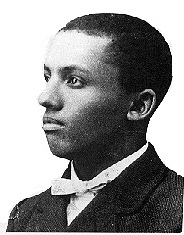
        Carter G. Woodson 

Yes, one man can make a difference. His research and archive accomplishments are fully recognized and celebrated, as is his subject – the contributions of the African-American people in the development of the United States. This high regard for Woodson is not just our opinion alone; today, Google has awarded Woodson with a Google Doodle – see above photo.

Also, see the full Wikipedia reference article on Carter Woodson in the Appendix below.

Though Woodson died in 1950 and the monthly observance started in 1970, he is still credited for the creation and fostering of this cultural phenomenon of Black History Month.

The movement behind the book Go Lean…Caribbean – available to download for free – tracks and monitors the developments of the African-American community. Since the majority population of 28 of the 30 Caribbean member-states is Black, we share the same ancestral heritage (Africa), same colonial origins (slave trade), and same history of societal oppression as American Blacks. Plus the vast majority of our Caribbean Diaspora who fled their homeland lives in the US – one estimate is 22 million.

The Go Lean book posits that one person – an advocate like Woodson – can make a difference (Page 122). It relates:

An advocacy is an act of pleading for, supporting, or recommending a cause or subject. For this book, it’s a situational analysis, strategy or tactic for dealing with a narrowly defined subject.

Advocacies are not uncommon in modern history. There are many that have defined generations and personalities. Consider these notable examples from the last two centuries in different locales around the world:

  • Frederick Douglas
  • Mohandas Gandhi
  • Martin Luther King
  • Nelson Mandela
  • Cesar Chavez
  • Candice Lightner

We must now consider Carter G. Woodson in this ilk; he is deserving of double honor:

Let the elders who preside in a fine way be considered worthy of double honor, especially those who work hard in speaking and teaching. – The Bible 1 Timothy 5:17

The Go Lean book seeks to advocate and teach the Caribbean – and the people who love it; it strives to learn lessons from history and direct regional stakeholders to a Way Forward from the dysfunctional past to a brighter future. The book serves as a roadmap for the introduction and implementation of the technocratic Caribbean Union Trade Federation (CU), for the elevation of Caribbean society – for all member-states. This CU/Go Lean roadmap has these 3 prime directives:

  • Optimization of the economic engines in order to grow the regional economy to $800 Billion and create 2.2 million new jobs.
  • Establishment of a security apparatus to ensure public safety and protect the resultant economic engines.
  • Improve Caribbean governance to support these engines, including a separation-of-powers between the member-states and CU federal agencies.

The book stresses that reforming and transforming the Caribbean societal engines must be a regional pursuit – we must unite all of the Caribbean: Black, White, Red and Yellow – that the problems are too big for any one Caribbean member-state alone. This was an early motivation for the roadmap, as pronounced in the opening Declaration of Interdependence (Pages 12 – 14):

xi. Whereas all men are entitled to the benefits of good governance in a free society, “new guards” must be enacted to dissuade the emergence of incompetence, corruption, nepotism and cronyism at the peril of the people’s best interest. The Federation must guarantee the executions of a social contract between government and the governed.

xix. Whereas our legacy in recent times is one of societal abandonment, it is imperative that incentives and encouragement be put in place to first dissuade the human flight, and then entice and welcome the return of our Diaspora …

xxxii. Whereas the cultural arts … of the region are germane to the quality of Caribbean life, and the international appreciation of Caribbean life, the Federation must implement the support systems to teach, encourage, incentivize, monetize and promote the related industries for arts … in domestic and foreign markets. These endeavors will make the Caribbean a better place to live, work and play.

xxxiii. Whereas lessons can be learned and applied from the study of the recent history of other societies, the Federation must formalize statutes and organizational dimensions to avoid the pitfalls of communities like East Germany, Detroit, Indian (Native American) Reservations, Egypt and the previous West Indies Federation. On the other hand, the Federation must also implement the good examples learned from developments/ communities …

The Go Lean book provides 370-pages of turn-by-turn instructions on “how” to adopt new community ethos, plus the strategies, tactics, implementations and advocacies to execute so as to reboot, reform and transform the societal engines of Caribbean society.

The Go Lean movement calls on every man, woman and child in the Caribbean to be an advocate, and/or appreciate the efforts of previous advocates. Their examples can truly help us today with our passions and purpose. Consider this sample of prior blog/commentaries where advocates and role models have been elaborated upon:

https://goleancaribbean.com/blog/?p=12542 Dr. Thomas W. Mason – FAMU Professor & STEM Influencer
https://goleancaribbean.com/blog/?p=11963 Oscar López Rivera – The ‘Nelson Mandela’ of the Caribbean?
https://goleancaribbean.com/blog/?p=11442 Caribbean Roots: Al Roker – ‘Climate Change’ Defender
https://goleancaribbean.com/blog/?p=10801 Caribbean Roots: John Carlos – The Man. The Moment. The Movement
https://goleancaribbean.com/blog/?p=10114 Caribbean Roots: Esther Rolle of ‘Good Times’
https://goleancaribbean.com/blog/?p=9948 Caribbean Roots: Sammy Davis, Jr.
https://goleancaribbean.com/blog/?p=9300 Edward Snowden – One Person Making a Difference
https://goleancaribbean.com/blog/?p=8724 Remembering Marcus Garvey: Still Relevant Today
https://goleancaribbean.com/blog/?p=8495 The NBA’s Tim Duncan – Champion On and Off the Court
https://goleancaribbean.com/blog/?p=8328 YouTube Millionaire: ‘Tipsy Bartender’
https://goleancaribbean.com/blog/?p=8165 Role Model Muhammad Ali’s Greatest Fight
https://goleancaribbean.com/blog/?p=7682 Frederick Douglass: Role Model for Single Cause – Death or Diaspora
https://goleancaribbean.com/blog/?p=866 Bob Marley: The legend lives on!

In summary, we conclude about Carter Woodson as we do about our own Caribbean historians and advocates; we say (Go Lean book conclusion Page 252):

Thank you for your service, love and commitment to all Caribbean people. We will take it from here.

The movement behind the Go Lean book, the planners of a new Caribbean stresses that a ‘change is going to come’, one way or another. We have endured failure for far too long; we have seen what works and what does not. We want to learn from history – the good, bad and ugly lessons. We have looked, listened, learned and lend-a-hand since then. We are now ready to lead our region to a better destination, to being a homeland that is better to live, work and play. 🙂

Download the free e-Book of Go Lean … Caribbean – now!

Sign the petition to lean-in for this roadmap for the Caribbean Union Trade Federation.

———-

Appendix Reference Title: Carter G. Woodson 

Carter Godwin Woodson (December 19, 1875 – April 3, 1950)[1] was an American historian, author, journalist and the founder of the Association for the Study of African American Life and History. He was one of the first scholars to study African-American history. A founder of The Journal of Negro History in 1916, Woodson has been cited as the “father of black history“.[2] In February 1926 he launched the celebration of “Negro History Week”, the precursor of Black History Month.[3]

[He] was born in Buckingham County, Virginia[4] on December 19, 1875, the son of former slaves, James and Eliza Riddle Woodson.[5] His father helped Union soldiers during the Civil War and moved his family to West Virginia when he heard that Huntington was building a high school for blacks.
Coming from a large, poor family, Carter Woodson could not regularly attend school. Through self-instruction, he mastered the fundamentals of common school subjects by the age of 17. Wanting more education, he went to Fayette County to earn a living as a miner in the coal fields, and was able to devote only a few months each year to his schooling.

In 1895, at the age of 20, Woodson entered Douglass High School, where he received his diploma in less than two years.[6] From 1897 to 1900, Woodson taught at Winona in Fayette County. In 1900 he was selected as the principal of Douglass High School. He earned his Bachelor of Literature degree from Berea College in Kentucky in 1903 by taking classes part-time between 1901 and 1903. From 1903 to 1907, Woodson was a school supervisor in the Philippines.

Woodson later attended the University of Chicago, where he was awarded an A.B. and A.M. in 1908. He was a member of the first black professional fraternity Sigma Pi Phi[7] and a member of Omega Psi Phi. He completed his PhD in history at Harvard University in 1912, where he was the second African American (after W. E. B. Du Bois) to earn a doctorate.[8] His doctoral dissertation, The Disruption of Virginia, was based on research he did at the Library of Congress while teaching high school in Washington, D.C. After earning the doctoral degree, he continued teaching in public schools, later joining the faculty at Howard University as a professor, and served there as Dean of the College of Arts and Sciences.

Career
Convinced that the role of his own people in American history and in the history of other cultures was being ignored or misrepresented among scholars, Woodson realized the need for research into the neglected past of African Americans. Along with Alexander L. Jackson and three associates, he founded the Association for the Study of Negro Life and History on September 9, 1915, in Chicago.[9][10] That was the year Woodson published The Education of the Negro Prior to 1861. His other books followed: A Century of Negro Migration (1918) and The History of the Negro Church (1927). His work The Negro in Our History has been reprinted in numerous editions and was revised by Charles H. Wesley after Woodson’s death in 1950.

In January 1916, Woodson began publication of the scholarly Journal of Negro History. It has never missed an issue, despite the Great Depression, loss of support from foundations, and two World Wars. In 2002, it was renamed the Journal of African American History and continues to be published by the Association for the Study of African American Life and History (ASALH).

Woodson believed that education and increasing social and professional contacts among blacks and whites could reduce racism and he promoted the organized study of African-American history partly for that purpose. He would later promote the first Negro History Week in Washington, D.C., in 1926, forerunner of Black History Month.[13] The Bronzeville neighborhood declined during the late 1960s and 1970s like many other inner-city neighborhoods across the country, and the Wabash Avenue YMCA was forced to close during the 1970s, until being restored in 1992 by The Renaissance Collaborative.[14]

He served as Academic Dean of the West Virginia Collegiate Institute, now West Virginia State University, from 1920 to 1922.[15]

He studied many aspects of African-American history. For instance, in 1924, he published the first survey of free black slaveowners in the United States in 1830.[16]

He once wrote: “If you can control a man’s thinking, you don’t have to worry about his actions. If you can determine what a man thinks you do not have to worry about what he will do. If you can make a man believe that he is inferior, you don’t have to compel him to seek an inferior status, he will do so without being told and if you can make a man believe that he is justly an outcast, you don’t have to order him to the back door, he will go to the back door on his own and if there is no back door, the very nature of the man will demand that you build one.”

NAACP
Woodson became affiliated with the Washington, D.C. branch of the NAACP, and its chairman Archibald Grimké. On January 28, 1915, Woodson wrote a letter to Grimké expressing his dissatisfaction with activities and making two proposals:

  1. That the branch secure an office for a center to which persons may report whatever concerns the black race may have, and from which the Association may extend its operations into every part of the city; and
  2. That a canvasser be appointed to enlist members and obtain subscriptions for The Crisis, the NAACP magazine edited by W. E. B. Du Bois.

Du Bois added the proposal to divert “patronage from business establishments which do not treat races alike,” that is, boycott businesses. Woodson wrote that he would cooperate as one of the twenty-five effective canvassers, adding that he would pay the office rent for one month. [But] Grimké did not welcome Woodson’s ideas. …

[Woodson’s] difference of opinion with Grimké, who wanted a more conservative course, contributed to Woodson’s ending his affiliation with the NAACP.

Black History Month
Woodson devoted the rest of his life to historical research. He worked to preserve the history of African Americans and accumulated a collection of thousands of artifacts and publications. He noted that African-American contributions “were overlooked, ignored, and even suppressed by the writers of history textbooks and the teachers who use them.”[18] Race prejudice, he concluded, “is merely the logical result of tradition, the inevitable outcome of thorough instruction to the effect that the Negro has never contributed anything to the progress of mankind.”[18]

In 1926, Woodson pioneered the celebration of “Negro History Week”,[19] designated for the second week in February, to coincide with marking the birthdays of Abraham Lincoln and Frederick Douglass.[20] However, it was the Black United Students and Black educators at Kent State University that founded Black History Month, on February 1, 1970.[21] Six years later Black History Month was being celebrated all across the country in educational institutions, centers of Black culture and community centers, both great and small, when President Gerald Ford recognized Black History Month, during the celebration of the United States Bicentennial. He urged Americans to “seize the opportunity to honor the too-often neglected accomplishments of black Americans in every area of endeavor throughout our history.”[22]

Colleagues 
Woodson believed in self-reliance and racial respect, values he shared with Marcus Garvey, a Jamaican activist who worked in New York. Woodson became a regular columnist for Garvey’s weekly Negro World.

Death and legacy
Woodson died … within his home in … Washington, D.C., on April 3, 1950, at the age of 74.

The time that schools have set aside each year to focus on African-American history is Woodson’s most visible legacy. His determination to further the recognition of the Negro in American and world history, however, inspired countless other scholars. Woodson remained focused on his work throughout his life. Many see him as a man of vision and understanding. Although Woodson was among the ranks of the educated few, he did not feel particularly sentimental about elite educational institutions. The Association and journal that he started are still operating, and both have earned intellectual respect.

Source: Wikipedia Online Encyclopedia – retrieved February 1, 2018 from: https://en.wikipedia.org/wiki/Carter_G._Woodson


Share this post:
,
[Top]

School Shootings ‘R’ Us – 11 in 23 Days

Go Lean Commentary

Which is worse: the Frying Pan or the Fire?

This is the decision-making that Caribbean people seem to be doing. Which residential option is worse for them: remain in the Failing–States of their Caribbean homeland or emigrate to the United States of America where societal defects like mass shootings / school shootings persist?

The optics are that bad!

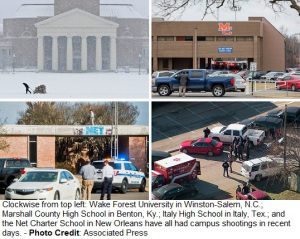
The American gun culture cannot be excused, rationalized or minimized. As of January 23rd, there were already 11 school shootings in the country.

Just think how our Caribbean people have fled their homelands – “Frying Pan” – to seek refuge in this society – “the Fire”.

See how the actuality of this American “fire” is conveyed in this New York Times news story here:

Title – School Shooting in Kentucky Was Nation’s 11th of Year. It Was Jan. 23

By: Alan Blinder and Daniel Victor

ATLANTA — On Tuesday, it was a high school in small-town Kentucky. On Monday, a school cafeteria outside Dallas and a charter school parking lot in New Orleans. And before that, a school bus in Iowa, a college campus in Southern California, a high school in Seattle.

Gunfire ringing out in American schools used to be rare, and shocking. Now it seems to happen all the time.

The scene in Benton, Ky., on Tuesday was the worst so far in 2018: Two 15-year-old students were killed and 18 more people were injured. But it was one of at least 11 shootings on school property recorded since Jan. 1, and roughly the 50th of the academic year.

Researchers and gun control advocates say that since 2013, they have logged school shootings at a rate of about one a week.

“We have absolutely become numb to these kinds of shootings, and I think that will continue,” said Katherine W. Schweit, a former senior F.B.I. official and the co-author of a study of 160 active shooting incidents in the United States.

Some of the shootings at schools this year were suicides that injured no one else; some did not result in any injuries at all. But in the years since the massacres at Columbine High School in Colorado, Virginia Tech and Sandy Hook Elementary School in Newtown, Conn., gun safety advocates say, all school shootings seem to have lost some of their capacity to shock.

Shannon Watts, the founder of Moms Demand Action, a gun safety group, said that’s because in 2012 in Newtown, “20 first graders and six educators were slaughtered in an elementary school.”

“The news cycles are so short right now in America, and there’s a lot going on,” she said. “But you would think that shootings in American schools would be able to clear away some of that clutter.”

Gov. Matt Bevin of Kentucky said the gunman who opened fire Tuesday morning at Marshall County High School in Benton, near the western tip of the state was a 15-year-old student. The authorities said the student entered the school just before 8 a.m., fired shots that struck 14 people, and set off a panicked flight in which five more were hurt.

One girl who was shot, Bailey Nicole Holt, died at the scene; a boy, Preston Ryan Cope, died of his injuries at a hospital.

Bryson Conkwright, a junior at the school, said he was talking with a friend on Tuesday morning when he spotted the gunman walking up near him. “It took me a second to process it,” Mr. Conkwright, 17, said in an interview. “One of my best friends got shot in the face, and then another one of my best friends was shot in the shoulder.”

He said he was part of a group of students who fled, kicked down a door to get outside and ran.

The suspect, who was not immediately identified, was taken into custody in “a nonviolent apprehension,” Mr. Bevin said, and officials said he would be charged with two counts of murder and several counts of attempted murder. But the authorities had not yet decided whether to charge the suspect, who was armed with a pistol, as a juvenile or as an adult.

Of the 18 people injured, five remained in critical condition, law enforcement officials said on Tuesday night.

“This is something that has struck in the heart of Kentucky,” Lt. Michael B. Webb of Kentucky State Police said at a news conference. “It’s not far away, it’s here.”

Not for the first time. The region was scarred about two decades ago by deadly school shooting in West Paducah, about a 40-minute drive away. Three people were killed when a student opened fire into a prayer circle, and five more were injured.

Benton is a small town about 200 miles southwest of Louisville, and its high school serves students from all over Marshall County, which has a population of about 31,000.

John Parks, who owns the Fisherman’s Headquarters store about a mile from the school, described the area as a “very close-knit community” where just about everyone would have known a student at the school. “It’s personal when it’s a small town like this,” he said.

About a mile from the high school, a large American flag flew at half-staff over a Ponderosa Steakhouse on Tuesday night. Taylor McCuiston, 21, a manager at the restaurant who graduated from Marshall County High School two years ago, was working when the shooting occurred down the road.

“It was very scary because, like, 90 percent of the staff that works here goes to that school,” she said. “So for the first hour we were just scrambling trying to make sure they were all O.K. and accounted for.”

The town of Italy, Tex., is not any bigger than Benton. On Monday, a 15-year-old girl there was hospitalized after she was shot by a 16-year-old classmate, according to local news reports. That suspect, a boy, was taken into custody by the Ellis County Sheriff’s Department. The authorities said on Tuesday that the victim was recovering.

The F.B.I. study that Ms. Schweit helped write examined active shooter episodes in the United States between 2000 and 2013. It found that nearly one-quarter of them occurred in educational environments, and they were on the rise.

In the first half of the study period, federal officials counted 16 active shooter incidents in educational settings, meaning instances of a person “actively engaged in killing or attempting to kill people in a confined and populated area.” In the second half, the number rose to 23. (Many, but not all, of the school shootings tallied by advocates so far this year meet that definition.)

“Any time there’s a school shooting, it’s more gut-wrenching, and I think we have a tendency to react in a more visceral way,” Ms. Schweit said in an interview on Tuesday. “But I really don’t think as a whole, in society, we’re taking shootings more seriously than we were before — and that’s wrong.”

Even so, jarred and fearful school administrators across the country have been placing greater emphasis on preparing for the possibility of an active shooter. According to a report issued by the Government Accountability Office in March 2016, 19 states were requiring individual schools to have plans for how to deal with an active shooter. Only 12 states required schools to conduct drills, but two-thirds of school districts reported that they had staged active shooter exercises.

School safety experts say steps like the drills are crucial, if imperfect, safeguards.

“I think we’ve become somewhat desensitized to the fact that these things happened, and it takes a thing like Sandy Hook to bring us back to our senses,” said William Modzeleski, a consultant who formerly led the Department of Education’s Office of Safe and Drug Free Schools.

“My fear is that if you don’t hear about a school shooting for a while, educators move on to other things,” he said. “Principals are busy. Teachers are busy. Superintendents are busy.”

In Kentucky, lawmakers have grappled with how to address the risk of school shootings. Last year, state legislators considered, but did not pass, a bill that would have allowed people with concealed-carry permits to bring weapons on to public school campuses, where proponents argue they could be used to respond to active shooters. A similar bill, limited to college campuses and certain other government buildings, has been introduced this year. It was not immediately clear how the shooting in Benton might affect the debate in Frankfort, the Kentucky capital.

But in Benton, “this is a wound that is going to take a long time to heal,” said Mr. Bevin, the governor, “ and for some in this community, will never fully heal.”

———-

Alan Blinder reported from Atlanta and Daniel Victor from New York. Steven Hale contributed reporting from Benton, Ky., and Timothy Williams and Matthew Haag from New York.

Source: New York Times – posted January 23, 2017; retrieved January 30, 2017: https://www.nytimes.com/2018/01/23/us/kentucky-school-shooting.html

RELATED COVERAGE:

Life in American schools is risky. Life in the US in general, may experience a shorter mortality due to the risky gun culture.

This is not an unfamiliar theme for this movement behind the book Go Lean…Caribbean; on October 11, 2017 a blog-commentary entitled: “Pulled” – Despite American Guns was published. That entry lamented how the US continues to draw the human capital out of the Caribbean, despite the unconscionable gun-death rate in the country. That commentary related:

… the US has far more gun deaths than most other advanced economy countries.

Reference: Visualizing gun deaths: Comparing the U.S. to rest of the world
Whenever a mass shooting occurs, a debate about gun violence ensues. An often-cited counter to the point about the United States’ high rates of gun homicides is that people in other countries kill one another at the same rate using different types of weapons. It’s not true.

Compared to other countries with similar levels of development or socioeconomic status, the United States has exceptional homicide rates, and it’s driven by gun violence.

Life in the US may be more prosperous, but it is “fast & furious” compared to the Caribbean homeland. If only, we can assuage our societal defects – Frying Pan – and foster more economic opportunities, then our people will be able to prosper where planted in the Caribbean homeland. They would not have to “jump into the Fire” as they do now – one report estimates 70 percent of the professional classes have fled to foreign destinations like the United States. To be clear, there are two reasons why are they leaving:

  • Push” refers to people who feel compelled to leave, to seek refuge in a foreign land. “Refuge” is an appropriate word; because of societal defects, many from the Caribbean must leave as refugees – think LGBTDisabilityDomestic-abuseMedically-challenged– for their life, liberty and pursuit of happiness.
  • Pull”, on the other hand refers to the lure of a more prosperous life abroad; many times our people are emigrating for economics solely.

It is the quest of this Go Lean movement that we reform and transform our societal engines so as to lower the “Push” factors. As for the “Pull” factors, this is all about messaging, knowledge-sharing and declaring the truth. Take a moment and acknowledge this truth:

Before this article, did you really know that there were 11 school-shootings in the US between January 1st and 23rd, 2018?

For most, that answer is no!

This is the truism that we must contend with in our region: The “grass is not necessarily greener” on the American side.

The Go Lean book serves as a roadmap for the introduction and implementation of the technocratic Caribbean Union Trade Federation (CU) to elevate the societal engines – economics, homeland security and governance – for all 30 Caribbean member-states in the region. In fact, the prime directives of the roadmap includes the following 3 statements:

  • Optimization of the economic engines in order to grow the regional economy to $800 Billion & create 2.2 million new jobs.
  • Establishment of a security apparatus to ensure public safety and protect the resultant economic engines with proactive and reactive measures.
  • Improvement of Caribbean governance to support these engines, including a separation-of-powers between the member-states and CU federal agencies.

The Go Lean quest is to minimize any paradox of future-planning/decision-making for Caribbean citizens. We want to make the Caribbean region better places to live, work and play; this way our citizens would not have to “jump in to the Fire” by relocating to American shores.

How would you live with yourself if your children or grandchildren die in a school shooting in some US location?!

This is not to say that there will never be any violence in the Caribbean. No, the Go Lean book contends that bad actors will always emerge just as a result of economic successes in society. Once the prospects of guns are factored it, the inevitable “bad guy with a gun” can do more damage than ordinary. The Way Forward from the book is real remediation and mitigation for minimizing incidents of gun violence.

Many times in the US, the post mass-shooting platitudes from Pro-Gun Advocacy groups – i.e. the NRA – is that the best way to stop a “bad guy with a gun” is with a “good guy with a gun”.

Platitudes – flat, dull, or trite remark –  indeed …

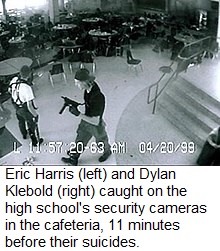
Remember the April 1999 Columbine High massacre – school shooting – in Colorado – Greater Denver Metropolitan area:

In addition to the shootings, the complex and highly planned attack involved a fire bomb to divert firefighters, propane tanks converted to bombs placed in the cafeteria, 99 explosive devices, and car bombs. The perpetrators, senior students Eric Harris and Dylan Klebold, murdered 12 students and one teacher. They injured 21 additional people, and three more were injured while attempting to escape the school. After exchanging fire with responding police officers, the pair subsequently committed suicide.[5][6]Wikipedia

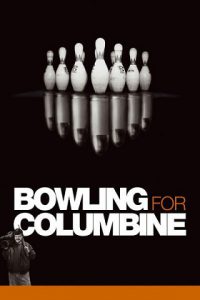
See this dramatic portrayal for the documentary-movie Bowling for Columbine here with this Trailer and critical review:

VIDEO – Bowling for Columbine – Official Trailer – Michael Moore Movie (2002) – https://youtu.be/hH0mSAjp_Jw

Movieclips Trailer Vault
Published on Nov 15, 2011 – Bowling for Columbine Trailer – Michael Moore (Michael Moore) takes an inside-look at America’s fascination with firearms. MGM – 2002

  • Category: Film & Animation
  • License: Standard YouTube License

———–

Movie Review: Bowling for Columbine

By: Roger Eber

Michael Moore’s “Bowling for Columbine,” a documentary that is both hilarious and sorrowful, is like a two-hour version of that anecdote. We live in a nation of millions of handguns, but that isn’t really what bothers Moore. What bothers him is that we so frequently shoot them at one another. Canada has a similar ratio of guns to citizens, but a 10th of the shooting deaths. What makes us kill so many times more fellow citizens than is the case in other developed nations? Moore, the jolly populist rabble-rouser, explains that he’s a former sharpshooting instructor and a lifelong member of the National Rifle Association. No doubt this is true, but Moore has moved on from his early fondness for guns. In “Bowling for Columbine,” however, he is not so sure of the answers …
Moore’s thoughtfulness doesn’t inhibit the sensational set-pieces he devises to illustrate his concern. He returns several times to Columbine High School, at one point showing horrifying security-camera footage of the massacre. And Columbine inspires one of the great confrontations in a career devoted to radical grandstanding. Moore introduces us to two of the students wounded at Columbine, both still with bullets in their bodies. He explains that all of the Columbine bullets were freely sold to the teenage killers by Kmart, at 17 cents apiece. And then he takes the two victims to Kmart headquarters to return the bullets for a refund.

This is brilliant theater and would seem to be unanswerable for the hapless Kmart public relations spokespeople, who fidget and evade in front of Moore’s merciless camera. But then, on Moore’s third visit to headquarters, he is told that Kmart will agree to completely phase out the sale of ammunition. “We’ve won,” says Moore, not believing it. “This has never happened before.” For once, he’s at a loss for words.

The movie is a mosaic of Moore confrontations and supplementary footage. One moment that cuts to the core is from a standup routine by Chris Rock, who suggests that our problem could be solved by simply increasing the price of bullets–taxing them like cigarettes. Instead of 17 cents apiece, why not $5,000? “At that price,” he speculates, “you’d have a lot fewer innocent bystanders being shot.”

Source: RogerEbert.com E-Zine/Website – Posted October 18, 2002; retrieved January 30, 2018 from: https://www.rogerebert.com/reviews/bowling-for-columbine-2002

We can do better in the Caribbean!

We do not have the same gun culture, nor legal entanglements. The 2nd Amendment – gun rights guaranteed by the US Constitution – does not apply for most of the Caribbean and can even be curtailed more in the US Territories (Puerto Rico & US Virgin Islands) as opposed to the US mainland.

Doing better and being better than the US – a protégé , not a parasite – is a need pronounced early in the Go Lean book with the opening Declaration of Interdependence (Pages 12 – 13) that claims:

x. Whereas we are surrounded and allied to nations of larger proportions in land mass, populations, and treasuries, elements in their societies may have ill-intent in their pursuits, at the expense of the safety and security of our citizens. We must therefore appoint “new guards” to ensure our public safety and threats against our society, both domestic and foreign. The Federation must employ the latest advances and best practices … to assuage continuous threats against public safety.

xi. Whereas all men are entitled to the benefits of good governance in a free society, “new guards” must be enacted to dissuade the emergence of incompetence, corruption, nepotism and cronyism at the peril of the people’s best interest. The Federation must guarantee the executions of a social contract between government and the governed.

xvi. Whereas security of our homeland is inextricably linked to prosperity of the homeland, the economic and security interest of the region needs to be aligned under the same governance. Since economic crimes, including piracy and other forms of terrorism, can imperil the functioning of the wheels of commerce for all the citizenry, the accedence of this Federation must equip the security apparatus with the tools and techniques for predictive and proactive interdictions.

The Go Lean book provides 370 pages of turn-by-turn directions on how to adopt a more productive Public Safety ethos, plus the executions of strategies, tactics, implementations and advocacies to better secure the Caribbean homeland, school campus protections and gun control. The book details (Page 181) this sample mitigation for school bullying:

Consider Bullying as Junior Terrorism
The CU wants to “leave no child behind”. So bullying will be managed under a domestic terrorism and Juvenile Justice jurisdiction. The CU will conduct media campaigns for anti-bullying, life-coaching, and school-mentoring programs. The problem with teen distress is that violence can ensue from bullying perpetrators or in response to bullying.

In addition, there have been a number of previous blog-commentaries by the Go Lean movement that highlighted the eco-system of crime-domestic terrorism and homeland security initiatives. See this sample list here:

https://goleancaribbean.com/blog/?p=14087 Opioids – Another Example of America’s Deadly Culture
https://goleancaribbean.com/blog/?p=13999 First Steps – Deputize the CU to Monitor-Mitigate-Manage Threats
https://goleancaribbean.com/blog/?p=13126 “Must Love Dogs”  – Providing K9 Solutions for Better Security
https://goleancaribbean.com/blog/?p=12400 Accede the Caribbean Arrest Treaty
https://goleancaribbean.com/blog/?p=11332 Boston Bombing Anniversary – Learning Lessons
https://goleancaribbean.com/blog/?p=11244 Live Fast; Die Young – The Fast & Furious Life in the US
https://goleancaribbean.com/blog/?p=11048 Managing the ‘Strong versus the Weak’ Series – Mitigating Bullies
https://goleancaribbean.com/blog/?p=9072 Model: Shots-Fired Monitoring – Securing the Homeland on the Ground
https://goleancaribbean.com/blog/?p=7485 Mitigating Interpersonal Violence Series – Street Crimes

In summary, fleeing to a life of refuge in the US may be likened to “jumping from the Frying Pan to the Fire”. It seems so basic to protect our children so that they can study safely in school, and yet, there had been 11 gun attacks already in the US this month by the 23rd of the month. The repeated occurrences reflect a failure in American society and American stewardship. This view considers the premise of the implied Social Contract:

Citizens surrender some of their freedoms and submit to the authority of the State in exchange for protection of remaining natural and legal rights. – Go Lean book Page 170.

Yes, it is only natural, logical, and mature that any stewards of society would remediate any known risks and threats; yet this is not the case for guns in America. (The 2nd Amendment is a societal defect!)

In that previous blog-commentary, this was the simple conclusion:

… surely we can convince our Caribbean people to Stay Home and not be lured to this [dysfunctional-gun] madness in the first place; and for those of the Diaspora in the US: you are in harm’s way, just living an ordinary life. It is Time to Go … back home!

Now is the time for all of the Caribbean – in and out of schools – to lean-in for the empowerments of the Go Lean roadmap. It is conceivable, believable and achievable to prosper where planted here in the region; to make the Caribbean a better place to live, work and play. 🙂

Download the free e-book of Go Lean … Caribbean – now!

Sign the petition to lean-in for the roadmap for the Caribbean Union Trade Federation.

Share this post:
, , ,
[Top]

Wait, ‘We Are The World’

Go Lean Commentary

33 is an important number for music. This is the speed that a record-album spins on a record-player.

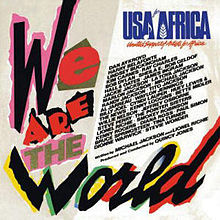
33 years ago, today – January 28th, 1985 – the record industry spun a new thread. The industry spun its biggest world charity endeavor, to date, to mitigate famine in Africa, in response to a drought in Ethiopia. This was the collaborative effort – by more than 40 artists – to record the song: We Are The World.

See the story in the Almanac entry here:

Almanac: “We Are the World”

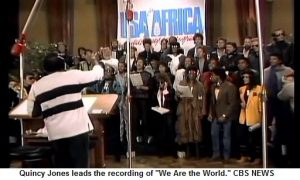
… From our “Sunday Morning” Almanac: January 28th, 1985, 33 years ago today … the day more than 40 of the music world’s greatest stars gathered in a Los Angeles studio to record the song “We Are the World.”

Written by Lionel Richie and Michael Jackson, and produced by Quincy Jones, the song was a fundraiser for the relief group USA for Africa.

The artists were told, “Check your egos at the door.” And did they ever.

Twenty-one of them each got a turn singing a solo line, while more than 20 others made up the chorus.

More than nine million copies of the song have been sold or downloaded. It won four Grammys, including Song of the Year and Record of the Year.

And most important: USA for Africa says the song has generated more than $65 million for humanitarian relief.

For more info:

Source: CBS Sunday Morning – Almanac: This Day In History – Posted & Retrieved January 28, 2018 from: https://www.cbsnews.com/news/almanac-we-are-the-world/

———–

VIDEO – U.S.A. For Africa – We Are the World – https://youtu.be/9AjkUyX0rVw

USAforAfricaVEVO

Published on Apr 12, 2010 – Music video by U.S.A. For Africa performing ‘We Are the World’. USA For Africa

This moment, movement, momentum and music changed the world!

This super-group United Support of Artists (USA) for Africa played on the brand “USA”, but truthfully, they could have called themselves United States of America, as all the participants – see Appendix below –  were Americans … except for the Irish vocalist-producer Bob Geldof in the chorus, plus percussionist Phil Collins (England) and percussionist  Paulinho da Costa (Brazil).
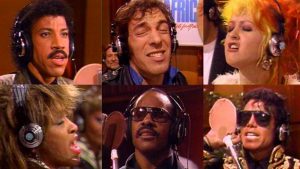
Yet still, this collaborative effort made a difference!

They raised money and ensured the distribution of food stuffs to the ravaged areas of Africa. They used music to change the world!

Can we use music to change the world again? How about changing the Caribbean? How about shaping the culture?

Yes, we can! Why? ‘We Are The World‘.

Its ironic that despite all the available talent, there was no Caribbean representation in that assembly of artists that day, none except for Harry Belafonte. He boasts a legacy of a Caribbean parentage from a Jamaican mother and Martiniquan father; (though he himself was born in Harlem, New York). For ‘We Are The World‘, he sang in the chorus.

This consideration is in line with the 2013 book Go Lean … Caribbean. The book relates that music and a movement can change the world again. It serves as a roadmap for the introduction and implementation of the technocratic Caribbean Union Trade Federation (CU). This CU strives to advance Caribbean culture using the application of societal best-practices – and music – to engage these 3 prime directives:

  • Optimization of the economic engines in order to grow the regional economy to $800 Billion and create 2.2 million jobs.
  • Establishment of a security apparatus to protect the resultant economic engines.
  • Improvement of Caribbean governance to support these engines.

The Go Lean book – available for download now – prescribes a plan for each Caribbean country to grow their musical influence. The book further identifies 169 different musical/national combinations of genres throughout the region. So the complex music landscape in the region does not stand still; it evolves. So too their musical artists.

Music can indeed wield a great influence and impact on the world. (Previously, this blog-commentary detailed the influence of music icon Bob Marley). Natural disasters continue to happen, as ‘We Are The World‘ was in response to a natural disaster – a drought – in Africa 33 years ago. We continue to have natural disasters … today. Just recently, late September 2017, Hurricane Maria devastated several Caribbean member-states; Puerto Rico was gravely impacted. In the mode of ‘We Are The World‘, many artists – led by Lin-Manuel Miranda of Hamilton fame – assembled and recorded a song to aid Puerto Rico, entitled ‘Almost Like Praying‘ by Artists for Puerto Rico.

Lesson learned! The same as ‘We Are The World‘ was mostly an American art form, Puerto Rico was able to convey its brand.

See the VIDEO of the song ‘Almost Like Praying‘ by Artists for Puerto Rico here:

VIDEO – Like Praying feat Artists for Puerto Rico [Music Video] – https://youtu.be/D1IBXE2G6zw

Atlantic Records

Published on Oct 6, 2017 – Lin-Manuel Miranda’s “Almost Like Praying” was written and recorded to benefit hurricane relief efforts in Puerto Rico with proceeds benefiting The Hispanic Federation’s Unidos Disaster Relief Fund

Proceeds go to https://hispanicfederation.org/unidos/

For more information, please visit http://www.hispanicfederation.org and http://www.almostlikepraying.com

“Almost Like Praying” Lin-Manuel Miranda feat Artists for Puerto Rico Music and Lyrics by Lin-Manuel Miranda © 2017
“Contains elements of “Maria” Music by Leonard Bernstein, Lyrics by Stephen Sondheim ©1957, Renewed.

Vocals Performed by (listed alphabetically):

Marc Anthony Ruben Blades Camila Cabello
Pedro Capo Dessa Gloria Estefan
Fat Joe Luis Fonsi Juan Luis Guerra
Alex Lacamoire John Leguizamo Jennifer Lopez
Lin-Manuel Miranda Rita Moreno Ednita Nazario
Joell Ortiz Anthony Ramos Gina Rodriguez
Gilberto Santa Rosa PJ Sin Suela Tommy Torres
Ana Villafañe

Percussion by: Eric Bobo Correa

Executive Producer: Lin-Manuel Miranda

Proceeds to the Hispanic Federation UNIDOS Fund for Puerto Rico

  • Category: Music
  • License: Standard YouTube License

The movement behind the Go Lean book asserts that “one person can make a difference“, and that music can shape culture. So just like Bob Marley, Lin-Manuel Miranda should be recognized for his contributions to music, culture and Puerto Rican (Caribbean) identity. This one character has made a difference, he has shaped American culture and forged an example and a sample of how other Caribbean stakeholders can do more in the arts to impact the world – ‘We Are The World‘.

Yes, as related in a previous blog-commentary, we – in the Caribbean – can build a city on “rock-and-roll”.

Early in the Go Lean book (Page 15) in the Declaration of Interdependence, the contributions that music can make is pronounced as an community ethos for the entire region to embrace, with these statements:

  • Whereas the cultural arts and music of the region are germane to the quality of Caribbean life, and the international appreciation of Caribbean life, the Federation must implement the support systems to teach, encourage, incentivize, monetize and promote the related industries for arts and music in domestic and foreign markets. These endeavors will make the Caribbean a better place to live, work and play.

The Go Lean book, within its 370 pages, details the community ethos, strategies, tactics, implementations and advocacies to foster the next generation of artists. This roadmap recognizes that a prerequisite for advancing society is a change in the community ethos, defined as “the fundamental spirit of a culture that drives the beliefs, customs and practices” in society. Music should be appreciated for its ability to shape the culture of a community, country or even the whole world.

Thank you Quincy Jones and all the 40-plus United Support of Artists for the model for ‘We Are The World‘ 33 years ago; you set the pathway for success for new collaborations of talented, inspirational and influential artists who are sure to follow, even here in the Caribbean. We used that pattern for Puerto Rico; hopefully more Caribbean communities to follow.

We want “a change to come” to the Caribbean. So we need to accept the premise that was echoed musically 33 years ago, that ‘We Are The World‘. We hereby urge the people, institutions and governance of Caribbean region to “lean-in” to this Go Lean roadmap for change and empowerment. ‘We Are The World‘ and we want to make our part of the world – the Caribbean – a better place to live, work and play. 🙂

—————

Appendix – USA for Africa Artists-Musicians

Conductor: Quincy Jones 

Soloist – Order of Appearance Chorus – Alphabetically Instrument Players
Lionel Richie Dan Aykroyd David Paich – synthesizers
Stevie Wonder Harry Belafonte Michael Boddicker – synthesizers
Paul Simon Lindsey Buckingham Paulinho da Costa – percussion
Kenny Rogers Mario Cipollina Phil Collins – percussion
James Ingram Johnny Colla Louis Johnson – synth bass
Tina Turner Sheila E. Michael Omartian – keyboards
Billy Joel Bob Geldof Greg Phillinganes – keyboards
Michael Jackson Bill Gibson John Robinson – drums
Diana Ross Chris Hayes
Dionne Warwick Sean Hopper
Willie Nelson Jackie Jackson
Al Jarreau La Toya Jackson
Bruce Springsteen Marlon Jackson
Kenny Loggins Randy Jackson
Steve Perry Tito Jackson
Daryl Hall Waylon Jennings
Huey Lewis Bette Midler
Cyndi Lauper John Oates
Kim Carnes Jeffrey Osborne
Bob Dylan Pointer Sisters (June, Ruth, and Anita)
Ray Charles Smokey Robinson

Source: Wikipedia Online Encyclopedia Retrieved January 28, 2018 from: https://en.wikipedia.org/wiki/We_Are_the_World

Share this post:
, , , ,
[Top]

Opioids and the FDA – ‘Fox guarding the Henhouse’

Go Lean Commentary

“Absolutely criminal…” – US Senator reviewing the FDA handling of America’s Opioid crisis.

Saying “the grass is not greener on the other side” is just too simplistic a criticism of the American eco-system for pharmaceutical use … and abuse. Pain is real and need to be mitigated, but the American experience is one of dysfunction.

Yet, this is to be expected, when one places the ‘fox to guard the henhouse’.

This is not just our opinion alone. This aligns with the criticism of the FDA’s Former Head; they are supposed to be the Watch-Dog. (While the Watch-Dog for them is supposed to be the US Congress, providing checks-and-balances over the Executive Branch, FDA included). See this related story-criticism here:

VIDEO: Former FDA Head weighs in on Opioid epidemic – https://youtu.be/QEzSJRBQ9RU


CBS Evening News
Posted May 9, 2016 – Each day in America, 78 people die from overdosing on painkillers. Doctor David Kessler, former head of the FDA from 1990 to 1997, called the rise of America’s Opioid crisis “one of the great mistakes of modern medicine.” Jim Axelrod has more.

Yet, still we continue to say, despite the simplicity of the criticism:  the grass is not greener on the American side. Mature communities address the problems that they face; they monitor, manage and mitigate them. To allow a problem to persist, to take lives and then do nothing or little about it makes stakeholders blood-guilty. This is a direct indictment from the Judeo-Christian moral code, the Bible; see the justice standard here:

29 But if a bull was in the habit of goring and its owner had been warned but he would not keep it under guard and it killed a man or a woman, the bull is to be stoned and its owner is also to be put to death. 30 If a ransom* is imposed on him, he must give as the redemption price for his life* all that may be imposed on him. – Exodus 21: 29, 30

Analysis
[In Bible times], certain deliberate acts that indirectly caused or could have resulted in the death of another person were considered tantamount to deliberate murder. For example, the owner of a goring bull who disregarded previous warnings to keep the animal under guard could be put to death if his bull killed someone. In some cases, however, a ransom could be accepted in place of the life of the owner. Undoubtedly the judges would take circumstances into consideration in such a case. (Ex 21:29, 30) Also, an individual scheming to have another person killed by presenting false testimony was himself to be put to death.—Deuteronomy 19:18-21.

But this standard is not the reality of America, where the original 2 societal defects America was built on still persists:

Shockingly, this indictment of the FDA – who is supposed to protect American people – raises a Caribbean debate:

Is it better to emigrate to America or any other foreign destination for economic success, or prosper where planted in the Caribbean homeland?

The movement behind the book Go Lean … Caribbean campaigns to inform the people of the Caribbean that life is not idyllic in America, that death is more readily because of a greater disregard of life, especially of those of minority (non-white) ethnicities.

Some might argue that “this” charge is not fair, nor accurate!

And yet … as reported in a previous blog-commentary (and highlighted in the foregoing VIDEO), millions suffer from Opioid addictions – 33,000 die every year.  This is not new, as the evidence suggest this is decades old, and yet the FDA “slept”; truly, the ‘fox guarding the henhouse’.

🙁

The Go Lean book serves as a roadmap to introduce the technocratic Caribbean Union Trade Federation (CU) to elevate the region’s societal engines – economics, homeland security and governance – of the 30 Caribbean member-states. In fact, the prime directives of the roadmap includes the following 3 statements:

  • Optimization of the economic engines in order to grow the regional economy to $800 Billion & create 2.2 million new jobs.
  • Establishment of a security apparatus to ensure public safety and protect the resultant economic.
  • Improve Caribbean governance for all people, even minority groups, to support these engines.

The quest of the Go Lean book and movement is to minimize the lure for America to Caribbean citizens. We need our people to Stay Home, and so we want to make the Caribbean region better places to live, work and play. People only leave because they believe that life abroad will be better. So facts to the contrary should go far in quelling such misconceptions.

In this movement for a new Caribbean, we do not want to be like America, we want to be Better! While this is heavy-lifting, it is not impossible, just start without the two known societal defects: Institutional Racism, and Crony-Capitalism.

No one is being fooled, the Opioid crisis in the US has persisted because Big Pharma is profiting. This is what a previous Go Lean commentary lamented, “stupidity persists in society when ‘someone’ is getting rich and want to preserve their profits, even at the expense of human life. This is so familiar, as in the same playbook of Big Tobacco for the entire 20th Century; see/listen to the Podcast in the Appendix below.

When it comes to chronic pain relief, the CDC is asking doctors and patients to think about alternatives to opioids.

We do not want our people to die ignominiously in America due to some opioid overdose. And so, we do not want our citizens to have to leave … in the first place. But the truth is a two-sided coin…

… on the flipside, life in America is more prosperous than in any Caribbean member-state.

(Recently, the American President Donald J. Trump, even referred to the Caribbean member-state of Haiti as a “shit-hole” country).

As related previously, the Go Lean book, in its 370 pages, introduces the Caribbean Union Trade Federation as an inter-governmental agency for the 30 member-states, to provide a better – technocratic – stewardship for Caribbean life, to make it more prosperous … at home. The book identifies that we have a crisis – our failing societal engines – but asserts that this crisis would be a terrible thing to waste. We can use the urgency – we do not want to be bloodguilty –  to introduce and implement effective community ethos, strategies, tactics, implementations and advocacies to reboot, reform and transform the economic engines of Caribbean society.

The Go Lean book contends that as a people, we must be prepared for accidents and illnesses – pain is normal. It asserts that bad actors – and bad incidences – will emerge just as a result of economic successes in the region. This point is pronounced early in the book with the Declaration of Interdependence (Page 12) that claims:

xi. Whereas we are surrounded and allied to nations of larger proportions in land mass, populations, and treasuries, elements in their societies may have ill-intent in their pursuits, at the expense of the safety and security of our citizens. We must therefore appoint “new guards” to ensure our public safety and threats against our society, both domestic and foreign. The Federation must employ the latest advances and best practices … to assuage continuous threats against public safety.

xvi. Whereas security of our homeland is inextricably linked to prosperity of the homeland, the economic and security interest of the region needs to be aligned under the same governance. Since economic crimes, including piracy and other forms of terrorism, can imperil the functioning of the wheels of commerce for all the citizenry, the accedence of this Federation must equip the security apparatus with the tools and techniques for predictive and proactive interdictions.

As related above, for us to become a mature society, we must address the risks and problems that we face; we must monitor, manage and mitigate them. The Go Lean book describes the need for the Caribbean to appoint “new guards” to protect the people, not exploit them, this should be a lesson learned from the US. The purpose of the CU security pact will be to ensure public safety as a comprehensive endeavor, encapsulating the needs of all Caribbean stakeholders: residents and visitors alike.

Consider this sample of previous blog-commentaries that have expanded on this theme:

https://goleancaribbean.com/blog/?p=13746 Security Dreams for the Caribbean Basin
https://goleancaribbean.com/blog/?p=13251 A Better Way to Manage Hurricane Risks
https://goleancaribbean.com/blog/?p=12949 Being Mature to Handle Charity Management
https://goleancaribbean.com/blog/?p=12930 Managing Dangers, Disasters and Emergencies
https://goleancaribbean.com/blog/?p=11808 Not Ignoring the Public Health Risks of ‘Concussions’
https://goleancaribbean.com/blog/?p=11654 Righting A Wrong – A Series on Ensuring Public Safety: Air Bags
https://goleancaribbean.com/blog/?p=10959 See Something; Say Something; Do Something
https://goleancaribbean.com/blog/?p=10771 Logical Addresses – It Could Mean ‘Life or Death’
https://goleancaribbean.com/blog/?p=2105 Monitoring the Risks of Economics on Public Health

We want to “live long and prosper”. We want to prosper right here in the Caribbean. How sad it would be for a family to move to the US (and other countries) and fall victim to a voluntary opioid addiction … and overdose … and death.

So we urge all Caribbean stakeholders to lean-in for the empowerments of this Go Lean roadmap. It is conceivable, believable and achievable to plant here and prosper here in our Caribbean region.

Yes, we can make our homelands better places to live, work and play. 🙂

Download the free e-book of Go Lean … Caribbean – now!

Sign the petition to lean-in for the roadmap for the Caribbean Union Trade Federation.

———–

Appendix AUDIO – Opioids As The New Big Tobacco – https://www.npr.org/2017/06/30/534969884/opioids-as-the-new-big-tobacco

Posted June 30, 2017 – A wave of litigation by state attorneys general against the biggest opioid manufacturers and distributors feels reminiscent of lawsuits brought by states in the 1990s against the tobacco industry.


Share this post:
, ,
[Top]

First Steps – A Powerful C.P.U.

The movement behind the book Go Lean … Caribbean wants to deploy an “apolitical technocracy” in the Caribbean. What is an apolitical technocracy?

Quite simply, an organizational structure designed to just deliver.

Sounds familiar? Frankly, the Post Office is a powerful example of an apolitical technocracy:

They just deliver the mail …

… “Neither snow nor rain nor heat nor gloom of night stays these couriers from the swift completion of their appointed rounds”.

(While the Postal Service has no official motto, the popular belief is that these words are tribute to America’s postal workers).

Technocracies are supposed to be automatons, a machine that just chugs-and-chugs. Think computers; think C.P.U.. But in the case of this Go Lean scheme, C.P.U. does not mean Central Processing Unit, no, it means Caribbean Postal Union.

The book Go Lean book – available to download for free – serves as a roadmap for the introduction and implementation of the technocratic Caribbean Union Trade Federation (CU) and the Caribbean Postal Union, for the elevation of Caribbean society – for all member-states. This CU/Go Lean roadmap has these 3 prime directives:

  • Optimization of the economic engines in order to grow the regional economy and create new jobs.
  • Establishment of a security apparatus to ensure public safety and protect the resultant economic engines.
  • Improve Caribbean governance to support these engines, including a separation-of-powers between the member-states and CU federal agencies.

This commentary is Part 6 of 6-parts; it completes the series from the movement behind the book Go Lean … Caribbean in consideration of the First Steps for instituting a new regime in governance for the Caribbean homeland. The other commentaries in the series are cataloged as follows:

  1. First Steps: EU: Free European Money – To Start at Top
  2. First Steps: UK: Dignified and Efficient
  3. First Steps: US: Congressional Interstate Compact – No Vote; No Voice
  4. First Steps: CariCom: One Man One Vote Defects 
  5. First Steps: Deputize ‘Me’! 
  6. First Steps: A Powerful C.P.U.

All of these commentaries relate to “how” the Caribbean can finally get started with adapting the organizational structures to optimize the region’s societal engines. Whereas all the previous submissions addressed the need for reform at the Top. This commentary addressed the automation, the technocratic C.P.U.. This is designed to affect every man-woman-child in the Caribbean region, to just deliver. This simple functionality will do wonders for the quest of this roadmap: make the Caribbean member-states better places to live, work and play.

The Go Lean book stresses that reforming and transforming the Caribbean societal and postal engines must be a regional pursuit. This was an early motivation for the roadmap, as pronounced in the opening Declaration of Interdependence (Pages 12 – 13):

xi. Whereas all men are entitled to the benefits of good governance in a free society, “new guards” must be enacted to dissuade the emergence of incompetence, corruption, nepotism and cronyism at the peril of the people’s best interest. The Federation must guarantee the executions of a social contract between government and the governed.

xv. Whereas the business of the Federation and the commercial interest in the region cannot prosper without an efficient facilitation of postal services, the Caribbean Union must allow for the integration of the existing mail operations of the governments of the member-states into a consolidated Caribbean Postal Union, allowing for the adoption of best practices and technical advances to deliver foreign/domestic mail in the region.

xvi. Whereas security of our homeland is inextricably linked to prosperity of the homeland, the economic and security interest of the region needs to be aligned under the same governance. Since economic crimes … can imperil the functioning of the wheels of commerce for all the citizenry, the accedence of this Federation must equip the security apparatus with the tools and techniques for predictive and proactive interdictions.

xxiv. Whereas a free market economy can be induced and spurred for continuous progress, the Federation must install the controls to better manage aspects of the economy: jobs, inflation, savings rate, investments and other economic principles. Thereby attracting direct foreign investment because of the stability and vibrancy of our economy.

The Go Lean book provides 370-pages of turn-by-turn instructions on “how” to adopt new community ethos, plus the strategies, tactics, implementations and advocacies to execute so as to reboot, reform and transform the societal engines of Caribbean society. One advocacy in the book is entitled “10 Ways to Improve Mail Service … in the Caribbean Region“; this detailed the best practices for postal mail and logistics; (Page 108). See this Bottom Line introduction:

The Bottom Line for the Caribbean Postal Union
Without a regional hub-and-spoke system, mail from one island to another can take weeks – such a business climate cannot breathe success with this lack of efficiency. The purpose of the CU is to facilitate the economic engines of the region. Therefore postal communications between individuals, households, businesses and governmental institutions must be efficient and effective – establishments must be able to connect with their customers and governments to its constituents. The Caribbean Postal Union (CPU) will operate as a private business, a multi-national corporation, owned by CU member-states, chartered to employ best practices and world class methods in the execution of the fulfillment side of the e-Delivery model. A mark of success: delivery of first-class mail in 3 – 5 days.

Improving the postal mail eco-system in the Caribbean can have a transformative effect on regional society. CPU is mostly an e-Logistics enterprise. Imagine the following (global) trends that wait in the balance:

Imagine a Caribbean reality with flat-rate envelopes and flat-rate boxes. Imagine the automation, the robotic technologies, the scanning and sorting. The brand CPU would really be apropos – more software, e-Commerce and Internet Communications Technology – as opposed to the neighborhood mail-carrier. See this industrial shift in the related news article in the Appendix below. In fact, the company www.Stamps.com provides a model for the CPU to emulate. See this Introductory VIDEO here:
VIDEO – Welcome to Stamps.com, USPS Postage Software Overview – https://youtu.be/wCCAkRkUWE0

Stamps.com

Published on Apr 23, 2013 – Welcome to Stamps.com, USPS Postage Software Overview This video shows new customers how Stamps.com software works. Highlights include how to buy and print postage stamps and shipping labels, e-commerce shipping features, postage spending reports plus many more features.

In addition, previous Go Lean blog-commentaries detailed the width-and-breadth of the mail-logistics business model for the Caribbean; see these prior submissions here:

https://goleancaribbean.com/blog/?p=13627 Amazon as a Role Mode: Then and Now
https://goleancaribbean.com/blog/?p=9839 Alibaba Cloud stretches global reach with four new facilities
https://goleancaribbean.com/blog/?p=7991 Transformations: Caribbean Postal Union – Delivering the Future
https://goleancaribbean.com/blog/?p=3187 Amazon Role Model – Robots helping tackle Cyber Monday
https://goleancaribbean.com/blog/?p=2488 Alibaba – A Chinese Role Model for the C.P.U.
https://goleancaribbean.com/blog/?p=1416 Amazon – An American Role Model for the C.P.U.

Forging change is heavy-lifting for the CU/Go Lean roadmap, but conceivable, believable and achievable? Why because so many other entities have executed these action plans before. We do not need to “re-invent the wheel”; we only need to conform to the published best-practices. This applies to the Caribbean Postal Union and all other societal engines.

Yes, we can succeed in forging change and assuaging the crises in the Caribbean. We have the existing organizations constructs of the CariCom, British Overseas Territories, US Territories and the EU. We can use these to “touch” every country-establishment-person in the region. This will lead to the success of our goals, to make the Caribbean a better place to live, work and play. 🙂

Download the free e-Book of Go Lean … Caribbean – now!

Sign the petition to lean-in for this roadmap for the Caribbean Union Trade Federation.

———–

Appendix Title: Important: USPS making changes to First-Class Mail International Flats

January 21, 2018 Update: Stamps.com has launched a new International Flat service.  Get more info on how to ship merchandise with International Flats.

Merchandise No Longer Allowed in First Class Mail International Flats
If you ship merchandise abroad using USPS First Class Mail International Flats, there’s a new rule going into effect soon that you need to know about. Effective Sunday, January 21, 2018, First Class Mail International Large Envelope/Flat service for merchandise will NO LONGER be available from the USPS. First Class Mail International Flats will only be approved for use when sending documents. This change is occurring to comply with Universal Postal Union requirements.

Here are some examples of what USPS considers a document (still OK to ship using First Class Mail International Flats):

  • Audit and business records
  • Personal correspondence
  • Circulars
  • Pamphlets
  • Advertisements
  • Written instruments not intended to be resold
  • Money orders, checks, and similar items that cannot be negotiated or converted into cash without forgery.

Here are examples of items that will NO LONGER be allowed to be shipped as First Class Mail International Flats, effective Jan. 21, 2018:

  • CDs, DVDs, flash drives, video and cassette tapes, and other digital and electronic storage media (regardless of whether they are blank or contain electronic documents or other prerecorded media)
  • Artwork
  • Collector or antique document items
  • Books
  • Periodicals
  • Printed music
  • Printed educational or test material
  • Player piano rolls
  • Commercial photographs, blueprints and engineering drawings
  • Film and negatives
  • X-rays
  • Separation negatives

These goods are dutiable and must be must be shipped using First Class Package International Service. Once this change goes into effect, shippers will need to include Customs Forms and the recipient could pay a duty or tax to receive the product.

Cost Savings Using First Class Mail International Flats
Moving from First Class Mail International Flats to First Class Package International Service will have a big impact on shippers.

Source: Posted December 26th, 2017; retrieved January 21, 2018 from: http://blog.stamps.com/2017/12/26/important-usps-making-changes-first-class-mail-international-flats/ 

Share this post:
, ,
[Top]

First Steps – Deputize ‘Me’!

Go Lean Commentary

If we want to effect change in the Caribbean region, we could “touch” every Caribbean member-state by going through CariCom, British Overseas Territories, US Territories and the EU. Yes, we would “touch” every country … except Cuba.

Of the 30 member-states that constitute the Caribbean region, Cuba does not align with any of these previously identified structures, but still the book Go Lean … Caribbean declares that they are not alone. There is the offer of collaboration, confederacy and comradery with the rest of the neighborhood in the Caribbean region. The book declares (Page 5) … to Cuba and the rest of the region (based on the 1972 song “Lean On Me” by Bill Withers):

If there is a load you have to bear
That you can’t carry
I’m right up the road
I’ll share your load
If you just call me

The “load” being referred here is what the Go Lean book – and other leadership experts – refers to as the Social Contract, this is the assumption that citizens surrender some of their freedoms and submit to the authority of the State in exchange for protection of remaining natural and legal rights. One way of sharing the load is to deputize others to execute. So this movement behind the Go Lean book declares: Deputize me!

This commentary about leadership is Part 5 of a 6-part series from the movement behind the book Go Lean … Caribbean in consideration of the First Steps for instituting a new regime in governance for the Caribbean homeland. The other commentaries in the series are cataloged as follows:

  1. First Steps: EU: Free European Money – To Start at Top
  2. First Steps: UK: Dignified and Efficient
  3. First Steps: US: Congressional Interstate Compact – No Vote; No Voice 
  4. First Steps: CariCom: One Man One Vote Defects 
  5. First Steps: Deputize ‘Me’! 
  6. First Steps: A Powerful C.P.U.

All of these commentaries relate to “how” the Caribbean can finally get started with adapting the organizational structures to optimize the region’s societal engines. This is the consideration of leading from the Top. This would apply to the all member-states in the geographical area. We do not want to ignore Cuba and do not want the Cubans to ignore us. They are the biggest country in the middle of the region and must be included. Most importantly, the leverage of all 42 million people in the region extends greater benefits to everyone in the region. The quest of the Go Lean movement is to implement an economic Single Market and then let the benefits flow: a better region to live, work and play.

A better economic landscape is what the Caribbean region needs to assuage a lot of its problems. The book opens (Page 3) with this sad assessment:

Many people love their homelands and yet still begrudgingly leave; this is due mainly to the lack of economic opportunities. The Caribbean has tried, strenuously, over the decades, to diversify their economy …. The requisite investment of the resources (time, talent, treasuries) for this goal may be too big for any one Caribbean member-state. Rather, shifting the responsibility to a region-wide, professionally-managed, deputized technocracy will result in greater production and greater accountability. This deputized agency is the Caribbean Union Trade Federation.

The book Go Lean…Caribbean – available to download for free – serves as a roadmap for the introduction and implementation of the technocratic Caribbean Union Trade Federation (CU), to do the heavy-lifting for the elevation of Caribbean society – for all 30 member-states. This CU/Go Lean roadmap has these 3 prime directives:

  • Optimization of the economic engines in order to grow the regional economy to $800 Billion and create 2.2 million new jobs.
  • Establishment of a security apparatus to ensure public safety and protect the resultant economic engines.
  • Improve Caribbean governance to support these engines, including a separation-of-powers between the member-states and CU federal agencies. The plan is for the CU to be deputized by member-states to execute certain governing functions.

The book stresses that reforming and transforming the Caribbean societal engines must be a regional pursuit. This was an early motivation for the roadmap, as pronounced in the opening Declaration of Interdependence (Pages 12 – 13):

xi. Whereas all men are entitled to the benefits of good governance in a free society, “new guards” must be enacted to dissuade the emergence of incompetence, corruption, nepotism and cronyism at the peril of the people’s best interest. The Federation must guarantee the executions of a social contract between government and the governed.

xvi. Whereas security of our homeland is inextricably linked to prosperity of the homeland, the economic and security interest of the region needs to be aligned under the same governance. Since economic crimes … can imperil the functioning of the wheels of commerce for all the citizenry, the accedence of this Federation must equip the security apparatus with the tools and techniques for predictive and proactive interdictions.

xxiv. Whereas a free market economy can be induced and spurred for continuous progress, the Federation must install the controls to better manage aspects of the economy: jobs, inflation, savings rate, investments and other economic principles. Thereby attracting direct foreign investment because of the stability and vibrancy of our economy.

Deputize me!these are the words of the CU Trade Federation to the Caribbean member-states governments. Deputizing an external agency is pretty standard in our modern day. In addition, there are many treaties that create an organizational structure to administer the tenants of a multilateral agreement. Let’s consider one example that has a lot of relevance within the Caribbean region, the International Atomic Energy Agency (IAEA). While the impression of nuclear-atomic energy may not be Caribbean tropical, there are in fact 4 member-states that have ratified the IAEA treaty (Cuba, Haiti, Jamaica and the Dominican Republic; plus 2 more pending: St Lucia & Grenada).
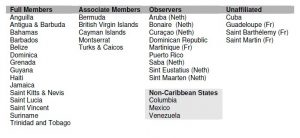
See IAEA details in the Appendix below. As related there, the United States functions as the depositary government for the IAEA Statute; they are the deputized agent. This is the model for the CU/Go Lean roadmap, as the Caribbean Union is a Treaty, and the Trade Federation is the deputized administrator.

The Go Lean book provides 370-pages of turn-by-turn instructions on “how” to adopt new community ethos, plus the strategies, tactics, implementations and advocacies to execute so as to reboot, reform and transform the societal engines of Caribbean society. One advocacy in the book is entitled “10 Ways to Foster a Technocracy“; this allows for the delivery of best practices in the introduction of the new CU regime. As a deputized administrator, the CU is expected to function with higher accountability compared to traditional governmental agencies. See how this advocacy related this further on Page 64:

# 9 – Service Level Agreements
The CU is a proxy organization, chartered to execute deputized functions on behalf of member-states; this means a task-oriented philosophy with “Service Level Agreements” in place; i.e. 80% of all phone calls answered within 20 seconds.

Another example of the CU/Go Lean deputized functionality is the embrace of the Group Purchasing Organization concept – see VIDEO here. The book explains (Page 24):

d-2. Lean Operations
This roadmap posits that a lean technocratic organization should be felt, more so than seen. The focus should not be on edifices or “fat” bureaucratic structures, but rather the region should feel the presence of their federal government more so than seeing it.

A bureaucratic model requires comprehensive funding formulas to cover the expenses of the bureaucracy. A lean structure, on the other hand, can subsist mostly from the new revenues it creates. The CU must therefore generate its own income sources from new revenue streams, or from costs savings it affords it stakeholders (member-states). For example, as a Group Purchasing Organization (GPO), the CU entity can garner fee-based revenue for facilitating shipping-handling, or as a Performance Rights Organization (PRO), the CU entity can assess an administrative fee for petitioning/managing royalties from content users. A last example of lean operations would be deploying shared computer systems. This extends the operating costs across a wider user base than individual systems alone. This is the experience followed in the US, with 80% of the Fortune 500 firms using payroll processor ADP to perform this necessary back-office function. (A subset of the cost savings are used as CU income in this model).

So “sharing” is the governing principle that will be pursued for this community ethos to minimize the governing overhead burden on the governed. This principle will be felt in the region through the deployment of shared data centers, multi-purpose Post Office buildings, multi-functional libraries, mobile applications and the www.myCaribbean.gov portal.

———-

VIDEO – Everything You Wanted to Know About Group Purchasing but were afraid to ask! – https://youtu.be/WSq8LiscHOg

NatServAll

Published on Jul 17, 2014 – Let the National Service Alliance (NSA) leverage your purchasing power to tackle stiff competition, squeezed margins and rising prices. NSA works for companies at $3mil and over, to do just that. .. and no need to change your current distributor/supplier.

  • Category: Education
  • License: Standard YouTube License

Yes, a strategy where member-state governments can deputize a more efficient and effective administrator allows the stewards of the Caribbean (political leaders) to better lead with a lean technocracy. This has been a familiar theme to this Go Lean movement. Consider this sample of previous blog-commentaries that have expanded on this concept:

https://goleancaribbean.com/blog/?p=13749 New Caribbean Regime: Assembling the Region’s Organizations
https://goleancaribbean.com/blog/?p=13524 e-Government Portals 101
https://goleancaribbean.com/blog/?p=13365 A Model for Launching a Single Market Currency
https://goleancaribbean.com/blog/?p=13251 A Better Way to Manage Hurricane Risks
https://goleancaribbean.com/blog/?p=12949 Being Mature to Handle Charity Management
https://goleancaribbean.com/blog/?p=12930 Managing Dangers, Disasters and Emergencies
https://goleancaribbean.com/blog/?p=12400 A Better Way to Administer a Caribbean Arrest Treaty

We urge all member-states to lean-in to this Go Lean roadmap to deputize the Caribbean Union Trade Federation to better deliver on their Social Contract responsibilities. Despite the fact that the CU creates another layer of government, the roadmap makes delivering stewardship over the societal engines cheaper, faster and smarter. Yes, this is how the Caribbean member-state governments can make our homelands better places to live, work and play. 🙂

Download the free e-book of Go Lean … Caribbean – now!

Sign the petition to lean-in for this roadmap for the Caribbean Union Trade Federation.

———-

Appendix Reference: International Atomic Energy Agency

The International Atomic Energy Agency (IAEA) is an international organization that seeks to promote the peaceful use of nuclear energy, and to inhibit its use for any military purpose, including nuclear weapons. The IAEA was established as an autonomous organisation on 29 July 1957. Though established independently of the United Nations through its own international treaty, the IAEA Statute,[1] the IAEA reports to both the United Nations General Assembly and Security Council.

The IAEA has its headquarters in Vienna. The IAEA has two “Regional Safeguards Offices” which are located in Toronto, Canada, and in Tokyo, Japan. The IAEA also has two liaison offices which are located in New York City, United States, and in Geneva, Switzerland. In addition, the IAEA has three laboratories located in Vienna and Seibersdorf, Austria, and in Monaco.

The IAEA serves as an intergovernmental forum for scientific and technical co-operation in the peaceful use of nuclear technology and nuclear powerworldwide. The programs of the IAEA encourage the development of the peaceful applications of nuclear energy, science and technology, provide international safeguards against misuse of nuclear technology and nuclear materials, and promote nuclear safety (including radiation protection) and nuclear security standards and their implementation.

The IAEA and its former Director General, Mohamed El Baradei, were jointly awarded the Nobel Peace Prize on 7 October 2005. The IAEA’s current Director General is Yukiya Amano.

Membership

The process of joining the IAEA is fairly simple.[32] Normally, a State would notify the Director General of its desire to join, and the Director would submit the application to the Board for consideration. If the Board recommends approval, and the General Conference approves the application for membership, the State must then submit its instrument of acceptance of the IAEA Statute to the United States, which functions as the depositary Government for the IAEA Statute. The State is considered a member when its acceptance letter is deposited. The United States then informs the IAEA, which notifies other IAEA Member States. Signature and ratification of the Nuclear Non-Proliferation Treaty (NPT) are not preconditions for membership in the IAEA.

The IAEA has 169 member states.[33] Most UN members and the Holy See are Member States of the IAEA. Non-member states Cape Verde (2007), Tonga (2011), Comoros (2014), Gambia (2016), Saint Lucia (2016) and Grenada (2017) have been approved for membership and will become a Member State if they deposit the necessary legal instruments.[33]

Regional Cooperative Agreements

There are four regional cooperative areas within IAEA, that share information, and organize conferences within their regions:

  1. AFRA – The African Regional Cooperative Agreement for Research, Development and Training Related to Nuclear Science and Technology
  2. ARASIA – Cooperative Agreement for Arab States in Asia for Research, Development and Training related to Nuclear Science and Technology
  3. RCA – Regional Cooperative Agreement for Research, Development and Training Related to Nuclear Science and Technology for Asia and the Pacific
  4. ARCAL – Cooperation Agreement for the Promotion of Nuclear Science and Technology in Latin America and the Caribbean (ARCAL):[44]
    • Cuba
    • Haiti
    • Jamaica
    • Dominican Republic

See the full reference article here, retrieved January 21, 2018:

https://en.wikipedia.org/wiki/International_Atomic_Energy_Agency

Share this post:
, , , ,
[Top]

First Steps – CariCom: One-Man-One-Vote Defects

Go Lean Commentary

Despite all the legal jargon, the concept of precedence* simply means that someone else has already dealt with an issue.

Think of big issues:

There is no need to open a new debate on these; there is already a well-documented, well-established precedence. Wrong is wrong!

There is need to re-establish precedence once again, in terms of government representation.

There is also a proposed new regime for the 30 member-states that constitute the Caribbean; 15 of these member are Full Members of the Caribbean Community (CariCom). While 5 states are Associate Members and 9 are Observers. The CariCom construct is therefore the best starting point for any regional integration.
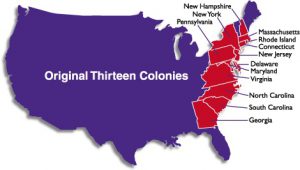
This is the best First Step

… but there is a defect with this structure in terms of government representation, CariCom is structured for One-Man/State-One-Vote. In the past such a structure has been found wanting! We need to learn from those experiences, discussions, debates, disagreements and resolutions; we need to consider the precedence. This precedent consideration comes from the early days of the United States of America.

After the Declaration of Independence in 1776 and until the enactment of the Constitution in 1789, there was a temporary period of 13 years under the Articles of Confederacy. During that structure, each state (former colony) was afforded 1 vote in Congress. So the BIG state of Virginia yielded the same political power as the small state of Delaware. This was a defect! The correction came with the adoption of the Connecticut Compromise into the Constitution; this called for the adoption of a bicameral legislature (2 chambers): Upper House & Lower House. See the full details in the Appendix Reference below.
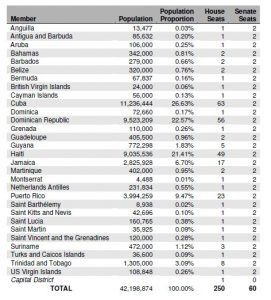
There are lessons from this precedence for the Caribbean to learn and apply today. There are BIG population states – think Cuba or Haiti with more that 10 million people – and small member-states, think St Barthélemy, St Kitts and St Martin, all with less than 45,000 people. There is no way that all 30 member states can be expected to wield the same political power with One-Man-One-Vote suffrage. This is a clear-and-present defect!

This commentary is Part 4 of a 6-part series from the movement behind the book Go Lean … Caribbean in consideration of the First Steps for instituting a new regime in governance for the Caribbean homeland. The other commentaries in the series are cataloged as follows:

  1. First Steps: EU – Free European Money – To Start at Top
  2. First Steps: UK – Dignified and Efficient
  3. First Steps: US – Congressional Interstate Compacts – No Vote; No Voice 
  4. First Steps: CariCom – One-Man-One-Vote Defects
  5. First Steps: Deputize ‘Me’! 
  6. First Steps: A Powerful C.P.U.

All of these commentaries relate to “how” the Caribbean can finally get started with adapting the organizational structures to optimize the region’s societal engines. The Caribbean has the 30 member-states, 4 languages and 5 different colonial legacies; there are many different systems of governance. Any consideration for leadership in the region must weigh the different schemes in the balance and choose an optimal structure. Forging change involves starting from the Top (leaders) and starting from the Bottom (citizens) to assimilate Caribbean society. This is how to make the region better places to live, work and play.

The book Go Lean…Caribbean – available to download for free – serves as a roadmap for the introduction and implementation of the technocratic Caribbean Union Trade Federation (CU), for the elevation of Caribbean society – for all 30 member-states. This CU/Go Lean roadmap has these 3 prime directives:

  • Optimization of the economic engines in order to grow the regional economy and create new jobs; (planning 2.2 million).
  • Establishment of a security apparatus to ensure public safety and protect the resultant economic engines.
  • Improve Caribbean governance to support these engines, including a separation-of-powers between the member-states and CU federal agencies.

The book stresses that reforming and transforming the Caribbean societal engines must be a regional pursuit. This was an early motivation for the roadmap, as pronounced in the opening Declaration of Interdependence (Pages 12 – 13):

xi. Whereas all men are entitled to the benefits of good governance in a free society, “new guards” must be enacted to dissuade the emergence of incompetence, corruption, nepotism and cronyism at the peril of the people’s best interest. The Federation must guarantee the executions of a social contract between government and the governed.

xvi. Whereas security of our homeland is inextricably linked to prosperity of the homeland, the economic and security interest of the region needs to be aligned under the same governance. Since economic crimes … can imperil the functioning of the wheels of commerce for all the citizenry, the accedence of this Federation must equip the security apparatus with the tools and techniques for predictive and proactive interdictions.

xxiv. Whereas a free market economy can be induced and spurred for continuous progress, the Federation must install the controls to better manage aspects of the economy: jobs, inflation, savings rate, investments and other economic principles. Thereby attracting direct foreign investment because of the stability and vibrancy of our economy.

The Go Lean book provides 370-pages of turn-by-turn instructions for a Way Forward, a guide on “how” to adopt new community ethos, plus the strategies, tactics, implementations and advocacies to execute so as to reboot, reform and transform the societal engines of Caribbean society. One implementation of the roadmap is the CU Legislature, with a design to neutralize the defects of a suffrage scheme. See this point here from the book Page 91:

The CU Legislative Branch represents the Caribbean Parliament; it is divided between two chambers: Upper House (Senate) and Lower House (House of Assembly). Despite their title, both houses have equal power.

Why is there the need for 2 houses? Simple; this mitigates the reasons for failure from previous Caribbean integration efforts. The West Indies Federation of 1958 – 1962 was criticized for imbalanced representation: the larger states had just as much representation in the Federation as the smaller state. For the CU, size does matter. But minority rights must be protected as well. The Senate allows for a 1-man-1-vote structure (actually 2 seats per state), while the House is represented proportionally by population. This model follows the best practices of many other successful democracies.

There will undoubtedly be differences in legislation originated from both chambers. So the constitution should allow for differences to be settled in a Compromise Conference; then the final law re-validated by the respective chambers.

In addition, there is the advocacy in the book (Page 135) entitled “10 Lessons Learned from the West Indies Federation“, where it details the many defects of the before-CariCom regional construct. Yes, the Caribbean has its own precedence to consider … and learn from. See this chart here of the bicameral distribution:

Forging change in the Caribbean territories means starting at the Top (leaders) and starting at the Bottom (citizens). But there must be an equitable distribution among the leaders from the member-state – size does matter.

The Action Plan in this new Caribbean regime, the Way Forward, is that Caribbean people would determine the Caribbean destiny. See how this governance theme has been detailed in other blog-commentaries over the years; see sample here:

https://goleancaribbean.com/blog/?p=13749 New Caribbean Regime: Assembling the Region’s Organizations
https://goleancaribbean.com/blog/?p=13736 Past Failures for Caribbean Governing Integration
https://goleancaribbean.com/blog/?p=13251 Funding Caribbean Risk
https://goleancaribbean.com/blog/?p=10309 Not Satisfied with Representation? Then Consider Secession!
https://goleancaribbean.com/blog/?p=10043 Integration Plan for Greater Caribbean Prosperity
https://goleancaribbean.com/blog/?p=8813 Lessons from China – Size Does Matter
https://goleancaribbean.com/blog/?p=8351 A Lesson in Economic Fallacies – Independence: Hype or Hope
https://goleancaribbean.com/blog/?p=326 Model of Scottish Independence Pursuit – Self-Determination

The current regional construct – CariCom – has this suffrage defect of One-Man/State-One-Vote; this is not a design for governing efficiency or popular acceptance. The opening of the Go Lean book stressed that the plan is to avoid the defects of the Caribbean past and be better, do better:

This [Go Lean] movement is not an attempt to re-boot the CariCom, but rather a plan to re-boot the Caribbean. – Page 8

We cannot ignore the past, as it defines who we are, but we do not wish to be shackled to the past either, for then, we miss the future. So we must learn from the past, our experiences and that of other states in similar situations, mount our feet solidly to the ground and then lean-in, to reach for new heights; forward, upward and onward. – Page 3

We urge all member-states – large and small – to lean-in to this Go Lean roadmap – in fact all Caribbean stakeholders should lean-in – in order to be better, here in the Caribbean, to make our homeland better places to live, work and play. 🙂

Download the free e-book of Go Lean … Caribbean – now!

Sign the petition to lean-in for this roadmap for the Caribbean Union Trade Federation.

———–

Footnote * – Precedent

In legal systems based on common law, a precedent, or authority, is a principle or rule established in a previous legal case that is either binding on or persuasive for a court or other tribunal when deciding subsequent cases with similar issues or facts.

———–

Appendix Reference – Connecticut Compromise

The Connecticut Compromise (also known as the Great Compromise of 1787 or Sherman Compromise) was an agreement that large and small states reached during the Constitutional Convention of 1787 that in part defined the legislative structure and representation that each state would have under the United States Constitution. It retained the bicameral legislature as proposed by Roger Sherman, along with proportional representation of the states in the lower house, but required the upper house to be weighted equally between the states. Each state would have two representatives in the Upper House.

Context
On May 29, 1787, Edmund Randolph of the Virginia delegation proposed the creation of a bicameral legislature. Under his proposal, membership in both houses would be allocated to each state proportional to its population; however, candidates for the lower house would be nominated and elected by the people of each state. This proposal allowed fairness and equality to the people. Candidates for the upper house would be nominated by the state legislatures of each state and then elected by the members of the lower house. This proposal was known as the Virginia Plan.

Less populous states like Delaware were afraid that such an arrangement would result in their voices and interests being drowned out by the larger states. Many delegates also felt that the Convention did not have the authority to completely scrap the Articles of Confederation,[1] as the Virginia Plan would have.[2] In response, on June 15, 1787, William Paterson of the New Jersey delegation proposed a legislature consisting of a single house. Each state was to have equal representation in this body, regardless of population. The New Jersey Plan, as it was called, would have left the Articles of Confederation in place, but would have amended them to somewhat increase Congress’s powers.[3]

At the time of the convention, the South was growing more quickly than the North, and Southern states had the most extensive Western claims. South Carolina, North Carolina, and the State of Georgia were small in the 1780s, but they expected growth, and thus favored proportional representation. New York State was one of the largest states at the time, but two of its three representatives (Alexander Hamilton being the exception) supported an equal representation per state, as part of their desire to see maximum autonomy for the states. (The two representatives other than Hamilton had left the convention before the representation issue was resolved, leaving Hamilton, and New York State, without a vote.)

James Madison and Hamilton were two of the leaders of the proportional representation group. Madison argued that a conspiracy of large states against the small states was unrealistic as the large states were so different from each other. Hamilton argued that the states were artificial entities made up of individuals, and accused small state representatives of wanting power, not liberty (see History of the United States Senate).

For their part, the small state representatives argued that the states were, in fact, of a legally equal status, and that proportional representation would be unfair to their states. Gunning Bedford, Jr. of Delaware notoriously threatened on behalf of the small states, “the small ones w[ould] find some foreign ally of more honor and good faith, who will take them by the hand and do them justice.”

Elbridge Gerry ridiculed the small states’ claim of sovereignty, saying “that we never were independent States, were not such now, & never could be even on the principles of the Confederation. The States & the advocates for them were intoxicated with the idea of their sovereignty.”[4]

The Compromise
On June 14, when the Convention was ready to consider the report on the Virginia plan, William Paterson of New Jersey requested an adjournment to allow certain delegations more time to prepare a substitute plan. The request was granted, and, on the next day, Paterson submitted nine resolutions embodying necessary amendments to the Articles of Confederation, which was followed by a vigorous debate. On June 19, the delegates rejected the New Jersey Plan and voted to proceed with a discussion of the Virginia Plan. The small States became increasingly discontented, and some threatened to withdraw. On July 2, the Convention was deadlocked over giving each State an equal vote in the upper house, with five States in the affirmative, five in the negative, and one divided.

The problem was referred to a committee consisting of one delegate from each State to reach a compromise. On July 5, the committee submitted its report, which became the basis for the “Great Compromise” of the Convention. The report recommended that in the upper house each State should have an equal vote and in the lower house, each State should have one representative for every 40,000 inhabitants,[5] counting slaves as three-fifths of an inhabitant,[5] and that money bills should originate in the lower house (not subject to amendment by the upper chamber).

After six weeks of turmoil, North Carolina switched its vote to equal representation per state and Massachusetts abstained, and a compromise was reached, being called the “Great Compromise.” In the “Great Compromise,” every state was given equal representation, previously known as the New Jersey Plan, in one house of Congress, and proportional representation, known before as the Virginia Plan, in the other. Because it was considered more responsive to majority sentiment, the House of Representatives was given the power to originate all legislation dealing with the federal budget and revenues/taxation, per the Origination Clause.

Roger Sherman and Oliver Ellsworth, both of the Connecticut delegation, created a compromise that, in a sense, blended the Virginia (large-state) and New Jersey (small-state) proposals regarding congressional apportionment. Ultimately, however, its main contribution was in determining the apportionment of the Senate. Sherman sided with the two-house national legislature of the Virginia Plan but proposed “That the proportion of suffrage in the 1st. Branch [house] should be according to the respective numbers of free inhabitants; and that in the second branch or Senate, each State should have one vote and no more.”[6] Although Sherman was well liked and respected among the delegates, his plan failed at first. It was not until July 23 that representation was finally settled.[6]

What was ultimately included in the constitution was a modified form of this plan, partly because the larger states disliked it. In committee, Benjamin Franklin modified Sherman’s proposal to make it more acceptable to the larger states. He added the requirement that revenue bills originate in the house.

The final vote on the Connecticut Compromise on July 16th left the Senate looking to the Confederation Congress. In the preceding weeks of debate, James Madison of Virginia, Rufus King of New York, and Gouverneur Morris of New York each vigorously opposed the compromise for this reason.[7] For the nationalists, the Convention’s vote for the compromise was a stunning defeat. However, on July 23, they found a way to salvage their vision of an elite, independent Senate. Just before most of the convention’s work was referred to the Committee of Detail, Gouverneur Morris and Rufus King moved that state’s members in the Senate be given individual votes, rather than voting en bloc, as they had in the Confederation Congress. Then Oliver Ellsworth, a leading proponent of the Connecticut Compromise, supported their motion, and the Convention adopted the Compromise.[8]Since the Convention had early acquiesced in the Virginia Plan’s proposal that senators have long terms, restoring that Plan’s vision of individually powerful senators stopped the Senate from becoming a strong safeguard of federalism. State governments lost their direct say in Congress’s decisions to make national laws. As the personally influential senators received terms much longer than the state legislators who elected them, they became substantially independent. The compromise continued to serve the self-interests of small-state political leaders, who were assured of access to more seats in the Senate than they might otherwise have obtained.[9]

Aftermath
Senate representation was explicitly protected in Article Five of the United States Constitution:

…no state, without its consent, shall be deprived of its equal suffrage in the Senate.[10]

Source: Wikipedia Online Encyclopedia – retrieved January 21, 2018 from: https://en.wikipedia.org/wiki/Connecticut_Compromise

Share this post:
, ,
[Top]

First Steps – Congressional Interstate Compacts – No Vote; No Voice

Go Lean Commentary

The United States of America is the richest, most powerful nation on the planet and yet …

… [for] the US Territories of Puerto Rico and the Virgin Islands, … American economic prosperity does not always extend to the islands. The emigration (brain & capital drain) for these islands has been acute for over 100 years and continues, unchecked today. The pattern of the US Territories is what the rest of the [Caribbean] region does not want: half abandoned; where the emigrated population exceeds the on-island population. These islands are paradise – there should be no reason to leave. – Book Go Lean…Caribbean Page 244

Of the 30 member-states that constitute the Caribbean, only these two – Puerto Rico (PR) and the US Virgin Islands (USVI) – gets American culture, commerce and systems of governance. So any plan to elevate the Caribbean region must also consider the legal and constitutional mandates of the US. The First Steps for these US Territories would be an Interstate Compact.

This is not good; these lands find themselves between a rock and a hard place! See VIDEO here:

AM JOY Posted 10/14/17 – Puerto Rico and U.S. Virgin Islands: Part of U.S.
As Puerto Rico and the U.S. Virgin Islands struggle to recover, Joy Reid speaks with residents and political leaders about why hurricane relief has been slower in these American territories.

What is really sad is that these territories have no vote and therefore no voice in the process to find solutions. (Territories have no vote in Congress, only formal States).

This commentary is Part 3 of a 6-part series from the movement behind the book Go Lean … Caribbean in consideration of the First Steps for instituting a new regime in governance for the Caribbean homeland. The other commentaries in the series are cataloged as follows:

  1. First Steps: EU – Free European Money – To Start at Top
  2. First Steps: UK – Dignified and Efficient
  3. First Steps: US – Congressional Interstate Compacts – No Vote; No Voice
  4. First Steps: CariCom – One-Man-One-Vote Defects
  5. First Steps: Deputize ‘Me’! 
  6. First Steps: A Powerful C.P.U.

All of these commentaries relate to “how” the Caribbean can finally get started with adapting the organizational structures to optimize the region’s societal engines. The Caribbean is in North America and the US is the Big Dog of the region. So any consideration for leading from the Top must partner with American stakeholders. Though these considerations only apply to the 2 US territories, there are lessons for all the Caribbean, as we can glean wisdom and insight on how a roadmap can reform and transform the Caribbean member-states so that they can be better places to live, work and play.

The book Go Lean…Caribbean – available to download for free – serves as a roadmap for the introduction and implementation of the technocratic Caribbean Union Trade Federation (CU), for the elevation of Caribbean society – for all 30 member-states, including the US Territories. This CU/Go Lean roadmap has these 3 prime directives:

  • Optimization of the economic engines in order to grow the regional economy and create new jobs; (how about 2.2 million).
  • Establishment of a security apparatus to ensure public safety and protect the resultant economic engines.
  • Improve Caribbean governance to support these engines, including a separation-of-powers between the member-states and CU federal agencies. (CU federal is not to be confused with US federal; these are different entities).

The book stresses that reforming and transforming the Caribbean societal engines must be a regional pursuit. This was an early motivation for the roadmap, as pronounced in the opening Declaration of Interdependence (Pages 12 – 13):

xi. Whereas all men are entitled to the benefits of good governance in a free society, “new guards” must be enacted to dissuade the emergence of incompetence, corruption, nepotism and cronyism at the peril of the people’s best interest. The Federation must guarantee the executions of a social contract between government and the governed.

xvi. Whereas security of our homeland is inextricably linked to prosperity of the homeland, the economic and security interest of the region needs to be aligned under the same governance. Since economic crimes … can imperil the functioning of the wheels of commerce for all the citizenry, the accedence of this Federation must equip the security apparatus with the tools and techniques for predictive and proactive interdictions.

xxiii.  Whereas many countries in our region are dependent Overseas Territory of imperial powers, the systems of governance can be instituted on a regional and local basis, rather than requiring oversight or accountability from distant masters far removed from their subjects of administration. The Federation must facilitate success in autonomous rule by sharing tools, systems and teamwork within the geographical region.

xxiv. Whereas a free market economy can be induced and spurred for continuous progress, the Federation must install the controls to better manage aspects of the economy: jobs, inflation, savings rate, investments and other economic principles. Thereby attracting direct foreign investment because of the stability and vibrancy of our economy.

The Go Lean book provides 370-pages of turn-by-turn instructions for a Way Forward, a guide on “how” to adopt new community ethos, plus the strategies, tactics, implementations and advocacies to execute so as to reboot, reform and transform the societal engines of Caribbean society. One advocacy in the book (Page 244) is entitled “10 Ways to Impact US Territories“; this allows for the delivery of best practices to introduce the new CU regime. Washington would be considered an “overseas master” for Caribbean stewardship. Though they do not need the CU to impact the US – notwithstanding the Diaspora living there – there is the need for this CU treaty to impact the efficiency of these American territories.

St Johns, US Virgin Islands

Forging change in the American Caribbean territories means starting at the Top (leaders) and starting at the Bottom (citizens). But the leaders in Puerto Rico and the USVI cannot engage any cross-border initiatives without the US Congress; this is the premise of Interstate Compacts; these are necessary to partner with American stakeholders across borders and State-lines. See the full details on these Compacts in the Appendix Reference below.

Imagine the irony …
The people of the American Caribbean cannot even vote on the empowerments necessary to assuage their own crises; they have no self-determination. Yes, each territories have a non-voting member in House of Representatives of the US Congress, but because the representative is non-voting makes him/her inconsequential to other voting representatives; their voice is muted. In addition, there is no representation at all in the US Senate; truly no voice.

The Action Plan in this new Caribbean regime, this Way Forward, wants to put the Caribbean destiny in the hands of Caribbean stakeholders. This is only fair … and just. This is not our opinion alone; none other than the United Nations have made this declaration. In a previous Go Lean blog-commentary, this fact was revealed, as follows:

Many others – including the United Nations, who have declared PR technically “a colony” – feel that the Puerto Rico-Washington relationship is dysfunctional, that there should be a friendly divorce.

Other blog-commentaries detailed the challenges and crises of life in Puerto Rico and the US Virgin Islands; see sample here:

https://goleancaribbean.com/blog/?p=13391 After Maria, Destruction and Defection for Puerto Rico
https://goleancaribbean.com/blog/?p=12959 After Irma, America Should Scrap the ‘Jones Act’
https://goleancaribbean.com/blog/?p=12274 State of the Union – Spanish Caribbean
https://goleancaribbean.com/blog/?p=12126 Commerce of the Seas – Stupidity of the Jones Act
https://goleancaribbean.com/blog/?p=11963 Oscar López Rivera: The ‘Nelson Mandela’ of the Caribbean? Not!
https://goleancaribbean.com/blog/?p=11647 Righting a Wrong: Puerto Rico’s Bankruptcy
https://goleancaribbean.com/blog/?p=10771 Logical Addresses – ‘Life or Death’ Consequences
https://goleancaribbean.com/blog/?p=6867 How to address high consumer prices
https://goleancaribbean.com/blog/?p=6693 Ten Puerto Rico Police Accused of Criminal Network
https://goleancaribbean.com/blog/?p=4551 US Territories – Between a ‘rock and a hard place’
https://goleancaribbean.com/blog/?p=599 Ailing Puerto Rico open to radical economic fixes

The US Territories of PR and the USVI should lean-in to this Go Lean roadmap – in fact all Caribbean stakeholders should lean-in – in order to be better, here in the Caribbean, to make our homeland better places to live, work and play. 🙂

Download the free e-book of Go Lean … Caribbean – now!

Sign the petition to lean-in for this roadmap for the Caribbean Union Trade Federation.

============

Appendix: Congressional Consent and the Permission for States to Enter into Interstate Compacts
By: Steven Blevins

When our Founding Fathers wrote the Constitution, they included language that grants states the authority to enter into interstate agreements to achieve a common purpose. This directive, found in Article I, Section 10, Clause 3 of the Constitution, is known as the Compacts Clause. In it, the founders asserted, in part, that “no state shall, without the consent of Congress enter into any agreement or compact with another state, or with a foreign power.”1 This often-overlooked clause of the Constitution also grants Congress the power to approve or deny the validity of a compact—a concept called congressional consent.

The founders included the compact clause in the Constitution to protect the dual-sovereign nature of the democratic government structure, while also promoting the ability of the states to cooperatively solve problems. While the Founding Fathers believed interstate cooperation was an important and necessary feature of American democracy, they feared states would use this authority to enter into agreements that would alter the federal balance of power. To avoid such an event, the compact clause instructs states entering into interstate compacts to obtain congressional consent for the agreement to be valid.

Types of Compacts Requiring Congressional Approval
A literal interpretation of the compact clause would conclude all interstate agreements must obtain the approval of Congress before they take effect and carry the weight of law. The Supreme Court, however, has ruled that “any” does not mean “all” in the context of interstate compacts and congressional consent. To clear up the ambiguity of the compact clause, the U.S. Supreme Court in Virginia v. Tennessee held that Congress must approve only two types of compacts:

  • Those compacts that alter the balance of political power between the state and federal government; or
  • Those compacts that intrude on a power reserved to Congress.

Thus, when a compact does not touch on either of those two items, the courts have ruled the federal government does not have a direct interest in the compact and congressional consent is not technically required.2 Essentially, if federal supremacy is threatened, then congressional consent is required for the compact to be valid. On the other hand, if federal supremacy is not threatened, then an absence of congressional consent will not render the compact invalid.

Categories of Congressional Consent
Noticeably absent from the compact clause are specific procedures the states must follow to obtain consent and Congress must follow when granting it. Although the text of the Constitution is void of any specific direction, it is generally understood that Congress specifies consent in one of three ways:

  1. Explicitly
    Most frequently seen in compacts that resolve boundary disputes, this type of consent is granted after the compact has been adopted by the requisite number of state legislatures and is submitted by the member states to Congress for approval. In these instances, Congress is able to review, amend and/or revise the agreement and, as a result, is able to provide a clear determination of approval or disapproval. Therefore, explicit congressional consent is sometimes considered desirable, even if it is not strictly required at the time the compact is created.
  2. Implicitly
    Most notably seen in the form of border compacts, which establish or alter the boundaries of a state as result of conflicting territorial claims, congressional consent may be implied when actions by the states and federal government demonstrate approval of the compact.3Such actions usually include federal legislation supporting the terms of a compact or legislation that strengthens the objective of a specific compact. Given its uncertain nature, implied consent should not be assumed by compacting states.
  3. Pre-emptively
    Congress may give its approval in advance by adopting legislation encouraging states to enter into an interstate compact for a specific purpose.4In these instances, Congress grants consent before the compact reaches critical mass, meaning that once the required number of states adopts the compact, it becomes enforceable. While pre-emptive consent deprives Congress the opportunity to review the compact and its objectives once it is drafted, it often encourages states to cooperatively resolve a policy challenge they otherwise might not have addressed.
    There are also several recent examples of Congress pre-emptively granting states consent to explore the use of interstate compacts. Notable examples include the Environmental Protection Act of 2005, which granted three or more contiguous states the right to enter into an electric transmission line siting compact, and the Nonadmitted Insurance and Reinsurance Act contained in the Dodd-Frank Wall Street Reform and Consumer Protection Act of 2010, which encouraged states to explore the use of interstate compacts to create uniformity in the surplus lines insurance industry. The Council of State Governments, through its National Center for Interstate Compacts, has assisted states in exploring the appropriateness of an interstate compact to address each of the challenges highlighted above.

The process of congressional approval mirrors that of the legislative approval process of any other federal statute. The House or Senate introduces compact bills, but both congressional bodies must approve it, and the president must sign the compact into law.

Withholding Consent
Congressional consent is a political judgment rather than a legal judgment —essentially a gratuitous action by Congress.5 With this notion in mind, Congress may withhold consent when it feels approval may lead to “imprudent combinations, dangerous joint action or intrusion on traditional federal matters” or “has the potential to alter the balance of power between the states and federal government.”6 Congress faces essentially no limitations in its authority to grant or withhold consent.

When presented with a compact seeking adoption, Congress has the authority to either deny approval or alter the compact as presented by the states by imposing various limitations and conditions on the compact or the member states. If Congress does amend the compact, however, member states are not required to adopt the revised compact. If the member states choose to adopt the amended legislation, they concede to Congress’ changes to the compact.7

Congress’ Ability to Amend, Withdraw or Repeal Congressional Consent
If Congress so chooses, it may amend or “change the landscape” of a compact via legislation.8 In fact, “the granting of congressional consent in no way limits Congress’s right to exercise its legislative prerogatives, even to the extent that such an exercise significantly impacts or impairs the workings of an interstate compact.”9 Additionally, the binding authority of interstate compacts approved by Congress is important. Once Congress grants consent, all compacting states are bound to the terms of the agreement. “While congressional consent may transform an interstate compact into federal law, consent does not transform a compact into a binding agreement between the states and Congress.”10

Two federal court decisions provide guidance about whether Congress may withdraw consent. In Tobin v. United States11 and Mineo v. Port Authority of New York-New Jersey,12 the court held that once congressional consent was given, Congress could not withdraw consent nor place additional stipulations on the compact. Congress can, however, work around this legal requirement by amending the proposed compact in a way that specifically enables it to withdraw consent at a future date. The judiciary has not made any declaration on whether such a maneuver is legal.13 The courts have, however, noted that withdrawing consent after the fact “would be damaging to the very concept of interstate compacts.”14

Federalization of Interstate Compacts
Once Congress grants consent, a compact then becomes federal law. In the case of Cuyler v. Adams,15 the court articulated congressional consent “transforms the States’ agreement into federal law under the Compact Clause.”16 Thus, “once Congress gives consent, the compact is presumptively transformed into the law of the United States absent compelling evidence that consent was not required.”17

This transformation from state-created agreement into federal law is unique. In no other context does a state law become “federalized” with such miniscule influence by the federal government than in the congressional approval of interstate compacts. This “transformation” effect also places the compact within the scope of federal jurisdiction while insulating the compact from constitutional attack.18

———–

For more information about congressional consent of interstate compacts, when it is appropriate and how to go about seeking it, please visit NCIC’s website at www.csg.org/compacts.

References:

1 U.S. Constitution, Art. I, Sec. 10, Cl. 3.

U.S. Steel Corp. v. Multistate Tax Commission, 434 U.S. 452 (1978).

3 See , e.g., Georgia v. South Carolina, 4 97 U.S. 376 (1990), wherein Georgia brought suit against South Carolina over the location of their boundary along the Savannah River; Michigan v. Wisconsin, 270 U.S. 295, 308 (1926), wherein suit was brought to determine the boundary between Michigan and Wisconsin from the mouth of the Montreal river at Lake Superior to this ship channel entrance from Lake Michigan into Green Bay; Vermont v. New Hampshire, 289 U.S. 593 (1933), wherein Vermont brought suit against New Hampshire over the determination of the boundary line with involving the Connecticut River.

Petty v. Tennessee-Missouri Bridge Commission, 359 U.S. 275, 281-82 (1959).

College Savings Bank v. Florida Prepaid Postsecondary Education Expense Board, 527 U.S. 666 (1999) “Granting of consent is a gratuity on the part of Congress not a right that the states possess under the Constitution.”

6 Broun, Caroline N., Buenger, Michael L., McCabe, Michael H., & Masters, Richard L. (2006) p. 41. “The Evolving Use and the Changing Role of Interstate Compacts: A Practitioner’s Guide.” Chicago: American Bar Association.

7 Broun, et al. p. 43-7. Also see Arizona v. California, 373 U.S. 546 (1963).

8 Broun, et al. p. 43. Also see Arizona v. California, 373 U.S. 546 (1963). Also see Merrion v. Jicarilla Apache Tribe, 455 U.S. 130, 148 (1982) “Contractual arrangements remain subject to subsequent legislation by the presiding sovereign.”

9 Broun, et al. p. 43. Also see, Arizona v. California, 373 U.S. 546 (1963) wherein the Supreme Court held Congress acted within its realm of authority when it created a plan to manage and operate the Colorado River even though it had previously granted consent to the Colorado River Compact whose purpose was to assist in the management and operation of the body of water.

10 Broun, et al. p. 44.

11 Tobin v. United States, 306 F.2d 270, 273 (D.C. Cir. 1962).

12 Mineo v. Port Authority of New York-New Jersey, 779 F.2d 939 (3d Cir. 1985).

13 Broun, et al. p. 43.

14 Tobin v. United States, 306 F.2d 270, 273 (D.C. Cir. 1962).

15 Cuyler v. Adams, 449 U.S. 433 (1981).

16 Ibid.

17 Broun, et al. p. 43. Also see Old Town Trolley Tours of Wash. V. Wash. Metro. Area Transit Commission,129 F.3d 201, 204 (D.C. Cir.1997); Reed v. Farley, 512 U.S. 339 (1994).

18 Broun, et al. p. 56.

Source: The Council of State Governments; posted July 5, 2011; retrieved January 20, 2018 from: http://knowledgecenter.csg.org/kc/content/congressional-consent-and-permission-states-enter-interstate-compacts

Share this post:
, , ,
[Top]