Category: Strategy

Miami’s Success versus Caribbean Failure

Go Lean Commentary

The Greater Miami Metropolitan Area has provided refuge to many of the Caribbean Diaspora.

Thank you Miami.

But make no mistake: Miami has benefited as well.
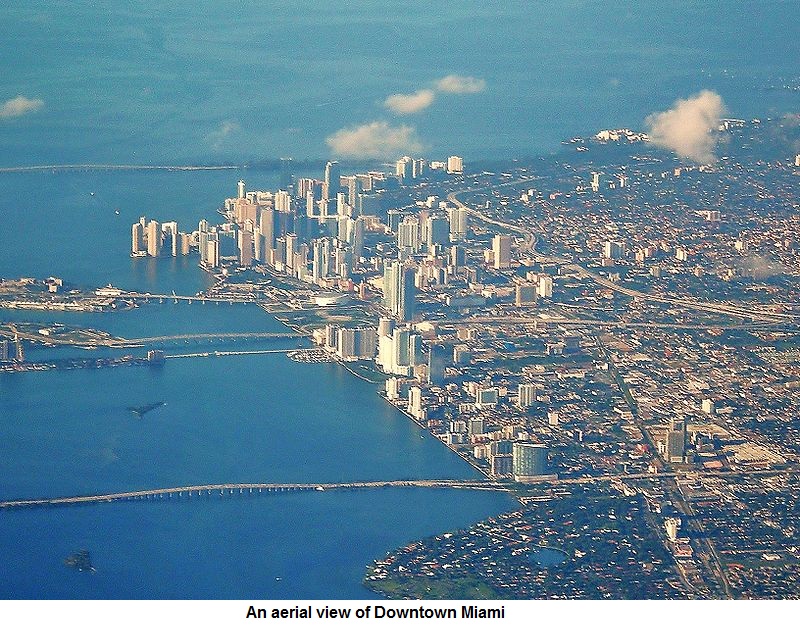
s Success versus Caribbean Failure - Photo 1

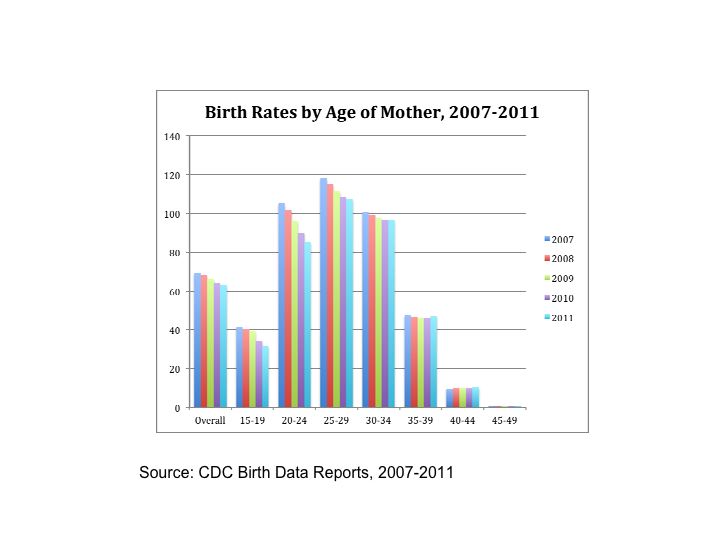
This fact is based on a proven economic principle that growth in population means growth in the economy. In parallel, declines in populations could lead to declines in economic growth. This point was vividly depicted in this previous blog commentary: Having Less Babies is Bad for the Economy; with this quoted reference:

We tend to think economic growth comes from working harder and smarter. But economists attribute up to a third of it to more people joining the workforce each year than leaving it. The result is more producing, earning and spending. – http://www.huffingtonpost.com/2014/05/07/birth-rate-economy_n_5281597.html

According to the below article (Appendix and VIDEOS below), the Miami Metropolitan Area has benefited greatly from the infusion of Caribbean refugees into its population. The benefits to the metropolitan area have been economic, cultural and also in governing leadership. This brings to the fore a compelling mission of the book Go Lean…Caribbean, to elevate Caribbean society so as to encourage the repatriation of the Diaspora back to their homelands.

Title: South Florida Caribbean’s – November 2006
The Caribbean Island Nations, has an overall population of over 40 million.

In the US, they number over 25 million (Strategy Research Corporation). The Caribbean population in the U.S. Diaspora has grown by over 6.4 million in the last decade.

SOUTH FLORIDA CARIBBEANS – November 2006
• An estimated 400,000 Caribbean nationals live in South Florida.

• More than 92,000 Jamaicans live in BrowardCounty and more than 32,000 Jamaicans live in Miami-Dade.

• Haitians make up the second-largest ethnic group in Miami-DadeCounty —109,817 — after Cubans, and are second to Jamaicans in Broward with 88,121.

North Miami, Dade County, Florida according to the 2000 census, has a population of 60,036 and is home to 18,656 Haitians, the most of any city in the county.

As at May 4, 2007 there are 10 Haitian elected officials now serving in the Florida Legislature and Miami-Dade municipalities. Another Haitian politician, North Miami Beach Councilman John Patrick Julien, won the primary but faces a runoff May 15, 2007 with developer Gary Goldman.

• Broward County added more new black residents (92,378) than any other county between 2000 and 2005, while Miami-Dade County added about 10,528, The surge is driven by Caribbeans.
• Broward’s black population grew 22 percent from 2000 to 2005; 34 percent among Caribbeans.
• Broward, Miami-Dade and Palm Beach counties are home to about one-fifth of the 785,771 Jamaicans living in the  United States.

Just as we argue that Cubans go to Miami and Mexicans to Texas for geographic and cultural blending in, we can make the same argument for West Indians in South Florida. It’s a natural habitat.”

SOURCE: U.S. Census
Editors note: The above figures are very conservative
Caribbean Business Community (North America) Inc.  (Retrieved 10-10-2014) –
http://www.caribbeanbusinesscommunity.com/newsletters/caribbeans_abroad.html

The book Go Lean…Caribbean champions the causes of retaining Caribbean citizens in the Caribbean, and inviting the Diaspora back to their homelands. These intentions were pronounced early in the book with these statements in the Declaration of Interdependence (Pages 13):

xix.      Whereas our legacy in recent times is one of societal abandonment, it is imperative that incentives and encouragement be put in place to first dissuade the human flight, and then entice and welcome the return of our Diaspora back to our shores. This repatriation should be effected with the appropriate guards so as not to imperil the lives and securities of the repatriated citizens or the communities they inhabit. The right of repatriation is to be extended to any natural born citizens despite any previous naturalization to foreign sovereignties.

xx.      Whereas the results of our decades of migration created a vibrant Diaspora in foreign lands, the Federation must organize interactions with this population into structured markets. Thus allowing foreign consumption of domestic products, services and media, which is a positive trade impact. These economic activities must not be exploited by others’ profiteering but rather harnessed by Federation resources for efficient repatriations.

Looking at this quest from the point-of-view of Miami introduces a paradox: Miami’s success versus Caribbean failure.

According to Miami’s history, the metropolitan area has benefited, population-wise, with every Failed-State episode in the Caribbean. This is describing a win-lose scenario, where the Caribbean losses resulted in Miami’s gains. The following list describes the Caribbean countries that experienced near-Failed-State status, detailed in the Go Lean book, that effected change (growth) in Miami:

Cuba (Page 236)
Dominican Republic (Pages 237, 306)
Haiti (Page 238)
Jamaica (Page 239)
Trinidad (Page 240)
US Territories – Puerto Rico & US Virgin Islands (Page 244)
British Caribbean Territories (Page 245)
Dutch Caribbean Territories (Page 246)
French Caribbean Territories (Page 247)
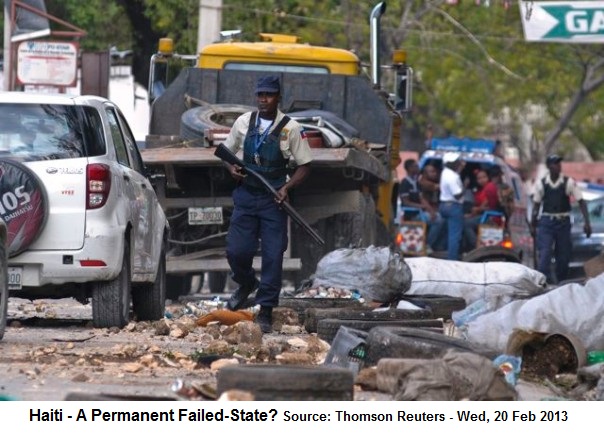
s Success versus Caribbean Failure - Photo 2

With Miami’s location at the bottom of the Florida peninsula, it protrudes into the tropics – 50 miles West from the Bahamas and 90 miles North from Cuba. For the local community, this Caribbean proximity was perceived as a disadvantage, a misfortune, but the Caribbean infusion instead has proven to be an asset, a win for Miami. As many Caribbean member-states flirted with failure, Miami succeeded, despite being on the frontlines and having to absorb many incoming refugees.

But now, change has now come to the Caribbean … as detailed in the Go Lean book.

The Go Lean book serves as a roadmap for the introduction and implementation of the technocratic Caribbean Union Trade Federation (CU) to bring positive change. The CU‘s prime directives are identified with the following 3 statements:

  • Optimization of the economic engines in order to grow the regional economy to $800 Billion & create 2.2 million new jobs.
  • Establishment of a security apparatus to protect the resultant economic engines.
  • Improve Caribbean governance to support these engines.

Will these changes reverse the patterns of success for Miami? Will more for Caribbean member-states mean less for Miami? Will Cuba’s return to democracy cause a crash for the Cuban-American investments in Miami? Will a stabilization of Haiti finally shift the successes of Haitian-Americans back to their homeland? Will an end of Caribbean Sclerosis (economic dysfunction) finally mean the English-speaking Caribbean will abandon Miami as their destination of hopes-and-dreams (see Appendix and VIDEOS below)? Will a successful execution of the Go Lean roadmap reverse the patterns of success for Miami? These ill-fated scenarios do not have to be the conclusion. The Go Lean roadmap for an elevated Caribbean, can be a win-win for Miami and the Caribbean.

The Go Lean book defines “luck” as the intersection of preparation and opportunity (Page 3). With the execution of the Go Lean roadmap, the change that comes to the Caribbean, and accompanying success should not mean failure for Miami. No, Miami can get “lucky” … purposely, with these impending changes. With Miami’s physical location it can continue to facilitate a lot of  trade and logistics for the Latin America and Caribbean region.

The Go Lean roadmap calls for elevating the Caribbean’s GDP from $378 Billion (2010) to $800 Billion. The Miami community can benefit from this regional growth, with some shrewd strategies on their part. (The Go Lean roadmap includes shrewd strategies for elevating the Caribbean, not Miami).

Caribbean stakeholders are hereby urged to lean-in to the community ethos, shrewd strategies, tactics, implementations and advocacies to finally re-boot Caribbean society; as detailed in the book Go Lean…Caribbean, sampled here:

Assessment – Anecdote – Caribbean Single Market & Economy Page 15
Assessment – Anecdote – Dutch Caribbean – Integration & Secessions Page 16
Assessment – Anecdote – French Caribbean – Organization & Discord Page 17
Assessment – Anecdote – Puerto Rico – The Greece of the Caribbean Page 18
Community Ethos – Economic Systems Influence Individual Choices & Incentives Page 21
Community Ethos – Voluntary Trade Creates Wealth Page 21
Community Ethos – Consequences of Choices Lie in the Future Page 21
Community Ethos – Minority Equalization Page 24
Community Ethos – Lean Operations Page 24
Community Ethos – Return on Investments Page 24
Community Ethos – Ways to Impact Turn-Arounds Page 33
Community Ethos – Ways to Manage Reconciliations Page 34
Community Ethos – Ways to Impact the Greater Good Page 37
Strategic – Vision – Integrating Region in to a Single Market Page 45
Strategic – Agents of Change – Globalization Page 57
Tactical – $800 Billion Economy – How and When Page 67
Tactical – Separation of Powers – State Department – Culture Administration Page 81
Implementation – Ways to Pay for Change Page 101
Implementation – Foreign Policy Initiatives at Start-up Page 102
Implementation – Ways to Deliver Page 109
Implementation – Trade Mission Objectives Page 117
Implementation – Reasons to Repatriate Page 118
Implementation – Ways to Benefit from Globalization Page 119
Planning – 10 Big Ideas – Cuba/Haiti Page 127
Planning – Ways to Make the Caribbean Better Page 131
Planning – Ways to Improve Failed-State Indices Page 134
Advocacy – Ways to Grow the Economy Page 151
Advocacy – Ways to Impact the Diaspora Page 217
Advocacy – Ways to Preserve Caribbean Heritage Page 218
Advocacy – Ways to Improve the Arts Page 230
Advocacy – Ways to Promote Music Page 231

This commentary previously featured subjects related to the Caribbean Diaspora in the Greater Miami Metropolitan Area. The following is a sample:

‘Raul Castro reforms not enough’, Cuba’s bishops say
Continued Discrimination for Latins/Caribbeans in Job Markets
Miami’s Caribbean Marketplace Re-opens
Caribbean loses more than 70 percent of tertiary educated to brain drain
Miami Sports – Franchise Values and Sports Bubbles in Basketball
eMerge conference aims to jump-start Miami tech hub

Today, Miami is a better place to live, work and play … due in many ways to the contributions of the Caribbean Diaspora. The Cuban, Dominican and Afro-Caribbean (Haitian, Jamaican, Bahamian) communities dominate the culture of South Florida, resulting in a distinctive character that has made Miami unique as a travel/tourist destination; see VIDEOS below that vividly describe the positive input of the Caribbean culture on Miami:

Video Title: The Miami Sound Machine – https://www.youtube.com/watch?v=CZkjeJKBI0M:

This is now a new day for the Caribbean; with the empowerments identified, qualified and proposed in the Go Lean book, the region will also be a better place to live, work and play. We urge all to lean-in to this roadmap, those residing in the region and the Diaspora, especially those in Miami.

The Caribbean and Miami. This can be a win-win!

Video Title: Miami-Broward Carnival – https://youtu.be/aT4hU85-lOk:

Download the book Go Lean … Caribbean – now!

—————

APPENDIX – Miami Demographic Analysis – http://en.wikipedia.org/wiki/Miami_metropolitan_area

Demographics

Miami Metropolitan Area Historical population
Census Pop.  
1900 4,955
1910 17,510 253.4%
1920 66,542 280.0%
1930 214,830 222.8%
1940 387,522 80.4%
1950 693,705 79.0%
1960 1,497,099 115.8%
1970 2,236,645 49.4%
1980 3,220,844 44.0%
1990 4,056,100 25.9%
2000 5,007,564 23.5%
2010 5,564,635 11.1%

Ethnicity:
The racial makeup of population of the Miami Area [5,334,685] as of 2010 [43]:

  • White: 70.3% [3,914,239]
    • White Non-Hispanic: 34.8% [1,937,939]
    • White Hispanic: 35.2% [1,976,300]
  • Black or African American (many from the Caribbean): 21% [1,075,174]
  • Native American: 0.3% [16,108]
  • Asian: 2.3% [125,564]; (0.7% Indian, 0.5% Chinese, 0.3% Filipino, 0.2% Vietnamese, 0.1% Korean, 0.1% Japanese, 0.4% Other Asian)
  • Pacific Islander: 0.0% [2,356]
  • Other races: 3.5% [197,183]
  • Two or more races: 2.5% [140,000]
  • Hispanic or Latino of any race were 41.6% [2,312,929] of the population

The city proper is home to less than one-thirteenth of the population of South Florida. Miami is the 42nd most populous city in the United States. [But] the Miami Metropolitan Area, which includes Miami-Dade, Broward and Palm Beach counties, had a combined population of more than 5.5 million people, ranked seventh largest in the United States,[44] and is the largest metropolitan area in the Southeastern United States. As of 2008, the United Nations estimates that the Miami Urban Agglomeration is the 44th-largest in the world.[45]

The 2010 US Census file for “Hispanic or Latino Origin” reports[46] that: 34.4% of the population had Cuban origin, 8.7% South American ( 3.2% Colombian), 7.2% Nicaraguan, 5.8% Honduran, and 2.4% Dominican origin. In 2004, the United Nations Development Program (UNDP) reported that Miami had the highest proportion of foreign-born residents of any major city worldwide (59%), followed by Toronto (50%).

As of 2010, there were 183,994 households of which 14.0% were vacant.[47] As of 2000, 26.3% had children under the age of 18 living with them, 36.6% were married couples living together, 18.7% have a female head of household with no husband present, and 37.9% were non-families. 30.4% of all households were made up of individuals and 12.5% had someone living alone who was 65 years of age or older. The average household size was 2.61 and the average family size was 3.25. The age distribution was 21.7% under the age of 18, 8.8% from 18 to 24, 30.3% from 25 to 44, 22.1% from 45 to 64, and 17.0% who were 65 years of age or older. The median age was 38 years. For every 100 females there were 98.9 males. For every 100 females age 18 and over, there were 97.3 males.

In 2009, the median income for a household in the city was $29,812, and the median income for a family was $33,814. The per capita income for the city was $19,846. About 21.7% of families and 26.3% of the population were below the poverty line.

In 1960, non-Hispanic whites represented 80% of Miami-Dade county’s population.[48] In 1970, the Census Bureau reported Miami’s population as 45.3% Hispanic, 32.9% non-Hispanic White, and 22.7% Black.[49] Miami’s explosive population growth has been driven by internal migration from other parts of the country, primarily up until the 1980s, as well as by immigration, primarily from the 1960s to the 1990s. Today, immigration to Miami has slowed significantly and Miami’s growth today is attributed greatly to its fast urbanization and high-rise construction, which has increased its inner city neighborhood population densities, such as in Downtown, Brickell, and Edgewater, where one area in Downtown alone saw a 2,069% increase in population in the 2010 Census. Miami is regarded as more of a multicultural mosaic, than it is a melting pot, with residents still maintaining much of, or some of their cultural traits. The overall culture of Miami is heavily influenced by its large population of Hispanics and blacks mainly from the Caribbean islands.

Source References:
43. American FactFinder, United States Census Bureau and Housing Narrative Profile: 2005. Factfinder.census.gov. Retrieved November 8, 2011.

44. “Annual Estimates of the Population of Metropolitan and Micropolitan Statistical Areas: April 1, 2000 to July 1, 2009” (XLS). 2009 Population Estimates. United States Census Bureau, Population Division. March 19, 2010. Retrieved October 18, 2010. 

45. “Table A.12. Population of urban agglomerations with 750,000 inhabitants or more in 2005, by country, 1950–2015” (PDF). World Urbanization Prospects: The 2005 Revision. United Nations Department of Economic and Social Affairs/Population Division. Retrieved January 1, 2008. 

46. “Race and Hispanic or Latino Origin: 2010 more information 2010 Census Summary File 1”. American FactFinder. US Census Bureau. Retrieved 2014-08-18. 

47. American FactFinder, United States Census Bureau. “Miami city, Florida – Census 2010:Florida – USATODAY.com –”. USA Today. Retrieved January 12, 2012. 

48. Demographic Profile, Miami-Dade County, Florida 1960–2000 ” (PDF). Miamidade.gov.

49. “Florida – Race and Hispanic Origin for Selected Cities and Other Places: Earliest Census to 1990”. U.S. Census Bureau. Retrieved April 21, 2012.

Share this post:
, , , , , ,

Antibiotics Use Associated With Obesity Risk

 Go Lean Commentary:

The below news article relates to our most vulnerable victims in society, our children under age 2. The article helps us to appreciate that they need to be protected.

This report was published by a recognized technocratic institution, the Children’s Hospital of Philadelphia (CHOP), a previously referenced source for the publishers of the book Go Lean…Caribbean. Many of the research of CHOP have relevance for Caribbean life and the Go Lean elevation effort.

The CHOP research is published as follows:

Title: Antibiotic Use by Age 2 Associated With Obesity Risk

CU Blog - Antibiotics Use Associated with Obesity Risk - Photo 2

Repeated exposure to broad-spectrum antibiotics in the first two years of life is associated with early childhood obesity, say researchers from The Children’s Hospital of Philadelphia in a retrospective study based on data from electronic health records from the extensive CHOP Care Network.

Studying early life events that may affect how the body regulates weight

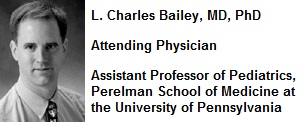
CU Blog - Antibiotics Use Associated with Obesity Risk - Photo 1The researchers found that children with four or more exposures to broad spectrum antibiotics during infancy were particularly more likely to be at risk for obesity. The study, published online September 29, 2014 in JAMA Pediatrics, did not directly examine cause and effect, said Charles Bailey, MD, PhD, (See Photo) lead author of the study, but he added, “as pediatricians, we’re interested in whether events that happen early in life might reset the baseline and have a long-term effect on how the body regulates weight.”

The researchers were intrigued by the emerging idea that the microbial population that begins to colonize in infants’ intestines shortly after birth, known as the microbiome, plays an important role in establishing energy metabolism. Previous studies have shown that antibiotic exposure influences the microbiome’s diversity and composition. “The thought is that the microbiome may be critically dependent on what is going on during infancy,” Bailey added.

The study team analyzed electronic health records from 2001 to 2013 of 64,580 children with annual visits at ages 0 to 23 months, as well as one or more visits at ages 24 to 59 months within the CHOP Care Network. They assessed the relationships between antibiotic prescription and related diagnoses before age 24 months and the development of obesity in the following three years.

Broad-spectrum drugs associated with obesity but not narrow-spectrum drugs

The investigators saw the association with broad-spectrum drugs, but they reported no significant association between obesity and narrow-spectrum drugs. For this study, they classified first-line therapy for common pediatric infections, such as penicillin and amoxicillin, as narrow-spectrum. They considered broad-spectrum antibiotics to include those recommended in current guidelines as second-line therapy.

“Treating obesity is going to be a matter of finding the collection of things that together have a major effect, even though each alone has only a small effect,” said Patricia DeRusso, MD, director of the Healthy Weight Program and vice president of Medical Staff Affairs at Children’s Hospital who was the senior author of the study. “Part of what we are exploring in this study is one of those factors that we can possibly modify in the way we take care of kids and make it better.”

Future investigations are needed involving multiple large pediatric health systems that will take a broader look at several populations and how adopting guidelines that accentuate the use of narrow-spectrum antibiotics might affect patients’ risk of obesity, Dr. Bailey said. In addition to supporting this type of research locally, CHOP is also a key contributor to networks such as PEDSnet that link many children’s hospitals to make more effective clinical research possible. Researchers also are looking at ways the microbial communities living in infants’ intestines are swayed by dietary and environmental factors.

Early intervention is key

Childhood obesity has more than doubled in children over the past 30 years, according to the Centers for Disease Control and Prevention. Many will remain obese into adulthood and be susceptible to heart disease, type 2 diabetes, stroke, several types of cancer, and osteoarthritis. Medical researchers at CHOP want to identify ways to intervene as early as possible, in order to avert the lifetime of medical, developmental, and social problems associated with obesity.

More information

“Association of Antibiotics in Infancy With Early Childhood Obesity” JAMA Pediatrics, published online on September 29, 2014 doi:10.1001/jamapediatrics.2014.1539

Dr. Bailey’s coauthors were Christopher Forrest, MD, PhD; Peixin Zhang, PhD; Thomas M. Richards, MS; Alice Livshits, BS; and Patricia A. DeRusso, MD, MS.

This research project was funded by an unrestricted donation to The Children’s Hospital of Philadelphia’s Healthy Weight Program from the American Beverage Foundation for a Healthy America.

Contact: Joey McCool, The Children’s Hospital of Philadelphia, 267-426-6070 or McCool@email.chop.edu
Children’s Hospital of Philadelphia Web Site – Posted 9-30-2014
http://www.chop.edu/news/antibiotic-use-by-age-2-associated-with-obesity-risk.html

Referenced Video: https://www.youtube.com/watch?v=HF3zTp5YQSg

Why is antibiotics misuse so high in American society*?

One theory is that Big Pharma, the Pharmaceutical industry, dictates standards of care in the field of medicine, more so than may be a best-practice. (Picture the scene of a Pharmaceutical Salesperson slipping in the backdoor to visit a doctor and showcase latest product lines).

This subject of damaging health effects deriving from capitalistic practices in medicine aligns with Go Lean … Caribbean (Page 157), as it posits that Cancer treatment (in the US) has been driven by the profit motive, more so than a quest for wellness and/or a cure.

This is not the model we want to effect the well-being of our young children.

The Go Lean roadmap specifies where we are as a region (minimal advanced medicine options), where we want to go (elevation of Caribbean society in the homeland for all citizens to optimize wellness) and how we plan to get there – confederating as a Single Market entity. While the Go Lean book strategizes a roadmap for economic empowerment, it clearly relates that healthcare, and pharmaceutical acquisitions are important in the quest to make the Caribbean a better place to live, work and play. At the outset of the Go Lean book, in the Declaration of Interdependence (Page 11), these points are pronounced:

viii.  Whereas the population size is too small to foster good negotiations for products and commodities from international vendors, the Federation must allow the unification of the region as one purchasing agent, thereby garnering better terms and discounts.

ix.     Whereas the realities of healthcare and an aging population cannot be ignored and cannot be afforded without some advanced mitigation, the Federation must arrange for health plans to consolidate premiums of both healthy and sickly people across the wider base of the entire Caribbean population. The mitigation should extend further to disease management, wellness, obesity and smoking cessation programs.

The Go Lean book is not a medical reference or science book, but it does touch on medical issues, especially as they relate to community economics. The publishers of the book are not trying to dictate policies for medical practice; that would be out-of-scope for Go Lean, which serves as a roadmap for the implementation and introduction of the technocratic Caribbean Union Trade Federation (CU). The CU‘s prime directives are identified with the following 3 statements:

  • Optimization of the economic engines in order to grow the regional economy to $800 Billion & create 2.2 million new jobs.
  • Establishment of a security apparatus to protect the resultant economic engines.
  • Improve Caribbean governance to support these engines.

Previous blog/commentaries addressed similar issues as the foregoing article. The following sample applies:

CHOP Research: Climate Change May Bring More Kidney Stones
Big Pharma & Criminalization of American Business
New Research and New Hope in the Fight against Alzheimer’s Disease
New Cuban Cancer medication registered in 28 countries

The Caribbean Union Trade Federation has the prime directive of optimizing the economic, security and governing engines of the region. The foregoing article/VIDEO depicts that research is very important to identify and qualify best-practices in health management for the public. Obviously the scourge of obesity is unwelcomed. Nutrition education is a key mitigation, but the foregoing article/VIDEO proclaims another driver that is outside of the control of the afflicted, or their families. This is the manifestation and benefits of Research & Development (R&D). The roadmap describes this focus as a community ethos. Then it goes on to stress that the CU must promote the community ethos that R&D is valuable and must be incentivized for adoption. The following list details additional ethos, strategies, tactics, implementations and advocacies to optimize the region’s health deliveries:

Community Ethos – Deferred Gratification Page 21
Community Ethos – The Consequences of Choices Lie in the Future Page 21
Community Ethos – Governing Principles – Return on Investments Page 24
Community Ethos – Cooperatives Page 25
Community Ethos – Non-Government Organizations Page 25
Community Ethos – Ways to Impact Research & Development (R&D) Page 30
Community Ethos – Ways to Promote Happiness Page 36
Community Ethos – Ways to Impact the Greater Good Page 37
Strategy – Integrate and unify region in a Single Market Page 45
Strategy – Agents of Change – Globalization Page 57
Tactical – Fostering a Technocracy Page 64
Tactical – Separation of Powers – Health Department Page 86
Tactical – Separation of Powers – Drug Administration Page 87
Implementation – Ways to Pay for Change Page 101
Implementation – Ways to Implement Self-Government Entities – R&D Campuses Page 105
Implementation – Ways to Deliver Page 109
Planning – Ways to Make the Caribbean Better Page 131
Advocacy – Ways to Improve Healthcare Page 156
Advocacy – Ways to Better Manage the Social Contract Page 170
Advocacy – Ways Foster Cooperatives Page 176
Advocacy – Ways to Improve Emergency Management Page 196
Advocacy – Ways to Impact Foundations Page 219
Advocacy – Ways to Impact Youth – Healthcare Page 227
Advocacy – Ways to Impact Persons with Disabilities Page 228
Appendix – Emergency Management – Medical Trauma Centers Page 336

The foregoing news/VIDEO story depicted analysis administered by the Children’s Hospital of Philadelphia, a teaching and research facility for the care of children.  There is a need for more such R&D on obesity causes and drivers. In the Caribbean, Cuba currently performs a lot of R&D into cancer, diabetes and other ailments. The Go Lean roadmap posits that more innovations will emerge in the region as a direct result of the CU prioritization on science, technology, engineering and medical (STEM) activities on Caribbean R&D campuses and educational institutions.

The Go Lean roadmap does not purport to be an authority on medical best-practices. The CU economic-security-governance empowerment plan should not direct the course of direction for obesity research and treatment. Neither should pharmaceutical salesmen. Their motive is strictly profit …

The CU motive, to impact the Greater Good, mandates monitoring progress in obesity research, the causes and effects. The hope is to minimize the affliction. This is the heavy-lifting the Caribbean region needs. This means life-or-death for some. All of the Caribbean is hereby urged to lean-in to this roadmap for Caribbean elevation.

Download the book Go Lean … Caribbean – now!

————–

* Appendix – Antibiotics Misuse – (http://en.wikipedia.org/wiki/Antibiotics)

“The first rule of antibiotics is try not to use them, and the second rule is try not to use too many of them.” – The ICU Book [70]

Inappropriate antibiotic treatment and overuse of antibiotics have contributed to the emergence of antibiotic-resistant bacteria. Self prescription of antibiotics is an example of misuse.[71] Many antibiotics are frequently prescribed to treat symptoms or diseases that do not respond to antibiotics or that are likely to resolve without treatment. Also incorrect or suboptimal antibiotics are prescribed for certain bacterial infections.[41][71] The overuse of antibiotics, like penicillin and erythromycin, have been associated with emerging antibiotic resistance since the 1950s.[56][72] Widespread usage of antibiotics in hospitals has also been associated with increases in bacterial strains and species that no longer respond to treatment with the most common antibiotics.[72]

Common forms of antibiotic misuse include excessive use of prophylactic antibiotics in travelers and failure of medical professionals to prescribe the correct dosage of antibiotics on the basis of the patient’s weight and history of prior use. Other forms of misuse include failure to take the entire prescribed course of the antibiotic, incorrect dosage and administration, or failure to rest for sufficient recovery. Inappropriate antibiotic treatment, for example, is their prescription to treat viral infections such as the common cold. One study on respiratory tract infections found “physicians were more likely to prescribe antibiotics to patients who appeared to expect them”.[73] Multifactorial interventions aimed at both physicians and patients can reduce inappropriate prescription of antibiotics.[74]

Referenced Sources:

41. Slama TG, Amin A, Brunton SA, et al. (July 2005). “A clinician’s guide to the appropriate and accurate use of antibiotics: the Council for Appropriate and Rational Antibiotic Therapy (CARAT) criteria”. Am. J. Med. 118 Suppl 7A (7): 1S–6S. doi:10.1016/j.amjmed.2005.05.007

56. Pearson, Carol (28 February 2007). “Antibiotic Resistance Fast-Growing Problem Worldwide”. Voice Of America. Archived from the original on 2 December 2008. Retrieved 29 December 2008.

70. Marino PL (2007). “Antimicrobial therapy”. The ICU book. Hagerstown, MD: Lippincott Williams & Wilkins. p. 817. ISBN 978-0-7817-4802-5.

71. Larson E (2007). “Community factors in the development of antibiotic resistance”. Annu Rev Public Health 28: 435–447. doi:10.1146/annurev.publhealth.28.021406.144020. PMID 17094768.

72. Hawkey PM (September 2008). “The growing burden of antimicrobial resistance”. J. Antimicrob. Chemother. 62 Suppl 1: i1–9. doi:10.1093/jac/dkn241. PMID 18684701.

73. Ong S, Nakase J, Moran GJ, Karras DJ, Kuehnert MJ, Talan DA (2007). “Antibiotic use for emergency department patients with upper respiratory infections: prescribing practices, patient expectations, and patient satisfaction”. Annals of Emergency Medicine 50 (3): 213–20. doi:10.1016/j.annemergmed.2007.03.026. PMID 17467120.

74. Metlay JP, Camargo CA, MacKenzie T, et al. (2007). “Cluster-randomized trial to improve antibiotic use for adults with acute respiratory infections treated in emergency departments”. Annals of Emergency Medicine 50 (3): 221–30. doi:10.1016/j.annemergmed.2007.03.022. PMID 17509729


Share this post:
, , ,
[Top]

Forging Change: The Fun Theory

Go Lean Commentary

The publishers of the book Go Lean…Caribbean wants to forge change in the Caribbean. How do we go about doing that?

The book identifies a number of best practices.

Here, now is another…

Consider this theory:

Video: The Fun Theory – Piano Staircase

The Fun Theory – an initiative of Volkswagen (VW). This is one of a series of experiments for a new brand campaign of VW. Have a look – the piano stairs are really funny. Fun can obviously change behavior for the better.
YouTube Video Sharing Site (Retrieved 09/08/2014) –
https://www.youtube.com/watch?v=SByymar3bds

The forgoing VIDEO depicts the challenge to people in a city to take the stairs more as opposed to riding the escalator. While this appears to be a small thing, the issue is bigger than initial appearances. Walking up a flight of stairs could be “just what the doctor ordered” for many people. It’s a great wellness initiative.

The book Go Lean…Caribbean serves as a roadmap for the introduction and implementation of the Caribbean Union Trade Federation (CU); an initiative to bring change, empowerment, to the Caribbean region; to make the region a better place to live, work and play. This Go Lean roadmap also has initiatives to improve wellness in the region, and more. In fact, the Caribbean empowerment roadmap has these 3 prime directives:

  • Optimization of the economic engines in order to grow the regional economy to $800 Billion & create 2.2 million new jobs.
  • Establishment of a security apparatus to protect the resultant economic engines.
  • Improve Caribbean governance to support these engines.

The book describes the CU as a hallmark of a technocracy, a commitment to efficiency and effectiveness; and a commitment to fun. Among the 144 different missions for the CU are many fun related activities, such as music, arts, sports, libraries, Hollywood (media related), heritage and overall happiness.

As depicted in the foregoing VIDEO, “fun” can be used to forge change. The Go Lean book declares that before any real change takes root in the Caribbean that there must be an adoption of new community ethos, the national spirit that drives the character and identity of its people. We must therefore use effective and efficient drivers to forge this change.

The roadmap was constructed with the following community ethos in mind, plus the execution of these strategies, tactics, implementation and advocacies to forge the identified permanent change in the region. The following is a sample of these specific details from the book:

Community Ethos – Deferred Gratification Page 21
Community Ethos – Economic Principles – People Choose Page 21
Community Ethos – Economic Principles – People Respond to Incentives in Predictable Ways Page 21
Community Ethos – Economic Principles – The Consequences of Choices Lie in the Future Page 21
Community Ethos – Governing Principles – Minority Equalization Page 23
Community Ethos – Governing Principles – Lean Operations Page 24
Community Ethos – Governing Principles – Cooperatives Page 25
Community Ethos – Ways to Impact the Future Page 26
Community Ethos – Ways to Help Entrepreneurship Page 28
Community Ethos – Ways to Promote Intellectual Property Page 29
Community Ethos – Ways to Impact Research & Development Page 30
Community Ethos – Ways to Bridge the Digital Divide Page 31
Community Ethos – Ways to Impact Turn-Arounds Page 33
Community Ethos – Ways to Improve Sharing Page 35
Community Ethos – Ways to Promote Happiness Page 36
Community Ethos – Ways to Impact the Greater Good Page 37
Strategy – Vision – Confederate 30 Member-States Page 45
Strategy – Mission – Celebrate the Music, Sports, Art, People and Culture of the Caribbean Page 46
Tactical – Confederating a Permanent   Union Page 63
Tactical – Fostering a Technocracy Page 64
Implementation – Ways to Pay for Change Page 101
Implementation – Ways to Deliver Page 109
Planning – 10 Big Ideas for the Caribbean Region Page 127
Planning – Ways to Make the Caribbean Better Page 136
Planning – Reasons Why the CU Will Succeed Page 137
Advocacy – Ways to Grow the Economy Page 151
Advocacy – Ways to Create Jobs Page 152
Advocacy – Ways to Improve Communications Page 186
Advocacy – Ways to Improve Libraries Page 187
Advocacy – Ways to Impact Hollywood Page 202
Advocacy – Ways to Impact Beauty Pageants Page 203
Advocacy – Ways to Preserve Caribbean Heritage Page 218
Advocacy – Ways to Improve Sports Page 229
Advocacy – Ways to Improve the Arts Page 230
Advocacy – Ways to Promote Music Page 231

Previously Go Lean blog/commentaries have stressed having fun and impacting the community through the “games people play”. The following sample applies:

https://goleancaribbean.com/blog/?p=2222 Sports Role Model – Playing For Pride … And More
https://goleancaribbean.com/blog/?p=2171 Sports Role Model – Turn On the SEC Network
https://goleancaribbean.com/blog/?p=1943 The Future of Golf; Vital for Tourism
https://goleancaribbean.com/blog/?p=1909 Music Role Model Berry Gordy – No Town Like Motown
https://goleancaribbean.com/blog/?p=1596 Book Review: ‘Prosper Where You Are Planted’
https://goleancaribbean.com/blog/?p=522 Financial Crisis Jokes
https://goleancaribbean.com/blog/?p=318 Collegiate Sports in the Caribbean

CU Blog - Forging Change - The Fun Theory - Photo 1The quest to change the Caribbean is more complex than just doing some fun activities. This is serious, maybe even life-and-death. But who wants to live in a world that is all life-and-death all the time. No, let’s have some fun too.

People come to the Caribbean to have fun – we welcome them all. Let the good times roll!

We must use “fun” to reach our audience – our communities – then grab their attention to send a message of the need for change and to lean-in to this roadmap to elevate Caribbean society. The change being advocated includes having fun; it includes making the Caribbean a better place to live, work and play. 🙂

We encourage all of the Caribbean to lean-in to this roadmap.

Download the book Go Lean … Caribbean – now!

Share this post:
, , ,
[Top]

Where the Jobs Are – One Scenario: Ship-breaking

Go Lean Commentary

Here is how the human psyche is wired:

We yawn at creation, yet wow at destruction.

With that accepted fact, comes the realization that there is a business model in destruction. Jobs can be created in the art and science of destruction (demolition, recycling and turn-arounds).

This is where the next round of new jobs are to be found …

… so says the book Go Lean…Caribbean which calls for the elevation of Caribbean economics. The book assesses the challenges of the tourism product in the Caribbean region, especially since 2008, where the influx of American tourists has slowed, due to economic realities in their homeland: the middle class is shrinking, the poor is expanding, and the One Percent is growing in affluence, influence and power.

It is what it is! According to recent blog commentaries, certain amenities of the tourism product, the mainstay of Caribbean economy, have now come under attack by social change: Golf and Casino Gambling.

So with the regional tourism business models being based on American middle class prosperity, these harsh realities have now come to fruition. The book therefore posits that there is a need to re-focus, re-boot, and optimize the engines of commerce so as to make the Caribbean a better place to live, work and play. And thus, this new focus on “destruction”, and the accompanying jobs.

Consider these two news articles that describe a business model in which opportunities exist and fulfilling those needs create jobs:

Title #1: International Shipbreaking Limited Wins Contract for Dismantle Constellation – June 13, 2014

Shipbreaking - Photo 4The [US] Navy competitively awarded a contract to International Shipbreaking Limited [a] of Brownsville, Texas, for the towing, dismantling and recycling of conventionally powered aircraft carriers stricken from service, June 13, 2014. Under the contract, the company will be paid $3 million for the dismantling and recycling of the decommissioned aircraft carrier Constellation (CV 64). The price reflects the net price proposed by International Shipbreaking, which considered the estimated proceeds from the sale of the scrap metal to be generated from dismantling. The Navy continues to own the ship during the dismantling process. The contractor takes ownership of the scrap metal as it is produced and sells the scrap to offset its costs of operations.

This is the third of three contracts for conventional aircraft carrier dismantling. All Star Metals of Brownsville was awarded the first contract Oct. 22, 2013, which included the towing and dismantling of ex-USS Forrestal (AVT 59). ESCO Marine of Brownsville was awarded the second contract May 8, 2014, for the scrapping of ex-USS Saratoga (CV 60). After the initial award of one carrier to each successful offeror, the Navy has the capability of scrapping additional conventionally-powered aircraft carriers over a five-year period under delivery orders competed between the three contractors.

Shipbreaking - Photo 4 NEWInternational Shipbreaking will now develop its final tow plan for the Navy’s approval for the tow of Constellation from its current berth at Naval Base Kitsap, Washington, to the company’s facility in Brownsville. The ship is expected to depart Kitsap this summer. Navy civilian personnel will be on site full time to monitor the contractor’s performance during dismantling of the ship.

Constellation was the second Kitty Hawk-class aircraft carrier to be built. She was laid down Sept. 14, 1957, at New York Naval Shipyard in Brooklyn, New York, and was the last U. S. aircraft carrier to be built at a yard outside of Newport News Shipbuilding and Drydock Company. The ship was commissioned Oct. 27, 1961. After nearly 42 years of commissioned service, Constellation was decommissioned at the NavalAirStationNorthIsland in San Diego Aug. 6, 2003. In September 2003, she was towed to the inactive ship maintenance facility in Bremerton to await its eventual disposal.
**************
Title #2: Muddy Waters – Are U.S. shipping companies still sending their clunkers to the toxic scrap yards of South Asia?

By: Jacob Baynham – Cincinnati, Ohio-based writer

When the 30-year-old cargo ship MV Anders cruised out of Norfolk, Va., at 11 p.m. on Wednesday, Aug. 26, it may have been sailing through one of the largest loopholes in U.S. maritime regulations.

CU Blog - Where the Jobs Are - One Scenario - Photo 1Three weeks earlier, the Anders was a U.S.-flagged vessel called the MV Pfc. James Anderson Jr., named for a young Marine who saved his platoon members’ lives by falling on a Viet Cong grenade. It had hauled cargo for the U.S. Navy for more than two decades and was now retiring. The ship’s new owners, Star Maritime Corp., had renamed it the Anders, painted over the excess letters on the hull, and raised the flag of its new registry—the Caribbean nation of St. Kitts and Nevis. The Anders left Virginia empty.

Its 29-year-old sister ship, the MVBonny (formerly the MV 1st Lt. Alex Bonnyman), followed two days later under the same flag and ownership. The Coast Guard listed the ships’ next port of call as Santos, Brazil. But environmental groups, trade journals, and industry watchdogs claim the ultimate destination for these aging vessels will be the Dickensian scrap yards of Bangladesh.

The Anders and the Bonny served in the U.S. Navy’s Military Sealift Command for 24 years. Stationed at Diego Garcia in the Indian Ocean, they delivered military cargo during both Iraq wars, as well as Operation Restore Hope in Somalia. But the Navy never actually owned the ships. They chartered them from Wilmington Trust, which sold them to Star Maritime earlier this summer. When Star Maritime renamed the ships and submitted an application to reflag them under St. Kitts and Nevis registration, environmental groups recognized the telltale signs of vessels about to be scrapped and cried foul.

The Basel Action Network, a Seattle-based environmental group leading the campaign to stop the export of old ships for scrap, monitors old vessels in U.S. waters and alerts the EPA when their owners attempt to recycle them overseas. There are several reliable warning signs. First, a ship is sold to an obscure company (which U.S. ship-breakers call a “Last Voyage Inc.”), which is sometimes a subsidiary of a larger company active in the scrapping business. Then it is renamed and registered under another nation’s flag before sailing to South Asia.

“It’s outrageous that these ships were allowed to sail,” says Colby Self, director of BAN’s Green Ship Recycling campaign. “In a sense, they were government vessels.” But once the ships’ contracts had expired, all legal responsibilities lay with their owners.

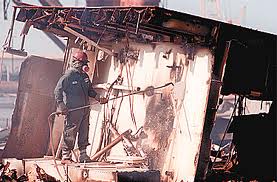
Most of the world’s old ships are sent to die on the shores of India, Pakistan, and Bangladesh. Vessels are beached there at high tide and cut into pieces by teams of poorly paid migrant workers. Heavy equipment and cranes are inoperable on the sand, so workers dismantle the ships by removing large portions, which drop to the beach. They use fire torches to cut through steel hulls—even those of old oil tankers. Dozens of workers die each year from explosions, falling steel, and disease. As for the asbestos, polychlorinated biphenyls (PCBs), tributyltin (TBT), and other toxic materials onboard the old ships, much of it washes out to sea. (PCBs and TBT are persistent organic pollutants that work their way up the marine food chain and damage the nervous systems of large mammals.)

If the Anders and Bonny are headed to Bangladesh, they won’t be alone. South Asia’s ship-breaking yards are experiencing an ironic boom in the middle of the global recession. Ship owners faced with shrinking cargo volumes are culling their fleets by scrapping old vessels rather than paying for them to sit empty. South Asia’s yards, which take advantage of cheap labor, scant regulations, and high regional demand for steel, will buy a vessel for twice the price a U.S. ship-breaker could offer. In Bangladesh, ships like the Anders and Bonny (which are two-and-a-half football fields long and weigh more than 23,000 tons) are worth at least $7 million apiece.

In 1998, the Clinton administration slapped a moratorium on scrapping U.S.-flagged vessels overseas after the Baltimore Sun ran a Pulitzer Prize-winning string of stories about the conditions of the South Asian scrap yards. But ship owners have dozens of so-called “flags of convenience” at their disposal to circumvent the ban. Most of these flags belong to small, poor countries with little maritime oversight—places like St. Kitts and Nevis.

Ship owners submit their reflagging requests to the U.S. Maritime Administration (MARAD), which considers whether the ships would be needed for national security in the event of war. For old vessels, this is seldom the case. MARAD began alerting the EPA of old ships attempting to reflag after the SS Oceanic, a former Norwegian Cruise Liner, slipped out of San Francisco last year with almost 500 tons of asbestos and PCBs onboard.

The Toxic Substances Control Act of 1976 prohibits the export of PCBs, asbestos, and lead-based paint—materials often used in the paint, cabling, and gaskets of older ships because of their fire-retardant qualities. If the EPA suspects a vessel applying for reflagging contains hazardous materials, it can order that vessel to be tested. But because ships are not required to inventory these materials, and the EPA has limited time and resources to devote to every old ship, environmentalists contend that each year many vessels slip through the cracks.

In the case of the Bonny and Anders, EPA spokesman David Sternberg says, “Based on the available information, the EPA has no sufficient reason to contain these ships.” Sternberg adds that the EPA received a letter from the new owners insisting the vessels will be used in trade and will not be scrapped.

This seems unlikely to Kevin McCabe, founder of International Shipbreaking Ltd. in Texas. He says buying two cargo ships at the end of their life spans for their utilitarian purposes alone would “belie the economics of the market today.” McCabe is convinced that the Bonny and Anders will be scrapped in Asia. And he doesn’t think they’re clean, either. “I’ll bet you dollars to doughnuts that there are PCBs on those ships,” he says. “No question about it.” The EPA would be singing a different tune if the ships were to be dismantled at his Brownsville recycling facility, he adds. “When we scrap a ship, we must assume it has hazardous material onboard until we can prove otherwise.”

Colby Self of BAN says he’s disappointed that the Obama administration could so easily let these ships slip away. “[The EPA] made a calculated decision based on their low-risk assessment, and they let them go,” he says. Under the Bush administration, the EPA was very diligent in following up on BAN’s warnings, he says.

But Self isn’t giving up hope that the ships can be stopped before they wash up on South Asian shores. “We will be warning Bangladesh to bar the entry of these renegade vessels,” he says. “This story is far from over.”

The above two articles depict “two sides of the same coin”: what happens when ship-breaking is done right, and done wrong.

The book Go Lean… Caribbean, serves as a roadmap for the introduction and implementation of the technocratic Caribbean Union Trade Federation (CU) with the charter to facilitate jobs in the region. We want to explore all the strong benefits of the shipbuilding (including ship-breaking) industry, by doing it right – more safety precautions than Bangladesh and lower labor costs than Brownsville-Texas. This aligns with the CU charter; as defined by these 3 prime directives:

  • Optimization of economic engines in order to grow the regional economy to $800 Billion and create 2.2 million new jobs.
  • Establishment of a security apparatus to protect the resultant economic.
  • Improve Caribbean governance to support these engines.

Early in the Go Lean book, the responsibility to create jobs was identified as an important function for the CU with this pronouncement in the Declaration of Interdependence (Pages 14):

xxvi.  Whereas the Caribbean region must have new jobs to empower the engines of the economy and create the income sources for prosperity, and encourage the next generation to forge their dreams right at home, the Federation must therefore foster the development of new industries, like that of ship-building, automobile manufacturing, prefabricated housing, frozen foods, pipelines, call centers, and the prison industrial complex. In addition, the Federation must invigorate the enterprises related to existing industries tourism, fisheries and lotteries – impacting the region with more jobs.

CU Blog - Where the Jobs Are - One Scenario - Photo 3According to the foregoing articles, ship-breaking activities in Third World countries, like Bangladesh, pose harm to the environment, workers and remaining systems of commerce. But when executed correctly, as in Brownsville-Texas, ship-breaking can be all positive. There are benefits in applying the appropriate best practices in handling hazardous materials. The tons of toxic waste (asbestos) can be properly managed and disposed of, with the proper eco-system surrounding the industry. The CU will facilitate the eco-system, especially with the Self-Governing Entities (SGE) concept for shipyards. This is covered in the Go Lean book under the auspices of “turn-around” industries, a federally regulated/promoted activity.

The Go Lean book also details the principle of job multipliers, how certain industries are better than others for generating multiple indirect jobs down the line for each direct job on a company’s payroll. The shipbuilding industry has a job-multiplier rate of 3.0. According to a report by the University of Strathclyde’s Fraser of Allander Institute in Scotland, a local reduction-in-force of 800 jobs at Govan & Scotstoun Shipyards will result in total job losses across Scotland of around 2,400 jobs, including those at the shipyards. (Source: http://www.scotsman.com/news/politics/top-stories/clyde-shipyard-cuts-may-lead-to-2-400-job-losses-1-3179593).

The Go Lean… Caribbean book details the creation of 15,000 direct jobs for the shipbuilding industry in the Caribbean region. Once the job multiplier is applied, the economic impact is that of 45,000 jobs.

How would the Caribbean advance from 0 to 45,000 jobs in the course of the 5-year roadmap? By adoption of empowering community ethos, plus the execution of key strategies, tactics, implementations and advocacies. The following is a sample:

Community Ethos – Deferred Gratification Page 21
Community Ethos – Economic Principle – Economic Systems Influence Choices & Incentives Page 21
Community Ethos – Economic Principle – Voluntary Trade Creates Wealth Page 21
Community Ethos – Job Multiplier Page 22
Community Ethos – Lean Operations Page 24
Community Ethos – Ways to Impact the Future Page 26
Community Ethos – Ways to Help Entrepreneurship Page 28
Community Ethos – Ways to Impact Research & Development Page 30
Community Ethos – Ways to Impact Turn-Around and Recycling and Demolition Industries Page 33
Community Ethos – Ways to Impact the Greater Good Page 37
Strategy – Mission – Facilitate a Shipbuilding Industry Page 46
Tactical – Fostering a Technocracy Page 64
Tactical – Tactics to Forge an $800 Billion Economy – High Multiplier Industries Page 70
Tactical – Separation of Powers – Self-Governing Entities Page 80
Implementation – Ways to Pay for Change Page 101
Implementation – Steps to Implement Self-Governing Entities Page 105
Implementation – Ways to Deliver Page 109
Planning – Ways to Make the Caribbean Better Page 131
Advocacy – Ways to Grow the Economy Page 151
Advocacy – Ways to Create Jobs Page 152
Advocacy – Ways to Improve Emergency Management Processes and Systems Page 196
Advocacy – Ways to Foster Technology Page 197
Advocacy – Ways to Develop/Grow a Ship-Building Industry Page 209
Appendix – Job Multipliers Page 259

The CU will foster industrial developments in support of tourism and as an alternative to tourism. Shipbuilding / ship-breaking is a prime-and-ready endeavor. The number one ingredient in the recipe for success in this industry is access to waterways, harbors and ports. The second most important ingredient is the willingness of the people to engage.

After the new pitfalls of tourism’s changing dynamics, the Caribbean people should now be ready for this industrial challenge of ship-breaking.

The Caribbean is arguable the best address on the planet, but a lot of infrastructure is missing; infrastructure like jobs. While this (Go Lean roadmap and accompanying blogs) is the start, the end of this roadmap is a clearly defined destination: a better place to live, work and play.

Download the book Go Lean … Caribbean – now!

—————————————————

Appendix a:

Company Overview: International Shipbreaking Limited LLC

International Shipbreaking Limited LLC provides dismantling and recycling services for maritime vessels and equipment. It offers various ferrous products, such as plate and structural steel, re-roll plate, cast iron, sheet metal, and scrap products; and non-ferrous products, including aluminum, brass, copper, cupro-nickel, lead, and non-ferrous scrap products. The company provides reusable equipment, such as propulsion systems, generators and engines, anchors, chains, and windlasses, as well as film projection machines, x-ray equipment, washing machines, kitchen galley tools, beds, lockers, gun racks, lighting fixtures, chairs, tables, and desks. It also offers artificial reefing.

Share this post:
, , ,
[Top]

Caribbean Players in the 2014 World Cup

FIFA 2014Go Lean Commentary

Soccer (Association Football) is the world’s most popular game. The book Go Lean … Caribbean contemplates greater exploration of the economic opportunities associated with the business of sports – the Caribbean has a failing record in this important area. This quest must therefore give consideration to the eco-system of the World Cup. As such, the news story in the foregoing article synchronizes with the Go Lean book in that it depicts the societal abandonment by so many Caribbean athletes and the lack of professional opportunities in the Caribbean homeland. The two issues: lack of opportunities and society abandonment is a cause-and-effect conundrum. See article here:

Caribbean Journal – Caribbean e-Zine Online Site (Posted 06/14/2014; retrieved 06/21/2014) –
http://www.caribjournal.com/2014/06/16/caribbean-players-in-the-2014-world-cup/
There aren’t any teams from the traditional Caribbean in the 2014 World Cup in Brazil (although there are several from the wider Caribbean Basin), but that doesn’t mean there isn’t a strong Caribbean contingent. From powerhouses like the Netherlands and England to up-and-coming teams like Costa Rica, there are a number of Caribbean footballers in Brazil this month. Here are some of the featured Caribbean athletes:

Raheem Sterling

Raheem SterlingThe 19-year-old phenom who plays for England was actually born in Kingston, Jamaica. A midfielder, he plays professionally for Liverpool.

Raphael Varane

, Raphael VaraneVarane who plays professionally for Real Madrid, is a centre back for the French World Cup team. He is of Martiniquais heritage, as his father comes from the island.



Daniel Sturridge

Daniel SturridgeThe England striker is of Jamaican heritage, as both sides of his grandparents are Jamaican. Like Sterling, he plays for Liverpool professionally. (And he keeps up his ties to Jamaica with a charity in Portmore).

Alex Oxlade-Chamberlain

Alex Oxlade-ChamberlainOxlade-Chamberlain, the son of former England international player Mark Chamberlain, is of Jamaican heritage. A winger and central midfielder, he plays professionally for Arsenal.

Jean Beausejour

Jean BeausejourBeausejour, a 30-year-old left winger for Chile, is the son of a Haitian father. He plays professionally for Wigan Athletic in England.

Nigel de Jong

Nigel de JongMuch of the Netherlands’ football success over the years has come from the Caribbean nation of Suriname, and the trend continues today. de Jong, of Surinamese heritage, is a defensive midfielder who plays professionally for Milan.

Jeremain Lens

Jeremain LensLens, a striker, is of Surinamese heritage (and has even played internationally for the country). He plays professionally for FC Dyanmo Kyiv.

Georginio Wijnaldum

Georginio WijnaldumWijnald is of Surinamese heritage, and plays for professionally for PSV in the Netherlands. For Oranje, he’s a midfielder.

Leroy Fer

Leroy FerThe Norwich City player is a central midfielder who plays for (and was born in) the Netherlands. His roots, however, come from Curacao, where he comes from a family of sporting talents.

Jozy Altidore

Jozy AltidoreThe Haitian-American Altidore is one of the leaders of the American World Cup squad. A striker by trade, he plays professionally for Sunderland.

Chris Smalling

Chris SmallingSmalling, of Jamaican heritage, is a centre back for England who plays professionally for Manchester United.

Patrick Pemberton

Patrick PembertonCosta Rica has a Caribbean coastline, and it’s an area with a distinct heritage and culture in large part due to an influx of immigration from Caribbean countries like Jamaica in the 19th [and early 20th century for the construction of the Panama Canal]. One result [has been] last names like Pemberton in a Spanish-speaking country. Patrick Pemberton, a native of Puerto Limon, and is the lead goalie for the Costa Rican World Cup side, playing professionally for LD Alajuelense.

Marvin Chavez

Marvin ChavezThe winger Chavez is part of a group of Garifuna players on the Honduran side, those who live on the Caribbean coast of the country — indeed, almost half of the team is comprised of those of Garifuna heritage. Chavez plays professionally in Chivas USA in MLS.

David Myrie

David MyrieDavid Myrie, a defender for the Costa Rican team, hails from the Caribbean area of Puerto Viejo. He plays professionally for the Costa Rican side Herediano.

Loic Remy

Loic RemyThe 27-year-old native of Lyon is of Martiniquais heritage and plays for France. Professionally, the striker plays for Queens Park Rangers in England.

Jonathan de Guzman

Jonathan de GuzmanThe midfielder for the Netherlands is the son of a Jamaican mother. He plays professionally for Swansea City, on loan from Spain’s Villareal.

The Go Lean book serves as a roadmap for the introduction and implementation of the Caribbean Union Trade Federation (CU), a technocratic federal government to administer and optimize the economic/security/ governing engines of the region’s 30 member-states. At the outset, the roadmap recognizes the value of sports with these statements in the Declaration of Interdependence (Page 13 & 14):

xxi.     Whereas the preparation of our labor force can foster opportunities and dictate economic progress for current and future generations, the Federation must ensure that educational and job training opportunities are fully optimized for all residents of all member-states, with no partiality towards any gender or ethnic group. The Federation must recognize and facilitate excellence in many different fields of endeavor, including sciences, languages, arts, music and sports. This responsibility should be executed without incurring the risks of further human flight, as has been the past history.

xxxi.     Whereas sports have been a source of great pride for the Caribbean region, the economic returns from these ventures have not been evenly distributed as in other societies. The Federation must therefore facilitate the eco-systems and vertical industries of sports as a business, recreation, national pastime and even sports tourism – modeling the Olympics.

The Go Lean roadmap posits that sport genius qualifiers are found throughout Caribbean society. With the planned market organizations of this roadmap, sports can be more lucrative for Caribbean residents, Diaspora and their legacies. This is big business! There is money to be made in sports endeavors like the World Cup, as stated here:

World Cup Brazil will generate $4 billion in total revenue for FIFA, or 66% more than the previous tournament in South Africa in 2010. The vast majority of the money will come from the sale of television and marketing rights. The World Cup generates more revenue for its association than any other sports tournament, save the Olympics. – Source: Forbes Magazine; retrieved June 5, 2014 from: http://www.forbes.com/sites/mikeozanian/2014/06/05/the-billion-dollar-business-of-the-world-cup/

This subject of sports and World Cup Soccer relates to many previous Go Lean blogs; highlighted here in the following samples, including tangential issues like societal abandonment/brain drain and Caribbean image:

a. https://goleancaribbean.com/blog/?p=1433 Caribbean   loses more than 70 per cent of tertiary educated to brain drain
b. https://goleancaribbean.com/blog/?p=1341 College   World Series Time
c. https://goleancaribbean.com/blog/?p=1214 The Art &   Science of Temporary   Stadiums – No White Elephants
d. https://goleancaribbean.com/blog/?p=1148 Sports Bubble –   Franchise values in   basketball
e. https://goleancaribbean.com/blog/?p=1020 Sports   Revolutionary: Advocate   Jeffrey Webb
f. https://goleancaribbean.com/blog/?p=857 Caribbean Image: Dreadlocks
g. https://goleancaribbean.com/blog/?p=498 Book Review: ‘The   Sports Gene’
h. https://goleancaribbean.com/blog/?p=334 Bahamians Make   Presence Felt In   Libyan League
i. https://goleancaribbean.com/blog/?p=318 Collegiate Sports   in the Caribbean
j. https://goleancaribbean.com/blog/?p=60 Could the Caribbean Host the Olympic Games?

The Caribbean already competes on the world stage, in all other aspects of life. But for the World Cup it is unfortunate that we have to compete with teams aligned to other countries, as shown in the foregoing article.

While it’s too late for this year, perhaps in the near future, at the end of this roadmap, there will be more recognition of the Caribbean contribution to the World Cup. Take the dream one step further and imagine a unified Caribbean team fielding its best athletes in competition with the rest of the world. This is the basic strategy of the CU, to confederate and collaborate as a unified team for sports and most other endeavors. The Go Lean roadmap asserts that no one Caribbean member-state can thrive alone.

Though Go Lean is an economic empowerment agenda, there are huge benefits for the region related to sports: optimization of eco-systems for amateur, intercollegiate and professional engagements. The CU facilitation is straight-forward: to supply the missing elements of the previous generations: applicable venues (stadia, arenas, fields, temporary structures) and broadcast/streaming capabilities.

Now is the time for all of the Caribbean to forge permanent change by implementing the Five Year roadmap advocated in the book Go Lean … Caribbean. The hope is to keep our “star” athletes at home, playing for the home team and home country. Then finally, with the Go Lean executions in place, the Caribbean can become a better place for all citizens to live, work and play.

Download the book Go Lean … Caribbean – now!

Share this post:
, , , , ,
[Top]

Caribbean loses more than 70 percent of tertiary educated to brain drain

Go Lean Commentary

The chart in the foregoing news article is more than troubling, it is just plain bad.

According to the analysis by the Inter-American Development Bank, the people in the “Caribbean 6” countries, including the Bahamas, Barbados, Guyana, Jamaica, Suriname, and Trinidad & Tobago have wasted money on educating their populations, especially tertiary (college) education.

“Say it aint so…”

Brain Drain 70 percent Chart

Title: IDB: T&T lost more than 70 per cent of tertiary educated from brain drain
T&T has lost more than 70 per cent of its tertiary level educated labour force through emigration to developed countries, according to an Inter-American Development Bank (IDB) report released Tuesday.

The report looks at events up to 2012.

The T&T labour force, according to statistics from the Central Statistical Office is made up of 635,100 persons as at the first quarter of 2013.

The report entitled, Is there a Caribbean Sclerosis? Stagnating Economic Growth in the Caribbean, said 79 per cent of the labour force in T&T who received tertiary level education up to 2011 migrated to member countries of the Organisation for Economic Co-operation and Development (OECD).

“The OECD has been called a think tank, monitoring agency, rich man’s club and un-academic university. Whatever you want to call it, the OECD has a lot of power. Over the years, it has dealt with a range of issues, including raising the standard of living in member countries, contributing to the expansion of world trade and promoting economic stability,” according to Investopedia. The term “OECD countries” is often used loosely in economics as a euphemism for developed countries.

“Euro sclerosis” was a term coined in the 1970s to describe stagnant integration, high unemployment, and slow job creation in Europe relative to the United States, authors of the report explained. Since then, the term has been used more generally to refer to overall economic stagnation, they said.
The Guardian – Trinidad Daily Newspaper (Retrieved 06/19/2014) –
http://m.guardian.co.tt/business-guardian/2014-06-19/idb-tt-lost-more-70-cent-tertiary-educated-brain-drain

There is a similar concern expressed in the book Go Lean…Caribbean that education in the Caribbean needs to undergo a total re-boot, to be re-evaluated/re-organized, since the region has for far too long “fattened frogs for snakes”. The book further charges that this issue is not just in the CariCom states as the Caribbean 6 group represents, but also in the Dutch, French, and Spanish Caribbean. This problem is a real crisis for the Caribbean.

Alas, the book posits that a “crisis is a terrible thing to waste” and thereafter proposes solutions and mitigations to effectuate change in the Caribbean. The book Go Lean…Caribbean serves as a roadmap for the introduction and implementation of the technocratic Caribbean Union Trade Federation (CU).

The roadmap is for the elevation of Caribbean society. The prime directives of the CU are presented as the following 3 statements:

  • Optimization of the economic engines in order to grow the regional economy to $800 Billion & create 2.2 million new jobs.
  • Establishment of a security apparatus to protect the resultant economic engines.
  • Improve Caribbean governance to support these engines.

The book posits that all of the Caribbean is in crisis with this brain drain problem. This point is stressed early in the book (Page 13) in the following pronouncements in the Declaration of Interdependence:

xix.   Whereas our legacy in recent times is one of societal abandonment, it is imperative that incentives and encouragement be put in place to first dissuade the human flight, and then entice and welcome the return of our Diaspora back to our shores. This repatriation should be effected with the appropriate guards so as not to imperil the lives and securities of the repatriated citizens or the communities they inhabit. The right of repatriation is to be extended to any natural born citizens despite any previous naturalization to foreign sovereignties.

xx.   Whereas the results of our decades of migration created a vibrant Diaspora in foreign lands, the Federation must organize interactions with this population into structured markets. Thus allowing foreign consumption of domestic products, services and media, which is a positive trade impact. These economic activities must not be exploited by others’ profiteering but rather harnessed by Federation resources for efficient repatriations.

This blog obviously relates to the now vibrant Caribbean Diaspora, the causes of emigration, and the continuous interaction with the “exile community”. These subjects have previously been covered in these Go Lean blogs, highlighted here in the following samples:

a. https://goleancaribbean.com/blog/?p=1296 Remittances to Caribbean Increased By 3 Percent in 2013
b. https://goleancaribbean.com/blog/?p=1256 Is a Traditional 4-year Degree a Terrible Investment?
c. https://goleancaribbean.com/blog/?p=1112 Zuckerberg’s  $100 Million for Newark’s Schools was a waste
d. https://goleancaribbean.com/blog/?p=607 Antigua Completes Construction of New National Library
e. https://goleancaribbean.com/blog/?p=599 Ailing Puerto Rico open to radical economic fixes
f. https://goleancaribbean.com/blog/?p=459 CXC and UK publisher hosting CCSLC workshops in Barbados
g. https://goleancaribbean.com/blog/?p=353 Book Review: ‘Wrong – Nine Economic Policy Disasters and What We Can Learn…’ – Example of Irish Famine leading to Emigration

The foregoing news article focuses on the tertiary emigration rates for Trinidad & Tobago, but the accompanying chart/photo demonstrates that many Caribbean countries have this same problem: 89% in Guyana, 61% in the Bahamas. These numbers validate the crisis.

How did this crisis come about? What are the past/present experiences and what are the future prospects of the Caribbean Diaspora? An examination of this subject is most effective using an analogy of a road journey. A review of the past helps us to better understand the roadmap. The road began at some point in the past and continued up to today. Where will the road end?

The Go Lean book posits that the Caribbean is the greatest address in the world. So why would people want to leave? The book answers by relating “push” and “pull” factors. Push, in that the dire economic conditions in the Caribbean homeland, plus governmental failures in response, caused responsible people to look elsewhere to fulfill their responsibilities and aspirations. On the other hand, pull factors came from the geo-political circumstances in the world. For the Anglophone Caribbean, the pull factors were tied to their British colonial status. At the end of the second World War, British labor markets were devastated and so the invitation went out to the Caribbean colonies to come to England for gainful employment opportunities. The 1948 British Nationality Act gave British citizenship to all people living in Commonwealth countries, and full rights of entry and settlement in Britain. Many West Indians were attracted by these better prospects in what was often referred to as the mother country. The ship MV Empire Windrush brought the first group of 492 immigrants to Tilbury near London on 22 June 1948. The Windrush was en route from Australia to England via the Atlantic, docking in Kingston, Jamaica. An advertisement had appeared in a Jamaican newspaper offering cheap transport on the ship for anybody who wanted to come and work in the UK [a].

Today, a majority of the African-Caribbean population in the UK is of Jamaican origin; other notable representation is from Trinidad & Tobago, Saint Kitts & Nevis, Barbados, Grenada, Antigua & Barbuda, Saint Lucia, Dominica, Montserrat, Anguilla, Saint Vincent & the Grenadines, Guyana, and Belize.

Parallel anecdotes exist for American, Dutch and French Caribbean colonies. (In total, there were over 60 million deaths from World War II; with very few losses in the Caribbean).

In the decades that followed European sclerosis, as cited in the foregoing article, the target of Caribbean emigrants shifted to North American destinations,

The Go Lean book posits that the recent global financial crisis has created economic stagnation in the very same countries in which the Caribbean Diaspora sought refuge. These countries are no longer a place of refuge – it is time to repatriate back to the Caribbean. But not back to the same parasite economies of 1948, or 1958, 1978, not even 2008. The Go Lean roadmap calls for a Caribbean re-boot, creating a Single Market of all Caribbean countries despite their European/American legacies; this is the plan for “Step One, Day One”. This approach allows for the optimizations discussed above for the economic, security and governing engines.

The Go Lean book details a series of community ethos, strategies, tactics, implementations and advocacies to foster the Caribbean re-boot:

Anecdote – Caribbean Single Market & Economy Page 15
Anecdote – Dutch Caribbean: Integration & Secessions Page 16
Anecdote – French Caribbean: Organization & Discord Page 17
Anecdote – Puerto Rico: The Greece of the Caribbean Page 18
Community Ethos – Deferred Gratification Page 21
Community Ethos – Economic Systems Influences Choices & Incentives Page 21
Community Ethos – The Consequences of Choice Lie in the Future Page 21
Community Ethos – Lean Operations Page 24
Community Ethos – Return on Investments Page 23
Community Ethos – Ways to Impact the Future Page 26
Community Ethos – Ways to Foster Genius Page 27
Community Ethos – Ways to Help Entrepreneurship Page 28
Community Ethos – Ways to Bridge the Digital Divide Page 31
Community Ethos – Ways to Manage Reconciliations Page 34
Strategy – Vision – Single Market & Economy Page 45
Tactical – Separation of Powers – Federal versus   Member-States Page 71
Implementation – Year 1 / Assemble Phase Page 96
Implementation – Year 4 / Repatriate Phase Page 98
Implementation – Ways to Pay for Change Page 101
Implementation – Ways to Deliver Page 109
Implementation – Reasons to Repatriate Page 118
Advocacy – Ways to Grow the Economy Page 151
Advocacy – Ways to Create Jobs Page 152
Advocacy – Ways to Improve Education Page 159
Advocacy – Ways to Impact Student Loans Page 160
Advocacy – Ways to Improve Governance Page 168
Advocacy – Ways to Better Manage the Social Contract Page 170
Advocacy – Ways to Reduce Crime – Repatriates’ Hate Crime Status Page 178
Advocacy – Ways to Impact the Diaspora Page 217
Advocacy – Ways to Preserve Caribbean Heritage Page 218
Advocacy – Ways to Impact Retirement Page 221
Advocacy – Ways to Improve Elder-Care Page 225
Appendix – Analysis of Caribbean Diaspora Page 267
Appendix – Analysis of Caribbean Remittances Page 268
Appendix – Analysis of Caribbean Emigration Page 269
Appendix – Alternative Remittance Modes Page 270
Appendix – Interstate Compacts Page 278
Appendix – Jamaica’s International Perception Page 297
Appendix – Nuyorican Movement Page 303
Appendix – Puerto Rican Population in the US Page 304

Now is the time for all of the Caribbean, the people and governing institutions, to lean-in for the regional re-boot described in the book Go Lean…Caribbean. This big deal for the Caribbean will neutralize the “push and pull” factors that contributed to previous emigration patterns and a vibrant Diaspora. Losing 60, 70 and 80 percent of the college educated population is not a formula for nation-building success.

(One solution is the adoption of e-Learning schemes for residential educational options).

Caribbean Beach #2The Caribbean region features the world’s best address. The world should be beating down the doors to come to the Caribbean, not the Caribbean people beating down doors to get out. Already the best place to play, the region now needs to become better places to live and work. This is possible, if we Go Lean.

Download the book Go Lean … Caribbean – now!

———–

Appendix – Cited Reference:
a. Retrieved June 21, 2014 from: http://en.wikipedia.org/wiki/British_African-Caribbean_people.


Share this post:
, , ,
[Top]

Bahamas rejects US trade demand

Go Lean Commentary

Q: Where does an 800-pound gorilla sleep? A: Anywhere it wants to.

Trade 1There is no doubt the United States is the 800 pound gorilla for trade in the Caribbean region. From a sheer negotiation tactic, there is no basis for respect and consideration for the needs and aspirations of the small Bahamas island nation. A lion share of trade in the Bahamas comes from the US. Also, a lion share of the Bahamas Government revenue comes from Customs duties. So in any stretch of the imagination, eliminating Customs duties from American imports would devastate the Bahamas Government’s treasuries.

Is this an over-simplification of the logical argument in the foregoing news article? No!

Rather, this is a consistent theme in the book Go Lean…Caribbean. The book posits that the objectives of American foreign, trade and security policy may not align with the priorities of the Caribbean. Even more, no Caribbean member-state has voting powers in the US Capitol where those policies might be codified. It is what it is!

The Bahamas is so small compared to the US that the ranting from Nassau would be inconsequential to the decision makers in Washington. The Bahamas and the US are not “brothers”; at best, the Bahamas can expect a “good neighbor” relationship with the US. But since “blood is thicker than water”, it is only to be expected that the US would prioritize the needs of its people ahead of Bahamians.

By: Alison Lowe, Nassau Guardian Business Editor

NASSAU, Bahamas — The United States has called for The Bahamas to immediately drop all of its duties on US products coming into this country on “day one” of The Bahamas’ accession to the World Trade Organization (WTO) – a request which the government has rejected on the basis that it could wipe out the domestic economy, according to the [Bahamas] Minister of Financial Services.

Disclosing some of the background to The Bahamas’ bilateral negotiations over the terms of its bid to join the WTO, [Minister] Ryan Pinder said that the US government has not been “amenable” to The Bahamas’ phasing in tariff reductions on US goods. “Phasing in” refers to the ability to reduce the duty rate levels over a number of years.

However, he suggested that the government has struck back on the issue, suggesting that a phased-in reduction of tariffs on US goods – the vast majority of all imported goods coming into The Bahamas – would be more appropriate.

He was speaking at a meeting on Wednesday between members of the Bahamas Chamber of Commerce and Employers Confederation and David Shark, deputy director general of the WTO, who is in the country to engage with stakeholders over The Bahamas’ accession process.

Among the requirements of joining the WTO is that The Bahamas lowers its duty rates on goods imported into the country. It is this requirement that contributes in part to the decision by the government to push ahead with introducing a new form of revenue collection in the form of value added tax (VAT), although the WTO deputy director said the WTO itself has no preference about what form of tax the government chooses to replace former duty taxes with.

In a question and answer session, Pinder said that how quickly and how low The Bahamas would have to reduce its duties is not a decision of the WTO, but one which is determined in bilateral negotiations with other WTO members.

Pinder said, “The EPA (Economic Partnership Agreement trade deal with Europe) is phased, and they phase to zero, so at some point in time there will be no duty paid on items sourced out of the EU, but it’s not a huge deal because I think there’s $8 million of revenue a year to the government on EU products.

“Now the US: day one that’s what they want. Imagine if they said let’s phase it to zero like the EPA, because that’s what they’ll use as a precedent: You negotiated the EPA, you phased, you phased to zero. So imagine if we phase to zero (on goods coming from the US – you would not have a domestic economy because you would not have 35 percent on readymade items anymore, you’d have zero. So you have to be careful what you push for at times.”

Trade 2He added: “Right now the US is taking the posture that they want on-day-one reductions. They’ve taken the posture they want cuts straight across the board. We’ve taken the position we’re not going to negotiate on that basis but we will negotiate trying to protect domestic industry.

“I think they got the point but there’ll be further negotiations on that. So they haven’t been too amenable to phasing. We anticipate that in some time in the future we will have to re-negotiate the Caribbean Basin Initiative on a bilateral basis which is a whole other issue with respect to the US and their trading regime,” said Pinder.

In terms of how the government would make up the lost revenue, the government has a plan of sorts in place in the form of the implementation of value added tax (VAT), or – if the private sector has its way — some other form of alternative taxation.

However, replacing the revenue lost to the government when duties are reduced under WTO accession does not address the challenge of how the reduction in duties would impact local manufacturers, who rely on the fact that the goods they produce have high rates of duty applied when they cross the border.

In this regard, seven months on from when he announced that the government would be undertaking a study to examine the “vulnerabilities and opportunities” that would arise for Bahamian businesses from joining the WTO, Pinder said on Wednesday that the government is now moving to shortlist who will conduct this study so the government will have a clearer picture of the impact on industry of acceding to the WTO.

At present, Pinder has stated a goal of December 2014 for The Bahamas to complete its lengthy accession process, but has also indicated that the process could well continue into 2015.

In an interview with Guardian Business on Wednesday, Shark touted the benefits of WTO accession. He said that WTO members have been seen to have recovered more quickly following the global economic downturn, as a result of having a more certain environment for investment.

“The Bahamas is already heavily integrated into the international trading system, so for a country that’s as deeply enmeshed in international trade as the Bahamas the better question is ‘Why not (join)?’

“As a member of the WTO, you get to level the playing field with some of your neighbours. You’re the only CARICOM member who’s not a member of the WTO, and when companies are trying to decide where to invest, being a member of the WTO provides assurances to investors of the conditions of their investment… and all of that matters a lot in terms of being a part of global supply chains.

“The rules of international trade, whether you are a member of the WTO or not, affect you, so why wouldn’t you want to be at the table in negotiating those rules?

“It’s protection against protectionism; if someone does something that causes you harm you can challenge them whether you are a large or small country, under the WTO system,” he added.

Caribbean News Now / Nassau Guardian (Posted 04-11-2014; retrieved 05-22-2014) –http://www.caribbeannewsnow.com/topstory-Bahamas-rejects-US-trade-demand-20677.html

Trade 3How to counteract and mitigate this undesirable negotiating quagmire? The answer is to join a bigger family! This requires lowering the volume on the cries of independence and then lean-in for interdependence: regional and WTO solutions. The book Go Lean… Caribbean, serves as a roadmap for the introduction and implementation of the Caribbean Union Trade Federation (CU). This represents a confederation, a brotherhood, of the 30 member-states of the Caribbean region, including Puerto Rico and the US Virgin Islands.  This CU/Go Lean roadmap extolls these 3 prime directives:

  • Optimize the economic engines of the Caribbean to grow the regional economy.
  • Establish a security apparatus to protect the resultant economic engines.
  • Improve Caribbean governance to support these engines.

Imagine the force of a single market of 42 million people as opposed to the minimal 320,000. Imagine too … the purchasing power of an $800 Billion economy as opposed to $9.2 Billion (2010). The roadmap immediately calls for the consolidation of trade negotiation of the Bahamas with the rest of the Caribbean. This point is echoed early, and often, in the Go Lean book, commencing with these opening pronouncements in the Declaration of Interdependence (Page 11/12), as follows:

 viii.   Whereas the population size is too small to foster good negotiations for products and commodities from international vendors, the Federation must allow the unification of the region as one purchasing agent, thereby garnering better terms and discounts.

 x.         Whereas we are surrounded and allied to nations of larger proportions in land mass, populations, and treasuries, elements in their societies may have ill-intent in their pursuits, at the expense of … our citizens. We must therefore appoint “new guards” to ensure … our society, both domestic and foreign.

The roadmap recognizes that this request to forge a confederated technocracy is atypical in Caribbean pursuits. Despite previous integration efforts, the most that has been accomplished is the recognition of the benefits of consolidation, but no real manifestation of an integrated society.

Go Lean … Caribbean therefore constitutes a change for the Caribbean. This is a roadmap to consolidate 30 member-states of 4 different languages and 5 colonial legacies (American, British, Dutch, French, Spanish) into a Trade Federation with the tools/techniques (but without sovereignty) to bring immediate change to the region to benefit one and all member-states. While this is an integration of region’s economic interest, there is no expectation of re-distributing existing wealth among the member-states.

Just how is this accomplished?

The book details that there must first be adoption of community ethos to forge such a change; plus the executions of the following strategies, tactics, implementations and advocacies to impact the regions prospects in negotiations and fulfilling the needs of Caribbean stakeholders:

Community Ethos – Deferred Gratification Page 21
Community Ethos – Minority Equalization Page 24
Community Ethos – Lean Operations Page 24
Community Ethos – Return on Investments Page 24
Community Ethos – Cooperatives Page 24
Community Ethos – Ways to Improve Negotiations Page 30
Community Ethos – Impact the Greater Good Page 37
Strategy – Unified Region in a Single Market Economy Page 45
Strategy – Customers – Foreign Direct Investors Page 48
Strategy – Agents of Change – Globalization Page 57
Tactical – Confederating a Permanent Union Page 63
Tactical – Fostering a Technocracy Page 64
Tactical – Growth Approach – Trade and Globalization Page 70
Separation of Powers – Interstate Commerce Admin Page 79
Separation of Powers – Office of Trade Negotiations Page 80
Implementation – Ways to Pay for Change Page 101
Implementation – Foreign Policy Initiatives at Start-up Page 102
Implementation – Ways to Deliver Page 109
Implementation – Trade Mission Office Objectives Page 116
Implementation – Ways to Benefit from Globalization Page 119
Planning – Ways to Improve Trade Page 128
Planning – Ways to Improve Interstate Commerce Page 129
Planning – Ways to Model the EU Page 130
Planning – Lessons from the West Indies Federation Page 135
Advocacy – Ways to Grow the Economy Page 151
Advocacy – Ways to Improve Governance Page 168
Advocacy – Ways to Better Manage the Social Contract Page 170
Advocacy – Ways to Improve Government Revenue Page 172
Advocacy – Ways to Foster Cooperatives Page 176
Advocacy – Ways to Impact Main Street Page 201

The foregoing news article uses language like “day one”, in that it reports that there are expectations for the immediate adjustments in the US-Bahamas trade dynamics with the inauguration of the WTO regime. This type of development is impractical and destructive for Bahamian society. The Go Lean roadmap therefore proposes an alternative implementation, with accelerations of progressive changes over a methodical 5 year period. This is thusly proposed to minimize the disruption to government revenue schemes.

The WTO has a Trade First mantra. While this is an advantageous goal, this book posits that trade must not be implemented at the expense of the societal safety nets that bind Bahamian society together. Go Lean … Caribbean is therefore a detailed turn-by-turn roadmap for how-when-why-where to apply the best-practices of trade-economic-security-government delivery options.

The Go Lean roadmap is therefore a complete solution for Caribbean elevation, considering the needs of all stakeholders: residents, trading partners, Diaspora and visitors. The region is hereby urged to lean-in to this roadmap, to fulfill the vision of making the Caribbean region a better place to live, work and play.

Download the Book- Go Lean…Caribbean Now!!!

Share this post:
, , , ,
[Top]

Go ‘Green’ … Caribbean

Go Lean Commentary

Go Green 1Go ‘Green’ …

Get it? A simple play on words; Green instead of Lean. The word Green is more than just a color; it is a concept, a commitment and a cause. This is the same with ‘Lean’; for the purpose of this effort, ‘lean’ is more than just a description, it’s a noun, a verb, an adjective and an adverb. It is also a concept, commitment and cause in which the entire Caribbean region is urged to embrace; or better stated: “lean in”.

What is the motivation behind the ‘Green’ movement? Love for the Planet; many proponents feel that man’s industrial footprint has damaged the planet and the atmosphere, causing climate change, due to the abundance of carbon dioxide in the atmosphere.

Early in the book, Go Lean…Caribbean, the pressing need to be aware of climate change is pronounced in the Declaration of Interdependence (Page 11), with these words, (the first of many “causes of complaints”):

Whereas the earth’s climate has undeniably changed resulting in more severe tropical weather storms, it is necessary to prepare to insure the safety and security of life, property and systems of commerce in our geographical region. As nature recognizes no borders in the target of its destruction, we also must set aside border considerations in the preparation and response to these weather challenges.

Stop yawning!

For many, an advocacy to save the planet is a bore. But if we are not mindful of these issues we could face serious consequences.

Now a new motivation has emerged: saving money. Since energy costs has skyrocketed beyond the rate of inflation, adapting to more clean/green energy options has proven to be more cost effective.

Power generation from the sun or wind (free & renewable sources) is far cheaper than generation based on fossil fuels. (Even the fossil fuel of natural gas is cheaper than oil or coal).

The motivation behind the Caribbean “Lean” movement is also love, love of the homeland. This point is detailed in the book Go Lean… Caribbean, a roadmap for the introduction and implementation of the Caribbean Union Trade Federation (CU). This Go Lean roadmap has 3 prime directives:

  • Optimization of the economic engines in order to grow the regional economy.
  • Establishment of a security apparatus to protect the resultant economic engines.
  • Improve Caribbean governance to support these engines.

The following two news stories relate to this effort to optimize “green” energy options in the region:

1. Op-Ed Title: Green Energy Solutions Could Save the Caribbean $200 Million

By: Jun Zhang, Op-Ed Contributor
(04/11/2014) HIGH ENERGY costs are the Achilles heel of the Caribbean.
More than 97 percent of this region’s electricity is generated from fossil fuels and many islands devote a hefty portion of their GDP to fuel imports.

On some Caribbean islands, electricity bills can soar up to six times higher than in the United States, which creates a burden for many local businesses. At the same time, these islands are vulnerable to the environmental impacts associated with fossil-fuels, including air pollution, rising sea levels, and coral bleaching.

Reducing the reliance on fossil fuels and supporting cleaner, more efficient energy production is critical to helping island economies grow sustainably. But many companies face hurdles in accessing credit to invest in clean energy.

That’s where the banking sector can play an important role.

The International Finance Corporation, a member of the World Bank Group and the largest global development institution focused exclusively on the private sector, is developing a regional programme to help local financial institutions provide the credit needed for companies to adopt more energy efficient practices and utilize cleaner energy sources.

This in turn can help reduce costs – and environmental footprints -for Caribbean hotels and other businesses.

At a recent seminar in Kingston, IFC presented a market analysis of sustainable energy finance opportunities in Barbados, Belize, Jamaica, Grenada, and St. Lucia.

It found that energy demands in the Caribbean are expected to double by 2027. Continued dependence on fossil fuels is likely to exacerbate pollution and other environmental impacts, while diverting significant resources from these economies. But there are upsides as well.

According to the analysis, incorporating energy efficiency measures across these five countries over the next few years could save approximately US$200 million. For example, solar water heaters offer a ready solution to water heating in the Caribbean. Barbados has already installed more than 50,000 solar water heaters, saving the country some US$6.5 million a year on oil imports.

Caribbean countries could also benefit from water efficiency measures. Right now, anywhere from 25 to 65 percent of clean water is lost in inefficient water distribution systems, which also results in lost energy due to unnecessary pumping.

Some entrepreneurs say the tide is beginning to turn, but the financial sector needs to catch up.

“Businesses are already starting to shift to more energy efficient technologies,” said Andre Escalante, founder of Energy Dynamics, a Trinidad based company that helps hotels and other businesses adopt new energy-saving technologies. “However, financial institutions in the region are still reluctant to provide credits to implement new technologies that they may not be familiar with.”

IFC intends to close this knowledge gap by advising local financial institutions to help them meet the financing needs of sustainable energy projects. IFC also plans to work with energy service companies and equipment vendors to help them understand how to best structure projects for financing.

In the Dominican Republic, IFC helped Banco BHD become the first financial institution in the country to offer a credit line to finance sustainable energy projects. Over two years, BHD provided US$24 million in financing for projects that are bringing more cost-efficient energy solutions to the Dominican Republic, from natural gas conversion to solar energy.

“We’ve seen first-hand how sustainability adds value, be it by helping hotels cut their energy costs or by financing solar energy solutions for businesses,” said Steven Puig, General Manager of Banco BHD. “In fact, BHD intends to implement energy efficiency measures and install solar panels on each of its 43 stand-alone bank branches. So far, with IFC’s support, four offices have done this, which resulted in US$43,000 in savings each year as well as reductions in greenhouse gas emissions.”

Sustainability presents challenges for businesses, but also wide-ranging, evolving opportunities — especially as the cost of renewable energy technologies goes down.  The private sector is well suited to innovate and leverage new technologies to turn challenges into opportunities.

(Jun Zhang is IFC’s Senior Manager for the Caribbean. IFC, a member of the World Bank Group, is the largest global development institution focused exclusively on the private sector).

————

2. Title: Solar Car-Charging Station Opens in Grand Cayman

By: Alexander Britell
(05/05/2014) It may be the Caribbean’s most abundant resource, but in a region where energy costs are oppressive, solar energy isn’t used nearly enough.

That’s starting to change, though, and it got a significant boost last week with the opening of the Caribbean’s first-ever solar-powered car charging station.

The station is viewed to be one of the first standalone, public solar car-charging stations in the Caribbean, a place for electric-powered cars to come and top off their energy supplies.

“We started about a year ago and now it’s finally up and operational,” said John Felder, CEO of Cayman Automotive, which partnered with Philadelphia-based U-Go Stations on the project. “I don’t know of any solar panel charge stations for electric cars.”

While the stations won’t be used for complete charges, an hour spent charging at the station will provide about 20 percent of an electric car’s power supply.

Go Green 2Felder, who is the leading distributor of electric cars in the Caribbean, said the region’s electric car movement was already expanding.

“I’m now in the Bahamas, in Jamaica, in Bermuda,” he said. “The Aruban government called me last week and they want me to move to start doing electric cars there.”

Indeed, Aruba has been at the forefront of the regional green energy movement, with plans to have 100 percent renewable energy by the year 2020.

Barbados opened its first solar car-charging station in 2013 at the Wildey Business Park.

The new Cayman station, which is located at Governors Square, is one of six electric charging stations on the island.

“I can see in the next 10 years that 30 to 40 percent of the cars on the roads will be electric vehicles,” Felder said.

Something that could help that measure regional is the lowering of import duties on 100 percent electric cars, Felder said.

Cayman’s government lowered its duty from 42 percent to 10 percent, which is now the third-lowest in the region, although many islands lag behind in that regard.

“The government is promoting [electric] and that’s why they reduced the duty to 10 percent,” he said.

The electric movement on Cayman got an similarly big boost earlier this year when Grand Cayman’s Budget Rent-a-Car announced plans to offer 100 percent EV vehicles on the island.

Caribbean Journal News Source (Articles retrieved 05/14/2014)        a. http://www.caribjournal.com/2014/04/11/op-ed-green-energy-solutions-could-save-the-caribbean-200-million/  b. http://www.caribjournal.com/2014/05/05/solar-car-charging-station-opens-in-grand-cayman/ 

Photo Credits:
a. Jennifer Hicks, Forbes.com Technology Contributor: Field with six 850 kW turbines in Cuba’s Holguín Province
b. Cayman Automotive: The first ever public, commercial solar car charging station in Grand Cayman

This Go Lean/CU roadmap recognizes that modern life has expanded the definition of basic needs to now include food, clothing, shelter and energy. And thusly the book proposes many solutions for the region to optimize energy …

  • generation
  • distribution
  • consumption

No “stone is left unturned”. Go Lean posits that the average costs of energy can be decreased from an average of US$0.35/kWh to US$0.088/kWh in the course of the 5-year term of this roadmap; (Page 100). A 75% savings is not a yawn, this should keep you alert!

The two foregoing articles relate to new ‘green’ power generation initiatives in different Caribbean member-states.

These initiatives took some effort on the part of the community and governmental institutions. We commend and applaud their success and executions thus far. But there is more heavy-lifting to do. Help is on the way! The Go Lean roadmap details a series of community ethos, strategies, tactics, implementations and advocacies to foster the progress in the wide fields of energy generation, distribution and consumption. The following list applies:

Community Ethos – Lean Operations Page 24
Community Ethos – Return on Investments Page 24
Community Ethos – Cooperatives Page 25
Community Ethos – Regional Taxi Commissions Page 25
Community Ethos – Non-Government Organizations Page 25
Community Ethos – Ways to Impact the Future Page 26
Community Ethos – Ways to Improve Negotiations Page 32
Anecdote – Pipeline Transport – Strategies, Tactics & Implementations Page 43
Strategy – Harness the power of the sun/winds Page 46
Tactical – Fostering a Technocracy Page 82
Tactical – Separation of Powers – Energy Commission Page 82
Anecdote – “Lean” in Government – Energy Permits Page 93
Anecdote – Caribbean Energy Grid Implementation Page 100
Implementation – Ways to Develop Pipeline Industry Page 107
Implementation – Ways to Improve Energy Usage Page 113
Advocacy – Ways to Impact Public Works Page 175
Advocacy – Ways to Foster Cooperatives Page 176
Advocacy – Ways to Impact Monopolies Page 202

Energy needs are undeniable. The world is struggling with this issue.

Fulfilling those needs is easier said than done; and thus a great opportunity for the lean, agile operations envisioned for the CU technocracy. “It’s good to be green!”

Now is the time for all of the Caribbean, the people, business, institutions and governments, to lean-in for the optimizations and opportunities described in the book Go Lean … Caribbean.

Download the book Go Lean … Caribbean – now!

Share this post:
, ,
[Top]

Having Less Babies is Bad for the Economy

Go Lean Commentary

Little GirlsMore fallout from the year 2008…

This is a consistent theme in the book Go Lean…Caribbean. The book posits that the events of that year were a crisis for the Caribbean, North America and the world economy as a whole. What’s worst is the Caribbean is still reeling from those events.

“A crisis is a terrible thing to waste”

… so states the book quoting noted Economist Paul Romer. The opportunity therefore exists to forge change in the economic, security and governing engines of the Caribbean, in response to this crisis.

The below news-story (or click on VIDEO icon below) shows that the rest of the world, those with astute eyes/ears to look, listen and learn, will be using this crisis to prepare for change. This is the advocacy of the Go Lean book, to position the region at the corner of preparation and opportunity, so as to benefit from change. The issue from the article is more pressing for the Caribbean than the rest of North America; this is because the region has a very high emigration rate (brain drain). This point is crystalized with this quotation:

We tend to think economic growth comes from working harder and smarter. But economists attribute up to a third of it to more people joining the workforce each year than leaving it. The result is more producing, earning and spending.

The book Go Lean…Caribbean serves as a roadmap for the introduction and implementation of the Caribbean Union Trade Federation (CU), a super-national institution with federal powers to forge change in the Caribbean community. One mission is incentivizing the return of the far-flung Caribbean Diaspora. Another mission is to dissuade further human flight/brain drain. The numbers don’t lie: we need population growth not population contraction.

NEW YORK (AP) — Nancy Strumwasser, a high school teacher from Mountain Lakes, New Jersey, always thought she’d have two children. But the layoffs that swept over the U.S. economy around the time her son was born six years ago helped change her mind. Though she and her husband, a market researcher, managed to keep their jobs, she fears they won’t be so fortunate next time.

“After we had a kid in 2009, I thought, ‘This is not happening again,'” says Strumwasser, 41, adding, “I never really felt comfortable about jobs, how solid they can be.”

The 2008 financial crisis did more than wipe out billions in wealth and millions of jobs. It also sent birth rates tumbling around the world as couples found themselves too short of money or too fearful about their finances to have children. Six years later, birth rates haven’t bounced back.

For those who fear an overcrowded planet, this is good news. For the economy, not so good.

We tend to think economic growth comes from working harder and smarter. But economists attribute up to a third of it to more people joining the workforce each year than leaving it. The result is more producing, earning and spending.

Now this secret fuel of the economy, rarely missing and little noticed, is running out.

“For the first time since World War II, we’re no longer getting a tailwind,” says Russ Koesterich, chief investment strategist at BlackRock, the world’s largest money manager. “You’re going to create fewer jobs. … All else equal, wage growth will be slower.”

Births are falling in China, Japan, the United States, Germany, Italy and nearly all other European countries. Studies have shown that births drop when unemployment rises, such as during the Great Depression of the 1930s. Birth rates have fallen the most in some regions that were hardest hit by the financial crisis.

In the United States, three-quarters of people surveyed by Gallup last year said the main reason couples weren’t having more children was a lack of money or fear of the economy.

The trend emerges as a gauge of future economic health — the growth in the pool of potential workers, ages 20-64 — is signaling trouble ahead. This labor pool had expanded for decades, thanks to the vast generation of baby boomers. Now the boomers are retiring, and there are barely enough new workers to replace them, let alone add to their numbers.

Growth in the working-age population has halted in developed countries overall. Even in France and the United Kingdom, with relatively healthy birth rates, growth in the labor pool has slowed dramatically. In Japan, Germany and Italy, the labor pool is shrinking.

“It’s like health — you only realize it exists until you don’t have it,” says Alejandro Macarron Larumbe of Demographic Renaissance, a think tank in Madrid.

The drop in birth rates is rooted in the 1960s, when many women entered the workforce for the first time and couples decided to have smaller families. Births did begin rising in many countries in the new millennium. But then the financial crisis struck. Stocks and home values plummeted, blowing a hole in household finances, and tens of millions of people lost jobs. Many couples delayed having children or decided to have none at all.

Couples in the world’s five biggest developed economies — the United States, Japan, Germany, France and the United Kingdom — had 350,000 fewer babies in 2012 than in 2008, a drop of nearly 5 percent. The United Nations forecasts that women in those countries will have an average 1.7 children in their lifetimes. Demographers say the fertility rate needs to reach 2.1 just to replace people dying and keep populations constant.

The effects on economies, personal wealth and living standards are far reaching:

— A return to “normal” growth is unlikely: Economic growth of 3 percent a year in developed countries, the average over four decades, had been considered a natural rate of expansion, sure to return once damage from the global downturn faded. But many economists argue that that pace can’t be sustained without a surge of new workers. The Congressional Budget Office has estimated that the U.S. economy will grow 3 percent or so in each of the next three years, then slow to an average 2.3 percent for next eight years. The main reason: Not enough new workers.

— Reduced pay and lifestyles: Slower economic growth will limit wage gains and make it difficult for middle-class families to raise their living standards, and for those in poverty to escape it. One measure of living standards is already signaling trouble: Gross domestic product per capita — the value of goods and services a country produces per person — fell 1 percent in the five biggest developed countries from the start of 2008 through 2012, according to the World Bank.

— A drag on household wealth: Slower economic growth means companies will generate lower profits, thereby weighing down stock prices. And the share of people in the population at the age when they tend to invest in stocks and homes is set to fall, too. All else equal, that implies stagnant or lower values. Homes are the biggest source of wealth for most middle-class families.

___

AP researcher Fu Ting in Shanghai and AP writers Frank Jordans in Berlin, Colleen Barry in Milan and Youkyung Lee in Seoul, South Korea, contributed to this report.

Huffington Post – Online News – May 8, 2014 http://www.huffingtonpost.com/2014/05/07/birth-rate-economy_n_5281597.html

The CU recognizes that the numbers must work in favor of societal progress. The next steps after Look-Listen-Learn is to Lend-a-hand and then Lead. (This is referred to as the 5 L Progression). So to lend-a-hand, the Go Lean roadmap advocates that population leveling can be accomplished with a regional integration. There are many social safety nets that depend of this actuarial exercise. Consider unemployment and pensions: for unemployment, workers pay into a fund and the temporarily unemployed file claims against that fund. Likewise with pensions: young workers pay into a fund, and the older-retired workers draw claims against that fund.

The CU is structured to lead … for the economic elevation of the region of 42 million people in the 30 member-states. The Go Lean roadmap provides the details for the creation of 2.2 million new jobs and GDP growth to accumulate to $800 Billion. This commission to lead is at the root of the Go Lean effort, embedded in the opening Declaration of Interdependence (Page 13):

xxiv. Whereas a free market economy can be induced and spurred for continuous progress, the Federation must install the controls to better manage aspects of the economy: jobs, inflation, savings rate, investments and other economic principles. Thereby attracting direct foreign investment because of the stability and vibrancy of our economy.

xxv. Whereas the legacy of international democracies had been imperiled due to a global financial crisis, the structure of the Federation must allow for financial stability and assurance of the Federation’s institutions. To mandate the economic vibrancy of the region, monetary and fiscal controls and policies must be incorporated as proactive and reactive measures. These measures must address threats against the financial integrity of the Federation and of the member-states.

Currency 2According to the foregoing article, America needs to have more babies. While this disposition varies from country to country, the Caribbean needs to furnish the environment for families to make their own family-planning decisions based on their own personal motivations, not economic realities. Broken economies can (and will) be fixed! Love for the Caribbean homeland should therefore be the primary motivation for the CU effort. From the cradle-to-the-grave, we need love to be the principal motivation, not fear or economic metrics, for making the Caribbean a better place to live, work and play.

Taking the lead for this goal takes real work, heavy-lifting on the part of the stewards of the Caribbean economy. This is the charter for the CU, as started in the Declaration of Interdependence (Page 13), a direct quotation from the US Declaration of Independence, as follows:

… that to secure these rights (life, liberty and the pursuit of happiness), governments are instituted among men, deriving their just powers from the consent of the governed. … [It] is the right of the people to … institute new government, laying its foundation on such principles and organizing its powers in such form, as to them shall seem most likely to effect their safety and happiness.

The following details from the book Go Lean … Caribbean are the community ethos, strategies, tactics, implementations and advocacies prescribed to manifest the elevation of Caribbean economy, society and life:

Who We Are – SFE Foundation Page 8
Community Ethos – Deferred Gratification Page 21
Community Ethos – new Economic Principles Page 21
Community Ethos – new Security Principles Page 22
Community Ethos – new Governing Principles Page 24
Community Ethos – Ways to Impact the Future Page 26
Community Ethos – Ways to Impact Turn-Arounds Page 33
Community Ethos – Ways to Promote Happiness Page 36
Community Ethos – Ways to Impact the Greater Good Page 37
Strategy – Repatriating Caribbean Diaspora Page 47
Strategy – Non-Government Organizations Page 48
Strategy – Agents of Change – Aging Diaspora Page 57
Tactical – Confederating a Permanent Union Page 63
Tactical – Fostering a Technocracy Page 64
Implementation – Assemble all Member-States Page 96
Implementation – Ways to Pay for Change Page 101
Implementation – Reasons to Repatriate Page 118
Planning – Lessons Learned from 2008 Page 136
Advocacy – Ways to Grow the Economy Page 151
Advocacy – Ways to Create Jobs Page 152
Advocacy – Better Manage the Social Contract Page 170
Advocacy – Ways to Foster Empowering Immigration Page 174
Advocacy – Impact the Diaspora Page 217
Advocacy – Ways to Preserve Caribbean Heritage Page 218
Advocacy – Ways to Impact Retirement Page 221
Advocacy – Ways to Help the Middle Class Page 223
Advocacy – Ways to Improve Elder-Care Page 225

The Go Lean roadmap is a product of 2008. From this fallout, this plan was composed, by individuals intimate with the details of the crisis … and its causes.

The goal is to learn from the Year 2008 and spread new benefits across the Caribbean region. This roadmap identifies where we are as a region currently, where we want to go, and most importantly, how we plan to get there (turn-by-turn directions). It is time for us to move now to that place, that corner of opportunity and preparation.

playbutton-300x300

Download the book Go Lean … Caribbean – now!

Share this post:
, , ,
[Top]

The Future of CariCom

Go Lean Commentary

The Future of CARICOM - PhotoCariCom has been both a success and a failure!

CariCom has succeeded in bringing together most of the Caribbean and instilling the values of regional integration.

The CariCom has failed … with almost everything else!

CariCom = Successful Plan; Failed Execution.

The book Go Lean … Caribbean is a roadmap for the introduction and implementation of the Caribbean Union Trade Federation (CU), as the next phrase of regional integration. The roadmap has compiled the assessment of what is wrong with the Caribbean Community as a construct; (applying lessons learned from the previous failed integration effort – West Indies Federation). Then it proceeds to detail how-what-why to manifest the requested change, and to do it right this time. This roadmap is a GPS-style, turn-by-turn direction on how to get from the status quo to the desired destination.

The foregoing news article echoes many of the same sentiments about the CariCom’s failures and inadequacies.

By: Michael W Edghill*, CJ Contributor

Recently, noted columnist on Caribbean affairs, Sir Ronald Sanders, authored an article that appeared in numerous publications throughout the Caribbean.

The catalyst for his work appears to have been the remarks of Dr. Ralph Gonsalves, Prime Minister of St Vincent & the Grenadines. Dr. Gonsalves, never one to be accused of timidity, who commented in April on the failings of CariCom states to embrace the integration process.

Taking the lead from the Prime Minister, Sanders elaborated upon some of the difficulties that have inhibited the integration process and placed much of the blame for the shortcomings of the integration process squarely at the feet of the Heads of Government of the member states.

Their lack of initiative over the years, no doubt attributed to domestic political considerations, has left CariCom as more of a theoretical body as opposed to a functional body like that of the EU.

In April of 2011, the University of the West Indies Institute of International Relations issued a report on the status of Caribbean Regional Integration.

The comprehensive report identified a number of issues that have inhibited the integration process.

Among the contributing factors were the weakness of CariCom institutions and the difficulties of integrating economies of such divergent scales.

The report went on to make numerous suggestions on how to structurally change CariCom to create an effective body.

Rather than focusing on the detailed and complex suggestions (though wholly rational, reasonable, and worthy of a closer look) for moving the integration process forward, perhaps a few robust initiatives would provide the needed catalyst for advancing towards a functional CariCom.

Restructuring the CariCom governing body: This idea would necessitate the creation of a political study group to evaluate the failings of the current CariCom governing structure outside of the widely held view that the Heads of Government of member states hold too much power in CariCom as an institution.

There are assuredly other institutional weaknesses that prohibit the governing body of CariCom from being effective. Identifying those weakness and coming up with workable solutions based upon those elements of governance that are more successful in supranational bodies like the EU would go a long way in reestablishing a reorganized CariCom as a functional institution as opposed to a theoretical institution with limited success in Caribbean integration.

Full integration of the Dominican Republic into CariCom: For too long, CariCom has been mired in indecisiveness over the question of admitting the Dominican Republic into CariCom. The recent citizenship crisis between the DR and Haiti has not helped this issue. That being said, the time has come for CariCom to finalize this question and find a way to integrate the Dominican Republic into CariCom. One of the problems that CariCom has had with integration over the years is finding a way to fairly work within the varied economies of scale that exist within the body. The unstated reality is that Trinidad & Tobago has been unwilling to serve as an underwriter for regional economic stability in the way that Germany has for the EU. The integration of the Dominican Republic should serve as a catalyst for a renewed and extensive look at how to make this work in CariCom. The DR would

add another large and growing economy to CariCom thereby potentially alleviating any perceived economic burden that integration may impose. Perhaps the creation of a scaled system of economic contribution would be a simultaneous negotiation along with the integration of the Dominican Republic. While the various possibilities are numerous, the time has come for action on this issue. And depending on the results of the integration of the Dominican Republic into CariCom, a look at the relationship between Cuba and CariCom may be subsequently appropriate. (Although the country’s controversial citizenship ruling last year will remain an impediment).

Utilizing the “new” CariCom as a unified body in new trade/investment agreements: Much like the agreement between the EU and CariForum, a ‘new’ CariCom (as created by fulfilling the prior two suggestions) should have the ability to enter into new supranational trade agreements in a stronger position and with a unified voice.

Discussions of the validity and value of ‘free trade’ as a driver of upward economic mobility for all in society are valuable but cannot overcome the overwhelming evidence that creation of new ‘free trade’ zones is the current wave in international economic relations.

Having a stronger voice in these discussions is necessary for member states that hope to continue economic growth in the future.

The “new” CariCom would be primed for negotiations on how to engage with NAFTA to the benefit of its member states.

Likewise, a new CariCom has the potential to open up a whole new range of investment opportunities, especially for those interested in renewable energy investment. If there is one thing that the individual states of the Caribbean seem to be unified on currently, it is the need to address climate change and the creation of more renewable energy sources in the Caribbean.

The ability to explore those investment opportunities as a regional body as opposed in individual states appears, at least superficially, to be of great value to the CariCom member states.

These ideas are all simply possibilities, however, and will go nowhere without the political will of the current Heads of Government of CariCom member states.

As with any supranational organization, members have to be willing to give of their authority in the first place for any changes to take place. It is now a matter of whether member states are willing to concede that there is a pressing problem with full integration within CariCom and take the steps necessary to ensure a vibrant CariCom for the future.

* Michael W Edghill, a Caribbean Journal contributor, teaches courses in US Government & in Latin America & the Caribbean. His work has also appeared in the Yale Journal of International Affairs and Americas Quarterly.

Caribbean Journal Online News Source – May 6, 2014
http://www.caribjournal.com/2014/05/06/the-future-of-caricom/

The roadmap therefore does not focus on the CariCom but rather, focuses on the Caribbean; the 42 million people (per 2010 figures) within the 30 member-states of 4 different languages (Dutch, English, French, Spanish), and 5 different administrative legacies (American, British, Dutch, French, Spanish).

The roadmap thereby sets out to accomplish 3 prime directives:

1. Optimize the economic engines so as to grow the regional economy to $800 Billion and create 2.2 million new jobs.

2. Establish a security apparatus (including emergency management) around the economic engines so as to mitigate the eventual emergence of “bad actors”.

3. Improve Caribbean governance.

At the outset, the roadmap pronounces a preamble of this significance in the Declaration of Interdependence (Page 10):

When, in the course of human events, it becomes necessary for one people to unite with others so as to connect them together to collaborate, confederate and champion the challenges that face them, we the people of Caribbean democracies find it necessary to accede and form a confederated Union, the Caribbean Union Trade Federation, with our geographic neighbors of common interest.

This is a big change compared to what the CariCom purports to offer. The CU aspires to do the heavy-lifting to impact change to this region. This commitment is codified in this roadmap, with details of community ethos, strategies, tactics, implementations and advocates; as follows:

Community Ethos – Forging Change Page 20
Strategy – CU Vision and Mission Page 45
Tactical – Fostering a Technocracy Page 64
Tactical – Separation of Powers – Federal versus Page 71
Implementation –  A Detailed Five Year Plan Page 95
Implementation –  Assembling US Territories Page 96
Implementation –  Ways to Pay for Change Page 101
Planning – Ways to Model the EU Page 130
Planning – Lessons from the Previous Federation Page 135
Advocacy – Ways to Grow the Economy Page 151
Advocacy – Ways to Improve Governance Page 168
Advocacy – Ways to Improve Homeland Security Page 180
Advocacy –  Preserve Caribbean Heritage Page 218

In contrast with the CariCom, the CU aspires to elevate the entire Caribbean, with a mission to stop the gut-wrenching brain drain/human flight and encourage repatriation of the far-flung Caribbean Diaspora. These objectives are neither in the CariCom charter nor any of its executions.

The CU is structured, empowered, energized and funded to not just be a theoretical body but a functional body, primed to make the Caribbean a better place to live, work, learn and play. 🙂

Download the free e-book of Go Lean … Caribbean – now!

Share this post:
, , ,
[Top]