Category: Implementation

Role Model Jack Ma brings Alibaba to America

Go Lean Commentary

The Chinese company Alibaba Group is another model for the Caribbean Postal Union (CPU): our logistics solution for delivering the mail … and modern commerce – 21st Century trade – to the Caribbean region.

The US Postal Service (USPS) is not the model for the Caribbean. The book Go Lean…Caribbean describes the USPS as a failing enterprise (Page 99). Alibaba, on the other hand, just went public on the New York Stock Exchange (NYSE), raising $25 Billion in the first week.

CU Blog - Role Model Jack Ma brings Alibaba to America - Photo 1Alibaba Group Holding Limited is a publicly traded Hangzhou-based group of Internet-based e-commerce businesses, including business-to-business online web portals, online retail and payment services, a shopping search engine and data-centric cloud computing services. The group began in 1999 when Jack Ma founded the website Alibaba.com, a business-to-business portal to connect Chinese manufacturers with overseas buyers. In 2012, two of Alibaba’s portals handled 1.1 trillion yuan ($170 Billion) in sales.[13] The company primarily operates in the People’s Republic of China (PRC), and at closing time, on the date of its historic initial public offering (IPO), 19 September 2014, Alibaba’s market value was measured as US$231 Billion.[14]. Analysts says that performance marketing will play a key role in meeting the financial markets’ expectations of such market valuation [15]

In September 2013, the company sought an IPO in the United States after a deal could not be reached with Hong Kong regulators.[16] Planning occurred over 12 months before the company’s market debut in September 2014. The NYSE Alibaba ticker symbol is “BABA.N”, while the pricing of the IPO initially raised US$21.8 billion,[17][14] which later increased to US$25 billion, making it the largest IPO in history.[18] However, buyers weren’t purchasing actual shares in the group, since China forbids foreign ownership, but rather just shares in a Cayman Islands shell corporation.[19]

Alibaba’s consumer-to-consumer portal Taobao Marketplace, similar to US-based eBay.com, features nearly a billion products and is one of the 20 most-visited websites globally. The Group’s websites accounted for over 60% of the parcels delivered in China by March 2013,[13] and 80% of the nation’s online sales by September 2014.[14] Alipay, an online payment escrow service, accounts for roughly half of all online payment transactions within China.[20]

Alipay.com is a third-party online payment platform with no transaction fees.[1] It was launched in China in 2004 by Alibaba Group and its founder Jack Ma. According to analyst research report, Alipay has the biggest market share in China with 300 million users and control of just under half of China’s online payment market in February 2014. According to Credit Suisse, the total value of online transactions in China grew from an insignificant size in 2008 to around RMB 4 trillion (US$660 billion) in 2012.[2]

Alipay provides an escrow service, in which consumers can verify whether they are happy with goods they have bought before releasing money to the seller. This service was offered for what the company says are China’s weak consumer protection laws, which have reduced consumer confidence in C2C (Consumer-to-Consumer) and even B2C (Business-to-Consumer) quality control.

The company says Alipay operates with more than 65 financial institutions including Visa and MasterCard[3] to provide payment services for Taobao and Tmall as well as more than 460,000 Chinese businesses. Internationally, more than 300 worldwide merchants use Alipay to sell directly to consumers in China. It currently supports transactions in 12 foreign currencies.

The payment methods are MasterCard, Visa, Boleto Bancário, Transferência Bancária, Maestro, WebMoney, and QIWI Кошелек as of May 2014.[4]

The PBOC (People’s Bank of China), China’s central bank, issued licensing regulations in June 2010 for third-party payment providers. It also issued separate guidelines for foreign-funded payment institutions. Because of this, Alipay, which accounts for half of China’s non-bank online payment market, was restructured as a domestic company controlled by Alibaba CEO Jack Ma in order to facilitate the regulatory approval for the license.[5] The 2010 transfer of Alipay’s ownership was controversial, with media reports in 2011 that Yahoo! and Softbank (Alibaba Group’s controlling shareholders) were not informed of the sale for nominal value. Chinese business publications Century Weekly criticised Ma, who stated that Alibaba Group’s board of directors was aware of the transaction.[6] The incident was criticized in foreign and Chinese media as harming foreign trust in making Chinese investments.[7] The ownership dispute was resolved by Alibaba Group, Yahoo!, and Softbank in July 2011.[8]

In 2013 Alipay launched a financial product platform called Yu’ebao.[9] As of June 2013 the company still had what it called “a minor paperwork problem” with the China Securities Regulatory Commission, but the company said that they planned to expand the product while these are sorted out.[10]
Wikipedia Online Encyclopedia – Retrieved October 2, 2014
http://en.wikipedia.org/wiki/Alipay

Source References:

  1. Zhe, Sun (Jan 2012). “From Stall to Mall”. News China.
  2. John Watling (14 February 2014). “China’s Internet Giants Lead in Online Finance”. The Financialist. Credit Suisse. Retrieved 15 February 2014.
  3. “About Alipay”. Alipay. Retrieved 10 October 2013.
  4. https://alipay.alibaba.com/checkout.htm (free registration required)
  5. Wang, Shanshan (27 May 2011). “Alipay Awarded Third-Party Payment License”. Caixin Online.
  6. “How Jack Ma’s Mistake Damaged China’s Market”. Caixin Online. 14 June 2011.
  7. “Jack Ma Talks To China Entrepreneur Magazine About The Alipay Case (UPDATED)”. DigiCha. 6 July 2011. Retrieved 10 October 2013.
  8. Rusli, Evelyn M. (29 July 2011). “Yahoo and Alibaba Resolve Dispute Over Alipay”. DealBook.
  9. Chohan, Usman W. “Financial Innovation in China: Alibaba’s Leftover Treasure – 余额宝”. McGillUniversity. Retrieved 14 May 2014.
  10. Hsu, Alex (27 June 2013). “Alipay’s Issue with CSRC Only a Paperwork Problem; Alipay Will Continue to Expand Yu E Bao”. BrightWire News.

Alibaba’s 2013 revenues amounted to USD 7.5 billion[11] with 22,000 employees (March 2014).[12] This Alibaba model relates to the Caribbean in so many ways, including the fact that it is a Cayman Islands incorporated business entity.

If the CPU can duplicate some of Alibaba’s success, that would be a win-win. The focus of the CPU is not just postal mail, but rather logistics. Alibaba does so much more than just sell Chinese manufactured goods online, it facilitates a complete eco-system for Small-Medium-Enterprises (SME’s) to thrive: finding customers for their wares and collecting payments. (The end result is the generation of $170 billion in commerce). We need that functionality in the Caribbean. Alibaba is therefore a good model, not just for the CPU but the entire Caribbean Union Trade Federation (CU). The book Go Lean…Caribbean, serves as a roadmap for the introduction and implementation of the technocratic CU.

Alibaba was the brainchild of just one person, Jack Ma.

This VIDEO demonstrates an additional theme from the Go Lean book, that one person can make a difference in transforming society:

VIDEO: CBS News 60 Minutes – (Posted 09-28-2014) –
http://www.cbsnews.com/news/alibaba-chairman-jack-ma-brings-company-to-america/

(VIDEO plays best in Internet Explorer).

Jack Ma and Alibaba have greatly impacted Chinese society, elevating the economic engines. This result synchronizes with the Go Lean roadmap for elevating Caribbean society. The CU will employ technologically innovative products and services to impact its prime directives; identified with the following 3 statements:

  • Optimization of the economic engines in order to grow the regional economy to $800 Billion & create 2.2 million new jobs.
  • Establishment of a security apparatus to protect the resultant economic engines.
  • Improve Caribbean governance to support these engines.

The Go Lean roadmap seeks to change the entire eco-system of Caribbean commerce and the interaction with postal operations. This vision is defined early in the book (Page 12 & 14) in the following pronouncements in the Declaration of Interdependence:

xv. Whereas the business of the Federation and the commercial interest in the region cannot prosper without an efficient facilitation of postal services, the Caribbean Union must allow for the integration of the existing mail operations of the governments of the member-states into a consolidated Caribbean Postal Union, allowing for the adoption of best practices and technical advances to deliver foreign/domestic mail in the region.

xxvii. Whereas the region has endured a spectator status during the Industrial Revolution, we cannot stand on the sidelines of this new economy, the Information Revolution. Rather, the Federation must embrace all the tenets of Internet Communications Technology (ICT) to serve as an equalizing element in competition with the rest of the world. The Federation must bridge the digital divide and promote the community ethos that research/development is valuable and must be promoted and incentivized for adoption.

Email and text messages have replaced “snail” mail in advanced economy countries for personal written communications. Electronic Bill Presentation & Payments (EBP&P) schemes are transforming business-to-consumer interactions, and electronic funds transfer/electronic commerce is the norm for payments. So ICT must be a prominent feature of any Caribbean empowerment plan. This is why creating the CPU and the Caribbean Cloud is “Step One, Day One” in the Go Lean roadmap. This is the by-product of assembling regional organs into a single entity with multilateral cooperation and a separation-of-powers (Page 71). The roadmap also includes establishment of the Caribbean Central Bank (CCB), as a cooperative among existing Central Banks, and its facilitation of electronic payments schemes so as to enable the region’s foray into electronic commerce and trade marketplaces, as depicted with the Alibaba/Alipay model in the foregoing article and VIDEO.

The Go Lean book details a series of community ethos, strategies, tactics, implementations and advocacies to foster the best practices for the delivery of the CPU and trade marketplaces in the Caribbean region:

Community Ethos – Deferred Gratification Page 21
Community Ethos – Economic Principles – All Choices Involve Costs Page 21
Community Ethos – Economic Principles – People Respond to   Incentives Page 21
Community Ethos – Economic Principles – Economic Systems Influence   Choices Page 21
Community Ethos – Economic Principles – Voluntary Trade Creates Wealth Page 21
Community Ethos – Economic Principles – The Consequence of Choice Lie   in Future Page 21
Community Ethos – Job Multiplier Page 22
Community Ethos – Lean Operations Page 24
Community Ethos – Cooperatives Page 25
Community Ethos – Ways to Impact the Future Page 26
Community Ethos – Ways to Help Entrepreneurship Page 28
Community Ethos – Promote Intellectual Property Page 29
Community Ethos – Ways to Bridge the Digital Divide Page 31
Strategy – Agents of Change – Technology Page 57
Strategy – Agents of Change – Globalization Page 57
Tactical – Fostering a Technocracy Page 64
Tactical – How to Grow the Economy to $800 Billion – ‘East Asian Tigers’ Model Page 67
Tactical – Separation of Powers – Postal Services Page 78
Tactical – Separation of Powers – Interstate Commerce Administration Page 79
Implementation – Year 1 / Assemble Phase – Establish CPU Page 96
Implementation – Anecdote – Mail Services – US Dilemma Page 99
Implementation – Ways to Pay for Change – Group Purchasing Organizations (GPO) Page 101
Implementation – Ways to Optimize Mail Service & myCaribbean.gov Marketplace Page 108
Implementation – Ways to Deliver Page 109
Implementation – Ways to Impact Social Media Page 111
Implementation – Ways to Benefit from Globalization Page 119
Planning – Ways to Improve Trade – GPO’s Page 128
Planning – Ways to Improve Interstate Commerce Page 129
Advocacy – Ways to Grow the Economy Page 151
Advocacy – Ways to Create Jobs Page 152
Advocacy – Ways to Mitigate Black Markets Page 165
Advocacy – Ways to Foster Cooperatives Page 176
Anecdote – Caribbean Industrialist – Role Model Butch Stewart Page 189
Advocacy – Ways to Foster Technology – Incubators Strategy Page 197
Advocacy – Ways to Foster e-Commerce Page 198
Advocacy – Reforms for Banking Regulations Page 199
Advocacy – Ways to Impact Wall Street Page 200
Advocacy – Ways to Impact Main Street Page 201

According to the foregoing article, trade business models can be very successful as a strategy to grow the regional economy. Increased trade will undoubtedly mean increased job opportunities. The CU/CPU/CCB/Go Lean plan is to foster and incubate key industries for this goal, incorporating many of the best practices as related in the foregoing article and VIDEO; imagine a Caribbean-based marketplace – www.myCaribbean.gov – with 150 million subscribers (Page 74). Alibaba is now worth over US$231 Billion, though it is a recent start-up. This is a role model for the CU/CPU/CCB/Go Lean roadmap to follow, a methodical start-up with technocratic efficiency.

Now is the time for all of the Caribbean, the people and governing institutions (like Postal Operations), to lean-in for the changes in the book Go Lean … Caribbean. This is a Big Idea for the region, that of a Cyber Caribbean effort (Page 127), in which trade marketplaces play a major role. This roadmap is not just a plan for delivering the mail; it is also the delivery of the hopes and dreams of generations of Caribbean stakeholders; it is about delivering the future: a better place to live, work and play.  🙂

Download the book Go Lean … Caribbean – now!

———————————

Appendix – Commentary References:

11. “Ali Group’s revenue in 2011 amounted to $ 2.8 billion over 40% profit margin”. Sohu.com – Chinese Internet Search Engine . Retrieved 2012-06-07 from: http://it.sohu.com/20120607/n344991768.shtml.

12. “Alibaba group FAQs”. Retrieved 2012-06-07 from: http://www.alibabagroup.com/en/about/faqs.

13. “E-commerce in China: The Alibaba phenomenon”. The Economist. Retrieved 23 March 2013 from: http://www.economist.com/news/leaders/21573981-chinas-e-commerce-giant-could-generate-enormous-wealthprovided-countrys-rulers-leave-it.

14. Lianna B. Baker, Jessica Toonkel, Ryan Vlastelica (19 September 2014). “Alibaba surges 38 percent on massive demand in market debut“. Reuters. Retrieved 20 September 2014 from: .

15. “How Alibaba can double sales“. Retrieved 30 September 2014.

16. “U.S. to get coveted Alibaba IPO after Hong Kong talks founder“. Reuters. 25 September 2013. Retrieved 26 September 2013 from: .

17. “IPO launch of Alibaba pushed back by a week“. China National News. 1 September 2014. Retrieved 1 September 2014.

18. Picker, Leslie; Chen, Lulu Yilun (22 September 2014). “Alibaba’s Banks Boost IPO Size to Record of $25 Billion“. Bloomberg. Retrieved 23 September 2014.

19. Solomon, Steven Davidoff (May 6, 2014). “Alibaba Investors Will Buy a Risky Corporate Structure“. New York Times (Dealbook blog).

20. “Alibaba: The world’s greatest bazaar“. The Economist. Retrieved 23 March 2013.


Share this post:
, , , ,

Forging Change: The Fun Theory

Go Lean Commentary

The publishers of the book Go Lean…Caribbean wants to forge change in the Caribbean. How do we go about doing that?

The book identifies a number of best practices.

Here, now is another…

Consider this theory:

Video: The Fun Theory – Piano Staircase

The Fun Theory – an initiative of Volkswagen (VW). This is one of a series of experiments for a new brand campaign of VW. Have a look – the piano stairs are really funny. Fun can obviously change behavior for the better.
YouTube Video Sharing Site (Retrieved 09/08/2014) –
https://www.youtube.com/watch?v=SByymar3bds

The forgoing VIDEO depicts the challenge to people in a city to take the stairs more as opposed to riding the escalator. While this appears to be a small thing, the issue is bigger than initial appearances. Walking up a flight of stairs could be “just what the doctor ordered” for many people. It’s a great wellness initiative.

The book Go Lean…Caribbean serves as a roadmap for the introduction and implementation of the Caribbean Union Trade Federation (CU); an initiative to bring change, empowerment, to the Caribbean region; to make the region a better place to live, work and play. This Go Lean roadmap also has initiatives to improve wellness in the region, and more. In fact, the Caribbean empowerment roadmap has these 3 prime directives:

  • Optimization of the economic engines in order to grow the regional economy to $800 Billion & create 2.2 million new jobs.
  • Establishment of a security apparatus to protect the resultant economic engines.
  • Improve Caribbean governance to support these engines.

The book describes the CU as a hallmark of a technocracy, a commitment to efficiency and effectiveness; and a commitment to fun. Among the 144 different missions for the CU are many fun related activities, such as music, arts, sports, libraries, Hollywood (media related), heritage and overall happiness.

As depicted in the foregoing VIDEO, “fun” can be used to forge change. The Go Lean book declares that before any real change takes root in the Caribbean that there must be an adoption of new community ethos, the national spirit that drives the character and identity of its people. We must therefore use effective and efficient drivers to forge this change.

The roadmap was constructed with the following community ethos in mind, plus the execution of these strategies, tactics, implementation and advocacies to forge the identified permanent change in the region. The following is a sample of these specific details from the book:

Community Ethos – Deferred Gratification Page 21
Community Ethos – Economic Principles – People Choose Page 21
Community Ethos – Economic Principles – People Respond to Incentives in Predictable Ways Page 21
Community Ethos – Economic Principles – The Consequences of Choices Lie in the Future Page 21
Community Ethos – Governing Principles – Minority Equalization Page 23
Community Ethos – Governing Principles – Lean Operations Page 24
Community Ethos – Governing Principles – Cooperatives Page 25
Community Ethos – Ways to Impact the Future Page 26
Community Ethos – Ways to Help Entrepreneurship Page 28
Community Ethos – Ways to Promote Intellectual Property Page 29
Community Ethos – Ways to Impact Research & Development Page 30
Community Ethos – Ways to Bridge the Digital Divide Page 31
Community Ethos – Ways to Impact Turn-Arounds Page 33
Community Ethos – Ways to Improve Sharing Page 35
Community Ethos – Ways to Promote Happiness Page 36
Community Ethos – Ways to Impact the Greater Good Page 37
Strategy – Vision – Confederate 30 Member-States Page 45
Strategy – Mission – Celebrate the Music, Sports, Art, People and Culture of the Caribbean Page 46
Tactical – Confederating a Permanent   Union Page 63
Tactical – Fostering a Technocracy Page 64
Implementation – Ways to Pay for Change Page 101
Implementation – Ways to Deliver Page 109
Planning – 10 Big Ideas for the Caribbean Region Page 127
Planning – Ways to Make the Caribbean Better Page 136
Planning – Reasons Why the CU Will Succeed Page 137
Advocacy – Ways to Grow the Economy Page 151
Advocacy – Ways to Create Jobs Page 152
Advocacy – Ways to Improve Communications Page 186
Advocacy – Ways to Improve Libraries Page 187
Advocacy – Ways to Impact Hollywood Page 202
Advocacy – Ways to Impact Beauty Pageants Page 203
Advocacy – Ways to Preserve Caribbean Heritage Page 218
Advocacy – Ways to Improve Sports Page 229
Advocacy – Ways to Improve the Arts Page 230
Advocacy – Ways to Promote Music Page 231

Previously Go Lean blog/commentaries have stressed having fun and impacting the community through the “games people play”. The following sample applies:

https://goleancaribbean.com/blog/?p=2222 Sports Role Model – Playing For Pride … And More
https://goleancaribbean.com/blog/?p=2171 Sports Role Model – Turn On the SEC Network
https://goleancaribbean.com/blog/?p=1943 The Future of Golf; Vital for Tourism
https://goleancaribbean.com/blog/?p=1909 Music Role Model Berry Gordy – No Town Like Motown
https://goleancaribbean.com/blog/?p=1596 Book Review: ‘Prosper Where You Are Planted’
https://goleancaribbean.com/blog/?p=522 Financial Crisis Jokes
https://goleancaribbean.com/blog/?p=318 Collegiate Sports in the Caribbean

CU Blog - Forging Change - The Fun Theory - Photo 1The quest to change the Caribbean is more complex than just doing some fun activities. This is serious, maybe even life-and-death. But who wants to live in a world that is all life-and-death all the time. No, let’s have some fun too.

People come to the Caribbean to have fun – we welcome them all. Let the good times roll!

We must use “fun” to reach our audience – our communities – then grab their attention to send a message of the need for change and to lean-in to this roadmap to elevate Caribbean society. The change being advocated includes having fun; it includes making the Caribbean a better place to live, work and play. 🙂

We encourage all of the Caribbean to lean-in to this roadmap.

Download the book Go Lean … Caribbean – now!

Share this post:
, , ,
[Top]

Blog # 150 – Why So Long? Can’t We Just…

Go Lean Commentary

CU Blog - Why so long - Can't we just - Photo 1We have now reached a milestone in the publishing of the (sometimes) daily blogs from the publishers of Go Lean…Caribbean, 150 submissions. This is a good time to address a consistent question we’ve gotten from some readers:

Why are the blog commentaries so long?
Can’t you accomplish the same objective with shorter blogs?

This submission here is meant to be a practice in active listening: We hear you! Consider this attribute of  one blog published on August 20, 2014:

3742 words: NYC’s MetroCard – A Model for the Caribbean Dollar – https://goleancaribbean.com/blog/?p=2074

So can we accomplish the same objectives with shorter commentaries? The answer: No!

The question is interpreted by us as “Can’t we just…?”

There is a serious reason why this is the answer: These are serious issues. We cannot, must not skim on the consideration of the solutions.

Our experience has taught us that serious problems require thorough and thoughtful consideration. There is no place for abbreviation in this exercise.

Our experience?

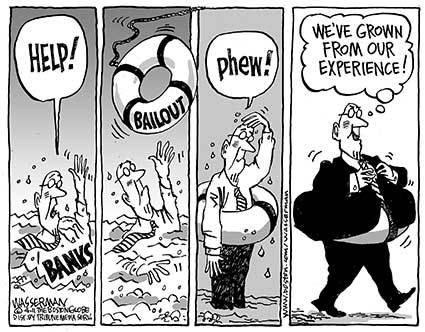
Consider these events from 2008, (a frequent topic of discussion in Go Lean…Caribbean blogs):

Video: Too Big To Fail – 2011 Movie (Pardon the adult language):
YouTube Video Sharing Site (Retrieved 08/20/2014) –
https://www.youtube.com/watch?v=Aqf97p1Rdm0

As the events of September 2008 unfolded where the financial system (Wall Street) was on the brink of collapse, stakeholders from the US Treasury Department assembled a representative body to conceive a remedy.

The resultant plan/proposal was introduced on September 20, by Treasury Secretary Henry Paulson and was later named the Troubled Asset Relief Program (TARP)[a].

The plan/proposal was only three pages long, intentionally short on details to facilitate quick passage by Congress.[b]

The plan called for the U.S. Treasury to acquire up to $700 billion worth of mortgage-backed securities…

… in the end, in an analysis by Bloomberg Business News Source, it was disclosed that the Federal Reserve had, by March 2009, committed $7.77 trillion to rescuing the financial system. This amount is more than half the value of everything produced in the U.S. that year.[c]
Wikipedia Online Encyclopedia Source (Retrieved 08/20/2014) –
http://en.wikipedia.org/wiki/Emergency_Economic_Stabilization_Act_of_2008

So can’t we just…?

The book Go Lean…Caribbean serves as a roadmap for the introduction and implementation of the Caribbean Union Trade Federation (CU) and the Caribbean Central Bank (CCB). This Caribbean empowerment roadmap has 3 prime directives:

  • Optimization of the economic engines in order to grow the regional economy to $800 Billion & create 2.2 million new jobs.
  • Establishment of a security apparatus to protect the resultant economic engines.
  • Improve Caribbean governance to support these engines.

The book described both the CU and CCB as hallmarks of technocracy, a commitment to efficiency and effectiveness. The book itself is 370 pages and covers 144 different missions.

As alluded above, principals in the Go Lean…Caribbean movement were front-and-center in the events that unfurled in 2008.

CU Blog - Why so long - Can't we just - Photo 2

The roadmap was constructed with the ethos to be thorough in the assessment, strategies, tactics, implementation and advocacies to understand the complexities of our time and forge permanent change in the Caribbean region. The following is a sample of these specific details from the book:

Community Ethos – Deferred Gratification Page 21
Community Ethos – Consequences of Choices Lie in the Future Page 21
Community Ethos – Intelligence Gathering Page 23
Community Ethos – “Crap” Happens Page 23
Community Ethos – Lean Operations Page 24
Community Ethos – Ways to Impact the Future Page 26
Strategy – Vision – Confederate 30 Member-States Page 45
Strategy – Missions – 144 Advocacies Page 457
Tactical – Confederating a Permanent Union Page 63
Tactical – Fostering a Technocracy Page 64
Implementation – Ways to Pay for Change Page 101
Implementation – Ways to Deliver Page 109
Planning – 10 Big Ideas for the Caribbean Region Page 127
Planning – Lessons Learned from 2008 Page 136
Planning – Lessons Learned from New York City Page 137
Advocacy – Ways to Grow the Economy Page 151
Advocacy – Ways to Create Jobs Page 152
Advocacy – Reforms for Banking Regulations Page 199
Advocacy – Ways to Impact Wall Street Page 200
Advocacy – Ways to Impact Main Street Page 201
Advocacy – Ways to Impact Hollywood Page 202
Appendix – Credit Ratings Agencies in 2008 Page 276

Imagine following a long complex and detailed recipe for baking a cake. To get the best results, it is important to include all the ingredients and follow the exacting instructions, the more detailed the better.

The quest for Go Lean…Caribbean is not as simple as baking a cake, rather a goal that is so much more important, to make the Caribbean region a better place to live, work and play.

We cannot skim on this effort – too much is at stake!

Download the free e-Book of Go Lean … Caribbean – now!

———————

Appendices:
a.  http://www.nytimes.com/2008/09/21/business/21draftcnd.html?_r=0; retrieved August 20, 2014.
b.  http://content.time.com/time/politics/article/0,8599,1843642,00.html; retrieved August 20, 2014.
c.  Ivry, Bob; Keoun, Bradley; Kuntz, Phil (November 28, 2011). “Secret Fed Loans Gave Banks $13 Billion Undisclosed to Congress”. Bloomberg Markets Magazine. Bloomberg L.P. Retrieved May 14, 2012 from: http://www.bloomberg.com/news/2011-11-28/secret-fed-loans-undisclosed-to-congress-gave-banks-13-billion-in-income.html.


Share this post:
,
[Top]

Breaking Up – The Port Authority – Is Hard To Do

Go Lean Commentary

The concept of a super-national / multi-state administration to foster development and growth in the Caribbean sounds so revolutionary.  Has such a concept ever been attempted or succeeded before?

Yes … and yes.

The book Go Lean…Caribbean identifies one such winning role model (Page 137): The Port Authority of New York and New Jersey (PANYNJ).

This entity was created in 1921 by an act of the US Congress, an interstate compact, to coordinate the common interest of the two states, even above and beyond the self-interest of each state. The focus is on common interest, not self interest. This charter facilitates trade and transportation. This is a very exacting model for a Caribbean focus, as the Go Lean book serves as a roadmap for the introduction and implementation of the Caribbean Union Trade Federation (CU). Facilitating trade is a parallel objective of both the CU and the PANYNJ. In fact, this Go Lean/CU roadmap has these 3 prime directives:

  • Optimization of the economic engines in order to grow the regional economy to $800 Billion & create 2.2 million new jobs.
  • Establishment of a security apparatus to protect the resultant economic engines.
  • Improve Caribbean governance to support these engines.

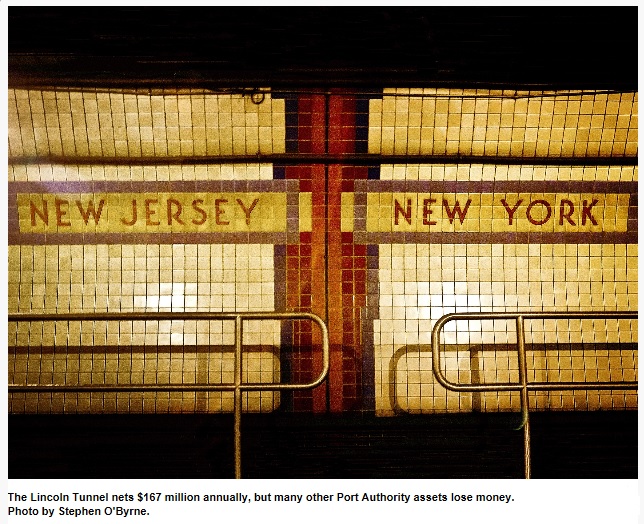
The Port Authority of New York and New Jersey operates much of the region’s key transportation infrastructure. But some assets are profitable while others are not; some hubs chew up a lot more cash than they generate. So says the following news article:

By: Aaron Elstein
Subtitle: Why the agency endures despite political interference, scandal and lots of red ink.

PANYNJ 1

It didn’t take long after the George Washington Bridge traffic caper erupted for people to start demanding dramatic change at the Port Authority of New York and New Jersey. By a unanimous vote, the New Jersey state Senate urged Congress to examine the “organizational structure” of the agency, which runs the region’s bridges, tunnels, airports and much else. Others called for more drastic measures.

“I’ve started hearing people say that it’s time to break the Port up,” said Carol Kellermann, president of the Citizens Budget Commission.

A breakup might sound like fair comeuppance for the Port Authority, a massive government body that’s now seen as a jobs bank for Gov. Chris Christie’s friends. Carving up the agency into its New York and New Jersey parts would certainly simplify the chain of command in an unwieldy organization that effectively has two chief executives and a board that reports to two governors, who each have veto power over decisions. Even a consulting firm hired by the authority described management two years ago as “dysfunctional.”

“It could be simpler and cleaner if you separated the different parts of the Port into individual agencies,” said Stephen Berger, a former Port Authority executive director. “It would also be insane.”

PANYNJ 3Dismantling the agency is not a new idea. The idea was first broached in the 1940s and most recently in 1996, when Mayor Rudolph Giuliani unveiled a plan to merge PATH into the Metropolitan Transportation Authority, sell the World Trade Center, fold the Port Authority police into the city’s Police Department and create a new agency called the New York Airport Authority that would have been in charge of rebuilding the city’s airports.

Mr. Giuliani, who didn’t return a call seeking comment, argued at the time that the Port Authority was riddled with inefficiencies and mismanagement. The idea went nowhere.

The agency endures for a simple reason: The economics of a breakup don’t work. Many of the authority’s operations lose substantial sums and couldn’t survive without hefty subsidies from other parts of the organization.

PATH, for instance, devoured $2.3 billion in cash between 2007 and 2011. The harbor ports and midtown bus terminal chewed up $755 million and $537 million, respectively, during the same period. Rebuilding the WorldTradeCenter has cost the agency about $8 billion in the past decade.

Cash Cows

Yet even amid these gushers of red ink, the Port Authority in 2012 managed to generate $1.1 billion in net income on $4 billion in revenue. That gain was all thanks to the huge toll and fee revenue coming from the region’s three major airports and the George Washington  Bridge. Those four hubs generated about $5 billion in operating cash between 2007 and 2011.”One of the most powerful things about the Port is how it moves revenues from one place to another,” Mr. Berger said.

PANYNJ 2The Port Authority’s diverse revenue streams also mean it can borrow more cheaply than the airports or bridges could on their own. That’s an important consideration because the agency has $20 billion in debt obligations and is expected to borrow another $8 billion over the next four years to pay for such projects as completing the World Trade Center, building a new central terminal at LaGuardia Airport and raising the Bayonne Bridge so larger ships going to and coming from the Panama Canal can dock here.

“The Port is different from just about any city or state in that they can go to the market and raise whatever capital they need whenever they want,” said Matt Fabian, a managing director at independent debt-research firm Municipal Market Advisors. “The management team is seen by investors as very sophisticated.”

“Sophisticated” might not be the word preferred by most people to describe the management team behind the Fort Lee traffic jam engineered by aides of Mr. Christie, but interference from elected leaders and their lackeys isn’t new at the agency.

Jameson Doig, a professor of government at DartmouthCollege, dates the first example to 1927, six years after the Port Authority’s creation. That’s when the governor of New Jersey demanded—and won—the right to veto agency decisions because he wanted to help a company get a contract installing wire cables on the GeorgeWashingtonBridge.

Political Interference

Mr. Doig said many of the Port Authority’s current problems stem from an agreement made in 1995, when Gov. George Pataki appointed an investment banker with no experience in transportation to the executive director job. After New Jersey Gov. Christine Todd Whitman objected, the leaders compromised by creating a new deputy executive director position to be filled by the New Jersey side. The executive director and the deputy share the same box on the authority’s organizational chart, and the deputy can’t be fired by the executive director.

At the time, the move was applauded as a sensible division of power, but “that’s when you started seeing the management problems that are blindingly obvious today,” said Mr. Doig, author of a book about the agency called Empire on the Hudson.

He added that Port Authority management suffered further when Mr. Christie rewarded up to 60 political backers with jobs for them or their family members after he was elected in 2010. In the past, governors have appointed no more than five supporters to Port Authority jobs.

“The first thing you change with the Port is eliminate those patronage appointees and put in people who are strong and independent,” Mr. Doig said. “And get rid of that deputy executive director job.”

At least for now, that job is vacant. Bill Baroni, one of the masterminds behind the Fort Lee traffic jam, resigned last month.

See Revenue/Profit Appendix below.

Crains New York Business News Online Site (Posted 01-19-2014; retrieved 08/18/2014) –http://www.crainsnewyork.com/article/20140119/POLITICS/301199988/breaking-up-the-port-authority-is-hard-to-do#

The foregoing article was a published news item; this generated feedback and commentary. As follows is a valid and relevant comment by a regular citizen identified as Roger. His comments are “spot on“, as follows:

Roger wrote on 01/19/14 at 6:44 AM:

Breaking up the Port brings the region back to the bad old days of NY-NJ rivalry and stalemate that necessitated the creation of the bi-state Authority in the first place in 1921.  The Port Authority for most of its history was an incredibly effective, highly professional and often visionary agency of development of the region’s essential trade and transportation infrastructure.  This it did reasonably free of political interference and cronyism, especially considering the political cultures of the two state parents.  Its great fault was a dearth of public accountability and transparency, in response to which the Governors have steadily sought greater oversight which morphed into outright control, ending in the current miasma of political patronage that now afflicts the Port Authority.  What is needed is a new regime of state oversight that provides broad policy direction but keeps hands-off to let the agency do what it once was permitted – as intended – to do so well.

This subject of regional administration is important in the consideration of Caribbean elevation. How do we learn from the successes and failures of PANYNJ and ensure that we do our multi-state compact right. (The CU is a confederation of 30 member-states). Some previous Go Lean blogs, highlighted here in the following samples, showed how the application of the Go Lean roadmap is designed to benefit the region, and glean insights, intelligence and wisdom from other models/examples:

https://goleancaribbean.com/blog/?p=888 Book Review: ‘Citizenville – Take the Town Square Digital and Reinvent Government’
https://goleancaribbean.com/blog/?p=829 Trucks and Trains Play Well Together
https://goleancaribbean.com/blog/?p=798 Lessons Learned from the American Airlines merger
https://goleancaribbean.com/blog/?p=353 Book   Review: ‘Wrong – Nine Economic Policy Disasters and What We Can Learn…’

The people and institutions of the Caribbean must lean-in to the initiatives spelled out in the book Go Lean…Caribbean. Similar to the PANYNJ, there is no need for CU member-states to fund the CU Trade Federation, just the opposite, the CU will generate revenues to remit back to each member-state. This commission involves duplicating a lot of the functions that PANYNJ conduct now, but we must do it better (efficiently and effectively). This point is clearly defined in (Page 12) of the Declaration of Interdependence, with these statements:

xi. Whereas all men are entitled to the benefits of good governance in a free society, “new guards” must be enacted to dissuade the emergence of incompetence, corruption, nepotism and cronyism at the peril of the people’s best interest. The Federation must guarantee the executions of a social contract between government and the governed.

xii. Whereas the legacy in recent times in individual states may be that of ineffectual governance with no redress to higher authority, the accedence of this Federation will ensure accountability and escalation of the human and civil rights of the people for good governance, justice assurances, due process and the rule of law. As such, any threats of a “failed state” status for any member state must enact emergency measures on behalf of the Federation to protect the human, civil and property rights of the citizens, residents, allies, trading partners, and visitors of the affected member state and the Federation as a whole.

xiv. Whereas government services cannot be delivered without the appropriate funding mechanisms, “new guards” must be incorporated to assess, accrue, calculate and collect revenues, fees and other income sources for the Federation and member-states. The Federation can spur government revenues directly through cross-border services and indirectly by fostering industries and economic activities not possible without this Union.

xvi. Whereas security of our homeland is inextricably linked to prosperity of the homeland, the economic and security interest of the region needs to be aligned under the same governance. Since economic crimes, including piracy and other forms of terrorism, can imperil the functioning of the wheels of commerce for all the citizenry, the accedence of this Federation must equip the security apparatus with the tools and techniques for predictive and proactive interdictions.

Enacting a multi-state compact, and the related governance, is “Step One, Day One” in the Go Lean roadmap. Implementing the CU with a heightened regulatory framework compared to PANYNJ as depicted in the foregoing news article, allows the transparency and checks-and-balances that stakeholders deserve, but not to undermine the fundamentals of a technocracy – we must be able to deliver first and foremost on our obligations, irrespective of political maneuvering. The CU emergence would therefore provide the foundation so that the regional society can be elevated, economically and governmentally.

The Go Lean book details samples in this series of community ethos, strategies, tactics, implementations and advocacies to foster progress in regional administration:

Community Ethos – Deferred Gratification Page 21
Community Ethos – Voluntary Trade Creates   Wealth Page 21
Community Ethos – Lean Operations Page 24
Community Ethos – Cooperatives Page 25
Community Ethos – Ways to Impact the Future Page 26
Community Ethos – Impact the Greater Good Page 37
Strategy – Vision – Confederating 30   Member-States Page 45
Strategy – Agents of Change – Globalization Page 57
Tactical – Fostering a Technocracy Page 64
Tactical – Growing the Region’s Economy to   $800 Billion Page 67
Tactical – Separation of Powers – Legislative   Oversight Page 72
Anecdote – “Lean” in Government Page 93
Implementation – Ways to Pay for Change Page 101
Implementation – Start-up Benefits from the   EEZ Page 104
Implementation – Ways to Deliver Page 109
Implementation – Ways   to Re-boot an Existing Port Authority Page 112
Planning – Ways to Improve Trade Page 128
Planning – Lessons from New York City Page 137
Advocacy – Ways to Grow the Economy Page 151
Advocacy – Ways to Improve Governance Page 168
Advocacy – Revenue Sources … for Regional Administration Page 172
Advocacy – Ways to Improve Transportation Page 205
Appendix – Enacting Interstate Compacts Page 278

The Port Authority of New York and New Jersey set out to manage the common waterways (and related trade) of the Hudson River as it empties into the Atlantic Ocean. That was the initiation; it has since over-reached, but still for the providential benefit of the people of States of New York and New Jersey. As a parallel, the Caribbean Union Trade Federation sets out to manage the common waterscapes of the Caribbean Sea, with the built-in “over-reach” mandate from the beginning – the focus is not just limited to port activities. In fact the Go Lean roadmap details 144 different mission/advocacies.

This, the CU, is not for political gain, or to accumulate power and wealth for a few. No, the purpose, planning and execution of the CU is for the Greater Good. In fact, a lot of the executions for the CU is neutral/agnostic of politics. While politicians may have influence on budgets and policies, as a technocracy the Federation is required to just deliver – think postal mail (“neither snow nor rain nor heat nor gloom of night stays these couriers from the swift completion of their appointed rounds”).

Now is the time for all of the Caribbean, the people and governing institutions, to lean-in for the elevations described in the book Go Lean … Caribbean. The benefits are too alluring, a better place to live, work and play.

Download the book Go Lean … Caribbean – now!

—————————————————————————–

APPENDIX – PANYNJ Revenues / Profits

TOTAL AVIATION: +$2.5 BILLION

Airport

Profit

JFK

+$990 million

LaGuardia

+$273 million

Newark

+$1.3 million

Teterboro, Stewart, heliports

-$65 million

TOTAL BRIDGE AND TUNNEL: -$537 MILLION*

Bridge/Tunnel

Profit

GW Bridge

+$1.3 billion

Lincoln Tunnel

+167 million

Holland Tunnel

+$141 million

Port Authority Bus Terminal

-$479 million

PATH

-$2.3 billion

TOTAL PORT COMMERCE: -$755 MILLION*

Port

Profit

Port Newark

-$317 million

Port Jersey

-$184 million

Howland Hook

-$160 million

Brooklyn Marine   Terminal

-$27 million

TOTAL WORLD TRADE CENTER: -$3.1 BILLION

GRAND TOTAL: -$2.5 BILLION

The total shows the authority doesn’t generate enough from tolls, fees and grants to cover its costs. It borrows to cover the shortfall.

*Total includes other entities not listed here.

Source: Phase II report to the special committee of Port Authority’s board, prepared by consulting firm Navigant in September 2012.

Share this post:
, ,
[Top]

Caribbean grapples with intense new cycles of flooding & drought

Go Lean Commentary

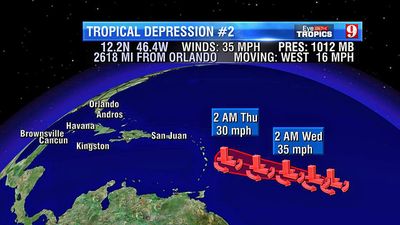
CU Blog - Caribbean grapples with new intense cycles of flooding and drought - Photo 2As of this moment, there is a tropical storm system that originated off the coast of Africa, building up in the Atlantic Ocean; it may or may not be a threat to the Caribbean. See photo to the right, and/or news feed video here: WFTV Eye on the Tropics.

This is the reality of Caribbean life – we have to contend with disasters, not of our making.

Climate Change is also not of our making, and yet we must contend with it as well. It is what it is!

In the past, our region has not done well managing “agents-of-change”. But we do not have the luxury of “sticking our head in the sand” and pretending that these problems will simply go away. The region has been devastated with this dysfunction and mis-management. Some 70% of Caribbean college-educated citizens have already fled their homelands in an undisputed brain drain. It’s time now to manage change differently than the Caribbean has done as of late. It’s time now to “Go Lean”.

The foregoing news article presents the story that there are new cycles of flooding and drought in the Caribbean. This too, is Climate Change 101. If only, there could be some equalizing between “the feast and the famine” with water. Yes there is. Caribbean stakeholders can proactively consider the benefits of one possible solution: Pipelines.

Since water is only free in our society when it is raining, there are costs associated at all other times, like storage and distribution; so the economic principles of pipelines are sound.

According to the book Go Lean … Caribbean, pipelines can be strategic, tactical and operationally efficient. They can mitigate challenges of Mother Nature, create jobs, secure the homeland and grow the economy at the same time.

The Go Lean book identifies that there are “agents-of-change” that our world have to now contend with. Proactively managing the cause-and-effect of these agents can yield great benefits and alleviate much suffering. The agents-of-change for the Caribbean are identified as follows:

Technology
Aging Diaspora
Globalization
Climate Change

The Go Lean book posits that we can manage all of these agents, but this last one, climate change is outside of our control and wreaking havoc on Caribbean life. Consider this news article here, that aligns this point:

By: Desmond Brown

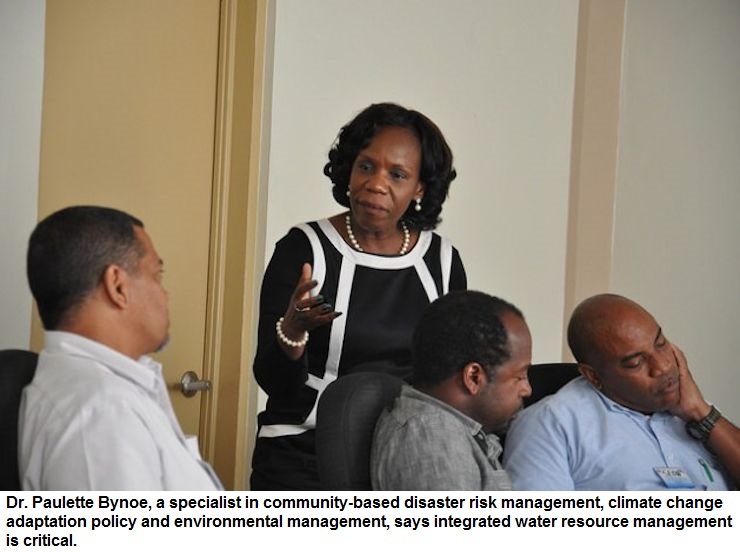
CASTRIES, St. Lucia, Monday July 21, 2014, IPS – As unpredictable weather patterns impact water availability and quality in St. Lucia, the Caribbean island is moving to build resilience to climate-related stresses in its water sector. Dr. Paulette Bynoe, a specialist in community-based disaster risk management, climate change adaptation policy and environmental management, says integrated water resource management is critical.CU Blog - Caribbean grapples with new intense cycles of flooding and drought - Photo

“We have been making progress…making professionals and other important stakeholders aware of the issue. That is the first step,” she told IPS.

“So in other sectors we can also look at coordination whether we talk about agriculture or tourism. It’s important that we think outside of the box and we stop having turfs and really work together,” she added.

Earlier this month, Bynoe facilitated a three-day workshop on Hydro-Climatic Disasters in Integrated Water Resource Management (IWRM) in St. Lucia. The workshop was held as part of the Organisation of Eastern Caribbean States-Reducing the Risks to Human and Natural Assets Resulting from Climate Change (OECS-RRACC) project.

Participants were exposed to the key principles of IWRM and Disaster Risk Reduction (DRR); the implications of climate change and variability for water resources management; policy legislation and institutional requirements needed at the community level to facilitate DRR in IWRM; the economics of disasters; and emergency response issues.

Rupert Lay, a water resources specialist with the RRACC Project, said the training is consistent with the overall goals of the climate change demonstration project in GIS technology currently being implemented by the OECS Secretariat.

“What we need to do now in the region and even further afield is to directly correlate the effects, the financial impacts of these adverse weather conditions as it relates to water resources,” he told IPS.

“We need to make that link strongly so that all of us can appreciate the extent to which and the importance of building resilience and adapting to these stresses.”

On Jul. 9, the St. Lucia Water and Sewage Company (WASCO) placed the entire island under a water emergency schedule as the drought worsened. The government has described the current situation as a “water crisis”.

The crisis, initially declared for the north of the island, has expanded to the entire country.

Managing director of WASCO Vincent Hippolyte said that there had not been sufficient rainfall to meet the demands of consumers. At the most recent assessment, the dam’s water level was at 322 feet, while normal overflow levels are 333 feet.

“Despite the rains and the greenery, drought conditions exist because the rivers are not moving. They do not have the volume of water that will enable WASCO to extract sufficient water to meet demand,” he said.

“We are in the early stages in the drought situation. It is not as severe as the later stages, but we are still in drought conditions.”

The government said that experts predicted the drought would persist through the month of August.

Bynoe said what’s happening in St. Lucia and elsewhere in the Caribbean is consistent with the projections of the Inter-Governmental Panel on Climate Change (IPCC) and the Climate Modeling Group from the University of the West Indies.

She said both bodies had given possible future scenarios of climate change as it relates to the SmallIslandDevelopingStates, and how climate change and climate variability could affect water resources.

“I think generally the issue is that in the region there is a high likelihood that we can have a shortage of water so we can experience droughts; and perhaps at the same time when we do have precipitation it can be very intense,” Bynoe, who is also Director of the School of Earth and Environmental Sciences at the University of Guyana, said.

She noted that the models are saying there can either be too little water or too much water, either of which could create serious problems for the Caribbean.

“With too much water now you can have run off, sedimentation, water pollution and water contamination which means in countries where we depend on surface water the treatment of water become critical and this will then bring cost implications because water treatment is very costly,” Bynoe explained.

“But also, if you are going to treat water you have to use a lot of energy and energy is one of the sectors that contribute to greenhouse gasses. So you can see where the impact of climate change is affecting water but with water treatment you can also contribute to climate change.”

For St. Lucia and its neighbours, Bynoe said lack of financial resources tops the list of challenges when it comes to disaster mitigation and adapting new measures in reference to hydro-climatic disasters.

She also pointed to the importance of human capital, citing the need to have persons trained in specific areas as specialists to help with modeling, “because in preparation we first have to know what’s the issue, we have to know what’s the probability of occurrence, we have to know what are the specific paths that we can take which could bring the best benefits to us.”

She used her home country Guyana, which suffers from a high level of migration, as one example of how sustainable development could be negatively affected by capital flight.

“But you also need human capital because first of all governments must work together within the region and lessons learnt in one country can be translated to other countries so that we can replicate the good experiences so that we don’t fall prey to the same sort of issues,” Bynoe said.

“But also social capital within the country in which we try to ensure that all stakeholders are involved, a very democratic process because it’s not only about policymakers; every person, every household must play a role to the whole issue of adaptation, it starts with the man or woman in the mirror,” she added.

In October 2010, Hurricane Tomas passed very near St. Lucia killing 14 people and leaving millions of dollars in monetary losses. The island was one of three Eastern Caribbean countries on which a slow-moving, low-level trough on Dec 24, 2013 dumped hundreds of millimetres of rain, killing 13 people.
Caribbean360 Online Community  (Retrieved 07-21-2014) –
http://www.caribbean360.com/news/caribbean-grapples-intense-new-cycles-flooding-drought

The book, Go Lean…Caribbean, purports that a new technology-enhanced industrial revolution is emerging, in which there is more efficiency gleaned from installing, monitoring and maintaining pipelines. Caribbean society must participate, not just consume the developments in this revolution. This point is pronounced early in the book with this Declaration of Interdependence (Page 11 &14), with the opening and subsequent statements:

i.        Whereas the earth’s climate has undeniably changed resulting in more severe tropical weather storms, it is necessary to prepare to insure the safety and security of life, property and systems of commerce in our geographical region. As nature recognizes no borders in the target of its destruction, we also must set aside border considerations in the preparation and response to these weather challenges.

xxvi.          Whereas the Caribbean region must have new jobs to empower the engines of the economy and create the income sources for prosperity, and encourage the next generation to forge their dreams right at home, the Federation must therefore foster the development of new industries, like that of … pipelines …

xxvii.     Whereas the region has endured a spectator status during the Industrial Revolution, we cannot stand on the sidelines of this new economy, the Information Revolution. Rather, the Federation must embrace all the tenets of Internet Communications Technology (ICT) to serve as an equalizing element in competition with the rest of the world. The Federation must bridge the digital divide and promote the community ethos that research/development is valuable and must be promoted and incentivized for adoption.

This Go Lean book serves as a roadmap for the introduction and implementation of a technocratic Caribbean Union Trade Federation (CU) to elevate society of the 30 Caribbean member-states. The foregoing news article draws reference to the efforts by the 9 member-states of the Organization of Eastern Caribbean States, all defined as Small Island Developing States. The CU effort on the other hand, is a confederation that includes coastal states like Guyana, Suriname and Belize. There are more territories and more water resources to leverage solutions for one member-state versus another.

In addition, the CU will assume jurisdiction for the Caribbean Sea, the 1,063,000 square-mile international waters under an UN-approved structure referred to as an Exclusive Economic Zone. This approach allows for cooperation and equalization, so as to mitigate the feast-and-famine water conditions in the region.

With this Go Lean roadmap, pipelines become viable under this administration. This becomes a real solution to a real problem! In fact the CU/Go Lean roadmap has these 3 prime directives:

  • Optimization of the economic engines in order to grow the regional economy to $800 Billion and create 2.2 million new jobs.
  • Establishment of a security apparatus to protect the resultant economic engines.
  • Improve Caribbean governance to support these engines.

The Go Lean book details the economic principles and community ethos to adopt, plus the executions of strategies, tactics, implementations and advocacies to forge solutions, like pipelines, in Caribbean communities. But this is not “your grandfather’s 1920 pipeline solution”, but rather a cutting-edge (circa 2020) solution featuring options like robotics and satellite-monitoring. Consider this list as follows:

Economic Principles – People Choose because Resources are   Limited Page 21
Economic Principles – All Choices Involve Costs Page 21
Economic Principles – People Respond to Incentives Page 21
Economic Principles – Economic Systems Influence   Individual Choices Page 21
Economic Principles – Consequences of Choices Lie in the   Future Page 21
Community Ethos – Job   Multiplier Page 22
Community Ethos – “Crap” Happens Page 23
Community Ethos – Lean Operations Page 24
Community Ethos – Return on Investments (ROI) Page 24
Community Ethos – Ways to Impact the Future Page 26
Community Ethos – Ways to Help Entrepreneurship Page 28
Community Ethos – Ways to Improve Sharing Page 35
Community Ethos – Impact the Greater Good Page 37
Anecdote – Pipeline Transport – Strategies, Tactics &   Implementations Page 43
Strategy – Vision – Confederating 30 Member-states in a Union Page 45
Strategy – Agents of Change – Technology Page 57
Strategy – Agents of Change – Globalization Page 57
Strategy – Agents of Change – Climate Change Page 57
Tactical – Fostering a Technocracy Page 64
Tactical – Growing Economy – New High Multiplier   Industries Page 68
Separation of Powers – Interstate Commerce Administration Page 79
Separation of Powers – Interior Department – Exclusive   Economic Zone Page 82
Implementation – Assemble – Pipeline as a Focused  Activity Page 96
Implementation – Benefits from the Exclusive Economic Zone Page 104
Implementation – Ways to Develop a Pipeline Industry Page 107
Implementation – Ways to Deliver Page 109
Planning – 10 Big Ideas – Pipeline Projects Page 127
Advocacy – Ways to Grow the Economy Page 151
Advocacy – Ways to Create Jobs Page 152
Advocacy – Ways to Better Manage the Social Contract –   Infrastructure Page 170
Advocacy – Ways to Ways to Impact Public Works – Ideal for   Pipelines Page 175
Advocacy – Ways to Better Manage Natural Resources – Water   Resources Page 183
Advocacy – Ways to Impact Extractions – Pipeline Strategy Alignment Page 195
Advocacy – Ways to Improve Emergency Management Page 196
Advocacy – Ways to Foster Technology Page 197
Advocacy – Ways to Ways to Improve Monopolies – Foster   Cooperatives Page 202
Advocacy – Ways to Improve Transportation – Pipeline   Options Page 205
Advocacy – Ways to Impact Rural Living – Minimize Irrigation     Downsides Page 235
Appendix – Pipeline Maintenance Robots Page 283

This commentary previously featured subjects related to counteracting the effects of Climate Change and natural disasters in the region:

https://goleancaribbean.com/blog/?p=1656 Water Conservation Industries – Blue is the New Green
https://goleancaribbean.com/blog/?p=1516 Floods in Minnesota, Drought in California – Why Not Share?
https://goleancaribbean.com/blog/?p=1433 Caribbean loses more than 70 percent of tertiary educated to brain drain
https://goleancaribbean.com/blog/?p=926 Conservative heavyweights have “Green”/solar industry in their sights
https://goleancaribbean.com/blog/?p=915 Go ‘Green’ … Caribbean
https://goleancaribbean.com/blog/?p=87 Earthquakes & Hurricanes Shake Eastern Caribbean Region

This is a new day for the Caribbean! It’s time now for change in our response to (climate) change. The elevations that are identified, qualified and proposed in the book Go Lean…Caribbean are not just reactive, but also proactive. It’s time for the Caribbean to lean-in for these elevations.

Download the book Go Lean … Caribbean – now!

Share this post:
,
[Top]

Bad Tweet: Dutch airline angers Mexico soccer fans

Go Lean Commentary

“In 2 minutes a computer can make as many mistakes as 20 men in 20 years” – Murphy’s Law on Technology.

“Once posted, you can’t take it back” – Social Media Harsh Reality.

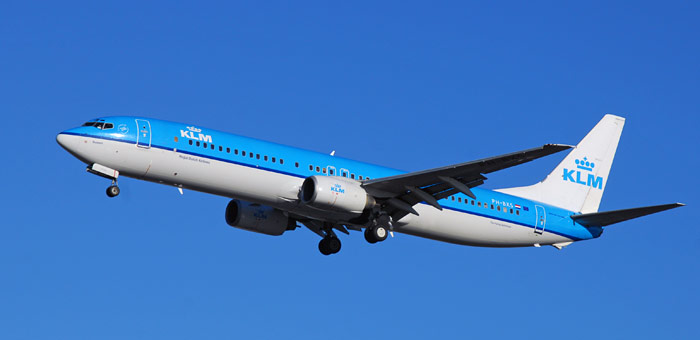
These two expressions are the new normal. Social media can be an effective communication tool to reach the general public and/or a dedicated controlled group. This can be a blessing and a curse. This fact was demonstrated after the recent World Cup Elimination Game between Mexico and The Netherlands. Mexico lost! In its haste to capitalize on all the fanfare, representatives at Dutch airline KLM committed this PR blunder of denigrating Mexican fans:

By: AP Writer Alan Clendenning
RIO DE JANEIRO (AP) — What was meant to be a joke has turned into a PR blunder for Dutch airline KLM after it angered Mexican soccer fans by taking to Twitter to celebrate the Netherlands’ dramatic comeback victory in the World Cup.

Netherlands v MexicoWithin minutes of the Netherlands’ 2-1 victory over the Tri, KLM let loose on its Twitter feed a picture of an airport departures sign under the heading “Adios Amigos!” Next to the word “Departures” is the image of a man with a mustache wearing a sombrero.

The post immediately went viral, with A-list Mexican actor Gael Garcia Bernal using not one but two expletives in a 140-character Tweet to tell his 2 million-plus followers that he’ll never fly the carrier again. Amid the widespread protest online, the post was pulled a half-hour later without an explanation.

“It was meant to be a joke,” KLM spokeswoman Lisette Ebeling Koning told The Associated Press, adding that the airline never intended to offend Mexicans, which it serves via a daily direct flight between Mexico City and Amsterdam. “But there was too much negative reaction.”

KLM issued a formal apology late Sunday.

“In the best of sportsmanship, we offer our heartfelt apologies to those who have been offended by the comment,” said Marnix Fruitema, director general of KLM in North America.

For its part, Mexican national carrier AeroMexico is also getting in on the fun, broadcasting on Twitter its support for the country’s soccer team under an arrivals sign.

“Thank you for this great championship,” AeroMexico said. “You’ve made us proud and we’re waiting for you at home.”
Associated Press (AP) News Wire Service (Retrieved 06/30/2014) –
http://news.yahoo.com/bad-tweet-dutch-airline-angers-mexico-soccer-fans-205929269.html

The expression “the post immediately went viral” could be a good thing or a bad thing. The book Go Lean…Caribbean posits that the power of social media must be harnessed strategically and tactically in order to explore all the benefits of Internet Communications Technologies. The book further asserts that the internet can be a great equalizer between large and small economy states, that talent and value can readily be searched and discovered.

The foregoing article depicts a Bad Tweet; then proceeds to describe how impactful response tweets can be, especially when wielded by an “Influencer” – a person with at least 100,000 followers – such as A-list Mexican celebrity Gael Garcia Bernal.

The book serves as a roadmap for the introduction and implementation of the technocratic Caribbean Union Trade Federation (CU). This effort will launch the Caribbean Postal Union to facilitate the region’s “mail” functionality. In 2014, the mail delivery cannot be seriously mentioned without considering electronic messaging options. Social media is an electronic messaging scheme. The CPU will administer the domain for www.myCaribbean.gov. The universe for this domain is scoped at 130 million unique users.

This strategy will elevate Caribbean society, and image. There is the need for a sentinel role for Caribbean image, as there are a lot of times that Caribbean life and people are denigrated in works of media arts: film, TV, books, magazines. Consider the example of Jamaican “Yardies”, or Dominican Cartels. The Go Lean roadmap calls for the CU to assume that role.

The CU, using cutting edge delivery of best practices, will employ strategies, tactics and implementations to impact its prime directives; identified with the following 3 statements:

  • Optimization of the economic engines in order to grow the regional economy to $800 Billion & create 2.2 million new jobs.
  • Establishment of a security apparatus to protect the resultant economic engines.
  • Improve Caribbean governance to support these engines.

Dutch KLM Photo

AeroMexico Photo

The Go Lean book speaks of a Caribbean crisis and posits that this crisis can be averted, the same way the non-malevolent jest on social media by KLM was quickly averted using stronger social media tactics. Considering the events in the foregoing article, an undeniable credo is reiterated that “a crisis is a terrible thing to waste”. The Go Lean roadmap seeks to optimize the entire Caribbean economic/security/governance eco-system. This vision is defined early in the book (Page 12 & 14) in the following pronouncements in the Declaration of Interdependence:

xv. Whereas the business of the Federation and the commercial interest in the region cannot prosper without an efficient facilitation of postal services, the Caribbean Union must allow for the integration of the existing mail operations of the governments of the member-states into a consolidated Caribbean Postal Union, allowing for the adoption of best practices and technical advances to deliver foreign/domestic mail in the region.

xxvii. Whereas the region has endured a spectator status during the Industrial Revolution, we cannot stand on the sidelines of this new economy, the Information Revolution. Rather, the Federation must embrace all the tenets of Internet Communications Technology (ICT) to serve as an equalizing element in competition with the rest of the world. The Federation must bridge the digital divide and promote the community ethos that research/development is valuable and must be promoted and incentivized for adoption.

xxx. Whereas the effects of globalization can be felt in every aspect of Caribbean life, from the acquisition of food and clothing, to the ubiquity of ICT, the region cannot only consume, it is imperative that our lands also produce and add to the international community, even if doing so requires some sacrifice and subsidy.

The Go Lean book details a lot more, a series of assessments, community ethos, strategies, tactics, implementations and advocacies to garner the benefits of ICT in the Caribbean region:

Community Ethos – Economic Systems Influence Choices & Incentives Page 21
Community Ethos – People Respond to Incentives Page 21
Community Ethos – Consequences of Choices Lie in the Future Page 21
Community Ethos – Return on Investments Page 24
Community Ethos – Ways to Impact the Future Page 26
Community Ethos – Ways to Foster Genius Page 27
Community Ethos – Ways to Impact Research & Development Page 30
Community Ethos – Ways to Bridge the Digital Divide Page 31
Community Ethos – Ways to Impact the Greater Good Page 37
Strategy – Vision – Confederating a Non-Sovereign Union Page 45
Tactical – Separation of Powers – Caribbean Postal Union Page 78
Implementation – Ways to Pay for Change Page 101
Implementation – Ways to Improve Mail   Services Page 108
Implementation – Ways to Deliver Page 109
Implementation – Ways to Impact Social   Media Page 111
Planning – Ways to Improve Image Page 133
Advocacy – Ways to Grow the Economy Page 151
Advocacy – Ways to Create Jobs Page 152
Advocacy – Ways to Foster Technology Page 197
Advocacy – Ways to Foster e-Commerce Page 198
Appendix – Measuring Media   Consumption Page 265

Now is the time for all of the Caribbean, the people and governing institutions, to lean-in for the empowerments described in the book Go Lean…Caribbean. There is reason to believe that these empowerment efforts can be successful. The Go Lean roadmap conveys how single causes/advocacies have successfully been forged throughout the world (Page 122 – Anatomy of Advocacies). With social media deployments, millions of people can be advocates. No defamation of Caribbean image will go unchallenged. We, in the Caribbean, can do the same as the Mexican power brokers when bad sportsmanship was displayed by the KLM airline.

The Caribbean can succeed in the advocacy to improve the Caribbean image and deployments of social media in the region. There are previous blog commentaries that delve into aspects of these same issues:

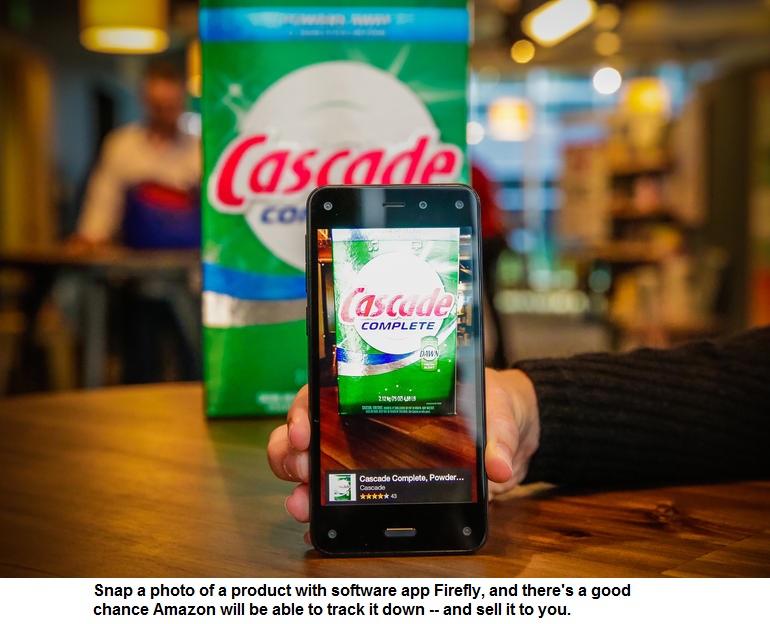
https://goleancaribbean.com/blog/?p=1416 Amazon’s new FIRE Smartphone
https://goleancaribbean.com/blog/?p=1404 Facebook goes down across multiple countries
https://goleancaribbean.com/blog/?p=857 Caribbean Image:   Dreadlocks

Congratulation to the Netherlands football/soccer national team in their pursuits of the FIFA World Cup. There is room for good sportsmanship for all.

Download the book Go Lean … Caribbean – now!

Share this post:
, , , , , ,
[Top]

Floods in Minnesota, Drought in California – Why Not Share?

 Go Lean Commentary

Millions across Minnesota are in the middle of a flooding disaster as a severe storm system moves over the central U.S.. See this VIDEO:

VIDEO – CBS News; posted June 23, 2014; retrieved June 27 from: http://www.cbsnews.com/videos/minnesota-communities-face-weeks-of-flooding/
Title: Minnesota communities face weeks of flooding

(VIDEO plays best in Internet Explorer).

At the same time, California continues to endure serious drought conditions. Many feel, though not supported by the facts, that this may be the worst drought in California history. See the aligning VIDEO here:

VIDEO – Win Rosenfeld, NBC News; posted June 2, 2014; retrieved June 27 from: https://www.youtube.com/watch?v=Gx7vFqU8iGY
Title: California’s Drought History | Debunker

So on the one hand, part of the United States is experiencing too much water and in other parts of the country, too little water. This is Climate Change 101. If only, there would be some equalizing between “the feast and the famine” with water.

This was the point/comment of one viewer of the CBS News Video:

Why are we not building a WATER PIPELINE from these flood prone areas to the parched West and South?!?!? If we can afford an OIL pipeline all the way to the southern gulf, we can definitely build a desperately needed pipeline for water! – By: uberengineer – June 24, 2014

This comment was spot on! According to the book Go Lean … Caribbean, pipelines can be strategic, tactical and operationally efficient. They can mitigate challenges of Mother Nature, create jobs and grow the economy at the same time.

The Go Lean book identifies that there are “agents-of-change” that our world have to now contend with. Proactively managing the cause-and-effect of these agents can yield great benefits and alleviate much suffering. The agents-of-change for the Caribbean are identified as follows:

Technology
Aging Diaspora
Climate Change
Globalization

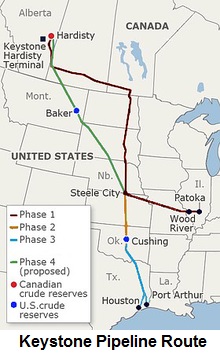
If the suggestion of above commentator Uber Engineer is to be seriously considered in the US, this would fall under the scope of the US federal government as two states California and Minnesota are involved – neither state has jurisdiction over the other. Plus, the many states in between (Iowa, Nebraska, Colorado, Utah and Nevada) where a pipeline would traverse would also have to be factored into the equation. Under US law this approach is called an Interstate Compact. Uber Engineer is right! This pipeline strategy is already being deployed for oil in the US with the TransCanada Keystone [a] Pipeline project, running from southern Canada down to the Gulf of Mexico; (see route map in the photo).

The question is: who can contemplate such a solution for the Caribbean marketplace? The Go Lean book posits that Climate Change is wreaking havoc on Caribbean life as well and that Caribbean stakeholders must proactively consider the benefits of pipeline deployments in the region. This book purports that a new technology-enhanced industrial revolution is emerging, in which there is more efficiency gleaned from installing, monitoring and maintaining pipelines. Caribbean society must participate, not just spectate the developments in this revolution. This point is pronounced early in the book with this Declaration of Interdependence (Page 11 &14), with the opening and subsequent statements:

i.     Whereas the earth’s climate has undeniably changed resulting in more severe tropical weather storms, it is necessary to prepare to insure the safety and security of life, property and systems of commerce in our geographical region. As nature recognizes no borders in the target of its destruction, we also must set aside border considerations in the preparation and response to these weather challenges.

xxvi.       Whereas the Caribbean region must have new jobs to empower the engines of the economy and create the income sources for prosperity, and encourage the next generation to forge their dreams right at home, the Federation must therefore foster the development of new industries, like that of … pipelines …

xxvii.     Whereas the region has endured a spectator status during the Industrial Revolution, we cannot stand on the sidelines of this new economy, the Information Revolution. Rather, the Federation must embrace all the tenets of Internet Communications Technology (ICT) to serve as an equalizing element in competition with the rest of the world. The Federation must bridge the digital divide and promote the community ethos that research/development is valuable and must be promoted and incentivized for adoption.

This book Go Lean… Caribbean, serves as a roadmap for the introduction and implementation of the technocratic Caribbean Union Trade Federation (CU) to elevate society of the 30 Caribbean member-states. This agency will assume jurisdiction for the Caribbean Sea, the 1,063,000 square-mile international waters under the guise of an Exclusive Economic Zone. This approach allows for cooperation and equalization between the feast-and-famine conditions in the region. This is a real solution to real problems! In fact the CU/Go Lean roadmap has these 3 prime directives:

  • Optimization of the economic engines in order to grow the regional economy.
  • Establishment of a security apparatus to protect the resultant economic engines.
  • Improve Caribbean governance to support these engines.

The Go Lean book details the economic principles and community ethos to adopt, plus the executions of strategies, tactics, implementations and advocacies to forge Research & Development with pipelines and industrial growth in Caribbean communities:

Economic Principles – People Choose because Resources are Limited Page 21
Economic Principles – All Choices Involve Costs Page 21
Economic Principles – People Respond to Incentives Page 21
Economic Principles – Economic Systems Influence Individual Choices Page 21
Economic Principles – Voluntary Trade Creates Wealth Page 21
Economic Principles – Consequences of Choices Lie in the Future Page 21
Community Ethos – Job   Multiplier Page 22
Community Ethos – “Crap” Happens Page 23
Community Ethos – Lean Operations Page 24
Community Ethos – Return on Investments (ROI) Page 24
Community Ethos – Cooperatives Page 25
Community Ethos – Ways to Impact the Future Page 26
Community Ethos – Ways to Help Entrepreneurship Page 28
Community Ethos – Ways to Impact Research & Development Page 30
Community Ethos – Ways to Improve Negotiations Page 32
Community Ethos – Ways to Improve Sharing Page 35
Community Ethos – Impact the Greater Good Page 37
Anecdote – Pipeline Transport – Strategies, Tactics &   Implementations Page 43
Strategy – Vision – Confederating 30 Member-states in a Union Page 45
Strategy – Agents of Change – Technology Page 57
Strategy – Agents of Change – Aging Diaspora Page 57
Strategy – Agents of Change – Globalization Page 57
Strategy – Agents of Change – Climate Change Page 57
Tactical – Fostering a Technocracy Page 64
Tactical – Growing Economy – New High Multiplier Industries Page 68
Separation of Powers – Interstate   Commerce Administration Page 79
Separation of Powers – Interior Department – Exclusive Economic Zone Page 82
Implementation – Assemble – Pipeline as a Focused   Activity Page 96
Implementation – Ways to Pay for Change Page 101
Implementation – Benefits from the Exclusive Economic Zone Page 104
Implementation – Ways to Develop a Pipeline Industry Page 107
Implementation – Ways to Deliver Page 109
Planning – 10 Big Ideas – Pipeline Projects Page 127
Advocacy – Ways to Grow the Economy Page 151
Advocacy – Ways to Create Jobs Page 152
Advocacy – Ways to Better Manage the Social Contract – Infrastructure Page 170
Advocacy – Ways to Ways to Impact Public Works – Ideal for Pipelines Page 175
Advocacy – Ways to Foster Cooperatives Page 176
Advocacy – Ways to Better Manage Natural Resources – Water   Resources Page 183
Advocacy – Ways to Impact Extractions – Pipeline Strategy   Alignment Page 195
Advocacy – Ways to Improve Emergency Management Page 196
Advocacy – Ways to Foster Technology Page 197
Advocacy – Ways to Ways to Improve Monopolies – Foster   Cooperatives Page 202
Advocacy – Ways to Improve Transportation – Pipeline Options Page 205
Advocacy – Ways to Impact Rural Living – Minimize Irrigation   Downsides Page 235
Appendix – Interstate Compacts Page 278
Appendix – Pipeline Maintenance Robots Page 283
Appendix – North Dakota Example – Oil Drilling Economic-Societal   Effects Page 334

Historically, pipelines are cheaper than alternative modes of transport for liquid materials like oil, natural gas and water. Plus the cost of water in all aspects of modern society is no longer negligible. Just conduct an acid test at a friendly neighborhood Gas Station; while a gallon of gas may be high, the equivalent pricing for cool drinking water is within the same range.

Water is only free in our society when it is raining; for all other times, there are costs associated with storage and distribution.

Thusly, the economic principles of pipelines are sound.

CU Blog - Floods in Minnesota, Drought in California - Why Not Share - Photo 2

Pipelines can be above ground, underground and/or underwater. (See Trans-Alaska Pipeline photo). There is a role for many schemes of pipeline deployments in the vision for the reboot of the Caribbean homeland. The roadmap Go Lean … Caribbean identifies pipelines as strategic, tactical and operationally mandatory for any chance at success in making the Caribbean a better place to live, work and play.

Download the book Go Lean … Caribbean – now!

——–

Appendix – Referenced Source:

a.     Keystone Pipeline (Retrieved June 27, 2014 from: http://en.wikipedia.org/wiki/Keystone_Pipeline):

The Keystone Pipeline System is an oil pipeline system in Canada and the United States. It runs from the Western Canadian Sedimentary Basin in Alberta, Canada, to refineries in the United States in Steele City, Nebraska; Wood River and Patoka, Illinois; and the Gulf Coast of Texas. In addition to the synthetic crude oil (syncrude) and diluted bitumen (dilbit) from the oil sands of Canada, it also carries light crude oil from the Williston Basin (Bakken) region in Montana and North Dakota.

CU Blog - Floods in Minnesota, Drought in California - Why Not Share - Photo 1Three phases of the project are in operation, and the fourth is awaiting U.S. government approval. Upon completion, the Keystone Pipeline System would consist of the completed 2,151-mile (3,462 km) Keystone Pipeline (Phases I and II), Keystone Gulf Coast Expansion (Phase III), and the proposed Keystone XL Pipeline Project (Phase IV). Phase I, delivering oil from Hardisty, Alberta, to Steele City, Wood River, and Patoka, was completed in the summer of 2010. Phase II, the Keystone-Cushing extension, was completed in February 2011 with the pipeline from Steele City to storage and distribution facilities at Cushing, Oklahoma. These two phases have the capacity to deliver up to 590,000 barrels per day (94,000 m3/d) of oil into the Mid-West refineries. Phase III, the Gulf Coast Extension, which was opened in January 2014, has capacity up to 700,000 barrels per day (110,000 m3/d). The proposed Phase IV, would begin in Hardisty, Alberta, and extend to Steele City, essentially replacing the existing phase I pipeline.

The Keystone XL proposal faced criticism from environmentalists and some members of the United States Congress. In January 2012, President Barack Obama rejected the application amid protests about the pipeline’s impact on Nebraska’s environmentally sensitive Sand Hills region. TransCanada Corporation changed the original proposed route of Keystone XL to minimize “disturbance of land, water resources and special areas”; the new route was approved by Nebraska Governor Dave Heineman in January 2013. On April 18, 2014 the Obama administration announced that the review of the controversial Keystone XL oil pipeline has been extended indefinitely, until at least after the November 4, 2014 mid-term United States elections.


Share this post:
, , , ,
[Top]

Amazon’s new FIRE Smartphone

Go Lean Commentary

Amazon 1The American company Amazon is the model for the Caribbean Postal Union (CPU): our means for delivering the mail.

This is surprising! One would think the American model would be the US Postal Service (USPS). No, the book Go Lean…Caribbean posits that the USPS is a failing enterprise, as of late; they lose money every year, have excessively high overhead expense base and an under-funded pension (Page 99). Why would anyone want to model that?

The focus of the CPU is not postal mail, but rather logistics. So we would want to model a successful enterprise in this industry space, like Amazon, not just another postal operation.

But Amazon does so much more than just sell books online. They are the epitome of an electronic commerce company. They operate a number of business operations online and off-line; and they run these companies well. They provide a good example of lean technocratic efficiency. So Amazon is a good model, not just for the CPU but the entire Caribbean Union Trade Federation (CU). The book Go Lean…Caribbean, serves as a roadmap for the introduction and implementation of the technocratic CU.

This concept of “lean” is very prominent in the book, even adapting the title, Go Lean, for the quest for excellence in Caribbean economic empowerment and governing efforts. The label “lean” is indicative of this quest; the word is used as a noun, a verb and an adjective. This point is pronounced early in the book (Page 4) with these statements:

The CU will lean on, lean in, lean over backwards, and then lean towards…The CU will embrace lean, agile, efficient organization structures – more virtual, less physical, more systems, less payroll.

The foregoing news article and VIDEO demonstrate Amazon’s commitment to a lean business model with their deployment of a proprietary smartphone.

By: Keith Wagstaff, Technology Reporter
The long-rumored Amazon smartphone was officially unveiled Wednesday and, yes, it has a 3-D screen. Well, technically Amazon CEO Jeff Bezos called it “dynamic perspective,” but it gives the new Fire Phone the illusion of depth with no glasses required thanks to four face-tracking cameras built into the front of the phone. While it features a 4.7-inch Gorilla Glass screen, users don’t necessarily have to touch the screen, thanks to controls that let people scroll through pages by tilting the phone. It also unveiled a service called Firefly, which makes it easier to buy items on Amazon by scanning and recognizing more “100 million different items” including books, movies and other products. The Fire Phone (32 GB), which ships July 25, is available now for pre-order for $199 with a two-year AT&T contract.

NBC News / CNBC – Cable News Channel (Posted 06-18-2014; retrieved 06/19/2014) –http://www.nbcnews.com/tech/gadgets/amazon-unveils-new-3-d-fire-smartphone-n134561

Visit NBCNews.com for breaking news, world news, and news about the economy

From the first glance, a benefit of the Fire smartphone is obvious for Amazon’s core business [a]. A consumer can scan “more than 100 million different items” and process a direct purchase directly from the phone – any electronic media would be delivered instantly to the phone, while a chattel good would be delivered within days, using Amazon’s already matured logistics network. Evidently, the execution of this business model requires hardware (smartphone) and not just some software (app).

This is win-win.

This entire model demonstrates the advantage of leading with technological innovations, even for non-technical endeavors.

This synchronizes with the Go Lean roadmap for elevating Caribbean society. The CU will employ technologically innovative products and services to impact its prime directives; identified with the following 3 statements:

  • Optimization of the economic engines in order to grow the regional economy to $800 Billion & create 2.2 million new jobs.
  • Establishment of a security apparatus to protect the resultant economic engines.
  • Improve Caribbean governance to support these engines.

The book posits that the Caribbean is in crisis, but that this crisis can be a good thing because a “crisis is a terrible thing to waste”. Therefore the roadmap seeks to change the entire eco-system of Caribbean commerce and the interaction with postal operations. This vision is defined early in the book (Page 12 & 14) in the following pronouncements in the Declaration of Interdependence:

xv. Whereas the business of the Federation and the commercial interest in the region cannot prosper without an efficient facilitation of postal services, the Caribbean Union must allow for the integration of the existing mail operations of the governments of the member-states into a consolidated Caribbean Postal Union, allowing for the adoption of best practices and technical advances to deliver foreign/domestic mail in the region.

xxvii. Whereas the region has endured a spectator status during the Industrial Revolution, we cannot stand on the sidelines of this new economy, the Information Revolution. Rather, the Federation must embrace all the tenets of Internet Communications Technology (ICT) to serve as an equalizing element in competition with the rest of the world. The Federation must bridge the digital divide and promote the community ethos that research/development is valuable and must be promoted and incentivized for adoption.

This roadmap changes everything … in the Caribbean:

  • The CPU will be the owner/operator of the Caribbean Cloud web-site dubbed as myCaribbean.gov.
  • The CPU will operate a marketplace (like EBay or Amazon.com) to facilitate business transactions for Caribbean-based businesses and consumers (in the homeland or the Diaspora).
  • The CPU will provide mobile apps to facilitate contact & commerce within the region, modeling this Amazon FIRE feature.
  • The CPU will provide logistics to deliver products (“wet and dry”) to every Caribbean address.
  • The CPU will be the owner/operator of the cutting-edge network planned for pneumatic capsule pipelines in the region.
  • The CPU will own/operate refrigerated warehouses throughout the region, to distribute “wet” merchandise to destinations.
  • The CPU will be the Number One client for the Union Atlantic Turnpike, providing the cargo/parcels on the vessels (ferries, etc.) and thoroughways/tollways/railways built to inter-connect the islands of the homeland and the coastal states.

Creating the CPU and the Caribbean Cloud is “Step One, Day One” in the Go Lean roadmap. This is the by-product of assembling regional organs with multilateral cooperation and a separation-of-powers. The roadmap identifies Service Level Agreements (SLA) that the CPU will adhere to in fulfilling the obligations to its stakeholders: residents and member-state governments. There will be financial penalties for failures to deliver “absolutely, positive” at the agreed-upon schedule. This is how technocracies are structured. The guarantee forms the community ethos that success is not optional!

The Go Lean book details a series of community ethos, strategies, tactics, implementations and advocacies to foster the best practices for the delivery of CPU logistics in the Caribbean region:

Community Ethos – Deferred Gratification Page 21
Community Ethos – People Respond to Incentives Page 21
Community Ethos – Job Multiplier Page 22
Community Ethos – Intelligence Gathering Page 23
Community Ethos – Lean Operations Page 24
Community Ethos – Cooperatives Page 25
Community Ethos – Ways to Impact the Future Page 26
Community Ethos – Ways to Help Entrepreneurship Page 28
Community Ethos – Promote Intellectual Property Page 29
Community Ethos – Ways to Bridge the Digital Divide Page 31
Community Ethos – Ways to Improve Sharing Page 35
Strategy – Customers – Citizens and Member-states Governmental Page 47
Tactical – Separation of Powers – Postal Services Page 78
Tactical – Separation of Powers – Interstate Commerce Administration Page 79
Implementation – Year 1 / Assemble Phase – Establish CPU Page 96
Anecdote – Implementation Plan – Mail Services – US Dilemma Page 99
Implementation – Ways to Develop a Pipeline Industry Page 107
Implementation – Improve Mail Services – Electronic Supplements Page 108
Implementation – Ways to Deliver Page 109
Advocacy – Ways to Improve Interstate Commerce Page 129
Advocacy – Ways to Grow the Economy Page 151
Advocacy – Ways to Create Jobs Page 152
Advocacy – Ways to Foster Technology Page 197
Advocacy – Ways to Foster e-Commerce Page 198
Advocacy – Ways to Promote Call Centers Page 212
Advocacy – Ways to Impact the Diaspora Page 217
Advocacy – Ways to Impact Urban Living Page 234
Advocacy – Ways to Impact Rural Living Page 235
Appendix – Alternative Remittance Modes Page 270
Appendix – Interstate Compacts Page 278

Now is the time for all of the Caribbean, the people and governing institutions, to lean-in for the changes in the book Go Lean … Caribbean. This is a big deal for the region. This roadmap is not just a plan; it is also the delivery of the hopes and dreams of generations of Caribbean residents…and their Diaspora.

The region needs this delivery. Otherwise, we have no hope to incite and retain our young people. This roadmap therefore is more than just delivering the mail; it is about delivering the future: a better place to live, work and play.

Download the book Go Lean … Caribbean – now!

———–

a. Appendix – Amazon.com
Amazon.com, Inc. is an American international electronic commerce company with headquarters in Seattle, Washington, United States. It is the world’s largest online retailer. Amazon.com started as an online bookstore, but soon diversified, selling DVDs, VHSs, CDs, video and MP3 downloads/streaming, software, video games, electronics, apparel, furniture, food, toys, and jewelry. The company also produces consumer electronics—notably the Fire Phone, Amazon Kindle e-book reader and the Kindle Fire tablet computer—and is a major provider of cloud computing services.

Amazon 2Jeff Bezos, the founder and CEO, incorporated the company (as Cadabra) in July 1994 and the site went online as Amazon.com in 1995. Bezos changed the name cadabra.com to amazon.com because it sounded too much like cadaver. Additionally, a name beginning with “A” was preferential due to the probability it would occur at the top of any list that was alphabetized.
Amazon has separate retail websites for United States, United Kingdom, France, Canada, Germany, Italy, Spain, Sri Lanka, Australia, Brazil, Japan, China, India and Mexico soon coming soon, other South East Asian countries, with international shipping to certain other countries for some of its products. In 2011, it had professed an intention to launch its websites in Poland, Netherlands, and Sweden, as well. An Austrian website operates as part of the German website. As of June 2014, it still does not service Australia or New Zealand.
According to 2008 data, the domain amazon.com attracted at least 615 million visitors annually, twice the number of competitor Walmart. Amazon attracts approximately 65 million customers to its US website per month. The company has also invested heavily on a massive amount of server capacity for its website, especially to handle the excessive traffic during the December Christmas holiday season.
For 2013, Amazon posted revenues of US$ 74.45 Billion; profit of US$ 745 million (before taxes) and US$ 274.0 million after taxes. They have 117,300 employees, as of January 2014.
Multi-level sales strategy – Amazon employs a multi-level e-commerce strategy. Amazon started off by focusing on Business-to-Consumer relationships between itself and its customers, and Business-to-Business relationships between itself and its suppliers but it then moved to incorporate Customer-to-Business transactions as it realized the value of customer reviews as part of the product descriptions. It now also facilitates customer to customer with the provision of the Amazon marketplace which act as an intermediary to facilitate consumer to consumer transactions. The company lets almost anyone sell almost anything using its platform. In addition to affiliate program that lets anybody post Amazon links and earn a commission on click through sales, there is now a program which let those affiliates builds entire websites based on Amazon’s platform.
Some other large e-commerce sellers use Amazon to sell their products in addition to selling them through their own websites. The sales are processed through Amazon.com and end up at individual sellers for processing and order fulfillment and Amazon leases space for these retailers. Small sellers of used and new goods go to Amazon Marketplace to offer goods at a fixed price. Amazon also employs the use of drop shippers or meta sellers. These are members or entities that advertise goods on Amazon who order these goods direct from other competing websites but usually from other Amazon members. These meta sellers may have millions of products listed, have large transaction numbers and are grouped alongside other less prolific members giving them credibility as just someone who has been in business for a long time. Markup is anywhere from 50% to 100% and sometimes more. [A disadvantage is that] these sellers maintain that items are in stock when the opposite may be true. As Amazon has increased their dominance in the marketplace these drop shippers have become more and more commonplace in recent years. [There is a fear that this practice will result in] damage to a supply and demand marketplace, but this remains to be seen, as advertising contracts with large search engines have eliminated smaller websites from overall exposure. So these practices have not had a negative effect on the industry as a whole.
Revenue model – Over the last decade, Amazon has developed a customer base of around 30 million people. Amazon.com is primarily a retail site with a sales revenue model. Amazon makes its money by taking a small percentage of the sale price of each item that is sold through its website. Amazon also allows companies to advertise their products by paying to be listed as featured products.
(Source: Retrieved 06/19/2014 from: http://en.wikipedia.org/wiki/Amazon.com)
Share this post:
, , , , , , ,
[Top]

Facebook goes down across multiple countries

Go Lean Commentary

FB PicFacebook’s 31 minute failure is the subject of the foregoing news article and VIDEO.

By: Kim Hjelmgaard, USA TODAY Blogger

Access to Facebook’s website and apps went down just before 4 a.m. ET on Thursday, shutting out millions of users for a brief period.

For about half an hour, users who tried to access Facebook in the United States, United Kingdom, Ireland, Israel and India received the following message: “Sorry, something went wrong. We’re working on getting this fixed as soon as we can.”

Problems were also reported across multiple nations in Asia and the Middle East. Shortly after the outage, #Facebookdown started trending all over the world on Twitter.

Attempts by USA TODAY to reach the Menlo Park, Calif.,-based social networking company (at 9:00am) for a fuller explanation of the disruptions were not immediately successful.

In April, Facebook’s revenue rocketed 72% higher to $2.5 billion.

USA Today – Daily Newspaper (Retrieved 06/19/2014 @ 9:03am EDT) –

http://www.usatoday.com/story/tech/2014/06/19/facebook-down/10834461/

————

VIDEO – Facebook suffers worldwide outage – https://www.today.com/video/today/55451289

“No big deal – 31 minutes at 4am should not be a burden!”

The problem is that it breaks the promise of 24-7-365 continuous operations. This is a failure and there must be some accountability. This is the attitude, ethos, forged by adherents of lean principles. This is the basis for the book Go Lean…Caribbean, which serves as a roadmap for the introduction of the lean and technocratic Caribbean Union Trade Federation (CU).

Just the very label “lean” is indicative of this quest. This point is pronounced early in the book (Page 4):

For the CU, lean is a noun, a verb and an adjective. The institutions of the CU will lean on, lean in, lean over backwards, and then lean towards…

The CU will embrace lean, agile, efficient organization structures – more virtual, less physical, more systems, less payroll. A lean organization understands value and focuses its key processes to continuously increase it. The ultimate goal is to provide perfect value to the customer/constituent/beneficiary through a perfect value creation process that has zero waste…

Thusly, this Go Lean roadmap for the CU has 3 prime directives:

  • Optimization of the economic engines in order to grow the regional economy to $800 Billion & create 2.2 million new jobs.
  • Establishment of a security apparatus to protect the resultant economic engines.
  • Improve Caribbean governance to support these engines.

Facebook is big business; as the world’s premier social media site, with over a billion unique users, it is also the model of the Caribbean Cloud web-based network proposed by the Go Lean roadmap. This is dubbed as myCaribbean.gov.

These subjects of Facebook and social media/electronic storefront websites have been previously covered in these Go Lean blogs, highlighted here in the following samples:

a. https://goleancaribbean.com/blog/?p=1350 PayPal expands payment services to 10 markets
b. https://goleancaribbean.com/blog/?p=1112 FB’s Zuckerberg’s $100 Million for Newark’s Schools was a waste
c. https://goleancaribbean.com/blog/?p=528 Facebook plans to provide mobile payment services
d. https://goleancaribbean.com/blog/?p=486 Incubator firm backs Southeast Asia cab booking mobile app
e. https://goleancaribbean.com/blog/?p=476 Grenada PM Urges CARICOM on ICT
f. https://goleancaribbean.com/blog/?p=308 Caribbean Communications Infrastructure Program (CARCIP) Urges Greater Innovation

The people and institutions of the Caribbean understand this plight of system failures all too well, as reported in the foregoing news article regarding Facebook last night. There is little faith in utility monopolies in the Caribbean member-states; black-outs, brown-outs, spotty internet, unreliable telephone and cable TV service are the norm. The reputation is in tatters for the region as efficient destinations for business operations. The book posits that to adapt, there must be optimizations of best practices for technology. This is defined in Verse XXVII (Page 14) of the Declaration of Interdependence, with these words:

Whereas the region has endured a spectator status during the Industrial Revolution, we cannot stand on the sidelines of this new economy, the Information Revolution. Rather, the Federation must embrace all the tenets of Internet Communications Technology (ICT) to serve as an equalizing element in competition with the rest of the world. The Federation must bridge the digital divide and promote the community ethos that research/development is valuable and must be promoted and incentivized for adoption.

Creating the CU’s Caribbean Cloud is “Step One, Day One” in the Go Lean roadmap. Implementing the architectural, application and administrative platform is critical for success. The roadmap specifically identified Service Level Agreements (SLA) that the CU will present to its stakeholders: citizens and member-state governments.

If the Caribbean Cloud was down for 31 minutes at 4am on a Thursday morning, there would be financial consequences to pay!

The Go Lean book details a series of community ethos, strategies, tactics, implementations and advocacies to foster the best practices for deployments of Information Technologies in the Caribbean region:

Community Ethos – Economic Principles Can Influence Choices Page 21
Community Ethos – Light Up the Dark Places Page 23
Community Ethos – “Crap” Happens Page 23
Community Ethos – Lean Operations Page 24
Community Ethos – Return on Investments Page 24
Community Ethos – Ways to Impact the Future Page 26
Community Ethos – Ways to Foster Genius Page 27
Community Ethos – Promote Intellectual Property Page 29
Community Ethos – Ways to Bridge the Digital Divide Page 31
Strategy – Customers – Citizens and Member-states Governmental Page 47
Tactical – Separation of Powers – Revenue Administration Data Centers Page 74
Tactical – Separation of Powers – Energy Commission – Better Power Page 82
Implementation – Year 1 / Assemble Phase – Data Center Deployments Page 96
Implementation – Trends in Implementing Data Centers Page 106
Implementation – Improve Mail Services – Electronic Supplements Page 108
Implementation – Ways to Deliver Page 109
Implementation – Ways to Impact Social Media – Facebook Model Page 111
Implementation – Ways to Improve Energy Usage and Lower Costs Page 113
Advocacy – Ways to Grow the Economy Page 151
Advocacy – Ways to Improve Communications Page 186
Advocacy – Ways to Improve Emergency Management Page 196
Advocacy – Ways to Foster Technology Page 197
Advocacy – Ways to Foster e-Commerce Page 198
Advocacy – Reforms for Banking Regulations Page 199
Advocacy – Ways to Impact Monopolies Page 202
Advocacy – Ways to Promote Call Centers Page 212
Advocacy – Ways to Impact the Diaspora Page 217
Appendix – Alternative Remittance Modes Page 270
Appendix – Hydrogen Fuel Cells Data Centers Page 285
Appendix – ITIL Supplement – Service Continuity Management Page 338

Now is the time for all of the Caribbean, the people and governing institutions, to lean-in for the empowerment described in the book Go Lean … Caribbean. The benefits are richly rewarding: more uptime and less downtime.

The region needs technology; we must fully embrace Internet & Communications Technology – we need our technology up, all the time: 24-7-365. This embrace will allow us to better compete with the rest of the world, and make our Caribbean homeland, a better place to live, work and play.

Download the Book- Go Lean…Caribbean Now!!!

Share this post:
, , ,
[Top]

Future Bahamian Astronaut – Not so improbable

Go Lean Commentary

The first response in looking at this photo is usually: ”Oh, so cute!”

Astro 1

But a more careful analysis of the future forecast from the book Go Lean…Caribbean, helps us to appreciate that having a true Bahamian astronaut is highly probable, in the not so distant future. The book Go Lean…Caribbean serves as a 5-year roadmap for the introduction and implementation of the Caribbean Union Trade Federation (CU). In Year 5, the roadmap calls for expansion/annexation; this will allow for the invitation/inclusion of French Guiana (neighbor of Suriname). This country is home to the European Space Agency (ESA). Under the Go Lean roadmap, this technology base would fit/continue under the plan for a Self-Governing Entity (SGE), ideal for this type of installation to thrive and foster regional impact. In truth, the roadmap features 3 prime directives, including:

  • Optimization of the economic engines in order to grow the regional economy.
  • Establishment of a security apparatus to protect the resultant economic engines.
  • Improve Caribbean governance to support these engines.

The Go Lean roadmap posits that occupations and education in science, technology, engineering and mathematics (STEM) fields are vital for the Caribbean to have economic empowerment – the US model was one of vigorous job creation during the Mercury/Apollo space programs of the 1960’s/70’s. With due progress in these STEM fields, no imagination is needed to envision a Bahamian/Caribbean astronaut jetting off into space. It would just be a matter of time, as the ESA already has an Astronaut corps, and have put men in space (see photo) – the assumption is that the CU would join the ESA, much like the EU has done.

Astro 2

The young astronaut photo, though, was an advertisement for a financial services company. Their contention is that financial/ economic fundamentals are essential for individual and societal progress. From the perspective of the Go Lean…Caribbean roadmap for the entire region, the publishers of this book/blog concurs with this exclamation: Ditto!

The Go Lean roadmap provides turn-by-turn directions on how to elevate the Caribbean economy and STEM education eco-systems. As a planning tool, the roadmap commences with a Declaration of Interdependence, pronouncing the need for regional integration (Page 13 & 14) to foster the foundation to forge a better future. The declarative statements are as follows:

xxi.      Whereas the preparation of our labor force can foster opportunities and dictate economic progress for current and future generations, the Federation must ensure that educational and job training opportunities are fully optimized for all residents of all member-states, with no partiality towards any gender or ethnic group. The Federation must recognize and facilitate excellence in many different fields of endeavor, including sciences, languages, arts, music and sports. This responsibility should be executed without incurring the risks of further human flight, as has been the past history.

xxvi.      Whereas the Caribbean region must have new jobs to empower the engines of the economy and create the income sources for prosperity, and encourage the next generation to forge their dreams right at home, the Federation must therefore foster the development of new industries… In addition, the Federation must invigorate the enterprises related to existing industries … – impacting the region with more jobs.

xxvii.      Whereas the region has endured a spectator status during the Industrial Revolution, we cannot stand on the sidelines of this new economy, the Information Revolution. Rather, the Federation must embrace all the tenets of Internet Communications Technology (ICT) to serve as an equalizing element in competition with the rest of the world. The Federation must bridge the digital divide and promote the community ethos that research/development is valuable and must be promoted and incentivized for adoption.

Change has now come to the Caribbean. The driver of this change is technology and globalization. The Caribbean region cannot just watch a man walk on the moon; we must put our men on the moon. This effort should not be pursued for some nationalistic pride, but rather the bottom-line motive should be the Greater Good.

The Go Lean book envisions the CU as a confederation of the 30 member-states of the Caribbean to do the heavy-lifting of empowering and elevating the Caribbean economy.

The book details the community ethos to adopt so that all the people would lean-in to this dream of our young men (and women) exploring space. The roadmap also details the executions of the following strategies, tactics, implementations and advocacies to forge this progress in the region:

Community Ethos – Deferred Gratification Page 21
Community Ethos – Consequences of Choices Lie in the Future Page 21
Community Ethos – Job Multiplier Page 22
Community Ethos – Lean Operations Page 24
Community Ethos – Return on Investments (ROI) Page 24
Community Ethos – Cooperatives Page 25
Community Ethos – Ways to Impact the Future Page 26
Community Ethos – Ways to Foster Genius Page 27
Community Ethos – Ways to Impact Research & Development Page 30
Community Ethos – Ways to Impact the Greater Good Page 37
Strategy – Agents of Change – Technology Page 48
Tactical – Confederating a Non-Sovereign Union Page 63
Tactical – Fostering a Technocracy Page 64
Tactical – Growing Economy – New High Multiplier Industries Page 68
Tactical – Separation of Powers – Self-Governing Entities – i.e. ESA Page 80
Tactical – Separation of Powers – Education Department Page 85
Implementation – Annexation of French Guiana Page 98
Implementation – Steps to Implement Self-Governing Entities Page 105
Planning – 10 Big Ideas Page 127
Advocacy – Ways to Grow the Economy Page 151
Advocacy – Ways to Create Jobs Page 152
Advocacy – Ways to Improve Education Page 159
Advocacy – Ways to Foster Technology Page 197

Now is the time for all of the Caribbean, the people and governing institutions, to lean-in for the changes described in the book Go Lean … Caribbean. To the young model in the foregoing photo, posing as a Bahamian Astronaut, and to all young Caribbean dreamers, the publishers of the book Go Lean…Caribbean entreat you: study hard, pursue your dreams. We will have the infrastructure in place for you in the not so distant future.

The Go Lean roadmap is a complete solution for Caribbean elevation – elevating right into space – thus helping the region to be better place to live, work, learn and play.

Blast-off! Let’s soar…

Astro 3

 
Download the free e-Book of Go Lean … Caribbean – now!

Share this post:
, , ,
[Top]