Category: Government

ENCORE: Boston Bombing Anniversary – Learning Lessons

Go Lean Commentary

It has been 4 years already! The hope now is for an incident-free Boston Marathon today, April 17, 2017.

But hope is not the only emotion at work in Boston. There is also fear, concern, anticipation and preparation. The City of Boston has learned important lessons from that terrible attack at the Patriots Day Marathon in 2013. See highlights from this VIDEO here:

VIDEO – New security plans in place for the Boston Marathon
– http://wwlp.com/2017/04/14/new-security-plans-in-place-for-the-boston-marathon/

How about the Caribbean? Have we learned lessons? Are we engaging the needed remediation and mitigation?

We have events – think Carnival in  the Caribbean member-states or in  the Diaspora – on our calendar that could also be victimized by attacks, assaults and incidents (terrorism or just plain street-crime). It is very important that we do better to present our participants, spectators, guests and tourists a more secure environment.

More than economic interests are at stake. It could be life-or-death.

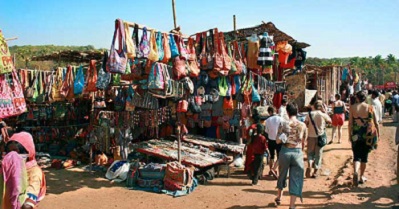
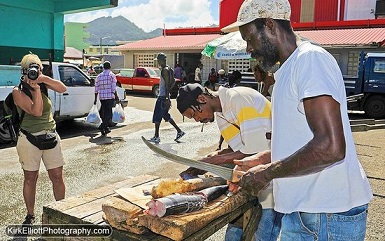
Notice some of the headlines here describing the security dynamics of some Caribbean events (around the Caribbean and the world):

Also, see the Encore of the previous blog-commentary that considered lessons learned from the Boston Marathon terrorist attack; this review was published on the 1-year anniversary in 2014. See it again here-now:

—————–

ENCORE – Original Commentary: Remembering and learning from Boston
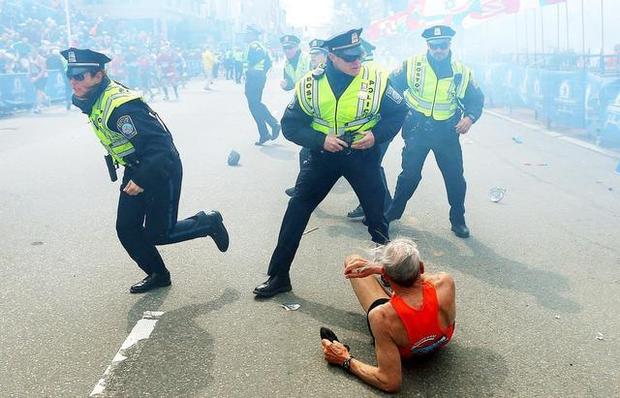
Boston BombingApril 15 [2014] is the one year anniversary of the Boston Marathon bombing. 3 people died directly, and countless others were maimed and injured. From any perspective this was a tragedy! To the families that lost loved ones on that date, our deepest condolences.

There are many lessons for the Caribbean to learn from this experience.

The book Go Lean … Caribbean serves as a roadmap for the introduction and implementation of the Caribbean Union Trade Federation (CU). This CU is proffered to provide economic, security and governing solutions for the 30 member Caribbean states. This book posits that the Caribbean is not immune to similar experiences like Boston; that terrorism requires mitigation beyond the member-states; there needs to be a regional solution. The CU will furnish such a focus. There will be proactive and reactive measures to monitor, interdict, and marshal terroristic threats in the Caribbean. Most of the Caribbean has legacy affiliation with European/US countries that have been victims of terrorism. Though we have not had the tragedies of backpacks exploding at marathons, or chemical weapons used in subways, or airplanes crashing into our buildings, we must still hold a constant vigilance. The roadmap posits that “bad actors” always emerge where there is economic successes. See a related news article here:

Title: Year after Boston bombing, it’s clear that threat of homegrown terrorism overhyped
By: David Schanzer and Charles Kurzman

In the aftermath of the Boston Marathon bombing one year ago Tuesday, many commentators and public officials called this tragedy a harbinger of more homegrown terrorist attacks to come.

“We’re going to see an explosion in this radicalization and recruitment,” predicted Congressman Frank Wolf. “We are less secure than we were 12 years ago,” claimed think-tank terrorism expert Michael Swetnam. Former Attorney General Michael Mukasey told Americans to “worry – a lot.

”To many, the Boston attack demonstrated the potency of the Islamist extremist ideology, the difficulty of detecting individuals radicalized through social media and the Internet, and the ease with which amateurs could cause massive harm in our open society. The Tsarnaev brothers, they claimed, had paved the way for more terrorism.

While only one year has passed, much of this concern appears to have been hyperbole.

No one has been killed by homegrown terrorists in the past year, and there have been no copycat attacks. To put this in context, over the same period there have been 14,000 murders in the United States, including 46 murders in Boston.

There also has been no epidemic of al-Qaida-inspired extremist behavior directed at American civilians. Our research shows that in the year since the marathon bombing, there have been 15 arrests of Muslim-Americans for terrorism-related offenses, below the average of 20 arrests per year since 9/11. Almost all of these arrests were for attempting to join a foreign terrorist organization abroad, not for planning attacks in the homeland, and were motivated by sympathies with rebels in Syria and elsewhere rather than by al-Qaida’s call for Muslims to attack the West.

Our law enforcement agencies have a far more balanced understanding of the nature of the extremist threat than many of those providing public commentary after the Boston attacks. A nationwide survey of law enforcement agencies we are conducting in collaboration with the Police Executive Research Forum shows that more than half of the agencies report little or no threat from al-Qaida-inspired extremism. Only 2 percent report the threat as “severe.” Agencies from large metropolitan areas reported somewhat higher levels of concern (27 percent reporting a low threat and 7 percent reporting a severe threat). Overall, law enforcement agencies are treating this as a serious, but manageable, issue rather than the existential crisis that many have feared.

Law enforcement agencies have embraced community outreach as an effective strategy to counter violent extremism. Almost every large metropolitan police force surveyed collaborates with Muslim-American communities that are targeted for recruitment by al-Qaida and related extremists. Most of these agencies report they have established a high level of trust with the community, and two-thirds say these relationships have helped develop actionable information. This track record contradicts claims by Congressman Peter King, a New York Republican, and others that Muslim-Americans have failed to cooperate with law enforcement.

One year after two individuals inflicted pain and suffering on the streets of Boston, we should not be overly fearful or cavalier about the threat of violent extremism. The low levels of violent conduct both before and after the Boston Marathon show that no matter how many extremist videos are posted on the Internet, the baseless ideas these videos propagate appeal to only a tiny fraction of our populace. Yet, since small numbers of people can do so much harm, law enforcement agencies and the communities they serve must be constantly vigilant and continue to work together to prevent the next atrocity.

David Schanzer is a Professor at Duke University’s Sanford School of Public Policy and Director of the Triangle Center on Terrorism and Homeland Security.

Charles Kurzman is a Professor of Sociology at the University of North Carolina, Chapel Hill.

Source: News Observer Newspaper – a Raleigh, North Carolina Daily – Retrieved 04/15/2014 from: http://www.newsobserver.com/2014/04/14/3784842/year-after-boston-bombing-its.html

How can we apply lessons from this foregoing article in the stewardship of the Caribbean Homeland Security?

First, we have the direct lessons of the scourge of piracy in the Caribbean for centuries. The “after-effects” of this legacy still remain, even today. As Caribbean society traversed over the centuries, the attitudes that tolerated piracy, described in the book as “community ethos”, evolved to tolerate, incubate and even promote other lawless activities; (shipwrecking, bootlegging, drug smuggling). So with this history in mind, and the prime directive to elevate Caribbean society, the Go Lean economic empowerment mission is coupled with appropriate security provisions. This mandate is detailed early on in the book’s Declaration of Interdependence, with the following pronouncements (Page 12):

x. Whereas we are surrounded and allied to nations of larger proportions in land mass, populations, and treasuries, elements in their societies may have ill-intent in their pursuits, at the expense of the safety and security of our citizens. We must therefore appoint “new guards” to ensure our public safety and threats against our society, both domestic and foreign. The Federation must employ the latest advances and best practices of criminology and penology to assuage continuous threats against public safety. The Federation must allow for facilitations of detention for convicted felons of federal crimes, and should over-build prisons to house trustees from other jurisdictions.

xvi. Whereas security of our homeland is inextricably linked to prosperity of the homeland, the economic and security interest of the region needs to be aligned under the same governance. Since economic crimes, including piracy and other forms of terrorism, can imperil the functioning of the wheels of commerce for all the citizenry, the accedence of this Federation must equip the security apparatus with the tools and techniques for predictive and proactive interdictions.

Gun ComicThere are many other lessons for us to learn from Boston. But there are other tragedies that appear to have gotten less attention in the past year since the marathon bombings. In Boston alone, there have been 46 murders since April 15, 2013. In total, there have been 14,000+ murders in the entire Unites States in that time. See the foregoing news article/commentary.

These have not gone unnoticed! Especially terrorism’s junior partner-in-crime, bullying; such incidents also call for mitigations.

The Go Lean roadmap therefore comes BIG, in its offering to effectuate change in the Caribbean. Notice these strategies, tactics, implementations, and advocacies detailed in the book related to Caribbean security:

10 Ways to Improve Sharing Page 35
10 Foreign Policy Initiatives at Start-up Page 102
10 Security Initiatives at Start-up Page 103
10 Ways to Impact Justice Page 177
10 Ways to Reduce Crime Page 178
10 Ways to Improve for Gun Control Page 179
10 Ways to Improve Homeland Security Page 180
10 Ways to Mitigate Terrorism Page 181
10 Ways to Improve Intelligence [Gathering] Page 182
10 Ways to Improve Animal Husbandry Page 185
10 Ways to Impact the Prison-Industrial Complex Page 211
10 Ways to Impact Youth Page 227

Further, the Go Lean roadmap portrays the need for public messaging to encourage adoption of better community ethos for the Greater Good (Page 37). We must not allow those innocent lives in Boston to pass without positive lessons for our society.

Download the book Go Lean … Caribbean – now!

Sign the petition to lean-in for the roadmap for the Caribbean Union Trade Federation.


Share this post:
, ,

ENCORE: PM Christie and Bahamas Junkanoo Carnival

Update – Go Lean Commentary

Talk is cheap! Results, on the other hand, are hard-fought and expensive.

This is the post-analysis of the plans for Junkanoo Carnival in the Bahamas, after 3-years of planning and execution. The results have indeed been hard-fought, expensive and … “not so successful”.

Told you so…

This was the declaration from this previous blog-commentary from the movement behind the book Go Lean…Caribbean. The assessment was that the Carnival product appeared to be lucrative, but there was so much heavy-lifting involved with an implementation, that unless there was a whole soul commitment by the full community, it would be very hard to find success.

Now there are new developments…

Article Title: ‘Blindsided’ By Carnival Delay
By: Ava Turnquest, Tribune Chief Reporter

CU Blog - UPDATE - PM Christie and Bahamas Junkanoo Carnival - Photo 1LESS than a week after officials announced the event’s line-up, Prime Minister Perry Christie confirmed yesterday that the 2017 Bahamas Junkanoo Carnival has been postponed until after the general election.

The news has “blindsided” key stakeholders and vendors, who decried the confusion, likely damage to brand and reputation and potential financial losses resulting from the date change.

The Tribune understands the event has been pushed back from May 4-6 to May 18-20 in Nassau. The new date was also circulated in a flyer by Bahamas Junkanoo Carnival’s Instagram account last night.

It is unclear whether the Grand Bahama-leg of the festival, slated for April 28 and 29, has also been pushed back.

Mr Christie was asked about the postponement on the sidelines of a ceremony to rename thoroughfares at the University of the Bahamas, after a report published in The Nassau Guardian indicated that the government had decided to delay the event.

Mr Christie said: “I’m advised that the Carnival Commission has met and agreed that because of the impending possibilities, to suspend or extend the date of (Junkanoo) Carnival. I don’t know the dates they had chosen but it is my understanding that that has been done.”

Up to press time, the Bahamas National Festival Commission (BNFC) had not released a new date for the event, or an official statement on the postponement.

When The Tribune contacted BNFC Chairman Paul Major, he said: “What we know is that we’re not going to conflict with the final say of Cabinet – once an official election date is set, then our dates are subject to change.”

Last Thursday, the BNFC announced Trinidadian singing stars Machel Montano and Bunji Garlin as event headliners. It was also confirmed that the event will be streamlined compared to past years because of financial constraints.

The government will reduce its subsidy to the festival by as much as 50 per cent over last year, when taxpayers contributed about $8 million, officials said. The 2016 event brought in $578,342 in revenue, costing more than $9.8m overall.

In 2015, the government spent $11.3m on the inaugural festival, going over its initial budget of $9m, with the rest covered by sponsors. The first Junkanoo Carnival cost $12.9m overall.

Mr Major and BNFC CEO Roscoe Dames declined further questions, and advised that the commission would release further information today.

The Office of the Prime Minister, in a press statement on Sunday, announced that Parliament will be dissolved on April 11.

According to the Parliamentary Elections Act, an election must be held 21 to 30 days after election writs are issued, meaning the next vote will likely be held in early May.

The last election was held on May 7, 2012.

In 2015, the inaugural festival took place on May 7-9 in New Providence, and the 2016 Junkanoo Carnival kicked off on April 15-16 in Grand Bahama and on May 5-7 in New Providence.

In February, Free National Movement (FNM) Deputy Leader K Peter Turnquest called for the government to postpone or delay the festival until after the general election, warning that the event could only be perceived as “vote buying” if staged during the election cycle.

The Tribune reached out to Bahamas Carnival Band Owners Association (BCBOA) President Dario Tirelli for comment on the matter; however, Mr Tirelli declined comment until an official government statement was released.

Mr Tirelli told The Tribune that the news had “blindsided” his association.

Stephan Rolle, owner of Bluemonkey Bahamas, told reporters that any date change would negatively impact his business, the Bahamas Carnival Cruise, which has booked more than 100 carnival-goers on an all-inclusive weekend cruise from Miami to Nassau.

He challenged Mr Christie to give the festival the same level of respect as the annual Junkanoo parades.

Source: The Tribune Daily Newspaper (Posted 04/04/2017; retrieved 04/05/2017) – http://www.tribune242.com/news/2017/apr/04/blindsided-carnival-delay/

The Prime Minister bet his administration on the prospect of Carnival and now, its election time. He declared that the Parliament will dissolve on April 11, 2017. Under the Westminster structure of Parliamentary government, elections of a new Parliament must take place within a month after that date. So now the expectation is that elections will be conducted “smack in the middle” of the 2017 Carnival activities.

The solution? The PM postpones Carnival!

From a strictly Carnival perspective, this is a Big Mistake! See here the reaction of the festival stakeholders:

VIDEO – Unhappy over Carnival situation – http://youtu.be/f5zoG6yiS9E

Uploaded on Apr 4, 2017 – One of many online videos featuring complaints about the postponement of Carnival.

In this previous Go Lean blog-commentary – being ENCORED below – the prospect of Junkanoo Carnival was analyzed … before-hand, then subsequent blogs also examined the results after the 1st-year and 2nd-year events, as follows:

The appeal was made in all of these commentaries for the strategies, tactics and implementations of the Go Lean roadmap for the Caribbean Union Trade Federation (CU). This involved the heavy-lifting to marshal the entire community to ensure for Event Tourism, and profit from it. See the original blog-commentary here below.

Also, see a related story from April 4, 2017 detailing the challenges of a new schedule-date: Festival To Be May 18-20 As PM Confirms Move (The Tribune Daily Newspaper; retrieved 04/05/2017)

————–

Blog Title: PM Christie responds to critics of Bahamian ‘Carnival’

Carnival 1Head –> Heart –> Hands.

This is the physiological process to forge change, described in the book Go Lean … Caribbean (Page 20). As experienced on a daily basis by people attempting to “quit smoking”, change is near impossible without engaging those three body parts. The book, serving as a roadmap for the introduction and implementation of the Caribbean Union Trade Federation (CU) describes the linked application of those three symbolic body parts, as follows:

  • Head – Plans, Models and Strategies
  • Heart – Community Ethos
  • Hands – Actions, Implementations, Advocacies

According to the below news article, the Prime Minister of the Bahamas wants to forge change in his homeland. He wants to incorporate a new festival, based on the model of Carnival and Madri Gras, so as to glean some of the massive economic harvests around those events in the Caribbean and other Western Hemisphere destinations.

Since initiating this plan in Spring 2013, cyber-space and public commentary have been awash with feedback: some in favor; most opposed.

Albeit he is inspired by good motives, the publishers declare that something is missing in the Prime Minister’s plans: Best practices.

Excerpts from original source article: PM Christie responds to critics of Bahamian ‘Carnival’
Date: April 25, 2014
By: Erica Wells, Managing Editor

Prime Minister Perry Christie has assured critics of the Government’s plan to create a Bahamian Carnival or Mardi Gras that the festival will be “essentially” Bahamian and that a special committee will be appointed to prepare the country and the world for the initiative.

The government, Christie says, sees the festival as both a major economic intervention and a cultural expansion.

“It will be essentially Bahamian but also include thousands of visitors who will be attracted by what will be an absolutely fabulous affair,” said Christie.

Anthropologist and author Dr. Nicolette Bethel, who is also a former director of culture, has been one of the biggest critics of the proposed festival.

Prime Minister Christie said for the groups to be licensed, they would have to form themselves into a company and operate as a business.

“This is a massive undertaking which will receive very careful consideration of the government,” he said.

“This is very necessary as the corporate groups will be advertising abroad and inviting persons to purchase costumes online as well as from store fronts in a cultural village or elsewhere.”

The prime minister said carnival is part of a worldwide masquerade industry.

He said the industry has been successful in attracting costume makers, wire benders, painters, designers and performers at some of the largest festivals in the world.

“It has an export dimension. We know of major festivals in Trinidad, Brazil, Toronto, Barbados, New York, Miami and London. Carnival in the diaspora generates hundreds of millions of dollars and creates many jobs and entrepreneurial opportunities.

“It is big business and it requires business planning, management, marketing of products and organizational structure,” said Christie.

Prime Minister Christie said costumes from carnival inspired designers show up in New York, Toronto, Notting Hill, London, Miami and many other centers in the U.S.

Source: The Nassau Guardian Online. Posted 06/22/2013; retrieved 04/24/2014 from: http://www.thenassauguardian.com/index.phpoption=com_content&view=article&id=40021&Itemid=59

The Go Lean roadmap is different! It employs best practices for assessing, strategizing and implementing change. The book commences with the practice to assess current landscapes; this is what strategists call “Understand the market / Plan the business”. Page 44 presents these questions:

• Who are our customers and what exactly do they want?

• Who are our competitors; how do we stack up against them?

The book then proceeds to answer these and other strategy queries, accordingly.

carnival 2Events/festivals are paramount in the Go Lean roadmap: the optimization of existing events and the introduction of new events. This advocacy is detailed on Page 191 as being supplemental to the goal of enhancing tourism (Page 190).

What are the prospects for this new Bahamas Carnival/Lenten festival?

On the surface, it seems far-fetched, as the Bahamas does not have a Lenten ethos. All the competitive destinations (Rio De Janeiro, New Orleans and Trinidad) have elevated lent habits (Ash Wednesday to Good Friday), so that Mardi Gras/Fat Tuesday actually has significance in preparation of this hallowed Lenten season. Without this ethos, it is hard, though not impossible, to forge a new tradition, festival or business model. But the mediocre financial investment, announced in the foregoing article – $1 million as opposed to $3 million, makes the success of initiating and promoting a new event an insurmountable obstacle.

The publishers of the Go Lean roadmap wish the Prime Minister good fortune with his plans, but this execution does not appear to be lean, within “best practices”. More is needed; much more! There should be more focus on “Head, Heart & Hands” principles. As a contrast, notice the detailed strategies, tactics, actions and advocacies for new events in the Go Lean roadmap:

Community Ethos – Lean Operations Page 24
Community Ethos – Return on Investments Page 24
Community Ethos – Cooperatives Page 25
Community Ethos – Non Government Org’s. Page 25
Impact the Future Page 26
Foster Genius – Performance Excellence Page 27
Ways to Improve Sharing Page 35
Ways to Promote Happiness Page 36
Ways to Impact the Greater Good Page 37
Strategy – Customers – Business Community Page 47
Strategy – Customers – Visitors / Tourists Page 47
Strategy – Competitors – Event Patrons Page 55
Separation of Powers – Emergency Mgmt. Page 76
Separation of Powers – Tourism Promotion Page 78
Separation of Powers – Sports & Culture Page 81
Separation of Powers – Fairgrounds Admin. Page 83
Separation of Powers – Turnpike Operations Page 84
Steps to Implement Self-Governing Entities Page 105
Ways to Foster Cooperatives Page 176
Ways to Improve Intelligence Gathering Page 182
Ways to Improve [Service] Animal Husbandry Page 185
Ways to Enhance Tourism Page 190
Ways to Impact Events Page 191
Ways to Promote Fairgrounds Page 192
Ways to Improve Emergency Management Page 196
Ways to Impact Hollywood [& Media Industry] Page 203
Ways to Preserve Caribbean Heritage Page 218
Ways to Improve the Arts Page 230
Ways to Promote Music Page 231

In summary, festivals/events are important, so they require lean administration and executions. They empower economics and fortify cultural pride. In all, they make the Bahamas, by extension the entire Caribbean, a better place to live, work, and play.

Download the book Go Lean … Caribbean – now!

Share this post:
, , , ,
[Top]

Managing the ‘Strong versus the Weak’ – Book Review: Sold-Out!

Go Lean Commentary

George Carlin speaks from the grave about an American societal defect:

“The real owners of this country, the big wealthy business interest that controls everything and makes all the important decisions….
They spent billions of dollars every year lobbying to get what they want. And what is it that they want: ‘more for themselves and less for everybody else’.” —

George D. P. Carlin[1] (May 12, 1937 – June 22, 2008) was an American stand-up comedian, social critic, actor and author. In 2008, he was posthumously awarded the Mark Twain Prize for American Humor. In 2017, Rolling Stone magazine ranked him second (behind Richard Pryor) on its list of the 50 best stand-up comics of all time.[4] – Source: Wikipedia.

Sold-Out - Photo 3

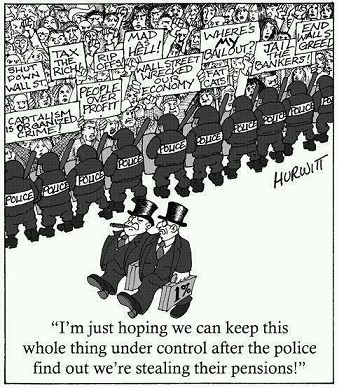
For millions of people affected with declining job options and under-employment, these words by George Carlin are spot on. The people stand back and see a trend with more and more (hundreds of thousands) of highly sought STEM (Science,  Technology, Engineering & Math) jobs being created but not going to Americans, rather going to foreigners – on American soil – at below market prices. This is the drama of H-1B Visas discussed in the VIDEO in the Appendix below.

CU Blog - Immigration Realities in the US - Photo 5

Something is wrong with this picture!

The United States has known societal defects. The movement behind the book Go Lean…Caribbean have delved into the most prominent ones; they were identified as:

This discussion – and the accompanying VIDEO in the Appendix below – allows us to better appreciate the community ethos – the fundamental spirit of a culture – that breathes these societal defects. There is a similarity with these two defects:

“The strong inflicts harm on the weak”

This commentary posits that this problem in America was imbrued as part of a New World experiment that deviated from the Old World values.

In the previous blog-commentary on the Model of Hammurabi it was detailed how that ancient King established laws to ensure that the “strong in society did not abuse the weak”. That blog concluded that New World societies need to do better in applying the sage advice from a 3,800-year-old regent. This point aligns with the book Go Lean…Caribbean, which seeks to reform and transform the 30 member-states of the Caribbean region, to ensure better stewardship of the Social Contract – implied arrangement where all citizens (strong and weak) surrender some of their freedoms and submit to the authority of the State in exchange for protection of remaining natural and legal rights.

The Go Lean book describes empowerments to target the economic, security and governing engines of society to ensure an adherence to the principle of the Greater Good; (greatest good to the greatest number of people which is the measure of right and wrong). This commentary is 4 of 4 in a series on “Managing the Strong versus the Weak”. The other commentaries in this series all considered the security and governmental deficiencies of American society – the model-advanced democracy that “pulls” so many of our Caribbean Diaspora. This commentary here focuses on economic abuses. The full details in this series are as follows:

  1. Managing the Strong versus the Weak – Model of Hammurabi
  2. Managing the Strong versus the Weak – Mental Disabilities
  3. Managing the Strong versus the Weak – Bullying in Schools: “Teach them well and let them lead the way”
  4. Managing the Strong versus the Weak – Book Review: Sold-Out!

All of these commentaries relate to nation-building, stressing the community ethos necessary to forge a society where all the people are protected all the time. Looking at the American model, we clearly discern that “all that glitters is not Gold”. There are obvious abuses and deficiencies that should deter Caribbean citizens from setting their hopes-and-dreams on America as a land of refuge.

There is a similar theme in the book – Sold-Out! – by syndicated columnist Michelle Malkin. She scorches the American Crony-Capitalism associated with labor-certified immigration. She asserts that laws of supply-and-demand in the STEM fields are being distorted so that corporations can profit at the expense of American and foreign workers.

So sad! See the review of her book here:

 Sold-Out - Photo 1

Book Review for Book: Sold Out: How High-Tech Billionaires & Bipartisan Beltway Crapweasels Are Screwing America’s Best & Brightest Workers
Book Authors:
Michelle MalkinJohn Miano

The #1 New York Times bestselling author and firebrand syndicated columnist Michelle Malkin sets her sights on the corrupt businessmen, politicians, and lobbyists flooding our borders and selling out America’s best and brightest workers.

In Sold Out, Michelle Malkin and John Miano reveal the worst perpetrators screwing America’s high-skilled workers, how and why they’re doing it—and what we must do to stop them. In this book, they will name names and expose the lies of those who pretend to champion the middle class, while aiding and abetting massive layoffs of highly skilled American workers in favor of cheap foreign labor. Malkin and Miano will explode some of the most commonly told myths spread in the media like these:

Lie #1: America is suffering from an apocalyptic “shortage” of science, technology, engineering, and math workers.

Lie #2: US companies cannot function without an unlimited injection of the most “highly skilled” and “highly educated” foreign workers, who offer intellectual capital and entrepreneurial energy that American workers can’t match.

Lie #3: America’s best and brightest talents are protected because employers are required to demonstrate that they’ve made every effort to hire American citizens before resorting to foreign labor.

For too long, open-borders tech billionaires and their political enablers have escaped tough public scrutiny of their means and motives. Sold Out is an indictment of not only political corruption in Washington, but also the journalistic malpractice that enables it. It’s time to trade the whitewash for solvent. American workers deserve better and the public deserves the unvarnished truth.
Source: Good Reads – Online Bookstore-Portal; retrieved April 3, 2017 from: http://www.goodreads.com/book/show/25246754-sold-out

Sold-Out - Photo 2

We can and must do better than this in the Caribbean. While the problem in the foregoing is an American drama, our region can learn so many lessons from the developments and executions of this blatant example of the “strong abusing the weak”. Keep this summary in mind, from Sold-Out  (“Introduction” – Page viii):

  • With very few exceptions, the purported shortages of American workers don’t exist.
  • There is nothing special about the hundreds of thousands of H-1B visa holders flooding the workforce.
  • Most H-1B workers are sponsored by companies that specialize in offshore outsourcing of U.S. jobs.
  • Abuse of guest workers by both offshoring companies and their U.S. tech giant partners is rampant.
  • Enforcement is a joke.
  • The promises of U.S. worker protections were big fat whoppers.

This exposure of the exploitation in the American immigration eco-system reveals what is embedded in this country’s DNA – a propensity for the “strong to abuse the weak”; in this case it’s an economic abuse – manipulating market forces to keep salaries low. And yet, the Caribbean suffers from an atrocious emigration rate of our citizens fleeing to the American homeland. Verily, even this defective American labor market is better than the Caribbean status quo.

The reasons why people leave the Caribbean in the first place have been identified as “push and pull”:

“Push” refers to the reasons people who feel compelled to leave, to seek refuge in a foreign land. “These ones suffer from the abuse of the “strong over the weak”. Many from the Caribbean had to flee as refugees related to qualifiers like DisabilityDomestic-abuseMedically-challenged and LGBT.

“Pull”, on the other hand refers to the lure of a more prosperous life abroad; many times our people are emigrating to communities where they perceive that there are more protections for the “weak against the abusive strong “.

The movement behind the Go Lean book has consistently urged Caribbean authority figures to work to dull the bright lights on American “Welcome Signs”. Our people need to know that the “grass is not necessarily greener on the other side”. The Go Lean book and blogs asserts that it is easier to reform and transform Caribbean society than abandoning our home and trying to fix the American eco-system. There is no much resistance due to the acute greed and adherence to a profit-seeking culture. Consider these sample blog-commentaries previous published:

https://goleancaribbean.com/blog/?p=10052 Fake News? Welcome to America
https://goleancaribbean.com/blog/?p=9038 Fallacy of American Charity Altruism for Caribbean Causes
https://goleancaribbean.com/blog/?p=8966 American For-Profit Education – Plenty of Profit; Little Education
https://goleancaribbean.com/blog/?p=7430 Big Pharma and Zika – Too Much Profit Motivation
https://goleancaribbean.com/blog/?p=6819 The Academic Downside of ‘Western’ Diets
https://goleancaribbean.com/blog/?p=6580 Capitalism of Drug Patents
https://goleancaribbean.com/blog/?p=5733 Better than America? Yes, We Can!
https://goleancaribbean.com/blog/?p=5529 American Defects: Inventory of Crony-Capitalism

The Go Lean book serves as a roadmap for the introduction and implementation of the technocratic Caribbean Union Trade Federation (CU) to elevate Caribbean societal engines. We want to be a better society than we have been in the past, and even better than our American counterparts.

We want to pursue the Greater Good. This means promoting values that do NOT benefit the strong by abusing the weak. While this definitely applies to a security and governance mandate, it includes economic policies as well.

We can learn from the American experience. If we can assuage the “strong-weak” power abuses in our society, this will mitigate the “push and pull” factors for why people abandon our territories.

Yes, America is flawed!

… but we have to do better at home before we can condemn another country. Though we must deter our young people from “jumping out of the frying pan and into the fire”.

So let’s just be better and do better here … in reforming and transforming our societal engines. Let’s lean-in to the Go Lean roadmap and work to make the Caribbean a better place to live, work and play for all citizens, “strong or weak”. 🙂

Download the free e-book of Go Lean … Caribbean – now!

Sign the petition to lean-in for the roadmap for the Caribbean Union Trade Federation.

————

Appendix VIDEO – How H-1B visas have been abused since the beginning – http://www.cbsnews.com/videos/h-1b-creator-1998-loophole-in-law-is-a-travesty

Published March 19, 2017 – The H-1B visa [program] creator says the program has been “hijacked” to take American jobs. But a 1993 60 Minutes piece shows the visas had problems from the start

Share this post:
, , ,
[Top]

Managing the ‘Strong versus the Weak’ – Bullying in Schools

Go Lean Commentary

“I believe that children are the future, teach them well and let them lead the way …” – Song Lyrics – The Greatest Love  Of All

The need to secure the community against threats and ‘bad actors’ must start with young people, school age children: High School, Middle School and Elementary.

Why so early? Because the tendency for strong individuals in a group to abuse the weak individuals starts early. Its an animalistic instinct to emerge as an Alpha Male or Alpha Female.

Bullying - Photo 5But we are not animals, despite any natural instincts. Societies come together to form a civilization with civil treatment of neighbors and fellow citizens. In the previous blog-commentary on the Model of Hammurabi it was detailed how that ancient King established laws to ensure that the “strong in society would not abuse the weak”. That blog concluded that the governmental authorities (the State) should provide the stewardship as specified in a Social Contract – where citizens surrender some of their freedoms and submit to the authority of the State in exchange for protection of remaining natural and legal rights – with all citizens in society, the strong ones and the weak ones. This commentary is the 3rd of 4 in a series on “Managing the Strong versus the Weak”. The other commentaries detailed in this series are as follows:

  1. Managing the Strong versus the Weak – Model of Hammurabi
  2. Managing the Strong versus the Weak – Mental Disabilities
  3. Managing the Strong versus the Weak – Bullying in Schools: “Teach them well and let them lead the way”
  4. Managing the Strong versus the Weak – Book Review: Sold-Out!

All of these commentaries relate to nation-building, stressing the community ethos necessary to forge a society where all the people are protected all the time. Since “children are the future”, it is important to mitigate and remediate bad behavior of the strong children that may trample on the “weak” children – bullying; if we teach them well when they are young and impressionable, that will allow them to lead the way for future societal cohesion. (See the personification of these words – song lyrics – in the Music VIDEO in the Appendix below).

The United States, as a model of an advanced democracy in our region, provides us lessons in how effective programs can be that are designed to mitigate bullying. We get to see the progress and regression. See this report-news article here:

Title: School Bullying, Cyberbullying Continue to Drop

Bullying - Photo 1

Sub-Title: School bullying is at its lowest rate since 2005, but girls are still bullied at higher rates.
By:
Allie Bidwell

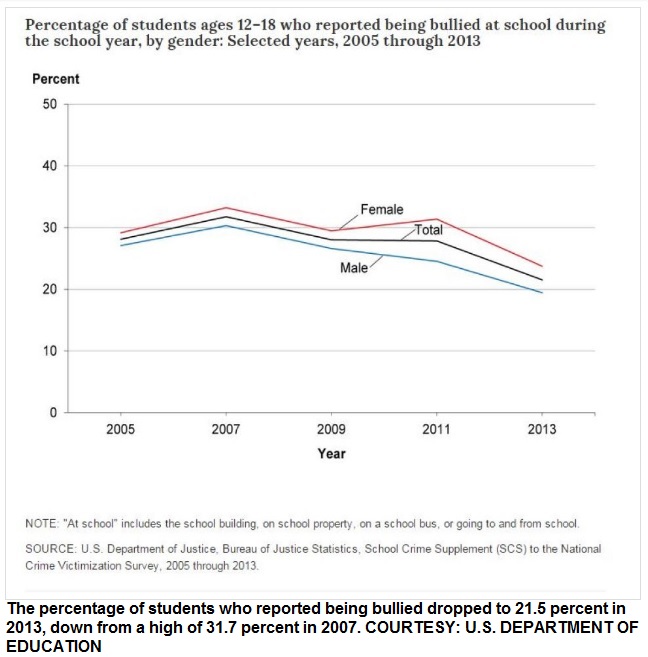
The percentage of students who reported being bullied or cyberbullied reached a record low in 2013, but female students are still victimized at higher rates, according to new data from the Department of Education.

The department on Friday released the results of the latest School Crime Supplement to the National Crime Victimization Survey, which showed that in 2013, the percentage of students ages 12-18 who reported being bullied dropped to 21.5 percent. That’s down from 27.8 percent in 2011, and a high of 31.7 percent in 2007. The percentage of students who reported being cyberbullied also fell to 6.9 percent in 2013, down from 9 percent in 2011.

The department’s National Center on Education Statistics began surveying students on bullying in 2005.

“As schools become safer, students are better able to thrive academically and socially,” Education Secretary Arne Duncan said in a statement. “Even though we’ve come a long way over the past few years in educating the public about the health and educational impacts that bullying can have on students, we still have more work to do to ensure the safety of our nation’s children.”

Despite the overall drop in bullying and cyberbullying, reporting rates remain low – just more than one-third of students who were victims of traditional bullying and fewer than one-quarter of cyberbullying victims reported the incident to an adult, the data show.

Female students also still consistently experience higher-than-average rates of victimization – 23.7 percent of female students said they had been bullied in 2013, and 8.6 percent said they had been cyberbullied. By comparison, 19.5 percent and 5.2 percent of male students in 2013 said they had been bullied and cyberbullied, respectively.

While there aren’t noticeable gender gaps in the location of bullying, female students were significantly more likely than male students to be made fun of, called names or insulted (14.7 percent compared with 12.6 percent), to be the subject of rumors (17 percent compared with 9.6 percent) and to be excluded from activities on purpose (5.5 percent compared with 3.5 percent). Male students who were bullied were more likely than female students to be pushed, shoved, tripped or spit on (7.4 percent compared with 4.6 percent).

Overall, bullied students were most likely to be made fun of, called names or insulted (13.6 percent) or to be the subject of rumors (13.2 percent). The most common forms of cyberbullying were unwanted contact via text messaging and posting hurtful information on the Internet.

Among students who were cyberbullied, female students were more likely to have hurtful information about them posted on the Internet (4.5 percent compared with 1.2 percent), to receive unwanted contact via instant messaging (3.4 percent compared with 1 percent) and unwanted contact via text messaging (4.9 percent compared with 1.6 percent).

Traditional bullying and cyberbullying also impact the behaviors of the affected students.
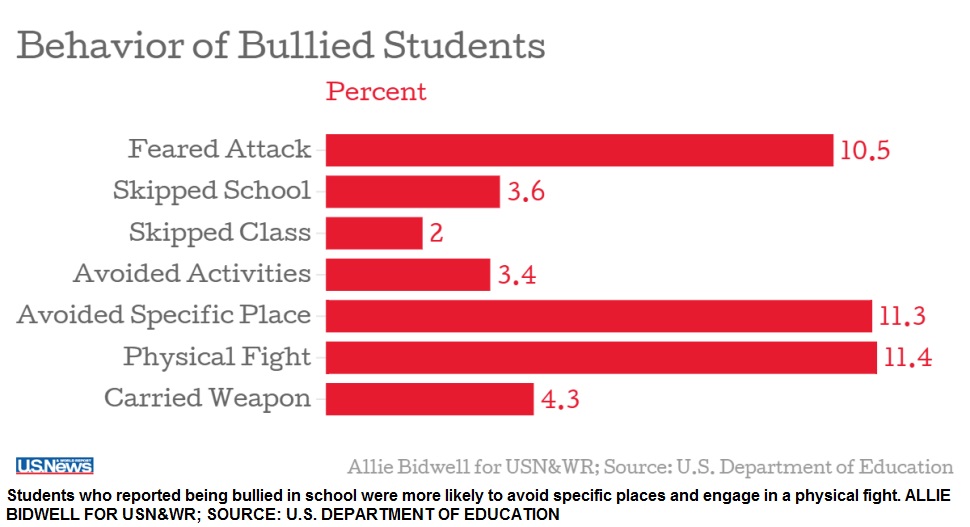
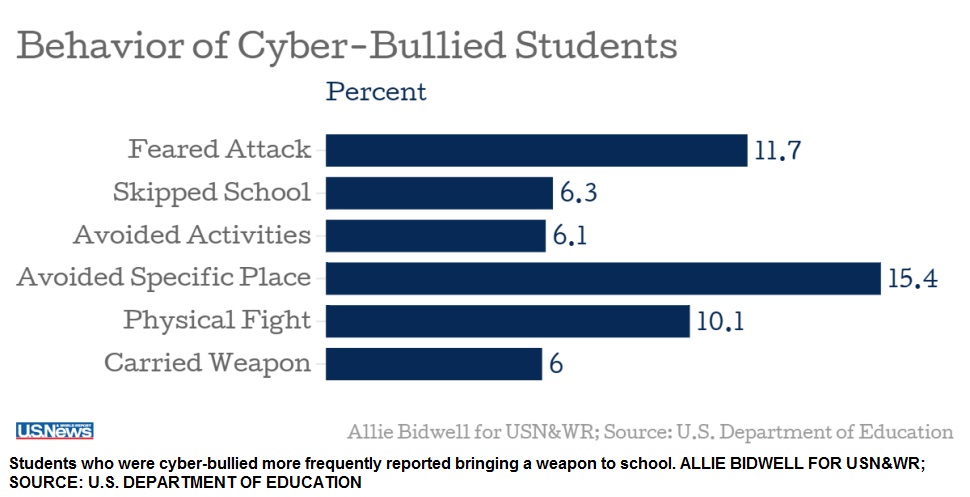
Among students who were victims of traditional bullying, more than 1 in 10 said they feared being attacked or harmed at school. That fear was slightly more frequent among victims of cyberbullying: about 1 in 8 students who had been cyberbullied said they feared attack or harm at school.

Generally, being the victim of cyberbullying appeared to affect students’ behavior more than traditional bullying – students who were cyberbullied were more likely to skip school, to avoid school activities, to avoid specific places at school and to carry a weapon to school.

Allie Bidwell is an education reporter for U.S. News & World Report.

[MORE: Social Combat: Bullying Risk Increases With Popularity]

[ALSO: Cyberbullied Teens Can Connect Online, In Person to Get Help]

Bullying - Photo 2

Bullying - Photo 3

Source: US News & World Report – Posted May 15, 2015; retrieved 04/01/2017 from: https://www.usnews.com/news/blogs/data-mine/2015/05/15/school-bullying-cyber-bullying-continue-to-drop

The book Go Lean…Caribbean describes empowerments to target the economic, security and governing engines of society to ensure an adherence to the principle of the Greater Good. The book defines this principle as follows (Page 37):

“The greatest good to the greatest number of people which is the measure of right and wrong”. –  Jeremy Bentham (1748-1832)

The Go Lean book serves as a roadmap for the introduction and implementation of the Caribbean Union Trade Federation (CU); it posits (Page 23) that whatever the circumstances, “bad actors” will always emerge to exploit opportunities, with good, bad and evil intent….

The CU‘s security apparatus must defend against regional threats, including domestic terrorism. This includes gangs and their junior counterparts, bullies. The community must accept that young ones will go astray, so Juvenile Justice programs should be centered on the goal to rehabilitate them into good citizens, before it’s too late. Community messaging (life-coaching and school-mentoring programs) must be part of the campaign for anti-bullying and mitigations.

The Go Lean book continues (Page 181) on the subject of “Junior Terrorism” with the quotation here:

The CU wants to “leave no child behind”. So bullying will be managed under a domestic terrorism and Juvenile Justice jurisdiction. The CU will conduct media campaigns for anti-bullying, life-coaching, and school-mentoring programs. The problem with teen distress is that violence can ensue from bullying perpetrators or in response to bullying.

Bullying - Photo 4We were all children at one point, and may have experienced the dynamics of bullying, either as a victor or a victim, but trust the facts here, the subject of bullying today is different; there is the New Media element; there is cyber-bullying.

Cyberbullying or cyberharassment is a form of bullying or harassment using electronic forms of contact. Cyberbullying has become increasingly common, especially among teenagers.[1] Awareness in the United States has risen in the 2010s, due in part to high-profile cases.[2][3] Bullying or harassment can be identified by repeated behavior and an intent to harm.[4] Harmful bullying behavior can include posting rumors about a person, threats, sexual remarks, disclose victims’ personal information, or pejorative labels (i.e., hate speech).[5]

Several US states and other countries have laws specific to regulating cyberbullying.[6] These laws are designed to specifically target teen cyberbullying, while others use laws extending from the scope of physical harassment.[7] In cases of adult cyberharassment, these reports are usually filed beginning with local police.[8] Research has demonstrated a number of serious consequences of cyberbullying victimization.[9] Victims may have lower self-esteem, increased suicidal ideation, and a variety of emotional responses, retaliating, being scared, frustrated, angry, and depressed.[10] Individuals have reported that cyberbullying can be more harmful than traditional bullying.[11]

Internet trolling is a common form of bullying over the Internet in an online community (such as social media) in order to elicit a reaction, disruption, or for their own personal amusement.[12][13] Cyberstalking is another form of bullying or harassment that uses electronic communications to stalk a victim may pose a credible threat to the safety of the victim.[14]
Source: Retrieved April 2, 2017 from: https://en.wikipedia.org/wiki/Cyberbullying

The Go Lean book describes the eco-system of Internet & Communications Technology (ICT) and strategizes to use ICT as a great equalizer in the world markets. Big countries and small countries can equally and evenly compete. So ICT can be beneficial, if …

… the downsides – like cyber-bullying – can be assuaged or mitigated.

The point of fostering and policing ICT has been previously elaborated on in prior blog-commentaries; see sample list here:

https://goleancaribbean.com/blog/?p=8823 Lessons from China – WeChat: Model for Caribbean Social Media
https://goleancaribbean.com/blog/?p=5435 China Internet Policing – Model for Caribbean
https://goleancaribbean.com/blog/?p=4793 Truth in Commerce – Learning from Yelp
https://goleancaribbean.com/blog/?p=3881 Intelligence Agencies to Up Cyber Security Cooperation

According to the foregoing article, bullying is on the decline. This is a direct product of the effective messaging and school-based coaching. We need to model this in the Caribbean.

Girl Mocking Clever Kid In Glasses Teenage Bully Demonstrating Mischievous Uncontrollable Delinquent Behavior Cartoon Illustration

But also according to the foregoing article, the subject matters in the bullying eco-system that need the most attention are the girl-bullies, as opposed to boy-bullies. The messaging for girls – think: Mean Girls – must be customized as opposed to the messaging for boys. The art and science of this advocacy is just plain technocratic! This is a mission of the Go Lean/CU roadmap. The Go Lean book actually conveys that there are many empowerments for Caribbean stewards to implement to help the youth (boys and girls) of the region. This sends the right message that we will not allow the weak in society to be trampled on by the strong. Consider this advocacy here:

10 Ways to Impact Youth – Page 227

1 Lean-in for the CU to address regional problems! Of 42 million population, more than half below age 30; need jobs and security empowerments.
2 Infant Mortality
3 Health Care Neutralization – Trauma Centers, as injuries are the leading causes of death
4 Work Ethic – Youth assimilate well to ICT, so the CU will foster schemes to create and produce ICT, not just consume.
5 Juvenile Crime and the DARE Model
Addressing the mission to remediate youth crime, the CU will implement specific programs to engage and mitigate youth crime, this is similar to DARE (Drug-Alcohol-Resistance-Endeavors) in the US for drug and gang anti-crime. Also, the Juvenile Justice solution will have vertical institutions for judiciary, corrections & probation, applying best practices of criminology/penology for youthful offenders.
6 Education Dynamics
The CU will identify students early who display high aptitude in the areas of Science, Technology, Engineering and Mathematics; then develop them thru academies and e-learning. The CU will offer forgive-able loans for college. With the CU mission to stop the brain drain, every inducement will be extended to encourage graduates to stay in the region.
7 Sports Prospects
The CU will encourage professional sports pursuits for many disciplines, incentivizing Sport Academies to foster the talent with proper risk mitigations.
8 Artist Development & Colonies
9 Music and Art (Performance & Visual) Appreciation
10 Repatriation – Family Reunification

The book Go Lean, serving as a roadmap, describes formal institutions to improve security like a regional Police and Military forces (including “Intelligence Gathering and Analysis”). There is the need to be on guard so that …

“… the strong should not harm the weak.”

This is the Code of Hammurabi, and despite having originated thousands of years ago, there is urgency to apply the principle today to counteract “bad actors”. The Go Lean book makes this revelation (Page 23):

… with the emergence of new economic engines, “bad actors” will also emerge thereafter to exploit the opportunities, with good, bad and evil intent.

This roadmap for Caribbean integration declares that peace, security and public safety is tantamount to economic prosperity. This is why an advocacy for the Greater Good must be championed as a community ethos. A prime precept is that it is “better to know than to not know” – this implies that privacy is secondary to security. A secondary precept is that bad things will happen to good people and so the community needs to be prepared to contend with the risks that can imperil the homeland.

The Go Lean roadmap details strategies, tactics, implementations and advocacies to impact this region in the cause against bullying. Consider this sample:

Community Ethos – Security Principles – Fully comprehensive empowerments Page 22
Ways to Impact the Future – Count on the Greedy to be Greedy; [expect bullies to emerge] Page 27
Ways to Foster Genius – Anti-Bullying Campaign – “Revenge of the Nerds” Page 28
Security Initiatives at Start-up Page 103
Ways to Improve Education Page 159
Ways to Mitigate Black Markets – Prosecute economic crimes: Extortion and Intimidation Page 165
Ways to Impact Justice – Juvenile Justice will have vertical institutions Page 177
Ways to Reduce Crime – Youth Crime Awareness and Prevention Page 178
Ways to Improve for Gun Control – Public Relations / Anti-Bullying Campaign Page 179
Ways to Improve Homeland Security Page 180
Ways to Mitigate Terrorism – Bullying Page 181
Ways to Improve Intelligence Gathering & Analysis – Internet/Cyber Crimes Monitoring Page 182
Ways to Impact the Prison-Industrial Complex – Monitoring of Parolees Page 211

The CU‘s efforts relate to our Prime Directives; as exemplified by these 3 statements:

  • Optimization of the economic engines in order to grow the regional economy and create new jobs.
  • Establishment of a security apparatus to protect the resultant economic engines and mitigate internal and external threats.
  • Improve Caribbean governance to support these engines.

The purpose of these prime directives is to elevate all of Caribbean society, all 30 member-states. This is a Big Deal – too big for any one member-state alone. We must confederate, collaborate and convene together. We can succeed with an interdependence within the region. See these statements from the formal Declaration of Interdependence, at the start of the book (Page 12):

x.  Whereas we are surrounded and allied to nations of larger proportions in land mass, populations, and treasuries, elements in their societies may have ill-intent in their pursuits, at the expense of the safety and security of our citizens. We must therefore appoint “new guards” to ensure our public safety and threats against our society, both domestic and foreign. The Federation must employ the latest advances and best practices … to assuage continuous threats against public safety.

xvi. Whereas security of our homeland is inextricably linked to prosperity of the homeland, the economic and security interest of the region needs to be aligned under the same governance. Since economic crimes, including … forms of terrorism [like bullying], can imperil the functioning of the wheels of commerce for all the citizenry, the accedence of this Federation must equip the security apparatus with the tools and techniques for predictive and proactive interdictions.

The points of security mitigation have been previously elaborated on in these prior blog-commentaries; see sample list here:

https://goleancaribbean.com/blog/?p=10959 See Something, Say Something … Do Something
https://goleancaribbean.com/blog/?p=10566 Funding the Caribbean Security Pact
https://goleancaribbean.com/blog/?p=10222 Waging a Successful War on Terrorism – (Junior Partner of ‘Bullying’)
https://goleancaribbean.com/blog/?p=9072 Securing the Homeland – On the Ground
https://goleancaribbean.com/blog/?p=7485 A Lesson in the History of Interpersonal Violence – Street Crimes
https://goleancaribbean.com/blog/?p=7179 SME Declaration: ‘Change Leaders in Crime Fight’
https://goleancaribbean.com/blog/?p=392 Jamaica received World Bank funds to help in crime fight

We must learn from the American lessons on mitigating bullying. Our society, every society has “weak (physical and mental) members” that must be protected from the “strong” members, even in the schools. We can assuage any abuse; we can teach the children … well … and let them lead the way.

We would hate to think that bullying may “push” citizens away from their Caribbean homelands. So we must reform and transform our societal engines. If we do this, we will make the Caribbean a better place to live, work, learn and play for all citizens “strong or weak”. 🙂

Download the book Go Lean … Caribbean – now!

Sign the petition to lean-in for the roadmap for the Caribbean Union Trade Federation.

—————-

Appendix VIDEO – Whitney Houston – Greatest Love Of All – https://youtu.be/IYzlVDlE72w

Uploaded on Sep 27, 2010 – Whitney Houston’s official music video for ‘Greatest Love Of All’. Click to listen to Whitney Houston on Spotify: http://smarturl.it/WhitneyHSpotify?IQ…

Click to buy the track or album via iTunes: http://smarturl.it/WhitneyGreatestHit…
Google Play: http://smarturl.it/GLOGPlay?IQid=Whit…
Amazon: http://smarturl.it/WGHAmazon?IQid=Whi…

Follow Whitney Houston
Website: http://www.whitneyhouston.com
Facebook: https://www.facebook.com/WhitneyHouston

Subscribe to Whitney Houston on YouTube: http://smarturl.it/WhitneyHoustonSub?…

Share this post:
, , , , ,
[Top]

Managing the ‘Strong versus the Weak’ – Mental Disabilities

Go Lean Commentary

“Are you an idiot?”

“No, I’m a moron”

Imagine this exchange. Funny isn’t it! But truth be told the etymology of the words “idiot” and “moron” is that they represent scales in the range of intellectual disability.

There is a 3rd classification: “Imbecile”, to represent the mid-range. In total, the following is the full range, from higher (better) to lower (intellectually disabled):

3.  Moron – is a term once used in Psychology to denote mild intellectual disability.[1] This term was coined in 1910 by psychologist Henry H. Goddard[3] from the Ancient Greek word  moros, which meant “dull”[4] and used to describe a person with a mental age in adulthood of between 8 and 12 on the Binet scale.[5]

2.  Imbecile – is a term for people with moderate to severe intellectual disability.[1][2] The term arises from the Latin word imbecillus, meaning weak, or weak-minded. It included people with an IQ of 26–50, between “idiot” (IQ of 0–25) and “moron” (IQ of 51–70).[3]

1.  Idiot – is a term for a person perceived to be lacking intelligence. In Psychology, it is a historical term for a person so mentally deficient as to be incapable of ordinary reasoning.

All of these terms were closely tied with the American Eugenics Movement[2] (where they attempted to sterilize and colonize the mentally disabled in society so as to control the risks of procreating further). Once the terms became popularized, they fell out of use by the Psychological community, and were used more commonly as insults rather than as psychological classifications.

Note: We have “Idiots”, “Imbeciles” and “Morons” in every community in the Caribbean. People with congenital mental weaknesses are everywhere!

This backdrop allows us to better appreciate a societal defect that exists in much of the New World. From the beginning of time, there have always been people who suffered from congenital mental weakness or intellectual disability. These persons need protection in society, not abuse and insults. Accordingly, from the Enlightenment Age (between 1650 and 1700), the concept of a Social Contract emerged; this is the implied arrangement where citizens surrender some of their freedoms and submit to the authority of the State in exchange for protection of remaining natural and legal rights. By extension the assumption is that as all societies have both “strong” and “weak” constituents, so there must always be some societal protections for the weak – physically weak and mentally weak.

In addition to congenital mental weakness, we find that that are other categories of people that at one time or another fall under the category of the mentally “weak”. There are those with:

  • Transactional Mental Weakness – PTSD, Family/Marriage/Divorce counseling, Bereavement, Addiction and Alcoholism. (“Transactional” is not a clinical term, but rather an adjective). People can and do recover-rehabiltate from these disorders.
  • Adult Onset Illnesses – Schizophrenia and Bi-Polar Disorders that emerge in the late 20’s / early 30’s
  • Degenerative Illnesses – Alzheimer’s, Dementia and other age-induced neural disorders

In the previous blog-commentary on the Model of Hammurabi it was detailed how that ancient King established laws to ensure that the “strong in society did not abuse the weak”. That blog concluded that New World societies need to do better in applying the sage advice from a 3,800-year-old regent. This point aligns with the book Go Lean…Caribbean, which seeks to reform and transform the 30 member-states of the Caribbean region, to ensure better stewardship of the Social Contract for all citizens in our homeland, strong and weak.

The Go Lean book describes empowerments to target the economic, security and governing engines of Caribbean society to ensure an adherence to the principle of the Greater Good. This commentary is the 2nd of 4 in a series on “Managing the Strong versus the Weak”. The other commentaries detailed in this series are as follows:

  1. Managing the Strong versus the Weak – Model of Hammurabi
  2. Managing the Strong versus the Weak – Mental Disabilities
  3. Managing the Strong versus the Weak – Bullying in Schools: “Teach them well and let them lead the way”
  4. Managing the Strong versus the Weak – Book Review: Sold-Out!

All of these commentaries relate to nation-building, stressing the community ethos necessary to forge a society where all the people are protected all the time. This has not always been the case in the Caribbean nor has it been in the US – the “city on the hill” – the model of advanced democracy in our region. We must do better!

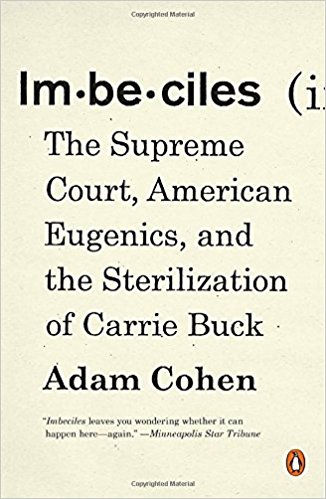
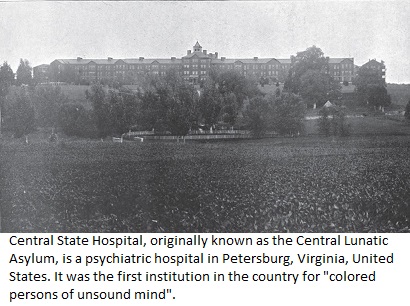
There is a lesson in American history in which they abused the rights (life, liberty and pursuit of happiness) of 70,000 people. We can observe-and-report on this bad experience and commit to effect change here in our Caribbean homeland. See-listen to the AUDIO Podcast here, relating this sad history based on the following book:

Mental Photo 2

Book Cover

AUDIO Podcast – The Supreme Court Ruling That Led To 70,000 Forced Sterilizations – Heard on Fresh Air

Mental Photo 4In the early 20th century, American eugenicists used forced sterilization to “breed out” traits considered undesirable. Adam Cohen tells the story in Imbeciles. Originally broadcast March 7, 2016.

This foregoing AUDIO report reviews the new paperback book Imbeciles by writer-lawyer Adam Cohen. Here is a representative sound-bite:

One of the worst Supreme Court decisions in US history … was the 1927 decision upholding a state’s right to forcibly sterilize a person considered unfit to procreate – unfit because they were deemed to be mentally deficient. That decision is part of a larger chapter of American history in which the eugenics movement was behind preventing so-called mentally deficient people from procreating through not allowing them to marry, sterilizing them and segregating them in special colonies.

The Nazis borrowed some ideas from American eugenicists. The eugenics movement also influenced the 1924 Immigration Act, which was designed in part to keep out Italians and Eastern European Jews. Adam Cohen’s book titled “Imbeciles” is about the eugenics movement in the early 20th century and the Supreme Court case legalizing sterilization.

This true history of the United States exposes what is embedded in this country’s DNA – a propensity for the “strong to abuse the weak”. And yet, the Caribbean suffers from an atrocious emigration rate of our citizens fleeing our homeland to go to the US. Surely, this history is unknown among these expatriates.  Surely, a rich education to the next generation of Caribbean citizens would deter some of them from setting their sights on US shores as the panacea for all Caribbean ills.

The reasons why people leave in the first place have been identified as “push and pull”:

“Push” refers to the reasons people who feel compelled to leave, to seek refuge in a foreign land. “Refuge” is an appropriate word; because of societal defects – like the “strong abusing the weak” – many from the Caribbean must leave as refugees – think DisabilityDomestic-abuseMedically-challenged and LGBT – for their life, liberty and pursuit of happiness.

“Pull”, on the other hand refers to the lure of a more safer life abroad; many times our people are emigrating to communities where they perceive that there are protections for the “weak against the abusive strong”.

It has been a consistent theme from the promoters of the Go Lean book, that we can dull the bright lights on any flashing American “Welcome Signs” so as to dissuade the “Pull” factor. Indeed, the consistent messaging of these Go Lean blogs has been that it takes less effort to reform and transform our Caribbean society than abandoning our home and trying to succeed in a Diasporic life.

Surely, the truth of American history will hurt … any false impressions that Caribbean people may have about American life and culture. Consider this sample of previous blog-commentaries:

https://goleancaribbean.com/blog/?p=10933 White is Right – Not!
https://goleancaribbean.com/blog/?p=10895 Trump’s Vision of the Caribbean: Yawn
https://goleancaribbean.com/blog/?p=10654 Stay Home! Immigration Realities in the US
https://goleancaribbean.com/blog/?p=10629 Stay Home! Remembering the Societal Defects of McCarthyism
https://goleancaribbean.com/blog/?p=10532 Learning from American Stereotypes – Good and Bad
https://goleancaribbean.com/blog/?p=10336 A Lesson in History: Haiti’s Reasonable Doubt of America
https://goleancaribbean.com/blog/?p=10052 Fake News? Welcome to America
https://goleancaribbean.com/blog/?p=9974 Lessons Learned from Pearl Harbor
https://goleancaribbean.com/blog/?p=9626 ‘Time to Go’ – America Marginalizes the Black-n-Brown Vote
https://goleancaribbean.com/blog/?p=9214 ‘Time to Go’ – Spot-on for Protest
https://goleancaribbean.com/blog/?p=8431 A Caribbean State Issued US Travel Advisory Citing Police Violence
https://goleancaribbean.com/blog/?p=7221 Street naming for Martin Luther King unveils a ‘Climate of Hate’
https://goleancaribbean.com/blog/?p=5733 Better than America? Yes, We Can!
https://goleancaribbean.com/blog/?p=5529 American Defects: Inventory of Crony-Capitalism
https://goleancaribbean.com/blog/?p=5527 American Defects: Racism – Is It Over?

Still some may conclude that the American ethos of yesteryear no longer applies today. Yet, the foregoing AUDIO Podcast relates that the landmark 1927 Supreme Court decision is still the law of the land in the US, and that there have been many times – including a recent 2001 Sterilization case – where provisions of this law is still being applied.

Mental Photo 3

America is very much troubled with their management of [transactional and degenerative] mental weakness:

The Go Lean book serves as a roadmap for the introduction and implementation of the technocratic Caribbean Union Trade Federation (CU) to “weed out” our own bad practices of the “strong abusing the weak” in our society. We want to pursue the Greater Good (greatest good to the greatest number of people which is the measure of right and wrong). And this includes help for people who are mentally weak.  The Go Lean/CU roadmap includes many strategies, tactics, implementations and advocacies to impact Caribbean society and our treatment of the weak, including the mentally weak due to congenital, transactional, adult-onset and degenerative causes.

“Persons with Disabilities” are still people. They can still contribute to society. Even in the US, people with disorders like Bi-Polar and Schizophrenia have been extremely impactful in their communities – consider the example of Nobel Prize Winner Dr. John Nash.

These previous Go Lean blog-commentaries have detailed mental health challenges in communities:

https://goleancaribbean.com/blog/?p=7659 Pre-Fab Housing and Elder-Care Conjunction
https://goleancaribbean.com/blog/?p=5901 The Demographic Theory of Elderly Suicide
https://goleancaribbean.com/blog/?p=5720 Role Model advocates for ‘Reasonable Accommodations’
https://goleancaribbean.com/blog/?p=2633 Book Review: ‘The Protest Psychosis’
https://goleancaribbean.com/blog/?p=2602 Guyana and Suriname Wrestle With High Rates of Suicides
https://goleancaribbean.com/blog/?p=2105 Recessions and Public Physical and Mental Health
https://goleancaribbean.com/blog/?p=1751 New Hope in the Fight against Alzheimer’s Disease

We must learn from this lesson … that the “weak (physical and mental) must be protected from the strong” that may have malice towards them. If we can assuage such abuses, we would mitigate the “push and pull” factors that have previously befallen our territories. Let’s do better in reforming and transforming our societal engines in the Caribbean homeland in regards to mental healthcare. If we do this, we will make the Caribbean a better place to live, work, heal and play for all citizens, “strong or weak”. 🙂

Download the free e-Book of Go Lean … Caribbean – now!

Sign the petition to lean-in for the roadmap for the Caribbean Union Trade Federation.
 

Share this post:
, , ,
[Top]

Managing the ‘Strong versus the Weak’ – Model of Hammurabi

Go Lean Commentary

Time for a lesson from history; a very old history; going back-back-back to the year 1754 BC.

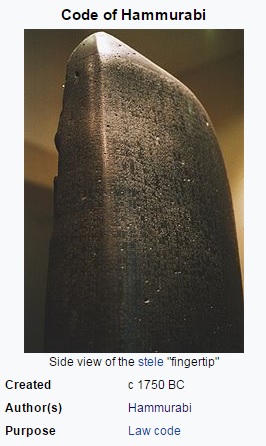
Hammurabi - Photo 1This is when the Code of Hammurabi was enacted within the Babylonian Empire, a Super Power in the ancient world; see Appendix reference and VIDEO below. Despite the passage of 3,800 years, there is a lesson to glean from this ancient legal precept for us today. Despite the irrelevance of so many of the 282 statutes, there in the preface of the codified Law is this statement:

“So that the strong should not harm the weak”

Despite how much advances we have made in the millennia since King Hammurabi of Babylon reigned, this concept seems to be void in so many societies; this concept …

  • … is not in the Caribbean.
  • … is not in the United States.
  • … is not in the New World.

There is an obvious “ignorance or negligence of this concept” in the New World. Consider the experience in the United States, where the American DNA seems to be based on a consistent pattern of the “strong abusing the weak” and the long civil rights struggle to overcome the abuse. This is American History and the American Experience. Consider these examples of the “weak” that were harmed:

  • Native American / Indigenous people – The Ameri-Indians were mostly eradicated. Those who survived where corralled onto limited territorial grounds called “reservations”.
  • Slavery of Africans – After the indigenous people of the New World could not be sustained in servitude, their replacements – native African tribes people proved more enduring.
  • Civil Rights Movement – After international forces and pressure ended the “Slave Trade“, then abolition of slavery, the emancipated people were suppressed, repressed and oppressed as 2nd class citizens for 100 years in the country they helped build.
  • Indentured Servants (East Indians & Irish) – As replacement labor sources, these desperate groups were hoarded to the New World where their labors and cultures were exploited as an under-class.
  • Labor Movement – After a “long train of abuses” in factories and industrial plants, the common worker was subjected to forceful resistance to unionization and collective bargaining.
  • McCarthyism – Congressional “Witch-hunts” and industry blacklisting anyone with a dissenting thought in the capitalism -vs- communism debate.
  • Farm Migrant Labor – Immigrants were subjected to a form of “slavery under a different name” to harvest crops on Big Agra farms.

The American creed of “In God We Trust” seems to indicate that the country would be based on religious principles. But the actuality of the abuses of the “strong against the weak” belie any religious predisposition. The US and all New World territories claim to be a nation based on Judeo-Christian principles; but the Bible’s Old Testament (Hebrew Scriptures) states:

Job 29:12 – “because I rescued the poor who cried for help, and the fatherless who had none to assist them.”

… and the Bible’s New Testament (Christian Greek Scriptures) states:

James 1:27 – “[the form of] religion that God our Father accepts as pure and faultless is this: to look after orphans and widows in their distress and to keep oneself from being polluted by the world.”

So the abuse of the “strong against the weak” is clearly an unabashed societal defect in the New World. History teaches that with the emergence of any new economic engines, “bad actors” will also emerge thereafter to exploit the opportunities – the weak – with good, bad and evil intent.

The New World needs to apply this lesson-learned from the “Old World of 1754 BC” to protect the “poor, sick and huddled masses yearning to be free”.

This lesson from history aligns with the book Go Lean…Caribbean, which seeks to reform and transform the 30 member-states of the Caribbean region; the book describes empowerments to target the economic, security and governing engines of society to ensure an adherence to the principle of the Greater Good. While we can observe-and-report on the other countries, we can only effect change here in our Caribbean homeland. This commentary is the first, 1 of 4 on a series on “Managing the Strong versus the Weak”. The other commentaries detailed in this series are as follows:

  1. Managing the Strong versus the Weak – Model of Hammurabi
  2. Managing the Strong versus the Weak – Mental Disabilities
  3. Managing the Strong versus the Weak – Bullying in Schools: “Teach them well and let them lead the way”
  4. Managing the Strong versus the Weak – Book Review: Sold-Out!

All of these commentaries relate to nation-building, stressing the community ethos necessary to forge a society where all the people are protected all the time. This has not always been the case in the Caribbean nor in the US. We must do better. The Code of Hammurabi gives us a great model:

  • The code has been seen as an early example of a fundamental law, regulating a government — i.e., a primitive constitution.[14][15]
  • The copying [of the code] in subsequent generations indicates that it was used as a model of legal and judicial reasoning.[17]
  • The Code focuses on justice, following the three classes of Babylonian society: 1. property owners, 2. freed men, and 3. Slaves.[18]. This is a good model for considering today’s contrast for the Rich, Middle Class and the Poor.

The Go Lean book serves as a roadmap for the introduction and implementation of the technocratic Caribbean Union Trade Federation (CU) to provide better stewardship for the region’s economic, security and governing eco-systems. The book actually conveys that there are many opportunities for the Caribbean to implement some “reasonable accommodations” so that the weak in society are not trampled on by the strong. Consider these two missions: Organ Transplantation & Disabilities:

10 Ways to Improve Organ Transplantation – Page 214

0 The Bottom Line on Organ Trade – Organ trade is the trade involving inner organs (heart, liver, kidneys, cornea, etc.) of a human for transplantation. In the 1970s pharmaceuticals that prevent organ rejection were introduced. This along with a lack of medical regulation helped foster the organ market. The problem of organ trafficking is widespread, although data on the exact scale of the organ market is difficult to obtain. (Most organ trade involves kidney or liver transplants). There is a worldwide shortage of organs available for transplantation, yet trade in human organs is illegal in all countries, except Iran.WHO states that, “Payment for…organs is likely to take unfair advantage of the poorest and most vulnerable groups, undermining altruistic donation and leads to profiteering and human trafficking.”
1 Leverage the full population – 42 million people – of the Caribbean Union Trade Federation.
2 Diaspora Matching
3 Medical Tourism
4 Self-Governing Entities
5 Xeno-transplantation and Artificial Organs
6 Trauma Centers
7 Tissue Bank
8 Intelligence Analysis / Post Op – Data Analysis
9 Health Insurance Cooperation
10 Public Health Mandates – Pre (Vaccinations/Immunizations) and Post-op (mental & physical) challenges

10 Ways to Impact Persons with Disabilities – Page 228

0 The Bottom Line on the American with Disabilities Act (ADA) – This Act is a law that was enacted by the U.S. Congress in 1990. It was signed into law on July 26, 1990, by President George H. W. Bush, and later amended with changes effective January 1, 2009. The ADA is a wide-ranging civil rights law that prohibits, under certain circumstances, discrimination based on disability. It affords similar protections against discrimination to Americans with disabilities as the Civil Rights Act of 1964, which made discrimination based on race, religion, sex, national origin, and other characteristics illegal. Disability is defined by the ADA as “…a physical or mental impairment that substantially limits a major life activity.” The determination of whether any particular condition is considered a disability is made on a case by case basis. Certain specific conditions are excluded as disabilities, such as current substance abuse and visual impairment that is correctable by prescription lenses.[ADA is based on the premise of] reasonable accommodation – an adjustment made in a system to “accommodate” or make fair the same system for an individual based on a proven need. Accommodations can be religious, academic, or employment related. This provision is also prominent in international law as the United Nations has codified the principle in the Convention on the Rights of Persons with Disabilities. [There are many international signatories to these principles and resolutions].
1 Leverage the full population – 42 million people – of the region for a Caribbean Persons With Disabilities Act.
2 Cruise Ships and Disability Tourism
3 Public Transportation and Public Accommodations – Assurance on CU facilities
4 Government Buildings and Proceedings
5 Mental Disabilities and Gun Control
6 Tele-type Call Center Access
7 Autism Awareness – Opt-Out Accommodations
8 Braille Websites
9 Closed Captioning … for Television
10 Public Awareness Campaign – Improve Image

The Go Lean movement (book and blogs) have identified the foregoing defect of the “strong abusing the weak”. The consequences and repercussions of this defect are:

Death or Diaspora

The Caribbean region needs to “weed out” this bad practice in our community ethos and instead, pursue the Greater Good. The book defines this attribute as follows (Page 37):

“The greatest good to the greatest number of people which is the measure of right and wrong”. –  Jeremy Bentham (1748-1832)

Our Caribbean Diaspora grows with every passing day – Ghost Towns are viable possibilities in some countries. People who love their homeland abandon it for foreign shores. As a result, we have a sad state of affairs. The reasons why people leave in the first place have been identified as “push and pull”:

“Push” refers to the reasons people who feel compelled to leave, to seek refuge in a foreign land. “Refuge” is an appropriate word; because of societal defects – like the “strong abusing the weak” – many from the Caribbean must leave as refugees – think DisabilityDomestic-abuseMedically-challenged and LGBT – for their life, liberty and pursuit of happiness.

“Pull”, on the other hand refers to the lure of a more safer life abroad; many times our people are emigrating to communities where there are protections for the “weak against the abusive strong”.

If only we can mitigate these “push and pull” factors, then we can dissuade our societal abandonment and have a chance of elevating (reforming and transforming) our societal engines in the homeland. But there is a need for due caution to all those in the Caribbean desiring to emigrate to the US, we urge you to take heed: the “grass is not greener” on that other side. The American propensity is for the “strong to abuse the weak”; maybe even more so than in your home country.

The Go Lean book and movement wants to help reform and transform the Caribbean. We see the defects throughout the New World, we perceive the harmful effects, but only the Caribbean is within scope for our remediation efforts. While we want to dissuade our people from fleeing, it is our quest to apply best-practices to improve our homeland, to make the Caribbean a better place to live, work and play. 🙂

Download the free e-Book of Go Lean … Caribbean – now!

Sign the petition to lean-in for the roadmap for the Caribbean Union Trade Federation.
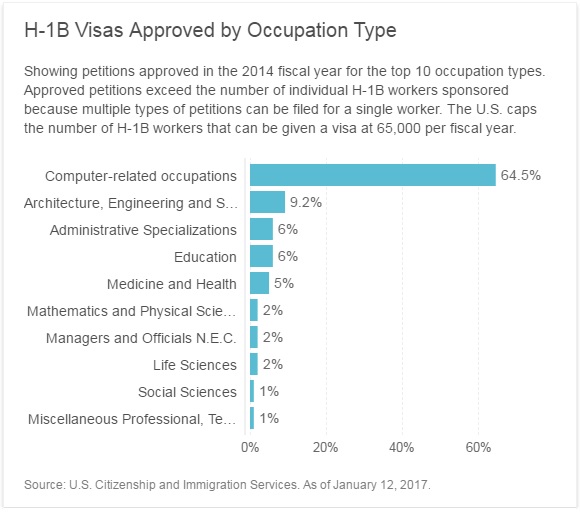
——————

Appendix – Code of Hammurabi

Hammurabi - Photo 2The Code of Hammurabi is a well-preserved Babylonian law code of ancient Mesopotamia, dating back to about 1754 BC. It is one of the oldest deciphered writings of significant length in the world. The sixth Babylonian king, Hammurabi, enacted the code, and partial copies exist on a seven and a half foot stone stele and various clay tablets. The code consists of 282 laws, with scaled punishments, adjusting “an eye for an eye, a tooth for a tooth” (lex talionis)[1] as graded depending on social status, of slave versus free man.[2] Nearly one-half of the code deals with matters of contract, establishing, for example, the wages to be paid to an ox driver or a surgeon. Other provisions set the terms of a transaction, establishing the liability of a builder for a house that collapses, for example, or property that is damaged while left in the care of another. A third of the code addresses issues concerning household and family relationships such as inheritance, divorce, paternity, and sexual behavior. Only one provision appears to impose obligations on an official; this provision establishes that a judge who reaches an incorrect decision is to be fined and removed from the bench permanently.[3] A few provisions address issues related to military service.

The code was discovered by modern archaeologists in 1901, and its editio princeps translation published in 1902 by Jean-Vincent Scheil. This nearly complete example of the code is carved into a basalt stele in the shape of a huge index finger,[4] 2.25 m (7.4 ft) tall. The code is inscribed in the Akkadian language, using cuneiform script carved into the stele. It is currently on display in the Louvre [Museum in Paris], with exact replicas in the Oriental Institute at the University of Chicago, the Clendening History of Medicine Library & Museum at the University of Kansas Medical Center, the library of the Theological University of the Reformed Churches (Dutch: Theologische Universiteit Kampen voor de Gereformeerde Kerken) in the Netherlands, the Pergamon Museum of Berlin, and the National Museum of Iran in Tehran.

Hammurabi ruled for nearly 42 years, from about 1792 to 1749 BC according to the Middle chronology. In the preface to the law, he states, “Anu and Bel called by name me, Hammurabi, the exalted prince, who feared God, to bring about the rule of righteousness in the land, to destroy the wicked and the evil-doers; so that the strong should not harm the weak; so that I should rule over the black-headed people like Shamash, and enlighten the land, to further the well-being of mankind.”[5] On the stone slab are 44 columns and 28 paragraphs that contained 282 laws. Some of these laws follow along the rules of ‘an eye for an eye’.[6]

Source: Retrieved March 29, 2017 from: https://en.wikipedia.org/wiki/Code_of_Hammurabi

—————

VIDEO – Hammurabi’s Code Explained: World History Review – https://youtu.be/BsPbqmYwxso

Published on Jan 7, 2015 – A 5 minute fun overview of Hammurabi’s Code, one of the earliest and most influential legal documents to be pounded out by Mesopotamia. Check out the real doc here http://www.commonlaw.com/Hammurabi.html

  • Category: Education

  • License: Standard YouTube License

Share this post:
, ,
[Top]

See Something, Say Something … Do Something

The conventional wisdom – advice to the public – for counter-terrorism is “See Something, Say Something”.

For all innocent victims, a 3rd step would be greatly appreciated, though not recommended, it is truly beneficial if that advice can be extended to “See Something, Say Something, Do Something”.

This was definitely the experience recently in the Caribbean island-state of St. Lucia when a couple of tourists were accosted-mugged by a crook-bully-nefarious-character and people in the general public came to their aid. See the story here:

Title: Citizens arrest man who attacks visitor
CU Blog - See Something, Say Something ... Do Something - Photo 1Concerned citizens today arrested a man who attacked a visitor on Jeremie Street near the Castries market, according to an eyewitness report.

The eyewitness told the Times that the incident occurred at around noon.

It is reported that the female visitor was in the company of her husband when she was attacked by a man, said to be in his thirties, in an apparent robbery attempt.

According to the eyewitness, a local man who witnessed the incident intervened and grabbed hold of the attacker who managed to free himself and flee.

However, according to the eyewitness, other citizens gave chase and eventually held the attacker.

The eyewitness said he was part of the group that effected the arrest and eventually handed the attacker over to the police.

Source: Saint Lucia Times Daily Newspaper – Posted 03-12-2017; retrieved 03/22/2017 from: https://stluciatimes.com/2017/03/12/citizens-arrest-man-who-attacks-visitor 

Photos of the Indoor & Outdoor Castries Market:

CU Blog - See Something, Say Something ... Do Something - Photo 1b

CU Blog - See Something, Say Something ... Do Something - Photo 3

CU Blog - See Something, Say Something ... Do Something - Photo 7

CU Blog - See Something, Say Something ... Do Something - Photo 6

CU Blog - See Something, Say Something ... Do Something - Photo 5

CU Blog - See Something, Say Something ... Do Something - Photo 4

This foregoing article belies a serious point of concern: never under-estimate a robber; they may have a gun and can inflict harm on “wanna-be-heroes”. This is why the bravery of that “one local man” in the foregoing story is even more impressive. The unnamed heroes in this case extended protection with no regard for their own safety. But despite this benevolence, it is out of place for civilians to put themselves in harm’s way to ensure public safety. That is the job of the country’s security forces.

The book Go Lean … Caribbean explains the Social Contract as where citizens surrender some of their freedoms and submit to the authority of the State in exchange for protection of remaining natural and legal rights. The formal institutions of the State (Police and Militia) are expected to deliver the security solutions, not some Good Samaritans. So under this Social Contract, it is expected that the people will “See Something, Say Something”, and then the State’s security apparatus would “Do Something”.

There is dysfunction in the Caribbean in the delivery of the Social Contract. So there is the need for many of the best-practices here-in for Caribbean people and institutions to apply to improve this experience.

There is the need to reform and transform the societal engines, the economic, security and governing eco-systems. The Go Lean book (Page 23) details many economic empowerments; and then makes this revelation:

… with the emergence of new economic engines, “bad actors” will also emerge thereafter to exploit the opportunities, with good, bad and evil intent.

This roadmap for Caribbean integration declares that peace, security and public safety is tantamount to economic prosperity. This is why an advocacy for the Greater Good must be championed as a community ethos. A prime precept is that it is “better to know than to not know” – this implies that privacy is secondary to security. A secondary precept is that bad things will happen to good people and so the community needs to be prepared to contend with the risks that can imperil the homeland.

The book Go Lean … Caribbean serves as a roadmap for the introduction and implementation of the Caribbean Union Trade Federation (CU). The branding Trade Federation emphasizes the economic mandate of the CU; but there must also be a security apparatus enveloping the economic engines. Tourism is the primary economic driver in the region. So muggings-robberies of tourists are unbecoming. The communities must mitigate the risks and assuage all threats against tourists. What strategies, tactics and implementations does the Go Lean/CU roadmap envision for this quest? Consider this sample:

Community Ethos – Security Principles Page 22
Ways to Improve Sharing – Mobile Command Centers Page 35
Security Initiatives at Start-up Page 103
Ways to Impact Justice Page 177
Ways to Reduce Crime Page 178
Ways to Improve for Gun Control Page 179
Ways to Improve Homeland Security Page 180
Ways to Mitigate Terrorism – Bullying Page 181
Ways to Improve Intelligence Gathering & Analysis Page 182
Ways to Improve Animal Husbandry – Security Dogs et al Page 185
Ways to Enhance Tourism – Tourist Hate Crimes Sentences Page 190
Ways to Impact the Prison-Industrial Complex Page 211

The CU‘s efforts will be supplemental to the individual member-states, like St. Lucia in the foregoing news story. These states will deputize the CU‘s security agencies – i.e. CariPol and the Naval Authority – to aid-abet the police and military forces to better deliver on the security mandates in the Social Contract. This intent was among the motivation for the Go Lean book in the first place. This is related as the Prime Directives, with these 3 statements:

  • Optimization of the economic engines in order to grow the regional economy and create new jobs.
  • Establishment of a security apparatus to protect the resultant economic engines and mitigate internal and external threats.
  • Improve Caribbean governance to support these engines.

The purpose of these prime directives is to elevate Caribbean society. We cannot do this alone. The challenges befalling the Caribbean region are too big for any one member-state alone. We have an interdependence within the region. See these statements from the formal Declaration of Interdependence, at the start of the book (Page 12):

x. Whereas we are surrounded and allied to nations of larger proportions in land mass, populations, and treasuries, elements in their societies may have ill-intent in their pursuits, at the expense of the safety and security of our citizens. We must therefore appoint “new guards” to ensure our public safety and threats against our society, both domestic and foreign. The Federation must employ the latest advances and best practices of criminology and penology to assuage continuous threats against public safety. The Federation must allow for facilitations of detention for convicted felons of federal crimes, and should over-build prisons to house trustees from other jurisdictions.

xvi. Whereas security of our homeland is inextricably linked to prosperity of the homeland, the economic and security interest of the region needs to be aligned under the same governance. Since economic crimes, including piracy and other forms of terrorism, can imperil the functioning of the wheels of commerce for all the citizenry, the accedence of this Federation must equip the security apparatus with the tools and techniques for predictive and proactive interdictions.

The Go Lean book provides exact details for this roadmap. Consider these points from Page 178 – headlines only here, except for #5 and #8 – from this section, entitled:

10 Ways to Remediate and Mitigate Crime

1 Lean-in for the Caribbean Single Market to leverage for Regional Threats
2 Deploy the Caribbean Police (CariPol)
3 Deploy a Regional Security Intelligence Bureau
4 Install an optimized Prison Industrial Complex
5 Equip local police with advanced technologies
The CU will provide grants to equip local police with advanced technologies, including video (dashboard cameras) and audio transmission, GPS tracking, and mobile computing systems to optimize community policing. The advanced systems also include anklet monitoring systems for non-violent offenders and suspects out on bail.
6 Provide Witness Protection at the Regional Level
7 Enable the Private Industry of First Responders and Bounty Hunters
8 Add Hate Crime Qualifiers on Sentencing
Criminal offences against “special” protected classes get extended sentences. This could include senior citizens, race-based crime, sexual biases, and even crimes against tourists, and the repatriates. Though not necessarily preventing crime, this provision sends the message to perpetrators that undermining the Greater Good is dealt with severely.
9 Roll-out a regional Youth Crime Awareness and Prevention
10 Reform the Dynamics of the Death Penalty – introduce Lethal Injection

Whatever the motivation for the crimes …

1. Need; 2. Greed; 3. Honor; 4. Justice; 5. Terrorism

… the Go Lean roadmap anticipates a forthright response and solution.

This point has been previously elaborated on in these prior blog-commentaries; see sample list here:

https://goleancaribbean.com/blog/?p=10566 Funding the Caribbean Security Pact
https://goleancaribbean.com/blog/?p=10222 Waging a Successful War on Terrorism – (Junior Partner of ‘Bullying’)
https://goleancaribbean.com/blog/?p=9072 Securing the Homeland – On the Ground
https://goleancaribbean.com/blog/?p=7485 A Lesson in the History of Interpersonal Violence – Street Crimes
https://goleancaribbean.com/blog/?p=7179 SME Declaration: ‘Change Leaders in Crime Fight’
https://goleancaribbean.com/blog/?p=5307 8th Violent Crime Warning to Bahamas Tourists
https://goleancaribbean.com/blog/?p=5002 Managing a ‘Clear and Present Danger’
https://goleancaribbean.com/blog/?p=4308 911 Emergency Telephone Systems: Art, Science, Issues
https://goleancaribbean.com/blog/?p=3713 Model of Regional Border Control
https://goleancaribbean.com/blog/?p=2782 Red Light Traffic Cameras: Art, Science, Issues
https://goleancaribbean.com/blog/?p=1965 America’s Navy – 100 Percent – Model for Caribbean Regional Security
https://goleancaribbean.com/blog/?p=1832 American Drug-arrested inmates to be deported – Look-out Caribbean
https://goleancaribbean.com/blog/?p=1554 Status of Forces Agreement for Regional Security Pact
https://goleancaribbean.com/blog/?p=1487 Here come the Drones … and the Concerns
https://goleancaribbean.com/blog/?p=535 Remembering and learning from Boston’s Terror Attack
https://goleancaribbean.com/blog/?p=392 Jamaica received World Bank funds to help in crime fight

The quest of the Go Lean movement is to protect the economic engines from any “bad actors”. These ones will always emerge; we must always be ready. This is the very essence of the Greater Good as a community ethos. This is a BIG motivation for the planners of this new Caribbean eco-system. The Go Lean book (Page 37) defines it as:

“… the greatest good to the greatest number of people which is the measure of right and wrong”. – Jeremy Bentham (1748-1832)

This … Greater Good philosophy also synchronizes with a principle from the Bible (Judges Chapter 4:17-22) with the actions of Jael to save her village rather than give refuge to Canaanite Army Commander Sisera. Her actions were celebrated by the prophetess Deborah, and esteemed as an example of a godly woman executing judgment for the Greater Good, even though at the expense of one person.

Tourism, at present, is the primary economic driver that feeds the Caribbean communities in general and St. Lucia in particular. (See the promotion VIDEO in the Appendix below). We need to not undermine it with selfish, felonious actions by a few “bad actors” imperiling the livelihoods and well-being of the greater community.

So now imagine the foregoing scenario at the Castries Market with the Go Lean/CU empowerments in place:

Being prepared – the goal of the Go Lean/CU roadmap – helps us to make our Caribbean communities better places to live, work and play.  We urge everyone in the Caribbean to lean-in to this plan; if you see something, say something, and then do something; leaning-in will be doing something. 🙂

Download the book Go Lean … Caribbean – now!

Sign the petition to lean-in for the roadmap for the Caribbean Union Trade Federation.
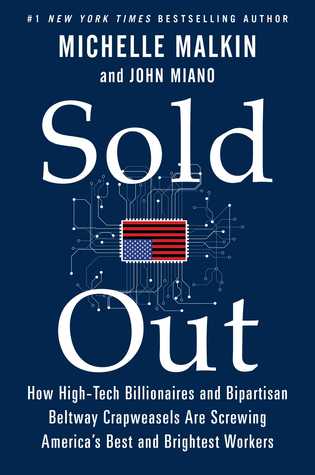
————–

Appendix VIDEO – St Lucia Top Ten Things To Do, by Donna Salerno Travel – https://youtu.be/ulNDWzJcRlE

Published on Nov 27, 2013 – St Lucia Top Ten Things To Do, is a tour of the most popular activities and highlights.
St. Lucia is the type of island that travelers dream about ~ a small, lush tropical gem that is still relatively unknown. In natural beauty, St. Lucia seems like an island plucked from the South Pacific and set down in the Caribbean.
Top Ten Things To Do on Vacation:
1) The Pitons
2) National Rain Forest
3) Sulphur Springs
4) Scuba and Snorkel
5) Jazz Festival
6) Pigeon Island National Park
7) Anse Chastanet Beach
8) Duty Free Shopping (i.e. Castries Market)
9) Horseback Riding on the Beach
10) Rodney Bay and Gros Islet

Share this post:
, ,
[Top]

Bill Gates: ‘Tax the Robots’

Go Lean Commentary

There is a fear – fueled by Hollywood – of a Robot Apocalypse. This is where the machines become self-aware – see Appendix VIDEO below – and ascertain that humans are a threat to their existence and so they seek to destroy all biological humans. This theme has been frequented  in movies like “The Terminator“, “The Matrix“, “I, Robot“, “West World“, “Avengers – Age of Ultron” and more.

CU Blog - Bill Gates - 'Tax the Robots' - Photo 2While enmity between humans and robots (Artificial Intelligence) may NOT be a legitimate fear today, one thing for sure, many robots, robotic systems, autonomous systems and automation systems are responsible for taking a lot of jobs IN REAL LIFE; there is no need for Hollywood make-believe with this threat.

From a governance perspective, this is bad! Humans pay taxes, social security, national insurance, pensions, healthcare and other community benefits. Robots do not!

Or should they?

Bill Gates, a billionaire whose fortunes were forged from the computer software industry asserts that robots should pay taxes. See the related news articles or editorials here:

Title #1: Robots that steal human jobs should pay taxes: Bill Gates

WASHINGTON: Robots that steal human jobs should pay taxes, Microsoft co-founder and philanthropist Bill Gates has said.

CU Blog - Bill Gates - 'Tax the Robots' - Photo 1“Certainly there will be taxes that relate to automation. Right now, the human worker who does, say, USD 50,000 worth of work in a factory, that income is taxed and you get income tax, social security tax, all those things,” Gates told Quartz website.

“If a robot comes in to do the same thing, you’d think that we’d tax the robot at a similar level,” said Gates, one of the world’s richest men.

Gates said he believes that governments should tax companies’ use of robots, as a way to at least temporarily slow the spread of automation and to fund other types of employment.

The 61-year-old philanthropist said a robot tax could finance jobs taking care of elderly people or working with kids in schools, for which needs are unmet and to which humans are particularly well suited.

He argued that governments must oversee such programmes rather than relying on businesses, in order to redirect the jobs to help people with lower incomes.

“If you can take the labour that used to do the things automation replaces, and financially and training-wise and fulfilment-wise have that person go off and do these other things, then you’re net ahead,” said Gates, one of the leading players in artificial-intelligence technology.

“But you can’t just give up that income tax, because that’s part of how you’ve been funding that level of human workers,” he said.

The web portal reported that the idea is not totally theoretical as EU lawmakers considered a proposal to tax robot owners to pay for training for workers who lose their jobs, though on February 16 the legislators ultimately rejected it.

“You ought to be willing to raise the tax level and even slow down the speed” of automation, Gates said.

“Exactly how you’d do it, measure it, you know, it’s interesting for people to start talking about now,” Gates said.

Talking about the tax on robots, Gates said, “Some of it can come on the profits that are generated by the labour- saving efficiency there. Some of it can come directly in some type of robot tax. I don’t think the robot companies are going to be outraged that there might be a tax. It’s OK.”

Source: Economic Times Magazine – Posted February 20, 2017; retrieved March 15, 2017 from:
http://economictimes.indiatimes.com/news/international/business/robots-that-steal-human-jobs-should-pay-taxes-bill-gates/articleshow/57234194.cms

—————

Title #2: What’s Wrong With Bill Gates’ Robot Tax
By: Noah Smith

Microsoft Corp. founder Bill Gates made a splash in a recent interview, when he suggested that robots should be taxed in order to help humans keep their jobs:

    “Right now, the human worker who does, say, $50,000 worth of work in a factory, that income is taxed and you get income tax, social security tax, all those things. If a robot comes in to do the same thing, you’d think that we’d tax the robot at a similar level.”

Gates is only one of many people in the tech world who have worried about automation and its threat to workers. YCombinator founder Sam Altman, for instance, is conducting an experiment with basic income — a regular cash payment to all households. That policy has gained popularity across Silicon Valley, if not in the rest of the country.

It’s easy to see why the tech world is worried. The rise of machine learning has increased the fear that many humans could simply become obsolete — for example, 3.5 million American truck drivers might soon find their jobs threatened by driverless trucks. Though in the past, technology usually complemented workers instead of replacing them, there’s no law of nature saying the technology of the future will work the same. A few economists even claim that cheap automation has already diverted income from workers to company owners.

The fear isn’t that all humans will become obsolete, but that automation will increase inequality among humans. Company owners and high-skilled workers — people who tell machines what to do — would be vastly enriched, while everyone else either works low-skilled jobs for meager wages or goes on welfare.

Another fear is that even if the mass of humanity ultimately does find new ways to add value by complementing new technology — to “race with the machines,” as economist Erik Brynjolfsson puts it — this transition could take a long time and hurt a lot of people. As Bloomberg View’s Tyler Cowen has noted, wages in Britain fell for four decades at the start of the Industrial Revolution. More recently, we’ve seen very slow and painful adjustment to the impact of globalization. If the machine learning revolution hurts workers for 40 years before ultimately helping them, it might be worth it to slow that revolution down and give them time to adjust.

The main argument against taxing the robots is that it might impede innovation. Growth in rich countries has slowed markedly in the past decade, suggesting that it’s getting harder and harder to find new ways of doing things. Stagnating productivity, combined with falling business investment, suggests that adoption of new technology is currently too slow rather than too fast — the biggest problem right now isn’t too many robots, it’s too few. Taxing new technology, however it’s done, could make that slowdown worse.

The problem with Gates’ basic proposal is that it’s very hard to tell the difference between new technology that complements humans and new technology that replaces them. This is especially true over the long term. Power looms replaced human weavers back in the Industrial Revolution, but people eventually became more productive, by learning to operate those looms. If taxes had slowed the development of power looms, the eventual improvements would have come later.

This is a powerful argument against the taxation of automation. Gates is right to say that we should start thinking ahead of time about how to use policy to mitigate the disruptions of automation. But given the importance of sustaining innovation, we should look at alternative policies.

One idea is a wage subsidy for low-income workers. This basically puts a thumb on the scale in the human-robot struggle, by making human workers cheaper. The easiest way to do that is to cut payroll taxes, which disproportionally fall on low earners. That would mean paying for Medicare and even Social Security out of other revenue sources, such as higher income taxes on the rich or a value-added tax.

Another idea is to simply redistribute capital income more broadly. Income from capital gains, land rents and dividends now is highly concentrated among the wealthy. But policy could change that. One idea, suggested by economist Miles Kimball, is a sovereign-wealth fund. The government could use tax revenue to buy stocks and real estate, and distribute the profits to the populace. This would essentially redistribute some of the income produced by the robots, giving every citizen a stake in the new automation economy. The wealth fund could be split into many smaller funds, each with different managers, in order to prevent concentration of ownership.

So there are probably better ways than taxing robots to help humans avoid the harms of automation. Instead of slowing innovation, the government should think about taxing humans less and redistributing the income of robots more.

This column does not necessarily reflect the opinion of the editorial board or Bloomberg LP and its owners.

Related story: Driverless Cars

About the Author: Noah Smith is a Bloomberg View columnist. He was an assistant professor of finance at Stony Brook University, and he blogs at Noahpinion.

Source: Posted February 28, 2017; retrieved March 15, 2017 from: https://www.bloomberg.com/view/contributors/AR3OYuAmvcU/noah-smith

This drama is aligned with the book Go Lean…Caribbean, which calls for the elevation of Caribbean economics, asserting that the region needs to better prepare and contribute in the fields of Science, Technology, Engineering and Mathematics (STEM) plus related fields of Internet & Communications Technologies (ICT). The book examines strategies, tactics, implementations and advocacies to foster more technologies and grow the economy. This quotation – from Page 57 – is most representative of the focus on technology:

Technological change is more than just internet & communications (ICT); though this field is dynamically shifting the world. There are also industrial changes taking place, as in more efficient manufacturing methods, automation/robotics, and transportation options

There are specific CU agencies will manage the other areas of technological change. The community ethos is no not just to consume technology products but to produce them as well. This allows us to better compete with the rest of the world, having both an “offense and on defense”.

But according to the foregoing articles, the raised concerns are our reality: there is no plan to tax robots-automation above and beyond to replace the lost human tax incomes.

Consider this simple scenario of self-driving/autonomous vehicles; the foregoing articles identified how truck drivers could be displaced by self-driving vehicles. The Go Lean movement have addressed these advances many times; consider this sample:

‘Olli’ – The Self-Driving Public Transit Vehicle
Drones to be used for Insurance Damage Claims
Pleas to Detroit on Technology in Cars
Here come the Drones … and the Concerns
The need for Google’s highway safety innovations
Autonomous Ghost Ships

Ah, the art and science of autonomous vehicles.

This is not science fiction; this is today’s science. It will take a technocratic administration to shepherd these advances through Caribbean society. The book Go Lean … Caribbean serves as a roadmap for the introduction and implementation of the technocratic Caribbean Union Trade Federation (CU). This book  is a complete roadmap, turn-by-turn guide for elevating Caribbean society. There is a plan for adapting government revenue options and for creating jobs to these global changes. Early in the Go Lean book, these responsibilities were identified as important functions for the CU with these pronouncements in the Declaration of Interdependence (Pages 12 & 14):

xiv. Whereas government services cannot be delivered without the appropriate funding mechanisms, “new guards” must be incorporated to assess, accrue, calculate and collect revenues, fees and other income sources for the Federation and member-states. The Federation can spur government revenues directly through cross-border services and indirectly by fostering industries and economic activities not possible without this Union.

xxvi.  Whereas the Caribbean region must have new jobs to empower the engines of the economy and create the income sources for prosperity, and encourage the next generation to forge their dreams right at home, the Federation must therefore foster the development of new industries, like that of ship-building, automobile manufacturing, prefabricated housing, frozen foods, pipelines, call centers, and the prison industrial complex. In addition, the Federation must invigorate the enterprises related to existing industries tourism, fisheries and lotteries – impacting the region with more jobs.

xxvii.  Whereas the region has endured a spectator status during the Industrial Revolution, we cannot stand on the sidelines of this new economy, the Information Revolution. Rather, the Federation must embrace all the tenets of Internet Communications Technology (ICT) to serve as an equalizing element in competition with the rest of the world. The Federation must bridge the digital divide and promote the community ethos that research/development is valuable and must be promoted and incentivized for adoption.

xxviii. Whereas intellectual property can easily traverse national borders, the rights and privileges of intellectual property must be respected at home and abroad. The Federation must install protections to ensure that no abuse of these rights go with impunity, and to ensure that foreign authorities enforce the rights of the intellectual property registered in our region.

The Caribbean fully understands the effect of losing large swaths of tax-paying citizens. We have an atrocious rate of societal abandonment, especially among our college-educated citizens; that figure has been reported at 70%. Even before talk of a Robot Apocalypse, the Caribbean region had suffered this dysfunction. We have fallen behind with all the ‘Agents of Change’ in society.

These ‘Agents of Change’ are affecting everyone, everywhere. The Go Lean book therefore posits that there is a need to re-focus, re-boot, and optimize the engines of commerce – fix the broken eco-systems – so as to make the Caribbean a better place to live, work and play. We need jobs; we need tax revenues (normally based on wages). The foregoing news articles therefore are very relevant … and fear-inspiring.

The book Go Lean/CU roadmap posits that ICT (Internet & Communications Technology) can be a great equalizer for the Caribbean to better compete with the rest of the world. This technology-job-creation focus is among these 3 prime directives of CU/Go Lean:

  • Optimization of economic engines in order to grow the regional economy to $800 Billion and create 2.2 million new jobs.
  • Establishment of a security apparatus to protect the resultant economic.
  • Improvement of Caribbean governance, including revenue systems, to support these engines.

According to previous blog/commentaries, computers are reshaping the global job market; also there is a great demand for STEM-related jobs. So we cannot just “stick our head in the sand” and ignore these issues. We are already affected. There are other communities that have already prepared themselves for tax revenues from other sources. The Go Lean book considers (Page 194) the example of Southern California (Los Angeles County). That one municipality collects tax revenues from real property (land) and personal property, and in 2007 they enjoyed a gross revenue stream of over $1 Trillion – see Appendix.

The book Go Lean…Caribbean details the effort of optimizing government revenue sources. It features the community ethos to adopt, plus the executions of key strategies, tactics, implementations and advocacies. Consider this preview (Page 172) of 10 Revenue Sources for the CU federal administration – the CU will generate-collect its own revenue streams – as follows:

  1. The Caribbean Single Market adds a new federal Economic Pie for distribution back to member-states.
  2. E-Payments Settlement
  3. In-sourcing e-Government Services
  4. Property Tax Surcharge
  5. Income/Sales Tax Add-ons
  6. Industry Licensing (Security, e-Learning, Health Care Monitoring, Postal)
  7. Regional Services: GPO, Lottery, Spectrum Auctions, Underwater Cables, Mining/Drilling Rights
  8. Prison Industrial Complex
  9. Natural Disaster Insurance Fund
  10. Capital Markets for Treasury Bonds

The primary ingredient for success in the Go Lean/CU roadmap will be Caribbean people, not Caribbean machines – robots have no personage or tax expectation in this roadmap. This community attitude would lead to fostering more development and growth with automated solutions in the region and for the rest of the world (export).

This is new for us. The Caribbean is arguably the best address on the planet, but jobs and government revenues are obviously missing. This Go Lean roadmap is conceivable, believable and achievable for turning around our dire disposition. Everyone is hereby urged to lean-in to this Go Lean roadmap. This provides the guidance to get to the region to its desired destination: a better place to live, work and play. 🙂

Download the book Go Lean … Caribbean – now!

Sign the petition to lean-in for the roadmap for the Caribbean Union Trade Federation.
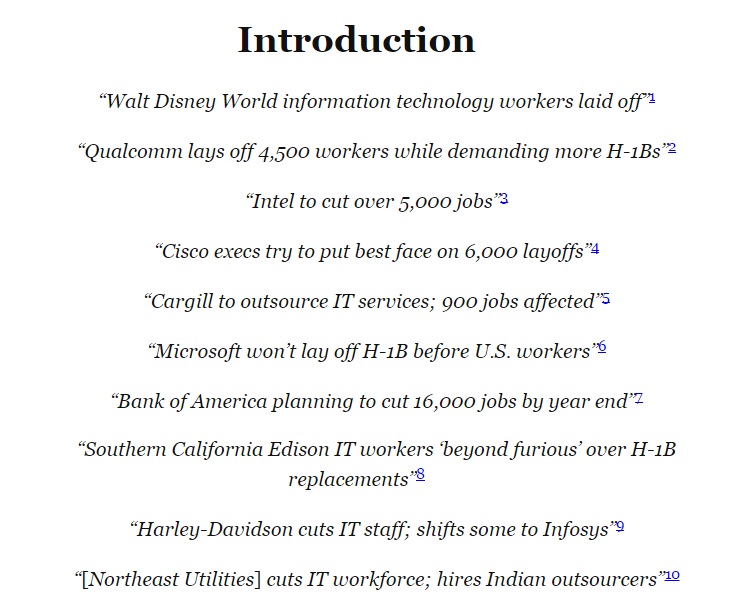
—————–

Appendix – The Bottom Line on ‘$1 Trillion Dollar Budget’

CU Blog - Bill Gates - 'Tax the Robots' - Photo 3

The Los Angeles County Assessor Office establishes a taxable value for all property [real and personal] subject to property taxation. The 2007 Roll value in Los AngelesCounty was over $1 trillion dollars. That’s correct, 1 trillion dollars. This amount was greater than the gross national product (GNP) of all but 9 countries in the world. – www.assessor.lacounty.gov

Los Angeles County is commonly associated with the entertainment industry; all six major film studios—Paramount Pictures, 20th Century Fox, Sony, Warner Bros., Universal Pictures, and Walt Disney Studios—are located within the county. Beyond motion picture and television program production, other major industries of Los Angeles County are international trade supported by the Port of Los Angeles and the Port of Long Beach, music recording and production, aerospace, and professional services such as law and medicine.

—————–

Appendix VIDEO – Amazing Robot Becomes Self-Aware (Explained) – https://youtu.be/jx6kg0ZfhAI

Published on Jul 18, 2015 – Roboticists at the RPI in New York have built a trio of robots that were put through the classic ‘wise men puzzle’ test of self-awareness – and one of them passed.

Further details here: http://bit.ly/1HxmZrN

Video via: RAIR Lab

Music via: Ultimate Relax Club

Share this post:
, , ,
[Top]

Logical Addresses – ‘Life or Death’ Consequences

Go Lean Commentary

CU Blog - Logical Addresses - Life or Death - Photo 5There is the need to reform and transform the Caribbean, with strategies and tactics for modernization of street addresses.

Why is this subject important?

It could mean Life-or-Death.

It is that serious!

Question to a Caribbean man: So where do you live?

Answer: Go down the main street and turn at the corner of the Catholic Church, go two side corners past the mango tree, turn left by the pink house; go down two more houses pass Auntie Mae’s yard, and my house is facing hers.

This is no joke; this is our sad reality. Imagine if the inquirer in this case is an Ambulance Dispatcher. They must send paramedics urgently or a sufferer can die; (think heart attack, stroke, poisoning episode, etc.). Yet still, this above address standard is the Caribbean norm.

We can – and must – do better.

Verily the book Go Lean…Caribbean details a mission to re-organize the addressing scheme in the region for all 30 Caribbean member states. This book serves as a roadmap for the introduction and implementation of the technocratic Caribbean Union Trade Federation (CU); this includes a subset institution, the Caribbean Postal Union (CPU). The end result, according to the book Page 78:

The CPU will collaborate with member-states in remapping all residential and commercial addresses for unique house numbers and street names.

There are a lot of advantages for an optimized postal eco-system, none more vital than Life-or-Death. The resultant address from the CU/CPU effort will allow emergency operations to have a consistently logical-sequential-directional address. Yes, this is the standard for North American 911 Emergency operations with their Enhanced 911 (E911) system, which provides both caller location and identification; see the reference here:

Location determination depends upon the Automatic Location Information (ALI) database which is maintained on behalf of local governments by contracted private third parties generally the Incumbent Local Exchange Carrier (ILEC).
… 
A 911 address contains a uniform number, the street name, direction (if applicable), and the city. The address number is assigned usually by the grid of the existing community. Each county usually has their own policy on how the addressing is done, but for the most part National Emergency Number Association (NENA) guidelines are followed. These guidelines are expressed by the Master Street Address Guide (MSAG). The exact 911 addresses and associated phone numbers are put into the ALI database. – Wikipedia.

CU Blog - Logical Addresses - Life or Death - Photo 0This effort was just recently completed in the Caribbean territory of the United States Virgin Islands; see the Information Sheet on the relevant webpage – published beforehand … circa 2012 – in the Appendix below. This reference depicts the effort for the USVI, the last of the continental American States & Territories to comply. From a Caribbean perspective, this project is now complete for Puerto Rico and the USVI – see the complete Postal Addressing Standard for PR & USVI here. We now need to model it in the rest of the Caribbean, as part of the CPU initiative. But Postal is not our primary motivation; the quest to mitigate Life-or-Death emergencies is a BIGGER concern.

With this empowerment in place, the opening dialogue would go differently; consider this now:

Question to a Caribbean man: We have your address at 5407 Guava Berry Drive. Is there anything blocking access for the ambulance?

Answer: No. Please hurry.

Postal mail efficiency is secondary in this discussion; it is only “gravy”.

With optimized addresses, the CPU will be able to deliver logistical solutions for Caribbean modern commerce. This implementation can transform Caribbean society for the people and institutions.

The Go Lean book details the quest to transform the Caribbean; it features a 370-page how-to guide, a roadmap for elevating the region’s societal engines of economics, security and governance. It leads with economic issues, not administrative ones! But there must be logistical solutions – infrastructure – before many of the economic empowerments can manifest, such as electronic commerce. The book details a www.myCaribbean.gov Marketplace.

The opening dialogue would go differently now:

Question to a Caribbean man: What is your address for your package delivery?

Answer: I’m at 5407 Guava Berry Drive.

The Go Lean/CU/CPU plan calls for the regional consolidation of the postal operations on Day One/Step One of the roadmap, during the Assembly phase. In order to enjoy the infrastructural benefits of the CPU plan, there must be some heavy-lifting in regional governance: the political transformation of member-states vesting their authority to a deputized CU federal agency. This vision is defined early in the Go Lean book (Page 12) in these pronouncements in the Declaration of Interdependence:

xi.  Whereas all men are entitled to the benefits of good governance in a free society, “new guards” must be enacted to dissuade the emergence of incompetence, corruption, nepotism and cronyism at the peril of the people’s best interest. The Federation must guarantee the executions of a social contract between government and the governed.

xii. Whereas the legacy in recent times in individual states may be that of ineffectual governance with no redress to higher authority, the accedence of this Federation will ensure accountability and escalation of the human and civil rights of the people for good governance, justice assurances, due process and the rule of law. As such, any threats of a “failed state” status for any member state must enact emergency measures on behalf of the Federation to protect the human, civil and property rights of the citizens, residents, allies, trading partners, and visitors of the affected member state and the Federation as a whole.

xv. Whereas the business of the Federation and the commercial interest in the region cannot prosper without an efficient facilitation of postal services, the Caribbean Union must allow for the integration of the existing mail operations of the governments of the member-states into a consolidated Caribbean Postal Union, allowing for the adoption of best practices and technical advances to deliver foreign/domestic mail in the region.

The Go Lean book details the series of community ethos, strategies, tactics, implementations and advocacies to foster the best practices in infrastructure so as to usher in the delivery of the CPU in the region. Consider this sample:

Tactical – How to Grow the Economy to $800 Billion – Trade and Globalization Page 70
Tactical – Separation of Powers – Postal Services Page 78
Tactical – Separation of Powers – Interstate Commerce Administration Page 79
Implementation – Year 1 / Assemble Phase – Establish CPU Page 96
Implementation – Anecdote – Mail Services – USPS Dilemma Page 99
Implementation – Ways to Optimize Mail Service & myCaribbean.gov Marketplace Page 108
Implementation – Ways to Deliver Page 109
Advocacy – Ways to Improve Emergency Management Page 196
Advocacy – Ways to Impact Urban Living Page 234

Issues related to the CPU business model have previously been detailed in these Go Lean blog-commentaries, listed here:

https://goleancaribbean.com/blog/?p=9839 CPU Model – Alibaba stretches the globe with 4 new Data Centers
https://goleancaribbean.com/blog/?p=7991 Transformations: Caribbean Postal Union – Delivering the Future
https://goleancaribbean.com/blog/?p=3187 Robots help Amazon tackle Cyber Monday
https://goleancaribbean.com/blog/?p=2488 CPU Model – Alibaba Comes to America
https://goleancaribbean.com/blog/?p=1416 CPU Model – Amazon’s new FIRE Smartphone

The need for address standardization is indisputable; there are so many benefits, none greater than Life-or-Death scenarios in emergency situations. The motivation of the Go Lean book is economic empowerment; yet still so many mitigations are presented to optimize the “art and science of Emergency Management”. In a previous blog-commentary, the full details of the 911 Emergency Telephone Number system were examined; consider these quoted excerpts:

The Go Lean book embarks on the strategy to consolidate the Emergency Management (preparation and response) for the entire Caribbean region. Therefore the issue of Emergency Telephone Numbers is of serious concern; sometimes it’s a life-or-death matter.

… everyone expects to pick up a phone and dial a 3-digit code – like 911 – and within short order be able to talk with an Emergency Management First-Responder for Police, Ambulance and Fire incidences. …

The Go Lean book posits that communication technologies must be regulated at the regional level for the Greater Good of the Caribbean. There are too many instances with overlapping spectrum from one member-state to another. Citizens should not need to worry about border considerations during emergency incidences. …

The region needs this delivery; it makes the Caribbean a better place for emergencies.

Issues related to regional coordination of Emergency Management have been detailed in these previous Go Lean blog-commentaries:

https://goleancaribbean.com/blog/?p=9334 Hurricane Categories – The Science
https://goleancaribbean.com/blog/?p=7896 The Logistics of Disaster Relief
https://goleancaribbean.com/blog/?p=7449 ‘Crap Happens’ – So What Now?
https://goleancaribbean.com/blog/?p=5002 Managing a ‘Clear and Present Danger’
https://goleancaribbean.com/blog/?p=4308 911 – Emergency Response: System in Crisis

Now is the time for all of the Caribbean, the people and governing institutions (like Postal Operations), to lean-in for the empowerments in the book Go Lean … Caribbean. The CU/CPU will deploy the logistical efficiencies and innovative products-services to impact its prime directives; identified with the following 3 statements:

  • Optimization of the economic engines in order to grow the regional economy to $800 Billion & create 2.2 million new jobs.
  • Establishment of a security apparatus to ensure public safety and protect the resultant economic engines.
  • Improve Caribbean governance to support these engines, including the consolidation of the state-ran postal operations.

(A quick note on jobs: a previous blog-commentary identified that the Uber-Everything business model can emerge in the Caribbean region once there is address standardization).

The VIDEO here demonstrates how the E911 program works in North America; this is a model for the whole of the Caribbean region:

VIDEO – How E9-1-1 Works – https://youtu.be/MZwBZYyOybI

Uploaded on Dec 14, 2010 – Avaya Emergency Services Product Manager Mark Fletcher, explains how E911 calls and location information in PBX systems gets to the 911 dispatcher at the PSAP. Learn more at http://www.avaya.com.

This CU/CPU roadmap is an important plan for streamlining the addresses in the region. But this is not just a plan for delivering the mail; it is more important than that; it can deliver Life-or-Death solutions. This is our plan for delivering a new Caribbean: a better place to live, work and play. 🙂

Download the book Go Lean … Caribbean – now!

Sign the petition to lean-in for the roadmap for the Caribbean Union Trade Federation.

———-

Appendix – USVI Street Addressing Initiative

What is the Street Addressing Initiative? Who is involved? The Street Addressing Initiative (SAI) is a project spearheaded by the Office of the Lieutenant Governor, and involving many agencies and departments of the Virgin Islands Government, including the Tax Assessor, GIS, Public Works, Planning and Natural Resources, WAPA, Historic Preservation, VITEMA (Emergency Management/E-911), Police, Health, viNGN and others. In addition, Innovative and other private companies are assisting the Government with the Project. The Government has partnered with the University of the Virgin Islands – Eastern Caribbean Center, Applied Geographics (AppGeo) and Spatial Focus, Inc. to develop the addressing system, and to conduct a pilot study that will test methods for assigning address numbers throughout the Territory.

The SAI will ultimately create a street address for every home, business, and other building within the U.S.V.I. At present, the pilot project is underway to test the addressing system and street naming processes. Small areas on each of the 3 major islands (STT, STX, STJ) are  included in this pilot program.

I like my current address. Why do I need a new address? Current addresses are based on Estate Names and Plot numbers. These numbers were not assigned in an orderly manner, and have resulted in a confusing pattern of numbering that makes finding an individual house or business difficult. Addresses work because they are arranged in logical, sequential patterns, with well-identified street names, and posted numbers. The SAI will provide a new address number that will conform to a logical and well documented system of numbering. This type of addressing will provide broad benefits such as improved E-911, efficiency for utility service providers and delivery companies like UPS and Fedex. In general, logical addressing helps ensure that others can find you more quickly in an emergency and/or to deliver services or goods.

Why is my new address number so high?  Why is my new address so different than my plot number? Your new street address is based on a numbering system developed for the U.S. Virgin Islands.  Each island has two numbering systems.  For St. Croix, these are centered on the towns of Frederiksted and Christiansted.  For St. Thomas, these are centered at Government House in Charlotte Amalie, and at Red Hook.  For St. John, they are centered in CruzBay and CoralBay.  Lower numbers are used in the towns, and increase as you travel further from these centers.  Your new number reflects the relative distance from these starting points.

Plot numbers were created when the land in your Estate was subdivided into lots, or when the original lots were re-subdivided.  The numbering does not necessarily follow the street pattern, or maintain a logical sequence.  This makes it difficult for emergency responders, service providers, and others to find your home or place of business.  These numbers are not useful as addresses.  They are, however, useful as property identifiers, and will be maintained for that purpose.

I thought that I lived on a different street than I have been assigned. Why do I have to  change my street name? To the greatest extent possible, where streets have existing, official names that have been in use, the SAI will use those names. However, many streets were never officially named when they were created, and the SAI will be working with neighborhood groups and Homeowners’ Associations to designate names for these streets. In a small number of cases, where there are duplicate names, the SAI will need to change one of the names. The Addressing Team will try to minimize the disruption caused by these street name changes.

Now that I have been assigned a new address, what are the next steps? The first, most important step is to post your new address on the front of your house or business in a location that is visible from the street (see next question below). The project team will be communicating your new number and street name to WAPA, Innovative, and VITEMA/E-911 and to the US Postal Service, and other governmental agencies so that these agencies know what your new address is.

Are there any guidelines for putting my new number on my house or business? Numbers should be at least 4” tall, and should be in a contrasting color from the background color of your house. For example, if your house is a light color or white, please use black, dark blue, brown or dark green numbers. If your house is a dark color, please use white, or light colored numbers. Please be certain that your number is completely visible from the street. If your home or building is not visible from the street, the number can be placed on a sign located at the driveway leading to your home or building. Again, the numbers should be a contrasting color to the sign’s background.  The examples below show good posted address numbers.  Remember that your number must be visible from the street.  If your home or business is not visible from the street, you should use a free-standing sign on a post at least 30 inches in height.  Numbers should be on both sides of the sign.

Post Style:

CU Blog - Logical Addresses - Life or Death - Photo 1

House Styles:

CU Blog - Logical Addresses - Life or Death - Photo 2

CU Blog - Logical Addresses - Life or Death - Photo 3

CU Blog - Logical Addresses - Life or Death - Photo 4

What date is my street address effective? New addresses are effective as of July 1, 2013.  There will be a public announcement through radio, television and other media to let you know that you should begin using your new number and street name.  You may post your new number as soon as it has been assigned.

Can I still use my old address? Many people will continue to use their old address for historic reasons. However, for purposes of US Mail, E-911, and utility services, you are strongly encouraged to use your new SAI address. The existing number is most likely your lot number for tax purposes, and will be retained by the Tax Assessor to identify your property parcel for tax assessment and billing.

When will I see a street sign on my street? The SAI is working with the Government and Department of Public Works to develop a street signage program.

What is my COMPLETE ADDRESS? What is my ZIP Code? What should I write on letters? Your complete address includes your address number, street name, Estate name, plus the Island and ZIP Code. If you currently have a ZIP Code, please keep using it. We will be working  with the U.S. Postal Service to identify areas which may need new or additional ZIP Codes.

Example of a complete address:

5407 Guava Berry Drive, Mon Bijou
St. Croix, USVI, 00850

Is my plot number still the same? Yes, there is NO change to your plot number.

I was assigned a provisional road name. What should I do to be assigned a permanent, official road name? In some cases, where a neighborhood has unnamed streets, the SAI will be using a provisional street name. These names will include the name of the Estate and a number to identify the specific “unnamed” road in the Estate. For example, “Contant Provisional Road 10”. The SAI is asking the property owners along each of the streets to suggest a name for the street, and submit it to the SAI for confirmation and approval. If your property is on one of these streets, you will find further information about this process in the addressing packet left on your property.

For further information on the street naming process, please visit the top of the page.

Alternatively, contact the Street Addressing Initiative by telephone or mail at the addresses on your door hanger.

Will my new address affect my utility service? Will my electricity and phone provider use my new address? Will there be loss of service? Your utility services, phone services, etc. will not be affected. The SAI is providing each of the utilities with a listing of all existing and new addresses, so that they may update their records. This does not require any action on your part. Once updated, the providers will use your new address as a service address. If you use a P.O. Box or other mailing address, these will not be changed.

When will the rest of the islands get new addresses? The current pilot project is expected to be finished in July, 2013. The U.S.V.I. Government is currently seeking funding for addressing for the remainder of the Territory as well as for street signage. The Government is hopeful that the remaining areas of the Territory can be addressed within the next 2-4 years.

Source: Retrieved March 7, 2017 from: http://ltg.gov.vi/street-addressing-initiative.html

See related articles:


Share this post:
, , ,
[Top]

150 Years of HBCU’s – ENCORE

This is the 150 anniversary of Howard University, one of the original Historically Black Colleges & Universities (HBCU). This Washington, D.C. private, co-educational, non-sectarian institution was federally chartered on March 2, 1867.

Shortly after the end of the American Civil War, members of The First Congregational Society of Washington considered establishing a theological seminary for the education of African-American clergymen. Within a few weeks, the project expanded to include a provision for establishing a university. Within two years, the University consisted of the Colleges of Liberal Arts and Medicine. The new institution was named for General Oliver Otis Howard, a Civil War hero, who was both the founder of the University and, at the time, Commissioner of the Freedmen’s Bureau. Howard later served as President of the university from 1869–74.[14]

U.S. Congress chartered Howard on March 2, 1867, and much of its early funding came from endowment, private benefaction, and tuition. An annual congressional appropriation administered by the U.S. Department of Education funds Howard University and Howard University Hospital.[15] – Retrieved 03-02-2017 from Wikipedia.

US-POLITICS-TRUMP-HBCU

Congratulations Howard!

Listen to this AUDIO-PODCAST of a news-talk show discussing this 150-year anniversary commemoration.

AUDIO-PODCAST: http://the1a.org/audio/#/shows/2017-03-02/more-than-money-building-a-new-future-for-hbcus/

playbutton-300x300

This is a great opportunity to ENCORE a previous blog-commentary from March 6, 2015, regarding a different HBCU, Florida A. & M. University (in Tallahassee, FL) and the impact this and other HBCU’s have on economic opportunities.  See that submission here-now:

========================

Go Lean Commentary – FAMU is No. 3 for Facilitating Economic Opportunity

This commentary is a big proponent of a college education for Caribbean citizens.

This commentary is a big opponent of a college education for Caribbean citizens in American colleges and universities. The reason for the ambivalence on college education is consistent: the benefit of social mobility; facilitating new economic opportunities. We need this upward mobility for Caribbean citizens but in the Caribbean.

CU Blog - FAMU is No. 3 for Facilitating Economic Opportunity - Photo 1Some institutions are better at facilitating social mobility than others. On the National List of institutions, Florida Agriculture and Mechanical University (FAMU) stands out. It is #3 on the list.

In the interest of full disclosure, this writer is a Rattler, an alumnus of FAMU. (The mascot for FAMU athletics is ‘Rattlers’).

The chief goal of the Social Mobility Index (SMI), according to their website, is to stimulate policy changes within US higher education to help arrest the dangerous and growing economic divergence between rich and poor in the country. The gap in the US between rich and poor grew since the Great Recession, reaching proportions not seen since the period leading to and contributing to the onset of the Great Depression and two world wars. The common attributes include crumbling infrastructure, destroying asset values, and forcing high taxation to pay for war efforts.

If we learned anything from the global fallout of the Great Recession (in 2008 and beyond), it was that getting economic policy right in the US may be necessary for long-term world stability. So while the much publicized student debt overhang, now in excess of $1 trillion, imposes distress and financial burden on millions of students and families, it is a symptom of the much greater problem of economic and social divergence in the country. The good news is that colleges and universities carry great potential to powerfully address this problem.

Economist Thomas Piketty stated: “the principal force for convergence [reduction of inequality] – the diffusion of knowledge – …depends in large part on educational policies, access to training and to the acquisition of appropriate skills, and associated institutions.” – Capital in the 21st Century, pp. 21-2. The SMI asserts that if colleges can begin aggressively shifting policy towards increasing access to higher education, particularly for economically disadvantaged students and families, they will establish themselves as a key force for economic and social convergence.

FAMU has accomplished this feat; placing #3 on a ranking of universities pursuing this endeavor.

The full article of the recognition of FAMU’s SMI  is provided here:

Title: Social Mobility Index Ranks FAMU as No. 3 Institution in the Nation for Facilitating Economic Opportunity for Underserved Students
(Source: FAMU News and Events Site – Official Communications – Posted 11-01-2014; retrieved 03-05-2015 from http://www.famunews.com/?p=2153)
CU Blog - FAMU is No. 3 for Facilitating Economic Opportunity - Photo 3TALLAHASSEE, Fla. – The Social Mobility Index (SMI) has ranked Florida Agricultural and Mechanical University (FAMU) the No. 3 institution in the nation for facilitating economic opportunity for underserved students. The University outpaced the nation’s leading Ivy League institutions such as Princeton, Harvard and Yale, which placed 360th, 438th and 440th, respectively, on the rankings list.

The SMI is a new, data-driven ranking system, focused on the problem of economic mobility in the United   States. Rankings are based upon an institution’s tuition rate, student economic profile, graduation rate, average early career salary, and endowment.

According to SMI data analyses, FAMU ranks high in its contributions toward narrowing  socio-economic gaps by admitting and graduating more low-income students at lower tuition rates, yet with better economic outcomes following graduation. The University is noted on the SMI as having one of the lowest annual tuition rates in the nation.

“We are excited about the SMI recognition,” said President Elmira Mangum, Ph.D. “This new ranking speaks to FAMU’s 127-year legacy of providing access and opportunity to low-wealth citizens across the nation.”

“This ranking also speaks to our strong and unwavering commitment to economic empowerment. Many of our students come to FAMU with the odds stacked against them; however, they leave our institution with a high-quality education, a promising future, and the ability to be effective contributors to society, and, more specifically, to their families,” Dr. Mangum added.

Nearly 92 percent of FAMU students are considered low-income, according to SMI data. However, graduates are leaving the University earning an average salary of nearly $45,000 a year.

CU Blog - FAMU is No. 3 for Facilitating Economic Opportunity - Photo 2

For more information on the SMI ranking, visit: www.socialmobilityindex.org.

The book Go Lean…Caribbean posits, along with most economists, that education elevates individuals and entire communities. The book quotes that every year of additional community education raises GDP by 1 percent. Go Lean stakes the claim further that traditional college educated career paths have been disastrous policies for the Caribbean in whole, and for each specific country in particular, for the primary reason that so many students do not return home; or expatriate after returning for a short period. In fact, the World Bank has reported that the Caribbean has a 70% abandonment rate.

In line with the SMI ranking, the Go Lean book promotes education among the strategies to elevate Caribbean society. But this commentary previously asserted that college education has been a bad investment for the Caribbean.

From a strictly micro perspective, college education is great for the individual. The Go Lean book quotes proven economic studies showing the impact that every year of college education improves an individual’s earning power (Page 258). But from the macro perspective – the community – is different for the Caribbean; the region loses out because of an incontrovertible brain drain. Previously, the proverb was introduced of “fattening frogs for snake” referring to the preponderance for Caribbean college educated citizens to abandon their tropical homelands for foreign shores in the US, Canada and Europe, and take their Caribbean-funded education and skill-sets with them.

Change has now come. The driver of this change is technology and globalization. Under the tenants of globalization, institutions like FAMU are competing globally, and can rightly provide e-Learning and Distant Learning schemes. This ties to the other agent of change of technology. The internet allows for deliveries of education services anywhere around the world. The Go Lean book posits that small institutions and big institutions can complete equally on a global basis. If the regional education administrations could invest in more technological deliveries, it would be a win-win for all stakeholders. This type of impact would be more for the Greater Good.

The Go Lean roadmap provides turn-by-turn directions on how to reform the Caribbean tertiary education systems, economy, governance and Caribbean society as a whole. The roadmap commences with a Declaration of Interdependence, pronouncing the approach of regional integration (Page 12 & 14) as a viable solution to elevate the region’s educational opportunities:

xix. Whereas our legacy in recent times is one of societal abandonment, it is imperative that incentives and encouragement be put in place to first dissuade the human flight, and then entice and welcome the return of our Diaspora back to our shores

xxi. Whereas the preparation of our labor force can foster opportunities and dictate economic progress for current and future generations, the Federation must ensure that educational and job training opportunities are fully optimized for all residents of all member-states, with no partiality towards any gender or ethnic group. The Federation must recognize and facilitate excellence in many different fields of endeavor, including sciences, languages, arts, music and sports. This responsibility should be executed without incurring the risks of further human flight, as has been the past history.

xxvii. Whereas the region has endured a spectator status during the Industrial Revolution, we cannot stand on the sidelines of this new economy, the Information Revolution. Rather, the Federation must embrace all the tenets of Internet Communications Technology (ICT) to serve as an equalizing element in competition with the rest of the world. The Federation must bridge the digital divide and promote the community ethos that research/development is valuable and must be promoted and incentivized for adoption.

This book Go Lean… Caribbean, serves as a roadmap for the introduction and implementation of the Caribbean Union Trade Federation (CU). This represents change for the region. The CU/Go Lean roadmap has 3 prime directives:

  • Optimization of the economic engines in order to grow the regional economy.
  • Establishment of a security apparatus to protect the resultant economic engines.
  • Improve Caribbean governance to support these engines.

The Go Lean book details how education is a vital consideration for Caribbean economic empowerment, but with lessons-learned from all the flawed decision-making in the past, both individually and community-wise. The vision of the CU is a confederation of the 30 member-states of the Caribbean to do the heavy-lifting of championing better educational policies. No more government scholarships; forgive-able loans only from now on. The book details the policies; and other ethos to adopt, plus the executions of the following strategies, tactics, implementations and advocacies to deploy online education in the region:

Community Ethos – Deferred Gratification Page 21
Community Ethos – People Respond to Incentives Page 21
Community Ethos – Job Multiplier Page 22
Community Ethos – Lean Operations Page 24
Community Ethos – Return on Investments (ROI) Page 24
Community Ethos – Ways to Impact the Future Page 26
Community Ethos – Ways to Foster Genius Page 27
Community Ethos – Ways to Help Entrepreneurship Page 28
Strategy – Mission –   Facilitate Education without Risk of Abandonment Page 45
Tactical – Separation of Powers – Education Department Page 85
Tactical – Separation of Powers – Labor Department – Job   Training Page 89
Planning – Lessons Learned from 2008 Page 136
Advocacy – Ways to Grow the Economy Page 151
Advocacy – Ways to Create Jobs Page 152
Advocacy – Ways to Improve Education Page 159
Advocacy – Ways to Impact Student Loans Page 160
Advocacy – Ways to Improve Governance Page 168
Advocacy – Ways to Better Managed the Social Contract – Education Optimizations Page 170
Advocacy – Ways to Improve Libraries Page 187
Appendix – Education and Economic Growth Page 258
Appendix – Measuring Education Page 266
Appendix – Student Loan Crisis – Ripping Off America Page 286

FAMU is a model for the Caribbean tertiary educational endeavors.

FAMU has quite a reputation for other accomplishments as well – they are a great destination to live, work, learn and play. Their world famous band, the Marching 100 has been recognized as the “playingest band in the land”. They even shared the field with Prince as the Halftime performance for Super Bowl XLI in 2007 in Miami, Florida. See NewsVIDEO of their renown here; and also their 2011 Florida Classic Football Game Halftime Show in Orlando, Florida in the Appendix below.

VIDEOFAMU 2008 Segment on “CBS Evening News” – https://youtu.be/XqGvUg_rLNs


Posted November 27, 2008 – 2008 edition of the Marching 100… interview on Thanksgiving Night 2008 on CBS News… 11/27/08

Now is the time for all of the Caribbean, the people and governing institutions, to lean-in for the changes described in the book Go Lean … Caribbean. We welcome universities like FAMU in their desire to empower minorities in society; we only want that to be done in the Caribbean so as to mitigate societal abandonment. Suggestion: FAMU should develop a global campus presence, with satellite campuses and online matriculations.

Go Rattlers!!!

With the tune set by the Marching 100 band: “I’m so glad, I’m from FAMU”.

This is the win-win the Go Lean roadmap campaigns for. But it’s more than just talk; this is action too. The body part to focus on is not just the mouth; it is the heart – the seat of motivation. Without a doubt, the complete delivery for the Caribbean educational options would help to make the homeland a better place to live, work, learn and play. 🙂

Download the book Go Lean … Caribbean – now!

Sign the petition to lean-in for the roadmap for the Caribbean Union Trade Federation.
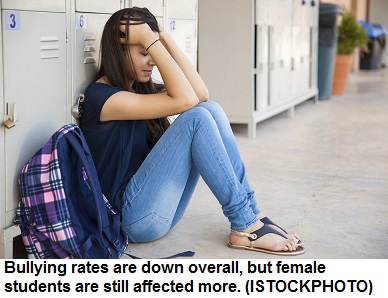
————–

Appendix VIDEO – FAMU Marching 100 Halftime Show @ Florida Classic 2011 – http://youtu.be/FrviGJ1Dvvk

Uploaded on Nov 21, 2011 – The FAMU Marching 100 Halftime Performance at The 2011 Florida Classic. Definitely the best band in the land.
Share this post:
, ,
[Top]