Category: Government

10 Things We Want from India and 10 Things We Do Not Want

Go Lean Commentary

The publishers of the book Go Lean…Caribbean truly believe that the Caribbean is the “greatest address in the world”. But where there is a reference to “greatest or greater”, there must be “lesser” too. The unfortunate reality is that Caribbean people have fled their homeland with all the greater attributes to relocate to lesser destinations.

🙁

Why? While the beauty is here in the Caribbean region, so much more is missing and/or defective in our homeland.

Where are these lesser destinations that have teased the Caribbean citizens away? As previously depicted in a full series of blog-commentaries, the following locales were detailed as follows:

  1. 10 Things We Want from the US and 10 Things We Do Not Want
  2. 10 Things We Want from Canada and 10 Things We Do Not Want
  3. 10 Things We Want from the UK and 10 Things We Do Not Want
  4. 10 Things We Want from Europe and 10 Things We Do Not Want

There are other “lesser” destinations, that despite this status are doing better than the Caribbean at progressing their societal engines (economics and security). We can benefit by considering these other countries, take the examples of India and China. These ones are doing so much better at economic growth and homeland security. Already, we have considered …

What Things We Want from China and What Things We Do Not Want.

Now we need to examine:

What Things We Want from India and What Things We Do Not Want
cu-blog-10-things-we-from-india-photo-2

The Caribbean has a unique relationship with India. While Caribbean people are not fleeing their homeland to relocate to India, there is a historic Diaspora issue associated with Caribbean-India relations: Indentured Servitude. At the end of the era of Caribbean slavery (1830’s to 1840’s), the plantation system required a replacement labor source; many Indian nationals were thusly “recruited” as Indentured Servants to the region (British, Dutch, and French colonies). This history is detailed in the Go Lean book as relating to one British colony, Guyana; see the reference here:

The Bottom Line on Guyana’s Indentured Indians
The British Empire abolished slavery effective August 1, 1834. But to appease the plantation/slave owners’ need for labor in the Caribbean colonies, Parliament allowed them to continue extracting more labor from these victims for 4 more years. As 1838 approached, there was a need for a new source of cheap labor. The solution was the introduction of indentured servants from India – the first 396 arrived on May 5, 1838 – thus starting a flow of immigrants to the British West Indies that resulted in such large numbers that the populations of Guyana and Trinidad are near 50% for those countries today.

The majority of Indian immigrants were drawn from North India with smaller batches coming from the Tamil and Telugu districts of South India. They were recruited, very often on spurious promises, by professional recruiters, largely assisted by paid local agents. Intimidation, coercion and deception were very often used to recruit Indian laborers. Women, in particular, were very vulnerable. When laborers were difficult to enlist, the recruiters resorted to such illegal practices as kidnapping and forced detention. This program continued from 1838 until 1917 with over 500 ship voyages for 238,909 indentured Indian immigrants coming to Guyana; while 75,898 of them or their children returned to India.

Today, the population of Guyana is over 772,000, of which 90% reside on the narrow coastal strip of approximately 10% of the total land area of Guyana. The largest ethnic group is the Indo-Guyanese (known as East Indians), descendants of the indentured laborers from India; they now make up 43.5% of the population, according to the 2002 census. They are followed by the Afro-Guyanese, the descendants of slaves from Africa, who constitute 30.2%. Guyanese of mixed heritage make up 16.7%, while the indigenous peoples (Amerindians) make up 9.1%.
cu-blog-10-things-we-from-india-photo-1The descendants of this Indian Diaspora have grown in numbers and power (economic and political) in the region; they form a large demographic in Guyana, Trinidad, Jamaica, Suriname and other islands; see Appendix. They are part of the fabric of our society. They are home in the Caribbean; and we are at home with them. These ones, as a Indian Diaspora, want a connection with their Indian ancestral homeland. They have to remain conscious of the Good, Bad and Ugly from India. They desire the Good and want to be on alert for the Bad – influences that they do not want. 

We can truly benefit from a place like India … if we apply these 5 L’s in this competitive analysis:

  • Look
  • Listen
  • Learn
  • Lend-a-hand
  • Lead

After centuries of sub-standard living, India is on the move – on the rise – even emerging as an Economic Power. We can look, listen and learn from the Indian eco-system; their mainland (the Republic of India) and Diaspora. We can lend-a-hand in reforming and transforming our own Caribbean region – as India has had to do – and we can eventually lead a reboot and turn-around of Caribbean society; again as India has done.

So here is a laundry list of the Good and the Bad and how (in italics) the roadmap to elevate Caribbean society, the book Go Lean…Caribbean, describes how the lessons should be applied in the implementation of the Caribbean Union Trade Federation (CU):

Indian Imports

10 GOOD Things We Want from India

10 BAD Things We Don’t Want from India

1

Market of 1.2 billion “Size does matter” and India is the 2nd largest in the world, with their 1.2 billion people; China is the largest population with 1.3 Billion. This massive consumer market has basic needs (food, clothing, shelter, energy, telecommunication and media) to satisfy, so profit and jobs are at stake in these needs fulfillment. But more jobs are needed, so export of services is vital for India. The Go Lean roadmap directs solutions to satiate the needs of the 42 million people of a Caribbean Single Market; it then assumes that once we fulfill our own basic needs, more profit is to be gained in exporting the excess provisions to the rest of the world. Hordes of Immigrants  India’s colonial heritage allows for English language proficiency throughout the country. With telecom advances, call centers and technology developments are perfect fits for export services and job creation. Many of the technological savvy personnel are able to emigrate to foreign markets to provide these services. Now throughout the English world, Indians are omnipresent in STEM fields. The Go Lean roadmap incubates Call Centers and STEM careers, starting early in the education process. Following the Indian model, there are call center opportunities in 4 languages: English, Dutch, French and Spanish. The roadmap anticipates 12,000 new jobs for Call Centers.

2

Trade in Services  India executes a model of Business Process Outsourcing that allows their residents to live in India and work for foreign companies. They get to export their talents without abandoning their homeland. This is win-win for globalism. The Go Lean roadmap calls for strenuous oversight for the region’s industrial policies, especially with the structure of Self-Governing Entities, creating 2.2 million jobs. Illicit Trade  Many times Indian factories manufacture and export products (pharmaceuticals & chemicals) that are illegal in other countries, due to environmentally harmful. Being a Global Citizen should accept the precept that what is bad in one country should be respected as bad every where. The Go Lean plan stresses environmental protection &  the policies to solicit adherence from foreign partners.

3

Trade in Media – Bollywood  India’s 1.2 Billion people make a great media market. Their production industry – Bollywood – fully exploit their domestic, regional and Diaspora markets. The CU/Go Lean roadmap seeks to model Bollywood in the Caribbean region. We have the full Caribbean market (42 million) plus the Diaspora (20 million) and tourists (80 million/year) to cater to. Vengeful Labor Laws  Whenever India conflicts with Pakistan (often occurrence), they impose restrictions on Bollywood stakeholders of Pakistan/Muslim descent. This vengeful-ness undermines the film industry. The Go Lean roadmap calls for labor policies to be embedded in the CU treaty – bilaterally ratified – so no political episodes would undermine industrial labor commitments.

4

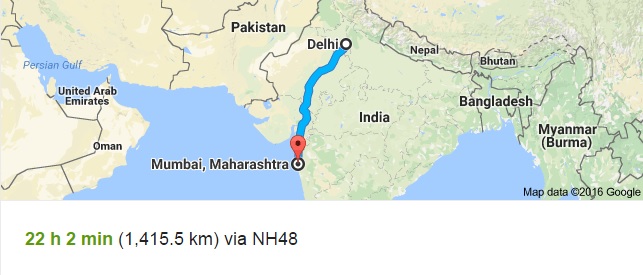
Infrastructure Build India is embarking on the Delhi-Mumbai Industrial Corridor. This is a ribbon of development that traverses 6 states along a route from the city of Delhi to Mumbai. This infrastructure will allow for new industrial implementations (ports, highways, bridges, etc) to create jobs and startups. The Go Lean roadmap calls for new strategies to facilitate infrastructure projects. This will result in attracting Direct Foreign Investors, entrepreneurial startups; so more jobs. Rural Abandonment
India industrial development had previously focused on the urban areas, abandoning the rural areas to pervasive poverty. The new Delhi-Mumbai Industrial Corridor is designed to integrate rural, suburban and urban areas but it will be costly and may endanger public finances. The CU structure calls for autonomous Self-Governing Entities that do not depend on member-states finances. The SGE’s themselves are responsible for their finances.

5

Multi-Language India has 22 languages to contend with, plus English, from their colonial legacy. Their society has been successful with integrating multi-languages and still maintain social cohesion. The CU/Go Lean roadmap strategizes confederating 30 member-states of 4 languages and 5 colonial heritage. There is the need for social cohesion in this Single Market. Religious Orthodoxy – Caste While Hindu is the most popular religion in India, there are winners and losers of this faith, especially with their concept of the Caste system – though now legally outlawed. This is an orthodoxy for class oppression. Despite separation of Church and State, the CU/Go Lean roadmap features minority equalization and protections despite any religious orthodoxy; human rights supersedes.

 Indian Imports (cont’d)

10 GOOD Things We Want from India

10 BAD Things We Don’t Want from India

6

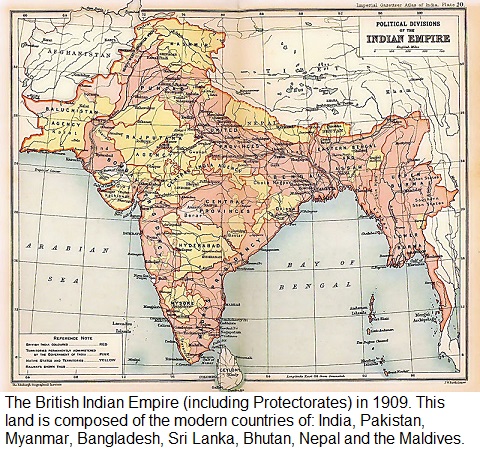
Security Assurance – International Respect  India has Nuclear Capability, so their enemies must respect their borders and treaties. They are not treated inconsequentially on the world scene. The CU does not desire Nuclear Capability, but we do want international respect and regard for the rule of our laws. The planned security apparatus uses alliances with Nuclear Powers (US, Britain & France) plus our own strong Standby Force for defense of our homeland. Disunity => Secession  The country (Photo) that sought independence from the UK constitutes 8  countries today. The disunity amongst 19th century India resulted in many secessions. If these states had formed a Single Market, more prosperity would have resulted. The CU/Go Lean roadmap strategizes a Single Market despite different sovereignties. The leverage of 30 member-states into 1 confederation is win-win for all.

7

Settled History  India has recorded history for at least 5000 years; during this millennia, many (domestic and foreign) groups have been victims and victimizers. India has settled this history finally, in that there is no manifested “Revenge-Seeking” threats – a Failed-State attribute. The CU/Go Lean roadmap measures Failed-State metrics for encroachments that may jeopardize public safety and justice assurance. There is also a plan for Truth and Reconciliation Commissions to settle unresolved issues. Hatred of Neighbors  The entrench differences between Hindus and Muslims could not be settled within the same borders, so therefore India’s independence from the British Empire mandated  Pakistan as a separate (Muslim) state. The animosity of these two states have not been settled – there is no status of “live and let live”. The Go Lean roadmap stresses the need for strong defenses so as to demand respect of sworn enemies, but first seeks reconciliation and diplomacy to settle conflicts.

8

Diaspora Outreach  Emigration has been a practice of Indian society for centuries, so they have a far-flung Diaspora. Indian business and government officials work hard in reaching out to this Diaspora for trade and tourism. The Go Lean roadmap includes a comprehensive trade strategy to better engage the Caribbean Diaspora. They should be able to acquire products, services and media from the Caribbean and repatriate funds and people more readily. Encouraging Emigration  Indian seems to encourage their STEM professionals emigrating to foreign shores and then repatriating funds to the home country. While not de jure, this encouragement seem “de facto”. This constant brain drain cannot be good for Indian society and economy., short or long term. The Go Lean roadmap calls for official government policies to dissuade emigration. We need the STEM resources in our homeland and will thusly foster their development and maturation.

9

Religious Toleration  India is a medley of ethnic societies; despite Hindi being the primary language, there are many other language (22) and religious groups. They co-exist. The CU/Go Lean roadmap recognizes the significance of religion, but favors no one religion over another. So European religions are on par with Eastern religions (Hindu, Buddha, etc.) and Animist sects (Voodoo, Santeria, Amerindian spiritualism). Patriarchy
All religions on the Indian Sub-Continent feature a patriarchy, where men not only headed their households, but exerted a suppression of women folk; they were treated as property. For example, Hindu widows were not allowed to remarry, because their legacies were “owned” by their now-dead husbands. The Go Lean roadmap promotes human rights despite any religious orthodoxy.

10

Family Unity  Back in the homeland, it is common for many generations of Indian families to live together; this allows for automatic elder care and childcare arrangements. This status quo continues despite rural-to-urban migrations. The Go Lean roadmap encourages family unity, with the emphasis on repatriation; keeping families together in the Caribbean is a win-win. An additional benefit is the encouragement to the youth to plan for a future at home. Family Planning – Size / Infanticide  1.2 Billion is over-population; ; India thusly started a small family initiative. So infanticide threats are high as couples may not get the sex they want with  1/2 children. This low respect for infant life, brings a disrespect for human rights. The Caribbean has no threat of excessive population, our population is declining because of the excessive brain drain/societal abandonment. Our region is able to allow individual family planning: large or small families.

CU Blog - Build It and They Will Come - India's $90 Billion Investment - Photo 1

Like it or not, the Caribbean has to be constantly aware of our competitive analysis with the rest of the world; we are currently losing in any “race to the top”; this is the peril of globalization. Economically we are Third World; many of our people live a sub-standard life. Then we lose even more when our people flee to go to more prosperous countries – brain drain – at the expense of societal abandonment to our communities. This abandonment rate is 70% for our college-educated classes. Communities cannot thrive with such a disposition; the “race to the top” becomes even more imperiled.

The premise of the Go Lean book is that the Caribbean does have a fighting chance for the globalization “race to the top”. We have one huge advantage:

We have the “greatest address in the world” in terms of terrain, fauna/flora, hospitality, culture, food, drink (rum) and tobacco (cigars).

This is the quest of the Go Lean movement, to make the Caribbean homeland a better place to live, work and play. It urges us to study the good, bad and ugly of our society and that of other places and then to apply lessons-learned in our efforts to transform the Caribbean. India has been a frequent topic for considerations from the Go Lean movement (book and blogs). The opening Declaration of Interdependence (Page 14) recognized that there is value in considering the Good and Bad examples of places like India, with this statement:

xxxiii. Whereas lessons can be learned and applied from the study of the recent history of other societies, the Federation must formalize statutes and organizational dimensions to avoid the pitfalls of communities…. On the other hand, the Federation must also implement the good examples learned from developments/communities….

In addition, the book specifically addresses the disposition of India – and other similar emerging economies – with these direct references of community ethos, strategies, tactics, implementations and advocates:

Community Ethos – Deferred Gratification Page 21
Community Ethos – Economic Principles: People Choose because Resources are Limited Page 21
Community Ethos – Economic Principles: All Choices Involve Costs Page 21
Community Ethos – Economic Principles: Voluntary Trade Creates Wealth Page 21
Community Ethos – Economic Principles: Consequences of Choices Lie in the Future Page 21
Community Ethos – Money Multiplier Page 22
Community Ethos – Job Multiplier Page 22
Community Ethos – Lean Operations Page 24
Community Ethos – Return on Investments Page 24
Community Ethos – Cooperatives Page 25
Community Ethos – Ways to Impact the Future Page 26
Community Ethos – Impact the Greater Good Page 37
Strategy – Vision – Integrate and Consolidate into a Single Market Page 45
Strategy – Mission – Facilitating Currency Union, Caribbean Dollar Page 45
Strategy – Mission – Collaborate for the Caribbean Central Bank Page 45
Anecdote – Caribbean Currencies Page 64
Tactical – Fostering a Technocracy Page 64
Tactical – $800 Billion Economy – How and When – Trade Page 67
Tactical – Recovering from Economic Bubbles Page 69
Tactical – Separation-of-Powers – Caribbean Central Bank Page 73
Implementation – Assemble Caribbean Central Bank Page 96
Implementation – Ways to Pay for Change Page 101
Implementation – Start-up Benefits from the EEZ Page 104
Implementation – Steps to Implement Self-Governing Entities Page 105
Implementation – Trade Mission Objectives Page 117
Implementation – Ways to Benefit Globalization Page 119
Planning – Ways to Improve Trade Page 128
Advocacy – Ways to Grow the Economy Page 151
Advocacy – Ways to Create Jobs Page 152
Advocacy – Ways to Improve Governance Page 168
Advocacy – Ways to Foster Cooperatives Page 176
Advocacy – Ways to Impact Urban Living Page 234
Advocacy – Ways to Impact Rural Living Page 235

In addition, this subject of India and our Caribbean trade empowerment has been directly addressed and further elaborated upon in these previous blog/commentaries:

https://goleancaribbean.com/blog/?p=8602 Build It and They Will Come – India’s $90 Billion Investment
https://goleancaribbean.com/blog/?p=3028 India is doing better than many Emerging Market countries.

The Go Lean book serves as a roadmap for the introduction and implementation of the CU. India is out-of-scope for the CU/Go Lean roadmap. Our scope is to impact the Caribbean’s economic, security and governing engines, not Indian society.

All in all, there are Good lessons and Bad lessons that we can learned from India. As a region, we can also be an emerging economy as India is designated. Yes, we can!

So let’s pay more than the usual attention to the developments of India. Everyone is urged to lean-in to this Go Lean/CU roadmap for the Caribbean Union Trade Federation, to make our Caribbean homeland a better place to live, work and play. 🙂

Download the book Go Lean … Caribbean – now!

———–

Appendix VIDEOThe Caribbean East Indians (Part 1 of 2)https://youtu.be/oxFrQd6lVzA

Published on Apr 29, 2015 – The “East Indians” of the Caribbean and Caribbean rim countries are the descendants of immigrants from the Indian sub-continent. Despite their name they are no relation to the indigenous aboriginal “Indians” who inhabit or formerly inhabited the area. The East Indians are, along with Black Afro-Caribbeans (“West Indians”), one of the two major ethnic groups in Trinidad and Tobago, Guyana and Suriname. There are also East Indian communities in Jamaica (one estimate for 1980 gives the East Indian population as 50,000), Grenada and the French islands of Martinique and Guadeloupe.

Indians were first brought to the Caribbean from the mid-1840s to work on white-owned sugar plantations as indentured labour to replace newly freed African slaves. The majority of immigrants were young men; later disturbances on the plantations forced the authorities to try and correct the imbalance. Indenture was usually for five years and the labourer was subject to restricting and paternalistic regulations which were sometimes described as “a new system of slavery”. After an initial number of years it was possible for the labourer to return to India but since many were offered land in order to entice them to stay near the estates, most stayed in their new country.

The racial tensions and stereotypes of later years were formed during the colonial period. Indians worked for less than Africans and were regarded as cheap and malleable labour. There were differences of culture between the Hindu and Muslim Indians and the Christian Africans. While the Africans, who were more likely to be literate in English, filled the jobs in the urban and commercial sectors, Indians were most likely to remain labourers and small farmers.

See Part 2 of 2: https://www.youtube.com/watch?v=-qeM2BecjNI

Share this post:
,

10 Things We Want from China and 10 Things We Do Not Want

Go Lean Commentary

Like it or not, the Caribbean is in competition with the rest of the world – and we are losing!

Economically we are Third World. So we lose even more when our people flee to go to more prosperous countries, at the expense of societal abandonment to our communities.

It is what it is – we lose 70% of our college-educated to the brain drain – no community can thrive with such a disposition. So we are losing in the modern battles of trade and globalization. It is a crisis.

Alas, a crisis is a terrible thing to waste!

This is the premise of the book Go Lean…Caribbean; it posits (Page 3) that the Caribbean has a fighting chance for survival in the modern world because we have one huge advantage:

We have the “greatest address in the world”…

… this is in terms of terrain, fauna/flora, hospitality, culture, food, drink (rum) and tobacco (cigars).

It seems so illogical, to have this advantage and yet to lose in the global war for prosperity.

cu-blog-10-things-we-from-china-photo-2Again, it is what it is! People leave … a large number of Caribbean people have fled and now live abroad. They live in places like the US, Canada, the UK and Europe. There is so much for us to learn from these foreign destinations, as this commentary has considered. We have asked (and answered) the questions, poised as follows:

  • Why do our Diaspora leave – this greatest address in the world – and what can we learn from their experiences?
  • What can we gather for the Pros and Cons of life in those foreign abodes?

This consideration was completed in a series detailing the destinations for our fleeing countrymen. The full series was detailed as follows:

  1.   10 Things We Want from the US and 10 Things We Do Not Want
  2.   10 Things We Want from Canada and 10 Things We Do Not Want
  3.   10 Things We Want from the UK and 10 Things We Do Not Want
  4.   10 Things We Want from Europe and 10 Things We Do Not Want

Now we must consider other countries, not ones that our Diaspora has fled to, but rather ones that compete with us and are doing MUCH BETTER jobs of contending in this competitive environment. We must consider China and India:

What Things Do We Want from China and Things We Do Not Want

What Things Do We Want from India and Things We Do Not Want

The stakeholders of this Go Lean…Caribbean movement truly believe that the Caribbean is the “greatest address in the world”. Yet so much is missing and/or defective in our region. We can truly benefit from places like China and India if we apply these 5 L’s in this competitive analysis:

  • Look
  • Listen
  • Learn
  • Lend-a-hand
  • Lead

Let’s start with China. They went from “zero to hero”, emerging as an economic Super Power in short order. We can look, listen and learn from the Chinese eco-system; their mainland (the Peoples Republic of China), the special territories of Hong Kong and Taiwan (the Republic of China). We can lend-a-hand in reforming and transforming our own Caribbean region – as China has had to do – and we can eventually lead a reboot and turn-around of Caribbean society; again as China has done.

This is the quest of the Go Lean movement, to make the Caribbean homeland a better place to live, work and play. Previously, these Go Lean blog-commentaries have considered the competitive analysis of the US, Canada, the UK and Europe to discern how we compete with these foreign locales. The competition is for our young people; we want them to set their sights – their hopes and dreams – on a viable future, right here in the Caribbean homeland and not to have to consider fleeing – like so many of their previous generations – to have the measures of success that the modern world conveys.

CU Blog - Caribbean Ghost Towns - It Could Happen - Photo 7This Go Lean book makes an honest assessment of the Caribbean, our failing and our advantages. It urges us to study the good, bad and ugly of our society and that of other places and then to apply lessons-learned in our efforts to transform the Caribbean. China has been a frequent topic for considerations from the Go Lean movement (book and blogs). The opening Declaration of Interdependence (Page 14) recognized that there is value in considering the Good and Bad examples of places like China, with this statement:

xxxiii. Whereas lessons can be learned and applied from the study of the recent history of other societies, the Federation must formalize statutes and organizational dimensions to avoid the pitfalls of communities…. On the other hand, the Federation must also implement the good examples learned from developments/communities….

So there are things that the Caribbean want and things that we do not want from places like China. Here is a laundry list of the Good and the Bad and how the roadmap to elevate Caribbean society, the book Go Lean…Caribbean, describes how the lessons should be applied in the implementation of the Caribbean Union Trade Federation (CU):

Chinese Imports

10 GOOD Things We Want from China

10 BAD Things We Don’t Want from China

1

Market of 1.3 billion If “size does matter” then China is ‘King of Kings’; their 1.3 billion population cannot be ignored for trade. Considering modernity, this massive consumer market have basic needs (food, clothing, shelter, energy, telecommunication and media) that must be satisfied. So much profit (jobs) is to be gained by trying to provide for these needs. The Go Lean roadmap is based on the premise that Caribbean member-states need a bigger population, and so seeks the leverage of 42 million people in the region. The roadmap also seeks to explore all profit-seeking opportunities to first satiate the basic needs of those 42 million people. Profit-seeking – not greed – is not a bad ethos; there must be growth in a community, otherwise people leave to seek profit elsewhere. The CU seeks to grow the regional GDP to US$800 Billion over 5 years, by facilitating the regional market and also trade with China. Bullying China realizes that “size does matter” and with its 1.3 billion population, they can “throw their weight around”. The current conflict in the South China Sea is a manifestation of that bullying ethos. China can be a “bad actor” at times; and they are a nuclear power. Though China has not displayed any military aggression towards the Caribbean, our security apparatus must be “on guard”. The Go Lean roadmap anticipates the emergence of “bad actors”, so mitigations need to be proactive and reactive. The roadmap therefore stresses economics and security measures equally. We are not in the “nuclear club” and do not seek that status, so we must continue our alliance with nuclear powers. Our current alliance are based on proximity and colonial status, as the United States, the United Kingdom and France are all nuclear capable and have active Caribbean territories.

2

Capital China is now starting to exert its economic muscles in the Caribbean – they bring the wallets of their State-run entities, i.e. Export-Import Bank (China Exim Bank). The Caribbean region needs these foreign investments. They put the “money where the mouth is” as many China funded infrastructure projects in the Caribbean are managed by State-run engineering and construction firms. The CU/Go Lean roadmap calls for strenuous oversight for the regions monetary policy (Caribbean Dollar), thereby fostering better accountability and transparency. Exploitation of Environment Chinese cities are notoriously bad for pollution; many residents wear surgical masks daily. In the 2008 Beijing Olympics, many foreign athletes had to mitigate by going to venues only on participation days. The government’s “anything goes” ethos also apply in the rural areas, with an overall lack of environmental protection.
The CU/Go Lean stresses environmental protection in the Exclusive Economic Zone and the Self-Governing Entities, plus the ratings-&-rankings of the member-states delivery for the Social Contract forces adherence and compliance.

3

Trade & Economic Growth China has grown tremendously in the past few decades by “opening up” and adopting the tenants of this one economic principle: “Voluntary Trade Creates Wealth”. The lesson for the Caribbean is that even with a much smaller 42 million population base, we can still grow our economy and trade outreach – plus we have the destination and culture the world wants. So we have a lot to trade on. The CU is a Trade federation so the emphasis is on all aspects of trade. See the book’s Trade SHIELD principles. Trade Barrier China imposes restrictions on its trade imports to block too much foreign imports, even for intellectual property. But this is a product of negotiation. China could be better exposed to the beauty of Caribbean culture and related products, but first there must be effective messaging to correct their fallacies about Afro-Caribbean image. The Go Lean roadmap calls for a Sentinel for Caribbean image. A lot of the fallacies in China stem from false white supremacy precepts. The CU will “message this out”.

4

Infrastructure Build China has been active in the Caribbean region regarding infrastructure projects; they have built stadia, hotels, airports, bridges and other projects. The engineering skills are greatly appreciated, especially when accompanied with Chinese funding options. The Go Lean roadmap calls for new strategies to facilitate infrastructure projects. We need partners like China’s State-run engineering and construction firms. Shoddy Workmanship
Even China itself questions the workmanship of its State-run engineering and construction firms. For the 2008 Beijing Olympics the primary stadium – Bird Nest – was engineered by a German firm. Also, the recent Baha Mar project in the Bahamas, is plagued with quality concerns. The CU structure calls for advancing the engineering competence in the region, over time, so that Caribbean stakeholders can facilitate these projects ourselves.

5

Progressive Technocracy The Chinese government is headed mostly by technocrats as opposed to lawyers and politicians; (Go Lean book Page 64). Their steady societal growth of the recent decades is reflective of a technocratic ethos. The Go Lean roadmap details community ethos that reflect technocratic principles, like: Lean Operations, Return on Investments, Cooperatives, Incubators, NGO’s and R&D. Religious Orthodoxy While atheistic communism is the official principle of China’s government, religious institutions are still thriving, along with many negative orthodoxy: human rights abuses for minority groups, superstitions of ingredients from endangered animals (elephant & rhino tusks, shark fins, etc.). The CU/Go Lean roadmap features minority equalization and protections despite any religious orthodoxy.

Chinese Imports (cont’d)

10 GOOD Things We Want from China

10 BAD Things We Don’t Want from China

6

Protected economy China is a good example of economic stewards protecting their economy for domestic stakeholders first. Consider the mandate for movies; only a minimum is allowed from foreign producers, thereby fostering a domestic industry. The CU, while encouraging foreign participation, sees the value of incentivizing (subsidies) domestic participants for greater colloquialism; this will create more local jobs. Restricted economy China’s protective motives go too far; it is now considered restrictive; consider the blocking of outside internet and e-commerce. A bilateral approach should allow for more give-and-take.
The CU/Go Lean roadmap calls for negotiated bilateral trade permissiveness. We must give-and-take; this is the only way to “win” with globalization.

7

Justice Principles China has multi-layers of governance: national, provincial and municipal. Yet, still there are justice accords that the country ensures. In addition, there are treaties that China has ratified. This compliance ensures some accountability. The CU/Go Lean roadmap prioritizes justice among its community values. Even though local and national governance exist, there is accountability to regional justice institutions; with the deployment of the CariPol and Caribbean Court. International Justice Adherence China often plays the role of “bad actor” for enforcement of international accords. Take the case of “Legal High” for example. This drama involves legal drugs used to mix narcotics for sale in Black Markets, think “Meth”. In most cases, the drugs come from factories in China; see this BBC story and the Appendix VIDEOThe Go Lean roadmap prepares the region for mitigations against “bad actors”, domestic and foreign. The security apparatus will work lock-step with CU Trade efforts.

8

Commitment to Sports The Chinese legacies for soccer/football , basketball and even their Olympic models (Track & Field) inspire athletes that they can earn a living based on their talents, disciplines and abilities. The governments attempt to identify those with genius qualifiers as early as possible and then foster the skills progressively as they mature. The Go Lean roadmap includes a comprehensive sport promotion and administration apparatus to facilitate amateur, collegiate and professional sports careers. Unsportsmanlike Competition Chinese athletes push themselves to the full limits, many times beyond unreasonableness. During recent Olympics, many Chinese female gymnasts were much younger than required for their psychological development. Plus with the threat of performance enhancing drugs, many bad sportsmanship have been expressed. The Go Lean roadmap calls for rebooting sports eco-system to include an Anti-Doping agency within the CU Trade Federation to elevate regulation and enforcement.

9

Commitment to Progressive Healthcare With 1.3 Billion people, there will be classes of rich, poor and middle class. But with the communistic structure, a safety net is supposed to be there for all; but with that market size, the “least common denominator” will be low. Ancient Chinese medicine is fully supported by the government, but, the best example of the country’s health progression is available to Armed Forces personnel. The CU/Go Lean roadmap prioritizes advances in health care for all citizens in the region. There are deliverables for cancer treatments, mental health and universal plans. Organ Transplants According to a previous blog, China has a lot of mileage in the medical history of organ transplantation and the impact on social values. This is a recent history anywhere, as the medical capability only became viable since the 1970′s. With the billions of people living in the rural areas, it is not inconceivable that “bad actors” view the masses as prime harvesting grounds for organ transplantation. The Go Lean roadmap allows for a regional registry and protections for organ transplantation across the 42 million population, as bad actors will appear here too.

10

Family Cohesion It is common for multiple generations of Chinese families to live in the same house; this allows for automatic elder care and childcare arrangements.
The Go Lean roadmap encourages repatriation; family reunification is one additional benefit. This will also encourage the Caribbean youth to plan for a future at home.
Family Planning – Size Decades ago, China started its One Child policy to mitigate population explosion. The threat of infanticide is high as couples may not get the One Child sex they want.
Rather than excessive population, the Caribbean population is declining because of the excessive brain drain/societal abandonment. We can encourage any family planning preference for our region.

In addition, the book specifically addresses China and Taiwan with these direct references of community ethos, strategies, tactics, implementations and advocates:

Community Ethos – Voluntary Trade Creates Wealth Page 21
Community Ethos – Consequences of Choices Lie in the Future Page 21
Community Ethos – Money Multiplier Page 22
Community Ethos – Job Multiplier Page 22
Community Ethos – Cooperatives Page 25
Community Ethos – Impact the Greater Good Page 37
Strategy – CU Vision and Mission Page 45
Strategy – Customers – Foreign Direct Investors Page 48
Strategy – Agents of Change – Globalization Page 57
Tactical – Confederating a Permanent Union Page 63
Tactical – Fostering a Technocracy Page 64
Tactical – $800 Billion Economy – How and When – Trade Page 67
Tactical – $800 Billion Economy – How? Example of WWII Rebuild in China/Taiwan Page 69
Tactical – Growth Approach – Trade and Globalization Page 70
Tactical – Separation of Powers – Cari-Pol – Marshalls & Investigations Page 77
Tactical – Separation of Powers – Caribbean Court of Justice Page 90
Implementation – Ways to Pay for Change Page 101
Implementation – Ways to Deliver Page 109
Implementation – Trade Mission Objectives Page 117
Implementation – Ways to Benefit Globalization Page 119
Planning – Ways to Improve Trade Page 128
Planning – Ways to Improve Interstate Commerce Page 129
Advocacy – Ways to Grow the Economy Page 151
Advocacy – Ways to Create Jobs Page 152
Advocacy – Ways to Improve Governance Page 168
Advocacy – Ways to Better Manage the Social Contract Page 170
Advocacy – Ways to Impact Justice Page 177
Appendix – Trade S.H.I.E.L.D. Principles Page 264

In addition, this subject of China and our Caribbean trade empowerment has been directly addressed and further elaborated upon in these previous blog/commentaries:

https://goleancaribbean.com/blog/?p=8823 Lessons from China – WeChat: Model for Caribbean Social Media
https://goleancaribbean.com/blog/?p=8819 Lessons from China – South China Seas: Exclusive Economic Zones
https://goleancaribbean.com/blog/?p=8817 Lessons from China – Mobile Games Apps: The new Playground
https://goleancaribbean.com/blog/?p=8815 Lessons from China – Organ Transplantation: Facts and Fiction
https://goleancaribbean.com/blog/?p=8813 Lessons from China – Why China will soon be Hollywood’s #1 market
https://goleancaribbean.com/blog/?p=8799 Lessons from China – Too Big To Ignore
https://goleancaribbean.com/blog/?p=6231 China’s Caribbean Playbook: America’s Script
https://goleancaribbean.com/blog/?p=5435 China Internet Policing – Model for Caribbean
https://goleancaribbean.com/blog/?p=2488 Role Model Jack Ma brings Trade Marketplace Alibaba to America
https://goleancaribbean.com/blog/?p=294 Bahamas and China’s New Visa Agreement

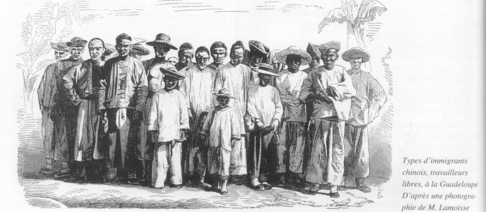
cu-blog-10-things-we-from-china-photo-1 The Go Lean book serves as a roadmap for the introduction and implementation of the CU. Our scope is to impact the Caribbean’s economic, security and governing engines, not Chinese society. While Caribbean people are not fleeing their homeland to relocate to China. there is a Diaspora issue associated with Caribbean-China relations: Indentured Servitude. At the end of the era of Caribbean slavery (1830’s to 1840’s), the plantation system required a replacement labor source; many Chinese nationals were thusly “recruited” as Indentured Servants to the region – British, French and Spanish lands – see here:

There were two main waves of Chinese migration to the Caribbean region. The first wave of Chinese consisted of indentured labourers who were brought to the Caribbean predominantly Trinidad, British Guiana and Cuba, to work on sugar plantations during the post-Emancipation period. The second wave was comprised of free voluntary migrants, consisting of either small groups (usually relatives) to British Guiana, Jamaica and Trinidad from the 1890’s to the 1940’s. In fact the most modern Caribbean Chinese are descended from this second group. – Caribbean-Atlas.com

Derivatives of the 18,000-plus Chinese immigrants are still here in the Caribbean today. These descendents have grown in numbers and power (economic and political) in the region. They are part of the fabric of our society. They are home in the Caribbean; and we are at home with them; see the profile of the Lee-Chen families in this previous blog-commentary. This is our Chino-Caribbean heritage. These ones, as a Chinese Diaspora, desire these imports from China and are on alert for influences they do not want.

All in all, there are Good lessons and Bad lessons that we can learned from China. We can also advance “from zero to hero”, as China has done. Yes, we can!

So let’s pay more than the usual attention to the developments of China, to China and from China. Everyone is urged to lean-in to this Go Lean/CU roadmap for the Caribbean Union Trade Federation, to make our Caribbean homeland a better place to live, work and play. 🙂

Download the book Go Lean … Caribbean – now!

———–

Appendix VIDEOWhat goes on inside a Chinese ‘legal high’ factory? BBC Newshttps://youtu.be/BnhgWG-cp5w

Published on Sep 6, 2016 – The BBC has been shown footage filmed inside a laboratory in China that makes so-called “legal highs”. The sale, distribution and manufacture of the drugs was banned in the UK in 2016 as many of them were found to have lethal side effects.

But Radio 4’s File on Four programme managed to order a small sample of a legal high from an online supplier in China.
The drug was posted to the UK concealed inside a plastic container designed to hold a water softener.
Please subscribe HERE http://bit.ly/1rbfUog


Share this post:
,
[Top]

10 Things We Want from Europe and 10 Things We Do Not Want

Go Lean Commentary

The phrase “New World” assumes that there was an “Old World“.

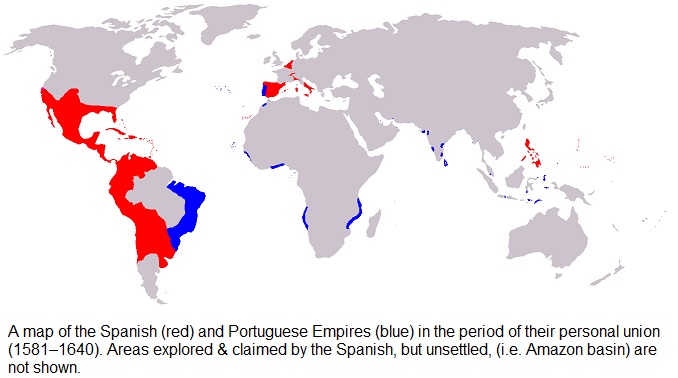
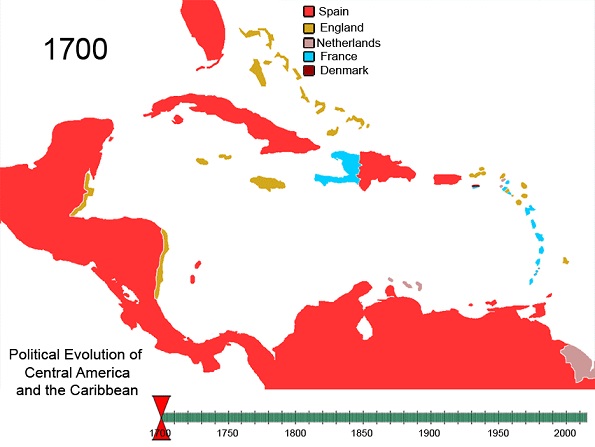
CU Blog - A Lesson in History - Royal Charter - Truth and Consequence - Photo 3The Old World would refer to Europe. The New World on the other hand, refers to the lands in the Western Hemisphere – North, Central and South America, plus the Caribbean – that was first opened up with the 1492 Discovery by Christopher Columbus. After the first 100 years of legal and papal wrangling, the settlement of the New World by diverse European powers commenced in earnest in the 1600’s. This started a period of colonization by Imperial powers from Europe grappling for dominance and/or some presence in the Americas.

This colonization historicity was detailed in the book Go Lean…Caribbean; it summarized the European history of ebb-and-flow of the colonial power struggle in the Americas in general and in the Caribbean region in particular; see these samples:

The Bottom Line on European Colonialism  – (Page 241)
The European colonial period was the era from the 1500s to the mid-1900s when several European powers (Spain, Britain, the Netherlands, France and Portugal) established colonies in the Americas, in a “Space Race” to dominate the New World. The Northern Coast of South America became a typical New World battleground for conflict and pushing between these powers, and many military campaigns and diplomatic initiatives (treaties) ensued. … When did this European Colonial “push-shove-match” end? Not until almost 500 years later, after World War II, after the effects of that war left all these European powers drained – of finances and the will to continue.

***********

Appendix – US Virgin Islands – Economy Past, Present & Future  – (Page 305)
The Virgin Islands were held by many European powers, including Spain, Great Britain, the Netherlands, France, and Denmark-Norway. The Danish West India Company settled on Saint Thomas in 1672, on Saint John in 1694, and purchased Saint Croix from France in 1733. The islands became royal Danish colonies in 1754, named the Danish-West Indian Islands. Like other Caribbean islands, sugarcane, produced by slave labor, drove the islands’ economy during the 18th and early 19th centuries, until the abolition of slavery by Danish Governor Peter von Scholten on July 3, 1848.

During the submarine warfare phases of the First World War, the United States, fearing that the islands might be seized by Germany as a submarine base, … approached Denmark with a view to buying them. After a few months of negotiations, a selling price of $25 million in United States gold coin was agreed. (This is equivalent to $2.2 Billion in 2012 dollars @ $1770 per ounce)…. The United States took possession of the islands on March 31, 1917.

To recap, here are the European countries that have shown “interest” in the Caribbean:

Britain
Denmark
Germany
The Netherlands
Norway
France
Portugal
Spain

cu-blog-10-things-we-from-europe-photo-2

The Old World powers came to the New World, liked what they saw and fought over it. As referenced above, these Caribbean territories featured an economy based on African slavery. In the end, the European colonizers left the island and coastal territories, mostly in the hands of the descendants of former slaves. These mature empires and advanced democracies left these shores without the needed governance to lead their own affairs efficiently or effectively. Today, all of these European countries (listed above) function as better societies than their former colonies here in the Caribbean.

This is a sad but true reality. The Caribbean could be argued to be the “greatest address in the world”, in terms of terrain, fauna/flora, hospitality, culture, food, drink (rum) and tobacco (cigars). Yet, a large number of Caribbean people have fled and now live abroad. They live in places like the US, Canada, the UK and the European countries listed above.

This seems illogical, considering all the blood, sweat and tears for domination here in the Caribbean over the years, decades and centuries. But it is what it is! People leave … in droves. They do not only leave to go somewhere else (the destinations), but rather they leave just to get away from “here”.

So for Europe – not considering the UK-Britain-England this time – we must ask the questions of our Diaspora there:

  • Why do they now live in Europe and what can we learn from that experience?
  • What can we gather for the Pros and Cons of European life?

This commentary is Part 4 of 4 in a series examining the destinations of the Caribbean Diaspora. The full series is as follows:

  1. 10 Things We Want from the US and 10 Things We Do Not Want
  2. 10 Things We Want from Canada and 10 Things We Do Not Want
  3. 10 Things We Want from the UK and 10 Things We Do Not Want
  4. 10 Things We Want from Europe and 10 Things We Do Not Want

The stakeholders of this Go Lean … Caribbean movement truly believe that the Caribbean is the “greatest address in the world”. Yet still, we have an atrocious record of societal abandonment. This disposition is so acute that we report 70% of the region’s college-educated classes have fled the region for refuge elsewhere.

Refuge? An appropriate word, as there are “push and pull” reasons why Caribbean citizens leave such beauty to relocate to the cold and unknown places like Europe. Our societal defects – in the economic, security and governing engines – are that bad.

This is a crisis! Alas, the Go Lean book also asserts that a “crisis is a terrible thing to waste” (Page 8). Let’s look, listen and learn from the European mainland, and then let’s lend-a-hand and then eventually lead a reboot and turn-around of Caribbean society. We can do better than our recent past. We must do better!

This is the quest of the Go Lean book and subsequent movement, to make the Caribbean a better place to live, work and play. Previously, these Go Lean blog-commentaries have looked inward and identified the many facets of our societal defects. Now, this commentary looks at these refuge countries that our people flee to, and glean the Good and Bad of those destinations. We want our people back … and to not lose anymore; so consider this review a competitive analysis to discern how we compete with these foreign locales. We want our young people to set their sights – their hopes and dreams – on a viable future, right here in the Caribbean homeland.

This honest assessment requires that we study the things that we, in the Caribbean, want and things that we do not want from places like Europe ; (the UK was previously considered separatedly). Here is a laundry list of the Good and the Bad and how the roadmap to elevate Caribbean society, the book Go Lean…Caribbean, describes how the lessons should be applied in the implementation of the Caribbean Union Trade Federation (CU):

European Imports

10 GOOD Things We Want from Europe

10 BAD Things We Don’t Want from Europe

1

Profit-Seeking Many people frame the motivation for New World expansion as the quest to expand sovereign empires, or a quest for religious missions; but many historians put the motivation accurately at “profit”. First there was the gold and other precious metals extracted from the Americas, then after exhaustion, then came slavery to exploit the agricultural opportunities for crops not grown in Europe: cotton, sugar cane, tobacco, etc. The Go Lean roadmap accepts that profit-seeking – not greed – is not a bad ethos; there must be growth in a community, otherwise people leave to seek profit elsewhere. The CU seeks to grow the regional GDP to US$800 Billion over 5 years. History of Aggression To protect the Empire expansion goals, countries were willing to be aggressive militarily; as a result there where many scrimmages in the Caribbean, and many islands changed hands from one power to another. That aggression continued for the hundreds of years since the start of colonization of the New World, leading to World War I and World War II. Though there has not been any global conflicts in the 70 years since WW II, the community ethos is there, to become aggressive easily. The Go Lean roadmap anticipates the emergence of “bad actors”, so mitigations need to be proactive and reactive. The roadmap therefore stresses economics and security measures equally.

2

Tourists Tourism is still the primary economic driver for the Caribbean region. While there is a lot of competition for European tourists, the Caribbean continues to make the case that its region is the best tourist destination in the world. The region wants to continue to appeal to Europeans of all demographic persuasions to come visit the islands for stay-overs (land-based hotels) and/or cruise ships. We want to forge vacation options and traffic for the upper, middle and lower classes of European society. See VIDEO in the Appendix below. The CU forges plans, advocacies and re-boots to further enhance the Caribbean tourism product array. Latent Racism For societies to promote the exploitation of slaves, there must have been an underlying creed of racism, or racial supremacy. This emerges from time to time, as reflected recently with the Middle East Refugee crisis.  People with this mindset may not have a problem with coming to a Black majority Caribbean destination for leisure travel; it may be fun for them to be pampered by “servants”, but not so much for those facilitating the service. The Go Lean roadmap promotes racial equality in a free market. But accepting that the past was tainted, the roadmap also invites Truth and Reconciliation Commissions to settle many prior conflicts.

3

Capital There are many Financial Centers around the world and in Europe (Zurich, Paris, London, etc.). They have the capital the Caribbean needs for Direct Foreign Investments. To be attractive for these opportunities, we have to facilitate the corporate governance to allow for full transparency and accountability. The Go Lean roadmap calls for the emergence of a new financial eco-system around the Caribbean Dollar (C$) managed by a regional technocratic Caribbean Central Bank. This structure will allow for more liquidity in the existing regional stock exchanges. Austerity The European Sovereign Debt Crisis (2009 – 2012) is mostly over now. But the remediation required more taxes and spending cuts, austerity. But economists assert that economic growth is the best way to counteract recession. So austerity measures may be a flawed strategy. The Go Lean roadmap presents strategies, tactics and implementation to grow the economy … sharply. The plan is to create 2.2 million new jobs and the incubation of many entrepreneurial endeavors. There is also the plan to streamline municipal operations and finances. This execution will eliminate the need for austerity measures.

4

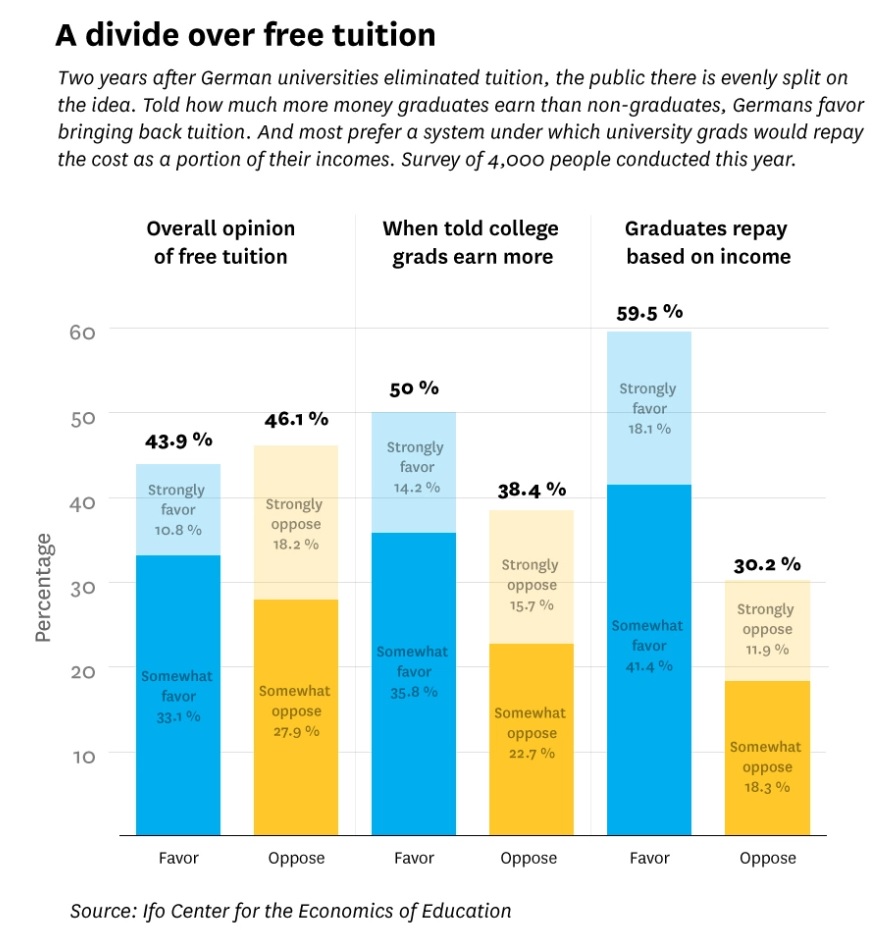
Education System Germany provides tuition-free colleges (see Photo). Many other European states feature progressive education systems that foster more STEM careers. This commitment starts at kindergarten school and follows suit all the way up to college. Rather than incurring mounds of debt, the European model is a state investment in its youth. The Go Lean roadmap seeks to reboot the education eco-system and invest in STEM fields. One strategy is to deploy more e-Learning schemes. This will benefit people in urban and rural addresses of the Caribbean. Study Abroad Going off to school is one of the most exciting times in a young student’s life, but for the CaribbeanEuropeanOverseasTerritories, it is also a rite of “passage” to the Diaspora. Places like Aruba, Curacao, Guadeloupe and Martinique have the experience of hosting graduations one week and final emigration-trips the next week. The CU/Go Lean roadmap seek to turn-around the tertiary education environment in the Caribbean, so that local students do not have to leave. They are encouraged to study in-country.

5

Health Care/Dental CareMany European member-states feature a Universal Health scheme. These programs provide examples of successful healthcare for all of its citizens. They ensure that everyone has access and quality delivery, including dental care. They have coverage for indigents, alleviating price shocks.The Go Lean roadmap calls for schemes to mandate healthcare insurance for every adult. With the leverage across the 30 member-states and 42 million people, the wholesale costs of products/services would be reduced. GMO’sThere are Crony-Capitalists in most European powers, especially in the agricultural sectors. Leave unchecked, GMO’s could easily become the standard and deployed to the general public. (This is the American experience).The European Medicines Agency is a model for the corresponding Caribbean Medicine-Food-Nutrition regulatory agency. The Go Lean roadmap calls for strict food labeling, resembling the EU more so than the deceit/ American bad example. Life is more important than profit.  

European Imports (cont’d)

10 GOOD Things We Want from Europe

10 BAD Things We Don’t Want from Europe

6

Human Rights Ideals The Nobel Prize is awarded by a committee in Stockholm, Sweden. Plus the United Nations Human Rights Commission is based in The Hague in the Netherlands. European are the most active in watching human/civil rights abuses around the world. The CU/Go Lean roadmap features monitoring for human rights in the Caribbean region. There is the need, we have a pattern of hatred towards certain minority groups. Same Sex Marriage While there is a need for human rights and civil rights, many consider Same Sex Marriage to be “a bridge too far” too fast. For those communities with orthodox religious traditions, they balk at Same Sex Marriage being shoved on them. The CU advocates for human rights and civil rights. There must be a compromise to extend property and privacy rights without insulting religious standards.

7

Social Safety Nets The Western European nations all feature Democratic Socialism as the form of government, even with monarchs in some countries. This structure allows for more social “Safety Nets”, like unemployment benefits, welfare and disability. The people are still “covered” even if their plans for their life and career do not succeed. This incentivizes people to stay “home” for the “good, bad and the ugly”. To benefit the “Greater Good”, the CU plans a lot of “Safety Nets” for when Crap Happens, financed through insurance schemes: premiums and claims, spread across a wide region for more leverage (42 million people). Taxes on Poor People The European states featuring Democratic Socialism feature a high tax structure – (see Photo/Chart below). This means poor people have the same tax burden as rich people. The preference is now to consider a progressive tax scheme where the rich bear a heavier burden than the poor, through either consumption or sliding scale. The CU/Go Lean roadmap proposes new balanced tax schemes that mostly “skim off the top”. The CU will deploy systems to help member-state governments do better at collecting their tax revenues. Overall the Caribbean tax burden will increase, but only marginally.

8

Police Training Security concerns are equally important in nation-building. With economic prosperity comes “bad actors”, so good law-enforcement is vital for social cohesion. In Europe, the incidences of police-civil-rights abuses is lower than say the Americans, one reason is good police training. The CU does not want a repeat of Cop-on-Black violence that the Americans experience. We want to follow the European models more for best-practices. War on Terror Considering the historic past with former colonized people, the European mainland has to be “on guard” for bad actors and terrorism attacks; there have been recent attacks in France, Belgium and Germany. The EU is now cooperating with security intelligence globally to mitigate these threats. The CU seeks to implement a comprehensive security apparatus with robust intelligence gathering and analysis.

9

Media Arts – Film, TV, Music & e-Games While prospects for many traditional 20th Century jobs and industries (factories, auto, steel, mining) have declined in Europe due to the competitive imbalance of globalization and technology, electronic media-related industries now flourish. The challenge of language translation has been mitigated with technology – a global market has emerged. The CU roadmap posits that art and music can drive big economic returns. The only way to win in the global marketplace is to ensure that “we” produce/contribute and not just consume. The CU will ensure the complete eco-system is there to identify, foster & compensate stakeholders for this new world of electronic media.. Cultural Neutralizations – Domination of Euro-centric There are other cultures other than just White-Europeans. European (White) media brings European values, and these may not always advocate what’s best for Caribbean life. If not abated, the world gets the impression that Black-and-Brown only “takes”, rather than “give” to the world’s cultural landscape. Afro-Caribbean culture must be preserved and promoted to the rest of the world. The Go Lean book compares cultural protectionism as employed in France versus the free market approach. While France doesn’t lead many of the world’s media output, they maintain and promote their unique culture. This propels their tourism: 25 million to Paris alone.

10

Sports Professionalism The European legacies for Soccer/Football and even their Olympic models (Track & Field) inspire athletes that they can earn a living based on their talents, disciplines and abilities. The Go Lean roadmap includes a comprehensive sport promotion and administration apparatus to facilitate amateur, collegiate and professional sports careers. Win at all costs ethic There is a worldwide movement to curb the sports world of performance enhancing drugs. Many European stakeholders have been identified and censured for bad sportsmanship in this area. The Go Lean roadmap calls for rebooting sports eco-system to include an Anti-Doping agency within the CU Trade Federation to elevate regulation and enforcement.

cu-blog-10-things-we-from-europe-photo-1

Europe has been a frequent topic for considerations from the Go Lean movement (book and blogs). The opening Declaration of Interdependence (Page 14) recognized that there is value in considering the Good and Bad examples of Europe, with this statement:

xxxiii. Whereas lessons can be learned and applied from the study of the recent history of other societies, the Federation must formalize statutes and organizational dimensions to avoid the pitfalls of communities like East Germany …. On the other hand, the Federation must also implement the good examples learned from developments/communities like … Germany….

Not just life in Europe is addressed by the Go Lean book, but also life in the remaining European Overseas Territories in the Caribbean (Dutch & French). The CU treaty includes the DutchTerritories (Netherland Antilles: Aruba, Bonaire, Curaçao, Sint Maarten, Saba, and Sint Eustatius) and also these FrenchTerritories (Guadeloupe, Martinique, Saint Martin and Saint Barthélemy, and French Guiana eventually).

Though France and the Netherlands are among the most prosperous economies in the world, that prosperity has not always extended to these islands.

In addition, the book specifically addresses Europe, Dutch/French Territories and the Caribbean Diaspora in Europe with these direct references of community ethos, strategies, tactics, implementations and advocates:

Community Ethos – Economic Systems Influence Individual Choices Page 21
Community Ethos – Voluntary Trade Creates Wealth Page 21
Community Ethos – Minority Equalizations – 4 Languages; One People Page 24
Strategy – Invite empowering immigrants – Like STEM stakeholders from Europe Page 46
Tactical – Confederation Models – i.e. Denmark, Sweden, Norway Page 63
Tactical – Separation of Powers – Homeland Security – Model of NATO Page 75
Tactical – Separation of Powers – Health Department – Medicine-Food-Nutrition Administration Page 87
Implementation – Assemble Dutch and FrenchTerritories into the Caribbean Union Page 96
Implementation – Trade Mission Objectives – Trade Mission Offices: Paris, Amsterdam, Spain Page 117
Implementation – Reason to Repatriate – From Europe Page 118
Implementation – Ways to Promote Independence – Autonomous Rule for Territories Page 120
Planning – Ways to Improve Trade – Trade to Diaspora in Europe Page 128
Planning – Ways to Model the European Union Page 130
Advocacy – Ways to Grow the Economy – Encourage More Foreign Investment from Europe Page 151
Advocacy – Ways to Better Manage the Social Contract Page 170
Advocacy – Ways to Foster Cooperatives – Models from French Origins Page 178
Advocacy – Ways to Impact the Diaspora – Large Pockets in Holland and France Page 218
Advocacy – Ways to ImpactDutchTerritories Page 246
Advocacy – Ways to ImpactFrenchTerritories Page 247
Appendix – The Guianas Historic Timeline – Sample European Grappling Page 307

In addition, previous Go Lean blog/commentaries addressed many issues in regards to Europe, the Dutch/French Overseas Territories and the interactions of Caribbean people that live there in Europe; see sample list here:

https://goleancaribbean.com/blog/?p=7834 French Caribbean ready for the Martinique Surf Pro
https://goleancaribbean.com/blog/?p=6247 Tragic images show refugee crisis at a tipping point in Europe
https://goleancaribbean.com/blog/?p=5818 European Country of Greece: From Bad to Worse
https://goleancaribbean.com/blog/?p=4971 The Legacy of Royal Charters in Europe: Good & Bad
https://goleancaribbean.com/blog/?p=3090 Introduction to Europe – All Grown Up
https://goleancaribbean.com/blog/?p=2809 A Lesson in History – Economics of East Berlin, Germany
https://goleancaribbean.com/blog/?p=1364 Uber Demonstrations Snarl Traffic from London to Berlin
https://goleancaribbean.com/blog/?p=1193 EU willing to fund study on cost of not having CARICOM
https://goleancaribbean.com/blog/?p=1020 Revolutionary Changes needed in European Soccer
https://goleancaribbean.com/blog/?p=833 The Euro – One currency, Divergent Economies

The Go Lean book serves as a roadmap for the introduction and implementation of the CU. Our scope is to impact the Caribbean’s economic, security and governing engines, not European society. But we do hope to engage the Caribbean Diaspora living there. Perhaps even entice them to consider a Caribbean repatriation. 🙂

There are Good lessons and Bad lessons that we can learned from Europe. The Old World can now teach the New World important new lessons.

So let’s pay more than the usual attention to the lessons from “over there”. Everyone is urged to lean-in to this Go Lean/CU roadmap for the Caribbean Union Trade Federation, to make our homeland a better place to live, work and play. 🙂

Download the book Go Lean … Caribbean – now!

———–

Appendix VIDEOCayman looks to boost tourism from Europehttps://youtu.be/s6rQ5lsRp-Y

Uploaded on Jan 21, 2008 – Charles Clifford, Minister of Tourism for the Cayman Islands. The islands in the Caribbean are looking to boost tourism from the European region. The Mandarin Oriental is also planning to open a property in the islands. The interview was conducted by Breaking Travel News at Caribbean Marketplace.

Share this post:
,
[Top]

10 Things We Want from the UK and 10 Things We Do Not Want

Go Lean Commentary 

cu-blog-10-things-we-from-the-uk-photo-1There is a “give and take” relationship between the Caribbean and the United Kingdom (a reference to Britain or England).

18 of the current Caribbean 30 member-states have a British heritage. They (the UK) have given a lot to the Caribbean over the centuries: systems of commerce, systems of governance, education, language, art and culture. The UK was more than just a country, it was an Empire, with colonialism exploited to the maximum; Mother England.

In addition to giving, they have taken a lot as well; consider the centuries of British mercantilism. Plus, during the World Wars, the UK drafted this population to staff their Armed Forces; see the drama depicted in the classic cultural song in the Appendix B VIDEO below. After the Second World War, with their economy in tatters, the UK, took from the Caribbean again, this time the human capital of so many Caribbean territories; see the Caribbean experience related musically in the Appendix A VIDEO below.

This historicity was detailed in this previous blog-commentary

“There was plenty of work in post-war Britain and industries such as British Rail, the National Health Service and public transport recruited almost exclusively from Jamaica and Barbados”. Retrieved July 10, 2014 from: http://en.wikipedia.org/wiki/British_African-Caribbean_people#The_.22Windrush_generation.22

This point is in consideration of the book Go Lean…Caribbean; it posits (Page 3) that “the Caribbean is the greatest address in the world”, but yet the region could not compete with the economic opportunities extended by England and the rest of Europe after World War II. The hope was always to glean some of the economic returns by venturing to England – for a short while – and then come back home. There was the definite plan to discourage any subsequent emigration by future generations of Caribbean citizens.

To our chagrin, that is not what happened. The situation went from bad to worse in the English-speaking Caribbean.

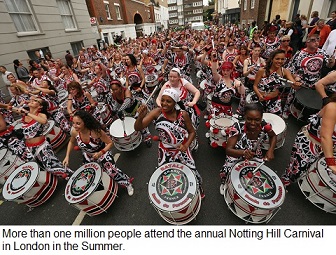
 The Annual Notting Hill Carnival Celebrations Take Place

cu-blog-10-things-we-from-the-uk-photo-3

The Caribbean British territories created a pipeline to England for a cheap, low-skilled, labor force. As more and more residents left, the society declined more and more in their wake. Today, a large number of Caribbean people live abroad; in places like the UK, Europe, Canada and the US. This commentary is Part 3 of 4 in a series examining the destinations of the Caribbean Diaspora. The full series is as follows:

  1. 10 Things We Want from the US and 10 Things We Do Not Want
  2. 10 Things We Want from Canada and 10 Things We Do Not Want
  3. 10 Things We Want from the UK and 10 Things We Do Not Want
  4. 10 Things We Want from Europe and 10 Things We Do Not Want

So for the United Kingdom (England, Northern Ireland, Scotland and Wales), we must ask the questions of our Diaspora there:

  • Why do they live in the UK and what can we learn from that experience?
  • What can we gather for the Pros and Cons of British life?

Overall, there continues to be “push and pull” reasons why Caribbean citizens have emigrated in the past – and continue to do so now. The extent of that societal abandonment is so acute that it is now at an atrocious 70% rate among the region’s college-educated classes. The Go Lean book makes the frank and earnest admission that the Caribbean has blatant societal defects … in the economic, security and governing engines of the communities.

The Go Lean movement (book and blog-commentaries) have looked inward and identified the defects of Caribbean life. Now we look at these refuge countries so as to glean the Good and Bad lessons of those destinations. This is also a competitive analysis, as the Caribbean region is competing with these foreign locales for the hearts and minds of the Caribbean youth. Like other submissions in this series, here is the laundry list of the Good and the Bad from the UK and the Go Lean roadmap describes the applications or mitigations of these lessons in the implementation of the Caribbean Union Trade Federation (CU):

CU Blog – UK Imports

10 GOOD Things We Want from the UK

10 BAD Things We Don’t Want from the UK

1

Leadership in International Commerce Up until 1876, the United Kingdom was the richest nation on earth. (After the California Gold Rush, the US took that mantle). The key to Britain riches was mercantilism in which they exploited the resources from their colonies, imported raw materials to England, engaged factories processes for finished goods, and exported goods back to the colonies (and the rest of the world) for huge profits. Despite decline over the past century, the UK is still the 5th strongest economy in the world (by GDP) and a permanent member of the United Nation Security Council. The Go Lean roadmap recognizes the strategic advantages for expanded trade; the book quotes the Economic Principle that “Voluntary Trade Creates Wealth”. The CU is branded a “Trade” Federation. Brexit Mentality The UK is still one of the major economic and political powers. But the public approved a referendum on June 23, 2016 to exit the European Union within 2 years. The Brexit proponents want more autonomy and less subjection to EU authorities. The freedom of movement mandate in the EU made the “Brexiters” uncomfortable with recent Middle Eastern refugees. The UK can lose the “world leader” statue they current enjoy. The Go Lean roadmap advocates for interdependence more so that independence. The CU is modeled after the EU, so we want all that the UK is now trying to “throw away”. Our strategy for free movement of labor is more conditional than our EU counterparts. For jobs, priority go first to locals, then other CU members, then foreigners.

2

National Healthcare The UK’s National Health System is a great example of successful healthcare for all of its citizens. They ensure that everyone has access and quality delivery. They have coverage for indigent care, so there are no price shocks. The Go Lean roadmap calls for schemes to mandate healthcare insurance for every adult. With the leverage across the 30 member-states and 42 million people, the wholesale costs of products/services would be reduced. Healthcare Egalitarianism The British Health delivery is a Single Payer and not an insurance program. So everyone gets the same level of treatment. The realities of personal healthcare is that there is no universality, “one size does not fit all”. Many times patients may have had to wait for specialized procedures.The Go Lean roadmap advocates for a mandated insurance solution. The key is that every adult will be required to select some insurance plan, of their choosing.

3

Tourists Tourism is still the primary economic driver for the Caribbean region. While there is a lot of competition  for British tourists, the Caribbean continues to make the case that its region is the best tourism destination in the world. The region wants to continue to appeal to Britons of all demographic persuasions to come visit the islands for stay-overs (land-based hotels) and/or cruise ships. We want to forge vacation options and traffic for the upper, middle and lower classes of British society. The CU forges plans, advocacies and re-boots to further enhance the Caribbean tourism product array. British Diaspora During the early days of nation-building, many British workers came to the English-speaking Caribbean to work jobs that many locals could have done. As many Caribbean states obtained independence, many Britons still remain. This practice led to the false ethos that White Britons were “better” capable than local personnel. The Go Lean roadmap dictates a labor standard where local workers get priority for jobs, then regional citizens, then and only then foreign workers (like Britons).The Single Market would have freedom of movement but with this labor-qualifying caveat.

4

Capital There are many FinancialCenters around the world (London, New York, Zurich, Hong Kong, etc.); London has huge liquidity, second only to New York’s Wall Street. So they have the capital the Caribbean wants and needs for Direct Foreign Investments. The Go Lean roadmap calls for the emergence of the Caribbean Dollar (C$) managed by a regional technocratic Caribbean Central Bank. This structure allows for more liquidity in the existing stock exchanges in the regions. Re-valued Currency The British Pound is stronger than the US dollar and the Euro, so British products are more costly. When a UK- Caribbean financial transaction is executed in US dollars, a British trading partner have to endure higher prices. The C$ is not designed to be pegged to the US dollar, but rather a basket of currencies including the British Pound, Euro, and Japanese Yen. So Britons doing business in the Caribbean will not be vulnerable to US$ fluctuations. The C$ is modeled on the Euro dollar in that regards.

5

British Navy Great Britain has been a military powerhouse, with a rich history of naval dominance. The British Navy enforced the abolition of the Slave Trade in support of international treaties and accords. We are forever grateful. The CU roadmap provide for a complete Homeland Security apparatus to defend the Caribbean region and the Caribbean Sea. In addition, there is a comprehensive Intelligence Gathering and Analysis functionality. Deportees The UK repatriates Caribbean citizens guilty of criminality on British soil. So these one become the concern for Caribbean authorities once deported. The Go Lean roadmap calls for proactive mitigations for “bad actors” that might bring a lawless ethos to the homeland. We seek a treaty with the UK for full intelligence sharing for those affiliated with organized crime (gangs) and low-level felons.


UK
Imports (cont’d)

10 GOOD Things We Want from the US

10 BAD Things We Don’t Want from the US

6

Foreign Aid The UK designed the defunct West Indies Federation, with independence and societal elevation in mind. The regional construct was intended as mature democratic entity. Despite the rejection of this scheme, the British still do help out in the “time of our need” after natural disasters (earthquakes and hurricanes). But they prefer to help as a regional bloc rather than country by country. The CU is designed to be a new regional construct. The Go Lean roadmap corrects many of the defects from the original UK designed. We can finally get regionalism right! Then we can better manage foreign aid (financial and technical assistance) from the UK and other donors. Condition for Philanthropic Support Many times foreign aid comes from NGO’s who skim too much for their administrative overhead – think Red Cross. The CU wants the aid, funding and philanthropy from the UK, but not the “bad actors” raising money on our behalf with little follow-up to the Caribbean / West Indies region. The Go Lean roadmap asserts that the region must “grow up” and handle its own development, philanthropic fund- raising, collection and distribution, with full accountability. The CU thusly features the regulatory oversight for governmental and NGO accountability. This is the maturity envisioned at the start of the West Indies regional construct and all subsequent integration movements.

7

Reconciliation after Colonialism The UK has a history of repression of the native colonized peoples in their homeland and those in the Diaspora in the UK; but this country has reconciled that bad history with positive empowerments; and human rights mandates. The Go Lean roadmap calls for formal reconciliation commissions to settle a lot of bad treatment in the past. Virtual Segregation The UK has a bad history of racial divide in many cities (Liverpool, Birmingham, Manchester, etc). While not a legal segregation, there was a de facto segregation with many ethnic migrants living in urban pockets. The CU proposes repatriation back to the Caribbean homeland. There is nothing like being home.

8

Co-existence of the Diverse The UK has become a diverse society, with the immigration of so many people from so many corners of world, most representing the former the British Empire. These diverse groups co-exist well in the urban areas. The Go Lean roadmap calls for Minority Equalization for different language groups; this includes multilingual media and government communications. Right-Wing Extremism The UK has been negatively impacted by the global Agents of Change: Globalization, Technology, etc.. Many Britons – on the “Right” – wrongly feel that declines in the economics of their society are due to the emergence of immigrants. The CU/Go Lean roadmap calls for managing the country of Canada as a competitor for our hearts of our youth.

9

Media Arts – Film, TV, Stage, Music The British Film, Television and Music industries thrive. They produce and distribute many movies (i.e. James Bond), television shows (i.e. Downton Abbey) and music artists (i.e. Beatles, Adele) to international markets. (Shakespeare is still “King”). Their quality contributes to a media trade surplus with the rest of the world. The CU roadmap posits that art and music can drive big economic returns as long as the complete eco-system is there to identify, foster & compensate stakeholders. Cultural Neutralizations – Domination of airwaves If not abated, the English-speaking Caribbean media can be dominated by British programming. There is the need to promote local and regional media for both the cultural and economic expressions. The CU makes it a priority to foster a local-regional industry in the arts. Success in this area would increase trade in media and also tourism, as the performing arts make the cultural exchange better. One of the missing ingredients is the payment systems.

10

Sports Professionalism The English Premier League (Soccer/Football) is a great example for monetizing the interest in sports. This British league is appreciated and celebrated globally; consider that Manchester United is one of the most valuable sports franchises internationally. In addition, national teams (Cricket, Rugby, Field Hockey, etc.) foster professional occupations for participants. The Go Lean roadmap places high priority on the business of sports; it includes a comprehensive promotion and administration apparatus within the CU Cabinet level State Department. Recruitment of Caribbean Athletes Due to a lack of professional opportunities in the Caribbean region, the British sports eco-system recruits Caribbean talent. Unfortunately, these athletes then “make a life” in the UK, exacerbating our “brain drain”. The Go Lean roadmap seeks to reboot the Caribbean societal engines, lowering the “push and pull” factors that cause citizens to flee to other countries, like the UK. For athletes with the “genius qualifiers”, there must be adequate opportunities in the Caribbean. The Go Lean roadmap seeks to implement a regional sports eco-system for amateur, collegiate and professional participation.

The UK has been a frequent topic for considerations from the Go Lean movement (book and blogs). The opening Declaration of Interdependence (Page 14) recognized that there is value in considering the Good and Bad examples of Canada, with this statement:

xxxiii. Whereas lessons can be learned and applied from the study of the recent history of other societies, the Federation must formalize statutes and organizational dimensions to avoid the pitfalls of communities … On the other hand, the Federation must also implement the good examples learned from developments/ communities …

Not just life in Britain is addressed by the Go Lean book, but also life in the British Overseas Territories in the Caribbean. The CU treaty includes the British Overseas Territories of Anguilla, Bermuda, Cayman Islands, Montserrat, Turks & Caicos and the Virgin Islands. Though the UK is one of the biggest/richest economies (#5 by GDP), British economic prosperity has not always extended to these islands; so many chose to just emigrate to the British mainland.

In addition, the book specifically addresses Britain, British Territories and the Caribbean Diaspora in Britain with these direct references of community ethos, strategies, tactics, implementations and advocates:

Community Ethos – Economic Systems Influence Individual Choices Page 21
Community Ethos – Voluntary Trade Creates Wealth Page 21
Community Ethos – Minority Equalizations – Westminster Parliamentary Model of 2 Chambers Page 24
Strategy – Invite empowering immigrants – Like British Intellectuals & Snowbirds Page 46
Tactical – Fostering a Technocracy – Case Study of British Invasions for Sovereign Debt Issues Page 66
Tactical – Separation of Powers – Homeland Security – Alliance for Defending British Territories Page 75
Implementation – Trade Mission Objectives – Trade Mission Office: London Page 117
Implementation – Reason to Repatriate – From the UK Page 118
Implementation – Ways to Promote Independence – Autonomous Rule for Territories Page 120
Planning – Ways to Improve Trade – Trade to Diaspora in the UK Page 128
Planning – Lessons from the previous West Indies Federation – Designed for UK Independence Page 135
Advocacy – Ways to Grow the Economy – Encourage More Foreign Investment from the UK Page 151
Advocacy – Ways to Impact Entitlements – UK Model of Bad Austerity Policies Page 158
Advocacy – Ways to Better Manage the Social Contract Page 170
Advocacy – Ways to Foster Cooperatives – Models from British Origins Page 178
Advocacy – Ways to Impact the Diaspora – England‘s Large Pockets Page 218
Advocacy – Ways to Impact British Territories Page 245
Appendix – Transportation Infrastructure Model: English Channel Tunnel Page 281
Appendix – The Guianas Historic Timeline Page 307

In addition, previous Go Lean blog/commentaries addressed many issues in regards to the UK, the British Overseas Territories and the interactions of Caribbean people that live there in the UK; see sample list here:

https://goleancaribbean.com/blog/?p=8351 ‘Brexit’ Lesson in Economic Fallacies: No Such Independence
https://goleancaribbean.com/blog/?p=7682 American Abolitionist Frederick Douglass Success in the UK
https://goleancaribbean.com/blog/?p=5123 The Legacy of Royal Charters from the UK: Good & Bad
https://goleancaribbean.com/blog/?p=4840 Jamaican Poll: ‘Bring back the British!’
https://goleancaribbean.com/blog/?p=1933 Britain’s Neglected Diaspora
https://goleancaribbean.com/blog/?p=1683 British Public Sector Workers / Diaspora Strike Over Pay
https://goleancaribbean.com/blog/?p=732 UK’s Turks and Caicos Islands Drama with Autonomous Rule
https://goleancaribbean.com/blog/?p=451 CariCom Address Issue of Reparations from the UK
https://goleancaribbean.com/blog/?p=353 Nine Economic Policy Disasters: #1 British Mercantilism

The Go Lean book serves as a roadmap for the introduction and implementation of the CU. Our scope is to impact the Caribbean’s economic, security and governing engines, not British society. But we do hope to engage the Caribbean Diaspora living there. Perhaps even entice them to consider a Caribbean repatriation. 🙂

There are Good lessons and Bad lessons that we can learned from the UK. So let’s pay more than the usual attention to the lessons from “over there”. Everyone is urged to lean-in to this Go Lean/CU roadmap for the Caribbean Union Trade Federation, to make our homeland a better place to live, work and play. 🙂

Download the book Go Lean … Caribbean – now!

———–

Appendix A VIDEO – Prince Malachi – Great Welcome [Official Video 2015] – https://youtu.be/6lr6VnE0AQM

Published on Sep 24, 2015 – http://www.REGGAEVILLE.com
Commenters: 1. “No Blacks, No Irish & No Dogs in England”
2. “Really big tune with meaningful lyrics. ‘The troubles we face are still not yet done but we’ll have to keep on pushing through’.

———–

Appendix B VIDEO – The Last Farewell ~ Roger Whittaker – https://youtu.be/sGWs1HK8iDU

Uploaded on Feb 13, 10 – Song Lyrics; a cultural phenomenon depicting the “love” of a British Expatriate in the Caribbean.

There’s a ship lies rigged and ready in the harbor
Tomorrow for old England she sails
Far away from your land of endless sunshine
To my land full of rainy skies and gales
And I shall be aboard that ship tomorrow
Though my heart is full of tears at this farewell

For you are beautiful, I have loved you dearly
More dearly than the spoken word can tell
For you are beautiful, I have loved you dearly
More dearly than the spoken word can tell

I’ve heard there’s a wicked war a-blazing
And the taste of war I know so very well
Even now I see the foreign flag a-raising
Their guns on fire as we sail into hell
I have no fear of death, it brings no sorrow
But how bitter will be this last farewell

For you are beautiful, I have loved you dearly
More dearly than the spoken word can tell
For you are beautiful, I have loved you dearly
More dearly than the spoken word can tell

Though death and darkness gather all about me
My ship be torn apart upon the seas
I shall smell again the fragrance of these islands
And the heaving waves that brought me once to thee
And should I return home safe again to England
I shall watch the English mist roll through the dell

For you are beautiful, I have loved you dearly
More dearly than the spoken word can tell
For you are beautiful, I have loved you dearly
More dearly than the spoken word can tell

Share this post:
,
[Top]

10 Things We Want from Canada and 10 Things We Do Not Want

Go Lean Commentary

“The Caribbean is the greatest address in the world”…

… so argues the book Go Lean…Caribbean in it’s opening (Page 3). Yet, a large number of Caribbean people live abroad. They live in places like the US, Canada, the UK and Europe. This commentary is Part 2 of 4 in a series examining the destinations of the Caribbean Diaspora. The full series is as follows:

  1. 10 Things We Want from the US and 10 Things We Do Not Want
  2. 10 Things We Want from Canada and 10 Things We Do Not Want
  3. 10 Things We Want from the UK and 10 Things We Do Not Want
  4. 10 Things We Want from Europe and 10 Things We Do Not Want

So for Canada, we must ask the questions of our Diaspora there:

cu-blog-10-things-we-from-the-canada-photo-1

  • Why do they live in Canada and what can we learn from that experience?
  • What can we gather for the Pros and Cons of Canadian life?

There are “push and pull” reasons why Caribbean citizens have emigrated in the past – and continue to do so now – to places like Canada.

“In the 2006 census, 578,695 Canadians reported that they originated from the Caribbean, and the overwhelming majority of these people have immigrated to Canada since the 1970s. … the largest populations of Canadians of Caribbean origin were from Jamaica (231,110), followed by those from Haiti (102,430), Guyana (61,085) and Trinidad and Tobago (58,415).” – Historica Canada

To our chagrin, the extent of that societal abandonment is so acute that it is now at an atrocious 70% rate among the region’s college-educated classes. Yes, this is bad! The frank admission, in the Go Lean book, is that the Caribbean has societal defects … in the economic, security and governing engines of society.

In the course of these Go Lean blog-commentaries, we have looked inward and identified the defects of our society. Now we need to look at these refuge countries and glean the Good and Bad of those destinations. This can be considered a “competitive analysis” as the Caribbean region is competing with these foreign locales for the hopes and dreams of our young people. (See the full immersion of Caribbean culture in Toronto in the Appendix-VIDEO below).

Here is a laundry list of the Good and the Bad of Canada; and how the roadmap to elevate Caribbean society, the Go Lean book, describes how the lessons should be applied in the implementation of the Caribbean Union Trade Federation (CU):

Canadian Imports

10 GOOD Things We Want from Canada

10 BAD Things We Don’t Want from Canada

1

Free Market Economy Canada has always embraced Free Market capitalism; today, their brand is more Liberal Socialism than Conservative Republicanism. Many social programs are offered to Canadian residents as a result, so the government plays a BIG role in the lives of most citizens. The Go Lean roadmap promotes Free Market principles for the region’s industrial development. The structure of Self-Governing Entities allows for further Free Market expressions without local government constraints. Massive Tax Burdens Many Canadians complain of high taxes. The governments defend the policy as necessary to support the many social programs (healthcare, subsidized college education, advanced infrastructure, etc). The Go Lean roadmap advocates deploying balanced tax schemes that mostly “skim off the top”. The CU will deploy systems to help member-state governments do better at collecting their tax revenues. Overall the Caribbean tax burden will increase, but only marginally.

2

Universal Healthcare Canada is a great example of successful healthcare for all of its citizens. They ensure that everyone has access and quality delivery. This minimizes the expensive repercussions of indigent care. The Go Lean roadmap calls for schemes to mandate healthcare insurance for every adult. With the leverage across the 30 member-states and 42 million people, the wholesale cost could be reduced. Healthcare Egalitarianism The Canadian Health delivery is a Single Payer and not an insurance program. So everyone gets the same level of treatment. The realities of healthcare is that different people have different needs, so a “one size fits all” approach is not preferred. The Go Lean roadmap advocates for a mandated insurance solution. The key is that every adult will be required to select some insurance plan, of their choosing.

3

Weather – Cool Summers Climate Change is a reality. So the warm seasons in Canada now last longer, 8 months instead of 6 months. Summertime in Canadian cities is pleasant, without air-conditioning. The Go Lean roadmap promotes better infrastructure for Caribbean cities, developing refrigeration utilities for urban areas. This will leverage energy costs for cooling. Weather – Cold Winters Canadian winters are not preferred, especially the months of January and February. The Caribbean Diaspora dread life there for those months. The Go Lean roadmap details the invitation to Canadian senior citizens to be Snowbirds in the Caribbean for the whole season. The economic returns of this strategy are too appealing to ignore.

4

Tourists There is a lot of competition for Canadian tourists; the Caribbean continues to make the case that its region is the best tourist destination in the world. The region wants to continue to appeal to Canadians of all demographic persuasions to come visit the islands for stay-overs (land-based hotels) and/or cruise ships. We want to forge vacation options and traffic for the upper, middle and lower classes of Canadian society.The CU forges plans, advocacies and re-boots to further enhance the Caribbean tourism product array. Expatriate Workers During the early days of nation-building, many Canadians workers came to the English-speaking Caribbean to work jobs (teachers, nurses, bankers, etc.) that many locals could have done. This practice led to the ethos that “White” Canadians were “better” than local personnel. The Go Lean roadmap dictates a labor standard where local workers get priority for jobs, then regional citizens, then and only then foreign workers (like Canadians).The Single Market would have freedom of movement but with this labor-qualifying caveat.

5

Capital There is a long history of Canadian banks in the Caribbean region. (Think Scotiabank, Royal Bank of Canada, and the First Caribbean-CIBC (Canadian Imperial Bank of Commerce)). Despite recent losses for Canadian banks in the Caribbean region, there is still the need for these banks’ active participation in the region. The Go Lean roadmap calls for strenuous oversight for the Caribbean Dollar (C$) and regional banks participating in transactions using this currency. Devalued Currency The Canadian dollar was 1-to-1 with the US dollar in the 1970’s. The currency has since been devalued, but only a little; between $.95 and $1.08. When a Caribbean financial transaction is executed in US dollars, a Canadian customer has to endure higher prices. The C$ is not designed to be pegged to the US dollar, rather a basket of foreign currencies including the Euro, British Pounds and Japanese Yen. So Canadians doing business in the Caribbean will not be as vulnerable to US$ fluctuations.

 Canadian Imports (cont’d)

10 GOOD Things We Want from Canada

10 BAD Things We Don’t Want from Canada

6

Supportive Defense Canada is not a militarized state like their American neighbor, but they do feature a robust internationally respected Army, Navy, and Air Force in support of their homeland.The CU roadmap provide for a complete Homeland Security apparatus to defend the Caribbean region. In addition, there is a comprehensive Intelligence Gathering and Analysis functionality. Deportees Canada repatriates Caribbean citizens guilty of criminality on Canadian soil. So these one become the concern for Caribbean authorities once deported.The Go Lean roadmap calls for proactive mitigations for “bad actors” that might bring a lawless ethos to the homeland. We seek a treaty with Canada for full intelligence sharing for those affiliated with organized crime (gangs) and low-level felons.

7

Foreign Aid Canada was one of the only foreign supporters for the defunct West Indies Federation; they have always shown our region “love”. Plus they always step up to aid the Caribbean in their “time of need” after natural disasters (earthquakes and hurricanes). But they prefer to help as a regional bloc rather than country by country.The CU/Go Lean roadmap is designed to process all foreign aid from Canada; from both the Canadian government and NGO’s. Condition for Philanthropic Support Many Giving Organizations attach strings to their gifts. The burdens of compliance is so difficult that many times, public-private entities – think Red Cross – attach themselves to the gifts to ensure accountability. This adds an additional layer in administrative costs, and less funding goes to the beneficiaries.The CU envisions a federal agency for oversight of the NGO’s in the region. We must do the heavy-lifting ourselves, rather than submitting perils of “bad actors”.

8

‘First Nation’ Reconciliation Like other European settlers in the New World, Canada had a history of repression of the indigenous peoples, but this country has reconciled that bad history with many positive empowerments. The Go Lean roadmap calls for formal reconciliation commissions to settle a lot of bad treatment in the past. Virtual Segregation Canada has the same history of racial divide as many other American Northern cities. While not a legal segregation, there is a de facto segregation with many ethnic migrants living in pockets.
The CU proposes repatriation back to the Caribbean homeland. There is nothing like being home.

9

Bilingual Co-existence Canada is a bilingual society, with the majority French culture in Quebec Province. The English and French co-exist well and insist on bilingual media expressions. The Go Lean roadmap calls for multilingual media and government communications. There is also the need for Minority Equalization for different language groups. Quebec Pull for French Caribbean Migrants Many French-speaking Caribbean people target Quebec as the destination for their emigration. In the 2006 Census, there were 102,430 people of Haitian descent living in Canada. The CU/Go Lean roadmap calls for managing the country of Canada as a competitor for the hearts of our youth.

10

Professional Sports Role Model Despite the regional domination of continental sports (baseball, football, basketball) by Americans, Canadians still dominate in their own rite – they are usually among the best hockey players in the world. They nurture the skills from youth participation up to the professional levels. The Go Lean roadmap calls for empowering the sports eco-system in the region, allowing for more opportunities for amateur, collegiate and professional participation. Other benefits of the regional focus will include better oversight of sports academies, agents and leagues. Recruitment of Caribbean Athletes During the 2016 Rio Olympics, there were many Track and Field athletes representing Canada that were of Caribbean heritage. Canada extends a “welcome mat” to these ones, therefore encouraging more to naturalize and discouraging loyalty to the Caribbean homeland. The Go Lean roadmap seeks to reboot the Caribbean societal engines. This will lower the “push and pull” factors that cause citizens to flee to other countries and switch their allegiances. This will allow athletes to fully engage their professions without leaving home.

Canada has been a frequent topic for considerations from the Go Lean movement (book and blogs). The opening Declaration of Interdependence (Page 14) recognized that there is value in considering the Good and Bad examples of Canada, with this statement:

xxxiii. Whereas lessons can be learned and applied from the study of the recent history of other societies, the Federation must formalize statutes and organizational dimensions to avoid the pitfalls of communities … On the other hand, the Federation must also implement the good examples learned from developments/ communities like … Canada….

The book specifically addresses Canada with these direct references of community ethos, strategies, tactics, implementations and advocates:

Community Ethos – Deferred Gratification – Cold Weather Residents Must Wait Until Spring Page 21
Community Ethos – Economic Systems Influence Individual Choices Page 21
Community Ethos – Minority Equalizations – Model of Canada’s Territories Page 24
Community Ethos – Ways to Help Entrepreneurship Page 28
Strategy – Invite empowering immigrants – Like Canadians Snowbirds Page 46
Tactical – Separation of Powers – Secretary of State – Trade Mission Offices Page 80
Implementation – Reason to Repatriate – From Canada Page 118
Planning – Lessons Learned from the previous West Indies Federation –Canada’s Support Page 135
Planning – Lessons from Canada’s History Page 146
Advocacy – Ways to Better Manage the Social Contract Page 170
Advocacy – Ways to Impact the Diaspora – Toronto‘s Large Pocket Page 218
Advocacy – Ways to Impact Foundations – Many Canadians NGO’s Page 219
Advocacy – Ways to Protect Human Rights Page 220
Advocacy – Ways to Improve Elder-Care – Snowbirds Invitations Page 225
Advocacy – Ways to Empower Women – Canada‘s great example Page 226

In addition, previous Go Lean blog/commentaries addressed many issues in regards to Canada and the interactions of Caribbean people and Canada; see sample list here:

https://goleancaribbean.com/blog/?p=9179 First Day of Autumn – Time for Canadians to Head South
https://goleancaribbean.com/blog/?p=6937 Canada’s Great Example of Women in Politics
https://goleancaribbean.com/blog/?p=3694 Economic Help: Jamaica-Canada Employment Program
https://goleancaribbean.com/blog/?p=3582 For Canadian Banks: Caribbean is a ‘Bad Bet’
https://goleancaribbean.com/blog/?p=1014 A Canadian’s View: ‘All is not well in the sunny Caribbean’
https://goleancaribbean.com/blog/?p=732 Turks and Caicos Drama with Canadian Healthcare Contract
https://goleancaribbean.com/blog/?p=214 Canada: The Best Address/Destination … per this Bahamian

The Go Lean book serves as a roadmap for the introduction and implementation of the CU. Our scope is to impact the Caribbean’s economic, security and governing engines, not Canada’s. But we do hope to engage the Caribbean Diaspora living there.

There are Good lessons and Bad lessons that we can learned from Canada. So let’s pay more than the usual attention to these insights. Everyone is urged to lean-in to this Go Lean/CU roadmap for the Caribbean Union Trade Federation, to make our region a better place to live, work and play. 🙂

Download the book Go Lean … Caribbean – now!

———

Related Article: 10 Fast Facts About Caribbean Immigrants In Canada

———

Appendix VIDEO – Caribbean West Indian Street Food|Toronto  – https://youtu.be/8ECKojESpOs


Published on Jun 18, 2016 – If you never had West Indian/Trini/Caribbean food, you are seriously missing out. They might not be the healthiest foods out there but it is definitely hot and delicious. Their foods are pretty much like their people, warm and welcoming. I’ve had doubles once before and it made me realize what I have been missing out my entire life. The aloo pie with tamarind sauce gave me the exact same shiver. No fancy complexity, just simple west Indian food.

Share this post:
,
[Top]

Fix ‘Climate Change’ – Yes, We Can

Go Lean Commentary

“Here I am, send me*“.

This is the declaration of Advocates wanting to abate the global problem of Climate Change. They have examined the science and are confident that they can make a difference. They are thereby further declaring that:

“We can fix Climate Change. Yes, we can…”

This is conceivable, believable and achievable.

cu-blog-fixing-climate-change-yes-we-can-photo-2Why is this so important? Climate Change is causing more and more severe hurricanes in the Caribbean region. We have just had to “batten down the hatches” and endure the passage of Hurricane Matthew.

Endure?

Not all survived! The death toll in Haiti in the wake of this tumultuous storm has counted 473 (with 75 people missing) .. so far.

The advocacy to arrest greenhouse gases (GHG) is therefore a matter of life-and-death; it has a successful track record to consider and provide encouragement and hope:

Remember Acid Rain?

That was a big deal in the 1970’s and 1980’s. It was a big environmental problem; the stakeholders came together – many kicking and screaming – to put in the remediation and mitigation and now the problem is greatly abated. See the encyclopedia details of the problem in the Appendix A below, where it is reported that Acid Rain levels have dropped 65% since 1976.

Climate Change is another area of atmospheric pollution that can also be abated with a lot of the same strategies, tactics and implementations as was employed to abate Acid Rain. But instead of the smoke stacks of factories and power plants, the problematic culprit this time is fossil fuels.

Fossil fuels and carbon emission = Climate Change!

Unlike Acid Rain, the “bad actors” for Climate Change are not just industrial installations; this time it is “almost everybody”. Cars are one of the biggest contributors. There is no denying this cause-effect any more. The problem is now globally acknowledged! There are new international agreements – Paris Conference of the Parties (COP) or COP21 – to curb fossil fuels / carbon dioxide emissions. 195 countries have signed on to these accords, including big polluters China (#1) and the US (#2).

The overall goal of these international accords is to achieve significant environmental benefits through reductions in emissions of greenhouse gases, the primary causes of Climate Change. The remediation and mitigations employ regulatory and market based approaches for controlling GHG elements. It should be noted that the COP21 accord is a non-binding agreement, but the biggest contribution is that the community will is now entrenched.

The book Go Lean … Caribbean uses an alternate technical term for “community will”; it identifies “community ethos”, as “the fundamental character or spirit of a culture; the underlying sentiment that informs the beliefs, customs, or practices of a society” (Page 20). So, in everyday practical terms, it will now be politically incorrect to pursue policies in denial of Climate Change.

The Go Lean book presents a 370-page roadmap for re-booting, re-organizing and restructuring the economic, security and governmental institutions of the 30 member-states in the Caribbean region, especially in light of the realities of Climate Change. Though this is a global battle, the Caribbean is on the front lines. As related in a previous blog-commentary, no Caribbean member-state appears high of the list of greenhouse gases emitters and yet we must still participate in the mitigations. We must “Go Green” to arrest our own carbon footprint, so that we may be less hypocritical – have moral authority – in calling for reform from the big polluting nations.

The Go Lean book serves as a roadmap for the introduction and implementation of the technocratic Caribbean Union Trade Federation (CU). The roadmap depicts how this CU federal government will take the lead in ensuring the Climate Change mitigation efforts are incentivized, executed and accounted for. There are economic (BIG dollar issues), security and governing implications to a lot of these measures. The CU/Go Lean roadmap allows for the leverage of a regional Single Market that would spread the burden across the 42 million people of the 30 member-states. Other Climate Change benefits were embedded in the motivation of the book, the opening Declaration of Interdependence stated these points (Pages 12-14):

xxvii. Whereas the region has endured a spectator status during the Industrial Revolution, we cannot stand on the sidelines of this new economy, the Information Revolution. Rather, the Federation must embrace all the tenets of Internet Communications Technology (ICT) to serve as an equalizing element in competition with the rest of the world. The Federation must bridge the digital divide and promote the community ethos that research/development is valuable and must be promoted and incentivized for adoption.

xxxiii. Whereas lessons can be learned and applied from the study of the recent history of other societies, the Federation must formalize statutes and organizational dimensions to avoid the pitfalls of communities like East Germany, Detroit, Indian (Native American) Reservations, Egypt and the previous West Indies Federation. On the other hand, the Federation must also implement the good examples learned from developments / communities like New York City, Germany, Japan, Canada, the old American West and tenants of the US Constitution.

The Go Lean book posits that the “whole is worth more than the sum of its parts”, that from this roadmap Caribbean economies will grow individually and even more collectively as a Single Market. The 3 CU prime directives of the roadmap include:

  • Optimization of the economic engines of the Caribbean to elevate the regional economy to grow to $800 Billion and create 2.2 million new jobs.
  • Establishment of a security apparatus to protect the resultant economic engines.
  • Improvement of Caribbean governance to support these engines.

The Go Lean roadmap calls for the CU to serve as the regional administration to optimize the societal engines for the Caribbean, especially in light of our Climate Change battleground frontline status. This is the first pronouncement (Page 11) of the same opening Declaration of Interdependence:

i. Whereas the earth’s climate has undeniably changed resulting in more severe tropical weather storms, it is necessary to prepare to insure the safety and security of life, property and systems of commerce in our geographical region. As nature recognizes no borders in the target of its destruction, we also must set aside border considerations in the preparation and response to these weather challenges.

The following details from the Go Lean…Caribbean book highlights the community ethos, strategies, tactics, implementation and advocacies necessary to elevate the regions stance in this global battle consequences on Climate Change:

Community Ethos – Deferred Gratification Page 21
Community Ethos – Economic Systems Influence Individual Choices / Incentives Page 21
Community Ethos – The Consequences of Choices Lie in the Future Page 21
Community Ethos – “Crap” Happens Page 23
Community Ethos – Lean Operations Page 24
Community Ethos – Cooperatives Page 24
Community Ethos – Non-Government Organizations Page 25
Community Ethos – Ways to Impact the Future Page 26
Community Ethos – Ways to Improve Sharing Page 35
Community Ethos – Impact the Greater Good Page 37
Strategy – Vision – Confederating 30 Member-States into a Single Market Page 45
Strategy – Vision – Foster Local Economic Engines for Basic Needs Page 45
Strategy – Mission – Prepare for Natural Disasters Page 45
Strategy – Agents of Change – Climate Change Page 57
Strategy – Agents of Change – Globalization Page 57
Tactical – Confederating a Permanent Union Page 63
Tactical – Fostering a Technocracy Page 64
Separation of Powers – Emergency Management Page 76
Separation of Powers – Interstate Commerce Administration Page 79
Separation of Powers – Meteorological & Geological Service Page 79
Separation of Powers – Fisheries Department – Regulator Page 88
Anecdote – “Lean” in Government Page 93
Implementation – Assemble Regional Organs into a Single Market Economy Page 96
Implementation – Ways to Pay for Change Page 101
Implementation – Security Initiatives at Start-up – Unified Command & Control Page 103
Implementation – Industrial Policy for CU Self Governing Entities Page 103
Implementation – Ways to Deliver Page 109
Implementation – Ways to Foster International Aid Page 115
Implementation – Ways to Benefit from Globalization Page 119
Planning – Big Ideas for the Caribbean Region Page 127
Planning – Ways to Make the Caribbean Better Page 131
Advocacy – Ways to Grow the Economy Page 151
Advocacy – Ways to Create Jobs Page 152
Advocacy – Ways to Improve Governance Page 168
Advocacy – Ways to Better Manage the Social Contract Page 170
Advocacy – Ways to Foster Cooperatives Page 176
Advocacy – Ways to Improve for Natural Disasters Page 184
Advocacy – Ways to Improve Emergency Management Page 196
Advocacy – Ways to Improve Transportation Page 205
Advocacy – Ways to Develop the Auto Industry Page 206

The quest to Go Green has frequently been detailed in previous blog-commentaries since the publication of the Go Lean book:

https://goleancaribbean.com/blog/?p=7449 Due to Climate Change, ‘Crap Happens’ – So What Now?
https://goleancaribbean.com/blog/?p=7103 COP21 – ‘Climate Change’ Acknowledged
https://goleancaribbean.com/blog/?p=7056 Electric Cars: ‘Necessity – Climate Change – is the Mother of Invention’
https://goleancaribbean.com/blog/?p=6893 A Meteorologist’s View On Climate Change
https://goleancaribbean.com/blog/?p=6016 ‘Hotter than July’ – Reality in the Caribbean
https://goleancaribbean.com/blog/?p=4673 Climate Change‘ Merchants of Doubt … to Preserve Profits!!
https://goleancaribbean.com/blog/?p=2465 Book Review: ‘This Changes Everything: Capitalism vs. the Climate’
https://goleancaribbean.com/blog/?p=2276 Climate Change May Affect Food Supply Within a Decade
https://goleancaribbean.com/blog/?p=2119 Cooling Effect – Oceans and the Climate
https://goleancaribbean.com/blog/?p=1883 Climate Change May Bring More Kidney Stones
https://goleancaribbean.com/blog/?p=1817 Caribbean grapples with intense new cycles of flooding & drought
https://goleancaribbean.com/blog/?p=1516 Floods in Minnesota, Drought in California – Why Not Share?
https://goleancaribbean.com/blog/?p=926 Conservative heavyweights have solar industry in their sights
https://goleancaribbean.com/blog/?p=915 Go ‘Green’ … Caribbean

The quest of the CU/Go Lean roadmap is to make the Caribbean region a more self-reliant society; to act more proactively and reactively for our own emergencies and natural disaster events; and to be more efficient in our governance. Hurricane Matthew was a natural disaster; a Climate Change-induced hurricane, that was a Category 5 at one point … for 6 hours. No technocracy can dissuade such an event.

Climate Change causes the temperature of the oceans to be a little warmer, even 1 or 2 degrees can intensify storms: from Category 1 to Category 2, or from Category 2 to Category 3, or Category 3 to Category 4, or Category 4 to Category 5.

The solution for Climate Change-induced storms is a “long game”. Lowering the GHG in the atmosphere will reverse the previous bad trend: increasing GHG has raised the ocean temperatures.

To fix Climate Change, we need to support the mandates of COP21 … and other accords; (see Appendix – VIDEO). We also need to use peer pressure to convince other nations to comply with the accords. We can get them to capitulate by appealing to their “better nature”.

If Climate Change is not arrested, then even more devastating storms will come – more Category 5 storms. There is the need for the Caribbean region to establish a permanent union to provide efficient stewardship for our economic, security and governing engines; and to champion the region’s participation and fulfillment of COP21 mandates.

Now is the time for all of the Caribbean, the people and governing institutions, to lean-in to the empowerments described in the book Go Lean … Caribbean. This is the course we must pursue, how we can fix Climate Change; and how we make the Caribbean homeland a better place to live, work and play. 🙂

Download the book Go Lean … Caribbean – now!

———

Appendix VIDEOCan We Fix Climate Change?https://youtu.be/sIpr0SwJncs

Published on Oct 29, 2015 – Bill Nye [the Science Guy] speaks on the ways in which we can mitigate Climate Change – National Geographic.
➡ Subscribe: http://bit.ly/NatGeoSubscribe
➡ Get More Explorer: http://bit.ly/MoreExplorer

———–

Appendix A – Reference Title: Acid Rain

cu-blog-fixing-climate-change-yes-we-can-photo-1Acid Rain is a rain or any other form of precipitation that is unusually acidic, meaning that it possesses elevated levels of hydrogen ions (low pH). It can have harmful effects on plants, aquatic animals and infrastructure. Acid rain is caused by emissions of sulfur dioxide and nitrogen oxide, which react with the water molecules in the atmosphere to produce acids. Some governments have made efforts since the 1970s to reduce the release of sulfur dioxide and nitrogen oxide into the atmosphere with positive results. Nitrogen oxides can also be produced naturally by lightning strikes, and sulfur dioxide is produced by volcanic eruptions. The chemicals in acid rain can cause paint to peel, corrosion of steel structures such as bridges, and weathering of stone buildings and statues.

Definition

Acid Rain is a popular term referring to the deposition of a mixture from wet (rain, snow, sleet, fog, cloudwater, and dew) and dry (acidifying particles and gases) acidic components. Distilled water, once carbon dioxide is removed, has a neutral pH of 7. Liquids with a pH less than 7 are acidic, and those with a pH greater than 7 are alkaline. “Clean” or unpolluted rain has an acidic pH, but usually no lower than 5.7, because carbon dioxide and water in the air react together to form the weak carbonic acid.

Carbonic acid then can ionize in water forming low concentrations of hydronium and carbonate ions.

[Water is H2O ; Acid Rain is represented as H2CO3.] Acid deposition as an environmental issue would include additional acids to H2CO3

Adverse effects

Acid rain has been shown to have adverse impacts on forests, freshwaters and soils, killing insect and aquatic life-forms as well as causing damage to buildings and having impacts on human health.

Other adverse effects
cu-blog-fixing-climate-change-yes-we-can-photo-3Acid rain can damage buildings, historic monuments, and statues, especially those made of rocks, such as limestone and marble, that contain large amounts of calcium carbonate. Acids in the rain react with the calcium compounds in the stones to create gypsum, which then flakes off.

History

Since the Industrial Revolution, emissions of sulfur dioxide and nitrogen oxides into the atmosphere have increased.[3][4] In 1852, Robert Angus Smith was the first to show the relationship between acid rain and atmospheric pollution in Manchester, England.[5]

Though acidic rain was discovered in 1853, it was not until the late 1960s that scientists began widely observing and studying the phenomenon.[6] The term “acid rain” was coined in 1872 by Robert Angus Smith.[7] Canadian Harold Harvey was among the first to research a “dead” lake. Public awareness of acid rain in the U.S increased in the 1970s after The New York Times published reports from the Hubbard Brook Experimental Forest in New Hampshire of the myriad deleterious environmental effects shown to result from it.[8][9]

Occasional pH readings in rain and fog water of well below 2.4 have been reported in industrialized areas.[3] Industrial acid rain is a substantial problem in China and Russia[10][11]and areas downwind from them. These areas all burn sulfur-containing coal to generate heat and electricity.[12]

The problem of acid rain has not only increased with population and industrial growth, but has become more widespread. The use of tall smokestacks to reduce local pollution has contributed to the spread of acid rain by releasing gases into regional atmospheric circulation.[13][14] Often deposition occurs a considerable distance downwind of the emissions, with mountainous regions tending to receive the greatest deposition (simply because of their higher rainfall). An example of this effect is the low pH of rain which falls in Scandinavia.

History of acid rain in the United States
In 1980, the U.S. Congress passed an Acid Deposition Act.[16] This Act established an 18-year assessment and research program under the direction of the National Acidic Precipitation Assessment Program (NAPAP). NAPAP looked at the entire problem from a scientific perspective. It enlarged a network of monitoring sites to determine how acidic the precipitation actually was, and to determine long-term trends, and established a network for dry deposition. It looked at the effects of acid rain and funded research on the effects of acid precipitation on freshwater and terrestrial ecosystems, historical buildings, monuments, and building materials. It also funded extensive studies on atmospheric processes and potential control programs.

From the start, policy advocates from all sides attempted to influence NAPAP activities to support their particular policy advocacy efforts, or to disparage those of their opponents.[16] For the U.S. Government’s scientific enterprise, a significant impact of NAPAP were lessons learned in the assessment process and in environmental research management to a relatively large group of scientists, program managers and the public.[17]

In 1991, DENR provided its first assessment of acid rain in the United States. It reported that 5% of New EnglandLakes were acidic, with sulfates being the most common problem. They noted that 2% of the lakes could no longer support Brook Trout, and 6% of the lakes were unsuitable for the survival of many species of minnow. Subsequent Reports to Congress have documented chemical changes in soil and freshwater ecosystems, nitrogen saturation, decreases in amounts of nutrients in soil, episodic acidification, regional haze, and damage to historical monuments.

Meanwhile, in 1989, the U.S. Congress passed a series of amendments to the Clean Air Act. Title IV of these amendments established the Acid Rain Program, a cap and trade system designed to control emissions of sulfur dioxide and nitrogen oxides. Title IV called for a total reduction of about 10 million tons of SO2 emissions from power plants. It was implemented in two phases. Phase I began in 1995, and limited sulfur dioxide emissions from 110 of the largest power plants to a combined total of 8.7 million tons of sulfur dioxide. One power plant in New England (Merrimack) was in Phase I. Four other plants (Newington, MountTom, Brayton Point, and SalemHarbor) were added under other provisions of the program. Phase II began in 2000, and affects most of the power plants in the country.

During the 1990s, research continued. On March 10, 2005, EPA issued the Clean Air Interstate Rule (CAIR). This rule provides states with a solution to the problem of power plant pollution that drifts from one state to another. CAIR will permanently cap emissions of SO2 and NOx in the eastern United States. When fully implemented, CAIR will reduce SO2 emissions in 28 eastern states and the District of Columbia by over 70% and NOx emissions by over 60% from 2003 levels.[18]

Overall, the program’s cap and trade program has been successful in achieving its goals. Since the 1990s, SO2 emissions have dropped 40%, and according to the Pacific Research Institute, Acid Rain levels have dropped 65% since 1976.[19][20] Conventional regulation was used in the European Union, which saw a decrease of over 70% in SO2emissions during the same time period.[21]

In 2007, total SO2 emissions were 8.9 million tons, achieving the program’s long-term goal ahead of the 2010 statutory deadline.[22]

Prevention methods
The overall goal of the Acid Rain [reduction] program is to achieve significant environmental and public health benefits through reductions in emissions of sulfur dioxide (SO2) and nitrogen oxides (NOx), the primary causes of acid rain[39]. To achieve this goal at the lowest cost to society, the program employs both regulatory and market based approaches for controlling air pollution.

Technical solutions

1. Many coal-firing power stations use flue-gas desulfurization (FGD) to remove sulfur-containing gases from their stack gases. For a typical coal-fired power station, FGD will remove 95% or more of the SO2 in the flue gases. An example of FGD is the wet scrubber which is commonly used. A wet scrubber is basically a reaction tower equipped with a fan that extracts hot smoke stack gases from a power plant into the tower. Lime or limestone in slurry form is also injected into the tower to mix with the stack gases and combine with the sulfur dioxide present. The calcium carbonate of the limestone produces pH-neutral calcium sulfate that is physically removed from the scrubber.

2. Fluidized bed combustion also reduces the amount of sulfur emitted by power production.

3. Vehicle emissions control reduces emissions of nitrogen oxides from motor vehicles.

International treaties

A number of international treaties on the long-range transport of atmospheric pollutants have been agreed for example, the 1985 Helsinki Protocol on the Reduction of Sulphur Emissions under the Convention on Long-Range Transboundary Air Pollution. Canada and the US signed the Air Quality Agreement in 1991. Most European countries and Canada have signed the treaties.

Emissions trading
This refers to a regulatory scheme where polluting facilities can purchase on an open market an emissions allowance for each unit of a designated pollutant it emits. Operators can then install pollution control equipment, and sell portions of their emissions allowances they no longer need for their own operations, thereby recovering some of the capital cost of their investment in such equipment. The intention is to give operators economic incentives to install pollution controls.

Source: Wikipedia.com Online Encyclopedia; retrieved October 12, 2016: https://en.wikipedia.org/wiki/Acid_rain

Share this post:
, ,
[Top]

Hurricane Categories – The Science

Go Lean Commentary

Category 5

… that term has become one of the most dreaded phases in modern times in the Western Hemisphere, and especially in the Caribbean.

A Category 5 Hurricane – with its maximum sustained winds in excess of 156 miles per hour – is the Sum of All of Our Fears and a Clear & Present Danger. (See the full list of their historicity in the Appendix below). The most powerful one on record featured 215 mph winds – Hurricane Patricia – was just recently in October 2015 off the coast of Mexico.

Hurricanes – tropical cyclones in the Atlantic Ocean and Eastern Pacific Ocean – are the exclusive brand for the Northern Hemisphere. Considering the rotation of the earth, the majority travel East to West, from Africa over to North America. That’s the majority; but the minority is nothing to ignore either.  These can start in the Caribbean Sea or the Gulf of Mexico and travel at will: north, south, east, or west.

Welcome to our Caribbean, the greatest address on the planet!

Hurricanes are our reality. A hurricane is a meteorological phenomena that cannot be ignored; its science is a marvel.

Hurricanes are scientifically measured by the Saffir–Simpson scale. This scale was developed in 1971 by civil engineer Herbert Saffir and meteorologist Robert Simpson, who at the time was director of the U.S. National Hurricane Center (NHC).[1] The scale was introduced to the general public in 1973,[2] and saw widespread use after a new Director Neil Frank replaced Mr. Simpson in 1974 at the helm of the NHC, as a tribute to Mr. Simpson.[3]

See full details on this hurricane scale here:

Title: Saffir–Simpson Scale
The Saffir–Simpson hurricane wind scale, formerly the Saffir–Simpson hurricane scale (SSHS), classifies hurricanes –Western Hemisphere tropical cyclones that exceed the intensities of tropical depressions, and tropical storms – into five categories distinguished by the intensities of their sustained winds. To be classified as a hurricane,  a tropical cyclone must have maximum sustained winds of:

  • 74–95 mph –  Category 1.

cu-blog-hurricane-categories-the-science-photo-1

  • 96–110 mph – Category 2.

cu-blog-hurricane-categories-the-science-photo-2

  • 111–129 mph – Category 3.

cu-blog-hurricane-categories-the-science-photo-3

  • 130–156 mph – Category 4.

cu-blog-hurricane-categories-the-science-photo-4

  • ≥ 157 mph – Category 5.

cu-blog-hurricane-categories-the-science-photo-5
So the highest classification in the scale, Category 5, is reserved for storms with winds exceeding 156 mph (70 m/s; 136 kn; 251 km/h). [There have been a number of these since 1924. See full list in the Appendix below].

The classifications can provide some indication of the potential damage and flooding a hurricane will cause upon landfall.

Officially, the Saffir–Simpson hurricane wind scale is used only to describe hurricanes forming in the Atlantic Ocean and northern Pacific Ocean east of the International Date Line. Other areas use different scales to label these storms, which are called “cyclones” or “typhoons“, depending on the area.

There is some criticism of the SSHS for not taking rain, storm surge, and other important factors into consideration, but SSHS defenders say that part of the goal of SSHS is to be straightforward and simple to understand.
Source: Wikipedia Online Reference – Retrieved October 7, 2016 from: https://en.wikipedia.org/wiki/Saffir%E2%80%93Simpson_scale

We are thankful to these two pioneering scientists, Mr. Saffir and Mr. Simpson; they lived full and impactful lives – R.I.P..

Mr. Simpson died on December 18, 2014 at age 102.

Mr. Saffir died on November 21, 2007 at age 90.

These scientists have given us the numbers 1 through 5 to indicate an extent of our misery. But misery is more than just a number. Misery is an experience; an unpleasant one. See here the VIDEO visually depicting damage along the Saffir-Simpson scale:

VIDEO – Why Hurricane Categories Make a Difference – https://youtu.be/lqfExHpvLRY

Published on Aug 8, 2013 – During a hurricane you usually hear meteorologists refer to its intensity by categories. If you don’t know the difference between a category 1 and a category 5 hurricane, The Weather Channel meteorologist Mark Elliot breaks it down for you.

Hurricanes are reminders that “Crap Happens“. They affect the everyday life for everyday people. This discussion is presented in conjunction with the book Go Lean … Caribbean. It addresses the challenges facing life in the Caribbean and then presents strategies, tactics and implementations for optimizing the regional community.

Hurricanes are a product of ‘Mother Nature’ – natural disasters – but communities can be more efficient and effective in mitigating the risks associated with these natural disasters (hurricanes, earthquakes, volcanoes, floods, forest fires, etc.). In addition, there are bacterial & viral pandemics. Lastly, there are industrial incidents (chemical & oil spills) and other man-made disasters: i.e. terrorism-related events.

The Go Lean book asserts that bad things (and bad actors), like hurricanes, will always emerge to disrupt the peace and harmony in communities. Crap Happens … therefore all Caribbean member-states need to be “on guard” and prepared for this possibility. The Go Lean book (Page 23) prepares the Caribbean for many modes of “bad things/actors” with proactive and reactive mitigations. This point is pronounced early in the book with the opening Declaration of Interdependence (Page 12) that claims:

i. Whereas the earth’s climate has undeniably changed resulting in more severe tropical weather storms, it is necessary to prepare to insure the safety and security of life, property and systems of commerce in our geographical region. As nature recognizes no borders in the target of its destruction, we also must set aside border considerations in the preparation and response to these weather challenges.

ii. Whereas the natural formation of the landmass for our lands constitutes some extreme seismic activity, it is our responsibility and ours alone to provide, protect and promote our society to coexist, prepare and recover from the realities of nature’s occurrences.

x. Whereas we are surrounded and allied to nations of larger proportions in land mass, populations, and treasuries, elements in their societies may have ill-intent in their pursuits, at the expense of the safety and security of our citizens. We must therefore appoint “new guards” to ensure our public safety and threats against our society, both domestic and foreign. The Federation must employ the latest advances and best practices … to assuage continuous threats against public safety.

xii. Whereas the legacy in recent times in individual states may be that of ineffectual governance with no redress to higher authority, the accedence of this Federation will ensure accountability and escalation of the human and civil rights of the people for good governance, justice assurances, due process and the rule of law. As such, any threats of a “failed state” status for any member state must enact emergency measures on behalf of the Federation to protect the human, civil and property rights of the citizens, residents, allies, trading partners, and visitors of the affected member state and the Federation as a whole.

xvi. Whereas security of our homeland is inextricably linked to prosperity of the homeland, the economic and security interest of the region needs to be aligned under the same governance. Since economic crimes, including piracy and other forms of terrorism, can imperil the functioning of the wheels of commerce for all the citizenry, the accedence of this Federation must equip the security apparatus with the tools and techniques for predictive and proactive interdictions.

So the Go Lean book relates that the Caribbean must appoint “new guards”, or a security apparatus, to ensure public safety and to include many strategies, tactics and implementations considered “best-practices” for Emergency Management (Preparation and Response). We must be on a constant vigil against these “bad actors”, man-made or natural. The Go Lean book serves as a roadmap for the introduction and implementation of the technocratic Caribbean Union Trade Federation (CU).

The Go Lean/CU roadmap has a focus of optimizing Caribbean society through economic empowerment, and homeland security. Emergency preparedness and response is paramount for this quest. In fact, the Go Lean roadmap has the following 3 prime directives:

  • Optimization of the economic engines in order to grow the regional economy to $800 Billion & create 2.2 million new jobs.
  • Establishment of a security apparatus – a new guard – to protect the resultant economic engines and the Caribbean homeland.
  • Improvement of Caribbean governance to support these engines.

The CU would serve as the “new guard“, a promoter and facilitator of all the Emergency Management agencies in the region. The strategy is to provide a Unified Command and Control for emergency operations to share, leverage and collaborate the “art and science” of this practice across the whole region.

The regional vision is that all Caribbean member-states empower a CU Homeland Security force to execute a limited scope on their sovereign territories. The legal basis for this empowerment is a Status of Forces Agreement (SOFA), embedded in the CU treaty from Step One/Day One. The CU Trade Federation would lead, fund and facilitate the Emergency Management functionality under the oversight of a regionally elected Commander-in-Chief for the CU.

As cited above, the Caribbean is the “greatest address on the planet”, but there is risk associated with living deep in a tropical zone. With the reality of Climate Change, we must not be caught unprepared.

In our immediate past, the Caribbean region has failed at the need for readiness and response. We have even failed to properly coordinate the “cry for help” and the collection of international-charitable support. We have suffered dire consequences as a result: loss of life, damage to property, disruption to economic systems, corruption … and abandonment. Many of our citizens have fled their Caribbean homeland, as a result, after each natural disaster. We have even created Ghost Towns.

We want something better, something more. We want our people to prosper where they are planted in the Caribbean. So as a community, we must provide assurances. No assurance that there will be no hurricanes, but rather the assurance that we can respond, recover, repair and rebuild:

“Yes, we can … “.

The Go Lean book details the series of community ethos, strategies, tactics, implementations and advocacies to provide the proactive and reactive public safety/security in the Caribbean region:

Community Ethos – Economic Systems Influence Individual Choices Page 21
Community Ethos – Consequences of Choices Lie in Future Page 21
Community Ethos – “Crap” Happens Page 23
Community Ethos – Cooperatives Page 25
Community Ethos – Ways to Impact the Future Page 26
Community Ethos – Ways to Improve Sharing Page 35
Community Ethos – Ways to Promote Happiness Page 36
Community Ethos – Ways to Impact the Greater Good Page 37
Strategy – Vision – Confederating a non-sovereign permanent union Page 45
Strategy – Agents of Change – Climate Change Page 57
Tactical – Fostering a Technocracy Page 64
Tactical – How to Grow the Economy – Recover from Disasters Page 70
Tactical – Separation of Powers – Homeland Security Department Page 75
Tactical – Separation of Powers – Emergency Management Agency Page 76
Tactical – Separation of Powers – Meteorological and Geological Service Page 79
Implementation – Ways to Pay for Change Page 101
Implementation – Start-up Homeland Security Initiatives Page 103
Implementation – Ways to Re-boot Freeport Page 112
Implementation – Ways to Foster International Aid Page 115
Planning – 10 Big Ideas – #3: Consolidated Homeland Security Pact Page 130
Planning – Ways to Make the Caribbean Better Page 131
Planning – Ways to Improve Failed-State Indices – Escalation Role Page 134
Advocacy – Ways to Grow the Economy – Quick Disaster Recovery Page 151
Advocacy – Ways to Improve Governance Page 168
Advocacy – Ways to Better Manage the Social Contract Page 170
Advocacy – Ways to Improve Homeland Security Page 180
Advocacy – Ways to Improve Intelligence Gathering & Analysis Page 182
Advocacy – Ways to Improve for Natural Disasters Page 184
Advocacy – Ways to Improve for Emergency Management Page 196
Advocacy – Ways to Impact Wall Street – Adopt Advanced Recovery Products Page 200

Other subjects related to Emergency Management, Homeland Security and governing empowerments for the region have been blogged in other Go Lean…Caribbean commentaries, as sampled here:

https://goleancaribbean.com/blog/?p=9070 Securing the Homeland – From the Seas
https://goleancaribbean.com/blog/?p=9038 Doing Better with Charity Management
https://goleancaribbean.com/blog/?p=7896 The Logistics of Disaster Relief
https://goleancaribbean.com/blog/?p=7449 The Art and Science of Emergency Management
https://goleancaribbean.com/blog/?p=7327 Zika – An Epidemiology Crisis – A 4-Letter Word
https://goleancaribbean.com/blog/?p=7235 Flint, Michigan – A Cautionary Tale
https://goleancaribbean.com/blog/?p=6893 A Meteorologist’s View On Climate Change
https://goleancaribbean.com/blog/?p=6563 Lessons from Iceland – Model of Recovery
https://goleancaribbean.com/blog/?p=6189 A Lesson in History – Hurricane ‘Katrina’ is helping today’s crises
https://goleancaribbean.com/blog/?p=4741 Vanuatu and Tuvalu Cyclone – Inadequate response to human suffering
https://goleancaribbean.com/blog/?p=2614 The ‘Great ShakeOut’ Earthquake Drill / Planning / Preparations
https://goleancaribbean.com/blog/?p=2397 Stopping a Clear and Present Danger: Ebola
https://goleancaribbean.com/blog/?p=1817 Caribbean grapples with intense new cycles of flooding & drought

The Caribbean is on the frontline of this battle: man versus Climate Change. While we are not the only ones, we have to be accountable and responsible for our own people and property. The book Go Lean…Caribbean posits that this “Agent of Change” is too big for just any one member-state to tackle alone, that there must be a regional solution; and presents this roadmap.

Climate Change has produced winners (consider northern cities with milder than normal winters) and losers. The Caribbean has found itself on the losing side. This means life-and-death for the people and the economic engines of the Caribbean communities.

While hurricanes are our reality, there is a science to these meteorological phenomena, and an art to our response. We can plan, monitor, alert, prepare and recover. We can do it better than in the recent past. We can provide assurances that “no stone” will be unturned in protecting people, property and systems of commerce. The watching world – our trading partners – needs this assurance!

The people and institutions of the region are therefore urged to lean-in to this Go Lean roadmap to make the Caribbean a better, safer, place to live, work and play. This plan is conceivable, believable and achievable. Yes, we can. 🙂

Download the book Go Lean … Caribbean – now!

————–

Appendix – List of Category 5 Atlantic Hurricanes

Storm
name

Season

Dates as a
Category 5

Time as a
Category 5 (hours)

Peak one-minute
sustained winds

Pressure

mph

km/h

hPa

inHg

Matthew 2016 September 30 – October 1 6 160 260

934

27.58

Felix 2007 September 3–4† 24 175 280

929

27.43

Dean 2007 August 18–21† 24 175 280

905

26.72

Wilma 2005 October 19 18 185 295

882

26.05

Rita 2005 September 21–22 24 180 285

895

26.43

Katrina 2005 August 28–29 18 175 280

902

26.64

Emily 2005 July 16 6 160 260

929

27.43

Ivan 2004 September 9–14† 60 165 270

910

26.87

Isabel 2003 September 11–14† 42 165 270

915

27.02

Mitch 1998 October 26–28 42 180 285

905

26.72

Andrew 1992 August 23–24† 16 175 280

922

27.23

Hugo 1989 September 15 6 160 260

918

27.11

Gilbert 1988 September 13–14 24 185 295

888

26.22

Allen 1980 August 5–9† 72 190 305

899

26.55

David 1979 August 30–31 42 175 280

924

27.29

Anita 1977 September 2 12 175 280

926

27.34

Edith 1971 September 9 6 160 260

943

27.85

Camille 1969 August 16–18† 30 175 280

900

26.58

Beulah 1967 September 20 18 160 260

923

27.26

Hattie 1961 October 30–31 18 160 260

920

27.17

Carla 1961 September 11 18 175 280

931

27.49

Janet 1955 September 27–28 18 175 280

914

27.0

Carol 1953 September 3 12 160 260

929

27.43

“New England” 1938 September 19–20 18 160 260

940

27.76

“Labor Day” 1935 September 3 18 185 295

892

26.34

“Tampico” 1933 September 21 12 160 260

929

27.43

“Cuba–Brownsville” 1933 August 30 12 160 260

930

27.46

“Cuba” 1932 November 5–8 78 175 280

915

27.02

“Bahamas” 1932 September 5–6 24 160 260

921

27.20

San Felipe II-“Okeechobee” 1928 September 13–14 12 160 260

929

27.43

“Cuba” 1924 October 19 12 165 270

910

26.87

Reference=[1] †= Attained Category 5 status more than once

Source: Retrieved October 7, 2016 from https://en.wikipedia.org/wiki/List_of_Category_5_Atlantic_hurricanes

Share this post:
, , , ,
[Top]

ENCORE: Snowden – The Movie. The Role Model.

This is a re-distribution of the blog-commentary published on June 8, 2015, now that a movie has been released chronicling this advocate, Edward Snowden; his life story and impact. The movie is powerful … in dramatizing the risk the man endured and the impact that this one person fostered on his homeland, all in pursuit of the Greater Good.

The movie portrays a consistent theme of a Whistleblower.

The movie is directed by renowned film director Oliver Stone. See the trailer-preview of the movie here and the ENCORE of the blog-commentary below:

VIDEO Movie Trailer – SNOWDEN – Official Trailer – https://youtu.be/QlSAiI3xMh4

Published on Apr 27, 2016 – Academy Award®-winning director Oliver Stone, who brought Platoon, Born on the Fourth of July, Wall Street and JFK to the big screen, tackles the most important and fascinating true story of the 21st century. Snowden, the politically-charged, pulse-pounding thriller starring Joseph Gordon-Levitt and Shailene Woodley, reveals the incredible untold personal story of Edward Snowden, the polarizing figure who exposed shocking illegal surveillance activities by the NSA and became one of the most wanted men in the world. He is considered a hero by some, and a traitor by others. No matter which you believe, the epic story of why he did it, who he left behind, and how he pulled it off makes for one of the most compelling films of the year.

  • Category – Entertainment
  • License – Standard YouTube License

====================================

Go Lean Commentary

Edward Snowden: Friend or Foe?

Snowden Photo 1This will be a subject of debate for the weeks, months, years and decades to come.

What is not debatable is the fact that he has been impactful. Yes, one man has made a difference.

The publishers of the book Go Lean…Caribbean recognize the contributions that Edward Snowden has made to the discussions of democratic principles: privacy versus security. The book serves as a roadmap for the introduction and implementation of the Caribbean Union Trade Federation (CU). The CU seeks to empower a security apparatus for the Caribbean region. The issues of data monitoring and eavesdropping will be a big consideration here as well. We thank Mr. Snowden for bringing many of these issues to the fore; as the Go Lean roadmap also seeks to employ leading edge technologies to interdict domestic and foreign threats that may imperil Caribbean societal engines – without an “abuse of power”. We therefore want to study the dramatic events of this episode so as to apply best-practices in the formation of our own administration.

See the following news article (and VIDEO in the Appendix below) that summarizes the Snowden drama into 8 lessons:

Title: The Snowden Effect: 8 Things That Happened Only Because Of The NSA Leaks
One year ago Thursday, one of the most consequential leaks of classified U.S. government documents in history exploded onto the world scene: The first story based on documents from former National Security Agency (NSA) contractor Edward Snowden was published. Americans finally knew the spy agency was sucking up virtually all of the data about who they called and when.

What followed was a torrent of articles based on the Snowden documents, as well as political and diplomatic reaction. Public debate was transformed by a new level of knowledge about the NSA — which Snowden himself said was mission accomplished. And in some modest ways Congress, companies and other countries also took concrete action. Here are the most consequential reactions to Snowden’s leaks.

1. Director of National Intelligence James Clapper had to admit he lied to Congress.
Three months before the Snowden leaks began, Sen. Ron Wyden (D-Ore.) asked the nation’s top intelligence official if the NSA collected data on millions, or hundreds of millions, of Americans.

“No, sir,” Clapper replied. “Not wittingly.”

By that point, of course, the NSA had quite wittingly been running a massive bulk telephone metadata collection program for years. The government had repeatedly asked a secret surveillance court for permission to do so, and it deemed every American’s phone record “relevant” to terrorism in the process.

Wyden fumed in secret about Clapper’s lie — but felt he could not reveal it because the metadata collection program was classified. That all changed after the publication of the first story on June 5, 2013, based off a Snowden leak.

Days later, Clapper gave the most halfhearted, or perhaps least forthcoming, admission that he had lied: “I responded in what I thought was the most truthful, or least untruthful manner by saying no.”

2. The House passed a bill (ostensibly) meant to stop bulk collection of phone metadata.
Americans were furious about the NSA’s sweeping phone metadata collection program. Even the man who wrote the original Patriot Act, Wisconsin Republican Rep. James Sensenbrenner, said the program went too far.

So last month the House passed a bill that its sponsors said would end bulk collection. Whether it actually does is a matter of dispute, since the White House and the spy agencies appear to have stripped out many of its toughest provisions. But its passage is nonetheless a clear signal that nobody in Congress wants to look like they’re doing nothing about the NSA.

3. A federal judge said the NSA phone surveillance program is unconstitutional.
In December, U.S. District Court Judge Richard Leon issued a ruling in a lawsuit against the NSA program that said its technology was “almost-Orwellian” and that James Madison “would be aghast.”

Because other judges in other districts have found differently — one in Manhattan dismissed an American Civil Liberties Union lawsuit citing the threat of terrorists’ “bold jujitsu” — the program still stands. And it had previously been approved, though behind closed doors, by the special Foreign   Intelligence Surveillance Court. But with Leon’s ruling on the books, the program could eventually wind up before the Supreme Court.

4. Tech companies finally got serious about privacy.
Big tech players had been paying lip service for years to the idea that they protect their customers’ privacy. But after the Snowden revelation that the NSA was accessing company servers via its PRISM program, privacy suddenly became a very tangible good. Cloud providers stand to lose $35 billion over the next three years in business with foreign customers afraid of storing their data with U.S. companies.

So the companies are responding by adding encryption measures such as Transport Layer Security. Google even announced on Tuesday that it is testing a new extension for the Chrome browser that could make encrypting email easier.

5. Britain held its first-ever open intelligence hearing.
If you thought intelligence oversight was weak in the United States, you won’t believe how it works with our closest ally. The powerful British spy agencies MI5 and GCHQ had never faced a public hearing in front of Parliament until Snowden’s stories dropped.

The November hearing was hardly confrontational. But it was a step forward for a country that has generally reacted to the Snowden leaks with little more than a shrug. And that step matters for Americans as well: In April, The Intercept revealed that the GCHQ had secretly asked for “unsupervised access” to the NSA’s data pools.

6. Germany opened an investigation into the tapping of Chancellor Angela Merkel’s cell phone.
The revelation that the NSA was monitoring the German chancellor’s cell phone came as a surprise to her — and to Senate Intelligence Chairwoman Dianne Feinstein (D-Calif.). Merkel was so outraged that she reportedly compared the surveillance to that of the Stasi, the former East German spy agency. (And she would know, having grown up in East Germany.)

On Wednesday, GermanFederalProsecutorHaraldRangeannounced that he is opening an investigation into the monitoring of Merkel’s phone calls. The investigation is proof positive that the Snowden leaks have frayed some U.S. diplomatic relations, but also that people the world over are starting to take surveillance seriously.

7. Brazil scotched a $4 billion defense contract with Boeing.
In another example of soured relations abroad, Brazil gave a massive fighter jet contract to Saab instead of the American company Boeing. Opinions varied as to how much that had to do with Snowden’s leaks, with one government source telling Reuters that he “ruined it for the Americans.” One analyst believed, however, that the Boeing jet simply cost too much.

The jet aside, Brazilian President Dilma Rousseff was clearly steamed, taking to the podium at the U.N. General Assembly to denounce the surveillance on her. Snowden’s leaks also helped propel the passage of an Internet bill of rights meant to protect privacy in the South American nation.

8. President Barack Obama admitted there would be no surveillance debate without Snowden.
In a major speech in January, Obama said he was “not going to dwell on Mr. Snowden’s actions or his motivations.” But he essentially acknowledged that the roiling, yearlong debate over surveillance would not have happened without him.

“We have to make some important decisions about how to protect ourselves and sustain our leadership in the world, while upholding the civil liberties and privacy protections that our ideals — and our Constitution — require,” Obama said.

The secretive Foreign Intelligence Surveillance Court also nodded toward the “considerable public interest and debate” that Snowden’s leaks created. And even Clapper acknowledged, “It’s clear that some of the conversations this has generated, some of the debate, actually needed to happen.”

The surveillance court finally started publicly posting some filings from its major cases. And in further acknowledgement of the need for a debate, the NSA and other agencies have posted declassified files to a new intelligence Tumblr — revealing for the first time aside from Snowden’s leaks documentary evidence of the inner workings of mass surveillance.
Source: Huffington Post Online News Source; posted June 5, 2015; retrieved June 7, 2015 from: http://www.huffingtonpost.com/2014/06/05/edward-snowden-nsa-effect_n_5447431.html

s Difference - Photo 2An important consideration related to Mr. Snowden is the priority on human/civil rights. The motive for mass surveillance from the US Patriot Act was national security, but in its execution, it became abusive to human and civil rights. That is the formula for tyranny! Yet the authorities refused to “stop, drop and roll”; there was no remediation.

The Patriot Act went into effect in 2001 (effective for 4 years), then re-authorized in 2005 and 2011 (for 4 years only) with little debate. But thanks to one man, Edward Snowden, the 2015 renewal was stalled, debated, re-visited, re-considered and eventually defeated. People asked questions, challenged disclosures, protested and resolved … to do better.

One man … made a difference!

This one man impacted his country … and the whole world.

“The only thing necessary for the triumph of evil is for good men to do nothing” – Edmund Burke; 1729 – 1797; an Irish statesman, member of the British Parliament and supporter of the American Revolution.

Edmund Burke! Edward Snowden! These two men – one from history and another of contemporary times – have more in common than what may have been obvious. Another expression Edmund Burke is credited for, is perhaps more apropos:

“People crushed by laws, have no hope but to evade power. If the laws are their enemies, they will be enemies to the law; and those who have most to hope and nothing to lose will always be dangerous”.

There is now a new security monitoring legislative provision!  Credit or not, this is a direct impact of the actions of Edward Snowden! This law allows for security monitoring, without the privacy violations. (The USA Freedom Act was passed on June 2, 2015 with a new expiration of 2019;[5] however, Section 215 of the law was amended to stop the NSA from continuing its mass phone data collection program.[6]). This end-product is better all around. In fact, “a White House investigation found that the prior NSA program may have never stopped a single terrorist attack”. This new provision is an elevation for society.

Like Edward Snowden’s advocacy, the prime directive of the book Go Lean…Caribbean is to elevate society, but instead of impacting America, the roadmap focus is the Caribbean. In fact, the declarative statements are as follows:

  • Optimization of the economic engines in order to grow the regional economy.
  • Establishment of a security apparatus to protect the resultant societal engines again foreign and domestic threats.
  • Improvement Caribbean governance – with appropriate checks-and-balances – to support these engines.

Edward Snowden is hereby recognized as a role model that the Caribbean can emulate. (He disclosed that telephone data for one Caribbean member-state, the Bahamas, was also being collected and analyzed by the NSA). He has provided a successful track record of forging change, resisting the “abuse of power”, managing crises to successful conclusions and paying forward the benefits for a tyranny-free society to all peoples; see his letter in the Appendix. The Go Lean book relates that Caribbean member-states do have a tyrannical past, considering examples of Cuba (236), Haiti (238), and the Dominican Republic (306).

The book posits that one person, despite their field of endeavor, can make a difference in the Caribbean, and its impact on the world; that there are many opportunities where one champion, one advocate, can elevate society. In this light, the book features 144 different advocacies, so there is inspiration for the “next” Edward Snowden or Edmund Burke to emerge and excel right here at home in the Caribbean. We need vanguards and sentinels against the dreaded “abuse of power”.

The roadmap specifically encourages the region, to lean-in to open advocacy with these specific community ethos, strategies, tactics, and implementations:

Community Ethos – Security Principles – Privacy vs Public Protection Page 23
Community Ethos – Security Principles – Whistleblower Protection Page 23
Community Ethos – Security Principles – Anti-Bullying and Mitigation Page 23
Community Ethos – Security Principles – Intelligence Gathering Page 23
Community Ethos – Governing Principles – Minority Equalization Page 24
Community Ethos – Governing Principles – Lean Operations Page 24
Community Ethos – Ways to Promote Intellectual Property Page 31
Community Ethos – Ways to Impact the Greater Good Page 37
Strategy – Vision – Confederate all 30 Member-states Page 45
Strategy – Mission – Enact a Security Apparatus Against Threats Page 45
Strategy – Mission – Protect Homeland with Anti-crime   Measures Page 45
Anatomy of Advocacies – Examples of Individuals Who Made Impact Page 122
Planning – 10 Big Ideas – Defense / Homeland Security Pact Page 127
Planning – Ways to Improve Failed-State Indices Page 134
Planning – Lessons from East Germany – Bad Checks-and-Balances Page 139
Advocacy – Ways to Improve Governance Page 168
Advocacy – Ways to Better Manage the Social Contract Page 170
Advocacy – Ways to Improve Leadership Page 171
Advocacy – Ways to Impact Justice Page 177
Advocacy – Ways to Remediate and Mitigate Crime Page 178
Advocacy – Ways to Impact Homeland Security Page 180
Advocacy – Ways to Mitigate Terrorism Page 181
Advocacy – Ways to Improve Intelligence Gathering & Analysis Page 182
Advocacy – Ways to Foster Technology Page 197
Advocacy – Ways to Protect Human Rights Page 220

The Caribbean region wants a more optimized security apparatus.

The region wants to mitigate human rights and civil rights abuses; in general all “abuse of power”.

This book posits that “bad actors” – even tyrants – will emerge to exploit inefficient economic, security and governing models.  Early in the book, the pressing need to streamline protections – for citizens and institutions – was pronounced in the Declaration of Interdependence (Page 12), with these opening statements:

x. Whereas we are surrounded and allied to nations of larger proportions in land mass, populations, and treasuries, elements in their societies may have ill-intent in their pursuits, at the expense of the safety and security of our citizens. We must therefore appoint “new guards” to ensure our public safety and threats against our society, both domestic and foreign.

xvi. Whereas security of our homeland is inextricably linked to prosperity of the homeland, the economic and security interest of the region needs to be aligned under the same governance. Since economic crimes, including … forms of terrorism, can imperil the functioning of the wheels of commerce for all the citizenry, the accedence of this Federation must equip the security apparatus with the tools and techniques for predictive and proactive interdictions.

The Go Lean book explicitly acknowledges that optimizing the needs for security, justice and privacy are not easy; they require strenuous effort; heavy-lifting. There needs to be a better balance of public protection versus privacy concerns. Balance? That is the quest of the CU/Go Lean roadmap: an optimized society with better checks-and-balances.

Other subjects related to civil/human rights checks-and-balances for the region have been blogged in other Go Lean…Caribbean commentary, as sampled here:

https://goleancaribbean.com/blog/?p=5304 Mitigating the Eventual ‘Abuse of Power’
https://goleancaribbean.com/blog/?p=4809 Using Surveillance to Interdict Americans Who Aided ISIS
https://goleancaribbean.com/blog/?p=4447 Abuse of Power Example: Ferguson-Missouri biased cops & courts
https://goleancaribbean.com/blog/?p=4360 Dreading the American ‘Caribbean Basin Security Initiative’
https://goleancaribbean.com/blog/?p=3881 Intelligence Agencies to Up Cyber Security Cooperation
https://goleancaribbean.com/blog/?p=1554 Status of Forces Agreement = Security Pact
https://goleancaribbean.com/blog/?p=960 NSA records all phone calls in Bahamas, according to Snowden
https://goleancaribbean.com/blog/?p=535 Remembering and learning from Boston
https://goleancaribbean.com/blog/?p=341 American Human Rights Leaders Slams Caribbean Poor Record

With a heightened focus on balanced justice institutions and the participation of many advocates on many different paths for progress, the Caribbean can truly become a better place to live, work and play.  🙂

Download the book Go Lean … Caribbean – now!

———-

Appendix – Edward Snowden Letter – June 5, 2015 – “This is the power of an informed public

Dear XXXXXXX,

Simple truths can change the world.

Two years ago today, in a Hong Kong hotel room, three journalists and I waited nervously to see how the world would react to the revelation that the National Security Agency had been collecting records of nearly every phone call in the United States.

Though we have come a long way, the right to privacy remains under attack. Join me in standing up for our rights: Tell President Obama to log off.

Last month, the NSA’s invasive call-tracking program was declared unlawful by the courts, and it was disowned by Congress. And, after a White House investigation found that the program never stopped a single terrorist attack, even President Obama ordered it terminated.

This is because of you. This is the power of an informed public.

Ending mass surveillance of private phone calls under the Patriot Act is a historic victory for the rights of every citizen. Yet while we have reformed this one program, many others remain.

We need to push back and challenge the lawmakers who defend these programs. We need to make it clear that a vote in favor of mass surveillance is a vote in favor of illegal and ineffective violations of the right to privacy for all Americans. Take action to ban mass surveillance today.

As I said at an Amnesty event in London this week, arguing that you don’t care about the right to privacy because you have nothing to hide is no different than saying you don’t care about free speech because you have nothing to say.

We can’t take the right to privacy for granted, just like we can’t take the right to free speech for granted. We can’t let these invasions of our rights stand.

While we worked away in that hotel room in Hong Kong, there were moments when we worried we might have put our lives at risk for nothing — that the public would react with apathy to the publication of evidence that revealed that democratic governments had been collecting and storing billions of intimate records of innocent people.

Never have I been so grateful to have been so wrong.

In solidarity,

Edward Snowden, for Amnesty International

———-

APPENDIX VIDEO – HuffingtonPost Analysis Video – http://www.huffingtonpost.com/2014/06/05/edward-snowden-nsa-effect_n_5447431.html

Share this post:
, , ,
[Top]

The New Smithsonian African-American Museum

Go Lean Commentary

cu-blog-new-smithsonian-african-american-museum-photo-1

The human psyche is consistent; when we have been victimized, we want everyone to remember. But, when we have been the perpetrator – the bully – then we want everyone to forget. This applies to individuals and nations alike.

This experience relates to the history of the New World. Upon the discovery of the Americas by the European powers – Christopher Columbus et al – the focus had always been on pursuing economic interests, many times at the expense of innocent victims. (This is why the celebration of Columbus Day is now out of favor). First, there was the pursuit of gold, other precious metals (silver, copper, etc.) and precious stones (emeralds, turquoise, etc.).  Later came the exploitation of profitable agricultural opportunities (cotton, tobacco, sugar cane, etc.), though these business models required extensive labor. So the experience in the New World (the Caribbean and North, South & Central America) saw the exploitation of the native indigenous people, and then as many of them died off, their replacements came from the African Slave Trade.

This summarizes the history of the economic motivation of slavery. The champions of that era may want to be considered as heroes, but with the long train of victims in their wake, are rightly labeled villainous by some. Thusly any population in this drama – consider the United States of America – may not want to be remembered in a negative light. This is why the new museum opening in Washington, DC, the National Museum of African American History and Culture, is such a milestone. It chronicles, commemorates and spotlights this dark episode of American history. (Some consider this history to be not so distant, that vestiges still permeate the nation’s social fabric, especially considering the Criminal Justice system today).

See a full story on this new Museum here from CityLab, the Online Magazine profiled in Appendix A; (posted September 15, 2016; retrieved September 18, 2016 from http://www.citylab.com/design/2016/09/how-the-new-smithsonian-african-american-museum-works/500246/):

Title: How the New Smithsonian African American Museum Works
Sub-Title: A floor-by-floor preview of the most anticipated—and last—museum to come to the National Mall.
By: Kriston Capps

One of the most difficult lessons to learn about racism today is one of the first to be gleaned at the Smithsonian Institution’s new National Museum of African American History and Culture, which opens to the world on September 24. On the lowest concourse, deep in the museum’s basement levels, exhibits about slavery explain that the trans-Atlantic slave trade was not motivated by racism.

Racism came after. This is not new information, but it is not conventional wisdom in America today. “Enslaved Africans, European indentured servants, and Native Americans worked alongside one another as they cultivated tobacco,” reads an exhibit on life in the Chesapeake region. Planters grew fearful of the interracial friendships, marriages, and alliances—and rebellions—that characterized life in the colonies. “Africans were ultimately defined as ‘enslaved for life,’ and the concept of whiteness began to develop.”

The design of the museum, from the bottom up, which is the direction in which it is intended to be seen by visitors, reflects that history. The lowest-level galleries on the slave trade and the Middle Passage are tight and narrow. They eventually open up to an expansive concourse that sets the stage for the fight for freedom that extends even to today. Exhibits in this majestic hall range from a statue of Thomas Jefferson framed by bricks bearing the names of slaves who built Monticello to a house built in a freedmen’s settlement in Montgomery County, Maryland.

The Smithsonian’s new museum—the last to be built on the National Mall—follows the African-American experience through slavery, the Civil War, Reconstruction, Jim Crow, and the Civil Rights era. The museum proceeds chronologically, escalating from African and pre-colonial history (in the third and lowest basement level) to contemporary art (on the fourth floor). It is a massive undertaking, sometimes breathtaking. And the architecture of the museum both builds and hinders its narrative.

Some 60 percent of the building is below grade; the historical galleries all fall along three underground mezzanine levels. To create exhibition space so far below ground, Davis Brody Bond—the same architecture firm responsible for the largely subterranean National September 11 Memorial and Museum—had to build a concrete container in which the museum sits, a bucket with walls rising 75 feet high that frame the entire historical experience.

“The largest challenge was water,” Anderson says. “Everything west and south of the Washington Monument was infill. It was all swampland. When you dig down 12 feet, you hit the water table. We had to build essentially an inside-out bathtub in order to keep the water out of the building.”

cu-blog-new-smithsonian-african-american-museum-photo-3Visitors pass from the narrow hall on slavery into this major space, following a ramp that shepherds them by several iconic exhibits: the pointed Monticello statues, a slave cabin, the Jones-Hall-Sims House, a segregation-era railcar, and a prison tower from the notorious Louisiana State Penitentiary (nicknamed Angola) among them. This fairly linear course then deposits viewers at a Reconstruction gallery, on the second mezzanine level, with information-heavy exhibits that characterize most of the rest of the museum.

“We thought the added volume made sense,” says Phil Freelon, one of the principal architects responsible for the building’s design, discussing how the area of the history galleries doubled during the museum buildout. “As you move through history, you’re able to see different aspects of the exhibits from varying perspectives. Which adds another layer of understanding to the overall sweep of history.”

One of the great strengths of the National Museum of African American History and Culture is its heavy emphasis on place. There are rich maps scattered throughout the museum that showcase the many migrations that have defined black history: from the domestic slave trade (after the trans-Atlantic slave trade was abolished in 1807) to the Great Migration during the early- and mid-20th century to subsequent returns to the South. These maps explain how the African-American experience shifted within the states, and how states and the nation changed inalterably as a result.

Where the museum may lose viewers, however, is in its sweeping chronology, which is lost over too many side-by-side displays. Many of the exhibits (designed by Ralph Appelbaum Associates) serve as portals, with a chunk of text paired with images, or often a video screen, alongside some essential artifacts. Unfortunately, atomic exhibits about the constituent people, places, and moments from Reconstruction and the Civil Rights era do not add up to clear and comprehensive categories.

cu-blog-new-smithsonian-african-american-museum-photo-4Problems are few in number, but the museum’s biggest ones start with the entry procession. It isn’t immediately clear that viewers ought to take one of two elevators down to the lowest concourse to begin. And it isn’t exactly clear how the escalators connect from one level to the next—though these passages offer some of the best vistas within the building and through its exterior filigree, which looks as delicate as lace when seen from the inside.

From design to execution, the largest changes to the museum happened inside the museum’s central hall. The dipping, timber-lined ceiling initially envisioned for the atrium fell off along the way. (The architects say that the space is now more suitable for performance and static art.) Still, one of the museum’s most important metaphors was maintained in the form of its grand vistas: Floor-to-ceiling windows comprise the four walls of the building’s entrance level, opening the museum to the world outside. Portals throughout the the upper floors emphasize the effect.

“What you’re getting is the journey from the very soil—the very depths, the crypts, the chamber—right through to getting a panoptic lens, a panoptic reading of this important juncture of the National Mall and the Washington Monument,” says David Adjaye, the primary architect of the museum. “When you’re going into the upper galleries, you’re getting these windows that are framing the context and bringing [the Mall] into the content of the story.”

The community and culture galleries make up the third and fourth floors of the museum. (The Earl W. and Amanda Stafford Center for African American Media Arts, on the museum’s second level, was not yet finished at the time of the preview.) The exhibits in the community section range widely. There is a display on the legacy of Shirley Chisholm, the first African-American woman elected to Congress and the first black woman to run for president (her awesome call reading, “unbought and unbossed”). There is an exhibit on Mae Reeves, a legendary Philadelphia milliner. And there is an exhibit on Ben Carson—that guy. This corner of the museum gives an impressionistic overview of community (a rather broad theme to begin with). While these exhibits are, again, very atomic—only loosely interconnected—they offer by and large the most satisfying insights into the lives and achievements of everyday black Americans.

There is no directionality to these floors, no wrong way to do them. Doing them right will take hours, maybe even days. The culture galleries include snippets of film, television, spoken word, and theater that may add up to hours of programming time. (This, in addition to reams of wall text.) With so much media on display—the number of screens seems to rise as a factor of the floor level—the fine art galleries on the fourth floor offer a welcome reprieve to information overload. (The art galleries are stacked, too, with a smart selection of paintings from across American history. In fact, this corner of the museum arrives as one of the finest art collections in the District.)

The museum’s most impressive visual remains its iconic “corona,” which the architects say they drew from a West African caryatid design of Yoruban origin—a column with a base, a figure, and a capital or crown.

“Our general approach to the design of cultural facilities is to try to imbue the architecture with meaning,” Freelon says. “So that it’s contributing to the stories and the vision and mission of the institution. We did that sort of research to say, ‘What would be an appropriate expression, formally, for the building?’ We looked at a lot of different ideas and settled on the corona notion as a strong and powerful idea.”

cu-blog-new-smithsonian-african-american-museum-photo-2There are many smaller moments of design excellence, however, that give the museum its grounding. One thoughtful gallery on the lowest level is a simple sidebar, a triangular cutaway space off the main corridor, that surveys the São José Paquete de Africa. The vessel was a slave ship bound from Mozambique to Brazil that wrecked, killing most of the 500 slaves it held as human cargo. Several ballast bars, which balanced the light weight of their bodies, are on display in this dark and intentionally haunting space. That the shape of this gallery reflects the trapezoidal edges of the museum’s exterior is no accident.

There are enough moments like these throughout the National Museum of African American History and Culture to make it a building that demands criss-crossing, back-and-forth viewing. It is not simple to say what the museum offers in the form of answers about progress or freedom or justice. It may be fair to say that it has none. Or that the museum is “making a way out of no way,” to paraphrase Martin Luther King Jr. (as this museum does).

According to Adjaye, the windows and cut-outs are key to ensuring that building is not static, but dynamic and responsive to the history around it.

“The idea is to laminate the experience of the outside world with the inside world, so you’re not disconnected from it,” Adjaye says. “It is not a narrative or a fantasy that is hermetically sealed. It’s a real history, that is relating to things that are around you and in you. And that is a very new idea.”

There are many lessons for the Caribbean to glean from this consideration of the ‘National Museum of African American History and Culture’ in Washington, DC: good, bad and ugly lessons. This will hopefully elevate a national discussion to the fore on the full measure of American history with African-Americans. The hope is for more reconciliation.

Here in the Caribbean, we have the same needs. As history relates, the people of our region were also victimized in the Slave Trade; but we were villains too, considering the lessons from the 1804 Massacre in Haiti, as related in a previous blog-commentary:

  • It was an illogical solution that killing Whites (of 3000 to 5000 White men, women and children) would prevent future enslavement.
  • The Natural Law instinct was to avenge for past atrocities – “an eye for an eye”.
  • It was used in a good way to escalate the abolition of the Slave Trade in 1807. It was also used in a bad way to justify further oppression of the African Diaspora in the New World.

This discussion of museums and reconciliations align with the objections of the book Go Lean…Caribbean, in that it serves as a roadmap for the introduction and implementation of the technocratic Caribbean Union Trade Federation (CU). The purpose of this roadmap is to elevate the economy in our Caribbean region, while harnessing the individual genius abilities – as in the arts. This Go Lean/CU roadmap employs strategies, tactics and implementations to impact its prime directives; identified with the following 3 statements:

  • Optimization of the economic engines in order to grow the regional economy to $800 Billion & create 2.2 million new jobs.
  • Establishment of a security apparatus to protect the resultant economic engines.
  • Improve Caribbean governance to support these engines.

While the Go Lean book is primarily an economic elevation roadmap for the Caribbean, it also details the eco-systems surrounding the business of the arts; there is consideration for jobs and entrepreneurship. The book declares (Page 230) that “art can be a business enabler, [while also serving as an] expression for civic pride and national identity”.

There is even a plan to foster museums that commemorate Caribbean history and culture in a new Caribbean Capital District. (The roadmap calls for a neutral location, among the 30 member-states, to host leaders of the Federation’s Executive, Legislative and Judicial branches of government). See the quotation here from the book (Page 230):

CU Administered Museums
Modeled after the Smithsonian, the CU “mother” (first-tier) museums will be placed in the Capital District. There will also be “child” museums scattered through out the regions with touring exhibitions.

The Go Lean book identified this vision of reconciliations-museums-art early in the book (Page 10 – 14), as implied in the following pronouncements in the opening Declaration of Interdependence:

Preamble: As the history of our region and the oppression, suppression and repression of its indigenous people is duly documented, there is no one alive who can be held accountable for the prior actions, and so we must put aside the shackles of systems of repression to instead formulate efficient and effective systems to steer our own destiny.
As the colonial history of our region was initiated to create economic expansion opportunities for our previous imperial masters, the structures of government instituted in their wake have not fostered the best systems for prosperity of the indigenous people.

xii. Whereas the legacy in recent times in individual states may be that of ineffectual governance with no redress to higher authority, the accedence of this Federation will ensure accountability and escalation of the human and civil rights of the people for good governance, justice assurances, due process and the rule of law.

xiii.  Whereas the legacy of dissensions in many member-states (for example: Haiti and Cuba) will require a concerted effort to integrate the exile community’s repatriation, the Federation must arrange for Reconciliation Commissions to satiate a demand for justice.

xxi. Whereas the preparation of our labor force can foster opportunities and dictate economic progress for current and future generations, the Federation must ensure that educational and job training opportunities are fully optimized for all residents of all member-states, with no partiality towards any gender or ethnic group. The Federation must recognize and facilitate excellence in many different fields of endeavor, including sciences, languages, arts, music and sports. This responsibility should be executed without incurring the risks of further human flight, as has been the past history.

xxxiii. Whereas the cultural arts and music of the region are germane to the quality of Caribbean life, and the international appreciation of Caribbean life, the Federation must implement the support systems to teach, encourage, incentivize, monetize and promote the related industries for arts and music in domestic and foreign markets. These endeavors will make the Caribbean a better place to live, work and play.

The commentaries in the Go Lean blogs have previously addressed the wisdom of museums and monuments showcasing the historic sacrifices of the African sons and daughters that have contributed to the great societies of the Western world (Western Europe and the Americas). The people of the Caribbean are all part of this African heritage. We have been affected by events that took place in Africa, the Atlantic Slave Trade and subsequent national histories in the New World. So much of that history is soaked in the blood, sweat and tears of African people, the ancestors and the children. Any symbolism or artistic expression of any country commemorating this history should be acknowledged, promoted and celebrated.

This subject also aligns with the book Go Lean…Caribbean and its plans to better promote World Heritage Sites (Page 248) in the Caribbean region. This goal is for the very same purpose of acknowledging, promoting and celebrating the special history of Caribbean people to the world’s cultural landscape. The Go Lean book asserts many benefits from these types of initiatives, including economic, cultural and ambassadorial.

  • Imagine the flow of tourism that can result from our own museums and monuments.
  • Imagine the commissions to regional artists.
  • Imagine the positive image the world over of our region reconciling our pasts and forging a bright future despite the historic experiences.

The foregoing news story on the Smithsonian effort to curate the history of the African-American experience and culture presents this project as transformative. Many people in America did NOT want a federal-government backed effort to create a monument of this “dark topic” in America. (The Smithsonian eco-system is funded under the National Parks Service of the US Department of the Interior).

Despite the Emancipation of Slavery in 1863 and the Civil Right Act in 1964, only now in 2016 is America coming to grips with the need to commemorate the history of its African-American people in a formal museum. There have been many museums in the past, but all through private efforts or that of non-governmental organizations (NGO’s). The first African-American museum was the College Museum in Hampton, Virginia, established in 1868.[2] Prior to 1950, there were about 30 museums devoted primarily to African-American culture and history in the US. These were located primarily at historically black colleges and universities or at libraries that had significant African-American culture and history collections.[5]

See the full list of museums in Appendix C below.

As of 2010 the largest African-American museum in the United States was the Charles H. Wright Museum of African American History in Detroit, Michigan. It will be exceeded in size by this Smithsonian Institution’s National Museum of African American History and Culture [9] when it opens on Saturday September 24, 2016. This will be the first time there is a formal American Federal Government effort.

The subject of fostering the economic opportunities of artistic endeavors in the Caribbean region have been discussed in other Go Lean blog/commentaries; consider this sample as follows:

https://goleancaribbean.com/blog/?p=4145 The African Renaissance Monument in Dakar, Senegal, Africa
https://goleancaribbean.com/blog/?p=3292 Art Basel Miami – a Testament to the Spread of Art & Culture
https://goleancaribbean.com/blog/?p=2726 Caribbean Role Model for the Arts/Fashion – Oscar De La Renta: RIP
https://goleancaribbean.com/blog/?p=866 Caribbean Music Man: Bob Marley – The legend lives on!

This subject of the Slave Trade, Slavery and Civil Rights – how it related to economic, security and governing functioning in a society – have also been addressed by previous Go Lean blog-commentaries. See a sample list here:

https://goleancaribbean.com/blog/?p=8724 Remembering African Nationalist Marcus Garvey: Still Relevant Today
https://goleancaribbean.com/blog/?p=7682 Frederick Douglass – Pioneer & Role Model for Single Cause: Abolition
https://goleancaribbean.com/blog/?p=7221 Street naming for Martin Luther King reveals continued racial animosity
https://goleancaribbean.com/blog/?p=5695 Repenting, Forgiving and Reconciling the Past Bad Deeds
https://goleancaribbean.com/blog/?p=4971 A Lesson in History – Royal Charters: Truth & Consequence
https://goleancaribbean.com/blog/?p=2297 A Lesson in History – Booker T versus Du Bois
https://goleancaribbean.com/blog/?p=451 CariCom position on Slavery/Colonization Reparations

This subject of Slavery and the Slave Trade is a “dark topic” to curate in a museum. But this is necessary. Around the word, the Holocaust memorials – remembering the Nazi’s Jewish annihilation in World War II – help to keep the lessons fresh in the minds of the world’s populations that the horrors were real and should never be allowed again. A similar museum on the African-American experience in the Americas should have a related effect: tell the world the truth, and then try to reconcile between the villains and the victims. Many positive lessons can be gleaned from these dark topics.

The book Go Lean…Caribbean provided thorough lessons from this history, in its compilation of community ethos, strategies, tactics, implementations and advocacies. See a sample list here:

Community Ethos – Deferred Gratification – African Diaspora Experience Page 21
Community Ethos – People Respond to Incentives in Predictable Ways Page 21
Community Ethos – Consequences of Choices Lie in the Future Page 21
Community Ethos – Ways to Foster Genius – High Art Intelligence Page 27
Community Ethos – Ways to Manage Reconciliations Page 34
Community Ethos – Ways to Impact the Greater Good Page 37
Strategic – Vision – Integrating Caribbean 30 member-state in to a Single Market Page 45
Strategic – Mission – Celebrate art, people and culture of the Caribbean Page 46
Tactical – Fostering a Technocracy Page 64
Tactical – Separation of Powers – Culture Administration Page 81
Tactical – Separation of Powers – CaribbeanParks and Fairgrounds Administration Page 83
Implementation – Design Requirements for the Capital District – Museum Model Page 110
Planning – 10 Big Ideas for the Caribbean Region Page 127
Planning – Ways to Make the Caribbean Better Page 131
Advocacy – Ways to Grow the Economy Page 151
Advocacy – Ways to Create Jobs Page 152
Advocacy – Ways to Improve Libraries – Creative Exhibits & Archives Page 187
Advocacy – Ways to Enhance Tourism – Eco-Tourism Page 190
Advocacy – Ways to Better Manage Natural Resources – World Heritage Sites Page 183
Advocacy – Ways to Impact the Diaspora – Foreign consumption of Arts and Culture Page 217
Advocacy – Ways to Preserve Caribbean Heritage Page 218
Advocacy – Ways to Improve the Arts Page 230
Advocacy – Ways to Impact Urban Living – Access to the Arts and Culture Page 234
Advocacy – Ways to Impact Rural Living – Access to the Arts and Culture Page 235
Advocacy – Ways to Promote World-Heritage-Sites Page 248

There are lessons to learn from the past; see VIDEO in the Appendix B below. There are benefits – for the future – to many stakeholders for any attempt to reconcile the past with the present.

Now is the time for all of the Caribbean, the people and governing institutions, to lean-in for the empowerments described in the book Go Lean…Caribbean. This is a big deal for our region. It allows us to organize into a Single Market and leverage the industrial output for regional artists and art institutions, like museums. This book provides the turn-by-turn directions for how to create this Single Market, forge the Capital District, establish the federal museum and monetize the entire artists eco-system.

The Caribbean needs these empowerments; we need to remember the great sacrifices of our African ancestors and the blood, sweat and tears they spilled in forging the New World. Though these ones never got to see the fruit of their labors, we can, in a testament to their sacrifice, fulfill the promise of these Caribbean lands being a better place to live, work and play.

This is my island in the sun
Where my people have toiled since time begun
I may sail on many a sea
Her shores will always be home to me

Oh, island in the sun
Willed to me by my father’s hand
All my days I will sing in praise
Of your forest, waters,
Your shining sand …

Song: Island in the Sun by Harry Belafonte

🙂

Download the book Go Lean … Caribbean – now!

———————–

Appendix A – What is CityLab?

CityLab – previously known as The Atlantic Cities – is dedicated to the people who are creating the cities of the future — and those who want to live there. Through sharp analysis, original reporting, and visual storytelling, our coverage focuses on the biggest ideas and most pressing issues facing the world’s metro areas and neighborhoods.

————————

Appendix B – VIDEO – John Lewis revisits civil rights history at new African American museum – http://www.cbsnews.com/videos/john-lewis-revisits-civil-rights-history-at-new-african-american-museum/

September 18, 2016 – Saturday marks the official opening of the new Smithsonian Museum of African American History and Culture. CBS’ “Face the Nation” visited the museum with a man who spent 15 years working on its establishment, Rep. John Lewis, D-Georgia. (VIDEO plays best in Internet Explorer).

————————

Appendix C – List of museums focused on African Americans

Source: Retrieved September 19, 2016 from: https://en.wikipedia.org/wiki/List_of_museums_focused_on_African_Americans

  City State

Founded

A. Philip Randolph Pullman Porter Museum Chicago Illinois

1995

African American Civil War Memorial Museum Washington D.C.

1999

African American Firefighter Museum Los Angeles California

1997

African American Multicultural Museum Scottsdale Arizona

2005

African American Museum Dallas Texas

1974

African American Museum and Library at Oakland Oakland California

1994

African American Museum in Cleveland, The Cleveland Ohio

1956

African American Museum in Philadelphia Philadelphia Pennsylvania

1976

African American Museum of Iowa Cedar Rapids Iowa

2003

African American Museum of Nassau County Hempstead New York

1970

African American Museum of the Arts DeLand Florida

1994

Afro-American Historical and Cultural Society Museum Jersey City New Jersey

1984

Alabama State Black Archives Research Center and Museum Huntsville Alabama

1990

Alexandria Black History Museum Alexandria Virginia

1987

America’s Black Holocaust Museum Milwaukee Wisconsin

1988

Anacostia Museum Washington D.C.

1967

Anne Spencer House and Garden Museum Lynchburg Virginia

1977

Arthur “Smokestack” Hardy Fire Museum Baltimore Maryland

1995

August Wilson Center for African American Culture Pittsburgh Pennsylvania

2006

Baton Rouge African American Museum Baton Rouge Louisiana

2001

Banneker-Douglass Museum Annapolis Maryland

1984

Birmingham Civil Rights Institute Birmingham Alabama

1992

Black American West Museum & Heritage Center Denver Colorado

1971

Black History 101 Mobile Museum Detroit Michigan

1995

Black History Museum and Cultural Center of Virginia Richmond Virginia

1988

Bontemps African American Museum Alexandria Louisiana

1988

Brown v. Board of Education National Historic Site Topeka Kansas

2004

Buffalo Soldiers National Museum Houston Texas

2000

California African American Museum Los Angeles California

1981

Charles H. Wright Museum of African American History Detroit Michigan

1965

Clemson Area African American Museum Clemson South Carolina

2010

Creole Heritage Folk Life Center Opelousas Louisiana

1970’s

Delta Cultural Center Helena Arkansas

1991

Dorchester Academy and Museum Midway Georgia

2004

Dr. Carter G. Woodson African American History Museum St. Petersburg Florida

2006

Du Sable Museum of African American History Chicago Illinois

1960

Frederick Douglass National Historic Site Washington D.C.

1962

George Washington Carver Museum, The Tuskegee Alabama

1941

George Washington Carver Museum Phoenix Arizona

1980

George Washington Carver Museum and Cultural Center Austin Texas

1980

Great Blacks in Wax Museum Baltimore Maryland

1983

Great Plains Black History Museum Omaha Nebraska

1975

Harvey B. Gantt Center Charlotte North Carolina

1974

Idaho Black History Museum Boise Idaho

1995

International African American Museum Charleston South Carolina

2019

International Civil Rights Center and Museum Greensboro North Carolina

2010

Isaac Scott Hathaway Museum at Lexington History Center Lexington Kentucky

2002

John E. Rogers African American Cultural Center Hartford Connecticut

1991

John G. Riley Center/Museum of African American History and Culture Tallahassee Florida

1996

Kansas African-American Museum Wichita Kansas

1997

L. E. Coleman African-American Museum Halifax County Virginia

2005

La Villa Museum Jacksonville Florida

1999

Legacy Museum of African American History Lynchburg Virginia

2000

Louisiana African American Heritage Trail Various locations Louisiana

2008

Martin Luther King, Jr., National Historic Site Visitors Center Atlanta Georgia

1996

Mary McLeod Bethune Home Daytona Beach Florida

1956

Mary McLeod Bethune Council House National Historic Site Washington D.C.

1979

Mayme A. Clayton Library and Museum Culver City California

2010

Mississippi Civil Rights Museum Jackson Mississippi

2017

Mosaic Templars Cultural Center Little Rock Arkansas

2008

Muhammad Ali Center Louisville Kentucky

2005

Museum of African American History & Abiel Smith School Boston Massachusetts

1964

Museum of the African Diaspora San Francisco California

2005

Natchez Museum of African American History and Culture Natchez Mississippi

1991

National African American Archives and Museum Mobile Alabama

1992

National Afro-American Museum and Cultural Center Wilberforce Ohio

1987

National Center for Civil and Human Rights Atlanta Georgia

2014

National Center of Afro-American Artists Roxbury Massachusetts

1969

National Civil Rights Museum Memphis Tennessee

1991

National Museum of African American History and Culture Washington D.C.

2015

National useum of African American Music Nashville Tennessee

2013

National Underground Railroad Freedom Center Cincinnati Ohio

2004

National Voting Rights Museum Selma Alabama

1991

Negro Leagues Baseball Museum Kansas City Missouri

1990

New Orleans African American Museum New Orleans Louisiana

1988

Nicodemus National Historic Site Nicodemus Kansas

1996

Northeast Louisiana Delta African American Heritage Museum Monroe Louisiana

1994

Northwest African American Museum Seattle Washington

2008

Old Dillard Museum Fort Lauderdale Florida

1995

Oran Z’s Black Facts and Wax Museum Los Angeles California

2000

Paul R. Jones Collection of African American Art Newark Delaware

2004

Reginald F.Lewis Museum of Maryland African-American History & Culture Baltimore Maryland

2005

River Road African American Museum Donaldsonville Louisiana

1994

Slave Mart Museum Charleston South Carolina

1938

Smith-Robertson Museum and Cultural Center Jackson Mississippi

1984

St. Rita’s Black History Museum New Smyrna Beach Florida

1999

Southeastern Regional Black Archives Research Center and Museum Tallahassee Florida

1976

Tangipahoa African American Heritage Museum Hammond Louisiana

2005

Tubman African American Museum Macon Georgia

1981

Tuskegee Airmen National Historic Site Tuskegee Alabama

2008

Weeksville Heritage Center Brooklyn New York

2005

Wells’ Built Museum Orlando Florida

2009

Whitney Plantation St. John the Baptist Parish Louisiana

2014

Share this post:
, , ,
[Top]

Securing the Homeland – On the Ground

CU Blog - Suit Over Red Light Traffic Cameras Could Impact Millions - Photo 1

Go Lean Commentary

The issue of security in the Caribbean homeland is fully encompassing, it covers region-wide issues from military intrusions down to 911 emergencies. Yes, the concern is not World War III, but when someone’s security is threatened, the urgency is always life-and-death. So any efforts to improve homeland security must consider the emphatic view of the beholder:

Just like “beauty is in the eye of the beholder”, so too is the perception of security.

Continuing with the series on Security Intelligence, this commentary – 3 of 3 from the movement behind the book Go Lean … Caribbean – focuses on the urgency of security threats. The consideration is given for the need to communicate urgent-emergent situations, proactively and reactively. How can we optimize Security Intelligence (military episodes, border-encroachments and police-crime scenarios) on the ground so as to better secure our Caribbean homeland? All the other commentaries in the series covered these details:

  1.    Securing the Homeland – From the Air
  2.    Securing the Homeland – From the Seas
  3.    Securing the Homeland – On the Ground

Each commentary relates to the Caribbean security apparatus being promoted in the Go Lean regional empowerment effort.

There is no doubt that the subject of Security Intelligence needs a fresh look in the Caribbean. Among the “push and pull” reasons why people have emigrated away from the region, personal security has been listed as a high rationale. As communicated in previous blog-commentaries (see list below), our concern for homeland security is not communism or terrorism – as is the case for our American neighbors – but rather it is the risks and threats of crime and the dread of emergencies. Remediation and mitigation for the Caribbean homeland must focus more on the micro, than on the macro.

For the macro, we are fortunate to be within the border vicinity of the United States. They are a militarized society – boasting the biggest, most equipped Armed Forces in the history of mankind – so we benefit from Pax Americana. This feature was previously detailed as follows:

Pax Americana is not a “de jure” policy of the US government, but rather a “de facto” policy. The spirit of the Monroe Doctrine is still imbued in US foreign policy. This implies that any European aggression in the Americas is an affront to the US. Practically, the US strong military ensures peace in the region. There is no need for massive military output by Caribbean states… Previous expressions of Pax Americana have resulted in a trade embargo for Cuba.

Pax Americana will not address all of our security needs. The American priority is America. We need our own resources to prioritize our needs and our solutions. How many satellites does the US have pointing to Caribbean neighborhoods? How many “Persons of Interest” are being surveilled for unbecoming activities? These are good questions, and the answers correspond with this point made in a previous blog-commentary:

[The US has a] security commitment to their Caribbean neighbors, but the amount they devote is such a piddling – they prioritize 0.1968% of the total security budget towards the region – that the Caribbean should not be lulled into complacency. We need our own security solutions!

For the micro, we see the need to remediate and mitigate crime; accepting that this challenge is both an “Art” and a “Science”. We have to rely on security professionals – Soldiers, Sailors and Police – to do this job. When there are failures in these executions, we all feel the pressure in society. This is not just academic, this is life-and-death. The result could be an alarming crime problem that draws the attention of local, regional and international stakeholders. This attention can dissuade inter-trade activities for our Caribbean region.

For the micro, we also see the need to optimize ‘Emergency Management’; this too is defined in the book Go Lean…Caribbean as both an “Art” and a “Science”. The book embarks on the strategy to integrate Emergency Management (Preparation and Response) into the regional homeland security efforts. Therefore the issue of Security Intelligence is of serious concern, requiring serious solutions if we want to ensure that all our stakeholders – residents, tourists, trading partners – are safe and secure within our borders.

This quest is not just a desire, it is also a job description, as related in the first submission in this series. According to the implied Social Contract between citizens and their governments, citizens are required to surrender some of their natural rights and submit to the authority of the State in exchange for added protection of their remaining legal rights. This Social Contract authorizes the State to raise a militia and establish police forces to ensure public safety and protections against all enemies, foreign and domestic.

Fulfilling this job responsibility is a BIG deal; and very expensive, where some governmental entities spend the lion-share of their budgets on their security fulfillments. This is all due to the one ingredient that is most expensive: Personnel.

The Go Lean book presents a strategy for better securing the homeland by employing new Security Intelligence tools to optimize the investment in people. While the approach is to ensure homeland security by confederating a regional force – military and police – under the guise of the Caribbean Union Trade Federation (CU), most of the Security Intelligence initiatives considered here are on the State-side of the Federation/member-state separation-of-powers line. The Go Lean/CU approach is to leverage the size of the CU to deploy investments too big, out-of-reach for anyone one member-state alone.

Consider these Security Intelligence solutions that will bring great benefits, protections, to any community:

Shots Fire Monitoring There is a myth that gun crime doesn’t matter unless it results in a homicide or a gunshot wound. But the truth of the matter is that for every homicide committed with a gun, there are more than 100 gunfire incidents.  So as to make neighborhoods safe, it is essential to employ a system that delivers an accurate and real-time picture of gun crime. The US provides a fitting model with deployments in many citiesSee full details on the ShotSpotter product and VIDEO 1 in the Appendix below.
Traffic Cams Road traffic is a sore subject in many communities; it is usually the Number One killer of young people. Yet, the solution for dangerous driving is so simple: stick a police officer on the scene; everyone slows down and drives more cautiously and safely. Now technology allows this disposition all the time, without the human police officer; with the deployment of Traffic Cameras. The realities of these implementation have been detailed in a prior Go Lean blog: https://goleancaribbean.com/blog/?p=2782
Crowd-Control Drones Drones are here to stay. There has been countless blog-commentaries depicting the tactical benefits of aerial drones (UAV’s) and the vantage point they provide for a Unified Command & Control structure. As the technology advances, the benefits of drone deployments increase accordingly. This does not only apply to UAV’s, but robotic tanks for crowd-control, hostage stand-offs, bomb-mine removals and infantry ground support. See the Photos here and embedded VIDEO 2 and VIDEO 3 in the Appendix.
Helmet & Body Cams There are undeniable benefits when military and police personnel dawn helmet and/or body cameras. There isn’t just the accountability for justice assurance, but also the elevation of more intelligence during tactical missions. This is the benefit of Unified Command & Control. See sample Photos here.

cu-blog-securing-the-homeland-on-the-ground-photo-2

cu-blog-securing-the-homeland-on-the-ground-photo-1

cu-blog-securing-the-homeland-on-the-ground-photo-4

cu-blog-securing-the-homeland-on-the-ground-photo-5

cu-blog-securing-the-homeland-on-the-ground-photo-3

These solutions reflect the need for regional oversight, as envisioned in the book Go Lean…Caribbean. The book serves as a roadmap for the introduction and implementation of the technocratic entire Caribbean Union Trade Federation (CU). This CU roadmap is designed to elevate Caribbean society by these prime directives:

  • Optimization of the economic engines; growing the regional economy.
  • Establishment of a security apparatus to ensure public safety and protect the resultant economic engines.
  • Improvement of Caribbean governance to support these engines.

CU Blog - Suit Over Red Light Traffic Cameras Could Impact Millions - Photo 2All of these foregoing features relate to this topic of Unified Command & Control. The Go Lean book stressed the effectiveness and efficiency of this strategy, for protecting life and property of all Caribbean stakeholders: residents and visitors alike. This is why the book posits that some deployments are too big for any one member-state to manage alone – especially with such close proximities of one island nation versus another – there are times when there must be a cross-border multi-lateral coordination. This vision is defined early in the book (Pages 12 – 14) with these statements in the opening Declaration of Interdependence:

x. Whereas we are surrounded and allied to nations of larger proportions in land mass, populations, and treasuries, elements in their societies may have ill-intent in their pursuits, at the expense of the safety and security of our citizens. We must therefore appoint “new guards” to ensure our public safety and threats against our society, both domestic and foreign. The Federation must employ the latest advances and best practices of criminology … to assuage continuous threats against public safety.

xi. Whereas all men are entitled to the benefits of good governance in a free society, “new guards” must be enacted to dissuade the emergence of incompetence, corruption, nepotism and cronyism at the peril of the people’s best interest. The Federation must guarantee the executions of a social contract between government and the governed.

xii. Whereas the legacy in recent times in individual states may be that of ineffectual governance with no redress to higher authority, the accedence of this Federation will ensure accountability and escalation of the human and civil rights of the people for good governance, justice assurances, due process and the rule of law. As such, any threats of a “failed state” status for any member state must enact emergency measures on behalf of the Federation to protect the human, civil and property rights of the citizens, residents, allies, trading partners, and visitors of the affected member state and the Federation as a whole.

xvi. Whereas security of our homeland is inextricably linked to prosperity of the homeland, the economic and security interest of the region needs to be aligned under the same governance. Since economic crimes … can imperil the functioning of the wheels of commerce for all the citizenry, the accedence of this Federation must equip the security apparatus with the tools and techniques for predictive and proactive interdictions.

xxvii. Whereas the region has endured a spectator status during the Industrial Revolution, we cannot stand on the sidelines of this new economy, the Information Revolution. Rather, the Federation must embrace all the tenets of Internet Communications Technology (ICT) to serve as an equalizing element in competition with the rest of the world. The Federation must bridge the digital divide and promote the community ethos that research/development is valuable and must be promoted and incentivized for adoption.

Unified Command & Control requires an efficient collaboration of the regional stakeholders delivering security solutions in the Caribbean. The Go Lean book describes this effort as heavy-lifting and the required oversight as agile or “lean”. The concept of “lean” is very prominent in the Go Lean book (and movement), even adapting the title, Go Lean, for this quest.

The focus of the Go Lean book has been towards economics and security from the start. While there is no plan to amass any great Army or Navy, there is the plan to “double-down” on efficient, agile, lean coordination for the homeland’s security. Notice this quotation from the book (Page 103):

Unified Command & Control with State Militias and Police
The CU is not waging a Cold War against a Super-Power, so there is no need for a military-industrial complex. There is only the need to secure the economic engines in the region, and to assuage against the regional threats that arise. As such, most CU homeland security initiatives will be targeting regional policing needs. So the CU security institutions will lock-step with the police & militias of the member-states. The CU will enhance this collaborative effort with advanced monitoring systems, crime laboratories and tactical response units – a complete unified command & control eco-system.

Previous blogs/commentaries also exclaimed societal benefits from pursuits in regional coordination for homeland security; consider this sample of previous blogs, and the submissions on drones:

https://goleancaribbean.com/blog/?p=8431 Bahamas Issues a Proactive Advisory Citing American Police Violence
https://goleancaribbean.com/blog/?p=7485 A Lesson in the History of Interpersonal Violence – Street Crimes
https://goleancaribbean.com/blog/?p=7449 ‘Crap Happens’ – So What Now?
https://goleancaribbean.com/blog/?p=7179 SME Declaration: ‘Change Leaders in Crime Fight’
https://goleancaribbean.com/blog/?p=7119 Security Role Model: African Standby Force
https://goleancaribbean.com/blog/?p=6103 Sum of All Fears – ‘On Guard’ Against Deadly Threats
https://goleancaribbean.com/blog/?p=5376 Drones to be used for Insurance Damage Claims
https://goleancaribbean.com/blog/?p=5002 Managing a ‘Clear and Present Danger’
https://goleancaribbean.com/blog/?p=3881 Regional Coordination: Cyber Security Cooperation
https://goleancaribbean.com/blog/?p=3834 State of the Caribbean Union’s Regional Society
https://goleancaribbean.com/blog/?p=3713 Model of Regional Border Control
https://goleancaribbean.com/blog/?p=1965 America’s Navy – 100 Percent – Model for Caribbean Regional Security
https://goleancaribbean.com/blog/?p=1554 Status of Forces Agreement for Regional Security Pact
https://goleancaribbean.com/blog/?p=1487 Here come the Drones … and the Concerns

The Go Lean book details a series of community ethos, strategies, tactics, implementations and advocacies to better secure the Caribbean homeland and foster better regional coordination. The list is as follows:

Community Ethos – People Respond to Incentives Page 21
Community Ethos – Economic Systems Influence Individual Choices Page 21
Community Ethos – Security Principle – Privacy versus Public Protection Page 23
Community Ethos – Governing Principle – Lean Operations Page 24
Community Ethos – Ways to Impact Research and Development Page 30
Community Ethos – Ways to Bridge the Digital Divide Page 31
Community Ethos – Ways to Improve Sharing Page 35
Community Ethos – Ways to Impact the Greater Good Page 37
Strategy – Provide Emergency Management Arts and Sciences for Disasters Page 45
Strategy – Mission – Embrace the Advances of Technology Page 46
Strategy – Agents of Change – Technology Page 57
Strategy – Agents of Change – Climate Change Page 57
Tactical – Fostering a Technocracy Page 64
Tactical – Separation of Powers – Homeland Security – Emergency Management Page 76
Tactical – Separation of Powers – CariPol: Marshals and Investigations Page 77
Implementation – Security Initiatives at Start-up – Intelligence Collaboration Page 103
Implementation – Ways to Foster International Aid – Natural Disaster Relief Page 115
Planning – Big Ideas – Homeland Security Pact Page 127
Advocacy – Ways to Grow the Economy Page 151
Advocacy – Ways to Create Jobs Page 152
Advocacy – Ways to Improve Governance Page 168
Advocacy – Ways to Better Manage the Social Contract Page 170
Advocacy – Ways to Foster Cooperatives Page 176
Advocacy – Ways to Remediate and Mitigate Crime Page 178
Advocacy – Ways to Improve Gun Control Page 179
Advocacy – Ways to Improve Homeland Security Page 180
Advocacy – Ways to Mitigate Terrorism Page 181
Advocacy – Ways to Improve Intelligence Gathering & Analysis Page 182
Advocacy – Ways to Improve for Natural Disasters – Emergency Management Page 184
Advocacy – Ways to Improve Emergency Management – Trauma Medicine Page 196
Advocacy – Ways to Foster Technology Page 197
Advocacy – Ways to Protect Human Rights Page 220

Security in the Caribbean requires proactive and reactive measures on the regional level. The CU – with an agency within the Homeland Security Department – also doubles as the regional Emergency Management entity. Our delivery of security cannot resemble a sledgehammer, but rather it must model the precision execution of a surgical scalpel. This is demonstrated with the heavy emphasis on Intelligence Gathering & Analysis.

The promoters of the Go Lean … Caribbean book has only one goal: to make this homeland a better place to live, work and play. While the Caribbean is arguably the best address of the planet, there are societal defects as well. Our security mitigations must therefore be executed in a smart – intelligent – manner so as not to dissuade our primary economic driver: tourism, while still ensuring a safe homeland. This is important for how we live, how we work, and how we and others play here in the Caribbean.

So the issues raised in this series on Homeland Security, and the proposed Intelligence Gathering & Analysis solutions are all of serious concern. These allow for our vision of an elevated society to be fully manifested today and in the future. 🙂

Download the free e-Book of Go Lean … Caribbean – now!

————

Appendix: ShotSpotter Overview

Title: Is reducing gun violence a priority in your city?

cu-blog-securing-the-homeland-on-the-ground-photo-6

The communities most affected by gunfire are least likely to call it in. With fewer than 1 in 5 shooting incidents reported to 9-1-1 [Emergency Reporting], gun crime is vastly underreported. When 9-1-1 calls are made, unfortunately the information provided is typically inaccurate. Without knowing exactly where to respond, police waste valuable time and resources driving block by block looking for evidence as criminals escape the scene. Dispatching officers to an active shooting without all available intelligence is a threat to officer safety and needlessly places the public at risk.

Intelligence-Led Policing
ShotSpotter gunfire data enables intelligent analysis. With that, law enforcement can move from the reactive to the proactive. ShotSpotter has been called “a force multiplier” because it provides critical information for better, more timely resource allocation — especially important as agencies are being asked to do more with less.

cu-blog-securing-the-homeland-on-the-ground-photo-7ShotSpotter Flex instantly notifies officers of gunshot crimes in progress with real-time data delivered to dispatch centers, patrol cars and even smart phones. This affordable, subscription-based service enhances officer safety and effectiveness through:

  • Real-time access to maps of shooting locations and gunshot audio,
  • Actionable intelligence detailing the number of shooters and the number of shots fired,
  • Pinpointing precise locations for first responders aiding victims, searching for evidence and interviewing witnesses.

Source: Retrieved September 14, 2016 from: http://www.shotspotter.com/law-enforcement

————

Appendix VIDEO 1 – ShotSpotter in San Francisco – https://youtu.be/1MiKY1ADAAU

Published on Oct 8, 2014ShotSpotter gunfire data enables intelligent analysis. With that, law enforcement can move from the reactive to the proactive. ShotSpotter has been called “a force multiplier” because it provides critical information for better, more timely resource allocation.

————

Appendix VIDEO 2Top 5 Drone Inventions you Must Havehttps://youtu.be/_l6CQRHIGyg

Published on Jun 22, 2015 – Drone Inventions you never knew about …

————

Appendix VIDEO 3ROBOT TANK DRONE: Unmanned Ground Vehicle | RUN FOR YOUR LIVES!  – https://youtu.be/HpECV7wGZwI

Published on Feb 24, 2016 – Estonian defense company Milrem took the wraps off its robotic Tracked Hybrid Modular Infantry System (THeMIS) – a “first-of-its-kind modular hybrid Unmanned Ground Vehicle (UGV)” that acts as a multi-mission vehicle platform to assist or replace soldiers on the battlefield.


Share this post:
, ,
[Top]