Category: Industries

‘Loose Lips Sink Ships’ – Undermining College Enrollment

Go Lean Commentary 

Let’s go over this again…

As reported in a previous blog-commentary last year …

Loose lips sink ships …

… this is an American-English idiom meaning “beware of unguarded talk”. The phrase originated on propaganda posters during World War II.[4]  There are similar expressions in other cultures:

The British equivalent used “Careless Talk Costs Lives“, and variations on the phrase “Keep mum“,[5] while in neutral Sweden the State Information Board promoted the wordplay “en svensk tiger” (the Swedish word “tiger” means both “tiger” and “keeping silent”), and Germany used “Schäm Dich, Schwätzer!” (English: “Shame on you, blabbermouth!”).[6]
Source: Retrieved 04-07-2017 from: https://en.wikipedia.org/wiki/Loose_lips_sink_ships

Yes, inappropriate talk can undermine societal engines … and economic engines.

Universities, even not-for-profit ones, need to preserve their economic engines. They must have an influx of new students to replace the ones that graduate every year. Where do these students come from?

The economics of universities are simple, especially state-sponsored universities:

  • In-state students pay a per-credit fee for tuition, since state taxes subsidize schools
  • Out-of-state students pay a higher per-credit fee, sometimes double the in-state rate
  • Foreign students must pay out-of-state tuition every year; there is no in-state option for them
  • More revenues – and no financial aid or discounts – are associated with foreign students.

For many American universities, the appeal to lure international students is a “hen that lays golden eggs”. It will be unbecoming to compromise this business arrangement. Enter …

Donald J. Trump, 45th President of the United States

As reported in that previous blog-commentary, the “United States is suffering the dire consequence of ‘loose lips sinking ships’ right now. The new President – Donald Trump – has made disparaging remarks about certain foreign groups, and then introduced policies that reinforce his disdain for these foreigners”.

As a result, more and more foreign students are refusing to come to the US to matriculate. See the full article here and the Appendix VIDEO below:

Title: Trump blamed as U.S. colleges lure fewer foreign students
Sub-title: U.S. colleges blame the administration’s immigration policies as they fall behind foreign competitors in vying for international students.

American universities are losing out to colleges in other countries in the race to enroll international students, and they’re blaming President Donald Trump.

Foreign competitors are taking advantage of Trump’s anti-immigration rhetoric, aggressively recruiting the types of foreign students and faculty who would have typically come to the United States for their higher education. The data already show that U.S. colleges are falling behind foreign competitors during the Trump era.

New foreign student enrollment in the U.S. dropped by 3 percent during the 2016-17 school year, and that decline is projected to double this school year, data show. At the same time, universities overseas are seeing increases as high as the double digits. The decline in foreign students enrolling in American colleges is just the latest evidence of Trump’s immigration policies shutting doors in America. The U.S. is also granting fewer visitor visas to people from around the world.

Trump is responsible for the decline in student enrollment, U.S. universities argue — especially his travel ban, which goes before the Supreme Court on Wednesday. Dozens of higher education groups wrote in an amicus brief for that case that Trump’s travel ban is a “clarion message of exclusion to millions” that harms universities’ ability to enroll international students and recruit top faculty.

Overseas, they’re gloating. “We don’t actually need to be negative about the American academy, as President Trump is doing more damage to ‘brand America’ on his own than any competitor country ever could,” Phil Honeywood, the CEO of Australia’s international education association, told POLITICO.

“There is no doubt that President Trump’s much-publicized antagonism toward Muslims and migrants has sent out negative messages to students who would otherwise have America at the top of their list as a study destination,” said Honeywood. Australia — long one of America’s top competitors — has seen big jumps in students enrolling from Muslim majority countries, such as Malaysia and Indonesia and in the Middle East, he said.

And it’s not just Australia, which saw a 12 percent increase in international students last year. Universities in Canada, China, New Zealand, Japan and Spain all posted double-digit increases in international enrollment, according to data from the nonprofit Institute of International Education.

Meanwhile, the U.S. decline tracked by the IIE was the first time that number had dropped in the 12 years the group collected such data. While the 2017-18 data are not yet available, the decline was projected to more than double, based on the findings of a separate online enrollment survey IIE conducted in October.

Universities say they need to continue to attract the world’s brightest students for America to maintain its scientific edge. They argue foreign students often become important economic drivers, pointing to famous foreign-born entrepreneurs like Elon Musk, who grew up in South Africa and graduated from the University of Pennsylvania. International students can also help with the bottom line, since they often pay full freight, and some universities charge them more to attend.

“Where the United States retreats, there’s a vacuum, and other countries will rush to fill it,” University of California President Janet Napolitano, who served as Homeland Security secretary in the Obama administration, told POLITICO. “American education has always led the world — and it still leads the world, and it should lead the world. But we are leading the world in an atmosphere where the White House, at least, is sending a very kind of ‘stay away’ message — and that’s a challenge.”

The university groups wrote in the Supreme Court brief that since Trump signed the travel ban, international students have expressed concerns about coming to the U.S. to study, while faculty have turned down jobs and foreign scholars have pulled out of American academic conferences.

“Foreign students, faculty and researchers come to this country because our institutions are rightly perceived as the destinations of choice compared to all others around the globe,” the brief said. The president’s proclamation “altered those positive perceptions with the stroke of a pen,” it said.

In the case, the Supreme Court will hear arguments that Trump overstepped his authority in issuing an order limiting visas to eight countries, six of which are majority Muslim. Among the questions the justices are expected to consider in the case, which was brought by the state of Hawaii and the leader of a Muslim group there, is whether the president’s order violated the Constitution’s ban on establishment of religion by targeting Muslims.

The administration has contended the travel ban is a necessary national-security step, and government attorneys have argued it’s not related to Trump’s vows on the campaign trail to institute a Muslim ban.

It’s not just the travel ban. The Trump administration is considering restricting visas for Chinese citizens, which could hurt Chinese students studying at American universities. Administration officials portray the possible restrictions, as well as steep tariffs, as a response to alleged intellectual property theft.

American colleges, meanwhile, have aggressively pushed for lawmakers to find a way to preserve the Obama-era Deferred Action for Childhood Arrivals program, which protected from deportation and gave work permits to undocumented individuals brought to the country as children. Trump scrapped the program.

Foreign universities have watched the political climate shift and are pouncing on the opportunity to lure away would-be students and faculty.

“At a time of closing borders and closing minds, students from around the world are choosing Canada,” a group of Canadian universities boasted late last year.

Canada saw an 18 percent jump in international enrollment in 2016. New Zealand saw the biggest boost — a 34 percent increase. International enrollment jumped 25 percent in Spain, 13 percent in Japan and 11 percent in China.

“Ten years ago, China wasn’t even on anyone’s radar screen as a competitor,” said Rachel Banks, director of public policy at NAFSA: Association of International Educators, America’s main international education lobbying group. “They were not active. They were not aggressive at all.”

China has set a goal of enrolling half a million students by the year 2020, and the nation is on a path to exceed that goal early, she said. International students have been a big part of that growth.

Many of these countries long have had aggressive strategies to recruit internationally and have built immigration policies around those efforts.

Australia, for example, allows foreign students to stick around for 18 months after graduation to gain experiential training. Graduates in high-need occupations are able to stay and work for as long as four years. And the country has a path to permanent residency for all foreign graduates.

And they’re not just targeting students.

French President Emmanuel Macron last year announced France would give four-year grants to professors, graduate students and other researchers willing to work on climate change research. Just last month, Canada announced its universities had successfully poached 24 faculty members from colleges in other nations. More than half of them came from American universities, including Harvard, Brown and Duke.

Canadian Prime Minister Justin Trudeau has been spending time in Silicon Valley, trying to convince startups there that Canada might be a more friendly place as the U.S. continues to restrict immigration, including through additional scrutiny of work visas.

“That’s pretty telling,” Banks said.

American universities have tried to counter the narrative. Colleges have written letters expressing their continued support for international education, and some have even offered assistance, such as additional housing, for international students. They’ve lobbied aggressively against restrictive immigration policies and entered court battles. The University of California is among the plaintiffs challenging Trump’s decision to scrap DACA.

“The key for us is to be able to still attract the best and the brightest from all over the world,” University of Southern California President C.L. Max Nikias told POLITICO. “That has been part of the strength of who we are as a country.”

Source: Politico – posted April 23, 2018; retrieved April 30, 2018 from: https://www.politico.com/story/2018/04/23/foreign-students-colleges-trump-544717

College is a big investment; yet nobody wants to spend their BIG money in a place where they are not welcomed.

This lesson must be learned in the Caribbean. We have the same threats afoot. But unlike the US, who has the leverage and surety of “richest Single Market economy in the world” to absorb any fall, our Caribbean member-states are mostly Third World and failing. This commentary has previous detailed how societal deficiency has resulted in a Brain Drain among the educated classes in the Caribbean homeland – all due to “push and pull” reasons. We persecute certain groups in our society; at times our community leaders are projecting “a climate of hate”.

In general, neutralizing a “hateful attitude” has been an ongoing theme for the movement behind the book Go Lean … Caribbean. The book presents the Caribbean region a roadmap to elevate all societal engines, including economics, homeland security and governance. In fact, the prime directives of the roadmap includes the following 3 statements:

  • Optimization of the economic engines in order to grow the regional economy to $800 Billion & create 2.2 million new jobs.
  • Establishment of a security apparatus to ensure public safety for all and protect the resultant economic engines.
  • Improve Caribbean governance for all people, even minority groups, to support these economic and security engines.

The Go Lean book introduces the Caribbean Union Trade Federation (CU) as an intergovernmental agency for 30 regional member-states, to provide a better – technocratic – stewardship for the regional economy. We need all community stakeholders to “not sink ships” with their unbridled hatred and disdain for people who may look, act and speak differently than them.

The movement behind the Go Lean book hereby makes this urging to the Caribbean political, social and religious leaders:

Learn from the fallacy of President Trump.

Now is the time for all of the Caribbean – the people and leaders – to lean-in for the empowerments described here-in and in the book Go Lean … Caribbean. This is about jobs and economic opportunities – education included; we need better engines to make our region more prosperous. We can elevate our communities through education!

It is conceivable, believable and achievable to make the Caribbean a better place to live, work, learn and play. 🙂

Sign the petition to lean-in for the roadmap for the Caribbean Union Trade Federation.

Download the free e-book of Go Lean … Caribbean – now!

———–

Appendix VIDEO – US universities experiencing massive drop in foreign students – https://youtu.be/uIVdCg5zm-4

Published Dec 7, 2017 – FRANCE 24 live news stream: all the latest news 24/7 http://f24.my/YTliveEN Decisions made by US President Donald Trump’s administration are having an effect on the number of foreign students coming to America to study.

A new report says dozens of campuses across the country have lost a big chunk of their foreign students and the drop in numbers means a drop in money as well. In the past school year, foreign students contributed some $37 billion to the US economy, and helped fund around 450,000 jobs. Our correspondents report from Indiana University. Also on the show: An Argentinian court has sentenced former military personnel for their involvement in crimes committed at a notorious torture center during the country’s so-called “Dirty War”, some four decades ago. Only a fraction of the estimated 5,000 anti-government activists who were sent there survived. And in Canada, the small town of Chruchill is the scene for a wintery spectacle every year. In October and November, polar bears travel through the town as part of their winter migration. The move is proving popular with tourists who hope to get close up to the furry, white giants. http://www.france24.com/en/taxonomy/e…
Share this post:
, , ,

Flying the Caribbean Skies – ‘Shooting Ourselves in the Foot’ – ENCORE

We do not need to blame anyone else; we do bad all by ourselves.

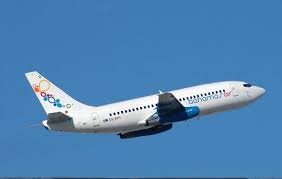
This seems to be the indictment against the Caribbean for its deficient governing policies in managing air travel in the region. So many of the 30 member-states charge excessive aviation fees and airport taxes that they discourage, dis-invite and dissuade trading partners (and tourists) from consuming our shores and hospitality.

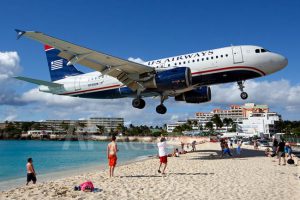
So the “defect is our own”. – The Bible

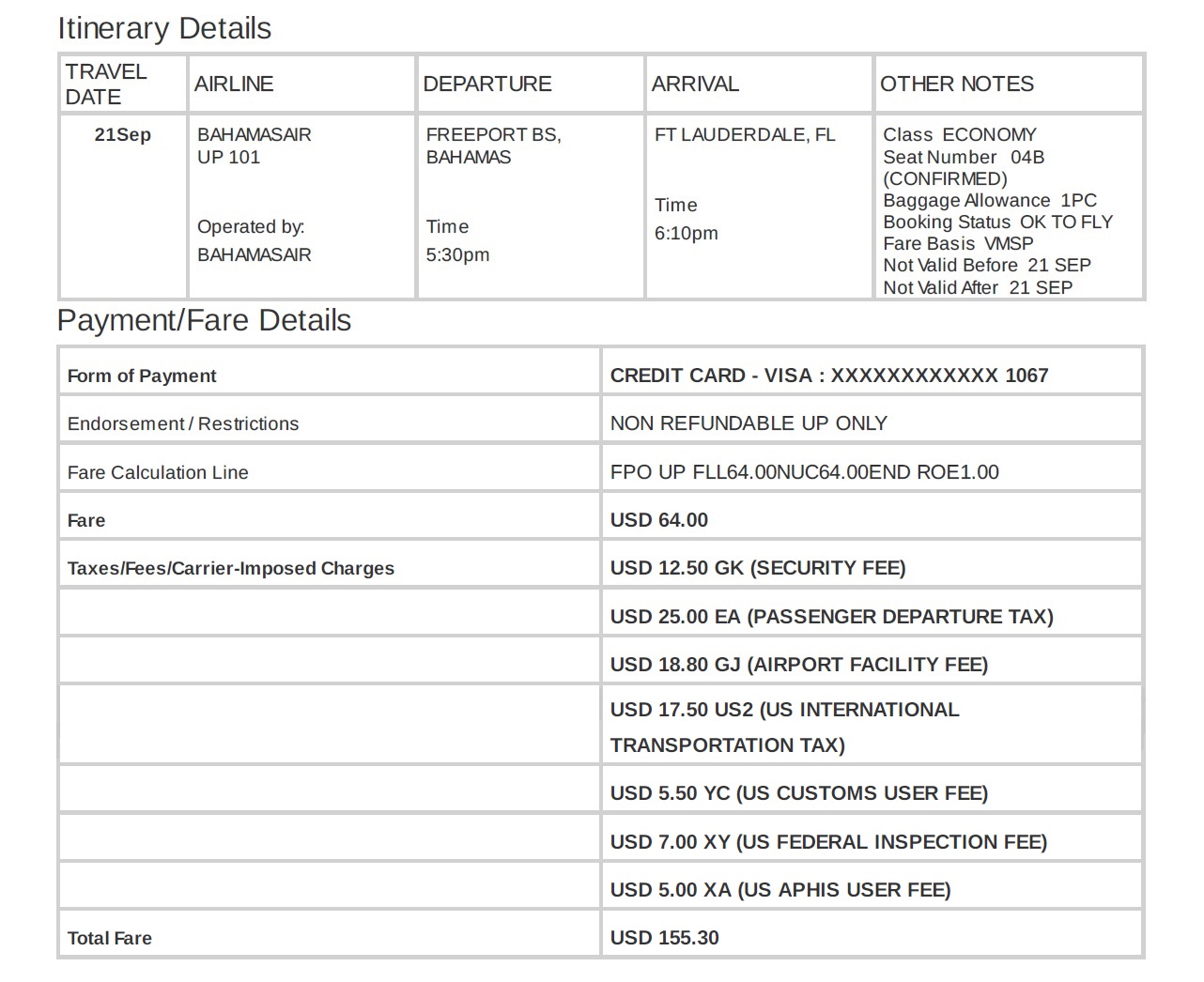
Shrewd management of taxes can encourage or discourage good or bad behavior. For example, high “sin” taxes on tobacco and alcohol tend to dissuade consumption; and tax cuts tend to incentivize investments. This is a known fact! And yet, many Caribbean member-state governments charge exorbitant fees and taxes for basic air travel – sometimes the fees are higher than the air fare themselves – see below.

This subject is part of the focus on the economic realities of “flying the Caribbean skies”. This commentary continues the 3-part series on Flying the Caribbean Skies. This entry is 2 of 3 in this series from the movement behind the book Go Lean … Caribbean in consideration of societal defects in the region’s management of air travel. These defects have awful-ized an already depressed economic situation in the Caribbean region. The other commentaries in the series are cataloged as follows:

  1. Flying the Caribbean Skies: New Regional Options
  2. Flying the Caribbean Skies: ‘Shooting Ourselves in the Foot’ – ENCORE
  3. Flying the Caribbean Skies: The Need to Manage Airspace

All of these commentaries relate to “how” the stewards for a new Caribbean can empower regional commerce by optimizing the air travel eco-system. This submission asserts that empowerment in this industry space can begin right at the front door, the portal to air travel, the airports. In a previous Go Lean commentary, this governing flaw was exposed. This commentary is an ENCORE of that previous blog from December 6, 2014.

See that submission here:

——————————-

Go Lean Commentary –  Caribbean less competitive due to increasing aviation taxes

The book Go Lean … Caribbean relates the significance of supporting the airline industry so as to facilitate the region’s primary economic driver: Tourism.

Tourism is a leisure activity; many times participants in leisure are in no hurry to get to their destinations, they often drive. This relates to countries on a continental mainland; but for islands, not so much. For 27 of the 30 Caribbean member-states, island life is the reality. (Belize is in Central America; Guyana and Suriname are in South America).

If speed is not the requirement then boating should be an option. But the only boating/transport options for Caribbean tourists are cruise lines.

This following article relates the biggest threat to Caribbean tourism is Caribbean governments. These ones are authorized to assess taxes, but for far too often they have targeted airline tickets to generate needed revenues. This is such a flawed strategy, a betrayal of the public trust. They “cut off their nose to spite their face”, as the article here relates:

By: Ernie Seon, Caribbean-360 Contributor

CU Blog - Caribbean less competitive due to increasing aviation taxes - Photo 1ST. THOMAS, US Virgin Islands – The International Air Transportation Association (IATA) Tuesday urged regional aviation authorities to adhere to the key principles set out by International Civil Aviation Organization.

IATA’s regional vice president for the Americas, Peter Cerda said it is unfortunate that many governments had chosen to ignore the principles, a global issue that was particularly acute in the Caribbean.

Addressing tourism and industry officials gathered here on the occasion of World Aviation Day, Cerda noted that aviation taxes continue to increase the cost of travelling to the Caribbean. He said this made the region less competitive to other destinations.

“Taking the islands as a whole, each dollar of ticket tax could lead to over 40,000 fewer foreign passengers,” he said, adding that US$20 million of reduced tourist expenditure meant 1,200 fewer jobs across the region.

“Caribbean countries must therefore consider the aviation industry as a key element for tourism development,” he advised.

The IATA official noted that in terms of charges, two airports in the region, Montego Bay and Kingston, both in Jamaica, recently proposed airport tariff increases of over 100 per cent so as to attain a return of capital of around 20 per cent a year in US dollars.

He said that measures such as these do not encourage or support the development of the industry in the region.

“The regulators must act strongly and swiftly against such big increases. Governments have to foster positive business environments through consultation with the industry and transparency in order to ensure win-win situations for all,” he warned.

Cerda said the issue of taxes and charges in the region transcends the formal breaches of global standards and recommended practices and that the simple truth is that this region is a very expensive place for airlines to do business.

In the Caribbean, tourism and the aviation sector facilitate and support some 140,000 jobs and contribute US$3.12 billion, roughly 7.2 per cent of the Caribbean’s gross domestic product (GDP).

The airline industry is celebrating its 100th anniversary year in the black, according to industry figures released here. Globally, airlines are expected to earn a net profit of US$18 billion in 2014.

Cerda noted that while that might sound impressive, on revenues of US$746 billion, this is equivalent to a net profit margin of 2.4 per cent or US$5.42 per passenger carried.

“Looking only at Latin America and the Caribbean, the airlines in this region are expected to earn $1.1 billion.”This is a profit of US$4.21 per passenger and a net margin of three per cent. We are in a tough and very competitive business,” he added.

The aviation official said fuel expense across the Caribbean is estimated at 14 per cent higher than the world average, adding that this represents about a third of an airline’s operating costs.

He noted that in the case of the Dominican Republic, although fuel charges were recently reduced, tax on international jet fuel still remains high at 6.5 per cent.

“Another example is the Bahamas applying a seven per cent import duty on Jet fuel. Jet fuel supply is an issue in the region, the complexity of the fuel supply and the seasonal demand is costly and difficult, making fuel costs in the region a challenge for airlines.”

In addition, Cerda noted that airports are using the fuel concession fees as a source of revenue and they are still waiting to see any of these monies re-invested in improving fuel facilities.

On the issue of safety, he said that this has been in the spotlight in recent months, with July being an especially sad month for all involved with aviation.

However, Cerda said despite the recent tragedies, flying remains by far the safest mode of transportation.

“Every day, approximately 100,000 flights take to the sky and land without incident. Nonetheless, accidents do happen. Every life lost recommits us to improve on our safety performance.

“It is no secret that safety has been an issue in this region. Even though it is still under performing the global average, performance is improving,” he said.

The IATA official said that the aviation industry has come a long way since the very first flight from St. Petersburg to Tampa 100 years ago, turning this large planet into one small world.

He said through it all, one thing has remained constant: when governments support the conditions for a thriving industry the economic benefits are felt by all.

However Cerda cautioned that for the industry to deliver the most benefits to the citizens in the Caribbean and spur additional tourism and trade, “we need to be able to compete on a level playing field and have the infrastructure capacity needed to grow.”

He said he remains confident that if the Caribbean governments continue to strengthen their partnership with the aviation industry, “we will deliver the unique transformative economic growth only our industry can deliver, making the second century of aviation in this region even more beneficial than the first”.
Caribbean-360 Online News (Posted 09/17/2014; retrieved 12/06/2014) –
http://www.caribbean360.com/news/caribbean-less-competitive-due-to-increasing-aviation-taxes-iata-warns

This foregoing article highlights a defective premise, predatory taxing, and so thusly depicts the need for improved regional oversight of economic and governing engines.

CU Blog - Caribbean less competitive due to increasing aviation taxes - Photo 2See this photo of a recent airline ticket (price breakdown), for one of the stakeholders in the Go Lean movement, who was travelling from a Caribbean island. The reality of these aviation taxes defies logic!

Yes, the governments need their revenues, but this should not be pursued at the expense of undermining viable economic engines; this is self-defeating. Likewise there was a recent conflict with British Aviation Authorities and their unilateral tax on Caribbean air transport. The solution there/then is the same as now: regional coordination and a heightened advocacy; see AppendixVIDEO.

Change has now come to the Caribbean. The book Go Lean … Caribbean serves as a roadmap for the introduction and implementation of the Caribbean Union Trade Federation (CU), an alliance of the 30 Caribbean member-states. This Go Lean roadmap has 3 prime directives:

  • Optimization of the economic engines in order to grow the regional economy to $800 Billion and create 2.2 million new jobs..
  • Establishment of a security apparatus to protect the resultant economic engines.
  • Improve Caribbean governance to support these engines.

The roadmap calls for the CU to navigate the changed landscape of the globalized air transport industry. There is the need for regional integration, administration, and promotion for Caribbean air travel among local and foreign carriers. The book posits that transportation and logistics empower the economic engines of a community. There must be air carrier solutions to service the transportation and tourism needs of the Caribbean islands. This point is fully appreciated by Caribbean tourism stakeholders; the book relates that the region’s Hotel and Tourism Association channel the vision of Robert Crandall, former Chairman of American Airlines, who remarked at a Caribbean Hotel and Tourism Investment Conference in May 2010 that the region is uniquely dependent on tourism:

“Everyone involved in travel and tourism knows that our [airline] industry is immensely important to the world economy, generating and supporting – either directly or indirectly – about one in eleven jobs worldwide. Here in the Caribbean, it is even more important. On a number of islands, travel and tourism accounts for more than 50% of all employment, and on some islands for more than 75%. Overall, about 20% of Caribbean employment is travel and tourism dependent – something on the order of 2.5 million jobs.” – Go Lean … Caribbean Page 60.

The Go Lean book asserts that air travel options must be optimized to impact Caribbean society – thus the need for more regional coordination, regulation and promotion of the Caribbean’s aviation industry. New models are detailed in the book in which tourism can be enhanced with “air lifts” to facilitate Caribbean events, and “Air Bridges” to allow for targeting High Net Worth markets. This roadmap also introduces the Union Atlantic Turnpike to offer more transportation solutions (ferries, toll roads, railways, and pipelines) to better facilitate the efficient movement of people and cargo.

This is one way the CU will empower the region’s economic engines. This is an example of the change that the CU technocracy will bring!

The Go Lean book presents a series of community ethos that must be adapted to forge this change. In addition, there are these specific strategies, tactics, implementation and advocacies to apply:

Community Ethos – Job Multiplier Page 22
Community Ethos – Lean Operations Page 24
Community Ethos – Cooperatives Page 25
Community Ethos – Ways to Improve Sharing Page 35
Community Ethos – Impacting the Greater Good Page 37
Strategy – Customers – Visitors Page 47
Strategy – Competitive Analysis – Event Patrons Page 55
Strategy – Core Competence – Tourism Page 58
Anecdote – Caribbean Hotel & Tourism Assoc. focus on Air Transport Page 60
Tactical – Fostering a Technocracy Page 64
Tactical – Commerce – Tourism Promotion Page 78
Tactical – Aviation Administration & Promotion Page 84
Implementation – Ways to Deliver Page 109
Implementation – Trade Mission Objectives Page 116
Planning – 10 Big Ideas for the Caribbean Region – #7: Virtual Turnpike Page 127
Planning – Ways to Improve Trade Page 128
Advocacy – Ways to Improve Governance Page 168
Advocacy – Ways to Optimize Government Revenue Sources Page 172
Advocacy – Ways to Enhance Tourism Page 190
Advocacy – Ways to Impact Events Page 191
Advocacy – Ways to Market Southern California – Air Bridge Page 194
Advocacy – Ways to Improve Transportation – Aviation Promotion Page 205
Appendix – Airport Cities – New Approach for Optimizing Business Model Page 287

This commentary posits that the status quo of Caribbean aviation taxes reflect a flawed economic policy, reflective of the dysfunction in the region. This commentary also relates to other lessons of economic optimizations and dysfunctions previously detailed in Go Lean blogs, as sampled here:

Caribbean must work together to address regional industry threats – Example of Rum Subsidies
A Lesson in Aviation History: Concorde SST and the Caribbean
New York-New Jersey Port Authority – Lessons from an Airport Landlord
Bahamas Re-organizing Government Revenues in 2015 with VAT Implementation
Lessons Learned from the American Airlines Merger
Book Review: ‘Wrong – Nine Economic Policy Disasters and What We Can Learn…’
Caribbean Changes – Air Antilles Launches St. Maarten Service
Tourism’s changing profile – Need for Competition and Comparative Analysis

The world loves the Caribbean; people want to come visit and enjoy our hospitality. It is better for them, and for us in the region that they come by air transport. But cruises are viable options, though the Caribbean communities get less benefits from cruise lines (Pages 61 & 193). We simply “fatten our frogs for snake”. The more dysfunction we create with air transport – like these excessive  aviation taxes – the more we push visitors to the cruise option; meaning less direct-indirect spending: hotels, taxis, restaurants, casinos, etc.

Now is the time to lean-in to this roadmap for Caribbean change, as depicted in the book Go Lean…Caribbean. We cannot afford to undermine our economic strengths with disabling tax policies. This is a public trust, betrayed. The Caribbean can – and must – do better.  🙂

Download the free e-Book of Go Lean … Caribbean – now!

Sign the petition to lean-in for this roadmap for the Caribbean Union Trade Federation.

————

APPENDIX Video: A Tax Too Far…? – http://youtu.be/Jbh8DJxUNC8

Uploaded on Oct 30, 2011 – A documentary on how the Air Passenger Duty instituted by the UK is affecting Caribbean Tourism, and the lobbying efforts of the Caribbean Tourism Organization to have it reduced, removed, or the Caribbean re-banded. Get more information about the APD on the CTO website: http://www.onecaribbean.org/our-work/advocacy/

Share this post:
, , , ,
[Top]

Flying the Caribbean Skies – New Regional Options

Go Lean Commentary

Look back at Economic History and we see a consistent lesson: nations that deploy efficient transportation systems always thrived as world powers. Consider these examples of the interchangeability of transportation and trade:

  • Romans built roads, facilitating trade and military advancement.
  • British, Dutch, French and Spanish empires thrived in trade due to their efficient shipbuilding and navigational artistry.
  • Railroad expansion across North America allowed the manifestation of the greatest industrial might in the history of mankind.
  • Banana boats created foreign markets for a tropical perishable produce, and originated cruise travelling.
  • Highway deployments allowed America to regroup and exceed competitors just as other nations where catching up with rail.
  • The “Jet Age” opened the Caribbean up to be the ideal winter tourism destination; “get there fast and then take it slow”.

This last one, is the focus of this series of commentaries; the economic realities of “flying the Caribbean skies”. This commentary commences a 3-part series on Flying the Caribbean Skies. This entry is 1 of 3 in this series from the movement behind the book Go Lean … Caribbean in consideration of societal defects in the region’s management of air travel. There is a lot wrong and a lot of remediation that needs to be done. The other commentaries in the series are cataloged as follows:

  1. Flying the Caribbean Skies: New Regional Options
  2. Flying the Caribbean Skies: ‘Shooting Ourselves in the Foot’ – ENCORE
  3. Flying the Caribbean Skies: The Need to Manage Airspace

All of these commentaries relate to “how” the stewards for a new Caribbean can empower regional commerce by optimizing the air travel eco-system, and the dependent industries. Our efforts to reform and transform the Caribbean economic engines would be incomplete without re-addressing air travel. Problems emerged in the last decade; there was one dominant airline that used to service most of the Caribbean member-states, and then they downsized their Caribbean footprint. That was American Airlines. In a previous Go Lean commentary, this debilitating history was related:

The 2008 financial crisis placed a heavy strain on the US’s largest carrier: American Airlines. On July 2, 2008, American announced furloughs of up to 950 flight attendants, in addition to the furlough of 20 MD-80 aircraft. American’s hub at Luiz Muñoz Marin Airport in San Juan, Puerto Rico (PR) was truncated from 38 to 18 daily inbound flights. The holding company, AMR Corporation, filed for Chapter 11 bankruptcy protection on November 29, 2011, and the airline made cuts in July 2012 due to the grounding of several aircraft associated with its bankruptcy and lack of pilots due to retirements. American Eagle, the regional carrier, (the Caribbean’s largest), was to retire 35 to 40 regional jets as well as its entire Saab turboprop fleet. [b] American Eagle PR ceased operation in March 2013. This status created dysfunction for the entire Eastern Caribbean region.

The stakeholders for American Airlines met and deliberated; then they made a decision and executed a plan that devastated Caribbean commerce. Caribbean stakeholders were “not at the table” but we were “on the menu”.

Now that American Airlines have downsized, the Caribbean has become totally dysfunctional with the air travel eco-system. A few other airlines, stepped into the void, but not at the same level and production; air travel options are now more limited, and expensive. So more and more tourists are travelling to the Caribbean by cruise ships. With less and less air travel fulfillments, that means less stay-overs, so less hotels, restaurants, taxi cabs, etc.. This type of dysfunction affects all “job multipliers” (indirect employment down the line) in the society.

No wonder our Caribbean member-states are nearing Failed-State status.

With cracks in the economic “chain-link”, the whole job creation utility becomes dysfunctional, and the Caribbean landscape for jobs is dire. We have some work to do, to fill the void.

If the one airline, the foreign American Airlines, is a primary culprit for Caribbean Airspace dysfunction, then facilitating a local airline solution would be moving in the right direction. See one news article here, identifying a new regional carrier:

Title #1: Saint Lucia welcomes new regional airline

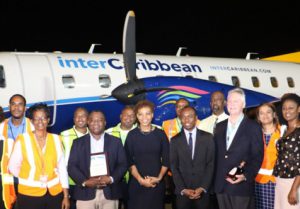
Press Release: The inaugural flight of InterCaribbean Airways arrived at the George FL Charles Airport, on Thursday, March 22, at 6:55 pm, from the island of Dominica. The flight marks the commencement of a direct service, 3 times a week, between Saint Lucia’s George FL Charles Airport (SLU) and Dominica’s Douglas–Charles Airport (DOM).

Flight JY293 was welcomed by the Minister of Tourism, Information and Broadcasting the Hon. Dominic Fedee, Chairperson of the Saint Lucia Tourism Authority Agnes Francis, Airport Manager for George FL Charles Kirby Toussaint and other tourism officials. The honoured guests included airline Owner and Chairman Lyndon Gardiner along with CEO Trevor Sadler.  Guests were greeted with steel band music and welcome refreshments upon disembarking the aircraft.

The new route will be serviced by an Embraer EMB120, with a seating capacity of 30. The flights will arrive from DOM at 6:55 pm on Sunday, Monday and Thursday and depart from SLU at 9:00 am on Monday, Tuesday and Friday. The service provides onward connections to the northern Caribbean including the BVI reaching as far north as Havana with an additional direct service to Saint Croix commencing on April 12.

Speaking on the airlines role in regional travel Owner/Chairman Lyndon Gardiner stated, “Our dream is connecting the entire Caribbean, we feel that once we have better air connectivity we will be able to have better integration and be able to market the Caribbean as a single destination, offering more multi-destination vacations in our region”

The airport’s proximity to the island’s main business hub and largest cluster of hotels makes it the ideal point of entry for regional travel. In 2017 the Caribbean market overtook the United Kingdom as the second largest producer of stay-over arrivals, generating 76,349 or 19.8% of total stay-over arrivals to the destination.

Minister of Tourism, Information and Broadcasting the Hon. Dominic Fedee commented on the value of the increased airlift saying, “We look forward to the opportunities that this flight allows, which connects us to even more gateways across the Caribbean.”

Source: Retrieved April 21, 2018 from: https://stluciatimes.com/2018/03/30/saint-lucia-welcomes-new-regional-airline/

There is a heightened deficiency in the region today, and now only a small number of airline carriers have answered the call. This dysfunction has created the urgency for permanent change. This is a prime directive of the book Go Lean … Caribbean, to optimize the region’s economic engines, including enhancements for Caribbean tourism, cruise and “long stay” visitors.

The book Go Lean…Caribbean – available to download for free – serves as a roadmap for the introduction and implementation of the technocratic Caribbean Union Trade Federation (CU), for the elevation of Caribbean society – for all member-states. This CU/Go Lean roadmap fully has these 3 prime directives:

  • Optimization of the economic engines in order to grow the regional economy to $800 Billion and create 2.2 million new jobs.
  • Establishment of a security apparatus to ensure public safety and protect the resultant economic engines.
  • Improve Caribbean governance to support these engines, including a separation-of-powers between the member-states and CU federal agencies.

American Airlines is more than just a regional carrier; they are the world’s largest airline; see VIDEO in the Appendix below. In addition to their planes-flights, they also facilitate an alliance with other carriers around the world, to form the OneWorld Alliance. This alliance was detailed in that previous blog-commentary, listing this inventory as of May 2014:

Airline Base Country / Region
Airberlin Germany – Central Europe
American Airlines USA – North America
British Airways United Kingdom, Western Europe
Cathay Pacific Airways Hong Kong (China), Far East Asia
Finnair Finland – North Europe
Iberia Spain / Portugal – Southern Europe
Japan Airlines Japan – Far East Asia
LAN Airlines Chile/Peru – South America
Malaysia Airlines Malaysia – Southeast Asia
Qantas Australia – Austra-Asia
Qatar Airways Middle East
Royal Jordanian Middle East
S7 Airlines Russia – Siberia
TAM Airlines Brazil – South America
US Airways USA – North America

So the Caribbean took a beating, economically, because of the decline and failure of this one private American company.

You see it, right? You see the “too many vulnerable eggs in one basket”; this is called “country risk”:

Country risk also refers to the broader notion of the degree to which political and economic unrest affect the securities of issuers doing business in a particular country. – Source.

Yes, there is vulnerability of placing our own economic fortunes in the hands of just one foreign entity. This is a consistent complaint of the Go Lean movement against the Caribbean member-states:

We have subjected ourselves to be parasites, rather than protégés.

A more appropriate Caribbean solution would be to forge an equivalent multi-airline alliance. In fact, there is such an effort in place now, though limited. See the news article here identifying a new alliance in the Eastern Caribbean:

Title #2: Caribbean airline alliance promises lower fares

Barbados Nation – Three Caribbean airlines have formed an alliance which promises to make it easier and cheaper for travellers to move between 32 countries.

Antigua-based LIAT, Air Antilles of Guadeloupe and St Maarten’s Winair have joined forces under the CaribSKY project which is co-funded by the European Union’s INTERREG Caribbean programme to the tune of 4.7 million euros.

The details of the project were revealed on Tuesday during a media conference at La Creole Beach Hotel and Spa in Guadeloupe.

Air Antilles chief executive officer Serge Tsygalnitzky said CaribSKY would allow passengers to travel on any of the three airlines on one ticket. This will be facilitated through codeshares and interline agreements.

“Sometimes, a customer has to purchase two tickets, three tickets to get to a single place. Now, what we want you to be able to do is travel seamlessly anywhere you want to with a single ticket,” he told regional media.

Tsygalnitzky said passengers would benefit from more direct flights and connections, lower fares, a better airport experience and a loyalty programme.

At the same time, LIAT, Winair and Air Antilles will be able to share know-how, optimise schedules and bring their teams together while maintaining separate identities.

Together, it projected that the three airlines will operate 25 aircraft and transport 1 400 000 passengers annuals on 70 000 flights.

LIAT’s chief executive officer Julie Reifer-Jones said inter-regional travel was declining and it was hoped that CaribSKY will make it easier for passengers to move through the English, French, Spanish and Dutch-speaking territories.

In brief remarks, LIAT chairman Dr Jean Holder pointed out that the Caribbean was the most airline dependent region in the world and social, economic and cultural life depended on the extent to which there is connectivity.

St Maarten’s Minister of Tourism, Economic Affairs, Transportation and Telecommunications, Cornelius de Weever also highlighted the importance of CaribSKY.

He pointed out that it is often easier and cheaper to cross the Atlantic than to visit a Caribbean territory.

Source: Retrieved April 23, 2018 from: https://stluciatimes.com/2018/04/19/caribbean-airline-alliance-promises-lower-fares/

This too is a good start, though limited to the small Eastern Caribbean sub-region. The Go Lean movement presents the plan to forge an alliance of multiple parties throughout the whole Caribbean region, all 30 member-states in benefit to the 42 million people. The book stresses that regional alliances are the best ways to reform and transform the Caribbean societal engines. This was an early motivation for the roadmap, as pronounced in the opening Declaration of Interdependence (Pages 12 – 13):

viii. Whereas the population size is too small to foster good negotiations for products and commodities from international vendors, the Federation must allow the unification of the region as one … agent, thereby garnering better terms and discounts.

xvi. Whereas security of our homeland is inextricably linked to prosperity of the homeland, the economic and security interest of the region needs to be aligned under the same governance. Since economic crimes … can imperil the functioning of the wheels of commerce for all the citizenry, the accedence of this Federation must equip the security apparatus with the tools and techniques for predictive and proactive interdictions.

xxiv. Whereas a free market economy can be induced and spurred for continuous progress, the Federation must install the controls to better manage aspects of the economy: jobs, inflation, savings rate, investments and other economic principles. Thereby attracting direct foreign investment because of the stability and vibrancy of our economy.

The Go Lean book provides 370-pages of turn-by-turn instructions on “how” to adopt new community ethos, plus the strategies, tactics, implementations and advocacies to execute so as to reboot, reform and transform the societal engines of Caribbean society. One advocacy (Page 205) details the CU’s role in promotion activities for air travel, with this quotation:

Aviation plays a key role, and so there is the need for regional coordination and promotion of the region’s domestic and foreign air carriers.

Yes, we can better promote air travel in the Caribbean; we can make our homeland a better place to live, work, fly & play. 🙂

Download the free e-book of Go Lean … Caribbean – now!

Sign the petition to lean-in for this roadmap for the Caribbean Union Trade Federation.

————-

Appendix VIDEO – World’s largest airline fleet || American Airlines Current And Future Fleet – https://youtu.be/ULGL_yTORMs

Great Aviation
Published on Jan 23, 2018 – American Airlines current as well as the airplanes it has ordered. All the types as well as their seat configurations.


Share this post:
, , , ,
[Top]

March Madness 2018 – ENCORE

Go Lean Commentary

Welcome to March. Welcome to Madness. But the focus here is on basketball, not Mental Health.
Wow, what a mania!

March is time for the NCAA Division I Basketball Tournament. This is where 68 teams come together in a single-elimination tournament to determine who would be the National Champion. The number 68 is deceptive; it is really a tournament of 64, with 60 secured teams and 8 teams having to compete in “play-in” games to determine the last 4. Then it is …

64 => 32 => Sweet 16 => Elite 8 => Final 4 => 2 Finalists => 1 Champion

This is simple math! Basketball is a simple game – 5 players on each side with one ball and 2 baskets. Minimal expense for fielding a basketball team … and yet …

… there is NO eco-system for College Basketball in the Caribbean.

Ouch! That is madness!

Frequently, the movement behind the book Go Lean…Caribbean repeats this urging – see the many related blog-commentaries:

There is an opportunity for the sports eco-system to thrive in the Caribbean region.

This was also the strong point of this previous blog from March 20, 2014. That submission is encored here below.

But first, enjoy the NCAA’s March Madness 2018. Submit your own bracket; mine is shown here.

Also view a VIDEO here of a “Break-down” analysis of this year’s tournament:

VIDEO – Breaking down the NCAA March Madness tournament matchups – https://youtu.be/DdGMLOd0-K0

Posted March 12, 2018 – The brackets are set for college basketball’s March Madness tournament where 68 teams will compete for the national championship. CBS Sports columnist Bill Reiter joins CBSN to break down the tournament matchups.

=================
CampionExcelsiorK20120911IA

ENCORE Title: Collegiate Sports in the Caribbean

Sports play a big role in Caribbean culture. Education plays a big role in the empowerment of communities. There is a junction between sports and academics; this is the sphere of college athletics.

Cuba has 37 universities…alone. In total, the Caribbean has 42 million people (2010 figures) in all 30 member-states. So surely there is enough of a student population to field sports teams.

More so, there is a fan base in the communities to complete the eco-system of sports spectators and community pride. Yet, there is very little college sports being facilitated in the region right now. Despite the breadth and talent base to form leagues and rivalries among the established universities within the Caribbean. Any system for college athletics is noticeably lacking.

This is the mission of the Caribbean Union Trade Federation (CU); to function as a Caribbean version of the National Collegiate Athletic Association (NCAA) in the US. We have much to learn from this organization’s history, successes & failures.

“The NCAA was founded in 1906 to protect young people from the dangerous and exploitive athletics practices of the time,” so states the NCAA on its official website.[a]

According to Dan Treadway, Associate Blog Editor for the Huffington Post online news magazine[b]:

The NCAA often likes to harp on tradition and the sanctity of the term “student-athlete,” but it fails to recognize its true roots.

The association in fact got its start because, at the time of its creation, football was in danger of being abolished as a result of being deemed too dangerous a sport. During the 1905 season alone, 18 college and amateur players died during games. In response to public outcry, Theodore Roosevelt, an unabashed fan of the sport, gathered 13 football representatives at the White House for two meetings at which those in attendance agreed on reforms to improve safety. What would later become known as the NCAA was formed shortly after on the heels of this unifying safety agreement.

Collegiate Sports is now big money; an economic eco-system onto itself. How much money does the NCAA make?

For the 2010-11 fiscal year, the NCAA revenue was $845.9 million, (not including College Football). Total rights (broadcast & licensing) payment for 2010-11 was $687 million, of all NCAA revenue. The remaining revenues are mostly event ticket sales.

How did the NCAA go from being an agreement to promote safety standards so as to prevent death on the playing field, to a multi-million dollar enterprise? Chalk that up to 100 years of social evolution.

The book Go Lean … Caribbean serves as a roadmap to advance to the end of the evolutionary process and establish the economic engines to empower the Caribbean region, even in areas like sports and culture.

So how to build sports franchises anew? How will colleges & universities create success from collegiate athletics? It’s a complex “art and science”, but first, it starts with facilities – the CU’s Fairground administration will fund, build and manage sports venues. The CU will be the landlord; the academic institutions, the tenants.

The Go Lean roadmap navigates the changed landscape of globalization and pronounces that change has come to the Caribbean but the region is not prepared. Despite the great appreciation for sports, and the excellent talent of its athletes, there is no business model for the consumption of Caribbean collegiate athletics.

Now, for much of the Caribbean, the population tunes in and pays for cable/satellite TV service to consume American collegiate athletic programming. But how many people in the region are watching Caribbean college sporting activities? None. Though there is a demand, undoubtedly, there is no supply process in place.

In the adjoining table in the Appendix, 36 schools are identified that are capable of fielding credible sports teams, if the appropriate facilitations were in place.

There is the demand. What’s missing is the organized market for consumption. The implementation of this Go Lean roadmap fills this void. This completes the supply!

Applying the model of the NCAA, much can be learned. We can copy their success, and learn from their pitfalls. The NCAA credits tremendous revenues for itself, but not necessarily for all of their members. Under NCAA supervision, the majority of athletic programs, in fact, lose money and are subsidized by funds from their respective university. While the NCAA is needed for academic integrity in college sports, many times, it fails at this responsibility. They lack the CU’s lean execution ethos.

After 100 years later, does the world still need the NCAA? Absolutely! For more than the collective bargaining/negotiations role for the business side of college athletics. They are also the governing body for college athletics, ensuring fairness and good sportsmanship. For the Caribbean Union, this role is to be assumed by the CU Sports Administration, to provide technocratic efficiencies. The resultant eco-system facilitates the CU mandate, to make the region a better place to live, work and play.

Download the book Go Lean … Caribbean – now!

Sign the petition to lean-in for the roadmap for the Caribbean Union Trade Federation.

———————-

APPENDIX A – References:
ahttp://www.ncaa.org/wps/wcm/connect/public/NCAA/About+the+NCAA/History
b – http://www.huffingtonpost.com/ daniel-treadway/johnny-manziel-ncaa-eligibility_b_3020985.html

———————-

APPENDIX B – Caribbean Regional Colleges & Universities

Member-state

Legacy

Name

Antigua and Barbuda

British

Antigua State College
Aruba

Dutch

University of Aruba
Bahamas

British

College of the Bahamas
Barbados

British

University of the West Indies – Cave Hill, American University
Belize

British

University of Belize
Galen University
Bermuda

British

Bermuda College (Community College)
Cuba

Spanish

University of Havana Universidad de Oriente, Polytechnic University José Antonio Echeverría
Dominican Republic

Spanish

Universidad Autónoma de Santo Domingo (UASD) – (English: Autonomous University of Santo Domingo)
French Caribbean

French

University of the French West Indies and Guiana Guadeloupe Campus, Martinique Campus, French Guiana Campus
Guyana

British

University of Guyana
Haiti

French

Caribbean University / Université Caraïbe, Université d’Haiti
Jamaica

British

University of the West Indies – Mona, University of Technology (U-Tech), Mico University College, Northern Caribbean University (NCU), University College of the Caribbean (UCC), International University of the Caribbean (IUC)
Netherlands Antilles

Dutch

University of Curaçao
Curaçao
Sint Maarten University of St. Martin
Puerto Rico

USA/

Spanish

Caribbean University, Metropolitan University, University of Puerto Rico, University of Turabo
Suriname

Dutch

University of Suriname Anton de Kom Universiteit van Suriname
Trinidad and Tobago

British

University of the West Indies – Saint Augustine University of Southern Caribbean (USC) University of Trinidad and Tobago (UTT)
US Virgin Islands

USA

University of the Virgin Islands

Share this post:
, ,
[Top]

Leading with Money Matters – Lottery Hopes and Dreams

Go Lean Commentary

There is no doubt that gambling is a bad vice, but can a little gaming be tolerated in society?

There are parallels:

  • There is no doubt that alcoholism is vice-full,  but can social consumption be tolerated in society?
  • There is no doubt tobacco smoking is a dangerous habit, but can some cigarette or the world’s best cigars be good for Caribbean society?

Gambling, mildly permitted can be tolerated and even beneficial for society. Think State Lotteries …


When the jackpot gets huge – millions, tens of millions, hundreds of millions – a lottery can inspire Hope and Dreams. It can even lead people, influence them, steer them to do and act accordingly. Yes, the Hope and Dreams of a Lottery Jackpot, like all other Money Matters, can lead people to a new destination.

Let’s use this power to inspire good, as in Hope and Dreams for our society. Consider this American model; see article here:

Title: Powerball and Mega Millions: What you need to know

By: Chris Sims and Channing King, IndyStar

The Mega Millions and Powerball jackpots now total more than $950 million combined after Wednesday’s drawing failed to produce a winner.

And this stretch is the first time that both multi-state lottery grand prizes have been at more than $400 million each. That makes Saturday’s Powerball $550 million jackpot potentially the eighth largest lottery prize ever and Friday’s Mega Millions $418 million pot potentially the 16th largest lottery prize.

The winning numbers for Wednesday night’s Powerball drawing were 2, 18, 37, 39, 42 and the Powerball was 12. The Power Play number was 3.

Wednesday’s Powerball jackpot worth $460 million was the game’s seventh largest and 10th largest for all lottery games in the United States, according to Dennis Rosebrough, public relations director for the Hoosier Lottery.

► Jan. 3: No one wins Powerball, Mega Millions drawings
► Jan. 2: Happier new year: $800 million in jackpots await lucky winners
► Dec. 31: Will you hit it rich in 2018 with soaring lottery jackpots?

Tuesday’s Mega Millions drawing would have netted a winner $361 million jackpot.

Here’s what you need to know if you play Powerball or Mega Millions:

What is a winning ticket worth?

The Powerball jackpot now stands at $550 million for Saturday’s drawing, payable in 30 annual installments, with a one-time cash option of $347.9 million before taxes.

The Mega Millions grand prize is $418 million for Friday night’s drawing with a cash value of $261 million before taxes.

► Dec. 30: What to do if you win the lottery in 2018
► Nov. 16: North Carolina woman wins lottery twice in one day

No matter how a winner chooses to go, lottery prizes that hefty are taxed as ordinary income and put a winner in the highest tax bracket. So that’s $128.7 million for the feds right off the top of that Powerball lump sum, not counting state and local taxes.

One benefit of winning now vs. last year: The new federal tax cut will allow the winner of Saturday’s Powerball jackpot who chooses the one-time cash option to keep about $9 million more for himself.

When are the drawings? 

Powerball numbers are drawn at 10:59 p.m. ET every Wednesday and Saturday. Mega Millions numbers are drawn at 11 p.m. every Tuesday and Friday.

Find out where to watch the drawings on your local TV station by heading to your state lottery’s webpage. (Sorry, Alabama, Alaska, Hawaii, Mississippi, Nevada and Utah; you can’t play unless you cross state lines.)

If you’d rather look online, Powerball’s drawing is streamed here; some websites offer live streaming video of Mega Millions drawings, and Mega Millions’ official YouTubechannel posts its video soon after the live event.

Odds of winning

The odds of buying a winning Powerball ticket are 1 in 25. The odds of hitting the jackpot are 1 in more than 292 million. The odds of becoming a millionaire by matching five numbers is 1 in more than 11.5 million.

Mega Millions’ odds of winning overall are a little better at 1 in 24. However, the odds of winning the grand prize are 1 in more than 302.5 million. A shot at matching five numbers for a $1 million is 1 in more than 12.5.

You have a better chance of achieving sainthood than winning either grand prize, 1 in 20 million, according to Gregory Baer, author of Life: The Odds.

How much does it cost to play?

Powerball and Mega Millions tickets sell for $2 each.

Powerball players can add Power Play for an extra $1 per ticket for a chance to multiply a non-jackpot prize up to five times.

Mega Millions players can purchase the Megaplier for an extra $1 a ticket for a chance to multiply a non-jackpot prize up to five times.

If you win …

Rosebrough recommends that players sign and secure their ticket. Winners should call the number on the back of their ticket when they are ready to claim their prize.

“First, you should pause and take a deep breath,” Rosebrough said. “Then, our experience with past winners says you should consult with some experts whether they be accounting, legal or whatever if you have a major prize.”

Rosenbrough has been impressed with most Indiana winners. Most have had a plan in place before they attempt to receive the money.

How long before you get paid?

Both Powerball and Mega Millions officials transfer the money from a central depository of all districts selling tickets — that includes 44 states, the District of Columbia, Puerto Rico and the U.S. Virgin Islands for Powerball; Mega Millions sells in all of those places except Puerto Rico — to respective state lotteries within 24 to 48 hours, Rosenbrough said.

However, the transfer sometimes can take longer because of things such as long holiday weekends.

Follow Chris Sims and Channing King on Twitter: @ChrisFSims and @ChanningKing

Source: USA Today Newspaper Website – Published, Jan. 4, 2018; retrieved February 20, 2018 from: https://www.usatoday.com/story/money/nation-now/2018/01/04/powerball-mega-millions-need-know/1002979001/

As related in the foregoing, this discussion does have a Caribbean footprint, as Powerball is featured in Puerto Rico and the U.S. Virgin Islands; though ‘Mega Millions’ sells only in the Virgin Island. So our Caribbean people can have lottery hopes and dreams.

Here’s to the losers , bless them all – Song by legendary crooner Frank Sinatra

Everybody will lose at these games, except one of two persons … maybe.

VIDEO – Why you wouldn’t win the lottery – https://www.usatoday.com/videos/money/2018/01/03/why-you-wont-win-lottery/109119580/

Posted January 3, 2018 – The odds of winning the Mega Millions jackpot are 1 in more than 302 million. You have a better chance at all these other extraordinary things. USA TODAY

Add among the list of losers: existing gaming establishments – Atlantic City, New Jersey is now a failing business model – horse racing and dog racing tracks, Jai Lai frontons and other pari-mutuels. There are only limited casino models that now work, mostly regional establishments – think Las Vegas, Mohegan Sun in Connecticut, etc. – with abundant entertainment options. Even in the Caribbean, more and more casino resort amenities are failing to lure guests and gamers.

Yes, the lottery eco-system spins many losers, but there are winners too: the State Governments and their designated beneficiaries. In some states, like Florida, the State Legislature guaranteed in statues that all monies – after prizes and overhead expenses – will go to education. Other states supplement education with other causes, like Elder-Care in Pennsylvania.

The foregoing news article and VIDEO aligns with the book Go Lean…Caribbean, which calls for the elevation of Caribbean economics. The book clearly states that gambling is a losing proposition, but concedes to the economic realities: if people will spend their money on gambling, then the structures should be put in place to limit and regulate these activities – see the Appendix below – this will minimize the vice-full effects on society and maximize the returns to the Greater Good. (This Greater Good was defined by Philosopher Jeremy Bentham – lived from 1748 to 1832 – as the “greatest good to the greatest number of people which is the measure of right and wrong”.

This commentary is the final part, 5 of 5 in a series from the movement behind the book Go Lean … Caribbean in consideration of Money Matters for leading the Caribbean down a different path from their status quo. The other commentaries in the series are cataloged as follows:

  1. Leading with Money Matters: Follow the Jobs
  2. Leading with Money Matters: Competing for New Industries
  3. Leading with Money Matters: Almighty Dollar
  4. Leading with Money Matters: As Goes Housing, Goes the Market
  5. Leading with Money Matters: Lottery Hopes and Dreams

All of these commentaries relate to “how” the stewards for a new Caribbean can persuade the region stakeholders to follow this empowerment roadmap for the region. The series has already establish that if we “dangle money in front of our subjects”, they will respond and react. Now, imagine dangling a big Lottery Jackpot – millions, tens of millions, hundreds of millions.

The book Go Lean… Caribbean, serves as a roadmap for the introduction and implementation of the technocratic Caribbean Union Trade Federation (CU) with the charter to effectuate change in the region with these 3 prime directives:

  • Optimization of the economic engines in order to grow the regional economy to $800 Billion and create 2.2 million new jobs.
  • Establishment of a security apparatus to protect the resultant economic engines and marshal against economic crimes.
  • Improve Caribbean governance to support these engines.

Early in the book, the responsibility to monitor, manage, and mitigate the risks and threats on Caribbean societal engines were identified as an important function for the CU. The plan therefore includes provisions for a regional lottery, even declaring the possibility of 2,500 direct new jobs from the ventures (installing, maintaining merchant network & administrative staff). The opening Declaration of Interdependence (Pages 13) stressed this model:

xxvi.  Whereas the Caribbean region must have new jobs to empower the engines of the economy and create the income sources for prosperity, and encourage the next generation to forge their dreams right at home, the Federation must therefore foster the development of new industries… In addition, the Federation must invigorate the enterprises related to existing industries like tourism, fisheries and lotteries – impacting the region with more jobs.

This commentary have previously looked at the vices of society – marijuana, cigars and rum – and prepared sober plans for managing change, risks and threats to Caribbean society. Consider this sample of earlier Go Lean blogs:

https://goleancaribbean.com/blog/?p=13882 Lessons Learned from Managing Marijuana Laws in California
https://goleancaribbean.com/blog/?p=12703 Lessons from Colorado: Legalized Marijuana – Heavy-lifting!
https://goleancaribbean.com/blog/?p=9646 ‘Time to Go’ – American Vices. Don’t Follow!
https://goleancaribbean.com/blog/?p=6680 Vegas Casinos Place Bets on Video Games
https://goleancaribbean.com/blog/?p=2887 Caribbean community must work together to address rum subsidies
https://goleancaribbean.com/blog/?p=1847 Caribbean Cigars – Declared “Among the best in the world”
https://goleancaribbean.com/blog/?p=1386 Marijuana in Jamaica – Puff Peace

The Go Lean book provides 370 pages of detailed instructions regarding the community ethos needed to effect change and empowerment in the societal engines. Lotteries will create a stark contrast for member-states to reconcile. In the past,they told their citizens to work hard, live a clean life and they will prosper where planted in the Caribbean region. Now the message changes to “Buy a Ticket; Get Rich Quick”. This transformation requires the right messaging, plus the executions of the required strategies, tactics, implementations and advocacies to shepherd these societal engines. One particular advocacy in the book relates directly to a regional lottery (Page 213); consider some of the specific plans, excerpts and headlines from that advocacy in the book:

10 Ways to Impact the Lottery

1 Lean-in for the Caribbean Single Market
This treaty allows for the unification of the region into one market, thereby expanding to an economy of 26 countries, 42 million people and a GDP of over $800 Billion (per 2010). The Trade Federation will function as a government “proxy”, a multi-national corporation to deliver the services for an integrated administration. The CU will generate revenues from its own sources, like a lottery, by developing and harvesting regional eco-systems for efforts too big for just one state. The CU is also the sole authority for Self Governing Entities, bordered sites, where lottery tickets can be sold & cashed.
2 Caribbean Dollars Only

The CU Lottery will transact in Caribbean Dollars, not US dollars, UK pounds nor Euros. This way the financial benefit and economic multiplier remains in the region. Consider this UK model: 12% of revenue proceeds go to the State Government, 5% goes to lottery retailers, 4% to Lottery operations, and the remainder (over 50%) paid out in winnings.

3 Powerball / Mega-Millions Models – where even the Retailers share in the Winnings

The CU will model the Caribbean Regional Lottery after the American examples of Powerball and Mega-Millions. These multi-state systems have melded ideally with state counterparts, by incentivizing more gaming due to extra large jackpots tied to more players. Most people, gamblers or not, have no qualms wagering $1-to-$2 on “surreal” jackpots.

4 Education as a Beneficiary

A lottery will be a “tough sell”, unless it’s for the greater good. Education as the beneficiary is the “winning” argument that has worked in some jurisdiction. In fact, in Florida, the Lottery Referendum failed to win majority support many times, until it was aligned with the state’s educational initiatives. Then it passed…overwhelmingly.

5 Elder-Care as a Beneficiary

Not everyone in a jurisdiction, (childless/empty-nesters), care about educational benefits. Pennsylvania-USA aligned their lottery operations to benefit Elder-Care. This too, is a winning inducement, as everyone hopes to be old someday.

6 Cooperation with National Lotteries

The CU’s Lottery will co-exist with State Lotteries, by not deploying CU scratchcard games. Jamaica, Trinidad, Aruba and St. Lucia have successful programs; the US Virgin Islands and Puerto Rico have US Dollar lotteries plus Powerball / Mega-Millions. The USVI Lottery is also a member of an existing small Caribbean Lottery with other islands, such as Sint Maarten, Saint Kitts and Nevis, and Barbados. The CU Lottery will assimilate this current regional effort.

7 Hurricane Risk Reinsurance Fund Merchant Network and Online Presence
8 Diaspora Purchasing
9 Prize: Annuity Pay-outs

Like most lotteries, the CU’s option will award large prizes as 20-year annuities, with no inheritance benefits. This approach allows more funds to be immediately applied to lotteries beneficiaries and promotes the CU’s capital markets.

10 Prize: Lump-Sum Pay-outs
Like most lotteries, the CU will also allow prize winners to take an immediate pay-out rather than elect the 20-year annuity. The rules of NPV (Net Present Value) apply, so the lump-sum payout averages 45 – 60% of the jackpot.

This Go Lean/CU roadmap is not advocating the abandonment of wholesome industrial values. No, in fact the regional government will actually message against gambling, even lotteries. But if people will still consume – and they do – then i is pragmatic to facilitate the consumption of lotteries and tax the revenues… and benefit the people (education, Elder-Care, etc.).

The Caribbean can be a better place to live, work and play; play will include lotteries. Our goal remains: to be the best address on the planet. This is not a lottery fantasy with long odds. No, while effectively leading with Money Matters, change can be fostered in the Caribbean homeland. This roadmap is conceivable, believable and achievable. 🙂

We urge everyone to lean-in to this vision.

Download the book Go Lean … Caribbean – now!

Sign the petition to lean-in for this roadmap for the Caribbean Union Trade Federation.

————

Appendix – The Bottom Line on Gambling

Gambling is a major international commercial activity, with the legal gambling market totaling an estimated US$335 billion in 2009. Religious perspectives on gambling have been mixed. The Catholic Church holds the position that there is no moral impediment to gambling, so long as it is fair, all bettors have a reasonable chance of winning, there is no fraud involved, and the parties involved do not have actual knowledge of the outcome of the bet. [Catholic Churches are notorious for BINGO fundraisers].

Gambling has often been seen as having social consequences. For these social and religious reasons, most legal jurisdictions limit [and regulate] gambling. Such regulation generally leads to gambling tourism and illegal gambling in areas where it is not allowed. The involvement of governments, through regulation and taxation, has led to close connections between many governments and gaming firms, where legal gambling provides significant government revenues.

Studies show that though many people participate in gambling as a form of recreation or even as a means to gain an income, gambling, like any behavior which involves variation in brain chemistry, can become harmful, psychologically addictive.

Online gambling, also known as Internet gambling, is a general term for gambling using the Internet. In 1994 the Caribbean nation of Antigua and Barbuda passed the Free Trade & Processing act, allowing licenses to be granted to organizations applying to open online casinos. [The practice continues, even fighting and winning legal bouts at the WTO against the US].

Many of the companies operating out of Antigua are publicly traded on various stock exchanges, specifically the London Stock Exchange. Antigua has met British regulatory standards and has been added to the UK’s “white list”, which allows licensed Antiguan companies to advertise in the UK. By 2001, the estimated number of people who had participated in online gambling rose to 8 million and the growth continued, despite legislation and lawsuit challenges to online gambling. By 2008, estimates for worldwide online gambling revenue were at $21 billion. Most lotteries are run by governments and are heavily protected from competition due to their ability to generate large taxable cash flows. The first online lotteries were run by private companies but these stop trading as governments passed new laws giving themselves and their own lotteries greater protection. Government controlled lotteries now offer their games online, as with the UK National Lottery.

References:

Source: Book Go Lean…Caribbean Page 213


Share this post:
, ,
[Top]

Leading with Money Matters – Competing for New Industries

Go Lean Commentary

Iron sharpens iron – The Bible; Proverbs 27:17; see more at Appendix B below.

Are we ready for the competition … among ourselves?

It’s coming. It always does.

When one subject is trying to be the best-in-the-world in a particular field of endeavor, there is always the need to compete with other contenders for the best-in-the-world status.

In the Caribbean, we know this scenario well, We have seen it time and again with our track-and-field athletes. Think Usain Bolt.
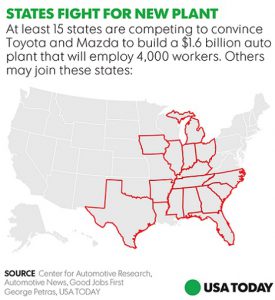

As related in a previous blog-commentary by the movement behind the book Go Lean … Caribbean, companies and Direct Foreign Investors many times seek out new cities to build factories, plants and corporate offices. Many times the “seek out” effort involves considering one city-state-country in competition with another.

Get ready Caribbean, this competition will impact you … more and more. And this “iron sharpening iron” competition will only increase the opportunity for success by urging us to pursue quality, excellence and competence for the needs of companies and Direct Foreign Investors.

This is the quest of the book Go Lean…Caribbean – available to download for free. The book calls for the elevation of Caribbean economics, security and governance. Placing greater emphasis on economics and industrial empowerment beyond the default tourism resorts, the book serves as a roadmap for the introduction and implementation of the technocratic Caribbean Union Trade Federation (CU). This CU/Go Lean roadmap has these 3 prime directives:

  • Optimization of the economic engines in order to grow the regional economy to $800 Billion & create 2.2 million new jobs.
  • Establishment of a security apparatus to ensure public safety and protect the resultant economic engines.
  • Improve Caribbean governance to support these engines, including a separation-of-powers between the member-states and CU federal agencies.

Despite the fact the individual cities may have to compete against each other, this Go Lean/CU roadmap stresses that reforming and transforming the Caribbean societal engines will first require regional leverage and synergy. Individually, no Caribbean community may have the assets to attract relocating factories, plants and corporate offices. So we have to reboot our industrial landscape first.

This is the reboot …

Accordingly, the Go Lean/CU roadmap facilitates an eco-system for Self-Governing Entities (SGE), an ideal concept for factories, plants, corporate offices and other industrial expressions like shipyards,  aerospace bases and even prisons. The exclusive federal regulation and promotion activities of SGE’s lie within the CU jurisdiction solely. Imagine bordered campuses – with a combination of fencing, walls and/or moats/canals – that designates the exclusivity of the commercial, security and administration to a superlative governance above the member-states.

This is transforming! This is the vision of an industrial reboot! This is where and how the jobs are to be created.

The Go Lean movement (book and blogs) details the principles of SGE’s and job multipliers, how certain industries are better than others for generating multiple indirect jobs down the line (or off-campus) for each direct job on the SGE’s payroll. In previous blog-commentaries, it was related how certain industries are perfectly suited for the Caribbean, as long as the structure was an independent SGE. These commentaries asserted that many new direct and indirect jobs will be facilitated. See further elaboration in this sample of previous blog-commentaries here:

https://goleancaribbean.com/blog/?p=13138 Industrial Reboot – Prisons 101
The business model for a Prison Industrial Complex allows for host-landlord facilities to get paid from the responsible jurisdictions for housing their inmates. This model will create jobs, entrepreneurial opportunities, trade transactions and more.
https://goleancaribbean.com/blog/?p=13420 A Lesson in History – Whaling Expeditions
The business prospects for ship-breaking are ideal for the SGE concept. Many jobs will result.
https://goleancaribbean.com/blog/?p=12581 State of the Union – Annexation: French Guiana
The European Space Agency in French Guiana is prominently featured in the Go Lean book – Page 105 – as a model for Self-Governing Entities (SGE). The hope – as expressed in the book – is that this territory, and all the French Antilles,  would someday join the regional neighborhood of the CU Trade Federation.
https://goleancaribbean.com/blog/?p=12146 Commerce of the Seas – Shipbuilding Model of Ingalls
Industrial plants for Shipbuilding is perfectly suited for the Caribbean; the SGE structure will allow for better economic (capital), security and governing engines.
https://goleancaribbean.com/blog/?p=7822 Cancer Research: Doing More
The Go Lean roadmap calls for more medical R&D initiatives but on Caribbean shores. The roadmap strategizes the adoption of SGE’s to employ medical research and treatment campuses.
https://goleancaribbean.com/blog/?p=3473 Haiti to Receive Grants to Expand Caracol Industrial Park
There is this industrial park in Haiti that a an premature model of the SGE concept. The existing park is plagued with turmoil, but it is a good start. SGE’s would be ideal.
https://goleancaribbean.com/blog/?p=2750 Disney World – Role Model for Self-Governing Entities
This indisputably successful SGE was originally considered for a Caribbean city, but we lost out to Orlando, Florida. Now they enjoy the 57 million guests per year. 🙁
https://goleancaribbean.com/blog/?p=1214 The Art & Science of Temporary Stadiums – No White Elephants
The SGE concept can also be successful with sports endeavors. Considering the good and bad lessons learned from Olympics, the economic benefits can be huge.

This vision of a superlative industrial landscape – SGE’s – was an early motivation for the Go Lean roadmap, as pronounced in the opening Declaration of Interdependence (Pages 12 – 13):

xi. Whereas all men are entitled to the benefits of good governance in a free society, “new guards” must be enacted to dissuade the emergence of incompetence, corruption, nepotism and cronyism at the peril of the people’s best interest. The Federation must guarantee the executions of a social contract between government and the governed.

xxiv.  Whereas a free market economy can be induced and spurred for continuous progress, the Federation must install the controls to better manage aspects of the economy: jobs, inflation, savings rate, investments and other economic principles. Thereby attracting direct foreign investment because of the stability and vibrancy of our economy.

xxvi.  Whereas the Caribbean region must have new jobs to empower the engines of the economy and create the income sources for prosperity, and encourage the next generation to forge their dreams right at home, the Federation must therefore foster the development of new industries, like that of … the prison industrial complex. In addition, the Federation must invigorate the enterprises related to existing industries like tourism, fisheries and lotteries – impacting the region with more jobs.

Under this SGE scheme, there will still be the need for inter-city competition, in terms of which locality to place the SGE. Here is where “iron could sharpen iron”. Local communities can get better and better in support of industrial entities – the job-creating engines – by challenging the support dynamics among each other. Notice the similar experience in the USA Today news article in Appendix A below. Notice how 15 different American states have been “jumping through the hoops” to  compete for the 4,000 direct jobs of an auto assembly plant to be located in a city within their jurisdiction.

The end-result of inter-city/inter-state competition will be more excellence … and more jobs. This is how Money Matters can lead to societal reforms.

This commentary is 2nd of a 5-part series from the movement behind the book Go Lean … Caribbean in consideration of Money Matters for leading the Caribbean down a different path from their status quo. The full commentaries in the series are cataloged as follows:

  1. Leading with Money Matters: Follow the Jobs
  2. Leading with Money Matters: Competing for New Industries
  3. Leading with Money Matters: Almighty Dollar
  4. Leading with Money Matters: As Goes Housing, Goes the Market
  5. Leading with Money Matters: Lottery Hopes and Dreams

All of these commentaries relate to “how” the stewards for a new Caribbean can persuade the region stakeholders to follow the economic empowerment plan. Seeing the “jumping through the hoops” that communities are willing to do – to attract job creators – it is logical to conclude that the economic principle is correct, that people will “respond to economic incentives”. This principle is the premise for the Go Lean quest to reform and transform the economic engines of the Caribbean member-states. We have to “dangle money” in order to get people to conform.

In summary, forging change in the Caribbean will require the region to finally get the art and science of job-creation right. If new factories, plants and corporate offices can serve as a job-creation bonanza then we need to attract them ourselves; we need our “iron to sharpen iron” so that we can excel at recruiting and attracting new industrial entities, local home-grown ones or Direct Foreign Investors.

This heavy-lifting plan is conceivable, believable and achievable. Yes, we can lead with Money Matters and make our Caribbean homeland a better place to live, work and play. We urge all Caribbean stakeholders to lean-in to this roadmap. 🙂

Download the free e-Book of Go Lean … Caribbean – now!

Sign the petition to lean-in for this roadmap for the Caribbean Union Trade Federation.

———–

Appendix A – Title: With code name, how Toyota-Mazda set off secret race for 4,000-job plant

One of the biggest potential job-creating bonanzas in the country, a giant new auto plant proposed by Toyota and Mazda, began in secret with a mysterious code name.

Now it has become a full-blown race among states to try to reel in the $1.6-billion project that will create 4,000 good-paying direct jobs and thousands of other indirect jobs.

The two Japanese automakers recently issued a blind request for proposals to states in the Midwest, mid-Atlantic and South, according to two people familiar with the plans who were not authorized to speak publicly because the process was confidential.

Told only that an unidentified employer was weighing its options for a massive project under the code name Project Mitt, state economic development officials delivered preliminary proposals, including potential tax incentives, job training programs and infrastructure investments.

When the Japanese automakers publicly revealed their joint venture two weeks ago, they made it clear they had not yet picked a site. State economic development offices are now in high gear.

No fewer than a dozen states are believed to have a shot at landing the automotive factory, which automotive industry researchers say could create several times as many jobs at nearby employers.

Job-creating projects of this magnitude are rare — it would be only the fourth U.S. assembly plant in a decade when it opens in 2021 — so Toyota and Mazda are expecting contenders to roll out the red carpet for their 50-50 joint venture.

Also making the project a plum, Toyota, in particular, takes “a very long-term view” that should keep its giant plant in place for half a century or more, said Ron Harbour, an expert on auto manufacturing sites who works for consultancy Oliver Wyman.

“You have to be able to say you’ve got the workforce, you’ve got the land, you’ve got the transportation systems and rail spurs, community college and education and a place where people want to live,” said Kristin Dziczek, director of industry, labor and economics at the Center for Automotive Research. “Once you’ve got all that, tax incentives come into play.”

But unlike the recent contest to land smartphone components manufacturer Foxconn’s first U.S. plant — which Wisconsin won after delivering a massive incentives package — tax breaks might not be enough to seal the deal.

Access to a dependable labor force, a vibrant community and enough contiguous land close to power and transportation infrastructure could make the difference, said Bradley Migdal, senior managing director and business incentives expert at Cushman & Wakefield.

Toyota, which hired commercial real estate firm Jones Lang LaSalle to help manage the process, declined to discuss states under consideration.

“We are just beginning the discovery process ,” Toyota said in a statement. “As we solidify our plans, we will share more information about the selection process.”

Mazda spokesman Jeremy Barnes, in an email, said, “I do know that no decisions have been made at this time, and that all options remain on the table.”

Here’s a look at some of the key states in the mix:

Alabama

Why it could win: Low-cost labor, bustling auto sector.

Why it could lose: Might not have enough workers.

Alabama’s vibrant auto manufacturing sector could help or hurt.

Three auto assembly plants made more than 1 million vehicles in 2016 in Alabama. The industry employed nearly 40,000 people in a right-to-work state desperate for good-paying jobs.

State development officials declined to directly discuss any efforts to land a proposed Toyota-Mazda assembly plant.

But Gov. Kay Ivey said new incentives laws have made Alabama more attractive to expanding companies. The changes she signed into law in May raised the annual state incentives cap to $300 million.

Ivey said Alabama’s reputation as “a proven manufacturing state” also helps.

Alabama has Hyundai, Mercedes-Benz and Toyota plants. North Alabama is the “more likely area” for the project if Alabama lands it, Montgomery Mayor Todd Strange said.

Brad Harper, Montgomery Advertiser

Arkansas

Why it could win: Was a finalist for the last new Toyota plant.

Why it could lose: Too far away from suppliers.

Arkansas was a finalist for the Toyota factory that opened in Blue Springs, Miss., in 2011.

Arkansas Economic Development Commission spokesman Jeff Moore said the state “certainly has interest” again.

Arkansas has broad latitude in issuing bonds to raise funds for infrastructure, land acquisition and job training.

The Economic Development Commission also administers sales tax exemptions, income tax credits and a payroll rebate program.

“We certainly have a very good toolbox of incentives to assist,” Moore said.

Kevin Hardy, Des Moines Register

Georgia

Why it could win: Worker training programs, enticing location.

Why it could lose: Lack of ties to Toyota operations.

Georgia is host to one of the newest U.S. assembly plants: the Kia factory in West Point, which opened in 2009, which has some 3,000 workers today.

One of the state’s key selling points is its geography. Interstate 75 runs right through it.

Among Georgia’s most compelling arguments is that its worker training programs are among “the best in the country,” said Bradley Migdal, the Cushman & Wakefield site expert.

Georgia Department of Economic Development communications director Stefanie Paupeck Harper declined to say whether the state has discussed a deal with Toyota and Mazda. But she said the state’s “hundreds” of suppliers could help.

“Automotive companies will not find another state that has a better combination of logistics, workforce, quality of life and proven record of success than Georgia,” Harper said.

Nathan Bomey, USA TODAY

Indiana

Why it could win: Already has a Toyota plant and is close to other operations, including Toyota’s Kentucky plant and Michigan engineering campus.

Why it could lose: The job market is so strong that the automakers might have a hard time finding enough employees.

Toyota has a 19-year-old factory in southern Indiana that builds the Sequoia sport-utility vehicle and Sienna minivan and is undergoing a $600 million expansion.

Overall, the auto industry employs more than 100,000 people in Indiana. Honda, Subaru and Chrysler each have initiated expansions there since 2010.

While the strong presence of auto factories and suppliers could make Indiana a viable contender for the Toyota-Mazda plant, existing facilities also might be one reason why the state gets passed over, said Mohan Tatikonda, an operations management professor for the Indiana University Kelley School of Business.

With Indiana’s unemployment rate at a near-record-low 3%, Toyota and Mazda could have concerns about finding employees.

“If we have multiple companies seeking generally the same labor skill, then laborers or their representatives can seek out a higher price,” Tatikonda said. “So, if that’s the case, a company may seek to go to a place where there’s less competition for a ready labor force.”

A spokeswoman for the Indiana Economic Development Corp. declined comment.

James Briggs, Indianapolis Star

Iowa

Why it could win: Dependable manufacturing workforce; no competition with other assembly plants.

Why it could lose: Too far away from suppliers.

Toyota has already asked Iowa for information on specific sites that could house a new assembly plant with room for suppliers to grow, said Debi Durham, director of the Iowa Economic Development Authority.

Iowa Gov. Kim Reynolds said the state is “extremely competitive” in its hunt for the Toyota-Mazda plant but wouldn’t comment on potential incentives.

“We are going to do everything we can ― up to a limit. You have to know where you draw a line,” Reynolds said. “But we’re competitive. This would be great for the state of Iowa.”

The Hawkeye state can tout a “second-to-none” work force, low energy costs and regular rankings that place the cost of doing business in Iowa among the lowest in the nation, she said.

The state routinely doles out forgivable loans, tax credits and tax refunds for companies that pledge to create or maintain jobs.

While Iowa isn’t known for automotive manufacturing, state officials have made a concerted effort to reach out to carmakers over the last year in an effort to recruit a new assembly plant.

Kevin Hardy, Des Moines Register

Kentucky

Why it could win: Toyota already has a massive factory in Georgetown, Ky.; close to numerous suppliers; likely to offer major incentives.

Why it could lose: If Toyota decides it’s already exhausted the local workforce for talent.Toyota’s 8 million-square-foot, 8,200-job Georgetown, Ky., facility makes more than 500,000 Camry, Lexus and Avalon vehicles per year. Toyota is investing $1.3 billion into plant upgrades.

The state also boasts two Ford factories in Louisville and General Motors’ Chevrolet Corvette plant in Bowling Green.

The factory draws from 350 suppliers and commodities vendors, 100 of them in Kentucky.

Gov. Matt Bevin told auto executives that a shovel-ready 1,550-acre site in central Kentucky, south of Elizabethtown near Interstate 65, is an ideal location for the investment.

Bevin pushed successfully for a right-to-work law and other business-friendly measures this year, and pledged to compete aggressively against rival states. “I say giddy up,” he said.

Grace Schneider, Louisville Courier-Journal

Michigan

Why it could win: Traditional home to the nation’s auto industry — and Toyota engineering has its engineering facility in the Wolverine State.

Why it could lose: If the automakers fear potential unionization.

While Michigan is home to the Detroit Three auto companies — not to mention engineering centers for virtually every major automaker and numerous suppliers — the state’s union history has long scared off foreign automakers from considering a manufacturing presence there. In fact, no foreign automaker operates an assembly plant in Michigan.

But “it’s not as much of a deterrent” anymore, said Glenn Stevens, vice president of the Detroit Regional Chamber. “Michigan previously was not a right-to-work state, as it is now. And even though the UAW has incredibly strong relationships with some companies in Michigan, there are also companies here that are not unionized.”

Gov. Rick Snyder signed legislation in 2012 that gives every worker the right to choose for themselves whether to join a union, arguing it would position it to better compete with states in the South that are more hostile to labor unions.

Gov. Rick Snyder signed a package of bills in July that would provide significant tax incentives for manufacturers, aiming to lure Foxconn.

“Michigan is absolutely the best location in the U.S. for this joint plant to be established, due to our leadership in automotive research & development, especially on mobility issues. We also have a strong pipeline of engineers and professional trades talent,” Snyder said in a statement.

Stevens also argued that Michigan has the manufacturing workforce necessary to support such a project and points out that Toyota employs 1,600 at engineering centers in the Ann Arbor area.

Brent Snavely, Detroit Free Press

Mississippi

Why it could win: Landed the last new Toyota plant.

Why it could lose: If Toyota believes the local workforce can’t sustain another factory.

The Toyota plant in Blue Springs, Miss. opened in 2011 and employs about 2,000 people. The state also has Nissan’s 5,000-person assembly plant in Canton.

Even with two major plants, the state can easily accommodate another and gin up training dollars to assure Toyota of a competent workforce, said Scott Waller, interim chief executive of the Mississippi Economic Council.

“Today the incentives are workforce based,” Waller said. “It’s all workforce driven. There’s absolutely no question Mississippi can be successful.”

–Ted Evanoff, Memphis Commercial-Appeal

North Carolina

Why it could win: No automotive assembly plants to compete with for talent.

Why it could lose: If the state is viewed as not having enough of a manufacturing workforce.

North Carolina doesn’t have any automotive assembly plants, which could prove enticing to Toyota because of the chance to bolster its political clout from the swing-state’s congressional delegation.

But the Tar Heel State has 26,000 workers at companies that supply the auto industry.

North Carolina’s tech-savvy Research Triangle could prove enticing, said John Boyd, head of Boyd Co. Inc., a location consultant.

–Ted Evanoff, Memphis Commercial-Appeal

Ohio

Why it could win: Strong manufacturing workforce; centrally located; many local suppliers.

Why it could lose: Not a right-to-work state.

JobsOhio said the state boasts several sites of more than 1,000 acres that are ready for a manufacturing plant to break ground quickly.

Toyota already has factories in neighboring Indiana and Kentucky and an engineering headquarters in Michigan. Locating its next plant in a Midwest state such as Ohio would keep it close to parts suppliers, saving time and money. Ohio is within a day’s drive of 75% of the country’s auto assembly plants and their accompanying parts networks, JobsOhio said.

Officially, Ohio isn’t saying whether it’s trying to land the Toyota-Mazda plant.

“We do not share whether or not we are in project discussions with companies,” said Matt Englehart, a spokesman for JobsOhio, the state’s privatized economic development arm.

But Gov. John Kasich and JobsOhio. the state’s privatized economic development arm, have shown a willingness to dole out incentives to keep auto-related jobs. Those moves included offering tax breaks to keep a Cleveland-area Ford truck plant open.

Chrissie Thompson, Cincinnati Enquirer

South Carolina

Why it could win: Growing automotive sector.

Why it could lose: If the automakers decide the job market is too crowded.

Finding the workers for such a plant could be a tall order, in part because of the state’s flourishing manufacturing sector. But state leaders said they have a proven track record for rising to the challenge by investing in training programs.

“We are a state that houses BMW, Volvo, Mercedes-Benz and Boeing,” South Carolina Department of Commerce spokeswoman Adrienne Fairwell said. “We have a workforce that is ready and available and we can create the workforce where necessary because we have the tools, tactics and strategies to do it.”

State economic development experts touted the region’s highly skilled workers, transportation hubs and cluster of auto suppliers. The upstate region, located in the northwestern portion of the state, is a manufacturing powerhouse, said Mark Farris, president of the Greenville Area Development Corporation.

But Ken Crews, training manager at German auto-parts supplier Stueken North America, said he has struggled to find new workers with the right combination of skills and work ethic for his plant.

Jermaine Whirl, vice president for economic development and corporate training at Greenville Tech, finding requires may require casting a wider net geographically and getting able-bodied workers back into the labor force.

Anna B. Mitchell, The Greenville News

Tennessee

Why it could win: Significant, growing automotive sector; perfect location for logistical purposes; strong business climate.

Why it could lose: If the automakers decide there aren’t enough workers.

Tennessee has been waiting for this moment. A decade ago, the state purchased land with the specific purpose of landing a Toyota plant that never came.

“There will be a lot (of) people fighting hard for that plant, and we intend to be at the lead,” Tennessee Gov. Bill Haslam told the Associated Press.

Hoping to lure the Toyota plant that eventually went to Blue Springs, Miss., Tennessee acquired property dubbed the Memphis Regional Megasite. The site, which remains unused, is 4,100 acres situated 32 miles east of Memphis on vacant farm land along Interstate 40.

Site selection consultants said it’s one of Tennessee’s leading candidates for industrial investment.

Tennessee already has spent more than $140 million on the Memphis Megasite, building roads and water and sewer lines.

–Ted Evanoff, Memphis Commercial-Appeal

Source: Posted Aug. 17, 2017; retrieved February 16, 2018 from: https://www.usatoday.com/story/money/cars/2017/08/17/toyota-mazda-auto-plant/573213001/

———-

VIDEO – Toyota, Mazda building $1.6B plant in USA – https://www.usatoday.com/videos/money/cars/2017/08/04/toyota-mazda-building-1.6b-plant-usa/104285082/

Posted Aug. 17, 2017 – President Trump applauded Toyota and Mazda’s plan to set up the joint venture in the USA and create up to 4,000 jobs. Wochit

———–

Appendix B: Tomorrow’s World Commentary: Iron Sharpens Iron

The Bible offers good advice on what to look for—and what to avoid—when choosing friends. One well-known principle of positive friendship is given in the Old Testament book of Proverbs: “As iron sharpens iron, so a person sharpens his friend” (Proverbs 27:17New English Translation). What does this scripture mean, and how can this idea direct your friendships?

According to The Bible Knowledge Commentary, “When iron is rubbed against another piece of iron it shapes and sharpens it. Similarly people can help each other improve by their discussions, criticisms, suggestions, and ideas.” The image of a chef using a rod of steel to sharpen a knife is a good example of using strong metals to improve the instrument.

Listen to the AUDIO file or read the remainder of this Bible Study subject here:

Source: https://www.tomorrowsworld.org/magazines/2016/march-april/iron-sharpens-iron posted March-April 2016 retrieved February 16, 2018.

Share this post:
, , ,
[Top]

How the Youth are Consuming Media Today

Go Lean Commentary

The more things change, the more they remain the same.

People have always consumed media; the technology may change, but the consumption continues; see the flow of methods throughout history:

  • Scrolls
  • Books
  • Telegraphs
  • Newspapers/Magazines
  • Electronic Media: Radio, Television, Phonographs, etc.
  • Digital Media: Internet & Communications Technologies

Today, young people are consuming media as digital, but the ancient Bible prophecy still applies; maybe even more than ever right now:

Beyond this, my son, be warned: the writing of many books is endless, and excessive devotion to books is wearying to the body. – Ecclesiastes 12:12; The New American Standard Bible

So though technology may change, the consumption of media always continue: music is being played, stories are being told (on the screen), books are being read, hours upon hours are being spent (by each individual consumer). Only now, this consumption is transpiring with a digital transformation.

So make that e-Books, not just books.

… and make that music streamed and not just played.

… and make that a small screen (smartphones) and not just screen.

The world has changed, is changing now and will continue to change. Technology is an Agent of Change. For the Caribbean, this is not just a matter of “keeping up with the Joneses”; the problem now is that the “Joneses” have a competitive advantage; they are “eating our lunch”. Those best equipped to contend with this Agent of Change, our most educated ones, are abandoning us more and more as each day goes by. One report relates an average of 70 percent of the tertiary educated population fleeing. The abandonment is a direct result of our failure to compete.

See this Variety news article here relating the digital transformation for the music industry:

Title: With 70 Million Subscribers and a Risky IPO Strategy, Is Spotify Too Big to Fail?

By: Jem Aswad and Janko Roettgers

Manhattan’s Chelsea neighborhood has served as the home of Spotify’s U.S. headquarters since 2010, but not for much longer.

Mandatory Credit: Photo by Vesa Moilanen/REX/Shutterstock (7529625p)
Spotify co-founder and CEO Daniel Ek
Slush event, Helsinki, Finland – 30 Nov 2016
Slush is the focal point for startups and tech talent to meet with top-tier international investors, executives and media

Later this year, the streaming music company plans to move most of its 1,200 New York-based employees into 14 floors at 4 World Trade Center in the rejuvenated Financial District. As part of the deal for the 15-year lease, New York is granting an $11 million rent reduction in exchange for keeping more than 800 jobs in the state and adding 1,000 more employees.

But Spotify will make its presence felt in Lower Manhattan in 2018 in more ways than one. Sometime in the coming months at the New York Stock Exchange, just blocks away from its new home, the company will embark on what’s known as a direct listing, an unconventional initial public offering method that has never before been attempted on such a large scale.

Spotify and Wall Street aren’t the only ones that will be anxiously watching; count the music industry in as well. Its fortunes are largely bound with Spotify, which is becoming the industry’s top music distributor. Should the Sweden-based firm’s bold move backfire, its partners at the major record labels will feel the pain too.

“Just think about their depth of influence in the world,” says Capitol Music Group chairman-CEO Steve Barnett of Spotify. “[A recent Nielsen] report noted that Americans are spending more than 32 hours a week listening to music — up from [23.5] hours in two years. That tells you, for all the mistakes the industry made over a long period of time, things have been corrected.”

Spotify may draw some inspiration from Amazon, which lost hundreds of millions of dollars in its first few years as a public company, but investors stuck with the stock because the e-tailer reliably grew its business every quarter. On the other hand, Twitter and Snapchat stumbled not because of their monetary losses but primarily because of stalling user growth.

See the remainder of this article here: http://variety.com/2018/music/features/spotify-ipo-wall-street-music-industry-1202674266/ posted January 22, 2018; retrieved February 12, 2018.

In a previous Go Lean commentary, it was detailed how educational institutions are turning to tablets rather than textbooks. It is cheaper, faster to market and more engaging for young people. This is the point! Young people are more receptive to the efficiency of emerging (electronic) media outlets than the older generations. But that is the market that counts. Remember:

  • Young people are the ones that buy music
  • Young people go to the movies every weekend
  • Young people spur new trends
  • Young people will watch TV programming for young and older audiences, while older ones would not watch young programming; i.e. cartoons.

In addition to the efficiency of electronic or New Media, there is also the matter of effectiveness. Old Media has historically been a source for abuse and bullying, especially for young participants. New Media now allows for better options: direct-to-consumer deliveries and the bypass of the middle-man. The past Crony-Capitalism of media middle-men has often been the source of societal dysfunction. So the hope is that the effectiveness of New Media will bring more media productions.  This hope is realized! See this VIDEO here depicting the completion from direct-to-consumer streaming and the resultant decline on traditional television, Old Media:

VIDEO – The Real Reason Behind The Big Bang Theory’s Ratings Drop – https://youtu.be/aHvJkaGdY6A

Published on January 10, 2018 – After more than a decade as a CBS primetime mainstay, The Big Bang Theory remains one of the most popular shows on TV. However, fewer and fewer people are regularly tuning in to see what the most famous fictional nerds in the world are up to each week. So how come Big Bang isn’t popping the way it used to? Let’s explore …

TV ratings are down overall | 0:21
It’s hard to stream | 1:02
Blame football | 1:48
It’s part of a dying breed | 2:51
It’s a different show | 3:35
It’s inevitable | 4:19
Read more here → http://www.nickiswift.com/102976/real…

As related in the foregoing VIDEO, the Number One scripted television show is still Number One, but the audience is smaller, for television in general. Change is afoot!

So the media industry has moved forward, but with economic success “bad actors” always emerge. This consistent theme is presented by the movement behind the book Go Lean… Caribbean (Page 23). The book calls for the Caribbean to take its own lead in being “on guard” for bad actors and Crony-Capitalistic abuses. This means not being an American parasite.

As related in a previous commentary, the Go Lean movement asserts that the Caribbean region must not allow the US to take the lead for our own nation-building, that American capitalistic interest tends to highjack policies intended for the Greater Good. The recommendation in the roadmap is the key strategy of leveraging the needs of all 42 million people (4 languages) and become an American protégé, not parasite.

This Go Lean book serves as a roadmap for the introduction and implementation of the Caribbean Union Trade Federation (CU), to manage this change for New Media. We especially want to engage Caribbean young people with this foray into New Media. The youth of the Caribbean is the future of the Caribbean. The CU/Go Lean roadmap has 3 future-focused prime directives:

  • Optimization of the economic engines – and the educational apparatus – in order to grow the regional economy to $800 Billion and create 2.2 million new jobs.
  • Establishment of a security apparatus to protect the resultant economic engines.
  • Improve Caribbean governance to support these engines.

The Go Lean roadmap provides turn-by-turn directions on how to leverage the full Caribbean population, that’s a media market of 42 million people – in 4 languages. This roadmap is presented as a planning tool, pronouncing the collaborative benefits of a Single Market. This agenda was pronounced early in the book in the opening Declaration of Interdependence (Page 12 & 14):

viii.  Whereas the population size is too small to foster good negotiations for products and commodities from international vendors, the Federation must allow the unification of the region as one purchasing agent, thereby garnering better terms and discounts.

xi. Whereas all men are entitled to the benefits of good governance in a free society, “new guards” must be enacted to dissuade the emergence of incompetence, corruption, nepotism and cronyism at the peril of the people’s best interest. The Federation must guarantee the executions of a social contract between government and the governed.

xxi. Whereas the preparation of our labor force can foster opportunities and dictate economic progress for current and future generations, the Federation must ensure that educational and job training opportunities are fully optimized for all residents of all member-states, with no partiality towards any gender or ethnic group. The Federation must recognize and facilitate excellence in many different fields of endeavor, including sciences, languages, arts, music and sports. This responsibility should be executed without incurring the risks of further human flight, as has been the past history.

xxvii. Whereas the region has endured a spectator status during the Industrial Revolution, we cannot stand on the sidelines of this new economy, the Information Revolution. Rather, the Federation must embrace all the tenets of Internet Communications Technology (ICT) to serve as an equalizing element in competition with the rest of the world. The Federation must bridge the digital divide and promote the community ethos that research/development is valuable and must be promoted and incentivized for adoption.

The Go Lean book presents a roadmap for a confederation of the 30 Caribbean member-states doing the heavy-lifting of optimizing economic and media policies. Within its 370-pages, the Go Lean book details future-focused policies; and other ethos to adopt, plus the executions of strategies, tactics, implementations and advocacies to impact the media landscape in the region.

The Go Lean roadmap calls for bridging the Digital Divide, deploying a homegrown Social Media network and fostering technology in general. In addition to just communicating with 42 million people, we must do so in 4 general languages (Dutch, English, French and Spanish). So, the plan is for the CU to steer policy and capital to digital delivery and New Media.

Websites, music streaming, tablets and e-Books should be all the rage.

The foregoing news article and VIDEO relate to topics that should be of serious concern for Caribbean planners. We want to foster New Media and propel forward for the Caribbean’s best interest. No, we do not want to be parasites of America; we want to be better.

Many of these issues have been addressed in previous Go Lean blog-commentaries; consider this sample here:

https://goleancaribbean.com/blog/?p=13474 Future Focused – Radio is Dead … Almost
https://goleancaribbean.com/blog/?p=13321 Making a ‘Pluralistic Democracy’ – Multilingual Realities
https://goleancaribbean.com/blog/?p=10750 Less and Less People Reading Newspapers
https://goleancaribbean.com/blog/?p=9751 Where the Jobs Are – Animation and Game Design
https://goleancaribbean.com/blog/?p=8328 YouTube Millionaire: ‘Tipsy Bartender’
https://goleancaribbean.com/blog/?p=2126 Where the Jobs Are – Computers Reshaping Global Job Market
https://goleancaribbean.com/blog/?p=1698 STEM Jobs Are Filling Slowly
https://goleancaribbean.com/blog/?p=459 CXC and UK textbook publisher hosting CCSLC workshops in Barbados – Previewing e-Books

In general, the Go Lean book and movement projects a Cyber Caribbean (Page 127):

Forge electronic commerce industries so that the internet communications technology (ICT) can be a great equalizer in economic battles of global trade. This includes e-Government (outsourcing and in-sourcing for member-states systems) and e-Delivery, Postal Electronic Last Leg mail, e-Learning and wireline/wireless/satellite initiatives.

Strategically, the Go Lean roadmap posits that  we must compete as a homeland. We must keep our young people excited about their future prospect here in the region. To succeed in the competition of the global marketplace, our region must not only consume but rather also create, produce, and distribute intellectual property. We must be technocratic!

These are hallmarks of the CU technocracy: policies that reflect a future-focus.

Now is the time for all of the Caribbean, the people and school administrations, to lean-in for the changes described in the book Go Lean…Caribbean. 🙂

Download the book Go Lean … Caribbean – now!

Sign the petition to lean-in for this roadmap for the Caribbean Union Trade Federation.

Share this post:
, , , ,
[Top]

Enjoy Carnival and Be Safe!

Go Lean Commentary

It’s Carnival time … in Trinidad and Tobago (T&T). The streets of Port-of-Spain will be jumping, jiving, jamming, bumping, grinding and all the other festive adjectives.

Enjoy you people … and be safe too!

As the planners for a new Caribbean, we do not have to tell you how to enjoy – that is your legacy – but we do need to guide you on security and safety – it turns out that there are active foreign threats and domestic inadequacies.

Yes, the  Caribbean legacy is one of “being lax”. So we need T&T to pay more than the usual attention; and we need to convey to the whole world that Caribbean events can be safe and secure.

“Active foreign threats” …

… that is industry-speak for terrorism warnings.

Indeed, the “War on Terror” is real; there has been countless attacks since the World Trade Center Terrorist Attack in New York City on September 11, 2001. This war is still waging, though its some 17 years later, and it is not limited to the United States alone. Canada, France, Germany, the UK, the Netherlands, Spain and others have all reported terrorist attacks. The Caribbean has been spared thus far …

… but according to some reports, that streak is about to end.

Let’s hope this story here in the British tabloid The Sun – see Appendix below – is more hype than news, but can we truly ignore it?

Title # 1: Terror threat raised for Trinidad and Tobago Carnival

(The Sun) – British tourists in the Caribbean have been warned an ISIS terror attack is “very likely” during carnival celebrations in Trinidad and Tobago.

The Foreign Office warned to avoid crowded places after cops discovered a suspected plot to target the Mardi Gras festivities on Monday and Tuesday.


In a dramatic late-night announcement, the Foreign Office said: “The Trinidad and Tobago authorities have arrested some individuals who planned to carry out attacks against Carnival on February 12 and 13.”

Officials added: “An attack is still possible. The Trinidad and Tobago government is increasing security measures for the Carnival.

“Terrorists are very likely to try to carry out attacks in Trinidad and Tobago.

“Attacks could be indiscriminate, including in crowded spaces and places visited by foreigners. You should remain vigilant and avoid crowded places and large gatherings.”

Around 30,000 Britons a year visit the country. Some have family links to Trinidad but most are tourists heading to Tobago, which has direct flights from London on BA and Virgin.

Surprisingly, the island nation of just 1.3million has the highest ISIS recruitment rate of any country in the Western hemisphere.

Around 125 people are feared to have travelled to fight in Syria and Iraq, and they pose a severe threat when they return home. Authorities are also wary of home-grown terrorists radicalised in the country.

The Foreign Office travel advice update warned: “There’s a threat from individuals who may have been inspired by terrorist groups, including Daesh and al Qaeda, to carry out so-called ‘lone actor’ attacks targeting public events or places.”

The crowded streets during carnival would be a soft target for an ISIS-inspired bomb or truck attack.

Last year Trinidad jihadi Shane Crawford, who goes by the nom-de guerre Abu Sa’d at-Trinidadi, featured in the group’s propaganda magazine.

The sniper called on ISIS supporters back home to “attack the interests of the Crusader coalition”, including embassies, businesses and civilians.

He said: “Follow the example of the lions in France and Belgium, the example of the blessed couple in California, and the examples of the knights in Orlando and Nice.

“You have the ability to terrify the disbelievers in their own homes and make their streets run with their blood.”

Trinidad and Tobago, the southernmost nation in the Caribbean, is ethnically diverse with many people of African and Indian heritage as well as Chinese, European and Arab minorities.

Around 5 per cent of the population are Muslim, according to the 2011 census.

A small radical group known as Jamaat al-Muslimeen (“Community of Muslims”) launched a coup attempt in 1990, led by a convert named Yasin Abu Bakr who is now an imam on Trinidad and hosts a weekly radio show.

Last night it emerged the remaining two Brit members of the “Beatles” beheading gang led by Jihadi John had been captured in Syria.

Last month we revealed the world’s tourist terror hot spots at “high risk” of attacks.

Source: St. Lucia Times quoting the UK’s The SUN; posted February 9, 2018; retrieved February 10, 2018 from: https://stluciatimes.com/2018/02/09/terror-threat-raised-trinidad-tobago-carnival/

Related Story:
https://www.caribbeannationalweekly.com/caribbean-breaking-news-featured/terrorist-threats-tt-carnival/

Carnival is a BIG Deal in Trinidad and other Caribbean countries. Just the thought of active threats can discourage travel to and consumption of related events. Our regional tourism would be in jeopardy!

So we – the Caribbean member-states individually and collectively – must not disregard any security threats or risks. Any news headline that features the words “ISIS” and “Caribbean” is a scandalous combination! This thesis was elaborated on by the promoters of the book Go Lean … Caribbean, in a previous blog-commentary describing an ISIS terrorism-threat in the region.

No one wants to be accused of ignoring terrorism. Yet, as reported in another previous blog-commentary, the US and many other advanced democracy countries, are very alarmed of the Caribbean member-states and their bad practices for regional security. The troubling evidence include these inadequacies:

The foregoing all draw reference to the book Go Lean…Caribbean – available for free download – as it details the quest to reform and transform Caribbean society, The book is a how-to guide and roadmap for elevating the region’s societal engines for (1.) economics, (2.) security and (3.) governance. Strategies, tactics and implementations for a successful ‘War on Terrorism’ have been a consistent theme of this book and subsequent blog-commentaries.

But people can be terrorized by domestic or local bad actors as well. Carnival has had the bad practice of people – mostly men – being too jovial, solicitous and harassing to women participants on the streets of Port-of-Spain. This too can be terrifying …

This issue is finally being addressed this year by the T&T Police. See one news story here, reported by a Miami, Florida newspaper:

Title # 2: This Caribbean Carnival won’t allow you to twerk —unless you ask permission first
By:
Jacqueline Charles

Attention all Carnival revelers and masqueraders attending the Caribbean’s biggest bacchanal: Non-consensual grinding, the provocative hip-gyrating, free-for-all that’s known in Caribbean parlance as “wining,” can get you slapped with an assault charge.

Trinidad and Tobago, the two-island country that’s considered the birthplace of the modern-day Pre-Lenten Caribbean Carnival, is telling all attendees that before you back it up on someone, ask permission. And the same goes for twerking, when the street party kicks off Monday and Tuesday in Port-of-Spain.

The ask-permission edict from the police comes after years of protests by Trinidadian women who want to be free to dance without having to worry at Carnival, the annual cultural event that draws everyone from tourists to costumed diplomats two days before Ash Wednesday.

Last year, one of the biggest hits in the lead-up to Carnival was the song “Leave Me Alone” by Calypso Rose, about a woman trying to dance in the streets free of harassment. The lyrics — “Boy, don’t touch me” — made the song a feminist anthem and inspired hundreds of gyrating women to wear “Leave Me Alone” and “Leave She Alone” T-shirts during last year’s Carnival.

Like the song, the new consent rule is part of a Caribbean-wide push by women to have more say over their bodies, said Gabrielle Hosein, the head of the Institute for Gender and Development Studies at the University of the West Indies in Trinidad.

“What you’re getting is an argument that has been made by tens of thousands of women over three or more decades in the Caribbean, long before the me-too movement addressing sexual harassment,” Hosein said. “Women have a right to be sexual and feminine in public without that happening on terms set by male aggression.”

And what’s happening in Trinidad is more radical than the me-too movement, she said. It’s women, who often dress in racy costumes during the revelry, saying they have a right to express sexual freedom without fear of sexual violence.

The concern over sexual harassment during Carnival isn’t only in Trinidad. In 2016, 22-year-old college student Tiarah Poyau was fatally shot in Brooklyn during the J’Ouvert street party before the West Indian Day Parade after telling a man to stop rubbing against her and dancing provocatively close. Police later arrested 20-year-old Reginald Moise. [See VIDEO below of Carnival in Greater Miami.]

Hosein commended the Trinidad and Tobago Police Service for warning last month that those who “thief a wine” — or hip-grind on a person without consent — during the raucous street party can be charged with assault, based on a law prohibiting physical touching without consent.

“This is a struggle that is finally recognized not only in law, which it was before, but explicitly in the language of the police in what is an extremely progressive position and statement the police service has taken,” she said.

Soca artists, whose performances are designed to provoke hip-grinding and gyrating, are divided about the controversial rule.

But when one well-known singer, soca king Machel Montano, objected and told fans at a concert that no consent was needed to wine, the public backlash forced a quick turnaround.

“Once you get consent, take a wine and have a time,” Montano told the Trinidad Express in a written statement.

Source: Miami Herald’s America Column – Posted Februay 8, 2018; retrieved February 11, 2018 from: http://www.miamiherald.com/news/nation-world/world/americas/article199040889.html

——–

VIDEO – Carnival color: Miami-Dade and Broward celebrate – http://www.miamiherald.com/entertainment/article38770695.html

Carnival lovers and revelers geared up for one of the most anticipated cultural Caribbean traditions, Miami Broward Carnival on Sunday, Oct. 11, 2015 at the Miami-Dade County Fairgrounds. VIDEO Credit: Carl Juste

Say it ain’t so?

Only now in 2018, will the T&T Police start to treat an assault like an assault.

This – lax security – is why there is the need for a new Caribbean stewardship. This recognition is part-and-parcel to the Go Lean movement’s effort to optimize the societal engines – including homeland security – of the 30 member-states of the Caribbean region. This priority on homeland security was pronounced early in the Go Lean book with the opening Declaration of Interdependence (Page 12) that claims:

x. Whereas we are surrounded and allied to nations of larger proportions in land mass, populations, and treasuries, elements in their societies may have ill-intent in their pursuits, at the expense of the safety and security of our citizens. We must therefore appoint “new guards” to ensure our public safety and threats against our society, both domestic and foreign. The Federation must employ the latest advances and best practices … to assuage continuous threats against public safety.

xi. Whereas all men are entitled to the benefits of good governance in a free society, “new guards” must be enacted to dissuade the emergence of incompetence, corruption, nepotism and cronyism at the peril of the people’s best interest. The Federation must guarantee the executions of a social contract between government and the governed.

xii. Whereas the legacy in recent times in individual states may be that of ineffectual governance with no redress to higher authority, the accedence of this Federation will ensure accountability and escalation of the human and civil rights of the people for good governance, justice assurances, due process and the rule of law. As such, any threats of a “failed state” status for any member state must enact emergency measures on behalf of the Federation to protect the human, civil and property rights of the citizens, residents, allies, trading partners, and visitors of the affected member state and the Federation as a whole.

xvi. Whereas security of our homeland is inextricably linked to prosperity of the homeland, the economic and security interest of the region needs to be aligned under the same governance. Since economic crimes, including … forms of terrorism, can imperil the functioning of the wheels of commerce for all the citizenry, the accedence of this Federation must equip the security apparatus with the tools and techniques for predictive and proactive interdictions.

The Caribbean appointing these “new guards” will include many strategies, tactics and implementations considered “best-practices” for improved public safety and the ‘War Against Terror’. The book Go Lean … Caribbean presents its 370 pages as a roadmap for the introduction and implementation of the Caribbean Union Trade Federation (CU) to elevate the region’s societal engines of economics, security and governance. With a brand name like Trade Federation, obviously the primary focus is on economics – so promoting the image of safe Caribbean festivals is paramount – but the book also asserts (Page 23) that peace, security and public safety must be coupled with an economic empowerments. The book continues that “bad things will [always] happen to good people” and so the community needs to be prepared to contend with the risks that can imperil the homeland. The Go Lean book therefore promotes these 3 prime directives:

  • Optimization of the economic engines in order to grow the regional economy to $800 Billion GDP and create 2.2 million new jobs.
  • Establishment of a homeland security apparatus to ensure public safety and to protect the resultant economic engines of the Caribbean
  • Improvement of Caribbean governance to support these above engines.

The Go Lean book details the series of community ethos, strategies, tactics, implementations and advocacies to improve public protections: interpersonal violence, crime mitigation efforts, and even wage a successful ‘War on Terrorism’. This charter includes all proactive and reactive public safety/security measures in the Caribbean region. There have been many previous blog-commentaries that have elaborated on policing and governing empowerments for the region’s homeland security needs. Consider this sample here:

https://goleancaribbean.com/blog/?p=13746 Failure to Launch – Security: Caribbean Basin Security Dreams
https://goleancaribbean.com/blog/?p=13126 The Requirement for Better Security: Must Love Dogs
https://goleancaribbean.com/blog/?p=11054 Managing the ‘Strong versus the Weak’ – Mitigating Bullying
https://goleancaribbean.com/blog/?p=10566 Funding the Caribbean Security Pact
https://goleancaribbean.com/blog/?p=9974 Lessons Learned from Pearl Harbor
https://goleancaribbean.com/blog/?p=9072 Securing the Homeland – On the Ground
https://goleancaribbean.com/blog/?p=9070 Securing the Homeland – From the Seas
https://goleancaribbean.com/blog/?p=9068 Securing the Homeland – From the Air
https://goleancaribbean.com/blog/?p=7345 ISIS in the Caribbean?
https://goleancaribbean.com/blog/?p=6720 A Lesson in History – During the Civil War: Fighting for Our Own Cause
https://goleancaribbean.com/blog/?p=6103 Sum of All Fears – ‘On Guard’ Against Deadly Threats
https://goleancaribbean.com/blog/?p=5002 Managing a ‘Clear and Present Danger’
https://goleancaribbean.com/blog/?p=4809 America’s Model of Monitoring for Terroristic Activities
https://goleancaribbean.com/blog/?p=4360 Dreading the ‘Caribbean  Basin Security Initiative’
https://goleancaribbean.com/blog/?p=1554 Status of Forces Agreement = Security Pact
https://goleancaribbean.com/blog/?p=1076 Trinidad Muslims travel to Venezuela for Jihadist training
https://goleancaribbean.com/blog/?p=809 Muslim officials condemn abductions of Nigerian girls
https://goleancaribbean.com/blog/?p=535 Remembering and learning from Boston for Festival Security

An effort to provide better public safety and homeland security solutions in the Caribbean should be welcomed by all stakeholders. The effort to project the image of Safe Caribbean is a pressing need. We do not need to undermine our economic engines with lax security measures or attitudes.

It is past time to do better!

It is past time for a new Caribbean stewardship. One that must foster good security habits … and ‘war against a lax attitude’ – the world is watching!

Now is the time to lean-in to this Go Lean roadmap. Now is the time to better secure our homeland: monitor for threats, gather intelligence, investigate incidences, police communities, arm a defense apparatus and prepare for the worst. Now is time now to grow up and secure our economic engines.

All Caribbean stakeholders are therefore urged to lean-in to this roadmap, to this conceivable, believable and achievable plan to make the Caribbean a better, safer place to live, work and play. 🙂

Download the free e-book of Go Lean … Caribbean – now!

Sign the petition to lean-in for the roadmap for the Caribbean Union Trade Federation.

———-

Appendix – The Sun Tabloid Newspaper

The Sun is a tabloid newspaper published in the United Kingdom and the Republic of Ireland. Since The Sun on Sunday was launched in February 2012, the paper has been a seven-day operation. As a broadsheet, it was founded in 1964 as a successor to the Daily Herald; it became a tabloid in 1969 after it was purchased by its current owners.[6] It is published by the News Group Newspapers division of News UK, itself a wholly owned subsidiary of Rupert Murdoch‘s News Corp.[7][8]

The Sun has the largest circulation of any daily newspaper in the United Kingdom,[7] but in late 2013 slipped to second largest Saturday newspaper behind the Daily Mail.[9] It had an average daily circulation of 2.2 million copies in March 2014.[7] Between July and December 2013 the paper had an average daily readership of approximately 5.5 million, with approximately 31% of those falling into the ABC1 demographic and 68% in the C2DE demographic. Approximately 41% of readers are women and 59% are men.[7] The Sun has been involved in many controversies in its history …

Source: Retrieved February 10, 2018 from: https://en.wikipedia.org/wiki/The_Sun_(United_Kingdom)

Share this post:
, ,
[Top]

ENCORE: Its Time to Watch the SuperBowl … and Commercials … Again

Go Lean Commentary

It’s SuperBowl time again. This year the BIG game is being played on February 4, 2018 in Minneapolis, Minnesota between the New England Patriots (again) and the Philadelphia Eagles.

Expect BIG happenings and BIG fanfare and a BIG audience. And hopefully an exciting game.

Also, with that BIG audience, expect BIG TV commercials, and a BIG price tag for those ads … (NBC will charge an average of $5 million for a 30-second spot).

See here below, an ENCORE of the blog-commentary from January 29, 2015 detailing the economic impact of SuperBowl commercials. The business model is still the same, so we can expect that the TV spots will try even harder to solicit and entertain us this year … again.

————

CU Blog - Watch the SuperBowl ... Commercials - Photo 2The publishers of the book Go Lean…Caribbean encourages you to watch the Big Game on Sunday (February 1, 2015), Super Bowl XLIX from Phoenix –area, Arizona, between the New England Patriots and the Seattle Seahawks. Pull for your favorite team and enjoy the half-time show (Katy Perry). It’s all free! It’s being paid for by the advertisers.

So as to complete the full economic cycle, be sure to watch the commercials; because this is Big Money; Big Stakes and a Big Deal. The 2014 version, Super Bowl XLVIII on FOX Broadcast Network was the most watched television program in US history with 111.5 million viewers.[15][16] The Super Bowl half-time show featuring Bruno Mars was the most watched ever with 115.3 million viewers.[15][16] Now, it’s not just TV, but “second- screen” (computers, tablets & mobile devices) as well; this is now tweet-along-with-us programming; notice the #BestBuds Twitter identifier in the following Ad:

VIDEO http://youtu.be/EIUSkKTUftU  – 2015 Budweiser Clydesdale Beer Run

Published on Jan 23, 2015 – It’s time for your Super Bowl beer run. Don’t disappoint a Clydesdale. Choose Budweiser for you and your #BestBuds on epic Super Bowl weekend!

For $4.5 million per 30 second ad, an advertiser had better get the “maximum bang for the buck”; but 30 seconds is still only 30 seconds. Enter the “second-screen”; now advertisers can stretch the attention of their audience by directing them to internet websites, Twitter followings and even YouTube videos and Facebook videos.

See these related stories, (sourced mostly from Variety.com – Hollywood & Entertainment Business Magazine; (retrieved 01-29-2015):

1. WATCH: Super Bowl 2015 Commercials

Audiences no longer need to wait until the Big Game to watch Super Bowl commercials, with an increasing number of marketers opting to release their spots days before kickoff. This year is no different, with Budweiser, Budweiser, Bud Light, Kia, Mercedes-Benz USA, T-Mobile, Victoria’s Secret, BMW, even Paramount with “Hot Tub Time Machine 2,” among those having already posted their ads online [on sites like YouTube].

The reason? The high cost to play the Super Bowl promo blitz is one. At around $4.5 million per 30 second ad, buying time during the match up between the Seattle Seahawks and New England Patriots is at record levels. NBC is airing the game February 1.

2. Super Bowl Ads: NBC Turns to Tumblr to Post Spots After They Air on TV

NBC Sports has launched a new Super Bowl page on Yahoo’s [social media site] Tumblr that the programmer will use to feature Super Bowl XLIX’s TV ads immediately after they air on NBC on Sunday, February 1.

The new NBC Sports Tumblr page, accessible via NBCSports.com/Ads, will be populated with original content ahead of Super Bowl Sunday created by the NBC Sports’ marketing media team, as well as from re-blogging NFL-related Tumblr posts. On game day, the page will convert into a hub for Super Bowl TV ads.

3. NBCU Will Use Super Bowl XLIX Free Live-Stream to Promote Pay-TV Online Services

NBCUniversal will launch an 11-hour free digital video stream — centered around live coverage of this year’s Super Bowl — in a bid to get users to log in to its “TV Everywhere” (TVE) services across its broadcast and cable portfolio the rest of the year.

The Peacock’s “Super Stream Sunday” event will include NBC’s presentation of the Super Bowl, as well as the halftime show toplined by Katy Perry. The live-stream will kick off at 12 p.m. ET on Feb. 1 with NBC’s pregame coverage and concludes with an airing of a new episode of primetime drama “The Blacklist” at approximately 10 p.m. ET.

Ordinarily, access to the NBC Sports Live Extra and NBC.com content requires users to log in using credentials from participating [Pay] TV providers. The free promo is aimed at driving usage of TVE, to ensure those subscribers keep paying for television service.

“We are leveraging the massive digital reach of the Super Bowl to help raise overall awareness of TV Everywhere by allowing consumers to explore our vast TVE offering with this special one-day-only access,” said Alison Moore, GM and Exec VP of TV Everywhere for NBCU.

NBC does not have NFL live-streaming rights on smartphone devices, which the league has granted exclusively to Verizon Wireless. As such, the “Super Stream Sunday” content will be available on tablets and desktop computers.

4. Facebook may be the big winner of this year’s Super Bowl

For  retailer Freshpet, a new ad campaign video was released to both YouTube and Facebook this past December. It quickly went viral. That wasn’t that surprising. The surprising part was the disparity between views on YouTube compared to Facebook.  On YouTube, the video has racked up around 7.5 million views so far. On Facebook, the figure is 20 million. “It was fairly eye-opening,” he says. “Things are evolving really quickly.”

With stats like that, this might be the first year in which views of Super Bowl ads on Facebook eclipse those of YouTube.

No wonder then that many advertisers in the big game are looking to go Facebook native.

Show-business has changed. Sports has changed. TV has changed…

… there is now time-shifted viewing (DVR) and on-demand platforms offering an alphabetical menu of shows.

These changes are where this commentary relates to the Caribbean. The changing TV landscape affects the Caribbean region as well, or at least it should. This book Go Lean… Caribbean, serves as a roadmap for the introduction and implementation of the technocratic Caribbean Union Trade Federation (CU). The roadmap has 3 prime directives:

  • Optimization of economic engines in order to grow the regional economy to $800 Billion and create 2.2 million new jobs.
  • Establishment of a security apparatus to protect the resultant economic engines and marshal against economic crimes.
  • Improve Caribbean governance to support these engines.

CU Blog - Watch the SuperBowl ... Commercials - Photo 1The roadmap recognizes and fosters more sports business in the region. The genius qualifiers – athletic talent – of many Caribbean men and women are already heightened. The goal now is foster the local eco-system in the homeland so that those with talent would not have to flee the region to garner the business returns on their athletic investments. This Go Lean economic empowerment roadmap strategizes to create a Single Media Market to leverage the value of broadcast rights for the entire region, utilizing all the advantages of cutting edge ICT offerings. The result: an audience of 42 million people across 30 member-states and 4 languages, facilitating television, cable, satellite and internet streaming wherever economically viable.

Early in the book, the benefits of sports and technology empowerment is pronounced in the Declaration of Interdependence (Page 13 & 14), with these opening statements:

xiii.      Whereas the preparation of our labor force can foster opportunities and dictate economic progress for current and future generations, the Federation must ensure that educational and job training opportunities are fully optimized for all residents of all member-states, with no partiality towards any gender or ethnic group. The Federation must recognize and facilitate excellence in many different fields of endeavor, including sciences, languages, arts, music and sports. This responsibility should be executed without incurring the risks of further human flight, as has been the past history.

xiv.      Whereas the region has endured a spectator status during the Industrial Revolution, we cannot stand on the sidelines of this new economy, the Information Revolution. Rather, the Federation must embrace all the tenets of Internet Communications Technology (ICT) to serve as an equalizing element in competition with the rest of the world. The Federation must bridge the digital divide and promote the community ethos that research/development is valuable and must be promoted and incentivized for adoption.

xv.      Whereas intellectual property can easily traverse national borders, the rights and privileges of intellectual property must be respected at home and abroad. The Federation must install protections to ensure that no abuse of these rights go with impunity, and to ensure that foreign authorities enforce the rights of the intellectual property registered in our region.

xxxi.      Whereas sports have been a source of great pride for the Caribbean region, the economic returns from these ventures have not been evenly distributed as in other societies. The Federation must therefore facilitate the eco-systems and vertical industries of sports as a business, recreation, national pastime and even sports tourism – modeling the Olympics.

The region has the eco-system of free broadcast television, and the infrastructure for internet streaming. So the issues being tracked for this year’s Super Bowl have bearing in the execution of this roadmap.

The Go Lean roadmap was developed with the community ethos in mind to forge change and build up the communities around the sports world, plus the execution of related strategies, tactics, implementations and advocacies to make the change permanent. The following is a sample of these specific details from the book:

Community Ethos – People Respond to Incentives in Predictable Ways Page 21
Community Ethos – Return on Investments Page 24
Community Ethos – Ways to Foster Genius Page 27
Community Ethos – Promote Intellectual Property Page 29
Community Ethos – Ways to Promote Happiness Page 36
Community Ethos – Ways to Impact the Greater Good Page 37
Strategic – Vision – Consolidating the Region in to a   Single Market Page 45
Strategic – Staffing – Sporting Events at Fairgrounds Page 55
Tactical – Fostering a Technocracy Page 64
Tactical – Separation of Powers – Sports & Culture Administration Page 81
Tactical – Separation of Powers – Fairgrounds Administration Page 83
Implementation – Steps to Implement Self-Governing Entities – Fairgrounds Page 105
Implementation – Ways to Deliver Page 109
Planning – 10 Big Ideas – #5 Four Languages in Unison / #8 Cyber Caribbean Page 127
Planning – Ways to Make the Caribbean Better Page 131
Advocacy – Ways to Grow the Economy Page 151
Advocacy – Ways to Create Jobs Page 152
Advocacy – Ways to Improve Education – Sports Academies to Foster Talent Page 159
Advocacy – Ways to Improve Local Government – Parks & Recreation Page 169
Advocacy – Ways to Impact Events Page 191
Advocacy – Ways to Promote Fairgrounds Page 192
Advocacy – Ways to Foster Technology – Intellectual Property Protections Page 197
Advocacy – Ways to Empower Women Page 226
Advocacy – Ways to Impact Youth Page 227
Advocacy – Ways to Improve Sports Page 229
Advocacy – Ways to Impact Urban Living – Sports Leagues Page 234

This commentary previously featured subjects related to developing the eco-systems of the sports business, as sampled here:

https://goleancaribbean.com/blog/?p=3999 Breaking New Ground in the Changing Show-business Eco-System
https://goleancaribbean.com/blog/?p=3641 ‘We Built This City on ‘ …Show-business
https://goleancaribbean.com/blog/?p=3414 Levi’s® Stadium: A Team Effort for the Big Business of Sports
https://goleancaribbean.com/blog/?p=3244 Sports Role Model – Broadcasting / Internet Streaming: espnW.
https://goleancaribbean.com/blog/?p=2222 Sports Role Model – Playing For Pride … And More
https://goleancaribbean.com/blog/?p=2171 Sports Role Model – Turn On the SEC Network
https://goleancaribbean.com/blog/?p=2152 Sports Role Model – US versus the World
https://goleancaribbean.com/blog/?p=1446 Caribbean Players in the 2014 World Cup
https://goleancaribbean.com/blog/?p=1341 Sports Role Model – College World Series Time
https://goleancaribbean.com/blog/?p=1148 Sports Bubble – Franchise values in basketball
https://goleancaribbean.com/blog/?p=1092 Aereo – Model for the Future of TV Blending with the Internet
https://goleancaribbean.com/blog/?p=1020 Sports Revolutionary: Advocate Jeffrey Webb
https://goleancaribbean.com/blog/?p=318 Collegiate Sports in the Caribbean
https://goleancaribbean.com/blog/?p=273 10 Things We Want from the US – # 10: Sports Professionalism
https://goleancaribbean.com/blog/?p=60 Could the Caribbean Host the Olympic Games?

The Go Lean book focuses primarily on economic issues, but it recognizes that sports and its attendant functions can build up a community, nation and region. But the quest to re-build, re-boot and re-tool the Caribbean will be more than just kids-play, it must model the Super Bowl and act like a Big Business.

The Go Lean roadmap describes the heavy-lifting activities for the many people, organizations and governments to accomplish this goal. But the goal is conceivable, believable and achievable. We can make the region a better place to live, work and play.

🙂

Download the free e-book of Go Lean … Caribbean – now!

Sign the petition to lean-in for this roadmap for the Caribbean Union Trade Federation.

Share this post:
, , , ,
[Top]

Wait, ‘We Are The World’

Go Lean Commentary

33 is an important number for music. This is the speed that a record-album spins on a record-player.

33 years ago, today – January 28th, 1985 – the record industry spun a new thread. The industry spun its biggest world charity endeavor, to date, to mitigate famine in Africa, in response to a drought in Ethiopia. This was the collaborative effort – by more than 40 artists – to record the song: We Are The World.

See the story in the Almanac entry here:

Almanac: “We Are the World”

… From our “Sunday Morning” Almanac: January 28th, 1985, 33 years ago today … the day more than 40 of the music world’s greatest stars gathered in a Los Angeles studio to record the song “We Are the World.”

Written by Lionel Richie and Michael Jackson, and produced by Quincy Jones, the song was a fundraiser for the relief group USA for Africa.

The artists were told, “Check your egos at the door.” And did they ever.

Twenty-one of them each got a turn singing a solo line, while more than 20 others made up the chorus.

More than nine million copies of the song have been sold or downloaded. It won four Grammys, including Song of the Year and Record of the Year.

And most important: USA for Africa says the song has generated more than $65 million for humanitarian relief.

For more info:

Source: CBS Sunday Morning – Almanac: This Day In History – Posted & Retrieved January 28, 2018 from: https://www.cbsnews.com/news/almanac-we-are-the-world/

———–

VIDEO – U.S.A. For Africa – We Are the World – https://youtu.be/9AjkUyX0rVw

USAforAfricaVEVO

Published on Apr 12, 2010 – Music video by U.S.A. For Africa performing ‘We Are the World’. USA For Africa

This moment, movement, momentum and music changed the world!

This super-group United Support of Artists (USA) for Africa played on the brand “USA”, but truthfully, they could have called themselves United States of America, as all the participants – see Appendix below –  were Americans … except for the Irish vocalist-producer Bob Geldof in the chorus, plus percussionist Phil Collins (England) and percussionist  Paulinho da Costa (Brazil).

Yet still, this collaborative effort made a difference!

They raised money and ensured the distribution of food stuffs to the ravaged areas of Africa. They used music to change the world!

Can we use music to change the world again? How about changing the Caribbean? How about shaping the culture?

Yes, we can! Why? ‘We Are The World‘.

Its ironic that despite all the available talent, there was no Caribbean representation in that assembly of artists that day, none except for Harry Belafonte. He boasts a legacy of a Caribbean parentage from a Jamaican mother and Martiniquan father; (though he himself was born in Harlem, New York). For ‘We Are The World‘, he sang in the chorus.

This consideration is in line with the 2013 book Go Lean … Caribbean. The book relates that music and a movement can change the world again. It serves as a roadmap for the introduction and implementation of the technocratic Caribbean Union Trade Federation (CU). This CU strives to advance Caribbean culture using the application of societal best-practices – and music – to engage these 3 prime directives:

  • Optimization of the economic engines in order to grow the regional economy to $800 Billion and create 2.2 million jobs.
  • Establishment of a security apparatus to protect the resultant economic engines.
  • Improvement of Caribbean governance to support these engines.

The Go Lean book – available for download now – prescribes a plan for each Caribbean country to grow their musical influence. The book further identifies 169 different musical/national combinations of genres throughout the region. So the complex music landscape in the region does not stand still; it evolves. So too their musical artists.

Music can indeed wield a great influence and impact on the world. (Previously, this blog-commentary detailed the influence of music icon Bob Marley). Natural disasters continue to happen, as ‘We Are The World‘ was in response to a natural disaster – a drought – in Africa 33 years ago. We continue to have natural disasters … today. Just recently, late September 2017, Hurricane Maria devastated several Caribbean member-states; Puerto Rico was gravely impacted. In the mode of ‘We Are The World‘, many artists – led by Lin-Manuel Miranda of Hamilton fame – assembled and recorded a song to aid Puerto Rico, entitled ‘Almost Like Praying‘ by Artists for Puerto Rico.

Lesson learned! The same as ‘We Are The World‘ was mostly an American art form, Puerto Rico was able to convey its brand.

See the VIDEO of the song ‘Almost Like Praying‘ by Artists for Puerto Rico here:

VIDEO – Like Praying feat Artists for Puerto Rico [Music Video] – https://youtu.be/D1IBXE2G6zw

Atlantic Records

Published on Oct 6, 2017 – Lin-Manuel Miranda’s “Almost Like Praying” was written and recorded to benefit hurricane relief efforts in Puerto Rico with proceeds benefiting The Hispanic Federation’s Unidos Disaster Relief Fund

Proceeds go to https://hispanicfederation.org/unidos/

For more information, please visit http://www.hispanicfederation.org and http://www.almostlikepraying.com

“Almost Like Praying” Lin-Manuel Miranda feat Artists for Puerto Rico Music and Lyrics by Lin-Manuel Miranda © 2017
“Contains elements of “Maria” Music by Leonard Bernstein, Lyrics by Stephen Sondheim ©1957, Renewed.

Vocals Performed by (listed alphabetically):

Marc Anthony Ruben Blades Camila Cabello
Pedro Capo Dessa Gloria Estefan
Fat Joe Luis Fonsi Juan Luis Guerra
Alex Lacamoire John Leguizamo Jennifer Lopez
Lin-Manuel Miranda Rita Moreno Ednita Nazario
Joell Ortiz Anthony Ramos Gina Rodriguez
Gilberto Santa Rosa PJ Sin Suela Tommy Torres
Ana Villafañe

Percussion by: Eric Bobo Correa

Executive Producer: Lin-Manuel Miranda

Proceeds to the Hispanic Federation UNIDOS Fund for Puerto Rico

  • Category: Music
  • License: Standard YouTube License

The movement behind the Go Lean book asserts that “one person can make a difference“, and that music can shape culture. So just like Bob Marley, Lin-Manuel Miranda should be recognized for his contributions to music, culture and Puerto Rican (Caribbean) identity. This one character has made a difference, he has shaped American culture and forged an example and a sample of how other Caribbean stakeholders can do more in the arts to impact the world – ‘We Are The World‘.

Yes, as related in a previous blog-commentary, we – in the Caribbean – can build a city on “rock-and-roll”.

Early in the Go Lean book (Page 15) in the Declaration of Interdependence, the contributions that music can make is pronounced as an community ethos for the entire region to embrace, with these statements:

  • Whereas the cultural arts and music of the region are germane to the quality of Caribbean life, and the international appreciation of Caribbean life, the Federation must implement the support systems to teach, encourage, incentivize, monetize and promote the related industries for arts and music in domestic and foreign markets. These endeavors will make the Caribbean a better place to live, work and play.

The Go Lean book, within its 370 pages, details the community ethos, strategies, tactics, implementations and advocacies to foster the next generation of artists. This roadmap recognizes that a prerequisite for advancing society is a change in the community ethos, defined as “the fundamental spirit of a culture that drives the beliefs, customs and practices” in society. Music should be appreciated for its ability to shape the culture of a community, country or even the whole world.

Thank you Quincy Jones and all the 40-plus United Support of Artists for the model for ‘We Are The World‘ 33 years ago; you set the pathway for success for new collaborations of talented, inspirational and influential artists who are sure to follow, even here in the Caribbean. We used that pattern for Puerto Rico; hopefully more Caribbean communities to follow.

We want “a change to come” to the Caribbean. So we need to accept the premise that was echoed musically 33 years ago, that ‘We Are The World‘. We hereby urge the people, institutions and governance of Caribbean region to “lean-in” to this Go Lean roadmap for change and empowerment. ‘We Are The World‘ and we want to make our part of the world – the Caribbean – a better place to live, work and play. 🙂

—————

Appendix – USA for Africa Artists-Musicians

Conductor: Quincy Jones 

Soloist – Order of Appearance Chorus – Alphabetically Instrument Players
Lionel Richie Dan Aykroyd David Paich – synthesizers
Stevie Wonder Harry Belafonte Michael Boddicker – synthesizers
Paul Simon Lindsey Buckingham Paulinho da Costa – percussion
Kenny Rogers Mario Cipollina Phil Collins – percussion
James Ingram Johnny Colla Louis Johnson – synth bass
Tina Turner Sheila E. Michael Omartian – keyboards
Billy Joel Bob Geldof Greg Phillinganes – keyboards
Michael Jackson Bill Gibson John Robinson – drums
Diana Ross Chris Hayes
Dionne Warwick Sean Hopper
Willie Nelson Jackie Jackson
Al Jarreau La Toya Jackson
Bruce Springsteen Marlon Jackson
Kenny Loggins Randy Jackson
Steve Perry Tito Jackson
Daryl Hall Waylon Jennings
Huey Lewis Bette Midler
Cyndi Lauper John Oates
Kim Carnes Jeffrey Osborne
Bob Dylan Pointer Sisters (June, Ruth, and Anita)
Ray Charles Smokey Robinson

Source: Wikipedia Online Encyclopedia Retrieved January 28, 2018 from: https://en.wikipedia.org/wiki/We_Are_the_World

Share this post:
, , , ,
[Top]