Category: Industries

First Steps – A Powerful C.P.U.

The movement behind the book Go Lean … Caribbean wants to deploy an “apolitical technocracy” in the Caribbean. What is an apolitical technocracy?

Quite simply, an organizational structure designed to just deliver.

Sounds familiar? Frankly, the Post Office is a powerful example of an apolitical technocracy:

They just deliver the mail …

… “Neither snow nor rain nor heat nor gloom of night stays these couriers from the swift completion of their appointed rounds”.

(While the Postal Service has no official motto, the popular belief is that these words are tribute to America’s postal workers).

Technocracies are supposed to be automatons, a machine that just chugs-and-chugs. Think computers; think C.P.U.. But in the case of this Go Lean scheme, C.P.U. does not mean Central Processing Unit, no, it means Caribbean Postal Union.

The book Go Lean book – available to download for free – serves as a roadmap for the introduction and implementation of the technocratic Caribbean Union Trade Federation (CU) and the Caribbean Postal Union, for the elevation of Caribbean society – for all member-states. This CU/Go Lean roadmap has these 3 prime directives:

  • Optimization of the economic engines in order to grow the regional economy and create new jobs.
  • Establishment of a security apparatus to ensure public safety and protect the resultant economic engines.
  • Improve Caribbean governance to support these engines, including a separation-of-powers between the member-states and CU federal agencies.

This commentary is Part 6 of 6-parts; it completes the series from the movement behind the book Go Lean … Caribbean in consideration of the First Steps for instituting a new regime in governance for the Caribbean homeland. The other commentaries in the series are cataloged as follows:

  1. First Steps: EU: Free European Money – To Start at Top
  2. First Steps: UK: Dignified and Efficient
  3. First Steps: US: Congressional Interstate Compact – No Vote; No Voice
  4. First Steps: CariCom: One Man One Vote Defects 
  5. First Steps: Deputize ‘Me’! 
  6. First Steps: A Powerful C.P.U.

All of these commentaries relate to “how” the Caribbean can finally get started with adapting the organizational structures to optimize the region’s societal engines. Whereas all the previous submissions addressed the need for reform at the Top. This commentary addressed the automation, the technocratic C.P.U.. This is designed to affect every man-woman-child in the Caribbean region, to just deliver. This simple functionality will do wonders for the quest of this roadmap: make the Caribbean member-states better places to live, work and play.

The Go Lean book stresses that reforming and transforming the Caribbean societal and postal engines must be a regional pursuit. This was an early motivation for the roadmap, as pronounced in the opening Declaration of Interdependence (Pages 12 – 13):

xi. Whereas all men are entitled to the benefits of good governance in a free society, “new guards” must be enacted to dissuade the emergence of incompetence, corruption, nepotism and cronyism at the peril of the people’s best interest. The Federation must guarantee the executions of a social contract between government and the governed.

xv. Whereas the business of the Federation and the commercial interest in the region cannot prosper without an efficient facilitation of postal services, the Caribbean Union must allow for the integration of the existing mail operations of the governments of the member-states into a consolidated Caribbean Postal Union, allowing for the adoption of best practices and technical advances to deliver foreign/domestic mail in the region.

xvi. Whereas security of our homeland is inextricably linked to prosperity of the homeland, the economic and security interest of the region needs to be aligned under the same governance. Since economic crimes … can imperil the functioning of the wheels of commerce for all the citizenry, the accedence of this Federation must equip the security apparatus with the tools and techniques for predictive and proactive interdictions.

xxiv. Whereas a free market economy can be induced and spurred for continuous progress, the Federation must install the controls to better manage aspects of the economy: jobs, inflation, savings rate, investments and other economic principles. Thereby attracting direct foreign investment because of the stability and vibrancy of our economy.

The Go Lean book provides 370-pages of turn-by-turn instructions on “how” to adopt new community ethos, plus the strategies, tactics, implementations and advocacies to execute so as to reboot, reform and transform the societal engines of Caribbean society. One advocacy in the book is entitled “10 Ways to Improve Mail Service … in the Caribbean Region“; this detailed the best practices for postal mail and logistics; (Page 108). See this Bottom Line introduction:

The Bottom Line for the Caribbean Postal Union
Without a regional hub-and-spoke system, mail from one island to another can take weeks – such a business climate cannot breathe success with this lack of efficiency. The purpose of the CU is to facilitate the economic engines of the region. Therefore postal communications between individuals, households, businesses and governmental institutions must be efficient and effective – establishments must be able to connect with their customers and governments to its constituents. The Caribbean Postal Union (CPU) will operate as a private business, a multi-national corporation, owned by CU member-states, chartered to employ best practices and world class methods in the execution of the fulfillment side of the e-Delivery model. A mark of success: delivery of first-class mail in 3 – 5 days.

Improving the postal mail eco-system in the Caribbean can have a transformative effect on regional society. CPU is mostly an e-Logistics enterprise. Imagine the following (global) trends that wait in the balance:

Imagine a Caribbean reality with flat-rate envelopes and flat-rate boxes. Imagine the automation, the robotic technologies, the scanning and sorting. The brand CPU would really be apropos – more software, e-Commerce and Internet Communications Technology – as opposed to the neighborhood mail-carrier. See this industrial shift in the related news article in the Appendix below. In fact, the company www.Stamps.com provides a model for the CPU to emulate. See this Introductory VIDEO here:

VIDEO – Welcome to Stamps.com, USPS Postage Software Overview – https://youtu.be/wCCAkRkUWE0

Stamps.com

Published on Apr 23, 2013 – Welcome to Stamps.com, USPS Postage Software Overview This video shows new customers how Stamps.com software works. Highlights include how to buy and print postage stamps and shipping labels, e-commerce shipping features, postage spending reports plus many more features.

In addition, previous Go Lean blog-commentaries detailed the width-and-breadth of the mail-logistics business model for the Caribbean; see these prior submissions here:

https://goleancaribbean.com/blog/?p=13627 Amazon as a Role Mode: Then and Now
https://goleancaribbean.com/blog/?p=9839 Alibaba Cloud stretches global reach with four new facilities
https://goleancaribbean.com/blog/?p=7991 Transformations: Caribbean Postal Union – Delivering the Future
https://goleancaribbean.com/blog/?p=3187 Amazon Role Model – Robots helping tackle Cyber Monday
https://goleancaribbean.com/blog/?p=2488 Alibaba – A Chinese Role Model for the C.P.U.
https://goleancaribbean.com/blog/?p=1416 Amazon – An American Role Model for the C.P.U.

Forging change is heavy-lifting for the CU/Go Lean roadmap, but conceivable, believable and achievable? Why because so many other entities have executed these action plans before. We do not need to “re-invent the wheel”; we only need to conform to the published best-practices. This applies to the Caribbean Postal Union and all other societal engines.

Yes, we can succeed in forging change and assuaging the crises in the Caribbean. We have the existing organizations constructs of the CariCom, British Overseas Territories, US Territories and the EU. We can use these to “touch” every country-establishment-person in the region. This will lead to the success of our goals, to make the Caribbean a better place to live, work and play. 🙂

Download the free e-Book of Go Lean … Caribbean – now!

Sign the petition to lean-in for this roadmap for the Caribbean Union Trade Federation.

———–

Appendix Title: Important: USPS making changes to First-Class Mail International Flats

January 21, 2018 Update: Stamps.com has launched a new International Flat service.  Get more info on how to ship merchandise with International Flats.

Merchandise No Longer Allowed in First Class Mail International Flats
If you ship merchandise abroad using USPS First Class Mail International Flats, there’s a new rule going into effect soon that you need to know about. Effective Sunday, January 21, 2018, First Class Mail International Large Envelope/Flat service for merchandise will NO LONGER be available from the USPS. First Class Mail International Flats will only be approved for use when sending documents. This change is occurring to comply with Universal Postal Union requirements.

Here are some examples of what USPS considers a document (still OK to ship using First Class Mail International Flats):

  • Audit and business records
  • Personal correspondence
  • Circulars
  • Pamphlets
  • Advertisements
  • Written instruments not intended to be resold
  • Money orders, checks, and similar items that cannot be negotiated or converted into cash without forgery.

Here are examples of items that will NO LONGER be allowed to be shipped as First Class Mail International Flats, effective Jan. 21, 2018:

  • CDs, DVDs, flash drives, video and cassette tapes, and other digital and electronic storage media (regardless of whether they are blank or contain electronic documents or other prerecorded media)
  • Artwork
  • Collector or antique document items
  • Books
  • Periodicals
  • Printed music
  • Printed educational or test material
  • Player piano rolls
  • Commercial photographs, blueprints and engineering drawings
  • Film and negatives
  • X-rays
  • Separation negatives

These goods are dutiable and must be must be shipped using First Class Package International Service. Once this change goes into effect, shippers will need to include Customs Forms and the recipient could pay a duty or tax to receive the product.

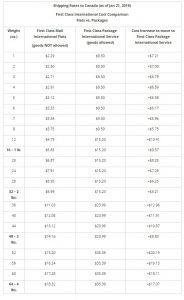
Cost Savings Using First Class Mail International Flats
Moving from First Class Mail International Flats to First Class Package International Service will have a big impact on shippers.

Source: Posted December 26th, 2017; retrieved January 21, 2018 from: http://blog.stamps.com/2017/12/26/important-usps-making-changes-first-class-mail-international-flats/ 

Share this post:
, ,

EU Assists Barbados in Renewable Energy Self-Sufficiency

Go Lean Commentary

The dream of transforming to 100% renewable energy in the Caribbean can be realized. There is hope for this reality.

If only we can get the people behind it.

Our people …

So far other people are doing it for us. Thank you, European Union (EU), for talking the talk for us, and opening your wallets and walking the walk.

If only now we can step-in, step-up and step out ourselves … to do a better job of delivering basic needs, including energy.

This is the actuality of the latest developments taking place in the Caribbean. See this story here of a Green Energy initiative in Barbados:

Title: EU Assists Barbados in renewable Energy Self-Sufficiency

PRESS RELEASE – Barbados has received 1.12 million Euros (BBD$2.7M) from the European Union towards the advancement of energy self-sufficiency from renewable resources. This is the first payment of a total contribution of 3 million Euros. This activity is in line with the country’s commitment to the United Nations Framework Convention on Climate Change of reducing its total and per capita greenhouse gas emissions.

A major objective of the EU’s support is the engagement of the private sector in renewable energy power generation and should result in consumers making increasing use of energy efficiency measures during the 36 month duration of the programme and after.

Some of the guidelines which will be used for performance assessment of the programme include the introduction of a favourable licence regime for independent power producers with generation systems larger than 1 megawatt, by March 2019. Another requirement is that by 2019 at least 30 megawatt of renewable energy will be installed by public and private entities. In addition, it is expected that there will be the establishment and implementation of a renewable energy roadmap according to defined milestones.

EU Ambassador Daniela Tramacere said: “This is another effort by the EU to assist Barbados in transforming its economy which is heavily dependent on fossil fuels, which result in annual drain on its foreign reserves.”

The Barbados government is also expected to adopt and implement energy sector reform measures that are expected to prepare the country for the transition towards renewable energy and energy efficiency on the basis of the national energy policy.
Source: St Lucia Times Daily Newspaper; posted 01/05/2018; retrieved 01/12/2018 from:
https://stluciatimes.com/2018/01/05/eu-assists-barbados-renewable-energy-self-sufficiency/

This is the reality of Caribbean life. We have deliverables that must be delivered and yet we do not. We wait for other people to deliver for us. Time to Grow Up, you people of the Caribbean! It’s time to put on your “Big Boy pants and walk like a man”!

This is the call of the movement behind the book Go Lean…Caribbean – available to download for free. The book serves as a roadmap for the introduction and implementation of the technocratic Caribbean Union Trade Federation (CU), for the elevation of all Caribbean society – for all 30 member-. The book explains that the Caribbean is in crisis, people are fleeing day-in and day-out. Their people are “pushed and pulled” to other lands that do a better job of managing basic needs. Energy costs in the Caribbean are among the highest in the world. Therefore the CU/Go Lean roadmap has these 3 prime directives:

  • Optimization of the economic engines in order to grow the regional economy to $800 Billion and create 2.2 million jobs.
  • Establishment of a security apparatus to ensure public safety and protect the resultant economic engines.
  • Improve Caribbean governance to support these engines, including a separation-of-powers between the member-states and CU federal agencies.

Notwithstanding, Barbados is doing more for regional integration and problem-solving …

… the [CARICOM] Secretary-General lauded the significant role Barbados continues to play in the Community with its Prime Minister having responsibility for the regional flagship initiative, the CARICOM Single Market and Economy (CSME). – Report

The technology, systems and processes are available right now for Caribbean communities to fulfill the dream of a society consuming renewable energy sources 100%.

We must work harder ourselves to fulfill this dream here in our region. Doing so is win-win as it accomplishes 2 important objectives: environmental (no fossil fuels) and economic (affording conveniences of modern life):

  • Solar – The sun always shines in the Caribbean and its free.
  • Wind – The wind always blows in the Caribbean – i.e. Trade Winds – and its free.
  • Tidal – The tides always rise and fall in the Caribbean and its free – see Appendix VIDEO below.

No doubt, these renewable options bring many benefits in arresting “Climate Change” – there is no scientific doubt that burning fossil fuels contribute to greenhouse houses. (The only doubt is political , not scientific). The Caribbean is in peril because of the actuality of greenhouse gases, think hurricane activities. Consider these recent blog-commentaries:

https://goleancaribbean.com/blog/?p=13391 After Maria: Destruction and Defection for Puerto Rico
https://goleancaribbean.com/blog/?p=12996 After Irma, Failed State Indicators: Destruction and Defection
https://goleancaribbean.com/blog/?p=12977 After Irma, Barbuda Becomes a ‘Ghost Town’
https://goleancaribbean.com/blog/?p=12879 Remembering Harvey, Disaster Preparation: ‘Rinse and Repeat’
https://goleancaribbean.com/blog/?p=12856 Remembering Harvey, Hurricane Flooding – ‘Who Knew?’
https://goleancaribbean.com/blog/?p=9334 Hurricane Categories – The Science
https://goleancaribbean.com/blog/?p=6189 A Lesson in History – ‘Katrina’ is helping today’s crises
https://goleancaribbean.com/blog/?p=2119 Cooling Effect – Oceans and the Climate
https://goleancaribbean.com/blog/?p=1817 Caribbean grapples with intense new cycles of flooding & drought

In addition to science (meteorology), there are economic benefits as well. These too cannot be ignored. There is the example of the US City of Burlington, Vermont where they saved over $20 million in a few years by migrating to renewable energy sources. This meant their local households have not experienced energy costs increases since before the year 2009.

With economics, comes the consideration of “standard of care”. There is a reality to living in the Caribbean heat where air-conditioning is essential otherwise life is unbearable – think: Hotter than July’ – yet most people are not able to afford the excessive costs of this modern comfort.

So the environmental and economic issues must be the primary focus for any Green Energy consideration! The Go Lean book initiates with the pronouncement that our region is in crisis and struggling with these issues. The pressing needs are pronounced early in the book in the Declaration of Interdependence (Page 11), with these opening statements:

i. Whereas the earth’s climate has undeniably changed resulting in more severe tropical weather storms, it is necessary to prepare to insure the safety and security of life, property and systems of commerce in our geographical region. As nature recognizes no borders in the target of its destruction, we also must set aside border considerations in the preparation and response to these weather challenges.

xi. Whereas all men are entitled to the benefits of good governance in a free society, “new guards” must be enacted to dissuade the emergence of incompetence, corruption, nepotism and cronyism at the peril of the people’s best interest. The Federation must guarantee the executions of a social contract between government and the governed.

xii. Whereas the legacy in recent times in individual states may be that of ineffectual governance with no redress to higher authority, the accedence of this Federation will ensure accountability and escalation of the human and civil rights of the people for good governance, justice assurances, due process and the rule of law. …

xxiv. Whereas a free market economy can be induced and spurred for continuous progress, the Federation must install the controls to better manage aspects of the economy: jobs, inflation, savings rate, investments and other economic principles. Thereby attracting direct foreign investment because of the stability and vibrancy of our economy.

Combating Climate Change should be important for Caribbean stakeholders. Deploying more efficient and cost-effective power generation options should also be of paramount importance in this region. But the motivation behind the Go Lean book is even bigger still; it is to elevate all of Caribbean society – above and beyond just combating Climate Change or just lowering costs.

With the unmistakable benefits of Green Energy systems, it should not matter who leads, Caribbean stakeholders or the EU, as long as the Caribbean region proceeds down this path. Well, according to the foregoing news article, the EU has stepped up. We now need all Caribbean stakeholders to lean-in to this focused effort.

The Caribbean is struggling with the costs and reality of energy. The Go Lean book related (Page 100) in 2013 that this region pays one of the highest rates in the world; averaging US$0.35 /kWh. The book, in presenting more optimized solutions, posits that the average energy costs can come down to US$0.088/kWh with just a better mix of fossil-fuels and renewables.

Other communities are doing this – lower energy costs due to 100% renewable energy – now, as the model of City of Burlington, Vermont referred to previously. If this city can get to 100% renewables, despite harsh winters for 3 months every year, imagine how much more so the Caribbean communities with their near-365 days of sunshine. Even some European communities are successful at this quest. This is en vogue right now, despite the different geographies and climates.

The Go Lean book provides 370-pages of turn-by-turn instructions on “how” to adopt new community ethos, plus the strategies, tactics, implementations and advocacies to execute so as to reboot, reform and transform the societal engines of Caribbean society and to foster the progress in the pursuits of green energy generation.

The Caribbean energy needs are undeniable. The effects of fossil-fueled-driven Climate Change are also undeniable. The need to lower the costs of living in the Caribbean is therefore undeniable as well. The Caribbean region must therefore move forward – we do not have the luxury of standing still – alternative energy options are now vast and available. There is simply the need for the commitment. The Go Lean roadmap portrays that we must engage these alternatives if we want to make this region a better homeland to live, work and play.

The Go Lean book opened (Page 3) with the job description for the CU technocracy to make better provisions for the region’s basic needs: food, clothing, shelter and energy. There is the need now to fully embrace renewable energy options, maybe even for 100%. There are even grants – i.e. from the EU – to pursue this course of action.

We have no further excuse!

Now is the time for all of the Caribbean – the people, businesses, institutions and governments – to lean-in for the optimizations and opportunities of Green Energy options; and to lean-in to this Go Lean roadmap.

The vision of 100% renewable energy is now more than just a dream. 🙂

Download the free e-Book of Go Lean … Caribbean – now!

Sign the petition to lean-in for this roadmap for the Caribbean Union Trade Federation.

———–

Appendix VIDEO – Tidal Power 101 – https://youtu.be/VkTRcTyDSyk

Student Energy

Published on May 17, 2015 – Tidal power converts the energy from the natural rise and fall of the tides into electricity. Learn more about Tidal Power and all types of energy at www.studentenergy.org

  • Category: Education
  •  License: Standard YouTube License
Share this post:
, , ,
[Top]

Baha Mar: Doubling-down on Failure

Go Lean Commentary

“We told you it wouldn’t work.” – Previous Go Lean commentary.

Update: It hasn’t worked!

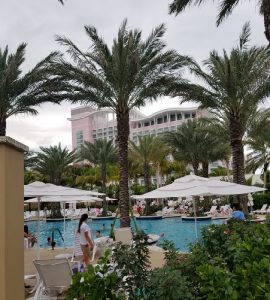
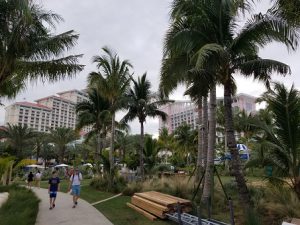
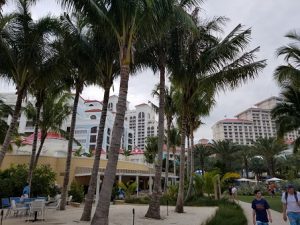
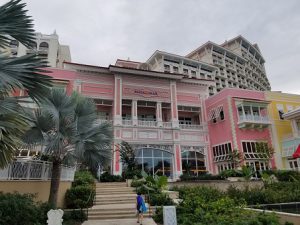
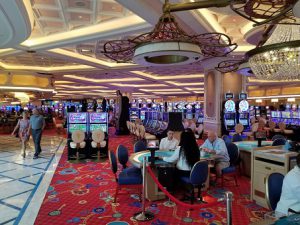
The Baha Mar Resort, Casino and Convention Center in Cable Beach, Nassau, Bahamas is now fully open – see Appendix VIDEO – and frankly empty! (See Photos below). This is the peak winter tourism season. This weather reality creates a seasonal demand for tropical resorts. Plus the excitement of a new property always generates a “buzz” … normally.

And yet, Baha Marthus far has been underwhelming! (There is hope for a better disposition in the future).

The Baha Mar project has been a source of contention for many years; one drama after another: dispute during construction, missed opening, bankruptcy filing, official wine-down, changed ownership, eventual opening, litigation among the originators.

See the latest breaking news in this Baha Mar drama in the news article here:


Title:
Bahamas Developer Claims Huge Chinese Fraud at $3.9 Billion Resort
By: Bob Van Voris

China Construction America Inc. was accused in a lawsuit of ripping off the original developer of the long-delayed $3.9 billion Baha Mar resort in the Bahamas by submitting fraudulent bills and collecting undeserved fees.

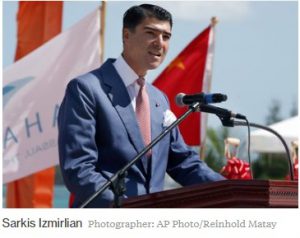
BML Properties Ltd., led by wealthy Bahamas businessman Sarkis Izmirlian, sued CCA Tuesday claiming the state-owned Chinese contractor pulled off a “massive fraud” to enrich itself at BML’s expense, leading to the collapse of the project in 2015. Delays in the construction of the biggest and most expensive resort to be built in the Caribbean have been a drag on the Bahamian economy in recent years.

BML claims that CCA submitted hundreds of millions of dollars in fake bills, understaffed the project and used it as a training ground for inexperienced workers. CCA knew it wouldn’t be able to meet the planned December 2014 deadline to open the resort but created the appearance that it would, in order to remain on the project and collect undeserved fees, BML claims. BML is seeking at least $2.25 billion in damages.

CCA didn’t respond to phone messages and an email seeking comment on the suit.

BML filed for Chapter 11 bankruptcy protection in Delaware in 2015. A U.S. bankruptcy judge dismissed the case in favor of a Bahamian court.

Baha Mar, which opened in April, is now owned by Hong Kong-based, Chow Tai Fook Enterprises Ltd. The development features more than 2,300 rooms, 40 restaurants and lounges, a convention center, a Jack Nicklaus-designed golf course, shopping and the biggest casino in the Caribbean, according to Baha Mar’s website.

BML outlined its claims in a 259-page complaint filed in state court in Manhattan.

The case is BML Properties Ltd. v. China Construction America Inc., 657550/2017, New York State Supreme Court, New York County (Manhattan).

Source: Bloomberg Business News Source – Posted December 26, 2017; retrieved December 30, 2017 from: https://www.bloomberg.com/news/articles/2017-12-26/baha-mar-developer-claims-to-be-victim-of-massive-china-fraud

All of this drama for a business model designed for … failure.

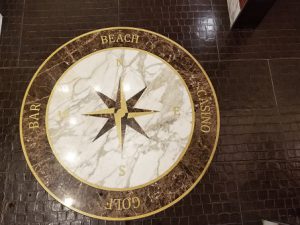
The Baha Mar Resort on Cable Beach features casino gambling and golf, two amenities that are failing more and more.

Casino
In a previous commentary, the business disposition of casino gambling was explored:

Increasingly in the casino/gaming industries, the money is not there. …

Despite the fact that the “house” always wins, the number of gamblers have declined! It is what it is!

  • 87% of Baby-Boomers gamble when visiting Las Vegas
  • 78% of Generation X-ers gamble when visiting Las Vegas
  • 63% of Millenials gamble when visiting Las Vegas

Golf
In a previous commentary, the business disposition of the sport of golf was explored:

“The games people play” … have relevance for our consideration. Golf is one of those games. But golf is more than just a game, it is an eco-system; but this eco-system is in peril.

    “The financial bubble burst and the Tiger bubble burst as well”.
    “Even as the economy recovered, golf is still in a nose dive”.
    “Your house is on fire”.

These (above) are among the key phrases from the narration of … [an] HBO Real Sports documentary story

This topic of the Baha Mar Resort is very important in the consideration of Caribbean economics, as casino gambling and golf has often been associated with Caribbean tourism.

The foregoing news article about Baha Mar aligns with the book Go Lean…Caribbean, which calls for the elevation of Caribbean economics. This book serves as a roadmap for the introduction and implementation of the technocratic Caribbean Union Trade Federation (CU) to better manage economic opportunities in the full Caribbean region. This is a Big Deal for the Go Lean roadmap to foster the diversification of the regional economy. Frankly, a $3.9 Billion investment should be able to generate better returns (job creation) than the Baha Mar fiasco has demonstrated. This hope for better tourism and economic diversification was identified early in the Go Lean book (Pages 11 – 14) in the following pronouncements in the Declaration of Interdependence:

iv. Whereas the natural formation of the landmass is in a tropical region, the flora and fauna allows for an inherent beauty that is enviable to peoples near and far, the structures must be strenuously guarded to protect and promote sustainable systems of commerce paramount to this reality.

vi. Whereas the finite nature of the landmass of our lands limits the populations and markets of commerce, by extending the bonds of brotherhood to our geographic neighbors allows for extended opportunities and better execution of the kinetics of our economies through trade. This regional focus must foster and promote diverse economic stimuli.

xxiv. Whereas a free market economy can be induced and spurred for continuous progress, the Federation must install the controls to better manage aspects of the economy: jobs, inflation, savings rate, investments and other economic principles. Thereby attracting direct foreign investment because of the stability and vibrancy of our economy.

xxvi. Whereas the Caribbean region must have new jobs to empower the engines of the economy and create the income sources for prosperity, and encourage the next generation to forge their dreams right at home, the Federation must therefore foster the development of new industries, like that of ship-building, automobile manufacturing, prefabricated housing, frozen foods, pipelines, call centers, and the prison industrial complex. In addition, the Federation must invigorate the enterprises related to existing industries like tourism, fisheries and lotteries – impacting the region with more jobs.

The Go Lean book posits that there is a need to re-boot and optimize the engines of commerce so as to make the Caribbean a better place to live, work and play. The tourism product, the mainstay of Caribbean economy, used to depend on certain amenities (i.e. Casinos and Golf) that have now come under attack by the social and demographic changes. It so appears that the future for Caribbean economics cannot lazily depend on factors like “sun, sand, surf and smiles”, no, there must be intelligent business models.

This is a changed world and changed marketplace. Likewise, our economic engines must change to keep pace … and get ahead!

The Go Lean book presents a Way Forward.

Way Forward
The Go Lean/CU roadmap seeks to elevate all of Caribbean society to remain competitive and consequential in the future. This is the heavy-lifting of shepherding a progressive region of 42 million people, 10 million Diaspora, 80 million tourists, and 4 language groups across 30 member-states. The CU’s charter is to effectuate progress in this region with these 3 prime directives:

  • Optimization of the economic engines in order to grow the regional economy to $800 Billion and create 2.2 million new jobs.
  • Establishment of a security apparatus to protect the resultant economic engines and marshal against economic crimes.
  • Improvement of Caribbean governance to support these above engines, including a separation-of-powers between CU federal administrations and local member-states.

The Way Forward / Go Lean roadmap includes the quest to create the jobs for the near-future. There is the plan to monitor, manage, and plan for new jobs. The roadmap provides 370-pages of turn-by-turn instructions on “how” to adopt new community ethos, plus strategies, tactics, implementations and advocacies to execute so as to reboot, reform and transform the societal engines of Caribbean society.

As a region, we have failed to keep pace of change. As related in that previous blog-commentary

… our society is now in desperate need of reform and to reboot to insulate from many demographic changes. On the one hand, we must diversify our economy and avail other high job-multiplier industries, away from tourism, but on the other hand, we must double-down in the tourism product, as the economic principles of “supply and demand” just cannot be ignored. (During the winter months, our Caribbean destinations are the “best addresses on the planet”.)

The Go Lean/CU roadmap calls for fostering industrial developments to aid economic diversification and to aid tourism. This includes incorporating best practices and quality assurances to deliver the “best experience in the world” for our visitors and trading partners.

This commentary has previously related details of the changing macro-economic factors in the world and how despite the dynamic conditions, jobs can be created. The following are samples of previous Go Lean blog-commentaries:

https://goleancaribbean.com/blog/?p=13700 Increasing Tourism Market Share
https://goleancaribbean.com/blog/?p=13420 A Lesson in Whaling History – Expeditions for Shipyard Jobs
https://goleancaribbean.com/blog/?p=13184 A Series on Industrial Reboots
https://goleancaribbean.com/blog/?p=12668 Common Sense of Eco-Tourism
https://goleancaribbean.com/blog/?p=8590 Build It and They Will Come – Politics of Infrastructure
https://goleancaribbean.com/blog/?p=7977 Transformations: Perfecting Our Core Competence – i.e. Tourism
https://goleancaribbean.com/blog/?p=6341 Doing Better with Tourism Stewardship
https://goleancaribbean.com/blog/?p=6089 Need Better Jobs Than ‘Minimum Wage’
https://goleancaribbean.com/blog/?p=4037 How to Train Your ‘Dragons’ or Direct Foreign Investors
https://goleancaribbean.com/blog/?p=2857 Where the Jobs Are – Example: Entrepreneurism in Junk
https://goleancaribbean.com/blog/?p=2126 Where the Jobs Are – Computers Reshaping Global Job Market
https://goleancaribbean.com/blog/?p=2003 Where the Jobs Are – One Scenario (Ship-breaking)

So this commentary advocates not doubling-down on bad trends that just “soak up” investments and produce very little return. We must be better and do better. We need to double-down on improving our tourism products and diversifying our economy away from tourism.

Yes, we can! We can do the heavy-lifting (hard-work and smart-work) to make our homeland a better place to live, work and play. 🙂

Download the free e-book of Go Lean … Caribbean – now!

Sign the petition to lean-in for this roadmap for the Caribbean Union Trade Federation.

———–

Appendix VIDEO – Baha Mar: The Las Vegas of the Caribbean – https://youtu.be/T7lGljlr01M

Caribbean Journal

Published on Aug 6, 2017 – The long-awaited Baha Mar resort project is finally here, and Caribbean Journal got an exclusive first look. So what’s it like? Well, it’s a unique, impressive project: a Las Vegas in the heart of the Caribbean.

Music: “Consortium of Cold Cool” by Craig Riley Listen ad-free with YouTube Red

Share this post:
, , ,
[Top]

Increasing Tourism Market Share

Go Lean Commentary

It’s December … this is peak winter travel season.

It’s time to take inventory of Caribbean tourism:

It has been weighed in the balance; it has been measured …
It has been found wanting!

Our peaks … are not enough. There is the need to Increase Caribbean Tourism Market Share. See this magazine article here with this title:

Title: Increasing Tourism Market Share
By Tony Fraser

For the Caribbean tourism industry to take a larger chunk out of world tourism arrivals (a necessity for continued survival and growth), there are a few innovative options lapping at the shores of tourism economies in the Caribbean.

To achieve the objective in an industry which provides hundreds of thousands of jobs in the Caribbean and US$30bn in revenue in 2014, wide-ranging options were presented to governments, hoteliers, tour operators and others in the business at the State of the Industry Conference (SOTIC) of the Caribbean Tourism Organisation in Curacao.

Eastern focus

Among the options, officials looked at the following:

  • how to attract more visitors from the fast-growing Chinese market;
  • how to cast aside traditional and moral restrictions that could pose barriers to the US$100bn US market of lesbians, gays, bisexuals and transsexuals (LGBT);
  • how to engage the Millennial generation (those born between 1980-1998) in exciting weekend package tours around the Caribbean;
  • how to tackle the issue of damaging high tax rates on the airline industry while looking to expand the Open Skies policy;
  • and the need to sweep away the layers of travel restrictions on passengers (including Caribbean nationals) wanting to move around and into the region with one-stop visa and security checks.

Increasing but…
An examination of the figures on visitor arrivals shows that the number of tourists coming to the Caribbean in the first six months of 2015 increased by 5.8% compared with the same period in 2014.

That percentage increase was larger than the 4.1% average increase in global tourism arrivals.

Significantly too, the Caribbean region (which encompasses the English, Dutch, French and Spanish-speaking areas of the Caribbean) in 2014 earned US$30bn, a 10% increase over the previous year.

However, Caribbean tourism’s share of the international market, as calculated by the United Nations World Tourism Organisation, was a mere 2.8% of the 1.1 billion people who travelled to destinations all over the globe.

“The Caribbean has a relatively low global market share compared to the importance it places on its tourism economy,” the UN World Tourism Council’s director/executive secretary of member relations, Carlos Vogeler, told the SOTIC in Curacao.

Asia focus
But while the Caribbean’s share of the international tourism market is quite small, South East Asia (SEA) has experienced the largest growth as a region.

The reason is not too difficult to assess.

“Those countries have access to a nearby source market, China, whose outbound travel market grew by 30% last year, and by 48% during the first six months of this year,” Mr Vogeler told Caribbean Intelligence©.

At the same time that the SEA countries have the emerging Chinese market from which to source tourists, Mr Vogeler says the source markets of the Caribbean for tourists are mature.

He said that the Caribbean tourism industry had to take up the challenge of attracting tourists from the Far East.

Cut taxes
Another challenge is for governments and airports in the Caribbean to reduce taxes on airline tickets.

It is a call that has been made for many years.

It was made even while the Caribbean tourism industry was petitioning the United Kingdom to reduce the Air Passenger Duty for passengers flying to Caribbean destinations.

In the Caribbean, airlines and tourism experts have continuously pointed to the negative impact that continued high taxes on airline tickets and airport taxes have had on travel into and around the region.

However, governments have contended with equal vigour that since they have a narrow tax base to raise revenue for development, and with airline travel being a captive source of revenue, reducing taxes on airline travel and airport duties is a difficult proposition.

The Premier of the Turks and Caicos Islands, Dr Rufus Ewing, told the CTO conference that “If you want governments to remove and or reduce those taxes, then we have to know how we are going to get alternative revenues; how do we take care of our security responsibility when there is one visa system and security check at airports. And those are real concerns for us in these countries.”

The proof of the pudding is in the eating for Robin Hayes, JetBlue’s president and chief executive.

“Where we have been able to reduce fares by 30%, we have doubled the travel market,” he says.

And Mr Hayes commended the government of Barbados, which has “one of the lowest tax rates in the region”.

“The idea is that we can collectively look at ministers of finance and ask them to relook the tax argument; but we do need government revenue to run countries,” Barbados Tourism and International Transport Minister Richard Sealey told Caribbean Intelligence©.

New ways of working
JetBlue sealed a deal with Barbados at the conference announcing an additional daily roundtrip flight between Fort Lauderdale in the US and Grantley Adams Airport in Barbados.

What’s more, the JetBlue boss is encouraging the Caribbean tourism industry to tap into JetBlue Getaways, which packages hotels, tours, restaurants and other experiences into the flight package, an arrangement that he says has done wonders for Grenada.

“Thanks to strong bookings through Getaways and greats friendships with local properties like Sandals and Spice Island, we were able to add a third weekly service in September, after only three months in the market,” Mr Hayes said.

Another option for attracting more tourists to Caribbean shores and into hotel rooms is to give seat guarantees to airlines.

Under such agreements, the host government pays for seats not occupied by passengers when they fly into those destinations.

Barbados’s Mr Sealey, who is also CTO chairman, told Caribbean Intelligence©: “It is a fact that we do subsidise airlines to the region, but we prefer to have a commercial relationship with the airlines, ones like that with we have with JetBlue, which works with us to market the destination.”

Potential earners
On the intra-Caribbean travel routes there was 5.5% growth, with 400,000 travellers moving around the region during the first six months of 2015.

Liat’s chief executive, David Evans, told Caribbean Intelligence© “It’s a market with quite an amount of potential.”

He said that Liat had upgraded its fleet over the last two years. But as he explained, taxes can cost the traveller up to 40% to 50% of the airline ticket.

Partnerships with other regionally-based airlines to achieve greater efficiency and coverage of the Caribbean are coming, Mr Evans told Caribbean Intelligence©.

“While we cannot talk about those alliances right now, they are coming soon,” he said.

He said that, at the moment, Liat has strategic alliances with international carriers such as British Airways and Virgin and others to move passengers around the region from their international arrivals but the internal partnerships are long overdue.

The LGBT market
Facilitating travel into the region by members of the lesbian, gay, bisexual and transsexual (LGBT) community is an option for the Caribbean to increase its international market share.

However, it is an option that poses challenges to the church-going, Bible-believing Caribbean community.

The market is a lucrative one, says David Paisley, senior research director of the San Francisco-based travel agency Community Marketing Insights.

“The Caribbean is a perfect fit for LBGT travel; but our clients must be assured of safety and not be discriminated against, and not only by laws but by social practices,” Mr Paisley said.

His research shows that the LGBT community travels more than the general population; they spend more on hotels, restaurants and shopping than other tourists.

“We have heard of homophobic societies in the Caribbean and I don’t want to call names, but where we see those tendencies and feel threatened, our travellers will not be coming,” Paisley told Caribbean Intelligence©.

There have been a few incidents in the past with members of the LGBT community that have caused a measure of concern in one or two Caribbean countries.

CTO Secretary General Hugh Riley told Caribbean Intelligence© that “no business can afford to ignore a significant market segment”.

He added: “Our [the CTO’s] responsibility is always to source the expertise, present the facts and provide enough information on which our members can make an informed decision.”

Weekend packages
Short breaks packed with entertainment, aimed at the generation born between 1980 and 1998, are seen by Leah Marville of My Destination Arrivals as yet another option to land more tourists around the region.

The weekends consist of a blur of entertainment and experiences which can be captured on camera and become talking points for the travellers, who travel at weekends and head back to their jobs on Monday.

“There is something absolutely captivating about us… My Destination Weekends seeks to capture and immortalise experiences for those who take the trip,” says Ms Marville, a model and businesswoman.

But increasing numbers of arrivals is not the be all and end all.

Mr Sealey says the benefits of tourism must be counted in jobs, in the development of communities, the protection of the environment and the retention of a large chunk of what the tourists spend in getting to the Caribbean and having memorable vacations in the region.
Source: Caribbean Intelligence Magazine – Posted November 2015; retrieved December 6, 2017 from: http://www.caribbeanintelligence.com/content/increasing-tourism-market-share

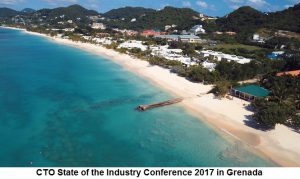
The movement behind the book Go Lean … Caribbean seeks to reboot the economic engines of the Caribbean member-states. Tourism is the region’s primary economic driver, but it is inadequate for providing the needs of the people in the region. We must do better. This foregoing magazine article about the Caribbean Tourist Organization (CTO) identified some defects … and solutions in 2015. It is now 2017; unfortunately, the identified defects are still defective; the hoped-for solutions, never materialized. See the introductory VIDEO about the CTO State of the Industry Conference in the Appendix below.

These same issues have also been addressed in other Go Lean commentaries:

Can the CTO be counted on to provide the need empowerments to elevate the Caribbean economic engines?

No! It is the assessment in the Go Lean book that the current stewards for regional tourism is inadequate. The book quotes (Page 3):

Many people love their homelands and yet still begrudgingly leave; this is due mainly to the lack of economic opportunities. The Caribbean has tried, strenuously, over the decades, to diversify their economy away from the mono-industrial trappings of tourism, and yet tourism is still the primary driver of the economy. Prudence dictates that the Caribbean nations expand and optimize their tourism products, but also look for other opportunities for economic expansion. The requisite investment of the resources (time, talent, treasuries) for this goal may be too big for any one Caribbean member-state. Rather, shifting the responsibility to a region-wide, professionally-managed, deputized technocracy will result in greater production and greater accountability. This deputized agency is the Caribbean Union Trade Federation (CU).

The CTO represents for-profit hotels and resorts. The needed solutions for the Caribbean cannot be profit-driven. It must pursue features like collective bargaining and the Greater Goodthe greatest good to the greatest number of people which is the measure of right and wrong” (by philosopher Jeremy Bentham; 1748 – 1832). So the Go Lean book presents an alternative; it serves as a roadmap for the introduction and implementation of the Caribbean Union Trade Federation (CU). The CU is designed to be a technocratic intergovernmental entity that shepherds economic growth for the Caribbean region; in other words, Increase Tourism Market Share. The goal is to reboot and optimize the region’s economic, security and governing engines. There are ways for individual member-states to improve their tourism product, but there needs to be a regional focus to accomplish this goal.

The Go Lean motivation is the Greater Good (Page 37).

In total, the Go Lean/CU roadmap will employ strategies, tactics and implementations to impact its prime directives; identified with the following 3 statements:

The Go Lean book provides 370-pages of turn-by-turn instructions on “how” to adopt new community ethos, plus the strategies, tactics, implementations and advocacies to execute so as to reboot, reform and transform the societal engines of Caribbean society. One advocacy in optimizing the tourism landscape is to foster infrastructure that is too big for any one member-state alone; consider some specific plans, excerpts and headlines from the book on Page 190 entitled:

10 Ways to Enhance Tourism in the Caribbean Region

1 Lean-in for the Caribbean Single Market
The economic engine associated with the CU will provide the infrastructural needs to improve the tourism product for all member-states. The plan is to expand trade treaties with other countries and regional blocs to target markets and languages outside of North America. One goal is to expand “snowbirds” traffic, as these have been a consistent revenue source. The CU will provide the support services like translations, medical and transport (ferries for RV’s) to augment this special market.
2 Special Festival Events
Promote multi-day events in the style of Sturgis (see Appendix J on Page 288), Coachella, and Milwaukee’s Summer-Fest. The CU will liberalize the loitering laws, allow for camping & car/van sleeping, public showers, food trucks, open canister for alcohol, etc. (Jamaica’s SunFest is a start). To facilitate traffic, jurisdictional governments should grant temporary motorcycle licenses and arranged for optimal shipping logistics.
3 Fairgrounds/Amusement Parks Empowerment Zones
Encourage the establishment and promotion of Fairgrounds/Amusement Parks (Disney, Sea World, Busch Gardens-like attractions) that can bring in vast number of visitors. The empowerment zones get special tax incentives and building code variances, or managed as Self Governing Entities (SGE) in which they are beholden only to the CU jurisdiction. Many US and European theme parks are only open during the warm seasons, the opposite can be advocated in the Caribbean region, where theme parks may only be open during the “high season”, or only when cruise ships are in port.
4 Dynamic Sea-lifts / Air lifts
Grant temporary licenses to shipping (ferries) and air charters to facilitate the transport of Festival participants. The goal is to move huge number of guests in and out readily. The US Passport Card (used for travel to Mexico and Canada) should suffice the travel documents for these events. These logistics can be modeled after Ramadan travel to Mecca.
5 Excess Inventory Auction
The CU buys from the Hotels (with warrants) and sells the Excess Inventory of Hotels rooms to the highest Bidder to combine with Air, Sea, Car and Tour Packages. (Much like Priceline.com). The CU uses e-commerce strategies and tactics (web, phone and text messaging) in their campaigns. The hospitality sources should drill down, beyond hotels, to also include bed-and-breakfast and other certified (CU ranked & rated) home-sharing arrangements.
6 Medical Tourism
Hospitals and medical clinics will be installed on SGE campuses, designed for alternative and experimental treatments. These will attract medical tourists to come for extended stays, many outfitted with monitoring and medical alert devices to engage designated medical personnel in case of emergencies; thus minimizing stress on domestic facilities.
7 Eco-Tourism Promotions Board
8 Sports Tourism
9 Cruise Line Passenger Smart Card Currency
The CU will collectively bargain with the cruise lines to deploy electronic “purses” and allow the Caribbean Central Bank to settle the transactions. This incites more spending at the ports-of-call. Smart cards feature more functionality like physical access, locator service & photo ID. The cards can also offer contactless transactions, like “tap and go”.
10 Tourist Hate Crime Sentence Extender

The Go Lean book details that the Caribbean can create …

30,000 direct jobs from opening new markets, creating new opportunities and new traffic; starting new sharing options
9,000 direct jobs from Event staff and Festivals at CU Fairgrounds
1,000 direct jobs from managing, promoting UNESCO World Heritage Sites

These are direct jobs; there is also the reality of indirect jobs – unrelated service and attendant functions – at a 3.75 multiplier rate would add another 150,000 jobs. That makes a total of 190,000 jobs.

This is how the roadmap works: it identifies industries, dissects the inherent deficiencies, and proposes solution to reboot and optimize it, then it harvests the multiples of jobs resulting from the plan. Tourism is the current dominant industry; the goal is to “stand on the shoulders” of previous accomplishments, add infrastructure not possible by just one member-state alone and then reap the benefits. Imagine this manifestation in just this one new strategy: inter-island ferries that connect all islands for people, cars and goods.

There have been a number of blog-commentaries by the Go Lean movement that highlighted economic opportunities embedded in regional tourism initiatives. See a sample list here:

https://goleancaribbean.com/blog/?p=13126 “Must Love Dogs”  – Providing K9 Solutions for Better Tourism Security
https://goleancaribbean.com/blog/?p=12668 Lessons from Colorado – Common Sense of Eco-Tourism
https://goleancaribbean.com/blog/?p=11287 Sports Tourism and Pro-Surfing
https://goleancaribbean.com/blog/?p=11033 Medical Tourism and Plastic Surgeries
https://goleancaribbean.com/blog/?p=9897 Art Tourism and Community-sanctioned Murals
https://goleancaribbean.com/blog/?p=9179 Snowbird Tourism and RV Ferries
https://goleancaribbean.com/blog/?p=4425 Deploying regional currency and e-Payment solutions
https://goleancaribbean.com/blog/?p=4145 Eco-Tourism and World Heritage Sites

In summary, the Caribbean need jobs; our job creation dysfunction is so acute that our people are fleeing the homeland to find job opportunities abroad. Tourism-related jobs, while not the highest paying, could be stable, reliable and providential. More options and deliveries would help us to make our homeland a better place to live, work and play.

This is a Big Deal; this is how to grow the economy: create jobs; create businesses; retain people; foster new opportunities; learn from past mistakes and accomplishments. Tourism is just one industry in the Go Lean roadmap. While this one can result in 190,000 new jobs, the other industries (16) show even more promise: shipbuilding, pipelines, frozen foods, etc. The net result: 2.2 million new jobs.

Let’s do this … for the Greater Good.

All Caribbean stakeholders – residents and visitors – are urged to lean-in to this roadmap for change … and empowerment. This plan is conceivable, believable and achievable. 🙂

Sign the petition to lean-in for this roadmap for the Caribbean Union Trade Federation.

Download the book Go Lean … Caribbean – now!

———–

Appendix VIDEO – CTO STATE OF THE INDUSTRY CONFERENCE – https://youtu.be/8AraGc3VGpI

Curacao Tourist Board

Published on Jul 7, 2015 – State of the Industry Conference 2015 Curaçao will host SOTIC from 21- 23 October 2015 at the World Trade Center in Willemstad. CTO Business meetings will be held October 20 -21, 2015.

Share this post:
, ,
[Top]

Economics of ‘South Beach’

Go Lean Commentary

The US has an economy; the 30 Caribbean member-states have economies. The US does it better!

For example, the entire Caribbean region enjoys 80 million visitors a year; (though this figure includes 12 million cruise passengers visiting multiple Caribbean destinations on one cruise); just the US city of Orlando has one destination – Walt Disney World – that enjoys 57 million visitors-a-year alone. Further down the list of high traffic resort cities is the destination of Miami Beach, Florida; each year Miami Beach hotels host over 35% of the ten (10) million tourists who visit Greater Miami.

Yes, the US cities do tourism better than our Caribbean counterparts; and their economies are more diversified.

If only we, in the Caribbean, could be more like … the American city of Miami (Beach).

It is a fitting comparison:

  • Global City in the tropical zone – a snowbird haven-refuge from cold northern cities.
  • Home away from home for many Caribbean people.
  • Primary economic engine of tourism (leisure and medical), travel (air and cruises), financial services and trade. See Miami’s largest employers in the Appendix below.

The movement behind the book Go Lean … Caribbean seeks to reboot the economic engines of the Caribbean member-states – so we can perform better. The book studies models and lessons from other communities (cities and countries): i.e. New York City (Page 137), Detroit (Page 140) and Omaha (Page 138). In fact, this movement had previously detailed how the Greater Miami metropolitan area has become so successful a community mainly because of the failures of Caribbean communities. Rather than the entire metropolitan area of Greater Miami, we are hereby exploring just the economic landscape of Miami Beach, and more exactly the neighborhood of South Beach. This commentary, however, relates that there are lessons from ‘South Beach’ and all of Greater Miami that we can apply in the Caribbean.

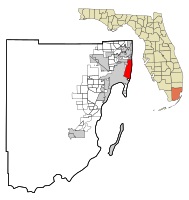
Miami Beach is a coastal resort city in Miami-Dade County…. It was incorporated on March 26, 1915.[7] The municipality is located on natural and man-made barrier islands between the Atlantic Ocean and Biscayne Bay, the latter of which separates “the Beach” from the City of Miami. The neighborhood of South Beach, comprising the southernmost 2.5 square miles of Miami Beach, along with downtown Miami and the Port of Miami, collectively form the commercial center of South Florida[8] [(Miami-Fort Lauderdale-West Palm Beach metropolitan statistical area)]. As of the [latest] 2010 census, Miami Beach had a total population of 87,779.[9] It has been one of America’s pre-eminent beach resorts since the early 20th century. – Wikipedia.


South Beach is a classic beach resort town – see the Wikipedia definition here – except that there are two de facto seasons: good (Summer and Early Autumn) and great (Late Autumn, Winter and Spring):

resort town, often called a resort city or resort destination, is an urban area where tourism or vacationing is the primary component of the local culture and economy. A typical resort town has one or more actual resorts in the surrounding area. Sometimes the term resort town is used simply for a locale popular among tourists. The term can also refer to either an incorporated or unincorporated contiguous area where the ratio of transient rooms, measured in bed units, is greater than 60% of the permanent population.[1]

Generally, tourism is the main export in a resort town economy, with most residents of the area working in the tourism or resort industry. Shops and luxury boutiques selling locally themed souvenirs, motels, and unique restaurants often proliferate the downtown areas of a resort town.

Resort Town Economy
If the resorts or tourist attractions are seasonal in nature, resort towns typically experience an on-season where the town is bustling with tourists and workers, and an off-season where the town is populated only by a small amount of local year-round residents.

In addition, resort towns are often popular with wealthy retirees and people wishing to purchase vacation homes, which typically drives up property values and the cost of living in the region. Sometimes, resort towns can become boomtowns due to the quick development of retirement and vacation-based residences.[3]

However, most of the employment available in resort towns is typically low paying and it can be difficult for workers to afford to live the area in which they are employed.[4] Many resort towns have spawned nearby bedroom communities where the majority of the resort workforce lives.

Resorts towns sometimes struggle with problems regarding sustainable growth, due to the seasonal nature of the economy, the dependence on a single industry, and the difficulties in retaining a stable workforce.[5]

Economic impact of tourism
Local residents are generally receptive of the economic impacts of tourism. Resort towns tend to enjoy lower unemployment rates, improved infrastructure, more advanced telecommunication and transportation capabilities, and higher standards of living and greater income in relation to those who live outside this area.[6] Increased economic activity in resort towns can also have positive effects on the country’s overall economic growth and development. In addition, business generated by resort towns have been credited with supporting the local economy through times of national market failure and depression, as in the case of San Marcos, California during the cotton market bust in the early 1920s and Great Depression of 1929.[2]

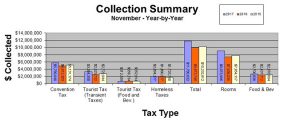
Click Photo to Expand – Lots of communities charge supplemental taxes for community revenues

Tourism, more exactly Resort Tourism, is the Number One economic driver in the Caribbean. Yet, our region has so many societal defects. We must do a better job at our primary job. What can we learn from Greater Miami, Miami Beach and South Beach?

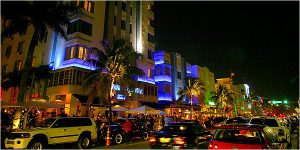
This small peninsula of South Beach is Hot, Hot, Hot … as a party and tourist destination, thereby creating a scarcity of real estate. The dining, night-clubbing, shopping and entertainment options in this District are in high demand, all year long. Not all patrons to this District stay at area hotels, as many are locals in addition to the constant flow of visitors. Most night clubs, and even some restaurant-bars, apply a Cover Charge, typically $20 per person. These patrons should also expect to pay $40 just for valet parking, and similarly above-average prices for self-parking. Hotel rates are consistently above average, even during the off-season (consider $300 per night). During the peak-season, rates are traditionally in excess of $500. Hotel guests with rental cars face the same $40 per night parking charges.

The party continues every night until 5am; (one of the latest alcohol-serving policies in the nation).  Just like any other community, Miami Beach has to contend with Agents of Change. There is a conservative movement to dampen the hot nightlife in South Beach. These proponents raised the issue as a public referendum on November 7, 2017 with a measure, to limit liquor sales to 2am. This direct democratic action failed at a 64% to 35% ratio. The economic forces of South Beach won again!

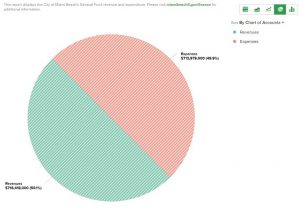
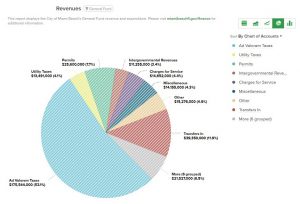
These economic realities transcend many dimensions of Miami Beach life; consider governance. The City collects an add-on to the state’s usual Sales Tax revenues. What add-ons?

Transient Lodging Rental Taxes for Short Term Rentals Summary Chart
3% Convention Development Tax 2% Tourist Development Tax 1% Sports Franchise Tax
Food & Beverage Tax Summary Chart
2% Tourist Development Surtax 1% Homeless and Spouse Abuse Tax

Source: Retrieved December 5, 2017 from: http://www.miamidade.gov/taxcollector/tourist-taxes.asp

See this sample/example here of a typical night out at a local South Beach restaurant recently:

This movement, behind the Go Lean book, seeks to reform and transform the economic engines of Caribbean society by being technocratic in applying best practices from the field of Economics. South Beach and Miami Beach offers a lot of lessons: good, bad and ugly.

One bad lesson is the practice of guaranteed gratuity. In a previous blog-commentary, this policy was ridiculed as unbecoming as a community ethos; it fosters a spirit of entitlement. In fact, the practice is well-chronicled in the field of Economics as “rent-seeking”; consider this sample:

This is distinguished in economic theory as separate from profit-seeking, in which entities seek to extract value by engaging in mutually beneficial transactions.[6] While profit-seeking fosters the creation of wealth, rent-seeking is the use of social institutions such as the power of government to redistribute wealth among different groups without creating any new wealth.[7]

Note: For the restaurant receipt in the above-photo, the credit card bill, still contained a line item for additional tip, even though 20-percent was already added as a gratuity-service charge.

There it is: rent-seeking.

(Rent-seeking practices are quite common in the Caribbean; even codified as law in some places).

The Go Lean book serves as a roadmap for the introduction and implementation of the Caribbean Union Trade Federation (CU). The CU is designed to be a technocratic intergovernmental entity that shepherds economic growth for the Caribbean region. The goal is to reboot and optimize the region’s economic, security and governing engines. The Go Lean/CU roadmap employs wise strategies, like the “Separation-of-Powers between CU federal agencies and Caribbean member-state governments”; so the limitations of national laws in a member-state would not override the CU. The CU‘s technocratic practices would directly apply to the installation of Exclusive Economic Zones (EEZ) and Self-Governing Entities (SGE); these operate in controlled bordered territories like campuses, industrial parks, research labs, industrial plants and Entertainment Zones.

Notice the presence here of one such zone, already existing in Jamaica.

Title: Jamaica’s first entertainment zone named

Jamaica’s Entertainment Minister Olivia “Babsy” Grange, has named Fort Rocky in Port Royal as Jamaica’s first entertainment zone.

The minister made the announcement at the recent launch of Carnival in Jamaica 2018.

Drives cultural and economic value
Minister Grange said the new entertainment zone has been endorsed by the National Environment and Planning Agency (NEPA), along with the Town and Country Planning Authority.

“We are working with (NEPA) and the Ministry’s agencies, including the National Heritage Trust, to ensure that our cultural sites are preserved and utilized in a manner that drives cultural and economic value to us as a nation,” she noted.

Historical value
Entertainment zones like Fort Rocky are areas in which any legal entertainment and sports activity can be staged any time of day or night unhindered, as long as the organizers are mindful of the historical value of such sites.

While fueling the entertainment industry, these entertainment zones are expected to neutralize the problem of noise nuisance.

The Entertainment and Culture Minister has also called on private business operators to take advantage of the opportunity to use these zones. She provided information that two other entertainment zones will be declared outside of the Corporate Area in the near future.

Source: Retrieved December 6, 2017 from: https://www.caribbeannationalweekly.com/news/caribbean-news/jamaica-entertainment-zone/

The Go Lean/CU roadmap will optimize this strategy for deployment of Self-Governing Entities throughout the region.

Imagine restaurant-bars-nightclubs open until 5am.

This is the Economics of ‘South Beach’ … and a good learned-lesson.

Miami’s South Beach is a hot night-spot right now. What emboldens its success is the embrace of Caribbean culture. Think:

The concept of Miami Sound … is Caribbean musical fusion.

The name Miami Sound Machine also refers to the Grammy Award winning musical group led by Cuban-Americans Gloria and Emelio Estefan. They are also proprietors of one of the biggest night clubs on South Beach: Mango’s. See the VIDEO here:

VIDEO – Mangos Tropical Cafe in South Beach, Miami [4K] – https://youtu.be/D1TcBkaRyL4

Published on Nov 30, 2016 – A glimpse inside Mango’s Tropical Café in South Beach, Miami. Watch in 4K resolution.

Miami is Hot, Hot, Hot ordinarily.

Then in the winter peak-season, it is Hotter still …

… and then for Art Basel – the annual Arts in Miami pageant peaking this year December 6 to 11 – it is the Hottest destination in the country. See more here:

Title: It’s not only rich people who should care about Art Basel. Here’s why.

When flocks of serious — and seriously loaded — art gatherers descend on South Florida for the annual Art Basel in Miami Beach pageant, they’re coming to snag some of the best contemporary work money can buy from the 268 galleries from across the globe conveniently gathered at the city’s convention center.

But that’s not the sole reason they make their way to Miami Beach and Miami.

Many also come to see art they cannot buy — the increasingly rich side feast served up by the cities’ expanding range of museums and private art collections that are open to all.

Yes, there’s the warm weather, the nice hotels and restaurants (staffed by local workers) — not to mention the two dozen satellite fairs and myriad events that make up the annual December frenzy known as Miami Art Week. …

See the full story here:  http://www.miamiherald.com/news/local/community/miami-dade/article187161868.html

Source: Miami Herald posted December 2, 2017; retrieved December 6, 2017.

Caribbean people have done it in Miami; we can also do it in the Caribbean. This is the vision of a new Caribbean; a better place to live, work and play right here at home, without having to flee the region.

In total, the Go Lean/CU roadmap will employ strategies, tactics and implementations to impact its prime directives; identified with the following 3 statements:

  • Optimization of the economic engines in order to grow the regional economy to $800 Billion & create 2.2 million new jobs.
  • Establishment of a security apparatus to ensure public safety assurances and protect the region’s economic engines.
  • Improvement of Caribbean governance to support these engines.

The Go Lean book presents a 370-page roadmap on how to optimize the economic engines … and how to avoid bad practices, like rent-seeking. The book stresses key community ethos, strategies, tactics, implementations and advocacies necessary to transform and turn-around the eco-systems of Caribbean society. These points are detailed in the book as follows:

Community Ethos – Deferred Gratification Page 21
Community Ethos – Return on Investments Page 24
Community Ethos – Ways to Impact the Future Page 26
Community Ethos – Ways to Impact the Greater Good Page 37
Strategy – Vision – Confederate all 30 member-states/ 4 languages into a Single Market Page 45
Tactical – Separation-of-Powers – CU Federal Government versus Member-State Governance Page 71
Implementation – Ways to Pay for Change – Award exploratory rights in exclusive territories Page 101
Implementation – Start-up Benefits from the Exclusive Economic Zone (EEZ) Page 104
Implementation – Steps to Implement Self-Governing Entities (SGE) Page 105
Planning – 10 Big Ideas – #3: Proactive Anti-crime Measures Page 127
Planning – Ways to Improve Trade Page 128
Advocacy – Ways to Grow the Economy – Protect Property Rights Page 151
Advocacy – Ways to Create Jobs Page 152
Advocacy – Ways to Improve Governance Page 168
Advocacy – Ways to Better Manage the Social Contract Page 170
Advocacy – Ways to Enhance Tourism Page 190
Advocacy – Ways to Impact Events Page 191
Advocacy – Ways to Promote Fairgrounds Page 192
Advocacy – Ways to Impact Main Street Page 201

To accomplish this goal of elevating Caribbean society, we must learn lessons from far-away places and nearby lands (like Miami), foster good economic habits … and abandon bad ones. This is how to grow the economy: create jobs; create businesses; retain people; foster new opportunities, learn from past mistakes and accomplishments.

All Caribbean stakeholders – residents, Diaspora and visitors – are urged to lean-in to this Go Lean roadmap for change … and empowerment. This plan, though a Big Idea, is conceivable, believable and achievable. 🙂

Download the book Go Lean … Caribbean – now!

Sign the petition to lean-in for this roadmap for the Caribbean Union Trade Federation.

—————–

Appendix – Miami Top Employers

According to Miami’s Beacon Council – the local Economic Development agency – the top private employers in 2014 in Miami-Dade were:[64]

# Employer # of employees
1 University of Miami and Health System 12,818
2 Baptist Health South Florida 11,353
3 American Airlines 11,031
4 Carnival Cruise Lines 3,500
5 Miami Children’s Hospital 3,500
6 Mount Sinai Medical Center 3,321
7 Florida Power and Light Co. 3,011
8 Royal Caribbean International 2,989
9 Wells Fargo 2,050
10 Bank of America 2,000

According to Miami’s Beacon Council, the top Government employers in 2014 in Miami-Dade were:[64]

# Employer # of employees
1 Miami-Dade County Public Schools 33,477
2 Miami-Dade County 25,502
3 Federal Government 19,200
4 Florida State Government 17,100
5 Jackson Health System 9,800

Source: Retrieved December 5, 2017 from: https://en.wikipedia.org/wiki/Miami-Dade_County,_Florida#Economy

Share this post:
, , , ,
[Top]

Colonialism’s Bloody History Revisited – ‘Thor’ Movie

Go Lean Commentary

How much of our past make up who we are and what we will become?

  • Are all children of alcoholics condemned to alcoholism themselves?
  • Children from homes with domestic violence; will they become abusers themselves?

These questions about individuals can also be extended to whole communities:

  • Will the bloody history of European colonialism be revisited in modern times and the future?

This has to do with societal defects – orthodoxy. There is so much we need to learn, and so many corrections we need to make. This is the quest of the movement behind the book Go Lean … Caribbean, to reform and transform the Caribbean member-states from our dysfunctional past so as to have a prosperous future. There are lots of lessons for us to consider; some from unusual places; consider the art world: comic books, world of film.

The edict of “life imitating art and art imitating life” provides a lot of teaching moments for the world in general and the Caribbean in particular. There is a lot we can learn from the art form of film and this newest blockbuster movie Thor: Ragnarok. (The film has grossed $212.1 million in US box office receipts after the first 2 weekends).

This is a film about comic book hero Thor, the God of Thunder, which is based on Norse mythology; the ancient culture of Nordic Vikings. There are other characters from that mythical homeland of Asgard: Odin, Loki, Hela and Valkyrie. This is all art and fiction, but it does imitate the real life history of colonialism; see here:

The film’s central revelation – that the legend of a benevolent Odin and Asgard ruling realms joined in peace is a lie, and that those realms were conquered by force – reflects British colonialism so perfectly it virtually had to come from a person of colour in the Commonwealth, [New Zealand-born Director Taika Waititi]. Though New Zealand today is markedly fairer in its treatment of its indigenous people than the rest of Britain’s English-speaking colonies, its history is still pockmarked with subjugation, violence, and deception, and it’s hard not to see the difference between the mythical and “true” Asgards as a representation of that.
Source: Retrieved November 15, 2017 from: http://birthmoviesdeath.com/2017/11/05/thor-ragnarok-taika-waititi-very-kiwi-comedy

Shockingly, this is also a Caribbean debate: the historicity of colonialism and British orthodoxy – good or bad?

This debate, considering the foregoing, is bigger than just a consideration of British colonialism; it allows parallels with the Dutch, French, Portuguese and Spanish conquests in the New World; and truthfully, this also applies to the American empire building with the territories of Puerto Rico and the Virgin Islands.

See this news article here that presents this hypothesis; and also see the VIDEO in the Appendix below:

Title: Asgard’s bloody history refuses to stay buried in ‘Thor: Ragnarok’
By: Angie Han

Asgard is a realm removed from Midgard (or as we know it, Earth), but make no mistake: Thor: Ragnarok is as much about us as it is about them.

Specifically, it’s about the bloody history of colonialism, and that history’s refusal to stay buried, no matter how eager we are to whitewash our sins.

In Thor: Ragnarok, we learn exactly how Asgard came to be the wealthy and powerful kingdom it is today. The answer isn’t pretty. Before Odin was known as a wise and benevolent ruler, he was known as a bloodthirsty conquerer, tearing through nations with his daughter, Hela, at his side.

But, Hela explains, her appetite for destruction eventually outmatched his. Odin turned on her, locking her away and essentially writing her out of the history books. He has her literally painted over in the palace mural, replaced by prettier pictures of peace and prosperity. As Hela bitterly remarks, Odin is proud of his power and riches, but ashamed of how he got them.

Centuries later, younger Asgardians like Thor seem to have only the faintest idea of their land’s ugly past. Thor is aware that his father was once a fearsome warrior (it’s explicitly mentioned and demonstrated in his earlier movies), but apparently hasn’t spent much time thinking about whom his father was fighting, or why.

As for Hela, he doesn’t even realize that she exists.

Not that it matters. By burying Hela instead of properly reckoning with her, Odin has ensured that she will, someday, be someone else’s problem – and that that someone else will be woefully unprepared to deal with her when that day comes.

Sound familiar? The story of Asgard has echoes all around our own world: the “free world” built on the subjugation and slaughter of others; the sanitization of our past and current misdeeds; the younger generation raised on patriotic half-truths. Hela serves as a terrifying reminder that the past has a way of catching up to the present, no matter how desperately you’d like to erase old sins.

In Thor: Ragnarok, Thor is the one who rises to the occasion of facing down Asgard’s ugly past. He doesn’t have to – Hela’s already thrown him off-planet, and the simplest and safest thing for him to do would be to stay out of her path – but he feels a duty to protect his people from his sister. Emphasis on “his people”: Thor takes to heart that Asgard is a people, not a place or a thing.

His priority throughout the final battle is Asgard’s population, not its land or its gold or its reputation. In other words, he prioritizes people over patriotism.

By the end, Thor has abandoned the physical realm of Asgard entirely, leaving Hela and Surtur to tear it apart. He and the other surviving Asgardians are huddled together on a spaceship, refugees hoping to make a new home on Midgard.

Thor’s not the only one who has some key decisions to make in Ragnarok. Hela’s right-hand man is Skurge, who goes along with her rule not out of some great passion for her cause, but because it just seems like the easy thing to do. When it becomes clear that the tides are turning, he boards the refugee ship with the other Asgardians.

Then, at the last minute, he does something genuinely heroic: He sacrifices himself to ensure that the ship can get to safety, laying waste to Hela’s forces with two machine guns he picked up on a lark in Texas. (They’re named Des and Troy, because when he puts them together, they destroy. Thor: Ragnarok may have weighty thoughts on its mind, but it’s never one to pass up a good joke.)

With Skurge, Ragnarok shows us that great evil can be enabled by ordinary indifference, that “hero” and “villain” are not fixed states, that it’s never too late to do the right thing, and that even nobodies must decide how to wield whatever power they have. He’s the rare Marvel character who isn’t easily categorized as “good” or “bad.” He’s the undecided voter of Asgard, and he finally steps up.

Meanwhile, back on Sakaar, the Grandmaster has his own problems to deal with. Thor and Hulk’s escape has sparked a rebellion led by Korg (with an assist from the Revengers). Whereas Hela is overtly destructive and dominant, the Grandmaster is a more ingratiating figure.

He’s introduced via a video that reassures his contenders they’ve been found by someone who loves them. Never mind that the Grandmaster holding people captive and forcing them to fight to the death – he fancies himself a benevolent caretaker. In a jab at the modern prison system, the Grandmaster shudders at the word “slaves” and prefers the euphemism “prisoners with jobs.” The message is clear: he’s the same old oppressive bullshit, repackaged to look brighter and gentler.

Key to all of Thor: Ragnarok‘s themes are who’s telling this story. Taika Waititi is the franchise’s first non-white director, and one of its few non-American directors. That unusual-for-Marvel perspective may have something to do with his decision to turn this superhero smash-’em-up into a reflection on the horrors of colonialism. Others more qualified than I am to discuss it have taken also note of Ragnarok‘s uniquely Kiwi and uniquely Maori sensibility.

While Thor: Ragnarok still centers around a white guy, it’s got a meatier role than ever before for Heimdall, leader of the Asgardian resistance and protector of its people in Thor’s absence during Hela’s reign. The film introduces Valkyrie as a former hero of Asgard who steps up again in its time of need, hinting at the trauma she endured in between. Plus, of course, there’s Korg, voiced and mo-capped by Waititi himself in a distinct New Zealand accent. This is a story about oppression that actually makes room for non-white people, unlike so many of the others that hit our theaters.

And, yes, Thor: Ragnarok does all this while delivering jokes about Shake Weights and Hulk dick and introducing something called the Devil’s Anus to the Marvel Cinematic Universe. It’s fizzy and funny and fun in a way that Thor’s earlier movies haven’t been. But don’t mistake its silliness for lack of depth.

Just as there’s more to Thor than his Point Break persona, there’s a lot more to Ragnarok than its gags.
Source: Posted November 8, 2017; retrieved November 15, 2017 from: http://mashable.com/2017/11/08/thor-ragnarok-themes-colonialism/#CZO2PDgfMZqP

There are so many points of consideration from this movie. In a previous blog/commentary regarding Caribbean Diaspora member and Hollywood great, Sidney Poitier, it was declared that …

“Movies are an amazing business model. People give money to spend a couple of hours watching someone else’s creation and then leave the theater with nothing to show for the investment; except perhaps a different perspective”.

Wow, this ‘Thor’ movie does present some different perspectives. The “art” of this movie does imitate the real life of the Caribbean colonial history. It was not benevolence that led to the European conquest; it was malevolence! The subjugation of the indigenous people, the introduction of slave economy, and continued mercantilism, until … just recently.

Some other/different perspectives gleaned from this movie are summarized here; (consider the links to previous blog-commentaries):

It is the commonly accepted history that colonialism was bad – even bloody, and yet so many Caribbean citizens “break down the doors to get out” to go to where the colonizers came from – Brain Drain reported at 70 percent  – and then live among these former colonizers.

This atrocious societal abandonment rate is so unbelievable … and unacceptable!

The book Go Lean … Caribbean discusses this history of European colonialism and the legacy left behind. Consider this excerpt from Page 241 regarding the Caribbean mainland states of the Guianas (Guyana and Suriname):

The Bottom Line on European Colonialism
The European colonial period was the era from the 1500s to the mid-1900s when several European powers (Spain, Britain, the Netherlands, France and Portugal) established colonies in the Americas, in a Space Race to dominate the New World. The Northern Coast of South America became a typical New World battleground for conflict and pushing between these powers, and many military campaigns and diplomatic initiatives (treaties) ensued. Through the contact period following the 1498 discovery by Christopher Columbus, the term “Guiana” was used to refer to all this area, between the Orinoco, the Rio Negro, and the Amazon rivers; it was seen as a unified, isolated entity that it was often referred to as the “Island of Guiana”. The real interest in the exploration and colonization of the Guianas did not begin until the end of the sixteenth century when the other European powers developed interest in the Guianas. This is depicted in the Timeline in Appendix TE (Page 307). When did this European Colonial “push-shove-match” end? Not until almost 500 years later, after World War II, after the effects of that war left all these European powers drained – of finances and the will to continue.

In the Thor: Ragnarok movie, the hero completed a journey that led him to finally place a higher priority on the people of his homeland rather than the actual land. This is enlightening, but this relevance is questioned for the Caribbean’s priority. In the movie, there was an all encompassing war – Ragnarok refers to the Norse concept of Armageddon – while the Caribbean is experiencing no war at all – we are deemed the greatest address on the planet. It is reasonable to expect that we can place priority on our people and our homeland.

The quest of the Go Lean roadmap is to elevate the societal engines so that Caribbean people can prosper where planted here in the Caribbean. There should be no priority to relocate Caribbean culture as refugees to a foreign land.

Like in the movie where Thor had an interdependence with other heroes – like Hulk, Valkyrie, and Heimdall, (leader of the Asgardian resistance and protector of its people while Thor was absent) – there is the need for our own heroes to work together to help us accomplish our goals as well. The Go Lean movement seeks to engage Caribbean heroes; the book serves as a roadmap to introduce the technocratic Caribbean Union Trade Federation (CU) to elevate the region’s societal engines – economics, homeland security and governance – of the 30 Caribbean member-states. In fact, the prime directives of the roadmap includes the following 3 statements:

  • Optimize the economic engines in order to grow the regional economy to $800 Billion & create 2.2 million new jobs.
  • Establish a security apparatus to ensure public safety and protect the resultant economic.
  • Improve Caribbean governance to support these engines, including a separation-of-powers between the member-states and CU federal agencies.

The Go Lean book makes the point of the need for heroic actions early in a Declaration of Interdependence (Pages 12 & 13) that claims:

x. Whereas we are surrounded and allied to nations of larger proportions in land mass, populations, and treasuries, elements in their societies may have ill-intent in their pursuits, at the expense of the safety and security of our citizens. We must therefore appoint “new guards” to ensure our public safety and threats against our society, both domestic and foreign. The Federation must employ the latest advances and best practices … to assuage continuous threats against public safety.

xi. Whereas all men are entitled to the benefits of good governance in a free society, “new guards” must be enacted to dissuade the emergence of incompetence, corruption, nepotism and cronyism at the peril of the people’s best interest. The Federation must guarantee the executions of a social contract between government and the governed.

xii. Whereas the legacy in recent times in individual states may be that of ineffectual governance with no redress to higher authority, the accedence of this Federation will ensure accountability and escalation of the human and civil rights of the people for good governance, justice assurances, due process and the rule of law. As such, any threats of a “failed state” status for any member state must enact emergency measures on behalf of the Federation to protect the human, civil and property rights of the citizens … of the affected member state and the Federation as a whole.

xvi. Whereas security of our homeland is inextricably linked to prosperity of the homeland, the economic and security interest of the region needs to be aligned under the same governance. Since economic crimes, including piracy and other forms of terrorism, can imperil the functioning of the wheels of commerce for all the citizenry, the accedence of this Federation must equip the security apparatus with the tools and techniques for predictive and proactive interdictions.

The Go Lean book describes the need for the Caribbean to appoint “new guards” to effect the necessary empowerments in the Caribbean. Those “old guards” would refer to the tenets of colonialism that the European masters left behind. Those are inadequate and deficient. We need the “new guards” or a regional security pact to engage to better protect our homeland from threats and risks, foreign and domestic. So the published strategies, tactics and implementations of this security pact is to ensure public safety as a comprehensive endeavor, encapsulating the needs of all Caribbean stakeholders: heroes and ordinary citizens alike.

Applying the edict of “life imitating art and art imitating life”, let’s lean-in for our own heroic instincts. Yes, we can … collectively if not individually, be heroes. We can lean-in for the empowerments described here in the book Go Lean…Caribbean. We can make the Caribbean a better place to live, work and play. 🙂

Download the free e-Book of Go Lean … Caribbean – now!

Sign the petition to lean-in for the roadmap for the Caribbean Union Trade Federation.
———–
Appendix VIDEOThor: Ragnarok – The Best Reviewed Super Hero Movie – http://mashable.com/2017/11/08/thor-ragnarok-themes-colonialism/#CZO2PDgfMZqP

Share this post:
, , ,
[Top]

Future Focused – Radio is Dead … Almost

Go Lean Commentary

‘Focusing on the Future’ means letting go of the past!

This is easier said than done, but when it comes to investing time, talents and treasuries we should always focus our energies on going forward and not going backwards, on where the market is going and not where the market has been.

Alert: Radio, as a communications medium, is dead and dying. This applies in the advanced democracy of the US and in the Caribbean.

Doubtful about this actuality in the Caribbean? See the article in Appendix A below describing the closure of the state-run national radio station in St. Lucia.

Other media for communications – think newspapers, magazines and books – are also dead or dying. These are also identified as Old Media. In a previous blog-commentary, the following observance was made:

Print is not dead… yet? I almost didn’t notice!

If print is not dead yet, does that mean it is going to put up a fight? Will it make a comeback? I say “No”. It is just a matter of time. Print might experience only a slow death, but die … it will.

This has been the conclusion of the movement behind the book Go Lean…Caribbean – available to download for free. The point is that societies have been transformed; old strategies, old tactics. old implementations simply do not work anymore. Ignore this reality at your own peril.

Doubtful about this actuality in the US? See the article in Appendix B below describing the regulatory transformation to allow Old Media companies to consolidate to survive in the US. (Some media firms have a winning model; see Appendix VIDEO).

This fact – transformations in society – was an early motivation for the Go Lean book. It identified that the Caribbean region had been beset by these macro transformations, identified as Agents of Change in society:

  • Technology
  • Globalization
  • Aging Diaspora
  • Climate Change

The Caribbean region had not keep pace and suffered the peril … alluded to above. Our region is now in crisis.

Alas, the book asserts (Page 8) that this “crisis is a terrible thing to waste” and has provided new strategies, new tactics and new implementations so as to elevate Caribbean society. According to the book (Page 186), stewards of the Caribbean must embrace New Media – Internet and Communications Technologies – in order to communicate and engage Caribbean people in society. The book presents this Case Study:

The Bottom Line on Old Media versus New Media

The internet and mobile communications has changed the modern world; many industries that once flourished (music retailers, travel agencies, book sales, line telephone companies), now flounder. Media distribution via the internet or mobile devices are referred to as “new media”, while old distribution channels like newspapers, magazines, TV and radio are referred to as “old media”. The mainstream (“old”) media is pivotal for “freedom of the press” as they are effective at standing up to big institutions like governments and corporations. The art of “good” journalism requires the deeper pockets that mainstream media bring to the market, but old media is dying financially.

New media, on the other hand, is an aggregation of mainstream media. With the ubiquity of new media devices, people have freer, easier access and more options to news and information. On the plus side, there is now a greater diversity of ideas and viewpoints, on the minus side, with too many options, people tend to isolate their news consumption to only the views they want to hear. As new media matures, it is expected that it will take over the social responsibilities of old media, adopt the best practices of journalism, like fact checking (with the ease of information retrieval online), and finally return the industry to financial viability.

Old Media – radio, print (newspapers & magazines), etc. – is the past; New Media is the future.

This commentary continues this series on the Caribbean Future; this is Part 3 of 5 on this subject. The full series flows as:

  1. Future FocusedPersonal Development and the Internet
  2. Future FocusedCollege, Caribbean Style
  3. Future Focused – Radio is Dead
  4. Future FocusedPolicing the Police
  5. Future Focusede-Government Portal 101 – Available November 15

As initiated in the first blog-commentary in this series, a focus on the future mandates that we focus on reaching young people. Hint: they are not consuming Old Media.

So the stewards of a new Caribbean must engage New Media.

The Go Lean book provides a 370-page turn-by-turn guide for forging a new future; it details “how” to adopt new community ethos, plus the strategies, tactics, implementations and advocacies to engage Internet and Communications Technologies (ICT) and forge change in the region to foster a new future. This Go Lean book serves as a roadmap for the introduction and implementation of the technocratic Caribbean Union Trade Federation (CU). This is a Future Focused roadmap.

The Go Lean book also details that there must be a super-national management of the region’s airwave spectrum. Remember, some Caribbean member-states are only a few miles apart; two islands are actually shared by 2 different countries with a border within – Hispaniola with Haiti and the Dominican Republic; plus the Dutch and French sharing of Sint Maarten / Saint Martin. The book therefore states (Page 79) this excerpt:

D6 – Communications and Media Authority
The radio spectrum must be regulated on a regional level, beyond that of just one member-state. So as not to forge conflict with one radio/TV station from one member-state overriding the signal of another station in another state, the CU will be the overseer of all radio spectrum. This oversight will also extend to satellite regulations and broadband governance.

Though the current coordination among member-states is facilitated by national treaties, the accedence of the CU treaty will supersede all previous legal maneuvers. The scope and jurisdiction of this Agency will be exclusive to the region.

Auctions of radio spectrum can be a big source for garnering initial capital to launch the Trade Federation – this is how the CU can pay for change. But to monetize the management of radio spectrum will require one prerequisite step: convert all TV broadcasts to digital (from analog signals). This exercise is complex as it requires re-tooling all TV receptors for digital conversion – newer sets are already digital compliant. Countries like the US and the EU facilitated this conversion by granting decoding devices for the general public. This effort is too big for any one Caribbean member-state; it will require the coordination of a super-national agency, this Communications Authority.

This agency will also regulate other aspects of the media industry, promoting broadband acceptance and proliferations; plus serve as industry regulator for content issues. This agency will also liaison with an independent CU Agency for Public Broadcasting to facilitate/coordinate endeavors in the arena of public television and public radio. This includes providing funding.

Other than this Public Broadcasting functionality, this agency is modeled after the Federal Communications Commission (FCC) in the US.

Way Forward
Is there a Way Forward? Can the medium of radio be saved or maintained as a communication source to influence Caribbean minds?

Yes, but only for a little while; and perhaps only with the older generations. The Caribbean youth will require New Media.

There is a Way Forward; consider mobile (smart phones) and internet (browsers social media, search engines, etc.). But there is still some effective conscientizing taking place … on the radio. (See a previous conscientizing event here).

Consider this interview here with a “Radio Personality” in the Bahamas:

Title: Interview with a Radio Personality – Louby Georges
Radio is dying, yet many still depend on this medium for their livelihood, and as a means to engage the public. The promoters of the Go Lean movement conducted a structured interview with a “Radio Personality” in the Bahamas, Louby Georges, the Host of the show The Flipside on ZSR Sports Radio 103.5 in Nassau. He is on the frontlines of the battle of conscientizing the Caribbean market on the need to reform and transform our societal engines – he advocates for the Bahamas to better manage civil rights and human rights with the Haitian-Bahamian community; his quest is for the Bahamas to be a pluralistic democracy. (Louby is identified in this interview as LG; while the Author‘s questions are formatted in Bold). Consider his responses here as related to this endeavor to engage Caribbean people through the medium of “Radio”:

Tell me your story:

LG: I am a minority in a homogeneous society. I was born in the Bahamas after 1973, to parents that were not Bahamian citizens, (they were Haitian heritage). Therefore, I was Stateless for the first 19 years of my life. It was only at that age, that I was able to apply for my Bahamian citizenship. The award was not automatic, I had to jump through a lot of hoops, but in the end, my Bahamian citizenship was recognized. I am recognized as a “up and coming” young leader by International monitors.(I just attended  the World Festival of Youth and Students 2017 in Sochi, Russia this past October). Yet, in my own country, people would rather I “sit down and shut up”.

Tell me about your journey in radio:

LG: I started in television, as part of a entrepreneurial endeavor with some partners. It was a weekly 30 minute show on the local Cable TV channel; I provided insights of the Haitian-Bahamian community. I was subsequently offered to do “The Flipside” on the radio for every weekday. I have been doing this for 4 years now.

Though your advocacy is for the Bahamas to accept their eventuality of a pluralistic democracy, why  do you remain when it is so obvious that your presence as a pro-Haiti advocate is not welcomed?

LG: The Bahamas is the only home I know – though I speak Creole and have visited Haiti, the Bahamas is still my homeland – and I love this homeland and these people. If something is wrong in my home, then it is up to me – and other citizens –  to do the housekeeping. I have a passion for this home and a disdain for being a stranger in a foreign land.

Considering all your travels, where in the world would you consider the best place to live?

LG: I have truly travelled – though I have not lived anywhere else – before the World Youth Festival this year, I was also invited to Youth Leadership conferences in Latin America and in the US. I have seen the good, bad and ugly of the world, but for me the best place to live is here at home in the Bahamas. Is it perfect? No, but it could be “better in the Bahamas”; despite the cliché, I truly believe that.

As a businessman, how do you feel about the Bahamas economy?

LG: It is not good, some may even say the economy is dying. Many of the problems stem from the single source of economic activity, tourism. If only we can diversify then there would be so much more potential.

How do you feel about Caribbean security?

LG: This is sad. On a scale of 1 to 10, our homeland security can be rated as a 3. We must do better, be safer.

Accepting that the Caribbean in general and the Bahamas in particular is your homeland, what would you want to see there in … 5 years?

LG: More opportunities and more capital for local business minded people. Which comes first, the capital or the opportunities? Let’s work hard to solving that in the next 5 years.

What would you want to see in the Bahamas in … 10 years?

LG: We need population growth. We need a bigger market so that our economy and society can grow. It is that simple, if we want to make progress, we must grow.

But so many Caribbean people have fled their homelands; this problem persists. Your parents emigrated from Haiti; large number of Caribbean people emigrate everyday. How would you feel if your lovely daughter here, decides that she wants to live in the US, Canada or some European country?

LG: I wouldn’t feel bad, but I would hope that she would have the same love for our homeland as I do. But I would understand. My country seems to “push” people away more than they are being “pulled” by other countries. This is why some of us must fight to reform and transform our country. Count me in for the fight.

What would you want to see in the Bahamas in … … 20 years?

LG: Our country is more than just Nassau. I would like to see more Family Island development. Those islands would be perfect to try different economic diversification models.
——-
Thank you for your responses Louby and your commitment to the Bahamas, Haiti and the Caribbean. We see you; we hear you and we feel your passion. We entreat you to look here, going forward, for more solutions on making our homeland better places to live, work and play.

As related in the foregoing article, Louby Georges believes that radio can still be used to conscientize with the Bahamian population. But he cautious that this business model is failing more and more each day. See this article here depicting dissension within the media company / radio station (ZSR 103.5 FM) where he works:

Takeover of ZSR 103.5 ‘defective’, but URCA approves Sebas’s radio deal

In 2017, a focus on the future for interstate communications must also consider broadband, streaming and/or the Internet. This consideration is embedded in the Go Lean roadmap. In fact, the book presents the good stewardship – a new regime – so that ICT can be a great equalizing element for leveling the playing field in competition with the rest of the world.

This CU/Go Lean roadmap details many aspects of the societal reboot for the Caribbean, not just ICT alone. In fact, the roadmap features these 3 prime directives to reform and transform society – all Future Focused:

  • Optimization of the economic engines in order to grow the regional economy to $800 Billion & create 2.2 million new jobs.
  • Establishment of a security apparatus to ensure public safety and protect the resultant economic engines.
  • Improve Caribbean governance to support these engines, including a separation-of-powers between the member-states and CU federal agencies.

The Go Lean book stresses that transforming Caribbean communications-media “engines” must be a regional pursuit. This was an early motivation for the roadmap, as pronounced in the opening Declaration of Interdependence (Pages 12 – 13):

xi. Whereas all men are entitled to the benefits of good governance in a free society, “new guards” must be enacted to dissuade the emergence of incompetence, corruption, nepotism and cronyism at the peril of the people’s best interest. The Federation must guarantee the executions of a social contract between government and the governed.

xii. Whereas the legacy in recent times in individual states may be that of ineffectual governance with no redress to higher authority, the accedence of this Federation will ensure accountability and escalation of the human and civil rights of the people for good governance, justice assurances, due process and the rule of law. …

xxvii. Whereas the region has endured a spectator status during the Industrial Revolution, we cannot stand on the sidelines of this new economy, the Information Revolution. Rather, the Federation must embrace all the tenets of Internet Communications Technology (ICT) to serve as an equalizing element in competition with the rest of the world. The Federation must bridge the digital divide and promote the community ethos that research/development is valuable and must be promoted and incentivized for adoption.

The Go Lean book presents a detail plan for elevating existing tertiary education options and adding new ones. This federal government – CU Trade Federation – will NOT be academicians, but it will facilitate new and better education options. The motivation of this charter is the recognition that college education has failed the Caribbean region. We need to double-down on the intra-Caribbean strategy – promoting the many universities among the 30 member-states – and e-Learning options.

This Caribbean-style is Future Focused.

See the many considerations of this strategy in these previous blog-commentaries from the Go Lean movement:

https://goleancaribbean.com/blog/?p=13321 Making a ‘Pluralistic Democracy’ – Multilingual Realities
https://goleancaribbean.com/blog/?p=10750 Less and Less People Reading Newspapers
https://goleancaribbean.com/blog/?p=10052 Fake News? Welcome to America
https://goleancaribbean.com/blog/?p=8328 New Media Example: YouTube Millionaire – ‘Tipsy Bartender’
https://goleancaribbean.com/blog/?p=6464 Sports Role Model – ‘WWE Network’
https://goleancaribbean.com/blog/?p=5353 POTUS and the Internet
https://goleancaribbean.com/blog/?p=3974 Google and Mobile Phones – Here comes Change
https://goleancaribbean.com/blog/?p=1634 Chasing Youth Culture and Getting It Right – A Book Review
https://goleancaribbean.com/blog/?p=248 Print is dead … soon

The Go Lean movement has collected the insights of Caribbean media entrepreneurs … like Louby Georges in the foregoing interview. This book was the result. This movement declares that while “Radio is Dead or Dying”, there is the appealing opportunity for a new media landscape. Imagine a www.myCaribbean.gov network for 42 million people, 10 million Diaspora, and 80 million visitors. Imagine too, a Caribbean Union channel on Facebook, YouTube and Twitter. This prospect, and the benefits are before us if we prepare and forge a new unified, integrated Single Market for all of the Caribbean.

Yes, this vision is within reach.

Welcome to the future, to New Media. Say “Goodbye” to yesterday, to Old Media. Can we transform our Caribbean society?

Yes, we can! While this is not easy – it is heavy-lifting – it is conceivable, believable and achievable.

This is the kind of Future Focused efforts that are needed to reform and transform the Bahamas and all of Caribbean society; to make our homeland a better place to live, work, learn and play. 🙂

Sign the petition to lean-in for this roadmap for the Caribbean Union Trade Federation.

———

Appendix A – ECCO Boss believes more local radio stations could close

The General Manager of the  Eastern Caribbean Collective Organisation for Music Rights (ECCO), Steve Etienne,  has expressed the view that Saint Lucia could see the closure of more radio stations, following the recent announcement of the planned closure of state-owned Radio Saint Lucia.

He said the planned closure has come as no surprise to him.

“It should not be a surprise to anyone because RSL has operated in challenging situations that have been known to the public for some time,” Etienne observed.

However the ECCO official noted that the closure of the station will leave a void in the field of broadcasting because RSL played a unique role, despite its association with the government.

“They provided a lot of information and educational focus in lots of the areas that are not normally seen as attractive to radio,” Etienne stated.

He observed that ECCO has had a long relationship with RSL.

“We will miss that relationship,” Etienne said.

He noted that the station owed ECCO a substantial sum of money which the organisation will be seeking to recover.

Etienne explained that the closure of the station would be a loss to ECCO’s members because RSL provided a lot of air time for local music producers.

He stated that the station had a day set aside for playing local music.

“We will miss that, but I think that the slack will be picked up by other media houses – some have already started to focus on having specific segments for local music,” he remarked.

Etienne expressed the view that what is happening to RSL could befall  other broadcasting entities.

“We have far too many radio stations and we haven’t got the finance – our economy cannot sustain or support twenty  or so radio stations that we have and if business is done as business ought to be done, then  several other radio stations will go the same way as RSL,” the ECCO General Manager said.

He explained that because ECCO is funded by a percentage of advertising revenue, the organisation is aware that lots of radio stations are struggling.

“Or  at least they are telling us they are struggling and if that is the truth, then many would follow RSL,” he pointed out.

According to Etienne, Saint Lucia needs a thriving economy.

He declared that having radio stations that are unsustainable will not help the economy.

Source: Posted May 13, 2017; retrieved November 12, 2017 from: https://stluciatimes.com/2017/05/13/ecco-boss-believes-more-local-radio-stations-could-close

———

Appendix B – FCC Moves to End TV-Newspaper Ownership Ban

The chairman of the Federal Communications Commission said he’ll move to weaken or kill local media ownership restrictions next month, potentially clearing the way for more consolidation among companies that own TV and radio stations.

Chairman Ajit Pai told Congress he’ll ask the FCC, where he leads a Republican majority, to eliminate the rule barring common ownership of a newspaper and nearby broadcast station, and to revise restrictions on owning multiple broadcast outlets in a single market.

“If you believe, as I do, that the federal government has no business intervening in the news, then we must stop the federal government from intervening in the news business,” Pai said in a hearing of the House communications subcommittee. He said that’s why he offered his rules revision to “help pull the government once and for all out of the newsroom.”

Republicans have been calling, without success, to weaken or kill those rules for more than a decade, and Pai’s ascension to FCC chair as President Donald Trump’s choice gives the party a chance to accomplish that goal. He set a vote for Nov. 16.

Relaxed rules could help Sinclair Broadcast Group Inc., which earlier told the FCC that its proposed $3.9 billion purchase of Tribune Media Inc. would violate local-market ownership strictures in 10 cities.

Pai cast his ownership proposals as part of his commitment to the First Amendmentthat guarantees free speech — a live topic since Trump threatened broadcast licenses over news reports.

Democrats announced opposition even before Pai spoke.

“The already consolidated broadcast media market will become even more so, offering little to no discernible benefit for consumers,” Commissioner Mignon Clyburn, a Democrat, said in testimony prepared for the hearing where Pai and the other commissioners appeared.

Broadcasters eager to consider merger deals have chafed under the ownership restrictions. The rules were written to guarantee a diversity of voices for local communities, and broadcasters say they’re outdated in an era of media abundance featuring cable and internet programming.

The local rules are separate from the national audience cap that limits companies to owning stations that reach 39 percent of the U.S. audience, which Pai didn’t address. That rule could force Sinclair to sell some stations in return for approval of its proposed purchase of Tribune. The deal is before the FCC and antitrust officials for approval.

Pai’s proposed deregulation could set off local transactions, involving station swaps and other small-scale deals, Wells Fargo analyst Marci Ryvicker said in a note.

“We do NOT expect transformative M&A,” Ryvicker wrote, using a shorthand term for merger and acquisition activity. She said the broadcast industry would be strengthened because two-station sets are more profitable than stand-alone outlets.

Pai’s proposal needs to win a majority at the FCC, and will be subject to intense lobbying in the three weeks leading to the next monthly meeting when the vote is to take place.

Regulations to be revised include the local-TV rule. It allows a company to own two stations in a market if at least one of the stations is not ranked among the top four stations locally, and if the market still will have at least eight independently owned TV stations.

Pai told lawmakers he will propose to the commission that it eliminate the latter provision, known as the eight-voices test, and put in place a case-by-case review for allowing exceptions to the top-four prohibition.

Pai also said he’d seek to eliminate a rule restricting common ownership of a TV station and nearby radio station. The agency is to publish the proposed rules on Thursday, he said.

The National Association of Broadcasters said it “strongly supports” the proposal.

FCC restrictions have “punished free and local broadcasters at the expense of our pay TV and radio competitors,” said Dennis Wharton, a spokesman for the trade group. “We look forward to rational media ownership rules that foster a bright future for broadcasters and our tens of millions of listeners and viewers.”

The News Media Alliance, formerly called the Newspaper Association of America, focused on the newspaper-broadcast rule, put in place in the 1970s.

“Outdated regulations preventing investment in one sector of the media market do not make sense, particularly when newspapers compete with countless sources of news and information every day,” said the trade group’s president, David Chavern.

The Free Press policy group objected.

“We need to strengthen local voices and increase viewpoint diversity, not surrender our airwaves to an ever-smaller group of giant conglomerates,” said Craig Aaron, president of the group. “Pai is clearly committed to doing the bidding of companies like Sinclair and clearing any obstacles to their voracious expansion.”

Representatives of cable and satellite-TV companies wary of the negotiating clout of combined stations have said they will be concerned if the top-four restriction is relaxed or eliminated. Broadcasters are raising fees they charge to cable and satellite companies in return for permission to carry their signals.

“Pai’s statement to end media rules is most retrograde in FCC history,” Michael Copps, a former Democratic FCC commissioner, said in a tweet. “Halloween sweets for Big Media, paves way for huge Yule for Sinclair.”

Source: Bloomberg posted October 25, 2017 retrieved November 12, 2017 from: https://www.bloomberg.com/news/articles/2017-10-25/fcc-s-pai-sets-nov-16-vote-on-lifting-media-ownership-limits

———

Appendix VIDEO – Hearst CEO Says the Death of Old Media Is Not True – https://www.bloomberg.com/news/videos/2017-10-24/hearst-ceo-says-the-death-of-old-media-is-not-true-video

Share this post:
, , ,
[Top]

Future Focused – College, Caribbean Style

Go Lean Commentary

College is good!

College is bad!

This has been the conclusion of the movement behind the book Go Lean…Caribbean – available to download for free – from the beginning of our campaign to elevate Caribbean society. According to the book (Page 258), this bitter-sweet assessment is due to the fact that tertiary education in the Caribbean is:

  • Good for the individual (micro) – every additional year of schooling they increase their earnings by about 10%.
  • Good for the community (macro) – evidence of higher GDP growth in countries where the population has completed more years of schooling.
  • Bad for Brain Drain – if a person emigrates, all the micro and macro benefits transfer to the new country.

In the Caribbean status quo, our people do emigrate

… far too often. Of the 30 member-states that constitute the Caribbean region, some lands are suffering from an abandonment rate where the population is approaching a distribution where half of the citizens live in the homeland while the others live abroad – in the Diaspora. For some other countries, according to a World Bank report, the vast majority of the college-educated population – 70 to 81 percent – have fled.

This is the present; surely the future must be different, better. Surely “the pupil can become the master”.

The Go Lean book provides a 370-page turn-by-turn guide for forging a new future; it details “how” to adopt new community ethos, plus the strategies, tactics, implementations and advocacies so as to formulate change, to deviate from the current path and foster a new future. This would mean reforming and transforming the societal engines (education = economics) of Caribbean society. This Go Lean book serves as a roadmap for the introduction and implementation of the technocratic Caribbean Union Trade Federation (CU) for the elevation of Caribbean economic engines. This is a Future Focused roadmap.

This commentary continues this series on the Caribbean Future; this is Part 2 of 5 on this subject. The full series flows as:

  1. Future FocusedPersonal Development and the Internet
  2. Future Focused – College, Caribbean Style
  3. Future FocusedRadio is Dead
  4. Future FocusedPolicing the Police
  5. Future Focusede-Government Portal 101

As initiated in the previous commentary, a focus on the future mandates that we focus on young people and their educational and developmental needs. That consideration asserted that a new era of Internet and Communications Technologies (ICT) has transformed the delivery of Kindergarten to 12th Grade (K-to-12) offerings – Primary and Secondary. There are simple solutions in this sphere. But now we focus on the tertiary-level: College.

All of a sudden, it is not so simple anymore. This is because …

  • Primary-Secondary education is compulsory and mandated to be delivered by the government; college education is a privilege … and expensive.
  • State governments may fund an Education budget – for Primary-Secondary – with averages in the $4,000 range per student per year, while college tuition may average $4,000 per class per semester.
  • Student loans may be necessary and could burden students (and their families) for decades afterwards.
  • Peripheral activities forge their own industrial landscape, think textbooks and college athletics.
  • K-12 education caters to children, while college education caters to adults, therefore romantic entanglements can arise.
  • K-12 facilities may be around the corner, while college campuses may be around the world, thusly requiring visas, other travel authorization/documentation and relocations.

Can tertiary education be delivered better for the Caribbean without the travel/relocation?

Absolutely! We can study in the region, lowering the risks of abandoning the homeland.

This is not our opinion alone; see the recent news article/Press Relese here relating the new emphasis for regional college matriculation, by the facilitation of Intra-Caribbean College Fairs:

Title: St. Lucia College Fair 2017

PRESS RELEASE: The Department of Education, Innovation and Gender Relations will be staging the annual Saint Lucia College Fair at The Finance Administrative Centre, Pointe Seraphine, Castries on Wednesday 1st November from 10:00 a.m. to 6:00 p.m. and Thursday 2nd November from 9:00 a.m. to 6:00 p.m.

Participating in this year’s College Fair will be representatives from local educational institutions and institutions from the Caribbean Region.  The theme of this year’s College Fair is: “Empowering a Nation Through Education”.

The objectives of the Fair are to:

  • help prospective students and their parents make informed decisions about further education;
  • provide interested Saint Lucians with an opportunity to discover the diversity of higher education in the Caribbean;
  • provide interested participants with career guidance counseling which will be conducted through structured interviews that assesses the participants’ interests, skills, values, career decisions and lifestyle preferences;
  • limit the amount of time and money spent when applying to tertiary institutions; and
  • provide regional institutions with a unique opportunity to diversify their student population by recruiting a high calibre of students from St. [Lucia].

The public is was invited to attend the fair on the date and time specified to meet with the recruiters and advisors from the participating institutions. 

For further information please contact the Human Resource Development Unit of the Department of Education, Innovation and Gender Relations, 4th Floor, Francis Compton Building, Waterfront, Castries or at Telephone Numbers 468-5229/5434/5430/5431/.
Source: Posted October 20, 2017; retrieved November 9 from: https://stluciatimes.com/2017/10/20/st-lucia-college-fair-2017

The Go Lean book – published in November 2013 – also detailed the strategy of College Fairs, to showcase the local/ region offerings and also to introduce/highlight electronic learning (e-Learning) options. The book states (Page 85) this excerpt:

This Department in the Executive Branch [of the CU] coordinates the region’s educational initiatives across the member states. Education has been a losing proposition for the region in the past – many students studied abroad and never returned. Now, the CU posits that e-Learning initiatives are primed for ubiquitous deployment in the region. The CU will sponsor College Fairs for domestic and foreign colleges that deliver online education options. The CU’s focus will be to facilitate learning – without leaving.

In 2017, a focus on the future for college education must also consider “cyber reality” and/or the Internet. This consideration is embedded in the Go Lean roadmap. In fact, the book presents the good stewardship so that Internet & Communications Technologies (ICT) can be a great equalizing element for leveling the playing field in competition with the rest of the world.

Can tertiary education be delivered over the internet?

Absolutely! We can study here, without leaving; the future is now!

There are many offerings and options. See here, for an encyclopedic reference for “College Fairs”-like for Online Schools:

Quick Guide

Bottom of Form

Online colleges and online education are really just “distance learning” with a computer and wifi. And distance learning is now nearly 300 years old. The simple fact is that people have, for a very long time, needed to learn without being able to “go to school.”

Students needing to learn “offsite” and go “online” have included pioneers in far flung lands, persecuted minorities barred from conventional instruction for religious and other reasons, and ordinary folks like us with full-time responsibilities such as a day job and family.

Online colleges and universities make learning possible where otherwise it would be impossible: from the skills people need to advance in a job, to the subjects required for a college degree, to ideas that enrich their understanding of the world.

Using three different technologies—mail, TV, and telephone—allowed distance learning courses to meet all kinds of learning needs, but the hope existed that some newer technology would come along that could recreate the classroom experience.

A huge step in making that happen occurred with the development of the personal computer and the Internet. It took a while for modem technology to gain use in distance learning, but once it did, online educational platforms started popping up all over the place, first by connecting private computers directly, but later on the Internet. Add in the benefits of updated teleconferencing technologies, and it’s no wonder that six million postsecondary students take at least one fully online class every year.

Related:

Source: Retrieved November 9, 2017 from: https://thebestschools.org/online-colleges/guide-online-colleges/

This CU/Go Lean roadmap details many aspects of the economic eco-system, not just education alone. In fact, the roadmap features these 3 prime directives – all Future Focused:

  • Optimization of the economic engines in order to grow the regional economy to $800 Billion and create 2.2 million new jobs.
  • Establishment of a security apparatus to ensure public safety and protect the resultant economic engines.
  • Improve Caribbean governance to support these engines, including a separation-of-powers between the member-states and CU federal agencies.

The Go Lean book stresses that transforming Caribbean education “engines” must be a regional pursuit. This was an early motivation for the roadmap, as pronounced in the opening Declaration of Interdependence (Pages 12 – 13):

xi. Whereas all men are entitled to the benefits of good governance in a free society, “new guards” must be enacted to dissuade the emergence of incompetence, corruption, nepotism and cronyism at the peril of the people’s best interest. The Federation must guarantee the executions of a social contract between government and the governed.

xxi. Whereas the preparation of our labor force can foster opportunities and dictate economic progress for current and future generations, the Federation must ensure that educational and job training opportunities are fully optimized for all residents of all member-states, with no partiality towards any gender or ethnic group. The Federation must recognize and facilitate excellence in many different fields of endeavor, including sciences, languages, arts, music and sports. This responsibility should be executed without incurring the risks of further human flight, as has been the past history.

xxvii. Whereas the region has endured a spectator status during the Industrial Revolution, we cannot stand on the sidelines of this new economy, the Information Revolution. Rather, the Federation must embrace all the tenets of Internet Communications Technology (ICT) to serve as an equalizing element in competition with the rest of the world. The Federation must bridge the digital divide and promote the community ethos that research/development is valuable and must be promoted and incentivized for adoption.

The Go Lean book presents a detail plan for elevating existing tertiary education options and adding new ones. This federal government – CU Trade Federation – will NOT be academicians, but it will facilitate new and better education options. The motivation of this charter is the recognition that college education has failed the Caribbean region. We need to double-down on the intra-Caribbean strategy – promoting the many universities among the 30 member-states – and e-Learning options.

This Caribbean-style is Future Focused.

See the many considerations of this strategy in these previous blog-commentaries from the Go Lean movement:

https://goleancaribbean.com/blog/?p=12645 Back to the Future: Textbooks or Tablets in School?
https://goleancaribbean.com/blog/?p=11520 Managing the ‘Strong versus the Weak’ – Lower Ed.
https://goleancaribbean.com/blog/?p=10845 Need Collegiate Sports in the Caribbean: Model of March Madness
https://goleancaribbean.com/blog/?p=9724 Bahamas Welcomes the New University; Hoping to Meet Local Needs
https://goleancaribbean.com/blog/?p=8373 A Lesson in Economic Fallacies – Student Loans As Investments
https://goleancaribbean.com/blog/?p=4487 FAMU is No. 3 for Facilitating Economic Opportunity
https://goleancaribbean.com/blog/?p=1256 Is Traditional 4-year Degrees Terrible Investments for the Caribbean?

This effort, as detailed in this commentary, is not the first time Caribbean-style college education has been presented to the world. No, there are a number of Medical Schools in the Caribbean that invite foreign students from around the world to come and study – matriculate here; see VIDEO in the Appendix below. The “pupil has become the master”. We are saying:

Be our guest!

Now we want to expand that invitation to the Caribbean world.

We will open our arms … and our offering … and our quality … and our delivery (e-Learning).

Can we improve college education in the Caribbean? Yes, we can! This is not easy; it is heavy-lifting; but it is conceivable, believable and achievable.

We can also be the guests of colleges and universities abroad, with e-Learning! This is the kind of Future Focused efforts that are needed to reform and transform Caribbean society, to make our homelands better places to live, work, learn and play. 🙂

Download the free e-Book of Go Lean … Caribbean – now!

Sign the petition to lean-in for this roadmap for the Caribbean Union Trade Federation.

————-

Appendix VIDEO – Which Caribbean Med School Should You Go To? – https://youtu.be/1cza2RUkrmg

Buck Parker, M.D.

Published on Jul 25, 2017 – Which Caribbean Med School Should You Go To? What are the best med schools in the Caribbean that will help you get residency in the United States as an international medical graduate? SUBSCRIBE: https://www.youtube.com/user/JHSurgery

Dr. Buck tells his experience as an IMG and gives you advice on what medical schools in the Caribbean are the best for gaining a residency in the United States as a doctor, surgeon, nurse, etc. Where should you go to become and international medical graduate that plans on working in America? Dr. Buck Parker, MD is a Board Certified General Surgeon …

  • Category: Education 
  • License: Standard YouTube License
Share this post:
, , ,
[Top]

Jerk Festival Time – GraceKennedy’s Outreach to the Diaspora – ENCORE

The word “Jerk” has a number of definitions; its is a noun, a verb, an adjective and an adverb. But it is more commonly accepted as …

… Jamaican.

So there is no doubt that a reference to a “Jerk” Festival is a Jamaican cultural festival. This is definitely the case this weekend – November 12, 2017 – as this event takes place in the heart of the Jamaican Diaspora in Broward County, Florida.

This event is sponsored by the Jamaican transnational company GraceKennedy. This is a BIG Deal for this BIG Jamaican enterprise. See the profile of GraceKennedy in the ENCORE below (from September 7, 2016) … and the VIDEO of the 2017 Jerk Festival here:

VIDEO – NBC6: Taste the Caribbean at the Jamaican Jerk Festival – https://www.nbcmiami.com/on-air/as-seen-on/Taste-the-Caribbean-at-the-Jamaican-Jerk-Festival_Miami-455626233.html

——–

Go Lean CommentaryGraceKennedy: Profile of a Caribbean Transnational Corporation

CU Blog - GraceKennedy - Caribbean Transnational Corporation - Photo 1A

The accusation is that the Caribbean – as a region, a people, and a culture – features a parasite status rather than the preferred protégé status. This would mean we only glean the economic activity left over from the other “host” countries; we would also consume the offerings and trends of these more advanced economy countries, rather than dictate our own trends.

This accusation … is mostly true!

But alas, there is a spark of hope in our Caribbean region. There are a number of corporate entities that do dictate trends in the region and throughout the world. The book Go Lean…Caribbean addressed this trend and identified one such company, Jamaica-based ATL Group, the owners of Sandals/Beaches Resorts, an Office Equipment business, Honda automobile dealerships and the media company behind The Jamaica Observer newspaper. But now, we consider another one, this time we focus on the transnational corporation, GraceKennedy Group of Companies who operate in the food and financial sectors.

But first, we must consider the definition of transnationalism:

Transnationalism as an economic process involves the global reorganization of the production process, in which various stages of the production of any product can occur in various countries, typically with the aim of minimizing costs. Economic transnationalism, commonly known as Globalization, was spurred in the latter half of the 20th century by the development of the internet and wireless communication, as well as the reduction in global transportation costs caused by containerization. Multinational corporations could be seen as a form of transnationalism, in that they seek to minimize costs, and hence maximize profits, by organizing their operations in the most efficient means possible irrespective of political boundaries.

multinational corporation is an organization that owns or controls production of goods or services in one or more countries other than their home country.[2]

What Drives Transnationalism?
Some argue that the main driver of transnationalism has been the development of technologies that have made transportation and communication more accessible and affordable, thus dramatically changing the relationship between people and places. It is now possible for immigrants to maintain closer and more frequent contact with their home societies than ever before. However, the integration of international migrations to the demographic future of many developed countries is another important driver for transnationalism. Beyond simply filling a demand for low-wage workers, migration also fills the demographic gaps created by declining natural populations in most industrialized countries. Today, migration accounts for 3/5 of population growth on western countries as a whole. And this trend shows no sign of slowing down. Moreover, global political transformations and new international legal regimes have weakened the state as the only legitimate source of rights. Decolonization, coupled with the fall of communism and the ascendance of human rights, have forced states to take account of persons qua persons, rather than persons qua citizens.

Immigrant Transnational Activities – When immigrants engage in transnational activities, they create “social fields” that link their original country with their new country or countries of residence. These social fields are the product of a series of interconnected and overlapping economic, political, and socio-cultural activities. As for economic transnational activities, these include business investments in home countries and monetary remittances from source countries. The Inter-American Development Bank (IDB) estimates that in 2006 immigrants living in developed countries sent home the equivalent of $300 billion in remittances, an amount more than double the level of international aid. This intense influx of resources may mean that for some nations development prospects become inextricably linked- if not dependent upon – the economic activities of their respective Diasporas.
Source: Retrieved September 5, 2016 from: https://en.wikipedia.org/wiki/Transnationalism

CU Blog - GraceKennedy - Caribbean Transnational Corporation - Photo 1

The GraceKennedy Group of Companies, started in 1922, is based in Kingston, Jamaica, but they are one of the Caribbean “largest and most dynamic corporate entities” in the region. Though they are based in Jamaica, they generate a lot of their global revenue – from food services and financial services – from the rest of the globe. They depend on globalization – economic transnationalism – in order to be an ongoing concern. Their marketing slogan is “Jamaican born; global bound”. They own 60 subsidiaries – see partial list in the Appendix below – and affiliated companies across the Caribbean, Africa, UK, North and Central America; they are a model of a transnational corporation. See VIDEO here:

VIDEO – GraceKennedy at 90 – https://youtu.be/okDBEAdC6LY

Published on Feb 10, 2012 – Jamaican conglomerate Grace Kennedy is celebrating 90 years of existence. The Gleaner recently toured its Harbour Street corporate office and learnt what drives the company’s success.

The history of this company traces a parallel arch of change in the Caribbean region for the 20th Century:

Regional Change Dynamics Year Company Dynamic Changes
European Colonialism 1922 Company formed to facilitate importation / local distribution
Decolonization 1952 Nation-building rather than mother-country dependence
Emigration from Homeland / Diaspora 1959 Export Caribbean home products to the world
Embrace of regionalism 1962 Incorporating in other Caribbean member-states
Shift to Service Economy 1990 Financial Services focus on Remittance

GraceKennedy has expanded and diversified over the years,[2] changing from a privately owned enterprise to a public company listed on the stock exchanges of Jamaica, Trinidad, Barbados and the Eastern Caribbean.

CU Blog - GraceKennedy - Caribbean Transnational Corporation - Photo 2

CU Blog - GraceKennedy - Caribbean Transnational Corporation - Photo 4

CU Blog - GraceKennedy - Caribbean Transnational Corporation - Photo 5

The company does not only appeal to the Jamaican community (domestic or Diaspora) or not only to the Anglo-speaking Caribbean; they also strategize for the Hispanic communities. In that vein, as reported in the foregoing VIDEO, in 2014 CU Blog - GraceKennedy - Caribbean Transnational Corporation - Photo 6GraceKennedy acquired La Fe Foods Inc., a top Hispanic consumer foods company – especially dominant in the frozen food category – in the US.

This transnational corporation aligns with the vision for societal elevation in the book Go Lean … Caribbean. These two visions actually parallel:

  • GraceKennedy – To be a Global Consumer Group delivering long term consumer and shareholder value, through brand building and innovative solutions in food and financial services, provided by highly skilled and motivated people.
  • Go Lean – To integrate and unify the Caribbean region into a Single Market Economy, enabling the homeland to be the best address on the planet, inviting our young people to participate in the effort to make our home the best place to live, work and play in the future. – Page 45.

The Go Lean book serves as a roadmap for the introduction and implementation of the technocratic Caribbean Union Trade Federation (CU). This is a call for confederating, collaborating and convening the 30 member-states of the region – despite the language or colonial legacy – into a Single Market; and for one federal governmental entity to optimize the economic, security and governing endeavors. This would also mean optimization of the food supply and financial services landscape. The Go Lean/CU roadmap creates the atmosphere for many more transnational corporations – homegrown and foreign – to emerge and thrive. This is part-and-parcel of the prime directives (3) of the CU/Go Lean roadmap:

  • Optimization of the economic engines – facilitating the growth in corporate citizens – in order to grow the regional economy to $800 Billion & create 2.2 million new jobs.
  • Establishment of a security apparatus to protect the resultant economic engines.
  • Improvement of Caribbean governance to support these economic engines, reflecting a separation-of-powers between CU agencies and member-state governments.

The CU seeks to facilitate better mastery of the advanced fields of economics by incentivizing, incubating and fostering entrepreneurial efforts, small-to-medium-businesses (SMB) and large multi-national corporations. This is how to create new jobs; jobs are not created by governments, but yet, the governmental administrations can implement the right climate to spur industrial and corporate growth. The job-creation solutions for the Caribbean, are not so much dependent on a specific government, but rather good corporate guidance.

A goal of the Go Lean/CU roadmap is to attract more transnational corporations, to establish a footprint in the Caribbean. How? Why? Why will they come to the Caribbean under the Go Lean/CU regime when they will not come now under the status quo? One answer is the structure of Self-Governing Entities (SGE), and Exclusive Economic Zones (EEZ). SGE refers to dedicated, bordered grounds that are ideal for corporate campuses, research laboratories, industrial bases (like shipyards, factory plants). The SGE structure will require a hybrid governance involving the CU federal agencies and local administrators influence– at the start-up.

The book Go Lean … Caribbean asserts that SGE’s and the EEZ can be strategic, tactical and operationally efficient for elevating Caribbean society – creating jobs. These points are pronounced early in the book with this Declaration of Interdependence (Pages 11 thru 14), with these statements:

v. Whereas the natural formation of our landmass and coastlines entail a large portion of waterscapes, the reality of management of our interior calls for extended oversight of the waterways between the islands. The internationally accepted 12-mile limits for national borders must be extended by International Tribunals to encompass the areas in between islands. The individual states must maintain their 12-mile borders while the sovereignty of this expanded area, the Exclusive Economic Zone, must be vested in the accedence of this Federation.

xxiv.  Whereas a free market economy can be induced and spurred for continuous progress, the Federation must install the controls to better manage aspects of the economy: jobs, inflation, savings rate, investments and other economic principles. Thereby attracting direct foreign investment because of the stability and vibrancy of our economy.

xxv.   Whereas the legacy of international democracies had been imperiled due to a global financial crisis, the structure of the Federation must allow for financial stability and assurance of the Federation’s institutions. To mandate the economic vibrancy of the region, monetary and fiscal controls and policies must be incorporated as proactive and reactive measures. These measures must address threats against the financial integrity of the Federation and of the member-states.

xxvi.  Whereas the Caribbean region must have new jobs to empower the engines of the economy and create the income sources for prosperity, and encourage the next generation to forge their dreams right at home, the Federation must therefore foster the development of new industries, like that of ship-building, automobile manufacturing, prefabricated housing, frozen foods, pipelines, call centers, and the prison industrial complex. In addition, the Federation must invigorate the enterprises related to existing industries tourism, fisheries and lotteries – impacting the region with more jobs.

xxx. Whereas the effects of globalization can be felt in every aspect of Caribbean life, from the acquisition of food and clothing, to the ubiquity of ICT, the region cannot only consume, it is imperative that our lands also produce and add to the international community, even if doing so requires some sacrifice and subsidy.

Though there is a need for more jobs, there is a legitimate fear to inviting more corporations. There are real-life experiences and stories of abuse in mono-industrial communities – Company Towns. Abuse by the “super-rich” is implied in the old adage: “golden rule is he who has the gold makes the rule”. But the Go Lean roadmap is designed to mitigate abuses of plutocracies. This is the advantage of the SGE structure; it allows for better promotion, oversight, and governance for transnational corporate expressions. These SGE’s would be regulated solely by the technocratic CU; there would be features like advanced monitoring (intelligence gathering) and embedded protections for whistleblowers.

CU Blog - GraceKennedy - Caribbean Transnational Corporation - Photo 3The Go Lean roadmap identifies 40,000 new direct jobs tied to SGE’s; plus more tied to industrial activities directly related to the business activities that aligns with GraceKennedy business model, such as 30,000 new direct jobs in the food supply industries and 2,000 direct jobs in the frozen foods industry. These job-creation empowerments will impact every aspect of Caribbean life throughout the Caribbean.

The Go Lean book details a series of community ethos, strategies, tactics, implementations and advocacies to foster industrial developments and SGE’s. The following list applies:

Community Ethos – Economic Principles – Economic Systems Influence Individual Choices Page 21
Community Ethos – Economic Principles – Voluntary Trade Creates Wealth Page 21
Community Ethos – Lean Operations Page 24
Community Ethos – Return on Investments Page 24
Community Ethos – Cooperatives Page 25
Community Ethos – Ways to Impact the Future Page 26
Community Ethos – Ways to Impact the Greater Good Page 32
Strategy – Vision – Confederate to form a Single Market Page 45
Strategy – Mission –  Build and foster local economic engines Page 45
Strategy – Mission –  Exploit the benefits and opportunities of globalization Page 46
Strategy – Mission –  Keep the next generation at home Page 46
Tactical – Fostering a Technocracy Page 64
Tactical – Separation of Powers – Commerce Department – Interstate Commerce Administration Page 79
Tactical – Separation of Powers – Department of Agriculture Page 88
Anecdote – “Lean” in Government Page 93
Implementation – Foreign Policy Initiatives at Start-up Page 102
Implementation – Start-up Benefits from the EEZ Page 104
Implementation – Steps to Implement Self-Governing Entities Page 105
Advocacy – 10 Big Ideas – Single Market Leverage Page 127
Advocacy – Ways to Improve Interstate Commerce Page 129
Advocacy – Ways to Better Manage Food Consumption – Export: Help Find Foreign Markets Page 156
Advocacy – Ways to Better Manage the Social Contract Page 170
Advocacy – Ways to Foster Cooperatives – Common for Agricultural Structures Page 176
Advocacy – Ways to Better Manage Natural Resources – Optimization of Pastoral Lands Page 183
Anecdote # 18 – Caribbean Industrialist: Sandals’ Butch Stewart Page 189
Advocacy – Reforms for Banking Regulations Page 199
Advocacy – Ways to Impact Wall Street – Expansion of local Securities markets Page 200
Advocacy – Ways to Impact Main Street Page 201
Advocacy – Ways to Develop a Frozen Foods Industry Page 208
Advocacy – Ways to Improve Fisheries – Canaries & Refrigerated Warehouse Cooperatives Page 210
Advocacy – Ways to Impact the Diaspora Page 217
Advocacy – Ways to Impact Rural Living – SGE Strategic Locations Page 235
Advocacy – Ways to Re-boot Jamaica Page 239

This commentary asserts that industrial development is hard-work. It is difficult now to get Direct Foreign Investors to consider individual Caribbean member-states, but with this new approach of a regional Single Market, a leveraged Caribbean – 42 million people – can be more attractive, appealing and inviting. Despite the appeal, executing this Go Lean/CU roadmap will still be hard; the book describes the effort as heavy-lifting.

Many of these heavy-lifting issues have been previously identified and detailed in prior Go Lean blog-commentaries. See this sample list:

https://goleancaribbean.com/blog/?p=8379 The Need for Technocratic Regulation of the SGE’s
https://goleancaribbean.com/blog/?p=5921 Socio-Economic Change: Impact Analysis of SGE’s
https://goleancaribbean.com/blog/?p=4037 How to Train Your ‘Dragon’ – Direct Foreign Investors
https://goleancaribbean.com/blog/?p=3473 Haiti’s Example of Success with an SGE: CaracolIndustrial Park
https://goleancaribbean.com/blog/?p=2750 Disney World – Role Model for Self-Governing Entities

This Go Lean movement, fostering a new Caribbean business climate, hereby applauds the corporate stakeholders at the GraceKennedy Group of Companies. We invite them to partner with us to make the Caribbean region a better place to live, work and play. But there is the need for a cautionary warning to them: the change that is coming has “plus & minus” ramifications for their business model.

There are aspects of the Go Lean roadmap that will not be good for some of GraceKennedy’s business model, remittances in particular. (While a GraceKennedy subsidiary is the regional partner representing Western Union in the Caribbean, the Go Lean book – Page 270 – introduces new electronic payment schemes that will lessen the need to pay for money transfers). It is clearly apparent in the Go Lean book, that change is not always good; sometimes it brings unintentional consequences. So if we know change is happening, it is best to get ahead of it. This point was stated poignantly at Page 252:

Opportunities abound; even if there is only little commerce to exploit now, there is opportunity enough in the preparation for the coming change. So act now! Get moving to that place, the “corner” of preparation and opportunity.

With the execution of this Go Lean roadmap, the Caribbean region sends a message to the business world: Change is afoot. There will be new partnerships and collaborations for corporate stakeholders. A message is sent to the Caribbean people as well: there are solutions to these complex problems befalling our society. Whereas the Caribbean may have been a parasite before, now we can function in the role of a protégé.

Like all parasites, their healthy disposition depends on a healthy disposition of the hosts. The Caribbean has been in crisis; therefore the parasitic people have fled – the Caribbean’s “brain drain” and Diaspora has grown as a result – not good. The successful execution of this roadmap will affect this disposition as well. We will and must do better! Optimizing the economic, security and governing engines in the region will lower the abandonment rate. This will also constitute change – good change – for the region.

The Caribbean homeland will then be a better place to compete globally and present more favorable options for our youth to stay home in the region.

Now is the time for all Caribbean stakeholders – corporate citizens included – to lean-in for the optimizations and empowerments described in the book Go Lean … Caribbean. This roadmap is conceivable, believable and achievable. 🙂

Download the free e-Book of Go Lean … Caribbean – now!

—————–

Appendix – List of Subsidiaries: GraceKennedy Group of Companies

  • Banking and Financial services
    • First Global Bank Limited
    • First Global Financial Services Limited
    • FG Funds Management (Cayman) Limited
    • First Global Trinidad & Tobago Limited (formerly One1 Financial Limited)
    • Signia Financial Group Incorporated
  • Remittances
    • GraceKennedy Remittance Services Limited
    • GraceKennedy Remittance Services (United States) Incorporated
    • GraceKennedy Remittance Services (Trinidad & Tobago) Limited
    • GraceKennedy Remittance Services (Guyana) Limited
  • Insurance Life and General
    • Allied Insurance Brokers Limited
    • EC Global Insurance Company Limited
    • First Global Insurance Brokers Limited
    • Jamaica International Insurance Company Limited
    • Trident Insurance Company Limited
  • Manufacturing, retail and distribution
    • Dairy Industries (Jamaica) Limited
    • Grace Foods and Services Company
    • GraceKennedy (Belize) Limited
    • Grace Food Processors Limited
    • Grace Food Processors (Canning) Limited
    • GraceKennedy (United States) Incorporated
    • Grace Foods International Limited
    • National Processors Division
    • World Brands Services Limited
    • Hi-Lo Food Stores (Jamaica) Limited
    • GK Foods (United Kingdom) Limited
    • GraceKennedy (Ontario) Incorporated
    • Hardware & Lumber Limited


Share this post:
, , , ,
[Top]

A Lesson in History – Whaling Expeditions

Go Lean Commentary

There are “high-risk, high-return” industries and then there are “low-risk, low-return” industries.

There is much for the Caribbean to learn about hedging and mitigating risks from the high-risk industries. The lessons learned should be considered for forging the best-practices for gleaning those high-returns. In this case, we have the opportunity to reach back in the annals of time and learn-apply lessons from the history of the commercial whaling industry – see History of Whaling in the Appendix.

The high-risks in these enterprises were the whales – intelligent mammals of the sea that defied and defended against predators. See this dramatized in the movie “In the Heart of The Sea“; the trailer is embedded in the Appendix VIDEO below. Yet still, the whaling industry was so effective that the “cash crop” (whales) were almost rendered extinct. In this day, however, whaling is considered inhumane. This is an appropriate judgement for this foul practice!

If only … we can learn the best-practices of risk management from this industry and apply it in other humane industries and endeavors to derive high-returns. This is the point of the article here from this “Fin-Tech” column in the world-renowned Economist Magazine:

Title: The First Venture Capitalists – Before there were tech startups, there was whaling

NEW BEDFORD – Few industries involve as much drama and risk as whaling did. The last voyage of the Essex, which inspired Herman Melville’s classic, “Moby Dick”, and is the subject of a new film, “In the Heart of The Sea”, gives a sense of the horrors involved. The ship left Nantucket in 1819 and sailed for over a year before being destroyed by a whale it was hunting. The 20 crew members survived the sinking, but found themselves adrift in the Pacific in three longboats, with little food and no water. Three opted to stay on a desert island, from which they were rescued three months later, on the verge of starvation. The others sailed on, hoping to reach South America but dying one by one. At first the survivors buried the dead at sea; then they resorted to eating the corpses of their crewmates. When they ran out of bodies, they drew lots to decide whom to shoot and eat. Only five of the 17 were eventually rescued. By then, they were so delirious that they did not understand what was happening.

The only reason that anyone could be induced to take part in such a dangerous business was the fabulous profit that could be made. Gideon Allen & Sons, a whaling syndicate based in New Bedford, Massachusetts, made returns of 60% a year during much of the 19th century by financing whaling voyages—perhaps the best performance of any firm in American history. It was the most successful of a very successful bunch. Overall returns in the whaling business in New Bedford between 1817 and 1892 averaged 14% a year—an impressive record by any standard.

New Bedford was not the only whaling port in America; nor was America the only whaling nation. Yet according to a study published in 1859, of the 900-odd active whaling ships around the world in 1850, 700 were American, and 70% of those came from New Bedford. The town’s whalers came to dominate the industry, and reap immense profits, thanks to a novel technology that remains relevant to this day. They did not invent a new type of ship, or a new means of tracking whales; instead, they developed a new business model that was extremely effective at marshalling capital and skilled workers despite the immense risks involved for both. Whaling all but disappeared as an industry after mineral oil supplanted whale oil as a fuel. But the business structures pioneered in New Bedford remain as relevant as they ever were. Without them, the tech booms of the 1990s and today would not have been possible.

Most historians trace the origins of the modern company back to outfits like the Dutch East India Company and its British equivalent. These were given national monopolies on trade in certain goods or with certain places. This legally buttressed status allowed them to fund themselves by selling shares to the public, helping to get stock markets off the ground. The managers of these multinational enterprises were professionals with only small ownership stakes. Lower-level employees generally had no shareholding at all.

By eliminating dependence on individual owners or managers, these entities became self-perpetuating. But their monopolies also embroiled them in politics and led inevitably to corruption. Both the British and Dutch versions ended up requiring government bail-outs—a habit giant firms have not yet kicked.

The whaling industry involved a radically different approach. It was one of the first to grapple with the difficulty of aligning incentives among owners, managers and employees, according to Tom Nicholas and Jonas Peter Akins of Harvard Business School. In this model, there was no state backing. Managers held big stakes in the business, giving them every reason to attend to the interests of the handful of outside investors. Their stakes were held through carefully constructed syndicates and rarely traded; everyone was, financially at least, on board for the entire voyage. Payment for the crew came from a cut of the profits, giving them a pressing interest in the success of the voyage as well. As a consequence, decision-making could be delegated down to the point where it really mattered, to the captain and crew in the throes of the hunt, when risk and return were palpable.

At the top of the New Bedford hierarchy was an agent or firm of agents like Gideon Allen, responsible for the purchase and outfitting of the ship, the hiring of the crew and the sale of the catch. To give them an incentive to cut the best deals possible, the agents put up a big share of the investment. Those with the best reputation received better terms from the other investors. Captains, who ran the show while the ship was at sea, often put up capital as well. A similar system of incentives is used in the riskier reaches of the investment-management business today, notes Mr Nicholas.

Investors received half to two-thirds of the profits. The rest was divided among the crew in what was known as the “lay” system. A captain might get a 12th lay (one-twelfth of the remaining profit). In Melville’s novel, Ishmael, who was new to the business, was originally offered a 777th lay but managed to haggle a 300th. Although that would probably have proved a paltry amount, it was a stake nonetheless, and set a benchmark for future pay. Ishmael’s friend Queequeg, a cannibal from the South Sea islands, got a 90th lay because he had experience with a harpoon. Demand for experienced crewmembers was so high that the Essex’s ill-fated captain, George Pollard, was immediately given a second command on the ship that rescued him (which sank as well).

Every participant wanted to bring in returns quickly, but there were no artificial deadlines—nothing resembling what is now called “quarterly capitalism”. When whales became rare in accessible places, the crews from New Bedford extended their search to every corner of every ocean, however many years that took.

Safety in numbers
To ensure that they were not ruined by a few disastrous voyages, the whaling firms invested in multiple expeditions at the same time, much as the venture capitalists of today “spray and pray”. A study published in 1997 concluded that, of the 787 boats launched from New Bedford during the 18th century, 272 sank or were destroyed. The firm that belonged to George Howland was not atypical: of its 15 ships, between four and nine were at sea at any given moment. One was sunk by a whale, three lost at sea, two burned by their crews, one destroyed by a Confederate gunboat during America’s civil war and five abandoned in Arctic ice. Yet Howland died a millionaire in 1852.

It helped that most of the whalers of New Bedford were strict Quakers, who prized frugality and shunned ostentation. This helped them not only husband their own capital, which was needed to finance voyages, but also to win over other investors. Hetty Howland Green, one of the richest agents, was said to have made her own shoes and to have owned only one dress.

It also helped that they were open-minded: they readily employed anyone who could contribute to their ventures. Perhaps the single most important technological innovation used by New Bedford’s whaling fleet was the “Temple Toggle”, a harpoon tip devised by Lewis Temple, a former slave from Virginia.

But the whalers’ main asset was their business model. In the 1830s, the legislatures of six American states approved charters for whaling corporations giving them the right to raise capital by selling shares to the public—much the same corporate structure as the Dutch and British East India Companies. None of the six survived the 1840s. “The diffuse ownership structure of the corporations, and the reduced stakes held by their managers, likely diminished the incentives for the managers to perform their role diligently,” concludes Eric Hilt of Wellesley College. Given the expense of buying, outfitting and launching a boat into the perilous ocean, the link between risk and reward needed, it seems, to be tighter.

The lay system could work to the crew’s disadvantage, however. In an effort to reduce claims on the crew’s share of the profits, ruthless captains were said to abandon men on the trip home. (Similar shedding of employees is not unheard of at contemporary tech startups before a big payout.) Other schemes existed to cheat crew members, such as forcing them to buy clothing at inflated prices or to pay usurious interest on advances on their pay. And open-mindedness went only so far: although black sailors were not discriminated against in terms of pay, they were treated less well in other respects, receiving less food and worse quarters.

Yet the New Bedford system was undeniably effective. It soon emptied the oceans of whales, even as other lucrative opportunities emerged for daredevils determined to strike it rich, such as the California gold rush. “The same industrial growth that initially supplied markets and profits for whaling activity ultimately yielded opportunities more attractive than whaling to local capital,” wrote David Moment, a student at Harvard Business School, in 1957. In short, with returns dwindling, the crews and the capitalists turned to other ventures. But the business practices they developed are used in high-risk, high-return industries to this day.

Source: The Economist Magazine – posted Dec 30, 2015; retrieved November 1, 2017 from: https://www.economist.com/news/finance-and-economics/21684805-there-were-tech-startups-there-was-whaling-fin-tech

A key lesson from the history in this foregoing article is to arrange expeditions – one time ventures:

… a “business model that was extremely effective at marshalling capital and skilled workers despite the immense risks involved for both. Whaling all but disappeared as an industry after mineral oil supplanted whale oil as a fuel. But the business structures pioneered in New Bedford remain as relevant as they ever were.”

The movement behind the book Go Lean … Caribbean asserts that the region can enjoy high-risk returns from the industry of Shipbuilding and Ship-breaking. These industries are among the best for fostering new labor intensive jobs. There is no, to little,  industrial developments for these industries in the Caribbean now. It is the proposition here for the Caribbean member-states to engage in some high-risk investments and to incubate a Shipbuilding and Ship-breaking industry.

Shipbuilding?!

A classic form of maritime commerce. Imagine each ship – to be built/assembled – as a one-time venture, an expedition.

Ship-breaking?!

Disassembling ships for scrap metal and recycling. This, too, is a form of maritime commerce.
Imagine each ship – to be dismantled “cleanly” – as a one-time venture, an expedition.

These truly reflect the Industrial Reboot that the Caribbean region needs.

Shipbuilding and Ship-breaking have been a familiar theme for this Go Lean movement. We have detailed the historicity and economic prospects of these industry in these previous blog-commentaries:

https://goleancaribbean.com/blog/?p=12148 Commerce of the Seas – Lessons on Ship-breaking from Alang (India)
https://goleancaribbean.com/blog/?p=12146 Commerce of the Seas – Shipbuilding Model of Ingalls
https://goleancaribbean.com/blog/?p=2003 Where the Jobs Are in Maritime Commerce? Consider Ship-breaking done right!

As related in these commentaries, “all Caribbean members are islands or coastal territories – they can all be candidates for shipbuilding and ship-breaking. There is a need to reform maritime commerce for the Caribbean region; we can get more economic activity from this sector; the Go Lean book projects 15,000 new direct jobs in the shipbuilding and/or ship-breaking activities. The possibility of these new jobs is hope-inspiring. At last we can arrest the societal abandonment where men and women leave the community looking for any kind of work.”

The book Go Lean…Caribbean – available to download for free – serves as a roadmap for the introduction and implementation of the technocratic Caribbean Union Trade Federation (CU), for the elevation of Caribbean society – for all member-states. This CU/Go Lean roadmap has these 3 prime directives:

  • Optimization of the economic engines in order to grow the regional economy to $800 Billion and create 2.2 million new jobs; this would include entrepreneurial ventures and Industrial Reboots. In addition to direct job creation, there is the factor of indirect job-multipliers, in this case a 3.75 multiplier rate.
  • Establishment of a security apparatus to ensure public safety and protect the resultant economic engines.
  • Improve Caribbean governance to support these engines, including a separation-of-powers between the member-states and CU federal agencies.

The book stresses that reforming and transforming the Caribbean societal engines must be a regional pursuit. This was an early motivation for the roadmap, as pronounced in the opening Declaration of Interdependence (Pages 12 – 13):

xi. Whereas all men are entitled to the benefits of good governance in a free society, “new guards” must be enacted to dissuade the emergence of incompetence, corruption, nepotism and cronyism at the peril of the people’s best interest. The Federation must guarantee the executions of a social contract between government and the governed.

xvi. Whereas security of our homeland is inextricably linked to prosperity of the homeland, the economic and security interest of the region needs to be aligned under the same governance. Since economic crimes … can imperil the functioning of the wheels of commerce for all the citizenry, the accedence of this Federation must equip the security apparatus with the tools and techniques for predictive and proactive interdictions.

xxiv. Whereas a free market economy can be induced and spurred for continuous progress, the Federation must install the controls to better manage aspects of the economy: jobs, inflation, savings rate, investments and other economic principles. Thereby attracting direct foreign investment because of the stability and vibrancy of our economy.

The Go Lean book provides 370-pages of turn-by-turn instructions on “how” to adopt new community ethos, plus the strategies, tactics, implementations and advocacies to execute so as to reboot, reform and transform maritime commerce to benefit Caribbean society.

Tourism – and the current economic landscape – is not enough!

There is the need to deploy some new business models to accomplish this goal; we need “all hands on deck”: governments, citizens (including skilled labor groups – unions – and individuals), and financial institutions (banks and capital markets). The foregoing article related that whaling expeditions were propelled by creative financing models:

… allowed them to fund themselves by selling shares to the public …

The Go Lean roadmap seeks to optimize capital markets so as to facilitate industrial and entrepreneurial ventures. Consider these excerpts from the book detailing this strategy:

  • 10 Ways to Impact Wall Street – Page 200
    # 4 – Adopt Advanced Products
    The regional securities markets will be encouraged to adopt advanced financial products like mutual funds, ETF, REITs, commodities futures and options. These products attract more people to avail themselves of investment opportunities.
  • 10 Ways to Develop Ship-Building – Page 209
    # 1 – Lean-in for the Caribbean Single Market & Economy (CSME) Initiative

    The CU will allow for the unification of the region into one market, creating an economy of 30 member-states, 42 million people and 2010 GDP over $800 Billion. All of the member-states are either islands or coastal, therefore there are lots of coastline and harbors. Boats, yachts and ships are therefore plentiful in the region. Consistent with the CU’s mission for globalization, the region cannot just consume these vessels; we must create and build as well. There is a history of boatbuilding in the islands (slopes, schooners, clippers), but what had been missing to forge a formidable industry is the capital and the community “will”. The CU will now fill those gaps. The CU will tap the capital markets to secure long-term funding (stocks/bonds), prepare the labor force for advanced skill-sets, and negotiate treaties with “mature” EU states (i.e. Holland, Ireland) for master-apprentice labor-coaching. …

This commentary is a Lesson from History and also a study in “community ethos”. The Go Lean book defines (Page 20) this as the “fundamental character or spirit of a culture; the underlying sentiment that informs the beliefs, customs, or practices of a group or society; dominant assumptions of a people or period”. There may be good and bad community ethos.

Lessons from History are important to apply in modern society. Can we repeat the good habits that up-build society? Can we avoid the bad habits that tear-down communities?

Yes, we can …

Hunting, killing and harvesting whales were inhumane and reflective of a bad community ethos that man can dominate nature for his own profit.

Expeditions, on the other hand, reflected a good community ethos; “marshalling capital and skilled workers despite the immense risks” where good examples for investing in the future, to positively impact society. We can and should foster this ethos; we should pursue industrial reboots and incubate entrepreneurial endeavors for-and-in our Caribbean communities.

We can do this … and make our homeland a better place to live, work and play. 🙂

Download the free e-Book of Go Lean … Caribbean – now!

Sign the petition to lean-in for this roadmap for the Caribbean Union Trade Federation.

———-

Appendix: The History of Whaling

This article discusses the history of whaling from prehistoric times up to the commencement of the International Whaling Commission (IWC) moratorium on commercial whaling in 1986.

Modern whaling

At first slow whales were caught by men hurling harpoons from small open boats. Early harpoon guns were unsuccessful until Norwegian Svend Foyn invented a new, improved version in 1863 that used a harpoon with a flexible joint between the head and shaft. Norway invented many new techniques and disseminated them worldwide. Cannon-fired harpoons, strong cables, and steam winches were mounted on maneuverable, steam-powered catcher boats. They made possible the targeting of large and fast-swimming whale species that were taken to shore-based stations for processing. Breech-loading cannons were introduced in 1925; pistons were introduced in 1947 to reduce recoil. These highly efficient devices were too successful, for they reduced whale populations to the point where large-scale commercial whaling became unsustainable.

Source: Retrieved November 1, 2017 from: https://en.wikipedia.org/wiki/History_of_whaling

———–

Appendix VIDEO – In the Heart of the Sea – Final Trailer – https://youtu.be/K-H35Mpj4uk

Published on Nov 1, 2015 – Chris Hemsworth stars in Ron Howard’s IN THE HEART OF THE SEA, in theaters December 2015. http://intheheartoftheseamovie.com https://www.facebook.com/IntheHeartof…

Oscar winner Ron Howard (“A Beautiful Mind”) directs the action adventure “In the Heart of the Sea,” based on Nathaniel Philbrick’s best-selling book about the dramatic true journey of the Essex.

In the winter of 1820, the New England whaling ship Essex was assaulted by something no one could believe: a whale of mammoth size and will, and an almost human sense of vengeance.  The real-life maritime disaster would inspire Herman Melville’s Moby-Dick.  But that told only half the story.

“In the Heart of the Sea” reveals the encounter’s harrowing aftermath, as the ship’s surviving crew is pushed to their limits and forced to do the unthinkable to stay alive.


Share this post:
, , ,
[Top]