Category: Industries

GraceKennedy: Profile of a Caribbean Transnational Corporation

Go Lean Commentary

CU Blog - GraceKennedy - Caribbean Transnational Corporation - Photo 1A

The accusation is that the Caribbean – as a region, a people, and a culture – features a parasite status rather than the preferred protégé status. This would mean we only glean the economic activity left over from the other “host” countries; we would also consume the offerings and trends of these more advanced economy countries, rather than dictate our own trends.

This accusation … is mostly true!

But alas, there is a spark of hope in our Caribbean region. There are a number of corporate entities that do dictate trends in the region and throughout the world. The book Go Lean…Caribbean addressed this trend and identified one such company, Jamaica-based ATL Group, the owners of Sandals/Beaches Resorts, an Office Equipment business, Honda automobile dealerships and the media company behind The Jamaica Observer newspaper. But now, we consider another one, this time we focus on the transnational corporation, GraceKennedy Group of Companies who operate in the food and financial sectors.

But first, we must consider the definition of transnationalism:

Transnationalism as an economic process involves the global reorganization of the production process, in which various stages of the production of any product can occur in various countries, typically with the aim of minimizing costs. Economic transnationalism, commonly known as Globalization, was spurred in the latter half of the 20th century by the development of the internet and wireless communication, as well as the reduction in global transportation costs caused by containerization. Multinational corporations could be seen as a form of transnationalism, in that they seek to minimize costs, and hence maximize profits, by organizing their operations in the most efficient means possible irrespective of political boundaries.

multinational corporation is an organization that owns or controls production of goods or services in one or more countries other than their home country.[2]

What Drives Transnationalism?
Some argue that the main driver of transnationalism has been the development of technologies that have made transportation and communication more accessible and affordable, thus dramatically changing the relationship between people and places. It is now possible for immigrants to maintain closer and more frequent contact with their home societies than ever before. However, the integration of international migrations to the demographic future of many developed countries is another important driver for transnationalism. Beyond simply filling a demand for low-wage workers, migration also fills the demographic gaps created by declining natural populations in most industrialized countries. Today, migration accounts for 3/5 of population growth on western countries as a whole. And this trend shows no sign of slowing down. Moreover, global political transformations and new international legal regimes have weakened the state as the only legitimate source of rights. Decolonization, coupled with the fall of communism and the ascendance of human rights, have forced states to take account of persons qua persons, rather than persons qua citizens.

Immigrant Transnational Activities – When immigrants engage in transnational activities, they create “social fields” that link their original country with their new country or countries of residence. These social fields are the product of a series of interconnected and overlapping economic, political, and socio-cultural activities. As for economic transnational activities, these include business investments in home countries and monetary remittances from source countries. The Inter-American Development Bank (IDB) estimates that in 2006 immigrants living in developed countries sent home the equivalent of $300 billion in remittances, an amount more than double the level of international aid. This intense influx of resources may mean that for some nations development prospects become inextricably linked- if not dependent upon – the economic activities of their respective Diasporas.
Source: Retrieved September 5, 2016 from: https://en.wikipedia.org/wiki/Transnationalism
CU Blog - GraceKennedy - Caribbean Transnational Corporation - Photo 1

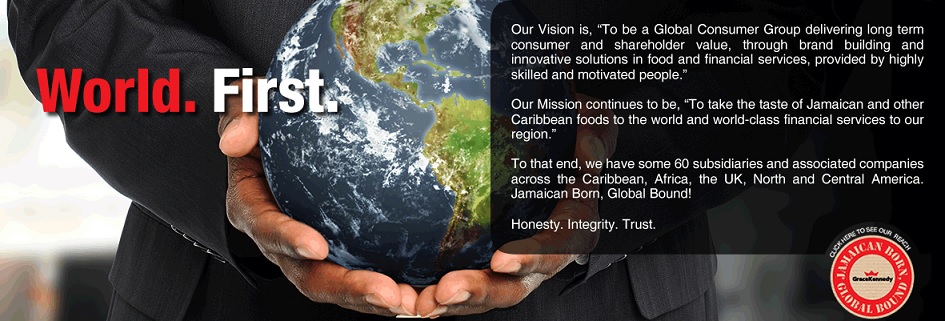
The GraceKennedy Group of Companies, started in 1922, is based in Kingston, Jamaica, but they are one of the Caribbean “largest and most dynamic corporate entities” in the region. Though they are based in Jamaica, they generate a lot of their global revenue – from food services and financial services – from the rest of the globe. They depend on globalization – economic transnationalism – in order to be an ongoing concern. Their marketing slogan is “Jamaican born; global bound”. They own 60 subsidiaries – see partial list in the Appendix below – and affiliated companies across the Caribbean, Africa, UK, North and Central America; they are a model of a transnational corporation. See VIDEO here:

VIDEO – GraceKennedy at 90 – https://youtu.be/okDBEAdC6LY

Published on Feb 10, 2012 – Jamaican conglomerate Grace Kennedy is celebrating 90 years of existence. The Gleaner recently toured its Harbour Street corporate office and learnt what drives the company’s success.

The history of this company traces a parallel arch of change in the Caribbean region for the 20th Century:

Regional Change Dynamics Year Company Dynamic Changes
European Colonialism 1922 Company formed to facilitate importation / local distribution
Decolonization 1952 Nation-building rather than mother-country dependence
Emigration from Homeland / Diaspora 1959 Export Caribbean home products to the world
Embrace of regionalism 1962 Incorporating in other Caribbean member-states
Shift to Service Economy 1990 Financial Services focus on Remittance

GraceKennedy has expanded and diversified over the years,[2] changing from a privately owned enterprise to a public company listed on the stock exchanges of Jamaica, Trinidad, Barbados and the Eastern Caribbean.

CU Blog - GraceKennedy - Caribbean Transnational Corporation - Photo 2

CU Blog - GraceKennedy - Caribbean Transnational Corporation - Photo 4

CU Blog - GraceKennedy - Caribbean Transnational Corporation - Photo 5

The company does not only appeal to the Jamaican community (domestic or Diaspora) or not only to the Anglo-speaking Caribbean; they also strategize for the Hispanic communities. In that vein, as reported in the foregoing VIDEO, in 2014 CU Blog - GraceKennedy - Caribbean Transnational Corporation - Photo 6GraceKennedy acquired La Fe Foods Inc., a top Hispanic consumer foods company – especially dominant in the frozen food category – in the US.

This transnational corporation aligns with the vision for societal elevation in the book Go Lean … Caribbean. These two visions actually parallel:

  • GraceKennedy – To be a Global Consumer Group delivering long term consumer and shareholder value, through brand building and innovative solutions in food and financial services, provided by highly skilled and motivated people.
  • Go Lean – To integrate and unify the Caribbean region into a Single Market Economy, enabling the homeland to be the best address on the planet, inviting our young people to participate in the effort to make our home the best place to live, work and play in the future. – Page 45.

The Go Lean book serves as a roadmap for the introduction and implementation of the technocratic Caribbean Union Trade Federation (CU). This is a call for confederating, collaborating and convening the 30 member-states of the region – despite the language or colonial legacy – into a Single Market; and for one federal governmental entity to optimize the economic, security and governing endeavors. This would also mean optimization of the food supply and financial services landscape. The Go Lean/CU roadmap creates the atmosphere for many more transnational corporations – homegrown and foreign – to emerge and thrive. This is part-and-parcel of the prime directives (3) of the CU/Go Lean roadmap:

  • Optimization of the economic engines – facilitating the growth in corporate citizens – in order to grow the regional economy to $800 Billion & create 2.2 million new jobs.
  • Establishment of a security apparatus to protect the resultant economic engines.
  • Improvement of Caribbean governance to support these economic engines, reflecting a separation-of-powers between CU agencies and member-state governments.

The CU seeks to facilitate better mastery of the advanced fields of economics by incentivizing, incubating and fostering entrepreneurial efforts, small-to-medium-businesses (SMB) and large multi-national corporations. This is how to create new jobs; jobs are not created by governments, but yet, the governmental administrations can implement the right climate to spur industrial and corporate growth. The job-creation solutions for the Caribbean, are not so much dependent on a specific government, but rather good corporate guidance.

A goal of the Go Lean/CU roadmap is to attract more transnational corporations, to establish a footprint in the Caribbean. How? Why? Why will they come to the Caribbean under the Go Lean/CU regime when they will not come now under the status quo? One answer is the structure of Self-Governing Entities (SGE), and Exclusive Economic Zones (EEZ). SGE refers to dedicated, bordered grounds that are ideal for corporate campuses, research laboratories, industrial bases (like shipyards, factory plants). The SGE structure will require a hybrid governance involving the CU federal agencies and local administrators influence– at the start-up.

The book Go Lean … Caribbean asserts that SGE’s and the EEZ can be strategic, tactical and operationally efficient for elevating Caribbean society – creating jobs. These points are pronounced early in the book with this Declaration of Interdependence (Pages 11 thru 14), with these statements:

v. Whereas the natural formation of our landmass and coastlines entail a large portion of waterscapes, the reality of management of our interior calls for extended oversight of the waterways between the islands. The internationally accepted 12-mile limits for national borders must be extended by International Tribunals to encompass the areas in between islands. The individual states must maintain their 12-mile borders while the sovereignty of this expanded area, the Exclusive Economic Zone, must be vested in the accedence of this Federation.

xxiv.  Whereas a free market economy can be induced and spurred for continuous progress, the Federation must install the controls to better manage aspects of the economy: jobs, inflation, savings rate, investments and other economic principles. Thereby attracting direct foreign investment because of the stability and vibrancy of our economy.

xxv.   Whereas the legacy of international democracies had been imperiled due to a global financial crisis, the structure of the Federation must allow for financial stability and assurance of the Federation’s institutions. To mandate the economic vibrancy of the region, monetary and fiscal controls and policies must be incorporated as proactive and reactive measures. These measures must address threats against the financial integrity of the Federation and of the member-states.

xxvi.  Whereas the Caribbean region must have new jobs to empower the engines of the economy and create the income sources for prosperity, and encourage the next generation to forge their dreams right at home, the Federation must therefore foster the development of new industries, like that of ship-building, automobile manufacturing, prefabricated housing, frozen foods, pipelines, call centers, and the prison industrial complex. In addition, the Federation must invigorate the enterprises related to existing industries tourism, fisheries and lotteries – impacting the region with more jobs.

xxx. Whereas the effects of globalization can be felt in every aspect of Caribbean life, from the acquisition of food and clothing, to the ubiquity of ICT, the region cannot only consume, it is imperative that our lands also produce and add to the international community, even if doing so requires some sacrifice and subsidy.

Though there is a need for more jobs, there is a legitimate fear to inviting more corporations. There are real-life experiences and stories of abuse in mono-industrial communities – Company Towns. Abuse by the “super-rich” is implied in the old adage: “golden rule is he who has the gold makes the rule”. But the Go Lean roadmap is designed to mitigate abuses of plutocracies. This is the advantage of the SGE structure; it allows for better promotion, oversight, and governance for transnational corporate expressions. These SGE’s would be regulated solely by the technocratic CU; there would be features like advanced monitoring (intelligence gathering) and embedded protections for whistleblowers.

CU Blog - GraceKennedy - Caribbean Transnational Corporation - Photo 3The Go Lean roadmap identifies 40,000 new direct jobs tied to SGE’s; plus more tied to industrial activities directly related to the business activities that aligns with GraceKennedy business model, such as 30,000 new direct jobs in the food supply industries and 2,000 direct jobs in the frozen foods industry. These job-creation empowerments will impact every aspect of Caribbean life throughout the Caribbean.

The Go Lean book details a series of community ethos, strategies, tactics, implementations and advocacies to foster industrial developments and SGE’s. The following list applies:

Community Ethos – Economic Principles – Economic Systems Influence Individual Choices Page 21
Community Ethos – Economic Principles – Voluntary Trade Creates Wealth Page 21
Community Ethos – Lean Operations Page 24
Community Ethos – Return on Investments Page 24
Community Ethos – Cooperatives Page 25
Community Ethos – Ways to Impact the Future Page 26
Community Ethos – Ways to Impact the Greater Good Page 32
Strategy – Vision – Confederate to form a Single Market Page 45
Strategy – Mission –  Build and foster local economic engines Page 45
Strategy – Mission –  Exploit the benefits and opportunities of globalization Page 46
Strategy – Mission –  Keep the next generation at home Page 46
Tactical – Fostering a Technocracy Page 64
Tactical – Separation of Powers – Commerce Department – Interstate Commerce Administration Page 79
Tactical – Separation of Powers – Department of Agriculture Page 88
Anecdote – “Lean” in Government Page 93
Implementation – Foreign Policy Initiatives at Start-up Page 102
Implementation – Start-up Benefits from the EEZ Page 104
Implementation – Steps to Implement Self-Governing Entities Page 105
Advocacy – 10 Big Ideas – Single Market Leverage Page 127
Advocacy – Ways to Improve Interstate Commerce Page 129
Advocacy – Ways to Better Manage Food Consumption – Export: Help Find Foreign Markets Page 156
Advocacy – Ways to Better Manage the Social Contract Page 170
Advocacy – Ways to Foster Cooperatives – Common for Agricultural Structures Page 176
Advocacy – Ways to Better Manage Natural Resources – Optimization of Pastoral Lands Page 183
Anecdote # 18 – Caribbean Industrialist: Sandals’ Butch Stewart Page 189
Advocacy – Reforms for Banking Regulations Page 199
Advocacy – Ways to Impact Wall Street – Expansion of local Securities markets Page 200
Advocacy – Ways to Impact Main Street Page 201
Advocacy – Ways to Develop a Frozen Foods Industry Page 208
Advocacy – Ways to Improve Fisheries – Canaries & Refrigerated Warehouse Cooperatives Page 210
Advocacy – Ways to Impact the Diaspora Page 217
Advocacy – Ways to Impact Rural Living – SGE Strategic Locations Page 235
Advocacy – Ways to Re-boot Jamaica Page 239

This commentary asserts that industrial development is hard-work. It is difficult now to get Direct Foreign Investors to consider individual Caribbean member-states, but with this new approach of a regional Single Market, a leveraged Caribbean – 42 million people – can be more attractive, appealing and inviting. Despite the appeal, executing this Go Lean/CU roadmap will still be hard; the book describes the effort as heavy-lifting.

Many of these heavy-lifting issues have been previously identified and detailed in prior Go Lean blog-commentaries. See this sample list:

https://goleancaribbean.com/blog/?p=8379 The Need for Technocratic Regulation of the SGE’s
https://goleancaribbean.com/blog/?p=5921 Socio-Economic Change: Impact Analysis of SGE’s
https://goleancaribbean.com/blog/?p=4037 How to Train Your ‘Dragon’ – Direct Foreign Investors
https://goleancaribbean.com/blog/?p=3473 Haiti’s Example of Success with an SGE: CaracolIndustrial Park
https://goleancaribbean.com/blog/?p=2750 Disney World – Role Model for Self-Governing Entities

This Go Lean movement, fostering a new Caribbean business climate, hereby applauds the corporate stakeholders at the GraceKennedy Group of Companies. We invite them to partner with us to make the Caribbean region a better place to live, work and play. But there is the need for a cautionary warning to them: the change that is coming has “plus & minus” ramifications for their business model.

There are aspects of the Go Lean roadmap that will not be good for some of GraceKennedy’s business model, remittances in particular. (While a GraceKennedy subsidiary is the regional partner representing Western Union in the Caribbean, the Go Lean book – Page 270 – introduces new electronic payment schemes that will lessen the need to pay for money transfers). It is clearly apparent in the Go Lean book, that change is not always good; sometimes it brings unintentional consequences. So if we know change is happening, it is best to get ahead of it. This point was stated poignantly at Page 252:

Opportunities abound; even if there is only little commerce to exploit now, there is opportunity enough in the preparation for the coming change. So act now! Get moving to that place, the “corner” of preparation and opportunity.

With the execution of this Go Lean roadmap, the Caribbean region sends a message to the business world: Change is afoot. There will be new partnerships and collaborations for corporate stakeholders. A message is sent to the Caribbean people as well: there are solutions to these complex problems befalling our society. Whereas the Caribbean may have been a parasite before, now we can function in the role of a protégé.

Like all parasites, their healthy disposition depends on a healthy disposition of the hosts. The Caribbean has been in crisis; therefore the parasitic people have fled – the Caribbean’s “brain drain” and Diaspora has grown as a result – not good. The successful execution of this roadmap will affect this disposition as well. We will and must do better! Optimizing the economic, security and governing engines in the region will lower the abandonment rate. This will also constitute change – good change – for the region.

The Caribbean homeland will then be a better place to compete globally and present more favorable options for our youth to stay home in the region.

Now is the time for all Caribbean stakeholders – corporate citizens included – to lean-in for the optimizations and empowerments described in the book Go Lean … Caribbean. This roadmap is conceivable, believable and achievable. 🙂

Download the free e-Book of Go Lean … Caribbean – now!

—————–

Appendix – List of Subsidiaries: GraceKennedy Group of Companies

  • Banking and Financial services
    • First Global Bank Limited
    • First Global Financial Services Limited
    • FG Funds Management (Cayman) Limited
    • First Global Trinidad & Tobago Limited (formerly One1 Financial Limited)
    • Signia Financial Group Incorporated
  • Remittances
    • GraceKennedy Remittance Services Limited
    • GraceKennedy Remittance Services (United States) Incorporated
    • GraceKennedy Remittance Services (Trinidad & Tobago) Limited
    • GraceKennedy Remittance Services (Guyana) Limited
  • Insurance Life and General
    • Allied Insurance Brokers Limited
    • EC Global Insurance Company Limited
    • First Global Insurance Brokers Limited
    • Jamaica International Insurance Company Limited
    • Trident Insurance Company Limited
  • Manufacturing, retail and distribution
    • Dairy Industries (Jamaica) Limited
    • Grace Foods and Services Company
    • GraceKennedy (Belize) Limited
    • Grace Food Processors Limited
    • Grace Food Processors (Canning) Limited
    • GraceKennedy (United States) Incorporated
    • Grace Foods International Limited
    • National Processors Division
    • World Brands Services Limited
    • Hi-Lo Food Stores (Jamaica) Limited
    • GK Foods (United Kingdom) Limited
    • GraceKennedy (Ontario) Incorporated
    • Hardware & Lumber Limited

 

Share this post:
, , ,

ENCORE: For-Profit Education – ‘Another one bites the dust’

The ‘Evil Empire‘ – For-Profit Educational firms and institutions – is finally facing resistance from governmental authorities. Companies in this industry have come under fire for their bad practices and abuse of their customers: young students.

… and now, today, ITT Educational Services, one of the largest operators of for-profit technical schools, ended operations at all of its ITT Technical Institutes. See a summary of the story here:

CU Blog - ENCORE - For-Profit Education - 'Another one bites the dust' - Photo 1

Title: ITT Technical Institutes shuts down after 50 years in operation
ITT Educational Services … ended operations at all of its ITT Technical Institutes on Tuesday, citing government action to curtail the company’s access to millions of dollars in federal loans and grants, a critical source of revenue.

The move to shut down the chain of career schools after 50 years arrives two weeks after the Education Department said ITT would no longer be allowed to enroll new students who rely on federal loans and grants, award raises, pay bonuses or make severance payments to its executives without government approval. The department’s unprecedented move sent shares of the publicly traded company tumbling to an all-time low and raised questions about the future of the company.

See the full  article here at: https://www.washingtonpost.com/news/grade-point/wp/2016/09/06/itt-technical-institutes-shut-down-after-50-years-in-operations/ posted & retrieved September 6, 2016.

Previously, on June 8, 2015, this commentary detailed the similar case against Corinthian Colleges; see an ENCORE of that commentary here:

——————————-

Go Lean Commentary

Follow the money…

This is a familiar plot-line in Hollywood Police dramas. Its “life imitating art” because this is the same eventuality for the American For-Profit education industry. There is a lot of money available in the US for post-secondary education of American students. Federal Student Loans are available to any American citizen regardless of credit or income. This constitutes a fertile ground for abuse.

According to the following news article, this one education company Corinthian College – see Appendix A below – is a bad example of For-Profit schools making a lot of profit but providing very little education to its customers: students.

“Scratch a liar, catch a thief”.

The article is presented here:

1. Title: My college degree is worthless
CU Blog - For-Profit Education - Plenty of Profit; Little Education - Photo 1
Sub-title:
Students across the country are shelling out tens of thousands of dollars for degrees that end up being completely worthless.

CU Blog - For-Profit Education - Plenty of Profit; Little Education - Photo 2Rosalyn Harris, an unemployed single mother who had never gone to college, thought getting a degree would be the ticket to a new life. So at age 23, she enrolled in a two-year criminal justice program at for-profit Everest College in Chesapeake, Va.

But the wealth of job opportunities the school had touted never transpired, and all she ended up with was more than $22,000 in student loan debt. She said classes were terrible, she didn’t receive any of the training she needed, and as a result, she spent months after graduation searching for criminal justice jobs without ever getting a call back.

Desperate to start paying some of her bills, Harris eventually applied for any entry-level job she could find. A full year after she graduated, she finally found a minimum wage job stocking shelves at Victoria’s Secret.

“My sole purpose of going to school was bettering my life for me and my son,” she said. “But now I wish I had never gone.”

Everest is a member of for-profit behemoth Corinthian Colleges, which has been accused by federal agencies of operating a predatory lending scheme, preying on low-income students and falsely inflating job placement numbers. Corinthian is currently closing and selling its schools, leaving thousands of graduates on the hook for loans they took out.

A Corinthian spokesman confirmed that Harris graduated in good standing, but it was unable to place her in a job. He said the school did provide her with career assistance and claims the criminal justice program has a 75% job placement rate, which he said is “a strong outcome for any educational program.”

He also disputed the allegations against the school, noting that Corinthian’s student loan default rate (of up to 27% for its EverestCollege campuses) is lower than other community colleges and its graduation and job placement rates are higher.

And while Corinthian has a particularly bad reputation, the for-profit college industry as a whole is often criticized for luring low-income students with false promises and failing to provide educations that qualify students for jobs.

Not only that but for-profit schools are generally double or triple the cost of public institutions like community colleges, and the default rate (19% last year) was the highest of all sectors.

CU Blog - For-Profit Education - Plenty of Profit; Little Education - Photo 3Vantrell Echols, a 36-year-old from Georgia, wishes he never received a phone call from for-profit Lincoln College of Technology back in 2008. He said the school spent six months convincing him to enroll — promising to provide all the training and help he needed to find a high-paying computer science job. He had been unemployed for more than a year and he was desperate, so he gave it a shot.

But upon enrolling in the computer science program, he said the quality of education “was a complete joke” and job assistance was nonexistent.

“They sold many of us dreams about helping us, getting us qualified to work, to help us with jobs, [but] I had to ask fellow students to help me because the teachers wouldn’t. Many of us graduated with honors but didn’t learn anything in our fields,” he said.

Lincoln Educational Services president Scott Shaw defended the school’s reputation to CNNMoney, touting its 75% job placement rate and pointing to examples of successful graduates like the CEO of VMWare (who graduated in 1979).

But Echols said that after accumulating more than $20,000 in debt to attend the one-year program, he wasn’t able to find a single job in computer science. He’s still unemployed, is now homeless — and he is convinced he’d be better off without the degree even listed on his resume.

He says multiple employers have told him that they don’t view his degree as credible because of the for-profit industry’s reputation and because other people they’ve hired from the school haven’t had the necessary skills for the job.

“They’ve ruined my life and the lives of many of my classmates,” he said.

Shaw said extensive career assistance was provided to Echols and that he isn’t sure why Echols couldn’t find a job. “There’s only so much we can do — at some point the student has to partake,” he said.

But these kinds of stories are popping up so often that even the Obama Administration took action this week. Going forward, for-profit colleges will risk losing federal student aid if average loan payments of graduates exceed 20% of discretionary income or 8% of total earnings.

“Too many hard-working students find themselves buried in debt with little to show for it,” Secretary of Education Arne Duncan said in a statement.

Senators Jeff Merkley of Oregon and Tom Harkin of Iowa are pushing for legislation that goes a step further. They argue that a loophole in federal laws allow some institutions to offer programs that aren’t licensed or accredited at the state or federal level. That means graduates end up with degrees that may sound legitimate but are meaningless to many employers.

The two senators introduced legislation last month aimed at cracking down on these “worthless degrees.” The legislation would require courses to be licensed before allowing schools to accept federal money like student loan dollars or financial aid.

“Passing this bill will ensure that a college can no longer charge thousands of dollars for a degree that does not prepare them to work in the field they were promised‎,” according to a statement about the bill.

Related: U.S. sues Corinthian Colleges
2. Title: Embattled for-profit education behemoth Corinthian Colleges is facing yet another legal fight: This time, from the Consumer Financial Protection Bureau.

The consumer agency announced Tuesday it is suing Corinthian for “illegal predatory lending” and is demanding that the school forgive more than $500 million in private loans it has given to students since July of 2011.

According to the CFPB’s complaint, Corinthian convinced students to enroll in the school by inflating its job placement rates. It even paid employers to hire graduates for at least one day in order to boost its numbers.

Meanwhile, Corinthian’s tuition and fees — which can climb to as high as $75,000 for a bachelor’s degree — are higher than what federal loans generally cover, forcing many students to take out private loans from the school. These loans, called “Genesis loans,” came with origination fees of 6% and interest rates of around 15% as of 2011 — much higher than the 3% and 7% charged on federal loans.

CNNMoney (New York); posted September 16, 2014 from: http://money.cnn.com/2014/09/16/pf/college/cfpb-corinthian-lawsuit/index.html?iid=EL

The references to “low-income students” in the foregoing article are most commonly the “Black and Brown” of the American population. This is a frequent demographic for victimization in American life.

This issue in the article is just another example of Crony-Capitalism and institutional racism. The book Go Lean…Caribbean and subsequent blogs posit that the Caribbean must not be vulnerable to these negative American forces.

The dread of Crony-Capitalism and institutional racism have been highlighted and detailed in many previous blog commentaries; see the many Crony-Capitalism models in Appendix B below. Now we have to add the reality of Big Education to the discussion. The issue underpinning this dilemma is the easy availability of guaranteed student loans from the US federal government. Unfortunately this is not just an issue for For-Profit institutions, many not-for-profit colleges and university also exploit the federal student loan funds to garner revenues at the expense of innocent students. The Crony in this case is a direct consequence of a rich pool of federal monies.

Rich pool? This brings to mind the visual of an isolated pool/pond on the African Plain, a watering hole on the Serengeti where many animals seek hydration and refuge, but the terrain is endangered with predators: lions, crocodiles, hyenas, cheetahs, etc.. Yes, in the American commercial eco-system, “follow the money”, and you will find many “bad actors” looking to exploit the situation for unfair gain and quick profits.
CU Blog - For-Profit Education - Plenty of Profit; Little Education - Photo 4

VIDEO – Is the cost of college crippling? – http://money.cnn.com/video/news/2013/09/03/n-cost-of-college-rising-education-middle-class-jobs.cnnmoney/


The Caribbean must do better! We must also dissuade our citizens from emigrating to this American eco-system.

The consideration of Crony-Capitalism in the For-Profit Education industry aligns with the book Go Lean…Caribbean, a roadmap to elevate the economic, security and governing engines of the Caribbean. The Caribbean wants to model many of the good examples of the United States, and learn from the many bad models. Education is one such model. While optimization of education can systemically raise a country’s economy, the Caribbean experience has been more negative than positive. Too many of our students have left … to study abroad; then refused to return home, taking with them the return on community investments and repayment of their student loans. The Go Lean book has reported in detail on how traditional college career paths have been disastrous policies for the Caribbean in whole, and each specific country in particular.

This Go Lean book serves as a roadmap for the introduction and implementation of the technocratic Caribbean Union Trade Federation (CU). The CU has a complete education agenda, applying lessons learned from the consideration of the American models. This roadmap represents a big change for the region. The CU/Go Lean roadmap has 3 prime directives:

  • Optimization of the economic engines in order to grow the regional economy to $800 Billion & create 2.2 million new jobs..
  • Establishment of a security apparatus to police “bad actors” and protect the resultant economic engines.
  • Improvement of Caribbean governance, including a separation-of-powers, to support these engines.

The Go Lean roadmap provides turn-by-turn directions on how to reform the Caribbean tertiary education systems, economy, governance and Caribbean society as a whole. There is a plan for a regional student loan pool, where we mitigate the dangers that are so evident in the American eco-system. Our primary threat now is the constant abandonment rate among the college-educated populations. So as a planning tool, the roadmap commences with a Declaration of Interdependence, pronouncing the dread of societal threats and the Caribbean brain drain (Page 12):

xvi.  Whereas security of our homeland is inextricably linked to prosperity of the homeland, the economic and security interest of the region needs to be aligned under the same governance. Since economic crimes … can imperil the functioning of the wheels of commerce for all the citizenry, the accedence of this Federation must equip the security apparatus with the tools and techniques for predictive and proactive interdictions.

xix.  Whereas our legacy in recent times is one of societal abandonment, it is imperative that incentives and encouragement be put in place to first dissuade the human flight, and then entice and welcome the return of our Diaspora back to our shores

xxi.  Whereas the preparation of our labor force can foster opportunities and dictate economic progress for current and future generations, the Federation must ensure that educational and job training opportunities are fully optimized for all residents of all member-states, with no partiality towards any gender or ethnic group This responsibility should be executed without incurring the risks of further human flight, as has been the past history.

The Go Lean book posits that education is a vital consideration for Caribbean economic empowerment. The vision of the CU is a confederation of the 30 member-states of the Caribbean to do the heavy-lifting of championing better educational policies.  The book details those policies; and other ethos to adopt, plus the executions of the following strategies, tactics, implementations and advocacies to impact tertiary education in the region:

Community Ethos – Deferred Gratification Page 21
Community Ethos – Economic Systems Influence Individual Choices and Incentives Page 21
Community Ethos – Job Multiplier Page 22
Community Ethos – Lean Operations Page 24
Community Ethos – Return on Investments (ROI) Page 24
Community Ethos – Ways to Impact the Future – Apply Lessons of American Lax Oversight Page 26
Community Ethos – Ways to Foster Genius Page 27
Community Ethos – Ways to Help Entrepreneurship – Training & Mentoring Page 28
Tactical – Separation of Powers – Education Department Page 85
Tactical – Separation of Powers – Labor Department – On-the-Job-Training Regulator Page 89
Implementation – Ways to Better Manage Debt – Lessons of American Student Loan Crisis Page 114
Advocacy – Ways to Grow the Economy – Essential Role of Tertiary Education Page 151
Advocacy – Ways to Create Jobs – Vital Need for Better STEM Education Empowerments Page 152
Advocacy – Ways to Improve Education – Mitigating the Brain Drain Page 159
Advocacy – Ways to Impact Student Loans – Regional Pools for Cross-Border Enforcements Page 160
Advocacy – Ways to Improve Governance Page 169
Appendix – Education and Economic Growth Page 258
Appendix – Measuring Education Progress and Success Criteria Page 266
Appendix – New American Student Loan Debt Crisis – Now Over $1 Trillion in Debt Page 286

The American Tertiary Education Student Loan eco-system is badly broken; (tuition has increased 500% since 1985). The large pools of money has attracted “bad actors” or predators. The party in the foregoing news article – Corinthian Colleges – has been charged and adjudicated with predatory lending violations. Their victims: poor students who would have to repay these non-dischargeable federally-insured student loans. How sad? All of that time, talent and treasury and nothing to show for it. No wonder the economic effects of this affected population are now showing in other aspects of the economy, such as retarded home-buying output among the younger generations.

The Caribbean is urged to do better.

The people, educational and governing institutions in the region are urged to lean-in for the empowerments described in the book Go Lean … Caribbean. Education reform can suceed in elevating Caribbean society; we can make our Caribbean homeland a better place to live, work, learn and play. 🙂

Download the free e-Book of Go Lean … Caribbean – now!

———-

Appendix A – Corinthian Colleges, Inc.
(Source: http://en.wikipedia.org/wiki/Corinthian_Colleges)

Corinthian Colleges, Inc. (CCi) was a large for-profit post-secondary education company in North America. Its subsidiaries offered career-oriented diploma and degree programs in health care, business, criminal justice, transportation technology and maintenance, construction trades, and information technology.[1]

At its largest, CCi had over 100 Everest, Heald and WyoTech campuses throughout the United States and Canada.[2]

Corinthian’s campuses in Canada closed on February 19, 2015 after the Ontario government suspended their operation license. After a series of legal challenges by state and federal agencies, on April 26, 2015 Corinthian Colleges announced that they would cease operations at all remaining US locations effective April 27, 2015. The closure affected more than 16,000 students and employees.

Corinthian Colleges was founded in February 1995.[3] The five founders — David Moore, Paul   St. Pierre, Frank McCord, Dennis Devereux, and Lloyd Holland — were executives at National Education Centers, Inc. (NECI), a for-profit operator of vocational schools based in Irvine, California. The founders planned to acquire schools that were fundamentally sound, but which for one reason or another were performing below their potential.[4]

Historically, CCi grew rapidly through acquisitions and through organic growth, including opening new branch campuses, remodeling, expanding or relocating existing campuses, and adopting curricula into existing colleges.[3]

Acquired Schools
The following institutes and colleges were acquired [through the years]:[5]

  • American Motorcycle Institute
  • AshmeadCollege
  • Blair College
  • Bryman College
  • Bryman Institute
  • Duff’s Business Institute
  • Florida Metropolitan University
  • Georgia Medical Institute
  • Kee Business College
  • Las Vegas College
  • National Institute of Technology
  • National School of Technology
  • Olympia Career Training Institute
  • Olympia College
  • Parks College
  • Rochester Business Institute
  • Tampa College
  • Western Business College

Corinthian Colleges faced numerous investigations and lawsuits, including a federal criminal investigation.[6]

Financial Aid Financing
The Higher Education Act provides that a private, for-profit institution, such as CCi’s institutions, may derive no more than 90% of its revenue from the Title IV federal student aid programs.[39] In 2010, CCi reported that it received 81.9% of revenue from Title IV federal student aid programs. [40] Corinthian Colleges (CCI) acquired QuickStart Intelligence in summer 2012, an Irvine, California-based, privately held technology training company. As a B2B revenue stream; CCI acquired QuickStart Intelligence to leverage the 10%, non-government funding essential to back the additional student loans for CCi’s core adult learning programs.

Student Loan Default Rate
A significant requirement imposed by Congress is a limitation on participation in Title IV programs by institutions whose former students default on the repayment of federal student loans in excess of specified rates (“Cohort Default Rates”).[41] On March 25, 2013, CCi received a draft three-year Cohort Default Rates from the U.S. Department of Education for students who entered repayment during the federal fiscal year ending September 30, 2010 (the “2010 Cohort”), measured over three federal fiscal years of borrower repayment. The weighted average of CCi’s institutions was 19.0%, a 9.0 percentage point decrease from the 28.0% weighted average for the three-year cohort default rate for students who entered repayment during the prior fiscal year.[42] For the 2010 Cohort, none of CCi’s institutions exceeded the default threshold set by the U.S. Department of Education.[42]

———-

Appendix B – Models of American Crony-Capitalism

Big Defense Many theorists indicate that the “follow the money” approach reveals the Military Industrial Complex work to undermine peace, so as to increase defense spending for military equipment, systems and weapons.
Big Media Cable companies conspire to keep rates high; kill net neutrality; textbook publishers practice price gouging; Hollywood insists on big tax breaks/ subsidies for on-location shooting.
Big Oil While lobbying for continuous tax subsidies, the industry have colluded to artificially keep prices high and garner rocket profits ($38+ Billion every quarter).
Big Box Retail chains impoverish small merchants on Main Street with Antitrust-like tactics, thusly impacting community jobs. e-Commerce, an area of many future prospects, is the best hope of countering these bad business tactics.
Big Pharma Chemo-therapy cost $20,000+/month; and the War against Cancer is imperiled due to industry profit insistence.
Big Tobacco Cigarettes are not natural tobacco but rather latent with chemicals to spruce addiction.
Big Agra Agribusiness concerns bully family farmers and crowd out the market; plus fight common sense food labeling efforts.
Big Data Brokers for internet and demographic data clearly have no regards to privacy concerns.
Big Banks Wall Street’s damage to housing and student loans are incontrovertible.
Big Weather Overblown hype of “Weather Forecasts” to dictate commercial transactions.
Big Real Estate Preserving MLS for Real Estate brokers only, forcing 6% commission rates, when the buyers and sellers can meet without them.
Big Salt Despite the corrosiveness of salt on roads and the environment, it is the only tactic   used to de-ice roads. Immediately after the weather warms, the roads must be re-constructed, thus ensuring a continuous economic cycle.
Big Energy The For-Profit utility companies always lobby against regulations to “clean-up” fossil-fuel (coal) power plants or block small “Green” start-ups from sending excess power to the National Grid. Their motive is to preserve their century-long monopoly and their profits.
Big Legal Even though it is evident that the promotion of Intellectual Property can help   grow economies, the emergence of Patent Trolling parties (mostly lawyers) is squashing innovation. These ones are not focused on future innovations, rather just litigation. They go out and buy patents, then look for anyone that may consume any concepts close to those patents, then sue for settlements, quick gains.
Big Cruise Cruise ships are the last bastion of segregation with descriptors like “modern-day-slavery” and “sweat-ships”. Working conditions are poor and wages are far below anyone’s standards of minimum. Many ship-domestic staff are “tip earners”, paid only about US$50 a month and expected to survive on the generosity of the passengers’ gratuity. The industry staff with personnel from Third World countries, exploiting those with desperate demands. Nowhere else in the modern world is this kind of job discrimination encouraged, accepted or tolerated.
Big Jails The private prison industry seem motivated more by profit than by public safety. They attempt to sue state governments when their occupancy levels go too low; a reduction in crime is bad for business.
Big Housing The American legacy is one of the institutional segregation in American cities. The practice was administered by real estate agents and housing officials executing policies to elevate property values and generational wealth for White families at the expense of a life of squalor for Non-Whites.
Big Charities Big Not-For-Profit organizations that fleece the public under the guise of charities but retain vast majorities of the funding as administrative costs, thusly benefiting mostly the charities’ executives and staff rather than the intended benefactors.
Share this post:
, , , ,
[Top]

ENCORE: A reflection on ‘Labor’ on Labor Day

In the US and Canada, it is the Labor Day holiday weekend.

Many countries have an equivalent of Labor Day, a date set aside to honor and celebrate workers, or the movement to empower workers in society. Many of the historicity of these movements were tied to labor unions.

More than 80 countries celebrate International Workers’ Day on May 1 – the ancient European holiday of May Day.

Consider this Encore of the blog-commentary from June 18, 2015, discussing the trends in the labor markets, which depict a decline of collective bargaining:

==================

Title: Economic Principle: Wage-Seeking – Market Forces -vs- Collective Bargaining

Go Lean Commentary

The field of Economics is unique! We all practice it every day, no matter the level of skill or competence. There is even the subject area in basic education branded Home Economics, teaching the students the fundamentals of maintaining, supporting and optimizing a home environment. Most assuredly, economics is an art and a science, albeit a social science.

In a previous blog/commentary, Scotman’s Adam Smith was identified as the father of modern macro-economics. Though he lived from 1723 to 1790, his writings defined advanced economic concepts even in this 21st Century. His landmark book An Inquiry into the Nature and Causes of the Wealth of Nations qualified the divisions of income into these following categories: profit, wage, and rent.[4] We have previously explored profit-seeking (a positive ethos that needs to be fostered in the Caribbean region) and rent-seeking (a negative effort that proliferates in the Caribbean but needs to be mitigated), so now the focus of this commentary is on the activity of wage-seeking, and the concepts of governance and public choice theory to allow for maximum employment.

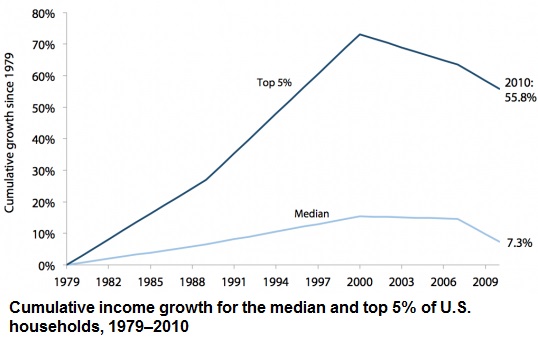
This is hard! Change has come to the world of wage-seekers – the middle classes are under attack; the labor-pool of most industrialized nations have endured decline, not in the numbers, but rather in prosperity. While wage-earners have not kept pace with inflation, top-earners (bonuses, commissions and business profits) have soared; (see Photo).

CU Blog - Economic Principles - Wage-Seeking - Market forces -vs- Collective Bargaining - Photo 2As a direct result, every Caribbean member-state struggles with employment issues in their homeland. In fact, this was an initial motivation for the book Go Lean…Caribbean, stemming from the fall-out of the 2008 Great Recession, this publication was presented as a roadmap for the introduction and implementation of the Caribbean Union Trade Federation (CU) to elevate the economic, security and governing engines of the Caribbean region to create 2.2 million new jobs, despite global challenges.

Needless to say, the global challenge is far more complex than Home Economics. The Go Lean book describes the effort as heavy-lifting; then proceeds to detail the turn-by-turn directions of a roadmap to remediate and mitigate wage-seeking.

The roadmap channels the Economic Principles and best-practices of technocrats like Adam Smith and 11 other named economists, many of them Nobel Laureates. A review of the work of these great men and woman constitute “Lessons in Economic Principles”. Why would these lessons matter in the oversight of Caribbean administration? Cause-and-effect!

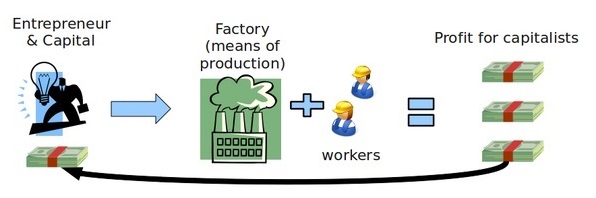
Profit 4The root of the current challenge for wage-seekers is income equality; and this is bigger than just the Caribbean. It is tied to the global adoption of globalization and technology/ automation – a product of global Market Forces as opposed to previous Collective Bargaining factors. This relates back to the fundamental Economic Principle of “supply-and-demand”; but now the “supply” is global. This photo/”process flow” here depicts the ingredients of Market Forces. When there is the need for labor, the principle of comparative analysis is employed, and most times the conclusion is to “off-shore” the labor efforts, and then import the finished products. This is reversed of the colonialism that was advocated by Adam Smith; instead of the developed country providing factory labor for Third World consumption, the developed nation (i.e. United States) is now in the consumer-only role, with less and less production activities, for products fabricated in the Third World. This reality is not sustainable for providing prosperity to the middle classes, to the wage-seekers.

As a community, we may not like the laws of Economics, but we cannot ignore them. The Go Lean book explains the roles and significance of Economic Principles … with this excerpt (Page 21):

While money is not the most important factor in society, the lack of money and the struggle to acquire money creates challenges that cannot be ignored. The primary reason why the Caribbean has suffered so much human flight in the recent decades is the performance of the Caribbean economy. Though this book is not a study in economics, it recommends, applies and embraces these 6 core Economic Principles as sound and relevant to this roadmap:

  1. People Choose: We always want more than we can get and productive resources (human, natural, capital) are always limited. Therefore, because of this major economic problem of scarcity, we usually choose the alternative that provides the most benefits with the least cost.
  2. All Choices Involve Costs: The opportunity cost is the next best alternative you give up when you make a choice. When we choose one thing, we refuse something else at the same time.
  3. People Respond to Incentives in Predictable   Ways: Incentives are actions, awards, or rewards that determine the choices people make. Incentives can be positive or negative. When incentives change, people change their behaviors in predictable ways.
  4. Economic Systems Influence Individual Choices and Incentives: People cooperate and govern their actions through both written and unwritten rules that determine methods of allocating scarce resources. These rules determine what is produced, how it is produced, and for whom it is produced. As the rules change, so do individual choices, incentives, and behavior.
  5. Voluntary Trade Creates Wealth: People specialize in the production of certain goods and services because they expect to gain from it. People trade what they produce with other people when they think they can gain something from the exchange. Some benefits of voluntary trade include higher standards of living and broader choices of goods and services.
  6. The Consequences of Choices Lie in the Future: Economists believe that the cost and benefits of decision making appear in the future, since it is only the future that we can influence. Sometimes our choices can lead to unintended consequences.

Source: Handy Dandy Guide (HDC) by the National Council on Economic Education (2000)

The Go Lean book describes the end result of the application of best-practices in this field of economics over the course of a 5-year roadmap: the CU … as a hallmark of technocracy. But the purpose is not the edification of the region’s economists, rather to make the Caribbean homeland “better places to live, work and play” for its citizens. This branding therefore puts emphasis on the verb “work”; the nouns “jobs” and “wages” must thusly be a constant focus of the roadmap.

Brain Drain 70 percent ChartThis Go Lean book declares that the Caribbean eco-system for job-creation is in crisis … due to the same global dilemma. The roadmap describes the crisis as losing a war, the battle of globalization and technology. The consequence of the defeat is 2 undesirable conditions: income inequality and societal abandonment, citizens driven away to a life in the Diaspora. This assessment currently applies in all 30 Caribbean member-states, as every community has lost human capital to emigration. Some communities, like Puerto Rico and the US Virgin Islands have suffered with an abandonment rate of more than 50% and others have watched more than 70% of college-educated citizens flee their community for foreign shores. Even education is presented as failed investments as those educated in the region and leave to find work do not even return remittances in proportion to their costs of development. (See Table 4.1 in the Photo)

The Go Lean book therefore posits that there is a need to re-focus, re-boot, and optimize the labor/wage-seeking engines so as to create more jobs with livable wages. Alas, this is not just a Caribbean issue, but a global (i.e. American) one as well. See the following encyclopedic references for wage-seeking and Collective Bargaining to fully understand the complexities of these global issues:

Encyclopedia Reference #1: Wage-Seeking
(Source: https://en.wikipedia.org/wiki/Wage)

A wage is monetary compensation paid by an employer to an employee in exchange for work done. Payment may be calculated as a fixed amount for each task completed (a task wage or piece rate), or at an hourly or daily rate, or based on an easily measured quantity of work done.

Wages are an example of expenses that are involved in running a business.

Payment by wage contrasts with salaried work, in which the employer pays an arranged amount at steady intervals (such as a week or month) regardless of hours worked, with commission which conditions pay on individual performance, and with compensation based on the performance of the company as a whole. Waged employees may also receive tips or gratuity paid directly by clients and employee benefits which are non-monetary forms of compensation. Since wage labour is the predominant form of work, the term “wage” sometimes refers to all forms (or all monetary forms) of employee compensation.

Determinants of wage rates
Depending on the structure and traditions of different economies around the world, wage rates will be influenced by market forces (supply and demand), legislation, and tradition. Market forces are perhaps more dominant in the United States, while tradition, social structure and seniority, perhaps play a greater role in Japan.[6]

Wage Differences
Even in countries where market forces primarily set wage rates, studies show that there are still differences in remuneration for work based on sex and race. For example, according to the U.S. Bureau of Labor Statistics, in 2007 women of all races made approximately 80% of the median wage of their male counterparts. This is likely due to the supply and demand for women in the market because of family obligations. [7] Similarly, white men made about 84% the wage of Asian men, and black men 64%.[8] These are overall averages and are not adjusted for the type, amount, and quality of work done.

Real Wage
The term real wages refers to wages that have been adjusted for inflation, or, equivalently, wages in terms of the amount of goods and services that can be bought. This term is used in contrast to nominal wages or unadjusted wages. Because it has been adjusted to account for changes in the prices of goods and services, real wages provide a clearer representation of an individual’s wages in terms of what they can afford to buy with those wages – specifically, in terms of the amount of goods and services that can be bought.

See Table of European Model in the Appendix below. (The European Union is the model for the Caribbean Union).

———-

Encyclopedia Reference #2: Collective Bargaining
(Source: https://en.wikipedia.org/wiki/Collective_bargaining)

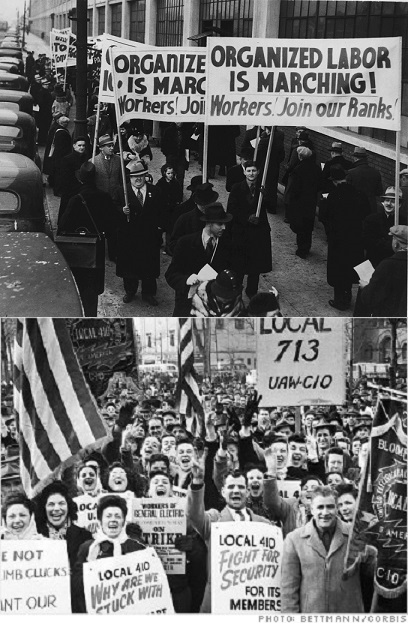
WPR: Marches & PicketsCollective Bargaining is a process of negotiation between employers and a group of employees aimed at reaching agreements to regulate working conditions. The interests of the employees are commonly presented by representatives of a trade union to which the employees belong. The collective agreements reached by these negotiations usually set out wage scales, working hours, training, health and safety, overtime, grievance mechanisms, and rights to participate in workplace or company affairs.[1]

The union may negotiate with a single employer (who is typically representing a company’s shareholders) or may negotiate with a group of businesses, depending on the country, to reach an industry wide agreement. A collective agreement functions as a labor contract between an employer and one or more unions.

The industrial revolution brought a swell of labor-organizing in [to many industrialized countries, like] the US. The American Federation of Labor (AFL) was formed in 1886, providing unprecedented bargaining powers for a variety of workers.[11] The Railway Labor Act (1926) required employers to bargain collectively with unions. While globally, International Labour Organization Conventions (ILO) were ratified in parallel to the United Nations efforts (i.e. Declaration of Human Rights, etc.). There were a total of eight ILO fundamental conventions [3] all ascending between 1930 and 1973, i.e. the Freedom of Association and Protection of the Right to Organise Convention (1949).

The Go Lean book presents a roadmap on how to benefit from the above Economic Principles – and how to empower communities anew – in the midst of tumultuous global challenges. This roadmap addresses more than economics, as there are other areas of societal concern. This is expressed in the CU charter; as defined by these 3 prime directives:

  • Optimization of economic engines in order to grow the regional economy to $800 Billion and create 2.2 million new jobs.
  • Establishment of a security apparatus to protect the resultant economic.
  • Improvement of Caribbean governance to support these engines.

Early in the Go Lean book, the responsibility to create jobs was identified as an important function for the CU with these pronouncements in the Declaration of Interdependence (Pages 14):

xix.  Whereas our legacy in recent times is one of societal abandonment, it is imperative that incentives and encouragement be put in place to first dissuade the human flight, and then entice and welcome the return of our Diaspora back to our shores.

xxi.  Whereas the preparation of our labor force can foster opportunities and dictate economic progress for current and future generations, the Federation must ensure that educational and job training opportunities are fully optimized for all residents of all member-states, with no partiality towards any gender or ethnic group. The Federation must recognize and facilitate excellence in many different fields of endeavor, including sciences, languages, arts, music and sports. This responsibility should be executed without incurring the risks of further human flight, as has been the past history.

xxiv. Whereas a free market economy can be induced and spurred for continuous progress, the Federation must install the controls to better manage aspects of the economy: jobs, inflation, savings rate, investments and other economic principles. Thereby attracting direct foreign investment because of the stability and vibrancy of our economy.

xxvi.  Whereas the Caribbean region must have new jobs to empower the engines of the economy and create the income sources for prosperity, and encourage the next generation to forge their dreams right at home, the Federation must therefore foster the development of new industries, like that of ship-building, automobile manufacturing, prefabricated housing, frozen foods, pipelines, call centers, and the prison industrial complex. In addition, the Federation must invigorate the enterprises related to existing industries tourism, fisheries and lotteries – impacting the region with more jobs.

According to an article from the Economic Policy Institute, entitled The Decline of Collective Bargaining and the Erosion of Middle-class Incomes in Michigan by Lawrence Mishel (September 25, 2012), the challenges to middle class income are indisputable, and the previous solution – Collective Bargaining – is no longer as effective as in the past. (The industrial landscape of Michigan had previously been identified as a model for the Caribbean to consider). See a summary of the article here (italics added) and VIDEO in the Appendix:

In Michigan between 1979 and 2007, the last year before the Great Recession, the state’s economy experienced substantial growth and incomes rose for high-income households. But middle-class incomes did not grow. The Michigan experience is slightly worse than but parallels that of the United States as a whole, where middle-class income gains were modest but still far less than the income gains at the top. What the experience of Michiganders and other Americans makes clear is that income inequality is rising, and it has prevented middle-class incomes from growing adequately in either Michigan or the nation.

The key dynamic driving this income disparity has been the divergence between the growth of productivity—the improvement in the output of goods and services produced per hour worked—and the growth of wages and benefits (compensation) for the typical worker. It has been amply documented that productivity and hourly compensation grew in tandem between the late 1940s and the late 1970s, but split apart radically after 1979. Nationwide, productivity grew by 69.1 percent between 1979 and 2011, but the hourly compensation of the median worker (who makes more than half the workforce but less than the other half) grew by just 9.6 percent (Mishel and Gee 2012; Mishel et al. 2012). In other words, since 1979 the typical worker has hardly benefited from improvements in the economy’s ability to raise living standards and, consequently, middle-class families’ living standards have barely budged since then. This phenomenon has occurred across the nation, including in Michigan.

This divergence between pay and productivity and the corresponding failure of middle-class incomes to grow is strongly related to the erosion of collective bargaining. And collective bargaining has eroded more in Michigan than in the rest of the nation, helping to explain Michigan’s more disappointing outcomes.

Research three decades ago by economist Richard Freeman (1980) showed that collective bargaining reduces wage inequality, and all the research since then (see Freeman 2005) has confirmed his finding. Collective bargaining reduces wage inequality for three reasons. The first is that wage setting in collective bargaining focuses on establishing “standard rates” for comparable work across business establishments and for particular occupations within establishments. The outcome is less differentiation of wages among workers and, correspondingly, less discrimination against women and minorities. A second reason is that wage gaps between occupations tend to be lower where there is collective bargaining, and so the wages in occupations that are typically low-paid tend to be higher under collective bargaining. A third reason is that collective bargaining has been most prevalent among middle-class workers, so it reduces the wage gaps between middle-class workers and high earners (who have tended not to benefit from collective bargaining).

Collective bargaining also reduces wage inequality in a less-direct way. Wage and benefit standards set by collective bargaining are often followed in workplaces not covered by collective bargaining, at least where there is extensive coverage by collective bargaining in particular occupations and industries. This spillover effect means that the impact of collective bargaining on the wages and benefits of middle-class workers extends far beyond those workers directly covered by an agreement.

Source: http://www.epi.org/publication/bp347-collective-bargaining/

The siren call went out 20 years ago, of the emergence of an “Apartheid” economy, a distinct separation between the classes: labor and management. Former US Secretary of Labor Robert Reich (1993 – 1997 during the Clinton Administration’s First Term) identified vividly, in this 1996 Harvard Business Review paper, that something was wrong with the U.S. economy then; (it is worst now):

CU Blog - Economic Principles - Wage-Seeking - Market forces -vs- Collective Bargaining - Photo 3That something is not the country’s productivity, technological leadership, or rate of economic growth, though there is room for improvement in all those areas. That something is an issue normally on the back burner in U.S. public discourse: the distribution of the fruits of economic progress. For many, the rise in AT&T’s stock after it announced plans [on January 3, 1996] to lay off 40,000 employees crystallized the picture of an economy gone haywire, with shareholders gaining and employees losing as a result of innovation and advances in productivity.

Has the distribution of the benefits of economic growth in the United States in fact gone awry? Is the nation heading toward an apartheid economy—one in which the wealthy and powerful prosper while the less well-off struggle? What are the facts? What do they mean? Are there real problems—and can they be solved?

Deploying solutions for the problem of income equality in the Caribbean is the quest of the Go Lean/CU roadmap. The book identified Agents of Change (Page 57) that is confronting the region, (America as well); they include: Globalization and Technology. A lot of the jobs that paid a “living wage” are now being shipped overseas to countries with lower wage levels, or neutralized by the advancement of technology. Yes, computers are reshaping the global job market, so even Collective Bargaining may fail to counter any eventual obsolescence of wage-earners, their valuation and appreciation; (see Encyclopedic Article # 2). The Go Lean book, and previous blog/commentaries, therefore detailed the campaign to not just consume technology, but to also innovate, produce and distribute the computer-enabled end-products. Therefore industries relating to STEM (Science, Technology, Engineering and Mathematics/Medicine) are critical in the roadmap. Not only do these careers yield good-paying direct jobs, but also factor in the indirect job market, and the job-multiplier rate (3.0 to 4.1) for down-the-line employment (Page 260) opportunities.

The Go Lean… Caribbean book details the creation of 2.2 million new jobs for the Caribbean region, many embracing ICT/STEM skill-sets. This is easier said than done, so how does Go Lean purpose to deliver on this quest? By the adoption of certain community ethos, plus the executions of key strategies, tactics, implementations and advocacies. The following is a sample from the book:

Assessment – Puerto Rico – Extreme Unemployment – The Greece of the Caribbean Page 18
Community Ethos – Deferred Gratification Page 21
Community Ethos – Job Multiplier Page 22
Community Ethos – Anti-Bullying and Mitigation Page 23
Community Ethos – Lean Operations Page 24
Community Ethos – Return on Investments Page 24
Community Ethos – Ways to Impact the Future Page 26
Community Ethos – Ways to Foster Genius Page 27
Community Ethos – Ways to Help Entrepreneurship Page 28
Community Ethos – Ways to Promote Intellectual Property – Key to ICT Careers Page 29
Community Ethos – Ways to Impact Research and Development – Germaine for STEM jobs Page 30
Community Ethos – Ways to Close the Digital Divide – Vital for fostering ICT careers Page 31
Strategy – Mission – Education Without Further Brain Drain Page 46
Strategy – Agents of Change – Technology Page 57
Strategy – Agents of Change – Globalization Page 57
Tactical – Fostering a Technocracy Page 64
Tactical – Tactics to Forge an $800 Billion Economy – East Asian Tigers Model Page 69
Tactical – Tactics to Forge an $800 Billion Economy – High Multiplier Industries Page 70
Tactical – Tactics to Forge an $800 Billion Economy – Trade and Globalization Page 70
Tactical – Separation of Powers – Commerce Department – Patents & Copyrights Page 78
Implementation – Steps to Implement Self-Governing Entities – As Job-creating Engines Page 105
Implementation – Ways to Benefit from Globalization – Technology: The Great Equalizer Page 119
Planning – Ways to Improve Trade Page 128
Planning – Ways to Model the EU Page 130
Planning – Lessons Learned from 2008 – Income Equality Now More Pronounced Page 136
Advocacy – Ways to Grow the Economy Page 151
Advocacy – Ways to Create Jobs Page 152
Advocacy – Ways to Improve Education – e-Learning Options Page 159
Advocacy – Ways to Impact Labor Markets and Unions – Collective Bargaining Best-Practices Page 164
Advocacy – Ways to Foster Empowering Immigration – STEM Resources Page 174
Advocacy – Ways to Foster Technology – Credits, Incentives and Investments Page 197
Advocacy – Ways to Foster e-Commerce – Optimize Remittance Methods Page 198
Advocacy – Ways to Help the Middle Class – Exploit Globalization Page 223
Appendix – Growing 2.2 Million Jobs in 5 Years Page 257
Appendix – Job Multipliers – Direct & Indirect Job Correlations Page 259
Appendix – Emigration Bad Example – Puerto Rican Population in the US Mainland Page 304

The CU will foster job-creating developments, incentivizing many high-tech start-ups and incubating viable companies. The primary ingredient for CU success will be Caribbean people, so we must foster and incite participation of many young people into fields currently sharing higher job demands, like ICT and STEM, so as to better impact their communities. A second ingredient will be the support of the community – the Go Lean movement recognizes the limitation that not everyone in the community can embrace the opportunity to lead in these endeavors. An apathetic disposition is fine-and-well; we simply must not allow that to be a hindrance to those wanting to progress – there are both direct jobs and indirect jobs connected with the embrace of ICT/STEM disciplines. The community ethos or national spirit, must encourage and spur “achievers” into roles where “they can be all they can be”. Go Lean asserts that one person can make a difference … to a community (Page 122).

Other subjects related to job empowerments for wage-seekers in the region have been blogged in other Go Lean…Caribbean commentaries, as sampled here:

https://goleancaribbean.com/blog/?p=4240 Immigration Policy Exacerbates Worker Productivity Crisis
https://goleancaribbean.com/blog/?p=3694 Jamaica-Canada employment programme pumps millions into local economy
https://goleancaribbean.com/blog/?p=3473 Haiti to Receive $70 Million Grant to Expand Caracol Industrial Park to Create Jobs and Benefit from Globalization
https://goleancaribbean.com/blog/?p=3446 Forecast for higher unemployment in Caribbean in 2015
https://goleancaribbean.com/blog/?p=3164 Michigan Unemployment Model – Then and Now
https://goleancaribbean.com/blog/?p=2857 Where the Jobs Are – Entrepreneurism in Junk
https://goleancaribbean.com/blog/?p=2800 The Geography of Joblessness
https://goleancaribbean.com/blog/?p=2750 Disney World’s example of Self Governing Entities and Economic Impacts of 70,000 jobs; 847,000+ Puerto Ricans now live in the vicinity.
https://goleancaribbean.com/blog/?p=2126 Where the Jobs Are – Computers Reshaping Global Job Market
https://goleancaribbean.com/blog/?p=2025 Where the Jobs Are – Attitudes & Images of the Caribbean Diaspora in US
https://goleancaribbean.com/blog/?p=2003 Where the Jobs Are – Ship-breaking under the SGE Structure
https://goleancaribbean.com/blog/?p=1698 Where the Jobs Are – STEM Jobs Are Filling Slowly
https://goleancaribbean.com/blog/?p=1683 Where the Jobs Were – British public sector now strike over ‘poverty pay’
https://goleancaribbean.com/blog/?p=1214 Where the Jobs Are – Fairgrounds as SGE & Landlords for Sports Leagues
https://goleancaribbean.com/blog/?p=273 10 Things We Don’t Want from the US – Job Discrimination of Immigrations

The Caribbean is arguably the best address on the planet, but “man cannot live on beauty alone”, there is the need for a livelihood as well. This is the challenge, considering the reality of unemployment in the region; the jobless rate among the youth is even higher.

The crisis of income inequality for the US is a direct result of free trade agreements, like NAFTA, and China’s Preferential Trading Status. Despite this status, we can benefit from the realities of globalization; jobs are being moved to conducive locations with lower labor costs.  We should invite these investors to look for cheaper labor options, here in the Caribbean region (Haiti, Dominican Republic, Jamaica, etc.). This is the same reality as in Europe with different wage levels for the different countries (see Appendix below); the Caribbean also has these wage differences.

The Go Lean roadmap seeks to foster higher-paying job options: Call Centers, Offshore Software Development Centers, R&D Medical campuses, light-manufacturing and assembly plants for “basic needs” products (food, clothing shelter, energy, and transportation) for Caribbean consumption. This is the successful model of Japan, China and the “East Asia Tigers” economies; these are manifestations of effective Economic Principles.

The Go Lean book therefore digs deeper, providing turn-by-turn directions to get to the desired Caribbean results: a better place to live, work and play. 🙂

Download the free e-Book of Go Lean … Caribbean – now!

————-

Appendix – List of European countries by average wage (USA & Japan added for comparison)

(Source: https://en.wikipedia.org/wiki/List_of_European_countries_by_average_wage)

2014 Annual values (in national currency) for a family with two children with one average salary, including tax credits and allowances.[1] Net amount is computed after Taxes, Social Security and Family Allowances; the result is provided in both the National Currency and the Euro, if different. The table, sorted from highest Net amount to the lowest, is presented as follows:

State Gross Net (Natl. Curr) Net (Euro)
Switzerland 90,521.98 86,731.20 71,407.21
Luxembourg 54,560.39 52,041.36 52,041.36
Norway 542,385.96 415,557.87 49.,741.20
Denmark 397,483.78 289,292.48 38,806.20
Iceland 6,856,099.69 5,872.114.66 37,865.07
UNITED STATES 56,067 45,582 37,671
Sweden 407,974.45 335,501.45 36,874.37
Netherlands 48,855.70 36,648.71 36,648.71
United Kingdom 35,632.64 28,960.38 35,925.65
Belgium 46,464.41 35,810.55 35,810.55
Italy 41,462.67 24,539.93 35,539.93
Germany 45,952.05 36,269.23 35,269.23
France 38,427.35 30,776.75 34,776.75
Ireland 34,465.85 34,382.63 34,382.63
Austria 42,573.25 33,666.04 33,666.04
Finland 42,909.72 32,386.59 32,386.59
JAPAN 4,881,994.24 4,132.432.02 29,452.16
Spain 26,161.81 22,129.78 22,129.78
Greece 24,201.50 17,250.24 17,250.24
Slovenia 17,851.28 15,882.53 15,882.53
Portugal 17,435.71 15,140.25 15,140.25
Estonia 12,435.95 11,176.87 11,176.87
Czech Republic 312,083.83 306,153.76 11,118.31
Slovakia 10,342.10 9,778.16 9,778.16
Poland 42,360.01 34,638.77 8,278.27
Hungary 3,009,283.93 2,530.280.97 8,196.30
Turkey 28,370.00 21,072.12 7,250.00

————-

Appendix VideoCollective Bargaining and Shared Prosperity: Michigan, 1979 – 2009 http://youtu.be/PcT4jK89JmE

Published on September 27, 2012 – This VIDEO depicts the positive effects of Collective Bargaining on the quest for income equality in the US State of Michigan; and the sad consequence of the widening income inequality when Collective Bargaining is less pervasive.
This reflect the “Observe and Report” functionality of the Go Lean…Caribbean promoters in the Greater Detroit-Michigan area.

Share this post:
, , , ,
[Top]

Lessons from China – WeChat: Model for Caribbean Social Media

Go Lean Commentary

“In one country, 90 percent of adults use mobile money to conduct commercial transactions” – previous 60 Minutes report: “M-Pesa, the Future of Money”.

That country is Kenya on the African continent. That penetration rate – 90% – was believed to be one of the highest acceptance rate in any large country.

WeChat 2And now we are learning about the business model of WeChat … in China …

… it is a Social Media SuperApp, messaging and digital assistant with an electronic payment functionality similar to M-Pesa. This is the Smartphone answer to a basic phone’s utilitarianism.

See the story in the VIDEO here and the encyclopedic reference that follows:

VIDEOHow China Is Changing Your Internet – http://nyti.ms/2bhgH5s

Posted August 9, 2016 – What was once known as the land of cheap rip-offs may now offer a glimpse of the future — and American companies are taking notice. By JONAH M. KESSEL and PAUL MOZUR. Photo by Damir Sagolj/Reuters.
———

Reference Title: WeChat

WeChat (literal translation: “micro message”) is a cross-platform instant messaging service developed by Tencent in China, first released in January 2011.[10] It is one of the largest standalone messaging apps by monthly active users.[11][12]

The app is available on Android, iPhone, BlackBerry, Windows Phone and Symbian phones. Web-based OS X[13] and Windows[14] clients also exist; these however require the user to have the app installed on a supported mobile phone for authentication, and neither message roaming nor ‘Moments’ are provided.[15] As of May 2016, WeChat has over a billion created accounts, 700 million active users;[16] with more than 70 million outside of China (as of December 2015).[17][18]

WeChat provides text messaging, hold-to-talk voice messaging, broadcast (one-to-many) messaging, video conferencing, video games, sharing of photographs and videos, and location sharing.[19][20] It can exchange contacts with people nearby via Bluetooth, as well as providing various features for contacting people at random if desired (if these are open to it), next to integration with social networking services such as those run by Facebook and Tencent QQ.[21] Photographs may also be embellished with filters and captions, and a machine translation service is available.

For work purposes, companies and business communication, a special version of WeChat called Enterprise WeChat (or Qiye Weixin) was launched in April 2016. The app is meant to help employees separate work from private life.[22] Except the usual chat features, the program lets companies and their employees keep track of annual leave days and expenses that need to be reimbursed, employees can ask for time off or even clock in to show they are at work.[22][23] Security has been upgraded and companies must register before their employees can use the service.[24][25]

Security concerns
WeChat operates from China under Chinese law, which includes strong censorship provisions and interception protocols.[51] WeChat contains the ability to access the text messages and contact books of its users and users’ locations through the GPS feature.[51] Countries and regions such as India, the United States, China and Taiwan all fear that the app poses a threat to national or regional security for various reasons.[51][52][53] In Taiwan, legislators were concerned that the potential exposure of private communications was a threat to regional security.[51] In June 2013, the Indian Intelligence Bureau flagged WeChat for security concerns. India has debated whether or not they should ban WeChat for its possibility in collecting too much personal information and data from its users.[53][54][55]
Source: Wikipedia Online Encyclopedia – Retrieved August 30, 2016 from: https://en.wikipedia.org/wiki/WeChat

WeChat 1

This push for emergence of Internet & Communications Technologies is a familiar advocacy for the movement behind the book Go Lean…Caribbean. The book identifies a possible universe of 130 million active users; this is huge from a Caribbean perspective, but actually small compared to other source countries. The book detailed the full inventory of global Social Media sites around the words with greater than 100 million active users as of November 2013. See the list here:

Rank

Name

Registered users

Active user accounts

Date of stat

Date launched

Country of origin

1

Facebook 1+ billion 1 billion October 2012 February 2004 United States

2

Tencent QQ 784+ million 712 million September 2012 2003 China

3

Skype 663+ million 280 million January 2013 August 2003 Estonia

4

Google+ 500+ million 235 million December 2012 June 2011 United States

5

Twitter 500+ million 200+ million December 2012 March 2006 United States

6

LinkedIn 200+ million 160 million January 2013 May 2003 United States

7

Tencent Qzone 597 million 150 million September 2012 2005 China

8

Sina Weibo 400+ million 100+ million February 2013 August 2009 China

9

Dropbox 100+ million 100 million November 2012 September 2008 United States

10

Windows Live 100 million 100 million December 2012 November 2005 United States

11

Instagram 100+ million 100 million February 2013 October 2010 United States

Notice that 3 of these 11 sites are based in China. (WeChat is a product from China-based Tencent; see Appendix).

This commentary completes the series on China; this is commentary 6 of 6 in consideration of the good and bad lessons from China. The other commentaries detailed in this series are as follows:

  1. History of China Trade: Too Big to Ignore
  2. Why China will soon be Hollywood’s largest market
  3. Organ Transplantation: Facts and Fiction
  4. Mobile Game Apps: The new Playground
  5. South China Seas: Exclusive Economic Zones
  6. WeChat: Model for Caribbean Social Media – www.MyCaribbean.gov

All of these commentaries relate to nation-building, stressing the community investments required to facilitate the short-term, mid-term and long-term needs of our communities. This last commentary admires how the China-based WeChat online product is all-encompassing for all daily activities, facilitating value-added experiences for its users. It brings the benefits of the virtual world to the real world.

The WeChat experience in China is unique in that access is blocked from foreign access – no inputs nor outputs; this is referred to as the Great Firewall of China. (See more details here: http://www.nytimes.com/2016/08/10/technology/china-homegrown-internet-companies-rest-of-the-world.html?smid=fb-nytimes&smtyp=cur&_r=1).

So the lesson for the Caribbean is how to regulate technology in our society. With the Great Firewall and all the security threats, we do not want to invite WeChat to the Caribbean region. Rather we want to model WeChat for our own homegrown Social Media product, identified in the Go Lean book as www.myCaribbean.gov, (but without the Great Firewall features).

The Go Lean book serves as a roadmap for the introduction and implementation of the Caribbean Union Trade Federation (CU) and the Caribbean Central Bank (CCB) as regional stewards of Cyberspace and the economy, or better stated: electronic commerce. e-Commerce will drive change in payment systems, to include options depicted in the foregoing VIDEO.

The CU oversight is to be executed in conjunction with the Caribbean Postal Union (CPU), the administrator of the www.myCaribbean.gov Social Media site and network. The purpose of the CPU charter is the efficient and effective facilitation of postal mail and messaging. To be consequential in 2016, no postal initiative can launch without an online/email solution. This implementation is embedded in the Go Lean roadmap, as detailed here in the book on Page 108:

The CU will include e-delivery of government operations so as to integrate and consolidate services that are usually a cost center. The resultant economies-of-scale will result in Postal operations (CPU) emerging as a logistics Profit Center rather than Cost Center.

Cyber Mail Assistance (First Leg & Last Leg)
E-mail is a reality that should be embraced. The CPU will coordinate and collaborate with the www.myCaribbean.gov portal to offer email to all 42 million citizens, [10 million Diaspora and 80 million visitors]. The CPU will offer products, for a fee, like “last leg” postal mail for emails that need to be delivered on paper, or “first leg” postal for paper mail that can be scanned and delivered as email.

The CU, CPU and CCB are all organs of the new Caribbean elevation initiative. The CCB will facilitate transactions settlement for the new payment eco-system. The Go Lean roadmap calls for a regional currency for the Caribbean Single Market, the Caribbean Dollar (C$), to be used primarily as an electronic currency. This scheme will impact the growth of the regional economy in both the domestic and tourist markets. Economic growth is only one of the objectives of the Go Lean/CU roadmap; in fact, the Go Lean roadmap has these 3 prime directives:

  • Optimization of the economic engines in order to grow the regional economy to $800 Billion & create 2.2 million new jobs.
  • Establishment of a security apparatus to protect the resultant economic engines.
  • Improvement of Caribbean governance to support these engines.

To be counted on the world stage, the Caribbean region must conquer Cyberspace – for our own people – to elevate the interactions among the business and consumer virtual communities. When we say interactions, we mean payment transactions as well.

The benefits are undeniable: instant access, safer transactions, expanded networks, and an expanded money supply.

This last one, expanded money supply refers to the feature in Economics of M1. Electronic payment schemes causes a shift in the measurement of M1 and M0.  M0 refers to the “cash currency” (paper notes & coins); M1 refers to the measurement of overnight bank deposits plus the “cash” in circulation (the M0). The Go Lean book explains the money multiplier effect, how M1 increases allow central banks – in this case, the CCB – to create money “from thin-air”.

A mission of the Go Lean roadmap is to prepare the Caribbean region to adapt and thrive in the new global marketplace. This goal requires strenuous currency management and technocratic oversight of the region’s technological initiatives. This need was pronounced in the opening Declaration of Interdependence (Pages 12 – 14):

xv.  Whereas the business of the Federation and the commercial interest in the region cannot prosper without an efficient facilitation of postal services, the Caribbean Union must allow for the integration of the existing mail operations of the governments of the member-states into a consolidated Caribbean Postal Union, allowing for the adoption of best practices and technical advances to deliver foreign/domestic mail in the region.

xxiv. Whereas a free market economy can be induced and spurred for continuous progress, the Federation must install the controls to better manage aspects of the economy: jobs, inflation, savings rate, investments and other economic principles. Thereby attracting direct foreign investment because of the stability and vibrancy of our economy.

xxvii. Whereas the region has endured a spectator status during the Industrial Revolution, we cannot stand on the sidelines of this new economy, the Information Revolution. Rather, the Federation must embrace all the tenets of Internet Communications Technology (ICT) to serve as an equalizing element in competition with the rest of the world. The Federation must bridge the digital divide and promote the community ethos that research/development is valuable and must be promoted and incentivized for adoption.

The Go Lean book details a series of community ethos, strategies, tactics, implementations and advocacies to foster the proper guidance for the deployment of an advanced Social Media network (and accompanying e-Payments scheme) in the Caribbean region:

Community Ethos – Economic Principles Page 21
Community Ethos – Money Multiplier Principle Page 22
Community Ethos – Security Principles – Privacy versus Public Protection Page 23
Community Ethos – Governing Principles – Lean Operations Page 24
Community Ethos – Governing Principles – Cooperatives Page 25
Community Ethos – Promote Intellectual Property Page 29
Community Ethos – Ways to Bridge the Digital Divide Page 31
Community Ethos – Ways to Improve Sharing Page 35
Community Ethos – Ways to Impact the Greater Good Page 35
Strategy – Mission – Fortify the monetary needs through a Currency Union Page 45
Strategy – Mission – Facilitate modern communications with postal enhancements Page 46
Tactical – Separation of Powers – Central Banking Page 73
Tactical – Separation of Powers – Postal Operations: CPU Page 78
Implementation – Assemble Central Bank Cooperative Page 96
Implementation – Assemble Caribbean Regional Organs – like CTU Page 96
Implementation – Ways to Improve Mail Services – CPU Deployments Page 108
Implementation – Ways to Deliver Page 109
Planning – 10 Big Ideas – #2: Currency Union / Single Currency Page 127
Anecdote – Caribbean Currencies Page 149
Advocacy – Ways to Grow the Economy Page 151
Advocacy – Ways to Create Jobs Page 152
Advocacy – Ways to Mitigate Black Markets – Benefit of e-Payments Page 165
Advocacy – Ways to Foster Cooperatives Page 176
Advocacy – Ways to Impact Cruise Tourism – e-Payment scheme Page 193
Advocacy – Ways to Foster Technology Page 197
Advocacy – Ways to Foster e-Commerce Page 198
Advocacy – Reforms for Banking Regulations – Central Banking Efficiencies Page 199
Advocacy – Ways to Impact Main Street – Downtown Wi-Fi – Time and Place Page 201
Appendix – Assembling the Caribbean Telecommunications Union – As Regulator Page 256

As depicted in the foregoing VIDEO and these previously Go Lean blog-commentaries, those involved in retail commerce – in general – must now adapt to this new electronic commerce/payment world … or perish:

https://goleancaribbean.com/blog/?p=7991 Transformations: Caribbean Postal Union – Delivering the Future
https://goleancaribbean.com/blog/?p=7297 Death of the ‘Department Store’: Exaggerated or Eventual
https://goleancaribbean.com/blog/?p=7034 The Future of Money – M-Pesa Model
https://goleancaribbean.com/blog/?p=6635 New Security Chip in Credit Cards Unveiled
https://goleancaribbean.com/blog/?p=5668 Move over Mastercard/Visa… here comes a Caribbean Solution
https://goleancaribbean.com/blog/?p=4425 Cash, Credit or iPhone …
https://goleancaribbean.com/blog/?p=3889 Caribbean banks are ready to accept electronic payments transactions
https://goleancaribbean.com/blog/?p=2488 Chinese Role Model Jack Ma brings Alibaba to America
https://goleancaribbean.com/blog/?p=2074 MetroCard – Model for the Caribbean Dollar
https://goleancaribbean.com/blog/?p=1416 Amazon – Role Model for Caribbean e-Commerce & Logistics
https://goleancaribbean.com/blog/?p=1350 PayPal expands payment services to 10 markets
https://goleancaribbean.com/blog/?p=906 Bitcoin needs regulatory framework to change ‘risky’ image of payments
https://goleancaribbean.com/blog/?p=528 Facebook plans to provide mobile payment services

The world of Social Media networking and electronic payment systems is here. China has demonstrated a successful model for us in the Caribbean to emulate.

The lesson from China is that a low-technical population can assimilate high-tech solutions, provided that solutions are real. China has a population of 1.3 billion people; WeChat has 700 million active users. All those people cannot be “Geeks”. Many are just plain folks, the sort that comprise the 42 million in the Caribbean.

And then imagine the “Geeks”; imagine the opportunities: jobs and entrepreneurship. Imagine…

The lesson from China is that the business axiom is true:

Build a better mousetrap and the world will beat a path to your door.

This gives us confidence that the Caribbean Social Media network, www.myCaribbean.gov, can be fully accepted in the marketplace.

Yes, this Go Lean roadmap is conceivable, believable and achievable. The benefits are too enticing to ignore: fostering more e-Commerce, increasing M1, growing the economy, creating jobs, enhancing security and optimizing governance. Now is the time for all stakeholders – people and businesses – of the Caribbean to lean-in to this roadmap. 🙂

Download the free e-Book of Go Lean … Caribbean – now!

————–

Appendix VIDEO – Preview WeChat for Android – https://youtu.be/y2uRA9qji_I

Published on Apr 25, 2016 – WeChat is a free messaging & calling app used by 700 million people that allows you to easily connect with family & friends across countries. It’s the all-in-one communications app for free text (SMS/MMS), voice & video calls, Moments, photo sharing, and games.

Share this post:
, , , ,
[Top]

Lessons from China – Mobile Game Apps: The New Playground

Go Lean Commentary

Oh the games people play now
Every night and every day now
Never meaning what they say now
Never saying what they mean
Song Lyrics: Joe South, “Games People Play” – 1969

Games are just a way of life. We start playing them as children and we do not stop…even into old age; think “Shuffle Board” for the elderly. Where there are games and play, there must also be playgrounds, whether physical or virtual.

CU Blog - Lessons from China - Mobile Game Apps - The New Playground - Photo 1Not all games are physical, requiring an actual playground; we must also count board games, games of chance and the new phenomena of electronic games (Video and Smartphone). This focus of Smartphone games or Apps seem to be all the rage. Considering just one country China, we glean so much insight about their “flourishing market” for Mobile Game Apps:

… the biggest in the world, in fact. In 2015, that market was worth 7 billion dollars, with 400 million gamers consuming 10,000 games released that year alone. That’s about 27 new games a day. – Except from below article.

From a perspective of China, there is a lot of business opportunities in the business of games. Considering the economic laws of “supply and demand”, there is a lot of demand in … China.

“There is gold in dem there hills”. – Outcry for the California Gold Rush of 1849

The “hills” in this case refers to the 1.3 billion people in China. That’s a lot of people, and a lot of demand. This is commentary 4 of 6 in consideration of the good and bad lessons from China. The other commentaries detailed in this series are as follows:

  1. History of China Trade: Too Big to Ignore
  2. Why China will soon be Hollywood’s largest market
  3. Organ Transplantation: Facts and Fiction
  4. Mobile Game Apps: The new Playground
  5. South China Seas: Exclusive Economic Zones
  6. WeChat: Model for Caribbean Social Media – www.MyCaribbean.gov

All of these commentaries relate to nation-building, stressing the community investments required to facilitate the short-term, mid-term and long-term needs of our communities. But this one commentary stresses the viability of Mobile Game Apps (applications), positing that if any entity (individual, company or community) that invest in the development of Mobile Game Apps – the new playground – for China and other markets, that there would be some definite returns, reaping of the benefits.

CU Blog - Lessons from China - Mobile Game Apps - The New Playground - Photo 3With 1.3 billion people, the entities that foster innovation for electronic games for China will surely enjoy the resultant economic benefits – those who sow will reap – such as entrepreneurship and jobs. This fact is among the lessons, good and bad, for the Caribbean to learn from China. This is a fine model for economic empowerment; consider the experiences of the Mobile Game App Candy Crush Saga below in Appendix A – $633,000 in revenue per day! Wow!.

The book Go Lean…Caribbean recognizes the emergence of this new playground; it seeks to make the Caribbean homeland a better place to live, work and play. It makes the claim that innovation and economic growth can result from a progressive community ethos. The book defines this “community ethos” as the fundamental character or spirit of a culture; the underlying sentiment that informs the beliefs, customs, or practices of society; dominant assumptions of a people or period. The book thereafter recommends the ethos of Entrepreneurship (Page 28), Intellectual Property Promotion (Page 29), Bridging the Digital Divide (Page 30) and fostering Research and Development or R&D (Page 31).

The landscape for Mobile Game Apps in China is not easy; it is heavy-lifting with all the government rules, regulations and restrictions. But for the “champion” that endures and traverses the obstacles and deliver: Gold! Consider the story here, from this VIDEO:

VIDEO Title – Did China Just Kill Its Mobile Game Industry?  – https://youtu.be/8sSeOShvXik

Published on Jul 13, 2016 – Mobile Video Games are a huge industry in China, whether Android or iOS. But insane new censorship laws might spell game over for the industry.
Contribute! Join the China Uncensored 50-Cent Army!
https://www.patreon.com/ChinaUncensored

China Uncensored is a weekly satire show produced by NTD Television. The views expressed do not necessarily represent those of Epoch Times.

See the full transcript of the VIDEO in Appendix B below.

The foregoing news story, about Mobile Game Apps, validates the strategies, tactics and implementations of the Go Lean book, which had placed a priority on Mobile Applications – The book defines the mastery of time-&-space as strategic for succeeding in mobile apps development and deployment for the region (Page 35), specifying this encyclopedic detail:

The Bottom Line on Mobile Applications
A mobile application (or app) is a software application designed to run on smart-phones, tablet computers and other mobile devices. They are usually available through application distribution platforms, which are typically operated by the owner of the mobile operating system, such as the Apple App Store, Google Play, Windows Phone Store, and BlackBerry App World. Some apps are free, while others must be bought. Usually, they are downloaded from the platform to a target device, such as an iPhone, BlackBerry, Android phone or Windows Phone, but sometimes they can be downloaded to laptops or desktops. The term “app” is now popular; in 2010 it was named “Word of the Year” by the American Dialect Society.

Mobile apps were originally offered for general productivity and information retrieval, including email, calendar, contacts, and stock market and weather information. However, public demand and the availability of developer tools drove rapid expansion into other categories, such as mobile games, factory automation, GPS and location-based services, banking, order-tracking, ticket purchases [and sharing services]. The popularity of mobile applications has continued to rise, as their usage has become increasingly prevalent across mobile phone users. [The resultant mobile commerce is obvious] as many choose to think of Mobile Commerce as meaning “a retail outlet in your customer’s pocket.”

Due to these conditions, consumer sharing applications have now become intuitive; supplying demand at the right place and right time, dynamically or pre-scheduled.

The book, Go Lean…Caribbean, serves as a roadmap for the introduction and implementation of the Caribbean Union Trade Federation (CU). This administration must ensure that there is accountability and transparency in the governance of the Information Technology Arts and Sciences. The book stresses that the current community spirit/ethos must change. What can motivate people to change their values and priorities? Compelling external and internal drivers! The roadmap commences with the statement that the Caribbean is in crisis, and that “a crisis is a terrible thing to waste”. The region is devastated from external factors: globalization and rapid technology changes. The book then posits that to adapt, there must be a new internal optimization of the region’s strengths. This is defined in (Page 14) of the Declaration of Interdependence:

xxvii. Whereas the region has endured a spectator status during the Industrial Revolution, we cannot stand on the sidelines of this new economy, the Information Revolution. Rather, the Federation must embrace all the tenets of Internet Communications Technology (ICT) to serve as an equalizing element in competition with the rest of the world. The Federation must bridge the digital divide and promote the community ethos that research/development is valuable and must be promoted and incentivized for adoption.

In line with the foregoing story, the Go Lean book details some applicable community ethos, strategies, tactics, implementations and advocacies to better foster these qualities and their resulting benefits. See the sample list here:

Community Ethos – Deferred Gratification Page 21
Community Ethos – Economic Principles – All Choices Involve Costs Page 21
Community Ethos – Economic Principles – Consequences of Choices Lie in the Future Page 21
Community Ethos – Governing Principles – Return of Investments Page 24
Community Ethos – Ways to Impact Research & Development Page 30
Community Ethos – Ways to Improve Sharing Page 35
Strategy – Agents of Change – Technology Page 57
Strategy – Agents of Change – Globalization Page 57
Tactical – How to Grow to an $800 Billion Economy – Trade and Globalization Page 70
Tactical – Separation-of-Powers – www.myCaribbean.gov Portal Page 74
Tactical – Separation-of-Powers – Caribbean Postal Union Page 78
Implementation – Assemble Caribbean Postal Union – Facilitator for www.MyCaribbean.gov Page 96
Implementation – Ways to Deliver Page 109
Implementation – Ways to Impact Social Media Page 111
Planning – 10 Big Ideas – # 8 – Cyber-Caribbean Page 127
Planning – Ways to Better Manage Image – Jamaican Yardies Example Page 133
Advocacy – Ways to Grow the Economy Page 151
Advocacy – Ways to Foster Cooperatives Page 176
Advocacy – Ways to Improve Communications – Foster new ethos Page 186
Advocacy – Ways to Foster Technology Page 197
Advocacy – Ways to Foster e-Commerce Page 198
Advocacy – Reforms for Banking Regulations – Foster e-Payments Page 199
Advocacy – Ways to Impact Main Street Page 201
Advocacy – Ways to Impact Urban Living – Mobile Apps – Time & Space Page 234

There is a lot to learn from the analysis of market conditions for Mobile Apps in China and other communities. The lessons of successes and failures of these deployments were further elaborated upon in these previous blog-commentaries:

https://goleancaribbean.com/blog/?p=8262 Uber App: UberEverything in Africa
https://goleancaribbean.com/blog/?p=5648 Taylor Swift withholds Album from Apple Music App
https://goleancaribbean.com/blog/?p=4793 Truth in Commerce – Learning from Yelp and India’s Model
https://goleancaribbean.com/blog/?p=3974 Google and Mobile Phones – Here comes Change
https://goleancaribbean.com/blog/?p=1416 Amazon’s new FIRE Smartphone and Apps
https://goleancaribbean.com/blog/?p=486 Temasek firm backs Southeast Asia cab booking app

The roadmap posits that the CU will incubate a Mobile Apps industry, forge entrepreneurial incentives and facilitate the infrastructure upgrades so that innovations can thrive. As related in the foregoing story, with some collaboration with a local Chinese company, we in the Caribbean can even gain access to the 1.3 billion potential customers in China.

That’s a lot of low hanging fruit:

  • Imagine the jobs.
  • Imagine the entrepreneurial opportunities.
  • Imagine the generated foreign currency.
  • Imagine the …

We need a lot of imagination … to conceive, design and develop Video Games and Mobile Game Apps. Where do we look for this imagination? Clue: Not from the generation of people playing “Shuffle Board”.

Video Games and Mobile Apps are designed for and by the generation identified as Millennials.

Millennials are also known as the Millennial Generation[1] or Generation Y, abbreviated to Gen Y). They are the demographic cohort between Generation X and Generation Z. There are no precise dates for when the generation starts and ends. Demographers and researchers typically use the early 1980s as starting birth years and use the mid-1990s to the early 2000s as final birth years for the Millennial Generation.

This question of who do we look for to champion our cause in fostering a Video Game and Mobile App industry must consider the Caribbean youth or Millennials. This population has always been identified as critical stakeholders in the Go Lean/CU roadmap. The book identified and qualified the challenge of reaching this group with these opening words:

Our youth, the next generation, may not be inspired to participate in the future workings of their country; they may measure success only by their exodus from their Caribbean homeland.

The promoters of the Go Lean movement conducted a structured interview with a Millennial Mobile Game App Designer and Developer, Faisal Kahn (FK). He is also a student matriculating in Asia (Karachi, Pakistan) and makes the following contributions to this discussion on China’s vision of Mobile Game Apps; (he is also the Web Designer / Social Media Coordinator for the Go Lean movement; see a sample of his portfolio at www.goleancaribbean.com). Consider these responses here related to his insights and experiences regarding Mobile Game Apps:

Considering China’s government regulating impressions of Chinese people, is it important to depict different ethnic groups?

FK : No, it is not important, except from a marketing point of view then. As you know, the game industry wants to sell more and more games, so they add different ethnic groups in the game story to make the game more fun and to add more violence to the game.

Is it important to portray different political, religious and cultural scenarios?

FK: No, its not important because it can spread hate between politics, religions and cultures. But there is a new trend in the Gaming Industry to add more religious and political themes. I think this is unfortunate and unbecoming.

How important is “violence” in your game design? How important is “sex” in your game design?

FK: Game designers are always looking for ways to make their games more interesting and increase the amount of time people will spend playing them. So they add Adult Content (for ages 18+) like “violence” and “sex”. Even though it is rated for adults, that makes teenagers more eager to purchase the game and play it. These days teenagers think that without “violence” and “sex” the video games are boring.

Do you plan for multiple languages? In spoken words? In written text?

FK: Yes, if we want to target the whole world and get them all interested in the game, then we have to add languages like Italian, French and Spanish. All-around the world, except for China, most people understand and play games in English; the exceptions are the Italians, French and Spanish; those language groups normally don’t understand English well enough to consume these games, and they try to learn English. China is a special exception because the government there doesn’t allow the sale of games made in America, especially those games in which there is war between China and America.

Do you plan for In-Game Purchases in your game design?

FK: Teenagers spend their money on games and for in-game purchases; they want more fun out of their games and they don’t mind spending few more bucks to buy special items or new Downloadable Content (DLC). If they will not get new items and new DLCs, then they will be bored from the ones they are using again and again. So yes, in-game purchases are vital for success in any video game design.

Do you plan for Social Media interactions in your game design?

FK: Yes. And this is a simple, obvious question. Absolutely yes … because Social Media is the best way to market games to reach out to the targeted users, the teens and “gamers”.

We have so much to learn about the Mobile Game App industry; we have so many lessons to learn from China. Their large population creates a viable market for Mobile Game Apps. A specific lesson we learned from China is the need for balance in governmental stewardship. China does not want games that denigrate Chinese culture, politics or people, so their approach is more totalitarian in scope. We want to be more balanced in the Caribbean region, but we do need to be “on guard” for defamations against the Caribbean image; for example, the game Grand Theft Auto use of the Uptown Yardies (Jamaican) is a negative depiction of a Rasta Gang that should be mitigated.

So the ideal is a Mobile Game App industry that reflects positively of a free society, yet still fosters commerce, electronic commerce and entrepreneurship. We can tailor Mobile Apps with diverse languages (like Mandarin) to appeal to foreign markets, like China.

CU Blog - Lessons from China - Mobile Game Apps - The New Playground - Photo 2

Sample Video Games Popular on the Market today.

The Caribbean is hereby urged to lean-in to this Go Lean confederation roadmap. These efforts can help our region, create jobs and entrepreneurial opportunities, to help make the Caribbean homeland a better place to live, work and play. 🙂

Download the free e-Book of  Go Lean … Caribbean – now!

—————

Appendix A – “Candy Crush Saga” Reception

Candy Crush Saga is a mobile match-three puzzle video game released by King on April 12, 2012, for Facebook, other versions for iOSAndroidWindows Phone, and Windows 10 followed. It is a variation on their browser game Candy Crush.[1]

According to review aggregator website Metacritic, the game received an average review score of 79/100, indicating generally positive reviews.[5] Ellie Gibson of Eurogamer referred to Candy Crush Saga as 2013’s “Game of the Year”.[6]

Candy Crush Saga had over ten million downloads in December 2012.[7] In July 2013, it was estimated that Candy Crush Saga at the time had about 6.7 million active users and earned revenue of $633,000 per day in the US section of the iOS App Store alone.[8] In November 2013, the game had been installed 500 million times across Facebook and iOS and Android devices.[9] According to Business Insider, Candy Crush Saga is the most downloaded iOS app for 2013.[10] In 2014, Candy Crush Saga players spent over $1.33 billion on in-app purchases which was a decline from the previous year, since in the second half of 2013 players spent over $1.04 billion.[3]

Candy Crush received particular mention in Hong Kong media, with reports that one in seven Hong Kong citizens plays the game.[11] The game is also featured in [Music Artist] Psy‘s music video “Gentleman“.[12] In December 2013, King entered the Japanese market with a series of television commercials in Japan, and by December 4 it had become the 23rd most downloaded game in Japan on Android devices and number 1 most downloaded from the App Store.[13]

Source: Retrieved 08/28/2016 from: https://en.wikipedia.org/wiki/Candy_Crush_Saga#Reception

—————

Appendix B – Transcript – China Uncensored: Did China Just Kill Its Mobile Game Industry?

By Chris Chappell

Your princess isn’t in another castle. She’s been kidnapped by…Chinese censors.

Video games makers are no strangers to censorship. Now there are a lot of different opinions about the degree to which video games should or shouldn’t be censored—mainly over the level of violence. But as of the beginning of this month, China has taken video game censorship to a whole new level.

For years, the Chinese regime had banned video game consoles. Although that ban has now been lifted—restrictions apply. And it’s left a void that allowed a flourishing mobile game market.

The biggest in the world, in fact. In 2015, that market was worth 7 billion dollars, with 400 million gamers consuming 10,000 games released that year alone. That’s about 27 new games a day.

But this is about to be a thing of the past. As of this month, Chinese censors will need to approve every mobile game before it’s released. Games that are already released will have to retroactively get approval before an October deadline.

The government organ in charge of this is the State Administration of Press, Publication, Radio, Film and Television. And now apparently games? The guidelines allow the Chinese authorities to ban pretty much any game they want.

For example, some developers in China have reported their games got canned because they contained English words. Not politically charged words. Pointless video game words like “mission start” and “warning.” Others have reported similar problems with games containing traditional Chinese characters—that’s what they use in Hong Kong and Taiwan, but not the Mainland.

Doesn’t stop there. The Cyberspace Administration of China is the agency responsible for censorship and control over China’s Internet. Starting August 1st, mobile app developers will be required to give users’ personal information to the agency. That’s crazy! I much prefer to voluntarily give all my information up.

But this isn’t just about censorship. It’s also about business. And this is going to kill the indie game scene in China. The mobile game market in China is super competitive. According to one developer interviewed by Sixth Tone, “If you’re lucky a game will make you 1,500 yuan.”

That’s about 200 bucks. But getting your new game approved can cost over 2,000. Why so much? Well, for one, don’t expect the censors to download your game. They don’t have time! You, the developer, have to send them a phone with an active sim card and data plan, and your game pre-installed. Two phones if you’re publishing on iOS and Android. It’s a pretty sweet gig, being a Chinese censor. It also can take up to 3 months to get your game approved. If you’re an indie developer, working alone, investing your own money into a project, that’s a long wait for a return on investment. That is, if everything works smoothly.

This basically means most indie game makers won’t be able to survive. Instead, they’ll get stomped on—like proverbial goombas—by big corporations like Tencent and Netease, companies with close ties to the government.

Now these new restrictions don’t apply to foreign game makers. They were taken care of back in February. Foreign companies are required to work with domestic content providers. And they now need to get approval from… SAPPRFT… for online publication of any “creative works.”

Wait, so does that mean they don’t need approval if their games aren’t very creative? There might be a future for Great Giana Sisters after all!

So what do you think about the future of gaming in China? Is there room for a sequel? Or will it be…game over? Leave your comments below.
Source: The Epoch Times Magazine – Posted 08/13/2016; retrieved 08/28/2016 from: http://www.theepochtimes.com/n3/2114481-china-uncensored-did-china-just-kill-its-mobile-game-industry/


Share this post:
, , ,
[Top]

Lessons from China – Size Does Matter … for Hollywood

Go Lean Commentary

In a previous commentary, the assertion was made that “movies are an amazing business model; people give money to spend a couple of hours watching someone else’s creation and then leave the theater with nothing to show for the investment; perhaps only a different perspective”. There is no consumption of resources or exchange for chattel goods; the consumer is simply buying an intangible.

There are other industries based on intangibles; consider telecommunications for example. For deliveries in this industry, mass consumption could be a detriment, as quality is degraded with more and more consumption.

CU Blog - Lessons from China - Size Does Matter ... for Hollywood - Photo 1But the movie industry is different; this is one where larger audiences are preferred. This is due to the delivery dynamics: quality is not degraded with frequent delivery of the end product; the quality considerations are embedded in the production, not the delivery. After the production of a movie, all the costs becomes historic; (there is only marginal costs associated with marketing and distribution). The hope is that enough people will buy tickets to see the movie and recoup the investment. After the break-even, all additional revenue is “gravy”; the “more the merrier”.

For Hollywood – a metonym for the film-television-video industry – any access to large markets is a win-win.

Enter China…

… this country has 1.3 billion people. That’s a lot of “eye-balls”. This country, considering its history, used to be closed to western commerce and movie distributions. Now, its open … and advancing. Those 1.3 billion pairs of eye-balls are presenting a lot of opportunities and now starting to wield power. Consider the details of this news article here:

TitleWhy China will soon be Hollywood’s largest market
For the hundred years that the movie industry has been around, the United States has been the largest market for films. But as early as next year, a new country may hold that distinction.

Indeed, some analysts expect China’s yearly box office revenue to exceed that of the U.S. by the end of 2017. And even if that’s an optimistic estimate, China will almost certainly have overtaken the United States by the end of 2018.

For proof, just take a look at the growth rate in the China film market over the past few years. In 2014, China’s box office grew 27% from the previous year to $4.55 billion. In 2015, it grew 41% to $6.78 billion.

Due to a weak crop of films and a slowdown in China’s GDP growth, 2016 may not see such a remarkable uptick. However, even with the speed bump, by the end of 2018 China’s film market should surpass the $10.7 billion in yearly box office revenue that the United States has averaged over the past five years.

“North America will probably play second fiddle to China within the next two years,” said Paul Dergarabedian, senior analyst at Comscore . “And by the end of the next decade (2030), China’s film market could generate double the revenue of North America’s.”

That’s an incredible result, considering that China was barely a box office factor not too long ago. “The only reason you would talk about China 20 years ago would be to learn about piracy,” said James Schamus, a veteran film producer in the industry. “It is night and day, the difference between China then and now.”

Source: The Street – Finance & Economy Journal; posted August 12, 2016; retrieved August 26, 2016 from:
http://www.msn.com/en-us/money/savingandinvesting/why-china-will-soon-be-hollywoods-largest-market/ar-BBvyTtL

See the remainder of the news article in the Appendix below.

The US domestic market is 320 million people. The Chinese domestic market is 1,300 million or 1.3 billion. Size does matter!

China is a lot of people for Hollywood to cater to; the amazing business model becomes even more amazing. The reality of that market size is starting to manifest in production planning and distribution; (think language translation). This is being recognized finally as the Chinese conglomerate Wanda Group bought into Hollywood “royalty” by acquiring movie studio Legendary Entertainment this past April – see VIDEO in the Appendix below. This scenario furnishes a lot of lessons, good and bad, for onlookers to glean.

The promoters of the book Go Lean…Caribbean is looking, listening and learning the lessons from China. We are seeking to apply these lessons in the development of the Caribbean region. Though our population is no way near 1.3 billion, there is still the enlightenment that “size does matter“. As an integrated Single Market, the Caribbean is 42 million people; much more significant a market than any one Caribbean member-state alone.

This is the lesson learned.

This commentary is 2 of 6 from the Go Lean movement, in consideration the good and bad lessons from China. The other commentaries detailed in this series are as follows:

  1. History of China Trade: Too Big to Ignore
  2. Why China will soon be Hollywood’s largest market
  3. Organ Transplantation: Facts and Fiction
  4. Mobile Games Apps: The new Playground
  5. South China Seas: Exclusive Economic Zones
  6. WeChat: Model for Caribbean Social Media – www.MyCaribbean.gov

All of these commentaries relate to nation-building, stressing the community investments required to facilitate the short-term, mid-term and long-term needs of our communities. This blog entry however relates more to the art and science of movies.

Imagine a time – only recently – when Chinese people did not have access to Hollywood’s movies. That is not a world that the Caribbean wants to contemplate. We want to consume this art-form, yes, but we want to produce and distribute as well. We want to have access to our full Caribbean market, the North American market and to China as well.

We know that a few hours at the movies can entertain, engage and transform. Sometimes even, movies can change the world. This art-form can wield great power.

The book Go Lean…Caribbean presents an empowerment plan for the Caribbean region, stressing the arts as equally as it does the sciences. It may be easier for us to excel in the arts than the sciences. Think: we have no Nobel Prize winning scientist in the Caribbean, but we do have (or had) Grammy Award-winning musical artists and Academy Award winning actors. We can still impact the Greater Good in the Caribbean and the rest of the world – including China.

This point was pronounced in the Go Lean book, in the opening Declaration of Interdependence (Page 14) with these statements:

xxviii. Whereas intellectual property can easily traverse national borders, the rights and privileges of intellectual property must be respected at home and abroad. The Federation must install protections to ensure that no abuse of these rights go with impunity, and to ensure that foreign authorities enforce the rights of the intellectual property registered in our region.

xxxii. Whereas the cultural arts and music of the region are germane to the quality of Caribbean life, and the international appreciation of Caribbean life, the Federation must implement the support systems to teach, encourage, incentivize, monetize and promote the related industries for arts and music in domestic and foreign markets. These endeavors will make the Caribbean a better place to live, work and play.

The Go Lean book serves as a roadmap for the introduction and implementation of the technocratic Caribbean Union Trade Federation (CU) to help the region become a better place to live, work and play. There is a role for the arts (including film-making) in this empowerment roadmap. The book posits that a unified Caribbean Single Market of 42 million people and a GDP of $800 Billion can foster a “domestic” film industry, must like the formations of Bollywood in India (Page 346) and Nollywood in Nigeria. While this is no Hollywood, nor China for that matter, there could still be positive returns on movie industry investments within the Caribbean market. Jobs may be involved, as this amazing business model (movies) can create jobs and garner local returns from the necessary investments.

The quest is to elevate Caribbean society with many industrial developments, including the arts. This was stated in the same Declaration of Interdependence (Page 13) with this statement:

xxi. Whereas the preparation of our labor force can foster opportunities and dictate economic progress for current and future generations, the Federation must ensure that educational and job training opportunities are fully optimized for all residents of all member-states, with no partiality towards any gender or ethnic group. The Federation must recognize and facilitate excellence in many different fields of endeavor, including sciences, languages, arts, music and sports. This responsibility should be executed without incurring the risks of further human flight, as has been the past history.

This impact and overall benefit of this roadmap is pronounced in the Go Lean/CU‘s prime directives, identified with these 3 statements:

  • Optimization of the economic engines in order to grow the regional economy to $800 Billion & create 2.2 million new jobs.
  • Establishment of a security apparatus to protect the resultant economic engines.
  • Improvement of Caribbean governance to support these engines.

These previous blog/commentaries drilled deeper on this quest to better foster the arts-show-business with these examples:

https://goleancaribbean.com/blog/?p=7950 Bahamas Junkanoo Carnival – Long road to Legacy
https://goleancaribbean.com/blog/?p=7685 Music – songs & concerts – have and do change the world
https://goleancaribbean.com/blog/?p=7082 The Art and Science of ‘Play’
https://goleancaribbean.com/blog/?p=3999 Role Model Sidney Poitier – The Power of Film
https://goleancaribbean.com/blog/?p=3641 ‘We Built This City …’ on Music and Show-business
https://goleancaribbean.com/blog/?p=3568 Forging Change: Music Moves People
https://goleancaribbean.com/blog/?p=2726 Caribbean Role Model for the Arts/Fashion – Oscar De La Renta: RIP
https://goleancaribbean.com/blog/?p=866 Caribbean Music Man: Bob Marley – The legend lives on!

The roadmap specifically encourages the region, to lean-in and foster the industrial eco-systems for the arts with these specific community ethos, strategies, tactics, implementations and advocacies:

Community Ethos – Consequences of Choices Lie in the Future Page 24
Community Ethos – Minority Equalization Page 24
Community Ethos – Cooperatives Page 25
Community Ethos – Ways to Foster Genius Page 27
Community Ethos – Ways to Promote Intellectual Property Page 31
Community Ethos – Ways to Improve Sharing Page 35
Community Ethos – Ways to Promote Happiness Page 36
Community Ethos – Ways to Impact the Greater Good Page 37
Strategy – Celebrate the arts, people and culture of the Caribbean Page 46
Tactical – Separation-of-Powers – Tourism and Film Promotion & Administration Page 78
Implementation – Integration of Region in Single Market of 42 million people Page 95
Anatomy of Advocacies Page 122
Planning – 10 Big Ideas – Caribbean Single Market Page 127
Planning – Ways to Better Manage Image Page 129
Advocacy – Ways to Improve Education – Foster Performing Arts Page 159
Advocacy – Ways to Foster Cooperatives Page 176
Advocacy – Ways to Impact Justice Page 177
Advocacy – Ways to Improve Communications – Simultaneous Languages Page 186
Advocacy – Ways to Impact Hollywood Page 203
Advocacy – Ways to Preserve Caribbean Heritage Page 222
Advocacy – Ways to Impact Youth Page 225
Advocacy – Ways to Improve the Arts Page 230
Appendix  –  A Summary of Bollywood Movies Page 346

The Go Lean book posits that the CU should foster the genius potential in Caribbean artists and incubate the movie industry in the Caribbean; and related show-businesses. The roadmap pronounces that with the participation of many advocates on many different paths for progress, the Caribbean can truly become a better place to live, work and play.

The business axiom is “build a better mousetrap and the world will beat a path to your door”. The lesson from China is that larger markets are available … for quality products – “better mousetraps”. If we build a better mousetrap of a film, the world – China included – will beat a path to our door.

Hollywood is seeking out opportunities in China. The Caribbean must also seeks out opportunity in the movie industry. While China is out-of-scope for this roadmap, the lessons learned are very much in scope. The Caribbean must look, listen and learn; then we must change and empower, and foster  … and adapt to this changing world. 🙂

Download the book Go Lean … Caribbean – now!

————-

Appendix VIDEO – China’s Wanda Buys Into Hollywood – https://youtu.be/dsJjkp2I-MY

Published on Jan 12, 2016 – Chinese conglomerate Dalian Wanda snapped up U.S. film firm Legendary for $3.5 billion and now owns the rights to popular blockbuster hits such as The Dark Knight, Inception and Straight Outta Compton. (Photo: AP)

————-

Appendix TitleWhy China will soon be Hollywood’s largest market … CONT’D

The increased importance of revenues from China is in keeping with the globalization of the film market over the past few decades. For instance, the highest-grossing film of 1989, Tim Burton’s “Batman,” saw 61.1% of its worldwide box office total come from North American theaters, with the other 38.9% coming from foreign territories.

The latest film starring the Caped Crusader, however, shows how the tides have turned. “Batman v. Superman” grossed only 37.9% from North America and saw 62.1% of its total revenue from international markets–almost an exact reversal of the 1989 “Batman.”

What’s behind the spike in international grosses in recent years? According to Daniel Loria, editorial director at Box Office Media, the trend can be attributed to technological innovation within the film industry.

“Exhibition didn’t start to boom overseas until digital cinema took over analog,” he says, referring to the fact that movies are now largely delivered to theaters via digital files rather than physical reels of 35-millimeter film. “At that point, it became significantly more affordable to deliver prints of movies, and so distribution became democratized.”

Ever since that important shift to digital cinema, exhibitors and studios have capitalized on the facility with which they can now show films to global audiences. Movie theaters are being constructed at a historically quick rate across the world. For example, 8,035 screens were erected in China in 2014 alone, which is more than 20% of the 39,000 screens that the United States currently has. And audiences are attending the newly constructed theaters in large numbers, propelling films such as “Batman v. Superman” to international grosses that are competitive with those from North America.

And “Batman v. Superman” is just the tip of the iceberg when it comes to films making the majority of their money overseas. In recent memory, 2013’s “Pacific Rim” made 75.2% of its total gross overseas, with its revenue from China ($111.9 million) outstripping revenue from North America ($101.8 million). “[Fast and] Furious 7” was even more impressive last spring, making 76.7% of its whopping $1.5 billion worldwide gross from international territories. Again, China box office ($390.9 million) surpassed North American box office ($353 million).

CU Blog - Lessons from China - Size Does Matter ... for Hollywood - Photo 3The recent release of “Warcraft” perhaps best exemplifies how international revenues are now able to determine a film’s overall success. “Warcraft,” which cost a hefty $160 million to make, was a domestic bomb, grossing only $47.2 million in the United States. Twenty years ago, that result probably would have meant game over for distributor Universal. However, that $47.2 million was only 10.9% of the film’s worldwide total gross. “Warcraft” made a whopping $385.8 million, or 89.1% of its total box office, from international territories. That figure includes a stunning $220.8 million from–you guessed it–the People’s Republic of China.

It is important to note, however, that “Warcraft” did have a bit of help over its massive run in China. The film was partly produced by Legendary Entertainment, which was bought by the Chinese conglomerate Wanda Group in April of this year. According to Jonathan Papish, film industry analyst at China Film Insider, Wanda Group is perhaps best known in China for its real-estate development. “They’re known for their shopping complexes, their Wanda Malls,” says Papish. However, the conglomerate also owns a theater chain, Wanda Cinema Line. Wanda has also expressed interest in buying stakes in both Lionsgate and Paramount Pictures. The corporation was founded and is owned by Wang Jialin, now one of the richest men in the country.

In order to ensure the success of “Warcraft,” Wanda took steps to make sure the film was well-positioned to do well among Chinese audiences. The corporation rolled out a major promotional campaign for the film, supplying moviegoers with promotional seat covers that allowed them to choose the side of either the Horde or the Alliance, the two rival groups in “Warcraft.” And it’s likely that the film’s ties to Wanda allowed it to secure a release date that lined up with the rest of the film’s international rollout.

And China is not the only country where Wanda holds sway. Indeed, the conglomerate has deep ties to U.S. movie-going, through its majority stake in AMC Entertainment Holdings, Inc. . That means that Wanda owns all AMC Theaters and will soon own Carmike Theaters if the proposed deal goes through. AMC’s recent deal to acquire the European cinema chain Odeon & UCI Cinema Group gives Wanda a true global footprint.

However, an arsenal of movie theaters across the globe does not mean uniform movie-going habits at all of those theaters. For example, in the U.S., it is more difficult to get younger audiences to come to the movies than older. The opposite is true in China.

“China now has the youngest average age of moviegoers out there,” says Schamus. “And it’s getting younger all the time.”

Another difference between the two markets is evidenced in ticket-purchasing trends. In North America, audiences rarely buy tickets before arriving at the movie theater, although exceptions are often made for movies with high anticipation (such as the latest “Star Wars”). It’s estimated that about 20% of the tickets sold in North America are sold online.

In China, however, 57.5% of all tickets are purchased online, mostly through ticketing apps–financed by companies such as Alibaba –that often give discounts to those who use their services (compare that to Fandango, which charges a convenience fee). A price discount will usually be subsidized by the company that is bankrolling the ticketing app, in order to gain a leg-up on the ticketing competition and collect information on what kinds of audiences are drawn to a particular movie. The company will often then partner with a distributor to gain information about the demographic that is buying tickets.

Usually, these discounts will be for domestic films, which is one of many advantages that homegrown content enjoys in China’s film market. Chinese regulators maintain control over when foreign films get screened, and often stack the release calendar to give domestic films a leg-up over Hollywood blockbusters. For example, in 2012 Chinese regulators scheduled superhero movies “The Amazing Spider-Man” and “The Dark Knight Rises” for release on the same day in China. Both ultimately put up decent numbers, but it was a clear attempt to cross-cannibalize Hollywood productions so that domestic films could thrive. Censors also reserve the right to block a film’s release because they object to content, as was the case with “Ghostbusters” recently (because the film promoted superstition!).

Another way that the Chinese government ensures that homegrown movies do well is by maintaining a quota of foreign films that are allowed to release in China. Only 34 films that aren’t released by a Chinese distributor can screen in the Middle Kingdom per year, and 14 of those films have to have a premium format release (3D, IMAX, etc.). These movies are released under a revenue-sharing model where the studio retains the rights to the movie in China (as well as 25% of the box office) but concedes scheduling rights to Chinese censors.

China has shown a willingness to accommodate more Hollywood content in the future, however. This year, the country shortened its annual blackout period, wherein foreign films are barred from showing in theaters in the interest of promoting local content. That period, which typically lasts from late June to early August, was cut off early this year when “The Legend of Tarzan” received a July 19 release date. Additionally, the foreign film quota is expected to expand next year, as the Motion Picture Association of America (MPAA) is going to re-negotiate its deal with the Chinese government.

There is another, seldom-discussed way that foreign content can get through Chinese regulators outside of the 34-film quota. Studios can sell their film to a Chinese distributor that collects all revenue that the movie makes in the country. For example, Lionsgate sold last year’s “The Last Witch Hunter” to China Film Group, which released the film in China in January to solid box office results.

Currently, the number of foreign films in China that are allowed to be sold into release is limited to 50. However, that quota could expand even sooner than the revenue-sharing one. “I predict that the number will change very soon,” says Papish. “When that happens, you’ll see smaller movies from Hollywood coming over.”

Currently, Chinese audiences usually only get to see big-budget Hollywood productions that are dependent on revenue from China to succeed. Sure, margins are smaller for these studios in China — they get 50% of ticket sale revenue in North America compared to the 25% they receive in China — but that 25% is often integral to a movie’s success. Lionsgate’s recent film “Now You See Me 2” made a huge $97.1 million in China, meaning that the studio will likely see about $24 million in revenue. That’s not a far cry from the $32.5 million that the studio is likely to receive from North American ticket sales, which are petering out at about a $65 million total take.

In fact, “Now You See Me 2” proved so popular in China that Lionsgate is working on a Chinese-language spinoff of the film that will be co-produced with Beijing-based film company Leonus Pictures. What’s more, Leonus Pictures reportedly advised Lionsgate on how best to produce content for the Chinese market when in pre-production on “Now You See Me 2.”

Such partnerships will increasingly become the norm as the Chinese film market grows into the world’s largest. “Kung Fu Panda 3,” released earlier this year, was a co-production between Dreamworks Animation and Oriental Dreamworks, a Shanghai-based production company founded by Dreamworks and Chinese investors. A third of the movie was made in China, and the lip movements of the characters were animated twice, once to synchronize to English voice-acting, and again to synchronize to Mandarin voice-acting. The film, perhaps unsurprisingly, grossed more in China than it did in the U.S., $154.3 million to $143.5 million.

CU Blog - Lessons from China - Size Does Matter ... for Hollywood - Photo 2The financiers of the upcoming film “The Great Wall” will hope for the same kind of success between North America and China. The film, which was filmed entirely in China, was funded by a mixture of American and Chinese financing companies, and it features an ensemble of American stars (Matt Damon, Willem Dafoe) and Chinese stars (Andy Lau, Wang Junkai). The film will be released in the People’s Republic in December and in the United States in February of next year.

“The Great Wall,” which cost $135 million to make, could be the first blockbuster to target both North American audiences and Chinese audiences in such an intentional fashion. The director, Zhang Yimou, recently told Entertainment Weekly that the film is using “Hollywood filmmaking to introduce Chinese culture.” The film will be a healthy dose of diversity for American audiences that rarely see Asian actors in anything but small roles on the big screen. If the movie is successful, more Chinese-American co-productions could be on the horizon.

Though pirated films in China primed audiences there for wide exposure to Hollywood blockbusters, the booming economy and surging population in the People’s Republic have left American studios with an attractive market to target with their movies. The theater infrastructure growth in China and advanced technology facilitated distribution in China, and studios are tapping into that opportunity by gearing their productions toward audiences in Shanghai or Beijing instead of New York or L.A.

That’s left some disgruntled. Richard Berman, the executive director of the Center for American Security, fears that China is wielding its box office power to control the film industry in America.

“I’m worried that the people of China are implicitly or overtly controlling our content,” says Berman. “The government might be forcing studios to inject pro-Chinese messages into films.”

Berman’s Center for American Security recently staged a protest outside of an AMC theater in Times Square, citing the belief that Wanda’s “true desire” was to sell “Communist propaganda as well as popcorn.”

Though this paranoia may be a minority opinion, the Chinese influence on Hollywood is something that studios are going to have to get wise to in order to boast big numbers at the box office. And as some fear flagging box office revenue in North America — amid the popularity of streaming services that has dropped theater attendance — China can be the shot in the arm studios need to keep their profits robust, if only they can tailor content to attract the movie-going public there. A country that was barely given a second thought in Hollywood 20 years ago is now, perhaps, the most significant market in the world. Although China’s expansion may be the most meteoric, every foreign market has grown in significance, which means only one thing.

“You’re going to see more co-productions, strategic partnerships, and a shift towards utilizing the resources of China,” says Dergarabedian. “Ultimately, it’s all about creating movies that resonate not only with the China culture, but also with a global audience.”

Share this post:
, , ,
[Top]

Now it’s Detroit’s turn to rescue Silicon Valley

Go Lean Commentary

“I see dead people.” – Movie quote from The Sixth Sense (1999); see Appendix VIDEO below.

This is what Detroit is saying to Silicon Valley: “they see dead people” along the road of development for the autonomous vehicle (AV). Automobile accidents are one of the leading causes of death in most countries, therefore developing cars that drive themselves and interact with real world conditions on real streets is bound to have some mishaps/fatalities along the way.

CU Blog - Now it's Detroit's turn to rescue Silicon Valley - Photo 2

CU Blog - Now it's Detroit's turn to rescue Silicon Valley - Photo 4

Detroit: “Been there, done that!”

This consideration is in line with the book Go Lean… Caribbean; it serves as a roadmap for the introduction and implementation of the Caribbean Union Trade Federation (CU). One of the features of the Go Lean/CU roadmap is the development of an automotive industry for the Caribbean region. Of course the reference here to Detroit is a metonym; so too the reference to Silicon Valley. Other metonym references were defined in a previous Go Lean blog-commentary, which detailed these ones in the book:

  • Detroit – Page 206 – American Automakers Planning/Design
  • Silicon Valley – Page 30 – AmericanHighTechCenter
  • Wall Street – Page 155 – Big Banks/Financial Center
  • Hollywood – Page 203 – US Movie/TV/Media Producers

The issue now is the risk associated with road traffic. Detroit has been there before. They were the Silicon Valley of the early 20th Century, as regards innovation for the automotive industry. Detroit has competence for this industry. Today, Silicon Valley wants inroads in the automotive industry. They need to tap Detroit’s legacy and insights. See the related article here:

Title: Now it’s Detroit’s turn to rescue Silicon Valley

CU Blog - Now it's Detroit's turn to rescue Silicon Valley - Photo 1
Five years ago, when the U.S. auto industry was just beginning to recover from the Great Recession, there was widespread speculation that the old model of the car business was broken, and that only the new economy could come to the rescue.

And with good reason. The U.S. auto market had cratered, plunging from a peak of over 17 million to a devastated 10 million in yearly sales.

Both General Motors and Chrysler had been bailed out by the federal government and gone bankrupt. Ford saw its stock price fall to less than $2 a share. Gas had spiked to over $4 a gallon in some parts of country. Credit, the lifeblood of the car business, had been wiped out.

Meanwhile, Apple was on a path to become the world’s most valuable company. Facebook was tasking over the media landscape. And Tesla, after suffering a brush with financial death in 2009, looked like the most innovative company of four wheels.

Silicon Valley and California in general was suddenly filled with new and futuristic ideas about transportation, from Google driverless cars to numerous electric-car startups. Detroit, by contrast, was lurching toward the largest municipal bankruptcy in U.S. history (it would come in 2013), and its great automakers looked to be crippled dinosaurs, completely out of step with the times.

The U.S. auto industry was a problem to be solved, and Silicon Valley specialized in solutions.

A doomed industry?
“The automobile industry is in the middle of a fundamental transformation,” wrote in 2009. “There is a lot of information available on how companies have dealt with major changes in their business environments, but little is known about the transformation of entire industries.”

“History shows that most companies do not deal well with transformation.” he continued. “One reason has to do with senior managers. They usually ‘don’t get it.’ They have a difficult time accepting that the future will be vastly different from the present because they rose to power in the old business environment. They excelled in the old environment and didn’t acquire skills necessary to operate in the new.”

Fast forward to 2016 and the senior mangers in Detroit that Grove worried about have deepened their engagement with Silicon Valley and the technology industry to an unprecedented degree. General Motors already had a venture-capital arm before it invested $500 million in Lyft and bought Cruise Automation for its innovative self-driving tech.

Ford had such a solid connection with Microsoft that outgoing CEO Alan Mulally was discussed as a successor to Steve Ballmer, earlier this year. Fiat Chrysler Automobiles has teamed up with Google to create driverless minivans. And all the automakers have a Silicon Valley presence, which enables them to scout emerging technologies and act on them quickly.

An auto sales boom in the U.S. that started in 2013 and set a record in 2016 with 17.5 million new cars and trucks delivered has fueled Detroit’s engagement, as has the broad realization among the car maker’s executive teams that this is their opportunity to disrupt themselves and profit from the experience. Cheap gas, an improving employment picture, and ample credit means that Detroit is selling pickups and SUVs and raking in cash. The game plan is to take some of those winnings and send them in search of rapid innovations that Motown can’t create on its own.

Not-so-smooth sailing
At the same time, Silicon Valley has started to encounter some investor turbulence. Startups with hefty valuations don’t see IPOs as a way to pay back their investors. That leaves getting acquired as an option, but a level of saturation with social networking and apps might have set in.

The Detroit automakers aren’t in the market for messaging apps, but they are looking for technologies that can future-proof them, or advance the process of making cars smarter. In conversations with people in the auto industry, there’s a sense that the tech sector has begun to figure out that Motown has money and wants to spend it.

The signals from the top are also strong. “We’re going to disrupt ourselves, and we are disrupting ourselves, so we’re not trying to preserve a model of yesterday,” . “And when you think of the assets the company has — the scale, the control of the vehicle platform, the ability with embedded connectivity, the knowledge we have of just every aspect of the vehicle and how we’re putting it together now — I think there’s a lot of plus signs, and we can lead.”

That attitude was echoed by Ford CEO Mark Fields, who BI also interviewed. “It’s a very exciting time at Ford, because we are transitioning from an auto company to an auto and a mobility company,” he said. “Mobility for us, at the very simplest level, is to allow people to live, play, and work where they want. How do we help enable them to get around to do that? And there’s a lot of talk around technology companies disrupting the auto industry. Our approach is very simple: We’re disrupting ourselves.”

Birds of a feather
So how did this reversal come about? Even if Detroit isn’t really in a position to rescue Silicon Valley — Silicon valley doesn’t really need to be rescued — then why is the dinosaur now so enthusiastic about participating in its own disruption?

Simple: Detroit was the Silicon Valley of the early 20th century, a hotbed of entrepreneurship, fascinated with the most high-tech contraption of the time — the automobile. True, over the decades the culture of the auto industry has become stratified and bureaucratic, but despite that, the car itself has been steadily improved. Detroit has never backed off from technology, and the engineers and executives who have chosen to work for Ford or GM are still excited about new stuff.

When they look at Silicon Valley, they see a place ruled by engineers, a contemporary version of Detroit’s own origin story.  And that’s why Silicon Valley and Detroit’s newfound mutual admiration could be the beginning of a long and beautiful friendship that stretches from the Bay Area to the banks of the Detroit River.
Source: Microsoft Network (MSN) Technology Column – Retrieved 08-14-2016 from: http://www.msn.com/en-us/money/companies/now-its-detroits-turn-to-rescue-silicon-valley/ar-BBvrK0K?li=BBnbfcN&ocid=1PRCMSE

VIDEO – Inside Silicon Valley’s secretive test track for self-driving cars – https://youtu.be/xILioJ7ZfQU

Published on Jun 2, 2016 – A former military weapons depot is now a track where companies can test their autonomous cars in private​. The media has never set foot in the guarded GoMentum Station, until now. The track is not only attracting the attention of automakers like Mercedes and Honda, but also tech companies like Google and Apple. CNET’s Brian Cooley shows us how Honda is testing its latest self-driving car there.

See a more detailed VIDEO on GoMentum Station and a competing Michigan site in this VIDEO here:
“Inside the self-driving car facilities of Silicon Valley and Detroit” – http://a.msn.com/00/en-us/BBvrK0K?ocid=se

For the Caribbean effort, it will be important to observe-and-report on the developments of the Detroit-SiliconValley synergy. Both industries are being transformed. What can we learn about cooperation, collaboration and coordination among aligning stakeholders? There are jobs, public safety and public administration at stake. This relates to the CU/Go Lean roadmap, which also has a focus on the same 3 areas. This is communicated as the prime directive of the roadmap, pronounced as follows:

  • Optimization of the economic engines in order to grow the regional economy, and create jobs (2.2 million new ones).
  • Establishment of a security apparatus to ensure public safety and protect the resultant economic engines.
  • Improve Caribbean governance to support these above engines, considering the separation-of-powers between Caribbean member states and the CU federal government.

The Go Lean roadmap recognizes the benefits of Research & Development (R&D). The book presents R&D as a community ethos, the fundamental spirit of a culture that drives the beliefs, customs and practices of a society.

Caribbean society must embrace the R&D of autonomous vehicles, automobile advances, safety innovation, and transformative technologies. We cannot ignore the formations of industrial advances. We must not just consume; we must produce as well. This is where the next generation of jobs are to be found.

The automotive industry have always been a source of high-paying jobs, that in previous generations, have transformed society. Today, Silicon Valley is a source of high-paying jobs. The transformations are continuing.

This aligns with the opening Declaration of Interdependence (Page 14) in the Go Lean book, as conveyed by these statements:

xxvii. Whereas the Caribbean region must have new jobs to empower the engines of the economy and create the income sources for prosperity, and encourage the next generation to forge their dreams right at home, the Federation must therefore foster the development of new industries, like … automobile manufacturing. In addition, the Federation must invigorate the enterprises related to existing industries … impacting the region with more jobs.

xxviii. Whereas the region has endured a spectator status during the Industrial Revolution, we cannot stand on the sidelines of this new economy, the Information Revolution. Rather, the Federation must embrace all the tenets of Internet Communications Technology (ICT) to serve as an equalizing element in competition with the rest of the world. The Federation must bridge the digital divide and promote the community ethos that research/development is valuable and must be promoted and incentivized for adoption.

Producing and not only consuming – especially related to autonomous vehicles and robotic technologies – has been a consistent theme in prior Go Lean blog/commentaries; see this sample here:

Building the Infrastructure for Streetcars
‘Olli’ – The Self-Driving Public Transit Vehicle
3D Printing: Here Comes Change
Drones to be used for Insurance Damage Claims
Robots help Amazon tackle Cyber Monday
Here come the Drones … and the Concerns
Where the Jobs Are – Computers Reshaping Global Job Market
Google conducting research for highway safety innovations
Ghost ships – Autonomous cargo vessels without a crew

The Go Lean book provides a roadmap for developing and fostering a domestic automotive industry, and for fostering R&D. The process starts with the spirit to want to improve the status quo, to innovate and make things better and safer. This spirit is described in the book as a community ethos for Research-and-Development. The book details other ethos to adopt, plus the executions of the following strategies, tactics, implementations and advocacies to forge innovation in Caribbean communities:

Community Ethos – Deferred Gratification Page 21
Community Ethos – Job Multiplier Page 22
Community Ethos – “Crap” Happens – Like Car Accidents Page 23
Community Ethos – Lean Operations Page 24
Community Ethos – Return on Investments (ROI) Page 24
Community Ethos – Ways to Impact the Future Page 26
Community Ethos – Ways to Help Entrepreneurship Page 28
Community Ethos – Ways to Impact Research & Development Page 30
Community Ethos – Impact the Greater Good Page 37
Strategy – Vision – Caribbean Integrated Single Market Page 45
Strategy – Agents of Change – Technology Page 48
Tactical – Fostering a Technocracy Page 64
Tactical – Growing Economy – New High Multiplier Industries Page 68
Separation of Powers – Public Works & Infrastructure Page 82
Separation of Powers – Department of Transportation Page 84
Implementation – Ways to Pay for Change Page 101
Implementation – Ways to Implement Self-Governing Entities Page 105
Planning – 10 Big Ideas – Cyber Caribbean Page 127
Planning – Lessons from Detroit Page 140
Advocacy – Ways to Create Jobs Page 152
Advocacy – Ways to Foster Technology Page 197
Advocacy – Ways to Improve Transportation Page 205
Advocacy – Ways to Develop the Auto Industry Page 206
Appendix – Job Multipliers – Detroit’s 11.0 Rate #1 of all industries Page 260

There is a business axiom:

Build a better mousetrap and the world will beat a path to your door.

This is the goal – autonomous vehicles not mousetraps – of so many stakeholders in the technology and automotive industry space, in Silicon Valley and in Detroit; see Appendix VIDEO 2. A self-driving car is not the future, it is now; well soon. (According to the foregoing VIDEO, one automaker projects an AV for the 2020 Model Year).

Mideast Dubai Driverless CarsThis is the type of innovation now being urged for the Caribbean. Yes, we can … make an impact in this industry. We do not have to be the inventor, but at least an “early adopter”. The controlled environment of a Self-Government Entity – campus or corridor – is ideal for AVs. Imagine a toll-road across a Caribbean member-state (island or mainland) that traverses 70 miles that encourages self-driving cars, buses and trucks.

This vision is being fostered … elsewhere. Why not here?

The Caribbean region has historically been slow at adopting technological innovation. This roadmap presents a change to the Caribbean status quo. We urge all stakeholders – governments, businesses, and drivers – to lean-in to the innovations detailed in the Go Lean book. With the proper planning, preparation and participation, yes we can, we make our homeland a better place to live, work and play.:-)

Download the book Go Lean … Caribbean – now!

————–

Appendix VIDEO 1: Next Big Thing – Self-driving cars: Why? – https://youtu.be/QUYKSWQmkrg

Published on Oct 9, 2013 – http://cnet.co/1bfQkWn – Why self-driving cars make a whole lot of sense, how gesture control will augment — but probably not replace — a lot of technology, and is there even a third seat left at the mobile platform table?

————–

Appendix VIDEO 2: The Sixth Sense ….. I See Dead People …scene – https://youtu.be/QUYKSWQmkrg

Published on Sep 9, 2012 – In Your Dreams ? ….No. While You’re Awake? …Yes. All The Time, They’re Everywhere.


Share this post:
, , , ,
[Top]

Build It and They Will Come – Streetcars Model – ENCORE

Go Lean Commentary

“Build it and they will come” – Movie quotation from A Field of Dreams – See VIDEO Appendix below.

This phrase has been echoed many times … especially in the effort to justify big capital infrastructure projects. Think sports stadia, highways, shopping malls, airports (i.e. the new Denver International). This is tied to the “Law of Attraction”; see details here:

If You Build it, Will They Come?

What is the relationship between intent and outcome? Does the Field of Dreams quote, “if you build it, they will come” have truth to it? Not exactly, but it does allude to an important and true concept (which is likely why we still quote, and mis-quote, it today).

The truth is: If you build it, you increase the odds of them coming. In other words, if you put thought and energy you put into a project you increase the likelihood of success.

Field of Dreams as a Metaphor for the Law of Attraction

Metaphorically speaking, attention plants a seed, while effort, time, and action give the seed the best opportunity to grow and thrive. However, there is no certainty the seed will grow, what the plant will look like, or whether it will produce fruit (that’s all up to nature and luck). Planting the seed and tending to it increases the odds that it’ll grow something, but it doesn’t ensure it.

The inverse, however, has more certainty. If you pay no attention to an idea and make no effort to manifest it, you decrease the odds of it materializing. If it does materialize it will almost certainly come from someone else who dedicated attention and effort over time. The more time, attention, effort, and thought you apply to an idea the more likely it is that something will come of it. If we build a baseball diamond and never go there again there is less chance of people coming. If we put effort into tending to the field and we are more likely to attract an audience.
Source: Retrieved August 9, 2016 from: http://factmyth.com/factoids/if-you-build-it-they-will-come/

CU Blog - Build It and They Will Come - Streetcars Model - Photo 7Previously, this commentary identified the streetcar project in the US capital city of Washington D.C.. The effort was designed to be an anchor for re-development of a blighted urban area.

How did it turn out? See photos in the Appendix below.

The project is now live for the 2.4 mile stretch of H Street.

There is a lot of construction ongoing, and more planned.

People, business activity and hope is coming!

This commentary is the 1 of 3 from the Go Lean movement on the subject of Infrastructure Policy. All of these commentaries are economic in nature; the other blogs detailed in this series are as follows:

  1. Before & After – Washington DC’s Streetcars Model
  2. Clinton vs Trump Campaigns – Politics of Infrastructure
  3. India’s Model – $90 billion infrastructure projects

The original blog-commentary from November 1, 2014 on the Washington, DC Streetcar is ENCORED here; followed by new, yet related Appendices:

—————-

Go Lean Commentary

CU Blog - DC Streetcars - Model For Caribbean Re-development - Photo 1

The US capital city of Washington D.C. is now embarking on the deployment of a streetcar system … again. Between 1862 and 1962, streetcars in Washington, D.C., were a common mode of transportation, but the system was dismantled in the early 1960s as part of a switch to bus service.

One step forward, two steps backwards!

The District now embarks on a re-deployment, pivotal to a re-development of blighted urban areas. See story here:

August 4, 2014 – The Washington D.C. Department of Transportation will begin training streetcar operators in traffic for the first time this week along H Street and Benning Road in Northeast Washington. [The full system implementation is planned for late 2014].

The DC Streetcar is a surface light rail and streetcar network under construction in Washington, D.C. The streetcars will be the first to run in the District of   Columbia since the dismantling of the previous streetcar system in 1962. The District   of Columbia began laying track in 2009 for two lines whose locations in Anacostia and Benning were chosen to revitalize blighted commercial corridors. Initially, the system will be funded and owned by the District’s Department of Transportation (DDOT).

The D.C. government owns three Czech-built Inekon streetcars (destined for the Anacostia Line) that will serve the system; as of December 2009, they were in storage at Metro’s Greenbelt Rail Yard; [but now fully engaged in test runs]. Each car is eight ft (2.438 meters) wide and 66 feet (20.12 m) long, and each train consists of three car connected sections.

The City’s hope is that now with all the new bars and restaurants opening on H Street, this streetcar line will encourage people (residents, business commuters and tourists) to visit here. Mayor Vincent Gray states “what we’re trying to do is encourage people as a part of our sustainability plan to find other ways of moving around. Eventually, this will be a 37-mile system that will get people to every ward in the District of Columbia.”
WJLA Local ABC 7 TV News
http://www.wjla.com/articles/2014/08/d-c-streetcar-operator-training-begins-this-week-105726.html
Wikipedia
Online Encyclopedia  (Retrieved November 3, 2014) –
http://en.wikipedia.org/wiki/DC_Streetcar

WJLA TV News Video: http://youtu.be/EY0d8E3304M

Why is there a need to re-start the streetcar system? Why did the streetcars end? Conspiracy theories abound. The following VIDEO portrays the story, and admittedly, there is a ring of truth:

In this excerpt from Stephen Talbot’s “Heartbeat of America” (1993), Christopher Snell explains how GM conspired with oil & tire companies to kill streetcars in cities all across America in order to create an inferior bus system that would guarantee the sale of tires, gas, and bus parts for an eternity.
VIDEO – Who Killed The Electric Street Car? – http://youtu.be/wFhsrbtQObI

The fact that Washington DC, and other cities (see VIDEO below of Portland’s effort), are re-deploying streetcars is proof-positive of the economic and logistical benefits of streetcars. Instead of gasoline or diesel vehicles, streetcars use energy-efficient electrified lines to power the vehicle up-and-down city streets. This is a win-win for all stakeholders!

Are streetcars being considered for Caribbean deployment, especially as these member-states report very high fuel costs and feature old-narrow streets?

Absolutely, yes! The book Go Lean … Caribbean asserts transportation solutions that include streetcars, light-rail, natural-gas powered vehicles and toll roads to empower the region through mass transit (Page 205).

Why not autonomous (driver-less) streetcars? This vision is one of intensive remote monitoring, plus unified command-and-control to mitigate security/safety concerns. (Think Disney World’s Mono-Rail). This is the future that is being planned, developed and tested now. The experience of the last 100 years is that those doing the planning, developing and testing for futuristic technologies are the ones that profit most from the economic gains.

The book, Go Lean … Caribbean, therefore extols the principle that R&D (research and development) activities are necessary to profit from advantages in technology. We want to do R&D here in the Caribbean. This is a mandate for the Caribbean Union Trade Federation (CU). This book serves as a roadmap for the introduction and implementation of the CU. This technocracy will assume oversight to optimize the region in the areas of:

(1) economics
(2) security
(3) lean government

This vision of an autonomous streetcar aligns with the scope of Self-Governing Entities (SGEs) throughout the Caribbean region. On these bordered grounds (technology bases, industrial parks, research campuses, theater districts, medical centers, etc), only CU federal regulation and jurisdiction apply. This allows for the nimble environment to develop, test and deploy autonomous vehicles. This is the benefit of lean governmental coordination, so that a launch of these initiatives becomes possible and probable.

Though not written with this particular initiative in mind, the Go Lean roadmap anticipates such opportunities, as pronounced in the Declaration of Interdependence, (Pages 12 & 14):

xvi.    Whereas security of our homeland is inextricably linked to prosperity of the homeland, the economic and security interest of the region needs to be aligned under the same governance. Since economic crimes … can imperil the functioning of the wheels of commerce for all the citizenry, the accedence of this Federation must equip the security apparatus with the tools and techniques for predictive and proactive interdictions.

xxvii. Whereas the region has endured a spectator status during the Industrial Revolution, we cannot stand on the sidelines of this new economy, the Information Revolution. Rather, the Federation must embrace all the tenets of Internet Communications Technology (ICT) to serve as an equalizing element in competition with the rest of the world. The Federation must bridge the digital divide and promote the community ethos that research/development is valuable and must be promoted and incentivized for adoption.

xxx.   Whereas the effects of globalization can be felt in every aspect of Caribbean life, from the acquisition of food and clothing, to the ubiquity of ICT, the region cannot only consume, it is imperative that our lands also produce and add to the international community, even if doing so requires some sacrifice and subsidy.

The CU mission is to implement the complete eco-system to deliver on market opportunities of streetcars, autonomous or driver- operated as sampled in the foregoing article. There are many strategies, tactics, implementations and advocacies that will facilitate this readiness; a sample is detailed here:

Economic Principles – Economic Systems Influence Individual Choices Page 21
Economic Principles – People Choose because Resources are Limited Page 21
Economic Principles – All Choices Involve Costs Page 21
Economic Principles – People Respond to Incentives Page 21
Economic Principles – Economic Systems Influence Individual Choices Page 21
Community Ethos – Money Multiplier Page 22
Community Ethos – Job Multiplier Page 22
Community Ethos – Lean Operations Page 24
Community Ethos – Return on Investments Page 24
Community Ethos – Ways to Impact the Future Page 26
Community Ethos – Ways to Help Entrepreneurship Page 28
Community Ethos – Ways to Promote Intellectual Property Page 29
Community Ethos – Ways to Impact Research and Development Page 30
Community Ethos – Ways to Ways to Improve Negotiations Page 32
Tactical – Separation of Powers – Emergency Management Page 76
Tactical – Separation of Powers – Department of State – SGE’s Page 80
Implementation – Security Initiatives at Start-up – Command-and-Control Page 103
Implementation – Start-up Benefits from the EEZ Page 104
Implementation – Steps to Implement Self-Governing Entities Page 105
Implementation – Ways to Improve Energy Usage – Electrified Buses/Trains Page 113
Implementation – Ways to Benefit from Globalization Page 119
Advocacy – Ways to Improve Trade Page 128
Advocacy – Ways to Create Jobs Page 152
Advocacy – Ways to Improve Governance Page 168
Advocacy – Ways to Foster Cooperatives Page 176
Advocacy – Ways to Improve Homeland Security Page 180
Advocacy – Ways to Improve Intelligence Gathering & Analysis Page 182
Advocacy – Ways to Better Manage Natural Resources Page 183
Advocacy – Ways to Foster Technology Page 197
Advocacy – Ways to Improve Transportation Page 205
Advocacy – Ways to Develop the Auto Industry Page 206
Advocacy – Ways to Impact Urban Living – Transit Options Page 234

The world is preparing for the change for more efficient mass transit options and also to deploy more autonomous systems to do the heavy-lifting of industrial engagements. A new ethos to prepare for this change has now come to the Caribbean.

This blog/commentary touches on many related issues and subjects that affect planning for Caribbean empowerment in this transportation industry-space. Many of these issues were also elaborated upon in these previous blog/commentaries:

https://goleancaribbean.com/blog/?p=2750 Walt Disney World’s example of an SGE – Their Florida Resort features autonomous “monorails”
https://goleancaribbean.com/blog/?p=2338 Mitigating the Dreaded ‘Plutocracy’, as GM practiced in the US in the past to quash the thriving Streetcar enterprises throughout the country
https://goleancaribbean.com/blog/?p=2259 The Criminalization/Abuses of American Business – Applying the many Lessons Learned
https://goleancaribbean.com/blog/?p=2126 Where the Jobs Are – Computers Reshaping the Global Job Market
https://goleancaribbean.com/blog/?p=1487 Here come the Autonomous Aircrafts/Drones … and the Concerns
https://goleancaribbean.com/blog/?p=1277 Google Self-Driving cars to mitigate highway safety concerns
https://goleancaribbean.com/blog/?p=1214 Fairgrounds as SGEs and the CU as Landlord for Sports Leagues – Great need to move masses (thousands) to stadia/arenas in short time
https://goleancaribbean.com/blog/?p=915 Go Green Caribbean – Streetcars are electric, less carbon footprint
https://goleancaribbean.com/blog/?p=829 Trains and Trucks play well together
https://goleancaribbean.com/blog/?p=673 Ghost ships – Autonomous cargo vessels without a crew

Re-deploy, re-develop, and re-boot…

All of these verbs are germane for this Go Lean roadmap. The Caribbean needs help…with transportation solutions, jobs, growing the economy, and motivating our youth to impact their future here at home… in the Caribbean.

Therefore the people of the region are urged to “lean-in” for the changes/empowerments as described in the book Go Lean … Caribbean. The benefits of this roadmap are too alluring to miss out: emergence of an $800 Billion single market economy, 2.2 million new jobs and relevance on the world scene for R&D. 🙂

Let’s all Go Lean!

Download the e-Book of Go Lean … Caribbean – free … now!

———–

VIDEO – Portland’s Streetcar revival – Federal aid has helped spur the construction of modern U.S. streetcars for the first time in 58 years. http://youtu.be/BIcVlCB0er0

—————-

 Appendix – Family Photo Album – Caribbean Visitor to the DC Streetcar – Summer 2016

CU Blog - Build It and They Will Come - Streetcars Model - Photo 1

CU Blog - Build It and They Will Come - Streetcars Model - Photo 5

CU Blog - Build It and They Will Come - Streetcars Model - Photo 3

CU Blog - Build It and They Will Come - Streetcars Model - Photo 2

CU Blog - Build It and They Will Come - Streetcars Model - Photo 4

—————-

Appendix VIDEO – If You Build It, He Will Come – Field of Dreams (1989) – https://youtu.be/5Ay5GqJwHF8

Uploaded on May 30, 2011 –
Field of Dreams movie clips: http://j.mp/1Ja20Lz
BUY THE MOVIE: http://amzn.to/rPcyVp

Share this post:
, ,
[Top]

YouTube Millionaire: ‘Tipsy Bartender’

Go Lean Commentary

“Out with the old; in with the new” …

… media that is.

The transformation to new media has taken hold. More and more people are consuming electronic media; so much so that it is becoming the mainstay for communications and entertainment.

This reference to electronic media conveys visual images; that means television, yes  …

CU Blog - YouTube Millionaires - TipsyBartender - Photo 2… but today, there is also the ubiquity of the internet, with its many video streaming services. The “new” in new media refers more to this medium than it does TV.

This is the change that has come to the world … and the Caribbean.

The book Go Lean … Caribbean advocates for the Caribbean region to better prepare to exploit the agents of change affecting the world. The book specifically identified technology and globalization among those agents (Page 57). It then declares that the region needs to move to the corner of preparation and opportunity.

Here – this commentary – is an example of the full manifestation of this “corner”. Identifying how – and why – networks can emerge without the need for investment into network infrastructure. The old adage is “where there’s a will, there’s a way”; but now there is only the need for the “will”, as the “way” is already in place, ubiquitous and fully accepted.

The Go Lean book relates how we are now able to have a network without the “network”. Many models abound on the world-wide-web. Previously, this commentary identified the World Wrestling Entertainment (WWE) and ESPN-W; now the focus is the platform of YouTube, and the millionaires that have emerged. The YouTube network is delivered via the internet-streaming only.

This platform allows for nimble individuals and enterprises, the “fast and the furious”, to exploit the tenets of Internet Communications Technologies (ICT). So this platform – or even a homegrown duplicate as in the www.myCaribbean.gov portal defined in the Go Lean book – demonstrates how we in the Caribbean can elevate our eco-systems of ICT, entertainment, television, and economics.

This commentary presents the profile of one member of the Caribbean Diaspora – Bahamas – who serves as a role model for his exploitation of YouTube videos: Skyy John.

CU Blog - YouTube Millionaires - TipsyBartender - Photo 1

DATE OF BIRTH: January 2, 1978

BIRTHPLACE: Nassau, Bahamas

AGE: 38 years old

ABOUT
Host and creator of the YouTube channel Tipsy Bartender, the number one bartending show in the world. On the show, he makes crazy, colorful drinks.

BEFORE FAME
Before moving to America, he was a bank teller by day, a Dominos pizza delivery guy by night, and a fisherman on weekends. He is also a former member of the Bahamian military (Defence Force).

TRIVIA
He has acted in co-starring roles on television series, including The New Adventures of Old Christine, Cold Case, The Shield, The Young & Restless. He has also appeared in movies: Dorm Daze 2 (2006), Street Eyes (2015) and Whitey Goes to Compton (2011).
Source: Retrieved June 29, 2016 from http://www.famousbirthdays.com/people/skyy-john.html

See a full interview from Tubefilter in the following article. Tubefilter is a curator of online videos from industry news, web series reviews, events, and an Awards Show. They published a web series on YouTube Millionaires. See the full article here:

Title: YouTube Millionaires: TipsyBartender Is “Here To Have Fun And Make Cocktails”
By: Sam Gutelle

Welcome to YouTube Millionaires, where we profile channels that have recently crossed the one million subscriber mark. There are channels crossing this threshold every week, and each has a story to tell about YouTube success. Read previous installments of YouTube Millionaires here.

Skyy John has successfully brought the party to YouTube. The 37-year-old Bahamian has found online success thanks to TipsyBartender, a channel on which he teaches viewers how to craft a variety of mixed drinks. John’s videos tend to have several elements in common: They feature colorful beverages, feature attractive women as John’s assistants, and convey a fun-loving atmosphere. This formula has proven to be a hit with the online audience. TipsyBartender, which is partnered with the Tastemade network, now has more than 1.4 million subscribers. Here’s what John had to say about that:

Tubefilter: How does it feel to have one million subscribers? What do you have to say to your fans?

Skyy John: It feels amazing, humbling and empowering when you think of that many people supporting what you do.

I would like to tell each one of them that I love you, and you’re all very special to me. To celebrate hitting one million subscribers, I set up a meet and greet at a local bar. I bought everyone drinks and shots all night because it’s the least I could do to show my appreciation.

TF: How did you get started on YouTube?

SJ: In the early days of YouTube I had an idea for a talk show – I shot a really low budget pilot of it and posted it online. The response was good, so I kept making videos where I’d go around and interview people. As a means of diversifying my content, since I was a bartender, I’d show people how to make one or two cocktails. A friend of mine, Monroe, said “Hey, why don’t you start a bartending channel?” I said, “That’s a good idea,” and TipsyBartender was born.

TF: What made you decide to include women in all your videos?

SJ: When you come to the TipsyBartender channel and you watch an episode, yes I always have an attractive female cohost, and to the new viewer who thinks they’re there for looks, it’s much deeper than that. Behind the scenes, the show has been primarily powered by women, in terms of working out the format, designing the style of thumbnails, choosing the drinks that we make – it’s all been women. Without that very important female touch, the TipsyBartender show that you see today would not exist. I’d like to give a special thanks to Marjane and Emma, the two that really helped me create what you see today. TipsyBartender will always be home to women from all over the world who don’t get a chance in any other medium.

TF: When you create your videos, how do you balance entertaining your audience with conveying your recipes?

SJ: We maintain a very delicate balance between entertainment and education. We keep our recipes simple, which allows us to focus on the entertainment more. Our goal is to learn and have fun while doing it. We are, after all, a party channel.

TF: What in your mind is the most important component of a good cocktail?

SJ: The most important component of a good cocktail is you – the person that I’m serving. You have to like what I’m giving you. The easiest way to accomplish that is to build a cocktail using some ingredients that you already enjoy. You like Kool Aid? I’ll build around that. If you like ice cream, I’ll build around ice cream. You like Gatorade? I’ll build around that. Whatever you like, I’ll use – and that mentality is what makes me a pariah in the world of mixology because most mixologists feel that they know better than you what you should be drinking. They’ll give you a cocktail with aged whiskey, organic basil, handcrafted bitters, ice from the Alps, and tell you that “Hey, this is the most perfect best greatest drink ever!” What if that person you’re serving it to doesn’t like any of that s**t? Only you know what you like. You’re drinking the drink, I’m just working with you – i’m not a mixologist. I’m here to have fun and make cocktails. Drinking is supposed to be enjoyable, not feel like a damn chemistry exam.

TF: There don’t seem to be a ton of drinks channels on YouTube. Why do you think it’s not a more common category?

SJ: Because it’s very difficult to do. Drink-making is not that exciting because it’s very difficult to present it in an interesting format. Luckily, we’ve been able to get it right and to keep people interested, and every day we strive to continue doing what we’re doing and make our audience grow.

TF: What is your favorite cocktail you’ve made on your channel?

SJ: There are too many to list. Some of the favorite drinks I made were the rainbow shots, because that was difficult to learn how to do. Definitely some of the jungle juices because they’re pretty crazy, and believe it or not it requires a lot of math and planning to make the appropriate amounts in large quantities. Some of the jello shots we’ve made for sure. My favorites would probably have to be ice cream drinks or drinks based around rum, especially coconut rum.

TF: When you’re out bartending, do you ever get recognized as “that guy from the Internet”?

SJ: All the time – but I don’t bartend in a bar anymore. I actually got fired because of TipsyBartender. I was spending so much time on the show, so much time editing that I needed to get my shifts covered. Working in L.A. you got people covering shifts all the time, so it wasn’t really a problem at first. I was called into work for a meeting and they said I hadn’t been there in a few months – I said “I’ll get back to work, don’t worry I got you,” –  but I didn’t realize that they were monitoring me. They discovered that in four months following our meeting, I only worked once. So I got the call saying “Go mix drinks man, we’ll handle the bar.”

TF: What’s next for your channel? Any fun plans?

SJ: TipsyBartender morphed into a truly global brand where we have tons of fans all over the world, primarily because we focused on Facebook, where videos are very easily shared. We’re now approaching 7 million fans that are highly engaged in what we do. Our Facebook engagement is higher than that of all the biggest liquor brands around the world combined! Our next step for us is to take our cocktails and products around the world. We’re also in the developing stages of creating a Kickstarter to fund our first bar in L.A.
Source: Tube Filter Online Magazine – Posted February 5, 2015; retrieved June 28, 2016 from: http://www.tubefilter.com/2015/02/05/tipsy-bartender-skyy-john-drinks-youtube-millionaires/

—————–

Alternative Interview: http://affairstoday.co.uk/interview-tipsy-bartender/

—————–

VIDEO – How to make Rainbow Shots! – Tipsy Bartender – http://youtu.be/MoVZoCmkdjY

Published on Nov 17, 2011 – Subscribe to Tipsy Bartender: http://bit.ly/1krKA4R
The prettiest shots ever…RAINBOW SHOTS! These are the best looking rainbow shots ever!
OUR VLOG CHANNEL: http://www.youtube.com/TipsyVlogs

Is YouTube a successful business model for Skyy John? Yes indeed. See here as to the estimate of how much money he was making in 2011, long before he crossed the million-subscriber threshold; (1.4 million as of February 2015):

“How much money does Tipsy Bartender make?”
Skyy John is the Bahamian guy who runs the YouTube channel called Tipsy Bartender. He has an estimated net worth of $500,000. …

See the full article here: https://naibuzz.com/much-money-tipsy-bartender-makes-youtube/

The actuality of YouTube and the role model of Skyy John is a lesson for the Caribbean; there is heavy-lifting required to transform society. The book Go Lean…Caribbean serves as a roadmap for the introduction and implementation of the Caribbean Union Trade Federation (CU), a technocratic federal government to administer and optimize the economic/security/governing engines of the region’s 30 member-states. In addition, there is the vision for the Caribbean Postal Union (CPU), the focus of which is to coordinate regional mail plus the www.myCaribbean.gov portal to offer email and social media functionality for all Caribbean stakeholders: 42 million residents, 10 million in the Diaspora and even the 80 million tourists-visitors.

The Go Lean roadmap accepts the precept that one person can make a difference in society. What’s more, that one person does not have to be a genius – in the way society measures genius – they only need to be committed and disciplined. That is the example of Skyy John, committed and disciplined in the occupation of bartending, not exactly a STEM field (Science, Technology, Engineering and Mathematics), but impactful nonetheless.

Bartending is more art than science.

This Go Lean economic empowerment roadmap strategizes to create a Single Media Market to leverage the population of the entire region, an audience of 42 million people across 30 member-states and 4 languages consuming cutting-edge ICT offerings. YouTube provides a great role model for the CU‘s executions; making the regional implementation of social media and internet streaming, www.myCaribbean.gov, economically viable. This means jobs and entrepreneurial opportunities.

At the outset, the roadmap recognizes the need for ICT development and job creation with these statements in the opening Declaration of Interdependence (Page 13 & 14):

xxi. Whereas the preparation of our labor force can foster opportunities and dictate economic progress for current and future generations, the Federation must ensure that educational and job training opportunities are fully optimized for all residents of all member-states, with no partiality towards any gender or ethnic group. The Federation must recognize and facilitate excellence in many different fields of endeavor, including sciences, languages, arts, music and sports. This responsibility should be executed without incurring the risks of further human flight, as has been the past history.

xxvi. Whereas the Caribbean region must have new jobs to empower the engines of the economy and create the income sources for prosperity, and encourage the next generation to forge their dreams right at home, the Federation must therefore foster the development of new industries… . In addition, the Federation must invigorate the enterprises related to existing industries like tourism, fisheries and lotteries – impacting the region with more jobs.

xxvii. Whereas the region has endured a spectator status during the Industrial Revolution, we cannot stand on the sidelines of this new economy, the Information Revolution. Rather, the Federation must embrace all the tenets of Internet Communications Technology (ICT) to serve as an equalizing element in competition with the rest of the world. The Federation must bridge the digital divide and promote the community ethos that research/development is valuable and must be promoted and incentivized for adoption.

xxviii. Whereas intellectual property can easily traverse national borders, the rights and privileges of intellectual property must be respected at home and abroad. The Federation must install protections to ensure that no abuse of these rights go with impunity, and to ensure that foreign authorities enforce the rights of the intellectual property registered in our region.

In the Go Lean book and previous blogs, the Go Lean movement asserted that the market organizations and community investments to garner economic benefits of ICT are within reach, with the proper technocracy. The eco-system for streaming videos is inclusive of the roadmap’s quest to make the Caribbean region a better place to live, work and play.

Now is the time for all of the Caribbean to lean-in to the following community ethos, strategies, tactics, implementations and advocacies detailed in the book Go Lean…Caribbean to deliver the solutions to elevate the Caribbean region through ICT:

Community Ethos – Deferred Gratification Page 21
Community Ethos – Economic Principles – All Choices Involve Costs Page 21
Community Ethos – Economic Principles – People Respond to Incentives Page 21
Community Ethos – Economic Principles – Economic Systems Influence Choices Page 21
Community Ethos – Economic Principles – Voluntary Trade Creates Wealth Page 21
Community Ethos – Economic Principles – The Consequence of Choice Lie in Future Page 21
Community Ethos – Job Multiplier Page 22
Community Ethos – Lean Operations Page 24
Community Ethos – Return on Investments – ROI Page 24
Community Ethos – Cooperatives Page 25
Community Ethos – Ways to Impact the Future Page 26
Community Ethos – Ways to Foster Genius Page 27
Community Ethos – Ways to Help Entrepreneurship Page 28
Community Ethos – Promote Intellectual Property Page 29
Community Ethos – Ways to Bridge the Digital Divide Page 31
Community Ethos – Ways to Impact the Greater Good Page 37
Strategy – Agents of Change – Technology Page 57
Strategy – Agents of Change – Globalization Page 57
Tactical – Fostering a Technocracy Page 64
Tactical – How to Grow the Economy to $800 Billion – Trade and Globalization Page 70
Tactical – Separation of Powers – Postal Services Page 78
Tactical – Separation of Powers – Interstate Commerce Administration Page 79
Implementation – Year 1 / Assemble Phase – Establish CPU Page 96
Implementation – Ways to Pay for Change – Group Purchase Organizations (GPO) Page 101
Implementation – Ways to Optimize Mail Service & the myCaribbean.gov Marketplace Page 108
Implementation – Ways to Deliver Page 109
Implementation – Ways to Impact Social Media Page 111
Implementation – Ways to Benefit from Globalization Page 119
Planning – 10 Big Ideas for the Caribbean – # 8 Cyber-Caribbean Page 127
Advocacy – Ways to Grow the Economy Page 151
Advocacy – Ways to Create Jobs Page 152
Advocacy – Ways to Foster Technology Page 197
Advocacy – Ways to Foster e-Commerce Page 198
Advocacy – Ways to Impact Main Street Page 201
Advocacy – Ways to Impact Hollywood Page 203
Advocacy – Ways to Preserve Caribbean Heritage Page 218

The Go Lean book asserts that the region can be a better place to live, work and play; that the economy can be grown methodically by embracing progressive strategies in ICT and video streaming. This point was further detailed in these previous blogs:

UberEverything in Africa – Model for ICT and Logistics
Zuckerberg’s Philanthropy Project Makes Investment for ICT Education
Transformations: Caribbean Postal Union – Delivering the Future
The Future of Money
How to address high consumer prices
Truth in Commerce – Learning from Yelp
Net Neutrality: It matters here … in the Caribbean
Role Model Jack Ma brings Alibaba Social Media Portal to America
Where the Jobs Are – Computers Reshaping Global Job Market
Amazon’s new FIRE Smartphone
Grenada PM Urges CARICOM on ICT

This Go Lean roadmap is committed to availing the economic opportunities of ICT but the roadmap is bigger than just videos; its a concerted effort to elevate all of Caribbean society. The CU is the vehicle for this goal, this is detailed by the following 3 prime directives:

  • Optimization of the economic engines in order to grow the regional economy to $800 Billion & create 2.2 million new jobs.
  • Establishment of a security apparatus to protect the resultant economic engines.
  • Improve Caribbean governance to support these engines.

This Go Lean roadmap looks for the opportunities to foster interest that may exists in specific endeavors, and then explore the business opportunities around servicing that demand. This is the example that the ‘Tipsy Bartender’ (Skyy John) provides for his Caribbean neighbors – though he now lives in Los Angeles, California. Oh, how much better to foster these passions right here at home in the Caribbean region.

This quest is conceivable, believable and achievable, but it is not easy; it is heavy-lifting. This is the quest of Go Lean/CU roadmap, to do the heavy-lifting to make the Caribbean a better place to live, work and play. 🙂

Download the book Go Lean … Caribbean – now!

Share this post:
, , ,
[Top]

‘Olli’ – The Self-Driving Public Transit Vehicle

Go Lean Commentary

Freedom can be dangerous.

  • Having the freedom of speech, one can say inappropriate, even hateful things.
  • Having the freedom of choice, one can choose wrong.
  • Having a car that can drive anywhere, one can cause an accident or even a fatality.

A bit extreme? Yes, but also true.

The ideal would be to have freedom but also constraints to force us to use our freedom only for good.

- The Self-Driving Public Transit Vehicle - Photo 1

While this is intelligent, we must all accept, that this is not human; this is describing an algorithm; something mechanical and artificial. Yes, we are hereby writing a bid request for Artificial Intelligence.

This is the theme of the introduction for an autonomous/self-driving vehicle Olli; see VIDEO and Press Release here:

VIDEO – Olli: Local Motors’ First Self-Driving Vehicle – https://youtu.be/Ymz4SYVr_EE

Published on Jun 15, 2016 – Olli is a self-driving vehicle from Local Motors that holds up to 12 people and uses the latest technology to offer riders a pleasant experience. Olli was designed by Local Motors’ community member, Edgar Sarmiento, and is proudly built by Local Motors. Coming soon to a neighborhood near you. #MeetOlli

——————-

Title: Local Motors debuts “Olli”, the first self-driving vehicle to tap the power of IBM Watson
By: Adam Kress

Local Motors transforms the passenger experience with IBM Watson Internet of Things technology; On roads now in Washington, DC and soon in Miami-Dade County and Las Vegas

National Harbor, Md., June 16, 2016 – Local Motors, the leading vehicle technology integrator and creator of the world’s first 3D-printed cars, today introduced the first self-driving vehicle to integrate the advanced cognitive computing capabilities of IBM Watson.

- The Self-Driving Public Transit Vehicle - Photo 2The vehicle, dubbed ‘Olli,’ was unveiled during the Grand Opening of a new Local Motors facility in National Harbor, MD this morning, and transported Local Motors CEO and co-founder John B. Rogers, Jr. along with vehicle designer Edgar Sarmiento from the Local Motors co-creation community into the new facility. The electric vehicle, which can carry up to 12 people, is equipped with some of the world’s most advanced vehicle technology, including IBM Watson Internet of Things (IoT) for Automotive, to improve the passenger experience and allow natural interaction with the vehicle.

Starting today, Olli will be used on public roads locally in DC, and late in 2016 in Miami-Dade County and Las Vegas.

“Olli offers a smart, safe and sustainable transportation solution that is long overdue,” Rogers said. “Olli with Watson acts as our entry into the world of self-driving vehicles, something we’ve been quietly working on with our co-creative community for the past year. We are now ready to accelerate the adoption of this technology and apply it to nearly every vehicle in our current portfolio and those in the very near future. I’m thrilled to see what our open community will do with the latest in advanced vehicle technology.”

Olli is the first vehicle to utilize the cloud-based cognitive computing capability of IBM Watson Internet of Things (IoT) to analyze and learn from high volumes of transportation data, produced by more than 30 sensors embedded throughout the vehicle. Using the Local Motors open vehicle development process, sensors will be added and adjusted continuously as passenger needs and local preferences are identified. Furthermore, the platform leverages four Watson developer APIs — Speech to Text, Natural Language Classifier, Entity Extraction and Text to Speech — to enable seamless interactions between the vehicle and passengers.

Passengers will be able to interact conversationally with Olli while traveling from point A to point B, discussing topics about how the vehicle works, where they are going, and why Olli is making specific driving decisions. Watson empowers Olli to understand and respond to passengers’ questions as they enter the vehicle, including about destinations (“Olli, can you take me downtown?”) or specific vehicle functions (“how does this feature work?” or even “are we there yet?”). Passengers can also ask for recommendations on local destinations such as popular restaurants or historical sites based on analysis of personal preferences. These interactions with Olli are designed to create more pleasant, comfortable, intuitive and interactive experiences for riders as they journey in autonomous vehicles.

“Cognitive computing provides incredible opportunities to create unparalleled, customized experiences for customers, taking advantage of the massive amounts of streaming data from all devices connected to the Internet of Things, including an automobile’s myriad sensors and systems,” said Harriet Green, General Manager, IBM Watson Internet of Things, Commerce & Education. “IBM is excited to work with Local Motors to infuse IBM Watson IoT cognitive computing capabilities into Olli, exploring the art of what’s possible in a world of self-driving vehicles and providing a unique, personalized experience for every passenger while helping to revolutionize the future of transportation for years to come.”

Though officially introduced today, there is already immediate interest in putting Olli to use on public roads. Miami-DadeCounty is exploring a pilot program in which several autonomous vehicles would be used to transport people around Miami.

“Improving the sustainability of local transportation networks as part of a wider goal to create more vibrant, livable, sustainable cities within Miami-Dade County, and improve the quality of life for residents is our top priority,” said Miami-Dade County Mayor Carlos Gimenez. “We must do more to improve transit and mobility in our community and the deployment of autonomous vehicles is a big step in the right direction.”

As part of Olli’s debut, Local Motors officially opened its new NationalHarbor facility in Maryland today to serve as a public place where co-creation can flourish and vehicle technologies can rapidly advance. The company’s 3D-printed cars are on display, along with a large-scale 3D printer and an interactive co-creative experience that showcases what the future of the nation’s capital might look like. STEM-centered programming is also being developed for the facility so that the public can learn more about 3D printing, sustainability, autonomous technology and get involved with Local Motors engineers and the company’s co-creation community.

“NationalHarbor has a history of attracting unique and experiential shopping, dining and entertainment destinations, so we are an ideal launch pad for Local Motors,” said Jon Peterson, Principal of Peterson Companies, the developer of NationalHarbor. “We are excited to welcome Local Motors and play a part in the revolution of the transportation industry.”

The very first Olli will remain in NationalHarbor this summer, and the public will be able to interact with it during select times over the next several months. The development of the cognitive rider experience in Olli is a collaboration between Local Motors and IBM Watson IoT’s AutoLAB, an industry-specific incubation engine for co-creation of cognitive mobility applications. Production of additional Ollies is taking place at Local Motors headquarters near Phoenix.

To learn more about Olli and the new NationalHarbor facility, click here.

About Local Motors

Local Motors is a technology company that designs, builds and sells vehicles. The Local Motors platform combines global co-creation with local micro-manufacturing to bring hardware innovations, like the world’s first 3D-printed cars, to market at unprecedented speeds. To learn more, visit, www.localmotors.com.

About IBM

For more information about IBM Watson IoT, please visit www.ibm.com/iot or follow @IBMIoT on Twitter.

These self-driving vehicles are now here in Washington, DC – and coming to test cities, like Miami by year-end 2016. They are “ready for their close-up”.

Close-up? A movie reference? This is life imitating art; remember the scenes with the Johnny Cab in the 1990 movie Total Recall – see Appendix.

That was science fiction; this is real. Real life and real problems. It will take a technocratic administration to shepherd this advance through society. As for the Caribbean’s deployment, the plan is promoted by the movement behind the book Go Lean … Caribbean. This book serves as a roadmap for the introduction and implementation of the Caribbean Union Trade Federation (CU). This book Go Lean…Caribbean identifies that the region needs its own innovations, to spun economic activity, i.e. jobs. This book purports that a new industrial revolution is emerging and the Caribbean people and society must engage. This is pronounced in the opening Declaration of Interdependence (Pages 13 & 14), with these statements:

xxi.  Whereas the preparation of our labor force can foster opportunities and dictate economic progress for current and future generations, the Federation must ensure that educational and job training opportunities are fully optimized for all residents of all member-states, with no partiality towards any gender or ethnic group. The Federation must recognize and facilitate excellence in many different fields of endeavor, including sciences, languages, arts, music and sports. This responsibility should be executed without incurring the risks of further human flight, as has been the past history.

xxvii. Whereas the region has endured a spectator status during the Industrial Revolution, we cannot stand on the sidelines of this new economy, the Information Revolution. Rather, the Federation must embrace all the tenets of Internet Communications Technology (ICT) to serve as an equalizing element in competition with the rest of the world. The Federation must bridge the digital divide and promote the community ethos that research/development is valuable and must be promoted and incentivized for adoption.

This Go Lean/CU roadmap will marshal the region to avail the opportunities associated with technology and automobiles, as there is an advocacy to foster a local automotive industry. In fact the CU/Go Lean roadmap has these 3 prime directives:

  • Optimization of the economic engines in order to grow the regional economy and create jobs.
  • Establishment of a security apparatus to protect the resultant economic engines.
  • Improve Caribbean governance to support these engines.

A previous blog identified the imminence of self-driving cars as a mandate to optimize highway safety in the US. The goal then was to provide automation to do more of the driving and neutralize dangerous “humans”: drunk drivers, texting-&-driving, drowsy driving and distracted driving. Too many lives have been lost!

This innovation in the foregoing article features an additional benefit: public transport of tourists and stakeholders on college campuses and other Self-Governing Entities.

Since tourism is the largest economic driver in the Caribbean, we need to pay more than the usual attention to these developments: direct and indirect jobs are at stake. This is why the Go Lean book presents Research-and-Development (R&D) as a community ethos – the fundamental spirit of a culture that drives the practices of society – that needs to be adopted. There is the need for similar solutions in the Caribbean. The book also details other ethos to adopt, plus the executions of the following strategies, tactics, implementations and advocacies to forge research-and-development in Caribbean communities:

Community Ethos – Deferred Gratification Page 21
Community Ethos – People Respond to Incentives Page 21
Community Ethos – Job Multiplier Page 22
Community Ethos – “Crap” Happens Page 23
Community Ethos – Lean Operations Page 24
Community Ethos – Return on Investments Page 24
Community Ethos – Ways to Impact the Future Page 26
Community Ethos – Ways to Help Entrepreneurship Page 28
Community Ethos – Ways to Impact R&D Page 30
Community Ethos – Impact the Greater Good Page 37
Strategy – Agents of Change – Technology Page 48
Tactical – Fostering a Technocracy Page 64
Tactical – Growing Economy – High Multiplier Industries Page 68
Separation of Powers – Public Works & Infrastructure Page 82
Separation of Powers – Department of Transportation Page 84
Implementation – Ways to Pay for Change Page 101
Implementation – Steps to Implement Self-Governing Entities Page 105
Implementation – Ways to Deliver Page 109
Planning – 10 Big Ideas Page 127
Planning – Lessons from Detroit Page 140
Advocacy – Ways to Grow the Economy Page 151
Advocacy – Ways to Create Jobs Page 152
Advocacy – Ways to Foster Technology Page 197
Advocacy – Ways to Foster e-Commerce Page 198
Advocacy – Ways to Improve Transportation Page 205
Advocacy – Ways to Develop the Auto Industry Page 206

Issues related to autonomous (self-drive) vehicles have been detailed in these Go Lean commentaries, listed here:

Drones to be used for Insurance Damage Claims
Pleas to Detroit on Technology in Cars
Here come the Drones … and the Concerns
The need for Google’s highway safety innovations
Autonomous Ghost Ships

This subject of autonomous vehicles will impact jobs and also security measures. Notice the references to live monitoring operators in the foregoing article. Autonomous vehicles can easily become a serious local government concern. So a Caribbean deployment of “Olli” will require the type of technocratic coordination that the CU is designed for.

The foregoing article and VIDEO describe Olli’s deployment in the US. The Caribbean must be ready, willing and able to embrace these types of innovations. This will mean one-step-forward-two-steps-backwards. Imagine the impact on taxi cabs! Already this population will have to contend with ride-sharing services like Uber.

The world is continuing to change; and ‘change’ is bringing great new opportunities … if we are prepared.

Managing change for the region is something the CU will spearhead.

What was science fiction is now reality. The future is now! Autonomous vehicles, elevating the experience and safety of public transit is for the Greater Good. It’s win-win for the people and the community. We must engage, empower and equip the people of the Caribbean if we want to make our homeland a better place to live, work and play. 🙂

Download the book Go Lean … Caribbean – now!

——————–

Appendix VIDEO – Total Recall’s Johnny Cab – https://youtu.be/IjRXyWFLkEY

Uploaded on Oct 29, 2006 – Johnny cab clips from the movie Total Recall (1990).

Share this post:
, , , ,
[Top]