Category: Industries

Sports Role Model – US versus the World

Go Lean Commentary

This is a big weekend in the world of sports, its the US versus the World … again. This time, its the Little League World Series, the baseball tournament in Williamsport, Pennsylvania. Even though baseball is played in many countries around the world, the expectation is that it takes an All-Star team from the rest of the world to compete against one American team.

This is the tournament’s Final Four teams, (see Appendix-Bracket below):

US: Chicago* -vs- Las Vegas
World: South Korea* -vs- Japan
* = Winner

The attitude of the US versus the World is the attitude in many other sports endeavors as well; sampled as follows:

  • The NCAA College Baseball Championship Tournament is called the College World Series.
  • The NBA Playoff Champion is referred to as World Champions.
  • Major League Baseball Championship Best-of-Seven Match-up is branded the World Series.
  • National Hockey League All-Star Game is a Match-up of North America (US and Canada) versus the World.

It is evident that the sports eco-system is bigger in the US, than anywhere else in the world. Needless to say, the Caribbean region pales in comparison in accentuating the business of sports. Deficient would not even be a fitting adjective, as there is NO arrangement for intercollegiate sports in the region, despite having 42 million people in 30 different countries. The Caribbean misses out on many opportunities associated with the games people play – especially economic ones: jobs, event bookings, media coverage.

This is the assertion of the book Go Lean…Caribbean, that the Caribbean can be a better place to live, work and play; that the economy can be grown methodically by embracing progressive strategies in recognizing and fostering the genius qualifiers of many Caribbean athletes. So many times, those with talent have had to flee the region to garner the business returns on their athletic investments.

It does not have to be.

The following news article indicates that even amateur Little League baseball is big business:

Title: Little League means big business as revenues soar
By: Josh Peter, USA Today

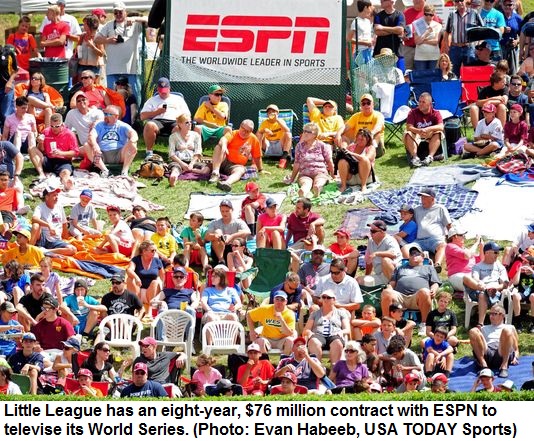
CU Blog - Sports Role Model - US versus the World - Photo 1The images remain quaint — kids sprinting around the base-paths, fans watching from grass hills, Norman Rockwell-like scenes abound at the Little League World Series in Williamsport, Pa., which culminates Sunday with the championship game. But make no mistake, Little League is big business.

Little League Inc. reported revenue of almost $25 million and assets of more than $85 million in 2012, according to the most recent publicly available tax return it must file to maintain tax-exempt status as a 501(c)(3) non-profit organization.

Over a five-year period, compensation for Little League Inc.’s CEO, Steve Keener, nearly doubled to $430,000 a year. And in 2012, the 100-person full-time staff made almost $7.5 million in salaries — a year before ESPN agreed to more than double broadcast fees as part of an eight-year, $76 million contract to televise the games during the two-week tournament.

“That’s a lot of money when all the grunt work is volunteer,” said Randy Stevens, president of the Little League in Nashville, Tenn., whose all-star team qualified for the World Series each of the past two years. “Now I’m wondering where it’s all going.”

Keener, elected as CEO in 1996, said revenue has grown at a steady pace and said new money is going back into the program.

“I’m not going to apologize for generating revenue to support the programming issues of this organization,” he told USA TODAY Sports. “But I would apologize if I felt we were not using it to the best of our ability in a prudent manner and getting the most out of the money to benefit this program.”

Keener said the majority of the organization’s costs stem from maintaining the national headquarters in Williamsport, five regional centers — in Connectcut, Georgia, Texas, California, Indiana — a full-time facility in Poland and offices in Hong Kong, Puerto Rico and Canada.

When Little League signed its contract with ESPN in 2007, Keener said, it lowered affiliation fees for the local leagues. He also said Little League pays for 125 criminal background checks for each local league and provides training program for coaches.

“Those are ways we try direct the funds right back to the local programs,” he said.

Little League also pays for travel, lodging and food costs for 16 teams, each of which include 13 players and three coaches. But Stevens, affiliated with the Nashville-based league, said families of the players should receive financial help for travel costs.

He estimated the parents of his players needed up to $35,000 to cover those expenses. A father with the team from Chicago said parents were unsure how they would pay for the trip until five Major League Baseball players offered to cover all travel expenses for the parents.

Keener said the idea of travel assistance is not under consideration.

“I’ve learned never to say never, but it’s unlikely at this point,” he said. “Our responsibility is to provide the travel, the accommodations and all the expenses related to participating in the World Series for the players and the coaches and the umpires who are here working the World Series.”

Keener said giving the players money that could be used for scholarships is not under consideration.

“Anything we would do for one group of kids, we would do for all of the kids. And it’s just not feasible to think that they’re all going to head off to college when they’re getting out of high school, particularly with the kids from the international region,” he said. “It’s just not something we feel is necessary for us to be thinking about when they’re 12 or 13 years old.”

Little League does not charge admission for games at the World Series, but officials do solicit donations while passing around cans during games.

“Whatever money they’re getting, they’re looking for more,” said Ellen Siegel, affiliated with the team from Philadelphia.

But Keener said the $25 million a year pales in comparison to organizations such as the Boys Scouts of America, which reported revenue of $240 million in 2012. He said Little League could not operate without the support of about 1,250,000 volunteers in 7,500 communities.

As far as his salary is concerned, he declined to comment other than to say his compensation is set by a committee of Little League Inc. board members.

Davie Jane Gilmour, Little League International Board of Directors Chairman, said Keener’s salary — and that of the other senior staff members, who in 2012 earned between $100,000 and $250,000 apiece — are in line with salaries at comparable non-profits.

“To be perfectly honest with you, there are many board members on that (compensation) committee who think that our senior staff, and in particular Steve, are underpaid at this point in time,” Gilmour said. “There’s a a pretty strong feeling on the compensation committee that they are highly marketable based on their success here in their work here at Little League.”
The claim of the book Go Lean … Caribbean is that excellence in sports requires a genius qualifier and that genius ability can be found in abundance in the Caribbean. Further that there is something bigger than sports alone at play here, that this is the full effect of globalization in which the Caribbean can export products and services to benefit the homeland.

This commentary has previously promoted the monetary benefits of the sports eco-systems and how Caribbean progeny participate on the world stage:

https://goleancaribbean.com/blog/?p=1508 St Croix’s Tim Duncan to Return to Spurs For Another Season
https://goleancaribbean.com/blog/?p=1446 Caribbean Players in the 2014 World Cup
https://goleancaribbean.com/blog/?p=1341 Sports Landlord Model of the College World Series Time
https://goleancaribbean.com/blog/?p=1148 Sports Bubble – Franchise values in basketball
https://goleancaribbean.com/blog/?p=1214 Sports Landlord Model – The Art & Science of Temporary Stadiums
https://goleancaribbean.com/blog/?p=1020 Caribbean Sports Revolutionary & Advocate: FIFA’s Jeffrey Webb
https://goleancaribbean.com/blog/?p=498 Sports Nature -vs- Nurture: Book Review of ‘The Sports Gene’
https://goleancaribbean.com/blog/?p=334 Bahamians Basketballers Make Presence Felt In Libyan League
https://goleancaribbean.com/blog/?p=318 The Need for Collegiate Sports Eco-System in the Caribbean
https://goleancaribbean.com/blog/?p=60 Could the Caribbean Host the Olympic Games?

The Go Lean book serves as a roadmap for the introduction and implementation of the Caribbean Union Trade Federation (CU), a technocratic federal government to administer and optimize the economic/security/ governing engines of the region’s 30 member-states. At the outset, the roadmap recognizes the value of sports in the roadmap with these statements in the Declaration of Interdependence (Page 13 & 14):

xxvi.      Whereas the preparation of our labor force can foster opportunities and dictate economic progress for current and future generations, the Federation must ensure that educational and job training opportunities are fully optimized for all residents of all member-states, with no partiality towards any gender or ethnic group. The Federation must recognize and facilitate excellence in many different fields of endeavor, including sciences, languages, arts, music and sports. This responsibility should be executed without incurring the risks of further human flight, as has been the past history.

xxxi.      Whereas sports have been a source of great pride for the Caribbean region, the economic returns from these ventures have not been evenly distributed as in other societies. The Federation must therefore facilitate the eco-systems and vertical industries of sports as a business, recreation, national pastime and even sports tourism – modeling the Olympics.

The Go Lean roadmap calls for the market organizations to better explore the economic opportunities for sports. Sports can be big business! But even when money is not involved, other benefits abound. As such the CU will enhance the engines to elevate sports at all levels: amateur, intercollegiate and professional.

The Go Lean book’s economic empowerment roadmap features huge benefits for the region related to sports. The strategy is create leverage for a viable sports landscape by consolidate the region’s 30 member-states / 4 languages into a Single Market of 42 million people. The CU facilitation of applicable venues (stadia, arenas, fields, temporary structures) on CU-owned fairgrounds plus the negotiations for broadcast/streaming rights/licenses will elevate the art, science and genius of sports as an enterprise in the region. As depicted in the foregoing article/VIDEO, even young children, Little League, will participate/benefit in the sports eco-system.

Now is the time for all of the Caribbean to lean-in to the following community ethos, strategies, tactics, implementations and advocacies detailed in the book Go Lean … Caribbean to re-boot the delivery of the regional solutions to elevate the Caribbean region through sports:

Community Ethos – People Respond to Incentives in Predictable Ways Page 21
Community Ethos – Return on Investments Page 24
Community Ethos – Ways to Foster Genius Page 27
Community Ethos – Ways to Improve Negotiations Page 32
Community Ethos – Ways to Promote Happiness Page 36
Strategic – Vision – Integrating Region in to a Single Market Page 45
Strategic – Staffing – Sporting Events at Fairgrounds Page 55
Tactical – Fostering a Technocracy Page 64
Tactical – Separation of Powers – Sports & Culture Administration Page 81
Tactical – Separation of Powers – Fairgrounds Administration Page 83
Implementation – Steps to Implement Self-Governing Entities (Fairgrounds) Page 105
Implementation – Ways to Deliver Page 109
Planning – Ways to Make the Caribbean Better Page 131
Advocacy – Ways to Grow the Economy Page 151
Advocacy – Ways to Improve Local Government – Parks & Recreation Page 169
Advocacy – Ways to Impact Events Page 191
Advocacy – Ways to Promote Fairgrounds Page 192
Advocacy – Ways to Foster Technology Expositions Page 197
Advocacy – Ways to Impact Youth Page 227
Advocacy – Ways to Improve Sports Page 229
Advocacy – Ways to Impact Urban Living – Sports Leagues Page 234

The foregoing VIDEO features many sub-stories associated with this year’s Little League World Series (LLWS) tournament, the compelling stories of the rise from the despair of the Chicago inner-city, and Philadelphia’s Mo’ne Davis, the only girl in the tournament. The drama of sports is a microcosm for the drama in life.

Despite the presence of a Caribbean team in this LLWS tournament, no compelling Caribbean stories have emerged. This is an American drama: the United States versus the World. This is not just an attitude in sports, but in many other endeavors as well. The drama and challenges in the Caribbean are of no consequence in the US, we are just a playground for their world.

We need our own tournament to foster Caribbean sports drama and economic benefits.

We need to lean-in to the Go Lean roadmap to build the sports eco-systems to make the Caribbean a better place to live, work and play. We must elevate our own society.

Download the free e-Book of Go Lean … Caribbean – now!

———–

APPENDIX – LLWS BRACKETS   (Double-Click for a legible Viewer)

CU Blog - Sports Role Model - US versus the World - Photo 2

Share this post:
, , , ,

Where the Jobs Are – Computers Reshaping Global Job Market

Go Lean Commentary

The legend of John Henry [a] illustrated the struggle of man versus machine.

Man lost!

Was that story just an allegory or an anecdote of an actual person and actual events? While the setting of the story is true, the construction of the Chesapeake and Ohio Railway in the 1870s (shortly after the US Civil War), the rest of the account may be mere fiction and exaggeration. But the battle of man versus machine continues even today; and man continues to lose.

The below news article asserts that the next round of new jobs are to be found in the acceptance of that defeat, man conceding to the machine.

This point aligns with the book Go Lean…Caribbean which calls for the elevation of Caribbean economics. The book asserts that the Caribbean region has been losing the battle of globalization and technology. The consequences of our defeat is the sacrifice of our most precious treasure, our people. The assessment of all 30 Caribbean member-states is that every community has lost human capital to emigration. Some communities, like Puerto Rico and the US Virgin Islands have suffered with an abandonment rate of more than 50% and others have had no choice but to stand on the sideline and watch as more than 70% of college-educated citizens flee their homelands for foreign shores.
There are both “push and pull” factors as to why these ones leave. But the destination countries, North America and Western Europe, may not be such ideal alternatives. These communities have also been suffering from agents-of-change in the modern world and losing badly in the struggle of man-versus-machine, the industrial adoption of automation, and  the corporate assimilation of internet & communication technologies.

Everything has changed…everywhere! It is what it is! The poor is expanding, the middle class is shrinking, and the rich, the One Percent is growing in affluence, influence and power.

The Go Lean book therefore posits that there is a need to re-focus, re-boot, and optimize the engines of commerce so as to make the Caribbean a better place to live, work and play. Considering this article here, depicting that there is the opportunity to create jobs:

Title: Computers reshaping global job market, for better and worse
By: Ann Saphir (Editing by Lisa Shumaker)

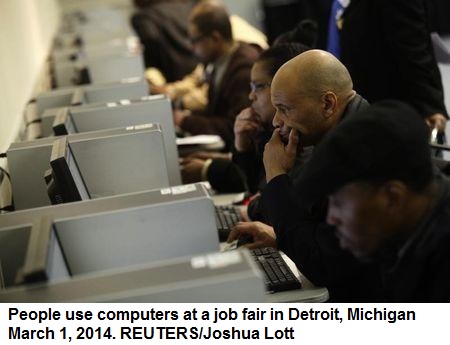
CU Blog - Where the Jobs Are - Computers reshaping global job martket - Photo 2(Reuters) – Automation and increasingly sophisticated computers have boosted demand for both highly educated and low-skilled workers around the globe, while eroding demand for middle-skilled jobs, according to research to be presented to global central bankers on Friday.

But only the highly educated workers are benefiting through higher wages, wrote MIT professor David Autor in the paper prepared for a central banking conference in Jackson Hole, Wyoming. Middle- and lower-skilled workers are seeing their wages decline.

That is in part because as middle-skilled jobs dry up, those workers are more likely to seek lower-skilled jobs, boosting the pool of available labor and putting downward pressure on wages.

“(W)hile computerization has strongly contributed to employment polarization, we would not generally expect these employment changes to culminate in wage polarization except in tight labor markets,” Autor wrote.

Any long-term strategy to take advantage of advances in computers should rely heavily on investments in human capital to produce “skills that are complemented rather than substituted by technology,” he said.

Recounting the long history of laborers vilifying technological advances, Autor argues that most such narratives underestimate the fact that computers often complement rather than replace the jobs of higher-skilled workers.

People with skills that are easily replaced by machines, such as 19th-century textile workers, do lose their jobs.

In recent years computer engineers have pushed computers farther into territory formerly considered to be human-only, like driving a car.

Still, computer-driven job polarization has a natural limit, Autor argues. For some jobs, such as plumbers or medical technicians who take blood samples, routine tasks are too intertwined with those requiring interpersonal and other human skills to be easily replaced.

“I expect that a significant stratum of middle skill, non-college jobs combining specific vocational skills with foundational middle skills – literacy, numeracy, adaptability, problem-solving and common sense – will persist in coming decades,” Autor wrote.

Autor, who has been studying technology and its impact on jobs since before the dot-com bubble burst, notes that some economists have pointed to the weak U.S. labor market since the 2000s as evidence of the adverse impact of computerization.

Such modern-day Luddites are mistaken, he suggested. U.S. investment in computers, which had been increasing strongly, dropped just as labor demand also fell, exactly the opposite of what ought to happen if technology is replacing labor.

More likely, he said, globalization is to blame, hurting demand for domestic labor and, like technology, helping to reshape the labor landscape. While in the long run both globalization and technology should in theory benefit the economy, he wrote, their effects are “frequently slow, costly, and disruptive.”

The book Go Lean… Caribbean, serves as a roadmap for the introduction and implementation of the technocratic Caribbean Union Trade Federation (CU) with the charter to facilitate jobs in the region. The book posits that ICT (Internet & Communications Technology) can be a great equalizer for the Caribbean to better compete with the rest of the world, relating the experiences of Japan – the #3 global economy – who have competed successfully with great strategies and technocratic execution despite being a small country of only 120+ million people. This modeling of Japan, and other successful communities, aligns with the CU charter; as defined by these 3 prime directives:

  • Optimization of economic engines in order to grow the regional economy to $800 Billion and create 2.2 million new jobs.
  • Establishment of a security apparatus to protect the resultant economic.
  • Improve Caribbean governance to support these engines.

Early in the Go Lean book, the responsibility to create jobs was identified as an important function for the CU with these pronouncements in the Declaration of Interdependence (Pages 14):

xxvi.  Whereas the Caribbean region must have new jobs to empower the engines of the economy and create the income sources for prosperity, and encourage the next generation to forge their dreams right at home, the Federation must therefore foster the development of new industries, like that of ship-building, automobile manufacturing, prefabricated housing, frozen foods, pipelines, call centers, and the prison industrial complex. In addition, the Federation must invigorate the enterprises related to existing industries tourism, fisheries and lotteries – impacting the region with more jobs.

xxvii. Whereas the region has endured a spectator status during the Industrial Revolution, we cannot stand on the sidelines of this new economy, the Information Revolution. Rather, the Federation must embrace all the tenets of Internet Communications Technology (ICT) to serve as an equalizing element in competition with the rest of the world. The Federation must bridge the digital divide and promote the community ethos that research/development is valuable and must be promoted and incentivized for adoption.

xxviii. Whereas intellectual property can easily traverse national borders, the rights and privileges of intellectual property must be respected at home and abroad. The Federation must install protections to ensure that no abuse of these rights go with impunity, and to ensure that foreign authorities enforce the rights of the intellectual property registered in our region.

xxx.  Whereas the effects of globalization can be felt in every aspect of Caribbean life, from the acquisition of food and clothing, to the ubiquity of ICT, the region cannot only consume, it is imperative that our lands also produce and add to the international community, even if doing so requires some sacrifice and subsidy.

According to the foregoing article, computers are reshaping the global job market, for better and worse. The Go Lean book, and previous blog/commentaries, detailed the principle of job multipliers, how certain industries are better than others for generating multiple indirect jobs down the line for each direct job on a company’s payroll. Industries relating to STEM (Science, Technology, Engineering and Mathematics/Medicine) fields have demonstrated high job-multiplier rates of 3.0 to 4.1 factors (Page 260).

The Go Lean… Caribbean book details the creation of 2.2 million new jobs for the Caribbean region, many embracing ICT skill-sets. How? By adoption of certain community ethos, plus the executions of key strategies, tactics, implementations and advocacies. The following is a sample from the book:

Assessment – Puerto Rico – The Greece of the Caribbean Page 18
Community Ethos – Deferred Gratification Page 21
Community Ethos – Economic Principle – Economic Systems Influence Choices & Incentives Page 21
Community Ethos – Economic Principle – Voluntary Trade Creates Wealth Page 21
Community Ethos – Consequences of Choices Lie in the Future Page 21
Community Ethos – Job Multiplier Page 22
Community Ethos – Anti-Bullying and Mitigation Page 23
Community Ethos – Lean Operations Page 24
Community Ethos – Return on Investments Page 24
Community Ethos – Ways to Impact the Future Page 26
Community Ethos – Ways to Foster Genius Page 27
Community Ethos – Ways to Help Entrepreneurship Page 28
Community Ethos – Ways to Promote Intellectual Property Page 29
Community Ethos – Ways to Impact Research & Development Page 30
Community Ethos – Ways to Bridge the Digital Divide Page 31
Strategy – Mission – Education Without Further Brain Drain Page 46
Strategy – Agents of Change – Technology Page 57
Strategy – Agents of Change – Globalization Page 57
Tactical – Fostering a Technocracy Page 64
Tactical – Tactics to Forge an $800 Billion Economy – Japanese Model Page 69
Tactical – Tactics to Forge an $800 Billion Economy – High Multiplier Industries Page 70
Tactical – Separation of Powers – Commerce Department – Patents & Copyrights Page 78
Implementation – Ways to Pay for Change Page 101
Implementation – Trends in Implementing Data Centers Page 106
Implementation – Ways to Deliver Page 109
Implementation – Ways to Impact ICT and Social Media Page 111
Planning – Ways to Improve Trade Page 128
Advocacy – Ways to Grow the Economy Page 151
Advocacy – Ways to Create Jobs Page 152
Advocacy – Ways to Improve Education Page 159
Advocacy – Ways to Impact Labor Markets and Unions Page 164
Advocacy – Ways to Foster Empowering Immigration – STEM Resources Page 174
Advocacy – Ways to Foster Technology Page 197
Advocacy – Ways to Foster e-Commerce Page 198
Advocacy – Lessons from America’s Peonage History – John Henry Historicity Page 211
Advocacy – Ways to Promote a Call Center Industry Page 212
Advocacy – Ways to Impact Youth Page 227
Appendix – Growing 2.2 Million Jobs in 5 Years Page 257
Appendix – Job Multipliers Page 259

The CU will foster job-creating developments, incentivizing many high-tech start-ups and incubating viable companies. The primary ingredient for CU success will be Caribbean people, so we must foster and incite participation of many young people into STEM fields, so as to impact their communities. A second ingredient will be the support of the community – the Go Lean roadmap recognizes the limitation that not everyone in the community will embrace the opportunity to lead in these endeavors. An apathetic disposition is fine-and-well, we simply must not allow that to be a hindrance to those wanting to progress. The community ethos or national spirit, must encourage and spur “achievers” into roles where “they can be all they can be”. The book posits that one person can make a difference.

The Caribbean is arguably the best address on the planet, but the missing pieces for many people are jobs. The Go Lean roadmap starts with the assessment of the true status of the region, then the development of the plan to remediate the status quo, and finally the turn-by-turn directions to get to a new destination: a better place to live, work and play.

This Go Lean roadmap describes that the Caribbean is in crisis, a war with many battlegrounds. Our effort is worth any sacrifice, but this time our battle is not man versus machine, but rather man with the machine.

Download the book Go Lean…Caribbean now!

—————————————————
Footnote – a: John Henry

John Henry is an American folk hero and tall tale. He worked as a “steel-driver”—a man tasked with hammering a steel drill into rock to make holes for explosives to blast the rock away. He died during the construction of a tunnel for a railroad. In the legend, John Henry’s prowess as a steel-driver was measured in a race against a [machine], steam powered hammer, which he won, only to die in victory with his hammer in his hand and heart giving out from stress. The story of John Henry has been the subject of numerous songs, stories, plays, books and novels.

Historicity
The historicity of many aspects of the John Henry legend is subject to debate. Until recently it was generally believed that the race between a man and a steam hammer described in the ballad occurred during the construction of the Chesapeake and Ohio (C&O) Railway in the 1870s.

In particular, the race was thought to have occurred during the boring of Big Bend tunnel near Talcott, West Virginia between 1869 and 1871. Talcott holds a yearly festival named for Henry and a statue and memorial plaque have been placed along a highway south of Talcott as it crosses over the Big Bend tunnel.

CU Blog - Where the Jobs Are - Computers reshaping global job market - Photo 1

In the 2006 book Steel Drivin’ Man: John Henry, the Untold Story of an American Legend, Scott Reynolds Nelson, an associate professor of history at the College of William and Mary, contends that the John Henry of the ballad was based on a real person, the 20-year-old New Jersey-born African-American freeman, John William Henry (prisoner #497 in the Virginia penitentiary). Nelson speculates that Henry, like many African Americans might have come to Virginia to work on the clean-up of the battlefields after the Civil War. Arrested and tried for burglary, he was among the many convicts released by the warden to work as leased labor on the C&O Railway.

According to Nelson, conditions at the Virginia prison were so terrible that the warden, an idealistic Quaker from Maine, believed the prisoners, many of whom had been arrested on trivial charges, would be better clothed and fed if they were released as laborers to private contractors (he subsequently changed his mind about this and became an opponent of the convict labor system). Nelson asserts that a steam drill race at the Big Bend Tunnel would have been impossible because railroad records do not indicate a steam drill being used there.

Instead, Nelson argues that the contest must have taken place 40 miles away at the Lewis Tunnel, between Talcott and Millboro,  Virginia, where records indicate that prisoners did indeed work beside steam drills night and day. Nelson also argues that the verses of the ballad about John Henry being buried near “the white house”, “in sand”, somewhere that locomotives roar, mean that Henry’s body was buried in the cemetery behind the main building of the Virginia penitentiary, which photos from that time indicate was painted white, and where numerous unmarked graves have been found.

Prison records for John William Henry stopped in 1873, suggesting that he was kept on the record books until it was clear that he was not coming back and had died. The evidence assembled by Nelson, though suggestive, is circumstantial; Nelson himself stresses that John Henry would have been representative of the many hundreds of convict laborers who were killed in unknown circumstances tunneling through the mountains or who died shortly afterwards of silicosis from dust created by the drills and blasting.
 Songs
The well-known narrative ballad of “John Henry” is usually sung in at an upbeat tempo. The hammer songs (or work songs) associated with the “John Henry” ballad, however, are not. Sung slowly and deliberately, these songs usually contain the lines “This old hammer killed John Henry / but it won’t kill me.” Nelson explains that:

…workers managed their labor by setting a “stint,” or pace, for it. Men who violated the stint were shunned … Here was a song that told you what happened to men who worked too fast: they died ugly deaths; their entrails fell on the ground. You sang the song slowly, you worked slowly, you guarded your life, or you died.

There is some controversy among scholars over which came first, the ballad or the hammer songs. Some scholars have suggested that the “John Henry” ballad grew out of the hammer songs, while others believe that the two were always entirely separate.

(Source: Retrieved August 22 from: http://en.wikipedia.org/wiki/John_Henry_(folklore))

Share this post:
, , , ,
[Top]

Where the Jobs Are – One Scenario: Ship-breaking

Go Lean Commentary

Here is how the human psyche is wired:

We yawn at creation, yet wow at destruction.

With that accepted fact, comes the realization that there is a business model in destruction. Jobs can be created in the art and science of destruction (demolition, recycling and turn-arounds).

This is where the next round of new jobs are to be found …

… so says the book Go Lean…Caribbean which calls for the elevation of Caribbean economics. The book assesses the challenges of the tourism product in the Caribbean region, especially since 2008, where the influx of American tourists has slowed, due to economic realities in their homeland: the middle class is shrinking, the poor is expanding, and the One Percent is growing in affluence, influence and power.

It is what it is! According to recent blog commentaries, certain amenities of the tourism product, the mainstay of Caribbean economy, have now come under attack by social change: Golf and Casino Gambling.

So with the regional tourism business models being based on American middle class prosperity, these harsh realities have now come to fruition. The book therefore posits that there is a need to re-focus, re-boot, and optimize the engines of commerce so as to make the Caribbean a better place to live, work and play. And thus, this new focus on “destruction”, and the accompanying jobs.

Consider these two news articles that describe a business model in which opportunities exist and fulfilling those needs create jobs:

Title #1: International Shipbreaking Limited Wins Contract for Dismantle Constellation – June 13, 2014

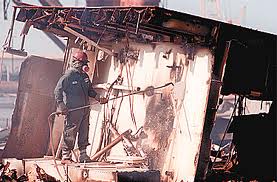
Shipbreaking - Photo 4The [US] Navy competitively awarded a contract to International Shipbreaking Limited [a] of Brownsville, Texas, for the towing, dismantling and recycling of conventionally powered aircraft carriers stricken from service, June 13, 2014. Under the contract, the company will be paid $3 million for the dismantling and recycling of the decommissioned aircraft carrier Constellation (CV 64). The price reflects the net price proposed by International Shipbreaking, which considered the estimated proceeds from the sale of the scrap metal to be generated from dismantling. The Navy continues to own the ship during the dismantling process. The contractor takes ownership of the scrap metal as it is produced and sells the scrap to offset its costs of operations.

This is the third of three contracts for conventional aircraft carrier dismantling. All Star Metals of Brownsville was awarded the first contract Oct. 22, 2013, which included the towing and dismantling of ex-USS Forrestal (AVT 59). ESCO Marine of Brownsville was awarded the second contract May 8, 2014, for the scrapping of ex-USS Saratoga (CV 60). After the initial award of one carrier to each successful offeror, the Navy has the capability of scrapping additional conventionally-powered aircraft carriers over a five-year period under delivery orders competed between the three contractors.

Shipbreaking - Photo 4 NEWInternational Shipbreaking will now develop its final tow plan for the Navy’s approval for the tow of Constellation from its current berth at Naval Base Kitsap, Washington, to the company’s facility in Brownsville. The ship is expected to depart Kitsap this summer. Navy civilian personnel will be on site full time to monitor the contractor’s performance during dismantling of the ship.

Constellation was the second Kitty Hawk-class aircraft carrier to be built. She was laid down Sept. 14, 1957, at New York Naval Shipyard in Brooklyn, New York, and was the last U. S. aircraft carrier to be built at a yard outside of Newport News Shipbuilding and Drydock Company. The ship was commissioned Oct. 27, 1961. After nearly 42 years of commissioned service, Constellation was decommissioned at the NavalAirStationNorthIsland in San Diego Aug. 6, 2003. In September 2003, she was towed to the inactive ship maintenance facility in Bremerton to await its eventual disposal.
**************
Title #2: Muddy Waters – Are U.S. shipping companies still sending their clunkers to the toxic scrap yards of South Asia?

By: Jacob Baynham – Cincinnati, Ohio-based writer

When the 30-year-old cargo ship MV Anders cruised out of Norfolk, Va., at 11 p.m. on Wednesday, Aug. 26, it may have been sailing through one of the largest loopholes in U.S. maritime regulations.

CU Blog - Where the Jobs Are - One Scenario - Photo 1Three weeks earlier, the Anders was a U.S.-flagged vessel called the MV Pfc. James Anderson Jr., named for a young Marine who saved his platoon members’ lives by falling on a Viet Cong grenade. It had hauled cargo for the U.S. Navy for more than two decades and was now retiring. The ship’s new owners, Star Maritime Corp., had renamed it the Anders, painted over the excess letters on the hull, and raised the flag of its new registry—the Caribbean nation of St. Kitts and Nevis. The Anders left Virginia empty.

Its 29-year-old sister ship, the MVBonny (formerly the MV 1st Lt. Alex Bonnyman), followed two days later under the same flag and ownership. The Coast Guard listed the ships’ next port of call as Santos, Brazil. But environmental groups, trade journals, and industry watchdogs claim the ultimate destination for these aging vessels will be the Dickensian scrap yards of Bangladesh.

The Anders and the Bonny served in the U.S. Navy’s Military Sealift Command for 24 years. Stationed at Diego Garcia in the Indian Ocean, they delivered military cargo during both Iraq wars, as well as Operation Restore Hope in Somalia. But the Navy never actually owned the ships. They chartered them from Wilmington Trust, which sold them to Star Maritime earlier this summer. When Star Maritime renamed the ships and submitted an application to reflag them under St. Kitts and Nevis registration, environmental groups recognized the telltale signs of vessels about to be scrapped and cried foul.

The Basel Action Network, a Seattle-based environmental group leading the campaign to stop the export of old ships for scrap, monitors old vessels in U.S. waters and alerts the EPA when their owners attempt to recycle them overseas. There are several reliable warning signs. First, a ship is sold to an obscure company (which U.S. ship-breakers call a “Last Voyage Inc.”), which is sometimes a subsidiary of a larger company active in the scrapping business. Then it is renamed and registered under another nation’s flag before sailing to South Asia.

“It’s outrageous that these ships were allowed to sail,” says Colby Self, director of BAN’s Green Ship Recycling campaign. “In a sense, they were government vessels.” But once the ships’ contracts had expired, all legal responsibilities lay with their owners.

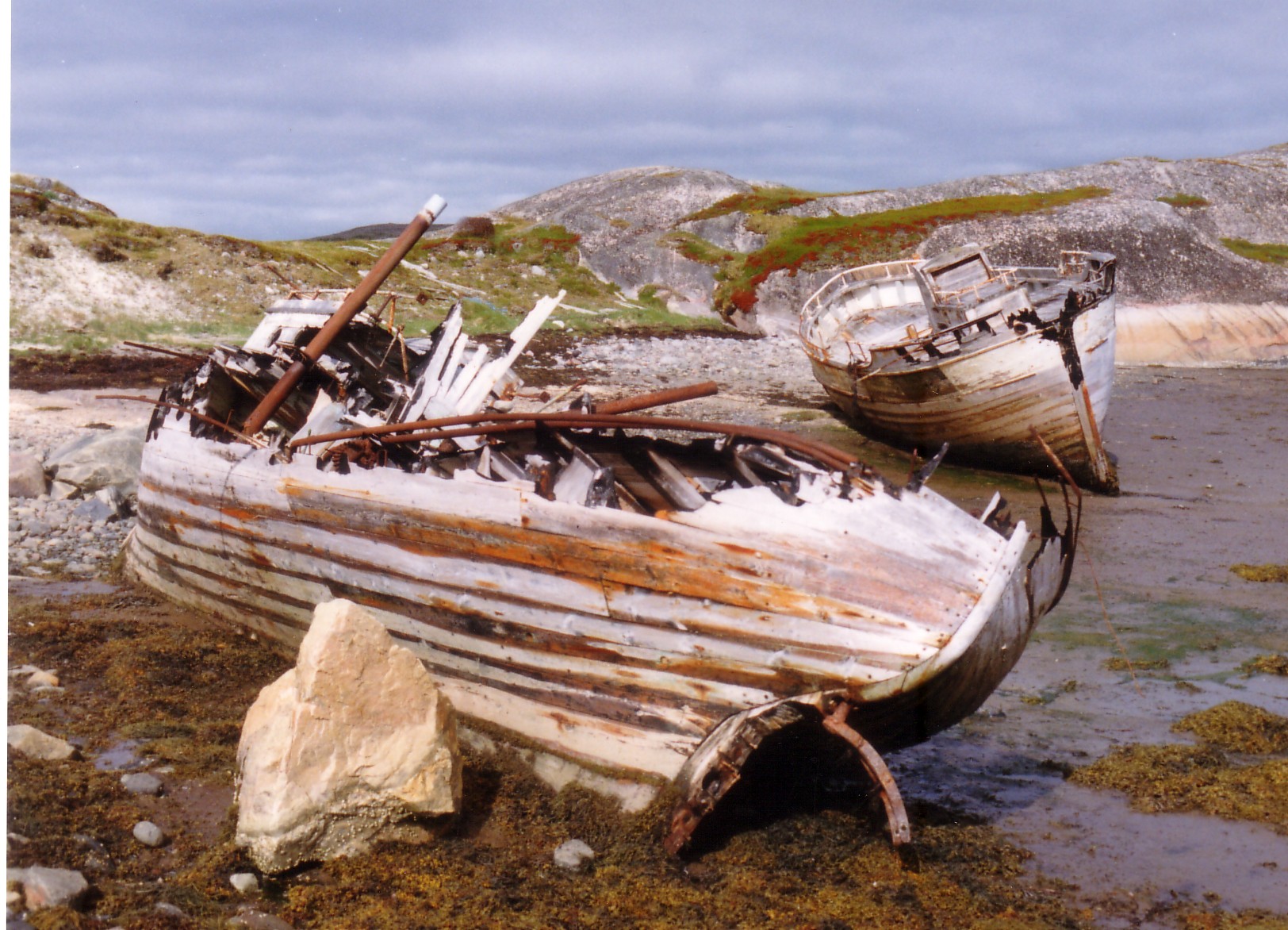
Most of the world’s old ships are sent to die on the shores of India, Pakistan, and Bangladesh. Vessels are beached there at high tide and cut into pieces by teams of poorly paid migrant workers. Heavy equipment and cranes are inoperable on the sand, so workers dismantle the ships by removing large portions, which drop to the beach. They use fire torches to cut through steel hulls—even those of old oil tankers. Dozens of workers die each year from explosions, falling steel, and disease. As for the asbestos, polychlorinated biphenyls (PCBs), tributyltin (TBT), and other toxic materials onboard the old ships, much of it washes out to sea. (PCBs and TBT are persistent organic pollutants that work their way up the marine food chain and damage the nervous systems of large mammals.)

If the Anders and Bonny are headed to Bangladesh, they won’t be alone. South Asia’s ship-breaking yards are experiencing an ironic boom in the middle of the global recession. Ship owners faced with shrinking cargo volumes are culling their fleets by scrapping old vessels rather than paying for them to sit empty. South Asia’s yards, which take advantage of cheap labor, scant regulations, and high regional demand for steel, will buy a vessel for twice the price a U.S. ship-breaker could offer. In Bangladesh, ships like the Anders and Bonny (which are two-and-a-half football fields long and weigh more than 23,000 tons) are worth at least $7 million apiece.

In 1998, the Clinton administration slapped a moratorium on scrapping U.S.-flagged vessels overseas after the Baltimore Sun ran a Pulitzer Prize-winning string of stories about the conditions of the South Asian scrap yards. But ship owners have dozens of so-called “flags of convenience” at their disposal to circumvent the ban. Most of these flags belong to small, poor countries with little maritime oversight—places like St. Kitts and Nevis.

Ship owners submit their reflagging requests to the U.S. Maritime Administration (MARAD), which considers whether the ships would be needed for national security in the event of war. For old vessels, this is seldom the case. MARAD began alerting the EPA of old ships attempting to reflag after the SS Oceanic, a former Norwegian Cruise Liner, slipped out of San Francisco last year with almost 500 tons of asbestos and PCBs onboard.

The Toxic Substances Control Act of 1976 prohibits the export of PCBs, asbestos, and lead-based paint—materials often used in the paint, cabling, and gaskets of older ships because of their fire-retardant qualities. If the EPA suspects a vessel applying for reflagging contains hazardous materials, it can order that vessel to be tested. But because ships are not required to inventory these materials, and the EPA has limited time and resources to devote to every old ship, environmentalists contend that each year many vessels slip through the cracks.

In the case of the Bonny and Anders, EPA spokesman David Sternberg says, “Based on the available information, the EPA has no sufficient reason to contain these ships.” Sternberg adds that the EPA received a letter from the new owners insisting the vessels will be used in trade and will not be scrapped.

This seems unlikely to Kevin McCabe, founder of International Shipbreaking Ltd. in Texas. He says buying two cargo ships at the end of their life spans for their utilitarian purposes alone would “belie the economics of the market today.” McCabe is convinced that the Bonny and Anders will be scrapped in Asia. And he doesn’t think they’re clean, either. “I’ll bet you dollars to doughnuts that there are PCBs on those ships,” he says. “No question about it.” The EPA would be singing a different tune if the ships were to be dismantled at his Brownsville recycling facility, he adds. “When we scrap a ship, we must assume it has hazardous material onboard until we can prove otherwise.”

Colby Self of BAN says he’s disappointed that the Obama administration could so easily let these ships slip away. “[The EPA] made a calculated decision based on their low-risk assessment, and they let them go,” he says. Under the Bush administration, the EPA was very diligent in following up on BAN’s warnings, he says.

But Self isn’t giving up hope that the ships can be stopped before they wash up on South Asian shores. “We will be warning Bangladesh to bar the entry of these renegade vessels,” he says. “This story is far from over.”

The above two articles depict “two sides of the same coin”: what happens when ship-breaking is done right, and done wrong.

The book Go Lean… Caribbean, serves as a roadmap for the introduction and implementation of the technocratic Caribbean Union Trade Federation (CU) with the charter to facilitate jobs in the region. We want to explore all the strong benefits of the shipbuilding (including ship-breaking) industry, by doing it right – more safety precautions than Bangladesh and lower labor costs than Brownsville-Texas. This aligns with the CU charter; as defined by these 3 prime directives:

  • Optimization of economic engines in order to grow the regional economy to $800 Billion and create 2.2 million new jobs.
  • Establishment of a security apparatus to protect the resultant economic.
  • Improve Caribbean governance to support these engines.

Early in the Go Lean book, the responsibility to create jobs was identified as an important function for the CU with this pronouncement in the Declaration of Interdependence (Pages 14):

xxvi.  Whereas the Caribbean region must have new jobs to empower the engines of the economy and create the income sources for prosperity, and encourage the next generation to forge their dreams right at home, the Federation must therefore foster the development of new industries, like that of ship-building, automobile manufacturing, prefabricated housing, frozen foods, pipelines, call centers, and the prison industrial complex. In addition, the Federation must invigorate the enterprises related to existing industries tourism, fisheries and lotteries – impacting the region with more jobs.

CU Blog - Where the Jobs Are - One Scenario - Photo 3According to the foregoing articles, ship-breaking activities in Third World countries, like Bangladesh, pose harm to the environment, workers and remaining systems of commerce. But when executed correctly, as in Brownsville-Texas, ship-breaking can be all positive. There are benefits in applying the appropriate best practices in handling hazardous materials. The tons of toxic waste (asbestos) can be properly managed and disposed of, with the proper eco-system surrounding the industry. The CU will facilitate the eco-system, especially with the Self-Governing Entities (SGE) concept for shipyards. This is covered in the Go Lean book under the auspices of “turn-around” industries, a federally regulated/promoted activity.

The Go Lean book also details the principle of job multipliers, how certain industries are better than others for generating multiple indirect jobs down the line for each direct job on a company’s payroll. The shipbuilding industry has a job-multiplier rate of 3.0. According to a report by the University of Strathclyde’s Fraser of Allander Institute in Scotland, a local reduction-in-force of 800 jobs at Govan & Scotstoun Shipyards will result in total job losses across Scotland of around 2,400 jobs, including those at the shipyards. (Source: http://www.scotsman.com/news/politics/top-stories/clyde-shipyard-cuts-may-lead-to-2-400-job-losses-1-3179593).

The Go Lean… Caribbean book details the creation of 15,000 direct jobs for the shipbuilding industry in the Caribbean region. Once the job multiplier is applied, the economic impact is that of 45,000 jobs.

How would the Caribbean advance from 0 to 45,000 jobs in the course of the 5-year roadmap? By adoption of empowering community ethos, plus the execution of key strategies, tactics, implementations and advocacies. The following is a sample:

Community Ethos – Deferred Gratification Page 21
Community Ethos – Economic Principle – Economic Systems Influence Choices & Incentives Page 21
Community Ethos – Economic Principle – Voluntary Trade Creates Wealth Page 21
Community Ethos – Job Multiplier Page 22
Community Ethos – Lean Operations Page 24
Community Ethos – Ways to Impact the Future Page 26
Community Ethos – Ways to Help Entrepreneurship Page 28
Community Ethos – Ways to Impact Research & Development Page 30
Community Ethos – Ways to Impact Turn-Around and Recycling and Demolition Industries Page 33
Community Ethos – Ways to Impact the Greater Good Page 37
Strategy – Mission – Facilitate a Shipbuilding Industry Page 46
Tactical – Fostering a Technocracy Page 64
Tactical – Tactics to Forge an $800 Billion Economy – High Multiplier Industries Page 70
Tactical – Separation of Powers – Self-Governing Entities Page 80
Implementation – Ways to Pay for Change Page 101
Implementation – Steps to Implement Self-Governing Entities Page 105
Implementation – Ways to Deliver Page 109
Planning – Ways to Make the Caribbean Better Page 131
Advocacy – Ways to Grow the Economy Page 151
Advocacy – Ways to Create Jobs Page 152
Advocacy – Ways to Improve Emergency Management Processes and Systems Page 196
Advocacy – Ways to Foster Technology Page 197
Advocacy – Ways to Develop/Grow a Ship-Building Industry Page 209
Appendix – Job Multipliers Page 259

The CU will foster industrial developments in support of tourism and as an alternative to tourism. Shipbuilding / ship-breaking is a prime-and-ready endeavor. The number one ingredient in the recipe for success in this industry is access to waterways, harbors and ports. The second most important ingredient is the willingness of the people to engage.

After the new pitfalls of tourism’s changing dynamics, the Caribbean people should now be ready for this industrial challenge of ship-breaking.

The Caribbean is arguable the best address on the planet, but a lot of infrastructure is missing; infrastructure like jobs. While this (Go Lean roadmap and accompanying blogs) is the start, the end of this roadmap is a clearly defined destination: a better place to live, work and play.

Download the book Go Lean … Caribbean – now!

—————————————————

Appendix a:

Company Overview: International Shipbreaking Limited LLC

International Shipbreaking Limited LLC provides dismantling and recycling services for maritime vessels and equipment. It offers various ferrous products, such as plate and structural steel, re-roll plate, cast iron, sheet metal, and scrap products; and non-ferrous products, including aluminum, brass, copper, cupro-nickel, lead, and non-ferrous scrap products. The company provides reusable equipment, such as propulsion systems, generators and engines, anchors, chains, and windlasses, as well as film projection machines, x-ray equipment, washing machines, kitchen galley tools, beds, lockers, gun racks, lighting fixtures, chairs, tables, and desks. It also offers artificial reefing.

Share this post:
, , ,
[Top]

Casinos Changing/Failing Business Model

Go Lean Commentary

Change has come to Atlantic City, New Jersey. Change has come to the world of casino gambling. For the US, there used to be a casino monopoly west of the Mississippi in Las Vegas, and another monopoly east of the Mississippi in Atlantic City.

No More!

Casinos have since popped up in many states (Pennsylvania, Florida, Connecticut, California, Louisiana, Mississippi, etc) all over the country, plus on many federally-legislated Indian Reservations. Additionally, there is the eco-system of casino riverboats and cruise ships leaving major US ports.

Now, the casino hot spots of Las Vegas and Atlantic City have to compete for their customers, and many times, they lose, as depicted in the foregoing news article, which reports that 2 casinos are closing in Atlantic City next month September.

“Who moved my cheese?”

Title: The Atlantic City’s Revel Casino to Close in September
Atlantic City, NJ – Aug 12, 2014, 3:42 PM ET
By: Wayne Parry, Associated Press

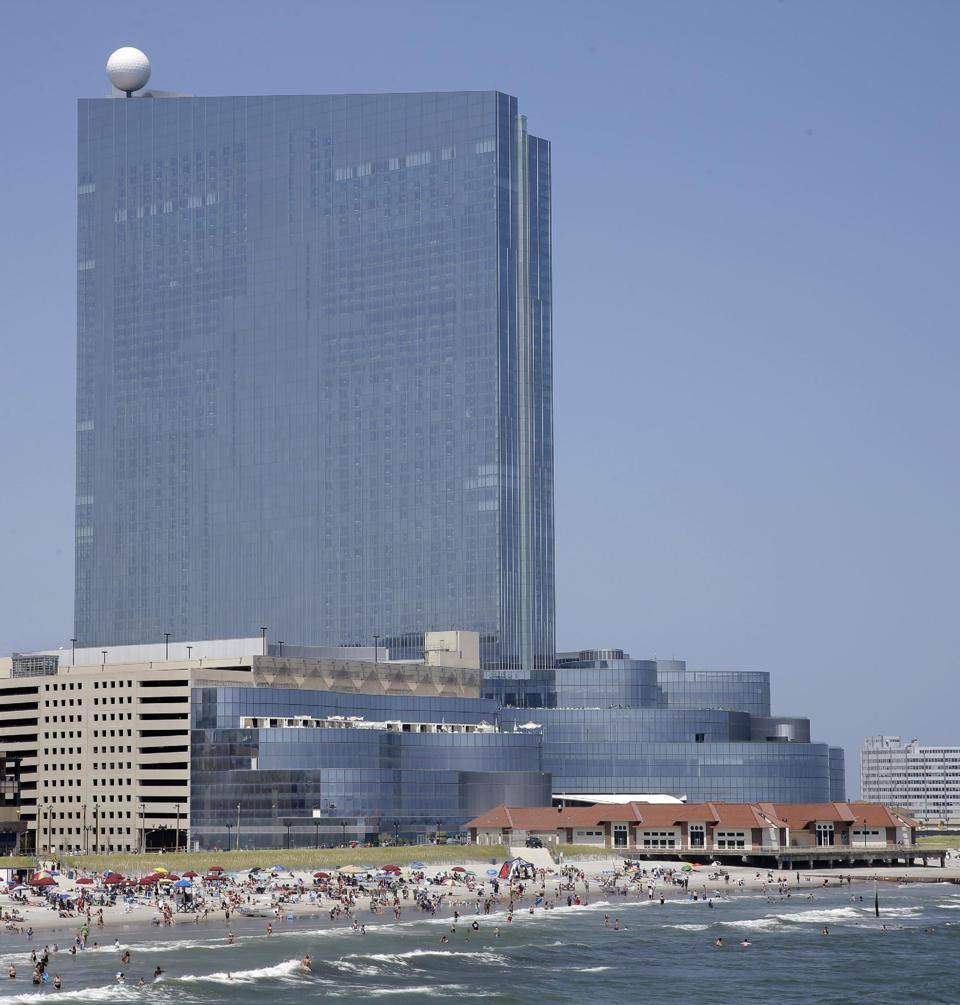
CU Blog - Atlantic City's Revel Casino to Close in September - Photo 1When it opened just over two years ago, many people hoped Revel would save Atlantic   City’s struggling casino industry, which has been bleeding money and jobs for years.

But now the $2.4 billion resort that was widely seen as the last, best chance for Atlantic City’s gambling market is shutting down, unable to find a buyer for even pennies on the dollar.

In addition to putting 3,100 people out of jobs and hurting state and local budgets, Revel’s demise shows just how cutthroat the East Coast casino market has become, and how difficult it is for even the newest and nicest gambling halls to survive in an oversaturated market.

Revel Entertainment said the casino and its 1,399 hotel rooms will close on Sept. 10, never having turned a profit.

“We regret the impact this decision has on our Revel employees who have worked so hard to maximize the potential of the property,” Revel said in a statement Tuesday. “We thank them for their professionalism and dedication; however we are faced with several unavoidable circumstances.

“Despite the effort to improve the financial performance of Revel, it has not proven to be enough to put the property on a stable financial footing,” the company wrote.

Revel’s most recent Chapter 11 filing listed assets of $486.9 million and liabilities of $476.1 million.

The company said its situation was compounded by a “considerable non-controllable expense structure” that financially burdened the property. It said it had no choice but “an orderly wind-down of the business at this time.”

Revel said it still hopes to find a buyer through the bankruptcy process. But it acknowledged that if that happened, it would be after the facility had already shut down.

Matthew Levinson, chairman of the New Jersey Casino Control Commission, called the closing “enormously disappointing,” but held out hope for a future sale.

“I sincerely hope that possibility materializes, especially for the employees who face the loss of their jobs,” he said.

Israel Posner, who runs a tourism and gambling study institute at RichardStocktonCollege, said he expects Revel to sell as a non-casino building.

“I still believe Revel will sell, for pennies on the dollar, to someone who will figure out that it is the most modern, beautiful structure that’s going to be built for generations to come,” he said.

The casino was due to be sold at a bankruptcy court auction last week, but that was postponed to allow casino officials to study bids that were received. After Revel’s board met on Monday, the decision was made to shutter the glittering glass-covered casino at the north end of the Boardwalk.

Revel opened in April 2012 as the first new casino in Atlantic City since the Borgata opened nine years earlier, and carried great hopes for many that it would be the catalyst to jolt what had been the nation’s second-largest gambling market back to life. Atlantic City has since slipped to third place behind Nevada and Pennsylvania, whose casinos touched off the New Jersey resort town’s revenue and employment plunge in 2007.

Since 2006, when the first Pennsylvania casino opened, Atlantic City’s casino revenue has fallen from $5.2 billion to $2.86 billion last year.

So far this year, the Atlantic Club closed in January, bought at a bankruptcy auction by the parent companies of Tropicana and Caesars and shuttered in the name of reducing competition. Caesars Entertainment will close the Showboat on Aug. 31, also to reduce the competition in Atlantic City, where it currently owns 4 of the 11 casinos. And TrumpPlaza is due to close Sept. 16.

CU Blog - Atlantic City's Revel Casino to Close in September - Photo 2Revel has ranked near the bottom of Atlantic City’s casinos in terms of the amount of money won from gamblers since the day it opened.

Its original owners envisioned it as a luxury resort that just happened to have a casino, and eschewed many staples of casino culture, including a buffet and bus trips for day-trippers. But that strategy — as well as the only overall smoking ban in Atlantic City — turned off customers, and Revel filed for bankruptcy in 2013, a little over a year after opening.

That led to new ownership and a “Gamblers Wanted” promotional campaign to emphasize the company’s new emphasis on its casino.

But despite some improvement, Revel’s finances never recovered enough, and it filed for bankruptcy a second time in June.
Associated Press News Source (Retrieved August 12, 2014) – http://abcnews.go.com/US/wireStory/atlantic-citys-revel-casino-close-september-24943242


CU Blog - Atlantic City's Revel Casino to Close in September - Photo 3

This article aligns with the book Go Lean…Caribbean, which calls for the elevation of Caribbean economics. The same challenges being experienced in Atlantic City are also affecting Caribbean casino resorts, especially since 2008. For example, the practice of Caribbean casino “junkets” is dead or dying [a].

The book posits that there is a need to re-focus, re-boot, and optimize the engines of commerce so as to make the Caribbean a better place to live, work and play. The tourism product, the mainstay of Caribbean economy, was accustomed to depending on certain amenities that have now come under attack by social change. Whereas golf was a popular day pastime for resort guests, and casino gambling was popular at night, both activities are experiencing decline and implosion in their individual industries. (See this previous blog commentary regarding the Future of Golf). The supply and demand of gambling/gaming options have equally encountered rapid evolutionary change, from lottery tickets, BINGO parlors, online poker,  area pari-mutuels (horse/dog racing, Jai-Alai) and Off-Track Betting.

If only there was an alternate roadmap to elevate Caribbean society without depending on the “games people play” to remain constant. Wait, there is! The book Go Lean… Caribbean, serves as a roadmap for the introduction and implementation of the technocratic Caribbean Union Trade Federation (CU) with the charter to effectuate change in the region with these 3 prime directives:

  • Optimization of the economic engines in order to grow the regional economy to $800 Billion and create 2.2 million new jobs.
  • Establishment of a security apparatus to protect the resultant economic engines and marshal against economic crimes.
  • Improve Caribbean governance to support these engines.

Early in the book, the responsibility to monitor, manage, and mitigate the risks and threats of job killing developments, (such as the reporting in the foregoing news article), were identified as an important function for the CU with this pronouncement in the Declaration of Interdependence (Pages 14):

xxvi.  Whereas the Caribbean region must have new jobs to empower the engines of the economy and create the income sources for prosperity, and encourage the next generation to forge their dreams right at home, the Federation must therefore foster the development of new industries… In addition, the Federation must invigorate the enterprises related to existing industries like tourism… – impacting the region with more jobs.

Many Caribbean tourism resort properties depend on casino gaming. The issue of declining growth or failing business models is an important discussion in the execution of this roadmap. This commentary previously related details of the changing macro-economic factors affecting the region’s economic engines. The following are samples of earlier Go Lean blogs:

https://goleancaribbean.com/blog/?p=1943 The Future of Golf; Vital for Tourism
https://goleancaribbean.com/blog/?p=841 Declining Economic Trends – Having Less Babies is Bad for the Economy
https://goleancaribbean.com/blog/?p=782 Open/Review the Time Capsule: The Great Recession of 2008
https://goleancaribbean.com/blog/?p=709 Econometric Analysis – Student debt holds back many would-be home buyers
https://goleancaribbean.com/blog/?p=356 Book Review: ‘How Numbers Rule the World’ – How Demographic Studies Dictate Policies
https://goleancaribbean.com/blog/?p=242 The Erosion of the Middle Class
https://goleancaribbean.com/blog/?p=235 Tourism’s changing profile

According to the foregoing article, the closing of this one property, the Revel, will directly impact 3,100 jobs. This article failed to mention however the effect on the local market with in-direct jobs. The Go Lean book details the principle of job multipliers, how certain industries are better than others for generating multiple indirect jobs down the line for each direct job on a company’s payroll. (The automotive manufacturing industry was a choice selection with a job-multiplier rate of 11.0 – Page 260)

The Caribbean must contend with many of these same issues as the city leaders of Atlantic City must now deal with. The State of New Jersey is one of the most prosperous in the US, so there’s the chance that many displaced workers can be absorbed into the regional economy. The Caribbean does not have this option – our situation is more dire, especially on self-contained islands. Our society is in desperate need of reform/reboot to insulate many of the macro-economic downward trends that are pending. On the one hand, we must double down on the tourism product. On the other hand, we must diversify our economy and avail other high job-multiplier industries, like automotive manufacturing. The Go Lean… Caribbean book details the community ethos to adopt to diversify our economy and proactively mitigate the dire effects of the changed demographic landscape, plus the executions of the following strategies, tactics, implementations and advocacies:

Community Ethos – Deferred Gratification Page 21
Community Ethos – Economic Principle – People Respond to Incentives Page 21
Community Ethos – Economic Principle – Consequences of Choices Lie in the Future Page 21
Community Ethos – Job Multiplier Page 22
Community Ethos – Lean Operations Page 24
Community Ethos   – Return on Investments (ROI) Page 24
Community Ethos – Ways to Impact the Future Page 26
Community Ethos – Ways to Foster Genius Page 27
Community Ethos – Ways to Help Entrepreneurship Page 28
Community Ethos – Ways to Promote Intellectual Property Page 29
Community Ethos – Ways to Impact Research & Development Page 30
Community Ethos – Ways to Bridge the Digital Divide Page 31
Community Ethos – Ways to Impact the Greater Good Page 37
Strategy – Integrate Region in a Single Market Page 45
Tactical – Fostering a Technocracy Page 64
Tactical – Tactics to Forge an $800 Billion Economy Page 67
Tactical – Separation of Powers Page 71
Implementation – Ways to Deliver Page 109
Planning – Ways to Make the Caribbean Better Page 131
Planning – Lessons Learned from 2008 Page 136
Advocacy – Ways to Grow the Economy Page 151
Advocacy – Ways to Create Jobs Page 152
Advocacy – Ways to Enhance Tourism Page 190
Advocacy – Ways to Impact Events Page 191
Advocacy – Ways to Foster Technology Page 197
Advocacy – Ways to Foster e-Commerce Page 198
Advocacy – Ways to Develop the Auto Industry Page 206
Advocacy – Ways to Help the Middle Class Page 223
Appendix – Job Multipliers Page 259

The CU will foster industrial developments to aid tourism, incorporate best practices and quality assurances to deliver the best hospitality in the world. But there is room for service improvement and enhancement of the regional tourism product.

This roadmap is not advocating the abandonment of casino gambling, though the practice is considered a vice. Rather, the community ethos being promoted is one of open competition and fostering world class deliveries in information technologies. The book posits that the tenets of Internet Communications Technology (ICT) is a great equalizer between large countries and smaller states. To reinforce this point, remember that Japan is far from being the largest population base in the world (only 126 million), yet they are the #3 economy worldwide. Size does not matter…as much, intelligent strategy and efficient delivery matters more.

This Japanese model is fully defined in the Go Lean roadmap, detailing their growth strategies (Page 69) and starting with this Declaration of Interdependence (Pages 14) statement, identified here:

xxxiii.  Whereas lessons can be learned and applied from the study of the recent history of other societies, the Federation must formalize statutes and organizational dimensions to avoid the pitfalls of [certain] communities… On the other hand, the Federation must also implement the good examples learned from developments/communities like … Japan.

The Caribbean can be a better place to live, work and play, perhaps even the best address on the planet.

Download the book Go Lean…Caribbean now!

————————————————————————————–

Appendix a:

Smart Gaming Magazine Article: INSIDE LOOK AT CASINO JUNKETS
By Henry Tamburin

Casino Junkets began in the mid-50’s as a way to entice players to Las Vegas to gamble. Junket programs in those days were pretty straightforward. Casino operators would hire junket reps to fill a plane with qualified gamblers. These players would get free airfare, free hotel accommodations, free meals, free shows (and just about anything else they wanted) in exchange for their commitment to gamble a specific number of hours per day at an explicit average bet size. The casinos of course were gambling that the players would lose more than their out of pocket expenses for bringing, housing and feeding them.

That was the past. To get a fresh look at how junkets operate in 2005 and what benefits they provide players, I interviewed junket rep Sandy Crammer, owner of S&S Casino Tours, and Jeffrey Hoss, Director of National Casino Marketing, for Harrah’s. What I learned about junkets might surprise you (it did me).

So let’s begin by defining what exactly does a Junket rep do?

Jeffrey Hoss: First off, in the Harrah’s organization we refer to our third party reps as Independent Agents rather than Junket Reps. Independent Agents send us customers (i.e. players) and in return they get a commission based on a player’s theoretical. We have about 185 Independent Agents representing 47 states and 5 international countries that have a specific territory that they can market and promote our properties to their customers. In total our Independent Agents have scheduled about 300,000 customer trips annually to Harrah’s properties.

Let me ask Sandy how she got started in this business.

Sandy Crammer: Before I started my own company, I ran a junket office as in-house employee for many years and I decided it was something I liked and wanted to try on my own. So my husband, Scott, and I started our own business and thankfully, Harrah’s decided to take a shot with us four years ago to represent them. We have three employees in our company and currently we are one of the top 5 Independent Agent producers for Harrah’s.
(Source: http://www.smartgaming.com/Articles/gambling_tips_inside_look_casino_junket.html)


Share this post:
, , , ,
[Top]

The Future of Golf; Vital for Tourism

Go Lean Commentary

The book Go Lean…Caribbean calls for the elevation of Caribbean society, to re-focus, re-boot, and optimize all the engines of commerce so as to make the Caribbean a better place to live, work and play.  “The games people play” therefore have relevance for our consideration. Golf is one of those games. But golf is more than just a game, it is an eco-system; but this eco-system is in peril.

“The financial bubble burst and the Tiger bubble burst as well”.
“Even as the economy recovered, golf is still in a nose dive”.
“Your house is on fire”.

These (above) are among the key phrases from the narration of the following HBO Real Sports documentary story:

Host Bryant Gumbel speaks with industry leaders, including Jack Nicklaus, the most accomplished golfer of all time, and executive Mark King about the state of the sport and what innovations should be embraced.

Full Length VIDEO:

YouTube Online Video Site (Published July 23, 2014; Retrieved August 9, 2014) –
https://www.youtube.com/watch?v=QFEYC4Z44v0

This subject is pivotal in the roadmap for elevation of the Caribbean economy, which maintains that tourism will continue to be the primary economic driver in the region for the foreseeable future. The game of “golf” plays a significant role in the business model of tourist resorts. The publisher of the book Go Lean…Caribbean posits that understanding the macro-economic patterns of the game/sport of golf is critical in the roadmap to grow the region’s GDP and creating jobs (2.2 million new jobs projected).

Also important in this discussion is the functionality of economic planning.

According to the foregoing VIDEO, there are major issues in the eco-system of golf. There are 4 major events during the year: The Masters, US Open, British Open and the PGA Championship. The viewership numbers for all 4 events have been declining in the last 7 years, since 2007, the eve of the Great Recession. Stakeholders in this industry cannot ignore this downward trend. For many, this discussion is not just about their past-time, but rather their livelihoods.

For the Caribbean perspective, the subject of golf encapsulates the activities of live, work and play. (Some of the most prime residential properties are on or overlooking golf courses).

Change is constant. Change can be lateral, forward and backwards too. Empires rise and fall, past-time activities change; new sports come into fashion, while others fade into obsolescence. (In the US, boxing is on the decline while Mixed Martial Arts are on the rise).

This book Go Lean… Caribbean, serves as a roadmap for the introduction and implementation of the technocratic Caribbean Union Trade Federation (CU). The CU/Go Lean roadmap has 3 prime directives:

  • Optimization of the economic engines in order to grow the regional economy to $800 Billion and create 2.2 million new jobs.
  • Establishment of a security apparatus to protect the resultant economic engines and marshal against economic crimes.
  • Improve Caribbean governance to support these engines.

Early in the book, the benefit of the “business of sports for community empowerment” is pronounced in the Declaration of Interdependence (Pages 13 & 14), with these opening statements:

xxvi.  Whereas the Caribbean region must have new jobs to empower the engines of the economy and create the income sources for prosperity, and encourage the next generation to forge their dreams right at home, the Federation must therefore foster the development of new industries… In addition, the Federation must invigorate the enterprises related to existing industries like tourism… – impacting the region with more jobs.

xxxi.  Whereas sports have been a source of great pride for the Caribbean region, the economic returns from these ventures have not been evenly distributed as in other societies. The Federation must therefore facilitate the eco-systems and vertical industries of sports as a business, recreation, national pastime and even sports tourism – modeling the Olympics.

CU Blog - The Future of Golf; Vital for Tourism - Photo 1The Caribbean tourism resort properties depend on golf amenities. Many times too, golf courses are built as municipal establishments, so as to benefit citizens through the Parks & Recreation infrastructure. The issues of sufficient returns on the public investments in golf is an important discussion in the execution of this roadmap.

This commentary previously related details of the changing macro-economic factors (like demographics) that affect the region’s economic engines. The following are samples of earlier Go Lean blogs:

https://goleancaribbean.com/blog/?p=1715 Lebronomy – Economic Impact of One Superstar on a Sport/Team’s Viability
https://goleancaribbean.com/blog/?p=1148 Sports Business and Sports Bubbles – Franchise values in basketball
https://goleancaribbean.com/blog/?p=841 Declining Economic Trends – Having Less Babies is Bad for the Economy
https://goleancaribbean.com/blog/?p=782 Open/Review the Time Capsule: The Great Recession of 2008
https://goleancaribbean.com/blog/?p=709 Econometric Analysis – Student debt holds back many would-be home buyers
https://goleancaribbean.com/blog/?p=498 Book Review: ‘The Sports Gene’ – Identifying and Fostering Sports Genius Abilities
https://goleancaribbean.com/blog/?p=356 Book Review: ‘How Numbers Rule the World’ – How Demographic Studies Dictate Policies
https://goleancaribbean.com/blog/?p=318 Empowering Collegiate Sports in the Caribbean
https://goleancaribbean.com/blog/?p=273 10 Things We Want from the US and 10 Things We Don’t Want from the US – # 2: Tourists
https://goleancaribbean.com/blog/?p=254 Air Transport Industry Changes – Air Antilles Launches St. Maarten Service
https://goleancaribbean.com/blog/?p=242 The Erosion of the Middle Class
https://goleancaribbean.com/blog/?p=235 Tourism’s changing profile

According to the foregoing VIDEO, the opulence of golf has not fared well in today’s real economy. The game costs too much, and takes too much time. There is a real chance that this sport will die off with older generations, unless reform can be incorporated to attract and retain younger generations to the sport. Many revisions have been tried – as depicted in the video – there is no tolerating the status quo.

The Caribbean must do the same. Our societies are also in need of reform/reboot to attract and retain the youth to consider their future in their Caribbean homelands. The homelands have been losing at this … badly. There are validated reports of over 70% of the college educated population fleeing the region (https://goleancaribbean.com/blog/?p=1433); this constitutes an undeniable brain drain. The Go Lean… Caribbean book details the community ethos to adopt to proactively mitigate the dire effects of the changed landscape, plus the executions of the following strategies, tactics, implementations and advocacies:

Community Ethos – Deferred Gratification Page 21
Community Ethos – Economic Principle – People Respond to Incentives Page 21
Community Ethos – Economic Principle – Consequences of Choices Lie in the Future Page 21
Community Ethos – Job Multiplier Page 22
Community Ethos – Lean Operations Page 24
Community Ethos – Return on Investments (ROI) Page 24
Community Ethos – Ways to Impact the Future Page 26
Community Ethos – Ways to Foster Genius Page 27
Community Ethos – Impact Research & Development Page 30
Community Ethos – Ways to Impact the Greater Good Page 37
Strategy – Integrate Region in a Single Market Page 45
Tactical – Fostering a Technocracy Page 64
Tactical – Trade and Globalization Page 70
Separation of Powers – Sports and Culture Administration Page 81
Planning – Ways to Make the Caribbean Better Page 131
Planning – Lessons Learned from 2008 Page 136
Advocacy – Ways to Grow the Economy Page 151
Advocacy – Ways to Create Jobs Page 152
Advocacy – Ways to Enhance Tourism Page 190
Advocacy – Ways to Preserve Caribbean Heritage Page 218
Advocacy – Ways to Impact the One Percent Page 224
Advocacy – Ways to Impact Youth Page 227
Advocacy – Ways to Improve Sports Page 229

The CU will foster industrial developments to aid and abet tourism. This is not planning for 1995, but rather 2015. The assumptions of the past, simply no longer apply today. It is what it is!

CU Blog - The Future of Golf; Vital for Tourism - Photo 2“Earlier this year, at the PGA Merchandise Show in Orlando, Mark King, the CEO of the company TaylorMade Golf announced the launch of Hack Golf, a TaylorMade-sponsored initiative that is, at heart, a worldwide call for fresh ideas. Over the next five years, operating in alliance with the Professional Golf Association (PGA) of America, King plans to pump $5 million of his company’s money into what amounts to a global brainstorm session. This constitutes a concerted effort to seek solutions to a demographic problem.” – (http://www.golf.com/tour-and-news/hack-golf-aims-grow-game-taylormade-sponsored-brainstorm-session)

Golf may have a future.

The 2014 PGA Championship was won by Rory McIlroy, a 25 year old golf “phenom”. After Tiger Woods, this sports needs all the young stars they can get a hold off. If only they can attract young viewers.

For the Caribbean, this issue is bigger than just the game of golf; this is life – Caribbean life. We must have a better future, inclusive of all of our young people. How? With the concerted effort as detailed in the 5 year Go Lean roadmap, this region can and will be a better place to live, work and play.

Download the free e-Book of Go Lean … Caribbean – now!

Share this post:
, , ,
[Top]

Senate bill targets companies that move overseas

Go Lean Commentary

“Honor among thieves’ …

… this seems to be the code by which Caribbean society is based. And this is not new! This is the community ethos that dates back almost 500 years.

This ethos seems to “raise its head” again with the below news article as published in a Jamaican newspaper. Even though the US middle class has been devastated by globalization – shipping jobs overseas, many times to Caribbean countries like Jamaica – the motives behind the cited legislation seems wholesome for American self-interest. What is astonishing is the adversarial comments of a Jamaican readers. Consider the original article here and the comment:

By: The Associated Press

Subtitle: The Senate voted Wednesday to advance an election-year bill limiting tax breaks for United States (US) companies that move operations overseas. But big hurdles remain.

CU Blog - Senate bill targets companies that move overseas - Photo 1The Senate voted 93-7 to begin debating the bill, which would prevent companies from deducting expenses related to moving operations to a foreign country. The bill would offer tax credits to companies that move operations to the US from a foreign country.

Senate Democratic leaders say the bill would end senseless tax breaks for companies that ship jobs abroad.

“It would end the absurd practice of American taxpayers bankrolling the outsourcing of their very own jobs,” said Senate Majority Leader Harry Reid, a Democrat.

Most Republicans joined Democrats in voting to take up the bill. But Republican senators are unlikely to support final passage of the bill without significant changes.

Senate Republican Leader Mitch McConnell said the bill is an election-year ploy that has no chance of becoming law.

“It’s a bill that’s designed for campaign rhetoric and failure, not to create jobs here in the US,” McConnell said. “But that’s not stopping our friends on the other side from bringing it up again – just as they did right before the last big election, too.”

The bill would cost US companies that move overseas $143 million in additional taxes over the next decade, according to the Joint Committee on Taxation, which analyses tax bills for Congress. Companies moving into the US would see their tax bills drop by $357 million over the same period.

The difference – $214 million – would be added to the budget deficit.
The Jamaica Gleaner Daily Newspaper (Posted 07-25-2014) –
http://jamaica-gleaner.com/gleaner/20140724/business/business1.html 

——–

Commentator basing the proposed legislation – nervousinvestor •  Thursday July 24, 2014:
    “Seems like a stupid bill if you ask my opinion”.

——–

Question: Why would Jamaican stakeholders (all of the Caribbean for that matter) lean-in for a contrarian view? Answer: Their own self-interest – a penchant to operate on the shadows of American (and European) economies and pilfer illicit gains.

The book Go Lean…Caribbean examines the varied history of the Caribbean during the colonization and post-colonization eras, and then concludes that the region always operated with an outlaw mentality – always on the dark side. While there is wise business strategy associated with satisfying unfulfilled market needs, the Caribbean experience is decidedly different, one of exploiting loopholes. It is apparent that aspects of Caribbean society still reflect this outside-the-law disposition, it is an institutional trend that appears consistent over the centuries. (The book posits that this approach has been counter-productive for building an industrious society; not everyone wants to, or should operate in the shadows).

Consider the historic evidence as follows:

PCU Blog - Senate bill targets companies that move overseas - Photo 2rivateering [a] – This was the practice of private ships, authorized by governments or royal decree, to attack foreign vessels during wartime. While Privateering was a way of mobilizing armed ships and sailors without having to spend treasury resources or commit naval officers, this was a business operation, with the cost being borne by investors hoping to profit from prize money earned from captured cargo and vessels. The proceeds would be distributed among the privateer’s investors, officers, and crew.

CU Blog - Senate bill targets companies that move overseas - Photo 3Pirates of the Caribbean [b] – The distinction between a privateer and a pirate has always been vague beyond the licensing Letters of Marque. Without the letters, the parties were considered pirates; of which many frequented the Caribbean region. This industry employed many unemployed seafarers as a way to make ends meet, but became increasingly damaging to the region’s economic and commercial prospects.

CU Blog - Senate bill targets companies that move overseas - Photo 4Wrecking (Ships) [c] –  This was the practice of taking valuables (cargo) from a shipwreck which has floundered close to shore; this evolved into what is now known as “marine salvage”. While wrecking is no longer economically significant, this practice was in itself an industry as recently as the 19th century in some parts of the world, and a mainstay in many Caribbean economies. The Caribbean islands, waterways and ports have to contend with a lot of hidden water hazards, like reefs. So this industry thrived on the uncertainty of shipping,  (before better navigational tools and systems), but also created their own pro-wrecking incidents and threats, like false lighting and sabotage.

CU Blog - Senate bill targets companies that move overseas - Photo 5Rum-running/Bootlegging [d] – This refers to the illegal business of smuggling alcoholic beverages (over water) where such transportation is forbidden by law. Most prominently, this activity was done to circumvent the taxation and prohibition laws of the US in the early 20th Century (1920 to 1933). Due to its close proximity, many ships came from the island of Bimini in the western Bahamas to transport cheap Caribbean rum to Florida. But rum’s cheapness made it a low-profit item for the rum-runners, and they soon moved on to smuggling Canadian Whiskey, French Champagne, and English Gin to major cities like New York City and Boston, where prices ran high. (It was said that some ships carried $200,000 in contraband in a single run). Distilleries and breweries in the Caribbean flourished during this period as their products were either consumed by visiting Americans or smuggled into the US illegally. When the US government complained to the British that American law was being undermined by officials in Nassau, Bahamas, the head of the British Colonial Office refused to intervene. The British Caribbean attitude was echoed by UK Prime Minister Winston Churchill, who believed that Prohibition was “an affront to the whole history of mankind”.

CU Blog - Senate bill targets companies that move overseas - Photo 6Offshore Banking [e] – This refers to banks located outside the country of residence of the depositor, typically in a low tax jurisdiction (or tax haven) that provides financial and legal advantages- a mainstay in Antigua, Bahamas, Bermuda and Caymans. These advantages typically include: greater privacy, little or no taxation, easy access to deposits, and protection against local, political, or financial instability. These Offshore banks have often been associated with underground (informal) economies and organized crime, via tax evasion and money laundering. Legally, offshore activities do not prevent assets from being subject to personal income taxes on interest income, often times it is the privacy feature that skirts tax computation and collection.

CU Blog - Senate bill targets companies that move overseas - Photo 7Tax Evasion [f] – This activity is part of the business model of the Caribbean, though it is commonly associated with the informal economy. There are legal and illegal activities associated with the avoidance of taxes by individuals, corporations and trusts. Tax evasion often entails taxpayers deliberately misrepresenting the true state of their affairs to the tax authorities to reduce their tax liability and includes dishonest tax reporting, such as declaring less income, profits or gains than the amounts actually earned, or overstating deductions. Tax avoidance employ many tax havens or jurisdictions to facilitate lower tax bills. Caribbean member-states encourage many tax avoidance practices, campaigning to high net worth individuals to do business or establish their residence in the region.

CU Blog - Senate bill targets companies that move overseas - Photo 8Offshore Gambling – This category refers to more than just casinos operating at Caribbean resorts, but rather the practice of coordinating gambling/gaming operations worldwide that only have a legal footprint in the region. Caribbean jurisdictions have actually emerged as a favorite destination for legally licensing gaming institutions and companies, like sports books and online gambling. “In 1994 the Caribbean nation of Antigua and   Barbuda passed the Free Trade & Processing act, allowing licenses to be granted to organizations applying to open online casinos. The practice continues, even fighting and winning legal bouts at the WTO against the US. Many of the companies operating out of Antigua are publicly traded on various stock exchanges, specifically the London Stock Exchange. Antigua has met British regulatory standards and has been added to the UK’s “white list”, which allows licensed Antiguan companies to advertise in the UK. By 2001, the estimated number of people who had participated in online gambling rose to 8 million and the growth continued, despite legislation and lawsuit challenges to online gambling. By 2008, estimates for worldwide online gambling revenue were at $21 billion.”Go Lean…Caribbean; Page 213.

The book serves as a roadmap for the introduction and implementation of the Caribbean Union Trade Federation (CU), a technocratic federal government to administer and optimize the economic/security/governing engines of the region’s 30 member-states. The goal is to move business operations “out of the shadows” and “into the light”, mitigating against the threats represented in the historic review above. There are many legitimate business endeavors that the Caribbean can, and must, pursue in order to elevate its society. The Go Lean book details specifics for growing the regional economy to $800 Billion and creating 2.2 million new jobs – all using legitimate, in-the-light activities.

The Caribbean is the “best address in the world” and provides the best of certain products (see previous blog/commentary sample here: https://goleancaribbean.com/blog/?p=1847 – ‘Declared “Among the best in the world”’) and is the best at performing certain services. We can compete! There should not be the need to “run for the shadows”. The world should be soliciting us, not us begging for the “crumbs following from the table” of the world economy.

At the outset, the Go Lean roadmap recognizes the significance of best-of-breed industrial developments with these statements in the Declaration of Interdependence (Page 13 & 14):

xxiv.  Whereas a free market economy can be induced and spurred for continuous progress, the Federation must install the controls to better manage aspects of the economy: jobs, inflation, savings rate, investments and other economic principles. Thereby attracting direct foreign investment because of the stability and vibrancy of our economy.

xxvii. Whereas the region has endured a spectator status during the Industrial Revolution, we cannot stand on the sidelines of this new economy, the Information Revolution. Rather, the Federation must embrace all the tenets of Internet Communications Technology (ICT) to serve as an equalizing element in competition with the rest of the world. The Federation must bridge the digital divide and promote the community ethos that research/development is valuable and must be promoted and incentivized for adoption.

The change starts now; say goodbye to the shadows, say hello to the light. The Caribbean is hereby urged to lean-in to the following community ethos, strategies, tactics, implementations and advocacies to re-boot Caribbean industry and society; as detailed in the book Go Lean … Caribbean, sampled here:

Community Ethos – Deferred Gratification Page 21
Community Ethos – Economic Principles Page 21
Community Ethos – All Choices Involve Costs Page 21
Community Ethos – Job   Multiplier Page 22
Community Ethos – Light Up the Dark Places Page 23
Community Ethos – “Crap” Happens Page 23
Community Ethos – Lean Operations Page 24
Community Ethos – Return on Investments Page 24
Community Ethos – Ways to Impact the Future Page 26
Community Ethos – Ways to Help   Entrepreneurship Page 28
Community Ethos – Ways   to Promote Intellectual Property Page 29
Community Ethos – Ways to Impact Research   & Development Page 30
Community Ethos – Impact the Greater Good Page 37
Strategy – Vision – Confederating 30   Member-states in a Union Page 45
Strategy – Agents of Change – Technology Page 57
Strategy – Agents of Change – Globalization Page 57
Tactical – Fostering a Technocracy Page 64
Tactical – Growing Economy – New High   Multiplier Industries Page 68
Tactical – Separation of Powers – Commerce Department Page 78
Tactical – Separation of Powers – Self   Governing Entities Page 80
Implementation – Ways to Pay for Change Page 101
Implementation – Benefits from the Exclusive   Economic Zone Page 104
Implementation – Steps to Implement   Self-Governing Entities Page 105
Implementation – Ways to Deliver Page 109
Implementation – Ways to Benefit from   Globalization Page 119
Planning – 10 Big Ideas Page 127
Planning – Ways to Improve Trade Page 128
Planning – Ways to Make the Caribbean Better Page 131
Advocacy – Ways to Grow the Economy Page 151
Advocacy – Ways to Create Jobs Page 152
Advocacy – Ways to Mitigate Black Markets Page 165
Advocacy – Ways to Improve Homeland Security –   Naval Authorities Page 180
Advocacy – Ways to Foster Technology Page 197
Advocacy – Reforms for Banking Regulations Page 199
Advocacy – Ways to Impact Lotteries/Gambling Page 213
Advocacy – Ways to Help the Middle Class Page 223
Advocacy – Ways to Impact the One Percent – Tax Avoidance Options Page 223

The foregoing news article addresses an important move the US should make to counteract the effects of globalization on its core jobs. The Go Lean book stresses the importance of an empowered middle class. So the Caribbean has the same needs, but our success should not be dependent on breaking the laws of other countries. We can compete head on. This is a subject that impacts economics, security and governing engines. This is heavy-lifting!

The Go Lean roadmap maintains that change is coming to the Caribbean in general and industrial pursuits in particular, so that we may break from the past and have a vibrant future. The Caribbean will be a better place to live, work and play. 🙂

Download the free e-Book of Go Lean … Caribbean – now!

——————————————————————————————————————————–

Appendices:

a. Retrieved July 29, 2014 from: https://en.wikipedia.org/wiki/Privateering

b. Retrieved July 29, 2014 from: https://en.wikipedia.org/wiki/Pirate#Caribbean

c. Retrieved July 29, 2014 from: https://en.wikipedia.org/wiki/Wrecking_(shipwreck)

d. Retrieved July 29, 2014 from: https://en.wikipedia.org/wiki/Rum-running  and https://en.wikipedia.org/wiki/Prohibition_in_the_United_States

e. Retrieved July 29, 2014 from: http://en.wikipedia.org/wiki/Offshore_banking

f. Retrieved July 29, 2014 from: http://en.wikipedia.org/wiki/Tax_evasion and http://en.wikipedia.org/wiki/Tax_avoidance

Share this post:
, , ,
[Top]

Many drug inmates who get break under new plan to be deported

Go Lean Commentary

A crisis is coming!

Due to changes in US drug policy – 2 States have de-criminalized Marijuana and the new national ethos is that drug users are victims more so than villains (See VIDEO below) – incarcerated drug felons will have their sentences reduced. For those that are non-citizens, the likelihood is that they will be immediately deported to their homelands. Notice the trend, the US federal government will not want to pay billions of dollars to maintain these prisoners in the system or out of the system. So they would rather send them “home” and make them someone else’s problem. For the inmates with Caribbean heritage, that “someone else” would be the Caribbean member-states.

By: Liz Goodwin, Yahoo News

Many drug inmates who get break under new plan to be deported.

Thousands to land back in Mexico after early release.

US Drug Inmates PhotoThousands of federal prisoners set to be released early thanks to a change in drug rules will most likely be quickly deported to their home countries next year.

The U.S. Sentencing Commission, a group that controls advisory sentencing guidelines for federal judges, voted last week to shave an average of two years off the sentences of up to 46,000 inmates jailed for drug crimes. The first ones will be released on Nov. 1, 2015.

The group has begun to reverse older policies that sent people away for decades for nonviolent drug crimes, part of a larger criminal justice reform push that has attracted bipartisan support. In 2007, the group lightened sentences for crack offenders. Inmates will have to apply for the sentence reductions with the help of public defenders, and federal judges will have a year to decide who qualifies for early release.

But many of the people who will benefit from the change in policy will likely be deported as soon as they qualify for the sentence reduction. A quarter of all the qualifying inmates are not U.S. citizens, according to the group’s analysis, complicating the picture many have of drug offenders as gang-affiliated young men in run-down, poor urban neighborhoods. Many of the offenders, in fact, were caught with drugs in their vehicles as they tried to cross the border and were prosecuted in Texas. The Lone Star state has nearly 21 percent of all the prisoners who will benefit from the early release. Of those 10,296 prisoners in Texas, up to a third will be deported once released.

The hefty noncitizen portion of offenders could cut the state a break, since the criminal justice system does not have enough probation officers and halfway homes to handle the influx that’s expected when the first releases begin in November 2015.

“There wouldn’t have been enough facilities to absorb the number of people who would be released,” said Maureen Franco, public defender in the Western District of Texas, which covers much of the state’s border with Mexico.

Giving the judges a year to consider the early release petitions will also allow Immigration and Customs Enforcement time to make sure it has enough beds for the prisoners while they await their deportation.

Franco said her immigrant clients are just as eager for early release as those who are citizens, despite the deportation that awaits them. She’s already heard from some of them who are emailing her and asking when they can get out.

This might be in part because immigrants living illegally in the U.S. are not eligible for many programs in federal prison — they also can’t live in lower-security facilities. “It’s a much harsher sentence,” said Marjorie Meyers, federal public defender in the Southern District of Texas.

Ricardo Hinojosa, a vice chair of the Sentencing Commission and a federal judge in Laredo, brought up concerns before the group’s vote that the offenders who are sent back to Mexico will not be rigorously supervised by that country’s probation system. “Many of them will be tempted to come back, and maybe quicker, because of the fact that many of them have families on this side of the border,” Hinojosa said.

Those who are caught trying to come back over the border face up to 10 years in federal prison. They might fear the violence in Mexico, particularly if they were involved in drugs, more than detention in America, where at least they are safe.

Prisoners who had legal immigration status but were not citizens can try to fight their deportation, but it’s a long shot. “It’s very hard to fight,” Meyers said.
Yahoo News Online Source (Retrieved 07/22/2014) –
http://news.yahoo.com/many-drug-inmates-who-get-break-under-new-plan-to-be-deported-134758280.html
Photo Credit (Above): Andrew Burton – Getty Images

Video Credit (Below): White House National Drug Control Strategy:  http://www.whitehouse.gov/ondcp/drugpolicyreform

Ready or not, here they come!

For the Caribbean, the answer most likely is “Not Ready”!

This is a crisis that is looming. The book Go Lean…Caribbean declares that a crisis is a terrible thing to waste and that we should not waste this opportunity to elevate our own security engines in the region. If we do it right, we can even profit from the crisis as well. The overriding theme of the foregoing news article is the need for a prison industrial complex – the field of “penology”. With this coming crisis – November 2015 – the publishers of the book Go Lean…Caribbean see opportunities for commerce.

The Go Lean book serves as a roadmap for the introduction and implementation of the technocratic Caribbean Union Trade Federation (CU). With 2 American territories in the Caribbean (Puerto Rico & the US Virgin Islands), an immediate plan to host US federal prisoners is not so radical. Plus, this could mean billions of dollars for the Caribbean.

The Go Lean book goes further and posits that the region must prepare its own security apparatus for its own security needs. But while we are building facilities (prisons, jails, and detention centers) for our own needs, we can employ the strategy of over-building and insourcing for other jurisdictions. Had we been ready now, with this Go Lean roadmap, we would have been able to embrace the opportunities presented by the US Drug Policy Change. These unwanted “inmates” could have been guests in Caribbean facilities now – for a fee; a lower fee than the US federal government currently incurs, but more revenues than the Caribbean currently generates.

So then what happens when these US drug inmates are released?

“Mejor el diablo sabe que el diablo no tiene” – Spanish expression. The English translation is “Better the Devil you know than the Devil you don’t know”.

The Go Lean roadmap asserts that it is better to structure crime intelligence analysis around a population that we know is a “risk” than to watch/monitor everybody. At some point the Caribbean Diaspora in US Federal prisons will be sent home. We want to be prepared for them. If not only to offer them new chances of productive citizenship, then at least to closely guard against their post-incarceration activities. We already know these ones have a preponderance to engage in illicit activities, so it is prudent to “watch” them.

This point is pronounced early in the book with the Declaration of Interdependence (Page 12) that claims:

x. Whereas we are surrounded and allied to nations of larger proportions in land mass, populations, and treasuries, elements in their societies may have ill-intent in their pursuits, at the expense of the safety and security of our citizens. We must therefore appoint “new guards” to ensure our public safety and threats against our society, both domestic and foreign. The Federation must employ the latest advances and best practices of criminology and penology to assuage continuous threats against public safety. The Federation must allow for facilitations of detention for convicted felons of federal crimes, and should over-build prisons to house trustees from other jurisdictions.

xvi. Whereas security of our homeland is inextricably linked to prosperity of the homeland, the economic and security interest of the region needs to be aligned under the same governance. Since economic crimes … can imperil the functioning of the wheels of commerce for all the citizenry, the accedence of this Federation must equip the security apparatus with the tools and techniques for predictive and proactive interdictions.

The goal of Go Lean…Caribbean, roadmap is to confederate under a unified entity made up of all 30 Caribbean member-states. Then provide homeland security for our neighborhood, contending with man-made and natural threats. The CU security goal is not for world dominance, or promotion of idealistic concepts. No, it is simply for public safety! The CU is set to optimize Caribbean society through a number of missions. The Go Lean roadmap has 3 prime directives:

  • Optimization of the economic engines in order to grow the regional economy to $800 Billion & create 2.2 million new jobs.
  • Establishment of a security apparatus to protect the resultant economic engines.
  • Improve Caribbean governance to support these engines.

This Go Lean roadmap calls for the establishment of professional penology arts and sciences, a Caribbean prison industrial complex. This will include the prison/jail/detention facilities and the rest of the eco-system: bail enforcement, witness protection, probation/parole, anti-recidivism, intelligence gathering, job training/placement and in-prison labor options. There are lots of lessons (from global examples) to learn and apply in perfecting the Caribbean model. For one, we do not want the profit motive – the book speaks of learning from “Peonage Past and Ensuring Corporate Governance” (Page 211); rather we want to be motivated by the Greater Good. The CU security directive should always be in support of growing Caribbean society, not leading the charge – no police state – but rather supporting the lead or “bringing up the rear”.

In recent blog submissions, this commentary highlighted the security provisions that must be enacted to improve homeland security, as soon as possible:

https://goleancaribbean.com/blog/?p=1674 Obama’s Plans for $3.7 Billion Immigration Crisis Funds
https://goleancaribbean.com/blog/?p=1554 Status of Forces Agreement = Security Pact
https://goleancaribbean.com/blog/?p=1386 Marijuana De-criminalization – In Jamaica, a Puff Peace
https://goleancaribbean.com/blog/?p=1076 References to the Caribbean Regional Security System
https://goleancaribbean.com/blog/?p=392 Jamaica to receive World Bank funds to   help in crime fight

Look seriously at the issues in the foregoing news article.

These inmates in Federal prisons are persona non-grata in the US. So they will have no choice but to come home…eventually. Whereas these are not the type of new residents we may want in the Caribbean, ready or not, they are coming. It is better to be prepared. What’s worse, these ones may now have even better-tuned-skills and abilities for operating in the illicit world – many criminals learn how to be better criminals in prison.

The Go Lean book details a series of community ethos, strategies, tactics, implementations and advocacies to provide increased public safety & security in the Caribbean region:

Economic Principle – People Respond to Incentives in Predictable Ways Page 21
Economic Principle – Economic Systems Influence Choices & Incentives Page 21
Economic Principle – Consequences of Choices Lie in Future Page 21
Community Ethos – Privacy –vs- Public Protection Page 23
Community Ethos – Intelligence Gathering Page 23
Community Ethos – Witness Security & Protection Page 23
Community Ethos – Light Up the Dark Places Page 23
Community Ethos – “Crap” Happens Page 23
Community Ethos – Lean Operations Page 24
Community Ethos – Ways to Improve Sharing Page 35
Community Ethos – Ways to Impact the Greater Good Page 37
Tactical – Confederating a non-sovereign union Page 63
Tactical – Separation of Powers – Homeland Security Page 75
Tactical – Separation of Powers – Justice Department Page 77
Implementation – Ways to Pay for Change Page 101
Implementation – Start-up Foreign Policy Initiatives Page 102
Implementation – Start-up Security Initiatives Page 103
Planning – Ways to Make the Caribbean Better Page 131
Planning – Ways to Improve Failed-State Indices Page 134
Advocacy – Ways to Grow the Economy Page 151
Advocacy – Ways to Mitigate Black Markets Page 165
Advocacy – Ways to Improve Governance Page 168
Advocacy – Ways to Better Manage the Social Contract Page 170
Advocacy – Ways to Impact Justice Page 177
Advocacy – Ways to Reduce Crime Page 178
Advocacy – Ways to Improve Homeland Security Page 180
Advocacy – Ways to Mitigate Terrorism Page 181
Advocacy – Ways to Improve Intelligence Gathering and Analysis Page 182
Advocacy – Ways to Improve for Natural Disasters Page 184
Advocacy – Ways to Impact the Prison Industrial Complex Page 211
Advocacy – Ways to Protect Human Rights Page 220
Appendix – Prison Industrial Complex Model: Nauru Detention Center Page 290

We console with the communities that have to deal with this impending crisis – a lot of the inmates are identified as Mexican; while this is not in scope for the CU, there are a lot of lessons that the Caribbean can learn from this country’s dysfunction in dealing with its public safety, especially along the US border. This region is near Failed-State status.

The Go Lean roadmap is the Caribbean’s aspiration to mitigate against Failed-State indices. This is underlying to the prime directive of the CU, to elevate the economics, security and governing engines of the Caribbean. This is not an easy task; this is heavy-lifting, and thus the book features the turn-by-turn directions to implement the appropriate provisions. This is a sensible roadmap to make the Caribbean homeland a better place to live, work and play.

Download the book Go Lean … Caribbean – now!

Share this post:
,
[Top]

Lebronomy – Economic Impact of the Return of the NBA Great

Go Lean Commentary

The commentaries of the Go Lean…Caribbean blogs have often addressed sports issues. But mostly from the point-of-view as the business of sports, and its impact on the communities’ economic engines.

This commentary continues that pattern, plus it couples one more assignment: Mea Culpa.

CU Blog - Lebronomy - Economic Impact of the Return of the NBA GreatWe were wrong! The publishers of the Go Lean book (dated November 2013) included an anecdote on the Miami Heat (Page 42), stressing the “Not one, not two, not three, not four…” quotation from superstar free agent LeBron James when he joined the team in 2010. The Mea Culpa, (Latin verbiage for “My Bad”), obviously applies in that, there would only be 2 championships. Everything else of that anecdote applies, but a technocratic approach, different than previous Caribbean administrations, requires that we learn lessons from successes and failures. Already this commentary has congratulated the 2014 winner of the NBA Finals, San Antonio Spurs, who went on to beat the Miami Heat; as follows:

https://goleancaribbean.com/blog/?p=1508 St   Croix’s Tim Duncan to Return to Spurs For Another Season

What are the lessons that we learn from our failure to prognosticate the winning basketball team? Number one: Don’t bet!

The Bible words are correct: “Time and unforeseen occurrences befall us all” (Ecclesiastes 9:11). That’s what we got wrong, but what we got right is so much more impactful, the economic impact of sports on the local community:

By: ABC News

Title: Lebronomy: Economic Impact of the Return of NBA Great LeBron James

A ticket to the Cleveland Cavalier’s season opener used to go for $40, now goes for as much as $600.

Yahoo Video Sharing Site (Retrieved 07/14/2014) –
http://news.yahoo.com/video/lebronomy-economic-impact-return-nba-030818278.html

This discussion of sports and the basketball team in Cleveland is not just academic. Community pride, jobs, and the growth of the regional economy is involved; the foregoing VIDEO summarized that LeBron James’ absence was worth $50 million a season for this metropolitan area. This point aligns with the objections of the book Go Lean…Caribbean. This book serves as a roadmap for the introduction and implementation of the technocratic Caribbean Union Trade Federation (CU). This effort harnessed the individual abilities so as to elevate the athletes (micro) and also economic impact for their related communities (macros). Modern sports cannot be analyzed without considering the impact on “dollars and cents” for the community. In his essay to the people of Cleveland, announcing his return, after taking his talents to South Beach, this was the exact point LeBron James made:

“My relationship with Northeast Ohio is bigger than basketball. I didn’t realize that four years ago. I do now.”

“Before anyone ever cared where I would play basketball, I was a kid from Northeast Ohio. It’s where I walked,” James told SI (Sports Illustrated). “It’s where I ran. It’s where I cried. It’s where I bled. It holds a special place in my heart. People there have seen me grow up. I sometimes feel like I’m their son. Their passion can be overwhelming. But it drives me.

“I want to give them hope when I can. I want to inspire them when I can.”
(http://www.journalgazette.net/article/20140711/SPORTS20/140719891/-1/sports12)

These words in this eloquently written essay could have been concurred by so many of the Caribbean Diaspora that had taken their talents to “South Beach, South Toronto or South London”. The economic impact of their absence has been duly noted in research and analysis and the conclusion is bad:

https://goleancaribbean.com/blog/?p=1433 Caribbean loses over 70% of tertiary educated citizens to the   brain drain

The Go Lean roadmap attempts to impact change in the region, by elevating Caribbean society. The CU, using all the economic benefit that can be derived from sports in the region, will pursue a charter that is bigger than basketball, football, baseball or any other sport. Rather the CU will employ strategies, tactics and implementations to impact its prime directives; identified with the following 3 statements:

  • Optimization of the economic engines in order to grow the regional economy to $800 Billion & create 2.2 million new jobs.
  • Establishment of a security apparatus to protect the resultant economic engines.
  • Improve Caribbean governance to support these engines.

The Go Lean book identified this vision early in the book (Page 13 & 14) in the following pronouncements in the Declaration of Interdependence:

xix.   Whereas our legacy in recent times is one of societal abandonment, it is imperative that incentives and encouragement be put in place to first dissuade the human flight, and then entice and welcome the return of our Diaspora back to our shores…

xxi.   Whereas the preparation of our labor force can foster opportunities and dictate economic progress for current and future generations, the Federation must ensure that educational and job training opportunities are fully optimized for all residents of all member-states, with no partiality towards any gender or ethnic group. The Federation must recognize and facilitate excellence in many different fields of endeavor, including sciences, languages, arts, music and sports. This responsibility should be executed without incurring the risks of further human flight, as has been the past history.

xxxi.   Whereas sports have been a source of great pride for the Caribbean region, the economic returns from these ventures have not been evenly distributed as in other societies. The Federation must therefore facilitate the eco-systems and vertical industries of sports as a business, recreation, national pastime and even sports tourism – modeling the Olympics.

Now is the time for all of the Caribbean to lean-in to the following community ethos, strategies, tactics, implementations and advocacies detailed in the book Go Lean … Caribbean to foster the elevation and industrialization of sports in the Caribbean region:

Community   Ethos – People Respond to Incentives in Predictable Ways Page 21
Community   Ethos – Return on Investments Page 24
Community   Ethos – Ways to Foster Genius Page 27
Community   Ethos – Ways to Promote Happiness Page 36
Community   Ethos – Ways to Impact the Greater Good Page 37
Strategic   – Vision – Integrating Region in to a Single Market Page 45
Strategic   – Staffing – Sporting Events at Fairgrounds Page 55
Tactical   – Fostering a Technocracy Page 64
Tactical   – Separation of Powers – Sports & Culture Administration Page 81
Tactical   – Separation of Powers – Fairgrounds Administration Page 83
Implementation   – Steps to Implement Self-Governing Entities (Fairgrounds) Page 105
Implementation   – Ways to Deliver Page 109
Planning   – 10 Big Ideas for the Caribbean Region Page 127
Planning   – Ways to Make the Caribbean Better Page 131
Advocacy   – Ways to Grow the Economy Page 151
Advocacy   – Ways to Create Jobs Page 152
Advocacy   – Ways to Improve Local Government – Parks & Recreation Page 169
Advocacy   – Ways to Impact Events Page 191
Advocacy   – Ways to Promote Fairgrounds Page 192
Advocacy   – Ways to Foster Technology Expositions Page 197
Advocacy   – Ways to Improve Sports Page 229
Advocacy   – Ways to Impact Urban Living – Sports Leagues Page 234

Now is the time for all of the Caribbean, the people and governing institutions, to lean-in for the empowerments described in the book Go Lean…Caribbean. This is a big deal for regional sports. This book provides the turn-by-turn directions for how to get from Point A, where we can only hope and dream about foreign sports stars, to Point B, where we can finally celebrate our own sports stars.

Download the book Go Lean … Caribbean – now!

Share this post:
, , , ,
[Top]

Obama’s Plans for $3.7 Billion Immigration Crisis Funds

Go Lean Commentary

If only we were ready now!

$3.7 Billion in new spending in communities that really do not want the activity.

This, according to the below article, is the ground situation regarding the current immigration crisis on the US-Mexico border with children from Guatemala, El Salvador and Honduras. The US government, Obama Administration, is requesting additional funding from Congress of $3.7 Billion to better interdict and respond during this crisis. The biggest part of the expense will be the detention functionality for the apprehended trustees.

This is a crisis … and this crisis is a terrible thing to waste!

By: Mary Bruce

Detainees sleep and watch television in a holding cell where hundreds of mostly Central American immigrant children are being processed and held at the U.S. Customs and Border Protection Nogales Placement Center on June 18, 2014, in Nogales, Arizona. Ross D. Franklin-Pool/Getty Images

Detainees sleep and watch television in a holding cell where hundreds of mostly Central American immigrant children are being processed and held at the U.S. Customs and Border Protection Nogales Placement Center on June 18, 2014, in Nogales, Arizona. Ross D. Franklin-Pool/Getty Images

President Obama today is requesting $3.7 billion to cope with the humanitarian crisis on the border and the spike in illegal crossings by unaccompanied minors from Central America.

Roughly half of the funding would go to the Department of Health and Human Services to provide care for the surge of children crossing the border, including additional beds.

The rest would be split between several departments to tackle the issue on both sides of the border, including $1.6 billion to the Departments of Homeland Security and Justice to boost law enforcement at the Southwest border and pay for additional immigration judge teams, among other things, and $300 million to the State Department to tackle the root causes of this crisis and to send a clear message to these countries not to send children illegally to the U.S.

Today’s funding request is separate from policy changes that the administration is also seeking to speed up the deportation of the children, most of whom are from Guatemala, El Salvador and Honduras. The White House sent a letter to Congressional leadership last week requesting the legal changes to make it easier to send them home.

According to a White House official, greater administrative authority as well as the additional resources will help make it more efficient and expeditious to process and return the children.

What remains unclear is how much faster this additional funding would make the process to send children back to their home countries. White House officials today declined to speculate on such timing, but the administration has said that most of the unaccompanied minors will likely be “sent home.”

“Based on what we know about these cases, it is unlikely that most of these kids will qualify for humanitarian relief. And what that means is it means that they will not have a legal basis for remaining in this country and will be returned,” White House Press Secretary Josh Earnest said Monday.

The White House has yet to say how many of the roughly 52,000 children that have been apprehended this year have been sent back to Central America. Today, officials offered only the total figure, including adults. So far this year, Immigration and Customs Enforcement has removed almost 233,000, that includes over 87,000 to Central American countries.

Here’s a detailed look at some of the ways the president wants to spend $3.7 billion to deal with the influx of unaccompanied minors, according to the White House.

$364 MILLION:

To pay for operational costs of responding to the significant rise in apprehensions of unaccompanied children and families, including overtime and temporary duty costs for Border Patrol agents, contract services and facility costs to care for children while in CBP custody, and medical and transportation service arrangement.

$39.4 MILLION:

To increase air surveillance capabilities that would support 16,526 additional flight hours for border surveillance and 16 additional crews for unmanned aerial systems to improve detection and interdiction of illegal activity.

$109 MILLION:

To provide for immigration and customs enforcement efforts, including expanding the Border Enforcement Security Task Force program, doubling the size of vetted units in El Salvador, Guatemala, and Honduras, and expanding investigatory activities by ICE Homeland Security Investigations.

$879 MILLION:

To pay for detention and removal of apprehended undocumented adults traveling with children, expansion of alternatives to detention programs for these individuals, and additional prosecution capacity for adults with children who cross the border unlawfully.

$45.4 MILLION:

To hire approximately 40 additional immigration judge teams, including those anticipated to be hired on a temporary basis. This funding would also expand courtroom capacity including additional video conferencing and other equipment in support of the additional immigration judge teams. These additional resources, when combined with the FY 2015 Budget request for 35 additional teams, would provide sufficient capacity to process an additional 55,000 to 75,000 cases annually.
ABC News Online News Video Source (Retrieved 07/08/2014) – http://abcnews.go.com/blogs/politics/2014/07/obamas-plans-for-3-7-billion-immigration-crisis-funds/

ABC News | ABC Sports News

The overriding theme of the foregoing news article is the need for professional detention capabilities. Within this crisis, the publishers of the book Go Lean…Caribbean see opportunities for commerce.

The book posits that the region must prepare its own security apparatus for its own security needs. But while we are building facilities (prisons, jails, detention centers, etc) for our own needs, we can employ the strategy of over-building and insourcing for other jurisdictions. Had we been ready now, with this Go Lean plan, we would have been able to embrace the opportunities presented by this Central American Children Crisis. This point is pronounced early in the book with the Declaration of Interdependence (Page 12) that claims:

x.   Whereas we are surrounded and allied to nations of larger proportions in land mass, populations, and treasuries, elements in their societies may have ill-intent in their pursuits, at the expense of the safety and security of our citizens. We must therefore appoint “new guards” to ensure our public safety and threats against our society, both domestic and foreign. The Federation must employ the latest advances and best practices of criminology and penology to assuage continuous threats against public safety. The Federation must allow for facilitations of detention for convicted felons of federal crimes, and should over-build prisons to house trustees from other jurisdictions.

xvi. Whereas security of our homeland is inextricably linked to prosperity of the homeland, the economic and security interest of the region needs to be aligned under the same governance. Since economic crimes … can imperil the functioning of the wheels of commerce for all the citizenry, the accedence of this Federation must equip the security apparatus with the tools and techniques for predictive and proactive interdictions.

The Go Lean roadmap facilitates the introduction and implementation of the technocratic Caribbean Union Trade Federation (CU). With 2 American territories in the Caribbean (Puerto Rico & the US Virgin Islands), it would be a simple proposal to Washington to offer to house these Central American Children in a Caribbean detention center, until some disposition is finalized regarding their individual cases. Then portions of that $3.7 Billion could be earned here, in the Caribbean.

The book asserts that the CU can copy the model of the small Pacific island country of Nauru (Page 290).  As of July 2013 the detention center there was holding 545 asylum seekers on behalf of Australia … for a fee, assuaging an immigration crisis for Australia.

In addition to government spending, there will be the bonus of private spending from the visitors and family members of the detainees.

Just like that: Commerce!

This is the goal of Go Lean…Caribbean, to confederate under a unified entity made up of all 30 Caribbean member-states. Then provide homeland security for “our neighborhood”, contending with man-made and natural threats. The CU security goal is for public safety! The CU is set to optimize Caribbean society through a number of missions. The Go Lean roadmap has 3 prime directives:

  • Optimization of the economic engines in order to grow the regional economy to $800 Billion & create 2.2 million new jobs.
  • Establishment of a security apparatus to protect the resultant economic engines.
  • Improve Caribbean governance to support these engines.

In recent blog submissions, this commentary highlighted the security provisions that must be enacted to improve homeland security, as soon as possible:

https://goleancaribbean.com/blog/?p=1554 Status of Forces Agreement = Security Pact
https://goleancaribbean.com/blog/?p=1076 References to the Caribbean Regional Security System

If only those provisions were in place already!

We console with the communities dealing with this crisis; already there have been protests from townspeople where the existing American detention facilities are located. We also console with the refugees fleeing the crime, violence and despair in their homeland; this Go Lean roadmap is the Caribbean’s aspiration to mitigate against a similar Failed-State status (Page 134).

Underlying to the prime directive of elevating the economics, security and governing engines of the Caribbean is the desire to make the Caribbean homeland, a better place to live, work and play (Page 131) and to impact the Greater Good (Page 37) because “the needs of the many should outweigh the needs of the few”.

Download the free e-Book of Go Lean … Caribbean – now!

Share this post:
, , , , ,
[Top]

Facebook goes down across multiple countries

Go Lean Commentary

FB PicFacebook’s 31 minute failure is the subject of the foregoing news article and VIDEO.

By: Kim Hjelmgaard, USA TODAY Blogger

Access to Facebook’s website and apps went down just before 4 a.m. ET on Thursday, shutting out millions of users for a brief period.

For about half an hour, users who tried to access Facebook in the United States, United Kingdom, Ireland, Israel and India received the following message: “Sorry, something went wrong. We’re working on getting this fixed as soon as we can.”

Problems were also reported across multiple nations in Asia and the Middle East. Shortly after the outage, #Facebookdown started trending all over the world on Twitter.

Attempts by USA TODAY to reach the Menlo Park, Calif.,-based social networking company (at 9:00am) for a fuller explanation of the disruptions were not immediately successful.

In April, Facebook’s revenue rocketed 72% higher to $2.5 billion.

USA Today – Daily Newspaper (Retrieved 06/19/2014 @ 9:03am EDT) –

http://www.usatoday.com/story/tech/2014/06/19/facebook-down/10834461/

————

VIDEO – Facebook suffers worldwide outage – https://www.today.com/video/today/55451289

“No big deal – 31 minutes at 4am should not be a burden!”

The problem is that it breaks the promise of 24-7-365 continuous operations. This is a failure and there must be some accountability. This is the attitude, ethos, forged by adherents of lean principles. This is the basis for the book Go Lean…Caribbean, which serves as a roadmap for the introduction of the lean and technocratic Caribbean Union Trade Federation (CU).

Just the very label “lean” is indicative of this quest. This point is pronounced early in the book (Page 4):

For the CU, lean is a noun, a verb and an adjective. The institutions of the CU will lean on, lean in, lean over backwards, and then lean towards…

The CU will embrace lean, agile, efficient organization structures – more virtual, less physical, more systems, less payroll. A lean organization understands value and focuses its key processes to continuously increase it. The ultimate goal is to provide perfect value to the customer/constituent/beneficiary through a perfect value creation process that has zero waste…

Thusly, this Go Lean roadmap for the CU has 3 prime directives:

  • Optimization of the economic engines in order to grow the regional economy to $800 Billion & create 2.2 million new jobs.
  • Establishment of a security apparatus to protect the resultant economic engines.
  • Improve Caribbean governance to support these engines.

Facebook is big business; as the world’s premier social media site, with over a billion unique users, it is also the model of the Caribbean Cloud web-based network proposed by the Go Lean roadmap. This is dubbed as myCaribbean.gov.

These subjects of Facebook and social media/electronic storefront websites have been previously covered in these Go Lean blogs, highlighted here in the following samples:

a. https://goleancaribbean.com/blog/?p=1350 PayPal expands payment services to 10 markets
b. https://goleancaribbean.com/blog/?p=1112 FB’s Zuckerberg’s $100 Million for Newark’s Schools was a waste
c. https://goleancaribbean.com/blog/?p=528 Facebook plans to provide mobile payment services
d. https://goleancaribbean.com/blog/?p=486 Incubator firm backs Southeast Asia cab booking mobile app
e. https://goleancaribbean.com/blog/?p=476 Grenada PM Urges CARICOM on ICT
f. https://goleancaribbean.com/blog/?p=308 Caribbean Communications Infrastructure Program (CARCIP) Urges Greater Innovation

The people and institutions of the Caribbean understand this plight of system failures all too well, as reported in the foregoing news article regarding Facebook last night. There is little faith in utility monopolies in the Caribbean member-states; black-outs, brown-outs, spotty internet, unreliable telephone and cable TV service are the norm. The reputation is in tatters for the region as efficient destinations for business operations. The book posits that to adapt, there must be optimizations of best practices for technology. This is defined in Verse XXVII (Page 14) of the Declaration of Interdependence, with these words:

Whereas the region has endured a spectator status during the Industrial Revolution, we cannot stand on the sidelines of this new economy, the Information Revolution. Rather, the Federation must embrace all the tenets of Internet Communications Technology (ICT) to serve as an equalizing element in competition with the rest of the world. The Federation must bridge the digital divide and promote the community ethos that research/development is valuable and must be promoted and incentivized for adoption.

Creating the CU’s Caribbean Cloud is “Step One, Day One” in the Go Lean roadmap. Implementing the architectural, application and administrative platform is critical for success. The roadmap specifically identified Service Level Agreements (SLA) that the CU will present to its stakeholders: citizens and member-state governments.

If the Caribbean Cloud was down for 31 minutes at 4am on a Thursday morning, there would be financial consequences to pay!

The Go Lean book details a series of community ethos, strategies, tactics, implementations and advocacies to foster the best practices for deployments of Information Technologies in the Caribbean region:

Community Ethos – Economic Principles Can Influence Choices Page 21
Community Ethos – Light Up the Dark Places Page 23
Community Ethos – “Crap” Happens Page 23
Community Ethos – Lean Operations Page 24
Community Ethos – Return on Investments Page 24
Community Ethos – Ways to Impact the Future Page 26
Community Ethos – Ways to Foster Genius Page 27
Community Ethos – Promote Intellectual Property Page 29
Community Ethos – Ways to Bridge the Digital Divide Page 31
Strategy – Customers – Citizens and Member-states Governmental Page 47
Tactical – Separation of Powers – Revenue Administration Data Centers Page 74
Tactical – Separation of Powers – Energy Commission – Better Power Page 82
Implementation – Year 1 / Assemble Phase – Data Center Deployments Page 96
Implementation – Trends in Implementing Data Centers Page 106
Implementation – Improve Mail Services – Electronic Supplements Page 108
Implementation – Ways to Deliver Page 109
Implementation – Ways to Impact Social Media – Facebook Model Page 111
Implementation – Ways to Improve Energy Usage and Lower Costs Page 113
Advocacy – Ways to Grow the Economy Page 151
Advocacy – Ways to Improve Communications Page 186
Advocacy – Ways to Improve Emergency Management Page 196
Advocacy – Ways to Foster Technology Page 197
Advocacy – Ways to Foster e-Commerce Page 198
Advocacy – Reforms for Banking Regulations Page 199
Advocacy – Ways to Impact Monopolies Page 202
Advocacy – Ways to Promote Call Centers Page 212
Advocacy – Ways to Impact the Diaspora Page 217
Appendix – Alternative Remittance Modes Page 270
Appendix – Hydrogen Fuel Cells Data Centers Page 285
Appendix – ITIL Supplement – Service Continuity Management Page 338

Now is the time for all of the Caribbean, the people and governing institutions, to lean-in for the empowerment described in the book Go Lean … Caribbean. The benefits are richly rewarding: more uptime and less downtime.

The region needs technology; we must fully embrace Internet & Communications Technology – we need our technology up, all the time: 24-7-365. This embrace will allow us to better compete with the rest of the world, and make our Caribbean homeland, a better place to live, work and play.

Download the Book- Go Lean…Caribbean Now!!!

Share this post:
, , ,
[Top]