Tag: Diaspora

‘Like a Good Neighbor’ – Being there for Puerto Rico

Go Lean Commentary

‘Just like a Good Neighbor, State Farm is there’ – Advertising tagline

What a nice thought: having a neighbor that is there for you in your times of need. State Farm is an insurance company that underwrites the risks of casualties (mishaps, disasters, man-made and acts of God). The people of the Caribbean needs Good Neighbors. We have many incidences and disasters to contend with, some times natural, some times man-made… some times, even economic.

The need for a Good Neighbor got special recognition in the book Go Lean … Caribbean. It opens with a quotation of the song lyrics “Lean On Me” by recording artist Bill Withers, with these words:

If there is a load you have to bear
That you can’t carry
I’m right up the road
I’ll share your load
If you just call me
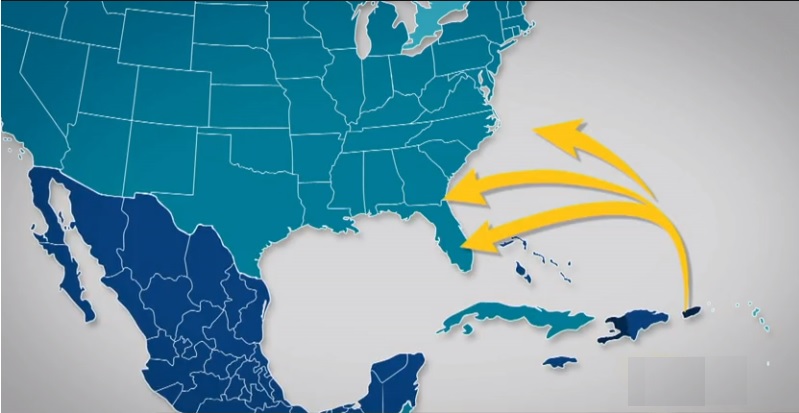
- Being there - Photo 1

The US Territory of Puerto Rico needs a Good Neighbor right now. They do not need State Farm; they need the US Government – see Appendix – to change the laws to allow them to re-structure their heavy debt “load”. In effect, this community is in crisis, facing disaster and needs a helping hand. See the story in these VIDEOs here:

VIDEO 1: Hamilton star Lin-Manuel Miranda on his mission to help Puerto Rico – http://www.today.com/video/-hamilton-star-lin-manuel-miranda-on-his-mission-to-help-puerto-rico-680630339894 

NBC News – The Today Show – Posted May 6, 2016; retrieved May 8, 2016

——————

VIDEO 2: Last Week Tonight with John Oliver: Puerto Rico (HBO) – https://youtu.be/Tt-mpuR_QHQ

Published on Apr 24, 2016 – Puerto Rico is suffering a massive debt crisis. Lin-Manuel Miranda joins John Oliver to call for relief.
Pardon the Adult Language

This is serious…

The book Go Lean … Caribbean identified the grave disposition of Puerto Rico, calling them the “Greece of the Caribbean” (Page 18), a tongue-in-check swipe to this advertising tagline used for many islands in the region: “the Gem of the Caribbean“. The book’s motive is to elevate the entire Caribbean, by focusing on the societal engines of economics, security and governance. All of these facets are in peril in Puerto Rico today, even though the current disaster is an economic one. It would be a nice thought if Puerto Rico’s neighbors could come to it’s aid. This is the quest of the Go Lean movement: to consolidate, integrate and streamline Caribbean member-states so as to be prepared for disasters in the region, including the economic ones. The book declares that Puerto Rico – and all of the Caribbean – is in crisis, but that a “crisis is a terrible thing to waste”.

Puerto Rico’s crisis is $70 Billion in municipal debt! Holy Crap, the vultures are now circling!

This episode is an example of the incidents prepared for in the Go Lean book, especially within the subtitle, “Crap Happens”. The book was referring to situations where a ‘Clear and Present Danger’ can imperil everyday life for the everyday man. This is the case in the US Territory of Puerto Rico. Despite the economic nature of the $70 Billion debt-load, this crisis is affecting security and government deliveries. According to the foregoing VIDEOs, the communities on the island of Puerto Rico cannot deliver on their Social Contract obligations because they have inadequate resources and their legal first priority must be debt-servicing. The end result: people’s needs – in the Social Contract – are not met and so they … flee – see photo above.

Puerto Rico needs an intervention; a bail-out of some sort. They are specifically asking for provisions of the US Bankruptcy laws (Chapter 9) to apply to the Territory. (Normally Chapter 9 only refers to American municipal governments and not State governments nor Territories). There are proponents of this quest – like Lin-Manuel Miranda in the foregoing – and opponents, like the active creditors. The movement behind the Go Lean movement wants a resolution, but focuses more on the underlying societal foundation; like the flaws that have made this community a parasite of the US mainland, rather than a protégé.

This assertion in the Go Lean book is that bad things (and bad actors) will always emerge to disrupt the peace and harmony in communities. All Caribbean member-states, like US Territories Puerto Rico and the US Virgin Islands, need to be on guard and prepared for this possibility. The book (Page 23) prepares for many modes of “bad things/actors”. It defines them as industrial mishaps, natural disasters, “acts of God”, and yes, economic distress. The book relates that these happenings are historical facts – considering the 2008 Global Recession and the constant threats of hurricanes – that are bound to be repeated, again and again. The book’s goal is to prepare the region for the eventuality of bad things happening to the good people, so as to minimize the constant human flight and brain drain.

The Go Lean book posits that the Caribbean region is the “greatest address on the planet”, that people should be “beating down the doors” to get in, rather than the status quo of people “beating down the doors” to get out.

We must plan for all disasters, natural and man-made. “When we fail to plan, we plan to fail”. We need Good Neighbors, literally and figuratively. The book contends that the 30 member-states in the Caribbean region should prepare themselves as neighbors to aid themselves, primarily. This point is pronounced early in the book with these Declaration of Interdependence (Page 12):

i.     Whereas the earth’s climate has undeniably changed resulting in more severe tropical weather storms, it is necessary to prepare to insure the safety and security of life, property and systems of commerce in our geographical region. As nature recognizes no borders in the target of its destruction, we also must set aside border considerations in the preparation and response to these weather challenges.

ii.    Whereas the natural formation of the landmass for our lands constitutes some extreme seismic activity, it is our responsibility and ours alone to provide, protect and promote our society to coexist, prepare and recover from the realities of nature’s occurrences.

x.   Whereas we are surrounded and allied to nations of larger proportions in land mass, populations, and treasuries, elements in their societies may have ill-intent in their pursuits, at the expense of the safety and security of our citizens. We must therefore appoint “new guards” to ensure our public safety and threats against our society, both domestic and foreign. The Federation must employ the latest advances and best practices … to assuage continuous threats against public safety.

xii. Whereas the legacy in recent times in individual states may be that of ineffectual governance with no redress to higher authority, the accedence of this Federation will ensure accountability and escalation of the human and civil rights of the people for good governance, justice assurances, due process and the rule of law. As such, any threats of a “failed state” status for any member state must enact emergency measures on behalf of the Federation to protect the human, civil and property rights of the citizens, residents, allies, trading partners, and visitors of the affected member state and the Federation as a whole.

xvi. Whereas security of our homeland is inextricably linked to prosperity of the homeland, the economic and security interest of the region needs to be aligned under the same governance. Since economic crimes, including piracy and other forms of terrorism, can imperil the functioning of the wheels of commerce for all the citizenry, the accedence of this Federation must equip the security apparatus with the tools and techniques for predictive and proactive interdictions.

xxiii. Whereas many countries in our region are dependent OverseasTerritory of imperial powers, the systems of governance can be instituted on a regional and local basis, rather than requiring oversight or accountability from distant masters far removed from their subjects of administration. The Federation must facilitate success in autonomous rule by sharing tools, systems and teamwork within the geographical region.

xxv. Whereas the legacy of international democracies had been imperiled due to a global financial crisis, the structure of the Federation must allow for financial stability and assurance of the Federation’s institutions. To mandate the economic vibrancy of the region, monetary and fiscal controls and policies must be incorporated as proactive and reactive measures. These measures must address threats against the financial integrity of the Federation and of the member-states.

So the Go Lean book relates that the Caribbean must appoint “new guards” to ensure public safety and to include many strategies, tactics and implementations considered “best-practices” for economic stewardship and Emergency Management (Preparation and Response). We must be on a constant vigil against all “bad actors”, man-made or natural. This indicates being pro-active in monitoring, mitigating and managing risks. Then when “crap” does happen, as it always will, the region’s “new guards” must be prepared for any “Clear and Present” danger.

The Go Lean book serves as a roadmap for the introduction and implementation of the technocratic Caribbean Union Trade Federation (CU). The CU would structure the appropriate governmental and non-governmental agencies in the region into one initiative, providing a Unified Command and Control for Emergency operations to share, leverage and collaborate their practice across the whole region. The roadmap has a focus of optimizing Caribbean society through economics, homeland security and governance; as stated within the prime directives (3):

  • Optimization of the economic engines in order to grow the regional economy to $800 Billion & create 2.2 million new jobs.
  • Establishment of a security apparatus to protect the resultant economic engines and the Caribbean homeland.
  • Improvement of Caribbean governance to support these engines, including Bankruptcy processing at the regional level.

The Caribbean is the “greatest address on the planet”, but there are risks associated with living deep in this tropical zone. With the reality of natural disasters (perhaps even more due to Climate Change), we must not be caught unprepared if we do not want our citizens to continue to flee their homeland; we want them to prosper here, where they may be planted. So as a community, we must provide assurances that we can count on our Good Neighbors to provide aid for any of the region’s stakeholders.

The Go Lean book details the series of community ethos, strategies, tactics, implementations and advocacies to provide the proactive and reactive protections in the Caribbean region:

Community Ethos – Economic Systems Influence Individual Choices Page 21
Community Ethos – Consequences of Choices Lie in Future Page 21
Community Ethos – “Crap” Happens Page 23
Community Ethos – Cooperatives Page 25
Community Ethos – Ways to Impact the Future Page 26
Community Ethos – Ways to Impact the Greater Good Page 37
Strategy – Vision – Confederating to form a Single Market Economy Page 45
Strategy – Agents of Change – Globalization Page 57
Strategy – Agents of Change – Climate Change Page 57
Tactical – Fostering a Technocracy Page 64
Tactical – How to Grow the Economy – Economic Bubbles Recovery Page 69
Tactical – How to Grow the Economy – Recover from Disasters Page 70
Tactical – Separation of Powers – Securities Exchange Regulatory Agency Page 74
Tactical – Separation of Powers – Homeland Security Department Page 75
Tactical – Separation of Powers – Emergency Management Agency Page 76
Tactical – Separation of Powers – Meteorological and Geological Service Page 79
Tactical – Separation of Powers – Exclusive Federal Bankruptcy Courts Page 90
Implementation – Ways to Pay for Change Page 101
Implementation – Start-up Homeland Security Initiatives Page 103
Implementation – Ways to Better Manage Debt Page 114
Implementation – Ways to Foster International Aid Page 115
Planning – 10 Big Ideas – #3: Consolidated Homeland Security Pact Page 130
Planning – Ways to Make the Caribbean Better Page 131
Planning – Ways to Improve Failed-State Indices – Puerto Rico’s near Status Page 134
Advocacy – Ways to Grow the Economy – Disaster Recoveries Page 151
Advocacy – Ways to Create Jobs Page 152
Advocacy – Ways to Improve Governance Page 168
Advocacy – Ways to Better Manage the Social Contract Page 170
Advocacy – Ways to Improve Homeland Security Page 180
Advocacy – Ways to Improve for Natural Disasters Page 184
Advocacy – Ways to Improve for Emergency Management Page 196
Advocacy – Ways to Impact Wall Street – Optimize Security Markets Page 200
Advocacy – Ways to Impact US Territories – Puerto Rico and the Virgin Islands Page 244

Other subjects related to Good Neighbor responses to crises (Economic Disruptions, Emergency Management, and Homeland Security) in the region and the required governmental responses have been blogged in other Go Lean…Caribbean commentaries, as sampled here:

https://goleancaribbean.com/blog/?p=7327 Zika – An Epidemiology Crisis – Facing the Caribbean region
https://goleancaribbean.com/blog/?p=7235 Flint, Michigan – A Cautionary Tale
https://goleancaribbean.com/blog/?p=6893 A Meteorologist’s View On Climate Change
https://goleancaribbean.com/blog/?p=6563 Lessons from Iceland – Model of Recovery
https://goleancaribbean.com/blog/?p=6531 Economic Crisis: Learning from the Exigency of 2008
https://goleancaribbean.com/blog/?p=6189 A Lesson in History – Hurricane ‘Katrina’ is helping today’s crises
https://goleancaribbean.com/blog/?p=6103 Sum of All Fears – ‘On Guard’ Against Deadly Threats
https://goleancaribbean.com/blog/?p=5002 Managing a ‘Clear and Present Danger’
https://goleancaribbean.com/blog/?p=4741 Vanuatu and Tuvalu Cyclone – Inadequate response to human suffering
https://goleancaribbean.com/blog/?p=4360 Dreading the ‘Caribbean Basin Security Initiative’
https://goleancaribbean.com/blog/?p=2614 The ‘Great ShakeOut’ Earthquake Drill / Planning / Preparations
https://goleancaribbean.com/blog/?p=1817 Caribbean grapples with intense new cycles of flooding & drought

The island territory of Puerto Rico, and the Caribbean as a whole, has found itself on the losing side of the changes impacting the global economy; the Go Lean book identified one of the Agents of Change as globalization. According to the foregoing VIDEOs, they have been contending with a recession for nearly a decade. This has meant life-and-death for the community; death in terms of people abandoning the island. This commentary has frequently addressed these challenges – and solutions – for Puerto Rico; see sample list here:

https://goleancaribbean.com/blog/?p=6693 Ten Puerto Rico Police Accused of Criminal Network
https://goleancaribbean.com/blog/?p=6531 Economic Disaster: Learning from the Exigency of 2008
https://goleancaribbean.com/blog/?p=6260 Puerto Rico Bondholders Coalition Launches Ad Campaign
https://goleancaribbean.com/blog/?p=4551 US Territories – Between a ‘rock and a hard place’
https://goleancaribbean.com/blog/?p=1325 Puerto Rico Governor Signs Bill on SME’s
https://goleancaribbean.com/blog/?p=599 Ailing Puerto Rico open to radical economic fixes

These previous commentaries reflect the enduring crisis for the Caribbean; every member-state (island & mainland states) experience societal abandonment. The book Go Lean…Caribbean posits that this “Agent of Change” is too big for just any one member-state, like Puerto Rico, to tackle alone, that there must be a regional solution; and presents this roadmap as the salve.

The people and institutions of the region are hereby urged to lean-in to this Go Lean roadmap; this plan is conceivable, believable and achievable. We can make Puerto Rico, and the Caribbean as a whole, a better place to live, work and play.:-)

Download Go Lean … Caribbean – now!

————

Appendix – America’s Good Neighbor policy

The Good Neighbor policy was the foreign policy of the administration of United States President Franklin Roosevelt towards Latin America. Although the policy was implemented by the Roosevelt administration, 19th-century politician Henry Clay paved the way for it and coined the term “Good Neighbor”.

The policy’s main principle was that of non-intervention and non-interference in the domestic affairs of Latin America. It also reinforced the idea that the United States would be a “good neighbor” and engage in reciprocal exchanges with Latin American countries.[1] Overall, the Roosevelt administration expected that this new policy would create new economic opportunities in the form of reciprocal trade agreements and reassert the influence of the United States in Latin America; however, many Latin American governments were not convinced.[2]

- Being there - Photo 2

Carmen Miranda became the muse of the Good Neighbor policy.

Impact
The Good Neighbor Policy terminated the U.S. Marines occupation of Nicaragua in 1933 and occupation of Haiti in 1934, led to the annulment of the Platt Amendment by the Treaty of Relations with Cuba in 1934, and the negotiation of compensation for Mexico’s nationalization of foreign-owned oil assets in 1938.

Legacy
The era of the Good Neighbor Policy ended with the ramp-up of the Cold War in 1945, as the United States felt there was a greater need to protect the western hemisphere from Soviet influence. These changes conflicted with the Good Neighbor Policy’s fundamental principle of non-intervention and led to a new wave of US involvement in Latin American affairs.[2] Until the end of the Cold War the United States directly or indirectly attacked all suspected socialist or nationalist movements in the hope of ending the spread of Soviet influence. U.S. interventions in this era included the CIA overthrow of Guatemala’s President Jacobo Árbenz in 1954, the unsuccessful CIA-backed Bay of Pigs Invasion in Cuba in 1961, CIA subversion of Chilean President Salvador Allende in 1970–73, and CIA subversion of Nicaragua’s Sandinista government from about 1981 to 1990.[2]

After World War II, the US began to shift its focus to aid and rebuilding efforts in Europe and Japan. These U.S. efforts largely neglected the Latin American countries, though U.S. investors and business men did have some stake in the nations to the South.

See the entire encyclopedic reference here (retrieved May 9, 2016): https://en.wikipedia.org/wiki/Good_Neighbor_policy.


Share this post:
, , ,

Switching Allegiances: Jamaican sprinters move on to represent other countries

Go Lean Commentary

“I’m going to take my talents to South Beach”.

CU Blog - Lebronomy - Economic Impact of the Return of the NBA GreatThese words – The Decision – proved to be among the most dramatic quotations in American Sports for the new 21st Century. These words were spoken by basketball superstar LeBron James in July 2010. He had been frustrated with the team management inefficiency in his hometown of Cleveland, Ohio where he played for the NBA’s Cleveland Cavaliers from 2003 to 2010. At the time of this utterance, he had elected to “opt-out” of his contract with the Cavaliers and become a free agent. After being aggressively recruited by a number of teams – including the incumbent club in Cleveland – he decided to join the NBA franchise in South Florida (South Beach), the Miami Heat.

For the fans in Cleveland, this was a betrayal! They asserted that he switched allegiances in taking his talents to South Beach.

This perceived act of betrayal is considered a “stab in the heart” for a community that loves its local athletes. While this foregoing anecdote is an American drama, the Caribbean island of Jamaica can relate and empathize with Cleveland. Or better stated, the community of Cleveland can empathize with Jamaica as the same anecdotes are being related there, again and again with their World-Class Track-and-Field athletes.

Consider these related news articles of events transpiring in the last year:

Title: Switching Allegiances: One More Jamaican Sprinter Moves On To Represent Another Country
By: Blogger – StephanieK
CU Blog - Switching Allegiances - Jamaican Sprinters - Photo 1Winston Barnes – in focus in the photo here – a former sprinter from Jamaica College, will now be representing Turkey in athletic competitions. Barnes, who will be known as Emre Zafer Barnes, joined three other Jamaican sprinters who decided to switch their allegiance to compete for various Arab countries. Former Wolmer’s Boys’ sprinter Jacques Harvey made the switch to Turkey earlier and is now known as Jak Ali Harvey. Following Jamaica’s Olympic Games, Shericka Williams, silver medalist, Andrew Fisher and Kemarley Brown all asked to move on to Bahrain, planning to represent that country at the 2016 Olympics in Brazil.

According to Commonwealth Games 100-metre champion Kemar Bailey-Cole, Jamaica could lose even more of its top athletes to countries who are willing to provide the financial support lacking from the Jamaica Athletics Administrative Association (JAAA), corporate Jamaica, and the government.
Source:  Jamaicans.com – Online Community – Retrieved 04-25-2016 from: http://jamaicans.com/one-more-jamaican-sprinter-moves-on/

——————————-

Title: Three Jamaican Athletes Plan to Represent Bahrain
July 22, 2015 – Three of Jamaica’s top athletes will be switching their allegiance from the island to the country of Bahrain, announced Dr. Warren Blake, the president of the Jamaica Athletics Administrative Association (JAAA). Shericka “Wire” Williams, 2008 Olympic 400-meter silver medallist, and sprinters Kemarley Brown and Andrew Fisher, submitted applications to the JAAA with the intention of competing for Bahrain.

The athletes said it has become difficult to represent Jamaica and want the chance to represent Bahrain as they consider moving to that country and becoming citizens. Williams received a silver medal for Jamaica at the Berlin world Championships in 2009, while Fisher is the latest Jamaican to run under the 10-second barrier. Brown also clocked below that mark with a personal best on July 20 of 9.93 seconds.
Source: Retrieved 04-25-2016 from: http://jamaicans.com/top-7-jamaican-caribbean-news-stories-for-the-week-ending-july-24th-2015/#ixzz46n7Z3doE

The decisions of these Jamaican athletes relate to the drama of Cleveland-Miami in 2010. The book Go Lean … Caribbean reported on these 2010 events, as follows (Page 42):

The National Basketball Association (NBA) franchise: Miami Heat is the league champion for the last 2 consecutive seasons; (composed November 2013). This is their 3rd championship, having won, in 2006, 2012, and 2013, to date. It is felt that this team can win many more. In fact, brewing some controversy when the team was assembled by the General Manager in 2010, one of the superstar players, LeBron James, pronounced that this team was built for multiple championships; the actual number: “not one, not, two, not three, not four, not five …”

Those words incited disgust from everyone…other than Miami Heat fans. But the team has lived up to its bragging and boasting, by succeeding to reach the Championship series (NBA Finals) all three years [to date] since the group was assembled.

The recent history of this Miami Heat drama does relate to the Caribbean and this roadmap for economic integration. First, with its base in Miami, Florida, it possesses the largest pocket of Caribbean Diaspora. So in many ways, the Miami Heat is the “home team” of the Caribbean.

This foregoing news articles also align with the Go Lean book in that it serves as a roadmap for the introduction and implementation of the Caribbean Union Trade Federation (CU). The Go Lean roadmap only has one interest in this subject of sports, fostering the economic opportunities that can be forged by professionalizing a regional sports eco-system. Dysfunction in this regards is exactly the issue in Jamaica today and why these athletes are “taking their talents to …” foreign shores.

This Go Lean roadmap assesses that not just Jamaica, but all of the Caribbean is in crisis. This is why athletes with any ability must seek refuge and opportunities in foreign lands. So this roadmap provides solutions to optimize the region’s economic, security and governing engines. The roadmap provides the facilitation to grow a professional, collegiate and amateur sports eco-system. Many times, the missing ingredients for organized sports are the facilities: stadia, arenas and playing fields. A previous blog-commentary reported that the sports eco-system void maybe considered as bigger than just sports, it is “life and death”. But the roadmap posits that sports, even though it is just “extra-curricular”, does bring benefits. In fact, Go Lean book (Page 229) quotes the Bible scripture at 1 Timothy 4:8 “For bodily exercise is profitable for a little …”.

Caribbean people are identified with excellence in sports; maybe even defined as geniuses. See the VIDEO here of a talented 10-year-old Jamaican football (soccer) sensation; his aspiration is to play professionally … in Europe in the future.

VIDEO – 10 year-old Jamaican Prodigy Brian Burketthttps://youtu.be/YJChu-Rwez0

Published on December 30, 2014 – Brian Burkett is a self motivated boy who has a dream to play football at the highest level in the world. His talent is immaculate for his age along with his love for the game. Brian started playing at age 3 and have grown in passion and discipline to learn more about the game.

While Caribbean athletic talent is recognized around the world, there is not enough economic rewards at home for these ones with genius abilities. These ones must leave their beloved homelands to maximize their talents and earn a living from them. (This also applies to matriculating college student-athletes).

Previous blogs established that sports genius alone will never yield the sought-after result of World-Class excellence, there is the need for skilled training, coaching with best-practices and an internal drive. In so many ways, this parallels the current effort to reboot the Caribbean economic engines: nature (birth-right) is critical, but training, experience, coaching and the technocratic application of best-practices are also needed to forge change. The most important though is the internal drive; first and foremost, this is identified in the roadmap as “community ethos”.

The Go Lean roadmap recognizes many different kinds of athletics, team sports and individual event. The unique “genius” qualifier is highlighted at the outset of the Go Lean book, in the Declaration of Interdependence (Pages 12 & 14), as follows:

xxi. Whereas the preparation of our labor force can foster opportunities and dictate economic progress for current and future generations, the Federation must ensure that educational and job training opportunities are fully optimized for all residents of all member-states, with no partiality towards any gender or ethnic group. The Federation must recognize and facilitate excellence in many different fields of endeavor, including sciences, languages, arts, music and sports. This responsibility should be executed without incurring the risks of further human flight, as has been the past history.

xxxi. Whereas sports have been a source of great pride for the Caribbean region, the economic returns from these ventures have not been evenly distributed as in other societies. The Federation must therefore facilitate the eco-systems and vertical industries of sports as a business, recreation, national pastime and even sports tourism – modeling the Olympics.

The book Go Lean … Caribbean highlights the community ethos, plus the strategies, tactics, implementation and advocacies to optimize the sports eco-system in the region; it posits that success is to be found at the intersection between opportunity and preparation. The following list shows samples from the book that detailed these points:

Community Ethos – People Respond to Incentives in Predictable Ways Page 21
Community Ethos – Consequences of Choices Lie in the Future Page 21
Community Ethos – Lean Operations Page 24
Community Ethos – Return on Investments Page 25
Community Ethos – Ways to Foster Genius Page 27
Community Ethos – Ways to Impact the Greater Good Page 37
Strategic – Staffing – Sporting Events at Fairgrounds Page 55
Tactical – Fostering a Technocracy Page 64
Tactical – Separation of Powers – Sports & Culture Administration Page 81
Tactical – Separation of Powers – Fairgrounds Administration Page 83
Implementation – Steps to Implement Self-Governing Entities (SGE) Page 105
Implementation – Ways to Deliver Page 109
Planning – Ways to Make the Caribbean Better Page 131
Advocacy – Ways to Grow the Economy Page 151
Advocacy – Ways to Create Jobs Page 152
Advocacy – Ways to Improve Local Government – Parks & Recreation Page 169
Advocacy – Ways to Impact Public Works Page 175
Advocacy – Ways to Impact Events Page 191
Advocacy – Ways to Promote Fairgrounds as Sporting Venues Page 192
Advocacy – Ways to Preserve Caribbean Heritage Page 218
Advocacy – Ways to Improve Sports Page 229
Advocacy – Ways to Impact Urban Living – Sports Leagues Page 234

The Go Lean book and accompanying blogs declare that the Caribbean needs to learn lessons from these Track-and-Field athletes taking their talents to other markets … elsewhere. This commentary is about the business of sports; and this subject is a familiar topic for the Go Lean movement, as was detailed in these previous blogs:

https://goleancaribbean.com/blog/?p=6464 WWE Network – Model for Caribbean
https://goleancaribbean.com/blog/?p=6202 ‘Concussions’ – The Movie; The Cause
https://goleancaribbean.com/blog/?p=5921 Socio-Economic Change: Impact Analysis of SGE’s
https://goleancaribbean.com/blog/?p=4879 Martinique – The New Caribbean Surfing Capital
https://goleancaribbean.com/blog/?p=4019 Melding of Sports & Technology; the Business of the Super Bowl
https://goleancaribbean.com/blog/?p=3414 Levi’s® Stadium: A Team Effort
https://goleancaribbean.com/blog/?p=3244 Sports Role Model – espnW
https://goleancaribbean.com/blog/?p=2222 Sports Role Model – Playing For Pride … And More
https://goleancaribbean.com/blog/?p=2171 Sports Role Model – Turn On the SEC Network
https://goleancaribbean.com/blog/?p=2152 Sports Role Model – US versus the World
https://goleancaribbean.com/blog/?p=1715 Lebronomy – Economic Impact of the Return of the NBA Great
https://goleancaribbean.com/blog/?p=1446 Caribbean Players in the 2014 World Cup
https://goleancaribbean.com/blog/?p=1341 College World Series Time – Lessons from Omaha
https://goleancaribbean.com/blog/?p=1214 Landlord of Temporary Stadiums
https://goleancaribbean.com/blog/?p=1148 Sports Bubble – Franchise values in basketball
https://goleancaribbean.com/blog/?p=1020 Sports Revolutionary: Advocate Jeffrey Webb
https://goleancaribbean.com/blog/?p=498 Book Review: ‘The Sports Gene’
https://goleancaribbean.com/blog/?p=318 Collegiate Sports in the Caribbean
https://goleancaribbean.com/blog/?p=60 Could the Caribbean Host the Olympic Games?

The end result for the Go Lean roadmap’s venture into regional sport professionalization is economic growth and “jobs” here at home. The Go Lean roadmap anticipates 21,000 direct jobs at sports enterprises throughout the region, not including the athletes.

CU Blog - Switching Allegiances - Jamaican Sprinters - Photo 2The benefits of the Go Lean roadmap are too alluring to ignore: emergence of an $800 Billion economy, 2.2. million new regional jobs, new industries, services and finally opportunities for the sports-playing youth of the Caribbean . The roadmap even extends an invitation to the Diaspora (and their legacies) to repatriate from North American, European and Middle-Eastern/Arab countries. This will help to preserve Caribbean culture here … in the Caribbean.

As for the latest developments of the opening anecdote of LeBron James and the Cleveland-Miami drama: after 4 years in Miami and 2 championships, he repatriated to Cleveland; (see photo above) … with a new resolve to bring a championship to Cleveland. In this vein, his quest – now fulfilled – serves as a role model for Caribbean athletes: excelling at home is “so much sweeter” than on the road. This is the precept to prosper where planted. 🙂

Download the book Go Lean … Caribbean – now!

Share this post:
, , , , , ,
[Top]

Skipping School to become Tech Giants

Go Lean Commentary

How can we mold young minds for career success?

Apparently, there is more than one way; (notwithstanding starting early). Yes, there is college, but there is another way too: entrepreneurship. Think Bill Gates, Steve Jobs, and Mark Zuckerberg. These ones are notorious for their billionaire success, despite not finishing college.

CU Blog - Skipping School to become Tech Giants - Photo 1Some people think that a 4-year college degree may NOT be entirely essential for career success; these ones say: “there is an alternate path” for success for an individual career and for their community; (some even claim that a 4-year degree may be a bad investments for students).

So there are parallel paths. Let’s consider: education -vs- entrepreneurship …

Many claim that the underlying goal for molding young minds should not be education, but rather competition … with the rest of the world. The question could therefore be codified as: “Is a 4-year college degree necessary for our community to better compete with the world?”

This is a tough one (question), in which there are no easy answers.

The book Go Lean…Caribbean embarks on the quest to elevate the Caribbean societal engines (economics, security and governance); it presents options with education and with entrepreneurship. The book immediately rails against the education status quo; it stakes the claim that Caribbean tertiary education eco-system needs to be reformed and transformed, asserting that the status quo has not served the region as well as expected. Truth is, traditional college education paths may be considered disastrous for the Caribbean region in whole, and for each specific country in particular. Why?

Students leave to study …

… and do not necessarily return. They are “gone and forgotten”*; they run-off with their community investments with little chance for any “return”. (* = Many Caribbean graduates only return for family visits and festivals).

Normally, college education is great for the individual. The Go Lean book relates how economists have established that every additional year of schooling increases a student’s earning potential by about 10% (Page 258). Yet for our Caribbean communities as a whole, the end-result has been different – bad – ending in our incontrovertible brain drain.

How bad?

Previous blogs on this same subject matter have detailed the dysfunction; one example is the report that 70 percent of the tertiary-educated population in the Caribbean has fled. What’s worst in these reports, is the fact that these emigrants have taken their Caribbean-funded education and skill-sets with them; even taking any hope for collecting student loans, thereby imperiling future generations of scholars from their own benefits of a college education.

So education is not the champion – for nation-building – that we would expect. There is room for a challenger-contender. Consider this VIDEO here (and transcript in the Appendix), of young ones quitting college or never enrolling, to pursue entrepreneurial endeavors in the technology space. These ones are being fostered, prodded and nurtured; as related here:

VIDEO – Skipping School to become Tech Giants – http://www.cbsnews.com/videos/investing-in-college-dropouts-with-big-ideas

(VIDEO plays best in Internet Explorer).

The Go Lean movement – book and blogs – asserts that change must come to the region in response to the debilitating status quo in Caribbean life. The book refers to these change factors as Agents of Change, including technology and globalization. The best strategy for contending with both technology and globalization change is to not only consume; communities must develop, innovate and produce as well. The Go Lean book posits therefore that Caribbean regional shepherds should invest in (better) higher education and entrepreneurial options. The bottom-line motive should be the Greater Good.

This book Go Lean book serves as a roadmap for the introduction and implementation of the Caribbean Union Trade Federation (CU). This represents change for the region. The CU/Go Lean roadmap has 3 prime directives:

  • Optimization of the economic engines – including educational empowerments and entrepreneurial incubators – in order to grow the regional economy and create 2.2 million new jobs.
  • Establishment of a security apparatus to protect the resultant economic engines.
  • Improve Caribbean governance to support these engines.

The book relates that forging technology genius is a direct product of perspiration and inspiration. Perspiration as in the training and education needed to excel in this field; and inspiration as in the spark of innovation that is required to conceive, compose and construct competitive products pertaining to hardware, software and communication systems.

The Go Lean roadmap provides turn-by-turn directions on how to foster genius and how to reform the Caribbean tertiary education eco-systems. As a planning tool, the roadmap commences with a Declaration of Interdependence, pronouncing the approach of regional integration (Page 12 & 14) as a viable solution to elevate the opportunities in the region:

xix.  Whereas our legacy in recent times is one of societal abandonment, it is imperative that incentives and encouragement be put in place to first dissuade the human flight, and then entice and welcome the return of our Diaspora back to our shores

xxi.  Whereas the preparation of our labor force can foster opportunities and dictate economic progress for current and future generations, the Federation must ensure that educational and job training opportunities are fully optimized for all residents of all member-states, with no partiality towards any gender or ethnic group. The Federation must recognize and facilitate excellence in many different fields of endeavor, including sciences, languages, arts, music and sports. This responsibility should be executed without incurring the risks of further human flight, as has been the past history.

xxvii.  Whereas the region has endured a spectator status during the Industrial Revolution, we cannot stand on the sidelines of this new economy, the Information Revolution. Rather, the Federation must embrace all the tenets of Internet Communications Technology (ICT) to serve as an equalizing element in competition with the rest of the world. The Federation must bridge the digital divide and promote the community ethos that research/development is valuable and must be promoted and incentivized for adoption.

xxx.   Whereas the effects of globalization can be felt in every aspect of Caribbean life, from the acquisition of food and clothing, to the ubiquity of ICT, the region cannot only consume, it is imperative that our lands also produce and add to the international community, even if doing so requires some sacrifice and subsidy.

The Go Lean book focuses primarily on economic issues, and it recognizes that computer hardware, software and communications systems are the future direction for consumer, corporate and industrial developments. This is where the new jobs are to be found. If we want to arrest societal abandonment occurring in our communities, we must create jobs. The Go Lean roadmap describes the heavy-lifting for people, organizations and governments to foster genius and forge technological innovations here at home in the Caribbean; (i.e. start early).

This commentary is not advocating a practice of “skipping school to rush to try and become tech giants”. But rather, it is advocating education reform, abandoning failed practices, like study abroad and adopting new ones, like e-Learning solutions. After which there should be an effort to provide entrepreneurial incubators to foster more business start-ups.

The Go Lean book posits that education and entrepreneurism are vital advocacies for Caribbean economic empowerment. But there have been flawed decision-making in the past, both individually and community-wise, and so we are now playing catch-up with the rest of the world. Whether we want it or not, there is a competition; globalization features trade wars; wars feature battles; battles feature champions. The vision of the CU is a confederation of the 30 member-states of the Caribbean to do the heavy-lifting of championing better educational and entrepreneurial policies.

The book details those policies; and other ethos to adopt, plus the executions of the following strategies, tactics, implementations and advocacies to impact the Greater Good for the region:

Community Ethos – Deferred Gratification Page 21
Community Ethos – People Respond to Incentives Page 21
Community Ethos – Job Multiplier Page 22
Community Ethos – Lean Operations Page 24
Community Ethos – Return on Investments – ROI Page 24
Community Ethos – Ways to Impact the Future Page 26
Community Ethos – Ways to Foster Genius Page 27
Community Ethos – Ways to Help Entrepreneurship Page 28
Strategy – Agent of Change – Technology Page 57
Strategy – Agent of Change – Globalization Page 57
Tactical – Separation of Powers – Education Department Page 85
Tactical – Separation of Powers – Labor Department Page 89
Implementation – Ways to Impact Social Media Page 111
Advocacy – Ways to Grow the Economy Page 151
Advocacy – Ways to Create Jobs Page 152
Advocacy – Ways to Improve Education Page 159
Advocacy – Ways to Improve Governance Page 169
Advocacy – Ways to Better Manage the Social Contract Page 171
Advocacy – Ways to Foster Cooperatives Page 176
Advocacy – Ways to Improve Libraries Page 187
Advocacy – Ways to Foster Technology Page 197
Advocacy – Ways to Foster e-Commerce Page 198
Appendix – Education and Economic Growth Page 258

Now is the time for all of the Caribbean, the people and governing institutions, to lean-in for the changes described in the book Go Lean … Caribbean. We welcome entrepreneurism and we welcome education; these two activities can be concurrent and complementary. But we need to break from the old-bad practices (i.e. study abroad) and engage new-better practices (i.e. incubators).

So we encourage all young people to get advanced education, but to do it at home. And we encourage all with entrepreneurial dreams to pursue them … here at home.

The new jobs that our region need must come from these initiatives. Let’s get started!  🙂

Download the book Go Lean…Caribbean now!

————–

APPENDIX – Story Transcript: Skipping School to become Tech Giants

A select group of whiz kids seems to be thriving despite having dropped out of college. All any of them seems to need is a high-tech idea, a sofa to sleep on … plus a $100,000 grant. John Blackstone explains:

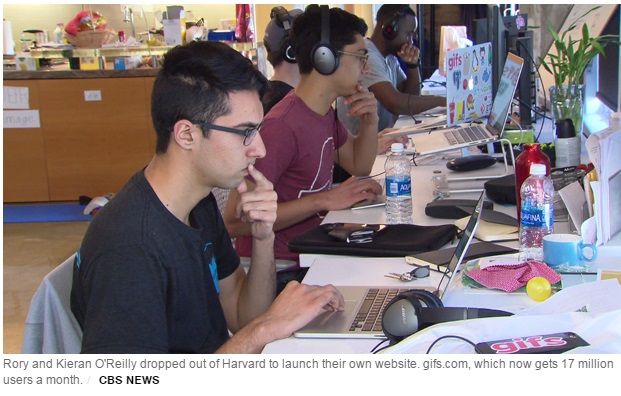
When brothers Kieran and Rory O’Reilly were both accepted to Harvard, their parents marked the accomplishment with new license plates: One read “2 N HRVD”; the other, “HARVRD 2.”

“They might change it to ‘2 DROPOUTS,'” said Rory.

They both quit Harvard as undergrads two years ago. They were just 18 and 19 when they moved to San Francisco with big hopes, and almost nothing else.

“Three bags of clothes — every day we would take it, move from hotel to hotel,” said Rory.

“I remember our bank account was always negative $66, because that’s the overdraft fee,” said Kieran.

They’re now living IN their office. “Every single day our mom tries to call us or send food,” Rory said.

They’ve created a website, gifs.com, a tool for re-editing online videos. Seventeen million people in the past month have used it.

The O’Reillys are on a path made famous by some of the tech industry’s biggest names: Jobs, Gates, Zuckerberg.

“People that drop out of Harvard, maybe the Bill Gateses of the world, the Zuckerbergs, they’re the people that are really changing the entire world, in my opinion,” said Rory. “And yeah, I’m glad to be a part of that.”

The O’Reillys are “part of that” partly because Peter Thiel, one of the billionaire founders of PayPal, gave them $100,000 each.

Thiel started his surprising giveaway five years ago, offering $100,000 to kids who quit college to “build new things.”

Jack Abraham is executive director of the Thiel Fellowship, which distributes the money to 20 new dropouts each year. And what is he encouraging? “If you have a great idea, the time to pursue it is now,” Abraham said. “We also hope to show society that this is an alternate path that people can and should consider and take.”

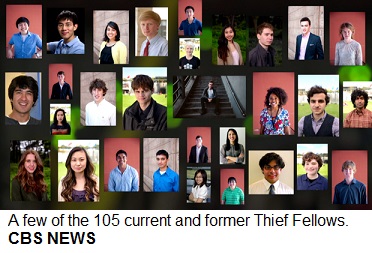
Abraham says the 105 current and former Thiel Fellows have created more than 1,000 jobs and raised $330 million from investors.

CU Blog - Skipping School to become Tech Giants - Photo 2

Only eight have returned to college.

The selection committee is now sorting through 5,000 applications for this year’s 20 fellowships. Most of the applicants would have much better odds getting into the Ivy League.

“It breaks my heart when some of the most promising students don’t fulfill their potential because they’re chasing rainbows,” said Vivek Wadhwa, a fellow at StanfordUniversity, who has been a critic of the Thiel Fellowship from the beginning.”

“It’s like what happens in Hollywood: You have tens of thousands of young people flocking to Hollywood thinking that they’re gonna become a Brad Pitt or an Angelina Jolie; they don’t,” said Wadhwa.

“They don’t become billionaires. There haven’t been many Mark Zuckerbergs after Mark Zuckerberg achieved success.”

And Wadhwa says there is little evidence the Thiel dropouts are doing much that isn’t already being done in Silicon Valley.”Everyone does the same thing: It’s social media, it’s photo sharing apps. Today it’s sharing economy,” Wadhwa said. “It’s ‘Me, too,’ ‘More of the same.'”

But 19-year-old Conrad Kramer and 21-year-old Ari Weinstein were convinced they had a new idea, so when they were awarded Thiel Fellowships in 2014, they both walked away from MIT to work full-time on their app, called Workflow.

“There are some opportunities that come up that you would regret turning down,” Kramer said. “Workflow was definitely one of those.”

“It’s kind of like making your own apps that save you time,” Weinstein said.

When Workflow launched, it was the number one bestseller on Apple’s App Store — and has since won several awards.

They’ve just hired their newest employee, Tim Hsia, a graduate of Stanford’s business and law schools and an Army vet. He’s 33-years-old and says he doesn’t mind taking orders from a teenage boss.

“I’m learning so much because they have such a wealth of experience despite their age,” Hsia said. “In Silicon Valley it’s about meritocracy of ideas. And so if you have a good idea, everyone’s always receptive to listen to it.”

Zach Latta found many people were willing to listen — leaving high school to move to San Francisco on his own, to start a non-profit called Hack Club.

He recalled that when he moved to the city at age 16, “I’d showed up at a gym one day with some friends, and they turned me away at the door because I had to be 18.”

Now he is 18 and works full-time helping high school students learn to code.

“I feel challenged in every single day,” Latta said. “And I think I’m learning as much as I’ve ever been while being happy.”

For now these wannabe tech titans live modestly in homes they share with several others, or in offices that also provide a place to sleep. Instead of meals, some drink Soylent — Silicon Valley’s version of fast food. It apparently contains all the nutrients necessary to stay alive, in a bottle.

“Yeah — breakfast, lunch, snack, dinner,” said Latta.

They are building their companies with money from investors who seem to care little whether they graduated from college.

“It’s actually kind of a badge of honor here, dropping out,” said 23-year-old Stacey Ferreira. She’s dropped out of NYU — twice! The first time she saw a tweet from Richard Branson, the founder of the Virgin Group, offering to meet anyone who gave $2,000 to his charity.

She borrowed the money and met him. She was 18 and starting her first business.

“And make a long story short, he and two of his buddies ended up investing $1.2 million in our business that summer,” Ferreira told Blackstone.

Two years later, she sold that company, MySocialCloud, for a hefty profit, and returned to NYU. But then she had another big idea that couldn’t wait.

“If you can create your own job, why wouldn’t you just do that and not get stuck paying student loans for the rest of your life?” Ferreira said.

Instead of student loans, she has $100,000 from Peter Thiel. She’s working on an app called Forrge that aims to create an on-demand marketplace for hourly workers.

She’s hoping that dropping out of NYU again will pay off again.

Blackstone asked, “Is there a lesson in your story for other young people?”

“Yeah, I think the biggest lesson to learn is just take risks,” Ferreira said.

“What’s the worst that can happen to you when you take the risk?”

“For me, the worst that can happen is I move home and sleep on my parent’s couch for a couple months, until I figure it out,” Ferreira replied.

For more info:


Share this post:
, , ,
[Top]

Obama – Bad For Caribbean Status Quo

Go Lean Commentary

CU Blog - Obama - Bad For Caribbean Status Quo - Photo 2Yes, Barack Obama was elected in 2008 as the first Black President of the United States, with his campaign of “Hope and Change”. While one would think that would be good for all Black (African-American) people in the US – and around the world – alas, that has not been the case. It is the conclusion of many commentators and analysts that Obama has not been able to do as much for his race as he would like, nor his race would like. (Obama himself has confessed this). Or that another White person may have been able to do more for the African American community.

This seems like a paradox!

Yet, it is what it is. The truth of the matter is that race still plays a huge decision-making factor in all things in America. This reality has curtailed Obama in any quest to do more for his people.

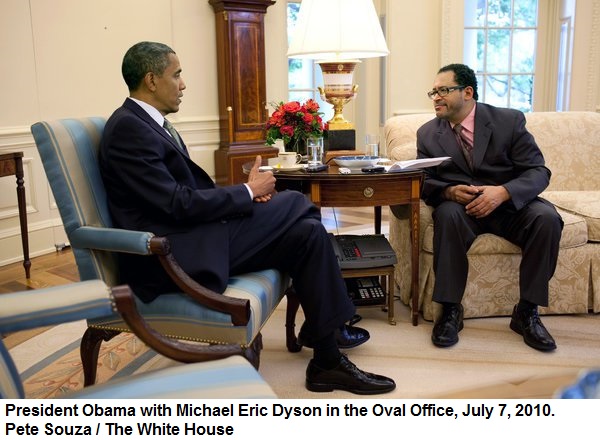
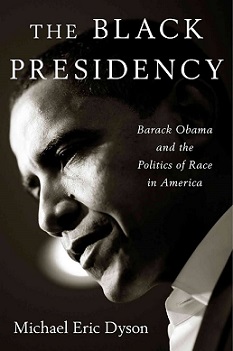
This is the assessment by noted commentator and analyst, Professor Michael Eric Dyson, in his new book “The Black Presidency: Barack Obama and the Politics of Race in America“. Professor Dyson points out some actual events during the Obama presidency and concludes that a White President would have been more successfully championing certain race-related causes. (Think: the Black Lives Matter movement was ignited during the Obama presidency).

VIDEO – Michael Eric Dyson on Democracy Now – https://youtu.be/F7Uo06_NfCw

Published on Feb 3, 2016 – http://democracynow.org – As the 2016 presidential race heats up and the nation marks Black History Month, we turn to look back on President Obama’s legacy as the nation’s first African-American president. Georgetown professor Michael Eric Dyson has just published a new book titled The Black Presidency: Barack Obama and the Politics of Race in America. From the protests in Ferguson to the church shooting in Charleston, South Carolina, to the controversy over the arrest of Harvard professor Henry Louis Gates, Michael Eric Dyson explores how President Obama has changed how he talks about race over the past seven years.

Democracy Now! is an independent global news hour that airs weekdays on nearly 1,400 TV and radio stations Monday through Friday. Watch the live-stream 8-9AM ET: http://democracynow.org.

The summary is that White Privilege still dominates in America. See the review of this book in Appendix A below.

This conclusion aligns with the assertions of the book Go Lean…Caribbean, and many aligned blog submissions, that America is not the ideal society for Caribbean citizens to seek for refuge, that rather Caribbean people can exert less effort to reform and transform their homelands than trying to prosper in this foreign land. The conclusion is the priority should be on a local/regional quest to prosper where planted in the Caribbean. This is a mission of the Go Lean…Caribbean movement, to lower the push and pull factors that lead many in the Caribbean to flee their tropical homes. Highlighting and enunciating the truths of American “Race Reality” aligns with that mission. We must lower the “pull” factors!

It is this commentary’s conclusion that Obama has been a good president for American self-interest. (The economy has recovered and rebounded from the “bad old days” of the 2008 financial crisis).

It is also this commentary’s conclusion that Obama has been a bad president for the Caribbean status-quo! His administration has brought ” change” to many facets of Caribbean life – good, bad and ugly, as follows:

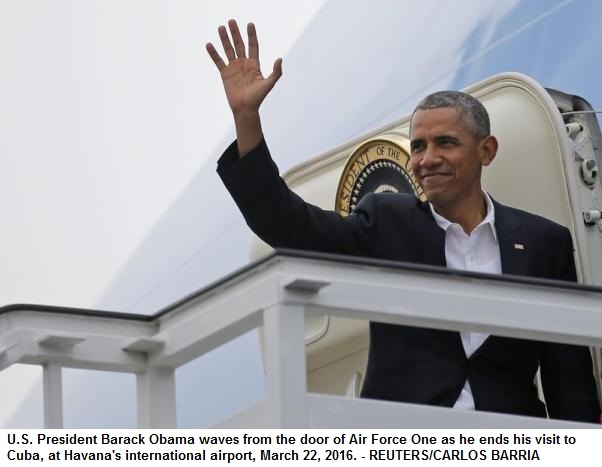
  • Consider the good: The American re-approachment to Cuba – under Obama – is presenting an end to the Cold War animosity of these regional neighbors – Cuba’s status quo is changing. A bad actor from this conflict, former Cuban President Fidel Castro, just penned his own commentary lamenting Obama’s salesmanship in his recent official visit to Cuba on March 15; see Appendix B.
  • Consider the bad:
    • (A) The US has doubled-down on globalization, forcing countries with little manufacturing or agricultural production to consume even more and produce even less; a lose-lose proposition.
    • (B) The primary industry in the Caribbean – tourism – has experienced change and decline as a direct result of heightened income inequality in the US, the region’s biggest source of touristic visitors; now more middle class can only afford cruise vacations as opposed to the more lucrative (for the region) stop-overs.
    • (C) The secondary industry in the Caribbean – Offshore Banking – has come under fire from the US-led Organization for Economic Cooperation & Development (OECD) to deter offshore banking growth; the industry, jobs and economic contributions have thusly receded.
  • Consider the ugly: Emigration of Caribbean citizens to the US has accelerated during this presidency, more so than any other time in American-Caribbean history. Published rates of societal abandonment among the college educated classes have reported an average of 70 percent in most member-states, with some countries (i.e. Guyana) tallying up to 89 percent.

The Caribbean status quo has changed. It is now time for a Caribbean version of “hope and change”.

This book Go Lean…Caribbean serves as a roadmap for the introduction and implementation of the Caribbean Union Trade Federation (CU). This roadmap presents “hope and change” for empowering the Caribbean region’s societal engines: economic, security and governance. In fact, the following are the prime directives of the roadmap:

  • Optimization of the economic engines in order to grow the regional economy to $800 Billion & create 2.2 million new jobs.
  • Establishment of a security apparatus to protect the resultant economic engines.
  • Improve Caribbean governance to support these engines.

A mission of the CU is to minimize the push and pull factors that lead so many Caribbean citizens to migrate to foreign lands – to America; and also to invite the Diaspora living there to repatriate home. The argument is that America is not the most welcoming for the Black and Brown populations of the Caribbean. Let’s work to prosper where planted at home.

Yes, there are societal defects in the Caribbean, as there are defects in America. But the defects in America are greater: institutional racism and Crony-Capitalism. Though it is heavy-lifting, it is easier to reform and transform the Caribbean.

The reference sources in the Appendices relate that the Obama effect is changing the status quo … in America … and the Caribbean.

This issue of reducing the societal abandonment rate and encouraging repatriation has been a consistent theme of Go Lean blogs entries; as sampled here:

https://goleancaribbean.com/blog/?p=7628 ‘A Change Is Gonna Come’
https://goleancaribbean.com/blog/?p=7204 ‘The Covenant with Black America’ – Ten Years Later
https://goleancaribbean.com/blog/?p=7151 The Caribbean is Looking for Heroes … ‘to Return’
https://goleancaribbean.com/blog/?p=7412 The Road to Restoring Cuba
https://goleancaribbean.com/blog/?p=7151 The Caribbean is Looking for Heroes … ‘to Return’
https://goleancaribbean.com/blog/?p=6016 Hotter than July – Still ‘Third World’ – The Need for Cooling …
https://goleancaribbean.com/blog/?p=5784 The Need for Human Rights/LGBT Reform in the Region
https://goleancaribbean.com/blog/?p=4613 ‘Luck of the Irish’ – Lessons from their Past, Present and Future
https://goleancaribbean.com/blog/?p=4447 Probe of Ferguson, Missouri exposes Institutional Racism

All in all, the roadmap commences with the recognition that all the Caribbean is in crisis, with its high abandonment rate. These acknowledgements are pronounced in the Declaration of Interdependence (Page 13). The statements are included as follows:

xix.   Whereas our legacy in recent times is one of societal abandonment, it is imperative that incentives and encouragement be put in place to first dissuade the human flight, and then entice and welcome the return of our Diaspora back to our shores. This repatriation should be effected with the appropriate guards so as not to imperil the lives and securities of the repatriated citizens or the communities they inhabit. The right of repatriation is to be extended to any natural born citizens despite any previous naturalization to foreign sovereignties.

xx.   Whereas the results of our decades of migration created a vibrant Diaspora in foreign lands, the Federation must organize interactions with this population into structured markets. Thus allowing foreign consumption of domestic products, services and media, which is a positive trade impact. These economic activities must not be exploited by others’ profiteering but rather harnessed by Federation resources for efficient repatriations.

The Go Lean roadmap lists the following details on the series of community ethos, strategies, tactics, implementations and advocacies necessary to effectuate the “hope and change” in the Caribbean region to mitigate the continued risk of emigration and the brain drain. The list is as follows:

Community Ethos – Economic Systems Influence Individual Choices Page 21
Community Ethos – Job Multiplier Page 22
Community Ethos – Lean Operations Page 24
Community Ethos – Return on Investments Page 24
Community Ethos – Ways to Impact the Future Page 26
Community Ethos – Ways to Help Entrepreneurship Page 28
Strategic – Vision – Integrated Region in a Single Market Page 45
Strategic – Vision – Agents of Change Page 57
Tactical – Fostering a Technocracy Page 64
Tactical – Growing to $800 Billion Regional Economy Page 67
Tactical – Separation of Powers Page 71
Implementation – Ways to Pay for Change Page 101
Implementation – Ways to Deliver Page 109
Implementation – Reasons to Repatriate Page 118
Planning – Big Ideas for the Caribbean Region Page 127
Planning – Lessons Learned from the US Constitution Page 145
Advocacy – Ways to Grow the Economy Page 151
Advocacy – Ways to Create Jobs Page 152
Advocacy – Ways to Improve Governance Page 168
Advocacy – Ways to Impact the Diaspora Page 217
Appendix – Source of 2.2 Million New Jobs Page 257

The  Go Lean roadmap allows for the Caribbean region to deliver success, to mitigate the risk of further push and pull. The world in general and the Caribbean in particular needs to know the truth of life in America for the Black and Brown populations. This heavy-lifting task is the mission of the CU technocracy.

Now is the time for all of the Caribbean, the people and institutions, to lean-in for the “hope and change” that is the Caribbean Union Trade Federation. Yes, we can … make this region a better place to live, work and play. 🙂

Download the free e-Book of Go Lean … Caribbean – now!

————–

Appendix A

Book Review: ‘The Black Presidency: Barack Obama and the Politics of Race in America’ By Michael Eric Dyson. 346 Pages. Houghton Mifflin Harcourt. $27. ISBN 978-0544387669
Review By: N. D. B. Connolly

CU Blog - Obama - Bad For Caribbean Status Quo - Photo 3What happens when the nation’s foremost voice on the race question is also its most confined and restrained? Michael Eric Dyson raises this question about President Obama in his latest book, “The Black Presidency: Barack Obama and the Politics of Race in America.” The book inspires one to raise similar questions about Dyson himself. For, while hardly restrained, Dyson appears noticeably boxed in by the limitations placed on celebrity race commentators in the Age of Obama.

Readers will recognize Dyson’s practiced flair for language and metaphor as he makes an important and layered argument about American political culture and the narrowness of presidential speech. The book argues that Americans live under a black presidency — not so much because the president is black, but because Obama’s presidency remains bound by the rules and rituals of black respectability and white supremacy. Even the leader of the free world, we learn in Dyson’s book, conforms principally to white expectations. (Dyson maintained in the November issue of The New Republic that Hillary Clinton may well do more for black people than Obama did.) But Obama’s presidency is “black” in a more hopeful way, too, providing Americans with an opportunity to better realize the nation’s democratic ideals and promises. “Obama’s achievement gestures toward what the state had not allowed at the highest level before his emergence,” Dyson writes. “Equality of opportunity, fairness in democracy and justice in society.”

A certain optimism ebbs and flows in “The Black Presidency,” but only occasionally does it refer to white Americans’ beliefs about race. Far more often, Dyson hangs hope on Obama’s impromptu shows of racial solidarity. One such moment was the president’s remarks after the 2009 arrest of the Harvard professor Henry Louis Gates Jr. (who was arrested trying to get into his own home). Another was Obama’s public identification with Trayvon Martin. Both acts may have been politically risky, but they also greatly heartened African- Americans. Hope builds, and by book’s end, readers find a chapter-long celebration of the president’s soaring invocations of “Amazing Grace” during last year’s memorial service for the slain parishioners of EmanuelA.M.E.Church. For Dyson, the eulogy at Emanuel seems to serve as a sign of grace that black America may still yet enjoy from the Obama White House.

Its cresting invocations of hope aside, the book ably maintains a sharp critical edge. Dyson uncovers a troubling consistency to the president’s race speech and shows that in spite of Obama’s reliance on black political networks and black votes during his meteoric rise, the president chose to follow a governing and rhetorical template largely hewed by his white predecessors. As both candidate and president, Obama’s speeches have tended to allay white guilt. They have scolded ­African-American masses for cultural pathology and implied that blacks were to blame for lingering white antipathy. Obama’s speeches have also often consigned the worst forms of racism and anti-black violence to the past or to the fringes of American political culture. One finds passive-voice constructions everywhere in Obama’s race talk, as black folk are found suffering under pressures and at the hands of parties that go largely unnamed. “Obama is forced to exaggerate black responsibility,” Dyson advances, “because he must always underplay white responsibility.”

Critically, Dyson contends that the president’s tepid anti-racism comes from political pragmatism rather than a set of deeper ideological concerns. “Obama is anti-ideological,” Dyson maintains, and that is “the very reason he was electable.”

That characterization, however, overlooks how liberal pragmatism functions as ideology. What’s more, it ignores the marginalization and violence that black and brown people often suffer — at home and abroad — whenever moderates resolve to “get things done.” If the Obama era proved anything about liberalism, it’s that there remains little room for an explicit policy approach to racial justice — even, or perhaps especially, under a black president. As Obama himself explains to Dyson: “I have to appropriate dollars for any program which has to go through ways and means committees, or appropriations committees, that are not dominated by folks who read Cornel West or listen to Michael Eric Dyson.”

Upon a careful reading of Dyson’s book, loss seems always to arrive on the heels of hope. As we might expect, the author explores Obama’s estrangement from the Rev. Jeremiah Wright in 2008. He also attends to his own very public and more recent split from Cornel West. But even beyond these signal episodes, “The Black Presidency” is suffused with a bittersweet tone about relationships strained. President Obama seems to leave a host of people and political commitments at the White House door as he conforms to the racial demands of a historically white office. Even Dyson seems unaware of all the ways in which “The Black Presidency,” as a book, both explicates and illustrates how the Obama administration leaves black folk behind.

All but the last two of the book’s eight chapters begin with the author placing himself in close and often luxurious proximity to Obama. The repetition has the literary effect of a Facebook feed. Here is Michael at Oprah’s sumptuous California mansion during a 2007 fund-raiser, sharing a joke with Barack and Chris Rock. Here is Michael on the private plane and in the S.U.V., giving the candidate tips on how to use a “ ‘blacker’ rhetorical style” during his debate performances against a surging Hillary Clinton. Here he is in the V.I.P. section of the 50th-anniversary ceremony for the March on Washington and, yet again, at the White House Correspondents’ Association dinner. Through these and similar moments, Dyson projects his status and, in ways less clear, his authority. Dyson knows Obama, the reader is assured, because he has kept his company. He has swapped playful taunts and bro-hugs with the president; he has been intimate, one might say, with history.

Moments like these have a secondary effect. They illuminate a tension cutting through and profoundly limiting “The Black Presidency” as a work of political commentary. Regardless of who Michael Eric Dyson may have been to Obama the candidate, Dyson now has barely any access to Obama the president. Time and circumstance have rendered Dyson, the man and the thinker, increasingly irrelevant to Obama’s presidency. He can be at the party, but not at the table.

Perhaps worse in relation to the book’s stated aim to be the first full measure of Obama and America’s race problem, Dy­son, the author, has none but only the smallest role to play in assessing and narrating Obama’s legacy. When Bill Clinton decided to chronicle his own historic turn in the White House, he called on Taylor Branch and recorded with the historian some 150 hours of interviews over 79 separate sessions. Dyson, in 2015, gets far shabbier treatment. Chapter 5, “The Scold of Black Folk,” opens: “I was waiting outside the Oval Office to speak to President Obama. I had a tough time getting on his schedule.” In response to Dyson’s request for a presidential audience, the White House offered the author 10 whole minutes. By his own telling, Dyson “politely declined” and pressed Obama’s confidante, Valerie Jarrett, to remember his long history with and support of the president. “I eventually negotiated a 20-minute interview that turned into half an hour.” It appears to be the only interview Dyson conducted for the book.

In the end, “The Black Presidency” possesses a loaves-and-fishes quality. Drawing mostly on the news cycle, close readings of carefully crafted speeches and a handful of glittering encounters, Dyson has managed to do a lot with a little. The book might well be considered an interpretive miracle, one performed in fealty and hope for a future show of presidential grace, either from this president or, should she get elected, the next one.

Source: http://www.nytimes.com/2016/02/07/books/review/the-black-presidency-barack-obama-and-the-politics-of-race-in-america-by-michael-eric-dyson.html. Posted February 2, 2016; retrieved March 29, 2016.

————–

Appendix B

Title: Cuba’s Fidel Castro knocks sweet-talking Obama after ‘honey-coated’ visit
By: Marc Frank

U.S. President Barack Obama waves from the door of Air Force One in HavanaHavana – Retired leader Fidel Castro accused U.S. President Barack Obama of sweet-talking the Cuban people during his visit to the island last week and ignoring the accomplishments of Communist rule, in an opinion piece carried by all state-run media on Monday.

Obama’s visit was aimed at consolidating a detente between the once intractable Cold War enemies and the U.S. president said in a speech to the Cuban people that it was time for both nations to put the past behind them and face the future “as friends and as neighbors and as family, together.”

“One assumes that every one of us ran the risk of a heart attack listening to these words,” Castro said in his column, dismissing Obama’s comments as “honey-coated” and reminding Cubans of the many U.S. efforts to overthrow and weaken the Communist government.

Castro, 89, laced his opinion piece with nationalist sentiment and, bristling at Obama’s offer to help Cuba, said the country was able to produce the food and material riches it needs with the efforts of its people.

“We don’t need the empire to give us anything,” he wrote.

Asked about Fidel Castro’s criticisms on Monday, White House spokesman Josh Earnest said the Obama administration was pleased with the reception the president received from the Cuban people and the conversations he had with Cuban officials.

“The fact that the former president felt compelled to respond so forcefully to the president’s visit, I think is an indication of the significant impact of President Obama’s visit to Cuba,” Earnest said.

After the visit, major obstacles remain to full normalization of ties between Cuba and the United States, with no major concessions offered by Cuba on rights and economic freedom.

“The president made clear time and time again both in private meetings with President Castro, but also in public when he delivered a speech to the Cuban people, that the U.S. commitment to human rights is rock solid and that’s not going to change,” Earnest said.

Fidel Castro took power in a 1959 revolution and led the country until 2006, when he fell ill and passed power to his brother Raul Castro. He now lives in relative seclusion but is occasionally heard from in opinion pieces or seen on television and in photos meeting with visiting dignitaries.

The iconic figure’s influence has waned in his retirement and the introduction of market-style reforms carried out by Raul Castro, but Fidel Castro still has a moral authority among many residents, especially older generations.

Obama did not meet with Fidel Castro during his three-day visit, nor mention him in any of his public appearances. It was the first visit of a sitting U.S. president for 88 years.

Fidel Castro blasted Obama for not referring in his speech to the extermination of native peoples in both the United States and Cuba, not recognizing Cuba’s gains in health and education, and not coming clean on what he might know about how South Africa obtained nuclear weapons before apartheid ended, presumably with the aid of the U.S. government.

“My modest suggestion is that he reflects (on the U.S. role in South Africa and Cuba’s in Angola) and not now try to elaborate theories about Cuban politics,” Castro said.

Castro also took aim at the tourism industry in Cuba, which has grown further since Obama’s rapprochement with Raul Castro in December 2014. He said it was dominated by large foreign corporations which took for granted billion-dollar profits.

(Reporting by Marc Frank; Additional reporting by Doina Chiacu in Washington; Editing by Bill Rigby)

Share this post:
, , , ,
[Top]

Frederick Douglass: Role Model for Single Cause – Death or Diaspora

Go Lean Commentary

CU Blog - Frederick Douglass - Model for Single Cause - Death or Diaspora - Photo 1The Caribbean can learn an important lesson from a 150 year-old Role Model, Frederick Douglass. His is a powerful lesson for the advocacy of Single Causes. Despite the plethora of earth-shattering developments for human rights in the period of 1840 to 1880, (slavery, Empire-building-Colonialism, suffrage, feifdom-serfdom, Aboriginal genocide, etc.), Mr. Douglass remained steadfast and committed to one cause primarily: abolition of slavery and civil rights for African-Americans.

Who was Frederick Douglass? What did he do? See the Mini-Biography VIDEO of his life and legacy, here:

VIDEO – Frederick Douglass – Mini Bio – https://youtu.be/Su-4JBEIhXY

Uploaded on Jan 26, 2010 – A short biography of Frederick Douglass. The abolitionist who was born a slave not only worked towards the freedom of Blacks, but also advocated for women’s rights and education in general. He was one of the most prominent African-American voices during the Civil War.

The publishers of the book Go Lean…Caribbean recognize the contributions of Frederick Douglass in the historicity of human rights. The book serves as a roadmap for the introduction and implementation of the Caribbean Union Trade Federation (CU) to empower societal elevation (economics, security and governing engines) for the Caribbean region. The issues germane to Mr. Douglass life and legacy also relate to the Caribbean. Since 29 of the 30 Caribbean member-states (“St. Barths” is the only exception) have a majority Black population, the book posits that the 19th century effort is not finished; the legacy lingers as the Afro-Caribbean populations are still repressed, oppressed and suppressed, but now more so economically.

The legacy of Frederick Douglass, is that if an oppressed population didn’t find refuge, the only outcome would be Death or Diaspora.

The Diaspora prophecy happened, then in Ireland and today, especially here in the Caribbean! (In a previous blog, it was revealed that after 1840, emigration from Ireland became a massive, relentless, and efficiently managed national enterprise. In 1890 40% of Irish-born people were living abroad. By the 21st century, an estimated 80 million people worldwide claimed some Irish descent; which includes more than 36 million Americans who claim Irish as their primary ethnicity).

Caribbean citizens are also pruned to emigrate … to foreign shores (North America and Europe) seeking refuge. In a previous blog-commentary it was asserted that the US – the homeland  for Frederick Douglass – has experienced accelerated immigration in recent years. Published rates of societal abandonment among the college educated classes have reported an average of 70 percent in most member-states, with some countries (i.e. Guyana) tallying up to 89 percent. For this reason, there is solidarity for the Diaspora of Ireland and the Diaspora of the Caribbean.

The publishers of the Go Lean book are also steadfast and committed to one cause: arresting the societal abandonment of Caribbean communities. This would lessen the future Diaspora. This would be good!

In his advocacy, Frederick Douglass sought consult and consort with the “enemies of his enemies”, the oppressed people of Ireland.

In the modern day application, the Go Lean/CU movement seeks to consult with the lessons of history, such as this one of Frederick Douglass’ sojourn to Ireland. We now have the privilege of study of this role-model and his odyssey to Dublin and the cities and towns of pastoral Ireland. See the article here:

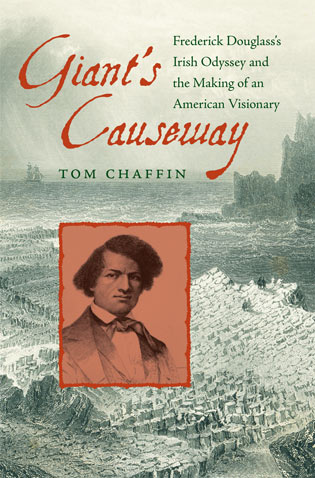
Title: Frederick Douglass’s Irish Odyssey
Sub-Title: Tom Chaffin, author of Giant’s Causeway, assesses the influence on the anti-slavery campaigner of his time in poverty-ridden and religiously divided Ireland

For young Frederick Douglass in August 1845, soon to leave Boston for a lecture tour of undetermined length of Ireland, Scotland and England, fame had proven a double-edged sword.

CU Blog - Frederick Douglass - Model for Single Cause - Death or Diaspora - Photo 2Tall and handsome, Douglass was in his late twenties then – just how late he did not know. Slavery had robbed him of knowledge of the exact circumstances of his birth – its precise date as well as certainty of his father’s identity.

He had escaped his bondage in Maryland in 1837 and soon found his way to the free soil of Massachusetts. Two years later, by then married and having started a family, he had established himself as a gifted orator on the abolitionist speaking circuit. Under the sponsorship of William Lloyd Garrison’s American Anti-Slavery Society, he travelled the states of the North, railing against human bondage and demanding that it be outlawed, activities that sparked frequent threats against him.

In spring 1845, Douglass published his first book– Narrative of the Life of Frederick Douglass, an American slave. The memoir stirred fresh hostilities. To avoid physical harm or being forcibly returned (by bounty-hungry “slave-catchers”) to his bondage in Maryland, it was decided that, until things cooled down, he would leave the United States for a while, for a hastily and incompletely planned lecture tour of the British Isles.

After landing in Liverpool, Douglass and his white travelling companion, fellow abolitionist James Buffum, were to ferry across the Irish Sea to Dublin. There they would commence Douglass’s lecture tour. While in Ireland, he would also work with Richard Webb, a Dublin printer, to publish a British Isles edition of the Narrative.

Still other motivations compelled Douglass’s overseas journey – personal desires left unspoken in public comments made before he sailed. His mother, from whom he was separated soon after his birth, was a slave. Although Douglass was never certain, he presumed that his father was a white man. And by travelling to the British Isles, the orator later wrote, he aspired “to increase my stock of information, and my opportunities for self-improvement, by a visit to the land of my paternal ancestors”.

The journey would transform the young man. Its impact upon him, particularly in Ireland, would be dramatic, lasting and, in the end, liberating. Put another way, in Ireland, Douglass found his own voice. “I can truly say,” he wrote home as he completed his travels there, “I have spent some of the happiest moments of my life since landing in this country, I seem to have undergone a transformation. I live a new life.”

Before leaving Belfast and Ireland, Douglass, on January 1st, 1 846, writing to William Lloyd Garrison, gathered his impressions of Ireland: “My opportunities,” he wrote, “for learning the character and condition of the people of this land have been very great. I have travelled almost from the hill of ‘Howth’ to the Giant’s Causeway and from the Giant’s Causeway to CapeClear.”

In Ireland, Douglass also met several individuals who made deep impressions on him – notably the “Liberator,” Daniel O’Connell; and Cork’s temperance movement leader, Father Theobald Mathew. As the tour progressed, Douglass anticipated – correctly, as it turned out – that newspaper coverage of his passage through Ireland and Great Britain would increase his stature as an international celebrity; and that publicity in foreign newspapers, refracted by the US press, would exponentially increase his renown in America: “My words, feeble as they are when spoken at home,” he told an audience in Cork, “will wax stronger in proportion to the distance I go from home, as a lever gains power by its distance from the fulcrum.” But little did Douglass calculate how that lever of publicity – by increasing the domestic renown that he had traveled to Europe to allow to wane – would, for him, soon nourish still greater worries over personal harm.

The tour of Ireland, Douglass’s first sojourn abroad, tested and transformed the young man’s still emerging identity – his private and public convictions; his self-reliance; his fealty to his wife, friends and colleagues; the depth of his courage; the mettle of his integrity; and the limits of his compassion for the world’s downtrodden. Indeed, as Douglass toured Ireland, a potato crop failure was shadowing the already impoverished island, a ruined harvest that would soon transmogrify into a catastrophe of unparalleled suffering, ruin, death and diaspora. Confronting that poverty, Douglass, writing home, noted that he found “much here to remind me of my former condition”. But he also found his compassion often undercut by repulsion before the island’s “human misery, ignorance, degradation, filth and wretchedness”.

Douglass’s tour consisted of extended stays, for multiple lectures, in Dublin, Cork, Limerick and Belfast. He also made brief stops in Wexford and Waterford. In a country then largely uncrossed by railroads, he conducted an alternately exhilarating and wearying forced-march of successive public performances. Yawning between each stop were long, cold, bone-rattling horse-and-carriage trips through wind- and rain-slashed, coastal mountains and other damp landscapes. In Ireland and Britain, no longer employed by others, Douglass fended for himself, organised his own itinerary and, to help finance the tour, sold copies of the book he had written – until then an impossibility due to a simple fact: most earlier tours had been conducted before the publication of his first book.

The Narrative, as it happened, had been published two months before Douglass’s British Isles tour. In Ireland, as planned, he oversaw the publication of a British Isles edition of the book; afterwards, he did more than stay abreast of accounts and sell the new edition. He also tended to the logistics of transporting the books, or otherwise arranging for them to be sent from his Dublin publisher to each stop – thanks to robust sales, an often urgent task; “Well all my Books went last night at one blow,” he pleaded from Belfast. “I want more[.] I want more.”

Equally important, the tour accelerated Douglass’s transformation from more than a teller of his own life-story into a commentator on contemporary issues – a transition discouraged during his early lecturing days, by white colleagues at the American Anti-Slavery Society: “Give us the facts,” he had been instructed, “we will take care of the philosophy.” “Be yourself,” he was also told. Even so, lest Douglass, in diction and matter, seemed too refined during those years, he was also advised, “Better have a little of the plantation manner of speech than not, ‘tis not best that you seem too learned.”

By the era in which Douglass arrived in Ireland, fewer than half of the island’s population were exclusively speakers of Irish. By then, the language was largely confined to poor, often illiterate and rural areas. Moreover, during his Irish travels, Douglass’s hosts and those who attended his lectures were English-speakers; and his hosts numbered among the island’s more prosperous residents.

In Ireland, Douglass confronted a Pandora’s box of contentious issues – some of immediate relevance to him, others unique to the island; among the latter, he often possessed only a general familiarity. The ever present tensions between Catholics and Protestants proved especially difficult to navigate. As recounted by a local newspaper, during one lecture, responding to an accusation by a Protestant attendee that at another lecture in that same city, Douglass had maligned Protestants, he answered that, “It was not to be expected he could tell a Roman Catholic from Methodist by looking him in the face.”

Attempting to win favour with particular audiences – variously, each dominated by Catholics, Protestants, Irish nationalists, or United Kingdom loyalists – Douglass often strayed into controversies removed from the anti-slavery message that he came to Ireland to impart. But eventually, he disciplined himself to avoid fights not his own and to focus on his campaign to end American slavery.

“I only claim,” he confided to an associate midway through the tour, “to be a man of one idea.” Indeed, challenged during a lecture to explain why the subordination of Ireland’s poor to English interests might also warrant use of the term slavery, he answered, “that if slavery existed here, it ought to be put down.” But, he insisted, “there was nothing like American slavery on the soil on which he now stood”.

After Douglass’s return to America, he resumed his fight against American slavery in the South and for full civil rights for black people living in the North. In that latter effort, Irish-Americans of the North’s cities often numbered among his staunchest opponents. In May 1863, speaking in Brooklyn, he observed, “I am told that the Irish element in this country is exceedingly strong, and that that element will never allow coloured men to stand upon an equal political footing with white men. I am pointed to the terrible outrages committed from time to time by Irishmen upon negroes. The mobs at Detroit, Chicago, Cincinnati, and New York are cited as proving the unconquerable aversion of the Irish toward the coloured race.”

Even so, to the end of his life, Douglass fondly remembered his 1840s lecture tour of Ireland and the welcoming reception he had been accorded. And though many Irish-Americans often opposed his civil rights efforts, he also viewed the Irish, in both Ireland and America, as a persecuted people. He even saw parallels between their plight and that of African Americans. Indeed, throughout his career, Douglass often invoked Daniel O’Connell and his struggles on behalf of Ireland as a cautionary tale for African Americans and, more broadly, the United States. In 1867, for instance, Douglass, in an Atlantic Monthly article observed that “what O’Connell said of the history of Ireland may with greater truth be said of the negro’s. It may be ‘traced like a wounded man through a crowd, by the blood.”

Moreover, during his sojourn in Ireland, Douglass had honed habits of independence, discretion, compromise, self-reliance and practical politics that served him over the coming decades. Those habits eventually empowered him to play his career’s most defining role on the stage of world history-providing counsel for and assisting President Lincoln’s elevation of the US military’s actions during the American civil war from a campaign to preserve the Union to a moral cause devoted to vanquishing American slavery.

— This article is adapted from the introduction to historian Tom Chaffin’s new book Giant’s Causeway: Frederick Douglass’s Irish Odyssey and the Making of an American Visionary (University of Virginia Press). Chaffin lives in Atlanta, Georgia. For more on Giant’s Causeway and his other books, go to tomchaffin.com. —
Source: The Irish Times: Dublin’s Daily Newspaper. Posted 02-02-2015; retrieved 03-17-2016 (St. Patrick’s Day) from: http://www.irishtimes.com/culture/books/frederick-douglass-s-irish-odyssey-1.2084550

Frederick Douglass was able to move his audience … through an appeal to their better nature. People questioned their conscience and the standards of their community. He urged the world – of his day – to do better.

One man … made a difference! And this one man impacted his country … and the whole world.

“The only thing necessary for the triumph of evil is for good men to do nothing” – Edmund Burke; 1729 – 1797; an Irish statesman and member of British Parliament.

The Go Lean/CU roadmap is designed to move the audience of Caribbean stakeholders, to make an impact on the region’s societal engines, corresponding with the prime directives, as follows:

  • Optimization of the economic engines in order to grow the regional economy to $800 Billion & create 2.2 million new jobs.
  • Establishment of a security apparatus to protect the resultant economic engines.
  • Improve Caribbean governance to support these engines.

The focus of this commentary, Frederick Douglass’ legacy, is relevant for our life and times and the Go Lean prime directives. Notice the parallels: The institution of slavery was initiated for economic purposes. In addition, there was no consideration to security principles for the enslaved population. But for the relevance to the Go Lean book, the subject of consideration is one of governance, the need for technocratic stewardship of the regional Caribbean society. This point of governance against the backdrop of the legacy of slavery was pronounced early in the book, in the opening Declaration of Interdependence (Pages 10 – 14) with these declarations:

Preamble:  As the history of our region and the oppression, suppression and repression of its indigenous people is duly documented, there is no one alive who can be held accountable for the prior actions, and so we must put aside the shackles of systems of repression to instead formulate efficient and effective systems to steer our own destiny.

xi.   Whereas all men are entitled to the benefits of good governance in a free society, “new guards” must be enacted to dissuade the emergence of incompetence, corruption, nepotism and cronyism at the peril of the people’s best interest. The Federation must guarantee the executions of a social contract between government and the governed.

xii. Whereas the legacy in recent times in individual states may be that of ineffectual governance with no redress to higher authority, the accedence of this Federation will ensure accountability and escalation of the human and civil rights of the people for good governance, justice assurances, due process and the rule of law. As such, any threats of a “failed state” status for any member state must enact emergency measures on behalf of the Federation to protect the human, civil and property rights of the citizens, residents, allies, trading partners, and visitors of the affected member state and the Federation as a whole.

xxxiii. Whereas lessons can be learned and applied from the study of the recent history of other societies, the Federation must formalize statutes and organizational dimensions to avoid the pitfalls of [other] communities.

The Go Lean book stresses key community ethos, strategies, tactics, implementations and advocacies necessary to transform and turn-around the eco-systems of Caribbean society and learn the lessons from history. The book details the following:

Community Ethos – Economic Principles – Economic Systems Influence Individual Choices Page 21
Community Ethos – Economic Principles – Consequences of Choices Lie in the Future Page 21
Community Ethos – Ways to Impact the Future Page 26
Community Ethos – Ways to Foster Genius – Developing leadership genius Page 27
Community Ethos – Ways to Impact the Greater Good Page 37
Strategy – Vision – Confederate all 30 member-states / 4 languages into aSingle Market Page 45
Strategy – Mission – Build and foster local economic engines Page 45
Tactical – Ways to Foster a Technocracy Page 64
Tactical – Growing the Economy – Post WW II European Marshall Plan Model Page 68
Tactical – Separation-of-Powers – CU Federal Government versus Member-State Governance Page 71
Planning – 10 Big Ideas – Failed States Marshall Plan Page 127
Planning – Ways to Make the Caribbean Better Page 131
Planning – Ways to Improve Failed-State Indices – Local Government and the Social Contract Page 134
Planning – Lessons Learned from the previous West Indies Federation Page 135
Planning – Lessons Learned from Detroit – Turn-around from Failure Page 140
Advocacy – Ways to Grow the Economy Page 151
Advocacy – Ways to Improve Governance Page 168
Advocacy – Ways to Better Manage the Social Contract Page 170
Advocacy – Ways to Improve Homeland Security Page 180
Advocacy – Ways to Impact the Diaspora Page 217
Advocacy – Ways to Preserve Caribbean Heritage Page 218
Advocacy – Ways to Protect Human Rights Page 220

Previous Go Lean blogs presented other lessons for the Caribbean to learn from considering history; the following previous blog/commentaries apply:

https://goleancaribbean.com/blog/?p=5333 A Lesson in History – Legacies: Cause and Effect
https://goleancaribbean.com/blog/?p=5183 A Lesson in History – Cinco De Mayo and the Mexican Experience
https://goleancaribbean.com/blog/?p=5123 A Lesson in History – Royal Charter: Zimbabwe -vs- South Africa
https://goleancaribbean.com/blog/?p=5055 A Lesson in History – Royal Charter: Empowering Families
https://goleancaribbean.com/blog/?p=4971 A Lesson in History – Royal Charter: Truth & Consequence
https://goleancaribbean.com/blog/?p=4935 A Lesson in History – The ‘Grand Old Party’ of American Politics
https://goleancaribbean.com/blog/?p=4613 A Lesson in History – Ireland’s Death And Diaspora Legacy
https://goleancaribbean.com/blog/?p=2297 A Lesson in History – Booker T versus Du Bois
https://goleancaribbean.com/blog/?p=1531 A Lesson in History – 100 Years Ago Today – World War I
https://goleancaribbean.com/blog/?p=789 A Lesson in History – America’s War on the Caribbean

There is the effort to remediate American and European societies now. They recognize the futility of the actions of their ancestors and predecessors with the legacy of slavery. They are now battling to try and weed-out the last vestiges of racism and discrimination. This is good!

But …

… the Go Lean roadmap focuses on the Caribbean homeland only. It is out-of-scope to impact America, Europe or Ireland. Our quest is simple, the future, a 21st century effort to model Frederick Douglass and make the Caribbean region a better place to live, work and play.  🙂

Download the free e-Book of Go Lean … Caribbean – now!

Share this post:
, , , ,
[Top]

‘A Change Is Gonna Come’

Go Lean Commentary

There is a lot we can learn from the Chinese …

… there is a Chinese proverb: “Make happy those who are near, and those who are far will come”.

- Photo 2

This ancient expression is like saying “Love yourself first and others will love you”. Looking at it from a different point of view: “if you treat your friends like crap, you will stand alone without a friend, but if you treat your friends with kindness, you will make more friends”.

The Caribbean needs more friends … and to treat its stakeholders (residents, Diaspora, visitors, trading partners, etc.) better.

Can we get the Caribbean region to effect this change?

One way or another: “A Change Is Gonna Come”!

Either we change proactively, or reactively. The only constant is change itself.

This was the theme of a powerful song by legendary R&B singer Sam Cooke in 1964. See the song-VIDEO here:

AUDIO-VIDEO – Sam Cooke – A Change Is Gonna Come (Official Lyric Video)https://youtu.be/wEBlaMOmKV4

Published on Jan 22, 2016 – Lyric Video for “A Change Is Gonna Come” performed by Sam Cooke.
Directed & Produced by: Robin Klein, Mick Gochanour, Hector Sanitizo
Video Editor: Andre Murrugarra  (C) 2016 ABKCO Music & Records, Inc.
Download or stream the single below:
iTunes: https://itunes.apple.com/us/album/por
Google: https://play.google.com/store/music/a
Amazon: http://www.amazon.com/Portrait-Legend
Stream On Spotify: https://open.spotify.com/track/1WMUes

- Photo 1Lyrics:
I was born by the river in a little tent
Oh, and just like the river I’ve been a-runnin’ ever since.
It’s been a long, a long time comin’,
but I know, oh-oo-oh,
a change gon’ come, oh yes, it will.

It’s been too hard living but I’m afraid to die
‘Cause I don’t know what’s up there beyond the sky
It’s been a long, a long time comin’,
But I know, oh-oo-oh,
A change gonna come, oh yes, it will.

I go to the movie and I go downtown
Somebody keep tellin’ me don’t hang around.
It’s been a long, a long time coming, but I know, oh-oo-oh,
A change gon’ come, oh yes, it will.

Then I go, oh-oo-oh, to my brother and I say, brother, help me please.
But he winds up knocking me back down on my knees, oh.

There’ve been times that I thought I couldn’t last for long
But now I think I’m able to carry on
It’s been a long, a long time comin’,
But I know, oh-oo-oh, a change gonna come, oh yes, it will.

Music video by Sam Cooke performing A Change Is Gonna Come. (C) 2016 ABKCO Music & Records, Inc.
http://vevo.ly/nTXKoJ
Category: Music
License: Standard YouTube License

There is a lot more “story” to this story about this song. See here:

AUDIO – NPR’s Fresh Air: Sam Cooke And The Song That ‘Almost Scared Him’ – http://www.npr.org/2014/02/01/268995033/sam-cooke-and-the-song-that-almost-scared-him

Published February 1, 2014 – The story of “A Change Is Gonna Come’ is as amazing, and unsettling, as the song itself.

The foregoing song is gravely serious – no one dances to it – but it does convey the emotion that change is hard sprung, yet necessary. From an American perspective, perhaps that change did come … in 2008 with the “ribbon on the package” of the Civil Rights movement being the election of Barack Obama as the first Black Man as President of the United States. This was a big, shocking and pivotal moment.

The Caribbean needs big, shocking and pivotal moments of its own. We need change and a turn-around; we need to do better in making our people happy so that those far off will come … to us as well. Those far off will include tourists and our Diaspora: reaching more sources of tourist visitors, and facilitating the return of so many Caribbean exiles.

These missions (tourism and repatriation) are familiar themes for the publishers of the book Go Lean…Caribbean.

The book serves as a roadmap for the introduction and implementation of the Caribbean Union Trade Federation (CU); an initiative to bring change and empowerment to the Caribbean region; to make the region a better place to live, work and play. This Go Lean roadmap has these 3 prime directives:

  • Optimization of the economic engines in order to grow the regional economy to $800 Billion & create 2.2 million new jobs.
  • Establishment of a security apparatus to ensure public safety for all Caribbean stakeholders and protect the resultant economic engines.
  • Improve Caribbean governance to support these engines.

Of the 144 different missions presented in the Go Lean book, a number of them are presented specifically to address the issues raised in this commentary. This is part of the technocratic shepherding designed for the CU, to elevate the Caribbean homeland, by this roadmap in these two areas: 1. Tourism and 2. Repatriation.

1. Tourism

The underlying goals for this industrial occupation are stated early in the Go Lean book with these pronouncements in the opening Declaration of Interdependence (Pages 11 & 14):

iii.  Whereas the natural formation of the landmass for our society is that of an archipelago of islands, inherent to this nature is the limitation of terrain and the natural resources there in. We must therefore provide “new guards” and protections to ensure the efficient and effective management of these resources.

iv.  Whereas the natural formation of the landmass is in a tropical region, the flora and fauna allows for an inherent beauty that is enviable to peoples near and far. The structures must be strenuously guarded to protect and promote sustainable systems of commerce paramount to this reality.

v.   Whereas the natural formation of our landmass and coastlines entail a large portion of waterscapes, the reality of management of our interior calls for extended oversight of the waterways between the islands. The internationally accepted 12-mile limits for national borders must be extended by International Tribunals to encompass the areas in between islands. The individual states must maintain their 12-mile borders while the sovereignty of this expanded area, the Exclusive Economic Zone, must be vested in the accedence of this Federation.

xxvi. Whereas the Caribbean region must have new jobs to empower the engines of the economy and create the income sources for prosperity, and encourage the next generation to forge their dreams right at home, the Federation must therefore invigorate the enterprises related to existing industries like tourism … – impacting the region with more jobs.

That publication stressed creative marketing for better tourism outreach, featuring highlights such the following strategies, tactics, implementations and advocacies:

Strategy – Vision – Integrate Region in a Single Market Page 45
Strategy – Mission – Build and Foster Local Economic Engines Page 45
Strategy – Mission – Exploit the Benefits of Globalization in Trade-Tourism Page 46
Tactical – Fostering a Technocracy Page 64
Tactical – Growing the Economy to $800 Billion – Trade and Globalization Page 70
Tactical – Website www.myCaribbean.gov for Caribbean stakeholders – Tourists Page 74
Tactical – Separation of Powers – Tourism Promotions and Administration Page 78
Implementation – Integrate All Caribbean Websites to www.myCaribbean.gov Portal Page 97
Implementation – Ways to Deliver – Agile / Lean / Quality Assurances Page 109
Implementation – Ways to Impact Social Media – www.myCaribbean.gov Portal Page 111
Planning – 10 Big Ideas – Cyber Caribbean Page 127
Planning – Ways to Make the Caribbean Better – VIP’s for Events and Cultural Festivals Page 131
Planning – Ways to Better Manage Image – Digital Media Presence Page 133
Planning – Lessons Learned from 2008 – Tourism & Economy Went Bust Page 136
Planning – Lessons Learned from Egypt – Lack of Tourism Stewardship Page 143
Advocacy – Ways to Measure Progress – Mining www.myCaribbean.gov Portal Data Page 147
Advocacy – Ways to Foster Cooperatives – Purchasing Cooperatives for TV Ads Page 176
Advocacy – Ways to Improve Communications – Internet & Social Media Marketing Page 186
Advocacy – Ways to Enhance Tourism – Excess Inventory Marketing Page 190
Advocacy – Ways to Impact Events – Sharing Economy Page 191
Advocacy – Ways to Market Southern California – Example of Exploiting a Specific Market Page 194
Advocacy – Ways to Foster Technology – Economies-of-Scale for Centers of Excellence Page 197
Advocacy – Ways to Foster e-Commerce – Global Outreach via Social Media Page 198
Advocacy – Ways to Preserve Caribbean Heritage – Cyber-Caribbean Image/Media Page 218

Other blog/commentaries stressed related issues and details for optimizing the tourism product. The following sample applies:

https://goleancaribbean.com/blog/?p=7449 Assurances to Restore Tourism After Catastrophes
https://goleancaribbean.com/blog/?p=7327 Zika Virus: How to Mitigate the Effects on Tourism
https://goleancaribbean.com/blog/?p=6921 Live. Work. Play. Repeat.
https://goleancaribbean.com/blog/?p=6680 Casino Industry Placing Bets on Video Games
https://goleancaribbean.com/blog/?p=6385 Protecting Tourists from Wi-Fi Hot Spots Run By Hackers
https://goleancaribbean.com/blog/?p=6341 Tourism Stewardship — What’s Next?
https://goleancaribbean.com/blog/?p=5210 Cruise Ship Commerce – Getting Ready for Change
https://goleancaribbean.com/blog/?p=4639 Tobago: A Model for Cruise Tourism
https://goleancaribbean.com/blog/?p=3225 The need to optimize Caribbean aviation policies
https://goleancaribbean.com/blog/?p=2571 Internet Commerce meets Sharing Economy: Airbnb
https://goleancaribbean.com/blog/?p=1984 Casinos Failing Business Model within Tourism
https://goleancaribbean.com/blog/?p=1943 The Future of Golf; Vital for Tourism
https://goleancaribbean.com/blog/?p=273 10 Things We Want from the US – # 2: Tourists
https://goleancaribbean.com/blog/?p=254 The need to enhance Tourism with “Air Lifts”
https://goleancaribbean.com/blog/?p=235 Tourism’s changing profile

2. Repatriation

In addition to tourism, the proverb – “Make happy those who are near, and those who are far will come” – speaks to the goal of repatriating the Caribbean Diaspora that has scattered far and wide. The theme of inviting their return and/or incentivizing their repatriation to the homeland has been prominent for this Go Lean movement. There is the direct reference in the book (Page 118) and many related blog/commentaries (see list below). This underlying goal / mission was stated early in the book with these pronouncements in the opening Declaration of Interdependence (Page 12 & 13):

xiii. Whereas the legacy of dissensions in many member-states (for example: Haiti and Cuba) will require a concerted effort to integrate the exile community’s repatriation, the Federation must arrange for Reconciliation Commissions to satiate a demand for justice.

xix. Whereas our legacy in recent times is one of societal abandonment, it is imperative that incentives and encouragements be put in place to first dissuade the human flight, and then entice and welcome the return of our Diaspora back to our shores. This repatriation should be effected with the appropriate guards so as not to imperil the lives and securities of the repatriated citizens or the communities they inhabit. The right of repatriation is to be extended to any natural born citizens despite any previous naturalization to foreign sovereignties.

xx.  Whereas the results of our decades of migration created a vibrant Diaspora in foreign lands, the Federation must organize interactions with this population into structured markets. Thus allowing foreign consumption of domestic products, services and media, which is a positive trade impact. These economic activities must not be exploited by others’ profiteering but rather harnessed by Federation resources for efficient repatriations.

Change must come to the Caribbean; especially to attract and recruit repatriates. There are real obstacles that the region must overcome: the poor performing economy and the threats to public safety. So the prime directives of the Go Lean/CU roadmap is to elevate Caribbean society and all of its societal engines. The success of our movement should be publicized and messaged throughout the world. After all…

… the Caribbean is the greatest address on the planet… arguably. This claim is not just made based on terrain, but also culture (music, food, festivals and fun). If/when we fix the societal defects, the native sons (and daughters) living in the Diaspora should beat a path to come home.

With confidence we can declare: “A Change Is Gonna Come”!

But this time, the change must be permanent! The Go Lean book declares that for permanent change to take place, there must first be an adoption of new community ethos, the national spirit that drives the character and identity of its people. The roadmap was constructed with the following community ethos in mind, plus the execution of strategies, tactics, implementation and advocacies to invite and incentivize the Diaspora to return. The following is a sample of these specific details from the book:

Community Ethos – Deferred Gratification Page 21
Community Ethos – Economic Principles – People Choose Page 21
Community Ethos – Economic Principles – All Choices Involve Costs Page 21
Community Ethos – Economic Principles – People Respond to Incentives in Predictable Ways Page 21
Community Ethos – Economic Principles – Economic Systems Influence Individual Choices Page 21
Community Ethos – Economic Principles – The Consequences of Choices Lie in the Future Page 21
Community Ethos – Security   Principles – Anti-Bullying and Mitigation Page 23
Community Ethos – Governing Principles – Minority Equalization Page 24
Community Ethos – Governing Principles – Lean Operations Page 24
Community Ethos – Ways to Impact the Future Page 26
Community Ethos – Ways to Foster Genius Page 27
Community Ethos – Ways to Help Entrepreneurship – Incubators Page 28
Community Ethos – Ways to Promote Intellectual Property Page 29
Community Ethos – Ways to   Impact Research & Development Page 30
Community Ethos – Ways to Manage Reconciliations Page 34
Community Ethos – Ways to Improve Sharing Page 35
Community Ethos – Ways to Promote Happiness Page 36
Community Ethos – Ways to Impact the Greater Good Page 37
Anecdote – LCD versus an Entrepreneurial Ethos Page 39
Strategy – Mission – Celebrate the Music, Sports, Art, People and Culture of the Caribbean Page 46
Tactical – Confederating a Permanent Union Page 63
Tactical –  Separation of Powers: Federal Administration versus Member-States Governance Page 71
Implementation – Ways to Pay for Change Page 101
Planning – Ways to Make the Caribbean Better – Live, Work and Play Empowerments Page 131
Planning – Ways to Better Manage Image Page 133
Advocacy – Ways to Grow the Economy Page 151
Advocacy – Ways to Create Jobs Page 152
Advocacy – Ways to Improve Governance in the Caribbean Region Page 168
Advocacy – Ways to Better Manage the Social Contract Page 170
Advocacy – Ways to Remediate and Mitigate Crime Page 178
Advocacy – Ways to Improve Communications – Improve the Messaging Page 186
Advocacy – Ways Impact the Diaspora Page 217
Advocacy – Ways to Improve the Arts Page 230
Advocacy – Ways to Promote Music Page 231
Advocacy – Ways to Improve Urban Living Page 234
Advocacy – Ways to Improve Rural Living Page 235

There have been many previous blog/commentaries that stressed issues related to repatriation. The following sample applies:

https://goleancaribbean.com/blog/?p=7412 The Road to Restoring Cuba
https://goleancaribbean.com/blog/?p=7151 The Caribbean is Looking for Heroes … ‘to Return’
https://goleancaribbean.com/blog/?p=6718 A Lesson in History – No Compromise on Human Rights
https://goleancaribbean.com/blog/?p=6247 Tragic images show refugee crisis at a tipping point in Europe
https://goleancaribbean.com/blog/?p=6016 Hotter than July – Still ‘Third World’ – The Need for Cooling …
https://goleancaribbean.com/blog/?p=5784 The Need for Human Rights/LGBT Reform in the Region
https://goleancaribbean.com/blog/?p=5695 Repenting, Forgiving and Reconciling the Past
https://goleancaribbean.com/blog/?p=4613 ‘Luck of the Irish’ – Lessons from their Past, Present and Future

Truth be told, the Caribbean is in competition with the rest of the world.

Considering the analogy of a race, we are behind, trailing our competitors. There are many empowerments that our Caribbean region needs to implement. While no society is perfect, nor fully optimized, some countries have been better than others. Many countries in North America and Western Europe have been lands of refuge for our Caribbean Diaspora. We must now fix our own broken societal engines, so as to dissuade people from leaving in the first place. Plus, many of these North American and European societies leave a lot to be desired for our Black and Brown immigrants from the Caribbean. There is heavylifting for these ones to thrive in those foreign lands. The logical conclusion: stay home in the Caribbean and work towards improving the homeland.

While we do have problems to contend with, many which we are failing at, our biggest crisis stem from the fact that so many of our citizens have fled their Caribbean homelands for foreign shores. These lands should not be the panacea of Caribbean hopes and dreams.

Based on the foregoing Chinese proverb, we can and must make people happy that are near us. Once we succeed, then others – tourists and repatriates – will come to enjoy our happier homelands.

This is easier said than done, but it is conceivable, believable and achievable!

Many of the resources (people) involved in the Go Lean/CU roadmap have done this before … else where. They know the process is to start small, optimize the engines in their neighborhoods, then widen out to a wider community, optimize the engines there, then widen out further to the whole country; again optimize the national engines and then widen out to the full region  For success, we must keep moving forward.  🙂

Download the book Go Lean … Caribbean – now!


Share this post:
, , , ,
[Top]

‘The Covenant with Black America’ – Ten Years Later

Go Lean Commentary

In 2006, [writer-commentator] Tavis Smiley — along with a team of esteemed contributors — laid out a national plan of action to address the ten most crucial issues facing African Americans. The Covenant, which became a #1 New York Times bestseller, ran the gamut from health care to criminal justice, affordable housing to education, voting rights to racial divides. But a decade later, Black men still fall to police bullets and brutality, Black women still die from preventable diseases, Black children still struggle to get a high quality education, the digital divide and environmental inequality persist, and American cities from Ferguson to Baltimore burn with frustration. In short, the last decade has seen the evaporation of Black wealth, with Black fellow citizens having lost ground in nearly every leading economic category.

And so in these pages Smiley calls for a renewal of The Covenant, presenting the original action plan alongside new data from the Indiana University School of Public & Environmental Affairs (SPEA) to underscore missed opportunities and the work that remains to be done. While life for far too many African Americans remains a struggle, the great freedom fighter Frederick Douglass was right: “If there is no struggle, there is no progress.”

Now is the time to finally convert the trials and tribulations of Black America into the progress that all of America yearns for.
The Covenant with Black America – Ten Years Later (Retrieved 01/14/2016) –
Hay House, Inc, January 5, 2016 – Social Science – 296 pages
https://books.google.com/books?id=VIk1CwAAQBAJ&source=gbs_similarbooks
- Photo 1

With descriptors like the foregoing, it would be understandable if Black people from other countries are dissuaded from emigrating to the United States. Yet, the opposite is happening! The book Go Lean … Caribbean relates that people in the Caribbean – mostly Black and Brown – are beating down the doors to get out of their Caribbean homelands, to seek refuge in places like the US; (a smaller faction emigrate to Canada and Western Europe). This really conveys the sad state of affairs for the Caribbean eco-system. While things are bad for Blacks in America, according to the foregoing, more Black people want to come in, instead of working to remediate the problems in their own homelands.

Black America has some work to do. Travis Smiley – the eloquent social-political commentator, and his band of experts – provided a blueprint-roadmap to effect change in their communities. See here:

Book Title: Covenant with Black America
By: Tavis Smiley
Third World Press, 2006 – Political Science – 254 pages

Six years’ worth of symposiums come together in this rich collection of essays that plot a course for African Americans, explaining how individuals and households can make changes that will immediately improve their circumstances in areas ranging from health and education to crime reduction and financial well-being. Addressing these pressing concerns are contributors Dr. David Satcher, former U.S. surgeon general; Wade Henderson, executive director of the Leadership Conference on Civil Rights; Angela Glover Blackwell, founder of the research think tank PolicyLink; and Cornell West, professor of Religion at PrincetonUniversity. Each chapter outlines one key issue and provides a list of resources, suggestions for action, and a checklist for what concerned citizens can do to keep their communities progressing socially, politically, and economically. Though the African American community faces devastating social disparities—in which more than 8 million people live in poverty—this celebration of possibility, hope, and strength will help leaders and citizens keep Black America moving forward.

What is the Covenant with Black America?

The Covenant with Black America is a national plan of action to address the primary concerns of African Americans today—from health to housing, from crime to criminal justice, from education to economic parity.

Why A Covenant and Why Now?

As we witnessed in the 2004 and 2008 presidential elections, Americans are deeply divided between race, class, gender, political ideology and moral values. A divide so extreme, that in order to bridge it, we must speak openly, freely, without judgment and work together. It is imperative that we take this opportunity to consider the issues of particular interest to African Americans and to establish a national plan of action to address them. No longer can we sit back and expect one political party, one segment of the population or one religious denomination to speak for us or to act on our behalf. It is our responsibility as an entire community to no longer be left behind politically, socially, or economically and to bridge the economic and social divides ourselves, by encouraging a conversation and a commitment that will inevitably benefit all Americans.

State of the Black Union: Defining the African American Agenda Part I & II

For the last ten years, the country’s visionaries, educators, public policy makers, religious leaders, opinion makers, and community organizers have come together to weigh in on the most challenging issues facing Black America. This symposium—The State of the Black Union—has always encouraged dialogue and the exchange of ideas about issues and factors that gauge the progress of America’s promise for African Americans; however, last year’s gathering marked a turning point.

On the heels of the 2004 presidential election, a sour economy, a rising death toll in Iraq, a growing prison population, and deepening disparities in healthcare and public education, collectively “we the people” decided that it was time to shift the conversation from talking about our “pain” to talking about our “plan”. It is a plan that moves our critique of America to a construction of America—a country that is as good as its promise. At the close of the 2005 State of the Black Union, the public was invited to share what they wanted from this plan. African Americans across the country let us know what their concerns were once we put out the call for them to do so at our website. In short, take control of their own destiny. We believe that The Covenant has the power to do this and more.

Less than one year later, that plan, roadmap, blueprint was published as the Covenant with Black America. On the recommendation of Rev. Dr. Joseph E. Lowery, co-founder with Dr. Martin Luther King, Jr. of the Southern Christian Leadership Conference, we decided to call this document a “covenant” and not a “contract” because it speaks to the spiritual dimension of the Black struggle for progress in America.

We are especially pleased with the thought-leaders and opinion-makers who have contributed introductory essays to each of the 10 covenant chapters in the book. Each is nationally recognized for contributions in their various fields of interest and each donated his/her time and expertise to make this project possible.

It was important for us to maintain the integrity of this project by guaranteeing that from conception to birth, this project would be imbued with the spirit and soul of Black people. We made the plea over the nationally-syndicated Tom Joyner Morning Show and Black folk everywhere responded. The name of each donor is listed in the text of the book. It’s a wonderful thing to peruse the list and to see the names of individual Black family members who supported this effort. It is even more empowering to know that these citizens are serious about their future and that of our country.

The rise of the Covenant with Black America to #1 on the New York Times best-seller list proved that there was tremendous interest in a plan of action that addressed the concerns of Black Americans. Tavis Smiley, the visionary responsible for creating and building the momentum around the book, embarked on a five-month, 20-city national tour, holding sessions in churches in cities such as Philadelphia, Atlanta, Memphis, New York, Baltimore, and Cleveland.

To build on the excitement and discussion around the book, Tavis Smiley invited people around the country to host Covenant Celebrations as part of the Covenant Conversation and Celebration Weekend. The first 1,000 party hosts who sent Smiley an invitation to their celebration received a special covenant gift pack. One lucky party hosted Smiley and PrincetonUniversity professor Cornel West as their guests, where they discussed issues in The Covenant.

- Photo 2Dr. Martin Luther King, Jr. once said that the nettlesome task of Black Americans is to bear the burden of redeeming the soul of America. Without question, Black folk have always been the conscience of the country. It is our hope that we can yet again help our beloved nation live up to the promise of her ideals. The political paradigm has shifted; it’s time to build a new construct, and the Covenant with Black America is the tool for the task.

The Back Story of The Covenant Cover Photo

The background image on the cover of The Covenant book is an original photograph by world renowned photographer Chester Higgins, Jr. The photograph features eight year old Sojourner from New York.

In the face of this young girl, the cover of The Covenant represents our family histories. The image of the child’s face is composed of over three hundred smaller images of our ancestors submitted by African Americans across the country.

The Covenant is about the future. About the hope of Black youth yet unborn. About our past and the courage of our ancestors. About the present—right here and right now. The Covenant will reflect our independence, our interdependence and our interconnectedness.
Source: http://www.covenantwithblackamerica.com/background.htm; posted 2006; retrieved January 14, 2016

The Caribbean also has some work to do. The book Go Lean … Caribbean serves as a roadmap for effecting change in the Caribbean; it introduces the technocratic Caribbean Union Trade Federation (CU) as a vehicle to bring about desired change in the region’s economics, security and governing engines.

The Covenant with Black America addresses Income Inequality in the US, identifying the Black population versus the full general population. The book reveals that the Black Population is not just failing to keep pace with other communities, but also falling behind; going backwards, in the last 10 years.

This is bad! This corresponds with much of the time period for the focus of the Go Lean book. Go Lean was composed in the wake of the Great Recession of 2008 – a frequent topic for the Go Lean book and accompanying blogs. The desire to eliminate or reduce Income Inequality is a practical argument to enhance social cohesion and reduce social unrest. Social eruptions can weaken society and start the slide down the “slippery slope” to Failed-State status. It is important for Caribbean society to be “on guard” for encroachments in this regard.

This Go Lean/CU roadmap is designed to provide better economic stewardship (governance), to ensure that the economic failures of the past, in the Caribbean and other regions – like the US – do not re-occur here in the Caribbean homeland. The book posits that we must NOT fashion ourselves as parasites of the US, but rather pursue a status as a protégé, benefiting from their lessons-learned but molding a better society.

The Go Lean book cites the example of the American Dream and the failings to execute on that promise, as demonstrated with the Occupy Wall Street protests of 2011, with these quotations:

The Bottom Line on the American DreamPage 223
The American Dream is a national ethos of the United States, a set of ideals in which freedom includes the opportunity for prosperity and success, and an upward social mobility achieved through hard work. This idea of the American Dream is rooted in the US Declaration of Independence which proclaims that “all men are created equal… endowed by their Creator with certain inalienable rights” including “Life, Liberty and the pursuit of Happiness.” The meaning of the “American Dream” has changed over history, and includes components as home-ownership and upward mobility. A lot of people followed the American Dream to achieve a greater chance of becoming rich. For example, the discovery of gold in California in 1849 brought in 100,000 men looking for their fortune overnight—and a few did find it. Thus was born the California Dream of instant success. Historian H. W. Brands noted that in the years after the Gold Rush, the California Dream spread across the nation: “The old American Dream . . . was the dream of the Puritans, of Benjamin Franklin’s “Poor Richard” . . . of men and women content to accumulate their modest fortunes a little at a time, year by year by year. The new dream was the dream of instant wealth, won in a twinkling by audacity and good luck. [This] golden dream . . . became a prominent part of the American psyche”. Today, some posit that the ease of achieving this Dream changes with technological advances, available infrastructure, regulations, state of the economy, and the evolving cultural values of the US demographics.

Ways to Impact Wall Street – Learn from Occupy Wall Street Protest MovementPage 200
This protest movement began on September 17, 2011, in Zuccotti Park, located in New York City’s Wall Street financial district. The main issues raised by the protests were social and economic inequality, greed, corruption and the perceived undue influence of financial service firms on the Federal government. The slogan, “We are the 99%”, referred to Income Inequality and wealth distribution in the U.S. between the wealthiest 1% and the rest of the population. In hindsight and as a lesson for the CU, these underlying concerns were legitimate as the 2008 Great Recession had its root causes tied to the many issues of Wall Street abuses against Main Street.

The Go Lean book does not cast judgment on all of the American people. It is the position of this commentary that for the most part, the people of the United States are good-natured and mean well in their pursuits of the Greater Good. But this commentary frequently relates that the continued institutional racism in America sets a barrier for progress for  Black Americans, in terms of education and career opportunities. In addition, there is a Shadow Influence in the US financial eco-system that undermines a lot of policies for the Greater Good. Therefore the inequalities between Black society and general society are merely a reflection of the societal defects in the US in total. This land (America), despite the actuality, should not be so alluring to foreign Black people. See a related VIDEO here:

VIDEOhttps://youtu.be/qIc014b491YTavis Smiley: Obama Failed Black Americans as President

Published on Jan 11, 2016 – Radio show host Tavis Smiley tells Fox News’ Megyn Kelly that Barack Obama failed Black Americans as President.

The book Go Lean … Caribbean posits that America is plagued with institutional racism and Crony-Capitalism. It is therefore not the eco-system for the Caribbean to model. Rather the roadmap designs more empowerments for the Caribbean Middle Class – as in creating 2.2 million new jobs – and less to the Rich – One Percent. (Though there is no plan to penalize success and to forcibly redistribute any wealth).

In general, the CU will employ better strategies, tactics and implementations to impact its prime directives; identified with the following 3 statements:

  • Optimization of the economic engines in order to grow the regional economy to $800 Billion & create 2.2 million new jobs.
  • Establishment of a security apparatus to protect the resultant economic engines and mitigate internal and external threats.
  • Improvement of Caribbean governance to support these engines.

Early in the Go Lean book, this need for careful technocratic stewardship of the regional Caribbean economy was pronounced (Declaration of Interdependence – Page 12 – 13) with these acknowledgements and statements:

xi.   Whereas all men are entitled to the benefits of good governance in a free society, “new guards” must be enacted to dissuade the emergence of incompetence, corruption, nepotism and cronyism at the peril of the people’s best interest. The Federation must guarantee the executions of a social contract between government and the governed.

xii.   Whereas the legacy in recent times in individual states may be that of ineffectual governance with no redress to higher authority, the accedence of this Federation will ensure accountability and escalation of the human and civil rights of the people for good governance, justice assurances, due process and the rule of law. As such, any threats of a “failed state” status for any member state must enact emergency measures on behalf of the Federation to protect the human, civil and property rights of the citizens, residents, allies, trading partners, and visitors of the affected member state and the Federation as a whole.

xxiv. Whereas a free market economy can be induced and spurred for continuous progress, the Federation must install the controls to better manage aspects of the economy: jobs, inflation, savings rate, investments and other economic principles. Thereby attracting direct foreign investment because of the stability and vibrancy of our economy.

xxv.  Whereas the legacy of international democracies had been imperiled due to a global financial crisis, the structure of the Federation must allow for financial stability and assurance of the Federation’s institutions. To mandate the economic vibrancy of the region, monetary and fiscal controls and policies must be incorporated as proactive and reactive measures. These measures must address threats against the financial integrity of the Federation and of the member-states.

The Go Lean book stressed the key community ethos, strategies, tactics, implementations and advocacies necessary to regulate and manage the regional economy and mitigate Income Inequality in the Caribbean eco-system. These points are detailed in the book, as in this sample list:

Community Ethos – Economic Principles – Economic Systems Influence Individual Choices Page 21
Community Ethos – Economic Principles – Consequences of Choices Lie in the Future Page 21
Community Ethos – Economic Principles – Money Multiplier Page 23
Community Ethos – Governing Principles – Lean Operations Page 24
Community Ethos – Ways to Impact the Future Page 26
Community Ethos – Ways to Impact the Greater Good Page 37
Strategy – Mission – Fortify the Stability of the Banking Institutions Page 45
Strategy – Provide Proper Oversight and Support for the Depository Institutions Page 46
Tactical – Ways to Foster a Technocracy Page 64
Tactical – Growing the Economy – Minimizing Bubbles Page 69
Tactical – Separation-of-Powers – Caribbean Central Bank Page 73
Tactical – Separation-of-Powers – Depository Institutions Regulatory Agency Page 73
Anecdote – Turning Around CARICOM – Effects of 2008 Financial Crisis Page 92
Implementation – Assemble Caribbean Central Bank as a Cooperative Page 96
Implementation – Ways to Better Manage Debt Page 114
Planning – 10 Big Ideas – Single Market / Currency Union Page 127
Planning – Ways to Improve Failed-State Indices Page 134
Planning – Lessons Learned from 2008 Page 136
Advocacy – Ways to Grow the Economy Page 151
Advocacy – Ways to Control Inflation Page 153
Advocacy – Ways to Impact Wall Street – Lessons from the “Occupy Wall Street” Protests Page 200
Advocacy – Ways to Impact Main Street Page 201
Advocacy – Battles in the War on Poverty Page 222
Advocacy – Ways to Help the Middle Class Page 223
Advocacy – Ways to Impact the One Percent Page 224

The points of effective, technocratic economic stewardship of the Caribbean have been detailed in these previous blog/commentaries:

https://goleancaribbean.com/blog/?p=6563 Lessons from Iceland – Model of Recovery
https://goleancaribbean.com/blog/?p=6531 A Lesson in History – Book Review of the ‘Exigency of 2008’
https://goleancaribbean.com/blog/?p=6399 Book Review on ‘Mitigating Income Inequality’
https://goleancaribbean.com/blog/?p=6286 Managing the ‘Invisible Hand of the Market’
https://goleancaribbean.com/blog/?p=5733 Better than America? Yes, We Can!
https://goleancaribbean.com/blog/?p=5597 Economic Principle: Market Forces -vs- Collective Bargaining
https://goleancaribbean.com/blog/?p=3582 For Canadian Banks: Caribbean is a ‘Bad Bet’
https://goleancaribbean.com/blog/?p=3090 Introduction to Europe – All Grown Up
https://goleancaribbean.com/blog/?p=2930 ‘Too Big To Fail’ – Caribbean Version
https://goleancaribbean.com/blog/?p=1014 All is not well in the sunny Caribbean
https://goleancaribbean.com/blog/?p=782 Open the Time Capsule: The Great Recession of 2008
https://goleancaribbean.com/blog/?p=353 Book Review: ‘Wrong – 9 Economic Policy Disasters and What We Can Learn…’

- Photo 3The Go Lean book reports that the Caribbean is in crisis. Too many people leave! The region is suffering a debilitating brain-drain estimated at 70% with some countries reporting up to 81%. This is due to “push-and-pull” factors. We must lower these factors. The “push” refers to the overbearing deficiencies in the homeland that people need refuge from; the “pull” refers to the lure from distant shores, as if the “grass is greener on the other side”. But look here at the 10 issues of concern for Black America. So while all is not well in the Caribbean, neither is all well in America.

The Go Lean roadmap declares that “enough is enough”. It is easier for the average person to remediate and mitigate defects in their Caribbean homeland than to try and fix America. It is akin to “jumping from the frying pan to the fire”.

This message must be enunciated, more stridently.

It is time for more empowerments in the Caribbean! It is time for us to build a better society. The strategies, tactics and implementations proposed in the book Go Lean…Caribbean are conceivable, believable and achievable. We can do these! We can be better; yes, we can!

Everyone in the Caribbean is hereby urged to lean-in for this Go Lean roadmap.  🙂

Download the book Go Lean … Caribbean Now!

Share this post:
, , , ,
[Top]

The Caribbean is Looking for Heroes … ‘to Return’

Go Lean Commentary

In the Caribbean, we need a hero, we need lots of heroes …

… need a hero
I’m holding out for a hero ’til the end of the night
He’s gotta be strong
And he’s gotta be fast
And he’s gotta be fresh from the fight
I need a hero
I’m holding out for a hero ’til the morning light
He’s gotta be sure
And it’s gotta be soon
And he’s gotta be larger than life
(Song by Bonnie Tyler 1984; see VIDEO & Lyrics at https://youtu.be/OBwS66EBUcY; see Appendix)

We must reform and transform our Caribbean society. We know that one person – a hero – can make a difference, and we need to encourage those contributions.

Heroes are not born, they are forged. According to noted Mythologist Joseph Campbell, hero candidates go through a consistent pattern of a journey to become bona-fide heroes.

CU Blog - The Caribbean is Looking for Heroes to Return - Photo 1Who is Joseph Campbell and why does his opinion matter? He is the inspiration behind the big hit movie franchise Star Wars. All things Star Wars are en vogue right now. According to IMDB.com, this movie which opened just days ago – Star Wars Episode 7 “The Force Awakens”; (see Appendix) – had the biggest US box office opening of any movie … ever. See the box office results here in the photo, retrieved December 22, 2015.

This is an amazing feat, considering that Joseph Campbell has been dead since 1987. But Star Wars creator, George Lucas drew his story-line from Joseph Campbell’s inspirations in the cataloging of the “Hero’s Journey” in his writings. See article here:

Title: Role Model Joseph Campbell
In 1949 Joseph Campbell (1904-1987) made a big splash in the field of mythology with his book The Hero With a Thousand Faces. This book built on the pioneering work of German anthropologist Adolph Bastian (1826-1905), who first proposed the idea that myths from all over the world seem to be built from the same “elementary ideas.” Swiss psychiatrist Carl Jung (1875-1961) named these elementary ideas “archetypes,” which he believed to be the building blocks not only of the unconscious mind, but of a collective unconscious. In other words, Jung believed that everyone in the world is born with the same basic subconscious model of what a “hero” is, or a “mentor” or a “quest,” and that’s why people who don’t even speak the same language can enjoy the same stories.

Jung developed his idea of archetypes mostly as a way of finding meaning within the dreams and visions of the mentally ill: if a person believes they are being followed by a giant apple pie, it’s difficult to make sense of how to help them. But if the giant apple pie can be understood to represent that person’s shadow, the embodiment of all their fears, then the psychotherapist can help guide them through that fear, just as Yoda guided Luke on Dagoba. If you think of a person as a computer and our bodies as “hardware,” language and culture seem to be the “software.” Deeper still, and apparently common to all homo sapians, is a sort of built-in “operating system” which interprets the world by sorting people, places, things and experiences into archetypes.

CU Blog - The Caribbean is Looking for Heroes to Return - Photo 2Campbell’s contribution was to take this idea of archetypes and use it to map out the common underlying structure behind religion and myth. He proposed this idea in The Hero With a Thousand Faces, which provides examples from cultures throughout history and all over the world. Campbell eloquently demonstrates that all stories are expressions of the same story-pattern, which he named the “Hero’s Journey,” or the “monomyth.” This sounds like a simple idea, but it suggests an incredible ramification, which Campbell summed up with his adage “All religions are true, but none are literal.” That is, he concluded that all religions are really containers for the same essential truth, and the trick is to avoid mistaking the wrappings for the diamond.

[Star Wars Creator George] Lucas had already written two drafts of Star Wars when he rediscovered Joseph Campbell’s The Hero With a Thousand Faces in 1975 (having read it years before in college). This blueprint for “The Hero’s Journey” gave Lucas the focus he needed to draw his sprawling imaginary universe into a single story.

Note that the Wachowski Brothers’ wonderful film The Matrix is carefully built on the same blueprint:

Campbell

Star Wars

The Matrix

I: Departure
The call to adventure Princess Leia’s message “Follow the white rabbit”
Refusal of the call Must help with the harvest Neo won’t climb out window
Supernatural aid Obi-wan rescues Luke from sandpeople Trinity extracts the “bug” from Neo
Crossing the first threshold Escaping Tatooine Neo is taken out of the Matrix for the first time
The belly of the whale Trash compactor Torture room
II: Initiation
The road of trials Lightsaber practice Sparring with Morpheus
The meeting with the goddess Princess Leia (wears white, in earlier     scripts was a “sister” of a mystic order) The Oracle
Temptation away from the true path1 Luke is tempted by the Dark Side Cypher (the failed messiah) is tempted by the world of comfortable illusions
Atonement with the Father Darth and Luke reconcile Neo rescues and comes to agree (that he’s The One) with his father-figure, Morpheus
Apotheosis (becoming god-like) Luke becomes a Jedi Neo becomes The One
The ultimate boon Death Star destroyed Humanity’s salvation now within reach
III: Return
Refusal of the return “Luke, come on!” Luke wants to     stay to avenge Obi-Wan Neo fights agent instead of running
The magic flight Millennium Falcon “Jacking in”
Rescue from without Han saves Luke from Darth Trinity saves Neo from agents
Crossing the return threshold Millennium Falcon destroys pursuing TIE fighters Neo fights Agent Smith
Master of the two worlds Victory ceremony Neo’s declares victory over machines in final phone call
Freedom to live Rebellion is victorious over Empire Humans are victorious over machines

Source: Fan Site for Obscure Star Wars Inspirations; retrieved December 20, 2015 from: http://www.moongadget.com/origins/myth.html

But one can argue, these are just movies, “make believe”; these are not real people nor real life. That would be a true statement of facts (there is no “Luke Skywalker” nor “Neo” as historical characters), but the principles of a “Hero’s Journey” is real, and present in real life. This is just another example of “life imitating art”. In a previous blog-commentary regarding Caribbean Diaspora member and Hollywood great, Sidney Poitier, it was declared that …

“Movies are an amazing business model. People give money to spend a couple of hours watching someone else’s creation and then leave the theater with nothing to show for the investment; except perhaps a different perspective”.

 CU Blog - The Caribbean is Looking for Heroes to Return - Photo 3
 CU Blog - The Caribbean is Looking for Heroes to Return - Photo 4

These movies do bring a different perspective. According to the foregoing, there are Three Acts to the “Hero’s Journey”:

I.   Departure
II.  Initiation
III. Return

The publishers of the book Go Lean…Caribbean recognize the one person can make positive, heroic contributions to his community; and that this role must be forged in society. The book serves as a roadmap for the introduction and implementation of the Caribbean Union Trade Federation (CU). The CU seeks to foster the genius qualifiers in Caribbean citizens. Not everyone can be heroes, but society must be structured to allow heroes to soar. Because …

… one man (or woman) can make a difference! Such a person can impact their community, country … and the whole world.

“The only thing necessary for the triumph of evil is for good men to do nothing” – Edmund Burke; 1729 – 1797; an Irish statesman, member of British Parliament and supporter of the American Revolution.

The Caribbean has fostered the hero process, but according to the Three Acts established by Joseph Campbell, our heroes stopped at Act II, they do not “Return”.

CU Blog - The Caribbean is Looking for Heroes to Return - Photo 5

They make their heroic contributions to other communities and not their homeland. The Caribbean, thusly “fattens frogs for snakes”. Consider the bad consequences of this reality, as in our brain drain among the college-educated population, which is up to a 70% rate within the entire region.

A quest of the Go Lean/CU roadmap is to lower the “Push and Pull” factors that causes so many Caribbean citizens to flee their beloved homeland. In addition, another quest is to incentivize the far-flung Diaspora to return to the Caribbean. Success in these quests will take a “Hero’s Journey”.

The villain in this real-life story is the poor performing Caribbean economy. So the prime directive of the Go Lean book is to elevate Caribbean society, and its societal engines … defined in these declarative statements, as follows:

  • Optimization of the economic engines in order to grow the regional economy and create 2.2 million new jobs.
  • Establishment of a security apparatus to protect the resultant societal engines again foreign and domestic threats.
  • Improvement Caribbean governance to support these engines.

The Go Lean book posits that one person, despite their field of endeavor, can make a difference in the Caribbean, and its impact on the world; that there are many opportunities where one advocate, one champion, one “hero” can elevate society. In this light, the book features 144 different advocacies, so there is inspiration for the “next hero” to emerge and excel right here at home in the Caribbean.

The roadmap specifically encourages the region to lean-in, to foster heroes and champions with these specific community ethos, strategies, tactics, implementations and advocacies:

Community Ethos – Forging Change Page 20
Community Ethos – People Respond to Incentives in Predictable Ways Page 21
Community Ethos – Economic Systems Influence Individual Choices Page 21
Community Ethos – Whistleblower Protection Page 23
Community Ethos – Anti-Bullying and Mitigation Page 23
Community Ethos – Minority Equalization Page 24
Community Ethos – Ways to Foster Genius Page 27
Community Ethos – Ways to Impact the Greater Good Page 37
Strategy – Mission – Dissuade Societal Abandonment Page 45
Strategy – Mission – Incentivize Repatriation Page 45
Strategy – Mission – Protect Repatriates with heightened   Public Safety Page 45
Anatomy of Advocacies – Examples of Individuals Who Made Impact Page 122
Planning – Ways to Make the Caribbean Better Page 131
Advocacy – Ways to Improve Governance Page 168
Advocacy – Ways to Better Manage the Social Contract Page 170
Advocacy – Ways to Improve Leadership Page 171
Advocacy – Ways to Impact Justice Page 177
Advocacy – Ways to Remediate and Mitigate Crime Page 178
Advocacy – Ways to Impact Hollywood – Global Box Office – Imitating Life Page 203
Advocacy – Ways to Preserve Caribbean Heritage Page 218
Advocacy – Ways to Improve the Arts Page 230

The Caribbean region wants a more optimized society.

This book posits that “bad actors” – even villains: the “Dark Side of the Force” – will emerge to exploit inefficient economic, security and governing models.  Early in the book, the pressing need to streamline protections – for citizens and institutions – was pronounced in the Declaration of Interdependence (Page 12), with these opening statements:

x. Whereas we are surrounded and allied to nations of larger proportions in land mass, populations, and treasuries, elements in their societies may have ill-intent in their pursuits, at the expense of the safety and security of our citizens. We must therefore appoint “new guards” to ensure our public safety and threats against our society, both domestic and foreign.

xi. Whereas all men are entitled to the benefits of good governance in a free society, “new guards” must be enacted to dissuade the emergence of incompetence, corruption, nepotism and cronyism at the peril of the people’s best interest. The Federation must guarantee the executions of a social contract between government and the governed.

xii. Whereas the legacy in recent times in individual states may be that of ineffectual governance with no redress to higher authority, the accedence of this Federation will ensure accountability and escalation of the human and civil rights of the people for good governance, justice assurances, due process and the rule of law. As such, any threats of a “failed state” status for any member state must enact emergency measures on behalf of the Federation to protect the human, civil and property rights of the citizens, residents, allies, trading partners, and visitors of the affected member state and the Federation as a whole.

xvi. Whereas security of our homeland is inextricably linked to prosperity of the homeland, the economic and security interest of the region needs to be aligned under the same governance. Since economic crimes, including … forms of terrorism, can imperil the functioning of the wheels of commerce for all the citizenry, the accedence of this Federation must equip the security apparatus with the tools and techniques for predictive and proactive interdictions.

The Go Lean book explicitly acknowledges that optimizing society is not easy; it requires strenuous, heroic efforts; heavy-lifting. That is the quest of the CU/Go Lean roadmap. Other subjects related to heroic efforts of role models have been blogged in other Go Lean…Caribbean commentaries, as sampled here:

https://goleancaribbean.com/blog/?p=5964 Movie Review: ‘Tomorrowland’ – ‘Feed the right wolf’ in Society
https://goleancaribbean.com/blog/?p=5648 Music Role Model Taylor Swift withholds Album from Apple Music
https://goleancaribbean.com/blog/?p=5506 Role Model: Edward Snowden – One Person Making a Difference
https://goleancaribbean.com/blog/?p=3490 How One Entrepreneur Can Rally a Whole Community
https://goleancaribbean.com/blog/?p=2726 Caribbean Role Model – Oscar De La Renta – RIP
https://goleancaribbean.com/blog/?p=1731 Role Model Warren Buffet – An Ode to Omaha
https://goleancaribbean.com/blog/?p=1596 Book Review: ‘Prosper Where You Are Planted’
https://goleancaribbean.com/blog/?p=866 Role Model Bob Marley: The Legend Lives On!
https://goleancaribbean.com/blog/?p=209 Role Model: Advocate Kevin Connolly

The Go Lean roadmap posits that the CU should foster the genius potential in Caribbean citizens and incubate their potential to maximum production. We should let “heroes be heroes” in their fields of endeavor here at home, no matter how diverse. Many Caribbean Diaspora has done this exactly, abroad in benefiting other communities, while their homelands languish.

They have departed – Act I.
They have initiated as heroes – Act II.
But, they have NOT returned – no Act III.

Enough already!

The roadmap pronounces that we need the participation of many advocates on many different paths for progress. By facilitating, fostering and furthering these initiatives, we can have our heroes return to be heroic at home. Only then, will the Caribbean truly become a better place to live, work and play. 🙂

Download the free e-Book of Go Lean … Caribbean – now!

————

Appendix VIDEO – Bonnie Tyler – I Need a Hero (Lyrics) – https://youtu.be/OBwS66EBUcY

————

Appendix VIDEO – Star Wars: The Force Awakens Trailer (Official) – https://youtu.be/sGbxmsDFVnE

Published on Oct 19, 2015 – Watch the official trailer for Star Wars: The Force Awakens, [opened] in theaters December 18, 2015.

Share this post:
, ,
[Top]

Dr. Sybil Mobley – FAMU’s Business School Dean – RIP

Go Lean Commentary

CU Blog - Dr Sybil Mobley - FAMU Business School Dean - RIP - Photo 1The FAMU world mourns the passing of Dr. Sybil Mobley (1925 – 2015; age 90), the much-accomplished and celebrated Dean Emerita of the School of Business and Industry (SBI).

This Go Lean … Caribbean movement – book and accompanying blog-commentaries – stress the fact that one man or one woman can make a difference in their community. Dr. Mobley’s impact was societal elevation with her mission to embed Black Americans in the conference rooms and board rooms of major corporations. She molded, prepared, energized and guided the best-of-the-best of Black America (many of Caribbean heritage as well; this writer included) and sent them off to impact the corporate world.

She sowed the seeds …

… the entire Black community now reap from this harvest.

Dr. Mobley was born in Jim-Crow America in Shreveport, Louisiana. She came to Tallahassee, Florida – the home campus of Florida A&M University – in 1963, still in the era and location of the Deep South. Despite that debilitating environment for a Black woman, she thrived and got her disciples to thrive, as depicted in the following news-media obituary and VIDEO:

Title: FAMU’s Dr. Mobley Passes Away
By: Lanetra Bennett

TALLAHASSEE, Fla. – September 29, 2015 — Dr. Sybil C. Mobley passed away today. She’s the founder of the world renowned School of Business and Industry at FAMU.

Her students and those who knew her say she was much more.

Dr. Mobley’s family confirms she died early Tuesday morning after a brief illness.

Former students say they’re known as, “Sybil’s babies”. They marvel how she balanced power in the boardroom, with compassion for students.

Tallahassee businessman Clinton Byrd keeps a medallion on his desk with Dr. Sybil Mobley’s face on it.

He says, “The phone rings and you’re just hoping that it’s not that news. But, we knew that one day it would come.”

The news came Tuesday that Dr. Mobley had died. “It’s a sad day for us.” Byrd said.

Dr. Mobley started the School of Business and Industry at FAMU in 1974.

Byrd was one of her students. He said, “One day I was giving a presentation on Accounting Theory and the bright lights came on. I just lost it. When I got through, she said, boy that was fantastic. I said, doc, I can’t even remember what I said or what I did. She was always encouraging. She kept a paper that I wrote in 1967. She still has it about impact.”

Mobley had an impact on countless people in Tallahassee and beyond.

The Shreveport, Louisiana native started her career at FAMU in 1963, and is said to have put S.B.I. on the map alongside Yale, University of Chicago, and University of North Carolina. “People used to come here from all over the world to meet her, to spend time with her.” Said, Byrd.

Precious Tankard is a current sophomore. She said, “It’s a lot to say I am a business administration student or an S.B.I. period, in SBI. When we say we’re SBI, they know that greatness lies ahead.”

The current dean, Shawnta Friday-Stroud, is also a former student. She said, “I hope that I have done and that I continue to do her proud. It’s because of what she taught so many of us that I’m even standing in this position as dean today.”

Byrd said, “Some way, somehow we just all have to carry on.”

S.B.I. recently celebrated its 40th anniversary. Dr. Mobley was the founding dean until she retired in 2003. That’s when those special medallions that Byrd has were issued.
Source: Local CBS TV Affiliate WCTV  (Retrieved September 29, 2015) – http://www.wctv.tv/home/headlines/Dr-Sybil-Mobley-Former-FAMU-Business-School-Dean-Dies-329934011.html

CU Blog - Dr Sybil Mobley - FAMU Business School Dean - RIP - Photo 2

VIDEO – Rep. Gwen Graham Honors FAMU Leader Dr. Sybil Mobley – https://youtu.be/QCCk19vnKPU

Published on Oct 7, 2015 – “Today I rise to honor the life of Dr. Sybil Mobley, the founding dean of Florida A&M University’s School of Business and Industry.

“Dr. Mobley first worked at Florida A&M as a secretary in 1945 – she then went on to study at the Wharton School of Finance and earned her doctorate from the University of Illinois.

After graduating, Dr. Mobley returned to Florida A&M, and in 1974 she became the founding dean of the University’s School of Business and Industry.

“She held that position for 29 years, during which time she worked tirelessly to build the business school into a nationally recognized institution.

“Her rise from working as a secretary to sitting on the board of Fortune 500 companies and leading a business school serves as an inspiration for all of us.

“Today, we mourn Dr. Mobley’s passing – and celebrate her life. She was a treasure to FAMU, Tallahassee, the state of Florida and our nation.”

  • Category: People & Blogs
  • License: Standard YouTube License

Dr. Sybil Mobley impacted the business world, not just the world of college education. She served on many corporate boards and received many awards and honors from around the world; (see plaque in photo above). While she was not of Caribbean heritage, she impacted many students who are; see the Facebook testimony here of two, one Jamaican-American and one Bahamian-American FAMU-SBI alumni:

Michelle Graham Day, SBI Class of 2008
Oh no, ‪#‎LEGEND! No matter how powerful a force to be reckoned with, you could walk in her office as an unknown freshman and get a one on one without an appointment! I remember feeling inspired because like me she had also graduated high school and started college at 16, and I remember her making clear that she was here to get us to play in the majors and said “when people say [why isn’t she using an HBCU business school to funnel students into] minority business what they [the critics, not the official definition!] really mean is minor business” meaning they were doubting her SBI students could hang in the big leagues. She pointed out that no company makes it onto the wall of plaques outside the main entrance without having invested $100k? (correct me if am off) in her vision…

I took 3 long internships that were real work not coffee fetching, one a year long, and graduated way off cycle, but my first big league company out the gate was IBM out west in Colorado (I was always willing to go anywhere while many were not even applying cause it wasn’t somewhere sexy to black people like New York or Miami) and even in the recession when on campus offers froze up, it is those 3 positions with Fortune 500 companies that led to my career which evolved from logistics/supply chain into data analysis into business intelligence and IT. It’s those 3-part PD questions with your premises and non-yes-or-no-answer follow-up question that had me stumping interviewers with my never-cliche questions and already-solid work experience standing out among other candidates even at internship stage. To this day I get compliments on the quality of my questions. The ability to multitask and speedread through 18 credit hours a semester (which I have also pulled off that load in SUMMER when full time is 6 credit hours), the logic picked up by being forced to take Physics I & II as our required sciences with much grumbling on our part, it all served me oh so well in skeleton crew workplaces where you wear many hats and the workload is intense as everyone is required to do more with less post-recession, and in learning how to experiment with the data and record different observations during data analysis and data mining/modeling, just like in the physics labs. She evolved with the needs of corporate and I’m constantly having to evolve to stay ahead of the demands of my field. I went on to work for some of the most established, storied corporations on earth and moved into Fortune 100 and it is all thanks in major part to applying what was learned in Dean Mobley’s program. Her passing is the passing of an era, she will be missed! ‪#‎RIP.‪#‎FAMU‪#‎SBI‪#‎visionary

Clifton H. Rodriguez, CPA, SBI Class of 1985
Probably [she] was the most influential woman in my life. I can still remember her teachings, and the lasting motto: “No effort is adequate until it is effective”. I remember in 1981 when she served on the Board of Anheuser Busch Companies, and had a meeting in St. Louis, Mo. She left her meeting with those important people, including August Busch, III to seek Anthony Glover and myself out to advise us about [a] murder that occurred on campus…. She did not have to do that, but deemed us that important to seek us out and advise us. She treated all of her students in that manner. She was not only our dean, but our nurturing mother, who cared deeply about her precious children.

These foregoing testimonies are such good reflections of Dr. Mobley’s character and quest: she wanted her students “playing in the ‘Major’ leagues” of Big Corporate businesses. She recognized that while minority business ownership is important in America today and for the recent past, minority businesses are just minor businesses.

The publishers of the book Go Lean…Caribbean recognize the life contributions of Dr. Sybil Mobley as an educator, industrialist and advocate for many causes that align with our quest for empowerment and elevation of Caribbean commerce and life. Her vision was for more self-determination for the role that business and economics play in the lives of Black America. This means participating, not just spectating, in the business processes of BIG business. There are now more African-Americans (and those of African-Caribbean heritage) engaged in the business processes with corporate America because of the efforts of Dr. Mobley.

Mission accomplished!

“You have fought the good fight, you have finished the race, and you have remained faithful”. – 2 Timothy 4:7 (The Bible New Living Translation).

Like Dr. Sybil Mobley, the prime directive of the Go Lean book is also to elevate society, but instead of impacting America, the roadmap focus is the Caribbean first. The book serves as a roadmap for the introduction and implementation of the Caribbean Union Trade Federation (CU). The CU seeks to empower the people of the Caribbean to lead more impactful lives in which they are better able to meet their needs and plan for a productive future. The Go Lean roadmap seeks to put Caribbean people in a place of better command-and-control of their circumstances, to develop the community ethos of fostering genius, innovation and entrepreneurship. In fact, the prime directive declarative statements in the Go Lean book are as follows:

  • Optimization of the economic engines in order to grow the regional economy to $800 Billion & create 2.2 million new jobs.
  • Establishment of a security apparatus to protect the resultant economic engines.
  • Improvement of Caribbean governance to support these engines.

Dr. Sybil Mobley is hereby recognized as a role model that the rest of the Caribbean can emulate. She provided a successful track record of forging change, overcoming incredible odds, managing crises to successful conclusions and paying forward to benefit the next generation. The Go Lean book posits that the economic, security and governing engines are all important for the sustenance of Caribbean life, so Dr. Mobley’s life course stands as a vanguard for many of these pursuits.

The book posits that one person, despite their field of endeavor, can make a difference in the Caribbean, and its impact on the world; that there are many opportunities where one champion, one advocate, can elevate society. In this light, the book features 144 different advocacies, so there is inspiration for the “next” Dr. Sybil Mobley to emerge, establish and excel right here at home in the Caribbean.

The roadmap specifically encourages the region, to lean-in and foster this “next” generation of Dr. Sybil Mobley’s with these specific community ethos, strategies, tactics, implementations and advocacies:

Community Ethos – Economic Systems Influence Individual Choices Page 21
Community Ethos – Consequences of Choices Lie in the Future Page 21
Community Ethos – Minority Equalization Page 24
Community Ethos – Ways to Impact the Future Page 26
Community Ethos – Ways to Foster Genius Page 27
Community Ethos – Ways to Help Entrepreneurship Page 30
Community Ethos – Ways to Bridge the Digital Divide Page 33
Community Ethos – Ways to Impact Turn-Arounds Page 35
Community Ethos – Ways to Impact the Greater Good Page 37
Strategy – Build and foster local economic engines Page 45
Strategy – Educate our children with the wisdom and knowledge to succeed Page 46
Tactical – Grow the Economy to $800 Billion – Elevate economy through Education Page 70
Tactical – Separation-of-Power – Federal Department of Education Page 85
Anatomy of Advocacies Page 122
Planning – Ways to Make the Caribbean Better Page 131
Advocacy – Ways to Grow the Economy Page 151
Advocacy – Ways to Create Jobs Page 152
Advocacy – Ways to Improve Education Page 159
Advocacy – Ways to Better Provide Clothing Page 163
Advocacy – Ways to Impact Wall Street Page 200
Advocacy – Ways to Impact Main Street Page 201
Advocacy – Ways to Preserve Caribbean Heritage Page 218
Appendix – Education and Economic Growth Page 258

Education is a priority in the Go Lean roadmap. Previously, this commentary has highlighted many other lessons that the region needs to apply to elevate the societal engines for education. See a sample list here:

https://goleancaribbean.com/blog/?p=6269 Education & Economics: Welcome Mr. President
https://goleancaribbean.com/blog/?p=5482 For-Profit American Education: Plenty of Profit; Little Education
https://goleancaribbean.com/blog/?p=4572 Role Model: Innovative Educator Ron Clark
https://goleancaribbean.com/blog/?p=4487 FAMU is No. 3 for Facilitating Economic Opportunity
https://goleancaribbean.com/blog/?p=1256 Is a Traditional 4-year Degree a Terrible Investment?

We need impactful role models like Dr. Sybil Mobley at home in the Caribbean. The formula of sending our “best-of-the-best” to North America and Europe has failed us – they rarely come back home; see sample testimonies above, both individuals currently live in the US. The quest of the Go Lean roadmap is to change that formula – we now want to educate our “best-of-the-best” right here in the Caribbean region, thereby increasing the likelihood that they will remain after their matriculation. This change will require a lot of contributions from a lot of different people. This quest is pronounced early in the roadmap in the Declaration of Interdependence at the outset of the book, declaring a need for regional solutions (Pages 13 & 14) with these statements:

xix. Whereas our legacy in recent times is one of societal abandonment, it is imperative that incentives and encouragement be put in place to first dissuade the human flight, and then entice and welcome the return of our Diaspora back to our shores

xxi. Whereas the preparation of our labor force can foster opportunities and dictate economic progress for current and future generations, the Federation must ensure that educational and job training opportunities are fully optimized for all residents of all member-states, with no partiality towards any gender or ethnic group. The Federation must recognize and facilitate excellence in many different fields of endeavor, including sciences, languages, arts, music and sports. This responsibility should be executed without incurring the risks of further human flight, as has been the past history.

xxx. Whereas the effects of globalization can be felt in every aspect of Caribbean life, from the acquisition of food and clothing, to the ubiquity of ICT, the region cannot only consume, it is imperative that our lands also produce and add to the international community, even if doing so requires some sacrifice and subsidy.

With the participation of many advocates on many different paths for progress, the Caribbean can truly become a better place to live, work, learn  and play.

Thank you for preparing us for this challenge, Dr. Mobley. Thank you for your service, commitment, nurturing and love. Now take your rest. Rest in Peace!

Download the free e-Book of Go Lean … Caribbean – now!

Share this post:
, , , , ,
[Top]

Farewell to ‘Sábado Gigante’

Go Lean Commentary

All good things come to an end!

- Photo 2As for the long-running Variety Show, ‘Sábado Gigante’, on the Spanish-language TV-network Univision, it is not “all good things”, its “Gigante” things.

Yes, the 53-year run is finally coming to an end.

This milestone deserves our consideration, as the Agents of Change for this iconic television show are the same factors identified as Agents of Change for Caribbean life in the book, Go Lean…Caribbean. They are identified as follows:

  • Technology
  • Globalization
  • Aging Diaspora

The Go Lean book serves as a roadmap for the introduction and implementation of the technocratic Caribbean Union Trade Federation (CU). While this roadmap’s quest is economic empowerment, it clearly recognizes that music, dance and culture can play a key role in the elevation of any community. The Spanish-speaking Caribbean constitutes 59% of the population of the Caribbean region (see Appendix), and this community has loved ‘Sábado Gigante’, so this consideration is “muy importante”!

See the story here of the upcoming final broadcast of this Latin television mainstay:

Title: Farewell to “Sábado Gigante”
Miami, FL – September 14, 2015 – “Sábado Gigante” is a Spanish language TV phenomenon that has entertained audiences for decades, both in Latin America and here in the United States. This morning, Mo Rocca will show us:

If you like acrobats, animal acts, beautiful dancing girls, Zumba exhibitions, game show contests, talk show tears, and pretty much anything else under sun, “Sábado Gigante” is the show for you. It’s a variety show on steroids

“Sábado Gigante” (Spanish for Gigantic Saturday) airs every Saturday for three hours, and is watched by millions of people in the U.S. and in 40 countries around the world.

Fans wait in lines for hours in the Miami heat to be in the audience of this legendary broadcast. One woman drove four hours to attend. Big fan? “Yeah, we’ve been watching it since we were in diapers!” she laughed.

And the main reason for its gigante success? Don Francisco, the impresario, pitchman and ringleader of the “Sábado” circus. He’s been hosting the show for 53 years (that’s a world record).

In all that time, he’s missed only one Saturday, when his mother died in 1974. There’s never even been a rerun.

Rocca asked, “Who taught you to work so hard?”

- Photo 1“Maybe my father,” said Don Francisco, whose real name is Mario Luis Kreutzberger. He’s a 74-year-old Chilean-born son of refugees from Germany.

“They were German Jews,” he said. “And they fled during the Second World War, during the Holocaust, to Chile. Not because they choose Chile. That was the only option that they had.

“I was a kid in the middle of the war — even in my country, in Chile, half of the population, they were with the Germans. It was not easy to grow up in an environment like this.”

To make friends he’d have to be more like, well, a TV host. “I found an opportunity making jokes, doing shows for the school. And I was soon accepted by the majority.”

But after high school, he was sent by his father, a tailor, to New York City to learn the family trade. “I came in 1959. I was 19 years old. And I had only maybe 20 words in English.”

But it wasn’t the New York fashions that turned his head; it was that new-fangled contraption in his hotel room: The television. “When I put it on, I was amazed. That was a radio that you [were] able to see and to listen at the same time. That was my first contact with television. I said to myself, ‘My father’s wrong; I’m learning something that is before yesterday; this will be the future.'”

He returned to Chile determined, and in 1962 convinced a reluctant station manager to give him one hour of airtime on a Saturday. “Sábado Gigante” ran from 7:00 to 8:00. “Then he gave me from 6:00 to 8:00, 5:00 to 8:00, 4:00 to 8:00, 3:00 to 8:00, 2:00 to 8:00, 1:00 to 9:00. Eight hours, live, during 22 years,” Francisco said.

So, Rocca asked, “When did you go to the bathroom?”

“During the commercials. I was fast at that time, when I went to the bathroom!”

- Photo 3In 1986 Univision, the network that airs “Sábado Gigante,” moved the show’s production to Miami, the gateway to Latin America. And the show itself became a gateway to a mass Latin audience for future superstars like Shakira, Enrique Iglesias, even U.S. presidents — all of them courting an audience that’s muy importante.

This son of German immigrants may be the most recognizable face in all of Latin America. Just take a walk with Don Francisco through Miami’s Bayside Market, where he is mobbed by fans from many countries, and you’ll get a sense of how far his reach extends.

One woman from Cuba asked Francisco why he was leaving “Sábado Gigante.” He replied, “I’m getting old.”

“You are not old!” she retorted. “Don’t leave the program!”

“Sábado Gigante” is ending its run next Saturday. Over the last few seasons the show’s ratings with younger viewers have fallen precipitously.

Still, as Rocca found out as a recent guest on the program, it’s hard not to get caught up in the excitement of the loud, brash, flamboyant “Sábado Gigante”:

Rocca: “¡Cincuenta y tres años! Más que David Letterman. Más que Johnny Carson. Más que Jack Paar. ¡Usted es el rey de entretenimiento!”

Others have been called the King of Entertainment, but none has matched the reign of Don Francisco.

Source: Sunday Morning – CBS News Sunday Magazine; retrieved 09-14-2015 from: http://www.cbsnews.com/news/farewell-to-sabado-gigante/

———

Video Link: http://www.cbsnews.com/videos/the-historic-run-of-sabado-gigante-comes-to-an-end

(VIDEO plays best in Internet Explorer).

This show has never been a paid-program; it has always been on free broadcast TV; (notwithstanding cable/satellite subscribers paying for the utility). It has always been paid for by the advertisers.

But show-business has changed. Television has changed…

… most TV shows are available online; plus there is now time-shifted viewing (DVR) and on-demand platforms offering an alphabetical menu of shows.

This Internet-Communications-Technology (ICT) driven Agent of Change is what impacts ‘Sábado Gigante’, and what impacts the Caribbean. The changing TV landscape affects the Caribbean region as well, or at least it should. The CU roadmap has 3 prime directives:

  • Optimization of economic engines in order to grow the regional economy to $800 Billion and create 2.2 million new jobs.
  • Establishment of a security apparatus to protect the resultant economic engines and marshal against economic crimes.
  • Improvement of Caribbean governance to support these engines.

The ‘Sábado Gigante’ show has only had one host during its 53-year run. Don Francisco (Mario Luis Kreutzberger) is now 74 years old. Much of his audience has aged with him. This refers to the populations in Latin America and the Diaspora population residing in the US. The foregoing article refers to a definite declining youth dynamics of the show. The host has aged; the audience has aged; and there are less of them.

This is a bad formula for ad-supported television. The end has come, as advertisers seek a younger audience.

The CU/Go Lean roadmap recognizes the gravity of Latin music/entertainment to this region; and the dynamics of an emerging youth population. These demographics cannot be ignored by the planners of a new integrated Caribbean; (see Appendix).

The Go Lean book posits that while economics, security and governance are all important for the sustenance of Caribbean life, pursuits like art, culture, music, dance, and beauty are the reasons we want to live. “Work” is important in this roadmap, but so is “Play”. As we say farewell to ‘Sábado Gigante’, we also say farewell to Don Francisco. We salute him for a job – and life course – well done! We recognize him as a promoter of the arts, entrepreneur, industrialist and advocate for Latin culture. Don Francisco is hereby applauded as a role model that the rest of Latin America, the Caribbean, and the Diaspora community can emulate. He has provided a successful track record of forging change, overcoming incredible odds, managing crises to successful conclusions and paying forward to benefit the next generation.

In terms of the future, the Go Lean book asserts that there is plenty of talent in the Caribbean. The genius qualifiers of many Caribbean men and women are already heightened; and there is a built-in audience to consume the appreciation of this talent. The goal now is foster the local eco-system in the homeland so as to optimize the media industries ourselves; for us and by us. If we continue to fail at this endeavor, we would continue to be faced with this harsh reality: those with talent would have to flee the region to garner the business returns on their artistic investments. Thusly, this Go Lean economic empowerment roadmap strategizes to create a Single Media Market to leverage the value of broadcast rights for the entire region, utilizing all the advantages of cutting edge ICT offerings. The result: an audience of 42 million people across 30 member-states and 4 languages, facilitating television, cable, satellite and internet streaming wherever economically viable.

Early in the book, the benefits of media and technology empowerment is pronounced in the Declaration of Interdependence (Page 13 & 14), with these opening statements:

xiii.  Whereas the preparation of our labor force can foster opportunities and dictate economic progress for current and future generations, the Federation must ensure that educational and job training opportunities are fully optimized for all residents of all member-states, with no partiality towards any gender or ethnic group. The Federation must recognize and facilitate excellence in many different fields of endeavor, including sciences, languages, arts, music and sports. This responsibility should be executed without incurring the risks of further human flight, as has been the past history.

xiv.  Whereas the region has endured a spectator status during the Industrial Revolution, we cannot stand on the sidelines of this new economy, the Information Revolution. Rather, the Federation must embrace all the tenets of Internet Communications Technology (ICT) to serve as an equalizing element in competition with the rest of the world. The Federation must bridge the digital divide and promote the community ethos that research/development is valuable and must be promoted and incentivized for adoption.

xv.  Whereas intellectual property can easily traverse national borders, the rights and privileges of intellectual property must be respected at home and abroad. The Federation must install protections to ensure that no abuse of these rights go with impunity, and to ensure that foreign authorities enforce the rights of the intellectual property registered in our region.

xxii. Whereas the heritage of our lands share the distinction of cultural tutelage from European and American imperialists that forged their tongues upon our consciousness, it is imperative to form a society that is neutral and tolerant of the mother tongue influences of our people to foster efficient and effective communications among our citizens.

xxxii. Whereas the cultural arts and music of the region are germane to the quality of Caribbean life, and the international appreciation of Caribbean life, the Federation must implement the support systems to teach, encourage, incentivize, monetize and promote the related industries for arts and music in domestic and foreign markets. These endeavors will make the Caribbean a better place to live, work and play.

The region has the eco-system of free broadcast television, and the infrastructure for internet streaming. So the issues being considered regarding the ‘Sábado Gigante’ finale have bearing in the execution of this roadmap.

The Go Lean roadmap was constructed with the community ethos in mind to forge change and build up the communities around the music/entertainment industry, plus the execution of related strategies, tactics, implementations and advocacies to make the change permanent. The following is a sample of these specific details from the book:

Community Ethos – People Respond to Incentives in Predictable Ways Page 21
Community Ethos – Return on Investments Page 24
Community Ethos – Ways to Foster Genius – Abundance of Talent Page 27
Community Ethos – Promote Intellectual Property Page 29
Community Ethos – Ways to Promote Happiness – Appreciation of the Arts Page 36
Community Ethos – Ways to Impact the Greater Good Page 37
Strategic – Vision – Consolidating All Caribbean Region in to a Single Market Page 45
Strategic – Staffing – Music/Sporting Events at Fairgrounds Page 55
Strategy – Agents of Change – Technology Page 57
Strategy – Agents of Change – Globalization Page 57
Strategy – Agents of Change – Aging Diaspora Page 57
Tactical – Fostering a Technocracy Page 64
Tactical – Separation of Powers – Culture & Sports Administration Page 81
Tactical – Separation of Powers – Fairgrounds Administration Page 83
Implementation – Steps to Implement Self-Governing Entities (Fairgrounds) Page 105
Implementation – Ways to Deliver Page 109
Planning – 10 Big Ideas – #5 Four Languages in Unison / #8 Cyber   Caribbean Page 127
Planning – Ways to Make the Caribbean Better Page 131
Advocacy – Ways to Grow the Economy Page 151
Advocacy – Ways to Create Jobs Page 152
Advocacy – Ways to Impact Events Page 191
Advocacy – Ways to Promote Fairgrounds Page 192
Advocacy – Ways to Foster Technology – Intellectual   Property Protections Page 197
Advocacy – Ways to Impact Hollywood – And the Media Industries Page 203
Advocacy – Ways to Impact the Diaspora – Media Consumption Page 217
Advocacy – Ways to Preserve Caribbean Heritage – Media Priorities Page 218
Advocacy – Ways to Improve the Arts – Respect for Intellectual   Property Page 230
Advocacy – Ways to Promote Music Page 231
Appendix – Caribbean Musical Genres – 169 in the 30 Member-States Page 347

This commentary previously featured subjects related to developing the eco-systems of the music/entertainment business, as sampled here:

https://goleancaribbean.com/blog/?p=6022 Music Role Model ‘Ya Tafari’ – Celebrating in the Diaspora
https://goleancaribbean.com/blog/?p=5648 Music Role Model Taylor Swift Wields Benevolent Influence
https://goleancaribbean.com/blog/?p=4019 Watch the Super Bowl … Commercials
https://goleancaribbean.com/blog/?p=3999 Breaking New Ground in the Changing Show-business Eco-System
https://goleancaribbean.com/blog/?p=3641 ‘We Built This City on ‘ …Show-business
https://goleancaribbean.com/blog/?p=3568 Forging Change: Music Moves People
https://goleancaribbean.com/blog/?p=3244 Media Role Model – Broadcasting/Internet Streaming: espnW.
https://goleancaribbean.com/blog/?p=2171 Sports/Entertainment Role Model – Turn On the SEC Network
https://goleancaribbean.com/blog/?p=1092 Aereo – Model for the Future of TV Blending with the Internet
https://goleancaribbean.com/blog/?p=273 10 Things We Want from the US – # 9: Optimized Media Arts

Saturday September 19 will be the final broadcast of the show. ‘Sábado Gigante’ will be “Muy Mas Gigante”. According to the Music/Entertainment industry iconic magazine/e-Zine “Billboard”, major Latin music stars are confirmed for participation:

Title: ‘Sabado Gigante’ Final Episode: Shakira, Enrique Iglesias, Paulina Rubio, Daddy Yankee & More Stars Confirmed
The network confirmed to Billboard and The Hollywood Reporter exclusively that the lineup of talent for the finale includes global superstar Shakira, Spanish heartthrob Enrique Iglesias, Colombian rocker Juanes, Mexican pop diva Paulina Rubio, Italian pop singer Laura Pausini, Latin urban king Daddy Yankee, salsa icon Marc Anthony, regional Mexican acts Espinoza Paz and Intocable, pop balladeer Luis Fonsi, bachata idol Prince Royce and the original crossover queen, Gloria Estefan. Their participation will be a mix of live performances and other surprises, the details of which will be revealed by Univision in the coming days.

The Go Lean book focuses primarily on economic issues, but it recognizes that music, dance and culture (indicative of a Variety Show) can build up a community, nation and region. So the quest to re-build, re-boot and re-tool the Caribbean must include dance, music and variety entertainment. This is remindful of the following movie quotation from V for Vendetta (2005).

Hero Character named “V”: Would you… dance with me?
Evey Hammond (Female Lead Character): Now? On the eve of your revolution?
V: A revolution without dancing is a revolution not worth having!
(Source: V for Vendata 1 of 126 notable quotations).

The Go Lean roadmap describes the heavy-lifting activities for the many people, organizations and governments to accomplish this goal of elevating the Caribbean … through economics … and song-and-dance.

This goal is conceivable, believable and achievable. Yes, we can make the region a better place to live, work and play.  🙂

Download the book Go Lean … Caribbean – now!

——-

Appendix Population of the Spanish-speaking Caribbean

Cuba*

11,236,444

Dominican Republic

9,523,209

Puerto Rico

3,994,259

Total Spanish Caribbean

24,753,912

All Caribbean Region

42,198,874

Percentile

58.66%

* While broadcast to Cuba may be blocked at present, the status quo of US-Cuban relations is changing daily.


Share this post:
, , , , , ,
[Top]