Tag: ICT

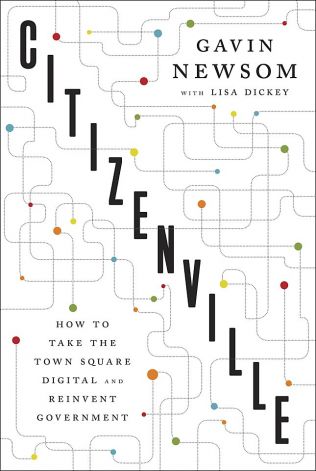
Book Review: ‘Citizenville – Take the Town Square Digital and Reinvent Government’

Go Lean Commentary

Cit- Photo 1“Government is functioning on the cutting edge of … 1973”.

These words jump off the page in the new book by the California Lieutenant Governor (former Mayor of San Francisco) Gavin Newsom, Citizenville – How to Take the Town Square Digital and Reinvent Government. He asserts that government is not making optimal use of modern technology, and so he proposes some creative and engaging solutions.

These proposals are also valid in a consideration of Caribbean governance.

This subject matter aligns with the publication Go Lean … Caribbean, which serves as a roadmap for the introduction and implementation of the Caribbean Union Trade Federation (CU) to elevate Caribbean society and culture. The CU has 3 prime directives:

  • Optimization of the economic engines in order to grow the regional economy to $800 Billion and create 2.2 million new jobs.
  • Establishment of a security apparatus to protect the resultant economic engines.
  • Improve Caribbean governance to support these engines.

The same as the Citizenville book catalogs a list of private-sector technology platforms that could improve how the public sector works, the Go Lean roadmap lists a series of community ethos, strategies, tactics, implementations and advocacies to foster a technocracy for Caribbean administration. This technocracy is the super-national entity, the Caribbean Union Trade Federation. This federal government is described as a “lean” modus operandi.

The same as Citizenville assesses the US federal-state-county-city governmental structures as being deficient for the challenge of the newly connected American society, the Go Lean roadmap assesses that the Caribbean is deficient for its mandates under the assumed social contract (between government and citizens). This contract calls for the governments to be a proxy for public safety and economic opportunities. The Caribbean failings are so acute that many citizens have abandoned their homeland and migrated to North America and European locales. The loss of these citizens’ contributions (their time, talents and treasuries) make administering to the remainder of the population difficult – as many times the emigrated ones represent the professional classes – a brain drain. The Go Lean roadmap calls for a total reboot of Caribbean systems of commerce and governance. The book provides 380 pages as details for this roadmap.

Book Review: By Beth Simone Noveck

Subject: ‘Citizenville – How to Take the Town Square Digital and Reinvent Government’ By Gavin Newsom with Lisa Dickey (The Penguin Press; 249 pages)

When I started work in the White House in 2009, I had been brought in to help implement the Obama administration’s commitment to making government more transparent, participatory and collaborative. At the time, the federal government, like governments worldwide, was anything but open. The White House didn’t have a blog, Twitter accounts or a social media site. To make matters worse, we were running Windows 2000.

As a colleague described the situation: “We have a nearly obsolete infrastructure, so a lot of things have to be done ‘by hand.’ Don’t think Google server farm. Think gerbil on a wheel.”

Things have gotten better since those early days, but they’re not yet good enough. Approval rates for government are at an all-time low. We need more open, innovative government to connect with citizens and win their trust. But it can be hard to know how to talk about government innovation in a way that is exciting and inspiring. Through lively stories and engaging quotes from famous digerati and less-famous policy entrepreneurs, Gavin Newsom’s new book, “Citizenville: How to Take the Town Square Digital and Reinvent Government,” does just that.

Co-authored by Lisa Dickey, “Citizenville” focuses on the fact that government is not making optimal use of modern technology, and proposes some creative, engaging solutions. Dickey and California’s lieutenant governor declare that “government right now is functioning on the cutting edge – of 1973.”

Upgrading the operating system of our democracy and making town hall as easy to navigate as Twitter has real potential for improving people’s everyday lives. “Citizenville” offers both an impassioned plea for more tech-enabled government and a tour d’horizon of the ways some governments have begun using technology to good effect. Newsom and Dickey catalog an impressive list of private-sector tech platforms that could improve how we work in the public sector. The overall effect is breathless and dizzying (and often disconnected), but ultimately powerful.

First, there’s YouTube. We can use social media to broadcast and democratize town hall meetings and make government more interactive in how it communicates with citizens, changing the relationship between government and the governed.

Next come Google and other information-based platforms. When we open up the information government holds and make it available to the public, innovators of all kinds can create empowering applications. When the federal government released data on hospitals, big [data] companies like Google and Microsoft upgraded their search engines to provide potentially lifesaving information on patient satisfaction and infection rates through user search. And a small entrepreneur, Stamen Design, used local crime data to build the Crimespotting map that enables Oakland residents to understand (and hopefully reduce) crime in their neighborhoods.

Newsom and Dickey celebrate Salesforce, the cloud-computing giant that helped San Francisco track the impact of its homelessness programs and deliver better and cheaper services. Using up-to-the-minute data, San Francisco was able to find housing and shelter for many of its homeless. “The democratizing influence of the cloud,” the authors posit, “leads to a stronger, more stable commonwealth.”

Inspired by the Apple App Store, Newsom and Dickey suggest that government could reduce corrupt procurement practices, bring down costs and foster entrepreneurship by inviting those outside of government to develop tools and solutions instead of relying only on bureaucracy to procure goods and services.

For example, they write about Donors Choose, an organization that pairs classrooms and teachers with those willing to purchase much-needed school supplies. Much more than a Match.com for education, this kind of partnership website also gets people engaged in their communities.

The company at the center of the book is Zynga, creator of “FarmVille.” In the game, players work with their friends to tend farms and animals to advance to the next level. It’s addictive – much more engaging, Newsom and Dickey suggest, than participating in the dull life of our democracy. If more of government involved play and prizes, Citizenville would be just as engaging as “FarmVille.”

“We could combine the fun of a game with the social good of solving real problems,” write Newsom and Dickey. If people are willing to spend real money on virtual tractors, then why wouldn’t they clean up the local park if their efforts were recognized and rewarded using new technology?

But the authors of “Citizenville” don’t acknowledge that getting to this kind of decentralized, participatory, tech-enabled democracy is a long and uncertain path. In “FarmVille,” residents are motivated because they can decide how to spend their virtual dollars. But after you finish cleaning up the local park in Citizenville, what can you really do? Other than a brief aside on citizen-budgeting experiments, “Citizenville” does not explain how technology can empower people to make consequential decisions about how to solve our collective problems. It doesn’t address who will participate and why, and who will be left out.

A classic bureaucratic model won’t drive the new participatory technology: If Zynga were to create a department of agriculture for the purpose of fostering virtual agricultural productivity, everyone would quit! Whether in “FarmVille” or Wikipedia, people collaborate online to tackle challenges and for peer approval. In our

real-world communities, people often pitch in where government is absent. (Think barn-raising.) But in a world where real people pay real taxes, we don’t yet know why most people, when invited to spend time and effort to solve public problems, won’t just say, “That’s the government’s job, not mine.”

There are two different challenges to achieving greater self-governance. First, we have to create incentives for people to engage more. Second, we have to create incentives for government to let them do it. Zynga wants players to create their own farms because the company gets rich if they do. Newsom and Dickey suggest that if we make self-government fun, people will sign up. Maybe. But we also need to make enabling self-government a positive for the majority of politicians and civil servants who currently lack the incentive.

Although “Citizenville” is a fast-paced and engaging read, it’s telling that the book includes almost no voices and views of real people. We never hear from San Franciscans about whether the city is a better place to live since the adoption of tech-enabled innovation. We are left wanting but not knowing how to make Citizenville work in reality.

“Citizenville” might not give us the evidence that its proposed solutions will work. But it surely gives us the faith that open government – namely, more participatory, decentralized and agile institutions, enabled and supported by advances in technology – could lead to better solutions for citizens and more legitimate democracy. And, thankfully, if we are looking for a politician who claims he knows how to get out of the way and catalyze bottom-up democracy, we know where to find him.

Beth Simone Noveck led the White House Open Government Initiative and served as the nation’s first U.S. deputy chief technology officer. She is a visiting professor at NYU’s Robert F. Wagner Graduate School of Public Service and the MIT Media Lab and a professor of law at New York Law School. E-mail: books@sfchronicle.com

Website Sister-Site of the San Francisco Chronicle – Book Review – Posted 4, 2013; Retrieved 05-13-2014 –http://www.sfgate.com/books/article/Citizenville-by-Gavin-Newsom-4321331.php

The Go Lean roadmap first accepts this mission to re-structure facets of Caribbean governance with these pronouncements at the outset of book, in the Declaration of Interdependence, as follows (Page 12):

xi. Whereas all men are entitled to the benefits of good governance in a free society, “new guards” must be enacted to dissuade the emergence of incompetence, corruption, nepotism and cronyism at the peril of the people’s best interest. The Federation must guarantee the executions of a social contract between government and the governed.

xiv. Whereas government services cannot be delivered without the appropriate funding mechanisms, “new guards” must be incorporated to assess, accrue, calculate and collect revenues, fees and other income sources for the Federation and member-states. The Federation can spur government revenues directly through cross-border services and indirectly by fostering industries and economic activities not possible without this Union.

Cit 2For the source book, the name Citizenville stems from the online game Farmville, from San Francisco-area based software giant Zynga. This technology company’s strategies and tactics are considered for re-architecting the delivery of government services, or self-government as described in Citizenville. Other California-based technology firms are also chronicled, studied and modeled in this book: YouTube, Google, Microsoft, Apple, and SalesForce.com.

Go Lean…Caribbean also trumpets a call to the world of technology to impact Caribbean life. This roadmap advocates the launch of a social media site – www.myCaribbean.gov – for all Caribbean stakeholders (residents, Diaspora, students, business entities, and even visitors). This can create a universe of over 160 million unique profiles. The Go Lean roadmap is to deliver many government services via electronic modes, including public safety fulfillments. (Imagine Reverse 911 phone calls to alert all people in the path of an imminent hurricane).

The following lists other details from Go Lean…Caribbean that parallels the advocacies of the source book Citizenville:

Community Ethos – Lean Operations Page 24
Community Ethos – Cooperatives Page 25
Community Ethos – Ways to Impact the Future Page 26
Community Ethos – Ways to Bridge the Digital Divide Page 31
Community Ethos – Impact the Greater Good Page 37
Strategy – CU Customers – Member-State Governments Page 51
Strategy – Agents of Change – Technology Page 57
Tactical – Fostering a Technocracy Page 64
Tactical – Separation of Powers – Executive Branch Page 72
Anecdote – Turning Around the CARICOM construct Page 92
Anecdote – “Lean” in Government Page 93
Implementation – Ways to Pay for Change Page 101
Implementation – Ways to Deliver Page 109
Implementation – Ways to Impact Social Media Page 111
Implementation – Reasons to Repatriate Page 118
Advocacy – Ways to Improve Governance Page 168
Advocacy – Ways to Better Manage the Social Contract Page 170
Advocacy – Revenue Sources … for Administration Page 172
Advocacy – Ways to Manage Federal Civil Service Page 173
Advocacy – Ways to Foster Technology Page 197
Advocacy – Ways to Foster e-Commerce Page 198
Advocacy – Ways to Impact the Diaspora Page 217

Citizenville is a convincing argument that open government with participatory, agile institutions, enabled by advanced technology – can work. The Go Lean roadmap concurs!

Now is the time for all of the Caribbean, the people and governing institutions, to lean-in for the changes described in the book Go Lean … Caribbean. The benefits are too alluring to ignore: dawn of a new economy and new opportunities. Finally, a strong incentive for the Diaspora to consider repatriation, to preserve the Caribbean culture for the Caribbean youth … and future generations.

Download the book  Go Lean…Caribbean now!!!

Share this post:
, , ,

eMerge conference aims to jump-start Miami tech hub

Go Lean Commentary

Master BrokersPositive Change!

It doesn’t just happen. It takes people forging it, guiding it and fostering it. The below news article speaks of the effort in South Florida (from Miami north to West Palm Beach) to establish an economic engine of a “tech hub”.

This is a noble, yet strategic undertaking. Success in this “industry space” would mean more jobs, investment capital, and more technology students remaining in South Florida after matriculating in the area’s colleges. These 3 objectives align this story with the advocacies of the book Go Lean … Caribbean.

The book serves as a roadmap for the introduction and implementation of the Caribbean Union Trade Federation (CU). The prime directive of this organization is to optimize the economic engines of the Caribbean region. We also want to increase jobs and investment capital, plus retain more of our young people aspiring for careers in high technology fields. But the CU wants to harvest these activities in the Caribbean, for the Caribbean and by the people of the Caribbean.

South Florida is germane to the Caribbean conscience. It is the Number One destination for the Caribbean Diaspora, featuring large populations of Cubans, Jamaicans, Dominicans (DR), Puerto Ricans, Bahamians, and Haitians. The book relates this association by declaring the NBA basketball team, Miami Heat, as the “home team” of the Caribbean; (Page 42).

Right time, right place!

The eMerge Americas Techweek is this week. Also, the Miami Heat has just started the playoffs in defense of their consecutive World Championships.

By: Marcia Heroux Pounds and Doreen Hemlock

A movement to make South Florida a technology hub for the Americas kicks off its first conference this week, aiming to draw more than 3,000 people from entrepreneurs to investors to students — from Broward and Palm Beach counties and from around the world.

Organizers want to build on South Florida’s success as a gateway to Latin America for trade, banking and services, extending that prowess into technology, entrepreneurship and capital for startups. They hope the event — eMerge Americas Techweek — can do for tech what the annual Art Basel event in Miami Beach has done for art: put South Florida on the world map.

It’s an exciting chance for entrepreneurs like Boca Raton’s Dan Cane, chief executive of Boca Raton-based Modernizing Medicine, which developed an iPad application for specialty physicians. He’s among influencers named to the event’s “Techweek100” — South Florida leaders who have had a significant impact on business and technology. He will speak at the conference.

“We jumped at the opportunity,” said Cane, whose 3-year-old company had $17.5 million in sales last year. “We hope to find contacts and connections and begin to develop the right ecosystem in the Latin American market” to export south starting next year.

The eMerge push doesn’t strive to make South Florida into Silicon Valley. It aims instead for a tech center specialized in multinationals looking south, Latin American companies moving north, local startup companies, as well as universities and investors.

That’s why Citi Latin America, the regional headquarters for financial giant Citi, is taking part in what is planned as an annual event. The division employs about 750 people in Miami-Dade and Broward counties and is sponsoring the event, sending speakers and bringing clients, said Jorge Ruiz, who heads digital banking.

“This event is a great example of the things we should do more of,” Ruiz said. It showcases the importance of technology to a range of industries, promotes what South Florida already offers and highlights South Florida’s ability to unite from across the Americas for tech business, he said.

“As people come together, they’re going to realize this is the space to invest in,” Ruiz said.

Universities that train talent for tech jobs are eager to participate too.

“We’re going to bring as many students as possible,” said Eric Ackerman, dean and associate professor of the Graduate School of Computer and Information Sciences at Nova Southeastern University, who also is on the Techweek100 list. Nova has more than 500 students studying information technology.

Ackerman said tech graduates often leave South Florida, figuring they will have better job opportunities in larger hubs known for innovation.

“That’s one of the things we are trying to change — to become an innovation zone for new technology, new products and new services,” Ackerman said. “An event like this says, ‘Look what’s here in our own back yard. Why should I go somewhere else?’ ”

Kimberly Gramm, assistant dean and director of FAU’s Adams Center for Entrepreneurship, is taking winners of FAU’s recent business plan competition to eMerge’s Startup Village.

Some of South Florida’s largest tech companies also will exhibit at eMerge. Those include Citrix Systems of Fort Lauderdale, C3 Cloud Computing Concepts of Delray Beach and TriNet Group of Boca Raton, said Lonnie Maier, president of the South Florida Technology Alliance, a group that promotes local tech.

Investors and consultants to startups also are heading to eMerge to network and build business.

New World Angels, a Boca Raton-based group of investors, will share a booth with the Miami Innovation Fund to offer entrepreneurs advice on launching or growing their ventures, said Rhys Williams, executive director of New World Angels and a Techweek 100 leader.

“Technology investing is a contact sport. There are few textbooks or classes of relevance, so this conference is a timely way to keep current on your knowledge base and pick up new knowledge, skills and contacts,” said Williams, who also is a judge in the eMerge Launch competition where more than 200 companies will compete for $150,000 in prizes.

Of course, South Florida faces hurdles in its quest, tech leaders said.

The area needs to overcome a long-time image based on sun and fun. And it needs to show critical mass in tech, especially success stories of entrepreneurs that grew startups to global players — much as conference organizer Manny Medina did, starting Miami-based Terremark and selling it for more than $1.4 billion to Verizon.

Enterprise Development Corp. President Rob Strandberg, whose group works with startups from Boca Raton to Miami, will be busy making introductions between entrepreneurs and potential investors at the conference. He’s also a judge in the Launch competition.

EDC executive director Linda Gove will participate with the Boca Raton incubator’s startup companies.

“Investors are taking notice of South Florida companies to a far greater extent than they were,” Strandberg said.

Joe Levy, CEO of Fort Lauderdale-based startup ClearCi and also named to the Techweek 100, said the perception of the area as a tech hub is changing.

“Folks used to ask me, ‘Why aren’t you in Silicon Valley?’ ” Levy said. “We don’t get that anymore.”

South Florida’s Sun Sentinel Daily Newspaper – April 27, 2014 – http://www.sun-sentinel.com/business/careers/fl-emerge-broward-palm-beach-20140427,0,1252077.story

The Go Lean roadmap calls for agencies within the CU to champion technological start-up endeavors, much like this week’s eMerge initiative.

There is much for the CU’s planners to glean by the observation of the planned events this week. The Go Lean/CU approach, in the absence of the actual establishment of the Trade Federation is simply to:

1. Look
2. Listen
3. Learn
4. Lend-a-hand
5. Lead

This approach is codified in the book, with details of community ethos, strategies, tactics, implementations and advocates; as follows:

Community Ethos – Impact the Future Page 26
Community Ethos – Foster Genius Page 27
Community Ethos – Help Entrepreneurship Page 28
Community Ethos – Promote Intellectual Property Page 29
Community Ethos – Impact R & D Page 30
Community Ethos – Bridge the Digital Divide Page 31
Strategy – Agents of Change: Technology Page 57
Separation of Powers – Patents & Copyrights Page 78
Implementation –  Self-Governing Entities Page 105
Implementation –  Impact Social Media Page 111
Ways to Better Manage Image Page 133
Industries – Ways to Foster Technology Page 197
Industries – Foster e-Commerce Page 198

We hope for success for eMerge Americas Techweek. We hope our Caribbean brothers living and working in South Florida participate, engage in and benefit from this initiative. Then we hope that they would repatriate some of this passion, knowledge, and experience back to their Caribbean homelands.

Lastly, we cheer for further basketball dominance. Go Heat!

Basketball shot

Download the book – Go Lean…Caribbean now!!!

Share this post:
, , , , , ,
[Top]

Ghost ships – Autonomous cargo vessels without a crew

Go Lean Commentary

Ghost ships - Autonomous cargo vessels without a crewLife imitates art! Art imitates life!

The forgoing article gives the impression of science fiction: The Matrix movie trilogy or The Terminator movie series. Imagine an industrial development with a heavy concentration of robotic installations. This is the future that is being planned, developed and tested now. The experience of the last 100 years is that those doing the planning, developing and testing for futuristic technologies are the ones that profit most from the economic gains. This has been true for both Japan and Silicon Valley.

The book, Go Lean … Caribbean, extolls this principle that R&D (research and development) activities are necessary to profit from advantages in technology. We want to do R&D here in the Caribbean. This is a mandate for the Caribbean Union Trade Federation (CU). This book serves as a roadmap for the introduction and implementation of the CU. This technocracy will assume oversight to optimize the region in the areas of:

(1) economics

(2) security

(3) lean government

This vision of an autonomous maritime eco-system, as depicted in the foregoing article, cannot be considered without a super-national infrastructure for these above 3 areas. The Go Lean roadmap presents the CU’s prime directives, which in total will provide comprehensive solutions for economic incentives, a security apparatus (Naval Authority and Intelligence Gathering), and lean governmental coordination to launch these initiatives.

*** Autonomous cargo vessels could set sail without a crew under the watchful eye of captains in shore-based simulators ***

Military drones already fly frequent missions and civilian operations using unmanned aircraft are coming. Driverless cars are clocking up thousands of test miles. So why not let remote-controlled ships set sail without a crew? Indeed, the maritime industry has started to think about what would be required to launch a latter-day Marie Céleste.

Ships, like aircraft and cars, are increasingly controlled by electronic systems, which makes automation easier. The bridges of some modern vessels are now more likely to contain computer screens and joysticks than engine telegraphs and a giant ship’s wheel. The latest supply ships serving the offshore oil and gas industry in the North Sea, for instance, use dynamic positioning systems which collect data from satellites, gyrocompasses, and wind and motion sensors to automatically hold their position when transferring cargo (also done by remote control) to and from platforms, even in the heaviest of swells.

However, as is also the case with pilotless aircraft and driverless cars, it is not so much a technological challenge that has to be overcome before autonomous ships can set sail, but regulatory and safety concerns. As in the air and on the road, robust control systems will be needed to conform to existing regulations.

The maritime industry is interested in crewless ships for two reasons. The first is safety. Most accidents at sea are the result of human error, just as they are in cars and planes. So, if human operators are replaced by sophisticated sensors and computer systems, autonomous vessels should, in theory, make shipping safer.

The second reason is, of course, cost. It is becoming increasingly difficult to sign up competent crew prepared to spend months away at sea. Moreover, some voyages are likely to get even longer for ships carrying non-urgent cargo. By some accounts, a 30% reduction in speed by a bulk carrier can save around 50% in fuel. This means slower steaming could provide big savings in fuel costs, but it would be at the expense of increased expenditure on crew for these longer voyages, both in wages and for the “hotel” facilities required on board. Removing the crew, though, also removes the need for their accommodation and its associated equipment, like heating and plumbing. And that provides room to carry more cargo.

Ahoy there!

The transition to unmanned ships could take place in steps, says Oskar Levander, head of engineering and technology for the marine division of Rolls-Royce. Crews would be reduced as some functions are moved onshore, such as monitoring machinery. (The engines on jet aircraft are already overseen by ground stations.) This could be followed by some watch-keeping and navigation duties. Experienced crew might be put on board when ships leave or enter port, just as pilots are to navigate. And a small maintenance crew could be kept for the voyage until remote-control systems prove themselves. A fleet of autonomous ships could also sail in convoy with a manned vessel in the lead (as illustrated above).

The onshore control rooms would keep an eye on ships thanks to live data transmitted from vessels, including video and infra-red images. Object-recognition software, combined with radar, would further automate the process. If an alarm was raised the skeleton crew on board could be alerted or the control room take charge, probably from a bridge in a simulator. Rolls-Royce already operates virtual ships’ bridges, with 360º views, for the training of officers and crew. These are realistic enough to make landlubbers feel seasick.

Using onshore control rooms and simulators a team of ten land-based captains could operate 100 or so ships, reckons Mr. Levander. The captains could commute from home for their shifts just as the pilots who fly military drones do. Passenger ships are likely to remain crewed, however. Trained personnel are needed to manage evacuation procedures, and in any case passengers are unlikely to want robots and vending machines attending to their needs.

The slower-sailing bulk carriers could be the first ships to be automated, according to the Maritime Unmanned Navigation through Intelligence in Networks (MUNIN) project, a European Union initiative backed by a number of industrial organisations. Like others, it says the ability of drone ships to detect other vessels and take avoiding action will be crucial, but possible with advanced technology and improved backup systems.

Rules of the sea

With a captain technically in command—even though he is based in an onshore control room—MUNIN thinks the legal and practical challenges of meeting maritime rules could be met. Radio messages from other ships, along with those from coastguards and port authorities, could be automatically routed to the shore captain. Something similar is being proposed for autonomous civil drones, with ground-based pilots responding to communications and air-traffic control instructions as if they were in the cockpit.

In many ways automating a ship should be a lot easier than automating aircraft, Mr. Levander believes. For a start, if something did go wrong, instead of falling out of the sky a drone ship could be set by default to cut its engines and drop anchor without harming anyone. As for piracy, with no crew to be taken hostage it would be much easier for the armed forces to intervene. Of course, more modern pirates might try to hack their way into the controls of an autonomous ship to take command. Which is why encrypted data communication is high on the maritime industry’s list of things to do before ghostly vessels ply the trade routes.

Firstly, the Caribbean Sea is 1,063,000 square miles. This landscape, except for forecasted tropical storms, allows for the perfect testing grounds. The geography of the CU’s 30 member-states thereby includes thousands of islands, (the Bahamas alone advertises 700 islands in their archipelago). The Go Lean roadmap calls for establishing an Exclusive Economic Zone (EEZ) for these seas.

Secondly, the CU has the human capital to engage this type of endeavor. There are many well-trained professionals in the maritime arts and sciences. Plus, this endeavor transmits the “siren call” to youthful aspirants, empowering immigrants and, skilled repatriates. This will grow the labor pool for this industry.

Thirdly, the CU already envisions a massive deployment of ship-building prowess with its incubation of shipyards and related industries (Page 209). Plus, with federally regulated ferry boats, part of the Union Atlantic Turnpike system, the required model (funding/investments/capital) and eco-system will be in place.

Though not written with this particular initiative in mind, the Go Lean roadmap anticipates such opportunities, as pronounced in the Declaration of Interdependence, (Pages 12 & 14):

xvi. Whereas security of our homeland is inextricably linked to prosperity of the homeland, the economic and security interest of the region needs to be aligned under the same governance. Since economic crimes, including piracy and other forms of terrorism, can imperil the functioning of the wheels of commerce for all the citizenry, the accedence of this Federation must equip the security apparatus with the tools and techniques for predictive and proactive interdictions.

xxvii. Whereas the region has endured a spectator status during the Industrial Revolution, we cannot stand on the sidelines of this new economy, the Information Revolution. Rather, the Federation must embrace all the tenets of Internet Communications Technology (ICT) to serve as an equalizing element in competition with the rest of the world. The Federation must bridge the digital divide and promote the community ethos that research/development is valuable and must be promoted and incentivized for adoption.

xxx. Whereas the effects of globalization can be felt in every aspect of Caribbean life, from the acquisition of food and clothing, to the ubiquity of ICT, the region cannot only consume, it is imperative that our lands also produce and add to the international community, even if doing so requires some sacrifice and subsidy.

The CU mission is to implement the complete eco-system to deliver on market opportunities as sampled in the foregoing article. There are many strategies, tactics, implementations and advocacies that will facilitate this readiness; detailed here:

Community Ethos – Money Multiplier Page 22
Community Ethos – Job Multiplier Page 22
Community Ethos – Lean Operations Page 24
Community Ethos – Return on Investments Page 24
Impact the Future Page 26
Help Entrepreneurship Page 28
Promote Intellectual Property Page 29
Impact Research and Development Page 30
Ways to Improve Negotiations Page 32
Separation of Powers – Naval Authority Page 75
Separation of Powers – Emergency Mgmt. Page 76
Security Initiatives at Start-up Page 103
Start-up Benefits from the EEZ Page 104
Steps to Implement Self-Governing Entities Page 105
Reasons to Repatriate to the Caribbean Page 118
Ways to Benefit from Globalization Page 119
Ways to Improve Trade Page 128
Ways to Create Jobs Page 152
Ways to Improve Governance Page 168
Foster Empowering Immigration Page 174
Foster Cooperatives Page 176
Improve Homeland Security Page 180
Ways to Mitigate Terrorism Page 181
Improve Intelligence Gathering & Analysis Page 182
Better Manage Natural Resources Page 183
Ways to Improve for Natural Disasters Page 184
Ways to Foster Technology Page 197
Ways to Improve Transportation Page 205
Ways to Develop Ship-Building Page 209

The world is preparing for the change of more autonomous systems to do the heavy-lifting of industrial engagements. A new ethos to prepare for change has now come to the Caribbean. The people of the region are urged to “lean-in” for this change. As described in the book Go Lean … Caribbean, the benefits of this roadmap are too alluring to miss out: emergence of an $800 Billion single market economy, 2.2 million new jobs and relevance on the world scene for R&D.

Download the Book- Go Lean…Caribbean Now!!!

Share this post:
, , , ,
[Top]

Antigua Completes Construction of New National Library

Go Lean Commentary

Antigua ConstructionThis below article is an indictment of Caribbean governments and the Caribbean Diaspora: 40 years without a library.

The charge against the past governmental administrations is obvious. For this reason, the current administration of the Government of Antigua and Barbuda is to be applauded for this accomplishment announced in the foregoing news article; they have finally restored a basic requirement of modern societies: building/supplying/maintaining a national/community library.

“Man cannot live on bread alone – Bible quotation.

But why also indict the Diaspora?

Simple, they should have known better. They abandoned their homeland and turned a “blind eye” to even the basic needs of these previously-beloved community’s education. A library does not help the government, it helps the people; it guides the youth, infusing them with a love for knowledge, learning and imagination. We all have a responsibility, a duty even, to pass that “love” onto the next generation. For this, the Diaspora had failed, for 40 years!

So to you members of the Caribbean Diaspora who claim to love your heritage, but do not even look back to ensure that your former communities at least have access to books and information. Shame on you!

See the full news story here:

By the Caribbean Journal staff:
Antigua and Barbuda has completed construction on the country’s new national public library.

The completion of the project comes four decades after the country’s public library was damaged by an earthquake.

The 20,000-square-foot project on Hails Prominard Road succeeds a temporary library which had been operating on Market Street.

“Whenever we lament the weakness in literacy over the last four decades we should look back at how culpable we are as a nation in not providing the appreciation for books, for intellectual stimulation, which is a symbol in a national public library,” said Education Minister Dr. Jacqui Quinn-Leandro. “Any Antiguan and Barbudan forty years or younger would not have known or had the benefit of a properly, well run, well-resourced national public library. And I say without equivocation this is a burning shame, a disgrace and a national travesty. However, today is a historic day”.

The government said the library would become fully operational after completing finishing touches like custom-made shelving and special furniture.

“It is a key component of our drive to develop a pluralistic participatory and inclusive knowledge based society. Libraries are key institution in the context of achieving this goal. At the core of libraries are their missions to provide information, literacy education and culture,” said Antigua and Barbuda Prime Minister Dr. Baldwin Spencer. “This structure which we dedicate and which forms part of our mandate to the people to provide the greatest good to the greatest number of people will be the watering hole for individuals which hunger for free and equitable access to information be it in written, electronic and in audio visual form.”

Caribbean Journal Online News Source (Retrieved 04/10/2014) from: http://www.caribjournal.com/2014/04/10/antigua-completes-construction-of-new-national-library/

School kidThe book Go Lean … Caribbean is published by the SFE Foundation, a community development foundation chartered to bring change back to the Caribbean. The book serves as a roadmap for the introduction and implementation for the Caribbean Union Trade Federation (CU). The foundation is comprised of Diaspora members of different Caribbean countries, who now seek penance. We have sinned in our abandonment. To those in the Caribbean homeland, we ask for your forgiveness, and consideration for the solutions now being proffered.

The Go Lean book identifies, qualifies and proposes the establishment of community libraries throughout the region (Page 187). The roadmap posits that these libraries can be a portal to the New World of Internet Communication Technologies (Page 197); a means to bridge the “Digital Divide” (Page 31) and a delivery outlet for many e-Government services (Page 168).

There are practical reasons why there was no national library in Antigua for 40 years. Primarily, the reasons are economic. So the Go Lean roadmap leads first with an optimization of the region’s economic engines. The book details how to pay for these changes (Page 101), then how to maintain a consistent well-funded governing engine (Page 172).

Now is the time for all Caribbean stakeholders (residents, Diaspora, government officials, educators, and book lovers alike) to lean-in to this regional solution for Caribbean empowerment.

We now urged everyone to lean-in to the Go Lean roadmap for the Caribbean Union Trade Federation. Let’s make the Caribbean a better place to live, work, learn and play. 🙂

Download the free e-Book of Go Lean … Caribbean – now!

Share this post:
,
[Top]

Facebook plans to provide mobile payment services

Facebook PicGo Lean Commentary

The jockeying for position has begun!

The foregoing article highlights the planning, development and deployment activities around the issue of mobile payments. This is germane for the Caribbean, as the World Bank reports that this region is #1 for homeland remittances from expatriated citizens.

This is a matter of supply and demand. The Caribbean Diaspora demands to send money; tools like Western Union, MoneyGram and these new solutions, identified here, supply the services.

But change is coming!

Reuters: Soham Chatterjee & Abhirup Roy (Bangalore)

Facebook Inc. is preparing to join the mobile-payments race with remittances and electronic-money services on the social network, the Financial Times reported on Sunday, citing several people involved in the process.

The company is close to obtaining approval from the Central Bank of Ireland to start a service that would allow users to store money on Facebook and use it to pay and exchange with others, the people told the FT. See: http://link.reuters.com/dag58v

The Irish Central Bank declined to comment.

Facebook was not immediately available for comment.

The company has also had partnership talks with at least three London start-ups — TransferWise, Moni Technologies and Azimo — that offer online and mobile international money transfer services, three people involved in the discussions told FT.

Telecom groups, retailers and banks are all trying to secure a [slice of the pie] of global mobile payments, which is predicted to grow rapidly in the next few years.

Vodafone brought its mobile money transfer service M-Pesa to Romania last month, following its success in Africa, and is likely to expand the service in eastern and central Europe.

Facebook’s rival Google Inc.’s head of payments recently reiterated commitment to the struggling Google Wallet and mobile payments service. The company had allowed users to send money last year as an email attachment.

Related Articles:

Google Wallet now lets you send money as an attachment in Gmail: http://link.reuters.com/wyf58v

Google exec reiterates commitment to mobile payments: http://link.reuters.com/xyf58v

Apple Chief Executive Tim Cook said in January the company’s interest in mobile payments was a reason for creating the Touch ID fingerprint sensor in its iPhone 5S smartphone – http://link.reuters.com/sag58v

Piggie Bank PicGlobal mobile transactions are expected to grow at an average 35 percent per year between 2012 and 2017, according to a report by research firm Gartner. The June 2013 report forecast a $721 billion market with more than 450 million users by 2017 – http://link.reuters.com/nyf58v.

Yahoo Online News Source (Retrieved 04/14/2014) –http://news.yahoo.com/facebook-plans-mobile-payment-services-ft-133451646–sector.html

The book, Go Lean…Caribbean, serving as a roadmap for the introduction and implementation of the Caribbean Union Trade Federation (CU), identified that new methods are needed to facilitate remittances. A lot of money is remitted back to the Caribbean (over $9 Billion dollars in 2010; sometimes 10% of GDP), and too many foreign entities are profiting on the backs of hard-working Caribbean people. The book lists a series of new alternatives that will be pursued in the Go Lean roadmap, some of which are identified in the foregoing news article.

This article also raises other issues, such as globalization, ICT, Social Media and Mobile Application development. All of these are covered in exhaustive details in the Go Lean book.

The premise is that the CU is chartered so that the Caribbean can have a hand in its own self-determination. There should be home-grown (Caribbean-based) solutions for Caribbean problems.

This point is pronounced early in the book, in the opening Declaration of Interdependence – (Page 14):

xxvii. Whereas the region has endured a spectator status during the Industrial Revolution, we cannot stand on the sidelines of this new economy, the Information Revolution. Rather, the Federation must embrace all the tenets of Internet Communications Technology (ICT) to serve as an equalizing element in competition with the rest of the world. The Federation must bridge the digital divide and promote the community ethos that research/development is valuable and must be promoted and incentivized for adoption.

In line with the foregoing article, the Go Lean book advocates some infrastructural enhancements so that the region can play a role in the development/deployment of this important industry. The book references are as follows:

• Research & Development (Page 30)

• Caribbean Central Bank (Page 73)

• Impact Social Media (Page 111)

• Benefit from Globalization (Page 119)

• Fostering e-Commerce (Page 198)

• Banking Reforms (Page 199)

• Impacting the Diaspora (Page 217)

• Alternative Remittance Modes (Page 270)

Who will win the “space race” between all the big Information Technology providers (Facebook, Google, Apple or Vodafone as depicted in the foregoing articles)? It is not known yet! But for the Caribbean, we must not be spectators only. Not this time!

With the CU / Go Lean roadmap in place, we can declare: Change has come to the Caribbean.

Download the book – Go Lean…Caribbean Now!!!


Share this post:
, , , ,
[Top]

Temasek firm backs Southeast Asia cab booking app

Go Lean Commentary

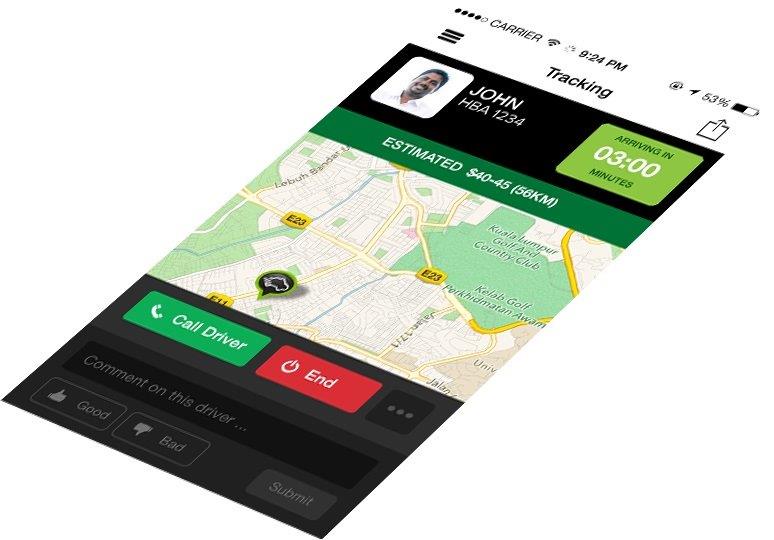
CU Blog - Temasek firm backs Southeast Asia cab booking app - Photo - CopySingapore has a public-private initiative to foster innovation, entrepreneurship and jobs. They use public monies to invest in private businesses that can generate future returns. This constitutes a progressive stewardship of a country’s economy; and a fine model for Caribbean empowerment objectives.

The book Go Lean…Caribbean makes similar claims as the news article below, that innovation and economic growth can result from a progressive community ethos. The book defines this “community ethos” as the fundamental character or spirit of a culture; the underlying sentiment that informs the beliefs, customs, or practices of society; dominant assumptions of a people or period.

By Andrew Toh

SINGAPORE (Reuters) – A unit of Singapore state investor Temasek Holdings is putting its substantial clout behind an app that eases the pain of booking taxis in Singapore and Malaysia, aiming to expand the service in other busy Southeast Asian cities.

Vertex Venture Holdings, a $1.2 billion venture capital firm that focuses on emerging companies and funds in Asia and the United States, said on Tuesday it was leading a group of mostly Malaysian investors putting an unspecified “eight-figure sum” into smartphone app company GrabTaxi.

The app, developed by two Harvard Business School graduates, was launched in Malaysia in 2012 as MyTeksi, and then expanded to Singapore a year later. It also operates in Thailand, Vietnam and the Philippines.

“We invest in potential champions which have developed new technology platforms or business models,” Vertex Venture CEO Chua Kee Lock told reporters. “We clearly see GrabTaxi as one such champion in the making.”

Booking a taxi is often an arduous task in Singapore, a city state with a population of around 5.4 million and just 28,000 cabs. Many people rely on taxis and public transport, as Singapore is one of the most expensive places in the world to own a private car, but finding a cab during peak hours, and the frequent tropical downpours, is often frustrating.

In other Southeast Asian cities like Manila and Kuala Lumpur, heavy traffic makes finding taxis equally difficult.

GrabTaxi competes in the region with an app from Hong-Kong based company Taxi Hero and Rocket Internet’s Easy Taxi app.

In Singapore, it is up against market leader Comfortdelgro Corp, which has its own booking app. GrabTaxi, however, offers commuters a choice from all the taxis that are closest to their location, regardless of which company operates them.

GrabTaxi founder and Chief Executive Anthony Tan said the app was the second most popular in Singapore after Comfortdelgro, and that it had been downloaded on to more than one million mobile devices in Southeast Asia.

He said the company was keen to expand outside Malaysia, because that is where he believed the biggest growth was happening.

“These markets have much bigger population sizes. They’re chewing up smart phones like no tomorrow,” he said. “I think jumping on this type of wave makes all the difference.”

The Vertex Venture-led investment will go into product innovation and building larger local teams to develop and market the app, Tan said. The app would rely on built-in traffic algorithms and feedback from users, he added.

Reuters News Source (Retrieved 04/08/2014) –http://news.yahoo.com/taxi-temasek-firm-backs-southeast-asia-cab-booking-102723508–sector.html

The foregoing news article, about Temasek & GrabTaxi, provides a number of other “fine models” for the Caribbean ethos:

  • Regional Taxi Administration – The Go Lean roadmap defines that taxis are the frontline of Caribbean hospitality; there is the need to compel the stakeholders to adapt innovative products & services like the mobile apps in this news article (Page 25).
  • Mobile Applications – The Go Lean roadmap defines the mastery of time-&-space as strategic for succeeding in mobile apps development and deployment for the region (Page 35).

CU Blog - Temasek 2nd PicThe book, Go Lean…Caribbean, serves as a roadmap for the introduction and implementation of the Caribbean Union Trade Federation (CU) over a 5 year period. The book stresses that the current community spirit/ethos must change. What can motivate people to change their values and priorities? Compelling external and internal drivers! The roadmap commences with the statement that the Caribbean is in crisis, and that “a crisis is a terrible thing to waste”. The region is devastated from external factors: global economic recession, globalization and rapid technology changes. The book then posits that to adapt, there must be a new internal optimization of the region’s strengths. This is defined in Verse XXVII (Page 14) of the Declaration of Interdependence:

Whereas the region has endured a spectator status during the Industrial Revolution, we cannot stand on the sidelines of this new economy, the Information Revolution. Rather, the Federation must embrace all the tenets of Internet Communications Technology (ICT) to serve as an equalizing element in competition with the rest of the world. The Federation must bridge the digital divide and promote the community ethos that research/development is valuable and must be promoted and incentivized for adoption.

In line with the foregoing article, the Go Lean book details some applicable community ethos, and provides a roadmap to better foster these qualities and their resulting benefits:

• Deferred Gratification (Page 21)

• Governing Principles – Return of Investments (Page 24)

• Help for Entrepreneurship (Page 28)

• Promotion of Intellectual Property (Page 29)

• Impacting Research & Developments (Page 30)

• Bridging the Digital Divide (Page 31)

The roadmap posits that the CU must incubate a Mobile Apps industry, forge entrepreneurial incentives and facilitate the infrastructure upgrades so that innovations can thrive. As related in the foregoing article, these efforts can help a region, in this case the Caribbean, to be a better place to live, work and play. 🙂

Download the free e-Book of Go Lean … Caribbean – now!

Share this post:
, , , , ,
[Top]

Grenada PM Urges CARICOM on ICT

Go Lean Commentary

CU Blog - Grenada PM Urges CARICOM on ICT - PhotoIt’s “Better in the Bahamas” – Tagline. But don’t bring your mobile phone!

The publisher of the book Go Lean…Caribbean, SFE Foundation, is a Think Tank/Community Development Foundation, constituted with members of the Caribbean Diaspora. They frequently travel throughout the region. The dilemma cited in the below news article, mobile roaming fees, has personal application for the SFE Foundation, (and all those who live, work and play in the Caribbean).

One director, while visiting the Bahamas, incurred mobile roaming charges in excess of $650 for doing … nothing; no phone calls, no text messages, no internet browsing. The reason was later explained by his US-based mobile carrier that the smart-phone was on! The pinging/synchronizing to the cellular towers generated those charges. So the subscriber got no benefit, but still incurred an exorbitant bill. This experience is not isolated; it has been reported time and again, especially by cruise ship passengers.

How’s that for extending hospitality to our guests and visitors?!

A mobile phone is ubiquitous in North America and Europe, the source of most Caribbean tourists. In addition, many people use their mobile devices for non-connected functions: camera, calendar, address book and even as a watch, to tell time. Imagine the shock and bad “after taste” for visiting the Caribbean and receiving a $600 phone bill for doing … nothing. See article here:

By: The Caribbean Journal Staff
Continuing his push for information and communication technology (ICT) development in the region, Grenada Prime Minister Dr. Keith Mitchell urged CARICOM heads of government to enhance the region’s ability to compete on the “global stage.”

Mitchell, addressing the CARICOM Heads of Government meeting at the Buccament Bay hotel in St Vincent, outlined a five-pronged plan for ICT development.

The Prime Minister’s five priority areas for ICT development included a single CARICOM ICT space; “bringing technology for the people,” cyber security, mobilization of resources and “developing the CARICOM digital agenda 2025.”

Mitchell holds the responsibility for ICT in CARICOM.

“Of course at the lowest denominator this must translate to job creation for a significant larger percentage of our citizens which ultimately will lead to a prosperous society with corresponding consequences of crime reduction and allow our citizens to live meaningful lives,” Mitchell said. “At the member state level, this requirement is well understood and there is sufficient evidence to support that leaders have positioned ICT as a development priority for their country.”

It’s the latest call for technological development in the region. Mitchell made headlines last year for urging the elimination of mobile roaming fees in the region, a call which was soon followed by Digicel’s announcement that it would be abolishing them.

“We observe that there exist intrinsic barriers to ICT infusion and adoption in countries referred to as Small Island Developing States (SIDS),” Mitchell said. “It would be terribly remiss if we do not amplify the ICT barriers as having equal, if not more urgency, than the environmental, economic and social vulnerabilities already identified and articulated for discussion.”
Source: Caribbean Journal – Regional Online News Source; retrieved 03/10/2014 from: http://www.caribjournal.com/2014/03/10/grenada-pm-urges-caricom-on-ict/

Regional coordination and promotion of Internet and Communications Technologies (ICT) is a critical mission and motivation of the Caribbean Union Trade Federation (CU). The book, Go Lean…Caribbean, serves as a roadmap for a methodical implementation of the CU over a 5 year time-span. The roadmap commences with a Declaration of Interdependence. In Verse XXVII (Page 14) it pronounces:

Whereas the region has endured a spectator status during the Industrial Revolution, we cannot stand on the sidelines of this new economy, the Information Revolution. Rather, the Federation must embrace all the tenets of Internet Communications Technology (ICT) to serve as an equalizing element in competition with the rest of the world. The Federation must bridge the digital divide and promote the community ethos that research/development is valuable and must be promoted and incentivized for adoption.

In line with the foregoing article, the Go Lean roadmap details many of the precepts of the Single ICT Space and the vision of the Grenada Prime Minister, the Committee Head for CARICOM Technology matters. The book features direct advocacies to:

• Help Entrepreneurship (Page 28)

• Promote Intellectual Property (Page 29)

• Bridge the Digital Divide (Page 31)

• Impact Social Media (Page 111)

• Foster Technology (Page 197)

• Foster Electronic Commerce (Page 198)

All in all, the roadmap posits that this plan can create 2.2 million new jobs.

How? When? “Go Lean…Caribbean” provides the turn-by-turn directions!

Single ICT Space

The initiative of a single ICT space for CARICOM calls the Caribbean member-states “to figure out how to leverage ICT as a platform for regional development” and that “the key recommendation of the Regional Digital Development Strategy is that we seek to transform ourselves from 15 sovereign states to a Single ICT Space.” – Grenada Prime Minister Dr. Keith Mitchell.

The Single ICT space initiative will aim to complement the flagship regional programme, the CARICOM Single Market and economy (CSME). Suggested characteristics of the Single ICT Space include: consistent rules across the Region, a single mobile numbering plan and consequent removal of roaming charges for intra-regional calls, and CARICOM Copyrights which could foster renewed entrepreneurship and innovation.

Considerable benefits are expected to be realised if a single ICT space can be established. In addition to improved economies of scale and scope, a single ICT space can lead to a more coherent approach in addressing a broad range of ICT-related issues in the region, which is urgently needed. More importantly, if done correctly, increased competitiveness and growth in the individual countries and the region as a whole could also eventuate.

At this 25th Inter-Sessional Meeting of the Conference in St. Vincent & the Grenadines, Dr. Ralph Gonsalves, Prime Minister of St. Vincent said that a Roadmap towards unveiling the Single Information Communication Technology ICT Space as the digital layer of the CARICOM Single Market and Economy (CSME) over the next two years would be developed and presented to the Heads of Government Meeting in July 2015. This roadmap would include elements such as spectrum management, bringing technology to the people and transforming them to digital citizens, diaspora re-engagement, cyber security and public-private partnerships. Developing a Single CARICOM ICT Space to enhance the environment for investment and production was identified as one of the key areas that the Community should undertake in the short-term to become competitive. As envisioned by its framers, the Single ICT Space will encompass the management of Regional information, human resources, legislation and infrastructure in the sector to elicit maximum benefit for the Region’s populace.

The Single ICT space and the Region’s Digital Agenda 2025 will be constructed on the foundation of the Regional Digital Development Strategy (RDDS) which was approved in 2013, and will also have inputs from the Commission on the Economy and the Post-2015 Agenda.

Download the book Go Lean … Caribbean now!

=================

Appendix – References:

• Caribbean Community Secretariat Press Release: http://www.caricom.org/jsp/pressreleases/press_releases_2014/pres49_14.jsp

• Wikipedia treatment for subject CariCom Single ICT space. Retrieved April 7, 2014 from: http://en.wikipedia.org/wiki/Caribbean_Community#Single_ICT_Space

Download the Book- Go Lean…Caribbean Now!!!


Share this post:
, ,
[Top]

CXC and UK publisher hosting CCSLC workshops in Barbados

Go Lean Commentary

images“Fattening frogs for snakes” – Jamaican expression.

As a region the Caribbean have invested much time, talents and treasuries for the education of our youth. Hooray for our efforts! This is an honorable commitment and those laboring in this profession, as depicted in the foregoing news article, should be duly recognized and applauded.

But…

… “do what we’ve always done, and we get what we always got” – Old Adage.

For far too often, the Caribbean has been grooming and preparing their young people to contribute and enhance the society… of other countries. And thus the intersection of the two expressions above, and this imagery: “sacrificing our babies on the altar of global trade”. See a related news story here:

BRIDGETOWN, Barbados — Over 50 secondary school teachers in Barbados stand to benefit from a series of workshops to be hosted by the Caribbean Examinations Council (CXC) and UK-based publisher Nelson Thornes on 7 and 8 April 2014 in Barbados.

The four workshops will be hosted over the two days and will focus on English and mathematics for the Caribbean Certificate of Secondary Level Competence (CCSLC).

The workshops will be facilitated by Novelette McLean-Francis, senior education officer responsible for linguistics in the ministry of education, Jamaica, and a published author; and Grace Smith, a Barbadian educator and one of the authors of the CCSLC mathematics text.

Two workshops will be hosted each day and teachers from the 22 public secondary schools in Barbados are expected to attend.

Registrar Dr. Didacus Jules stated, “These CCSLC workshops are very timely as over the next four weeks CXC is working with the United Kingdom National Academic Recognition Information Centre (UK NARIC) to benchmark CCSLC with similar qualifications internationally.”

“Ensuring that teachers are well equipped to deliver the CCSLC programme effectively will impact positively on students’ performance and on the benchmarking exercise,” Jules noted.

“Nelson Thornes, part of Oxford University Press, is delighted to be running the workshops for teachers across Barbados for the CCSLC qualification,” Sarah Townsend, Caribbean marketing campaign manager with Oxford University Press Education Division said. “Our aim is to provide a full understanding of the syllabus and what is expected in classrooms. Alongside this, teachers will gain valuable knowledge of how the texts came together and the authors’ experience of being involved in the teaching of CCSLC.”

“Working in conjunction with CXC and the ministry of education, we have invited teachers to attend one of the sessions for either mathematics or English, and we hope to be able to fully support them in their on-going quest of teaching CCSLC English and mathematics,” Townsend explained.

The Caribbean Certificate of Secondary Level Competence was introduced to schools in Barbados in September 2013.
Source: Caribbean News Now Online News Site; posted April 3, 2014; retrieved April 4, 2014 from: http://www.caribbeannewsnow.com/barbados.php?news_id=20558&start=0&category_id=26

CU Blog - CXC and UK publisher hosting CCSLC workshops in Barbados - Photo 2This subject matter aligns with the prime directive of the book Go Lean … Caribbean to re-boot the economic engines of the Caribbean to assuage the human flight problem that has afflicted so many Caribbean communities, for more than 50 years. The book, serving as a roadmap for the introduction and implementation of the Caribbean Union Trade Federation (CU) posits that education has been a failure for this region. Almost everywhere else education dynamics elevate a society, raising GDP by 1 percent for every additional (aggregate) year of schooling. But this is not true for the Caribbean; even though the educated population have fostered their abilities there, they have “taken their talents to South Beach”; and South Bronx; and South Toronto; and South London; and the South Paris, etc.

So education and economics must be intertwined. This is explored in full details in the book. This roadmap provides turn-by-turn directions for escalating educational resources (and results) in the region. As a planning tool, the roadmap commences with a Declaration of Interdependence, pronouncing regional integration (Page 12) as the approach to elevate educational opportunities:

xxi. Whereas the preparation of our labor force can foster opportunities and dictate economic progress for current and future generations, the Federation must ensure that educational and job training opportunities are fully optimized for all residents of all member-states, with no partiality towards any gender or ethnic group. The Federation must recognize and facilitate excellence in many different fields of endeavor, including sciences, languages, arts, music and sports. This responsibility should be executed without incurring the risks of further human flight, as has been the past history.

This optimization will apply to all levels of instructions: primary, secondary and tertiary.

The strategy is to confederate all the 30 member-states of the Caribbean, despite their language and legacy, into an integrated “single market”. Tactically, this will allow a separation-of-powers between the member-states governments (including their education proxies) and federal agencies, allowing the type of third party regional oversight as identified in the foregoing article, with entities like the United Kingdom National Academic Recognition Information Centre and Oxford University Press. Notice the leanings of those organizations: British. Instead, the Go Lean roadmap advocates the multi-lingual educational guidance for English, Dutch, French and Spanish all under CU federal administration.

Under this roadmap, the CariCom-backed Caribbean Examinations Council (CXC) would be integrated into a CU Cabinet Department of Education; this is detailed in the book (Page 85). Most importantly the roadmap recognizes that there are the costs dynamics for education, so the funding mechanisms are fully explored in 10 Ways to Pay for Change (Page 101).

Why is the expectation for education success so different in Go Lean…Caribbean compared to the status quo? Why haven’t the strategies and tactics described in this roadmap been employed by the member-states already?

Quite simply, the book posits that the problems for the Caribbean are too big for any one member-state to solve alone; there must be a regional solution! The problem of human flight/brain drain is described as resulting from “push-and-pull” factors. So the required solution is more than just a few bright ideas, taught in a workshop; there is the need for a new eco-system.

Go Lean … Caribbean introduces that eco-system, as a roadmap to make the Caribbean a better place to live, work, learn and play.

No more “fattening frogs for snakes”!

🙂

Download the book Go Lean … Caribbean – now!

Share this post:
, , , ,
[Top]

CARCIP Urges Greater Innovation

Go Lean Commentary

3d-Imagen-Concept-Of-Vision-In-Business-by-David-Castillo-Dominici-FreeDigitalPhotos.net_The forgoing article touches on a critical mission and motivation of the Caribbean Union Trade Federation (CU): to forge change and avail the benefits of advanced technologies in the region. The book, Go Lean … Caribbean, which serves as a roadmap for implementing the Caribbean Union Trade Federation (CU) commences with a Declaration of Interdependence. In Verse XXVII (Page 14) it pronounces:

Whereas the region has endured a spectator status during the Industrial Revolution, we cannot stand on the sidelines of this new economy, the Information Revolution. Rather, the Federation must embrace all the tenets of Internet Communications Technology (ICT) to serve as an equalizing element in competition with the rest of the world. The Federation must bridge the digital divide and promote the community ethos that research/development is valuable and must be promoted and incentivized for adoption.

There is a business mantra that declares “build a better mouse trap and the world will beat a path to your door”. This is even more true in this internet age. Websites and internet applications can be hosted and serviced from anywhere on the planet. “Size does not matter” in this internet age; insight, intelligence, innovation and ingenuity matter more. See related story here:

By the Caribbean Journal Staff

Three Eastern Caribbean countries are benefiting from an infrastructure development thrust that could usher in a new era of technology-based innovation and entrepreneurship for the region.

The initiative is part of the World Bank-funded Caribbean Communications Infrastructure Program (CARCIP), coordinated by the Caribbean Telecommunications Union (CTU).

A series of workshops rolling out in St Lucia, St Vincent and Grenada are intended to ensure that citizens can take full advantage of the telecommunications infrastructure upgrades.

The series aims to encourage greater innovation in the public and private sector across the Caribbean.

The inaugural workshop, which took place Feb. 10-11 at Gros Islet, St Lucia, brought together some of the region’s leading minds in the fields of entrepreneurship, information and communications technology, leadership development and innovation.

Hosted by the St Lucian Ministry of the Public Service, Information and Broadcasting, the workshop set out to stimulate new approaches to national [nation building] through the application of modern technology and new ways of thinking.

“In reality, the potential exists today to overcome the many challenges in the region,” said technology expert Bevil Wooding, the event’s keynote speaker. “What we face is more a challenge of leadership paradigm than of technical possibility.”

Wooding, who is an Internet strategist with US-based Packet Clearing House, said the challenge was “to define and articulate a clear set of actionable priorities. These must be based on our native strengths and shaped to match a properly resourced vision for development.”

The CARCIP Innovation series rolls into Saint Vincent on February 26th and 27th, with a third installment scheduled for Grenada at the end of March 2014.
Source: Caribbean Journal Online News Source (Retrieved 02/26/2014 from http://www.caribjournal.com/2014/02/26/caribbean-connectivity-carcip-urges-greater-regional-innovation/)

The Go Lean roadmap posits that we, in the Caribbean, must also contribute to the world-wide progress of the world-wide web. As such, there are direct advocacies in the book to foster technology (Page 197), bridge the digital divide (Page 31), promote intellectual property (Page 29), foster electronic commerce (Page 198), implement data centers (Page 106), impact social media (Page 111), and promote call centers (Page 212). (Notice the job creation leanings).

In Year 1 of the Five Year roadmap, the CU will “assemble” (consolidate) the organs and agencies of the CariCom, including the CTU (see Appendix), into the Trade Federation’s cabinet structure. Thus allowing the necessary funding and focus to fulfill this agency’s charter. Under the Go Lean roadmap, this charter is more than just a series of workshops, but also these deliverables:

The CU mission is to protect the prospects for our youth, assuage more brain drain & human flight, and promote opportunities here in the region. Education is a big part of this mission. A previous strategy of study-aboard has failed the region – students have not always returned – see Anecdote # 5 (Page 38). The CU must therefore expand educational opportunities locally at home, impact the secondary (charter) & tertiary institutions, and facilitate e-Learning modes & schemes. The telecommunication infra-structure upgrade, described in the foregoing article, allows the Go Lean roadmap to be fully implemented, thus impacting education and entrepreneurism. The CU will foster incubators and cooperatives to forge business opportunities from the elevation of society’s consumption of ICT.

The efforts depicted in the foregoing article regarding the CTU, and the manifesto proclaimed in the book, dovetails with the dreams of the youth of the Caribbean, to facilitate a climate for future possibilities. As a region, we have lost too many young people. What we need now is growth: growth in the economic engines, cultural institutions, security apparatuses and governing provisions. Without this growth, we lose the future contributions of these young people; we would only have developed them to make an impact to some foreign society – we would have “fattened frogs for snake”.

Download the Book- Go Lean…Caribbean Now!!!

————–

Appendix – Caribbean Telecommunications Union

An intergovernmental organization dedicated to facilitating the development of the regional telecommunications sector. On 28 April 1989, the Governments of the member-states of the Caribbean Community (CariCom) established by Treaty of the Caribbean Telecommunications Union (CTU) to rationalize the telecommunications policy framework for the region and to address the problems of regional spectrum frequency incompatibilities.


Share this post:
,
[Top]

Print is not dead yet

Go Lean Commentary

high-volume-offset-printing-presses-40462-6118919

… well actually, one person’s opinion:

Print is not dead… yet? I almost didn’t notice!

If print is not dead yet, does that mean it is going to put up a fight? Will it make a comeback? I say “No”. It is just a matter of time. Print might experience only a slow death, but die … it will.

This is just an opinion of an Caribbean Diaspora member living in the US, who rarely buys newspapers and magazines only occasionally. But this does not mean that I’m ignorant of the news or the latest going-ons. I am completely up-to-date. Obviously I rely more on the electronic media for information, and entertainment.

The reference to electronic media does not only mean TV or radio. Rather the internet. A lot of consumers still read, just not in print, they now use internet websites, e-Readers, blogs and email. Even the radio and TV media is finding competition because of the internet. In the TV industries, more people are abandoning cable contracts for subscriptions services like Netflix and Hulu; they are still able to enjoy their favorite programming, just delivered by alternate means. For radio, the audience is shrinking due to the proliferation of mobile music options like Pandora, Rhapsody, Jango, Slacker, Roxio, etc.

The rate of change is fast!

I just started using the internet, email and Facebook two years ago. I’m obviously a late bloomer. During this time, I have not utilized any postal mail to connect with my Caribbean family. Instead of the weeks it took for a letter to arrive; I now connect in seconds.

I am not the only one. – SFE Foundation Stakeholder Leonora Hall. 

Truly, you are “not the only one“! Change has come…to America and other countries. According to the American Library Association, in a 2008 report  it stated that:

68% of Americans carry a library card, but they rarely use them to borrow books (print), but rather to use audio books, podcasts, digital references, and to consume computer time. They reported that since 2006 they have seen increases in internet usage (68%) for using email, chat, and IM; e-Books (52%); video (49%) and online instruction courses 43%). – (http://www.marketingvox.com/online-offerings-rise-at-us-libraries-68-of-americans-have-library-cards-041431/)

As stated in the below article, there is still a lot of upside to print, compared to electronic alternatives. A paper book is still a better experience compared to an e-Reader. But truth be told, there are no Research & Development (R&D) trying to make paper books better, but plenty of R&D activity for e-Readers. The article relates:

Title: Print is Not Dead Yet
By: Chandi Perera, CEO, Typéfi*

One of the earliest citations of the phrase “print is dead” comes from the 1984 movie Ghostbusters, but almost 30 years later, print is certainly not dead. Print publishing still drives on average 80% of revenues and close to 100% of the profits for general trade publishers. But among reference and science, technical and medical (STM) publishers, digital publishing was embraced quickly and openly at the expense of print.

Commercial digital products from large reference publishers started in the 1980s, and PDF was adopted as the preferred format for STM publishing in the 1990s. Digital-only publications were well-accepted by the turn of this century, and the PDF still holds unquestioned dominance. Digital production and distribution addressed a number of such publishers’ pain points, but print still maintains advantages for large trade publishers.

Take information that is published regularly, as in journals, or that must be kept up to date, like encyclopedias. Such information needs to be disseminated as quickly as possible. Print publications necessarily take longer to be produced and delivered than digital equivalents. But fiction titles, such as the Harry Potter series or The Da Vinci Code, have no information currency or updating requirements. Print still works for these books.

What about physical production and distribution costs? A typical reference or STM publisher could save tens to hundreds of dollars per unit by eliminating printing and mailing costs. For weekly journals this would be as high as $50-$100 per subscriber. The incentive to save on such costs is quite significant for publications containing information that is only valid for a limited time. However, large efficient trade publishers spend less than $2 to print and distribute a typical trade fiction book. Not much cost incentive for change there.

Or look at digital formats. STM publishers often use the same PDF file for both print and digital distribution. Trade digital delivery channels do not generally use PDF files, so a trade publisher needs to create an e-book file in addition to the print file. Complicating matters further, there are over 30 different popular device types, apps or file formats in use in the global publishing market. A publisher can achieve a basic level of compliance from creating one EPUB file and converting to other formats. But to take advantage of e-book device features for an exceptional reading experience, a publisher must invest in creating a dedicated file optimized for each device. The costs of doing this are substantial and in many cases are levels of magnitude above the print production cost.

Accessibility is one of the biggest advantages… of digital publishing from an STM reader’s perspective. With the rise of networked computers and the internet, readers no longer had to go to the library to access a publication. By the late 1980s most professional scientists had a networked desktop computer to access STM publications–usually for free as their institutional library would hold the subscription.

Accessibility is also a major advantage for digital trade publications. No longer will airline passengers have to settle for what the airport bookshop is selling before boarding the flight. They can purchase and download from online catalogs. However, unlike PDFs on desktops, the devices used to access this content are not ubiquitous, cheap (for the reader) or interchangeable.

In today’s e-book market, content purchased from some channels is only readable in devices linked in those channels. It is difficult for all but the most technically savvy to transfer a large iBooks collection to a Kindle or Samsung Galaxy device, and vice versa.

On the other hand, PDF provides a dependable rendering format for scholarly publications, regardless of technology upgrades and platform changes. The PDF user experience for reference and STM publications is no worse than the print product experience. Users could still do all they did with the traditional print product, with some added advantages , and none of the disadvantages (even on-screen reading, as many readers still print out the PDF for reading on paper).

But in trade publishing, the user experience of e-books is very different from print and varies from device to device; in almost all cases devices are more complex to use than a simple book. Even on popular devices like the Kindle, navigating through a book is cumbersome, unlike “flicking” back and forth. Even with perceived benefits like resizable text and backlit displays, it takes significantly more effort to use an e-book reader than a book.

Until there is more standardization of format, portability of libraries, and the reading experience is as good as, or better than, a physical book across devices, and until the cost and revenue equation makes sense for the publisher, print will have a long life yet in trade publishing. Nevertheless, there are many ventures seeking these outcomes, and technologies being developed to deliver them. Overall, digital publishing has a bright future.
Source: *Typéfi produces automated composition solutions for print and web. Visit http://www.Typéfi.com.
See http://www.oecd.org/internet/ieconomy/

CU Blog - Print is Dead - Photo 2

This commentary therefore concurs with the article’s conclusion: Overall, digital publishing has a bright future.

Are these future prospects true for the Caribbean as well? The book Go Lean…Caribbean serves as a roadmap to elevate the Caribbean economic, security and governance engines. The book asserts that the “world is flat” and the globalization has taken its toll on Caribbean consumerism. This indicates that we must plan for more and more electronic consumption of news and information. But with electronic delivery come the need for electronic payment systems, and thus the Go Lean roadmap is to establish the complete eco-system so that all of the Caribbean can more easily consume electronic media content legitimately. The roadmap also calls for the deployment of more libraries into the communities so as to facilitate the need for internet connectivity.

Lastly, the Go Lean roadmap posits that as a region, we cannot only expect to consume, but that we must create/compose as well. The end result of this roadmap is a complete eco-system to foster a viable media industry.

We can do this. We must do this!

Download the Book Go Lean … Caribbean – Now!!!

Share this post:
, , ,
[Top]