Tag: Jobs

Why not … a profit center?

Go Lean Commentary

Most Caribbean countries have embassies, consular offices and/or trade mission offices in world capitals. These are normally cost centers, where the governments have to maintain the cost burden for these facilities. But why do they have to be cost centers, why not profit centers?

Why not … a profit center? As in one integrated, consolidated center on behalf of all the Caribbean member-states – a classic “cooperative” model. This strategy meets a basic requirement of retail design: traffic. All the embassy, consular and trade mission activities would create impactful retail traffic demands.

This vision comes into focus as a result of the emergence of the Caribbean Union Trade Federation (CU), and the news article[c] below. The book Go Lean…Caribbean serves as a roadmap for the introduction and implementation of the CU. The roadmap fully anticipated integrating and consolidating Trade Mission Offices (Page 116) to advance the causes of the Caribbean people in foreign countries; eight (8) cities are specified in details.

The resultant facility, and accompanying eco-system, would fulfill a CU mandate, global outreach to expand Caribbean trade within the source country, city and regional area.

From the outset of the roadmap, the intent to leverage Trade Mission Offices was pronounced in the Declaration of Interdependence (Page 13), as follows:

xix. Whereas our legacy in recent times is one of societal abandonment, it is imperative that incentives and encouragement be put in place to first dissuade the human flight, and then entice and welcome the return of our Diaspora back to our shores. … The right of repatriation is to be extended to any natural born citizens despite any previous naturalization to foreign sovereignties.

xx. Whereas the results of our decades of migration created a vibrant Diaspora in foreign lands, the Federation must organize interactions with this population into structured markets. Thus allowing foreign consumption of domestic products, services and media, which is a positive trade impact. These economic activities must not be exploited by others’ profiteering but rather harnessed by Federation resources for efficient repatriations.

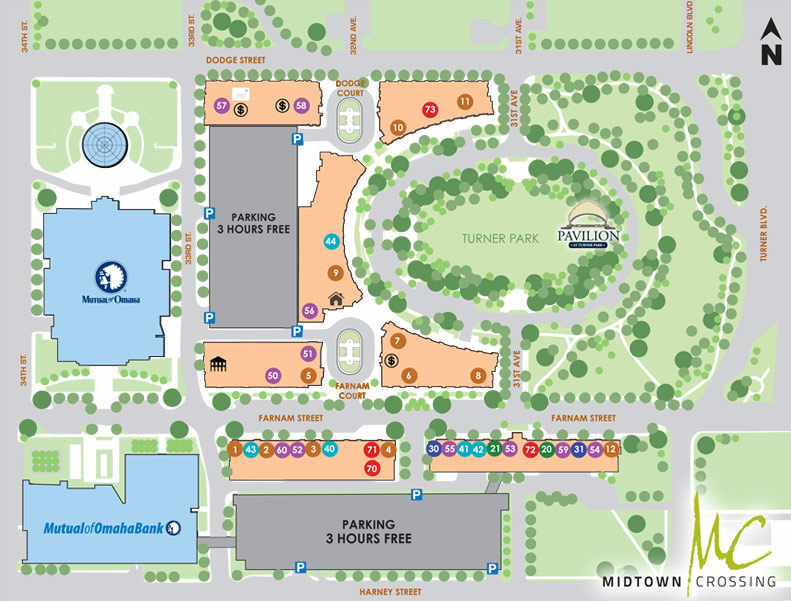
The roadmap also urges the urban design approach for mixed-use developments; (Page 234). This dictates a structure designed as retail (ground floor), mezzanine for offices, and higher levels/floors for residences (apartments, condominiums, and hotels). See a sample site in a US Midwestern city here – Photos & VIDEO:
Why Not ... a profit center - Photo 1 (2)

Why Not ... a profit center - Photo 2

Why Not ... a profit center - Photo SPECIAL

VIDEO Midtown Crossing Commercial – https://youtu.be/3Ua3FjWLfKk

A model of a successful mixed-use development is the Omaha-Nebraska Midtown Crossing[a].

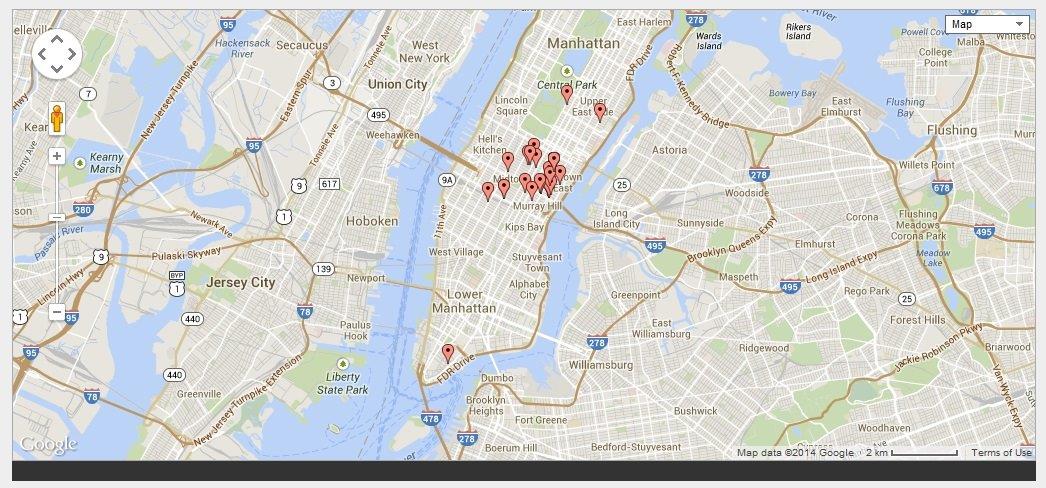
Consider New York City; it is one of 8 mission cities envisioned. This  map below and the Appendix Table lists all the addresses of the Caribbean embassies, consulates, and outreach offices in New York City[b] – all within a 5 mile radius. Imagine if all those facilities were in one property – a mixed-use development.
Why Not ... a profit center - Photo 4 (3)

Imagine too, a climate-controlled atrium with Caribbean fauna & flora; a food court showcasing cuisines from all the participating Caribbean countries, (up to 30); art galleries, convention/banquet facilities, exhibit halls, night clubs, performing arts theaters and maybe even an indoor entertainment center (for instance, modeling the legacy of Caribbean Pirates). This vision would generate multiple streams of revenue – a profit center as opposed to 30 cost centers.

This vision would benefit a lot of Caribbean stakeholders with support and outreach services – those desiring to live, work, learn, heal and play in the Caribbean. These stakeholders include:

  • Visitors
  • Caribbean Citizens (travelling abroad)
  • Diaspora
  • Foreign Direct Investors
  • Students

There is the need for this manifestation right now in London, England (another designated Trade Mission Office – Page 116 ); as depicted in this referenced news story[c]:

LONDON, England (May 1, 2014) — Overseas Territory representatives from the British Virgin Islands, Bermuda, Montserrat, the Cayman Islands and Anguilla met with United Kingdom business networking specialists, CaribDirect International Business Network (CIBN) in London last week, as the first networking session focusing on trade and investment gathers momentum.

These discussions, held at the offices of the Bermuda representative, focused on introducing the CaribDirect International Business Network (CIBN) concept; outlining its broad scope; revealing the economic and political opportunities available for the Caribbean Overseas Territories (OTs); and examining practical ways to work together for the benefit of the dependent territories of the Caribbean.

CIBN is an agency designed to facilitate and connect entrepreneurs and business people in the UK with Caribbean government and business representatives for trade and investment.

Representatives attending the meeting were Cayman Islands’ deputy director Charles Parchment, Montserrat director Janice Panton, BVI London Office director Kedrick Malone, Bermuda director Kimberley Durrant, CaribDirect director of policy Ron Belgrave and CaribDirect multi-media CEO David Roberts.

If only this profit center concept existed now … in London … and in New York.

The CU roadmap is designed to bring change to the Caribbean region. This commentary demonstrates that a lean, nimble organization structure can also be “at the corner of preparation and opportunity” and that opportunity can be made in turning a cost center into a profit center. This structure can optimize the Caribbean’s economic, security and governing engines – no matter the location. If the Trade Mission Offices were constituted as profit centers, the following details from the book Go Lean…Caribbean would manifest, with impacted community ethos, strategies, tactics, implementations and advocates; listed as follows:

Community Ethos – Lean Operations Page 24
Community Ethos – Cooperatives Page 25
Community Ethos – Ways to Improve Sharing Page 37
Strategy – Repatriating Caribbean Diaspora Page 47
Strategy – Inviting Foreign Direct Investments Page 48
Tactical – Separation of Powers – State Department Page 80
Tactical – Design Requirements for the Capital District Page 110
Implementation – Trade Mission Objectives Page 116
Implementation – Reasons to Repatriate Page 118
Implementation – Ways to Benefit from Globalization Page 119
Advocacy – Ways to Improve Trade Page 128
Advocacy – Lessons from New York City Page 137
Advocacy – Ways to Enhance Tourism Page 190
Advocacy – Impact the Diaspora Page 217
Advocacy – Ways to Impact Urban Living Page 234

The Go Lean roadmap will make the outreach, and foreign support, for Caribbean stakeholders more efficient and effective. This plan would impact and change the Caribbean and the foreign world we reach out to.

All Caribbean stakeholders – citizens, businesses and governments alike – are urged to lean-in to this Go Lean roadmap.

Download the free e-Book of Go Lean … Caribbean – now!

———————

Appendix – References

a. http://www.midtowncrossing.com/about/default.aspx
b. http://michaelbenjamin2012.com/2012/06/21/caribbean-region-consulates-in-nyc/
c. http://www.caribbeannewsnow.com/topstory-Caribbean-overseas-territories-meet-with-UK-networking-specialists-20934.html

———————

Appendix – TABLE – Caribbean States Mission Offices – New York City

Member-State

Address

Anguilla 845 Third Avenue, New York, NY 10022  Phone: 212-745-0277
Antigua & Barbuda 610 Fifth Avenue, Ste 311, New York, NY 10020  Phone: 212-541-4117
Aruba 666 Third Avenue, 19th floor, New York, NY 10017 Phone 877-388-2443
Bahamas 231 East 46th Street, New York, NY 10017  Phone: 212-421-6420
Barbados 820 Second Avenue, 5th Fl, New York, NY 10017  Phone: 212-551-4325
Belize 675 Third Avenue, Ste 1911, New York, NY 10017  Phone: 212-593-0999
Bermuda 845 Third Avenue, New York, NY 10022 Phone: 212-745-8272
British Virgin Islands 845 Third Avenue, New York, NY 10022 Phone: 212-745-8272
Cayman Islands 845 Third Avenue, New York, NY 10022 Phone: 212-745-8272
Cuba 315 Lexington Ave 38th Street New York, NY 10016 Ph. 212-689-7215
Dominica 800 Second Ave, Ste 400H, New York, NY 10017 Phone: 212-949-0853
Dominican Republic 1500 Broadway, Ste 410, New York, NY 10036  Phone: 212-768-2480
Grenada 800 Second Ave, Ste 400K, New York, NY 10017 Phone 212-599-0301
Guadeloupe 45 W 34th Street, Suite 703, New York, NY 10001 Phone  877-203-2551
Guyana 370 Seventh Avenue, 4th Fl, New York, NY 10001  Phone: 212-947-5110
Haiti 271 Madison Avenue, 17th Fl, New York, NY 10016 Phone: 212-967-9767
Jamaica 767 Third Avenue, New York, NY 10017  Phone: 212-935-9000
Martinique 444 Madison Avenue, 16th Fl, New York, NY 10022 Phone: 212-838-6887
Monserrat 845 Third Avenue, New York, NY 10022  Phone: 212-745-0200
Netherland Antilles:Bonaire, Curaçao, Sint Eustatius, Saba 1 Rockefeller Plaza 11th Floor, New York, NY 10020 212-246-1429
Puerto Rico 666 5th Avenue # 15l, New York, NY, 10103-1599. Phone: 212-333-0300
St. Barthelemy 934 Fifth Ave, New York, NY 10021 Phone: 212-606-3601
St. Kitts & Nevis 414 East 75th Street, New York, NY 10103 – 212-535-5521
St. Lucia 800 Second Avenue, 9th Fl, New York, NY 10017 – 212-697-9360
St. Maarten 675 Third Avenue, Ste 1807, New York, NY 10017 – 800-786-2278
St. Vincent & The Grenadines 801 Second Avenue, 21st Fl, New York, NY – 212-687-4490
Suriname 1 UN Plaza, 26th Fl, New York, NY 10017 – 212-826-0660
Trinidad & Tobago 125 Maiden Lane, Unit 4A, 4th Fl, New York, NY 10038 Ph. 212-682-7272
Turks & Caicos Island 845 Third Avenue, New York, NY 10022 Phone: 212-745-8272
US Virgin Islands 45 W 34th Street, Suite 703, New York, NY 10001 Phone 877-203-2551
Share this post:
, , , , , , , , ,

eMerge conference aims to jump-start Miami tech hub

Go Lean Commentary

Master BrokersPositive Change!

It doesn’t just happen. It takes people forging it, guiding it and fostering it. The below news article speaks of the effort in South Florida (from Miami north to West Palm Beach) to establish an economic engine of a “tech hub”.

This is a noble, yet strategic undertaking. Success in this “industry space” would mean more jobs, investment capital, and more technology students remaining in South Florida after matriculating in the area’s colleges. These 3 objectives align this story with the advocacies of the book Go Lean … Caribbean.

The book serves as a roadmap for the introduction and implementation of the Caribbean Union Trade Federation (CU). The prime directive of this organization is to optimize the economic engines of the Caribbean region. We also want to increase jobs and investment capital, plus retain more of our young people aspiring for careers in high technology fields. But the CU wants to harvest these activities in the Caribbean, for the Caribbean and by the people of the Caribbean.

South Florida is germane to the Caribbean conscience. It is the Number One destination for the Caribbean Diaspora, featuring large populations of Cubans, Jamaicans, Dominicans (DR), Puerto Ricans, Bahamians, and Haitians. The book relates this association by declaring the NBA basketball team, Miami Heat, as the “home team” of the Caribbean; (Page 42).

Right time, right place!

The eMerge Americas Techweek is this week. Also, the Miami Heat has just started the playoffs in defense of their consecutive World Championships.

By: Marcia Heroux Pounds and Doreen Hemlock

A movement to make South Florida a technology hub for the Americas kicks off its first conference this week, aiming to draw more than 3,000 people from entrepreneurs to investors to students — from Broward and Palm Beach counties and from around the world.

Organizers want to build on South Florida’s success as a gateway to Latin America for trade, banking and services, extending that prowess into technology, entrepreneurship and capital for startups. They hope the event — eMerge Americas Techweek — can do for tech what the annual Art Basel event in Miami Beach has done for art: put South Florida on the world map.

It’s an exciting chance for entrepreneurs like Boca Raton’s Dan Cane, chief executive of Boca Raton-based Modernizing Medicine, which developed an iPad application for specialty physicians. He’s among influencers named to the event’s “Techweek100” — South Florida leaders who have had a significant impact on business and technology. He will speak at the conference.

“We jumped at the opportunity,” said Cane, whose 3-year-old company had $17.5 million in sales last year. “We hope to find contacts and connections and begin to develop the right ecosystem in the Latin American market” to export south starting next year.

The eMerge push doesn’t strive to make South Florida into Silicon Valley. It aims instead for a tech center specialized in multinationals looking south, Latin American companies moving north, local startup companies, as well as universities and investors.

That’s why Citi Latin America, the regional headquarters for financial giant Citi, is taking part in what is planned as an annual event. The division employs about 750 people in Miami-Dade and Broward counties and is sponsoring the event, sending speakers and bringing clients, said Jorge Ruiz, who heads digital banking.

“This event is a great example of the things we should do more of,” Ruiz said. It showcases the importance of technology to a range of industries, promotes what South Florida already offers and highlights South Florida’s ability to unite from across the Americas for tech business, he said.

“As people come together, they’re going to realize this is the space to invest in,” Ruiz said.

Universities that train talent for tech jobs are eager to participate too.

“We’re going to bring as many students as possible,” said Eric Ackerman, dean and associate professor of the Graduate School of Computer and Information Sciences at Nova Southeastern University, who also is on the Techweek100 list. Nova has more than 500 students studying information technology.

Ackerman said tech graduates often leave South Florida, figuring they will have better job opportunities in larger hubs known for innovation.

“That’s one of the things we are trying to change — to become an innovation zone for new technology, new products and new services,” Ackerman said. “An event like this says, ‘Look what’s here in our own back yard. Why should I go somewhere else?’ ”

Kimberly Gramm, assistant dean and director of FAU’s Adams Center for Entrepreneurship, is taking winners of FAU’s recent business plan competition to eMerge’s Startup Village.

Some of South Florida’s largest tech companies also will exhibit at eMerge. Those include Citrix Systems of Fort Lauderdale, C3 Cloud Computing Concepts of Delray Beach and TriNet Group of Boca Raton, said Lonnie Maier, president of the South Florida Technology Alliance, a group that promotes local tech.

Investors and consultants to startups also are heading to eMerge to network and build business.

New World Angels, a Boca Raton-based group of investors, will share a booth with the Miami Innovation Fund to offer entrepreneurs advice on launching or growing their ventures, said Rhys Williams, executive director of New World Angels and a Techweek 100 leader.

“Technology investing is a contact sport. There are few textbooks or classes of relevance, so this conference is a timely way to keep current on your knowledge base and pick up new knowledge, skills and contacts,” said Williams, who also is a judge in the eMerge Launch competition where more than 200 companies will compete for $150,000 in prizes.

Of course, South Florida faces hurdles in its quest, tech leaders said.

The area needs to overcome a long-time image based on sun and fun. And it needs to show critical mass in tech, especially success stories of entrepreneurs that grew startups to global players — much as conference organizer Manny Medina did, starting Miami-based Terremark and selling it for more than $1.4 billion to Verizon.

Enterprise Development Corp. President Rob Strandberg, whose group works with startups from Boca Raton to Miami, will be busy making introductions between entrepreneurs and potential investors at the conference. He’s also a judge in the Launch competition.

EDC executive director Linda Gove will participate with the Boca Raton incubator’s startup companies.

“Investors are taking notice of South Florida companies to a far greater extent than they were,” Strandberg said.

Joe Levy, CEO of Fort Lauderdale-based startup ClearCi and also named to the Techweek 100, said the perception of the area as a tech hub is changing.

“Folks used to ask me, ‘Why aren’t you in Silicon Valley?’ ” Levy said. “We don’t get that anymore.”

South Florida’s Sun Sentinel Daily Newspaper – April 27, 2014 – http://www.sun-sentinel.com/business/careers/fl-emerge-broward-palm-beach-20140427,0,1252077.story

The Go Lean roadmap calls for agencies within the CU to champion technological start-up endeavors, much like this week’s eMerge initiative.

There is much for the CU’s planners to glean by the observation of the planned events this week. The Go Lean/CU approach, in the absence of the actual establishment of the Trade Federation is simply to:

1. Look
2. Listen
3. Learn
4. Lend-a-hand
5. Lead

This approach is codified in the book, with details of community ethos, strategies, tactics, implementations and advocates; as follows:

Community Ethos – Impact the Future Page 26
Community Ethos – Foster Genius Page 27
Community Ethos – Help Entrepreneurship Page 28
Community Ethos – Promote Intellectual Property Page 29
Community Ethos – Impact R & D Page 30
Community Ethos – Bridge the Digital Divide Page 31
Strategy – Agents of Change: Technology Page 57
Separation of Powers – Patents & Copyrights Page 78
Implementation –  Self-Governing Entities Page 105
Implementation –  Impact Social Media Page 111
Ways to Better Manage Image Page 133
Industries – Ways to Foster Technology Page 197
Industries – Foster e-Commerce Page 198

We hope for success for eMerge Americas Techweek. We hope our Caribbean brothers living and working in South Florida participate, engage in and benefit from this initiative. Then we hope that they would repatriate some of this passion, knowledge, and experience back to their Caribbean homelands.

Lastly, we cheer for further basketball dominance. Go Heat!

Basketball shot

Download the book – Go Lean…Caribbean now!!!

Share this post:
, , , , , ,
[Top]

CXC and UK publisher hosting CCSLC workshops in Barbados

Go Lean Commentary

images“Fattening frogs for snakes” – Jamaican expression.

As a region the Caribbean have invested much time, talents and treasuries for the education of our youth. Hooray for our efforts! This is an honorable commitment and those laboring in this profession, as depicted in the foregoing news article, should be duly recognized and applauded.

But…

… “do what we’ve always done, and we get what we always got” – Old Adage.

For far too often, the Caribbean has been grooming and preparing their young people to contribute and enhance the society… of other countries. And thus the intersection of the two expressions above, and this imagery: “sacrificing our babies on the altar of global trade”. See a related news story here:

BRIDGETOWN, Barbados — Over 50 secondary school teachers in Barbados stand to benefit from a series of workshops to be hosted by the Caribbean Examinations Council (CXC) and UK-based publisher Nelson Thornes on 7 and 8 April 2014 in Barbados.

The four workshops will be hosted over the two days and will focus on English and mathematics for the Caribbean Certificate of Secondary Level Competence (CCSLC).

The workshops will be facilitated by Novelette McLean-Francis, senior education officer responsible for linguistics in the ministry of education, Jamaica, and a published author; and Grace Smith, a Barbadian educator and one of the authors of the CCSLC mathematics text.

Two workshops will be hosted each day and teachers from the 22 public secondary schools in Barbados are expected to attend.

Registrar Dr. Didacus Jules stated, “These CCSLC workshops are very timely as over the next four weeks CXC is working with the United Kingdom National Academic Recognition Information Centre (UK NARIC) to benchmark CCSLC with similar qualifications internationally.”

“Ensuring that teachers are well equipped to deliver the CCSLC programme effectively will impact positively on students’ performance and on the benchmarking exercise,” Jules noted.

“Nelson Thornes, part of Oxford University Press, is delighted to be running the workshops for teachers across Barbados for the CCSLC qualification,” Sarah Townsend, Caribbean marketing campaign manager with Oxford University Press Education Division said. “Our aim is to provide a full understanding of the syllabus and what is expected in classrooms. Alongside this, teachers will gain valuable knowledge of how the texts came together and the authors’ experience of being involved in the teaching of CCSLC.”

“Working in conjunction with CXC and the ministry of education, we have invited teachers to attend one of the sessions for either mathematics or English, and we hope to be able to fully support them in their on-going quest of teaching CCSLC English and mathematics,” Townsend explained.

The Caribbean Certificate of Secondary Level Competence was introduced to schools in Barbados in September 2013.
Source: Caribbean News Now Online News Site; posted April 3, 2014; retrieved April 4, 2014 from: http://www.caribbeannewsnow.com/barbados.php?news_id=20558&start=0&category_id=26

CU Blog - CXC and UK publisher hosting CCSLC workshops in Barbados - Photo 2This subject matter aligns with the prime directive of the book Go Lean … Caribbean to re-boot the economic engines of the Caribbean to assuage the human flight problem that has afflicted so many Caribbean communities, for more than 50 years. The book, serving as a roadmap for the introduction and implementation of the Caribbean Union Trade Federation (CU) posits that education has been a failure for this region. Almost everywhere else education dynamics elevate a society, raising GDP by 1 percent for every additional (aggregate) year of schooling. But this is not true for the Caribbean; even though the educated population have fostered their abilities there, they have “taken their talents to South Beach”; and South Bronx; and South Toronto; and South London; and the South Paris, etc.

So education and economics must be intertwined. This is explored in full details in the book. This roadmap provides turn-by-turn directions for escalating educational resources (and results) in the region. As a planning tool, the roadmap commences with a Declaration of Interdependence, pronouncing regional integration (Page 12) as the approach to elevate educational opportunities:

xxi. Whereas the preparation of our labor force can foster opportunities and dictate economic progress for current and future generations, the Federation must ensure that educational and job training opportunities are fully optimized for all residents of all member-states, with no partiality towards any gender or ethnic group. The Federation must recognize and facilitate excellence in many different fields of endeavor, including sciences, languages, arts, music and sports. This responsibility should be executed without incurring the risks of further human flight, as has been the past history.

This optimization will apply to all levels of instructions: primary, secondary and tertiary.

The strategy is to confederate all the 30 member-states of the Caribbean, despite their language and legacy, into an integrated “single market”. Tactically, this will allow a separation-of-powers between the member-states governments (including their education proxies) and federal agencies, allowing the type of third party regional oversight as identified in the foregoing article, with entities like the United Kingdom National Academic Recognition Information Centre and Oxford University Press. Notice the leanings of those organizations: British. Instead, the Go Lean roadmap advocates the multi-lingual educational guidance for English, Dutch, French and Spanish all under CU federal administration.

Under this roadmap, the CariCom-backed Caribbean Examinations Council (CXC) would be integrated into a CU Cabinet Department of Education; this is detailed in the book (Page 85). Most importantly the roadmap recognizes that there are the costs dynamics for education, so the funding mechanisms are fully explored in 10 Ways to Pay for Change (Page 101).

Why is the expectation for education success so different in Go Lean…Caribbean compared to the status quo? Why haven’t the strategies and tactics described in this roadmap been employed by the member-states already?

Quite simply, the book posits that the problems for the Caribbean are too big for any one member-state to solve alone; there must be a regional solution! The problem of human flight/brain drain is described as resulting from “push-and-pull” factors. So the required solution is more than just a few bright ideas, taught in a workshop; there is the need for a new eco-system.

Go Lean … Caribbean introduces that eco-system, as a roadmap to make the Caribbean a better place to live, work, learn and play.

No more “fattening frogs for snakes”!

🙂

Download the book Go Lean … Caribbean – now!

Share this post:
, , , ,
[Top]

Cuba Approves New “Law on Foreign Investment”

Go Lean Commentary

Cuba FlagCuba sera libre!

This has been the “war chant” for many lovers of Cuban heritage, culture and homeland. It’s a reminder that Cuba currently lacks many of the same freedoms so many of its neighbors enjoy. It is a mission of the book Go Lean … Caribbean, to bring change to the Caribbean in general and Cuba in particular, with the implementation of the Caribbean Union Trade Federation (CU). See the relevance in the following news article here:

Title: Cuba Approves New “Law on Foreign Investment”
By: Caribbean Journal Online Magazine

Cuba’s National Assembly has approved a new “Law on Foreign Investment,” the government said Saturday.
In a statement, the government said it would be an “essential instrument in the interest of Cuba to consolidate its economic model and build a prosperous and sustainable socialism.”

The law included a mix of mostly tax incentives, and it could be the latest move in what has been a gradual shift toward liberalizing the country’s economy, although it has come at a decidedly slow pace.

That nominal push kicked off last year, when Raul Castro, announcing plans to retire from politics in 2018, said Cuba needed to update its economic model to achieve a “sustainable and prosperous socialist society, a society less egalitarian, but more fair.”

The vote came at a special meeting convened by Cuba’s state council to discuss regulation; the meeting focused on “the need to attract foreign capital to the sectors of interest to the country,” according to a statement.

Marino Murillo Jorge, vice president of Cuba’s Council of Ministers, said that well-done foreign investment “does not mean giving away the country.”

He said the new model would focus on ensuring not just economic growth but development, with a target growth rate of between five and seven percent.

Retrieved 04/01/2014 from: http://www.caribjournal.com/2014/03/30/cubas-national-assembly-approves-new-law-on-foreign-investment/

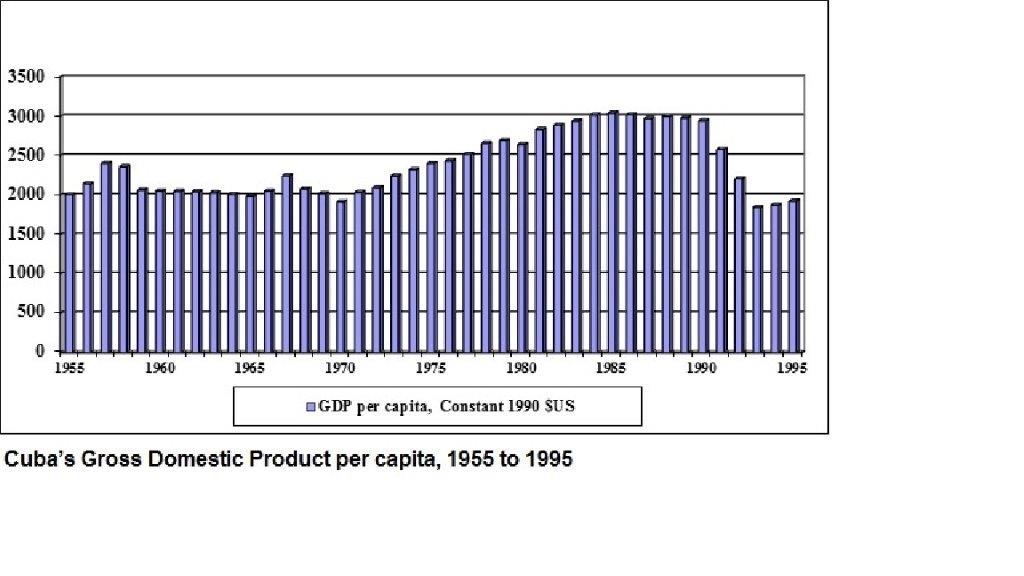
Cuba Blog GDPThe Go Lean roadmap recognizes that Cuba is very significant in the geographic and cultural anatomy of the Caribbean. As of 2010, Cuba possessed 26% of the region’s population (11.2 million out of 42.2 million) and 29% of the gross GDP, with their assumed $111 Billion output. But this is a far cry from where Cuba was 60 years ago, with one study placing Cuba as the #3 economy in Latin America and the Caribbean[a]. Though the “mighty has fallen”, this book posits that the “sleeping giant”, that is the Cuban economy, will awaken. The Go Loan roadmap is the preparation of Cuba’s re-emergence to the world’s economic consciousness. The realities and possibilities of Cuba’s past and future are identified early in the book, embedded in the Declaration of Interdependence, pronouncing a need for reconciliation efforts (Page 11):

xiii. Whereas the legacy of dissensions in many member-states (for example: Haiti and Cuba) will require a concerted effort to integrate the exile community’s repatriation, the Federation must arrange for Reconciliation Commissions to satiate a demand for justice.

The foregoing article confirms that change is on the way! The Cuban Communist regime recognizes that they need foreign investment, a “rightward” shift towards socialism; less egalitarianism and more free market accomplishments. The CU will expedite this process even more for/with Cuba. Where they declare “open arms” for foreign investments, we declare a regional embrace of Caribbean participation (Page 13):

xxiv. Whereas a free market economy can be induced and spurred for continuous progress, the Federation must install the controls to better manage aspects of the economy: jobs, inflation, savings rate, investments and other economic principles. Thereby attracting direct foreign investment because of the stability and vibrancy of our economy.

To the population of Cubans living on the island, we embrace you; “Help” is on the way! We entreat you to lean-in to this plan for confederation with your Caribbean neighbors.

To the Cuban Diaspora living abroad, we embrace you. There is a role for your inclusion in the future of Cuba. We entreat you to also lean-in to this roadmap for change and economic optimization for your beloved Cuba.

To the Cuban legacies, those descendants of Cuba’s past, we encourage you to tune-in and observe how the passions of your heritage will succeed in this new world.

Cuba sera libre!

Download the Book- Go Lean…Caribbean Now!!!

———–

Appendix – Reference:

a. United Nations Development Program, Human Development Report, Various issues, 1990, 1992, New York: Oxford University Press, 1991, 1993.


Share this post:
, , , , , ,
[Top]

Self-employment on the rise in the Caribbean – World Bank

Go Lean Commentary

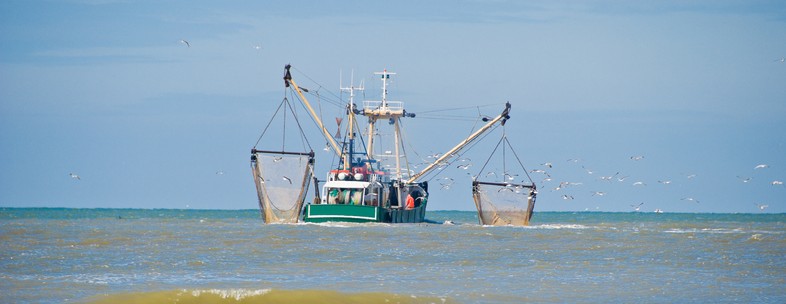
Photo - Caribbean Commercial FishermenThere is the desire to make the Caribbean a better place to live, work and play. At the root, any serious attempt at this objective must start with the creation of new jobs. The book Go Lean … Caribbean is one such attempt. It presents the roadmap to implement the Caribbean Union Trade Federation (CU), and with this effort, create 2.2 million new jobs over a 5 year period. That is the summary of the roadmap. But the “devil is in the details”. How to create so many jobs in such a short interval?

In considering the lessons from other societies, it can be seen that one key is entrepreneurship.

The experiences of North America and Europe indicate that small firms are primary sources for new employment. While entrepreneurship is not new for the Caribbean, the CU strategy of focused incubators is new. This requires support services to ignite and spur start-up companies. The exact details of the commission to help entrepreneurship are spelled out on Page 28 of the book. The book relates that successful entrepreneurship requires a new community ethos; the most crucial help coming from government authorities in protecting property rights.

MIAMI, United States – The World Bank says while self-employment is on the rise in the Caribbean, quality jobs remain elusive.

The Washington-based financial institution, which launched a new report here, said almost 70 per cent of employees in the Caribbean work for businesses with five or fewer employees, compared to 60 per cent in Latin America.

But while entrepreneurship is often considered to be a driver of development, the World Bank said the resulting companies grow at a much slower rate than in other middle-income regions.

Furthermore, the high percentage of small businesses reflects a lack of quality jobs in the region’s larger or multinational businesses, the bank said.

Declaring that “this should ring warning bells,” the report notes that, in the Caribbean, almost 70 per cent of business owners have opened a business out of fear of losing their job or because jobs were not available.

The report notes that, in the past 10 years, Latin America and the Caribbean have “benefited significantly from favourable economic tailwinds”.

But it said, as these tailwinds die “growth has to come from within” adding that innovation was “key if the Caribbean is to build upon the social gains of recent years”.

The report notes that Caribbean firms develop new products less frequently than their counterparts in other developing regions.

It said in Jamaica, for example, the rate of product development is less than half than that of Thailand or Macedonia, adding that while Grenada topped the region for new product development, six of the “worst offenders” also hailed from the Caribbean.

The report did not identify these “worst offenders” but cites four possible reasons for the less frequent development of new products in the Caribbean – Human capital, intellectual property, risk taking and logistics.

It said while science, technology and engineering graduates are at a premium, it’s a scarcity that has a direct effect on innovation.

Closely related to the quality of education the report recognises this will be a major challenge for the region.

The report notes that with separate laws govern-ing copyright in every country “the complicated panorama lends less protection to the product creators, deterring much-needed investment for new product research and development”.

It said a “deep cultural shame of failure is hindering innovation by dissuading entrepreneurs from taking risks”.

The report states that this was evident as much in “individual reticence at a business level as in the low levels of investment in research and development, especially from the private sector” and that modernising ports, transport and customs can add a competitive edge to products from the region.

Currently, it said poor public services, communication links and transport infrastructure are hindering efforts to boost production capacity in the region.

The report states younger firms “far outshone” more established ones in terms of job creation.

“The key is identifying and supporting those startups, which have the most potential through start up programmes, subsidies or policy.”

Patricia Ferreira from getAbstract, a company which provides training to those looking to start their own business, told the World Bank that “everyone has identified that innovation is definitely the way to move forward. Now, how to take this concept of innovation, break it down into microlearning moments so they can move this innovation train forward”.

It pointed to a young Barbadian entrepreneur Justin Quinlan, who is the chief executive officer of a successful start-up, “but that wasn’t always the case”.

Encouraged to focus on an existing career path like law or medicine, the World Bank said he “frequently came up against obstacles to his entrepreneurial dream”.

Quinlan said he remembered pitching to one of the bigger lending firms in Barbados, which was geared to finding innovation for youth.

“So I walk into this boardroom, and everyone there is about 50 bordering on 60 plus. When people don’t understand ideas or comprehend ideas, they are afraid.

“Investment is all about leveraging risk, so why would you try and invest in something that you don’t know or understand,” he added.

Source: Caribbean360.com – Caribbean Online Magazine (Retrieved 03/25/2014) –http://www.caribbean360.com/index.php/news/1090246.html#ixzz2x0N1aQii

DMSThe Go Lean roadmap asserts that entrepreneurship needs stimuli to be successful. That in addition to incubators, the book further calls for help to entrepreneurs with venture capital funds, angel investors, small business loans, Self-Governing Entities, cloud computing, and coaching.

Though “necessity is the mother of invention”, the Go Lean roadmap does not limit its job creation functionality to the realm of the small business. There are stimuli and growth strategies for large multi-national corporations and even government civil services. But perhaps the greatest impetus for growth will be in the fostering of intellectual property, as the book describes Internet Communications Technologies (ICT) as the great equalizer between big economy states (US, Japan, Germany, etc.) and small states, like in the Caribbean – See 10 Ways to Promote Intellectual Property (Page 29).

Considering the mathematics for creating 2.2 million new jobs, there needs to be the focus on additions and subtractions. Human flight or brain drains have depleted a lot of the Caribbean workforce in the past. So the effort to grow the number of new jobs must keep an eye on expatriation rates among the Caribbean youth. In this vein, education options would prioritize local institutions and online “e-Learning” as opposed to the previous model of studying abroad – where far too often the students never returned. This directive is embedded in the opening Declaration of Interdependence at the start of the book (Page 13) as:

xxi. Whereas the preparation of our labor force can foster opportunities and dictate economic progress for current and future generations, the Federation must ensure that educational and job training opportunities are fully optimized for all residents of all member-states, with no partiality towards any gender or ethnic group. The Federation must recognize and facilitate excellence in many different fields of endeavor, including sciences, languages, arts, music and sports. This responsibility should be executed without incurring the risks of further human flight, as has been the past history.

All in all, the roadmap Go Lean … Caribbean proposes rebooting the entire economic eco-system of the region. This is the only way to usher in the change the Caribbean desperately needs. The book posits that the problems of the Caribbean homeland are too big for any one state to solve, but rather a regional solution, the Caribbean Union Trade Federation, is the most viable option to fulfill the hope for a vibrant future for the 30 member-states and 42 million people of the region.

Download the Book- Go Lean Caribbean Now!!!

Share this post:
,
[Top]