Tag: Tourism

Regional Tourism Coordination – No Longer Optional

Go Lean Commentary

No one can hide anymore!

There are 30 different member-states, with 5 different colonial legacies and 4 different languages, and yet people around the world only considers our region as One Caribbean:

Event Consequence to Perception
Devastating hurricane Oops, the Caribbean is unable to function commercially
Devastating earthquake Oops, the Caribbean is unable to function commercially
Emergence of a pandemic Oops, the Caribbean is unable to function commercially

All of the Caribbean member-states are in this “same boat”, so this is a matter of image and geographic misconceptions, more so than it is about disasters.

So, good or bad, the fate of one Caribbean member-state is tied to the other member-states, when it comes to tourism. See this point conveyed in this news article here:

Title: Geographic misconceptions hurting Caribbean economies
By Sarah Peter

Nassau, Bahamas – The mistaken perception among many travelers of the complete devastation of the Caribbean in the wake of the 2017 hurricane season caused further economic destruction to the region’s economy.

That’s according to the Chair of the Caribbean Tourism Organization (CTO), Joy Jibrilu. She raised the concern amid staggering losses among countries which were not impacted by the 2017 Hurricane season.

Jibrilu says following the devastation caused by hurricanes Irma and Maria to some islands in the region, many travelers called and canceled for countries who were not impacted by the storm.

This resulted in a significant drop in hotel room demand across the entire Caribbean. In light of that another disaster, an economic storm, was created which resulted in great losses in tourism revenue and a challenge for tourism officials.

“All our travel partners, all of them without exception called and said that we have heard the Caribbean  is closed.”

She further added that  Caribbean islands irrespective of if they were not actually impacted by the storm were economically  affected.

We all lost when people were not sure if or when to book if they canceled. You saw a dip in bookings because people thought that the islands which were not impacted were. We must quantify the figures of lost business so we can share the story with the world to tell them how serious it is. “

The chair of the CTO says that over one billion US dollars in tourism revenue was lost in the wake of last year’s hurricane season, the costliest hurricane season on record.

Jibrilu, who is also the Director of Tourism for the island of Barbados says the region’s reconstruction and recovery effort has been estimated at close to  6 billion dollars.

“Tourism is the region’s greatest driver of foreign exchange tax revenue and reliable vehicle of poverty reduction and human capital development for the region’s small island developing states. The tragedy is that the dampening of demand occurred even among islands that were not in the path of the storm.  This contributes to  an economic disaster as tourism visitation dropped of resulting in significant losses in revenue.”

Jilbrilu blamed the international media for the problem. She says their reports describes the region as if it was one country as opposed to several different islands. The chairman of the CTO says this inaccurate reporting is costing a region millions and negatively impacting lives in the region.

“First of all if we look at international news reporters when they talk about a hurricane they say the “Caribbean” has been impacted. They generalize and say the entire Caribbean. As a result, people look at the Caribbean as a whole unit as oppose to all these different countries, thousands of miles away from each other. To put it in context the Bahamas alone from north to south covers one hundred thousand square miles that is further than the distance of  Toronto to New York.  So if a storm happens in New York no one would say I am not going to Toronto. They just would not, it just does not make sense but when people lump the Caribbean  together as just one region ( as if it was just one country ) it  is negative.”

Jilbrilu says the region’s economy and people lives depend on accurate reporting and think making the international media more aware of this matter is a matter of economic prosperity or suffering for the region’s people.

“What we have done is to educate people of the geography of the Caribbean, that the same time it takes to travel from the Bahamas to Barbados is the same as traveling from London in the UK to Rome, Italy. So what happens to the Bahamas does not impact Barbados and vice versa.  We really  want to get that message out.”

Jilbrilu made the disclosure at the 2018 annual Caribbean Aviation Meetup in the Bahamas. Dubbed as the Caribbean region’s largest aviation conference the annual event brings together major players from the aviation and tourism industries aimed at tackling problems faced by the  World and the Caribbean’s Tourism and Aviation industries.
Source: Posted and retrieved June 15, 2018 from: https://stluciatimes.com/2018/06/15/geographic-misconceptions-hurting-caribbean-economies/

As related in the foregoing, the whole world knew of the 2017 devastation from Hurricanes Irma and Maria. But the affected (wiped-out) islands were only Barbuda, Grenada and Puerto Rico. And yet:

… following the devastation caused by hurricanes Irma and Maria to some islands in the region, many travelers called and canceled for countries who were not impacted.

Again, this is a matter of image and geographic misconceptions, more so than it is about disasters or even tourism. The world is telling the Caribbean: Better band together to assuage your challenges. We are united in affliction, we might as well be united in solutions. Yes, it is no longer optional for our region to confederate as a Single Market. This, we must do!

Confederation is not a bad thing! In a previous blog-commentary, it was asserted that our Caribbean member-states all suffer from the same inadequate image, and thusly we can all benefit from a regional elevation. Yes, the effect of regional integration could be an Increased Caribbean Tourism Market Share. That commentary quoted:

It’s time to take inventory of Caribbean tourism:

It has been weighed in the balance; it has been measured …
It has been found wanting!

Tourism is the current dominant industry; the goal is to “stand on the shoulders” of previous accomplishments, add infrastructure not possible by just one member-state alone and then reap the benefits. Imagine this manifestation in just this one new strategy: inter-island ferries that connect all islands for people, cars and goods.

The movement behind the book Go Lean … Caribbean seeks to reboot the economic engines of the Caribbean member-states. So while tourism is the region’s primary economic driver, it is inadequate for providing the needs of the people in the region, and inadequate for dealing with the crisis of natural disasters. We must do better!

The Go Lean book serves as a roadmap for the introduction and implementation of the Caribbean Union Trade Federation (CU). The CU is designed to be a technocratic intergovernmental entity that shepherds economic growth for the Caribbean region and mitigate against all security-disaster challenges. The goal is to reboot and optimize the region’s economic, security and governing engines with a regional focus.

The Go Lean/CU roadmap will employ strategies, tactics and implementations to impact its prime directives; identified with the following 3 statements:

  • Optimization of the economic engines in order to grow the regional economy to $800 Billion & create 2.2 million new jobs.
  • Establishment of a security apparatus to ensure public safety and protect the resultant economic engines. This includes a professional disaster planning and response organization.
  • Improvement of Caribbean governance to support these engines, including a separation-of-powers between the member-states and CU federal agencies, as in Self-Governing Entities.

The Go Lean book provides 370-pages of turn-by-turn instructions on “how” to adopt new community ethos, plus the strategies, tactics, implementations and advocacies to execute so as to elevate Caribbean image in good times and bad. One advocacy seeks to optimize the Caribbean tourism brand throughout the world; consider some specific plans, excerpts and headlines from the book on Page 133 entitled:

10 Ways to Better Manage Image

1 Lean-in for the Caribbean Single Market
This will allow for the unification of the region into one market of 42 million people across 30 member-states, with a GDP of $800 Billion (according to 2010 figures). In addition, the treaty calls for collective bargaining with foreign countries and industry representatives for causes of significance to the Caribbean community. There are many times when the media portray a “negative” depiction of Caribbean life, culture and people. The CU will have the scale to effectuate negotiations to better manage the region’s image, and the means by which to enforce the tenets.
2 Media Industrial Complex
The Caribbean Central Bank will settle electronic payments transactions; this will allow electronic commerce to flourish in the region. With the payment mechanisms in place, music, movies, TV shows and other media (domestic and foreign) can be paid for and downloaded legally. For a population base of 42 million, this brings a huge economic clout.
3 Respect for Intellectual Property
4 Sentinel in Hollywood
5 Anti-Defamation League
This Pro-Jewish organization provides a great model for marshalling against negative stereotypes that can belittle a race. The CU will study, copy, and model a lot of the successes of the Anti-Defamation League. This organization can also be consulted with to coach the CU’s efforts. (Consider the example of Uptown Yardies Rasta Gang in the game Grand Theft Auto [206]).
6 Power of the Boycott
The CU is an economic negotiating bloc. The power to ban, boycott and censure trade in intellectual property is a powerful deterrent for producers to be balanced in their media portrayals. A CU federal agency will assume the role to rate pending moves, as performed by MPAA in the US. While the content may not be banned outright, placing a Rated R, NC-17 or X label to a film will affect the economic results from the box office. This is the “power of the purse”.
7 Freedom of the Press
8 Libel and Slander Litigation and Enforcement
9 Public Relations and Press Releases
To facilitate effective communications, the CU’s agencies will embrace the role of “Press Secretaries” to disseminateaccurate records, news and portrayals of Caribbean life. This role is Offensive rather than the above Defensive tactics.
10 Image Award Medals and Recognition
Following the model of the NAACP Image Awards, the CU will recognize and give accolades for individual and institutions that portray a positive “image” of Caribbean life and CU initiatives. This would be similar to the Presidential Medal of … / Congressional Medal of …

The likelihood of more hurricanes in the Caribbean is undeniable. This is further exacerbated with the reality of Climate Change. Our Caribbean region must be prepared to Rinse & Repeat. It is no longer an option to maybe manage our image on a regional level. The world must know that we are bigger than just whatever island has been recently impacted by a natural disaster. This challenge is heavy-lifting because, as a region, we rarely muster an adequate response to our natural disasters.

The Go Lean book explains further that the Caribbean region must install a security apparatus with the directive to prepare and respond to natural disasters. The efficiency and effectiveness of a Caribbean Emergency Management Agency must be streamlined to ensure the world of the business continuity of our systems of commerce. This quotation is derived from the book at Page 184:

Modeled after FEMA in the US, this agency will be charged with the preparation, response and reconstruction for the regions for the eventual manifestations of hurricanes, earthquakes, tsunamis, flooding and other declared disasters, natural and man-made like medical epidemic, drought, pollution, oil spills, terrorism, etc.

This is what it means to be a technocracy, to promote the best delivery arts and sciences, in this case for Professional Emergency Management; as explained further at Page 64:

The CU treaty calls for a collective security agreement for the Caribbean member-states to prepare-respond to natural disasters, emergency incidents and assuage against systemic threats against the homeland. The CU employs the professional arts and sciences of Emergency Management to spread the costs and risks across the entire region. Outside of hurricanes or earthquakes, the emergency scope includes medical trauma, pandemic incidents and industrial accidents (i.e. oil or chemical spills) – any scenario that can impact the continuity of the economic engines and/or community.

This above scenario describes the dynamics of regional tourism promotion and protection. Yes, managing regional tourism means optimizing the planning and response for natural disasters. This is no longer optional for this homeland. We are compelled to invest in this integration and collaboration. We must have the leverage to spread the costs, risks and premium base across the entire region. Only then will the rest of the world know that any hurricane in the Caribbean does not mean a shutdown of the entire Caribbean region. Our image will then be:

Be our guests … in rain and shine.

Consider this Hawaiian example; yes this problem of promoting tourism while contending with natural disasters is not just an issue for the Caribbean. Rather, the US State of Hawaii is contending with the same thing right now, with the active Kīlauea volcano. See related news VIDEO in the Appendix below.
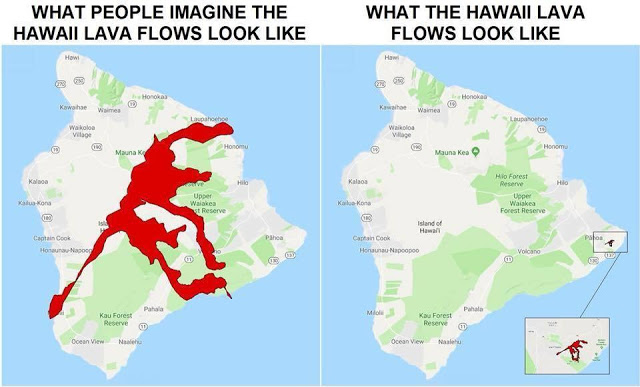
There is the need for better stewardship of the economic engines on touristic islands, be it Hawaii or the Caribbean. It is what it is! And our situations will worsen; things will get worse before they get worst. This is due to the reality and eventuality of Climate Change. This need to assuage against the threats and realities of Climate Change was an original intent of the Go Lean roadmap. The opening Declaration of Interdependence stresses this (Page 11) in the first of many pronouncements:

i. Whereas the earth’s climate has undeniably changed resulting in more severe tropical weather storms, it is necessary to prepare to insure the safety and security of life, property and systems of commerce in our geographical region. As nature recognizes no borders in the target of its destruction, we also must set aside border considerations in the preparation and response to these weather challenges.

The Go Lean movement has previously detailed many related issues and advocacies for disaster awareness and abatement. Consider this sample of previous blog-commentaries:

https://goleancaribbean.com/blog/?p=15012 In Life or Death: No Love for Puerto Rico
https://goleancaribbean.com/blog/?p=14925 ‘Climate Change’ Reality!? Numbers Don’t Lie
https://goleancaribbean.com/blog/?p=14832 Example of Manifesting Environmental Change
https://goleancaribbean.com/blog/?p=13391 After Maria, Failed-State Indicators: Destruction and Defection for Puerto Rico
https://goleancaribbean.com/blog/?p=12996 After Irma, Failed State Indicators: Destruction and Defection
https://goleancaribbean.com/blog/?p=12977 After Irma, Barbuda Becomes a ‘Ghost Town’
https://goleancaribbean.com/blog/?p=12900 The Logistics of Disaster Relief
https://goleancaribbean.com/blog/?p=12879 Disaster Preparation: ‘Rinse and Repeat’
https://goleancaribbean.com/blog/?p=11858 Looking and Learning from the Cautionary Tale of Kiribati
https://goleancaribbean.com/blog/?p=9455 Fix ‘Climate Change’ – Yes, We Can
https://goleancaribbean.com/blog/?p=7103 COP21 – ‘Climate Change’ Acknowledged
https://goleancaribbean.com/blog/?p=6893 A Meteorologist’s View On Climate Change
https://goleancaribbean.com/blog/?p=4673 Climate Change‘ Merchants of Doubt … to Preserve Profits!!
https://goleancaribbean.com/blog/?p=2465 Book: ‘This Changes Everything: Capitalism vs. the Climate’
https://goleancaribbean.com/blog/?p=2276 Climate Change May Affect Food Supply Within a Decade
https://goleancaribbean.com/blog/?p=1883 Climate Change May Bring More Kidney Stones
https://goleancaribbean.com/blog/?p=1817 Caribbean grapples with intense cycles of flooding & drought

In summary, the issues in this commentary relate more to image and geographic misconceptions than they do tourism and natural disasters. Do we have the global reputation to “take a punch and stand back up”.

Unfortunately, no!

So we must reform and transform the Caribbean’s societal engines so as to assuage the dangers of Climate Change and natural disasters; pandemics too. This is the quest of the Go Lean roadmap, and this is not just a pipe dream; it is conceivable, believable and achievable for our regional stakeholders to do better and be better.

All Caribbean stakeholders – residents and tourists alike – are urged to lean-in to this roadmap for change … and empowerment. Yes, we can make the region a better place to live work and play. 🙂

Sign the petition to lean-in for this roadmap for the Caribbean Union Trade Federation.

—————-

Appendix VIDEO – Hawaii tourism hit hard by Kilauea volcano eruption – https://youtu.be/89ppKLS5ufI

CBS Evening News
Published on Jun 2, 2018 – As molten lava destroys more homes in Hawaii, police have been ordered to arrest people who refuse to evacuate. Thousands have already been forced to flee to safety. Now, dramatic images broadcast around the world are having another impact — on tourism. CBS News correspondent Carter Evans reports.

Share this post:
, , ,

Saint Lucia Recognized as ‘Best Island in the Caribbean’

Go Lean Commentary

Saying that “we are the best”, really does not bring any solace.

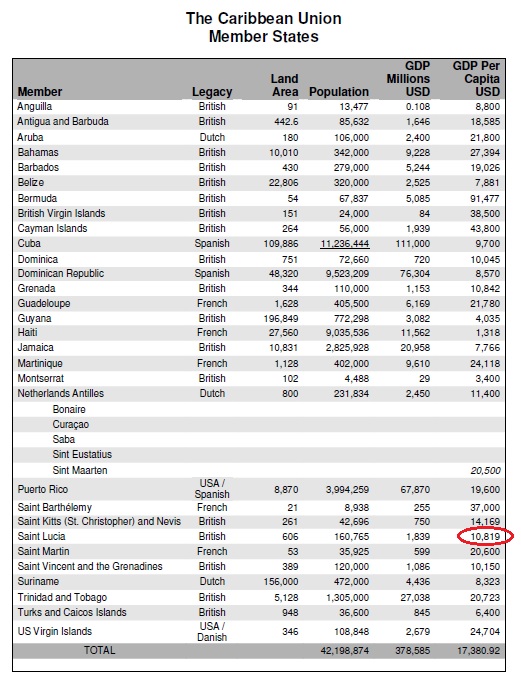
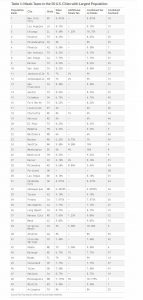
Just ask the people in St. Lucia! Do they feel like they are the “best island in the Caribbean”? (Economically, they are below average; their GDP ranking for the region is 18 of 30; see Table 1).

But it is true, the Caribbean does some things well; and some islands do the “well” even better than others:

There are features of Caribbean life that work very well now. We are currently the “best address” in the world. If one has the resources, there is no better place to call home – imagine a lottery winner relocating to a Caribbean paradise. Further, if someone has the resources for only a short time-frame, there is no better place to vacation. And thus, as a regional community, the Caribbean is best at servicing: Tourism, Cruise Operations, Offshore Banking, and Specialty Agriculture.

Tourism
Tourism is the primary economic driver for almost every “CU“ member-state. In economics, a measurement of demand is the price indicator. During the “high” season – winter peak – Caribbean hotels, of a high-quality rating, can be priced at thousands of (US) dollars … per night. There is the demand; then follows, the supply systems to meet the demand. This peak period, throughout the Caribbean, lasts from December to April. – Book Go Lean…Caribbean Page 58.

While we may have the “best of this and the best of that”, our dispositions in the Caribbean are still inadequate, bad and sometimes failing. On the one hand, we may have the best addresses on the planet for tourism, but on the other hand, we have blatant failures in so many other areas of society. So if the goal is to forge a better place to live, work and play, then we need to accept that only the “play” part is enjoying some measure of success and the ranking of “Best” is simply not enough.

See this news article here:

Title: Saint Lucia Recognized as Best Island In the Caribbean

Press Release: Saint Lucia has been recognized as the “Best Island in the Caribbean” by Global Traveler at their Sixth Annual Leisure Lifestyle Awards. Global Traveler is a monthly publication that attracts some 300,000 readers and connects with U.S.-based frequent, affluent, international travellers who have an average net worth of $2 million.

The awards cocktail took place on the rooftop of Sofitel Los Angeles, Beverly Hills. This award marks the destination’s second ‘Best Island in the Caribbean’ honour in the 6-year life of the Global Traveler Leisure Lifestyle Awards, Saint Lucia having won the inaugural award in 2013.

Saint Lucia registered a record-setting year in 2017, with year-to-date numbers for 2018 improving over the same period last year. First quarter figures for 2018 show a 17.8% increase in stay-over arrivals and a 13.5% increase in cruise arrivals over last year’s record.

Remarking on Global Traveler award, Minister for Tourism Hon. Dominic Fedee stated, “This is an award of recognition to the hard work and dedication of every hospitality worker and to every Saint Lucian. It is the Saint Lucian story and its majesty which continues to attract visitors to the destination making it a world-class holiday and business destination for travellers.”

Global Traveler also highlighted Saint Lucia as a ‘dream come true’ port of call for cruise visitors. The award survey was conducted in the Global Traveler magazine through an insert in subscriber copies, as a direct mail questionnaire, online and in emails. Saint Lucia beat out nine other destinations for the top honour, including Aruba, Grand Cayman, Saint Vincent and the Grenadines, the Bahamas, Curaçao, Nevis, Jamaica the British Virgin Islands and the U.S. Virgin Islands.

“We believe Saint Lucia is a unique Caribbean destination which offers something to every traveller and this award is in recognition of our destination’s appeal. We will continue to find creative ways to present Saint Lucia in the marketplace as we seek to increase market penetration, awareness and visitor arrivals,” stated the Executive Chairperson of the Saint Lucia Tourism Authority Agnes Francis.

Each year, Global Traveler awards the GT Tested Reader Survey awards, the Leisure Lifestyle Awards and the Wines on the Wing awards.

Source: Retrieved May 29, 2018 from: https://stluciatimes.com/2018/05/22/saint-lucia-recognized-as-best-island-in-the-caribbean/

So the appeal to the U.S.-based affluent traveler is “spot on” for Saint Lucian tourism; but maybe this is not good enough; see the still low GDP-Per-Capita figures in Table 1. Experiences shows that catering to the rich will ever only generate a limited success, because this is only a limited population – think the One Percent. Imagine if “we”, the entire Caribbean are able to appeal and deliver to the other 99 Percent. Maybe then, there would be more prosperity for a better Caribbean.

This is the assertion of the book Go Lean…Caribbean – available to download for free. It posits that with a unified approach the Caribbean region can launch certain empowerments that can elevate all of the region to better deliver on the tourism product. The book explains that these empowerments will make the region better, not just to play, but to live, work and play.

The Go Lean book serves as a roadmap for the introduction and implementation of the technocratic Caribbean Union Trade Federation (CU), for the elevation of Caribbean society – for all member-states. The book provides 370-pages of turn-by-turn instructions on “how” to adopt new community ethos, plus strategies, tactics, implementations and advocacies to execute so as to transform the economic engines of the region. For example, to supplement the affluent market for tourism stay-overs, the book urges the targeting of an alternate special population with the following advocacies:

  • 10 Ways to Enhance Tourism in the Caribbean Region (Page 19)
The Bottom Line on Snowbirds

A snowbird is someone from the U.S. Northeast, U.S. Midwest, Pacific Northwest, or Canada who spends a large portion of winter in warmer locales such as California, Arizona, Florida, Texas, the Carolinas, or elsewhere along the Sun Belt region of the southern and southwest United States, Mexico, and areas of the Caribbean. Snowbirds are typically retirees, and business owners who have a second home in a warmer location or whose business can be easily moved from place to place, such as flea market and swap meet vendors. Some snowbirds carry their homes with them, as RV’s or campers (mounted on bus or truck frames) or as boats following the east coast Intracoastal waterway. In the past snowbirds were frequently wealthy with independent income who maintained several seasonal residences and shifted residence with the seasons to avail themselves of the best time to be at each location; this custom has declined considerably due to changing patterns of taxation and the relative ease of long distance travel compared with earlier times. Many of these “snowbirds” also use their vacation time to declare permanent residency in low- or no-tax income tax states (where the tax bases are augmented by high tourism taxes), and claim lower non-resident income taxes in their home states. Canadian snowbirds usually make sure they retain residency in Canada in order to retain health benefits.

See Appendix VIDEO below.

  • 10 Ways to Improve Transportation (Page 20)
# 3 Turnpike: Ferries

For the most part, the CU member-states are islands [or coastal states] thereby allowing for a viable means of transportation via sea navigation. By deploying ferries, the CU facilitates passenger travel for business and leisure.

  • APPENDIX IC – Alaska Marine Highway System (Page 28)
Model for the CU

The CU envisions a similar water-based highway system of ferries and docks to facilitate passenger, cargo and vehicle [(i.e. RV’s)] travel connecting the islands of the Caribbean region to the mainland ports. This ferry system will be a component of the Union Atlantic Turnpike.

So kudos to St. Lucia…

… but let’s do even better than the status quo. We have the opportunity to benefit from a year-round tourism product; plus the successful diversification of the regional economy. In fact, this CU/Go Lean roadmap has these 3 prime directives:

  • Optimization of the economic engines in order to grow the regional economy to $800 Billion and create 2.2 million new jobs.
  • Establishment of a security apparatus to ensure public safety and protect the resultant economic engines.
  • Improve Caribbean governance to support these engines, including a separation-of-powers between the member-states and CU federal agencies.

The vision of an interconnected ferry system throughout the region requires a better interdependence among all the Caribbean islands. This is the quest of the Go Lean/CU roadmap. The book stresses that transforming the Caribbean societal engines must be a regional pursuit. This was an early motivation for the roadmap, as pronounced in the opening Declaration of Interdependence (Pages 12 – 14):

xi. Whereas all men are entitled to the benefits of good governance in a free society, “new guards” must be enacted to dissuade the emergence of incompetence, corruption, nepotism and cronyism at the peril of the people’s best interest. The Federation must guarantee the executions of a social contract between government and the governed.

xvi. Whereas security of our homeland is inextricably linked to prosperity of the homeland, the economic and security interest of the region needs to be aligned under the same governance. Since economic crimes … can imperil the functioning of the wheels of commerce for all the citizenry, the accedence of this Federation must equip the security apparatus with the tools and techniques for predictive and proactive interdictions.

xxiv. Whereas a free market economy can be induced and spurred for continuous progress, the Federation must install the controls to better manage aspects of the economy: jobs, inflation, savings rate, investments and other economic principles. Thereby attracting direct foreign investment because of the stability and vibrancy of our economy.

xxvi.  Whereas the Caribbean region must have new jobs to empower the engines of the economy and create the income sources for prosperity, and encourage the next generation to forge their dreams right at home, the Federation must therefore foster the development of new industries … [and] invigorate the enterprises related to existing industries like tourism … – impacting the region with more jobs.

The vision of an interconnected ferry system throughout the Caribbean region has been detailed before in these previous blog-commentaries:

https://goleancaribbean.com/blog/?p=12322 Ferries 101: Economics, Security and Governance
https://goleancaribbean.com/blog/?p=9179 Snowbirds Tourism – First Day of Autumn – Time to Head South
https://goleancaribbean.com/blog/?p=510 Snowbirds Need for Winter Hospitality

Ferries will transform all areas of Caribbean life. So the Go Lean roadmap is conceivable, believable and achievable for transforming the regional tourism product. Our Best can be even better still.

Let’s do this; let’s make our homeland a better place to live, work and play. 🙂

Download the free e-Book of Go Lean … Caribbean – now!

Sign the petition to lean-in for this roadmap for the Caribbean Union Trade Federation.

————

Appendix – Table 1 

Click on Photo to Enlarge

————

Appendix VIDEO – Anne Murray ~ Snowbird (1970) – https://youtu.be/x0oc3IR4qGQ

Published May 26, 2011 – Music in this video; Learn more

Share this post:
, , ,
[Top]

Flying the Caribbean Skies – ‘Shooting Ourselves in the Foot’ – ENCORE

We do not need to blame anyone else; we do bad all by ourselves.

This seems to be the indictment against the Caribbean for its deficient governing policies in managing air travel in the region. So many of the 30 member-states charge excessive aviation fees and airport taxes that they discourage, dis-invite and dissuade trading partners (and tourists) from consuming our shores and hospitality.

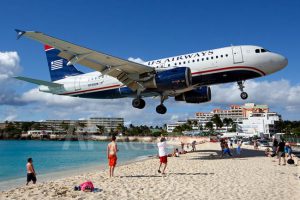
So the “defect is our own”. – The Bible

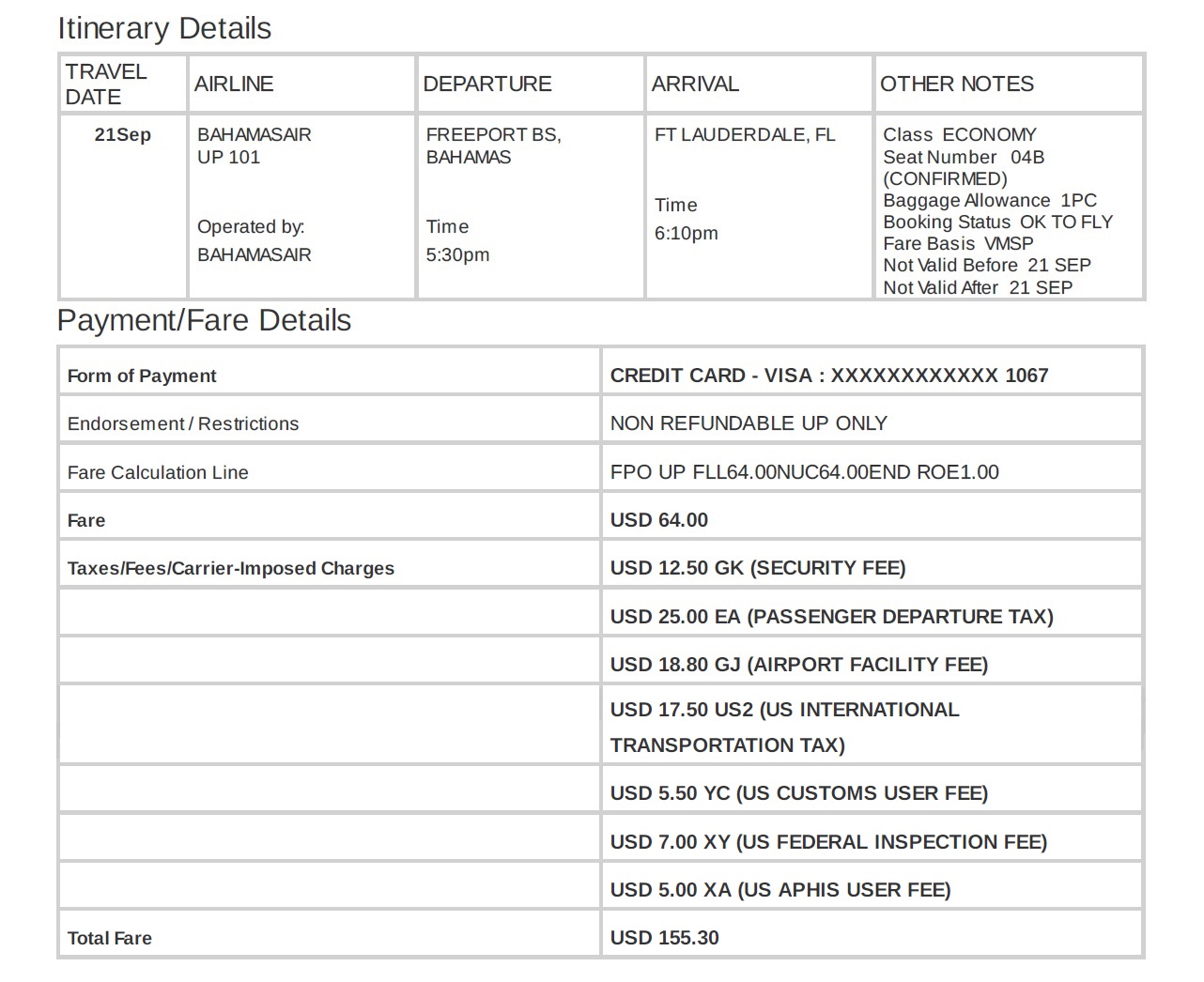
Shrewd management of taxes can encourage or discourage good or bad behavior. For example, high “sin” taxes on tobacco and alcohol tend to dissuade consumption; and tax cuts tend to incentivize investments. This is a known fact! And yet, many Caribbean member-state governments charge exorbitant fees and taxes for basic air travel – sometimes the fees are higher than the air fare themselves – see below.

This subject is part of the focus on the economic realities of “flying the Caribbean skies”. This commentary continues the 3-part series on Flying the Caribbean Skies. This entry is 2 of 3 in this series from the movement behind the book Go Lean … Caribbean in consideration of societal defects in the region’s management of air travel. These defects have awful-ized an already depressed economic situation in the Caribbean region. The other commentaries in the series are cataloged as follows:

  1. Flying the Caribbean Skies: New Regional Options
  2. Flying the Caribbean Skies: ‘Shooting Ourselves in the Foot’ – ENCORE
  3. Flying the Caribbean Skies: The Need to Manage Airspace

All of these commentaries relate to “how” the stewards for a new Caribbean can empower regional commerce by optimizing the air travel eco-system. This submission asserts that empowerment in this industry space can begin right at the front door, the portal to air travel, the airports. In a previous Go Lean commentary, this governing flaw was exposed. This commentary is an ENCORE of that previous blog from December 6, 2014.

See that submission here:

——————————-

Go Lean Commentary –  Caribbean less competitive due to increasing aviation taxes

The book Go Lean … Caribbean relates the significance of supporting the airline industry so as to facilitate the region’s primary economic driver: Tourism.

Tourism is a leisure activity; many times participants in leisure are in no hurry to get to their destinations, they often drive. This relates to countries on a continental mainland; but for islands, not so much. For 27 of the 30 Caribbean member-states, island life is the reality. (Belize is in Central America; Guyana and Suriname are in South America).

If speed is not the requirement then boating should be an option. But the only boating/transport options for Caribbean tourists are cruise lines.

This following article relates the biggest threat to Caribbean tourism is Caribbean governments. These ones are authorized to assess taxes, but for far too often they have targeted airline tickets to generate needed revenues. This is such a flawed strategy, a betrayal of the public trust. They “cut off their nose to spite their face”, as the article here relates:

By: Ernie Seon, Caribbean-360 Contributor

CU Blog - Caribbean less competitive due to increasing aviation taxes - Photo 1ST. THOMAS, US Virgin Islands – The International Air Transportation Association (IATA) Tuesday urged regional aviation authorities to adhere to the key principles set out by International Civil Aviation Organization.

IATA’s regional vice president for the Americas, Peter Cerda said it is unfortunate that many governments had chosen to ignore the principles, a global issue that was particularly acute in the Caribbean.

Addressing tourism and industry officials gathered here on the occasion of World Aviation Day, Cerda noted that aviation taxes continue to increase the cost of travelling to the Caribbean. He said this made the region less competitive to other destinations.

“Taking the islands as a whole, each dollar of ticket tax could lead to over 40,000 fewer foreign passengers,” he said, adding that US$20 million of reduced tourist expenditure meant 1,200 fewer jobs across the region.

“Caribbean countries must therefore consider the aviation industry as a key element for tourism development,” he advised.

The IATA official noted that in terms of charges, two airports in the region, Montego Bay and Kingston, both in Jamaica, recently proposed airport tariff increases of over 100 per cent so as to attain a return of capital of around 20 per cent a year in US dollars.

He said that measures such as these do not encourage or support the development of the industry in the region.

“The regulators must act strongly and swiftly against such big increases. Governments have to foster positive business environments through consultation with the industry and transparency in order to ensure win-win situations for all,” he warned.

Cerda said the issue of taxes and charges in the region transcends the formal breaches of global standards and recommended practices and that the simple truth is that this region is a very expensive place for airlines to do business.

In the Caribbean, tourism and the aviation sector facilitate and support some 140,000 jobs and contribute US$3.12 billion, roughly 7.2 per cent of the Caribbean’s gross domestic product (GDP).

The airline industry is celebrating its 100th anniversary year in the black, according to industry figures released here. Globally, airlines are expected to earn a net profit of US$18 billion in 2014.

Cerda noted that while that might sound impressive, on revenues of US$746 billion, this is equivalent to a net profit margin of 2.4 per cent or US$5.42 per passenger carried.

“Looking only at Latin America and the Caribbean, the airlines in this region are expected to earn $1.1 billion.”This is a profit of US$4.21 per passenger and a net margin of three per cent. We are in a tough and very competitive business,” he added.

The aviation official said fuel expense across the Caribbean is estimated at 14 per cent higher than the world average, adding that this represents about a third of an airline’s operating costs.

He noted that in the case of the Dominican Republic, although fuel charges were recently reduced, tax on international jet fuel still remains high at 6.5 per cent.

“Another example is the Bahamas applying a seven per cent import duty on Jet fuel. Jet fuel supply is an issue in the region, the complexity of the fuel supply and the seasonal demand is costly and difficult, making fuel costs in the region a challenge for airlines.”

In addition, Cerda noted that airports are using the fuel concession fees as a source of revenue and they are still waiting to see any of these monies re-invested in improving fuel facilities.

On the issue of safety, he said that this has been in the spotlight in recent months, with July being an especially sad month for all involved with aviation.

However, Cerda said despite the recent tragedies, flying remains by far the safest mode of transportation.

“Every day, approximately 100,000 flights take to the sky and land without incident. Nonetheless, accidents do happen. Every life lost recommits us to improve on our safety performance.

“It is no secret that safety has been an issue in this region. Even though it is still under performing the global average, performance is improving,” he said.

The IATA official said that the aviation industry has come a long way since the very first flight from St. Petersburg to Tampa 100 years ago, turning this large planet into one small world.

He said through it all, one thing has remained constant: when governments support the conditions for a thriving industry the economic benefits are felt by all.

However Cerda cautioned that for the industry to deliver the most benefits to the citizens in the Caribbean and spur additional tourism and trade, “we need to be able to compete on a level playing field and have the infrastructure capacity needed to grow.”

He said he remains confident that if the Caribbean governments continue to strengthen their partnership with the aviation industry, “we will deliver the unique transformative economic growth only our industry can deliver, making the second century of aviation in this region even more beneficial than the first”.
Caribbean-360 Online News (Posted 09/17/2014; retrieved 12/06/2014) –
http://www.caribbean360.com/news/caribbean-less-competitive-due-to-increasing-aviation-taxes-iata-warns

This foregoing article highlights a defective premise, predatory taxing, and so thusly depicts the need for improved regional oversight of economic and governing engines.

CU Blog - Caribbean less competitive due to increasing aviation taxes - Photo 2See this photo of a recent airline ticket (price breakdown), for one of the stakeholders in the Go Lean movement, who was travelling from a Caribbean island. The reality of these aviation taxes defies logic!

Yes, the governments need their revenues, but this should not be pursued at the expense of undermining viable economic engines; this is self-defeating. Likewise there was a recent conflict with British Aviation Authorities and their unilateral tax on Caribbean air transport. The solution there/then is the same as now: regional coordination and a heightened advocacy; see AppendixVIDEO.

Change has now come to the Caribbean. The book Go Lean … Caribbean serves as a roadmap for the introduction and implementation of the Caribbean Union Trade Federation (CU), an alliance of the 30 Caribbean member-states. This Go Lean roadmap has 3 prime directives:

  • Optimization of the economic engines in order to grow the regional economy to $800 Billion and create 2.2 million new jobs..
  • Establishment of a security apparatus to protect the resultant economic engines.
  • Improve Caribbean governance to support these engines.

The roadmap calls for the CU to navigate the changed landscape of the globalized air transport industry. There is the need for regional integration, administration, and promotion for Caribbean air travel among local and foreign carriers. The book posits that transportation and logistics empower the economic engines of a community. There must be air carrier solutions to service the transportation and tourism needs of the Caribbean islands. This point is fully appreciated by Caribbean tourism stakeholders; the book relates that the region’s Hotel and Tourism Association channel the vision of Robert Crandall, former Chairman of American Airlines, who remarked at a Caribbean Hotel and Tourism Investment Conference in May 2010 that the region is uniquely dependent on tourism:

“Everyone involved in travel and tourism knows that our [airline] industry is immensely important to the world economy, generating and supporting – either directly or indirectly – about one in eleven jobs worldwide. Here in the Caribbean, it is even more important. On a number of islands, travel and tourism accounts for more than 50% of all employment, and on some islands for more than 75%. Overall, about 20% of Caribbean employment is travel and tourism dependent – something on the order of 2.5 million jobs.” – Go Lean … Caribbean Page 60.

The Go Lean book asserts that air travel options must be optimized to impact Caribbean society – thus the need for more regional coordination, regulation and promotion of the Caribbean’s aviation industry. New models are detailed in the book in which tourism can be enhanced with “air lifts” to facilitate Caribbean events, and “Air Bridges” to allow for targeting High Net Worth markets. This roadmap also introduces the Union Atlantic Turnpike to offer more transportation solutions (ferries, toll roads, railways, and pipelines) to better facilitate the efficient movement of people and cargo.

This is one way the CU will empower the region’s economic engines. This is an example of the change that the CU technocracy will bring!

The Go Lean book presents a series of community ethos that must be adapted to forge this change. In addition, there are these specific strategies, tactics, implementation and advocacies to apply:

Community Ethos – Job Multiplier Page 22
Community Ethos – Lean Operations Page 24
Community Ethos – Cooperatives Page 25
Community Ethos – Ways to Improve Sharing Page 35
Community Ethos – Impacting the Greater Good Page 37
Strategy – Customers – Visitors Page 47
Strategy – Competitive Analysis – Event Patrons Page 55
Strategy – Core Competence – Tourism Page 58
Anecdote – Caribbean Hotel & Tourism Assoc. focus on Air Transport Page 60
Tactical – Fostering a Technocracy Page 64
Tactical – Commerce – Tourism Promotion Page 78
Tactical – Aviation Administration & Promotion Page 84
Implementation – Ways to Deliver Page 109
Implementation – Trade Mission Objectives Page 116
Planning – 10 Big Ideas for the Caribbean Region – #7: Virtual Turnpike Page 127
Planning – Ways to Improve Trade Page 128
Advocacy – Ways to Improve Governance Page 168
Advocacy – Ways to Optimize Government Revenue Sources Page 172
Advocacy – Ways to Enhance Tourism Page 190
Advocacy – Ways to Impact Events Page 191
Advocacy – Ways to Market Southern California – Air Bridge Page 194
Advocacy – Ways to Improve Transportation – Aviation Promotion Page 205
Appendix – Airport Cities – New Approach for Optimizing Business Model Page 287

This commentary posits that the status quo of Caribbean aviation taxes reflect a flawed economic policy, reflective of the dysfunction in the region. This commentary also relates to other lessons of economic optimizations and dysfunctions previously detailed in Go Lean blogs, as sampled here:

Caribbean must work together to address regional industry threats – Example of Rum Subsidies
A Lesson in Aviation History: Concorde SST and the Caribbean
New York-New Jersey Port Authority – Lessons from an Airport Landlord
Bahamas Re-organizing Government Revenues in 2015 with VAT Implementation
Lessons Learned from the American Airlines Merger
Book Review: ‘Wrong – Nine Economic Policy Disasters and What We Can Learn…’
Caribbean Changes – Air Antilles Launches St. Maarten Service
Tourism’s changing profile – Need for Competition and Comparative Analysis

The world loves the Caribbean; people want to come visit and enjoy our hospitality. It is better for them, and for us in the region that they come by air transport. But cruises are viable options, though the Caribbean communities get less benefits from cruise lines (Pages 61 & 193). We simply “fatten our frogs for snake”. The more dysfunction we create with air transport – like these excessive  aviation taxes – the more we push visitors to the cruise option; meaning less direct-indirect spending: hotels, taxis, restaurants, casinos, etc.

Now is the time to lean-in to this roadmap for Caribbean change, as depicted in the book Go Lean…Caribbean. We cannot afford to undermine our economic strengths with disabling tax policies. This is a public trust, betrayed. The Caribbean can – and must – do better.  🙂

Download the free e-Book of Go Lean … Caribbean – now!

Sign the petition to lean-in for this roadmap for the Caribbean Union Trade Federation.

————

APPENDIX Video: A Tax Too Far…? – http://youtu.be/Jbh8DJxUNC8

Uploaded on Oct 30, 2011 – A documentary on how the Air Passenger Duty instituted by the UK is affecting Caribbean Tourism, and the lobbying efforts of the Caribbean Tourism Organization to have it reduced, removed, or the Caribbean re-banded. Get more information about the APD on the CTO website: http://www.onecaribbean.org/our-work/advocacy/

Share this post:
, , , ,
[Top]

Flying the Caribbean Skies – New Regional Options

Go Lean Commentary

Look back at Economic History and we see a consistent lesson: nations that deploy efficient transportation systems always thrived as world powers. Consider these examples of the interchangeability of transportation and trade:

  • Romans built roads, facilitating trade and military advancement.
  • British, Dutch, French and Spanish empires thrived in trade due to their efficient shipbuilding and navigational artistry.
  • Railroad expansion across North America allowed the manifestation of the greatest industrial might in the history of mankind.
  • Banana boats created foreign markets for a tropical perishable produce, and originated cruise travelling.
  • Highway deployments allowed America to regroup and exceed competitors just as other nations where catching up with rail.
  • The “Jet Age” opened the Caribbean up to be the ideal winter tourism destination; “get there fast and then take it slow”.

This last one, is the focus of this series of commentaries; the economic realities of “flying the Caribbean skies”. This commentary commences a 3-part series on Flying the Caribbean Skies. This entry is 1 of 3 in this series from the movement behind the book Go Lean … Caribbean in consideration of societal defects in the region’s management of air travel. There is a lot wrong and a lot of remediation that needs to be done. The other commentaries in the series are cataloged as follows:

  1. Flying the Caribbean Skies: New Regional Options
  2. Flying the Caribbean Skies: ‘Shooting Ourselves in the Foot’ – ENCORE
  3. Flying the Caribbean Skies: The Need to Manage Airspace

All of these commentaries relate to “how” the stewards for a new Caribbean can empower regional commerce by optimizing the air travel eco-system, and the dependent industries. Our efforts to reform and transform the Caribbean economic engines would be incomplete without re-addressing air travel. Problems emerged in the last decade; there was one dominant airline that used to service most of the Caribbean member-states, and then they downsized their Caribbean footprint. That was American Airlines. In a previous Go Lean commentary, this debilitating history was related:

The 2008 financial crisis placed a heavy strain on the US’s largest carrier: American Airlines. On July 2, 2008, American announced furloughs of up to 950 flight attendants, in addition to the furlough of 20 MD-80 aircraft. American’s hub at Luiz Muñoz Marin Airport in San Juan, Puerto Rico (PR) was truncated from 38 to 18 daily inbound flights. The holding company, AMR Corporation, filed for Chapter 11 bankruptcy protection on November 29, 2011, and the airline made cuts in July 2012 due to the grounding of several aircraft associated with its bankruptcy and lack of pilots due to retirements. American Eagle, the regional carrier, (the Caribbean’s largest), was to retire 35 to 40 regional jets as well as its entire Saab turboprop fleet. [b] American Eagle PR ceased operation in March 2013. This status created dysfunction for the entire Eastern Caribbean region.

The stakeholders for American Airlines met and deliberated; then they made a decision and executed a plan that devastated Caribbean commerce. Caribbean stakeholders were “not at the table” but we were “on the menu”.

Now that American Airlines have downsized, the Caribbean has become totally dysfunctional with the air travel eco-system. A few other airlines, stepped into the void, but not at the same level and production; air travel options are now more limited, and expensive. So more and more tourists are travelling to the Caribbean by cruise ships. With less and less air travel fulfillments, that means less stay-overs, so less hotels, restaurants, taxi cabs, etc.. This type of dysfunction affects all “job multipliers” (indirect employment down the line) in the society.

No wonder our Caribbean member-states are nearing Failed-State status.

With cracks in the economic “chain-link”, the whole job creation utility becomes dysfunctional, and the Caribbean landscape for jobs is dire. We have some work to do, to fill the void.

If the one airline, the foreign American Airlines, is a primary culprit for Caribbean Airspace dysfunction, then facilitating a local airline solution would be moving in the right direction. See one news article here, identifying a new regional carrier:

Title #1: Saint Lucia welcomes new regional airline

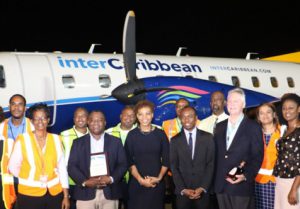
Press Release: The inaugural flight of InterCaribbean Airways arrived at the George FL Charles Airport, on Thursday, March 22, at 6:55 pm, from the island of Dominica. The flight marks the commencement of a direct service, 3 times a week, between Saint Lucia’s George FL Charles Airport (SLU) and Dominica’s Douglas–Charles Airport (DOM).

Flight JY293 was welcomed by the Minister of Tourism, Information and Broadcasting the Hon. Dominic Fedee, Chairperson of the Saint Lucia Tourism Authority Agnes Francis, Airport Manager for George FL Charles Kirby Toussaint and other tourism officials. The honoured guests included airline Owner and Chairman Lyndon Gardiner along with CEO Trevor Sadler.  Guests were greeted with steel band music and welcome refreshments upon disembarking the aircraft.

The new route will be serviced by an Embraer EMB120, with a seating capacity of 30. The flights will arrive from DOM at 6:55 pm on Sunday, Monday and Thursday and depart from SLU at 9:00 am on Monday, Tuesday and Friday. The service provides onward connections to the northern Caribbean including the BVI reaching as far north as Havana with an additional direct service to Saint Croix commencing on April 12.

Speaking on the airlines role in regional travel Owner/Chairman Lyndon Gardiner stated, “Our dream is connecting the entire Caribbean, we feel that once we have better air connectivity we will be able to have better integration and be able to market the Caribbean as a single destination, offering more multi-destination vacations in our region”

The airport’s proximity to the island’s main business hub and largest cluster of hotels makes it the ideal point of entry for regional travel. In 2017 the Caribbean market overtook the United Kingdom as the second largest producer of stay-over arrivals, generating 76,349 or 19.8% of total stay-over arrivals to the destination.

Minister of Tourism, Information and Broadcasting the Hon. Dominic Fedee commented on the value of the increased airlift saying, “We look forward to the opportunities that this flight allows, which connects us to even more gateways across the Caribbean.”

Source: Retrieved April 21, 2018 from: https://stluciatimes.com/2018/03/30/saint-lucia-welcomes-new-regional-airline/

There is a heightened deficiency in the region today, and now only a small number of airline carriers have answered the call. This dysfunction has created the urgency for permanent change. This is a prime directive of the book Go Lean … Caribbean, to optimize the region’s economic engines, including enhancements for Caribbean tourism, cruise and “long stay” visitors.

The book Go Lean…Caribbean – available to download for free – serves as a roadmap for the introduction and implementation of the technocratic Caribbean Union Trade Federation (CU), for the elevation of Caribbean society – for all member-states. This CU/Go Lean roadmap fully has these 3 prime directives:

  • Optimization of the economic engines in order to grow the regional economy to $800 Billion and create 2.2 million new jobs.
  • Establishment of a security apparatus to ensure public safety and protect the resultant economic engines.
  • Improve Caribbean governance to support these engines, including a separation-of-powers between the member-states and CU federal agencies.

American Airlines is more than just a regional carrier; they are the world’s largest airline; see VIDEO in the Appendix below. In addition to their planes-flights, they also facilitate an alliance with other carriers around the world, to form the OneWorld Alliance. This alliance was detailed in that previous blog-commentary, listing this inventory as of May 2014:

Airline Base Country / Region
Airberlin Germany – Central Europe
American Airlines USA – North America
British Airways United Kingdom, Western Europe
Cathay Pacific Airways Hong Kong (China), Far East Asia
Finnair Finland – North Europe
Iberia Spain / Portugal – Southern Europe
Japan Airlines Japan – Far East Asia
LAN Airlines Chile/Peru – South America
Malaysia Airlines Malaysia – Southeast Asia
Qantas Australia – Austra-Asia
Qatar Airways Middle East
Royal Jordanian Middle East
S7 Airlines Russia – Siberia
TAM Airlines Brazil – South America
US Airways USA – North America

So the Caribbean took a beating, economically, because of the decline and failure of this one private American company.

You see it, right? You see the “too many vulnerable eggs in one basket”; this is called “country risk”:

Country risk also refers to the broader notion of the degree to which political and economic unrest affect the securities of issuers doing business in a particular country. – Source.

Yes, there is vulnerability of placing our own economic fortunes in the hands of just one foreign entity. This is a consistent complaint of the Go Lean movement against the Caribbean member-states:

We have subjected ourselves to be parasites, rather than protégés.

A more appropriate Caribbean solution would be to forge an equivalent multi-airline alliance. In fact, there is such an effort in place now, though limited. See the news article here identifying a new alliance in the Eastern Caribbean:

Title #2: Caribbean airline alliance promises lower fares

Barbados Nation – Three Caribbean airlines have formed an alliance which promises to make it easier and cheaper for travellers to move between 32 countries.

Antigua-based LIAT, Air Antilles of Guadeloupe and St Maarten’s Winair have joined forces under the CaribSKY project which is co-funded by the European Union’s INTERREG Caribbean programme to the tune of 4.7 million euros.

The details of the project were revealed on Tuesday during a media conference at La Creole Beach Hotel and Spa in Guadeloupe.

Air Antilles chief executive officer Serge Tsygalnitzky said CaribSKY would allow passengers to travel on any of the three airlines on one ticket. This will be facilitated through codeshares and interline agreements.

“Sometimes, a customer has to purchase two tickets, three tickets to get to a single place. Now, what we want you to be able to do is travel seamlessly anywhere you want to with a single ticket,” he told regional media.

Tsygalnitzky said passengers would benefit from more direct flights and connections, lower fares, a better airport experience and a loyalty programme.

At the same time, LIAT, Winair and Air Antilles will be able to share know-how, optimise schedules and bring their teams together while maintaining separate identities.

Together, it projected that the three airlines will operate 25 aircraft and transport 1 400 000 passengers annuals on 70 000 flights.

LIAT’s chief executive officer Julie Reifer-Jones said inter-regional travel was declining and it was hoped that CaribSKY will make it easier for passengers to move through the English, French, Spanish and Dutch-speaking territories.

In brief remarks, LIAT chairman Dr Jean Holder pointed out that the Caribbean was the most airline dependent region in the world and social, economic and cultural life depended on the extent to which there is connectivity.

St Maarten’s Minister of Tourism, Economic Affairs, Transportation and Telecommunications, Cornelius de Weever also highlighted the importance of CaribSKY.

He pointed out that it is often easier and cheaper to cross the Atlantic than to visit a Caribbean territory.

Source: Retrieved April 23, 2018 from: https://stluciatimes.com/2018/04/19/caribbean-airline-alliance-promises-lower-fares/

This too is a good start, though limited to the small Eastern Caribbean sub-region. The Go Lean movement presents the plan to forge an alliance of multiple parties throughout the whole Caribbean region, all 30 member-states in benefit to the 42 million people. The book stresses that regional alliances are the best ways to reform and transform the Caribbean societal engines. This was an early motivation for the roadmap, as pronounced in the opening Declaration of Interdependence (Pages 12 – 13):

viii. Whereas the population size is too small to foster good negotiations for products and commodities from international vendors, the Federation must allow the unification of the region as one … agent, thereby garnering better terms and discounts.

xvi. Whereas security of our homeland is inextricably linked to prosperity of the homeland, the economic and security interest of the region needs to be aligned under the same governance. Since economic crimes … can imperil the functioning of the wheels of commerce for all the citizenry, the accedence of this Federation must equip the security apparatus with the tools and techniques for predictive and proactive interdictions.

xxiv. Whereas a free market economy can be induced and spurred for continuous progress, the Federation must install the controls to better manage aspects of the economy: jobs, inflation, savings rate, investments and other economic principles. Thereby attracting direct foreign investment because of the stability and vibrancy of our economy.

The Go Lean book provides 370-pages of turn-by-turn instructions on “how” to adopt new community ethos, plus the strategies, tactics, implementations and advocacies to execute so as to reboot, reform and transform the societal engines of Caribbean society. One advocacy (Page 205) details the CU’s role in promotion activities for air travel, with this quotation:

Aviation plays a key role, and so there is the need for regional coordination and promotion of the region’s domestic and foreign air carriers.

Yes, we can better promote air travel in the Caribbean; we can make our homeland a better place to live, work, fly & play. 🙂

Download the free e-book of Go Lean … Caribbean – now!

Sign the petition to lean-in for this roadmap for the Caribbean Union Trade Federation.

————-

Appendix VIDEO – World’s largest airline fleet || American Airlines Current And Future Fleet – https://youtu.be/ULGL_yTORMs

Great Aviation
Published on Jan 23, 2018 – American Airlines current as well as the airplanes it has ordered. All the types as well as their seat configurations.


Share this post:
, , , ,
[Top]

Baha Mar: Doubling-down on Failure

Go Lean Commentary

“We told you it wouldn’t work.” – Previous Go Lean commentary.

Update: It hasn’t worked!

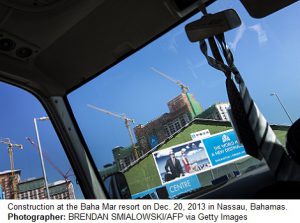
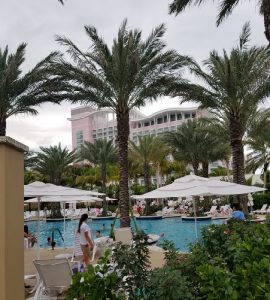
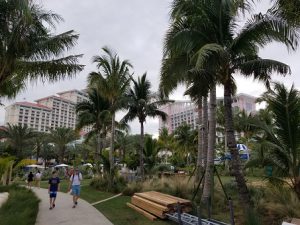
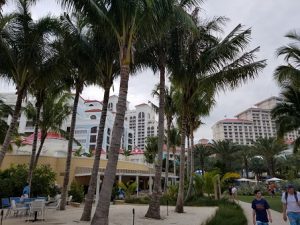
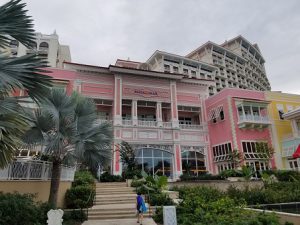
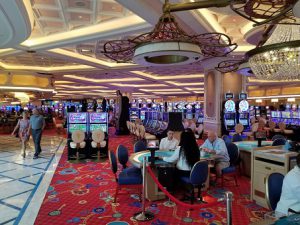
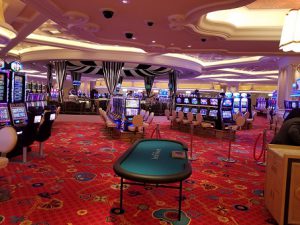
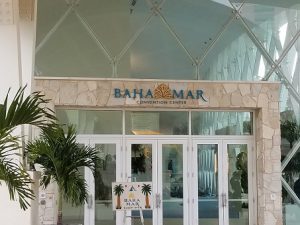
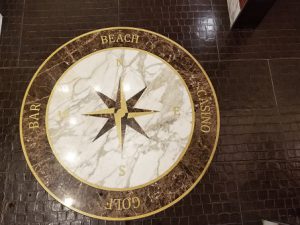
The Baha Mar Resort, Casino and Convention Center in Cable Beach, Nassau, Bahamas is now fully open – see Appendix VIDEO – and frankly empty! (See Photos below). This is the peak winter tourism season. This weather reality creates a seasonal demand for tropical resorts. Plus the excitement of a new property always generates a “buzz” … normally.

And yet, Baha Marthus far has been underwhelming! (There is hope for a better disposition in the future).

The Baha Mar project has been a source of contention for many years; one drama after another: dispute during construction, missed opening, bankruptcy filing, official wine-down, changed ownership, eventual opening, litigation among the originators.

See the latest breaking news in this Baha Mar drama in the news article here:


Title:
Bahamas Developer Claims Huge Chinese Fraud at $3.9 Billion Resort
By: Bob Van Voris

China Construction America Inc. was accused in a lawsuit of ripping off the original developer of the long-delayed $3.9 billion Baha Mar resort in the Bahamas by submitting fraudulent bills and collecting undeserved fees.

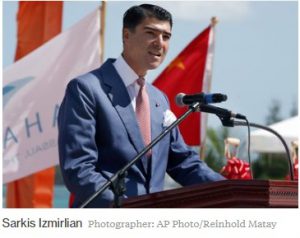
BML Properties Ltd., led by wealthy Bahamas businessman Sarkis Izmirlian, sued CCA Tuesday claiming the state-owned Chinese contractor pulled off a “massive fraud” to enrich itself at BML’s expense, leading to the collapse of the project in 2015. Delays in the construction of the biggest and most expensive resort to be built in the Caribbean have been a drag on the Bahamian economy in recent years.

BML claims that CCA submitted hundreds of millions of dollars in fake bills, understaffed the project and used it as a training ground for inexperienced workers. CCA knew it wouldn’t be able to meet the planned December 2014 deadline to open the resort but created the appearance that it would, in order to remain on the project and collect undeserved fees, BML claims. BML is seeking at least $2.25 billion in damages.

CCA didn’t respond to phone messages and an email seeking comment on the suit.

BML filed for Chapter 11 bankruptcy protection in Delaware in 2015. A U.S. bankruptcy judge dismissed the case in favor of a Bahamian court.

Baha Mar, which opened in April, is now owned by Hong Kong-based, Chow Tai Fook Enterprises Ltd. The development features more than 2,300 rooms, 40 restaurants and lounges, a convention center, a Jack Nicklaus-designed golf course, shopping and the biggest casino in the Caribbean, according to Baha Mar’s website.

BML outlined its claims in a 259-page complaint filed in state court in Manhattan.

The case is BML Properties Ltd. v. China Construction America Inc., 657550/2017, New York State Supreme Court, New York County (Manhattan).

Source: Bloomberg Business News Source – Posted December 26, 2017; retrieved December 30, 2017 from: https://www.bloomberg.com/news/articles/2017-12-26/baha-mar-developer-claims-to-be-victim-of-massive-china-fraud

All of this drama for a business model designed for … failure.

The Baha Mar Resort on Cable Beach features casino gambling and golf, two amenities that are failing more and more.

Casino
In a previous commentary, the business disposition of casino gambling was explored:

Increasingly in the casino/gaming industries, the money is not there. …

Despite the fact that the “house” always wins, the number of gamblers have declined! It is what it is!

  • 87% of Baby-Boomers gamble when visiting Las Vegas
  • 78% of Generation X-ers gamble when visiting Las Vegas
  • 63% of Millenials gamble when visiting Las Vegas

Golf
In a previous commentary, the business disposition of the sport of golf was explored:

“The games people play” … have relevance for our consideration. Golf is one of those games. But golf is more than just a game, it is an eco-system; but this eco-system is in peril.

    “The financial bubble burst and the Tiger bubble burst as well”.
    “Even as the economy recovered, golf is still in a nose dive”.
    “Your house is on fire”.

These (above) are among the key phrases from the narration of … [an] HBO Real Sports documentary story

This topic of the Baha Mar Resort is very important in the consideration of Caribbean economics, as casino gambling and golf has often been associated with Caribbean tourism.

The foregoing news article about Baha Mar aligns with the book Go Lean…Caribbean, which calls for the elevation of Caribbean economics. This book serves as a roadmap for the introduction and implementation of the technocratic Caribbean Union Trade Federation (CU) to better manage economic opportunities in the full Caribbean region. This is a Big Deal for the Go Lean roadmap to foster the diversification of the regional economy. Frankly, a $3.9 Billion investment should be able to generate better returns (job creation) than the Baha Mar fiasco has demonstrated. This hope for better tourism and economic diversification was identified early in the Go Lean book (Pages 11 – 14) in the following pronouncements in the Declaration of Interdependence:

iv. Whereas the natural formation of the landmass is in a tropical region, the flora and fauna allows for an inherent beauty that is enviable to peoples near and far, the structures must be strenuously guarded to protect and promote sustainable systems of commerce paramount to this reality.

vi. Whereas the finite nature of the landmass of our lands limits the populations and markets of commerce, by extending the bonds of brotherhood to our geographic neighbors allows for extended opportunities and better execution of the kinetics of our economies through trade. This regional focus must foster and promote diverse economic stimuli.

xxiv. Whereas a free market economy can be induced and spurred for continuous progress, the Federation must install the controls to better manage aspects of the economy: jobs, inflation, savings rate, investments and other economic principles. Thereby attracting direct foreign investment because of the stability and vibrancy of our economy.

xxvi. Whereas the Caribbean region must have new jobs to empower the engines of the economy and create the income sources for prosperity, and encourage the next generation to forge their dreams right at home, the Federation must therefore foster the development of new industries, like that of ship-building, automobile manufacturing, prefabricated housing, frozen foods, pipelines, call centers, and the prison industrial complex. In addition, the Federation must invigorate the enterprises related to existing industries like tourism, fisheries and lotteries – impacting the region with more jobs.

The Go Lean book posits that there is a need to re-boot and optimize the engines of commerce so as to make the Caribbean a better place to live, work and play. The tourism product, the mainstay of Caribbean economy, used to depend on certain amenities (i.e. Casinos and Golf) that have now come under attack by the social and demographic changes. It so appears that the future for Caribbean economics cannot lazily depend on factors like “sun, sand, surf and smiles”, no, there must be intelligent business models.

This is a changed world and changed marketplace. Likewise, our economic engines must change to keep pace … and get ahead!

The Go Lean book presents a Way Forward.

Way Forward
The Go Lean/CU roadmap seeks to elevate all of Caribbean society to remain competitive and consequential in the future. This is the heavy-lifting of shepherding a progressive region of 42 million people, 10 million Diaspora, 80 million tourists, and 4 language groups across 30 member-states. The CU’s charter is to effectuate progress in this region with these 3 prime directives:

  • Optimization of the economic engines in order to grow the regional economy to $800 Billion and create 2.2 million new jobs.
  • Establishment of a security apparatus to protect the resultant economic engines and marshal against economic crimes.
  • Improvement of Caribbean governance to support these above engines, including a separation-of-powers between CU federal administrations and local member-states.

The Way Forward / Go Lean roadmap includes the quest to create the jobs for the near-future. There is the plan to monitor, manage, and plan for new jobs. The roadmap provides 370-pages of turn-by-turn instructions on “how” to adopt new community ethos, plus strategies, tactics, implementations and advocacies to execute so as to reboot, reform and transform the societal engines of Caribbean society.

As a region, we have failed to keep pace of change. As related in that previous blog-commentary

… our society is now in desperate need of reform and to reboot to insulate from many demographic changes. On the one hand, we must diversify our economy and avail other high job-multiplier industries, away from tourism, but on the other hand, we must double-down in the tourism product, as the economic principles of “supply and demand” just cannot be ignored. (During the winter months, our Caribbean destinations are the “best addresses on the planet”.)

The Go Lean/CU roadmap calls for fostering industrial developments to aid economic diversification and to aid tourism. This includes incorporating best practices and quality assurances to deliver the “best experience in the world” for our visitors and trading partners.

This commentary has previously related details of the changing macro-economic factors in the world and how despite the dynamic conditions, jobs can be created. The following are samples of previous Go Lean blog-commentaries:

https://goleancaribbean.com/blog/?p=13700 Increasing Tourism Market Share
https://goleancaribbean.com/blog/?p=13420 A Lesson in Whaling History – Expeditions for Shipyard Jobs
https://goleancaribbean.com/blog/?p=13184 A Series on Industrial Reboots
https://goleancaribbean.com/blog/?p=12668 Common Sense of Eco-Tourism
https://goleancaribbean.com/blog/?p=8590 Build It and They Will Come – Politics of Infrastructure
https://goleancaribbean.com/blog/?p=7977 Transformations: Perfecting Our Core Competence – i.e. Tourism
https://goleancaribbean.com/blog/?p=6341 Doing Better with Tourism Stewardship
https://goleancaribbean.com/blog/?p=6089 Need Better Jobs Than ‘Minimum Wage’
https://goleancaribbean.com/blog/?p=4037 How to Train Your ‘Dragons’ or Direct Foreign Investors
https://goleancaribbean.com/blog/?p=2857 Where the Jobs Are – Example: Entrepreneurism in Junk
https://goleancaribbean.com/blog/?p=2126 Where the Jobs Are – Computers Reshaping Global Job Market
https://goleancaribbean.com/blog/?p=2003 Where the Jobs Are – One Scenario (Ship-breaking)

So this commentary advocates not doubling-down on bad trends that just “soak up” investments and produce very little return. We must be better and do better. We need to double-down on improving our tourism products and diversifying our economy away from tourism.

Yes, we can! We can do the heavy-lifting (hard-work and smart-work) to make our homeland a better place to live, work and play. 🙂

Download the free e-book of Go Lean … Caribbean – now!

Sign the petition to lean-in for this roadmap for the Caribbean Union Trade Federation.

———–

Appendix VIDEO – Baha Mar: The Las Vegas of the Caribbean – https://youtu.be/T7lGljlr01M

Caribbean Journal

Published on Aug 6, 2017 – The long-awaited Baha Mar resort project is finally here, and Caribbean Journal got an exclusive first look. So what’s it like? Well, it’s a unique, impressive project: a Las Vegas in the heart of the Caribbean.

Music: “Consortium of Cold Cool” by Craig Riley Listen ad-free with YouTube Red

Share this post:
, , ,
[Top]

Increasing Tourism Market Share

Go Lean Commentary

It’s December … this is peak winter travel season.

It’s time to take inventory of Caribbean tourism:

It has been weighed in the balance; it has been measured …
It has been found wanting!

Our peaks … are not enough. There is the need to Increase Caribbean Tourism Market Share. See this magazine article here with this title:

Title: Increasing Tourism Market Share
By Tony Fraser

For the Caribbean tourism industry to take a larger chunk out of world tourism arrivals (a necessity for continued survival and growth), there are a few innovative options lapping at the shores of tourism economies in the Caribbean.

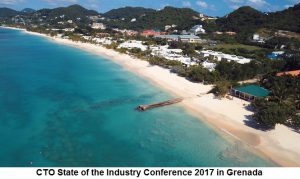
To achieve the objective in an industry which provides hundreds of thousands of jobs in the Caribbean and US$30bn in revenue in 2014, wide-ranging options were presented to governments, hoteliers, tour operators and others in the business at the State of the Industry Conference (SOTIC) of the Caribbean Tourism Organisation in Curacao.

Eastern focus

Among the options, officials looked at the following:

  • how to attract more visitors from the fast-growing Chinese market;
  • how to cast aside traditional and moral restrictions that could pose barriers to the US$100bn US market of lesbians, gays, bisexuals and transsexuals (LGBT);
  • how to engage the Millennial generation (those born between 1980-1998) in exciting weekend package tours around the Caribbean;
  • how to tackle the issue of damaging high tax rates on the airline industry while looking to expand the Open Skies policy;
  • and the need to sweep away the layers of travel restrictions on passengers (including Caribbean nationals) wanting to move around and into the region with one-stop visa and security checks.

Increasing but…
An examination of the figures on visitor arrivals shows that the number of tourists coming to the Caribbean in the first six months of 2015 increased by 5.8% compared with the same period in 2014.

That percentage increase was larger than the 4.1% average increase in global tourism arrivals.

Significantly too, the Caribbean region (which encompasses the English, Dutch, French and Spanish-speaking areas of the Caribbean) in 2014 earned US$30bn, a 10% increase over the previous year.

However, Caribbean tourism’s share of the international market, as calculated by the United Nations World Tourism Organisation, was a mere 2.8% of the 1.1 billion people who travelled to destinations all over the globe.

“The Caribbean has a relatively low global market share compared to the importance it places on its tourism economy,” the UN World Tourism Council’s director/executive secretary of member relations, Carlos Vogeler, told the SOTIC in Curacao.

Asia focus
But while the Caribbean’s share of the international tourism market is quite small, South East Asia (SEA) has experienced the largest growth as a region.

The reason is not too difficult to assess.

“Those countries have access to a nearby source market, China, whose outbound travel market grew by 30% last year, and by 48% during the first six months of this year,” Mr Vogeler told Caribbean Intelligence©.

At the same time that the SEA countries have the emerging Chinese market from which to source tourists, Mr Vogeler says the source markets of the Caribbean for tourists are mature.

He said that the Caribbean tourism industry had to take up the challenge of attracting tourists from the Far East.

Cut taxes
Another challenge is for governments and airports in the Caribbean to reduce taxes on airline tickets.

It is a call that has been made for many years.

It was made even while the Caribbean tourism industry was petitioning the United Kingdom to reduce the Air Passenger Duty for passengers flying to Caribbean destinations.

In the Caribbean, airlines and tourism experts have continuously pointed to the negative impact that continued high taxes on airline tickets and airport taxes have had on travel into and around the region.

However, governments have contended with equal vigour that since they have a narrow tax base to raise revenue for development, and with airline travel being a captive source of revenue, reducing taxes on airline travel and airport duties is a difficult proposition.

The Premier of the Turks and Caicos Islands, Dr Rufus Ewing, told the CTO conference that “If you want governments to remove and or reduce those taxes, then we have to know how we are going to get alternative revenues; how do we take care of our security responsibility when there is one visa system and security check at airports. And those are real concerns for us in these countries.”

The proof of the pudding is in the eating for Robin Hayes, JetBlue’s president and chief executive.

“Where we have been able to reduce fares by 30%, we have doubled the travel market,” he says.

And Mr Hayes commended the government of Barbados, which has “one of the lowest tax rates in the region”.

“The idea is that we can collectively look at ministers of finance and ask them to relook the tax argument; but we do need government revenue to run countries,” Barbados Tourism and International Transport Minister Richard Sealey told Caribbean Intelligence©.

New ways of working
JetBlue sealed a deal with Barbados at the conference announcing an additional daily roundtrip flight between Fort Lauderdale in the US and Grantley Adams Airport in Barbados.

What’s more, the JetBlue boss is encouraging the Caribbean tourism industry to tap into JetBlue Getaways, which packages hotels, tours, restaurants and other experiences into the flight package, an arrangement that he says has done wonders for Grenada.

“Thanks to strong bookings through Getaways and greats friendships with local properties like Sandals and Spice Island, we were able to add a third weekly service in September, after only three months in the market,” Mr Hayes said.

Another option for attracting more tourists to Caribbean shores and into hotel rooms is to give seat guarantees to airlines.

Under such agreements, the host government pays for seats not occupied by passengers when they fly into those destinations.

Barbados’s Mr Sealey, who is also CTO chairman, told Caribbean Intelligence©: “It is a fact that we do subsidise airlines to the region, but we prefer to have a commercial relationship with the airlines, ones like that with we have with JetBlue, which works with us to market the destination.”

Potential earners
On the intra-Caribbean travel routes there was 5.5% growth, with 400,000 travellers moving around the region during the first six months of 2015.

Liat’s chief executive, David Evans, told Caribbean Intelligence© “It’s a market with quite an amount of potential.”

He said that Liat had upgraded its fleet over the last two years. But as he explained, taxes can cost the traveller up to 40% to 50% of the airline ticket.

Partnerships with other regionally-based airlines to achieve greater efficiency and coverage of the Caribbean are coming, Mr Evans told Caribbean Intelligence©.

“While we cannot talk about those alliances right now, they are coming soon,” he said.

He said that, at the moment, Liat has strategic alliances with international carriers such as British Airways and Virgin and others to move passengers around the region from their international arrivals but the internal partnerships are long overdue.

The LGBT market
Facilitating travel into the region by members of the lesbian, gay, bisexual and transsexual (LGBT) community is an option for the Caribbean to increase its international market share.

However, it is an option that poses challenges to the church-going, Bible-believing Caribbean community.

The market is a lucrative one, says David Paisley, senior research director of the San Francisco-based travel agency Community Marketing Insights.

“The Caribbean is a perfect fit for LBGT travel; but our clients must be assured of safety and not be discriminated against, and not only by laws but by social practices,” Mr Paisley said.
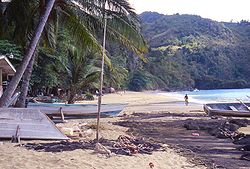
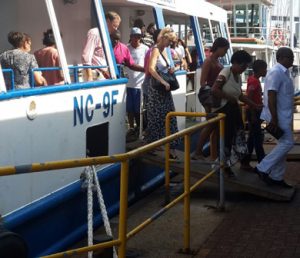
His research shows that the LGBT community travels more than the general population; they spend more on hotels, restaurants and shopping than other tourists.

“We have heard of homophobic societies in the Caribbean and I don’t want to call names, but where we see those tendencies and feel threatened, our travellers will not be coming,” Paisley told Caribbean Intelligence©.

There have been a few incidents in the past with members of the LGBT community that have caused a measure of concern in one or two Caribbean countries.

CTO Secretary General Hugh Riley told Caribbean Intelligence© that “no business can afford to ignore a significant market segment”.

He added: “Our [the CTO’s] responsibility is always to source the expertise, present the facts and provide enough information on which our members can make an informed decision.”

Weekend packages
Short breaks packed with entertainment, aimed at the generation born between 1980 and 1998, are seen by Leah Marville of My Destination Arrivals as yet another option to land more tourists around the region.

The weekends consist of a blur of entertainment and experiences which can be captured on camera and become talking points for the travellers, who travel at weekends and head back to their jobs on Monday.

“There is something absolutely captivating about us… My Destination Weekends seeks to capture and immortalise experiences for those who take the trip,” says Ms Marville, a model and businesswoman.

But increasing numbers of arrivals is not the be all and end all.

Mr Sealey says the benefits of tourism must be counted in jobs, in the development of communities, the protection of the environment and the retention of a large chunk of what the tourists spend in getting to the Caribbean and having memorable vacations in the region.
Source: Caribbean Intelligence Magazine – Posted November 2015; retrieved December 6, 2017 from: http://www.caribbeanintelligence.com/content/increasing-tourism-market-share

The movement behind the book Go Lean … Caribbean seeks to reboot the economic engines of the Caribbean member-states. Tourism is the region’s primary economic driver, but it is inadequate for providing the needs of the people in the region. We must do better. This foregoing magazine article about the Caribbean Tourist Organization (CTO) identified some defects … and solutions in 2015. It is now 2017; unfortunately, the identified defects are still defective; the hoped-for solutions, never materialized. See the introductory VIDEO about the CTO State of the Industry Conference in the Appendix below.

These same issues have also been addressed in other Go Lean commentaries:

Can the CTO be counted on to provide the need empowerments to elevate the Caribbean economic engines?

No! It is the assessment in the Go Lean book that the current stewards for regional tourism is inadequate. The book quotes (Page 3):

Many people love their homelands and yet still begrudgingly leave; this is due mainly to the lack of economic opportunities. The Caribbean has tried, strenuously, over the decades, to diversify their economy away from the mono-industrial trappings of tourism, and yet tourism is still the primary driver of the economy. Prudence dictates that the Caribbean nations expand and optimize their tourism products, but also look for other opportunities for economic expansion. The requisite investment of the resources (time, talent, treasuries) for this goal may be too big for any one Caribbean member-state. Rather, shifting the responsibility to a region-wide, professionally-managed, deputized technocracy will result in greater production and greater accountability. This deputized agency is the Caribbean Union Trade Federation (CU).

The CTO represents for-profit hotels and resorts. The needed solutions for the Caribbean cannot be profit-driven. It must pursue features like collective bargaining and the Greater Goodthe greatest good to the greatest number of people which is the measure of right and wrong” (by philosopher Jeremy Bentham; 1748 – 1832). So the Go Lean book presents an alternative; it serves as a roadmap for the introduction and implementation of the Caribbean Union Trade Federation (CU). The CU is designed to be a technocratic intergovernmental entity that shepherds economic growth for the Caribbean region; in other words, Increase Tourism Market Share. The goal is to reboot and optimize the region’s economic, security and governing engines. There are ways for individual member-states to improve their tourism product, but there needs to be a regional focus to accomplish this goal.

The Go Lean motivation is the Greater Good (Page 37).

In total, the Go Lean/CU roadmap will employ strategies, tactics and implementations to impact its prime directives; identified with the following 3 statements:

The Go Lean book provides 370-pages of turn-by-turn instructions on “how” to adopt new community ethos, plus the strategies, tactics, implementations and advocacies to execute so as to reboot, reform and transform the societal engines of Caribbean society. One advocacy in optimizing the tourism landscape is to foster infrastructure that is too big for any one member-state alone; consider some specific plans, excerpts and headlines from the book on Page 190 entitled:

10 Ways to Enhance Tourism in the Caribbean Region

1 Lean-in for the Caribbean Single Market
The economic engine associated with the CU will provide the infrastructural needs to improve the tourism product for all member-states. The plan is to expand trade treaties with other countries and regional blocs to target markets and languages outside of North America. One goal is to expand “snowbirds” traffic, as these have been a consistent revenue source. The CU will provide the support services like translations, medical and transport (ferries for RV’s) to augment this special market.
2 Special Festival Events
Promote multi-day events in the style of Sturgis (see Appendix J on Page 288), Coachella, and Milwaukee’s Summer-Fest. The CU will liberalize the loitering laws, allow for camping & car/van sleeping, public showers, food trucks, open canister for alcohol, etc. (Jamaica’s SunFest is a start). To facilitate traffic, jurisdictional governments should grant temporary motorcycle licenses and arranged for optimal shipping logistics.
3 Fairgrounds/Amusement Parks Empowerment Zones
Encourage the establishment and promotion of Fairgrounds/Amusement Parks (Disney, Sea World, Busch Gardens-like attractions) that can bring in vast number of visitors. The empowerment zones get special tax incentives and building code variances, or managed as Self Governing Entities (SGE) in which they are beholden only to the CU jurisdiction. Many US and European theme parks are only open during the warm seasons, the opposite can be advocated in the Caribbean region, where theme parks may only be open during the “high season”, or only when cruise ships are in port.
4 Dynamic Sea-lifts / Air lifts
Grant temporary licenses to shipping (ferries) and air charters to facilitate the transport of Festival participants. The goal is to move huge number of guests in and out readily. The US Passport Card (used for travel to Mexico and Canada) should suffice the travel documents for these events. These logistics can be modeled after Ramadan travel to Mecca.
5 Excess Inventory Auction
The CU buys from the Hotels (with warrants) and sells the Excess Inventory of Hotels rooms to the highest Bidder to combine with Air, Sea, Car and Tour Packages. (Much like Priceline.com). The CU uses e-commerce strategies and tactics (web, phone and text messaging) in their campaigns. The hospitality sources should drill down, beyond hotels, to also include bed-and-breakfast and other certified (CU ranked & rated) home-sharing arrangements.
6 Medical Tourism
Hospitals and medical clinics will be installed on SGE campuses, designed for alternative and experimental treatments. These will attract medical tourists to come for extended stays, many outfitted with monitoring and medical alert devices to engage designated medical personnel in case of emergencies; thus minimizing stress on domestic facilities.
7 Eco-Tourism Promotions Board
8 Sports Tourism
9 Cruise Line Passenger Smart Card Currency
The CU will collectively bargain with the cruise lines to deploy electronic “purses” and allow the Caribbean Central Bank to settle the transactions. This incites more spending at the ports-of-call. Smart cards feature more functionality like physical access, locator service & photo ID. The cards can also offer contactless transactions, like “tap and go”.
10 Tourist Hate Crime Sentence Extender

The Go Lean book details that the Caribbean can create …

30,000 direct jobs from opening new markets, creating new opportunities and new traffic; starting new sharing options
9,000 direct jobs from Event staff and Festivals at CU Fairgrounds
1,000 direct jobs from managing, promoting UNESCO World Heritage Sites

These are direct jobs; there is also the reality of indirect jobs – unrelated service and attendant functions – at a 3.75 multiplier rate would add another 150,000 jobs. That makes a total of 190,000 jobs.

This is how the roadmap works: it identifies industries, dissects the inherent deficiencies, and proposes solution to reboot and optimize it, then it harvests the multiples of jobs resulting from the plan. Tourism is the current dominant industry; the goal is to “stand on the shoulders” of previous accomplishments, add infrastructure not possible by just one member-state alone and then reap the benefits. Imagine this manifestation in just this one new strategy: inter-island ferries that connect all islands for people, cars and goods.
There have been a number of blog-commentaries by the Go Lean movement that highlighted economic opportunities embedded in regional tourism initiatives. See a sample list here:

https://goleancaribbean.com/blog/?p=13126 “Must Love Dogs”  – Providing K9 Solutions for Better Tourism Security
https://goleancaribbean.com/blog/?p=12668 Lessons from Colorado – Common Sense of Eco-Tourism
https://goleancaribbean.com/blog/?p=11287 Sports Tourism and Pro-Surfing
https://goleancaribbean.com/blog/?p=11033 Medical Tourism and Plastic Surgeries
https://goleancaribbean.com/blog/?p=9897 Art Tourism and Community-sanctioned Murals
https://goleancaribbean.com/blog/?p=9179 Snowbird Tourism and RV Ferries
https://goleancaribbean.com/blog/?p=4425 Deploying regional currency and e-Payment solutions
https://goleancaribbean.com/blog/?p=4145 Eco-Tourism and World Heritage Sites

In summary, the Caribbean need jobs; our job creation dysfunction is so acute that our people are fleeing the homeland to find job opportunities abroad. Tourism-related jobs, while not the highest paying, could be stable, reliable and providential. More options and deliveries would help us to make our homeland a better place to live, work and play.

This is a Big Deal; this is how to grow the economy: create jobs; create businesses; retain people; foster new opportunities; learn from past mistakes and accomplishments. Tourism is just one industry in the Go Lean roadmap. While this one can result in 190,000 new jobs, the other industries (16) show even more promise: shipbuilding, pipelines, frozen foods, etc. The net result: 2.2 million new jobs.

Let’s do this … for the Greater Good.

All Caribbean stakeholders – residents and visitors – are urged to lean-in to this roadmap for change … and empowerment. This plan is conceivable, believable and achievable. 🙂

Sign the petition to lean-in for this roadmap for the Caribbean Union Trade Federation.

Download the book Go Lean … Caribbean – now!

———–

Appendix VIDEO – CTO STATE OF THE INDUSTRY CONFERENCE – https://youtu.be/8AraGc3VGpI

Curacao Tourist Board

Published on Jul 7, 2015 – State of the Industry Conference 2015 Curaçao will host SOTIC from 21- 23 October 2015 at the World Trade Center in Willemstad. CTO Business meetings will be held October 20 -21, 2015.

Share this post:
, ,
[Top]

Economics of ‘South Beach’

Go Lean Commentary

The US has an economy; the 30 Caribbean member-states have economies. The US does it better!

For example, the entire Caribbean region enjoys 80 million visitors a year; (though this figure includes 12 million cruise passengers visiting multiple Caribbean destinations on one cruise); just the US city of Orlando has one destination – Walt Disney World – that enjoys 57 million visitors-a-year alone. Further down the list of high traffic resort cities is the destination of Miami Beach, Florida; each year Miami Beach hotels host over 35% of the ten (10) million tourists who visit Greater Miami.
Yes, the US cities do tourism better than our Caribbean counterparts; and their economies are more diversified.

If only we, in the Caribbean, could be more like … the American city of Miami (Beach).

It is a fitting comparison:

  • Global City in the tropical zone – a snowbird haven-refuge from cold northern cities.
  • Home away from home for many Caribbean people.
  • Primary economic engine of tourism (leisure and medical), travel (air and cruises), financial services and trade. See Miami’s largest employers in the Appendix below.

The movement behind the book Go Lean … Caribbean seeks to reboot the economic engines of the Caribbean member-states – so we can perform better. The book studies models and lessons from other communities (cities and countries): i.e. New York City (Page 137), Detroit (Page 140) and Omaha (Page 138). In fact, this movement had previously detailed how the Greater Miami metropolitan area has become so successful a community mainly because of the failures of Caribbean communities. Rather than the entire metropolitan area of Greater Miami, we are hereby exploring just the economic landscape of Miami Beach, and more exactly the neighborhood of South Beach. This commentary, however, relates that there are lessons from ‘South Beach’ and all of Greater Miami that we can apply in the Caribbean.

Miami Beach is a coastal resort city in Miami-Dade County…. It was incorporated on March 26, 1915.[7] The municipality is located on natural and man-made barrier islands between the Atlantic Ocean and Biscayne Bay, the latter of which separates “the Beach” from the City of Miami. The neighborhood of South Beach, comprising the southernmost 2.5 square miles of Miami Beach, along with downtown Miami and the Port of Miami, collectively form the commercial center of South Florida[8] [(Miami-Fort Lauderdale-West Palm Beach metropolitan statistical area)]. As of the [latest] 2010 census, Miami Beach had a total population of 87,779.[9] It has been one of America’s pre-eminent beach resorts since the early 20th century. – Wikipedia.
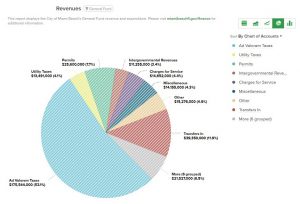
 

South Beach is a classic beach resort town – see the Wikipedia definition here – except that there are two de facto seasons: good (Summer and Early Autumn) and great (Late Autumn, Winter and Spring):

resort town, often called a resort city or resort destination, is an urban area where tourism or vacationing is the primary component of the local culture and economy. A typical resort town has one or more actual resorts in the surrounding area. Sometimes the term resort town is used simply for a locale popular among tourists. The term can also refer to either an incorporated or unincorporated contiguous area where the ratio of transient rooms, measured in bed units, is greater than 60% of the permanent population.[1]

Generally, tourism is the main export in a resort town economy, with most residents of the area working in the tourism or resort industry. Shops and luxury boutiques selling locally themed souvenirs, motels, and unique restaurants often proliferate the downtown areas of a resort town.

Resort Town Economy
If the resorts or tourist attractions are seasonal in nature, resort towns typically experience an on-season where the town is bustling with tourists and workers, and an off-season where the town is populated only by a small amount of local year-round residents.

In addition, resort towns are often popular with wealthy retirees and people wishing to purchase vacation homes, which typically drives up property values and the cost of living in the region. Sometimes, resort towns can become boomtowns due to the quick development of retirement and vacation-based residences.[3]

However, most of the employment available in resort towns is typically low paying and it can be difficult for workers to afford to live the area in which they are employed.[4] Many resort towns have spawned nearby bedroom communities where the majority of the resort workforce lives.

Resorts towns sometimes struggle with problems regarding sustainable growth, due to the seasonal nature of the economy, the dependence on a single industry, and the difficulties in retaining a stable workforce.[5]

Economic impact of tourism
Local residents are generally receptive of the economic impacts of tourism. Resort towns tend to enjoy lower unemployment rates, improved infrastructure, more advanced telecommunication and transportation capabilities, and higher standards of living and greater income in relation to those who live outside this area.[6] Increased economic activity in resort towns can also have positive effects on the country’s overall economic growth and development. In addition, business generated by resort towns have been credited with supporting the local economy through times of national market failure and depression, as in the case of San Marcos, California during the cotton market bust in the early 1920s and Great Depression of 1929.[2]

Click Photo to Expand – Lots of communities charge supplemental taxes for community revenues

Tourism, more exactly Resort Tourism, is the Number One economic driver in the Caribbean. Yet, our region has so many societal defects. We must do a better job at our primary job. What can we learn from Greater Miami, Miami Beach and South Beach?

This small peninsula of South Beach is Hot, Hot, Hot … as a party and tourist destination, thereby creating a scarcity of real estate. The dining, night-clubbing, shopping and entertainment options in this District are in high demand, all year long. Not all patrons to this District stay at area hotels, as many are locals in addition to the constant flow of visitors. Most night clubs, and even some restaurant-bars, apply a Cover Charge, typically $20 per person. These patrons should also expect to pay $40 just for valet parking, and similarly above-average prices for self-parking. Hotel rates are consistently above average, even during the off-season (consider $300 per night). During the peak-season, rates are traditionally in excess of $500. Hotel guests with rental cars face the same $40 per night parking charges.

The party continues every night until 5am; (one of the latest alcohol-serving policies in the nation).  Just like any other community, Miami Beach has to contend with Agents of Change. There is a conservative movement to dampen the hot nightlife in South Beach. These proponents raised the issue as a public referendum on November 7, 2017 with a measure, to limit liquor sales to 2am. This direct democratic action failed at a 64% to 35% ratio. The economic forces of South Beach won again!

These economic realities transcend many dimensions of Miami Beach life; consider governance. The City collects an add-on to the state’s usual Sales Tax revenues. What add-ons?

Transient Lodging Rental Taxes for Short Term Rentals Summary Chart
3% Convention Development Tax 2% Tourist Development Tax 1% Sports Franchise Tax
Food & Beverage Tax Summary Chart
2% Tourist Development Surtax 1% Homeless and Spouse Abuse Tax

Source: Retrieved December 5, 2017 from: http://www.miamidade.gov/taxcollector/tourist-taxes.asp

See this sample/example here of a typical night out at a local South Beach restaurant recently:

This movement, behind the Go Lean book, seeks to reform and transform the economic engines of Caribbean society by being technocratic in applying best practices from the field of Economics. South Beach and Miami Beach offers a lot of lessons: good, bad and ugly.

One bad lesson is the practice of guaranteed gratuity. In a previous blog-commentary, this policy was ridiculed as unbecoming as a community ethos; it fosters a spirit of entitlement. In fact, the practice is well-chronicled in the field of Economics as “rent-seeking”; consider this sample:

This is distinguished in economic theory as separate from profit-seeking, in which entities seek to extract value by engaging in mutually beneficial transactions.[6] While profit-seeking fosters the creation of wealth, rent-seeking is the use of social institutions such as the power of government to redistribute wealth among different groups without creating any new wealth.[7]

Note: For the restaurant receipt in the above-photo, the credit card bill, still contained a line item for additional tip, even though 20-percent was already added as a gratuity-service charge.

There it is: rent-seeking.

(Rent-seeking practices are quite common in the Caribbean; even codified as law in some places).

The Go Lean book serves as a roadmap for the introduction and implementation of the Caribbean Union Trade Federation (CU). The CU is designed to be a technocratic intergovernmental entity that shepherds economic growth for the Caribbean region. The goal is to reboot and optimize the region’s economic, security and governing engines. The Go Lean/CU roadmap employs wise strategies, like the “Separation-of-Powers between CU federal agencies and Caribbean member-state governments”; so the limitations of national laws in a member-state would not override the CU. The CU‘s technocratic practices would directly apply to the installation of Exclusive Economic Zones (EEZ) and Self-Governing Entities (SGE); these operate in controlled bordered territories like campuses, industrial parks, research labs, industrial plants and Entertainment Zones.

Notice the presence here of one such zone, already existing in Jamaica.

Title: Jamaica’s first entertainment zone named

Jamaica’s Entertainment Minister Olivia “Babsy” Grange, has named Fort Rocky in Port Royal as Jamaica’s first entertainment zone.

The minister made the announcement at the recent launch of Carnival in Jamaica 2018.

Drives cultural and economic value
Minister Grange said the new entertainment zone has been endorsed by the National Environment and Planning Agency (NEPA), along with the Town and Country Planning Authority.

“We are working with (NEPA) and the Ministry’s agencies, including the National Heritage Trust, to ensure that our cultural sites are preserved and utilized in a manner that drives cultural and economic value to us as a nation,” she noted.

Historical value
Entertainment zones like Fort Rocky are areas in which any legal entertainment and sports activity can be staged any time of day or night unhindered, as long as the organizers are mindful of the historical value of such sites.

While fueling the entertainment industry, these entertainment zones are expected to neutralize the problem of noise nuisance.

The Entertainment and Culture Minister has also called on private business operators to take advantage of the opportunity to use these zones. She provided information that two other entertainment zones will be declared outside of the Corporate Area in the near future.

Source: Retrieved December 6, 2017 from: https://www.caribbeannationalweekly.com/news/caribbean-news/jamaica-entertainment-zone/

The Go Lean/CU roadmap will optimize this strategy for deployment of Self-Governing Entities throughout the region.

Imagine restaurant-bars-nightclubs open until 5am.

This is the Economics of ‘South Beach’ … and a good learned-lesson.

Miami’s South Beach is a hot night-spot right now. What emboldens its success is the embrace of Caribbean culture. Think:

The concept of Miami Sound … is Caribbean musical fusion.

The name Miami Sound Machine also refers to the Grammy Award winning musical group led by Cuban-Americans Gloria and Emelio Estefan. They are also proprietors of one of the biggest night clubs on South Beach: Mango’s. See the VIDEO here:

VIDEO – Mangos Tropical Cafe in South Beach, Miami [4K] – https://youtu.be/D1TcBkaRyL4

Published on Nov 30, 2016 – A glimpse inside Mango’s Tropical Café in South Beach, Miami. Watch in 4K resolution.

Miami is Hot, Hot, Hot ordinarily.

Then in the winter peak-season, it is Hotter still …

… and then for Art Basel – the annual Arts in Miami pageant peaking this year December 6 to 11 – it is the Hottest destination in the country. See more here:

Title: It’s not only rich people who should care about Art Basel. Here’s why.

When flocks of serious — and seriously loaded — art gatherers descend on South Florida for the annual Art Basel in Miami Beach pageant, they’re coming to snag some of the best contemporary work money can buy from the 268 galleries from across the globe conveniently gathered at the city’s convention center.

But that’s not the sole reason they make their way to Miami Beach and Miami.

Many also come to see art they cannot buy — the increasingly rich side feast served up by the cities’ expanding range of museums and private art collections that are open to all.

Yes, there’s the warm weather, the nice hotels and restaurants (staffed by local workers) — not to mention the two dozen satellite fairs and myriad events that make up the annual December frenzy known as Miami Art Week. …

See the full story here:  http://www.miamiherald.com/news/local/community/miami-dade/article187161868.html

Source: Miami Herald posted December 2, 2017; retrieved December 6, 2017.

Caribbean people have done it in Miami; we can also do it in the Caribbean. This is the vision of a new Caribbean; a better place to live, work and play right here at home, without having to flee the region.

In total, the Go Lean/CU roadmap will employ strategies, tactics and implementations to impact its prime directives; identified with the following 3 statements:

  • Optimization of the economic engines in order to grow the regional economy to $800 Billion & create 2.2 million new jobs.
  • Establishment of a security apparatus to ensure public safety assurances and protect the region’s economic engines.
  • Improvement of Caribbean governance to support these engines.

The Go Lean book presents a 370-page roadmap on how to optimize the economic engines … and how to avoid bad practices, like rent-seeking. The book stresses key community ethos, strategies, tactics, implementations and advocacies necessary to transform and turn-around the eco-systems of Caribbean society. These points are detailed in the book as follows:

Community Ethos – Deferred Gratification Page 21
Community Ethos – Return on Investments Page 24
Community Ethos – Ways to Impact the Future Page 26
Community Ethos – Ways to Impact the Greater Good Page 37
Strategy – Vision – Confederate all 30 member-states/ 4 languages into a Single Market Page 45
Tactical – Separation-of-Powers – CU Federal Government versus Member-State Governance Page 71
Implementation – Ways to Pay for Change – Award exploratory rights in exclusive territories Page 101
Implementation – Start-up Benefits from the Exclusive Economic Zone (EEZ) Page 104
Implementation – Steps to Implement Self-Governing Entities (SGE) Page 105
Planning – 10 Big Ideas – #3: Proactive Anti-crime Measures Page 127
Planning – Ways to Improve Trade Page 128
Advocacy – Ways to Grow the Economy – Protect Property Rights Page 151
Advocacy – Ways to Create Jobs Page 152
Advocacy – Ways to Improve Governance Page 168
Advocacy – Ways to Better Manage the Social Contract Page 170
Advocacy – Ways to Enhance Tourism Page 190
Advocacy – Ways to Impact Events Page 191
Advocacy – Ways to Promote Fairgrounds Page 192
Advocacy – Ways to Impact Main Street Page 201

To accomplish this goal of elevating Caribbean society, we must learn lessons from far-away places and nearby lands (like Miami), foster good economic habits … and abandon bad ones. This is how to grow the economy: create jobs; create businesses; retain people; foster new opportunities, learn from past mistakes and accomplishments.

All Caribbean stakeholders – residents, Diaspora and visitors – are urged to lean-in to this Go Lean roadmap for change … and empowerment. This plan, though a Big Idea, is conceivable, believable and achievable. 🙂

Download the book Go Lean … Caribbean – now!

Sign the petition to lean-in for this roadmap for the Caribbean Union Trade Federation.

—————–

Appendix – Miami Top Employers

According to Miami’s Beacon Council – the local Economic Development agency – the top private employers in 2014 in Miami-Dade were:[64]

# Employer # of employees
1 University of Miami and Health System 12,818
2 Baptist Health South Florida 11,353
3 American Airlines 11,031
4 Carnival Cruise Lines 3,500
5 Miami Children’s Hospital 3,500
6 Mount Sinai Medical Center 3,321
7 Florida Power and Light Co. 3,011
8 Royal Caribbean International 2,989
9 Wells Fargo 2,050
10 Bank of America 2,000

According to Miami’s Beacon Council, the top Government employers in 2014 in Miami-Dade were:[64]

# Employer # of employees
1 Miami-Dade County Public Schools 33,477
2 Miami-Dade County 25,502
3 Federal Government 19,200
4 Florida State Government 17,100
5 Jackson Health System 9,800

Source: Retrieved December 5, 2017 from: https://en.wikipedia.org/wiki/Miami-Dade_County,_Florida#Economy

Share this post:
, , , ,
[Top]

ENCORE: The Requirement for Better Security – ‘Must Love Dogs’

One Minute Las Vegas Was Rocking; the Next It Was ‘World War III’ – Report of October 1, 2017 attack at a Country Music Festival
CU Blog - Must Love Dogs ENCORE - Photo 1

It is obvious that tourism and terrorism do not “make good dance partners”. Las Vegas enjoys 47 million tourists year, but with last night’s terrorist attack, there may be the need for some security enhancements at tourist and festival venues.

This is the similar awareness after the May 2017 attack at the Ariana Grande concert in Manchester, England

… and the June 2016 Pulse Night Club shooting in Orlando, Florida.

The advocacy from the lessons-learned from all of these events is “Want Better Security? Must Love Dogs“. There are opportunities for bomb-sniffing and gun-sniffing dogs at venues and surrounding areas. This is the exact theme of a previous blog-commentary. Here is an ENCORE of that commentary:

———————

Go Lean Commentary – Want Better Security? Must Love Dogs

So you want to secure your homeland against terror and other threats? Here’s a key requirement:

‘Must Love Dogs’

This is so true; man’s best friend can also be our best partner for mitigating threats of terroristic acts in public places. This is common sense … now that we have seen how devious the terrorists can be, exploiting soft targets right outside any hard target zones.

This is a fresh concern as there was a terrorist attack at the Manchester Arena in Manchester, England last night (May 22, 2017). The attacker was an ISIS-backed suicide bomber who positioned himself among the exiting concert-goers for a show at the Arena. (The artist is American teen pop-sensation Ariana Grande, a fan-favorite among teenage girls and boys). He detonated his “Improvised Explosive Device” (IED) right outside the security zone while people were exiting to leave. So far, the death toll is 22, with 59 injuries. See full details on the story, aftermath and investigation here:

ISIS Claims Responsibility for Manchester Concert Attack; 22 Dead

Manchester Arena – Situation Normal
CU Blog - 'Must Love Dogs' - Photo 4

CU Blog - 'Must Love Dogs' - Photo 3

CU Blog - 'Must Love Dogs' - Photo 2

Manchester Arena – Monday Night May 22, 2017

CU Blog - 'Must Love Dogs' - Photo 1

CU Blog - 'Must Love Dogs' - Photo 5

Expect more revelations of the motives and bitter consequences of this attack against “innocence”.

This is a matter of serious concern for planners of a new Caribbean. This is Terrorism 101; this is affecting the whole world and our world. Though this attack was far away from the Caribbean islands, it was not far away from Caribbean people, as related in a previous blog-commentary from the promoters of the book Go Lean…Caribbean, there is a large Caribbean Diaspora in Manchester.

The book Go Lean…Caribbean – available to download for free – serves as a roadmap for the introduction and implementation of the technocratic Caribbean Union Trade Federation (CU), for the elevation of Caribbean society – for all member-states. The book asserts that the needed security apparatus to better defend against the modern threats of terrorism is too much for any one Caribbean member-state alone. There must be a regional integrated and confederated solution. This CU/Go Lean roadmap has these 3 prime directives:

  • Optimization of the economic engines in order to grow the regional economy and create new jobs.
  • Establishment of a security apparatus to ensure public safety and protect the resultant economic engines.
  • Improve Caribbean governance to support these engines, including a separation-of-powers between the member-states and CU federal agencies.

The book stresses that reforming and transforming the Caribbean societal engines must be a regional pursuit. This was an early motivation for the roadmap, as pronounced in the opening Declaration of Interdependence (Pages 12 – 13):

x. Whereas we are surrounded and allied to nations of larger proportions in land mass, populations, and treasuries, elements in their societies may have ill-intent in their pursuits, at the expense of the safety and security of our citizens. We must therefore appoint “new guards” to ensure our public safety and threats against our society, both domestic and foreign. The Federation must employ the latest advances and best practices of criminology and penology to assuage continuous threats against public safety. …

xi. Whereas all men are entitled to the benefits of good governance in a free society, “new guards” must be enacted to dissuade the emergence of incompetence, corruption, nepotism and cronyism at the peril of the people’s best interest. The Federation must guarantee the executions of a social contract between government and the governed.

xvi. Whereas security of our homeland is inextricably linked to prosperity of the homeland, the economic and security interest of the region needs to be aligned under the same governance. Since economic crimes … can imperil the functioning of the wheels of commerce for all the citizenry, the accedence of this Federation must equip the security apparatus with the tools and techniques for predictive and proactive interdictions.

Is there anything more that could have been done to prevent this Manchester Terrorist Attack? Let the post-trauma analysis begin! For one, the planners of the new Caribbean security apparatus have always presented this ingredient to the recipe for security success:

Must love dogs!

- Photo 6

In a previous blog-commentary, it was related how specially-trained canines can help to better secure the Caribbean homeland. Consider this quotation:

The subject of animals and animal companionship is also pivotal in the roadmap for elevating Caribbean society, especially for the security engines. The Go Lean book posits (Page 185) that better command of Animal Husbandry can facilitate better security around the region’s economic engines. Dogs feel a lot less intrusive and less intimidating than formal security screening, or personnel patrolling with AK47 automatic rifles.  Imagine a beautiful Caribbean beach scene with a plain clothes “officer” walking along with specialty dogs, or more exactly:

  • Drug Sniffing Dogs
  • Bomb [and Gun] Sniffing Dogs
  • Service/Therapy Dogs

This is one implementation that could have been deployed to mitigate the terrorism threat in Manchester … and everyday here in the Caribbean. Yes, this is in hindsight; this is “Monday Morning Quarterbacking“. This is not fair to the 22 lives lost in Manchester, but this is most importantly a pledge, not to let those lives die in vain. Let’s apply the lessons-learned.

This implementation with service dogs is just one “how”. The Go Lean book provides 370-pages of turn-by-turn instructions on “how” to adopt new community ethos, plus the strategies, tactics, implementations and advocacies to execute so as to better ensure homeland security in the Caribbean region.

Consider this one chapter (and Case Study) … where the Go Lean book fully detailed the advocacy of Animal Husbandry; see  these headlines from Page 185:

Case Study: Trikos K9 Warriors
When the bombs went off at the Boston Marathon [in April 2013], highly trained dogs were rushed to the scene to search for more explosives. Boston Police have said dogs swept the streets in the morning and a second time just an hour before the first marathoners crossed the finish line. It’s considered likely that the bombers planted their devices well after the dogs finished sweeping the area. Since 9/11, dogs have been used more than ever because nothing has proven more effective against hidden bombs than the nose of a working dog. The best of them serve with U.S. Special Operations, so much of what they do is classified, but by looking at the trainers, Trikos K9 Warriors (www.trikos.com) – on a 20-acre ranch in rural Cooper, Texas – one gets a rare glimpse inside the secretive world of these elite dogs. Most of them are from one breed, Belgian Malinois.
Dogs and their handlers work as a team, train as a team, and they go through so much together their bond is as strong as a band of brothers. In Afghanistan, they led their units and protected them in battlefields littered with hidden bombs. Per former Navy SEAL and Trikos Founder Mike Ritland: “same thing that they do for [the troops] overseas, detect explosives, they can do on American streets; plus they can run faster than 30 miles an hour so they can help take down suspects”.
See Appendix below for VIDEO from CBS News Magazine “60 Minutes”.


10 Ways to Improve Animal Husbandry

1 Lean-in for Caribbean Integration
The CU treaty allows for the unification of the region into one market, thereby impaneling a federal layer for oversight of the economy and security of the 30 member-states and 42 million people. One CU mission is to facilitate better security around the region’s economic engines. Another mission is to make the Caribbean a better place to live, work and play. In considering the needs of the 42-million population, there must be some consideration for their animals. Beyond the CU overseeing food-supply regulations and spearheading the security benefits of employing specially trained service animals, the CU will spur philanthropy for more animal husbandry efforts, such as foundations advocating Spay/Neuter goals for dogs/cats. Lastly, the CU will coalesce with local authorities to ensure “dog parks” in urban/suburban areas.
2 Plantations for Bomb Sniffing Dogs
The CU assumes the responsibility to assuage systemic risks and economic crimes. This includes marshaling defensive support for events/festivals, against terrorism and cross border gangs. The US model of Trikos K9 Warriors will be adopted with Belgian Malinois dogs, to breed them on plantations and train them to detect and interdict explosives.
3 Cadaver Dogs / Drug Sniffing Dogs / Drug Sniffing Pigs
The CU will install plantations for dogs and pigs (Vietnamese Potbellies are especially acute) to train them to detect drugs/contraband and cadavers. The CU will maintain animals on-the-ready for acquisition by local and federal police.
4 Police K9 Units
Each member-state may currently have a platoon of K9 police dogs, but their average service life is less than 10 years. So there is always a constant need for service animals. These needs will henceforth be fulfilled locally within the region.
5 Horses for Mounted Police
Many polices forces have a Mounted Police Squad. These are especially critical for patrols at events and crowded locales. The CU will facilitate the acquisition and training of horses for the region’s Mounted Police units. These breeding and training plantations are ideal for rural area development, thus spurning an economic benefit.
6 Water Focus – Seals and Dolphins
Service animals are not only the land variety. There are aquatic mammals as well: seals and dolphins. These species are excellent for securing maritime and naval operations – the CU are all islands and coastal states. The best practice is to mount mobile cameras on these mammals and have them patrol a specified grid. The economies of scale of the CU will allow for the deployment of these creative solutions while any one member-state alone cannot justify the investment.
These deployments should not be secretive, but rather exposed to local/foreign media for image promotion.
7 Service Dogs for the Blind / Disabled – Domestic and Tourists
8 Comfort Animals for Therapies and Treatment
9 Bio-Medical Farms (Pigs, Baboons)
10 Agricultural Considerations – Animals for Foods

The Go Lean movement (book and preceding blog-commentaries) relate that security is not automatic, innate nor natural – Freedom is not Free. There is heavy-lifting involved in protecting the homeland for Caribbean stakeholders: residents and visitors. This point was detailed in these previous blog-commentaries:

https://goleancaribbean.com/blog/?p=11332 Boston Bombing Anniversary – Learning Lessons
https://goleancaribbean.com/blog/?p=10959 See Something, Say Something … Do Something
https://goleancaribbean.com/blog/?p=10566 Funding the Caribbean Security Pact
https://goleancaribbean.com/blog/?p=10222 Waging a Successful War on Terrorism
https://goleancaribbean.com/blog/?p=9072 Securing the Homeland – On the Ground
https://goleancaribbean.com/blog/?p=6103 Sum of All Fears – ‘On Guard’ Against Deadly Threats
https://goleancaribbean.com/blog/?p=5307 8th Violent Crime Warning to Bahamas Tourists
https://goleancaribbean.com/blog/?p=5002 Managing a ‘Clear and Present Danger’
https://goleancaribbean.com/blog/?p=1965 America’s Navy – 100 Percent – Model for Caribbean Regional Security
https://goleancaribbean.com/blog/?p=1832 American Drug-arrested inmates to be deported – Look-out Caribbean
https://goleancaribbean.com/blog/?p=1554 Status of Forces Agreement for Regional Security Pact
https://goleancaribbean.com/blog/?p=1487 Here come the Drones … and the Concerns
https://goleancaribbean.com/blog/?p=392 Jamaica received World Bank funds to help in crime fight

The quest of the Go Lean roadmap is to make the Caribbean homeland, a better place to live, work and play. This means measurable reduction (mitigating and remediation) of crime, interpersonal violence and systemic threats in the region. The Go Lean book presents a regional solution to remediate and mitigate crime and terrorism in the Caribbean, featuring details of strategies, tactics and implementations designed based on best-practices from around the world. The book’s vision is quite simple:

If we fail to plan, then we plan to fail.

The premise in the Go Lean book is that “bad actors” will always emerge, from internal and external origins. We must be prepared and on-guard to defend our homeland against all threats, foreign and domestic, including terrorism and interpersonal violence. Plus, we must accomplish this goal with maximum transparency, accountability, and commitment to due-process and the rule-of-law. Thusly, there is a place for many tools and techniques, think: closed-circuit TV (CCTV), dashboard and body cameras.

The title on this commentary – ‘Must Love Dogs’ – puns the title of the 2005 Movie of the same name. That movie was not about Terrorism nor about dogs. (It was about a couple who met through an internet dating site that matched their dog-loving profiles).

See a review of the movie here: http://www.rogerebert.com/reviews/must-love-dogs-2005.
CU Blog - 'Must Love Dogs' - Photo 0

Yes, we can – with our “love for dogs” – make our homeland a better-safer place to live, work and play. 🙂

Download the free e-Book of Go Lean … Caribbean – now!

Sign the petition to lean-in for this roadmap for the Caribbean Union Trade Federation.

—————

Appendix VIDEO – Sniffing Out Bombs: America’s most elite dogs – https://youtu.be/FsnPAQ137fY

Published on Apr 21, 2013 – Lara Logan gets a rare look into the secretive world of working dogs — some of whose capabilities are military secrets — and their handlers.

Share this post:
, , , ,
[Top]

Lessons from Colorado: Common Sense of Eco-Tourism

Go Lean Commentary

Tourism is both give and take!

To visually depict this, imagine a “well of water”. In the Caribbean we take from that well with our voluminous tourism activities – many guests partake of our hospitality with stay-overs and cruises. And then, periodically, our Caribbean stakeholders “give back” by visiting other destinations.

This is the theme of this series of commentaries. There are lessons that have been learned from visiting a tourist destination that is foreign to the Caribbean. That destination is the US State of Colorado.

CU Blog - Lessons from Colorado - Common Sense of Eco-Tourism - Photo 0a

We have so much in common and so much in contrast. One commonality to consider is how Colorado structures its tourism around the natural terrain of its mountains: the Rocky Mountains range; see Appendix VIDEO. This is also true in the Caribbean, where we structure our tourism around our natural terrain: sun, sand and sea.

This commentary opens a 5-part series on the subject of Lessons from Colorado. There are so many lessons that we must consider from this land-locked US State; good ones and bad ones. In fact, the full list of 5 entries are detailed as follows:

  1. Lessons from Colorado – Common Sense of Eco-Tourism
  2. Lessons from Colorado – Legalized Marijuana: Heavy-lifting!
  3. Lessons from Colorado – How the West Was Won
  4. Lessons from Colorado – Water Management Art & Science
  5. Lessons from Colorado – Black Ghost Towns – “Booker T. turning in his grave”

The book Go Lean…Caribbean calls for the elevation of Caribbean society, to re-focus, re-boot, and optimize all the engines of commerce so as to make the Caribbean a better place to live, work and play.  The category of “play” covers the full scope of tourism, which is the primary economic driver for our Caribbean region – and a lot of American communities; see Appendix below – the book estimates 80 million visitors among the Caribbean member-states. (Since that number includes cruise passengers that may visit multiple Caribbean islands on one itinerary, each port is counted separately; without cruise passengers, a figure of 68 – 69 million is perhaps more accurate).

There are a number of specific categories of tourism. In the course of time, this commentary have considered these globally –accepted definitions:

  • Resort Tourism – Hospitality tied to destinations and attractions; think Disney World, Beaches.
  • Cruise Tourism – The destination is the ship (luxuries & amenities) and the ports-of-call.
  • Event Tourism – The focus is to attend cultural events; the capacity for accommodation can determine success.
  • Sports Tourism – Participants and spectators for sports tournaments.
  • Medical Tourism – Patients traveling for standard, alternative and experimental treatments.
  • Eco-Tourism – Structured around natural terrain and/or monuments, with minimal infrastructural enhancements (i.e. roads, docks, lifts, zip lines, etc.).

Our focus here is on eco-tourism.

ec·o·tour·ism
noun
1. tourism directed toward exotic, often threatened, natural environments, especially to support conservation efforts and observe wildlife. – Oxford.

2. a form of tourism involving visiting fragile, pristine, and relatively undisturbed natural areas, intended as a low-impact and often small scale alternative to standard commercial mass tourism. – Wikipedia

In terms of give-and-take, this category is all “take”. Visitors consume the territory and take nothing away but memories. This business model is masterfully administered in the State of Colorado; they feature two “crown jewels”: Rocky Mountain National Park and the Garden of the Gods:

Rocky Mountain National Park is a United States national park located approximately 76 mi (122 km) northwest of Denver International Airport[4] in north-central Colorado, within the Front Range of the Rocky Mountains. The park is situated between the towns of Estes Park to the east and Grand Lake to the west. The eastern and westerns slopes of the Continental Divide run directly through the center of the park with the headwaters of the Colorado River located in the park’s northwestern region.[5] The main features of the park include mountains, alpine lakes and a wide variety of wildlife within various climates and environments, from wooded forests to mountain tundra.

The Rocky Mountain National Park Act was signed by then–President Woodrow Wilson on January 26, 1915, establishing the park boundaries and protecting the area for future generations.[2] The Civilian Conservation Corps built the main automobile route, named Trail Ridge Road, in the 1930s.[2] In 1976, UNESCO designated the park as one of the first World Biosphere Reserves.[6] In 2016, more than four and a half million recreational visitors entered the park, which is an increase of about nine percent from the prior year.[7] [The actual number is 4,517,585 (in 2016)[3]]

CU Blog - Lessons from Colorado - Common Sense of Eco-Tourism - Photo 0

CU Blog - Lesson from Colorado - Common Sense of Eco-Tourism - Photo 0f

CU Blog - Lesson from Colorado - Common Sense of Eco-Tourism - Photo 0g

CU Blog - Lesson from Colorado - Common Sense of Eco-Tourism - Photo 0i

(Photo Credit: Camille Lorraine, vacationing Bahamian student)

The park has a total of five visitor centers[8] with park headquarters…  – Source: Wikipedia

To allow for the full consumption of this Rocky Mountain National Park, the authorities only had to invest in infrastructure for these visitor centers and roads. Ditto for the “Garden of the Gods” attraction; see details of this example here:

Garden of the Gods is a public park located in Colorado Springs, Colorado, US. It was designated a National Natural Landmark in 1971.[1]

CU Blog - Lesson from Colorado - Common Sense of Eco-Tourism - Photo 0b

CU Blog - Lesson from Colorado - Common Sense of Eco-Tourism - Photo 0c

CU Blog - Lesson from Colorado - Common Sense of Eco-Tourism - Photo 0d

CU Blog - Lesson from Colorado - Common Sense of Eco-Tourism - Photo 0e

(Photo Credit: Camille Lorraine, vacationing Bahamian student)

The Garden of the Gods Park is popular for hiking, technical rock climbing, road and mountain biking and horseback riding. It attracts more than two million visitors a year, making it the city’s most visited park. There are more than 15 miles of trails with a 1.5-mile trail running through the heart of the park that is paved and wheelchair accessible. Annual events including two summer running races, recreational bike rides and Pro Cycling Challenge Prologue also take place in this park.[9]

The main trail in the park, Perkins Central Garden Trail, is a paved, wheelchair-accessible 1.1-mile trail, “through the heart of the park’s largest and most scenic red rocks”. The trail begins at the North Parking lot, the main parking lot off of Juniper Way Loop.[10]

Because of the unusual and steep rock formations in the park, it is an attractive destination for rock climbers. Rock climbing is permitted, with annual permits obtained at the City of Colorado Springs’ website.

The Garden of the Gods Visitor and Nature Center is located at 1805 N. 30th Street and offers a view of the park. The center’s information center and 30 educational exhibits are staffed by Parks, Recreation and Culture employees of the City of Colorado Springs.  – Source: Wikipedia

The common sense of it all!

The book Go Lean…Caribbean – available to download for free – serves as a roadmap for the introduction and implementation of the technocratic Caribbean Union Trade Federation (CU), for the elevation of Caribbean society – for all member-states. This CU/Go Lean roadmap has these 3 prime directives:

  • Optimization of the economic engines in order to grow the regional economy to $800 Billion and create 2.2 million new jobs.
  • Establishment of a security apparatus to ensure public safety and protect the resultant economic engines.
  • Improve Caribbean governance to support these engines, including a separation-of-powers between the member-states and CU federal agencies.

The book stresses that reforming and transforming the Caribbean societal engines must be a regional pursuit. This was an early motivation for the roadmap, as pronounced in the opening Declaration of Interdependence (Pages 11 – 13):

iii. Whereas the natural formation of the landmass for our society is that of an archipelago of islands, inherent to this nature is the limitation of terrain and the natural resources there in. We must therefore provide “new guards” and protections to ensure the efficient and effective management of these resources.

iv. Whereas the natural formation of the landmass is in a tropical region, the flora and fauna allows for an inherent beauty that is enviable to peoples near and far. The structures must be strenuously guarded to protect and promote sustainable systems of commerce paramount to this reality.

xi. Whereas all men are entitled to the benefits of good governance in a free society, “new guards” must be enacted to dissuade the emergence of incompetence, corruption, nepotism and cronyism at the peril of the people’s best interest. The Federation must guarantee the executions of a social contract between government and the governed.

xvi. Whereas security of our homeland is inextricably linked to prosperity of the homeland, the economic and security interest of the region needs to be aligned under the same governance. Since economic crimes … can imperil the functioning of the wheels of commerce for all the citizenry, the accedence of this Federation must equip the security apparatus with the tools and techniques for predictive and proactive interdictions.

xxiv. Whereas a free market economy can be induced and spurred for continuous progress, the Federation must install the controls to better manage aspects of the economy: jobs, inflation, savings rate, investments and other economic principles. Thereby attracting direct foreign investment because of the stability and vibrancy of our economy.

The Go Lean book provides 370-pages of turn-by-turn instructions on “how” to adopt new community ethos, plus the strategies, tactics, implementations and advocacies to execute so as to reboot, reform and transform the societal engines of Caribbean society.

Eco-tourism is just common sense. We should not miss out on these benefits.

Yes, there is the need for some investment (roads, trails, lifts and visitor centers), but the returns are quantifiable, undeniable and irresistible. This is how Caribbean communities can grow their economic engines. This is the quest of the Go Lean movement. This was anticipated from the beginning of the Go Lean movement with the focus on UNESCO World Heritage Sites for the Caribbean region. See this Page (248) from the book:

CU Blog - Lessons from Colorado - Common Sense of Eco-Tourism - Photo 3

Click on Photo to Enlarge

The Go Lean details that 1,000 additional jobs can be created by fostering the promotion and development of UNESCO World Heritage Sites in the region. This is just common sense.

Thank you Colorado, for your fine role model.

We can do the same; we can make our Caribbean homeland a better place to live, work and play. 🙂

Download the free e-Book of Go Lean … Caribbean – now!

Sign the petition to lean-in for this roadmap for the Caribbean Union Trade Federation. 

———-

Appendix VIDEO – Rocky Mountain National Park, Colorado, USA in 4K (Ultra HD) – https://youtu.be/tdWV2xEyOfE

Published on Sep 23, 2016 – 

Rocky Mountain National Park in Colorado is one of the most popular and scenic National Parks in the United States, famous for its high mountain peaks, alpine lakes, abundant wildlife. The main sightseeing road in the park, and some of the hiking trails cross over the 12,000 feet/3,600 m altitude line;

Locations in the video:
Sprague Lake (0:01), Nymph Lake (0:17), Dream Lake (0:38), Emerald Lake (0:59), Lake Haiyaha (1:12), The Loch (1:26), Timberline Falls (1:51), Sky Pond (2:24), Mills Lake (2:57), Alberta Falls (3:05), Multiple viewpoints along the Trail Ridge Road (3:108:12), Chasm Lake Trail (4:03), Chasm Lake (4:54), Mt Ida Hike (6:39), Horseshoe Falls (8:58), Chasm Falls (9:26), Old Fall River Road (9:31).

Recorded August 2016 in 4K (Ultra HD) with Sony AX100.

Music:
Mystic Crock – Difference – The Difference (Part II)
http://mysticcrock.bandcamp.com
Licensed via ilicensemusic.com

If you enjoyed this video please like, share, comment, favorite, subscribe!
Visit my channel for more Amazing Places on Our Planet:
https://www.youtube.com/milosh9k

———-

APPENDIX – American Tourism Statistics

CU Blog - Lessons from Colorado - Common Sense of Eco-Tourism - Photo 1

(Click on Photo to Enlarge)


Share this post:
, , , ,
[Top]

UPDATE: Bad Week for Bahamas Events

Update – Go Lean Commentary

When it rains, it pours!

Event planners put on 2 events in the Bahamas this past weekend where things went from ‘bad to worse’ … fast. See the details in these news articles:

  • CU Blog - UPDATE - Bad Week for Bahamas Events - Photo 4Bahamas Junkanoo Carnival opening event in Freeport experienced poor turn-out, 1/10th the support of previous years – This commentary had related how the flawed decision-making for the 2017 event called for a postponement of the event, but then the government rescinded and returned to the original dates, except for in Freeport where they did delay the event 1 week, for this past weekend (April 28/29). Instead of the usual 5,000 in attendance, the numbers reported in near 500.
  • Fyre Festival Chaos In Exuma – The inaugural music event, dubbed the Fyre (diverse spelling of the word “fire”) Festival went up in flames, at the expense of the Bahamas brand/image. This event was an “Epic Fail” with media outlets internationally jumping on the pile in lambasting Bahamas Tourism officials and event planning. This event priced ticket and travel packages up to $12,000 for the April 28 – 30th weekend and all the country has to show for it now is a “Black Eye” – see Appendix VIDEO’s below.
    Fyre Festival Organisers Apologise And Praise Bahamian Government – An old adage relates that “you do not get a 2nd chance for a first impression”. Yet still, the Fyre Festival organizers plan to do the heavy-lifting to reboot their unique music festival event; only this time, they will do it in the US. This means no chance for redemption for the Bahamas. See the press statement here:
    “Then something amazing happened: venues, bands, and people started contacting us and said they’d do anything to make this festival a reality and how they wanted to help. The support from the musical community has been overwhelming and we couldn’t be more humbled or inspired by this experience. People were rooting for us after the worst day we’ve ever had as a company. After speaking with our potential partners, we have decided to add more seasoned event experts to the 2018 Fyre Festival, which will take place at a United States beach venue.”
    CU Blog - UPDATE - Bad Week for Bahamas Events - Photo 2

    CU Blog - UPDATE - Bad Week for Bahamas Events - Photo 1b

    CU Blog - UPDATE - Bad Week for Bahamas Events - Photo 1

As noted in these published reports, the Bahamas is getting slammed in the international press and on social media. This is a consequence of the emergence of New Media, the world of Internet & Communications Technology (ICT), where one celebrity – dubbed “influencers” – may have millions of followers.

CU Blog - UPDATE - Bad Week for Bahamas Events - Photo 3On the surface, onlookers consider Event Tourism to be so easy, but truth be told, it requires heavy-lifting. It requires the coordination of the economic, security and governing engines of a society. This was the declaration from this previous blog-commentary from the movement behind the book Go Lean…Caribbean. The assessment was that touristic events appear to be lucrative, but there was so much heavy-lifting involved with an implementation, that unless there was a whole-souled commitment by the full community, it would be very hard to find success; chaos ensues.

The movement behind the Go Lean book has repeatedly related that there is a need for new stewardship of the Caribbean tourism apparatus. The world has changed. There is no longer the need for tourism stewards to just “rub shoulders” with travel agents, but rather, now they must write computer programming code, optimize Search Engines and execute events with technocratic deliveries.

Out with the old, in with the new.

This previous blog-commentary (from September 15, 2015) related these details:

The book Go Lean…Caribbean calls for the elevation of Caribbean society, to re-focus, re-boot, and optimize all the engines of commerce so as to make the Caribbean a better place to live, work and play.  The category of “play” covers the full scope of tourism, which is the primary economic driver for our Caribbean region; the book estimates 80 million visitors among the region. (Since that number includes cruise passengers that may visit multiple Caribbean islands on one itinerary, each port is counted separately; without cruise passengers, a figure of 68 – 69 million is perhaps more accurate).

This commentary is a consideration of tourism, not travel. Tourism is a subset of the travel eco-system, so any Agent of Change in the world of travel must be carefully considered on tourism, on Caribbean tourism. …

The Go Lean book considers these Agents of Change (Page 57) that have dynamically affected the Caribbean economic eco-systems:

  • Technology
  • Globalization
  • Aging Diaspora
  • Climate Change

This first one, technology, has had a most shocking effect on this travel/tourism industry. We can conclude that the days of [Travel Agent] Thomas Cook are over. It is no longer convenient for tourism industry stakeholders (transportation lines, resort properties, etc.) to acquiesce to travel agents; they are no longer needed to find passengers-guests-travelers-tourists.

(The industry for travel agents has now effectively disappeared [in importance]).

Technology, the Internet-Communications-Technology (ICT) in particular has furnished alternative and better options for travel enterprises to find passengers-guests-travelers-tourists…. Travel agents are now inconsequential….

The book Go Lean…Caribbean and the underlying movement seeks to re-boot the strategies and tactics of tourism marketing for the entire Caribbean region. The book asserts Caribbean member-states must expand and optimize their tourism outreach but that the requisite investment of the resources (time, talent, treasuries) for this goal may be too big for any one Caribbean member-state … alone. Rather, shifting the responsibility to a region-wide, professionally-managed, deputized technocracy will result in greater production and greater accountability. This deputized agency is the Caribbean Union Trade Federation (CU). The book thereafter introduces the CU and provides a roadmap for its implementation into a Single Market for the Caribbean economy … and tourism marketing.

The goal of the CU is to bring the proper tools and techniques to the Caribbean region to optimize the stewardship of the economic, security and governing engines.  The book posits that the economy can be induced and spurred for continuous progress, with technocratic management and stewardship better than the status quo. While the goal of the roadmap is to pursue a diversification strategy, the reality is that tourism will continue to be the primary economic driver in the region for the foreseeable future. The publisher of the book Go Lean…Caribbean convenes the talents and skill-sets of movers-and-shakers in electronic commerce [and project management] so as to forge the best tools and techniques for this new ICT-based marketing.

Lessons need to be learned from the abominable planning and execution of this weekend’s events. The lesson: Event Tourism is not easy; but still, the heavy-lifting tasks must be mastered. This is the charter of the Go Lean roadmap, to deploy the technocratic administration to optimize Caribbean tourism. The Go Lean specifically details the community ethos that the region needs to adopt to consistently be successful in these types of events, plus the strategies, tactics, implementations and advocacies to ensure successful deployments; see a sample list here:

Community Ethos – Deferred Gratification Page 21
Community Ethos – Economic Principles – The Consequences of Choices Lie in the Future Page 21
Community Ethos – Governing Principles – Lean Operations Page 24
Community Ethos – Governing Principles – Cooperatives Page 25
Community Ethos – Ways to Promote Intellectual Property Page 29
Community Ethos – Ways to Bridge the Digital Divide Page 31
Community Ethos – Ways to Impact Turn-Arounds Page 33
Community Ethos – Ways to Promote Happiness Page 36
Community Ethos – Ways to Impact the Greater Good Page 37
Strategy – Vision – Confederate 30 Member-States Page 45
Strategy – Mission – Celebrate the Music, Sports, Art and Culture of the Caribbean Page 46
Tactical – Fostering a Technocracy Page 64
Tactical – Separation-of-Powers – CU Federal Agencies versus Member-State Governments Page 71
Implementation – Steps to Implement Self-Governing Entities – Ideal for Events Page 105
Implementation – Ways to Deliver Page 109
Planning – 10 Big Ideas for the Caribbean Region Page 127
Planning – Ways to Make the Caribbean Better Page 131
Planning – Lessons from Omaha – College World Series Model Page 138
Advocacy – Ways to Enhance Tourism Page 190
Advocacy – Ways to Impact Events Page 191
Advocacy – Ways to Promote Fairgrounds Page 192
Advocacy – Ways to Preserve Caribbean Heritage Page 218
Advocacy – Ways to Improve the Arts Page 230
Advocacy – Ways to Promote Music Page 231
Appendix – Case Study: Sturgis Summer Festival – By the Numbers Page 288

So now what? There are repercussions and consequences …

Fyre Festival Organizers Sued in $100 Million Fraud, Breach of Contract Suit. http://www.rollingstone.com/music/news/fyre-festival-organizers-sued-for-fraud-breach-of-contract-w479666

Expect more fallout … legally, socially (butt of the joke), commercially (marketing other events) and maybe too …

… politically, as these events are transpiring only days before the parliamentary elections  in the Bahamas on May 10 (2017).

When a community puts all its “eggs in one basket”, as in Caribbean tourism, any failures tied to event planning weighs heavily on the economic output for that society. This is not fair … to the community, to the people that need optimized economic engines to support their livelihood.

The Go Lean roadmap is different … and better.

It seeks to diversify the regional economy to create new jobs – 2.2 million in total, with only 30,000 direct jobs in direct touristic activities; see Go Lean book Page 257.

Yet still, project delivery is very important as an “art and a science”. Applying advanced project management methodologies does help with the execution of event tourism … and many other industrial endeavors.

These issues are not just important for the Bahamas, but instead for the entire Caribbean region, since the economic structure is the same for most of the 30 member-states. The book relates this in the opening overview (Page 3):

The Caribbean has tried, strenuously, over the decades, to diversify their economy away from the mono-industrial trappings of tourism, and yet tourism is still the primary driver of the economy. Prudence dictates that the Caribbean nations expand and optimize their tourism products, but also look for other opportunities for economic expansion. The requisite investment of the resources (time, talent, treasuries) for this goal may be too big for any one Caribbean member-state. Rather, shifting the responsibility to a region-wide, professionally-managed, deputized technocracy will result in greater production and greater accountability. This deputized agency is the Caribbean Union Trade Federation (CU).

Now is the time for all stakeholders in the Caribbean – governments, residents, event planners, participants and tourists – to lean-in to this Go Lean roadmap. We can do better; we can make the Caribbean homeland a better place to live, work and play. This quest is conceivable, believable and achievable. 🙂

Download the free e-book of Go Lean … Caribbean – now!

Sign the petition to lean-in for the roadmap for the Caribbean Union Trade Federation.

————

Appendix VIDEO 1 – Luxury music festival turns to chaos – https://youtu.be/kzRMCEP3OIU

Published on Apr 29, 2017 – Inaugural Fyre Festival in the Bahamas postponed after attendees reported dilapidated accommodations, and top-billed performers pulled out.
To read more: http://cbc.ca/1.4090271

————

Appendix VIDEO 2 – Announcing Fyre Festival – https://youtu.be/mz5kY3RsmKo

Published on Jan 12, 2017 – This is the original Promotional Advertising.

Share this post:
, , , , ,
[Top]