Tag: Model

Future Focused – Radio is Dead … Almost

Go Lean Commentary

‘Focusing on the Future’ means letting go of the past!

This is easier said than done, but when it comes to investing time, talents and treasuries we should always focus our energies on going forward and not going backwards, on where the market is going and not where the market has been.

Alert: Radio, as a communications medium, is dead and dying. This applies in the advanced democracy of the US and in the Caribbean.

Doubtful about this actuality in the Caribbean? See the article in Appendix A below describing the closure of the state-run national radio station in St. Lucia.

Other media for communications – think newspapers, magazines and books – are also dead or dying. These are also identified as Old Media. In a previous blog-commentary, the following observance was made:

Print is not dead… yet? I almost didn’t notice!

If print is not dead yet, does that mean it is going to put up a fight? Will it make a comeback? I say “No”. It is just a matter of time. Print might experience only a slow death, but die … it will.

This has been the conclusion of the movement behind the book Go Lean…Caribbean – available to download for free. The point is that societies have been transformed; old strategies, old tactics. old implementations simply do not work anymore. Ignore this reality at your own peril.

Doubtful about this actuality in the US? See the article in Appendix B below describing the regulatory transformation to allow Old Media companies to consolidate to survive in the US. (Some media firms have a winning model; see Appendix VIDEO).

This fact – transformations in society – was an early motivation for the Go Lean book. It identified that the Caribbean region had been beset by these macro transformations, identified as Agents of Change in society:

  • Technology
  • Globalization
  • Aging Diaspora
  • Climate Change

The Caribbean region had not keep pace and suffered the peril … alluded to above. Our region is now in crisis.

Alas, the book asserts (Page 8) that this “crisis is a terrible thing to waste” and has provided new strategies, new tactics and new implementations so as to elevate Caribbean society. According to the book (Page 186), stewards of the Caribbean must embrace New Media – Internet and Communications Technologies – in order to communicate and engage Caribbean people in society. The book presents this Case Study:

The Bottom Line on Old Media versus New Media

The internet and mobile communications has changed the modern world; many industries that once flourished (music retailers, travel agencies, book sales, line telephone companies), now flounder. Media distribution via the internet or mobile devices are referred to as “new media”, while old distribution channels like newspapers, magazines, TV and radio are referred to as “old media”. The mainstream (“old”) media is pivotal for “freedom of the press” as they are effective at standing up to big institutions like governments and corporations. The art of “good” journalism requires the deeper pockets that mainstream media bring to the market, but old media is dying financially.

New media, on the other hand, is an aggregation of mainstream media. With the ubiquity of new media devices, people have freer, easier access and more options to news and information. On the plus side, there is now a greater diversity of ideas and viewpoints, on the minus side, with too many options, people tend to isolate their news consumption to only the views they want to hear. As new media matures, it is expected that it will take over the social responsibilities of old media, adopt the best practices of journalism, like fact checking (with the ease of information retrieval online), and finally return the industry to financial viability.

Old Media – radio, print (newspapers & magazines), etc. – is the past; New Media is the future.

This commentary continues this series on the Caribbean Future; this is Part 3 of 5 on this subject. The full series flows as:

  1. Future FocusedPersonal Development and the Internet
  2. Future FocusedCollege, Caribbean Style
  3. Future Focused – Radio is Dead
  4. Future FocusedPolicing the Police
  5. Future Focusede-Government Portal 101 – Available November 15

As initiated in the first blog-commentary in this series, a focus on the future mandates that we focus on reaching young people. Hint: they are not consuming Old Media.

So the stewards of a new Caribbean must engage New Media.

The Go Lean book provides a 370-page turn-by-turn guide for forging a new future; it details “how” to adopt new community ethos, plus the strategies, tactics, implementations and advocacies to engage Internet and Communications Technologies (ICT) and forge change in the region to foster a new future. This Go Lean book serves as a roadmap for the introduction and implementation of the technocratic Caribbean Union Trade Federation (CU). This is a Future Focused roadmap.

The Go Lean book also details that there must be a super-national management of the region’s airwave spectrum. Remember, some Caribbean member-states are only a few miles apart; two islands are actually shared by 2 different countries with a border within – Hispaniola with Haiti and the Dominican Republic; plus the Dutch and French sharing of Sint Maarten / Saint Martin. The book therefore states (Page 79) this excerpt:

D6 – Communications and Media Authority
The radio spectrum must be regulated on a regional level, beyond that of just one member-state. So as not to forge conflict with one radio/TV station from one member-state overriding the signal of another station in another state, the CU will be the overseer of all radio spectrum. This oversight will also extend to satellite regulations and broadband governance.

Though the current coordination among member-states is facilitated by national treaties, the accedence of the CU treaty will supersede all previous legal maneuvers. The scope and jurisdiction of this Agency will be exclusive to the region.

Auctions of radio spectrum can be a big source for garnering initial capital to launch the Trade Federation – this is how the CU can pay for change. But to monetize the management of radio spectrum will require one prerequisite step: convert all TV broadcasts to digital (from analog signals). This exercise is complex as it requires re-tooling all TV receptors for digital conversion – newer sets are already digital compliant. Countries like the US and the EU facilitated this conversion by granting decoding devices for the general public. This effort is too big for any one Caribbean member-state; it will require the coordination of a super-national agency, this Communications Authority.

This agency will also regulate other aspects of the media industry, promoting broadband acceptance and proliferations; plus serve as industry regulator for content issues. This agency will also liaison with an independent CU Agency for Public Broadcasting to facilitate/coordinate endeavors in the arena of public television and public radio. This includes providing funding.

Other than this Public Broadcasting functionality, this agency is modeled after the Federal Communications Commission (FCC) in the US.

Way Forward
Is there a Way Forward? Can the medium of radio be saved or maintained as a communication source to influence Caribbean minds?

Yes, but only for a little while; and perhaps only with the older generations. The Caribbean youth will require New Media.

There is a Way Forward; consider mobile (smart phones) and internet (browsers social media, search engines, etc.). But there is still some effective conscientizing taking place … on the radio. (See a previous conscientizing event here).

Consider this interview here with a “Radio Personality” in the Bahamas:

Title: Interview with a Radio Personality – Louby Georges
Radio is dying, yet many still depend on this medium for their livelihood, and as a means to engage the public. The promoters of the Go Lean movement conducted a structured interview with a “Radio Personality” in the Bahamas, Louby Georges, the Host of the show The Flipside on ZSR Sports Radio 103.5 in Nassau. He is on the frontlines of the battle of conscientizing the Caribbean market on the need to reform and transform our societal engines – he advocates for the Bahamas to better manage civil rights and human rights with the Haitian-Bahamian community; his quest is for the Bahamas to be a pluralistic democracy. (Louby is identified in this interview as LG; while the Author‘s questions are formatted in Bold). Consider his responses here as related to this endeavor to engage Caribbean people through the medium of “Radio”:

Tell me your story:

LG: I am a minority in a homogeneous society. I was born in the Bahamas after 1973, to parents that were not Bahamian citizens, (they were Haitian heritage). Therefore, I was Stateless for the first 19 years of my life. It was only at that age, that I was able to apply for my Bahamian citizenship. The award was not automatic, I had to jump through a lot of hoops, but in the end, my Bahamian citizenship was recognized. I am recognized as a “up and coming” young leader by International monitors.(I just attended  the World Festival of Youth and Students 2017 in Sochi, Russia this past October). Yet, in my own country, people would rather I “sit down and shut up”.

Tell me about your journey in radio:

LG: I started in television, as part of a entrepreneurial endeavor with some partners. It was a weekly 30 minute show on the local Cable TV channel; I provided insights of the Haitian-Bahamian community. I was subsequently offered to do “The Flipside” on the radio for every weekday. I have been doing this for 4 years now.

Though your advocacy is for the Bahamas to accept their eventuality of a pluralistic democracy, why  do you remain when it is so obvious that your presence as a pro-Haiti advocate is not welcomed?

LG: The Bahamas is the only home I know – though I speak Creole and have visited Haiti, the Bahamas is still my homeland – and I love this homeland and these people. If something is wrong in my home, then it is up to me – and other citizens –  to do the housekeeping. I have a passion for this home and a disdain for being a stranger in a foreign land.

Considering all your travels, where in the world would you consider the best place to live?

LG: I have truly travelled – though I have not lived anywhere else – before the World Youth Festival this year, I was also invited to Youth Leadership conferences in Latin America and in the US. I have seen the good, bad and ugly of the world, but for me the best place to live is here at home in the Bahamas. Is it perfect? No, but it could be “better in the Bahamas”; despite the cliché, I truly believe that.

As a businessman, how do you feel about the Bahamas economy?

LG: It is not good, some may even say the economy is dying. Many of the problems stem from the single source of economic activity, tourism. If only we can diversify then there would be so much more potential.

How do you feel about Caribbean security?

LG: This is sad. On a scale of 1 to 10, our homeland security can be rated as a 3. We must do better, be safer.

Accepting that the Caribbean in general and the Bahamas in particular is your homeland, what would you want to see there in … 5 years?

LG: More opportunities and more capital for local business minded people. Which comes first, the capital or the opportunities? Let’s work hard to solving that in the next 5 years.

What would you want to see in the Bahamas in … 10 years?

LG: We need population growth. We need a bigger market so that our economy and society can grow. It is that simple, if we want to make progress, we must grow.

But so many Caribbean people have fled their homelands; this problem persists. Your parents emigrated from Haiti; large number of Caribbean people emigrate everyday. How would you feel if your lovely daughter here, decides that she wants to live in the US, Canada or some European country?

LG: I wouldn’t feel bad, but I would hope that she would have the same love for our homeland as I do. But I would understand. My country seems to “push” people away more than they are being “pulled” by other countries. This is why some of us must fight to reform and transform our country. Count me in for the fight.

What would you want to see in the Bahamas in … … 20 years?

LG: Our country is more than just Nassau. I would like to see more Family Island development. Those islands would be perfect to try different economic diversification models.
——-
Thank you for your responses Louby and your commitment to the Bahamas, Haiti and the Caribbean. We see you; we hear you and we feel your passion. We entreat you to look here, going forward, for more solutions on making our homeland better places to live, work and play.

As related in the foregoing article, Louby Georges believes that radio can still be used to conscientize with the Bahamian population. But he cautious that this business model is failing more and more each day. See this article here depicting dissension within the media company / radio station (ZSR 103.5 FM) where he works:

Takeover of ZSR 103.5 ‘defective’, but URCA approves Sebas’s radio deal

In 2017, a focus on the future for interstate communications must also consider broadband, streaming and/or the Internet. This consideration is embedded in the Go Lean roadmap. In fact, the book presents the good stewardship – a new regime – so that ICT can be a great equalizing element for leveling the playing field in competition with the rest of the world.

This CU/Go Lean roadmap details many aspects of the societal reboot for the Caribbean, not just ICT alone. In fact, the roadmap features these 3 prime directives to reform and transform society – all Future Focused:

  • Optimization of the economic engines in order to grow the regional economy to $800 Billion & create 2.2 million new jobs.
  • Establishment of a security apparatus to ensure public safety and protect the resultant economic engines.
  • Improve Caribbean governance to support these engines, including a separation-of-powers between the member-states and CU federal agencies.

The Go Lean book stresses that transforming Caribbean communications-media “engines” must be a regional pursuit. This was an early motivation for the roadmap, as pronounced in the opening Declaration of Interdependence (Pages 12 – 13):

xi. Whereas all men are entitled to the benefits of good governance in a free society, “new guards” must be enacted to dissuade the emergence of incompetence, corruption, nepotism and cronyism at the peril of the people’s best interest. The Federation must guarantee the executions of a social contract between government and the governed.

xii. Whereas the legacy in recent times in individual states may be that of ineffectual governance with no redress to higher authority, the accedence of this Federation will ensure accountability and escalation of the human and civil rights of the people for good governance, justice assurances, due process and the rule of law. …

xxvii. Whereas the region has endured a spectator status during the Industrial Revolution, we cannot stand on the sidelines of this new economy, the Information Revolution. Rather, the Federation must embrace all the tenets of Internet Communications Technology (ICT) to serve as an equalizing element in competition with the rest of the world. The Federation must bridge the digital divide and promote the community ethos that research/development is valuable and must be promoted and incentivized for adoption.

The Go Lean book presents a detail plan for elevating existing tertiary education options and adding new ones. This federal government – CU Trade Federation – will NOT be academicians, but it will facilitate new and better education options. The motivation of this charter is the recognition that college education has failed the Caribbean region. We need to double-down on the intra-Caribbean strategy – promoting the many universities among the 30 member-states – and e-Learning options.

This Caribbean-style is Future Focused.

See the many considerations of this strategy in these previous blog-commentaries from the Go Lean movement:

https://goleancaribbean.com/blog/?p=13321 Making a ‘Pluralistic Democracy’ – Multilingual Realities
https://goleancaribbean.com/blog/?p=10750 Less and Less People Reading Newspapers
https://goleancaribbean.com/blog/?p=10052 Fake News? Welcome to America
https://goleancaribbean.com/blog/?p=8328 New Media Example: YouTube Millionaire – ‘Tipsy Bartender’
https://goleancaribbean.com/blog/?p=6464 Sports Role Model – ‘WWE Network’
https://goleancaribbean.com/blog/?p=5353 POTUS and the Internet
https://goleancaribbean.com/blog/?p=3974 Google and Mobile Phones – Here comes Change
https://goleancaribbean.com/blog/?p=1634 Chasing Youth Culture and Getting It Right – A Book Review
https://goleancaribbean.com/blog/?p=248 Print is dead … soon

The Go Lean movement has collected the insights of Caribbean media entrepreneurs … like Louby Georges in the foregoing interview. This book was the result. This movement declares that while “Radio is Dead or Dying”, there is the appealing opportunity for a new media landscape. Imagine a www.myCaribbean.gov network for 42 million people, 10 million Diaspora, and 80 million visitors. Imagine too, a Caribbean Union channel on Facebook, YouTube and Twitter. This prospect, and the benefits are before us if we prepare and forge a new unified, integrated Single Market for all of the Caribbean.

Yes, this vision is within reach.

Welcome to the future, to New Media. Say “Goodbye” to yesterday, to Old Media. Can we transform our Caribbean society?

Yes, we can! While this is not easy – it is heavy-lifting – it is conceivable, believable and achievable.

This is the kind of Future Focused efforts that are needed to reform and transform the Bahamas and all of Caribbean society; to make our homeland a better place to live, work, learn and play. 🙂

Sign the petition to lean-in for this roadmap for the Caribbean Union Trade Federation.

———

Appendix A – ECCO Boss believes more local radio stations could close

The General Manager of the  Eastern Caribbean Collective Organisation for Music Rights (ECCO), Steve Etienne,  has expressed the view that Saint Lucia could see the closure of more radio stations, following the recent announcement of the planned closure of state-owned Radio Saint Lucia.

He said the planned closure has come as no surprise to him.

“It should not be a surprise to anyone because RSL has operated in challenging situations that have been known to the public for some time,” Etienne observed.

However the ECCO official noted that the closure of the station will leave a void in the field of broadcasting because RSL played a unique role, despite its association with the government.

“They provided a lot of information and educational focus in lots of the areas that are not normally seen as attractive to radio,” Etienne stated.

He observed that ECCO has had a long relationship with RSL.

“We will miss that relationship,” Etienne said.

He noted that the station owed ECCO a substantial sum of money which the organisation will be seeking to recover.

Etienne explained that the closure of the station would be a loss to ECCO’s members because RSL provided a lot of air time for local music producers.

He stated that the station had a day set aside for playing local music.

“We will miss that, but I think that the slack will be picked up by other media houses – some have already started to focus on having specific segments for local music,” he remarked.

Etienne expressed the view that what is happening to RSL could befall  other broadcasting entities.

“We have far too many radio stations and we haven’t got the finance – our economy cannot sustain or support twenty  or so radio stations that we have and if business is done as business ought to be done, then  several other radio stations will go the same way as RSL,” the ECCO General Manager said.

He explained that because ECCO is funded by a percentage of advertising revenue, the organisation is aware that lots of radio stations are struggling.

“Or  at least they are telling us they are struggling and if that is the truth, then many would follow RSL,” he pointed out.

According to Etienne, Saint Lucia needs a thriving economy.

He declared that having radio stations that are unsustainable will not help the economy.

Source: Posted May 13, 2017; retrieved November 12, 2017 from: https://stluciatimes.com/2017/05/13/ecco-boss-believes-more-local-radio-stations-could-close

———

Appendix B – FCC Moves to End TV-Newspaper Ownership Ban

The chairman of the Federal Communications Commission said he’ll move to weaken or kill local media ownership restrictions next month, potentially clearing the way for more consolidation among companies that own TV and radio stations.

Chairman Ajit Pai told Congress he’ll ask the FCC, where he leads a Republican majority, to eliminate the rule barring common ownership of a newspaper and nearby broadcast station, and to revise restrictions on owning multiple broadcast outlets in a single market.

“If you believe, as I do, that the federal government has no business intervening in the news, then we must stop the federal government from intervening in the news business,” Pai said in a hearing of the House communications subcommittee. He said that’s why he offered his rules revision to “help pull the government once and for all out of the newsroom.”

Republicans have been calling, without success, to weaken or kill those rules for more than a decade, and Pai’s ascension to FCC chair as President Donald Trump’s choice gives the party a chance to accomplish that goal. He set a vote for Nov. 16.

Relaxed rules could help Sinclair Broadcast Group Inc., which earlier told the FCC that its proposed $3.9 billion purchase of Tribune Media Inc. would violate local-market ownership strictures in 10 cities.

Pai cast his ownership proposals as part of his commitment to the First Amendmentthat guarantees free speech — a live topic since Trump threatened broadcast licenses over news reports.

Democrats announced opposition even before Pai spoke.

“The already consolidated broadcast media market will become even more so, offering little to no discernible benefit for consumers,” Commissioner Mignon Clyburn, a Democrat, said in testimony prepared for the hearing where Pai and the other commissioners appeared.

Broadcasters eager to consider merger deals have chafed under the ownership restrictions. The rules were written to guarantee a diversity of voices for local communities, and broadcasters say they’re outdated in an era of media abundance featuring cable and internet programming.

The local rules are separate from the national audience cap that limits companies to owning stations that reach 39 percent of the U.S. audience, which Pai didn’t address. That rule could force Sinclair to sell some stations in return for approval of its proposed purchase of Tribune. The deal is before the FCC and antitrust officials for approval.

Pai’s proposed deregulation could set off local transactions, involving station swaps and other small-scale deals, Wells Fargo analyst Marci Ryvicker said in a note.

“We do NOT expect transformative M&A,” Ryvicker wrote, using a shorthand term for merger and acquisition activity. She said the broadcast industry would be strengthened because two-station sets are more profitable than stand-alone outlets.

Pai’s proposal needs to win a majority at the FCC, and will be subject to intense lobbying in the three weeks leading to the next monthly meeting when the vote is to take place.

Regulations to be revised include the local-TV rule. It allows a company to own two stations in a market if at least one of the stations is not ranked among the top four stations locally, and if the market still will have at least eight independently owned TV stations.

Pai told lawmakers he will propose to the commission that it eliminate the latter provision, known as the eight-voices test, and put in place a case-by-case review for allowing exceptions to the top-four prohibition.

Pai also said he’d seek to eliminate a rule restricting common ownership of a TV station and nearby radio station. The agency is to publish the proposed rules on Thursday, he said.

The National Association of Broadcasters said it “strongly supports” the proposal.

FCC restrictions have “punished free and local broadcasters at the expense of our pay TV and radio competitors,” said Dennis Wharton, a spokesman for the trade group. “We look forward to rational media ownership rules that foster a bright future for broadcasters and our tens of millions of listeners and viewers.”

The News Media Alliance, formerly called the Newspaper Association of America, focused on the newspaper-broadcast rule, put in place in the 1970s.

“Outdated regulations preventing investment in one sector of the media market do not make sense, particularly when newspapers compete with countless sources of news and information every day,” said the trade group’s president, David Chavern.

The Free Press policy group objected.

“We need to strengthen local voices and increase viewpoint diversity, not surrender our airwaves to an ever-smaller group of giant conglomerates,” said Craig Aaron, president of the group. “Pai is clearly committed to doing the bidding of companies like Sinclair and clearing any obstacles to their voracious expansion.”

Representatives of cable and satellite-TV companies wary of the negotiating clout of combined stations have said they will be concerned if the top-four restriction is relaxed or eliminated. Broadcasters are raising fees they charge to cable and satellite companies in return for permission to carry their signals.

“Pai’s statement to end media rules is most retrograde in FCC history,” Michael Copps, a former Democratic FCC commissioner, said in a tweet. “Halloween sweets for Big Media, paves way for huge Yule for Sinclair.”

Source: Bloomberg posted October 25, 2017 retrieved November 12, 2017 from: https://www.bloomberg.com/news/articles/2017-10-25/fcc-s-pai-sets-nov-16-vote-on-lifting-media-ownership-limits

———

Appendix VIDEO – Hearst CEO Says the Death of Old Media Is Not True – https://www.bloomberg.com/news/videos/2017-10-24/hearst-ceo-says-the-death-of-old-media-is-not-true-video
Share this post:
, , ,

Jerk Festival Time – GraceKennedy’s Outreach to the Diaspora – ENCORE

The word “Jerk” has a number of definitions; its is a noun, a verb, an adjective and an adverb. But it is more commonly accepted as …

… Jamaican.

So there is no doubt that a reference to a “Jerk” Festival is a Jamaican cultural festival. This is definitely the case this weekend – November 12, 2017 – as this event takes place in the heart of the Jamaican Diaspora in Broward County, Florida.

This event is sponsored by the Jamaican transnational company GraceKennedy. This is a BIG Deal for this BIG Jamaican enterprise. See the profile of GraceKennedy in the ENCORE below (from September 7, 2016) … and the VIDEO of the 2017 Jerk Festival here:

VIDEO – NBC6: Taste the Caribbean at the Jamaican Jerk Festival – https://www.nbcmiami.com/on-air/as-seen-on/Taste-the-Caribbean-at-the-Jamaican-Jerk-Festival_Miami-455626233.html

——–

Go Lean CommentaryGraceKennedy: Profile of a Caribbean Transnational Corporation

CU Blog - GraceKennedy - Caribbean Transnational Corporation - Photo 1A

The accusation is that the Caribbean – as a region, a people, and a culture – features a parasite status rather than the preferred protégé status. This would mean we only glean the economic activity left over from the other “host” countries; we would also consume the offerings and trends of these more advanced economy countries, rather than dictate our own trends.

This accusation … is mostly true!

But alas, there is a spark of hope in our Caribbean region. There are a number of corporate entities that do dictate trends in the region and throughout the world. The book Go Lean…Caribbean addressed this trend and identified one such company, Jamaica-based ATL Group, the owners of Sandals/Beaches Resorts, an Office Equipment business, Honda automobile dealerships and the media company behind The Jamaica Observer newspaper. But now, we consider another one, this time we focus on the transnational corporation, GraceKennedy Group of Companies who operate in the food and financial sectors.

But first, we must consider the definition of transnationalism:

Transnationalism as an economic process involves the global reorganization of the production process, in which various stages of the production of any product can occur in various countries, typically with the aim of minimizing costs. Economic transnationalism, commonly known as Globalization, was spurred in the latter half of the 20th century by the development of the internet and wireless communication, as well as the reduction in global transportation costs caused by containerization. Multinational corporations could be seen as a form of transnationalism, in that they seek to minimize costs, and hence maximize profits, by organizing their operations in the most efficient means possible irrespective of political boundaries.

multinational corporation is an organization that owns or controls production of goods or services in one or more countries other than their home country.[2]

What Drives Transnationalism?
Some argue that the main driver of transnationalism has been the development of technologies that have made transportation and communication more accessible and affordable, thus dramatically changing the relationship between people and places. It is now possible for immigrants to maintain closer and more frequent contact with their home societies than ever before. However, the integration of international migrations to the demographic future of many developed countries is another important driver for transnationalism. Beyond simply filling a demand for low-wage workers, migration also fills the demographic gaps created by declining natural populations in most industrialized countries. Today, migration accounts for 3/5 of population growth on western countries as a whole. And this trend shows no sign of slowing down. Moreover, global political transformations and new international legal regimes have weakened the state as the only legitimate source of rights. Decolonization, coupled with the fall of communism and the ascendance of human rights, have forced states to take account of persons qua persons, rather than persons qua citizens.

Immigrant Transnational Activities – When immigrants engage in transnational activities, they create “social fields” that link their original country with their new country or countries of residence. These social fields are the product of a series of interconnected and overlapping economic, political, and socio-cultural activities. As for economic transnational activities, these include business investments in home countries and monetary remittances from source countries. The Inter-American Development Bank (IDB) estimates that in 2006 immigrants living in developed countries sent home the equivalent of $300 billion in remittances, an amount more than double the level of international aid. This intense influx of resources may mean that for some nations development prospects become inextricably linked- if not dependent upon – the economic activities of their respective Diasporas.
Source: Retrieved September 5, 2016 from: https://en.wikipedia.org/wiki/Transnationalism

CU Blog - GraceKennedy - Caribbean Transnational Corporation - Photo 1

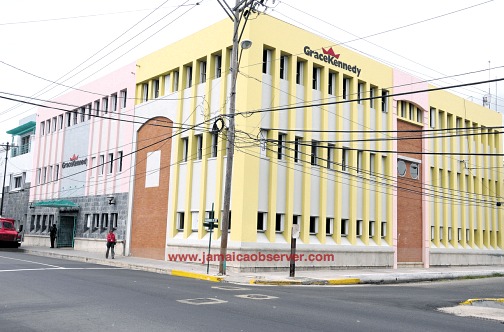
The GraceKennedy Group of Companies, started in 1922, is based in Kingston, Jamaica, but they are one of the Caribbean “largest and most dynamic corporate entities” in the region. Though they are based in Jamaica, they generate a lot of their global revenue – from food services and financial services – from the rest of the globe. They depend on globalization – economic transnationalism – in order to be an ongoing concern. Their marketing slogan is “Jamaican born; global bound”. They own 60 subsidiaries – see partial list in the Appendix below – and affiliated companies across the Caribbean, Africa, UK, North and Central America; they are a model of a transnational corporation. See VIDEO here:

VIDEO – GraceKennedy at 90 – https://youtu.be/okDBEAdC6LY

Published on Feb 10, 2012 – Jamaican conglomerate Grace Kennedy is celebrating 90 years of existence. The Gleaner recently toured its Harbour Street corporate office and learnt what drives the company’s success.

The history of this company traces a parallel arch of change in the Caribbean region for the 20th Century:

Regional Change Dynamics Year Company Dynamic Changes
European Colonialism 1922 Company formed to facilitate importation / local distribution
Decolonization 1952 Nation-building rather than mother-country dependence
Emigration from Homeland / Diaspora 1959 Export Caribbean home products to the world
Embrace of regionalism 1962 Incorporating in other Caribbean member-states
Shift to Service Economy 1990 Financial Services focus on Remittance

GraceKennedy has expanded and diversified over the years,[2] changing from a privately owned enterprise to a public company listed on the stock exchanges of Jamaica, Trinidad, Barbados and the Eastern Caribbean.

CU Blog - GraceKennedy - Caribbean Transnational Corporation - Photo 2

CU Blog - GraceKennedy - Caribbean Transnational Corporation - Photo 4

CU Blog - GraceKennedy - Caribbean Transnational Corporation - Photo 5

The company does not only appeal to the Jamaican community (domestic or Diaspora) or not only to the Anglo-speaking Caribbean; they also strategize for the Hispanic communities. In that vein, as reported in the foregoing VIDEO, in 2014 CU Blog - GraceKennedy - Caribbean Transnational Corporation - Photo 6GraceKennedy acquired La Fe Foods Inc., a top Hispanic consumer foods company – especially dominant in the frozen food category – in the US.

This transnational corporation aligns with the vision for societal elevation in the book Go Lean … Caribbean. These two visions actually parallel:

  • GraceKennedy – To be a Global Consumer Group delivering long term consumer and shareholder value, through brand building and innovative solutions in food and financial services, provided by highly skilled and motivated people.
  • Go Lean – To integrate and unify the Caribbean region into a Single Market Economy, enabling the homeland to be the best address on the planet, inviting our young people to participate in the effort to make our home the best place to live, work and play in the future. – Page 45.

The Go Lean book serves as a roadmap for the introduction and implementation of the technocratic Caribbean Union Trade Federation (CU). This is a call for confederating, collaborating and convening the 30 member-states of the region – despite the language or colonial legacy – into a Single Market; and for one federal governmental entity to optimize the economic, security and governing endeavors. This would also mean optimization of the food supply and financial services landscape. The Go Lean/CU roadmap creates the atmosphere for many more transnational corporations – homegrown and foreign – to emerge and thrive. This is part-and-parcel of the prime directives (3) of the CU/Go Lean roadmap:

  • Optimization of the economic engines – facilitating the growth in corporate citizens – in order to grow the regional economy to $800 Billion & create 2.2 million new jobs.
  • Establishment of a security apparatus to protect the resultant economic engines.
  • Improvement of Caribbean governance to support these economic engines, reflecting a separation-of-powers between CU agencies and member-state governments.

The CU seeks to facilitate better mastery of the advanced fields of economics by incentivizing, incubating and fostering entrepreneurial efforts, small-to-medium-businesses (SMB) and large multi-national corporations. This is how to create new jobs; jobs are not created by governments, but yet, the governmental administrations can implement the right climate to spur industrial and corporate growth. The job-creation solutions for the Caribbean, are not so much dependent on a specific government, but rather good corporate guidance.

A goal of the Go Lean/CU roadmap is to attract more transnational corporations, to establish a footprint in the Caribbean. How? Why? Why will they come to the Caribbean under the Go Lean/CU regime when they will not come now under the status quo? One answer is the structure of Self-Governing Entities (SGE), and Exclusive Economic Zones (EEZ). SGE refers to dedicated, bordered grounds that are ideal for corporate campuses, research laboratories, industrial bases (like shipyards, factory plants). The SGE structure will require a hybrid governance involving the CU federal agencies and local administrators influence– at the start-up.

The book Go Lean … Caribbean asserts that SGE’s and the EEZ can be strategic, tactical and operationally efficient for elevating Caribbean society – creating jobs. These points are pronounced early in the book with this Declaration of Interdependence (Pages 11 thru 14), with these statements:

v. Whereas the natural formation of our landmass and coastlines entail a large portion of waterscapes, the reality of management of our interior calls for extended oversight of the waterways between the islands. The internationally accepted 12-mile limits for national borders must be extended by International Tribunals to encompass the areas in between islands. The individual states must maintain their 12-mile borders while the sovereignty of this expanded area, the Exclusive Economic Zone, must be vested in the accedence of this Federation.

xxiv.  Whereas a free market economy can be induced and spurred for continuous progress, the Federation must install the controls to better manage aspects of the economy: jobs, inflation, savings rate, investments and other economic principles. Thereby attracting direct foreign investment because of the stability and vibrancy of our economy.

xxv.   Whereas the legacy of international democracies had been imperiled due to a global financial crisis, the structure of the Federation must allow for financial stability and assurance of the Federation’s institutions. To mandate the economic vibrancy of the region, monetary and fiscal controls and policies must be incorporated as proactive and reactive measures. These measures must address threats against the financial integrity of the Federation and of the member-states.

xxvi.  Whereas the Caribbean region must have new jobs to empower the engines of the economy and create the income sources for prosperity, and encourage the next generation to forge their dreams right at home, the Federation must therefore foster the development of new industries, like that of ship-building, automobile manufacturing, prefabricated housing, frozen foods, pipelines, call centers, and the prison industrial complex. In addition, the Federation must invigorate the enterprises related to existing industries tourism, fisheries and lotteries – impacting the region with more jobs.

xxx. Whereas the effects of globalization can be felt in every aspect of Caribbean life, from the acquisition of food and clothing, to the ubiquity of ICT, the region cannot only consume, it is imperative that our lands also produce and add to the international community, even if doing so requires some sacrifice and subsidy.

Though there is a need for more jobs, there is a legitimate fear to inviting more corporations. There are real-life experiences and stories of abuse in mono-industrial communities – Company Towns. Abuse by the “super-rich” is implied in the old adage: “golden rule is he who has the gold makes the rule”. But the Go Lean roadmap is designed to mitigate abuses of plutocracies. This is the advantage of the SGE structure; it allows for better promotion, oversight, and governance for transnational corporate expressions. These SGE’s would be regulated solely by the technocratic CU; there would be features like advanced monitoring (intelligence gathering) and embedded protections for whistleblowers.

CU Blog - GraceKennedy - Caribbean Transnational Corporation - Photo 3The Go Lean roadmap identifies 40,000 new direct jobs tied to SGE’s; plus more tied to industrial activities directly related to the business activities that aligns with GraceKennedy business model, such as 30,000 new direct jobs in the food supply industries and 2,000 direct jobs in the frozen foods industry. These job-creation empowerments will impact every aspect of Caribbean life throughout the Caribbean.

The Go Lean book details a series of community ethos, strategies, tactics, implementations and advocacies to foster industrial developments and SGE’s. The following list applies:

Community Ethos – Economic Principles – Economic Systems Influence Individual Choices Page 21
Community Ethos – Economic Principles – Voluntary Trade Creates Wealth Page 21
Community Ethos – Lean Operations Page 24
Community Ethos – Return on Investments Page 24
Community Ethos – Cooperatives Page 25
Community Ethos – Ways to Impact the Future Page 26
Community Ethos – Ways to Impact the Greater Good Page 32
Strategy – Vision – Confederate to form a Single Market Page 45
Strategy – Mission –  Build and foster local economic engines Page 45
Strategy – Mission –  Exploit the benefits and opportunities of globalization Page 46
Strategy – Mission –  Keep the next generation at home Page 46
Tactical – Fostering a Technocracy Page 64
Tactical – Separation of Powers – Commerce Department – Interstate Commerce Administration Page 79
Tactical – Separation of Powers – Department of Agriculture Page 88
Anecdote – “Lean” in Government Page 93
Implementation – Foreign Policy Initiatives at Start-up Page 102
Implementation – Start-up Benefits from the EEZ Page 104
Implementation – Steps to Implement Self-Governing Entities Page 105
Advocacy – 10 Big Ideas – Single Market Leverage Page 127
Advocacy – Ways to Improve Interstate Commerce Page 129
Advocacy – Ways to Better Manage Food Consumption – Export: Help Find Foreign Markets Page 156
Advocacy – Ways to Better Manage the Social Contract Page 170
Advocacy – Ways to Foster Cooperatives – Common for Agricultural Structures Page 176
Advocacy – Ways to Better Manage Natural Resources – Optimization of Pastoral Lands Page 183
Anecdote # 18 – Caribbean Industrialist: Sandals’ Butch Stewart Page 189
Advocacy – Reforms for Banking Regulations Page 199
Advocacy – Ways to Impact Wall Street – Expansion of local Securities markets Page 200
Advocacy – Ways to Impact Main Street Page 201
Advocacy – Ways to Develop a Frozen Foods Industry Page 208
Advocacy – Ways to Improve Fisheries – Canaries & Refrigerated Warehouse Cooperatives Page 210
Advocacy – Ways to Impact the Diaspora Page 217
Advocacy – Ways to Impact Rural Living – SGE Strategic Locations Page 235
Advocacy – Ways to Re-boot Jamaica Page 239

This commentary asserts that industrial development is hard-work. It is difficult now to get Direct Foreign Investors to consider individual Caribbean member-states, but with this new approach of a regional Single Market, a leveraged Caribbean – 42 million people – can be more attractive, appealing and inviting. Despite the appeal, executing this Go Lean/CU roadmap will still be hard; the book describes the effort as heavy-lifting.

Many of these heavy-lifting issues have been previously identified and detailed in prior Go Lean blog-commentaries. See this sample list:

https://goleancaribbean.com/blog/?p=8379 The Need for Technocratic Regulation of the SGE’s
https://goleancaribbean.com/blog/?p=5921 Socio-Economic Change: Impact Analysis of SGE’s
https://goleancaribbean.com/blog/?p=4037 How to Train Your ‘Dragon’ – Direct Foreign Investors
https://goleancaribbean.com/blog/?p=3473 Haiti’s Example of Success with an SGE: CaracolIndustrial Park
https://goleancaribbean.com/blog/?p=2750 Disney World – Role Model for Self-Governing Entities

This Go Lean movement, fostering a new Caribbean business climate, hereby applauds the corporate stakeholders at the GraceKennedy Group of Companies. We invite them to partner with us to make the Caribbean region a better place to live, work and play. But there is the need for a cautionary warning to them: the change that is coming has “plus & minus” ramifications for their business model.

There are aspects of the Go Lean roadmap that will not be good for some of GraceKennedy’s business model, remittances in particular. (While a GraceKennedy subsidiary is the regional partner representing Western Union in the Caribbean, the Go Lean book – Page 270 – introduces new electronic payment schemes that will lessen the need to pay for money transfers). It is clearly apparent in the Go Lean book, that change is not always good; sometimes it brings unintentional consequences. So if we know change is happening, it is best to get ahead of it. This point was stated poignantly at Page 252:

Opportunities abound; even if there is only little commerce to exploit now, there is opportunity enough in the preparation for the coming change. So act now! Get moving to that place, the “corner” of preparation and opportunity.

With the execution of this Go Lean roadmap, the Caribbean region sends a message to the business world: Change is afoot. There will be new partnerships and collaborations for corporate stakeholders. A message is sent to the Caribbean people as well: there are solutions to these complex problems befalling our society. Whereas the Caribbean may have been a parasite before, now we can function in the role of a protégé.

Like all parasites, their healthy disposition depends on a healthy disposition of the hosts. The Caribbean has been in crisis; therefore the parasitic people have fled – the Caribbean’s “brain drain” and Diaspora has grown as a result – not good. The successful execution of this roadmap will affect this disposition as well. We will and must do better! Optimizing the economic, security and governing engines in the region will lower the abandonment rate. This will also constitute change – good change – for the region.

The Caribbean homeland will then be a better place to compete globally and present more favorable options for our youth to stay home in the region.

Now is the time for all Caribbean stakeholders – corporate citizens included – to lean-in for the optimizations and empowerments described in the book Go Lean … Caribbean. This roadmap is conceivable, believable and achievable. 🙂

Download the free e-Book of Go Lean … Caribbean – now!

—————–

Appendix – List of Subsidiaries: GraceKennedy Group of Companies

  • Banking and Financial services
    • First Global Bank Limited
    • First Global Financial Services Limited
    • FG Funds Management (Cayman) Limited
    • First Global Trinidad & Tobago Limited (formerly One1 Financial Limited)
    • Signia Financial Group Incorporated
  • Remittances
    • GraceKennedy Remittance Services Limited
    • GraceKennedy Remittance Services (United States) Incorporated
    • GraceKennedy Remittance Services (Trinidad & Tobago) Limited
    • GraceKennedy Remittance Services (Guyana) Limited
  • Insurance Life and General
    • Allied Insurance Brokers Limited
    • EC Global Insurance Company Limited
    • First Global Insurance Brokers Limited
    • Jamaica International Insurance Company Limited
    • Trident Insurance Company Limited
  • Manufacturing, retail and distribution
    • Dairy Industries (Jamaica) Limited
    • Grace Foods and Services Company
    • GraceKennedy (Belize) Limited
    • Grace Food Processors Limited
    • Grace Food Processors (Canning) Limited
    • GraceKennedy (United States) Incorporated
    • Grace Foods International Limited
    • National Processors Division
    • World Brands Services Limited
    • Hi-Lo Food Stores (Jamaica) Limited
    • GK Foods (United Kingdom) Limited
    • GraceKennedy (Ontario) Incorporated
    • Hardware & Lumber Limited


Share this post:
, , , ,
[Top]

A Lesson in History – Whaling Expeditions

Go Lean Commentary

There are “high-risk, high-return” industries and then there are “low-risk, low-return” industries.
There is much for the Caribbean to learn about hedging and mitigating risks from the high-risk industries. The lessons learned should be considered for forging the best-practices for gleaning those high-returns. In this case, we have the opportunity to reach back in the annals of time and learn-apply lessons from the history of the commercial whaling industry – see History of Whaling in the Appendix.

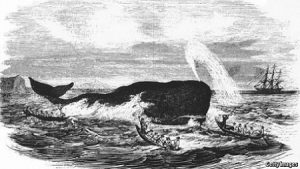
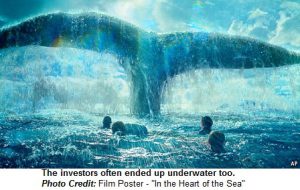
The high-risks in these enterprises were the whales – intelligent mammals of the sea that defied and defended against predators. See this dramatized in the movie “In the Heart of The Sea“; the trailer is embedded in the Appendix VIDEO below. Yet still, the whaling industry was so effective that the “cash crop” (whales) were almost rendered extinct. In this day, however, whaling is considered inhumane. This is an appropriate judgement for this foul practice!

If only … we can learn the best-practices of risk management from this industry and apply it in other humane industries and endeavors to derive high-returns. This is the point of the article here from this “Fin-Tech” column in the world-renowned Economist Magazine:

Title: The First Venture Capitalists – Before there were tech startups, there was whaling

NEW BEDFORD – Few industries involve as much drama and risk as whaling did. The last voyage of the Essex, which inspired Herman Melville’s classic, “Moby Dick”, and is the subject of a new film, “In the Heart of The Sea”, gives a sense of the horrors involved. The ship left Nantucket in 1819 and sailed for over a year before being destroyed by a whale it was hunting. The 20 crew members survived the sinking, but found themselves adrift in the Pacific in three longboats, with little food and no water. Three opted to stay on a desert island, from which they were rescued three months later, on the verge of starvation. The others sailed on, hoping to reach South America but dying one by one. At first the survivors buried the dead at sea; then they resorted to eating the corpses of their crewmates. When they ran out of bodies, they drew lots to decide whom to shoot and eat. Only five of the 17 were eventually rescued. By then, they were so delirious that they did not understand what was happening.

The only reason that anyone could be induced to take part in such a dangerous business was the fabulous profit that could be made. Gideon Allen & Sons, a whaling syndicate based in New Bedford, Massachusetts, made returns of 60% a year during much of the 19th century by financing whaling voyages—perhaps the best performance of any firm in American history. It was the most successful of a very successful bunch. Overall returns in the whaling business in New Bedford between 1817 and 1892 averaged 14% a year—an impressive record by any standard.

New Bedford was not the only whaling port in America; nor was America the only whaling nation. Yet according to a study published in 1859, of the 900-odd active whaling ships around the world in 1850, 700 were American, and 70% of those came from New Bedford. The town’s whalers came to dominate the industry, and reap immense profits, thanks to a novel technology that remains relevant to this day. They did not invent a new type of ship, or a new means of tracking whales; instead, they developed a new business model that was extremely effective at marshalling capital and skilled workers despite the immense risks involved for both. Whaling all but disappeared as an industry after mineral oil supplanted whale oil as a fuel. But the business structures pioneered in New Bedford remain as relevant as they ever were. Without them, the tech booms of the 1990s and today would not have been possible.

Most historians trace the origins of the modern company back to outfits like the Dutch East India Company and its British equivalent. These were given national monopolies on trade in certain goods or with certain places. This legally buttressed status allowed them to fund themselves by selling shares to the public, helping to get stock markets off the ground. The managers of these multinational enterprises were professionals with only small ownership stakes. Lower-level employees generally had no shareholding at all.

By eliminating dependence on individual owners or managers, these entities became self-perpetuating. But their monopolies also embroiled them in politics and led inevitably to corruption. Both the British and Dutch versions ended up requiring government bail-outs—a habit giant firms have not yet kicked.

The whaling industry involved a radically different approach. It was one of the first to grapple with the difficulty of aligning incentives among owners, managers and employees, according to Tom Nicholas and Jonas Peter Akins of Harvard Business School. In this model, there was no state backing. Managers held big stakes in the business, giving them every reason to attend to the interests of the handful of outside investors. Their stakes were held through carefully constructed syndicates and rarely traded; everyone was, financially at least, on board for the entire voyage. Payment for the crew came from a cut of the profits, giving them a pressing interest in the success of the voyage as well. As a consequence, decision-making could be delegated down to the point where it really mattered, to the captain and crew in the throes of the hunt, when risk and return were palpable.

At the top of the New Bedford hierarchy was an agent or firm of agents like Gideon Allen, responsible for the purchase and outfitting of the ship, the hiring of the crew and the sale of the catch. To give them an incentive to cut the best deals possible, the agents put up a big share of the investment. Those with the best reputation received better terms from the other investors. Captains, who ran the show while the ship was at sea, often put up capital as well. A similar system of incentives is used in the riskier reaches of the investment-management business today, notes Mr Nicholas.

Investors received half to two-thirds of the profits. The rest was divided among the crew in what was known as the “lay” system. A captain might get a 12th lay (one-twelfth of the remaining profit). In Melville’s novel, Ishmael, who was new to the business, was originally offered a 777th lay but managed to haggle a 300th. Although that would probably have proved a paltry amount, it was a stake nonetheless, and set a benchmark for future pay. Ishmael’s friend Queequeg, a cannibal from the South Sea islands, got a 90th lay because he had experience with a harpoon. Demand for experienced crewmembers was so high that the Essex’s ill-fated captain, George Pollard, was immediately given a second command on the ship that rescued him (which sank as well).

Every participant wanted to bring in returns quickly, but there were no artificial deadlines—nothing resembling what is now called “quarterly capitalism”. When whales became rare in accessible places, the crews from New Bedford extended their search to every corner of every ocean, however many years that took.

Safety in numbers
To ensure that they were not ruined by a few disastrous voyages, the whaling firms invested in multiple expeditions at the same time, much as the venture capitalists of today “spray and pray”. A study published in 1997 concluded that, of the 787 boats launched from New Bedford during the 18th century, 272 sank or were destroyed. The firm that belonged to George Howland was not atypical: of its 15 ships, between four and nine were at sea at any given moment. One was sunk by a whale, three lost at sea, two burned by their crews, one destroyed by a Confederate gunboat during America’s civil war and five abandoned in Arctic ice. Yet Howland died a millionaire in 1852.

It helped that most of the whalers of New Bedford were strict Quakers, who prized frugality and shunned ostentation. This helped them not only husband their own capital, which was needed to finance voyages, but also to win over other investors. Hetty Howland Green, one of the richest agents, was said to have made her own shoes and to have owned only one dress.

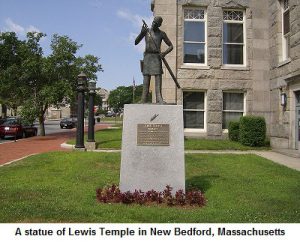
It also helped that they were open-minded: they readily employed anyone who could contribute to their ventures. Perhaps the single most important technological innovation used by New Bedford’s whaling fleet was the “Temple Toggle”, a harpoon tip devised by Lewis Temple, a former slave from Virginia.

But the whalers’ main asset was their business model. In the 1830s, the legislatures of six American states approved charters for whaling corporations giving them the right to raise capital by selling shares to the public—much the same corporate structure as the Dutch and British East India Companies. None of the six survived the 1840s. “The diffuse ownership structure of the corporations, and the reduced stakes held by their managers, likely diminished the incentives for the managers to perform their role diligently,” concludes Eric Hilt of Wellesley College. Given the expense of buying, outfitting and launching a boat into the perilous ocean, the link between risk and reward needed, it seems, to be tighter.

The lay system could work to the crew’s disadvantage, however. In an effort to reduce claims on the crew’s share of the profits, ruthless captains were said to abandon men on the trip home. (Similar shedding of employees is not unheard of at contemporary tech startups before a big payout.) Other schemes existed to cheat crew members, such as forcing them to buy clothing at inflated prices or to pay usurious interest on advances on their pay. And open-mindedness went only so far: although black sailors were not discriminated against in terms of pay, they were treated less well in other respects, receiving less food and worse quarters.

Yet the New Bedford system was undeniably effective. It soon emptied the oceans of whales, even as other lucrative opportunities emerged for daredevils determined to strike it rich, such as the California gold rush. “The same industrial growth that initially supplied markets and profits for whaling activity ultimately yielded opportunities more attractive than whaling to local capital,” wrote David Moment, a student at Harvard Business School, in 1957. In short, with returns dwindling, the crews and the capitalists turned to other ventures. But the business practices they developed are used in high-risk, high-return industries to this day.

Source: The Economist Magazine – posted Dec 30, 2015; retrieved November 1, 2017 from: https://www.economist.com/news/finance-and-economics/21684805-there-were-tech-startups-there-was-whaling-fin-tech

A key lesson from the history in this foregoing article is to arrange expeditions – one time ventures:

… a “business model that was extremely effective at marshalling capital and skilled workers despite the immense risks involved for both. Whaling all but disappeared as an industry after mineral oil supplanted whale oil as a fuel. But the business structures pioneered in New Bedford remain as relevant as they ever were.”

The movement behind the book Go Lean … Caribbean asserts that the region can enjoy high-risk returns from the industry of Shipbuilding and Ship-breaking. These industries are among the best for fostering new labor intensive jobs. There is no, to little,  industrial developments for these industries in the Caribbean now. It is the proposition here for the Caribbean member-states to engage in some high-risk investments and to incubate a Shipbuilding and Ship-breaking industry.

Shipbuilding?!

A classic form of maritime commerce. Imagine each ship – to be built/assembled – as a one-time venture, an expedition.

Ship-breaking?!

Disassembling ships for scrap metal and recycling. This, too, is a form of maritime commerce.
Imagine each ship – to be dismantled “cleanly” – as a one-time venture, an expedition.

These truly reflect the Industrial Reboot that the Caribbean region needs.

Shipbuilding and Ship-breaking have been a familiar theme for this Go Lean movement. We have detailed the historicity and economic prospects of these industry in these previous blog-commentaries:

https://goleancaribbean.com/blog/?p=12148 Commerce of the Seas – Lessons on Ship-breaking from Alang (India)
https://goleancaribbean.com/blog/?p=12146 Commerce of the Seas – Shipbuilding Model of Ingalls
https://goleancaribbean.com/blog/?p=2003 Where the Jobs Are in Maritime Commerce? Consider Ship-breaking done right!

As related in these commentaries, “all Caribbean members are islands or coastal territories – they can all be candidates for shipbuilding and ship-breaking. There is a need to reform maritime commerce for the Caribbean region; we can get more economic activity from this sector; the Go Lean book projects 15,000 new direct jobs in the shipbuilding and/or ship-breaking activities. The possibility of these new jobs is hope-inspiring. At last we can arrest the societal abandonment where men and women leave the community looking for any kind of work.”

The book Go Lean…Caribbean – available to download for free – serves as a roadmap for the introduction and implementation of the technocratic Caribbean Union Trade Federation (CU), for the elevation of Caribbean society – for all member-states. This CU/Go Lean roadmap has these 3 prime directives:

  • Optimization of the economic engines in order to grow the regional economy to $800 Billion and create 2.2 million new jobs; this would include entrepreneurial ventures and Industrial Reboots. In addition to direct job creation, there is the factor of indirect job-multipliers, in this case a 3.75 multiplier rate.
  • Establishment of a security apparatus to ensure public safety and protect the resultant economic engines.
  • Improve Caribbean governance to support these engines, including a separation-of-powers between the member-states and CU federal agencies.

The book stresses that reforming and transforming the Caribbean societal engines must be a regional pursuit. This was an early motivation for the roadmap, as pronounced in the opening Declaration of Interdependence (Pages 12 – 13):

xi. Whereas all men are entitled to the benefits of good governance in a free society, “new guards” must be enacted to dissuade the emergence of incompetence, corruption, nepotism and cronyism at the peril of the people’s best interest. The Federation must guarantee the executions of a social contract between government and the governed.

xvi. Whereas security of our homeland is inextricably linked to prosperity of the homeland, the economic and security interest of the region needs to be aligned under the same governance. Since economic crimes … can imperil the functioning of the wheels of commerce for all the citizenry, the accedence of this Federation must equip the security apparatus with the tools and techniques for predictive and proactive interdictions.

xxiv. Whereas a free market economy can be induced and spurred for continuous progress, the Federation must install the controls to better manage aspects of the economy: jobs, inflation, savings rate, investments and other economic principles. Thereby attracting direct foreign investment because of the stability and vibrancy of our economy.

The Go Lean book provides 370-pages of turn-by-turn instructions on “how” to adopt new community ethos, plus the strategies, tactics, implementations and advocacies to execute so as to reboot, reform and transform maritime commerce to benefit Caribbean society.

Tourism – and the current economic landscape – is not enough!

There is the need to deploy some new business models to accomplish this goal; we need “all hands on deck”: governments, citizens (including skilled labor groups – unions – and individuals), and financial institutions (banks and capital markets). The foregoing article related that whaling expeditions were propelled by creative financing models:

… allowed them to fund themselves by selling shares to the public …

The Go Lean roadmap seeks to optimize capital markets so as to facilitate industrial and entrepreneurial ventures. Consider these excerpts from the book detailing this strategy:

  • 10 Ways to Impact Wall Street – Page 200
    # 4 – Adopt Advanced Products
    The regional securities markets will be encouraged to adopt advanced financial products like mutual funds, ETF, REITs, commodities futures and options. These products attract more people to avail themselves of investment opportunities.
  • 10 Ways to Develop Ship-Building – Page 209
    # 1 – Lean-in for the Caribbean Single Market & Economy (CSME) Initiative

    The CU will allow for the unification of the region into one market, creating an economy of 30 member-states, 42 million people and 2010 GDP over $800 Billion. All of the member-states are either islands or coastal, therefore there are lots of coastline and harbors. Boats, yachts and ships are therefore plentiful in the region. Consistent with the CU’s mission for globalization, the region cannot just consume these vessels; we must create and build as well. There is a history of boatbuilding in the islands (slopes, schooners, clippers), but what had been missing to forge a formidable industry is the capital and the community “will”. The CU will now fill those gaps. The CU will tap the capital markets to secure long-term funding (stocks/bonds), prepare the labor force for advanced skill-sets, and negotiate treaties with “mature” EU states (i.e. Holland, Ireland) for master-apprentice labor-coaching. …

This commentary is a Lesson from History and also a study in “community ethos”. The Go Lean book defines (Page 20) this as the “fundamental character or spirit of a culture; the underlying sentiment that informs the beliefs, customs, or practices of a group or society; dominant assumptions of a people or period”. There may be good and bad community ethos.

Lessons from History are important to apply in modern society. Can we repeat the good habits that up-build society? Can we avoid the bad habits that tear-down communities?

Yes, we can …

Hunting, killing and harvesting whales were inhumane and reflective of a bad community ethos that man can dominate nature for his own profit.

Expeditions, on the other hand, reflected a good community ethos; “marshalling capital and skilled workers despite the immense risks” where good examples for investing in the future, to positively impact society. We can and should foster this ethos; we should pursue industrial reboots and incubate entrepreneurial endeavors for-and-in our Caribbean communities.

We can do this … and make our homeland a better place to live, work and play. 🙂

Download the free e-Book of Go Lean … Caribbean – now!

Sign the petition to lean-in for this roadmap for the Caribbean Union Trade Federation.

———-

Appendix: The History of Whaling

This article discusses the history of whaling from prehistoric times up to the commencement of the International Whaling Commission (IWC) moratorium on commercial whaling in 1986.

Modern whaling

At first slow whales were caught by men hurling harpoons from small open boats. Early harpoon guns were unsuccessful until Norwegian Svend Foyn invented a new, improved version in 1863 that used a harpoon with a flexible joint between the head and shaft. Norway invented many new techniques and disseminated them worldwide. Cannon-fired harpoons, strong cables, and steam winches were mounted on maneuverable, steam-powered catcher boats. They made possible the targeting of large and fast-swimming whale species that were taken to shore-based stations for processing. Breech-loading cannons were introduced in 1925; pistons were introduced in 1947 to reduce recoil. These highly efficient devices were too successful, for they reduced whale populations to the point where large-scale commercial whaling became unsustainable.

Source: Retrieved November 1, 2017 from: https://en.wikipedia.org/wiki/History_of_whaling

———–

Appendix VIDEO – In the Heart of the Sea – Final Trailer – https://youtu.be/K-H35Mpj4uk

Published on Nov 1, 2015 – Chris Hemsworth stars in Ron Howard’s IN THE HEART OF THE SEA, in theaters December 2015. http://intheheartoftheseamovie.com https://www.facebook.com/IntheHeartof…

Oscar winner Ron Howard (“A Beautiful Mind”) directs the action adventure “In the Heart of the Sea,” based on Nathaniel Philbrick’s best-selling book about the dramatic true journey of the Essex.

In the winter of 1820, the New England whaling ship Essex was assaulted by something no one could believe: a whale of mammoth size and will, and an almost human sense of vengeance.  The real-life maritime disaster would inspire Herman Melville’s Moby-Dick.  But that told only half the story.

“In the Heart of the Sea” reveals the encounter’s harrowing aftermath, as the ship’s surviving crew is pushed to their limits and forced to do the unthinkable to stay alive.


Share this post:
, , ,
[Top]

West African Case Study: ECOWAS to Launch ‘Single Currency’

Go Lean Commentary

The Caribbean has the poorest country in the Western Hemisphere: Haiti. But even that is not the poorest (least developed) country in the world; that distinction belongs to 34 countries in Africa; see the full list in the Appendix below.

Yet still, there are lessons that some countries in Africa can teach us here in the Caribbean. One such lesson – Case Study – is the Economic Community of West African States (ECOWAS); see the full news article here of the endeavor for a Single Currency:

Title: ECOWAS leaders agree on single currency by 2020
The 4th meeting of the Presidential Taskforce on a common currency for the West African Monetary Zone (WAMZ) has taken place in Niamey, the capital of Niger, with the firm commitment towards the acceleration of the processes leading to the use of the single currency by 2020.

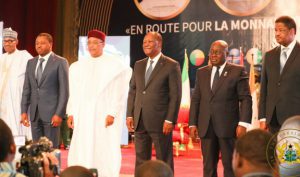
The meeting was attended by the members of the Presidential Taskforce, namely the President of Ghana, Nana Addo Dankwa Akufo-Addo; the President of the Federal Republic of Nigeria, Muhammadu Buhari; the President of Cote d’Ivoire, Alassane Ouattara; and the host, Mahamadou Issoufou, President of Niger.
Chairperson of the Economic Community of West African States (ECOWAS), Faure Essozimna Gnassingbé, President of the Togolese Republic, was also present, and took part in the proceedings.

In a communiqué issued at the end of the 1-day meeting, on Tuesday, 24th October, 2017, the members of the Taskforce took note of the report of the Ministerial Committee meeting held earlier, and acknowledged the quality of the conclusions as well as the relevance of the recommendations made, whose substantive parts relate to the measures for the acceleration of the ECOWAS single currency programme.

The Taskforce appreciated the progress made by all ECOWAS institutions involved in the conduct of ECOWAS Single Currency Roadmap activities, and reaffirmed its commitment to the pursuit and the acceleration of the economic, financial and monetary integration agenda of ECOWAS.

In endorsing the main recommendations of the Ministerial Committee, the Taskforce urged Member States to pursue the structural reforms of their respective economies, to help them deal with fluctuations in the prices of raw materials, and enable their economies to be more resilient to exogenous shocks.

Additionally, the Taskforce urged Member States to take the necessary measures, including the attainment of the convergence criteria, necessary for the creation of the ECOWAS single currency by 2020.

The Communiqué noted that the Taskforce has “instructed the Ministerial committee to meet within three months to propose a new roadmap to accelerate the creation of the single currency by 2020. In this framework, a gradual approach can be undertaken, where a few countries, which are ready, can start the monetary union, whilst the other countries join later.”

The Presidential Task Force will hold their next meeting in Accra, in February 2018.

Background
It will be recalled that at the Extraordinary Summit of Heads of State and Government on 25th October, 2013, the Presidents of Ghana and Niger were appointed to oversee the creation of the single currency in a timely manner.

The two Presidents constituted a Task Force, whose membership included representatives of the President of Ghana and Niger; Ministers of Finance of Ghana and Niger; Governors of the eight Central Banks of ECOWAS member States; ECOWAS and UEMOA Commissions; West African Monetary Agency (WAMA) and the West African Monetary Institute, to advise them periodically on the monetary integration programme.

The membership of the taskforce was reviewed in 2015 to include the Presidents of Cote d’Ivoire and Nigeria, as well as the Ministers of Finance of the two countries.

The inaugural meeting of the Presidential Taskforce was held on 20th and 21st February, 2014 in Niamey. Subsequently, two other meetings were held in Accra on 7th and 8th July, 2014, with the last meeting held in Niamey from 4th to 6th February, 2015.

The main objectives of the third meeting were to examine the revised roadmap on the realisation of the ECOWAS single currency by 2020; a proposal from the ECOWAS Commission on the creation of an ECOWAS monetary Institute by 2018; and the concern raised by the WAMZ Convergence Council on the revised macroeconomic criteria adopted by the 45th Ordinary Summit of the Heads of State and Government held in Accra on 10th July, 2014.

After the third meeting, it was agreed, amongst others, that the Central Bank financing criterion be reclassified as a primary criterion because of its strategic importance to monetary and price stability. The revised roadmap on the realisation of the ECOWAS single currency by 2020 was to be costed, and sources of funding identified.
Source: Posted & retrieved on October 24, 2017 from: http://3news.com/ecowas-leaders-agree-single-currency-2020/

While ECOWAS has 15 member states, eight of these are French-speaking, five are English-speaking and two Portuguese-speaking – as of February 2017, not all are participating in this Single Currency endeavor … yet. (See Appendix VIDEO below on ECOWAS). The member-states that have pledged to launch this Single Currency in time for 2020 are as follows:

  • Ghana
  • Nigeria
  • Cote d’Ivoire
  • Togo

Why is this endeavor important and how can it guide the Caribbean? The foregoing article cited the rationale with this one quotation:

“enable their economies to be more resilient to exogenous shocks”.

This is a familiar advocacy for the movement behind the book Go Lean…Caribbean. In a previous blog-commentary from May 9, 2014 the merits of Single Market economic integration were related as follows:

Europe has the safety net of the economies-of-scale of 508 million people and a GDP of $15 Trillion in 28 member-states in the EU; (the Eurozone subset is 18 states, 333 million people and $13.1 Trillion GDP). The US has 50 states and 320 million people. Shocks and dips can therefore be absorbed and leveraged across the entire region .The EU is still the #1 economy in the world; the US is #2.

The Caribbean has no safety-net, no shock absorption, and no integration. This is the quest of the book Go Lean…Caribbean; it urges the introduction and implementation of the Caribbean Union Trade Federation (CU). The book serves as a roadmap for this goal, with turn-by-turn directions to integrate the 30 member-states of the region and forge an $800 Billion economy.

The Go Lean roadmap signals change for the region. It introduces new measures, new opportunities and new recoveries. Economies will rise and fall; the recovery is key. Prices will inflate and deflate; as depicted in the foregoing article, there are curative measures to manage these indices. The roadmap calls for the establishment of the allied Caribbean Central Bank (CCB) to manage the monetary affairs of this region. The book describes the breath-and-width of the CCB.

There are many benefits when multiple countries come together and form a Single Market economy. This is also the quest for the CU/Go Lean roadmap: to form a Single Market and make the Caribbean’s member-states “Pluralistic Democracies”. Pluralism – recognition and affirmation of diversity within a political body – applies in this West African Community as well; as these countries have a diverse mix of tribal affiliation, colonial legacy and language prioritization. These African developments are therefore fitting for a Case Study for the Caribbean to consider.

This CU/Go Lean roadmap therefore urges the same Single Market effort with these 3 prime directives:

  • Optimization of the economic engines in order to grow the regional economy and create 2.2 million new jobs.
  • Establishment of a security apparatus to ensure public safety and protect the resultant economic engines.
  • Improvement of Caribbean governance to support these engines, including a separation-of-powers between the member-states and CU federal agencies.

A Single Currency in West Africa – eventually: Eco – is not so unfamiliar. There are two current currencies that fit the mold:

The West Africa Monetary Zone – identified in the foregoing news article – attempts to establish a strong stable currency to rival the CFA franc, whose exchange rate is tied to that of the Euro and is guaranteed by the French Treasury. The eventual goal is for the CFA franc and “Eco” to merge, giving all of West and Central Africa a single, stable currency. The launch of the new currency – with a target date of 2020 – is being developed by the West African Monetary Institute based in Accra, Ghana.

Wow, for the BIG ideas… to elevate the economic engines for 155 million people in West Africa.

The Go Lean book also presents a BIG idea for reforming and transforming the economic engines of the 42 million people in our 30 Caribbean member-states; the book stresses that our effort must likewise be a regional pursuit, and it must also optimize our currency landscape. This was an early motivation for the roadmap, as pronounced in the opening Declaration of Interdependence (Pages 12 – 13):

xi. Whereas all men are entitled to the benefits of good governance in a free society, “new guards” must be enacted to dissuade the emergence of incompetence, corruption, nepotism and cronyism at the peril of the people’s best interest. The Federation must guarantee the executions of a social contract between government and the governed.

xvi. Whereas security of our homeland is inextricably linked to prosperity of the homeland, the economic and security interest of the region needs to be aligned under the same governance. Since economic crimes … can imperil the functioning of the wheels of commerce for all the citizenry, the accedence of this Federation must equip the security apparatus with the tools and techniques for predictive and proactive interdictions.

xxiv. Whereas a free market economy can be induced and spurred for continuous progress, the Federation must install the controls to better manage aspects of the economy: jobs, inflation, savings rate, investments and other economic principles. Thereby attracting direct foreign investment because of the stability and vibrancy of our economy.

The Go Lean book provides 370-pages of turn-by-turn instructions on “how” to adopt new community ethos, plus the strategies, tactics, implementations and advocacies to execute so as to reboot, reform and transform the societal engines of Caribbean society. There is a lot of consideration in the book for optimizing the currency and monetary eco-systems. Consider this excerpt detailing the Money Multiplier concept; from Page 22:

b-1. Money Multiplier

In monetary macroeconomics and banking, the money multiplier measures how much the money supply increases in response to a change in the monetary base. The multiplier may vary across countries, and will also vary depending on what measures of money are considered. For example, consider M1 as a measure of the U.S. money supply, and M0 as a measure of the U.S. monetary base. If a $1 increase in M0 by the Federal Reserve causes M1 to increase by $10, then the money multiplier is 10.

A money multiplier is one of various closely related ratios of commercial bank money to central bank money under a fractional-reserve banking system. Most often, it measures the maximum amount of commercial bank money that can be created by a given unit of central bank money. That is, in a fractional-reserve banking system, the total amount of loans that commercial banks are allowed to extend (the commercial bank money that they can legally create) is a multiple of reserves; this multiple is the reciprocal of the reserve ratio, and it is an economic multiplier.

Banks are allowed to lend out the monies on deposit up to some regulated maximum. If banks lend out close to that maximum allowed by their reserves, then the inequality becomes an approximate equality, and commercial bank money is central bank money times the multiplier. If banks instead lend less than the maximum, accumulating excess reserves, then commercial bank money will be less than central bank money times the theoretical multiplier.

As a formula and legal quantity, the money multiplier is neither complicated nor controversial – it is simply the maximum that commercial banks are allowed to lend out. However, there are various theories/tools/techniques concerning the mechanism of money creation in a fractional-reserve banking system, and they all have implications on monetary policy. As such this sphere of concern is normally managed by the professionals, classically-trained technocrats.

The conclusion of this consideration is straight forward – there is a multiplier associated with the currency in the money supply. Therefore it goes without saying that if the Caribbean member-states trade in US dollars, then the multiplier effect is extended to the United States of America. By contrast, if the Caribbean member-states trade in Euros, then the multiplier effect goes to the stakeholders of the European Central Bank – no Caribbean state. Therefore the communities of the Caribbean must embrace, as an ethos, its own currency, the Caribbean Dollar (managed by a technocratic Caribbean Central Bank), thereby bringing local benefits from local multipliers.

There have been a number of previous blog-commentaries by the Go Lean movement that have highlighted Case Studies on monetary and currency best practices. See a sample list here:

https://goleancaribbean.com/blog/?p=10513 Case Study from India: Transforming Money Countrywide
https://goleancaribbean.com/blog/?p=7140 Case Study from Azerbaijan: Setting its currency on free float
https://goleancaribbean.com/blog/?p=6800 Case Study from Venezuela: Suing Black Market currency website
https://goleancaribbean.com/blog/?p=4166 Case Study from Panama: History of the Balboa Currency
https://goleancaribbean.com/blog/?p=3858 Case Study from ECB: Unveiling 1 trillion Euro stimulus program
https://goleancaribbean.com/blog/?p=3814 Case Study from Switzerland: Unpegging the franc
https://goleancaribbean.com/blog/?p=360 Case Study on Central Banks: Creating Money from ‘Thin Air’
https://goleancaribbean.com/blog/?p=833 Case Study from the Euro: One Currency, Diverse Economies

In summary, shepherding the economy is no simple task. It requires the best practices of skilled technocrats. Hopefully these West African States will thrive with this new Single Currency effort as they embrace monetary best-practices.

We will be watching!

Hopefully too, the Single Currency efforts in our region – Caribbean Dollar – will manifest before 2020. The benefits are too alluring to ignore: growing the monetary supply, expanding the availability of investment capital and leveraging across a larger base to absorb the shocks naturally associated with a Free Market Economy. Wow; let’s get started.

We are past the time of needing Central Banking reform. We now need to Catch-Up and transform our own society to derive some of these benefits and innovations.

We urge all Caribbean stakeholders – government officials, bankers and ordinary citizens – to lean-in for the empowerments detailed in this Go Lean roadmap. These are best practices! These can make our homeland a better place to live, work and play. 🙂

Download the free e-book of Go Lean … Caribbean – now!

Sign the petition to lean-in for this roadmap for the Caribbean Union Trade Federation.

———–

Appendix – Current Least Developed Countries

Click on Photo to Enlarge

Source: Retrieved Wikipedia Online Encyclopedia October 25, 2017 from: https://en.wikipedia.org/wiki/Least_Developed_Countries#Africa_.2834_countries.29  

———–

Appendix VIDEO – About ECOWAS – https://youtu.be/f2m2UCuEYAs

Published on Jan 29, 2016 – MULTI-MEDIA ECOWAS.COMMUNICATION

  • Category: Comedy
  • License: Standard YouTube License
Share this post:
, , ,
[Top]

Making a ‘Pluralistic Democracy’ – Multilingual Realities

Go Lean Commentary

So, what has happened in our Caribbean region of 42 million people and 5 colonial legacies (American, British, France, Netherlands, Spain) was inevitable:

Multilingual society!

There is no getting around it. If the planners for a new Caribbean want to form a unified, integrated community, they will have to select one of these language options:

  1. Dutch
  2. English
  3. French
  4. Spanish
  5. All of the Above

The answer must be #5. This is because the Caribbean is not a singularity; not in language, ethnicities nor culture.

In fact, the planners, the movement behind the book Go Lean … Caribbean has presented that quest: to first make the Caribbean’s member-states a “Pluralistic Democracy”; and form a Single Market economy.

This “Pluralistic Democracy” would mean a society where the many different ethnic groups (and languages) have consideration, equal rights, equal privileges and equal protections under the law; where there are no superior rights to any majority and no special deprivations to any minority. The expectation of this Pluralism is for any one person to be treated like everyone else. The legal definition of Pluralism as a political philosophy is as follows …

… the recognition and affirmation of diversity within a political body, which permits the peaceful coexistence of different interests, convictions and lifestyles.[1] While not all political pluralists advocate for a pluralist democracy, this is most common as democracy is often viewed as the most fair and effective way to moderate between the discrete values.[2]Wikipedia

This vision of a Caribbean “Pluralistic Democracy” should be more than words, but action too. The truth of the matter is that while this writer is English-speaking, the majority of the Caribbean’s population is not. Notice the correct Population and Language Distribution summary here and the full details in the Appendix below (based on 2010):

  Population: Dutch English French Spanish
Totals 42,198,874 809,834 6,747,229 9,887,899 24,753,912
Percentage 100.00% 1.92% 15.99% 23.43% 58.66%

The movement behind the book Go Lean…Caribbean has repeatedly related that there is a need for new stewardship of the Caribbean societal engines (economics, security and governance). Our region – collectively and individually – is in crisis due to our many societal defects and dysfunctions. The book opened with this declaration:

There is something wrong in the Caribbean. It is the greatest address in the world for its 4 language groups, but instead of the world “beating a path” to these doors, the people of the Caribbean have “beat down their doors” to get out.

The Go Lean book posits that the best-practice for reforming and transforming our society will come from confederating and collaborating a regional response to our local inadequacies; that the problems in Caribbean society are too dire for any one member-state to assuage on its own; there is the need for a regional technocracy. Further, the book explains that an integrated collective is the only way to contend with the Agents of Change (Page 57) that have dynamically affected the Caribbean eco-systems. These Agents of Change include:

  • Technology
  • Globalization
  • Aging Diaspora
  • Climate Change

The Agent of Change of Globalization implies trade of goods, services and capital with stakeholders in any location around the world. It goes without saying that the natural language of Globalization will be …

… it is what it is!

Here in the Caribbean, we must contend with the above 4 primary languages, plus a number of Creole spin-offs (think: Haitian Creole French and Papiamentu in the Dutch Caribbean). So we are not able to declare any one language standard. And this is OK, as we are ready for this Brave New World! We have spanned the globe and identified the best tools and techniques for managing a multilingual society.

In terms of tools, notice below this innovative technology being introduced in the North American marketplace, this year:

VIDEO 1 – Google Pixel Buds are wireless headphones that translate in real time – https://youtu.be/KE_DtGgovjc

Tech Insider

Published on Oct 4, 2017 – Google Pixel Buds are $160 wireless earbuds introduced during their October Pixel event. Designed to wrap around the back of a user’s neck, the headphones can use Google Assistant to answer questions and translate languages in real-time.

——–

VIDEO 2  – See how Pixel Buds translate languages on the fly – https://youtu.be/B_BQjRs94ec

CNET

Published on Oct 5, 2017 – Read the CNET review article here – http://cnet.co/2yJA95f
CNET’s Lexy Savvides and Sean Hollister try out the real-time translation feature for Google’s new Pixel Buds.

In terms of techniques, since our Caribbean territory is not the first region to contend with a multilingual population – and we will not be the last – we have great role models to consider.

The book Go Lean…Caribbean presents … Canada as such; a great role model that provides lessons-learned for a multilingual society. The Go Lean book – available to download for free – serves as a roadmap for the introduction and implementation of the technocratic Caribbean Union Trade Federation (CU), for the elevation of Caribbean society – for all 30 member-states – to foster a “Pluralistic Democracy”. The reference to Canada’s role-model continues further:

  • 10 Lessons from Canada’s History (Page 146)
    #3 – Multiple Cultural Legacies and Languages
    Canada is officially bilingual (English/French) & multicultural at the federal level. The need to structure legal frameworks for diversity was a compelling motivation for confederation, (and an example for the CU to model). The[ir] constitution allows for individual provinces to reflect realities of their populations & cultural differences.

VIDEO 3 – O Canada in 11 different languages – https://youtu.be/1jROsqdrLdk

Published on Jul 1, 2017 – Canada’s national anthem sung in 11 different languages

»»»»»»»»»»»»»»»»»»

For more than 75 years, CBC News has been the source Canadians turn to, to keep them informed about their communities, their country and their world. Through regional and national programming on multiple platforms, including CBC Television, CBC News Network, CBC Radio, CBCNews.ca, mobile and on-demand, CBC News and its internationally recognized team of award-winning journalists deliver the breaking stories, the issues, the analyses and the personalities that matter to Canadians.

This vision is very though-provoking for the Caribbean. It asserts that if we want to elevate our societal engines then we must do the heavy-lifting of reforming our value systems or our community ethos – the spirit that informs our beliefs, customs and practices –  to embrace all people in the region – despite the language – into an integrated brotherhood. This is the charter of the CU/Go Lean roadmap; it has these 3 prime directives:

  • Optimization of the economic engines in order to grow the regional economy to $800 Billion and create 2.2 million new jobs.
  • Establishment of a security apparatus to ensure public safety and protect the resultant economic engines.
  • Improve Caribbean governance to support these engines, including a separation-of-powers between the member-states and CU federal agencies.

The Go Lean book provides 370-pages of turn-by-turn instructions on “how” to adopt new community ethos, plus the strategies, tactics, implementations and advocacies to execute so as to reboot, reform and transform the societal engines of Caribbean society. There is a lot of consideration in the book for optimizing communications to the masses. Consider the Chapter excerpts and headlines from this sample on Page 186 entitled:

10 Ways to Improve Communications

1 Lean-in for the Caribbean Single Market & Economy (CSME) Initiative: Caribbean Union Trade Federation (CU).
2 CU Defense Pact: State Militias & Naval Operations
The collective security agreement of the CU will allow the creation of a Homeland Security Department, to defend the member states against all enemies, foreign and domestic. The size of the CU market will allow it to afford cutting edge equipment, systems and training …
3 Media Industrial Complex

The CU will oversee the radio spectrum used for radio, television and satellite communications. The radio spectrum must be regulated on a regional level, because the islands are so close to each other and foreign states, that there must be coordination of the common resource pool – the spectrum is limited. This FCC-style (USA) oversight will also extend to internet broadband (wireless & wire-line) governance. With the CU’s financial reforms, the emergence of card-based and e-payment systems will allow for the full exploitation of the media business models. Also, the CU, through licensing, can mandate a certain amount of programming of the educational, inspirational and public service variety.

4 4 Simultaneous Languages – SAP-type Channels

The technology used for SAP (Secondary Audio Programming) channels will be deployed extensively to cover all four languages (Dutch, English, French and Spanish) in broadcasts to multi-state markets. Official websites, by the CU administration will be published in the four languages and this practice encouraged for private websites.

5 Public Broadcasting
6 Press Secretary / Public Relations Officers
7 Journalism Industry Certifications
8 Libel and Slander Due Process
9 Internet & Social Media
10 Libraries and Archives

The CU will build and maintain libraries throughout the region, in a hub-and-spoke fashion. The central library, in the CU’s capital seat, will maintain the domain for all the official archives for the governmental administration, and then further provide intranet access to all the satellite library branches. The libraries are also pivotal for e-Learning in the CU.

In order to ensure success for the Caribbean’s future, the region must foster a better landscape for communicating to all people everywhere. (This includes sign-language for the hearing-impaired as well). Imagine hurricane and tsunami warnings, lives could be at stake!

Yes, this Go Lean roadmap considers the heavy-lifting of structuring Caribbean society to be a “Pluralistic Democracy”. This is far better than the unsustainable status quo. “Unsustainable” is an understatement; we have a crisis; we are bleeding our populations front-and-center. Communicating with our citizens in their Mother Tongue does feel more welcoming. There are direct references to jobs as well, with this multilingual advocacy.

The Go Lean book describes (Page 212) the Call/Contact Center industry that can be fostered in the Caribbean. Wherever there are people speaking the same language, local Caribbean Call Centers can be utilized to communicate with these people. The book specifically identifies 12,000 new …

Direct and indirect jobs at physical and virtual call centers

Imagine telemarketing, collections and customer service calls to Dutch-speaking people in Amsterdam … from Aruba. Or calls to French Canadians … from Martinique. This multilingual-based industry helps the people in the Caribbean to prosper where planted.

This – a “Pluralistic Democracy” – is indeed a Brave New World.

  • Welkom – Dutch
  • We welcome it – English
  • Bienvenue – French
  • Bienvenido – Spanish

Now is the time for all stakeholders in the Caribbean – in all language groups – to lean-in to this Go Lean roadmap. We can  just be ourselves, speaking our Mother Tongue. This is pivotal for our quest for a “Pluralistic Democracy”; this commentary is the final Part 3 of the 3-part series on this subject. The full collection is as follows:

  1. Making a “Pluralistic Democracy” – Respect for Diwali
  2. Making a “Pluralistic Democracy” – Freedom of Movement
  3. Making a “Pluralistic Democracy” – Multilingual Realities

Yes. this “Pluralistic Democracy” vision is a BIG deal, yet it is conceivable, believable and achievable for making the Caribbean homeland better to live, work and play. 🙂

Download the free e-Book of Go Lean … Caribbean – now!

Sign the petition to lean-in for the roadmap for the Caribbean Union Trade Federation.

———–

Appendix – Caribbean Population and Language Distribution

Member Language Population Dutch English French Spanish
Anguilla English 13,477 13,477
Antigua and Barbuda English 85,632 85,632
Aruba Dutch 106,000 106,000
Bahamas English 342,000 342,000
Barbados English 279,000 279,000
Belize English 320,000 320,000
Bermuda English 67,837 67,837
British Virgin Islands English 24,000 24,000
Cayman Islands English 56,000 56,000
Cuba Spanish 11,236,444 11,236,444
Dominica English 72,660 72,660
Dominican Republic Spanish 9,523,209 9,523,209
Grenada English 110,000 110,000
Guadeloupe French 405,500 405,500
Guyana English 772,298 772,298
Haiti French 9,035,536 9,035,536
Jamaica English 2,825,928 2,825,928
Martinique French 402,000 402,000
Montserrat English 4,488 4,488
Netherlands Antilles
(Bonaire, Curaçao, Saba, St. Eust, St Maarten)
Dutch 231,834 231,834
Puerto Rico Spanish 3,994,259 3,994,259
Saint Barthélemy French 8,938 8,938
Saint Kitts and Nevis English 42,696 42,696
Saint Lucia English 160,765 160,765
Saint Martin French 35,925 35,925
Saint Vincent and the Grenadines English 120,000 120,000
Suriname Dutch 472,000 472,000
Trinidad and Tobago English 1,305,000 1,305,000
Turks and Caicos Islands English 36,600 36,600
US Virgin Islands English 108,848 108,848
Totals 42,198,874 809,834 6,747,229 9,887,899 24,753,912
Percentage 100.00% 1.92% 15.99% 23.43% 58.66%

 Source: Page 66 of book Go Lean … Caribbean; Published November, 2013.

Share this post:
, , , ,
[Top]

ENCORE: It’s a FAMUly Affair

It’s Homecoming 2017 at Florida Agriculture & Mechanical University (FAMU). Time to reflect …

CU Blog - It's a FAMUly Affair - Photo 1

There have been many considerations of the FAMU eco-system, the FAMU Family or FAMUly. The university is a fine model for what the Caribbean needs to do to elevate our society, to facilitate social mobility. This is an ENCORE of a previous blog-commentary from March 6, 2015 highlighting the school’s contribution to American society.

FAMU was established as an educational institution in 1887, so this Homecoming is the 130th anniversary for the school. Over the years, there have been some excellent individual contributors; consider the following 2 obituaries of impactful influencers:

https://goleancaribbean.com/blog/?p=12542 Dr. Thomas W. Mason – FAMU Professor & STEM Influencer – RIPA computer scientist, who happened to be Black, he worked on the networking efforts that became today’s Internet. He passed on this vision and his passion to his students and the whole FAMUly.
https://goleancaribbean.com/blog/?p=6593 Dr. Sybil Mobley – FAMU’s Business School Dean – RIPThis Dean’s impact was that societal elevation with her mission to embed Black Americans in the conference rooms and board rooms of major corporations. She molded, prepared, energized and guided the best-of-the-best of Black America (many of Caribbean heritage as well; this writer included) and sent them off to impact the corporate world.

CU Blog - Its a FAMUly Affair - Photo 2

With the participation of these FAMU advocates – and others – the university has assumed it position at the pinnacle of Historically Black Colleges & Universities (HBCU). But the university  considers itself more than just an educational institution, but rather a family, the FAMUly. Keep in mind that the FAMU life is not only hard work, it is fun too. See the VIDEO here depicting the commitment, dedication, love and joyality of the FAMUly:

VIDEO – A FAMUly Reunion – Homecoming 2017 – https://youtu.be/J32plKqmqK8

Published on October 3, 2017


The FAMU experience is demonstrative to the Caribbean on how to optimize the effort to live, work, learn and play. Our Caribbean needs this role model example. See this portrayed in the ENCORE of the original blog-commentary here:

———–

Go Lean Commentary – FAMU is No. 3 for Facilitating Economic Opportunity

This commentary is a big proponent of a college education for Caribbean citizens.

This commentary is a big opponent of a college education for Caribbean citizens in American colleges and universities. The reason for the ambivalence on college education is consistent: the benefit of social mobility; facilitating new economic opportunities. We need this upward mobility for Caribbean citizens but in the Caribbean.

CU Blog - FAMU is No. 3 for Facilitating Economic Opportunity - Photo 1Some institutions are better at facilitating social mobility than others. On the National List of institutions, Florida Agriculture and Mechanical University (FAMU) stands out. It is #3 on the list.

In the interest of full disclosure, this writer is a Rattler, an alumnus of FAMU. (The mascot for FAMU athletics is ‘Rattlers’).

The chief goal of the Social Mobility Index (SMI), according to their website, is to stimulate policy changes within US higher education to help arrest the dangerous and growing economic divergence between rich and poor in the country. The gap in the US between rich and poor grew since the Great Recession, reaching proportions not seen since the period leading to and contributing to the onset of the Great Depression and two world wars. The common attributes include crumbling infrastructure, destroying asset values, and forcing high taxation to pay for war efforts.

If we learned anything from the global fallout of the Great Recession (in 2008 and beyond), it was that getting economic policy right in the US may be necessary for long-term world stability. So while the much publicized student debt overhang, now in excess of $1 trillion, imposes distress and financial burden on millions of students and families, it is a symptom of the much greater problem of economic and social divergence in the country. The good news is that colleges and universities carry great potential to powerfully address this problem.

Economist Thomas Piketty stated: “the principal force for convergence [reduction of inequality] – the diffusion of knowledge – …depends in large part on educational policies, access to training and to the acquisition of appropriate skills, and associated institutions.” – Capital in the 21st Century, pp. 21-2. The SMI asserts that if colleges can begin aggressively shifting policy towards increasing access to higher education, particularly for economically disadvantaged students and families, they will establish themselves as a key force for economic and social convergence.

FAMU has accomplished this feat; placing #3 on a ranking of universities pursuing this endeavor.

The full article of the recognition of FAMU’s SMI  is provided here:

Title: Social Mobility Index Ranks FAMU as No. 3 Institution in the Nation for Facilitating Economic Opportunity for Underserved Students
(Source: FAMU News and Events Site – Official Communications – Posted 11-01-2014; retrieved 03-05-2015 from http://www.famunews.com/?p=2153)
CU Blog - FAMU is No. 3 for Facilitating Economic Opportunity - Photo 3TALLAHASSEE, Fla. – The Social Mobility Index (SMI) has ranked Florida Agricultural and Mechanical University (FAMU) the No. 3 institution in the nation for facilitating economic opportunity for underserved students. The University outpaced the nation’s leading Ivy League institutions such as Princeton, Harvard and Yale, which placed 360th, 438th and 440th, respectively, on the rankings list.

The SMI is a new, data-driven ranking system, focused on the problem of economic mobility in the United   States. Rankings are based upon an institution’s tuition rate, student economic profile, graduation rate, average early career salary, and endowment.

According to SMI data analyses, FAMU ranks high in its contributions toward narrowing  socio-economic gaps by admitting and graduating more low-income students at lower tuition rates, yet with better economic outcomes following graduation. The University is noted on the SMI as having one of the lowest annual tuition rates in the nation.

“We are excited about the SMI recognition,” said President Elmira Mangum, Ph.D. “This new ranking speaks to FAMU’s 127-year legacy of providing access and opportunity to low-wealth citizens across the nation.”

“This ranking also speaks to our strong and unwavering commitment to economic empowerment. Many of our students come to FAMU with the odds stacked against them; however, they leave our institution with a high-quality education, a promising future, and the ability to be effective contributors to society, and, more specifically, to their families,” Dr. Mangum added.

Nearly 92 percent of FAMU students are considered low-income, according to SMI data. However, graduates are leaving the University earning an average salary of nearly $45,000 a year.

CU Blog - FAMU is No. 3 for Facilitating Economic Opportunity - Photo 2

For more information on the SMI ranking, visit: www.socialmobilityindex.org.

The book Go Lean…Caribbean posits, along with most economists, that education elevates individuals and entire communities. The book quotes that every year of additional community education raises GDP by 1 percent. Go Lean stakes the claim further that traditional college educated career paths have been disastrous policies for the Caribbean in whole, and for each specific country in particular, for the primary reason that so many students do not return home; or expatriate after returning for a short period. In fact, the World Bank has reported that the Caribbean has a 70% abandonment rate.

In line with the SMI ranking, the Go Lean book promotes education among the strategies to elevate Caribbean society. But this commentary previously asserted that college education has been a bad investment for the Caribbean.

From a strictly micro perspective, college education is great for the individual. The Go Lean book quotes proven economic studies showing the impact that every year of college education improves an individual’s earning power (Page 258). But from the macro perspective – the community – is different for the Caribbean; the region loses out because of an incontrovertible brain drain. Previously, the proverb was introduced of “fattening frogs for snake” referring to the preponderance for Caribbean college educated citizens to abandon their tropical homelands for foreign shores in the US, Canada and Europe, and take their Caribbean-funded education and skill-sets with them.

Change has now come. The driver of this change is technology and globalization. Under the tenants of globalization, institutions like FAMU are competing globally, and can rightly provide e-Learning and Distant Learning schemes. This ties to the other agent of change of technology. The internet allows for deliveries of education services anywhere around the world. The Go Lean book posits that small institutions and big institutions can complete equally on a global basis. If the regional education administrations could invest in more technological deliveries, it would be a win-win for all stakeholders. This type of impact would be more for the Greater Good.

The Go Lean roadmap provides turn-by-turn directions on how to reform the Caribbean tertiary education systems, economy, governance and Caribbean society as a whole. The roadmap commences with a Declaration of Interdependence, pronouncing the approach of regional integration (Page 12 & 14) as a viable solution to elevate the region’s educational opportunities:

xix. Whereas our legacy in recent times is one of societal abandonment, it is imperative that incentives and encouragement be put in place to first dissuade the human flight, and then entice and welcome the return of our Diaspora back to our shores

xxi. Whereas the preparation of our labor force can foster opportunities and dictate economic progress for current and future generations, the Federation must ensure that educational and job training opportunities are fully optimized for all residents of all member-states, with no partiality towards any gender or ethnic group. The Federation must recognize and facilitate excellence in many different fields of endeavor, including sciences, languages, arts, music and sports. This responsibility should be executed without incurring the risks of further human flight, as has been the past history.

xxvii. Whereas the region has endured a spectator status during the Industrial Revolution, we cannot stand on the sidelines of this new economy, the Information Revolution. Rather, the Federation must embrace all the tenets of Internet Communications Technology (ICT) to serve as an equalizing element in competition with the rest of the world. The Federation must bridge the digital divide and promote the community ethos that research/development is valuable and must be promoted and incentivized for adoption.

This book Go Lean… Caribbean, serves as a roadmap for the introduction and implementation of the Caribbean Union Trade Federation (CU). This represents change for the region. The CU/Go Lean roadmap has 3 prime directives:

  • Optimization of the economic engines in order to grow the regional economy.
  • Establishment of a security apparatus to protect the resultant economic engines.
  • Improve Caribbean governance to support these engines.

The Go Lean book details how education is a vital consideration for Caribbean economic empowerment, but with lessons-learned from all the flawed decision-making in the past, both individually and community-wise. The vision of the CU is a confederation of the 30 member-states of the Caribbean to do the heavy-lifting of championing better educational policies. No more government scholarships; forgive-able loans only from now on. The book details the policies; and other ethos to adopt, plus the executions of the following strategies, tactics, implementations and advocacies to deploy online education in the region:

Community Ethos – Deferred Gratification Page 21
Community Ethos – People Respond to Incentives Page 21
Community Ethos – Job Multiplier Page 22
Community Ethos – Lean Operations Page 24
Community Ethos – Return on Investments (ROI) Page 24
Community Ethos – Ways to Impact the Future Page 26
Community Ethos – Ways to Foster Genius Page 27
Community Ethos – Ways to Help Entrepreneurship Page 28
Strategy – Mission –   Facilitate Education without Risk of Abandonment Page 45
Tactical – Separation of Powers – Education Department Page 85
Tactical – Separation of Powers – Labor Department – Job   Training Page 89
Planning – Lessons Learned from 2008 Page 136
Advocacy – Ways to Grow the Economy Page 151
Advocacy – Ways to Create Jobs Page 152
Advocacy – Ways to Improve Education Page 159
Advocacy – Ways to Impact Student Loans Page 160
Advocacy – Ways to Improve Governance Page 168
Advocacy – Ways to Better Managed the Social Contract – Education Optimizations Page 170
Advocacy – Ways to Improve Libraries Page 187
Appendix – Education and Economic Growth Page 258
Appendix – Measuring Education Page 266
Appendix – Student Loan Crisis – Ripping Off America Page 286

FAMU is a model for the Caribbean tertiary educational endeavors.

FAMU has quite a reputation for other accomplishments as well – they are a great destination to live, work, learn and play. Their world famous band, the Marching 100 has been recognized as the “playingest band in the land”. They even shared the field with Prince as the Halftime performance for Super Bowl XLI in 2007 in Miami, Florida. See NewsVIDEO of their renown here; and also their 2011 Florida Classic Football Game Halftime Show in Orlando, Florida in the Appendix below.

VIDEOFAMU 2008 Segment on “CBS Evening News” – https://youtu.be/XqGvUg_rLNs


Posted November 27, 2008 – 2008 edition of the Marching 100… interview on Thanksgiving Night 2008 on CBS News… 11/27/08

Now is the time for all of the Caribbean, the people and governing institutions, to lean-in for the changes described in the book Go Lean … Caribbean. We welcome universities like FAMU in their desire to empower minorities in society; we only want that to be done in the Caribbean so as to mitigate societal abandonment. Suggestion: FAMU should develop a global campus presence, with satellite campuses and online matriculations.

Go Rattlers!!!

With the tune set by the Marching 100 band: “I’m so glad, I’m from FAMU”.

This is the win-win the Go Lean roadmap campaigns for. But it’s more than just talk; this is action too. The body part to focus on is not just the mouth; it is the heart – the seat of motivation. Without a doubt, the complete delivery for the Caribbean educational options would help to make the homeland a better place to live, work, learn and play. 🙂

Download the book Go Lean … Caribbean – now!

Appendix VIDEO – FAMU Marching 100 Halftime Show @ Florida Classic 2011 – http://youtu.be/FrviGJ1Dvvk

Uploaded on Nov 21, 2011 – The FAMU Marching 100 Halftime Performance at The 2011 Florida Classic. Definitely the best band in the land.

Share this post:
, , ,
[Top]

Funding Caribbean Risk

Go Lean Commentary

A penny saved is … a penny.

This is not exactly how the expression goes. It is supposed to refer to the good habit of “saving money”, which is a positive community ethos – underlying sentiment that informs the beliefs, customs, or practices. “Saving money” is a practice that the stewards of any society should advocate for its people. It’s a simple formula: Earn money; spend some; save some!

CU Blog - Funding Caribbean Risk - Photo 0This is easier said than done. A practice of saving money – for a rainy day or any catastrophe – takes discipline, the discipline not to spend. One tactic is to pay yourself first! Before paying other overhead expenses, the priority would be to set aside monies in a savings program or some insurance program. Yes, an insurance strategy could be even smarter for rainy days or catastrophes; it allows the hedging of risks by leveraging across a wider pool; more people – savers – put-in and only a few … or just one withdraws. This is also the approach of the thoughtful Caribbean Catastrophe Risk Insurance Fund (CCRIF).

It is very sad when communities are not able to save or insure a “Rainy Day” fund for when it rains, especially in the tropical region where it doesn’t just rain, but pours and storms.

What is sadder is when the heavy-lifting of “savings” or insurance is done, but the dollar amount is not enough; because a “penny saved is only just a penny”.

This is the Caribbean dilemma, today. We have just experienced 2 devastating hurricanes – Irma and Maria – that have wreaked havoc on our region. We now need to tap the “Rainy Day” fund and frankly, it is simply not enough!

See the actuality of this dilemma in the news article here and the related VIDEO on CCRIF:

Title: CCRIF to make payouts to countries affected by Hurricane Irma

The Caribbean Catastrophe Risk Insurance Facility (CCRIF SPC) will be making payouts totaling over US$15 million to three Caribbean countries affected by Hurricane Irma earlier this week.

“The CCRIF board and team offer condolences for the loss of life and hope these funds will provide some assistance. We stand ready to support the Government and people of these CCRIF countries as they recover from the effects of this devastating hurricane,” said CCRIF chief executive officer, Isaac Anthony.

Payments totaling US$15.2 million
The CCRIF plans to pay US$6.7 million to Antigua and Barbuda, US$6.5 million to Anguilla and US$2.2 million to St. Kitts-Nevis.

The storm has been blamed for at least 10 deaths and millions of dollars in property damages as it made its way through the Lesser Antilles this week.

In the case of Barbuda, Prime Minister Gaston Browne has ordered an immediate evacuation of some 1,800 people on the island. The government has also announced a state of emergency.

“Nothing is functional in Barbuda,” Browne said, adding that he has given instructions that ‘every single soul must be taken out of Barbuda”.

Verifying payouts
The CCRIF is verifying the payout calculations and is in discussion with the three governments about arrangements for the transfer of these funds. The transfer will be completed within 14 days after the storm, as mandated by CCRIF’s operational guidelines.

“Anguilla and St. Kitts & Nevis also have Excess Rainfall (XSR) policies and CCRIF is assessing if these policies were triggered by the rains from Hurricane Irma, which may possibly result in a second payout under those policies. The assessment under the XSR policies will be determined in the next few days,” the CCRIF added.

Segregated portfolio company
The CCRIF SPC is a segregated portfolio company, owned, operated and registered in the Caribbean. It limits the financial impact of catastrophic hurricanes, earthquakes and excess rainfall in the Caribbean and, since 2015, Central American governments by quickly providing short-term liquidity when a parametric insurance policy is triggered.

Since its inception in 2007, the facility has made 22 payouts for hurricanes, earthquakes and excess rainfall to 10-member governments totaling approximately US$69 million.

It said the new payments will bring the total payouts to approximately US$85 million. Last year CCRIF made payouts totaling US$29 million to four countries after Hurricane Matthew.

Source: Posted September 9, 2017; retrieved October 13, 2017 from: https://www.caribbeannationalweekly.com/caribbean-breaking-news-featured/ccrif-make-payouts-countries-affected-hurricane-irma/

———–

VIDEO – WorldBank CCRIF Caribbean Gold – https://youtu.be/IlZ56ON9KnI

CCRIF SPC

Published on Feb 28, 2017 – Working towards sovereign risk protection in the Caribbean and Central America.

We now know what CCRIF is; how it works; and who can engage this program in terms of investors and beneficiaries; see more encyclopedic details in the Appendix A below. But …

… it is the assessment of this commentary that CCRIF is flawed and inadequate for the Caribbean’s needs.

  • The CCRIF is designed for 1-in-15 year hurricane (Source: http://www.ccrif.org/content/rtfs-faqs). Truth be told, thanks to Climate Change we are seeing storms yearly.
  • There is a catastrophic trigger – complicated formula – which generates a “measly” payout for a hurricane or earthquake.
  • This is a sovereign fund only and the trigger level is dependent on the coverage purchased by individual countries.
  • The pool is too small. Member governments may purchase coverage which triggers for a ‘one-in-15-year’ hurricane and a ‘one-in-20-year’ earthquake, with maximum coverage of US$100M available for each peril. The cost of coverage is a direct function of the amount of risk being transferred, ensuring no cross-subsidisation of premiums and a level playing field for all participants.

This fund is “too little, too late” for what the region needs. But like all other Caribbean integration (CariCom) efforts, it is a good start! Still after 50 years of autonomous rule, the expectation is not just for a start, it is for solutions.

While the habit of “saving” or paying for insurance is a best-practice, the financial amount is important for the subjective assessment of success. The foregoing news article relates that $15.2 million will be paid-out to the affected countries. But this amount is so small, too small! Consider just for Hurricane Irma alone, the estimated damage amount has been tabulated at $62.87 billion. While $50 Billion of that amount relates to the US Mainland, the rest is the Caribbean. So the Caribbean’s share is $12.9 Billion; – see Chart here:

CU Blog - Funding Caribbean Risk - Photo 1

CU Blog - Funding Caribbean Risk - Photo 3

On the other hand. Hurricane Maria, has estimates for damages at $51.2 billion. None of that amount relates to the US Mainland, the amount is all Caribbean, considering Puerto Rico and the US Virgin Islands; see Chart here:

CU Blog - Funding Caribbean Risk - Photo 2

CU Blog - Funding Caribbean Risk - Photo 4

An immediate result of these storms on the Caribbean will probably be the defection of masses of people from the region. As of this date – October 12, 2017 – Puerto Rico is still not relieved nor recovered from Hurricane Maria. In fact 84% of the island still does not have power. Since Puerto Ricans are American citizens, they have freedom of movement from the island to the US Mainland. In addition, many of the other Caribbean islands will also suffer abandonment as the Diaspora is large in North America and Europe; so bonafide family connections will allow for their emigration. Expect more societal abandonment in the region!

The quest of the movement behind the book Go Lean…Caribbean – available to download for free – is to lower the abandonment rates of our Caribbean citizens fleeing the homeland. Our quest is conceivable, believable and achievable. But the status quo of the Caribbean Catastrophe Insurance Funds is inadequate; it must improve. It must reform and transform.

The Go Lean book describes a Way Forward. The book serves as a roadmap for the introduction and implementation of the technocratic Caribbean Union Trade Federation (CU), for the elevation of Caribbean society – for all member-states. This CU/Go Lean roadmap has these 3 prime directives:

  • Optimization of the economic engines in order to grow the regional economy to $800 Billion and create 2.2 million new jobs.
  • Establishment of a Homeland Security and Emergency Management apparatus to ensure public safety and protect the resultant economic engines.
  • Improve Caribbean governance to support these engines, including a separation-of-powers between the member-states and CU federal agencies.

The book stresses that reforming and transforming the Caribbean societal engines must be a regional pursuit. This was an early motivation for the roadmap, as pronounced in the opening Declaration of Interdependence (Pages 12 – 13):

xi. Whereas all men are entitled to the benefits of good governance in a free society, “new guards” must be enacted to dissuade the emergence of incompetence, corruption, nepotism and cronyism at the peril of the people’s best interest. The Federation must guarantee the executions of a social contract between government and the governed.

xvi. Whereas security of our homeland is inextricably linked to prosperity of the homeland, the economic and security interest of the region needs to be aligned under the same governance. Since economic crimes … can imperil the functioning of the wheels of commerce for all the citizenry, the accedence of this Federation must equip the security apparatus with the tools and techniques for predictive and proactive interdictions.

xxiv. Whereas a free market economy can be induced and spurred for continuous progress, the Federation must install the controls to better manage aspects of the economy: jobs, inflation, savings rate, investments and other economic principles. Thereby attracting direct foreign investment because of the stability and vibrancy of our economy.

Way Forward
The Go Lean book provides 370-pages of turn-by-turn instructions on “how” to adopt new community ethos, plus the strategies, tactics, implementations and advocacies to execute so as to reboot, reform and transform the societal engines of Caribbean society, despite the reality and risks of natural disasters. Accepting that the CCRIF is a government-member-state solution, the Go Lean book proposes a supplement of private solutions, instruments facilitated by the region’s Capital Markets – think the Caribbean version of Wall Street. The Go Lean book proposal is for region-wide (all 30 member-states; 4 language groups) private insurance companies and Re-insurance Side-cars traded on the Capital Markets.

Re-insurance Side-cars is a derivative product – see Appendix B below.

Consider these sample references to Re-insurance Side-cars in the book:

Tactical – Separation of Powers – Emergency Management Agency
There is also an economic/financial scope for this department. As the effort for a comprehensive property-casualty fund to cover the entire Caribbean region will also be coordinated by this agency. The classic solution is a large pool of premium payers and claims filed by the affected area. Beyond this model, there are also advanced products like re-issuance side-cars for market assimilation. The public can then invest and profit from the threat/realization of regional risks. This derivative product is a bet, a gamble, but in the end, the result is an insurance fund of last resort, much like the Joint Underwriters Agency (JUA) in Florida.
Page 76
Implementation – 10 Ways to Pay for Change
#8 Homeland Security – Hurricane Insurance Fund
The risk pool for a 42-million population is so much lower than each member-state’s sole mitigation efforts. The CU will establish (contract with a service provider) reinsurance funds (& sidecars) from Day One, and glean the excess premiums-over-claims as profit.
Page 101
Advocacy – Ways to Improve Housing
#7 Hurricane Risk Reinsurance Fund
This fund fits the Emergency Management objectives of rebuilding and restoring after disasters. This is similar to Florida’s Joint Underwriters Association but instead regulated at the CU so as to maximize the premium pool.
Page 161
Advocacy – 10 Revenue Sources
#9 Natural Disaster Insurance Fund
The CU’s Emergency Management Agency will maintain a regional reinsurance fund to offset the casualty coverage for insurance carriers in the region. The difference between premiums and claims constitute revenues for the CU.
Page 172
Advocacy – 10 Ways to Impact Public Works
#10 Capital Markets
A Single Market and currency union will allow for the emergence of viable capital markets for stocks and bonds (public and private), thereby creating the economic engine to fuel growth and development. This forges financial products for “pre” disaster project funding (drainage, levies, dykes, sea walls) and post disaster recovery (reinsurance sidecars).
Page 175
Advocacy – 10 Ways to Improve for Natural Disasters
#7 JUA-style Insurance Fund
The fiduciary management of premiums and claims to allow the immediate response for reconstruction after disasters. These financial services, sidecars traded in markets can be direct or indirect as in reinsurance or insurer-of-last-resort.
Page 184
Advocacy – 10 Ways to Improve for Emergency Management
#8 Casualty Insurance Plans – Reinsurance “Sidecars”
There is also a financial battlefield for Emergency Management. Reinsurance “sidecars” allow investment bonds to be issued in the financial marketplaces to raise casualty insurance capital. The differences between premiums and claims (plus reserves) equal the profit to be shared with investors. The end result should be an insurance fund of last resort.
Page 196
Advocacy – 10 Ways to Develop a Pre-Fab Housing Industry
#10 Homeowners Casualty Insurance
Pre-Fab-ulous houses will be built with the structural integrity to withstand typical tropical storms/hurricanes. The CU will facilitate the Property Casualty insurance industry by offering Reinsurance sidecar options on the capital markets.
Page 207
Advocacy – 10 Ways to Improve Fisheries
#7 Marine Financing
There is also a financial element to facilitating the Fisheries industry. Most fishing vessels require financing and insurance products. These areas have gotten more challenging with “climate change” and the higher propensity of hurricanes. The CU will adopt advanced financial products for the region’s capital-securities markets (i.e. Reinsurance sidecars), to offer the prospects of risk-and-reward to investors, thus inviting more capital to the fisheries marketplace.
Page 210
Advocacy – 10 Ways to Help the Middle Class
Prepare for Healthcare Realities
While a Middle Class family may obtain a degree of financial security, just one catastrophic illness or injury can wipe out a family’s fortunes overnight. This is the proper place for insurance programs, and reinsurance to hedge the risk for carriers. The CU will proactively institute the measures (industry) to protect Middle Class prospects from this real threat.
Page 223
Advocacy – 10 Ways to Impact The Guianas
#4 Disaster Planning, Preparation & Response
Hurricanes are not as dire a threat for The Guianas as the Caribbean islands, yet still there are many natural disasters for this region to contend with, namely floods and earthquakes. The CU will better plan-prepare-respond, with Public Works initiatives (dams, reservoirs) and a professional Emergency Management Agency to recover with elite financial products (i.e. reinsurance sidecars) powered by regional capital markets to restore economic engines in these Guiana states.
Page 241
Advocacy – 10 Ways to Impact Belize
#7 Disaster Planning, Preparation & Response
Mother Nature, and the reality of hurricanes, has been a source of contention in Belize’s history. The CU will better plan-prepare-respond with a professional Emergency Management Agency and recover with elite financial products (i.e. reinsurance sidecars) powered by capital markets so as to restore economic engines in Belize.
Page 243
Advocacy – 10 Ways to Impact US Territories
Advocacy – 10 Ways to Impact British Territories
Advocacy – 10 Ways to Impact Dutch Territories
Advocacy – 10 Ways to Impact French Territories
#4 Disaster Preparation & Response
Mother Nature, and the reality of hurricanes, plays no favorites for one island versus another due to political alliance. The CU will better plan-prepare-respond, with a professional Emergency Management Agency and recover with elite financial products (i.e. reinsurance sidecars) powered by regional capital markets to quickly restore economic engines in the islands.
Page 244
Page 245
Page 246
Page 247 

As an individual or community, to devote a lot of time, talent and treasury to the practice of saving for a rainy-day fund is a positive ethos. To only get a measly payoff – after all that effort – is a negative. The manifestation of this measly scenario calls into question the whole viability of the Caribbean “pooled” risk strategy.

We must do better! Solutions abound!

Engaging a bigger-better regional risk pool, makes our quest realistic: a better homeland to live, work and play.  We urge all Caribbean stakeholders – governments and citizens alike – to lean-in for the empowerments described here in the book Go Lean…Caribbean. 🙂

Download the free e-Book of Go Lean … Caribbean – now!

Sign the petition to lean-in for this roadmap for the Caribbean Union Trade Federation.

———

Appendix A – Caribbean Catastrophe Risk Insurance Facility Segregated Portfolio Company (CCRIF SPC)

[This CCRIF SPC] is an insurance company headquartered in the Cayman Islands.[1] The sixteen original member-countries of CCRIF included participants in CARICOM, and the membership of the Board of Directors is selected by CARICOM and by the Caribbean Development Bank.[2]

Founded in 2007,[3] CCRIF is the first multi-country risk pool in the world, and was the first insurance instrument to successfully develop parametric policies backed by both traditional and capital markets.[4] These parametric polices release funds based upon factors of a calamity such as rainfall or wind speed, which can speed up the payout of policies rather than after damages are assessed. Unused funds are kept as reserves for the CCRIF. The fund can also draw upon $140 million in funds underwritten by reinsurance.[5]

Other regions have since setup similar government disaster instance including in the African Union and the Pacific Islands Forum.[5]

Source: Retrieved October 13, 2017 from:  https://en.wikipedia.org/wiki/Caribbean_Catastrophe_Risk_Insurance_Facility_Segregated_Portfolio_Company

———

Appendix B – Reinsurance sidecars

Reinsurance sidecars, conventionally referred to as “sidecars”, are financial structures that are created to allow investors to take on the risk and return of a group of insurance policies (a “book of business”) written by an insurer or reinsurer (henceforth re/insurer) and earn the risk and return that arises from that business. A re/insurer will only pay (“cede”) the premiums associated with a book of business to such an entity if the investors place sufficient funds in the vehicle to ensure that it can meet claims if they arise. Typically, the liability of investors is limited to these funds. These structures have become quite prominent in the aftermath of Hurricane Katrina as a vehicle for re/insurers to add risk-bearing capacity, and for investors to participate in the potential profits resulting from sharp price increases in re/insurance over the four quarters following Katrina. An earlier and smaller generation of sidecars were created after 9/11 for the same purpose.

Market growth following 9-11 and Hurricane Katrina
In the years following 9-11, the idea of raising funds from capital markets investors in addition to re/insurers to support quota-shares arose and a handful of such ventures were consummated (Olympus, DaVinci, Rockridge). These were the first true sidecars, and were a natural outgrowth of the development of re/insurance as an asset class in the form of catastrophe bonds.

Following Hurricane Katrina, the sidecar idea became very prominent among investors because it was seen as a way to participate in the risk/return of the higher-priced (“hard”) reinsurance market without investing in either existing reinsurers (who might have liabilities from the past that would undermine returns) or new reinsurers (“newcos” that would have a lengthy and expensive “ramp up” period).

Source: Retrieved October 13, 2017 from: https://en.wikipedia.org/wiki/Reinsurance_sidecar


Share this post:
, ,
[Top]

‘Pulled’ – Despite American Guns

Go Lean Commentary

“Can’t see the forest for the trees” – Famous Quotation
This is an expression used for someone who is too involved in the details of a problem to look at the situation as a whole: “The congressman became so involved in the wording of his bill that he couldn’t see the forest for the trees; he did not realize that the bill could never pass.”

CU Blog - 'Pulled' to American Guns - Photo 1This concept is true for communities too!

The United States of America presents itself as the “City on the Hill“, the richest, most powerful model democracy in the history of the world. But this country has some societal defects – i.e. Institutional Racism & Crony-Capitalism – that are so acute that they distort the American reality as a Great Society. One defect in particular is the American gun culture, gun deaths and mass shootings.

Still, America draws – or pulls – a lot of immigrants from around the world, including the Caribbean, despite the voluminous deaths. Just how many deaths are there?

First, the US has far more gun deaths than most other advanced economy countries.

Title: Visualizing gun deaths: Comparing the U.S. to the rest of the world
Whenever a mass shooting occurs, a debate about gun violence ensues. An often-cited counter to the point about the United States’ high rates of gun homicides is that people in other countries kill one another at the same rate using different types of weapons. It’s not true.

Compared to other countries with similar levels of development or socioeconomic status, the United States has exceptional homicide rates, and it’s driven by gun violence.

Here is the data:

CU Blog - 'To Live and Die in L.A.' - Photo 3

Source: Posted June 12, 2016; retrieved October 9, 2017 from: Global Burden of Disease Study. Access the data visualization here: http://ihmeuw.org/3oi4

Just how many mass shootings are there?

See this encyclopedic reference:

Title: Mass shootings in the United States by year

These are the number of shootings (incidents) that transpired during the applicable year. For the last 2 years (2017-to-date & 2016), the actual shooting events are detailed.

Year Incidents Details
2017 13 Partial Year – As of October 1, 2017
    Bronx-Lebanon Hospital attack
    Burnette Chapel shooting
    Clovis library shooting
    Congressional baseball shooting
    Fort Lauderdale airport shooting
    Freeman High School shooting
    Las Vegas Strip shooting
    Little Rock nightclub shooting
    Mississippi shootings
    Orlando shooting
    Plano shooting
    UPS shooting in San Francisco
    Weis Markets shooting
2016 14  
    Baton Rouge shooting of police officers
    Cascade Mall shooting
    Citronelle homicides
    shooting of Dallas police officers
    FreightCar America shooting
    Hesston shooting
    Kalamazoo shootings
    Madison High School shooting
    Mukilteo shooting
    Orlando nightclub shooting
    Pike County, Ohio, shootings
    Pablo Antonio Serrano-Vitorino
    St. Joseph courthouse shooting
    Wilkinsburg shooting
2015 9  
2014 5  
2013 6  
2012 11  
2011 7  
2010 5  
2009 8  

Source: Retrieved October 9, 2017:  https://en.wikipedia.org/wiki/Category:Mass_shootings_in_the_United_States_by_year

In a previous blog-commentary, the thesis was presented that for Caribbean citizens, it is NOT better to live “fast & furious” in the US, but rather it is better to prosper where planted in the Caribbean homeland. Life in the US may experience a shorter mortality due to the risky gun culture.

And yet, our Caribbean communities are losing people more and more with our atrocious societal abandonment rates – estimated by one report at 70 percent of the professional classes –  to destinations like the United States. Why are they leaving? Two reasons:

  • “Push” refers to people who feel compelled to leave, to seek refuge in a foreign land. “Refuge” is an appropriate word; because of societal defects, many from the Caribbean must leave as refugees – think LGBTDisabilityDomestic-abuseMedically-challenged – for their life, liberty and pursuit of happiness.
  • “Pull”, on the other hand refers to the lure of a more prosperous life abroad; many times our people are emigrating for economics solely.

Is life really so prosperous in the US with such a track record of gun violence?

CU Blog - Must Love Dogs ENCORE - Photo 1

CU Blog - 'Pulled' to American Guns - Photo 2

On October 1, 2017 a shooter – Stephen Paddock – used 23 guns (mostly automatic rifles) perched in a 32nd floor hotel room rained down bullets on a Country Music concert in an adjacent park. He killed 58 innocent people and injured more than 500.

The repeated incidences of mass shooters – with no gun control remediation – makes American life defective; see VIDEO in the Appendix below.

This commentary aligns with the charter of the book Go Lean … Caribbean to make the countries of the Caribbean region better places to live, work and play. The goal is to be Better Than America; to be a protégé without the ignominious Second Amendment; to exercise better governance. A previous blog-commentary entitled 10 Things We Want from the US and 10 Things We Don’t Want from the US detailed:

The “right to bear arms” has a personal application beyond the country’s entitlement to maintain a militia. This “right” has been interpreted in a manner in which any normal “man” can get possession of guns and other armament. This proliferation of guns in society results in the highest rate of gun violence in the world, even an unconscionable rate of school shootings.

The Go Lean roadmap purports that this status has also caused discord – a gross abuse and availability of illegal guns – in bordering communities of Mexico, and Caribbean states of the Bahamas, and the DR. This propels our gun-related crime.

The Go Lean book serves as a roadmap for the introduction and implementation of the technocratic Caribbean Union Trade Federation (CU) to elevate the region’s societal engines – economics, homeland security and governance – for all 30 Caribbean member-states in the region. In fact, the prime directives of the roadmap includes the following 3 statements:

  • Optimization of the economic engines in order to grow the regional economy to $800 Billion & create 2.2 million new jobs.
  • Establishment of a security apparatus to ensure public safety and protect the resultant economic engines with proactive and reactive measures.
  • Improvement of Caribbean governance to support these engines, including a separation-of-powers between the member-states and CU federal agencies.

The quest is to minimize the paradox of future-planning/decision-making for Caribbean citizens. We want to make the Caribbean region better places to live, work and play; this way our citizens would not have to leave … for American shores. Above and beyond mass shootings, the truth of the matter is people die more readily in America due to gun-violence than they die in the Caribbean, or anywhere else.

The planners for a new Caribbean should be able to lower the “pull” factors for Caribbean citizens. Caribbean life is in competition with American life and we should be able to sell the lower risk of being killed by American guns.

The Go Lean book contends that bad actors will always emerge just as a result of economic successes in society. Once the prospects of guns are factored it, the inevitable “bad guy with a gun” can do more damage than ordinary. There must be remediation and mitigation. This point is pronounced early in the book with the Declaration of Interdependence (Page 12) that claims:

x. Whereas we are surrounded and allied to nations of larger proportions in land mass, populations, and treasuries, elements in their societies may have ill-intent in their pursuits, at the expense of the safety and security of our citizens. We must therefore appoint “new guards” to ensure our public safety and threats against our society, both domestic and foreign. The Federation must employ the latest advances and best practices … to assuage continuous threats against public safety.

xi. Whereas all men are entitled to the benefits of good governance in a free society, “new guards” must be enacted to dissuade the emergence of incompetence, corruption, nepotism and cronyism at the peril of the people’s best interest. The Federation must guarantee the executions of a social contract between government and the governed.

xvi. Whereas security of our homeland is inextricably linked to prosperity of the homeland, the economic and security interest of the region needs to be aligned under the same governance. Since economic crimes, including piracy and other forms of terrorism, can imperil the functioning of the wheels of commerce for all the citizenry, the accedence of this Federation must equip the security apparatus with the tools and techniques for predictive and proactive interdictions.

The Go Lean book provides 370 pages of details on the economic principles and community ethos to adopt, plus the executions of strategies, tactics, implementations and advocacies to better secure the Caribbean homeland. Just “how” can the Caribbean region reboot, reform and transform their societal engines to provide better protections and gun control. This is the actual title of one advocacy in the Go Lean book. Consider the specific plans, excerpts and headlines here from Page 179, entitled:

10 Ways to Improve Gun Control

1

Lean-in for the Caribbean Single Market
The [CU] treaty allows for the unification of the region into one market of 42 million people across 30 member-states, thereby creating an economic zone to promote and protect the interest of the member-states. In addition, the treaty calls for a collective security pact to ensure homeland security and assuage against systemic threats. The CU will elevate and consolidate the registration, gun-permitting process to regional oversight. The goal is to apply learned-lessons from the US example. For Third World countries, as most of the CU apply, undisciplined gun use affect the Failed-State indicator: Criminalization / De-Legitimization of the State. The CU’s mandate is to manage the image and reality of Failed-States.

2

Background Checks
It’s a best practice to restrain certain aspects of the population access to guns (felons, defendants on bail, targets of restraining orders). This includes gun purchasing and ownership. So the CU Gun Registration regulation (within CariPol) will enforce strict background checks for ALL purchases: retail, wholesale and private-party. This regulation will also be post-reactive in the event a CU resident becomes a subject of legal/police action so as to suspend their gun rights.

3

Ballistics Testing
The CU will extend gun registration/regulation beyond our American neighbors. To facilitate subsequent investigation of gun crimes, every registered gun must complete ballistic tests and the results must be on (computer) file at CariPol.

4

Mental Illness Data

5

Intelligence Gathering and Big Data Analysis

6

United States (FBI / ATF) Coordination

7

Private Security Bodyguards

8

Private First Responders / Bounty Hunters

9

Gun BuybacksThe CU will maintain a constant program for anonymous gun “buybacks”. These endeavors will be funded with CU funds and coordinated with not-for-profit foundations. The acquired guns will all be registered, for serial numbers and ballistic testing results, and then destroyed; unless needed for legal prosecutions.

10

Public Relations / Anti-Bullying Campaign

There have been a number of blog-commentaries by the Go Lean movement that highlighted the eco-system of crime-domestic terrorism; this is part-and-parcel of the regional homeland security initiatives. See a sample list here:

https://goleancaribbean.com/blog/?p=13126 “Must Love Dogs”  – Providing K9 Solutions for Better Security
https://goleancaribbean.com/blog/?p=12400 Accede the Caribbean Arrest Treaty
https://goleancaribbean.com/blog/?p=11332 Boston Bombing Anniversary – Learning Lessons
https://goleancaribbean.com/blog/?p=11048 Managing the ‘Strong versus the Weak’ Series – Model of Hammurabi
https://goleancaribbean.com/blog/?p=9072 Model: Shots-Fired Monitoring – Securing the Homeland on the Ground
https://goleancaribbean.com/blog/?p=7485 Mitigating Interpersonal Violence Series – Street Crimes
https://goleancaribbean.com/blog/?p=2684 Role Model for Law, Order and Justice – The Pinkertons

In summary, it is only logical that any stewards of society to remediate any known risks and threats; yet this is not the case for guns in America.

This is stupid … for this to continue unimpeded … for so long. (The American rationale is the 2nd Amendment of the US Constitution; one original motivation in 1791 was to suppress insurrection, allegedly including slave revolts [60][61][62]).

In a previous blog-commentary, it was related that when stupidity persists in society it is because someone is getting paid. Who are the financial benefactors in the case of guns in America: The Firearms Manufacturers!

Stock prices of firearms manufacturers rose the day after the shooting, as has happened after similar incidents. Investors expect gun sales will increase over concerns that such an event could lead to more stringent gun-control legislation and a rush of customers wishing to defend themselves against future attacks. – MarketWatch[83]  / Bloomberg[84]

In fact, the National Rifle Association (NRA) now has the reputation of being a Chamber of Commerce-like organization rather than a consumer protection/advocacy group as was its original charter.

Enough already! Too many innocent lives have been lost; see the VIDEO in the Appendix belowSurely, we can be better here in the Caribbean … going forward. Surely we can convince our Caribbean people to Stay Home and not be lured to this madness in the first place.

And for those of the Diaspora in the US: you are in harm’s way, just living an ordinary life. It is Time to Go … back home!

Now is the time for all of the Caribbean – the leaders and the people – to lean-in for the empowerments described here in the book Go Lean…Caribbean. It is conceivable, believable and achievable to prosper where planted here in the region; to make the Caribbean a better place to live, work and play. 🙂

Download the free e-book of Go Lean … Caribbean – now!

Sign the petition to lean-in for the roadmap for the Caribbean Union Trade Federation.

————-

APPENDIX VIDEO – Reassessing the Same Old Debate on Gun Control: The Daily Show – https://youtu.be/U0UUrMmoPME

The Daily Show with Trevor Noah

Published on Oct 9, 2017 – In the aftermath of a mass shooting in Las Vegas, Neal Brennan explains why the debate over gun control in the U.S. needs to change.

The Daily Show with Trevor Noah airs weeknights at 11/10c on Comedy Central.

  • Category: Comedy
  • License: Standard YouTube License
Share this post:
, ,
[Top]

Industrial Reboot – Frozen Foods 101

Go Lean Commentary

We gotta eat!

In that fact lies a key business model for growing the Caribbean industrial landscape: Jobs and entrepreneurial opportunities can be created by fostering peripheral industries for food distribution that is under-represented currently.

What kind of new jobs? What kind of new industries? Try:

Frozen Foods

CU Blog - Industrial Reboot - Frozen Food 101 - Photo 2c

CU Blog - Industrial Reboot - Frozen Food 101 - Photo 2d

CU Blog - Industrial Reboot - Frozen Food 101 - Photo 2a

CU Blog - Industrial Reboot - Frozen Food 101 - Photo 2b

The Bottom Line on Flash Freezing
Flash freezing (blast freezing) is used in the food industry to quickly freeze perishable food items. In this case, food items are subjected to temperatures well below water’s melting/freezing point (cryogenic temperatures), causing the water inside the foods to freeze in a very short period without forming large crystals, thus avoiding damage to cell membranes. Freezing food preserves it from the time it is prepared to the time it is eaten. CU Blog - Industrial Reboot - Frozen Food 101 - Photo 1This process slows down decomposition by turning residual moisture into ice, inhibiting the growth of most bacterial species. Frozen products do not require any added preservatives because microorganisms do not grow when the temperature of the food is below -9.5°C (14.9ºF); this is sufficient to prevent food spoilage. But Carboxymethyl-cellulose (CMC) or cellulose gum (a cellulose derivative) is often used as a viscosity modifier or thickener, and to stabilize emulsions in various products, including ice cream. It is often used as its sodium salt. CMC is a tasteless/odorless stabilizer, typically added to frozen food as it does not adulterate the quality.

American inventor Clarence Birdseye developed the quick freezing process of food preservation in the early 20th century. This process was further developed by American inventor Daniel Tippmann by producing a vacuum and drawing the cold air through palletized food. His process has been sold and installed under the trade name “Quick-Freeze” and enables blast freezing of palletized food in 35% less time than conventional blast freezing.
Source: Book Go Lean…Caribbean Page 208

A venture into Frozen Foods is about more than just food, it is about culture. Consider the proliferation of Frozen Foods in these cultures:

  • Italian
  • Mexican
  • Chinese

It is the assessment of this commentary that the Caribbean is the greatest destination on the planet; this applies to the terrain, fauna and flora; just think of our paradasaic beaches. Culturally, we have the best cuisinerumscigars and festivals. We also have the best in hospitality, just think of our luxurious hotel-resorts and cruise ships. Now to mix all of this greatness into a frozen entree and export it to the rest of the world. See here this VIDEO on the basics of Frozen Foods versus Fresh Food.

VIDEO – Fresh vs Frozen Food – https://youtu.be/zjsOOT347cA

AsapSCIENCE

Published on Nov 7, 2013 – Which is more nutritious – Fresh or Frozen?

Written and created by Mitchell Moffit (twitter @mitchellmoffit) and Gregory Brown (twitter @whalewatchmeplz).

Further Reading — Overview on Fresh vs Frozen: http://www.livestrong.com/article/710…

Comparing Multiple Nutrional Factors: http://onlinelibrary.wiley.com/doi/10…http://onlinelibrary.wiley.com/doi/10… Vitamin C Comparison: http://www.sciencedirect.com/science/… Antioxidant Content: http://www.sciencedirect.com/science/…

How do we go about doing this, developing a Frozen Foods industry so as to reboot the Caribbean industrial landscape and create the new jobs our region needs for future growth?

The movement behind the book Go Lean … Caribbean asserts that it is possible to reboot the business eco-system of the region so as to create jobs and has presented a roadmap for the goal of 2.2 million new jobs. But the book warns that this task is heavy-lifting to be successful. The entire industrial landscape must be rebooted. There is now a catalog for this Industrial Reboot 101. This commentary is 4 of 4 in the occasional series considering the Industrial Reboots. The full series is as follows:

  1. Industrial Reboot – Ferries 101 – Published June 27, 2017
  2. Industrial Reboot – Prisons 101 – Published October 4, 2017
  3. Industrial Reboot – Pipeline 101 – Published October 6, 2017
  4. Industrial Reboot – Frozen Foods 101

In a previous blog-commentary, it detailed how diverse food delivery systems can contribute to the economy of a new Caribbean; many new jobs are to be created. The summarized quotation states:

This roadmap projected these jobs for food-related industries: 30,000 in direct agriculture; 4,000 in direct Fisheries; and 2,000 related to Frozen Foods.

Yes, fostering an industry for Frozen Foods can allow Caribbean stewards to reboot the industrial landscape. Imagine a network of self-regulated, resilient refrigerated warehouses.

But refrigeration requires steady-reliable power, right? Hurricanes are now more prevalent and more disruptive, right?

Since landfalls of hurricanes in a Caribbean island can easily wipe out electricity distribution systems – the 2 recent hurricanes of Irma and Maria in September 2017 caused total devastation in some member-states, i.e. Barbuda – it seems vain to introduce a Frozen Foods business eco-system …

… unless remediation and mitigation is first put in place to optimize power-energy solutions.

The Go Lean book presents a complex plan for energy optimizations. Many solutions were presented in these Go Lean blog-commentaries:

We need an inter-island power grid The Go Lean roadmap proposes many solutions for a regional grid to optimize energy:

  • generation – Green options (solar, wind turbines, hydro, tidal and natural gas)
  • distribution – Underwater cables to connect individual islands
We need alternative energy Rather than just limiting power to come from the grid, the Caribbean industrial landscape needs to embrace “Green” alternative on-site options (solar, wind and tidal), efficient battery back-ups, fuel cells and generators.
We need collective refrigeration This refers to the leveraging of a cooling/heating scheme that provides the needed refrigeration for a limited district, not just one building.
We need pipelines Over-ground, underground and underwater pipelines can help sustained refrigerated warehouses during natural disasters … and can help to quickly restore power and the systems of commerce.
We need cheaper energy costs The roadmap promotes natural gas as the preferred fuel for power generation; it is much cheaper than petroleum or coal options.
We need Self-Governing Entities SGE’s are bordered campuses that designates the exclusivity of the commercial, security and administration to federal governance, above-and-beyond the member-states.

The book Go Lean … Caribbean purports that a new technology-enhanced industrial revolution is emerging, in which there is more efficiency for power generation, distribution and storm recovery. This is a vision of economic resiliency. This vision was pronounced early in the book with this Declaration of Interdependence (Pages 11 – 14), with these statements:

i. Whereas the earth’s climate has undeniably changed resulting in more severe tropical weather storms, it is necessary to prepare to insure the safety and security of life, property and systems of commerce in our geographical region. As nature recognizes no borders in the target of its destruction, we also must set aside border considerations in the preparation and response to these weather challenges.

xxvi. Whereas the Caribbean region must have new jobs to empower the engines of the economy and create the income sources for prosperity, and encourage the next generation to forge their dreams right at home, the Federation must therefore foster the development of new industries, like that of … frozen foods … impacting the region with more jobs.

xxx. Whereas the effects of globalization can be felt in every aspect of Caribbean life, from the acquisition of food and clothing, to the ubiquity of ICT, the region cannot only consume, it is imperative that our lands also produce and add to the international community, even if doing so requires some sacrifice and subsidy.

xxxii. Whereas the cultural arts … of the region are germane to the quality of Caribbean life, and the international appreciation of Caribbean life, the Federation must implement the support systems to teach, encourage, incentivize, monetize and promote the related industries … These endeavors will make the Caribbean a better place to live, work and play.

This Go Lean book serves as a roadmap for the introduction and implementation of the technocratic Caribbean Union Trade Federation (CU) to elevate the 30 Caribbean member-states. This Federation will assume jurisdiction for the Exclusive Economic Zone (EEZ) and all Self-Governing Entities (SGE’s). This approach allows for effective and efficient management of bordered campuses where facilities can be deployed for refrigerated warehouses – with their own power-energy eco-systems. This CU/Go Lean roadmap has these 3 prime directives:
  • Optimization of the economic engines in order to grow the regional economy to $800 Billion and create 2.2 million new jobs.
  • Establishment of a security apparatus to ensure public safety and protect the resultant economic engines, even for emergencies.
  • Improvement of Caribbean governance to support these engines, including a separation-of-powers between the member-states and CU federal agencies.

The facilitations for Caribbean food can lead to a reboot of the industrial landscape. The above referenced 36,000 new jobs can lead to additional indirect jobs: 135,000. That makes for a total of 171,000 new jobs. We should all welcome this Industrial Reboot.

Bad Model: There is one Jamaican transnational company that distributes Frozen Foods, but all of their processes is done in their US home, in New Jersey. 🙁

The subject of Caribbean Food has also been addressed and further elaborated upon in these previous blog/commentaries:

https://goleancaribbean.com/blog/?p=10369 Science of Sustenance – Temperate Foods
https://goleancaribbean.com/blog/?p=8982 GraceKennedy: A Caribbean Transnational “Food” Company
https://goleancaribbean.com/blog/?p=5098 Forging Change: ‘Food’ for Thought
https://goleancaribbean.com/blog/?p=3594 Lessons Learned from Queen Conch – A Caribbean Delicacy

The Go Lean book provides 370 pages of details on the economic principles and community ethos to adopt, plus the executions of strategies, tactics, implementations and advocacies to develop this industry and product offering in the Caribbean. The economic principles of the Frozen Foods pipelines are sound.

How” would the Caribbean region reboot, reform and transform their societal engines to develop a Frozen Foods industry. This is the actual title of one advocacy in the Go Lean book. Consider the specific plans, excerpts and headlines here from Page 208, entitled:

10 Ways to Develop a Frozen Foods Industry

1

Lean-in for the Caribbean Single Market The CU will allow for the unification of the region into one market, thereby creating a single economy of 30 member-states, 42 million people (plus a Diaspora of 8 million) and a GDP of over $800 Billion. The CU will take the lead in facilitating the food supply and distribution systems to ensure the region can feed itself, more from local production and less from trade. Modeling Omaha-based ConAgra Foods, the CU will work to shift the Balance of Trade to where more food supplies are exported and less imported. Where as many North American and EU countries place restrictions on Caribbean fresh produce (for example, no citrus), if foods are already prepared and frozen (or canned), those restrictions no longer apply.

2

Adopt Co-ops for Freezer WarehousesThe CU will sponsor cooperatives and condominium associations to construct and maintain refrigerated warehouses, with power alternatives, to facilitate the logistics of frozen products – for trading partners in agriculture and fisheries.

3

Ensure Energy SecurityThe CU will deploy a regional power grid, which would not have been feasible without the unified market. This advance configuration will supply supplemental power to each member state, on demand as the need arises. This proliferation of energy will foster the business environment to promote and develop freezer warehouses, thereby mitigating risks.

4

Supply Needs for Fisheries

5

Encourage Incubators & EntrepreneurshipA lot of the infrastructure to supply the demand for Caribbean-flavored frozen foods does not currently exist. The CU will incentivize private enterprises to develop this industry. Business incubators, and entrepreneur development programs are sure-fire ways to build this industry, support their development through an array of support resources and services. The CU will spur interest with an appropriate tax policy, rebates, loans, and access to credit.

6

Capital Markets & IPOs

7

Nouvelle Caribbean CuisineThe Caribbean Cuisine is part of the charm of island life, but there is the need for reform to promote a healthier lifestyle and foster local economies. Frozen foods are effective for this strategy. There is minimal lost of freshness for the produce that is unique to the Caribbean (i.e. Ackee, Sugar-Apple). These foods, with lower fat/salt – from frozen sources – will be promoted in the local media for their benefits and adherence to Caribbean style, so as to grow the demand.

8

Food Shows – Creating Demand Locally and in the Diaspora

9

Diaspora Exports – Caribbean Fruits & VegetablesMany fruits and vegetables in the Caribbean are tropical and unique to the region. The far flung Diaspora maintains their taste and demand for Caribbean food products. By preparing and freezing foods it will bypass many of the agricultural restrictions that foreign governments impose. Exporting to the Diaspora market adds a sizeable volume.

10

Optimizing Imports – Labeling – RepackagingThe Frozen Foods strategy also has bearing on food imports. The CU labeling requirement may be different than the host country – the CU will mandate food labeling regulation to identify all active ingredients and their nutritional content. (The US plays “games”). The practice of blast freezing palletized foods may have to be used, for local re-packaging.

In summary, we need jobs; our Caribbean job creation dysfunction is acute. New jobs in the Frozen Foods industry can be stable, reliable and providential to facilitate growth in the economy. The infrastructural enhancements for refrigerated warehouses through out the Caribbean region would help us to expand our food exports and help us to expand our industrial landscape for other industries and other job-creating initiatives.

There is a viable export market for our Caribbean Frozen Food providers: 10 to 25 million Caribbean people in the Diaspora.

Yes, we can … reboot our industrial landscape and expand our food productions and exports. We can create new jobs – and other economic opportunities – that the Caribbean region needs. We urge all Caribbean stakeholders – governments, companies and consumers – to lean-in to this roadmap for economic empowerment. We can make all of the Caribbean homeland better places to live, work and play. 🙂

Download the free e-Book of Go Lean … Caribbean – now!

Sign the petition to lean-in for this roadmap for the Caribbean Union Trade Federation.

Share this post:
, , , ,
[Top]

Industrial Reboot – Pipelines 101

Go Lean Commentary 

CU Blog - Industrial Reboot - Pipelines 101 - Photo 0There is the need to create jobs in the Caribbean. Where and how do we proceed?

First, we must reboot our industrial landscape; and the “art and science” of pipelines can be pivotal, especially in light of the recent eruptions in natural disasters. There were 2 major hurricanes in September 2017 – Irma and Maria – and the devastation in some member-states has been almost complete – i.e. remember Barbuda. A great benefit of over-ground, underground and underwater pipelines is that they can be sustained during hurricanes…and can help to quickly restore power and the systems of commerce.

The movement behind the book Go Lean … Caribbean posits that it is possible to create the required jobs that we need and has presented a roadmap for 2.2 million jobs. But the book warns that for this task to be successful, it is heavy-lifting. The entire industrial landscape must be rebooted. There is now a full catalog for this Industrial Reboot 101 effort and this commentary is 3 of 4 in this occasional series. The full series is as follows:

  1. Industrial Reboot – Ferries 101
  2. Industrial Reboot – Prisons 101
  3. Industrial Reboot – Pipelines 101
  4. Industrial Reboot – Frozen Foods 101

Continuing with pipelines, a recent blog-commentary detailed how diverse pipeline technologies can help restore post-storm normality in quick order:

  • Flood Control drainage pipelines
    CU Blog - Industrial Reboot - Pipelines 101 - Photo 3b
    CU Blog - Industrial Reboot - Pipelines 101 - Photo 3a
    CU Blog - Industrial Reboot - Pipelines 101 - Photo 3c
  • Underground-piped and underwater-piped electrical cables – see specifications sample in Appendix A
    CU Blog - After Irma, the Science of Power Restoration - Photo 1

CU Blog - Industrial Reboot - Pipelines 101 - Photo 4The book Go Lean … Caribbean details more; it asserts that pipelines can be strategic, tactical and operationally efficient for building community wealth in the Caribbean region. Yes, they can mitigate challenges from Mother Nature, create jobs and grow the economy at the same time. The book purports that a new technology-enhanced industrial revolution is emerging, in which there is more efficiency for installing-monitoring-maintaining pipelines. Caribbean society must participate in these developments, in order to “survive with the fittest”. This point is pronounced early in the book with this Declaration of Interdependence (Page 14), with these statements:

xxvi. Whereas the Caribbean region must have new jobs to empower the engines of the economy and create the income sources for prosperity, and encourage the next generation to forge their dreams right at home, the Federation must therefore foster the development of new industries, like that of … pipelines

xxvii. Whereas the region has endured a spectator status during the Industrial Revolution, we cannot stand on the sidelines of this new economy, the Information Revolution. Rather, the Federation must embrace all the tenets of Internet Communications Technology (ICT) to serve as an equalizing element in competition with the rest of the world. The Federation must bridge the digital divide and promote the community ethos that research/development is valuable and must be promoted and incentivized for adoption.

This Go Lean book serves as a roadmap for the introduction and implementation of the technocratic Caribbean Union Trade Federation (CU) to elevate the 30 Caribbean member-states. This Federation will assume jurisdiction for the 1,063,000 square-mile Caribbean Sea, in an Exclusive Economic Zone (EEZ). This approach allows for cooperation and coordination for pipelines among the member-states, The Go Lean book specifically identifies that pipelines can impact these societal engines (Page 96):

  • Economics – Pipelines bring resources from the source to the destination in a steady consistency, thereby fulfilling the economic supply-demand conundrum. This is vital for resources like water, energy elements (oil, gas, & minerals) – see Appendix B –  electricity, and telecommunications lines. There are newer innovations planned for pipelines, like Pneumatic Capsules, to allow for the transport of cargo, and even the far-reaching testing for high-speed passenger travel.
  • Governance – Administration to include a separation-of-powers between the member-states and CU federal agencies.
  • Security – This category does not refer to some military application, but rather public safety/security provisions. Pipelines can be erected in web design formations to allow transport from source to destination via alternate routes if ever extraordinary conditions (storms) impact normal flow – see model in Appendix C – this is modeled after the internet’s worldwide-web. There is also an element of economic security with the emergence of pipeline maintenance jobs to engineer, maintain and monitor installations.
    • Emergency – Tourism is the region’s primary industry driver so pipeline spills/accidents may have a major impact on the fauna/flora of the islands. But there are “best practices” to apply to mitigate the risks associated with pipelines. The web design approach also facilitates a recovery plan for emergencies. So when a Hurricane Watch is declared anywhere in the region, (normal 3 days from landfall), the mandate is that all pipeline flow must cease.

The subject of pipelines has also been addressed and further elaborated upon in these previous blog/commentaries:

https://goleancaribbean.com/blog/?p=6867 Pipelines can address high consumer prices
https://goleancaribbean.com/blog/?p=2670 A Lesson in History – Rockefeller’s Pipeline
https://goleancaribbean.com/blog/?p=1817 Caribbean grapples with intense new cycles of flooding & drought
https://goleancaribbean.com/blog/?p=1516 Floods in Minnesota, Drought in California – Why Not Share?

The Go Lean book provides 370 pages of details on the economic principles and community ethos to adopt, plus the executions of strategies, tactics, implementations and advocacies to forge pipelines and industrial growth in the Caribbean:

Economic Principles – Economic Systems Influence Individual Choices Page 21
Community Ethos – Job Multiplier Page 22
Community Ethos – “Crap” Happens – So we must be prepared Page 23
Community Ethos – Lean Operations Page 24
Community Ethos – Return on Investments (ROI) Page 24
Community Ethos – Cooperatives Page 25
Community Ethos – Ways to Impact the Future Page 26
Community Ethos – Ways to Help Entrepreneurship Page 28
Community Ethos – Ways to Promote Intellectual Property Page 29
Community Ethos – Ways to Impact Research & Development Page 30
Community Ethos – Ways to Improve Sharing Page 35
Community Ethos – Impact the Greater Good Page 37
Anecdote – Pipeline Transport – Strategies, Tactics & Implementations Page 43
Strategy – Agents of Change – Technology Page 57
Tactical – Fostering a Technocracy Page 64
Tactical – Growing Economy – New High Multiplier Industries Page 68
Separation of Powers – Interstate Commerce Administration Page 79
Separation of Powers – Interior Department – Exclusive Economic Zone Page 82
Implementation – Assemble – Pipeline as a Focused Activity Page 96
Implementation – Ways to Pay for Change Page 101
Implementation – Benefits from the Exclusive Economic Zone Page 104
Implementation – Ways to Develop a Pipeline Industry Page 107
Implementation – Ways to Deliver Page 109
Planning – 10 Big Ideas – Pipeline Projects Page 127
Planning – Ways to Improve Interstate Commerce Page 129
Planning – Lessons from New York City Page 137
Planning – Lessons from Omaha Page 138
Advocacy – Ways to Grow the Economy Page 151
Advocacy – Ways to Create Jobs Page 152
Advocacy – Ways to Better Manage the Social Contract – Infrastructure Page 170
Advocacy – Ways to Ways to Impact Public Works – Ideal for Pipelines Page 175
Advocacy – Ways to Foster Cooperatives Page 176
Advocacy – Ways to Better Manage Natural Resources – Water Resources Page 183
Anecdote – Caribbean Industrialist & Entrepreneur Role Model Page 189
Advocacy – Ways to Impact Extractions – Pipeline Strategy Alignment Page 195
Advocacy – Ways to Improve Emergency Management Page 196
Advocacy – Ways to Foster Technology Page 197
Advocacy – Ways to Improve Monopolies – Foster Cooperatives Page 202
Advocacy – Ways to Improve Transportation – Pipeline Options Page 205
Appendix – Interstate Compacts – Needed for Pipelines in US Territories Page 278
Appendix – Pipeline Maintenance Robots Page 283
Appendix – North Dakota Example – Oil Drilling Economic-Societal Effects Page 334

The economic principles of pipelines are sound.

The Go Lean book details that the Caribbean can create …

2,000 direct jobs building/maintaining pipelines, tunnels, and the regional power grid

These are direct jobs; there is also the reality of indirect jobs – unrelated service and attendant functions – at a 3.75 multiplier rate would add another 7,500 jobs. That makes a total of 9,500 jobs.

Hurricanes are so dire and disruptive that they need to be mitigated. We need pipelines and we need them NOW!

How” would the Caribbean region reboot, reform and transform their societal engines to develop a Pipeline industry. This is the actual title of one advocacy in the Go Lean book. Consider the specific plans, excerpts and headlines here from Page 107, entitled:

10 Ways to Develop a Pipeline Industry

1

Lean-in for the Caribbean Single Market
The CU will allow for the unification of the region into one market, thereby creating a single economy of 30 member-states, 42 million people and a GDP of over $800 Billion. The CU envisions applications to connect the member states with a network of pipelines/tunnels/cables; facilitated at the federal level due to cross-border implications and oversight of the region’s energy/environment missions. Another dimension that aligns with the CU is fostering hi-technology jobs.

2

Pneumatic Cargo TubesThe CU is ideal for the implementation of PCP systems to handle containers and trailers through underwater, underground and above-ground pipelines powered by magnetic levitation systems (ILM). There are some pre-defined sites well-fitted for PCP: 7 miles between Venezuela & Trinidad; Nassau’s cruise/cargo port to an intermodal exchange site, etc..

3

Underwater Tunnels

4

Underwater Pipes and CablesThe CU will employ the best practices, arts and sciences to install underwater pipelines and underwater cables. (Cables are flexible and can be inserted in/out of pipes). All pipes can be treated with an epoxy to withstand salt-water erosion.

5

Fresh WaterSome CU islands have water resource challenges (i.e. Antigua). They installed desalination as a solution. An alternate solution is now water pipelines. The CU will install the infrastructure to transport water from source to target via pipelines.

6

Oil-to-Oil RefineryThere are oil-producing states with the CU. (Plus, a lot of oil explorations engagements). There are also a number of oil refineries. The CU envisions above-ground/undersea pipelines to connect refineries to oil sources/shipping terminals.

7

High Intensity Power LinesThe CU will deploy a regional power grid, which is now feasible with the unified market. With the reality of island chains, and the reality of new technologies (like HVDC), the high intensity power lines can be mounted underground or underwater, (see Appendix below), in a solo fashion or in other CU built/maintained tunnels/pipelines.

8

Natural Gas on Land

9

Emergency ManagementThe CU treaty grants jurisdiction of strategic pipelines to federal governing authorities. The CU will apply the world’s best-in-breed tools, best-practice techniques and systems for ensuring the viability and integrity of pipelines:

  • Maintenance – The CU will engage pipe crawlers (robots) for inspections to assuage pipeline risks (Appendix IF).
  • Incidents – Every incident must be rated for severity: Stratification 1 (leakage); “Strat” 2 (shutdown). While all incidents will be reported and published on the CU portal, Strat 3 (property damage) and 4 (loss of life) must have public hearings.
  • Disasters – The CU region have seasonal threats of hurricanes, and these dictate extraordinary measures and disaster recovery plans for Emergency Managers. The CU will mandate remediation & pipeline shutdown during storm warnings.

10

Tourism / Eco ImpactThe primary economic engine for the Caribbean is tourism. The CU will always promote and protect this industry. But pipelines can co-exist, and the natural/pristine environs can be protected! The CU envisions underground pipeline in urban/suburban areas, above ground pipelines in rural areas and underwater pipeline to connect the islands.

In summary, we need jobs; our Caribbean job creation dysfunction is acute. Jobs in the Pipeline industry are stable, reliable and providential to facilitate growth in other industries and to assure business continuity. These infrastructural enhancements would help us to make our homeland a better place to live, work and play.

Pipeline = Infrastructure! A region-wide pipeline deployment = Industrial Reboot!

CU Blog - Industrial Reboot - Pipelines 101 - Photo 1

Yes, we can … reboot our industrial landscape and deploy our own web of pipelines; consider the US model in Appendix C. We can create new jobs – and other economic opportunities – that the Caribbean region needs. We urge all Caribbean stakeholders – governments and citizens – to lean-in to this roadmap for economic empowerment. We can make all of the Caribbean homeland better places to live, work and play. 🙂

Download the free e-Book of Go Lean … Caribbean – now!

Sign the petition to lean-in for this roadmap for the Caribbean Union Trade Federation.

———–

Appendix A Title: Underwater High Intensity Power Lines

High-Voltage Direct Current (HVDC) Light technology is designed to transmit power over long distances in both underground and under-water settings. HVDC Light technology, offered by ABB – the German Industrial powerhouse, leading in the development and implementation of HVDC technology.

Buried HVDC is a feasible technology for the Caribbean Union Regional Power Grid. Its feasibility is based upon several factors that include it being a time-tested technology, having suitable cable capacity, utilizing efficient and small footprint converter stations.

A classical HVDC transmission has a power of more than 100 Megawatts (MW) and many are in the 1,000 – 3,000 MW range. There are classical HVDC transmissions that use overhead lines (OHL) and some that use undersea (and underground) cables (or combinations of cables and lines). ABB’s HVDC Light technology uses underground or submarine cables with an economical upper power range now reaching 1,200 MW and ±500 kV.

HVDC can be used to span OHL routes with a length of 1,000 km (about 600 miles) or more and undersea routes (submarine cables) from a length of 60 km (about 40 miles) upwards more economically than with alternating current (AC). Direct current has the advantage over alternating current that it does not cause eddy currents and can thus make use of the full cross section of the cable. Heat losses are lower because of the lower resistance for the same cross-section. Incidentally: Power losses with AC voltage are higher under water than in the air or underground because with deep sea cables it is not possible to use compensating elements (coils, capacitors) against inductive and capacitive losses.

The modern form of HVDC transmission uses technology developed extensively in the 1930s in Sweden at ASEA (a founding company of ABB). More specific to this document, buried HVDC has been employed in land and submarine transmission settings for many decades. This technology has been used most extensively in Europe, and is now being proposed for long distance high-voltage transmission lines in the northeast and eastern areas of the USA. The Champlain Hudson Power Express, a 333 mile-long transmission line from the U.S. – Canadian border to New York City, is currently in the EIS preparation stage. The transmission system will consist of two 5 inch diameter cables to be laid under water and on land. The proposed route will start at the U.S. – Canadian border, travel south through Lake Champlain and along railroad right of ways, and then enter the Hudson River south of Albany. The power will ultimately go to a converter station in Astoria Queens.

Working examples of HVDC buried land and underwater lines include: Cross Sound, across 42 kilometers of the Long Island Sound (New York); the Trans-Bay HVDC cable project under construction in California connecting Pittsburg in East Bay to San Francisco; a large number of working HVDC submarine cables transporting power between Europe and Scandinavia, between the UK and France, between the islands of New Zealand, and between Italy and Greece.

HVDC requires terminals, or converter stations, at the line ends. A significant feature of the HVDC Light transmission system is that an HVDC Light converter station has a much smaller size than even a classical HVDC converter station, and certainly is much smaller in size than an AC substation. A significant characteristic of HVDC Light cable is its excellent ability to stabilize AC voltage at the terminals. This is especially important for wind parks, where the variation in wind speed can cause severe voltage fluctuations. Additional technical aspects of this cable include: 1) if the cable is damaged, HVDC protection reduces the current and voltage to zero in a fraction of a second so there is no possibility of damage to persons and infrastructure, 2) the HVDC transmission system uses underwater and underground cables that are solid, are made from non-flammable materials, are well insulated, and contain no liquids or gels.

The burial of HVDC Light cable is similar to that of fiber-optic cables because the equipment used for trenching and the depths at which the cables are laid are comparable (1 to 1.5 m below the surface). In some relevant projects, underground cables are installed using modified pipeline installation equipment. The strength and flexibility of HVDC Light cables make them suitable for submarine use. They can be laid in deeper waters and on rough bottoms.

CU Blog - Industrial Reboot - Pipelines 101 - Photo 2

Source: ABB Technical Specification documents

———–

Appendix B VIDEO – Key US gasoline pipeline now ready to carry more fuel, just days after Harvey – https://youtu.be/NOG4j6PHv10

CBS North Carolina
Published on Aug 31, 2017 – Key US gasoline pipeline aims to carry more fuel by Sunday; Cooper urges caution.

———–

Appendix C VIDEO – Animated map of the major oil and gas pipelines in the US – https://youtu.be/MEIerHQ9IAw

Business Insider
Published on Dec 31, 2015 – The United States is the world’s largest consumer of oil, using over 19 million barrels a day in 2014. This high level of consumption wouldn’t be possible without the 2.5 million mile network of pipeline used to transport the fuel from its source to the market.

Business Insider is the fastest growing business news site in the US. Our mission: to tell you all you need to know about the big world around you. The BI Video team focuses on technology, strategy and science with an emphasis on unique storytelling and data that appeals to the next generation of leaders – the digital generation.

See a related VIDEO here at https://youtu.be/JXRFIqtCMzM that showcases pipeline safety, disaster and recovery dimensions.


Share this post:
, , ,
[Top]