Tag: Transform

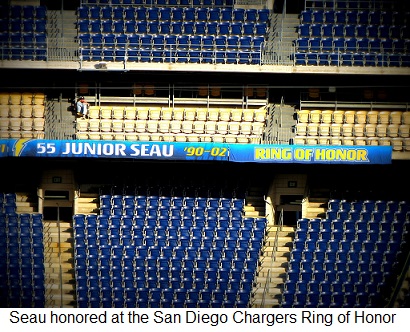
ENCORE: Levi’s® Stadium – SuperBowl Host – ‘Coming Out’ to the World

This ENCORE is re-distributed on the occasion of SuperBowl 50. The match-up is now set: Carolina Panthers -vs- Denver Broncos on Sunday, February 7, 2016 at the new Levi Stadium in Santa Clara, California. (The original commentary was published on December 16, 2014).

Go Lean Commentary

Sports business is big business. But still, even small communities can play in this game.

This is the experience of small Santa Clara, California, the new landlord of the San Francisco Forty-Niners (49-ers) of the National Football League (NFL). The city itself is home to only 116,468 residents, located 45 miles southeast of San Francisco, and yet they are able to leverage the sports entertainment needs for a metropolitan area of 7.44 million people in the San Francisco Bay statistical area[1].

s Stadium - A Team Effort - Photo 2

Where does such a small community get the clout to build a $1.2 Billion stadium? Wall Street. Or better stated one of the biggest, most influential power-brokers on Wall Street: Goldman Sachs Investment Bank. See their promotion VIDEO here of the stadium project.

VIDEO – Levi’s® Stadium: A Team Effort – https://youtu.be/n7KcF5DEbvs

When the San Francisco 49ers wanted to build a new stadium in Santa Clara, California, Goldman Sachs helped structure an innovative financing plan to make it happen. Levi’s® Stadium, one of the country’s most technologically advanced stadiums, opened in August 2014 and is helping to bring further economic development to the local economy in Santa Clara.

Goldman Sachs, in many quarters, has been portrayed as an “evil empire”. They are reflective of the Big Banks and Wall Street plutocracy. They have even been credited for being one of the “bad actors” causing the 2008 Great Recession financial crisis. And yet, they persist! Good, bad or ugly, Goldman Sachs provides a necessary function in modern society; in the case of the foregoing VIDEO, they facilitate municipal financing. They can contribute to the Greater Good.

This commentary promotes the book Go Lean…Caribbean. This publication serves as a roadmap for the introduction and implementation of the technocratic Caribbean Union Trade Federation (CU). While the CU is NOT a sports promotion entity, it does promote the important role of sports in the vision to make the Caribbean a better place to live, work and play. As an expression of this vision, “a mission of the CU is to forge industries and economic drivers around the individual and group activities of sports and culture” (Page 81).

“Build it and they will come” – The Go Lean roadmap encourages solid business plans to develop permanent sports stadia and arenas at CU-owned fairgrounds. This aligns with the Levi’s Stadium in the foregoing VIDEO, where they are now due to host many other events, in addition to being the landlord of the NFL team. This was not automatic; this was a journey (a roadmap), one that started with a solid business plan and community buy-in. This “community ethos” from Santa Clara teaches us so much.

In 2011, Santa Clara voters approved a plan to build the 68,500 seat stadium for the nearby San Francisco 49ers. The groundbreaking for the stadium occurred on April 19, 2012.[2] The official ribbon cutting took place on Thursday July 17, 2014. The first professional sporting event hosted at the stadium was a Major League Soccer (MLS) match between the San Jose Earthquakes and the Seattle Sounders on August 2, 2014. The first professional football event hosted at the stadium was a pre-season game between the 49ers and the Denver Broncos, played on August 17, 2014.

s Stadium - A Team Effort - Photo 1

Now the stage is set. The following is a sample of other events (source: http://en.wikipedia.org/wiki/Levi_Stadium) that are scheduled to start the return on Santa Clara’s community investment:

Super Bowl 50
On October 16, 2012, it was announced that Levi’s Stadium was one of two finalists to host Super Bowl 50 on February 7, 2016 (the other stadium finalist being Sun Life Stadium in Miami Gardens, Florida). On May 21, 2013, it was announced that the San Francisco Bay Area had defeated South Florida in a vote of NFL owners in its bid to host Super Bowl L (50).

College Football Post Season Bowl Game
The stadium will host its first Foster Farms Bowl Game on December 30, 2014 featuring the nearby Stanford University Cardinals and the Maryland Terrapins from the Big Ten Conference.

WrestleMania XXXI
Levi’s Stadium will host WWE’s WrestleMania XXXI on March 29, 2015. This will mark the first time WrestleMania is hosted in Northern California. The area will also host activities throughout the region for the week-long celebration leading up to WrestleMania itself.

Hockey
Levi’s Stadium will host the 2015 NHL Stadium Series’ February 21 game between the Los Angeles Kings and San Jose Sharks.

Soccer
On July 31, 2014, the San Jose Earthquakes agreed to play one match per year for five years at Levi’s Stadium. On September 6, 2014, an international friendly between Mexico and Chile was held.

Concerts

  • On October 23, 2014, it was announced that international pop group “One Direction” would bring their 2015 “On The Road Again” tour to Levi’s Stadium on July 11, 2015.
  • On October 30, 2014 Kenny Chesney announced that he would bring his “The Big Revival Tour” to Levi’s Stadium on May 2, 2015 with Jason Aldean co-headlining with Chesney. Jake Owen and Cole Swindell will open for the duo. It’s the first concert announced at the new home of the 49ers.
  • Taylor Swift set to perform on her fourth upcoming tour, “The 1989 World Tour” in the Levi’s Stadium on 14 & 15 August 2015.

Not every market, especially in the Caribbean, can support these types of high profile events/bookings. So the Go Lean roadmap invites an alternative landlord approach for the occasional or one-time events, that of temporary stadiums; this point was detailed in a previous blog submission.

Whether permanent stadiums or temporary stadiums, the point is echoed that sports entertainment is big business and the Caribbean region must not miss out on the community-building opportunities. This is heavy-lifting; the communities need the technocratic support of a business-mined landlord and creative financing options. This is the role the CU will execute.

The Go Lean vision is a confederation of the 30 member-states of the Caribbean forming the CU as a proxy organization to do the heavy-lighting of building, funding and maintaining sports venues. The strategy is for the CU to be the landlord, and super-regional regulatory agency, for sports leagues, federations and associations (amateur, collegiate, and professional). The foregoing VIDEO depicts how this strategy relates to a community.

The prime directives of the CU/Go Lean roadmap are described with these 3 statements:

  • Optimization of the economic engines in order to grow the regional economy to $800 Billion & create 2.2 million new jobs.
  • Establishment of a security apparatus to protect the resultant economic engines.
  • Improve Caribbean governance to support these engines.

This roadmap commences with the recognition that genius qualifiers can be found in many fields of endeavor, including sports. The roadmap pronounces the need for the region to confederate in order to invest in the facilitations for the Caribbean sports genius to soar. These pronouncements are made in the opening Declaration of Interdependence, (Pages 13 & 14) as follows:

xxi. Whereas the preparation of our labor force can foster opportunities and dictate economic progress for current and future generations, the Federation must ensure that educational and job training opportunities are fully optimized for all residents of all member-states, with no partiality towards any gender or ethnic group. The Federation must recognize and facilitate excellence in many different fields of endeavor, including … sports. This responsibility should be executed without incurring the risks of further human flight, as has been the past history.

xxii. Whereas sports have been a source of great pride for the Caribbean region, the economic returns from these ventures have not been evenly distributed as in other societies. The Federation must therefore facilitate the eco-systems and vertical industries of sports as a business, recreation, national pastime and even sports tourism…

The Go Lean book and accompanying blogs declare that the Caribbean needs to learn lessons from communities like Santa Clara and other sporting venues/administrations. So thusly this subject of the “business of sports” is a familiar topic for Go Lean blogs. The previous blogs were detailed:

https://goleancaribbean.com/blog/?p=3244 Sports Role Model – espnW.
https://goleancaribbean.com/blog/?p=2222 Sports Role Model – Playing For Pride … And More
https://goleancaribbean.com/blog/?p=2171 Sports Role Model – Turn On the SEC Network
https://goleancaribbean.com/blog/?p=2152 Sports Role Model – US versus the World
https://goleancaribbean.com/blog/?p=1715 Lebronomy – Economic Impact of the Return of the NBA Great
https://goleancaribbean.com/blog/?p=1446 Caribbean Players in the 2014 World Cup
https://goleancaribbean.com/blog/?p=1341 College World Series Time – Lessons from Omaha
https://goleancaribbean.com/blog/?p=1148 Sports Bubble – Franchise values in basketball
https://goleancaribbean.com/blog/?p=1020 Sports Revolutionary: Advocate Jeffrey Webb
https://goleancaribbean.com/blog/?p=498 Book Review: ‘The Sports Gene’
https://goleancaribbean.com/blog/?p=334 Bahamians Make Presence Felt In Libyan League
https://goleancaribbean.com/blog/?p=318 Collegiate Sports in the Caribbean
https://goleancaribbean.com/blog/?p=60 Could the Caribbean Host the Olympic Games?

This Go Lean roadmap is committed to availing the economic opportunities of all the Caribbean athletic abilities and the world’s thirst for this entertainment. The book details these series of community ethos, strategies, tactics, implementations and advocacies designed to deliver regional solutions:

Community Ethos – People Respond to Incentives in Predictable Ways Page 21
Community Ethos – Consequences of Choices Lie in the Future Page 21
Community Ethos – Lean Operations Page 24
Community Ethos – Return on Investments Page 25
Community Ethos – Ways to Foster Genius Page 27
Community Ethos – Ways to Impact the Greater Good Page 37
Strategic – Staffing – Sporting Events at Fairgrounds Page 55
Tactical – Fostering a Technocracy Page 64
Tactical – Separation of Powers – Sports & Culture Administration Page 81
Tactical – Separation of Powers – Fairgrounds Administration Page 83
Implementation – Steps to Implement Self-Governing Entities Page 105
Implementation – Ways to Deliver Page 109
Planning – Ways to Make the Caribbean Better Page 131
Advocacy – Ways to Grow the Economy Page 151
Advocacy – Ways to Improve Local Government – Parks & Recreation Page 169
Advocacy – Ways to Impact Public Works Page 175
Advocacy – Ways to Impact Events Page 191
Advocacy – Ways to Promote Fairgrounds Page 192
Advocacy – Ways to Improve Sports Page 229
Advocacy – Ways to Impact Urban Living – Sports Leagues Page 234

What is the end result for the Go Lean roadmap’s venture into the business of sports? For one … “jobs”; the Go Lean roadmap anticipates 21,000 direct jobs at fairgrounds and sports enterprises throughout the region. In addition there are leisure activities, event marketing, community pride, promotion of Caribbean athletes and cultural activities.

Overall, with these executions, the Caribbean region can be a better place to live, work and play. There is a lot of economic activity in the “play” element. Everyone, the athletes, promoters and spectators, are hereby urged to lean-in to this Go Lean roadmap.

Download the book Go Lean … Caribbean – now!

———-

Appendix – Source References:

s Stadium - A Team Effort - Photo 31. Home to approximately 7.44 million people, the nine-county Bay Area – Alameda, Contra Costa, Marin, Napa, San Francisco, San Mateo, Santa Clara, Solano, and Sonoma – contains many cities, towns, airports, and associated regional, state, and national parks, connected by a network of roads, highways, railroads, bridges, tunnels and commuter rail. Retrieved 12-16-2014 from: http://en.wikipedia.org/wiki/Portal:San_Francisco_Bay_Area

2. Video: 49ers’ groundbreaking ceremony for Santa Clara stadium – San Jose Mercury News. Mercurynews.com. Retrieved on 2013-07-29.
Share this post:
, , ,

Detroit giving schools their ‘Worst Shot’

Go Lean Commentary

Want to give it ‘your best shot’ …

… then we strongly caution – anyone and everyone – against the practice of taking on debt. Many bad things happen when people depend on debt. A “slippery slope” can ensue … from dependence, to reliance, to requirement, to vital, … to debt slavery. The further one stays away from debt, the better.

Even the Bible admonishes:

“Let no debt remain outstanding, except the continuing debt to love one another…”. Romans 13:8 New International Version

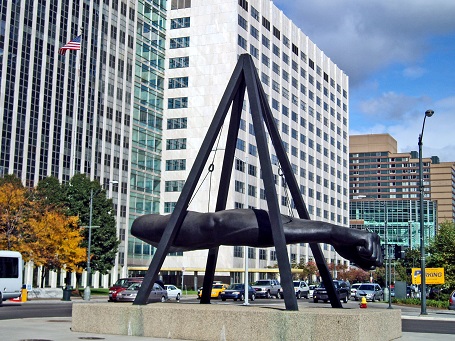
Joe Louis Fist

The Fist – Detroit’s Tribute to Boxing Legend Joe Louis

The problem with debt is that it trades the future for the past! It gives the ‘worst shot’, not  the ‘best shot’. To continue the boxing analogy, debt burdens the boxer down with additional pounds and pressure; bad formula for success.

This is truly the experience in Detroit today. The City’s well-documented Failed-City status (and Bankruptcy) not only impacts its past, but apparently also it’s future – as in the education of its children. The schools in Detroit are below standard, below quality and below acceptability. This applies to their physical structure, budgets, teacher appreciation, student experience and student preparation.

Why?

Detroit, both the “City” and “School District” had been too indebted, so that the first priority of all revenues/funding has to go to debt servicing. This means other vital functioanlities (physical structure, teachers and students) must be de-prioritized or many times outright ignored.

The relevant stakeholders for Detroit Public Schools are truly giving the ‘worst shot’, not the ‘best shot’.

(For Detroit, the municipal City and the School District are separate legal entities. While the City of Detroit filed for Bankruptcy protection and re-organization in 2013, the School District has not).

This dire disposition is not exclusive to Detroit. Unfortunately, this applies to many other communities around the world (think Greece); and even in the Caribbean.

See the news article here conveying the harsh realities that many in the Detroit Public Schools are now faced with:

Title: Detroit school system wants judge to end teacher sickouts

An attorney for the Detroit Public Schools has asked a judge to issue a restraining order and preliminary injunction to force teachers to stop sickouts and return to work, according to court documents filed Wednesday.

The motion names the Detroit Federation of Teachers, interim teachers union president Ivy Bailey and 23 Detroit Public Schools teachers.

“DPS has requested the court’s intervention in addressing the ongoing teacher sickouts that are plaguing the district,” Michelle Zdrodowski, the spokeswoman for the Detroit Public Schools said in a statement.

CU Blog - Detroit Giving Their Schools Their Worst - Photo 3

CU Blog - Detroit Giving Their Schools Their Worst - Photo 1

CU Blog - Detroit Giving Their Schools Their Worst - Photo 2

The teachers union responded to the filing, noting “Detroit deserves better.”

“It is regrettable that the Detroit Public Schools seeks to punish those who speak out about the deplorable conditions in our schools,” Bailey said. “It would be so much more productive to actually do something to fix Detroit schools rather than file restraining orders against those who expose the miserable conditions.”

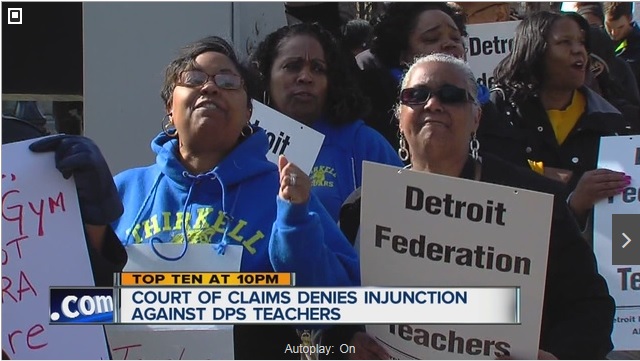
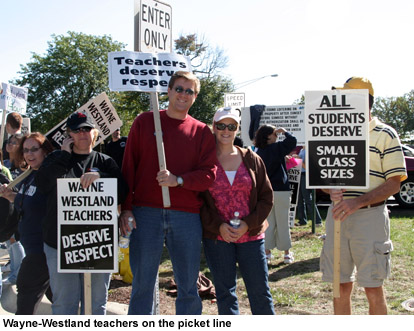
Nearly all Detroit’s public schools were closed Wednesday as many protesting teachers called in sick, turning what was supposed to be a day to celebrate into one shining a harsh spotlight on one of Michigan’s struggling cities.

President Barack Obama was in Detroit for the North American International Auto Show. He praised the American automotive industry’s resurgence, which many people view as a major victory for Detroit.

But those inside the city tell a sharply different story, one illustrated in leaflets showing pictures of dead rats found at public schools, mildew taking over ceilings and walls and damage to school buildings.

Detroit teachers have pressed their case against what they call deplorable conditions and inadequate funding. They’ve also decried decisions made by the school system’s emergency manager, who was appointed by Republican Gov. Rick Snyder — criticism that echoes complaints in Flint, a Michigan city mired in a water crisis after state officials largely took over because of budget troubles, just as they did in Detroit.

Detroit teachers have backed up their words with mass sickouts, starting January 11, when 62 schools closed as a result.

Bailey estimated the doors of “over 30 schools” ultimately would be affected.

Zdrodowski said there would be no class Wednesday in 88 schools, about 90% of those in the system.

But as of Wednesday night, the Detroit Public Schools’ Facebook page indicated all schools will be open Thursday. The announcement included a request for students and parents to check the page again for updates.

The speaker of the House in Michigan called for absentee teachers to be dismissed.

“These teachers deserve to be fired for turning their backs on the children in their care,” said Kevin Cotter, a Republican from Mount Pleasant. “Their actions also go against any possible resolution on potential (Detroit Public Schools) reforms, because any long-term agreement on Detroit schools has to put the kids first.”

Cotter said more than 700,000 instructional hours have been lost.

Budgets leave children by wayside in 2 Michigan cities

Obama meets with Detroit’s mayor

The timing — on the day of Obama’s visit to the Detroit auto show, with the national media attention that it brought — was no coincidence.

The Detroit Federation of Teachers indicated as much on its website, saying now is the time to “fight for Detroit kids (who) are struggling in schools with hazardous environmental and safety issues (and) educators have made significant sacrifices for the good of students.”

“As the city celebrates this ‘ultra-luxury’ automobile event,” the teachers union said, “Detroit’s public schools are in a state of crisis.”

Protesters planned to hand out fliers to car show attendees and urge them to sign a petition — which had over 11,000 signatures as of Wednesday morning — entitled “Our Kids Deserve Better.”

“Enough is enough!” the petition states. “… We demand real answers and fully funded schools.”

Obama had lunch with Detroit Mayor Mike Duggan. Before the meeting the White House said they would likely discuss the mass school closures as well as larger funding problems plaguing the city.

Duggan has “met with several teachers and understands what they’re going through,” his spokesman John Roach told CNN. But he doesn’t think that calling in sick is the right approach.

“(The mayor feels) the best thing for them to do is go back to school and teach,” Roach said.

Governor: ‘Time to act is now’

This isn’t just Detroit’s problem. It’s one for all of Michigan, which took control over much of the city’s government due to its well-documented financial woes.

One man who has been a frequent target of critics is Darnell Earley, appointed by Snyder a year ago to oversee Detroit Public Schools.

Michigan Senate Democrats took a swipe at him in a tweet: “Crumbling #DPS schools are a direct result of damage that can be done by unelected emergency managers.”

Bailey, the teachers union chief, piled on, saying, “If the goal was to destroy DPS, emergency management has done an excellent job.”

Before going to Detroit, Earley served as the emergency manager in Flint. He was in that position in April 2014 when Flint’s water supply switched from Lake Huron to the Flint River, a decision reversed more than a year later after reports of corroded pipes and elevated blood lead levels.

How tap water became toxic in Flint

Earley has said he was not responsible for the decision, only for implementing it after it was approved. Whoever was to blame, Flint still faces a serious health crisis and the costly, complicated task of cleaning up its water and possibly replacing damaged water pipes across the city.

Another person Detroit and Flint have in common is Snyder, the governor who sent Earley to both cities and who is officially in charge.

In his State of the State address Tuesday night, the governor called for money spent on debt service, close to $1,200 per student, to be shifted into classroom funding to give teachers what they need to do their jobs.

“(The) time to act is now,” he told lawmakers. “The Detroit schools are in need of a transformational change.

“The state needs to ensure that a complete failure to educate schoolchildren never again happens to this extent in one of Michigan’s districts.”

Governor’s outlook for school reforms

‘Teachers are fed up and have had enough’

A proposal introduced last week in the state Legislature would appear to find a way of doing that while handling the school system’s massive $515 million debt.

It would create a second school district within the city that assumes control over all of its schools and students, while leaving the current Detroit Public Schools system with only the district’s debt, said Republican state Sen. Goeff Hansen, author of the proposal.

“It’s a high priority. It’s an emergency situation,” Hansen said.

About $7,400 of school funding is allocated per student each year. But close to $1,200 of that goes to pay down debt and other costs, Hansen said.

Under the proposal, tax revenue would continue to pay off the debt isolated in the DPS system, but the state would gain room to inject additional funding into the new school system.

It has left many teachers worried that Detroit Public Schools will go out of existence, said Bailey, the teachers union leader. Under the current system, funding could run out by April.

Teachers feel pushed over the edge to protest against a litany of resulting troubles. There have been recent concessions. The school district agreed to demands on staff meetings, sick leave accrual and a labor-management committee on curriculum, the teachers union said.

And last week, Duggan ordered inspections of all the city’s public schools.

Duggan hopes to have the first 20 school buildings fully inspected by month’s end and all of them wrapped up in about three months, according to Roach, his spokesman.

Yet Bailey says a lot more still needs to be done.

“It’s because of the lack of respect that has been displayed toward teachers in this district, the hazardous working conditions, oversize classes, lost preparation periods, decrease in pay, increase in health care cost, uncertainty of their future,” she said.

“I could go on and on. Teachers are fed up and have had enough.”

Detroit teachers demand fix to ‘hazardous’ school

CNN’s Jean Casaraz, John Newsome, Dominique Debucquoy-Dodley, Phil Gast, Steve Almasy, Mallory Simon and Eliott C. McLaughlin contributed to this report.
Source: CNN – (Cable News Network); posted January 20, 2016 retrieved January 21, 2016 from: http://www.cnn.com/2016/01/20/us/detroit-public-schools-michigan-governor/index.html

———

Complimentary Story/VIDEO – Detroit’s Teachers Are Tired Of Their Schools  https://youtu.be/H-h0Db3P4ic

Published on Jan 20, 2016 – Teachers in Detroit have been protesting about their working conditions by taking to the internet. After a mass “sick out,” they’re now going on social media to share the daily difficulties they and their students face in schools.

CU Blog - Detroit Giving Their Schools Their Worst - Photo 4The petition for Judicial action was denied.

Good! Do not just “swipe these issues under the rug”. Deal with them!

A “crisis is a terrible thing to waste”. Detroit needs to use this crisis to re-boot its school eco-system.

First, the School District – see Appendix – needs to petition for its own Chapter 9 Bankruptcy. There is the need to write-off much of that previous debt; “pay pennies on the dollar”. That debt – from the past – is shortchanging the future for Detroit’s children. And since the City is smaller today, population-wise compared to decades ago, many more schools can be closed – sold to creditors – and consolidated to a smaller number (from the 97 today).

Jesus answered … you are anxious and troubled about many things, but only few things are needed… prepare the good part, and it will not be taken away. – Bible Luke 10:41-42 World English Bible paraphrase.

This strong prescription for Detroit Public Schools is a lesson learned from another crisis, the Great Recession of 2008. The events of September 15, 2008 parallel Detroit Public Schools today; this is when the American Investment Bank Lehman Brothers filed for bankruptcy. This action brought the US (and the world’s economy) to the brink of disaster. The ultimate solution for Lehman in 2008 was dissolution and a wind-down of those assets and excessive debt.

Death can sometimes bring peace!

The economy eventually re-bounded. The old debts are only in the past, no future considerations.

This 2008 consideration is part-and-parcel of the book Go Lean…Caribbean which serves as a roadmap for the introduction of the technocratic Caribbean Union Trade Federation (CU) to provide new oversight for the Caribbean region’s economic, security and governing engines. The book was conceived as a result of this 2008 crisis, by stakeholders intimate with the anatomy of the 2008 crisis – worked for Lehman Brothers – and composed a prescription for Caribbean turn-around.

The pretext of the Go Lean roadmap is simple, and applies equally to the Caribbean, and any other community:

Only at the precipice do they change!

The lessons learned, and codified, in the pages of the Go Lean book can now be enhanced with the examination of the realities of Detroit’s Public Schools. This examination considers the reality of the economic, security and governing aspects of this distressed community.

The publishers of the Go Lean book are here in Detroit to “observe and report” the turn-around and rebirth of the once-great-but-now-distressed City of Detroit and its metropolitan areas, including the even more dysfunctional community of Flint. There are so many lessons to learn from Michigan: good, bad and ugly.

Lessons learned from Michigan communities have been frequently conveyed in previous blogs/commentaries. Consider this sample here:

https://goleancaribbean.com/blog/?p=7235 Flint, Michigan – A Cautionary Tale
https://goleancaribbean.com/blog/?p=6609 Before and After Photos Showing Detroit’s Riverfront Transformation
https://goleancaribbean.com/blog/?p=6269 Education & Economics: Welcome to Detroit, Mr. President
https://goleancaribbean.com/blog/?p=6022 Caribbean Diaspora in Detroit … Celebrating Heritage
https://goleancaribbean.com/blog/?p=5597 The Dire Straits of the Unions and Collective   Bargaining
https://goleancaribbean.com/blog/?p=5055 A Lesson from an Empowering Family in Detroit
https://goleancaribbean.com/blog/?p=4913 Ann Arbor: Model for ‘Start-up’ Cities
https://goleancaribbean.com/blog/?p=4476 De-icing Detroit’s Winter Roads: Impetuous & Short Term
https://goleancaribbean.com/blog/?p=3713 NEXUS: Facilitating Detroit-Windsor Cross-Border Commerce
https://goleancaribbean.com/blog/?p=3326 M-1 Rail: Alternative Motion in the Motor City
https://goleancaribbean.com/blog/?p=3311 Detroit to exit historic bankruptcy
https://goleancaribbean.com/blog/?p=3164 Michigan Unemployment – Then and Now
https://goleancaribbean.com/blog/?p=2480 A Lesson in History: Community Ethos of WW II
https://goleancaribbean.com/blog/?p=1656 Blue is the New Green – Managing Detroit’s Water Resources
https://goleancaribbean.com/blog/?p=970 JP Morgan Chase $100 million Detroit investment not just for Press

The CU is designed to do the heavy-lifting of organizing Caribbean society to benefit from the lessons from Detroit and other Michigan communities. The Go Lean book details the community ethos to adopt, plus the executions of the following strategies, tactics, implementations and advocacies to impact the rebirths, reboots and turn-around of Caribbean communities:

Community Ethos – Deferred Gratification Page 21
Community Ethos – People Respond to Incentives Page 21
Community Ethos – “Crap” Happens Page 23
Community Ethos – Lean Operations Page 24
Community Ethos – Return on Investments (ROI) Page 24
Community Ethos – Ways to Impact the Future Page 26
Community Ethos – Ways to Help Entrepreneurship Page 28
Community Ethos – Ways to Impact a Turn-Around Page 33
Community Ethos – Impact the Greater Good Page 37
Strategy – Vision – Integrate a Single Market for more Financial Leverage Page 45
Tactical – Fostering a Technocracy Page 64
Tactical – Modeling Post WW II Recovery: Germany – Marshall Plan Page 68
Tactical – Modeling Post WW II Recovery: Japan – with no Marshall Plan Page 69
Separation of Powers – Public Works & Infrastructure Page 82
Separation of Powers – Housing and Urban Authority Page 83
Implementation – Ways to Pay for Change Page 101
Implementation – Ways to Re-boot Freeport – A Sample Caribbean city needing turn-around Page 112
Implementation – Ways to Better Manage Debt Page 114
Planning – Ways to Improve Failed-State   Indices Page 132
Planning – Lessons Learned from 2008 Page 136
Planning – Lessons Learned from Detroit Page 140
Advocacy – Ways to Grow the Economy Page 151
Advocacy – Ways to Improve Education Page 159
Advocacy – Ways to Improve Local Government Page 169
Advocacy – Ways to Better Manage the Social   Contract Page 170
Advocacy – Ways to Impact Urban Living Page 234
Advocacy – Ways to Re-boot Cuba Page 236
Advocacy – Ways to Re-boot Haiti Page 238
Appendix – American Student Debt Crisis “Ripping Off Young America” Page 286

The Go Lean roadmap posits that change is coming to Detroit, (many Go Lean blog-commentaries have even reported on the change that is now afoot) and also that changes need to come to the Caribbean. Though Detroit is out-of-scope for the Go Lean movement, we can observe-and-report; we can apply the lessons – the good, bad and ugly – for optimization in our Caribbean homeland under the scheme of a Single Market. With the integration of 42 million people in the 30 member-states we will be able to do so much more – effect more turn-around – than anyone member-state can accomplish alone.

The Go Lean book declares: “A crisis is a terrible thing to waste” – quoting noted Economist Paul Romer. The opportunity exists now to forge change in the economic, security and governing engines of the Caribbean, as this cautionary guidance is gleaned from the Detroit crisis.

The roadmap calls for a confederation of the 30 member-states of the Caribbean into a Single Market of 42 million people; thereby allow an adequate size to absorb economic shocks and downward trends. The Go Lean roadmap provides the details for the creation of 2.2 million new jobs and GDP growth to accumulate to $800 Billion. This vision is at the root of the Go Lean roadmap, embedded in the opening Declaration of Interdependence (Page 13):

xxiv.    Whereas a free market economy can be induced and spurred for continuous progress, the Federation must install the controls to better manage aspects of the economy: jobs, inflation, savings rate, investments and other economic principles. Thereby attracting direct foreign investment because of the stability and vibrancy of our economy.

xxv.    Whereas the legacy of international democracies had been imperiled due to a global financial crisis, the structure of the Federation must allow for financial stability and assurance of the Federation’s institutions. To mandate the economic vibrancy of the region, monetary and fiscal controls and policies must be incorporated as proactive and reactive measures. These measures must address threats against the financial integrity of the Federation and of the member-states.

xxxiii.   Whereas lessons can be learned and applied from the study of the recent history of other societies, the Federation must formalize statutes and organizational dimensions to avoid the pitfalls of communities like … Detroit …

Detroit Public Schools should recover…eventually! Their status will go from “bad-to-clean-to-better” but then they would have a reboot, much like many communities around the country and around the world – consider Iceland. This is an established best-practice; paralleling a forest fire in many ways; except these are human lives being impacted, not trees.

The Caribbean also has Failed-State issues to contend with. There are real-and-perceived Failed-States now (Haiti, Cuba, Dominican Republic, Jamaica and Puerto Rico) and many more that are almost there, so we have to master the art-and-science of turn-around strategies for our region.

The Go Lean roadmap declares that the responsibility for fixing the Caribbean though must fall first-and-foremost on the Caribbean, its people and institutions.

The Caribbean must also reboot and “bounce back”; to “step back from the precipice”. The effort is not easy; the Go Lean book describes it as heavy-lifting. We need to burn-off old debris and build new eco-systems. The returns – new Caribbean structures – will be worth the investments and sacrifices. This is true for Detroit … and the Caribbean.

This is the goal of the Go Lean roadmap: set aside the past, catalog the lessons, then forge the future. This is the only way to make the Caribbean a better place to live, work and play.  🙂

Download the book Go Lean … Caribbean – now!

———-

Appendix – Detroit School District

Detroit Public Schools (DPS) is a school district that covers all of the city of Detroit, Michigan, United States and high school students in the insular city of Highland Park. The district has its headquarters in the Fisher Building of the New Center area of Detroit.[6][7]

Students 47,959 (2014–15)
Teachers 3,235 (2012-13)
Staff 15,535 (2007)[3]

Besides DPS, the Education Achievement Authority (EAA) operates 15 of the district’s schools totalling 6,556 students as of the 2014-15 school year.

Emergency Financial Manager

The district is currently under a state of a financial emergency and is currently run by an emergency manager instead of the school board and superintendent.

Currently all matters are under the control of Emergency Manager Darnell Earley was appointed as the new emergency manager for the school district by Snyder, appointed by Governor Rick Snyder in January 2013.[4]

From 2009–2011, DPS finances were managed by Robert Bobb who was appointed by former Governor Jennifer Granholm[33] and from 2011 to January 2015, Roy Roberts who was appointed by Governor Snyder.

Source: https://en.wikipedia.org/wiki/Detroit_Public_Schools retrieved January 22, 2016.


Share this post:
, , , , , ,
[Top]

Street naming for Martin Luther King unveils the real America

Go Lean Commentary

We join the nation today to celebrate Dr. Martin Luther King Jr.’s birthday. This day is an opportunity to honor Dr. King and his legacy.CU Blog - Street naming for Martin Luther King unveils the real America - Photo 1

Born on January 15, 1929 in Atlanta, Georgia, Dr. King was a well-respected activist, scholar, pastor and humanitarian. Although his life was brief, Dr. King’s accomplishments in the civil rights movement and social justice are echoed throughout the world still today. Considered to be one of the greatest non-violent leaders in world history, Dr. King’s exceptional achievements used the power of legislation and social change.

As an advocate for freedom and non-violent resistance, Dr. King offered the power of words through public protests, grassroots organizing, and powerful sermons to achieve nearly insurmountable goals. He fought against racial segregation and poverty, advocated for international peace, and eliminated lasting barriers to voting for African-Americans.

In honor of his work, Dr. King received numerous awards during his lifetime including the Nobel Peace Prize in 1964. He continues to be remembered as one of the most lauded African-American leaders in history, often referenced by his 1963 speech, “I Have a Dream.” – Corporate Intranet Website for Credit Acceptance Corporation, Southfield (Detroit), Michigan; retrieved January 18, 2016.

Ditto”, for the promoters of the book Go Lean … Caribbean and accompanying blogs advocating for change in the Caribbean. Dr. Martin Luther King proved that “one man can make a difference” – a frequent theme of this Go Lean movement. He thusly serves as a role model for current and future Caribbean advocates, activists and humanitarians hoping to impact the Greater Good in their homeland.

Based on these accomplishments, one would think honoring Dr. King with a street-naming would be a simple task.

One would think!

Let us see how far America has progressed regarding race relations, in the naming of streets after Martin Luther King, in one town after another!

Consider this encyclopedic source – a website:

Title: A street fit for a King?
Website: Politics of Naming Streets for Martin Luther King, Jr. – Retrieved January 18, 2016: http://mlkstreet.com/

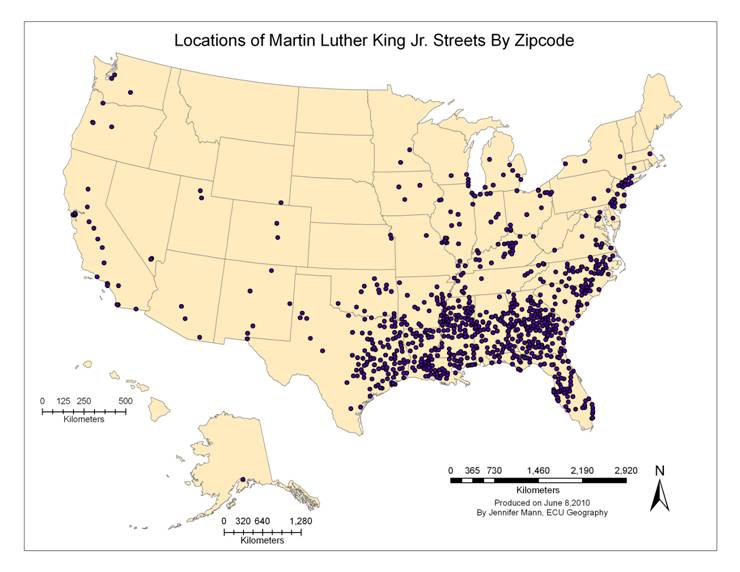
Naming streets is one of the most widespread and contentious ways of commemorating Martin Luther King Jr.  Debates over whether to name a street for King and which specific street to identify with him have led to the boycott of businesses, protest marches, court actions, petition drives, the vandalizing of roads, and even activists chaining themselves to street signs.

Honoring King with a street name is often controversial when the road in question challenges long-standing racial and economic boundaries within communities.  While few scholars have studied the King street naming phenomena, the naming process is an important indicator of local political tensions as well as broader debates about race, memory, and place in America.

CU Blog - Street naming for Martin Luther King unveils the real America - Photo 2I have studied the politics of naming streets after King for the past several years, seeking to understand the obstacles that face street naming proponents and the various strategies that communities have pursued in finding a street fit for remembering King. In many instances (but not all), public opposition has led King’s name to be socially and geographically marginalized within cities, which has worked to stigmatize these streets and create public anxiety about renaming more prominent streets.  As a cultural geographer, my work stresses the importance that location–the street’s site, situation, and scale within the city’s larger social landscape–plays in shaping the meaning of King’s commemoration.    Believing that my research and perspectives can be of some help to the public, I have set up this web page as a resource for engaging and assisting the movement to remember the civil rights leader.

Below (Appendix A) are some research papers that I have written about naming streets for King as well as some questions that I frequently encounter in my discussions with journalists and street naming stakeholders (proponents and opponents).  If you have a question not listed here, email me and I will try to provide some feedback.

—-

Site established to spread information and commentary on the (re)naming of streets for slain civil rights leader Martin Luther King, Jr. with the hope of informing public debate.

If you use any information or statistics from this site, please cite the source (Appendix C) as: Derek Alderman, Professor of Geography, University of Tennessee, Knoxville TN.

To the uninitiated, one would think the year is 1956, rather than 2016; see the VIDEO (Appendix D) of the documentary “MLK Streets Project”. One would think that such a racially-charged society was only representative of the America of old; that now America has transformed, to the point that the President is of African-American descent. But it must be concluded that the more things change, the more they remain the same.

The issue in the foregoing encyclopedic source (and the below VIDEO) relates the true disposition of the America many Caribbean citizens emigrate to, or want to. There is a great lure for Black-and-Brown Caribbean immigrants to come to America. But these portrayals/depictions would be the atmosphere that the new arrivals would have to navigate. Perhaps the shining light of that Welcome Sign should be dulled a little.

This consideration is brought to focus by the book Go Lean … Caribbean. The book serves as a roadmap for the introduction and implementation of the technocratic Caribbean Union Trade Federation (CU), for the economic optimization in the region. One mission of the roadmap is to minimize the “push-and-pull” factors that contribute to the alarming high abandonment rate of Caribbean citizens – one report reflects a 70% brain drain rate.

The Go Lean book posits that when the economic engines are not sufficient that people will flee, abandon their homelands, despite the love of family, friends and culture and endure all obstacles to secure a better livelihood. This has been the reality for all of the Caribbean, even the American member-states (Puerto Rico & Virgin Islands). So is the “grass greener”, is life in the American urban communities better that the status quo in the Caribbean? Considering the actuality of Caribbean emigrants, and the fact that there is no migration in the opposite direction, the answer must be true.

Sad! If only, there would be a better option for the Caribbean?

The book and movement Go Lean…Caribbean present that option!

This CU/Go Lean roadmap provides the turn-by-turn directions with the following 3 prime directives:

  • Optimization of the economic engines in order to grow the regional economy to $800 Billion & create 2.2 million new jobs.
  • Establishment of a security apparatus to protect the resultant economic engines.
  • Improve Caribbean governance to support these engines.

The roadmap posits that the United States of America should not be viewed as the panacea for Caribbean ailments; that when the choices of a challenge is “fight or flight” that Caribbean society must now consider the “fight” options. (No violent conflict is being advocated, in emulation of Martin Luther King, but rather a strenuous effort, heavy-lifting, to compete and win economic battles).

Are there social issues in America that are more important than street naming?

CU Blog - Street naming for Martin Luther King unveils the real America - Photo 3Proponents for naming streets for King often encounter the argument that African Americans should concern themselves with civil rights issues “more important” than street naming.

No doubt, there are a large number of worthy social and economic issues in need of addressing. At the same time, it is worth thinking about how the naming of roads is not necessarily separate from the larger racial/social justice picture. Naming streets for King can signal something very important about the willingness (or unwillingness) of the larger community to invest in African Americans, thus providing (or failing to provide) a platform on which to bring about more “substantive” change and improvement. When that community refuses to do something as seemingly minor as naming street, what does that say about the degree to which the community is really ready or willing to take on the “tough” issues?

I have argued in my research that the street naming issue is about the struggle to be seen and heard within public space, an important civil right in and of itself and one arguably necessary for other rights to be realized. Plus, we can also think about how street naming can be coupled with other larger and “more important” social and economic campaigns on streets in America, such as community redevelopment.

The problem is NOT that street naming is inherently less important. Rather it is the limited ways in which we imagine street naming as a social and political tool.  The photo above, from a street naming struggle in Melbourne, Florida, captures the deep emotions that proponents and opponents attach to the street renaming issue.  Street naming proponents in Melbourne were especially vocal about how honoring King was part of a larger campaign against racism. – Professor Derek Alderman.

As related in the foregoing article/VIDEO, America is not so welcoming a society for the “Black and Brown” populations from the Caribbean – and yet they come, they are in the USA and their numbers cannot be ignored. Here is the need for the heavy-lifting, to effect change to dissuade further brain drain and in reverse to incentivize repatriation. While not ignoring the “push” reason that cause people to flee, the book stresses (early at Page 13) the need to be on-guard for this fight in the following pronouncements in the Declaration of Interdependence:

xix.    Whereas our legacy in recent times is one of societal abandonment, it is imperative that incentives and encouragement be put in place to first dissuade the human flight, and then entice and welcome the return of our Diaspora back to our shores. This repatriation should be effected with the appropriate guards so as not to imperil the lives and securities of the repatriated citizens or the communities they inhabit. The right of repatriation is to be extended to any natural born citizens despite any previous naturalization to foreign sovereignties.

xx.    Whereas the results of our decades of migration created a vibrant Diaspora in foreign lands, the Federation must organize interactions with this population into structured markets. Thus allowing foreign consumption of domestic products, services and media, which is a positive trade impact. These economic activities must not be exploited by others’ profiteering but rather harnessed by Federation resources for efficient repatriations.

xxi.    Whereas the preparation of our labor force can foster opportunities and dictate economic progress for current and future generations, the Federation must ensure that educational and job training opportunities are fully optimized for all residents of all member-states, with no partiality towards any gender or ethnic group. The Federation must recognize and facilitate excellence in many different fields of endeavor, including sciences, languages, arts, music and sports. This responsibility should be executed without incurring the risks of further human flight, as has been the past history.

xxvi.    Whereas the Caribbean region must have new jobs to empower the engines of the economy and create the income sources for prosperity, and encourage the next generation to forge their dreams right at home, the Federation must therefore foster the development of new industries, like that of ship-building, automobile manufacturing, prefabricated housing, frozen foods, pipelines, call centers, and the prison industrial complex. In addition, the Federation must invigorate the enterprises related to existing industries like tourism, fisheries and lotteries – impacting the region with more jobs.

This commentary previously related details of the Caribbean Diaspora experience, the “push-and-pull” factors in the US, and the American record on Civil Rights. Here is a sample from earlier Go Lean blogs:

https://goleancaribbean.com/blog/?p=7204 ‘The Covenant with Black America’ – Ten Years Later
https://goleancaribbean.com/blog/?p=6722 A Lesson in History – After the Civil War: Birthright Mandates
https://goleancaribbean.com/blog/?p=6434 ‘Good Hair’ and the Strong Black Woman
https://goleancaribbean.com/blog/?p=5527 American Defects: Racism – Is It Over?
https://goleancaribbean.com/blog/?p=5333 American Urban Segregation Legacies: Cause and Effect
https://goleancaribbean.com/blog/?p=2297 A Lesson in History – Booker T versus Du Bois
https://goleancaribbean.com/blog/?p=2222 Sports Role Model – Playing For Pride … And More
https://goleancaribbean.com/blog/?p=1896 American “Pull” Factors – Crisis in Black Homeownership
https://goleancaribbean.com/blog/?p=1596 Book Review: ‘Prosper Where You Are Planted’
https://goleancaribbean.com/blog/?p=1433 Caribbean loses more than 70 percent of tertiary educated to brain drain
https://goleancaribbean.com/blog/?p=546 Book Review: ‘The Divide’: American Injustice in the Age of the Wealth Gap
https://goleancaribbean.com/blog/?p=209 Muhammad Ali’s Greatest Fight

For the Caribbean Diaspora, fleeing from their homelands to reside in the US is akin to “jumping from the frying pan into the fire”. While we may not be able to change American society, we can – no, we must – impact our own society. How? What? When? Why? All of these questions are valid, because the answers are difficult. The Go Lean book details the heavy-lifting answers with a roadmap to implement new community ethos, strategies, tactics and operational advocacies to effectuate this goal:

Community Ethos – Deferred Gratification Page 21
Community Ethos – People Respond to Incentives Page 21
Community Ethos – Economic Systems Influences Choices & Incentives Page 21
Community Ethos – The Consequences of Choice Lie in the Future Page 21
Community Ethos – Job Multiplier Page 22
Community Ethos – Minority Equalization Page 24
Community Ethos – Lean Operations Page 24
Community Ethos – Ways to Foster Genius Page 27
Community Ethos – Ways to Impact the Greater Good Page 37
Strategy – Vision – Make the Caribbean the Best Address on Planet Page 45
Strategy – Mission – Repatriate Diaspora Page 46
Strategy – Mission – Dissuade Human Flight/“Brain Drain” Page 46
Tactical – Ways to Foster a Technocracy Page 64
Tactical – Separation of Powers – Federal Government versus Member-States Page 89
Implementation – Ways to Deliver Page 109
Implementation – Reasons to Repatriate Page 118
Planning – Lessons Learned from the Year 2008 Page 136
Planning – Lessons from the US Constitutional Laws and Processes Page 145
Advocacy – Ways to Grow the Economy Page 151
Advocacy – Ways to Create Jobs Page 152
Advocacy – Ways to Impact the Diaspora Page 217
Advocacy – Ways to Preserve Caribbean Heritage Page 218
Advocacy – Battles in the War on Poverty Page 222
Advocacy – Ways to Help the Middle Class Page 223
Advocacy – Ways to Impact US Territories Page 244
Appendix – Analysis of Caribbean Emigration Page 269
Appendix – Puerto Rican Population in the US Page 304

The scope of this roadmap is to focus on the changes we have to make in the Caribbean, not the changes for American society. The Caribbean can be the world’s best address. This success is conceivable, believable and achievable.  Now is the time for all of the Caribbean, the people and governing institutions, to lean-in to this Go Lean … Caribbean roadmap.

This is a big deal for the region. This roadmap is not just a plan, it’s a Dream. We want the same sense of possibility that was manifested by Dr. Martin Luther King. We too, have a dream that one day … [we would be] “free at last, free at last; thank God almighty we are free (and home) at last”. 🙂

Download the free e-Book of Go Lean … Caribbean – now!

———

Appendix A – Publications Related to MLK Place/Street Naming

Mitchell, Jerry and Derek H. Alderman. 2014. “A Street Named for a King: A Lesson in the Politics of Place-Naming.” Social Education 78(3): 137-142.

Alderman, Derek H. and Joshua F.J. Inwood. 2013. “Street Naming and the Politics of Belonging: Spatial Injustices in the Toponymic Commemoration of Martin Luther King, Jr.” Social & Cultural Geography 14(2): 211-233.

Dwyer, Owen J. and Derek H. Alderman. 2008. Civil Rights Memorials and the Geography of Memory.  Book from Center for American Places and University of Georgia Press.

Alderman, Derek H. 2008. “Martin Luther King, Jr. Streets in the South: A New Landscape of Memory.Southern Cultures 14(3): 88-105.

Alderman, Derek H., Steve Spina, and Preston Mitchell. 2008. “A Bumpy Road: the Challenges of Naming Streets for Martin Luther King, Jr.” Planning 74(1): 18-21. Contribution to American Planning Association magazine.

Alderman, Derek H. and Preston Mitchell. 2007. “A Sign of Changing Times: A Street Renaming Lesson from Chapel Hill, North Carolina.” Public Management  89(6): 37-38. Contribution to International City/County Management Association magazine as part of special feature entitled Street Naming: Not as Easy as You Might Think.

Mitchelson, Matthew, Derek H. Alderman, Jeff Popke. 2007. “Branded: The Economic Geographies of MLK Streets.” Social Science Quarterly 88(1): 120-145.

Alderman, Derek H. 2006. “Naming Streets after Martin Luther King, Jr.: No Easy Road.” In Landscape and Race in the United States, Routledge Press (edited by Richard Schein), pp. 213-236.

Alderman, Derek H. 2003. “Street names and the scaling of memory: The politics of commemorating Martin Luther King, Jr. within the African-American community.Area 35 (2): 163-173.

Alderman, Derek H. 2002. “Street Names as Memorial Arenas: The Reputational Politics of Commemorating Martin Luther King, Jr. in a Georgia County.”  Historical Geography 30: 99-120.

Alderman, Derek H. 2002. “School Names as Cultural Arenas: The Naming of U.S. Public Schools after Martin Luther King, Jr.Urban Geography 23(7): 601-626.

Alderman, Derek H. 2000.  “A Street fit for a King: Naming Places and Commemoration in the American South.”  Professional Geographer 52(4): 672-684.

Alderman, Derek H.  1996. “Creating a New Geography of Memory in the South: The (Re) Naming of Streets in Honor of Martin Luther King, Jr.”  Southeastern Geographer 36(1): 51-69.

———

Appendix B – MLK Street Naming Educational Pamphlet

Electronic copy (pdf) of community outreach pamphlet on MLK street naming (produced 2005). Note data is now old. Pamphlet distributed to various schools, activists groups, and civil rights; national meetings of the NAACP and SCLC; and MLK Historic Site in Atlanta, Georgia.

Outside cover of pamphlet

Inside content of pamphlet

———

Appendix C – About Professor Derek Alderman

Professor of Cultural and Historical Geography and Head of the Department of GeographyUniversity of Tennessee-Knoxville (formerly affiliated with East Carolina University)

CV/Resume

Homepage

Academia.edu Page 

Book on Civil Rights Memorials and Street Naming

Email at: dalderma@utk.edu

Follow on: @MLKStreet

———

Appendix D – Trailer MLK Street Projecthttps://youtu.be/dE73UMlqaIs


Uploaded on Sep 28, 2010 – Trailer for the documentary “The MLK Streets Project”. A film by One Common Unity and Straight No Chaser Productions

Share this post:
, , , ,
[Top]

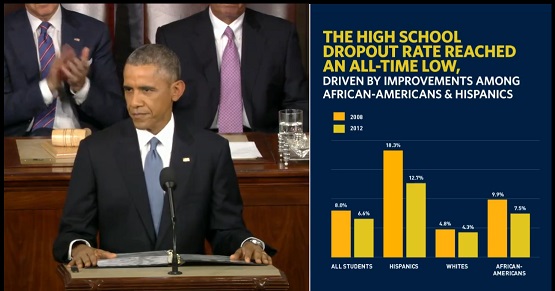
ENCORE: State of the Caribbean Union

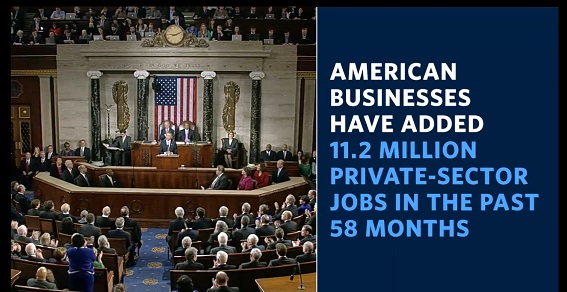
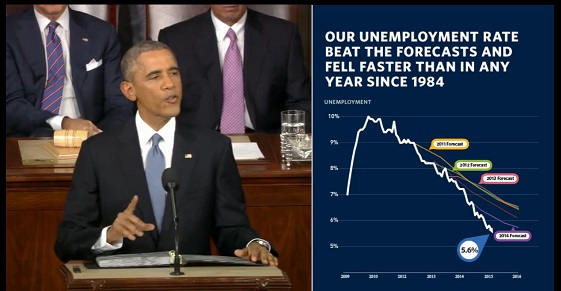
Miami, Florida – The below constitutes a re-distribution of the blog-commentary on the US President’s formal address to his Congress, the State of the Union for 2015. The occasion now is the State of the Union address for 2016. This time is monumental in that it is the final address for the current President, Barack Obama; due to term restrictions in the US Constitution, he can no longer serve as President after this year. The election for his successor is slated for November 2016.

============================================================

Go Lean Commentary

You are invited to watch the State of the Union address that President Barack Obama delivered to the US Congress on Tuesday night (January 20, 2015). You are urged to listen carefully and count the number of times the Caribbean is referred to. The answer:

Once!

The reference to the restoration of diplomatic relations with Cuba.

That’s it!

(The Guantanamo Bay Naval Base is a perpetual leased US territory; so it will not count as Caribbean-specific).

No reference to the US Territories (Puerto Rico and the Virgin Islands); no reference to the Dutch Caribbean; nor to the French Caribbean; and especially not to the English-speaking Caribbean member-states.

The truth of the matter is that the Caribbean is out-of-scope for Obama. It was the State of the Union of the United States of America. Not the State of the Caribbean Union. Even the US territories have to be concerned. They have a voice in the US Congress, but no vote. (A lesson in American Civics teaches that territories have Congressional representation that can vote in committees, but not vote in full Congress).

So all the President’s focus on job creation, energy independence, growing the economy, controlling healthcare costs, securing the homeland, and optimizing government was directed to his American constituency and not to the Caribbean member-states.

VIDEO Title: The State of the Union (SOTU) 2015 – http://youtu.be/cse5cCGuHmE
Watch President Obama’s 1-hour remarks during his 6th SOTU address and learn more below.

Published on Jan 20, 2015
President Barack Obama delivers his sixth State of the Union address, at the United States Capitol, January 20, 2015.

CU Blog - State of the Caribbean Union - Photo 1

CU Blog - State of the Caribbean Union - Photo 2

CU Blog - State of the Caribbean Union - Photo 3

CU Blog - State of the Caribbean Union - Photo 4

We, the Caribbean, are required to focus on the State of our own Union.

The people, the 320 million Americans, elect a President to pursue their best interest, not the world’s best interest. Though the US tries to be a Good Neighbor, there may be times when the priorities of the US conflict with the priorities of the Caribbean, or the rest of the world. In those scenarios, the President is under charge to pursue the American best option.

The 42 million people of the Caribbean homeland are not in his scope!

The foregoing VIDEO and this commentary is being brought into focus in a consideration of the book Go Lean … Caribbean. The book serves as a roadmap for the introduction and implementation of the technocratic Caribbean Union Trade Federation (CU), for the elevation of Caribbean society. This CU/Go Lean roadmap has these 3 prime directives:

  • Optimization of the economic engines in order to grow the regional economy to $800 Billion and create 2.2 million new jobs.
  • Establishment of a security apparatus to protect the resultant economic engines.
  • Improve Caribbean governance to support these engines.

The Go Lean book (Page 3) makes a simple assertion regarding the State of our Union: the Caribbean is in crisis. The book details that there is something wrong in the homeland, that while it is the greatest address in the world, instead of the world “beating a path” to these doors, the people of the Caribbean have “beat down their doors” to get out.

Why do people leave? The book identifies a numberof reasons, classified as “push-and-pull”. There are economic (jobs and entrepreneurial opportunities), security and governance issues.

One mission of the Go Lean roadmap is to minimize these “push-and-pull” factors that contribute to this alarmingly high abandonment rate of Caribbean citizens – one report reflects a 70% brain drain rate.

Considering “pull” factors, the roadmap posits that the United States of America should not be viewed as the panacea for Caribbean ailments; that when the choice of any challenge is “fight or flight” that Caribbean society must now consider anew, the “fight” options. (No violence is implied, but rather a strenuous effort, heavy-lifting, to compete and win economic battles). One strong reason for cautioning Caribbean emigrants is that America is not so welcoming a society for the “Black and Brown” populations from the Caribbean. This was not addressed by Obama; he has to address the needs of all Americans – not just “Black and Brown” – racial discrimination have not been as high a priority among his initiatives, to the chagrin of many in the African-American communities, including the Caribbean Diaspora.

On the other hand, the Go Lean book does not ignore the “push” factors that cause many Caribbean people to flee. The book stresses (early at Pages 12 – 13) the need to be on-guard for “push” factors in these pronouncements in the Declaration of Interdependence:

xii. Whereas the legacy in recent times in individual states may be that of ineffectual governance with no redress to higher authority, the accedence of this Federation will ensure accountability and escalation of the human and civil rights of the people for good governance, justice assurances, due process and the rule of law. As such, any threats of a “failed state” status for any member state must enact emergency measures on behalf of the Federation to protect the human, civil and property rights of the citizens, residents, allies, trading partners, and visitors of the affected member state and the Federation as a whole.

xix. Whereas our legacy in recent times is one of societal abandonment, it is imperative that incentives and encouragement be put in place to first dissuade the human flight, and then entice and welcome the return of our Diaspora back to our shores. This repatriation should be effected with the appropriate guards so as not to imperil the lives and securities of the repatriated citizens or the communities they inhabit. The right of repatriation is to be extended to any natural born citizens despite any previous naturalization to foreign sovereignties.

xx. Whereas the results of our decades of migration created a vibrant Diaspora in foreign lands, the Federation must organize interactions with this population into structured markets. Thus allowing foreign consumption of domestic products, services and media, which is a positive trade impact. These economic activities must not be exploited by others’ profiteering but rather harnessed by Federation resources for efficient repatriations.

xxi. Whereas the preparation of our labor force can foster opportunities and dictate economic progress for current and future generations, the Federation must ensure that educational and job training opportunities are fully optimized for all residents of all member-states, with no partiality towards any gender or ethnic group. The Federation must recognize and facilitate excellence in many different fields of endeavor, including sciences, languages, arts, music and sports. This responsibility should be executed without incurring the risks of further human flight, as has been the past history.

xxvi. Whereas the Caribbean region must have new jobs to empower the engines of the economy and create the income sources for prosperity, and encourage the next generation to forge their dreams right at home, the Federation must therefore foster the development of new industries, like that of ship-building, automobile manufacturing, prefabricated housing, frozen foods, pipelines, call centers, and the prison industrial complex. In addition, the Federation must invigorate the enterprises related to existing industries like tourism, fisheries and lotteries – impacting the region with more jobs.

This commentary previously related details of Caribbean emigration and their experiences (Diaspora), the “push-and-pull” factors in the US, and our region’s own job-creation efforts – State of Our Own Union. Here is a sample of earlier blogs:

https://goleancaribbean.com/blog/?p=3780 National Sacrifice: The Missing Ingredient – Caribbean people not willing to die or live in sacrifice to their homeland
https://goleancaribbean.com/blog/?p=3694 Jamaica-Canada employment program pumps millions into local economy
https://goleancaribbean.com/blog/?p=3662 Migrant flow into US from Caribbean spikes
https://goleancaribbean.com/blog/?p=3446 Forecast for higher unemployment in Caribbean in 2015
https://goleancaribbean.com/blog/?p=3050 Obama’s immigration tweaks – Bad for the Caribbean
https://goleancaribbean.com/blog/?p=2547 Miami’s Success versus Caribbean Failure
https://goleancaribbean.com/blog/?p=2251 What’s In A Name? Plight of “Black and Brown” in the US
https://goleancaribbean.com/blog/?p=1896 American “Pull” Factors – Crisis in Black Homeownership
https://goleancaribbean.com/blog/?p=1698 American “Pull” Factors – STEM Jobs Are Filling Slowly
https://goleancaribbean.com/blog/?p=1596 Book Review: ‘Prosper Where You Are Planted’
https://goleancaribbean.com/blog/?p=1433 Caribbean loses more than 70 percent of tertiary educated to Brain-Drain
https://goleancaribbean.com/blog/?p=1296 Remittances to Caribbean Increased By 3 Percent in 2013
https://goleancaribbean.com/blog/?p=1256 Traditional 4-year College Degree are Terrible Investments for the Caribbean Region Due to Brain-Drain

The Go Lean book and accompanying blogs posit that for the Caribbean Diaspora, fleeing from their homelands to reside in the US is akin to “jumping from the frying pan into the fire” in terms of effort to succeed and thrive in a community. The message of the Go Lean movement is that it takes less effort to remediate the Caribbean than to fix a new adopted homeland. While the Go Lean planners may not be able to change American society, we can – no, we must – impact our own society. This is the charge of the Go Lean…Caribbean roadmap, to do the heavy-lifting, to implement the organization dynamics to impact Caribbean society here and now. The following are the community ethos, strategies, tactics and operational advocacies to effectuate this goal:

Community Ethos – People Respond to Incentives Page 21
Community Ethos – Economic Systems Influences Choices & Incentives Page 21
Community Ethos – The Consequences of Choice Lie in the Future Page 21
Community Ethos – Job Multiplier Page 22
Community Ethos – Minority Equalization Page 24
Community Ethos – Lean Operations Page 24
Community Ethos – Ways to Foster Genius Page 27
Community Ethos – Ways to Improve Negotiations Page 32
Community Ethos – Ways to Impact the Greater Good Page 37
Strategy – Vision – Make the Caribbean the Best Address on Planet Page 45
Strategy – Mission – Repatriate Diaspora Page 46
Strategy – Mission – Dissuade Human Flight/“Brain Drain” Page 46
Tactical – Separation of Powers – Union versus Member-States Page 71
Implementation – Assemble CariCom, Dutch, French, Cuba and US Territories Page 95
Implementation – Enact Territorial Compacts for PR & the Virgin Islands Page 96
Implementation – Foreign Policy Initiatives at Start-up Page 102
Implementation – Ways to Deliver Page 109
Implementation – Reasons to Repatriate Page 118
Implementation – Ways to Benefit from Globalization Page 119
Implementation – Ways to Promote Independence Page 120
Planning – 10 Big Ideas for the Caribbean Page 127
Planning – Lessons from the US Constitution Page 145
Advocacy – Ways to Grow the Economy Page 151
Advocacy – Ways to Create Jobs Page 152
Advocacy – Ways to Improve Governance Page 168
Advocacy – Ways to Improve Homeland Security Page 180
Advocacy – Ways to Impact the Diaspora Page 217
Advocacy – Ways to Preserve Caribbean Heritage Page 218
Advocacy – Ways to Re-boot Cuba Page 236
Advocacy – Ways to Impact US Territories Page 244
Appendix – Interstate Compacts Page 278

This Go Lean book accepts that the current State of Our Own Union is not a permanent disposition. We can do better. This roadmap is a 5-year plan to effect change, to make our homeland a better place to live, work and play. From Day One/Step One, positive change emerges. The roadmap therefore serves as turn-by-turn directions for what-how-when-where-why to apply the needed remediation, mitigations and empowerments.

The scope of this roadmap is change for the Caribbean, not change for American society – though there is the need for some lobbying of American authorities for Interstate/Foreign Compacts (Page 278).

That’s lobbying, not begging

As for the Caribbean US territories – the great American Empire – having a voice, but no vote is disadvantageous. A Congressman from Nebraska would not negotiate with a Congressman from Puerto Rico because there is no vote to offer, compromise or “horse-trade”. American territories are therefore just traditional colonies, parasites and subjective to their imperial masters.

The Caribbean strives to be protégés, no parasites! We can be the world’s best address. How glorious the day when we can declare that as the State of the Caribbean Union!

Now is the time for all of the Caribbean, the people and governing institutions, to lean-in to this Go Lean … Caribbean roadmap. 🙂

Download the book Go Lean … Caribbean – now!

Share this post:
, , , , ,
[Top]

Crime Specialist Urging: ‘Change Leaders in Crime Fight’

Go Lean Commentary

While we all want to live in a society free of crime, we all recognize that this goal is easier said than done!

Since remediating and mitigating crime is both an “Art” and a “Science”, we have to rely on professionals and Subject Matter Experts (SME) – Police – to do this job. And when these SME’s succeed in their “art and science”, we hardly notice; but when they fail we cannot ignore the failures, as we are all impacted.

Right now, there is no way to ignore what is going on in the Caribbean member-state of the Bahamas; they have an alarming crime problem, one that has the attention of local, regional and international stakeholders. According to the below news article, these numbers highlight the problem:

In 2010, there were 94 murders recorded in the country, a record at the time. The next year there were 127 murders and in 2012 there were 111. There were 120 murders in 2013, 123 in 2014 and a record 149 last year [2015].

For a country of 320,000 people, these numbers are alarmingly high. (This blogger is Bahamas-bred).

- Photo 1

The book Go Lean … Caribbean asserts that to elevate Caribbean society there must be a focus on elevating the region’s economic, security and governing engines. While the book primarily targets economic empowerments (jobs, investments, education, entrepreneurship, etc.), it posits that security concerns must be front-and-center along with these economic efforts.

The book directly relates (Page 23) that with the emergence of new economic drivers that “bad actors” will also emerge thereafter to exploit the opportunities, with good, bad and evil intent. This is a historical fact, and is bound to be repeated again and again. The following news article and related VIDEO convey this point:

Title: ‘Change leaders in crime fight’
Source: BahamasLocal.com – Local Online News Portal; retrieved January 6, 2016 from:
http://www.bahamaslocal.com/newsitem/142707/Change_leaders_in_crime_fight.html

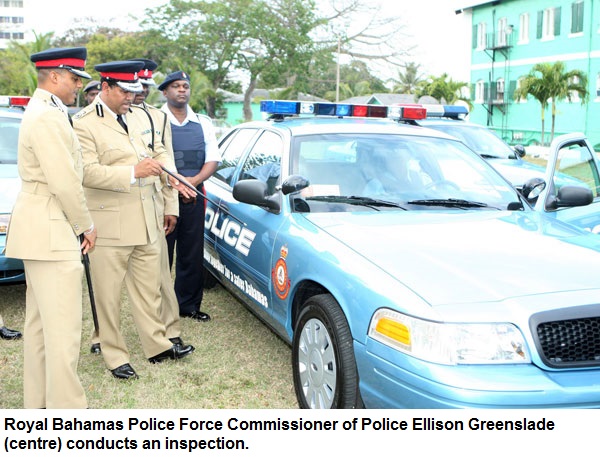
January 04, 2016 – Former Deputy Commissioner of Police Quinn McCartney is renewing his call for a change in leadership in the crime fight following the setting of a new murder record in The Bahamas in 2015, and several serious crimes already recorded for 2016, including two murders and multiple shootings. While McCartney did not identify anyone in his post, his comments are widely viewed as a critique of Commissioner of Police Ellison Greenslade.

- Photo 2

“I promised not to say too much this year, but looks like 2016 is starting off much like 2015 ended, and therefore I feel compelled to say something brief right now,” McCartney wrote on his Facebook page on Sunday night.

“Obviously what we are doing right now is not working. There is, in my humble opinion, a need for drastic changes to be made. Perhaps we should take our cues from sports teams. I am not a sports fanatic, but I do know that when a team continues to lose, sooner or later there is a leadership change [and] the manager/coach is fired.

“Most of the team members stay but new leadership is brought in to hopefully chart a new course for what should be a talented team. With six successive years of unprecedented records, are we at the point where we need to honestly look at a change of the leadership for the team?”

McCartney’s call for new leadership comes exactly six years after Greenslade assumed command of the Royal Bahamas Police Force and one year after he, McCartney, retired as deputy.

In 2010, there were 94 murders recorded in the country, a record at the time. The next year there were 127 murders and in 2012 there were 111. There were 120 murders in 2013, 123 in 2014 and a record 149 last year.

McCartney’s post attracted widespread attention and in response to a comment under his post, McCartney promised to expand on his thoughts later in the week.

“We can only be manipulated to the extent that we allow persons to manipulate us,” he wrote. “The political directorate can only get us to do what they want if we allow them to. We need to de-politicize our institutions or at least the perception that they are politicized. Unfortunately we have allowed them in when it has been expedient for our professional success or advancement. We are to blame.”

Fresh off a record-setting year, a man was shot and killed outside a bar at the intersection of Kemp Road and Wulff Road early Saturday morning, police said. Hours later, Michael Deangelo Bethel, a well-known businessman, was shot and killed after he was ambushed at the traffic light near Montagu Beach early Sunday morning. His wife and two others were injured in the shooting, police said.

This is not first time McCartney has been critical of the leadership in the crime fight. Last November, he said if those charged with addressing the problem are failing to do their jobs, they should be removed.

McCartney left the force after more than 30 years of service. His relationship with the commissioner was reportedly strained in the time leading to his exit. McCartney holds a first degree in chemistry and a master’s degree in forensics from the University of Scotland. He has had extensive professional training since then.

As deputy commissioner, he was responsible for complaints and discipline, fire services and the force’s inspection and review branch, which was reportedly dismantled in 2012.

———-

VIDEO – MAN STABBED AND KILLED IN YELLOW ELDER – https://youtu.be/pRYNzSaGzSw


Published on Dec 29, 2015 – NB12 DECEMBER 29TH, NEWSCAST.
Pardon the opening Advertisement/Commercial.

The foregoing news resources relate the dire status quo in the Bahamas. A similar review in other Caribbean member-states shows similar challenges. So crime is a regional problem. The Go Lean book therefore presents a regional solution. The book features details of mitigations designed from world-class best-practices to remediate crime in the Caribbean region. All of which the current regimes of the 30 separate member-states would be unable to pursue on their own. As the commentator relates in the foregoing article, there is a need for a new regime, as the current structures are failing. The Go Lean book therefore relates “the new Sheriff in Town” – a regional one – with these strategies:

  • Caribbean Police (CariPol)
  • Regional Security Intelligence Bureau
  • Enhanced Witness Protection Solutions
  • Regionally-regulated Private/Commercial First Responders
  • Youth Crime Awareness and Prevention
  • Prison Industrial Complex

This last entry – Prison Industrial Complex – is the focus of this commentary. There is much to learn from the “art and science” of penology and criminology in implementing change in the new Caribbean.

The Go Lean book posits that the Caribbean is in dire straits – society-wise and crime-wise – due fundamentally to one factor: societal abandonment. Evidence is provided when the best-of-the-best flees a community, the consequence is more-and-more turmoil among the remnant.

Consider this: What happens in prisons where/when felons and “bad actors” are all warehoused together?

The fields of penology and criminology are all consistent in their conclusions: Criminals, felons and “bad actors” all learn to become better criminals, felons and “bad actors” in prison. This is why recidivism – the propensity to return to the bad practice – is so high.

Per Psychiatry: Recidivism = the chronic tendency toward repetition of criminal or antisocial behavior patterns.

This commentary – in support of the book Go Lean…Caribbean – has previously established that the societal abandonment rate among the educated classes of the Caribbean average 70%, with some communities experiencing even higher rates; (Jamaica at 85% and Guyana at 89%). This consideration details the “push and pull” reasons why Caribbean citizens flee.

The Go Lean book and this entire movement hereby asserts that the problem of crime in the Bahamas – as related in the foregoing news article, though not exclusive there – is a vicious cycle of cause-and effect that is common and tragic throughout the entire Caribbean region. Imagine this cycle:

  • The Caribbean Remnant – lower skilled and more prone to violence – learn more effective lawlessness
  • Innocent people leave the Caribbean region for refuge abroad
  • The Caribbean Remnant – lower skilled and more prone to violence – learn more effective lawlessness
  • Innocent people leave the Caribbean region for refuge abroad
  • pattern continues

This presumed pattern is based on the premise that foreign governments disallow immigrants with criminal records. So these ones – bad actors – are comprised in the remnant population left behind in the Caribbean. This means that every iteration of the above pattern changes the statistics of felons/non-felons in society; more and more felons, percentage-wise.

So then, what hope is there for the future?

“Do what you’ve always done, get what you’ve always got” – Old Adage.

The declaration of the policing SME in the foregoing article is to “change the leadership in the crime fight”. (Though the quoted article appears to be more political in its indictment).

This is the quest of the Go Lean movement, to change the leadership, stewardship and oversight of the Caribbean eco-system. (This commentary makes no judgments on the actual Commissioner of Police of the Royal Bahamas Police Force; this public servant seems to be an honorable man with only good intentions for his homeland). The Go Lean book serves as a roadmap for the introduction and implementation of the technocratic Caribbean Union Trade Federation (CU) to elevate the region’s economic, security and governing engines beyond their status quo. The roadmap has these 3 prime directives:

  • Optimization of the economic engines in order to grow the regional economy to $800 Billion & create 2.2 million new jobs.
  • Establishment of a security apparatus to provide public safety and protect the resultant economic engines from economic crimes and cross-border threats.
  • Improvement of Caribbean governance to support these engines.

The goal of this roadmap is to confederate all of the Caribbean – all 30 member-states – under a unified entity to provide these societal solutions for the region. But ‘Security’ for the Caribbean has a different meaning than for many of the countries the Caribbean Diaspora flee to, like North America and Europe. The CU security goal is for public safety! The goal of the CU is set to optimize Caribbean society through economic empowerment, and also the security dynamics of the region, since these are inextricably linked to this same endeavor.

The end result of the successful execution of the Go Lean/CU roadmap is improvement of Caribbean society, minimizing the “push-pull” factors that led to more emigration, and incentivizing the return of many Diaspora that have left over the years and decades.

The cause-and-effect of failing economics lead to increasing criminality. The cause-and-effect of improved economics lead to lesser criminal activities. The motivation of this Go Lean/CU roadmap is the basic economic principle, described in the Go Lean book (Page 21), that “Economic Systems Influence Individual Choices and Incentives”. So the advanced field of economics hereby posits that Economic Systems, more so than political systems influence people’s choices and incentives. So the Go Lean/CU seeks to optimize the region’s economic systems to better deliver on the prime directives of the Go Lean roadmap.

This roadmap fully envisions the integration of shepherding – leadership – for the Caribbean region’s economic and security initiatives under the same governance: The Caribbean Union Trade Federation. This point is pronounced early in the Go Lean book with the Declaration of Interdependence (Page 12) that claims:

x.   Whereas we are surrounded and allied to nations of larger proportions in land mass, populations, and treasuries, elements in their societies may have ill-intent in their pursuits, at the expense of the safety and security of our citizens. We must therefore appoint “new guards” to ensure our public safety and threats against our society, both domestic and foreign. The Federation must employ the latest advances and best practices … to assuage continuous threats against public safety.

xi.   Whereas all men are entitled to the benefits of good governance in a free society, “new guards” must be enacted to dissuade the emergence of incompetence, corruption, nepotism and cronyism at the peril of the people’s best interest. The Federation must guarantee the executions of a social contract between government and the governed.

xii.  Whereas the legacy in recent times in individual states may be that of ineffectual governance with no redress to higher authority, the accedence of this Federation will ensure accountability and escalation of the human and civil rights of the people for good governance, justice assurances, due process and the rule of law. As such, any threats of a “failed state” status for any member state must enact emergency measures on behalf of the Federation to protect the human, civil and property rights of the citizens, residents, allies, trading partners, and visitors of the affected member state and the Federation as a whole.

xvi. Whereas security of our homeland is inextricably linked to prosperity of the homeland, the economic and security interest of the region needs to be aligned under the same governance. Since economic crimes, including piracy and other forms of terrorism, can imperil the functioning of the wheels of commerce for all the citizenry, the accedence of this Federation must equip the security apparatus with the tools and techniques for predictive and proactive interdictions.

The Caribbean appointing “new guards”, or a security  apparatus to ensure justice and public safety will include many strategies, tactics and implementations deemed “best-practice” over the years, including an advanced Intelligence Gathering & Analysis effort to mitigate and remediate crime in the region, and also to optimize the “art and science” of crime, including prison reform; (see Page 211 of the Go Lean book). This represents “top-down” and “bottom up” optimization of the security process to better protect the homeland. This comprehensive Homeland Security focus is “Step One, Day One” in the Go Lean roadmap, covering the approach for adequate funding, accountability and control. The Go Lean book details the series of community ethos, strategies, tactics, implementations and advocacies to provide increased public safety & security in the Caribbean region:

Community Ethos – Economic Systems Influence Individual Choices Page 21
Community Ethos – Consequences of Choices Lie in Future Page 21
Community Ethos – Privacy –vs- Public Protection Page 23
Community Ethos – Intelligence Gathering Page 23
Community Ethos – “Crap” Happens Page 23
Community Ethos – Cooperatives Page 25
Community Ethos – Ways to Impact the Greater Good Page 37
Tactical – Vision – Forge a Single Market economy Page 45
Tactical – Confederating a non-sovereign union Page 63
Tactical – Fostering a Technocracy Page 64
Tactical – Separation of Powers – Homeland Security Page 75
Tactical – Separation of Powers – CariPol: Marshals & Investigations Page 75
Implementation – Ways to Pay for Change Page 101
Implementation – Start-up Security Initiatives Page 103
Implementation – Ways to Foster International Aid – Security Assistance Page 115
Implementation – Reasons to Repatriate Page 118
Planning – Ways to Make the Caribbean Better Page 131
Planning – Ways to Improve Failed-State Indices – Mitigate Organized Crime Page 134
Planning – Lessons from the American West – Law & Order Lessons Page 142
Planning – Lessons from Egypt – Lackluster Law & Order affects Economy Page 143
Advocacy – Ways to Grow the Economy Page 151
Advocacy – Ways to Improve Governance Page 168
Advocacy – Ways to Better Manage the Social Contract Page 170
Advocacy – Ways to Improve Leadership Page 171
Advocacy – Ways to Impact Justice Page 177
Advocacy – Ways to Reduce Crime Page 178
Advocacy – Ways to Improve for Gun Control Page 179
Advocacy – Ways to Improve Homeland Security Page 180
Advocacy – Ways to Mitigate Terrorism Page 181
Advocacy – Ways to Improve Intelligence Gathering and Analysis Page 182
Advocacy – Ways to Impact the Prison Industrial Complex Page 211
Advocacy – Ways to Protect Human Rights Page 220

Other subjects related to crime and security empowerments for the region have been blogged in other Go Lean…Caribbean commentaries, as sampled here:

https://goleancaribbean.com/blog/?p=6693 Ten Puerto Rico Police Accused of Criminal Network
https://goleancaribbean.com/blog/?p=6385 Wi-Fi Hot Spots Run By Hackers Are Targeting Tourists
https://goleancaribbean.com/blog/?p=5307 8th Violent Crime Warning to Bahamas Tourists
https://goleancaribbean.com/blog/?p=5435 China Internet Policing – Model for Caribbean
https://goleancaribbean.com/blog/?p=5304 Mitigating the Eventual ‘Abuse of Power’
https://goleancaribbean.com/blog/?p=5238 #ManifestJustice – Lessons for the Prison Eco-System
https://goleancaribbean.com/blog/?p=4863 A Picture is worth a thousand words; a video … a million to expose corruption
https://goleancaribbean.com/blog/?p=4360 Dreading the ‘CaribbeanBasin Security Initiative’
https://goleancaribbean.com/blog/?p=4308 911 – Emergency Response: System in Crisis
https://goleancaribbean.com/blog/?p=3881 Intelligence Agencies to Up Cyber Security Cooperation
https://goleancaribbean.com/blog/?p=2994 Justice Strategy: Special Prosecutors and Commissions of Inquiry
https://goleancaribbean.com/blog/?p=2684 Role Model for Justice, Anti-Crime & Security: The Pinkertons
https://goleancaribbean.com/blog/?p=1554 Status of Forces Agreement = Security Pact
https://goleancaribbean.com/blog/?p=1143 White Collar fraud in America; criminals take $272 billion a year in healthcare
https://goleancaribbean.com/blog/?p=960 NSA records all phone calls in Bahamas, according to Snowden
https://goleancaribbean.com/blog/?p=535 Remembering and learning from the Boston Marathon Terrorist Attacks
https://goleancaribbean.com/blog/?p=392 Jamaica to receive World Bank funds to help in crime fight
https://goleancaribbean.com/blog/?p=273 10 Things We Don’t Want from the US – #6: Criminal Organizations

The vision of the Go Lean roadmap is to make the Caribbean homeland, a better place to live, work and play. This means measurable reduction (mitigation and remediation) of crime in the region.

The premise is that “bad actors” will always emerge, from internal and external origins. We must be prepared and on-guard to defend our homeland against all threats, foreign and domestic, including crime. Plus, we must accomplish this goal with maximum transparency, accountability, and commitment to due-process and the rule-of-law.

An additional mission is to lower the “push” factors (from “push-and-pull” reference) so that our citizens are not led to flee their homeland for foreign (North American and European) shores. Among the many reasons people emigrate, is victimization or fear of crime. There is “good, bad and ugly” in every society. We must not allow all our “good” citizens to leave and the only remaining – the remnant – would be the “bad and the ugly”.

So all stakeholders in the Caribbean – people and institutions – are urged to lean-in to this Go Lean roadmap for the elevation of the Caribbean’s societal engine: economy, security and governance. The roadmap calls for the heavy-lifting so as to impact the Greater Good.   🙂

Download the book Go Lean … Caribbean – now!

Share this post:
, , ,
[Top]

ENCORE: Concussion – The Movie; The Cause

Nassau, Bahamas – This is a re-distribution of the blog-commentary published on August 31, 2015, now that the movie has been released on Christmas Day. The movie is in fact all that it purported to be.

Go Lean Commentary

“Are you ready for some football?” – Promotional song by Hank Williams, Jr. for Monday Night Football on ABC & ESPN networks for 22 years (1989 – 2011).

This iconic song (see Appendix) and catch-phrase is reflective of exactly how popular the National Football League (NFL) is in the US:

“They own an entire day of the week”.

- The Movie; The Cause - Photo 2So says the new movie ‘Concussions’, starring Will Smith, referring to the media domination of NFL Football on Sundays during the Autumn season. The movie’s script is along a line that resonates well in Hollywood’s Academy Award balloting: “David versus Goliath”; “a small man speaking truth to power”.

In the case of the NFL, it is not just about power, it is about money, prestige and protecting the status quo; the NFL is responsible for the livelihood of so many people. The book Go Lean … Caribbean recognized the importance of the NFL in the American lexicon of “live, work and play”; it featured a case study (Page 32) of the NFL and it’s collective bargaining successes (and failures) in 2011. An excerpt from the book is quoted as follows:

Football is big business in the US, $9 billion in revenue, and more than a business; emotions – civic pride, rivalries, and fanaticism – run high on both sides.

Previous Go Lean commentaries presents the socio-economic realities of much of the American football eco-system. Consider a sample here:

Socio-Economic Impact Analysis of [Football] Sports Stadiums
Watch the Super Bowl … Commercials
Levi’s® NFL Stadium: A Team Effort
Sports Role Model – College Football – Playing For Pride … And More
Sports Role Model – Turn On the SEC Network
Collegiate Sports in the Caribbean – Model of NCAA
10 Things We Want from the US: #10 – Sports Professionalism
10 Things We Don’t Want from the US: #10 – ‘Win At All Costs’ Ethos

While football plays a big role in American life, so do movies. Their role is more unique; they are able to change society. In a previous blog / commentary regarding Caribbean Diaspora member and Hollywood great, Sidney Poitier, it was declared that …

“Movies are an amazing business model. People give money to spend a couple of hours watching someone else’s creation and then leave the theater with nothing to show for the investment; except perhaps a different perspective”.

Yes, movies help us to glean a better view of ourselves … and our failings; and many times, show us a way-forward.

These descriptors actually describe the latest production from Hollywood icon Will Smith (the former Fresh Prince of Bel-Air). This movie, the film “Concussion”, in the following news article, relates the real life drama of one man, Dr. Bennet Omalu, a Nigerian-born medical doctor – a pathologist – who prepared autopsies of former players that suffered from football-related concussions. He did not buckle under the acute pressure to maintain the status quo, and now, he is celebrated for forging change in his adopted homeland. This one man made a difference. (The NFL is now credited for a Concussion awareness and prevention protocol so advanced that other levels of the sport – college, high schools and Youth – are being urged to emulate).

See news article here on the release of the movie:

Title: ‘Concussion’: 5 Take-a-ways From Will Smith’s New Film

Will Smith, 46, is definitely going to get a ton of Oscar buzz portraying Dr. Bennet Omalu in the new film “Concussion.” NFL columnist Peter King of Sports Illustrated got an exclusive first peek at the trailer and it has been widely shared on social media since. And it’s very chilling.

- The Movie; The Cause - Photo 1

Here are five take-aways and background you need to know before checking out the clip:

1 – It’s Based on a True Story

Omalu is the forensic pathologist and neuropathologist who discovered chronic traumatic encephalopathy in football players who got hit in the head over and over again, according to the Washington Post.

In the clip, he says repetitive “head trauma chokes the brain.”

Omalu was one of the founding members of the Brain Injury Research Institute in 2002. He conducted the autopsy of Pittsburgh Steelers center Mike Webster, played by David Morse in the film, which led to this discovery.

2 – Smith’s Version of Omalu’s Accent Is Spot On

Omalu is from Nigeria and Smith has been known to transform completely for a role. He was nominated for an Oscar for 2011’s “Ali,” playing the legendary Muhammad Ali.

For comparison, here’s Omalu’s PBS interview from 2013.

3 – Smith Is a Reluctant Hero

“If you don’t speak for them, who will,” Gugu Mbatha-Raw, who plays Prema Mutiso in the film, tells Smith’s character.

He admits he idolized America growing up and “was the wrong person to have discovered this.”

4 – Alec Baldwin and Luke Wilson

“Concussion” brought in some heavyweights for this movie. Baldwin plays Dr. Julian Bailes, who advises Omalu, and Wilson, who will reportedly play NFL Commissioner Roger Goodell, according to IMDB. There’s no official word on this. He’s seen at a podium in the trailer, but doesn’t speak.

5 – “Tell the Truth”

Smith captures Omalu’s passion to have the truth told about this injury and disease.

“I was afraid of letting Mike [Webster] down. I was afraid. I don’t know. I was afraid I was going to fail,” Omalu told PBS a couple years back.

———-

VIDEO Link: http://www.imdb.com/title/tt3322364/?ref_=nv_sr_1


Will Smith stars in the incredible true David vs. Goliath story of Dr. Bennet Omalu, the brilliant forensic neuropathologist who made the first discovery of CTE, a football-related brain trauma, in a pro player.

The subject of concussions is serious – life and death. Just a few weeks ago (August 8), an NFL Hall-of-Fame inductee was honored for his play on the field during his 20-year professional career, but his family, his daughter in particular, is the one that made his acceptance / induction speech. He had died, in 2012; he committed suicide after apparently suffering from a brain disorder – chronic traumatic encephalopathy (CTE), a type of chronic brain damage that has also been found in other deceased former NFL players[4] – sustained from his years of brutal head contacts in organized football in high school, college and in his NFL career. This player was Junior Seau.

- The Movie; The Cause - Photo 3a

- The Movie; The Cause - Photo 3b

Why would there be a need for “David versus Goliath”; “a small man speaking truth to power”? Is not the actuality of an acclaimed football player committing suicide in this manner – he shot himself in the chest so as to preserve his brain for research – telling enough to drive home the message for reform?

No. Hardly. As previously discussed, there is too much money at stake.

These stakes bring out the Crony-capitalism in American society.

The book Go Lean…Caribbean (and subsequent blog/commentaries) relates many examples of cronyism in the American eco-system. There is a lot of money at stake. Those who want to preserve the status quo or not invest in the required mitigations to remediate concussions will fight back against any Advocate promoting the Greater Good. The profit motive is powerful. There are doubters and those who want to spurn doubt. “Concussions in Football” is not the first issue these “actors” have promoted doubt on. The efforts to downplay concussion alarmists are from a familiar playbook, used previously by Climate Change deniers, Big Tobacco, Toxic Waste, Acid Rain, and other dangerous chemicals.

This Go Lean book serves as a roadmap for the introduction and implementation of the technocratic Caribbean Union Trade Federation (CU). Sports are integral to the Go Lean/CU roadmap. While sports can be good and promote positives in society, even economically, the safety issues must be addressed upfront. This is a matter of community security. Thusly, the prime directives of the CU are described as:

  • Optimize the economic engines of the Caribbean to elevate the regional economy to grow to $800 Billion and create 2.2 million new jobs, including sports-related industries with a projection of 21,000 direct jobs at Fairgrounds and sports enterprises.
  • Establish a security apparatus to protect the people and economic engines.
  • Improvement of Caribbean governance to support these economic and security engines.

The CU/Go Lean sports mission is to harness the individual abilities of athletes to not just elevate their performance, but also to harness the economic impact for their communities. So modern sports endeavors cannot be analyzed without considering the impact on “dollars and cents” for stakeholders. This is a fact and should never be ignored. There is therefore the need to carefully assess and be on guard for crony-capitalistic influences entering the decision-making of sports stakeholders. The Go Lean book posits that with the emergence of new economic engines, “bad actors” will also emerge thereafter to exploit the opportunities, with good, bad and evil intent”. These points were pronounced early in the opening Declaration of Interdependence (Page 12 &14):

x. Whereas we are surrounded and allied to nations of larger proportions in land mass, populations, and treasuries, elements in their societies may have ill-intent in their pursuits, at the expense of the safety and security of our citizens. We must therefore appoint “new guards” to ensure our public safety and threats against our society, both domestic and foreign. The Federation must employ the latest advances and best practices of criminology and penology to assuage continuous threats against public safety.

xi. Whereas all men are entitled to the benefits of good governance in a free society, “new guards” must be enacted to dissuade the emergence of incompetence, corruption, nepotism and cronyism at the peril of the people’s best interest. The Federation must guarantee the executions of a social contract between government and the governed.

xvi. Whereas security of our homeland is inextricably linked to prosperity of the homeland, the economic and security interests of the region needs to be aligned under the same governance. Since economic crimes … can imperil the functioning of the wheels of commerce for all the citizenry, the accedence of this Federation must equip the security apparatus with the tools and techniques for predictive and proactive interdictions.

xxxi. Whereas sports have been a source of great pride for the Caribbean region, the economic returns from these ventures have not been evenly distributed as in other societies. The Federation must therefore facilitate the eco-systems and vertical industries of sports as a business, recreation, national pastime and even sports tourism …

The Go Lean book envisions the CU – a confederation of the 30 member-states of the Caribbean chartered to do the heavy-lifting of empowering and elevating the Caribbean economy – as the landlord of many sports facilities (within the Self-Governing Entities design), and the regulator for inter-state sport federations. The book details the economic principles and community ethos to adopt, plus the executions of strategies, tactics, implementations and advocacies to optimize sports enterprises in the Caribbean:

Community Ethos – Deferred Gratification Page 21
Economic Principles – People Respond to Incentives in Predictable Ways Page 21
Economic Principles – Economic Systems Influence Individual Choices / Incentives Page 21
Economic Principles – The Consequences of Choices Lie in the Future Page 21
Economic Principles – Job Multiplier Page 22
Community Ethos – Security Principles – Whistleblower Protection Page 23
Community Ethos – Security Principles – Light-Up the Dark Places Page 23
Community Ethos – Security Principles – “Crap” Happens Page 23
Community Ethos – Governing Principles – Lean Operations Page 24
Community Ethos – Ways to Impact the Future Page 26
Community Ethos – Ways to Promote Happiness – Mitigate Suicide Threats Page 36
Community Ethos – Impact the Greater Good Page 37
Strategy – Vision – Confederating 30 Member-States into a Single Market Page 45
Strategy – Vision – Foster Local Economic Engines for Basic Needs Page 45
Strategy – Mission – Prepare for Natural Disasters Page 45
Strategic – Staffing – Sporting Events at Fairgrounds Page 55
Strategy – Agents of Change – Climate Change Page 57
Strategy – Agents of Change – Globalization Page 57
Tactical – Confederating a Permanent Union Page 63
Tactical – Fostering a Technocracy Page 64
Tactical – Separation of Powers – Sports & Culture Administration Page 81
Tactical – Separation of Powers – Fairgrounds Administration Page 83
Tactical – Separation of Powers – Health Department – Disease Management Page 86
Implementation – Assemble Regional Organs into a Single Market Economy Page 96
Implementation – Steps to Implement Self-Governing Entities – Sports Stadia Page 105
Implementation – Security Initiatives at Start-up – Unified Command & Control Page 103
Implementation – Industrial Policy for CU Self Governing Entities Page 103
Implementation – Ways to Deliver – Project Management/Accountabilities Page 109
Anatomy of Advocacies – Examples of Individuals Who Made Impact Page 122
Planning – Ways to Make the Caribbean Better Page 131
Advocacy – Ways to Grow the Economy Page 151
Advocacy – Ways to Create Jobs Page 152
Advocacy – Ways to Improve Governance Page 168
Advocacy – Ways to Better Manage the Social Contract Page 170
Advocacy – Ways to Promote Fairgrounds Page 192
Advocacy – Ways to Improve Emergency Management – Trauma Arts & Sciences Page 196
Advocacy – Ways to Improve Sports Page 229
Advocacy – Ways to Impact Urban Living – Sports Leagues Page 234

The Go Lean book and accompanying blogs declare that the Caribbean needs to learn lessons from other communities, especially when big money is involved in pursuits like sports. These activities should be beneficial to health, not detrimental. So the admonition is to be “on guard” against the “cronies”; they will always try to sacrifice public policy – the Greater Good – for private gain: profit.

Let’s do better. Yes, the Caribbean can be better than the American experiences.

The design of Self-Governing Entities allow for greater protections from Crony-Capitalistic abuses. While this roadmap is committed to availing the economic opportunities of sports and accompanying infrastructure, as demonstrated in the foregoing movie trailer, sport teams and owners can be plutocratic “animals” in their greed. We must learn to mitigate plutocratic abuses. While an optimized eco-system is good, there is always the need for an Advocate, one person to step up, blow the whistle and transform society. The Go Lean roadmap encourages these role models.

Bravo Dr. Bennet Omalu. Thank you for this example … and for being a role model for all of the Caribbean.

RIP Junior Seau.

Now is the time for all of the Caribbean, the people and governing institutions, to lean-in for the empowerments described in the book Go Lean … Caribbean. This roadmap will result in more positive socio-economic changes throughout the region; it will make the Caribbean a better place to live, work and play. 🙂

Download the free e-Book of Go Lean … Caribbean – now!

——-

Appendix VIDEO: Hank Williams Jr. – Are You Ready for Some Footballhttps://youtu.be/K8LLKO0-PAE

Uploaded on May 28, 2011 – Official Music Video


Share this post:
, , , , , ,
[Top]

COP21 – ‘Climate Change’ Acknowledged

Go Lean Commentary

“If at first you don’t succeed, try and try again” – Old Adage

Keep trying, maybe even up to 21 times.

This is the global experience for the advocacy to arrest greenhouse gases (GHG) in the environment. There have been many conventions and many accords – i.e. Kyoto in 1997 and Copenhagen in 2009 – but they never got the full participation of the world’s major stakeholders.

Now, only now at this 21st Conference of the Parties (COP) in Paris, has the accord come to fruition:

Acknowledged - Photo 2The Paris Agreement is an agreement within the framework of the United Nations Framework Convention on Climate Change (UNFCCC) governing carbon dioxide reduction measures from 2020. The Agreement was negotiated during the 21st Conference of the Parties of the UNFCCC in Paris and adopted by consensus on 12 December 2015, but has not entered into force.[1][2] Conference head Laurent Fabius, France’s foreign minister, said this “ambitious and balanced” plan was a “historic turning point” in the goal of reducing global warming.[3]

This conference had wide participation from rich nations – like big polluters China (#1) and the USA (#2) – and small nations alike; 195 in total. In fact, the requirements of the formal Small Islands Development States (SIDS) were front-and-center among the conference’s agenda. These islands are experiencing real problems from rising sea levels. This is not theory; this is fact! See Appendix relating the “canary in the coal mine” scenario with the Marshall Islands chain in the Pacific Ocean.

Fossil fuels and carbon emission = Climate Change! Acknowledged!

It looks now as if the international agreements to curb fossil fuels / carbon dioxide emissions will finally gain traction. It’s a non-binding agreement, but traction nonetheless. The fact that this agreement is non-binding may not even be an issue as now the “community ethos” has changed. This refers to …

… the fundamental character or spirit of a culture; the underlying sentiment that informs the beliefs, customs, or practices of a group or society; dominant assumptions of a people or period.

This is the technical definition of “community ethos”, as related in the book Go Lean … Caribbean (Page 20). In everyday practical terms, it will now be politically incorrect to pursue policies in denial of Climate Change.

The Go Lean book presents a 370-page roadmap for re-booting, re-organizing and restructuring the economic, security and governmental institutions of the 30 member-states in the Caribbean region, especially in light of the realities of Climate Change. This is a global battle, and we in the Caribbean are on the front lines. Though we may not be the primary culprits – no Caribbean member-state appear high of the list of Green House Gases Emitters; see photos/charts here – we still must participate in the mitigations.

Acknowledged - Photo 1

Acknowledged - Photo 3

The Caribbean cannot expect others to do all the battling; we must fight our battles for ourselves. This has frequently been a prominent subject in previous Go Lean blog/commentaries. The assertion is that we must do our share to “Go Green” to arrest our own carbon footprint, so that we may be less hypocritical and have moral authority to call for reform from the big polluting nations. This sample – as follows – depicts previous blog-commentaries over the short timeframe since the publication of the Go Lean book:

https://goleancaribbean.com/blog/?p=6893 A Meteorologist’s View On Climate Change
https://goleancaribbean.com/blog/?p=6016 ‘Hotter than July’ – Reality in the Caribbean
https://goleancaribbean.com/blog/?p=4673 Climate Change‘ Merchants of Doubt … to Preserve Profits!!
https://goleancaribbean.com/blog/?p=2465 Book Review: ‘This Changes Everything: Capitalism vs. the Climate’
https://goleancaribbean.com/blog/?p=2276 Climate Change May Affect Food Supply Within a Decade
https://goleancaribbean.com/blog/?p=2119 Cooling Effect – Oceans and the Climate
https://goleancaribbean.com/blog/?p=1883 Climate Change May Bring More Kidney Stones
https://goleancaribbean.com/blog/?p=1817 Caribbean grapples with intense new cycles of flooding & drought
https://goleancaribbean.com/blog/?p=1516 Floods in Minnesota, Drought in California – Why Not Share?
https://goleancaribbean.com/blog/?p=926 Conservative heavyweights have solar industry in their sights
https://goleancaribbean.com/blog/?p=915 Go ‘Green’ … Caribbean

In addition, there is the demand from the SIDS countries for financial remuneration from the big polluting countries. Its as if they are saying:

“You break it, you fix it”.

This seems to be the unspoken battle-cry / war-chant emanating from the Caribbean and other SIDS countries. See the news articles here relating these events:

News Title #1: With landmark climate accord, world marks turn from fossil fuels
By: Alister Doyle and Barbara Lewis

PARIS (Reuters) – The global climate summit in Paris forged a landmark agreement on Saturday, setting the course for a historic transformation of the world’s fossil fuel-driven economy within decades in a bid to arrest global warming.

After four years of fraught U.N. talks often pitting the interests of rich nations against poor, imperiled island states against rising economic powerhouses, French Foreign Minister Laurent Fabius declared the pact adopted, to the standing applause and whistles of delegates from almost 200 nations.

“With a small hammer you can achieve great things,” Fabius said as he gaveled the agreement, capping two weeks of tense negotiations at the summit on the outskirts of the French capital.

Hailed as the first truly global climate deal, committing both rich and poor nations to reining in rising emissions blamed for warming the planet, it sets out a sweeping, long-term goal of eliminating net manmade greenhouse gas output this century.

“It is a victory for all of the planet and for future generations,” said U.S. Secretary of State John Kerry, who led the U.S. negotiations in Paris.

“We have set a course here. The world has come together around an agreement that will empower us to chart a new path for our planet, a smart and responsible path, a sustainable path.”

It also creates a system to encourage nations to step up voluntary domestic efforts to curb emissions, and provides billions more dollars to help poor nations cope with the transition to a greener economy powered by renewable energy.

Calling it “ambitious and balanced”, Fabius said the accord would mark a “historic turning point” in efforts to avert the potentially disastrous consequences of an overheated planet.

For U.S. President Barack Obama, it is a legacy-defining accomplishment that, he said at the White House, represents “the best chance we have to save the one planet that we’ve got.”

The final agreement was essentially unchanged from a draft unveiled earlier in the day, including a more ambitious objective of restraining the rise in temperatures to “well below” 2 degrees Celsius (3.6 degrees Fahrenheit) above pre-industrial levels, a mark scientists fear could be a tipping point for the climate. Until now the line was drawn only at 2 degrees.

In some ways, its success was assured before the summit began: 187 nations have submitted detailed national plans for how they will contain the rise in greenhouse gas emissions, commitments that are the core of the Paris deal.

While leaving each country to pursue those measures on its own, the agreement finally sets a common vision and course of action after years of bickering over how to move forward.

Officials hope a unified stance will be a powerful symbol for world citizens and a potent signal to the executives and investors they are counting on to spend trillions of dollars to replace coal-fired power with solar panels and windmills.

“This agreement establishes a clear path to decarbonize the global economy within the lifetimes of many people alive today,” said Paul Polman, the CEO of consumer goods maker Unilever and a leading advocate for sustainable business practices. Polman said it will “drive real change in the real economy”.

TOO MUCH, OR NOT ENOUGH?
Protesters hold posters and banner as they demonstrate during rally held day before start of Paris Climate Change Summit in KievWhile some climate change activists and U.S. Republicans will likely find fault with the accord – either for failing to take sufficiently drastic action, or for overreacting to an uncertain threat – many of the estimated 30,000 officials, academics and campaigners who set up camp on the outskirts of Paris say they see it as a long-overdue turning point.

Six years after the previous climate summit in Copenhagen ended in failure and acrimony, the Paris pact appears to have rebuilt much of the trust required for a concerted global effort to combat climate change, delegates said.

“Whereas we left Copenhagen scared of what comes next, we’ll leave Paris inspired to keep fighting,” said David Turnbull of Oil Change International, a research and advocacy organization opposed to fossil fuel production.

Most climate activists reacted positively, encouraged by long-term targets that were more ambitious than they expected, while warning it was only the first step of many.

“Today we celebrate, tomorrow we have to work,” European Climate Commissioner Miguel Arias Canete said.

From the outset, some criticized the deal for setting too low a bar for success. Scientists warned that the envisaged national emissions cuts will not be enough to keep warming to less than 2 degrees Celsius.

Unlike the Kyoto Protocol, the last major climate deal reached in 1997, the Paris pact will also not be a fully legally binding treaty, something that would almost certainly fail to pass the U.S. Congress.

In the United States, many Republicans will see the pact as a dangerous endeavor that threatens to trade economic prosperity for an uncertain if greener future. Some officials fear U.S. progress could stall if a Republican is elected president next year, a concern Kerry brushed aside.

DESTINIES BOUND
After talks that extended into early morning, the draft text showed how officials had resolved the stickiest points.

In a win for vulnerable low-lying nations who had portrayed the summit as the last chance to avoid the existential threat of rising seas, nations would “pursue efforts” to limit the rise in temperatures to 1.5 degrees Celsius (2.7 degrees Fahrenheit), as they had hoped.

“Our head is above water,” said Olai Uludong, ambassador on climate change for the Pacific island state of Palau.

While scientists say pledges thus far could see global temperatures rise by as much as 3.7 degrees Celsius (6.7 degrees Fahrenheit), the agreement also lays out a roadmap for checking up on progress. The first “stocktake” would occur in 2023, with further reviews every five years to steadily increase or “ratchet up” those measures.

It softened that requirement for countries with longer-term plans extending to 2030, such as China, which had resisted revisiting its goal before then.

And for the first time, the world has agreed on a longer-term aspiration for reaching a peak in greenhouse emissions “as soon as possible” and achieving a balance between output of manmade greenhouse gases and absorption – by forests or the oceans – by the second half of this century.

It also requires rich nations to maintain a $100 billion a year funding pledge beyond 2020, and use that figure as a “floor” for further support agreed by 2025, providing greater financial security to developing nations as they wean themselves away from coal-fired power.

(Reporting By Emmanuel Jarry, Bate Felix, Lesley Wroughton, Nina Chestney, Richard Valdmanis, Valerie Volcovici, Bruce Wallace and David Stanway; Editing by Jonathan Leff and Clelia Oziel)

VIDEO – Reuters News on COP21 – http://news.yahoo.com/video/world-climate-accord-hailed-turning-150537864.html

———

News Article #2: CARICOM negotiators await penultimate Climate Change draft agreement

PARIS, France, Friday, December 11, 2015 – CARICOM negotiators at the UN Climate Change conference (COP 21) are awaiting the penultimate draft of the Paris outcome agreement to assess the extent to which their key issues and concerns are represented.

Conference organizers on Wednesday released a preliminary draft which formed the basis for all night deliberations. The region’s negotiators reviewed the draft text and strategized for the remaining negotiations, as they expressed concerns on several key issues.

At the top of the list is the long-term temperature rise issue, with CARICOM stressing that the goal should be to hold temperature rises to less than 1.5 degrees Celsius and insisting that some of the alternatives proposed in the draft text were not acceptable. The region rejected, in particular, the option to hold temperature increases at two degrees Celsius, stating that it has been established by the Structured Expert Dialogue that figure is too high.

The region also noted the lack of agreement on recognition of the special circumstances of SmallIsland and low-lying Developing States (SIDS). The team has said that the special circumstances are real, have been recognized by the international community and world leaders, and are non-negotiable.

The CARICOM team also wants the text to recognize and respond to the fact that the SIDS, which bear the brunt of the adverse effects of climate change, have specific challenges with accessing finance especially for climate change adaptation and technology, given their capacity and scale of needs.

The team is also pressing for agreement on outstanding differences on the loss and damage effects of climate change, so that it can be a major feature of the outcome document. The negotiators were also concerned that the provisions in the text for compliance were very weak.

However, the CARICOM team has welcomed the provision in the text for five-year global cycles, and is recommending that this is linked to the renewal of mitigation commitments.

Source: Caribbean360 Posted December 11, 2015: http://www.caribbean360.com/news/1128733

From these foregoing articles, we see the compelling need for a funding mechanism to mitigate Climate Change threats in the Caribbean and SIDS countries. But a degree of pragmatism is needed too. We cannot expect to get something for nothing from other people’s money. That is an unbecoming  attitude of entitlement!

The Go Lean book delves into innovative ideas for funding Caribbean member-states for their empowerment efforts. The book serves as a roadmap for the introduction and implementation of the technocratic Caribbean Union Trade Federation (CU). The roadmap depicts how this federal government will “give, not take” for the treasuries of the SIDS of this region. There are many new funding options – economic leverage – that will only be possible with the integration and ratification of a regional Single Market. This vision is embedded in the opening Declaration of Interdependence, pronouncing as follows, (Page 12):

viii. Whereas the population size is too small to foster good negotiations for products and commodities from international vendors, the Federation must allow the unification of the region as one purchasing agent, thereby garnering better terms and discounts.

xiv. Whereas government services cannot be delivered without the appropriate funding mechanisms, “new guards” must be incorporated to assess, accrue, calculate and collect revenues, fees and other income sources for the Federation and member-states. The Federation can spur government revenues directly through cross-border services and indirectly by fostering industries and economic activities not possible without this Union.

The Go Lean book posits that the “whole is worth more than the sum of its parts”; that from this roadmap, Caribbean economies will grow individually and even more collectively as a Single Market. This roadmap advocates the optimization of the economic, security and governing engines and projects so that the region’s economy will grow from $378 Billion (2010) to $800 Billion in a 5 year time span. The international community would therefore have more respect and accountability to a regional Caribbean entity, rather than many individual (30) Small Island Development States.

Unite and take your stand!

As related in the roadmap, the 3 CU prime directives are described as follows:

  • Optimize the economic engines of the Caribbean to elevate the regional economy to grow to $800 Billion and create 2.2 million new jobs.
  • Establish a security apparatus to protect the people and property of the resultant economic engines.
  • Improve Caribbean governance to support these engines.

The Go Lean roadmap calls for the CU to serve as the regional administration to optimize economy, homeland security and governance engines for the Caribbean, especially in flight of Climate Change battleground frontline status. This is the first pronouncement (Page 11) of the same opening Declaration of Interdependence:

i. Whereas the earth’s climate has undeniably changed resulting in more severe tropical weather storms, it is necessary to prepare to insure the safety and security of life, property and systems of commerce in our geographical region. As nature recognizes no borders in the target of its destruction, we also must set aside border considerations in the preparation and response to these weather challenges.

The following details from the Go Lean…Caribbean book highlights the community ethos, strategies, tactics, implementation and advocacies necessary to elevate the regions stance in this global battle consequences on Climate Change:

Community Ethos – Deferred Gratification Page 21
Community Ethos – Economic Systems Influence Individual Choices / Incentives Page 21
Community Ethos – The Consequences of Choices Lie in the Future Page 21
Community Ethos – “Crap” Happens Page 23
Community Ethos – Lean Operations Page 24
Community Ethos – Cooperatives Page 24
Community Ethos – Non-Government Organizations Page 25
Community Ethos – Ways to Impact the Future Page 26
Community Ethos – Ways to Improve Sharing Page 35
Community Ethos – Impact the Greater Good Page 37
Strategy – Vision – Confederating 30 Member-States into a Single Market Page 45
Strategy – Vision – Foster Local Economic Engines for Basic Needs Page 45
Strategy – Mission – Prepare   for Natural Disasters Page 45
Strategy – Agents of Change – Climate Change Page 57
Strategy – Agents of Change – Globalization Page 57
Tactical – Confederating a Permanent Union Page 63
Tactical – Fostering a Technocracy Page 64
Separation of Powers – Emergency Management Page 76
Separation of Powers – Interstate Commerce Administration Page 79
Separation of Powers – Meteorological & Geological Service Page 79
Separation of Powers – Fisheries and Agriculture Department Page 88
Anecdote – “Lean” in Government Page 93
Implementation – Assemble Regional Organs into a Single Market Economy Page 96
Implementation – Ways to Pay for Change Page 101
Implementation – Security Initiatives at Start-up – Unified Command & Control Page 103
Implementation – Industrial Policy for CU Self-Governing Entities Page 103
Implementation – Ways to Deliver Page 109
Implementation – Ways to Foster International Aid Page 115
Implementation – Ways to Benefit from Globalization Page 119
Planning – Big Ideas for the Caribbean Region Page 127
Planning – Ways to Make the Caribbean Better Page 131
Advocacy – Ways to Grow the Economy Page 151
Advocacy – Ways to Create Jobs Page 152
Advocacy – Ways to Improve Governance Page 168
Advocacy – Ways to Better Manage the Social Contract Page 170
Advocacy – Ways to Impact Public Works Page 175
Advocacy – Ways to Foster Cooperatives Page 176
Advocacy – Ways to Improve for Natural Disasters Page 184
Advocacy – Ways to Improve Emergency Management Page 196
Advocacy – Ways to Improve Fisheries Page 210

As detailed in a previous blog-commentary, there is a preponderance of SIDS countries looking to the international community for aid. The Go Lean book describes this dependent attitude as “parasite” and instead advocates for change: a more “protégé” approach.

We can …. no, we must hold the bigger, richer nations accountable for breaking/fixing the environment, in regards to greenhouse gases. But first, we must show some technocracy to arresting our own carbon footprint. We must Go Green in the Caribbean. Then and only then, can we, in good conscience, appeal to the Big Polluters for financial remunerations to fix what they have broken.

This is heavy-lifting.

Yet, this is the quest of the CU/Go Lean roadmap; to make the Caribbean region more self-reliant collectively; to act more proactively and reactively for our own emergencies and natural disaster events; and to be more efficient in our governance.

Change has come to the Caribbean region. If Climate Change is not arrested, then even more devastating consequences will emerge. There is the need for the region to establish a permanent union to provide efficient stewardship for our economic, security and governing engines. According to Paris-COP21, now is the time …

… now is the time for all of the Caribbean, the people and governing institutions, to lean-in to the empowerments described in the book Go Lean … Caribbean. This is the course we must pursue. The future of the islands – for our children – depend on it. We must not allow the region to continue on the existing path to doom and abandonment, but rather pursue this new course to a better destination: a better homeland to live, work and play.  🙂

Download the book Go Lean … Caribbean – now!

———

Appendix – Marshall Islands – A case in point of a Small Island Development State coping/failing with the effects of Climate Change – posted September 17, 2014.

VIDEO – http://america.aljazeera.com/articles/2014/9/17/un-climate-change.html

PHOTOS – 2015 Update – http://america.aljazeera.com/watch/shows/compass/articles/2015/7/7/in-photos-on-the-front-lines-of-climate-change.html


Share this post:
, ,
[Top]

The Art and Science of ‘Play’

Go Lean Commentary

The book Go Lean…Caribbean calls for the elevation of Caribbean society, to re-focus, re-boot, and optimize all the engines of society so as to make the Caribbean a better place to live, work and play. The activities of “play” are of serious concern; they are Art and Science.

All work and no play, makes Jack a dull boy. All play and no work, makes Jack a dumb boy.

There is the need for balance.

Tourism activities and/or vacations, the primary economic driver in the Caribbean region, are grouped as a “play” activity.

- Photo 3The Go Lean book, serving as a roadmap, posits that tourism will continue to be the primary economic driver in the region for the foreseeable future. Considering the “bread and butter” of the region, it is obvious our “bread is buttered” with “play”. Understanding the science of “play” activities can therefore be critical in the roadmap to grow the region’s GDP and create jobs (2.2 million new jobs projected). There are many other activities considered “play”: sports, parks & recreation, art & culture, media (film, TV, online social networking, etc.) and also … animal companions. People love their pets and even treat them as part of the family. So to make the Caribbean a better place to live, work and play means considering the needs of the 42-million population and their animal companions.

A study of economics must consider the systems of survival, the quest for food, clothing and shelter. This is a science. Research by Behavioral Scientist & Psychologist Abraham Maslow with his Hierarchy of Needs[a], identifies needs as a pyramid, where at the bottom, or base level, are basic, survival elements (food, water, shelter and security/safety). As these are obtained, then there are natural urges for emotional stability (belongingness, self-esteem, social acceptance); accordingly, the top level of the pyramid was defined as complex understanding (beauty, justice, realizing one’s full potential). Where does “play” fit into this hierarchy? Other research now indicates that the need to play nullifies the hierarchy, people and animals seek play at all times and all circumstances, despite whether the other needs are fulfilled. See the example here …

… this VIDEO shows hungry polar bears in the Arctic region and what they do with dogs, despite a potential food source. See here:

Title: He Watched Helplessly As A Starving Bear Approached His Dogs. Then Something Amazing Happened.

Source: http://boredomtherapy.com/watched-helplessly-starving-polar-bear-approached-dogs-something-amazing-happened/

Polar bears and dogs are natural enemies, and bears usually behave quite aggressively toward dogs. Polar bears are the largest land carnivore and are many times larger than even the largest of dogs, so when a hungry polar bear spots a dog, it usually ends very badly for the dog.

This, however, is truly unbelievable. Take a look at the photos and videos here.

- Photo 2

- Photo 1

Renowned nature photographer Norbert Rosing, whose work has appeared in National Geographic, visited Brian and his dogs on several occasions. Here are some of the incredible photos he took.

Here is some incredible footage of these unlikely friends playing together:

Mother nature never ceases to amaze. There’s so much we can learn from these unusual friends about tolerance.

Share this awesome friendship with others. They’ll never expect to see this!

VIDEO 1 – Not Just Man’s Best Friend – http:/youtu.be/5bcl0yrHPwk

VIDEO 2 – Polar Bears and Dogs Playing – http://youtu.be/JE-Nyt4Bmi8

There are lessons here to consider …

… there is a lot that can be learned from the science of “play” by just examining dogs and other animals.

- Photo 4Everyone needs and wants to play … at all levels of the socio-economic ladder: rich, middle-class and poor. So “play” options should be provided in society so that everyone can partake. Since tourism is categorized as “play”. The Go Lean book posits that the region can experience even more growth in tourism than the estimated 80 million people that visit our shores annually, by facilitating more “play” options for all levels of society. (Cruise vacations are known for being more affordable to those with smaller budgets).  The book proposes growth strategies/options, such as:

  • Inter-Island Ferries (Page 280)
  • Cruises options that can start/stop at different Caribbean ports (Page 193)
  • Features of the Sharing Economy (Car and Residence) for Cheaper Vacations (Page 35)
  • Sports eco-system for amateur, professional and inter-collegiate participation (Page 229)
  • Expansion of Parks Eco-system (Page 83)
  • Urban Bicycle Assimilation and Expansions of Bike Paths (Page 352)

The Go Lean book asserts that the requisite investment of the resources (time, talent, treasuries) for these societal elevation goal may be too big for any one Caribbean member-state alone. So the Go Lean book campaigns to shift the responsibility to a region-wide, professionally-managed, deputized technocracy, the Caribbean Union Trade Federation (CU). The book serves as a roadmap for the introduction and implementation of the CU.

The subject of animals and animal companionship is also pivotal in the roadmap for elevating Caribbean society, especially for the security engines. The Go Lean book posits (Page 185) that better command of Animal Husbandry can facilitate better security around the region’s economic engines. Dogs feel a lot less intrusive and less intimidating than formal security screening, or personnel patrolling with AK47 automatic rifles.  Imagine a beautiful Caribbean beach scene with a plain clothes “officer” walking along with specialty dogs, or more exactly:

  • Drug Sniffing Dogs
  • Bomb Sniffing Dogs
  • Service/Therapy Dogs


- Photo 6

- Photo 5The Go Lean book considers the Agent of Change (Page 57) of the “Aging Diaspora” and its effect on the Caribbean’s biggest economic driver: “tourism”. Many former Caribbean citizens left these shores for greater opportunities abroad, but now they are approaching retirement. These ones can be induced to return to the Caribbean … and bring their economic resources with them … provided that their needs are covered.

This includes the needs of their animal companions. (Currently, the requirements for transporting pets to “foreign” countries are exhaustive; they entail many standards and veterinarian assessments).

The goal of the CU is to bring the proper tools and techniques to the Caribbean region to optimize the stewardship of the economic, security and governing engines.  The book posits that the economy can be induced and spurred for continuous progress, with technocratic management and stewardship of a Single Market. As conveyed here in this commentary, and in previous commentaries, this would be better than the status quo.

Change has come to the region. This book Go Lean… Caribbean provides the needed details on how to better manage the challenge of a changing world. Early in the book, the optimization and best-practices was highlighted as a reason the Caribbean region needed to unite, integrate and confederate to a Single Market. These pronouncements were included in the opening Declaration of Interdependence (Pages 11 – 14):

iv.  Whereas the natural formation of the landmass is in a tropical region, the flora and fauna allows for an inherent beauty that is enviable to peoples near and far. The structures must be strenuously guarded to protect and promote sustainable systems of commerce paramount to this reality.

vi.  Whereas the finite nature of the landmass of our lands limits the populations and markets of commerce, by extending the bonds of brotherhood to our geographic neighbors allows for extended opportunities and better execution of the kinetics of our economies through trade. This regional focus must foster and promote diverse economic stimuli.

xix. Whereas our legacy in recent times is one of societal abandonment, it is imperative that incentives and encouragement be put in place to first dissuade the human flight, and then entice and welcome the return of our Diaspora back to our shores. This repatriation should be effected with the appropriate guards so as not to imperil the lives and securities of the repatriated citizens or the communities they inhabit. The right of repatriation is to be extended to any natural born citizens despite any previous naturalization to foreign sovereignties.

xxiv.  Whereas a free market economy can be induced and spurred for continuous progress, the Federation must install the controls to better manage aspects of the economy: jobs, inflation, savings rate, investments and other economic principles. Thereby attracting direct foreign investment because of the stability and vibrancy of our economy.

xxxii. Whereas the cultural arts and music of the region are germane to the quality of Caribbean life, and the international appreciation of Caribbean life, the Federation must implement the support systems to teach, encourage, incentivize, monetize and promote the related industries for arts and music in domestic and foreign markets. These endeavors will make the Caribbean a better place to live, work and play.

The Go Lean… Caribbean book wisely details the community ethos to adopt to proactively facilitate digital campaigns for the changed landscape; plus the executions of the following strategies, tactics, implementations and advocacies:

Community Ethos – Economic Principle – Economic Systems Influence   Individual Choices & Incentives Page 21
Community Ethos – Economic Principle – Consequences of Choices Lie in   the Future Page 21
Community Ethos – Lean Operations Page 24
Community Ethos – Return on Investments (ROI) Page 24
Community Ethos – Ways to Impact the Future Page 26
Community Ethos – Ways to Foster Genius – Athletics, Literary, Art and Music in “Play” activities Page 27
Community Ethos – Impact Research & Development – Including Animal Husbandry Page 30
Community Ethos – Ways to Improve Sharing – Viable for Service Animals Page 35
Community Ethos – Ways to Impact the Greater Good Page 37
Strategy – Vision – Integrate Region in a Single Market Page 45
Strategy – Mission – Enhancing the Tourism Product Page 45
Strategy – Agents of Change – Aging Diaspora Page 57
Tactical – Fostering a Technocracy Page 64
Tactical – Growing the Economy to $800 Billion – Trade and Globalization Page 70
Tactical – Separation of Powers – Tourism Promotions and Administration Page 78
Tactical – Separation of Powers – Fairgrounds Administration Page 83
Tactical – Separation of Powers – Department of Health – Veterinarian Standards Page 86
Implementation – Assembling Regional Organs Page 96
Implementation – Ways to Deliver Page 109
Planning – 10 Big Ideas – Single Market Page 127
Planning – Ways to Make the Caribbean Better – “Play” activities for Rich, Middle Class,   and the Poor Page 131
Advocacy – Ways to Grow the Economy Page 151
Advocacy – Ways to Create Jobs – Many from “Play” activities Page 152
Advocacy – Ways to Foster Cooperatives – Ideal for Animal Husbandry Page 176
Advocacy – Ways to Better Manage Natural Resources – Parks Administration Page 183
Advocacy – Ways to Improve for Natural Disasters – Animal Partners & First Responders Page 184
Advocacy – Ways to Improve Animal Husbandry – Police & Security Canines Page 185
Advocacy – Ways to Enhance Tourism – Expanding Solutions for “Snowbirds” Page 190
Advocacy – Ways to Impact Events – Sharing Economy Page 191
Advocacy – Ways to Promote Fairgrounds – Venues for “Play” activities Page 192
Advocacy – Ways to Impact Cruise Tourism – Appealing for Budget Vacations Page 193
Advocacy – Ways to Improve Transportation – Bicycle-Friendly Culture Page 205
Advocacy – Ways to Improve Elder-Care – Planning for Storm Shelters Page 225
Advocacy – Ways to Improve Sports – For Amateur and Professionals Page 229
Advocacy – Ways to Promote Music – A significant role despite the level of need Page 231
Advocacy – Ways to Impact Urban Living – Storm Shelters for Pets Page 234
Advocacy – Ways to Promote World Heritage Sites – Low-cost Touristic Activities Page 248
Appendix – Sample Inter-Island Ferry Scheme Page 280
Appendix – Sample Urban Bicycle Sharing Scheme Page 352

The CU seeks to foster play options to aid-and-abet tourism and other economic activities. This includes all supporting functions before, during and after visitors come to our shores. Consider the example of Hurricane preparation; there is the need to prepare storm shelters for residents in unsafe areas; these solutions MUST consider pet shelters as well; (Page 234).

In previous Go Lean blogs, related points of the innovative tourism marketing, Aging Diaspora and the need for efficient Animal Husbandry have been detailed; see sample here:

https://goleancaribbean.com/blog/?p=6341 Tourism Stewardship — What’s Next?
https://goleancaribbean.com/blog/?p=5251 Post-Mortem Analysis of Initial Bahamas Carnival Event – Need for Dogs
https://goleancaribbean.com/blog/?p=5210 Cruise Ship Commerce – Getting Ready for Change
https://goleancaribbean.com/blog/?p=4308 911 – Emergency Management/Response Systems in Crisis
https://goleancaribbean.com/blog/?p=2571 Internet Commerce meets Sharing Economy: Airbnb
https://goleancaribbean.com/blog/?p=1364 Uber’s Emergence Transforming Cities
https://goleancaribbean.com/blog/?p=535 Remembering and learning from Boston Terrorists Attacks
https://goleancaribbean.com/blog/?p=273 10 Things We Want from the US – # 2: Tourists
https://goleancaribbean.com/blog/?p=235 Tourism’s changing profile – Less “rich”…

This commentary focuses on the core competence of the Caribbean Union Trade Federation, which is Trade. This refers to the ability to accentuate the economic activities of the region to make the homeland a better place to live, work and play. But this commentary also addresses a passion project: the love of dogs. See the related VIDEO in the Appendix below.

But the integration of core competence and passion can elevate a society. Dogs can definitely have that impact for the Caribbean.

The people and institutions of the Caribbean are urged to lean-in to these new business models to incentivize more tourism and “play” activities for all segments of society. The region is also urged to full employ working canines, as in embedding them with Military & Police units. This is win-win!

Let’s do it! This is the quest of the Go Lean roadmap: elevate the societal engines for all people … and their pet companions & helpers. With the empowerments and elevations portrayed in the roadmap we can succeed in making Caribbean region a better place for citizens and tourists alike to live, work and play.  🙂

Download the book Go Lean…Caribbean now!

———

Appendix – Footnote

a. Maslow, Abraham H. (1943). A Theory of Human Motivation. Psychological Review, 50(4), 370–96. Retrieved November 2013 from http://psychclassics.yorku.ca/Maslow/motivation.htm

———

Appendix – VIDEO “So God Made A Dog” A gift to all of us – https://youtu.be/VDrabmm421I

Published on Aug 18, 2014 – “So God Made a Dog” a takeoff on the Paul Harvey “God made a Farmer”. They are, our friends and part of the family and often with us for to short a time …

Share this post:
, , ,
[Top]

Electric Cars: ‘Necessity is the Mother of Invention’

Go Lean Commentary

Today, gas prices have remained consistently low in the US for the past year; even dropping below $2 per gallon in many places.

This was not always the case. Just recently, in 2008, many of these same places – like California – featured gas prices near $5 per gallon. How amazing? What a change! How did the prices drop so low and what effect did those prior high prices have on the American, or more specifically, the Californian psyche?

“A crisis is a terrible thing to waste” …

… so says the book Go Lean… Caribbean quoting noted Economist Paul Romer (Page 8). A crisis brings an opportunity to forge change in the economic, security and governing engines of communities. An industry did this in the US, in response to the 2008 crisis. This is the industry of Electric Cars (Vehicles) or EV.

EV = No Gas … at all.

Overall, gas prices dropped due to macro-economic factors in both supply and demand. But on the micro-level, the need to mitigate the acute rise in gas prices truly proved to be the ‘mother of invention’. This is well documented in the historicity of one company NRG Energy and their eVgo® electric car charging initiative – see here the encyclopedic information on this enterprise:

NRG Energy and eVgo®

CU Blog - Electric Cars - Necessity is the Mother of Invention - Photo 1

NRG Energy, Inc. is a large American energy company – focusing primarily on power generation. They are dually headquartered in West Windsor Township, New Jersey,[3][4] and Houston, Texas.[1][5][6] It was formerly the wholesale arm of Xcel Energy, and was spun off in bankruptcy in 2004.[7]

Beginning in 2009, NRG began a major initiative to become the leading green energy producer in the United States and started investing very large amounts of money in clean energy projects.[18][19] They include onshore and offshore wind power, solar thermal energy, photovoltaic, and distributed solar power facilities, and repowering of some of their traditional coal plants with biomass.[18]

In late 2010, NRG made news by launching the “eVgo” network, the first completely private public car charging station network for electric power vehicles.[20]Source: https://en.wikipedia.org/wiki/NRG_Energy

… and now in 2015 …

eVgo® leads America’s electric vehicle (EV) revolution.

eVgo® provides charging solutions and stations directly to electric car owners as well as businesses looking to serve the EV charging needs of their residents, tenants, employees, or customers.

Combining desired tier of service with home, multi-family, and workplace charging solutions in conjunction with the largest number of DC fast charging stations across the nation, EVgo provides EV drivers a truly unique level of freedom—and a whole new world of possible destinations.

The eVgo® network is the largest public DC fast charging network in the nation. From April 2014 to October 2015 their chargers provided enough kWh of electricity to power 12,323,090 EV miles. EVgo’s forward-looking infrastructure is invested across the country right now in more than 25 markets with a target of 40 by the end of 2016. EVgo drivers can access more than 1,000 fast charging locations, along with individual charging stations at homes, schools, offices, multi-family communities and hospitals across our growing network. – Source: https://www.nrgevgo.com/about/

NRG Energy and their eVgo® subsidiary is therefore a role model for the Caribbean to emulate. This enterprise has proven to be a technocratic organization that has championed the cause of providing the societal structures for EV’s. They do not manufacture the cars – that is the sphere of the giant car makers like General Motors, Ford, Nissan, BMW, Tesla, SMART and others – but they facilitate all the attendant functions to charge the vehicles and keep them powered. This structure aligns with the book Go Lean… Caribbean, a roadmap for the introduction and implementation of the Caribbean Union Trade Federation (CU). This calls for the confederation, collaboration and convention of 30 member-states into one intergovernmental organization. The same as NRG Energy/eVgo® facilitates EV’s in the US, the CU seeks to facilitate EV’s in the Caribbean region. This is part-and-parcel of the prime directives (3) of the CU/Go Lean roadmap:

  • Optimization of the economic engines – accepting that energy is as basic a need as food, clothing and shelter – in order to grow the regional economy to $800 Billion & create 2.2 million new jobs.
  • Establishment of a security apparatus, including energy security, to protect the resultant economic engines.
  • Improve Caribbean governance to support these engines.

This writer lived in California in 2008 … and paid $5 prices for gas. But now just visited the old residential neighborhoods of Tustin in Orange County – see Appendix B – and noticed something different:

CU Blog - Electric Cars - Necessity is the Mother of Invention - Photo 2

Wow, change, innovation, necessity = the ‘mother of invention’.

 CU Blog - Electric Cars - Necessity is the Mother of Invention - Photo 4

CU Blog - Electric Cars - Necessity is the Mother of Invention - Photo 5

CU Blog - Electric Cars - Necessity is the Mother of Invention - Photo 6

See Appendix A for Charging locations/options in Tustin California today.

The goal of the CU is to optimize Caribbean society in kind. We need to foster innovation at home as well. We need to change in response to our own crises and not waste them. In many Caribbean locales, gas is still priced near $5.00 per gallon.

See the VIDEO here relating the story of an Uber driver and glean the comment of the Jamaican visitor longing for this solution in his Caribbean homeland:

VIDEO:  EVs and Uber- Sasha’s Story of Charging and Driving his Electric Car –  https://youtu.be/dj6NyUv_WkQ

Published on Nov 12, 2015 – Category: Autos & Vehicles; License: Standard YouTube License

This is also a matter of competition. The Caribbean homeland must better compete globally and hopefully present more favorable options for our youth to want to stay here in the homeland, and not copy the model of their previous generations who sought refuge abroad. We are failing miserably at this now!

We are also failing to create innovative energy options. There is the need to optimize our energy policies – from top to bottom. The Go Lean book directs this energy policy directive: the Caribbean region must lower crude oil demands. Success in this area will result in lower fuel and retail gasoline prices. The economic principles are sound: lower the demand, as the supply increases and prices will drop.

Thusly the book proposes many solutions for the region to optimize energy generation, distribution and consumption. No “stone is left unturned”. Go Lean posits that the average costs of energy can be decreased from an average of US$0.35/kWh to US$0.088/kWh in the course of the 5-year term of this roadmap. (Page 100).

Primarily in this strategy in lowering the demand for crude oil is increasing options with alternative energy sources: natural gas, solar, wind and tidal. Thereby lowering the demand on crude oil. As for the supply, the roadmap advocates for Electric Vehicles (EV’s) – just like in Tustin California – and hybrids and other energy mixes like natural gas and hydrogen. In fact, the roadmap calls for the development of a homegrown Automotive Industry in the Caribbean (Page 206). The overriding need for cheaper energy options would be the ‘Mother of Invention’ for these solutions.

The Go Lean book details a series of community ethos, strategies, tactics, implementations and advocacies to foster the progress in the wide fields of energy generation, distribution, consumption and automobile efficiencies. The following list applies:

Community Ethos – Lean Operations Page 24
Community Ethos – Return on Investments Page 24
Community Ethos – Cooperatives Page 25
Community Ethos – Regional Taxi Commissions Page 25
Community Ethos – Non-Government Organizations Page 25
Community Ethos – Ways to Impact the Future Page 26
Community Ethos – Ways to Improve Negotiations Page 32
Anecdote – Pipeline Transport – Strategies, Tactics & Implementations Page 43
Strategy – Harness the power of the sun/winds Page 46
Tactical – Fostering a Technocracy Page 82
Tactical – Separation of Powers – Energy Commission Page 82
Anecdote – “Lean” in Government – Energy Permits Page 93
Anecdote – Caribbean Energy Grid Implementation Page 100
Implementation – Ways to Develop Pipeline   Industry Page 107
Implementation – Ways to Improve Energy Usage Page 113
Planning – Lessons Learned from 2008 Page 136
Advocacy – Ways to Impact Public Works Page 175
Advocacy – Ways to Foster Cooperatives Page 176
Advocacy – Ways to Impact Monopolies Page 202
Advocacy – Ways to Improve Transportation Page 205
Advocacy – Ways to Develop the Auto Industry Page 206

This commentary asserts that energy needs are undeniable. Options abound; the biggest ingredient is the “community will”. Here comes the “will”! If the old adage is true: “where there’s a will, there’s a way”, then the CU/Go Lean roadmap is the way. This is the “heavy-lifting” for the lean, agile operations of the CU technocracy.

There are many Go Lean blog commentaries that have echoed this point, addressing the need to mitigate high prices in energy and the overall cost-of-living in the Caribbean. See sample here:

https://goleancaribbean.com/blog/?p=6867 How to address high consumer prices
https://goleancaribbean.com/blog/?p=5396 ‘Significant’ oil deposit found offshore Guyana
https://goleancaribbean.com/blog/?p=5155 Tesla unveils super-battery to power homes
https://goleancaribbean.com/blog/?p=4587 Burlington, Vermont: First city to be powered 100% by renewables
https://goleancaribbean.com/blog/?p=3743 Trinidad cuts 2015 budget as oil prices tumble
https://goleancaribbean.com/blog/?p=3213 Gas Prices Drop Below $2; due to “Supply and Demand” Factors
https://goleancaribbean.com/blog/?p=915 Go Green Caribbean – Renewable energy pursuits in the region
https://goleancaribbean.com/blog/?p=273 10 Things We Want from the US – American Innovation

So the message to the people of the Caribbean region is straight-forward: Help is on the way!

Now is the time for all of the Caribbean, the people and governments, to lean-in for the optimizations and opportunities described in the book Go Lean … Caribbean.  🙂

Download the book Go Lean … Caribbean – now!

———

Appendix A – EV Charging Locations

The Ultimate Guide to Electric Car Charging Networks In Tustin California

Source: http://evcharging.xyz/free-electric-car-charging-stations-in-tustin-ca-looking-for-a-free-ev-charge-station-in-california.html

When it comes to refueling a car, drivers of gas- and diesel-powered vehicles have it easy. They roll up to any one of about 100,000-plus gas stations in CA, pump in liquid fuel in a matter of minutes, and pay either in cash or with a credit card. Unfortunately, it is a little more complicated with public charging for electric vehicles although remember that almost all EV charging takes place at home, which usually requires about 30 seconds to plug in each night.

For EV drivers who want to regularly charge in public, it is important to know about the handful of charging networks offering access to electric fuel on the go. Each network works a little differently. It is a good idea for EV owners to have a basic understanding of how they compare with one another. That is why we put together this basic guide on EV charging networks.

Cost Considerations

The three primary approaches are:

(1) pay-as-you-go,

(2) monthly subscriptions

(3) free.

Obviously, if given the opportunity, it makes sense to grab a free charge, even for a relatively short period of time. But the pay models, depending on the cost for a charge, need to be studied to determine which network makes the most sense for you; if it is best to collect a wallet-full of membership cards; or if proper planning will allow you to avoid public charging unless you are running very low on charge.

There are a few gotchas. Keep in mind that the amount of range you add per hour depends on the power capabilities of your cars onboard charger. As Marc Geller, a director at Plug In America, an EV advocacy organization, told me: If the car comes with a smaller charger, the cost is relatively higher than if you have a faster charger. It is a weird fact. Other oddities include credit card transactions and costs associated with leaving a car plugged in, even if the battery if fully charged and the electrons have stopped flowing.

Networks, such as eVgo, operated by NRG Energy, avoid some of these issues by using an all-encompassing all-you-can-charge subscription service. That brings clarity, but usually at a higher overall cost. As of July 2014, the majority of public chargers are still available for free (although not every system makes it absolutely clear how much EV drivers are paying to charge).

High-Level Recommendations

  • First, think about your regular routes and favorite destinations in Tustin CA. Then use PlugShare or another station finding tool to see which charging networks are along the way. Be prepared to use any of them.
  • ChargePoint is the biggest charging network, so it is a must for nearly all EV drivers.
  • If you live in Pacific Northwest, get a key fob from Aerovironment for its AV Subscription Network.
  • In Texas, it’s generally better to pay as you go with ChargePoint and Blink, rather than opting for multi-year expensive contracts with eVgo unless you want to splurge for the convenience of an all-you-can-charge plan and, at this time, the ability to access DC fast charging.
  • On the east coast, SemaConnect is the best backup to ChargePoint.
  • Who doesn’t like free? There are about 2,000 stations, mostly free, not associated with any of the networks listed below. Use PlugShare or other tools to find these stations.

One last caveat: The terminology of ”station” can be confusing and misleading. Some services call each individual charger a station, when the term station usually refers to a single public site with the capability to charge more than one car at a time.

List of Top EV Charging Networks In Tustin 92780

AEROVIRONMENT

Background: Aerovironment, known as AV, is a pioneer in the development of electric vehicle charging technologies. The company sells a range of Level 2 and Quick Charge equipment, but also operates its own network of chargers.

Approximate Number of Sites: 60

Coverage: AV chargers, many of which are DC Quick Chargers, are primarily located in Oregon, and to a lesser extent, in Washington State as part of the West Coast Electric Highway. AV also has a handful of charging locations in California.

Access: Unlimited monthly access is provided for $19.99 per month. Subscribing to the AV network starts with calling 888-833-2148 or filling out a form on the AV website. The company will send a key fob that activates the chargers. If you are a current subscriber there is no activation fee. If you are a new subscriber, there will be a one-time activation fee of $15.

Cost per charge: As an alternative to the flat monthly access fee, there is the option of paying per session: $7.50/session for DC Fast Charger; and $4.00/session for a Level 2 charging station.

Website: http://evsolutions.avinc.com/services/subscriber_network

——-

BLINK NETWORK

Background: The assets of Blink Network were purchased by CarCharging Group in October 2013. Ecotality had received a $114.8 million federal stimulus grant to oversee The EV Project. The goal of The EV Project is to deploy 8,300 private and public chargers. There have been several reported problems associated with Blink chargers, and the Blink Network, such as insufficient customer support, and incompatibility of the equipment with certain vehicles.

Approximate Number of Sites: 1,680

Coverage: Blink Network chargers are located in approximately 25 states, with the largest concentration in California, California, Arizona, Oregon, Texas, Tennessee and Washington.

Access: Start by registering a credit card with a Blink account. There are no required annual or monthly membership fees, or minimum credit card balance. Members who register will receive an InCard and can initiate a charge using the card. Guests can initiate a charge with Blinks mobile application.

Cost Per Charge: In the states that permit kilowatt-hour pricing, fees for Level 2 EV charging stations owned by Blink and operated on the Blink Network range from $0.39 to $0.79 per kWh, depending on the state and individuals membership status. Blink is a proponent of kWh pricing because it is usage-based and EV drivers pay fees based on the actual amount of power consumed during the charging session rather than the amount of time that the car is plugged into the station.Fees for DCFC chargers owned by Blink and operated on the Blink Network in kWh eligible state range from $0.49 to $0.69 per kWh, depending on the state and individuals membership status.

These states currently permit fees by the kilowatt-hour: California, Colorado, Florida, Hawaii, Illinois, Maryland, Minnesota, New York, Oregon, Utah, Virginia, and Washington, as well as the District of Columbia.

In states where pricing by kWh is not permitted, time-based charging fees for Level 2 charging stations owned by Blink and operated on the Blink Network range from $0.04 to $0.06 per minute, depending on membership status. Time-based charging fees are rounded up to the nearest 30-second interval. Fees for DCFC chargers owned by Blink and operated on the Blink Network in non-kWh eligible states will range from $6.99 – $9.99 per session, depending on membership status.

Website: http://www.blinknetwork.com .

——-

CHARGEPOINT

Background: Chargepoint, previously Coulomb Technologies, describes itself as the largest online network of independently owned EV charging stations operating in 14 countries. The company provides a turnkey EV charging solutions for property owners who can determine the terms for offering charging to EV drivers.

Approximate Number of Sites: 3,084

Coverage: While one-quarter of ChargePoint stations are in California, the network is the most widely distributed with at least one station in California.

Access: There is no cost to sign up and receive a ChargePoint card. After submitting your credit card information as part of the sign-up, you will be charged an initial deposit of $25 only when you first visit a charging station that requires a fee. (Many stations on the network are free.) Your account provides access to all public stations on ChargePoint. Charging stations are activated with the ChargePoint card, or a contactless credit card. The stations can also be activated by calling a toll-free customer service number on the ChargePoint station, or by using the associated mobile app. Account balances automatically replenish when the balance gets low. Cost Per Charge: Prices are determined by the property owner. Many ChargePoint stations are currently free.

Website: http://www.chargepoint.com.

——-

EVGO

Background: eVgo is subsidiary of NRG, a Fortune 300 and S&P 500 company. It Is one of the countrys largest power generation and retail electricity businesses, with power plants producing about 47,000 megawatts of generation capacity. eVgo is part of NRGs clean energy portfolio, which includes solar, thermal, and carbon capture technology.

Approximate Number of Stations: Approximately 150, each with Level 2 and DC quick charging options.

Coverage: Currently, eVgo operates stations in Tustin CA, Texas, in the Houston and Dallas-Fort Worth markets, as well as Tennessee, California and the greater Washington, DC area.

Access: NRG network is only available to its monthly subscribers using an eVgo card, but as its website states, the company will always take care of an EV driver in need of a charge.

Cost Per Charge: eVgo offers various plans based on the needs of an EV driver and the electric vehicle they have chosen. This is an overview of their three most popular all-you-can-charge plans. Starting at $30 a month, with a one-year service agreement, EV drivers have access to unlimited charging at the companys so-called Freedom Station sites, which includes Level 2 and DC fast charging. The $40 a month Home plan, with a three-year service agreement, adds installation of your own home charging equipment but not the cost of electricity that is separately metered. The Workplace plan is $30 a month. See the pricing structure, which is unique to each region.

Website: http://www.evgonetwork.com/

——-

GE WATTSTATIONS

Approximate Number of Sites: 270

Coverage: 32 states, California, DC and Puerto Rico.

Access: WattStations require an RFID card, even when non-networked and free.

Cost Per Charge: Prices vary, as established by owners.

——-

GREENLOTS

Background: Greenlots is not formally a network, but rather a provider of open standards-based technology solutions for various stations and other networks. Designed to answer the needs of site hosts offering workplace, utility and public charging applications, Greenlots SKY platform utilizes Open Charge Point Protocol (OCPP), the largest open standard for charger-to-network communications.

Access: Users have many access options, including: (1) Download the free Greenlots app from iTunes or Google Play. Next, enter your credit card information. Once your information is saved, select “Charge” from the menu and enter the Station ID or scan the QR code displayed on the front of the station; (2) Swipe your Greenlots RFID card; (3) Call the customer care number listed on the station to have the charge session started remotely; and (4) Some stations have a credit card swiper. Users can also create a driver account at www.charge.greenlots.com to track electricity usage, update information, or order an RFID card.

Coverage: No specific region. Charging stations in Midwest, Northeast, Northwest, South, and Southwest, as well as Hawaii, Canada and Singapore.

Cost Per Charge: Site hosts determine the fee for use. Greenlots does not charge a membership fee.

Website: http://greenlots.com/

——-

SEMACONNECT

Background: Maryland-based SemaConnect offers Level 2 commercial grade EV charging station equipment and management software called SemaCharge. Their focus is on making charging as easy as possible for EV drivers and station owners. The company says it is the fastest growing network on the east coast. SemaConnect is the third largest supplier of commercial grade Level 2 charging stations based on number of stations deployed.

Approximate Number of Sites: 450

Coverage: SemaConnect stations are located in about 20 states, with the greatest concentration in California, Maryland, Virginia, Washington, DC, Georgia, California and the Pacific Northwest. It also has a presence in Puerto Rico.

Access: To sign up, log on to the SemaConnect website, and open a new account with a $20 balance charged to a major credit card. You will receive a SemaCharge RFID card that can be used to initiate charging at any SemaConnect location. If the balance drops below $0.00, the associated credit card will add another $20 to your account. SemaConnect also offers mobile payments via its smartphone application, toll-free number, or via a QR code scan.

Cost per charge: The cost varies, as determined by the property owner.

Website: http://www.semaconnect.com

——-

SHOREPOWER CONNECT

Background: Shorepower Technologies manufactures, sells and operates equipment for truck stop electricity services, as well as electric vehicle charging equipment. Most of the truck stop sites have standard charging outlets (e.g., NEMA 5-20, NEMA 14-30 and NEMA TT-30), accessible to EV drivers with the appropriated adapter cords. Relatively few of the locations also have charging stations with standard J1772 connectors.

Approximate Number of Sites: Shorepower has about 425 locations, with more than 2,000 individual connection points.

Coverage: Charging locations, mostly at truck stops, are spread widely across the U.S. in approximately 30 states and can be found in Tustin CA.

Access: Use the toll-free hotline, kiosk or web browser to activate service via a credit card. There is a $1 activation fee. Cost per charge: For paid stations at Level and Level 2, the fee is $1 per hour. Locations with J1772 equipment, mostly on west coast, are free.

Website: www.shorepowerconnect.com

——-

TESLA SUPERCHARGERS

Background: In fall 2012, Tesla Motors, the makers of the Model S sedan, rolled out its first so-called Superchargers, in order to make road trips available for free to owners of its sporty luxury sedan.

Approximate Number of Sites: As of August 2015, there are 502 Supercharger stations with 2,832 Superchargers.

Coverage: Supercharger stations are situated throughout the United States and can be found in Tustin 92780.

Access: Tesla Superchargers do not require a card to initiate. Model S owners simply drive up and plug in. The chargers are available to owners of Model S models with the 85 kWh battery pack, or cars with the 60 kWh pack that have been configured to use Superchargers.

Cost Per Charge: Free. No sign up and no cost for electricity.

Website: http://www.teslamotors.com/supercharger

——-

Appendix B – Tustin Information

CU Blog - Electric Cars - Necessity is the Mother of Invention - Photo 7

Share this post:
, , , ,
[Top]

ENCORE: Art Basel Miami – A Testament to the Spread of Culture

Go Lean Commentary

This commentary – from December 9, 2014 – is hereby re-distributed on the occasion of the Art Basel Miami 2015. This year’s events are planned for December 3 – 6, with peripheral events starting from December 1.

Bienvenido a Miami!

———

There’s no business like ‘show business’. – Age Old Adage.

There is money in the ‘Arts’. – Go Lean…Caribbean precept.

And now, the subsequent news article posits: “the community rallies around art creating a unique energy. And art ‘dynamises’ the community, in a very unique way”.

The book Go Lean…Caribbean has a simple purpose: enable the Caribbean to be a better place to live, work and play. The book recognizes that the ‘genius qualifier’ is shown in different fields of endeavor, including the arts (fine, visual, performing, music, etc.). While the Go Lean roadmap has a focus on STEM [1] fields, it is accepted that not everyone possesses STEM skills, and yet many others can still contribute to society. Then when these other skills/talents are “gifted” beyond the extraordinary, they can truly impact their community, and maybe even the world.

The book relates that the arts can have a positive influence on the Caribbean. And that one man, or woman, can make a difference in this quest. We want to foster the next generation of “stars” in the arts and other fields of endeavor.

According to the following news article, the arts can truly ‘dynamise’ the community. The article relates to Art Basel, the movement to stage art shows for Modern and Contemporary works, sited annually in Basel (Switzerland), Hong Kong and Miami Beach. The focus of this article is Miami Beach:

Title: 13th Art Basel Miami Beach (December 4 – 7, 2014), a testament to the spread of culture
By:
Jane Wooldridge, and contributed Ricardo Mor

CU Blog - Art Basel Miami - a Testament to the Spread of Culture - Photo 1If “more” equals better, the 13th edition of Art Basel Miami Beach and the surrounding art week events may go down as the best ever. More new art fairs and just-to-see shows. More record-breaking sales at Art Basel Miami Beach. More CEOs — from watchmakers Hublot and Omega, luggage brand Rimowa, hotel companies Starwood and Marriott — opening luxury properties. And if not more — who can keep track? — then certainly plenty of celebrities, including actors Leonardo DiCaprio, James Marden and Owen Wilson; musicians Usher, Miley Cyrus, Russell Simmons and Joe Jonas; supermodel Heidi Klum and the world’s fastest man, Usain Bolt.

There was another kind of “more” as well — more spillovers, touch points and art for all manner of South Floridians, from entrepreneurs to pre-teen fashion designers, stretching from Pinecrest to Coconut Grove, Overtown to Fort Lauderdale.

If the aim is “to make art general,” as Knight Foundation President Alberto Ibargüen told attendees Monday at the foundation’s annual announcement of Knight Art Challenge awards, this year’s art week put South Florida well on its way. Proclaimed National Endowment for the Arts chairman Jane Chu on a whiplash art tour to downtown, Miami Beach and Opa-locka, “Art is entwined in Miami’s DNA.”

Even as the Pérez Art Museum Miami celebrated its first year anniversary, a new permanent museum building for the Institute for Contemporary Art Miami was announced for the Design District.

Overtown [historical Black neighborhood] hosted its first Art Africa fair of works created by artists from the African Diaspora. Joining it on the list of first-year events are an impressive exhibition of monumental works in the vast Mana-Miami Wynwood space on NW 23rd Street and Pinta, a fair focusing on Latin American art that moved from New York to Midtown.

The festivities reach far, far beyond the traditional art crowd. On the Mana campus, the Savannah College of Art and Design is presenting “i feel ya,” an exhibition that includes jumpsuits designed by André 3000 for Outkast’s reunion tour. The nearby ArtHaus tent is surrounded by food trucks and a sound program where Beethoven is definitely not on the playlist.

This year, more than a half-dozen student exhibits are on the art agenda. At FusionMIA, student photographs hang near works by masters Rashid Johnson and Al Loving; all were curated by Miami’s N’Namdi Contemporary gallery. A few blocks north, at Wynwood’s House of Art, a dozen students ages 5 to 15 from the DesignLab program showed off their creations at a Friday night “vernissage.”

Among them was 13-year-old Yael Bloom, wearing a flounced party dress she made from shrink wrap. No matter that the first-time event was a little-known spinoff. “Art Basel is pretty hard for adults to get into,” Bloom said. “For kids to get into it is very cool.”

As in years past, free events abound, from performances by Chinese artist Shen Wei at Miami-Dade College and artist Theo Jansen’s Strandbeest demonstrations on the sand to official Art Basel events, including films on the New World Center Wallcast and the Art Public sculptures in Collins Park. New is free Art Week shuttle service between Midtown and Miami Beach — a government cooperative effort — that dovetails with trolley service to art venues on both sides of Biscayne Bay.

In institutional quarters, Art Basel Miami Beach global sponsor UBS announced the creation of a $5 million loan fund for existing Florida small business owners. Sponsor BMW USA announced it would fund an “art journey” open to emerging artists exhibiting at Art Basel Miami Beach. And the City of Miami Beach and Miami-Dade County put out a call to artists, encouraging them to propose projects for the $4.33 million public art program associated with the Miami Beach Convention Center renovation. South Floridians are eligible to apply for all three initiatives.

Clearly, art week isn’t just about aesthetics, personal enrichment and community building. It is also about enterprise — which explains all those luxury CEOs, the ground-breaking of the Zaha Hadid-designed One Thousand Museum, and the announcement at Miami Ironside that designer Ron Arad will create the interiors for the revamped Watergate Hotel in Washington. (And no, there’s no real connection to Miami.)

Said Michael Spring, Miami-Dade’s cultural affairs director, “There’s a certain deepening, a realization not just that the Art Basel event but arts in general have a phenomenal effect on the image and economy of our entire region. We’ve talked about it before, but there seems to be more focus this year. It’s not an interesting footnote anymore; it’s the theme.”

That, says Miami Commissioner Keon Hardemon, was the thinking behind the city’s $50,000 grant supporting the Art Africa fair. “We need to encourage people to come now to Overtown. The cultural aspect helps them realize they can safely come here now. And then maybe they’ll come back later and spend money in the community, in our restaurants and stores,” he said.

In Miami, with commerce inevitably comes glamor, which is proving as glossy as ever. Hennessey V.S.O.P., Dom Perignon, Paper Magazine, Interview and B.E.T. have staged events all around town, at private “locations,” hotels, restaurants, the 1111 Lincoln Road garage and the ICA temporary space in the Moore Building. Developer Alan Faena threw a breezy beachside asado. Jeffrey Deitch, Tommy Hilfiger and V Magazine hosted a glitzy bash at the Raleigh featuring a performance by Miley Cyrus.

In the Design District, developer Craig Robins hosted a dinner honoring architect Peter Marino at a single, 142-yard candlelit table for 380 guests on a closed-off street amid the district’s luxury brand storefronts. Sculptor Jaume Plensa was the guest of honor at another long candlelit table — this one for 60 — in the Coconut Grove sales offices of Park Grove, which recently installed a series of his works along South Bayshore Drive.

Alas, once again, manners were not de rigueur among the glossy set. At some parties, guests of guests turned up with entirely uninvited guests. For other tony soirees, publicists emailed out “disinvitations” to previously invited guests, obliquely sending the message that someone more glamorous would be taking those seats.

Decorous or not, during art week, the energy all emanates from the week’s namesake fair, said Dennis Scholl, VP/Arts at the Knight Foundation. “The most important thing to remember is why this week exists, and that’s Art Basel in the Convention Center. If that wasn’t the core of what’s going on — if it weren’t a world-class event — nobody else would be interested in being involved. It continues to be the raison d’être of this week.”

In the Convention Center, at what Scholl called “the core of the nuclear reactor,” many gallerists were quite happy, thank you very much.

Veteran Art Basel Miami Beach gallerist Sean Kelly said Wednesday was his best first day ever at the fair. Newcomer Michael Jon Gallery also sold almost all of its available work — by rising stars like Sayre Gomez and JPW3 — on the first day.

For most dealers, sales remained lively, day after day. At Galerie Gmurzynska, co-CEO Mathias Rastorfer proclaimed it “successful indeed … . In terms of reception, it was an overwhelmingly enthusiastic response from collectors and colleagues alike. In terms of sales, we did several over $1 million sales and many within the $100,000 to $500,000 range, with a Picasso’s Venus and Love selling at near the asking price of $1.2 million.

Said Art Basel Director Marc Spiegler on Saturday, “I’ve gotten nothing but positive response from galleries,” not only because of strong sales, but also because new hours for VIPs gave gallerists more time to meet new collectors. “A lot of people were here and buying for the first time. Many galleries said they had their best fair ever.”

But like this week’s weather, the upbeat atmosphere suffered from uncharacteristic clouds. In Wynwood, a police car hit and critically injured a street artist. An $87,000 silver plate crafted by Pablo Picasso was reported stolen from the Art Miami satellite fair in Midtown. A partygoer at PAMM’s first anniversary fête on Thursday accidentally damaged an artwork installed on the floor. And Friday night, would-be art goers were stymied by traffic shutdowns into art-centric areas of Wynwood, Midtown and Miami Beach by protests against nationwide police-involved killings.

Though unfortunate and sometimes tragic, Spring said, the unrelated events were “a product of the incredible level of activity.” At Saturday’s annual brunch at the art-rich Sagamore Hotel in Miami Beach, the theft and damaged artwork uniformly were brushed off as inconsequential. Said one art insider, “s–t happens.”

Miami Art Week’s merry-go-round nature is surely born from Miami’s appreciation of a good time. And increasingly, perhaps from something deeper.

Said Miami gallerist Jumaane N’Namdi, “Art Basel has put art on everyone’s mind. Everyone wants to be involved somehow.”

And that’s not just about the parties, said N’Namdi, who had galleries in Chicago, New York and Detroit before opening in Miami. “I don’t think you could find a city that enjoys really looking at the art the way this city does. I came through the airport, and even the TSA guys were talking about it, asking each other if they got their Art Basel posters. Every level of art you want is here.”

Outsiders agree. “Miami is very special for its link between art and the community,” said Axelle de Buffévent, style director at champagne house Martell Mumm Perrier-Jouët. “It goes both ways. The community rallies around art creating a unique energy. And art dynamises the community, in a very unique way.”
Miami Herald – Daily Newspaper – (Posted December 6, 2014) –
http://www.miamiherald.com/entertainment/visual-arts/art-basel/article4313255.html

VIDEO: Art Basel Miami Beach 2014 – http://youtu.be/StkzLiBtDis

Published on Dec 4, 2014
The international art fair Art Basel returns to Miami Beach for its 13th edition, taking place at the Miami Beach Convention Center from December 4 to December 7, 2014. Art Basel Miami Beach 2014 features 267 leading international galleries from 31 countries across North and South America, Europe, Asia and Africa, which present artworks ranging from Modern masters to the latest contemporary art pieces. With this edition, the fair debuts Survey, a new sector dedicated to art-historical projects. In this video, we attend the Private View of Art Basel Miami Beach 2014 at the Miami Beach Convention Center on December 3.

This story aligns with the book Go Lean…Caribbean in stressing the economic impact of artistic endeavors. The book pledges that Caribbean society will be elevated by improving the eco-system to live, work and play; and that “play” covers vast areas of culture.

“Culture” has emerged as a central concept in anthropology, encompassing the range of human phenomena that cannot be directly attributed to genetic inheritance. Specifically, the term “culture” in North American anthropology has two meanings:

  1. the evolved human capacity to classify and represent experiences with symbols, and to act imaginatively and creatively; and
  2. the distinct ways that people, who live differently, classified and represented their experiences, and acted creatively.[2]

Anthropologist Adamson Hoebel best describes culture as an integrated system of learned behavior patterns which are characteristic of the members of a society and which are not a result of biological inheritance.[3]

The Go Lean book stresses economic benefits from classic cultural expressions and popular cultural productions, including Caribbean music, paintings/art, sketches, sculptures, books, fashion and food. All the “skilled phenomena” that makes Caribbean life unique and appealing.

The book Go Lean…Caribbean serves as a roadmap for the introduction and implementation of the technocratic Caribbean Union Trade Federation (CU). There is a lot involved in this vision; the prime directives are stated as follows:

  • Optimization of the economic engines in order to grow the regional economy to $800 Billion & create 2.2 million new jobs.
  • Establishment of a security apparatus to protect the resultant economic engines.
  • Improve Caribbean governance to support these engines.

CU Blog - Art Basel Miami - a Testament to the Spread of Culture - Photo 2The foregoing article relates the economic impact that the Greater Miami area is enjoying for hosting the Art Basel event, for the 13th year now. At this point the benefits have spread throughout the community, (Art Fairs, museums, scholarships, foundations, etc.) not just one venue on Miami Beach. The spin-off benefit of art is a strong point of the Go Lean book, highlighting benefits as long as we keep the talent at home working in/for the community. This point is pronounced early in the following statements in the book’s opening Declaration of Interdependence (Page 14):

xxi. Whereas the preparation of our labor force can foster opportunities and dictate economic progress for current and future generations, the Federation must ensure that educational and job training opportunities are fully optimized for all residents of all member-states, with no partiality towards any gender or ethnic group. The Federation must recognize and facilitate excellence in many different fields of endeavor, including sciences, languages, arts, music and sports. This responsibility should be executed without incurring the risks of further human flight, as has been the past history.

xxxii. Whereas the cultural arts and music of the region are germane to the quality of Caribbean life, and the international appreciation of Caribbean life, the Federation must implement the support systems to teach, encourage, incentivize, monetize and promote the related industries for arts and music in domestic and foreign markets. These endeavors will make the Caribbean a better place to live, work and play.

The economic, cultural and image considerations for “show business” on a society have been well-detailed in these previous Go Lean blogs:

Caribbean Role Model – Oscar De La Renta – RIP
How ‘The Lion King’ roared into history
Forging Change – The Fun Theory
Role Model Berry Gordy – No Town Like Motown
Book Review: ‘Chasing Youth Culture and Getting It Right’
The Music, Art, Culture and Legend of Bob Marley lives on!

The Go Lean roadmap posits that change will come to the Caribbean “show business” (Visual and Performing Arts, Music, Film). This is due mostly to the convergence of a Single Market for the Caribbean region. If “size matters”, then the integration of 42 million people (plus the 10 million Diaspora and 80 million visitors) for the 30 member-states will create the consumer markets to promote and foster Caribbean artistic creations for their full appreciation. The first requirement in this goal is the community ethos of valuing intellectual property; to recognize that other people’s creations are valuable. (Then we can enforce on others to value and appreciate our creations).

This would truly be new for the Caribbean.

The CU is designed to do the heavy-lifting of organizing Caribbean society for the new world of art appreciation and “consumerization”. The following list details the ethos, strategies, tactics, implementations and advocacies to foster regional artists and showcase their wares to the world stage:

Community Ethos – Forging Change Page 20
Community Ethos – Lean Operations Page 24
Community Ethos – Return on Investments Page 24
Community Ethos – Ways to Foster Genius Page 27
Community Ethos – Help Entrepreneurship Page 28
Community Ethos – Promote Intellectual Property Page 29
Strategy – Caribbean Vision: Single Market Page 45
Separation of Powers – Central Bank – Electronic Payment Deployments Page 73
Tactical – Separation of Powers – Patents – Copyrights Page 78
Separation of Powers – Culture Administration Page 81
Planning – Ways to Make the Caribbean Better Page 131
Planning – Lessons Learned from New York City Page 137
Advocacy – Ways to Grow the Economy Page 151
Advocacy – Ways to Create Jobs Page 152
Advocacy – Education – Performing Arts Schools Page 159
Advocacy – Ways to Impact Hollywood Page 203
Advocacy – Ways to Improve the Arts Page 230
Advocacy – Ways to Promote Music Page 231
Advocacy – Impact Urban Living – Art & Theaters Page 234
Appendix – New York / Arts / Theater Jobs Page 277
Appendix – Taos New Mexico Art Colony Page 291
Appendix – Caribbean Music Genres Page 347
Appendix – Protecting Music Copyrights Page 351

There is BIG money in show business and in the world of the Arts. For the 10th edition of Art Basel in Miami in 2011, there was a record number of fifty thousand collectors, artists, dealers, curators, critics and art enthusiasts – including 150 museum and institutions from across the globe – participating in the show.[4]

This event requires a lot of community investments. Every year, Miami’s leading private collections – among them the Rubell Family Collection, Cisneros Fontanals Art Foundation, the De la Cruz Collection Contemporary Art Space, World Class Boxing, the Margulies Collection and the Dacra Collection – open their homes and warehouses to guests of Art Basel. Additionally, the museums of South Florida organize exhibitions including shows at the Miami Art Museum, Bass Museum of Art, Norton Museum, Wolfsonian-FIU and MOCA North Miami.

The community investment has been there for Miami, and so has the returns [5].For 2014, the attendance figures were 75,000, with an increase in hotel occupancy of 30,000 rooms on the days the Art Fair is in progress. The conservative estimates are that the Art Fair brings close to $13 million a year in economic impact to the region. (This figure does not include the purchases of artworks, some of which fetch millions of dollars).

The subject of the Miami Metropolitan area is very relevant for a Caribbean empowerment discussion. A previous blog asserted that Miami’s success, in many regards, is attributable to Caribbean’s failures. Many of our populations (including artists) have fled their homelands and have taken refuge in the Miami area. Where at first this disposition was begrudged, eventually it transformed to tolerance, but now it is even celebrated.

CU Blog - Art Basel Miami - a Testament to the Spread of Culture - Photo 3

Miami has been greatly impacted by both the Caribbean Diaspora and its assimilation of the “Arts”. Whole neighborhoods have been elevated due to this strategy of catering to the arts; (see photo here). This is a great role model for the Caribbean to emulate; our whole society can be elevated.

The Go Lean/CU roadmap represents the empowerment for the Caribbean communities to elevate – we now want to keep our artists at home. The people, institutions and governance of the region are therefore urged to “lean-in” to this roadmap for change. 🙂

Download the book Go Lean … Caribbean – now!

——-

Appendix – Source References:

1. STEM = Science, Technology, Engineering and Mathematics.

2. “What is culture?”. Bodylanguagecards.com. Retreived 2013-03-29.
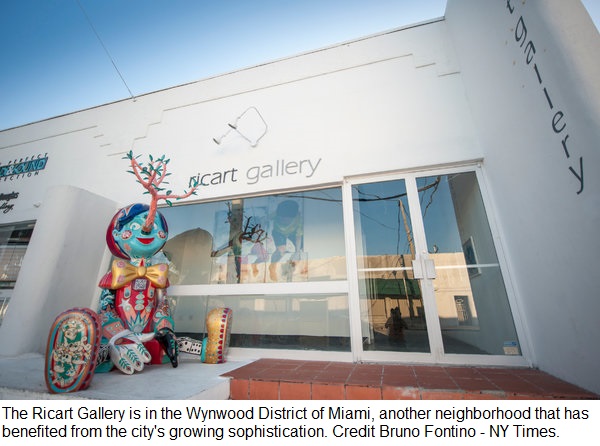
3. Hoebel, Adamson (1966). Anthropology: Study of Man. McGraw-Hill.

4. http://www.nytimes.com/2011/12/03/arts/design/art-basel-miami-beach-review.html?_r=1&pagewanted=all

5. http://www.nytimes.com/2014/12/04/arts/international/art-fair-energizes-economy-of-region.html?_r=0


Share this post:
, , , , ,
[Top]