Tag: Transform

Future Bahamian Astronaut – Not so improbable

Go Lean Commentary

The first response in looking at this photo is usually: ”Oh, so cute!”

Astro 1

But a more careful analysis of the future forecast from the book Go Lean…Caribbean, helps us to appreciate that having a true Bahamian astronaut is highly probable, in the not so distant future. The book Go Lean…Caribbean serves as a 5-year roadmap for the introduction and implementation of the Caribbean Union Trade Federation (CU). In Year 5, the roadmap calls for expansion/annexation; this will allow for the invitation/inclusion of French Guiana (neighbor of Suriname). This country is home to the European Space Agency (ESA). Under the Go Lean roadmap, this technology base would fit/continue under the plan for a Self-Governing Entity (SGE), ideal for this type of installation to thrive and foster regional impact. In truth, the roadmap features 3 prime directives, including:

  • Optimization of the economic engines in order to grow the regional economy.
  • Establishment of a security apparatus to protect the resultant economic engines.
  • Improve Caribbean governance to support these engines.

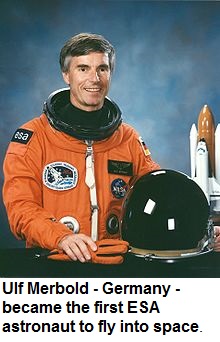
The Go Lean roadmap posits that occupations and education in science, technology, engineering and mathematics (STEM) fields are vital for the Caribbean to have economic empowerment – the US model was one of vigorous job creation during the Mercury/Apollo space programs of the 1960’s/70’s. With due progress in these STEM fields, no imagination is needed to envision a Bahamian/Caribbean astronaut jetting off into space. It would just be a matter of time, as the ESA already has an Astronaut corps, and have put men in space (see photo) – the assumption is that the CU would join the ESA, much like the EU has done.
Astro 2

The young astronaut photo, though, was an advertisement for a financial services company. Their contention is that financial/ economic fundamentals are essential for individual and societal progress. From the perspective of the Go Lean…Caribbean roadmap for the entire region, the publishers of this book/blog concurs with this exclamation: Ditto!

The Go Lean roadmap provides turn-by-turn directions on how to elevate the Caribbean economy and STEM education eco-systems. As a planning tool, the roadmap commences with a Declaration of Interdependence, pronouncing the need for regional integration (Page 13 & 14) to foster the foundation to forge a better future. The declarative statements are as follows:

xxi.      Whereas the preparation of our labor force can foster opportunities and dictate economic progress for current and future generations, the Federation must ensure that educational and job training opportunities are fully optimized for all residents of all member-states, with no partiality towards any gender or ethnic group. The Federation must recognize and facilitate excellence in many different fields of endeavor, including sciences, languages, arts, music and sports. This responsibility should be executed without incurring the risks of further human flight, as has been the past history.

xxvi.      Whereas the Caribbean region must have new jobs to empower the engines of the economy and create the income sources for prosperity, and encourage the next generation to forge their dreams right at home, the Federation must therefore foster the development of new industries… In addition, the Federation must invigorate the enterprises related to existing industries … – impacting the region with more jobs.

xxvii.      Whereas the region has endured a spectator status during the Industrial Revolution, we cannot stand on the sidelines of this new economy, the Information Revolution. Rather, the Federation must embrace all the tenets of Internet Communications Technology (ICT) to serve as an equalizing element in competition with the rest of the world. The Federation must bridge the digital divide and promote the community ethos that research/development is valuable and must be promoted and incentivized for adoption.

Change has now come to the Caribbean. The driver of this change is technology and globalization. The Caribbean region cannot just watch a man walk on the moon; we must put our men on the moon. This effort should not be pursued for some nationalistic pride, but rather the bottom-line motive should be the Greater Good.

The Go Lean book envisions the CU as a confederation of the 30 member-states of the Caribbean to do the heavy-lifting of empowering and elevating the Caribbean economy.

The book details the community ethos to adopt so that all the people would lean-in to this dream of our young men (and women) exploring space. The roadmap also details the executions of the following strategies, tactics, implementations and advocacies to forge this progress in the region:

Community Ethos – Deferred Gratification Page 21
Community Ethos – Consequences of Choices Lie in the Future Page 21
Community Ethos – Job Multiplier Page 22
Community Ethos – Lean Operations Page 24
Community Ethos – Return on Investments (ROI) Page 24
Community Ethos – Cooperatives Page 25
Community Ethos – Ways to Impact the Future Page 26
Community Ethos – Ways to Foster Genius Page 27
Community Ethos – Ways to Impact Research & Development Page 30
Community Ethos – Ways to Impact the Greater Good Page 37
Strategy – Agents of Change – Technology Page 48
Tactical – Confederating a Non-Sovereign Union Page 63
Tactical – Fostering a Technocracy Page 64
Tactical – Growing Economy – New High Multiplier Industries Page 68
Tactical – Separation of Powers – Self-Governing Entities – i.e. ESA Page 80
Tactical – Separation of Powers – Education Department Page 85
Implementation – Annexation of French Guiana Page 98
Implementation – Steps to Implement Self-Governing Entities Page 105
Planning – 10 Big Ideas Page 127
Advocacy – Ways to Grow the Economy Page 151
Advocacy – Ways to Create Jobs Page 152
Advocacy – Ways to Improve Education Page 159
Advocacy – Ways to Foster Technology Page 197

Now is the time for all of the Caribbean, the people and governing institutions, to lean-in for the changes described in the book Go Lean … Caribbean. To the young model in the foregoing photo, posing as a Bahamian Astronaut, and to all young Caribbean dreamers, the publishers of the book Go Lean…Caribbean entreat you: study hard, pursue your dreams. We will have the infrastructure in place for you in the not so distant future.

The Go Lean roadmap is a complete solution for Caribbean elevation – elevating right into space – thus helping the region to be better place to live, work, learn and play.

Blast-off! Let’s soar…

Astro 3

 
Download the free e-Book of Go Lean … Caribbean – now!
Share this post:
, , ,

The need for highway safety innovations – here comes Google

Go Lean Commentary

Don’t text and drive!

TM BlogNo serious, don’t text and drive.

In addition, don’t drink and drive. In fact, don’t subject yourself to any influences while driving: drugs (legal/illegal), distractions and even sleep deprivation. The public service announcements can go on and on. Perhaps what is needed is some tool, some technology that can assist weary drivers. Here comes Google…

… and Mercedes Benz, Nissan, GM, Ford, etc..

Bet your bottom dollar that other automakers will step up and forge a “space race” for progress in this industry sector. NBC’s Craig Melvin contributed this story – see VIDEO – on the Today Show on Tuesday June 10; (http://www.today.com/video/today/55372906), as a supplement to the foregoing news article fron the CNET trade journal.

To the victor goes the spoil.

By: Steven Musil
Title: Google unveils self-driving car

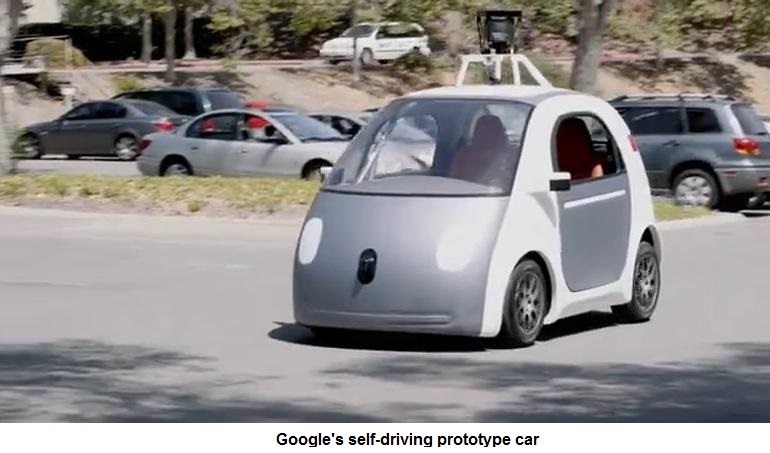
Google has built a self-driving car from scratch — a vehicle that has no steering wheel or accelerator or brake pedals.

A two-seater prototype of the vehicle was unveiled Tuesday by Google CEO Sergey Brin during an onstage interview at the Recode Code Conference in Palos Verdes, Calif. Instead of the car controls indispensable to today’s drivers, Google’s prototype relies on built-in sensors and a software system to safely maneuver the vehicle.

“We took a look from the ground up of what a self-driving car would look like,” Brin said.

The goal of the project is for self-driving cars to be “significantly” safer than human-driven cars in a few years, Brin said. He said that that the project has experienced no crashes during testing, but the cars only operate at speeds of around 25 miles per hour, which gives them more time to react to obstacles.

Google’s self-driving car is an ambitious project that hopes to end human error behind the wheel with a very Google-y solution: software. The tech titan’s robo-cars have logged more than 700,000 miles since it began working on the vehicles in 2009. Google expects to have them ready for public use between 2017 and 2020.

A demonstration earlier this month by Google’s Self-Driving Car Project team shows how the vehicle depends on a Google-made topographical map to get a sense of what it should expect. The map includes the height of the traffic signals above the street, the placement of stop signs and crosswalks, the depth of the sidewalk curb, the width of the lanes, and can differentiate lane markings from white and dashed to double-yellow.

The company announced major progress last month in improving how the system responds to objects not on a map. In a YouTube video, the Web giant demonstrated some of the circumstances its self-driving cars now handle, such as bicyclists signaling to move across a lane of traffic, railroad crossings, and parked cars protruding into the lane of traffic.

While Google has been at the forefront of developing and testing self-driving technologies, it’s not alone in its driverless vision for the future. Nissan, General Motors, and automotive supplier Continental expect self-driving cars on the road by 2020. Ford Motor Co. has unveiled a self-driving prototype car. Telsa Motors wants its system to handle 90 percent of driving duties by 2016 — a more aggressive schedule and one that’s more like what Google has said is attainable.

CNET – Tech Industry trade Magazine (Posted 05-27-2014; retrieved 06-10-2014) –
http://www.cnet.com/news/google-unveils-self-driving-car-sans-steering-wheel/

Visit NBCNews.com for breaking news, world news, and news about the economy

TM Blog 2Highway safety in the US is in crisis. Every state has banned texting-&-driving. Additionally, some states (i.e. California) even banned talking … on a mobile phone without a hands-free device. Just this past week, famed comedian Tracy Morgan was seriously injured in a car accident with a semi-trailer (18-wheeler) truck. The initial reports indicate that the truck driver may have worked/driven a 24-hour shift … with unavoidable fatigue factors. See related article at: http://www.foxnews.com/entertainment/2014/06/10/tracy-morgan-crash-walmart-truck-driver-center-accident-investigation/

This constitutes a crisis in highway safety; and a crisis, any crisis is a terrible thing to waste!

This is the premise of the book Go Lean…Caribbean, that a crisis can always be exploited to sieze opportunities. This race to create technological solutions is in response to dealing with the highway safety crisis – the resultant innovations will spurn new economic activity. This book purports that a new industrial revolution is emerging and the Caribbean people and society must engage. This is pronounced in the Declaration of Interdependence (Page 14), with this opening statement:

xxvii.  Whereas the region has endured a spectator status during the Industrial Revolution, we cannot stand on the sidelines of this new economy, the Information Revolution. Rather, the Federation must embrace all the tenets of Internet Communications Technology (ICT) to serve as an equalizing element in competition with the rest of the world. The Federation must bridge the digital divide and promote the community ethos that research/development is valuable and must be promoted and incentivized for adoption.

This book Go Lean… Caribbean, serves as a roadmap for the introduction and implementation of the Caribbean Union Trade Federation (CU). This effort will marshal the region to avail the opportunities associated with technology and automobiles – there is a plan to foster a local automotive industry. In fact The CU/Go Lean roadmap has these 3 prime directives:

  • Optimization of the economic engines in order to grow the regional economy.
  • Establishment of a security apparatus to protect the resultant economic engines.
  • Improve Caribbean governance to support these engines.

There is a lot at stake for the Caribbean in considering this subject area. According to the foregoing article and VIDEO, research-and-development (identified as a community ethos) has begun to deploy workable solutions. There is the need for a Caribbean solution. Engaging this process early can result in many new jobs, and most importantly, many new opportunities to save lives and impact the Greater Good.

The book details other ethos to adopt, plus the executions of the following strategies, tactics, implementations and advocacies to forge research-and-development and industrial growth in Caribbean communities:

Community Ethos – Deferred Gratification Page 21
Community Ethos – People Respond to Incentives Page 21
Community Ethos – Job Multiplier Page 22
Community Ethos – “Crap” Happens Page 23
Community Ethos – Lean Operations Page 24
Community Ethos – Return on Investments (ROI) Page 24
Community Ethos – Ways to Impact the Future Page 26
Community Ethos – Ways to Help Entrepreneurship Page 28
Community Ethos – Ways to Impact Research & Development Page 30
Community Ethos – Impact the Greater Good Page 37
Strategy – Agents of Change – Technology Page 48
Tactical – Fostering a Technocracy Page 64
Tactical – Growing Economy – New High Multiplier Industries Page 68
Separation of Powers – Public Works & Infrastructure Page 82
Separation of Powers – Department of Transportation Page 84
Implementation – Ways to Pay for Change Page 101
Implementation – Ways to Deliver Page 109
Planning – 10 Big Ideas Page 127
Planning – Lessons from Detroit Page 140
Advocacy – Ways to Grow the Economy Page 151
Advocacy – Ways to Create Jobs Page 152
Advocacy – Ways to Foster Technology Page 197
Advocacy – Ways to Improve Transportation Page 205
Advocacy – Ways to Develop the Auto Industry Page 206

Historically, forging change in the automotive sphere of the Caribbean has been a “tall order”. The region was very slow to adopt common sense provisions like mandatory seatbelts and unleaded gasoline. So managing change for the region must be viewed as both an art and a science. For change is something the region must adapt to; and managing this change is something the CU will spearhead.

The insights from the foregoing article and embedded VIDEO help us to appreciate that the future is now! (Though, there is no talk of flying cars). We must engage, empower and equip the people of the Caribbean if we want to make our home a better place to live, work and play. And we must do it now. Everyone in the Caribbean is urged to lean-in to this roadmap.

Download the book Go Lean … Caribbean – now!

Share this post:
, , , , , ,
[Top]

Is a Traditional 4-year Degree a Terrible Investment?

Go Lean Commentary

This respected resource, Howard Tullman[a], asserts that 4-year Liberal Arts college degrees are bad investments for students. (Play VIDEO here).

VIDEO – Why a Traditional 4-Year Degree is a Terrible Investment | Inc. Magazine – https://youtu.be/ch4D5-9jdbk


Published on Jun 6, 2014 – Howard Tullman, CEO of 1871, explains exactly how over valued, and ripe for disruption, traditional higher education has become.

The book Go Lean…Caribbean stakes the claim even deeper, that traditional college education abroad have been an even more disastrous policy for the Caribbean in whole, and each specific country in particular.

This assertion requires a differentiation of the macro, versus the micro.

From a strictly micro perspective, college education is great for the individual; research by Economists have established the dogma that each additional year of schooling increase an individual’s earnings by about 10%. (Go Lean quotes these economic studies at Page 270). This should be viewed as a very impressive rate of return on an education investment (ROI). But from the macro perspective, (for the community), the ROI is different for the Caribbean; its not a gain, but rather a loss due to the incontrovertible brain drain.

Previous blog-commentaries on this same subject matter have quoted the Jamaican proverb of “fattening frogs for snake” – (see https://goleancaribbean.com/blog/?p=459). This is because more and more of the Caribbean college educated citizens abandon their tropical homes for foreign shores in the US, Canada and Europe. What’s worst, they take their Caribbean-funded education and skill-sets with them – sometimes taking any hope for collectability for student loans as well, thereby imperiling future generation of scholars from the benefits of a college education.

This broken system has many challenges and must be addressed.

Change has now come. The driver of this change is technology and globalization. Under the tenants of globalization, the Caribbean labor pool is a commodity; their talents are subject to the economic realities of supply-and-demand. So if there is greater reward for these Caribbean citizens to “take their talents to South Beach … or South Toronto, or South London”, it is hard to argue a contrarian stance. The Go Lean book posits therefore that the governmental administrations of the region should invest in higher education options with as much technological advances (e-Learning) as possible, for its citizens. The bottom-line motive should be the Greater Good.

The Go Lean roadmap provides turn-by-turn directions on how to reform the Caribbean tertiary education systems, economy, governance and Caribbean society as a whole. This roadmap asserts that the Caribbean is in crisis, and that this “crisis would be a terrible thing to waste”. As a planning tool, the roadmap commences with a Declaration of Interdependence, pronouncing the approach of regional integration (Page 12 & 14) as a viable solution to elevate the region’s educational opportunities.

xix. Whereas our legacy in recent times is one of societal abandonment, it is imperative that incentives and encouragement be put in place to first dissuade the human flight, and then entice and welcome the return of our Diaspora back to our shores

xxi. Whereas the preparation of our labor force can foster opportunities and dictate economic progress for current and future generations, the Federation must ensure that educational and job training opportunities are fully optimized for all residents of all member-states, with no partiality towards any gender or ethnic group. The Federation must recognize and facilitate excellence in many different fields of endeavor, including sciences, languages, arts, music and sports. This responsibility should be executed without incurring the risks of further human flight, as has been the past history.

xxvii. Whereas the region has endured a spectator status during the Industrial Revolution, we cannot stand on the sidelines of this new economy, the Information Revolution. Rather, the Federation must embrace all the tenets of Internet Communications Technology (ICT) to serve as an equalizing element in competition with the rest of the world. The Federation must bridge the digital divide and promote the community ethos that research/development is valuable and must be promoted and incentivized for adoption.

This book Go Lean… Caribbean, serves as a roadmap for the introduction and implementation of the Caribbean Union Trade Federation (CU). This represents change for the region. The CU/Go Lean roadmap has 3 prime directives:

  • Optimization of the economic engines in order to grow the regional economy.
  • Establishment of a security apparatus to protect the resultant economic engines.
  • Improve Caribbean governance to support these engines.

The Go Lean book posits that education is a vital consideration for Caribbean economic empowerment, but there have been a lot of flawed decision-making in the past, both individually and community-wise. The vision of the CU is a confederation of the 30 member-states of the Caribbean to do the heavy-lifting of championing better educational policies. The book details those policies; and other ethos to adopt, plus the executions of the following strategies, tactics, implementations and advocacies to impact the tertiary education in the region:

Community Ethos – Deferred Gratification Page 21
Community Ethos – People Respond to Incentives Page 21
Community Ethos – Job Multiplier Page 22
Community Ethos – Lean Operations Page 24
Community Ethos – Return on Investments (ROI) Page 24
Community Ethos – Ways to Impact the Future Page 26
Community Ethos – Ways to Foster Genius Page 27
Community Ethos – Ways to Help Entrepreneurship Page 28
Tactical – Separation of Powers – Education Department Page 85
Tactical – Separation of Powers – Labor Department Page 89
Advocacy – Ways to Grow the Economy Page 151
Advocacy – Ways to Create Jobs Page 152
Advocacy – Ways to Improve Education Page 159
Advocacy – Ways to Improve Governance Page 169
Advocacy – Ways to Improve Libraries Page 187
Appendix – Education and Economic Growth Page 258
Appendix – Measuring Education Page 266

Now is the time for all of the Caribbean, the people and governing institutions, to lean-in for the changes described in the book Go Lean … Caribbean. We welcome the efforts of entrepreneur Howard Tullman, and his desire to empower other entrepreneurs. This is due to another fact certified by Economists, that the majority of new jobs come from small-medium-sized enterprises (SMEs). So when there is the need for specific job training or business development skills, prudence dictates some facilitation for these skills. Education reform for the Caribbean should therefore be in vogue. This need for reform synchronizes with the CU/Go Lean effort.

The Go Lean roadmap is a complete solution for Caribbean elevation, thus helping the region to be a better place to live, work, learn and play.

🙂

Download the book Go Lean … Caribbean – now!

***************
a.   Appendix – Howard A. Tullman:

Howard A. TullmanAn American serial entrepreneur, venture capitalist, educator, writer, lecturer, and art collector. He currently serves as Chairman of Tribeca Flashpoint Media Arts Academy and of HYDR>BOX, LLC., CEO of 1871[e] (Chicago’s entrepreneurial hub for digital startups), and the Managing Partner of Chicago High Tech Investment Partners, LLC.

Entrepreneurial career
Tullman’s entrepreneurial career spans four decades and a broad swath of industries. As of May 2011, Tullman has started 12 companies, including Tribeca Flashpoint Media Arts Academy, CCC Information Services, Tunes.com, the Rolling Stone Network, Imagination Pilots, Experiencia, and others.[b] Tullman has also been tapped for senior executive positions at established companies such as Kendall College, where his expertise in turn-arounds saved the school from going into bankruptcy in 2003.[b]

Disruptive Innovation in education
Throughout his career in higher education, Tullman has been a proponent of revolutionizing the industry through disruptive innovation which is Clayton M. Christensen’s term to describe new, rapidly-iterated innovations that start from the bottom of traditional industries by providing small-scale and relatively inexpensive solutions (which quickly expand and improve) and which disrupt those existing marketplaces by displacing earlier, out-of-date programs with less expensive, faster and more effective solutions typically based on emerging new technologies.

As an early adopter of this philosophy, Tullman was among the first to bring disruptive innovation to for-profit education as evidenced in his work at Kendall College, Experiencia, and Tribeca Flashpoint Media Arts Academy.[c] In each of these education ventures, Tullman sought to create educational environments that fed creativity while providing skill sets for future successful employment in the new digital world:

At Kendall College, Tullman transformed a 75 year old failing college into a new entity and moved the campus from its home in Evanston to Chicago in a brand-new, purpose-built facility in order to put students closer to the real-world opportunities available in their fields (especially culinary and hospitality) and to provide them with the newest tools, technologies and equipment available.

At Experiencia (the parent of ExchangeCity and Earth Works), Tullman developed hands-on, learning experiences for children that reinforced the lessons learned in the classroom in a simulated city environment. Innovative partnerships with dozens of major businesses provided resources and access for the students to experience the real world of work.

At Tribeca Flashpoint Academy, Tullman and his partners designed and developed a hands-on, team-based, cross-disciplinary, fast-track approach to digital media arts training, allowing students to learn digital technologies faster and more economically than at traditional four-year competitors.

Tullman is also an outspoken opponent of tenure in education and the turf wars and lack of interdepartmental collaboration among faculty.[d]

Tullman’s innovations in education have been consistent with the high-end vocational education visions shared by Sir Ken Robinson, David Brooks, and Thomas Friedman, but have the additional benefit of being actually implemented and in use today.

Citations:
b.   Black, Johnathan (May 2011). “Howard Tullman’s Flashpoint Academy: A Digital-Arts Alternative to the Four-Year College Degree”. Chicago Magazine. Retrieved November 27, 2012
c.    Meyer, Ann (January 14, 2008). “Howard Tullman provides business lesson in running for-profit schools”. Chicago Tribune
d.   Tullman, Howard. “Why the Chicago Teachers’ Strike Will Help Education Entrepreneurs”. Inc.com. Inc. Retrieved April 22, 2013.
e.    1871 = Year of the Great Chicago Fire


Share this post:
, , ,
[Top]

Bahamas Planning to Introduce 7.5 Percent VAT in 2015

Go Lean Commentary

BahamasGovernments need revenue in order to fulfill their role in the Social Contract.

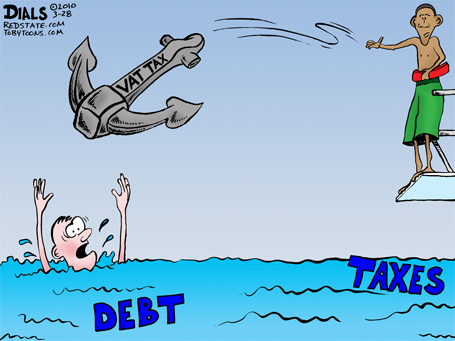
Change has come to the Caribbean! The driver for this change is globalization. One agent of change is the World Trade Organization (WTO); their quest to liberalize international trade calls for the elimination of tariffs (Customs duties). Since this is the primary revenue source for most Caribbean governments, there is the need for new revenue options.

The below article highlights the “Value Added Tax” option, and its introduction in the Bahamas. This government is struggling with the implementation – change is hard! This issue had previously been addressed in Go Lean blogs:

The issues of government revenue reform, operational processing, and best practices for delivery are stressed in the book Go Lean… Caribbean. These issues are among the primary focus of the book, serving as a roadmap for the introduction and implementation of the technocratic Caribbean Union Trade Federation (CU). The following 3 prime directives are explored in full details:

  • Optimization of the economic engines in order to grow the regional economy to $800 Billion & create 2.2 million new jobs.
  • Establishment of a security apparatus to protect the resultant economic engines.
  • Improve Caribbean governance to support these engines.

See the underlying news story here:

By: The Caribbean Journal staff

The Bahamas is planning to introduce a new 7.5 percent value added tax, the government announced this week.

The tax will be a single VAT rate across the board, although that is lower than an initially proposed 15 percent tax.

The country’s Ministry of Finance said the lower rate would also mean fewer exemptions.

The ultimate plan is for the tax to come into effect on Jan. 1, 2015, after what the government said would be an “in-depth public education campaign and private sector preparation.”

The Ministry of Finance also said it was proposing “VAT-inclusive” pricing rather than VAT exclusive, with the aim to “simplify price comparisons by consumers, especially when navigating between VAT registrants and non-registrants.”

“The price consumers see will always be the price they pay,”

The move will also mean that the hotel occupancy tax will be eliminated.

Bahamas 2Government estimates predicted that the new VAT along with a basket of other fiscal provisions would increase the revenue yield of the Bahamas’ revenue system to 19.8 percent of GDP, up from 17.1 percent in the current fiscal year.

Christie said the goal with the mix of fiscal measures was to eliminate the “untenable structural imbalance between recurrent expenditure and revenue” by the 2015/2016 fiscal year, sharply reduce the GFS deficit by 2016/2017 and “arrest the growth in the government debt burden and move it onto a steady downward path to more sustainable levels.”

“I want to emphasize, at this point, that we are in no way engaged in unrealistic, pie-in-the-sky, wishful thinking on the score of fiscal redress,” Christie said. “With a keen eye on the state of our economy and mindful of the need to maintain and support its upward, forward momentum, we are embarked on a mutually-reinforcing plan of national development and fiscal consolidation that is balanced and measured. As such, our aim is set on gradual, though assured, progress on the fiscal front.”

The Bahamas would be the latest in a line of Caribbean countries to introduce a VAT; St Lucia was the most recent country to do so.

A value-added tax proposal by the United Kingdom government in Turks and Caicos was shelved last year after opposition from businesses.

Caribbean Journal Online News Source (Retrieved 05/30/2014) – http://www.caribjournal.com/2014/05/30/bahamas-planning-to-introduce-7-5-percent-value-added-tax-in-2015/

This roadmap commences with the assessment that the Caribbean is in crisis, and that this “crisis would be a terrible thing to waste”. Coupled with the external pressures for revenue reform, is the internal realities of societal abandonment – more and more of the labor pool has migrated to foreign lands in search of better economic opportunities – lowering the tax-paying base in the country. The book describes the sad state of affairs in Caribbean locales like Puerto Rico (Page 303) and the Bahamas 2nd city of Freeport (Page 112). As a planning tool, the roadmap accepts the challenge to adapt for the changes with a Declaration of Interdependence, pronouncing the need for regional solutions (Page 12). The statement is included as follows:

Whereas government services cannot be delivered without the appropriate funding mechanisms, “new guards” must be incorporated to assess, accrue, calculate and collect revenues, fees and other income sources for the Federation and member-states. The Federation can spur government revenues directly through cross-border services and indirectly by fostering industries and economic activities not possible without this Union.

The strategy is to confederate all the 30 member-states of the Caribbean, despite their language and legacy, into an integrated “single market”. Tactically, this will allow a separation-of-powers between the member-states governments and federal agencies, allowing for efficient economies-of-scale for revenue collection systems, processes and people. Yes, astute application of technology is cited as a key solution. In total, the Go Lean book details series of community ethos, strategies, tactics, implementations and advocacies to deliver new solutions:

Anecdote Puerto Rico – The Greece of the Caribbean Page 18
Community Ethos – Money Multiplier Page 22
Community Ethos – “Crap” Happens Page 23
Community Ethos – Lean Operations Page 24
Community Ethos – Return on Investments (ROI) Page 24
Community Ethos – Cooperatives Page 25
Community Ethos – Ways to Improve Sharing Page 35
Strategic – Vision – Integrated region in a Single Market Page 45
Strategic – Vision – Agents of Change – Technology Page 57
Strategic – Vision – Agents of Change – Globalization Page 57
Tactical – Confederating a Non-sovereign Union Page 63
Tactical – Fostering a Technocracy Page 64
Tactical – Growing to $800 Billion – Trade & Globalization Page 70
Tactical – Separation of Powers – Union Revenue Admin. Page 74
Anecdote – “Lean” in Government Page 93
Implementation – Ways to Pay for Change Page 101
Implementation – Deploying Data Centers Page 106
Implementation – Ways to Deliver Page 109
Implementation – Ways to Better Manage Debt Page 114
Advocacy – Ways to Grow the Economy Page 151
Advocacy – Ways to Mitigate Black Markets Page 165
Advocacy – Ways to Improve Governance Page 168
Advocacy – Ways to Improve Local Governments Page 169
Advocacy – Ways to Better Manage the Social Contract Page 170
Advocacy – Revenue Sources for Administration Page 172
Advocacy – Ways to Foster Cooperatives Page 176

All in all, the CU/Go Lean supports all governments’ efforts to collect legitimately authorized taxes.

Pay Caesar’s things to Caesar” – so declares the Go Lean book (Page 144), quoting Jesus Christ from the Bible at Mark 12:17. While Jesus Christ teachings are not portended to be economic lessons, this rendering in the roadmap posits that this and other bible teachings are economically sound. The Bahamas, the Caribbean country in the foregoing news article, lays claim to a Christian heritage. It is time for this country, and all the Caribbean, to “put their money where their mouth is”.

Now is the time for all of the Caribbean, the people and governing institutions, to lean-in for the changes described in the book Go Lean … Caribbean. The local governments need their revenues. They are part of the eco-system to elevate Caribbean life, culture and systems of commerce.

Download the book Go Lean … Caribbean – now!

Share this post:
, ,
[Top]

Zuckerberg’s $100 Million for Newark’s Schools was a waste

Go Lean Commentary

Throwing money at a problem does not, in itself, solve it!

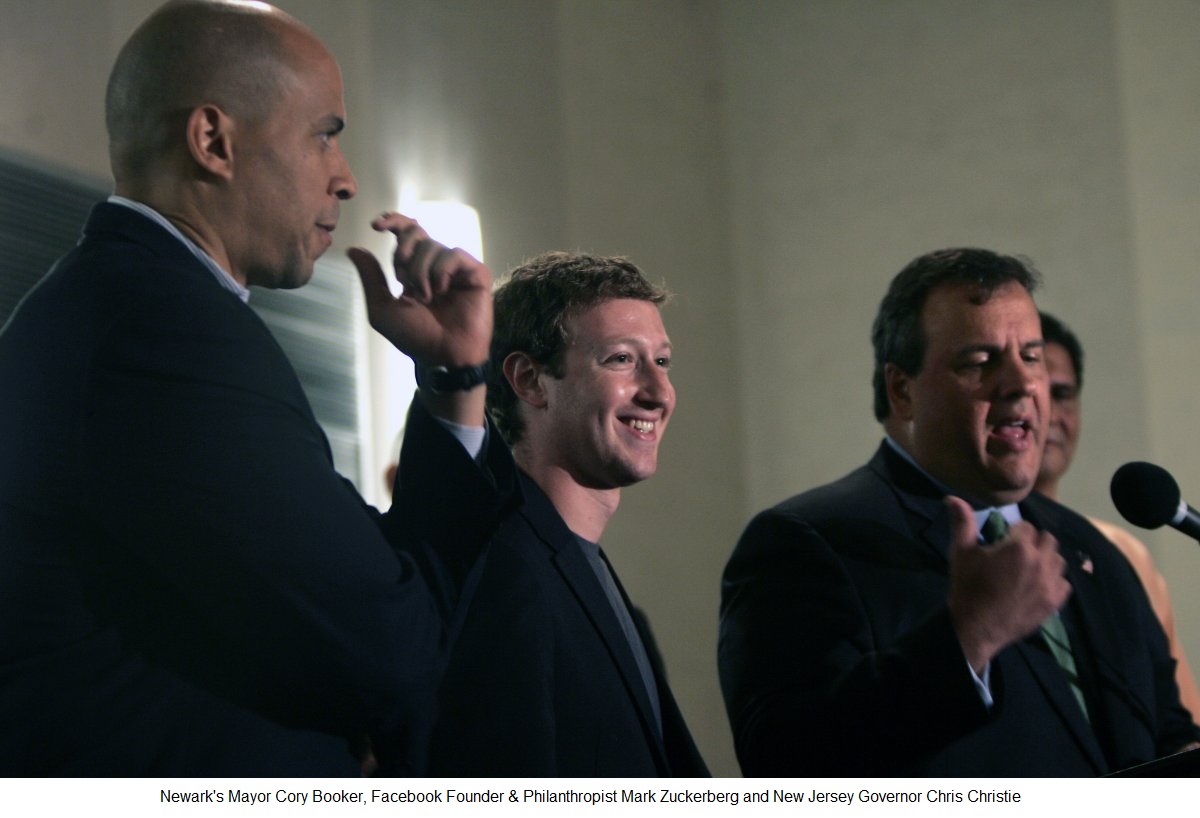
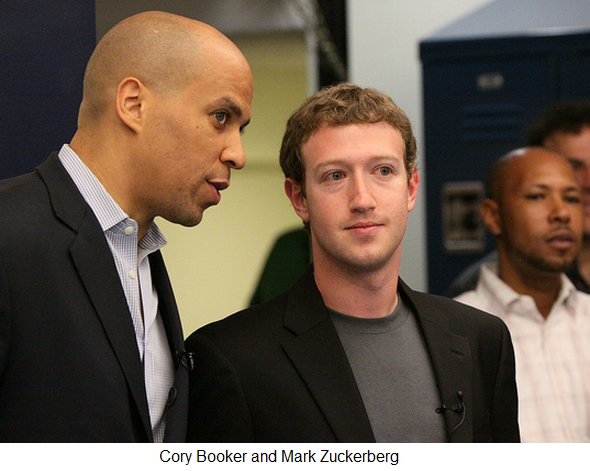
Mark Z 2The foregoing article helps us appreciate this point more succinctly. It was 2010. There was Newark’s Mayor Cory Booker (now New Jersey Senator), Facebook founder and philanthropist Mark Zuckerberg and the Governor of the State of New Jersey (and possible 2016 Presidential candidate) Chris Christie – all men of goodwill. Their goal: fix a failing school system in the City of Newark. On paper, the plan seemed credible, they had the power, they had the money – $100 million dollars. The result? After four years – “a waste”.

The issues of education reform, best practices, and funding options are stressed in the book Go Lean…Caribbean, even though these are not the primary focus of the book. Rather this book serves as a roadmap for the introduction and implementation of the Caribbean Union Trade Federation (CU), with the focus being on these following 3 prime directives:

  • Optimization of the economic engines in order to grow the regional economy to $800 Billion & create 2.2 million new jobs.
  • Establishment of a security apparatus to protect the resultant economic engines.
  • Improve Caribbean governance to support these engines.

Yet, the book posits that education is a vital consideration for economic empowerment; so too are non-government organizations, like Zuckerberg’s foundation. The book specifically highlights an important role that foundations execute in the sphere of foreign aid, sometimes even better than national governments (Page 219):

One major argument against federally funded foreign aid is that the money is often lost to governmental corruption in the countries it was supposed to help. In 2003, a top university in Bangladesh claimed that at least 75% of all foreign aid given to that government was lost because of corruption. Since faith-based foreign aid focuses on churches or organizations operating independently of the government, funding has a better chance of being used effectively.

The below news article though, highlights an onshore example, in the US, with multi-level governmental support, plenty of money, and yet still: failure!

Title: Mark Zuckerberg Gave New Jersey $100 Million To Fix Newark’s Schools, And It Looks Like It Was A Waste
By: Caroline Moss
In the fall of 2010, Mark Zuckerberg announced on Oprah that he’d be making a generous gift to Newark, New Jersey.

 As Oprah said in her Oprah way, “one … hundred … million … dollars” would be given to Newark Mayor Cory Booker and New Jersey Gov. Chris Christie as the three began the Startup:Education foundation.

The plan was to turn Newark into what Zuckerberg called “a symbol of educational excellence for the whole nation,” spent on retaining the best teachers, and creating environments that would produce successful students and, one day, graduates.

Newark is a city wrought with crime. Its graduation rate is about 67%. It needed the help, and Booker’s vision sounded promising.

Between 2010 and 2012, The New Yorker reports that “more than twenty million dollars of Zuckerberg’s gift and matching donations went to consulting firms with various specialties: public relations, human resources, communications, data analysis, [and] teacher evaluation.” Many of the consultants were being paid upwards of $1,000 a day.

“Everybody’s getting paid but Raheem still can’t read,” Vivian Cox Fraser, president of the Urban League of Essex County, was quoted saying.

Today, the money is pretty much gone, and Newark has hardly become that symbol of excellence.

The New Yorker has the full 12-page story today, and we’ve dug into it to find some of the main timeline points you need to know.

In 2010, Mayor Booker found a loophole in getting money to help fund Newark’s educational reform. It came in the form of philanthropic donations, which, unlike government funding, required no public review of priorities or spending. Gov. Christie approved the plan, and Booker’s job was to find the donors.

Meanwhile, in Silicon Valley, Zuckerberg (like many other tech billionaires) had pledged to donate half of his fortune, but as The New Yorker reports, he knew very little about urban education or philanthropy.

Booker and Zuckerberg met to discuss a vision for Newark’s future. Booker wanted to significantly reward Newark teachers who improved student performance rather than focus on seniority and tenure. Teachers would be challenged and rewarded to do their jobs well, and students would benefit.

 Zuckerberg was confident Newark and Booker were the right recipients for this huge gift (given over five years), and agreed to gift $100 million dollars with a few stipulations:

  • Booker would also have to raise $100 million dollars. Zuckerberg’s money would be released to Newark as matching dollars rolled in.
  • Booker would have to replace the current superintendent with a “transformational leader.

”The reform ended up looking like this: taking low-performing public schools and closing them, turning them into charter schools and “themed” high schools. But there was no easy way to expand charters without destabilizing traditional public schools.

In the months following the gift announcement, Booker and Christie still had no superstar superintendent and no reform plan.

 Zuckerberg was concerned and urged Booker to find the superintendent, even sending Booker a poster widely seen around the Facebook campus that read, “Done is better than perfect.”

Mark ZImmediately, Booker appointed Cami Anderson for the job. She implemented ways to help students and improve schools (all which The New Yorker detailed), but there were roadblocks along the way, like how the students brought the issues going on in their homes with them to the classroom.

 Anderson wanted to give schools more support to help students on emotional and social levels, but Newark had already been spending more money per student than most districts in the entire country, none of which was reaching the children it existed to help.

 New contracts were being created, money was being hemorrhaged, and the district was going broke. But interviews — like this one in Forbes — regarding the money and the future of Newark’s schools were always positive, highlighting, of course, only the good aspects of the huge monetary donation.

Then, in January of this year, The Washington Post reported on “dozens of emails between the Zuckerberg camp (including Zuckerberg himself) and the Booker camp (including Booker himself),” which ended up revealing that state education officials were going above and beyond to get money from big private donors to remake public schools in the way they want to.

Anderson came up with another plan called One Newark, which sounded like it could work. Families would choose which charter or public schools they would want to send their children to. Children from the lowest-income families would get first pick. So would kids with special needs.

It all sounded great until parents and teachers realized it was only on paper. Solutions hadn’t been figured out fully. Programs hadn’t been developed. Issues like transportation had not yet been tackled. Things that were promised didn’t come to fruition.

 According to The New Yorker, Anderson, Booker, Zuckerberg, and Christie, “despite millions of dollars spent on community engagement—have yet to hold tough, open conversations with the people of Newark about exactly how much money the district has, where it is going, and what students aren’t getting as a result.”
Business Insider Vertical e-Zine (Posted 05/13/2014; retrieved 05/30/2014) –
http://www.businessinsider.com/mark-zuckerbergs-newark-grant-2014-5#ixzz33DsBvaIw

The people and institutions of the Caribbean understand this plight of Newark, New Jersey all too well. There is a long record of failure with the Caribbean education initiatives. Then where there is success, the quality students have a propensity to abandon the region and emigrate to the US, Canada or Europe. So with the best of the Caribbean’s talents gone, we find that we’ve “fatten frog for snake”; then with the rest, we muddle along as best we can; hoping to nation-build with the remnants of a broken educational system.

It’s time for a change!

The proposed change is detailed in the Go Lean roadmap. It provides turn-by-turn directions on how to reform the Caribbean education systems, governance and Caribbean society in general. This roadmap commences with the assessment that the Caribbean is in crisis, and that this “crisis would be a terrible thing to waste”. As a planning tool, the roadmap commences with a Declaration of Interdependence, pronouncing the approach of regional integration (Page 12) as a viable solution to elevate the region’s educational opportunities. The statement is included as follows:

xxi. Whereas the preparation of our labor force can foster opportunities and dictate economic progress for current and future generations, the Federation must ensure that educational and job training opportunities are fully optimized for all residents of all member-states, with no partiality towards any gender or ethnic group. The Federation must recognize and facilitate excellence in many different fields of endeavor, including sciences, languages, arts, music and sports. This responsibility should be executed without incurring the risks of further human flight, as has been the past history.

The strategy is to confederate all the 30 member-states of the Caribbean, despite their language and legacy, into an integrated “single market”. Tactically, this will allow a separation-of-powers between the member-states governments (including their education proxies) and federal agencies, allowing an open role for benevolent foundations to fulfill their charters on the region. The roadmap recognizes the need to lead, or to follow best-practices, as formulated by other entities. This then becomes a process of leading-by-following. The CU will facilitate the eco-systems, metering and measuring the effect of so many educational options. Think Champion-Challenger; allowing for alternate methodologies to be explored for effectiveness, and then measuring the success criteria.

The Go Lean book details series of community ethos, strategies, tactics, implementations and advocacies to foster good educational progress, and the agile methodologies to adjust/adapt dynamically:

Anecdote – Lean On Me – New Jersey School Lesson Page 5
Community Ethos – Lean Operations Page 24
Community Ethos – Cooperatives Page 25
Community Ethos – Non-Government Organizations Page 25
Community Ethos – Ways to Foster Genius Page 27
Tactical – Separation of Powers – Education Dept. Page 85
Implementation – Ways to Pay for Change Page 101
Implementation – Ways to Deliver Page 109
Advocacy – Ways to Grow the Economy Page 151
Advocacy – Ways to Create Jobs Page 152
Advocacy – Ways to Improve Education Page 159
Advocacy – Ways to Improve Governance Page 169
Advocacy – Ways to Foster Cooperatives Page 176
Advocacy – Ways to Improve Libraries Page 187
Advocacy – Ways to Impact Foundations Page 219
Advocacy – Ways to Impact the One Percent Page 224
Appendix – The Giving Pledge Signatories Page 292

Now is the time for all of the Caribbean, the people and governing institutions, to lean-in for the changes described in the book Go Lean … Caribbean. We welcome the “Mark Zuckerberg”’s of the world … and their money. We entreat them to help us to make the Caribbean a better place to live, work, learn and play.

Download the free e-Book of Go Lean … Caribbean – now!

Share this post:
, , , ,
[Top]

Aereo’s Founder on the future of TV

Go Lean Commentary

“Aereo is…not infringing on their copyrights” – Founder and CEO Chet Kanojia.

This subject is pivotal in the roadmap for elevation of the Caribbean economy, which maintains that internet/electronic commerce business models are critical in creating jobs and growing the region’s GDP. The publisher of the book Go Lean… Caribbean projects that 2.2 million new jobs hang in the balance. These new jobs will result from entrepreneurial endeavors and opportunities from the many new industries spun from different expressions of internet & communications technologies (ICT).

Also important in the foregoing article is the respect for intellectual property. The Go Lean roadmap campaigns that the creators of intellectual property are entitled to due compensation; this ethos is at the bedrock of the economic empowerment quest for the region.

According to the foregoing article and VIDEO, there are major issues associated with this technology development, to the point that the US Supreme Court is called upon to set legal precedence.

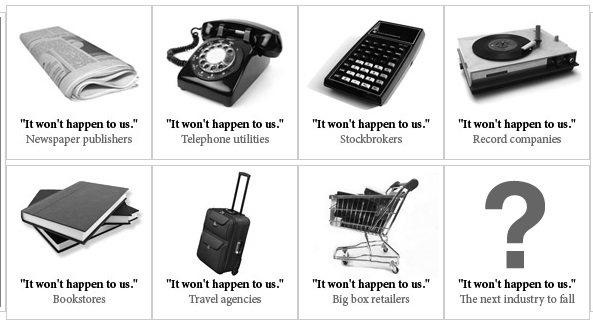
CU Blog - Aereo Founder and CEO Chet Kanojia on the future of TV - Photo 1Change has come to the world of television. According to Futurists [a], the television industry is the next industry to become obsolete due to the ubiquity of the internet; (think travel agents, record & book stores, video rental, etc.).

This book Go Lean… Caribbean, serves as a roadmap for the introduction and implementation of the Caribbean Union Trade Federation (CU). The CU/Go Lean roadmap has 3 prime directives:

  • Optimization of the economic engines in order to grow the regional economy.
  • Establishment of a security apparatus to protect the resultant economic engines and marshal against economic crimes.
  • Improve Caribbean governance to support these engines.

Early in the book, the benefits of technology empowerment is pronounced in the Declaration of Interdependence (Page 14), with these opening statements:

 xxvi. Whereas the Caribbean region must have new jobs to empower the engines of the economy and create the income sources for prosperity, and encourage the next generation to forge their dreams right at home, the Federation must therefore foster the development of new industries… In addition, the Federation must invigorate the enterprises related to existing industries … impacting the region with more jobs.

xxvii. Whereas the region has endured a spectator status during the Industrial Revolution, we cannot stand on the sidelines of this new economy, the Information Revolution. Rather, the Federation must embrace all the tenets of Internet Communications Technology (ICT) to serve as an equalizing element in competition with the rest of the world. The Federation must bridge the digital divide and promote the community ethos that research/development is valuable and must be promoted and incentivized for adoption.

xxviii. Whereas intellectual property can easily traverse national borders, the rights and privileges of intellectual property must be respected at home and abroad. The Federation must install protections to ensure that no abuse of these rights go with impunity, and to ensure that foreign authorities enforce the rights of the intellectual property registered in our region.

The Caribbean has the eco-system of free broadcast television, and the infrastructure for internet streaming. So the issues raised in the US Supreme Court will have bearing in the execution of this roadmap.

By: Katie Couric

As the Supreme Court hears oral arguments in the case that will determine the fate of his streaming video service, Aereo founder and CEO Chet Kanojia sat down for a wide-ranging interview with Yahoo Global News Anchor Katie Couric.

The New York-based startup — backed by billionaire investor Barry Diller, among others — is at the center of a legal battle that has been raging since the company’s inception in 2012. Aereo currently operates in 13 cities.

The heart of the case involves Aereo’s practice of assigning subscribers mini remote antennas so that they can stream over-the-air broadcast signals directly to their tablets and other mobile devices. The antennas function in the same manner as old-fashioned “bunny ears.” Aereo also uses cloud technology, which lets subscribers watch the programming live or store it for a later time.
Yahoo’s Global News Anchor Katie Couric (Posted and retrieved 05-29-2014) –
https://news.yahoo.com/katie-couric-aereo-tv-supreme-court-212342689.html


Abbreviation of Interview – 3 minutes:

Full Interview – 20 minutes:

The book details the community ethos to adapt to the changed media landscape, plus the executions of the following strategies, tactics, implementations and advocacies:

Community Ethos – Economic Principle – People Respond to Incentives Page 21
Community Ethos – Job Multiplier Page 22
Community Ethos – Lean Operations Page 24
Community Ethos – Return on Investments (ROI) Page 24
Community Ethos – Ways to Impact the Future Page 26
Community Ethos – Ways to Help Entrepreneurship Page 28
Community Ethos – Promote Intellectual Property Page 29
Community Ethos – Impact Research & Development Page 30
Community Ethos – Bridge the Digital Divide Page 31
Strategy – Integrate Region in a Single Market Page 45
Tactical – Fostering a Technocracy Page 64
Tactical – New High Multiplier Industries Page 70
Tactical – Trade and Globalization Page 70
Separation of Powers – Film Promotion and Administration Page 78
Separation of Powers – Patent, Standards, and Copyrights Office Page 78
Separation of Powers – Communications and Media Authority Page 79
Separation of Powers – Federal Supreme Court Page 90
Implementation – Assemble existing regional organizations Page 96
Implementation – Ways to Deliver Page 109
Implementation – Ways to Impact Social Media Page 111
Implementation – Ways to Benefit from Globalization Page 119
Advocacy – Ways to Grow the Economy Page 151
Advocacy – Ways to Create Jobs Page 152
Advocacy – Ways to Improve Communications Page 186
Advocacy – Ways to Foster Technology Page 197
Advocacy – Ways to Foster e-Commerce Page 198
Advocacy – Ways to Impact Hollywood Page 203
Advocacy – Ways to Impact the Diaspora Page 217

The CU will oversee the radio spectrum used for radio, television and satellite communications. The radio spectrum must be regulated on a regional level; the CU coordination will be as managing a common pool resource, as the spectrum is limited. This oversight will also extend to internet broadband (wireless & wire-line) governance.

This is a direct parallel to the US debate.

———

Citation source:
a-1. Retrieved 05-29-2013 from: http://corp.iprodoos.com/2014/01/18/television-2-0-the-2-2-trillion-war-for-your-living-room-begins-now/
a-2. Photo Credit: Motley Fool Investment Advisors
 

Share this post:
, , ,
[Top]

Jack M. Mintz: ‘All is not well in the sunny Caribbean’

Go Lean Commentary

Jack Mintz 1“All that glitters is not gold” – Old adage.

This is a similar expression as the title of the below commentary by Canadian Public Policy Professor Dr. Jack Mintz:

“All is not well in the sunny Caribbean”.

The opinions of Canadian stakeholders are and have always been important from a Caribbean perspective. “Look to the Northern Star!” – the book Go Lean…Caribbean relates the hope and refuge that Canada always provided to this region (Page 146).

This book purports that an examination of the history of Canada can be productive for the Caribbean. Despite the different geographic address, Canada has had to contend with a lot of challenges similar to the Caribbean; Canada has succeeded while the Caribbean has failed. Early in the book, the point of lessons from Canada is pronounced in the Declaration of Interdependence (Page 14), with these opening statements:

xxxiii.   Whereas lessons can be learned and applied from the study of the recent history of other societies, the Federation must formalize statutes and organizational dimensions … to implement the good examples learned from developments/ communities like … Canada.

Canada recognizes that the Caribbean is in crisis; and despite billions and billions ($$$) in Canadian investments, the region is still in crisis.

Commentary By: Dr. Jack M. Mintz
Economic problems in the Caribbean should be a wake-up call for governments and businesses operating there.

As a middling power, Canada has limited influence in most areas of the world — save for the Caribbean countries. To escape the winter, three million Canadians trek annually to one of the islands to enjoy the sun and relaxation. Roughly 600,000 Caribbean [expatriates] have migrated over the years to Canada, with the largest contingents coming from Jamaica, Guyana, Haiti and Trinidad.

Canada has also invested over $140-billion in capital in the Caribbean islands, especially in Bahamas, Barbados, Bermuda and Cayman Islands. Capital stock held in Barbados alone is over $60-billion, more than any other country except for the United States.  The money does not stay there but moves on to other countries so that Canadian multi-national companies can take advantage of the Canada-Barbados tax treaty to achieve lower global effective corporate tax rates through tax-efficient financial structures.

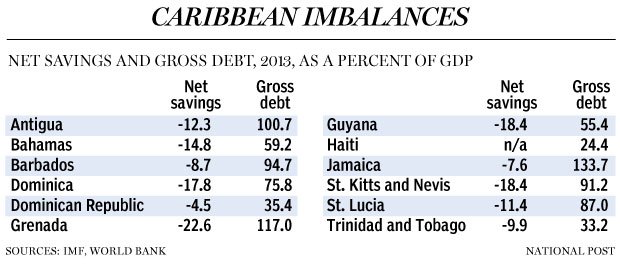
Jack Mintz 3So when Canadian Imperial Bank of Commerce announced a $420-million write-down in goodwill invested in CIBC FirstCaribbean, it should attract attention, given our deep ties to the region. All is not well in the Caribbean region with its bloated, over-indebted governments operating in slow-growth environments. The economic and fiscal problems in the region raise critical economic and security concerns for Canada.

Many Caribbean governments face financial instability. Gross public debt has risen to over 80% of GDP in 2013 for Antigua, Barbados, Grenada, Jamaica, St. Kitts and Nevis, and St. Lucia. Many of these countries are also heavily exposed to global markets with the current account deficit over 20% of GDP in the Caribbean region. Foreign direct investment inflows are more than 8% of GDP for Antigua, Bahamas, Barbados, Grenada, Guyana, St. Kitts and Nevis, St. Lucia and Trinidad-Tobago.

At a flick of the switch, international lenders could turn off the spigots, resulting in a financial crisis and hefty devaluation of currencies. The implications of a severe economic contraction in the region would put the Caribbean countries in limbo and have important consequences to Canada, given our relationships in the region.

The outlook for the Caribbean countries is not exactly cheerful. Overall, economic growth has been poor, about 1.5% for the region, and close to stagnant for Bahamas, Barbados, Grenada and Jamaica. Many of the Caribbean countries face competitiveness problems with some of the highest electricity rates in the world, unionized wage costs and high real interest costs. The business climate is weak with poor regulatory practices, enforcement of contracts and crime.

With the global economic slowdown, tourism has been relatively flat, lagging most regions of the world in 2013. Tourism, after all, is not a necessity and more money is spent on it only when people are better off. The outlook is not looking much better in the near future with little income growth in North America and Europe. Should there ever be reconciliation between the United States and Cuba, U.S. tourism could significantly shift from other islands.

Nor are commodity prices expected to be booming as China and the rest of Asia slow down, with little take up from the rest of the world. Only oil and gas prices seem to be firm, which is good news for Trinidad and Tobago.

With the G20 and OECD countries focused on curbing tax evasion and avoidance, several Caribbean countries – Bermuda, Barbados and Cayman Islands – would be subject to a tightening tax noose. These countries could face a deceleration in economic activity if international tax structures are to be dismantled.

Thus, economic and fiscal problems in the Caribbean should be a wake-up call for governments and businesses operating there. The CIBC write-down is just the tip of the iceberg.

A financial crisis will heavily impact many Canadian businesses that have turned to the Caribbean islands to set up financing and insurance structures. A major economic slowdown in the Caribbean islands would also raise security issues for Canada as crime, including drug trade, could become more problematical to control.

The Canadian government should therefore work with other major countries and international organizations to stabilize Caribbean economies. Attempts to build capacity for good governance in the past years have not been easy but it cannot be abandoned. Some new initiatives should be considered that would help the Caribbean islands improve their fortunes.

Certainly, trying to harmonize policies and merge certain institutions to achieve economies-of-scale across the region would be a useful step. This includes post-secondary education, financial markets and transportation. A shift by Caribbean countries away from oil to natural gas from Trinidad-Tobago and North America would reduce their cost of oil imports.

At the same time, Canada and other Western countries should invest in improving the judiciary and security forces in the [Caribbean] region. The reduction in crime would also benefit our economies by reducing risks faced by tourists and investors. Drug trade with Canada would be curbed.

Debt relief for some of the countries would be appropriate so long as certain commitments are made to reform governance and economic policy. This has been the role of the IMF over the years but Canada should itself pay more attention to the region.

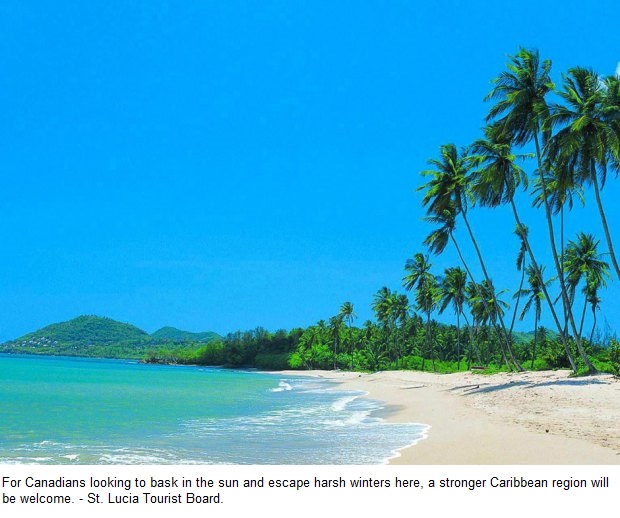
For Canadians looking to bask in the sun and escape harsh winters here, a stronger Caribbean region will be welcome.

Jack M. Mintz is the Palmer Chair, School of Public Policy, University of Calgary. Contact: policy@ucalgary.ca

Source: Financial Post – Canadian Daily; retrieved 05-23-2014 from: http://business.financialpost.com/2014/05/22/jack-m-mintz-all-is-not-well-in-the-sunny-caribbean/

Jack Mintz 2The underlying theme of Jack Mintz commentary is that Caribbean society needs a reboot. The book Go Lean… Caribbean serves as a roadmap for the introduction and implementation of Caribbean Union Trade Federation (CU), a reboot for Caribbean society with these 3 prime directives:

  • Optimize the economic engines of the Caribbean to grow the economy to $800 Billion and create 2.2 million new jobs.
  • Establish a security apparatus to protect the resultant economic engines and stakeholders.
  • Improve Caribbean governance with technocratic excellence.

The foregoing article highlights the mis-management of credit/debt of the governments of the region. The commentary specifically warns:

At a flick of the switch, international lenders could turn off the spigots, resulting in a financial crisis and hefty devaluation of currencies.

Why such poor financial planning? It is obvious that there is a lot of success missing in terms of fiscal expedience. It is not reasonable to expect that current administrations can solve Caribbean fiscal problems with the same tools and techniques of the present. The Go Lean roadmap calls for a different toolbox and different techniques.

If beauty is in the eye of the beholder, then perhaps this commentary is just one person’s assessment of ugly – just a perception. But unfortunately, the facts are the facts. Dr. Mintz relates ugly examples, such as the fact the region has the “highest electricity rates in the world”. There is no denying the “Amount Due” figures on actual electric utility bills.

This is the present, as perceived by Dr. Mintz. Plus, his assessment of the near future is even more “gloom-and-doom”.

True, there is work to be done. But not the job of a Calgary professor, or any other Canadian stakeholder, to do the heavy-lifting. No, this is the job of the Caribbean for the Caribbean. Who is up to the task?

The Caribbean Union Trade Federation hereby “reports for duty” for the job to forge this change.

The Go Lean book details that solutions must come from all aspects of society. There are community values/attitudes that must be in place to ensure that any quest for permanent change would have some measure of success. Those attitudes are referred to as community ethos. There must first be the adoption of many such ethos, followed by the executions of strategies, tactics, implementations and advocacies to impact the region’s prospects, as detailed here:

Community Ethos – Lean Operations Page 24
Community Ethos – Ways to Impact the Future Page 26
Community Ethos – Ways to Help Entrepreneurship Page 28
Anecdote – Entrepreneur’s Best Place To Live? Canada Page 39
Strategy – Vision – Integrate Region into Single Market Page 45
Strategy – Agents of Change – Globalization Page 57
Tactical – Confederating a Permanent Union Page 63
Tactical – Fostering a Technocracy Page 64
Separation of Powers – Banking Regulatory Authority Page 73
Separation of Powers – Justice Institutions Page 77
Implementation – Foreign Policy Initiatives at Start-up Page 102
Implementation – Security Initiatives at Start-up Page 103
Implementation – Ways to Deliver Page 109
Implementation – Ways to Improve Energy Usage Page 113
Implementation – Ways to Better Manage Debt Page 114
Implementation – Ways to Foster International Aid Page 115
Implementation – Ways to Benefit from Globalization Page 119
Planning – Lessons from Canada’s History Page 146
Advocacy – Ways to Grow the Economy Page 151
Advocacy – Ways to Better Manage ForEx Page 154
Advocacy – Ways to Improve Governance Page 168
Advocacy – Ways to Enhance Tourism Page 190
Advocacy – Reforms for Banking Regulations Page 199
Advocacy – Ways to Impact the Diaspora Page 217
Advocacy – Ways to Preserve Caribbean Heritage Page 218
Appendix – Offshore Tax & Financial Services Industry Developments Page 321

The Go Lean roadmap calls for a different entrepreneurial approach than some of the tax avoidance industries promoted in the past. These strategies have actually failed. Most offshore financial centers have modernized their lax laws to mitigate terrorism financing, thus lowering their attraction to tax evaders. The hold-outs, (Bermuda, Barbados and the Cayman Islands), are now being forced to cow-tail to the New World Order. The people of the Caribbean deserve better than waiting for “illicit bread to fall from the table” of rich nations (G-20). We have the world’s best address, for goodness sake, people should be beating a path to our doors (like the 3 million Canadians annually), not the 600,000 Caribbean citizens who have beaten down our doors to get out.

Time for change! The Go Lean roadmap is hereby presented.

The region is hereby urged to lean-in to this Go Lean roadmap, to fulfill the vision of making the Caribbean region a better place to live, work and play. 🙂

Download the book Go Lean … Caribbean – now!

Share this post:
, , , , ,
[Top]

Bahamas rejects US trade demand

Go Lean Commentary

Q: Where does an 800-pound gorilla sleep? A: Anywhere it wants to.

Trade 1There is no doubt the United States is the 800 pound gorilla for trade in the Caribbean region. From a sheer negotiation tactic, there is no basis for respect and consideration for the needs and aspirations of the small Bahamas island nation. A lion share of trade in the Bahamas comes from the US. Also, a lion share of the Bahamas Government revenue comes from Customs duties. So in any stretch of the imagination, eliminating Customs duties from American imports would devastate the Bahamas Government’s treasuries.

Is this an over-simplification of the logical argument in the foregoing news article? No!

Rather, this is a consistent theme in the book Go Lean…Caribbean. The book posits that the objectives of American foreign, trade and security policy may not align with the priorities of the Caribbean. Even more, no Caribbean member-state has voting powers in the US Capitol where those policies might be codified. It is what it is!

The Bahamas is so small compared to the US that the ranting from Nassau would be inconsequential to the decision makers in Washington. The Bahamas and the US are not “brothers”; at best, the Bahamas can expect a “good neighbor” relationship with the US. But since “blood is thicker than water”, it is only to be expected that the US would prioritize the needs of its people ahead of Bahamians.

By: Alison Lowe, Nassau Guardian Business Editor

NASSAU, Bahamas — The United States has called for The Bahamas to immediately drop all of its duties on US products coming into this country on “day one” of The Bahamas’ accession to the World Trade Organization (WTO) – a request which the government has rejected on the basis that it could wipe out the domestic economy, according to the [Bahamas] Minister of Financial Services.

Disclosing some of the background to The Bahamas’ bilateral negotiations over the terms of its bid to join the WTO, [Minister] Ryan Pinder said that the US government has not been “amenable” to The Bahamas’ phasing in tariff reductions on US goods. “Phasing in” refers to the ability to reduce the duty rate levels over a number of years.

However, he suggested that the government has struck back on the issue, suggesting that a phased-in reduction of tariffs on US goods – the vast majority of all imported goods coming into The Bahamas – would be more appropriate.

He was speaking at a meeting on Wednesday between members of the Bahamas Chamber of Commerce and Employers Confederation and David Shark, deputy director general of the WTO, who is in the country to engage with stakeholders over The Bahamas’ accession process.

Among the requirements of joining the WTO is that The Bahamas lowers its duty rates on goods imported into the country. It is this requirement that contributes in part to the decision by the government to push ahead with introducing a new form of revenue collection in the form of value added tax (VAT), although the WTO deputy director said the WTO itself has no preference about what form of tax the government chooses to replace former duty taxes with.

In a question and answer session, Pinder said that how quickly and how low The Bahamas would have to reduce its duties is not a decision of the WTO, but one which is determined in bilateral negotiations with other WTO members.

Pinder said, “The EPA (Economic Partnership Agreement trade deal with Europe) is phased, and they phase to zero, so at some point in time there will be no duty paid on items sourced out of the EU, but it’s not a huge deal because I think there’s $8 million of revenue a year to the government on EU products.

“Now the US: day one that’s what they want. Imagine if they said let’s phase it to zero like the EPA, because that’s what they’ll use as a precedent: You negotiated the EPA, you phased, you phased to zero. So imagine if we phase to zero (on goods coming from the US – you would not have a domestic economy because you would not have 35 percent on readymade items anymore, you’d have zero. So you have to be careful what you push for at times.”

Trade 2He added: “Right now the US is taking the posture that they want on-day-one reductions. They’ve taken the posture they want cuts straight across the board. We’ve taken the position we’re not going to negotiate on that basis but we will negotiate trying to protect domestic industry.

“I think they got the point but there’ll be further negotiations on that. So they haven’t been too amenable to phasing. We anticipate that in some time in the future we will have to re-negotiate the Caribbean Basin Initiative on a bilateral basis which is a whole other issue with respect to the US and their trading regime,” said Pinder.

In terms of how the government would make up the lost revenue, the government has a plan of sorts in place in the form of the implementation of value added tax (VAT), or – if the private sector has its way — some other form of alternative taxation.

However, replacing the revenue lost to the government when duties are reduced under WTO accession does not address the challenge of how the reduction in duties would impact local manufacturers, who rely on the fact that the goods they produce have high rates of duty applied when they cross the border.

In this regard, seven months on from when he announced that the government would be undertaking a study to examine the “vulnerabilities and opportunities” that would arise for Bahamian businesses from joining the WTO, Pinder said on Wednesday that the government is now moving to shortlist who will conduct this study so the government will have a clearer picture of the impact on industry of acceding to the WTO.

At present, Pinder has stated a goal of December 2014 for The Bahamas to complete its lengthy accession process, but has also indicated that the process could well continue into 2015.

In an interview with Guardian Business on Wednesday, Shark touted the benefits of WTO accession. He said that WTO members have been seen to have recovered more quickly following the global economic downturn, as a result of having a more certain environment for investment.

“The Bahamas is already heavily integrated into the international trading system, so for a country that’s as deeply enmeshed in international trade as the Bahamas the better question is ‘Why not (join)?’

“As a member of the WTO, you get to level the playing field with some of your neighbours. You’re the only CARICOM member who’s not a member of the WTO, and when companies are trying to decide where to invest, being a member of the WTO provides assurances to investors of the conditions of their investment… and all of that matters a lot in terms of being a part of global supply chains.

“The rules of international trade, whether you are a member of the WTO or not, affect you, so why wouldn’t you want to be at the table in negotiating those rules?

“It’s protection against protectionism; if someone does something that causes you harm you can challenge them whether you are a large or small country, under the WTO system,” he added.

Caribbean News Now / Nassau Guardian (Posted 04-11-2014; retrieved 05-22-2014) –http://www.caribbeannewsnow.com/topstory-Bahamas-rejects-US-trade-demand-20677.html

Trade 3How to counteract and mitigate this undesirable negotiating quagmire? The answer is to join a bigger family! This requires lowering the volume on the cries of independence and then lean-in for interdependence: regional and WTO solutions. The book Go Lean… Caribbean, serves as a roadmap for the introduction and implementation of the Caribbean Union Trade Federation (CU). This represents a confederation, a brotherhood, of the 30 member-states of the Caribbean region, including Puerto Rico and the US Virgin Islands.  This CU/Go Lean roadmap extolls these 3 prime directives:

  • Optimize the economic engines of the Caribbean to grow the regional economy.
  • Establish a security apparatus to protect the resultant economic engines.
  • Improve Caribbean governance to support these engines.

Imagine the force of a single market of 42 million people as opposed to the minimal 320,000. Imagine too … the purchasing power of an $800 Billion economy as opposed to $9.2 Billion (2010). The roadmap immediately calls for the consolidation of trade negotiation of the Bahamas with the rest of the Caribbean. This point is echoed early, and often, in the Go Lean book, commencing with these opening pronouncements in the Declaration of Interdependence (Page 11/12), as follows:

 viii.   Whereas the population size is too small to foster good negotiations for products and commodities from international vendors, the Federation must allow the unification of the region as one purchasing agent, thereby garnering better terms and discounts.

 x.         Whereas we are surrounded and allied to nations of larger proportions in land mass, populations, and treasuries, elements in their societies may have ill-intent in their pursuits, at the expense of … our citizens. We must therefore appoint “new guards” to ensure … our society, both domestic and foreign.

The roadmap recognizes that this request to forge a confederated technocracy is atypical in Caribbean pursuits. Despite previous integration efforts, the most that has been accomplished is the recognition of the benefits of consolidation, but no real manifestation of an integrated society.

Go Lean … Caribbean therefore constitutes a change for the Caribbean. This is a roadmap to consolidate 30 member-states of 4 different languages and 5 colonial legacies (American, British, Dutch, French, Spanish) into a Trade Federation with the tools/techniques (but without sovereignty) to bring immediate change to the region to benefit one and all member-states. While this is an integration of region’s economic interest, there is no expectation of re-distributing existing wealth among the member-states.

Just how is this accomplished?

The book details that there must first be adoption of community ethos to forge such a change; plus the executions of the following strategies, tactics, implementations and advocacies to impact the regions prospects in negotiations and fulfilling the needs of Caribbean stakeholders:

Community Ethos – Deferred Gratification Page 21
Community Ethos – Minority Equalization Page 24
Community Ethos – Lean Operations Page 24
Community Ethos – Return on Investments Page 24
Community Ethos – Cooperatives Page 24
Community Ethos – Ways to Improve Negotiations Page 30
Community Ethos – Impact the Greater Good Page 37
Strategy – Unified Region in a Single Market Economy Page 45
Strategy – Customers – Foreign Direct Investors Page 48
Strategy – Agents of Change – Globalization Page 57
Tactical – Confederating a Permanent Union Page 63
Tactical – Fostering a Technocracy Page 64
Tactical – Growth Approach – Trade and Globalization Page 70
Separation of Powers – Interstate Commerce Admin Page 79
Separation of Powers – Office of Trade Negotiations Page 80
Implementation – Ways to Pay for Change Page 101
Implementation – Foreign Policy Initiatives at Start-up Page 102
Implementation – Ways to Deliver Page 109
Implementation – Trade Mission Office Objectives Page 116
Implementation – Ways to Benefit from Globalization Page 119
Planning – Ways to Improve Trade Page 128
Planning – Ways to Improve Interstate Commerce Page 129
Planning – Ways to Model the EU Page 130
Planning – Lessons from the West Indies Federation Page 135
Advocacy – Ways to Grow the Economy Page 151
Advocacy – Ways to Improve Governance Page 168
Advocacy – Ways to Better Manage the Social Contract Page 170
Advocacy – Ways to Improve Government Revenue Page 172
Advocacy – Ways to Foster Cooperatives Page 176
Advocacy – Ways to Impact Main Street Page 201

The foregoing news article uses language like “day one”, in that it reports that there are expectations for the immediate adjustments in the US-Bahamas trade dynamics with the inauguration of the WTO regime. This type of development is impractical and destructive for Bahamian society. The Go Lean roadmap therefore proposes an alternative implementation, with accelerations of progressive changes over a methodical 5 year period. This is thusly proposed to minimize the disruption to government revenue schemes.

The WTO has a Trade First mantra. While this is an advantageous goal, this book posits that trade must not be implemented at the expense of the societal safety nets that bind Bahamian society together. Go Lean … Caribbean is therefore a detailed turn-by-turn roadmap for how-when-why-where to apply the best-practices of trade-economic-security-government delivery options.

The Go Lean roadmap is therefore a complete solution for Caribbean elevation, considering the needs of all stakeholders: residents, trading partners, Diaspora and visitors. The region is hereby urged to lean-in to this roadmap, to fulfill the vision of making the Caribbean region a better place to live, work and play.

Download the Book- Go Lean…Caribbean Now!!!

Share this post:
, , , ,
[Top]

JP Morgan Chase $100 million Detroit investment not just for Press

Go Lean Commentary

This investment in the turn-around of Detroit is business, not charity. “We could make this our finest moment”.

This was the theme of the Today Show’s Matt Lauer interview with Jaime Dimon, CEO of the US’s largest Bank Holding Company – JP Morgan Chase – that investing in the turn-around and rebirth of distressed cities can be good business. The publisher of the book Go Lean…Caribbean echoes the same sentiments: Ditto!

The same as there is profit involved in destruction and construction, there is profit to be made in community redevelopment, within a city or even for a region.  The book posits that combining those two functions (destruction and construction) in an overall effort for rebirth, reboot and turn-around can be truly profitable, and also impact the Greater Good.

This book purports that an examination of the details of Detroit can be productive for the Caribbean; Detroit has a lot of urban blight – see photos here. Early in the book, the point of lessons from Detroit is pronounced in the Declaration of Interdependence (Page 14), with these opening statements:

xxxiii.   Whereas lessons can be learned and applied from the study of the recent history of other societies, the Federation must formalize statutes and organizational dimensions to avoid the pitfalls of communities like … Detroit…

The City of Detroit is in crisis. In July 2013, Detroit became the largest U.S. city to seek bankruptcy protection. It is currently $19 billion in debt and has an unemployment rate of about 14% – more than double the national average. This is why the study of Detroit is such an ideal model for the Caribbean. We have many communities within the Caribbean’s 30 member-states with similar unemployment, urban blight, brain drain, and acute hopelessness.

By: David Muller

DETROIT, MI – Last November, the U.S. Department of Justice fined JP Morgan Chase a record $13 billion as part of a settlement over misleading investors over toxic mortgage-backed securities.

In the largest settlement with an American entity in the history of the U.S.A., the Justice Department said that “JPMorgan acknowledged it made serious misrepresentations to the public – including the investing public – about numerous RMBS transactions. The resolution also requires JPMorgan to provide much needed relief to underwater homeowners and potential homebuyers, including those in distressed areas of the country.”

On Wednesday morning, Jamie Dimon, the Chairman and CEO of JP Morgan Chase, was on NBC’s “Today Show” to tout a $100 million investment in the city of Detroit. Later, at noon on Wednesday, he is scheduled to unveil details of the five-year financial infusion in the city over the next five years at Detroit’s Garden Theater with Gov. Rick Snyder and Mayor Mike Duggan.

Dimon told “Today Show” host Matt Lauer that the bank’s investment in Detroit is not a public relations stunt. From the “Today Show”:

“‘The cynic would be wrong,’ Dimon told Lauer when asked if the investment was in response to a $13 billion fine levied against the company in an exclusive interview.

‘We invest and develop communities around the world. And we’ve been doing this since our heritage started 200 years ago,’ said Dimon. ‘So that’s what banks do. They do it commercially. They do community development.'”

According to the Detroit Free Press, the investment by Chase includes $25 million for blight removal and home loans, $12.5 million for job training, $50 million for development projects, $7 million for small business loans and $5.5 million toward the M-1 Rail, the city’s streetcar which is being built on Woodward Avenue.

Detroit’s MLive Media Group (Posted and retrieved 05-21-2014) –http://www.mlive.com/business/detroit/index.ssf/2014/05/jp_morgan_chase_ceo_jamie_dimo.html

Visit NBCNews.com for breaking news, world news, and news about the economy

This book Go Lean… Caribbean, serves as a roadmap for the introduction and implementation of the Caribbean Union Trade Federation (CU). This represents change for the region. The CU/Go Lean roadmap has 3 prime directives:

  • Optimization of the economic engines in order to grow the regional economy.
  • Establishment of a security apparatus to protect the resultant economic engines.
  • Improve Caribbean governance to support these engines.

According to the foregoing article and VIDEO, the rebirth of Detroit will be financed, in part, with $100 million of community investment dollars from JP Morgan Chase. The Go Lean roadmap presents a plan to generate funding to Pay for Change (Page 101). Both the JP Morgan Chase/Detroit plan and the CU/Go Lean plan extend over a 5 year period. The Detroit plan is branded the “Motor City Makeover”; this branding and messaging is important for soliciting support and participation from the community in general. This parallels to the CU/Go Lean effort to foster the attitudes and motivations to forge change from Caribbean stakeholders. This is defined in the book as a community ethos. One such ethos is turn-around: a collective vision, succeeded by appropriate steps and actions, to reject the status quo and demand change.

Detroit 1

Detroit 2

Detroit 3

Detroit 4

Detroit 5

Detroit 6

The book details other ethos to adopt, plus the executions of the following strategies, tactics, implementations and advocacies to impact the rebirths, reboots and turn-arounds of Caribbean communities:

Community Ethos – Deferred Gratification Page 21
Community Ethos – People Respond to Incentives Page 21
Community Ethos – Job Multiplier Page 22
Community Ethos – Light Up the Dark Places Page 23
Community Ethos – “Crap” Happens Page 23
Community Ethos – Lean Operations Page 24
Community Ethos – Return on Investments (ROI) Page 24
Community Ethos – Ways to Impact the Future Page 26
Community Ethos – Ways to Help Entrepreneurship Page 28
Community Ethos – Ways to Impact a Turn-Around Page 33
Community Ethos – Impact the Greater Good Page 37
Strategy – Customers – Foreign Direct Investors Page 48
Tactical – Fostering a Technocracy Page 64
Tactical – Modeling Post WW II Germany – Marshall Plan Page 68
Tactical – Modeling Post WW II Japan – with no Marshall Plan Page 69
Separation of Powers – Public Works & Infrastructure Page 82
Separation of Powers – Housing and Urban Authority Page 83
Implementation – Ways to Pay for Change Page 101
Implementation – Ways to Re-boot Freeport – as a sample city Page 112
Planning – Ways to Improve Failed-State Indices Page 132
Planning – Lessons Learned from 2008 Page 136
Planning – Lessons from Detroit Page 140
Advocacy – Ways to Grow the Economy Page 151
Advocacy – Ways to Create Jobs Page 152
Advocacy – Ways to Improve Local Government Page 169
Advocacy – Ways to Better Manage the Social Contract Page 170
Advocacy – Ways to Preserve Caribbean Heritage Page 218
Advocacy – Ways to Promote World-Heritage-Sites Page 248

The foregoing news article relates that the benefactor, JP Morgan Chase, had been cited and fined ($13 Billion) for inequities associated with the housing bubble and subsequent meltdown. They have a motivation to “curry favor” with the public after their 2008 track record. But they claim that this is not a Public Relations (PR) stunt, and they are willing to put their “money where their mouth is”. There are not a lot of outside benefactors offering to help Detroit, so this city must embrace all the help being offered.

This is another parallel for the CU effort.

There are not a lot of solutions being proffered to the Caribbean region at this time. The Go Lean roadmap is a complete solution for Caribbean elevation. The region is hereby urged to lean-in to this roadmap. This should help the Caribbean to fulfill its vision and get to its desired destination: a better place to live, work and play.

Download the book Go Lean … Caribbean – now!

 

Share this post:
, ,
[Top]

Go ‘Green’ … Caribbean

Go Lean Commentary

Go Green 1Go ‘Green’ …

Get it? A simple play on words; Green instead of Lean. The word Green is more than just a color; it is a concept, a commitment and a cause. This is the same with ‘Lean’; for the purpose of this effort, ‘lean’ is more than just a description, it’s a noun, a verb, an adjective and an adverb. It is also a concept, commitment and cause in which the entire Caribbean region is urged to embrace; or better stated: “lean in”.

What is the motivation behind the ‘Green’ movement? Love for the Planet; many proponents feel that man’s industrial footprint has damaged the planet and the atmosphere, causing climate change, due to the abundance of carbon dioxide in the atmosphere.

Early in the book, Go Lean…Caribbean, the pressing need to be aware of climate change is pronounced in the Declaration of Interdependence (Page 11), with these words, (the first of many “causes of complaints”):

Whereas the earth’s climate has undeniably changed resulting in more severe tropical weather storms, it is necessary to prepare to insure the safety and security of life, property and systems of commerce in our geographical region. As nature recognizes no borders in the target of its destruction, we also must set aside border considerations in the preparation and response to these weather challenges.

Stop yawning!

For many, an advocacy to save the planet is a bore. But if we are not mindful of these issues we could face serious consequences.

Now a new motivation has emerged: saving money. Since energy costs has skyrocketed beyond the rate of inflation, adapting to more clean/green energy options has proven to be more cost effective.

Power generation from the sun or wind (free & renewable sources) is far cheaper than generation based on fossil fuels. (Even the fossil fuel of natural gas is cheaper than oil or coal).

The motivation behind the Caribbean “Lean” movement is also love, love of the homeland. This point is detailed in the book Go Lean… Caribbean, a roadmap for the introduction and implementation of the Caribbean Union Trade Federation (CU). This Go Lean roadmap has 3 prime directives:

  • Optimization of the economic engines in order to grow the regional economy.
  • Establishment of a security apparatus to protect the resultant economic engines.
  • Improve Caribbean governance to support these engines.

The following two news stories relate to this effort to optimize “green” energy options in the region:

1. Op-Ed Title: Green Energy Solutions Could Save the Caribbean $200 Million

By: Jun Zhang, Op-Ed Contributor
(04/11/2014) HIGH ENERGY costs are the Achilles heel of the Caribbean.
More than 97 percent of this region’s electricity is generated from fossil fuels and many islands devote a hefty portion of their GDP to fuel imports.

On some Caribbean islands, electricity bills can soar up to six times higher than in the United States, which creates a burden for many local businesses. At the same time, these islands are vulnerable to the environmental impacts associated with fossil-fuels, including air pollution, rising sea levels, and coral bleaching.

Reducing the reliance on fossil fuels and supporting cleaner, more efficient energy production is critical to helping island economies grow sustainably. But many companies face hurdles in accessing credit to invest in clean energy.

That’s where the banking sector can play an important role.

The International Finance Corporation, a member of the World Bank Group and the largest global development institution focused exclusively on the private sector, is developing a regional programme to help local financial institutions provide the credit needed for companies to adopt more energy efficient practices and utilize cleaner energy sources.

This in turn can help reduce costs – and environmental footprints -for Caribbean hotels and other businesses.

At a recent seminar in Kingston, IFC presented a market analysis of sustainable energy finance opportunities in Barbados, Belize, Jamaica, Grenada, and St. Lucia.

It found that energy demands in the Caribbean are expected to double by 2027. Continued dependence on fossil fuels is likely to exacerbate pollution and other environmental impacts, while diverting significant resources from these economies. But there are upsides as well.

According to the analysis, incorporating energy efficiency measures across these five countries over the next few years could save approximately US$200 million. For example, solar water heaters offer a ready solution to water heating in the Caribbean. Barbados has already installed more than 50,000 solar water heaters, saving the country some US$6.5 million a year on oil imports.

Caribbean countries could also benefit from water efficiency measures. Right now, anywhere from 25 to 65 percent of clean water is lost in inefficient water distribution systems, which also results in lost energy due to unnecessary pumping.

Some entrepreneurs say the tide is beginning to turn, but the financial sector needs to catch up.

“Businesses are already starting to shift to more energy efficient technologies,” said Andre Escalante, founder of Energy Dynamics, a Trinidad based company that helps hotels and other businesses adopt new energy-saving technologies. “However, financial institutions in the region are still reluctant to provide credits to implement new technologies that they may not be familiar with.”

IFC intends to close this knowledge gap by advising local financial institutions to help them meet the financing needs of sustainable energy projects. IFC also plans to work with energy service companies and equipment vendors to help them understand how to best structure projects for financing.

In the Dominican Republic, IFC helped Banco BHD become the first financial institution in the country to offer a credit line to finance sustainable energy projects. Over two years, BHD provided US$24 million in financing for projects that are bringing more cost-efficient energy solutions to the Dominican Republic, from natural gas conversion to solar energy.

“We’ve seen first-hand how sustainability adds value, be it by helping hotels cut their energy costs or by financing solar energy solutions for businesses,” said Steven Puig, General Manager of Banco BHD. “In fact, BHD intends to implement energy efficiency measures and install solar panels on each of its 43 stand-alone bank branches. So far, with IFC’s support, four offices have done this, which resulted in US$43,000 in savings each year as well as reductions in greenhouse gas emissions.”

Sustainability presents challenges for businesses, but also wide-ranging, evolving opportunities — especially as the cost of renewable energy technologies goes down.  The private sector is well suited to innovate and leverage new technologies to turn challenges into opportunities.

(Jun Zhang is IFC’s Senior Manager for the Caribbean. IFC, a member of the World Bank Group, is the largest global development institution focused exclusively on the private sector).

————

2. Title: Solar Car-Charging Station Opens in Grand Cayman

By: Alexander Britell
(05/05/2014) It may be the Caribbean’s most abundant resource, but in a region where energy costs are oppressive, solar energy isn’t used nearly enough.

That’s starting to change, though, and it got a significant boost last week with the opening of the Caribbean’s first-ever solar-powered car charging station.

The station is viewed to be one of the first standalone, public solar car-charging stations in the Caribbean, a place for electric-powered cars to come and top off their energy supplies.

“We started about a year ago and now it’s finally up and operational,” said John Felder, CEO of Cayman Automotive, which partnered with Philadelphia-based U-Go Stations on the project. “I don’t know of any solar panel charge stations for electric cars.”

While the stations won’t be used for complete charges, an hour spent charging at the station will provide about 20 percent of an electric car’s power supply.

Go Green 2Felder, who is the leading distributor of electric cars in the Caribbean, said the region’s electric car movement was already expanding.

“I’m now in the Bahamas, in Jamaica, in Bermuda,” he said. “The Aruban government called me last week and they want me to move to start doing electric cars there.”

Indeed, Aruba has been at the forefront of the regional green energy movement, with plans to have 100 percent renewable energy by the year 2020.

Barbados opened its first solar car-charging station in 2013 at the Wildey Business Park.

The new Cayman station, which is located at Governors Square, is one of six electric charging stations on the island.

“I can see in the next 10 years that 30 to 40 percent of the cars on the roads will be electric vehicles,” Felder said.

Something that could help that measure regional is the lowering of import duties on 100 percent electric cars, Felder said.

Cayman’s government lowered its duty from 42 percent to 10 percent, which is now the third-lowest in the region, although many islands lag behind in that regard.

“The government is promoting [electric] and that’s why they reduced the duty to 10 percent,” he said.

The electric movement on Cayman got an similarly big boost earlier this year when Grand Cayman’s Budget Rent-a-Car announced plans to offer 100 percent EV vehicles on the island.

Caribbean Journal News Source (Articles retrieved 05/14/2014)        a. http://www.caribjournal.com/2014/04/11/op-ed-green-energy-solutions-could-save-the-caribbean-200-million/  b. http://www.caribjournal.com/2014/05/05/solar-car-charging-station-opens-in-grand-cayman/ 

Photo Credits:
a. Jennifer Hicks, Forbes.com Technology Contributor: Field with six 850 kW turbines in Cuba’s Holguín Province
b. Cayman Automotive: The first ever public, commercial solar car charging station in Grand Cayman

This Go Lean/CU roadmap recognizes that modern life has expanded the definition of basic needs to now include food, clothing, shelter and energy. And thusly the book proposes many solutions for the region to optimize energy …

  • generation
  • distribution
  • consumption

No “stone is left unturned”. Go Lean posits that the average costs of energy can be decreased from an average of US$0.35/kWh to US$0.088/kWh in the course of the 5-year term of this roadmap; (Page 100). A 75% savings is not a yawn, this should keep you alert!

The two foregoing articles relate to new ‘green’ power generation initiatives in different Caribbean member-states.

These initiatives took some effort on the part of the community and governmental institutions. We commend and applaud their success and executions thus far. But there is more heavy-lifting to do. Help is on the way! The Go Lean roadmap details a series of community ethos, strategies, tactics, implementations and advocacies to foster the progress in the wide fields of energy generation, distribution and consumption. The following list applies:

Community Ethos – Lean Operations Page 24
Community Ethos – Return on Investments Page 24
Community Ethos – Cooperatives Page 25
Community Ethos – Regional Taxi Commissions Page 25
Community Ethos – Non-Government Organizations Page 25
Community Ethos – Ways to Impact the Future Page 26
Community Ethos – Ways to Improve Negotiations Page 32
Anecdote – Pipeline Transport – Strategies, Tactics & Implementations Page 43
Strategy – Harness the power of the sun/winds Page 46
Tactical – Fostering a Technocracy Page 82
Tactical – Separation of Powers – Energy Commission Page 82
Anecdote – “Lean” in Government – Energy Permits Page 93
Anecdote – Caribbean Energy Grid Implementation Page 100
Implementation – Ways to Develop Pipeline Industry Page 107
Implementation – Ways to Improve Energy Usage Page 113
Advocacy – Ways to Impact Public Works Page 175
Advocacy – Ways to Foster Cooperatives Page 176
Advocacy – Ways to Impact Monopolies Page 202

Energy needs are undeniable. The world is struggling with this issue.

Fulfilling those needs is easier said than done; and thus a great opportunity for the lean, agile operations envisioned for the CU technocracy. “It’s good to be green!”

Now is the time for all of the Caribbean, the people, business, institutions and governments, to lean-in for the optimizations and opportunities described in the book Go Lean … Caribbean.

Download the book Go Lean … Caribbean – now!

Share this post:
, ,
[Top]