Tag: Bahamas

Bahamas Planning to Introduce 7.5 Percent VAT in 2015

Go Lean Commentary

BahamasGovernments need revenue in order to fulfill their role in the Social Contract.

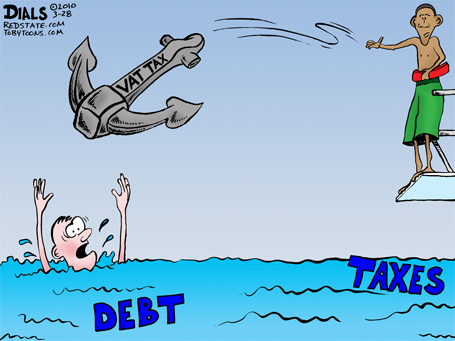
Change has come to the Caribbean! The driver for this change is globalization. One agent of change is the World Trade Organization (WTO); their quest to liberalize international trade calls for the elimination of tariffs (Customs duties). Since this is the primary revenue source for most Caribbean governments, there is the need for new revenue options.

The below article highlights the “Value Added Tax” option, and its introduction in the Bahamas. This government is struggling with the implementation – change is hard! This issue had previously been addressed in Go Lean blogs:

The issues of government revenue reform, operational processing, and best practices for delivery are stressed in the book Go Lean… Caribbean. These issues are among the primary focus of the book, serving as a roadmap for the introduction and implementation of the technocratic Caribbean Union Trade Federation (CU). The following 3 prime directives are explored in full details:

  • Optimization of the economic engines in order to grow the regional economy to $800 Billion & create 2.2 million new jobs.
  • Establishment of a security apparatus to protect the resultant economic engines.
  • Improve Caribbean governance to support these engines.

See the underlying news story here:

By: The Caribbean Journal staff

The Bahamas is planning to introduce a new 7.5 percent value added tax, the government announced this week.

The tax will be a single VAT rate across the board, although that is lower than an initially proposed 15 percent tax.

The country’s Ministry of Finance said the lower rate would also mean fewer exemptions.

The ultimate plan is for the tax to come into effect on Jan. 1, 2015, after what the government said would be an “in-depth public education campaign and private sector preparation.”

The Ministry of Finance also said it was proposing “VAT-inclusive” pricing rather than VAT exclusive, with the aim to “simplify price comparisons by consumers, especially when navigating between VAT registrants and non-registrants.”

“The price consumers see will always be the price they pay,”

The move will also mean that the hotel occupancy tax will be eliminated.

Bahamas 2Government estimates predicted that the new VAT along with a basket of other fiscal provisions would increase the revenue yield of the Bahamas’ revenue system to 19.8 percent of GDP, up from 17.1 percent in the current fiscal year.

Christie said the goal with the mix of fiscal measures was to eliminate the “untenable structural imbalance between recurrent expenditure and revenue” by the 2015/2016 fiscal year, sharply reduce the GFS deficit by 2016/2017 and “arrest the growth in the government debt burden and move it onto a steady downward path to more sustainable levels.”

“I want to emphasize, at this point, that we are in no way engaged in unrealistic, pie-in-the-sky, wishful thinking on the score of fiscal redress,” Christie said. “With a keen eye on the state of our economy and mindful of the need to maintain and support its upward, forward momentum, we are embarked on a mutually-reinforcing plan of national development and fiscal consolidation that is balanced and measured. As such, our aim is set on gradual, though assured, progress on the fiscal front.”

The Bahamas would be the latest in a line of Caribbean countries to introduce a VAT; St Lucia was the most recent country to do so.

A value-added tax proposal by the United Kingdom government in Turks and Caicos was shelved last year after opposition from businesses.

Caribbean Journal Online News Source (Retrieved 05/30/2014) – http://www.caribjournal.com/2014/05/30/bahamas-planning-to-introduce-7-5-percent-value-added-tax-in-2015/
This roadmap commences with the assessment that the Caribbean is in crisis, and that this “crisis would be a terrible thing to waste”. Coupled with the external pressures for revenue reform, is the internal realities of societal abandonment – more and more of the labor pool has migrated to foreign lands in search of better economic opportunities – lowering the tax-paying base in the country. The book describes the sad state of affairs in Caribbean locales like Puerto Rico (Page 303) and the Bahamas 2nd city of Freeport (Page 112). As a planning tool, the roadmap accepts the challenge to adapt for the changes with a Declaration of Interdependence, pronouncing the need for regional solutions (Page 12). The statement is included as follows:

Whereas government services cannot be delivered without the appropriate funding mechanisms, “new guards” must be incorporated to assess, accrue, calculate and collect revenues, fees and other income sources for the Federation and member-states. The Federation can spur government revenues directly through cross-border services and indirectly by fostering industries and economic activities not possible without this Union.

The strategy is to confederate all the 30 member-states of the Caribbean, despite their language and legacy, into an integrated “single market”. Tactically, this will allow a separation-of-powers between the member-states governments and federal agencies, allowing for efficient economies-of-scale for revenue collection systems, processes and people. Yes, astute application of technology is cited as a key solution. In total, the Go Lean book details series of community ethos, strategies, tactics, implementations and advocacies to deliver new solutions:

Anecdote Puerto Rico – The Greece of the Caribbean Page 18
Community Ethos – Money Multiplier Page 22
Community Ethos – “Crap” Happens Page 23
Community Ethos – Lean Operations Page 24
Community Ethos – Return on Investments (ROI) Page 24
Community Ethos – Cooperatives Page 25
Community Ethos – Ways to Improve Sharing Page 35
Strategic – Vision – Integrated region in a Single Market Page 45
Strategic – Vision – Agents of Change – Technology Page 57
Strategic – Vision – Agents of Change – Globalization Page 57
Tactical – Confederating a Non-sovereign Union Page 63
Tactical – Fostering a Technocracy Page 64
Tactical – Growing to $800 Billion – Trade & Globalization Page 70
Tactical – Separation of Powers – Union Revenue Admin. Page 74
Anecdote – “Lean” in Government Page 93
Implementation – Ways to Pay for Change Page 101
Implementation – Deploying Data Centers Page 106
Implementation – Ways to Deliver Page 109
Implementation – Ways to Better Manage Debt Page 114
Advocacy – Ways to Grow the Economy Page 151
Advocacy – Ways to Mitigate Black Markets Page 165
Advocacy – Ways to Improve Governance Page 168
Advocacy – Ways to Improve Local Governments Page 169
Advocacy – Ways to Better Manage the Social Contract Page 170
Advocacy – Revenue Sources for Administration Page 172
Advocacy – Ways to Foster Cooperatives Page 176

All in all, the CU/Go Lean supports all governments’ efforts to collect legitimately authorized taxes.

Pay Caesar’s things to Caesar” – so declares the Go Lean book (Page 144), quoting Jesus Christ from the Bible at Mark 12:17. While Jesus Christ teachings are not portended to be economic lessons, this rendering in the roadmap posits that this and other bible teachings are economically sound. The Bahamas, the Caribbean country in the foregoing news article, lays claim to a Christian heritage. It is time for this country, and all the Caribbean, to “put their money where their mouth is”.

Now is the time for all of the Caribbean, the people and governing institutions, to lean-in for the changes described in the book Go Lean … Caribbean. The local governments need their revenues. They are part of the eco-system to elevate Caribbean life, culture and systems of commerce.
Download the book Go Lean … Caribbean – now!

Share this post:
, ,

Bahamas rejects US trade demand

Go Lean Commentary

Q: Where does an 800-pound gorilla sleep? A: Anywhere it wants to.

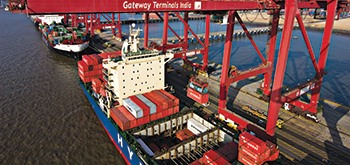
Trade 1There is no doubt the United States is the 800 pound gorilla for trade in the Caribbean region. From a sheer negotiation tactic, there is no basis for respect and consideration for the needs and aspirations of the small Bahamas island nation. A lion share of trade in the Bahamas comes from the US. Also, a lion share of the Bahamas Government revenue comes from Customs duties. So in any stretch of the imagination, eliminating Customs duties from American imports would devastate the Bahamas Government’s treasuries.

Is this an over-simplification of the logical argument in the foregoing news article? No!

Rather, this is a consistent theme in the book Go Lean…Caribbean. The book posits that the objectives of American foreign, trade and security policy may not align with the priorities of the Caribbean. Even more, no Caribbean member-state has voting powers in the US Capitol where those policies might be codified. It is what it is!

The Bahamas is so small compared to the US that the ranting from Nassau would be inconsequential to the decision makers in Washington. The Bahamas and the US are not “brothers”; at best, the Bahamas can expect a “good neighbor” relationship with the US. But since “blood is thicker than water”, it is only to be expected that the US would prioritize the needs of its people ahead of Bahamians.

By: Alison Lowe, Nassau Guardian Business Editor

NASSAU, Bahamas — The United States has called for The Bahamas to immediately drop all of its duties on US products coming into this country on “day one” of The Bahamas’ accession to the World Trade Organization (WTO) – a request which the government has rejected on the basis that it could wipe out the domestic economy, according to the [Bahamas] Minister of Financial Services.

Disclosing some of the background to The Bahamas’ bilateral negotiations over the terms of its bid to join the WTO, [Minister] Ryan Pinder said that the US government has not been “amenable” to The Bahamas’ phasing in tariff reductions on US goods. “Phasing in” refers to the ability to reduce the duty rate levels over a number of years.

However, he suggested that the government has struck back on the issue, suggesting that a phased-in reduction of tariffs on US goods – the vast majority of all imported goods coming into The Bahamas – would be more appropriate.

He was speaking at a meeting on Wednesday between members of the Bahamas Chamber of Commerce and Employers Confederation and David Shark, deputy director general of the WTO, who is in the country to engage with stakeholders over The Bahamas’ accession process.

Among the requirements of joining the WTO is that The Bahamas lowers its duty rates on goods imported into the country. It is this requirement that contributes in part to the decision by the government to push ahead with introducing a new form of revenue collection in the form of value added tax (VAT), although the WTO deputy director said the WTO itself has no preference about what form of tax the government chooses to replace former duty taxes with.

In a question and answer session, Pinder said that how quickly and how low The Bahamas would have to reduce its duties is not a decision of the WTO, but one which is determined in bilateral negotiations with other WTO members.

Pinder said, “The EPA (Economic Partnership Agreement trade deal with Europe) is phased, and they phase to zero, so at some point in time there will be no duty paid on items sourced out of the EU, but it’s not a huge deal because I think there’s $8 million of revenue a year to the government on EU products.

“Now the US: day one that’s what they want. Imagine if they said let’s phase it to zero like the EPA, because that’s what they’ll use as a precedent: You negotiated the EPA, you phased, you phased to zero. So imagine if we phase to zero (on goods coming from the US – you would not have a domestic economy because you would not have 35 percent on readymade items anymore, you’d have zero. So you have to be careful what you push for at times.”

Trade 2He added: “Right now the US is taking the posture that they want on-day-one reductions. They’ve taken the posture they want cuts straight across the board. We’ve taken the position we’re not going to negotiate on that basis but we will negotiate trying to protect domestic industry.

“I think they got the point but there’ll be further negotiations on that. So they haven’t been too amenable to phasing. We anticipate that in some time in the future we will have to re-negotiate the Caribbean Basin Initiative on a bilateral basis which is a whole other issue with respect to the US and their trading regime,” said Pinder.

In terms of how the government would make up the lost revenue, the government has a plan of sorts in place in the form of the implementation of value added tax (VAT), or – if the private sector has its way — some other form of alternative taxation.

However, replacing the revenue lost to the government when duties are reduced under WTO accession does not address the challenge of how the reduction in duties would impact local manufacturers, who rely on the fact that the goods they produce have high rates of duty applied when they cross the border.

In this regard, seven months on from when he announced that the government would be undertaking a study to examine the “vulnerabilities and opportunities” that would arise for Bahamian businesses from joining the WTO, Pinder said on Wednesday that the government is now moving to shortlist who will conduct this study so the government will have a clearer picture of the impact on industry of acceding to the WTO.

At present, Pinder has stated a goal of December 2014 for The Bahamas to complete its lengthy accession process, but has also indicated that the process could well continue into 2015.

In an interview with Guardian Business on Wednesday, Shark touted the benefits of WTO accession. He said that WTO members have been seen to have recovered more quickly following the global economic downturn, as a result of having a more certain environment for investment.

“The Bahamas is already heavily integrated into the international trading system, so for a country that’s as deeply enmeshed in international trade as the Bahamas the better question is ‘Why not (join)?’

“As a member of the WTO, you get to level the playing field with some of your neighbours. You’re the only CARICOM member who’s not a member of the WTO, and when companies are trying to decide where to invest, being a member of the WTO provides assurances to investors of the conditions of their investment… and all of that matters a lot in terms of being a part of global supply chains.

“The rules of international trade, whether you are a member of the WTO or not, affect you, so why wouldn’t you want to be at the table in negotiating those rules?

“It’s protection against protectionism; if someone does something that causes you harm you can challenge them whether you are a large or small country, under the WTO system,” he added.

Caribbean News Now / Nassau Guardian (Posted 04-11-2014; retrieved 05-22-2014) –http://www.caribbeannewsnow.com/topstory-Bahamas-rejects-US-trade-demand-20677.html

Trade 3How to counteract and mitigate this undesirable negotiating quagmire? The answer is to join a bigger family! This requires lowering the volume on the cries of independence and then lean-in for interdependence: regional and WTO solutions. The book Go Lean… Caribbean, serves as a roadmap for the introduction and implementation of the Caribbean Union Trade Federation (CU). This represents a confederation, a brotherhood, of the 30 member-states of the Caribbean region, including Puerto Rico and the US Virgin Islands.  This CU/Go Lean roadmap extolls these 3 prime directives:

  • Optimize the economic engines of the Caribbean to grow the regional economy.
  • Establish a security apparatus to protect the resultant economic engines.
  • Improve Caribbean governance to support these engines.

Imagine the force of a single market of 42 million people as opposed to the minimal 320,000. Imagine too … the purchasing power of an $800 Billion economy as opposed to $9.2 Billion (2010). The roadmap immediately calls for the consolidation of trade negotiation of the Bahamas with the rest of the Caribbean. This point is echoed early, and often, in the Go Lean book, commencing with these opening pronouncements in the Declaration of Interdependence (Page 11/12), as follows:

 viii.   Whereas the population size is too small to foster good negotiations for products and commodities from international vendors, the Federation must allow the unification of the region as one purchasing agent, thereby garnering better terms and discounts.

 x.         Whereas we are surrounded and allied to nations of larger proportions in land mass, populations, and treasuries, elements in their societies may have ill-intent in their pursuits, at the expense of … our citizens. We must therefore appoint “new guards” to ensure … our society, both domestic and foreign.

The roadmap recognizes that this request to forge a confederated technocracy is atypical in Caribbean pursuits. Despite previous integration efforts, the most that has been accomplished is the recognition of the benefits of consolidation, but no real manifestation of an integrated society.

Go Lean … Caribbean therefore constitutes a change for the Caribbean. This is a roadmap to consolidate 30 member-states of 4 different languages and 5 colonial legacies (American, British, Dutch, French, Spanish) into a Trade Federation with the tools/techniques (but without sovereignty) to bring immediate change to the region to benefit one and all member-states. While this is an integration of region’s economic interest, there is no expectation of re-distributing existing wealth among the member-states.

Just how is this accomplished?

The book details that there must first be adoption of community ethos to forge such a change; plus the executions of the following strategies, tactics, implementations and advocacies to impact the regions prospects in negotiations and fulfilling the needs of Caribbean stakeholders:

Community Ethos – Deferred Gratification Page 21
Community Ethos – Minority Equalization Page 24
Community Ethos – Lean Operations Page 24
Community Ethos – Return on Investments Page 24
Community Ethos – Cooperatives Page 24
Community Ethos – Ways to Improve Negotiations Page 30
Community Ethos – Impact the Greater Good Page 37
Strategy – Unified Region in a Single Market Economy Page 45
Strategy – Customers – Foreign Direct Investors Page 48
Strategy – Agents of Change – Globalization Page 57
Tactical – Confederating a Permanent Union Page 63
Tactical – Fostering a Technocracy Page 64
Tactical – Growth Approach – Trade and Globalization Page 70
Separation of Powers – Interstate Commerce Admin Page 79
Separation of Powers – Office of Trade Negotiations Page 80
Implementation – Ways to Pay for Change Page 101
Implementation – Foreign Policy Initiatives at Start-up Page 102
Implementation – Ways to Deliver Page 109
Implementation – Trade Mission Office Objectives Page 116
Implementation – Ways to Benefit from Globalization Page 119
Planning – Ways to Improve Trade Page 128
Planning – Ways to Improve Interstate Commerce Page 129
Planning – Ways to Model the EU Page 130
Planning – Lessons from the West Indies Federation Page 135
Advocacy – Ways to Grow the Economy Page 151
Advocacy – Ways to Improve Governance Page 168
Advocacy – Ways to Better Manage the Social Contract Page 170
Advocacy – Ways to Improve Government Revenue Page 172
Advocacy – Ways to Foster Cooperatives Page 176
Advocacy – Ways to Impact Main Street Page 201

The foregoing news article uses language like “day one”, in that it reports that there are expectations for the immediate adjustments in the US-Bahamas trade dynamics with the inauguration of the WTO regime. This type of development is impractical and destructive for Bahamian society. The Go Lean roadmap therefore proposes an alternative implementation, with accelerations of progressive changes over a methodical 5 year period. This is thusly proposed to minimize the disruption to government revenue schemes.

The WTO has a Trade First mantra. While this is an advantageous goal, this book posits that trade must not be implemented at the expense of the societal safety nets that bind Bahamian society together. Go Lean … Caribbean is therefore a detailed turn-by-turn roadmap for how-when-why-where to apply the best-practices of trade-economic-security-government delivery options.

The Go Lean roadmap is therefore a complete solution for Caribbean elevation, considering the needs of all stakeholders: residents, trading partners, Diaspora and visitors. The region is hereby urged to lean-in to this roadmap, to fulfill the vision of making the Caribbean region a better place to live, work and play.

Download the Book- Go Lean…Caribbean Now!!!

Share this post:
, , , ,
[Top]

NSA records all phone calls in Bahamas, according to Snowden

Go Lean Commentary

Phone tap 1So wait, according to the below news article, the US National Security Agency is gathering and analyzing mobile phone calls on Bahamians talking to Bahamians. This article raises so many questions for a Caribbean consideration:

  • Is this OK with the political/social leaders of the Bahamas?
  • Is this OK with the people of the Bahamas?
  • Why is this effort exerted by the US and not the Bahamas?
  • Could the local obstacle be the costs of the ICT investment?
  • Is there any value to this intelligence gathering? Have crimes and terroristic attacks been mitigated?

The book Go Lean…Caribbean identifies that intelligence gathering & analysis can be advantageous for the security of the member-states in the Caribbean region. Whatever your politics, you want a measure of peace-and-security in the region. Based on the foregoing article, there is some value to a cross-border, regional intelligence/security apparatus.

This book Go Lean… Caribbean, serves as a roadmap for the introduction and implementation of the Caribbean Union Trade Federation (CU). This Go Lean roadmap has 3 prime directives:

  • Optimization of the economic engines in order to grow the regional economy.
  • Establishment of a security apparatus to protect the resultant economic engines.
  • Improve Caribbean governance to support these engines.

This book posits that “bad actors” will always emerge to exploit successful economic models.  Early in the book, the pressing need to streamline security efforts is pronounced in the Declaration of Interdependence (Page 12), with these opening statements:

x. Whereas we are surrounded and allied to nations of larger proportions in land mass, populations, and treasuries, elements in their societies may have ill-intent in their pursuits, at the expense of the safety and security of our citizens. We must therefore appoint “new guards” to ensure our public safety and threats against our society, both domestic and foreign.

xvi. Whereas security of our homeland is inextricably linked to prosperity of the homeland, the economic and security interest of the region needs to be aligned under the same governance. Since economic crimes, including … forms of terrorism, can imperil the functioning of the wheels of commerce for all the citizenry, the accedence of this Federation must equip the security apparatus with the tools and techniques for predictive and proactive interdictions.

The curative measures for the Caribbean security requires a regional security pact. This is why the Go Lean roadmap advocates a Homeland Security Department at the cabinet level. The result is that the Caribbean can then take the lead for Caribbean problems. The CU is a proxy of that leadership.

By: Travis Cartwright-Carroll, Nassau Guardian Staff

NASSAU, Bahamas — The Bahamas government has sought an explanation from the United States government over claims the National Security Agency (NSA) is collecting, recording and archiving every cell phone conversation in The Bahamas, Minister of Foreign Affairs Fred Mitchell said.

The allegation stems from documents allegedly leaked by former NSA analyst Edward Snowden.

According to documents, the NSA is using a surveillance system called SOMALGET to collect and store “full-take audio” of every mobile call made in The Bahamas and storing it for up to 30 days.

The documents also list Kenya, Mexico, the Philippines and another country, whose name was redacted, as countries where the program exists.

Minister of National Security Dr Bernard Nottage would not comment on the matter on Monday, but promised to make inquiries into the allegations.

Snowden’s latest disclosures were published on The Intercept website and claim that the NSA used “access legally obtained in cooperation with the US Drug Enforcement Administration to open a backdoor to the country’s cellular telephone network”.

According to The Intercept’s website, it “provides a platform to report on the documents previously provided by NSA whistleblower Edward Snowden”.

The documents state that SOMALGET’s access to the “Bahamian GSM communications” has led to the discovery of international narcotics traffickers and special-interest alien smugglers.

The documents also list SOMALGET as part of a bigger program called MYSTIC, which is described as a program for “the collection and processing of wireless/mobile communication networks”.

“The overt purpose is for legitimate commercial services for the telcos themselves; our covert mission is the provision of SIGINT,” the document reads.

According to the NSA’s website, “SIGINT is intelligence derived from electronic signals and systems used by foreign targets, such as communications systems, radars and weapons systems.

“SIGINT provides a vital window for our nation (USA) into foreign adversaries’ capabilities, actions, and intentions.”

The document notes that MYSTIC’s use in The Bahamas is “being used as a test bed for system deployments, capabilities and improvements”.

The Washington Post explored the program MYSTIC back in March 2014, but at the request of US government officials, withheld details that could be used to identify the country where the system is being employed.

That story said the NSA had “built a surveillance system capable of recording 100 percent of a foreign country’s telephone calls”.

Contacted by The Nassau Guardian on Monday, the US Embassy in Nassau said it will not comment on “every specific alleged intelligence activity”.

“As a matter of policy, we have made clear that the United States gathers foreign intelligence of the type gathered by all nations,” said Neda Brown, US Embassy spokesperson.

“We value our cooperation with all countries on issues of mutual concern.

“The United States values its relationship with The Bahamas.

“The United States and The Bahamas share a long history of trade partnership and security cooperation.

“Our cooperation advances civilian security, promotes social equity and spurs economic development.”

The issue of spying has been in the public consciousness over the last two weeks.

But it was connected to claims that The Bahamas government may be spying on Bahamians.

Opposition Free National Movement (FNM) deputy leader Loretta Butler-Turner charged that the Bahamian government is using the National Intelligence Agency (NIA)  to “engage in domestic spying on the Bahamian people”.

Nottage has dismissed the claim as “foolish” and said the government is not spying on Bahamians.

Source: Caribbean News Now / Nassau Guardian Newspaper; posted and retrieved 05-20-2014 from: http://www.caribbeannewsnow.com/topstory-NSA-records-all-phone-calls-in-Bahamas%2C-according-to-Snowden-leak-21203.html

Phone tap 3The foregoing article also highlights the value of efficient and effective information & communications technology (ICT) deployments. This Go Lean roadmap posits that technological innovations are necessary for advancement of societal protections. This point is pronounced in the same Declaration of Interdependence (Page 14), with these statements:

xxvii. Whereas the region has endured a spectator status during the Industrial Revolution, we cannot stand on the sidelines of this new economy, the Information Revolution. Rather, the Federation must embrace all the tenets of Internet Communications Technology (ICT) to serve as an equalizing element in competition with the rest of the world. The Federation must bridge the digital divide and promote the community ethos that research/development is valuable and must be promoted and incentivized for adoption.

xxviii. Whereas intellectual property can easily traverse national borders, the rights and privileges of intellectual property must be respected at home and abroad. The Federation must install protections to ensure that no abuse of these rights go with impunity, and to ensure that foreign authorities enforce the rights of the intellectual property registered in our region.

The Go Lean roadmap rises above the petty politics that nationalistic purists will surely project. For these ones, national sovereignty is more important than national security. This attitude has resulted in the status quo of lax security provisions throughout the region, and a high rate of societal abandonment.  Go Lean pursues the Greater Good ahead of any claim for independence. This is defined as a community ethos for the region to adopt. Change has now come to the Caribbean.

The book details other ethos to adopt, plus the executions of the following strategies, tactics, implementations and advocacies to impact the CU security assurances:

Community Ethos – Privacy versus Public Protection Page 23
Community Ethos – Intelligence Gathering Page 23
Community Ethos – Light Up the Dark Places Page 23
Community Ethos – Lean Operations Page 24
Community Ethos – Cooperatives Page 25
Community Ethos – Ways to Bridge the Digital Divide Page 31
Community Ethos – Impact the Greater Good Page 37
Separation of Powers – Homeland Security Department Page 75
Separation of Powers – Cari-Pol Page 77
Implementation – Security Initiatives at Start-up Page 103
Implementation – Ways to Promote Independence Page 120
Advocacy – Ways to Manage the Social Contract Page 170
Advocacy – Ways to Impact Justice Page 177
Advocacy – Ways to Remediate and Mitigate Crime Page 178
Advocacy – Ways to Improve Homeland Security Page 180
Advocacy – Ways to Improve Intelligence Gathering/Analysis Page 182

Phone tap 2The foregoing news article does remind us of the need to take the lead for our own community security. Go Lean advocates taking this lead for economic security as well. It is true that the objectives of the US may not align with the priorities of the Caribbean. Also, no Caribbean member-state has voting powers in the US Capitol, so rather than being “brothers” with the US, we must accept that our relationship with the US, at best, can only be as “good” neighbors. Yes, “blood is thicker than water”, so the Caribbean must create Caribbean solutions – this is interdependence, more so than independence.

The motives of the Go lean/CU roadmapis not to voice complaint regarding an intrusive American privacy violation, (though a valid criticism), but rather to simply make our homeland safer – a better place to live, work and play.

Download the book Go Lean … Caribbean – now!


Share this post:
, , , ,
[Top]

PM Christie responds to critics of Bahamian ‘Carnival’

Go Lean Commentary

Carnival 1Head –> Heart –> Hands.

This is the physiological process to forge change, described in the book Go Lean … Caribbean (Page 20). As experienced on a daily basis by people attempting to “quit smoking”, change is near impossible without engaging those three body parts. The book, serving as a roadmap for the introduction and implementation of the Caribbean Union Trade Federation (CU) describes the linked application of those three symbolic body parts, as follows:

  • Head – Plans, Models and Strategies
  • Heart – Community Ethos
  • Hands – Actions, Implementations, Advocacies

According to the below news article, the Prime Minister of the Bahamas wants to forge change in his homeland. He wants to incorporate a new festival, based on the model of Carnival and Madri Gras, so as to glean some of the massive economic harvests around those events in the Caribbean and other Western Hemisphere destinations.

Since initiating this plan in Spring 2013, cyber-space and public commentary have been awash with feedback: some in favor; most opposed.

Albeit he is inspired by good motives, the publishers declare that something is missing in the Prime Minister’s plans: Best practices.

By: Erica Wells, Managing Editor
Prime Minister Perry Christie has assured critics of the Government’s plan to create a Bahamian Carnival or Mardi Gras that the festival will be “essentially” Bahamian and that a special committee will be appointed to prepare the country and the world for the initiative.

Addressing the MP’s in his 2013/2014 budget wrap up, Christie said many people rushed to judgement after he made the announcement last month. The week-long festival is slated for a 2015 start-up and the government will spend $1 million to help with its development, which may incorporate a cultural village, public processions and song and costume competition. The $1 million will be allocated to the festival next year and will be a joint effort between the public and private sector, he said.

The government, Christie says, sees the festival as both a major economic intervention and a cultural expansion.

“It will be essentially Bahamian but also include thousands of visitors who will be attracted by what will be an absolutely fabulous affair,” said Christie.

Anthropologist and author Dr. Nicolette Bethel, who is also a former director of culture, has been one of the biggest critics of the proposed festival.

Bethel told Guardian Arts&Culture before Christie’s communication earlier this week that she did not have a problem with the idea per se, and that it was long overdue, but the timing and title were both “awful”.

“As a result I don’t think it’s feasible,” she said. “I have no idea what consultation, if any, was done with the relevant community. It falls during the Junkanoo downtime and I do not think that the practitioners will seriously be able to prepare for it, and in fact many of the most serious (Junkanooers) are out of the country attending the real carnivals that take place all around our region at that time — New Orleans, Rio de Janeiro, and of course Port-of-Spain.”

Bethel said she did not see that it would have any real effect on the current Junkanoo parades.

She also criticized the government’s $1 million allocation to the festival.

“One million dollars according to our data is nowhere near enough money to fund something of this kind,” said Bethel. “Annual Junkanoo parades take up to $3 million of the government’s money — $2 million at least. If that money were invested in creating a Junkanoo festival at the normal Junkanoo time it would go far further, but I do not see any way that we can hope to compete with the real carnivals by introducing something fake like this. It’s a total waste of a good idea.”

Christie noted that many critics questioned why The Bahamas should copy Trinidad or Brazil, and why the country would move away from Junkanoo, which is “spectacularly Bahamian”.

“Let me say at the outset that prior to making my announcement, I consulted with several icons in the world of Junkanoo and without exception they were fully supportive of the idea and immediately confirmed their willingness to work with the committee, which will be appointed to prepare The Bahamas and the world for this new festival,” said the prime minister.

The government will shortly appoint the committee, said Christie.

Paul Major, a former banker and Junkanoo participant, has been invited to chair the committee. Robert Sands and Ed Fields, and other major figures in the cultural field — in painting, music, drama all of which are a part of this new enterprise — will also be invited to sit on the committee, he said.

“I expect the committee to hold full consultations with all of the major personalities of Junkanoo, and associates. “I will, for my part, advise the committee that I do not wish them to interfere with Junkanoo.

This is a separate and different activity,” Christie explained. He noted that the major Junkanoo groups and their leaders will be advised that the government does not propose to licence those groups, unless there is overwhelming evidence of general acceptance by the rank and file.

Prime Minister Christie said for the groups to be licensed, they would have to form themselves into a company and operate as a business.

“This is a massive undertaking which will receive very careful consideration of the government,” he said.

“This is very necessary as the corporate groups will be advertising abroad and inviting persons to purchase costumes online as well as from store fronts in a cultural village or elsewhere.”

The Prime Minister said the committee would ultimately move recommendations to the government for its consideration.

Christie also noted that he has met with Sarkis Izmirlian of Baha Mar and advised him that the festival was one of the major promotions the government was putting in place in view of his introducing 2,200 new hotel rooms in December 2014.

“He liked the idea. The committee will recommend whether there should be a preferred resort destination or leave it to the choice of visitors,” said Christie.

Carnival worldwide industry

The prime minister said carnival is part of a worldwide masquerade industry.

He said the industry has been successful in attracting costume makers, wire benders, painters, designers and performers at some of the largest festivals in the world.

“It has an export dimension. We know of major festivals in Trinidad, Brazil, Toronto, Barbados, New York, Miami and London. Carnival in the diaspora generates hundreds of millions of dollars and creates many jobs and entrepreneurial opportunities.

“It is big business and it requires business planning, management, marketing of products and organizational structure,” said Christie.

Prime Minister Christie said costumes from carnival inspired designers show up in New York, Toronto, Notting Hill, London, Miami and many other centers in the U.S.

“The committee will be briefed and have the opportunity to visit carnival enterprises in Brazil, Trinidad and even Toronto, where carnival has become arguably the largest festival in the world,” he said.
Source: The Nassau Guardian Online. Posted 06/22/2013. (Retrieved 04/24/2014) –http://www.thenassauguardian.com/index.phpoption=com_content&view=article&id=40021&Itemid=59

The Go Lean roadmap is different! It employs best practices for assessing, strategizing and implementing change. The book commences with the practice to assess current landscapes; this is what strategists call “Understand the market / Plan the business”. Page 44 presents these questions:

• Who are our customers and what exactly do they want?

• Who are our competitors; how do we stack up against them?

The book then proceeds to answer these and other strategy queries, accordingly.

carnival 2Events/festivals are paramount in the Go Lean roadmap: the optimization of existing events and the introduction of new events. This advocacy is detailed on Page 191 as being supplemental to the goal of enhancing tourism (Page 190).

What are the prospects for this new Bahamas Carnival/Lenten festival?

On the surface, it seems far-fetched, as the Bahamas does not have a Lenten ethos. All the competitive destinations (Rio De Janeiro, New Orleans and Trinidad) have elevated lent habits (Ash Wednesday to Good Friday), so that Mardi Gras/Fat Tuesday actually has significance in preparation of this hallowed Lenten season. Without this ethos, it is hard, though not impossible, to forge a new tradition, festival or business model. But the mediocre financial investment, announced in the foregoing article – $1 million as opposed to $3 million, makes the success of initiating and promoting a new event an insurmountable obstacle.

The publishers of the Go Lean roadmap wish the Prime Minister good fortune with his plans, but this execution does not appear to be lean, within “best practices”. More is needed; much more! There should be more focus on “Head, Heart & Hands” principles. As a contrast, notice the detailed strategies, tactics, actions and advocacies for new events in the Go Lean roadmap:

Community Ethos – Lean Operations Page 24
Community Ethos – Return on Investments Page 24
Community Ethos – Cooperatives Page 25
Community Ethos – Non Government Org’s. Page 25
Impact the Future Page 26
Foster Genius – Performance Excellence Page 27
Ways to Improve Sharing Page 35
Ways to Promote Happiness Page 36
Ways to Impact the Greater Good Page 37
Strategy – Customers – Business Community Page 47
Strategy – Customers – Visitors / Tourists Page 47
Strategy – Competitors – Event Patrons Page 55
Separation of Powers – Emergency Mgmt. Page 76
Separation of Powers – Tourism Promotion Page 78
Separation of Powers – Sports & Culture Page 81
Separation of Powers – Fairgrounds Admin. Page 83
Separation of Powers – Turnpike Operations Page 84
Steps to Implement Self-Governing Entities Page 105
Ways to Foster Cooperatives Page 176
Ways to Improve Intelligence Gathering Page 182
Ways to Improve [Service] Animal Husbandry Page 185
Ways to Enhance Tourism Page 190
Ways to Impact Events Page 191
Ways to Promote Fairgrounds Page 192
Ways to Improve Emergency Management Page 196
Ways to Impact Hollywood [& Media Industry] Page 203
Ways to Preserve Caribbean Heritage Page 218
Ways to Improve the Arts Page 230
Ways to Promote Music Page 231

In summary, festivals/events are important, so they require lean administration and executions. They empower economics and fortify cultural pride. In all, they make the Bahamas, by extension the entire Caribbean, a better place to live, work, and play.

Download the book Go Lean … Caribbean – now!

Share this post:
, , , , , ,
[Top]

Bahamas Debate: Was Prime Minister Behind On Tax?

Go Lean Commentary

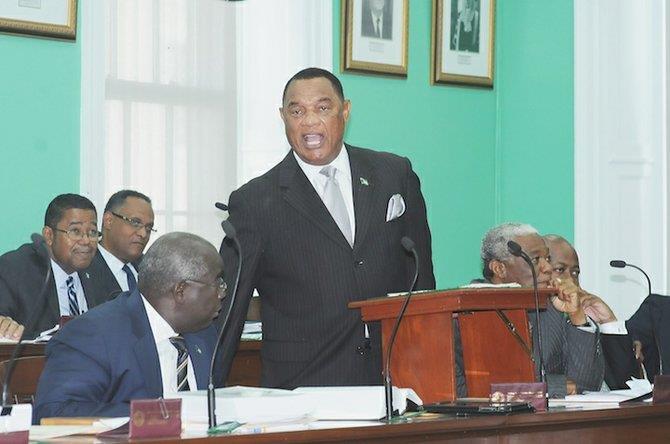
Photo - Perry Christie in ParliamentThe news article below is from The Tribune, a daily newspaper that covers the Bahamas. The story touches on a critical mission and motivation of the Caribbean Union Trade Federation (CU):

To re-boot the revenue systems that the region’s member-state governments depend on.

The book Go Lean … Caribbean, which serves as a roadmap for implementing the Caribbean Union Trade Federation, commences with an opening Declaration of Interdependence. In Verse XIV (Page 12) it pronounces:

Whereas government services cannot be delivered without the appropriate funding mechanisms, “new guards” must be incorporated to assess, accrue, calculate and collect revenues, fees and other income sources for the Federation and member-states. The Federation can spur government revenues directly through cross-border services and indirectly by fostering industries and economic activities not possible without the Union.

The below article crystalizes a debate. The country is mid-stream in implementing a new eco-system for assessing – collecting a Value-Added Tax (VAT). The proponents of the VAT are convinced that this is the panacea for the failure of real property tax collection, where even prominent politicians admit to not complying with the current taxing requirement. The foregoing debate is that maybe even the Prime Minister, Perry G. Christie, is delinquent, or may have been in the past. See the article here:

By: Khrisna Virgil, Tribune Staff Reporter (kvirgil@tribunemedia.net)

FNM (Bahamian Opposition Party) Deputy leader Loretta Butler-Turner is calling on Prime Minister Perry Christie to fully disclose whether he at some point fell behind in paying his real property taxes, and, if so, the years involved.

Branding him as the worst Prime Minister the Bahamas has seen to date, Mrs Butler-Turner criticised Mr Christie following his admission that he was unaware of which PLP parliamentarians, if any, were in arrears with their taxes.

The comments came amid a wave of backlash sparked following VAT advisor Ishmael Lightbourne’s confession that he had not paid real property taxes over the last decade. He owe’s the government more than $7,000.

The Christie administration has been heavily criticised since news of Mr Lightbourne’s delinquent account went public, especially as the government struggles to make its case that VAT is a suitable revenue-generating system.

It was Mrs Butler-Turner’s opinion that Mr Christie was “the most incompetent and irresponsible Prime Minister and Minister of Finance since the advent of Cabinet government in the Bahamas. He is very good at pleading ignorance and very poor at accepting responsibility.

“For the sake of accountability and responsibility might Mr. Christie advise if there were years when he did not pay his real property taxes in a timely manner and how many years this involved?

“If Mr Christie failed to ask (PLP parliamentarians), he is even more incompetent and slacker as Prime Minister than previously thought.

“He now says, ‘I will in fact review that with a view to seeing those of us who are in arrears of the various requirements in terms of taxes and with a view to advising them to meet the payments.’

“Why is he just doing this now, nearly two years after returning to office and on the eve of introducing legislation on VAT, legislation that has been postponed on three occasions by an incompetent government?

“He wants the Bahamian people to pay taxes and wants to raise taxes on law-abiding citizens, including the poor, but doesn’t know who in his own ranks are paying taxes? Is there one standard for the Bahamian people and another standard for PLP parliamentarians?”

Mrs Butler-Turner accused the Christie administration of being one of double standards, made clear, she said, by the actions of some PLPs. She added that seemingly it does not matter if taxes are raised or lowered because there are members of the government who simply do not pay.
Source: The Tribune – Daily newspaper online site (Retrieved 02/26/2014) –http://www.tribune242.com/news/2014/feb/26/fnm-deputy-was-prime-minister-behind-tax/

There are countless anecdotes in the Bahamas, and other countries with similar tax schemes and regimes, where property taxes had not been paid for decades, and only when there is a need for property title transfer (sale or inheritance), does the issue of tax collection become relevant. Does that anecdote also apply to the current Bahamian Prime Minister? This is not known here and now! Nor is it considered in the Go Lean book. The charge in the foregoing article seems to be more of a sensational political volley, rather than a statement of fact.

The CU, on the other hand, takes an apolitical, non-partisan stance. Further the Go Lean book asserts  that even the originator of Christianity, Jesus Christ, advised his followers to “pay Caesar’s things to Caesar”. This is found in a Chapter entitled:

10 Lessons from the Bible (Page 144).

(Note: the Bahamas claims to be a Christian nation).

The CU mission is to implement the complete eco-system for property tax assessment, registration and collections. The roadmap advocates an optimized tactic where the CU operates as a technocratic deputized agency and acquires “Receivables” for a country’s property taxes, in advance, and then subsequently facilitates collections and servicing. Imagine the Bahamas, and other similar member-states, under this new regime, receiving a warrant (securitized payment) of 80% of the amount of tax revenues that should be collected in a “perfect scenario” – 10 Ways to Pay For Change (Page 101). It then becomes the job of the CU’s technocratic professionals to complete the collection cycle – removing any political prejudices from the process – 10 Ways to Improve Credit Ratings (Page 155).

Without a doubt, this approach is far better than the status quo.

Download the book Go Lean … Caribbean – now!


Share this post:
,
[Top]

Bahamians Make Presence Felt In Libyan League

Go Lean Commentary

Basketball_HoopsThe news story in the following news article synchronizes with the book Go Lean … Caribbean in that it depicts the realities of how sports can impact the economics of a community.

Go Lean serves as a roadmap for the implementation of the Caribbean Union Trade Federation (CU), a technocratic federal government to administer and optimize the economic/security/ governing engines of the region’s 30 member-states. At the outset, the roadmap features these statements in the Declaration of Interdependence (Page 13 & 14):

xxi. Whereas the preparation of our labor force can foster opportunities and dictate economic progress for current and future generations, the Federation must ensure that educational and job training opportunities are fully optimized for all residents of all member-states, with no partiality towards any gender or ethnic group. The Federation must recognize and facilitate excellence in many different fields of endeavor, including sciences, languages, arts, music and sports. This responsibility should be executed without incurring the risks of further human flight, as has been the past history.

xxxi. Whereas sports have been a source of great pride for the Caribbean region, the economic returns from these ventures have not been evenly distributed as in other societies. The Federation must therefore facilitate the eco-systems and vertical industries of sports as a business, recreation, national pastime and even sports tourism – modeling the Olympics.

The actual news article was posted as follows:

By RENALDO DORSETT, Sports Reporter (rdorsett@tribunemedia.net)
You can find Bahamians playing basketball on just about every continent but it’s rare to find former high school teammates reunited on the same roster at the professional level.

In the Libyan D1 basketball league, Scottie Farrington and Tehran Cox are two of the top players with the Al Madina Tripoli club.

They are two of three Bahamians competing in the Libya-D1 league along with Torrington Cox who plays with Al Ahly Benghazi.

Farrington, a 6’8” forward and University of Louisiana Lafayette graduate, is currently averaging 21 points, 14 rebounds and four blocks per game while Cox, formerly of High Point University, is averaging a team high 24 points, six assists and four rebounds per game.

The duo first teamed up in 2002 to win the Government Secondary School Sports Association junior boys basketball championship at SC McPherson Junior High under coach Ulric Sands and Chevy Simmons.

They also represented The Bahamas together in 2005 at the Caribbean Basketball Championships in Trinidad and Tobago where they helped lead the Bahamas to an upset over regional powerhouse Puerto Rico en route to the gold medal.

Both players are in their first season with Madina. However, Farrington has previously played in Saudi Arabia, Dubai and Thailand, while Cox, in his first professional stint, began the year in Kuwait.

Farrington said having a familiar face in the starting lineup far away from home has been a benefit both on and off the court, particularly since the country continues to rebuild following the 2011 revolution which ousted Muammar al-Gaddafi.

“It’s an experience of a lifetime. Especially being here with these people who are trying to rebuild

their country after the revolution. Playing here with Tehran and knowing makes this a more comfortable situation,” he said. “We talked about it because we have the same agent but we didn’t think it was going to actually happen.”

The club is currently ranked fifth in the East Group at 3-5, however their individual play has already garnered opportunities for the next possible step in their professional careers.

“I wouldn’t say it’s the best fit but the competition here is better than I expected. A few guys here have played or attended training camp for NBA teams so that means a lot to compete against these guys,” Farrington said. “This is just our first season here with Madina. We signed here in November and after our performance here we have already been contacted by clubs in Spain and in Serbia for next season, but we will save that for later and focus on finishing off this season strong.”

Farrington played under Godfrey McQuay with the St Anne’s Blue Waves before completing his high school career at the Christian Life Centre in Houston, Texas.

He spent his freshman year at Rogers State and his sophomore year at Odessa before he played at the NCAA D1 level with Louisiana Lafayette.

In his senior year at Louisiana, he also teammed with Bahamians Kentwan Smith and Kadeem Coleby.

Cox, a 6’1” point guard, was dominant in the backcourt for the CI Gibson Rattlers before he finished his high school career at Fayetteville Christian School in Fayetteville, Arkansas.

He spent two seasons at Arkansas Fort-Smith before he transferred to High Point for his junior and senior seasons.

Cox has helped Al Ahly Benghazi to second place in the West Group at 5-2, on a roster that also features former Boston Celtics draft pick Orien Greene.

Torrington Cox, a 6’7” forward, is in his seventh professional season and is currently averaging 25 points, 12 rebounds and two blocks per game. He previously played in Mexico, Chile, Saudi Arabia , Egypt, Kuwait, Dubai and was also selected by the Utah Flash in the 2008 NBA D-League draft.

Source:  The Tribune – Bahamas Daily Newspaper Online Site (Retrieved 03/04/2014) –http://www.tribune242.com/news/2014/mar/03/bahamians-make-presence-felt-in-libyan-league/

The Go Lean roadmap posits that genius qualifiers are found through out Caribbean society, and that this may be identified with excellence in sports. With the proper market organizations, sporting events can be lucrative for a community and participants. But that market organization does not currently exist in the Caribbean. An objective of this roadmap is to develop the organized markets.

This objective aligns with the CU’s prime directives to elevate the region’s economy, create future prospects for the Caribbean’s youth and invite the far-flung Diaspora to return to their island homelands. Consider the experiences of the 3 Bahamian athletes in Libya (a country in the North Africa’s Sahara desert region), would they rather be in Libya or the Bahamas, or any other Caribbean destination? The tagline in the Go Lean book is that the Caribbean is the world’s greatest address; there are not too many claims of Libya competing for that title.

Now is the time for all of the Caribbean to forge permanent change by implementing the Five Year roadmap advocated in Go Lean … Caribbean. The benefits of this plan as it relates to sports is the optimization of local opportunities at all levels, youth all-stars & regional tournaments, an intercollegiate eco-system and professional leagues. The CU will facilitate the applicable venues (stadia, arenas, fields, temporary structures and broadcast/streaming capabilities). The roadmap calls for the creation of 2,000 new direct jobs within the region.

Now finally, with the Go Lean implementations, the Caribbean can become a better place for all citizens to live, work and play.

Share this post:
, ,
[Top]

‘10,000 Bahamians Living in Darkness in Grand Bahama’

Go Lean Commentary

Cruise Powe Outage(1)“10,000 in the dark” … is probably a hyperbole.

But there is something wrong in Freeport, the 2nd city in the Bahamas, on the island of Grand Bahama. This foregoing article is just the “tip of the iceberg”. There are some major issues being endured there that warranted the attention of the publishers of the book Go Lean … Caribbean, a roadmap to implement the Caribbean Union Trade Federation (CU). The book focuses on re-booting the economics of the Caribbean, a region of 42 million people in 30 member-states; and yet there is a special advocacy in the book just for re-booting Freeport (10 Ways to Re-boot Freeport; Page 112).

The underlying issues in Freeport stems from the Hawksbill Creek Agreement, the 1955 landmark legislation that created the City of Freeport under the guise of a private company, the Grand Bahama Port Authority. This agreement makes Freeport unique compared to all the other Bahamian communities. But some tax-free provisions of that agreement expire after 60 years in 2015; industrial development in Freeport depended on those provisions. Today, companies, developers, and investors do not know if there will be an extension of those provisions. Alas, a lot of industrial activity has come to a stand-still; the resultant unemployment is undeniably debilitating the community. One observer, a noted local Chartered Accountant Kevin Seymour, likens this state to a ‘Damocles Sword’ hanging over the city – an imagery from Greek mythology.

See this news story here:

By: Denise Maycock, Tribune Freeport Reporter; (with some re-formatting by the Go Lean promoters)

Families For Justice President Rev Glenroy Bethel says it is inhumane that over 10,000 families in Grand Bahama are living without power, and are unable to feed their children a hot meal.

He is calling on Grand Bahama Minister Dr Michael Darville to launch an investigation to determine just how many families have been disconnected by the Grand Bahama Power Company.

In a press statement issued on Wednesday [February 26, 2014], Rev Bethel said: ‘Families for Justice Organisation’ sent a letter to the Minister for Grand Bahama, Dr Michael Darville concerning the inhumane treatment the Grand Bahama Power Company have imposed on thousands of Bahamians in Grand Bahama. [His direct statement:]

“It has been reported from reliable sources that there is over 10,000 family members, throughout the community of Grand Bahama, living in their homes in the dark for months, and in some cases for over one to two years without power – some with newborn babies and small children.”

Rev Bethel claims that many families are unable to feed their children and themselves because they have no power in their homes. [He continued:]

“This is inhumane and we call on the Minister for Grand Bahama to take some action against the Grand Bahama Port Authority, which is the regulators for the Power Company in our community.”

The civic leader said that while researching the Hawksbill Creek Agreement, their legal team discovered that the Power Company in Grand Bahama was never supposed to be a profit-making company. He said, [about] the Power Company is making high profits and putting a great burden on families in Grand Bahama:

“We make this plea to the Minister of Grand Bahama on behalf of the thousands of family members who are finding it difficult to cook a meal for their families, to intervene on those families’ behalf.”

Source: http://www.tribune242.com/news/2014/feb/27/10000-bahamians-living-in-darkness-in-grand-bahama/

The book Go Lean … Caribbean advocates for change in the Caribbean in general, but also specifically for Freeport. It posits that the private company, the Grand Bahama Port Authority should go! That the interest of the private shareholders should be divested (bought at market prices) and sold to a democratic municipality, the City of Freeport. The roadmap states further that the City should then assume the rights and benefits of the Hawksbill Creek Agreement, and then the tax-free provisions should be extended. With the 1955 law expiring, the power in this negotiation is with the people of the Commonwealth of the Bahamas.

The functionality of the CU would then impact the model of Freeport better than anywhere else in the Bahamas. The roadmap describes the integration of a regional power grid (Page 113) with underwater pipelines and cabling (Page 107), allowing lower energy costs, ranking/ monitoring of monopolies (Page 202), establishment of Self Governing Entities (Page 105), and incubating a ship-building industry (Page 209). The book further introduces the Union Atlantic Turnpike (Page 205) for efficient transportation and logistics options to empower the economic engines of the region. Freeport would be on the frontline of these endeavors, due to its infrastructure and proximity to US trading centers.

How to pay for all of this change? The roadmap details initial funding options (Page 101), escalation of the economic money supply/M1 factors (Page 198), and the consolidation of the region’s capital markets (Page 200), in a manner that would provide liquidity for the community investments activities.

This Go Lean roadmap projects the creation of 2.2 million new jobs (Page 151). How many of those jobs will be in Freeport? This is open to debate; but this constitutes a better debate compared to this headline of how many thousands are left in the dark, due to the failures of the Freeport society.

Download the free e-book of Go Lean … Caribbean – now!


Share this post:
, ,
[Top]

John McPhee – LCD versus an Entrepreneurial Ethos

Go Lean Commentary

The book Go Lean … Caribbean is more than just a publication, it is a movement. This movement is designed to elevate the Caribbean’s economic, security and governing engines. The book serves as roadmap for the introduction and implementation for the Caribbean Union Trade Federation (CU). As such, we are proud to feature role models – institutions, companies and individuals – that extoll the values, community ethos, that we hold dear. This role model, John McPhee, is a prime example.

Among the many community ethos, strategies, tactics, implementation and advocacies in the book is the proposal for the consolidation and integration of the region’s Taxi & Limousine Regulatory Commissions. The book posits that many of the initiatives envisioned for the region are too big an undertaking for any one Caribbean member-state alone; therefore the roadmap call for this functionality to be consolidated and integrated into CU oversight.

plid_2291_ii_cancun.guide.getting.around.taxis_1_2_article_full_2John McPhee is on the frontline of Bahamian tourism – he is a taxi driver. But to call him just a taxi driver would be an insult; it would expose a blatant ignorance. John McPhee is the anti-taxi driver; he “zigs” while everyone else “zags”. The industry for taxi drivers is based on the Lowest Common Denominator (LCD); John, on the other hand, rises above the fray, he stands out like a stalk of wheat in a field of weeds. He drives a Chrysler Town & Country mini-van for its roominess, durability and fuel efficiency. (The is the same vehicle class as the Nissan NV200 depicted in Appendix-VIDEO below and on Page 328 of the Go Lean book).

Mr. McPhee also accepts credit cards. This is an anomaly among taxi drivers in the Bahamas.

Lastly, he arranges appointments and delivers on schedule. He is the walking embodiment of the vision for the Caribbean Union’s Taxi & Limousine Commission.

John McPhee delivers on a business model that can be profitable, efficient, and effective (as frontline ambassadors) for forging change in a region too accustomed to the status quo (failure); a region with governmental policies designed to benefit the LCD and thus they miss out on victories that one champion can achieve. This is the winning model of both the industrial and information revolutions, where individuals, entrepreneurs and industrialists transformed society with their innovations. John McPhee represents that new corps of Caribbean entrepreneurs.

In a person-to-person interview, recorded in the Go Lean book at Page 39, these were his responses:

What are the details of your project?

A Cashless Payment System for Taxi Cabs. This will allow for passengers to pay their fare by means of any major credit/debit cards. Considering the reality of The Bahamas where many citizens, even in the middle class, do not possess credit cards, the target market will be tourists, and the corporate sector. This service should empower taxi drivers to have a competitive advantage over their peers. This project’s goal is to have 50 cars within a fleet, and to provide all of their dispatch services.

Who are the competitors of this service?

There is the Bahamas Taxi Union, a cooperative among individual taxi drivers. Then there are other private entities like H. Forbes Charters and other similar companies.

Why did you not leave, like the many before you?

The Bahamas can still be a land of opportunity. This is what the people here deserve. This is a small country, I should be a big fish in this small pond, but I’m not. If I’m not the head-of-the class here, how can I expect to succeed as a small fish in a big pond somewhere else. So I do not intend to leave.

How do you feel about Bahamian/Caribbean Security?

A lot is lacking here. All citizens can easily be in danger of the pervasive crime and violence.

How do you feel about Bahamian/Caribbean Economy?

Even more is lacking. This country is not suited to encourage entrepreneurism. Economic growth is only going to come from the private sector, not the government. For the private sector to flourish there must be the appropriate structure, incentives and economic drivers. These ingredients are not here now. For my project, I had to sue the government agency (Taxi Commission) to force their hand in doing the right thing. The governing principle used here follows the policy of egalitarianism. This sounds good on paper, equal opportunity for all, but in practice, it’s a disservice for job creation. Catering to the LCD sets the bar low. Excellence does not emerge from that.

What areas are you most disappointed in when considering the last 20 years?

There is a trend towards social equality, which is good if the equal status is a high standard of living and high moral fortitude. But instead, there seems to be a steady decline in all aspects of Bahamian life in which we are all becoming equally mediocre, inadequate. This indicates a fault in leadership; there is a lack of vision and no plan to elevate, if not for all the people, then at least for an achiever class.

What do you want to see in The Bahamas in … 5 years?

Turn-around from the current path, otherwise there will be a collapse of the middle class.

What do you want to see in The Bahamas in … 10 years?

All societies must innovate, or be overrun with innovations from abroad. If the current trend continues, there will be a disenfranchisement of Bahamians in their own country.

What do you want to see in The Bahamas in … 20 years?

I want to see a social and political revolution; the status quo cannot continue. While a revolution denote a quick sudden change, perhaps an evolution (slow, steady and consistent) is better. But we must start now, by first abandoning these LCD policies and expectations.

What features of North American/Europe would you like to see here?

In addition to a NATO-like force, the Caribbean should be more connected/integrated; there should be a central trading/purchasing entity to represent the entire region.

Where do you consider to be the best place to live?

Canada. They seem open to growth, inviting foreign nationals. There is a common language – but respect for minorities – and plenty of opportunities in the areas that entrepreneurs seek.

How would you feel if your children emigrate?

Being a husband and father, I fear that my son will one day leave. He will need such a move to soar in his endeavors. If that happens, while we will miss him, we will simply accept and support him.

Download the book Go Lean … Caribbean – now!

————
Appendix – VIDEO: New York Proclaims “Hail Yes!” as First Nissan NV200 Taxicab Hits the Streets of Manhattan – https://youtu.be/za1xO3WcnQs

Published on Oct 29, 2013 – NEW YORK (October 29, 2013) — A new era in public transportation has begun with the Nissan NV200 taxi now in service on the streets of New York City. The meter on the first NV200 taxi fare officially kicked-off at JFK International Airport on October 23, dropping its inaugural passenger near 13th Street and 6th Avenue in Manhattan. Mr. Ranjit Singh, an owner/operator of Medallion No. 7F20, took delivery of his NV200 taxi from Koeppel Nissan in Queens on October 18.
AMC131029102.
 
Share this post:
, , , ,
[Top]