Tag: Sports

Sports Revolutionary: Advocate Jeffrey Webb

Go Lean Commentary

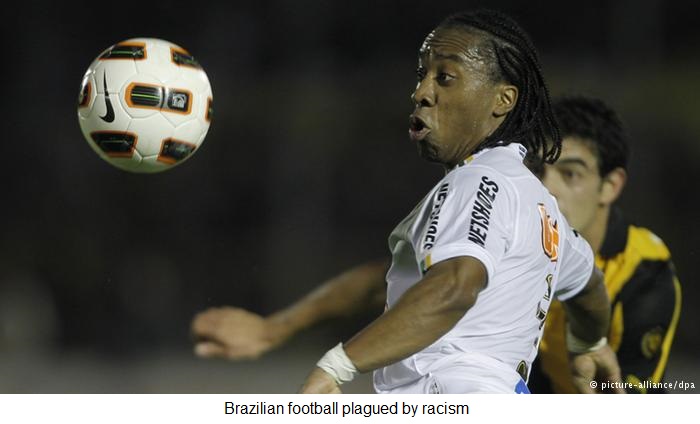
Sports Revolution 3The forgoing encyclopedia source focuses on the background person connected to an important issue in sports administration: blatant racism in European soccer.

Blatant racism is a scourge to the beautiful sport of football (soccer). Black players have to endure unspeakable acts of disrespect (cursing, spitting, monkey-chants, tossed bananas, etc). The international governing body for soccer/football, Fédération Internationale de Football Association (FIFA), wants to forge change among the game’s stakeholders. This issue relates to the Caribbean, in that the FIFA advocate in this cause is from the Cayman Islands.

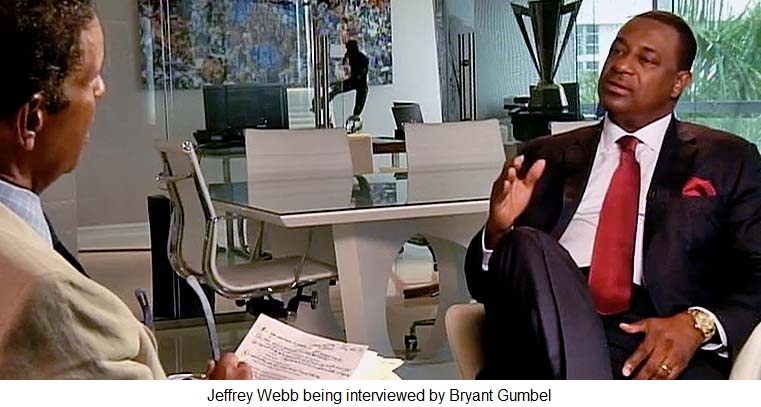
This advocate, Jeffrey Webb, is featured in a current episode of a sports documentary television show in the US.

Sports Revolution 1MIAMI — CONCACAF President Jeffrey Webb, who is Chairman of FIFA¹s Anti-Racism and Discrimination Task Force, appeared Tuesday (May 20, 2014) on the acclaimed HBO program Real Sports with Bryant Gumbel, addressing FIFA’s strategy and efforts to eradicate racism from football.  He discussed the governing body’s responsibility in providing meaningful support for all players around the globe and implementing tougher sanctions to fortify the sport, so that focus can be placed on the game itself.

The Emmy-winning show also featured an interview with United States international striker Jozy Altidore, a member of FIFA’s anti-discrimination body.

HBO will re-air the episode between May 20 and June 21, 2014.

During the 63rd FIFA Congress last year in Mauritius, Member Associations approved the Anti-Racism and Discrimination resolutions proposed by the task force chaired by President Webb.  The application of these resolutions in every country where football is played will bring universality to the mechanisms that combat racism and discrimination.

(http://www.concacaf.com/article/president-webb-speaks-about-racism-on-real-sports-with-bryant-gumbel)
Many professional athletes participating in European soccer, are of Afro-Caribbean heritage. This should be a proud legacy, one to be protected and promoted. (This is also an issue in Brazil).

Jeffrey Webb (born 1964) [1], is the president of CONCACAF and the Cayman Islands Football Association (CIFA) and FIFA Vice President.

He was educated at HillsboroughCommunity College in the United States. His career in the football field spans almost three decades. He was appointed as President of the Cayman Islands Football Association in 1991.[2]

CIFA’s accomplishments under Webb’s administration and leadership were widely recognized and in 1994 he was co-opted as a member of the CFU Executive Committee, and member of FIFA’s Protocol Committee in 1995. Prior to his appointment to CIFA, Webb served as President of the local football club Strikers FC.

Moreover, within FIFA’s governing body, in 2002 Webb became Deputy Chairman of the FIFA Internal Audit Committee and subsequently Chairman in 2011. He is a former member of FIFA’s Transparency and Compliance Committee and, most recently, was appointed as member of FIFA’s Strategic, Finance, Organizing World Cup and Emergency Committees.

Sports Revolution 2Webb also took part of FIFA’s delegations to the World Cup including France (1998), U.S. Women’s World Cup (1999), Korea/Japan (2002), Germany (2006), and South Africa (2010).

Webb was a Business Development Manager at Fidelity Bank (Cayman) Limited, a subsidiary of Fidelity Bank & Trust International Limited, which is involved in retail banking, investment banking, corporate finance and asset management. Outside of banking, Webb co-owns a franchise of Burrell’s bakery chain “Captain’s Bakery” in the Cayman Islands.[3]

On May 23, 2012, in Budapest, Hungary, Webb was unanimously elected to lead the Confederation of North, Central America and the Caribbean Football Association (CONCACAF). He became the fourth President in the Confederation’s history and the youngest leader of any regional association within FIFA to reach this position. As CONCACAF President, his core focus is to restructure the Confederation by building solid foundations to manage, develop and promote the game with a resilient commitment to inclusiveness, accountability and transparency.

As President of CONCACAF, Webb also became FIFA Vice President and an official member of the governing body’s Executive Committee. Moreover, on March 2013 Webb was appointed by FIFA President Joseph Blatter as Chairman of the FIFA anti-discrimination task force, which will oversee all matters related to discrimination within global football.

At the time of his appointment, in 2012, Webb was President of the Cayman Islands Football Association (CIFA).

Webb appointed a new Miami-based General Secretary Enrique Sanz de Santamaría enabling the CONCACAF head office to relocate to Miami.[4]

Source References:

  1. “Jeffrey Webb profile”. FIFA.com. Retrieved 11 July 2013.
  2. “Jeff Webb profile”. Cayman Active. 6 January 2011. Retrieved 1 March 2012.
  3. Brown, Rudolph (9 February 2002). “Captain’s Bakery opens in Cayman”. Gleaner (Jamaica). Retrieved 1 March 2012.
  4. “CONCACAF appoints Enrique Sanz as General Secretary”. CONCACAF.com. 13 July 2012. Retrieved 14 July 2012.

Wikipedia Online Encyclopedia (Retrieved 05/25/2014)–http://en.wikipedia.org/wiki/Jeffrey_Webb

The book Go Lean … Caribbean recognizes that image is an important intangible factor that must be managed to optimize value of Caribbean contributions – more value should equal more pay – see Appendix A – Table. As such the book is submitted as a complete roadmap to advance the Caribbean economy/culture, at home, for Caribbean residents, and advance the Caribbean image throughout the world, to benefit residents and Diaspora alike – see Appendix B for book reference on Brazil footballers.

The book, Go Lean … Caribbean, serves as a roadmap for the introduction and implementation of the Caribbean Union Trade Federation (CU), as a sentinel for the Caribbean “image”. This subject of blatant racism in European soccer is in scope for the CU as this technocratic agency will assume oversight to optimize the region’s:

(1) economy,

(2) security apparatus, and

(3) governing engines.

The roadmap commences with a Declaration of Interdependence. In Verse XXXI (Page 14) it pronounces:

Whereas sports have been a source of great pride for the Caribbean region, the economic returns from these ventures have not been evenly distributed as in other societies. The Federation must therefore facilitate the eco-systems and vertical industries of sports as a business, recreation, national pastime and even sports tourism.

The book posits that one person can make a difference in the Caribbean, and its impact on the world; that there are many opportunities where one champion, one advocate, can elevate society. In fact the book is a collection of 144 different advocacies, so there is inspiration for the Jeffrey Webb’s of the region to make their mark in many different fields of endeavor.

The roadmap specifically encourages the region to foster the genius potential (Page 27) in their communities, forge leadership skills (Page 171), improve for sports (Page 229) and pursue the Greater Good (Page 37). With the participation of many advocates on many different paths for progress, the Caribbean can truly become a better place to live, work and play. We can, and must, promote positive images (Page 133).

Download the free e-Book of Go Lean … Caribbean – now!

————————-

Appendix A – Table: Lucky 18 – The World’s Highest Paid Black Athletes for 2011

Athlete Sport Heritage Contract $$$*
Tiger Woods Golf American $75 million
Kobe Bryant Basketball American $53 million
LeBron James Basketball American $48 million
Dwight Howard Basketball American $27.6 million
Dwayne Wade Basketball American $26.2 million
Carmelo Anthony Basketball American $25.1 million
Ronaldo de Assis Moreira aka “Ronaldinho” Football / Soccer Brazil $24.7 million
Amar’e Stoudemire Basketball American $24.5 million
Kevin Garnett Basketball American $23.8 million
CC Sabathia Baseball American $23.6 million
Vince Carter Basketball American $21.8 million
Tim Duncan Basketball US Virgin Islands $21.2 million
Chris Paul Basketball American $20.9 million
Ryan Howard Baseball American $20.8 million
Usain Bolt Track and Field Jamaican $20.3 million
Rashard Lewis Basketball American $20.1 million
Jahri Evans American Football American $19.1 million
Michael Redd Basketball American $18.8 million

Source: http://madamenoire.com/60523/lucky-17-the-worlds-highest-paid-black-athletes/; posted June 10, 2011; retrieved May 25, 2014.

* Salaries, bonuses, prize money, appearance fees, licensing & endorsement income in the 12 months ending May 1, 2011

————————————

Appendix B: Book Reference

The phrase ‘Brazilian soccer player’ is like the phrases ‘French chef’ or ‘Tibetan monk.’ The nationality expresses an authority, an innate vocation for the job – whatever the natural ability.

Original: Bellos, Alex (2003). Futebol: The Brazilian Way of Life: Bloomsbury Publishing Plc. Publication date: 5/02/2003 ISBN: 9780747561798

Revision: Bellos, Alex (2014). Futebol: The Brazilian Way of Life. Publisher: Bloomsbury USA. Publication date: 5/6/2014 ISBN: 9781620402443
Share this post:
, , , ,

What Usain Bolt can teach banks about financial risk

Go Lean Commentary

Runner GuyThere were 465 US bank failures between 2008 and 2012.[a]

Joke: “The bank returned a check to me this morning, stamped: ‘insufficient funds.’ Is it them or me?”

The foregoing article shows the type of functions that technocrats do: evaluating risk. Any risk that can imperil the complete financial system must be monitored and mitigated. The “extreme value theory” is a model for evaluating risk and predicting future performance; and while not perfect, it is better than doing nothing.

There was no one performing this role in the Caribbean in 2008.

The foregoing article and its reliance on calculus, quantitative methods and econometric modeling is an example of the required technocratic oversight in managing an economy. Usain Bolt is used here as an allegory, a fable. The Economist magazine thusly explains how complex issues can be taught with simplified analogies and illustrations. Banking is more complex than track-and-field; but the pursuit of excellence is similar. Just like any world-class athletic pursuit, this goal is hard to master.

The Economist explains…

THE banking industry did a bad job in the run-up to the financial crisis of assessing “tail risks”, extreme events that represent the least likely of a range of probable outcomes. The Basel Committee on Banking Supervision, which is the international standard-setter for bank capital, has proposed changes in the internal risk models that financial institutions use. In particular, it wants banks to shift from a technique called “value-at-risk” (VaR) to one called “expected shortfall” (ES).

VaR is a way of measuring a firm’s risk of suffering really big losses over a certain period (a day, a week, a month) to a certain level of “confidence”. A daily VaR of $1m at 1% probability means that there is a 99% chance that you will not lose more than $1 [million] on any one day. The problem is that if you have that one bad day in 100, the potential losses could go much higher than $1 [million]. VaR doesn’t have much to say about what those losses might be. The expected-shortfall approach is meant to provide an answer to that question. Instead of asking, “What are the chances that things get so bad that we lose $1 [million]?” it asks, “If things do get that bad, how much would we actually lose?”

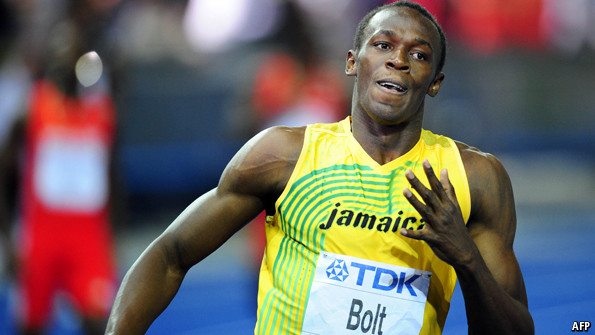
To do this, it uses a statistical method called “extreme value theory”, which looks specifically at what happens in the tail of distributions. To take a more trivial example of where extreme-value theory has been used, a 2011 paper by two researchers at Tilburg University collected data on the personal bests of elite athletes between 1991 and 2008, in order to try and calculate the “ultimate world record” for 100m sprints—the absolute edge of human performance given the times, equipment and drugs-policies that then prevailed. For the 100[meter] for men, the boffins (British slang for technical expert) put the ultimate world record at 9.51 seconds, compared with the record that then prevailed of 9.72, and a current world best of 9.58, set by Usain Bolt in 2009. That looks pretty good: the model came up with a number that was well inside the mark that then prevailed, and is still a hefty improvement on the current record. If extreme-value theory is meant to help banks think through the extremes, this is encouraging.

But like every model in history, expected shortfall cannot predict the future. In an earlier 2006 paper, researchers from the same university tried to calculate ultimate world records for a wider range of events, including the men’s marathon. The researchers reckoned back in 2006 that the best possible running of that distance would yield a time of two hours, four minutes and six seconds. Yet the world record today stands at two hours, three minutes and 23 seconds (Wilson Kipsang in 2013). To be fair to the researchers, they did not claim that their ultimate record could not be broken. But whether bankers will remember that reality can be worse than expected is a different question. Expected shortfall is an improvement on VaR; it is not a crystal ball.
The Economist (Retrieved 04/09/2014) – http://www.economist.com/blogs/economist-explains/2014/04/economist-explains-4

EquasionThe book, Go Lean…Caribbean, serves as a roadmap for the implementation of the Caribbean Union Trade Federation (CU). The book presents the CU as a technocracy, to ensure economic failures of the past do not re-occur. From the outset, the book identified that the Caribbean is in crisis, with the pronouncement that a “crisis is a terrible thing to waste”. The prime directive of the CU is to optimize economic, security and governing engines to impact the Caribbean’s Greater Good, for residents … and bank depositors. This was pronounced in the Declaration of Interdependence – (Page 13):

xxv. Whereas the legacy of international democracies had been imperiled due to a global financial crisis, the structure of the Federation must allow for financial stability and assurance of the Federation’s institutions. To mandate the economic vibrancy of the region, monetary and fiscal controls and policies must be incorporated as proactive and reactive measures. These measures must address threats against the financial integrity of the CU and of the member-states.

In line with the foregoing article, the Go Lean book details some infrastructural enhancements/advocacies to the region’s financial eco-system; to facilitate efficient management of the economy:

  • Fostering a Technocracy (Page 64)
  • Caribbean Central Bank (Page 73)
  • Deposit Insurance Regulations (Page 73)
  • Securities Regulatory Authority (Page 74)
  • Modeling the European Union / Central Bank (Page 130)
  • Lessons from 2008 (Page 136)
  • Banking Reforms (Page 199)

The mis-management of the economy has led to many episodes of “fight-or-flight” among Caribbean society. For many member-states, their Diaspora is more than half their population; i.e. Jamaica and Puerto Rico.

While there is no crystal ball, according to the foregoing article, there is much that can be done. Now is the time for the CU!

The purpose of this roadmap is to make the Caribbean, a better place to live, work and play. No more flight! Now we stand and fight with these technocratic weapons of modern economics.

Download the book Go Lean … Caribbean – now!

———-

Appendix Reference:
[a]. https://news.yahoo.com/facts-numbers-us-bank-failures-183852568.html

Share this post:
, , , , ,
[Top]

Book Review: ‘The Sports Gene’

Go Lean Commentary

Evolution AthleteSuccess is found at the intersection between talent and practice. Or so it seems…

These words are appropriate in reviewing the new book by David Epstein, The Sports Gene. He asserts that certain ethnicities have advantages for excelling in certain sports, but they must still put in the work to excel. These words are equally appropriate for assessing Caribbean life, prospects and cultures.

The forgoing news article in the Washington Times is a Review of the above-cited book; it takes a physiological, cultural and sociological look at the subject of sports and the athletes more inclined to excel at it. In fact the back cover photo features Jamaican Sprinter Usain Bolt, and the book prominently features an anecdote about Bahamian High Jumper Donald Thomas. So this author recognizes that Caribbean people are identified with excellence in sports; maybe even defined as geniuses[a].

The world recognizes that the Caribbean has gifted athletes, but unfortunately these participants must leave their beloved homeland to maximize their talents and earn a living from them. (Even to matriculate as student-athletes)

Book Review: By Robert VerBruggen – Special to the Washington Times, August 26, 2013

Subject: ‘The Sports Gene’ by David Epstein
Why are some people more athletic than others? Why is it that many sports are dominated by players of specific ethnicities?

These are questions that occur to many of us, sports fans and non-fans alike. Unfortunately, academia and the media have stubbornly refused to deal with them in an honest manner, keeping to simple, feel-good answers.

David Epstein’s “The Sports Gene” is a welcome exception. While the book’s title is unfortunate — no single gene could explain something so complex as athleticism — Mr. Epstein provides a careful and nuanced discussion of how nature, nurture and sports interact.

Mr. Epstein proves that genes exert a powerful influence on athleticism, and that ethnic physical differences can affect performance in many sports. Yet he does not shortchange the effects of practice and culture. This is a significant accomplishment.

There’s been much discussion in the popular press about the “10,000-hour rule” — the argument, formulated by journalist Malcolm Gladwell, that one masters a task not by having the right genes, but simply by practicing it for a total of 10,000 hours. This theory does not survive a close inspection by Mr. Epstein.

For starters, the drive needed to practice something for 10,000 hours might itself be genetic. For example, it’s possible to breed dogs and mice that have an insatiable desire to run, and twin studies suggest that genes contribute to the amount of physical activity that people get.

More to the point, the “rule” is based on flawed statistical reasoning. Yes, on average, a person who achieves elite status in a field does so after practicing for about 10,000 hours — but an average is not a rule for individuals to follow. Some people achieve elite status in as little as 3,000 hours, while others take more than twice the average. Every one of these studies has found an immense amount of variation.

Mr. Epstein illustrates this concept by comparing two high jumpers. Stefan Holm of Sweden has had a lifelong love of the sport, and through training, he very gradually improved his performance. Donald Thomas of the Bahamas, meanwhile, managed to clear a seven-foot bar on his first day. At the 2007 World Championships, just a year-and-a-half after his first high jump, Mr. Thomas beat Mr. Holm.

Mr. Epstein details many of the physical differences that give some athletes an advantage. Mr. Thomas benefited from unusually spring-like Achilles tendons. Basketball players are tall and have wide wingspans. Baseball players, who must look at a ball leaving a pitcher’s hand at 90 mph and instantly know whether and how to swing, have amazing vision. And so on.

None of this means that training doesn’t matter. For example, in addition to having great vision, baseball players must build an elaborate mental database of how different pitches look. They’re useless without this database. In one anecdote, Mr. Epstein tells of a professional softball pitcher who easily struck out some of Major League Baseball’s finest hitters. All the time they’d spent watching overhand fastballs had not prepared them for an underhand pitch.

What this does mean is that genetic qualities matter in sports. Which raises a question: Are some of these qualities more common in some ethnic groups than in others?

Much of academia swears that the phenomenon we refer to as “race” is merely a “social construct” with no biological significance whatsoever, but actual genetic research reveals otherwise: As humans spread out across the globe and encountered widely varying environment, each population evolved a little differently.

One difference that emerged is body structure. For example, the Kalenjin — a Kenyan ethnic group that is dramatically over represented in long-distance running accomplishments — tend to have thin lower legs, which is an advantage because weight there dramatically reduces running efficiency.

Further, in general, Africans of a given height have longer limbs than Europeans, and also have a higher center of mass. There are differences in average height among ethnic groups as well.

As with Mr. Epstein’s arguments regarding individual athletic achievement, his arguments about racial differences don’t imply that environment and culture are irrelevant. As Mr. Epstein notes, sometimes an ethnic group can dominate simply because they care about the sport more than their competitors — see the (now fading) pre-eminence of Japanese sumo wrestlers, or the stellar German record in dressage. The Kalenjin, in addition to their physical advantages, are raised in an environment where constant running is the norm.

That is what makes “The Sports Gene” such a worthy read: While the book’s purpose is to push back against the widespread denial that genes matter, Mr. Epstein avoids taking too strident a stance in the opposite direction. Human reality, he explains, isn’t the result of nature or nurture. It’s the result of both.

Washington Times Online –Book Review – Retrieved 04-09-2014 –http://www.washingtontimes.com/news/2013/aug/26/book-review-the-sports-gene/#ixzz2yRDgikdC

Horseback ridingThis subject matter aligns with the publication Go Lean … Caribbean, which serves as a roadmap for the introduction and implementation of the Caribbean Union Trade Federation (CU). The Go Lean roadmap only has one interest in this subject of sports, fostering the economic opportunities that can be forged from it[b].

This Go Lean roadmap first assesses that the Caribbean is in crisis; among the issues: athletes with any ability must seek refuge and opportunities in foreign lands. So this roadmap provides solutions to optimize the region’s economic, security and governing engines. The roadmap provides the facilitation to grow a professional, collegiate and amateur sports eco-system. Many times, the missing ingredients for organized sports are the facilities: stadia, arenas and playing fields. A study of this void, is bigger than just sports, it is “life and death”. But the roadmap posits that sports, even though it is just “extra-curricular”, does bring benefits. In fact, Go Lean quotes the Bible scripture at 1 Timothy 4:8 “For bodily exercise is profitable for a little …”[c]

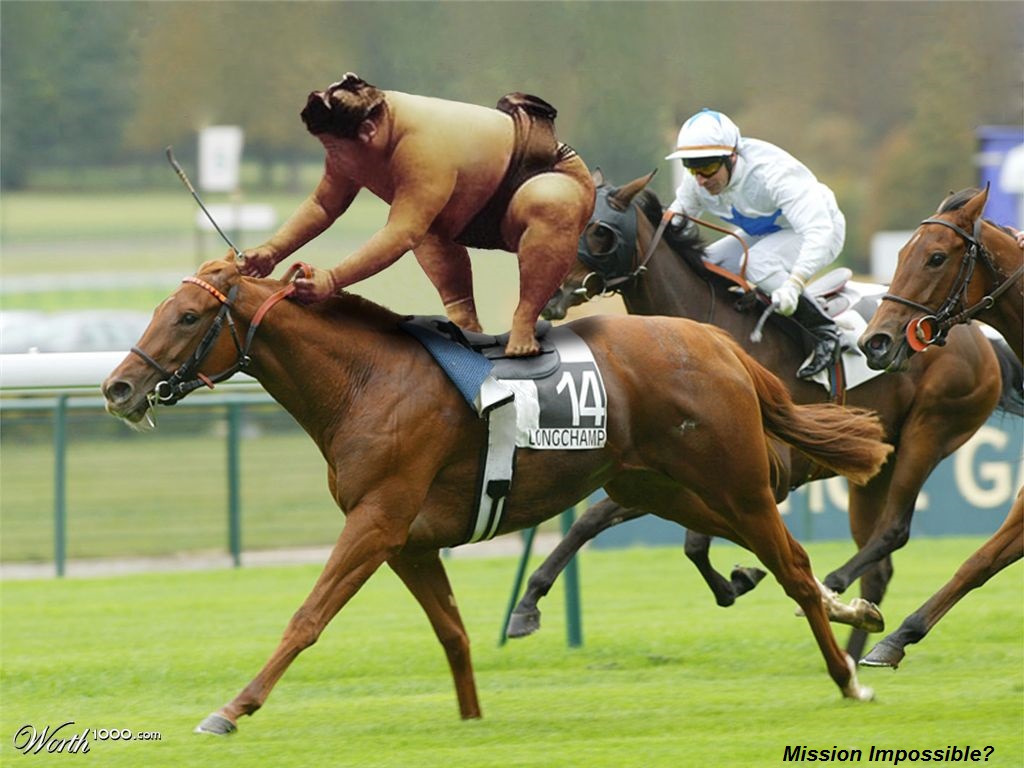
The source book by David Epstein asserts that the rule that anyone can excel at any sport endeavor with 10,000 hours of practice and nurturing is a fallacy. Consider sports like Sumo wrestling and jockeying a horse; there’s no doubt that nature or physiology plays a role for success in these activities, despite the amount of practice. (There’s no way, a jockey will beat a Sumo Wrestler or vice-versa). But most importantly, the source book empathetically establishes that genes alone will never yield the sought-after result, there is the need for skilled training, coaching with best-practices and an internal drive. In so many ways, this parallels the current effort to reboot the Caribbean economic engines: nature (birth-right) is critical, but training, experience, coaching and the technocratic application of best-practices are also needed to forge change. The most important ingredient though is the internal drive; first and foremost, this is identified in the roadmap as “community ethos”.

The Go Lean roadmap recognizes many different kinds of athletics, team sports and individual events. The unique “genius” qualifier is highlighted at the outset of the Go Lean book, in the Declaration of Interdependence (Page 13 – 14), as follows:

xxi. Whereas the preparation of our labor force can foster opportunities and dictate economic progress for current and future generations, the Federation must ensure that educational and job training opportunities are fully optimized for all residents of all member-states, with no partiality towards any gender or ethnic group. The Federation must recognize and facilitate excellence in many different fields of endeavor, including sciences, languages, arts, music and sports. This responsibility should be executed without incurring the risks of further human flight, as has been the past history.

xxxi. Whereas sports have been a source of great pride for the Caribbean region, the economic returns from these ventures have not been evenly distributed as in other societies. The Federation must therefore facilitate the eco-systems and vertical industries of sports as a business, recreation, national pastime and even sports tourism – modeling the Olympics.

Similar to the publication by David Epstein, Go Lean … Caribbean highlights lessons that are learned from flawed ideologies, as in the case that education (abroad) elevates a society. (The Caribbean experience is that of a brain drain). While Epstein’s book prescribed strategies, tactics and implementation to optimize sport performance, Go Lean performs the same exercise for Caribbean economic empowerment.

Now is the time for the Caribbean region to lean-in for the changes described in the book Go Lean … Caribbean. Success is to be found at the intersection between opportunity and preparation.

The benefits of this roadmap are too alluring to ignore: emergence of an $800 Billion economy, 2.2. million new jobs, new industries, services and opportunities for the sports-playing youth of the Caribbean and even an invitation to the Diaspora (and their legacies) to repatriate from North American and European countries so as to preserve Caribbean culture in the Caribbean[d].

Download the book Go Lean … Caribbean – now!

—————–

Appendix – ‘Go Lean’ Book References

a. 10 Ways to Foster Genius – Page 27
b. Separations of Powers – Sports & Culture – Page 81
c. 10 Ways to Improve Sports – Page 229
d. 10 Ways to Preserve Caribbean Heritage – Page 218

Share this post:
, , , ,
[Top]

Bahamians Make Presence Felt In Libyan League

Go Lean Commentary

Basketball_HoopsThe news story in the following news article synchronizes with the book Go Lean … Caribbean in that it depicts the realities of how sports can impact the economics of a community.

Go Lean serves as a roadmap for the implementation of the Caribbean Union Trade Federation (CU), a technocratic federal government to administer and optimize the economic/security/ governing engines of the region’s 30 member-states. At the outset, the roadmap features these statements in the Declaration of Interdependence (Page 13 & 14):

xxi. Whereas the preparation of our labor force can foster opportunities and dictate economic progress for current and future generations, the Federation must ensure that educational and job training opportunities are fully optimized for all residents of all member-states, with no partiality towards any gender or ethnic group. The Federation must recognize and facilitate excellence in many different fields of endeavor, including sciences, languages, arts, music and sports. This responsibility should be executed without incurring the risks of further human flight, as has been the past history.

xxxi. Whereas sports have been a source of great pride for the Caribbean region, the economic returns from these ventures have not been evenly distributed as in other societies. The Federation must therefore facilitate the eco-systems and vertical industries of sports as a business, recreation, national pastime and even sports tourism – modeling the Olympics.

The actual news article was posted as follows:

By RENALDO DORSETT, Sports Reporter (rdorsett@tribunemedia.net)
You can find Bahamians playing basketball on just about every continent but it’s rare to find former high school teammates reunited on the same roster at the professional level.

In the Libyan D1 basketball league, Scottie Farrington and Tehran Cox are two of the top players with the Al Madina Tripoli club.

They are two of three Bahamians competing in the Libya-D1 league along with Torrington Cox who plays with Al Ahly Benghazi.

Farrington, a 6’8” forward and University of Louisiana Lafayette graduate, is currently averaging 21 points, 14 rebounds and four blocks per game while Cox, formerly of High Point University, is averaging a team high 24 points, six assists and four rebounds per game.

The duo first teamed up in 2002 to win the Government Secondary School Sports Association junior boys basketball championship at SC McPherson Junior High under coach Ulric Sands and Chevy Simmons.

They also represented The Bahamas together in 2005 at the Caribbean Basketball Championships in Trinidad and Tobago where they helped lead the Bahamas to an upset over regional powerhouse Puerto Rico en route to the gold medal.

Both players are in their first season with Madina. However, Farrington has previously played in Saudi Arabia, Dubai and Thailand, while Cox, in his first professional stint, began the year in Kuwait.

Farrington said having a familiar face in the starting lineup far away from home has been a benefit both on and off the court, particularly since the country continues to rebuild following the 2011 revolution which ousted Muammar al-Gaddafi.

“It’s an experience of a lifetime. Especially being here with these people who are trying to rebuild

their country after the revolution. Playing here with Tehran and knowing makes this a more comfortable situation,” he said. “We talked about it because we have the same agent but we didn’t think it was going to actually happen.”

The club is currently ranked fifth in the East Group at 3-5, however their individual play has already garnered opportunities for the next possible step in their professional careers.

“I wouldn’t say it’s the best fit but the competition here is better than I expected. A few guys here have played or attended training camp for NBA teams so that means a lot to compete against these guys,” Farrington said. “This is just our first season here with Madina. We signed here in November and after our performance here we have already been contacted by clubs in Spain and in Serbia for next season, but we will save that for later and focus on finishing off this season strong.”

Farrington played under Godfrey McQuay with the St Anne’s Blue Waves before completing his high school career at the Christian Life Centre in Houston, Texas.

He spent his freshman year at Rogers State and his sophomore year at Odessa before he played at the NCAA D1 level with Louisiana Lafayette.

In his senior year at Louisiana, he also teammed with Bahamians Kentwan Smith and Kadeem Coleby.

Cox, a 6’1” point guard, was dominant in the backcourt for the CI Gibson Rattlers before he finished his high school career at Fayetteville Christian School in Fayetteville, Arkansas.

He spent two seasons at Arkansas Fort-Smith before he transferred to High Point for his junior and senior seasons.

Cox has helped Al Ahly Benghazi to second place in the West Group at 5-2, on a roster that also features former Boston Celtics draft pick Orien Greene.

Torrington Cox, a 6’7” forward, is in his seventh professional season and is currently averaging 25 points, 12 rebounds and two blocks per game. He previously played in Mexico, Chile, Saudi Arabia , Egypt, Kuwait, Dubai and was also selected by the Utah Flash in the 2008 NBA D-League draft.

Source:  The Tribune – Bahamas Daily Newspaper Online Site (Retrieved 03/04/2014) –http://www.tribune242.com/news/2014/mar/03/bahamians-make-presence-felt-in-libyan-league/

The Go Lean roadmap posits that genius qualifiers are found through out Caribbean society, and that this may be identified with excellence in sports. With the proper market organizations, sporting events can be lucrative for a community and participants. But that market organization does not currently exist in the Caribbean. An objective of this roadmap is to develop the organized markets.

This objective aligns with the CU’s prime directives to elevate the region’s economy, create future prospects for the Caribbean’s youth and invite the far-flung Diaspora to return to their island homelands. Consider the experiences of the 3 Bahamian athletes in Libya (a country in the North Africa’s Sahara desert region), would they rather be in Libya or the Bahamas, or any other Caribbean destination? The tagline in the Go Lean book is that the Caribbean is the world’s greatest address; there are not too many claims of Libya competing for that title.

Now is the time for all of the Caribbean to forge permanent change by implementing the Five Year roadmap advocated in Go Lean … Caribbean. The benefits of this plan as it relates to sports is the optimization of local opportunities at all levels, youth all-stars & regional tournaments, an intercollegiate eco-system and professional leagues. The CU will facilitate the applicable venues (stadia, arenas, fields, temporary structures and broadcast/streaming capabilities). The roadmap calls for the creation of 2,000 new direct jobs within the region.

Now finally, with the Go Lean implementations, the Caribbean can become a better place for all citizens to live, work and play.

Share this post:
, ,
[Top]

Collegiate Sports in the Caribbean

Go Lean Commentary

CampionExcelsiorK20120911IASports play a big role in Caribbean culture. Education plays a big role in the empowerment of communities. There is a junction between sports and academics; this is the sphere of college athletics.

Cuba has 37 universities…alone. In total, the Caribbean has 42 million people (2010 figures) in all 30 member-states. So surely there is enough of a student population to field sports teams.

More so, there is a fan base in the communities to complete the eco-system of sports spectators and community pride. Yet, there is very little college sports being facilitated in the region right now. Despite the breadth and talent base to form leagues and rivalries among the established universities within the Caribbean. Any system for college athletics is noticeably lacking.

This is the mission of the Caribbean Union Trade Federation (CU); to function as a Caribbean version of the National Collegiate Athletic Association (NCAA) in the US. We have much to learn from this organization’s history, successes & failures.

“The NCAA was founded in 1906 to protect young people from the dangerous and exploitive athletics practices of the time,” so states the NCAA on its official website.[a]

According to Dan Treadway, Associate Blog Editor for the Huffington Post online news magazine[b]:

The NCAA often likes to harp on tradition and the sanctity of the term “student-athlete,” but it fails to recognize its true roots.

The association in fact got its start because, at the time of its creation, football was in danger of being abolished as a result of being deemed too dangerous a sport. During the 1905 season alone, 18 college and amateur players died during games. In response to public outcry, Theodore Roosevelt, an unabashed fan of the sport, gathered 13 football representatives at the White House for two meetings at which those in attendance agreed on reforms to improve safety. What would later become known as the NCAA was formed shortly after on the heels of this unifying safety agreement.

Collegiate Sports is now big money; an economic eco-system onto itself. How much money does the NCAA make?

For the 2010-11 fiscal year, the NCAA revenue was $845.9 million, (not including College Football). Total rights (broadcast & licensing) payment for 2010-11 was $687 million, of all NCAA revenue. The remaining revenues are mostly event ticket sales.

How did the NCAA go from being an agreement to promote safety standards so as to prevent death on the playing field, to a multi-million dollar enterprise? Chalk that up to 100 years of social evolution.

The book Go Lean … Caribbean serves as a roadmap to advance to the end of the evolutionary process and establish the economic engines to empower the Caribbean region, even in areas like sports and culture.

So how to build sports franchises anew? How will colleges & universities create success from collegiate athletics? It’s a complex “art and science”, but first, it starts with facilities – the CU’s Fairground administration will fund, build and manage sports venues. The CU will be the landlord; the academic institutions, the tenants.

The Go Lean roadmap navigates the changed landscape of globalization and pronounces that change has come to the Caribbean but the region is not prepared. Despite the great appreciation for sports, and the excellent talent of its athletes, there is no business model for the consumption of Caribbean collegiate athletics.

Now, for much of the Caribbean, the population tunes in and pays for cable/satellite TV service to consume American collegiate athletic programming. But how many people in the region are watching Caribbean college sporting activities? None. Though there is a demand, undoubtedly, there is no supply process in place.

In the adjoining table in the Appendix, 36 schools are identified that are capable of fielding credible sports teams, if the appropriate facilitations were in place.

There is the demand. What’s missing is the organized market for consumption. The implementation of this Go Lean roadmap fills this void. This completes the supply!

Applying the model of the NCAA, much can be learned. We can copy their success, and learn from their pitfalls. The NCAA credits tremendous revenues for itself, but not necessarily for all of their members. Under NCAA supervision, the majority of athletic programs, in fact, lose money and are subsidized by funds from their respective university. While the NCAA is needed for academic integrity in college sports, many times, it fails at this responsibility. They lack the CU’s lean execution ethos.

After 100 years later, does the world still need the NCAA? Absolutely! For more than the collective bargaining/negotiations role for the business side of college athletics. They are also the governing body for college athletics, ensuring fairness and good sportsmanship. For the Caribbean Union, this role is to be assumed by the CU Sports Administration, to provide technocratic efficiencies. The resultant eco-system facilitates the CU mandate, to make the region a better place to live, work and play.

Download the book Go Lean … Caribbean – now!

———————-

APPENDIX A – References:
ahttp://www.ncaa.org/wps/wcm/connect/public/NCAA/About+the+NCAA/History
b – http://www.huffingtonpost.com/ daniel-treadway/johnny-manziel-ncaa-eligibility_b_3020985.html

———————-

APPENDIX B – Caribbean Regional Colleges & Universities

Member-state

Legacy

Name

Antigua and Barbuda

British

Antigua State College
Aruba

Dutch

University of Aruba
Bahamas

British

College of the Bahamas
Barbados

British

University of the West Indies – Cave Hill, American University
Belize

British

University of Belize
Galen University
Bermuda

British

Bermuda College (Community College)
Cuba

Spanish

University of Havana Universidad de Oriente, Polytechnic University José Antonio Echeverría
Dominican Republic

Spanish

Universidad Autónoma de Santo Domingo (UASD) – (English: Autonomous University of Santo Domingo)
French Caribbean

French

University of the French West Indies and Guiana Guadeloupe Campus, Martinique Campus, French Guiana Campus
Guyana

British

University of Guyana
Haiti

French

Caribbean University / Université Caraïbe, Université d’Haiti
Jamaica

British

University of the West Indies – Mona, University of Technology (U-Tech), Mico University College, Northern Caribbean University (NCU), University College of the Caribbean (UCC), International University of the Caribbean (IUC)
Netherlands Antilles

Dutch

University of Curaçao
Curaçao
Sint Maarten University of St. Martin
Puerto Rico

USA/

Spanish

Caribbean University, Metropolitan University, University of Puerto Rico, University of Turabo
Suriname

Dutch

University of Suriname Anton de Kom Universiteit van Suriname
Trinidad and Tobago

British

University of the West Indies – Saint Augustine University of Southern Caribbean (USC) University of Trinidad and Tobago (UTT)
US Virgin Islands

USA

University of the Virgin Islands

Share this post:
, ,
[Top]

10 Things We Want from the US and 10 Things We Don’t Want from the US

Go Lean Commentary

There are things we, in the Caribbean want, and things we do not want from the United States of America. Here is a laundry list of the Good and the Bad and how the roadmap to elevate Caribbean society, the book Go Lean…Caribbean, describes how the lessons will be applied in the implementation of the Caribbean Union Trade Federation (CU):

American Imports

What we want

10 GOOD Things We Want from the US
10 BAD Things We Don’t Want from the US
1
Free Market – In pursuit of the American Dream
100 years ago there was great debate in terms of the best governmental system for mankind: communism or capitalism. After 75 more years, that debate was over! Communism had proven ineffectual. Free Market capitalism as exercised in the US, in pursuit of the American Dream to elevate one’s standing in life, is what the Caribbean region needs, wants and deserves.
The Go Lean roadmap extols a Caribbean dream; that in addition to synchronizes with the American version also has additional advocacies like repatriation to the islands.
Strategic Interest Prioritization – Or Lack There of
The US is now the only remaining super power, but they only exert their “muscles” when their own strategic interests are involved. So after the promise of “never again”, after the Nazi Holocaust, the world found the US “sitting idle” as other genocides/ethnic cleansings transpired, as in Cambodia, Bosnia and Rwanda. Why this inaction? Simple: there was no strategic US interest.
The Go Lean roadmap advocates that despite the two US Territories (Puerto Rico & USVI), the Caribbean must forge law-and-order and plan/allow for its own priorities.
2
Tourists
Tourism is still the primary economic driver for the Caribbean region. While there is a lot of competition in the domestic US and internationally, the Caribbean continues to make the case that its region is the best tourist destination in the world. The region wants to continue to appeal to Americans of all demographic persuasions to come visit the islands for stay-overs (land-based hotels) and/or cruise ships. We want to forge vacation options and traffic for the upper, middle and lower classes of American society.
The CU forges plans, advocacies and re-boots to further enhance the Caribbean tourism product array.
Partisan Politics
In 2013, the US Government almost came to a grinding halt on two occasions; due to an impasse in raising the sovereign debt limit and a failure to pass a budget by the end of the fiscal year. The reason for these failures in delivering governmental obligations was partisan politics. Factions in the Republican Party were determined not to give in to the continuation of certain Democratic Party policies. These polar oppositions preferred to default on debt payments or shut down the government than to compromise from their positions.
The Go Lean roadmap dictates certain automatic provisions (budgets) to assuage legislative deadlocks.
3
Capital
There are many Financial Centers around the world (London, Zurich, Hong Kong, etc.) but none with the liquidity like Wall Street. They have the capital the Caribbean needs for Direct Foreign Investments. After the 2008 Financial Crisis, the US Federal Reserve Banks have maintained a policy of flooding the money supply to keep the cost of capital (borrowing) low.
The Go Lean roadmap calls for the emergence of the Caribbean Dollar (C$) managed by a technocratic Caribbean Central Bank. This structure allows for more liquidity in the existing stock exchanges in the regions. A strong regional currency will also mitigate primary cause for prior emigration.
Quantitative Easing – De-Americanize World Money
It’s a standard accepted practice not to overstate the money supply and that this practice results in de-valuing currencies. But the US feels that this policy does not apply to them. To offset the 2008 Credit Crunch, the Federal Reserve instituted a policy of Quantitative Easing and set the Discount Rate to near zero so that banks could get access to almost-free Central Bank money. The end result now is that the Euro, which started in 1999 pegged E$1.17-to-1 with the US dollar, now trades for at E$1.36.
Imagine a savings account established in 1999 losing 19% of value just sitting idle. The C$ plan is modeled on the Euro.
4
Pax Americana
Pax Americana is not a “de jure” policy of the US government, but rather a “de facto” policy. The spirit of the Monroe Doctrine is still imbued in US foreign policy. This implies that any European aggression in the Americas is an affront to the US. Practically, the US strong military ensures peace in the region. There is no need for massive military output by Caribbean states.
The CU roadmap includes Cuba into the brotherhood of a Caribbean Confederacy. Previous expressions of Pax Americana have resulted in a trade embargo for Cuba.
2nd Amendment
The “right to bear arms” has a personal application beyond the country’s entitlement to maintain a militia. This “right” has been interpreted in a manner in which any normal “man” can get possession of guns and other armament. This proliferation of guns in society results in the highest rate of gun violence in the world, even an unconscionable rate of school shootings.
The Go Lean roadmap purports that this status has also caused discord – a gross abuse and availability of illegal guns – in bordering communities of Mexico, and Caribbean states of the Bahamas, and the DR. This propels our gun-related crime.
5
Intelligence Gathering
After the September 11 Terrorist attacks the US ramped up its deployment of Intelligence Gathering capabilities. These systems allow for more predictive modeling and better tracking of suspects and threats.
The CU maintains the example of the investigation of the April 2013 Boston Marathon Bombings region – arrests were made in 48 hours – is a successful model to copy.
Privacy Violations
In the name of security, the US surveillance apparatus has been heavy-handed. They have even eavesdropped on phone calls for foreign heads of states visiting the UN, without search warrants from official courts. (One report and confession found the US spying on the Bahamas). The average law-abiding citizen should not have to worry about an over-reaching security watch dog.
The CU envisions a balanced Intelligence Gathering goal.
6
Crime Watch Initiatives
“If you see something, say something” – is the mantra of the crime and terror awareness movement in the US. This involves the verticals from crime watch to public CATV.
The Go Lean roadmap provides comprehensive anti-crime and anti-terror measures, both the systems, personnel and funding to effectuate this change.
Criminal Organizations – RECO
The US is the single largest economy in the world. As a result of this success, “bad actors” have also emerged.
The CU recognizes that the history of US organized criminal organizations running rampart in Cuba is a risk to be mitigated for future Caribbean societies. The roadmap is to monitor and assuage all enterprise criminal activities.
American Imports (cont’d)
10 Things We Want from the US
10 Things We Don’t Want from the US
7
Melting Pot Societies
The Latin term “E pluribus unum” or “Out of many, one”is a phrase on the official Seal of the United States. Though this was never codified by law, this phrase is a de facto motto of the US. This corresponds with actual history as immigration was always a constant feature. The US always benefited with empowering immigrants impacting the economic engines of the country. There are many industries where the “best of the best” try to work their way to the US; consider the broad examples of Wall Street or Hollywood and the specific example of German aero-space engineer Wernher von Braun, who inspired & aided US Space efforts and the quest for a man on the Moon.
The CU represent 30 member-states and 4 languages so any hope for a successful union depends of successful “melting pots” in our region.
Discrimination of Immigrants
Hazing and discrimination seem to have been a rite of passage for every immigrant group’s experience as they have emerged in the US. This was the experience for the Irish, Italian, Jewish, Puerto Rico, Cuban, and other communities, no matter the time frame (1800’s, 1900’s and 2000’s). Why should hazing be experienced, when there is economic value to immigrant populations?
The CU posits that empowering immigrants should be invited and accommodated; the local communities should plan and facilitate the impact of changes: language translations, Diaspora retailing and cultural sensitivity training. There is also the inevitable refugee inclusion that all successful societies must allow for, though not planned nor invited. These can be distributed among the region.
8
Family Holiday Re-unification
The busiest travel day of the year in the US is the Wednesday before Thanksgiving; the 2nd busiest day is the following Sunday. Obviously American families place a high priority on coming together for holiday festivities. Though not as extreme, this pattern is repeated for other holidays like Christmas, Easter and family reunions.
The CU advocates “push and pull” factors of family reunification throughout the Go Lean roadmap. Plus, the transportation solutions enable more easy access.
Family Abandonment
Senior Living Facilities are a big industry in the US. This is due to the family habit of abandoning elderly parents to the care of professional strangers. The Caribbean way traditionally is to house their Senior Citizens with families, whether the economics apply or not.
The CU has a prime directive to encourage repatriation back to the Caribbean homeland and assuage societal abandonment. Frankly, senior citizens should avoid the cold climates of North American and EU Diaspora cities.
9
Media Arts – Film, TV, Stage, Music, e-Games
While prospects for many traditional 20th Century industries (factories, auto, steel, mining) have declined in the US due to the competitive imbalance of globalization, media continues to flourish. In 2011 the global box office amassed $32.6 billion in revenues. Hollywood continues to be a growing and impactful economic engine. Broadway saw $11.2 billion that year, while music and other media continued to enjoy strong numbers. US Media Arts have become more than just past-time, it’s a sustainable lifestyle.
The CU roadmap posits that art and music can drive big economic returns as long as the complete eco-system is there to identify, foster & compensate stakeholders.
Cultural Neutralizations – Domination of airwaves
There are other cultures than just American. If not abated, the American media will dominate and neutralize the airwaves. Caribbean culture should be preserved and promoted. With American media comes American values, and these may not always advocate what’s best for Caribbean life. Consider consumerism, proliferation of guns and drugs, societal abandonment, language assimilation and other social ills.
The CU roadmap makes comparison to cultural protectionism as employed in France versus the free market approach in the US. While France doesn’t lead many of the world’s media output, they have maintained their unique culture. This propels their tourism – 25 million visitors to Paris.
10
Sports Professionalism
The American leagues for Baseball, Football, Basketball, Hockey, Soccer and even their Olympic models inspire athletes that they can earn a living based on their talents, disciplines and abilities. There are many levels for the American sports world, so even if money is not the object, other benefits, like educational scholarships and civic pride, can often provide positive impacts on society. The quadrennial Olympics are more successful today because of the Americanization of the business models of these events; which is heavy on media, sponsorships and free-market ticket sales.
The Go Lean roadmap includes a comprehensive sport promotion and administration apparatus within the CU Cabinet level State Department.
Win at all costs ethic
There is a worldwide movement to curb the sport world of performance enhancing drugs. Many of the recent advances in the “outlaw” industry have emerged from the US (i.e. BALCO, HGH, PEDS, etc.). This scourge is part of the “win at all costs” ethos that American sports seem to foster. This attitude also relates to the treatment of the retired athletes; this refers to the abandonment of expended athletes, once they are perceived to offer no further contributions.
The Go Lean roadmap calls for rebooting sports administration, including the establishment of an Anti-Doping agency within the CU Trade Federation to elevate regulation and enforcement to the federal level. Other benefits of the regional focus will include better oversight of sports academies, agents and leagues.

A large number of Caribbean people live abroad, in the Diaspora. They live in places like the US, Canada, the UK and Europe. This commentary is Part 1 of 4 in a series examining the destinations of this Caribbean Diaspora. The full series is as follows:

  1. 10 Things We Want from the US and 10 Things We Do Not Want
  2. 10 Things We Want from Canada and 10 Things We Do Not Want
  3. 10 Things We Want from the UK and 10 Things We Do Not Want
  4. 10 Things We Want from Europe and 10 Things We Do Not Want

Everyone is urged to lean-in to the roadmap to introduce and implement the Caribbean Union Trade Federation (CU).

Download the book Go Lean … Caribbean – now!

Share this post:
, , , , ,
[Top]

Role Model: Kevin Connolly – Advocate for Muhammad Ali

Go Lean Commentary

This story-line is retrieved from the movie “Muhammad Ali’s Greatest Fight” (2013). See the summary here:

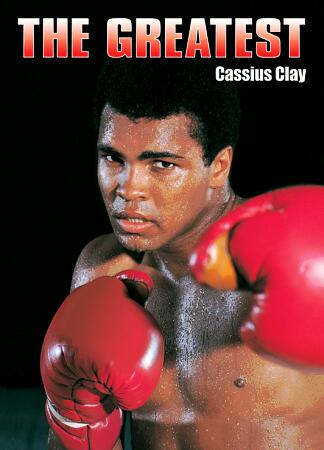
muhammad-ali-jpgIn 1964, world champion boxer Muhammad Ali requested exemption from the military draft based on his religious beliefs. His request was denied and when he subsequently refused induction into the army, he was convicted and sentenced to 5 years imprisonment. His case eventually works itself up the Supreme Court. In their first conference after the case is presented, the justices decide by majority vote (5 to 3) to uphold the conviction and Justice John Harlan is tasked with preparing the majority opinion. He assigns one of his clerks, Kevin Connolly, to prepare a first draft but try as he might [Mr. Connolly] believes that the decision is wrong. His draft argues for overturning the conviction… eventually Justice Harlan agrees with him. The Justice must now find a way to convince his colleagues.
Source: IMDB – http://www.imdb.com/title/tt2061756/?ref_=nv_sr_2

The review of this movie –  The Atlantic Magazine – adds great insight and perspective. Consider here:

In 1960 Cassius Clay burst onto the scene – and burst is about the only word to describe it – he was an 18-year-old amateur boxer who lit up the Summer Olympics in Rome with his brashness and youthful exuberance, to say nothing of his breathtaking ability. (He easily captured the light heavyweight gold medal.) Clay turned pro a few months after the Olympics, and within two years, he became more of a media star than the reigning heavyweight champion, Floyd Patterson, or Patterson’s successor, Sonny Liston. From the beginning he transcended boxing, making bold predictions – usually correct – about what round he would stop his opponents in; his hilarious doggerel poetry was recited by school kids who had never seen a boxing match. He cut a record (a cover of Ben E. King’s “Stand By Me”), appeared in a movie (as a heavyweight contender who knocks out Anthony Quinn in the opening moments of Requiem for a Heavyweight) and, in February of 1964, shocked everyone but himself by whipping the fearsome Sonny Liston, a 7-1 favorite for the heavyweight title. Within days of his victory, though, he created an even bigger shock when he announced that he had become a Black Muslim and changed his name to Muhammad Ali. And that was just the beginning.

In 1965, he failed a mental aptitude test for the draft. But early in 1966 the war in Vietnam was escalating and resistance to it was gathering momentum, so the standards for induction were lowered and Ali was classified as eligible for the draft. His lawyer presented a letter to the draft board requesting deferment as a conscientious objector. Three days later, the request was denied, and in 1967 he was arrested, convicted of draft evasion, and stripped of his heavyweight title by New York and other powerful state athletic commissions. In 1971, his appeal was heard by the U.S. Supreme Court. Opinion polls at the time (1971) indicated that the vast majority of older whites believed Ali should have been sent to jail, while an overwhelming number of blacks and younger white college students, many of whom had gone to see Ali on one of his campus appearances, vehemently supported his anti-war stance. Public sentiment about Ali pretty much followed the same lines as public opinion on the war in Vietnam, and as more people turned against the war, more supporters flocked to Ali’s corner.

The Justices reviewing this matter included Thurgood Marshall, as the only black justice on the court at the time. But Justice Marshall recused himself from the case, having been the Solicitor General on Ali’s earlier conviction. [(The Solicitor General is required to argue in front of the court on behalf of “The People”)]. Justice Harlan, the responsible party for communicating the majority decision, delegated this task to Kevin Connolly, his chief clerk; [(the Justices are allowed up to 4 Clerks to do the heavy-lifting of researching and composing opinions on before of their legal “masters”)]. Mr. Connolly was convincingly idealistic in this case; his dogged pursuit of justice helped turn the Court’s decision around.

At the time Justice Harlan, who was dying of cancer and would resign from the Court later that year, became finally convinced of the sincerity of Ali’s religious and anti-war beliefs and, against the wishes of his close friend Chief Justice Burger, shifted his vote to even the balance at 4 to 4. [(There was no further testimony from Ali or supporters, just the ruminated logic of the clerk Connolly and the appeal of a better nature)]. He eventually made such a convincing argument to the other conservatives on the court that the decision became unanimous (8 to 0, with an abstaining Justice Marshall).
Source: Extractions from Allen Barra, The Atlantic Magazine. Posted October 4, 2013; retrieved February 14, 2014 from: http://www.theatlantic.com/entertainment/archive/2013/10/muhammad-alis-most-formidable-opponent-was-the-us-supreme-court/280280/

The advocate in this drama is Kevin Connolly, the chief clerk for Supreme Court Justice Harland. His steadfast commitment to justice prevailed, in the end. He saw the miscarriage of justice in the un-balanced application of the law for religious/conscientious objections for White ministers as opposed to Black Muslim adherents of faith. He wielded his influence on his boss, Justice Harland, who then influenced the remaining court – one man made a difference on this court, and eventually the world.

The book Go Lean … Caribbean serves as a roadmap for the introduction and implementation of the Caribbean Union Trade Federation (CU). The book posits that one person can make a difference in the Caribbean; that there are many opportunities where one champion can elevate society. In fact the book is a collection of 144 different advocacies, so there is inspiration for the Kevin Connolly’s and Muhammad Ali’s of the region to make their mark in many different fields of endeavor. The roadmap specifically encourages the region to foster the genius potential (Page 27) in their communities, forge leadership skills (Page 171) and pursue the Greater Good (Page 37). With the participation of many advocates on many different paths for progress, the Caribbean can truly become a better place to live, work and play.

Download the book Go Lean … Caribbean – now!

Share this post:
, , ,
[Top]

Could the Caribbean Host the Olympic Games?

Go Lean Commentary

Freedom of speech is great for the flow of information in a democracy. But freedom of speech has its limits, notwithstanding libel, slander and defamation possibilities. If a person yells out “FIRE, FIRE” in a crowded theater, knowing that there is no fire, the resultant panic and crush of people fleeing for the exits is actually criminally liable. In some jurisdiction, if death results, the culprit can be charged with statues against “depraved indifference”. Wow, that could be serious!

On the other hand, there is the practice of dreaming and acting on dreams. Some of the biggest accomplishments in world history, started as someone’s dreams. Once actuated, one step after another led to the eventual fulfillment of the dream.

See this article here from Caribbean Journal Online News Site; retrieved 02/12/2014 from http://www.caribjournal.com/2014/02/13/caribbean-idea-could-the-caribbean-host-the-olympic-games/:

thumbWhile the Caribbean has become relatively accustomed to dominating at the Summer Olympics, this year’s crop of Caribbean winter athletes has us thinking. With all of the Caribbean’s continued success in international athletics, why couldn’t the region (or one of the countries in the region host the Summer Olympics? 

The Olympics has been held in the US, Asia, Australia, Europe and (soon) South America, but never in the Caribbean.  So we looked around the region to think about which countries could, at least hypothetically host the Games. The Games must be based in a single city; given much of the region’s size, the Games would likely need to be held across an entire island, though perhaps nominally based in a city.  

A potential Caribbean host country would also need several major qualities: a large enough territory to host the myriad events held in the Summer Games; a high enough level of infrastructural development; a big enough airport and a hotel stock large enough that it could expand without too much difficulty to meet the needs of the Games. We isolated several Caribbean islands: Jamaica, Hispaniola (Haiti and the Dominican Republic), Trinidad and Tobago, Guadeloupe, Puerto Rico.

Jamaica is large enough and its hotel stock is big enough, but its infrastructural development would need work; given Jamaica’s brand equity around the world (and its athletic dominance), this could be a natural choice, with Montego Bay being the best fit for a single city given its topography. Hispaniola would be the most provocative choice: could two neighbors that often have a stormy relationship bridge their divides and come together for international sport? Lack of infrastructure, particularly on the Haitian side, would be an issue, but adding that infrastructure would also enormously benefit the western half of the island.

Could the Games be held in Port-au-Prince and Santo Domingo together? Trinidad and Tobago has the infrastructural development, the territorial size, and the airport, but a small hotel stock. Could Port of Spain host the Games with many events held in Tobago? A system of fast ferries and increased flights would make for an entertaining twin-island Olympics.

 Guadeloupe would be a bit of a wild card; its roads and infrastructural development far outpace much of the region; it has enough undeveloped land and a relatively large size. Could the Games spread across each of the islands of the archipelago? Puerto Rico is large, with developed infrastructure, and it’s part of the United States, with a relatively robust hotel stock and strong existing sports infrastructure. Of course, its debt problems would pose a significant hindrance to hosting the Games in the next few decades.

Cuba is another option, although the continued embargo from the United States would likely be a significant stumbling block. Otherwise, the island has the size, infrastructure and level of development to be considered. There’s another option — what about a regionally-hosted Olympics? Would the IOC ever support something like that? Would the Caribbean grant temporary approval for foreign airlines to operate regional service? Would a fast-ferry company seize on the opportunity?

If the region could source the majority of the funding from sponsorship’s and other external sources, the benefits of new hotels, infrastructure, investment and prestige could be significant. But the Caribbean would need to ensure that the foreign money was enough that it didn’t put it any further into already-crippling debt. Ultimately, the question is this: instead of spending billions on developed countries hosting the Games, why not spend the same money for an Olympic Games that actually leads to development?

Imagine a Trinidad or a Jamaica or a Hispaniola with fresh, modern hotels, large stadia and, crucially, sparkling new roads (not to mention the vast tourism marketing potential of hosting the Games). Of course, there’s another major issue: the weather. Summer in the Caribbean means the risk of hurricanes. But with major storms popping up across the globe, is the Caribbean really alone in that risk anymore? And couldn’t Olympic development be done at a hurricane-proof standard?

What do you think? Could the Caribbean ever host an Olympic Games?

The Caribbean hosting the Olympics is just dreaming, not reporting. Most men and women standing on the podium receiving their winning medals can trace their origins back to some dream. A dream for the athlete, coach and/or parent. Sometimes, too the whole community is dreaming. Is the thought of the Caribbean hosting the Olympics some day just a dream now in 2014 or can the “dominoes” be put in place that once actuated can lead to an eventual successful bid to host some future Olympiad?

Tipping the “dominoes” to enable a better business environment is the mission of the Go Lean … Caribbean roadmap. This even applies to sports. The books purports that sports can be a great economic driver for the region, and that the business model of the Olympics can be forged in the region on a minor scale. In fact the book proposes the CU Games as a bi-annual event that encompasses many Olympic-style events, more than just Track & Field. This approach would bring the necessary regional integration necessary to develop any long time plans for a big dream of the Olympics. (But the recommendation here is to NEVER host one).

This commentary declares that the merits of the foregoing article is pure rubbish. No one Caribbean country possesses the population base and economic engine to make an Olympic bid viable. While comparisons can be made for Greece, the host country for the 2004 Summer Olympics, this example is a better argument for opposition of any Olympic hosting. Greece experienced much financial distress as a result of their Olympic hosting; the country was near insolvency during the European Sovereign Debt crisis of 2009 – 2012, if not for the bail-outs of the European Union.

To the contrary, the entire Caribbean region tallies 42 million people and the results of economic integration can yield a GDP of $800 Billion (2010). Greece on the other hand had a population count of 10.8 million and GDP of $250 for the same period.

Lastly, the Go Lean roadmap calls for the emergence of the Caribbean dollar unified currency. This structure would spur the elevation of the region’s capital markets (9) for stocks and bonds. This approach would satisfy the liquidity needs to finance the construction of any and all sporting facilities required for sporting events.

Download the free e-Book of Go Lean … Caribbean – now!

Share this post:
, , ,
[Top]