Dominica raises EC$20 million on regional securities market

Go Lean Commentary

imagesThe forgoing news article synchronizes with the book Go Lean … Caribbean in that it advocates the alternative financing scheme for government debt; that of treasury bonds in the region’s security markets. The news article further describes the success using the existing monetary union for the Eastern Caribbean states. The Go Lean roadmap extrapolates that monetary union for all 30 member-states and the stronger currency of the Caribbean Dollar. This approach exceeds the current regime for many Caribbean states, that of foreign debt, which has to be repaid in foreign currency.

This book therefore promotes independence (Page 120), by being less beholden to foreign powers and foreign banks. Yes, independence by means of interdependence.

Roseau, Dominica – Dominica raised EC$20 million (One EC dollar = US$0.37 cents) on the Regional Government Securities Market (RGSM) on Monday with with Prime Minister Roosevelt Skerrit saying it represents confidence in the policies of his administration.

The money was raised at a record low 1.999 per cent through the first of a series of three 91-day Treasury Bill offerings.

“Many countries in the developed world especially in Europe have had difficulty in raising monies at concessionary rates. The discount rate achieved in Monday’s Treasury bill offering means that government can now raise the financing it needs at a lower cost to the taxpayers of Dominica,” said Skerrit, who is also finance minister.

He said his administration has had to grapple with Dominica’s own challenges “but we have worked actively to build a strong platform for sustained economic growth.

“Our prudent fiscal and economic policies have insulated the country from the more severe effects of the global recession,” Prime Minister Skerrit added.

A government statement said that the rate of 1.999% is 50 basis points below the previous record of 2.49%.

“Investors view the purchase of the 91 day Treasury bill as a low-risk investment opportunity. The low Treasury bill rate demonstrated the ability of the Government of Dominica to raise money at relatively low cost,” the statement said.

It said that as a result, the government will seek to raise an additional EC$65 million on the RGSM through the remaining two, 91 day Treasury bills and one five year, EC$25 million bond.

“This is to finance part of government’s operating budget and refinance existing government debt, the interest rate on which is much higher than the interest rate government obtains on its Treasury bills. Treasury Bills present an avenue to invest outside of the normal banking system,” the statement added.
Source: Caribbean360.com – Caribbean Online Magazine (Retrieved 03/21/2014)http://www.caribbean360.com/index.php/business/1107319.html#ixzz2wcE8gxHl

This book serves as a roadmap for the implementation of the Caribbean Union Trade Federation (CU), and the Caribbean Central Bank (CCB) to issue the regional Caribbean Dollar currency. This CCB institution is projected as an independent, yet technocratic federal agency to administer the region’s monetary affairs. Thus ushering a change in funding options available to the 30 member-state governments. At the outset, the roadmap identified this urgent need, stating this clause in the Declaration of Interdependence (Page 14):

xxix. Whereas all Caribbean democracies depend of the free flow of capital for municipal, public and private financing, the institutions of capital markets can be better organized around a regional monetary union. The Federation must institute the controls to insure transparency, accounting integrity and analysis independence of the securities markets, thereby shifting the primary source of capital away from foreign lenders to domestic investors, comprising institutions and individuals.

The foregoing news article depicts how much cheaper this funding approach is compared to alternatives, as Grenada was able to raise so much short term money at a low rate of 1.999%. This is much cheaper than any bank loan option. But with this alternative financing scheme, come new risks and threats. The Go Lean roadmap anticipates the many consequential impacts on Caribbean society, allowing for best-practice mitigations, such as credit ratings and reporting, investigations and prosecutions at the federal level, monitoring for systemic threats and racketeering crimes that can undermine the entire system.

The book details this oversight in these advocacies and anecdotes, embedding lessons from other jurisdictions like Wall Street in the US:

  • 10 Ways to Impact Wall Street (Page 200)
  • 10 Lessons from 2008 (Page 136)
  • 10 Ways to Improve Credit Reporting (Page 155)
  • 10 Ways to Better Manage Debt (Page 114)
  • 10 Revenue Sources for Caribbean Administration (Page 172)
  • Appendix GC – Credit Ratings Agencies Role in 2008 Financial Crisis (Page 276)

The CU/CCB solutions are designed to make the Caribbean a better place to live, work and play. This roadmap starts with an economic focus, but it also facilitates optimization of the governance processes. To maintain good governance, there must be a steady stream of revenues. The Go Lean roadmap calls for member-state governments availing more benefits from the capital & securities markets; for example, public sales of property tax liens. This strategy will be a “win-win” for all, elevate the social contract between the governments and the governed: more revenues drive more services; more services drive more opportunities to benefit the citizens (and all other stakeholders: investors, visitor, diaspora, etc.) of the Caribbean.

Download the book Go Lean … Caribbean – now!

Share this post:
, , ,

Time Value of Money

The time value of money is a fundamental concept in finance – and it influences every financial decision a person makes, whether they realize it or not. Learn the basics here, from this video:

httpwww.investopedia.comvideoplayunderstanding-time-value-of-money

The book Go Lean … Caribbean serves as a roadmap for the introduction and implementation of the Caribbean Union Trade Federation (CU). This CU is proffered to provide economic, security and economic security solutions for the 30 member Caribbean states. This mandate is detailed early on in the book’s Declaration of Interdependence, as follows (Page 13):

xxiv. Whereas a free market economy can be induced and spurred for continuous progress, the Federation must install the controls to better manage aspects of the economy: jobs, inflation, savings rate, investments and other economic principles. Thereby attracting direct foreign investment because of the stability and vibrancy of our economy.

The roadmap posits that retirement is a community issue, and that the mandate for the CU to manage economic security issues must encompass retirement planning as well.

Currently in the region there are no Capital/Security markets that offer the liquidity options of Wall Street. However the book describes an optimization of the existing financial markets that can still take place with the introduction of the Caribbean Dollar – managed by a technocratic Caribbean Central Bank – and elevation of the current 9 Stock Exchanges.

Further the Go Lean roadmap portrays the need for public messaging to encourage savings/investments, describing deferred gratification as a community ethos that is required to forge permanent change in the Caribbean homeland. (Of course, administratively, failed policies like hyper-inflation and currency devaluation can undermine any positive savings habits; and thus the Go Lean roadmap starts first with rebooting the governing engines).

Investopedia Online Magazine (Retrieved 03/06/2014) –
http://www.investopedia.com/video/play/understanding-time-value-of-money/


The following advocacies in the book speak towards this Go Lean mission of optimizing financial/retirement planning:

10 Ways to Impact Retirement- Page 231

10 Ways to Impact the Future- Page 26

10 Ways to Impact Wall Street- Page 200

10 Ways to Control Inflation- Page 153

10 Ways to Better Manage Foreign Exchange- Page 154

10 Reforms for Banking Regulations- Page 199

10 Ways to Better Manage Debt- Page 114

10 Reasons to Repatriate- Page 118

10 Lessons from 2008- Page 136

10 Ways to Improve Elder-Care- Page 225


Share this post:
, , ,
[Top]

How to Create Money from Thin Air

money-magic-rival-logoGo Lean Commentary

“Money does not grow on trees”, according to the old adage.

If it did then the tree would be special, it would be producing a chattel good that is designated as monetary currency. Even still, this scenario would not be “thin air”, it will be trading goods for goods. This can be illustrated with a barter exchange of fruit for some other merchandise, say silver. If the silver is viewed as money, then the process of growing and harvesting the fruit will result in money (silver) being acquired based on the fruit from the tree. So money can grow on trees!

Something more amazing happens in our modern economic system, money is created out of “thin air” – no trees, no fruit, no silver. How is this possible? This is accomplished through the Commercial/Central Banking system.

First of all, banks are financial institutions that take in deposits from people and use their money to give out loans to others. The reason why banks provide this service [to the community] for free is because they earn a profit by letting people deposit their money. Banks charge higher interests rates on the money they lend out compared to the money deposited. All in all, banks are both borrowers and lenders. People trust banks to store their money. The deposits allow banks to lend out money with higher interest rates with the expectancy that the loans will be paid back.

Banks have something called a required reserve ratio, mandated by the Central Bank; (the “Fed” in the US). This is the ratio of reserves to total deposits that banks are supposed to keep as reserves. Banks also have the right to increase the reserve ratio. They lend out the remaining percentage. For example, the bank has a 10% reserve ratio meaning it reserves 10% of its total deposits. It will then lend out the remaining 90%. When a person deposits $100, the bank is able to lend out $90 and keeps $10 for reserves. The $10 does not count as money since it is used as a reserve and may not be used for lending. So far, the bank has $100 and $90 currency loaned out. This is a total of $190 created as opposed to $100 before. Currency held by the public is money.

Of course, the borrower doesn’t simply keep the $90 but he will spend it. For instance, he will spend his money for a pair of soccer cleats at the Nike store. Now the Nike store has $90 but it will then deposit it back into the bank. The cycle then repeats itself. If the bank has more borrowers, it will certainly make a profit. If it lends again, it will lend out $81 and keep $9 on reserves.

The way banks create money is a cycle and over time, the profit compounds on top of each other and the original $100 can be [extended] potentially [to as high as] $1,000.[a]

So the new $900, compared to the original $100, is created from “thin air”.

“To whomever much is given, of him will much be required” – Luke 12:48 (World English Bible)

This scripture is quoted in the book Go Lean … Caribbean, in the advocacy “10 Ways to Improve Leadership” (Page 171) showing the great responsibility and accountability of leaders managing monetary affairs; they can create money out of “thin air”. This power, however, has often been abused by Caribbean officials and has resulted in tragic cases of hyper-inflation, currency devaluation and ultimately: human flight – people’s money lost value overnight due to no fault of their own. The same as money can be created, it can also disappear into “thin air”– Anecdote (Page 149) & Appendices (Pages 315 – 7).

The Go Lean roadmap does not just state the problems but provides solutions as well. Those solutions are proposed in the implementation of the Caribbean Union Trade Federation (CU) and the adjoined technocratic Caribbean Central Bank (CCB), as an independent agency. The mandates in the Go Lean roadmap focus on inflation (Page 153), foreign exchange (Page 154), interest rates/credit ratings (Page 155) & debt management (Page 114). The CCB is to be led by professionals who are well trained to execute the leadership roles for a unified Caribbean currency. They will be “given much”; because the CU is modeled after the European Union and the European Central Bank (ECB) – see (Page 130). The CCB leaders will be schooled in the arts and sciences of monetary affairs by the ECB. In addition, the leaders of the existing Central Banks of each member-state will serve as Governors of the CCB with appointments for 14 years, thus insulating them from political influences and persuasions – see “10 Reforms for Banking Regulations” (Page 199). This is the hallmark of a technocracy!

The book Go Lean … Caribbean serves as a roadmap for Caribbean economic optimization. It posits that the creation of money will be enhanced when all Caribbean member-states integrate their currencies into a single currency, the Caribbean Dollar (C$), and also their economies into a “Single” Market. The economic initiatives will create new services, jobs, investments and opportunities.

Yes, the end result will be money created out of “thin air”, but more so because of a vibrant economy than just the deposit-loan-commercial banking paradigm.

The originating activity, as defined in the roadmap, is the stimulus for economic gains. The roadmap projects an $800 Billion economy (GDP) after the 5-year implementation, up from $278 Billion. These numbers will be manifested with the creation of 2.2 million new jobs, and a better place to live-work-play.

🙂

Download the book Go Lean … Caribbean – now!

——-

Appendix – Reference:

a. Wiki-Answers; retrieved on 03/19/2014 from http://wiki.answers.com/Q/How_are_banks_able_to_create_money.

Share this post:
, ,
[Top]

Book Review: ‘How Numbers Rule the World: The Use & Abuse of Statistics in Politics’

Go Lean Commentary

How Numbers Rule the WorldThe below news article is a Review of the above-cited book; it highlights many of the same approaches being used in the publication Go Lean … Caribbean for the introduction and implementation of the Caribbean Union Trade Federation (CU). This book embraces the concepts of agile or lean methodologies to measure and manage progress in the region. Thus the name Go Lean. The Federation will lean-in to best-practices for capturing, computing, and measuring good economic and consumption data.

The source book by Lorenzo Fioramonti focuses on the use and abuse of statistics in the field of economic measurements, or econometrics. He asserts that the aggregate numbers are so critical that they “rule the world”. Due to this power, there is a basis for abuse, and far too often bad numbers have been used to exploit good intentions. The Go Lean book serves as a roadmap for the 5-year implementation of the CU. This requires exact econometric measurements from the outset, and thusly organizational structures will be embedded with the capabilities to facilitate this mandate. See the review here:

Book: How Numbers Rule the World: The Use and Abuse of Statistics in Global Politics. Lorenzo Fioramonti. Zed Books

Review by: Stuart Astill

GDP drives our economies. Stock market indices flood our media and national debates. Statistical calculations define how we deal with climate change, poverty and sustainability. But what is behind these numbers? In this book, Lorenzo Fioramonti sets out to show how numbers have been used as a means to reinforce the grip of markets on our social and political life, curtailing public participation and rational debate. Stuart Astill finds it to be a well written book, blending together knowledge from different fields into a coherent and readable whole. Of interest to economists, statisticians and especially those studying all aspects of power and politics.

During my time as a government statistician I had literally no idea that I was not, as many people thought, an oxymoron, but rather I was a tautology. I have discovered amongst many other things, thanks to Lorenzo Fioramonti‘s book, that statistics were originally created for the express purpose of governing and reforming the state, hence the ‘stat’ part of the name.

However, the title of the book, “How numbers rule the world”, is much closer to describing the content than is the subtitle, “the use and abuse of statistics in global politics”. Fioramonti’s main concerns are economists and, perhaps even more, the people who ask questions of economists and statisticians. He intelligently explains how he despairs of people who abuse their technical

knowledge or their advantageous position to turn the world to their own ends rather than the common good. This is not surprising: the author holds a Chair in Governance at the University of Pretoria and applies governance thinking through his work on topics around development, alternative economies and social progress measurement.

This book is consequently largely about power, rather than numbers: it illustrates a subset of abuses of power that have numbers at their heart. It is in some ways a psychopath’s guide to bullying the world by numbers – pretending that everything is ‘rational’, ‘independent’ and ‘objective’ and building fortresses of power around these intentional misrepresentations. In a provocative and fascinating first introductory chapter Fioramonti outlines his take on the world of ‘official’ numbers – perhaps best summed up where he says “Experts who use numbers have become the guardians of [this] social trust… citizens, elected representatives and other stakeholders… are held hostage by experts…”

The main chapters are quite specific techno-politico-historical investigations into four areas; ‘New global rulers: the untameable power of credit rating’, ‘Fiddling while the planet burns: the marketization of climate change’,

‘Measuring the unmeasurable: the financialization of nature’ and ‘Numbers for good? The quest for aid effectiveness and social impact’. He concludes with ‘Rethinking numbers, rethinking governance’. The whole is well written, blending together knowledge from different fields into a coherent and readable flow with a good number of ‘light bulb’ moments.

As a slight criticism from a purist, Fioramonti occasionally blurs the undeniable neutrality of mathematics and the more qualitative issues that necessarily sit around it. Economics and, to a slightly lesser extent, applied statistics consist of assumptions first and foremost, plus mathematics. I would have preferred to have seen clearer isolation of elements that are unquestionably objective and true – there is only one way for a statistician to calculate where the 90th percentile lies and only one way for an economist to carry out a simple linear regression. What Fioramonti is discussing is not just mathematics, but numbers in the real political world that sit as the filling in a sandwich. On either side of the pure mathematical filling is the sometimes rotten bread. In statistics we have on one side the definition of the statistics under consideration and the selection of the methodology that will be used – on the other side a slice of presentation and selective highlighting (or subtle downplaying). In economics, even more crucially, the fundamental assumptions that define the model (the most famous of which is the General Equilibrium, or ‘free market’ model) make one slice of the bread, while the presentation and choice of weighting empirical evidence with pure theory form the other.

Mathematics is the neutral servant of the assumptions but the assumptions can and should be stated and debated independently. I have always argued that the crucial step in analysis is to come back to our clearly stated assumptions and test them in view of our results against the real world. We must embrace a qualitative depth even in the most apparently quantitative pursuits. Professor Fioramonti has shown in a passionate and convincing way the global importance of this aspiration. His unarguable clarion call is for clarity, transparency and widespread, gentle and constructive skepticism.

I would add that we must make a great push for wider numeracy and understanding of scientific philosophy. In our world it is possible for a senior public servant to say “I don’t do numbers”, despite ‘analysis and use of evidence’ being one of their core competencies. As long as the public and the politerati do not have the skills to engage with (note, not in) quantitative analysis we cannot escape the traps that are so vividly described by this book.

Another lesson illustrated clearly by Fioramonti in this book is to embrace ambiguity. From a practitioner’s point of view it is crucial to consider how integrity can go hand in hand with progressing the use of numbers in a beneficial way. I was particularly taken by the chapter ‘Numbers for good? The quest for aid effectiveness and social impact’ which illustrates Fioramonti’s theme particularly well, showing how the undeniable power of numbers to reduce the inconceivable reality of the world to manageable proportions can lead to dangers, especially when exercised in the realm of human behaviour. The sharpness of his argument is summed up when he says that “the complexity of social relations is lost through the cracks of mathematical algorithms”.

His dismay at models being ignorantly lifted from the world of business and planted in non-profit development sectors is clear and well evidenced. There is a wonderfully familiar feeling to a quote in the chapter on aid effectiveness where the author is commissioned by his development-sector client to “improve their impact assessment tools”. Fioramonti offers them a coherent and balanced strategy with a methodology that is sensitive to the needs of the client and, hopefully, inclusive and beneficial to those in the developing countries. The CEO of the commissioning organisation listens and then baldly states: “Dr Fioramonti, there must have been a misunderstanding… we want you to develop one number which can tell us if what we do works or doesn’t. As simple as that.”

To have integrity, practitioners must recognise the right of commissioners of work to voice such a demand, whilst to the best of their capability working to a conclusion that, at worst, does no harm. At best the practitioner’s conclusion improves the world, moves forward the client’s understanding and improves the shared body of knowledge. Not easy when there are practitioners out there with less integrity, ready to take money in exchange for work that may do harm.

The author shows us in the historical section of this chapter the devastating scale of the misguidedness (my polite phrase!) that can occur when poorly defined economic growth becomes the key measure of development; natural resources are over-exploited, countries grow, but fail to adequately develop democratically, in human capital terms or in the most basic health, poverty and human rights areas. Even when/if aid makes it to the correct destinations it may well merely be used to prove someone’s (flawed) economic theory. Philanthropic ventures, the author argues, are often backed by the kind of people (technocrats, those from the business world), who like their money to be spent according to simple methodologies with hard numbers that ought to be seen as widely discredited given the events of the last financial crisis.

However deep the numbers can take us they cannot take us to the true problem, which is also the heart of the solution: power. In the end it seems that most of the problems in this book come down to something simple and very human: desperation for certainty combined with a need for simplicity in a confusing world. The challenge then is to move forward constructively and honestly while responding to and understanding that impossible desire.

In the Go Lean book, there is an advocacy “10 Ways to Measure Progress” (Page 147), detailing how the CU will manage the mission to make the Caribbean a better place to live, work, and play. The roadmap posits that this effort is a journey, not just one act. Therefore this effort is to be optimized with advanced process management methodologies to ensure CU goals are being accomplished; the stakeholders must therefore measure the progress. The key to this effort will be the federal structure of a Commerce Department with the primary role of harvesting demographic and econometric data. The roadmap adopts a Trade philosophy branded as SHIELD (Strategic, Harvest, Interdiction, Enforcement, Logistics and Delivery). The CU will install Project Management Offices in every Executive Branch Department to ensure a lean culture of quality delivery and accountability. This mission is highlighted at the outset of the Go Lean book, in a Declaration of Interdependence, with the following statement:

xxiv. Whereas a free market economy can be induced and spurred for continuous progress, the Federation must install the controls to better manage aspects of the economy: jobs, inflation, savings rate, investments and other economic principles. Thereby attracting direct foreign investment because of the stability and vibrancy of our economy.

There are other numbers that are important in the management of the Caribbean regional economy, numbers that measure the capabilities of the economic engines and the quality of Caribbean life. In particular, these are the numbers that are compiled and evaluated by credit reporting agencies and “failed-state” assessors. The Go Lean roadmap details action plans to improve these metrics: “10 Ways to Improve Credit Ratings” (Page 155) and “10 Ways to Improve Failed-State Indices” (Page 134).

Now is the time for the Caribbean region to lean-in for the changes described in the book Go Lean … Caribbean. The benefits of this roadmap are very alluring, that with the measured progress, and appropriate course correction, the Caribbean region can emerge to a $800 Billion economy (up from $278 Billion based on 2010 figures). These are just numbers, yes, but as Lorenzo Fioramonti pointed in in the foregoing reviewed book, these ”… Numbers Rule the World …”

Download the book now Go Lean … Caribbean.

Share this post:
, , , ,
[Top]

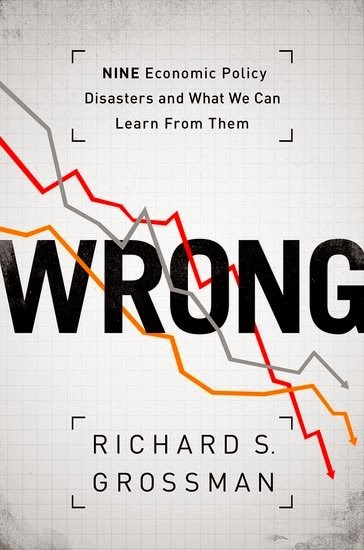
Book Review: ‘Wrong – Nine Economic Policy Disasters and What We Can Learn…’

Go Lean Commentary

CU Blog-WrongThe forgoing news article is a Review of the above-cited book; it highlights many of the same approaches being used in the publication Go Lean … Caribbean for the introduction and implementation of the Caribbean Union Trade Federation (CU). This book declares that a “crisis is a terrible thing to waste” and that Caribbean member-states are still reeling from the crisis of the 2008 Economic Downturn. What’s more, the Go Lean … Caribbean book, serving as a roadmap, provides solutions to optimize the region’s economy and security apparatus.

The source book by Richard Grossman is not focused on the Caribbean; but the many economic policies do have direct effect on the region, especially with the reliance on tourism from North America and Europe as the primary economic drivers. This status makes the Caribbean a “parasite” economy; as parasites go, the health of the host directly affects the health of the symbiot. So we are very much affected by the economic policies implemented in the US, Canada, Europe, Japan, China and other countries. What is worse is the fact that we, as the Caribbean, have no voice into the policies of these host countries, (nothwithstanding the Dutch & French Caribbean countries having some small representation in European Parlianment and Puerto Rico/USVI having non-voting representation in the US Congress). So rather than drive these countries’ economic policies, the Go Lean strategy is to mitigate the negative consequences from “wrong” economic policies.

Book Review: Wrong: Nine Economic Policy Disasters and What We Can Learn from Them by Richard S. Grossman

By: Anna Grodecka

In recent years, the world has been rocked by major economic crises, most notably the collapse of Lehman Brothers, the largest bankruptcy in American history, which triggered the breathtakingly destructive sub-prime disaster. What sparks these vast economic calamities? Why do our economic policy makers fail to protect us from such upheavals? Anna Grodecka reviews Richard S. Grossman’s contribution to the literature, and finds this an insightful and accessible read, especially recommended for economics students.

“We should be (…) wary of accepting common opinions; we should judge them by the ways of reason not by popular vote.” These words of the French Renaissance writer and philosopher Michel de Montaigne could be a good summary of Richard Grossman’s newest book Wrong: Nine Economic Policy Disasters and What We Can Learn from Them. Grossman, a professor of economics at Wesleyan University, describes nine economic policy failures from the past (both distant and more recent) and concludes that the main sin of the policymakers is the commitment to outdated economic ideologies and so-called conventional wisdoms.

Although it tackles a serious issue, the book is an enjoyable read. Starting with a quote from famous economists, politicians, and even Shakespeare, each chapter focuses on one economic policy mistake. The historical outlook prevails, although the last two chapters are devoted to the description of the sub-prime and the euro/sovereign default crisis. Grossman is aware of the fact that his book suffers from the lack of counter-factual analysis. The problem is that observing that a given policy had certain consequence does not mean that in the absence of the policy the consequences would not have occurred. We cannot apply laws of logics and sentence negation to reality, especially complex political and economic reality depending not only on rational analysis but also on the animal instincts of human beings, because causal relationships are very difficult to establish. Conducting counter-factual analysis is even harder. This of course does not mean that we should give up analysing past policies widely known as mistaken.

Grossman first describes the British Navigation Acts fueled by the ideology of mercantilism that speeded up the process of revolution in the North American colonies. Then he discusses the history of the first two ‘central’ banks in the United States, whose charters were not renewed due to partisan divisions in the country which could have an impact on the evolution of several banking crises.

There is also a chapter on the Great Famine in Ireland at the end of the 19th century, and the impact of policies and British Corn Laws on it. Grossman covers the well-documented mistake on the amount of war reparations imposed by the Allies on Germany after the First World War, as well as the return to the Gold Standard at the pre-war (too high) parity by Britain in the inter-war period. Another example of wrong economic policy that is described in the book is the Smooth-Hawley Tariff, which was a protectionist measure applied by the US in 1930. Lastly, before turning to the most recent policy mistakes, the author devotes one chapter to the infamous Japanese Lost Decade. What sounds like an enumeration of well-known policy mistakes already described in other books turns out in fact to be a fascinating collection of accounts providing interesting details and new insights into the subject. This is a well-written book that puts the events into historical and economic context. It certainly has a chance at becoming a best-seller and not solely a publication read by experts.

As an example, we can take a closer look at the chapter on the Irish Famine, which took place from 1845-1852. Grossman not only describes what happened, but puts it into the perspective of other famines, starting from the BCE period. In terms of absolute numbers, the Great Hunger in Ireland was not the worst famine recorded but it did tragically lead to the death of twelve per cent of Irish population, forcing many others to emigrate. The author details how the potato – which originated in the Americas – arrived to a fertile Ireland, and that the poorest third of the Irish population consumed up to twelve pounds of potatoes per day (per capita). Only after this introduction the economic policy is mentioned. Grossman compares the responses of two Prime Ministers of the United Kingdom to the famine: Sir Robert Peel and Lord John Russell. Russell was so committed to the limited government intervention that he refused to buy food for the starving masses in order not to disturb the free formation of prices in the market. Similarly, he refused to increase the scale of public works that would give job to Irish workers so as not to disturb the free labour market. The paradox is that when the Great Famine occurred, Ireland was not a poor country. The Famine would not have been so ‘great’ if it were not for the free market ideology followed by the policymakers at that time. As it turns out, leaving things to the invisible hand of market is not always an optimal solution.

Another interesting chapter is devoted to the Lost Decade in Japan. Entitled Why Didn’t Anyone Pull the Andon Cord? The chapter begins with an explanation of the method of solving problems applied in the Toyota production system: when some potential problem is discovered, a worker may pull the andon cord that activates a signboard and starts the process of solving the problem. If the problem is not resolved within a specific time, the whole production is stopped until the issue is cleared. So, unlike the Toyota employees, Japanese authorities in the 1990’s did not pull the andon cord and continued “production” despite obvious economic problems in the country. Grossman focuses on the relationships between the Japanese Ministry of Finance and the banks’ personnel. Each bank had a clerk – mofutan – who stayed in daily contact with one employee of the ministry. Very often ex- ministry employees found work in the banks they were supervising before, once their ministerial duties were over. This sort of opaque relationship between the supervisory authority and banks in the end led to an inaccurate response to the crisis. Japanese officials did everything to maintain the status quo, refusing to introduce necessary changes or restructure the banking system for almost a decade. This chapter will be a treasure for economics students.

Of course, not all stories presented in Wrong are equally captivating. The two last chapters on the recent economic crisis seem to be the weakest, as they do not provide any new information from the perspective of a person that followed the news and other publications on the subject. But all in all, Grossman does an excellent job in picking up the most severe economic policy mistakes, providing a thorough description and analysis of them, and giving us anecdotes linked to the described events. Wrong is a very eloquently written book that leaves the reader with many new insights.

London School of Economics – Social Science Book Reviews – Retrieved 03-19-2014 –
http://blogs.lse.ac.uk/lsereviewofbooks/2014/03/18/book-review-wrong-nine-economic-policy-disasters/

The authors of this Go Lean publication represent stakeholders[d] who have been in key policy positions in those “host” countries, so the recommendations in the book, reflect sound economic policies and best-practices. This expertise is highlighted at the outset of the Go Lean book, in the Declaration of Interdependence, as follows:

xxi. Whereas the legacy of international democracies had been imperiled due to a global financial crisis, the structure of the Federation must allow for financial stability and assurance of the Federation’s institutions. To mandate the economic vibrancy of the region, monetary & fiscal controls and policies must be incorporated as proactive and reactive measures. These measures must address threats against the financial integrity of the Federation and of the member-states.

Similar to the publication by Richard Grossman, the Go Lean book highlights lessons that are learned from failed economic policies[a] and applies strategies, tactics and implementation to mitigate the wrong policies and set the region straight.[b][c]

Now is the time for the Caribbean region to lean-in for the changes described in the book Go Lean … Caribbean. The benefits of this roadmap are too alluring to ignore: emergence of an $800 Billion economy, 2.2. million new jobs, new industries, services and opportunities for the youth of the Caribbean and even an invitation to the Diaspora to repatriate from those North American and European countries that have been on the wrong side of the history featured in Richard Grossman’s book ”Wrong: Nine Economic Policy Disasters and What We Can Learn from Them”.

Anna Grodecka is a PhD student in macroeconomics at Bonn Graduate School of Economics and a visiting researcher at the LSE. She obtained her Master’s Degree in Finance from Warsaw School of Economics and Johannes Gutenberg University in Mainz. In her research, she focuses mainly on monetary policy, the financial and housing markets, and their role in the recent crisis.

Go Lean References

Page Number
[a] 10 Lessons Learned from 2008

136

[b] 10 Ways to Impact Wall Street

200

[c] 10 Reforms for Banking Regulations

199

[d] SFE Foundation

8

Download the Book- Go Lean…Caribbean Now!!!


Share this post:
, , , , , ,
[Top]

Caribbean leaders convene for CARICOM summit in St Vincent

Go Lean Commentary

imagesThe forgoing news article highlights many problems with the current Caribbean Community (CariCom); as was also identified in the book Go Lean … Caribbean. The book declares that CariCom has failed in its quest to integrate and elevate the region’s economies.

But there is some special value that can be gleaned from the regional construct. That value is tied to the existing ratification for regional integration for 15 member-states, 5 associate member-states, and 9 observer states. At the outset of the book, an assessment is made of dispositions of all Caribbean states, of all language groups, and the failed execution of the CariCom as a construct. The book’s Prologue declares that all Caribbean member-states must lean-in for change. That change is the ascension of a better regional integrated entity, the Caribbean Union Trade Federation (CU). The book serves as a roadmap for the introduction and implementation of the CU.

The roadmap’s publisher, the SFE Foundation, respectfully disagrees with the Prime Minister of St. Vincent & the Grenadines, the Honorable Ralph Gonsalves. Though he is elected to speak on behalf of the population of the 120,000 of his country, the Go Lean roadmap echoes the cries of a 10-million-strong Diaspora for all the Caribbean, of all 4 languages. While Mr. Gonsalves proclaims “more of the same”, these members of the Diaspora have already cast a dissenting vote, with their “feet and their wallets”, as they fled their Caribbean homelands taking their time, talents and treasuries with them. Undoubtedly, the Diaspora still have a love for their homelands and cultural heritage to be preserved. So through the pages of this book and interactions on Social Media, they have voted their democratic preference: a No for the CariCom status quo, and a Yes for a “deeper dive” into the integration “waters”. It is thusly an unequivocal Declaration of Interdependence.

See the news story here:

By: Peter Richards

KINGSTOWN, St. Vincent – Caribbean Community (CARICOM) leaders began their inter-sessional summit here on Monday reiterating the importance of the regional integration movement to the socio-economic and political development of the region.

Host Prime Minister and CARICOM Chairman, Dr. Ralph Gonsalves said that 41-year-old 15-member grouping was not designed as a central government for a “bundle of disparate territories” neither was it a unitary state or federation or confederation.

“The Revised Treaty of Chaguaramas conceives CARICOM as a community of sovereign states. Its centre has been deliberately designed as a weak superstructure which constantly gropes for consensus.

“That is what the political market can bear, that is the reality which the broad citizenry in the community has endorsed.”

Gonsalves said that neither the political leadership as a collective nor the populations as a whole have an appetite for much more than what is currently on offer in the treaty commitments.

“So our political mandate is to ensure that what is fashioned in the Revised Treaty is implemented optimally. To achieve this we must first love and care for CARICOM, secondly we must ensure that the organs of the Community work as intended and that its decisions are implemented in each nation-state of the Community”

He said thirdly, the political leaders and populations in each nation posses the requisite political will for CARICOM’s optimal functioning as structured.

Gonsalves told the summit that a compelling agenda for CARICOM has been outlined by numerous studies, including one by Trinidad and Tobago’s Foreign Affairs Minister Winston Dookeran and that a “strategic path is being further elaborated by CARICOM.

Gonsalves said that CARICOM is frequently lambasted for its failure or refusal to implement the decisions of its treaty based institutions.

“Invariably, the CARICOM Secretariat is excoriated for this implementation deficit. However, the Secretariat is not CARICOM, it is the central administrative instrument of CARICOM but it possesses no authority to compel enforcement of decisions of the various Councils of Ministers and the Heads of State and Government conference.”

Gonsalves said that in the absence of an executive CARICOM Commission, buttressed by the requisite constitutional or legal authority, the central responsibility for the implementation of CARICOM’s decisions rests with the governments of the individual nation-states.

“Thus, each government is enjoined in its responsibility, nay its solemn obligation to put appropriate institutional

arrangements in its national executive and administrative apparatuses to facilitate the speedy and efficacious implementation of CARICOM decisions.”

Gonsalves told his regional colleagues that to be sure, the delivery of the Secretariat’s administrative and coordinated functions ought to be enhanced even as he acknowledged that the implementation deficit has to be put “squarely where it belongs, at the level of national governments. “Accordingly, vaunted change drivers cannot reasonably facilitate meaningful change in decision-making and implementation in CARICOM if the individual governments or several of them do not embrace a commitment, made manifest through structured arrangements day-to-day, in the making and implementation of CARICOM’s decision.”

“So the success of the CARICOM enterprise truly begins with the political leaderships, though it does not end with us alone. It ends with us, our national populations and national institutions massaged by the balm of our regional apparatuses,” Gonsalves said.

He said while the summit here has a “long agenda” the subjects to be discussed or reviewed for determination all have one focus, “the improvement in the quality of life and living of the people of our CARICOM region.

”Our deliberations at this conference do not take place in an abstract world, but ina lived [in a world where] global, regional and national conditions [are] stuffed with possibilities and limitations.

“The real world of life, living, and production compel us at this time to reflect centrally on measures for strengthening our regional and national economies including the fortification of the Caribbean Single Market and Economy (CSME|), addressing efficaciously the existential challenge of climate change, improving markedly the delivery of air and sea transportation and enhancing citizen security”.

Gonsalves said that apart from these issues there were also the perennial matters such as governance, institutional and administrative arrangements of CARICOM deemed “best suited to achieve CARICOM purposes”.

In her address to the conference, outgoing CARICOM Chairman, Prime Minister Kamla Persad Bissessar said that she was pleased one of the major outcomes of the last summit was the approval for the establishment of the Commission on the Economy to advise regional governments on solutions that would lead to growth and development.

“The Commission’s work has already begun and with a deep appreciation of the fact that sustainable development can only be achieved through the free movement of people and goods, reliable transportation across the region has also become a top priority. “

The Trinidad and Tobago Prime Minister said that in planning for the future of the region, her country would continue to take its responsibility “very seriously in linking our progress to the region’s success.

“As one of the founding members of the Community, we have worked hard to build a reputation on good faith that wherever we seek our best diplomatic and bilateral interests on the global stage, so too will we seek the best interests of CARICOM.”

She said more critical to the sustainability of the region “is our need to work decisively to eradicate crime and threats to the safety of the people of CARICOM.

“In this regard, Trinidad & Tobago proposed an amendment to the agenda of this meeting for the ratification of the Arms Trade Treaty and support for Trinidad and Tobago’s CARICOM-endorsed bid to Host the Secretariat in Port of Spain.”

She said the Arms Trade Treaty provides the region with a significant component in the global fight against the trade of conventional arms in illicit markets.

To date 116 States have signed the ATT, including all CARICOM members, except Haiti.

Eleven States have ratified the Treaty thereby expressing their consent to be legally bound by its provisions. They are Iceland, Guyana, Antigua and Barbuda, Nigeria, Costa Rica, Mexico, Trinidad and Tobago, Grenada, Panama and Norway.

But Prime Minister Persad Bissessar said for the ATT to come into force, Article 22 requires the signatures and early ratification by 50 signatory States so that the Treaty can come into force with the minimum of delay.

She said Mexico and Chile have already formally pledged support for Trinidad and Tobago’s CARICOM-endorsed bid to host the ATT Secretariat.

“However, among CARICOM member States, only Guyana, Antigua and Barbuda, Trinidad and Tobago and Grenada have so far ratified the ATT.

“In addition, I want to urge CARICOM member-states to prepare to participate, once more with an unified approach, in the negotiations that will ensue before and after the ATT comes into force.”
Source: Caribbean360.com – Caribbean Online Magazine (Retrieved 03/10/2014) –
http://www.caribbean360.com/index.php/news/st_vincent_news/1107238.html#axzz2vZjwuqhO

This Go Lean book serves as a roadmap for the implementation of the CU, as a technocratic federal government to administer and optimize the economic, security and governing engines of the region’s 30 member-states. This is a viable solution to many common problems. The same problems that led to the human and capital flight that has imperiled the region, as many countries have lost large populations.

Mr. Gonsalves proclaimed that “the success of the CARICOM enterprise truly begins with the political leaderships”. To the contrary, the Go Lean roadmap proclaims that success in the region cannot commence from a “top-down” approach, the leaders are simply not equipped to devise solutions; nor can the success proceed from a “bottom-up” approach, because the common “man on the street” just does not have the answers. But rather, the road to success must emerge from a Special Interest Group of those trained, fostered and groomed specifically for this task (champions of related battles[b] [d] in recent history). The book identifies this quality as technocratic and prescribes the CU as a technocracy.[a][c]

The issue of leadership (and governance) is presented as paramount for the successful turn-around of the Caribbean dispositions; see Appendix VIDEO.

And so now is the time to stop with the status quo and forge change by implementing the Five Year roadmap advocated in the book Go Lean … Caribbean. The benefits of this plan are too tempting to ignore: emergence of an $800 Billion dollar economy, 2.2. million new jobs, new industries, services and opportunities for the youth of the Caribbean and even an invitation to the Diaspora to repatriate.

Now finally, in contrast to the CariCom reality and prospects, with the Go Lean implementations, the Caribbean region can become a better place to live, work and play for all citizens.

Download the book Go Lean … Caribbean now!

———-

Appendix VIDEO – Good Leaders -vs- Bad Leaders – https://youtu.be/TnAPe3mXOqA

Published on Jul 13, 2013 – This is a video that highlights some of the differences between a Good Leader and a Bad Leader
  • Category: Education
  • License: Standard YouTube License

———–

Appendix – Go Lean Book References

a.  Fostering a Technocracy – Page 64
b.  10 Lessons Learned from 2008 – Page 136
c.  10 Ways to Foster Genius – Page 27
d.  SFE Foundation – Who We ArePage 8


Share this post:
, ,
[Top]

US slams Caribbean human rights practices

Go Lean Commentary

shame-on-youThe below news article synchronizes with the book Go Lean … Caribbean in that it depicts the “hot topic” of human rights monitoring in the Caribbean region. The book declares that the people of the Caribbean have the right to good governance and the fulfillment of a presumed social contract to ensure due process, and the rule of law.

This book serves as a roadmap for the implementation of the Caribbean Union Trade Federation (CU), a technocratic federal government to administer and optimize the economic, security, and governing engines of the region’s 30 member-states. At the outset, the roadmap identified this urgent need for human rights protection, stating this clause in the Declaration of Interdependence (Page 12):

xxi. Whereas the legacy in recent times in individual states may be that of ineffectual governance with no redress to higher authority, the accedence of this Federation will ensure accountability and escalation of the human and civil rights of the people for good governance, justice assurances, due process and the rule of law. As such, any threats of a “failed state” status for any member state must enact emergency measures on behalf of the Federation to protect the human, civil and property rights of the citizens, residents, allies, trading partners, and visitors of the affected member state and the Federation as a whole.

The Go Lean roadmap projects that the CU will facilitate monitoring and accountability of the justice institutions to ensure compliance and mitigate abuses – all Police Internal Affairs and Military Justice institutions will have a federal up-line reporting – Pages 117 & 220. Consider this related article:

By: Nelson A. King
WASHINGTON DC, March 3, 2014 – While noting that governments that protect human rights and are accountable to their citizens are more secure, bolster international peace and security, and enjoy shared prosperity with stable democratic countries around the world, the United States continues to assail human rights practices in the Caribbean.

In its “Country Reports on Human Rights Practices for 2013,” released here earlier this week, Washington was particularly scathing in its criticism of Haiti, Jamaica, Guyana, Suriname, Trinidad and Tobago, and the Bahamas.

The US Department of State said the most serious impediments to human rights in Haiti involved weak democratic governance in the earthquake-ravaged, French-speaking Caribbean country; “insufficient respect for the rule of law, exacerbated by a deficient judicial system; and chronic corruption in all branches of government.”

It said basic human rights problems included “isolated allegations of arbitrary and unlawful killings by government officials; allegations of use of force against suspects and protesters; overcrowding and poor sanitation in prisons; prolonged pre-trial detention; an inefficient, unreliable, and inconsistent judiciary; rape, other violence, and societal discrimination against women; child abuse; allegations of social marginalization of vulnerable populations, including persons with disabilities and lesbian, gay, bisexual, and transgender (LGBT) persons; and trafficking in persons.”

The report also said that allegations “persisted of sexual exploitation and abuse by members of the UN Peacekeeping Force in Haiti (MINUSTAH).”

In addition, it said violence, crime and forced evictions within the remaining internally displaced persons (IDP) camps in Haiti, which contained about 172,000 IDPs as of November, “remained a problem.”

Although the Michel Martelly administration took some steps to prosecute or punish government and law enforcement officials accused of committing abuses, the State Department said “credible reports persisted of officials engaging in corrupt practices,” and that civil society groups allege that impunity was a problem.

The report said there were isolated allegations of police and other government officials’ involvement in arbitrary or unlawful killings, some of which resulted in arrests. However, none resulted in convictions, it said.

Washington said prisoners at times were subject to “degrading treatment, in large part due to overcrowded facilities”, adding that correction officers used physical punishment and psychological abuse to mistreat prisoners.

The State Department said prisons and detention centres throughout Haiti remained overcrowded, poorly maintained and unsanitary.

In Jamaica, the most serious human rights issues were alleged unlawful security force killings; cases involving the violation of rights that were not resolved in a timely way; and poor prison and jail conditions, including abuse of detainees and prisoners and severe overcrowding. The report said other human rights issues included an “overburdened, under resourced, and ineffective judicial system, and frequent lengthy delays in trials, violence against and sexual abuse of children, violence and discrimination against women, trafficking in persons, violence against persons based on their suspected sexual orientation or gender identity, and mob violence.

“The government took steps to investigate and punish members of the security forces who committed abuses, but in many instances a lack of witnesses and insufficient forensics equipment precluded arrests or prosecutions, thus providing the appearance of impunity for police who committed crimes.

“While the government or its agents did not commit politically motivated killings, there were numerous occurrences where citizens accused the government’s security forces or its agents of committing arbitrary or unlawful killings,” the State Department said.

The report said there were 211 killings involving Jamaican police through October, and that six police officers also were killed in the line of duty during that time.

It said human rights monitors indicated that some killings by police went unreported, with police allegedly meting out the justice they believed was unavailable through the judicial system.

The State Department said violent crime remained a “serious concern” in Jamaica, adding that, on many occasions, the Jamaica Constabulary Force (JCF) “employed lethal force in apprehending criminal suspects”.

Prisons and detention centres were also “severely overcrowded and presented serious threats to life and health,” the report said.

In Guyana, it said the most serious human rights abuses involved suspects and detainees’ complaints of mistreatment by security forces, unlawful killings by police, and poor prison and jail conditions.

Other human rights problems included lengthy pre-trial detention; allegations of government corruption, including among police officials; excessive government influence over the content of the national television network and continued restrictions on radio licensing; sexual and domestic violence against women; abuse of minors; and laws that discriminate against LGBT persons.

The report said there were no independent and transparent procedures for handling allegations of killings and other abuses by security force members.

“Prosecutions when pursued were extremely lengthy, and convictions were rare, leading to a widespread perception that security force members and government officials enjoyed impunity,” it said.

The State Department said there were alleged mistreatment of inmates by prison officials, as well as allegations of police abuse of suspects and detainees.

It said prison and jail conditions were “poor and deteriorating, particularly in police holding cells,” and that overcrowding was a “severe problem”.

The report said lengthy pre-trial detention, “due primarily to judicial inefficiency, staff shortages, and cumbersome legal procedures, remained a problem,” adding that “delays and inefficiencies undermined judicial due process.”

While the law provides for criminal penalties for corruption by officials, the State Department said the Guyana government did not implement the law effectively.

“There remained a widespread public perception of corruption involving officials at all levels, including the police and the judiciary,” it said, pointing to the World Bank’s Worldwide Governance Indicators that assessed that government corruption was “a serious problem”.

The most serious human rights problems in Suriname, according to the State Department, were “widespread government corruption, reports of press intimidation, and lengthy pre-trial detention”.

Other human rights problems, it said, included self-censorship by some media organizations and journalists; societal discrimination against women, Maroons, descendants of escaped slaves who fled to the interior of the country to avoid recapture, Amerindians, and other minorities; domestic violence against women; trafficking in persons; and child labour in the informal sector.

The report said while the government continued to take steps to prosecute abusers in the security forces, in certain cases, “there was a perception of impunity among the public”.

It said human rights groups, defence attorneys and the media continued to report various instances of mistreatment by police including unnecessary use of gun violence at time of arrest and beatings while in detention, as well as isolated incidents of abuse of prisoners by prison officials.The report said prisoners continued to express concern over conditions in Santo Boma Prison, where they complained of inadequate food provisions, mistreatment by prison guards, and limited ventilation?

The State Department identified police killings during apprehension or while in custody, and poor treatment of suspects, detainees and prisoners as the most serious human rights problems in Trinidad and Tobago.

It said other human rights problems involved inmate illnesses and injuries due to poor prison conditions, a slow judicial system, high-profile cases of alleged bribery, violence and discrimination against women, and inadequate services for vulnerable children.

The report noted that, while the Kamla Persad-Bissessar administration took some steps to punish security force members and other officials charged with killings or other abuse, “there continued to be a perception of impunity based on the open-ended nature of many investigations and the generally slow pace of criminal judicial proceedings”.

It said the People’s Partnership government or its agents did not commit any politically-motivated killings; but, according to official figures, police shot and killed 21 persons through November 1, compared with 21 in all of 2012.

The State Department said there were “credible reports” that police officers and prison guards mistreated individuals under arrest or in detention, stating that, from 2005 through 2012, “the government paid or was found liable to pay more than 10 million Trinidad and Tobago dollars (One TT dollar = US$0.16 cents) in compensation to prisoners on claims of excessive use of force by prison officers”.

The report said conditions in some of the prison system’s eight facilities continued to be harsh.

Police abuse, detainee abuse, compounded by problems in processing them, a poorly functioning judicial system leading to delays in trial, and witness intimidation, were the most serious human rights problems in the Bahamas, according to the report.

It said other human rights problems included poor detention conditions; corruption; violence and discrimination against women; sexual abuse of children; and discrimination based on ethnic descent, sexual orientation, or HIV status.

The State Department said prison and detention centre conditions “generally failed to meet international standards,” noting that conditions at the Fox Hill Prison, the country’s only prison, “remained harsh and unsanitary for many prisoners”.

The report said Bahamian authorities detained irregular immigrants, primarily Haitians, until arrangements could be made for them to leave the country or they obtained legal status.

It said the average length of detention varied significantly by nationality, willingness of governments to accept their nationals back in a timely manner, and availability of funds to pay for repatriation.

The report said authorities usually repatriated Haitians within one to two weeks, while they held Cubans for much longer periods.

It said the Bahamian government has “not effectively implemented laws and policies to provide certain habitual residents the opportunity to gain nationality in a timely manner and on a non-discriminatory basis,” adding that some commentators believed that these restrictions particularly targeted Haitians resident in the country.

In an immediate response, Nassau said that the report was now being reviewed by the Ministry of Foreign Affairs.

“From what has been seen so far, there is no need for any alarm or undue concern. In a free and open society like ours, anyone is free to comment and investigate the human rights record of our country and we do not fear such an examination,” the government said in a statement.

It said it would “take note of any errors or overreaches in the report and it will have to be determined to what extent we address those issues”.

In St Lucia, the State Department said the most serious human rights problems included long delays in investigating reports of unlawful police killings, abuse of suspects and prisoners by the police, and continued postponements of trials and sentencing.

Other human rights problems included violence against women, child abuse, and discrimination against persons based on their real or perceived sexual orientation or gender identity.

“Although the government took some steps to prosecute officials and employees who committed abuses, the procedure for investigating police officers was lengthy, cumbersome, and often inconclusive,” the State Department said.

“When the rare cases reached trial years later, juries often acquitted, leaving an appearance of de facto impunity,” it added.

The State Department said the Dean Barrow administration in Belize “failed at times to maintain effective control over the security forces,” stating that security forces allegedly committed human rights abuses.

It said the most important human rights abuses included the use of excessive force by security forces, lengthy pre-trial detention, and harassment and threats based on sexual orientation or gender identity.

Other human rights problems comprised domestic violence, discrimination against women, sexual abuse of children, trafficking in persons, and child labour.

In Antigua and Barbuda, the State Department said the most serious human rights problems involved poor prison conditions and violence against women.

Other human rights problems included trial delays resulting from court backlogs and reports of mental, physical, and sexual abuse of children. There were also laws that discriminate against LGBT persons.

The report said the Baldwin Spencer administration took steps to prosecute and punish those who committed human rights abuses, and that impunity was not a widespread problem.

Poor prison conditions, politicization of the police force, discrimination and violence against women, and child abuse topped the list for human rights abuses in St. Kitts and Nevis, according to the report.

Discrimination against the LGBT community was the other human rights problem, it claimed.

Occasional police use of excessive force and gender- based violence were the most serious human rights problems in St Vincent and the Grenadines, according to the State Department.

It said other human rights problems included official corruption, lack of government transparency, discrimination, and child abuse.

“The government took steps to punish officials who committed abuses, and there was not a widespread perception of impunity for security force members,” the report said.

The most serious human rights problems in Barbados were “unprofessional conduct” by police, violence against women, and discrimination against LGBT individuals, according to the report, adding that other human rights problems included child abuse.

The State Department said domestic violence against women and children were the most serious human rights problem in Dominica.

It said other human rights problems included adverse conditions experienced by the indigenous Kalinago (Carib) population and laws that discriminate against LGBT persons.

Human rights problems in Grenada included poor prison conditions, violence against women, instances of child abuse, and laws that discriminate against LGBT persons, the report said.
Source: Caribbean360.com – Caribbean Online Magazine (Retrieved 03/10/2014) – http://www.caribbean360.com/index.php/news/1107173.html#axzz2vZjwuO

The foregoing article highlights another example of the United States meddling/voicing opinions about issues in other countries, while they themselves have less than a stellar human rights record on this subject. Consider that the State Department’s report many times cited prison conditions in the Caribbean states. This is classic “pot calling kettle black” – the US has the highest incarceration rate in the world[a]. What’s worse is the fact that 60% of the US prison population is Black or Hispanic[b]; even though non-whites only committed 30.7% of the crimes[c]. Obviously justice in the US is dependent on the access to money. Where is the Human Rights outcries there?!

But it is what it is! Despite the hyprocrisy of the messenger, the message still has legitimacy; we do have issues in the Caribbean that need addressing. Basic Human Rights are being violated in the region, arbitrary and unlawful killings by government officials, poor sanitation in prisons and prolonged pre-trial detention. The Go Lean roadmap posits that any economic optimization effort must be accompanied by a strenuous security agenda, or “bad actors” will emerge. As such, the book presents the CU solution of marshaling economic crimes, and deploying a Prison Industrial complex to build over-sized facilities to house the region’s inmates and capitalize on opportunities to service shortcomings of foreign countries, like the US.

The CU solutions are designed to make the Caribbean a better place to live, work and play. Though the roadmap starts with an economic focus, it also facilitates the Human Rights protections for all members of our society: good or bad; as pilloried in the nursery rhyme: “rich man, poor man, beggar man, thief; doctor, lawyer, Indian Chief”.

Download the book Go Lean … Caribbean – now!

———-

Appendix – References:

a. International Centre for Prison Studies (18 Mar 2010). “Prison Brief – Highest to Lowest Rates”. World Prison Brief. London: King’s College London School of Law. Archived from (http://www.kcl.ac.uk/depsta/law/research/icps/worldbrief/wpb_stats.php?area=all&category=wb_poprate) on 25 March 2011. Retrieved 25 March 2011.

b. Office of Justice Programs – US Department of Justice – Prison Inmates at Midyear 2009 – Statistical Tables – Retrieved on March 11, 2013 from: http://www.bjs.gov/content/pub/pdf/pim09st.pdf

c. US Federal Bureau of Investigations – Crime in the United States, 2012 Arrests by Race”. Table 43– Retrieved on March 11, 2014 from: http://www.fbi.gov/about-us/cjis/ucr/crime-in-the-u.s/2012/crime-in-the-u.s.-2012/tables/43tabledatadecoverviewpdf


Share this post:
, , ,
[Top]

Bahamians Make Presence Felt In Libyan League

Go Lean Commentary

Basketball_HoopsThe news story in the following news article synchronizes with the book Go Lean … Caribbean in that it depicts the realities of how sports can impact the economics of a community.

Go Lean serves as a roadmap for the implementation of the Caribbean Union Trade Federation (CU), a technocratic federal government to administer and optimize the economic/security/ governing engines of the region’s 30 member-states. At the outset, the roadmap features these statements in the Declaration of Interdependence (Page 13 & 14):

xxi. Whereas the preparation of our labor force can foster opportunities and dictate economic progress for current and future generations, the Federation must ensure that educational and job training opportunities are fully optimized for all residents of all member-states, with no partiality towards any gender or ethnic group. The Federation must recognize and facilitate excellence in many different fields of endeavor, including sciences, languages, arts, music and sports. This responsibility should be executed without incurring the risks of further human flight, as has been the past history.

xxxi. Whereas sports have been a source of great pride for the Caribbean region, the economic returns from these ventures have not been evenly distributed as in other societies. The Federation must therefore facilitate the eco-systems and vertical industries of sports as a business, recreation, national pastime and even sports tourism – modeling the Olympics.

The actual news article was posted as follows:

By RENALDO DORSETT, Sports Reporter (rdorsett@tribunemedia.net)
You can find Bahamians playing basketball on just about every continent but it’s rare to find former high school teammates reunited on the same roster at the professional level.

In the Libyan D1 basketball league, Scottie Farrington and Tehran Cox are two of the top players with the Al Madina Tripoli club.

They are two of three Bahamians competing in the Libya-D1 league along with Torrington Cox who plays with Al Ahly Benghazi.

Farrington, a 6’8” forward and University of Louisiana Lafayette graduate, is currently averaging 21 points, 14 rebounds and four blocks per game while Cox, formerly of High Point University, is averaging a team high 24 points, six assists and four rebounds per game.

The duo first teamed up in 2002 to win the Government Secondary School Sports Association junior boys basketball championship at SC McPherson Junior High under coach Ulric Sands and Chevy Simmons.

They also represented The Bahamas together in 2005 at the Caribbean Basketball Championships in Trinidad and Tobago where they helped lead the Bahamas to an upset over regional powerhouse Puerto Rico en route to the gold medal.

Both players are in their first season with Madina. However, Farrington has previously played in Saudi Arabia, Dubai and Thailand, while Cox, in his first professional stint, began the year in Kuwait.

Farrington said having a familiar face in the starting lineup far away from home has been a benefit both on and off the court, particularly since the country continues to rebuild following the 2011 revolution which ousted Muammar al-Gaddafi.

“It’s an experience of a lifetime. Especially being here with these people who are trying to rebuild

their country after the revolution. Playing here with Tehran and knowing makes this a more comfortable situation,” he said. “We talked about it because we have the same agent but we didn’t think it was going to actually happen.”

The club is currently ranked fifth in the East Group at 3-5, however their individual play has already garnered opportunities for the next possible step in their professional careers.

“I wouldn’t say it’s the best fit but the competition here is better than I expected. A few guys here have played or attended training camp for NBA teams so that means a lot to compete against these guys,” Farrington said. “This is just our first season here with Madina. We signed here in November and after our performance here we have already been contacted by clubs in Spain and in Serbia for next season, but we will save that for later and focus on finishing off this season strong.”

Farrington played under Godfrey McQuay with the St Anne’s Blue Waves before completing his high school career at the Christian Life Centre in Houston, Texas.

He spent his freshman year at Rogers State and his sophomore year at Odessa before he played at the NCAA D1 level with Louisiana Lafayette.

In his senior year at Louisiana, he also teammed with Bahamians Kentwan Smith and Kadeem Coleby.

Cox, a 6’1” point guard, was dominant in the backcourt for the CI Gibson Rattlers before he finished his high school career at Fayetteville Christian School in Fayetteville, Arkansas.

He spent two seasons at Arkansas Fort-Smith before he transferred to High Point for his junior and senior seasons.

Cox has helped Al Ahly Benghazi to second place in the West Group at 5-2, on a roster that also features former Boston Celtics draft pick Orien Greene.

Torrington Cox, a 6’7” forward, is in his seventh professional season and is currently averaging 25 points, 12 rebounds and two blocks per game. He previously played in Mexico, Chile, Saudi Arabia , Egypt, Kuwait, Dubai and was also selected by the Utah Flash in the 2008 NBA D-League draft.

Source:  The Tribune – Bahamas Daily Newspaper Online Site (Retrieved 03/04/2014) –http://www.tribune242.com/news/2014/mar/03/bahamians-make-presence-felt-in-libyan-league/

The Go Lean roadmap posits that genius qualifiers are found through out Caribbean society, and that this may be identified with excellence in sports. With the proper market organizations, sporting events can be lucrative for a community and participants. But that market organization does not currently exist in the Caribbean. An objective of this roadmap is to develop the organized markets.

This objective aligns with the CU’s prime directives to elevate the region’s economy, create future prospects for the Caribbean’s youth and invite the far-flung Diaspora to return to their island homelands. Consider the experiences of the 3 Bahamian athletes in Libya (a country in the North Africa’s Sahara desert region), would they rather be in Libya or the Bahamas, or any other Caribbean destination? The tagline in the Go Lean book is that the Caribbean is the world’s greatest address; there are not too many claims of Libya competing for that title.

Now is the time for all of the Caribbean to forge permanent change by implementing the Five Year roadmap advocated in Go Lean … Caribbean. The benefits of this plan as it relates to sports is the optimization of local opportunities at all levels, youth all-stars & regional tournaments, an intercollegiate eco-system and professional leagues. The CU will facilitate the applicable venues (stadia, arenas, fields, temporary structures and broadcast/streaming capabilities). The roadmap calls for the creation of 2,000 new direct jobs within the region.

Now finally, with the Go Lean implementations, the Caribbean can become a better place for all citizens to live, work and play.

Share this post:
, ,
[Top]

Connery says Scottish independence a chance ‘too good to miss’

Go Lean Commentary

imgresA big star in the world of movies is asking for consideration in an area outside his sphere of influence: independence of his homeland. We have seen this movie before; same script, different cast!

Sir Sean Connery’s plea is similar to many other prominent people that had expatriated to a different country, awaiting more favorable conditions in their beloved homeland. (Charlize Theron from South America, Wyclif Jean from Haiti and Oscar De La Renta from the Dominican Republic). This is also the fate of so many of the Caribbean Diaspora. These ones love their country, but live abroad; they want conditions to be different (better) in their homelands to consider any repatriation.

London (AFP)

James Bond star Sean Connery urged his fellow Scots on Sunday to vote for independence in their referendum later this year, saying it was an opportunity “too good to miss”.

The 83-year-old actor, one of the most high-profile backers of the Scottish National Party’s campaign for a ‘yes’ vote in September, said independence would raise Scotland’s profile.

This could encourage more investment in the Scottish film sector and lead to the “international promotion of Scotland as an iconic location”, Connery wrote in the Sun on Sunday newspaper.

Connery, the star of 007 movies such as “Goldfinger” and “Dr No”, was born in Scotland but has not lived there for years, instead spending his time in Spain, the Bahamas and New York.

In 2003, he said he would not return until Scotland broke with the rest of the United Kingdom.

“I fully respect the choice facing Scotland in September is a matter for the people who choose to work and live there — that’s only right,” said the actor.

“But as a Scot with a lifelong love of Scotland and the arts, I believe the opportunity of independence is too good to miss.”

He added: “A Yes vote will capture the world’s attention. There will be a renewed focus on our culture and politics, giving us an unparalleled opportunity to promote our heritage and creative excellence.”

A YouGov poll published on Saturday found 53 percent of Scots want to stay part of the United Kingdom, compared to 35 percent who think Scotland should be an independent country.

http://news.yahoo.com/connery-says-scottish-independence-chance-too-good-miss-003358875.html

Yes, the plea of Sir Connery is parallel and similar to that of the Go Lean … Caribbean book, a roadmap for the introduction and implementation of the Caribbean Union Trade Federation (CU), a technocratic federal government to administer and optimize the economic, security, and governing engines of the 30 member Caribbean states. The same as Sir Connery pledged to not return until Scotland breaks with the UK, many Caribbean Diaspora have pledged not to return (for permanent residency) until their homeland breaks from their current ineffectual systems of governance, failing economic engines and inadequate security provisions.

There is a lot of history associated with both issues: Scotland and the CU. Sir Connery is advocating for Scotland’s independence. This has been a familiar call for centuries. This is life imitating art and art imitating life. The call for Scottish independence was the theme of the 1995 movie Braveheart, about Scottish Revolutionary William Wallace (played by Academiy Award winner Mel Gibson). In addition, the 2006 movie “The Last King of Scotland”, had that goal as a secondary theme. That despite the many failed attempts of Scotland to wrest independence from England, the country of Uganda under dictator Idi Amin (played by Academy Award winner Forrest Whitaker) was successful at gaining their independence from the same imperial masters. A line in that movie stated “maybe Amin should become King of Scotland because he knows how to wrestle independence from England”. Now, today, another Hollywood icon champions the same plea and revolutionary quest for his beloved Scotland.

Scotland has been “rocked” by the recent global financial crisis; they posit that London’s oversight of their economic interest has been flawed and shortsighted. But their demand today is different than for prior attempts in prior centuries. They now want a democratic solution, a referendum to secede Scotland from the United Kingdom. Then Scotland would join and become the 29th member-state of the European Union (EU) and 19th member of the Eurozone Monetary Union. Aligning with the success of the EU would make this petition feasible and logical. According to recent polling, so far the referendum is not favored.

There are a lot of lessons in this issue for the Caribbean. Despite Scotland’s demand for independence, their plan is not to “go at it alone, rather immediately confederate with the EU. This makes the referendum a demand for interdependence with the rest of Europe. The people of Scotland feel that aligning with the EU and submitting to the technocratic European Central Bank would be preferred to the failed economic and monetary policies from London. The underlying spirit behind this Scottish Independence movement is a quest to “appoint new guards” to make their homeland a better place to live, work and play.

The Caribbean’s quest for interdependence is similar; with this statement in the opening Declaration of Interdependence at the outset of the Go Lean book (Page 12):

xi. Whereas all men are entitled to the benefits of good governance in a free society, “new guards” must be enacted to dissuade the emergence of incompetence, corruption, nepotism and cronyism at the peril of the people’s best interest. The Federation must guarantee the executions of a social contract between government and the governed.

The Go Lean roadmap posits that the global financial crisis lingers to this day and trumpets that “a crisis is a terrible thing to waste”. Just like Sir Connery’s egging for Scotland, we in the Caribbean want our homeland to be a better place to live, work and play. The best hope for this outcome though is to confederate into the CU, an EU model, whereby real solutions can be forged, availing benefits like creating 2.2 million jobs across the integrated market of 42 million people and $800 Billion of GDP.

🙂

Download the book Go Lean … Caribbean – now!


Share this post:
,
[Top]

Collegiate Sports in the Caribbean

Go Lean Commentary

CampionExcelsiorK20120911IASports play a big role in Caribbean culture. Education plays a big role in the empowerment of communities. There is a junction between sports and academics; this is the sphere of college athletics.

Cuba has 37 universities…alone. In total, the Caribbean has 42 million people (2010 figures) in all 30 member-states. So surely there is enough of a student population to field sports teams.

More so, there is a fan base in the communities to complete the eco-system of sports spectators and community pride. Yet, there is very little college sports being facilitated in the region right now. Despite the breadth and talent base to form leagues and rivalries among the established universities within the Caribbean. Any system for college athletics is noticeably lacking.

This is the mission of the Caribbean Union Trade Federation (CU); to function as a Caribbean version of the National Collegiate Athletic Association (NCAA) in the US. We have much to learn from this organization’s history, successes & failures.

“The NCAA was founded in 1906 to protect young people from the dangerous and exploitive athletics practices of the time,” so states the NCAA on its official website.[a]

According to Dan Treadway, Associate Blog Editor for the Huffington Post online news magazine[b]:

The NCAA often likes to harp on tradition and the sanctity of the term “student-athlete,” but it fails to recognize its true roots.

The association in fact got its start because, at the time of its creation, football was in danger of being abolished as a result of being deemed too dangerous a sport. During the 1905 season alone, 18 college and amateur players died during games. In response to public outcry, Theodore Roosevelt, an unabashed fan of the sport, gathered 13 football representatives at the White House for two meetings at which those in attendance agreed on reforms to improve safety. What would later become known as the NCAA was formed shortly after on the heels of this unifying safety agreement.

Collegiate Sports is now big money; an economic eco-system onto itself. How much money does the NCAA make?

For the 2010-11 fiscal year, the NCAA revenue was $845.9 million, (not including College Football). Total rights (broadcast & licensing) payment for 2010-11 was $687 million, of all NCAA revenue. The remaining revenues are mostly event ticket sales.

How did the NCAA go from being an agreement to promote safety standards so as to prevent death on the playing field, to a multi-million dollar enterprise? Chalk that up to 100 years of social evolution.

The book Go Lean … Caribbean serves as a roadmap to advance to the end of the evolutionary process and establish the economic engines to empower the Caribbean region, even in areas like sports and culture.

So how to build sports franchises anew? How will colleges & universities create success from collegiate athletics? It’s a complex “art and science”, but first, it starts with facilities – the CU’s Fairground administration will fund, build and manage sports venues. The CU will be the landlord; the academic institutions, the tenants.

The Go Lean roadmap navigates the changed landscape of globalization and pronounces that change has come to the Caribbean but the region is not prepared. Despite the great appreciation for sports, and the excellent talent of its athletes, there is no business model for the consumption of Caribbean collegiate athletics.

Now, for much of the Caribbean, the population tunes in and pays for cable/satellite TV service to consume American collegiate athletic programming. But how many people in the region are watching Caribbean college sporting activities? None. Though there is a demand, undoubtedly, there is no supply process in place.

In the adjoining table in the Appendix, 36 schools are identified that are capable of fielding credible sports teams, if the appropriate facilitations were in place.

There is the demand. What’s missing is the organized market for consumption. The implementation of this Go Lean roadmap fills this void. This completes the supply!

Applying the model of the NCAA, much can be learned. We can copy their success, and learn from their pitfalls. The NCAA credits tremendous revenues for itself, but not necessarily for all of their members. Under NCAA supervision, the majority of athletic programs, in fact, lose money and are subsidized by funds from their respective university. While the NCAA is needed for academic integrity in college sports, many times, it fails at this responsibility. They lack the CU’s lean execution ethos.

After 100 years later, does the world still need the NCAA? Absolutely! For more than the collective bargaining/negotiations role for the business side of college athletics. They are also the governing body for college athletics, ensuring fairness and good sportsmanship. For the Caribbean Union, this role is to be assumed by the CU Sports Administration, to provide technocratic efficiencies. The resultant eco-system facilitates the CU mandate, to make the region a better place to live, work and play.

Download the book Go Lean … Caribbean – now!

———————-

APPENDIX A – References:
ahttp://www.ncaa.org/wps/wcm/connect/public/NCAA/About+the+NCAA/History
b – http://www.huffingtonpost.com/ daniel-treadway/johnny-manziel-ncaa-eligibility_b_3020985.html

———————-

APPENDIX B – Caribbean Regional Colleges & Universities

Member-state

Legacy

Name

Antigua and Barbuda

British

Antigua State College
Aruba

Dutch

University of Aruba
Bahamas

British

College of the Bahamas
Barbados

British

University of the West Indies – Cave Hill, American University
Belize

British

University of Belize
Galen University
Bermuda

British

Bermuda College (Community College)
Cuba

Spanish

University of Havana Universidad de Oriente, Polytechnic University José Antonio Echeverría
Dominican Republic

Spanish

Universidad Autónoma de Santo Domingo (UASD) – (English: Autonomous University of Santo Domingo)
French Caribbean

French

University of the French West Indies and Guiana Guadeloupe Campus, Martinique Campus, French Guiana Campus
Guyana

British

University of Guyana
Haiti

French

Caribbean University / Université Caraïbe, Université d’Haiti
Jamaica

British

University of the West Indies – Mona, University of Technology (U-Tech), Mico University College, Northern Caribbean University (NCU), University College of the Caribbean (UCC), International University of the Caribbean (IUC)
Netherlands Antilles

Dutch

University of Curaçao
Curaçao
Sint Maarten University of St. Martin
Puerto Rico

USA/

Spanish

Caribbean University, Metropolitan University, University of Puerto Rico, University of Turabo
Suriname

Dutch

University of Suriname Anton de Kom Universiteit van Suriname
Trinidad and Tobago

British

University of the West Indies – Saint Augustine University of Southern Caribbean (USC) University of Trinidad and Tobago (UTT)
US Virgin Islands

USA

University of the Virgin Islands

Share this post:
, ,
[Top]