Managing a ‘Clear and Present Danger’

Go Lean Commentary

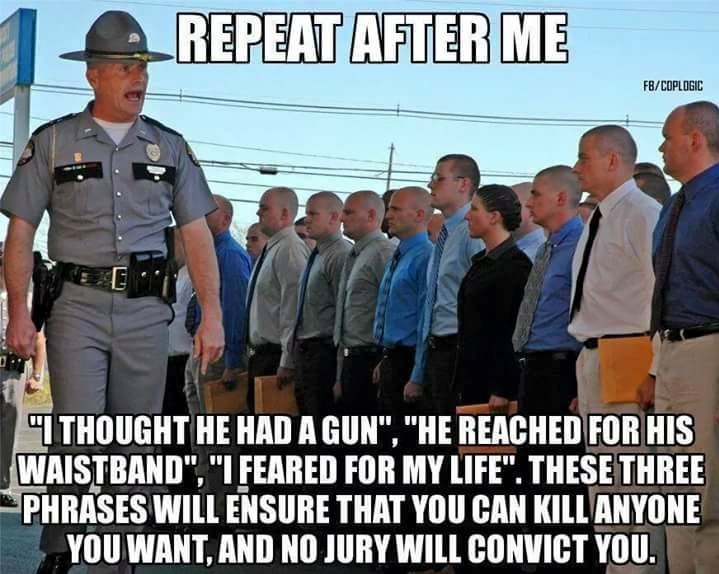
A ‘Clear and Present Danger’ sounds ominous…

- Photo 4

There should be no question as to intent or consequence if the situation goes unimpeded.

The ‘Clear and Present Danger’ doctrine is a concept in jurisprudence, which has bearing on everyday life for everybody. It refers to not just a potential danger but one that will likely cause a catastrophe if not immediately obstructed or neutralized.

This phrase was suggested as a test of harmful speech by the US Supreme Court Justice Oliver Wendell Holmes in the 1919 case of Schenck v. United States. In delivering the court’s unanimous decision upholding the conviction of a Socialist Party Officer (who encouraged resistance to the World War 1 Draft) under the Espionage Act (which suppressed Free Speech), Justice Holmes noted that the “character of every act depends upon the circumstances in which it is done.” He went on to say that, “when a nation is at war many things that might be said in time of peace are such a hindrance to its effort that their utterance will not be endured so long as men fight and that no court could regard them as protected by any constitutional right.” (Source: http://www.businessdictionary.com/definition/clear-and-present-danger.html)

How would this concept in jurisprudence relate to the everyday life for the average person in the Caribbean?

This consideration is presented in conjunction to mitigations and remediation for protecting the Caribbean homeland. The assertion in the book Go Lean … Caribbean (Page 23) is that with the emergence of new economic engines, “bad actors” will also emerge thereafter to exploit the opportunities, with good, bad and evil intent. But the book warns against more than just bad people, rather “bad actors”; thusly referring to corporate entities, natural disasters (hurricanes are assigned people names) and other “random acts” (think “red tides”, pandemics, etc.). The book relates that this is a historical fact that is bound to be repeated … again and again.

This point is pronounced early in the book with the Declaration of Interdependence (Page 12) that claims:

i.     Whereas the earth’s climate has undeniably changed resulting in more severe tropical weather storms, it is necessary to prepare to insure the safety and security of life, property and systems of commerce in our geographical region. As nature recognizes no borders in the target of its destruction, we also must set aside border considerations in the preparation and response to these weather challenges.

ii.    Whereas the natural formation of the landmass for our lands constitutes some extreme seismic activity, it is our responsibility and ours alone to provide, protect and promote our society to coexist, prepare and recover from the realities of nature’s occurrences.

x.   Whereas we are surrounded and allied to nations of larger proportions in land mass, populations, and treasuries, elements in their societies may have ill-intent in their pursuits, at the expense of the safety and security of our citizens. We must therefore appoint “new guards” to ensure our public safety and threats against our society, both domestic and foreign. The Federation must employ the latest advances and best practices … to assuage continuous threats against public safety.

xii. Whereas the legacy in recent times in individual states may be that of ineffectual governance with no redress to higher authority, the accedence of this Federation will ensure accountability and escalation of the human and civil rights of the people for good governance, justice assurances, due process and the rule of law. As such, any threats of a “failed state” status for any member state must enact emergency measures on behalf of the Federation to protect the human, civil and property rights of the citizens, residents, allies, trading partners, and visitors of the affected member state and the Federation as a whole.

xvi. Whereas security of our homeland is inextricably linked to prosperity of the homeland, the economic and security interest of the region needs to be aligned under the same governance. Since economic crimes, including piracy and other forms of terrorism, can imperil the functioning of the wheels of commerce for all the citizenry, the accedence of this Federation must equip the security apparatus with the tools and techniques for predictive and proactive interdictions.

The Caribbean appointing “new guards”, or a security pact to ensure public safety includes many strategies, tactics and implementations considered “best-practices”. We must be on a constant vigil against these “bad actors”, man-made or natural. This necessitates being pro-active in monitoring, mitigating and managing risks. Then when “crap” does happen, the “new guards” will be prepared for any “Clear and Present Danger“. The Go Lean book describes an organization structure with Emergency Management functionality, including Unified Command-and-Control for Caribbean Disaster Response, Anti-crime and Military Preparedness.

Wait! Wasn’t this done before? Didn’t the Caribbean region member-states come together – September 1, 2005 – and establish a security apparatus so as to assuage public safety risks and threats?

Yes, this is part of the CariCom (Caribbean Community) effort. The Go Lean book and these blogs commentaries have consistency railed against the ineffectiveness and inefficiency of CariCom and its regional organs.

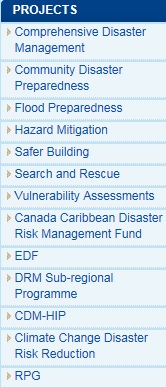
The Caribbean Disaster Emergency Management Agency (CDEMA)[1] is an inter-regional supportive network of independent emergency units throughout the Caribbean region; see Appendix below. Originally formed as the Caribbean Disaster Emergency Response Agency (CDERA) it under-went the name change to CDEMA in September 2009.

See Photo below for a listing of the CDEMA functionality:
- Photo 1

The participating member states and agencies of the CDEMA include:

Country

Organization

Anguilla Department of Disaster Management (DDM)
Antigua and Barbuda National Office of Disaster Services (NODS)
Bahamas Disaster Management Unit
Barbados Department of Emergency Management
Belize National Emergency Management Organisation (NEMO)
British Virgin Islands Department of Disaster Management
Dominica Office of Disaster Management (ODM)
Grenada National Disaster Management Agency (NaDMA)
Guyana Civil Defense Commission
Haiti Civil Protection Directorate
Jamaica Office of Disaster Preparedness and Emergency Management (ODPEM)
Montserrat Disaster Management Coordination Agency
Saint Kitts and Nevis National Emergency Management Agency (NEMA)
Saint Lucia National Emergency Management Organisation (NEMO)
Saint Vincent and the Grenadines National Emergency Management Organisation (NEMO)
Suriname National Coordination Center For Disaster Relief (NCCR)
Trinidad and Tobago Office of Disaster Preparedness and Management (ODPM)
Turks and Caicos Islands Department of Disaster Management & Emergencies

What about regional defense?

There is a regional initiative branded the Regional Security System (RSS); it is an international agreement for the defense and security of the eastern Caribbean region. The Regional Security System was created out of a need for collective response to security threats, which were impacting on the stability of the region in the late 1970s and early 1980s. On 29 October 1982 four members of the Organisation of Eastern Caribbean States—namely, Antigua & Barbuda, Dominica, St. Lucia, and St. Vincent & the Grenadines—signed a memorandum of understanding (MOU) with Barbados to provide for “mutual assistance on request”. The signatories agreed to prepare contingency plans and assist one another, on request, in national emergencies, prevention of smuggling, search and rescue, immigration control, fishery protection, customs and excise control, maritime policing duties, protection of off-shore installations, pollution control, national and other disasters and threats to national security. Saint Kitts & Nevis joined following independence in 1983, and Grenada joined two years later.

These two initiatives CDEMA and RSS constitutes the regional security solutions for the Caribbean. “Our thimble runneth over!”

What is the problem with CDEMA, RSS and CariCom? For starters these regional efforts, the Caribbean Community, does not represent the full community of the Caribbean; not even half of the Caribbean. Consider here:

CU Member states not included or participating in CDEMA, RSS or CariCom:

  • Cuba
  • Dominican Republic
  • US Territories (Puerto Rico, US Virgin Islands)
  • Dutch Territories (ABC Islands: Aruba, Bonaire, Curacao; SSS Islands: Saba, Saint Marteen; Saint Eustatius)
  • French Territories (Guadeloupe, Martinique, St. Barthélemy, St. Martin)

Secondly, CariCom has extreme funding challenges; the regional construct depends on income derived almost exclusively from grants from the American federal government (US-AID), Canadian agencies and the EU’s Development Fund (EDF). After 40 years of CariCom, it can be concluded that the CariCom Secretariat and regional organs fail to meet the needs of the Caribbean people, even for the people in its participating member-states. They are a great “talking head”; nothing more. The Go Lean book quotes an internal report (Page 92) complaining of the severe weaknesses of the regional construct, stating their tendency to announce decisions over new initiatives as if full implementation were imminent, resulting in a so-called “implementation deficit”.

Obviously, the established security solution is not fully established and does not really solve any threats; therefore the region is not secured.

This reality is pronounced early in the Go Lean book (Page 8) with this declaration regarding the promoters of the Go Lean movement, that they are …

… not affiliated with the CariCom or any of its agencies or institutions. This movement is not an attempt to re-boot the CariCom, but rather a plan to re-boot the Caribbean… This movement was bred from the frustrations of the Diaspora, longing to go home, to lands of opportunities. But this is not a call for a revolt against the governments, agencies or institutions of the Caribbean region, but rather a petition for a peaceful transition and optimization of the economic, security and governing engines in the region.

The Go Lean book is a petition for change and optimization, serving as a roadmap for the introduction and implementation of the technocratic Caribbean Union Trade Federation (CU). The CU would roll the charters of CDEMA, RSS and CariCom into one consolidated, integrated and collaborated effort. The CU is set to optimize Caribbean society through economic empowerment, and also homeland security in the region, since these are inextricably linked to this same endeavor.

Therefore the Go Lean roadmap has 3 prime directives:

  • Optimization of the economic engines in order to grow the regional economy to $800 Billion & create 2.2 million new jobs.
  • Establishment of a security apparatus to protect the resultant economic engines and theCaribbean homeland.
  • Improvement of Caribbean governance to support these engines.

The CU Homeland Security forces have to always be “on guard”, on alert for real or perceived threats. The legal concept is one of being deputized by the sovereign authority for a role/responsibility in a member-state. So when “crap” happens these CU forces are expected to aid, assist, and support local resources in these member-states when called on. But, when a member-state is the problem, in terms of malfeasance, misfeasance or nonfeasance, the “Clear and Present Danger” mandate should be invoked. As a security apparatus, there should also be certain defined threats that would be designated as primarily assigned to the CU; this would apply in a Declaration of War against a known state-sponsored enemy.

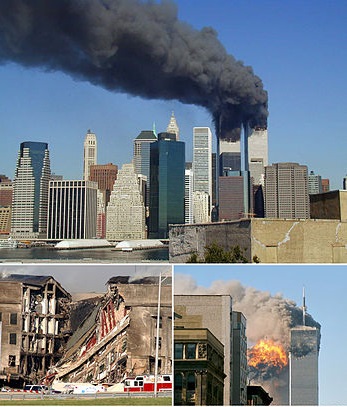
But the world has now changed; there is the new threat of an unknown, non-state-sponsored enemy: the scourge of terrorism. Consider the situation in the United States, we all know of the World Trade Center attacks on September 11, 2001, but since then terrorist attacks have actually been a constant threat in the US. In a recent blog/commentary, it was reported that there were 17  terrorist attacks against the American homeland in this decade alone, since 2010. Surely the threat of terrorism is a “clear and present danger” in the US.

The CU treaty calls for the mitigation of terrorism to be a constant charter for the CU Homeland Security forces.

For most of the Caribbean, we are allied with the US; we even have two US Territories “smack-dab” in the middle of our archipelago. So the American terrorist-enemies are very much our enemies. Therefore the CU/Go Lean roadmap posits that the region must prepare an optimized security apparatus for its own security needs. This time for real!

The request is that all Caribbean member-states empower a security force to execute a limited scope on their sovereign territories. The legal basis for this empowerment is a Status of Forces Agreement (SOFA), embedded at the CU treaty initiation, thereby authorizing the CU Homeland Security Department for its role and responsibility for all the “crap” that could happen to the peace and prosperity of the Caribbean people. The CU Trade Federation would lead, fund and facilitate a security force, even encapsulating existing armed forces (full-time or part-time/reserves) as needed, at the discretion of the CU Commander-in-Chief.

The existing Caribbean Security initiatives have failed the region. Despite the existence of agencies like the CDEMA and RSS, the CariCom has not ascended to prominence in local communities. Most people do not even know these agencies exist. It is not seen, heard or felt. This is not the level of governance the Caribbean region needs; we need more; we need better. Previous Go Lean commentaries have meticulously detailed the overall failure of CariCom.

Perhaps the problem is economics (funding)? Or perhaps the security enablement (legal authorization to act)? Or perhaps, its the governance and administration? There are many questions; the only answer that matters is the solutions must address the Clear and Present Dangers.

Consider these monumental episodes and events in the Caribbean region that have occurred in the recent past; the expectation is that they would have invoked the “Clear and Present Danger” clause for engagement from the CDEMA entity. The following list is the Top 20 disasters in CDERA member states, according to the CDEMA published database and sorted by total losses:

No

Date

Year

Country

Event

Killed

Affected

Losses US$

1

20-Dec

2005

Guyana Flood

37

274,774

2,674,322,175

(Details)

2

7-Sep

2004

Grenada Tropical Cyclone

28

81,883

895,199,567

(Details)

3

9-Sep

2004

Jamaica Tropical Cyclone

17

369,685

592,971,569

(Details)

4

2-Sep

2004

The Bahamas Tropical Cyclone

0

8,000

356,983,000

(Details)

5

25-Sep

2004

The Bahamas Tropical Cyclone

2

28,000

350,886,000

(Details)

6

4-Aug

1980

Saint Lucia Tropical Cyclone

9

0

92,592,593

(Details)

7

9-Sep

1994

Saint Lucia Tropical Cyclone

3

0

85,185,185

(Details)

8

14-Jul

2005

Grenada Tropical Cyclone

1

39,085

75,478,163

(Details)

9

21-Nov

2004

Dominica Earthquake

0

19,527

45,150,614

(Details)

10

12-Nov

2004

Trinidad
(Details)
Mudslide

2

1,200

33,333,333

11

7-Sep

2004

Saint Lucia Tropical Cyclone

0

0

10,464,720

(Details)

12

26-Oct

1996

Saint Lucia Tropical Cyclone

0

0

4,444,444

(Details)

13

7-Sep

2004

St Vincent Tropical Cyclone

0

0

4,110,037

(Details)

14

10-Jul

1960

Saint Lucia Tropical Cyclone

6

0

1,421,481

(Details)

15

7-Sep

1967

Saint Lucia Tropical Cyclone

1

0

740,741

(Details)

16

9-Jun

1955

Saint Lucia Fire

3

0

462,963

(Details)

17

1-Aug

1966

Saint Lucia Tropical Cyclone

0

0

277,778

(Details)

18

25-Sep

1963

Saint Lucia Tropical Cyclone

0

0

277,778

(Details)

19

21-Oct

1998

Saint Lucia Tropical Cyclone

1

0

230,185

(Details)

20

1-Feb

1990

Saint Lucia Earthquake

0

0

214,813

(Details)
Total

110

822,154

$5,224,747,139

Was there a noticeable Caribbean-Regional presence in response to these disastrous events?

There are also examples of Industrial Incidents – Chemical Spills – not on the CDEMA list; (the exclusion is inexcusably surprising). These would have gotten the attention of CU Emergency Management agencies, as these also pose a “Clear and Present Danger”. This sample list is just for Jamaica:

Year

Activity Location Details

2005

Use/Application Hotel Explosion from inflammable gas; cause due to management failure

2003

Road Transport Road Tanker Trailer Oil Spill in Montego Bay

1981

Storage Port Sabotage/Vandalism of the Oil Tanker Erodona at Port Kaiser

The presence of this regional construct has not been felt in most of the Caribbean member-states. They have emerged more as an after-the-fact data collector. The burden of direct remediation, beyond the direct member-state, is elusive in the Caribbean homeland. Consider this short-list of emphatic disasters that, to date, have remained unmanaged and unresolved, despite the  “Clear and Present Dangers”:

Member-State Event/Episode
Bahamas Freeport – Hawksbill-area Industrial Plants Spill-Closure-Relocation
Bahamas Nassau – 2013 Rubis Gas Station Underground Tank leakage; need for relocation and remediation.
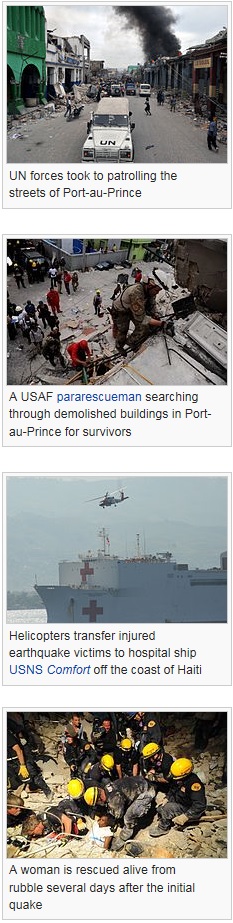
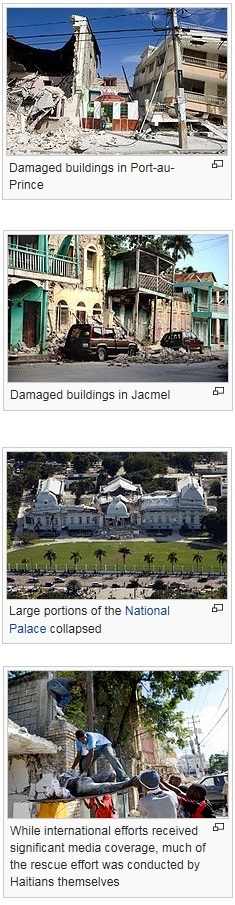
Haiti January 2010 Earthquake – Long drawn-out inadequate response from local, national and foreign stakeholders.

There is a difference between effectiveness and efficiency. It is easy for an individual or small group to simply deliver on a plan; that is efficiency. Effectiveness would be to get the buy-in from all stakeholders, so as to complete the needed collaboration, consensus-building and compromise. That is heavy-lifting.

All in all, the failures of CariCom, CDEMA and RSS are attributable to this one premise: “Too little, too late”.

It is time for more and better. By contrast, the CU‘s requirement for the SOFA is “Step One, Day One” in the Go Lean roadmap. The CU organization must be empowered for proactive and reactive management of natural disasters, industrial accidents, bacterial & viral pandemics and terrorism-related events. The Go Lean book details the series of community ethos, strategies, tactics, implementations and advocacies to provide the proactive and reactive public safety/security in the Caribbean region:

Community Ethos – Economic Systems Influence Individual Choices Page 21
Community Ethos – Consequences of Choices Lie in Future Page 21
Community Ethos – Privacy –vs- Public Protection Page 23
Community Ethos – Intelligence Gathering Page 23
Community Ethos – Whistleblower Protection Page 23
Community Ethos – “Crap” Happens Page 23
Community Ethos – Cooperatives Page 25
Community Ethos – Ways to Manage Reconciliations Page 34
Community Ethos – Ways to Improve Sharing Page 35
Community Ethos – Ways to Promote Happiness Page 36
Community Ethos – Ways to Impact the Greater Good Page 37
Strategy – Vision – Confederating a non-sovereign permanent union Page 45
Tactical – Fostering a Technocracy Page 64
Tactical – Separation of Powers – Coast Guard & Naval Authorities Page 75
Tactical – Separation of Powers – Ground Militia Forces Page 75
Tactical – Separation of Powers – Emergency Management Agency Page 76
Tactical – Separation of Powers – CariPol: Marshals & Investigations Page 75
Implementation – Ways to Pay for Change Page 101
Implementation – Start-up Foreign Policy Initiatives Page 102
Implementation – Start-up Security Initiatives Page 103
Implementation – Ways to Foster International Aid Page 115
Planning – 10 Big Ideas – #3: Consolidated Homeland Security Pact Page 130
Planning – Ways to Make the Caribbean Better Page 131
Planning – Ways to Improve Failed-State Indices – Escalation Role Page 134
Planning – Lessons from the American West – Needed Law & Order Page 142
Planning – Lessons from Egypt – Law & Order for Tourism Page 143
Advocacy – Ways to Grow the Economy – Quick Disaster Recovery Page 151
Advocacy – Ways to Improve Governance Page 168
Advocacy – Ways to Better Manage the Social Contract Page 170
Advocacy – Ways to Impact Justice – Policing the Police Page 177
Advocacy – Ways to Reduce Crime – Regional Security Intelligence Page 178
Advocacy – Ways to Improve Homeland Security Page 180
Advocacy – Ways to Mitigate Terrorism Page 181
Advocacy – Ways to Improve Intelligence Gathering & Analysis Page 182
Advocacy – Ways to Improve for Natural Disasters Page 184
Advocacy – Ways to Improve for Emergency Management Page 196
Advocacy – Ways to Protect Human Rights – Watchful World Page 220

Other subjects related to security and governing empowerments for the region have been blogged in other Go Lean…Caribbean commentary, as sampled here:

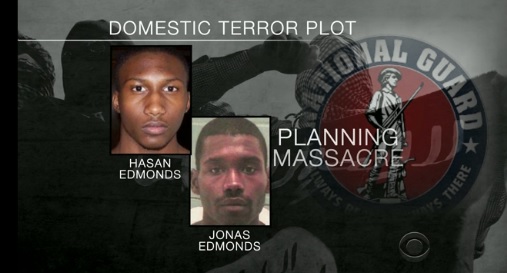
https://goleancaribbean.com/blog/?p=4809 Americans arrest 2 would-be terrorists – a Clear and Present Danger
https://goleancaribbean.com/blog/?p=4741 Vanuatu and Tuvalu Cyclone – Inadequate response to human suffering
https://goleancaribbean.com/blog/?p=4720 A Lesson in History: SARS in Hong Kong
https://goleancaribbean.com/blog/?p=4360 Dreading the ‘Caribbean Basin Security Initiative’
https://goleancaribbean.com/blog/?p=2614 The ‘Great ShakeOut’ Earthquake Drill / Planning / Preparations
https://goleancaribbean.com/blog/?p=2397 Stopping a Clear and Present Danger: Ebola
https://goleancaribbean.com/blog/?p=1076 Trinidad Muslims travel to Venezuela for jihadist training
https://goleancaribbean.com/blog/?p=1003 Painful and rapid spread of new virus – Chikungunya – in Caribbean
https://goleancaribbean.com/blog/?p=960 Lessons from NSA recording all phone calls in Bahamas
https://goleancaribbean.com/blog/?p=809 Muslim officials condemn abductions of Nigerian girls
https://goleancaribbean.com/blog/?p=535 Remembering and learning from Boston
https://goleancaribbean.com/blog/?p=273 10 Things We Want from the US – #4: Pax Americana
https://goleancaribbean.com/blog/?p=87 Fact, not fiction: 6.5M Earthquake Shakes Eastern Caribbean

The concept of “Clear and Present Danger” is conveyed in the following VIDEO, a “trailer” for a movie of the same name. This is art imitating life:

Title: Clear and Present Danger – Movie Trailer  – https://youtu.be/900kPg1lomU

Published on Jun 19, 2012 – This is the third film based on Tom Clancy’s high-tech espionage potboilers starring CIA deputy director Jack Ryan. Harrison Ford, returning to the Ryan role after his first go-round in 1992’s Patriot Games, is assigned to a delicate anti-drug investigation after a close friend of the President (a Reaganesque Donald Moffat) is murdered by a Colombian drug cartel. When Ryan discovers that the President’s wealthy friend was in league with the cartel, the President’s devious national security adviser (Harris Yulin) and an ambitious CIA deputy director (Henry Czerny) send a secret paramilitary force into Colombia to wipe out the drug lords. The force is captured and then abandoned by the President’s lackeys. It falls to Ryan to enter Colombia and rescue them, aided only by a renegade operative named Clark (Willem Dafoe), with both his life and career on the line.

The adoption of a “Clear and Present Danger” mandate is reflective of a technocratic work edict and community ethos. We can and must do better!

The advocacy to adopt the structure of a technocracy is reflective of this commitment to do better. The term technocracy is used to designate the application of the scientific method to solving social and economic problems. The CU must start as a technocracy, not grow into a technocracy – too much is at stake – lives are involved; see Appendix B below of Haiti’s Earthquake Photos.

All of the Caribbean is hereby urged to lean-in to this roadmap, to make the Caribbean safer and make the region a better destination to live, work and play.

🙂

Download the book Go Lean … Caribbean – now!

————

Appendix – CDEMA Role / Responsibilities:

Specific Roles and Responsibilities of the CDM Coordination and Harmonization Council:

  • Contribute to and provide recommendations for the development and implementation of a CDM monitoring and evaluation framework.
  • To consider reports on CDM implementation and provide guidance towards sustainability.
  • Identify and Provide recommendations for the integration of ongoing initiatives as well as planned initiatives that will support the achievement of the outcomes enshrined in the enhanced CDM Strategy
  • Discuss and address issues and opportunities to further good governance of the CDM
  • Nurture opportunities for synergies between development partners, participating states, representatives of the private sector, civil society and other relevant stakeholders responsible for the mainstreaming of the CDM strategy in development planning.
  • Provide policy guidance for the maintenance of the CDM database to ensure effective sharing of CDM knowledge.
  • Share annually  with the CDM Programming Consultation meeting, progress on CDM implementation
  • Identify a technical committee to support the planning process for the CDM Conference

The CDM Coordination and Harmonization Council comprise development partner representatives, sector leaders, participating states and private sector. The group includes:

  1. Caribbean Disaster Emergency Management Agency (Chair),
  2. Caribbean Development Bank (CDB),
  3. Canadian International Development Agency (CIDA),
  4. United Nations Development Programme (UNDP),
  5. United States Agency for International Development (Development Arm and OFDA),
  6. United Kingdom Department for International Development (DFID),
  7. European Union (EU),
  8. CARICOM Secretariat,
  9. Organization of American States (OAS),
  10. Organization of Eastern Caribbean States (OECS),
  11. University of the West Indies (UWI),
  12. Food and Agriculture Organisation (FAO),
  13. Caribbean Tourism Organization (CTO),
  14. Pan American Health organization (PAHO),
  15. Caribbean Electric Utility Services Cooperation (CARILEC),
  16. Caribbean Policy Development Centre (CPDC),
  17. United Nations Development Fund for Women (UNIFEM),
  18. Caribbean Community Climate Change Centre (CCCCC),
  19. Caribbean Association of Industry and Commerce (CAIC),
  20. Four representatives of CDERA Participating States – one representative from each sub-region.

—————-

Appendix B – Haiti Earthquake Photos – Evidence of a Clear and Present Danger
- Photo 2

- Photo 3


Share this post:
, , , ,

A Lesson in History – Royal Charters: Truth & Consequence

Go Lean Commentary

“This is my island in the sun, willed to me by my Father’s hand” – Iconic Calypso song: Island in the Sun

No one doubts the historicity of this expression. Even the Bible lays the premise for the granting of an inheritance by the Declaration of a Father; consider this verse: “A good person leaves an inheritance for their children’s children”. – Proverbs 13:22 – New International Version

So without a doubt a “Last Will & Testament” is a decree/charter that grants property to a beneficiary, just by words; no exchange of capital or valuables. This is perhaps the simplest form of a charter or decree.

CU Blog - A Lesson in History - Royal Charter - Truth and Consequence - Photo 2They get more complex, like with Papal Bulls, Royal Charters and/or Royal Decrees. See Photo here.

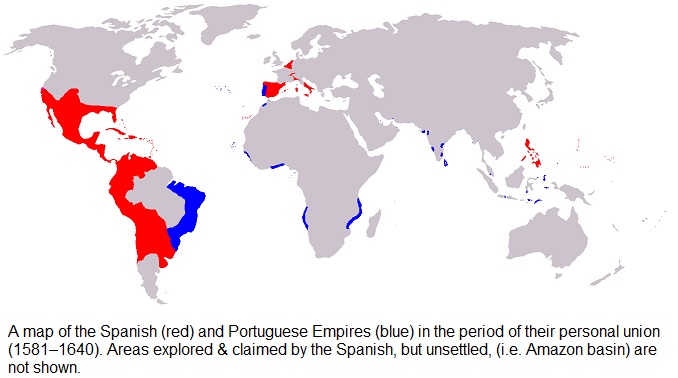
Consider first the Papal Bull – “letters patent” or charter issued by a Pope, the Head of the Roman Catholic Church; see Appendix A below. The most iconic of all the Papal Bulls was the Inter caetera (Latin for “Among other [works]”) a Papal Bull  by Pope Alexander VI on 4 May 1493, which set a demarcation between the New Lands to Portugal and Spain; this granted to Spain (the Crowns of Castile and Aragon) all lands to the “west and south” of a pole-to-pole line 100 leagues west and south of any of the islands of the Azores or the Cape Verde islands.[1] All new lands to the East of this pole remained assigned to Portugal. CU Blog - A Lesson in History - Royal Charter - Truth and Consequence - Photo 3

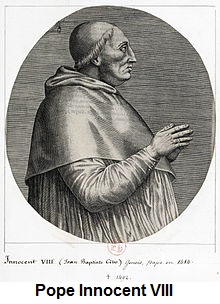
Just before this world-changing decree, there was an earlier Papal Bull that sealed the fate and would prejudice the African Diaspora for 500 years. The African Slave Trade and institution of “Slavery” was legally predicated on a Papal Bull from Pope Innocent VIII (Giovanni Battista Cybo) in 1491; just months before Christopher Columbus’s historic first voyage. Consider this encyclopedic reference:

In his book “Black Africans in Renaissance Europe”, principal author N. H Minnich* described how the position of Renaissance popes towards slavery, a common institution in contemporary cultures, varied. The book states that those who allowed the slave trade did so in the hope of gaining converts to Christianity.[11] But in the case of Pope Innocent VIII, he permitted trade with Barbary # merchants, in which foodstuffs would be given in exchange for slaves who could then be converted to Christianity.[11]

CU Blog - A Lesson in History - Royal Charter - Truth and Consequence - Photo 1

This was the de jure authorization of the Slave Trade.

One early adopter of this new commerce was King Ferdinand of Aragon (co-sponsor along with Castile’s Queen Isabella of the initial voyage of Christopher Columbus); he gave Pope Innocent VIII 100 Moorish slaves who shared them out with favored Cardinals.[12]

From this origin, the foundation of the New World was established … with the stroke of a pen.

Any monarchy, democracy, aristocracy, stratocracy, timocracy or theocracy that emerged subsequently in the New World stemmed from this genesis of Papal or Royal Charters. All of these forms of rulership are analyzed in the book and accompanying blogs for Go Lean…Caribbean. This book provides an assessment of the Caribbean today, drawing reference to its historic past. From the origins of slavery, the region traversed the historic curves of social revolution and evolution. In the 1500, the Protestant movement took hold. As other European powers deviated from Catholicism, Papal Bulls carried no significance to them and compliance was ignored. England and Holland established their own Protestant Churches with their own monarchs as head of Church and State; Papal decrees were replaced with Royal Decrees and Charters; see Appendix B below. The intent and end-result was still the same: territories and lands awarded (colonized) with the stroke of a pen by one European power after another. The Royal Decrees and Charters were then reinforced with a strong military presence and many battles. This point was detailed in the Go Lean book on Page 241:

The Bottom Line on European Colonialism
The European colonial period was the era from the 1500s to the mid-1900s when several European powers (Spain, Britain, the Netherlands, France and Portugal) established colonies in the Americas, in a Space Race to dominate the New World. The Northern Coast of South America became a typical New World battleground for conflict and pushing between these powers, and many military campaigns and diplomatic initiatives (treaties) ensued. Through the contact period following the 1498 discovery by Christopher Columbus, the term “Guiana” was used to refer to all this area, between the Orinoco, the Rio Negro, and the Amazon rivers; it was seen as a unified, isolated entity that it was often referred to as the “Island of Guiana”. The real interest in the exploration and colonization of the Guianas did not begin until the end of the sixteenth century when the other European powers developed interest in the Guianas. When did this European Colonial “push-shove-match” end? Not until almost 500 years later, after World War II, after the effects of that war left all these European powers drained – of finances and the will to continue.

Early in the Go Lean book, this need for careful review of the history of European domination on the Caribbean was acknowledged and then placed into perspective with this pronouncement (Declaration of Interdependence – Page 10):

As the history of our region and the oppression, suppression and repression of its indigenous people is duly documented, there is no one alive who can be held accountable for the prior actions, and so we must put aside the shackles of systems of repression to instead formulate efficient and effective systems to steer our own destiny.

As the colonial history of our region was initiated to create economic expansion opportunities for our previous imperial masters, the structures of government instituted in their wake have not fostered the best systems for prosperity of the indigenous people.

So the consideration of the Go Lean book, as related to this subject is one of governance, the need for technocratic stewardship of the regional Caribbean society. This point was also pronounced in the opening Declaration of Interdependence (Page 12) with these acknowledgements and statements:

xi.   Whereas all men are entitled to the benefits of good governance in a free society, “new guards” must be enacted to dissuade the emergence of incompetence, corruption, nepotism and cronyism at the peril of the people’s best interest. The Federation must guarantee the executions of a social contract between government and the governed.

xii. Whereas the legacy in recent times in individual states may be that of ineffectual governance with no redress to higher authority, the accedence of this Federation will ensure accountability and escalation of the human and civil rights of the people for good governance, justice assurances, due process and the rule of law. As such, any threats of a “failed state” status for any member state must enact emergency measures on behalf of the Federation to protect the human, civil and property rights of the citizens, residents, allies, trading partners, and visitors of the affected member state and the Federation as a whole.

xiii. Whereas the legacy of dissensions in many member-states (for example: Haiti and Cuba) will require a concerted effort to integrate the exile community’s repatriation, the Federation must arrange for Reconciliation Commissions to satiate a demand for justice.

Let’s add one more option to the forms of rulership that prevailed in the Caribbean: Oligarchy!

The use of the term oligarchy is a synonym for rule by the rich,[4] for which another term commonly used today is plutocracy. (This commentary had previously detailed the dynamics of plutocracies in the corporate arena).

The etymology of the word “oligarchy” (from Greek olígos, meaning “few”, and arkho, meaning “to rule or to command”)[1][2][3] is a form of power structure in a state where power effectively rests with a small number of people. These people could be distinguished by royalty, wealth, family ties, education, corporate, religious or military control.

In this discussion of oligarchy, focus is given to powerful families. There are encyclopedic references that relate that oligarchy structures are often controlled by a few prominent families, who typically pass their influence/wealth from one generation to the next, even though inheritance alone is not a necessary condition for oligarchies to prevail.

The islands of the Caribbean fit the story-line in the opening song lyrics: “Islands in the sun; willed to me by my father’s hand”.

This is the challenge that belies Caribbean society. Most of the property and indigenous wealth of the Caribbean region is concentrated amongst the rich, powerful and yet small elite; an oligarchy. Many times these families received their property, corporate rights and/or monopolies by Royal Charter from the European monarchs of ancient times. These charters thus lingered in legacy from one generation to another … until …

World War II.

According to the initial quotation above (Bottom Line on European Colonialism) from the Go Lean book, World War II was the “watershed event” that led to revolutionary change among the European powers. The “Decolonization” movement thusly proceeded to eradicate the “colonialism disease”. Most Caribbean member-states that now feature an independent status obtained this disposition during this time period since WW II; (i.e. Jamaica in 1962, Bahamas in 1973). The European direct rule was gone, but the oligarchs remained; many times negotiated in initial constitutions as a compromise for peace assurances.

The subject of oligarchs is very familiar on the African continent. This has been a real issue there. In many countries after colonialism, like Zimbabwe (1980), the cure for the oligarch disease was nationalization – forfeiting and seizing commercial farms and mines. This turned out disastrously for this country; the cure was worse than the disease. But, next door in South Africa, the strategy, tactics and implementation was different. This country did not ascend to majority rule until 1994; the first President there, Nelson Mandela saw the futility of this nationalization strategy amongst the precedent African nations that sought independence, so he pursued an alternate approach to assuage White Flight and keep the capital and skilled labor in the country. But the continuation of the oligarchs’ ill-gained, and public-perceived-stolen assets forged problems in the reality of economic/wealth inequality. Majority rule therefore brought no revolutionary change for the average man.

Considering these case studies, we see a lesson in this history, an obvious appreciation for best-practices … to apply in the Caribbean. We derive best-practices and prudence by applying these lessons from history, as reflected in the Go Lean book.

This is the quest of the Go Lean…Caribbean book; to serve as a roadmap for the introduction and implementation of the technocratic Caribbean Union Trade Federation (CU); to spearhead the elevation of Caribbean society. The book advocates learning lessons from many events and concepts in history, from as far back as the patriarchal Bible times, to as recent as the Great Recession of 2008. The roadmap simply seeks to reboot the region’s economic, security and governing engines, hypothesizing that the European colonial stewards did not have societal efficiency in mind when they structured administrations of the individual countries/island-states in this region; (they didn’t even apply the best practices that they employed in Europe).

In general, the CU will employ better strategies, tactics and implementations to impact its prime directives; identified with the following 3 statements:

  • Optimization of the economic engines in order to grow the regional economy to $800 Billion & create 2.2 million new jobs.
  • Establishment of a security apparatus to protect the resultant economic engines and mitigate internal and external threats.
  • Improve Caribbean governance to support these engines.

The Go Lean book stresses key community ethos, strategies, tactics, implementations and advocacies necessary to transform and turn-around the eco-systems of Caribbean society. These points are detailed in the book as follows:

Community Ethos – Economic Principles – Economic Systems Influence Individual Choices Page 21
Community Ethos – Economic Principles – Consequences of Choices Lie in the Future Page 21
Community Ethos – Governing Principles – Lean Operations Page 24
Community Ethos – Ways to Impact the Future Page 26
Community Ethos – Ways to Manage Reconciliations Page 34
Community Ethos – Ways to Impact the Greater Good Page 37
Strategy – Vision – Confederate all 30 member-states/ 4 languages into a Single Market Page 45
Strategy – Mission – Build and foster local economic engines Page 45
Tactical – Ways to Foster a Technocracy Page 64
Tactical – Growing the Economy – Post WW II European Marshall Plan Model Page 68
Tactical – Separation-of-Powers – CU Federal Government versus Member-State Governance Page 71
Implementation – Assemble All Regionally-focus Organizations of All Caribbean Communities Page 96
Implementation – Ways to Better Manage Debt Page 114
Planning – 10 Big Ideas – Single Market / Currency Union Page 127
Planning – Ways to Model the new European Union Page 130
Planning – Ways to Make the Caribbean Better Page 131
Planning – Ways to Improve Failed-State Indices – Minority and Human Rights Page 134
Planning – Lessons Learned from the previous West Indies Federation Page 135
Planning – Lessons Learned from 2008 – Optimizing Economic-Financial-Monetary Engines Page 136
Planning – Lessons Learned New York City – Managing as a “Frienemy” Page 137
Planning – Lessons Learned from Omaha – Human Flight Mitigations Page 138
Planning – Lessons Learned from East Germany – Bad Examples for Trade & Security Page 139
Planning – Lessons Learned from Detroit – Turn-around from Failure Page 140
Planning – Lessons Learned from Indian Reservations – See Photo here Page 141
Planning – Lessons Learned from the American West – How to Win the Peace Page 142
Advocacy – Ways to Grow the Economy Page 151
Advocacy – Ways to Create Jobs Page 152
Advocacy – Ways to Improve Governance Page 168
Advocacy – Ways to Better Manage the Social Contract Page 170
Advocacy – Ways to Improve Homeland Security Page 180
Advocacy – Ways to Better Manage Natural Resources Page 183
Advocacy – Ways to Preserve Caribbean Heritage Page 218
Appendix – Failed-State Index for Uneven Economic Development Page 272
Appendix – European Shuffling in the Guianas – Historic Timeline Page 307

Henry Ford Quote - Vanity of Government Entitlements

There are other lessons for the Caribbean to learn from considering history; the following previous blog/commentaries apply:

https://goleancaribbean.com/blog/?p=4935 A Lesson in History: the ‘Grand Old Party’ of American Politics
https://goleancaribbean.com/blog/?p=4720 A Lesson in History: SARS in Hong Kong
https://goleancaribbean.com/blog/?p=4166 A Lesson in History: Panamanian Balboa
https://goleancaribbean.com/blog/?p=2809 A Lesson in History: Economics of East Berlin
https://goleancaribbean.com/blog/?p=2670 A Lesson in History: Rockefeller’s Pipeline
https://goleancaribbean.com/blog/?p=2585 A Lesson in History: Concorde SST
https://goleancaribbean.com/blog/?p=2480 A Lesson in History: Community Ethos of WW II
https://goleancaribbean.com/blog/?p=2297 A Lesson in History: Booker T versus Du Bois
https://goleancaribbean.com/blog/?p=1531 A Lesson in History: 100 Years Ago Today – World War I
https://goleancaribbean.com/blog/?p=789 A Lesson in History: America’s War on the Caribbean

The Go Lean roadmap seeks to empower and elevate Caribbean societal engines. It is out-of-scope to impact Europe; our focus is only here at home. Besides, the former European colonial masters all realize the futility of the actions of their ancestors and predecessors. They are now battling to try and weed-out the last vestiges of racism and ethnic supremacy in their society. Though there is a movement to extract reparations from these former colonizers, that effort is not supported by the Go Lean movement.

Our quest is simple, a 21st century effort to make the Caribbean region a better place to live, work and play. 🙂

Download the e-Book of Go Lean … Caribbean – free … now!

———–

Appendix A – Letters Patent

Letters patent are a type of legal instrument in the form of a published written order issued by a monarch or president, generally granting an office, right, monopoly, title, or status to a person or corporation. They are so named from the Latin verb pateo, to lie open, exposed, accessible.[1] The originator’s seal was attached pendent from the document, so that it did not have to be broken in order for the document to be read.

They are called “letters” (plural) from their Latin name litterae patentes, used by medieval and later scribes when the documents were written in Latin, in the ancient sense of a collection of letters of the alphabet arranged to be read rather than in the modern sense of an “epistle” or item of correspondence: thus no singular form exists.[2]

Letters patent can be used for the creation of corporations or government offices, or for the granting of city status or a “coat of arms”. A particular form of letters patent has evolved into the modern patent (referred to as a utility patent or design patent in United States patent law) granting exclusive rights in an invention (or a design in the case of a design patent). Clearly in this case it is essential that the written grant should be in the form of a public document so other inventors can consult it to avoid infringement.

Source: http://en.wikipedia.org/wiki/Letters_patent

———–

Appendix B – Royal Charter

A royal charter is a formal document issued by a monarch as letters patent, granting a right or power to an individual or a corporate entity.

The British monarchy has issued over 980 royal charters.[1] Of these about 750 remain in existence.

The Royal Decree is the equivalent in Belgium of a Royal Charter.

Consider some examples:

Source: http://en.wikipedia.org/wiki/Royal_charter

———–

Appendix * – Book Reference: Black Africans in Renaissance Europe”, N. H Minnich, Thomas Foster Earle, K. J. P. Lowe, Cambridge University Press, 2005, ISBN 0-521-81582-7

———–

Appendix # – Reference: Barbary Pirates

These are the “pirates” referred to in the Bob Marley’s Redemption Song with these lyrics:

Old pirates, yes, they rob I;
Sold I to the merchant ships,
Minutes after they took I
From the bottomless pit.
But my hand was made strong
By the ‘and of the Almighty.
We forward in this generation
Triumphantly.

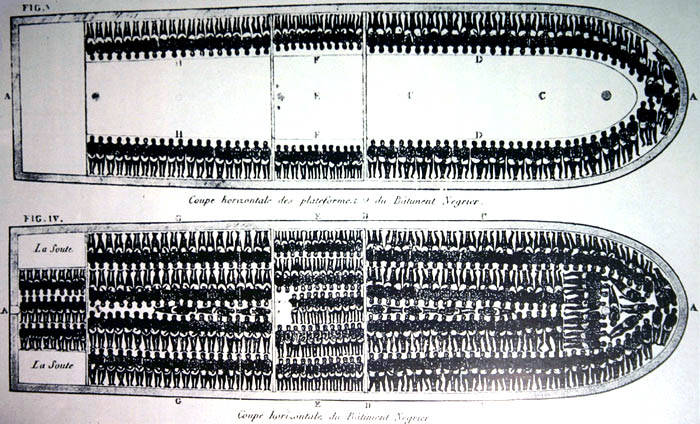
Slave Ship

Bob Marley - Uprising

VIDEO – Bob Marley – Redemption Song (from the Legend album, with lyrics) –  https://youtu.be/QrY9eHkXTa4

No copyright infringement intended; this is a “fan” video that assembled together public-domain photo-stills.

Music: “Redemption Song” by Bob Marley & The Wailers (Google Play • iTunes • AmazonMP3)

Share this post:
, , , ,
[Top]

A Lesson in History – the ‘Grand Old Party’

Go Lean Commentary

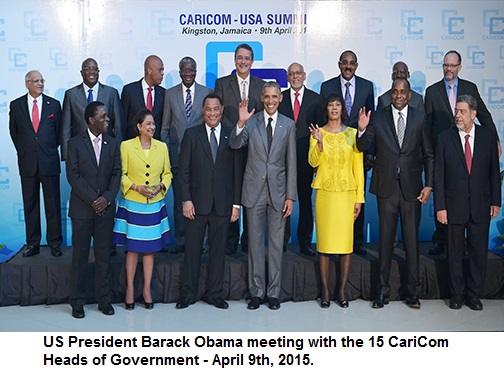
The Caribbean Community (CariCom) in general and Jamaica in particular had the great privilege of hosting the United States President Barack Obama. He is the first Black Man to hold that esteemed office. In his visit, he was hailed as a conquering hero for agreeing to attend a regional meeting on Caribbean soil, thereby facilitating consultation and collaboration on regional issues between Caribbean government officials and the Chief Executive of the American Republic. Though the Caribbean member-states have no vote in the US Capitol of Washington DC, including the US Territories of Puerto Rico and the Virgin Island, we do have a voice. The Jamaica meeting allowed more audiences for those voices.

JAMAICA-US-OBAMA-CARICOM

The US is the world’s largest, and richest, single market economy – an economic and military Super Power – plus the largest trading partner for most Caribbean member-states. We are directly affected by the economic, security and governing policies emanating from the shores  of America. This focus aligns with the book Go Lean…Caribbean which seeks to elevate the Caribbean economic, security and governing engines. Begrudgingly, the book admits that the Caribbean is only a parasite of the American eco-system but presents a roadmap to elevate the region to a better status: protégé instead of parasite.

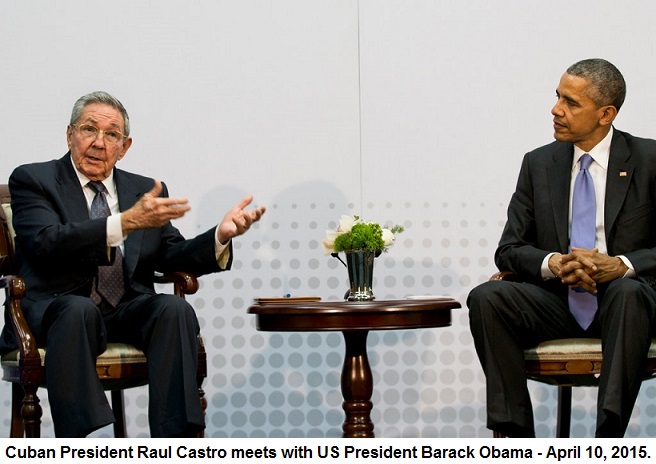
CU Blog - A Lesson in History - Grand Old Party - Photo 2Due to constitutionally mandated term limits, President Obama only has less than 2 years left in his administration. The focus now moves to his possible successor. The next presidential election in the US is set for November 2016. Despite being 18 months away, the jockeying has begun. Will the next president be a Democrat or a Republican? Will their policies be Pro-Caribbean, Anti-Caribbean or completely agnostic; indifferent to the Caribbean’s needs and issues? Agnosticism is not far-fetch as this is the observation given by President Obama. He concluded that 55 years of indifference towards Cuba was long-enough and he has “set the machinery in motion” to normalize relations with Cuba. Will this initiative continue with the new president? The world will have to wait-and-see.

As of this writing, 4 people have already officially declared and launched their campaigns, 1 Democrat (Hillary Clinton) and 3 Republicans (Ted Cruz, Rand Paul, and Marco Rubio). Most stakeholders in the Caribbean may think that the Democratic Party may be more conducive to Caribbean elevation. But still, the decision of American leadership is not ours to make nor influence. We must simply convene, consult and collaborate with whomever the elected official is, Democrat or Republican.

This commentary therefore asserts that we need to work to influence both sides of the American political divide; perhaps even more on the Republican side, since as of late, their policies are less empowering for African-American, and less empowering for the Caribbean. Therefore, there is the need for more mitigation and remediation for the Republican party … as of late.

As of late…
… because the Republican Party, commonly referred to as the GOP (abbreviation for Grand Old Party), was founded by anti-slavery activists in 1854. (The Caribbean and the United States share the same historic legacy of slavery and the slow drag throughout history to remediate the experiences and injustices for this Black-and-Brown population). The GOP dominated politics nationally and in most of the northern U.S. for most of the period between 1860 and 1932. There have been 18 Republican U.S. presidents, the first being Abraham Lincoln, who served from 1861 until his assassination in 1865, and the most recent being George W. Bush, who served two full four-year terms 2001 to 2009. The most recent Republican presidential nominee was former Massachusetts governor Mitt Romney who lost in 2012 to the incumbent president, Democrat Barack Obama. See the full 19th and 20th Century history of the GOP in the Appendix below.

Today, the party’s platform is generally based on American conservatism,[8][9][10] in contrast to the contemporary American liberalism of the rival Democratic Party. The Republican Party’s conservatism involves supporting free market capitalism, limited government, strong national defense, opposing regulation and labor unions, and supporting socially conservative policies.[2] Civil rights, or issues related to empowering minorities, are not identified with the Republican Party. What a change compared to the historic beginnings of this party.

In the current 114th U.S. Congress, the Republicans have their largest majority in the U.S. House of Representatives since the 1928 election; the GOP also holds a majority of seats in the Senate.[12] The party also holds a majority of governorships and state legislatures.[13]

It is what it is!

We must seek to engage Republicans. It is only the US Presidency that is missing in their echelon of American power.

There is expected to be a full corps of Republican presidential candidates for 2016. Some of the names that have expressed interest in running include the following, but these ones have not officially launched their federal campaigns … yet:

  • Jeb Bush – former 2-term Florida Governor
  • Mike Huckabee – former Arkansas Governor and 2008 presidential candidate
  • Chris Christie – Current Governor of New Jersey
  • Donald Trump – Popular Billionaire businessman and media personality
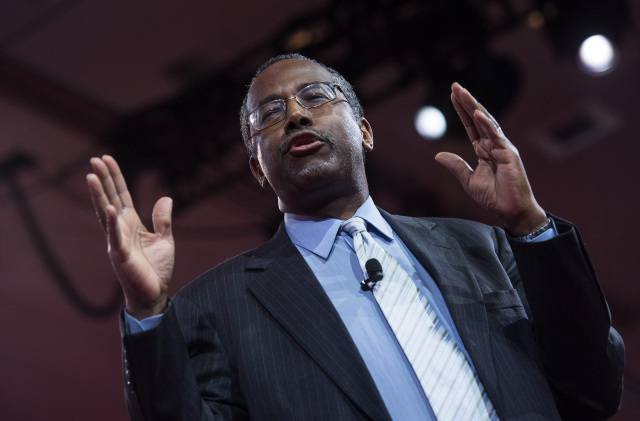
  • Ben Carson – Retired neurosurgeon and businessman; he happens to be an African-American; see article here:

Title: Will He Run? Ben Carson Set To Address Presidential Plans In May 4 Announcement

CU Blog - A Lesson in History - Grand Old Party - Photo 3He may announce his bid to run for president in 2016. He may not.

But whatever Ben Carson’s political aspirations are, we’ll all know when he makes them public in a May 4 announcement in Detroit, his team tells [news outlet] CNN.

The announcement, set to take place at the Detroit Music Hall Center for Performing Arts, is expected to be the launch for his presidential bid. Details, including ticketing and the subject of the announcement, however, have “yet to be hammered out,” Carson spokeswoman Deana Bass said.

“He will make an announcement. But he’s still very much in the exploratory phase, so he hasn’t made a decision yet,” she said.

From CNN:
The retired neurosurgeon has been traveling the nation over the past six months, giving paid speeches and meeting with supporters to gauge interest in a bid. He recently traveled to Iowa and New Hampshire, and spoke last weekend at the National Rifle Association’s meeting in Tennessee.  Carson’s relative political inexperience, however, hasn’t turned him away from the campaign — if he runs, he’ll look to make it an asset, framing himself as a common-sense alternative to the broken policies of Washington politicians.

So far, the presidential race has gained three GOP senators — Rand Paul of Kentucky, Ted Cruz of Texas, and Marco Rubio of Florida — but Carson’s green political experience (and the already full pot of GOP candidates) doesn’t seem to be a deterrent. And according to the Real Clear Politics average of polls, he may have a real shot.

From CNN:
Carson surveys right in the middle of the potential GOP field, ahead of more seasoned or better-known GOP contenders like former Arkansas Gov. Mike Huckabee or Rubio, and he took fifth place with 9% support in the last CNN/ORC survey, conducted in March.

Still, that’s a marked decline from late February, when he was polling in the top three of the pack, indicating he still has some work to do in proving his credibility with voters.

We’ll wait to see if Carson will join the Election 2016 club, but if May 4 turns out to be his bid announcement, will you vote for him?
Source: News One – Media Suite Targeting African-Americans – Posted 04/14/2015 from: http://newsone.com/3107603/ben-carson-set-to-address-presidential-plans-may-4-announcement/

Ben Carson is a retired neurosurgeon from Detroit. The publishers of the book Go Lean…Caribbean has come to this city to observe-and-report on the turn-around of this once great industrial city that is a national icon of urban dysfunction; (Page 140). There have been countless blog/commentaries that have described the Detroit (and surrounding Michigan) dynamics.

Is the United States ready for a second Black Man to assume the highest office in the land? Is Ben Carson ready? Is Black America ready for this Black Republican?

These are all appropriate questions. From the Caribbean perspective, we will observe-and-report on these developments.

The focus of the Go Lean book is not American politics, but rather the economic, security and governing engines of the Caribbean. Yet still, we need to have a productive relationship with the American federal government and whichever administration is in the White House. The book serves as a roadmap for the introduction and implementation of the Caribbean Union Trade Federation (CU); an initiative to bring “Hope and Change” to the Caribbean region; to make the region a better place to live, work and play. This Go Lean roadmap also has these 3 prime directives:

  • Optimization of the economic engines in order to grow the regional economy to $800 Billion & create 2.2 million new jobs.
  • Establishment of a security apparatus to protect the resultant economic engines.
  • Improvement of Caribbean governance to support these engines.

The book describes the CU as a technocratic administration with 144 different missions to elevate the Caribbean homeland. The underlying goal is stated early in the book with this pronouncement in the opening Declaration of Interdependence (Page 12):

xii. Whereas the legacy in recent times in individual states may be that of ineffectual governance with no redress to higher authority, the accedence of this Federation will ensure accountability and escalation of the human and civil rights of the people for good governance, justice assurances, due process and the rule of law…

The Go Lean roadmap represents “Hope and Change” for the Caribbean. In 2008, Barack Obama propelled forward into American conscience with that theme “Hope and Change“, now the effort is to propel an initiative for the Caribbean. We have some serious crises to contend with. We need hope and we need change…now.

This fact was enunciated by Obama in his visit to Jamaica. He explained how we have to better manage our interactions with Super Powers to ensure we are getting the sought-after benefits, and not being exploited for their self-interest. The President prescribed a formula for the Caribbean’s dealing with China … and also America itself.

VIDEO: President Barack Obama’s response on China’s involvement in Jamaica’s Development – https://youtu.be/rRaQjukEPOo

Published on 

Apr 22, 2015 — We are a movement of Jamaicans both at Home and Abroad who are willing to fight for real and lasting change. This isn’t for everyone — we’re Changing Jamaica Through Leadership, and we’re proud of it. If you’re someone who’d rather get involved than sit back, if you refuse to be cynical about what we can get done together, then you should be part of this at www.ourjamaicavote.org

The Go Lean roadmap was constructed with the following community ethos in mind, plus the execution of strategies, tactics, implementation and advocacies to elevate the Caribbean eco-system. The following is a sample of these specific details from the book:

Assessment – Caribbean Community’s stalled Single Market Initiative Page 15
Community Ethos – Economic Principles – People Choose Page 21
Community Ethos – Economic Principles – All Choices Involve Costs Page 21
Community Ethos – Economic Principles – People Respond to Incentives in Predictable Ways Page 21
Community Ethos – Economic Principles – Economic Systems Influence Individual Choices Page 21
Community Ethos – Economic Principles – The Consequences of Choices Lie in the Future Page 21
Community Ethos – Security Principles – “Crap” Happens Page 23
Community Ethos – Governing Principles – Minority Equalization Page 24
Community Ethos – Governing Principles – Lean Operations Page 24
Community Ethos – Ways to Impact the Future Page 26
Community Ethos – Ways to Foster Genius – Leadership Skills/Development Page 27
Community Ethos – Ways to Manage Reconciliations Page 34
Community Ethos – Ways to Impact the Greater Good Page 37
Strategy – Vision – Confederation of the 30 Caribbean Member-States into a Single Market Page 45
Strategy – Mission – Celebrate the Music, Sports, Art, People and Culture of the Caribbean Page 46
Tactical – Confederating a Permanent Union Page 63
Tactical – Fostering a Technocracy Page 64
Tactical – Separation of Powers: Federal Administration versus Member-States Governance Page 71
Implementation – Ways to Pay for Change Page 101
Implementation – Ways to Deliver Page 109
Planning – 10 Big Ideas for the Caribbean Region Page 127
Planning – Ways to Improve Trade Page 128
Planning – Ways to Make the Caribbean Better Page 131
Planning – Ways to Better Manage Image Page 133
Planning – Lessons Learned from Detroit Page 140
Advocacy – Ways to Grow the Economy Page 151
Advocacy – Ways to Create Jobs Page 152
Advocacy – Ways   to Improve Governance in the Caribbean Region Page 168
Advocacy – Ways to Better Manage the Social Contract Page 170
Advocacy – Ways to Improve Leadership Page 171
Advocacy – Ways to Improve Homeland Security Page 180
Advocacy – Ways to Improve Communications Page 186
Advocacy – Ways to Preserve Caribbean Heritage Page 218
Advocacy – Ways to Reboot Cuba Page 236

There is a consistency with this Go Lean commentary, applying lessons from a consideration of historic events and people. The premise is simple:

Those who refuse to learn from history are forced to repeat it.

The Go Lean book posits that the Caribbean has a dysfunctional history. Despite having the greatest address on the planet, the region suffers from an alarmingly high abandonment rate. We can… and must do better. By applying this lesson from history we should be able to better prosper where we’re planted here in the Caribbean.

There are other lessons for the Caribbean to learn from considering history; the following previous blog/commentaries apply:

https://goleancaribbean.com/blog/?p=4720 A Lesson in History: SARS in Hong Kong
https://goleancaribbean.com/blog/?p=4166 A Lesson in History: Panamanian Balboa
https://goleancaribbean.com/blog/?p=2809 A Lesson in History: Economics of East Berlin
https://goleancaribbean.com/blog/?p=2670 A Lesson in History: Rockefeller’s Pipeline
https://goleancaribbean.com/blog/?p=2585 A Lesson in History: Concorde SST
https://goleancaribbean.com/blog/?p=2480 A Lesson in History: Community Ethos of WW II
https://goleancaribbean.com/blog/?p=2297 A Lesson in History: Booker T versus Du Bois
https://goleancaribbean.com/blog/?p=1531 A Lesson in History: 100 Years Ago Today – World War I
https://goleancaribbean.com/blog/?p=789 A Lesson in History: America’s War on the Caribbean

The Go Lean roadmap seeks to empower and elevate Caribbean engines. It is out-of-scope to impact the US. That will be the campaign of the presidential candidates, perhaps also including Ben Carson. He would not be the first Black Republican presidential candidate; in fact in 2012 Herman Cain ran a substantial campaign for much of that “season” – a one-time front-runner. Further, in 2000, former ambassador Alan Keyes sought the Republican nomination for President.

Will “Ben Carson” campaign change the Republican party, making it more amiable to the Black Community? Did the previous candidates (Herman Cain & Alan Keyes) impact the party? It is only logical to conclude that each attempt by serious Black candidates will “crack the glass ceiling”; then eventually a substantial Black candidate will “break through”.

Will “Ben Carson” be that candidate? Let’s observe-and-report.

🙂

Download the free e-Book of Go Lean … Caribbean – now!

———-

APPENDIX – History of the Grand Old Party
(Source: Wikipedia Online Encyclopedia – Retrieved 04/19/2015 from: http://en.wikipedia.org/wiki/Republican_Party_(United_States) )

Founding and 19th century

CU Blog - A Lesson in History - Grand Old Party - Photo 4Founded in the Northern states in 1854 by anti-slavery activists, modernizers, ex-Whigs, and ex-Free Soilers, the Republican Party quickly became the principal opposition to the dominant Democratic Party and the briefly popular Know Nothing Party. The main cause was opposition to the Kansas–Nebraska Act, which repealed the Missouri Compromise by which slavery was kept out of Kansas. The Northern Republicans saw the expansion of slavery as a great evil. The first public meeting where the name “Republican” was suggested for a new anti-slavery party was held on March 20, 1854 in a schoolhouse in Ripon, Wisconsin.[14] The name was partly chosen to pay homage to Thomas Jefferson’s Republican Party.

The first official party convention was held on July 6, 1854, in Jackson, Michigan.[15] By 1858, the Republicans dominated nearly all Northern states. The Republican Party first came to power in 1860 with the election of Abraham Lincoln to the Presidency and Republicans in control of Congress and again, the Northern states. It oversaw the preserving of the union, the end of slavery, and the provision of equal rights to all men in the American Civil War and Reconstruction, 1861–1877.[16]

The Republicans’ initial base was in the Northeast and the upper Midwest [States].

Early Republican ideology was reflected in the 1856 slogan “free labor, free land, free men”, which had been coined by Salmon P. Chase, a Senator from Ohio (and future Secretary of the Treasury and Chief Justice of the United States).[17] “Free labor” referred to the Republican opposition to slave labor and belief in independent artisans and businessmen. “Free land” referred to Republican opposition to plantation system whereby slave-owners could buy up all the good farm land, leaving the yeoman independent farmers the leftovers. The Party strived to contain the expansion of slavery, which would cause the collapse of the slave power (“slaveocracy”) and the expansion of freedom.[18]

Lincoln, representing the fast-growing western states, won the Republican nomination in 1860 and subsequently won the presidency. The party took on the mission of preserving the Union and destroying slavery during the American Civil War and over Reconstruction. In the election of 1864, it united with War Democrats to nominate Lincoln on the National Union Party ticket.

The party’s success created factionalism within the party in the 1870s. Those who felt that Reconstruction had been accomplished and was continued mostly to promote the large-scale corruption tolerated by President Ulysses S. Grant ran Horace Greeley for the presidency. The Stalwarts defended Grant and the spoils system; the Half-Breeds pushed for reform of the civil service.

The GOP supported business generally, hard money (i.e., the gold standard), high tariffs to promote economic growth, high wages and high profits, generous pensions for Union veterans, and (after 1893) the annexation of Hawaii. The Republicans supported the pietistic Protestants who demanded Prohibition. As the northern post-bellum economy boomed with heavy and light industry, railroads, mines, fast-growing cities and prosperous agriculture, the Republicans took credit and promoted policies to sustain the fast growth.

Nevertheless, by 1890 the Republicans had agreed to the Sherman Antitrust Act and the Interstate Commerce Commission in response to complaints from owners of small businesses and farmers. The high McKinley Tariff of 1890 hurt the party and the Democrats swept to a landslide in the off-year elections, even defeating McKinley himself.

After the two terms of Democrat Grover Cleveland, the election of William McKinley in 1896 is widely seen as a resurgence of Republican dominance and is sometimes cited as a realigning election. McKinley promised that high tariffs would end the severe hardship caused by the [Economic] Panic of 1893, and that the GOP would guarantee a sort of pluralism in which all groups would benefit.

20th century

CU Blog - A Lesson in History - Grand Old Party - Photo 5The 1896 realignment cemented the GOP as the party of big business, while Theodore Roosevelt added more small business support by his embrace of trust busting. He handpicked his successor William Howard Taft in 1908, but they became enemies on economic issues. Defeated by Taft for the 1912 nomination, Roosevelt bolted the party and led the third party ticket of the Progressive Party. The party returned to the White House throughout the 1920s, running on platforms of normalcy, business-oriented efficiency, and high tariffs. The national party avoided the prohibition issue after it became law in 1920.

Warren G. Harding, Calvin Coolidge and Herbert Hoover were resoundingly elected in 1920, 1924, and 1928 respectively. The pro-business policies of the decade seemed to produce an unprecedented prosperity until the Wall Street Crash of 1929 heralded the Great Depression.

New Deal Era

CU Blog - A Lesson in History - Grand Old Party - Photo 6The New Deal coalition of Democrat Franklin D. Roosevelt controlled American politics for most of the next three decades, excepting the two-term presidency of Republican Dwight D. Eisenhower. Blacks moved into the Democratic Party during the New Deal era; they could vote in the North but not in the South. After Roosevelt took office in 1933, New Deal legislation sailed through Congress and the economy moved sharply upward from the nadir in early 1933. However long-term unemployment remained a drag until 1940. In the 1934 midterm elections, 10 Republican senators went down to defeat, leaving them with only 25 against 71 Democrats. The House of Representatives likewise had overwhelming Democratic majorities.

The GOP split into a majority “Old Right” (based in the Midwest) and a liberal wing based in the Northeast that supported much of the New Deal. The Old Right sharply attacked the “Second New Deal” and said it represented class warfare and socialism. Roosevelt was reelected in a landslide in 1936 but everything went awry in his second term, as the economy plunged, strikes soared, and FDR failed to take control of the Supreme Court or to purge the Southern conservatives in the Democratic party. The GOP made a major comeback in the 1938 elections, and had new rising stars such as Robert A. Taft of Ohio on the right and Thomas E. Dewey of New York on the left.[19] Southern conservatives joined with most Republicans to form the conservative coalition, which dominated domestic issues in Congress until 1964. Both parties split on foreign policy issues, with the anti-war isolationists dominant in the GOP and the interventionists who wanted to stop Hitler dominant in the Democratic party. Roosevelt won a third and fourth term in 1940 and 1944. Conservatives abolished most of the New Deal during the war, but did not attempt to reverse Social Security or the agencies that regulated business.

Historian George H. Nash argues:

Unlike the “moderate”, internationalist, largely eastern bloc of Republicans who accepted (or at least acquiesced in) some of the “Roosevelt Revolution” and the essential premises of President Truman’s foreign policy, the Republican Right at heart was counter-revolutionary, anti-collectivist, anti-Communist, anti-New Deal, passionately committed to limited government, free market economics, and congressional (as opposed to executive) prerogatives, the G.O.P. conservatives were obliged from the start to wage a constant two-front war: against liberal Democrats from without and “me-too” Republicans from within.[20]

The Democrats elected majorities to Congress almost continuously after 1932 (the GOP won only in 1946 and 1952), but the Conservative Coalition blocked practically all major liberal proposals in domestic policy. After 1945, the internationalist wing of the GOP cooperated with Harry Truman’s Cold War foreign policy, funded the Marshall Plan, and supported NATO, despite the continued isolationism of the Old Right.

CU Blog - A Lesson in History - Grand Old Party - Photo 7CU Blog - A Lesson in History - Grand Old Party - Photo 8The second half of the 20th century saw election or succession of Republican presidents Dwight D. Eisenhower, Richard Nixon, Gerald Ford, Ronald Reagan, George H. W. Bush and George W. Bush. Eisenhower had defeated conservative leader Senator Robert A. Taft for the 1952 nomination, but conservatives dominated the domestic policies of the Eisenhower Administration. Voters liked Ike much more than they liked the GOP, and he proved unable to shift the party to a more moderate position. After 1970, the liberal wing faded away.[21]

Ever since he left office in 1989, Reagan has been the iconic Republican; and Republican presidential candidates frequently claim to share his views and aim to establish themselves and their policies as the more appropriate heir to his legacy.[22] In 1994, the Party, led by House Minority Whip Newt Gingrich campaigning on the Contract with America, was elected to majorities to both houses of Congress in the Republican Revolution. However Gingrich was unable to deliver on most of its promises, and after the impeachment of President Bill Clinton in 1998 and subsequent Republican losses in the House, he resigned. Since Reagan’s day, presidential elections have been close. However, the Republican presidential candidate won a majority of the popular vote only in 2004, while coming in second in 1992, 1996, 2000, 2008 and 2012.

Share this post:
, , , ,
[Top]

Ann Arbor: Model for ‘Start-up’ Cities

Go Lean Commentary

Imagine a university with 75,000 students, faculty and staff. That is a whole city in itself.

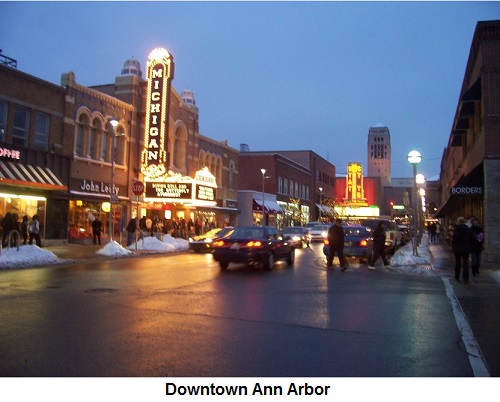
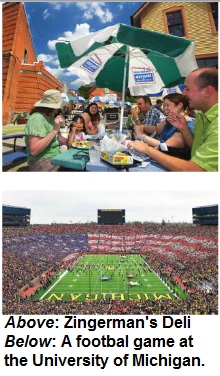
This is not make-believe; this is the City of Ann Arbor, in the US State of Michigan. When you visit this city, you would not know when the university begins and the city ends; or when the city begins and the university ends. [33]

CU Blog - Ann Arbor - Model of a Start-up City - Photo 2Ann Arbor is a principal city in Michigan and the county seat of Washtenaw County.[5] The 2010 census recorded its population to be 113,934, making it the sixth largest city in Michigan.[6] The city is also part of the larger Detroit–Ann Arbor–Flint, MI Combined Statistical Area. (Source: http://en.wikipedia.org/wiki/Ann_Arbor,_Michigan)

Ann Arbor is home to the University of Michigan and 43,625 students; it is one of the foremost research universities in the United States. The university shapes Ann Arbor’s economy significantly as it employs about 30,000 workers, including about 12,000 in the medical center. The city’s economy is also centered on high technology, with several companies drawn to the area by the university’s research and development money, and by its graduates.[8]

The City of Ann Arbor was founded in 1824, named for wives of the village’s founders and the stands of Bur Oak trees.[7] The University of Michigan moved from Detroit to Ann Arbor in 1837, and the city showed steady growth throughout the 19th and 20th centuries. During the 1960s and 1970s, the city gained a reputation as a center for left-wing politics. Ann Arbor became a focal point for political activism and served as a hub for the civil-rights movement and anti-Vietnam War movement, as well as various student movements.

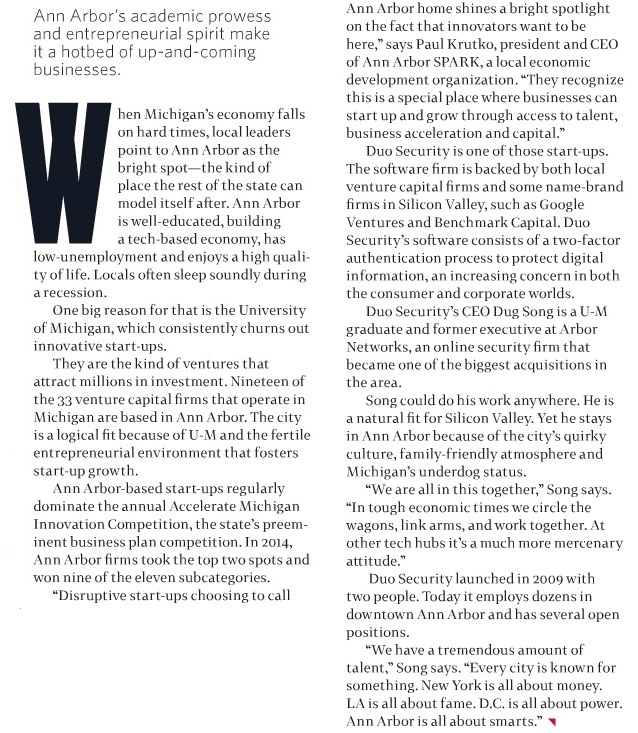
The idea of impactful cities aligns with the book Go Lean…Caribbean in stressing the elevation of the societal engines through entrepreneurial endeavors. The book asserts that Caribbean society can be elevated by improving the eco-system to live, work, learn and play. This is the example of Ann Arbor. This point is strongly conveyed in this following news article/profile entitled “Ann Arbor – Start-up City” about the city in the In-flight Magazine for Delta Airlines: Sky (Published January 2015; retrieved 04-17-2015 from http://msp.imirus.com/Mpowered/book/vds2015/i1/p102:

CU Blog - Ann Arbor - Model of a Start-up City - Photo 1

Click on the Photo/Article to Enlarge

Go Lean blog commentaries have chronicled a lot of the travails of the State of Michigan and its principle City of Detroit. The metropolitan areas were rocked during the Great Recession of 2008, with Detroit eventually having to file a municipal bankruptcy to reorganize it’s finances. Despite all the economic dysfunction in the region, the foregoing article relates how the City of Ann Arbor thrived, not just because of it’s college-town status – see Appendix-VIDEO but also because of its entrepreneurial ethos and incubation of companies-industries related to Internet & Communications Technologies (ICT).

The cause-and effect of the Great Recession was a great motivation for the composition of the Go Lean book; its 370-pages now serve as a roadmap detailing how the Caribbean can elevate its community by leaning-in to optimizations for the region’s economic, security and governing engines. The roadmap calls for the introduction and implementation of the Caribbean Union Trade Federation (CU). This technocratic agency will do the heavy-lifting of executing this roadmap; the prime directives are stated as follows:

  • Optimization of the economic engines in order to grow the regional economy to $800 Billion & create 2.2 million new jobs.
  • Establishment of a security apparatus to protect the resultant economic engines.
  • Improvement of Caribbean governance to support these engines.

The Go Lean book stresses industrial incubation, which generally refers to the practice of working with “early bird” innovators to exploit business opportunities in certain nascent industries. Ann Arbor has done this, and thusly provide a fitting model for Caribbean communities.

The Go Lean roadmap declares that the region needs “all hands on deck” to model the positive examples of Ann Arbor and other innovative communities. Education is key, as Ann Arbor is a college-town. The correlation is very direct: to create a plethora of new jobs, it is necessary to forge genius, innovation and participation in the fields of Science, Technology, Engineering and Medicine (STEM). The book relates that many people can develop the appropriate genius qualifiers with strenuous incentives and fostering on the community level. These points are pronounced early in the following statements in the book’s Declaration of Interdependence (Page 13 & 14):

xxi. Whereas the preparation of our labor force can foster opportunities and dictate economic progress for current and future generations, the Federation must ensure that educational and job training opportunities are fully optimized for all residents of all member-states, with no partiality towards any gender or ethnic group. The Federation must recognize and facilitate excellence in many different fields of endeavor, including sciences, languages, arts, music and sports. This responsibility should be executed without incurring the risks of further human flight, as has been the past history.

xxiv. Whereas a free market economy can be induced and spurred for continuous progress, the Federation must install the controls to better manage aspects of the economy: jobs, inflation, savings rate, investments and other economic principles. Thereby attracting direct foreign investment because of the stability and vibrancy of our economy.

xxv. Whereas the legacy of international democracies had been imperiled due to a global financial crisis, the structure of the Federation must allow for financial stability and assurance of the Federation’s institutions. To mandate the economic vibrancy of the region, monetary and fiscal controls and policies must be incorporated as proactive and reactive measures

xxx. Whereas the effects of globalization can be felt in every aspect of Caribbean life, from the acquisition of food and clothing, to the ubiquity of ICT, the region cannot only consume, it is imperative that our lands also produce and add to the international community, even if doing so requires some sacrifice and subsidy.

CU Blog - Ann Arbor - Model of a Start-up City - Photo 3The Go Lean roadmap accepts that change has come to the global marketplace, due mostly to the convergence of Internet & Communications Technology (ICT). The book posits that size no longer matters, that from any location – like Ann Arbor in the photos here – innovative solutions can be developed and promoted to an appreciative audience. What matters most is the innovation, not the location; so any Caribbean member-state, large or small can be impactful. The first requirement is the community ethos of valuing intellectual property. This ethos would be new for the Caribbean market; it is therefore a mission of the CU to forge.
The Go Lean book posits that the technocratic facilitations to drive innovation may be too big for any one Caribbean member-state to invest alone, rather the collaboration efforts of the CU is necessary, as the strategy is to confederate all the 30 member-states of the Caribbean into an integrated “single market” to allow for better leverage and incubation.

The CU is designed to do the heavy-lifting of organizing and optimizing the Caribbean for this proposed-improved environment. The following list details the community ethos, strategies, tactics, implementations and advocacies to foster this environment:

Community Ethos – Forging Change Page 20
Community Ethos – Lean Operations Page 24
Community Ethos – Return on Investments Page 24
Community Ethos – Ways to Foster Genius Page 27
Community Ethos – Help Entrepreneurship Page 28
Community Ethos – Promote Intellectual Property Page 29
Anecdote – Valedictorian Experience Page 38
Strategy – Strategy – Caribbean Vision Page 45
Strategy – Agents of Change – Technology Page 57
Strategy – Agents of Change – Globalization Page 57
Tactical – Separation of Powers – Education Department Page 73
Tactical – Separation of Powers – Patent, Standards, and Copyrights Page 78
Implementation – Ways to Deliver Page 103
Implementation – Capital District Requirements – like Ann Arbor Page 110
Planning  – Lessons from 2008 Page 136
Planning  – Lessons from Detroit Page 140
Advocacy – Ways to Grow the Economy Page 151
Advocacy – Ways to Create Jobs Page 152
Advocacy – Ways to Improve Education Page 159
Advocacy – Ways to Improve Governance Page 168
Advocacy – Ways to Better Manage the Social Contract Page 170
Advocacy – Ways to Impact Main Street Page 201
Advocacy – Ways to Foster Technology Page 203
Advocacy – Ways to Foster Electronic Commerce Page 204
Advocacy – Ways to Battle Poverty – Entrepreneurial Values Page 222
Appendix – Job Multipliers Page 259

The Go Lean roadmap asserts that one individual or community can make a difference in the quest to elevate Caribbean society – the promoters of Go Lean have come to Ann Arbor to observe and report on their progress. We want the same outcomes by fostering genius qualifiers in our region; we therefore need impactful college-towns in the Caribbean. Colleges and universities can foster more innovators as there is a need for many contributors. This is true of Metropolitan Michigan / Greater Detroit / Ann Arbor and true for the Caribbean region.  These points have been frequently conveyed in previous blogs/commentaries. Consider this sample here:

How One Entrepreneur Can Rally a Whole Community
The City of Santa Clara – A ‘Team Effort’ for Progress
Detroit to exit historic Bankruptcy and start the turn-around
Role Model Shaking Up the World of Cancer
Michigan Unemployment – Then and Now
e-Commerce Role Model Jack Ma brings Alibaba to America
The Lion King’s Julie Taymor – Role Model for the Arts
Philadelphia City Model – Taking the lead for freedom
Role Model Berry Gordy – No Town Like Motown
Bob Marley: The Role Model’s legend lives on!

The Go Lean/CU roadmap presents the change that will come to the Caribbean. The people, institutions and governance of the region are all urged to “lean-in” to this roadmap for empowerment. We know there can be many towns in the Caribbean region that can model Ann Arbor. They are waiting to be fostered and nurtured to impact the Caribbean’s Greater Good.

🙂

Download the free e-book of Go Lean … Caribbean – now!

———

Appendix – VIDEO: Explore Ann Arbor – https://youtu.be/E0KVpg3q-tg

Published on May 16, 2013 – The journey is college, Ann Arbor the destination. Place no limits on your Michigan experience. From the nightlife of Main Street to the glowing skies over Barton, go out and #exploreA2.
Produced by Filmic Productions, 2013
Share this post:
, , ,
[Top]

US Backs LNG Distribution Base in Jamaica

Go Lean Commentary

All of a sudden, the US wants to take the lead in providing energy solutions for the Caribbean. What happened?

Oh yeah, another suitor came calling on this beautiful “sweetheart” that the US had taken for granted. That suitor: Venezuela; (see Appendix).

Though this is a simplistic analogy, the appearance of romancing the Caribbean heart (and dollars) regarding energy fuel seems to follow the dramatic sequences of “teenage love”.

The book Go Lean… Caribbean relates (Page 100) how the Caribbean has among the most expensive energy costs in the world, despite having abundant alternative energy natural resources (solar, trade winds, tidal, geo-thermal). The societal administrations only focused on imported petroleum to provide energy options and as a result retail electricity rates in the Caribbean average US$0.35/kWh, when instead it could be down to US$0.088/kWh.

These are just the economic issues. There is also the matter of burning fossil fuels and contributing to global warming and climate change. For this teenage love scenario, that is too far-reaching for this original suitor; his only focus is the short-term. The Go Lean book posits that the embrace of this identified alternative energy generation source (Natural Gas) could be more impactful on the environment in addition to remediating the high energy costs.

The US is now the world largest energy producer. But Venezuela is the largest oil exporter in all of Latin America; they turned their attention – with their PetroCaribe program – to aid the Caribbean member-states with very attractive and enticing delivery and payment terms to consume more Venezuelan oil. Most of the independent Caribbean states acquiesced to these advances.

But now, the Empire Strikes Back

Previously, this commentary detailed how the US Ambassadors to the Caribbean were soliciting more US trade in energy options and dissuading the Venezuelan connections. Now we follow-up to see the US making strides with Jamaica to help diversify energy generation – include natural gas – and establish this central Caribbean destination as a hub for natural gas logistics to the rest of the region.

See the news article here from the NGI* entity about Liquefied Natural Gas (LNG):

Title: U.S. Backs Fuel Diversification, LNG Distribution Base in Jamaica
By: Charlie Passut

The United States will help Jamaica with fuel diversification and embrace liquefied natural gas (LNG) for its energy needs, and will also back plans for the island nation to become a base for delivering LNG to the rest of the Caribbean region.

On Thursday [(April 9, 2015)], U.S. Department of Energy (DOE) Secretary Ernest Moniz signed an agreement with Jamaica’s energy minister, Phillip Paulwell, at the U.S.-CARICOM summit in Mona, Jamaica.

CU Blog - US Backs LNG Distribution Base in Jamaica - Photo 1“We believe that Jamaica could be a part of [an LNG export] hub because of our geographic location, in proximity to places like Haiti and other areas in the western Caribbean,” Paulwell said, according to video of the summit provided by the government’s Jamaica Information Service (JIS). “After these meetings, we are hoping to zero in on some of the specificity.”

Moniz countered that DOE would help facilitate discussions between Jamaica and the Inter-American Development Bank, which provides financial and technical support to countries in Latin America and the Caribbean. He also suggested talks with the bank’s president, Luis Alberto Moreno.

“We are happy to [facilitate the discussions],” Moniz said on JIS. “We think it’s good for the Western Hemisphere and certainly good for the Caribbean in terms of energy security, environmental impact and economic development.”

CU Blog - US Backs LNG Distribution Base in Jamaica - Photo 2Rick Smead, managing director of advisory services for RBN Energy LLC, said Jamaica had been expected to become a major trading center for LNG, with larger tankers coming in to offload onto smaller barges and tankers for shorter trips to the different islands.
“But until Secretary Moniz’s visit, I didn’t know how close we were to supporting that or doing anything to try to foster it,” Smead told NGI on Friday.

“One of the rapidly evolving dynamics of U.S. gas abundance, and especially our LNG export capability, is that in addition to the large volume [of international cargoes bound] for Europe and Asia, there should be a lot of opportunities for smaller cargoes to taxi all over the place in the Caribbean. The technology of both floating liquefaction and especially floating regasification along the lines of accelerates stuff, frees up the ability to go to a lot of these smaller markets without needing to build a giant regasification facility.

“There’s been a proliferation of smaller LNG transportation and regasification technologies all over the Caribbean, in large part in anticipation of there being a lot more supply available.”

Smead predicted that the U.S. will eventually become the world’s second or third largest exporter of LNG, with the Caribbean becoming a significant importer.

“The Caribbean [is] a very gas hungry market,” Smead said. “Being very close to the U.S. Gulf Coast, where four out of our five operational LNG export facilities that are close to getting done will be [located], it seems pretty obvious that there would be a lot of vitality to that market.”

Last month, American LNG Marketing LLC was granted DOE authorization to export up to 60,000 tonnes per annum of containerized LNG from Florida, mostly to free trade agreement (FTA) countries in the Caribbean and Central America (see Daily GPI, March 23).

In 2014, Carib Energy LLC, a subsidiary of Crowley Maritime Corp., won a multi-year contract to export containerized LNG produced in the U.S. to an undisclosed pharmaceutical company in Puerto Rico (see Daily GPI, Nov. 17, 2014). That followed DOE approval for Carib and Sempra Energy’s Cameron LNG project to export domestically-produced LNG. Both facilities are in Louisiana, on the Gulf Coast (see Daily GPI, Sept. 10, 2014

The U.S. Energy Administration has also touted the benefits of LNG exports to U.S. island states and territories (see Daily GPI, Aug. 19, 2014).
Source: Natural Gas Intelligence Magazine  (Posted April 13, 2015) – http://www.naturalgasintel.com/articles/101954-us-backs-fuel-diversification-lng-distribution-base-in-jamaica

This foregoing news article highlights some important issues, most of which have been detailed in the Go Lean book. That publication coupled energy as a basic need with food, clothing and shelter; and then addressed ways to elevate Caribbean society by optimizing the delivery of these needs. The book serves as a roadmap for the introduction and implementation of the technocratic Caribbean Union Trade Federation (CU). This entity would serve as a regional confederation of all 30 Caribbean member-states to provide better leverage to source the energy resources for the region, including natural gas options that had previously been overlooked; (see Appendix-VIDEO below). Many benefits abound from this approach. This Go Lean roadmap identifies these benefits as prime directives, as detailed in these 3 declarative statements:

  • Optimization of the economic engines in order to grow the regional economy.
  • Establishment of a security apparatus to protect the resultant economic engines.
  • Improvement of governance to support these engines.

The motivation of the Go Lean…Caribbean book is love for this homeland and the quest to make it a better place to live, work and play. If the US now wants to show more leadership in this area, we welcome their positive contribution. But we stand cautioned in knowing that America is plagued with the history of prioritizing their self-interest above the needs of the Caribbean people. We now therefore dread an American leadership and instead look for a partnership. We want to be protégés and no longer parasites.

Early in the book, the need to better leverage our small Caribbean populations in trade negotiations with the US or Venezuela was pronounced in the Declaration of Interdependence (Page 11), with these statements:

viii. Whereas the population size is too small to foster good negotiations for products and commodities from international vendors, the Federation must allow the unification of the region as one purchasing agent, thereby garnering better terms and discounts.

xi. Whereas all men are entitled to the benefits of good governance in a free society, “new guards” must be enacted to dissuade the emergence of incompetence, corruption, nepotism and cronyism at the peril of the people’s best interest. The Federation must guarantee the executions of a social contract between government and the governed.

So we welcome America’s natural gas options;  (see Appendix-VIDEO below) …

… and we add renewables and other energy alternatives into the mix for Caribbean energy.  These would be more cost efficient and ecologically friendly for the planet, of which we share with our bigger neighbors in North and South America. This would truly be lean!

CU Blog - US Backs LNG Distribution Base in Jamaica - Photo 3This concept of lean is very important for this roadmap to elevate Caribbean society. For the purpose of this effort, ‘lean’ is more than just a description, it’s a noun, a verb, an adjective and an adverb. It is also a commitment and a cause in which the entire Caribbean region is urged to embrace; or better stated: “lean in”.

Why were natural gas solutions not considered in the past?

It is an imported resource, just like petroleum; it requires the same logistical considerations as crude oil or refined products of gasoline and diesel. Except though natural gas (LNG) does not need to be refined, only converted from liquid form back to gas form: regasification. LNG is more stable for transport.

The Go Lean roadmap also anticipates the transport option of pipelines. The strategies, tactics and implementation (above ground, underground and undersea of this technology) have been fully detailed in the book. The roadmap thereby details the series of community ethos, strategies, tactics, implementations and advocacies to foster progress in the wide fields of energy generation and energy distribution. The following list applies:

Community Ethos – Lean Operations Page 24
Community Ethos – Return on Investments Page 24
Community Ethos – Cooperatives Page 25
Community Ethos – Regional Taxi Commissions – To Adopt Natural Gas Page 25
Community Ethos – Non-Government Organizations Page 25
Community Ethos – Ways to Impact the Future Page 26
Community Ethos – Ways to Improve Negotiations Page 32
Anecdote – Pipeline Transport – Strategies, Tactics & Implementations Page 43
Strategy – Harness the power of the sun/winds Page 46
Tactical – Fostering a Technocracy Page 82
Tactical – Separation of Powers – Energy Commission Page 82
Anecdote – “Lean” in Government – Energy Permits Page 93
Anecdote – Caribbean Energy Grid Implementation Page 100
Implementation – Ways to Develop Pipeline Industry Page 107
Implementation – Ways to Improve Energy Usage Page 113
Advocacy – Ways to Foster Cooperatives Page 176
Advocacy – Ways to Impact Monopolies Page 202

The energy needs for the Caribbean are undeniable. The Caribbean region must take the lead in providing Caribbean energy needs. Though we welcome the US partnership, we should be cautious as to their motives and priorities. We accept that at this moment, the US may have altruistic motives, especially with declining oil prices possibly affecting Venezuela. But for far too often, American leadership has been motivated by crony-capitalistic intentions. The points of mitigating the risks of American Big Business (in this case Big Oil) were further elaborated upon in these previous blog/commentaries:

https://goleancaribbean.com/blog/?p=4294 Ambassadors to Caribbean discuss PetroCaribe-Energy, Security
https://goleancaribbean.com/blog/?p=3397 A Christmas Present for the Banks from the Omnibus Bill
https://goleancaribbean.com/blog/?p=2887 Caribbean must work together to address US rum subsidies
https://goleancaribbean.com/blog/?p=2670   A Lesson in History: Oil Magnate Rockefeller’s Pipeline
https://goleancaribbean.com/blog/?p=2522 The Cost of American Cancer Drugs
https://goleancaribbean.com/blog/?p=2465 Book Review: ‘This Changes Everything: Capitalism vs. the Climate’
https://goleancaribbean.com/blog/?p=2338 Lessons: How Best to Welcome the Dreaded American ‘Plutocracy’
https://goleancaribbean.com/blog/?p=2259 The Criminalization of American Business – Big Banks Let Loose
https://goleancaribbean.com/blog/?p=789 America’s War on the Caribbean
https://goleancaribbean.com/blog/?p=273 10 Things We Don’t Want from the US – #1: American Self-Interest

Fulfilling the Caribbean energy needs is a great target for lean, agile operations, perfect for the CU technocracy. This allows us to prove, to ourselves and to the world, that we can truly be protégés and not just parasites.

Now is the time for all of the Caribbean, the people, business, institutions and governments, to lean-in for the optimizations and opportunities described in the book Go Lean … Caribbean.  🙂

Download Go Lean … Caribbean – now!

———-

* Appendix – About …

  • NGI – Natural Gas Intelligence (NGI), is a leading provider of natural gas, shale news and market information for the deregulated North American natural gas industry. Since the first issue of Natural Gas Intelligence was published in 1981, NGI has provided key pricing and data relied upon daily by thousands of industry participants in the U.S, Canada and Mexico as well as Central and South America, Europe and Asia.
  • NGI Corporate – Natural Gas Intelligence (NGI), operating under the corporate entity of Intelligence Press, Inc., is the publisher of the NGI family of newsletters–a leading provider of news and physical market pricing information for the deregulated North American natural gas industry. Since the first issue of the Natural Gas Intelligence newsletter published in 1981, NGI has provided information and data relied upon daily by thousands of industry participants in the U.S, Canada and Mexico as well as Central and South America, Europe and Asia.

———

Appendix – Venezuela’s PetroCaribe Distribution:

Venezuela Oil

Appendix – VIDEO: ExxonMobil’s Discussion on Energy Supply –  https://youtu.be/faDKwEl1BcY

Published on Jan 23, 2015 – Advances in technology continue to make a wide range of energy supplies available to consumers. At the same time, the fuels that people and businesses choose to meet their needs continue to evolve. These choices are based not just on price, but also on attributes like convenience, performance and environmental effects. Natural gas is expected to be the fastest-growing major fuel through 2040.
Share this post:
, , , ,
[Top]

Is Martinique the Next Caribbean Surfing Capital?

Go Lean Commentary

Sports could be big business; culture is big business. Every now-and-then there is the opportunity to merge sports and culture into a single economic activity. One such expression is the sports/culture of surfing. This focus is a priority for the movement to elevate the Caribbean society, stemming from the book Go Lean…Caribbean.

The book serves as a roadmap for the introduction and implementation of the technocratic Caribbean Union Trade Federation (CU). While the CU is not intended as a sports promotion entity, it does promote the important role of sports in the quest to make the Caribbean a better place to live, work and play.

Though surfing activities originated with Polynesian culture (see Appendix below), the sport has assimilated well in other societies – the Caribbean included.

In terms of cultural expressions of surfing in the United States, the most iconic portrayal is the Rock-n-Roll group the Beach Boys; see VIDEO in the Appendix below of a milestone performance in Tokyo, Japan.

Yes surfing is global in its participation and appreciation.

Now a Caribbean community, the French-domain of Martinique is exploring the surfing sub-culture for sport, tourism and sports-tourism.

Cowabonga* Dude!

By: The Caribbean Journal staff

Long an under-the-radar surfing spot, the French Caribbean island will get its place in the spotlight when the surfing world gathers on the island later this month for the first-ever Martinique Surf Pro.

From April 21-26, the Caribbean’s only World Surf League Qualification Series event this year will take place along the shores of Basse-Pointe in Martinique.

The event, which is being organized by Martinique Surfing in partnership with the World Surf League, will bring together 100 world-class surfers from the United States, Japan, Europe, Brazil and the Caribbean.

“Martinique has been among the best-kept secrets in Caribbean surfing for some time now,” said Muriel Wiltord, director of the Americas for the Martinique Promotion Bureau. “Such a high-profile event as this cements the island’s position as a prime surfing destination. As one the top watersports competitions being held in the Caribbean in 2015, Martinique Surf Pro also shines a spotlight on the wide range of additional watersports options that Martinique has to offer.”

Martinique’s surfing season typically lasts between November and May along its northern and northeastern Atlantic coasts.

Source retrieved April 13, 2015: http://www.caribjournal.com/2015/04/13/is-martinique-the-next-caribbean-surfing-capital/

CU Blog - Is Martinique the next big Caribbean surfing capital - Photo 2

CU Blog - Is Martinique the next big Caribbean surfing capital - Photo 3

CU Blog - Is Martinique the next big Caribbean surfing capital - Photo 1

Not every coastline is ideal for surfing; thusly many Caribbean residents do not surf; it is not an indigenous activity to this region. But the past-time – and culture for that matter – is adaptable. Why is this? While the Caribbean has been blessed with many natural gifts, the physical conditions for surfing are not everywhere; (based on factual information retrieved from Wikipedia).

There must be a consistent swell. A swell is generated when wind blows consistently over a large area of open water, called the wind’s fetch. The size of a swell is determined by the strength of the wind and the length of its fetch and duration. Because of this, surf tends to be larger and more prevalent on coastlines exposed to large expanses of ocean traversed by intense low pressure systems.

Local wind conditions affect wave quality, since the surface of a wave can become choppy in blustery conditions. Ideal conditions include a light to moderate “offshore” wind, because it blows into the front of the wave, making it a “barrel” or “tube” wave. Waves are Left handed and Right Handed depending upon the breaking formation of the wave.

Waves are generally recognized by the surfaces over which they break.[7] For example, there are Beach breaks, Reef breaks and Point breaks.

The most important influence on wave shape is the topography of the seabed directly behind and immediately beneath the breaking wave. The contours of the reef or bar front becomes stretched by diffraction. Each break is different, since each location’s underwater topography is unique. At beach breaks, sandbanks change shape from week to week. Surf forecasting is aided by advances in information technology. Mathematical modeling graphically depicts the size and direction of swells around the globe.

So mastering the sport of surfing is now an art and a science.

Despite the fun and joy of surfing, there are a lot of dangers with this activity:

This activity is not for the faint of heart.

Not every market, especially in the Caribbean, can support the demands of surfing as a sport and as a cultural event. As depicted in the foregoing article, Martinique uniquely qualifies. This year’s professional tournament is the inaugural event. This Caribbean island makes a very short-list of all locations where this activity is practical. The following is a sample of the competitive/major surfing locations (Surf Cities) around the globe:

1. In Australia

2. In Asia

3. In the South Pacific

4. In South Africa

5. In North America

6. In Central America

7. In South America

8. In the USA

9. In Europe

The Martinique effort and initiative to satiate the thirst … and fascination of surfing aligns with the objects of the CU/Go Lean roadmap; especially the mission “to forge industries and economic drivers around the individual and group activities of sports and culture” (Page 81).

The Go Lean vision is a confederation of the 30 member-states of the Caribbean forming the CU as a proxy organization to do the heavy-lighting of building, funding, maintaining and promoting sports venues. The strategy is for the CU to be the landlord, and super-regional regulatory agency, for sports leagues, federations and associations (amateur, collegiate, and professional). The embrace and promotion of the sport and culture of surfing can contribute to the Greater Good for the Caribbean. This aligns with the prime directives of the CU/Go Lean roadmap; summarized in the book with these 3 statements:

  • Optimization of the economic engines in order to grow the regional economy to $800 Billion & create 2.2 million new jobs.
  • Establishment of a security apparatus to protect the resultant economic engines and the participants in activities like surfing.
  • Improvement of Caribbean governance to support these engines.

This roadmap commences with the recognition that genius qualifiers can be found in many fields of endeavor, including sports. The roadmap pronounces the need for the region to confederate in order to invest in elevation of the Caribbean eco-systems in which such athletic geniuses can soar. These pronouncements are made in the opening Declaration of Interdependence, (Pages 13 & 14) as follows:

xxi. Whereas the preparation of our labor force can foster opportunities and dictate economic progress for current and future generations, the Federation must ensure that educational and job training opportunities are fully optimized for all residents of all member-states, with no partiality towards any gender or ethnic group. The Federation must recognize and facilitate excellence in many different fields of endeavor, including sciences, languages, arts, music and sports. This responsibility should be executed without incurring the risks of further human flight, as has been the past history.

xxii. Whereas sports have been a source of great pride for the Caribbean region, the economic returns from these ventures have not been evenly distributed as in other societies. The Federation must therefore facilitate the eco-systems and vertical industries of sports as a business, recreation, national pastime and even sports tourism – modeling the Olympics.

The Go Lean book and accompanying blogs declare that the Caribbean needs to learn lessons from Surf City communities and other sporting venues/administrations. So thusly this subject of the “business of sports” is a familiar topic for Go Lean blogs. This cause was detailed in these previous blogs:

https://goleancaribbean.com/blog/?p=4019 Melding of Sports & Technology; the Business of the Super Bowl
https://goleancaribbean.com/blog/?p=3414 Levi’s® Stadium: A Team Effort
https://goleancaribbean.com/blog/?p=3244 Sports Role Model – espnW.
https://goleancaribbean.com/blog/?p=2222 Sports Role Model – Playing For Pride … And More
https://goleancaribbean.com/blog/?p=2171 Sports Role Model – Turn On the SEC Network
https://goleancaribbean.com/blog/?p=2152 Sports Role Model – US versus the World
https://goleancaribbean.com/blog/?p=1715 Lebronomy – Economic Impact of the Return of the NBA Great
https://goleancaribbean.com/blog/?p=1446 Caribbean Players in the 2014 World Cup
https://goleancaribbean.com/blog/?p=1341 College World Series Time – Lessons from Omaha
https://goleancaribbean.com/blog/?p=1214 Landlord of Temporary Stadiums
https://goleancaribbean.com/blog/?p=1148 Sports Bubble – Franchise values in basketball
https://goleancaribbean.com/blog/?p=1020 Sports Revolutionary: Advocate Jeffrey Webb
https://goleancaribbean.com/blog/?p=498 Book Review: ‘The Sports Gene’
https://goleancaribbean.com/blog/?p=318 Collegiate Sports in the Caribbean
https://goleancaribbean.com/blog/?p=60 Could the Caribbean Host the Olympic Games?

This Go Lean roadmap is committed to availing the economic opportunities of all the Caribbean sports eco-system to respond to the world’s thirst for surfing. The book details the series of community ethos, strategies, tactics, implementations and advocacies to deliver the regional solutions to better harness economic benefits from sports and sports-tourism activities:

Community Ethos – People Respond to Incentives in Predictable Ways Page 21
Community Ethos – Consequences of Choices Lie in the Future Page 21
Community Ethos – Lean Operations Page 24
Community Ethos – Return on Investments Page 25
Community Ethos – Ways to Foster Genius Page 27
Community Ethos – Ways to Impact the Greater Good Page 37
Strategic – Staffing – Sporting Events at Fairgrounds Page 55
Tactical – Fostering a Technocracy Page 64
Tactical – Separation of Powers – Sports & Culture Administration Page 81
Tactical – Separation of Powers – Fairgrounds Administration Page 83
Implementation – Steps to Implement Self-Governing Entities Page 105
Implementation – Ways to Deliver Page 109
Planning – Ways to Make the Caribbean Better Page 131
Advocacy – Ways to Grow the Economy Page 151
Advocacy – Ways to Create Jobs Page 152
Advocacy – Ways to Improve Local Government – Parks & Recreation Page 169
Advocacy – Ways to Impact Public Works Page 175
Advocacy – Ways to Impact Events Page 191
Advocacy – Ways to Promote Fairgrounds as Sporting Venues Page 192
Advocacy – Ways to Preserve Caribbean Heritage Page 218
Advocacy – Ways to Improve Sports Page 229
Advocacy – Ways to Impact Urban Living – Sports Leagues Page 234

What could be the end result for the Go Lean roadmap’s venture into the sport of surfing and the business of sports? Economic growth and “jobs”. The Go Lean roadmap anticipates 21,000 direct jobs at sports enterprises throughout the region.

But surfing is also a leisure amenity, a “play” activity within the Go Lean roadmap. Many participate in this activity with no competitive motives. So the promotion of surfing in the Caribbean region can appeal to many enthusiasts far-and-wide to come visit and enjoy our Caribbean hospitality. This subject therefore relates back to the primary regional economic activity of tourism. This fits into the appeal of the Caribbean sun, sand and surf.

Overall, with these executions, the Caribbean region can be a better place to live, work and play. There is a lot of economic activity in the “play” aspects of society. Everyone, surfers, athletes and spectators alike, are hereby urged to lean-in to this Go Lean roadmap.

Cowabonga Dude!

Download the book Go Lean … Caribbean – now!

———-

Appendix – *Cowabunga: (slang) an expression of surprise or amazement, often followed by “dude”. Popular among California surfers.

———-

Appendix – Encyclopedia of Surfing:

For centuries, surfing was a central part of ancient Polynesian culture. This activity was first observed by Europeans at Tahiti in 1767 by Samuel Wallis and the crew members of the Dolphin; they were the first Europeans to visit the island in June of that year.

Surfing is a surface water sport in which the wave rider, referred to as a surfer, rides on the forward or deep face of a moving wave, which is usually carrying the surfer toward the shore. Waves suitable for surfing are primarily found in the ocean, but can also be found in lakes or in rivers in the form of a standing wave or tidal bore. However, surfers can also utilize artificial waves such as those from boat wakes and the waves created in artificial wave pools.

The term surfing refers to the act of riding a wave, regardless of whether the wave is ridden with a board or without a board, and regardless of the stance used. The native peoples of the Pacific, for instance, surfed waves on alaia, paipo, and other such craft, and did so on their belly and knees. The modern-day definition of surfing, however, most often refers to a surfer riding a wave standing up on a surfboard; this is also referred to as stand-up surfing.

George Freeth (8 November 1883 – 7 April 1919) is often credited as being the “Father of Modern Surfing”.

In 1907, the eclectic interests of the land baron Henry Huntington (of whom the City of Huntington Beach is named after) brought the ancient art of surfing to the California coast. While on vacation, Huntington had seen Hawaiian boys surfing the island waves. Looking for a way to entice visitors to the area of Redondo Beach, where he had heavily invested in real estate, he hired the young Hawaiian George Freeth to come to California and ride surfboards to the delight of visitors; Mr. Freeth exhibited his surfing skills twice a day in front of the Hotel Redondo.

In 1975, professional contests started.[6]

Today, the Surfing Hall of Fame is located in the city of Huntington Beach, California. The city brands itself as Surf City USA.

(Source retrieved April 14 from: http://en.wikipedia.org/wiki/Surfing)

———-

AppendixVIDEO – The Beach Boys: Surfin’ Safari~Surf City~Surfin’ U.S.A – https://youtu.be/qpSwdQMn8xs

Uploaded on Jul 29, 2011 – Live at Budokan in Japan November 2, 1991

Share this post:
, , , , ,
[Top]

A Picture is worth a thousand words; a video … a million

Go Lean Commentary

The penalty for a broken taillight should not be “Death by Firing Squad”.

Welcome to America!

Though this declaration is not the law-of-the-land, it is the anecdotal experience for the Black-and-Brown populations, far too often.

The subsequent news commentary – by British Expatriate Piers Morgan (former host on American news network CNN) – is ripped from the headlines of “Cop-on-Black” crime in the US. For much of the latter half of 2014, this type of headline was prevalent in places like Ferguson, Missouri, but in truth, it appears that the law enforcement community appears to have “Bulls-eye” targets on African-American males throughout the country, more so than any other ethnic group. This statement would have appeared to be only indicative of “conspiracy theories”, if not for the following pictures and VIDEO.

By: Piers Morgan
Title: After seeing South Carolina police nearly get away with murder, I won’t feel safe until every cop who carries a gun, wears a camera too

This morning, I watched Walter Scott die.

I didn’t think I’d ever see a piece of video footage that made me feel as physically sick and angry as that disgusting ISIS snuff movie of a Jordanian pilot being burned alive.

But the last few seconds of Scott’s life, captured by a passer-by on a camera phone, provoked similar nausea-fuelled emotions of blind rage.

Why? Because they exposed the shocking truth behind a sickening lie.

Picture Words - Photo 1 Scott, a 50-year-old American father-of-four, had been stopped in North Charleston, South Carolina, for having a broken taillight on his Mercedes car.

A vehicular misdemeanor so minor in its importance that it’s usually dealt with by a verbal police warning, no fine and no points on your license.

But Scott, fearful of arrest because he owed child support, ran away.

The police officer who had stopped him, Patrolman Michael Slager, gave chase into a small grassy lot.

Minutes later, unarmed Scott was dead. Needlessly, senselessly, murderously riddled with bullets in the back from trigger-happy Officer Slager’s handgun.

Walter Scott’s death is outrageous enough.

But the disgraceful cover-up that followed makes the stomach churn.

Picture Words - Photo 2Officer Slager told his bosses that Scott had taken his taser gun in a violent struggle, and he had shot him because he feared for his life.

To support this, the taser had been found next to Scott’s body – suggesting he had run off with it.

His bosses preferred to just take his word for it then properly investigate.

And presumably, the word of a second officer who arrived at the scene shortly afterwards.

So the official statement released to the media backed Officer Slager’s claim that he had acted entirely within his rights after Scott tried to grab his taser.

The Supreme Court ruled that an officer may use deadly force against a fleeing suspect only when there is probable cause that the suspect ‘poses a significant threat of death or serious physical injury to the officer or others.’

By Officer Slager’s account, that criteria was met.

And there it would have ended.

Walter Scott’s death would be blamed on Walter Scott.

Another reckless violent aggressor who forced a terrified cop to shoot him.

Case closed.

But then came the video.

It turned out that someone walking nearby had secretly filmed the whole thing on his camera phone.

So now we could actually see for ourselves what happened.

Mr. Scott never grabbed Officer Slager’s taser.

In fact, Officer Slager tasers Scott, who then runs off.

Scott is more than 20 feet away and clearly fleeing when Officer Slager stands and fires eight shots at him.

When Scott finally falls, after the last of the eight shots, Officer Slager runs back toward where the initial scuffle occurred and picks something up of the ground. Moments later, he drops it near Scott’s body.

It’s believed to be the taser.

After the video appeared, Officer Slager was promptly charged with murder.

Which is all very well, but if the video hadn’t appeared, he would have GOT AWAY with murder.

Isn’t that just utterly shameful?

The South Carolina police department failed Walter Scott on every single level. Doesn’t the simple fact alone that he was shot five times in the BACK demand a serious analysis of forensics, autopsy and witness statements?

Instead, they chose to do nothing but stand by their lying, cold-blooded executioner.

At this point, I should mention that Walter Scott was black and Officer Slager is white.

I’m wary of casting racial aspersions on Officer Slager’s actions.

There’s nothing to unequivocally suggest it was a racially motivated incident.

And indeed, the Scott family attorney, L. Chris Stewart, offered a different explanation:

‘It’s not about race, it’s about power. The officer thought he could just shoot this man. He thought Mr Scott was expendable. He just casually shot a man in the back many times. That speaks to the value of human life, which is a bigger issue than trying to just make this a small issue of race. When people start respecting that more, it won’t matter what colour you are.’

I think he’s right.

When American cops shoot dead someone who is black, it garners huge headlines because people rush to assume it’s racial.

And sometimes it is. Perhaps Officer Slager racially profiled Walter Scott, we’ll probably never know.

But the truth is that American cops shoot everyone, regardless of colour or creed.

They kill many more whites than blacks, though the percentage of blacks who get killed as part of the U.S. black population is three times higher than the same percentage for whites.

And they do it because they can.

Guns empower some of them to behave like trigger-happy John Waynes and it is, frankly, terrifying.

I received my first ever traffic ticket recently, after performing an illegal U-turn in Beverly Hills – right in front of a policeman on a motorbike.

He signalled for me to pull over, which I did.

But as he walked towards me, loaded gun glistening in his hip holster, I began to slightly panic. Especially as just two days before, a man was shot dead by cops a few blocks away on the famed Rodeo Drive.

What were the rules again?

  • Do I put my hands on the steering wheel or by my side?
  • Do I wind down the window, or leave it up?
  • Do I turn the ignition off or keep it on?
  • Do I reach for my papers, or wait to be instructed?
  • Do I call him ‘Officer’, ‘Sir’ or what?

None of these questions would be significant in somewhere like Britain, because nobody fears they might be shot by a policeman.

The vast majority of British cops don’t carry guns, mainly because they know the vast majority of civilians don’t carry them either.

At the risk of sounding like a stuck record, it is worth repeating once more that fewer Brits die a YEAR from guns than get shot dead every single DAY in America.

So there is no expectation, fear or paranoia on either side that a simple traffic violation may suddenly erupt into a deadly shooting match.

In America, everyone now has to assume that everyone else may be armed.

It’s the exact same mentality that existed in the Wild West.

One false move in the wrong place, one dumb comment in a bar, one heated exchange of words with a law enforcement official and BANG!!!!

Someone dies.

The justice system rarely supports those who get shot dead by cops.

We can see from this horrific incident how the police protect themselves.

But there is, as we can also see from this incident – and the death of Eric Garner in New York – one truly effective weapon at our disposal: a video camera.

Which is why I want every single U.S. cop to now be compelled by law to carry them at all times, right next to their guns.

The technology exists for them to do so without any restrictions on their ability to function as normal.

What it would also do is restrict any rogue gun-toting policeman’s ability to lie after he casually, indiscriminately shoots dead an unarmed human being, black or white.
Retrieved from: The Daily Mail – London Daily Newspaper – Posted April 9, 2015 –
http://www.dailymail.co.uk/news/article-3030442/PIERS-MORGAN-seeing-South-Carolina-police-nearly-away-murder-won-t-feel-safe-cop-carries-gun-wears-camera-too.html?ito=social-facebook

VIDEO: http://www.dailymail.co.uk/news/article-3030442/PIERS-MORGAN-seeing-South-Carolina-police-nearly-away-murder-won-t-feel-safe-cop-carries-gun-wears-camera-too.html#v-4159293374001

There is no way to defend this Police Officer, Michael Slager. The US Justice System will have to deal with him. Our focus can only be on the mitigation, in this case body cameras; and how to apply the lessons in the re-boot of the Caribbean societal engines: economic, security and governance.

The events of this small suburban town of Charleston, South Carolina now have huge bearing on the acceptable standards for community policing through-out the US and other countries, including the Caribbean. There is a direct impact between the two communities: many in the Caribbean Diaspora living in the US face these same dynamics, because of their Black-and-Brown status. (Even the bystander – Feiden Santana – capturing the VIDEO in this case is of Caribbean – Dominican Republic – heritage).

The book Go Lean…Caribbean seeks to assess (identify and qualify) the issues that drive so many of the Caribbean youth to flee their homelands to take up residence in the US. The book posits that this is not a wise course of action, that it is better to “prosper where planted” in the Caribbean than to risk the interactions of American life. This book portrays that there are “push-and-pull” factors that contribute to so much societal abandonment in these Caribbean member-states. The purpose of the book is to serve as a roadmap for the introduction and implementation of the technocratic Caribbean Union Trade Federation (CU) to elevate the region’s economic engines, and optimize the security (public safety) issues as well. These are among the prime directives for this societal elevation. The declarative statements are as follow:

  • Optimization of the economic engines in order to grow the regional economy to $800 Billion & create 2.2 million new jobs.
  • Establishment of a security apparatus to protect the resultant economic engines.
  • Improvement of Caribbean governance to support these engines.

The assertion of the Go Lean book is that the Caribbean region must prepare a better security apparatus and justice institution than our northern neighbor is able to boast. Based of the dual “scales of justice” in the US, one for Whites and another for Black-and-Brown, this goal should not be so difficult to pursue. For this reason, the Go Lean roadmap spuns American leadership for security and justice, and proposes homegrown solutions. According to the opening Declaration of Interdependence (Page 12), our region is urged to take the lead for our own solutions and appoint our own “guardians” with our self-interest in mind; prioritizing the community ethos for the Greater Good. The actual declaration is pronounced as follows:

x.   Whereas we are surrounded and allied to nations of larger proportions in land mass, populations, and treasuries, elements in their societies may have ill-intent in their pursuits, at the expense of the safety and security of our citizens. We must therefore appoint “new guards” to ensure our public safety and threats against our society, both domestic and foreign. The Federation must employ the latest advances and best practices … to assuage continuous threats against public safety.

xvi. Whereas security of our homeland is inextricably linked to prosperity of the homeland, the economic and security interest of the region needs to be aligned under the same governance. Since economic crimes, including piracy and other forms of terrorism, can imperil the functioning of the wheels of commerce for all the citizenry, the accedence of this Federation must equip the security apparatus with the tools and techniques for predictive and proactive interdictions.

The Caribbean appointing “new guards” or a security pact to ensure public safety calls for permanent justice institutions sanctioned by all 30 CU member-states. The CU Federation or federal justice’s institutions must operate differently than the US versions; we must do so judiciously and with proper regard for human and civil rights. The Go Lean roadmap calls for a separation-of-powers between the CU and the Caribbean member-states. So many of the community policing will not be under federal jurisdiction, but the CU will furnish a lot of funding and outfitting, with a lot of “strings attached”. The book calls for dashboard and body cameras (Page 178); as part of the edict for transparency and accountability.

The US does not currently have this default disposition.

Picture Words - Photo 3

The forgoing news article teaches some powerful lessons for Caribbean consideration.

Before the eye-witness (Feiden Santana) VIDEO came out on Tuesday (April 7), the assumption and benefit-of-doubt in the shooting of Walter Scott would have sided with the Police Officer Michael Slager. But having a photo/picture speaks a thousand words as to what really happened there in North Charleston, South Carolina. Having a VIDEO speaks a millions words. Now all previous allegations of police brutality and evidence planting suddenly have new merit. In addition, the “Blue Line” between Police Officers and the public is blatantly exposed – the VIDEO depicted another officer, an African-American Officer, aiding Michael Slager cover-up. This relates that the loyalty among law enforcement officers trumps any other interrelation in the criminal justice system. It can be concluded that intra-department oversight of their own law enforcement activities may never yield true justice; there must be outside compliance review.

The Go Lean roadmap leads with economic empowerments in the quest to elevate Caribbean society. But security and governance dynamics must be coupled with this effort. As we learn in the foregoing article, “bad actors” can emerge in society, even in the form of law enforcement officers; these individuals can also have sinister intent.

No justice; no peace.

This Go Lean roadmap relates a heightened level of economic-security-government engagement. These prime directives of the CU calls for a Homeland Security focus related to threats that may imperil the region’s economic engines, and crime remediation and mitigation: Public Safety. The CU is an entity to serve as a deputy for law enforcement agencies for each Caribbean member-state, empowered by an international treaty – a Status of Forces Agreement – for all Caribbean member-states to confederate the Homeland Security and Anti-Crime forces to execute a limited scope on the region’s sovereign territories.

To ensure justice – and peace – the Go Lean roadmap calls for a lot of proactive activities to remediate and mitigate crime. Like crime intelligence, surveillance videos and data analysis. The need for transparency and accountability was strongly urged in the same opening Declaration of Interdependence (Page 12), as follows:

xii. Whereas the legacy in recent times in individual states may be that of ineffectual governance with no redress to higher authority, the accedence of this Federation will ensure accountability and escalation of the human and civil rights of the people for good governance, justice assurances, due process and the rule of law. As such, any threats of a “failed state” status for any member state must enact emergency measures on behalf of the Federation to protect the human, civil and property rights of the citizens, residents, allies, trading partners, and visitors of the affected member state and the Federation as a whole.

The Go Lean book details the community ethos, strategies, tactics, implementations and advocacies to provide increased public safety and security in the Caribbean region, and to ensure the right attitudes of law enforcement officers to serve-and-protect their Caribbean communities:

Economic Principle – Economic Systems Influence Individual Choices Page 21
Economic Principle – Consequences of Choices Lie in Future Page 21
Community Ethos – Privacy –vs- Public Protection Page 23
Community Ethos – Witness Security & Protection Page 23
Community Ethos – Intelligence Gathering Page 23
Community Ethos – Anti-Bullying and Mitigation Page 23
Community Ethos – Minority Equalization Page 24
Community Ethos – Cooperatives Page 25
Community Ethos – Ways to Improve Sharing Page 35
Community Ethos – Ways to Impact the Greater Good Page 37
Tactical – Confederating a non-sovereign union Page 63
Tactical – Fostering a Technocracy Page 64
Tactical – Separation of Powers – Homeland Security Page 75
Tactical – Separation of Powers – Justice Department – CariPol Page 77
Tactical – Separation of Powers – Federal Courts – Court   of Justice Page 90
Implementation – Assemble “Organs” into a Security Apparatus Page 96
Implementation – Start-up Security Initiatives Page 103
Planning – Ways to Make the Caribbean Better Page 131
Planning – Ways to Improve Failed-State Indices Page 134
Planning – Lessons from the American West Page 142
Advocacy – Ways to Grow the Economy Page 151
Advocacy – Ways to Improve Governance Page 168
Advocacy – Ways to Better Manage the Social Contract Page 170
Advocacy – Ways to Impact   Justice – Police Internal Affairs   Up-line Page 177
Advocacy – Ways to Reduce Crime Page 178
Advocacy – Ways to Improve for Gun Control Page 179
Advocacy – Ways to Improve Homeland Security Page 180
Advocacy – Ways to Mitigate Terrorism Page 181
Advocacy – Ways to Improve Intelligence Gathering/Analysis Page 182
Advocacy – Ways to Impact the Prison Industrial Complex Page 211
Advocacy – Ways to Protect Human Rights Page 220
Appendix – CariCom Organs: IMPACS & Court of Justice Page 244

Other subjects related to crime remediation and fair human/civil rights protections for the region have been detailed in prior Go Lean…Caribbean commentaries; as sampled here:

https://goleancaribbean.com/blog/?p=4447 Probe of Ferguson-Missouri finds bias from cops, courts
https://goleancaribbean.com/blog/?p=4360 Dreading the American ‘Caribbean Basin Security Initiative’
https://goleancaribbean.com/blog/?p=3881 Intelligence Agencies to Up Cyber Security Cooperation
https://goleancaribbean.com/blog/?p=2782 Red Light Traffic Cameras, other CCTV Deployments can Impact Crime
https://goleancaribbean.com/blog/?p=2684 Role Model for Justice, Anti-Crime & Security: The Pinkertons
https://goleancaribbean.com/blog/?p=1674 Obama’s $3.7 Billion Immigration Crisis Funds – A Homeland Security Fix
https://goleancaribbean.com/blog/?p=1554 Status of Forces Agreement = Security Pact
https://goleancaribbean.com/blog/?p=1487 Here come the Drones … and the Concerns
https://goleancaribbean.com/blog/?p=960 NSA records all phone calls in Bahamas, according to Snowden
https://goleancaribbean.com/blog/?p=546 Book Review: ‘The Divide: American Injustice In the Age of the Wealth Gap’
https://goleancaribbean.com/blog/?p=535 Remembering and learning from Boston
https://goleancaribbean.com/blog/?p=392 Jamaica to receive World Bank funds to help in crime fight
https://goleancaribbean.com/blog/?p=341 American Hypocritical Human Rights Leadership Slams Caribbean

The foregoing article and VIDEO depicts that the community ethos for community policing will change imminently. There is now the need for law enforcement officers, at all levels, to employ dashboard cameras and body cameras; especially when deadly force is used. This is a valid need in the United States of America; in North Charleston – South Carolina, Ferguson – Missouri and every village, town, city, county, state and federal jurisdiction.

There is no longer the benefit of any doubt to police officers who shoot an unarmed Black Man. No more!

The published photos have now spoken thousands of words; the videos now speak millions.

The Caribbean must learn from these American mistakes and do better. We can forge an even better homeland, a better place to live, work and play – even more so than our American counterpart.

America should not be considered the land of destination for the Caribbean people to emigrate to. Income inequality and racial inequality persists in American society. Race still matters in the US; there is different treatments for Black-and-Brown, compared to the rest of the population.

Here at home, we must do better!

We know that “bad actors” will emerge in all situations, and we want to be prepared with the proper mitigations. We also know that police officers can also be “bad actors”, so we must appoint “new guards” to ensure the integrity of the “old guards”. Everyone, the people, institutions and government officials are encouraged to lean-in to this roadmap to ensure transparency, accountability and a commitment to due-process and the rule-of-law. Yes, we can … do better.  🙂

Download the free e-Book of Go Lean … Caribbean – now!

Share this post:
, ,
[Top]

Jamaican Poll: ‘Bring back the British!’

Go Lean Commentary

“When a man longs for the town of his boyhood, it is not the town that he longs for, but rather his boyhood” – Old Adage.

There’s something about nostalgia; we always seem to only remember just the good times –  the “Good Old Days”.

Grammy-award winning singer-songwriter Billy Joel asserted this truth in his song “Keeping the Faith” with this stanza:

You can get just so much
From a good thing
You can linger too long
In your dreams
Say goodbye to the
Oldies but goodies
Cause the good ole days weren’t
Always good
And tomorrow ain’t as bad as it seems

(See VIDEO below in the Appendix)

The island-nation of Jamaica requested and was granted independence from the United Kingdom (UK) in 1962. According to the subsequent news article, the time before 1962, like the 1950’s, seems now to be nostalgic for many older Jamaicans. But this commentary posits that these ones are really just longing for a simpler time: with more economic prosperity, more jobs, more security (less crime), and more governing efficiency.

The book Go Lean … Caribbean aligns with the need for these same nostalgic benefits, to elevate the economic-security-governing engines of the Caribbean region, Jamaica included.

Like Billy Joel sang, the “good old days weren’t always good”. Colonialism was not all positive. The Jamaican masses were suppressed, oppressed and repressed. The majority Black population was marginalized in their own homeland, at the hand of a White minority. History teaches that this type of oppression only has one end-result: revolution. The UK had just participated in the Second World War – within the same generation – they had learned the bitter lessons of imperialism and could not – or would not – submit to the same failed course of action. Colonialism had failed … the planet, as evidenced by the two World Wars.

History is a great teacher; but failure, hunger, crime and despair are better teachers. There was a need for a better delivery of the implied Social Contract between Jamaica’s government and the governed; (where citizens surrender some of their freedoms and submit to the authority of the State in exchange for protection of remaining natural and legal rights). But as assessed by the polling responders in the following article: the new (50+ years) independent nation has simply failed … to deliver on the Social Contract obligations for their citizens:

Title: Bring back the British! Most Jamaicans say they would be better off ruled from London
By: The Daily Mail – British Daily Newspaper; posted June 29, 2011; retrieved April 2, 2015 from:
http://www.dailymail.co.uk/news/article-2009487/We-stayed-Britain-Shock-poll-reveals-60-Jamaicans-think-theyd-better-colony.html

CU Blog - Jamaicans - Bring back the British - Photo 1Kingston – Most Jamaicans believe they would be better off if they were still ruled by Britain, a poll shows.

In a harsh indictment of nearly 50 years of independence, 60 per cent of those surveyed hanker for the days when the country was Britain’s biggest Caribbean colony.

Only 17 per cent said the crime-ridden, poverty-stricken nation would be worse off under British rule.

The depth of feeling is particularly astonishing as generations of Jamaican leaders have portrayed the British as oppressors who subjected the Caribbean to slavery.

The Queen is still Jamaica’s Head of State. Under the headline ‘Give Us The Queen!’, the Gleaner – Jamaica’s biggest newspaper – said its poll showed how much people had become ‘disillusioned’ with the violent and corrupt political gangs running the island

‘As painful, and some will claim insulting, as these statistics may be to Jamaican nationalists, they are quite understandable – and even logical,’ the paper said in an editorial. ‘The attitudes are formed by people’s existing realities and their expectations for the future.’
These realities, it added, include living in a country ‘where, for  more than a generation, economic growth has averaged below 2 per cent per annum and its homicide rate is among the highest in  the world’.

The newspaper also highlighted Jamaica’s ‘creaky’ justice system, ‘patchy’ law and order, ‘indifferent’ education system and the widespread public perception of ‘overwhelming’ corruption.

CU Blog - Jamaicans - Bring back the British - Photo 2The survey of more than 1,000 Jamaicans is embarrassing for Prime Minister Bruce Golding. He wants to mark next year’s 50th anniversary of independence by removing the Queen as Head of State and making the island a Republic.

Among older Jamaicans, nostalgia for what the Gleaner called the ‘good old days’ under Britain may have been sharpened by the island’s disastrous experiment with socialism in the 1970s. Left-wing prime minister Michael Manley introduced economically disastrous policies while publicly courting Cuba and scaring off tourists.

In recent years, violence by drug gangs has made the island  one of the most dangerous places in the world.

About 25,000 Britons live in Jamaica, including 23,275 pensioners. An estimated 1.3 million tourists visit the island each year, including about 185,000 Britons.

This foregoing article was composed and posted in 2011. What of the 4 years since?

The Go Lean book – published November 2013 – and subsequent blog-commentaries have concurred most emphatically: “Yes, Jamaica is in crisis; along with the rest of the Caribbean”. The Go Lean book posits that the entire English-speaking Caribbean is in crisis, along with the French and Dutch Caribbean; plus the US Territories of Puerto Rico and the Virgin Island suffer the same fate. But instead of campaigning for the “good old days”, the book (Page 8) asserts that this crisis is a terrible thing to waste”; that now is the time to finally employ best-practices in the structures of colonial society that the British (and other European powers) left behind.

This longing  for the “good old days” is similarly being echoed in the Dutch Caribbean. According to the book (Page 16), outcries for change in the Netherland Antilles resulted in the Kingdom of the Netherlands (Holland) polling the general population to choose among four options: independence, closer ties with Amsterdam, autonomous status within the Kingdom of the Netherlands or the Confederation Status Quo among the Dutch Caribbean member-states (6 islands). After a series of Referendums (2000 – 2005), the Status Quo was abandoned for closer-Amsterdam options.

Also in the French Caribbean, the book relates (Page 17) how discord and dissension has resulted in governmental structure changes that led the French territories to demand more direct rule from Paris. The acute need for reform has been openly acknowledged and these islands are even considering more regional solidarity with their wider Caribbean neighbors.

The independent Caribbean member-states (consider Cuba, Haiti, the Dominican Republic and Suriname) are not spared from these crises as these countries have near-Failed State status and many of their populations have fled their homeland to a “Diasporic” life in some foreign location. Now it can be concluded that when these ones are called on to participate in “local democratic elections”, they are really voting: “None of the Above”.

On the other hand, the objective of the Go Lean movement is to reconcile the flawed economic-security-governing policies of the past and lean-in for the optimizations of the Caribbean future. The book serves as a roadmap for the regional integration of all the 42 million people and confederation of all 30 member-states of the Caribbean with the implementation of the Caribbean Union Trade Federation (CU). This roadmap advocates the elevation of Caribbean society, with the following prime directives:

  • Optimization of the economic engines in order to grow the regional economy from $378 Billion to $800 Billion & create 2.2 million new jobs.
  • Establishment of a security apparatus to protect the resultant economic engines and mitigate internal and external threats.
  • Improvement of Caribbean governance to support these engines.

The Go Lean roadmap commences with this ideal embedded in the opening Declaration of Interdependence, pronounced as follows; (Page 10):

As the colonial history of our region was initiated to create economic expansion opportunities for our previous imperial masters, the structures of government instituted in their wake have not fostered the best systems for prosperity of the indigenous people. Despite this past, we thrust our energies only to the future, in adapting the best practices and successes of the societies of these previous imperial masters and recognizing the positive spirit of their intent and vow to learn from their past accomplishments and mistakes so as to optimize the opportunities for our own citizenry to create a more perfect bond of union.

The structure of colonialism has always been defective for colonies. As practiced in the past, all natural resources were extracted and sent to the host country as raw materials. Then finished products were returned to the colonies. The added-value and profit margins of such a eco-system were never realized in the colonies; it was always a win-win for the host country. There is no need to go back to that! There is something better here; its time to Go Lean … Caribbean.

Even the European imperial masters have abandoned such a colonial eco-system. Yes, Europe has now grown up to be a more technocratic society. This is the model we – in the Caribbean – must follow. The CU is modeled from the EU – see Page 130 in the Go Lean book – so as to provide good stewardship and shepherding of the Caribbean economic, security and governing engines. This theme has been elaborated on in these previous blog/commentaries:

Introduction to Europe – All Grown Up
A Lesson in European Dysfunctional History: 100 Years Ago – World War I
EU willing to fund study on cost of not having CARICOM
Europe Model: One currency, divergent economies
Book Review: ‘Wrong – Nine Economic Policy Disasters and What We Can Learn…’

The issues involved in this commentary are bigger than just for Jamaica. The CU roadmap drives change among the economic, security and governing engines for all the Caribbean region. One perplexing problem for Jamaica is the management of their previous debt. The Go Lean book therefore provides solutions to assuage this dilemma, but the solutions are tuned to a regional approach. This is a lesson learned from the EU’s model for assuaging the sovereign debt crisis of member-states there, like Greece, Portugal, Italy and Ireland. This roadmap therefore envisions elevating Caribbean society by means of new community ethos, strategies, tactics, implementations and advocates; as sampled here in this list:

Community Assessment – English Countries: Failed Integration of CSME Page 15
Community Assessment – Dutch Caribbean – Integration & Secessions Page 16
Community Assessment – French Caribbean – Organization & Discord Page 17
Community Assessment – Puerto Rico – The Greece of the Caribbean Page 18
Community Ethos – Forging Change Page 20
Community Ethos – Economic Principles Page 21
Community Ethos – Security Principles Page 22
Community Ethos – Governing Principles Page 24
Community Ethos – Impact the Future Page 26
Community Ethos – Impact the Greater   Good Page 37
Strategy – CU Vision – Integrate Caribbean member-states modeling the EU Page 45
Strategy – Facilitate a Currency Union, the Caribbean Dollar (C$) Page 48
Tactical – Fostering a Technocracy Page 64
Tactical – $800 Billion Economy – How and When Page 67
Tactical – Separation-of-Powers Page 73
Implementation – Assemble Caribbean Central Bank Page 96
Implementation – Ways to Better Manage Debt Page 114
Implementation – Ways to Promote Independence Page 120
Planning – Ways to Model the EU Page 119
Anecdote – Caribbean Currencies Page 149
Advocacy – Ways to Grow the Economy Page 151
Advocacy – Ways to Create Jobs Page 152
Advocacy – Ways to Better Manage the Social Contract Page 170
Advocacy – Reforms for Banking Regulations Page 199
Advocacy – Ways to Re-boot Cuba Page 236
Advocacy – Ways to Impact the Dominican Republic Page 237
Advocacy – Ways to Re-boot Haiti Page 238
Advocacy – Ways to Impact US Territories Page 244
Advocacy – Ways to Impact British Territories Page 245
Advocacy – Ways to Impact Dutch Territories Page 246
Advocacy – Ways to Impact French Territories Page 247

The Go Lean roadmap posits that modeling European society does not mean subjecting anew to colonial status for them. No, that is a parasite disposition. The roadmap calls for the region to assume the stance of a protégé of our European (and North American) trading partners. Yes, we can prosper where we are planted … in the Caribbean.

The book declares that the Caribbean is the greatest address on the planet. So we have the potential to do more, go further and rise higher than our previous colonial masters. But this requires heavy-lifting!

While this is easy to say (and write), it is harder to do. But there are some best-practices that would optimize our endeavors. For starters, economic empowerment is easy; just show up with investments (money) and jobs and the Caribbean communities will acquiesce – they will form long lines to solicit those jobs. On the other hand, the attempts to introduce empowerments for security and/or governing engines are a lot more complicated, requiring a political process, with a lot of consensus-building, collaboration and compromise.

Who should do this heavy-lifting? London, Amsterdam, Paris, or Washington? No. This effort needs to be done by us, for us. This is what independence is all about, standing up and finding solutions to our own problems, not crying out to “Mama or Papa” as in London, Amsterdam, Paris…

“Cause the good ole days weren’t always good
And tomorrow ain’t as bad as it seems”.

Now, we must “step-up our game” all the more so and tackle our problems; we must forge viable solutions. How? When? Why? Who? Good questions. There are no quick answers; there is a roadmap instead. For example, the Go Lean roadmap details that the answer to the dilemma of “defects of independence” is interdependence … with our Caribbean neighbors. This is part-and-parcel of the remediation and mitigations in the 370-page turn-by-turn guide.

Yes, we can … all work together and be successful. “Many hands make a big job small”.

🙂

Download the free e-Book of Go Lean … Caribbean – now!

—————

Appendix – VIDEO: Billy Joel’s Keeping the Faithhttps://youtu.be/ph7oZnBH05s

Uploaded on Oct 2, 2009 – Music video by Billy Joel performing Keeping The Faith. (C) 1983 SONY BMG MUSIC ENTERTAINMENT


Share this post:
, , ,
[Top]

Americans arrested for aiding ISIS

Go Lean Commentary

CU Blog - Americans arrested for aiding ISIS - Photo 3It’s only been 14 years, but how easily we can forget: the events of 9/11 – September 11, 2001 – and the economic/security implications on North America … and the rest of the world, the Caribbean included. The economic effects arising from the September 11 attacks were an initial shock causing global recessions and dropping the world’s stock markets sharply; (see photo here).

Unfortunately, the entire Caribbean eco-system functions as a parasite to the American host. In Biology, when the host ails, the parasite “dies”; this poetically describes the Caribbean socio-economic dispositions, post-9/11. All in all, the consequences to the Caribbean were dire!

What have we learned? Can we do better going forward?

There is now a new plan to impact the Caribbean economy, in a positive way! We are now counting on this success. The assertion in the book Go Lean … Caribbean (Page 23) is that with the emergence of new economic engines, “bad actors” will also emerge thereafter to exploit the opportunities, with good, bad and evil intent. The book relates that this is a historical fact, that is bound to be repeated again and again.

When one group prospers, especially if some perceive that there is some exploitation of others in the process, the resultant animosity creates threats to homeland security. This is the reality in the United States and is expected to materialize in the Caribbean, as a direct product of elevation of this region’s societal engines.

This point is pronounced early in the book with the Declaration of Interdependence (Page 12) that claims:

x.   Whereas we are surrounded and allied to nations of larger proportions in land mass, populations, and treasuries, elements in their societies may have ill-intent in their pursuits, at the expense of the safety and security of our citizens. We must therefore appoint “new guards” to ensure our public safety and threats against our society, both domestic and foreign. The Federation must employ the latest advances and best practices … to assuage continuous threats against public safety.

xvi. Whereas security of our homeland is inextricably linked to prosperity of the homeland, the economic and security interest of the region needs to be aligned under the same governance. Since economic crimes, including piracy and other forms of terrorism, can imperil the functioning of the wheels of commerce for all the citizenry, the accedence of this Federation must equip the security apparatus with the tools and techniques for predictive and proactive interdictions.

The US has experienced a long list of terrorist attacks from both foreign and domestic sources. As a result, the country’s homeland security forces have to always be “on guard”, on alert for real or perceived threats.

CU Blog - Americans arrested for aiding ISIS - Photo 1

Being “on guard” to protect the American homeland means proactively seeking out those with bad intent, by “hook or by crook”:

VIDEO: FBI: U.S. National Guard soldier tried to join ISIS – http://www.cbsnews.com/videos/fbi-u-s-national-guard-soldier-tried-to-join-isis/

March 26, 2015 – Hasan Edmonds, a member of the Illinois National Guard, and his cousin, Jonas, are charged with supporting the Islamic State in Iraq and Syria (ISIS). The two were arrested after their alleged plot for a massacre was uncovered. David Martin reports. (VIDEO plays best in Internet Explorer).

It is important to reflect that the US has been consistently under attack.

CU Blog - Americans arrested for aiding ISIS - Photo 2

We all know of the World Trade Center attacks on September 11, 2001, but terrorist attacks are actually more common in the US than one might think, or remember. Consider here, these recorded terrorist attacks in the US for this decade alone, since 2010:

Date City/State Enemy Category Encyclopedic Details
December 4,   2014 Kansas City, Missouri Anti-Muslim Killing of Abdisamad Sheikh Hussein
October 30,   2014 Pike County, PA Anti-government Pennsylvania’s Eric Frein Attack & Flight
October 23, 2014 Queens, New York Muslim Extremist 2014 Queens Hatchet Attack
June 8, 2014 Las Vegas, Nevada Anti-government 2014 Las Vegas Shootings
April 13, 2014 Overland Park, Kansas Neo-Nazi Overland Park Jewish Community Center Shooting
December 13, 2013 Wichita, Kansas Muslim Extremist 2013 Wichita Bomb Plot
November 1, 2013 Los Angeles, CA Anti-government 2013 Los Angeles International Airport Shooting
April 16, 2013 Washington, DC Bio-Terrorism April 2013 Ricin-laced Letters
April 15, 2013 Boston, Massachusetts Muslim Extremist Boston Marathon Bombings
November 29, 2012 Casa Grande, Arizona Muslim Extremist Casa Grande Bombing
August 5, 2012 Oak Creek, Wisconsin Neo-Nazi Wisconsin Sikh Temple Shooting
May 11, 2011 Manhattan, New York, NY Muslim Extremist 2011 Manhattan Terrorism Plot
January 24, 2011 Dearborn, Michigan Anti-Muslim 2011 Dearborn Mosque Bombing Plot
November 26, 2010 Portland, Oregon Muslim Extremist 2010 Portland Car Bomb Plot
October 27, 2010 Washington, DC Muslim Extremist Farooque Ahmed Pentagon-Area Plot
May 1, 2010 Manhattan, New York, NY Muslim Extremist 2010 Times Square Car Bombing Attempt
February 18, 2010 Austin, Texas Anti-government 2010 Austin Suicide Attack

The United States Homeland Security Forces have their hands full. They obviously have real threats to mitigate and remediate. For most of the Caribbean, we are allied with the US. So their enemies might very well become our enemies. Therefore the book Go Lean…Caribbean posits that the region must prepare its own security apparatus for its own security needs. So the request is that all Caribbean member-states form and empower a security force to execute a limited scope on their sovereign territories.

The Go Lean…Caribbean vision is to confederate under a unified entity made up of the Caribbean to provide homeland security to the Caribbean. But Homeland Security for the Caribbean has a different meaning than for our American counterparts. Yes, we must be on defense against military intrusions like terrorism and piracy, we mostly have to contend with threats that may imperil the region’s economic engines, and crime remediation and mitigation. The CU security goal is for public safety! This goal is detailed in the book as it serves as a roadmap for the introduction of the technocratic Caribbean Union Trade Federation (CU). The CU is set to optimize Caribbean society through economic empowerment, and also the security dynamics of the region, since these are inextricably linked to this same endeavor. Therefore the Go Lean roadmap has 3 prime directives:

  • Optimization of the economic engines in order to grow the regional economy to $800 Billion & create 2.2 million new jobs.
  • Establishment of a security apparatus to protect the resultant economic engines.
  • Improvement of Caribbean governance to support these engines.

The Caribbean appointing “new guards”, or a security pact to ensure public safety includes many of the same strategies, tactics and implementations employed by US forces in the foregoing VIDEO. We too must use “hook and crook”, plus advanced Intelligence Gathering & Analysis, to draw out and interdict “bad actors” that emerge in the Caribbean region. The Go Lean roadmap calls for the designated  Intelligence Agency to provide Unified Command and Control for the Caribbean anti-crime and defense efforts. This will include a permanent professional military force with naval and ground (Marine) forces.

This security pact would be sanctioned by all 30 CU member-states as a Status of Forces Agreement (SOFA). The CU Trade Federation will lead, fund and facilitate the security forces, encapsulating all the existing armed forces (full-time or part-time/reserves) in the region. This CU Homeland Security Force would get its legal authorization from a SOFA embedded at the CU treaty initiation.

This Security Apparatus is “Step One, Day One” in the Go Lean roadmap, covering the approach for adequate funding, accountability and control. The Go Lean book details a series of community ethos, strategies, tactics, implementations and advocacies to provide increased public safety & security in the Caribbean region:

Community Ethos – Economic Systems Influence Individual Choices Page 21
Community Ethos – Consequences of Choices Lie in Future Page 21
Community Ethos – Privacy –vs- Public Protection Page 23
Community Ethos – Intelligence Gathering Page 23
Community Ethos – “Crap” Happens Page 23
Community Ethos – Minority Equalization Page 24
Community Ethos – Cooperatives Page 25
Community Ethos – Ways to Manage Reconciliations Page 34
Community Ethos – Ways to Improve Sharing Page 35
Community Ethos – Ways to Impact the Greater Good Page 37
Tactical – Confederating a non-sovereign union Page 63
Tactical – Fostering a Technocracy Page 64
Tactical – Separation of Powers – Homeland Security Page 75
Tactical – Separation of Powers – CariPol: Marshals & Investigations Page 75
Implementation – Ways to Pay for Change Page 101
Implementation – Start-up Foreign Policy Initiatives Page 102
Implementation – Start-up Security Initiatives Page 103
Implementation – Ways to Foster   International Aid Page 115
Implementation – Reasons to Repatriate Page 118
Planning – Ways to Model the EU Page 130
Planning – Ways to Make the Caribbean Better Page 131
Planning – Ways to Improve Failed-State Indices Page 134
Planning – Lessons Learned from the West Indies Federation Page 135
Planning – Lessons from East Germany – Border Issues Page 139
Planning – Lessons from the American West – Law & Order Page 142
Planning – Lessons from Egypt Page 143
Advocacy – Ways to Grow the Economy Page 151
Advocacy – Ways to Improve Governance Page 168
Advocacy – Ways to Better Manage the Social Contract Page 170
Advocacy – Ways to Improve Leadership Page 171
Advocacy – Ways   to Impact Justice – Military Police Role Page 177
Advocacy – Ways   to Reduce Crime Page 178
Advocacy – Ways to Improve for Gun Control Page 179
Advocacy – Ways to Improve Homeland Security Page 180
Advocacy – Ways to Mitigate Terrorism Page 181
Advocacy – Ways to Improve Intelligence Gathering/Analysis Page 182
Advocacy – Ways to Impact the Prison Industrial Complex Page 211
Advocacy – Ways to Protect Human Rights Page 220
Appendix – Prison Industrial Complex: Nauru Detention Center Page 290

Other subjects related to security and governing empowerments for the region have been blogged in other Go Lean…Caribbean commentary, as sampled here:

https://goleancaribbean.com/blog/?p=4360 Dreading the ‘CaribbeanBasin Security Initiative’
https://goleancaribbean.com/blog/?p=3881 Intelligence Agencies to Up Cyber Security Cooperation
https://goleancaribbean.com/blog/?p=2684 Role Model for Justice: The Pinkertons
https://goleancaribbean.com/blog/?p=1965 America’s Navy – 100 Percent – Model for the Caribbean
https://goleancaribbean.com/blog/?p=1487 Here come the Drones … and the Concerns
https://goleancaribbean.com/blog/?p=1143 White Collar crime in America; criminals take $272 billion a year in healthcare fraud
https://goleancaribbean.com/blog/?p=1076 Trinidad Muslims travel to Venezuela for jihadist training
https://goleancaribbean.com/blog/?p=960 NSA records all phone calls in Bahamas, according to Snowden
https://goleancaribbean.com/blog/?p=809 Muslim officials condemn abductions of Nigerian girls
https://goleancaribbean.com/blog/?p=535 Remembering and learning from Boston
https://goleancaribbean.com/blog/?p=392 Jamaica to receive World Bank funds to help in crime fight
https://goleancaribbean.com/blog/?p=341 US slams Caribbean human rights practices
https://goleancaribbean.com/blog/?p=273 10 Things We Want from the US – #4: Pax Americana

The foregoing VIDEO relates to a Military Reservist; this population is especially troublesome for community peace assurances as these ones are trained killers. Plus with disorders like Post Traumatic Stress Disorder (PTSD), the afflicted may be dealing with mental and emotional crises.

Underlying to the prime directive of elevating the economic, security and governing engines of the Caribbean, is the desire to make the Caribbean homeland safer, a better place to live, work and play. We must be prepared for the “bad actors”, to dissuade their disrupting the peace of all Caribbean residents (42 million people) or the 80 million tourists that visit the region annually.

All of the Caribbean people and institutions are hereby urged to lean-in to this roadmap. Yes, we can – we must – do better!   🙂

Download the book Go Lean … Caribbean – now!

Share this post:
, , ,
[Top]

Truth in Commerce – Learning from Yelp

Go Lean Commentary

Small businesses are the backbone of Caribbean economies; same too in North America and Europe. Imagine then, small business owners doing everything just right, applying all best-practices and then boom, someone comes along with mis-truths and completely undermines their quality work. This is villainous!

This has happened, time and again; and now with the internet culture, the villains do not have to try too hard.

Consider this experience from the San Francisco Bay Area, with a Chinese-Hunan Restaurant in Millbrae, California named “Wonderful”:

CU Blog - Truth in Commerce - Learning from Yelp - Photo 1At Wonderful, perhaps the best of the Bay Area’s new Hunan restaurants, dishes are riddled with pickled peppers and fermented black beans, and the menu is stocked with the steamed dishes, smoked meats and dry hot pots that define the regional cuisine to many Chinese eaters.

Owner Junsong Xue moved to the Bay Area from China 18 years ago to pursue a business master’s at Cal State Hayward. His twin brother stayed in Beijing, where he built a Hunan restaurant empire called Cai Xiang Gen.

After managing Mimi’s Cafe in San Mateo for 11 years, Junsong persuaded his twin to open a California branch of Cai Xiang Gen in Millbrae. It took the Xue family two years to build out the space, installing wood-framed booths, birdcage lights and a large television playing documentaries about Hunan cuisine. They opened the restaurant in April, with chefs from the chain’s Chinese branches circulating through the kitchen, training cooks and ensuring quality. – Restaurant Review posted January 19, 2015 by the San Francisco Chronicle’s online site “SF Gate”; retrieved April 1, 2015 from:

http://www.sfgate.com/restaurants/article/Hunan-s-second-heat-wave-introduces-classics-of-6019006.php#photo-7383515

CU Blog - Truth in Commerce - Learning from Yelp - Photo 2

CU Blog - Truth in Commerce - Learning from Yelp - Photo 3

This is best-practices personified…

… and then:

A Yelp* reviewer named Dan W. recently went to Wonderful in Millbrae and found the experience less than satisfactory. He gave the Hunan restaurant a “one star” and stated, “I was flying solo that night, after a particularly challenging day. The waiter came up and asked how many. I said one, I had planned to sit at the bar or get the food to go. She said “one? no, one?” and then ran off. I waited a minute at the door, and then left. They were busy and potentially understaffed. It’s not that classy of a place, but they refused to seat me.”

Basically, Dan W. claimed Wonderful wouldn’t seat a party of one, even though he was having a challenging day. The folks at Wonderful found Dan’s account of events challenging to believe, so they reviewed some surveillance footage. The restaurant figured out who Dan W. was and found him entering the restaurant, indeed solo (and after a challenging day.) Dan W. never spoke to anyone, took a look around, and promptly left. Wonderful responded with a dramatic and lengthy response to Dan with their video evidence.

Dan deleted his review, and their Yelp page is now [only] awash in 5-star reviews.

Here is Wonderful’s response to Dan W., complete with video evidence:

“Do Not Mess With Wonderful”. Claim the management, “Dan, we didn’t refuse to seat you. You refused to wait in line like everyone else. You thought you were special, so special that you don’t have to follow the rules. That’s not true, we caught you. You are prohibited from returning to Wonderful. If we catch you, you will be arrested for trespassing.” – Posted March 26, 2015 from: http://blog.sfgate.com/stew/2015/03/26/bay-area-restaurant-finds-video-proves-negative-yelp-review-a-lie/

VIDEO: Lying Yelp Reviewer Caught by Wonderful Chinese Restaurant – Side Camera  – https://youtu.be/i7XDtmu-MdI

Published on Mar 24, 2015 – Yelp Reviewer Dan W from San Bruno, Ca. left a review about a restaurant called Wonderful Chinese in Milbrae, Ca. and the restaurant exposed his lies.

What were the motives of the character Dan W.? It is not known here, but the cause-and-effect is villainous. Just a little comment could have ruined the reputation, brand and image of that restaurant and all the hard work/investment to build it up. On the one hand, Dan W. may simply claim “Freedom of Speech” but on the other hand, there must be some limits to speech. In truth, speech is not free! One cannot run into a crowded theater and erroneously shout “Fire, Fire” without consequences. The resultant stampede is prosecutable in most jurisdictions, as manslaughter or “depraved indifference”.

In addition to the Yelp incident, the American referral site Angie’s List has also “come under fire” for allowing non-credible reviews of businesses and service providers. This case seemed more benign, just a disagreement of levels of quality for a subjective service. Yet still, these incidences must be anticipated.

Based on the foregoing news articles, this issue is a hot topic right now.

The Empire Strikes Back…
Electronic Commerce is now all the rage. Many retail services are marketed, solicited and contracted online, so online reviews (like Yelp and Angie’s List) wield a lot of power; a bad review can truncate growth for a small business. Planners for economic empowerments must therefore consider governance of e-Commerce communications in its oversight. This is the assertion in the book Go Lean…Caribbean, that governance must be in place to ensure integrity of the region’s information super-highway (Page 79), across broadband and wireless deliveries. Too much is at stake. The book posits that some issues are too big for any one Caribbean member-state to manage alone – especially with close proximities where radio spectrum can bleed from one country to another. The book maintains that there are times when there must be a cross-border, multilateral coordination. This Go Lean book serves as a roadmap for the introduction and implementation of the technocratic Caribbean Union Trade Federation (CU) to facilitate the growth, promotion and regulatory oversight of this Internet Communications Technology (ICT) industry space in a regional Single Market.

The Asian country of India has provided a good model for communication governance in the era of internet communications.

In September 2013, a petition was made to an Indian Court which claimed, amongst other things, that several public officials were using private email services (like Gmail, Yahoo, Hotmail, etc.) for official communication. Legal Counsel for the petitioner had argued that this imperiled national security and violated sections of the country’s Public Records Act, 1993, which mandates that all public records be maintained by the government within Indian territory. The Court found a breach in information security best-practices and ordered remedies accordingly. In response and in pursuit of compliance the government submitted a set of guidelines to the Court to approve for implementation. The guidelines concern many matters of data security; the fairly wide ranging Court Order made foreign sites like Google and Facebook establish grievance officers to report integrity problems within the country.

This Indian model mirrors the proposed Go Lean solution. It demands a lean technocratic efficiency to ensure that there is accountability and transparency in the governance of the Information Technology Arts and Sciences. We need a Grievance Officer for the Caribbean Single Market.

This is among the missions of Go Lean roadmap, to elevate the economic engines and accompanying electronic commerce eco-system of the Caribbean region. The region needs jobs, so we need job creators: small businesses. The CU’s prime directives are identified with the following 3 statements:

  • Optimization of the economic engines in order to grow the regional economy to $800 Billion & create 2.2 million new jobs.
  • Establishment of a security apparatus to protect the resultant economic engines.
  • Improvement of Caribbean governance to support these engines.

The subject of electronic commerce integrity features economic, security and governing concerns. The Go Lean roadmap calls for the deployment of a custom Social Media / Electronic Commerce offering for all Caribbean member-states, branded www.myCaribbean.gov. This Caribbean Cloud initiative is projected in the Go Lean book as a subset of the integrated postal operations, the Caribbean Postal Union. Commerce, whether Main Street or “E-Street”, must be facilitated with technocratic efficiency, accountability and commercial “fair play”. The vision to elevate these aspects of Caribbean society was defined early in the book (Page 12 & 14) in the following pronouncements in the Declaration of Interdependence:

xv. Whereas the business of the Federation and the commercial interest in the region cannot prosper without an efficient facilitation of postal services, the Caribbean Union must allow for the integration of the existing mail operations of the governments of the member-states into a consolidated Caribbean Postal Union, allowing for the adoption of best practices and technical advances to deliver foreign/domestic mail in the region.

xxvii. Whereas the region has endured a spectator status during the Industrial Revolution, we cannot stand on the sidelines of this new economy, the Information Revolution. Rather, the Federation must embrace all the tenets of Internet Communications Technology (ICT) to serve as an equalizing element in competition with the rest of the world. The Federation must bridge the digital divide and promote the community ethos that research/development is valuable and must be promoted and incentivized for adoption.

The Caribbean biggest neighbor, the United States, is also struggling with the dynamics of this electronic commerce industry and the oversight of online reviews.

Some companies there had adopted new policies forbidding negative reviews on online sites. See excerpts of this September 14, 2014 news article here:

Title: Can a company stop you from writing a negative online review? Not if Congress passes this bill
By: Herb Weisbaum, NBC News Contributor

CU Blog - Truth in Commerce - Learning from Yelp - Photo 4You’re entitled to your opinion – just be prepared for possible legal consequences if you share it online.

A growing number of companies now have “non-disparagement clauses” in their contracts or terms of use. They limit a customer’s right to comment on social media sites such as Yelp about the product or service they purchased – even if that comment or review is truthful and accurate.

A non-disparagement clause might look something like this:

  • Any disputes between the parties remain confidential. Customers shall not make or encourage others to make any public statement that is intended to, or reasonably could be foreseen to, embarrass or criticize the company or its employees, without obtaining prior written approval from the company.

“Non-disparagement clauses have the potential to create a profound chilling effect,” said Andy Sellars with the Harvard Law School’s Cyberlaw Clinic. “Their mere existence may scare consumers from writing a review in the first place.”

The Consumer Review Freedom Act, introduced in Congress last week by two Democratic representatives from California, Rep. Eric Swalwell and Rep. Brad Sherman, would make it illegal for businesses to have non-disparagement clauses in their contacts that prohibit consumers from posting negative online reviews.

Read the full article: http://www.today.com/money/congress-wants-you-be-able-criticize-companies-2D80168557

There are so many best practices around the world for the Caribbean region to study for insights and wisdom. The successful application of this roadmap will foster such best practices for the delivery of home-grown electronic commerce and social media in the Caribbean. The wisdom the Go Lean book gleans from this global study is presented as a series of community ethos, strategies, tactics, implementations and advocacies; a detailed sample is listed as follows:

Community Ethos – Deferred Gratification Page 21
Community Ethos – People Choose Page 21
Community Ethos – People Respond to Incentives Page 21
Community Ethos – Economic Systems Influence Individual Choices Page 21
Community Ethos – Job Multiplier Page 22
Community Ethos – Privacy versus Public Protection Page 23
Community Ethos – Whistleblower Protection Page 23
Community Ethos – Lean Operations Page 24
Community Ethos – Ways to Help Entrepreneurship Page 28
Community Ethos – Promote Intellectual Property Page 29
Community Ethos – Ways to Bridge the Digital Divide Page 31
Community Ethos – Ways to Improve Sharing Page 35
Community Ethos – Ways to Impact the Greater Good Page 37
Strategy – Vision – Integrate a Single Market of entire region Page 45
Tactical – Fostering a Technocracy Page 64
Tactical – Separation of Powers – Postal Services Page 78
Tactical – Separation of Powers – Interstate Commerce Administration Page 79
Tactical – Separation of Powers – Communications and Media Authority Page 79
Implementation – Year 1 / Assemble Phase – Establish CPU Page 96
Anecdote – Implementation Plan – Mail Services – US Dilemma Page 99
Implementation – Improve Mail Services – Electronic Supplements Page 108
Implementation – Ways to Deliver Page 109
Planning – 10 Big Ideas for the Caribbean Region – Cyber Caribbean Page 127
Advocacy – Ways to Improve Interstate Commerce Page 129
Advocacy – Ways to Grow the Economy Page 151
Advocacy – Ways to Create Jobs Page 152
Advocacy –Ways to Improve Governance Page 168
Advocacy – Ways to Foster Technology Page 197
Advocacy – Ways to Foster e-Commerce Page 198
Advocacy – Ways to Impact Main Street – Wifi & Mobile Apps Page 201
Advocacy – Ways to Improve Monopolies – Utilities to Oversee ICT Page 202
Advocacy – Ways to Impact Urban Living Page 234

This commentary therefore features the subjects of commerce, electronic commerce and entrepreneurship. The Caribbean can learn from the Americans and emulate the Indian model.

The biggest consideration should be “technocracy”, the ability to assess market conditions and structure viable solutions; driven by the community ethos of the Greater Good. The book defines that the term technocracy was originally used to designate the application of the scientific method to solving social & economic problems, in counter distinction to the traditional political or philosophic approaches. The CU will start as a technocratic confederation – a Trade Federation – rather than evolving to this eventuality. So technology governance and postal consolidations are planned for Day One of the CU roadmap.

Now is the time for all of the Caribbean, the people, businesses and governing institutions, to lean-in for the empowerments in the book Go Lean … Caribbean. This Big Idea for the region, Cyber Caribbean, can truly impact the region. It can make the Caribbean a better place to live, work and play.  🙂

——-

AppendixSource Reference:
* Yelp, Yelp.com and the Yelp mobile app, publishes crowd-sourced reviews about local businesses.


Share this post:
, ,
[Top]