Category: Ethos

A Lesson in History: Jonestown, Guyana

Go Lean Commentary

On this day, 40 years ago, the Caribbean member-state of Guyana was home to one of the worst abuses of religious freedoms in the history of the world. This was the Jonestown People’s Temple “Revolutionary Suicide” on November 18, 1978.
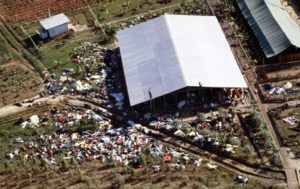
From a Caribbean perspective, we must admit and accept the culpability: “My Bad!”

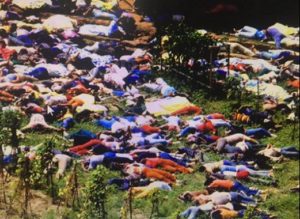
We have bloodguilt on our hands for the 918 people who died on this day in Guyana 40 years ago; (one third of whom were minor children). See the encyclopedic details here:

Tile: Jonestown
The Peoples Temple Agricultural Project, better known by its informal name “Jonestown“, was a remote settlement established by the Peoples Temple, an American cult under the leadership of reverend Jim Jones, in north Guyana. It became internationally notorious when, on November 18, 1978, a total of 918[1][2] people died in the settlement, at the nearby airstrip in Port Kaituma, and at a Temple-run building in Georgetown, Guyana’s capital city. The name of the settlement became synonymous with the incidents at those locations.

909 individuals died in Jonestown,[1] all but two from apparent cyanide poisoning, in an event termed “revolutionary suicide” by Jones and some members on an audio tape of the event and in prior discussions. The poisonings in Jonestown followed the murder of five others by Temple members at Port Kaituma, including United States Congressman Leo Ryan, an act that Jones ordered. Four other Temple members committed murder-suicide in Georgetown at Jones’ command.

While some refer to the events in Jonestown as mass suicide, many others, including Jonestown survivors, regard them as mass murder.[3][4] As many as 70 people may have been injected with poison, and a third of the victims (304) were minors.[5][6] It was the largest such event in modern history and resulted in the largest single loss of American civilian life in a deliberate act until September 11, 2001.[7]

Selection and establishment of Guyanese land


The Temple chose Guyana, in part, because of its own socialist politics, which were moving further to the [political] left during the selection process.[18][19] Former Temple member Tim Carter stated that the reasons for choosing Guyana were the Temple’s view of a perceived dominance of racism and multinational corporations in the U.S. government.[20] According to Carter, the Temple concluded that Guyana, an English-speaking, socialist country with a predominantly indigenous population and with a government including prominent black leaders, would afford black Temple members a peaceful place to live.[20] Later, Guyanese Prime Minister Forbes Burnham stated that Jones may have “wanted to use cooperatives as the basis for the establishment of socialism, and maybe his idea of setting up a commune meshed with that”.[19] Jones also thought that Guyana was small, poor, and independent enough for him to easily obtain influence and official protection.[18]

See the remaining reference in the Source link here …

Source: Retrieved November 18, 2018 from: https://en.wikipedia.org/wiki/Jonestown

Surely this Jonestown drama is a manifestation of evil, despite the “Reverend” Jim Jones and the Christian affiliation of the People’s Temple.

This atrocity is on us!

Actually, after the events of the November 18, 1978 tragedy, there was a formal inquest – Commission of Inquiry – which concluded that Guyanese Prime Minister Forbes Burnham was responsible for the deaths at Jonestown. There is no way to misconstrue the culpability in this drama:

As a representative democracy, the leaders act on behalf of the people.

What kind of environment was the Caribbean country of Guyana to where a Bad Actor with evil Intents and Purposes could thrive in our neighborhood?
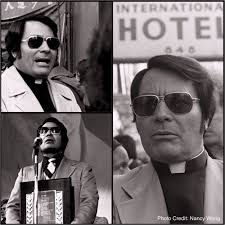
Surely, there were societal defects in place then; the Guyana orthodoxy was surely flawed. (Even though, on the surface, the solidarity of Guyana’s political leadership aligned with Jim Jones and the People’s Temple movement in their opposition to racial inequality and Crony-Capitalism. See the Appendix VIDEO below).

This is the lesson we learn from Jonestown 1978: When we tolerate Human Rights abuses, things go from bad to worse.

How about today?

Is Guyana reformed or transformed today, away from that old bad society to a more viable society today?

According to the movement behind the book Go Lean…Caribbean, the answer is:

No, actually!

The Go Lean book asserts that the Caribbean is in crisis. We have many societal defects that are so badly in need of reform. Guyana’s disposition is especially acute. Of all the societal abandonment transpiring in the region, Guyana is among the worst. One report related a 89% Brain Drain rate with their college educated populations. In addition, Guyana is still notoriously bad for mitigating and counteracting suicides. In a 2014 report, this country was ranked #1 for Suicides Per Capita.

Guyana needs a reboot!

The whole Caribbean region needs a reboot.

This is the “why” the Go Lean book presents a roadmap for the introduction and implementation of a super-national governing authority, the Caribbean Union Trade Federation (CU). This entity will be empowered to effect change in all 30 Caribbean member-states. This would be a new regime for the region; one that is apolitical (not left nor right-leaning) and religiously-neutral; (no blindspots in oversights to “Christian” religious groups).

Under this new regime, as described in the Go Lean book, religious institutions will be recognized, respected and defined as Non-Government Organizations (NGO), nothing more … nothing less. Caribbean integration is the priority and this priority would allow for a more efficient delivery of the Social Contract. (Social Contract is defined for when citizens surrender some of their freedoms and submit to the authority of the State in exchange for protection of remaining natural and legal rights).

It is universally accepted that the Government of Guyana failed those 918 people in 1978. The religious eco-system should not have been looked on for protection and security. No, Jonestown was a failing of the government. There is a variety of religious adherents in this country – Christians, Muslims, Hindus, Indigenous Animists – no one religious group should ever be put above or below another. Religious diversity must be a concern for all Caribbean member-states; the Social Contract for the Caribbean must reflect a Pluralistic Democracy.

40 years later, and the stewards for a new Caribbean have learned how to apply the lessons of Jonestown in this plan to forge a better society. The Go Lean/CU roadmap presents the strategies, tactics and implementations to impact Caribbean communities and all their societal engines. In fact, these statements are identified as the prime directives for this roadmap:

  • Optimize the economic engines in order to grow the regional economy to $800 Billion & create 2.2 million new jobs.
  • Establish a security apparatus to protect the resultant economic engines, plus ensure public safety and justice institutions. Security provisions should apply to the macro and the micro.
  • Improve Caribbean governance to support these engines, including a separation-of-powers between the member-states and CU federal agencies, plus even oversight for NGO’s.

These prime directives transcend religions and national borders. There is an expectation of Human Rights that is expected no matter the country, languages or culture. Protections of Human Rights should just be delivered. The approach is to move the Caribbean region to a Single Market. Guyana-based CariCom started this vision, but they have failed to deliver on it. We need a better integration – with a stronger foundation – that would ensure that a Jonestown can never happen again – NEVER AGAIN.

The book Go Lean…Caribbean – available to download for free – opened with the assessment that regional governance is dysfunctional and the challenges for the Caribbean are too Big for anyone one of these small islands or coastal states alone – there must be regional solutions. Thusly, the roadmap calls for a regional interdependence. This need was pronounced in the opening Declaration of Interdependence (Pages 10 – 12):

Preamble: That whenever any form of government becomes destructive to these ends, it is the right of the people to alter or to abolish it, and to institute new government … when a long train of abuses and usurpations, pursuing invariably the same object evinces a design to reduce them under absolute despotism, it is their right, it is their duty, to throw off such government, and to provide new guards for their future security.

vi. Whereas the finite nature of the landmass of our lands limits the populations and markets of commerce, by extending the bonds of brotherhood to our geographic neighbors allows for extended opportunities and better execution of the kinetics of our economies through trade. This regional focus must foster and promote diverse economic stimuli.

x. Whereas we are surrounded and allied to nations of larger proportions in land mass, populations, and treasuries, elements in their societies may have ill-intent in their pursuits, at the expense of the safety and security of our citizens. We must therefore appoint “new guards” to ensure our public safety and threats against our society, both domestic and foreign. The Federation must employ the latest advances and best practices of criminology and penology to assuage continuous threats against public safety. …

xi. Whereas all men are entitled to the benefits of good governance in a free society, “new guards” must be enacted to dissuade the emergence of incompetence, corruption, nepotism and cronyism at the peril of the people’s best interest. The Federation must guarantee the executions of a social contract between government and the governed.

The Go Lean book provides 370-pages of turn-by-turn instructions on “how” to adopt new community ethos, plus the strategies, tactics, implementations and advocacies to execute so as to transform the Caribbean region into a “better society”.  The book details a “better society” in terms of Human Rights in one specific Chapter on Page 220. See here, some of the excerpts and headlines from that Chapter:

10 Ways to Protect Human Rights

1 Lean-in for Caribbean Integration
This regional re-boot will allow for the unification of the region into one market, thereby creating a single economy of 30 member-states, 42 million people and a GDP of over $800 Billion. The CU will assume the primary coordination for the region’s economy and the requisite security to protect the resultant economic engines. While the CU is an economic initiative, there is a mission to monitor/mitigate Fail State Indices, and Human Rights violations constitute a Failed State Indicator.
2 Watchful World

A CU mission is to monitor the image of the Caribbean to the rest of the world. Not only will the world be watching the activities in the region, but the “story” being told will be directed to depict a positive behind-the-scenes view, that the region is the best place to live-work-play.

3 Caribbeans with Disabilities
4 Women & Youth

The CU will allow for empowerment and protections of women & children, orphans & widows, in compliance with Judeo-Christian precepts, Human Rights requirements, & natural instincts. These efforts will include the special needs for young girls, adult women and senior women.

5 LGBT Toleration
6 Reconciliations

There were many reasons why Caribbean citizens abandoned their homelands and fled to distant shores. In some cases, the expatriates were actually political/human rights refugees. The CU mission for formal Truth & Reconciliation Commissions will allow many past issues to be settled and set aside, not necessary as criminal prosecutions, as statutes of limitations may have been exceeded. Plus punishing the past, at times may short circuit the future.

7 Future Focus
8 Justice Focus

The people of the Caribbean have the right to good government and the fulfillment of the social contract. This would ensure law-and-order, due process, the rule of law, and some justice assurance. The CU will facilitate monitoring and accountability of the justice institutions to ensure compliance and mitigate abuse, compared to times in the past.

9 Tourist Omnipresence
Extending hospitability to guests is putting “the best foot forward”. The vertical industries of tourism are based on this premise. The CU will expand tourist offerings away from resort-life, including eco-tourism (i.e. rainforest & scuba-diving excursions, bird-watching). This brings more tourists into daily interaction with residents – always on our best behavior.
10 Long-Form Journalism
The CU will support and promote Public Broadcasting media outlets for TV/Radio. This has historically allowed for long-form journalistic productions, a great advantage for human rights foundations & agencies. This allows messaging to get deep and detailed, beyond the headline-only of compressed newscasts. These types of endeavors have forged many changes in American society, like exposing the ills of rural poverty and the atrocities of the old peonage system.

Our region has gotten a “Black-Eye” because of the atrocities of Jonestown, Guyana. We must do better, going forward. That “better society” is one that pursues this definition of the Greater Good:

“It is the greatest good to the greatest number of people which is the measure of right and wrong”. – Jeremy Bentham (1748-1832)

The Caribbean must foster a better homeland that protects its citizens and visitors; (the 918 people who died on November 18, 1978 were Americans – non-Guyanese citizens). Considering the lessons being learned from Jonestown, we must also hold religious organizations – and NGO’s – accountable for their actions and violations of Human Rights and modern justice requirements. This Go Lean movement has previously detailed many related issues and advocacies for Human Rights mandates in our region; consider this sample of previous blog-commentaries:

https://goleancaribbean.com/blog/?p=15580 Caribbean Unity? Religion’s Role: False Friend
https://goleancaribbean.com/blog/?p=14482 International Women’s Day – Protecting Rural Women
https://goleancaribbean.com/blog/?p=11224 ‘Loose Lips Sink Ships’ – Fanatical Theologians Undermine Tourism
https://goleancaribbean.com/blog/?p=10566 Funding the Caribbean Security Pact
https://goleancaribbean.com/blog/?p=10216 Waging a Successful War on Orthodoxy
https://goleancaribbean.com/blog/?p=9766 Rwanda’s Catholic bishops apologize for genocide
https://goleancaribbean.com/blog/?p=6718 A Lesson in History Before the Civil War: Compromising Human Rights
https://goleancaribbean.com/blog/?p=5695 Repenting, Forgiving and Reconciling the Past
https://goleancaribbean.com/blog/?p=5210 Cruise Ship Labor Abuses – Getting Ready for Change
https://goleancaribbean.com/blog/?p=4971 A Lesson in Church History – Royal Charters: Truth & Consequence
https://goleancaribbean.com/blog/?p=341 US slams Caribbean human rights practices

As a result of Jonestown 1978, the expression “drinking the Kool-Aid” has entered into the English-speaking lexicon. Yes, this 40 year old tragedy in Guyana has branded the Caribbean with a global brand as inadequate and Less Than when it comes to effective governance in public safety and Human Rights protection.

After all, one third of the 918 victims in Jonestown were minor children.

Surely we have learned lessons in the 40 years since. Surely, we have now learned how to protect our people … and our visitors.

Surely, our communities will embrace all strategies, tactics, implementations and advocacies to ensure such a tragedy will never happen again.

The Go Lean book is the lesson-learn.

Surely, this roadmap will be embraced and adopted as part of the regional pledge of NEVER AGAIN.

We urge all Caribbean stakeholders to lean-in to this roadmap to reboot the region, to bring change … and empowerment. We must make sure those 918 lives were not lost in vain; We must learn the lessons from Jonestown. We must make our communities better places to live, work and play. 🙂

Download the book Go Lean … Caribbean – now!

Sign the petition to lean-in for this roadmap for the Caribbean Union Trade Federation.

—————–

Appendix VIDEO – The Story of The Jonestown Massacre – https://youtu.be/GKqQ1CyneWw

FactFile
Published on Feb 5, 2018 – The Jonestown massacre was a horrendous event that led to the deaths of almost a thousand people. Today we tell the story that led up to that most horrendous of days.

Share this post:
, , ,

100 Years of Armistice Day – ENCORE

Today is the 11th day of the 11th month, November. For the last 100 years, this date has been commemorated and celebrated for marking the end of the Great War, later to be called World War I. This day has a lot of different names:
  • Armistice Day
  • Remembrance Day
  • Veterans Day (in the US)

This was one of the biggest moments in the entire 20th century. The cease-fire came into effect at 11am – the 11th hour. See the encyclopedic details here:

Title: Armistice of 11 November 1918
The Armistice of 11 November 1918 was the armistice that ended fighting on land, sea and air in World War I between the Allies and their opponent, Germany. Previous armistices had eliminated Bulgaria, the Ottoman Empire and the Austro-Hungarian Empire from the war. Also known as the Armistice of Compiègne from the place where it was signed, it came into force at 11 a.m. Paris time on 11 November 1918 (“the eleventh hour of the eleventh day of the eleventh month”) and marked a victory for the Allies and a defeat for Germany, although not formally a surrender.

The actual terms, largely written by the Allied Supreme Commander, Marshal Ferdinand Foch, included the cessation of hostilities, the withdrawal of German forces to behind the Rhine, Allied occupation of the Rhineland and bridgeheads further east, the preservation of infrastructure, the surrender of aircraft, warships, and military materiel, the release of Allied prisoners of war and interned civilians, eventual reparations, no release of German prisoners and no relaxation of the naval blockade of Germany.

See the remaining of the article here …
https://en.m.wikipedia.org/wiki/Armistice_of_11_November_1918 retrieved November 11, 2018.

This is more than just raw history. There is a lot of relevance for the Caribbean. At the time of this war (1914 – 1918) most of the 30 member-states of the political Caribbean were all under the domain of the following countries that participated in the World War:

  • Great Britain (owned 18 islands and coastal territories including today’s Belize & Guyana)
  • Denmark (owned the US Virgin Islands until 1917)
  • France (owned 4 islands)
  • Netherlands (owned 6 islands and Suriname)
  • United States of America (owned Puerto Rico and Protectorate of Cuba)
  • (Haiti and the Dominican Republic were independent and inconsequential to this war).

In fact, at the 100 year anniversary of the launch of the war, this commentary published a detail assessment on relevance to our modern life and lessons learned – 8 specific theses. Here is an Encore of that previous blog-commentary here-now:

===============================================

Go Lean Commentary – A Lesson in History: 100 Years Ago Today – World War I

The dominoes began to fall 100 years ago today.

Going backwards: The Caribbean is at the precipice of dysfunction due to a global financial crisis; the crisis is a by-product of an inter-connected world; the global unified economic systems (Bretton-Woods Accords [b]) and disbanding of the colonies of the Great Powers emerged for the rebuilding after World War II. Consequently, Word War II was a direct response to the unsatisfactory settlements from World War I and economic dysfunctions during the period between the World Wars. The first domino was therefore June 28, 1914.

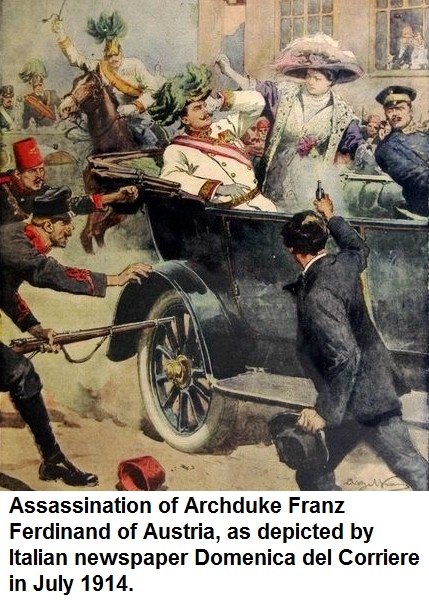
1914 Photo 1On this date 100 years ago, Archduke Franz Ferdinand of Austria, heir presumptive to the Austro-Hungarian throne, and his wife, Sophie, Duchess of Hohenberg, were shot dead in Sarajevo by Serbian assassins. The political objective of the assassination was to break off Austria-Hungary’s south-Slav provinces so they could be combined into a Yugoslavia. The assassination led directly to the First World War when Austria-Hungary subsequently issued an ultimatum against Serbia, which was partially rejected. Austria-Hungary then declared war, marking the outbreak of the war. [a]

Multilateral military alliances abounded in that day among the Great Powers: Austria-Hungary with Germany (Triple Alliance of 1882) and Serbia with Russia and France (Triple Entente of 1907) and Britain. When war ensued later in August 1914, these were the sides. Many other military treaties were triggered thereby engaging empires/countries like Ottoman-Turks, Portugal, Japan and Italy, (The United States joined in 1917 allied with Britain). The resulting conflict was dubbed the Great War until subsequently rebranded World War I.

The review of the historic events of this day 100 years ago is more than just an academic discussion, the book Go Lean…Caribbean aspires to economic principles that dictate that “consequences of choices lie in the future”. The book serves as a roadmap for the introduction and implementation of the technocratic Caribbean Union Trade Federation (CU). This confederation effort aligns many former colonies of the same Great Powers that waged WW I; like Great Britain or the United Kingdom (UK) for example. The British Dominion experienced dire consequences and suffered greatly as a result of this war. In 1914 The British Dominion controlled over 25% of the world’s population; today the UK wields little political, military or economic power, including that of the Caribbean.

The people of the Caribbean understand societal decline and dysfunction all too well.

What have we learned in the 100 years since the events of June 28, 1914? How will these lessons help us today?

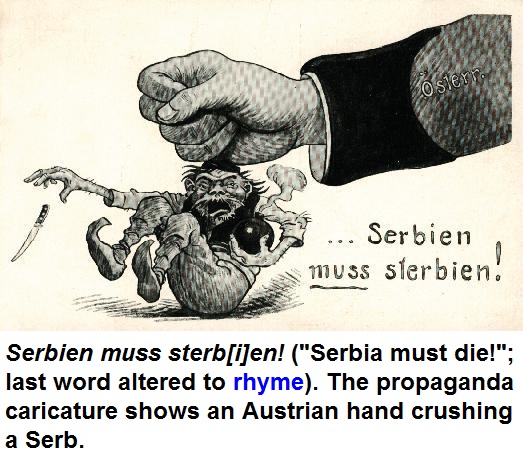
  • Minority Equalization – Bullying and terrorism must be mitigated at the earliest possible opportunity – the foregoing photo depicts the oppression the minority Balkan communities perceived in the Austria-Hungarian Empire. As a minority group they felt bullied in their own country; their Slavic culture and language set them apart, and their religious adherence led to even more dissension (Austria-Hungary: Catholic/Lutheran; Serbia: Eastern Orthodox and Bosnia- Herzegovina: Muslim) There were terrorist activities for decades before in the quest for independence. In the past 100 years, this same modus operandi has been repeated in countless locales around the world. The CU security pact must defend against regional threats, including domestic terrorism. This includes gangs and their junior counterparts, bullies. The CU plans for community messaging in the campaign to  mitigate bullying.

1914 Photo 2

  • Reconciliation of issues are not optional, more conflict will emerge otherwise – The issues that wedged the people of the Balkans were not resolved in World War I. More dissensions continued leading to World War II, and continued during the Cold War while most of the Balkans were under Soviets control. When the Soviet Union collapsed in 1991, civil war and ethnic cleansings proceeded in the Balkans. Their issues/differences had not been reconciled. A common practice after WW I & WW II was the prosecution of war crimes. But in South Africa an alternative justice approach was adopted, that of Truth & Reconciliation Commissions (TRC). These have become more successful as the emphasis is less on revenge and more on justice normalization. Many other countries have instituted similar TRC models. The CU plans for the TRC model for dealing with a lot of latent issues in the last Caribbean century (i.e. Cuba, Haiti, Dominican Republic, etc).
  • Self-determination of local currencies – in planning for postwar reconstruction, U.S. representatives with their British counterparts studied what had been lacking between the two world wars: a system of international payments that would allow trade to be conducted without fear of sudden currency depreciation or wild fluctuations in exchange rates—ailments that had nearly paralyzed world capitalism during the Great Depression. There is a multiplier associated with the currency in the money supply. Therefore the communities of the Caribbean must embrace its own currency, the Caribbean Dollar (managed by a technocratic Caribbean Central Bank), thereby bringing local benefits from local multipliers.
  • Security assurances must be enabled to complement economics objectives – A lot of dissension has resulted when economic engines become imperiled due to security conflicts. The instability then causes more economic dysfunction, which results in even more security threats – a downward spiral. The CU/Go Lean posits that security apparatus must be aligned with all economic empowerments. This is weaved throughout the roadmap.
  • Negotiate as partners not competitors – The end of World War I immediately set-up ripe conditions for WW II, because of the harsh terms in the Peace Treaties. The CU maintains that, negotiation is an art and a science. More can be accomplished by treating a negotiating counterpart as a partner, rather than not an adversary. (See VIDEO below).
  • Cooperatives and sharing schemes lighten burdens among neighbors – The Balkan conflict of 1914 resulted in a World War because of cooperative treaties with aligning nations. Despite this bad outcome, the practice of cooperatives and sharing still has more upside than downside. The CU will employ cooperatives and sharing schemes for limited scopes within the prime directives of optimizing the economic, security and governing engines.
  • Promote opportunities for the Pursuit of Happiness – A lot of terrorist activities are executed by “suicide” agents (i.e. suicide bombers). The Go Lean roadmap posits the when the following three fundamentals are in place, the risks of suicide is minimal: 1. something to do, 2. someone to love, 3. something to hope for. These are the things a man (or woman) needs to be happy.
  • Consider the Greater Good – Complying with this principle would have prevented a lot of conflict in the past century. The philosophy is directly quoted as: “It is the greatest good to the greatest number of people which is the measure of right and wrong”. The CU/Go Lean roadmap calls for a number of measures that strike directly at the Greater Good mandate: accountable justice institutions, economic empowerment for rich and poor, strategic education initiatives, proactive health/wellness, etc.

The related subjects of economic, security and governing dysfunction have been a frequent topic for blogging by the Go Lean promoters, as sampled here:

https://goleancaribbean.com/blog/?p=1433 Caribbean loses over 70% of tertiary educated citizens to the brain drain
https://goleancaribbean.com/blog/?p=1309 5 Steps of a Bubble
https://goleancaribbean.com/blog/?p=1014 All is not well in the sunny Caribbean
https://goleancaribbean.com/blog/?p=816 The Future of Caribbean Integration and CariCom
https://goleancaribbean.com/blog/?p=789 America’s War on the Caribbean
https://goleancaribbean.com/blog/?p=782 Open the Time Capsule: The Great Recession of 2008
https://goleancaribbean.com/blog/?p=623 Only at the precipice, do they change
https://goleancaribbean.com/blog/?p=599 Ailing Puerto Rico open to radical economic fixes
https://goleancaribbean.com/blog/?p=467 Barbados Central Bank records $3.7m loss in 2013
https://goleancaribbean.com/blog/?p=451 CariCom Chairman to deliver address on slavery/colonization reparations
https://goleancaribbean.com/blog/?p=353 Book Review: ‘Wrong – Nine Economic Policy Disasters and What We Can Learn…’

The purpose of the Go Lean roadmap is to turn-around the downward trends in the Caribbean today, to reverse course and elevate Caribbean society. The CU, applying lessons from the last 100 years, has prime directives proclaimed as follows:

  • Optimization of the economic engines in order to grow the regional economy to $800 Billion & create 2.2 million new jobs.
  • Establishment of a security apparatus to protect the resultant economic engines.
  • Improve Caribbean governance to support these engines.

The Go Lean book details a series of assessments, community ethos, strategies, tactics, implementations and advocacies to empower all the factions in the Caribbean region:

Community Ethos – Economic Systems Influence Choices & Incentives Page 21
Community Ethos – Consequences of Choices Lie in the Future Page 21
Community Ethos – Money Multiplier – Control of Local/Regional   Currency Page 22
Community Ethos – Anti-Bullying and Mitigation Page 23
Community Ethos – Intelligence Gathering Page 23
Community Ethos – “Crap” Happens Page 23
Community Ethos – Minority Equalization Page 24
Community Ethos – Ways to Impact the Future Page 26
Community Ethos – Ways to Improve Negotiations Page 32
Community Ethos – Ways to Manage Reconciliations Page 34
Community Ethos – Ways to Improve Sharing Page 35
Community Ethos – Ways to Promote Happiness Page 36
Community Ethos – Ways to Impact the Greater Good Page 37
Strategy – Vision –  Integrate Region into a Single Market Economy Page 45
Strategy – Agents of Change – Globalization Page 57
Tactical – Separation of Powers – Department of Homeland   Security Page 75
Tactical – Separation of Powers – Department of   Justice Page 77
Implementation – Assemble Existing Super-national Institutions Page 96
Implementation – Caribbean Central Bank (CCB) Cooperative Page 96
Implementation – Ways to Pay for Change Page 101
Implementation – Foreign Policy Initiatives   at Start-up Page 102
Implementation – Security Initiatives at   Start-up Page 103
Implementation – Ways to Deliver Page 109
Implementation – Ways to Promote Independence Page 120
Planning – Ways to Ways to Model the EU Page 130
Planning – Ways to Make the Caribbean Better Page 131
Planning – Ways to Improve Failed-State Indices Page 134
Planning – Lessons from East Germany Page 139
Advocacy – Ways to Grow the Economy Page 151
Advocacy – Ways to Create Jobs Page 152
Advocacy – Ways to Better Manage the Social Contract Page 170
Advocacy – Ways to Foster Cooperatives Page 176
Advocacy – Ways to Impact Justice Page 177
Advocacy – Ways to Improve Homeland Security Page 180
Advocacy – Ways to Mitigate Terrorism Page 181
Advocacy – Ways to Improve Intelligence Page 182
Advocacy – Banking Reforms – Caribbean Dollar Page 199
Advocacy – Ways to Protect Human Rights Page 220
Advocacy – Battles in the War on Poverty Page 222
Advocacy – Ways to Impact British Territories Page 245

The year 1914 is identified as a watershed year in the history of mankind. (There are even religious teachings that identify this year as the beginning of the Bible’s prophesied Last Days). No doubt there was a crisis, and it was wasted, even after losing 19 million people in the ensuing military conflict. The result was a 2nd World War that slaughtered 60 million more. Still all the divisions and animosities created during those conflicts forged even more conflicts (think: Middle East, Korea and Vietnam). In total, about 100 million people died in wars of the 20th Century.

See Comedian Bill Maher Commentary in the following VIDEO:

VIDEO – Real Time With Bill Maher: Sunni and Share (HBO) – 
https://youtu.be/Jz0YWIfBLa4


Real Time with Bill Maher
Published on Jul 1, 2014 – Bill Maher delivers his “New Rules” editorial on June 27, 2014.

  • Category: Entertainment

Now is the time for all of the Caribbean to learn the lessons from the last 100 years, and not waste our current crises. The book Go Lean … Caribbean posits that the Caribbean is in a serious crisis, but asserts that this crisis would be a terrible thing to waste. The people and governing institutions of the region are hereby urged to lean-in for the empowerments described in the book Go Lean … Caribbean.

This is a big deal for the region, the same way 1914 was a big year for our planet. While the planet is out-of-scope for this roadmap, a Caribbean neighborhood optimization is realistic and plausible. We can all work to make our homeland a better place to live, work, and play.

Download the free e-Book of Go Lean … Caribbean – now!

—————–

Referenced Sources:
a.     http://en.wikipedia.org/wiki/Assassination_of_Archduke_Franz_Ferdinand_of_Austria; retrieved June 28, 2014

b.     http://en.wikipedia.org/wiki/Bretton_Woods_system; retrieved June 28, 2014

Share this post:
, ,
[Top]

Guy Fawkes – A Lesson in History

Go Lean Commentary

“… Keep doing this, whenever you drink it, in remembrance of me.” For whenever you eat this loaf and drink this cup, you keep proclaiming  … – The Bible 1 Corinthians 11: 25, 26 NWT

Its a simple formula, keep doing things in remembrance … and you will remember.

Remember, remember the Fifth of November, 
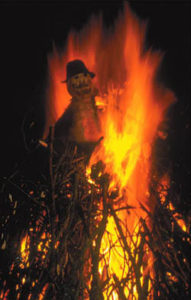
The Gunpowder Treason and Plot,
I know of no reason
Why the Gunpowder Treason
Should ever be forgot.

See the full poem and all its variations in Appendix A below.

Throughout the British West Indies (18 of the 30 countries that comprise the political Caribbean), the night of November 5th was a Red Letter Day on the Calendar. It was Guy Fawkes / Bonfire Night. The tradition was to burn a stuffed dummy in effigy!

This was not our finest moment.

Without realizing it, we were fostering a Climate of Hate.

Surely, we have grown … since those Bad Old Days?!

Surely?!

Sorry! The answer is No! Those Bad Old Days was … 5 days ago.
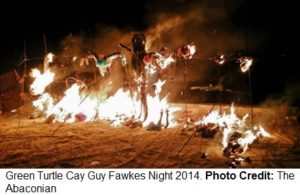
This practice was/is bad … because we have not reformed and retrained our Community Ethos. This refers to:

The national spirit that drives the character and identity of its people.

In a lot of the Anglophone world, Guy Fawkes or Bonfire Night is a memorable Calendar event. Here are examples:

  1. Bahamas
    Though the Bahamas gained independence from England more than 40 years ago, a great deal of our culture remains steeped in the traditions of our British ancestors.
    One of these traditions is Guy Fawkes Night. …
    Today, nearly 250 years later, Guy Fawkes Night is still celebrated throughout the Bahamas. “Guys” are constructed using old clothing, newspapers and masks, and burned on giant bonfires.
    Green Turtle Cay’s Guy Fawkes Night is observed on the Saturday evening closest to November 5th. … – Source:https://littlehousebytheferry.com/2015/11/05/guy-fawkes-on-green-turtle-cay/
  2. Bermuda
    England celebrates this … Gun Powder Plot and every year his effigy is burned on a bonfire.
    Oh and there are fireworks! Well of course there are. No sense in just letting him burn in silence!
    In true Bermudian fashion we will be joining the Brits in their burning! Well at least the fireworks that is. Aptly placed our fireworks will be around an old Fort here, Fort St. Catherine! Source: https://robynskinner.wordpress.com/tag/guy-fawkes-day-in-bermuda/
  3. Jamaica
    Bonfire Night in Jamaica can be one of the most exciting nights of the year. There are loads of Guy Fawkes events in Jamaica and no matter what the weather’s like, you can always be sure a firework party in Jamaica will always draw in a big crowd. – Source: https://www.skiddle.com/cities/jamaica/bonfirenight.html
    See a relevant news article in Appendix B. 
  4. St. Kitts and Nevis
    This Caribbean islands knows how to party. Guy Fawkes is just another excuse to head down to the beach or attend a party where firework displays are the highlight of the night. – Source: https://www.onetravel.com/going-places/light-it-up-guy-fawkes-day-celebrations-around-the-world/ 
  5. St. Vincent and the Grenadines
    The former British colony in the Caribbean, Guy Fawkes Day is celebrated with English customs such as tea parties as well as the unique tradition of bamboo blowing, where heated kerosene is used to ignite an explosion in hollowed out bamboo cannons (to mimic the sound and fire of old cannons from the colonial days). In addition, there are fireworks displays on many beaches. – See Appendix C VIDEO below. 
  6. United Kingdom
    The British city of Lewes (a small market town in East Sussex) is legendary for their bonfire festivities: https://www.gapyear.com/articles/travel-ideas/the-most-mental-bonfire-night-in-the-world

This is not good!

Underlying to the Guy Fawkes remembrance is the enmity and animosity between England’s Protestants (Anglicans) and Roman Catholics – see Appendix A below. There was war; there was hatred; this was the climate for hundreds of years. Every time we consume Guy Fawkes festivities, we promote that Climate of Hate; we continue the bad community ethos. So instead of persecuted minorities – Protestants-hating-Catholics or Catholics-hating-Protestants – the recommended community ethos is:

Live and let live.

The opposite of persecuted minorities would be “Respect for Minorities”. This has been a familiar topic for the movement behind the book Go Lean…Caribbean. This movement has related the Climate of Hate in these scenarios:

These are lessons for us to learn and apply. The Caribbean member-states, collectively and individually, need to curb its Climate of Hate so we need to pay more attention to historic traditions; they furnish lessons we need to take to heart.

This is not just an issue of history, but one of currency for our economics, security, governance  and overall spirit in society. These are all important subjects for the book Go Lean…Caribbean. The book serves as a roadmap for elevating Caribbean society – for its 42 million residents and 80 million visitors, across all 30 member-states – by introducing and implementing the technocratic Caribbean Union Trade Federation (CU).

The quest of the Go Lean roadmap is to make the Caribbean homeland a better place to live, work and play. The CU, applying best-practices for community empowerment has these 3 prime directives, proclaimed as follows:

  • Optimization of the economic engines in order to grow the regional economy to $800 Billion & create 2.2 million new jobs.
  • Establishment of a security apparatus to protect the resultant economic engines and ensure the respect of human rights and public safety.
  • Improve Caribbean governance to support these engines.

We have a Climate of Hate in the Caribbean, the Go Lean book – within its 370 pages – therefore details a series of community ethos to adopt to overcome the bad attitudes plus the strategies, tactics, implementations and advocacies to execute to forge permanent change in the homeland. Fixing the Caribbean eco-system is the quest of the Go Lean roadmap. Our focus is fixing the Caribbean. Considering the acute and pronounced Climate of Hate, we have a lot of work to do to garner more respect for our minorities.

The Go Lean/CU roadmap specifies best practices to effect change in society, the attitudes and actions. Success in these efforts will reform and transform our climate, and assure public safety and justice for all. This quest is worth all our efforts.

When is the right time to start these efforts? Now!

Now … is the time for all of the Caribbean to lean-in to this roadmap and learn the lessons from history or other communities – successful, plus unsuccessful. The Go Lean book posits that the Caribbean is in a serious crisis, but asserts that this crisis would be a terrible thing to waste. The people and governing institutions of the Caribbean region are hereby urged to lean-in to this Go Lean roadmap to impact the whole Caribbean region,to benefit everyone … Protestants and Catholics.

If we remember to do good – on the Fifth of November and ever other day – we will have a great society.  🙂

Download the free e-book of Go Lean … Caribbean – now!

Sign the petition to lean-in for this roadmap for the Caribbean Union Trade Federation.

—————-

Appendix A – Gunpowder Plot in Popular Culture
Several traditional rhymes have accompanied the Guy Fawkes Night festivities. “God Save the King” can be replaced by “God save the Queen” depending on who is on the throne.

Remember, remember the Fifth of November,
The Gunpowder Treason and Plot,
I know of no reason
Why the Gunpowder Treason
Should ever be forgot.

Guy Fawkes, Guy Fawkes, t’was his intent
To blow up the King and Parli’ment.
Three-score barrels of powder below,
Poor old England to overthrow;
By God’s providence he was catch’d (or by God’s mercy*)
With a dark lantern and burning match.

Holla boys, Holla boys, let the bells ring.
Holloa boys, holloa boys, God save the King!
And what should we do with him? Burn him!

In more common use the “bonfire cry” is occasionally altered with the last three lines (after “burning match”) supplanted by the following;

A traitor to the Crown by his action,
No Parli’ment mercy from any faction,
His just end should’st be grim,
What should we do? Burn him!
Holler boys, holler boys, let the bells ring,
Holler boys, holler boys, God save the King!

Some of the Bonfire Societies in the town of Lewes use a second verse reflecting the struggle between Protestants and Roman Catholics. This was widely used, but due to its anti-Roman Catholic tone has fallen out of favour.

penny loaf to feed the Pope
A farthing o’ cheese to choke him.
A pint of beer to rinse it down.
A fagot of sticks to burn him.
Burn him in a tub of tar.
Burn him like a blazing star.
Burn his body from his head.
Then we’ll say ol’ Pope is dead.
Hip hip hoorah!
Hip hip hoorah hoorah!

Source: Retrieved 11/05/2018 from: https://en.wikipedia.org/wiki/Gunpowder_Plot_in_popular_culture

—————-

Appendix B – Is Guy Fawkes Day relevant to Jamaica?

By: Michael Burke

Today is the 410th anniversary of the ‘Gun Powder Plot’, the day when an attempt to bomb the parliament building in England with King James and the House of Lords present was foiled in 1605. Today is known as Guy Fawkes Day in England, but is sometimes called ‘Bonfire Night’. It is celebrated as a day of thanksgiving that the plot in 1605 was foiled and this is done by lighting bonfires and fireworks.

Is the Gun Powder Plot of 1605 in England relevant to Jamaica? Yes it is, in terms of its impact on Jamaica’s history. The ‘gun powder plotters’ were Roman Catholics who wanted to end the oppression of Roman Catholics in England by the restoration of Roman Catholicism there. The failed plan was to first assassinate the king and the lords by blowing up the parliament building and then install a puppet Roman Catholic monarch to restore the Roman Catholic Church.

Today in some places around the world Guy Fawkes is hailed as a revolutionary hero. But the Roman Catholic Church does not condone violence, so Guy Fawkes was not canonised as a saint. In any case, Guy Fawkes Day is a misnomer because the plot was actually hatched by Robert Catesby. But Fawkes was the hitman who was caught red-handed with 36 barrels of gunpowder in the parliament building.

The oppression of Roman Catholics in England started in 1534 when the pope excommunicated King Henry VIII for divorcing his wife. King Henry issued a decree to separate the Church of England (or Anglican Church) from the Roman Catholic Church and declared himself as the divinely appointed head of the Church of England.

A martyr of the schism was Sir Thomas More, the chancellor of the exchequer (or minister of finance), who was put to death in 1535 for refusing to denounce the pope, and 400 years later in 1935 was canonised as a saint of the Roman Catholic Church. St Thomas More Church and preparatory school in May Pen, Clarendon, are named in his honour.

Robert Catesby could not carry out the Gun Powder Plot all by himself, so he confided in 13 men, including the brother-in-law of a member of the House of Lords. As the bombing was to have taken place at the opening of parliament when the king and the House of Lords would be present, he revealed the plot to his brother-in-law who in turn ‘broadcasted’ it. Guy Fawkes was imprisoned in the Tower of London and was later put to death by hanging, drawing and quartering.

But the Gun Powder Plot of 1605 only made the oppression against Roman Catholics in England far more severe. Eventually, all Roman Catholic priests were imprisoned in England. Roman Catholics could not inherit land from anyone. Attending Roman Catholic mass was an offence punishable with imprisonment. And informers were paid one hundred pounds for reporting any Roman Catholic found attending mass.

The impact of the schism and Gun Powder Plot on Jamaica

Had the Gun Powder Plot succeeded, and England restored to Roman Catholicism, there might not have been friction between England and Spain, so the capture of Jamaica might not have happened. The then English dictator Oliver Cromwell dispatched Admiral Penn and General Venables with soldiers to capture Hispaniola but that attempt failed. Fearing the wrath of Cromwell, Penn and Venables captured nearby Jamaica instead. Had that not happened, Jamaica’s history would be very different in many ways, especially after 1655.

First, when the British captured Jamaica in 1655, the year of the 50th anniversary of the ‘Gunpowder Plot’ starring Robert Catesby, Guy Fawkes and 11 others, the Roman Catholic Church was banned in Jamaica. This was in keeping with the schism of 1534 that continued after the foiled Gun Powder Plot. The ban lasted for 136 years, from 1655 to 1791. The first priest-martyr in Jamaica was Father Gabriel de Barona, who was killed on the banks of the Black River, St Elizabeth, while urging the Spaniards to keep on fighting.

Second, without the English capture of Jamaica there would not have been English bondsmen coming here to serve six-year sentences at hard labour. And had they not come here they would not have stayed to become pirates and make Port Royal their headquarters. They plundered ships and stopped all trade between the Caribbean and Europeans as ship crews were afraid of pirates.

Third, the Treaty of Madrid obliged Britain to control piracy, and this led to the imprisonment of pirate captain Henry Morgan who was shipped by boat to the Tower of London. But only Morgan could control the pirates, and so King Charles II made him governor of Jamaica to do that. Morgan controlled piracy by selling land cheaply to the pirates and they became the aristocracy. This meant that the ex-pirates became owners of slaves and masters of corruption and criminality that affects many Jamaicans to this day.

Fourth, some time in either the 17th or 18th century, Roman Catholic African slaves of a Spanish colony were passengers on a boat en route to Cuba for them to do slave labour there. Pirates invaded the boat and stole the slaves who were transported to Jamaica at Castle Mines in St Mary. Had Jamaica remained under the Spanish rule, the Castle Mines slaves in St Mary would never have had a need to set up an underground Roman Catholic Church.

Long after the Catholic Church in Jamaica was restored in 1791, and some time after 1838 when slavery was fully abolished, the descendants of the Castle Mines slaves sought out a Roman Catholic priest and eventually a church was built at Preston Hill, St Mary.

Fifth, had the English not captured Jamaica from the Spaniards, there might never have been a change in the crops planted for export from tobacco to sugar cane, which required hundreds of thousands of workers. After Emancipation, the ex-slaves refused to work on the estates, so the landowners switched to less labour-intensive bananas, out of which came the tourist industry via the United Fruit Company Banana Boats to Port Antonio.

Source: Posted November 5, 2015; retrieved November 5, 2018 from: http://www.jamaicaobserver.com/columns/Is-Guy-Fawkes-Day-relevant-to-Jamaica_19236886

—————-

Appendix VIDEO – Bamboo (cannon) Blowing in St. Vincent and the grenadines (Mespo) – https://youtu.be/IUYEILYPza8

Published on Nov 2, 2013 – During the Guy Fawkes celebrations, persons make Bamboo cannons which they ignite using heated kerosene. The kerosene vapors ignite in the bamboo’s hallowed out interior and creates a loud explosion.

——-

See a related VIDEO about Lewes, UK here: https://www.newsflare.com/video/252900/other/firework-display-guy-fawkes-night

Share this post:
,
[Top]

Mid-Term Elections 2018: No Vote; No Voice

Go Lean Commentary

It’s a BIG Day (November 6, 2018) in the US; it’s the Mid-Term Elections to choose the new Congress.
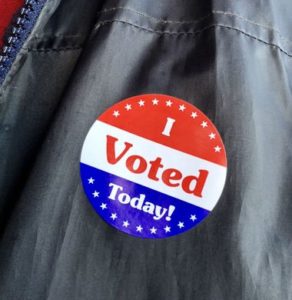

As related in this previous blog-commentary, the Caribbean has No Vote and No Voice in the US elections for the power of their leaders.

But one Caribbean stakeholder – “Rock Star” Rihanna – has chimed in with her own power; she has a voice and a vote. She has declared:

Please stop the music.
See the full news article in the Appendix below, to see how she has forbidden any of her music at Trump rallies.

For this election, there is a lot at stake for this American eco-system – as the only Super Power in the western hemisphere – this affects the Caribbean in an impactful way as well.

Bad things happen when Good people do not vote.
The opposite of justice is not injustice; it’s apathy, indifference and inaction. – Senator Corey Booker Nov 5, 2018.

The United States of America is the richest, most powerful democracy – a government of the people, by the people, for the people – on the planet and yet their power does not appear to lie with the population, but rather the passionate. So many times, the winner of campaign races are not the people with the majority, but rather the people who are passionate enough to show up and vote … consistently. The current federal administration – under President Donald Trump – seems to have little regards for the needs of Caribbean people. So now is the first chance for America to chime in on their support or opposition of this President. This is the actuality of the Mid-term elections.

The results are in:

  • In summary, the opposition party, the Democrats, has won back the US House of Representatives.
  • The Senate remains with the incumbent party, the Republicans.
  • Many State races revert to the opposition parties, except for Florida and Georgia where both Democratic gubernatorial candidates have apparently lost. In Florida, Andrew Gillum would had become the first African-American governor in the State; while Georgia’s Stacey Abrams would have been the first African-American female governor ever … anywhere.

The quest for a pluralistic democracy is still not complete. (When its No Vote and No Voice, it gets even more difficult).

The Caribbean remains inconsequential to this American process. Even the American territories remain with No Voice, No Vote and No Progress. That previous blog-commentary related:

[For] the US Territories of Puerto Rico and the Virgin Islands, … American economic prosperity does not always extend to the islands. The emigration (brain & capital drain) for these islands has been acute for over 100 years and continues, unchecked today. The pattern of the US Territories is what the rest of the [Caribbean] region does not want: half abandoned; where the emigrated population exceeds the on-island population. These islands are paradise – there should be no reason to leave. – Book Go Lean…Caribbean Page 244

The US as the regional Super Power does not mean power nor prosperity for the neighboring Caribbean region. We are not protégés; we are parasites. The solution to assuage Caribbean crises is not America; we must do the heavy-lifting to reform and transform our society ourselves.

Solving our own problems; providing for our own needs; handling our own affairs – there is an umbrella word for these activities: Independence. (With independence, our Vote and Voice matters).

The Go Lean book – a roadmap for the Caribbean Union Trade Federation (CU) – provides 370-pages of turn-by-turn instructions for a Way Forward, a guide “how” to adopt new community ethos, plus the strategies, tactics, implementations and advocacies to execute so as to reboot, reform, transform and promote independence. We need to be able to deliver without dependence on “overseas masters”: Washington, Paris, Amsterdam or London. Our focus here is on Washington. Though our quest is not to impact the US – notwithstanding the Diaspora living there – there is the need for the CU to limit our scope to the 2 American territories and other 28 lands in the Caribbean. One advocacy in the book (Page 120) is entitled “10 Ways to Promote Independence“; this allows for the heightened delivery of basic needs. See the headlines, summaries and excerpts from that advocacy here:

10 Ways to Promote Independence

1 Lean-in for the Treaty for a Caribbean Single Market
This treaty calls for the unification of the Caribbean region into an integrated market, thereby expanding to an economy of 30 member-states of 42 million people. The vision of the CU is independence! But independence as a regional entity, one Single Market. The missions of the CU entail empowering the economic engines, securing the homeland and assuaging the emergency crises of natural disasters.The current state of the CU region would equate to the unsettled period in US history from 1776 until the accedence of the constitution in 1789. If independence is likened to the birth of a new nation, then the CU would be considered the adult stage of this fictitious entity – partnering in a marriage; ready for growth (annexation) once settled and stable.
2 Autonomous Rule for Territories
The CU treaty includes the American, British, Dutch and French Overseas Territories. Though the legacy powers are among the world’s biggest economies, such prosperity has not always extended to these islands. The CU only seeks autonomous rule from their legacies, not sovereignty, and receivership status in the case of any financial insolvency.
3 CU Neutrality
The CU Federation must “get and give” independence. Many CU agencies are configured as independent entities from the political structures within the region. This is especially noted with the Caribbean Central Bank, Federal Elections, Organ Procurement, Education Testing, Federal Courts and Self Governing Entities. The independence of these service providers must be assured with compliance reviews and audits – these protect public integrity.
4 Elections Management – International Monitors
5 Security Independence
The CU region has enemies, (narco-terrorists, and sworn enemies of legacy nations). So the collective security pact will create a Homeland Security Department, to defend against all enemies, foreign and domestic. The CU will coalesce with the Defense Forces of the US, France, Netherlands, British Navies for Intelligence sharing and naval patrols and shore leaves. The CU will acquire tactical defensive weapons: helicopters, submarines, drones, & anti-aircraft systems.
6 Energy Independence
7 Financial Independence
8 Disaster Response Independence
Every hurricane or earthquake should not constitute an international crisis. Adults are required to be prepared for rainy days, so too the CU must position relief supplies and recovery equipment to quickly respond to events and aftermaths.
9 Food Independence
10 Foreign Aid

Yes, the Caribbean must stand-up, rise-up and act responsibly to fulfill it needs; our Vote and Voice must matter. Such an independence mandate is embedded in the implied Social Contract for every member-state. The Social Contract is defined as follows:

Where citizens surrender some of their freedoms and submit to the authority of the State in exchange for protection of remaining natural and legal rights.

The American association does not merit progress. Just look at Puerto Rico and the Virgin Islands. Of the 30 member-states that constitute the Caribbean, only these two gets American systems of governance, commerce and culture. So any plan to elevate the Caribbean region must also consider the legal and constitutional mandates of the US; and yet these territories have No Vote and No Voice in Washington.

The Caribbean must get started with reforming and transforming our societies ourselves – no rescue is coming from abroad.

While any consideration for leading from the Top must partner with American stakeholders, we must do the heavy-lifting ourselves. This prescription does not only apply to the 2 US territories; no these are urgings for all the Caribbean. We still need the wisdom and insight provided in this Go Lean roadmap on how to reform and transform the Caribbean member-states so that they can be better places to live, work and play.

The Go Lean book – available to download for free – serves as a roadmap for the introduction and implementation of the technocratic CU Trade Federation, for the elevation of Caribbean society – for all member-states. This CU/Go Lean roadmap has these 3 prime directives:

  • Optimization of the economic engines in order to grow the regional economy to $800 Billion & create 2.2 million new jobs.
  • Establishment of a security apparatus to ensure public safety and protect the resultant economic engines.
  • Improve Caribbean governance to support these engines, including a separation-of-powers between the member-states and CU federal agencies.

The book stresses that reforming and transforming the Caribbean societal engines must be a regional pursuit. This was an early motivation for the roadmap, as pronounced in the opening Declaration of Interdependence (Pages 12 – 13):

xi. Whereas all men are entitled to the benefits of good governance in a free society, “new guards” must be enacted to dissuade the emergence of incompetence, corruption, nepotism and cronyism at the peril of the people’s best interest. The Federation must guarantee the executions of a social contract between government and the governed.

xxiii.  Whereas many countries in our region are dependent Overseas Territory of imperial powers, the systems of governance can be instituted on a regional and local basis, rather than requiring oversight or accountability from distant masters far removed from their subjects of administration. The Federation must facilitate success in autonomous rule by sharing tools, systems and teamwork within the geographical region.

xxiv. Whereas a free market economy can be induced and spurred for continuous progress, the Federation must install the controls to better manage aspects of the economy: jobs, inflation, savings rate, investments and other economic principles. Thereby attracting direct foreign investment because of the stability and vibrancy of our economy.

This Go Lean book stresses that forging change in the Caribbean (American territories and all other legacies) requiring effort from the Top (leaders) and from the Bottom (citizens). Political transformation alone will not do it. As is evident in the US Mid-Term Elections in 2018, politics do not always manifest as hoped, expected or promised. This is even more frustrating when we have No Vote and No Voice. This is why both Top-Down and Bottoms-Up must be pursued simultaneously.

Do it – sow this seed – and in the end, we will reap a good harvest.

The subject of Caribbean people’s political expressions – attempting to forge change at the top – have been detailed in many previous Go Lean commentaries. See this list here:

http://goleancaribbean.com/blog/?p=13995 The Sad Reality of the US Territories: No Vote; No Voice
https://goleancaribbean.com/blog/?p=11989 The Dynamics of Diaspora Voting
https://goleancaribbean.com/blog/?p=9626 American Tragedy – Marginalizing The Black-and-Brown Vote
https://goleancaribbean.com/blog/?p=9354 Courting the Caribbean Votes – Cuban-Americans
https://goleancaribbean.com/blog/?p=9352 Courting the Caribbean Votes – ‘Jamericans’
https://goleancaribbean.com/blog/?p=9350 Courting Caribbean Votes – Puerto Ricans
https://goleancaribbean.com/blog/?p=8306 Women Get Ready for New Lean-In Campaign
https://goleancaribbean.com/blog/?p=8155 Gender Equality Referendum Outcome: Impact on the ‘Brain Drain’
https://goleancaribbean.com/blog/?p=7749 Lessons from Regional Elections
https://goleancaribbean.com/blog/?p=6937 Women in Politics – The Fight for Gender Equality

Forging change from the top is effective. But we also need to forge change from the bottom. This is how we can make our homeland a better place to live, work and play. We urge everyone to  lean-in to this Go Lean roadmap. 🙂

Sign the petition to lean-in for this roadmap for the Caribbean Union Trade Federation.

——————

Appendix – Title: Rihanna tells Trump to stop playing her music at his rallies

NBC News:-  Please stop the music.

That’s the message Rihanna sent to President Donald Trump Sunday night after learning that her 2007 single “Don’t Stop the Music” was played at one of his rallies.



Rucker said the song was played while aides tossed Trump T-shirts into the crowd, as is commonly done at baseball games. “Everyone’s loving it,” he said.

Rihanna’s warning to the president came hours after she endorsed Andrew Gillum, the Democratic candidate for governor of Florida, in an Instagram post.

“Florida: You have the opportunity to make history this election,” Rihanna, 30, wrote on Instagram. “The US has only had four black governors in its entire history and we can help make #AndrewGillum the next one and Florida’s first.”

With her rebuke, Rihanna, who was born in Barbados, joins a growing list of artists who have asked that their music not be part of the soundtrack of Republican rallies. Last week, Pharrell Williams issued a cease-and-desist letter after Trump played his 2013 song “Happy” at a rally on the same day 11 people were killed in a Pittsburgh synagogue shooting.

In August, Aerosmith’s Steven Tyler sent Trump a cease-and-desist letter over use of the song “Livin’ on the Edge” at a political rally without permission.

“This is not about Dems vs. Repub.,” Tyler tweeted at the time. “I do not let anyone use my songs without my permission. My music is for causes, not for political campaigns or rallies. Protecting copyright and songwriters is what I’ve been fighting for even before this current administration took office.”

In 2015, the singer’s legal team warned Trump, then a Republican presidential candidate, over his use of “Dream On.”

Rihanna’s remarks came a day after Axl Rose, who has been a vocal critic of the Trump administration, accused his campaign of “using loopholes in the various venues’ blanket performance licenses, which were not intended for such craven political purposes, without the songwriters’ consent.”

The Guns N’ Roses frontman also said the band had formally requested that its music not be used at Trump rallies or Trump-associated events.

After Washington Post reporter Philip Rucker on Sunday tweetedthat Rihanna’s hit song was playing at a rally in Chattanooga, Tennessee, the singer replied: “Not for much longer.”

She also said: “Me nor my people would ever be at or around one of those tragic rallies.”

Source: Posted November 5, 2018; retrieved November 6, 2018 from: https://stluciatimes.com/arts-entertainment/rihanna-tells-trump-to-stop-playing-her-music-at-his-rallies/

Share this post:
,
[Top]

Diwali 2018 – A Glimpse of our Pluralistic Democracy – ENCORE

Happy Diwali!

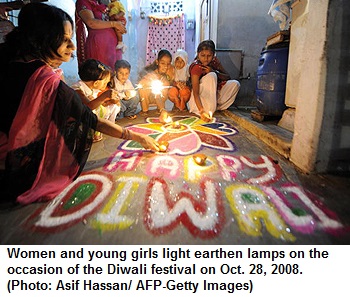
As the clay pots are lit from the villages to the center centers, the Festival of Lights is about to begin. Diwali is one of the biggest and brightest holidays celebrated all across India and the U.S. each year. Fireworks, song and prayer fill the five-day festival to celebrate inner light over spiritual darkness.

Today and always, we honor the many cultures and traditions among our beautifully diverse global organization. As we join in celebrating Diwali, we hope you enjoy this special time with friends and family.

May the divine light of Diwali shine with peace, prosperity, happiness and good health in your life. Happy Diwali.

Signed: The Technology Leadership Team and Saul Van Beurden, CIO, JPMorganChase Consumer & Community Bank

Today is the start of Diwali 2018.

This is one of the biggest holidays for a the global Hindu community. That is the population of India and the Indian Diaspora. That Diaspora includes the Caribbean. JPMorganChase, Americas largest bank, has a large staff based in India. They are a pluralistic corporation; they obviously want their team members to feel honored in their institution.

We want our Caribbean brothers and sisters with Indian heritage to feel that they are honored here in their Caribbean homeland. This was addressed in a previous Go Lean commentary on October 19, 2017. It is appropriate to Encore that submission here-now:

————————–

Go Lean Commentary Respecting Diwali – Making a Pluralistic Democracy

CU Blog - Respecting Diwali - Making a Pluralistic Democracy - Photo 3What is the ethnic composition of the Caribbean?

Not a singularity!

Our quest now is to make the Caribbean a Single Market and a “Pluralistic Democracy”. This means a society where the many different ethnic groups (and religions) have respect, equal rights, equal privileges and equal protections under the law; where there are no superior rights to any majority and no special deprivations to any minority. The expectation is for anyone person to be treated like everyone else. The legal definition of Pluralism as a political philosophy is as follows …

… the recognition and affirmation of diversity within a political body, which permits the peaceful coexistence of different interests, convictions and lifestyles.[1] While not all political pluralists advocate for a pluralist democracy, this is most common as democracy is often viewed as the most fair and effective way to moderate between the discrete values.[2]Wikipedia

This vision of a Caribbean “Pluralistic Democracy” should be more than words; it must be action too!

Yet we fail so miserably in respecting non-standard traditions. The truth of the matter is that while religious toleration appears to be high in the Caribbean, this is really only true of European-styled Christian faiths. Other non-White religious traditions (let’s consider Hindu) are often ignored or even ridiculed in open Caribbean society, despite the large number of adherents. Of the 30 member-states to comprise the Caribbean Single Market, 3 of them have a large Indian-Hindu ethnicity. As a result, in these communities, though lowly promoted, one of the biggest annual celebrations for those communities is Diwali or Divali:

Diwali (or Deepavali) is the Hindu festival of lights celebrated every year in autumn in the northern hemisphere (spring in southern hemisphere).[4][5] It is an official holiday in Fiji, Guyana, India,[6] Malaysia, Mauritius, Myanmar, Nepal, Singapore, Sri Lanka, Suriname, Trinidad and Tobago. One of the most popular festivals of Hinduism, it spiritually signifies the victory of light over darkness, good over evil, knowledge over ignorance, and hope over despair.[7][8][9] Its celebration includes millions of lights shining on housetops, outside doors and windows, around temples and other buildings in the communities and countries where it is observed.[10] The festival preparations and rituals typically extend over a five-day period, but the main festival night of Diwali coincides with the dark night of the Hindu Lunisolar month Kartika in Bikram Sambat calendar (the month of Aippasi in Tamil Calendar), on the 15th of the month. In the Gregorian calendar, Diwali night falls between mid-October and mid-November.[11]

Before Diwali night, people clean, renovate, and decorate their homes and offices.[12] On Diwali night, people dress up in new clothes or their best outfits, light up diyas (lamps and candles) inside and outside their home, participate in family puja (prayers) typically to Lakshmi – the goddess of fertility and prosperity. After puja, fireworks follow,[13] then a family feast including mithai (sweets), and an exchange of gifts between family members and close friends. Deepavali also marks a major shopping period in nations where it is celebrated.[14]

The name of festive days as well as the rituals of Diwali vary significantly among Hindus, based on the region of India. – Wikipedia.

See the VIDEO’s in the Appendix below.

While Diwali is a religious celebration, many aspects of this culture spills-over to general society; see the detailed plans of a previous year (2009) in Appendix A below. This celebration, in many ways, is similar to Christmas spilling-over to non-Christian people in Christian countries. So the festivities carry a heavy civic-cultural “feel” as opposed to religious Hindu adherence. Plus, these values here are positive community ethos that any stewards in any society would want to promote:

“the victory of light over darkness, good over evil, knowledge over ignorance, and hope over despair”.

This year Diwali is celebrated between October 18 – 22, 2017. It is a public holiday only for Wednesday October 18 in Trinidad and Guyana; plus on Thursday October 19 in Suriname.

This celebration of Diwali is only MEDIUM in these 3 Caribbean member-states; but with the proper fostering it could be BIG; it could be an impactful event! Imagine Event Tourism targeted to the 1.2 Billion people of the emerging economy of India; plus the 35 million people in the Indian Diaspora world-wide.

The book Go Lean…Caribbean presents the advocacy of Event Tourism (Page 191). This is fundamental to elevating Caribbean society to be a better place to live, work and play; (or live, work and pray). The Go Lean book – available to download for free – serves as a roadmap for the introduction and implementation of the technocratic Caribbean Union Trade Federation (CU), for the elevation of Caribbean society – for all 30 member-states – to foster a “Pluralistic Democracy”. This CU/Go Lean roadmap has these 3 prime directives:

  • Optimization of the economic engines in order to grow the regional economy to $800 Billion and create 2.2 million new jobs.
  • Establishment of a security apparatus to ensure public safety and protect the resultant economic engines.
  • Improve Caribbean governance to support these engines, including a separation-of-powers between the member-states and CU federal agencies.

The Go Lean roadmap posits that events can be fostered so as to better impact the economic, security and governing engines of society. This was this declaration from a previous blog-commentary, that touristic events could be so much more lucrative, if only there was a whole-souled commitment by the full community – everyone show respect. Think of the success in Sturgis, South Dakota where a small town of 10,000 hosts up to 600,000 visitors (Page 288). Imagine the economic impact!

The movement behind the Go Lean book has repeatedly related that there is a need for new stewardship of the Caribbean tourism apparatus. The world has changed; our target markets have changed. We cannot just advertise to the Northeast corner of North America for the peak winter season (January & February) anymore. No we must now look to alternate markets and target alternate calendar days so as to expand our product offering.

Imagine the prospect of marketing Diwali – see VIDEO’s below – usually in the tourist-slow month of October.

Beautiful Sky Lantern

This is what is needed to expand the region economically. There is no longer the need for tourism stewards to just “rub shoulders” with travel agents, but rather, there is the need for e-Commerce strategies and tactics (think: Search Engines Optimization) and for efficient execution of events. Welcome to Technocracy 101.

A previous blog-commentary (from September 15, 2015) regarding Tourism Stewardship related these details:

The book Go Lean…Caribbean calls for the elevation of Caribbean society, to re-focus, re-boot, and optimize all the engines of commerce so as to make the Caribbean a better place to live, work and play.  The category of “play” covers the full scope of tourism, which is the primary economic driver for our Caribbean region; the book estimates 80 million visitors among the region. (Since that number includes cruise passengers that may visit multiple Caribbean islands on one itinerary, each port is counted separately; without cruise passengers, a figure of 68 – 69 million is perhaps more accurate).

This commentary is a consideration of tourism, not travel. Tourism is a subset of the travel eco-system, so any Agent of Change in the world of travel must be carefully considered on tourism, on Caribbean tourism. …

The Go Lean book considers these Agents of Change (Page 57) that have dynamically affected the Caribbean economic eco-systems:

  • Technology
  • Globalization
  • Aging Diaspora
  • Climate Change

Technology, the Internet-Communications-Technology (ICT) in particular has furnished alternative and better options for travel enterprises to find passengers-guests-travelers-tourists…. Travel agents are now inconsequential. ….

The book Go Lean…Caribbean and the underlying movement seeks to re-boot the strategies and tactics of tourism marketing for the entire Caribbean region. The book asserts Caribbean member-states must expand and optimize their tourism outreach but that the requisite investment of the resources (time, talent, treasuries) for this goal may be too big for any one Caribbean member-state … alone. Rather, shifting the responsibility to a region-wide, professionally-managed, deputized technocracy will result in greater production and greater accountability. This deputized agency is the Caribbean Union Trade Federation (CU). The book thereafter introduces the CU and provides a roadmap for its implementation into a Single Market for the Caribbean economy … and tourism marketing.

The goal of the CU is to bring the proper tools and techniques to the Caribbean region to optimize the stewardship of the economic, security and governing engines.  The book posits that the economy can be induced and spurred for continuous progress, with technocratic management and stewardship better than the status quo. While the goal of the roadmap is to pursue a diversification strategy, the reality is that tourism will continue to be the primary economic driver in the region for the foreseeable future. The publisher of the book Go Lean…Caribbean convenes the talents and skill-sets of movers-and-shakers in electronic commerce [and project management] so as to forge the best tools and techniques for this new ICT-based marketing.

Lessons need to be learned from the execution of events in these Hindu-populated Caribbean countries. Can the Caribbean flare of a dynamic Hindu culture be exploited further for global marketing and appeal? The Hindu Diaspora is huge, comprising sizeable populations in many countries, including BIG numbers (millions) here:

Australia Nepal
Canada Saudi Arabia
Fiji Singapore
India South Africa
Ireland Sri Lanka
Malaysia United Arab Emirates
Mauritius United Kingdom
Myanmar United States

This is the charter of the Go Lean roadmap, to deploy the technocratic administration to optimize Caribbean Event Tourism. The Go Lean book specifically details the community ethos Caribbean communities need to adopt to be successful in Event Tourism; plus the strategies, tactics, implementations and advocacies to ensure successful deployments; see a sample here:

Community Ethos – Deferred Gratification Page 21
Community Ethos – Governing Principles – Lean Operations Page 24
Community Ethos – Governing Principles – Cooperatives Page 25
Community Ethos – Ways to Promote Intellectual Property Page 29
Community Ethos – Ways to Bridge the Digital Divide Page 31
Community Ethos – Ways to Impact Turn-Arounds Page 33
Community Ethos – Ways to Promote Happiness Page 36
Community Ethos – Ways to Impact the Greater Good Page 37
Strategy – Vision – Confederate 30 Member-States Page 45
Strategy – Mission – Celebrate the Music, Sports, Art and Culture of the Caribbean Page 46
Tactical – Fostering a Technocracy Page 64
Tactical – Separation-of-Powers – CU Federal Agencies versus Member-State Governments Page 71
Implementation – Ways to Deliver Page 109
Planning – 10 Big Ideas for the Caribbean Region Page 127
Planning – Ways to Make the Caribbean Better Page 131
Planning – Lessons from Omaha – College World Series Model Page 138
Advocacy – Ways to Enhance Tourism Page 190
Advocacy – Ways to Impact Events Page 191
Advocacy – Ways to Promote Fairgrounds Page 192
Advocacy – Ways to Preserve Caribbean Heritage Page 218
Advocacy – Ways to Improve the Arts Page 230
Advocacy – Ways to Promote Music Page 231
Appendix – Case Study of “The Rally” in Sturgis, South Dakota Page 288

In summary, the Caribbean is in good position to show respect to the Indian-Hindu community and their Festival of Lights – Diwali. In doing so, we double-down on our quest to be a “Pluralistic Democracy” and optimize our economic engines for Event Tourism.

 “Make happy those who are near, and those are far will come” – Chinese Proverb.
gonna-change-photo-2

What a contrast this is to the Climate of Hate that is so prevalent in so many Caribbean communities, towards people who are different or hold alternative viewpoints.

Yes, the Go Lean roadmap is different … and better.

It seeks to unite the people of the entire Caribbean region, diversify the regional economy (to create new 2.2 million jobs) and make our communities better places to live, work and play. This is why we have a quest for a “Pluralistic Democracy”. This is Part 1 of 3 in the series on this topic; the full collection is as follows:

  1. Making a “Pluralistic Democracy” – Respect for Diwali
  2. Making a “Pluralistic Democracy” – Freedom of Movement
  3. Making a “Pluralistic Democracy” – Multilingual Realities

Now is the time for all stakeholders in the Caribbean – governments, residents, religious devotee (Hindus, Christians, etc.), event planners, participants and tourists – to lean-in to this Go Lean roadmap. We can do better and be better. This quest for a “Pluralistic Democracy” is conceivable, believable and achievable. 🙂

Download the free e-book of Go Lean … Caribbean – now!

Sign the petition to lean-in for the roadmap for the Caribbean Union Trade Federation.

————

Appendix A – Divali Festival in Trinidad and Tobago

By: Dr. Kumar Mahabir

Pakistani Hindu women light earthen lampTrinidad and Tobago is the land of Carnival, steel band, tassa, calypso and chutney. It is the same country that gives the world its unique brand of Divali. Indeed, the Hindu Festival of Lights has become Trinidad’s second largest national open-air festival after Carnival. Divali is a welcomed alternative to the rambunctious indulgence in meat, alcohol, party and “wine,” and is arguably the largest vegetarian alcohol-free festival in the Caribbean, if not the western hemisphere. Divali is an event that the Ministry of Tourism can market as a major attraction in the fastest-growing worldwide trend of spiritual tourism.

Divali is the defining event that marks Trinidad as a multi-religious, multi-ethnic society with Hindus comprising the second largest religious group (24 percent) after Roman Catholics in the twin-island population of 1.3 million people. While Divali is essentially a Hindu festival, people of all faiths actively join in celebrating the triumph of light over darkness, knowledge over ignorance, and good over evil. Non-Hindu adherents are attracted to the festival’s universal message as well as to the extravaganza that is not only unique but also provides a clean environment for the cultivation of a healthy body, mind and soul.

Nowhere else in the world do non-Hindus and non-Indians actively take part in the lighting of over 10 million deyas on a single night in the year. These tiny clay lamps are lit in homes, yards, streets, offices, public parks and playing fields. It is perhaps only in Trinidad that one can find split bamboo tubes transformed into magnificent works of art on which the deyas are placed. The split bamboo strips reach out toward neighboring houses, streets and communities to symbolize the popular local mantra “all ah we is one.”

The eagerness to decorate is everywhere, and payment is the pride of the finished product. Streamers of all colors and patterns are made with kite paper and plastic and strung from jhandi [flag] poles. Brightly colored fabric, balloons and bulbs decorate homes, offices and stages. Indeed, it is Divali that heralds the joy of the end-of-year celebrations. Strings of twinkling lights—clear and colored—are strung high on buildings, trees, and even across streets. Effigies of Mother Lakshmi are made from bamboo tubes and large cardboard cutouts. Calligraphy on signs and banners glitters with decorative paint. The starry designs of deyas and bulbs transform simple houses into magical kingdoms.

The nights are filled with free public performances in public parks and playing fields. Divali provides the perfect forum for showcasing the talent of both foreign and local performers in Indian song, music, dance and drama. Fashion shows are the highlight of all celebrations. Indeed, no celebration is considered complete or magnificent without a fashion show that is always eagerly anticipated by all. Indians in the Caribbean keep the tradition of Indian fashion alive by wearing dhotis, kurtas, Nehru jackets, saris, shalwars, nose-pins, necklaces, bangles, anklets, eyeliners, mehendi markings and forehead tikkas/bindis. Most Divali celebrations end with a competition for women in the crowd who vie to be the best-dressed fashion finalist. A Divali Queen is not only bestowed with a crown, but she is also showered with gifts and prizes.

Divali also boasts of Ram Leela/Lila, which is perhaps the oldest living form of outdoor folk theatre in the Caribbean. The worship of Rama takes many forms, but community devotion [Ramayana yagna] outside the temple has the most public impact. During Divali, tons of sweetmeats like parsad, kurma, burfi, pera, ladoo, jalebi, gulab jamoon and kheer [sweet rice] are made and distributed free.

Indian trade fairs during Divali have become the shopping hotspots for women who flock to the sites in thousands to buy mainly clothes and accessories. A kind of dizzy euphoria can also be seen in any one of the Indian apparel stores in the countdown to Divali. It is all part of the excitement that hums through the air during this pre-Christmas celebration as women try to dress their best and stores try to outsell one another. More than men, women dress in their finest traditional Indian wear with matching jewelry, as models of grace and elegance.

The hub of all Divali celebrations in the island is Divali Nagar in central Trinidad. Indeed, the Nagar is the most frequented entertainment center in the country during Divali, second only to the Grand Stand in the Queen’s Park Savannah during Carnival. The grand display of fireworks in the air at the entertainment park resonates with the thunder of bamboo cannons, the explosions of firecrackers, and the sparkle of “star-lights” in villages across the country. On Divali night, thousands of people take to the streets on foot and in vehicles to behold houses and communities that look like an illuminated fairyland.

Divali will be celebrated as a national holiday in Trinidad and Tobago on Saturday, October 17 [2009].

Dr. Kumar Mahabir is the chairman of the Indo-Caribbean Cultural Council and assistant professor at the University of Trinidad and Tobago.

Source: Posted October 14, 2009; retrieved October 19, 2017 from: http://www.worldpress.org/Americas/3437.cfm

————

Appendix B VIDEO – Diwali – Festival of Lights | National Geographic – https://youtu.be/HrrW3rO51ak


Published on May 19, 2010 – In India, one of the most significant festivals is Diwali, or the Festival of Lights. It’s a five day celebration that includes good food, fireworks, colored sand, and special candles and lamps.
Diwali – Festival of Lights | National Geographic https://youtu.be/HrrW3rO51ak

National Geographic https://www.youtube.com/natgeo

————

Appendix C VIDEO – Diwali – The Festival of Lights – https://youtu.be/mPwmXRws7FA


WildFilmsIndia

Published on May 30, 2013 – Diwali is certainly one of the biggest, brightest and most important festivals of India. While Diwali is popularly known as the “festival of lights”. The celebration of Diwali as the “victory of good over evil” refers to the light of higher knowledge dispelling all ignorance. While the story behind Diwali and the manner of celebration of the festival differ greatly depending on the region, the essence of the festival remains the same – the celebration of life, its enjoyment and goodness. …

  • Category: Travel & Events
  • License: Standard YouTube License
Share this post:
, , ,
[Top]

Good Governance: Good Corporate Compliance

Go Lean Commentary

(Photo by Chris Hondros/Getty Images)

Private business versus public government …

Business is to the East, while government is to the West. … East is East and West is West – never the twain shall meet.

Not quite!

Governments many times place restrictions and regulations on private businesses; think:

  • Workers Compensation
  • Child Labor Restrictions
  • Occupational Hazards
  • Social Security / National Security
  • Family Leave / Pregnancy Job Guarantees

So we accept that in a modern society, corporate entities may be required to comply with intrusive government mandates that go above and beyond basic consumer protections; and we call it Good Governance

… then in 2002, considering an American example, along came an even more intrusive government mandate on corporate enterprises (publicly-traded corporations) and the repercussion has been:

Crickets!

… no one complains; in fact, all the qualifying companies comply and buy into the notion that these sets of intrusive laws are good for the overall society. Whew! How did this happen?

This is the drama of the Sarbanes-Oxley law in the US. See the encyclopedic details here:

Title: Sarbanes–Oxley Act
The Sarbanes–Oxley Act of 2002, also known as the “Public Company Accounting Reform and Investor Protection Act” (in the Senate) and “Corporate and Auditing Accountability, Responsibility, and Transparency Act” (in the House) and more commonly called Sarbanes–Oxley, Sarbox or SOX, is a United States federal law that set new or expanded requirements for all U.S. public company boards, management and public accounting firms. A number of provisions of the Act also apply to privately held companies, such as the willful destruction of evidence to impede a federal investigation.

The bill, which contains eleven sections, was enacted as a reaction to a number of major corporate and accounting scandals, including Enron and WorldCom. The sections of the bill cover responsibilities of a public corporation’s board of directors, adds criminal penalties for certain misconduct, and requires the Securities and Exchange Commission to create regulations to define how public corporations are to comply with the law.

5.0 Implementation of key provisions

Source: Retrieved October 30, 2018 from: https://en.wikipedia.org/wiki/Sarbanes%E2%80%93Oxley_Act

—————-

VIDEO 1 – Enron Scandal Explained in One Minute: Corporate Recklessness, Lies and Bankruptcy – https://youtu.be/jrEf8uabe7E

One Minute Economics

Published on Aug 9, 2016 – Enron represents perhaps the most popular example of how a corporation can go from hero to zero or in their case, from a stock price of $90.75 and a market capitalization which made it the 7th largest US corporation to bankruptcy. Enron’s bankruptcy made it clear just how far corporate recklesness can go and represented a warning signal that should have been taken a lot more seriously, as the Great Recession has proven.

—————–

VIDEO 2 – WorldCom – What Went Wrong – https://youtu.be/7g_d-phoUrU

Published on Nov 28, 2008 – A brief documentary dealing with the largest corporate scandal in history. Created for a second year college accounting class.

The historicity of those events that spurred the Sarbanes-Oxley Act is most incredible. Those two companies – Enron and WorldCom – flouted the presumption of integrity in American business; even the external auditors – Arthur Anderson – was complicit in the wrong-doing. Reform became inevitable. Something had to be done to ensure Good Corporate Governance.

Sarbanes-Oxley became the Good Governance solution. It details roles and responsibilities for firms and auditors alike!

The book Go Lean…Caribbean – available to download for free – serves as a roadmap for the introduction and implementation of the Caribbean Union Trade Federation (CU), as a technocratic federal government among the 30 member-states in the region. The goal is for expressions of Good Governance in all of Caribbean life; two role models are presented for the Caribbean to emulate: Sarbanes-Oxley (SOX) for Corporate Compliance and the Information Technology Infrastructure Library (ITIL) for computer-based data processing. These assert Good Corporate Governance models. The Go Lean book specifically quotes these references “10 Ways to Grow the Economy” (Page 151) and “Appendix ZN – ITIL Supplement” (Page 338) respectively:

  1. Better Corporate Governance and Financial Markets Oversight
    Learning from the experiences of the US and Europe, provisions embedded in legislation like Sarbanes-Oxley Act and Dodd-Frank Act would be in place from the beginning. The CU will apply the lessons-learned proactively, rather than wait for the economies to implode before instituting reform, like common sense lending standards, transparency, full disclosure, “sunshine” laws. The CU will also implement controls on automated trading systems, ensuring the proper safety valves, monitoring and metering oversight. These measures equal security, a secondary mandate for the CU.
  2. Information Technology Infrastructure Library (ITIL)
    A set of practices for IT Service Management (ITSM) that focuses on aligning IT services with the needs of business. …
    History
    Responding to growing dependence on IT, the UK Government’s Central Computer and Telecommunications Agency (CCTA) in the 1980s developed a set of recommendations. It recognized that without standard practices, government agencies and private sector contracts had started independently creating their own IT management practices.
    The IT Infrastructure Library originated as a collection of books, each covering a specific practice within IT service management. ITIL was built around a process-model based view of controlling and managing operations. [From among the many, the Go Lean book details these 2 practices:]
    o  IT Service Continuity Management
    o  Availability Management

Good Governance is important in the government realms – member-states, federal and non-governmental organization (NGO’s) – but also in the private-corporate sector. Implementing these practices and compliance may be Too Big for Any One Caribbean country alone to introduce and implement; but together – with some interdependence – a leveraged roll-out is viable. Notice this theme, as pronounced in these statements in the opening Declaration of Interdependence (Pages 10 – 12):

Preamble: … while our rights to exercise good governance and promote a more perfect society are the natural assumptions among the powers of the earth, no one other than ourselves can be held accountable for our failure to succeed if we do not try to promote the opportunities that a democratic society fosters.

xi. Whereas all men are entitled to the benefits of good governance in a free society, “new guards” must be enacted to dissuade the emergence of incompetence, corruption, nepotism and cronyism at the peril of the people’s best interest. The Federation must guarantee the executions of a social contract between government and the governed.

xvi. Whereas security of our homeland is inextricably linked to prosperity of the homeland, the economic and security interest of the region needs to be aligned under the same governance. Since economic crimes … can imperil the functioning of the wheels of commerce for all the citizenry, the accedence of this Federation must equip the security apparatus with the tools and techniques for predictive and proactive interdictions.

xxv. Whereas the legacy of international democracies had been imperiled due to a global financial crisis, the structure of the Federation must allow for financial stability and assurance of the Federation’s institutions. To mandate the economic vibrancy of the region, monetary & fiscal controls and policies must be incorporated as proactive and reactive measures. These measures must address threats against the financial integrity of the Federation and of the member-states.

While the Sarbanes-Oxley Act is an American law, that is not the only country that needs to ensure Good Corporate Governance. As related in a recent blog-commentary, the Caribbean specifically, and the whole world in general, is still reeling from the dire effects of the Great Recession of 2008. This crisis was spurned by bad corporate governance: over-leveraged banks, mis-stated credit ratings, and NINJA home mortgage-holders.  We cannot afford a repeat of these mistakes … ever.

This commentary concludes a 5-part series from the movement behind the Go Lean book in consideration of the Good Governance needs for a new Caribbean regime. The other commentaries in the series are cataloged as follows:

  1. Good Governance: … Versus Partisan Politics
  2. Good Governance: Stepping Up in an Emergency
  3. Good Governance: The Kind of Society We Want
  4. Good Governance: Getting ‘Out of the Way’ of Local Economic Empowerment
  5. Good Governance: Good Corporate Compliance

The Go Lean book was written in the wake of the Great Recession of 2008, reflecting all of the lessons learned from the earlier 2002 crises of Enron and WorldCom referenced in the foregoing encyclopedic reference.

Fool me once, shame on you.
Fool me twice, shame on me.

The book featured Good Corporate Governance practices; this is best described in this one chapter entitled “10 Ways to Impact Wall Street“. The goal of this chapter was to look, listen and learn about best-practices by studying the American eco-system of Wall Street. We do not want to be America; we want to be better! See the specific plans, excerpts and headlines from the book on Page 200 entitled:

10 Ways to Impact Wall Street

1 Lean-in for the Caribbean Single Market
This treaty allows for the unification of the region into one market, thereby expanding to an economy of 30 countries, 42 million people and a GDP of over $800 Billion. The CU’s single market and currency union will allow for the emergence of viable capital markets for stocks, public/private bonds, and securities to create the economic engines needed to fuel growth, expansion and development. The CU will fill in the missing piece of the equation for successful international financial centers by providing the “whole institutional infrastructure of laws, regulations, contracts, trust and disclosure”.
2 Ensure Corporate Governance
The CU adoption of a “Good Governance” principle in its charter extends to its oversight of corporations and other publicly-held institutions. The CU regulatory agencies will oversee under a laissez-faire policy (minimum governmental interference in the economic affairs of individuals and society), yet be vigilant against systemic risks to the monetary and economic engines. So provisions like full disclosure, certifiable accounting integrity and risk-best-practices will maintain public confidence. The CU’s initiatives allows for more separating of duties versus the state regulators.
3 Protect Public Financing Vehicles
4 Adopt Advanced Products
5 Apply Common Sense – Derivatives – Lessons Learned

The use of derivatives helped cause the 2008 Financial Crisis in the US. Though these have the potential of being beneficial products, the compliance, leverage limits, and reserve requirements will not be abandoned as in the US.

6 Ensure Quality and Limits on Electronic Trading systems
These computer programs will have to be certified by CU Independent Auditors before coming online. The process for Quality Assurance (QA) will be assumed by the CU for maintenance of these systems. Before program changes can be implemented the CU will conduct the Test Plan to certify compliance and rollback strategies are in place.
7 Downplay Lawless Impressions – Offshore Banking
8 Protect Against Foreign Currency Manipulators
9 Protect Against Insider Trading and Securities Fraud

Economic crimes involving the securities industry can have far reaching consequences beyond normal felonies. As such, the CU will maintain jurisdiction and marshal the investigations, prosecutions and sentencing of these crimes.

10 Learn from Occupy Wall Street Protest Movement

This Go Lean book presents that the expansion of the 9 stock exchanges in the Caribbean region …

Bahamas (BISX), Barbados (BSE), Bermuda (BSX), Cayman Islands (CSX), Eastern Caribbean (ECSE), Guyana (GASCI), Haiti (HSE), Jamaica (JSE) and Trinidad (TTSE).

… will provide many opportunities to implement Good Corporate Governance standards and practices. But it is conceivable, believable and achievable that we can provide good stewardship to this financial eco-system, for the betterment of all Caribbean society.

The roll-out of these Financial-Watchdog duties for CU agencies will be Day One / Step One of the Go Lean/CU roadmap.

There have been many glimpses of economic governance for a new Caribbean in previous blog-commentaries; consider:

https://goleancaribbean.com/blog/?p=15923 Industrial Reboot – Payment Cards 101
https://goleancaribbean.com/blog/?p=15787 Lessons Learned from 2008: Too Big to Fail –vs- Too Small to Thrive
https://goleancaribbean.com/blog/?p=14834 Counter-culture: Monetizing the Change
https://goleancaribbean.com/blog/?p=14596 Change! Forging Change – Corporate Vigilantism
https://goleancaribbean.com/blog/?p=13677 Model: Economics of ‘South Beach’
https://goleancaribbean.com/blog/?p=11184 JPMorganChase spent $10 billion on ‘Fintech’ for 1 year
https://goleancaribbean.com/blog/?p=10585 Two Pies: Economic Plan for a New Caribbean
https://goleancaribbean.com/blog/?p=9839 Alibaba Cloud stretches global reach with four new Data Center facilities

It is the assertion of the Go Lean book and the many previous blog-commentaries that Good Governance is a requirement to reform and transform Caribbean society. Reforming and transforming the homeland is our quest, our prime directive. This intent has been proclaimed with the following statements:

  • Optimization of the economic engines in order to grow the regional economy to $800 Billion & create 2.2 million new jobs.
  • Establishment of a security apparatus to ensure public safety and protect the resultant economic engines.
  • Improvement of Caribbean governance to support these engines, including a separation-of-powers between the member-states and CU federal agencies.

This is the vision of a new regime for governments and corporate institutions. We want and need Good Governance. We must have this future. While it may be heavy-lifting, it is worth every effort. This is how we make our society a better place to live, work and play. 🙂

Download the free e-Book of Go Lean … Caribbean – now!

Sign the petition to lean-in for this roadmap for the Caribbean Union Trade Federation.

Share this post:
,
[Top]

Good Governance: Getting ‘Out of the Way’ of Local Economic Empowerment

Go Lean Commentary

“I am from the Government and I am here to help” – Ronald Reagan tongue-in-cheek Campaign Attack against excessive government regulation; 1980.

When it comes to government regulations, there could be too much … and too little.

Good Government is the art-and-science of finding the “just right” balance – remember Goldilocks. In some countries this is a big challenge as there are so many different levels of government; think the US where there is the federal government (plus regulations), State, County (a subset of the State) and local city. In the Caribbean, on the other hand, for many member-states, there is only one level of administration, the National government.

All in all, finding the right mix of stewardship is a reflection of best-practices. This is because of one basic fact:

Smart people have a tendency to think that they are the only smart people. – Dunning-Kruger Effect – See Appendix A

If only we can weed-out this bad trend and assume that local people may bring some value to the governing equations for their communities. This conclusion is hard-wrought, a product of research and study by noted economists; who actually won a Nobel Prize for this effort. This is relayed in the book Go Lean…Caribbean within the advocacy of Better Managing Natural Resources. The book (Page 183) states:

The Bottom Line on Common Pool Resources
The 2009 Nobel Prize winning economist Elinor Ostrom (1933 – 2012), a Political Science Professor at Indiana University, received the award for her landmark work on the management of common pool resources. Her analysis of economic governance, especially the commons, showed how groups work together to manage common resources such as water supplies, fish and lobster stocks, and pastures through collective property rights. She showed that common pool resources can be effectively managed collectively, even without government or private control, as long as those using the resource are physically close to it and have a relationship with each other. Because outsiders and government agencies don’t understand local conditions or norms, and lack relationships with the community, they may manage common resources poorly. By contrast, insiders who are given a say in resource management will self-police to insure that all participants follow the community’s rules.

So outsiders and remote government agencies may not fully understand local conditions or norms so their oversight may be prone to error. This may not reflect Good Governance. We have seen this manifested many times. Remember overseas masters making decisions about local conditions – think tropical hurricane building standards in the Caribbean being decided by stakeholders in Northern Europe. That was the dreaded history of colonialism!

It is obvious and self-evident that Good Governance must reflect shepherding and oversight with an eye towards local needs. Imagine the imagery of a “Watchman in a high tower in an medieval walled city”, scanning and monitoring the threats that face his community. While such a concern may be security-minded, the other spheres of society – think economics – must also be addressed for local versus national deliberations:
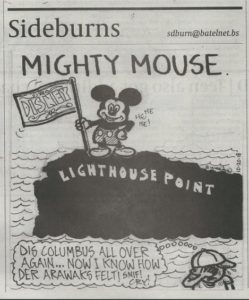
  • Can economic empowerment efforts be spurred locally, or must they always originate in the Capitol?
  • Should Direct Foreign Investors all be vetted by the Foreign Affairs Office (State Department, etc.)?
  • Can a local farmer increase his yield by plowing addition plots of land?
  • Can a local fisherman add additional boats and “hands on deck”?
  • Can a local chicken farmer add additional coops?

These are important questions, as communities struggle with the challenge of growth. This brings to mind the strategy of whether growth must be Top-Down or can it be Bottoms-up.

  • Pull yourself up by the bootstrap…
  • Give me a job … or create my own job …

This is not just an academic discussion; there are real world implications. In one drama, in the Bahamas, friends and enemies are choosing sides right now, as a local project by the global media and hospitality conglomerate Walt Disney Company (Disney Cruise Lines) is being debated.
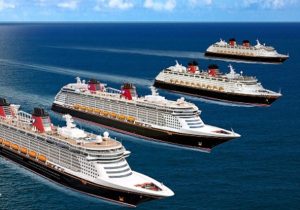
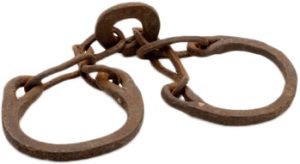
Actually, the debate is over, but the fall-out and “weeping-gnashing of teeth” continues. See the full news story and VIDEO in the Appendices B & C below.

This commentary continues this discussion on Good Governance. If Good Governance is to be the norm in Caribbean society, we must decide – in advance – how we want to grow our economies and what role local economic empowerment will have in the equation to transform society. In the foregoing Bahamian drama, the locals want the job multipliers from the Disney project while the opposition, remote people in metropolitan Nassau, do not want any projects that may impact the environment.

This is a familiar consideration for the book Go Lean…Caribbean – available to download for free. The book asserts that the problems of the Caribbean are too big for any one member-state to assuage alone; so there must be cooperation, collaboration and confederation. But does this mean that we must confer on everything, big and small? No! Just the opposite.

Surely, everyone can be expected “to take care of their own business” … first.

This is a mark of maturity, that we can provide for our own basic needs: food, clothing and shelter.

In fact, the Go Lean movement posits that for reform to succeed in the region, we must start by transforming neighborhoods, then elevate cities, then for whole member-states and lastly for the entire region. In fact, the book asserts the tactic of a Separation-of-Powers, in which certain duties-responsibilities are expected to be addressed locally while others will be within scope for a federal government.

The purpose of the Go Lean book is the introduction and implementation of that federal government, the Caribbean Union Trade Federation (CU). The book serves as a roadmap for a new technocratic regime for Good Governance. Notice these statements in the opening Declaration of Interdependence (Pages 10 – 12):

viii. Whereas the population size is too small to foster good negotiations for products and commodities from international vendors, the Federation must allow the unification of the region as one purchasing agent, thereby garnering better terms and discounts.

xi. Whereas all men are entitled to the benefits of good governance in a free society, “new guards” must be enacted to dissuade the emergence of incompetence, corruption, nepotism and cronyism at the peril of the people’s best interest. The Federation must guarantee the executions of a social contract between government and the governed.

xii. Whereas the legacy in recent times in individual states may be that of ineffectual governance with no redress to higher authority, the accedence of this Federation will ensure accountability and escalation of the human and civil rights of the people for good governance, justice assurances, due process and the rule of law. As such, any threats of a “failed state” status for any member state must enact emergency measures on behalf of the Federation to protect the human, civil and property rights of the citizens, residents, allies, trading partners, and visitors of the affected member state and the Federation as a whole.

xxiii. Whereas many countries in our region are dependent Overseas Territory of imperial powers, the systems of governance can be instituted on a regional and local basis, rather than requiring oversight or accountability from distant masters far removed from their subjects of administration. The Federation must facilitate success in autonomous rule by sharing tools, systems and teamwork within the geographical region.

This commentary is the fourth of this 5-part series – 4 of 5 – from the movement behind the Go Lean book in consideration of the Good Governance needs for a new Caribbean regime. The other commentaries in the series are cataloged as follows:

  1. Good Governance: … Versus Partisan Politics
  2. Good GovernanceStepping Up in an Emergency
  3. Good GovernanceThe Kind of Society We Want
  4. Good Governance: Getting ‘Out of the Way’ of Local Economic Empowerment
  5. Good GovernanceGood Corporate Compliance

No doubt there is the need for Good Governance for the Caribbean; we need better stewardship and shepherding of the 30 member-states to ensure that we do not repeat the mistakes of the past. We need to value independence, resiliency and vigilance, not stymie progress because it may not have originated in some Capitol. This is the lesson from the opening anecdote about Common Pool Resources.

The best chance for success is for those who work with a local resource to participate in managing the local resource. So at times, we may need national government – or even federal governments – to get ‘Out of the Way’ and allow local economic empowerments.

In fact, the Go Lean roadmap introduces the concept of Self-Government Entities (SGE), an ideal concept for a job-creation engine, with its exclusive federal regulation/promotion activities. Imagine bordered campuses – exclusive resorts, industrial labs, educational facilities, R&D parks – with separate (local) arrangements to provision basic needs. This local empowerment accelerates the job multiplier factor – how certain industries are better than others for generating multiple indirect jobs down the line (off-campus) for each direct job on the SGE’s payroll.

This is how the Go Lean roadmap seeks to reform or transform the societal engines for all the Caribbean. This is our quest, our prime directive, as related in the following statements:

  • Optimization of the economic engines in order to grow the regional economy to $800 Billion & create 2.2 million new jobs.
  • Establishment of a security apparatus to ensure public safety and protect the resultant economic engines.
  • Improvement of Caribbean governance to support these engines, including a separation-of-powers between the member-states and CU federal agencies.

Good Governance based on best-practices, especially as recognized by a Nobel Prize, is a good starting point to transform a society. This is why Common Pool Resources are so frequently highlighted in the Go Lean book. Within the 370-pages of the book are details of Common Pool Resource management, urged for adoption within the new Caribbean regime. Here is a sample of the references to Common Pool Resources and how it relates to Good Governance through-out the book:

Tactical – Separation of Powers

F – Interior Department
The CU initiates its charter with a petition to the United Nations for a designation of an Exclusive Economic Zone for the spaces (seas) between the islands. This Department manages the oversight of this “common” territory. In addition, this Agency will have to work with foreign entities in the management of common pool resources, like water rights, river ecosystems in Guyana, Suriname and Belize where they are bordered by other (bigger) countries.

Page 82
Tactical – Separation of Powers

J – Agriculture and Fisheries Department
This Department in the Executive Branch coordinates the region efforts in agriculture, agri-business and fisheries. … this office is to be managed like a Project Management Office, coordinating one region-wide project after another. This department will also oversee the common pool resources for the region. This will include fish stock and common grazing lands. This effort will have to be coordinated and collaborated with the Department of the Interior agencies and resources.

Page 88
Advocacy – 10 Lessons from the American West

# 5 – Common Pool Resources: Water / Public Works

There were many environmental deterrents to conquering the West. There is actually a continental divide in North America in which minimal rain falls west of that divide; the western states were not sustainable for large populations.

Over the years, the US Army Corps of Engineers created canals, dams, reservoirs, irrigation, water pipelines and other measures, in multi-state compacts. The CU must also engineer multi-state public works projects to improve economies.

Page 142
Advocacy – 10 Ways to Better Manage Natural Resources
# 2 – Lean in for the Caribbean Union Trade Federation (CU) treaty.
This treaty allows for the unification of the region into one market, thereby integrating to a single economy of 30 member-states, 42 million people and GDP of over $800 Billion in (2010). The region needs joint management of the common pool of natural resources, and this one of the foremost reasons for confederating the CU. First it garners international support for the UN petition for an Exclusive Economic Zone in and near the Caribbean Seas. The CU’s representation of a single market allows for effective negotiations with foreign parties – the islands will no longer be viewed as inconsequential. The CU’s separation of powers mandate is germane for managing the local needs of the region’s common resources; it allows for closer oversight of local regulators, but with CU principles.
Page 183
Advocacy – 10 Ways to Improve Fisheries
# 3 –
Common Pool Resources (Lobster, Conch, Grouper, Flying Fish)
Though the waters between the islands may be uninhabited, their resources can still be depleted. The CU will govern the common pool resources to promote the sustainability of fish stock. Fishing for lobster, conch, grouper, “flying fish” and other species must be controlled, with limited harvesting seasons, otherwise there will be none for future generations.
Page 210
Advocacy – 10 Ways to Impact Rural Living
# 3 – Common Pool Resources Oversight and Management
The CU will exercise eminent domain to buy a lot of “crown” land, and the Exclusive Economic Zone, to promote as common pool resources (farming, fishing, and mining). This ownership allows for the implementation of proper oversight rules, with local coordination, and best practices. This is the “golden rule” – the one with the “gold”, makes the rule!
Page 235
Advocacy – 10 Ways to Impact The Guianas
# 1 – Lean in for the Caribbean Single Market & Economy
The CU will allow for the unification of the region into one market, thereby creating a single economy of 30 member-states for 42 million, including the independent states of Guyana and Suriname. Other territories that made up The Guianas region include French Guiana, Spanish Guiana (today, the Guayana Region comprises three of the federal States of Venezuela: Amazonas, Bolívar, Delta Amacuro), and Portuguese Guiana (Brazil’s State of Amapa). On the CU roadmap, annexations will be explored in Year 5; French Guiana is ideal candidate, but not the Venezuelan and Brazilian regions. But there is the immediate need for foreign policy synchronizations with these other states for common pool resources and regional threats.
Page 241

Consider how this vision of a rebooted economic landscape – with the technocratic management of Common Pool Resources – have been portrayed in these previous blog-commentaries; see this sample:

https://goleancaribbean.com/blog/?p=15359 Industrial Reboot – Fisheries 101
https://goleancaribbean.com/blog/?p=15907 Industrial Reboot – Navy Pier 101
https://goleancaribbean.com/blog/?p=14911 Would Less People Mean More Resources For the Remnant? No!
https://goleancaribbean.com/blog/?p=12724 Lessons from Colorado: Water Management Arts & Sciences
https://goleancaribbean.com/blog/?p=1092 Managing the Airwaves as a Common Pool Resource

The Go Lean book was very clear in its conclusion, the problem with the Caribbean is not the land/sea – it is the greatest address on the planet – it is not the people – we have a unique mix of African, Amer-Indian, Asian and European cultures, it is the stewardship. We must abandon bad ineffectual governing practices and embrace best-practices anew. We need to employ good ideas, even if they do not come from the Capitol. So we must be willing to accept local economic empowerment initiatives.

Our past roads are littered with failure; let’s do better going forward. Let’s embrace Good Governance. Let’s start aright with the strategies, tactics, implementations and advocacies as prescribed in the book Go Lean…Caribbean. We urge everyone to lean-in to this roadmap. This is how we can make our homeland better places to live, work and play. 🙂

Download the free e-Book of Go Lean … Caribbean – now!

Sign the petition to lean-in for this roadmap for the Caribbean Union Trade Federation.

—————-

Appendix A – What Is the Dunning-Kruger Effect?

The Dunning-Kruger effect is a type of cognitive bias in which people believe that they are smarter and more capable than they really are. …

The term lends a scientific name and explanation to a problem that many people immediately recognize—that fools are blind to their own foolishness. …

An Overview of the Dunning-Kruger Effect

This phenomenon is something you have likely experienced in real life, perhaps around the dinner table at a holiday family gathering. Throughout the course of the meal, a member of your extended family begins spouting off on a topic at length, boldly proclaiming that he is correct and that everyone else’s opinion is stupid, uninformed, and just plain wrong. It may be plainly evident to everyone in the room that this person has no idea what he is talking about, yet he prattles on, blithely oblivious to his own ignorance.

The effect is named after researchers David Dunning and Justin Kruger, the two social psychologists who first described it. …

A Little Knowledge Can Lead to Overconfidence

Another contributing factor is that sometimes a tiny bit of knowledge on a subject can lead people to mistakenly believe that they know all there is to know about it. As the old saying goes, a little bit of knowledge can be a dangerous thing. A person might have the slimmest bit of awareness about a subject, yet thanks to the Dunning-Kruger effect, believe that he or she is an expert. …

See the remaining article here …

Source: Posted April 9, 2018; retrieved October 29, 2018 from: https://www.verywellmind.com/an-overview-of-the-dunning-kruger-effect-4160740

—————–

Appendix B – Title: Disney’s Lighthouse Point: Bahamian Government Approves Sale of Lighthouse Point to Disney Cruise Line

Disney is one step closer to calling Lighthouse Point, Disney’s Lighthouse Point after Bahamian Prime Minister announced the government is choosing The Walt Disney Company’s proposal. Today’s approval gives Disney Cruise Line a green light to move ahead plans to purchase the 700 to 800-acre Lighthouse Point property at the tip of South Eleuthera for a second private cruise destination. EyeWitness News reported the decision just before the 3 o’clock hour.

Below is a copy of the press statement issued by The Bahamas Cabinet:

Press Statement
Cabinet Office
19 October 2018

The Lighthouse Point Development has been the subject of considerable public discussion, particularly in recent months.

The National Economic Council considered the matter today, 19 October, and approved the proposal submitted by Disney Cruise Line Island Development Ltd.

Negotiations will now begin on a Heads of Agreement, which will detail the scope of the project, the obligations of the Disney Cruise Lines Island Development Ltd. and the obligations of the Government of The Bahamas.

The negotiation of the Heads of Agreement will commence immediately. When concluded, it will be presented to Parliament in keeping with the government’s commitment to transparency and accountability.

The Cabinet Office wishes to emphasize that the land which is the subject of the proposal is privately owned. It has been on the real estate market for a long period.

The land is not Crown Land and is not owned by the Government of The Bahamas.

The Disney Cruise Lines Development Ltd. has a sales agreement with the land owner to purchase the land.

The Cabinet Office notes that both the Disney Cruise Lines Island Development Ltd. and the One Eleuthera Foundation and its partners have been publicly noting their plans for the development of Lighthouse Point.

It is also noted that recent polling revealed that more than 60 percent of Bahamians “very much” or “somewhat” support Disney’s proposal for Lighthouse Point, Eleuthera.

The Cabinet Office is also aware of meetings held in the communities of Central and South Eleuthera by respective groups, and live radio broadcasts, which have allowed individuals to express their views.

During one of his regular town hall meetings, this one held at the Green Castle Primary School on 10 October 2018, the Prime Minister informed the people of Central and South Eleuthera of the Government’s plans for the nation and listened to their concerns.

During this meeting overwhelming support was expressed for the Disney Cruise Lines Development Ltd. proposal.

The Cabinet Office notes that prior to that town meeting, the One Eleuthera Foundation and its partners held several community meetings in Central and South Eleuthera to promote their proposal.

This included meetings at Wemyss Bight on 27 July, Deep Creek on 10 August, Tarpum Bay on 17 August, Rock Sound on 31 August and Bannerman Town on 7 September 2018.

Some of the core elements of the Disney Cruise Lines Island Development Ltd. proposal which are of fundamental importance and to which Disney is committed, include: low density development and sustainable design, public access, and the restoration of various historical and cultural sites.

The development will create approximately 150 new jobs and an array of entrepreneurial opportunities for residents of Eleuthera and Bahamians in general.

Disney will convey approximately 190 acres of the land purchased from the private seller to the Government of The Bahamas for conservation and a national park.

Other elements of the project include: the integration of Bahamian cultural and artistic expression into the design of the site and experiences offered, and partnership with the community to develop training and professional development programs.

The Disney Cruise Lines began its cruises to The Bahamas in 1998.

Since that time, the economic impact on the Bahamian economy has been significant. With the development of the Eleuthera project an increase in port calls to Nassau is also projected.

The Government notes Disney’s record of environmental stewardship and will ensure that the project is implemented in a manner which safeguards our environment and the interests of the people of The Bahamas.

The Government of The Bahamas having taken into consideration the views of the majority of the people of Central and South Eleuthera is satisfied that it has made the best decision in the interest of the Bahamian people, a sustainable future for the people of Central and South Eleuthera and the economic development of the country.

I think one of the key factors in the Cabinet’s decision aside from the revenue stream that will be generated by Disney Cruise Line is that the Lighthouse Point property is privately owned. The property has been on the market for a long period. The land is not Crown Land, therefore, is not owned by the Government of The Bahamas. Disney Cruise Line has a sales agreement with the land owner to purchase the land.

What’s next? Disney and The Bahamas will negotiate a Heads of Agreement that will then be presented to Parliament. One Eleuthera’s press release claims there will not be an economic impact until at least 2023.

“We are excited to reach this important milestone and look forward to working with Government and the people of The Bahamas to create new economic opportunities while preserving the natural beauty of Lighthouse Point. We are grateful for the warm welcome and support we have received from so many in Eleuthera and look forward to further developing relationships that will endure for many years to come. In the short term, we are focused on reaching an agreement that is mutually beneficial for The Bahamas and our company, as well as moving forward with an environmental impact assessment and environmental management plan. Our team also looks forward to working with local artists, historians and others as we ensure that the stories and culture of The Bahamas shine through when Disney guests and Bahamians alike visit this special place.” — Jeff Vahle

Disney Cruise Line’s Vice President of Public Affairs, Kim Prunty, told Tribune 242 an environmental impact study (EIA) could take months which Disney will work with the government on this effort. The Bahamas Planning and Subdivisions Act from 2010 requires complete EIA for proposed projects such as Disney’s Lighthouse Point development. The required EIA would be submitted to the Department of Physical Planning as part of the proposed development which is either likely to give rise to significant affects on the environment, of national importance, proposed for sensitive lands, significant in terms of size or complexity, of a nature that may have potentially adverse environmental effects or is considered a development of regional impact.

For more, here is a look at Disney Cruise Line’s proposal and plans for Disney’s Lighthouse Point.

Source: Posted on October 19, 2018; retrieved October 28, 2018 from:

https://disneycruiselineblog.com/2018/10/disneys-lighthouse-point-bahamian-government-approves-sale-of-lighthouse-point-to-disney-cruise-line/

——————

Appendix C VIDEO – DISNEYS PROPOSAL FOR LIGHTHOUSE POINT APPROVED – https://youtu.be/xHlA-AM9HGY

ZNSNetwork

Published on Oct 19, 2018 – Local Bahamas Nightly Newscast

Share this post:
, , ,
[Top]

Good Governance: The Kind of Society We Want

Go Lean Commentary

What kind of society do you want to live in?

This is important to consider. As a democracy – of the people, by the people, for the people – what is done by the government is done on the people’s behalf, in our name.

“This is on us”.

Frankly, I would not want to live in a society where the strong abuses the weak.

To the contrast, I would want to live in a society, where we protect the vulnerable ones among us. This is also a Biblical concept …

The form of worship* that is clean and undefiled from the standpoint of our God and Father is this: to look after orphans+ and widows+ in their tribulation,+ and to keep oneself without spot from the world.+James 1:27 NWT

This is a discussion about the modern plague of Human Trafficking.

Modern? Yes, there is “nothing new under the sun”. Human trafficking has always been a plight in the Caribbean; (see Appendix VIDEO below). Surely you recognize the parallels of this old practice of another name:

Slave Trade

Yes, Human Trafficking is the new brand for the old abominable practice of the slave trade. The Caribbean has a sad history with this practice – ancient and modern. Stories continue to emerge of contemporary occurrences. See this one here:

Title: Suspected Human Trafficking Victim Rescued In Castries

Crying young woman

A sixteen year old female, suspected to be a victim of human trafficking, was rescued Sunday in Castries and handed over to Saint Lucia Police, a senior law enforcement source has confirmed.

The teenager, originally from Venezuela but living in neighbouring Martinique for some time, ran to a complete stranger and begged for help, saying that she had been kidnapped and sexually abused, the source said.

According to the source, the young woman was partially naked and was complaining of intense pain.

“She said she was sedated by her captors and brought to Saint Lucia,” the source told St Lucia Times.

The stranger, a woman, to whom the teenager ran for help, took the girl to her home where she was given a meal and some clothing and later handed over to the Criminal Investigations Department of the Royal Saint Lucia Police Force (RSLPF), it was reported.

The law enforcement source told St Lucia Times that it appears that the teenager had been reported missing by officials in Martinique.

Investigations into the matter are continuing.

Source: Posted October 23, 2018; retrieved October 26, 2018 from https://stluciatimes.com/2018/10/23/suspected-human-trafficking-victim-rescued-in-castries/

As related here, this victim originated in Spanish-speaking Venezuela and has since been trafficked in the French Caribbean territory of Martinique and now the Anglophone country of St. Lucia.

This is more than just an academic discussion; this is a defining issue for the Caribbean and all of the New World territories in the Americas: What kind of society do we want to be?

My answer: one with Good Governance; one where we ensure that the strong do not abuse the weak and the vulnerable.

Human trafficking is a clear obvious violation of human rights of a weak subject; see the definition in the Appendix below.

In a previous Go Lean blog-commentary, the reference was made to a higher standard for governments and shepherds of society – the Code of Hammurabi – enacted within the ancient Babylonian Empire Super Power; it featured this statement:

“So that the strong should not harm the weak”

There is an obvious “ignorance or negligence of this [Old World] concept” in the New World. …

So the abuse of the “strong against the weak” is clearly an unabashed societal defect in the New World. History teaches that with the emergence of any new economic engines, “bad actors” will also emerge thereafter to exploit the opportunities – the weak – with good, bad and evil intent.

The New World needs to apply this lesson-learned from the “Old World of 1754 BC” to protect the “poor, sick and huddled masses yearning to be free”.

This lesson from history aligns with the book Go Lean…Caribbean, which seeks to reform and transform the 30 member-states of the Caribbean region; the book describes empowerments to target the economic, security and governing engines of society to ensure an adherence to the principle of the Greater Good. While we can observe-and-report on the other countries, we can only effect change here in our Caribbean homeland.

For the strong to protect the weak, the minimum expectation is an assumption of Good Governance. It is expected that someone-somewhere will step-in and step-up to police against human trafficking …

… failing this, we would have a Failed-State.

Unfortunately, according to the foregoing news article, this is the reality and actuality in the Caribbean. A Failed-State emerges when the governmental entities are not able to deliver on the Social Contract as defined here in a previous blog-commentary:

“Citizens surrender some of their freedoms and submit to the authority of the State in exchange for protection of remaining natural and legal rights”.

When a State fails on the delivery of the Social Contract; the most common consequence in society is human flight in search of refuge. This aligns with the societal abandonment reasons of “Push and Pull“:

  • Push – refers to the reasons people who feel compelled to leave, to seek refuge in a foreign land. “Refuge” is an appropriate word; because of societal defects – like the “strong abusing the weak” – many from the Caribbean must leave as refugees – think DisabilityDomestic-abuseMedically-challenged and LGBT – for their life, liberty and pursuit of happiness.
  • Pull – refers to the lure of a more safer life abroad; many times our people are emigrating to communities where there are protections for the “weak against the abusive strong”.

The kind of society we want is one where Human Traffickers do not find safe haven in our communities. We want Good Governance not Failed-States.

This commentary is the third of a 5-part series (3 of 5) from the movement behind the Go Lean book in consideration of the Good Governance needs for a new Caribbean regime. The other commentaries in the series are cataloged as follows:

  1. Good Governance: … Versus Partisan Politics
  2. Good GovernanceStepping Up in an Emergency
  3. Good Governance: The Kind of Society We Want
  4. Good GovernanceGetting ‘Out of the Way’ of Local Economic Empowerment
  5. Good GovernanceGood Corporate Compliance

This need for Good Governance and a Caribbean Regional Police – CariPol – is embedded in this plan to elevate Caribbean life, the Go Lean book serves as a roadmap for the introduction and implementation of the Caribbean Union Trade Federation (CU). The purpose of this roadmap is to transform the region’s societal engines, which includes economics, security and governance. This is stated as the prime directive of the CU/Go Lean roadmap, see here:

  • Optimization of the economic engines in order to grow the regional economy to $800 Billion & create 2.2 million new jobs.
  • Establishment of a regional security apparatus to ensure public safety and protect the resultant economic engines.
  • Improvement of Caribbean governance to support these engines, including a separation-of-powers between the member-states and CU federal agencies.

Good Governance, CariPol and Homeland Security are all part of the Go Lean book’s emphasis on New Guards. Notice these references in the opening Declaration of Interdependence (Pages 11 – 13):

x. Whereas we are surrounded and allied to nations of larger proportions in land mass, populations, and treasuries, elements in their societies may have ill-intent in their pursuits, at the expense of the safety and security of our citizens. We must therefore appoint “new guards” to ensure our public safety and threats against our society, both domestic and foreign. …

xi. Whereas all men are entitled to the benefits of good governance in a free society, “new guards” must be enacted to dissuade the emergence of incompetence, corruption, nepotism and cronyism at the peril of the people’s best interest. The Federation must guarantee the executions of a social contract between government and the governed.

xii. Whereas the legacy in recent times in individual states may be that of ineffectual governance with no redress to higher authority, the accedence of this Federation will ensure accountability and escalation of the human and civil rights of the people for good governance, justice assurances, due process and the rule of law. As such, any threats of a “failed state” status for any member state must enact emergency measures on behalf of the Federation to protect the human, civil and property rights of the citizens, residents, allies, trading partners, and visitors of the affected member state and the Federation as a whole.

xviii. Whereas all citizens in the Federation member-states may not have the same physical abilities, reasonable accommodations must be made so that individuals with physical and mental disabilities can still access public and governmental services so as to foster a satisfactory pursuit of life’s liberties and opportunities for happiness.

These  references to New Guards is a glimpse of a new Caribbean as envisioned in the Go Lean book. The Go Lean book provides 370-pages of turn-by-turn instructions on “how” to adopt new community ethos, plus the strategies, tactics, implementations and advocacies to execute so as to reboot, reform and transform the societal engines of Caribbean society. We need to avoid Failed-State statuses. In addition, there is one advocacy in the book for mitigating the downward trend to Failed-State status. This includes considerations for the delivery of the Social Contract. Notice the specific plans, excerpts and headlines from the book on Page 134 entitled:

10 Ways to Improve Failed-State Indices

1 Lean-in for the Caribbean Single Market
This will allow for the unification of the region into one market of 42 million people across 30 member-states, thereby creating an economic zone to protect the interest of the participant trading partner-member-states. The GDP of the region will amount to $800 Billion (circa 2010). In addition, the treaty calls for a collective security agreement of the member states so as to ensure homeland security and assuage against systemic threats. The CU will ensure that law-and-order persist during times of distress. When a member state declares a State of Emergency, due to natural disaster or civil unrest, this triggers an automatic CU response – this is equivalent to the governmental dialing 911.
2 Image and Defamation
3 Local Government and the Social Contract

The Social Contract is the concept that individuals have consented, either explicitly or tacitly, to surrender some of their freedoms and submit to the authority of the State in exchange for protection of their remaining rights (natural and legal). People therefore expect their government (national or municipal) to provide public safety, health, education and other services. The CU will facilitate overhead services for local governments and access to financial markets to fund capital infrastructure investments. The member-states will therefore have more accountability and reporting to CU institutions.

4 Law Enforcement Oversight

The CU will maintain jurisdiction for economic crimes and regional threats. Plus, the CU will collaborate and facilitate

local law enforcement with grants of equipment and training to better fulfill their roles. Lastly, the regional security treaty will grant the CU the audit and compliance responsibility for “use of force” investigations and internal affairs.

5 Military and Political Monitoring

The CU will carefully monitor the activities of the military units (Army, Navy and Coast Guard) – this accountability will be the by-product of increased CU funding. The CU will assume the Judge Advocate General role for military justice affairs. For cross border engagements, the National armed forces will be marshaled by the CU’s Commander-in-Chief.

6 Crime/Homeland Intelligence
The CU will install advanced systems, processes, and personnel for intelligence gathering and analysis to assist public safety institutions. This includes terrestrial and satellite surveillance systems, phone eavesdropping, data mining and predictive modeling. The findings will be used to mitigate risks and threats (gangs, anarchy, and organized crime).
7 Minority and Human Rights

The CU will protect the minority and human rights for the region’s population; this includes ethnic mixes of African, European, Amerindian, and Asian heritage; 4 languages, various religions, and 5 colonial legacies. The CU strategizes this diversity as an asset, rather than a source of contention, to be exploited as cultural exchanges in music, festivals, events, and food services. This will have a positive effect on tourism (foreign & domestic) and media initiatives.

8 Election Outsourcing
9 War Against Poverty
10 Big Data

This Go Lean book presents that the function and responsibility of assuaging Failed-State indices will be a priority on Day One / Step One of the Go Lean/CU roadmap. The point of Failed-State downward spirals has been elaborated on in previous blog-commentaries; consider this sample:

https://goleancaribbean.com/blog/?p=13391 After Maria, Failed-State Indicators: Destruction and Defection for PR
https://goleancaribbean.com/blog/?p=12996 After Irma, Failed-State Indicators: Destruction and Defection
https://goleancaribbean.com/blog/?p=12098 Inaction: A Recipe for ‘Failed-State’ Status in Venezuela
https://goleancaribbean.com/blog/?p=2547 Miami’s Success versus Caribbean Failure

We want the kind of society that looks after – protects – the vulnerable people in our community. This is what Good Governance should mean to us. So we must reform and transform our Caribbean governing engines to reach this goal. Let’s lean-in to this Go Lean roadmap to accomplish this.

A commitment for Good Governance is a commitment to fully deliver on the Social Contract. Succeeding, or trying to succeed is how to can make the Caribbean a better homeland to live, work and play. 🙂

Download the free e-Book of Go Lean … Caribbean – now!

Sign the petition to lean-in for this roadmap for the Caribbean Union Trade Federation.

—————-

Appendix – Human Trafficking

Human trafficking is the trade of humans for the purpose of forced laboursexual slavery, or commercial sexual exploitation for the trafficker or others.[1][2] This may encompass providing a spouse in the context of forced marriage,[3][4][5] or the extraction of organs or tissues,[6][7] including for surrogacy and ova removal.[8] Human trafficking can occur within a country or trans-nationally. Human trafficking is a crime against the person because of the violation of the victim’s rights of movement through coercion and because of their commercial exploitation.[9] Human trafficking is the trade in people, especially women and children, and does not necessarily involve the movement of the person from one place to another.[citation needed]

According to the International Labour Organization (ILO), forced labor alone (one component of human trafficking) generates an estimated $150 billion in profits per annum as of 2014.[10] In 2012, the ILO estimated that 21 million victims are trapped in modern-day slavery. Of these, 14.2 million (68%) were exploited for labor, 4.5 million (22%) were sexually exploited, and 2.2 million (10%) were exploited in state-imposed forced labor.[11]

Human trafficking is thought to be one of the fastest-growing activities of trans-national criminal organizations.[12]

Human trafficking is condemned as a violation of human rights by international conventions. In addition, human trafficking is subject to a directive in the European Union.[13] According to a report by the U.S. State Department, BelarusIranRussia, and Turkmenistan remain among the worst countries when it comes to providing protection against human trafficking and forced labor. [14]

Revenues

In 2014, the International Labour Organization estimated $150 billion in annual profit is generated from forced labor alone.[10]

The average cost of a human trafficking victim today is USD $90 whereas the average slave in 1800 America cost the equivalent of USD $40,000.[18]

(Human trafficking differs from people smuggling, which involves a person voluntarily requesting or hiring another individual to covertly transport them across an international border, usually because the smuggled person would be denied entry into a country by legal channels. )

Source: Retrieved from: https://en.wikipedia.org/wiki/Human_trafficking

—————–

Appendix VIDEO – Human Trafficking – Short Documentary in the Caribbean – https://youtu.be/Hy0uA-srXig

UK Foreign & Commonwealth Office
Published on Sep 24, 2013 – A short film to inform the public about human trafficking in the Caribbean and to raise awareness of this modern form of slavery.

Share this post:
, , ,
[Top]

Good Governance: Stepping Up in an Emergency

Go Lean Commentary

Do you know what SOS stands for?

Of course you know what it infers – “Emergency; Need Help” – but what does the letters stand for? There are a lot of lessons for us to learn with this encyclopedic consideration, here:

SOS
noun: SOS; plural noun: SOSs

  1. an international code signal of extreme distress, used especially by ships at sea.
    • an urgent appeal for help.
    • BRITISH: a message broadcast to an untraceable person in an emergency.
      i.e.: “here is an SOS message for Mr. Arthur Brown about his brother, who is dangerously ill”

Origin
Early 20th century (1905): letters chosen as being easily transmitted and recognized in Morse code; by folk etymology an abbreviation of “Save Our Souls“.
Translated to Morse code, SOS looks like this:

“. . . – – – . . .”

Source: Retrieved October 25, 2018 from: 1. https://www.google.com/search?q=Dictionary#dobs=SOS 2. https://www.rd.com/culture/sos-meaning/

SOS, plus 911 and other emergency outreach numbers, are all calls for help. In modern society, it is expected that someone-somewhere will respond.

That expectation is within the assumption of Good Governance. It is expected that someone-somewhere will step-up in the time of emergencies …

… failing this, we would have a Failed-State.

Unfortunately, this is the reality and actuality in the Caribbean. Consider these recent examples:

  • In January 2010, a 7.0 Magnitude Earthquake flattened large swaths of urban communities in Haiti. After 8 years, the people are still calling out for help. Some relief organizations – i.e. American Red Cross – that responded, fleeced the people more so than helped them.
  • In September 2017, Hurricane Irma devastated the twin island nation of Antigua & Barbuda. Rather than recovery and rebuilding on Barbuda, the government has just removed the people and made it a Ghost Town.
  • Later in September 2017, there was Hurricane Maria that devastated some Caribbean islands, Puerto Rico included. Power was out for parts of the island for 9 months; the PR government try to assert that the number of deaths were 64 people; and yet demographers and other social scientists counted the mortality rate for 4th Quarter 2017 and the 4th Quarters in previous years and the real [death] count is more like: 4600+.

  • In October 2018, there were heavy rains – not associated with a hurricane – over Trinidad & Tobago. The islands experienced severe flooding, at record levels. As days went by, conditions on the ground got worse and worse.

    See the VIDEO presentation of this news story in the Appendix below.

What is common about these true scenarios in recent history, is that the people sent out an SOS and it appears that no one responded – or too little response too late. Or worse still, only “pirates” responded and further exploited the victims.

Where is the expectation that someone-somewhere would step-up in these times of emergency? Someone honest, responsible, integral and accountable …

The Caribbean member-states are failing in their delivery of the implied Social Contract; defined in a previous blog-commentary, as follows:

“citizens surrender some of their freedoms and submit to the authority of the State in exchange for protection of remaining natural and legal rights”.

Failures in the delivery of the Social Contract is part-and-parcel of the crises afflicting the Caribbean. We suffer from an alarming societal abandonment rate because of the following 2 reasons:

  • Push – Deficient response, recovery and rebuilding after natural disasters have caused Caribbean people to seek refuge abroad; i.e. Puerto Rico may have lost 14% of their population after Hurricane Maria in 2017.
  • Pull – The perception is that other lands (North America and Europe) do better at delivering the basic needs – economics, security and governance – for their people.

All in all, other people do better in delivering on the Social Contract and responding to pleas of SOS. Assuaging this deficiency is the quest of the book Go Lean…Caribbean, to introduce and implement the Caribbean Union Trade Federation (CU), to do better at addressing our Homeland Security needs. It is past time for someone to step-up in response to emergencies. The book asserts this on its opening page (Page 3):

The economy of the Caribbean is inextricably linked to the security of the region. Therefore the CU treaty includes a security pact to implement the mechanisms to ensure greater homeland security. These efforts will monitor and mitigate against economic crimes, systemic threats and also facilitate natural disaster planning and response agencies.

So when a Caribbean community puts out an SOSon land, at sea or in the air – there will be someone there to respond.

When 911 calls 911, the CU responds … through its aligning agencies and institutions.

This is Good Governance. As reported in the previous submission in this series, Puerto Rico may have lost 470,000 people – 14% of the population – since Hurricanes Maria and Irma in September 2017 – Source posted February 20, 2018. We need to do better with our regional stewardship in the future.

This commentary is the second of a 5-part series (2 of 5) from the movement behind the Go Lean book in consideration of the Good Governance needs for a new Caribbean regime. The other commentaries in the series are cataloged as follows:

  1. Good Governance: … Versus Partisan Politics
  2. Good Governance: Stepping Up in an Emergency
  3. Good GovernanceThe Kind of Society We Want
  4. Good GovernanceGetting ‘Out of the Way’ of Local Economic Empowerment
  5. Good GovernanceGood Corporate Compliance

This need for Good Governance is embedded in this plan to elevate Caribbean life. There is the need to reboot, reform and transform all societal engines including: economics, security and governance. The member-state governments is the only security offering in this region, notwithstanding Non-Governmental Organizations (NGO’s). We need to do better at coordinating all of these facets of Caribbean life. This is the prime directive of this CU/Go Lean roadmap, as declared in these statements:

  • Optimization of the economic engines in order to grow the regional economy to $800 Billion & create 2.2 million new jobs.
  • Establishment of a security apparatus to ensure public safety and protect the resultant economic engines.
  • Improvement of Caribbean governance to support these engines, including a separation-of-powers between the member-states and CU federal agencies.

Good Governance … Emergency Operations … Homeland Security …

These are all part of the Go Lean book’s emphasis on New Guards. Notice these references in the opening Declaration of Interdependence (Pages 11 – 12):

iii. Whereas the natural formation of the landmass for our society is that of an archipelago of islands, inherent to this nature is the limitation of terrain and the natural resources there in. We must therefore provide “new guards” and protections to ensure the efficient and effective management of these resources.

x. Whereas we are surrounded and allied to nations of larger proportions in land mass, populations, and treasuries, elements in their societies may have ill-intent in their pursuits, at the expense of the safety and security of our citizens. We must therefore appoint “new guards” to ensure our public safety and threats against our society, both domestic and foreign. …

xi. Whereas all men are entitled to the benefits of good governance in a free society, “new guards” must be enacted to dissuade the emergence of incompetence, corruption, nepotism and cronyism at the peril of the people’s best interest. The Federation must guarantee the executions of a social contract between government and the governed.

xii. Whereas the legacy in recent times in individual states may be that of ineffectual governance with no redress to higher authority, the accedence of this Federation will ensure accountability and escalation of the human and civil rights of the people for good governance, justice assurances, due process and the rule of law. As such, any threats of a “failed state” status for any member state must enact emergency measures on behalf of the Federation to protect the human, civil and property rights of the citizens, residents, allies, trading partners, and visitors of the affected member state and the Federation as a whole.

These statements provide a glimpse of a new Caribbean that is ready for these New Guards. These are not foreigners. These are fellow Caribbean brothers and sisters, representing the 30 member-states in the region. They have the desire to help; they only need Good Governance … (Good Governance fulfillment will allow for more funding).

The CU structure allows for an Emergency Management functionality within the Homeland Security Department. The CU‘s version is modeled after the Federal Emergency Management Agency (FEMA) in the US. That agency’s emergency response is based on small, decentralized teams trained in such areas as the National Disaster Medical System (NDMS), Urban Search and Rescue (USAR), Disaster Mortuary Operational Response Team (DMORT), Disaster Medical Assistance Team (DMAT), and Mobile Emergency Response Support (MERS).

The Go Lean book provides 370-pages of turn-by-turn instructions on “how” to adopt new community ethos, plus the strategies, tactics, implementations and advocacies to execute so as to reboot, reform and transform the societal engines of Caribbean society. We need to be better at responding to the SOS calls in our region. In fact, the Go Lean roadmap proposes (Page 76) “the best practice of electronic notification for Emergency Management. This includes an Emergency Broadcasting-Alert system for TV & radio, plus advances in contact center technologies like Reverse 911, Automated-Robo calls to every active phone in a location – and text message blasting to every cell phone”.

In addition, there is one advocacy in the book for fostering a better Emergency Management eco-system. This includes Disaster Planning, Response & Recovery. Consider the specific plans, excerpts and headlines from the book on Page 196 entitled:

10 Ways to Improve Emergency Management

1 Lean-in for the Caribbean Single Market
This treaty allows for the unification of the region into one market, thereby expanding to an economy of 30 countries, 42 million people and a GDP of over $800 Billion (according to 2010 metrics). This treaty calls for a collective security agreement for the Caribbean member-states so as to prepare-respond to natural disasters, emergency incidents and assuage against systemic threats against the homeland. The CU employs the professional arts and sciences of Emergency Management to spread the costs, risks and premium base across the entire region and refers to more  than  just medical scenarios, but rather any field of discipline that can impact the continuity of a community or an individual. The CU also has the direct responsibility for emergencies in the Exclusive Economic Zone and Self Governing Entities.
2 Trauma Centers
3 Airlift / Sealift – Getting there by Helicopters, Airplanes and Boats

In addition to Air Ambulances (helicopters & airplanes), the CU will deploy Water Ambulances to quickly convey the injured to trauma centers among the islands. The vessels will all be equipped with certified and trauma-trained EMTs.

4 Mobile Surgical Centers and Tele-Medicine

The CU will deploy specialized trailers that function as surgical operating theaters, recovery rooms and diagnostic laboratories. The mobile hospitals will include attendant functions for pharmaceuticals, power, and communications. The communications allow for tele-medicine tactics to engage specialized clinicians that may be remote. These trailers can be positioned at sites of emergency events to better respond after disasters or when normal infrastructure is compromised.

5 Epidemiology – Viral & Bacterial Rapid Response

Due to the systemic threat, epidemic response and disease control will be coordinated at the CU Cabinet level, by the Department of Health. In the event of an outbreak, the CU will assume jurisdiction of the emergency “event” with the authority to commandeer local resources, quarantine populations and blockade transport to/from the affected area.

6 Mobile Command Centers
The CU will deploy specialized trailers equipped as mobile command centers for marshaling the on-site response for emergency “events”. The cutting-edge trailers will feature advanced communications, monitoring and power sources. The trailers can be positioned strategically in advance, re-located at the outset of “events”, or rolled-out in response.
7 Intelligence Gathering & Analysis
8 Casualty Insurance Plans – Reinsurance “Sidecars”
9 Volunteer Fire – Rescue Brigades

A lot of the residential areas in the Caribbean region are sparsely populated and hard to justify for permanent Fire-

Rescue installations, so the CU will facilitate Volunteer Fire-Rescue brigades and supply the necessary training, tools, and support services. Even the surgeons, nurses and EMTs for the trauma centers may be structured as part-timers.

10 ITIL – Information Technology Infrastructure Library

This Go Lean book presents that the roll-out of the Emergency Management apparatus will be Day One / Step One of the Go Lean/CU roadmap. Many more highlights have been detailed in previous blog-commentaries; consider this sample:

https://goleancaribbean.com/blog/?p=15886 Industrial Reboot – Reinsurance 101
https://goleancaribbean.com/blog/?p=15543 Ross University Saga – No Caribbean Unity in Disaster Response
https://goleancaribbean.com/blog/?p=15310 Industrial Reboot with Trauma Centers
https://goleancaribbean.com/blog/?p=13746 Failure to Launch – Security: Caribbean Basin Security Dreams
https://goleancaribbean.com/blog/?p=13251 Funding Caribbean Risk
https://goleancaribbean.com/blog/?p=13155 Industrial Reboot – Pipelines 101 – Strategy for Quick Recovery
https://goleancaribbean.com/blog/?p=12994 The Science of ‘Power Restoration’
https://goleancaribbean.com/blog/?p=12949 Charity Management: Grow Up Already!
https://goleancaribbean.com/blog/?p=10771 Logical Addresses – ‘Life or Death’ Consequences
https://goleancaribbean.com/blog/?p=10566 Funding the Caribbean Security Pact
https://goleancaribbean.com/blog/?p=7896 The Logistics of Disaster Relief
https://goleancaribbean.com/blog/?p=7449 ‘Crap Happens’ – So What Now?
https://goleancaribbean.com/blog/?p=4308 911 – Emergency Response: System in Crisis

We want Good Governance. So we must reform and transform our Caribbean governing engines and Homeland Security apparatus. We must be able to better respond-rebuild-recover from emergencies.

This commitment should be in our delivery of the Social Contract. This is how we can make the Caribbean a better homeland to live, work and play.

The people and institutions of the region are hereby urged to lean-in to this Go Lean roadmap; this plan is conceivable, believable and achievable. 🙂

Download the free e-Book of Go Lean … Caribbean – now!

Sign the petition to lean-in for this roadmap for the Caribbean Union Trade Federation.

———————-

Appendix VIDEO – Kelly Village and Trinidad and Tobago witness the biggest floods in their history – https://youtu.be/ywQaCK4vu04

KellyVillageTV
Published on Oct 20, 2018 – It was a depressing scene walking amongst the villagers today. The camera truly couldn’t capture the devastation and shock in the area. The one emergency center is full and the people are begging for assistance tonight. #KVTV #Trinidad #Flood

Share this post:
, ,
[Top]

Good Governance: … vs Partisan Politics

Go Lean Commentary

A Traffic Light is a simple instrument for controlling transport; it ensures order and security for the public. This is an issue of governance, not politics.

There must be an orderly arrangement for society to function. If a driver does not obey the commands of a Traffic Light he/she would be considered a Bad Actor. This is Good Governance.

Even if its midnight and no other traffic is on the road, if a person waits at a RED traffic light, their compliance would be considered normal; a violation of this norm – even with no traffic at midnight – would be inexcusable and indefensible.

Good Governance is expected to be the norm in any society.

This was the declaration in the book Go Lean…Caribbean – available to download for free. The purpose of the Go Lean book is the introduction and implementation of the Caribbean Union Trade Federation (CU), as a technocratic federal government for the 30 member-states of the political Caribbean. The Go Lean book serves as a roadmap for this new regime in governance; this mandate is for Good Governance. Notice these statements in the opening Declaration of Interdependence (Pages 10 – 12):

Preamble: … while our rights to exercise good governance and promote a more perfect society are the natural assumptions among the powers of the earth, no one other than ourselves can be held accountable for our failure to succeed if we do not try to promote the opportunities that a democratic society fosters.

xi. Whereas all men are entitled to the benefits of good governance in a free society, “new guards” must be enacted to dissuade the emergence of incompetence, corruption, nepotism and cronyism at the peril of the people’s best interest. The Federation must guarantee the executions of a social contract between government and the governed.

xii. Whereas the legacy in recent times in individual states may be that of ineffectual governance with no redress to higher authority, the accedence of this Federation will ensure accountability and escalation of the human and civil rights of the people for good governance, justice assurances, due process and the rule of law. As such, any threats of a “failed state” status for any member state must enact emergency measures on behalf of the Federation to protect the human, civil and property rights of the citizens, residents, allies, trading partners, and visitors of the affected member state and the Federation as a whole.

There is a contrast to Good Governance; no doubt “Partisan Politics” fits in that contrast. This refers to the trend of prioritizing and conforming to the whims of a political party over the needs of a government. Imagine shutting down a government because a stakeholder wants their “pet” project funded. This happened; this was a recent threat in the US for President Donald Trump and his desire for a border wall over the passage of the federal government’s annual budget.  See summary of the news story here:

Title: Trump may choose to shut down the government this weekend over his border wall demands
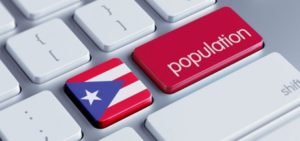
  • President Trump could decide to veto a spending bill and allow parts of the government to shut down.
  • The House is set to pass spending legislation as early as Wednesday, and funding for large parts of the government lapses on Sunday at midnight.
  • Trump has expressed frustration that the bill does not fund his proposed border wall.

By: Jacob Pramuk@jacobpramuk

Published 12:48 PM ET Wed, 26 Sept 2018; retrieved from:
Source: https://www.cnbc.com/2018/09/26/trump-may-force-government-shutdown-over-border-wall-spending.html 

See VIDEO presentation of this news story in the Appendix below.

Obviously Good Governance and “Partisan Politics” do no equate. Consider that traffic light analogy from the outset of this commentary. While the need for law-and-order may not be in dispute, where a community chooses to put a traffic light, or a road or highway for that matter, may be politically motivated, with a lot of party dynamics, and Crony-Capitalistic influences.

This is not just an American drama; this is very much alive and well in the Caribbean region. Consider this example from Barbados; they must reboot a lot of their government financing because of excessive debt; will they now follow a path of Good Governance or “Partisan Politics”? See the news story here:

Title: Former Saint Lucia PM Confident Barbados Will Return to Glory Days
Barbados Today:–  St Lucia’s former prime minister Dr Kenny Anthony has described Barbados’ economic restructuring as necessary and unavoidable.

But Dr Anthony told Barbados TODAY he was confident the country would return to its glory days, while calling on the Government to continue communicating with citizens during the adjustment process.

“I think the policy measures of the Government are necessary and unavoidable because they have inherited a very difficult and complex situation,” he said as he reacted to Government’s ongoing debt restructuring exercise.

Pointing out that Barbados had gone through several “painful adjustments” in the past, Anthony said it meant [be] that there were some continued structural deformities.

“But I believe the sacrifice that has to be made at this time is essential to the recovery of Barbados. I think the good thing is that the people of Barbados understand that despite what may have happened in the past, that they do have to make adjustments, that they have to endure some pain before the problems in the economy is resolved,” he said.

See the full article at: https://stluciatimes.com/2018/10/14/former-saint-lucia-pm-confident-barbados-will-return-to-glory-days/

As related here, economic restructuring may be “necessary and unavoidable“. This could be a product of a new commitment to Good Governance going forward. But surely, there is no doubt that the lack of Good Governance adherence in the past form a part of the problem. Amazing too, is the observation of one former Head of Government (St. Lucia) about the activities in the government of another member-state (Barbados).

The lack of and need for Good Governance is obviously a regional concern.

This commentary is the first of a 5-part series from the movement behind the Go Lean book in consideration of the Good Governance needs for a new Caribbean regime. The other commentaries in the series are cataloged as follows:

  1. Good Governance: … Versus Partisan Politics
  2. Good GovernanceStepping Up in an Emergency
  3. Good GovernanceThe Kind of Society We Want
  4. Good GovernanceGetting ‘Out of the Way’ of Local Economic Empowerment
  5. Good GovernanceGood Corporate Compliance

No doubt there is the need for Good Governance for the Caribbean; we need better stewardship and shepherding of the 30 member-states – all the island states, plus the 2 South American countries (Guyana and Suriname) and the Central American country of Belize – to ensure that we do not repeat the mistakes of the past and can forge a new future for our children. No future is assured otherwise.

While the focus of this series is on governance, there is the need now to reboot, reform or transform all societal engines including: economics and security. But for this region, the governments are the largest employers and the only security offering. So this is it! To change Caribbean society, our focus must start here with government. Transforming the homeland is our quest, our prime directive. This intent has been proclaimed with the following statements:

  • Optimization of the economic engines in order to grow the regional economy to $800 Billion & create 2.2 million new jobs.
  • Establishment of a security apparatus to ensure public safety and protect the resultant economic engines.
  • Improvement of Caribbean governance to support these engines, including a separation-of-powers between the member-states and CU federal agencies.

There is no doubt that the operations of government is necessary for a functioning society.

As related in a previous blog-commentary, there is an implied Social Contract that states “that citizens surrender some of their freedoms and submit to the authority of the State in exchange for protection of remaining natural and legal rights”. The more efficient a State is in delivering its obligations to its citizens, the better for that State, and its citizens. For when there is failure in this delivery, people complain, protest and … leave (or flee)!

Puerto Rico High Resolution Population Concept

This flight or societal abandonment is among the most distressing challenges for Caribbean society today.

Remember the foregoing story on Barbados, imagine their finances. Imagine bonds and debt authorized with the expectation of future payments as a factor of economic activity from the population – pennies on the dollar as in Sales Tax or Value-Added Tax (VAT) – but the population has decreased … due to abandonment and defection. This story is being repeated in one Caribbean member-state after another – i.e. Puerto Rico may have lost 470,000 people – 14% of the population – since Hurricanes Maria and Irma in September 2018 – Source posted February 20, 2018.

These previous Go Lean commentaries on Defection related this sad actuality:

https://goleancaribbean.com/blog/?p=13391 After Maria, Destruction and Defection for Puerto Rico
https://goleancaribbean.com/blog/?p=12996 After Irma, Destruction and Defection in the Eastern Caribbean
https://goleancaribbean.com/blog/?p=12977 After Irma, Barbuda Becomes a ‘Ghost Town’
https://goleancaribbean.com/blog/?p=10470 More ‘Bad News’, More Defections for Freeport, Bahamas
https://goleancaribbean.com/blog/?p=5759 Model: Pressed by Debt Crisis, Doctors Defect from Greece in Droves

It is the assertion of the Go Lean book that Good Governance is a deterrence to defection. This is the lesson learned from so many other communities that have endured this plight; consider again, the Doctors in the Greece crisis. We must simply do better with delivering on the Social Contract. The book calls for this delivery responsibility to be split between the CU federal agencies and the existing member-states. This is referred to as a Separation of Powers.

Within the 370-pages of the Go Lean book are details of the Good Governance requirement for the new Caribbean. Here is a sample of references to the eco-system of Good Governance through-out the Go Lean book:

Tactical – Separation of Powers

C – Justice Department | C1 – District Attorneys
In accordance with the CU‘s mandate for “Good Governance“, the District Attorneys will spearhead any investigations and prosecutions for crimes of Public Integrity; this covers corruption of elected and appointed constitutional officers. The CU … [treaty is vested with] the litigation powers for the Justice Department must be granted by member-states as Special Prosecutors or Commissions of Inquiries, as allowed by existing laws.

Page 77
Advocacy – 10 Ways to Improve Governance

# 1 – Lean-in for the Caribbean Single Market & Economy
The CU will adopt a “Right to Good Governance” in its charter; thereby bringing accountability beyond state borders. The CU’s initiatives allow for more effective governance by separating many duties that are now managed on a national level to a federal level within the CU. So national governments will perform less services, and with the dividends from the CU, more revenues to control. But with these benefits come greater fiscal accountability.

Page 168
Advocacy – 10 Ways to Impact Wall Street
# 2 – Ensure Corporate Governance
The CU adoption of a “Good Governance” principle in its charter extends to its oversight of corporations and other publicly-held institutions. The CU regulatory agencies will oversee under a laissez-faire policy (minimum governmental interference in the economic affairs of individuals and society), yet be vigilant against systemic risks to the monetary and economic engines. So provisions like full disclosure, certifiable accounting integrity and risk-best-practices will maintain public confidence. The CU’s initiatives allows for more separating of duties versus the state regulators.
Page 200
Advocacy – 10 Ways to Impact the Prison Industrial Complex
# 10 –
Learn from Peonage Past and Ensure Corporate Governance
The CU adopts a “Good Governance” principle in its oversight of the public penal industry, and private Bounty Hunters to enforce bail violations. The CU regulation in this industry will not apply a “laissez-faire” policy but rather extra vigilance against abuses in these industries. Provisos will be in place for accountability and recourse for any innocent citizens.
Page 211
Advocacy – 10 Ways to Promote Contact Centers
# 2 – Laissez-fare Utility Regulations
With the CU Trade Federation as the cross-national communications and media regulator, the policy should be to promote open competition and choice in this industry space. There is always the government leaning to promote monopolies and oligopolies for communications utilities, but for the CU to advance this industry and remain on the cutting edge, the free market must be allowed to flourish. The regulators should focus more on ensuring good governance, transparencies and anti-trust compliance. When necessity dictates only one “cable” provider, then an infrastructure-versus-application “wall” should be erected to ensure “net neutrality”.
Page 212

This is the vision of an efficient governing regime for the Caribbean region. This is a transformation for how and where a new societal eco-system can be introduced and engineered here.

Yes, we can …

The CU will also launch the www.myCaribbean.gov website on Day One/Step One of this confederation roadmap. This Government portal, is part of the Social Contract delivery. This portal resembles a social media site, accessible from computers and smart-phones, allowing citizens to interact with their government from the palm of their hands. Consider how this vision – e-Government and e-Delivery – have been portrayed in these previous blog-commentaries; see this sample:

https://goleancaribbean.com/blog/?p=15947 Climate Change Catastrophe: 12 Year Countdown for new Governance
https://goleancaribbean.com/blog/?p=15923 Industrial Reboot from Government Payment Cards
https://goleancaribbean.com/blog/?p=15479 ‘Lean Is’ as ‘Lean Does’ – Good Project Management in Government
https://goleancaribbean.com/blog/?p=15245 Righting a Wrong: Re-thinking the Regional Governance of CSME
https://goleancaribbean.com/blog/?p=15126 States and Governments must have ‘population increases’
https://goleancaribbean.com/blog/?p=15075 e-Government 3.0
https://goleancaribbean.com/blog/?p=13991 Free European Money – To Start at Top for Good Governance
https://goleancaribbean.com/blog/?p=13524 Future Focused – e-Government Portal 101
https://goleancaribbean.com/blog/?p=7991 Transformations: Caribbean Postal Union – Delivering the Future
https://goleancaribbean.com/blog/?p=888 How to Re-invent Government in a Digital Image – Book Review

We must reform and transform our Caribbean governing engines. We want Good Governance, not “Partisan Politics”. While it may be heavy-lifting to weed out the corrupting influence of “Partisan Politics” from existing member-state governments, it is easier to start aright with the new federal government: the CU Trade Federation.

“Abandonment and Defection” is a Caribbean reality due to inefficiencies in the delivery of the Social Contract. Let’s put that reality in our “rearview mirror” and move forward in building a better homeland to live, work and play. 🙂

Download the free e-Book of Go Lean … Caribbean – now!

Sign the petition to lean-in for this roadmap for the Caribbean Union Trade Federation.

——————

Appendix VIDEO – Trump could shut down parts of government over border wall funding – https://www.cnbc.com/video/2018/09/26/trump-could-shut-down-parts-of-government-over-border-wall-funding.html

Trump could shut down parts of government over border wall funding from CNBC.

Published on September 26, 2018 – While the Government was not shutdown before the 2018 Mid-Term elections; this threat shows the preponderance for “Partisan Politics” over Good Governance … in the US.

Is there a need for a Border Wall? Then build it – that’s Good Governance.

Don’t hold back to protect the Party’s Political prospects.

If there is no money for a wall – or no need? Then let it go.

Do not shutdown the government to make a political point!

Share this post:
, ,
[Top]