Category: Ethos

Joy. Pain. Sunshine. Rain.

Go Lean Commentary

The movement behind the book Go Lean…Caribbean strives to make the Caribbean a better place to live, work and play. Having success in this quest would mean more joy (happiness) for the stakeholders (residents and visitors alike) of the tropical sunshine. We also try to soften the pain of day-to-day life, for “in every life, a little rain must fall”.

“Joy, Pain, Sunshine and Rain” – Sounds familiar, right? It is the title and chorus of a popular Rhythm & Blues song by the Grammy Award winning band Frankie Beverly and Maze; see the VIDEO-AUDIO here:

VIDEO-AUDIO: Frankie Beverly And Maze – Joy And Pain – https://youtu.be/KNuKMPeOdfM

Uploaded on Oct 31, 2011 – {DISCLAIMER}
No Copyright Intended. This Song Belongs To It Respective Owners.
Please Support The Artist By Buying Their Songs/Album – “Joy and Pain” by Maze Listen ad-free with YouTube Red

Art imitates life and life imitates art …

Music is a viable approach for forging change in society. Consider these popular quotations:

“Music soothes the savage beast”.

“A great song can change the world”.

There are a lot of famous quotes alluding to the power of music, but here’s an old favorite:

“Music is a moral law. It gives soul to the universe, wings to the mind, flight to the imagination, and charm and gaiety to life and to everything.” — Plato

Consider this list where music (songs & concerts) has changed the world in past campaigns:

1

Bob Dylan: Times They Are A-Changin’ – 1960’s Civil Rights Anthem

2

Hope for Haiti Now: A Global Benefit for Earthquake Relief – Telethon on Jan 22, 2010

3

“Sun City” – 1985 Anti-Apartheid Group Song and Album

4

Bob Marley and the Wailers: “Them Belly Full (But We Hungry)” – 1975 song

5

K’naan: “Wavin’ Flag” – 2010 Soccer World Cup anthem advocating rights for refugees

6

Live Aid – 1985 “simul”-concerts in London & Philadelphia for famine relief in Ethiopia

7

46664 Concerts – (Mandela’s Prison #) – 2003 advocacy against HIV/AIDS in South Africa

8

John Lennon: “Imagine” – 1971 iconic song for world peace

9

Tsunami Aid: Concert of Hope – 2004 Benefit for Indian Ocean Earthquake & Tsunami

10

The Concert for Bangladesh – 1971 Benefit for refugees from (then) East Pakistan

11

Live 8 – 2005 series of concerts in the G8 member-states for foreign aid to poorest countries

12

Patti Smith: “People Have the Power” – 1988 song condemning war and human rights abuses

13

Farm Aid – Annual concerts starting in 1985 advocating  Family Farms

14

Marvin Gaye: “What’s Going On” – 1971 album against the Vietnam war, drugs and poverty

15

Concert in celebration of “It Takes Two” – 2014 effort tackling high teenage pregnancy in Uganda

16

Joni Mitchell: “Big Yellow Taxi” – 1970 hit song addresses environmental concerns

[17]

[“We Are the World” – 1985 super-group (most famous music artists) song by USA for Africa]

Source: https://www.globalcitizen.org/en/content/music-that-has-changed-the-world/ by Christina Nuñez on July 27, 2015. The [] represent this blog’s addition – Number 17 – to the list.

The Go Lean book identifies the art and science of the music business among the strategies, tactics, implementations and advocacies of the roadmap to elevate the Caribbean’s societal engines. The book serves as a roadmap for the introduction and implementation of the Caribbean Union Trade Federation (CU), an initiative to elevate and empower the region, to make the homelands better and happier. From the outset, the book recognized the significance of music and happiness in this roadmap with these statements in the opening Declaration of Interdependence (Page 12 & 14):

Preamble. We hold these truths to be self-evident, that all men are created equal, that they are endowed by their Creator with certain unalienable rights, that among these are life, liberty and the pursuit of happiness

xxi.   Whereas the preparation of our labor force can foster opportunities and dictate economic progress for current and future generations, the Federation must ensure that educational and job training opportunities are fully optimized for all residents of all member-states, with no partiality towards any gender or ethnic group. The Federation must recognize and facilitate excellence in many different fields of endeavor, including sciences, languages, arts, music and sports. This responsibility should be executed without incurring the risks of further human flight, as has been the past history.

xxxii.  Whereas the cultural arts and music of the region are germane to the quality of Caribbean life, and the international appreciation of Caribbean life, the Federation must implement the support systems to teach, encourage, incentivize, monetize and promote the related industries for arts and music in domestic and foreign markets. These endeavors will make the Caribbean a better place to live, work and play.

The purpose of the Go Lean roadmap is not music, but rather to make the Caribbean region a better homeland, a happier place to live, work and play. Music can be an effective tool for campaigns … to convey the important message of happiness, to pronounce that “Joy, Pain, Sunshine and Rain” is part-and-parcel of any happiness advocacy.

This Go Lean roadmap calls for heavy-lifting in shepherding important aspects of Caribbean life. In fact, the empowerment roadmap has 3 prime directives that are critical for forging a happy society; they are identified as follows:

  • Optimization of the economic engines in order to grow the regional economy to $800 Billion & create 2.2 million new jobs.
  • Establishment of a security apparatus to protect the resultant economic engines.
  • Improve Caribbean governance to support these engines.

The book describes the CU as a hallmark of a technocracy, with a commitment to efficiency and effectiveness in these societal engines, while still not ignoring principles of fun such as music, arts, heritage and overall happiness. In fact, one of  the 144 different missions of the Go Lean/CU roadmap is to promote happiness (10 Ways to Promote Happiness – Page 36).

Happiness is the focus of this commentary…

CU Blog - Joy. Pain. Sunshine. Pain - Photo 1

CU Blog - Joy. Pain. Sunshine. Pain - Photo 2

CU Blog - Joy. Pain. Sunshine. Pain - Photo 3

 CU Blog - Joy. Pain. Sunshine. Pain - Photo 4

CU Blog - Joy. Pain. Sunshine. Pain - Photo 5

… thousands of people all around the world took action to support the International Day of Happiness on March 20, 2016. (This is celebrated in March every year). See a related alternate commentary of this year’s advocacy in the Appendix below.

What more can we do?

First, we encourage all to take this “Action for Happiness” pledge:

“I will try to create more happiness in the world around me”.

… this Go Lean/CU effort is “our” attempt to do more … for the Caribbean. The Go Lean/CU roadmap was constructed with the community ethos in mind to make the region more happy, plus the execution of related strategies, tactics, implementations and advocacies to forge permanent happiness. The following is a sample of these specific details of the roadmap from the book:

Community Ethos – Deferred Gratification Page 21
Community Ethos – Economic Principles – People Choose Page 21
Community Ethos – Economic Principles – People Respond to Incentives in Predictable Ways Page 21
Community Ethos – Economic Principles – The Consequences of Choices Lie in the Future Page 21
Community Ethos – Governing Principles – Lean Operations Page 24
Community Ethos – Ways to Impact the Future Page 26
Community Ethos – Ways to Foster Genius Page 27
Community Ethos – Ways to Promote Intellectual Property Page 29
Community Ethos – Ways to Impact Research & Development Page 30
Community Ethos – Ways to Bridge the Digital Divide Page 31
Community Ethos – Ways to Impact Turn-Around Page 33
Community Ethos – Ways to Promote Happiness Page 36
Community Ethos – Ways to Impact the Greater Good Page 37
Strategy – Vision – Confederate 30 Member-States Page 45
Strategy – Mission – Celebrate the Music, Sports, Art, People and Culture of the Caribbean Page 46
Tactical – Confederating a Permanent Union Page 63
Tactical – Fostering a Technocracy Page 64
Implementation – Ways to Pay for Change Page 101
Implementation – Ways to Deliver Page 109
Planning – 10 Big Ideas for the Caribbean Region – Cyber-Caribbean Page 127
Planning – Ways to Make the Caribbean Better Page 136
Planning – Reasons Why the CU Will Succeed Page 137
Advocacy – Ways to Grow the Economy Page 151
Advocacy – Ways to Create Jobs Page 152
Advocacy – Ways to Improve Communications Page 186
Advocacy – Ways to Preserve Caribbean Heritage Page 218
Advocacy – Ways to Improve the Arts Page 230
Advocacy – Ways to Promote Music Page 231
Appendix – Case Study Managing Copyright Infringements Page 351

The Go Lean/CU roadmap is optimistic, but it is realistic and pragmatic too. There is the acknowledgement that while music is powerful, the music business on the other hand, not so much. This industry has changed in the light of modern dynamics (technology and globalization), particularly due to Internet & Communications Technologies. The industry needs to adapt accordingly – we need a fully functional music industry. To spur more development in the industrial dimensions of the music business, this roadmap seeks to secure the economic, security and governing engines of the Caribbean region. This point was detailed in these previous Go Lean blog/commentaries:

https://goleancaribbean.com/blog/?p=6310 Farewell to ‘Sábado Gigante’
https://goleancaribbean.com/blog/?p=5648 Taylor Swift withholds Album from Apple Music
https://goleancaribbean.com/blog/?p=5251 Post-Mortem of Inaugural Bahamas Junkanoo Carnival
https://goleancaribbean.com/blog/?p=3641 ‘We Built This City …’
https://goleancaribbean.com/blog/?p=2415 How ‘The Lion King’ productions roared into history
https://goleancaribbean.com/blog/?p=1909 Music Role Model Berry Gordy – Reflecting & Effecting Change

We need a fully functional music industry because we need music, and the effects of music: the power to reach, soothe and move people. This point was previously detailed in other Go Lean blog/commentaries; a sample follows:

https://goleancaribbean.com/blog/?p=7628 ‘A Change Is Gonna Come’
https://goleancaribbean.com/blog/?p=3568 Forging Change: Music Moves People
https://goleancaribbean.com/blog/?p=2291 Forging Change: The Fun Theory
https://goleancaribbean.com/blog/?p=866 Music Man Bob Marley: The legend lives on!

This quest to elevate the Caribbean region is heavy-lifting; more is involved than just saying “Don’t Worry Be Happy“. It is more complex than just playing or listening to music. Though this is serious, it should also be fun; it should be  “Joy, Pain, Sunshine and Rain”.

Let’s create a happier world together; a happy world filled with laughter and music –  “Joy, Pain, Sunshine and Rain”. And if not the world, then maybe just the Caribbean. 🙂

Download the book Go Lean … Caribbean – now!

————

Appendix – Title: The best habits to practice to feel happy every day
By: Dr. Christine Brown
Sourcehttp://www.news.com.au/lifestyle/health/mind/the-best-habits-to-practice-to-feel-happy-every-day/news-story/bd7d414a2b5da7f6f0bd138f0af2c7fc . Posted and retrieved March 20, 2016.

HAPPY International Day of Happiness!

I have a question for you: How often do you feel like a ‘room without a roof’? According to Pharrell Williams, this “space without limit” feeling is universally achievable. But for many of us, limitless happiness takes a little work. So, what are some of the best habits to practice for feeling happy every day?

MANAGE THE DOWN DAYS

You know the days. Those days when you’re telling yourself the ‘I’m not good enough’ story (which we all have, by the way). The days where things seem to go from bad to worse.

It’s very easy to get trapped at this point because many of us start feeling bad for feeling bad. There are enough external pressures to always be ‘up’ and cheerful, without applying internal pressure too. Acknowledge you’re feeling suboptimal, and do a quick stocktake.

If you can change things, take action. If not, do something that helps to calm you, comfort you or cheer you up (even a little bit).

Be gentle with yourself and don’t splatter your down day over your bystanders. Remember, no-one can ‘make’ you feel anything. You have all the controls. Which reminds me …

DON’T BELIEVE EVERYTHING YOU THINK

Much unhappiness is caused by paying way too much attention to our thoughts. Our minds are constantly telling us stories to explain the world around us. Many times these stories are accurate, but unfortunately, whenever we don’t have enough data, our mind just fills in the gaps.

Let’s face it, we really don’t know why they didn’t say hello to us this morning. We really don’t.

As soon as we hear our minds saying things like, “They ALWAYS let me down” or “She NEVER keeps her promises” we need to reach for the metaphorical handbrake.

Get in the habit of asking yourself if that’s strictly true. Remember it’s just a story you’re telling yourself. You can even give the story a name: “Oh, it’s the ‘I do everything around here’ story”. It is very unlikely that things NEVER or ALWAYS happen. There are always exceptions. Remembering to look for (and recognise) the exceptions means much happier states of mind.

KEEP WHAT ‘SPARKS JOY’

In her book, The Life-Changing Magic of Tidying Up, Marie Kondo recommends a (once-off) festival of tidying where you gather categories of belongings into ginormous piles, pick items up one-by-one and ask a simple question: “Does it spark joy?”

If it does, you keep it. If it doesn’t, you can let it go.

Just imagine how it would be if every item around you had a happy association. Out would go that hideous fondue set from Aunt Bertha or those pyjamas from your ex. Because, according to Marie Kondo, a gift has done its job once it’s received. The freedom!

Oh, and on a side note, this totally applies to the humans in your life too.

EVERYONE’S DOING BETTER THAN ME

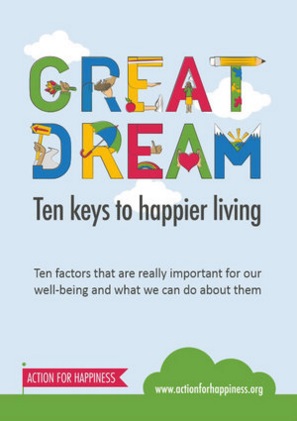
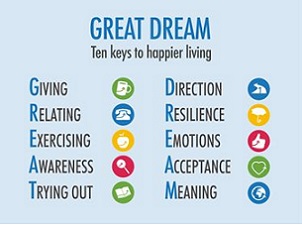
The International Day of Happiness website has a great downloadable resource containing 10 keys to happier living. Each key strategy has been inspired by the latest scientific happiness research and there are some excellent quotes.

The one that I recognised most from working with many different clients is “Don’t compare your insides with other people’s outsides”. This is easy to do.

I remember consulting at a very high-end corporate where everyone was incredibly polished and successful looking. One by one, they would come in and say, “Everyone else is doing okay, but I’m falling apart”.

The thing is, you can’t know what is going on inside someone else, especially if you only have their outside as your guide. Chances are, if you’re finding something difficult or challenging, other people are too. I’m talking work, parenting, studying, teaching, being single, being in a relationship …

WHAT WENT WELL?

One of the pioneers of positive psychology, Martin Seligman, outlines some quick and easy strategies that raise your wellbeing and lower your depression in his book, Flourish.

A simple exercise to do in the 10 minutes before you go to sleep every night is the ‘what-went-well’ exercise. Every night, you write down three things that went well and why they went well (e.g. I finished most of my important tasks today because I took time to plan in the morning or I didn’t yell at my partner this morning because I got up a little earlier and made sure I ate breakfast). This will greatly improve your mood over time.

ROOFLESS ROOMS

According to Sonja Lyubomirsky in The How of Happiness, up to 40 per cent of our happiness is within our power to change.

Being grateful, taking responsibility, blaming less, learning to forgive and yes, even practising random acts of kindness, all predictably increase our happiness.

Have a happy day and go well everyone!

———-

Dr. Christine Brown is an Inventiologist, Psychologist and Executive Coach.

Share this post:
, ,

Frederick Douglass: Role Model for Single Cause – Death or Diaspora

Go Lean Commentary

CU Blog - Frederick Douglass - Model for Single Cause - Death or Diaspora - Photo 1The Caribbean can learn an important lesson from a 150 year-old Role Model, Frederick Douglass. His is a powerful lesson for the advocacy of Single Causes. Despite the plethora of earth-shattering developments for human rights in the period of 1840 to 1880, (slavery, Empire-building-Colonialism, suffrage, feifdom-serfdom, Aboriginal genocide, etc.), Mr. Douglass remained steadfast and committed to one cause primarily: abolition of slavery and civil rights for African-Americans.

Who was Frederick Douglass? What did he do? See the Mini-Biography VIDEO of his life and legacy, here:

VIDEO – Frederick Douglass – Mini Bio – https://youtu.be/Su-4JBEIhXY

Uploaded on Jan 26, 2010 – A short biography of Frederick Douglass. The abolitionist who was born a slave not only worked towards the freedom of Blacks, but also advocated for women’s rights and education in general. He was one of the most prominent African-American voices during the Civil War.

The publishers of the book Go Lean…Caribbean recognize the contributions of Frederick Douglass in the historicity of human rights. The book serves as a roadmap for the introduction and implementation of the Caribbean Union Trade Federation (CU) to empower societal elevation (economics, security and governing engines) for the Caribbean region. The issues germane to Mr. Douglass life and legacy also relate to the Caribbean. Since 29 of the 30 Caribbean member-states (“St. Barths” is the only exception) have a majority Black population, the book posits that the 19th century effort is not finished; the legacy lingers as the Afro-Caribbean populations are still repressed, oppressed and suppressed, but now more so economically.

The legacy of Frederick Douglass, is that if an oppressed population didn’t find refuge, the only outcome would be Death or Diaspora.

The Diaspora prophecy happened, then in Ireland and today, especially here in the Caribbean! (In a previous blog, it was revealed that after 1840, emigration from Ireland became a massive, relentless, and efficiently managed national enterprise. In 1890 40% of Irish-born people were living abroad. By the 21st century, an estimated 80 million people worldwide claimed some Irish descent; which includes more than 36 million Americans who claim Irish as their primary ethnicity).

Caribbean citizens are also pruned to emigrate … to foreign shores (North America and Europe) seeking refuge. In a previous blog-commentary it was asserted that the US – the homeland  for Frederick Douglass – has experienced accelerated immigration in recent years. Published rates of societal abandonment among the college educated classes have reported an average of 70 percent in most member-states, with some countries (i.e. Guyana) tallying up to 89 percent. For this reason, there is solidarity for the Diaspora of Ireland and the Diaspora of the Caribbean.

The publishers of the Go Lean book are also steadfast and committed to one cause: arresting the societal abandonment of Caribbean communities. This would lessen the future Diaspora. This would be good!

In his advocacy, Frederick Douglass sought consult and consort with the “enemies of his enemies”, the oppressed people of Ireland.

In the modern day application, the Go Lean/CU movement seeks to consult with the lessons of history, such as this one of Frederick Douglass’ sojourn to Ireland. We now have the privilege of study of this role-model and his odyssey to Dublin and the cities and towns of pastoral Ireland. See the article here:

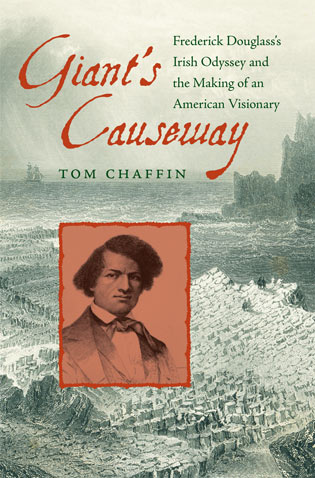
Title: Frederick Douglass’s Irish Odyssey
Sub-Title: Tom Chaffin, author of Giant’s Causeway, assesses the influence on the anti-slavery campaigner of his time in poverty-ridden and religiously divided Ireland

For young Frederick Douglass in August 1845, soon to leave Boston for a lecture tour of undetermined length of Ireland, Scotland and England, fame had proven a double-edged sword.

CU Blog - Frederick Douglass - Model for Single Cause - Death or Diaspora - Photo 2Tall and handsome, Douglass was in his late twenties then – just how late he did not know. Slavery had robbed him of knowledge of the exact circumstances of his birth – its precise date as well as certainty of his father’s identity.

He had escaped his bondage in Maryland in 1837 and soon found his way to the free soil of Massachusetts. Two years later, by then married and having started a family, he had established himself as a gifted orator on the abolitionist speaking circuit. Under the sponsorship of William Lloyd Garrison’s American Anti-Slavery Society, he travelled the states of the North, railing against human bondage and demanding that it be outlawed, activities that sparked frequent threats against him.

In spring 1845, Douglass published his first book– Narrative of the Life of Frederick Douglass, an American slave. The memoir stirred fresh hostilities. To avoid physical harm or being forcibly returned (by bounty-hungry “slave-catchers”) to his bondage in Maryland, it was decided that, until things cooled down, he would leave the United States for a while, for a hastily and incompletely planned lecture tour of the British Isles.

After landing in Liverpool, Douglass and his white travelling companion, fellow abolitionist James Buffum, were to ferry across the Irish Sea to Dublin. There they would commence Douglass’s lecture tour. While in Ireland, he would also work with Richard Webb, a Dublin printer, to publish a British Isles edition of the Narrative.

Still other motivations compelled Douglass’s overseas journey – personal desires left unspoken in public comments made before he sailed. His mother, from whom he was separated soon after his birth, was a slave. Although Douglass was never certain, he presumed that his father was a white man. And by travelling to the British Isles, the orator later wrote, he aspired “to increase my stock of information, and my opportunities for self-improvement, by a visit to the land of my paternal ancestors”.

The journey would transform the young man. Its impact upon him, particularly in Ireland, would be dramatic, lasting and, in the end, liberating. Put another way, in Ireland, Douglass found his own voice. “I can truly say,” he wrote home as he completed his travels there, “I have spent some of the happiest moments of my life since landing in this country, I seem to have undergone a transformation. I live a new life.”

Before leaving Belfast and Ireland, Douglass, on January 1st, 1 846, writing to William Lloyd Garrison, gathered his impressions of Ireland: “My opportunities,” he wrote, “for learning the character and condition of the people of this land have been very great. I have travelled almost from the hill of ‘Howth’ to the Giant’s Causeway and from the Giant’s Causeway to CapeClear.”

In Ireland, Douglass also met several individuals who made deep impressions on him – notably the “Liberator,” Daniel O’Connell; and Cork’s temperance movement leader, Father Theobald Mathew. As the tour progressed, Douglass anticipated – correctly, as it turned out – that newspaper coverage of his passage through Ireland and Great Britain would increase his stature as an international celebrity; and that publicity in foreign newspapers, refracted by the US press, would exponentially increase his renown in America: “My words, feeble as they are when spoken at home,” he told an audience in Cork, “will wax stronger in proportion to the distance I go from home, as a lever gains power by its distance from the fulcrum.” But little did Douglass calculate how that lever of publicity – by increasing the domestic renown that he had traveled to Europe to allow to wane – would, for him, soon nourish still greater worries over personal harm.

The tour of Ireland, Douglass’s first sojourn abroad, tested and transformed the young man’s still emerging identity – his private and public convictions; his self-reliance; his fealty to his wife, friends and colleagues; the depth of his courage; the mettle of his integrity; and the limits of his compassion for the world’s downtrodden. Indeed, as Douglass toured Ireland, a potato crop failure was shadowing the already impoverished island, a ruined harvest that would soon transmogrify into a catastrophe of unparalleled suffering, ruin, death and diaspora. Confronting that poverty, Douglass, writing home, noted that he found “much here to remind me of my former condition”. But he also found his compassion often undercut by repulsion before the island’s “human misery, ignorance, degradation, filth and wretchedness”.

Douglass’s tour consisted of extended stays, for multiple lectures, in Dublin, Cork, Limerick and Belfast. He also made brief stops in Wexford and Waterford. In a country then largely uncrossed by railroads, he conducted an alternately exhilarating and wearying forced-march of successive public performances. Yawning between each stop were long, cold, bone-rattling horse-and-carriage trips through wind- and rain-slashed, coastal mountains and other damp landscapes. In Ireland and Britain, no longer employed by others, Douglass fended for himself, organised his own itinerary and, to help finance the tour, sold copies of the book he had written – until then an impossibility due to a simple fact: most earlier tours had been conducted before the publication of his first book.

The Narrative, as it happened, had been published two months before Douglass’s British Isles tour. In Ireland, as planned, he oversaw the publication of a British Isles edition of the book; afterwards, he did more than stay abreast of accounts and sell the new edition. He also tended to the logistics of transporting the books, or otherwise arranging for them to be sent from his Dublin publisher to each stop – thanks to robust sales, an often urgent task; “Well all my Books went last night at one blow,” he pleaded from Belfast. “I want more[.] I want more.”

Equally important, the tour accelerated Douglass’s transformation from more than a teller of his own life-story into a commentator on contemporary issues – a transition discouraged during his early lecturing days, by white colleagues at the American Anti-Slavery Society: “Give us the facts,” he had been instructed, “we will take care of the philosophy.” “Be yourself,” he was also told. Even so, lest Douglass, in diction and matter, seemed too refined during those years, he was also advised, “Better have a little of the plantation manner of speech than not, ‘tis not best that you seem too learned.”

By the era in which Douglass arrived in Ireland, fewer than half of the island’s population were exclusively speakers of Irish. By then, the language was largely confined to poor, often illiterate and rural areas. Moreover, during his Irish travels, Douglass’s hosts and those who attended his lectures were English-speakers; and his hosts numbered among the island’s more prosperous residents.

In Ireland, Douglass confronted a Pandora’s box of contentious issues – some of immediate relevance to him, others unique to the island; among the latter, he often possessed only a general familiarity. The ever present tensions between Catholics and Protestants proved especially difficult to navigate. As recounted by a local newspaper, during one lecture, responding to an accusation by a Protestant attendee that at another lecture in that same city, Douglass had maligned Protestants, he answered that, “It was not to be expected he could tell a Roman Catholic from Methodist by looking him in the face.”

Attempting to win favour with particular audiences – variously, each dominated by Catholics, Protestants, Irish nationalists, or United Kingdom loyalists – Douglass often strayed into controversies removed from the anti-slavery message that he came to Ireland to impart. But eventually, he disciplined himself to avoid fights not his own and to focus on his campaign to end American slavery.

“I only claim,” he confided to an associate midway through the tour, “to be a man of one idea.” Indeed, challenged during a lecture to explain why the subordination of Ireland’s poor to English interests might also warrant use of the term slavery, he answered, “that if slavery existed here, it ought to be put down.” But, he insisted, “there was nothing like American slavery on the soil on which he now stood”.

After Douglass’s return to America, he resumed his fight against American slavery in the South and for full civil rights for black people living in the North. In that latter effort, Irish-Americans of the North’s cities often numbered among his staunchest opponents. In May 1863, speaking in Brooklyn, he observed, “I am told that the Irish element in this country is exceedingly strong, and that that element will never allow coloured men to stand upon an equal political footing with white men. I am pointed to the terrible outrages committed from time to time by Irishmen upon negroes. The mobs at Detroit, Chicago, Cincinnati, and New York are cited as proving the unconquerable aversion of the Irish toward the coloured race.”

Even so, to the end of his life, Douglass fondly remembered his 1840s lecture tour of Ireland and the welcoming reception he had been accorded. And though many Irish-Americans often opposed his civil rights efforts, he also viewed the Irish, in both Ireland and America, as a persecuted people. He even saw parallels between their plight and that of African Americans. Indeed, throughout his career, Douglass often invoked Daniel O’Connell and his struggles on behalf of Ireland as a cautionary tale for African Americans and, more broadly, the United States. In 1867, for instance, Douglass, in an Atlantic Monthly article observed that “what O’Connell said of the history of Ireland may with greater truth be said of the negro’s. It may be ‘traced like a wounded man through a crowd, by the blood.”

Moreover, during his sojourn in Ireland, Douglass had honed habits of independence, discretion, compromise, self-reliance and practical politics that served him over the coming decades. Those habits eventually empowered him to play his career’s most defining role on the stage of world history-providing counsel for and assisting President Lincoln’s elevation of the US military’s actions during the American civil war from a campaign to preserve the Union to a moral cause devoted to vanquishing American slavery.

— This article is adapted from the introduction to historian Tom Chaffin’s new book Giant’s Causeway: Frederick Douglass’s Irish Odyssey and the Making of an American Visionary (University of Virginia Press). Chaffin lives in Atlanta, Georgia. For more on Giant’s Causeway and his other books, go to tomchaffin.com. —
Source: The Irish Times: Dublin’s Daily Newspaper. Posted 02-02-2015; retrieved 03-17-2016 (St. Patrick’s Day) from: http://www.irishtimes.com/culture/books/frederick-douglass-s-irish-odyssey-1.2084550

Frederick Douglass was able to move his audience … through an appeal to their better nature. People questioned their conscience and the standards of their community. He urged the world – of his day – to do better.

One man … made a difference! And this one man impacted his country … and the whole world.

“The only thing necessary for the triumph of evil is for good men to do nothing” – Edmund Burke; 1729 – 1797; an Irish statesman and member of British Parliament.

The Go Lean/CU roadmap is designed to move the audience of Caribbean stakeholders, to make an impact on the region’s societal engines, corresponding with the prime directives, as follows:

  • Optimization of the economic engines in order to grow the regional economy to $800 Billion & create 2.2 million new jobs.
  • Establishment of a security apparatus to protect the resultant economic engines.
  • Improve Caribbean governance to support these engines.

The focus of this commentary, Frederick Douglass’ legacy, is relevant for our life and times and the Go Lean prime directives. Notice the parallels: The institution of slavery was initiated for economic purposes. In addition, there was no consideration to security principles for the enslaved population. But for the relevance to the Go Lean book, the subject of consideration is one of governance, the need for technocratic stewardship of the regional Caribbean society. This point of governance against the backdrop of the legacy of slavery was pronounced early in the book, in the opening Declaration of Interdependence (Pages 10 – 14) with these declarations:

Preamble:  As the history of our region and the oppression, suppression and repression of its indigenous people is duly documented, there is no one alive who can be held accountable for the prior actions, and so we must put aside the shackles of systems of repression to instead formulate efficient and effective systems to steer our own destiny.

xi.   Whereas all men are entitled to the benefits of good governance in a free society, “new guards” must be enacted to dissuade the emergence of incompetence, corruption, nepotism and cronyism at the peril of the people’s best interest. The Federation must guarantee the executions of a social contract between government and the governed.

xii. Whereas the legacy in recent times in individual states may be that of ineffectual governance with no redress to higher authority, the accedence of this Federation will ensure accountability and escalation of the human and civil rights of the people for good governance, justice assurances, due process and the rule of law. As such, any threats of a “failed state” status for any member state must enact emergency measures on behalf of the Federation to protect the human, civil and property rights of the citizens, residents, allies, trading partners, and visitors of the affected member state and the Federation as a whole.

xxxiii. Whereas lessons can be learned and applied from the study of the recent history of other societies, the Federation must formalize statutes and organizational dimensions to avoid the pitfalls of [other] communities.

The Go Lean book stresses key community ethos, strategies, tactics, implementations and advocacies necessary to transform and turn-around the eco-systems of Caribbean society and learn the lessons from history. The book details the following:

Community Ethos – Economic Principles – Economic Systems Influence Individual Choices Page 21
Community Ethos – Economic Principles – Consequences of Choices Lie in the Future Page 21
Community Ethos – Ways to Impact the Future Page 26
Community Ethos – Ways to Foster Genius – Developing leadership genius Page 27
Community Ethos – Ways to Impact the Greater Good Page 37
Strategy – Vision – Confederate all 30 member-states / 4 languages into aSingle Market Page 45
Strategy – Mission – Build and foster local economic engines Page 45
Tactical – Ways to Foster a Technocracy Page 64
Tactical – Growing the Economy – Post WW II European Marshall Plan Model Page 68
Tactical – Separation-of-Powers – CU Federal Government versus Member-State Governance Page 71
Planning – 10 Big Ideas – Failed States Marshall Plan Page 127
Planning – Ways to Make the Caribbean Better Page 131
Planning – Ways to Improve Failed-State Indices – Local Government and the Social Contract Page 134
Planning – Lessons Learned from the previous West Indies Federation Page 135
Planning – Lessons Learned from Detroit – Turn-around from Failure Page 140
Advocacy – Ways to Grow the Economy Page 151
Advocacy – Ways to Improve Governance Page 168
Advocacy – Ways to Better Manage the Social Contract Page 170
Advocacy – Ways to Improve Homeland Security Page 180
Advocacy – Ways to Impact the Diaspora Page 217
Advocacy – Ways to Preserve Caribbean Heritage Page 218
Advocacy – Ways to Protect Human Rights Page 220

Previous Go Lean blogs presented other lessons for the Caribbean to learn from considering history; the following previous blog/commentaries apply:

https://goleancaribbean.com/blog/?p=5333 A Lesson in History – Legacies: Cause and Effect
https://goleancaribbean.com/blog/?p=5183 A Lesson in History – Cinco De Mayo and the Mexican Experience
https://goleancaribbean.com/blog/?p=5123 A Lesson in History – Royal Charter: Zimbabwe -vs- South Africa
https://goleancaribbean.com/blog/?p=5055 A Lesson in History – Royal Charter: Empowering Families
https://goleancaribbean.com/blog/?p=4971 A Lesson in History – Royal Charter: Truth & Consequence
https://goleancaribbean.com/blog/?p=4935 A Lesson in History – The ‘Grand Old Party’ of American Politics
https://goleancaribbean.com/blog/?p=4613 A Lesson in History – Ireland’s Death And Diaspora Legacy
https://goleancaribbean.com/blog/?p=2297 A Lesson in History – Booker T versus Du Bois
https://goleancaribbean.com/blog/?p=1531 A Lesson in History – 100 Years Ago Today – World War I
https://goleancaribbean.com/blog/?p=789 A Lesson in History – America’s War on the Caribbean

There is the effort to remediate American and European societies now. They recognize the futility of the actions of their ancestors and predecessors with the legacy of slavery. They are now battling to try and weed-out the last vestiges of racism and discrimination. This is good!

But …

… the Go Lean roadmap focuses on the Caribbean homeland only. It is out-of-scope to impact America, Europe or Ireland. Our quest is simple, the future, a 21st century effort to model Frederick Douglass and make the Caribbean region a better place to live, work and play.  🙂

Download the free e-Book of Go Lean … Caribbean – now!

Share this post:
, , , ,
[Top]

Going from ‘Good to Great’

Go Lean Commentary

caribbean_viewThe Caribbean is arguably the greatest address on the planet.

So declares the book Go Lean…Caribbean. This not only refers to terrain, but also culture (music, food, festivals, fun, etc.) and hospitality. Despite these arguable facts, the societal engines in the Caribbean (economy, security, and governance) are NOT great; in some cases, they may not even be considered “good”, as we do feature a few Failed-States in the region.

For the sake of this commentary, we give every Caribbean member-state a scholarship and assume they are “good”. Now how do we go from “Good to Great”?

The book Go Lean…Caribbean represents a quest to make the Caribbean a Great place to live, work and play. But there is actually a formula to making a society (or company/organization) great, as opposed to just being good. Below is the book review and accompanying VIDEO of the landmark publication by writer – see Appendix – and management consultant Jim Collins:

Book Title: Good to Great: Why Some Companies Make the Leap … and Others Don’t
Executive Summary

CU Blog - Going from Good to Great - Photo 1Jim Collins, already established as one of the most influential management consultants, further established his credibility with the wildly popular Good to Great: Why Some Companies Make the Leap…and Others Don’t, originally published in 2001. The book went on to be one of the bestsellers in the genre, and it is now widely regarded as a modern classic of management theory.

Collins takes up a daunting challenge in the book: identifying and evaluating the factors and variables that allow a small fraction of companies to make the transition from merely good to truly great. ‘Great,’ an admittedly subjective term, is operationally defined according to a number of metrics, including, specifically, financial performance that exceeded the market average by several orders of magnitude over a sustained period of time. Using these criteria, Collins and his research team exhaustively catalogued the business literature, identifying a handful of companies that fulfilled their predetermined criteria for greatness. Then, the defining characteristics that differentiated these ‘great’ firms from their competitors were quantified and analyzed.

The resulting data are presented in Good to Great in compelling detail. Over the course of 9 chapters, Collins addresses a number of management, personnel, and operational practices, behaviors, and attitudes that are both conducive and antithetical to the good-to-great transition. One overarching theme that links together virtually all of Collins’ arguments is the need to define a narrowly focused objective and field of competency and then focus all of the company’s resources toward that area of strength. Repeatedly, Collins warns that straying too far from a company’s established strengths is inimical to the attainment of greatness. Finally, Collins links the findings of Good to Great to the conclusions he reached in his previous book, Built to Last, which focused on the factors that define companies that survive in the long-term, meshing both sets of results into an overarching framework for enduring success.

Chapter Summaries

Chapter 1: Good is the Enemy of Great

The first chapter of the book lays out the criteria that Collins and his research team used in selecting the companies that served as the basis of the meta-analysis that provided the findings set forth in the book. The most important factor in the selection process was a period of growth and sustained success that far outpaced the market or industry average. Based on the stated criteria, the companies that were selected for inclusion were Abbott, Fannie Mae, Circuit City, Gillette, Kimberly-Clark, Kroger, Nucor, Philip Morris, Pitney Bowes, Walgreens, and Wells Fargo.

Collins also offers a few of the most significant findings gleaned from the study. Of particular note are the many indications that factors such as CEO compensation, technology, mergers and acquisitions, and change management initiatives played relatively minor roles in fostering the Good to Great process. Instead, Collins found that successes in three main areas, which he terms disciplined people, disciplined thought, and disciplined action, were likely the most significant factors in determining a company’s ability to achieve greatness.

Chapter 2: Level 5 Leadership

In this chapter, Collins begins the process of identifying and further explicating the unique factors and variables that differentiate good and great companies. One of the most significant differences, he asserts, is the quality and nature of leadership in the firm. Collins goes on to identify “Level 5 leadership” as a common characteristic of the great companies assessed in the study. This type of leadership forms the top level of a 5-level hierarchy that ranges from merely competent supervision to strategic executive decision-making.

By further studying the behaviors and attitudes of so-called Level 5 leaders, Collins found that many of those classified in this group displayed an unusual mix of intense determination and profound humility. These leaders often have a long-term personal sense of investment in the company and its success, often cultivated through a career-spanning climb up the company’s ranks. The personal ego and individual financial gain are not as important as the long-term benefit of the team and the company to true Level 5 leaders. As such, Collins asserts that the much-touted trend of bringing in a celebrity CEO to turn around a flailing firm is usually not conducive to fostering the transition from Good to Great.

Chapter 3: First Who, Then What

The next factor that Collins identifies as part of the Good to Great process is the nature of the leadership team. Specifically, Collins advances the concept that the process of securing high-quality, high-talent individuals with Level 5 leadership abilities must be undertaken before an overarching strategy can be developed. With the right people in the right positions, Collins contends that many of the management problems that plague companies and sap valuable resources will automatically dissipate. As such, he argues, firms seeking to make the Good to Great transition may find it worthwhile to expend extra energy and time on personnel searches and decision-making.

Collins also underscores the importance of maintaining rigorousness in all personnel decisions. He recommends moving potentially failing employees and managers to new positions, but not hesitating to remove personnel who are not actively contributing. He also recommends that hiring should be delayed until an absolutely suitable candidate has been identified. Hewing to both of these guidelines, Collins claims, will likely save time, effort, and resources in the long-term.

Chapter 4: Confront the Brutal Facts (Yet Never Lose Faith)

Another key element of some companies’ unique ability to make the transition from Good to Great is the willingness to identify and assess defining facts in the company and in the larger business environment. In today’s market, trends in consumer preferences are constantly changing, and the inability to keep apace with these changes often results in company failure. Using the example of an extended comparative analysis of Kroger and A & P, Collins observes that Kroger recognized the trend towards modernization in the grocery industry and adjusted its business model accordingly, although doing so required a complete transformation of the company and its stores. A & P, on the other hand, resisted large-scale change, and thus guaranteed its own demise.

Collins outlines a four-step process to promote awareness of emerging trends and potential problems: 1) Lead with questions, not answers; 2) Engage in dialogue and debate, not coercion; 3) Conduct autopsies without blame; and 4) Build red flag mechanisms that turn information into information that cannot be ignored.

Chapter 5: The Hedgehog Concept (Simplicity Within the Three Circles)

In this chapter, Collins uses the metaphor of the hedgehog to illustrate the seemingly contradictory principle that simplicity can sometimes lead to greatness. When confronted by predators, the hedgehog’s simple but surprisingly effective response is to roll up into a ball. While other predators, such as the fox, may be impressively clever, few can devise a strategy that is effective enough to overcome the hedgehog’s simple, repetitive response.

Similarly, Collins asserts, the way to make the transformation from Good to Great is often not doing many things well, but instead, doing one thing better than anyone else in the world. It may take time to identify the single function that will be a particular firm’s “hedgehog concept,” but those who do successfully identify it are often rewarded with singular success. In order to help expedite this process, Collins suggests using the following three criteria: 1) Determine what you can be best in the world at and what you cannot be best in the world at; 2) Determine what drives your economic engine; and 3) Determine what you are deeply passionate about.

Chapter 6: A Culture of Discipline

Another defining characteristic of the companies that Collins defined as great in his study was an overarching organizational culture of discipline. He is quick to point out that a culture of discipline is not to be confused with a strict authoritarian environment; instead, Collins is referring to an organization in which each manager and staff member is driven by an unrelenting inner sense of determination. In this type of organization, each individual functions as an entrepreneur, with a deeply rooted personal investment in both their own work and the company’s success.

Although this discipline will manifest itself in a high standard of quality in the work that is produced by managers and employees alike, its most significant outcome will be an almost fanatical devotion to the objectives outlined in the “hedgehog concept” exercises. Disciplined workers will be better equipped to hew to these goals with a single-minded intensity that, according to Collins, will foster the transformation from merely Good to Great. In addition, the author asserts, it is important that within this overarching culture of discipline, every team member is afforded the degree of personal empowerment and latitude that is necessary to ensure that they will be able to go to unheard-of extremes to bring the firm’s envisioned objectives into existence.

Chapter 7: Technology Accelerators

Today, many businesses have come to depend upon technology to increase efficiency, reduce overhead, and maximize competitive advantage. However, Collins cautions that technology should not be regarded as a potential panacea for all that ails a company. The folly of this kind of thinking was revealed in the aftermath of the crash of the tech bubble in the early 2000s. The market correction threw into sharp relief the differences between sustainable uses of the Internet to extend established businesses and ill-planned, unviable online start-ups.

Collins contends that the good-to-great companies approach the prospect of new and emerging technologies with the same prudence and careful deliberation that characterizes all of their other business decisions. Further, these companies tend to apply technology in a manner that is reflective of their “hedgehog concepts” — typically by selecting and focusing solely upon the development of a few technologies that are fundamentally compatible with their established strengths and objectives. Collins characterizes the ideal approach to technology with the following cycle: “Pause — Think — Crawl — Walk — Run.”

Chapter 8: The Flywheel and the Doom Loop

In this chapter, Collins describes two cycles that demonstrate the way that business decisions tend to accumulate incrementally in either an advantageous or a disadvantageous manner. Both, the author emphasizes, accrue over time. Despite the popular misperception that business success or failure often occurs suddenly, Collins asserts that it more typically occurs over the course of years, and that both only transpire after sufficient positive or negative momentum has been accrued.

Collins describes the advantageous business cycle that, in some cases, can foster the transition from Good to Great as “the flywheel effect.” By making decisions and taking actions that reinforce and affirm the company’s “hedgehog” competencies, executives initiate positive momentum. This, in turn, results in the accumulation of tangible positive outcomes, which serve to energize and earn the investment and loyalty of the staff. This revitalization of the team serves to further build momentum. If the cycle continues to repeat in this manner, the transition from Good to Great is likely to transpire. In contrast, the doom loop is characterized by reactive decision-making, an overextension into too many diverse areas of concentration, following short-lived trends, frequent changes in leadership and personnel, loss of morale, and disappointing results.

Chapter 9: From Good to Great to Built to Last

In the concluding chapter of Good to Great, Collins makes a connection between this book and his previous work, Built to Last, which represented the findings of a six-year study into the factors that determined whether a new company would survive in the long-term. First and foremost, Collins contends that companies need a set of core values in order to achieve the kind of long-term, sustainable success that may lead to greatness. Companies need to exist for a higher purpose than mere profit generation in order to transcend the category of merely good. According to Collins, this purpose does not have to be specific — even if the shared values that compel the company toward success are as open-ended as being the best at what they do and achieving excellence consistently, that may be sufficient as long as the team members are equally dedicated to the same set of values.

Although many of the conclusions of both of the books overlap, Collins notes that Good to Great should not be seen as the follow-up to Built to Last, which focuses on sustaining success in the long-term. Instead, Good to Great actually functions as the prequel to Built to Last. First, a company should focus on developing the foundation that is necessary to work toward greatness. Then, they can begin to apply the principles of longevity that are set forth in Built to Last.
Source: Wikipedia Online Encyclopedia’s Wiki-Summaries – Retrieved 03/02/2016 –
http://www.wikisummaries.org/Good_to_Great:_Why_Some_Companies_Make_the_Leap…_and Others_Don’t

————————

VIDEO: Video Review for ‘Good To Great by Jim Collins’https://youtu.be/Yk7bzZjOXaM

Published on Aug 16, 2013 – Employee Engagement with http://callibrain.com

This is video review for the book Good To Great by Jim Collins, produced by Callibrain, employee engagement through social collaboration and execution discipline.
To buy the book click here – http://www.amazon.com/Good-Great-Comp
Category: Education
License: Standard YouTube License

CU Blog - Going from Good to Great - Photo 2The talk of societal greatness is en vogue right now. This is election season in the United States and one candidate for President, Donald J. Trump, pledges to “Make America Great Again”; see photo here.

Greatness also aligns with other empowerment efforts, like the advocacy championed by the Great Place to Work® Institute.

The book Go Lean … Caribbean stresses the need to create a great society of all of the Caribbean. It serves as a roadmap for the introduction and implementation for the technocratic Caribbean Union Trade Federation (CU). As a federation or federal government, there will be the need to pursue greatness organizationally to benefit all stakeholders (residents, Diaspora, visitors, trading partners, etc.). There is also the need to employ and empower a Civil Service workforce; this labor pool is projected to be only 30,000 people, thusly embracing lean (or agile) delivery methodologies. So all the references in the foregoing regarding organization, enterprise, company and/or firm could apply directly and indirectly to the CU Trade Federation.

Yet, these federal civil servants are not the only focus of the Go Lean/CU roadmap. The prime directives of this roadmap covers these 3 focus areas:

  • Optimization of the economic engines in order to grow the regional economy to $800 Billion & create 2.2 million new jobs.
  • Establishment of a security apparatus to protect the resultant economic engines.
  • Improve Caribbean governance to support these engines.

With the success of this roadmap, the Caribbean region will be enabled to go from Good to Great! With confidence now, we can truly declare that “A Change Is Gonna Come“.

But any change must be permanent! The Go Lean book declares that for permanent change to take place, there must first be an adoption of new community ethos, the national spirit that drives the character and identity of its people. The roadmap was constructed with the following community ethos in mind, plus the execution of strategies, tactics, implementation and advocacies to move from Good to Great. The following is a sample of these specific details from the book:

Community Ethos – Deferred Gratification Page 21
Community Ethos – Economic Principles – Economic Systems Influence Individual Choices Page 21
Community Ethos – Economic Principles – The Consequences of Choices Lie in the Future Page 21
Community Ethos – Governing Principles – Lean Operations Page 24
Community Ethos – Ways to Impact the Future Page 26
Community Ethos – Ways to Foster Genius Page 27
Community Ethos – Ways to Help Entrepreneurship – Incubators Page 28
Community Ethos – Ways to Impact Research & Development Page 30
Community Ethos – Ways to Improve Sharing Page 35
Community Ethos – Ways to Promote Happiness Page 36
Community Ethos – Ways to Impact the Greater Good Page 37
Anecdote – LCD versus an Entrepreneurial Ethos Page 39
Strategy – Mission – Build and foster local economic engines Page 45
Tactical – Confederating a Permanent Union Page 63
Tactical –  Separation of Powers: Federal Administration versus Member-States Governance Page 71
Implementation – Ways to Pay for Change Page 101
Planning – Ways to Make the Caribbean Better – Live, Work and Play Empowerments Page 131
Advocacy – Ways to Grow the Economy Page 151
Advocacy – Ways to Create Jobs Page 152
Advocacy – Ways to Improve Governance in the Caribbean Region Page 168
Advocacy – Ways to Better Manage the Social Contract Page 170
Advocacy – Ways to Improve Leadership Page 171
Advocacy – Ways to Manage Federal Civil Service Page 173
Advocacy – Ways to Improve Communications – Improve the Messaging Page 186
Advocacy – Ways Impact Main Street Page 201
Advocacy – Ways to Preserve Caribbean Heritage Page 218
Advocacy – Ways to Protect Human Rights Page 220
Advocacy – Ways to Help the Middle Class Page 223
Advocacy – Ways to Improve Urban Living Page 234
Advocacy – Ways to Improve Rural Living Page 235

The Go Lean/CU roadmap identifies, qualifies and proposes the establishment of technocratic administration throughout the region to impact all societal engines.

Previously, Go Lean blogs commented on developments – in the public sector and also with industrial and entrepreneurial endeavors – showing the success of aspiring to be better and do better. Consider this sample:

Blink Health: The Cure for High Drug Prices
Oil Refineries – Strategy for Advanced Economics
Addressing and Fixing High Consumer Prices
Movie Review: ‘Tomorrowland’ – ‘Feed the right wolf’ in Society
Better than America? Yes, We Can!
‘Change the way you see the world; you change the world you see’
How One Entrepreneur Can Rally a Whole Community
Making a Great Place to Work®
Book Review: ‘Prosper Where You Are Planted’
Book Review: ‘Citizenville – Take the Town Square Digital and Reinvent Government’

Now is the time for all Caribbean stakeholders, employees in the public and private sectors, to lean-in to this regional solution – the Go Lean roadmap – for the Caribbean to go from Good to Great. While a good homeland may seem satisfactory, we now see that satisfactory is not good enough – we lose too many of our citizens as they flee to foreign shores for refuge.

The desired destination is not “good”, but rather “great”. We want to make the Caribbean a Great place to live, work and play.   🙂

Download the book Go Lean … Caribbean – now!

———-

Appendix – Bibliography of Jim Collins

Share this post:
,
[Top]

‘A Change Is Gonna Come’

Go Lean Commentary

There is a lot we can learn from the Chinese …

… there is a Chinese proverb: “Make happy those who are near, and those who are far will come”.

- Photo 2

This ancient expression is like saying “Love yourself first and others will love you”. Looking at it from a different point of view: “if you treat your friends like crap, you will stand alone without a friend, but if you treat your friends with kindness, you will make more friends”.

The Caribbean needs more friends … and to treat its stakeholders (residents, Diaspora, visitors, trading partners, etc.) better.

Can we get the Caribbean region to effect this change?

One way or another: “A Change Is Gonna Come”!

Either we change proactively, or reactively. The only constant is change itself.

This was the theme of a powerful song by legendary R&B singer Sam Cooke in 1964. See the song-VIDEO here:

AUDIO-VIDEO – Sam Cooke – A Change Is Gonna Come (Official Lyric Video)https://youtu.be/wEBlaMOmKV4

Published on Jan 22, 2016 – Lyric Video for “A Change Is Gonna Come” performed by Sam Cooke.
Directed & Produced by: Robin Klein, Mick Gochanour, Hector Sanitizo
Video Editor: Andre Murrugarra  (C) 2016 ABKCO Music & Records, Inc.
Download or stream the single below:
iTunes: https://itunes.apple.com/us/album/por
Google: https://play.google.com/store/music/a
Amazon: http://www.amazon.com/Portrait-Legend
Stream On Spotify: https://open.spotify.com/track/1WMUes

- Photo 1Lyrics:
I was born by the river in a little tent
Oh, and just like the river I’ve been a-runnin’ ever since.
It’s been a long, a long time comin’,
but I know, oh-oo-oh,
a change gon’ come, oh yes, it will.

It’s been too hard living but I’m afraid to die
‘Cause I don’t know what’s up there beyond the sky
It’s been a long, a long time comin’,
But I know, oh-oo-oh,
A change gonna come, oh yes, it will.

I go to the movie and I go downtown
Somebody keep tellin’ me don’t hang around.
It’s been a long, a long time coming, but I know, oh-oo-oh,
A change gon’ come, oh yes, it will.

Then I go, oh-oo-oh, to my brother and I say, brother, help me please.
But he winds up knocking me back down on my knees, oh.

There’ve been times that I thought I couldn’t last for long
But now I think I’m able to carry on
It’s been a long, a long time comin’,
But I know, oh-oo-oh, a change gonna come, oh yes, it will.

Music video by Sam Cooke performing A Change Is Gonna Come. (C) 2016 ABKCO Music & Records, Inc.
http://vevo.ly/nTXKoJ
Category: Music
License: Standard YouTube License

There is a lot more “story” to this story about this song. See here:

AUDIO – NPR’s Fresh Air: Sam Cooke And The Song That ‘Almost Scared Him’ – http://www.npr.org/2014/02/01/268995033/sam-cooke-and-the-song-that-almost-scared-him

Published February 1, 2014 – The story of “A Change Is Gonna Come’ is as amazing, and unsettling, as the song itself.

The foregoing song is gravely serious – no one dances to it – but it does convey the emotion that change is hard sprung, yet necessary. From an American perspective, perhaps that change did come … in 2008 with the “ribbon on the package” of the Civil Rights movement being the election of Barack Obama as the first Black Man as President of the United States. This was a big, shocking and pivotal moment.

The Caribbean needs big, shocking and pivotal moments of its own. We need change and a turn-around; we need to do better in making our people happy so that those far off will come … to us as well. Those far off will include tourists and our Diaspora: reaching more sources of tourist visitors, and facilitating the return of so many Caribbean exiles.

These missions (tourism and repatriation) are familiar themes for the publishers of the book Go Lean…Caribbean.

The book serves as a roadmap for the introduction and implementation of the Caribbean Union Trade Federation (CU); an initiative to bring change and empowerment to the Caribbean region; to make the region a better place to live, work and play. This Go Lean roadmap has these 3 prime directives:

  • Optimization of the economic engines in order to grow the regional economy to $800 Billion & create 2.2 million new jobs.
  • Establishment of a security apparatus to ensure public safety for all Caribbean stakeholders and protect the resultant economic engines.
  • Improve Caribbean governance to support these engines.

Of the 144 different missions presented in the Go Lean book, a number of them are presented specifically to address the issues raised in this commentary. This is part of the technocratic shepherding designed for the CU, to elevate the Caribbean homeland, by this roadmap in these two areas: 1. Tourism and 2. Repatriation.

1. Tourism

The underlying goals for this industrial occupation are stated early in the Go Lean book with these pronouncements in the opening Declaration of Interdependence (Pages 11 & 14):

iii.  Whereas the natural formation of the landmass for our society is that of an archipelago of islands, inherent to this nature is the limitation of terrain and the natural resources there in. We must therefore provide “new guards” and protections to ensure the efficient and effective management of these resources.

iv.  Whereas the natural formation of the landmass is in a tropical region, the flora and fauna allows for an inherent beauty that is enviable to peoples near and far. The structures must be strenuously guarded to protect and promote sustainable systems of commerce paramount to this reality.

v.   Whereas the natural formation of our landmass and coastlines entail a large portion of waterscapes, the reality of management of our interior calls for extended oversight of the waterways between the islands. The internationally accepted 12-mile limits for national borders must be extended by International Tribunals to encompass the areas in between islands. The individual states must maintain their 12-mile borders while the sovereignty of this expanded area, the Exclusive Economic Zone, must be vested in the accedence of this Federation.

xxvi. Whereas the Caribbean region must have new jobs to empower the engines of the economy and create the income sources for prosperity, and encourage the next generation to forge their dreams right at home, the Federation must therefore invigorate the enterprises related to existing industries like tourism … – impacting the region with more jobs.

That publication stressed creative marketing for better tourism outreach, featuring highlights such the following strategies, tactics, implementations and advocacies:

Strategy – Vision – Integrate Region in a Single Market Page 45
Strategy – Mission – Build and Foster Local Economic Engines Page 45
Strategy – Mission – Exploit the Benefits of Globalization in Trade-Tourism Page 46
Tactical – Fostering a Technocracy Page 64
Tactical – Growing the Economy to $800 Billion – Trade and Globalization Page 70
Tactical – Website www.myCaribbean.gov for Caribbean stakeholders – Tourists Page 74
Tactical – Separation of Powers – Tourism Promotions and Administration Page 78
Implementation – Integrate All Caribbean Websites to www.myCaribbean.gov Portal Page 97
Implementation – Ways to Deliver – Agile / Lean / Quality Assurances Page 109
Implementation – Ways to Impact Social Media – www.myCaribbean.gov Portal Page 111
Planning – 10 Big Ideas – Cyber Caribbean Page 127
Planning – Ways to Make the Caribbean Better – VIP’s for Events and Cultural Festivals Page 131
Planning – Ways to Better Manage Image – Digital Media Presence Page 133
Planning – Lessons Learned from 2008 – Tourism & Economy Went Bust Page 136
Planning – Lessons Learned from Egypt – Lack of Tourism Stewardship Page 143
Advocacy – Ways to Measure Progress – Mining www.myCaribbean.gov Portal Data Page 147
Advocacy – Ways to Foster Cooperatives – Purchasing Cooperatives for TV Ads Page 176
Advocacy – Ways to Improve Communications – Internet & Social Media Marketing Page 186
Advocacy – Ways to Enhance Tourism – Excess Inventory Marketing Page 190
Advocacy – Ways to Impact Events – Sharing Economy Page 191
Advocacy – Ways to Market Southern California – Example of Exploiting a Specific Market Page 194
Advocacy – Ways to Foster Technology – Economies-of-Scale for Centers of Excellence Page 197
Advocacy – Ways to Foster e-Commerce – Global Outreach via Social Media Page 198
Advocacy – Ways to Preserve Caribbean Heritage – Cyber-Caribbean Image/Media Page 218

Other blog/commentaries stressed related issues and details for optimizing the tourism product. The following sample applies:

https://goleancaribbean.com/blog/?p=7449 Assurances to Restore Tourism After Catastrophes
https://goleancaribbean.com/blog/?p=7327 Zika Virus: How to Mitigate the Effects on Tourism
https://goleancaribbean.com/blog/?p=6921 Live. Work. Play. Repeat.
https://goleancaribbean.com/blog/?p=6680 Casino Industry Placing Bets on Video Games
https://goleancaribbean.com/blog/?p=6385 Protecting Tourists from Wi-Fi Hot Spots Run By Hackers
https://goleancaribbean.com/blog/?p=6341 Tourism Stewardship — What’s Next?
https://goleancaribbean.com/blog/?p=5210 Cruise Ship Commerce – Getting Ready for Change
https://goleancaribbean.com/blog/?p=4639 Tobago: A Model for Cruise Tourism
https://goleancaribbean.com/blog/?p=3225 The need to optimize Caribbean aviation policies
https://goleancaribbean.com/blog/?p=2571 Internet Commerce meets Sharing Economy: Airbnb
https://goleancaribbean.com/blog/?p=1984 Casinos Failing Business Model within Tourism
https://goleancaribbean.com/blog/?p=1943 The Future of Golf; Vital for Tourism
https://goleancaribbean.com/blog/?p=273 10 Things We Want from the US – # 2: Tourists
https://goleancaribbean.com/blog/?p=254 The need to enhance Tourism with “Air Lifts”
https://goleancaribbean.com/blog/?p=235 Tourism’s changing profile

2. Repatriation

In addition to tourism, the proverb – “Make happy those who are near, and those who are far will come” – speaks to the goal of repatriating the Caribbean Diaspora that has scattered far and wide. The theme of inviting their return and/or incentivizing their repatriation to the homeland has been prominent for this Go Lean movement. There is the direct reference in the book (Page 118) and many related blog/commentaries (see list below). This underlying goal / mission was stated early in the book with these pronouncements in the opening Declaration of Interdependence (Page 12 & 13):

xiii. Whereas the legacy of dissensions in many member-states (for example: Haiti and Cuba) will require a concerted effort to integrate the exile community’s repatriation, the Federation must arrange for Reconciliation Commissions to satiate a demand for justice.

xix. Whereas our legacy in recent times is one of societal abandonment, it is imperative that incentives and encouragements be put in place to first dissuade the human flight, and then entice and welcome the return of our Diaspora back to our shores. This repatriation should be effected with the appropriate guards so as not to imperil the lives and securities of the repatriated citizens or the communities they inhabit. The right of repatriation is to be extended to any natural born citizens despite any previous naturalization to foreign sovereignties.

xx.  Whereas the results of our decades of migration created a vibrant Diaspora in foreign lands, the Federation must organize interactions with this population into structured markets. Thus allowing foreign consumption of domestic products, services and media, which is a positive trade impact. These economic activities must not be exploited by others’ profiteering but rather harnessed by Federation resources for efficient repatriations.

Change must come to the Caribbean; especially to attract and recruit repatriates. There are real obstacles that the region must overcome: the poor performing economy and the threats to public safety. So the prime directives of the Go Lean/CU roadmap is to elevate Caribbean society and all of its societal engines. The success of our movement should be publicized and messaged throughout the world. After all…

… the Caribbean is the greatest address on the planet… arguably. This claim is not just made based on terrain, but also culture (music, food, festivals and fun). If/when we fix the societal defects, the native sons (and daughters) living in the Diaspora should beat a path to come home.

With confidence we can declare: “A Change Is Gonna Come”!

But this time, the change must be permanent! The Go Lean book declares that for permanent change to take place, there must first be an adoption of new community ethos, the national spirit that drives the character and identity of its people. The roadmap was constructed with the following community ethos in mind, plus the execution of strategies, tactics, implementation and advocacies to invite and incentivize the Diaspora to return. The following is a sample of these specific details from the book:

Community Ethos – Deferred Gratification Page 21
Community Ethos – Economic Principles – People Choose Page 21
Community Ethos – Economic Principles – All Choices Involve Costs Page 21
Community Ethos – Economic Principles – People Respond to Incentives in Predictable Ways Page 21
Community Ethos – Economic Principles – Economic Systems Influence Individual Choices Page 21
Community Ethos – Economic Principles – The Consequences of Choices Lie in the Future Page 21
Community Ethos – Security   Principles – Anti-Bullying and Mitigation Page 23
Community Ethos – Governing Principles – Minority Equalization Page 24
Community Ethos – Governing Principles – Lean Operations Page 24
Community Ethos – Ways to Impact the Future Page 26
Community Ethos – Ways to Foster Genius Page 27
Community Ethos – Ways to Help Entrepreneurship – Incubators Page 28
Community Ethos – Ways to Promote Intellectual Property Page 29
Community Ethos – Ways to   Impact Research & Development Page 30
Community Ethos – Ways to Manage Reconciliations Page 34
Community Ethos – Ways to Improve Sharing Page 35
Community Ethos – Ways to Promote Happiness Page 36
Community Ethos – Ways to Impact the Greater Good Page 37
Anecdote – LCD versus an Entrepreneurial Ethos Page 39
Strategy – Mission – Celebrate the Music, Sports, Art, People and Culture of the Caribbean Page 46
Tactical – Confederating a Permanent Union Page 63
Tactical –  Separation of Powers: Federal Administration versus Member-States Governance Page 71
Implementation – Ways to Pay for Change Page 101
Planning – Ways to Make the Caribbean Better – Live, Work and Play Empowerments Page 131
Planning – Ways to Better Manage Image Page 133
Advocacy – Ways to Grow the Economy Page 151
Advocacy – Ways to Create Jobs Page 152
Advocacy – Ways to Improve Governance in the Caribbean Region Page 168
Advocacy – Ways to Better Manage the Social Contract Page 170
Advocacy – Ways to Remediate and Mitigate Crime Page 178
Advocacy – Ways to Improve Communications – Improve the Messaging Page 186
Advocacy – Ways Impact the Diaspora Page 217
Advocacy – Ways to Improve the Arts Page 230
Advocacy – Ways to Promote Music Page 231
Advocacy – Ways to Improve Urban Living Page 234
Advocacy – Ways to Improve Rural Living Page 235

There have been many previous blog/commentaries that stressed issues related to repatriation. The following sample applies:

https://goleancaribbean.com/blog/?p=7412 The Road to Restoring Cuba
https://goleancaribbean.com/blog/?p=7151 The Caribbean is Looking for Heroes … ‘to Return’
https://goleancaribbean.com/blog/?p=6718 A Lesson in History – No Compromise on Human Rights
https://goleancaribbean.com/blog/?p=6247 Tragic images show refugee crisis at a tipping point in Europe
https://goleancaribbean.com/blog/?p=6016 Hotter than July – Still ‘Third World’ – The Need for Cooling …
https://goleancaribbean.com/blog/?p=5784 The Need for Human Rights/LGBT Reform in the Region
https://goleancaribbean.com/blog/?p=5695 Repenting, Forgiving and Reconciling the Past
https://goleancaribbean.com/blog/?p=4613 ‘Luck of the Irish’ – Lessons from their Past, Present and Future

Truth be told, the Caribbean is in competition with the rest of the world.

Considering the analogy of a race, we are behind, trailing our competitors. There are many empowerments that our Caribbean region needs to implement. While no society is perfect, nor fully optimized, some countries have been better than others. Many countries in North America and Western Europe have been lands of refuge for our Caribbean Diaspora. We must now fix our own broken societal engines, so as to dissuade people from leaving in the first place. Plus, many of these North American and European societies leave a lot to be desired for our Black and Brown immigrants from the Caribbean. There is heavylifting for these ones to thrive in those foreign lands. The logical conclusion: stay home in the Caribbean and work towards improving the homeland.

While we do have problems to contend with, many which we are failing at, our biggest crisis stem from the fact that so many of our citizens have fled their Caribbean homelands for foreign shores. These lands should not be the panacea of Caribbean hopes and dreams.

Based on the foregoing Chinese proverb, we can and must make people happy that are near us. Once we succeed, then others – tourists and repatriates – will come to enjoy our happier homelands.

This is easier said than done, but it is conceivable, believable and achievable!

Many of the resources (people) involved in the Go Lean/CU roadmap have done this before … else where. They know the process is to start small, optimize the engines in their neighborhoods, then widen out to a wider community, optimize the engines there, then widen out further to the whole country; again optimize the national engines and then widen out to the full region  For success, we must keep moving forward.  🙂

Download the book Go Lean … Caribbean – now!


Share this post:
, , , ,
[Top]

ENCORE: How Sidney Poitier changed cinema by demanding and deserving a difference

Its time for the Oscars (Academy Awards) … again.

… and again, no Black (or Brown) nominees for any of the major awards. This is exactly what this commentary related last year. We can just publish an ENCORE of the same blog-commentary: Sir Sidney Poitier – ‘Breaking New Ground’. So here we go … again.

But last year’s blog was not just a commentary on the Oscars, but also a tribute to movie icon and Caribbean role model, Sidney Poitier. His accomplishments were remembered in contrast to the White-Out at the Oscars last year. His tribute is also appropriate for an ENCORE, especially as it was just announced that Sir Sidney Poitier is now being honored by the British Academy of Film and Television Arts (BAFTA) Fellowship Award, a sort of a Lifetime Achievement Award. This too is richly deserved.

Here is the announcement:

Title: How Sidney Poitier changed cinema by demanding and deserving a difference

By:  | February 23, 2016 1:51 PM ET

In 1964, Sidney Poitier won an Oscar for his performance in Lillies of the Field. Ann Bancroft, presenting him the award, gave him a peck on the cheek. Racial conservatives were outraged. Interracial marriage was still widely outlawed and civil rights workers were being killed. Poitier’s Oscar was a symbol that things were changing. Even now, a lot remains the same.

Last week, the British Academy of Film and Television Arts granted Sidney Poitier its highest honour, the BAFTA Fellowship. It’s richly deserved — for many years, Poitier was black cinema. Yet his story began a long way from Hollywood. …

Read the entire article here: http://news.nationalpost.com/arts/movies/how-sidney-poitier-changed-cinema-by-demanding-and-deserving-a-difference

Here is the ENCORE of the Go Lean commentary …

Go Lean Commentary

CU Blog - Downtime with Sir Sidney Poitier - Photo 1Movies are an amazing business model. People give money to spend a couple of hours watching someone else’s creation and then leave the theater with nothing to show for the investment; except perhaps a different perspective. That is all!

But no one wants to live in a world without this art-form, without movies. Those few hours can entertain, engage and transform; sometimes even “break new ground” and change the world. So movies and movie stars can be extremely influential in modern society. This is the power of the arts, and this art-form in particular.

The book Go Lean…Caribbean stresses the arts as equally as it does the sciences, for empowering and transforming Caribbean society. While the Caribbean may not have any Nobel Prize winning scientist, we do have an Academy Award winning artist/actor, Sidney Poitier from the Bahamas. He has been able to capitalize on the influence of this art-form for over 65 years and pursued the Greater Good. So his accomplishments transcend the movie screen and impacts real-life.

CU Blog - Downtime with Sir Sidney Poitier - Photo 3For this accomplishment, he has been honored and knighted by British Monarch Queen Elizabeth II as a “Commander of the Order of the British Empire (KBE)”. We thusly refer to him now as Sir Sidney Poitier.

He has also received a similar accolade from the US President, the highest civilian honor: the Presidential Medal of Freedom*.

He has received many more honors and awards; see Appendix A for a sample list of Top Honors.

In focus for this commentary is his 1964 Oscar win for the 1963 movie Lilies of the Field. This was a big deal for Sir Sidney and the entire African Diaspora – people of color. Or as the BBC reported then: “he broke new ground”.

No new ground is being broken in Hollywood this year. The biggest stunner of the 2015 Academy Award nominations for films released in 2014 was that not a single actor of color or female director was included, sparking immediate criticism about Hollywood’s failure to include minorities in its most elite ranks. While this is a valid criticism, Hollywood may actually mirror society in general, where minority participation may be lacking in so many attendant functions – senior positions – of this business eco-system.

CU Blog - Downtime with Sir Sidney Poitier - Photo 2

(Click on the Photo to Enlarge)

While there may be some catch-up that this industry must still make, there are times when the movie-business will “boldly go where no one has gone before”. The Sir Sidney 1964 break-through was one such moment.

With a date-of-birth of February 20, 1927 (age 88 on his next birthday), what does this screen legend do on his downtime? In addition to serving as patriarch of his family of 6 daughters and 6 granddaughters, he summons world leaders to him for consultation. (Sir Sidney serves as the Bahamas non-residential Ambassador to Japan). See this VIDEO here of his entertaining the Prime Minister of the Bahamas in a recent visit.

VIDEO – Downtime with Sir Sidney Poitier – http://youtu.be/xYv5QUT_zKI

Published on Jan 21, 2015 – In a special interview with ZNS News, legendary actor Sir Sidney Poitier challenged Bahamian political leaders to take the country to the next level.

The publishers of the book Go Lean…Caribbean recognizes the life contributions of Sir Sidney as an role model for excellence in the arts and also as an advocate of civil rights and social justice. He definitely demonstrates a love for his Caribbean (Bahamas) homeland and seeks to impact its development on the world scene. Though not a direct quotation, he has called for the elevation of Caribbean life and culture. This book serves as a roadmap for the introduction and implementation of the technocratic Caribbean Union Trade Federation (CU) to help the region become a better place to live, work and play. There is a role for the arts (including film-making) in this empowerment roadmap.

Unlike the current dread of “Black and Brown” among the Oscar nominees, the Go Lean roadmap seeks to put Caribbean people in a place of better command-and-control of their circumstances, to develop the community ethos of assisting each other to advance in our own lives, in our individual communities and in the Caribbean as a whole. The book posits that a unified Caribbean Single Market of 42 million people and a GDP of $800 Billion can foster a “domestic” film industry, much like the formations of Bollywood in India (Page 346) and Nollywood in Nigeria. Deeper exploration of this amazing business model (movies/show-business) can create jobs and garner local returns from the necessary investments.

These previous blog/commentaries drilled deeper on this quest to better foster show-business; below are some examples:

https://goleancaribbean.com/blog/?p=3641 ‘We Built This City …’ on Music and Show-business
https://goleancaribbean.com/blog/?p=3568 Forging Change: Music Moves People
https://goleancaribbean.com/blog/?p=3292 Art Basel Miami – a Testament to the Spread of Culture
https://goleancaribbean.com/blog/?p=3078 Bill Cosby – Sir Sidney’s Frequent Co-Star – Accusations abound
https://goleancaribbean.com/blog/?p=2726 Caribbean Role Model for the Arts/Fashion – Oscar De La Renta: RIP
https://goleancaribbean.com/blog/?p=2415 How ‘The Lion King’ roared into history
https://goleancaribbean.com/blog/?p=1909 Role Model Berry Gordy – No Town Like Motown
https://goleancaribbean.com/blog/?p=1037 Humanities Advocate – Maya Angelou: RIP
https://goleancaribbean.com/blog/?p=866 Caribbean Music Man: Bob Marley – The legend lives on!

The quest is to elevate Caribbean society with many industrial developments, including the arts. This was stressed in the opening Declaration of Interdependence (Page 13) with this statement:

xxi. Whereas the preparation of our labor force can foster opportunities and dictate economic progress for current and future generations, the Federation must ensure that educational and job training opportunities are fully optimized for all residents of all member-states, with no partiality towards any gender or ethnic group. The Federation must recognize and facilitate excellence in many different fields of endeavor, including sciences, languages, arts, music and sports. This responsibility should be executed without incurring the risks of further human flight, as has been the past history.

This impact and overall benefit of this roadmap is pronounced in the CU‘s prime directives, identified with these 3 statements:

  • Optimization of the economic engines in order to grow the regional economy to $800 Billion & create 2.2 million new jobs.
  • Establishment of a security apparatus to protect the resultant economic engines.
  • Improvement of Caribbean governance to support these engines.

The roadmap specifically encourages the region, to lean-in and foster the next generation of Sidney Poitier’s with these specific community ethos, strategies, tactics, implementations and advocacies:

Community Ethos – Consequences of Choices Lie in the Future Page 24
Community Ethos – Minority Equalization Page 24
Community Ethos – Cooperatives Page 25
Community Ethos – Ways to Foster Genius Page 27
Community Ethos – Ways to Promote Intellectual Property Page 31
Community Ethos – Ways to Improve Sharing Page 35
Community Ethos – Ways to Promote Happiness Page 36
Community Ethos – Ways to Impact the Greater Good Page 37
Strategy – Celebrate the arts, people and culture of the Caribbean Page 46
Tactical – Separation-of-Powers – Tourism and Film Promotion & Administration Page 78
Implementation – Integration of Region in Single Market of 42 million people Page 95
Anatomy of Advocacies – Ability to Change the World Page 122
Planning – 10 Big Ideas – Caribbean Single Market Page 127
Planning – Ways to Better Manage Image Page 129
Advocacy – Ways to Improve Education – Foster Performing Arts Page 159
Advocacy – Ways to Foster Cooperatives Page 176
Advocacy – Ways to Impact Justice Page 177
Advocacy – Ways to Impact Hollywood Page 203
Advocacy – Ways to Preserve Caribbean Heritage Page 222
Advocacy – Ways to Impact Youth Page 225
Advocacy – Ways to Improve the Arts Page 230
Appendix – A Summary of Bollywood Movies Page 346

The Go Lean posits that the CU should foster the genius potential in Caribbean artists and incubate the related industries of show-business. The roadmap pronounces that with the participation of many advocates on many different paths for progress, the Caribbean can truly become a better place to live, work and play. We, along with the whole world, owe a debt to Sir Sidney for leading us along this path.

Yes, Hollywood must change and acknowledge more diversity; but this is out-of-scope for this roadmap. The Caribbean must change … to adapt to a changing world. This is within our scope. While no Caribbean member-state may be able to compete and excel alone, together and collaboratively, we can stand up proud and present the world the beautiful contributions of Caribbean people and art. 🙂

———

APPENDIX A – Sidney Poitier Honors & Awards

  • 1958 British Academy Film Award for Best Foreign Actor for The Defiant Ones
  • 1958 Silver Bear for Best Actor (8th Berlin Film Festival) for The Defiant Ones[39]
  • 1963 Academy Award (Oscar) for Best Actor in a Leading Role for Lilies of the Field
  • 1963 Golden Globe Award for Best Actor in a Motion Picture Drama for Lilies of the Field
  • 1963 Silver Bear for Best Actor (13th Berlin Film Festival) for Lilies of the Field [40]
  • 1974 Knight Commander of the Order of the British Empire (KBE)
  • 1982 Golden Globe Cecil B. DeMille Award [41]
  • 1992 AFI Life Achievement Award
  • 1995 Kennedy Center Honors
  • 1997 Appointed non-resident Bahamian Ambassador to Japan
  • 1999 SAG Life Achievement Award
  • 2000 NAACP Image Award for Outstanding Actor in a Television Movie, Mini-Series or Dramatic Special for The Simple Life of Noah Dearborn
  • 2001 NAACP Image Award – Hall of Fame Award
  • 2001 Grammy Award for Best Spoken Word Album – Rick Harris, John Runnette (producers) and Sidney Poitier for The Measure of a Man
  • 2002 Honorary Oscar – “For his extraordinary performances and unique presence on the screen and for representing the industry with dignity, style and intelligence”
  • 2009 Presidential Medal of Freedom[42]
  • 2011 Film Society of Lincoln Center Gala Tribute[43] honoring his life and careers

——–

APPENDIX B – * Presidential Medal of Freedom CU Blog - Downtime with Sir Sidney Poitier - Photo 4

This award is bestowed by the President of the United States and is — along with the comparable Congressional Gold Medal, bestowed by an act of U.S. Congress—the highest civilian award of the United States. It recognizes those individuals who have made “an especially meritorious contribution to the security or national interests of the United States, world peace, cultural or other significant public or private endeavors”.[3] (Source:http://en.wikipedia.org/wiki/Presidential_Medal_of_Freedom)


Share this post:
, , ,
[Top]

A Lesson in the History of Interpersonal Violence – Domestic

Go Lean Commentary

This is a simple fact: countries are comprised of communities; communities are comprised of families; families are comprised of individuals. So if there are defects in individuals, then there could be consequences to families. In turn, a debilitated state of the family can imperil the state of the community. There’s no doubt, Failed-States are comprised of failing communities.

What defect among individuals and families, therefore, should “we” be alarmed with? Domestic Violence!

CU Blog - A Lesson in the History of Interpersonal Violence - Domestic Violence - Photo 1There is no way to justify domestic violence. (This is not referring to corporal discipline of children, but rather wife-battering). Believe it or not, people still try to rationalize, excuse and shift the blame relating to domestic violence.

No more!

There are certain ethnic groups where domestic violence is more prominent than others. Sadly, our community – Latin America and the Caribbean – needs to be more “on guard”. Many times, men in our society feel that it is their honor to discipline their wives … as they see fit. This is a continuation of the series on the history of interpersonal violence; this is commentary 3 of 3. It relates to the Caribbean homeland and to the Caribbean Diaspora in the North America today. The historic issues addressed in this series are:

  1. Duels
  2. Street Violence
  3. Domestic Violence

While we all want to live in a society free of crime, we are more concerned about being free of violence; no one’s honor should come at the expense of peace. This is innately assumed in the Social Contract between governments and their citizens. We all consider the curtailing of violence in society as a measurement of good civilization. It is one way in which we may judge societal success: simply, less interpersonal violence = success; more violence = Failed-State.

There is an evolutionary survival instinct: we all want to be physically safe, but many times, we are slow to apply this instinct to women in our lives; many times we feel that they must simply endure. No more! See Appendix VIDEO below.

CU Blog - A Lesson in the History of Interpersonal Violence - Domestic Violence - Photo 2It has been a long, hard road, overcoming these attitudinal defects. This attitude has been ingrained in many societies for a long time. However, the effort to reform and transform these bad practices have made some traction. The World Conference on Human Rights, held in Vienna, Austria, in 1993, and the Declaration on the Elimination of Violence Against Women in the same year, concluded that civil society and governments must acknowledge that domestic violence is a public health policy and human rights concern. The US responded accordingly…

The Violence Against Women Act – see Appendix Reference below – was developed and passed as a result of extensive grassroots efforts in the late 1980s and early 1990s, with advocates and professionals from the battered women’s movement, sexual assault advocates, victim services field, law enforcement agencies, prosecutors’ offices, the courts, and the private bar urging Congress to adopt significant legislation to address domestic and sexual violence.

It has been a long, hard road, overcoming these domestic violence attitudes in the Caribbean. But overcome, we must! The Caribbean must catch up with the rest of the modern world in this regards; otherwise we lose … all around. We will continue to suffer societal abandonment due to “push and pull” factors. Domestic violence is a “push” factor; messaging of the transforming attitudes towards domestic and gender-based violence in North America is a “pull” factor. Many victims may want to flee their Caribbean homelands for refuge.

This commentary is 3 of 3 in this series considering the subject of interpersonal violence. The previous commentaries addressed issues of importance for mitigating interpersonal violence in our homeland. (This is not a consideration of military or terrorist violence; these are separate and distinct discussions). This commentary is a discussion about assuring public safety, so it must therefore address domestic violence abatement as it considers reducing other criminal activities.

Remediating and mitigating crime is a study in the “Art” and “Science” of violence. This academic study of the subject of interpersonal violence can be very practical. It can help to relieve pain for many of those suffering. It identifies reasons for violence: Need, Greed, Power, Justice and Honor; and how to re-program a community’s attitudes and expectations. The history of changes in community attitudes about domestic violence is well-documented. There are role models and advocates who have worked tirelessly to reform and transform their society. We appreciate their efforts and successes, and seek to emulate them here in the Caribbean. Consider the case of one American organization in the State of Georgia and its founder Julia Perilla:

Organization Profile: Caminar Latino
Organization Profile – Mission
The mission of Caminar Latino is to create possibilities for Latino families affected by violence to transform their lives and their communities.

Organization Profile – Core Values
1. Safety for Latinas and their families
2. Community-Driven Solutions
3. Individual and Community Transformation
4. Organizational Excellence

Caminar Latino or “Latino Journey” carries out its mission by creating safe spaces for each family member to begin their journey towards non-violence. Caminar Latino is Georgia’s first and only comprehensive domestic-violence intervention program for Latino families.

Organization Profile – Our Founder, Julia Perilla
CU Blog - A Lesson in the History of Interpersonal Violence - Domestic Violence - Photo 5Dr. Julia Perilla, our founder, has received scores of awards and is considered a leader in her field but if you ask her, her life, her work rests on a simple philosophy: listen. In 1990 she listened when a Catholic sister talked to her about the problem of domestic violence in her community. That year she started Caminar Latino. Perilla didn’t have a background in dealing with these issues, a fact that gave her pause but she realized that the women would tell her what she needed to know. That’s why in 1993 Perilla and Caminar Latino started a children’s program. And why in 1995 they began programming for men.

”The women were the ones who told us what was needed.” Perilla says. They asked Perilla for help with their children and they asked Caminar Latino to not neglect the men. Perilla listened when the women said “you have to make sure the men are getting all the information that we are.”

In describing her work, Perilla uses words like “collective” and “collaborative.” She’s quick to smile and insists, she’s no expert, she just listens. Her insight and wisdom has led Perilla to help countless of families in turmoil and along with the work, she’s also picked up some impressive accolades.

Perilla has consulted with the Centers for Disease Control, The National Council of Juvenile and Family Court Judges. She’s advised Georgia’s Commission on Family Violence and the National Resource Center on Domestic Violence, to name just a few. Her work has appeared in dozens of journals and garnered awards from her peers.

In 2005, just ten years after she obtained her doctorate in Psychology, Perilla was honored by the Georgia Psychological Association as their Woman of the Year. More recently, she was invited by Vice President [Joe] Biden to a dinner commemorating the Violence Against Women Act; [see Appendix Reference below].

In addition to writing and conducting research, Perilla also teaches. As faculty member in the Department of Psychology at Georgia State University, Perilla relishes her role teaching classes on the ethics of psychology. She also heads up the National Latino Research Center on Family and Social Change. On campus her door is always open to students and she routinely mentors Goizueta Scholars. In 2011 her work was recognized with the Carl V. Patton President’s Award for Community Service and Social Action Outstanding Faculty Award. 

In all facets, Perilla manages to work with a smile because as she puts it “I never work alone.” Whether it’s sharing a laugh with her colleagues or accompanying one of Caminar Latino’s young people to speak at a conference, Perilla says she always learns as much as she teaches. Her life, her work, is “a dream come true.” She is now keeping busy mentoring the next generation of Latina/o scholars who can continue to work from a human rights and social justice perspective.
Source: Caminar Latino – Organizational Website for Civic Organization – retrieved February 17, 2016 from: http://caminarlatino.org/profile-founder-julia-perilla/

CU Blog - A Lesson in the History of Interpersonal Violence - Domestic Violence - Photo 3

The book Go Lean … Caribbean asserts that to elevate Caribbean society there must be a focus on the region’s economic, security and governing engines. While the book primarily targets economic empowerments (jobs, investments, education, entrepreneurship, etc.), it posits that security concerns – threats to public safety – must also be front-and-center along with these economic efforts. While the subject of domestic violence falls on the member-state side of the separation-of-powers divide, the Go Lean book details a jurisdiction of monitoring and metering (ratings, rankings, service levels, etc.) local governments and their delivery of the Social Contract, (i.e. Best Places in the Caribbean To Live …). This too, is within scope of optimizing the region’s governing engines.

The Go Lean book serves as a roadmap for the introduction and implementation of the technocratic Caribbean Union Trade Federation (CU) to elevate the region’s economic, security and governing engines; these are the 3 prime directives:

  • Optimization of the economic engines in order to grow the regional economy and create 2.2 million new jobs.
  • Establishment of a security apparatus to better ensure public safety and protect the resultant economic engines.
  • Improve Caribbean governance, with a separation-of-powers between member-state administrations and the CU federal government (Executive facilitations, Legislative oversight and judicial prudence) to support these economic/security engines.

The Go Lean/CU roadmap is specifically designed (Page 23) to address the societal defects that harm and endanger people in Caribbean society with interpersonal violence, using these security mandates:

  • Adapting the Community Ethos: Public Protection over Privacy
  • Whistleblower Protection
  • Witness Security & Protection
  • Anti-Bullying and Mitigation
  • Intelligence Gathering – Video Surveillance
  • Light Up the Dark Places – Eliminate the figurative and literal “shadows”.

The quest of the Go Lean movement is to elevate Caribbean society above our dysfunctional past. Surely, we can message to the community that our wives, daughters and mothers need protection too. So many other communities have done so in the past; we can do it as well in the Caribbean.

Right now, we are failing … miserably!

It is a reality that many from the Caribbean have emigrated to US cities. One particular frontier city that has benefited from Caribbean homeland abandonment is Miami, Florida. But the experiences there is that many of the defective attitudes towards interpersonal and domestic violence have immigrated with the subjects. See a Reference Source here:

Florida’s Domestic Violence Statistics
In 2014, 106,882 crimes of domestic violence were reported to Florida law enforcement agencies resulting in 64,460 arrests. During fiscal year 2014-2015, Florida’s certified domestic violence centers provided 546,658 nights of emergency shelter to 15,397 survivors of domestic violence and their children. Advocates created 109,045 tailored safety plans, provided a total of 297,669 hours of advocacy and counseling services, and received 130,776 domestic violence hotline calls from individuals seeking emergency services, information, and safety planning assistance.

Many more survivors of domestic violence are not reporting their abusers to the police or accessing services at domestic violence services due to reasons such as shame, fear, or being prevented from doing so by their abusers. For this reason, we may never know the true extent of abuse in our country and in our state.

See here, the exact number of domestic violence services provided in just Miami-Dade County for the last fiscal year numbers are available for, 2010 – 2011; notice the Black-and-Brown distributions in this community:

Residential

Non-Residential

White, non-Hispanic

30

30

Black, non-Hispanic

235

623

Hispanic

312

530

Asian American

1

1

Native American

0

1

Middle Eastern

4

3

Haitian

39

19

Other

7

11

TOTAL

628

1,218

Summary Source: http://www.fcadv.org/floridas-domestic-violence-statistics retrieved February 17, 2016.
Table data: http://www.dcf.state.fl.us/programs/domesticviolence/publications/docs/DVData2010_2011.pdf

This above reference/data brings to mind a familiar (and sad) Caribbean expression:

You can take the man out of the island, but you cannot take the island out of the man.

The goal of this Go Lean/CU roadmap is to confederate all of the Caribbean – all 30 member-states – under a unified entity to provide societal solutions for the local region. We must abate the practice of domestic violence; no “ifs”, “ands” or “buts”. We must help the abused … and the abusers. The CU security goal is for public safety, to optimize the societal engines to ensure peace and security for all regional stakeholders.

The successful execution of this roadmap should result in the creation of millions of jobs and the growth of the regional economy. New funding would allow for grants to the member-states and their local communities to provide more remediation to these abused ones and the cooperative abusers in their neighborhoods. Communities can reform and transform; this is an accepted fact, aligning with the economic principle quoted in the Go Lean book (Page 21), that “Economic Systems Influence Individual Choices and Incentives”.

This roadmap fully envisions the integration of shepherding – leadership – for the Caribbean region’s economic, security and governing initiatives under the same organization: the Caribbean Union Trade Federation. These points are pronounced early in the Go Lean book (Page 12) with these opening Declaration of Interdependence statements:

x.   Whereas we are surrounded and allied to nations of larger proportions in land mass, populations, and treasuries, elements in their societies may have ill-intent in their pursuits, at the expense of the safety and security of our citizens. We must therefore appoint “new guards” to ensure our public safety and threats against our society, both domestic and foreign. The Federation must employ the latest advances and best practices of criminology and penology to assuage continuous threats against public safety.

xi.   Whereas all men are entitled to the benefits of good governance in a free society, “new guards” must be enacted to dissuade the emergence of incompetence, corruption, nepotism and cronyism at the peril of the people’s best interest. The Federation must guarantee the executions of a social contract between government and the governed.

xii.  Whereas the legacy in recent times in individual states may be that of ineffectual governance with no redress to higher authority, the accedence of this Federation will ensure accountability and escalation of the human and civil rights of the people for good governance, justice assurances, due process and the rule of law. As such, any threats of a “failed state” status for any member state must enact emergency measures on behalf of the Federation to protect the human, civil and property rights of the citizens, residents, allies, trading partners, and visitors of the affected member state …

xiii. Whereas the legacy of dissensions in many member-states …  will require a concerted effort to integrate the exile community’s repatriation, the Federation must arrange for Reconciliation Commissions to satiate a demand for justice.

xvi. Whereas security of our homeland is inextricably linked to prosperity of the homeland, the economic and security interest of the region needs to be aligned under the same governance. Since economic crimes, including piracy and other forms of terrorism, can imperil the functioning of the wheels of commerce for all the citizenry, the accedence of this Federation must equip the security apparatus with the tools and techniques for predictive and proactive interdictions.

The Caribbean appointing “new guards”, or a security pact to ensure justice and public safety will include many new community ethos, strategies, tactics, implementations and advocacies. Consider the sample list here:

Community Ethos – Economic Systems Influence Individual Choices Page 21
Community Ethos – Consequences of Choices Lie in Future Page 21
Community Ethos – Security Principles Page 22
Community Ethos – Ways to Manage Reconciliations Page 34
Community Ethos – Ways to Impact the Greater Good Page 37
Tactical – Vision – Forge a Single Market economy Page 45
Tactical – Confederating a non-sovereign union Page 63
Tactical – Fostering a Technocracy Page 64
Tactical – Separation of Powers – Homeland Security Page 75
Tactical – Separation of Powers – Justice Department Page 77
Tactical – Separation of Powers – CariPol: Marshals & Investigations Page 77
Tactical – Separation of Powers – Witness Protection Page 77
Implementation –   Start-up Security Initiatives Page 103
Implementation – Ways to Foster International Aid – Security Assistance Page 115
Implementation – Reasons to Repatriate – Security Optimization Page 118
Planning – Ways to Make the Caribbean Better Page 131
Planning – Ways to Improve Failed-State Indices – No Unchecked Violence Page 134
Planning – Lessons from the American West – Law & Order Lessons Page 142
Planning – Lessons from Egypt – Lackluster Law & Order affects Economy Page 143
Advocacy – Ways to Grow the Economy Page 151
Advocacy – Ways to Improve Governance Page 168
Advocacy – Ways to Better Manage the Social Contract Page 170
Advocacy – Ways to Improve Leadership Page 171
Advocacy – Ways to Impact Justice Page 177
Advocacy – Ways to Reduce Crime Page 178
Advocacy – Ways to Improve for Gun Control – Suspend Rights for Domestic Abusers Page 179
Advocacy – Ways to Improve Homeland Security Page 180
Advocacy – Ways to Mitigate Terrorism – Include a focus on bullying Page 181
Advocacy – Ways to Improve Intelligence Gathering and Analysis Page 182
Advocacy – Ways to Impact the Prison Industrial Complex Page 211
Advocacy – Ways to Protect Human Rights Page 220

The movement behind the book Go Lean … Caribbean have monitored the activities throughout the Caribbean neighborhood, and commented accordingly. Other subjects related to domestic-related crimes and security empowerments for the region have been blogged in other commentaries, as sampled here:

https://goleancaribbean.com/blog/?p=7179 SME Declaration: ‘Change Leaders in Crime Fight’ for better outcomes
https://goleancaribbean.com/blog/?p=5307 8th Violent Crime Warning to Bahamas Tourists – The Need for Better
https://goleancaribbean.com/blog/?p=5304 Mitigating the Eventual ‘Abuse of Power’
https://goleancaribbean.com/blog/?p=5238 #ManifestJustice – Lessons for the Prison Eco-System
https://goleancaribbean.com/blog/?p=4863 A Picture is worth a thousand words; video, a million to expose corruption
https://goleancaribbean.com/blog/?p=4308 911 – Emergency Response: System in Crisis
https://goleancaribbean.com/blog/?p=2994 Justice Strategy: Special Prosecutors and Commissions of Inquiry
https://goleancaribbean.com/blog/?p=2709 Caribbean Study: 58% Of Boys Agree to Female ‘Discipline’
https://goleancaribbean.com/blog/?p=2684 Role Model for Justice, Anti-Crime & Security: The Pinkertons
https://goleancaribbean.com/blog/?p=2201 Students developing nail polish to detect date rape drugs
https://goleancaribbean.com/blog/?p=809 Muslim officials condemn abductions of Nigerian girls
https://goleancaribbean.com/blog/?p=695 Abused wives find help by going to ‘Dona Carmen’
https://goleancaribbean.com/blog/?p=392 Jamaica to receive World Bank funds to help in crime fight
https://goleancaribbean.com/blog/?p=273 10 Things We Want from the US – #6: Crime Watch Initiatives

The vision of the Go Lean roadmap is to make the Caribbean homeland, a better place to live, work and play. This means measurable reductions mitigating and remediation) of interpersonal violence in the region. The Go Lean book is presented as a regional solution to remediate and mitigate all crime – White Collar, street and domestic – in the Caribbean.

The book’s premise is that “bad actors” will always emerge, from internal and external origins to exploit the opportunities, with good, bad and evil intent. This is a historical fact, and is bound to repeat. We must therefore be prepared and on-guard to defend our homeland against all threats, foreign and domestic, including crimes of interpersonal and domestic violence.

We must do better. Otherwise, our homeland will continue to be abandoned. These “push” factors will continue to cause our citizens to flee their homeland for foreign (North American and European) shores, just to find refuge from the victimization.

So all stakeholders in the Caribbean – people and institutions – are urged to lean-in to this Go Lean roadmap for the elevation of the Caribbean’s societal engines: economy, security and governance. We can do better; we can better impact the Greater Good for peace & security.  🙂

Download the book Go Lean … Caribbean – now!

————

Appendix Reference – Title: Violence Against Women Act

CU Blog - A Lesson in the History of Interpersonal Violence - Domestic Violence - Photo 4The Violence Against Women Act of 1994 (VAWA) is a United States federal law (Title IV, sec. 40001-40703 of the Violent Crime Control and Law Enforcement Act of 1994) signed [in to law] by President Bill Clinton on September 13, 1994 … The Act provides $1.6 billion toward investigation and prosecution of violent crimes against women, imposes automatic and mandatory restitution on those convicted, and allows civil redress in cases prosecutors chose to leave un-prosecuted. The Act also establishes the Office on Violence Against Women within the Department of Justice.

VAWA was drafted by the office of Senator Joe Biden (D-DE), with support from a broad coalition of advocacy groups.[1] The Act passed through Congress with bipartisan support in 1994, clearing the United States House of Representatives by a vote of 235–195 and the Senate by a vote of 61–38, although the following year House Republicans attempted to cut the Act’s funding.[2] In the 2000 Supreme Court case United States v. Morrison, a sharply divided Court struck down the VAWA provision allowing women the right to sue their attackers in federal court. By a 5–4 majority, the Court’s conservative wing overturned the provision as exceeding the federal government’s powers under the Commerce Clause.[3][4]

VAWA was reauthorized by bipartisan majorities in Congress in 2000, and again in December 2005, and signed by President George W. Bush.[5] The Act’s 2012 renewal was opposed by conservative Republicans, who objected to extending the Act’s protections to same-sex couples and to provisions allowing battered undocumented immigrants to claim temporary visas.[6] Ultimately, VAWA was again reauthorized in 2013, after a long legislative battle throughout 2012–2013.[7]

Source: https://en.wikipedia.org/wiki/Violence_Against_Women_Act retrieved February 17, 2016.

————

Appendix VIDEONO MORE’s Official Super Bowl Adhttps://youtu.be/tJaSj_qipic

Published on Feb 1, 2015 – Watch the official Super Bowl NO MORE ad (the first-ever Super Bowl commercial addressing domestic violence and sexual assault) and pledge to say NO MORE at http://nomore.org. The 30 second NO MORE PSA will air live during the first break after second quarter of NFL Super Bowl XLIX on February 1, 2015. Watch & share the NO MORE Public Service Announcement (PSA)!

Share this post:
, , ,
[Top]

A Lesson in the History of Interpersonal Violence – Street Crimes

Go Lean Commentary

No justice, no peace!

The movement behind the book Go Lean … Caribbean, and accompanying blogs, has prioritized public safety and remediating/mitigating crime as paramount for the region. Despite the focus on economics, the book asserts that to elevate Caribbean society there must be a focus on the region’s security and governing engines to provide justice assurances. So in addition to economic empowerments (jobs, investments, education, entrepreneurship, etc.), the book posits that security concerns must also be front-and-center in any roadmap along with these economic efforts.

This is easier said than done.

In the previous blog/commentary in this series, the effort to reduce crime and remediate violence was identified as an “Art” and “Science”. This heavy reliance on artists and scientists have provided a lot of history for us to study and glean best-practices in this cause. What can we learn today from a study in the history of interpersonal violence as related to street violence?

This is commentary 2 of 3 considering this subject of interpersonal violence, and how it relates to the Caribbean homeland in 2016. The historic issues addressed are:

  1. Duels
  2. Street Violence
  3. Domestic Violence

Street violence stems from 3 considerations: 1. Need, 2. Greed, and 3. Justice.

CU Blog - A Lesson in the History of Interpersonal Violence - Street Crimes - Photo 3The Go Lean book serves as a roadmap for the introduction and implementation of the technocratic Caribbean Union Trade Federation (CU) to elevate the region’s economic, security and governing engines. The roadmap has these 3 prime directives:

  • Optimization of the economic engines in order to grow the regional economy and create 2.2 million new jobs.
  • Establishment of a security apparatus to provide public safety and protect the resultant economic engines from economic crimes.
  • Improve Caribbean governance, with a separation-of-powers between member-state administrations and the CU federal government (Executive facilitations, Legislative oversight and judicial prudence) to support these economic/security engines.

So the CU/Go Lean roadmap addresses the issue of more jobs; this will lower the “need” factor for crime; (there is no expectation that these efforts would fully eliminate violent crime; but this start will mitigate the risks). The book relates that with the emergence of new economic drivers, that “bad actors” will also emerge thereafter to exploit the opportunities, with good, bad and evil intent. The second factor, “greed” is tied to opportunities. The executions of the Go Lean roadmap (Page 23) are specifically designed to minimize opportunities for crime with these security mandates:

  • Adapt the Ethos: Public Protection over Privacy
  • Embrace Electronic Payment Systems – Carry less cash
  • Whistleblower Protection – Consider all allegation, anonymous and overt
  • Witness Security & Protection – Ensure Justice Process
  • Youth Crime Awareness & Prevention; Anti-Bullying and Mitigation – “Nip it in the bud
  • Intelligence Gathering – Universal Video Surveillance
  • Light Up the Dark Places – Eliminate the figurative and literal “shadows”
  • Prison Industrial Complex – Engage to reduce recidivism

The third contributor, justice, is tied to street riots, civil unrest and other outbursts against perceived injustices. The marching call of many of these movements is “No Justice; No Peace”.

Consider here the historicity of street violence (including sexual violence from strangers) in this AUDIO Podcast (48 minutes) here:

Click on Photo here to Play AUDIO Podcast; Click BACK to Return

CU Blog - A Lesson in the History of Interpersonal Violence - Street Crimes - Photo 2

What’s Behind Trends In U.S. Violent Crime Rates?
Guest Host: Indira Lakshmanan; posted February 9, 2016 – For more than 20 years violent crime rates in the U.S. states have been declining, but data from the first six months of 2015 suggest an unwelcome change: The FBI reports that from January and June 2015 overall violent crime was up nearly 2% and homicides jumped more than 6 percent with spikes in both small towns and big cities. The Justice Department cautioned it’s too soon to know whether the latest data signals an upturn in violence in America. Join us to talk about what drove violent crime down so dramatically over the last two decades in the U.S. and what could be ahead.
Six People Murdered On Chicago's South Side As City's Homicides Rise

Guests

  • Khalil Muhammad director, Schomburg Center for Research in Black Culture  New York Public Library
  • Paul Butler professor, Georgetown Law School
  • Barry Latzer emeritus professor of criminal justice,  John Jay College of Criminal Justice, CUNY  most recent book: “The Rise and Fall of Violent Crime in America”

The foregoing AUDIO Podcast relates the experience of the Black and Brown populations in the American criminal-justice system. There is no doubt, there is a “divide in America’s execution of their justice mandates”. But, the scope of the Go Lean/CU roadmap is to reform and transform the Caribbean, not America. We need to do better here, in our homeland. America’s success and failure does relate to us, as many of our Diaspora lives there, but frankly, the Go Lean book asserts that it is easier to fix the Caribbean, than to fix America. We simply need to keep our people at home. We need to minimize the “push and pull” reasons that drive them away. Curbing crime here – a “push” factor – helps this cause; messaging the real experiences of our Black and Brown Diaspora as they engage the criminal justice system in the US should also help our cause, in lowering the “pull” factors.

So let’s fix the Caribbean!

The quest of the Go Lean movement is to elevate Caribbean society above our dysfunctional past. We can improve upon public safety! The goal of the roadmap is to optimize society through economic empowerment, security & justice optimization, and also governing efficiencies in the region, since these are inextricably linked to this same elevation endeavor.

The cause-and-effect of failing economics leads to increasing criminality, the “need” factor. So the cause-and-effect of improving economics should therefore lead to lesser criminal activities. Improved security facilitation (i.e. intelligence gathering and analysis) should reduce the opportunities for crimes of convenience, thus mitigating the “greed” factor. Funding grants to improve Justice institutions (Police, Courts, Prison Industrial Complex), their transparency and accountability, should lower the outcries for justice. Thus the Go Lean/CU has devised a tactic of publishing rankings-and-ratings (i.e. Best Places in the Caribbean To Live …); this should exacerbate failings and failures more prominently to the monitoring public, at home and abroad.

The motivation of this Go Lean/CU roadmap is the basic principle, described in the book (Page 21), that “Economic Systems Influence Individual Choices and Incentives”.

This roadmap fully envisions the integration of shepherding – leadership – for the Caribbean region’s economic, security and governing initiatives under the same organization: the Caribbean Union Trade Federation. These points are pronounced early in the Go Lean book (Page 12) with these opening Declaration of Interdependence statements:

x.   Whereas we are surrounded and allied to nations of larger proportions in land mass, populations, and treasuries, elements in their societies may have ill-intent in their pursuits, at the expense of the safety and security of our citizens. We must therefore appoint “new guards” to ensure our public safety and threats against our society, both domestic and foreign. The Federation must employ the latest advances and best practices … to assuage continuous threats against public safety.

xi.   Whereas all men are entitled to the benefits of good governance in a free society, “new guards” must be enacted to dissuade the emergence of incompetence, corruption, nepotism and cronyism at the peril of the people’s best interest. The Federation must guarantee the executions of a social contract between government and the governed.

xii.  Whereas the legacy in recent times in individual states may be that of ineffectual governance with no redress to higher authority, the accedence of this Federation will ensure accountability and escalation of the human and civil rights of the people for good governance, justice assurances, due process and the rule of law. As such, any threats of a “failed state” status for any member state must enact emergency measures on behalf of the Federation to protect the human, civil and property rights of the citizens, residents, allies, trading partners, and visitors of the affected member state …

xiii. Whereas the legacy of dissensions in many member-states …  will require a concerted effort to integrate the exile community’s repatriation, the Federation must arrange for Reconciliation Commissions to satiate a demand for justice.

xvi. Whereas security of our homeland is inextricably linked to prosperity of the homeland, the economic and security interest of the region needs to be aligned under the same governance. Since economic crimes, including piracy and other forms of terrorism, can imperil the functioning of the wheels of commerce for all the citizenry, the accedence of this Federation must equip the security apparatus with the tools and techniques for predictive and proactive interdictions.

The Caribbean appointing “new guards”, or a security pact to ensure justice and public safety will include many strategies, tactics and implementations deemed “best-practice”, including an advanced Intelligence Gathering and Analysis effort to mitigate and remediate street crime in the region, and also to optimize the “art and science” of crime, including prison reform; (see Page 211 of the Go Lean book for a discussion on criminology and penology). The Go Lean book details the series of community ethos, strategies, tactics, implementations and advocacies to optimize justice institution and provide increased public safety – “top-down” and “bottoms up”  – in the Caribbean region:

Community Ethos – Economic Systems Influence Individual Choices Page 21
Community Ethos – Consequences of Choices Lie in Future Page 21
Community Ethos – Security Principles Page 22
Community Ethos – Ways to Manage Reconciliations Page 34
Community Ethos – Ways to Impact the Greater Good Page 37
Tactical – Vision – Forge a Single Market economy Page 45
Tactical – Confederating a non-sovereign union Page 63
Tactical – Fostering a Technocracy Page 64
Tactical – Separation of Powers – Homeland Security Page 75
Tactical – Separation of Powers – Justice Department Page 77
Tactical – Separation of Powers – CariPol: Marshals &   Investigations Page 77
Tactical – Separation of Powers – Witness Protection Page 77
Implementation – Start-up Security Initiatives Page 103
Implementation – Ways to Foster International Aid – Security   Assistance Page 115
Implementation – Reasons to Repatriate – Security Optimization Page 118
Planning – Ways to Make the Caribbean Better Page 131
Planning – Ways to Improve Failed-State Indices – Mitigate Organized Crime & Gangs Page 134
Planning – Lessons from the American West – Law & Order Lessons Page 142
Planning – Lessons from Egypt – Lackluster Law & Order affects Economy Page 143
Advocacy – Ways to Grow the Economy Page 151
Advocacy – Ways to Improve Governance Page 168
Advocacy – Ways to Better Manage the Social Contract Page 170
Advocacy – Ways to Impact Justice Page 177
Advocacy – Ways to Reduce Crime Page 178
Advocacy – Ways to Improve for Gun Control Page 179
Advocacy – Ways to Improve Homeland Security Page 180
Advocacy – Ways to Mitigate Terrorism – Mitigate Bullying and Gangs early Page 181
Advocacy – Ways to Improve Intelligence Gathering and Analysis Page 182
Advocacy – Ways to Impact the Prison Industrial Complex Page 211
Advocacy – Ways to Protect Human Rights Page 220

Other  subjects related to crime, justice and security empowerments for the region have been blogged in other Go Lean…Caribbean commentary, as sampled here:

https://goleancaribbean.com/blog/?p=7179 SME Declaration: ‘Change Leaders in Crime Fight’
https://goleancaribbean.com/blog/?p=6385 Wi-Fi Hot Spots Run By Hackers Are Targeting Tourists
https://goleancaribbean.com/blog/?p=5307 8th Violent Crime Warning to Bahamas Tourists
https://goleancaribbean.com/blog/?p=5304 Mitigating the Eventual ‘Abuse of Power’
https://goleancaribbean.com/blog/?p=5238 #ManifestJustice – Lessons for the Prison Eco-System
https://goleancaribbean.com/blog/?p=4863 A Picture is worth a thousand words; video, a million to expose corruption
https://goleancaribbean.com/blog/?p=4447 Probe of Ferguson-Missouri finds bias from cops, courts
https://goleancaribbean.com/blog/?p=4360 Dreading the ‘Caribbean Basin Security Initiative’
https://goleancaribbean.com/blog/?p=4308 911 – Emergency Response: System in Crisis
https://goleancaribbean.com/blog/?p=3881 Intelligence Agencies to Up Cyber Security Cooperation
https://goleancaribbean.com/blog/?p=2994 Justice Strategy: Special Prosecutors and Commissions of Inquiry
https://goleancaribbean.com/blog/?p=2684 Role Model for Justice, Anti-Crime & Security: The Pinkertons
https://goleancaribbean.com/blog/?p=1554 Status of Forces Agreement = Security Pact
https://goleancaribbean.com/blog/?p=1143 American White Collar fraud; criminals take $272 billion/year in healthcare
https://goleancaribbean.com/blog/?p=392 Jamaica to receive World Bank funds to help in crime fight
https://goleancaribbean.com/blog/?p=273 10 Things We Don’t Want from the US – #4: Gun Rights/2nd Amendment

The vision of the Go Lean roadmap is to make the Caribbean homeland, a better place to live, work and play. This means measurable reduction (mitigating and remediation) of interpersonal violence in the region. The Go Lean book presents a regional solution – CariPol et al – to remediate and mitigate street crime in the Caribbean, featuring details of strategies, tactics and implementations designed from world class best-practices to reduce street violence in the region.

The premise in the Go Lean book is that “bad actors” will always emerge, from internal and external origins. We must be prepared and on-guard to defend our homeland against all threats, foreign and domestic, including street crime and interpersonal violence. Plus, we must accomplish this goal with maximum transparency, accountability, and commitment to due-process and the rule-of-law. Thusly, there is a place for closed-circuit TV (CCTV), dashboard and body cameras. If there is the community “will”, the CU will ensure the “way”!

An additional mission is to lower the “push” factors (from “push-and-pull” reference) so that our citizens are not led to flee their homeland for foreign (North American and European) shores. Where we have failed in the past, we now want to reform and transform our communities, so that we can re-invite our Diaspora to return; this time, offering security assurances. Among the many reasons people emigrate or refuse to repatriate, is victimization of interpersonal violence or fear of crime.

There is “good, bad and ugly” in every society. We must therefore mitigate the “need, greed and justice” reasons for interpersonal violence in our society.

So all stakeholders in the Caribbean – people and institutions – are urged to lean-in to this Go Lean roadmap for the elevation of the Caribbean’s societal engine: economy, security and governance. The roadmap calls for the CU to do the heavy-lifting, so as to impact the Greater Good for justice, peace and security. This is conceivable, believable and achievable.  🙂

Download the book Go Lean … Caribbean – now!

Share this post:
, ,
[Top]

A Lesson in the History of Interpersonal Violence – Duels

Go Lean Commentary

When we think of crime, what concerns us the most? Burglary, Fraud, or Assault?

Most likely, it is the threat to life-and-limb; to the person, and then secondarily, the threat to property.

CU Blog - A Lesson in the History of Interpersonal Violence - Duels - Photo 4While we all want to live in a society free of crime, we are more concerned about being free of violence. We all consider the curtailing of violence in society as a measurement of good civilization. It is one way in which we may judge societal success: simply, less interpersonal violence = success; more violence = Failed-State.

Sometimes this measurement is controversial. Many people feel that the misdeeds of corporate crimes (think Wall Street) are more troubling to society than muggings in the streets, and yet, we rarely see these types of White Collar crimes prosecuted, but society “throws the book” at people who commit violent crimes.

Blame it on an evolutionary survival instinct. We all want to be physically safe!

Public safety – remediating and mitigating crime – is therefore a study in the “Art” and “Science” of violence. (This is not a consideration of military or terrorist violence; these are separate and distinct discussions). The subject of interpersonal violence can be very academic; it can also be very practical. We therefore rely more heavily on artists and scientists to help in this cause. What can we learn today from a study in the history of interpersonal violence? Firstly, that there are 3 reasons for violence:

  • Need,
  • Greed, and
  • Honor.

The book Go Lean … Caribbean asserts that to elevate Caribbean society there must be a focus on the region’s economic, security and governing engines. While the book primarily targets economic empowerments (jobs, investments, education, entrepreneurship, etc.), it posits that security concerns – threats to public safety – must also be front-and-center along with these economic efforts. While a more effective execution of economic empowerment would address the availability for more jobs, and thusly lower the “need” factor for crime, this would not fully eliminate the incidences of violent crime; but this start will mitigate the risks.

This is due to the second factor: greed. The incidences of “greed” seems to be more opportunistic, than accidental. The Go Lean book is specifically designed (Page 23) to address these opportunities with the execution of its security mandates:

  • Privacy versus Public Protection
  • Whistleblower Protection
  • Witness Security & Protection
  • Anti-Bullying and Mitigation
  • Intelligence Gathering – Video Surveillance
  • Light Up the Dark Places – Eliminate the figurative and literal “shadows”.

This commentary is therefore focused on the third contributor to interpersonal violence, which surprisingly, is NOT covered in the Go Lean book: Honor or Honour.

  1. Think “Duels”!
  2. Think street violence!
  3. Think domestic violence!

This commentary is 1 of 3 considering the above subjects; these lessons are especially apropos for application in the Caribbean homeland of 2016. We have well-documented history of all of these incidences in our community.

The Go Lean book directly relates (Page 23) that with the emergence of new economic drivers that “bad actors” will also emerge thereafter to exploit the opportunities, with good, bad and evil intent. This is a historical fact, and is bound to repeat. There have always been and will always be conflict among individuals and many “bad actors” assuredly resort to violence during conflicts. (Think Cain and Abel).

Consider here the historicity of dueling or the “Duel” in the Appendix Reference below. This is how many addressed disputes or challenges to their “honor code” – today, instead they would sue each other for slander, libel or other offences to reputation – litigation is better than “pistols at dawn”. Consider the experience of Alexander Hamilton in the VIDEO here:

VIDEO – Alexander Hamilton – Mini Biography – https://youtu.be/NP2a1xkbLgU

Published on Sep 16, 2013 – Watch a short biography video of Alexander Hamilton, the first United States Secretary of the Treasury who was shot by Aaron Burr during a duel.

The story of Hamilton is all the vogue right now, there is a new Broadway Musical chronicling his life in song-and-dance. This original Caribbean immigrant (Nevis) teaches America … and the whole world so much. See Appendix VIDEO below.

(A consideration of duels is a reflection of “art imitating life”. Consider too, duels involving the fictional Lightsaber weapon are a cornerstone and major showpiece of the Star Wars franchise).

The quest of the Go Lean movement is to elevate Caribbean society above our dysfunctional past. Surely, duels are a fixture of the past; surely there are many civil alternatives in modern society – such as commencing a civil court case. Surely? But a cursory review of the Caribbean eco-system reveals that civil trials are cumbersome and complicated in this region. It may be easier for a Man of Honor to simply settle his differences in a back alley, than to take the matter to court. This is sad! We all know how this story ends:

One person brings his fist, while another comes with a knife; another a gun; another, a bigger gun. The one-upmanship continues.

We must reform and transform Caribbean life. We must remediate the “civil court” systems; we must make it easier to sue and/or have “your day in court”. The Go Lean book serves as a roadmap for the introduction and implementation of the technocratic Caribbean Union Trade Federation (CU) to elevate the region’s economic, security and governing engines. The roadmap has these 3 prime directives:

  • Optimization of the economic engines in order to grow the regional economy and create 2.2 million new jobs.
  • Establishment of a security apparatus to provide public safety and protect the resultant economic engines from economic crimes.
  • Improve Caribbean governance, with a separation-of-powers between member-state administrations and the CU federal government (Executive facilitations, Legislative oversight and judicial prudence) to support these economic/security engines.

The goal of this roadmap is to confederate all of the Caribbean – all 30 member-states – under a unified entity to provide these societal solutions for the local region. The CU security goal is just for public safety, optimizing Caribbean society through economic empowerment, security optimization, and governing efficiencies in the region, since these are all inextricably linked to this same endeavor.

The cause-and-effect of failing economics leads to increasing criminality, the “need” factor. The cause-and-effect of improving economics should therefore lead to lesser criminal activities. Improved security facilitation (i.e. intelligence gathering and analysis) should reduce the opportunities for crimes of convenience, the “greed” factor. Funding grants and heightened rankings-and-ratings (i.e. Best Places in the Caribbean To Live …) should allow for improved small claims and civil courts, the “honor” factor. The motivation of this Go Lean/CU roadmap is the basic principle, described in the book (Page 21), that “Economic Systems Influence Individual Choices and Incentives”.

This roadmap fully envisions the integration of shepherding – leadership – for the Caribbean region’s economic, security and governing initiatives under the same organization: the Caribbean Union Trade Federation. These points are pronounced early in the Go Lean book (Page 12) with these opening Declaration of Interdependence statements:

x.   Whereas we are surrounded and allied to nations of larger proportions in land mass, populations, and treasuries, elements in their societies may have ill-intent in their pursuits, at the expense of the safety and security of our citizens. We must therefore appoint “new guards” to ensure our public safety and threats against our society, both domestic and foreign. The Federation must employ the latest advances and best practices … to assuage continuous threats against public safety.

xi.   Whereas all men are entitled to the benefits of good governance in a free society, “new guards” must be enacted to dissuade the emergence of incompetence, corruption, nepotism and cronyism at the peril of the people’s best interest. The Federation must guarantee the executions of a social contract between government and the governed.

xii.  Whereas the legacy in recent times in individual states may be that of ineffectual governance with no redress to higher authority, the accedence of this Federation will ensure accountability and escalation of the human and civil rights of the people for good governance, justice assurances, due process and the rule of law. As such, any threats of a “failed state” status for any member state must enact emergency measures on behalf of the Federation to protect the human, civil and property rights of the citizens, residents, allies, trading partners, and visitors of the affected member state …

xiii. Whereas the legacy of dissensions in many member-states …  will require a concerted effort to integrate the exile community’s repatriation, the Federation must arrange for Reconciliation Commissions to satiate a demand for justice.

xvi. Whereas security of our homeland is inextricably linked to prosperity of the homeland, the economic and security interest of the region needs to be aligned under the same governance. Since economic crimes, including piracy and other forms of terrorism, can imperil the functioning of the wheels of commerce for all the citizenry, the accedence of this Federation must equip the security apparatus with the tools and techniques for predictive and proactive interdictions.

The Caribbean appointing “new guards”, or a security pact to ensure justice and public safety will include many strategies, tactics and implementations deemed “best-practice”, including an advanced Intelligence Gathering and Analysis effort to mitigate and remediate crime in the region, and also to optimize the “art and science” of crime, including prison reform; (see Page 211 of the Go Lean book). This represents “top-down” and “bottoms up” optimization of the justice and security processes to better protect the Caribbean homeland. This comprehensive focus is “Step One/Day One” in the Go Lean roadmap, covering the approach for adequate funding, accountability and control. The Go Lean book details the series of community ethos, strategies, tactics, implementations and advocacies to optimize justice institution and provide increased public safety in the Caribbean region:

Community Ethos – Economic Systems Influence Individual Choices Page 21
Community Ethos – Consequences of Choices Lie in Future Page 21
Community Ethos – Security Principles Page 22
Community Ethos – Ways to Manage Reconciliations Page 34
Community Ethos – Ways to Impact the Greater Good Page 37
Tactical – Vision – Forge a Single Market economy Page 45
Tactical – Confederating a non-sovereign union Page 63
Tactical – Fostering a Technocracy Page 64
Tactical – Separation of Powers – Homeland Security Page 75
Tactical – Separation of Powers – Justice Department Page 77
Tactical – Separation of Powers – CariPol: Marshals & Investigations Page 77
Tactical – Separation of Powers – Witness Protection Page 77
Implementation – Start-up Security Initiatives Page 103
Implementation – Ways to Foster International Aid – Security Assistance Page 115
Implementation – Reasons to Repatriate – Security Optimization Page 118
Planning – Ways to Make the Caribbean Better Page 131
Planning – Ways to Improve Failed-State Indices – Mitigate Organized Crime Page 134
Planning – Lessons from the American West – Law & Order Lessons Page 142
Planning – Lessons from Egypt – Lackluster Law & Order affects Economy Page 143
Advocacy – Ways to Grow the Economy Page 151
Advocacy – Ways to Improve Governance Page 168
Advocacy – Ways to Better Manage the Social Contract Page 170
Advocacy – Ways to Improve Leadership Page 171
Advocacy – Ways to Impact Justice Page 177
Advocacy – Ways to Reduce Crime Page 178
Advocacy – Ways   to Improve for Gun Control Page 179
Advocacy – Ways to Improve Homeland Security Page 180
Advocacy – Ways to Mitigate Terrorism Page 181
Advocacy – Ways to Improve Intelligence Gathering and Analysis Page 182
Advocacy – Ways to Impact the Prison Industrial Complex Page 211
Advocacy – Ways to Protect Human Rights Page 220

Other subjects related to crime and security empowerments for the region have been blogged in other Go Lean…Caribbean commentaries, as sampled here:

https://goleancaribbean.com/blog/?p=7179 SME Declaration: ‘Change Leaders in Crime Fight’
https://goleancaribbean.com/blog/?p=6693 Ten Puerto Rico Police Accused of Criminal Network
https://goleancaribbean.com/blog/?p=6385 Wi-Fi Hot Spots Run By Hackers Are Targeting Tourists
https://goleancaribbean.com/blog/?p=5307 8th Violent Crime Warning to Bahamas Tourists
https://goleancaribbean.com/blog/?p=5435 China Internet Policing – Model for Caribbean
https://goleancaribbean.com/blog/?p=5304 Mitigating the Eventual ‘Abuse of Power’
https://goleancaribbean.com/blog/?p=5238 #ManifestJustice – Lessons for the Prison Eco-System
https://goleancaribbean.com/blog/?p=4863 A Picture is worth a thousand words; video, a million to expose corruption
https://goleancaribbean.com/blog/?p=4447 Probe of Ferguson-Missouri finds bias from cops, courts
https://goleancaribbean.com/blog/?p=4360 Dreading the ‘Caribbean Basin Security Initiative’
https://goleancaribbean.com/blog/?p=4308 911 – Emergency Response: System in Crisis
https://goleancaribbean.com/blog/?p=3881 Intelligence Agencies to Up Cyber Security Cooperation
https://goleancaribbean.com/blog/?p=2994 Justice Strategy: Special Prosecutors and Commissions of Inquiry
https://goleancaribbean.com/blog/?p=2684 Role Model for Justice, Anti-Crime & Security: The Pinkertons
https://goleancaribbean.com/blog/?p=1554 Status of Forces Agreement = Security Pact
https://goleancaribbean.com/blog/?p=1143 American White Collar fraud; criminals take $272 billion/year in healthcare
https://goleancaribbean.com/blog/?p=392 Jamaica to receive World Bank funds to help in crime fight
https://goleancaribbean.com/blog/?p=273 10 Things We Don’t Want from the US – #4 Gun Rights: The 2nd Amendment

CU Blog - A Lesson in the History of Interpersonal Violence - Duels - Photo 5The vision of the Go Lean roadmap is to make the Caribbean homeland, a better place to live, work and play. This means measurable reductions (remediation and mitigation) of interpersonal violence in the region. The Go Lean book presents a regional solution to remediate and mitigate crime in the Caribbean. There is the need for easier access to courts, mediators and “Justices of the Peace”. This latter is a feature from British Colonial history and is applicable in many Caribbean member-states; (not just the British legacy). Here are the technical details from Jamaica:

A Justice of the Peace (JP), according to the Ministry of Justice, is a person of unquestionable integrity who seeks to promote and protect the rights of the individual and helps to provide justice to persons in a particular community. Additionally, the JP serves as a justice in petty court sessions, attends juvenile court sessions, issues summonses, considers applications for bail, explains and signs legal documents, sits on licensing panels, and gives counsel/advice. Any Jamaican citizen that can speak and write English is eligible to become a JP. Any club/organisation/citizen can recommend someone to become JP for a community. JPs are chosen under the Governor-General‘s discretion.
Source: https://en.wikipedia.org/wiki/Justice_of_the_peace#Jamaica retrieved February 17, 2016.

The book features details of strategies, tactics and implementations designed from world class best-practices to reduce violence in the region, including:

  • Caribbean Police (CariPol)
  • Regional Security Intelligence Bureau
  • Enhanced Witness Protection Solutions – Maximizing Justice Assurance
  • Youth Crime Awareness and Prevention
  • Prison Industrial Complex – Messaging against the Honor Code

The premise is that “bad actors” will always emerge, from internal and external origins. We must be prepared and on-guard to defend our homeland against all threats, foreign and domestic, including crime and interpersonal violence. Plus, we must accomplish this goal with maximum transparency, accountability, and commitment to due-process and the rule-of-law.

An additional mission is to lower the “push” factors (from “push-and-pull” reference) so that our citizens are not led to flee their homeland for foreign (North American and European) shores. Among the many reasons people emigrate, is victimization of interpersonal violence or fear of crime. There is “good, bad and ugly” in every society. We must therefore mitigate the “need, greed and honor” reasons for interpersonal violence.

So all stakeholders in the Caribbean – people and institutions – are urged to lean-in to this Go Lean roadmap for the elevation of the Caribbean’s societal engine: economy, security and governance. The roadmap calls for the heavy-lifting so as to impact the Greater Good for justice, peace and security.  🙂

Download the free e-book of Go Lean … Caribbean – now!

———–

Appendix Reference – Title: Duel
(Source: Wikipedia – Online Reference Source; retrieved February 16, 2016 from: https://en.wikipedia.org/wiki/Duel)

CU Blog - A Lesson in the History of Interpersonal Violence - Duels - Photo 1A duel is an arranged engagement in combat between two individuals, with matched weapons in accordance with agreed-upon rules.

Duels in this form were chiefly practiced in early modern Europe, with precedents in the medieval code of chivalry, and continued into the modern period (19th to early 20th centuries) especially among military officers.

During the 17th and 18th centuries (and earlier), duels were mostly fought with swords (the rapier, later the smallsword), but beginning in the late 18th century in England, duels were more commonly fought using pistols; fencing and pistol duels continued to co-exist throughout the 19th century.

The duel was based on a code of honour. Duels were fought not so much to kill the opponent as to gain “satisfaction”, that is, to restore one’s honour by demonstrating a willingness to risk one’s life for it, and as such the tradition of dueling was originally reserved for the male members of nobility; however, in the modern era it extended to those of the upper classes generally. On rare occasions, duels with pistols or swords were fought between women; these were sometimes known as petticoat duels.[1][2]

Legislation against dueling goes back to the medieval period. The Fourth Council of the Lateran (1215) outlawed duels,[3] and civil legislation in the Holy Roman Empire against duelling was passed in the wake of the Thirty Years’ War.[4] From the early 17th century, duels became illegal in the countries where they were practiced. Dueling largely fell out of favor in England by the mid-19th century and in Continental Europe by the turn of the 20th century. Dueling declined in the Eastern United States in the 19th century and by the time the American Civil War broke out, dueling had begun an irreversible decline, even in the South.[5] Public opinion, not legislation, caused the change.[5]

History
Early history and Middle Ages
In Western society, the formal concept of a duel developed out of the mediaeval judicial duel and older pre-Christian practices such as the Viking Age holmgang. In Medieval society, judicial duels were done by knights and squires to end various disputes.[6][7] Countries like Germany, Britain and Ireland practiced this tradition. Judicial combat were of two forms in medieval society, the feat of arms and chivalric combat.[6] The feat of arms were done to settle hostilities between two large parties and supervised by a judge. The battle was fought when one party’s honor was disrespected or challenged upon in which the conflict cannot be resolved in court. Weapons were standardized and must be of the same caliber. The duel lasted until the other party was too weak to fight back. In early cases, the defeated party are then subsequently executed…

Renaissance early modern period
During the early Renaissance, dueling established the status of a respectable gentleman, and was an accepted manner to resolve disputes.

According to [writer] Ariel Roth, during the reign of Henry IV, over 4,000 French aristocrats were killed in duels “in an eighteen-year period” whilst a twenty-year period of Louis XIII’s reign saw some eight thousand pardons for “murders associated with duels”. Roth also notes that thousands of men in the Southern United States “died protecting what they believed to be their honour.”[10]

The first published code duello, or “code of dueling”, appeared in Renaissance Italy. The first formalised national code was France’s, during the Renaissance. In 1777, a code of practice was drawn up for the regulation of duels.… A copy of the code, known as ‘The twenty-six commandments’, was to be kept in a gentleman’s pistol case for reference should a dispute arise regarding procedure.[11] During the Early Modern period, there were also various attempts by secular legislators to curb the practice. Queen Elizabeth I officially condemned and outlawed duelling in 1571, shortly after the practice had been introduced to England.[12]

However, the tradition had become deeply rooted in European culture as a prerogative of the aristocracy, and these attempts largely failed. For example, King Louis XIII of France outlawed dueling in 1626, a law which remained in force for ever afterwards, and his successor Louis XIV intensified efforts to wipe out the duel. Despite these efforts, duelling continued unabated, and it is estimated that between 1685 and 1716, French officers fought 10,000 duels, leading to over 400 deaths.[13]

Enlightenment-era opposition
By the late 18th century, Enlightenment era values began to influence society with new self-conscious ideas about politeness, civil behaviour and new attitudes towards violence. The cultivated art of politeness demanded that there should be no outward displays of anger or violence, and the concept of honour became more personalized.

By the 1770s the practice of dueling was increasingly coming under attack from many sections of enlightened society, as a violent relic of Europe’s medieval past unsuited for modern life. As England began to industrialize and benefit from urban planning and more effective police forces, the culture of street violence in general began to slowly wane. The growing middle class maintained their reputation with recourse to either bringing charges of libel, or to the fast-growing print media of the early nineteenth century, where they could defend their honour and resolve conflicts through correspondence in newspapers.[14]

Influential new intellectual trends at the turn of the nineteenth century bolstered the anti-duelling campaign; the utilitarian philosophy of Jeremy Bentham stressed that praiseworthy actions were exclusively restricted to those that maximize human welfare and happiness, and the Evangelical notion of the “Christian conscience” began to actively promote social activism. Individuals … and similar societies, who had successfully campaigned for the abolition of slavery, condemned dueling as ungodly violence and as an egocentric culture of honour.[15]

Modern history
CU Blog - A Lesson in the History of Interpersonal Violence - Duels - Photo 2Dueling became popular in the United States – the former United States Secretary of the Treasury Alexander Hamilton was killed in a duel against the sitting Vice President Aaron Burr in 1804. Between 1798 and the Civil War, the US Navy lost two-thirds as many officers to dueling as it did in combat at sea, including naval hero Stephen Decatur. Many of those killed or wounded were midshipmen or junior officers. Despite prominent deaths, dueling persisted because of contemporary ideals of chivalry, particularly in the South, and because of the threat of ridicule if a challenge was rejected.[16][17]

By about 1770, the duel underwent a number of important changes in England. Firstly, unlike their counterparts in many continental nations, English duelists enthusiastically adopted the pistol, and sword duels dwindled.[18] Special sets of dueling pistols were crafted for the wealthiest of noblemen for this purpose. Secondly, the office of ‘second’ developed into ‘seconds’ or ‘friends’ being chosen by the aggrieved parties to conduct their honour dispute. These friends would attempt to resolve a dispute upon terms acceptable to both parties and, should this fail, they would arrange and oversee the mechanics of the encounter.[19]

In the United Kingdom, to kill in the course of a duel was formally judged as murder, but generally the courts were very lax in applying the law, as they were sympathetic to the culture of honour.[20] This attitude lingered on – Queen Victoria even expressed a hope that Lord Cardigan, prosecuted for wounding another in a duel, “would get off easily”. The Anglican Church was generally hostile to dueling, but non-conformist sects in particular began to actively campaign against it.

By 1840, dueling had declined dramatically; when the 7th Earl of Cardigan was acquitted on a legal technicality for homicide in connection with a duel with one of his former officers,[21] outrage was expressed in the media, with The Times (British newspaper) alleging that there was deliberate, high level complicity to leave the loop-hole in the prosecution case and reporting the view that “in England there is one law for the rich and another for the poor” and The Examiner [newspaper] describing the verdict as “a defeat of justice”.[22][23]

The last duel between Englishmen in England occurred in 1845, when James Alexander Seton had an altercation with Henry Hawkey over the affections of his wife, leading to a fatal duel at Southsea. However, the last fatal duel to occur in England was between two French political refugees, Frederic Cournet and Emmanuel Barthélemy near Old Windsor in 1852; the former was killed.[19] In both cases, the winners of the duels, Hawkey [24] and Bartholemy,[25] were tried for murder. But Hawkey was acquitted and Barthélemy was convicted only of manslaughter; he served seven months in prison. However, in 1855, Barthélemy was hanged after shooting and killing his employer and another man.[25]

Dueling also began to be criticized in America in the late 18th century; Benjamin Franklin denounced the practice as uselessly violent, and George Washington encouraged his officers to refuse challenges during the American Revolutionary War because he believed that the death by dueling of officers would have threatened the success of the war effort. However, the practice actually gained in popularity in the first half of the nineteenth century especially in the South and on the lawless Western Frontier. Dueling began an irreversible decline in the aftermath of the Civil War. Even in the South, public opinion increasingly came to regard the practice as little more than bloodshed.

Colonial North America and United States
European styles of dueling established themselves in the colonies of European states in America. Duels were to challenge someone over a woman or to defend one’s honor. In the US, dueling was used to deal with political differences and disputes, particularly during the Civil War. Dueling in the US was not uncommon, even after 1859, when 18 states outlawed it, but it became a thing of the past in the United   States by the start of the 20th century.[73]

CU Blog - A Lesson in the History of Interpersonal Violence - Duels - Photo 3The quick draw duel is a stereotypical aspect of a gunfighter story in the American Western film genre – [mostly fiction and fantasy, rarely factual] – although real life Wild West duels did happen such as the Wild Bill Hickok – Davis Tutt shootout, Doc Holliday and Mike Gordon duel, and Luke Short – Jim Courtright duel (see Real-life Wild West duels). Fatal duels were often fought to uphold personal honor in the rural American frontier, and they were partly influenced by the “code duello” brought by Southern emigrants.[75][76][77] Towns such as Tombstone, Arizona, and Dodge City, Kansas, prevented these duels by prohibiting civilians from carrying firearms, by local ordinance.[78]

To this day, any politician sworn in as Governor of Kentucky must declare under oath that he has not participated in a duel.[79]

Decline in the 20th century
Duels had mostly ceased to be fought to the death by the late 19th century.

By the outbreak of World War I, dueling had not only been made illegal almost everywhere in the Western world, but was also widely seen as an anachronism. Military establishments in most countries frowned on dueling because officers were the main contestants. Officers were often trained at military academies at government’s expense; when officers killed one another it imposed an unnecessary financial and leadership strain on a military organization, making dueling unpopular with high-ranking officers.[36]

Charles I outlawed dueling in Austria-Hungary in 1917. Germany (the various states of the Holy Roman Empire) has a history of laws against dueling going back to the late medieval period, with a large amount of legislation dating from the period after the Thirty Years’ War (1618 and 1648). Prussia outlawed dueling in 1851, and the law was inherited by the Reichsstrafgesetzbuch of the German Empire after 1871.[4] Pope Leo XIII in the encyclica Pastoralis officii (1891) asked the bishops of Germany and Austria-Hungary to impose penalties on duelists.[38] In Germany, dueling was again outlawed by Adolph Hitler in 1937.[39] After World War II, German authorities persecuted academic fencing as duels until 1951, when a Göttingen court established the legal distinction between academic fencing and dueling.[40]

———–

Appendix VIDEO – HAMILTON, Starring Lin-Manuel Miranda, Leslie Odom Jr., Jonathan Groff & More https://youtu.be/NBkI_9cr1Ws

Published Aug 5, 2015 – Get tickets to HAMILTON: http://www.broadway.com/shows/hamilto…

This is an official video clips of Broadway’s HAMILTON, starring Lin-Manuel Miranda. The production opened August 6, 2015 at the Richard Rodgers Theatre.

Share this post:
, ,
[Top]

ENCORE: Levi’s® Stadium – SuperBowl Host – ‘Coming Out’ to the World

This ENCORE is re-distributed on the occasion of SuperBowl 50. The match-up is now set: Carolina Panthers -vs- Denver Broncos on Sunday, February 7, 2016 at the new Levi Stadium in Santa Clara, California. (The original commentary was published on December 16, 2014).

Go Lean Commentary

Sports business is big business. But still, even small communities can play in this game.

This is the experience of small Santa Clara, California, the new landlord of the San Francisco Forty-Niners (49-ers) of the National Football League (NFL). The city itself is home to only 116,468 residents, located 45 miles southeast of San Francisco, and yet they are able to leverage the sports entertainment needs for a metropolitan area of 7.44 million people in the San Francisco Bay statistical area[1].

s Stadium - A Team Effort - Photo 2

Where does such a small community get the clout to build a $1.2 Billion stadium? Wall Street. Or better stated one of the biggest, most influential power-brokers on Wall Street: Goldman Sachs Investment Bank. See their promotion VIDEO here of the stadium project.

VIDEO – Levi’s® Stadium: A Team Effort – https://youtu.be/n7KcF5DEbvs

When the San Francisco 49ers wanted to build a new stadium in Santa Clara, California, Goldman Sachs helped structure an innovative financing plan to make it happen. Levi’s® Stadium, one of the country’s most technologically advanced stadiums, opened in August 2014 and is helping to bring further economic development to the local economy in Santa Clara.

Goldman Sachs, in many quarters, has been portrayed as an “evil empire”. They are reflective of the Big Banks and Wall Street plutocracy. They have even been credited for being one of the “bad actors” causing the 2008 Great Recession financial crisis. And yet, they persist! Good, bad or ugly, Goldman Sachs provides a necessary function in modern society; in the case of the foregoing VIDEO, they facilitate municipal financing. They can contribute to the Greater Good.

This commentary promotes the book Go Lean…Caribbean. This publication serves as a roadmap for the introduction and implementation of the technocratic Caribbean Union Trade Federation (CU). While the CU is NOT a sports promotion entity, it does promote the important role of sports in the vision to make the Caribbean a better place to live, work and play. As an expression of this vision, “a mission of the CU is to forge industries and economic drivers around the individual and group activities of sports and culture” (Page 81).

“Build it and they will come” – The Go Lean roadmap encourages solid business plans to develop permanent sports stadia and arenas at CU-owned fairgrounds. This aligns with the Levi’s Stadium in the foregoing VIDEO, where they are now due to host many other events, in addition to being the landlord of the NFL team. This was not automatic; this was a journey (a roadmap), one that started with a solid business plan and community buy-in. This “community ethos” from Santa Clara teaches us so much.

In 2011, Santa Clara voters approved a plan to build the 68,500 seat stadium for the nearby San Francisco 49ers. The groundbreaking for the stadium occurred on April 19, 2012.[2] The official ribbon cutting took place on Thursday July 17, 2014. The first professional sporting event hosted at the stadium was a Major League Soccer (MLS) match between the San Jose Earthquakes and the Seattle Sounders on August 2, 2014. The first professional football event hosted at the stadium was a pre-season game between the 49ers and the Denver Broncos, played on August 17, 2014.

s Stadium - A Team Effort - Photo 1

Now the stage is set. The following is a sample of other events (source: http://en.wikipedia.org/wiki/Levi_Stadium) that are scheduled to start the return on Santa Clara’s community investment:

Super Bowl 50
On October 16, 2012, it was announced that Levi’s Stadium was one of two finalists to host Super Bowl 50 on February 7, 2016 (the other stadium finalist being Sun Life Stadium in Miami Gardens, Florida). On May 21, 2013, it was announced that the San Francisco Bay Area had defeated South Florida in a vote of NFL owners in its bid to host Super Bowl L (50).

College Football Post Season Bowl Game
The stadium will host its first Foster Farms Bowl Game on December 30, 2014 featuring the nearby Stanford University Cardinals and the Maryland Terrapins from the Big Ten Conference.

WrestleMania XXXI
Levi’s Stadium will host WWE’s WrestleMania XXXI on March 29, 2015. This will mark the first time WrestleMania is hosted in Northern California. The area will also host activities throughout the region for the week-long celebration leading up to WrestleMania itself.

Hockey
Levi’s Stadium will host the 2015 NHL Stadium Series’ February 21 game between the Los Angeles Kings and San Jose Sharks.

Soccer
On July 31, 2014, the San Jose Earthquakes agreed to play one match per year for five years at Levi’s Stadium. On September 6, 2014, an international friendly between Mexico and Chile was held.

Concerts

  • On October 23, 2014, it was announced that international pop group “One Direction” would bring their 2015 “On The Road Again” tour to Levi’s Stadium on July 11, 2015.
  • On October 30, 2014 Kenny Chesney announced that he would bring his “The Big Revival Tour” to Levi’s Stadium on May 2, 2015 with Jason Aldean co-headlining with Chesney. Jake Owen and Cole Swindell will open for the duo. It’s the first concert announced at the new home of the 49ers.
  • Taylor Swift set to perform on her fourth upcoming tour, “The 1989 World Tour” in the Levi’s Stadium on 14 & 15 August 2015.

Not every market, especially in the Caribbean, can support these types of high profile events/bookings. So the Go Lean roadmap invites an alternative landlord approach for the occasional or one-time events, that of temporary stadiums; this point was detailed in a previous blog submission.

Whether permanent stadiums or temporary stadiums, the point is echoed that sports entertainment is big business and the Caribbean region must not miss out on the community-building opportunities. This is heavy-lifting; the communities need the technocratic support of a business-mined landlord and creative financing options. This is the role the CU will execute.

The Go Lean vision is a confederation of the 30 member-states of the Caribbean forming the CU as a proxy organization to do the heavy-lighting of building, funding and maintaining sports venues. The strategy is for the CU to be the landlord, and super-regional regulatory agency, for sports leagues, federations and associations (amateur, collegiate, and professional). The foregoing VIDEO depicts how this strategy relates to a community.

The prime directives of the CU/Go Lean roadmap are described with these 3 statements:

  • Optimization of the economic engines in order to grow the regional economy to $800 Billion & create 2.2 million new jobs.
  • Establishment of a security apparatus to protect the resultant economic engines.
  • Improve Caribbean governance to support these engines.

This roadmap commences with the recognition that genius qualifiers can be found in many fields of endeavor, including sports. The roadmap pronounces the need for the region to confederate in order to invest in the facilitations for the Caribbean sports genius to soar. These pronouncements are made in the opening Declaration of Interdependence, (Pages 13 & 14) as follows:

xxi. Whereas the preparation of our labor force can foster opportunities and dictate economic progress for current and future generations, the Federation must ensure that educational and job training opportunities are fully optimized for all residents of all member-states, with no partiality towards any gender or ethnic group. The Federation must recognize and facilitate excellence in many different fields of endeavor, including … sports. This responsibility should be executed without incurring the risks of further human flight, as has been the past history.

xxii. Whereas sports have been a source of great pride for the Caribbean region, the economic returns from these ventures have not been evenly distributed as in other societies. The Federation must therefore facilitate the eco-systems and vertical industries of sports as a business, recreation, national pastime and even sports tourism…

The Go Lean book and accompanying blogs declare that the Caribbean needs to learn lessons from communities like Santa Clara and other sporting venues/administrations. So thusly this subject of the “business of sports” is a familiar topic for Go Lean blogs. The previous blogs were detailed:

https://goleancaribbean.com/blog/?p=3244 Sports Role Model – espnW.
https://goleancaribbean.com/blog/?p=2222 Sports Role Model – Playing For Pride … And More
https://goleancaribbean.com/blog/?p=2171 Sports Role Model – Turn On the SEC Network
https://goleancaribbean.com/blog/?p=2152 Sports Role Model – US versus the World
https://goleancaribbean.com/blog/?p=1715 Lebronomy – Economic Impact of the Return of the NBA Great
https://goleancaribbean.com/blog/?p=1446 Caribbean Players in the 2014 World Cup
https://goleancaribbean.com/blog/?p=1341 College World Series Time – Lessons from Omaha
https://goleancaribbean.com/blog/?p=1148 Sports Bubble – Franchise values in basketball
https://goleancaribbean.com/blog/?p=1020 Sports Revolutionary: Advocate Jeffrey Webb
https://goleancaribbean.com/blog/?p=498 Book Review: ‘The Sports Gene’
https://goleancaribbean.com/blog/?p=334 Bahamians Make Presence Felt In Libyan League
https://goleancaribbean.com/blog/?p=318 Collegiate Sports in the Caribbean
https://goleancaribbean.com/blog/?p=60 Could the Caribbean Host the Olympic Games?

This Go Lean roadmap is committed to availing the economic opportunities of all the Caribbean athletic abilities and the world’s thirst for this entertainment. The book details these series of community ethos, strategies, tactics, implementations and advocacies designed to deliver regional solutions:

Community Ethos – People Respond to Incentives in Predictable Ways Page 21
Community Ethos – Consequences of Choices Lie in the Future Page 21
Community Ethos – Lean Operations Page 24
Community Ethos – Return on Investments Page 25
Community Ethos – Ways to Foster Genius Page 27
Community Ethos – Ways to Impact the Greater Good Page 37
Strategic – Staffing – Sporting Events at Fairgrounds Page 55
Tactical – Fostering a Technocracy Page 64
Tactical – Separation of Powers – Sports & Culture Administration Page 81
Tactical – Separation of Powers – Fairgrounds Administration Page 83
Implementation – Steps to Implement Self-Governing Entities Page 105
Implementation – Ways to Deliver Page 109
Planning – Ways to Make the Caribbean Better Page 131
Advocacy – Ways to Grow the Economy Page 151
Advocacy – Ways to Improve Local Government – Parks & Recreation Page 169
Advocacy – Ways to Impact Public Works Page 175
Advocacy – Ways to Impact Events Page 191
Advocacy – Ways to Promote Fairgrounds Page 192
Advocacy – Ways to Improve Sports Page 229
Advocacy – Ways to Impact Urban Living – Sports Leagues Page 234

What is the end result for the Go Lean roadmap’s venture into the business of sports? For one … “jobs”; the Go Lean roadmap anticipates 21,000 direct jobs at fairgrounds and sports enterprises throughout the region. In addition there are leisure activities, event marketing, community pride, promotion of Caribbean athletes and cultural activities.

Overall, with these executions, the Caribbean region can be a better place to live, work and play. There is a lot of economic activity in the “play” element. Everyone, the athletes, promoters and spectators, are hereby urged to lean-in to this Go Lean roadmap.

Download the book Go Lean … Caribbean – now!

———-

Appendix – Source References:

s Stadium - A Team Effort - Photo 31. Home to approximately 7.44 million people, the nine-county Bay Area – Alameda, Contra Costa, Marin, Napa, San Francisco, San Mateo, Santa Clara, Solano, and Sonoma – contains many cities, towns, airports, and associated regional, state, and national parks, connected by a network of roads, highways, railroads, bridges, tunnels and commuter rail. Retrieved 12-16-2014 from: http://en.wikipedia.org/wiki/Portal:San_Francisco_Bay_Area

2. Video: 49ers’ groundbreaking ceremony for Santa Clara stadium – San Jose Mercury News. Mercurynews.com. Retrieved on 2013-07-29.

Share this post:
, , ,
[Top]

Street naming for Martin Luther King unveils the real America

Go Lean Commentary

We join the nation today to celebrate Dr. Martin Luther King Jr.’s birthday. This day is an opportunity to honor Dr. King and his legacy.CU Blog - Street naming for Martin Luther King unveils the real America - Photo 1

Born on January 15, 1929 in Atlanta, Georgia, Dr. King was a well-respected activist, scholar, pastor and humanitarian. Although his life was brief, Dr. King’s accomplishments in the civil rights movement and social justice are echoed throughout the world still today. Considered to be one of the greatest non-violent leaders in world history, Dr. King’s exceptional achievements used the power of legislation and social change.

As an advocate for freedom and non-violent resistance, Dr. King offered the power of words through public protests, grassroots organizing, and powerful sermons to achieve nearly insurmountable goals. He fought against racial segregation and poverty, advocated for international peace, and eliminated lasting barriers to voting for African-Americans.

In honor of his work, Dr. King received numerous awards during his lifetime including the Nobel Peace Prize in 1964. He continues to be remembered as one of the most lauded African-American leaders in history, often referenced by his 1963 speech, “I Have a Dream.” – Corporate Intranet Website for Credit Acceptance Corporation, Southfield (Detroit), Michigan; retrieved January 18, 2016.

Ditto”, for the promoters of the book Go Lean … Caribbean and accompanying blogs advocating for change in the Caribbean. Dr. Martin Luther King proved that “one man can make a difference” – a frequent theme of this Go Lean movement. He thusly serves as a role model for current and future Caribbean advocates, activists and humanitarians hoping to impact the Greater Good in their homeland.

Based on these accomplishments, one would think honoring Dr. King with a street-naming would be a simple task.

One would think!

Let us see how far America has progressed regarding race relations, in the naming of streets after Martin Luther King, in one town after another!

Consider this encyclopedic source – a website:

Title: A street fit for a King?
Website: Politics of Naming Streets for Martin Luther King, Jr. – Retrieved January 18, 2016: http://mlkstreet.com/

Naming streets is one of the most widespread and contentious ways of commemorating Martin Luther King Jr.  Debates over whether to name a street for King and which specific street to identify with him have led to the boycott of businesses, protest marches, court actions, petition drives, the vandalizing of roads, and even activists chaining themselves to street signs.

Honoring King with a street name is often controversial when the road in question challenges long-standing racial and economic boundaries within communities.  While few scholars have studied the King street naming phenomena, the naming process is an important indicator of local political tensions as well as broader debates about race, memory, and place in America.

CU Blog - Street naming for Martin Luther King unveils the real America - Photo 2I have studied the politics of naming streets after King for the past several years, seeking to understand the obstacles that face street naming proponents and the various strategies that communities have pursued in finding a street fit for remembering King. In many instances (but not all), public opposition has led King’s name to be socially and geographically marginalized within cities, which has worked to stigmatize these streets and create public anxiety about renaming more prominent streets.  As a cultural geographer, my work stresses the importance that location–the street’s site, situation, and scale within the city’s larger social landscape–plays in shaping the meaning of King’s commemoration.    Believing that my research and perspectives can be of some help to the public, I have set up this web page as a resource for engaging and assisting the movement to remember the civil rights leader.

Below (Appendix A) are some research papers that I have written about naming streets for King as well as some questions that I frequently encounter in my discussions with journalists and street naming stakeholders (proponents and opponents).  If you have a question not listed here, email me and I will try to provide some feedback.

—-

Site established to spread information and commentary on the (re)naming of streets for slain civil rights leader Martin Luther King, Jr. with the hope of informing public debate.

If you use any information or statistics from this site, please cite the source (Appendix C) as: Derek Alderman, Professor of Geography, University of Tennessee, Knoxville TN.

To the uninitiated, one would think the year is 1956, rather than 2016; see the VIDEO (Appendix D) of the documentary “MLK Streets Project”. One would think that such a racially-charged society was only representative of the America of old; that now America has transformed, to the point that the President is of African-American descent. But it must be concluded that the more things change, the more they remain the same.

The issue in the foregoing encyclopedic source (and the below VIDEO) relates the true disposition of the America many Caribbean citizens emigrate to, or want to. There is a great lure for Black-and-Brown Caribbean immigrants to come to America. But these portrayals/depictions would be the atmosphere that the new arrivals would have to navigate. Perhaps the shining light of that Welcome Sign should be dulled a little.

This consideration is brought to focus by the book Go Lean … Caribbean. The book serves as a roadmap for the introduction and implementation of the technocratic Caribbean Union Trade Federation (CU), for the economic optimization in the region. One mission of the roadmap is to minimize the “push-and-pull” factors that contribute to the alarming high abandonment rate of Caribbean citizens – one report reflects a 70% brain drain rate.

The Go Lean book posits that when the economic engines are not sufficient that people will flee, abandon their homelands, despite the love of family, friends and culture and endure all obstacles to secure a better livelihood. This has been the reality for all of the Caribbean, even the American member-states (Puerto Rico & Virgin Islands). So is the “grass greener”, is life in the American urban communities better that the status quo in the Caribbean? Considering the actuality of Caribbean emigrants, and the fact that there is no migration in the opposite direction, the answer must be true.

Sad! If only, there would be a better option for the Caribbean?

The book and movement Go Lean…Caribbean present that option!

This CU/Go Lean roadmap provides the turn-by-turn directions with the following 3 prime directives:

  • Optimization of the economic engines in order to grow the regional economy to $800 Billion & create 2.2 million new jobs.
  • Establishment of a security apparatus to protect the resultant economic engines.
  • Improve Caribbean governance to support these engines.

The roadmap posits that the United States of America should not be viewed as the panacea for Caribbean ailments; that when the choices of a challenge is “fight or flight” that Caribbean society must now consider the “fight” options. (No violent conflict is being advocated, in emulation of Martin Luther King, but rather a strenuous effort, heavy-lifting, to compete and win economic battles).

Are there social issues in America that are more important than street naming?

CU Blog - Street naming for Martin Luther King unveils the real America - Photo 3Proponents for naming streets for King often encounter the argument that African Americans should concern themselves with civil rights issues “more important” than street naming.

No doubt, there are a large number of worthy social and economic issues in need of addressing. At the same time, it is worth thinking about how the naming of roads is not necessarily separate from the larger racial/social justice picture. Naming streets for King can signal something very important about the willingness (or unwillingness) of the larger community to invest in African Americans, thus providing (or failing to provide) a platform on which to bring about more “substantive” change and improvement. When that community refuses to do something as seemingly minor as naming street, what does that say about the degree to which the community is really ready or willing to take on the “tough” issues?

I have argued in my research that the street naming issue is about the struggle to be seen and heard within public space, an important civil right in and of itself and one arguably necessary for other rights to be realized. Plus, we can also think about how street naming can be coupled with other larger and “more important” social and economic campaigns on streets in America, such as community redevelopment.

The problem is NOT that street naming is inherently less important. Rather it is the limited ways in which we imagine street naming as a social and political tool.  The photo above, from a street naming struggle in Melbourne, Florida, captures the deep emotions that proponents and opponents attach to the street renaming issue.  Street naming proponents in Melbourne were especially vocal about how honoring King was part of a larger campaign against racism. – Professor Derek Alderman.

As related in the foregoing article/VIDEO, America is not so welcoming a society for the “Black and Brown” populations from the Caribbean – and yet they come, they are in the USA and their numbers cannot be ignored. Here is the need for the heavy-lifting, to effect change to dissuade further brain drain and in reverse to incentivize repatriation. While not ignoring the “push” reason that cause people to flee, the book stresses (early at Page 13) the need to be on-guard for this fight in the following pronouncements in the Declaration of Interdependence:

xix.    Whereas our legacy in recent times is one of societal abandonment, it is imperative that incentives and encouragement be put in place to first dissuade the human flight, and then entice and welcome the return of our Diaspora back to our shores. This repatriation should be effected with the appropriate guards so as not to imperil the lives and securities of the repatriated citizens or the communities they inhabit. The right of repatriation is to be extended to any natural born citizens despite any previous naturalization to foreign sovereignties.

xx.    Whereas the results of our decades of migration created a vibrant Diaspora in foreign lands, the Federation must organize interactions with this population into structured markets. Thus allowing foreign consumption of domestic products, services and media, which is a positive trade impact. These economic activities must not be exploited by others’ profiteering but rather harnessed by Federation resources for efficient repatriations.

xxi.    Whereas the preparation of our labor force can foster opportunities and dictate economic progress for current and future generations, the Federation must ensure that educational and job training opportunities are fully optimized for all residents of all member-states, with no partiality towards any gender or ethnic group. The Federation must recognize and facilitate excellence in many different fields of endeavor, including sciences, languages, arts, music and sports. This responsibility should be executed without incurring the risks of further human flight, as has been the past history.

xxvi.    Whereas the Caribbean region must have new jobs to empower the engines of the economy and create the income sources for prosperity, and encourage the next generation to forge their dreams right at home, the Federation must therefore foster the development of new industries, like that of ship-building, automobile manufacturing, prefabricated housing, frozen foods, pipelines, call centers, and the prison industrial complex. In addition, the Federation must invigorate the enterprises related to existing industries like tourism, fisheries and lotteries – impacting the region with more jobs.

This commentary previously related details of the Caribbean Diaspora experience, the “push-and-pull” factors in the US, and the American record on Civil Rights. Here is a sample from earlier Go Lean blogs:

https://goleancaribbean.com/blog/?p=7204 ‘The Covenant with Black America’ – Ten Years Later
https://goleancaribbean.com/blog/?p=6722 A Lesson in History – After the Civil War: Birthright Mandates
https://goleancaribbean.com/blog/?p=6434 ‘Good Hair’ and the Strong Black Woman
https://goleancaribbean.com/blog/?p=5527 American Defects: Racism – Is It Over?
https://goleancaribbean.com/blog/?p=5333 American Urban Segregation Legacies: Cause and Effect
https://goleancaribbean.com/blog/?p=2297 A Lesson in History – Booker T versus Du Bois
https://goleancaribbean.com/blog/?p=2222 Sports Role Model – Playing For Pride … And More
https://goleancaribbean.com/blog/?p=1896 American “Pull” Factors – Crisis in Black Homeownership
https://goleancaribbean.com/blog/?p=1596 Book Review: ‘Prosper Where You Are Planted’
https://goleancaribbean.com/blog/?p=1433 Caribbean loses more than 70 percent of tertiary educated to brain drain
https://goleancaribbean.com/blog/?p=546 Book Review: ‘The Divide’: American Injustice in the Age of the Wealth Gap
https://goleancaribbean.com/blog/?p=209 Muhammad Ali’s Greatest Fight

For the Caribbean Diaspora, fleeing from their homelands to reside in the US is akin to “jumping from the frying pan into the fire”. While we may not be able to change American society, we can – no, we must – impact our own society. How? What? When? Why? All of these questions are valid, because the answers are difficult. The Go Lean book details the heavy-lifting answers with a roadmap to implement new community ethos, strategies, tactics and operational advocacies to effectuate this goal:

Community Ethos – Deferred Gratification Page 21
Community Ethos – People Respond to Incentives Page 21
Community Ethos – Economic Systems Influences Choices & Incentives Page 21
Community Ethos – The Consequences of Choice Lie in the Future Page 21
Community Ethos – Job Multiplier Page 22
Community Ethos – Minority Equalization Page 24
Community Ethos – Lean Operations Page 24
Community Ethos – Ways to Foster Genius Page 27
Community Ethos – Ways to Impact the Greater Good Page 37
Strategy – Vision – Make the Caribbean the Best Address on Planet Page 45
Strategy – Mission – Repatriate Diaspora Page 46
Strategy – Mission – Dissuade Human Flight/“Brain Drain” Page 46
Tactical – Ways to Foster a Technocracy Page 64
Tactical – Separation of Powers – Federal Government versus Member-States Page 89
Implementation – Ways to Deliver Page 109
Implementation – Reasons to Repatriate Page 118
Planning – Lessons Learned from the Year 2008 Page 136
Planning – Lessons from the US Constitutional Laws and Processes Page 145
Advocacy – Ways to Grow the Economy Page 151
Advocacy – Ways to Create Jobs Page 152
Advocacy – Ways to Impact the Diaspora Page 217
Advocacy – Ways to Preserve Caribbean Heritage Page 218
Advocacy – Battles in the War on Poverty Page 222
Advocacy – Ways to Help the Middle Class Page 223
Advocacy – Ways to Impact US Territories Page 244
Appendix – Analysis of Caribbean Emigration Page 269
Appendix – Puerto Rican Population in the US Page 304

The scope of this roadmap is to focus on the changes we have to make in the Caribbean, not the changes for American society. The Caribbean can be the world’s best address. This success is conceivable, believable and achievable.  Now is the time for all of the Caribbean, the people and governing institutions, to lean-in to this Go Lean … Caribbean roadmap.

This is a big deal for the region. This roadmap is not just a plan, it’s a Dream. We want the same sense of possibility that was manifested by Dr. Martin Luther King. We too, have a dream that one day … [we would be] “free at last, free at last; thank God almighty we are free (and home) at last”. 🙂

Download the free e-Book of Go Lean … Caribbean – now!

———

Appendix A – Publications Related to MLK Place/Street Naming

Mitchell, Jerry and Derek H. Alderman. 2014. “A Street Named for a King: A Lesson in the Politics of Place-Naming.” Social Education 78(3): 137-142.

Alderman, Derek H. and Joshua F.J. Inwood. 2013. “Street Naming and the Politics of Belonging: Spatial Injustices in the Toponymic Commemoration of Martin Luther King, Jr.” Social & Cultural Geography 14(2): 211-233.

Dwyer, Owen J. and Derek H. Alderman. 2008. Civil Rights Memorials and the Geography of Memory.  Book from Center for American Places and University of Georgia Press.

Alderman, Derek H. 2008. “Martin Luther King, Jr. Streets in the South: A New Landscape of Memory.Southern Cultures 14(3): 88-105.

Alderman, Derek H., Steve Spina, and Preston Mitchell. 2008. “A Bumpy Road: the Challenges of Naming Streets for Martin Luther King, Jr.” Planning 74(1): 18-21. Contribution to American Planning Association magazine.

Alderman, Derek H. and Preston Mitchell. 2007. “A Sign of Changing Times: A Street Renaming Lesson from Chapel Hill, North Carolina.” Public Management  89(6): 37-38. Contribution to International City/County Management Association magazine as part of special feature entitled Street Naming: Not as Easy as You Might Think.

Mitchelson, Matthew, Derek H. Alderman, Jeff Popke. 2007. “Branded: The Economic Geographies of MLK Streets.” Social Science Quarterly 88(1): 120-145.

Alderman, Derek H. 2006. “Naming Streets after Martin Luther King, Jr.: No Easy Road.” In Landscape and Race in the United States, Routledge Press (edited by Richard Schein), pp. 213-236.

Alderman, Derek H. 2003. “Street names and the scaling of memory: The politics of commemorating Martin Luther King, Jr. within the African-American community.Area 35 (2): 163-173.

Alderman, Derek H. 2002. “Street Names as Memorial Arenas: The Reputational Politics of Commemorating Martin Luther King, Jr. in a Georgia County.”  Historical Geography 30: 99-120.

Alderman, Derek H. 2002. “School Names as Cultural Arenas: The Naming of U.S. Public Schools after Martin Luther King, Jr.Urban Geography 23(7): 601-626.

Alderman, Derek H. 2000.  “A Street fit for a King: Naming Places and Commemoration in the American South.”  Professional Geographer 52(4): 672-684.

Alderman, Derek H.  1996. “Creating a New Geography of Memory in the South: The (Re) Naming of Streets in Honor of Martin Luther King, Jr.”  Southeastern Geographer 36(1): 51-69.

———

Appendix B – MLK Street Naming Educational Pamphlet

Electronic copy (pdf) of community outreach pamphlet on MLK street naming (produced 2005). Note data is now old. Pamphlet distributed to various schools, activists groups, and civil rights; national meetings of the NAACP and SCLC; and MLK Historic Site in Atlanta, Georgia.

Outside cover of pamphlet

Inside content of pamphlet

———

Appendix C – About Professor Derek Alderman

Professor of Cultural and Historical Geography and Head of the Department of GeographyUniversity of Tennessee-Knoxville (formerly affiliated with East Carolina University)

CV/Resume

Homepage

Academia.edu Page 

Book on Civil Rights Memorials and Street Naming

Email at: dalderma@utk.edu

Follow on: @MLKStreet

———

Appendix D – Trailer MLK Street Projecthttps://youtu.be/dE73UMlqaIs


Uploaded on Sep 28, 2010 – Trailer for the documentary “The MLK Streets Project”. A film by One Common Unity and Straight No Chaser Productions

Share this post:
, , , ,
[Top]