Tag: UN

Women’s Day – Today and Everyday – Helping Them Change the World – Encore


Today – March 8 – is International Women’s Day.

Today, the International community – i.e. the United Nations – and societal stewards have set aside this day to recognize the fine contributions that women make to society.

This is completely unnecessary! When is International Men’s Day?!

Women have been contributing to society from the beginning, ancient times and modern ones. Yet, the formal Orthodoxy in the world – religion and politics – many times ignore the role of women.

The problem there is with the Orthodoxy, not the women. Women has been forging change, fighting against Bad Orthodoxy for a good while now. To that we say:

Go Girl Go!

We need the women in our society – the current ones and more – to keep on fighting against the many facets of Bad Orthodoxy; they have succeeded in the past … and we need them to succeed again.

This assertion seems so familiar!

We had previously discussed the actuality of Women fighting for change in a previous blog-commentary from April 14, 2018. It is only apropos to Encore that commentary again here-now:

————

Go Lean CommentaryNature or Nurture: Women Have Nurtured Change

Here is valuable advice to young people … hoping to partner with a soul-mate:

Take time to know him/her … give it a full cycle of seasons: Summer and Winter.

There is the person’s Nature and also their Nurture-ing that must be taken to account:

Nature – Genetics determine behavior; personality traits and abilities are in “nature”

Nurture – Environment, upbringing and life experiences determine behavior. Humans are “nurtured” to behave in certain ways.
So prospective marriage mates need to ascertain the Nature and Nurture of a potential partner.

If the potential mate does not measure up, my advice: do not bond, take your leave. Just do so BEFORE the wedding rehearsal – i.e. Runaway Brides – do not abandon all the stakeholders high-and-dry (“at the altar”), after they may have invested in catering, banquet halls, clothes, travel, etc.. Such a failure would just be pathetic!

This advice applies to individuals, yes, but not so much for communities, or societies. For the group dynamic, we simply have no choice; we must work to transform the attitudes, traits and practices in a community. The book Go Lean…Caribbean identified this subject as “community ethos”, with this definition:

… the fundamental character or spirit of a culture; the underlying sentiment that informs the beliefs, customs, or practices of a group or society; dominant assumptions of a people or period. – Page 20

If/When the community ethos is unbecoming for a society, citizens do not bond; they abandon! This is so pathetic, as the community too may have invested hugely in the individuals – think education, scholarships and student loans. The community is “left at the altar“.
But change is possible! Communities have forged change and been transformed .. in the past, in the present and I guarantee future communities will also forge change.

How is this possible? How to Nurture change despite “bad” Nature? Let’s consider a sample-example from the history of the UK; this is actually the history of the Caribbean as well, as it features the Abolition of Slavery in the British Empire in the year 1833 – the date that the measure passed the British Parliament.

There were a lot of advocates and activists that led the fight against … first the Slave Trade and then eventually the institution of Slavery itself; think William Wilberforce and Charles Spurgeon who argued for the abolition of slavery and advocated for women to have rights equal to that of men. Slavery and Women’s Rights became locked-in-step – see Appendix VIDEO. So a lot of the Nurturing for the abolition advocacy came from women of the British Empire. See this portrayed in the article here:

Title: Ending Slavery

For much of the 18th century few European or American people questioned slavery. Gradually on both sides of the Atlantic a few enlightened individuals, some of them Quakers, began to oppose it.

From the 1760s activists in London challenged the morality and legality of the slave trade. They included former slaves, like Olaudah Equiano and the abolitionist campaigners Granville Sharp and William Wilberforce.

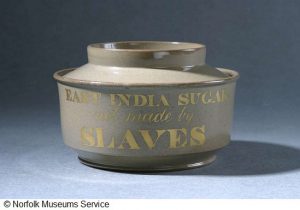
Women who opposed slavery took the lead in boycotts of slave-grown produce, particularly sugar. Slavery abolitionists used badges and iconic images to publicise their views, like the sugar bowl above made by Wedgewood. Enormous petitions opposing the slave trade were delivered to the House of Commons.

Women Against Slavery

It is only relatively recently that historians have explored the activities of women abolitionists. When looking at local provincial sources, autobiographies, historical objects and sites it becomes clear that women played a significant and, at times, pivotal role in the campaign to abolish slavery.

These women came from a range of backgrounds. The tactics they used – boycotting slave-produced sugar and other goods, organising mass petitions and addressing public meetings – proved highly effective.

Hannah Moore

Hannah Moore (from 1745 to 1833) was an educator, writer and social reformer. Born in Bristol, she was strongly opposed to slavery throughout her life. She encouraged women to join the anti-slavery movement.

In 1787 she met John Newton and members of the Clapham Sect, including William Wilberforce with whom she formed a strong and lasting friendship. Moore was an active member of the Society for Effecting the Abolition of the African Slave Trade. Her writings reflected her opposition to slavery and “Slavery, a Poem” which she published in 1788 is regarded as one of the most important slavery poems of the period.

Ill health prevented Moore from taking an active role in the 1807 campaign to end the slave trade but she continued to write to Wilberforce and other campaigners.

She lived just long enough to see the act abolishing slavery passed. She died in September 1833 and is buried with her sisters in the south-east corner of All Saints’ Churchyard, Station Road, Wrington, Bristol, BS40.

Mary Prince

Mary Prince (from 1788 to around 1833) was the first black woman to publish her account of being an enslaved woman. She was born in Bermuda in 1788 and endured a life of violence and abuse through a succession of slave-owners.

Her owners, the Woods, brought Mary to England. To escape their cruelty she ran away to the Moravian Church in London’s Hatton Gardens. Members of the Anti-Slavery Society took up her case and they encouraged her to write her life story.

Published in 1831 as “The History of Mary Prince”, this extraordinary story describing ill treatment and survival was a rallying cry for emancipation. The book provoked two libel actions and had three editions in its year of publication.

In 2007 Camden Council and the Nubian Jak Community Trust placed a plaque near to the site where she lived at Senate House, Malet Street, London, WC1E 7HU.

Elizabeth Barrett Browning

The poet Elizabeth Barrett Browning (from 1806 to 1861) is commemorated with two plaques in Marylebone, London. A brown Society of Arts plaque is at the site of her former home at 50 Wimpole Street, London W1G 8SQ. There is a bronze plaque at 99, Gloucester Road, London W1U 6JG.

Barrett Browning’s father, Edward Barrett Moulton Barrett (from 1785 to 1857), inherited 10,000 acres of sugar plantations in Jamaica, with an annual income of £50,000. Her maternal grandfather John Graham-Clarke (from 1736 to 1818) was a Newcastle merchant who owned sugar plantations, trading ships and many more businesses associated with slavery. At his death his assets were equivalent to around £20 million today.

Barrett Browning was aware of the source of her family’s wealth:

  • I belong to a family of West Indian slave-owners and if I believe in curses, I should be afraid. – Letter from Elizabeth Barrett Browning to John Ruskin in 1855.

In 1849 she published an anti-slavery poem “The Runaway Slave at Pilgrim’s Point”. It portrayed a slave woman cursing her oppressor after she had been whipped, raped and impregnated.

Elizabeth Jesser Reid

A social reformer and philanthropist, Elizabeth Jesser Reid (from 1789 to 1866) is best known for founding Bedford College for Women in London in 1849. The College is now part of Royal Holloway, University of London.

Jesser Reid was also an anti-slavery activist and she attended the Anti-Slavery Convention in 1840 and was a member of the Garrisonian London Emancipation Committee. A green plaque has been placed at her former home, 48 Bedford Square, London WC1B 3DR to commemorate Reid and the first site of the college.

While living at 48 Bedford Square, Reid entertained Harriet Beecher Stowe in 1853. She also shared her house with the African American abolitionist Sarah Parker Remond whilst she studied at the College between 1859 and 1861.

Sarah Parker Remond

Born in Salem, Massachusetts, Sarah Parker Remond (from 1826 to 1894) came from a family that was deeply involved in the abolitionist campaign in the United States. Her brother Charles Lenox Remond was the first black lecturer in the American Anti-Slavery Society.

Parker Remond was such an impressive speaker and fund-raiser for the abolitionist movement that she was invited to take the anti-slavery message to Britain. Soon after arriving here in 1859 she embarked upon a nationwide lecture tour. In 1866 she left London to study medicine in Italy. She practised as a doctor in Florence, where she settled.

—————————

Related Posts

Listen to our podcasts about women’s involvement in the abolition movement:

Source: Retrieved April 13, 2018 from: https://historicengland.org.uk/research/inclusive-heritage/the-slave-trade-and-abolition/sites-of-memory/ending-slavery/

Women applied pressure to all aspects of society – the engines of economics, security and governance – for the end of the Slave Trade; then they continued the pressure for the Abolition of Slavery itself. The Nurturing worked! It was not immediate, but eventual and evolutionary:

  • They impacted the economic cycles – boycotts & embargos. See the notes on the Anti-Saccharrittes in Appendix A.
  • They compelled the Security engines – The Royal Navy was engaged to enforce the ban on the Slave Trade after 1807. (Between 1808 and 1860, the West Africa Squadron captured 1,600 slave ships and freed 150,000 Africans.[5]) See Appendix B below.
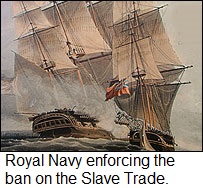
  • They engaged the related governance by entreating the political supporters, every year, to introduce and re-introduce the Abolition Bill.

Though the abolition of Slavery went against the Nature of the New World, these women and their Nurturing did not stop.  They persisted! This commentary concludes the 4-part series on Nature or Nurture for community ethos. This entry is 4 of 4 in this series from the movement behind the book Go Lean … Caribbean in consideration of the Nurturing by the mothers (women) of England who finally forge change in the British Empire.. The other commentaries in the series are cataloged as follows:

  1. Nature or Nurture: Black Marchers see gun violence differently
  2. Nature or Nurture: Cop-on-Black Shootings – Embedded in America’s DNA; Whites Yawn
  3. Nature or Nurture: UK City of Bristol still paying off Slavery Debt
  4. Nature or Nurture: Nurturing came from women to impact Abolition of Slavery

In the first submission to this series, the history of the Psychological battle between Nature and Nurture was introduced, which quoted:

One of the oldest arguments in the history of psychology is the Nature vs Nurture debate. Each of these sides have good points that it’s really hard to decide whether a person’s development is predisposed in his DNA, or a majority of it is influenced by this life experiences and his environment. – https://explorable.com/nature-vs-nurture-debate

All of these commentaries relate to “how” the stewards – including empowered women – for a new Caribbean can assuage societal defects despite the default Nature. Here-in, this example from England is a great role model for the Caribbean region. We too, need our women!

How about the Caribbean today? What bad Nature can women help to Nurture out of Caribbean society?

There are many!

The Lord giveth the word: The women that publish the tidings are a great host. – Psalms 68:11 American Standard Version

Our region is riddled with societal defects. In fact, the subject of societal defects is a familiar theme for this commentary, from the movement behind the book Go Lean…Caribbean. The book asserts that the British colonial masters for the Caribbean – 18 of the 30 member-states share this legacy – did not endow this region with the organizational dynamics (attitudes or structures) that would lead to societal success. The former slave populations became the majority in all these lands; when majority rule was compelled on the New World – post-World War II restructuring – the people were not ready. Looking at the dispositions in the region today, these are nearing Failed-State status – it is that bad!

The theme of Failing States has been detailed in previous blog-commentaries by the movement behind the Go Lean book. Consider this sample previous blogs:

https://goleancaribbean.com/blog/?p=13749 Failure to Launch – Governance: Assembling the Region’s Organizations
https://goleancaribbean.com/blog/?p=13746 Failure to Launch – Security: Caribbean Basin Security Dreams
https://goleancaribbean.com/blog/?p=13744 Failure to Launch – Economics: The Quest for a ‘Single Currency’
https://goleancaribbean.com/blog/?p=13391 After Maria, Puerto Rico Failed-State: Destruction and Defection
https://goleancaribbean.com/blog/?p=12996 After Irma, Many Caribbean Failed-States: Destruction and Defection
https://goleancaribbean.com/blog/?p=12098 Inaction: A Recipe for ‘Failed-State’ Status
https://goleancaribbean.com/blog/?p=10657 Outreach to the Diaspora – Doubling-down on Failure
https://goleancaribbean.com/blog/?p=2547 Miami’s Success versus Caribbean Failure

There is the need for the Caribbean member-states to reform and transform. We have some bad community ethos; we need “all hands on deck” to mitigate and remediate them. The book Go Lean…Caribbean – available to download for free – serves as a roadmap for the introduction and implementation of the technocratic Caribbean Union Trade Federation (CU), for the elevation of Caribbean society – for all 30 member-states. This CU/Go Lean roadmap has these 3 prime directives for effecting change in our society:

  • Optimization of the economic engines in order to grow the regional economy to $800 Billion and create 2.2 million new jobs.
  • Establishment of a security apparatus to ensure public safety and protect the resultant economic engines.
  • Improve Caribbean governance to support these engines, including a separation-of-powers between the member-states and CU federal agencies.

The same as the British Empire needed a “large host” of women to Nurture societal values, priorities, practices and laws to supplant the bad Nature of the British Slave economy, a “large host” of women will be needed to forge change in the British Caribbean and the full Caribbean – American, Dutch, French and Spanish legacies. This subject too, has been a consistent theme from the movement behind the Go Lean book. Consider this sample from these previous blog-commentaries:

https://goleancaribbean.com/blog/?p=14541 One Woman Made a Difference – Role Model: Viola Desmond
https://goleancaribbean.com/blog/?p=14482 International Women’s Day – Protecting Rural Women
https://goleancaribbean.com/blog/?p=13063 Getting Gender Equity without a ‘Battle of the Sexes’
https://goleancaribbean.com/blog/?p=12035 Lean-in for ‘Wonder Woman Day’
https://goleancaribbean.com/blog/?p=10124 The ‘Hidden Figures’ of Women Building-up Society – Art Imitating Life
https://goleancaribbean.com/blog/?p=8306 Women Get Ready for New “Lean-In” Campaign
https://goleancaribbean.com/blog/?p=6937 Women in Politics – Yes, They Can!
https://goleancaribbean.com/blog/?p=6836 Role Model – #FatGirlsCan
https://goleancaribbean.com/blog/?p=5648 One Woman – Taylor Swift – Changing Streaming Music Industry
https://goleancaribbean.com/blog/?p=3490 One Woman Entrepreneur Rallied and Change Her Whole Community

The Go Lean book provides 370-pages of turn-by-turn instructions on “how” to Nurture a better Caribbean society. It details the new community ethos that needs to be adopted so as to reboot, reform and transform the societal engines of Caribbean society – economics, security and governance. We want the women to help empower Caribbean society and so we want to empower women. In fact, the book (Page 226) details the bad community ethos that permeated the “Imperial” world during the times of Caribbean colonization. The advocacy entitled 10 Ways to Empower Women presented this encyclopedic reference on the Natural Law philosophy as follows:

The Bottom Line on Natural Law and Women’s Rights

17th century natural law philosophers in Britain and America, such as Thomas Hobbes, Jean-Jacques Rousseau and John Locke, developed the theory of natural rights in reference to ancient philosophers such as Aristotle and the Christian theologist Aquinas. Like the ancient philosophers, 17th century natural law philosophers defended slavery and an inferior status of women in law.

Relying on ancient Greek philosophers, natural law philosophers argued that natural rights where not derived from god, but were “universal, self-evident, and intuitive”, a law that could be found in nature. They believed that natural rights were self-evident to “civilized man” who lives “in the highest form of society”. Natural rights derived from human nature, a concept first established by the ancient Greek philosopher Zeno of Citium in Concerning Human Nature.

Zenon argued that each rational and civilized male Greek citizen had a “divine spark” or “soul” within him that existed independent of the body. Zeno founded the Stoic philosophy and the idea of a human nature was adopted by other Greek philosophers, and later natural law philosophers and western humanists. Aristotle developed the widely adopted idea of rationality, arguing that man was a “rational animal” and as such a natural power of reason.

Concepts of human nature in ancient Greece depended on gender, ethnic, and other qualifications and 17th century natural law philosophers came to regard women along with children, slaves and non-whites, as neither “rational” nor “civilized”. Natural law philosophers claimed the inferior status of women was “common sense” and a matter of “nature”. They believed that women could not be treated as equal due to their “inner nature”. The views of 17th century natural law philosophers were opposed in the 18th and 19th century by Evangelical natural theology philosophers such as William Wilberforce and Charles Spurgeon, who argued for the abolition of slavery and advocated for women to have rights equal to that of men. Modern natural law theorists, and advocates of natural rights, claimed that all people have a human nature, regardless of gender, ethnicity or other qualifications; therefore all people have natural rights.

These thoughts on Natural Law and Women’s Rights persist to this day, despite how archaic they may seem.

This flawed Natural Law philosophy accounts for the Nature of the Caribbean – this was inherited from the Imperial Europe (1600’s) – and never fully uprooted. This was the heavy-lifting that the foregoing women helped to Nurture out of Europe, and what we need continued help for today’s women to uproot.

In addition to the ethos discussion, the book presents the strategies, tactics, implementations and advocacies to execute change in the Caribbean region. This is how to Nurture a bad community (ethos) into a good community (ethos).

Yes, we can elevate our societal engines. We can do more than just study impactful women from the past, we can foster our own brand of impactful women. We need them!

We need all hands on deck to make our Caribbean homeland a better place to live, work and play. 🙂

Download the free e-Book of Go Lean … Caribbean – now!

Sign the petition to lean-in for this roadmap for the Caribbean Union Trade Federation.

————

Appendix A – Anti-Saccharrittes … in England


In 1791, … the abolitionist William Fox published his anti-sugar pamphlet, which called for a boycott of sugar grown by slaves working in inhuman conditions in the British-governed West Indies. “In every pound of sugar used, we may be considered as consuming two ounces of human flesh,” wrote Fox. So powerful was his appeal that close to 400,000 Britons gave up sugar.
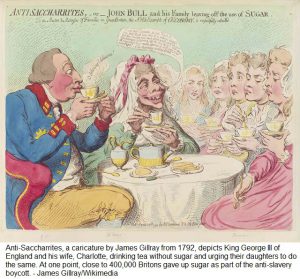
The sugar boycott squarely affected that most beloved of English rituals: afternoon tea. As The Salt [Magazine] has reported, sugar was an integral reason why tea became an engrained habit of the British in the 1700s. But with the sugar boycott, offering or not offering sugar with tea became a highly political act.

Soon, grocers stopped selling West Indies sugar and began to sell “East Indies sugar” from India. Those who bought this sugar were careful to broadcast their virtue by serving it in bowls imprinted with the words “not made by slave labor,” in much the same way that coffee today is advertised as fair-trade, or eggs as free-range.

Source: Posted August 4, 2015; retrieved April 14, 2018 from: https://www.npr.org/sections/thesalt/2015/08/04/429363868/how-percy-shelley-stirred-his-politics-into-his-tea-cup

————

Appendix B – Rare ‘slave freeing’ photos on show

A set of rare photographs showing African slaves being freed by the Royal Navy have gone on show for the first time. They are part of an exhibition marking the bicentenary of the abolition of the slave trade.

A set of rare photographs showing African slaves being freed by the Royal Navy have gone on show for the first time.
Published April 28, 2007.
The photographs, on display at the Royal Naval Museum, Portsmouth, Hants, show a sailor removing the manacle from a newly-freed slave as well as the ship’s marines escorting captured slavers.

———-

East African slaves aboard the HMS Daphne, a British Royal Navy vessel involved in anti-slave trade activities in the Indian Ocean,
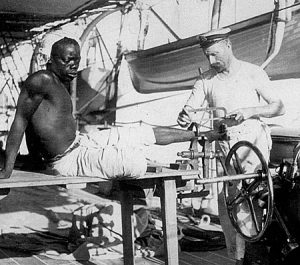
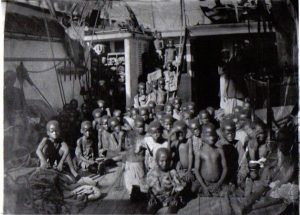
Samuel Chidwick, 74, has donated the photographs taken by his father Able Seaman Joseph Chidwick, born in 1881, on board HMS Sphinx off the East African coast in about 1907.

The photographs, on display at the Royal Naval Museum, Portsmouth, Hants, show a sailor removing the manacle from a newly-freed slave as well as the ship’s marines escorting captured slavers.

Mr Chidwick, of Dover, Kent, said: “The pictures were taken by my father who was serving aboard HMS Sphinx while on armed patrol off the Zanzibar and Mozambique coast.

“They caught quite a few slavers and those particular slaves that are in the pictures happened while he was on watch. “That night a dhow sailed by and the slaves were all chained together. He raised the alarm and they got them on to the ship and got the chains knocked off them.

“They then questioned them and sent a party of marines ashore to try to track the slave traders down.

“They caught two of them and I believe they were of Arabic origin.

“My father thought the slave trade was a despicable thing that was going on, the slaves were treated very badly so when they got the slavers they didn’t give them a very nice time.”

Jacquie Shaw, spokeswoman for the Royal Naval Museum, said: “The museum and the Royal Navy are delighted to announce the donation of a nationally important collection of unique photographs taken by Able Seaman Joseph John Chidwick during his service on the Persian Gulf Station where the crew of HMS Sphinx were engaged in subduing the slave trade.

“The collection comprises a fascinating and important snapshot of life on anti-slavery duties off the coast of Africa.”

The exhibition, ‘Chasing Freedom -The Royal Navy and the suppression of the Transatlantic Slave Trade’, is being held until January next year to mark the 200th anniversary of the abolition of the slave trade.

The House of Commons passed a bill in 1805 making it unlawful for any British subject to capture and transport slaves but the measure was blocked by the House of Lords and did not come into force until March 25, 1807.

Mrs Shaw said that since the exhibition opened, members of the public had brought forward several historically-important items. She said: “As well as these amazing images, members of the public have brought many other unheard stories of the Royal Navy and the trade in enslaved Africans to the museum’s attention including the original ship’s log of the famed HMS Black Joke of the West Coast of Africa Station.”

Source: Posted 29 Apr 2007; retrieved April 14, 2018 from: http://metro.co.uk/2007/04/29/rare-slave-freeing-photos-on-show-331626/

————

Appendix C VIDEO – Abolition to Suffrage – https://youtu.be/WbLVp27cqZ8

Share this post:
, , , ,

Missing Out on the ‘Rush’ – Encore

The United States is missing out!

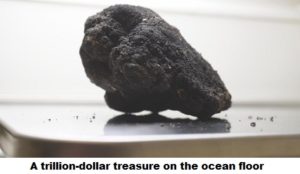
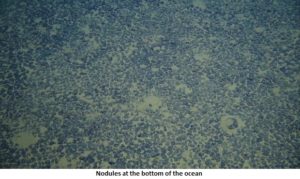
This is the summary of the VIDEO here from the news magazine 60 Minutes, as broadcasted on November 17, 2019 about the missed opportunities in the ‘Rush’ to source Rare Earth elements by deep-sea mining activities. See this VIDEO here:

VIDEO – Why the U.S. is missing out on the race to mine trillions of dollars worth of metals from the ocean floor – https://www.cbsnews.com/news/rare-earth-elements-u-s-on-sidelines-in-race-for-metals-sitting-on-ocean-floor-60-minutes-60-minutes-2019-11-17/

Published on November 17, 2019 – Rare earth elements and metals used in cell phones, supercomputers and more are sitting on the ocean floor, ready to be mined by multiple countries. So why is the U.S. on the sidelines?

Used for entertainment [and educational] purposes only. The property and rights for this video/audio go to ©CBS.

Perhaps the US, as the richest Single Market economy in the world can afford to pass up these economic opportunities. Maybe …

For us in the Caribbean, we cannot miss out.

We need all the economic help we can get. This was the strong urging from a previous blog-commentary on Rare Earths from March 23, 2015 and the new “Rush” to source (mine or extract) them.

Why is the US sitting on the sidelines?

The foregoing VIDEO explains that “they refuse to cede any governing authority to” … the International Seabed Authority, a subset of the United Nations Convention for the Law of the Sea (UNCLOS).

Perhaps they have the luxury to maintain this arrogance. We do not! On the contrary, here in the Caribbean, we are doubling-down on the UNCLOS protocols.

Let’s get busy in this new Gold Rush – this was the mandate from the prior blog-commentary. It is only apropos to Encore that submission now. See the commentary here:

—————

Go Lean Commentary – Rare Earths: The new ‘Rush’

There’s “Gold in dem there hills” – Legendary exclamation of the discovery of gold in 1848/49 California – the “Forty-niners”.

Thus started the California Gold Rush. Now there is a new rush … or quest; this time for alternative minerals to be extracted from the earth – all over the planet – that are considered even more valuable than gold: Rare Earth.

CU Blog - Rare Earths - The new Rush - Photo 1

This class of minerals was recently depicted in an exposé  by the CBS News Magazine 60 Minutes:

Video Title: http://www.cbsnews.com/videos/modern-lifes-devices-under-chinas-grip – Modern life’s devices under China’s grip?


From smartphones to cars and defense missiles, modern U.S. life depends on rare earth elements but China dominates the industry. (VIDEO plays best in Internet Explorer).

The summary of the VIDEO portrays that the United States initially had the lead in this field of Rare Earth extraction and sourcing; but the US de-prioritized this substance, while China transcended it and now exploits the market to near-complete domination.

The urgency of Rare Earth is not so unfamiliar to this commentary. This point was declared emphatically in the book Go Lean … Caribbean in numerous references:

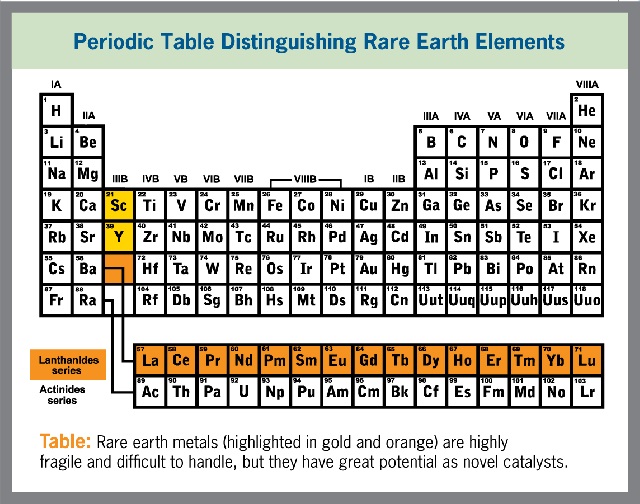
CU Blog - Rare Earths - The new Rush - Photo 2o Ways to Impact Extractions (Page 195) – There is a “rush”/quest to harvest rare earth elements. [159] These include lanthanide elements (fifteen metallic chemical elements with atomic numbers 57 through 71, from lanthanum through lutetium) for metals that are ferromagnetic, this means their magnetism only appear at low temperatures. Rare earth magnets are made from these compounds and are ideal in many high-tech products. The CU will foster the regional exploration and extraction of these pricey materials.

o Start-up Benefits from the EEZ (Page 104) – The new Exclusive Economic Zone (EEZ) powers allows for the administration of mineral extraction (mines) and oil/natural gas. Risk management and disaster mitigation plan must therefore be embedded into every drilling permit/license, as a CU mandate is to protect tourism product – a “bird in hand is better than two in the bush”. In addition, there is the harvest possibility of rare earth elements, like lanthanide and lutetium. Recently (2010), these minerals were priced even higher than gold at $2,200/kg.

o Reference footnote # 159 (Page 361) – The Economist Magazine. “The Difference Engine: More precious than gold”. Posted September 17, 2010; retrieved for the book in September 2013 from: http://www.economist.com/blogs/babbage/2010/09/rare-earth_metals. This news article stressed this point:

The foregoing VIDEO depicts the need for technocratic management of the extraction process for Rare Earths. There is now a great demand for these minerals; but the supply source is rather limited. Yet they are not so rare; they may even be found in the Caribbean region. Thus the need to explore these opportunities. The Go Lean book serves as a roadmap for the introduction and implementation of the technocratic Caribbean Union Trade Federation (CU), for the elevation of Caribbean society. This CU/Go Lean roadmap has these 3 prime directives:

  • Optimization of the economic engines in order to grow the regional economy to $800 Billion and create 2.2 million new jobs.
  • Establishment of a security apparatus to protect the resultant economic engines and the environment.
  • Improvement of Caribbean governance – including oversight of Self-Governing Entities and the Exclusive Economic Zone – to support these engines.

The Go Lean roadmap seeks to promote and oversee the effort for the exploration and extraction of these minerals, recognizing that modern life needs the efficiency that comes from science. The “brick-and-mortar” of a lot of today’s electronic equipment and computer components depend on the magnetic properties associated with Rare Earth minerals. The progress that the CU envisions in the fields of Science, Technology, Engineering and Medicine (STEM) will require engagements with the metallurgy of electronics. We need full exploration of the Caribbean homelands and waters for natural sources of these minerals. Plus with “prices higher than gold”, there is the economic incentive to push forth investments in this industry space.

Early in the book, the need is stressed to be on-the-look-out for opportunities to optimize the region’s economic-security-governing engines. These pronouncements are stated in the Declaration of Interdependence (Pages 11 & 13):

iv. Whereas the natural formation of the landmass is in a tropical region, the flora and fauna allows for an inherent beauty that is enviable to peoples near and far. The structures must be strenuously guarded to protect and promote sustainable systems of commerce paramount to this reality.

v. Whereas the natural formation of our landmass and coastlines entail a large portion of waterscapes, the reality of management of our interior calls for extended oversight of the waterways between the islands. The internationally accepted 12-mile limits for national borders must be extended by International Tribunals to encompass the areas in between islands. The individual states must maintain their 12-mile borders while the sovereignty of this expanded area, the Exclusive Economic Zone, must be vested in the accedence of this Federation.

xi. Whereas all men are entitled to the benefits of good governance in a free society, “new guards” must be enacted to dissuade the emergence of incompetence, corruption, nepotism and cronyism at the peril of the people’s best interest. The Federation must guarantee the executions of a social contract between government and the governed.

xxvii. Whereas the region has endured a spectator status during the Industrial Revolution, we cannot stand on the sidelines of this new economy, the Information Revolution. Rather, the Federation must embrace all the tenets of Internet Communications Technology (ICT) to serve as an equalizing element in competition with the rest of the world. The Federation must bridge the digital divide and promote the community ethos that research/development is valuable and must be promoted and incentivized for adoption.

This commentary previously discussed details of mineral/oil extractions in the Caribbean region. Here is a sample of earlier blogs:

https://goleancaribbean.com/blog/?p=4476 Lessons Learned from Big Salt mining
https://goleancaribbean.com/blog/?p=3743 Caribbean Oil Producer – Trinidad – cuts 2015 budget as oil prices tumble
https://goleancaribbean.com/blog/?p=3213 Gas Prices Drop Below $2 due to global extraction policy
https://goleancaribbean.com/blog/?p=2857 Recycling Rare Earths materials – Entrepreneurism in Junk

The Go Lean roadmap details a series of community ethos, strategies, tactics, implementations and advocacies to foster the progress in the wide fields of extractions for mining, materials and drilling administration. The following list applies:

Community Ethos – Lean Operations Page 24
Community Ethos – Return on Investments Page 24
Community Ethos – Cooperatives Page 25
Community Ethos – Ways to Impact the Future Page 26
Community Ethos – Ways to Improve Negotiations Page 32
Anecdote – Pipeline Transport – Strategies, Tactics & Implementations for minerals Page 43
Strategy – Mission – Regulatory powers mineral/oil exploration and extraction in the EEZ Page 45
Strategy – Competitive Analysis – Businesses – Emergency Planning –vs- Litigation Page 52
Tactical – Fostering a Technocracy Page 64
Tactical – Growing the Economy to $800 Billion – Industrial Extractions Driver Page 68
Tactical – Separation of Powers – Environmental Control & Regulatory Commission Page 83
Tactical – Separation of Powers – Extractions (Mining, Materials, Drilling) Administration Page 83
Tactical – Separation of Powers – Transportation – Turnpike Operations – Pipelines Page 84
Anecdote – “Lean” in Government Permitting Page 93
Anecdote – Caribbean Energy Grid Implementation Page 100
Implementation – Ways to Pay for Change Page 101
Implementation – Start-up Benefits from the EEZ Page 104
Implementation – Steps to Implement Self-Governing Entities – Ideal for mines Page 105
Implementation – Ways to Develop Pipeline Industry – For Rare Earth Transport Page 107
Advocacy – Ways to Impact Public Works Page 175
Advocacy – Ways to Foster Cooperatives Page 176
Advocacy – Ways to Impact Monopolies – Environmental concerns, systemic threats Page 202
Advocacy – Ways to Improve   Extractions – Mining, Materials, Drilling Optimization Page 205
Advocacy – Ways to Develop the Auto Industry Page 206
Appendix – North Dakota Extractions – Economic-Societal Effects of a Boom Page 334

This commentary asserts that the need is undeniable for mineral exploration and extraction. This can help to build-up the economy and command more respect in the world’s industrial landscape. Shepherding the Caribbean economy – for Rare Earths extractions – is the job for technocrats, trained and accomplished from the battles of globalization and trade wars.

Industrial policy is among the heavy-lifting tasks for the lean, agile operations of the CU technocracy. Everyone, the people, businesses and institutions are hereby urged to lean-in to this roadmap to make the Caribbean a better place to live, work and play. 🙂

Download the book Go Lean … Caribbean – now!

Share this post:
, , ,
[Top]

Industrial Reboot – Fisheries 101

Go Lean Commentary

Go Fish!

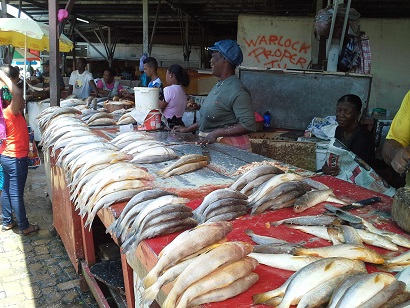
It seems like a simple directive: Fishing. It’s one of the world’s oldest professions, sports and hobbies. As long as a person is close to a body of water – with fish – they can improvise, hustle and acquire food to feed their families. But sadly, in the Caribbean, we do not consume enough fish – see Appendix B below – and have under-utilized our Fisheries industry.

In many jurisdictions, there is a legal distinction between commercial fishing and amateur/sport fishing. The focus of this commentary is on commercial fishing. For the full history of the Caribbean, there has always been a commercial fishing industry … and yet, there are a lot of inadequacies in this industrial eco-system. Consider:

  • There are no canneries in the Caribbean, beyond the “closed” one in Mayaquez, Puerto Rico.
  • Fish stocks are threatened regionally – see more here: http://www.jamaicaobserver.com/news/Caribbean-fishing-industry-at-risk_69808
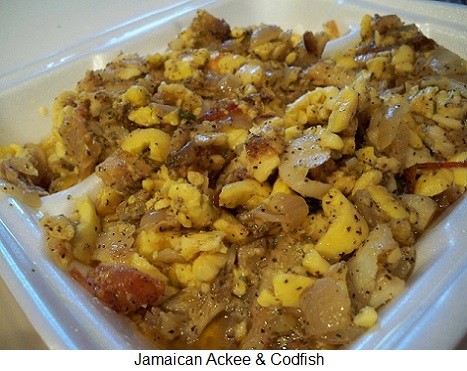
  • The National food of Jamaica – Ackee & Codfish – while delicious and indicative of the native culture, actually features North Atlantic Cod … from Norway; not a locally harvested fish.

This is part of the assessment of the Caribbean failing economic engines. The book Go Lean…Caribbean – a roadmap for the introduction and implementation of the Caribbean Union Trade Federation (CU) – relates:

Previous Caribbean societies lived off the land and the sea; but today, the region depends extensively on imports, even acquiring large quantities of seafood, despite the 1,063,000 square miles of the Caribbean Sea. The CU Trade Federation is a technocracy, empowered to reboot the economic engines of the member-states, by fostering new industries (new “purse”) across the entire region and deploying solutions to better exploit the opportunities of the global trade market. Thus generating all new revenues; with no need to re-distribute any existing “purse” among the member-states.

The book Go Lean…Caribbean asserts that the business model of commercial fishing can harness a lot of jobs. This book asserts, at Page 257, that this roadmap to elevate the economic engines in Caribbean society can succeed and projects that 4,000 new direct jobs – direct jobs on fishing vessels, aquaculture sites, canneries and distribution – can be created with strategic endeavors for the Fisheries. (Even more indirect jobs – 15,000 based on a 3.75-to-1 multiplier rate – can be created).  This is how the industrial landscape of the Caribbean region can be rebooted, by doubling-down on the effort to enhance this fisheries industry. So this strategy from this Go Lean book can result in 19,000 jobs in total.

Fishing is an old industry and yet there is still an opportunity to reboot this part of our industrial landscape. Rather than looking forward, the Go Lean roadmap looks side-ways to the best tactics and best practices of this global industry. Consider these suggestions:

  • Cooperatives – Fishery cooperatives allow fishermen and industry players to pool their resources in certain (non-competitive) areas of activity. This strategy is vital for sharing the cost and expense of installing piers/docks, locating systems (Loran-C & GPS), canneries, refrigerated warehouses and transportation solutions.
  • Canneries – The CU will sponsor co-ops to manage canneries for different foods, including seafood i.e. mackerel.
  • Aqua-culture – the controlled harvesting of fish, crustaceans, mollusks and aquatic plants using farm-like conditions and practices. (Think incubating fertile eggs in a laboratory).
  • Mari-culture – practiced in marine environments and underwater habitats where aquatic plants are embedded to protect fish beds and reefs.

Despite these popular practices, there is something new in  this strategy for the Caribbean: Size!

The requisite investment of the resources for this goal may be too big for any one Caribbean member-state alone. So rather, the Go Lean strategy is to shift the responsibility to a region-wide, professionally-managed, deputized technocracy; this will result in greater production and greater accountability.

We need the greater production of a new economic landscape in our region. The current one is in shambles! This is due to the primary driver in the region – Tourism – being under assault; more and more visitors shift from stay-overs to cruise arrivals. So this means less economic impact to the local markets. So as a region, we must reboot our industrial landscape and add more job-creating options.

The Go Lean book prepares the business model around delivering better on basic needs – food, clothing and shelter. We need the fisheries to supplement the food provisions. In fact, seafood may even be a better source of protein than the land-based options of beef, pork and poultry – think of the additives, antibiotics and steroids. Fish is sounding better and better!

This constitutes an industrial reboot for the Greater Good. We must mine these treasures from the sea. See this thought elaborated upon in this recent news article in Appendix A below. Also, we ask this question of Caribbean stakeholders: “Why not eat more fish?” in Appendix B.

The book Go Lean…Caribbean – available to download for free – presents the confederation roadmap of all 30 member-states to execute a reboot of the Caribbean economic eco-system. This CU/Go Lean roadmap has these 3 prime directives:

  • Optimization of the economic engines in order to grow the regional economy to $800 Billion & create 2.2 million new jobs.
  • Establishment of a security apparatus to ensure public safety and protect the resultant economic engines on the Caribbean homelands and Seas.
  • Improvement of Caribbean governance to support these engines, including a separation-of-powers between the member-states and CU federal agencies. There will be a Federal Fisheries Department for regional oversight of the EEZ.

As related previously, rebooting the homeland of the Caribbean region will mean rebooting the economic engine of the Caribbean Sea. This commentary has previously identified a number of different industries that can be rebooted under this Go Lean roadmap. See the list of previous submissions on Industrial Reboots here:

  1. Industrial RebootsFerries 101 – Published June 27, 2017
  2. Industrial RebootsPrisons 101 – Published October 4, 2017
  3. Industrial RebootsPipeline 101 – To be published October 6, 2017
  4. Industrial RebootsFrozen Foods 101 – To be published October 6, 2017
  5. Industrial RebootsCall Centers 101 – Published July 2, 2018
  6. Industrial RebootsPrefab Housing 101 – Published July 14, 2018
  7. Industrial RebootsTrauma 101 – Published July 18, 2018
  8. Industrial RebootsAuto-making 101 – Published – July 19, 2018
  9. Industrial Reboots – Shipbuilding 101 – Published – July 20, 2018
  10. Industrial Reboots – Fisheries 101 – Published Today – July 23, 2018

The Go Lean book stresses that reforming and transforming the Caribbean economic engines must be a regional pursuit. This was an early motivation for the roadmap, as pronounced in the opening Declaration of Interdependence (Pages 12 – 13):

v. Whereas the natural formation of our landmass and coastlines entail a large portion of waterscapes, the reality of management of our interior calls for extended oversight of the waterways between the islands. The internationally accepted 12-mile limits for national borders must be extended by International Tribunals to encompass the areas in between islands. The individual states must maintain their 12-mile borders while the sovereignty of this expanded area, the Exclusive Economic Zone, must be vested in the accedence of this Federation.

xxiv.  Whereas a free market economy can be induced and spurred for continuous progress, the Federation must install the controls to better manage aspects of the economy: jobs, inflation, savings rate, investments and other economic principles. Thereby attracting direct foreign investment because of the stability and vibrancy of our economy.

xxvi.  Whereas the Caribbean region must have new jobs to empower the engines of the economy and create the income sources for prosperity, and encourage the next generation to forge their dreams right at home, the Federation must therefore foster the development of new industries, like that of ship-building, automobile manufacturing, prefabricated housing, frozen foods, pipelines, call centers, and the prison industrial complex. In addition, the Federation must invigorate the enterprises related to existing industries like tourism, fisheries and lotteries – impacting the region with more jobs.

Accordingly, the CU will facilitate the eco-system for Exclusive Economic Zones (EEZ) and Self-Governing Entities (SGE). These SGE’s are ideal for the Fisheries industry – with its exclusive federal regulation/promotion activities. Imagine bordered campuses – with docks, canneries, refrigerated warehouses, cooperative refrigeration utilities and backup power generations.

There are ideal role models that the Caribbean Sea can emulate. First understand the UN’s Law of the Sea in the Appendix VIDEO below. Then consider the example of Alaska. See the details here from the Go Lean book at Page 210:

The Bottom Line on Alaska Exclusive Economic Zone
Alaska is one of the most bountiful fishing regions in the world, producing a wide variety of seafood. The fisheries of Alaska are recognized as some of the best-managed fisheries in the world, providing thousands of jobs and a vital, long term economic engine for Alaska communities and the state. Over 4.1 billion pounds of fish and shellfish worth over $1.8 billion were harvested in Alaska waters in 2010, keeping Alaska in first place [globally] for value of landings.-AKRDC.org
.
As with other countries, the 200 nautical miles Exclusive Economic Zone (EEZ) off the coast of the United States gives its fishing industry special rights. It covers 4.38 million square miles.The US Government established the North Pacific Fishery Management Council with jurisdiction over the 900,000-squaremiles of the EEZ for the Gulf of Alaska, Bering Sea and Aleutian Islands. This region provides rich marine resources: Pacific salmon, shellfish (shrimp, crab), ground-fish, flatfish, Pacific halibut, herring, and more. The salmon species in Alaska generally produce good harvests, though some stocks are declining. The Aleutian Islands are a series of over 300 rocky islands, stretching over 1,000 miles from southwest Alaska to Russia. They are home to the largest fishing port in the U.S., Dutch Harbor. In 2005, about 30,000 square miles of sea-floor around the Aleutian Islands were permanently closed and certain destructive fishing practices banned.

To fully explore Fisheries, there must be art and science! See the high level view of UNCLOS in the Appendix VIDEO below.

The Go Lean movement (book and blogs) details the principles of SGE’s and job multipliers, how certain industries are better than others for generating multiple indirect jobs down the line (or off-campus) for each direct job on the SGE’s payroll.

This is the vision of an industrial reboot! This transformation is where and how the jobs are to be created.

The Go Lean book provides 370-pages of turn-by-turn instructions on “how” to adopt new community ethos, plus the strategies, tactics, implementations and advocacies to execute so as to reboot, reform and transform the societal engines of Caribbean society. In addition to  Federal Fisheries Department, there is an advocacy for rebooting the industrial landscape to better foster the Fisheries industry; consider the specific plans, excerpts and headlines from the book on Page 210 entitled:

10 Ways to Improve Fisheries

1 Lean-in for the Caribbean Single Market
The CU will allow for the unification of the region into one market, thereby creating a single economy of 30 member-states, 42 million people and a GDP of over $800 Billion (2010). One mission of the CU is to facilitate the food supply so that the region can feed itself, more from local production and less from trade; this includes yields from fisheries. The Caribbean Sea generates a large fishing industry for the surrounding countries, accounting for half a million metric tons (1.1 billion pounds) of fish per year. And yet, the region still imports fish from Alaska. (Alaska imports none from the Caribbean).
2 UN Petition – Effort initiated by the ACS

The CU seeks a designation of an Exclusive Economic Zone for the Caribbean Seas, must like the US enjoys with the waters surrounding Alaska-Aleutian Islands. This new zone should also feature the international waters between the islands. The CU will oversee this zone to coordinate economic activity, protect the natural environment against hazards and ensure the security measures for the assurance of the homelands. These requests are in line with the UN charter. [See more on the UNCLOS in the Appendix VIDEO below].

3 Common Pool Resources (Lobster, Conch, Grouper, Flying Fish)

Though the waters between the islands may be uninhabited, their resources can still be depleted. The CU will govern the common pool resources to promote the sustainability of fish stock. Fishing for lobster, conch, grouper, “flying fish” and other species must be controlled, with limited harvesting seasons, otherwise there will be none for future generations.-

4 Cooperatives
5 Aqua-culture and Mari-culture
6 Fishing Tourism and Yachting Enthusiasts
7 Marine Financing
8 Coast Guard hand-off to CU Naval Authority

The US Coast Guard does assume a lot of patrol duties in the Caribbean, even though only small portions of the region (Puerto Rico) are in their jurisdiction. The CU will not discourage any over-coverage the USCG provides, but the prime responsibility for policing, search-and-rescue, and interdiction for the region rest with the CU and the Naval Authority.

9 ICE Cooperation
10 Maritime Emergency Management

The CU will deploy the necessary resources for maritime emergencies in the region. While the US Coast Guard provides some emergency response today; the direct responsibility would belong to the CU Naval Authority. As such, the CU sponsored Trauma Centers will allow for airlifting hurt-or-sick fishermen on fishing vessels and CU agencies will marshal the effort to prepare and prevent emergencies with disaster recovery and business continuity plans for industry players.

The subject of Caribbean fisheries is not new for this Go Lean roadmap; there have been a number of previous blog-commentaries by the Go Lean movement that referenced economic opportunities embedded in this industry. See a sample list here:

https://goleancaribbean.com/blog/?p=12144 Commerce of the Seas – Book Review: ‘Sea Power’
https://goleancaribbean.com/blog/?p=9070 Securing the Homeland – From the Seas
https://goleancaribbean.com/blog/?p=8819 Lessons from China – South China Seas: Exclusive Economic Zones
https://goleancaribbean.com/blog/?p=3594 Lessons Learned from Queen Conch
https://goleancaribbean.com/blog/?p=2119 Cooling Effect – Oceans and the Climate

In summary, our Caribbean homeland needs jobs; the home “waters” need jobs too. A better job-creation ability would help us to make our homeland a better place to live, work and play. In fact, one of the reasons why so many Caribbean citizens have emigrated away from the homeland is the job-creation dysfunction. Creating a new economic landscape will require rebooting our industrial landscape.

Yes, we can … reboot our industrial landscape, and create the necessary new jobs – and other economic opportunities.

We urge all Caribbean stakeholders to lean-in to this roadmap for economic empowerment. A new disposition among the Fisheries do amplify the fact that this Go Lean roadmap is necessary – we must reboot. 🙂

Download the free e-Book of Go Lean … Caribbean – now!

Sign the petition to lean-in for this roadmap for the Caribbean Union Trade Federation.

—————

Appendix A – The Caribbean: What to Eat

A few decades ago, the Caribbean people thought their food not good enough for the annual hoards of vacationing tourists. They considered their local dishes too native and uninteresting, and chose to offer visitors French food instead. Fortunately, after constant demand, Caribbean hoteliers and restauranteurs now offer a variety of traditional foods throughout the islands.

From the lush tropical vegetation of the Caribbean comes an astonishing array of fruit. There are coconuts, pineapples, passion fruits, papayas, mangoes, apples, oranges, bananas, melons, figs, pomegranate, and limes. Others include the breadfruit, ugli, naseberry, tamarind, sapodilla, soursop, plantains, cherimoya, monstera, loquat, carambola, guava, and mamey sapote. Some exotic fruits are not exported because they are too delicate, which is why many Caribbean fruits are unfamiliar to those who do not travel to the Islands.

Some fruits are enjoyed right off the trees as part of a meal or snack, but many are used for a variety of both sweet and savory dishes. Mangos and papayas are used in drinks, desserts like sherbets and mousse, and in fiery chutneys. Coconuts are used for coconut bread, coconut ice cream, flan, and that world-famous Pina Colada. Coconut milk is also used for meat sauces, and even cooked with beans. Plantains, which are similar to bananas, are eaten grilled, fried, prepared as crispy chips, or baked in meat pies.

Vegetables, likewise, are prolific on the islands. Yams, pumpkin, yuca, calabaza, callaloo, chayote, sweet potatoes, okra, tomatoes, zuchinni, cucumbers, and bell peppers are all used to their full advantage. A variety of legumes are also popular, especially black beans used in popular Cuban black bean soup. Other common beans are pigeon peas, black-eyed peas, and red beans. Most bean dishes are served with rice and cornbread, similar to Creole menus of the Southern U.S.

Poultry dishes are widespread throughout the Caribbean, mostly because chicken is the most economical meat. It is often marinated with ginger, lime, and chiles before grilling. Beef and pork dishes are common in Caribbean cuisine, but more so on the Spanish Islands. Goat, and less popular lamb, are used on some islands. Curried Goat is a holiday specialty of Jamaica.

Treasures from the sea are another reason to experience Caribbean cuisine. These are the fresh fish, shellfish, and other tropical delicacies caught daily in the warm waters of the Caribbean Sea. Hundreds of varieties of fish are available, including sea bass, swordfish, pompano, mullet, kingfish, yellowtail, tuna, wahoo, snapper, grouper, mackerel, and dolphin fish. They are grilled, baked, or served in chowders and stews.

Salt codfish is a Caribbean specialty. Its most common presentations are in salads and stews, or with scrambled eggs. Shellfish like the spiny lobster and shrimp are ubiquitous, and both given the special Caribbean touch with specialties like Lobster Creole and Coconut Shrimp. Other Carribean specialties include conch, sea urchin, and turtle.

Probably because of the preponderance of sugar cane in the islands, desserts are an important part of a Caribbean meal. They come in every form, from cakes, dumplings, bread and rice puddings, to flan, souffle and mousse. There are also frozen ices and sherbets. Many desserts utilize local fresh and dried fruits, sometimes sweet potatoes, pumpkin, and avocado; rum is sometimes an ingredient.

By no means are all Caribbean dishes fiery hot and spicy, but chiles are the most widespread form of Caribbean seasoning. It is not unusual when dining in the islands, that a bottle of local hot sauce be available to patrons.

To truly experience Caribbean cuisine, it is wise to seek out the regional specialties, especially if you are staying at a fine resort hotel. Remember that just because there is a hibiscus flower on the plate, doesn’t mean the dish is authentic!

Source: Food-Wine Magazine January 2007 – retrieved July 22, 2018 from: https://www.foodwine.com/destinations/caribbean/cariwhat.html

—————

Appendix B – Why don’t they eat more fish in the Caribbean?

By  Tyler Cowen

David Lomita, a loyal MR [(Marginal Revolution)] reader, asks me:

I have often wondered why, given that they are a bunch of small islands, that so many of the more famous dishes of Caribbean countries are meat and not fish.  The woman of this house is Jamaican and she is much more proud of jerk than of escabeche fish.  Puerto Rico has its lechon, Cuban food has ropa de viejo and so on.

I don’t have any data here … but independently I have wondered about a similar question.  I see a few possible factors:

  1. Often fish are available, and excellent, immediately right near the ocean.  Transport and adequate refrigeration are not to be taken for granted.  In any case, those dishes won’t always become iconic national recipes.  Note also that a lot of the fish consumed will be boiled, spiced, and salted, presumably for health and storage reasons.
  2. Food is an energy source, and meat is often superior to fish in this regard, especially for diets which may otherwise lack calories.  For the same reason such meals also can be more carbohydrate-heavy than the typical daily diet.
  3. Cows, chickens, and pigs are media for savings.  Fish are not.  Why not invest in some insurance while you are planning your food supply?  Keep in mind that local banking systems often do not serve the poor very well.  Furthermore it may be easier to own a chicken than to catch a fish.  Fishing is low-productivity in many parts of the Caribbean, due to poor knowledge and implementation of aquaculture.
  4. Which countries are we talking about?  In the wealthier Trinidad and Jamaica, retail fish shops are common (that link is useful more generally)  In Barbados, U.S. Virgin Islands, and the Cayman Islands, culinary infrastructure is quite good and there is plenty of wealth.  In Haiti and Cuba, the two most populous nations in the Caribbean, economic conditions are dire.
  5. Never overlook the heavy hand of government, plus a lack of resource management expertise: “Most of the governments of the islands aim at self-sufficiency in fish production. Some, such as Antigua, try to prohibit exports; others, such as Jamaicaand Trinidad, limit imports. All of them are giving more attention to post-harvest practices both at sea and on shore, processing and storage, and to improved marketing and distribution. Many are now more interested in assessment of their resources, and collecting statistics to determine the best management practices to sustain the stocks.”

By the way, here is a very good recent piece on the rising cost of food imports in the Caribbean, especially Jamaica.

Source: Marginal Revolution Online Magazine – Posted August 5, 2013. See the full article and readers comments here; retrieved July 23, 2018 from: https://marginalrevolution.com/marginalrevolution/2013/08/why-dont-they-eat-more-fish-in-the-caribbean.html

—————

Appendix VIDEO – Law of the Sea – https://youtu.be/j_R3zQvwAuw

Published on Mar 21, 2016

Recorded with http://screencast-o-matic.com

  • Category: Education
  • License: Standard YouTube License
 

Share this post:
, , ,
[Top]

Day of Happiness – Music-style; Miami-style; JITG-style – ENCORE

Go Lean Commentary

Welcome to Miami – English

Bienvenido a Miami – Español

Bienvenue à Miami – Français

Welkom in Miami – Langue Néerlandaise

Welcome to a ‘Day of Happiness’, the International Day of Happiness to be exact, a few days early. (The International Day of Happiness is celebrated every March by the United Nations; this year on March 20th). The celebration in this commentary is being presented a few days early to correspond with the annual Jazz in the Gardens (JITG) Music Festival in Miami Gardens, Florida.

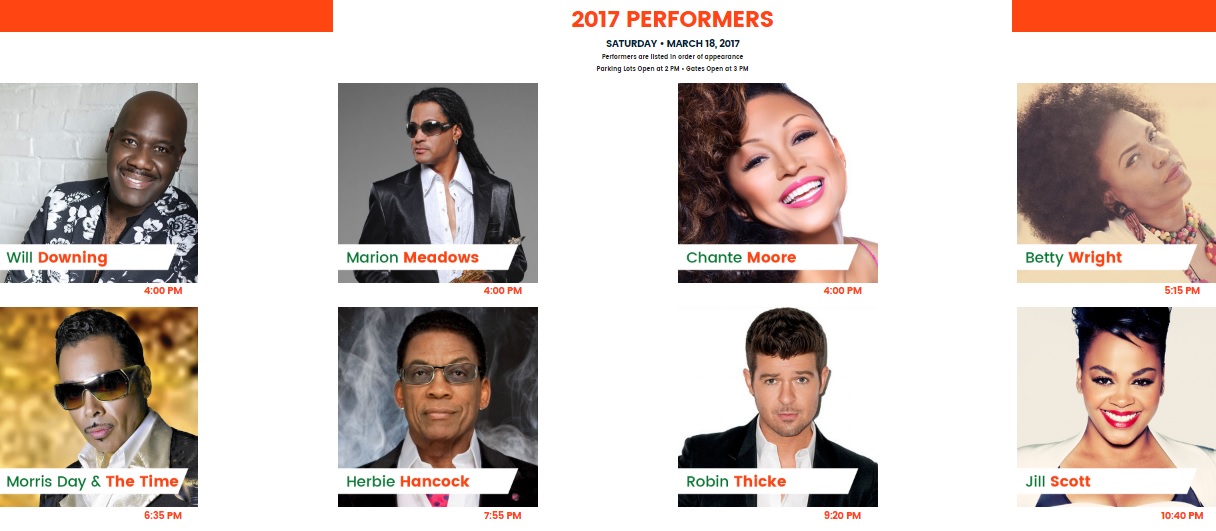
As previously related, Miami is a frontier city in the United States that draws its success from the impact of Caribbean cultures. This event is a music festival that appeals more to the African-American community from around the US and the Caribbean region. This allows us to celebrate the “Joy, Pain, Sunshine and Rain” of music and Miami. A good time is to be had by all attendees – a ‘Day of Happiness’ for each day in this elated weekend. The event, in its 12th year now in 2017, has proven to be one of the most growing music festivals in the world – the 2015 event saw a record 73,000 attendees. See the music-artist line-up here for just one day (Saturday) of the 3-day JITG festival:

JITG 2017 - Photo 1

Click on photo to Enlarge

In many previous years, the musical artist/group Frankie Beverly and Maze performed as the final performer of the festival; their classic anthem – “Joy. Pain. Sunshine. Rain.” – is the theme of this previous blog from March 20, 2016 (for last year’s International Day of Happiness); it is being Encored here:

============

Encore Title: Joy. Pain. Sunshine. Rain.

The movement behind the book Go Lean…Caribbean strives to make the Caribbean a better place to live, work and play. Having success in this quest would mean more joy (happiness) for the stakeholders (residents and visitors alike) of the tropical sunshine. We also try to soften the pain of day-to-day life, for “in every life, a little rain must fall”.

“Joy, Pain, Sunshine and Rain” – Sounds familiar, right? It is the title and chorus of a popular Rhythm & Blues song by the Grammy Award winning band Frankie Beverly and Maze; see the VIDEO-AUDIO here:

VIDEO-AUDIO: Frankie Beverly And Maze – Joy And Pain – https://youtu.be/KNuKMPeOdfM

Uploaded on Oct 31, 2011 – {DISCLAIMER}
No Copyright Intended. This Song Belongs To It Respective Owners.
Please Support The Artist By Buying Their Songs/Album – “Joy and Pain” by Maze Listen ad-free with YouTube Red

Art imitates life and life imitates art …

Music is a viable approach for forging change in society. Consider these popular quotations:

“Music soothes the savage beast”.

“A great song can change the world”.

There are a lot of famous quotes alluding to the power of music, but here’s an old favorite:

“Music is a moral law. It gives soul to the universe, wings to the mind, flight to the imagination, and charm and gaiety to life and to everything.” — Plato

Consider this list where music (songs & concerts) has changed the world in past campaigns:

1

Bob Dylan: Times They Are A-Changin’ – 1960’s Civil Rights Anthem

2

Hope for Haiti Now: A Global Benefit for Earthquake Relief – Telethon on Jan 22, 2010

3

“Sun City” – 1985 Anti-Apartheid Group Song and Album

4

Bob Marley and the Wailers: “Them Belly Full (But We Hungry)” – 1975 song

5

K’naan: “Wavin’ Flag” – 2010 Soccer World Cup anthem advocating rights for refugees

6

Live Aid – 1985 “simul”-concerts in London & Philadelphia for famine relief in Ethiopia

7

46664 Concerts – (Mandela’s Prison #) – 2003 advocacy against HIV/AIDS in South Africa

8

John Lennon: “Imagine” – 1971 iconic song for world peace

9

Tsunami Aid: Concert of Hope – 2004 Benefit for Indian Ocean Earthquake & Tsunami

10

The Concert for Bangladesh – 1971 Benefit for refugees from (then) East Pakistan

11

Live 8 – 2005 series of concerts in the G8 member-states for foreign aid to poorest countries

12

Patti Smith: “People Have the Power” – 1988 song condemning war and human rights abuses

13

Farm Aid – Annual concerts starting in 1985 advocating  Family Farms

14

Marvin Gaye: “What’s Going On” – 1971 album against the Vietnam war, drugs and poverty

15

Concert in celebration of “It Takes Two” – 2014 effort tackling high teenage pregnancy in Uganda

16

Joni Mitchell: “Big Yellow Taxi” – 1970 hit song addresses environmental concerns

[17]

[“We Are the World” – 1985 super-group (most famous music artists) song by USA for Africa]

Source: https://www.globalcitizen.org/en/content/music-that-has-changed-the-world/ by Christina Nuñez on July 27, 2015. The [] represent this blog’s addition – Number 17 – to the list.

The Go Lean book identifies the art and science of the music business among the strategies, tactics, implementations and advocacies of the roadmap to elevate the Caribbean’s societal engines. The book serves as a roadmap for the introduction and implementation of the Caribbean Union Trade Federation (CU), an initiative to elevate and empower the region, to make the homelands better and happier. From the outset, the book recognized the significance of music and happiness in this roadmap with these statements in the opening Declaration of Interdependence (Page 12 & 14):

Preamble. We hold these truths to be self-evident, that all men are created equal, that they are endowed by their Creator with certain unalienable rights, that among these are life, liberty and the pursuit of happiness

xxi.   Whereas the preparation of our labor force can foster opportunities and dictate economic progress for current and future generations, the Federation must ensure that educational and job training opportunities are fully optimized for all residents of all member-states, with no partiality towards any gender or ethnic group. The Federation must recognize and facilitate excellence in many different fields of endeavor, including sciences, languages, arts, music and sports. This responsibility should be executed without incurring the risks of further human flight, as has been the past history.

xxxii.  Whereas the cultural arts and music of the region are germane to the quality of Caribbean life, and the international appreciation of Caribbean life, the Federation must implement the support systems to teach, encourage, incentivize, monetize and promote the related industries for arts and music in domestic and foreign markets. These endeavors will make the Caribbean a better place to live, work and play.

The purpose of the Go Lean roadmap is not music, but rather to make the Caribbean region a better homeland, a happier place to live, work and play. Music can be an effective tool for campaigns … to convey the important message of happiness, to pronounce that “Joy, Pain, Sunshine and Rain” is part-and-parcel of any happiness advocacy.

This Go Lean roadmap calls for heavy-lifting in shepherding important aspects of Caribbean life. In fact, the empowerment roadmap has 3 prime directives that are critical for forging a happy society; they are identified as follows:

  • Optimization of the economic engines in order to grow the regional economy to $800 Billion & create 2.2 million new jobs.
  • Establishment of a security apparatus to protect the resultant economic engines.
  • Improve Caribbean governance to support these engines.

The book describes the CU as a hallmark of a technocracy, with a commitment to efficiency and effectiveness in these societal engines, while still not ignoring principles of fun such as music, arts, heritage and overall happiness. In fact, one of  the 144 different missions of the Go Lean/CU roadmap is to promote happiness (10 Ways to Promote Happiness – Page 36).

Happiness is the focus of this commentary…

CU Blog - Joy. Pain. Sunshine. Pain - Photo 1

CU Blog - Joy. Pain. Sunshine. Pain - Photo 2

CU Blog - Joy. Pain. Sunshine. Pain - Photo 3

 CU Blog - Joy. Pain. Sunshine. Pain - Photo 4

CU Blog - Joy. Pain. Sunshine. Pain - Photo 5

… thousands of people all around the world took action to support the International Day of Happiness on March 20, 2016. (This is celebrated in March every year). See a related alternate commentary of this year’s advocacy in the Appendix below.

What more can we do?

First, we encourage all to take this “Action for Happiness” pledge:

“I will try to create more happiness in the world around me”.

… this Go Lean/CU effort is “our” attempt to do more … for the Caribbean. The Go Lean/CU roadmap was constructed with the community ethos in mind to make the region more happy, plus the execution of related strategies, tactics, implementations and advocacies to forge permanent happiness. The following is a sample of these specific details of the roadmap from the book:

Community Ethos – Deferred Gratification Page 21
Community Ethos – Economic Principles – People Choose Page 21
Community Ethos – Economic Principles – People Respond to Incentives in Predictable Ways Page 21
Community Ethos – Economic Principles – The Consequences of Choices Lie in the Future Page 21
Community Ethos – Governing Principles – Lean Operations Page 24
Community Ethos – Ways to Impact the Future Page 26
Community Ethos – Ways to Foster Genius Page 27
Community Ethos – Ways to Promote Intellectual Property Page 29
Community Ethos – Ways to Impact Research & Development Page 30
Community Ethos – Ways to Bridge the Digital Divide Page 31
Community Ethos – Ways to Impact Turn-Around Page 33
Community Ethos – Ways to Promote Happiness Page 36
Community Ethos – Ways to Impact the Greater Good Page 37
Strategy – Vision – Confederate 30 Member-States Page 45
Strategy – Mission – Celebrate the Music, Sports, Art, People and Culture of the Caribbean Page 46
Tactical – Confederating a Permanent Union Page 63
Tactical – Fostering a Technocracy Page 64
Implementation – Ways to Pay for Change Page 101
Implementation – Ways to Deliver Page 109
Planning – 10 Big Ideas for the Caribbean Region – Cyber-Caribbean Page 127
Planning – Ways to Make the Caribbean Better Page 136
Planning – Reasons Why the CU Will Succeed Page 137
Advocacy – Ways to Grow the Economy Page 151
Advocacy – Ways to Create Jobs Page 152
Advocacy – Ways to Improve Communications Page 186
Advocacy – Ways to Preserve Caribbean Heritage Page 218
Advocacy – Ways to Improve the Arts Page 230
Advocacy – Ways to Promote Music Page 231
Appendix – Case Study Managing Copyright Infringements Page 351

The Go Lean/CU roadmap is optimistic, but it is realistic and pragmatic too. There is the acknowledgement that while music is powerful, the music business on the other hand, not so much. This industry has changed in the light of modern dynamics (technology and globalization), particularly due to Internet & Communications Technologies. The industry needs to adapt accordingly – we need a fully functional music industry. To spur more development in the industrial dimensions of the music business, this roadmap seeks to secure the economic, security and governing engines of the Caribbean region. This point was detailed in these previous Go Lean blog/commentaries:

https://goleancaribbean.com/blog/?p=6310 Farewell to ‘Sábado Gigante’
https://goleancaribbean.com/blog/?p=5648 Taylor Swift withholds Album from Apple Music
https://goleancaribbean.com/blog/?p=5251 Post-Mortem of Inaugural Bahamas Junkanoo Carnival
https://goleancaribbean.com/blog/?p=3641 ‘We Built This City …’
https://goleancaribbean.com/blog/?p=2415 How ‘The Lion King’ productions roared into history
https://goleancaribbean.com/blog/?p=1909 Music Role Model Berry Gordy – Reflecting & Effecting Change

We need a fully functional music industry because we need music, and the effects of music: the power to reach, soothe and move people. This point was previously detailed in other Go Lean blog/commentaries; a sample follows:

https://goleancaribbean.com/blog/?p=7628 ‘A Change Is Gonna Come’
https://goleancaribbean.com/blog/?p=3568 Forging Change: Music Moves People
https://goleancaribbean.com/blog/?p=2291 Forging Change: The Fun Theory
https://goleancaribbean.com/blog/?p=866 Music Man Bob Marley: The legend lives on!

This quest to elevate the Caribbean region is heavy-lifting; more is involved than just saying “Don’t Worry Be Happy“. It is more complex than just playing or listening to music. Though this is serious, it should also be fun; it should be  “Joy, Pain, Sunshine and Rain”.

Let’s create a happier world together; a happy world filled with laughter and music –  “Joy, Pain, Sunshine and Rain”. And if not the world, then maybe just the Caribbean. 🙂

Download the book Go Lean … Caribbean – now!

Sign the petition to lean-in for the roadmap for the Caribbean Union Trade Federation.

————

Appendix – Title: The best habits to practice to feel happy every day
By: Dr. Christine Brown
Sourcehttp://www.news.com.au/lifestyle/health/mind/the-best-habits-to-practice-to-feel-happy-every-day/news-story/bd7d414a2b5da7f6f0bd138f0af2c7fc . Posted and retrieved March 20, 2016.

HAPPY International Day of Happiness!

I have a question for you: How often do you feel like a ‘room without a roof’? According to Pharrell Williams, this “space without limit” feeling is universally achievable. But for many of us, limitless happiness takes a little work. So, what are some of the best habits to practice for feeling happy every day?

MANAGE THE DOWN DAYS

You know the days. Those days when you’re telling yourself the ‘I’m not good enough’ story (which we all have, by the way). The days where things seem to go from bad to worse.

It’s very easy to get trapped at this point because many of us start feeling bad for feeling bad. There are enough external pressures to always be ‘up’ and cheerful, without applying internal pressure too. Acknowledge you’re feeling suboptimal, and do a quick stocktake.

If you can change things, take action. If not, do something that helps to calm you, comfort you or cheer you up (even a little bit).

Be gentle with yourself and don’t splatter your down day over your bystanders. Remember, no-one can ‘make’ you feel anything. You have all the controls. Which reminds me …

DON’T BELIEVE EVERYTHING YOU THINK

Much unhappiness is caused by paying way too much attention to our thoughts. Our minds are constantly telling us stories to explain the world around us. Many times these stories are accurate, but unfortunately, whenever we don’t have enough data, our mind just fills in the gaps.

Let’s face it, we really don’t know why they didn’t say hello to us this morning. We really don’t.

As soon as we hear our minds saying things like, “They ALWAYS let me down” or “She NEVER keeps her promises” we need to reach for the metaphorical handbrake.

Get in the habit of asking yourself if that’s strictly true. Remember it’s just a story you’re telling yourself. You can even give the story a name: “Oh, it’s the ‘I do everything around here’ story”. It is very unlikely that things NEVER or ALWAYS happen. There are always exceptions. Remembering to look for (and recognise) the exceptions means much happier states of mind.

KEEP WHAT ‘SPARKS JOY’

In her book, The Life-Changing Magic of Tidying Up, Marie Kondo recommends a (once-off) festival of tidying where you gather categories of belongings into ginormous piles, pick items up one-by-one and ask a simple question: “Does it spark joy?”

If it does, you keep it. If it doesn’t, you can let it go.

Just imagine how it would be if every item around you had a happy association. Out would go that hideous fondue set from Aunt Bertha or those pyjamas from your ex. Because, according to Marie Kondo, a gift has done its job once it’s received. The freedom!

Oh, and on a side note, this totally applies to the humans in your life too.

EVERYONE’S DOING BETTER THAN ME

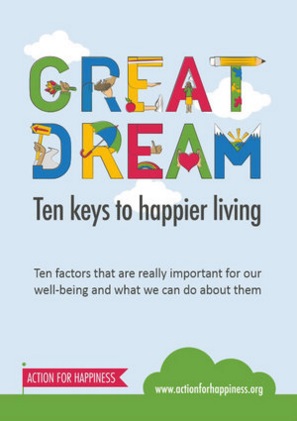
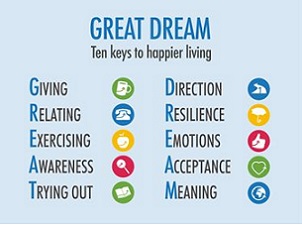
The International Day of Happiness website has a great downloadable resource containing 10 keys to happier living. Each key strategy has been inspired by the latest scientific happiness research and there are some excellent quotes.

The one that I recognised most from working with many different clients is “Don’t compare your insides with other people’s outsides”. This is easy to do.

I remember consulting at a very high-end corporate where everyone was incredibly polished and successful looking. One by one, they would come in and say, “Everyone else is doing okay, but I’m falling apart”.

The thing is, you can’t know what is going on inside someone else, especially if you only have their outside as your guide. Chances are, if you’re finding something difficult or challenging, other people are too. I’m talking work, parenting, studying, teaching, being single, being in a relationship …

WHAT WENT WELL?

One of the pioneers of positive psychology, Martin Seligman, outlines some quick and easy strategies that raise your wellbeing and lower your depression in his book, Flourish.

A simple exercise to do in the 10 minutes before you go to sleep every night is the ‘what-went-well’ exercise. Every night, you write down three things that went well and why they went well (e.g. I finished most of my important tasks today because I took time to plan in the morning or I didn’t yell at my partner this morning because I got up a little earlier and made sure I ate breakfast). This will greatly improve your mood over time.

ROOFLESS ROOMS

According to Sonja Lyubomirsky in The How of Happiness, up to 40 per cent of our happiness is within our power to change.

Being grateful, taking responsibility, blaming less, learning to forgive and yes, even practising random acts of kindness, all predictably increase our happiness.

Have a happy day and go well everyone!

———-

Dr. Christine Brown is an Inventiologist, Psychologist and Executive Coach.

Share this post:
, , , ,
[Top]

Joy. Pain. Sunshine. Rain.

Go Lean Commentary

The movement behind the book Go Lean…Caribbean strives to make the Caribbean a better place to live, work and play. Having success in this quest would mean more joy (happiness) for the stakeholders (residents and visitors alike) of the tropical sunshine. We also try to soften the pain of day-to-day life, for “in every life, a little rain must fall”.

“Joy, Pain, Sunshine and Rain” – Sounds familiar, right? It is the title and chorus of a popular Rhythm & Blues song by the Grammy Award winning band Frankie Beverly and Maze; see the VIDEO-AUDIO here:

VIDEO-AUDIO: Frankie Beverly And Maze – Joy And Pain – https://youtu.be/KNuKMPeOdfM

Uploaded on Oct 31, 2011 – {DISCLAIMER}
No Copyright Intended. This Song Belongs To It Respective Owners.
Please Support The Artist By Buying Their Songs/Album – “Joy and Pain” by Maze Listen ad-free with YouTube Red

Art imitates life and life imitates art …

Music is a viable approach for forging change in society. Consider these popular quotations:

“Music soothes the savage beast”.

“A great song can change the world”.

There are a lot of famous quotes alluding to the power of music, but here’s an old favorite:

“Music is a moral law. It gives soul to the universe, wings to the mind, flight to the imagination, and charm and gaiety to life and to everything.” — Plato

Consider this list where music (songs & concerts) has changed the world in past campaigns:

1

Bob Dylan: Times They Are A-Changin’ – 1960’s Civil Rights Anthem

2

Hope for Haiti Now: A Global Benefit for Earthquake Relief – Telethon on Jan 22, 2010

3

“Sun City” – 1985 Anti-Apartheid Group Song and Album

4

Bob Marley and the Wailers: “Them Belly Full (But We Hungry)” – 1975 song

5

K’naan: “Wavin’ Flag” – 2010 Soccer World Cup anthem advocating rights for refugees

6

Live Aid – 1985 “simul”-concerts in London & Philadelphia for famine relief in Ethiopia

7

46664 Concerts – (Mandela’s Prison #) – 2003 advocacy against HIV/AIDS in South Africa

8

John Lennon: “Imagine” – 1971 iconic song for world peace

9

Tsunami Aid: Concert of Hope – 2004 Benefit for Indian Ocean Earthquake & Tsunami

10

The Concert for Bangladesh – 1971 Benefit for refugees from (then) East Pakistan

11

Live 8 – 2005 series of concerts in the G8 member-states for foreign aid to poorest countries

12

Patti Smith: “People Have the Power” – 1988 song condemning war and human rights abuses

13

Farm Aid – Annual concerts starting in 1985 advocating  Family Farms

14

Marvin Gaye: “What’s Going On” – 1971 album against the Vietnam war, drugs and poverty

15

Concert in celebration of “It Takes Two” – 2014 effort tackling high teenage pregnancy in Uganda

16

Joni Mitchell: “Big Yellow Taxi” – 1970 hit song addresses environmental concerns

[17]

[“We Are the World” – 1985 super-group (most famous music artists) song by USA for Africa]

Source: https://www.globalcitizen.org/en/content/music-that-has-changed-the-world/ by Christina Nuñez on July 27, 2015. The [] represent this blog’s addition – Number 17 – to the list.

The Go Lean book identifies the art and science of the music business among the strategies, tactics, implementations and advocacies of the roadmap to elevate the Caribbean’s societal engines. The book serves as a roadmap for the introduction and implementation of the Caribbean Union Trade Federation (CU), an initiative to elevate and empower the region, to make the homelands better and happier. From the outset, the book recognized the significance of music and happiness in this roadmap with these statements in the opening Declaration of Interdependence (Page 12 & 14):

Preamble. We hold these truths to be self-evident, that all men are created equal, that they are endowed by their Creator with certain unalienable rights, that among these are life, liberty and the pursuit of happiness

xxi.   Whereas the preparation of our labor force can foster opportunities and dictate economic progress for current and future generations, the Federation must ensure that educational and job training opportunities are fully optimized for all residents of all member-states, with no partiality towards any gender or ethnic group. The Federation must recognize and facilitate excellence in many different fields of endeavor, including sciences, languages, arts, music and sports. This responsibility should be executed without incurring the risks of further human flight, as has been the past history.

xxxii.  Whereas the cultural arts and music of the region are germane to the quality of Caribbean life, and the international appreciation of Caribbean life, the Federation must implement the support systems to teach, encourage, incentivize, monetize and promote the related industries for arts and music in domestic and foreign markets. These endeavors will make the Caribbean a better place to live, work and play.

The purpose of the Go Lean roadmap is not music, but rather to make the Caribbean region a better homeland, a happier place to live, work and play. Music can be an effective tool for campaigns … to convey the important message of happiness, to pronounce that “Joy, Pain, Sunshine and Rain” is part-and-parcel of any happiness advocacy.

This Go Lean roadmap calls for heavy-lifting in shepherding important aspects of Caribbean life. In fact, the empowerment roadmap has 3 prime directives that are critical for forging a happy society; they are identified as follows:

  • Optimization of the economic engines in order to grow the regional economy to $800 Billion & create 2.2 million new jobs.
  • Establishment of a security apparatus to protect the resultant economic engines.
  • Improve Caribbean governance to support these engines.

The book describes the CU as a hallmark of a technocracy, with a commitment to efficiency and effectiveness in these societal engines, while still not ignoring principles of fun such as music, arts, heritage and overall happiness. In fact, one of  the 144 different missions of the Go Lean/CU roadmap is to promote happiness (10 Ways to Promote Happiness – Page 36).

Happiness is the focus of this commentary…

CU Blog - Joy. Pain. Sunshine. Pain - Photo 1

CU Blog - Joy. Pain. Sunshine. Pain - Photo 2

CU Blog - Joy. Pain. Sunshine. Pain - Photo 3

 CU Blog - Joy. Pain. Sunshine. Pain - Photo 4

CU Blog - Joy. Pain. Sunshine. Pain - Photo 5

… thousands of people all around the world took action to support the International Day of Happiness on March 20, 2016. (This is celebrated in March every year). See a related alternate commentary of this year’s advocacy in the Appendix below.

What more can we do?

First, we encourage all to take this “Action for Happiness” pledge:

“I will try to create more happiness in the world around me”.

… this Go Lean/CU effort is “our” attempt to do more … for the Caribbean. The Go Lean/CU roadmap was constructed with the community ethos in mind to make the region more happy, plus the execution of related strategies, tactics, implementations and advocacies to forge permanent happiness. The following is a sample of these specific details of the roadmap from the book:

Community Ethos – Deferred Gratification Page 21
Community Ethos – Economic Principles – People Choose Page 21
Community Ethos – Economic Principles – People Respond to Incentives in Predictable Ways Page 21
Community Ethos – Economic Principles – The Consequences of Choices Lie in the Future Page 21
Community Ethos – Governing Principles – Lean Operations Page 24
Community Ethos – Ways to Impact the Future Page 26
Community Ethos – Ways to Foster Genius Page 27
Community Ethos – Ways to Promote Intellectual Property Page 29
Community Ethos – Ways to Impact Research & Development Page 30
Community Ethos – Ways to Bridge the Digital Divide Page 31
Community Ethos – Ways to Impact Turn-Around Page 33
Community Ethos – Ways to Promote Happiness Page 36
Community Ethos – Ways to Impact the Greater Good Page 37
Strategy – Vision – Confederate 30 Member-States Page 45
Strategy – Mission – Celebrate the Music, Sports, Art, People and Culture of the Caribbean Page 46
Tactical – Confederating a Permanent Union Page 63
Tactical – Fostering a Technocracy Page 64
Implementation – Ways to Pay for Change Page 101
Implementation – Ways to Deliver Page 109
Planning – 10 Big Ideas for the Caribbean Region – Cyber-Caribbean Page 127
Planning – Ways to Make the Caribbean Better Page 136
Planning – Reasons Why the CU Will Succeed Page 137
Advocacy – Ways to Grow the Economy Page 151
Advocacy – Ways to Create Jobs Page 152
Advocacy – Ways to Improve Communications Page 186
Advocacy – Ways to Preserve Caribbean Heritage Page 218
Advocacy – Ways to Improve the Arts Page 230
Advocacy – Ways to Promote Music Page 231
Appendix – Case Study Managing Copyright Infringements Page 351

The Go Lean/CU roadmap is optimistic, but it is realistic and pragmatic too. There is the acknowledgement that while music is powerful, the music business on the other hand, not so much. This industry has changed in the light of modern dynamics (technology and globalization), particularly due to Internet & Communications Technologies. The industry needs to adapt accordingly – we need a fully functional music industry. To spur more development in the industrial dimensions of the music business, this roadmap seeks to secure the economic, security and governing engines of the Caribbean region. This point was detailed in these previous Go Lean blog/commentaries:

https://goleancaribbean.com/blog/?p=6310 Farewell to ‘Sábado Gigante’
https://goleancaribbean.com/blog/?p=5648 Taylor Swift withholds Album from Apple Music
https://goleancaribbean.com/blog/?p=5251 Post-Mortem of Inaugural Bahamas Junkanoo Carnival
https://goleancaribbean.com/blog/?p=3641 ‘We Built This City …’
https://goleancaribbean.com/blog/?p=2415 How ‘The Lion King’ productions roared into history
https://goleancaribbean.com/blog/?p=1909 Music Role Model Berry Gordy – Reflecting & Effecting Change

We need a fully functional music industry because we need music, and the effects of music: the power to reach, soothe and move people. This point was previously detailed in other Go Lean blog/commentaries; a sample follows:

https://goleancaribbean.com/blog/?p=7628 ‘A Change Is Gonna Come’
https://goleancaribbean.com/blog/?p=3568 Forging Change: Music Moves People
https://goleancaribbean.com/blog/?p=2291 Forging Change: The Fun Theory
https://goleancaribbean.com/blog/?p=866 Music Man Bob Marley: The legend lives on!

This quest to elevate the Caribbean region is heavy-lifting; more is involved than just saying “Don’t Worry Be Happy“. It is more complex than just playing or listening to music. Though this is serious, it should also be fun; it should be  “Joy, Pain, Sunshine and Rain”.

Let’s create a happier world together; a happy world filled with laughter and music –  “Joy, Pain, Sunshine and Rain”. And if not the world, then maybe just the Caribbean. 🙂

Download the book Go Lean … Caribbean – now!

————

Appendix – Title: The best habits to practice to feel happy every day
By: Dr. Christine Brown
Sourcehttp://www.news.com.au/lifestyle/health/mind/the-best-habits-to-practice-to-feel-happy-every-day/news-story/bd7d414a2b5da7f6f0bd138f0af2c7fc . Posted and retrieved March 20, 2016.

HAPPY International Day of Happiness!

I have a question for you: How often do you feel like a ‘room without a roof’? According to Pharrell Williams, this “space without limit” feeling is universally achievable. But for many of us, limitless happiness takes a little work. So, what are some of the best habits to practice for feeling happy every day?

MANAGE THE DOWN DAYS

You know the days. Those days when you’re telling yourself the ‘I’m not good enough’ story (which we all have, by the way). The days where things seem to go from bad to worse.

It’s very easy to get trapped at this point because many of us start feeling bad for feeling bad. There are enough external pressures to always be ‘up’ and cheerful, without applying internal pressure too. Acknowledge you’re feeling suboptimal, and do a quick stocktake.

If you can change things, take action. If not, do something that helps to calm you, comfort you or cheer you up (even a little bit).

Be gentle with yourself and don’t splatter your down day over your bystanders. Remember, no-one can ‘make’ you feel anything. You have all the controls. Which reminds me …

DON’T BELIEVE EVERYTHING YOU THINK

Much unhappiness is caused by paying way too much attention to our thoughts. Our minds are constantly telling us stories to explain the world around us. Many times these stories are accurate, but unfortunately, whenever we don’t have enough data, our mind just fills in the gaps.

Let’s face it, we really don’t know why they didn’t say hello to us this morning. We really don’t.

As soon as we hear our minds saying things like, “They ALWAYS let me down” or “She NEVER keeps her promises” we need to reach for the metaphorical handbrake.

Get in the habit of asking yourself if that’s strictly true. Remember it’s just a story you’re telling yourself. You can even give the story a name: “Oh, it’s the ‘I do everything around here’ story”. It is very unlikely that things NEVER or ALWAYS happen. There are always exceptions. Remembering to look for (and recognise) the exceptions means much happier states of mind.

KEEP WHAT ‘SPARKS JOY’

In her book, The Life-Changing Magic of Tidying Up, Marie Kondo recommends a (once-off) festival of tidying where you gather categories of belongings into ginormous piles, pick items up one-by-one and ask a simple question: “Does it spark joy?”

If it does, you keep it. If it doesn’t, you can let it go.

Just imagine how it would be if every item around you had a happy association. Out would go that hideous fondue set from Aunt Bertha or those pyjamas from your ex. Because, according to Marie Kondo, a gift has done its job once it’s received. The freedom!

Oh, and on a side note, this totally applies to the humans in your life too.

EVERYONE’S DOING BETTER THAN ME

The International Day of Happiness website has a great downloadable resource containing 10 keys to happier living. Each key strategy has been inspired by the latest scientific happiness research and there are some excellent quotes.

The one that I recognised most from working with many different clients is “Don’t compare your insides with other people’s outsides”. This is easy to do.

I remember consulting at a very high-end corporate where everyone was incredibly polished and successful looking. One by one, they would come in and say, “Everyone else is doing okay, but I’m falling apart”.

The thing is, you can’t know what is going on inside someone else, especially if you only have their outside as your guide. Chances are, if you’re finding something difficult or challenging, other people are too. I’m talking work, parenting, studying, teaching, being single, being in a relationship …

WHAT WENT WELL?

One of the pioneers of positive psychology, Martin Seligman, outlines some quick and easy strategies that raise your wellbeing and lower your depression in his book, Flourish.

A simple exercise to do in the 10 minutes before you go to sleep every night is the ‘what-went-well’ exercise. Every night, you write down three things that went well and why they went well (e.g. I finished most of my important tasks today because I took time to plan in the morning or I didn’t yell at my partner this morning because I got up a little earlier and made sure I ate breakfast). This will greatly improve your mood over time.

ROOFLESS ROOMS

According to Sonja Lyubomirsky in The How of Happiness, up to 40 per cent of our happiness is within our power to change.

Being grateful, taking responsibility, blaming less, learning to forgive and yes, even practising random acts of kindness, all predictably increase our happiness.

Have a happy day and go well everyone!

———-

Dr. Christine Brown is an Inventiologist, Psychologist and Executive Coach.

Share this post:
, ,
[Top]