Category: Ethos

A Picture is worth a thousand words; a video … a million

Go Lean Commentary

The penalty for a broken taillight should not be “Death by Firing Squad”.

Welcome to America!

Though this declaration is not the law-of-the-land, it is the anecdotal experience for the Black-and-Brown populations, far too often.

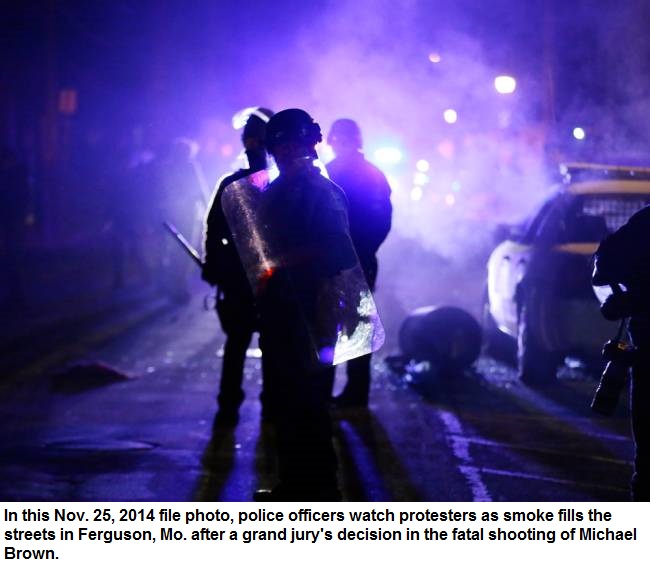
The subsequent news commentary – by British Expatriate Piers Morgan (former host on American news network CNN) – is ripped from the headlines of “Cop-on-Black” crime in the US. For much of the latter half of 2014, this type of headline was prevalent in places like Ferguson, Missouri, but in truth, it appears that the law enforcement community appears to have “Bulls-eye” targets on African-American males throughout the country, more so than any other ethnic group. This statement would have appeared to be only indicative of “conspiracy theories”, if not for the following pictures and VIDEO.

By: Piers Morgan
Title: After seeing South Carolina police nearly get away with murder, I won’t feel safe until every cop who carries a gun, wears a camera too

This morning, I watched Walter Scott die.

I didn’t think I’d ever see a piece of video footage that made me feel as physically sick and angry as that disgusting ISIS snuff movie of a Jordanian pilot being burned alive.

But the last few seconds of Scott’s life, captured by a passer-by on a camera phone, provoked similar nausea-fuelled emotions of blind rage.

Why? Because they exposed the shocking truth behind a sickening lie.

Picture Words - Photo 1 Scott, a 50-year-old American father-of-four, had been stopped in North Charleston, South Carolina, for having a broken taillight on his Mercedes car.

A vehicular misdemeanor so minor in its importance that it’s usually dealt with by a verbal police warning, no fine and no points on your license.

But Scott, fearful of arrest because he owed child support, ran away.

The police officer who had stopped him, Patrolman Michael Slager, gave chase into a small grassy lot.

Minutes later, unarmed Scott was dead. Needlessly, senselessly, murderously riddled with bullets in the back from trigger-happy Officer Slager’s handgun.

Walter Scott’s death is outrageous enough.

But the disgraceful cover-up that followed makes the stomach churn.

Picture Words - Photo 2Officer Slager told his bosses that Scott had taken his taser gun in a violent struggle, and he had shot him because he feared for his life.

To support this, the taser had been found next to Scott’s body – suggesting he had run off with it.

His bosses preferred to just take his word for it then properly investigate.

And presumably, the word of a second officer who arrived at the scene shortly afterwards.

So the official statement released to the media backed Officer Slager’s claim that he had acted entirely within his rights after Scott tried to grab his taser.

The Supreme Court ruled that an officer may use deadly force against a fleeing suspect only when there is probable cause that the suspect ‘poses a significant threat of death or serious physical injury to the officer or others.’

By Officer Slager’s account, that criteria was met.

And there it would have ended.

Walter Scott’s death would be blamed on Walter Scott.

Another reckless violent aggressor who forced a terrified cop to shoot him.

Case closed.

But then came the video.

It turned out that someone walking nearby had secretly filmed the whole thing on his camera phone.

So now we could actually see for ourselves what happened.

Mr. Scott never grabbed Officer Slager’s taser.

In fact, Officer Slager tasers Scott, who then runs off.

Scott is more than 20 feet away and clearly fleeing when Officer Slager stands and fires eight shots at him.

When Scott finally falls, after the last of the eight shots, Officer Slager runs back toward where the initial scuffle occurred and picks something up of the ground. Moments later, he drops it near Scott’s body.

It’s believed to be the taser.

After the video appeared, Officer Slager was promptly charged with murder.

Which is all very well, but if the video hadn’t appeared, he would have GOT AWAY with murder.

Isn’t that just utterly shameful?

The South Carolina police department failed Walter Scott on every single level. Doesn’t the simple fact alone that he was shot five times in the BACK demand a serious analysis of forensics, autopsy and witness statements?

Instead, they chose to do nothing but stand by their lying, cold-blooded executioner.

At this point, I should mention that Walter Scott was black and Officer Slager is white.

I’m wary of casting racial aspersions on Officer Slager’s actions.

There’s nothing to unequivocally suggest it was a racially motivated incident.

And indeed, the Scott family attorney, L. Chris Stewart, offered a different explanation:

‘It’s not about race, it’s about power. The officer thought he could just shoot this man. He thought Mr Scott was expendable. He just casually shot a man in the back many times. That speaks to the value of human life, which is a bigger issue than trying to just make this a small issue of race. When people start respecting that more, it won’t matter what colour you are.’

I think he’s right.

When American cops shoot dead someone who is black, it garners huge headlines because people rush to assume it’s racial.

And sometimes it is. Perhaps Officer Slager racially profiled Walter Scott, we’ll probably never know.

But the truth is that American cops shoot everyone, regardless of colour or creed.

They kill many more whites than blacks, though the percentage of blacks who get killed as part of the U.S. black population is three times higher than the same percentage for whites.

And they do it because they can.

Guns empower some of them to behave like trigger-happy John Waynes and it is, frankly, terrifying.

I received my first ever traffic ticket recently, after performing an illegal U-turn in Beverly Hills – right in front of a policeman on a motorbike.

He signalled for me to pull over, which I did.

But as he walked towards me, loaded gun glistening in his hip holster, I began to slightly panic. Especially as just two days before, a man was shot dead by cops a few blocks away on the famed Rodeo Drive.

What were the rules again?

  • Do I put my hands on the steering wheel or by my side?
  • Do I wind down the window, or leave it up?
  • Do I turn the ignition off or keep it on?
  • Do I reach for my papers, or wait to be instructed?
  • Do I call him ‘Officer’, ‘Sir’ or what?

None of these questions would be significant in somewhere like Britain, because nobody fears they might be shot by a policeman.

The vast majority of British cops don’t carry guns, mainly because they know the vast majority of civilians don’t carry them either.

At the risk of sounding like a stuck record, it is worth repeating once more that fewer Brits die a YEAR from guns than get shot dead every single DAY in America.

So there is no expectation, fear or paranoia on either side that a simple traffic violation may suddenly erupt into a deadly shooting match.

In America, everyone now has to assume that everyone else may be armed.

It’s the exact same mentality that existed in the Wild West.

One false move in the wrong place, one dumb comment in a bar, one heated exchange of words with a law enforcement official and BANG!!!!

Someone dies.

The justice system rarely supports those who get shot dead by cops.

We can see from this horrific incident how the police protect themselves.

But there is, as we can also see from this incident – and the death of Eric Garner in New York – one truly effective weapon at our disposal: a video camera.

Which is why I want every single U.S. cop to now be compelled by law to carry them at all times, right next to their guns.

The technology exists for them to do so without any restrictions on their ability to function as normal.

What it would also do is restrict any rogue gun-toting policeman’s ability to lie after he casually, indiscriminately shoots dead an unarmed human being, black or white.
Retrieved from: The Daily Mail – London Daily Newspaper – Posted April 9, 2015 –
http://www.dailymail.co.uk/news/article-3030442/PIERS-MORGAN-seeing-South-Carolina-police-nearly-away-murder-won-t-feel-safe-cop-carries-gun-wears-camera-too.html?ito=social-facebook


VIDEO: http://www.dailymail.co.uk/news/article-3030442/PIERS-MORGAN-seeing-South-Carolina-police-nearly-away-murder-won-t-feel-safe-cop-carries-gun-wears-camera-too.html#v-4159293374001

There is no way to defend this Police Officer, Michael Slager. The US Justice System will have to deal with him. Our focus can only be on the mitigation, in this case body cameras; and how to apply the lessons in the re-boot of the Caribbean societal engines: economic, security and governance.

The events of this small suburban town of Charleston, South Carolina now have huge bearing on the acceptable standards for community policing through-out the US and other countries, including the Caribbean. There is a direct impact between the two communities: many in the Caribbean Diaspora living in the US face these same dynamics, because of their Black-and-Brown status. (Even the bystander – Feiden Santana – capturing the VIDEO in this case is of Caribbean – Dominican Republic – heritage).

The book Go Lean…Caribbean seeks to assess (identify and qualify) the issues that drive so many of the Caribbean youth to flee their homelands to take up residence in the US. The book posits that this is not a wise course of action, that it is better to “prosper where planted” in the Caribbean than to risk the interactions of American life. This book portrays that there are “push-and-pull” factors that contribute to so much societal abandonment in these Caribbean member-states. The purpose of the book is to serve as a roadmap for the introduction and implementation of the technocratic Caribbean Union Trade Federation (CU) to elevate the region’s economic engines, and optimize the security (public safety) issues as well. These are among the prime directives for this societal elevation. The declarative statements are as follow:

  • Optimization of the economic engines in order to grow the regional economy to $800 Billion & create 2.2 million new jobs.
  • Establishment of a security apparatus to protect the resultant economic engines.
  • Improvement of Caribbean governance to support these engines.

The assertion of the Go Lean book is that the Caribbean region must prepare a better security apparatus and justice institution than our northern neighbor is able to boast. Based of the dual “scales of justice” in the US, one for Whites and another for Black-and-Brown, this goal should not be so difficult to pursue. For this reason, the Go Lean roadmap spuns American leadership for security and justice, and proposes homegrown solutions. According to the opening Declaration of Interdependence (Page 12), our region is urged to take the lead for our own solutions and appoint our own “guardians” with our self-interest in mind; prioritizing the community ethos for the Greater Good. The actual declaration is pronounced as follows:

x.   Whereas we are surrounded and allied to nations of larger proportions in land mass, populations, and treasuries, elements in their societies may have ill-intent in their pursuits, at the expense of the safety and security of our citizens. We must therefore appoint “new guards” to ensure our public safety and threats against our society, both domestic and foreign. The Federation must employ the latest advances and best practices … to assuage continuous threats against public safety.

xvi. Whereas security of our homeland is inextricably linked to prosperity of the homeland, the economic and security interest of the region needs to be aligned under the same governance. Since economic crimes, including piracy and other forms of terrorism, can imperil the functioning of the wheels of commerce for all the citizenry, the accedence of this Federation must equip the security apparatus with the tools and techniques for predictive and proactive interdictions.

The Caribbean appointing “new guards” or a security pact to ensure public safety calls for permanent justice institutions sanctioned by all 30 CU member-states. The CU Federation or federal justice’s institutions must operate differently than the US versions; we must do so judiciously and with proper regard for human and civil rights. The Go Lean roadmap calls for a separation-of-powers between the CU and the Caribbean member-states. So many of the community policing will not be under federal jurisdiction, but the CU will furnish a lot of funding and outfitting, with a lot of “strings attached”. The book calls for dashboard and body cameras (Page 178); as part of the edict for transparency and accountability.

The US does not currently have this default disposition.
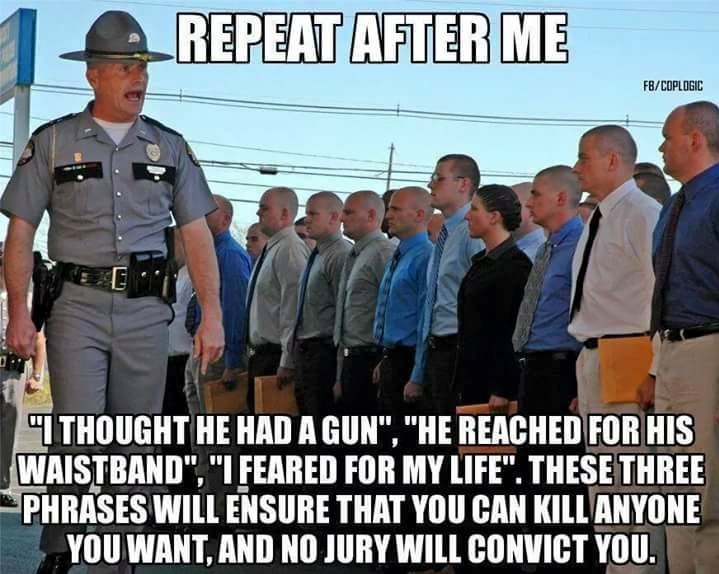
Picture Words - Photo 3

The forgoing news article teaches some powerful lessons for Caribbean consideration.

Before the eye-witness (Feiden Santana) VIDEO came out on Tuesday (April 7), the assumption and benefit-of-doubt in the shooting of Walter Scott would have sided with the Police Officer Michael Slager. But having a photo/picture speaks a thousand words as to what really happened there in North Charleston, South Carolina. Having a VIDEO speaks a millions words. Now all previous allegations of police brutality and evidence planting suddenly have new merit. In addition, the “Blue Line” between Police Officers and the public is blatantly exposed – the VIDEO depicted another officer, an African-American Officer, aiding Michael Slager cover-up. This relates that the loyalty among law enforcement officers trumps any other interrelation in the criminal justice system. It can be concluded that intra-department oversight of their own law enforcement activities may never yield true justice; there must be outside compliance review.

The Go Lean roadmap leads with economic empowerments in the quest to elevate Caribbean society. But security and governance dynamics must be coupled with this effort. As we learn in the foregoing article, “bad actors” can emerge in society, even in the form of law enforcement officers; these individuals can also have sinister intent.

No justice; no peace.

This Go Lean roadmap relates a heightened level of economic-security-government engagement. These prime directives of the CU calls for a Homeland Security focus related to threats that may imperil the region’s economic engines, and crime remediation and mitigation: Public Safety. The CU is an entity to serve as a deputy for law enforcement agencies for each Caribbean member-state, empowered by an international treaty – a Status of Forces Agreement – for all Caribbean member-states to confederate the Homeland Security and Anti-Crime forces to execute a limited scope on the region’s sovereign territories.

To ensure justice – and peace – the Go Lean roadmap calls for a lot of proactive activities to remediate and mitigate crime. Like crime intelligence, surveillance videos and data analysis. The need for transparency and accountability was strongly urged in the same opening Declaration of Interdependence (Page 12), as follows:

xii. Whereas the legacy in recent times in individual states may be that of ineffectual governance with no redress to higher authority, the accedence of this Federation will ensure accountability and escalation of the human and civil rights of the people for good governance, justice assurances, due process and the rule of law. As such, any threats of a “failed state” status for any member state must enact emergency measures on behalf of the Federation to protect the human, civil and property rights of the citizens, residents, allies, trading partners, and visitors of the affected member state and the Federation as a whole.

The Go Lean book details the community ethos, strategies, tactics, implementations and advocacies to provide increased public safety and security in the Caribbean region, and to ensure the right attitudes of law enforcement officers to serve-and-protect their Caribbean communities:

Economic Principle – Economic Systems Influence Individual Choices Page 21
Economic Principle – Consequences of Choices Lie in Future Page 21
Community Ethos – Privacy –vs- Public Protection Page 23
Community Ethos – Witness Security & Protection Page 23
Community Ethos – Intelligence Gathering Page 23
Community Ethos – Anti-Bullying and Mitigation Page 23
Community Ethos – Minority Equalization Page 24
Community Ethos – Cooperatives Page 25
Community Ethos – Ways to Improve Sharing Page 35
Community Ethos – Ways to Impact the Greater Good Page 37
Tactical – Confederating a non-sovereign union Page 63
Tactical – Fostering a Technocracy Page 64
Tactical – Separation of Powers – Homeland Security Page 75
Tactical – Separation of Powers – Justice Department – CariPol Page 77
Tactical – Separation of Powers – Federal Courts – Court   of Justice Page 90
Implementation – Assemble “Organs” into a Security Apparatus Page 96
Implementation – Start-up Security Initiatives Page 103
Planning – Ways to Make the Caribbean Better Page 131
Planning – Ways to Improve Failed-State Indices Page 134
Planning – Lessons from the American West Page 142
Advocacy – Ways to Grow the Economy Page 151
Advocacy – Ways to Improve Governance Page 168
Advocacy – Ways to Better Manage the Social Contract Page 170
Advocacy – Ways to Impact   Justice – Police Internal Affairs   Up-line Page 177
Advocacy – Ways to Reduce Crime Page 178
Advocacy – Ways to Improve for Gun Control Page 179
Advocacy – Ways to Improve Homeland Security Page 180
Advocacy – Ways to Mitigate Terrorism Page 181
Advocacy – Ways to Improve Intelligence Gathering/Analysis Page 182
Advocacy – Ways to Impact the Prison Industrial Complex Page 211
Advocacy – Ways to Protect Human Rights Page 220
Appendix – CariCom Organs: IMPACS & Court of Justice Page 244

Other subjects related to crime remediation and fair human/civil rights protections for the region have been detailed in prior Go Lean…Caribbean commentaries; as sampled here:

https://goleancaribbean.com/blog/?p=4447 Probe of Ferguson-Missouri finds bias from cops, courts
https://goleancaribbean.com/blog/?p=4360 Dreading the American ‘Caribbean Basin Security Initiative’
https://goleancaribbean.com/blog/?p=3881 Intelligence Agencies to Up Cyber Security Cooperation
https://goleancaribbean.com/blog/?p=2782 Red Light Traffic Cameras, other CCTV Deployments can Impact Crime
https://goleancaribbean.com/blog/?p=2684 Role Model for Justice, Anti-Crime & Security: The Pinkertons
https://goleancaribbean.com/blog/?p=1674 Obama’s $3.7 Billion Immigration Crisis Funds – A Homeland Security Fix
https://goleancaribbean.com/blog/?p=1554 Status of Forces Agreement = Security Pact
https://goleancaribbean.com/blog/?p=1487 Here come the Drones … and the Concerns
https://goleancaribbean.com/blog/?p=960 NSA records all phone calls in Bahamas, according to Snowden
https://goleancaribbean.com/blog/?p=546 Book Review: ‘The Divide: American Injustice In the Age of the Wealth Gap’
https://goleancaribbean.com/blog/?p=535 Remembering and learning from Boston
https://goleancaribbean.com/blog/?p=392 Jamaica to receive World Bank funds to help in crime fight
https://goleancaribbean.com/blog/?p=341 American Hypocritical Human Rights Leadership Slams Caribbean

The foregoing article and VIDEO depicts that the community ethos for community policing will change imminently. There is now the need for law enforcement officers, at all levels, to employ dashboard cameras and body cameras; especially when deadly force is used. This is a valid need in the United States of America; in North Charleston – South Carolina, Ferguson – Missouri and every village, town, city, county, state and federal jurisdiction.

There is no longer the benefit of any doubt to police officers who shoot an unarmed Black Man. No more!

The published photos have now spoken thousands of words; the videos now speak millions.

The Caribbean must learn from these American mistakes and do better. We can forge an even better homeland, a better place to live, work and play – even more so than our American counterpart.

America should not be considered the land of destination for the Caribbean people to emigrate to. Income inequality and racial inequality persists in American society. Race still matters in the US; there is different treatments for Black-and-Brown, compared to the rest of the population.

Here at home, we must do better!

We know that “bad actors” will emerge in all situations, and we want to be prepared with the proper mitigations. We also know that police officers can also be “bad actors”, so we must appoint “new guards” to ensure the integrity of the “old guards”. Everyone, the people, institutions and government officials are encouraged to lean-in to this roadmap to ensure transparency, accountability and a commitment to due-process and the rule-of-law. Yes, we can … do better.  🙂

Download the free e-Book of Go Lean … Caribbean – now!
Share this post:
, ,

Review: ‘Merchants of Doubt’ Documentary

Go Lean Commentary

“You can fool all the people some of the time; some of the people all of the time; but you cannot fool all the people all the time”. – Old Adage

Doubt Photo 1This adage is apropos considering that there are actual professionals who are engaged by vested business interests to provide scientific denials regarding the effects of Climate Change.

How is it possible that anyone would deny this? In a previous blog-commentary it was asserted that many who deny the realities of Climate Change, do so because of self-interest; they are only concerned with the lower levels of Maslow’s hierarchy of needs; only concerned about basic or social needs. But now we highlight the public relations/messaging professionals who craft the message, and support it with scientific testimonies to reinforce the status quo. These ones’ motives are more sinister than just supporting a dissenting opinion; they want to promote “doubt”.

The book Go Lean…Caribbean collects statistical data and anecdotes on the dire effects of Climate Change in the Caribbean. Some communities have been affected by Climate Change-driven hurricanes, and after many years, have still not recovered (Page 112). So, we must now take our own lead for our own solutions. The region cannot fall prey to the shenanigans of the Merchants of Doubt.

This commentary highlights the film, “Merchants of Doubt“, a big hit at the Toronto Film Festival for 2014. The documentary though is based on the 2010 book: Merchants of Doubt: How a Handful of Scientists Obscured the Truth on Issues from Tobacco Smoke to Global Warming; by Naomi Oreskes and Erik M. Conway.  See a clip from the film here:

VIDEO: ” Hard Pill To Swallow” – Merchants of Doubt (2014) Documentary Clip- http://www.imdb.com/video/imdb/vi524725785?ref_=tt_pv_vi_aiv_1

This documentary looks at pundits-for-hire who present themselves as scientific authorities as they speak about topics like toxic chemicals, pharmaceuticals and climate change. (Director: Robert Kenner; Writers: Robert Kenner, Kim Roberts).

What is the motivation of the Merchants of Doubt?

Profit.

There is a lot of money at stake, especially for those who want to preserve the status quo and not invest in the required mitigations to arrest Climate Change. No doubt, this Merchants of Doubt “role play” is just another glimpse of Crony Capitalism.

The profit motive is powerful. Climate Change is not the first issue in which they have manufactured “doubt”. In truth, their efforts are from a familiar playbook, used previously to delay actions by Big Tobacco, Toxic Waste, Acid Rain, and other dangerous chemicals. They have a successful track record.

Doubt Photo 2

This was the point a few days ago by the film’s director Robert Kenner in an interview on the show All Things Considered for National Public Radio (NPR). Listen to the podcast here:

Audio:Merchants Of Doubt‘ Explores Work of Climate Change Deniers – http://www.npr.org/2015/03/06/391269315/merchants-of-doubt-explores-work-of-climate-change-deniers

March 06, 2015 – NPR’s Melissa Block speaks to director Robert Kenner about his documentary, “Merchants of Doubt“, which examines the work of climate change skeptics and their campaign to sway public opinion.

The Go Lean book details the impending crisis of Climate Change and then calls for the establishment of a regional administration to monitor, mitigate and manage the threats of Climate Change. We must pursue the Greater Good, for the Caribbean region is at the frontline of the battleground of Climate Change; the region is experiencing devastating hurricanes, flooding, forest fires, droughts, rising sea levels, and alterations in fish stock.

This Go Lean book serves as a roadmap for the introduction and implementation of the technocratic Caribbean Union Trade Federation (CU). The prime directives of this agency are described as:

  • Optimize the economic engines of the Caribbean to elevate the regional economy to grow to $800 Billion and create 2.2 million new jobs.
  • Establish a security apparatus to protect the resultant economic engines.
  • Improve Caribbean governance and industrial policies to support these engines.

The Go Lean roadmap calls for the CU to serve as the regional administration to optimize economy, homeland security and governance engines for the Caribbean, especially in light of Climate Change battleground frontline status. The needs of the economy and Climate Change mitigations do not have to clash; they can co-exist. There is no need for the campaign of doubt.

This is the first pronouncement (Page 11) of the opening Declaration of Interdependence that bears a direct reference to this foregoing article and source book:

i. Whereas the earth’s climate has undeniably changed resulting in more severe tropical weather storms, it is necessary to prepare to insure the safety and security of life, property and systems of commerce in our geographical region. As nature recognizes no borders in the target of its destruction, we also must set aside border considerations in the preparation and response to these weather challenges.

The Go Lean roadmap is designed to deliver many empowerment activities to elevate Caribbean society. These activities will carefully balance the needs of the Caribbean and the needs of the planet: we need jobs, yes, but we do not need to increase our carbon footprint. This seems logical; who could dispute? Unfortunately, there are many doubters, dissenters and disputers. Many times these motives are strictly capitalistic; strictly for profit. The issues of Climate Change have been repeatedly addressed and further elaborated upon in these previous blog/commentaries:

First US city to be powered 100% by renewables
Book Review: ‘This Changes Everything: Capitalism vs. the Climate’
Climate Change May Affect Food Supply Within a Decade
Cooling Effect – Oceans and the Climate
Climate Change May Bring More Kidney Stones
Caribbean grapples with intense new cycles of flooding & drought
Floods in Minnesota, Drought in California – Why Not Share?
Conservative heavyweights have solar industry in their sights
Go ‘Green’ … Caribbean

The subject of Climate Change doubters-dissenters-disputers is just another example of the well-documented bad corporate behavior by Big Business. Many other cases have been considered in this commentary; see the relevant list here:

Big Defense Many theorists indicate that the “follow the money” approach reveals the Military Industrial Complex work to undermine peace, so as to increase defense spending for military equipment, systems and weapons.
Big Media Cable companies conspire to keep rates high; kill net neutrality; textbook publishers practice price gouging; Hollywood insists on big tax breaks/ subsidies for on-location shooting.
Big Oil While lobbying for continuous tax subsidies, the industry have colluded to artificially keep prices high and garner rocket profits ($38+ Billion every quarter).
Big Box Retail chains impoverish small merchants on Main Street with Antitrust-like tactics, thusly impacting community jobs. e-Commerce, an area of many future prospects, is the best hope of countering these bad business tactics.
Big Pharma Chemo-therapy cost $20,000+/month; and the War against Cancer is imperiled due to industry profit insistence.
Big Tobacco Cigarettes are not natural tobacco but rather latent with chemicals to spruce addiction. Caribbean cigars are all natural.
Big Agra Agribusiness concerns continue to greenhouse gases, bully family farmers and crowd out the market; plus they fight common sense food labeling efforts.
Big Data Brokers for internet and demographic data clearly have no regards to privacy concerns. They open that doors for hackers and data breaches.
Big Banks Wall Street’s damage to housing and student loans are incontrovertible. Their only motive: more profits.
Big Weather Overblown hype of “Weather Forecasts” to dictate commercial transactions.
Big Real Estate Preserving MLS for Real Estate brokers only, forcing 6% commission rates, when the buyers and sellers can easily meet online without them.
Big Salt Despite the corrosiveness of salt on roads and the environment, it is the only tactic used to de-ice roads during the winter. Immediately after the weather warms, the roads must be re-constructed, thus ensuring a continuous economic cycle.

The Go Lean book, and accompanying blog commentaries, go even deeper and hypothesize that American economic models are considered dysfunctional when viewed from the Caribbean perspective. While the US generates the largest carbon footprint per-capita on the planet, most of the Climate Change doubters-dissenters-disputers originate there. Yet, we in the Caribbean are on the frontlines, especially considering the devastating realities of modern hurricanes.  In general, the American wheels of commerce stage the Caribbean in a “parasite” role. The American policy for the Caribbean is to incentivize consumption of American products, and serve as a playground for their leisure.

There is more to our reality. We also care about the planet, and our children’s future. We want to effect the required changes for our region and encourage the rest of the world to capitulate to good science in aid of the planet.

The Go Lean book declares that we must adopt a community ethos, the appropriate attitude/spirit, to forge change in our region; then details the executions of the following strategies, tactics, implementations and advocacies to better impact the region’s resources and eco-systems, especially in considering the preparations and consequences of Climate Change:

Community Ethos – Deferred Gratification Page 21
Community Ethos – Economic Systems Influence Individual Choices / Incentives Page 21
Community Ethos – The Consequences of Choices Lie in the Future Page 21
Community Ethos – “Crap” Happens Page 23
Community Ethos – Lean Operations Page 24
Community Ethos – Cooperatives Page 24
Community Ethos – Non-Government Organizations Page 25
Community Ethos – Ways to Impact the Future Page 26
Community Ethos – Ways to Improve Sharing Page 35
Community Ethos – Impact the Greater Good Page 37
Strategy – Vision – Confederating 30 Member-States into a Single Market Page 45
Strategy – Vision – Foster Local Economic Engines for Basic Needs Page 45
Strategy – Mission – Prepare for Natural Disasters Page 45
Strategy – Agents of Change – Climate Change Page 57
Strategy – Agents of Change – Globalization Page 57
Tactical – Confederating a Permanent Union Page 63
Tactical – Fostering a Technocracy Page 64
Separation of Powers – Emergency Management Page 76
Separation of Powers – Interstate Commerce Administration Page 79
Separation of Powers – Meteorological & Geological Service Page 79
Separation of Powers – Fisheries and Agriculture Department Page 88
Implementation – Assemble Regional Organs into a Single Market Economy Page 96
Implementation – Ways to Pay for Change Page 101
Implementation – Security Initiatives at Start-up – Unified Command & Control Page 103
Implementation – Industrial Policy for CU Self Governing Entities Page 103
Implementation – Ways to Deliver Page 109
Implementation – Ways to Benefit from Globalization Page 119
Planning – Big Ideas for the Caribbean Region Page 127
Planning – Ways to Make the Caribbean Better Page 131
Advocacy – Ways to Grow the Economy Page 151
Advocacy – Ways to Create Jobs Page 152
Advocacy – Ways to Improve Governance Page 168
Advocacy – Ways to Better Manage the Social Contract Page 170
Advocacy – Ways to Impact Public Works Page 175
Advocacy – Ways to Foster Cooperatives Page 176
Advocacy – Ways to Improve for Natural Disasters Page 184
Advocacy – Ways to Improve Emergency Management Page 196
Advocacy – Ways to Impact Main Street Page 201
Advocacy – Ways to Improve Fisheries Page 210
Appendix – History of Puerto Rican Migration to US & Effects of Hurricanes Page 303
Appendix – US Virgin Islands Economic Timeline with Hurricane Impacts Page 305

The foregoing Audio podcast and VIDEO discuss the effectiveness of Merchants of Doubt in delaying public policy in combating Climate Change. In the Caribbean, we have no option to exit from these debates. We are involved whether we want to be or not – we are on the frontlines of this battle.

This is not our opinion alone. There have been many comments from viewers of the documentary film. The following User Reviews support the thesis from the film:

— Typical of proponents —

User Review 1: The art of deception, applied to scientific consensus
Author: Douglas Allchin from St Paul, MN; 13 March 2015

This is not a film about the science of climate change, second-hand smoke, or risks of flame-retardants. It is about the tactics used (repeatedly) to mislead the public about that science. Most notably, the “Merchants of Doubt” foster unwarranted images of uncertainty and obscure scientific consensus, and even threaten the scientists themselves (and then joke about it). All the while they hide their sources of funding and conflicts of interest that might lead a reasonable person to measure their claims. The documentary evidence and testimony presented is compelling–including, ironically, the voices of the con-artists themselves (Marc Morano, Fred Singer, Tim Phillips). Especially noteworthy is testimony by those who discovered the deceptions despite prior sympathetic beliefs: Matthew Crawford, Michael Shermer, Congr. Bob Inglis.

Striking imagery. Amusing moments. But also chilling when one reflects how these voices obscure harms to our health and environment. Worse, they appeal to the banner of free speech and other “freedoms” (to do harm, in the name of unregulated business, I suppose), and imagine that sheer will or personal belief can trump sound scientific conclusions.

Other naysaying reviews one finds of this film will surely be further evidence of what the film itself exposes so well. Once revealed, never again concealed.

User Review 2: Engaging look at the politics of climate change… from one perspective
Author:
rm_777 from United States 10 September 2014

I saw “Merchants of Doubt” recently at the TIFF festival, and would recommend watching it, as it an engaging, well-structured and well-paced look at the politics of climate change… from one perspective.

Robert Kenner, of Food, Inc. fame, focuses “Merchants of Doubt” on the politics of climate change, and the individuals and corporations responsible for helping shape public opinion. The film integrates recent history, similar industries and interviews with a wide-range of members, exceptionally-well. Kenner, I believe, would make an excellent teacher on how to produce documentaries.

The major – and I mean major – downside of this film is that it is incredibly one-sided. One review from We Got This Covered put it exceptionally-well, which is that “As he tries to side his audience against the skeptics, Kenner ends up using the same tactics that they do.” Kenner is “content to regurgitate the same facts again and again, hoping his audience will be convinced enough to not want to hear the other side.”

If you are familiar with how politics works, then much of this is not new. This is why it is surprising that someone of Kenner’s pedigree would not challenge the “tribal” system of climate change, instead, taking a stance.

Likewise, there are doubters-dissenters-disputers even of the film. In the interest of full disclosure, notice here an opposing review of the same film:

— Typical of opponents —

User Review 3: But what about the science and economics of climate?
Author:
Viscount Monckton of Brenchley from UK; 5 Feb 2015

Merchants of Doubt is a prejudiced and relentlessly one-sided attempt to divert attention away from the failure of global temperatures to respond as the models had so confidently but so misguidedly predicted.

So far, any honest and independent inquirer would conclude that the unfolding evidence of global warming at half the central rate predicted with “substantial” (but misplaced) “confidence” in IPCC (1990) has cast more than a little legitimate doubt on the “settled” science.

However, this and other inconvenient truths – no global warming at all for up to 18 years 3 months (RSS satellite dataset); no increase in hurricane frequency or strength (Accumulated Cyclone Energy Index), or in flooding (IPCC, 2013), or in droughts (Hao et al., 2014); greening of the Sahara (Nicholson, 1981); global sea-ice extent recently at a satellite-era maximum (University of Illinois Cryosphere Today project, December 2014) – are entirely overlooked in the movie, which also ignores the well-established fact that the sceptical side of the debate receives 1/5000 of the lavish funding poured by governments and “green” profiteers of doom into promoting Thermageddon.

The movie will please climate Communists, but it is a fine illustration of the depths of despair into which the true-believers in the Thermageddon cult have been reduced as the “science” behind the scare visibly collapses before them. The movie is predicated on the assumption that there is a “97% consensus” that recent global warming was mostly man-made. The peer-reviewed result demonstrating that the “consensus” on this issue is actually 0.5% is conveniently ignored, along with all the other facts which – however much the Marxstream media may deny them or decline to report them – will slowly, inexorably consign the climate scare to the rubbish-heap to which all mere superstitions are ultimately, ineluctably consigned.

Don’t bother to watch it.

Change has come to the Caribbean region; more devastating change is imminent. There is the need for a permanent union to provide efficient stewardship for Caribbean economy, security and governing engines. The Go Lean…Caribbean book posits that these problems, these agents of change, are too big for just any one member-state to tackle alone, there must be a regional solution. This multi-state technocratic administration of the CU may be our best option.

The people and institutions of the region are hereby urged to lean-in to this Go Lean roadmap, to embrace the mitigations to arrest Climate Change. and respond to the Merchants of Doubt. Despite their objects, we can still make the Caribbean a better homeland to live, work and play. 🙂

Download the free e-Book of Go Lean … Caribbean – now!
 

Share this post:
, , , , , , ,
[Top]

Big Defense: Peace is bad for business

Go Lean Commentary

The US Government is trying to negotiate with the Republic of Iran to dissuade them from developing a nuclear bomb. This is a delicate negotiation, as the US and other world powers do not want any other countries added to the Nuclear Club. The current members are:

  • United States of America
  • Russia
  • Great Britain
  • China
  • France
  • India
  • Pakistan
  • Israel (Suspected; not confirmed nor acknowledged)
  • North Korea

This delicate negotiation is likened to a “bull in a china shop”. At stake is more than just politics; rather this involves the most destructive weapons mankind has ever known; it is life-or-death … for the planet.

No pressure!

The President of the US is spearheading the negotiations…

Alas, his political opposition, the Republicans, have now thrown a “monkey wrench” into the plans. 47 Republican US Senators wrote a letter to “the leaders of Iran”; designed to derail any international agreement governing that country’s nuclear program. The Senators intent is for their advanced concurrence on any treaty negotiations; (the constitution call for Senate ratification of any Treaty, afterwards). Numerous leading Democrats — in Congress and the media — have since condemned this action with language of criminality, sedition and even treason in denouncing that letter.

Senate Minority Leader Harry Reid, (a member of the President’s Party, the Democrats), said:

“Republicans are undermining our Commander-in-Chief while empowering the Ayatollahs.”

The New York Daily News put mugshot-like photos of four of the GOP signatories above the headline “TRAITORS.” The Washington Monthly’s Ed Kilgore called it “sedition in the name of patriotism.” The Washington Post’s Paul Waldman said it is “appalling” because it shows Republicans “can act as though Barack Obama isn’t even the President of the United States.”

This commentary asserts that from the American perspective, there is more involved in this issue than just politics. Rather there is a nefarious Big Business agenda. Because peace is bad for business. The “Military Industrial Complex” – see Appendix below – is lobbying, cheerleading and teasing both sides here for continued hostilities. There is too much money involved, as the US Department of Defense maintains an annual budget of $526.6 billion (2014), with a lot earmarked for supplies, artillery and weapon systems. These amounts are so big that the realities of Crony-Capitalism cannot be ignored. It can be argued that this is actually the primary driver in these Republican-Iran-Nuclear developments.

It is obvious from this review that one consequence of Crony-Capitalism is that it short-changes the future for immediate gains, or profits. This paradox has been a constant concern of the commentary for the promotion of this movement, the book and blogs for Go Lean…Caribbean, the concerted effort to elevate Caribbean society by rebooting the region’s economic, security and governing engines.

There is much for our region to learn in this discussion.

For starters, both sides in the American eco-system practice these same policies; it can be argued that what is “Good for the Goose; is Good for the Gander”. During the last decade when the party in power and party in opposition were reversed, the same strategy was employed; as reported here in the this news article:

1. Title: The Parties’ Role Reversal on ‘Interfering’ with the Commander-in-Chief’s Foreign Policy

Senate Republicans, obsessed as always with carrying out the agenda of the Israeli government and leading the U.S. into more militarism and war, yesterday wrote a letter to “the leaders of the Islamic Republic of Iran” designed to derail an international agreement governing that country’s nuclear program.

CU Blog - Big Defense - Peace is bad for business - Photo 2To see how thoroughly Democrats have adopted the GOP’s Bush-era authoritarian rhetoric about not “undermining the commander-in-chief,” and to see how craven is GOP behavior now on Iran, just look at what was being said in 2007 when then-House Speaker Nancy Pelosi traveled to Syria and met with President Bashar Assad. The Bush administration was furious about that meeting because its strategy at the time was to isolate Assad as punishment for his alleged aid to Iraqi insurgents fighting against U.S. occupying forces, and the right-wing media and even mainstream media precincts attacked Pelosi in ways quite redolent of today’s attacks on the Senate Republicans over Iran.

In April, 2007, the Wall Street Journal published an op-ed by right-wing law professor Robert Turner, headlined “Illegal Diplomacy,” declaring that “House Speaker Nancy Pelosi may well have committed a felony in traveling to Damascus this week, against the wishes of the president, to communicate on foreign-policy issues with Syrian President Bashar Assad.”

https://firstlook.org/theintercept/2015/03/10/gop-2007-attacks-pelosi-interfering-bushs-syria-policy-v-todays-similar-dem-attacks-iran/

Despite the high stakes involved in the politics, the Big Business alignments are more shocking, and thus providing a lesson for the Caribbean region, aligning with the book Go Lean…Caribbean. This book asserts that America should not be looked to for leadership in Caribbean affairs. They have their own self-interest in mind, even at the disregard to threats for the whole planet; peace is bad for business.

Crony-Capitalists only focus on short-term benefits … and profits.

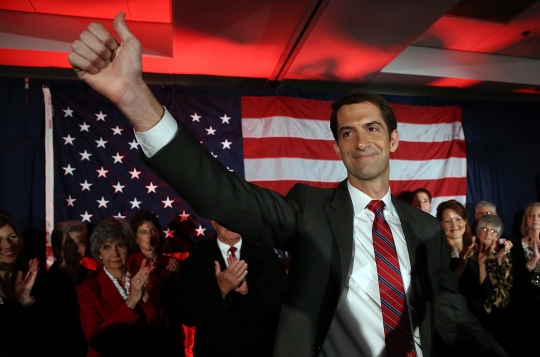
Just consider the “post-Letter” activities of one of the champions of the group of 47 Republican Senators, Tom Cotton of Arkansas. See the VIDEO here of his eloquent defense of this action on a daily morning TV news show:

VIDEO – Cotton on MSNBC: GOP Message to Iran About Nuclear Deal – http://youtu.be/RSbE26EPnZs

Published on Mar 10, 2015 – Sen. Tom Cotton joins MSNBC’s Morning Joe to discuss the letter sent to the Iranian leaders.

But within the same 24 hour news cycle, Senator Cotton is an honored speaker at an industry event for the Military Industrial Complex. This article here relates the story:

2. Title: Immediately After Launching Effort to Scuttle Iran Deal, Senator Tom Cotton to Meet with Defense Contractors

(Retrieved 03-11-2015: https://firstlook.org/theintercept/2015/03/09/upon-launching-effort-scuttle-iran-deal-senator-tom-cotton-meets-defense-contractors/)

CU Blog - Big Defense - Peace is bad for business - Photo 1In an open letter organized by freshman Sen. Tom Cotton, R-Ark., 47 Senate Republicans today warned the leaders of Iran that any nuclear deal reached with President Barack Obama could expire as soon as he leaves office.

Tomorrow, 24 hours later, Cotton will appear at an “Off the Record and strictly Non-Attribution” event with the National Defense Industrial Association, a lobbying and professional group for defense contractors.

The NDIA is composed of executives from major military businesses such as Northrop Grumman, L-3 Communications, ManTech International, Boeing, Oshkosh Defense and Booz Allen Hamilton, among other firms.

Cotton strongly advocates higher defense spending and a more aggressive foreign policy. As The New Republic’s David Ramsey noted, “Pick a topic — Syria, Iran, Russia, ISIS, drones, NSA snooping — and Cotton can be found at the hawkish outer edge of the debate … During his senate campaign, he told a tele-townhall that ISIS and Mexican drug cartels joining forces to attack Arkansas was an ‘urgent problem.’”

On Iran, Cotton has issued specific calls for military intervention. In December he said Congress should consider supplying Israel with B-52s and so-called “bunker-buster” bombs — both items manufactured by NDIA member Boeing — to be used for a possible strike against Iran.

Asked if Cotton will speak about his Iran letter tomorrow, Jimmy Thomas, NDIA Director of Legislative Policy, said, “[M]ost members … talk about everything from the budget to Iran … so it’s highly likely that he may address that in his remarks.” According to Thomas, the Cotton event was scheduled in January, “but certainly we bring people to the platform that have influence directly on our issues.”

This foregoing article relates that this is more an issue of Crony-Capitalism, than it is about negotiating for peace.

Just “follow the money” is a constant refrain among conspiracy theorists.  Many sources, including this Go Lean book and accompanying blogs, have reported on the “bad intent” in the American eco-system, associated with Crony-Capitalism.

This consideration aligns with the Go Lean book, which serves as a roadmap for the introduction and implementation of the technocratic Caribbean Union Trade Federation (CU). This empowerment effort represents a change for the region, calling on all 30 member-state governments in the region to confederate and provide their own solutions in the areas of economics, security and governance. The book is motivated for the Greater Good, not some adherence to a profit objective; so decisions in this regards should never be based on short-term benefits or lining the pockets of any particular special interest group.

The CU/Go Lean roadmap defines these 3 prime directives as follows:

  • Optimization of the economic engines in order to grow the regional economy to $800 Billion GDP and create 2.2 million new jobs.
  • Establishment of a security apparatus to protect the resultant economic engines against “bad actors”.
  • Improvement of Caribbean governance to support these engines.

The negative community ethos of Crony-Capitalism is an example for the Caribbean to avoid in emulating American society. The book Go Lean…Caribbean asserts that the Caribbean region must do better; we must not allow the US to take the lead for our own nation-building, for American capitalistic interests tend to hijack policies intended for the Greater Good. This assessment is logical considering the realities of so many of these Big Corporate Bullies where public policy is set to benefit private parties. The subject of Big Defense, the Military Industrial Complex, is just another example; peace is bad for their business. Consider this chart of well-documented cases of bad corporate behavior:

Big Media Cable companies conspire to keep rates high; kill net neutrality; textbook publishers practice price gouging; Hollywood insists on big tax breaks/ subsidies for on-location shooting.
Big Oil While lobbying for continuous tax subsidies, the industry have colluded to artificially keep prices high and garner sky-high profits ($38+ Billion every quarter).
Big Box Retail chains impoverish small merchants on Main Street with Antitrust-like tactics, thusly impacting community jobs.
Big Pharma Chemo-therapy cost $20,000+/month; and the War against Cancer is imperiled due to industry profit insistence.
Big Tobacco Cigarettes are not natural tobacco but rather latent with chemicals to spruce addiction.
Big Agra Agribusiness concerns bully family farmers and crowd out the market; plus fight common sense food labeling efforts.
Big Data Brokers for internet and demographic data clearly have no regards to privacy concerns.
Big Banks Wall Street’s damage to housing and student loans are incontrovertible.
Big Weather Overblown hype of “Weather Forecasts” to dictate commercial transactions.
Big Real Estate Preserving MLS for Real Estate brokers only, forcing 6% commission rates, when the buyers and sellers can meet on the internet without them.
Big Salt Despite the corrosiveness of salt on roads and the environment, it is the only tactic used to de-ice roads. Immediately after the weather warms, the roads must be re-constructed, thus ensuring a continuous economic cycle.

The Go Lean book, and accompanying blog commentaries, go even deeper and hypothesize that American economic models are dysfunctional from the Caribbean perspective. The American wheels of commerce stages the Caribbean in a “parasite” role; imperiling regional industrialization even further. The foreign policy for the Caribbean is to incentivize consumption of American products, and serve as a playground for their leisure. Considering the military eligibility for citizens of US Territories, the US defense policy is to feed its military with as many territorial young men and woman as possible. Many sources report that on the average 1% of the American population serve in the military. (While some states, like Texas, register 2 – 3% engagement, many records numbers like .50%). On the other hand, the US Territories (PR, VI, Guam, Samoa) engage 10 – 12 percent of its population to the US Armed Forces. One report relates that since 1917, more than 200,000 American citizens from Puerto Rico have served in the Armed Forces, serving in every conflict since World War I.

“We are fodder for the cannons”! – an informal, derogatory term for combatants who are regarded or treated as expendable in the face of enemy fire.

One reason for a high military enrollment is the lack of jobs. While the Go Lean roadmap does not discourage the National Sacrifice ethos required for military enlistments, we do plan to facilitate job creation otherwise. We do not want to just be “fodder”!

The Go Lean roadmap provides turn-by-turn directions on how to forge the elevation of the Caribbean region from a parasite role to the preferred role of protégé. We simply need our own security solutions for our own objectives. This point is made early in the Declaration of Interdependence (Pages 12 & 13) with these statements:

x.   Whereas we are surrounded and allied to nations of larger proportions in land mass, populations, and treasuries, elements in their societies may have ill-intent in their pursuits, at the expense of the safety and security of our citizens. We must therefore appoint “new guards” to ensure our public safety and threats against our society, both domestic and foreign.

xvi.    Whereas security of our homeland is inextricably linked to prosperity of the homeland, the economic and security interest of the region needs to be aligned under the same governance. Since economic crimes, including piracy and other forms of terrorism, can imperil the functioning of the wheels of commerce for all the citizenry, the accedence of this Federation must equip the security apparatus with the tools and techniques for predictive and proactive interdictions.

xxiii. Whereas many countries in our region are dependent OverseasTerritory of imperial powers, the systems of governance can be instituted on a regional and local basis, rather than requiring oversight or accountability from distant masters far removed from their subjects of administration. The Federation must facilitate success in autonomous rule by sharing tools, systems and teamwork within the geographical region.

The Go Lean book purports that the Caribbean can – and must – do better than Crony-Capitalism. The vision of the CU is a confederation of the 30 member-states of the Caribbean to do the heavy-lifting of optimizing economic-security-governing engines. While the region must provide “new guards” to ensure our homeland security, there is no agenda to build up a Military Industrial Complex in the Caribbean region. The Go Lean roadmap only calls for the installations of local security forces to remediate and mitigate regional threats and ensure public safety; not create a military-industrial eco-system. The Go Lean book details the community ethos to adopt, plus the executions of the following strategies, tactics, implementations and advocacies to elevate Caribbean society, and make our homeland a better place to live, work, play:

Community Ethos – Deferred Gratification Page 21
Community Ethos – Economic Principle – Consequences of Choices Lie in   Future Page 21
Community Ethos – Privacy –vs- Public Protection Page 23
Community Ethos – Anti-Bullying and Mitigation Page 23
Community Ethos – Intelligence Gathering Page 23
Community Ethos – “Crap” Happens Page 23
Community Ethos – Minority Equalization Page 24
Community Ethos – Cooperatives Page 25
Community Ethos – Ways to Manage Reconciliations Page 34
Community Ethos – Ways to Improve Sharing Page 35
Community Ethos – Ways to Impact the Greater Good Page 37
Strategy – Vision – Unified and Integrated Single Market Page 45
Strategy – Mission – Protect the Homeland’s Natural Resources Page 45
Tactical – Confederating a non-sovereign union Page 63
Tactical – Fostering a Technocracy Page 64
Tactical – Separation of Powers – Homeland Security Page 75
Implementation – Ways to Pay for Change Page 101
Implementation – Start-up Foreign Policy Initiatives Page 102
Implementation – Start-up Security Initiatives Page 103
Implementation – Ways to Promote Independence – Interdependence Page 120
Planning – Ways to Make the Caribbean   Better Page 131
Planning – Ways to Improve Failed-State Indices Page 134
Planning – Lessons Learned from the West Indies (WI) Federation – WI Regiment Page 135
Advocacy – Ways to Grow the Economy Page 151
Advocacy – Ways to Improve Governance Page 168
Advocacy – Ways to Better Manage the Social Contract Page 170
Advocacy – Ways to Impact Justice Page 177
Advocacy – Ways to Reduce Crime Page 178
Advocacy – Ways to Improve Homeland Security Page 180
Advocacy – Ways to Mitigate Terrorism Page 181
Advocacy – Ways to Improve Intelligence Gathering and Analysis Page 182
Advocacy – Ways to Protect Human Rights Page 220

While the US is the world’s largest Single Market economy and has the largest military establishment, we want to only model some of the American example. We would rather foster a business climate and Armed Forces to benefit the Greater Good, not just some special interest group. There are many Go Lean blog commentaries that have echoed this point, addressing the subject of the Caribbean avoiding American consequences of Crony-Capitalism. See sample here:

https://goleancaribbean.com/blog/?p=4476 Big Salt: Short-term Benefit; Long-term Damage
https://goleancaribbean.com/blog/?p=4381 Net Neutrality: It Matters Here …
https://goleancaribbean.com/blog/?p=4337 American Study: Homes Marketed via the MLS Sell for More
https://goleancaribbean.com/blog/?p=4076 American Media Fantasies versus Weather Realities
https://goleancaribbean.com/blog/?p=3397 A Christmas Present for the Banks from the Omnibus Bill
https://goleancaribbean.com/blog/?p=3326 Detroit’s M-1 Rail – Finally avoiding Plutocratic Auto Industry Solutions
https://goleancaribbean.com/blog/?p=2522 The Cost of Cancer Drugs
https://goleancaribbean.com/blog/?p=2465 Book Review: ‘This Changes Everything: Capitalism vs. the Climate’
https://goleancaribbean.com/blog/?p=2259 The Criminalization of American Business
https://goleancaribbean.com/blog/?p=2183 A Textbook Case of Industry Price-gouging
https://goleancaribbean.com/blog/?p=1143 Health-care fraud in America; Criminals take $272 billion a year
https://goleancaribbean.com/blog/?p=709 Student debt holds back many would-be home buyers
https://goleancaribbean.com/blog/?p=273 10 Things We Don’t Want from the US – American Self-Interest Policies

The book Go Lean…Caribbean posits that many problems of the region are too big for any one member-state to solve alone, that there is the need for the technocracy of the Caribbean Union Trade Federation. The Go Lean roadmap calls for some integration of the regional member-states, a strategy of confederation with a tactic of separation-of-powers between CU federal agencies and member-states’ governments. This allows for a lot of autonomy … and abuse. We must therefore be on-guard – with transparency and accountability – against conspiracy or some special interest hijacking our Greater Good for private gains.

This concept of conspiracies to force some military action to support/grow the Military Industrial Complex sound more like fiction than fact. But, the details in this commentary are true and real. This is classic “life imitating art”; or is it “art imitating life”. Just consider the movies and TV shows based on the concept of shadowy conspiracy to get the US government (or European governments) to commit to military actions so as to enrich some conniving defense contractors. The following is a sample list:

Film Name    Date Description
Death of a President

2006

Faux documentary; government officials cover up the truth of President Bush’s assassination to push an anti-terrorism agenda
Defence of the Realm

1985

A reporter investigating an MP’s sex scandal stumbles onto a web of MI5 cover-ups involving murder and nuclear weapons
Murder at 1600

1997

A Washington,  D.C. detective investigates the murder of a White House intern inside the West Wing, and begins to suspect that a member of the First Family is the killer
Seven Days in May

1964

An Army colonel discovers that rogue generals are plotting a coup d’état against the President to get their war
Shadow Conspiracy

1997

The White House Chief of Staff conspires to assassinate the President
Snake Eyes

1998

A corrupt Atlantic City police detective investigates when the Secretary of Defense is assassinated ringside at a championship boxing event, so as to ensure the sale of a missile defense system
Star Trek VI: The Undiscovered Country

1991

Science fiction; rogue Federation and Klingon military officials attempt to assassinate the Klingon chancellor and Federation president to prevent the end of their cold war and continued militarization
The Fourth Protocol

1987

A rogue KGB chief bent on prolonging the Cold War sends his top spy to detonate an atomic bomb at an American nuclear airbase in Great Britain
The Man Who Knew Too Little

1997

Comedy; an innocent American tourist in England stumbles on a plot by the heads of MI6 and the KGB to bomb a treaty signing ceremony and reignite the Cold War
The November Man

2014

An ex-CIA operative is brought back in on a very personal mission and finds himself pitted against his former pupil in a   deadly game involving high level CIA officials to assassinate Russian president-elect to justify the 2nd Chechen War
The Package

1989

An American soldier stumbles onto an assassination plot by rogue American and Soviet military officials who wish to prevent the signing of a nuclear disarmament treaty
The Tailor of Panama

2001

A rogue MI6 operative fabricates a Panamanian revolutionary group and starts a war to line his own pockets
Wrong Is Right

1982

Black comedy; a journalist is embroiled in plot and counterplot involving the CIA, Islamic fundamentalists, a ruthless arms trafficker, and a tight presidential election
xXx: State of the Union

2005

The Secretary of Defense plots a coup d’état against the president to force a war
TV Show Name    Date Description
24

2006

In the television series 24, many seasons plot involved a vast conspiracy from the government. For example in season 5, terrorist took Ontario airport terminal passenger in hostage in order to take possession of a deadly gas. CIA had put gas there in order for terrorist to take it and explode it while in transit in Middle-East, providing a reason for United States to send troops in Middle East.
Scandal

2015

The 4th season related a season-long conspiracy by the Vice-President to kidnap the President’s Mistress and show’s star Olivia Pope to force the President to authorize war in fictitious East Angola.

These considerations are especially poignant for citizens of US Territories; though the entire region suffers from dysfunction. These “American citizens” are on the move; their Caribbean homelands is at near-Failed-State status; the abandonment factor is unbelievably high. According to one report, Florida is gaining a net 7,300 Puerto Ricans a year, far more than any other U.S. state. The Go Lean book posits that “if we leave well enough alone, things will not just get better on their own”. Much more is needed to reverse these trends; new remediation and new mitigation must be put in place. A better future must be guided, girded and navigated. This is among the heavy-lifting tasks for the Caribbean; this is the charge of the CU.

The people and governing institutions of all the Caribbean are hereby urged to take heed to the exhortations in this commentary; and also to learn more, and do more, by leaning-in to this Go Lean roadmap for Caribbean empowerment. 🙂

Download the book Go Lean … Caribbean – now!

——

Appendix – Referenced Citations:

1. Those who serve: http://www.npr.org/2011/07/03/137536111/by-the-numbers-todays-military

2. http://www.washingtonpost.com/wp-dyn/content/article/2007/08/17/AR2007081702175.html

3. http://www.heritage.org/research/reports/2005/11/who-bears-the-burden-demographic-characteristics-of-us-military-recruits-before-and-after-9-11

4. The military–industrial complex [1] comprises the policy and monetary relationships which exist between legislators, national armed forces, and the arms industry that supports them. These relationships include political contributions, political approval for military spending, lobbying to support bureaucracies, and oversight of the industry. It is a type of iron triangle. The term is most often used in reference to the system behind the military of the United States, where it gained popularity after its use in the farewell address of President Dwight D. Eisenhower on January 17, 1961,[2] though the term is applicable to any country with a similarly developed infrastructure.[3][4] The term is sometimes used more broadly to include the entire network of contracts and flows of money and resources among individuals as well as corporations and institutions of the defense contractors, The Pentagon, the Congress and executive branch.[5] A similar thesis was originally expressed by Daniel Guérin, in his 1936 book Fascism and Big Business, about the fascist government support to heavy industry. It can be defined as, “an informal and changing coalition of groups with vested psychological, moral, and material interests in the continuous development and maintenance of high levels of weaponry, in preservation of colonial markets and in military-strategic conceptions of internal affairs.”[6]

Share this post:
, ,
[Top]

Colorism in Cuba … and Beyond

Go Lean Commentary

Image is a problem for Cuba. Most people in the Western Hemisphere may only know of one Cuban, perhaps Fidel Castro. What’s more, most people only knew of one Cuban before the Castro era, that was “Rickie Ricardo” of I Love Lucy fame. Unfortunately this demographic is not fully representative of Cuba’s population. Cuba has always had a large Black population; (though as a minority group during the Rickie Ricardo era). After the Cuban Communist Revolution, and the wholesale abandonment of most of the White community, today, Cuba is a majority Black nation … by far.

… and yet Majority Rule has eluded them.
… economic power has also eluded this population.

Change is now afoot!

This subject of managing change has been a familiar theme in the book Go Lean…Caribbean. Also the theme of preparing for and rebooting Cuba has been frequently detailed in previous blog commentaries. Now, the consideration is the unavoidable clashes regarding race that will surely take place in a post-Castro Cuba.

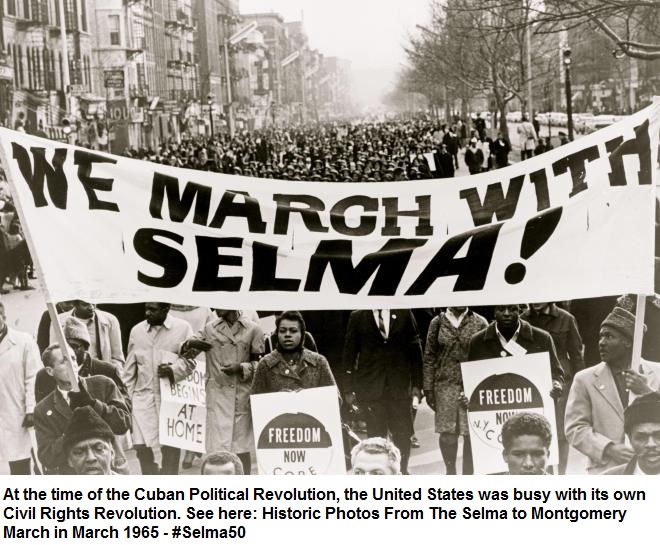
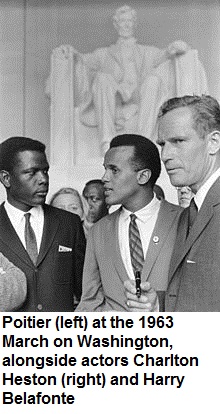
Many other societies have had these clashes. Whether violent or just political; change in the area of race has been hard-fought. Consider the upheavals for the US during the 1960’s. (See Photo below). Cuba did not benefit from this American civil rights movement; they did not sow, so they have not reaped. They were fresh into their own political revolution with the embrace of communism, alienation of American society and mass exodus of so many citizens.

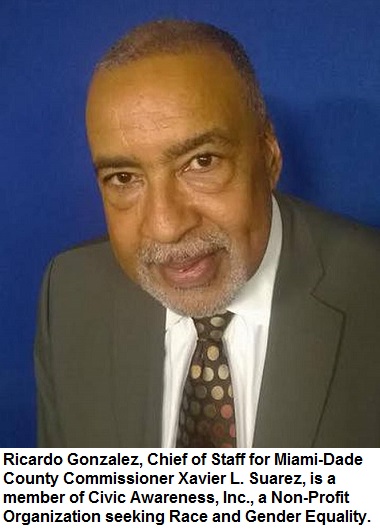
This is the assertion of a prominent Cuban-American politician in Miami, Florida – a strong-bed for the Cuban Diaspora and Cuban-American communities. See his editorial here:

Title: Blacks in Cuba are poised to make gains
By: Ricardo Gonzalez

CU Blog - Colorism in Cuba ... and Beyond - Photo 1For the first time in more than a century, black Cubans might have a real opportunity to gain the enfranchisement and equality for which our ancestors fought so hard — and were on the verge of winning — only to see their hopes and aspirations frustrated when a U.S. naval ship was blown to pieces in the port of Havana in 1898.

The blood and sweat of our forefathers in the overwhelmingly Black Mambi army was shed for naught as our nation and the 20th century were born. Since Cuba’s inception in 1902, its black citizens never truly gained equal footing in that troubled country. Despite their decisive role in the struggle for independence from colonialism, blacks were almost totally excluded from all levels of power and denied full participation in the everyday life in the fledgling nation.

Unhappy with their exclusion and seeking a better compact, black Cubans were once again prevented from gaining the equality they thought they had earned in the battlefield when their nascent racial movement seeking social justice was violently decapitated — literally, in some cases — a decade later. What followed was a long, hard procession of years of drudgery — sprinkled with a few, incremental gains — under the suffocating hardships of Cuba’s tropical version of Jim Crow.

In 1959, the Cuban Revolution artfully gained control of every aspect of Cuban life and promised to eradicate all vestiges of racial injustice in the island. Shortly thereafter, la Revolución, loudly, proudly and unilaterally, proclaimed victory in its self-declared fight against racism and promptly proceeded to label anyone who dared bring up the topic of racial inequality as a counter-revolutionary and applied “revolutionary” punishment and penalties to those who dared to transgress.

More than half a century later, however, whether by government intent or simply as a result of misguided policies, black Cuba is immersed in its most difficult juncture; at a disadvantage economically (reduced access to foreign currencies), politically (little to no representation in government) and sociologically (i.e., marginalized, racially profiled, disproportionally incarcerated, etc.).

Truth be told, throughout its history, Cuba has never been kind to its darker citizens, regardless of who has been in power or his political ideology. It is time for that elephant in the room to be both acknowledged and dealt with.

Now the catastrophic dynasty that has afflicted our nation for almost 60 years finally appears to be near its end — Father Time and biology proving to be our only true and reliable friends. Add the surprising announcement of an attempt to normalize relations between Cuba and United States, and Cubans — black, mulatto and white — might soon have the opportunity to “reboot,” to recreate a new, more inclusive nation; a nation “with all and for the wellbeing of all,” as dreamed by Jose Marti.

Skeptics will say that nothing will change, that the Castro clan will never relinquish power, or that the generals and/or other parasites will cling to their perquisites by any means necessary. But the fact is that in the not-too-distant future, we can envision both brothers leaving the scene, either in a pine box or to convalesce at a well-appointed home for retired dictators.

With those two out of the picture, and with whatever new relationship that evolves from the recent rapprochement with the United   States, there is little doubt that our nation is headed to a new dawn, a different way of doing business.

Black Cubans, who by all measurable accounts have borne the brunt of the damage wreaked by the regime, are well positioned to finally savor their rightful — and so far elusive — share. By essentially heaping misery and squalor on the entire population and thus somewhat “leveling the playing field,” the Cuban Revolution has given Cubans of color, for the first time, the ability to compete academically, culturally and socially with their white compatriots. It is not an accident that a good percentage of the most prominent dissidents in the island are people of color.

And let us not forget that, contrary to the Cuban government’s official numbers, Afro-Cubans are no longer the minority. Malcolm X once said: “The future belongs to those who prepare for it today.” I will simply follow the advice of an old wise man who once said to me; “Stick always with the optimists, because life is hard even if they are right.”
Miami Herald Editorial – South Florida Daily Newspaper – Posted 03/07/2015; retrieved 03/10/2015:
http://www.miamiherald.com/opinion/op-ed/article12875840.html

We march with Selma!The Cuban revolution occurred in 1959 and the political intrigue (Cold War, Missile Crisis, Bay of Pigs, Embargo, Pedro Pan Exodus, etc.) was heightened all during the 1960’s. While the US and many other Western countries confronted their racial past and effected change accordingly, Cuba was on the sidelines. So now that Cuba may soon be graduating from alienation to participation in the world’s economic order, a lot of the changes that their society would have to assimilate are really questions at this time:

  • Did Cuban society formally end their pre-revolution segregation policies voluntarily or were they forced into compliance by the Communists Military Might?
  • Will Cuba immediately accept the new human/civil rights standards for race and gender equality that is the best-practice in Western society (North America and Europe)?
  • Will the Cuban Diaspora still long for the days of a Cuba segregated by the races or has the transformation of Western society really taken root?
  • Will the still-present US practice of colorism (see below) in the Black community – very much prominent in the Latin world – be even more heightened in a new Cuba?

These are valid and appropriate questions. Everywhere else when Communism fell, sectarian divisions and violence erupted; many times fueled by the same prejudices that predated the Communist revolutions; (think ethnic cleansing in the former Yugoslavia: Slovenia, Serbia, Croatia, Kosovo, Bosnia-Herzegovina, and Macedonia). There will truly be a need for earnest reconciliation in Cuba.

CU Blog - Colorism in Cuba ... and Beyond - Photo 3

The issues of race reconciliation and Cuban reconciliation collide in this commentary. These have been frequently detailed in these Go Lean blogs. Consider these previous entries:

https://goleancaribbean.com/blog/?p=4487 Historical Black College most effective with Social Mobility
https://goleancaribbean.com/blog/?p=4447 Probe of Ferguson-Missouri finds bias from cops, courts
https://goleancaribbean.com/blog/?p=3662 Migrant flow into US from Caribbean (i.e. Cuba) spikes
https://goleancaribbean.com/blog/?p=3455 Restoration of Diplomatic Relations with Cuba
https://goleancaribbean.com/blog/?p=3354 CARICOM Chair calls for an end to US embargo on Cuba
https://goleancaribbean.com/blog/?p=2547 Miami’s Success versus Caribbean Failure
https://goleancaribbean.com/blog/?p=1609 Cuba mulls economy in Parliament session
https://goleancaribbean.com/blog/?p=2222 Sports Role Model – Playing For Racial Pride … And More
https://goleancaribbean.com/blog/?p=1918 Philadelphia Freedom – Community Model for Forging Change
https://goleancaribbean.com/blog/?p=1773 Miami’s Caribbean Marketplace Re-opens as a Welcome Mat
https://goleancaribbean.com/blog/?p=1531 A Lesson in History: 100 Years Ago Today – World War I
https://goleancaribbean.com/blog/?p=1020 Sports Revolutionary Issues Re: Racism against Black Athletes
https://goleancaribbean.com/blog/?p=789 America’s War on the Caribbean

The book Go Lean…Caribbean serves as a roadmap for the introduction and implementation of the Caribbean Union Trade Federation (CU); an initiative to bring change and empowerment to the Caribbean region, including Cuba. Since Cuba is the largest country – land-wide and population – in the Caribbean region, any changes there will have an impact on the rest of the region. The goal of this roadmap is to anticipate the change, forge the change and guide the changes in our society for positive outcomes. We want to make the Caribbean region a better homeland to live, work and play for every island, every language group; just everyone. There is some degree of urgency and imminence to this cause as Cuba’s current President, Raul Castro has announced that he will retire in 2017. At that point, there will be no more “Castros” at the helm of Cuba.

To accomplish this audacious goal, this Go Lean roadmap has the following 3 prime directives:

  • Optimization of the economic engines in order to grow the regional economy to $800 Billion & create 2.2 million new jobs.
  • Establishment of a security apparatus to protect the resultant economic engines.
  • Improve Caribbean governance to support these engines.

The book describes the CU as a technocratic administration with many missions to elevate the Caribbean homeland. The underlying goal is stated early in the book with this pronouncement in the opening Declaration of Interdependence (Page 12):

xii. Whereas the legacy in recent times in individual states may be that of ineffectual governance with no redress to higher authority, the accedence of this Federation will ensure accountability and escalation of the human and civil rights of the people for good governance, justice assurances, due process and the rule of law…

xiii.  Whereas the legacy of dissensions in many member-states (for example: Haiti and Cuba) will require a concerted effort to integrate the exile community’s repatriation, the Federation must arrange for Reconciliation Commissions to satiate a demand for justice.

Change has come to the Caribbean. But as depicted in the subsequent VIDEO, this same change came to the US, and yet strong feelings about skin color persist. The Go Lean book declares that permanent change is possible, but to foster success, a community must first adopt new ethos, the national spirit that drives the character and identity of its people. The community ethos of sharing, tolerance, equality and the Greater Good were missing from pre-revolution Cuba. It is a mission of the Go Lean movement to ensure these inclusions for the new Cuba. The Go Lean roadmap was constructed with these community ethos in mind, plus the execution of strategies, tactics, implementation and advocacies to forge the identified permanent change in the region. The following is a sample of these specific details from the book:

Community Ethos – Deferred Gratification Page 21
Community Ethos – Economic Principles – People Choose Page 21
Community Ethos – Economic Principles – All Choices Involve Costs Page 21
Community Ethos – Economic Principles – People Respond to Incentives in Predictable Ways Page 21
Community Ethos – Economic Principles – Economic Systems Influence Individual Choices Page 21
Community Ethos – Economic Principles – The Consequences of Choices Lie in the Future Page 21
Community Ethos – Security Principles – Anti-Bullying and Mitigation Page 23
Community Ethos – Governing   Principles – Minority Equalization Page 24
Community Ethos – Governing   Principles – Lean Operations Page 24
Community Ethos –   Ways to Impact the Future Page 26
Community Ethos – Ways to Manage Reconciliations Page 34
Community Ethos – Ways to Improve Sharing Page 35
Community Ethos – Ways to Promote Happiness Page 36
Community Ethos – Ways to Impact the Greater Good Page 37
Anecdote – LCD versus an Entrepreneurial Ethos Page 39
Strategy – Vision – Confederation of the 30 Caribbean   Member-States into a Single Market Page 45
Strategy – Mission – Celebrate the Music, Sports, Art, People and Culture of the Caribbean Page 46
Tactical –   Confederating a Permanent Union Page 63
Tactical – Fostering a Technocracy Page 64
Tactical –  Separation of Powers: Federal Administration versus Member-States Governance Page 71
Implementation – Ways to Pay for Change Page 101
Implementation – Ways to Deliver Page 109
Planning – 10 Big Ideas for the Caribbean Region Page 127
Planning – Ways to Make the Caribbean Better Page 131
Planning – Ways to Better Manage Image – On guard against defamations Page 133
Advocacy – Ways to Grow the Economy Page 151
Advocacy – Ways to Create Jobs Page 152
Advocacy – Ways to Improve Education Page 159
Advocacy – Ways to Improve Governance in the Caribbean Region Page 168
Advocacy – Ways to Better Manage the Social Contract Page 170
Advocacy – Ways to Mitigate Terrorism Page 181
Advocacy – Ways to Improve Communications – To message for change Page 186
Advocacy – Ways Impact the Diaspora Page 217
Advocacy – Ways to Preserve Caribbean Heritage Page 218
Advocacy – Ways to Re-boot Cuba Page 236

The lessons in race relations and colorism are not perfected in the rest of the Caribbean. In fact, there are many human rights and civil rights abuses in the region. There is not one regional sentinel to be on guard against bad developments in race relations and work towards mitigating the effects. This is the charge of the CU. Nor, can the Caribbean region expect the US to lead in words or action for this serious issue. This VIDEO demonstrates many negative traits that still exist in the American homeland, and by extension, the rest of the Western Hemisphere:

VIDEO: Colorism – https://youtu.be/xD2WYJTG8ig


BlkGrlOnline
December 11, 2011 – I know you all have heard of the whole “Light Skin vs. Dark Skin” debate. Tyra Banks has discussed this and associated topics on her talk show, The Tyra Show. What do you think about this subject? And more importantly, why is this still an issue TODAY?
Note: I do not own or claim rights to the featured material.

There is still clash-and-conflict in the African-American communities, dating back to the days of Booker T Washington versus the W.E.B. Du Bois. Some modern labeling may be “Old-School versus Nu School”, “Hip-Hop versus Bourgeois”, even “Thugs versus ‘Acting White'”; the underlying conflict often times is a reflection of colorism in the Black Community. While these are all informal divisions, the formal (legal) institutions in America also have hardened lines involving Black-White race relations. Despite the presence of the country’s first Black President, Barack Obama, there is hardened opposition of any efforts he tries to make; consider the reality of the Tea Party opposition to Obama’s initiatives (like his signature ObamaCare Universal Health Program) just because they are his originations. Many times, this opposition is willing to sacrifice the Greater Good with the Federal Budget and Foreign Policy just to be contrarian.

Many question whether in the deep trenches of their hearts if many Americans have not really matured from the racial mindsets of the America of 1908, or 1958 (the era before Cuba’s revolution). We have our own problems in the Caribbean to contend with, many which we are failing at. But our biggest crisis stem from the fact that so many of our citizens have fled their Caribbean homelands for foreign (including American) shores. Therefore the quest for change must come from us in the Caribbean, by us and for us. We are inconsequential to the American decision-makers, so the US should not be the panacea of Caribbean hopes and dreams.

The Go Lean movement seeks to be better than even our American counterparts. We must be vigilant. We have seen post-Communist evolution before. It’s a “familiar movie”, we know how it ends.

We welcome the imminent change in Cuba, but we are on guard for emergence of new negative community ethos … or a return to old ones. 🙂

Download the book Go Lean … Caribbean – now!
Share this post:
, , ,
[Top]

Big Salt: Short-term Benefit; Long-term Damage

Go Lean Commentary

“What good is a birthright when I’m starving now?” – Bible Drama of Esau and Jacob; Genesis 25: 19 – 34.

A subject like snow removal should have no significance in the tropical climate of the Caribbean. Right?

Yet, this commentary is more attuned to Big Business than it is related to snow removal. The subject of impetuous governance is of extreme importance to the Caribbean. For this reason, the art and science of snow removal teaches a lot of lessons for tropical destinations.

During winter months in northern climates, snow is the reality. The snow (and ice) must be managed and removed. Roads and pavements will ice over, making them slippery and dangerous to drive and walk on. So local authorities will often remove snow/ice from major roads, by plowing and de-icing. The most common de-icer is rock salt.

Halite, the most common form of rock salt, is a brittle, isotropic sediment that can be found in evaporated piles left in lake beds, playas, seas, oceans, and mined from underground. It forms cubic crystals that can be broken up and refined for numerous purposes, though one of the most common is for its use as a de-icing agent. Rock salt is relatively inexpensive, abundant, and mostly for these reasons is used extensively by local authorities to de-ice the roads. In Detroit-USA, locally mined rock salt is Big Business.

When rock salt is placed in snow, or on top of ice, it will naturally form a bond and become brine, a mixture of water and salt. Brine has a lower freezing point than water, meaning the mixture will melt and remain unfrozen, an effect called freezing point depression, unless the temperature drops significantly.

While the freezing point for water is 32 °F (0 °C), the freezing point for salt is −6.02 °F (−21.12 °C).

Another good reason that rock salt is used to clear roads is to improve traction for road vehicles. Rock salt is grainy and therefore allows the tire tread of vehicles to get a better grip on the road surface.

These are all short-term benefits. The list of long-term damage is extensive; see the following blog/article here:

1. Title: Worries on the use of rock salt as a winter de-icer (One Blogger’s Views)
(Retrieved 03-05-2015: http://www.rocksalt-alternative.com/2014/02/my-worries-on-the-use-of-rock-salt-as-a-winter-de-icer/)

CU Blog - Big Salt - Short-term Benefit; Long-term Damage - Photo 1

The spreading of rock salt as a de-icer for our roads is something that has been undertaken every year in the UK for as long as I can remember. Local authorities up and down the country have a responsibility to keep our roads clear of ice and snow, as much as is practically possible. It was obviously decided some time ago that this was the most cost effective method of doing so.

False economy
CU Blog - Big Salt - Short-term Benefit; Long-term Damage - Photo 2As a pure costing method measured solely against the alternatives this probably was the best way to ensure value for money for tax payers but there would seem to have been no account taken of the substantive consequential costs that come with using a toxic and corrosive substance on our roads. Rock salt consists primarily of sodium chloride (salt) and it is the sodium and the chloride that cause the problems.

The real costs
The major problem in my view is the damage salt can cause to our water sources and water based eco systems. When the snow and ice melts the sodium chloride in the rock salt doesn’t just disappear, it contaminates water supplies whether by direct run-off into surface water drains or by moving through the soil and groundwater into streams and other natural water locations. To put the contamination in perspective, just one teaspoonful of rock salt will permanently contaminate five gallons of water and once it is in the water it cannot be removed unless by expensive methods. The rock salt therefore can eventually damage our drinking water and affects aquatic life and other organisms that have not adapted to living in salt water.

A problem that is close to my heart in relation to the use of rock salt is the risk to pets. Rock salt can cause severe irritation and inflammation to pets’ paws and when the natural reaction of your pet is to lick the affected area then this can cause sickness and other related problems. If the rock salt is directly ingested, and this can easily happen from a build-up of residue at the side of roads, then this is highly toxic and can lead to severe reactions and even death.

Another significant problem with rock salt is the corrosive nature of salt and the effects it has on cars and the under carriage components of cars such as brake pipes are well known to motorists. This damage also applies to road structures such concrete and metal structures such as bridges. Rock salt causes ongoing damage in these areas the cost of which can only be substantive.

If you have ever put salt down to kill weeds then you will fully understand the damage it must be doing to plants, vegetation and the soil itself of all areas adjacent to roadways. It is also harmful to insects and small animals that inhabit the roadway eco systems.

Spread the word, not the salt
If the real cost of using rock salt was to be determined I am sure it would cease immediately as the costs would far outweigh the benefits and an alternative would be used. The point is that there are alternatives to rock salt; we just need to make the authorities aware of this. If you want to check out one source for an alternative you can visit www.rocksalt-alternative.com.

——-

2. Encyclopedia Reference for Snow/Surface Treatment
(Source: http://en.wikipedia.org/wiki/Snow_removal)

For snow removal, roads are also treated by spreading various materials on the surface. These materials generally fall into two categories: chemical and inert. Chemical (including salt) distribution induces freezing-point depression, causing ice and snow to melt at a lower temperature. Chemical treatment can be applied as a preventive measure and/or after snowfall. Inert materials (i.e. sand, brash, slag) make the surface irregular to improve traction. Both types can be applied together, but the inert materials tend to lower traction once snow/ice has melted.

Chemical treatment materials include:

In the European Union, 98% of chemical treatment materials used in 2000 were sodium chloride in various forms. For colder temperatures, calcium chloride (CaCl2) is added to NaCl in some countries, but deployment is limited as it costs about 6 times as much as sodium chloride. Other substances were used rarely and experimentally. Alternative substances (urea, alcohols, glycols) are often used at airports.[23] In recent years, Geomelt, a combination of salt brine and beet juice that is otherwise considered a waste product has been used for pretreatment.[24]

Inert spreadings can be:

The choice of treatment may include consideration of the effect on vegetation, pets and other animals, the local watershed, and effectiveness with regard to speed and temperature. Some chemicals can degrade concrete, metals, and other materials. The resulting meltwater and slush can cause frost heaving if it re-freezes, which can also damage pavement. Inert materials can damage vehicles and create dust.

As an example, in the Czech Republic during the winter season of 2000/2001, net material expenditure for road treatment was: 168,000 tonnes of salt (mostly NaCl), 348 000 tonnes of sand and crushed stone and 91 000 tonnes of other materials like slag. In Ireland, the annual expenditure of salt was 30 000 tonnes. Switzerland reports their annual expenditure as 600 grammes of salt to every square metre of roads on average.[23]

Side effects
De-icing chemicals and inert materials need to be selected and applied with care.

Chemicals may react with infrastructure, the environment, and vehicles. Chlorides corrode steel and aluminum in reinforced concrete, structures and vehicles. Acetates can cause asphalt stripping, weakening the bond between asphalt binder and aggregate. Sand and grit can clog pavement joints and cracks, preventing pavement from expanding in the summer and increasing stress in the pavement.[25]

Salts can be toxic to plants and aquatic life. Sand can alter aquatic habitats where roads are near streams and lakes. Acetates can reduce oxygen levels in smaller water bodies, stressing aquatic animal life. Sand can be ground by tires into very fine particulate matter and become airborne, contributing to air pollution.[26][27]

While this may appear to be an issue of local roads, and subsequent damage – see VIDEO in the Appendix as it relates to damages to cars – it can be argued that actually this is an issue of Crony-Capitalism.

One consequence of Crony-Capitalism is that it short-changes the future for immediate gains, or profits. This paradox has been a constant concern of this commentary. Like Esau in the Bible drama above, many impetuously ignore their birthright – or the birthrights of their children – for immediate benefits.

CU Blog - Big Salt - Short-term Benefit; Long-term Damage - Photo 3Sometimes too, the immediate benefits are no benefit at all. Consider again the Detroit scenario. Their roads are in total disarray; (the whole State of Michigan for that matter). Use of rock salt causes direct (and almost immediate) damage to roads. Solutions are being sought to assuage the challenge, but relief must come on the backs of the everyday man: increases to gas taxes and the issuance of new bonds.

(In North Texas, the transportation officials do not use salt to de-ice their roads and highways. They use sand only.)

This consideration aligns with the book Go Lean … Caribbean; this book serves as a roadmap for the introduction and implementation of the technocratic Caribbean Union Trade Federation (CU). This empowerment effort represents a change for the region, calling on all 30 member-state governments in the region to confederate and provide their own solutions in the areas of economics, security and governance. The book directly advocates for lean facilitation of infrastructural needs. The subject for roads and bridges fit under the category of Public Works for the Greater Good; so decisions in this regards should never be based on short-term benefits only or lining someone’s pocket.

The CU/Go Lean roadmap defines these 3 prime directives as follows:

  • Optimization of the economic engines in order to grow the regional economy.
  • Establishment of a security apparatus to protect the resultant economic engines against “bad actors”.
  • Improvement of Caribbean governance to support these engines.

The purpose of this commentary is to draw reference to the governing principles used in northern communities regarding snow removal and how best-practices are ignored just to placate some immediate need; and immediate profits. Considering the long-term effects on the environment, the next generations’ birthright is being sold for a “bowl of soup”.

This is not an issue of “snow”; this is an issue of ethos.

Just who is the influence behind the “salt” decisions? Big Mining operations and Road Construction companies. This group can collectively be referred to as Big Salt. This is just another example of Crony-Capitalism, where public-long term benefits are shortchanged for private-short-term gains. Is Big Salt a conspiracy or just a coincidental fact of modern life in colder climates? While it is only honorable to give Big Salt the benefit of any doubt, the anecdotal account is consistent in one big American, Canadian and European city after another.

Consider the issues being debated in Michigan at this time. The State (plus counties and cities) must find new monies to pay for the overdue maintenance on the roads, tunnels and bridges. The infrastructure is collapsing.

Just “follow the money” is a constant refrain among conspiracy theorists.  Besides, many sources – including this Go Lean book and accompanying blogs – have reported on the “bad intent” in the American eco-system, associated with Crony-Capitalism. (Though the use of rock salt is not just an American issue).

This negative community ethos is an example for the Caribbean to avoid in emulating American society.

The book Go Lean…Caribbean asserts that the Caribbean region must do better; we must not allow the US to take the lead for our own nation-building, that American capitalistic interest tends to hijack policies intended for the Greater Good. This assessment is logical considering the realities of so many of these “Big Corporate Bullies” where public policy is set to benefit private parties. The subject of Big Salt is just another example. Consider this chart of well-documented cases of bad corporate behavior:

Big Media Cable companies conspire to keep rates high; kill net neutrality; textbook publishers practice price gouging; Hollywood insists on big tax breaks/subsidies for on-location shooting.
Big Oil While lobbying for continuous tax subsidies, the industry have colluded to artificially keep prices high and garner rocket profits ($38+ Billion   every quarter).
Big Box Retail   chains impoverish small merchants on Main Street with Antitrust-like tactics, thusly impacting community jobs.
Big Pharma Chemo-therapy cost $20,000+/month; and the War against Cancer is imperiled due to industry profit insistence.
Big Tobacco Cigarettes are not natural tobacco but rather latent with chemicals to spruce addiction.
Big Agra Agribusiness concerns bully family farmers and crowd out the market; plus fight common sense food labeling efforts.
Big Data Brokers for internet and demographic data clearly have no regards to privacy concerns.
Big Banks Wall Street’s damage to housing and student loans are incontrovertible.
Big Weather Overblown hype of “Weather Forecasts” to dictate commercial transactions.
Big Real Estate Preserving MLS for Real Estate brokers only, forcing 6% commission rates, when the buyers and sellers can meet without them.

The Go Lean book, and accompanying blog commentaries, go even deeper and hypothesize that American economic models are dysfunctional from the Caribbean perspective. The American wheels of commerce stages the Caribbean in a “parasite” role; imperiling regional industrialization even further. The US foreign policy for the Caribbean is to incentivize consumption of American products, and serve as a playground for their leisure.

The Go Lean roadmap provides turn-by-turn directions on how to forge the elevation of the Caribbean region from parasite to the preferred role of protégé. This point is made early in the Declaration of Interdependence (Page 11) with these statements:

iii.    Whereas the natural formation of the landmass for our society is that of an archipelago of islands, inherent to this nature is the limitation of terrain and the natural resources there in. We must therefore provide “new guards” and protections to ensure the efficient and effective management of these resources.

vi.    Whereas the finite nature of the landmass of our lands limits the populations and markets of commerce, by extending the bonds of brotherhood to our geographic neighbors allows for extended opportunities and better execution of the kinetics of our economies through trade. This regional focus must foster and promote diverse economic stimuli.

The Go Lean book purports that the Caribbean can – and must – do better than Crony-Capitalism. The vision of the CU is a confederation of the 30 member-states of the Caribbean to do the heavy-lifting of optimizing economic-security-governing engines. We can weld more power and influence collaborating and consolidating Public Works projects. The
 Go Lean book details the community ethos to adopt, plus the executions of the following strategies, tactics, implementations and advocacies to elevate Caribbean society, and make our homeland a better place to live, work, play:

Community Ethos – Deferred Gratification Page 21
Community Ethos – Consequences of Choices Lie in the Future Page 21
Community Ethos – Privacy   versus Public Protection Page 23
Community Ethos – Anti-Bullying and Mitigation Page 23
Community Ethos – Lean Operations Page 24
Community Ethos – Ways to Improve Sharing Page 36
Community Ethos – Ways to Impact the Greater Good Page 37
Strategy – Vision – Unified and Integrated Single Market Page 45
Strategy – Mission – Prepare for the Eventuality   of Natural Disasters Page 45
Strategy – Mission – Protect the Homeland’s Natural   Resources Page 45
Tactical – Separation of Powers – Emergency Management Page 75
Tactical – Separation of Powers – Public Works & Infrastructure Oversight Page 82
Implementation – Ways to Pay for Change Page 101
Implementation – Ways to Benefit from   Globalization – Interdependence Page 119
Advocacy – Ways to Grow the Economy Page 151
Advocacy – Ways to Create Jobs Page 152
Advocacy – Ways to Improve Governance Page 169
Advocacy – Ways to Better Manage the Social Contract Page 171
Advocacy – Ways to Impact Public Works Page 177
Advocacy – Ways to Improve for Natural Disasters Page 184
Advocacy – Ways to Impact Wall Street – Finance Public Works Page 200
Advocacy – Ways to Impact Main Street Page 201
Advocacy – Ways to Impact Urban Living Page 234
Appendix – Caribbean (Puerto Rico) Diaspora in Northern States Page 304

The cited news article about Michigan struggles to find money to repair its salt-damaged roads is a topic of serious concern for Caribbean planners. This is another example of the benefit of observing and reporting on the turn-around of the once great City of Detroit.

While the US is the world’s largest Single Market economy, we want to only model some of the American example. We would rather foster a business climate to benefit the Greater Good, not just some special interest group. There are many Go Lean blog commentaries that have echoed this point, addressing the subject of the Caribbean avoiding American consequences. See sample here:

https://goleancaribbean.com/blog/?p=4381 Net Neutrality: It Matters Here …
https://goleancaribbean.com/blog/?p=4337 American Study: Homes Marketed via the MLS Sell for More
https://goleancaribbean.com/blog/?p=4076 American Media Fantasies versus Weather Realities
https://goleancaribbean.com/blog/?p=3397 A Christmas Present for the Banks from the Omnibus Bill
https://goleancaribbean.com/blog/?p=3326 Detroit’s M-1 Rail – Finally avoiding Plutocratic Auto Industry Solutions
https://goleancaribbean.com/blog/?p=2522 The Cost of Cancer Drugs
https://goleancaribbean.com/blog/?p=2465 Book Review: ‘This Changes Everything: Capitalism vs. the Climate’
https://goleancaribbean.com/blog/?p=2259 The Criminalization of American Business
https://goleancaribbean.com/blog/?p=2183 A Textbook Case of Industry Price-gouging
https://goleancaribbean.com/blog/?p=1143 Health-care fraud in America; Criminals take $272 billion a year
https://goleancaribbean.com/blog/?p=798 Lessons Learned from the American Airlines merger
https://goleancaribbean.com/blog/?p=709 Student debt holds back many would-be home buyers
https://goleancaribbean.com/blog/?p=273 10 Things We Don’t Want from the US – American Self-Interest Policies

While the Caribbean region does not have to contend with snow removal tactics, we do have to manage the edicts associated with infrastructure (road) maintenance, industrial waste and environmental by-products. It’s important that we always consider the long view.

The book Go Lean…Caribbean posits that many problems of the region are too big for any one member-state to solve alone, that there is the need for the technocracy of the Caribbean Union Trade Federation. The purpose of this Go Lean/CU roadmap is to conquer the problems/challenges of modern day life and make the Caribbean homeland, a better place to live, work, and play.

Climate change is one such challenge.

We know that the short-term actions we do now, have long-term consequences. So we must act right!

Though we are on the frontline of the onslaughts of climate change weather challenges – think, hurricanes – we must demonstrate best-practices to manage our environment well and send the world the right message of prudence.

The Go Lean roadmap calls for some integration of the regional member-states, a strategy of confederation with a tactic of separation-of-powers between CU federal agencies and member-states’ governments. The roadmap calls for the integrated role for infrastructure planning, financing and maintenance. Surely there will be many maintenance decision where the short-term “pro and con” will have to be weighed against the long-term “pro and con” It is hoped we will always consider the long-term and not “sell out our birthright”.

The people and governing institutions of the Caribbean are hereby urged to take heed the exhortations in this commentary; and also to learn more, and do more, by leaning-in to this Go Lean roadmap for Caribbean empowerment.

🙂

Download the book Go Lean…Caribbean now!

———

Appendix – Road salt damages car undercarriage – http://youtu.be/EBw1JhccgCU

Published on Jan 9, 2014 – A simple substance that is supposed to protect you while driving in a winter storm could actually be costing you money. Reported for Omaha’s KETV NewsWatch 7.

Share this post:
, , ,
[Top]

Probe of Ferguson-Missouri finds bias from cops, courts

Go Lean Commentary

“What you’re looking for, you gonna get!” – Bahamian idiom.

Yet, the thoughts conveyed by this expression are universal. Even the Bible says: “If errors was what you watch, who could stand” – Psalm 130:3 (New World Translation)

The subsequent news article is insidious. The law enforcement officials in the City of Ferguson, Missouri seem to have targeted the African-American community, more so than any other ethnic group; this classic racial profiling has only one outcome: chaos. This was their (negative) community ethos. What’s worst? They got away with it; because the justice institutions, the courts, clerks and the like, backed up these immoral police activities.

CU Blog - Probe of Ferguson-Missouri finds bias from cops, courts - Photo 1Too harsh a criticism?

Yet, the injustice was so blatant that the town burst into protest – (literally burst into flames) – when one of their citizens – an unarmed, surrendering Michael Brown – was killed by a police officer. Then the whole country burst into protest when the subsequent Grand Jury decided not to indict in that situation. The protesters decried: “No Justice; No Peace”.

(In a related story, today the US authorities decided not to pursue a federal case against the police officer in the Michael Brown killing in Ferguson).

It is one thing to study this from afar; it is another to live it every day. This was the constant complaint of residents of Ferguson, especially those of the Black-and-Brown persuasion. See news article here and VIDEOs below:

By: Eric Tucker, AP
WASHINGTON — A Justice Department investigation found sweeping patterns of racial bias within the Ferguson, Mo., police department, with officers routinely discriminating against blacks by using excessive force, issuing petty citations and making baseless traffic stops, according to law enforcement officials familiar with its findings.

The report, to be released as soon as today, marks the culmination of a months-long investigation into a police department that federal officials have described as troubled and that commanded national attention after one of its officers shot and killed an unarmed black man, 18-year-old Michael Brown, last summer.

It chronicles discriminatory practices across the city’s criminal justice system, detailing problems from initial encounters with patrol officers to treatment in the municipal court and jail. Federal law enforcement officials described its contents on condition of anonymity because they were not authorized to speak publicly before the report is released.

The full report could serve as a road map for significant changes by the department, if city officials accept its findings. Past federal investigations of local police departments have encouraged overhauls of fundamental police procedures such as traffic stops and the use of service weapons. The Justice Department maintains the right to sue police departments that resist making changes.

The City of Ferguson released a statement acknowledging that Justice Department officials supplied a copy of the report to the mayor, city manager, police chief and city attorney during a private meeting Tuesday in downtown St. Louis. The statement offered no details about the report, which the city said it was reviewing and would discuss today after the Justice Department makes it public.

The investigation, which began weeks after Brown’s killing last August, is being released as Attorney General Eric Holder prepares to leave his job following a six-year tenure that focused largely on civil rights. The findings are based on interviews with police leaders and residents, a review of more than 35,000 pages of police records and analysis of data on stops, searches and arrests.

Federal officials found that black motorists from 2012 to 2014 were more than twice as likely as whites to be searched during traffic stops, even though they were 26 percent less likely to be found carrying contraband, according to a summary of the findings.

The review also found that blacks were 68 percent less likely than others to have their cases dismissed by a municipal court judge. And from April to September of last year, 95 percent of people kept at the city jail for more than two days were black, it found.

Of the cases in which the police department documented the use of force, 88 percent involved blacks, and of the 14 dog bites for which racial information is available, all 14 victims were black.

Overall, African-Americans make up 67 percent of the population of Ferguson, about 10 miles north of downtown St. Louis. The police department has been criticized as racially imbalanced and not reflective of the community’s demographic makeup. At the time of the shooting, just three of 53 officers were black, though the mayor has said he’s trying to create a more diverse police force.

Brown’s killing set off weeks of protests and initiated a national dialogue about police officers’ use of force and their relations with minority communities. A separate report to be issued soon is expected to clear Darren Wilson, the officer who shot Brown, of federal civil rights charges. A state grand jury declined to indict Wilson in November, and he resigned from the department.

Benjamin Crump, the attorney for the Brown family, said that if the reports about the findings are true, they “confirm what Michael Brown’s family has believed all along — and that is that the tragic killing of an unarmed 18-year-old black teenager was part of a systemic pattern of inappropriate policing of African-American citizens in the Ferguson community.”

The report says there is direct evidence of racial bias among police officers and court workers, and details a criminal justice system that issues citations for petty infractions such as walking in the middle of the street, putting the raising of revenue from fines ahead of public safety. The physical tussle that led to Brown’s death began after Wilson told him and a friend to move from the street to the sidewalk.

The practice hits poor people especially hard, sometimes leading to jail time when they can’t pay, the report says, and has contributed to a cynicism about the police on the part of citizens.

Among the report’s findings was a racially tinged 2008 message in a municipal email account stating that President Obama would not be president for very long because “what black man holds a steady job for four years.”

The department has conducted roughly 20 broad civil rights investigations of police departments during Holder’s tenure, including Newark, Cleveland and Albuquerque. Most such investigations end with police departments agreeing to change their practices.

Justice Department officials were meeting with Ferguson leaders on Tuesday about the findings, a city official said.

Several messages seeking comment from Ferguson Police Chief Tom Jackson and Mayor James Knowles III were not returned. A secretary for Jackson said he is not doing media interviews. Knowles has previously said the city is attracting a large pool of applicants to police jobs, including minority candidates seeking the position left vacant by Wilson’s resignation.

John Gaskin III, a St. Louis community activist, praised the findings, saying, “Ferguson police have to see the light in how they deal with people of color.

“It’s quite evident that change is coming down the pike. This is encouraging,” he said. “It’s so unfortunate that Michael Brown had to be killed. But in spite of that, I feel justice is coming.”
Associate Press – News Wire Service – Posted March 4, 2015
http://www.northjersey.com/news/probe-of-ferguson-mo-finds-bias-from-cops-courts-1.1281621

The events of this small Midwest American town, a suburb of St. Louis – see Appendix-Demographics below – have a huge bearing on the efforts to elevate Caribbean society. There is a direct impact: many in the Caribbean Diaspora living in the US face the same dynamics, daily. Yet, our Caribbean citizens – mostly Black-and-Brown – beat down the doors to try and expatriate to the US; then they have to contend with these same attitudes and prejudices. There are also indirect lessons for the Caribbean to learn and apply: our region struggles with a lot of the same challenges, especially with discriminations and prejudices towards immigrant “minority” groups.

The book Go Lean…Caribbean identifies these issues as among “push-and-pull” factors contributing to our excessive societal abandonment rate. While the purpose of the book is to serve as a roadmap for the introduction and implementation of the technocratic Caribbean Union Trade Federation (CU) to elevate the region’s economic engines, the security (public safety) issues are not ignored. Even more so, governance in the Caribbean member-states is a prime focus. In fact, the Go Lean roadmap has these 3 prime directives:

  • Optimization of the economic engines in order to grow the regional economy to $800 Billion & create 2.2 million new jobs.
  • Establishment of a security apparatus to protect the resultant economic engines.
  • Improvement of Caribbean governance to support these engines.

The assertion of the Go Lean book is that the Caribbean region must prepare its own security apparatus for its own security needs; we must proactively and reactively address crime. But we must do it judiciously and with proper regard for human and civil rights. For this reason, we should dread any American leadership in this regards. Considering Ferguson, they (America) have their own issues to contend with. According to the book’s opening Declaration of Interdependence (Page 12), we must take our own lead for our own solutions; we must appoint our own “guardians” with our self-interest in mind; prioritizing the community ethos for the Greater Good. The actual declaration statements are pronounced as follows:

x.   Whereas we are surrounded and allied to nations of larger proportions in land mass, populations, and treasuries, elements in their societies may have ill-intent in their pursuits, at the expense of the safety and security of our citizens. We must therefore appoint “new guards” to ensure our public safety and threats against our society, both domestic and foreign. The Federation must employ the latest advances and best practices … to assuage continuous threats against public safety.

xvi. Whereas security of our homeland is inextricably linked to prosperity of the homeland, the economic and security interest of the region needs to be aligned under the same governance. Since economic crimes, including piracy and other forms of terrorism, can imperil the functioning of the wheels of commerce for all the citizenry, the accedence of this Federation must equip the security apparatus with the tools and techniques for predictive and proactive interdictions.

The Caribbean appointing “new guards” or a security pact to ensure public safety calls for permanent justice institutions sanctioned by all 30 CU member-states. The CU Federation or federal justice’s institutions must operate differently than the US Department of Justice. While the separation-of-powers edict is the same – between the US and the CU – the Go Lean roadmap calls for more “strings attached” to security funding for community policing in the member-states. These strings include fair and equitable treatment of all citizens.

CU Blog - Probe of Ferguson-Missouri finds bias from cops, courts - Photo 2There are so many economic considerations from these issues. Consider the experience in Ferguson. The economic data reports that for White Americans there, the unemployment rate was just 6.2%; but the best figures available for the Black community shows 26% (for the entire St. Louis County in 2012). Overall, this Fortune magazine article reports: “while the Ferguson and St. Louis regional economies have been on the upswing, the gains have not been equally shared among White and African Americans. The St. Louis County 20 percentage point gap between the unemployment rate of African Americans and White Americans is the largest of any city in America, according to the Census. So, the fact that protests against the treatment of Black Americans have erupted there is not a coincidence”. [And maybe not a surprise].

The primary economic engine in Ferguson, Missouri is the company Emerson Electric. How have they fared in the midst of all this social turmoil?

As the conflict in Ferguson, Missouri intensified, this one Fortune 500 company (ranked 121) headquartered there stayed out of harm’s way. Despite the ongoing protests, the curfew implemented by Missouri Governor Jay Nixon, and the arrival of the Missouri National Guard to quell acts of violence, the company said “it was business as usual”.

This is a powerful lesson for Caribbean consideration, the need for continuity in economic engines. About 1,300 Emerson employees work at the Ferguson headquarters; there is the perception of a “disconnect” between its status as a Fortune 500 corporation and the city’s dysfunctional urban realities. The company has established a Charitable Trust for its outreach into the local community, funding campaigns through local ($2.5 million) and national ($33 million) philanthropic endeavors. The local NAACP chapter has lauded Emerson’s contributions and involvement.

This type of success in Caribbean communities will require a heightened level of economic-security-government engagement. This is the prime directive of the CU. The Homeland Security requirements are mostly related to threats that may imperil the region’s economic engines, and crime remediation and mitigation: Public Safety! While there is some community responsibility for corporate stakeholders, the full burden – heavy-lifting – is not the obligation of local corporations, like Emerson in Ferguson. The Go Lean roadmap invites philanthropic participation but assumes the heavy-lifting itself to transform Caribbean society. The CU is an expression of that transformation, an entity to serve as a deputy for law enforcement agencies for each Caribbean member-state. (This is the theme of the treaty to empower the CU). The treaty – a Status of Forces Agreement in International Legal circles – calls for all Caribbean member-states to confederate – unite and empower – a security force to execute a limited scope on their sovereign territories. (This effort also includes the US Territories as well, under the legal guise of an Interstate Compact).

The Go Lean roadmap calls for a lot of proactive activities to remediate and mitigate crime. Like the data analyses, performed by the US Department of Justice in the foregoing article, trends of racial profiling and violations of civil rights become obvious from a macro computation of arrest and prosecution records. It is very important to have the intra-regional review of Caribbean justice institutions. This point was strongly urged in the same opening Declaration of Interdependence (Page 12), as follows:

xii. Whereas the legacy in recent times in individual states may be that of ineffectual governance with no redress to higher authority, the accedence of this Federation will ensure accountability and escalation of the human and civil rights of the people for good governance, justice assurances, due process and the rule of law. As such, any threats of a “failed state” status for any member state must enact emergency measures on behalf of the Federation to protect the human, civil and property rights of the citizens, residents, allies, trading partners, and visitors of the affected member state and the Federation as a whole.

The Go Lean roadmap identifies gang and organized crime-related activities – including drug trafficking accompanied by epidemic levels of gun violence – as threats to the law-and-order fabric of Caribbean society. (Between 2005 and 2008, the Caribbean Community registered 9,733 homicides, the highest rates in the world). Had Ferguson been in some Caribbean member-state during this new Caribbean regime, the CU would be active and involved. If not for the marshaling against economic crimes, then at least the oversight of the existing Justice institutions in the member-states. It is therefore apropos that we apply careful review of these troubling events from our northern neighbors (US in general and Missouri in particular); and also to be on guard against any such dysfunctions in our region. But the community ethos for the Caribbean must be based on the Greater Good. This covers both the letter and the spirit of laws to serve-and-protect the community.

The Go Lean book details additional community ethos to ensure the right attitudes to serve-and-protect Caribbean communities; plus strategies, tactics, implementations and advocacies to provide increased public safety & security in the Caribbean region:

Economic Principle – Economic Systems Influence Individual Choices Page 21
Economic Principle – Consequences of Choices Lie in Future Page 21
Community Ethos – Privacy –vs- Public Protection Page 23
Community Ethos – Witness Security & Protection Page 23
Community Ethos – Intelligence Gathering Page 23
Community Ethos – Anti-Bullying and Mitigation Page 23
Community Ethos – Minority Equalization Page 24
Community Ethos – Cooperatives Page 25
Community Ethos – Ways to Improve Sharing Page 35
Community Ethos – Ways to Impact the Greater Good Page 37
Tactical – Confederating a non-sovereign union Page 63
Tactical – Fostering a Technocracy Page 64
Tactical – Separation of Powers – Homeland Security Page 75
Tactical – Separation of Powers – Justice Department – CariPol Page 77
Tactical – Separation of Powers – Federal Courts – Court of Justice Page 90
Implementation – Assemble “Organs” into a Security Apparatus Page 96
Implementation – Start-up Security Initiatives Page 103
Planning – 10 Big Ideas – # 10: Haiti and Cuba Page 127
Planning – Ways to Make the Caribbean Better Page 131
Planning – Ways to Improve Failed-State Indices Page 134
Planning – Lessons from the American West Page 142
Advocacy – Ways to Grow the Economy Page 151
Advocacy – Ways to Improve Governance Page 168
Advocacy – Ways to Better Manage the Social Contract Page 170
Advocacy – Ways to Impact Justice – No Justice; No Peace Page 177
Advocacy – Ways to Reduce Crime Page 178
Advocacy – Ways to Improve for Gun Control Page 179
Advocacy – Ways to Improve Homeland Security Page 180
Advocacy – Ways to Mitigate Terrorism Page 181
Advocacy – Ways to Improve Intelligence Gathering/Analysis Page 182
Advocacy – Ways to Impact the Prison Industrial Complex Page 211
Advocacy – Ways to Protect Human Rights Page 220
Advocacy – Ways to Impact the One Percent – Philanthropic Causes Page 224
Appendix – CariCom Organs: IMPACS & Court of Justice Page 244
Appendix – Interstate Compacts Page 278
Appendix – Philanthropic Giving Pledge Signatories Page 292

Other subjects related to crime remediation and empowerments for the region have been blogged in other Go Lean commentaries, as sampled here:

https://goleancaribbean.com/blog/?p=4360 Dreading the American ‘Caribbean Basin Security Initiative’
https://goleancaribbean.com/blog/?p=4308 911 – Emergency Response: System for First Responders in Crisis
https://goleancaribbean.com/blog/?p=3881 Intelligence Agencies to Up Cyber Security Cooperation
https://goleancaribbean.com/blog/?p=3662 Migrant flow / Border incursions / Threats from Caribbean into US spikes
https://goleancaribbean.com/blog/?p=2782 Red Light Traffic Cameras, other CCTV Deployments can Impact Crime
https://goleancaribbean.com/blog/?p=2684 Role Model for Justice, Anti-Crime & Security: The Pinkertons
https://goleancaribbean.com/blog/?p=1674 Obama’s $3.7 Billion Immigration Crisis Funds – A Homeland Security Fix
https://goleancaribbean.com/blog/?p=1554 Status of Forces Agreement = Security Pact
https://goleancaribbean.com/blog/?p=1487 Here come the Drones … and the Concerns
https://goleancaribbean.com/blog/?p=960 NSA records all phone calls in Bahamas, according to Snowden
https://goleancaribbean.com/blog/?p=535 Remembering and learning from Boston
https://goleancaribbean.com/blog/?p=392 Jamaica to receive World Bank funds to help in crime fight
https://goleancaribbean.com/blog/?p=341 American Hypocritical Human Rights Leadership Slams the Caribbean

An underlying goal of the Go Lean movement is to make the Caribbean homeland, a better place to live, work and play so that our citizens are not lured to abandon their homeland for American (or Canadian or European) shores. There are many reasons people emigrate! Many times, the reasons are economic in nature. Sometimes though, security failings spur expatriation. We must address both issues with the efforts of this Go Lean movement.

America should not be considered the land of destination for the Caribbean population. Income inequality and racial inequality persists, though they don’t always go hand in hand. The fact that members of different races in America continue to receive different, unequal economic and security treatments has contributed to the rise in inequality overall in the US. We can do better in the Caribbean homeland. The issue of being Black-and-Brown is neutralized by the fact that the majority of the population is Black-and-Brown.

However, we still have minority issues to contend with.

There is a consistent problem for much of the Caribbean in contending with its illegal immigration problems, particularly from near-failed states like Haiti, Cuba and Jamaica. Their nationals tend to be unwelcomed and scorned upon in host countries; (see the experience of Haitian living in the Bahamas). In these scenarios are the best opportunities to apply the lessons learned from Ferguson and other case studies in dysfunction; (the Go Lean book details lessons from Detroit, East Germany, Egypt and Indian Reservations). We must ensure that our security personnel are just in their dealings with a minority-immigrant population. Otherwise, this undermines all the positives being pursued by this roadmap; onlookers and bystanders will simply label us as hypocrites.

“See how the world, marks the manner of your bearing” – verse from the Bahamas National Anthem.

Under this dreaded scenario, many people make plans to abandon their homelands further because of their perception of unchecked injustice.

We must do better!

We know that “bad actors” will emerge in all situations: good, bad and ugly. We must be prepared and on guard. Yet we must maintain transparency, accountability, and constant commitment to due-process and the rule-of-law. Everyone, the people, institutions and government officials are encouraged to lean-in to this roadmap; to Go Lean.

🙂

Download Go Lean … Caribbean – now!
——

Appendix – Demographics:

CU Blog - Probe of Ferguson-Missouri finds bias from cops, courts - Photo 3The racial composition of Ferguson has shifted over the decades. In 1970, 99% of the population of Ferguson was White and 1% African American. In 1980, the proportion of White residents went down to 85%, whereas the proportion of African American rose to 14%. In 1990, residents of Ferguson who were identified in the U.S. Census as White comprised 73.8% of the total, while those identified as Black made up 25.1%.[23] (The remainder, 1.1%, identified with other racial categories.) In the 2000 census, 44.7% were White and 52.4% were African American.

As of the 2010 census, [3] there were 21,203 people, 8,192 households, and 5,500 families residing in the city. The population density was 3,425.4 inhabitants per square mile (1,322.6/km2). There were 9,105 housing units at an average density of 1,470.9 per square mile (567.9/km2). The racial makeup of the city was 67.4% African American, 29.3% White, 0.5% Asian, 0.4% Native American, 0.4% from other races, and 2.0% from two or more races. Hispanic and Latino of any race were 1.2% of the population.

There were 8,192 households of which 39.1% had children under the age of 18 living with them, 29.6% were married couples living together, 31.5% had a female householder with no husband present, 6.1% had a male householder with no wife present, and 32.9% were non-families. 28.2% of all households were made up of individuals and 7.4% had someone living alone who was 65 years of age or older. The average household size was 2.56 and the average family size was 3.12.

The median age in the city was 33.1 years. 28.7% of residents were under the age of 18; 10.4% were between the ages of 18 and 24; 25.2% were from 25 to 44; 25.3% were from 45 to 64; and 10.3% were 65 years of age or older. The gender makeup of the city was 44.8% male and 55.2% female.

——

Appendix – VIDEOs:

VIDEO 1: Attorney  General Eric Holder on the Ferguson Racial Bias –
http://www.nbcnews.com/news/us-news/holder-overwhelming-majority-force-ferguson-police-aimed-blacks-n317501

March 4, 2015 – Ferguson, Missouri. Police fostered a “highly toxic environment” of racism and misconduct that turned the city into a “powder keg” that was ready to explode after the fatal shooting of unarmed teenager Michael Brown last year, Attorney General Eric Holder said Wednesday — even though the officer who shot Brown was determined to have committed no crime.

VIDEO 2: DOJ Finds Pattern of Racial Discrimination in Ferguson Police –
http://www.nbcnews.com/nightly-news/doj-finds-pattern-racial-discrimination-ferguson-police-n316736

March 3, 2015 – Report on Ferguson Exposes Broader Effort to Reform Municipal Courts – Ferguson officers routinely charge multiple violations for the same conduct, competing to see who can issue the most citations during a single stop. In one particularly egregious example, he cited the case of a woman For example, who received two parking tickets in 20078 that totaled $152. But so far, she has paid $550 in fines and fees, has been arrested twice for having unpaid tickets and has spent six days in jail — and “yet she still inexplicably owes Ferguson $541,” he said.


Share this post:
, ,
[Top]

Getting Rich Slowly … in the Caribbean

Go Lean Commentary

The old practice was for couples to have a lot of children so that there would be assurances for their old age; the many children would be able to leverage caregiving roles among themselves. With a high infant-mortality rate, there was the need to hedge the risk with a few more children – an “heir and a spare” many times over.

(This writer is the youngest of 6 children).

Then “the road turned”… change came.

After World War II, modern medicine improved (i.e. childhood vaccines), more family planning options were introduced, governments adopted social safety-net strategies (Social Security, National Insurance and other pensions) and a consumer culture took hold. It was no longer necessary, in the First World (North American and Western Europe), to have so many children. Couples in these countries, during the decades of the 1970’s to 1990’s, averaged only 2.1 children; today that figure is down to 1.8.

(This writer has 3 children).

This standard is now universal, even in the Third World Caribbean.

Here is where the “rubber meets the road”; without those old-world family planning strategies, care for aging parents now becomes an issue, a cause and an advocacy.

Not everyone is prepared for change.

The book Go Lean … Caribbean addresses this issue head-on. It first declares that the Caribbean is in crisis, that most Caribbean citizens, residents in the homeland or the Diaspora, are not prepared for retirement and their “golden years”. Then with the propensity for societal abandonment, so many Caribbean citizens live abroad, away from their aging parents, so there is no practicality normally associated with a close proximity; (children cannot just simply cohabitate with their parents). To make matters worse, many Caribbean member-state governments have failing economic structures, so fulfilling their Social Contract responsibilities have been strained; consider currency devaluations, unchecked inflation, dependency on foreign imports and higher taxation with import Customs duties.

Alas, the book also declares that “a crisis is a terrible thing to waste”.

The Go Lean book serves as a roadmap for the introduction and implementation of the technocratic Caribbean Union Trade Federation (CU). This CU is proffered to provide economic, security and economic security solutions for the 30 member Caribbean states and their 42 million people. It is our quest to be prepared for the changed landscape. This mandate is detailed early on in the book’s Declaration of Interdependence with the following statements (Page 11 – 13):

viii.    Whereas the population size is too small to foster good negotiations for products and commodities from international vendors, the Federation must allow the unification of the region as one purchasing agent, thereby garnering better terms and discounts.

ix.    Whereas the realities of healthcare and an aging population cannot be ignored and cannot be afforded without some advanced mitigation, the Federation must arrange for health plans to consolidate premiums of both healthy and sickly people across the wider base of the entire Caribbean population. The mitigation should extend further to disease management, wellness, mental health, obesity and smoking cessation programs. The Federation must proactively anticipate the demand and supply of organ transplantation as developing countries are often exploited by richer neighbors for illicit organ trade.

xxiv.    Whereas a free market economy can be induced and spurred for continuous progress, the Federation must install the controls to better manage aspects of the economy: jobs, inflation, savings rate, investments and other economic principles. Thereby attracting direct foreign investment because of the stability and vibrancy of our economy.

While the Caribbean may be in crisis today, conditions would get even worse tomorrow (near future) if left unchecked; if there is no remediation and mitigation for retirement. The Go Lean roadmap posits that retirement is a community issue, and that the mandate for the CU is to manage economic security issues – strong messages and incentives – to encompass retirement planning as well.

It should be duly noted that this issue is not one that the US shows leadership with. Far too many American citizens have not fully developed solutions for their retirement, despite the myriad of financial products available in that advanced economy. This is not a community choice issue; this is a community ethos issue. The Go Lean book (Page 21) defines community ethos as the “fundamental character or spirit of a culture; the underlying sentiment that informs the beliefs, customs, or practices of a group or society”. The ethos associated with retirement planning is that of “deferred gratification”, setting aside immediate benefits for more long-term benefits.

“A good person leaves an inheritance for their children’s children, but a sinner’s wealth is stored up for the righteous”. – The Bible; Proverbs 13:22 – New International Version

While Americans need to adopt this ethos – Social Security benefits alone are grossly insufficient to satisfy retirees’ needs – Caribbean citizens need to “double-down” on this spirit all the more so. In either case, there must be supplemental retirement income. With a patient, future-focused attitude, the stage is set for individuals to glean the benefits of the time value of money. This concept is fundamental in finance – it allows for greater future rewards of monies invested today. The very approach for retirement is to glean returns tomorrow (after a person retires) on the investments made today (while the person is still working).

Compliance in this regards, does not require intellectual genius, just financial discipline. Consider here, the example of a simple man, a “blue-collar” worker in the US State of Vermont. He is a role model for us all for “how to get rich slowly”:

Title: Janitor bequeaths millions to library, hospital
(Retrieved from CNBC.com – Consumer News & Business Channel site – http://www.cnbc.com/id/102404530)

CU Blog - Getting Rich Slowly in the Caribbean - Photo 2Reuters; Friday, 6 Feb 2015 – Perhaps the only clue that Ronald Read, a Vermont gas station attendant and janitor who died last year at age 92, had been quietly amassing an $8 million fortune was his habit of reading the Wall Street Journal, his friends and family say.

It was not until last week that the residents of Brattleboro would discover Read’s little secret. That’s when the local library and hospital received the bulk of his estate, built up over the years with savvy stock picks. “Investing and cutting wood, he was good at both of them,” his lawyer Laurie Rowell said on Wednesday, noting that he read the Journal every day.

Most of those who knew Read, described as a frugal and extremely private person, were aware that he could handle an axe. But next to no one knew how well he was handling his financial portfolio.

Read, the first person in his family to graduate from high school, dressed in worn flannel shirts and spent his free time scavenging for fallen branches for his home wood stove. He drove a second-hand Toyota Yaris.

“You’d never know the man was a millionaire,” Rowell said. “The last time he came here, he parked far away in a spot where there were no meters so he could save the coins.”

CU Blog - Getting Rich Slowly in the Caribbean - Photo 1Read graduated from Brattleboro High School in 1940 and during World War II served in North Africa, Italy and the Pacific theater. Returning home, he worked at Haviland’s service station and then as a janitor at a JCPenney store, marrying a woman with two children.

Before his death on June 2, 2014, Read’s only indulgence was eating breakfast at the local coffee shop, where he once tried to pay his bill only to find that someone had already covered it under the assumption he did not have the means, Rowell said.

Last week, Brooks Memorial Library and Brattleboro Memorial Hospital each received their largest bequests ever. Read left $1.2 million to the library, founded in 1886, and $4.8 million to the hospital, founded in 1904.

“It was a thunderbolt from the sky,” said the library’s executive director, Jerry Carbone. While a surprise, he said the gift made sense once he learned more about the quiet, shy library patron appropriately named Read.

“Being a self-made man with his investments, he recognized the transformative nature of a library, what it can do for people,” Carbone said.

Read’s stepchildren survive him but were not immediately available for comment.

VIDEO 1: – Investing like Vermont’s secret millionaire stock-picker – http://video.cnbc.com/gallery/?video=3000353159

VIDEO 2: – Janitor’s $8 million fortune – http://video.cnbc.com/gallery/?video=3000353167

In a previous blog/commentary, it was reported that the US does not make a good role model for its administration of the elderly. The American standard is to delegate elderly family care to professionals, rather than to family, and that this is not an example we want in our region; the referenced quotation was entitled 10 Things We Do Not Want from the US:

# 7: Family Abandonment – Senior Living Facilities are a big industry in the US. This is due to the family habit of abandoning elderly parents to the care of professional strangers. The Caribbean way traditionally is to house their Senior Citizens with families, whether the economics apply or not.

On the other hand, we do admire the US capital markets, as the Go Lean book reports that Wall Street is the most liquid in the world (Page 200). So among the 10 Things We Want from the US, American capital is prominent:

# 3: Capital – There are many Financial Centers around the world (London, Zurich, Hong Kong, etc.) but none with the liquidity like Wall Street. They have the capital the Caribbean needs for Direct Foreign Investments. After the 2008 Financial Crisis, the US Federal Reserve Banks have maintained a policy of flooding the money supply to keep the cost of capital (borrowing) low.

The roadmap uses the model of Wall Street to structure more robust investment vehicles in the regional Caribbean securities markets – the book identifies 9 exchanges. Imagine this one great US product that a Caribbean Diaspora member, a CPA, Clifton Rodriquez, strongly campaigns for: Dividend Re-Investment Plans or DRIPs. His blog entry is attached in the Appendix with his strong urging.

The Go Lean book describes this heavy-lifting to empower Caribbean society to prepare for change and challenges that confront modern financial management, for the macro (national economy) and the micro (individuals and families). There is no “get rich quick” scheme in the roadmap, but rather a comprehensive plan for all Caribbean stakeholders to “get rich slowly” and ensure economic success at home, “prospering where they are planted”. The book describes the turn-by-turn directions for all the community stakeholders to follow to reach the 3 goals defined as the CU/Go Lean prime directives:

  • Optimization of economic engines in order to grow the regional economy to $800 Billion and create 2.2 million new jobs.
  • Establishment of a security apparatus to protect the resultant economic.
  • Improvement of Caribbean governance to support these engines.

The Go Lean roadmap calls for the emergence of the Caribbean Dollar (C$) managed by a regional technocratic Caribbean Central Bank. This structure allows for more liquidity in the existing stock exchanges in the regions. Products like DRIPs can be successfully promoted and regulated under the Go Lean’s vision for a more robust regional capital/securities market using Caribbean Dollars (C$).

The CU also embarks on a mission to encourage repatriation of the Diaspora back to the Caribbean homeland and assuage societal abandonment. The book asserts that, senior citizens should avoid the cold climates of North American and EU, especially in the winter months:

“Come in from the cold” – Song title of Caribbean Music Icon Bob Marley from 1980 Album Uprising.

The Go Lean/CU roadmap portrays the need for public messaging to encourage savings/investments, describing deferred gratification as a community ethos that is required to forge permanent change in the Caribbean homeland. In addition, these additional ethos, strategies, tactics and advocacies are trumpeted in the book to optimize financial/retirement planning:

Ethos – Deferred Gratification Page 21
Ethos – People Respond to Incentives in Predictable Ways Page 21
Ethos – Consequences of Choices Lie in the Future Page 21
Ways to Impact the Future Page 26
Ways to Better Manage Debt Page 114
Reasons to Repatriate Page 118
Ways to Control Inflation Page 153
Lessons from New York City – Wall Street Power Page 137
Ways to Improve Communications – Messaging Page 186
Reforms for Banking Regulations – Central Banking Page 199
Ways to Impact Wall Street Page 200
Ways to Impact Retirement Page 231
Ways to Improve Elder-Care Page 225

There are many Go Lean blog commentaries that previously stressed the dynamics of technocratic management of regional finances, at the micro level and at the macro level for the Greater Good of Caribbean communities. See sample here:

https://goleancaribbean.com/blog/?p=2930 ‘Too Big To Fail’ – Caribbean Version
https://goleancaribbean.com/blog/?p=2830 Jamaica’s Public Pension Under-funded
https://goleancaribbean.com/blog/?p=1433 Caribbean loses more than 70 percent of tertiary educated to brain drain
https://goleancaribbean.com/blog/?p=949 Inflation Matters
https://goleancaribbean.com/blog/?p=665 Great Investment Vehicle – Real Estate Investment Trusts explained
https://goleancaribbean.com/blog/?p=510 Canadian Retirees – Florida’s Snowbirds Chilly Welcome
https://goleancaribbean.com/blog/?p=467 Barbados Central Bank records $3.7m loss in 2013
https://goleancaribbean.com/blog/?p=372 Dominica Government raises EC$20 million on regional capital market
https://goleancaribbean.com/blog/?p=364 Time Value of Money – The basis for retirement planning
https://goleancaribbean.com/blog/?p=360 How to Create Money from Thin Air
https://goleancaribbean.com/blog/?p=273 10 Things We Want from the US: #3 – American Investment Options

The book Go Lean…Caribbean posits that many problems of the region are too big for any one member-state to solve alone, that there is the need for the technocracy of the Caribbean Union Trade Federation. The purpose of this Go Lean/CU roadmap is to make the Caribbean homeland, a better place to live, work, learn and play. This effort is more than academic; this involves many practical mitigations and heavy-lifting. While this charter is not easy, it is worth all effort.

The roadmap posits that to succeed as a society, the Caribbean region must arrange for economic, security and governance solutions. Any failure in this regard results in immediate abandonment – people leave – this undermines any empowerment efforts. We need to keep our people at home: the older retirees and the younger workers; they are all important for pension plans and actuarial tables.

Now is the time for all of the Caribbean, the people and governing institutions, to lean-in for the changes/empowerments described in the book Go Lean … Caribbean. We must all be able to prosper where we are planted at home.

Download the book Go Lean … Caribbean – now!

———-

APPENDIX – Successful Retirement Investment in the Caribbean – DRIPs

Title: Drip-a Proven Approach to Wealth Building
(Retrieved from: http://cliftonhrodriquez.hubpages.com/hub/DRIP-A-PROVEN-APPROACH-TO-WEALTH-BUILDING)
By: Clifton H. Rodriquez

What Are DRIPS?
Direct stock and dividend reinvestment plans, or to use the acronym, DRIP’s have been around for some eighty (80) years. As the name suggests, they permit investors to directly invest in any a significant number of public companies without going through a stock broker. Investors are able to buy stocks directly from the companies, or via a transfer agent. In general, the purchase would entail a modest down payment coupled with automatic monthly payments. The term “IRM 72’s” is also used to describe DRIPs. The two names are one in the same and should not be viewed as different investment vehicles.

CU Blog - Getting Rich Slowly in the Caribbean - Photo 3

WEALTH BUILDING OVER TIME
As aforementioned, DRIP’s maybe referred to as IRM 72’s as well. They are an efficient and effective mechanism for building substantial financial nest-eggs over time. They are efficient investment vehicles because they allow investors to pay a small investment fee, usually for administrative purposes, while investing substantially more of their money in a particular stock. In some cases, a number of companies will cover some of the administrative fees, especially ones involving reinvestment of dividends, associated with DRIP investing. It is a fact that even discount brokers cannot match the low costs associated with DRIP investing. Furthermore, greater efficiency is realized with DRIPs due to “dollar cost average” associated with purchasing risk assets (stocks) over time. In a nutshell, investors are able to acquire more of a particular stock when the market price declines, but less when the price increases. However, over the extended period of time, the actual costs averages out.

It is an effective mechanism because unlike investing lump sums of money and taking greater risk, DRIPs allow for gradual investing over time and investors tend not to feel the pain of the volatility that often arises from time to time in the market. Thus, DRIP investors are less likely to panic and pull money out of their DRIP portfolios whenever bad news hits the market and causes chaos and panic (i.e., the root cause of volatility in the stock market). DRIP investors tend to appreciate market dips because they view them as opportunities to pick up their stocks at bargained prices. Picking up the stocks at these bargained prices tend to add to DRIP investors capital appreciation whenever other investors return to the stock market and chase stocks to higher prices. This is merely one way in which DRIP investors make money on their investments, and the other way is in effect “icing on the cake”.

DRIP investors experience icing on their investment cakes from the high dividend yields that they get from their investments. It is not inconceivable for DRIP stocks to give dividend yields as high sixteen (16%) percent. The yield is determined by taking the annual dividend and dividing it by current market price. Of course the higher the annual dividend, and the lower the current stock price, the greater the dividend yield. The opposite also is true. Most DRIP stock pay quarterly dividends, but several also pay monthly dividends which provide a higher effective yield to investors. Even if a DRIP stock does not increase in market price, if it has a high single or double digit yield that maybe enough for investors to maintain their positions in the stocks. Thus, it is a rarity to see many of these stocks decline in value. Investors tend to chase them for their dividend yields.

Investors chase these stocks for their dividend yields because these yields tend to fuel geometric growth in DRIP accounts, especially when an investor re-invests their dividends (i.e., use their dividends to buy additional shares of stocks). The re-investment of the dividends coupled with automatic monthly investment tend to bring about a profound compounding effect in the DRIP accounts. This effect can only be described as geometric in nature, and the value of the account tend to quickly double in most cases over a short period of time. Thus, the dividend yield of any DRIP stock is very important. The higher the yield the less time it takes for the DRIP account to grow geometrically.

DRIPs are the only investment vehicle that can create a greater wealth effect. No other investment (i.e., real estate or anything else) is more effective at creating wealth than investing in stocks. However, only forty nine (49%) of Americans are actively trading stocks (December 2014 Issue of “DRIP Investor”). Thus, 51% of Americans have their money tied up in other investment vehicles like real estate, or in most cases, institutions (i.e., banks or insurance companies). Thus, the wealth gap will continue to widen as long as a minority of Americans is invested in the stock market. Why? Again, the US Stock Market creates more millionaires and billionaires than any other investment institution. The stock market, in effect, provides an effective way in which US and other investors can not only stay abreast of inflation, but soundly beat inflation.

Unfortunately, the majority of Americans will not beat inflation. They will continue to receive negative real returns on their investments because many of them simply do not understand “time value of money”. They are convinced that banks and insurance companies are the safest places for their money, despite the fact that banks in general pay as little as a 1/2 of one percent return on passbook savings, while insurance companies will pay about two point five (2.5) percent on their best financial vehicles (annuities). Treasury bonds yields are somewhere in between what a bank will pay on its passbook savings and certificate of deposit (COD) account. The dividend yield pickings are slight to none whenever investors look at alternative investments to the stock market. According to time value of money (future value of a lump sum and future value of an annuity), money will not grow well whenever simple interest is paid. Thus, banks and insurance companies are simply middlemen which must be cut out of the equation if an investor wants to realize geometric growth (compounding effect).

In most cases, the banks and insurance companies simply take the very dollars that investors entrust to them, and lend them out to other customers (in form of secured loans) at much higher rates. The banks in particular cannot directly invest depositors dollars into the US Stock Market, and they do have to maintain certain reserve balances in accordance with the Feds’ guidelines and regulations. Nevertheless, these banks and insurance companies, collectively known as institutional investors, do move the Markets with the huge amount of dollars that they invest in stocks. They realize tremendous returns, but continue to pay nominal returns on their passbook savings and CODs. They get away with it because 51% of American investors fear investing their money in the stock market. They believe that their money is “safe” in a bank because the banks will claim that they are “FDIC” insured up to $250,000.00 per bank account. This insurance actually comes from the American Taxpayer who ultimately foots the bill for any failed commercial depository, or savings and loans. This was the case in 1989-1991 when the U.S. taxpayers bailed out the savings and loans industry. What the banks do not tell their customers is that they are actually getting negative real returns on their passbook savings and COD accounts. Why is that? If inflation is running at 2.5% in the U.S.,and the banks are merely paying a half (1/2) of one (1) percent, then it stands to reasons that most investors are losing purchasing power by keeping their money in a passbook savings or COD account.

A bank customer will not experience any degree of wealth by simply putting money in a passbook savings or COD account. As a matter of fact, given time value of money concepts, it would be better for a bank customer to keep their money under their mattress, given the negative returns that they experience by putting it in a passbook saving or COD account. The only real way to build any meaningful wealth over time is by investing directly into stocks. Stocks are risk assets, but given the fact that the US Stock Market is down roughly 20% to 25% of the time and up 75% to 80% of the time, it is a “no-brainer” for investors to stay in the stock market, especially if their investment time horizon is long-term (1-30 years). It is a fact that substantial wealth in the stock market can be built over time with consistent investing and reinvesting of dividends and capital gains. Unfortunately for the 51% of Americans who look to bank and insurance companies, the stock market is the only profitable game in town.

Anyone, even workers on minimum wages, can invest in the stock market via DRIP investing. This author started a DRIP portfolio back on November 1, 2012 with four stocks, AGNC, COP, COST, and TM (see below for details). The initial investment over the one year period amounted to $6,500.00. As of October 31, 2013, the DRIP Portfolio grew by five (5) additional stocks and had an accumulated market value of $13,078. The estimated return during the first year of investment was roughly 52.6%, most of the return came from the performance of Toyota Motor Corporation (TM), ConocoPhillips Corporation (COP) and JP Morgan Chase Bank (JPM) Over the next one year period that it grew to 15 stocks (AFLAC is not clearly shown in the depiction). Additional capital investment totaled $15,000, but most of the growth resulted from re-investment of dividends and capital gains. As of the close of the stock market on December 19th, 2014 the value of the author’s DRIP Portfolio is $50,700 plus. By this time next year (i.e., December 20, 2015), the projected value of the Portfolio will be around $80,000 to $85,000, given that the same investment strategy will be maintained, and additional capital investment of $15,000 to 20,000 will be made in American Capital Agency Corporation (AGNC), which has an effective dividend yield of 11.5%, a net book value of $25.25.

Investing in the U.S. Stock Market, or any of the capital markets entails considerable risk. Any potential investor exposing their capital to these markets need to do their homework prior to buying risk assets. This homework may entail in depth consultation with financial and investment advisers prior to any funds being committed to risk assets. An investor should never under any circumstances expose capital to the markets if they cannot afford to lose said capital. A potential investor should never rely solely upon anything that is written in this article, or any other article as the only source of prudent investment advice and basis for any decision making. Again, a proper research and consultation coupled with professional investment advice from reliable source should govern any investment decisions, regardless of the amount of capital involved, or the investment strategy employed.

My DRIP Portfolio

CU Blog - Getting Rich Slowly in the Caribbean - Photo 4

Share this post:
, , , , ,
[Top]

Daktronics – Keeping score on the world’s largest video displays

Go Lean Commentary

The book Go Lean…Caribbean asserts (Page 20) that elevating Caribbean society has to be a total commitment, involving “Head, Heart, Hands”, in full measure. Head refers to visions, roadmaps and strategies; heart refers to the community ethos, the motivation and spirit that drives the community; hands refer to the industrious energy to do the heavy-lifting to make progress.

s largest video displays - Photo 1The Go Lean book, and accompanying blog/commentaries,  frequently focuses on the subject of models and lessons from companies and institutions that exemplify these above values.

One such company stemmed from humble beginnings, in a small town, with the motive to retain local talent in the local area; to give people the opportunity to prosper where they are planted. The firm is Daktronics, founded in 1968 by Drs. Aelred Kurtenbach and Duane Sander, professors of electrical engineering at South Dakota State University in Brookings, SD. The company began with the design and manufacture of electronic voting systems for state legislatures.

In 1971, Daktronics developed the patented Matside® wrestling scoreboard, the first product in the company’s growing and evolving line. Then in 1994, Daktronics continued growth allowed them to become a publicly traded company, offering shares under the symbol DAKT on the NASDAQ National Market Exchange.

s largest video displays - Photo 6Today, Daktronics has grown from a small company operating out of a garage to the world leader, offering the most complete product lineup in the display industry. The company’s vision is to be the world leader at informing and entertaining audiences through dynamic audio-visual communications systems. Their mission statement details a commitment to:

  • Deliver industry leading value to customers
  • Engage employees through challenging and rewarding opportunities
  • Develop strategic partnerships with suppliers
  • Leverage their strengths in product innovation, manufacturing, and service
  • Contribute to the betterment of their communities
  • Generate an attractive return for investors

The book Go Lean…Caribbean boasts a similar vision and mission for the Caribbean Union Trade Federation (CU), to impact the Caribbean region. The book describes initiatives from top-to-bottom in the Information Technology/ICT industry space, asserting that the region should not only consume, but should create, develop and produce as well. So Daktronics is a good role model for Caribbean initiatives. The book serves as a roadmap for the introduction and implementation of the technocratic CU. This CU roadmap is designed to elevate the economic, security and governing engines of Caribbean society; this vision is defined early in the book (Page 14) with these statements in the opening Declaration of Interdependence:

xxvii. Whereas the region has endured a spectator status during the Industrial Revolution, we cannot stand on the sidelines of this new economy, the Information Revolution. Rather, the Federation must embrace all the tenets of Internet Communications Technology (ICT) to serve as an equalizing element in competition with the rest of the world. The Federation must bridge the digital divide and promote the community ethos that research/development is valuable and must be promoted and incentivized for adoption.

xxxiii. Whereas lessons can be learned and applied from the study of the recent history of other societies, the Federation must formalize statutes and organizational dimensions to … implement the good examples learned from developments/communities like New York City, Germany, Japan, Canada, the old American West and tenants of the US Constitution.

Daktronics has found its niche, especially in the market of giant scoreboards at sports stadiums; consider their activities as highlighted in the following VIDEO; (or the written narrative below):

VIDEO: Daktronics Featured on CBS Sunday Morninghttp://youtu.be/KY9SS2jMVUo –

Published on February 1, 2015 – How did a small Midwest company, Daktronics of Brookings-South Dakota, operating out of a garage end up as the leading provider of professional sports scoreboards? CBS News national correspondent Lee Cowan spent three days at company headquarters to find out.

These Go Lean blogs have previously detailed the economic and civic advantages of sports enterprises. Now we can consider how opportunities have been exploited in the attendant functions of sports, scoreboard systems (then spinning-off to Main Street):

The Daktronics difference is obvious from local high school scoreboards to “giant-esque” video systems in major league stadiums; from roadside LED signs to “Gee-Whiz” digital signage in iconic sites like Times Square (New York) and Piccadilly Circus (London) – see sample of non-sports installations in the Appendix below. There is a good chance one can see Daktronics products every day as their range of products make them the most experienced digital display manufacturer in the industry.

s largest video displays - Photo 2From the “comfy confines” of rural South Dakota, this electronics company (Dak + tronics) has shocked the world; proving that change can emerge from anywhere, even remote locales. This provides great inspiration for any island in the Caribbean! Daktronics’ contribution to the world is their focus on efficiency, quality and agility. This is what the Go Lean book refers to as “lean”.

The concept of “lean” is very prominent in the book (and movement), even adapting the title, Go Lean, for the quest for excellence in Caribbean economic empowerment and governing efforts. The label “lean” is indicative of this quest; the word is used as a noun, a verb and an adjective. This point is pronounced early in the book (Page 4) with these statements:

The CU will lean on, lean in, lean over backwards, and then lean towards…
The CU will embrace lean, agile, efficient organizational structures – more virtual, less physical, more systems, less payroll.

The Daktronics experience lends confidence to the viability of the revolutionary changes being proposed by the Go Lean roadmap, that we can succeed in transforming our society through innovative technology. Previous blogs/commentaries also exclaimed societal benefits from pursuits in the fields of Science, Technology, Engineering and Mathematics (STEM). Consider this sample of previous blogs:

https://goleancaribbean.com/blog/?p=3974 Google and Mobile Phones – Here comes Change
https://goleancaribbean.com/blog/?p=3915 Microsoft Holograms Transforming How We See the World
https://goleancaribbean.com/blog/?p=3889 RBC EZPay and other Banking Automations – Ready for Change
https://goleancaribbean.com/blog/?p=3490 How One STEM Entrepreneurial Start-up Can Rally a Whole Community
https://goleancaribbean.com/blog/?p=3276 STEM/Medical Role Model Shaking Up the World of Cancer
https://goleancaribbean.com/blog/?p=3187 Robots help Amazon tackle and dominate Cyber Monday
https://goleancaribbean.com/blog/?p=2488 Role Model Jack Ma brings Alibaba to America
https://goleancaribbean.com/blog/?p=2126 Where the Jobs Are – Computers Reshaping Global Job Market
https://goleancaribbean.com/blog/?p=1743 Google and Novartis to develop ‘smart’ contact lens
https://goleancaribbean.com/blog/?p=1698 STEM Jobs Are Filling Slowly
https://goleancaribbean.com/blog/?p=1416 Amazon’s new FIRE Smartphone
https://goleancaribbean.com/blog/?p=1277 The need for highway safety innovations – here comes Google
https://goleancaribbean.com/blog/?p=888 Book Review: ‘Citizenville – Take the Town Square Digital & Reinvent Govt’
https://goleancaribbean.com/blog/?p=554 Cuban cancer medication registered in 28 countries
https://goleancaribbean.com/blog/?p=308 CARCIP Urges Greater Innovation

The Go Lean book posits that technology and ICT can level the playing field of competition and trade with the rest of the world. Surely this entire Daktronics commentary demonstrates the advantage of leading with technological innovations. We do not have to be in Silicon Valley to have an impact. Daktronics was foundered and remains based in a Midwest rural city (Brookings, SD) of only 22,000 people. Yes, an innovator can also be on a beach in the Caribbean homeland, with a great idea and support of his community.

The Go Lean book details a series of community ethos, strategies, tactics, implementations and advocacies to foster great contributions from Caribbean technology innovators. The list is as follows:

Community Ethos – Deferred Gratification Page 21
Community Ethos – People Respond to Incentives Page 21
Community Ethos – Economic Systems Influence Individual Choices Page 21
Community Ethos – Consequences of Choices Lie in the Future Page 21
Community Ethos – Job Multiplier Page 22
Community Ethos – Governing Principle – Lean Operations Page 24
Community Ethos – Governing Principle – Return on Investments Page 24
Community Ethos – Ways to Impact the Future Page 26
Community Ethos – Ways to Help Entrepreneurship Page 28
Community Ethos – Promote Intellectual Property Page 29
Community Ethos – Ways to Impact Research & Development Page 30
Community Ethos – Ways to Bridge the Digital Divide Page 31
Community Ethos – Ways to Impact the Greater Good Page 37
Strategy – Mission – Exploit Globalization – Producers & Consumers Page 46
Strategy – Agents of Change – Technology Page 57
Strategy – Agents of Change – Globalization Page 57
Tactical – Fostering a Technocracy Page 64
Tactical – Growing to $800 Billion GDP – East Asian Tigers Lesson Page 69
Tactical – Separation of Powers Page 71
Implementation – Ways to Pay for Change Page 101
Implementation – Ways to Deliver Page 109
Implementation – Ways to Impact Social   Media Page 111
Planning – Big Ideas – Cyber Caribbean Page 127
Planning – Ways to Make the Caribbean Better Page 136
Advocacy – Ways to Grow the Economy Page 151
Advocacy – Ways to Create Jobs Page 152
Advocacy – Ways to Improve Education – STEM Promotion Page 159
Advocacy – Ways to Foster Technology Page 197
Advocacy – Ways to Foster e-Commerce Page 198
Advocacy – Ways to Impact Main Street Page 201
Advocacy – Ways to Impact Youth Page 227
Appendix – CU Job Creations Page 257
Appendix – Copyright Infringement – Protecting Intellectual Businesses Page 351

Now is the time for all of the Caribbean to lean-in for the empowerments in the book Go Lean … Caribbean. This is a big deal for the region. The benefits are simply too alluring to not commit to this cause:

  • Optimization of the economic engines; growing the regional economy to $800 Billion & creating 2.2 million new jobs.
  • Establishment of a security apparatus to protect the resultant economic engines.
  • Improvement of Caribbean governance to support these engines.

The region needs this delivery. Without the equalizing effects of technology/ICT, we will continue to be rendered inconsequential on the world scene. This was the motivation of Drs. Aelred Kurtenbach and Duane Sander, founders of Daktronics. We can channel their resolve and commitment to retain our young people to remain in their homeland. We can do for the Caribbean what they have done for rural South Dakota.

Now is the time to deliver the Caribbean as a better place to live, work and play… for today and for the future. 🙂

Download the book Go Lean … Caribbean – now!
———-

Appendix – Daktronics Sample Non-Sports Client Installations

s largest video displays - Photo 4

s largest video displays - Photo 3

s largest video displays - Photo 5

———-
Appendix VIDEO Narrative:

Title: Keeping score on the world’s largest video displays
By: Lee Cowan, CBS News National Correspondent; Posted February 1, 2015 from:
http://www.cbsnews.com/news/keeping-score-on-the-worlds-largest-video-displays/

Here on the plains of South Dakota, being a football fan can be a bit lonely. The closest NFL team is a four-hour drive from here.

And yet, the town of Brookings, South Dakota, has a big stake in tonight’s Super Bowl — because this is where the NFL goes up in lights.

The town is the home of a company called Daktronics, which, in the late 1990s, entered what’s become an arms race to build the biggest and most vivid video scoreboards in football … including one that will be used at tonight’s big game in Arizona.

If you’re surprised that something that big comes from such a small place, don’t worry — Daktronics CEO Reece Kurtenbach is pretty used to that. He says it’s one of the “mental hurdles” they’ve had to overcome: “We’re here in South Dakota, we have a high-tech company – ‘Where’s South Dakota?'” he laughed. “And you have to kind of position it on the map for some people, even in the U.S.!”

It all started back in 1968 on the campus of South Dakota State University with two friendly engineering professors.

Al Kurtenbach (Reece’s father) and fellow professor Duane Sander were looking for a way to help their students find local jobs.

“We were seeing our students leaving the state and thought we should try to do something to keep our students here,” said Sander.

They rented space in a tire repair shop just off Main Street in Brookings, and never really planned to leave.

“When you talk to startup companies, talk to venture capitalists, those kind of people, they always talk about the exit strategy — ‘What’s your exit strategy?'” said Al Kurtenbach. “And my exit strategy for the company was no exit!”

His first hire was a graduate student named Jim Morgan. He went on to become Daktronics’ CEO years later, but back in those days he didn’t even know what the company was supposed to make.

“Basically, we really didn’t have a product when we started,” said Morgan, “so every accomplishment you celebrated in those days!”

They finally put their engineering minds together to build a scoreboard for wrestling matches. It may look simple, but at the time it was revolutionary.

And they’ve never looked back since.

“If somebody was interested in having us build another scoreboard, we were willing to do that,” said Sander.

They were soon building scoreboards for high schools, colleges, you name it.

In 1980 Daktronics was even asked to ply their trade at the Winter Olympics in Lake Placid. It was a turning point for them, to have a worldwide audience for what they were building in Brookings. “Yeah, it was fairly good advertising!” laughed Sander.

Back then, they were timing world records. Today, they’re making them. Daktronics holds the distinction of building the largest video displays in sports, installed at the home of the Jacksonville Jaguars.

Each is bigger than the field the Jags plays on — 362 feet long, six stories high.

And with a price-tag to match. The scoreboards come in at nearly $9 million a piece.

To really appreciate their size, you’ve got to see them in person. There’s almost 22,000 square feet of screen. With Cowan’s face displayed, that makes Lee’s face big enough to be on Mount Rushmore. His eyeballs are about 11 feet across.

The NFL is counting on bigger being better, a way to entice fans off their comfy couches to buy tickets to see the spectacle in person.

“You have many great reasons to stay home,” said Larry Rosen, executive producer of the Jaguars’ big screen entertainment. “You have your 62-inch HD in your man cave or whatever. Those are great reasons to stay home. I need to provide you with a different kind of experience that you can only get in a venue.”

The resolution is four times better than what one could get at home. The screens are a constellation of millions of LEDs — about the size of a small thumb tack — spaced about a half an inch apart. Standing near them, it’s hard to actually picture a picture; all your eyes focus on are clusters of red, blue and green lights.

But back away . . . and those clusters miraculously blend together into a portrait in vivid detail.

The panels undergo brutal testing to make sure they can withstand the elements — everything from the steamy heat of Sun Life Stadium in Miami, to the pounding rain and snow of Chicago’s Soldier Field. Some are even submerged in water.

But perhaps the biggest test for Daktronics has been the students at SDSU, where Al Kurtenbach — long since retired as a professor — still rarely misses a Jackrabbits game (under HIS scoreboard, of course).

In the early ’80s, only 22 percent of Engineering graduates here actually found work near Brookings, S.D. Today, that number is closer to 62 percent. Many of Daktronics’ would-be employees now attend class in the university’s Daktronics Engineering Hall.

“I felt we always had to show them exciting work, demonstrate that there was exciting work right here in Brookings,” said Kurtenbach.

Daktronics, of course, isn’t the only manufacturer of stadium big screens. Mitsubishi turned heads years ago with a massive display at the home of the Dallas Cowboys.

But it’s Daktronics that has just been awarded the contract to build the biggest scoreboard to date. Called a “Halo Board,” it will ring the top of the new Atlanta Stadium. The only way for this screen to get any bigger is for the stadium itself to grow.

“How big can these displays get?” asked Cowan. “I mean, are we approaching sort of the biggest they’re gonna be?”

“I think it depends on how large the checkbook is,” said Kurtenbach. “That would certainly be a factor. If the checkbook is larger, we’ll sure try to build it!”

And we, undoubtedly, will watch.


Share this post:
, , , ,
[Top]

Sir Sidney Poitier – ‘Breaking New Ground’

Go Lean Commentary

CU Blog - Downtime with Sir Sidney Poitier - Photo 1Movies are an amazing business model. People give money to spend a couple of hours watching someone else’s creation and then leave the theater with nothing to show for the investment; except perhaps a different perspective. That is all!

But no one wants to live in a world without this art-form, without movies. Those few hours can entertain, engage and transform; sometimes even “break new ground” and change the world. So movies and movie stars can be extremely influential in modern society. This is the power of the arts, and this art-form in particular.

The book Go Lean…Caribbean stresses the arts as equally as it does the sciences, for empowering and transforming Caribbean society. While the Caribbean may not have any Nobel Prize winning scientist, we do have an Academy Award winning artist/actor, Sidney Poitier from the Bahamas. He has been able to capitalize on the influence of this art-form for over 65 years and pursued the Greater Good. So his accomplishments transcend the movie screen and impacts real-life.

CU Blog - Downtime with Sir Sidney Poitier - Photo 3For this accomplishment, he has been honored and knighted by British Monarch Queen Elizabeth II as a “Commander of the Order of the British Empire (KBE)”. We thusly refer to him now as Sir Sidney Poitier.

He has also received a similar accolade from the US President, the highest civilian honor: the Presidential Medal of Freedom*.

He has received many more honors and awards; see Appendix A for a sample list of Top Honors.

In focus for this commentary is his 1964 Oscar win for the 1963 movie Lilies of the Field. This was a big deal for Sir Sidney and the entire African Diaspora – people of color. Or as the BBC reported then: “he broke new ground”.

No new ground is being broken in Hollywood this year. The biggest stunner of the 2015 Academy Award nominations for films released in 2014 was that not a single actor of color or female director was included, sparking immediate criticism about Hollywood’s failure to include minorities in its most elite ranks. While this is a valid criticism, Hollywood may actually mirror society in general, where minority participation may be lacking in so many attendant functions – senior positions – of this business eco-system.

CU Blog - Downtime with Sir Sidney Poitier - Photo 2

(Click on the Photo to Enlarge)

While there may be some catch-up that this industry must still make, there are times when the movie-business will “boldly go where no one has gone before”. The Sir Sidney 1964 break-through was one such moment.

With a date-of-birth of February 20, 1927 (age 88 on his next birthday), what does this screen legend do on his downtime? In addition to serving as patriarch of his family of 6 daughters and 6 granddaughters, he summons world leaders to him for consultation. (Sir Sidney serves as the Bahamas non-residential Ambassador to Japan). See this VIDEO here of his entertaining the Prime Minister of the Bahamas in a recent visit.

VIDEO – Downtime with Sir Sidney Poitier – http://youtu.be/xYv5QUT_zKI

Published on Jan 21, 2015 – In a special interview with ZNS News, legendary actor Sir Sidney Poitier challenged Bahamian political leaders to take the country to the next level.

The publishers of the book Go Lean…Caribbean recognizes the life contributions of Sir Sidney as an role model for excellence in the arts and also as an advocate of civil rights and social justice. He definitely demonstrates a love for his Caribbean (Bahamas) homeland and seeks to impact its development on the world scene. Though not a direct quotation, he has called for the elevation of Caribbean life and culture. This book serves as a roadmap for the introduction and implementation of the technocratic Caribbean Union Trade Federation (CU) to help the region become a better place to live, work and play. There is a role for the arts (including film-making) in this empowerment roadmap.

Unlike the current dread of “Black and Brown” among the Oscar nominees, the Go Lean roadmap seeks to put Caribbean people in a place of better command-and-control of their circumstances, to develop the community ethos of assisting each other to advance in our own lives, in our individual communities and in the Caribbean as a whole. The book posits that a unified Caribbean Single Market of 42 million people and a GDP of $800 Billion can foster a “domestic” film industry, much like the formations of Bollywood in India (Page 346) and Nollywood in Nigeria. Deeper exploration of this amazing business model (movies/show-business) can create jobs and garner local returns from the necessary investments.

These previous blog/commentaries drilled deeper on this quest to better foster show-business; below are some examples:

https://goleancaribbean.com/blog/?p=3641 ‘We Built This City …’ on Music and Show-business
https://goleancaribbean.com/blog/?p=3568 Forging Change: Music Moves People
https://goleancaribbean.com/blog/?p=3292 Art Basel Miami – a Testament to the Spread of Culture
https://goleancaribbean.com/blog/?p=3078 Bill Cosby – Sir Sidney’s Frequent Co-Star – Accusations abound
https://goleancaribbean.com/blog/?p=2726 Caribbean Role Model for the Arts/Fashion – Oscar De La Renta: RIP
https://goleancaribbean.com/blog/?p=2415 How ‘The Lion King’ roared into history
https://goleancaribbean.com/blog/?p=1909 Role Model Berry Gordy – No Town Like Motown
https://goleancaribbean.com/blog/?p=1037 Humanities Advocate – Maya Angelou: RIP
https://goleancaribbean.com/blog/?p=866 Caribbean Music Man: Bob Marley – The legend lives on!

The quest is to elevate Caribbean society with many industrial developments, including the arts. This was stressed in the opening Declaration of Interdependence (Page 13) with this statement:

xxi. Whereas the preparation of our labor force can foster opportunities and dictate economic progress for current and future generations, the Federation must ensure that educational and job training opportunities are fully optimized for all residents of all member-states, with no partiality towards any gender or ethnic group. The Federation must recognize and facilitate excellence in many different fields of endeavor, including sciences, languages, arts, music and sports. This responsibility should be executed without incurring the risks of further human flight, as has been the past history.

This impact and overall benefit of this roadmap is pronounced in the CU‘s prime directives, identified with these 3 statements:

  • Optimization of the economic engines in order to grow the regional economy to $800 Billion & create 2.2 million new jobs.
  • Establishment of a security apparatus to protect the resultant economic engines.
  • Improvement of Caribbean governance to support these engines.

The roadmap specifically encourages the region, to lean-in and foster the next generation of Sidney Poitier’s with these specific community ethos, strategies, tactics, implementations and advocacies:

Community Ethos – Consequences of Choices Lie in the Future Page 24
Community Ethos – Minority Equalization Page 24
Community Ethos – Cooperatives Page 25
Community Ethos – Ways to Foster Genius Page 27
Community Ethos – Ways to Promote Intellectual Property Page 31
Community Ethos – Ways to Improve Sharing Page 35
Community Ethos – Ways to Promote Happiness Page 36
Community Ethos – Ways to Impact the Greater Good Page 37
Strategy – Celebrate the arts, people and culture of the Caribbean Page 46
Tactical – Separation-of-Powers – Tourism and Film Promotion & Administration Page 78
Implementation – Integration of Region in Single Market of 42 million people Page 95
Anatomy of Advocacies – Ability to Change the World Page 122
Planning – 10 Big Ideas – Caribbean Single Market Page 127
Planning – Ways to Better Manage Image Page 129
Advocacy – Ways to Improve Education – Foster Performing Arts Page 159
Advocacy – Ways to Foster Cooperatives Page 176
Advocacy – Ways to Impact Justice Page 177
Advocacy – Ways to Impact Hollywood Page 203
Advocacy – Ways to Preserve Caribbean Heritage Page 222
Advocacy – Ways to Impact Youth Page 225
Advocacy – Ways to Improve the Arts Page 230
Appendix –  A Summary of Bollywood Movies Page 346

The Go Lean posits that the CU should foster the genius potential in Caribbean artists and incubate the related industries of show-business. The roadmap pronounces that with the participation of many advocates on many different paths for progress, the Caribbean can truly become a better place to live, work and play. We, along with the whole world, owe a debt to Sir Sidney for leading us along this path.

Yes, Hollywood must change and acknowledge more  diversity; but this is out-of-scope for this roadmap. The Caribbean must change … to adapt to a changing world. This is within our scope. While no Caribbean member-state may be able to compete and excel alone, together and collaboratively, we can stand up proud and present the world the beautiful contributions of Caribbean people and art. 🙂

Download the book Go Lean … Caribbean – now!
———

APPENDIX A – Sidney Poitier Honors & Awards

  • 1958 British Academy Film Award for Best Foreign Actor for The Defiant Ones
  • 1958 Silver Bear for Best Actor (8th Berlin Film Festival) for The Defiant Ones[39]
  • 1963 Academy Award (Oscar) for Best Actor in a Leading Role for Lilies of the Field
  • 1963 Golden Globe Award for Best Actor in a Motion Picture Drama for Lilies of the Field
  • 1963 Silver Bear for Best Actor (13th Berlin Film Festival) for Lilies of the Field [40]
  • 1974 Knight Commander of the Order of the British Empire (KBE)
  • 1982 Golden Globe Cecil B. DeMille Award [41]
  • 1992 AFI Life Achievement Award
  • 1995 Kennedy Center Honors
  • 1997 Appointed non-resident Bahamian Ambassador to Japan
  • 1999 SAG Life Achievement Award
  • 2000 NAACP Image Award for Outstanding Actor in a Television Movie, Mini-Series or Dramatic Special for The Simple Life of Noah Dearborn
  • 2001 NAACP Image Award – Hall of Fame Award
  • 2001 Grammy Award for Best Spoken Word Album – Rick Harris, John Runnette (producers) and Sidney Poitier for The Measure of a Man
  • 2002 Honorary Oscar – “For his extraordinary performances and unique presence on the screen and for representing the industry with dignity, style and intelligence”
  • 2009 Presidential Medal of Freedom[42]
  • 2011 Film Society of Lincoln Center Gala Tribute[43] honoring his life and careers

——–

APPENDIX B – * Presidential Medal of Freedom CU Blog - Downtime with Sir Sidney Poitier - Photo 4

This award is bestowed by the President of the United States and is — along with the comparable Congressional Gold Medal, bestowed by an act of U.S. Congress—the highest civilian award of the United States. It recognizes those individuals who have made “an especially meritorious contribution to the security or national interests of the United States, world peace, cultural or other significant public or private endeavors”.[3] (Source:http://en.wikipedia.org/wiki/Presidential_Medal_of_Freedom)


Share this post:
, , ,
[Top]

Google and Mobile Phones – Here comes Change

Go Lean Commentary

The American company Google Inc. is shaking up the telecommunication industry … again. Whereas their structure originated as a software/Search Engine/ICT* company, they have since branched out into wireless/networking and mobile hardware.

Google Phone - Photo 1 JPEG

This is not surprising! Google has been a maverick from the beginning.

Their mission statement from the outset, according to Wikipedia, was …

“to organize the world’s information and make it universally accessible and useful,”[11] and its unofficial slogan was: “Don’t be evil.”[12][13] Rapid growth since incorporation in 1998 (as of January 2014, the market capitalization had grown to $397 billion[60]) has triggered a chain of products, acquisitions and partnerships beyond Google’s core search engine. It offers online productivity software including email (Gmail), a cloud storage service (Google Drive), YouTube video-sharing, an office suite (Google Docs) and a social networking service (Google+). Desktop products include applications for web browsing, organizing and editing photos, and instant messaging. The company leads the development of the Android mobile operating system and the browser-only Chrome OS[15] for a netbook known as a Chromebook. Google has moved increasingly into communications hardware: it partners with major electronics manufacturers [16] in the production of its “high-quality low-cost”[17] Nexus devices and acquired Motorola Mobility in May 2012.[18] Also in 2012, a fiber-optic infrastructure was installed in Kansas City to facilitate a Google Fiber broadband service.[19]

Despite American incorporation, headquarters and funding, Google has a R&D/QA# presence in the Caribbean (Puerto Rico). This is a good start for what the book Go Lean…Caribbean envisions for the Caribbean region. The book describes initiatives from top-to-bottom in the Information Technology/ICT industry space, asserting that the region cannot only consume, but must create, develop and produce as well. So Google is a good role model for the future – yet undefined – industrial expressions in this industry. The book Go Lean…Caribbean, serves as a roadmap for the introduction and implementation of the technocratic Caribbean Union Trade Federation (CU). This CU roadmap is designed to elevate the economic, security and governing engines of Caribbean society; this vision is defined early in the book (Page 14) with the opening Declaration of Interdependence:

xxvii. Whereas the region has endured a spectator status during the Industrial Revolution, we cannot stand on the sidelines of this new economy, the Information Revolution. Rather, the Federation must embrace all the tenets of Internet Communications Technology (ICT) to serve as an equalizing element in competition with the rest of the world. The Federation must bridge the digital divide and promote the community ethos that research/development is valuable and must be promoted and incentivized for adoption.

The Google QA activity is highlighted in the following news article:

Title #1: Google Is Testing Its New Modular Smartphone on this Caribbean Island
By: Caribbean Journal staff – Caribbean Journal – Regional News Site (Posted 01/14/2015; Retrieved 01/27/2015) – http://www.caribjournal.com/2015/01/14/google-is-testing-its-new-modular-smartphone-on-this-caribbean-island/#

Google Phone - Photo 3 NEW

Google’s revolutionary new smartphone project is getting its first test in the Caribbean.

The global tech giant will be launching the pilot test of its Project Ara smartphone in the Puerto Rico market, the company announced Wednesday.

Project Ara is a modular smartphone, which allows users to swap out individual components of the phone, from the camera to the speaker to the lights.

The aim is a totally customizable phone — almost turning the phone into a collection of “physical” apps.

“A phone is part of it. Part of it is a phone,” is how Project Ara describes it.

Project Ara is part of Google’s Advanced Technology and Projects Group. The phone will run the Android operating system.

Google Phone - Photo 1

Pricing is not yet known.

See more in the video below:

VIDEO: Project Ara: Part of it – http://youtu.be/intua_p4kE0 – Published on Jan 14, 2015

There is an obvious advantage to testing a revolutionary product in a place like Puerto Rico: it is homogenous. Everyone on the island meets a certain consistent profile, an adequate educational accomplishment, American cultural assimilation, bilingual efficiency. If the Google test is successful here, then the product will be proven for the entire Western Hemispheric market. This Google Ara phone should emerge from these tests as a “lean”-mean consumer machine, ready to shock the world of mobile communications – here comes change!

The concept of “lean” is very prominent in the Go Lean book (and movement), even adapting the title, Go Lean, for the quest for excellence in Caribbean economic empowerment and governing efforts. The label “lean” is indicative of this quest; the word is used as a noun, a verb and an adjective. This point is pronounced early in the book (Page 4) with these statements:

The CU will lean on, lean in, lean over backwards, and then lean towards…

The CU will embrace lean, agile, efficient organization structures – more virtual, less physical, more systems, less payroll.

This following news article demonstrates Google’s next strategic step, establishing more of a footprint in the North American mobile communications market. See story here:

Title # 2: Google Inc Could Wreak Havoc on Its New Wireless Partners
By: Adam Levy, January 27, 2015

Google Phone - Photo 4If you’re looking to switch wireless carriers, you may soon have another option.

Google is reportedly working on a mobile virtual private network, or MVNO, that uses access to the Sprint (NYSE: S ) and T-Mobile (NYSE: TMUS ) wireless networks. While the agreement with Google will generate additional revenue for the wireless carriers, it represents a serious threat to their core businesses.

With a price war already in full swing among the major industry players and the cost of airwave spectrum rising well above expectations, Google could cause more headaches for Sprint and T-Mobile than it’s worth.

Selling excess capacity
MVNO agreements are typically very valuable for carriers, as they can sell excess capacity and achieve high margins without the need to do any sales or marketing work — this Google deal is no exception. Macquarie Securities analyst Kevin Smithen believes the search giant could pay out $1 billion in service fees to the carriers in 2018.

Both companies have plenty of spare capacity, too. T-Mobile CTO Neville Ray told investors earlier this month that it has more spectrum per subscriber than both of its largest rivals. Sprint, however, has even more excess capacity, which leads Smithen to predict it will take about three-fourths of Google’s MVNO business.

Those revenues will allow Sprint and T-Mobile to reinvest in their networks, which will help attract new customers and prevent current customers from leaving. On the flip side, any improvements to their networks will also improve the Google service making it even more attractive.

And there lies the big risk
While Google’s plans are still extremely vague, it seems like the biggest goal is to make wireless data networks fast and cheap. To that end, it makes sense for Google to offer a high-value option through its MVNO, similar to what it has accomplished with the rollout of Google Fiber.

Google can afford to offer things like unlimited high-speed data at near cost — the company is expected to pay $2 per GB — because it makes money almost any time a smartphone user accesses the Web. Google took an estimated 37% of total mobile ad spending last year, so it stands to gain from making data access as inexpensive as possible.

While Sprint and T-Mobile have done a good job undercutting the competition on price, Google could do so even further.

The risk seems greater for Sprint, which appears to have little to compete on besides price. T-Mobile is more focused on providing a valuable customer experience for its subscribers with the Un-Carrier initiatives to differentiate itself. Of course, there is little holding Google back from offering similar perks as the Un-Carrier (potentially with a focus on Google services like YouTube and Google Play).

The Wall Street Journal reports that Sprint has put limits in place to prevent the Google MVNO from growing too large. That should be a smart move considering the carrier is likely to lose at least some customers to the new service. There is no indication, however, that such a stipulation exists in the T-Mobile agreement.

Still, if Google hits that volume trigger, there is little stopping the company from licensing capacity from another network. And there is no guarantee that if Google’s network coverage suffers, customers will leave for Sprint — the company is best off renegotiating at the best rate it can get at that point.

A prisoner’s dilemma
With significant risk involved in allowing Google into the wireless market, the only explanation for why Sprint or T-Mobile would agree to license their capacities is that Google played one off the other. Thinking it would be better to at least get something out of the deal than to just lose customers to another Google upstart, both companies agreed to a deal. The fact that Google will rely on their networks should neutralize most of the potential impact from the new service.

Source: Motley Fool Investor Advisory Site (Retrieved 01/27/2015) –
http://www.fool.com/investing/general/2015/01/27/google-inc-could-wreak-havoc-on-its-new-wireless-p.aspx

From being non-existent 20 years ago to now executing a strategy to dominate the mobile communication eco-system, shows how quickly a well-executed roadmap can impact the world.

This lends confidence to the viability of the revolutionary changes being proposed by the Go Lean roadmap. We can succeed in transforming our society in short order; the roadmap is a 5 year plan. Previous blogs/commentaries also exclaimed societal benefits from pursuits in the fields of Science, Technology, Engineering and Mathematics (STEM). Consider this sample of previous blogs:

https://goleancaribbean.com/blog/?p=3915 ‘Change the way you see the world; you change the world you see’
https://goleancaribbean.com/blog/?p=3889 RBC EZPay and other Banking Automations – Ready for Change
https://goleancaribbean.com/blog/?p=3490 How One STEM Entrepreneurial Start-up Can Rally a Whole Community
https://goleancaribbean.com/blog/?p=3276 STEM/Medical Role Model Shaking Up the World of Cancer
https://goleancaribbean.com/blog/?p=3187 Robots help Amazon tackle and dominate Cyber Monday
https://goleancaribbean.com/blog/?p=2488 Role Model Jack Ma brings Alibaba to America
https://goleancaribbean.com/blog/?p=2126 Where the Jobs Are – Computers Reshaping Global Job Market
https://goleancaribbean.com/blog/?p=1743 Google and Novartis to develop ‘smart’ contact lens
https://goleancaribbean.com/blog/?p=1698 STEM Jobs Are Filling Slowly
https://goleancaribbean.com/blog/?p=1416 Amazon’s new FIRE Smartphone
https://goleancaribbean.com/blog/?p=1277 The need for highway safety innovations –   here comes Google
https://goleancaribbean.com/blog/?p=888 Book Review: ‘Citizenville – Take the Town Square Digital & Reinvent Govt’
https://goleancaribbean.com/blog/?p=554 Cuban cancer medication registered in 28 countries
https://goleancaribbean.com/blog/?p=308 CARCIP Urges Greater Innovation

The Go Lean book posits that technology and ICT can level the playing field of competition and trade with the rest of the world. Surely this entire Google commentary demonstrates the advantage of leading with technological innovations. We do not have to be in Silicon Valley to have an impact. No, an innovator can be on a beach in the Caribbean homeland, with a great idea and support of his community. “Lightning in a bottle” is a valid analogy.

The Go Lean book details a series of community ethos, strategies, tactics, implementations and advocacies to foster great contributions from Caribbean technology innovators. The list is as follows:

Community Ethos – Deferred Gratification Page 21
Community Ethos – People Respond to Incentives Page 21
Community Ethos – Economic Systems Influence Individual Choices Page 21
Community Ethos – Consequences of Choices Lie in the Future Page 21
Community Ethos – Job Multiplier Page 22
Community Ethos – Governing Principle – Lean Operations Page 24
Community Ethos – Governing Principle – Return on Investments Page 24
Community Ethos – Ways to Impact the Future Page 26
Community Ethos – Ways to Foster Genius Page 27
Community Ethos – Ways to Help Entrepreneurship Page 28
Community Ethos – Promote Intellectual Property Page 29
Community Ethos – Ways to Impact Research & Development Page 30
Community Ethos – Ways to Bridge the Digital Divide Page 31
Community Ethos – Ways to Impact the Greater Good Page 37
Strategy – Mission – Exploit Globalization – Producers & Consumers Page 46
Strategy – Agents of Change – Technology Page 57
Strategy – Agents of Change – Globalization Page 57
Tactical – Fostering a Technocracy Page 64
Tactical – Separation of Powers Page 71
Implementation – Ways to Pay for Change Page 101
Implementation – Ways to Deliver Page 109
Implementation – Ways to Impact Social   Media Page 111
Planning – Big Ideas – Cyber Caribbean Page 127
Planning – Ways to Make the Caribbean Better Page 136
Advocacy – Ways to Grow the Economy Page 151
Advocacy – Ways to Create Jobs Page 152
Advocacy – Ways to Improve Education – STEM Promotion Page 159
Advocacy – Ways to Foster Technology Page 197
Advocacy – Ways to Foster e-Commerce Page 198
Advocacy – Ways to Impact Main Street – Mobile Apps: Time and Place Page 201
Advocacy – Ways to Impact Youth Page 227
Appendix – CU Job Creations Page 257
Appendix – Copyright Infringement – Protecting Intellectual Businesses Page 351

Now is the time for all of the Caribbean to lean-in for the empowerments in the book Go Lean … Caribbean. This is a big deal for the region. The benefits are simply too alluring to not commit to this cause:

  • Optimization of the economic engines; growing the regional economy to $800 Billion & creating 2.2 million new jobs.
  • Establishment of a security apparatus to protect the resultant economic engines.
  • Improvement of Caribbean governance to support these engines.

The region needs this delivery. Without the equalizing effects of technology/ICT, we will be rendered inconsequential on the world scene. No wait: we are already! For this reason, we cannot and have not been able to retain our young people to commit to their Caribbean homeland, but rather we are only “fattening frogs for snake”.

This roadmap declares: Enough already – time for a change!

Now is the time to deliver the Caribbean as a better place to live, work and play… for today and for the future. 🙂

Download the book Go Lean … Caribbean – now!

————

Source References:

* ICT = Internet Communications Technologies

# QA = Quality Assurance – the cycles and processing to testing the quality on hardware, software and services.

Share this post:
, ,
[Top]