Category: Social

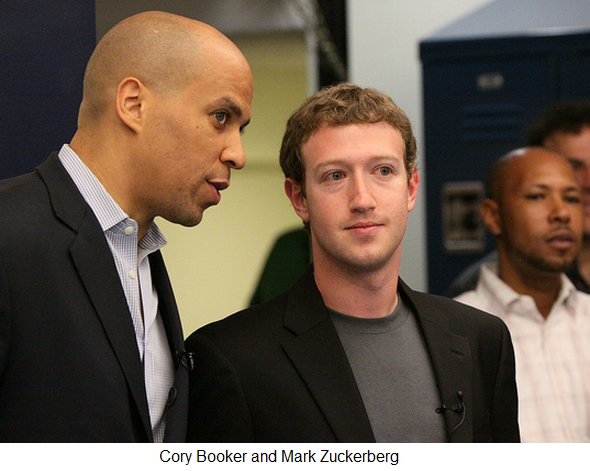
British public sector workers strike over ‘poverty pay’

Go Lean Commentary

The grass is not greener on the other side.

Go from being a big fish in small pond, to small fish in big pond.

These expressions are relevant in considering the fate of so many Caribbean Diaspora that had fled their Caribbean homelands over the past decades to take residence in Great Britain. Many of them sought refuge as career civil servants; (one reason [a] was the acute racism and intolerance encountered in private enterprises). These ones are faced with the harsh reality that pay scales in the public sector have not kept pace with inflation; they are now at poverty level. See the news article here:

By: Tess Little (Editing by Stephen Addison)

British strike 1LONDON (Reuters) – Hundreds of thousands of public sector workers including teachers, council workers and firefighters staged a 24-hour pay strike on Thursday in a stoppage that has prompted Prime Minister David Cameron to pledge a crackdown on union powers.

Protesters marched through the streets of many of Britain’s main cities in one of the biggest co-ordinated labour stoppages for three years.

Denouncing what they called “poverty pay,” they demanded an end to restrictions on wage rises that have been imposed by the government over the past four years in an effort to help reduce Britain’s huge budget deficit.

In London, demonstrators marched towards Trafalgar Square at midday, chanting “Low pay, no way, no slave labour” to the beat of a drum. A giant pair of inflatable scissors, carried by members of the National Union of Teachers (NUT), read “Education cuts never heal.”

Firefighter Simon Amos, 47, marched wearing his uniform behind a flashing fire engine parading members of the Fire Brigades Union (FBU). “The government [is] making us pay more for our pension for it to be worth the same, and making us work longer,” he said.

British strike 2The biggest public sector union involved, Unison, said early reports showed the strike had led to 3,225 school closures with more than 1,000 others partially closed.

Refuse collectors, school support staff, cleaners, street sweepers, care workers, nursery assistants and social workers were joining the strike, it added.

Hot spots, it said, included the North East, Wales and East Midlands where most council offices had closed, while more than 60 picket lines have closed most services in Newcastle.

“It is a massive decision by local government and school support workers to sacrifice a day’s pay by going on strike, but today they are saying enough is enough,” said Unison General Secretary, Dave Prentis in a statement.

Britain’s coalition government has enforced a policy of pay restraint for public sector workers since coming to power in 2010, imposing a pay freeze until 2012 and then a one percent pay rise cap, resulting in a fall in income in real terms [compared to inflation].

The Cabinet Office played down the impact of the strike, saying that most schools in England and Wales were open and that fire services were operating throughout the country.

British strike 3On Wednesday, Cameron told parliament he planned to limit unions’ powers to call strikes.

“How can it possibly be right for our children’s education to be disrupted by trade unions acting in this way” he said.

Tough new laws would be proposed in the Conservative manifesto for next year’s general election, he added.

These would include the introduction of a minimum threshold in the number of union members who need to take part in a strike ballot for it to be legal.

The manifesto could also back the introduction of a time limit on how long a vote in favour of industrial action would remain valid.

The NUT mandate for Thursday’s strike, for example, came from a 2012 strike ballot based on a turnout of just 27 percent, Cameron said.

The issue of minimum voting thresholds last arose three months ago when a strike by London Underground train drivers caused huge disruption in the capital, prompting Mayor Boris Johnson to demand that at least half of a union’s members should vote in favour for a strike to go ahead.
Source: Reuters News Service; retrieved 07/10/2014 from: http://news.yahoo.com/public-sector-workers-strike-over-poverty-pay-105040672.html
Frankly, the Caribbean Diaspora employed in the British public sector can now do better at home … in the Caribbean.

This is the assertion of the book Go Lean…Caribbean. That once the proposed empowerments are put in place, the Caribbean Diaspora should consider repatriating to their ancestral homelands.

Unfortunately for the Caribbean, this societal abandonment has continued, since the early days of the “Windrush Generation”[a] right up to now. In a recent blog post, this commentary related analysis by the Inter-American Development Bank that the Caribbean endures a brain drain of 70% among the college educated population; (https://goleancaribbean.com/blog/?p=1433).

Change has now come to the Caribbean.

The book Go Lean…Caribbean serves as a roadmap for the introduction and implementation of the technocratic Caribbean Union Trade Federation (CU). This roadmap will spearhead the elevation of Caribbean society. The prime directives of the CU are presented as the following 3 statements:

  • Optimization of the economic engines in order to grow the regional economy & create 2.2 million new jobs at home.
  • Establishment of a security apparatus to protect the resultant economic engines.
  • Improve Caribbean governance to support these engines.

The book posits that the improved conditions projected over the 5 years of the roadmap will neutralize the impetus for Caribbean citizens to flee, identified as “push and pull” factors. This point is stressed early in the book (Page 13) in the following pronouncements in the opening Declaration of Interdependence:

xix.   Whereas our legacy in recent times is one of societal abandonment, it is imperative that incentives and encouragement be put in place to first dissuade the human flight, and then entice and welcome the return of our Diaspora back to our shores. This repatriation should be effected with the appropriate guards so as not to imperil the lives and securities of the repatriated citizens or the communities they inhabit. The right of repatriation is to be extended to any natural born citizens despite any previous naturalization to foreign sovereignties.

xx.   Whereas the results of our decades of migration created a vibrant Diaspora in foreign lands, the Federation must organize interactions with this population into structured markets. Thus allowing foreign consumption of domestic products, services and media, which is a positive trade impact. These economic activities must not be exploited by others’ profiteering but rather harnessed by Federation resources for efficient repatriations.

This foregoing article highlights other issues that have been prominently addressed in the Go Lean book, namely that of the Civil Service and Labor Relations. There is the need for a professional staff in the Federal Civil Service. They require marketable benefits and compensation. There is also a role for Labor Unions to play in the elevation of Caribbean society. The Go Lean roadmap envisions an inclusionary attitude towards unions. The Go Lean community ethos is that of being partners with unions, not competitors. The book features specific tools and techniques that can enhance management-labor relationships.

These issues constitute heavy-lifting for the regional administration of the Caribbean:

  • fostering best practices for federal civil service and labor unions,
  • minimizing the brain drain, and
  • facilitating repatriation to the homeland.

These issues cannot be glossed over or handled lightly; this is why the Go Lean book contains 370 pages of finite details for managing change in the region. The book contains the following sample of community ethos, strategies, tactics, implementations and advocacies to impact the Caribbean homeland:

Community Ethos – Economic Systems Influence Choices & Incentives Page 21
Community Ethos – The Consequences of Choices Lie in the Future Page 21
Community Ethos – Job Multiplier Page 22
Community Ethos – Lean Operations Page 24
Community Ethos – Return on Investments Page 24
Community Ethos – Ways to Impact the Future Page 26
Community Ethos – Ways to Improve Negotiations Page 32
Strategy – Competition – Remain home   –vs- Emigrate Page 49
Strategy – Agents of Change – Aging Diaspora Page 57
Tactical – Separation of Powers – Versus Member-States Governments Page 71
Implementation – Year 1 / Assemble Phase – Establish Civil Service Page 96
Implementation – Ways to Deliver Page 109
Implementation – Trade Mission Objectives Page 116
Implementation – Reasons to Repatriate Page 118
Anecdote – Experiences of a Repatriated Resident Page 126
Planning  – 10 Big Ideas for the Caribbean Region Page 127
Advocacy – Ways to Create Jobs Page 152
Advocacy – Ways to Impact Labor Unions Page 164
Advocacy – Ways to Manage Federal Civil Service Page 173
Anecdote – Experiences of Diaspora Member Living Abroad Page 216
Advocacy – Ways to Impact the Diaspora Page 217

The Go Lean roadmap has simple motives: fix the problems in the homeland to make the Caribbean a better place to live, work, learn and play. There should be no need to go abroad and try to foster an existence in a foreign land. So for those of Caribbean heritage working in the British Civil Service, we hear your pleas. Our response: Come home; come in from the cold.

Now is the time for all of the Caribbean, the people residing in the homeland and those of the Diaspora, to lean-in for the empowerments described in the book Go Lean … Caribbean. This Big Idea for the region is a dramatic change; one that is overdue. The policies & practices of the past have failed Caribbean society. Too many people left, yet have little to show for it.

Caribbean music icon Bob Marley advocated this same charter for the Caribbean Diaspora. He sang to “come in from the cold” in the opening song of his last album Uprisings in 1980. How “spot-on’ were his words in the following music/video:

Download the free e-Book of Go Lean … Caribbean – now!

———————

Appendix – Cited Reference
a: “There was plenty of work in post-war Britain and industries such as British Rail, the National Health Service and public transport recruited almost exclusively from Jamaica and Barbados”. Retrieved July 10, 2014 from: http://en.wikipedia.org/wiki/British_African-Caribbean_people#The_.22Windrush_generation.22
Share this post:
, , ,

Book Review: ‘Chasing Youth Culture and Getting It Right’

Go Lean Commentary

One mission of the book Go Lean…Caribbean is to sell the youth of the region on future prospects in the Caribbean.

The publishers of this book therefore must assume the role of Marketing Brand Managers.

Why is this important?

  • 65% of Caribbean population is under the age of 30[b][c]; 30% under the age of 15.[c]
  • 70% percent of Caribbean tertiary educated abandon their homeland and migrate to foreign shores.[d]

The job description for the publishers of the Go Lean book therefore become part-Marketer, part-Demographer, part-Drum Major; much like theCU Blog - Book Review - Chasing Youth Culture and Getting It Right - Photo 1 resource in this article here, Tina Wells, a writer, blogger and marketing firm founder:

By Alfred Edmond, Jr.

Black Enterprise Magazine – Book Review – April 19, 2011; Retrieved 07-06-2014 – http://www.blackenterprise.com/small-business/book-review-chasing-youth-culture-and-getting-it-right/

Subject: Buzz Marketing Group CEO Tina Wells urges you to market to teens, tweens and young adults not by age alone, but by tribe

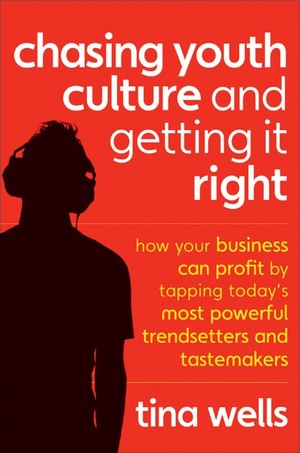
In her new book Chasing Youth Culture and Getting It Right: How Your Business Can Profit by Tapping Today’s Most Powerful Trendsetters and Tastemakers, Buzz Marketing Group (Wiley, $16). Buzz Marketing CEO Tina Wells urges you to market to teens, tweens and young adults not by age alone, but by “tribe.” Citing her company’s research, as well as the success and failures of company’s marketing their goods and services to young consumers, Wells identifies four primary tribes:

  • The Wired Techie, driven by the need to be the first to discover, use and recommend new tech devices and gadgets.
  • The Conformist Yet Somewhat Paradoxical Preppy, traditional yet trendy buyers who are driven to want to fit in and belong.
  • The Always Mellow Alternative, who deviate from mainstream buying habits in order to pursue and support causes they believe in.
  • The Cutting Edge Independent, who deviate from the mainstream just for the sake of it.

While it’s difficult to accept that Wells’ tribes truly represent the totality of the thinking of tweens, teens and young adults, her book underscores an important reality of sales and marketing in the age of The Long Tail: Why The Future of Business is Selling Less of More ($10, Hyperion)–Chris Anderson’s must-read book about the changing nature of consumer choice and tastes in a largely digital marketplace: targeting consumers by age, race, gender and other traditional demographic markers alone is no longer enough for a business to be effective and, ultimately, profitable.

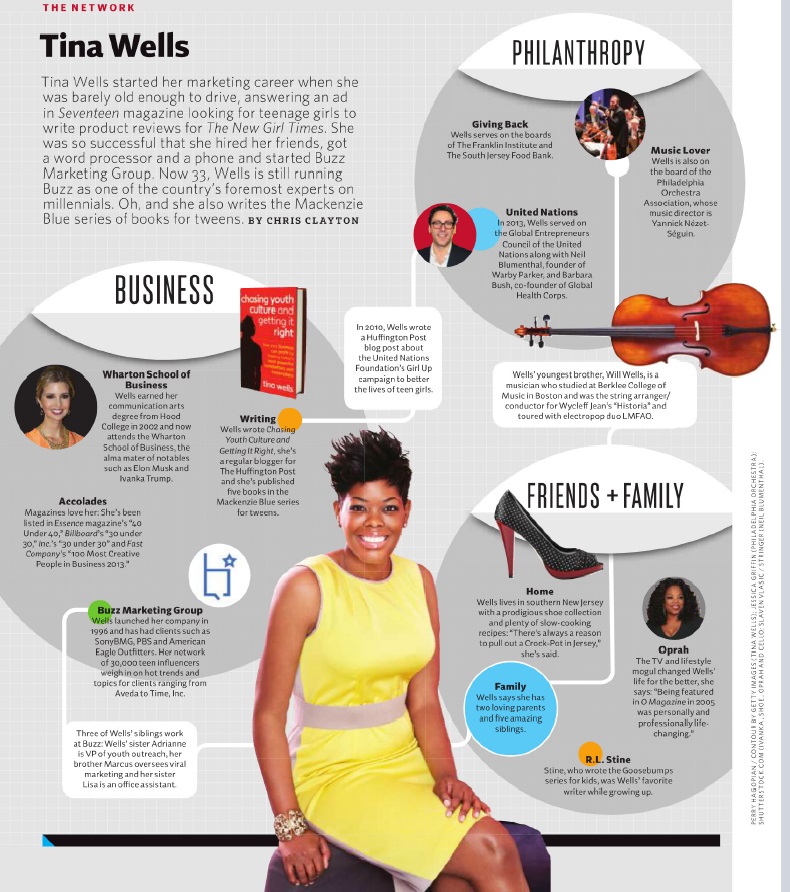
When it comes to marketing to youth, [Tina Wells] comes with unimpeachable bona fides. Already a 15-year veteran in the marketing business, she started Buzz Marketing as an 18-year-old, quickly carving out a niche and establishing a knack for understanding the trends, tastes and influences driving young consumers. Eventually graduating with honors with a B.A. in communication art from Hood College in 2002, and currently earning a marketing management degree at the Wharton School of Business, Wells creates marketing strategies for clients in the beauty, entertainment, fashion, financial and lifestyle sectors. Her clients have ranged from Sesame Street Workshop and PBS to American Eagle Outfitters and SonyBMG. Today, Wells, an expert contributor on entrepreneurship to BlackEnterprise.com, is well established as one of America’s most honored and celebrated young entrepreneurs.

So it’s no surprise that Wells brings and authoritative voice to Chasing Youth Culture and Getting It Right, confidently explaining the diverse world views of young consumers while smartly taking into account parents, as both their primary financial resource and the people with the most influence on their values. Wells also breezily illustrates, using vignettes of real young people who were subjects of her company’s survey, the impact of social media, globalization and the Great Recession on the “new millennials”. She also courageously weighs in on how young consumers feel about everything from environmentalism and corporate America to hypersexual content and America’s two-party political system.

In fact, sometimes Wells is over confident, making bold, sweeping overstatements about this or that aspect of the way young people think. For example, her description of “Global Mobiles” —young people who “live in a world without geographic or cultural boundaries” —is a stretch, conveniently overlooking the millions of young people, particularly low-income rural and urban Americans, who are hardly conscious of how people live on the other side of the tracks, much less the other side of the world. (Think Shawn Carter in the Brooklyn’s Marcy Projects before he became Jay-Z, the mogul and global citizen). While global mobiles absolutely exist, it’s too early to categorize them as a dominant factor in marketing.

The other major weakness of the book is [the] many examples of companies’ failed and/or successful efforts to market to youth culture; Wells ends up quickly glossing over most of them, causing them to lose some of their illustrative impact. I wish she’d used fewer examples, which would have allowed her to more effectively use those that remained as more enlightening and instructive case studies.

That said, if you’re a marketer or entrepreneur who wants to tap into the spending power of the generations of consumers who will drive the national and global economies over the next several decades (and come on, who doesn’t?), then you cannot afford to not read Chasing Youth Culture and Getting It Right. The book is both confirmation of Well’s formidable track record as an expert on the trends and tastes of young people, and powerful evidence of her prowess at using her immersion in her chosen area of expertise to peer around the corner into a future consumer marketplace, one that is evolving as unpredictably as it is quickly. Chasing Youth Culture and Getting It Right does solve all of the mysteries of marketing to young consumers, but it most certainly provides the most necessary, fascinating and useful clues.

——

Tina Wells is CEO of Buzz Marketing Group and is a columnist for BlackEnterprise.com [and Huffington Post]. Follow her on Twitter at @tinacwells and check out her new book, Chasing Youth Culture and Getting It Right, available now on amazon.com. (See Photo here).
CU Blog - Book Review - Chasing Youth Culture and Getting It Right - Photo 2
——

About the Review Author:

Alfred Edmond Jr. is SVP/Editor-at-large of BLACK ENTERPRISE. He is a content leader, brand representative and expert resource for all media platforms under the BLACK ENTERPRISE brand, including the magazine, television shows, web site, social media and live networking events. From 2008 through 2010, Edmond was SVP/Editor-in-chief of BlackEnterprise.com, helping to lead the transition of BLACK ENTERPRISE from single-magazine publisher to digital-first multimedia company. From 1995 through 2008, Edmond was chief editor of BLACK ENTERPRISE magazine. He also hosts The Urban Business Roundtable on WVON-AM in Chicago and Money Matters, a syndicated radio feature of American Urban Radio Networks.

Follow him on Twitter: alfrededmondjr; Facebook: http://facebook.com/alfrededmondjr; BE Insider: http://beinsider.ning.com/profile/Alfred

VIDEO: Inc. Magazine Entrepreneurial Reference Source  – http://videos.inc.com/index.php/kwidget/wid/1_5jek9891/uiconf_id/22577421

The book  Go Lean…Caribbean, parallels Chasing Youth Culture as it serves as a roadmap for the introduction and implementation of the Caribbean Union Trade Federation (CU) to elevate Caribbean society and culture. The idea of the CU must be marketed and sold to Caribbean stakeholders, young and old. The CU has 3 prime directives:

  • Optimization of the economic engines in order to grow the regional economy to $800 Billion and create 2.2 million new jobs.
  • Establishment of a security apparatus to protect the resultant economic engines.
  • Improve Caribbean governance to support these engines.

The Go Lean/CU effort is that of the legendary “Piped Piper”, in reverse to lead the children back home.

From the outset of the book, in the Introduction, the Go Lean roadmap (Page 10) posits that a target for the CU’s empowerments is Caribbean youth:

Our youth, the next generation, may not be inspired to participate in the future workings of their country; they may measure success only by their exodus from their Caribbean homelands.

Thusly, the CU must channel its inner “Tina Wells” to reach, engage, and sell to this youthful market.

There are other pronouncements that bear a direct reference to this foregoing article and source book, included here on Pages 11 & 13 of the Declaration of Interdependence:

vii. Whereas our landmass is finite and therefore limited as to population growth potential, it is imperative that prudent growth management be practiced so as to protect our legacy and still foster future opportunities for the hopes and fulfillment of a prosperous future for our children.

xix. Whereas our legacy in recent times is one of societal abandonment, it is imperative that incentives and encouragement be put in place to first dissuade the human flight, and then entice and welcome the return of our Diaspora back to our shores…

xxi. Whereas the preparation of our labor force can foster opportunities and dictate economic progress for current and future generations, the Federation must ensure that educational and job training opportunities are fully optimized for all residents of all member-states, with no partiality towards any gender or ethnic group. The Federation must recognize and facilitate excellence in many different fields of endeavor, including sciences, languages, arts, music and sports. This responsibility should be executed without incurring the risks of further human flight, as has been the past history.

The source book, Chasing Youth Culture and Getting It Right identifies the target demographic of millennials. This subset of youth population is identified as those born between the decades of the 1980’s and 2000’s[a]. Why so special? While every age group has always contended with a generation gap (Depression-era, Baby Boomers, Generation X), this current millennial generation is at the frontline of the current Caribbean battles, of which the region is sorely losing. The issues/crises dumbfounding Caribbean governance include: the impact of social media, globalization and the Great Recession.

Go Lean…Caribbean trumpets a call to the world of technology to impact Caribbean life. In addition to economic and security empowerments, this roadmap advocates the launch of a social media site – www.myCaribbean.gov – for all Caribbean stakeholders (residents, Diaspora, young students, business entities, and even visitors). This can create a universe of over 160 million unique profiles. The Go Lean roadmap is to deliver many government services via electronic modes, including public safety fulfillments, like Reverse 911 and Emergency Alert messaging.

The following lists details from the book Go Lean…Caribbean that parallels the advocacies of the source book Chasing Youth Culture and Getting It Right:

Community Ethos – Lean Operations Page 24
Community Ethos – Cooperatives Page 25
Community Ethos – Ways to Impact the Future Page 26
Community Ethos – Ways to Bridge the Digital Divide Page 31
Community Ethos – Impact the Greater Good Page 37
Strategy – Customers – Member-State Governments Page 51
Strategy – Agents of Change – Technology Page 57
Strategy – Agents of Change – Globalization Page 57
Strategy – Agents of Change – Aging Diaspora Page 57
Tactical – Fostering a Technocracy Page 64
Tactical – Separation of Powers – Postal Union Page 78
Anecdote – Turning Around the CARICOM governance Page 92
Anecdote – “Lean” in Government Page 93
Implementation – Ways to Pay for Change Page 101
Implementation – Ways to Deliver Page 109
Implementation – Ways to Impact Social   Media Page 111
Implementation – Reasons to Repatriate Page 118
Advocacy – Ways to Improve Governance Page 168
Advocacy – Ways to Better Manage the Social Contract Page 170
Advocacy – Ways to Foster Technology Page 197
Advocacy – Ways to Foster e-Commerce Page 198
Advocacy – Ways to Impact the Diaspora Page 217

The source book Chasing Youth Culture and Getting It Right is a great guidebook for developing participatory, agile institutions, enabled by advanced technology – a recipe for the CU. The Go Lean roadmap is also a great guidebook!

Now is the time for all of the Caribbean, the people (teenagers, adults & senior citizens) and governing institutions, to lean-in for the empowerments described in the book Go Lean…Caribbean. We cannot expect the youth to take their own lead; they must be led, but they will only respond to a certain style of leadership. Understanding that dynamic is the heavy-lifting involved in impacting change in the Caribbean region.

This is an art and a science!

There will be costs to incur for this advocacy, yes, but there are a lot of benefits too. The benefits are far too alluring to ignore: dawn of a new economy and new opportunities to preserve Caribbean culture for the Caribbean youth … and future generations.

🙂

Download the free e-Book of Go Lean … Caribbean – now!

———————

Appendix – Cited References:
a. Millennials (also known as the Millennial Generation or Generation Y) are the demographic cohort following Generation X. There are no precise dates when the generation starts and ends. Researchers and commentators use birth years ranging from the early 1980s to the early 2000s.
b. Example of Haiti; retrieved from http://populationaction.org/wp-content/uploads/2011/12/Haiti_Summary.pdf
c. Latin America & Caribbean Population 2005 retrieved from: http://www.eclac.cl/celade/noticias/documentosdetrabajo/6/48786/ Demographic_Trends_in_LAC_PAULO_SAAD_ED_12_7_09.pdf
d. Inter-American Bank report featured in CU Blog; retrieved from: https://goleancaribbean.com/blog/?p=1433


Share this post:
, , , , , ,
[Top]

Book Review: ‘Prosper Where You Are Planted’

Go Lean Commentary

The Caribbean is in crisis; according to a report by the Inter-American Development Bank (IDB), over 70% of college educated citizens have fled the region, looking for better opportunity. The fact that the percentage is so high is evident that it is more prosperous abroad than at home. This is the harsh reality. This is also an economic fact as many Caribbean states get 4 to 7 percent of their GDP as remittances back to the homeland from the Diaspora living abroad, mostly in North America and Western Europe.

But this is a losing proposition for the Caribbean – no doubt it is better to get 100% of Gross Domestic Production. In the same report by the IDB, it was stated that Caribbean member-states lose 10 to 11 percent of GDP from emigration and the “spent” cost of education on those expatriates, (https://goleancaribbean.com/blog/?p=1433), so whatever the level of remittance from the Diaspora, the community is still losing. What we need is the option to prosper where we’re planted in the Caribbean. This goal obviously requires heavy-lifting and is easier said than done. This is the focus of the book Go Lean…Caribbean, to elevate the Caribbean economy so that there would be optimal opportunities at home and no need to supplant to another land.

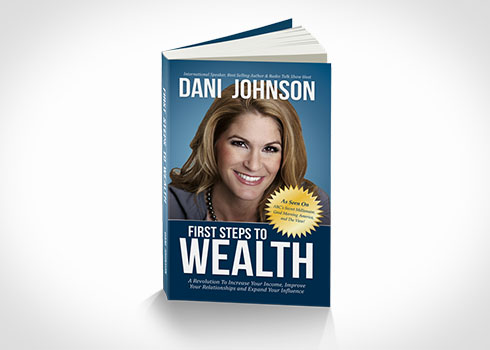
So how do we prosper where we’re planted? While this is a simple question (based on the Bible principle of Psalms 1:3), the answer is more complex. One writer, Dani Johnson, has advocated this theme in a series of books:

Title ISBN                               
First Steps to Wealth 978-0-9789551-8-2
Grooming the Next Generation for Success 978-1-4587-9610-3
Spirit-Driven Success 978-0-7684-9651-2

The below article (and VIDEO) is a review of her last book First Steps to Wealth: it breaks down into bite-size morsels the big meal of wealth building.

The book Go Lean…Caribbean concurs with First Steps to Wealth, but rather than individual wealth, it serves as a roadmap for the introduction and implementation of the technocratic Caribbean Union Trade Federation (CU) to do the heavy-lifting of optimizing community wealth and nation-building for the region.

By: Sheryl Nance-Nash
Title: Dani Johnson Offers Her 12 Laws for Creating Wealth – and Keeping It
DailyFinance e-Zine (Posted 07/23/2013 Retrieved 06/30/2014) –
http://www.dailyfinance.com/2011/07/23/dani-johnson-offers-her-12-laws-for-creating-wealth-and-keepi/

CU Blog - Book Review - Prosper Where You Are Planted - Photo 1

Dani Johnson says she was groomed by her drug addict parents to fail — financially, emotionally and socially. She seemed well on her way to living down to that expectation — by 17 she was pregnant, at 21, homeless. Two years later though, she was a millionaire, thanks to the thriving company she built manufacturing and selling her own nutritional and skin care products. She sold that company in 1996. Then, she lost her fortune, spending almost all of it and trusting the wrong people with the rest.

Today, as a multimillionaire with six businesses that employ more than 30 people, she knows a thing or two about wealth. She says there are three things you need to know about money: how to make it and more of it; how to keep it; and how to turn it into your slave.

“Ninety-eight percent of the population will end up dead or broke by age 65. Only two percent of the population will succeed,” says Johnson in her new book, First Steps to Wealth. “Where do you want to be?” she asks. You need a financial vision.

When she started raking in the cash, she didn’t have the vision thing down yet. “I believed I had to wear Christian Dior suits and $500 shoes to be successful. I believed wealth was about a new Mercedes Benz convertible, and the 6,000 square-foot house with a swimming pool, view of the mountains and tennis courts. But when I got those things, I never felt successful. I had a $250,000 wardrobe and $250,000 in jewelry, and I still felt this gaping hole in my belly that made me feel I was a failure,” she writes.

Challenge Yourself to Apply the Laws to Your Life

Everything starts with a decision. “There’s a theory that if you find your passion that’s where you’ll be successful, but I believe you have to go with what’s in front of you. I saw a box of weight-loss products in the backseat of my car and though I had no interest in selling, I made a decision that I needed to find out how to sell those products because if I relied on being a cocktail waitress it would take months to be able to afford an apartment,” says Johnson, who was homeless and suicidal then. She started a business from the trunk of her car and a phone booth.

“If I didn’t make that decision, I would still be broke. I didn’t want to sell, but it was the door in front of me,” says Johnson. When her first sales call ended with a hang up, she called another weight-loss product company, observed how they handled her, and developed a script from that. She used their advertisements to shape her own. To make a long story short, in 45 days she had $18,000 in sales.

Johnson credits her fortune to what she calls the 12 Laws of Success — fundamental principles that moved her from an impoverished past to a prosperous present. She has spent the last two decades telling others how those principles can help them too.

Law No. 1 – The Law of Vision

In her book she asks, “What are the things you dreamed of doing in your life? Do you remember what those dreams looked like? What happened to those dreams? “If you want to be successful financially, expand your income to fit your dreams. This is the Law of Vision. “For without vision, we perish. It is important to list where we want to go, what we want to do, and with whom we want to do it. If you do not know what you want, no one can help you get it,” she writes. But what do you want?

Law No. 2 – The Law of the Mind

There is something very different about the wealthy: The way they think, how they make decisions, act upon them, and how they see circumstances and react to them. It’s their mindset, says Johnson. What’s the right mindset? “It’s saying every time you meet a roadblock, ‘How can I make it happen?'” You decide to go around a problem, or dig a hole underneath a problem to make things happen, instead of quitting. Watch the company you keep. “You’re a product of your environment. I listen to uplifting music and life-giving audios,” says Johnson.

Law No. 3 – The Law of Value

The marketplace pays for value. What determines your value? Your skill set. Quite simply, “If you increase your skill, you will increase your pay.” Your value is not personality, looks, or where you were born, but has everything to do with your skills, she writes. Everybody is in control of his or her skills.

“Go beyond the basics. If I had focused just on weight-loss products, I would have been like everybody else, but we decided to go a step further, to focus on people — what makes them tick, to deal with bigger issues,” says Johnson. Not only did delving deeper into the customer distinguish her from competitors, it birthed another business, a training program for personal and professional development.

Law No. 4 – The Law of Reaping and Sowing

This is the greatest of all the laws, she says. “You have been taught a lie that success is about being lucky or being in the right place at the right time. But the bottom line, says Johnson, we reap what we sow. “If you waste money, you are going to reap what you sow. If you feed your financial problems and are focused on stressing out and not being able to pay your bills, you will have more problems. Focus on finding answers. Feed the solution, not the problem,” she writes.

Giving is also key. “With our businesses, we give 10% of our gross sales right off the top — to the poor, orphans, widows, or for freeing children out of the sex trade. That is about 30% of our net profit. When we do that, we have found that even more comes back to us,” she writes. She co-founded the nonprofit King’s Ransom Foundation, which serves the needy globally. She spread her generosity on ABC’s Secret Millionaire earlier this year. Johnson says giving motivates her. “The only reason I work is to be able give to the kids, the orphans. I don’t have to work another day in my life. My kids are set.”

Law No. 5 – The Law of Desire

Johnson says desire always reveals design and destiny. Everyone was born with a design to succeed. You were born with everything in you. “You have enthusiasm, persistence, faith, adventurous spirit, and the gift to get over it,” says Johnson. The only thing you’re lacking is the skill to succeed. “That’s the part you have to learn and invest in,” she writes. You were designed with wealth in mind. Replace the poverty mentality with a whole new way of thinking. No amount of debt is too small to pay off. “If you invest your money is something that makes more money, you create wealth. If you spend that money, the money is gone. Your monthly income is supposed to grow something, just like seed. But most people live from paycheck to paycheck, which means they are eating all of their seed. They have nothing to plant and grow.”

Law No. 6 – The Law of Teachability

There are people around you who have success in some areas of their lives. When you are teachable, you find them. When you are unteachable, you think you are them. Being teachable means you are hungry, pursuing success, and willing to learn from masters. When you follow this law you will achieve whatever you pursue.

Law No. 7 – The Law of Forgiveness

When you do not forgive, you make decisions out of bitterness. “This kills your time for being productive and creating wealth,” says Johnson.

Law No. 8 – The Law of Promotion

If you can be faithful with the little things, if you grow and improve what you have, then you will be made a ruler over much more. Johnson insists, “Prosper where you are planted.” Your answer might be right in front of you, and maybe you don’t like it. “The road to success is often paved with things we do not want to do,” says Johnson.

Then too, “People are always trying to hit a home run. Life doesn’t work like that. They try to make one big jump and flop. Work with what you have. If you have a job that you might think is ‘little’, be the best at it, effect people there, make a difference wherever you are.” Instead of always seeking something else, focus on where you are, whether it’s your job, your business, your relationships. “You will never prosper if you don’t,” says Johnson.

Law No. 9 – The Law of Focus

It’s simple: Whatever you focus on is what you get good at. She asks, “Where is your focus?”

Johnson used to work 100 hour weeks. “My marriage was miserable and I didn’t deserve the title mother,” says Johnson, whose five children are now 12 to 24. After a nervous breakdown in the 1990s, her priorities changed. “I decided that family came first and that I would only work 20 hours a week — that required focus. I discovered I was wasting 80 hours a week.” When she started working less, she was so focused that her income tripled. She began delegating. “Don’t think you’re the only one who can do something,” says Johnson, whose businesses include danijohnson.com, publishing company Call to Freedom, investment, software, real estate and oil firms.

Law No. 10 – The Law of Honor

Honoring people is the key to successful relationships, personal and professional. Says Johnson, “It’s about honoring people, giving them what they want. When you honor people, they honor you back, but it is not always the one you honor who honors you back.”

Law No. 11 – The Law of Decision

Everything in life boils down to choices. When you finally make a decision, everything begins to click. Make a decision.

Law No. 12 – The Law of Action

When we sit with indecision, we invite our enemies — procrastination, fear, unbelief, and excuses — into our lives, writes Johnson. When you immediately follow your decisions with action, a funnel of favor begins. Doors begin to open. People begin to help. Your life’s purpose becomes clear, and self-motivation mobilizes you from the inside out.

If the thought of trying to put all 12 laws into play seems overwhelming, there’s one good place to start. Says Johnson, “Change your attitude.

Rather than 12 Laws, the Go Lean roadmap uses cutting-edge delivery of best practices to employ strategies, tactics and implementations to impact its prime directives; identified with the following 3 statements:

  • Optimization of the economic engines in order to grow the regional economy to $800 Billion & create 2.2 million new jobs.
  • Establishment of a security apparatus to protect the resultant economic engines.
  • Improve Caribbean governance to support these engines.

The successful execution of these directives will allow Caribbean stakeholders to prosper, while remaining as residents in their homeland. The Go Lean book seeks to optimize the entire Caribbean economic/security/governance eco-system to reach this goal. This vision is defined early in the book (Page 13 & 14) in the following pronouncements in the Declaration of Interdependence:

xix.   Whereas our legacy in recent times is one of societal abandonment, it is imperative that incentives and encouragement be put in place to first dissuade the human flight, and then entice and welcome the return of our Diaspora back to our shores. This repatriation should be effected with the appropriate guards so as not to imperil the lives and securities of the repatriated citizens or the communities they inhabit. The right of repatriation is to be extended to any natural born citizens despite any previous naturalization to foreign sovereignties.

xxvi.   Whereas the Caribbean region must have new jobs to empower the engines of the economy and create the income sources for prosperity, and encourage the next generation to forge their dreams right at home, the Federation must therefore foster the development of new industries… In addition, the Federation must invigorate the enterprises related to existing industries … – impacting the region with more jobs.

The Go Lean book details (Page Numbers included below) features of assessments, community ethos, strategies, tactics, implementations and advocacies to plant and exploit local opportunities in the Caribbean region. These features are listed here to correspond with references from Dani Johnson’s book in the foregoing article:

Prosper   Where You Are Planted References Go Lean…Caribbean References
Assessment – 98% of the population will end up dead or   broke by age 65. Impacting   Retirement (Page 221); Improving   Elder-Care (Page 225).
Learning from   competitors Lessons from New   York City (Page 137); Canada (Page 146)
A “Hustling” Attitude Entrepreneurship Ethos (Page 28)
Law No. 1 – The Law of Vision Strategy – Vision (Page 45)
Law   No. 2 – The Law of the Mind Advocacies – Overcoming Obstacles (Pages 121 – 124)
Law No. 3 – The Law of Value Community Ethos – Genius (Page 27), Intellectual Property (Page 29), Turn-around (Page 33)
Law No. 4 – The Law of Reaping and Sowing Community Ethos – Return on Investments (Page 24), Lean Operations (Page 24), Non-Governmental Organizations   (Page 25)
Law No. 5 – The Law of Desire Strategy – Missions (Page 45)
Law No. 6 – The Law of Teachability Planning – Lessons Learned from … (Pages 135 – 146)
Law No. 7 – The Law of Forgiveness Community Ethos – Reconciliation (Page 34)
Law No. 8 – The Law of Promotion Optimize Existing Competencies (Page 58) – Tourism (Page 190), Banking (Page 199), Agriculture (Pages 162, 183 & 208)
Law No. 9 – The Law of Focus Implementation – Fostering a Lean   Technocracy (Page 64), Delivery   Arts (Page 109)
Law No. 10 – The Law of Honor Advocacy – One Percent (Page 224), Foundations (Page 219)
Law No. 11 – The Law of Decision Community Ethos – Intelligence Gathering   & Analysis (Page 23);    Impact Research & Development – Big   Data Analysis (Page 30)
Law No. 12 – The Law of Action Implementation – Delivery Arts &   Sciences (Page 109)

Now is the time for all of the Caribbean, the people and governing institutions, to lean-in for the empowerments described in the book Go Lean … Caribbean. It is time for the region to prosper right here where we are planted.

The Caribbean can succeed in this effort to improve the Caribbean as a place to live, work and play. There are previous blog commentaries that delve into these same issues:

https://goleancaribbean.com/blog/?p=1325 Puerto Rico Governor Signs Bill on SME’s
https://goleancaribbean.com/blog/?p=1296 Remittances to Caribbean Increased By 3 Percent in 2013
https://goleancaribbean.com/blog/?p=1014 Jack M. Mintz Commentary: All is not well in the sunny Caribbean
https://goleancaribbean.com/blog/?p=623 Only at the precipice, do they change
https://goleancaribbean.com/blog/?p=599 Ailing Puerto Rico open to radical economic fixes
https://goleancaribbean.com/blog/?p=398 Self-employment on the rise in the Caribbean – World Bank
https://goleancaribbean.com/blog/?p=364 Time Value of Money

Caribbean Music icon Bob Marley advocated a similar pledge, based on Psalms 1:3, in his song “We’d be Forever Loving Jah” (Album: Uprisings 1980) with the following lyrical stanza:

‘Cause just like a tree, planted, planted by the rivers of water
That bringeth forth fruits, bringeth forth fruits in due season.
Everything in life got its purpose,
Find its reason in every season,
Forever, yeah!
(We’ll be forever loving Jah) We’ll be forever!

See Bob Marley Embedded VIDEO here: https://youtu.be/VuAXl1LYY6o

Download the book Go Lean … Caribbean – now!

Share this post:
, , , ,
[Top]

St Croix’s Tim Duncan to Return to Spurs For Another Season

Go Lean Commentary

Congratulations Tim Duncan. You deserve your champion’s accolades.

Tim Duncan Photo

This commentary has previously sided with Mr. Duncan’s opponent in the recent NBA Finals. Here below are the previous blogs citing a hope for the Miami Heat’s dominance in the NBA Playoff tournament.

https://goleancaribbean.com/blog/?p=1148 Sports Bubble – Franchise values in basketball
https://goleancaribbean.com/blog/?p=689 eMerge conference aims to jump-start Miami tech hub

But talent recognizes talent!

It is also good news, according to this foregoing news article, that Mr. Duncan will be returning for at least one more season.

By: The Caribbean Journal Staff

Tim Duncan isn’t going anywhere.

The St Croix native, who recently won his fifth NBA championship, will be returning to the San Antonio Spurs for his 18th NBA season.

The team announced Monday that the 38-year-old Duncan had exercised his player option for the 2014-2015 season, putting to rest any notion that he would be retiring.

Duncan helped the Spurs to a dominant 4-1 series win over the Miami Heat in this month’s NBA Finals.

The Christiansted native is one of five players in the history of the NBA to win five championships and five MVPs (either NBA Finals or regular season), along with Michael Jordan, Magic Johnson, Bill Russell and Kareem Abdul-Jabbar.

Duncan leads all active players in career wins, with 898.
Caribbean Journal Online News Source  (Posted 06-23-2014; retrieved 06-26-2014) –
http://www.caribjournal.com/2014/06/23/st-croixs-tim-duncan-to-return-to-spurs-for-another-season/

There is something bigger than sports alone at play here. As the foregoing news article depicts, Mr. Duncan is a member of the Caribbean Diaspora. He is recognized as one of the best in his field of endeavor; perhaps one of the best of all time. This is a claim of the book Go Lean … Caribbean, that sports require a genius qualifier and that genius  ability can be found in abundance in the Caribbean. Mr. Duncan makes us all proud: Christiansted, St. Croix, the US Virgin Islands and all of the Caribbean.

The Go Lean book serves as a roadmap for the introduction and implementation of the Caribbean Union Trade Federation (CU), a technocratic federal government to administer and optimize the economic/security/ governing engines of the region’s 30 member-states. At the outset, the roadmap recognizes the value of sports with these statements in the Declaration of Interdependence (Page 13 & 14):

xxvi.     Whereas the preparation of our labor force can foster opportunities and dictate economic progress for current and future generations, the Federation must ensure that educational and job training opportunities are fully optimized for all residents of all member-states, with no partiality towards any gender or ethnic group. The Federation must recognize and facilitate excellence in many different fields of endeavor, including sciences, languages, arts, music and sports. This responsibility should be executed without incurring the risks of further human flight, as has been the past history.

xxxi.     Whereas sports have been a source of great pride for the Caribbean region, the economic returns from these ventures have not been evenly distributed as in other societies. The Federation must therefore facilitate the eco-systems and vertical industries of sports as a business, recreation, national pastime and even sports tourism – modeling the Olympics.

The Go Lean roadmap calls for the market organizations to better explore the economic opportunities for sports. Sports can be big business! But even when money is not involved, other benefits abound. As such the CU will enhance the engines to elevate sports at all levels: amateur, intercollegiate and professional.

The other issue related to Tim Duncan is that of “image”. Mr. Duncan could be a proud ambassador of Caribbean character. Personally, he does not advocate any political or economic agenda, so others must do that for him. As a public figure, his story is free to relate to the listening world of how impactful a Caribbean heritage can be.

The subjects of sports and Caribbean image have been related in many previous Go Lean blogs; highlighted here in the following samples:

a. https://goleancaribbean.com/blog/?p=1446 Caribbean   Players in the 2014 World Cup
b. https://goleancaribbean.com/blog/?p=1341 College   World Series Time
c. https://goleancaribbean.com/blog/?p=1214 The Art &   Science of Temporary   Stadiums – No White Elephants
d. https://goleancaribbean.com/blog/?p=1148 Sports Bubble –   Franchise values in   basketball
e. https://goleancaribbean.com/blog/?p=1020 Sports Revolutionary: Advocate Jeffrey Webb
f. https://goleancaribbean.com/blog/?p=857 Caribbean Image: Dreadlocks
g. https://goleancaribbean.com/blog/?p=498 Book Review: ‘The Sports Gene’
h. https://goleancaribbean.com/blog/?p=334 Bahamians Make Presence Felt In Libyan   League
i. https://goleancaribbean.com/blog/?p=318 Collegiate Sports in the Caribbean
j. https://goleancaribbean.com/blog/?p=60 Could the Caribbean Host the Olympic Games?

The book Go Lean…Caribbean has an economic empowerment agenda, but there are still huge benefits for the region related to sports. The strategy is to consolidate the region’s 30 member-states / 4 languages into a Single Market of 42 million people – leverage for a viable sports landscape. The CU facilitation of applicable venues (stadia, arenas, fields, temporary structures) on CU-owned fairgrounds plus the negotiations for broadcast/streaming rights/licenses will elevate the art, science and genius of sports as an enterprise in the region.

Now is the time for all of the Caribbean to lean-in to the following community ethos, strategies, tactics, implementations and advocacies detailed in the book Go Lean … Caribbean to re-boot the delivery of the regional solutions to elevate the Caribbean region through sports:

Community Ethos – People Respond to Incentives in Predictable Ways Page 21
Community Ethos – Return on Investments Page 24
Community Ethos – Ways to Foster Genius Page 27
Community Ethos – Ways to Improve Negotiations Page 32
Community Ethos – Ways to Promote Happiness Page 36
Strategic – Vision – Integrating Region in to a Single Market Page 45
Strategic – Staffing – Sporting Events at Fairgrounds Page 55
Tactical – Fostering a Technocracy Page 64
Tactical – Separation of Powers – Sports & Culture Administration Page 81
Tactical – Separation of Powers – Fairgrounds Administration Page 83
Implementation – Steps to Implement Self-Governing Entities (Fairgrounds) Page 105
Implementation – Ways to Deliver Page 109
Planning – Ways to Make the Caribbean Better Page 131
Advocacy – Ways to Grow the Economy Page 151
Advocacy – Ways to Improve Local Government – Parks & Recreation Page 169
Advocacy – Ways to Impact Events Page 191
Advocacy – Ways to Promote Fairgrounds Page 192
Advocacy – Ways to Foster Technology Expositions Page 197
Advocacy – Ways to Improve Sports Page 229
Advocacy – Ways to Impact Urban Living – Sports Leagues Page 234

The foregoing article celebrates a Caribbean Champion. But there is more to celebrate with Caribbean life, culture and the homeland. With the Go Lean executions, we can all be champions, by making the Caribbean a better place to live, work and play.

Download the book Go Lean…Caribbean now!


Share this post:
, , , ,
[Top]

Caribbean Players in the 2014 World Cup

FIFA 2014Go Lean Commentary

Soccer (Association Football) is the world’s most popular game. The book Go Lean … Caribbean contemplates greater exploration of the economic opportunities associated with the business of sports – the Caribbean has a failing record in this important area. This quest must therefore give consideration to the eco-system of the World Cup. As such, the news story in the foregoing article synchronizes with the Go Lean book in that it depicts the societal abandonment by so many Caribbean athletes and the lack of professional opportunities in the Caribbean homeland. The two issues: lack of opportunities and society abandonment is a cause-and-effect conundrum. See article here:

Caribbean Journal – Caribbean e-Zine Online Site (Posted 06/14/2014; retrieved 06/21/2014) –
http://www.caribjournal.com/2014/06/16/caribbean-players-in-the-2014-world-cup/
There aren’t any teams from the traditional Caribbean in the 2014 World Cup in Brazil (although there are several from the wider Caribbean Basin), but that doesn’t mean there isn’t a strong Caribbean contingent. From powerhouses like the Netherlands and England to up-and-coming teams like Costa Rica, there are a number of Caribbean footballers in Brazil this month. Here are some of the featured Caribbean athletes:

Raheem Sterling

Raheem SterlingThe 19-year-old phenom who plays for England was actually born in Kingston, Jamaica. A midfielder, he plays professionally for Liverpool.

Raphael Varane

, Raphael VaraneVarane who plays professionally for Real Madrid, is a centre back for the French World Cup team. He is of Martiniquais heritage, as his father comes from the island.



Daniel Sturridge

Daniel SturridgeThe England striker is of Jamaican heritage, as both sides of his grandparents are Jamaican. Like Sterling, he plays for Liverpool professionally. (And he keeps up his ties to Jamaica with a charity in Portmore).

Alex Oxlade-Chamberlain

Alex Oxlade-ChamberlainOxlade-Chamberlain, the son of former England international player Mark Chamberlain, is of Jamaican heritage. A winger and central midfielder, he plays professionally for Arsenal.

Jean Beausejour

Jean BeausejourBeausejour, a 30-year-old left winger for Chile, is the son of a Haitian father. He plays professionally for Wigan Athletic in England.

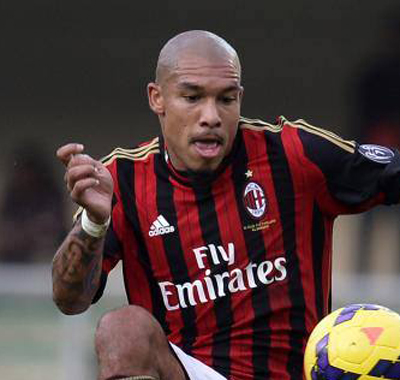
Nigel de Jong

Nigel de JongMuch of the Netherlands’ football success over the years has come from the Caribbean nation of Suriname, and the trend continues today. de Jong, of Surinamese heritage, is a defensive midfielder who plays professionally for Milan.

Jeremain Lens

Jeremain LensLens, a striker, is of Surinamese heritage (and has even played internationally for the country). He plays professionally for FC Dyanmo Kyiv.

Georginio Wijnaldum

Georginio WijnaldumWijnald is of Surinamese heritage, and plays for professionally for PSV in the Netherlands. For Oranje, he’s a midfielder.

Leroy Fer

Leroy FerThe Norwich City player is a central midfielder who plays for (and was born in) the Netherlands. His roots, however, come from Curacao, where he comes from a family of sporting talents.

Jozy Altidore

Jozy AltidoreThe Haitian-American Altidore is one of the leaders of the American World Cup squad. A striker by trade, he plays professionally for Sunderland.

Chris Smalling

Chris SmallingSmalling, of Jamaican heritage, is a centre back for England who plays professionally for Manchester United.

Patrick Pemberton

Patrick PembertonCosta Rica has a Caribbean coastline, and it’s an area with a distinct heritage and culture in large part due to an influx of immigration from Caribbean countries like Jamaica in the 19th [and early 20th century for the construction of the Panama Canal]. One result [has been] last names like Pemberton in a Spanish-speaking country. Patrick Pemberton, a native of Puerto Limon, and is the lead goalie for the Costa Rican World Cup side, playing professionally for LD Alajuelense.

Marvin Chavez

Marvin ChavezThe winger Chavez is part of a group of Garifuna players on the Honduran side, those who live on the Caribbean coast of the country — indeed, almost half of the team is comprised of those of Garifuna heritage. Chavez plays professionally in Chivas USA in MLS.

David Myrie

David MyrieDavid Myrie, a defender for the Costa Rican team, hails from the Caribbean area of Puerto Viejo. He plays professionally for the Costa Rican side Herediano.

Loic Remy

Loic RemyThe 27-year-old native of Lyon is of Martiniquais heritage and plays for France. Professionally, the striker plays for Queens Park Rangers in England.

Jonathan de Guzman

Jonathan de GuzmanThe midfielder for the Netherlands is the son of a Jamaican mother. He plays professionally for Swansea City, on loan from Spain’s Villareal.

The Go Lean book serves as a roadmap for the introduction and implementation of the Caribbean Union Trade Federation (CU), a technocratic federal government to administer and optimize the economic/security/ governing engines of the region’s 30 member-states. At the outset, the roadmap recognizes the value of sports with these statements in the Declaration of Interdependence (Page 13 & 14):

xxi.     Whereas the preparation of our labor force can foster opportunities and dictate economic progress for current and future generations, the Federation must ensure that educational and job training opportunities are fully optimized for all residents of all member-states, with no partiality towards any gender or ethnic group. The Federation must recognize and facilitate excellence in many different fields of endeavor, including sciences, languages, arts, music and sports. This responsibility should be executed without incurring the risks of further human flight, as has been the past history.

xxxi.     Whereas sports have been a source of great pride for the Caribbean region, the economic returns from these ventures have not been evenly distributed as in other societies. The Federation must therefore facilitate the eco-systems and vertical industries of sports as a business, recreation, national pastime and even sports tourism – modeling the Olympics.

The Go Lean roadmap posits that sport genius qualifiers are found throughout Caribbean society. With the planned market organizations of this roadmap, sports can be more lucrative for Caribbean residents, Diaspora and their legacies. This is big business! There is money to be made in sports endeavors like the World Cup, as stated here:

World Cup Brazil will generate $4 billion in total revenue for FIFA, or 66% more than the previous tournament in South Africa in 2010. The vast majority of the money will come from the sale of television and marketing rights. The World Cup generates more revenue for its association than any other sports tournament, save the Olympics. – Source: Forbes Magazine; retrieved June 5, 2014 from: http://www.forbes.com/sites/mikeozanian/2014/06/05/the-billion-dollar-business-of-the-world-cup/

This subject of sports and World Cup Soccer relates to many previous Go Lean blogs; highlighted here in the following samples, including tangential issues like societal abandonment/brain drain and Caribbean image:

a. https://goleancaribbean.com/blog/?p=1433 Caribbean   loses more than 70 per cent of tertiary educated to brain drain
b. https://goleancaribbean.com/blog/?p=1341 College   World Series Time
c. https://goleancaribbean.com/blog/?p=1214 The Art &   Science of Temporary   Stadiums – No White Elephants
d. https://goleancaribbean.com/blog/?p=1148 Sports Bubble –   Franchise values in   basketball
e. https://goleancaribbean.com/blog/?p=1020 Sports   Revolutionary: Advocate   Jeffrey Webb
f. https://goleancaribbean.com/blog/?p=857 Caribbean Image: Dreadlocks
g. https://goleancaribbean.com/blog/?p=498 Book Review: ‘The   Sports Gene’
h. https://goleancaribbean.com/blog/?p=334 Bahamians Make   Presence Felt In   Libyan League
i. https://goleancaribbean.com/blog/?p=318 Collegiate Sports   in the Caribbean
j. https://goleancaribbean.com/blog/?p=60 Could the Caribbean Host the Olympic Games?

The Caribbean already competes on the world stage, in all other aspects of life. But for the World Cup it is unfortunate that we have to compete with teams aligned to other countries, as shown in the foregoing article.

While it’s too late for this year, perhaps in the near future, at the end of this roadmap, there will be more recognition of the Caribbean contribution to the World Cup. Take the dream one step further and imagine a unified Caribbean team fielding its best athletes in competition with the rest of the world. This is the basic strategy of the CU, to confederate and collaborate as a unified team for sports and most other endeavors. The Go Lean roadmap asserts that no one Caribbean member-state can thrive alone.

Though Go Lean is an economic empowerment agenda, there are huge benefits for the region related to sports: optimization of eco-systems for amateur, intercollegiate and professional engagements. The CU facilitation is straight-forward: to supply the missing elements of the previous generations: applicable venues (stadia, arenas, fields, temporary structures) and broadcast/streaming capabilities.

Now is the time for all of the Caribbean to forge permanent change by implementing the Five Year roadmap advocated in the book Go Lean … Caribbean. The hope is to keep our “star” athletes at home, playing for the home team and home country. Then finally, with the Go Lean executions in place, the Caribbean can become a better place for all citizens to live, work and play.

Download the book Go Lean … Caribbean – now!

Share this post:
, , , , ,
[Top]

Remittances to Caribbean Increased By 3 Percent in 2013

Go Lean Commentary

Participation in Caribbean national elections seems to have an additional candidate to vote for: None of the Above.

This is the assertion of the book Go Lean…Caribbean, and many aligned blog submissions, that Caribbean citizens are voting with their “feet and wallet” and leaving their tropical homelands for life in foreign countries. In fact, the book posits that the Caribbean Diaspora amount to 10 million people, compared to 42 million residents in the homeland. A great measurement of the economic activity of this diasporic population is their remittance activity. (Though not all migrants remit back to their homelands).

This book Go Lean…Caribbean serves as a roadmap for the introduction and implementation of the technocratic Caribbean Union Trade Federation (CU). The CU will assume the role and responsibility of empowering the regional economy and measuring trade/financial/remittance activity. The following 3 prime directives are explored in full details in the roadmap:

  • Optimization of the economic engines in order to grow the regional economy to $800 Billion & create 2.2 million new jobs.
  • Establishment of a security apparatus to protect the resultant economic engines.
  • Improve Caribbean governance to support these engines.

A mission of the CU is to minimize the need for Caribbean labor force to migrate to foreign lands for work; and also to invite the Diaspora to repatriate. We need to expand the labor pool at home. But the reality of the Go Lean roadmap is the methodical implementation over a 5 year period, so in the interim, there may still be more prosperous opportunities abroad.

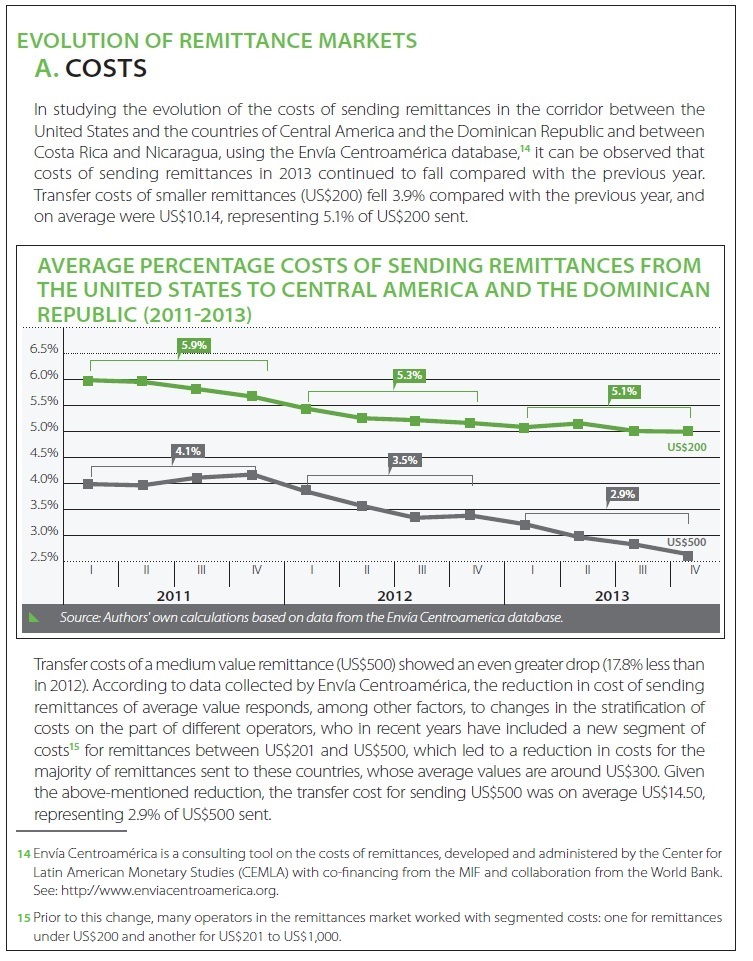
It is what it is! The CU/Go Lean plan then is to optimize the remittance process where possible: lowering the costs of transfers and managing the accompanying foreign currency and economic crime risks.

The reference source for the foregoing article came from the MIF (Multilateral Investment Fund), a member of the Inter-American Development Bank (IDB) Group; the MIF is funded by 39 donors and supports private sector-led development benefitting low-income populations and the poor –-their businesses, their farms, and their households. A core MIF mission is to act as a development laboratory in order to build and support successful micro and SME (Small-Medium-sized Enterprises) business models. [a]

By the Caribbean Journal staff

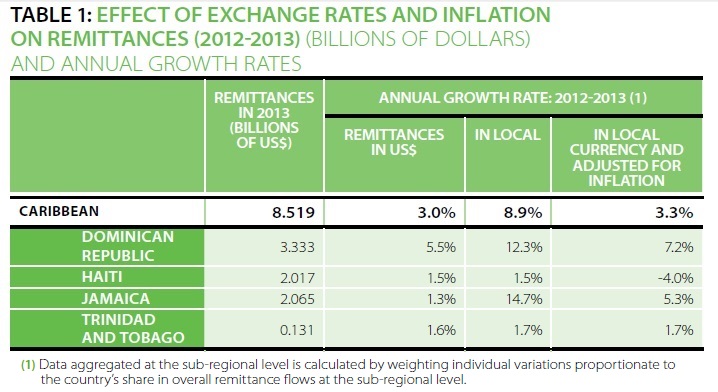
Table 1Remittances to the Caribbean region increased by 3 percent in 2013, according to a new report from the Inter-American Development Bank’s Multilateral Investment Fund.

Remittances to the region totaled $8.519 billion, a 3 percent improvement in US dollar terms, an 8.9 percent increase in local currency and a 3.3 percent improvement in local currency and adjusted for inflation.

“Remittance flows to Latin America and the Caribbean (LAC) remain an important source of income for millions of poor and vulnerable families,” said MIF General Manager Nancy Lee. “Remittance recipients need more access to financial tools that will help them use remittances to save and make investments for their future in areas like education, housing, and starting and growing businesses.”

The Dominican Republic received $3.333 billion USD in 2013, a 5.5 percent improvement, followed by Jamaica, which received $2.065 billion and Haiti, which received $2.017 billion.

Trinidad and Tobago was next with $131 million in remittances.

Of the group, the Dominican Republic saw the largest increase.

The Latin America and Caribbean region received a total of $61.251 billion last year, with the United States the source of about 75 percent of remittances to the region.

See the Table 1 (photo on this page) from the IDB for full details.

Caribbean Journal – Regional News Source (Retrieved 06/11/2014) –http://www.caribjournal.com/2014/06/10/remittances-to-caribbean-increased-by-3-percent-in-2013-report/

The reference source for the foregoing article came from the MIF (Multilateral Investment Fund), a member of the Inter-American Development Bank (IDB) Group; the MIF is funded by 39 donors and supports private sector-led development benefitting low-income populations and the poor –-their businesses, their farms, and their households. A core MIF mission is to act as a development laboratory in order to build and support successful micro and SME (Small-Medium-sized Enterprises) business models. [a]

Another mission of the CU/Go Lean roadmap is to apply lessons from the 2008 Great Recession financial crisis.

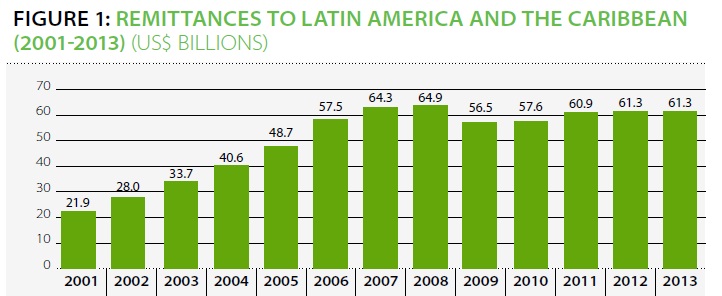
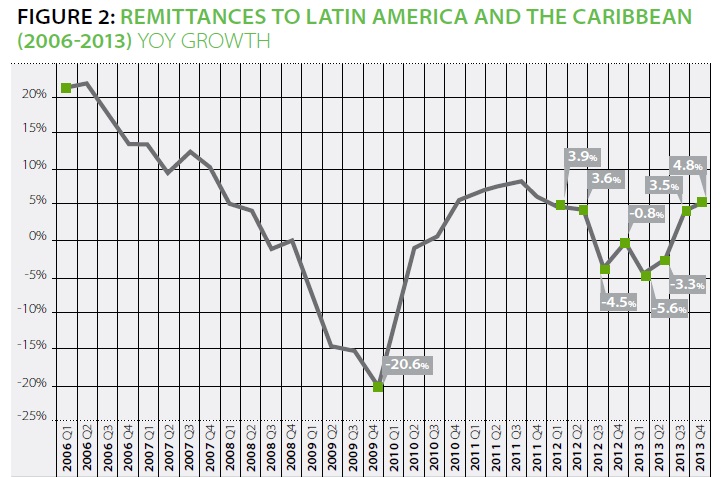
The MIF reports that in the years before the financial crisis of 2008-2009, remittances to the region as a whole experienced average annual growth of 17 percent. After a record high in 2008 of $64.9 billion, there was a sharp drop in 2009 of over 10 percent, followed by an increase in 2011 of 6 percent, and subsequent stagnation that continued up to 2013.

Figure 1

Figure 2

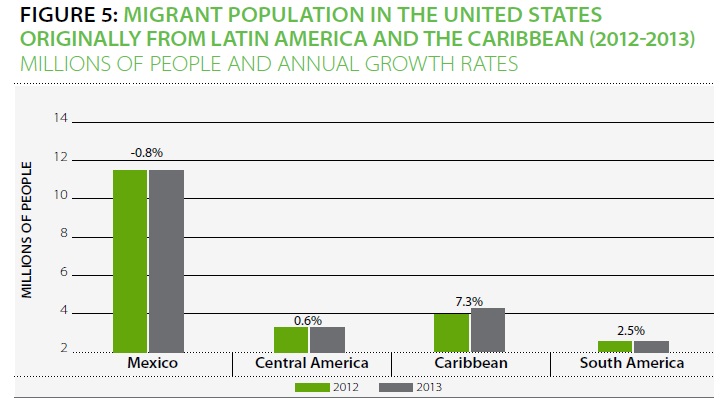
Figure 5

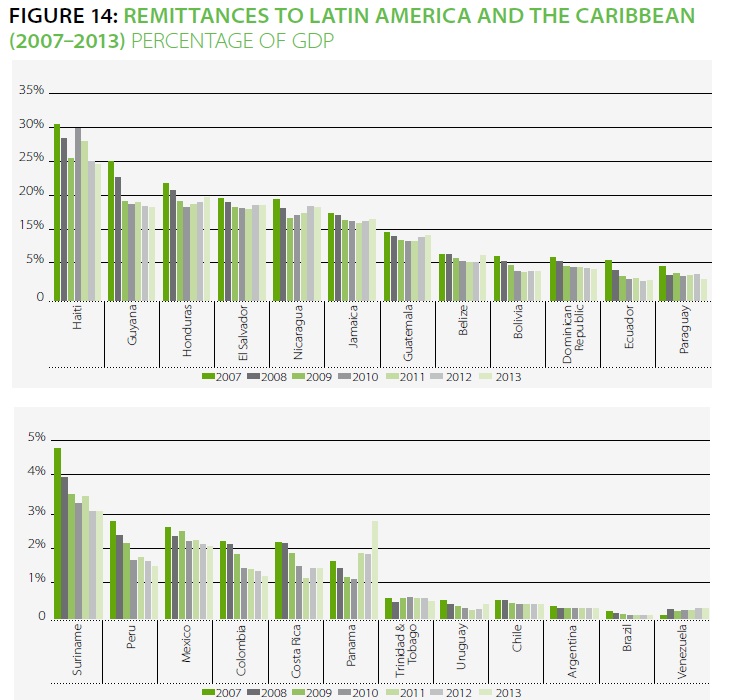
Figure 14

For 2014, macroeconomic projections show an encouraging landscape at the global level; it is predicted that the US economy will continue its path to recovery, as will EU countries, although at a slower pace. Employment data on LAC migrants, in both the United States and Spain, also show a recovery process enabling the prediction of growth in remittances sent from both countries. (See the accompanying charts, figures and tables on this page; sourced from the MIF/IDB report [b]).

This issue of continued fallout from the Great Recession has been a consistent theme of the Go Lean blogs entries as sampled here:

a. https://goleancaribbean.com/blog/?p=841 – Post 2008: Having Less Babies is Bad for the Economy

b. https://goleancaribbean.com/blog/?p=782 – Open the Time Capsule: The Great Recession of 2008

c. https://goleancaribbean.com/blog/?p=709 – Post 2008 Student Debt Holds Back Many Would-be Home Buyers

d. https://goleancaribbean.com/blog/?p=528 – Facebook plans to provide mobile payment services and remittances

e. https://goleancaribbean.com/blog/?p=378 – US Federal Reserve Releases Transcripts from 2008 Meetings

f. https://goleancaribbean.com/blog/?p=353 – Book Review: ‘Wrong – Nine Economic Policy Disasters and What We Can Learn…’

g. https://goleancaribbean.com/blog/?p=235 – Post 2008 Tourism’s changing profile

All in all, the roadmap commences with the recognition that all the Caribbean is in crisis, exacerbated after 2008, with defective business models, underemployment, globalization, and aging demographics. These acknowledgements are pronounced in the Declaration of Interdependence, (Page 13 & 14). The statements are included as follows:

xix.   Whereas our legacy in recent times is one of societal abandonment, it is imperative that incentives and encouragement be put in place to first dissuade the human flight, and then entice and welcome the return of our Diaspora back to our shores. This repatriation should be effected with the appropriate guards so as not to imperil the lives and securities of the repatriated citizens or the communities they inhabit. The right of repatriation is to be extended to any natural born citizens despite any previous naturalization to foreign sovereignties.  

xx.   Whereas the results of our decades of migration created a vibrant Diaspora in foreign lands, the Federation must organize interactions with this population into structured markets. Thus allowing foreign consumption of domestic products, services and media, which is a positive trade impact. These economic activities must not be exploited by others’ profiteering but rather harnessed by Federation resources for efficient repatriations.

xxi.   Whereas the preparation of our labor force can foster opportunities and dictate economic progress for current and future generations, the Federation must ensure that educational and job training opportunities are fully optimized for all residents of all member-states, with no partiality towards any gender or ethnic group. The Federation must recognize and facilitate excellence in many different fields of endeavor, including sciences, languages, arts, music and sports. This responsibility should be executed without incurring the risks of further human flight, as has been the past history.

 xxiv.   Whereas a free market economy can be induced and spurred for continuous progress, the Federation must install the controls to better manage aspects of the economy: jobs, inflation, savings rate, investments and other economic principles. Thereby attracting direct foreign investment because of the stability and vibrancy of our economy.

xxv.   Whereas the legacy of international democracies had been imperiled due to a global financial crisis, the structure of the Federation must allow for financial stability and assurance of the Federation’s institutions. To mandate the economic vibrancy of the region, monetary and fiscal controls and policies must be incorporated as proactive and reactive measures. These measures must address threats against the financial integrity of the Federation and of the member-states.

xxvi.   Whereas the Caribbean region must have new jobs to empower the engines of the economy and create the income sources for prosperity, and encourage the next generation to forge their dreams right at home, the Federation must therefore foster the development of new industries… In addition, the Federation must invigorate the enterprises related to existing … – impacting the region with more jobs.

The vision of the CU is a confederation of the 30 member-states of the Caribbean into an integrated “single market”, thereby fostering economic growth to grow the regional economy to $800 Billion (from the 2010 base of $378 Billion). This growth would be the cause-and-effect of 2.2 million new jobs. No more migrant culture! Tactically, the CU allows for a separation-of-powers between the member-state governments and the new federal agencies, so as to allow a technocratic management approach to simply “deliver” on the Go Lean roadmap, devoid of partisan politics! The following list details the series of community ethos, strategies, tactics, implementations and advocacies necessary to effectuate the change in the region to graduate from this migrant culture, described in the foregoing article and accompanying charts:

Community Ethos – Economic Systems Influence Individual Choices Page 21
Community Ethos – Job Multiplier Page 22
Community Ethos – Lean Operations Page 24
Community Ethos – Return on Investments Page 24
Community Ethos – Ways to Impact the Future Page 26
Community Ethos – Ways to Help Entrepreneurship Page 28
Strategic – Vision – Integrated Region in a Single Market Page 45
Strategic – Vision – Agents of Change Page 57
Tactical – Fostering a Technocracy Page 64
Tactical – Growing to $800 Billion Regional Economy Page 67
Tactical – Separation of Powers Page 71
Tactical – Interstate Commerce Admin – Econometrics Data Analysis Page 79
Implementation – Ways to Pay for Change Page 101
Implementation – Ways to Deliver Page 109
Planning – Big Ideas for the Caribbean Region Page 127
Planning – Lessons Learned from 2008 Page 136
Planning – Ways to Measure Progress Page 147
Advocacy – Ways to Grow the Economy Page 151
Advocacy – Ways to Create Jobs Page 152
Advocacy – Ways to Better Manage Foreign Exchange Page 154
Advocacy – Ways to Impact the Diaspora Page 217
Appendix – Job Multipliers Page 259
Appendix – Trade SHIELD – “Harvest“ Comprehensive Data Analysis Page 264
Appendix – Alternate (Cheaper & More Efficient) Remittance Modes Page 270

The Go Lean roadmap for the CU stresses the importance of a solid data foundation to analyze and measure progress. Since this is a 5-year roadmap, there must be milestones along the way, opportunities to plan-do-review. This approach allows for the proper adjustments to strategies, tactics and operations. The people of the Caribbean deserve every opportunity to deliver success. We need to be able to capture the traffic/data of remittances to all CU countries – only the large member-states were measured in these accompanying charts – and glean intelligence from the analysis. This approach reflects a true technocracy; this reflects the change that is coming to the region. Figure 15

Now is the time for all of the Caribbean, the people and governing institutions, to lean-in for the change that is the Caribbean Union Trade Federation. Now is the time for a viable plan for the millions abroad, and the next generation of young people, to work here at home … to make this region a better place to live, work and play.

Referenced Citations:

a. http://www.iadb.org/en/news/news-releases/2014-06-10/mif-2013-remittances-report,10838.html

b. http://idbdocs.iadb.org/wsdocs/getDocument.aspx?DOCNUM=38842219

Download the Book- Go Lean…Caribbean Now!!!


Share this post:
, ,
[Top]

Sports Bubble – Franchise values in basketball

Go Lean Commentary

BBall2The foregoing news article highlights a topical issue in the world of sports, basketball in particular: the blatant racism of basketball team owner by octogenarian Donald Sterling. The sports league, the NBA, expelled him from the league and has announced that it is moving forward with the forced sale of the Los Angeles Clippers to former Microsoft CEO Steve Ballmer for $2 Billion.

There are many lessons to learn/apply from this Donald Sterling / LA Clippers drama. Lessons such as:

  • There are more important things than money – the sports world rallied in support of the campaign to divorce the antagonist, Donald Sterling, from his team ownership.
  • Money covers a multitude of sins – the indication is that Mr. Sterling’s conduct was unbecoming for a long time before this episode.
  • Sports are immune to economic cycles – team values continue to rise despite depressed asset values during the Great Recession.
  • Sports are not immune to economic realities – there is a real possibility of a bubble due to the absence of economic fundamentals of some teams; there is still the need for technocratic efficiency.
  • Technology in broadcasting is transforming the sports industry – since DVR programming neutralizes the exposure to advertising, live sports broadcasts stand out as an exception: reliable audience. This thereby increases league/team values.
  • Institutional racism is real – the generation that practiced segregation is still alive and wields power, like 80-year-old Donald Sterling.
  • Attitudes in sports can mold society – the public sympathized with Black personnel having to work for an owner with racist views towards Black people; the NBA was forced to act quickly to expel Sterling from the league, with national concurrence.
  • The business of sports can shape a community’s economic landscape – the new value assessment of the Clippers has now elevated all the sport franchises in Los Angeles and related cities; now all connected properties and neighborhoods have appreciated in value as well.

The book, Go Lean … Caribbean, serves as a roadmap for the introduction and implementation of the Caribbean Union Trade Federation (CU). This subject of blatant racism in sports ownership is in scope for the CU as this technocratic agency will assume responsibility for regional sports administration. The roadmap has the prime directives to elevate the Caribbean’s:

(1) economy,

(2) security apparatus, and

(3) governing engines.

The Economist Magazine (Posted & Retrieved 05/31/2014) –
FOR all Donald Sterling’s well-known faults—the owner of the Los Angeles Clippers basketball team seems to have comfortably secured a role as the face of racism in America—no one has ever accused him of being a bad businessman. Although most of his fortune came from real estate, he is now on the brink of closing out what is probably the most profitable investment in the history of professional sports. The other 29 team owners of the National Basketball Association (NBA) are set to hold a vote on June 3rd to terminate his control of the Clippers, in response to a tape of his offensive remarks about blacks that was leaked to the media. But the league’s commissioner, Adam Silver, had let it be known that he would prefer a voluntary sale to happen first—managed by Mr. Sterling’s estranged wife Rochelle, since Mr. Silver had already banned Mr. Sterling for life and thus prevented him from exercising control over the team.

On May 29th the commissioner’s wish was granted, when Ms. Sterling announced that Steve Ballmer the former head of Microsoft, had agreed to buy the Clippers for the eye-popping sum of $2 billion. Although the Los Angeles Dodgers baseball team went for a slightly higher $2.15 billion in 2012, that deal included valuable real-estate assets as well, whereas the Clippers are essentially being sold on their own. The previous record price for an NBA club was just $550m, set by the Milwaukee Bucks earlier this year, and Forbes magazine valued the Clippers at a mere $575m in January. Mr. Ballmer’s bid comfortably exceeded the reported $1.6 billion offered by a group led by David Geffen, a media executive.

BBall1Mr. Sterling has not yet announced whether he will try to block the sale. Since he bought the team for a piddling $12.5m in 1981 and lives in the high-tax state of California, the deal would cost him an estimated $662m in capital-gains taxes. Moreover, his lawyer has demanded that the league retract its accusations against Mr. Sterling, though an after-tax profit of $1.326 billion might help him to swallow his pride. It is not yet clear whether Mr. Sterling could hold up the deal if he wants to. His representatives insist that no sale can proceed without his signature. But the family trust that formally owns the club has declared the 80-year-old Mr Sterling mentally incapacitated—an opinion shared by many viewers of his ill-advised interview with Anderson Cooper on CNN—in order to give his wife sole authority over the franchise. Mr Sterling has a well-earned reputation for litigiousness, and would surely challenge any sale by Ms Sterling against his will in court. However, that would cause the league to re-initiate termination proceedings against him.

The NBA will also still have to approve Mr. Ballmer, but that is expected to be a mere formality. Paul Allen, another Microsoft billionaire, already owns the Portland Trail Blazers, and the league vetted Mr. Ballmer when he made a failed bid for the Sacramento Kings. Mr. Silver will be eager to remove a pariah from the league as quickly and quietly as possible, and to avoid the prospect of a long court battle with Mr. Sterling. And the commissioner surely wants to lock in the lofty sale price, which sets a new valuation bar for every other franchise.

Mr Ballmer is yet to speak publicly about his financial calculus, except to assure the NBA that he would not seek to move the Clippers to Seattle, as he hoped to do with the Kings. (He told the Wall Street Journal that relocating the club out of America’s second-biggest market would be “value destructive”.) Microsoft shareholders who despaired at his string of high-priced acquisitions for the company can at least take solace that he is no thriftier with his own money: the Clippers will cost an estimated 10% of his net worth.

To be sure, there are strong arguments for a ten-figure price for the team. Sports franchise values have been soaring in recent years, thanks to record-setting rights deals from television networks desperate for DVR-proof programming. Both the NBA’s national contract and the Clippers’ local one are set to expire in the coming years, leaving the team doubly well-positioned to cash in. And following an acrimonious lockout in 2011, the league’s current collective-bargaining agreement sharply cut the share of its revenues that gets paid out in salaries, which made clubs far more profitable. Low interest rates are driving up prices for all assets, and the combination of rising inequality and greater international interest in basketball has increased the number of billionaires willing to splurge on an NBA team.

Moreover, the Clippers currently find themselves in an unfamiliar spot as the best basketball team in Los Angeles, and indeed all of California. The Lakers, their far better-loved crosstown rivals, are suffering through a difficult rebuilding phase, whereas the Clippers finished with the league’s third-best record this year. No one would blink an eye if the Lakers sold for $2 billion, and in theory there’s no reason why the team’s electrifying “Lob City” offence featuring Chris Paul and Blake Griffin could not supplant the slumping Lakers for Angelenos’ affections.

On the other hand, brand loyalty matters as much or more in sports as the on-field product. In 2009 the Chicago Cubs, baseball’s iconic lovable losers, sold for $845m despite putrid overall economic conditions, because they were the more popular club in a big two-team market. As measured by Facebook likes, there is not a single postal code in which the Clippers are even one-fifth as popular as the Lakers, and the Lakers are the preferred club in pretty much every part of the United States that lacks a nearby team save the Southeast. The Lakers’ local television deal pays them $180m a year; the Clippers are expected to fetch 60% less for their next contract. Mr. Sterling’s 33 years of penny-pinching mismanagement have left a stain on the franchise that no number of Paul-to-Griffin windmill alley-oops can erase. When Jack Nicholson attends a Clippers game, it’s news; when he goes to see the Lakers, it’s just normal.

The great unknown is whether the going rate for televised sports rates is sustainable. Cable carriers like Time Warner have already begun offering cheaper packages that exclude expensive sports channels, and John McCain, a senator from Arizona and former presidential candidate, has introduced a bill that would “unbundle” cable television and let viewers choose the channels they want a la carte. Both approaches would reduce the “sports tax” that non-fans currently pay to subsidise fans via their cable bills. Technological advances or piracy could also disrupt the current lucrative delivery model, as they have with so many other types of media.

Buying a team for a billion or two is essentially a bet on the sports-media status quo continuing for at least another decade. It may well be a bubble. But it has already lasted for far longer than the naysayers ever thought possible.
http://www.economist.com/news/leaders/21603026-how-hand-over-272-billion-year-criminals-thats-where-money?fsrc=nlw%7Chig%7C30-05-2014%7C53552127899249e1cc9ea210%7CNA

The Go Lean … Caribbean roadmap commences with a Declaration of Interdependence. In Verse XXXI (Page 14) it pronounces specific dynamics of sports:

Whereas sports have been a source of great pride for the Caribbean region, the economic returns from these ventures have not been evenly distributed as in other societies. The Federation must therefore facilitate the eco-systems and vertical industries of sports as a business, recreation, national pastime and even sports tourism.

The foregoing news article is sourced from the Economist Magazine. Therefore this perspective is from a macro-economic vantage point, which is apropos for this roadmap, as this book posits that the right economic, financial and investment landscape can impact Caribbean society, forging sport franchises and facilitating growth in value and appreciation. The CU envisions being the landlord of sports leagues at CU fairgrounds – operating as Self-Governing Entities. Today in the Caribbean however, there is not much of a sports eco-system beyond the High School level. This roadmap envisions collegiate and professional sports manifestations, as a tool/technique to empower society.

The roadmap specifically elevates the region through a series of community ethos, strategies, tactics, implementations and advocacies to foster the business of sports in the Caribbean region:

Economic Systems Influence Choices and Incentives Page 21
Community Ethos – Anti-Bullying and Mitigation Page 23
Anecdote – Hail, Hail, the Champs: Miami Heat! Page 42
Tactical – Confederating a non-sovereign union Page 63
Tactical – Separation of Powers–Sports Administration Page 81
Implementation – Assemble Existing Regional Entities Page 96
Implementation – Consolidating Regional Spectrum Page 101
Implementation – Steps for Self-Governing Entities Page 105
Implementation – Reasons to Repatriate Page 118
Planning – Ways to Make the Caribbean   Better to Play Page 151
Advocacy – Ways to Improve Communications Page 156
Advocacy –   Ways to Promote Fairgrounds Page 193
Advocacy –   Impact Media/Broadcast/Hollywood Roles Page 201
Advocacy –   Ways to Improve Sports Page 218

Now is the time for all of the Caribbean, athletes and non-athletes alike to lean-in for the empowerments described in the book Go Lean … Caribbean. The benefits are too alluring, an improved, economically viable sports world; and a better place to live, work and play.

The Go Lean roadmap is not about basketball. But basketball is among the games people play; and play can be a great source of leisure and economics. The world is now watching the tropical region for basketball dominance. This is because the Miami Heat will now play for the NBA championship, starting this week Thursday (June 5, 2014) in their 4th straight NBA Finals. The roadmap posits that the Miami Heat relates to the Caribbean since its base is in Miami, Florida; a metropolitan area that possesses the largest pocket of Caribbean Diaspora. So in many ways, the Miami Heat is the “home team” of the Caribbean. Go Heat!

Download Go Lean … Caribbean – now!


Share this post:
, ,
[Top]

Zuckerberg’s $100 Million for Newark’s Schools was a waste

Go Lean Commentary

Throwing money at a problem does not, in itself, solve it!

Mark Z 2The foregoing article helps us appreciate this point more succinctly. It was 2010. There was Newark’s Mayor Cory Booker (now New Jersey Senator), Facebook founder and philanthropist Mark Zuckerberg and the Governor of the State of New Jersey (and possible 2016 Presidential candidate) Chris Christie – all men of goodwill. Their goal: fix a failing school system in the City of Newark. On paper, the plan seemed credible, they had the power, they had the money – $100 million dollars. The result? After four years – “a waste”.

The issues of education reform, best practices, and funding options are stressed in the book Go Lean…Caribbean, even though these are not the primary focus of the book. Rather this book serves as a roadmap for the introduction and implementation of the Caribbean Union Trade Federation (CU), with the focus being on these following 3 prime directives:

  • Optimization of the economic engines in order to grow the regional economy to $800 Billion & create 2.2 million new jobs.
  • Establishment of a security apparatus to protect the resultant economic engines.
  • Improve Caribbean governance to support these engines.

Yet, the book posits that education is a vital consideration for economic empowerment; so too are non-government organizations, like Zuckerberg’s foundation. The book specifically highlights an important role that foundations execute in the sphere of foreign aid, sometimes even better than national governments (Page 219):

One major argument against federally funded foreign aid is that the money is often lost to governmental corruption in the countries it was supposed to help. In 2003, a top university in Bangladesh claimed that at least 75% of all foreign aid given to that government was lost because of corruption. Since faith-based foreign aid focuses on churches or organizations operating independently of the government, funding has a better chance of being used effectively.

The below news article though, highlights an onshore example, in the US, with multi-level governmental support, plenty of money, and yet still: failure!

Title: Mark Zuckerberg Gave New Jersey $100 Million To Fix Newark’s Schools, And It Looks Like It Was A Waste
By: Caroline Moss
In the fall of 2010, Mark Zuckerberg announced on Oprah that he’d be making a generous gift to Newark, New Jersey.

 As Oprah said in her Oprah way, “one … hundred … million … dollars” would be given to Newark Mayor Cory Booker and New Jersey Gov. Chris Christie as the three began the Startup:Education foundation.

The plan was to turn Newark into what Zuckerberg called “a symbol of educational excellence for the whole nation,” spent on retaining the best teachers, and creating environments that would produce successful students and, one day, graduates.

Newark is a city wrought with crime. Its graduation rate is about 67%. It needed the help, and Booker’s vision sounded promising.

Between 2010 and 2012, The New Yorker reports that “more than twenty million dollars of Zuckerberg’s gift and matching donations went to consulting firms with various specialties: public relations, human resources, communications, data analysis, [and] teacher evaluation.” Many of the consultants were being paid upwards of $1,000 a day.

“Everybody’s getting paid but Raheem still can’t read,” Vivian Cox Fraser, president of the Urban League of Essex County, was quoted saying.

Today, the money is pretty much gone, and Newark has hardly become that symbol of excellence.

The New Yorker has the full 12-page story today, and we’ve dug into it to find some of the main timeline points you need to know.

In 2010, Mayor Booker found a loophole in getting money to help fund Newark’s educational reform. It came in the form of philanthropic donations, which, unlike government funding, required no public review of priorities or spending. Gov. Christie approved the plan, and Booker’s job was to find the donors.

Meanwhile, in Silicon Valley, Zuckerberg (like many other tech billionaires) had pledged to donate half of his fortune, but as The New Yorker reports, he knew very little about urban education or philanthropy.

Booker and Zuckerberg met to discuss a vision for Newark’s future. Booker wanted to significantly reward Newark teachers who improved student performance rather than focus on seniority and tenure. Teachers would be challenged and rewarded to do their jobs well, and students would benefit.

 Zuckerberg was confident Newark and Booker were the right recipients for this huge gift (given over five years), and agreed to gift $100 million dollars with a few stipulations:

  • Booker would also have to raise $100 million dollars. Zuckerberg’s money would be released to Newark as matching dollars rolled in.
  • Booker would have to replace the current superintendent with a “transformational leader.

”The reform ended up looking like this: taking low-performing public schools and closing them, turning them into charter schools and “themed” high schools. But there was no easy way to expand charters without destabilizing traditional public schools.

In the months following the gift announcement, Booker and Christie still had no superstar superintendent and no reform plan.

 Zuckerberg was concerned and urged Booker to find the superintendent, even sending Booker a poster widely seen around the Facebook campus that read, “Done is better than perfect.”

Mark ZImmediately, Booker appointed Cami Anderson for the job. She implemented ways to help students and improve schools (all which The New Yorker detailed), but there were roadblocks along the way, like how the students brought the issues going on in their homes with them to the classroom.

 Anderson wanted to give schools more support to help students on emotional and social levels, but Newark had already been spending more money per student than most districts in the entire country, none of which was reaching the children it existed to help.

 New contracts were being created, money was being hemorrhaged, and the district was going broke. But interviews — like this one in Forbes — regarding the money and the future of Newark’s schools were always positive, highlighting, of course, only the good aspects of the huge monetary donation.

Then, in January of this year, The Washington Post reported on “dozens of emails between the Zuckerberg camp (including Zuckerberg himself) and the Booker camp (including Booker himself),” which ended up revealing that state education officials were going above and beyond to get money from big private donors to remake public schools in the way they want to.

Anderson came up with another plan called One Newark, which sounded like it could work. Families would choose which charter or public schools they would want to send their children to. Children from the lowest-income families would get first pick. So would kids with special needs.

It all sounded great until parents and teachers realized it was only on paper. Solutions hadn’t been figured out fully. Programs hadn’t been developed. Issues like transportation had not yet been tackled. Things that were promised didn’t come to fruition.

 According to The New Yorker, Anderson, Booker, Zuckerberg, and Christie, “despite millions of dollars spent on community engagement—have yet to hold tough, open conversations with the people of Newark about exactly how much money the district has, where it is going, and what students aren’t getting as a result.”
Business Insider Vertical e-Zine (Posted 05/13/2014; retrieved 05/30/2014) –
http://www.businessinsider.com/mark-zuckerbergs-newark-grant-2014-5#ixzz33DsBvaIw

The people and institutions of the Caribbean understand this plight of Newark, New Jersey all too well. There is a long record of failure with the Caribbean education initiatives. Then where there is success, the quality students have a propensity to abandon the region and emigrate to the US, Canada or Europe. So with the best of the Caribbean’s talents gone, we find that we’ve “fatten frog for snake”; then with the rest, we muddle along as best we can; hoping to nation-build with the remnants of a broken educational system.

It’s time for a change!

The proposed change is detailed in the Go Lean roadmap. It provides turn-by-turn directions on how to reform the Caribbean education systems, governance and Caribbean society in general. This roadmap commences with the assessment that the Caribbean is in crisis, and that this “crisis would be a terrible thing to waste”. As a planning tool, the roadmap commences with a Declaration of Interdependence, pronouncing the approach of regional integration (Page 12) as a viable solution to elevate the region’s educational opportunities. The statement is included as follows:

xxi. Whereas the preparation of our labor force can foster opportunities and dictate economic progress for current and future generations, the Federation must ensure that educational and job training opportunities are fully optimized for all residents of all member-states, with no partiality towards any gender or ethnic group. The Federation must recognize and facilitate excellence in many different fields of endeavor, including sciences, languages, arts, music and sports. This responsibility should be executed without incurring the risks of further human flight, as has been the past history.

The strategy is to confederate all the 30 member-states of the Caribbean, despite their language and legacy, into an integrated “single market”. Tactically, this will allow a separation-of-powers between the member-states governments (including their education proxies) and federal agencies, allowing an open role for benevolent foundations to fulfill their charters on the region. The roadmap recognizes the need to lead, or to follow best-practices, as formulated by other entities. This then becomes a process of leading-by-following. The CU will facilitate the eco-systems, metering and measuring the effect of so many educational options. Think Champion-Challenger; allowing for alternate methodologies to be explored for effectiveness, and then measuring the success criteria.

The Go Lean book details series of community ethos, strategies, tactics, implementations and advocacies to foster good educational progress, and the agile methodologies to adjust/adapt dynamically:

Anecdote – Lean On Me – New Jersey School Lesson Page 5
Community Ethos – Lean Operations Page 24
Community Ethos – Cooperatives Page 25
Community Ethos – Non-Government Organizations Page 25
Community Ethos – Ways to Foster Genius Page 27
Tactical – Separation of Powers – Education Dept. Page 85
Implementation – Ways to Pay for Change Page 101
Implementation – Ways to Deliver Page 109
Advocacy – Ways to Grow the Economy Page 151
Advocacy – Ways to Create Jobs Page 152
Advocacy – Ways to Improve Education Page 159
Advocacy – Ways to Improve Governance Page 169
Advocacy – Ways to Foster Cooperatives Page 176
Advocacy – Ways to Improve Libraries Page 187
Advocacy – Ways to Impact Foundations Page 219
Advocacy – Ways to Impact the One Percent Page 224
Appendix – The Giving Pledge Signatories Page 292

Now is the time for all of the Caribbean, the people and governing institutions, to lean-in for the changes described in the book Go Lean … Caribbean. We welcome the “Mark Zuckerberg”’s of the world … and their money. We entreat them to help us to make the Caribbean a better place to live, work, learn and play.

Download the free e-Book of Go Lean … Caribbean – now!

Share this post:
, , , ,
[Top]

Sports Revolutionary: Advocate Jeffrey Webb

Go Lean Commentary

Sports Revolution 3The forgoing encyclopedia source focuses on the background person connected to an important issue in sports administration: blatant racism in European soccer.

Blatant racism is a scourge to the beautiful sport of football (soccer). Black players have to endure unspeakable acts of disrespect (cursing, spitting, monkey-chants, tossed bananas, etc). The international governing body for soccer/football, Fédération Internationale de Football Association (FIFA), wants to forge change among the game’s stakeholders. This issue relates to the Caribbean, in that the FIFA advocate in this cause is from the Cayman Islands.

This advocate, Jeffrey Webb, is featured in a current episode of a sports documentary television show in the US.

Sports Revolution 1MIAMI — CONCACAF President Jeffrey Webb, who is Chairman of FIFA¹s Anti-Racism and Discrimination Task Force, appeared Tuesday (May 20, 2014) on the acclaimed HBO program Real Sports with Bryant Gumbel, addressing FIFA’s strategy and efforts to eradicate racism from football.  He discussed the governing body’s responsibility in providing meaningful support for all players around the globe and implementing tougher sanctions to fortify the sport, so that focus can be placed on the game itself.

The Emmy-winning show also featured an interview with United States international striker Jozy Altidore, a member of FIFA’s anti-discrimination body.

HBO will re-air the episode between May 20 and June 21, 2014.

During the 63rd FIFA Congress last year in Mauritius, Member Associations approved the Anti-Racism and Discrimination resolutions proposed by the task force chaired by President Webb.  The application of these resolutions in every country where football is played will bring universality to the mechanisms that combat racism and discrimination.

(http://www.concacaf.com/article/president-webb-speaks-about-racism-on-real-sports-with-bryant-gumbel)

Many professional athletes participating in European soccer, are of Afro-Caribbean heritage. This should be a proud legacy, one to be protected and promoted. (This is also an issue in Brazil).

Jeffrey Webb (born 1964) [1], is the president of CONCACAF and the Cayman Islands Football Association (CIFA) and FIFA Vice President.

He was educated at HillsboroughCommunity College in the United States. His career in the football field spans almost three decades. He was appointed as President of the Cayman Islands Football Association in 1991.[2]

CIFA’s accomplishments under Webb’s administration and leadership were widely recognized and in 1994 he was co-opted as a member of the CFU Executive Committee, and member of FIFA’s Protocol Committee in 1995. Prior to his appointment to CIFA, Webb served as President of the local football club Strikers FC.

Moreover, within FIFA’s governing body, in 2002 Webb became Deputy Chairman of the FIFA Internal Audit Committee and subsequently Chairman in 2011. He is a former member of FIFA’s Transparency and Compliance Committee and, most recently, was appointed as member of FIFA’s Strategic, Finance, Organizing World Cup and Emergency Committees.

Sports Revolution 2Webb also took part of FIFA’s delegations to the World Cup including France (1998), U.S. Women’s World Cup (1999), Korea/Japan (2002), Germany (2006), and South Africa (2010).

Webb was a Business Development Manager at Fidelity Bank (Cayman) Limited, a subsidiary of Fidelity Bank & Trust International Limited, which is involved in retail banking, investment banking, corporate finance and asset management. Outside of banking, Webb co-owns a franchise of Burrell’s bakery chain “Captain’s Bakery” in the Cayman Islands.[3]

On May 23, 2012, in Budapest, Hungary, Webb was unanimously elected to lead the Confederation of North, Central America and the Caribbean Football Association (CONCACAF). He became the fourth President in the Confederation’s history and the youngest leader of any regional association within FIFA to reach this position. As CONCACAF President, his core focus is to restructure the Confederation by building solid foundations to manage, develop and promote the game with a resilient commitment to inclusiveness, accountability and transparency.

As President of CONCACAF, Webb also became FIFA Vice President and an official member of the governing body’s Executive Committee. Moreover, on March 2013 Webb was appointed by FIFA President Joseph Blatter as Chairman of the FIFA anti-discrimination task force, which will oversee all matters related to discrimination within global football.

At the time of his appointment, in 2012, Webb was President of the Cayman Islands Football Association (CIFA).

Webb appointed a new Miami-based General Secretary Enrique Sanz de Santamaría enabling the CONCACAF head office to relocate to Miami.[4]

Source References:

  1. “Jeffrey Webb profile”. FIFA.com. Retrieved 11 July 2013.
  2. “Jeff Webb profile”. Cayman Active. 6 January 2011. Retrieved 1 March 2012.
  3. Brown, Rudolph (9 February 2002). “Captain’s Bakery opens in Cayman”. Gleaner (Jamaica). Retrieved 1 March 2012.
  4. “CONCACAF appoints Enrique Sanz as General Secretary”. CONCACAF.com. 13 July 2012. Retrieved 14 July 2012.

Wikipedia Online Encyclopedia (Retrieved 05/25/2014)–http://en.wikipedia.org/wiki/Jeffrey_Webb

The book Go Lean … Caribbean recognizes that image is an important intangible factor that must be managed to optimize value of Caribbean contributions – more value should equal more pay – see Appendix A – Table. As such the book is submitted as a complete roadmap to advance the Caribbean economy/culture, at home, for Caribbean residents, and advance the Caribbean image throughout the world, to benefit residents and Diaspora alike – see Appendix B for book reference on Brazil footballers.

The book, Go Lean … Caribbean, serves as a roadmap for the introduction and implementation of the Caribbean Union Trade Federation (CU), as a sentinel for the Caribbean “image”. This subject of blatant racism in European soccer is in scope for the CU as this technocratic agency will assume oversight to optimize the region’s:

(1) economy,

(2) security apparatus, and

(3) governing engines.

The roadmap commences with a Declaration of Interdependence. In Verse XXXI (Page 14) it pronounces:

Whereas sports have been a source of great pride for the Caribbean region, the economic returns from these ventures have not been evenly distributed as in other societies. The Federation must therefore facilitate the eco-systems and vertical industries of sports as a business, recreation, national pastime and even sports tourism.

The book posits that one person can make a difference in the Caribbean, and its impact on the world; that there are many opportunities where one champion, one advocate, can elevate society. In fact the book is a collection of 144 different advocacies, so there is inspiration for the Jeffrey Webb’s of the region to make their mark in many different fields of endeavor.

The roadmap specifically encourages the region to foster the genius potential (Page 27) in their communities, forge leadership skills (Page 171), improve for sports (Page 229) and pursue the Greater Good (Page 37). With the participation of many advocates on many different paths for progress, the Caribbean can truly become a better place to live, work and play. We can, and must, promote positive images (Page 133).

Download the free e-Book of Go Lean … Caribbean – now!

————————-

Appendix A – Table: Lucky 18 – The World’s Highest Paid Black Athletes for 2011

Athlete Sport Heritage Contract $$$*
Tiger Woods Golf American $75 million
Kobe Bryant Basketball American $53 million
LeBron James Basketball American $48 million
Dwight Howard Basketball American $27.6 million
Dwayne Wade Basketball American $26.2 million
Carmelo Anthony Basketball American $25.1 million
Ronaldo de Assis Moreira aka “Ronaldinho” Football / Soccer Brazil $24.7 million
Amar’e Stoudemire Basketball American $24.5 million
Kevin Garnett Basketball American $23.8 million
CC Sabathia Baseball American $23.6 million
Vince Carter Basketball American $21.8 million
Tim Duncan Basketball US Virgin Islands $21.2 million
Chris Paul Basketball American $20.9 million
Ryan Howard Baseball American $20.8 million
Usain Bolt Track and Field Jamaican $20.3 million
Rashard Lewis Basketball American $20.1 million
Jahri Evans American Football American $19.1 million
Michael Redd Basketball American $18.8 million

Source: http://madamenoire.com/60523/lucky-17-the-worlds-highest-paid-black-athletes/; posted June 10, 2011; retrieved May 25, 2014.

* Salaries, bonuses, prize money, appearance fees, licensing & endorsement income in the 12 months ending May 1, 2011

————————————

Appendix B: Book Reference

The phrase ‘Brazilian soccer player’ is like the phrases ‘French chef’ or ‘Tibetan monk.’ The nationality expresses an authority, an innate vocation for the job – whatever the natural ability.

Original: Bellos, Alex (2003). Futebol: The Brazilian Way of Life: Bloomsbury Publishing Plc. Publication date: 5/02/2003 ISBN: 9780747561798

Revision: Bellos, Alex (2014). Futebol: The Brazilian Way of Life. Publisher: Bloomsbury USA. Publication date: 5/6/2014 ISBN: 9781620402443

Share this post:
, , , ,
[Top]

How to Whitelist Blog Emails

Are you missing any Blogs?

WhotelistingYou use your Google Account to receive daily Blogs from Go Lean…Caribbean. You receive them Day 1, 2, and 3 but by Day 4 you all of a sudden stop getting them and don’t know why. You check your Spam/Bulk/Promotions Inbox/Folder and there they are; 4 days worth of blogs that you thought disappeared into thin air.

While this scenario is bad, SPAM filters are good. It is important to keep your SPAM filter active in order to wean out the emails that are truly SPAM-ish. But what about the legitimate emails that you truly want to receive? You will not want them caught in an overactive SPAM filter? In addition to a SPAM designation, they may be categorized in a different folder in your email system? This could cause you not to receive important emails daily, such as Go Lean…Caribbean blogs.

Whereas SPAM is considered Blacklist, you can add emails from trusted senders to your Whitelist so that they can pass easily through your spam filter (or junk folder) across the different email clients and internet security platforms. Whitelisting specifically allows emails from a specific source, such as Go Lean…Caribbean, to be allowed into your email inbox.

The following is a list of steps for programs and email in alphabetical order:

AOL 7.0 & 8.0

1.    Open a message from the Go Lean…Caribbean

2.    Click the Add Address icon on the right side of the window.

3.    Click the Save button

AOL 9.0 and Up

1.    Open a message from the Go Lean…Caribbean

2.    Click the Add Address icon on the right side of the window

3.    Click the OK button

AOL Mail

1.    Open a message from Go Lean…Caribbean

2.    Click Show Images: Go Lean…Caribbean

AT&T Webmail and BellSouth

1.    In your mailbox, click Options.

2.    Go to Mail Options, select Filters. Click Add Filter.

3.    Go to From Header and select Contains. Enter the trusted address or domain (email or website) in the box provided.

4.    Go to the drop down menu at the bottom with the option Move the message to. Select Inbox.

5.    Click Add Filter

Comcast SmartZone

1.    Click Address Book

2.    Click New. Select New Contact

3.    Add email address.

4.    Click Save

Cox Email

1.    Click Preferences.

2.    Go to General Email Preferences and click Blocked Senders.

3.    Type address or domain to add to the Exceptions list.

4.    Click Add. Click Save.

EarthLink

1.    Click on Address Book (it’s over on the left, below your Folders).

2.    When your Address Book opens, click the Add new contact.

3.    On the Add Contact screen, find the Internet Information box.

4.    Enter the Go Lean…Caribbean address into the top Email box.

5.    Click Save.

Earthlink Total Access

1.    Open a message from the Go Lean…Caribbean

2.    In the From field, right-click the email address

3.    Click the Add to Address Book link in the menu

4.    Click the Ok button

Gmail

1.    Open a message from Go Lean…Caribbean.

2.    Click Always display images from (senders address).

OR

1.    Open a message from Go Lean…Caribbean.

2.    Click the arrow next to reply on the top right.

3.    Click Add sender to contact list.

Hotmail

1.    Open a message from the Go Lean…Caribbean.

2.    Click Mark as safe next to the From name and address.

3.    Now click Add contact.

Mac Mail

1.    Open a message from the Go Lean…Caribbean

2.    Go to Message in the top tool bar

3.    Click Add Sender to Address Book from the drop-down menu

McAfee SpamKiller

1.    Go to Friends and click Add.

2.    Type the trusted address or domain in the space provided. Click OK.

MSN

1.    Click on Help & Settings

2.    Click Email Settings

3.    Click on Safe List

4.    In Add an item to this list, type the specific email address or use @xxxx.com to whitelist the domain (note: xxxx has to be replaced with the domain)

5.    Click Add

Thunderbird / Netscape 6 or 7

1.    Open a message from the Go Lean…Caribbean.

2.    In the From field, right-click the email address.

3.    Click the Add to Address Book link in the menu.

4.    Click the OK button.

NetZero

1.    Go to Options and click Safe List.

2.    Type the trusted domain or address in Add Address to Safe List.

3.    Click Add then click Save.

Norton AntiSpam

1.    Go to the Status & Settings tab and click AntiSpam.

2.    Click Configure and go to the Allowed List tab.

3.    Click Add and type the trusted address or domain in the Email Address box.

4.    Click OK.

Outlook 2003 – 2007

1.    Open a message from the Go Lean…Caribbean.

2.    Go to the Actions option in the top tool bar.

3.    Select Junk E-mail from the drop down menu.

4.    Select the Add Sender to Safe Senders List option.

Outlook 2000 / Outlook 11

1.    Open a message from the Go Lean…Caribbean

2.    In the From field, right-click the email address

3.    Click the Add to Contacts link in the menu

4.    Click the OK button

Outlook Express 6

1.    Open a message from the Go Lean…Caribbean

2.    In the From field, right-click the email address

3.    Click the Add to Address Book link in the menu

4.    Click the OK button

Road Runner

1.    Open Junk Mail folder.

2.    Select emails you wish to add to your whitelist.

3.    Click Mark as Not Spam.

Spam Assassin

1.    In your hard drive, find your Spam Assassin folder. Click the folder.

2.    Open the file named user_prefs with a text editor or Notepad. (If the file does not exist you can create it using the instructions on Spam Assassin’s website.)

3.    Make a new line with the text whitelist_from and the trusted address or domain you wish to add.

4.    Save the file and close it.

Verizon

1.    Go to Options and select Block Senders.

2.    In the Safe List, type your trusted address or domain.

3.    Click OK.

Windows Live

1.    Open a message from the Go Lean…Caribbean

2.    Click Mark as safe next to the From name and address

3.    Now click Add contact

Yahoo!

1.    Open a message from the Go Lean…Caribbean.

2.    Now click Add contact next to the From name and address.

Tutorial Source: http://www.whatcounts.com/how-to-whitelist-emails/- Retrieved 5/14/2014


 Don’t forget to add Go Lean…Caribbean to YOUR Whitelist!!!

Download the Book- Go Lean…Caribbean Now!!!

Share this post:
, ,
[Top]