Category: Locations

Philadelphia Freedom – Some Restrictions Apply

Go Lean Commentary

“You have to know your place”

… this was a familiar edict in the US for minority populations. These were more than words; this was indicative of the repression, suppression and oppression of living in the US, and not being White, English-speaking, Protestant, Straight, Male and/or able-bodied.

Anyone with exception to this above list had to endure restrictions.
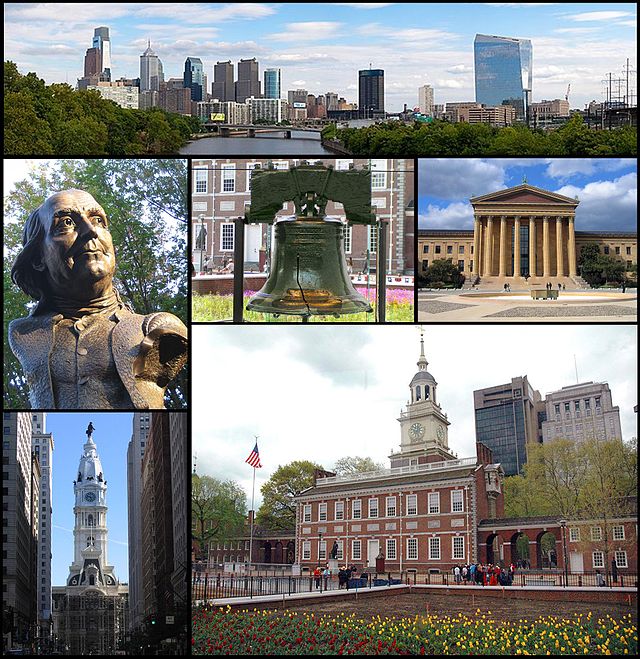
CU Blog - Philadelphia Freedom - Some Restrictions Apply - Photo 4Philadelphia proved different!

This city became synonymous with a love for freedom and had an infectious impact on the country, and the rest of the world for that matter.

All in all, there is a certain community ethos associated with Philadelphia that aligns with the book Go Lean…Caribbean. It is a focus on the future, a deferred gratification as investment for future returns. These attributes have been promoted by the Go Lean movement as necessary traits to forge change in the Caribbean region. We need our own Caribbean flavor of Philadelphia Freedom.

 “Philadelphia Freedom” is a song released by “The Elton John Band” as a single in 1975. The song was one of Elton John’s seven #1 US hits during the early and mid-1970s, which saw his recordings dominating the charts. In Canada, it was his eighth single to hit the top of the RPM (Records, Promotion, Music Magazine) national singles chart.

The song was written by Elton John and Bernie Taupin as a favour to John’s friend, tennis star Billie Jean King. King was part of the Philadelphia Freedoms professional tennis team. The song features an orchestral arrangement by Gene Page, including flutes, horns, and strings.

Background
Recorded in the summer of 1974, during breaks between sessions for Captain Fantastic and the Brown Dirt Cowboy (Elton John’s ninth studio album), the song was at the time the only song Elton John and Bernie Taupin ever consciously wrote as a single, as John told journalist Paul Gambaccini [in a subsequent interview]. John was looking to honour Billie Jean King, and so asked Taupin to write a song called “Philadelphia Freedom” as a homage to her tennis team.

In [the book] His Song: The Musical History of Elton John, [writer] Elizabeth Rosenthal recounts that Taupin said, “I can’t write a song about tennis,” and did not. Taupin maintains that the lyrics bear no relation to tennis, Philly Soul (a style of soul music characterized by funk influences), or even flag-waving patriotism. Nonetheless, the lyrics have been interpreted as patriotic and uplifting, and even though released in 1975, the song’s sentiment, intended or not, meshed perfectly with an American music audience gearing up for the country’s bicentennial celebration in July 1976. In the US, the song was certified Gold in 1975 and Platinum in 1995 by the Recording Industry Association of America.

The song was dedicated in part to the Philadelphia sound: the music of the Delfonics, producers Kenny Gamble and Leon Huff; and The Spinners, producer Thom Bell, with whom John would work two years later on The Thom Bell Sessions. This song plays in Philadelphia’s Franklin Institute IMAX Theater before every show as a tribute to the city’s love for freedom and its impact on the country. The lyrics are also printed on the walls of the Hard Rock Cafe in Philadelphia.

Song Lyrics
CU Blog - Philadelphia Freedom - Some Restrictions Apply - Photo 1I used to be a rolling stone
You know if the cause was right
I’d leave to find the answer on the road
I used to be a heart beating for someone
But the times have changed
The less I say the more my work gets done

`Cause I live and breathe this Philadelphia freedom
From the day that I was born I’ve waved the flag
Philadelphia freedom took me knee-high to a man
Yeah gave me peace of mind my daddy never had

Oh Philadelphia freedom shine on me, I love you
Shine a light through the eyes of the ones left behind
Shine a light shine a light
Shine a light won’t you shine a light
Philadelphia freedom I love you, yes I do

If you choose to you can live your life alone
Some people choose the city
Some others choose the good old family home
I like living easy without family ties
Till the whippoorwill of freedom zapped me
Right between the eyes


Wikipedia Online Encyclopedia Reference Source (Retrieved 08-07-2014) – http://en.wikipedia.org/wiki/Philadelphia_Freedom_(song)

“Knowing your place” was never accepted by citizens of this Philadelphia. This revolutionary attitude or ethos dates back to before Colonial America, the Revolution War, 1776 and beyond [a]:

  • Religious Tolerance – King Charles II of England granted William Penn a charter for the Pennsylvania colony. As a member of the religious sect the Quakers, Penn had experienced religious persecution and wanted his colony to be a place where anyone could worship freely. This tolerance, far more than by most other colonies, led to better relations with the local Native American tribes and fostered Philadelphia’s rapid growth into colonial America’s most important city.
  • CU Blog - Philadelphia Freedom - Some Restrictions Apply - Photo 2American Revolution – Philadelphia’s importance and central location in the colonies made it a natural center for America’s revolutionaries. The city hosted the First Continental Congress before the war; the Second Continental Congress, which signed the United States Declaration of Independence, during the war; and the Constitutional Convention (1787) after the war.
  • Abolition – Philadelphia was called the “Quaker City” and was recognized as an anti-slavery stronghold. This is where noted runaway-slave-turned-Abolitionist Frederick Douglas sought refuge on his way to New York and later gave one of his most famous speeches: “Speech at National Hall, Philadelphia July 6, 1863 for the Promotion of Colored Enlistments”. Another advocate was Thaddeus Stevens. He hailed from Adams County, a rural suburb of Philadelphia, as one of the leaders of the radical faction of the Republican Party during the 1860s. He was a fierce opponent of slavery and discrimination against African-Americans. As chairman of the House “Ways and Means” Committee during the Civil War, he played a major part in the war’s financing. He sought to secure emancipated slave’s rights during Reconstruction, even in opposition to the contrarian President, Andrew Johnson.
  • Civil Rights – Philadelphia emerged as a prime destination for African Americans during the Great Migration and the city surpassed two million occupants by 1950. This set the stage for the impending civil rights movement. One battle saw black activists in Philadelphia (and Harlem, New York) successfully integrating state construction projects in 1963. The city was also front-and-center to race riots in the summer of 1964.
  • Women’s Rights – Some of the early Abolitionists were interested in human rights not just for Blacks but for women as well. The Philadelphia-area Quakers, were known for their early leadership for women’s rights. One prominent example was Lucretia Coffin Mott (1793 – 1880), as a Quaker, she proved to be an effective leader, orator and advocate for women’s rights, abolition and social reform.
  • Gay Rights – The Elton John song Philadelphia Freedom was dedicated to tennis star Billie Jean King, noted gay rights activist, social reformer and advocate for sexual equality. The song, see VIDEO above, is recognized as a anthem for the gay (LGBT) community.
  • Animal Rights (Zoo) – Philadelphia is home to the United States’ first zoo, chartered by the Commonwealth of Pennsylvania on March 21, 1859, though its opening was delayed by the Civil War until July 1, 1874. The environmental and animal rights movement all stemmed from these origins.
  • Repatriation – After 400 years of development and progress, ebb-and-flow, Philadelphia must constantly redefine itself. Faced with “white flight” and the abandonment of its tax base, the City had to strategize a repatriation plan – gentrification (a shift toward wealthier residents/businesses and increasing property values in the urban community).  Gentrification of Philadelphia’s neighborhoods has emerged into the 21st century and the city has now reversed its decades-long trend of population loss.

The revolutionaries of Philadelphia (past and present) have strived for the same goal as this Caribbean empowerment movement:

Elevation of society.

The book Go Lean … Caribbean strives to accomplish this revolution with the introduction and implementation of the technocratic Caribbean Union Trade Federation (CU). In fact, the prime directives of the CU are pronounced in these declarative statements:

  • Optimization of the economic engines in order to grow the regional economy to $800 Billion & create 2.2 million new jobs.
  • Establishment of a security apparatus to protect the resultant economic engines.
  • Improve Caribbean governance to support these engines.

The Go Lean book, serving as a roadmap, initiates with a “Prologue” that identifies many community ethos that must be embraced for a chance of success and permanent change. It should be noted that until recently, Philadelphia was considered on the brink of  failure, much like Detroit. But like many revolutionaries, it is only “at the precipice” that they show their true mettle, their revolutionary spirit.

The Go Lean book accepts this premise, that only at a crisis that people act forthrightly to correct institutional wrongs. For this reason the book declares that a ‘crisis is a terrible thing to waste’. Already, this commentary has assessed the Caribbean failing eco-systems and conveyed the merits of this Go Lean movement, with these posts:

https://goleancaribbean.com/blog/?p=1596 Book Review: ‘Prosper
Where You Are Planted’
https://goleancaribbean.com/blog/?p=1014 All is not well in the sunny Caribbean
https://goleancaribbean.com/blog/?p=623 Only at the precipice, do they   change
https://goleancaribbean.com/blog/?p=599 Ailing Caribbean   island open to radical economic fixes
https://goleancaribbean.com/blog/?p=273 10 Things We Want from the US and 10 Things We Don’t Want from the US

In the roadmap for the CU, in order to change the Caribbean, the relativity of freedom is prominent in planning and considerations.  This point is detailed in the  Declaration of Interdependence at the outset of the book, modeling the US movement in Philadelphia in 1776 and pronouncing this need for a sober view of freedom (Page 10):

Therefore we hereby accept a model democracy for our guide. To that end, we recognize and esteem the same initiation as did the United States of America with this declaration that we ourselves cherish, revere and concur:

We hold these truths to be self-evident, that all men are created equal, that they are endowed by their Creator with certain unalienable rights, that among these are life, liberty and the pursuit of happiness; that to secure these rights, governments are instituted among men, deriving their just powers from the consent of the governed. That whenever any form of government becomes destructive to these ends, it is the right of the people to alter or to abolish it, and to institute new government, laying its foundation on such principles and organizing its powers in such form, as to them shall seem most likely to effect their safety and happiness

The Go Lean roadmap accepts that change has come to the Caribbean. There is the need for a Philadelphia-style revolution. There is also the need for technocratic facilitations to deliver the functionalities of this federal administration. The book posits that this burden is too big for any one Caribbean member-state, and thus the collaboration efforts of the CU is necessary, as the strategy is to confederate all the 30 member-states of the Caribbean into an integrated “single market”, into a United States of the Caribbean.

The tactical approach for the Go Lean roadmap is a Separation-of-Powers mandate between the CU federal government versus the Caribbean member-states. This model is perfected by the City of Philadelphia with the only consolidated city-county charter [b] in the State of Pennsylvania, sharing and dividing a lot of municipal services in the social contract fulfillment.

Change happens! The old adage is that “there is only one constant, change”. Change comes about either evolutionary or revolutionary. Philadelphia is associated, from history and today, with revolutionary change. For the Caribbean we need some revolutionary change. The following list details the community ethos, strategies, tactics, implementations and advocacies to foster the Philadelphia-style Caribbean revolution:

Community Ethos – Deferred Gratification Page 21
Community Ethos – “Crap” Happens Page 23
Community Ethos – Lean Operations Page 24
Community Ethos – Return on Investments Page 24
Community Ethos – Ways to Impact the Future Page 26
Community Ethos – Ways to Improve Negotiations Page 32
Community Ethos – Ways to Impact Turn-Arounds Page 33
Community Ethos – Ways to Impact the Greater Good Page 37
Strategy – Caribbean Vision – Confederate 30 Member-States Page 45
Strategy – Mission – Repatriate Caribbean Diaspora Page 46
Strategy – Agents of Change Page 57
Tactical – Growing the Caribbean Economy to $800   Billion Page 67
Tactical – Separation of Powers – Federal Departments versus Member-States Page 71
Implementation – Ways to Pay for Change Page 101
Implementation – Ways to Deliver Page 109
Implementation – Reasons to Repatriate Page 118
Implementation – Ways to Promote Independence Page 120
Anatomy of Advocacies – Role Model Frederick Douglas Page 122
Planning – Ways to Make the Caribbean Better Page 131
Planning – Lessons Learned from a Thriving City – New York Page 137
Planning – Lessons Learned from a Failed City – Detroit Page 140
Planning – Lessons Learned from the US Constitution Page 145
Advocacy – Ways to Grow the Economy Page 151
Advocacy – Ways to Create Jobs Page 152
Advocacy – Ways to Improve Governance Page 168
Advocacy – Ways to Better Manage the Social Contract Page 170
Advocacy – Ways to Impact Urban Living Page 234

The Go Lean roadmap has a simple motive, to facilitate revolutionary change in the Caribbean, with the end result being a better place to live, work and play. We can glean a powerful lesson from the historicity of Philadelphia in that freedom is not free. The stakeholders of society may prefer that advocates “know their place”, accept restrictions. While freedom may be dependent on others’ cooperation, their acquiescence may take a struggle, a revolution.

Elton John’s song conveys a great inspiration for the Caribbean: Philadelphia freedom shine on me … shine a light through the eyes of the ones left behind!

Download the free e-Book of Go Lean … Caribbean – now!

————

Appendices – Cited References:

a. Wikipedia keywords: William Penn, Philadelphia, Frederick Douglass, Thaddeus StevensCivil Rights Movement, Lucretia Coffin Mott, Billie Jean King, and Philadelphia Zoo.

b. a City-County Charter is simultaneously a city, a municipal corporation, and a county, an administrative division of the State. It has the powers and responsibilities of both types of entities.

Share this post:
, , ,

Cuban Cigars – Declared “Among the best in the world”

Go Lean Commentary

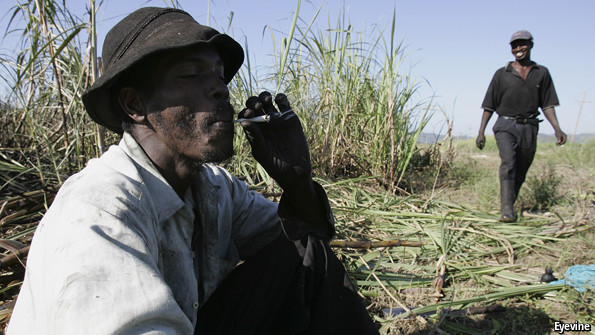
Cuban Cigars PhotoThis is something good to hear: “your product is considered among the best in the world”.

The product in this case is a cigar…Cuban cigars from local cultivation.

The book Go Lean…Caribbean recognizes and honors the core competence of the Caribbean, the “things that we do best in the world”.

The book serves as a roadmap for the introduction and implementation of the Caribbean Union Trade Federation (CU), a technocratic federal government to administer and optimize the economic/security/governing engines of the region’s 30 member-states – including Cuba.

Despite that Cuba has been largely ignored for the last 50 years, due to the 1959 Revolution, expansion of communism, US trade embargo and 50 years of isolation, the legacy of Cuban cigar quality has been preserved. That “best in the world” designation is contemporary. This is evidenced by the adoration being placed on the First Family of Cuban Tobacco as Hirochi Robaina makes his first US visit, as depicted in the foregoing news article. See this article here and the accompanying appendix and VIDEO below:

By: Caribbean News Now Contributor

Title: Cuban cigar legend visits US

OLDE NAPLES, USA — For the first time in history, Hirochi Robaina, head of the legendary Robaina family tobacco plantation, established in 1845 in Cuba, will visit the United States to meet with fellow cigar connoisseurs in Olde   Naples, Florida.

Hirochi, grandson of the late Alejandro Robaina[a], who was known as the most famous Cuban tobacco grower of all time, will be in Olde Naples on Friday and Saturday [July 25 & 26, 2014].

This momentous occasion will give Robaina fans the unique opportunity to spend time with Hirochi to discuss the finer side of cigars, the Robaina family traditions, and his vision for the future.
Caribbean News Now – Online Regional Source  (Posted 07-25.2014) –
http://www.caribbeannewsnow.com/topstory-Cuban-cigar-legend-visits-US-22141.html

See VIDEO here of interview with Hirochi Robaina on his early hit-and-miss with Cigar Critic James Suckling. (Source: https://www.youtube.com/watch?v=8MxI_2rgChc):

The Caribbean is the “best in the world” in a number of endeavors; (i.e. the current world record-holder for the 100 meter dash – Usain Bolt – is from Jamaica). Thanks to this Cuban (Robaina) family’s legacy, cigars are also recognized as one of those “best” contributions. The United Nations cultural institutions have even recognized the physical region around the Robaina’s plantation – Vinales Valley in Pinar del Río Province – as a World Heritage Site – one of the listed 21 for the Caribbean region.  These facts are not ignored in the Go Lean…Caribbean book. In fact, Cuba is not ignored at all. This island is the largest population base in the Caribbean, with 11,236,444 people (as of 2010). This Go Lean empowerment effort for the region contemplates all that Cuba has to offer. There are many positives.

There are negatives too.

Go Lean…Caribbean is not a dream; it does not “white-wash” the region with broad strokes. It acknowledges the historicity of Cuba; there is a current trade embargo with the US and there are US$ 6 Billion of unsettled civil judgments against the Cuban government. The book admits that confederating with Cuba into the rest of the region is a “Big Idea” for the Caribbean. This roadmap therefore does the heavy-lifting in a detailed, turn-by-turn plan for reconciling the 55 year-old rift in US-Cuban relations.

This commentary has previously highlighted topics and dimensions of an eventual Cuban integration into the Caribbean brotherhood, as sampled here:

https://goleancaribbean.com/blog/?p=1609 Cuba mulls economy in Parliament session
https://goleancaribbean.com/blog/?p=789 America’s War on the Caribbean
https://goleancaribbean.com/blog/?p=554 Cuban cancer medication registered in 28 countries
https://goleancaribbean.com/blog/?p=436 Cuba Approves New “Law on Foreign Investment”

At the outset, the Go Lean roadmap recognizes the significance of Cuban reconciliation into any Caribbean integration with this statement in the Declaration of Interdependence (Page 12):

xiii.   Whereas the legacy of dissensions in many member-states (for example: Haiti and Cuba) will require a concerted effort to integrate the exile community’s repatriation, the Federation must arrange for Reconciliation Commissions to satiate a demand for justice.

A lot of people (their time, talent and treasuries) fled Cuba over the decades because of their political and ideological differences with the Castro government there. But now, the Castro regime is coming to an end – Raul Castro, the current President, and brother of founding revolutionary Fidel Castro, has announced that he will relinquish power in the year 2017.

What will become of Cuba then?
What of its economy?
What of its production of the “world’s finest” cigars?

It is more than just hope to preserve and elevate Cuba’s agriculture production. This book presents a comprehensive roadmap for doing so. The roadmap encourages the fostering of “genius” in the region, as has been the legacy of the Robaina family. If they have survived these past decades despite the oppressive conditions of Cuba’s revolution and US trade sanctions, imagine how much more they will thrive under a new CU regime.

So the planning must start now. The Caribbean is hereby urged to lean-in to the following community ethos, strategies, tactics, implementations and advocacies to re-boot Cuba; as detailed in the book Go Lean … Caribbean sampled here:

Community   Ethos – Deferred Gratification Page 21
Communimty   Ethos – Economic Systems Influence Individual Choices & Incentives Page 21
Community   Ethos – Lean Operations Page 24
Community   Ethos – Ways to Impact the Future Page 26
Community   Ethos – Ways to Foster Genius Page 27
Community   Ethos – Ways to Manage Reconciliations Page 34
Community   Ethos – Ways to Impact the Greater Good Page 37
Strategic   – Vision – Integrating Region in to a   Single Market Page 45
Strategic   – Core Competence – Specialty Agriculture Page 58
Tactical –   Fostering a Technocracy Page 64
Tactical –   Separation of Powers – Federal Courts – Truth & Reconciliation   Commissions Page 90
Tactical –   Separation of Powers – Department of Agriculture – Licensing / Inspections Page 88
Implementation – Assemble & Create Super-Regional Organs to represent all Caribbean Page 96
Implementation – Ways to Pay for Change Page 101
Implementation – Foreign Policy Initiatives at Start-up Page 102
Implementation – Ways to Deliver Page 109
Implementation – Ways to Benefit from Globalization Page 119
Planning – 10 Big Ideas – Cuba Page 127
Advocacy – Ways to Grow the Economy Page 151
Advocacy – Ways to Preserve Caribbean Heritage Page 218
Advocacy – Ways to Re-boot Cuba Page 236
Advocacy – Ways to Promote World-Heritage-Sites Page 248
Appendix – World Heritage Sites – #21 Cuba’s Vinales Valley & Pinar del Río Province Page 332

The foregoing article addresses the issue of legacy preservation. This subject impacts economics, security and governance. The Go Lean book focuses heavy on these issues, but also on important non-financial issues – cultural identity and image. The Go Lean roadmap addresses the specific cultural issues such as music, sports, art, education, repatriation and heritage. It is unfortunate that most of Cuba’s history has been neutralized since 1959, because this island nation has so much to offer. They have a vibrant past. According to the foregoing article, they have preserved some of that past, right into the present.

The Go Lean roadmap maintains that change is coming to the Caribbean in general and Cuba in particular, so that they will also have a vibrant future.

Cuba será libre! Cuba can … and will become a better place to live, work and play.

Download the book Go Lean … Caribbean – now!

————————————————————————————————————————————

Appendix a: Alejandro Robaina (March 20, 1919 – April 17, 2010)

Robaina, was known as a Cuban tobacco grower; he was born in Alquízar in La Habana Province of Cuba but grew up and lived most of his life in the renowned tobacco-growing Vuelta Abajo district of Pinar del Río Province where his family had been growing tobacco since 1845. He became involved with his family’s tobacco growing business at the age of ten, having smoked his first cigar just shortly before then. He took over the operations of the plantation after the death of his father Maruto Robaina—also an acclaimed tobacco grower—in 1950 and remained an independent grower even after the 1959 Cuban Revolution when plantations were often absorbed into cooperative organizations. In a 2006 interview with Cigar Aficionado magazine, Robaina stated that he spoke with Castro and that he “told Fidel I did not like cooperatives or state farms and that the best way to grow tobacco was through family production. He wanted me to join a cooperative and I told him no.”

The tobacco leaves from Robaina’s plantations are often considered among the best in the world and have been used by high quality cigars brands such as Cohiba and Hoyo de Monterrey. Robaina himself has been dubbed the “Godfather of Cuban tobacco.”

During the 1990s, Robaina was recognized by the Cuban government as the country’s best tobacco grower. In 1997, Vegas Robaina cigar brand was created by the Cuban government-owned company Habanos S.A. to honour Robaina’s accomplishments in the industry, although cigar experts have had a hard time detecting Robaina’s tobacco in the cigar and Robaina himself never provided a definitive answer. Robaina is the only tobacco grower with a Cuban cigar named after himself and has spent several decades travelling the world as Cuba’s unofficial tobacco and cigar ambassador. His travelling subsided as he got older and he received visits at his home and plantation by thousands of cigar enthusiasts and tourists annually.

[Today, a box of 25 of the Vegas Robaina brand cigars can go for between $300 and nearly $500. Hirochi Robaina said his grandfather always said the most important element in growing top tobacco is not the seed or the climate, but the soil. “The land is everything,” he said].

Alejandro Robaina was diagnosed with cancer in 2009 and died on April 17, 2010 in his home on his tobacco plantation near San Luis, Pinar del Río. He handed over the majority of the day-to-day operations of the plantation to his grandson Hirochi several years before his death. – Source: Wikipedia Online Encyclopedia; retrieved July 24, 2014 from: http://en.wikipedia.org/wiki/Alejandro_Robaina

Share this post:
, , ,
[Top]

Miami’s Caribbean Marketplace Re-opens

Go Lean Commentary

Make no mistake: having a warm welcome in a City of Refuge is not as good as being safe and secure at home. Yet, when conditions mandate that one take flight, a warm welcome is greatly appreciated.

According to the foregoing article, the City of Miami now extends a warm welcome … to the Caribbean Diaspora. While Miami profits from this embrace, the benefits for the Caribbean are not so great.

This is the American Immigrant experience, one of eventual celebration, but only after a “long train of abuses”: rejection, anger, protest, bargaining, toleration and eventual acceptance. The experience in Miami today is one of celebration.

The book Go Lean…Caribbean champions the cause of retaining Caribbean citizens in the Caribbean, even inviting the Diaspora back to their homelands. So the idea of celebrating a cultural contribution at a center in a foreign land is a paradox. Yes, we want the positive image, but no, we do not want to encourage more assimilation in the foreign land.

However, the book declares: It is what it is!

The book serves as a roadmap for the introduction and implementation of the Caribbean Union Trade Federation (CU), a technocratic federal government to administer and optimize the economic/security/ governing engines in the homeland of the region’s 30 member-states. The CU strives to elevate Caribbean image at home and abroad. There are many empowerments in the roadmap for the far-flung Diaspora to improve the interaction with the Caribbean community. So the cultural center in the foregoing article is germane to the Go Lean discussion.

The entire article is listed as follows:

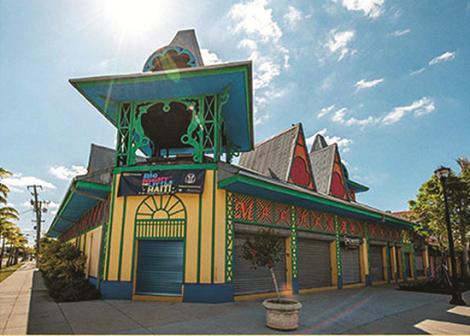
CU Blog - Miami's Caribbean Marketplace Re-opens - Photo 1 Sub-title: The Caribbean Marketplace has become a cultural icon in the Little Haiti community and re-opens with much fanfare….

By: Fabiola Fleuranvil | Noire Miami

The long awaited re-opening of the Caribbean Marketplace (CMP) is back as a cultural marker in the vibrant Little Haiti community. For years, the venue has been a strong figure along Little Haiti’s main corridor and has been easily identified by its bright colors and vibrant activity of vendors as well as Haitian and Caribbean culture. After undergoing a lengthy renovation to transform this cultural gem into a community staple for unique arts and crafts, Caribbean culture, special events, and community events, the highly anticipated reopening positions the Caribbean Marketplace as a vibrant addition to the Little Haiti Cultural Center next door and the burgeoning arts and culture spirit in Little Haiti.

The re-establishment of this Marketplace is a collaborative effort of the City of Miami in partnership with the Miami-Dade Department of Cultural Affairs, the Little Haiti Cultural Complex (LHCC), the Northeast Second Avenue Partnership (NE2P) and District 5 Commissioner Keon Hardemon.

The 9,500-square-foot space includes a refreshment and concession area, gift shops, arts and crafts, retail vendors and space available for private events. The renovations reflect the beautiful diversity of the Caribbean. Low rates, technical and marketing assistance will be provided to all vendors. It is anticipated that new businesses will be created in this cultural hub, resulting in employment opportunities for the local community.

Physical Address for the Caribbean Marketplace: 5925   NE 2nd Ave, Miami (Besides the Little Haiti Cultural Center) Hours: Thursday – Sunday, 11AM – 11PM
Miami Herald Daily Newspaper  (Retrieved 07-16-2014) –
http://www.miami.com/little-haiti039s-caribbean-marketplace-reopens-article

The Miami community is doing even more to embrace the exile populations in its metropolis, (including jurisdictions up to West Palm Beach). They have declared an entire month (June) for celebrating Caribbean communities; the term “month” is a loose definition, it starts in the Spring and forwards deep into the Summer. The following is a sample of events planned for this year (2014).

Caribbean-American Heritage “Month” events around South Florida:

CU Blog - Miami's Caribbean Marketplace Re-opens - Photo 2

3rd Annual Colors of the Caribbean

Saturday, June 14, 4PM – 11PM – Hollywood Arts Park – Hollywood Blvd & US1

What do you get when you blend the diverse, authentic ingredients of the Caribbean? You get a Caribbean inspired day of food, arts and culture, entertainment and irie vibes. Colors of the Caribbean features: Junkanoo procession, Moko Jumbies (Stilt walkers), Steelpan music, and live performances by Wayne Wonder (Jamaica), Midnite (Virgin Islands), Kevin Lyttle (St Vincent), Harmoniq (Haiti), music by DJ Majestic (DC/Trinidad & Tobago), and more.

AllSpice: Flavors of the Caribbean

Friday, June 20, 6PM – 10PM – Borland Center, 4885PGABlvd,Palm BeachGardens

The Caribbean Democratic Club of Palm Beach County presents a Taste of the Caribbean in celebration of Caribbean American Month.

Caribbean Style Week

June 23-29 – Westfield Mall Broward, 8000 West Broward Blvd, Plantation

The Caribbean American Heritage Foundation hosts a week-long showcase featuring both popular and upcoming Caribbean fashion designers and brands. Fashion pieces will be available for purchase during the fashion expo.

Caribbean Heritage Month Travel Experience/Travel Expo

June 28-29 – Westfield Mall Broward, 8000 West Broward Blvd, Plantation

The Caribbean Travel Expo celebrates and promotes each individual as a destination for your next vacation. The expo experience will also showcase live music, cultural performances, and special surprise giveaways over the weekend.

Caribbean: Crossroads of the World Exhibit

April 18 – Aug 17 – PerezArt MuseumMiami (PAMM), 1103 Biscayne Blvd, Miami

Highlighting over two centuries of rarely seen works — from paintings and sculptures to prints, photographs, installations, films, and videos — dating from the Haitian Revolution to the present, this exhibition advances our understanding of the Caribbean and its artistic heritage and contemporary practices.
http://www.miami.com/caribbean-american-heritage-month-events-around-south-florida-article)

The Go Lean…Caribbean clearly recognizes the historicity of Cuban and Afro-Caribbean (Haitian, Jamaican, Dominican, Bahamian, etc) exiles in Miami. They went through the “long train of abuses”. But today, their communities dominate the culture of South Florida, resulting in a distinctive character that has made Miami unique as a travel/tourist destination; see VIDEO below. The expression “take my talents to South Beach” now resonates in American society.

This commentary previously featured subjects related to the Caribbean Diaspora in South Florida. The following here is a sample:

https://goleancaribbean.com/blog/?p=1433 Caribbean loses more than 70 percent of tertiary educated to brain drain
https://goleancaribbean.com/blog/?p=1148 Sports Bubble – Franchise values in basketball
https://goleancaribbean.com/blog/?p=689 eMerge conference aims to jump-start Miami   tech hub
https://goleancaribbean.com/blog/?p=235 Tourism’s changing profile

At the outset, the Go Lean roadmap recognizes the value and significance of Cuban and Haitian exile communities in the pantheon of Caribbean life. Any serious push for Caribbean integration must consider Diaspora communities, like the Cuban/Haitian exiles in Miami. This intent was pronounced early in the book with these statements in the Declaration of Interdependence (Pages 12 & 13):

xiii.      Whereas the legacy of dissensions in many member-states (for example: Haiti and Cuba) will require a concerted effort to integrate the exile community’s repatriation, the Federation must arrange for Reconciliation Commissions to satiate a demand for justice.

xix.      Whereas our legacy in recent times is one of societal abandonment, it is imperative that incentives and encouragement be put in place to first dissuade the human flight, and then entice and welcome the return of our Diaspora back to our shores. This repatriation should be effected with the appropriate guards so as not to imperil the lives and securities of the repatriated citizens or the communities they inhabit. The right of repatriation is to be extended to any natural born citizens despite any previous naturalization to foreign sovereignties.

xx.      Whereas the results of our decades of migration created a vibrant Diaspora in foreign lands, the Federation must organize interactions with this population into structured markets. Thus allowing foreign consumption of domestic products, services and media, which is a positive trade impact. These economic activities must not be exploited by others’ profiteering but rather harnessed by Federation resources for efficient repatriations.

It was commonly accepted that Cuban exiles and other Caribbean Diaspora were sitting, waiting in Miami for change in their homelands; then they would return to claim their earned positions of respect. Along the way, the Survive-then-Thrive strategy was supplanted with a new Thrive-in-America strategy – credited to the next generation’s assimilation of the American Dream and the long duration of Caribbean dysfunctions, i.e. the Castros still reign after 55 years. Miami subsequently emerged as the trading post for the Caribbean and all of Latin America. The Caribbean is now hereby urged to lean-in to the community ethos, strategies, tactics, implementations and advocacies to finally re-boot Caribbean society; as detailed in the book Go Lean … Caribbean sampled here:

Community   Ethos – Economic Systems Influence Individual Choices & Incentives Page 21
Community   Ethos – Voluntary Trade Creates Wealth Page 21
Community   Ethos – Anti-Bullying and Mitigation Page 23
Community   Ethos – Minority Equalization Page 24
Community   Ethos – Lean Operations Page 24
Community   Ethos – Return on Investments Page 24
Community   Ethos – Ways to Impact Turn-Arounds Page 33
Community   Ethos – Ways to Manage Reconciliations Page 34
Community   Ethos – Ways to Impact the Greater Good Page 37
Strategic – Vision – Integrating Region in to a Single Market Page 45
Strategic – Agents of Change – Globalization Page 57
Tactical – Fostering a Technocrary Page 64
Tactical – Separation of Powers – State Department – Culture Administration Page 81
Tactical – Separation of Powers – Federal Courts – Truth & Reconciliation Commissions Page 90
Implementation – Ways to Pay for Change Page 101
Implementation – Foreign Policy Initiatives at Start-up Page 102
Implementation – Ways to Deliver Page 109
Implementation – Trade Mission Objectives Page 117
Implementation – Reasons to Repatriate Page 118
Implementation – Ways to Benefit from Globalization Page 119
Planning – 10 Big Ideas – Cuba/Haiti Page 127
Planning – Ways to Make the Caribbean Better Page 131
Advocacy – Ways to Grow the Economy Page 151
Advocacy – Ways to Impact the Diaspora Page 217
Advocacy – Ways to Preserve Caribbean Heritage Page 218
Advocacy – Ways to Improve the Arts Page 230
Advocacy – Ways to Promote Music Page 231
Advocacy – Ways to Re-boot Cuba Page 236
Advocacy – Ways to Re-boot Haiti Page 238

The foregoing article addresses the story of the Caribbean Marketplace facility to promote Caribbean culture in the South Florida market, and even provide some economic benefits (trade, job, import/export options). The Go Lean book focuses on these economic issues to the Nth degree, and also addresses the important issues regarding Caribbean societal elevation: music, sports, art, education, repatriation and heritage. This cultural center in the foregoing article aligns with the Go Lean roadmap.

Just like Miami grew, and prospered so much over the last 50 years, with help from our people, the Caribbean can also be a better place to live, work and play. This is a new day for the Caribbean!

It’s time now for change; not just change for change sake, but the elevations that were identified, qualified and proposed in the book Go Lean…Caribbean. It’s time to lean-in. Then we can move from celebrating the Diaspora in a foreign land to celebrating their return to the Caribbean, the best address in the world.

Download the book Go Lean…Caribbean now!

Share this post:
, , , , , , ,
[Top]

Blue is the New Green

Go Lean Commentary

First we said to “Go Green!”

Now we are saying to “Go Blue”, because Blue is the new Green. While ‘Green’ is indicative for all-things-environmental, ‘Blue’ refers specifically to Water.

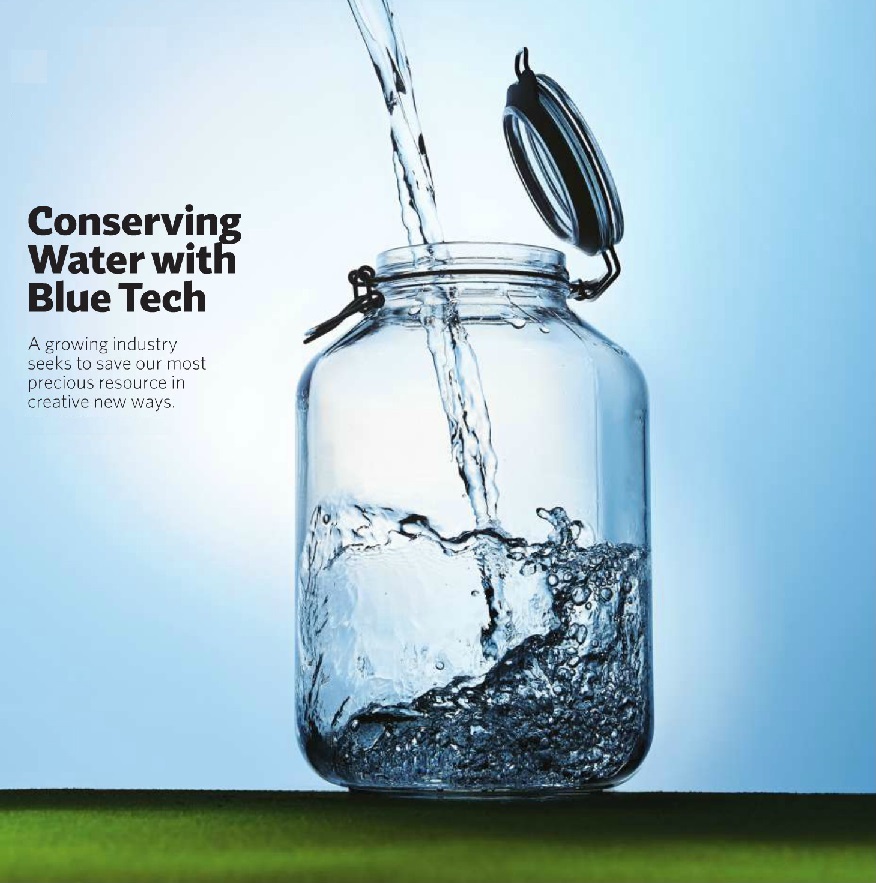
There is money in Green; there is money in Blue too! The references to Blue waters apply equally to fCU Blog - Blue is the New Green - Photoresh water and seawater. When we consider all the waterscapes in the Caribbean, (1,063,000 square-miles of the Caribbean seas and thousands of islands in the archipelago – The Bahamas has over 700 alone), we realize how much opportunity exists.

This is the time to be proactive; and to facilitate the intersection of preparation and opportunity. (This is one definition of luck. This is how to create one’s own luck).

Considering all the opportunities, how can the Caribbean prepare its economic engines to harvest all the fruitage from these Blue market conditions? This is the theme of the book Go Lean…Caribbean, that the world is struggling to contend with monumental changes related to technology, globalization and most importantly Climate Change.

Early in the book, the pressing need to be aware and to adapt to Climate Change is pronounced in the Declaration of Interdependence (Page 11), with these words:

i. Whereas the earth’s climate has undeniably changed resulting in more severe tropical weather storms, it is necessary to prepare to insure the safety and security of life, property and systems of commerce in our geographical region. As nature recognizes no borders in the target of its destruction, we also must set aside border considerations in the preparation and response to these weather challenges.

The Caribbean needs Blue Technology solutions to sustain our own lives, liberties and systems of commerce. But the Go Lean book posits that we cannot just consume, we must also create, produce, and foster. So we must foster industrial solutions for the rest of the world. This subsequent magazine-article-summary highlights the progression in this new Blue Technology industry-space in these areas:
Sourcing
Treating
Storing
Conserving
Keeping it Clean
————-

VIDEO – The Blue Economy – https://youtu.be/7NqhVbCtqNk

Published on Jul 3, 2012 – The oceans have long been the centre of economic activity. People have been living near the sea, feeding themselves by fishing and making their livelihoods on the coast for thousands of years. The challenge today is harnessing the potential of this Blue Economy.

————-

Excerpts of Article by: Adam Bluestein

Forget for a moment about carbon emissions. The world is facing a more immediate crisis — it is running out of clean water. The prospect of widespread shortages is creating a new kind of new economy. Featured here are a number of entrepreneurial firms who are ahead of the curve, finding opportunity in the largest emerging market the world has seen in some time.

Analysts estimate that the world will need to invest as much as $1 trillion a year on [water] conservation technologies, infrastructure, and sanitation to meet demand through 2030. As in the past, most of the large capital-intensive projects will be done by the usual multinational corporations and engineering firms. But the extent of the problem and the demand for new technology to address it present — pardon the metaphor — a kind of perfect storm for entrepreneurs. “Small companies with intellectual property, significant know-how, and a product that’s scalable can stake out a niche below the radar of the large companies,” says Laura Shenkar, a water expert and consultant in San Francisco. “This is an opportunity that will generate Googles.”

There are a number of business roles that emerge from seizing the opportunities to develop solutions to water challenges:

Sourcing – Increasing the Supply

The well-documented experience around the world is that poverty comes from inadequate access to fundamental resources, like water. To assuage this threat, there are solutions in place now to deliver added fresh water by many means: irrigation canals, pipelines and tanker trucks/tanker ships (i.e. tanker ships between France and Algeria; Turkey and Israel). An emerging solution operated in the Middle East and India is small-scale barge-based desalination systems. These systems play an important role in increasing the supply of freshwater, especially after a natural disaster (storm or earthquake) when normal infrastructure may be crippled.

In general, desalination is an expensive option. Desalination, of course, is well-and-good for communities close to the ocean/seas and that can afford relatively expensive water. For everyone else, exploring inland pumping solutions is essential. An innovation comes from Deerfield Beach, Florida-based company Moving Water Industries. They produce SolarPedalFlo, a solar and pedal-powered pump that can singly provide filtered and chlorinated water for thousands of people every day.

Treating It

As the gold standard of disinfection for more than 100 years, chlorine kills bacteria, viruses, and other pathogens, and it has played a key role in eliminating diseases such as typhoid and cholera in the U.S. Chlorine’s benefits in water are twofold: it not only disinfects but also remains at a residual level in the water, preventing reinfection by viruses or bacteria during transport, storage, and distribution.

Water treatment is just a basic fact. While moving water is very power intensive, a huge energy user that it doesn’t make sense to continue to treat it one place, pump it, live with “losses and degradation”, and move it someplace else to dispose of it. This is depicted with a swimming pool. One would not fill it up and dump it out every time it is used. This defies logic.

But safety and security issues abound with Chlorine solutions, as it is a hazardous material to transport. An emerging solution is a compact generator, by MIOX, an Albuquerque, New Mexico-based outfit founded in 1994. Their equipment allows water treatment facilities to produce liquid chlorine on site. This solution uses only water, salt, and electricity, thus eliminating the need to store or transport hazardous chemicals.

In a developing country, the ability to treat one’s own water at home can be a matter of life and death. Those with limited means often purify water by boiling it or mixing it with iodine tablets. Those who can afford it use home water-purification systems. One of the companies capitalizing on demand for such systems is Eureka Forbes, India’s largest manufacturer of home water-purification systems. They have profited from their effort to make home water-purification systems much more affordable.

Storing It

It’s nice to imagine that water flows magically from a pristine reservoir or spring to your home faucet, but that’s simply not the case. As we have seen, it is disinfected and pumped along through a sprawling network of water mains and pipes. The U.S. water network (including Puerto Rico and the US Virgin Islands), much of it built in the 1950s and ’60s, will require some $277 billion worth of construction, upgrades, and replacement in the next 20 years, according to EPA (Environmental Protection Agency) estimates. With scarcity driving water agencies to fix leaks — by some estimates, about six billion gallons per day in the U.S. are lost through literal cracks in the system — companies making high-tech metering and leak-detection technologies are doing well for themselves.

Water Storage Tanks – After being treated, drinking water can spend as long as 100 days in the distribution system before reaching an end user. That’s not necessarily a bad thing, but when water sits in a tank too long, it begins to stagnate and settle into layers of different temperatures, as in a lake. In warmer layers at the top, the disinfectants used in treatment are burned off, which increases the potential for contamination. Even when the water is being used, poor tank design can create an uneven distribution of disinfectant and encourage uneven aging, allowing water at the bottom of a tank to be replenished more quickly than water at the top.

The traditional solution is to dump more disinfecting chemicals into the holding system, leading to the formation of chemical byproducts. Another solution is to use energy-intensive “operational cycling” – basically pumping moving water around from tank to tank.

An energy-efficient, inexpensive, and elegant solution is called the Lily Impeller (by San Rafael, California-based PAX Water Technologies, founded in 2006). It’s a spiral propeller that’s installed on the bottom of a storage tank; it can mix up to seven million gallons of water while drawing the same amount of energy as three 100-watt light bulbs.

Another solution is a floating solar-powered impeller, which could improve surface water to be treated for drinking or even provide basic wastewater remediation.

Conserving It

A basic example of water conservation is a water recycling system that would take used water from the bathroom sink, disinfect it, and reroute it to the toilet tank for flushing.

One option: The AQUS System uses standard plumbing parts and can be installed by a professional plumber in about two hours. Priced at $395 (before rebates), it can save up to 6,000 gallons of water a year in a two-person household.

Another option: water-free urinals – biodegradable liquid with a specific gravity lighter than water.

Utilities have found that offering customers rebates for things such as low-flow showerheads and toilets and efficient front-loading clothes washers has been a reliable and cost-effective way to curb water use, and the cost of energy to supply and treat water.

A final option: WeatherTRAK irrigation controllers – a (software-based) system that uses live weather data, rather than preset timers, to tell sprinklers when and how much to water crops, lawns, and commercial landscapes.

Keeping It Clean

Though drought is one of the more obvious consequences of Climate Change, water experts are equally worried about the problems caused by extreme storms and flooding that many, if not most, scientists believe are another consequence of global warming. Storm-water runoff has become a concern for its effect on surface and ground water, as well as the additional burden that it puts on already creaky wastewater treatment facilities.

One solution: Scottsdale, Arizona-based AbTech Industries, first used their Smart Sponges — made from a synthetic polymer — in 1997 to clean up oil spills from tankers at sea. In 1999, when they turned their attention to storm water, most regulation was focused on runoff from new construction. But billions of gallons of rain that come down on the roads and go into our flood-control devices could be contaminated on the way through. This company molds their sponge material into different shapes that would fit into street-level storm drains and catch basins, soaking up oil and debris and letting clean water pass through. They also developed a way to coat the sponges with an antimicrobial agent so they would disinfect water as well. Their next iteration, add the ability to capture heavy metals, herbicides, and pesticides.

Another solution for eliminating challenging pollutants from water, compared to the traditional approach using mechanical filters or chemicals, researchers have experimented with using genetically modified organisms to degrade water pollutants. This new technological solution, being commercialized by companies like Overland Park, Kansas-based Microvi Biotech (founded in 2004), is literally eating these pollutants up. Their company verbiage explains: “The idea of using biotechnology — using concepts from nature — to clean up water has proven very appealing”.

—-

Adam Bluestein is a Burlington, Vermont-based freelance writer.
INC Magazine for Entrepreneurs (Article posted November 1 2008; retrieved 07/07/2014) – http://www.inc.com/magazine/20081101/blue-is-the-new-green.html

The topics in this commentary are relevant and familiar. Prudent water management is vital for Caribbean life, our public safety and commerce systems. Tourism continues to be the primary economic driver in the region. While the motivation behind the Caribbean “Lean” is to diversify the economy, prudence dictates that we do not undermine current successful tourism engines. Since tourists come to the region for sand, surf and sun, there must be a “quality” sentinel for Caribbean water works, waterscapes and water eco-systems.

This point is detailed in the book Go Lean…Caribbean, a roadmap for the introduction and implementation of the technocratic Caribbean Union Trade Federation (CU). This roadmap has 3 prime directives:

  • Optimization of the economic engines in order to grow the regional economy.
  • Establishment of a security apparatus to protect the homeland and related economic engines.
  • Improve Caribbean governance to support these engines.

This Go Lean commentary delved into related subjects in these previous blogs:

https://goleancaribbean.com/blog/?p=1516 Floods in Minnesota, Drought in California – Why Not Share?
https://goleancaribbean.com/blog/?p=915 Go ‘Green’… Caribbean

Water is not cheap. It is only free when it rains. The effort to source, treat, store, conserve and keep water clean takes a big investment on the part of community and governmental institutions. While we commend and applaud the regional executions thus far, the Go Lean book recognizing that there is more heavy-lifting to do. Help is on the way! The Go Lean roadmap details a series of community ethos, strategies, tactics, implementations and advocacies to foster the progress in the wide field of Blue technology. The following list applies:

Community Ethos – Lean Operations Page 24
Community Ethos – Return on Investments Page 24
Community Ethos – Cooperatives Page 25
Community Ethos – Non-Government Organizations Page 25
Community Ethos – Ways to Impact the Future Page 26
Community Ethos – Impact the Greater Good Page 37
Anecdote – Pipeline Transport – Strategies, Tactics &   Implementations Page 43
Strategy – Build and foster local economic engines Page 45
Tactical – Fostering a Technocracy Page 82
Tactical – Separation of Powers – Public Works Page 82
Anecdote – “Lean” Environmental Quality Process Page 93
Implementation – Ways to Develop Pipeline Industry Page 107
Advocacy – Ways to Impact Public Works Page 175
Advocacy – Ways to Foster Cooperatives Page 176
Advocacy – Ways to Better Manage Natural Resources – Water   Resources Page 182
Advocacy – Ways to   Foster Technology Page 197
Advocacy – Ways to Impact Monopolies Page 202
Advocacy – Ways to Impact   Rural Living – Minimize Irrigation Downsides Page   235
Appendix – Pipeline   Maintenance Robots Page   283

Water needs are undeniable.

Fulfilling those needs is a great target for lean, agile operations, perfect for the CU technocracy. While its “good to be green”, being “blue” is not an option we can choose to ignore, as the Caribbean is mostly made up of islands – surrounded by water.

Go Blue. Go Green. Go Lean.

Now is the time for all of the Caribbean, the people, entrepreneurs, institutions and governments, to lean-in for the optimizations and opportunities described in the book Go Lean … Caribbean.

Download the book Go Lean … Caribbean – now!


Share this post:
, , , , ,
[Top]

St Croix’s Tim Duncan to Return to Spurs For Another Season

Go Lean Commentary

Congratulations Tim Duncan. You deserve your champion’s accolades.

Tim Duncan Photo

This commentary has previously sided with Mr. Duncan’s opponent in the recent NBA Finals. Here below are the previous blogs citing a hope for the Miami Heat’s dominance in the NBA Playoff tournament.

https://goleancaribbean.com/blog/?p=1148 Sports Bubble – Franchise values in basketball
https://goleancaribbean.com/blog/?p=689 eMerge conference aims to jump-start Miami tech hub

But talent recognizes talent!

It is also good news, according to this foregoing news article, that Mr. Duncan will be returning for at least one more season.

By: The Caribbean Journal Staff

Tim Duncan isn’t going anywhere.

The St Croix native, who recently won his fifth NBA championship, will be returning to the San Antonio Spurs for his 18th NBA season.

The team announced Monday that the 38-year-old Duncan had exercised his player option for the 2014-2015 season, putting to rest any notion that he would be retiring.

Duncan helped the Spurs to a dominant 4-1 series win over the Miami Heat in this month’s NBA Finals.

The Christiansted native is one of five players in the history of the NBA to win five championships and five MVPs (either NBA Finals or regular season), along with Michael Jordan, Magic Johnson, Bill Russell and Kareem Abdul-Jabbar.

Duncan leads all active players in career wins, with 898.
Caribbean Journal Online News Source  (Posted 06-23-2014; retrieved 06-26-2014) –
http://www.caribjournal.com/2014/06/23/st-croixs-tim-duncan-to-return-to-spurs-for-another-season/

There is something bigger than sports alone at play here. As the foregoing news article depicts, Mr. Duncan is a member of the Caribbean Diaspora. He is recognized as one of the best in his field of endeavor; perhaps one of the best of all time. This is a claim of the book Go Lean … Caribbean, that sports require a genius qualifier and that genius  ability can be found in abundance in the Caribbean. Mr. Duncan makes us all proud: Christiansted, St. Croix, the US Virgin Islands and all of the Caribbean.

The Go Lean book serves as a roadmap for the introduction and implementation of the Caribbean Union Trade Federation (CU), a technocratic federal government to administer and optimize the economic/security/ governing engines of the region’s 30 member-states. At the outset, the roadmap recognizes the value of sports with these statements in the Declaration of Interdependence (Page 13 & 14):

xxvi.     Whereas the preparation of our labor force can foster opportunities and dictate economic progress for current and future generations, the Federation must ensure that educational and job training opportunities are fully optimized for all residents of all member-states, with no partiality towards any gender or ethnic group. The Federation must recognize and facilitate excellence in many different fields of endeavor, including sciences, languages, arts, music and sports. This responsibility should be executed without incurring the risks of further human flight, as has been the past history.

xxxi.     Whereas sports have been a source of great pride for the Caribbean region, the economic returns from these ventures have not been evenly distributed as in other societies. The Federation must therefore facilitate the eco-systems and vertical industries of sports as a business, recreation, national pastime and even sports tourism – modeling the Olympics.

The Go Lean roadmap calls for the market organizations to better explore the economic opportunities for sports. Sports can be big business! But even when money is not involved, other benefits abound. As such the CU will enhance the engines to elevate sports at all levels: amateur, intercollegiate and professional.

The other issue related to Tim Duncan is that of “image”. Mr. Duncan could be a proud ambassador of Caribbean character. Personally, he does not advocate any political or economic agenda, so others must do that for him. As a public figure, his story is free to relate to the listening world of how impactful a Caribbean heritage can be.

The subjects of sports and Caribbean image have been related in many previous Go Lean blogs; highlighted here in the following samples:

a. https://goleancaribbean.com/blog/?p=1446 Caribbean   Players in the 2014 World Cup
b. https://goleancaribbean.com/blog/?p=1341 College   World Series Time
c. https://goleancaribbean.com/blog/?p=1214 The Art &   Science of Temporary   Stadiums – No White Elephants
d. https://goleancaribbean.com/blog/?p=1148 Sports Bubble –   Franchise values in   basketball
e. https://goleancaribbean.com/blog/?p=1020 Sports Revolutionary: Advocate Jeffrey Webb
f. https://goleancaribbean.com/blog/?p=857 Caribbean Image: Dreadlocks
g. https://goleancaribbean.com/blog/?p=498 Book Review: ‘The Sports Gene’
h. https://goleancaribbean.com/blog/?p=334 Bahamians Make Presence Felt In Libyan   League
i. https://goleancaribbean.com/blog/?p=318 Collegiate Sports in the Caribbean
j. https://goleancaribbean.com/blog/?p=60 Could the Caribbean Host the Olympic Games?

The book Go Lean…Caribbean has an economic empowerment agenda, but there are still huge benefits for the region related to sports. The strategy is to consolidate the region’s 30 member-states / 4 languages into a Single Market of 42 million people – leverage for a viable sports landscape. The CU facilitation of applicable venues (stadia, arenas, fields, temporary structures) on CU-owned fairgrounds plus the negotiations for broadcast/streaming rights/licenses will elevate the art, science and genius of sports as an enterprise in the region.

Now is the time for all of the Caribbean to lean-in to the following community ethos, strategies, tactics, implementations and advocacies detailed in the book Go Lean … Caribbean to re-boot the delivery of the regional solutions to elevate the Caribbean region through sports:

Community Ethos – People Respond to Incentives in Predictable Ways Page 21
Community Ethos – Return on Investments Page 24
Community Ethos – Ways to Foster Genius Page 27
Community Ethos – Ways to Improve Negotiations Page 32
Community Ethos – Ways to Promote Happiness Page 36
Strategic – Vision – Integrating Region in to a Single Market Page 45
Strategic – Staffing – Sporting Events at Fairgrounds Page 55
Tactical – Fostering a Technocracy Page 64
Tactical – Separation of Powers – Sports & Culture Administration Page 81
Tactical – Separation of Powers – Fairgrounds Administration Page 83
Implementation – Steps to Implement Self-Governing Entities (Fairgrounds) Page 105
Implementation – Ways to Deliver Page 109
Planning – Ways to Make the Caribbean Better Page 131
Advocacy – Ways to Grow the Economy Page 151
Advocacy – Ways to Improve Local Government – Parks & Recreation Page 169
Advocacy – Ways to Impact Events Page 191
Advocacy – Ways to Promote Fairgrounds Page 192
Advocacy – Ways to Foster Technology Expositions Page 197
Advocacy – Ways to Improve Sports Page 229
Advocacy – Ways to Impact Urban Living – Sports Leagues Page 234

The foregoing article celebrates a Caribbean Champion. But there is more to celebrate with Caribbean life, culture and the homeland. With the Go Lean executions, we can all be champions, by making the Caribbean a better place to live, work and play.

Download the book Go Lean…Caribbean now!


Share this post:
, , , ,
[Top]

COB Master Plan 2025 – Reach for the Lamp-Post

Go Lean Commentary

“Keep your feet on the ground and keep reaching for the stars” – Casey Kasem (1932 – 2014).

The world lost another icon of Rock-n-Roll last week with news of the passing of renowned DJ and Media Host Casey Kasem. He was well known for his closing salutation quoted above.

“Reaching for the stars” should be more than a radio catch phrase; it should be a community ethos. This is noticeably missing in the 2025 Master Plan for the University of the Bahamas. They appear to be striving for the cutting edge of 1985; they are not reaching for the stars, they are reaching for the lamp-post.

Title: College of The Bahamas Master Plan 2014-2024
The College’s plan to accommodate growth in programs and to improve campus life through the creation of a more beautiful and cohesive campus.

“Twenty-five percent growth in student enrollment is what the Master Plan for the University of the Bahamas seeks to accommodate”. Visit the link… to view this newly produced infomercial on the blueprint for the physical growth that will undergird the impending University.
Vimeo – Video Sharing Site (Retrieved 06/23/2014) – http://vimeo.com/98270213

College of The Bahamas Master Plan 2014-2024 from The College of The Bahamas on Vimeo.

Make no mistake; it is a good thing that the College of the Bahamas (COB) is graduating to the University of the Bahamas (in 2015). It is also incontrovertible that COB is inadequate in meeting tertiary education needs of Bahamians, not to think of the rest of the world. Don’t agree? Consider how many Bahamian students matriculate abroad; now consider how many foreign students matriculate at COB.

Debate over!

This is more than just an academic discussion, as the subject of Caribbean students abandoning their homeland for foreign shores is a motivator for the book Go Lean…Caribbean. The book serves as a roadmap for the introduction and implementation of the technocratic Caribbean Union Trade Federation (CU). This effort mitigates published reports that the Caribbean loses over 70% of tertiary educated citizens due to brain drain; (https://goleancaribbean.com/blog/?p=1433).

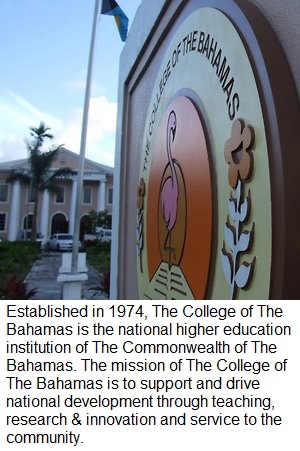
COB PhotoSo as the sole tertiary education institution in the Bahamas, it would be expected that a Master Plan would “dream a little dream” and strive to counter the negative realities of students matriculating abroad. Instead COB delivered a plan that only inches forward – only reaching for the lamp-post. The inadequacy in the Master Plan highlights the need for the Go Lean roadmap for elevating Caribbean society. The CU, using cutting edge delivery of best practices, will employ strategies, tactics and implementations to impact its prime directives; identified with the following 3 statements:

  • Optimization of the economic engines in order to grow the regional economy to $800 Billion & create 2.2 million new jobs.
  • Establishment of a security apparatus to protect the resultant economic engines.
  • Improvement of Caribbean governance to support these engines.

The Go Lean book posits that the Caribbean is in crisis, with the debilitating brain drain/societal abandonment rate, but that this crisis can be a useful because a “crisis is a terrible thing to waste”. Therefore the roadmap seeks to change the entire eco-system of Caribbean education and learning solutions. This vision is defined early in the book (Page 13 & 14) in the following pronouncements in the Declaration of Interdependence:

xix.   Whereas our legacy in recent times is one of societal abandonment, it is imperative that incentives and encouragement be put in place to first dissuade the human flight, and then entice and welcome the return of our Diaspora back to our shores…

xxi.   Whereas the preparation of our labor force can foster opportunities and dictate economic progress for current and future generations, the Federation must ensure that educational and job training opportunities are fully optimized for all residents of all member-states, with no partiality towards any gender or ethnic group. The Federation must recognize and facilitate excellence in many different fields of endeavor, including sciences, languages, arts, music and sports. This responsibility should be executed without incurring the risks of further human flight, as has been the past history.

xxvii.   Whereas the region has endured a spectator status during the Industrial Revolution, we cannot stand on the sidelines of this new economy, the Information Revolution. Rather, the Federation must embrace all the tenets of Internet Communications Technology (ICT) to serve as an equalizing element in competition with the rest of the world. The Federation must bridge the digital divide and promote the community ethos that research/development is valuable and must be promoted and incentivized for adoption.

So what (also how/when) should be featured in a Master Plan/roadmap for effectuating change in the tertiary education landscape for the Bahamas and the rest of the Caribbean?

The answer is not as simple as A-B-C-1-2-3. The answer requires heavy-lifting, a long reach, and a consideration of the economic realities of the region. Thus the Casey Kasem axiom is so applicable:

“Keep your feet on the ground and keep reaching for the stars”.

“Reaching for the stars” would include fostering Research & Development (R&D) on our college campuses. Also, the deployment of cutting-edge technologies to avail the benefits of e-Learning would deter the trend (and necessity) of young students studying abroad; thus minimizing the temptations to remain abroad or to subsequently emigrate. This would mean staying grounded!

The Go Lean book details a lot more, a series of assessments, community ethos, strategies, tactics, implementations and advocacies to foster the elevation of college education in the Caribbean region:

Community Ethos – Economic Systems Influence Choices & Incentives Page 21
Community Ethos – People Respond to Incentives Page 21
Community Ethos – Consequences of Choices Lie in the Future Page 21
Community Ethos – Return on Investments Page 24
Community Ethos – Ways to Impact the Future Page 26
Community Ethos – Ways to Foster Genius Page 27
Community Ethos – Ways to Impact Research & Development Page 30
Community Ethos – Ways to Bridge the Digital Divide Page 31
Community Ethos – Ways to Impact the Greater Good Page 37
Anecdote – Valedictorian Now Diaspora Member Page 38
Strategy – Vision – Realistic, Achievable, Demanding, & Inspirational Goal Page 45
Strategy – Mission – Local Education to Compete with the Best in the World Page 46
Tactical – Separation of Powers – Education Department – University Admin Page 85
Tactical – Separation of Powers – Labor Department – On-the-Job Training Page 89
Implementation – Ways to Pay for Change Page 101
Implementation – Steps to Implement Campuses   as Self-Governing Entities Page 105
Implementation – Ways to Deliver Page 109
Advocacy – Ways to Grow the Economy Page 151
Advocacy – Ways to Create Jobs Page 152
Advocacy – Ways to Improve Education Page 159
Advocacy – Ways to Impact Student Loans Page 160
Advocacy – Ways to Improve Libraries Page 187
Advocacy – Ways to Foster Technology Page 197
Advocacy – Ways to Impact Youth Page 227
Appendix – Education & Economic Growth Page 258
Appendix – Measuring Education Page 266

Now is the time for all of the Caribbean, the people and governing institutions, to lean-in for the empowerments described in the book Go Lean … Caribbean. This is a big deal for the region. This book is not just a Master Plan; it is roadmap with turn-by-turn directions of how to get from Point A, where we can only hope to dream of reaching the lamp-post, to Point B, where we can finally dream about reaching the stars.

The Bahamas in particular, and the Caribbean region as a whole needs the deliveries of Go Lean … Caribbean. Otherwise, we have no hope to incite/retain our young people to work towards promoting a better future for the Caribbean, and making it a better place to live, work, learn and play.

Thank you Casey Kasem, for reminding us, (with song, great-story-telling and a heartfelt out-reach), what it means to keep our feet on the ground while continuing to reach for the stars. Rest in Peace!

Download the book Go Lean … Caribbean – now!

Share this post:
, , , , , ,
[Top]

Caribbean loses more than 70 percent of tertiary educated to brain drain

Go Lean Commentary

The chart in the foregoing news article is more than troubling, it is just plain bad.

According to the analysis by the Inter-American Development Bank, the people in the “Caribbean 6” countries, including the Bahamas, Barbados, Guyana, Jamaica, Suriname, and Trinidad & Tobago have wasted money on educating their populations, especially tertiary (college) education.

“Say it aint so…”

Brain Drain 70 percent Chart

Title: IDB: T&T lost more than 70 per cent of tertiary educated from brain drain
T&T has lost more than 70 per cent of its tertiary level educated labour force through emigration to developed countries, according to an Inter-American Development Bank (IDB) report released Tuesday.

The report looks at events up to 2012.

The T&T labour force, according to statistics from the Central Statistical Office is made up of 635,100 persons as at the first quarter of 2013.

The report entitled, Is there a Caribbean Sclerosis? Stagnating Economic Growth in the Caribbean, said 79 per cent of the labour force in T&T who received tertiary level education up to 2011 migrated to member countries of the Organisation for Economic Co-operation and Development (OECD).

“The OECD has been called a think tank, monitoring agency, rich man’s club and un-academic university. Whatever you want to call it, the OECD has a lot of power. Over the years, it has dealt with a range of issues, including raising the standard of living in member countries, contributing to the expansion of world trade and promoting economic stability,” according to Investopedia. The term “OECD countries” is often used loosely in economics as a euphemism for developed countries.

“Euro sclerosis” was a term coined in the 1970s to describe stagnant integration, high unemployment, and slow job creation in Europe relative to the United States, authors of the report explained. Since then, the term has been used more generally to refer to overall economic stagnation, they said.
The Guardian – Trinidad Daily Newspaper (Retrieved 06/19/2014) –
http://m.guardian.co.tt/business-guardian/2014-06-19/idb-tt-lost-more-70-cent-tertiary-educated-brain-drain

There is a similar concern expressed in the book Go Lean…Caribbean that education in the Caribbean needs to undergo a total re-boot, to be re-evaluated/re-organized, since the region has for far too long “fattened frogs for snakes”. The book further charges that this issue is not just in the CariCom states as the Caribbean 6 group represents, but also in the Dutch, French, and Spanish Caribbean. This problem is a real crisis for the Caribbean.

Alas, the book posits that a “crisis is a terrible thing to waste” and thereafter proposes solutions and mitigations to effectuate change in the Caribbean. The book Go Lean…Caribbean serves as a roadmap for the introduction and implementation of the technocratic Caribbean Union Trade Federation (CU).

The roadmap is for the elevation of Caribbean society. The prime directives of the CU are presented as the following 3 statements:

  • Optimization of the economic engines in order to grow the regional economy to $800 Billion & create 2.2 million new jobs.
  • Establishment of a security apparatus to protect the resultant economic engines.
  • Improve Caribbean governance to support these engines.

The book posits that all of the Caribbean is in crisis with this brain drain problem. This point is stressed early in the book (Page 13) in the following pronouncements in the Declaration of Interdependence:

xix.   Whereas our legacy in recent times is one of societal abandonment, it is imperative that incentives and encouragement be put in place to first dissuade the human flight, and then entice and welcome the return of our Diaspora back to our shores. This repatriation should be effected with the appropriate guards so as not to imperil the lives and securities of the repatriated citizens or the communities they inhabit. The right of repatriation is to be extended to any natural born citizens despite any previous naturalization to foreign sovereignties.

xx.   Whereas the results of our decades of migration created a vibrant Diaspora in foreign lands, the Federation must organize interactions with this population into structured markets. Thus allowing foreign consumption of domestic products, services and media, which is a positive trade impact. These economic activities must not be exploited by others’ profiteering but rather harnessed by Federation resources for efficient repatriations.

This blog obviously relates to the now vibrant Caribbean Diaspora, the causes of emigration, and the continuous interaction with the “exile community”. These subjects have previously been covered in these Go Lean blogs, highlighted here in the following samples:

a. https://goleancaribbean.com/blog/?p=1296 Remittances to Caribbean Increased By 3 Percent in 2013
b. https://goleancaribbean.com/blog/?p=1256 Is a Traditional 4-year Degree a Terrible Investment?
c. https://goleancaribbean.com/blog/?p=1112 Zuckerberg’s  $100 Million for Newark’s Schools was a waste
d. https://goleancaribbean.com/blog/?p=607 Antigua Completes Construction of New National Library
e. https://goleancaribbean.com/blog/?p=599 Ailing Puerto Rico open to radical economic fixes
f. https://goleancaribbean.com/blog/?p=459 CXC and UK publisher hosting CCSLC workshops in Barbados
g. https://goleancaribbean.com/blog/?p=353 Book Review: ‘Wrong – Nine Economic Policy Disasters and What We Can Learn…’ – Example of Irish Famine leading to Emigration

The foregoing news article focuses on the tertiary emigration rates for Trinidad & Tobago, but the accompanying chart/photo demonstrates that many Caribbean countries have this same problem: 89% in Guyana, 61% in the Bahamas. These numbers validate the crisis.

How did this crisis come about? What are the past/present experiences and what are the future prospects of the Caribbean Diaspora? An examination of this subject is most effective using an analogy of a road journey. A review of the past helps us to better understand the roadmap. The road began at some point in the past and continued up to today. Where will the road end?

The Go Lean book posits that the Caribbean is the greatest address in the world. So why would people want to leave? The book answers by relating “push” and “pull” factors. Push, in that the dire economic conditions in the Caribbean homeland, plus governmental failures in response, caused responsible people to look elsewhere to fulfill their responsibilities and aspirations. On the other hand, pull factors came from the geo-political circumstances in the world. For the Anglophone Caribbean, the pull factors were tied to their British colonial status. At the end of the second World War, British labor markets were devastated and so the invitation went out to the Caribbean colonies to come to England for gainful employment opportunities. The 1948 British Nationality Act gave British citizenship to all people living in Commonwealth countries, and full rights of entry and settlement in Britain. Many West Indians were attracted by these better prospects in what was often referred to as the mother country. The ship MV Empire Windrush brought the first group of 492 immigrants to Tilbury near London on 22 June 1948. The Windrush was en route from Australia to England via the Atlantic, docking in Kingston, Jamaica. An advertisement had appeared in a Jamaican newspaper offering cheap transport on the ship for anybody who wanted to come and work in the UK [a].

Today, a majority of the African-Caribbean population in the UK is of Jamaican origin; other notable representation is from Trinidad & Tobago, Saint Kitts & Nevis, Barbados, Grenada, Antigua & Barbuda, Saint Lucia, Dominica, Montserrat, Anguilla, Saint Vincent & the Grenadines, Guyana, and Belize.

Parallel anecdotes exist for American, Dutch and French Caribbean colonies. (In total, there were over 60 million deaths from World War II; with very few losses in the Caribbean).

In the decades that followed European sclerosis, as cited in the foregoing article, the target of Caribbean emigrants shifted to North American destinations,

The Go Lean book posits that the recent global financial crisis has created economic stagnation in the very same countries in which the Caribbean Diaspora sought refuge. These countries are no longer a place of refuge – it is time to repatriate back to the Caribbean. But not back to the same parasite economies of 1948, or 1958, 1978, not even 2008. The Go Lean roadmap calls for a Caribbean re-boot, creating a Single Market of all Caribbean countries despite their European/American legacies; this is the plan for “Step One, Day One”. This approach allows for the optimizations discussed above for the economic, security and governing engines.

The Go Lean book details a series of community ethos, strategies, tactics, implementations and advocacies to foster the Caribbean re-boot:

Anecdote – Caribbean Single Market & Economy Page 15
Anecdote – Dutch Caribbean: Integration & Secessions Page 16
Anecdote – French Caribbean: Organization & Discord Page 17
Anecdote – Puerto Rico: The Greece of the Caribbean Page 18
Community Ethos – Deferred Gratification Page 21
Community Ethos – Economic Systems Influences Choices & Incentives Page 21
Community Ethos – The Consequences of Choice Lie in the Future Page 21
Community Ethos – Lean Operations Page 24
Community Ethos – Return on Investments Page 23
Community Ethos – Ways to Impact the Future Page 26
Community Ethos – Ways to Foster Genius Page 27
Community Ethos – Ways to Help Entrepreneurship Page 28
Community Ethos – Ways to Bridge the Digital Divide Page 31
Community Ethos – Ways to Manage Reconciliations Page 34
Strategy – Vision – Single Market & Economy Page 45
Tactical – Separation of Powers – Federal versus   Member-States Page 71
Implementation – Year 1 / Assemble Phase Page 96
Implementation – Year 4 / Repatriate Phase Page 98
Implementation – Ways to Pay for Change Page 101
Implementation – Ways to Deliver Page 109
Implementation – Reasons to Repatriate Page 118
Advocacy – Ways to Grow the Economy Page 151
Advocacy – Ways to Create Jobs Page 152
Advocacy – Ways to Improve Education Page 159
Advocacy – Ways to Impact Student Loans Page 160
Advocacy – Ways to Improve Governance Page 168
Advocacy – Ways to Better Manage the Social Contract Page 170
Advocacy – Ways to Reduce Crime – Repatriates’ Hate Crime Status Page 178
Advocacy – Ways to Impact the Diaspora Page 217
Advocacy – Ways to Preserve Caribbean Heritage Page 218
Advocacy – Ways to Impact Retirement Page 221
Advocacy – Ways to Improve Elder-Care Page 225
Appendix – Analysis of Caribbean Diaspora Page 267
Appendix – Analysis of Caribbean Remittances Page 268
Appendix – Analysis of Caribbean Emigration Page 269
Appendix – Alternative Remittance Modes Page 270
Appendix – Interstate Compacts Page 278
Appendix – Jamaica’s International Perception Page 297
Appendix – Nuyorican Movement Page 303
Appendix – Puerto Rican Population in the US Page 304

Now is the time for all of the Caribbean, the people and governing institutions, to lean-in for the regional re-boot described in the book Go Lean…Caribbean. This big deal for the Caribbean will neutralize the “push and pull” factors that contributed to previous emigration patterns and a vibrant Diaspora. Losing 60, 70 and 80 percent of the college educated population is not a formula for nation-building success.

(One solution is the adoption of e-Learning schemes for residential educational options).

Caribbean Beach #2The Caribbean region features the world’s best address. The world should be beating down the doors to come to the Caribbean, not the Caribbean people beating down doors to get out. Already the best place to play, the region now needs to become better places to live and work. This is possible, if we Go Lean.

Download the book Go Lean … Caribbean – now!

———–

Appendix – Cited Reference:
a. Retrieved June 21, 2014 from: http://en.wikipedia.org/wiki/British_African-Caribbean_people.


Share this post:
, , ,
[Top]

Marijuana in Jamaica – Puff Peace

Go Lean Commentary

Weed 1Come to Jamaica and feel alright! – Advertising tag line sampling Bob Marley’s song: One Love.

Marijuana decriminalization is not a Jamaican issue… alone. Other countries have already addressed this debate; like Latin America[a] and Europe; legal in The Netherlands & Portugal, and decriminalized in Norway. In the US, Colorado is about to be joined by the State of Washington in allowing recreational use of the cannabis plant.

While medical marijuana originated in Jamaica (1970’s), many jurisdictions now allow marijuana to be legally distributed by medical professionals, with a prescription. Life imitates art, art imitates life. Hollywood has lampooned this practice many times in movies, TV shows and commentary. In the State of California, it is common-place to get a prescription for marijuana for “dubious” ailments like insomnia, appetite abatement, non-clinical depression, even sneezing. Without a doubt in California, the whole process is a farce! (See Comedian Bill Maher’s tongue-in-cheek commentary in Referenced VIDEO below[c]).

The world has changed; the acceptance of marijuana is changing.

The following news article addresses the issue of Marijuana decriminalization, (more so than legalization):

Port of Spain, Trinidad & Tobago – It would have seemed a lot more revolutionary just two years ago but for Jamaica, it is still a welcome whiff of sense. The island’s energy minister, Philip Paulwell, who also leads government business in parliament, has said he will find time this year to decriminalise possession of small amounts of marijuana. At a stroke, the move will cut the number of illicit smokes by as many as a million a week. It will also make a Jamaican break somewhat less nervy for ganja-puffing tourists.

Reform proposals have been knocking around for some time: a National Commission on Ganja recommended decriminalisation in 2001. But helped by moves towards legalisation in Uruguay and decriminalisation in the United States, momentum has been growing. A Cannabis Future Growers and Producers Association was launched last month, and a commercial company to support medical marijuana in December.

Selling for less than five dollars an ounce, ganja has a long history in Jamaica, going all the way back to 19th-century Indian immigrants. Cultivation and import have been illegal since 1913, but everyone’s granny remembers when the herb was quite openly on sale as a cure-all. Some of the early work on medicinal uses for marijuana was done in Jamaica in the 1970s and 1980s.

In practice, most small-time ganja users are not arrested or prosecuted. But for those who are, the consequences can be dire. A criminal record makes it hard to get a coveted American visa or to land jobs in Jamaica itself. For that reason alone, reform looks like a surefire vote-winner.

Decriminalisation will also unclog the courts and free up police time. But it won’t change the big picture. It will remain illegal to grow and trade marijuana in large quantities, something that suits the big players just fine. Full legalisation would knock the bottom out of the market, hurting the island’s powerful criminal gangs. It would also curtail the potential for extortion; seven police officers appeared in court this month to face allegations that they took a $2,750 bribe from a businessman in return for overlooking a ganja find on his premises.

Jamaicans are prone to waves of moral panic, but the proposal to decriminalise ganja has caused barely any waves. The foreign minister AJ Nicholson and the opposition leader, Andrew Holness, have expressed mild reservations; the vocal church lobby has been silent. Says a well-educated and dreadlocked Jamaican: “Most of them accept that there are people who do this, just like there are people who drink.” Such tolerant sentiments only go so far, however. The “abominable crime of buggery” carries a prison sentence of up to ten years, and the government has no plans to right that injustice.
The Economist Magazine; posted 06/13/2014; retrieved 06/18/2014 from: http://www.economist.com/blogs/americasview/2014/06/marijuana-jamaica?spc=scode&spv=xm&ah=9d7f7ab945510a56fa6d37c30b6f1709

Marijuana tourism or “ganja-puffing tourists” …
…these words jump off the page of this foregoing news article.

The book Go Lean…Caribbean anticipates the compelling issues associated with economic engines. The book serves as a roadmap for the introduction and implementation of the technocratic Caribbean Union Trade Federation (CU). This effort calls for the focus of the following 3 prime directives related to Trade:

  • Optimization of the economic engines in order to grow the regional economy to $800 Billion and create 2.2 million jobs.
  • Establishment of a security apparatus (including law enforcement enhancements) to protect the resultant economic engines.
  • Improve Caribbean governance to support these engines.

Weed 2But the subject of marijuana is bigger than Trade. There are moral, religious, legal and psychological (treatment) issues associated with this topic; and there is history – good and bad. Any jurisdiction decriminalizing the use of marijuana has to contend with the previous messaging to the community of: “Just say no to drugs”.

The book asserts that before the strategies, tactics, implementations and advocacies of a roadmap to elevate a society can be deployed, the affected society must first embrace a progressive community ethos. The book defines this “community ethos” as the fundamental character or spirit of a culture; the underlying sentiment that informs the beliefs, customs, or practices of society; dominant assumptions of a people or period. Think of the derivative term: “work ethic”.

Marijuana is a mood-altering drug; it has negative effects, one being preponderance for apathy, to tune out of any active engagement. In the US, even in the states where marijuana is legal, most firms/governments still screen staffers (new hires and veterans) and ban consumption of the drug. The reason is simple: Apathy does not make for industriousness. So this issue/drug presents a conundrum for the CU. The mission to grow the economy, promote industriousness, foster new jobs and new industries is pronounced early in the roadmap, detailed in the Declaration of Interdependence (Page 14) with this statement:

 xxvi.   Whereas the Caribbean region must have new jobs to empower the engines of the economy and create the income sources for prosperity, and encourage the next generation to forge their dreams right at home, the Federation must therefore foster the development of new industries … In addition, the Federation must invigorate the enterprises related to existing industries … impacting the region with more jobs.

According to the foregoing article, reconciling the history of marijuana/ganja will be a “tall order”:

ganja has a long history in Jamaica, going all the way back to 19th-century Indian immigrants.

The history of marijuana/ganja in the Caribbean in general and Jamaica in particular has generated a lot of proponents and opponents. Despite outlawing “the weed” for over 100 years, there is a vibrant black market economy associated with the drug. This reality challenges the security apparatus of the Caribbean’s legitimate governing entities. The Go Lean roadmap therefore features the necessary homeland security/law enforcement mitigations. This need was pronounced at the outset of the book (Page 12), recognizing that the problem of drug enforcement/interdiction may be too big for any one member-state alone:

xvi.   Whereas security of our homeland is inextricably linked to prosperity of the homeland, the economic and security interest of the region needs to be aligned under the same governance. Since economic crimes … can imperil the functioning of the wheels of commerce for all the citizenry, the accedence of this Federation must equip the security apparatus with the tools and techniques for predictive and proactive interdictions.

This issue of decriminalizing marijuana must now reconcile with the long history of criminal prosecutions, prison terms and probation/parole eco-system. Management of these attendant functions of criminology has been a consistent theme of the Go Lean roadmap, commencing with this statement in the same Declaration of Interdependence (Page 12):

x.   Whereas we are surrounded and allied to nations of larger proportions in land mass, populations, and treasuries, elements in their societies may have ill-intent in their pursuits, at the expense of the safety and security of our citizens. We must therefore appoint “new guards” to ensure our public safety and threats against our society, both domestic and foreign. The Federation must employ the latest advances and best practices of criminology and penology to assuage continuous threats against public safety. The Federation must allow for facilitations of detention for convicted felons of federal crimes, and should over-build prisons to house trustees from other jurisdictions.

The Go Lean book envisions the CU as a confederation of the 30 member-states of the Caribbean to do the heavy-lifting of empowering and elevating the Caribbean society by creating a “single market” for the region. Among the many benefits of this roadmap is the economies-of-scale for leveraging regional security solutions, like the upheavals of marijuana decriminalization.

Despite the many economic benefits researched for decriminalizing drugs, as measured in the mature market of the US [b], this roadmap and supporting blogs are NOT proposing this measure for the Caribbean … per se. This is presented here as a political issue; the CU strives to maintain an apolitical stance.

There is security risk on both sides of this issue. The book details the community ethos, strategies, tactics, implementations and advocacies to monitor, manage and mitigate the security risks to Caribbean society. The following is a sample list:

Community Ethos – Deferred Gratification Page 21
Community Ethos – Job Multiplier Page 22
Community Ethos – Privacy versus Public Protection Page 23
Community Ethos – Light Up the Dark Places Page 23
Community Ethos – Ways to Impact Research & Development Page 30
Community Ethos – Ways to Impact the Greater Good Page 37
Strategy – Vision – Integration of Single Market Economy Page 45
Strategy – Agents of Change – Globalization Page 57
Tactical – Fostering a Technocracy Page 64
Tactical – Separation of Powers – Homeland Security Page 75
Tactical – Separation of Powers – Justice Department Page 77
Implementation – Security Initiatives at Start-up Page 103
Advocacy – Ways to Grow the Economy Page 151
Advocacy – Ways to Ways to Mitigate Black Markets Page 165
Advocacy – Ways to Improve Governance Page 168
Advocacy – Ways to Better Manage the Social Contract Page 170
Advocacy – Ways to Impact Justice Page 177
Advocacy – Ways to Remediate and Mitigate Crime Page 178
Advocacy – Ways to Improve Homeland Security Page 180
Advocacy – Ways to Impact the Prison Industrial Complex Page 211

Now is the time for all of the Caribbean, the people and governing institutions, to lean-in for the empowerments described in the book Go Lean … Caribbean. For us to send the invitation to the wide-world to ”come to Caribbean and feel alright”, but we must first put “our house” in order.

The world’s acceptance of marijuana has changed. While this is true, this change has created opportunities and also challenges. There is plenty of work yet to be done; heavy-lifting.

Download the book Go Lean … Caribbean – now!

————————-

Referenced Citations:

a.  Marijuana is legal to some degree in 8 Latin America countries (Argentina, Brazil, Columbia, Costa Rica, Ecuador, Honduras, Mexico and Uruguay).

b.  A Harvard economist, Jeffery Miron, estimated that ending the war on drugs would inject 76.8 billion dollars into the US economy in 2010 alone.[1] He estimates that the government would save $41.3 billion for law enforcement and the government would gain up to $46.7 billion in tax revenue.[2] Since President Nixon began the war on drugs, the federal drug-fighting budget has increased from $100 million in 1970 to $15.1 billion in 2010, with a total cost estimated near 1 trillion dollars over 40 years.[3] In the same time period an estimated 37 million nonviolent drug offenders have been incarcerated. $121 billion was spent to arrest these offenders and $450 billion to incarcerate them.[3]

1.       Debusmann, Bernd (12/03/2008). “Einstein, Insanity and the War on Drugs”. Reuter. Retrieved 04/01/2012 from: http://blogs.reuters.com/great-debate/2008/12/03/einstein-insanity-and-the-war-on-drugs/.

2.       Miron, Jeffrey A.; Katherine Waldock. “The Budgetary Impact of Ending Drug Prohibition”. The Cato Institute.  Retrieved 05/03/2010 from: http://www.cato.org/publications/white-paper/budgetary-impact-ending-drug-prohibition

3.       The Associated Press (05/13/2010). “After 40 years, $1 trillion, US War on Drugs Has Failed to Meet Any of its Goals”. The Associated Press. Retrieved 04/01/2012 from: http://www.foxnews.com/world/2010/05/13/ap-impact-years-trillion-war-drugs-failed-meet-goals/.

c.  Referenced VIDEO:


On Friday night’s episode of “Real Time,” Bill Maher offered some advice to viewers and to the state of Colorado about how to use marijuana safely and effectively, which we need to do, he said, because “after all, we’re pretending it’s medicine…


Share this post:
, , , , , , ,
[Top]

Puerto Rico Governor Signs Bill on SME’s

PR SME - Photo 1Go Lean Commentary

This sentence in the news article below about small & medium-sized enterprises (SME’s) speaks volumes for Puerto Rico’s economy and all the Caribbean:

According to government data, 95 percent of companies in Puerto Rico are SMEs with 50 or fewer employees, and they employ around 25 percent of the jobs on the island.

So if there is a plan to grow jobs in Puerto Rico and the Caribbean, that plan must look to impact small businesses or SME’s.

By: The Caribbean Journal staff

Puerto Rico Governor Alejandro Garcia Padilla has signed a bill aiming to boost small and medium-sized enterprises on the island.

The new law has several provisions: it reserves part of government purchases for local businesses, encourages the integration of professional and new entrepreneurs and gives priority to SMEs “in discretionary public funds to subsidize payroll for new jobs or existing ones,” Garcia Padilla’s office said in a statement.

The bill, called the “Support for Microenterprise, Small and Medium Merchant Act” amends the island’s Procurement Reserve Act to 20 percent, and establishes a reserve of 60 percent for SMEs when granting subsidies under the Law of Security in Employment.

“This bill is for SMEs what the Law of Incentives for Economic Development and previous industrial incentive laws were for manufacturing in Puerto Rico. That’s how important it is,” the Governor said in a statement. “The country is undergoing the biggest transformation in its recent history.”

According to government data, 95 percent of companies in Puerto Rico are SMEs with 50 or fewer employees, and they employ around 25 percent of the jobs on the island.

“The path to sustainable economic development will necessarily have to include SMEs,” he said. “Encouraging SMEs is to boost local production and wealth creation that circulates and remains in the country.”

The government said the law also creates a board to support small retailers, among other aspects, and amends the country’s permitting act to grant permits for conditional or temporary activities that “pose no risk to health, the environment or security and conforms to the zoning requirements.”
Caribbean Journal– Caribbean Online News Source (Retrieved 06/13/2014) –
http://www.caribjournal.com/2014/06/12/puerto-rico-governor-signs-bill-on-small-medium-sized-enterprises/

The book Go Lean … Caribbean fulfills that requirement. The book serves as a roadmap to implement the Caribbean Union Trade Federation (CU), and with this effort, create 2.2 million new jobs over a 5 year period. Major consideration is given to entrepreneurship, small businesses (Main Street) and even optimizing existing industries. But Go Lean differs from government efforts, such as Puerto Rico’s as described in the foregoing article, in that it looks to provide complete incubation for SME’s. This includes fund development, technical assistance, coaching, management training and introductions to new global markets; a true public-private partnership.

This directive is embedded in the opening Declaration of Interdependence at the start of the book (Page 13/14), with these statements:

xxi.  Whereas the preparation of our labor force can foster opportunities and dictate economic progress for current and future generations, the Federation must ensure that educational and job training opportunities are fully optimized for all residents of all member-states, with no partiality towards any gender or ethnic group. The Federation must recognize and facilitate excellence in many different fields of endeavor, including sciences, languages, arts, music and sports. This responsibility should be executed without incurring the risks of further human flight, as has been the past history.

xxiv.   Whereas a free market economy can be induced and spurred for continuous progress, the Federation must install the controls to better manage aspects of the economy: jobs, inflation, savings rate, investments and other economic principles. Thereby attracting direct foreign investment because of the stability and vibrancy of our economy.

Whereas the Caribbean region must have new jobs to empower the engines of the economy and create the income sources for prosperity, and encourage the next generation to forge their dreams right at home, the Federation must therefore foster the development of new industries… In addition, the Federation must invigorate the enterprises related to existing industries … – impacting the region with more jobs.

This subject of entrepreneurship has been previously covered in these Go Lean blogs, highlighted here in the following samples:

a.   https://goleancaribbean.com/blog/?p=486 – Incubator firm backs Southeast Asia cab booking app

b.   https://goleancaribbean.com/blog/?p=398 – Self-employment on the rise in the Caribbean – World Bank

c.   https://goleancaribbean.com/blog/?p=214  – LCD versus an Entrepreneurial Ethos

As also depicted in the foregoing article, governments have employed strategies to promote small businesses like set-aside programs. While this is a good start, more is needed for true success. Go Lean relates that progress in entrepreneurship requires a new community ethos, an acceptance that intellectual property is just as essential as any real property requiring protection by government authorities and respect by the general public. This is key, as the book posits that new information-centric economy activities can be equally exploited from an address in the Caribbean or any address in North America or Europe. ICT (Internet & Communication Technologies) has emerged as the great equalizer!

PR SME - Photo 2The vision of the CU is a confederation of the 30 member-states of the Caribbean, including all 4 language groups, into an integrated “single market”, thereby fostering economic growth to raise the regional economy to $800 Billion GDP (from the 2010 base of $378 Billion). This growth would be the cause-and-effect of 2.2 million new jobs projected in the Go Lean roadmap. The following list details the series of community ethos, strategies, tactics, implementations and advocacies necessary to effectuate the change in the region to foster the small business environment:

Community Ethos – Job Multiplier Page 22
Community Ethos – Lean Operations Page 24
Community Ethos – Return on Investments Page 24
Community Ethos – Ways to Impact the Future Page 26
Community Ethos – Ways to Help Entrepreneurship Page 28
Community Ethos – Ways to Promote Intellectual Property Page 29
Strategic – Vision – Integrated Region in a   Single Market Page 45
Strategic – Vision – Agents of Change – Globalization Page 57
Tactical – Fostering a Technocracy Page 64
Tactical – Growing to $800 Billion Regional Economy Page 67
Tactical – Separation of Powers – Homeland Security Page 75
Tactical – Separation of Powers – Interstate Commerce Page 79
Tactical – Separation of Powers – Department of Labor Page 89
Implementation – Ways to Pay for Change Page 101
Implementation – Steps for Self-Governing   Entities Page 105
Implementation – Ways to Deliver Page 109
Implementation – Ways to Benefit from   Globalization Page 119
Planning – Big Ideas for the Caribbean Region Page 127
Planning – Ways to Improve Trade Page 128
Planning – Ways to Improve Interstate Commerce Page 129
Advocacy – Ways to Grow the Economy Page 151
Advocacy – Ways to Create Jobs Page 152
Advocacy – Ways to Foster Technology Page 197
Advocacy – Ways to Impact Main Street Page 201
Appendix – Job Multipliers Page 259

While the Go Lean roadmap is focused on small and medium-sized businesses, it also stresses the importance of protecting the economic engines against crime and emergency scenarios. The roadmap asserts that the economy of the region must be aligned with the security of the region; otherwise “bad actors” will emerge. The CU/Go Lean roadmap calls for “new guards for their future security”, so as to ensure that the regions hard-fought investments are not easily undermined. We must have return on our investments; we must have forward progress.

We do not want “to sow and have someone else reap” – The Bible.

All in all, the Go Lean … Caribbean roadmap posits that the problems of the Caribbean homeland are too big for any one member-state to solve, empowerments in Puerto Rico alone is too-little-too-late, but rather a regional solution is needed. The street-wise expression is so valid at this time: “You don’t bring a knife to a gun fight”. The Caribbean Union Trade Federation is a regional answer – the scope is bigger than just entrepreneurship, small businesses or jobs. While the effort will be fully exerted to promote and optimize SME’s, create jobs and forge every opportunity for success at home, a lot more is riding on these efforts. In addition to economic progress, we also have the whole future “hanging in the balance”, that of the Caribbean youth and their presence in the Caribbean. For this reason, the roadmap considers even more, that of making the Caribbean a better place to live, work and play.

Download the book Go Lean…Caribbean – now!

Share this post:
, , ,
[Top]

Future Bahamian Astronaut – Not so improbable

Go Lean Commentary

The first response in looking at this photo is usually: ”Oh, so cute!”

Astro 1

But a more careful analysis of the future forecast from the book Go Lean…Caribbean, helps us to appreciate that having a true Bahamian astronaut is highly probable, in the not so distant future. The book Go Lean…Caribbean serves as a 5-year roadmap for the introduction and implementation of the Caribbean Union Trade Federation (CU). In Year 5, the roadmap calls for expansion/annexation; this will allow for the invitation/inclusion of French Guiana (neighbor of Suriname). This country is home to the European Space Agency (ESA). Under the Go Lean roadmap, this technology base would fit/continue under the plan for a Self-Governing Entity (SGE), ideal for this type of installation to thrive and foster regional impact. In truth, the roadmap features 3 prime directives, including:

  • Optimization of the economic engines in order to grow the regional economy.
  • Establishment of a security apparatus to protect the resultant economic engines.
  • Improve Caribbean governance to support these engines.

The Go Lean roadmap posits that occupations and education in science, technology, engineering and mathematics (STEM) fields are vital for the Caribbean to have economic empowerment – the US model was one of vigorous job creation during the Mercury/Apollo space programs of the 1960’s/70’s. With due progress in these STEM fields, no imagination is needed to envision a Bahamian/Caribbean astronaut jetting off into space. It would just be a matter of time, as the ESA already has an Astronaut corps, and have put men in space (see photo) – the assumption is that the CU would join the ESA, much like the EU has done.

Astro 2

The young astronaut photo, though, was an advertisement for a financial services company. Their contention is that financial/ economic fundamentals are essential for individual and societal progress. From the perspective of the Go Lean…Caribbean roadmap for the entire region, the publishers of this book/blog concurs with this exclamation: Ditto!

The Go Lean roadmap provides turn-by-turn directions on how to elevate the Caribbean economy and STEM education eco-systems. As a planning tool, the roadmap commences with a Declaration of Interdependence, pronouncing the need for regional integration (Page 13 & 14) to foster the foundation to forge a better future. The declarative statements are as follows:

xxi.      Whereas the preparation of our labor force can foster opportunities and dictate economic progress for current and future generations, the Federation must ensure that educational and job training opportunities are fully optimized for all residents of all member-states, with no partiality towards any gender or ethnic group. The Federation must recognize and facilitate excellence in many different fields of endeavor, including sciences, languages, arts, music and sports. This responsibility should be executed without incurring the risks of further human flight, as has been the past history.

xxvi.      Whereas the Caribbean region must have new jobs to empower the engines of the economy and create the income sources for prosperity, and encourage the next generation to forge their dreams right at home, the Federation must therefore foster the development of new industries… In addition, the Federation must invigorate the enterprises related to existing industries … – impacting the region with more jobs.

xxvii.      Whereas the region has endured a spectator status during the Industrial Revolution, we cannot stand on the sidelines of this new economy, the Information Revolution. Rather, the Federation must embrace all the tenets of Internet Communications Technology (ICT) to serve as an equalizing element in competition with the rest of the world. The Federation must bridge the digital divide and promote the community ethos that research/development is valuable and must be promoted and incentivized for adoption.

Change has now come to the Caribbean. The driver of this change is technology and globalization. The Caribbean region cannot just watch a man walk on the moon; we must put our men on the moon. This effort should not be pursued for some nationalistic pride, but rather the bottom-line motive should be the Greater Good.

The Go Lean book envisions the CU as a confederation of the 30 member-states of the Caribbean to do the heavy-lifting of empowering and elevating the Caribbean economy.

The book details the community ethos to adopt so that all the people would lean-in to this dream of our young men (and women) exploring space. The roadmap also details the executions of the following strategies, tactics, implementations and advocacies to forge this progress in the region:

Community Ethos – Deferred Gratification Page 21
Community Ethos – Consequences of Choices Lie in the Future Page 21
Community Ethos – Job Multiplier Page 22
Community Ethos – Lean Operations Page 24
Community Ethos – Return on Investments (ROI) Page 24
Community Ethos – Cooperatives Page 25
Community Ethos – Ways to Impact the Future Page 26
Community Ethos – Ways to Foster Genius Page 27
Community Ethos – Ways to Impact Research & Development Page 30
Community Ethos – Ways to Impact the Greater Good Page 37
Strategy – Agents of Change – Technology Page 48
Tactical – Confederating a Non-Sovereign Union Page 63
Tactical – Fostering a Technocracy Page 64
Tactical – Growing Economy – New High Multiplier Industries Page 68
Tactical – Separation of Powers – Self-Governing Entities – i.e. ESA Page 80
Tactical – Separation of Powers – Education Department Page 85
Implementation – Annexation of French Guiana Page 98
Implementation – Steps to Implement Self-Governing Entities Page 105
Planning – 10 Big Ideas Page 127
Advocacy – Ways to Grow the Economy Page 151
Advocacy – Ways to Create Jobs Page 152
Advocacy – Ways to Improve Education Page 159
Advocacy – Ways to Foster Technology Page 197

Now is the time for all of the Caribbean, the people and governing institutions, to lean-in for the changes described in the book Go Lean … Caribbean. To the young model in the foregoing photo, posing as a Bahamian Astronaut, and to all young Caribbean dreamers, the publishers of the book Go Lean…Caribbean entreat you: study hard, pursue your dreams. We will have the infrastructure in place for you in the not so distant future.

The Go Lean roadmap is a complete solution for Caribbean elevation – elevating right into space – thus helping the region to be better place to live, work, learn and play.

Blast-off! Let’s soar…

Astro 3

 
Download the free e-Book of Go Lean … Caribbean – now!

Share this post:
, , ,
[Top]