Category: Locations

Bahamas Planning to Introduce 7.5 Percent VAT in 2015

Go Lean Commentary

BahamasGovernments need revenue in order to fulfill their role in the Social Contract.

Change has come to the Caribbean! The driver for this change is globalization. One agent of change is the World Trade Organization (WTO); their quest to liberalize international trade calls for the elimination of tariffs (Customs duties). Since this is the primary revenue source for most Caribbean governments, there is the need for new revenue options.

The below article highlights the “Value Added Tax” option, and its introduction in the Bahamas. This government is struggling with the implementation – change is hard! This issue had previously been addressed in Go Lean blogs:

The issues of government revenue reform, operational processing, and best practices for delivery are stressed in the book Go Lean… Caribbean. These issues are among the primary focus of the book, serving as a roadmap for the introduction and implementation of the technocratic Caribbean Union Trade Federation (CU). The following 3 prime directives are explored in full details:

  • Optimization of the economic engines in order to grow the regional economy to $800 Billion & create 2.2 million new jobs.
  • Establishment of a security apparatus to protect the resultant economic engines.
  • Improve Caribbean governance to support these engines.

See the underlying news story here:

By: The Caribbean Journal staff

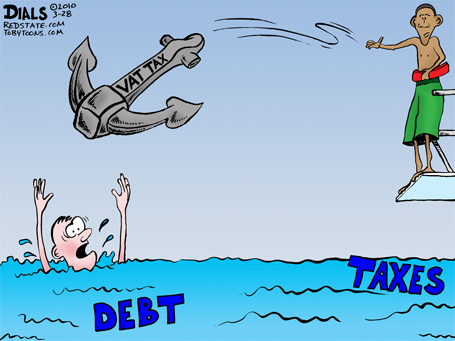
The Bahamas is planning to introduce a new 7.5 percent value added tax, the government announced this week.

The tax will be a single VAT rate across the board, although that is lower than an initially proposed 15 percent tax.

The country’s Ministry of Finance said the lower rate would also mean fewer exemptions.

The ultimate plan is for the tax to come into effect on Jan. 1, 2015, after what the government said would be an “in-depth public education campaign and private sector preparation.”

The Ministry of Finance also said it was proposing “VAT-inclusive” pricing rather than VAT exclusive, with the aim to “simplify price comparisons by consumers, especially when navigating between VAT registrants and non-registrants.”

“The price consumers see will always be the price they pay,”

The move will also mean that the hotel occupancy tax will be eliminated.

Bahamas 2Government estimates predicted that the new VAT along with a basket of other fiscal provisions would increase the revenue yield of the Bahamas’ revenue system to 19.8 percent of GDP, up from 17.1 percent in the current fiscal year.

Christie said the goal with the mix of fiscal measures was to eliminate the “untenable structural imbalance between recurrent expenditure and revenue” by the 2015/2016 fiscal year, sharply reduce the GFS deficit by 2016/2017 and “arrest the growth in the government debt burden and move it onto a steady downward path to more sustainable levels.”

“I want to emphasize, at this point, that we are in no way engaged in unrealistic, pie-in-the-sky, wishful thinking on the score of fiscal redress,” Christie said. “With a keen eye on the state of our economy and mindful of the need to maintain and support its upward, forward momentum, we are embarked on a mutually-reinforcing plan of national development and fiscal consolidation that is balanced and measured. As such, our aim is set on gradual, though assured, progress on the fiscal front.”

The Bahamas would be the latest in a line of Caribbean countries to introduce a VAT; St Lucia was the most recent country to do so.

A value-added tax proposal by the United Kingdom government in Turks and Caicos was shelved last year after opposition from businesses.

Caribbean Journal Online News Source (Retrieved 05/30/2014) – http://www.caribjournal.com/2014/05/30/bahamas-planning-to-introduce-7-5-percent-value-added-tax-in-2015/

This roadmap commences with the assessment that the Caribbean is in crisis, and that this “crisis would be a terrible thing to waste”. Coupled with the external pressures for revenue reform, is the internal realities of societal abandonment – more and more of the labor pool has migrated to foreign lands in search of better economic opportunities – lowering the tax-paying base in the country. The book describes the sad state of affairs in Caribbean locales like Puerto Rico (Page 303) and the Bahamas 2nd city of Freeport (Page 112). As a planning tool, the roadmap accepts the challenge to adapt for the changes with a Declaration of Interdependence, pronouncing the need for regional solutions (Page 12). The statement is included as follows:

Whereas government services cannot be delivered without the appropriate funding mechanisms, “new guards” must be incorporated to assess, accrue, calculate and collect revenues, fees and other income sources for the Federation and member-states. The Federation can spur government revenues directly through cross-border services and indirectly by fostering industries and economic activities not possible without this Union.

The strategy is to confederate all the 30 member-states of the Caribbean, despite their language and legacy, into an integrated “single market”. Tactically, this will allow a separation-of-powers between the member-states governments and federal agencies, allowing for efficient economies-of-scale for revenue collection systems, processes and people. Yes, astute application of technology is cited as a key solution. In total, the Go Lean book details series of community ethos, strategies, tactics, implementations and advocacies to deliver new solutions:

Anecdote Puerto Rico – The Greece of the Caribbean Page 18
Community Ethos – Money Multiplier Page 22
Community Ethos – “Crap” Happens Page 23
Community Ethos – Lean Operations Page 24
Community Ethos – Return on Investments (ROI) Page 24
Community Ethos – Cooperatives Page 25
Community Ethos – Ways to Improve Sharing Page 35
Strategic – Vision – Integrated region in a Single Market Page 45
Strategic – Vision – Agents of Change – Technology Page 57
Strategic – Vision – Agents of Change – Globalization Page 57
Tactical – Confederating a Non-sovereign Union Page 63
Tactical – Fostering a Technocracy Page 64
Tactical – Growing to $800 Billion – Trade & Globalization Page 70
Tactical – Separation of Powers – Union Revenue Admin. Page 74
Anecdote – “Lean” in Government Page 93
Implementation – Ways to Pay for Change Page 101
Implementation – Deploying Data Centers Page 106
Implementation – Ways to Deliver Page 109
Implementation – Ways to Better Manage Debt Page 114
Advocacy – Ways to Grow the Economy Page 151
Advocacy – Ways to Mitigate Black Markets Page 165
Advocacy – Ways to Improve Governance Page 168
Advocacy – Ways to Improve Local Governments Page 169
Advocacy – Ways to Better Manage the Social Contract Page 170
Advocacy – Revenue Sources for Administration Page 172
Advocacy – Ways to Foster Cooperatives Page 176

All in all, the CU/Go Lean supports all governments’ efforts to collect legitimately authorized taxes.

Pay Caesar’s things to Caesar” – so declares the Go Lean book (Page 144), quoting Jesus Christ from the Bible at Mark 12:17. While Jesus Christ teachings are not portended to be economic lessons, this rendering in the roadmap posits that this and other bible teachings are economically sound. The Bahamas, the Caribbean country in the foregoing news article, lays claim to a Christian heritage. It is time for this country, and all the Caribbean, to “put their money where their mouth is”.

Now is the time for all of the Caribbean, the people and governing institutions, to lean-in for the changes described in the book Go Lean … Caribbean. The local governments need their revenues. They are part of the eco-system to elevate Caribbean life, culture and systems of commerce.

Download the book Go Lean … Caribbean – now!

Share this post:
, ,

Trinidad Muslims travel to Venezuela for jihadist training

Go Lean Commentary

BS 1The American War on Terror has come to the Caribbean. This is obvious with the news in the subsequenr news article. It is also obvious that with two member-states (Guyana & Trinidad) with large Islamic populations, their Muslim adherents may invariably side with some of their Middle Eastern brothers.

The United States of America is the Caribbean’s biggest trading partner and benefactor. But, the US has enemies. What’s more, many American activities enrage their enemies. Consider these known facts:

  • Unmanned Drone attacks in Pakistan/Afghanistan, with collateral damage of innocent women/children.
  • NSA spying on its own citizens, and those of foreign lands in their home country, including the Caribbean; (this was disclosed last week by NSA Leaker Edward Snowden – see https://goleancaribbean.com/blog/?p=960).
  • American “Vulture” Capitalism – painfully exploiting natural resources at the expense of indigenous people

American foreign policy is determined by the US government (White House & Congress). The needs of our small Caribbean states may not factor in US policy determinations. Even the US territories (Puerto Rico & US Virgin Islands) have little voice and no vote in the formation of policy. The Caribbean finds itself in the same role as the words (sang by Michael Jackson) of the Scarecrow in the 1977 movie The Wiz:

We can’t win,
We can’t break-even, and …
We can’t get out of the game.

The book Go Lean…Caribbean posits that we must maintain our own security apparatus against systemic threats, like terrorism, that can imperil our way of life. This goal is detailed in the book, serving as a roadmap for the introduction of the Caribbean Union Trade Federation (CU). This Go Lean roadmap has 3 prime directives:

  • Optimization of the economic engines in order to grow the regional economy to $800 Billion & create 2.2 million new jobs.
  • Establishment of a security apparatus to protect the resultant economic engines.
  • Improve Caribbean governance to support these engines.

The book contends that bad actors will emerge just as a result of economic successes in the region. Combine further, the alignments with the US, and we have to be prepared for even more “enemies at the gate”. The other European nations with Caribbean territories (Britain, France, and The Netherlands) also have to contend with terrorism activities. This point is pronounced early in the book with the Declaration of Interdependence (Page 13), and these claims:

x.   Whereas we are surrounded and allied to nations of larger proportions in land mass, populations, and treasuries, elements in their societies may have ill-intent in their pursuits, at the expense of the safety and security of our citizens. We must therefore appoint “new guards” to ensure our public safety and threats against our society, both domestic and foreign. The Federation must employ the latest advances and best practices … to assuage continuous threats against public safety.

xvi. Whereas security of our homeland is inextricably linked to prosperity of the homeland, the economic and security interest of the region needs to be aligned under the same governance. Since economic crimes, including piracy and other forms of terrorism, can imperil the functioning of the wheels of commerce for all the citizenry, the accedence of this Federation must equip the security apparatus with the tools and techniques for predictive and proactive interdictions.

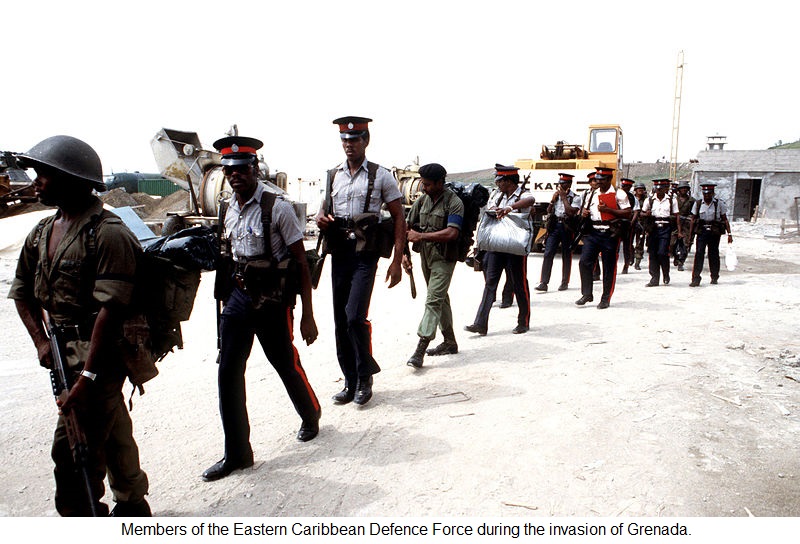
Appointing “new guards” to ensure our public safety is not so new of an endeavor. This effort has commenced already. There is currently a security pact of 7 Eastern Caribbean member-states that was first consummated in 1982 – see the Regional Security System below. The roadmap calls for the expansion and professionalization of this security pact for all 30 member-states. It will be the responsibility of the CU to lead, fund and facilitate this pact.

Creating the CU security apparatus is “Step One, Day One” in the Go Lean roadmap. This implementation, with the appropriate funding mechanisms, is essential for success. In line with the foregoing news article, there is the absolute need for a Unified Command-and-Control (UCC), including intelligence gathering and analysis, to monitor and mitigate threats against the region.

By Caribbean News Now contributor

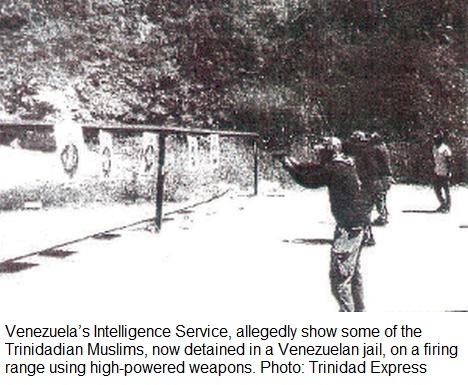
PORT OF SPAIN, Trinidad — Cellphone images seized by SEBIN, Venezuela’s intelligence service, allegedly show Trinidadian Muslims arrested in Venezuela engaging in what SEBIN described as “pre-jihad training” on a firing range using high-powered weapons, the Trinidad Express reported.

The images were reportedly extracted from the cellphones seized from some of the Muslims in a group that travelled to Venezuela from Trinidad and were later arrested in a raid at the Plaza Hotel in Caracas on March 19, together with women and children, who were later released.

The training resembled what takes place in the Middle East as Muslims prepare for what they term jihad, or holy war, an important religious duty for Muslims that includes armed struggle against persecution and oppression.

Intense military, arms and ammunition training is part and parcel of their routine and some of this kind of training, SEBIN alleged, was taking place in Venezuela by some of the Trinidadian Muslims.

In a top secret document prepared by SEBIN and sent to the Trinidad and Tobago government, the pictures in question were taken by three Venezuelan police officers who were later arrested. There are at least six photographs showing the men.

Eight Trinidadian Muslims are currently detained by Venezuelan authorities on suspicion of terrorist activities. The 14 women and children who were held with them at the Plaza Hotel in Caracas on March 19 were released some ten days later and sent back to Trinidad.

This followed a visit of a Trinidad and Tobago delegation headed by Rear Admiral Richard Kelshall who met with Venezuelan authorities two days prior to their release.

Out of that meeting emanated the top secret document given to the Trinidad and Tobago government, which the Trinidad Express reported exposes some alarming security concerns that the country’s security forces need to monitor closely.

The document outlines in detail the day the Trinidadian Muslims were held at the Plaza Hotel in Caracas and revelations about possible terrorist activities that can have far reaching consequences for Trinidad and Tobago.

Minister of National Security Gary Griffith spoke about the document in late April.

“A secret document has been given to me through the delegation from the Venezuelan authorities and this is obviously a sensitive document and I would not be able to actually state what is in the document, it is sensitive correspondence,” Griffith said.

In the top secret document, there are dates of the arrivals for all the Trinidadians who touched down at the Simon Bolivar International Airport in Venezuela between January and March this year.

The raid on the Trinidadian Muslims at the Plaza Hotel, authorities said, was brought to the attention of SEBIN “after a prolonged stay at the hotel” and the use of “cash to cover their bills”.

Further suspicion arose, SEBIN stated, when members of the group were reclusive, as more persons continued to arrive and bills continued “to be paid exclusively in cash”.

Cleaning staff at the hotel were even barred from entering the rooms, the report revealed.

SEBIN’s suspicion was compounded further as they “implemented surveillance on the group and observed that Dominic Pitilal [one of the group] was routinely changing large sums of US” currency.

BS #3It was then SEBIN decided to make their move, executing a search warrant in the rooms occupied by “Pitilal and associates” and reportedly discovered: two satellite phones, 20 mobile phones, two laptops, six tablets, army type uniforms, combat paraphernalia, firearm training paraphernalia, telephone video of several of the detained persons in firearms training in Caracas.

According to the Trinidad Express, the accusation of jihad is only the beginning of something more profoundly troubling.

Sources within the Muslim community in Trinidad told the Express they have received information about Trinidadian Muslims fighting in the Syrian civil war as part of the anti-Assad movement.

Sources said every individual is paid US$150,000 to come to Syria and fight.

The subject is rarely discussed in certain Muslim circles in Trinidad, some fearing if they say anything, their lives might be in jeopardy. It is also a case that Muslim women know about, but are not willing to inform on friends or family members.

Well-placed Muslim sources who met and spoke with the Express in the last few weeks on the condition of anonymity say some of the women and children who were detained in Venezuela were in transit to Syria.

Three well-placed sources say people had confided in them about how the operation would go down.

One said, “What they do is buy plane tickets showing travel from Venezuela to China in transit through Turkey. When the plane stops there they get off and cross the border into Syria, but many would be thinking they have gone on to China as the ticket states.”

Another indicated that a named Trinidadian Muslim now in Syria has been in contact with family members in Trinidad and is also in constant contact with another local Muslim man.

Intelligence sources said they have been monitoring the movements of certain people, but would not commit to a solid answer.

When asked about Trinidadians using Venezuela as a stepping stone to head to Syria to fight in the jihad, Griffith said, “We most definitely have intelligence of all matters of national security but pertaining to that quite obviously, I would not be able to actually state what intelligence that we have for obvious reasons.”

In the last three weeks, the UK Guardian has carried stories about Muslim men leaving the United Kingdom to fight the war in Syria with young women also trying to follow. When they return to their countries they could be a serious security risk and the Anti-Terrorism Unit in Britain is closely monitoring the situation.

CNN in a recent report online entitled “West’s biggest threat: Battle hardened homegrown terrorists”, warned about American Muslims leaving to fight in Syria and returning as a potential threat to the US.

Intelligence sources in Trinidad also said they are fearful that some of those fighting in Syria will return to Trinidad with the radical ability to carry out violent acts there.

In fact, SEBIN in its secret report made specific recommendations to Trinidad’s national security ministry indicating it should pay closer attention to particular mosques.

Concerns outlined in the report also included:

• The increase of illegal diesel trafficking.

• Increase of the volume and flow of narco-trafficking and arms and ammunition trafficking.

• Increase of persons from the Middle East entering and transiting Venezuela onward to Trinidad.

SEBIN also revealed to the Trinidad and Tobago government that “British and US sources have expressed through official channels that there is an uneasiness relative to chatter emanating from Trinidad and Tobago at this time.”

Griffith said, “When we get types of intelligence that can be perceived as individuals being enemies of the state or trying to have any plan to overthrow the government, or any democracy as we know it, we would have that pre-emptive strike. We would be aware of what is happening and we would ensure that we do it to them before they do it to us.”

Attempts to assess the level of US concern in relation to the security of the Caribbean generally – a region that is variously described as America’s “third border” and America’s “backyard” – by means of official comment have largely proven to be fruitless.

There has been the so-called Third Border Initiative (now apparently moribund) and the more recent Caribbean Basin Security Initiative but the latter has largely focused on maritime interdiction of drug traffickers while seemingly ignoring the fact that the vacuum left by US financial and political inattention has been quickly filled by the Chinese (economically), Venezuela (politically and economically) also acting as a proxy for Iran, and more recently by the Russians for their own reasons.

Apart from the fact that questionable individuals from these and other countries are using the economic citizenship programs of many of the small Caribbean countries to obscure their real nationality and background, there is the concern expressed by intelligence sources in Trinidad that some of their nationals fighting in Syria will return with the radical ability to carry out violent acts in that country – i.e. part of America’s “third border”.

The so far unanswered questions posed to various US House and Senate committees that ought to have an interest in this area have tried to address the apparent inattention to the situation in the region itself, thus allowing hostile elements virtual freedom of movement in an area up to the actual border when, with a fairly modest effort in the overall scheme of things, the situation could be dealt with much more effectively.

With all the ex post facto hand-wringing over events in Benghazi, an increased level of congressional interest and concern in working to prevent other potential problems closer to home might have been expected but is apparently thus far non-existent.

Caribbean News Now (Posted May 13, 2014; retrieved 05/29/2014) –http://www.caribbeannewsnow.com/topstory-Trinidad-Muslims-travel-to-Venezuela-for-jihadist-training-21089.html

The Go Lean book details a series of community ethos, strategies, tactics, implementations and advocacies to provide increased public safety & security in the Caribbean region:

Community Ethos – Privacy –vs- Public Protection Page 23
Community Ethos – Intelligence Gathering Page 23
Community Ethos – “Crap” Happens Page 23
Community Ethos – Cooperatives Page 25
Community Ethos – Ways to Improve Sharing Page 35
Strategy – Security Pact to defend the homeland Page 45
Tactical – Confederating a non-sovereign union Page 63
Tactical – Separation of Powers – Homeland Security Page 75
Implementation – Ways to Pay for Change Page 101
Implementation – Start-up Foreign Policy Initiatives Page 102
Implementation – Start-up Security Initiatives Page 103
Advocacy – Ways to Grow the Economy Page 151
Advocacy – Ways to Improve Governance Page 168
Advocacy – Improve Homeland Security Page 180
Advocacy – Mitigate Terrorism Page 181
Advocacy – Improve Intelligence Gathering/Analysis Page 182
Advocacy – Improve for Natural Disasters Page 184

Paramount to the prime directive of elevating the economics, security and governing engines of the region is the desire to make the Caribbean, a better place to live, work and play. This has been the hope for generations. Finally now, the CU is here to traverse this journey. All of the Caribbean institutions are hereby urged to lean-in to this roadmap, or better stated, to Go Lean.

Download the Book – Go Lean…Caribbean – Now!!!

Appendix – Regional Security System

(Retrieved 05/29/2014 from: http://en.wikipedia.org/wiki/Regional_Security_System)

The Regional Security System (RSS) is an international agreement for the defence and security of the eastern Caribbean region. The Regional Security System was created out of a need for collective response to security threats, which were impacting on the stability of the region in the late 1970s and early 1980s. On 29 October 1982 four members of the Organisation of Eastern Caribbean States—namely, Antigua & Barbuda, Dominica, St. Lucia, and St. Vincent & the Grenadines—signed a memorandum of understanding (MOU) with Barbados to provide for “mutual assistance on request”. The signatories agreed to prepare contingency plans and assist one another, on request, in national emergencies, prevention of smuggling, search and rescue, immigration control, fishery protection, customs and excise control, maritime policing duties, protection of off-shore installations, pollution control, national and other disasters and threats to national security.[1] CU Blog - Trinidad Muslims travel to Venezuela for jihadist training - Photo 2Saint Kitts and Nevis joined following independence in 1983, and Grenada followed two years later after Operation Urgent Fury, a combined U.S. and RSS invasion of the country. The MOU was updated in 1992 and the system acquired juridical status on 5 March 1996 under the Treaty which was signed at St. Georges, Grenada.

The RSS initially started as a U.S. instrument to combat the spread of Communism in the Caribbean region.[2][3] As of 2001, the RSS further cooperates with the CARICOM Regional Task Force on Crime and Security (CRTFCS).[4]

In June 2010, United States and Caribbean regional officials resumed a plan for close cooperation established under the former Partnership for Prosperity and Security in the Caribbean (PPS) from the Clinton era.[5] As part of the joint agreement the United States pledged assistance with the creation of an Eastern Caribbean Coast Guard unit among RSS countries.[6] The Coast Guard unit will underpin the wider US-Caribbean Basin Security Initiative (CBSI) which has deemed the RSS as “central to the CBSI’s success, given its reach across the Eastern Caribbean.”[6]

Subsequently, Canada also pledged collaboration with the RSS bloc.[7][8] to combat a threat of Central American criminal gangs from expanding into the English-speaking Caribbean region.[9]

The current member nations are:

Antigua and Barbuda (since 1982)
Barbados (since 1982)
Dominica (since 1982)
Grenada (since 1985)
Saint Kitts and Nevis (since 1983)
Saint Lucia (since 1982)
Saint Vincent and the Grenadines (since 1982)

Date

Operation name

Country

Reason

1983 Grenada Intervention Grenada Restore a government in Grenada
1989 Hugo Antigua, Montserrat and Saint Kitts and Nevis Assistance in aftermath of Hurricane Hugo
1990 Coup Trinidad and Tobago Aftermath of an attempted Coup d’état in Trinidad and Tobago
1994 Internal Security Saint Kitts and Nevis Prison riot
1995 Luis, Marilyn Antigua and Saint Kitts and Nevis Assistance in aftermath of Hurricane Luis and Hurricane Marilyn
1998 Georges Saint Kitts and Nevis Assistance in aftermath of Hurricane Georges
1998 Weedeater Saint Vincent and the Grenadines Eradication of cannabis
2003 Bordelais Saint Lucia Transfer prisoners to new prison facility
2004 Ivan Relief Efforts Grenada Assistance in aftermath of Hurricane Ivan
2006 Glendairy Barbados Prison uprising
2009 Operation VINCYPAC St Vincent and the Grenadines Eradication of Cannabis
2010 Haiti Haiti Assistance in aftermath of the Haiti 2010 Earthquake

Sources References:

  1. “APPROACHES ON SECURITY IN THE CARIBBEAN REGION: Statement by Ambassador Odeen Ishmael of Guyana at the Meeting of the Committee on Hemispheric Security of the OAS Washington DC, 29 October 2002”. Retrieved 17 December 2012 from: http://www.guyana.org/Speeches/ishmael_102902.html.
  2.  http://www.country-data.com/cgi-bin/query/r-3378.html
  3. Lewis, Patsy (2002). Surviving Small Size: Regional Integration in Caribbean Mini-states. Kingston, Jamaica: University of West Indies Press. ISBN 976-640-116-0.
  4. Regional Task Force, the Caribbean Community (CARICOM) Implementation Agency for Crime and Security (IMPACS). Retrieved from: http://www.caricomimpacs.org/index.php?option=com_content&task=view&id=5&Itemid=29
  5. Singh, Rickey (13 June 2010). “A USA-CARIBBEAN ‘RENEWAL’?”. Guyana Chronicle. Retrieved 17 September 2010.
  6. “CARIBBEAN SECURITY: United States to help upgrade Regional Security System”. Caribbean News Agency (CANA). Retrieved 17 September 2010 from: http://www.cananews.net/news/131/ARTICLE/48413/2010-04-17.html.
  7. “Security important to Canada”. The Barbados Today. Retrieved 17 September 2010 from: http://news.barbadostoday.bb/index.php?option=com_content&view=article&id=4431:Security-important-to-Canada&catid=1:latest-news.
  8. “Canada to boost help to region”. Nation Newspaper. Retrieved 5 July 2010 from: http://www.nationnews.com/index.php/articles/view/canada-to-boost-help-to-region/.
  9. H., J. (17 September 2010). “Region warned of displaced criminal elements”. The Barbados Advocate. Retrieved 17 September 2010 from: http://www.barbadosadvocate.com/newsitem.asp?more=local&NewsID=12798.
Share this post:
, , , ,
[Top]

Caribbean Image: Dreadlocks

Go Lean Commentary

Dread Locks“You don’t get a second chance for a first impression” – Old Adage.

Think quick! A family member is involved in a traumatic accident and is rushed to emergency surgery. The surgeon comes out to greet you; he is wearing dreadlocks. How confident are you of his surgical skills? On a scale of 1-to-10, are you anywhere near a 10? Is it the dreadlocks? Without the surgeon speaking a word, what are the chances he is of Caribbean heritage?

This scenario depicts why image is so impactful in the management of Caribbean economic and cultural affairs.

Caribbean image is in crisis! Many people (not a majority) in the region, despite their occupation, wear dreadlocks. As stated in the encyclopedic reference below, these “locks” can be an expression of deep religious or spiritual convictions, ethnic pride, a political statement, or be simply a fashion preference.

Consider the above medical drama again, but now substitute a Sikh Indian turban, or a Jewish yarmulke (beanie hat), or an taqiyah (Muslim beanie cap). Look, there is little question of competence or defamation in these scenarios, despite their religious connotations. Consider this …

… Encyclopedia Definition:

Dreadlocks, also called locks, dreads, or Jata (Hindi), are matted coils of hair. Most dreadlocks are usually intentionally formed; because of the variety of different hair textures, various methods are used to encourage the formation of locks such as backcombing. Additionally, leaving long hair to its own devices by not brushing or cutting the hair will encourage it to tangle together as it grows, leading to twisted, matted ropes of hair known as dreadlocks. The latter method is typically referred to as the neglect, natural, organic, or freeform method. A common misconception is that those who have dreadlocks do not wash their hair, but this is usually not the case. Many dreadlock care regimens require the wearer to wash their hair up to twice a week.[1]

Dreadlocks are associated most closely with the Rastafari movement, but people from many ethnic groups have worn dreadlocks, including many ancient Hamitic people of North Africa and East Africa (notably the Oromo of Ethiopia, and the Maasai of northern Kenya); Semitic people of West Asia; Indo-European people of Europe and South Asia (notably the ancient Spartan warriors of Greece, and the Sadhus of India and Nepal); Turkic people of Anatolia and Central Asia; the Sufi Rafaees; and the Sufi malangs and fakirs of Pakistan. Some Neanderthals and Cro-Magnon were also known to have worn locks as described in paleolithic cave art in Europe, perhaps for spiritual reasons.

Dread locks #4

The book Go Lean … Caribbean recognizes that image is an important intangible factor that must be managed to optimize value of Caribbean contributions. As such the book is submitted as a complete roadmap to advance the Caribbean economy and culture with the introduction and implementation of the Caribbean Union Trade Federation (CU). This will be the sentinel for “Image”.

The CU strives to improve image & impressions that the world gets of Caribbean life/people. Sometimes, the “world” only needs the facts. There is no agenda to curb freedoms of speech or the press, but there are many opportunities to elevate the impressions that the wide-world gets of the Caribbean, including dreadlock hair styles.

Consider the experiences of an actor on Yahoo-Answers.com:

Q. Can actors with dreads get a lot of work in Hollywood?

My cousin has dreads that are at his neck and wants to become an movie or tv star, he is a very good actor and has even won a few local awards for his performances, but he does NOT wanna play a gang member or drug dealer or any role like that, just the normal roles, how likely is that?

A1. “Starry Eyed Fred” answered – 4 years ago
“[So] he does NOT wanna play a gang member or drug dealer or any role like that. Guess what? You/he have already pretty much answered the question… dudes with dreads are ‘typecast’ as mentioned above: his looks are going to be what gets him auditions for specific roles, such as “a gang member or drug dealer or any role like that”.

A2. “wickedjacob” answered – 4 years ago
Anyone who is serious about becoming an actor is going to have to be prepared to change their appearance to fit the role. So even though he might have dreads right now, there will come a time sooner or later where a job will require that they be cut off.

A3. “Me not you” answered – 4 years ago
He might get roles because of his talent, but they will probably make him cut his hair if its not appropriate for the part.

(Source: Retrieved May 10, 2014 from: https://answers.yahoo.com/question/index?qid= 20100617064412AARJkBh)

The Go Lean roadmap has a heavy focus on media. The plan calls for consolidating the 42 million residents of the region, despite the 4 languages, into a Single Market. This size allows for some leverage and economies-of-scale, fostering a professional media industry. This allows the CU to electronically send our culture to the world, 10 million-strong Diaspora first, controlling the image and impressions that the world gets of Caribbean life and people. Consider more of the encyclopedia definition here:

History 

Dread Locks #2The first known examples of dreadlocks date back to North Africa and the Horn of Africa. In ancient Egypt examples of Egyptians wearing locked hairstyles and wigs have appeared on bas-reliefs, statuary and other artifacts[2]. Mummified remains of ancient Egyptians with locks, as well as locked wigs, have also been recovered from archaeological sites.[3]

Maasai men found in the regions of northern Kenya claim that they have been wearing dreadlocks for as long as they have survived. According to their oral history, the Maasai originated from the lower Nile valley north of Lake Turkana (Northwest Kenya) and began migrating south around the 15th century, arriving in a long trunk of land stretching from what is now northern Kenya between the 17th and late 18th century. Even today, Maasai men can be found donning their dreadlocks, with a tint of red color from the soil.

The Hindu deity Shiva and his followers were described in the scriptures as wearing “Jataa”, meaning “twisted locks of hair”. The Greeks and several ascetic groups within various major religions have at times worn their hair in locks, including the monks of the Ethiopian Orthodox Tewahedo Church, the Nazirites of Judaism, Qalandari Sufi’s, the Sadhus of Hinduism, and the Dervishes of Islam, among others. The very earliest Christians also may have worn this hairstyle. Particularly noteworthy are descriptions of James the Just, first Bishop of Jerusalem, who is said to have worn them to his ankles.[4]

Pre-Columbian Aztec priests were described in Aztec codices (including the Durán Codex, the Codex Tudela and the Codex Mendoza) as wearing their hair untouched, allowing it to grow long and matted.[5]

In Senegal, the Baye Fall, followers of the Mouride movement, a Sufi movement of Islam founded in 1887 by Shaykh Aamadu Bàmba Mbàkke, are famous for growing locks and wearing multi-colored gowns.[6] Cheikh Ibra Fall, founder of the Baye Fall school of the Mouride Brotherhood, popularized the style by adding a mystic touch to it. It’s important to note that for centuries warriors among the Fulani, Wolof and Serer in Mauritania, and Mandinka in Mali and Niger were also known to have dreadlocks when old and cornrows when young.

Culture

There are many reasons among various cultures for wearing locks. Locks can be an expression of deep religious or spiritual convictions, ethnic pride, a political statement, or be simply a fashion preference. In response to the derogatory history of the term dreadlocks, an alternative name for the style is locks (sometimes spelled “locs”).

Africa and the Western World; Caribbean, North and South America

Members of various African ethnic groups wear locks and the styles and significance may change from one group to another.

Maasai warriors are famous for their long, thin, red locks. Many people dye their hair red with root extracts or red ochre. In various cultures what are known as shamans, spiritual men or women who serve and speak to spirits or deities, often wear locks. In Nigeria[7], some Yoruba children are born with naturally locked hair and are given a special name: “Dada”. Yoruba priests of Olokun, the Orisha of the deep ocean, wear locks. Another group is the Turkana people of Kenya.

Rastafarian’s locks are symbolic of the Lion of Judah which is sometimes centered on the Ethiopian flag. Rastafari hold that Haile Selassie is a direct descendant of King Solomon and the Queen of Sheba, through their son Menelik I.

Hinduism

Dread Locks #3Similarly, among some Sadhus and Sadhvis, Hindu holy men and women, locks are sacred, considered to be a religious practice, an expression of disregard for profane vanity. The public symbol of matted hair, known as jata, is re-created each time an individual goes through these unique experiences. In almost all myths about Shiva and his flowing locks, there is a continual interplay of extreme asceticism and virile potency, which link the elements of destruction and creation, whereas the full head of matted hair symbolizes the control of power. Gangadhara Shiva captures and controls the river Ganges with his locks, whose descent from the heavens would have deluged the world. The river is released through the locks of his hair, which

prevents the river from destroying earth. As the Lord of Dance, Nataraja, Shiva performs the tandava, which is the dance in which the universe is created, maintained, and resolved. Shiva’s long, matted tresses, usually piled up in a kind of pyramid, loosen during the dance and crash into the heavenly bodies, knocking them off course or destroying them utterly.

Locks in South Asia are reserved nearly exclusively for holy people. According to the ‘Hymn of the longhaired sage’ in the ancient Vedas, long jatas express a spiritual significance which implies the wearer has special relations with spirits, is an immortal traveler between two worlds and the master over fire:

The long-haired one endures fire, the long-haired one endures poison, the long-haired one endures both worlds. The long-haired one is said to gaze full on heaven, the long-haired one is said to be that light … Of us, you mortals, only our bodies do you behold. …For him has the Lord of life churned and pounded the unbendable, when the long-haired one, in Rudra’s company, drank from the poison cup (The Keshin Hymn, Rig-veda 10.136)

The Shaiva Nagas, ascetics of South Asia, wear their jatas in a twisted knot or bundle on top of the head and let them down only for special occasions and rituals. The strands are then rubbed with ashes and cow dung, considered both sacred and purifying, then scented and adorned with flowers.

Buddhism

Within Tibetan Buddhism and other more esoteric forms of Buddhism, dreadlocks have occasionally been substituted for the more traditional shaved head. The most recognizable of these groups are knowns as the Ngagpas of Tibet. For many practicing Buddhists, dreadlocks are a way to let go of material vanity and excessive attachments.[8]

Western Styles

When reggae music gained popularity and mainstream acceptance in the 1970s, the locks (often called “dreads”) became a notable fashion statement; they were worn by prominent authors, actors, athletes and rappers, and were even portrayed as part of gang culture in such movies as Marked for Death. Dreadlocks aren’t always worn for religious or cultural reasons. People may wear them just for “style” which is primarily popular among the youth.

With the Rasta style in vogue, the fashion and beauty industries capitalized on the trend. A completely new line of hair care products and services in salons catered to a White clientele, offering all sorts of dreadlocks hair care items such as wax (considered unnecessary and even harmful by many)[9], shampoo, and jewelry. Hairstylists created a wide variety of modified locks, including multi-colored synthetic lock hair extensions and “dread perms”, where chemicals are used to treat the hair.

Locked models appeared at fashion shows, and Rasta clothing with a Jamaican-style reggae look was sold. Even exclusive fashion brands like Christian Dior created whole Rasta-inspired collections worn by models with a variety of lock hairstyles.

In the West, dreadlocks have gained particular popularity among counterculture adherents such as hippies (from the 1990s onwards), crust punks, New Age travellers, goths and many members of the Rainbow Family. Many people from these cultures wear dreadlocks for similar reasons: symbolizing a rejection of government-controlled, mass-merchandising culture or to fit in with the people and crowd they want to be a part of. Members of the cybergoth subculture also often wear blatantly artificial synthetic dreads or “dreadfalls” made of synthetic hair, fabric or plastic tubing.

Since the rise of the popularity of dreadlocks, Blacks in the Americas have developed a large variety of ways to wear dreadlocked hair. Specific elements of these styles include the flat-twist, in which a section of locks are rolled together flat against the scalp to create an effect similar to the cornrows, and braided dreadlocks. Examples include flat-twisted half-back styles, flat-twisted mohawk styles, braided buns and braid-outs (or lock crinkles). Social networking websites, web forums, web-logs and especially online video-logs like YouTube have become popular methods for people with dreadlocks to transmit ideas, pictures and tutorials for innovative styles.

The book Go Lean … Caribbean introduces the CU to take oversight of’ much of the Caribbean economic, security and governing functionality. In summary, this roadmap promotes the Caribbean as a better place to live, work and play. We must therefore change the opinions of the world towards dreadlock-wearing Caribbean people. Jobs are at stake; jobs in the Caribbean homeland (and maybe jobs in foreign locales for the Diaspora). We need Foreign Direct Investors to be comfortable with industrial engagements in the region, knowing that the workforce is there, ready, willing and able to work, competently and confidently.

Change has come to the Caribbean. The people, institutions and governance of the region are all urged to “lean-in” to this roadmap for change. We need to educate and persuade people – everywhere -that there is excellence among Caribbean people; that a tropical accent or “locks” hairstyle does not automatically dictate sub-standard quality. The benefits of this roadmap, emergence of an $800 Billion regional economy and 2.2 million new jobs, become imperiled if business cannot proceed because domestic/foreign stakeholders have uncontested preconceived negative biases. This, image management, is among the community ethos the CU targets for elevation. The following list also details the strategies, tactics, implementations and advocacies to optimize the region’s image:

Community Ethos – Ways to Impact the Future Page 26
Community Ethos – Ways to Foster Genius Page 27
Community Ethos – Ways to Impact Turn-Arounds Page 33
Community Ethos – Impact the Greater Good Page 37
Strategy – Caribbean Core Competence Page 58
Separation of Powers – Tourism and Film Promotion Page 78
Separation of Powers – Communications and Media Page 79
Separation of Powers – Truth & Reconciliation Courts Page 90
Implementation – Ways to Impact Social Media Page 111
Implementation – Trade Mission Objectives Page 116
Implementation –  Ways to Benefit from Globalization Page 119
Advocacy – Ways to Better Manage Image Page 133
Advocacy – Improve Failed-State Indices Page 134
Advocacy – Ways to Grow the Economy Page 151
Advocacy – Ways to Improve Leadership Page 171
Advocacy – Ways to Enhance Tourism Page 190
Advocacy – Ways to Impact Hollywood Page 203
Advocacy – Ways to Preserve Caribbean Heritage Page 218

The foregoing encyclopedic source conveys that many cultures around the world practice the hair-grooming habits of locks, this should not just be a Caribbean image issue – but it is what it is. So change is needed on the world stage; not the change of hairstyles, but rather changes to the world’s impression of the hairstyle.

There is reason to believe that these empowerment efforts can be successful. The Go Lean roadmap conveys how single causes/advocacies have successfully been forged throughout the world (Page 122 – Anatomy of Advocacies). We, in the Caribbean, can do the same; we can succeed in our advocacy to improve the Caribbean image. 🙂

Download the e-Book of Go Lean … Caribbean – free … now!

————————–

Appendix – Citation References

In general: Wikipedia Online Encyclopedia – Retrieved 05-10-2014 http://en.wikipedia.org/wiki/Dreadlocks

1. “Making, growing, maintaining, and understanding dredlocks”; retrieved 16 July 2012 from http://www.dreadlocks.com/facts_rumors.html.

2. “Image of Egyptian with locks”. retrieved 9 May 2014 from http://www.freemaninstitute.com/Gallery/Egyp233_big_copy.jpg

3. Egyptian Museum -“Return of the Mummy. Toronto Life – 2002.” Retrieved 01-26-2007 from: http://www.egyptianmuseum.com/article16_torlife.html

4. Glazier, Stephen D., Encyclopedia of African and African-American Religions, Taylor & Francis, 2001, ISBN 0-415-92245-3, ISBN 978-0-415-92245-6, p. 279.

5. Berdán, Frances F. and Rieff Anawalt, Patricia (1997). The Essential Codex Mendoza. London, England: University of California Press. pp 149.

6. “Locs By Yannie – The History of Locs and Rastas”. Retrieved May 10, 2014 from http://www.locsbyyannie.com/

7. “Dada or dreds”. “…the word ‘dreads’ is of Jamaican origin and was used to refer to the Rasta men who people feared and ‘dreaded.’”. Retrieved May 10, 2014 from: http://neologisms.rice.edu/index.php?a=term&d=1&t=2896

8. The Dreadlocks Treatise: On Tantric Hairstyles in Tibetan Buddhism. Retrieved May 10, 2014 from http://www.jstor.org/stable/10.1086/596567

9. Beeswax Dreadlocks Controversy. Retrieved from http://fromgrandmaskitchen.com/Natural-Hair-Beauty/articles/3337/1/Beeswax-Extended/Page1.html

10. Photo Credit – Actor Uti Nwachukwu – http://laudomedia.com/2013/05/25/i-can-only-cut-my-dreadlocks-for-millions/

Share this post:
,
[Top]

A Lesson in History – America’s War on the Caribbean

Go Lean Commentary
War on Caribbean 1

“Never kill yourself for someone who is willing to watch you die” – Inspired Expression.

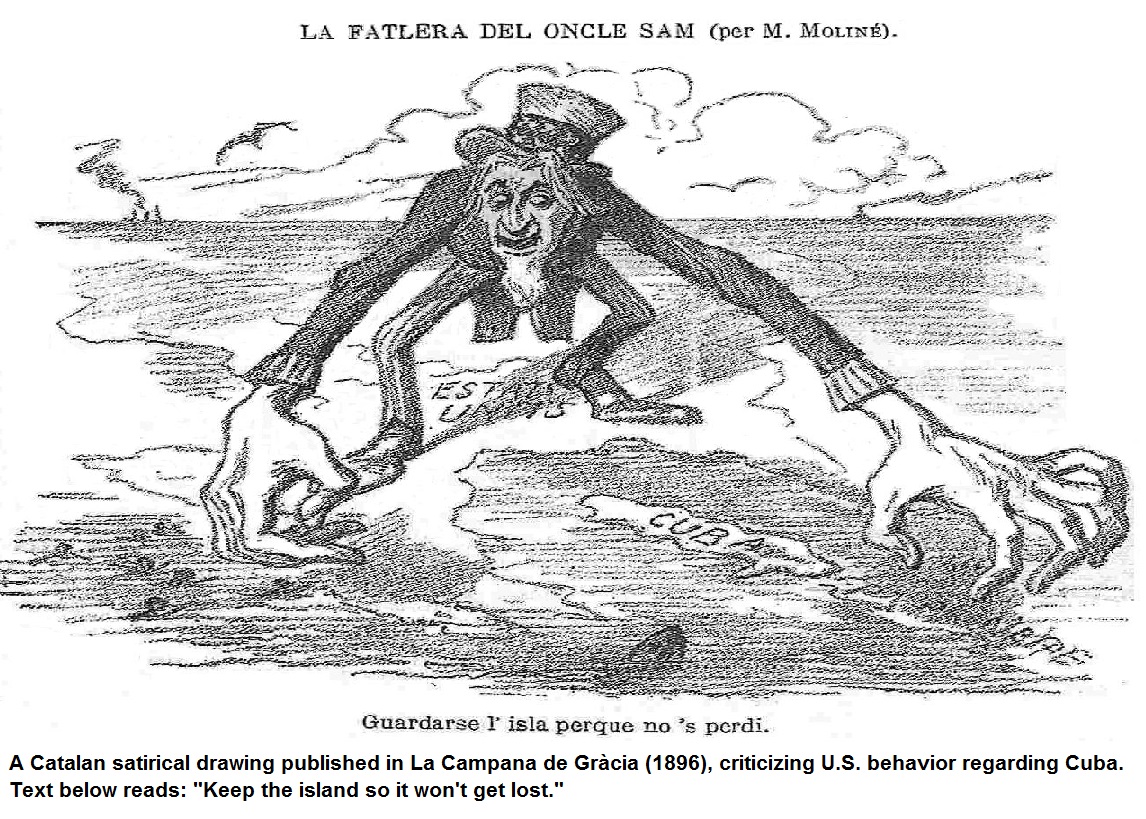
The United States of America fought an actual war, for 10 weeks, in the Caribbean theater in 1898. This was the war against the Spanish Empire, or more commonly known as the Spanish American War.

This is a lesson from an actual history:

These events transpired during the decline of the Spanish Empire. After centuries of vast colonial expansion, at this point, only a few of its vast territories remained. Revolts against Spanish rule had occurred for some years, in the Caribbean territories (Cuba, Dominican Republic and Puerto Rico), especially in Cuba. There had been war scares before. But in the late 1890s, American public opinion became agitated by an anti-Spanish propaganda; led by influential journalists such as Joseph Pulitzer and William Randolph Hearst, who used yellow journalism to criticize Spanish administration of Cuba.

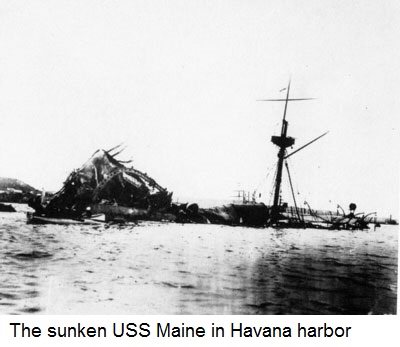
Then there was the mysterious sinking of the American battleship USS Maine in Havana harbor on February 15, 1898, which was believed to be and reported as a sabotage attack by Spanish forces. This created political pressure, from Congress and certain industrialists, to push the administration of Republican President William McKinley into a war he had hoped to avoid.[a]

The US Constitution (Article 1 Section 8) forbids that the country can NOT go to war unless provoked. With the sinking of the USS Maine, the government had its constitutional provocation.

Compromise was sought by Spain, but rejected by the United States which sent an ultimatum to Spain demanding it surrender control of Cuba. Consequently war was formally declared, first by Madrid, then by Washington on April 25, 1898.[a]

The ten-week war was fought in both the Caribbean and the Pacific, but the main issue that emerged was that of Cuban independence. American naval power proved decisive, allowing US expeditionary forces to disembark in Cuba against a Spanish garrison already brought to its knees by nationwide Cuban insurgent attacks and further wasted by yellow fever. With two obsolete Spanish squadrons sunk in Santiago de Cuba and Manila Bay and a third, more modern fleet recalled home to protect Spain’s coasts, Madrid sued for peace.[b] As a result, today, Cuba and the Dominican Republic enjoy independence, and Puerto Rico is an American territory, by choice – after many public referendums on the question of independence.

What was the motivation for this war?

Earlier, in 1823, US President James Monroe enunciated the Monroe Doctrine, which stated that the United States would not tolerate further efforts by European governments to colonize land or interfere with states in the Americas; however, Spain’s colony in Cuba was exempted. Before the Civil War Southern interests attempted to have the US purchase Cuba and make it new slave territory. The proposal failed, and subsequently the national attention shifted to the build-up towards the Civil War.[c]

But the “dye had been cast”. Cuba attracted America’s attention; little note was made of the Philippines, Guam, or Puerto Rico. The Spanish Government regarded Cuba as a province of Spain rather than a colony, and depended on it for prestige and trade. It would only be extracted with a war.

In 1976, the US Navy’s own historian (Admiral Hyman G. Rickover’s published book How the Battleship Maine Was Destroyed) declared that the sinking of the USS Maine — the justification for America’s entry into the Spanish-American War — was probably caused by an internal explosion of coal, rather than an attack by Spanish forces.[d]
Sources: See Citations in the Appendix below.

What is the lesson here for the Caribbean and today’s effort to integrate and unify the Caribbean economy? First, there are these principles, that should not be ignored, if we truly want progress/success:

  • In 1918 US Senator Hiram Warren Johnson is purported to have said: “The first casualty when war comes is truth”.
  • “War is a racket” – Smedley Butler, one of the most highly-decorated military men of all time, and the man who prevented a coup against Franklin D. Roosevelt.
  • The Bible declares that: “For there is nothing hidden that will not become manifest” – Luke 8:17

War on Caribbean 2There will be no chance for success in the Caribbean region if this effort goes against American security/foreign policy interest. This is a consistent theme in the book Go Lean … Caribbean, it serves as a roadmap for the introduction and implementation of the Caribbean Union Trade Federation (CU); it asserts that the economy of the Caribbean is inextricably linked to the security of the Caribbean. The roadmap therefore proposes an accompanying Security Pact to accompany the CU treaty’s economic empowerment efforts. The plan is to cooperate, collaborate and confer with American counterparts, not oppose them. In fact, two American territories (Puerto Rico and the US Virgin Islands) are included in this CU roadmap.

To establish a better American-Caribbean partnership, the Go Lean book presents a series of community ethos that must be adapted to forge this change. In addition, there are these specific strategies, tactics, implementation and advocacies to apply:

Community Ethos – new Economic Principles Page 21
Community Ethos – new Security Principles Page 22
Community Ethos – Minority Equalization Page 24
Community Ethos – Lean Operations Page 24
Community Ethos – Cooperatives Page 25
Community Ethos – Manage Reconciliations Page 25
Community Ethos – Impacting the Greater Good Page 34
Strategy – Customers – Public and Governments Page 47
Tactical – Fostering a Technocracy Page 64
Tactical – Homeland Security – Naval Operations Page 75
Tactical – Homeland Security – Militias Page 75
Implementation – Assemble – US Overseas Territory Page 96
Implementation – Foreign Policy Initiatives at Start-up Page 102
Implementation – Security Initiatives at Start-up Page 103
Implementation – Ways to Improve Mail Service Page 108
Implementation – Trade Mission Objectives Page 116
Implementation – Ways to Promote Independence Page 120
Planning – Ways to Model the EU Page 130
Planning – Lessons Learned from the W.I. Federation Page 135
Planning – Lessons from the US Constitution Page 145
Advocacy – Ways to Better Manage the Social Contract Page 170
Advocacy – Ways to Foster Cooperatives Page 176
Advocacy – Ways to Improve Homeland Security Page 180
Advocacy – Ways to Improve Intelligence Gathering Page 182
Advocacy – Ways to Enhance Tourism Page 190
Advocacy – Ways to Market Southern California Page 194
Advocacy – Ways to Preserve Caribbean Heritage Page 218
Advocacy – Ways to Re-boot Cuba Page 236
Advocacy – Ways to Impact the Dominican Republic Page 237
Advocacy – Ways to Impact US Territories Page 244

After this consideration, the conclusions are straight forward:

  • The Caribbean should take the lead for our best self-determination. We must do the heavy-lifting. We can always count on America to pursue what’s in America’s best interest, and this may not always align with Caribbean objectives. So we must take our own lead for our own self-interest.
  • American priorities change with presidential administrations.

Now is the time to lean-in to this roadmap for Caribbean change, as depicted in the book Go Lean…Caribbean. At this time, there is no American agenda or contrarian policy that may dissuade us – but that’s only today. We need to act fast before a new American crisis emerges, (or one is created artificially).

Download the book Go Lean … Caribbean – now!

————-

Appendix References

a. Beede, Benjamin R., ed. (1994), The War of 1898 and U.S. Interventions, 1898–1934, Taylor & Francis, ISBN 978-0-8240-5624-7. An encyclopedia. Pages 120; 148.

b. Dyal, Donald H; Carpenter, Brian B.; Thomas, Mark A. (1996), Historical Dictionary of the Spanish American War, Greenwood Press, ISBN 0-313-28852-6. Pages 108 – 109.

c. Wikipedia treatment on the Spanish American Way. Retrieved May 5, 2014 from: http://en.wikipedia.org/wiki/Spanish_American_War

d. “The Destruction of USS Maine”. Department of the Navy — Naval History and Heritage Command. Retrieved May 5, 2014 from: http://www.history.navy.mil/faqs/faq71-1.htm

Share this post:
, , , , ,
[Top]

Antigua Completes Construction of New National Library

Go Lean Commentary

Antigua ConstructionThis below article is an indictment of Caribbean governments and the Caribbean Diaspora: 40 years without a library.

The charge against the past governmental administrations is obvious. For this reason, the current administration of the Government of Antigua and Barbuda is to be applauded for this accomplishment announced in the foregoing news article; they have finally restored a basic requirement of modern societies: building/supplying/maintaining a national/community library.

“Man cannot live on bread alone – Bible quotation.

But why also indict the Diaspora?

Simple, they should have known better. They abandoned their homeland and turned a “blind eye” to even the basic needs of these previously-beloved community’s education. A library does not help the government, it helps the people; it guides the youth, infusing them with a love for knowledge, learning and imagination. We all have a responsibility, a duty even, to pass that “love” onto the next generation. For this, the Diaspora had failed, for 40 years!

So to you members of the Caribbean Diaspora who claim to love your heritage, but do not even look back to ensure that your former communities at least have access to books and information. Shame on you!

See the full news story here:

By the Caribbean Journal staff:
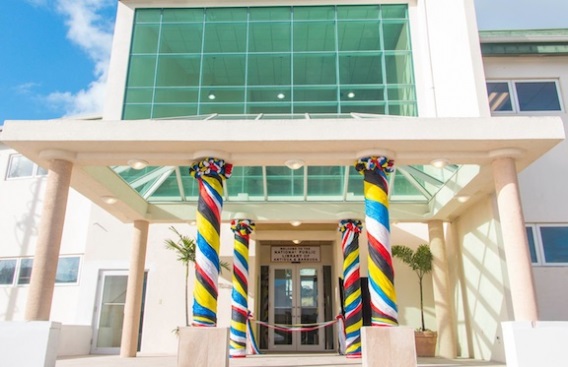
Antigua and Barbuda has completed construction on the country’s new national public library.

The completion of the project comes four decades after the country’s public library was damaged by an earthquake.

The 20,000-square-foot project on Hails Prominard Road succeeds a temporary library which had been operating on Market Street.

“Whenever we lament the weakness in literacy over the last four decades we should look back at how culpable we are as a nation in not providing the appreciation for books, for intellectual stimulation, which is a symbol in a national public library,” said Education Minister Dr. Jacqui Quinn-Leandro. “Any Antiguan and Barbudan forty years or younger would not have known or had the benefit of a properly, well run, well-resourced national public library. And I say without equivocation this is a burning shame, a disgrace and a national travesty. However, today is a historic day”.

The government said the library would become fully operational after completing finishing touches like custom-made shelving and special furniture.

“It is a key component of our drive to develop a pluralistic participatory and inclusive knowledge based society. Libraries are key institution in the context of achieving this goal. At the core of libraries are their missions to provide information, literacy education and culture,” said Antigua and Barbuda Prime Minister Dr. Baldwin Spencer. “This structure which we dedicate and which forms part of our mandate to the people to provide the greatest good to the greatest number of people will be the watering hole for individuals which hunger for free and equitable access to information be it in written, electronic and in audio visual form.”

Caribbean Journal Online News Source (Retrieved 04/10/2014) from: http://www.caribjournal.com/2014/04/10/antigua-completes-construction-of-new-national-library/

School kidThe book Go Lean … Caribbean is published by the SFE Foundation, a community development foundation chartered to bring change back to the Caribbean. The book serves as a roadmap for the introduction and implementation for the Caribbean Union Trade Federation (CU). The foundation is comprised of Diaspora members of different Caribbean countries, who now seek penance. We have sinned in our abandonment. To those in the Caribbean homeland, we ask for your forgiveness, and consideration for the solutions now being proffered.

The Go Lean book identifies, qualifies and proposes the establishment of community libraries throughout the region (Page 187). The roadmap posits that these libraries can be a portal to the New World of Internet Communication Technologies (Page 197); a means to bridge the “Digital Divide” (Page 31) and a delivery outlet for many e-Government services (Page 168).

There are practical reasons why there was no national library in Antigua for 40 years. Primarily, the reasons are economic. So the Go Lean roadmap leads first with an optimization of the region’s economic engines. The book details how to pay for these changes (Page 101), then how to maintain a consistent well-funded governing engine (Page 172).

Now is the time for all Caribbean stakeholders (residents, Diaspora, government officials, educators, and book lovers alike) to lean-in to this regional solution for Caribbean empowerment.

We now urged everyone to lean-in to the Go Lean roadmap for the Caribbean Union Trade Federation. Let’s make the Caribbean a better place to live, work, learn and play. 🙂

Download the free e-Book of Go Lean … Caribbean – now!

Share this post:
,
[Top]

Ailing Puerto Rico open to radical economic fixes

Go Lean Commentary

The Caribbean is in crisis!

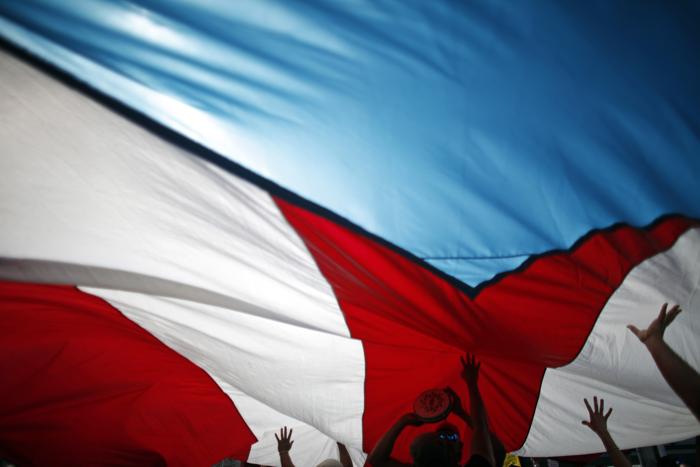
Puerto Rican FlagPuerto Rico is in crisis! According to this quote, they have lots of issues, all stemming primarily from economic dysfunctions:

Puerto Rico, in dire straits following eight years of recession, has remained receptive as it debates hundreds of ideas: ‘‘We are studying all alternatives and all possibilities.

The publishers of the book Go Lean … Caribbean humbly submit this publication as a complete roadmap to re-boot the island’s economy, security and governing engines. This roadmap differs from all the other 369 suggestions submitted to the territorial government’s committee highlighted in the foregoing news article, in that it presents a regional option, rather than just a territorial solution. The book asserts that the problems of Puerto Rico (by extension, the entire Caribbean) are too big for any one member-state to solve alone. Rather, the focus of the roadmap is the region-wide professionally-managed, deputized technocracy of the Caribbean Union Trade Federation (CU).

Puerto Rico needs the strategies, tactics, implementations and advocacies of the CU.

The CU needs Puerto Rico!

The CU requires the full participation of all 30 member-states in the region, including all 4 language group (Dutch, English, French and Spanish). With this approach, the CU benefits from the economies-of-scale of 42 million people.

The CU expects NO MONEY from Puerto Rico. This is good as the island is running a $820 million deficit. To cure a deficit a government needs more revenues and/or fewer expenses. The Go Lean roadmap features both. The roadmap is a complete re-boot: new revenue streams and a separation-of-powers, thereby delegating governing overhead to the CU.

Go Lean … Caribbean introduces the CU to take oversight of’ much of the Caribbean economic, security and governing functionality. In summary, this plan’s execution makes Puerto Rico, and the Caribbean, a better place to live, work and play.

This Go Lean roadmap first assesses the Puerto Rican human flight/brain drain crisis, where more than half of the island’s populations have fled to American shores. This plight makes the task of building a functioning society difficult, as often the brightest and best talents are the ones that leave; plus entitlement programs simply need populace retention.

By DANICA COTO – Associated Press

SAN JUAN, Puerto Rico (AP) — Slash the number of public holidays by two-thirds. Eliminate dozens of government agencies. Legalize marijuana and prostitution.

From the intriguing to the impossible, there is no shortage of ideas for fixing Puerto Rico’s ailing economy as the government tries to dig out from a whopping $70 billion in public debt and bring back economic growth.

The ideas have come from legislators, entrepreneurs and even members of the public, who have submitted ideas via a government-sponsored website. Of the 369 ideas sent in by the public, 156 have been accepted by a government committee for consideration, including the suggestions to legalize marijuana and prostitution, and to limit how long people can live in subsidized housing.

But all the ideas require further government approval, either with a legislative vote, or an administrative nod from the governor, agency or department. More dramatic ideas, such as legalization of marijuana or prostitution, would require public hearings, legislative approval and the governor’s signature.

And prospects for approval of the various suggestions are decidedly mixed.

The governor, for example, is expected to sign a bill approved by lawmakers to release certain elderly prisoners, but not a suggestion floated by a member of the public to charge inmates for their room and board.

Puerto Rico, in dire straits following eight years of recession, has remained receptive as it debates hundreds of ideas: ‘‘We are studying all alternatives and all possibilities,’’ said Sen. Maria Teresa Gonzalez, a member of the governor’s party who has come under fire for submitting a bill that would reduce the number of holidays for public employees to six.

Puerto Rico FlagThe island currently celebrates 20 holidays a year, double those observed in the U.S. Many people have bristled at the proposal to scrap some of the additional extra days off, some of which commemorate various historic Puerto Rican leaders. But Gonzalez said the excessive number of holidays costs the government about $500 million a year in lost productivity and interruptions in service, among other things.

‘‘Change always brings about inconveniences,’’ she said. ‘‘I’m convinced that before we talk about something as dramatic and disastrous as layoffs, we have to consider other ideas.’’

Many suggestions have come as Gov. Alejandro Garcia Padilla prepares to submit the first balanced budget in decades, having promised U.S. investors and credit agencies that he will eliminate an $820 million deficit. The governor has not detailed his cutbacks, prompting fears of layoffs, tax increases and cuts to public service.

Opposition legislator Rep. Ricardo Llerandi Cruz has proposed eliminating 41 government agencies, saying it would save $160 million alone in administrative costs. He said the government has many agencies performing the same functions, noting that there’s a Department of Natural Resources, which protects, develops and manages the island’s environmental resources, and an Administration of Natural Resources, a division within the department with responsibilities that include overseeing projects such as cleanup efforts.

‘‘Puerto Rico is facing the worst fiscal crisis in all of its history,’’ Cruz said. ‘‘We need to refocus or revisit governmental priorities to face these problems.’’

A bill in the legislature also would cap the salaries of mayors, but legislators have been debating the issue for a year as mayors continue to give themselves raises. The full-time mayor of the western town of Maricao, for example, oversees the island’s second-least populated municipality with some 6,200 people and currently earns $78,000 a year, nearly double of what he earned the previous year. If the bill is approved, the mayor would earn a base salary of roughly $54,000 a year.

Manuel Lugo, an attorney who lives in the coastal town of Aguadilla, is among those who submitted the highest number of ideas on the government’s website. But despite having nine of 17 ideas approved, he doesn’t believe the government will take action on any of them.

‘‘It is very difficult to change the inertia of this island,’’ said Lugo, 43, who recently closed his office because of economic problems and is contemplating a move to Texas. ‘‘There has been no economic plan for decades. What they do here is repair and patch holes. That’s not how you run a country.’’

Yanira Hernandez, a governor spokeswoman, said Garcia will detail how he plans to balance the budget in a special televised address in late April. The budget must be approved before June 30.

While many are concerned about what cuts will be made to balance the budget, economist Gustavo Velez said extreme measures won’t be necessary if the government increases revenues and consolidates state agencies. Puerto Rico could generate $300 million more a year if it increases its capture rate on tax revenues from 56 to 75 percent, he said. The government also could suspend salary increases, Velez added.

‘‘Puerto Rico cannot keep operating on recurring deficits,’’ he said, noting it is unconstitutional. ‘‘We have to return to balanced budgets as the norm. Politicians have to embrace that reality.’’

The government also has considered tapping into the island’s underground economy, estimated by some experts at $20 billion a year, representing roughly 40 percent of overall consumption.

Puerto Ricans are increasingly seeking new ways to generate money, with some opening food trucks or hunting caimans to sell the meat as shish kebabs or fried snacks.

But an estimated 450,000 people have moved to the U.S. mainland in search of new jobs and a more affordable cost of living in the past decade.

Brunilda Cintron, 56, left the island in 2001 and now lives in Kissimmee, Florida. But her daughter and mother still live in Puerto Rico, and she worries about their future.

‘‘The government has to make some drastic decisions that will adversely affect people,’’ Cintron said, adding that she thinks her family will soon join her in the U.S. mainland. ‘‘I don’t think they’re going to have a choice.’’

Boston Globe – AP Newswire – Retrieved 04-11 2014 http://www.boston.com/news/world/caribbean/2014/04/10/ailing-puerto-rico-open-radical-economic-fixes/siVW5wfiml78bERu5MuJlM/story.html

The CU will fix Puerto Rico! Look here at the solutions; (sorted by Economic/Security/Governance). The book Go Lean … Caribbean details these specific curative measures (advocacies, strategies, tactics, and implementations):

Economic:

Community Ethos – Money Multiplier Page 22
Help Entrepreneurship Page 28
Impact Turn-Around Strategies/Tactics Page 33
Tactics to Forge an $800 Billion Economy Page 67
New Ways to Pay for Change Page 101
Start-up Benefits from an EEZ Page 104
Develop/Expand a Pipeline Industry Page 107
Improve Energy Usage Page 113
Better Manage Debt Page 114
Foster International Aid Page 115
Improve Trade Page 128
Improve Interstate Commerce Page 129
New Ways to Grow the Economy Page 151
Create Jobs Page 152
Control Inflation Page 153
Improve Credit Ratings Page 155
Mitigate Black Markets Page 165
Enhance Tourism Page 190
Impact Wall Street Page 200

Security:

Separation of Powers – Homeland Security Page 75
Security Initiatives [stemming from the Start-up] Page 103
Impact Justice Page 177
Mitigate & Reduce Crime Page 178
Improve Intelligence [Gathering & Analysis] Page 182
Impact the Prison-Industrial Complex Page 211

Governance:

Community Ethos – Deferred Gratification Page 21
Improve Negotiations Page 32
Impact the Greater Good Page 37
Tactics to Foster a Technocracy Page 64
Implement Self-Governing Entities Page 105
Improve Mail Service Page 108
Strong Reasons to Repatriate Page 118
Promote Independence Page 120
Improve Healthcare Page 156
Impact Entitlements Page 158
Improve Education Page 159
New [Governmental] Revenue Sources Page 172
Impact Public Works Page 175
Better Manage Natural Resources Page 183
Improve for Natural Disasters Page 184
Improve Emergency Management Page 196
Impact Urban Living Page 234
Impact US Territories Page 244

The roadmap alerts the Caribbean stakeholders of the obstacles that this plan will encounter, and then provides guidance, turn-by-turn directions, so as to reach the destination … promptly.

Change has come to the Caribbean. The people, institutions and governance of Puerto Rico are all urged to lean-in.”

In fact, now is the time for the whole Caribbean region to lean-in for this change, described in the book Go Lean … Caribbean. The benefits of this roadmap are too alluring to ignore: emergence of an $800 Billion regional economy, 2.2 million new jobs and an end to the dysfunction. This will result in Puerto Ricans repatriating from the US, not fleeing there.

Download the free e-Book of Go Lean … Caribbean – now!

Share this post:
, , , , ,
[Top]

Guadeloupe, Martinique, St Maarten Join the ACS

Go Lean Commentary

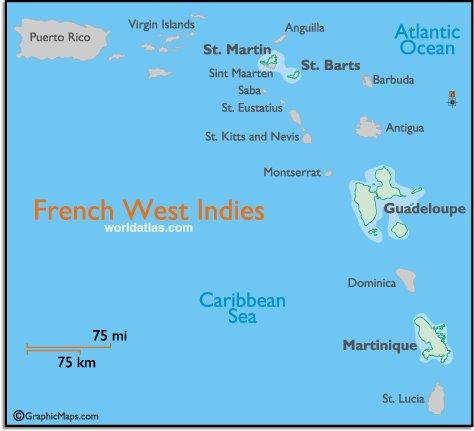
French Caribbean MapThe SFE Foundation, publishers of the book Go Lean … Caribbean welcomes these French Caribbean states into this brotherhood of Caribbean states. We embrace the idea of regional integration, as described in the below article, and push for an even “deeper dive into waters” of confederation, collaboration and convention.

The book Go Lean … Caribbean serves as a roadmap to navigate the integration and consolidation of all 30 member-states into the Caribbean Union Trade Federation (CU). The CU will equally represent these French-speaking Caribbean member-states along with their Dutch, English and Spanish counterparts. The Go Lean roadmap posits that the region is ill-prepared to compete on the world’s stage without this proposed integration. The book declares interdependence among these member-states to form a single market & economy of 42 million people and the potential for an $800 Billion GDP. The end-result will furnish a Caribbean Union that our young people can saddle their dreams to for a consequential future.

For this movement we welcome Guadeloupe, Martinique & St Maarten, and encourage this embrace by other French territories. See news article here:

By the Caribbean Journal staff:
Guadeloupe, Martinique and St Maarten have all joined the Association of Caribbean States (ACS) as associate members.

The three Caribbean territories acceded to the ACS during the regional group’s Ministerial Council meeting in Trinidad last week.

“It is important that we remain a player in the region and that we strengthen the bonds between us and the Nations of the Caribbean,” St Maarten Prime Minister Sarah Wescot-Wiliams said following the move. “One of the things I have been stressing is regarding our responsibilities and roles that we have to take on as a country. One of those is participation in regional and international organizations. Now we have the capacity to meet with the ACS which [gives] us a voice in the region.”

Serge Letchimy, President of Martinique’s Regional Council, said regional integration had been a priority of his tenure, with a view toward “anchoring Martinique in its geographical environment.”

The territories’ accession to the ACS was first announced [at the outset of this 19th Ordinary Meeting of the Ministerial Council].

Martinique and Guadeloupe’s relationship with the sovereign territories of the Caribbean, and how it should develop, continues to be a question for the region.

Last year, a report recommended that Martinique and Guadeloupe integrate economically with the Organization of Eastern Caribbean States – (www.caribjournal.com/2013/04/08/report-urges-oecs-economic-integration-for-martinique-guadeloupe/).

Source:  Caribbean Journal Online News Source; retrieved 02/21/2014 from: http://www.caribjournal.com/2014/02/21/guadeloupe-martinique-st-maarten-join-association-of-caribbean-states/

The Caribbean needs all hands on deck for the region’s societal elevation goals. Consider these organizational dynamics of the ACS and the OECS:

ACS

The Association of Caribbean States (ACS) is a union of nations centered on the Caribbean Basin. It was formed with the aim of promoting consultation, cooperation, and concerted action among all the countries of the Caribbean. The primary purpose of the ACS is to develop greater trade between the nations, enhance transportation, develop sustainable tourism, and facilitate greater and more effective responses to local natural disasters – Wikipedia.com.

It comprises twenty-five member states and four associate members. The convention establishing the ACS was signed on July 24, 1994 in Cartagena de Indias, Colombia. The secretariat of the organization is located in Port of Spain, Trinidad and Tobago.

Antigua & Barbuda Cuba Guyana Panama Venezuela
Bahamas Dominica Haiti St. Kitts & Nevis Aruba
Barbados Dominican Republic Honduras St. Lucia Curaçao
Belize El Salvador Jamaica St. Vincent & Grenadines France
Colombia Grenada Mexico Suriname Turks & Caicos Islands
Costa Rica Guatemala Nicaragua Trinidad and Tobago

Caribbean Sea Agenda
One agenda adopted by the ACS has been an attempt to secure the designation of the Caribbean Sea as a special zone in the context of sustainable development; it is pushing for the UN to consider the Caribbean Sea as an invaluable asset that is worth protecting and treasuring. The organization has sought to form a coalition among member states to devise a United Nations General Assembly resolution to ban the transshipment of nuclear materials through the Caribbean Sea and the Panama Canal.

OECS

The Organization of Eastern Caribbean States (OECS), created in 1981, is an inter-governmental organization dedicated to economic harmonization and integration, protection of human and legal rights, and the encouragement of good governance between the countries/dependencies of the Eastern Caribbean states of Antigua & Barbuda, Dominica, Grenada, Montserrat, St. Kitts & Nevis, St. Lucia and St. Vincent & Grenadines. Anguilla and the British Virgin Islands are associate member states.
Source: Wikipedia.com.

The Go Lean roadmap aligns with the ACS and OECS agenda – all hands on deck – with the implementation plan of an Exclusive Economic Zone for the Caribbean Sea. This plan is therefore conceivable,believable and achievable. 🙂

Download the book Go Lean … Caribbean – now!

Share this post:
, , , ,
[Top]

Caribbean leaders convene for CARICOM summit in St Vincent

Go Lean Commentary

imagesThe forgoing news article highlights many problems with the current Caribbean Community (CariCom); as was also identified in the book Go Lean … Caribbean. The book declares that CariCom has failed in its quest to integrate and elevate the region’s economies.

But there is some special value that can be gleaned from the regional construct. That value is tied to the existing ratification for regional integration for 15 member-states, 5 associate member-states, and 9 observer states. At the outset of the book, an assessment is made of dispositions of all Caribbean states, of all language groups, and the failed execution of the CariCom as a construct. The book’s Prologue declares that all Caribbean member-states must lean-in for change. That change is the ascension of a better regional integrated entity, the Caribbean Union Trade Federation (CU). The book serves as a roadmap for the introduction and implementation of the CU.

The roadmap’s publisher, the SFE Foundation, respectfully disagrees with the Prime Minister of St. Vincent & the Grenadines, the Honorable Ralph Gonsalves. Though he is elected to speak on behalf of the population of the 120,000 of his country, the Go Lean roadmap echoes the cries of a 10-million-strong Diaspora for all the Caribbean, of all 4 languages. While Mr. Gonsalves proclaims “more of the same”, these members of the Diaspora have already cast a dissenting vote, with their “feet and their wallets”, as they fled their Caribbean homelands taking their time, talents and treasuries with them. Undoubtedly, the Diaspora still have a love for their homelands and cultural heritage to be preserved. So through the pages of this book and interactions on Social Media, they have voted their democratic preference: a No for the CariCom status quo, and a Yes for a “deeper dive” into the integration “waters”. It is thusly an unequivocal Declaration of Interdependence.

See the news story here:

By: Peter Richards

KINGSTOWN, St. Vincent – Caribbean Community (CARICOM) leaders began their inter-sessional summit here on Monday reiterating the importance of the regional integration movement to the socio-economic and political development of the region.

Host Prime Minister and CARICOM Chairman, Dr. Ralph Gonsalves said that 41-year-old 15-member grouping was not designed as a central government for a “bundle of disparate territories” neither was it a unitary state or federation or confederation.

“The Revised Treaty of Chaguaramas conceives CARICOM as a community of sovereign states. Its centre has been deliberately designed as a weak superstructure which constantly gropes for consensus.

“That is what the political market can bear, that is the reality which the broad citizenry in the community has endorsed.”

Gonsalves said that neither the political leadership as a collective nor the populations as a whole have an appetite for much more than what is currently on offer in the treaty commitments.

“So our political mandate is to ensure that what is fashioned in the Revised Treaty is implemented optimally. To achieve this we must first love and care for CARICOM, secondly we must ensure that the organs of the Community work as intended and that its decisions are implemented in each nation-state of the Community”

He said thirdly, the political leaders and populations in each nation posses the requisite political will for CARICOM’s optimal functioning as structured.

Gonsalves told the summit that a compelling agenda for CARICOM has been outlined by numerous studies, including one by Trinidad and Tobago’s Foreign Affairs Minister Winston Dookeran and that a “strategic path is being further elaborated by CARICOM.

Gonsalves said that CARICOM is frequently lambasted for its failure or refusal to implement the decisions of its treaty based institutions.

“Invariably, the CARICOM Secretariat is excoriated for this implementation deficit. However, the Secretariat is not CARICOM, it is the central administrative instrument of CARICOM but it possesses no authority to compel enforcement of decisions of the various Councils of Ministers and the Heads of State and Government conference.”

Gonsalves said that in the absence of an executive CARICOM Commission, buttressed by the requisite constitutional or legal authority, the central responsibility for the implementation of CARICOM’s decisions rests with the governments of the individual nation-states.

“Thus, each government is enjoined in its responsibility, nay its solemn obligation to put appropriate institutional

arrangements in its national executive and administrative apparatuses to facilitate the speedy and efficacious implementation of CARICOM decisions.”

Gonsalves told his regional colleagues that to be sure, the delivery of the Secretariat’s administrative and coordinated functions ought to be enhanced even as he acknowledged that the implementation deficit has to be put “squarely where it belongs, at the level of national governments. “Accordingly, vaunted change drivers cannot reasonably facilitate meaningful change in decision-making and implementation in CARICOM if the individual governments or several of them do not embrace a commitment, made manifest through structured arrangements day-to-day, in the making and implementation of CARICOM’s decision.”

“So the success of the CARICOM enterprise truly begins with the political leaderships, though it does not end with us alone. It ends with us, our national populations and national institutions massaged by the balm of our regional apparatuses,” Gonsalves said.

He said while the summit here has a “long agenda” the subjects to be discussed or reviewed for determination all have one focus, “the improvement in the quality of life and living of the people of our CARICOM region.

”Our deliberations at this conference do not take place in an abstract world, but ina lived [in a world where] global, regional and national conditions [are] stuffed with possibilities and limitations.

“The real world of life, living, and production compel us at this time to reflect centrally on measures for strengthening our regional and national economies including the fortification of the Caribbean Single Market and Economy (CSME|), addressing efficaciously the existential challenge of climate change, improving markedly the delivery of air and sea transportation and enhancing citizen security”.

Gonsalves said that apart from these issues there were also the perennial matters such as governance, institutional and administrative arrangements of CARICOM deemed “best suited to achieve CARICOM purposes”.

In her address to the conference, outgoing CARICOM Chairman, Prime Minister Kamla Persad Bissessar said that she was pleased one of the major outcomes of the last summit was the approval for the establishment of the Commission on the Economy to advise regional governments on solutions that would lead to growth and development.

“The Commission’s work has already begun and with a deep appreciation of the fact that sustainable development can only be achieved through the free movement of people and goods, reliable transportation across the region has also become a top priority. “

The Trinidad and Tobago Prime Minister said that in planning for the future of the region, her country would continue to take its responsibility “very seriously in linking our progress to the region’s success.

“As one of the founding members of the Community, we have worked hard to build a reputation on good faith that wherever we seek our best diplomatic and bilateral interests on the global stage, so too will we seek the best interests of CARICOM.”

She said more critical to the sustainability of the region “is our need to work decisively to eradicate crime and threats to the safety of the people of CARICOM.

“In this regard, Trinidad & Tobago proposed an amendment to the agenda of this meeting for the ratification of the Arms Trade Treaty and support for Trinidad and Tobago’s CARICOM-endorsed bid to Host the Secretariat in Port of Spain.”

She said the Arms Trade Treaty provides the region with a significant component in the global fight against the trade of conventional arms in illicit markets.

To date 116 States have signed the ATT, including all CARICOM members, except Haiti.

Eleven States have ratified the Treaty thereby expressing their consent to be legally bound by its provisions. They are Iceland, Guyana, Antigua and Barbuda, Nigeria, Costa Rica, Mexico, Trinidad and Tobago, Grenada, Panama and Norway.

But Prime Minister Persad Bissessar said for the ATT to come into force, Article 22 requires the signatures and early ratification by 50 signatory States so that the Treaty can come into force with the minimum of delay.

She said Mexico and Chile have already formally pledged support for Trinidad and Tobago’s CARICOM-endorsed bid to host the ATT Secretariat.

“However, among CARICOM member States, only Guyana, Antigua and Barbuda, Trinidad and Tobago and Grenada have so far ratified the ATT.

“In addition, I want to urge CARICOM member-states to prepare to participate, once more with an unified approach, in the negotiations that will ensue before and after the ATT comes into force.”
Source: Caribbean360.com – Caribbean Online Magazine (Retrieved 03/10/2014) –
http://www.caribbean360.com/index.php/news/st_vincent_news/1107238.html#axzz2vZjwuqhO

This Go Lean book serves as a roadmap for the implementation of the CU, as a technocratic federal government to administer and optimize the economic, security and governing engines of the region’s 30 member-states. This is a viable solution to many common problems. The same problems that led to the human and capital flight that has imperiled the region, as many countries have lost large populations.

Mr. Gonsalves proclaimed that “the success of the CARICOM enterprise truly begins with the political leaderships”. To the contrary, the Go Lean roadmap proclaims that success in the region cannot commence from a “top-down” approach, the leaders are simply not equipped to devise solutions; nor can the success proceed from a “bottom-up” approach, because the common “man on the street” just does not have the answers. But rather, the road to success must emerge from a Special Interest Group of those trained, fostered and groomed specifically for this task (champions of related battles[b] [d] in recent history). The book identifies this quality as technocratic and prescribes the CU as a technocracy.[a][c]

The issue of leadership (and governance) is presented as paramount for the successful turn-around of the Caribbean dispositions; see Appendix VIDEO.

And so now is the time to stop with the status quo and forge change by implementing the Five Year roadmap advocated in the book Go Lean … Caribbean. The benefits of this plan are too tempting to ignore: emergence of an $800 Billion dollar economy, 2.2. million new jobs, new industries, services and opportunities for the youth of the Caribbean and even an invitation to the Diaspora to repatriate.

Now finally, in contrast to the CariCom reality and prospects, with the Go Lean implementations, the Caribbean region can become a better place to live, work and play for all citizens.

Download the book Go Lean … Caribbean now!

———-

Appendix VIDEO – Good Leaders -vs- Bad Leaders – https://youtu.be/TnAPe3mXOqA

Published on Jul 13, 2013 – This is a video that highlights some of the differences between a Good Leader and a Bad Leader
  • Category: Education
  • License: Standard YouTube License

———–

Appendix – Go Lean Book References

a.  Fostering a Technocracy – Page 64
b.  10 Lessons Learned from 2008 – Page 136
c.  10 Ways to Foster Genius – Page 27
d.  SFE Foundation – Who We ArePage 8


Share this post:
, ,
[Top]

Bahamians Make Presence Felt In Libyan League

Go Lean Commentary

Basketball_HoopsThe news story in the following news article synchronizes with the book Go Lean … Caribbean in that it depicts the realities of how sports can impact the economics of a community.

Go Lean serves as a roadmap for the implementation of the Caribbean Union Trade Federation (CU), a technocratic federal government to administer and optimize the economic/security/ governing engines of the region’s 30 member-states. At the outset, the roadmap features these statements in the Declaration of Interdependence (Page 13 & 14):

xxi. Whereas the preparation of our labor force can foster opportunities and dictate economic progress for current and future generations, the Federation must ensure that educational and job training opportunities are fully optimized for all residents of all member-states, with no partiality towards any gender or ethnic group. The Federation must recognize and facilitate excellence in many different fields of endeavor, including sciences, languages, arts, music and sports. This responsibility should be executed without incurring the risks of further human flight, as has been the past history.

xxxi. Whereas sports have been a source of great pride for the Caribbean region, the economic returns from these ventures have not been evenly distributed as in other societies. The Federation must therefore facilitate the eco-systems and vertical industries of sports as a business, recreation, national pastime and even sports tourism – modeling the Olympics.

The actual news article was posted as follows:

By RENALDO DORSETT, Sports Reporter (rdorsett@tribunemedia.net)
You can find Bahamians playing basketball on just about every continent but it’s rare to find former high school teammates reunited on the same roster at the professional level.

In the Libyan D1 basketball league, Scottie Farrington and Tehran Cox are two of the top players with the Al Madina Tripoli club.

They are two of three Bahamians competing in the Libya-D1 league along with Torrington Cox who plays with Al Ahly Benghazi.

Farrington, a 6’8” forward and University of Louisiana Lafayette graduate, is currently averaging 21 points, 14 rebounds and four blocks per game while Cox, formerly of High Point University, is averaging a team high 24 points, six assists and four rebounds per game.

The duo first teamed up in 2002 to win the Government Secondary School Sports Association junior boys basketball championship at SC McPherson Junior High under coach Ulric Sands and Chevy Simmons.

They also represented The Bahamas together in 2005 at the Caribbean Basketball Championships in Trinidad and Tobago where they helped lead the Bahamas to an upset over regional powerhouse Puerto Rico en route to the gold medal.

Both players are in their first season with Madina. However, Farrington has previously played in Saudi Arabia, Dubai and Thailand, while Cox, in his first professional stint, began the year in Kuwait.

Farrington said having a familiar face in the starting lineup far away from home has been a benefit both on and off the court, particularly since the country continues to rebuild following the 2011 revolution which ousted Muammar al-Gaddafi.

“It’s an experience of a lifetime. Especially being here with these people who are trying to rebuild

their country after the revolution. Playing here with Tehran and knowing makes this a more comfortable situation,” he said. “We talked about it because we have the same agent but we didn’t think it was going to actually happen.”

The club is currently ranked fifth in the East Group at 3-5, however their individual play has already garnered opportunities for the next possible step in their professional careers.

“I wouldn’t say it’s the best fit but the competition here is better than I expected. A few guys here have played or attended training camp for NBA teams so that means a lot to compete against these guys,” Farrington said. “This is just our first season here with Madina. We signed here in November and after our performance here we have already been contacted by clubs in Spain and in Serbia for next season, but we will save that for later and focus on finishing off this season strong.”

Farrington played under Godfrey McQuay with the St Anne’s Blue Waves before completing his high school career at the Christian Life Centre in Houston, Texas.

He spent his freshman year at Rogers State and his sophomore year at Odessa before he played at the NCAA D1 level with Louisiana Lafayette.

In his senior year at Louisiana, he also teammed with Bahamians Kentwan Smith and Kadeem Coleby.

Cox, a 6’1” point guard, was dominant in the backcourt for the CI Gibson Rattlers before he finished his high school career at Fayetteville Christian School in Fayetteville, Arkansas.

He spent two seasons at Arkansas Fort-Smith before he transferred to High Point for his junior and senior seasons.

Cox has helped Al Ahly Benghazi to second place in the West Group at 5-2, on a roster that also features former Boston Celtics draft pick Orien Greene.

Torrington Cox, a 6’7” forward, is in his seventh professional season and is currently averaging 25 points, 12 rebounds and two blocks per game. He previously played in Mexico, Chile, Saudi Arabia , Egypt, Kuwait, Dubai and was also selected by the Utah Flash in the 2008 NBA D-League draft.

Source:  The Tribune – Bahamas Daily Newspaper Online Site (Retrieved 03/04/2014) –http://www.tribune242.com/news/2014/mar/03/bahamians-make-presence-felt-in-libyan-league/

The Go Lean roadmap posits that genius qualifiers are found through out Caribbean society, and that this may be identified with excellence in sports. With the proper market organizations, sporting events can be lucrative for a community and participants. But that market organization does not currently exist in the Caribbean. An objective of this roadmap is to develop the organized markets.

This objective aligns with the CU’s prime directives to elevate the region’s economy, create future prospects for the Caribbean’s youth and invite the far-flung Diaspora to return to their island homelands. Consider the experiences of the 3 Bahamian athletes in Libya (a country in the North Africa’s Sahara desert region), would they rather be in Libya or the Bahamas, or any other Caribbean destination? The tagline in the Go Lean book is that the Caribbean is the world’s greatest address; there are not too many claims of Libya competing for that title.

Now is the time for all of the Caribbean to forge permanent change by implementing the Five Year roadmap advocated in Go Lean … Caribbean. The benefits of this plan as it relates to sports is the optimization of local opportunities at all levels, youth all-stars & regional tournaments, an intercollegiate eco-system and professional leagues. The CU will facilitate the applicable venues (stadia, arenas, fields, temporary structures and broadcast/streaming capabilities). The roadmap calls for the creation of 2,000 new direct jobs within the region.

Now finally, with the Go Lean implementations, the Caribbean can become a better place for all citizens to live, work and play.

Share this post:
, ,
[Top]

Collegiate Sports in the Caribbean

Go Lean Commentary

CampionExcelsiorK20120911IASports play a big role in Caribbean culture. Education plays a big role in the empowerment of communities. There is a junction between sports and academics; this is the sphere of college athletics.

Cuba has 37 universities…alone. In total, the Caribbean has 42 million people (2010 figures) in all 30 member-states. So surely there is enough of a student population to field sports teams.

More so, there is a fan base in the communities to complete the eco-system of sports spectators and community pride. Yet, there is very little college sports being facilitated in the region right now. Despite the breadth and talent base to form leagues and rivalries among the established universities within the Caribbean. Any system for college athletics is noticeably lacking.

This is the mission of the Caribbean Union Trade Federation (CU); to function as a Caribbean version of the National Collegiate Athletic Association (NCAA) in the US. We have much to learn from this organization’s history, successes & failures.

“The NCAA was founded in 1906 to protect young people from the dangerous and exploitive athletics practices of the time,” so states the NCAA on its official website.[a]

According to Dan Treadway, Associate Blog Editor for the Huffington Post online news magazine[b]:

The NCAA often likes to harp on tradition and the sanctity of the term “student-athlete,” but it fails to recognize its true roots.

The association in fact got its start because, at the time of its creation, football was in danger of being abolished as a result of being deemed too dangerous a sport. During the 1905 season alone, 18 college and amateur players died during games. In response to public outcry, Theodore Roosevelt, an unabashed fan of the sport, gathered 13 football representatives at the White House for two meetings at which those in attendance agreed on reforms to improve safety. What would later become known as the NCAA was formed shortly after on the heels of this unifying safety agreement.

Collegiate Sports is now big money; an economic eco-system onto itself. How much money does the NCAA make?

For the 2010-11 fiscal year, the NCAA revenue was $845.9 million, (not including College Football). Total rights (broadcast & licensing) payment for 2010-11 was $687 million, of all NCAA revenue. The remaining revenues are mostly event ticket sales.

How did the NCAA go from being an agreement to promote safety standards so as to prevent death on the playing field, to a multi-million dollar enterprise? Chalk that up to 100 years of social evolution.

The book Go Lean … Caribbean serves as a roadmap to advance to the end of the evolutionary process and establish the economic engines to empower the Caribbean region, even in areas like sports and culture.

So how to build sports franchises anew? How will colleges & universities create success from collegiate athletics? It’s a complex “art and science”, but first, it starts with facilities – the CU’s Fairground administration will fund, build and manage sports venues. The CU will be the landlord; the academic institutions, the tenants.

The Go Lean roadmap navigates the changed landscape of globalization and pronounces that change has come to the Caribbean but the region is not prepared. Despite the great appreciation for sports, and the excellent talent of its athletes, there is no business model for the consumption of Caribbean collegiate athletics.

Now, for much of the Caribbean, the population tunes in and pays for cable/satellite TV service to consume American collegiate athletic programming. But how many people in the region are watching Caribbean college sporting activities? None. Though there is a demand, undoubtedly, there is no supply process in place.

In the adjoining table in the Appendix, 36 schools are identified that are capable of fielding credible sports teams, if the appropriate facilitations were in place.

There is the demand. What’s missing is the organized market for consumption. The implementation of this Go Lean roadmap fills this void. This completes the supply!

Applying the model of the NCAA, much can be learned. We can copy their success, and learn from their pitfalls. The NCAA credits tremendous revenues for itself, but not necessarily for all of their members. Under NCAA supervision, the majority of athletic programs, in fact, lose money and are subsidized by funds from their respective university. While the NCAA is needed for academic integrity in college sports, many times, it fails at this responsibility. They lack the CU’s lean execution ethos.

After 100 years later, does the world still need the NCAA? Absolutely! For more than the collective bargaining/negotiations role for the business side of college athletics. They are also the governing body for college athletics, ensuring fairness and good sportsmanship. For the Caribbean Union, this role is to be assumed by the CU Sports Administration, to provide technocratic efficiencies. The resultant eco-system facilitates the CU mandate, to make the region a better place to live, work and play.

Download the book Go Lean … Caribbean – now!

———————-

APPENDIX A – References:
ahttp://www.ncaa.org/wps/wcm/connect/public/NCAA/About+the+NCAA/History
b – http://www.huffingtonpost.com/ daniel-treadway/johnny-manziel-ncaa-eligibility_b_3020985.html

———————-

APPENDIX B – Caribbean Regional Colleges & Universities

Member-state

Legacy

Name

Antigua and Barbuda

British

Antigua State College
Aruba

Dutch

University of Aruba
Bahamas

British

College of the Bahamas
Barbados

British

University of the West Indies – Cave Hill, American University
Belize

British

University of Belize
Galen University
Bermuda

British

Bermuda College (Community College)
Cuba

Spanish

University of Havana Universidad de Oriente, Polytechnic University José Antonio Echeverría
Dominican Republic

Spanish

Universidad Autónoma de Santo Domingo (UASD) – (English: Autonomous University of Santo Domingo)
French Caribbean

French

University of the French West Indies and Guiana Guadeloupe Campus, Martinique Campus, French Guiana Campus
Guyana

British

University of Guyana
Haiti

French

Caribbean University / Université Caraïbe, Université d’Haiti
Jamaica

British

University of the West Indies – Mona, University of Technology (U-Tech), Mico University College, Northern Caribbean University (NCU), University College of the Caribbean (UCC), International University of the Caribbean (IUC)
Netherlands Antilles

Dutch

University of Curaçao
Curaçao
Sint Maarten University of St. Martin
Puerto Rico

USA/

Spanish

Caribbean University, Metropolitan University, University of Puerto Rico, University of Turabo
Suriname

Dutch

University of Suriname Anton de Kom Universiteit van Suriname
Trinidad and Tobago

British

University of the West Indies – Saint Augustine University of Southern Caribbean (USC) University of Trinidad and Tobago (UTT)
US Virgin Islands

USA

University of the Virgin Islands

Share this post:
, ,
[Top]