Category: Strategy

Chambers’ Strategy: A Great Role Model

Go Lean Commentary

We normally do not think much about Chambers of Commerce, but they are important in the normal eco-systems that businesses operate in. Despite the community, a representative of a Chamber of Commerce – see Appendix A below – can almost always get an audience with the Mayor or other governmental executives. See this news reference here:

CU Blog - Chambers Strategy - A Great Role Model - Photo 2Mention the Chamber of Commerce, and most people think of a benign organization comprised mostly of small business owners who meet for networking and mutual support in local chapters across the U.S. But today’s Chamber is anything but that, according to Alyssa Katz’s extensive research, recently published as “The Influence Machine.”

Founded in 1912, the U.S. Chamber of Commerce has been shaped by its CEO Tom Donohue into a powerful lobbying and campaigning machine that pursues a fairly narrow special-interest agenda. It’s now the largest lobbying organization in the U.S. (ranked by budget). It mostly represents the interests of a handful of so-called “legacy industries” – industries like tobacco, banking and fossil fuels which have been around for generations and learned how to parley their earnings into political influence. The Chamber seeks favorable treatment for them, for example, through trade negotiations, tax treatment, regulations and judicial rulings.
Source: Retrieved April 30, 2016 from: http://www.usnews.com/opinion/economic-intelligence/2015/10/22/who-does-the-us-chamber-of-commerce-really-represent

The book Go Lean … Caribbean, a how-to guide for elevating the societal engines in the Caribbean homeland, owes its origin-motivation to the US Chamber of Commerce. On August 1, 2011 the US Chamber published a recommendation to American power brokers on how to recover from the recession and create jobs in the US. They provided a 10-Step advocacy for creating jobs in the US; in response, the Go Lean publishers created its own 10-Step advocacy for the Caribbean; this proved to be the first of 144 advocacies that constituted the 370-page book. See the side-by-side comparison in Appendix B below.
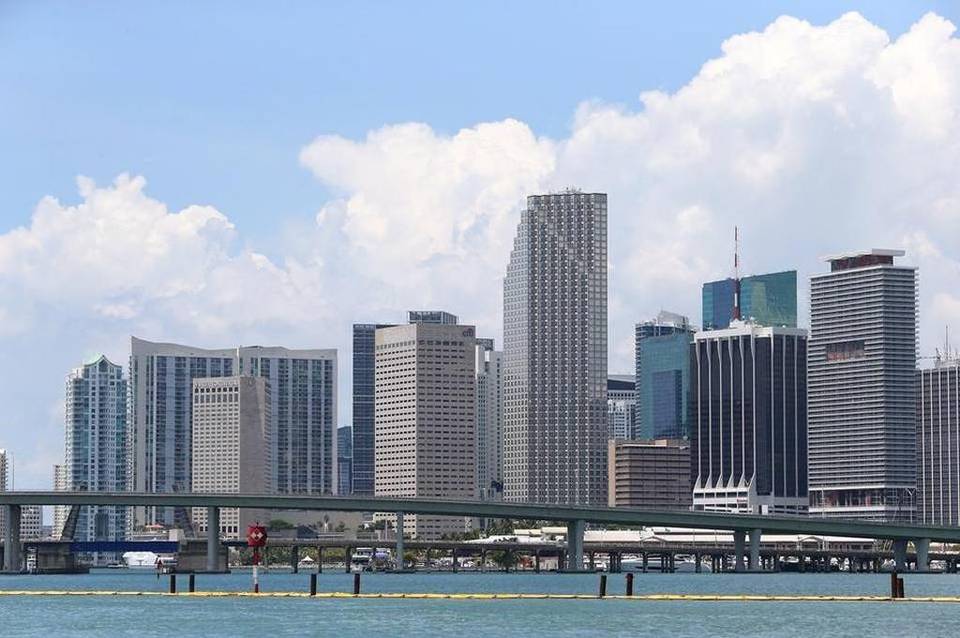
CU Blog - Chambers Strategy - A Great Role Model - Photo 1The Go Lean book was composed with many of the same strategies as pro-business Chambers of Commerce in the US. We therefore look to these organizations as a role model in our roadmap to transform – remediate and mitigate – the engines of regional economics, security and governance. Rather than just any Chamber in the US, this commentary considers the example of the 2 Chambers in South Florida (Greater Miami Chamber in Miami-Dade County and the Fort Lauderdale Chamber in Broward County). These entities are now embarking on a strategy that the Caribbean stewards should examine and apply in our region. See VIDEO in Appendix C below on the Greater Miami Chamber; the City of Miami is pictured here.

The publishers of the Go Lean book are now here in Greater Miami, (in from Detroit), to observe-and-report on the developments and progress of this neo-Caribbean community. Miami is notorious for its penetration of Caribbean people, culture and causes. It has a full scope of business and civic activities that traverse the breadth-and-depth of Caribbean interest. Miami’s success, with its potpourri of Caribbean Diaspora, comes as a consequence of many Caribbean failures; consider the experiences of Cubans, Haitians, Dominicans, Puerto Ricans, JamaicansBahamian and other nationalities from the region.

Therefore the strategies, tactics and implementations of the Miami-Dade-Broward Chambers of Commerce definitely apply to the Caribbean region. See related news article here:

Title: Greater Miami, Fort Lauderdale chambers may merge
By: Nancy Dahlberg and Jane Wooldridge ndahlberg@miamiherald.com

South Florida’s two largest chambers of commerce, the Greater Miami Chamber of Commerce and the Greater Fort Lauderdale Chamber of Commerce, are exploring a merger.

A memorandum of understanding was signed by the executive committees of each group, the chambers announced on Monday. A task force is being created to explore the structure and operational issues required for the combination to move ahead, and the chambers will decide by the end of the year whether to proceed, the chambers said.

“It’s a great opportunity for our business communities to evaluate this as many of the things we do discuss are very regionalized. … such as transportation, sea level rise and beach erosion,” said Heiko Dobrikow, chairman of the Greater Fort Lauderdale Chamber of Commerce and General Manager of the Riverside Hotel. “And when you have a larger, more regional representation, it gives our members certainly more growth potential for their businesses.”

Christine Barney, chairwoman of the Greater Miami Chamber of Commerce and CEO of Miami’s rbb Communications, concurred. “The potential combination gives more clout to the business community in shaping the future of South Florida,” she said.

“In the past we’ve done a lot of strategic alliances and that can only do so much,” Barney said. “We thought a more-aggressive approach was needed.”

Though membership in both Greater Miami and Greater Fort Lauderdale chambers has remained strong, nationwide, chambers of commerce have suffered declining membership and revenues.

“Even though we are acquiring new members it is probably not at the same rate as we wish, and there is probably a great opportunity that we have,” Dobrikow said.

The Greater Miami Chamber was founded in 1907 and now boasts about 4,100 members representing about 400,000 employees. The Greater Fort Lauderdale Chamber, founded in 1910, has 1,311 company-members that employ more than 500,000.

Both counties are also home to myriad smaller chambers focusing on specific geography or demographics. The idea rose from regular meetings between the president and CEOs of the two organizations, said Miami’s Barry Johnson, who announced recently he will retire at the end of this year.

Said Dan Lindblade, leader of the Greater Fort Lauderdale Chamber, “Barry Johnson and I have been talking over the years and we thought now would be a good time to begin these discussions to see if they lead us into the direction that we both feel is inevitable — a regional chamber with the size and scope of the two largest chambers in Broward and Miami-Dade.”

The Greater Miami chamber will continue the search for Johnson’s replacement during the evaluation period, Barney said.

As more small smartups emerge throughout South Florida, the traditional model of fee-based memberships has become less attractive to some members, who may have specific needs such as international introductions or skills training but not the full range of services now offered, said Barney. The ultimate goal, said both chamber chairs, is to bring more value to members.

Said Barney, “Miami is unique, Broward unique, Palm Beach is unique. … Whatever we do, we want to keep the strength of the local representation as front and center as possible.”
Source:  Posted April 26, 2016; retrieved April 30, 2016 from: http://www.miamiherald.com/news/business/article73800622.html

So the Greater Miami Chamber of Commerce and the Greater Fort Lauderdale Chamber of Commerce are considering merging, consolidating and integrating their efforts to elevate the business environment for the entire South Florida region. If successfully executed, this effort could be a role model for the Caribbean region to emulate. This discussion aligns with the book Go Lean … Caribbean, in its effort to serve as a roadmap for the introduction and implementation of the Caribbean Union Trade Federation (CU); the purpose of which is to elevate Caribbean society, for all 30 member-states. The book stresses the need to optimize the societal engines of economics, security and governance. Jobs is a very important goal of the Go Lean roadmap, with a prime directive to create 2.2 million new jobs in the Caribbean.

The stance of Chambers of Commerce is normally pro-business, anti-labor. So they are not always universally loved in their communities; they do and will “ruffle feathers”; sometimes they are even accused of promoting Crony-Capitalism. But the Go Lean focus here is “jobs” more so than Chambers of Commerce. The Go Lean book opens with pronouncements relating to the jobs-creating directive. Consider these statements early in the book in the Declaration of Interdependence (Page 12 – 14):

xxi. Whereas the preparation of our labor force can foster opportunities and dictate economic progress for current and future generations, the Federation must ensure that educational and job training opportunities are fully optimized for all residents of all member-states, with no partiality towards any gender or ethnic group. The Federation must recognize and facilitate excellence in many different fields of endeavor, including sciences, languages, arts, music and sports. This responsibility should be executed without incurring the risks of further human flight, as has been the past history.

xxiv. Whereas a free market economy can be induced and spurred for continuous progress, the Federation must install the controls to better manage aspects of the economy: jobs, inflation, savings rate, investments and other economic principles. Thereby attracting direct foreign investment because of the stability and vibrancy of our economy.

xxv. Whereas the legacy of international democracies had been imperiled due to a global financial crisis, the structure of the Federation must allow for financial stability and assurance of the Federation’s institutions. To mandate the economic vibrancy of the region, monetary and fiscal controls and policies must be incorporated as proactive and reactive measures. These measures must address threats against the financial integrity of the Federation and of the member-states.

xxvi.   Whereas the Caribbean region must have new jobs to empower the engines of the economy and create the income sources for prosperity, and encourage the next generation to forge their dreams right at home, the Federation must therefore foster the development of new industries… In addition, the Federation must invigorate the enterprises related to existing industries like tourism … impacting the region with more jobs.

The subject of job creation has been directly addressed and further elaborated upon in these previous blog/commentaries:

https://goleancaribbean.com/blog/?p=6760 Where the Jobs Are – A Lesson in ‘Garbage’
https://goleancaribbean.com/blog/?p=6680 Vegas Casinos Create New Jobs By Betting on Video Games
https://goleancaribbean.com/blog/?p=6089 Where the Jobs Are – Futility of Minimum Wage
https://goleancaribbean.com/blog/?p=4240 Immigration Policy Exacerbates Worker Productivity Crisis
https://goleancaribbean.com/blog/?p=3694 Job Option: Jamaica-Canada employment programme
https://goleancaribbean.com/blog/?p=3050 Obama’s immigration tweaks in the US leave Big Tech wanting more
https://goleancaribbean.com/blog/?p=2857 Where the Jobs Are – Entrepreneurism in Junk
https://goleancaribbean.com/blog/?p=2750 Disney World – Role Model for Self Governing Entities
https://goleancaribbean.com/blog/?p=2338 Using SGE’s to Welcome the Dreaded ‘Plutocracy’ and Jobs
https://goleancaribbean.com/blog/?p=2126 Where the Jobs Are – Computers Reshaping Global Job Market
https://goleancaribbean.com/blog/?p=2003 Where the Jobs Are – Ship-breaking under SGE Structure
https://goleancaribbean.com/blog/?p=1698 STEM Jobs Are Filling Slowly

The Go Lean book itself details the economic principles and community ethos to adopt, plus the executions of strategies, tactics, implementations and advocacies to create new jobs in Caribbean communities. See a sample list here:

Economic Principles – People Choose because Resources are Limited Page 21
Economic Principles – All Choices Involve Costs Page 21
Economic Principles – People Respond to Incentives Page 21
Economic Principles – Economic Systems Influence Individual Choices Page 21
Economic Principles – Voluntary Trade Creates Wealth Page 21
Economic Principles – Consequences of Choices Lie in the Future Page 21
Community Ethos – Job Multiplier Page 22
Community Ethos – Lean Operations Page 24
Community Ethos – Return on Investments Page 24
Community Ethos – Ways to Impact the Future Page 26
Community Ethos – Ways to Help Entrepreneurship Page 28
Community Ethos – Ways to Impact Research & Development – Create Local; Stay Local Page 30
Strategy – Vision – Integrate 30 member-states to a Single Market Economy Page 45
Strategy – Mission – Foster local economic engines Page 45
Tactical – Tactics to Forge an $800 Billion Economy – High Multiplier Industries Page 70
Tactical – Separation of Powers – Commerce Department – Promotions Role Page 78
Implementation – Ways to Deliver Page 109
Planning – Ways to Improve Trade Page 128
Advocacy – Ways to Create Jobs Page 152
Advocacy – Ways to Improve Education Page 159
Advocacy – Ways to Impact Labor Markets and Unions Page 164
Advocacy – Ways to Foster Technology Page 197
Advocacy – Ways to Foster e-Commerce Page 198
Advocacy – Ways to Help the Middle Class – Promote Entrepreneurship Page 223
Advocacy – Ways to Impact Youth – Early Start for STEM Page 227
Appendix – Growing 2.2 Million Jobs in 5 Years Page 257
Appendix – Job Multipliers Page 259

The Go Lean … Caribbean roadmap needs the effective modeling of South Florida’s business promotion, as in the regional Chambers of Commerce. Considering the 5 L‘s, (Look, Listen, Learn, Lend-a-hand & Lead), there will be much for us to look, listen and learn in the South Florida area. Eventually we may even be able to lend-a-hand to the South Florida cause – especially in regards to the Diaspora – but our focus is on the Caribbean. We do not look to lead in Florida; we are preparing to lead in the Caribbean.

Today, the Greater Miami / South Florida region is a better place to live, work and play … due in many ways to the contributions of the Caribbean Diaspora. These ones are active in the participation of the work-force, business promotion and culture of South Florida, resulting in a distinctive character that has made the Greater Miami region unique, and appealing.

We invite all of the Caribbean Diaspora in the Greater Miami / South Florida region to lean-in to this roadmap to make the Caribbean a better place to live, work and play. We also urge all stakeholders in the Caribbean to lean-in to this roadmap. 🙂

Download the book Go Lean … Caribbean – now!

———–

Appendix – Encyclopedic Reference: Chamber of Commerce

A chamber of commerce (or board of trade) is a form of business network, for example, a local organization of businesses whose goal is to further the interests of businesses. Business owners in towns and cities form these local societies to advocate on behalf of the business community. Local businesses are members, and they elect a board of directors or executive council to set policy for the chamber. The board or council then hires a President, CEO or Executive Director, plus staffing appropriate to size, to run the organization.

The first chamber of commerce was founded in 1599 in Marseille, France.[1][2][3][4] Another official chamber of commerce would follow 65 years later, probably in Bruges, then part of the Spanish Netherlands.[5]

The world’s oldest English-speaking chamber of commerce, in New York City, dates from 1768.[6] The oldest known existing chamber in the English-speaking world with continuous records, the Glasgow Chamber of Commerce,[7] was founded in 1783. However, Hull Chamber of Commerce[8] is the UK’s oldest, followed by those of Leeds and of Belfast in Northern Ireland.

As a non-governmental institution, a chamber of commerce has no direct role in the writing and passage of laws and regulations that affect businesses. It may however, lobby in an attempt to get laws passed that are favorable to businesses. They also work closely with a number of other youth organizations in the country about the value and role of business in our Source: Retrieved April 30, 2016 from: https://en.wikipedia.org/wiki/Chamber_of_commerce

———–

Appendix B – Creating Jobs: How?


US Chamber of Commerce – 2011

Go Lean … Caribbean (Page 152)

1

Steer more students into technical schools Lean-in for the Caribbean Single Market & Economy

2

Enhance the payoff of a college degree Feed Ourselves

3

Help small businesses find foreign customers Clothe Ourselves

4

Welcome more immigrants House Ourselves

5

Create a national jobs database Update Our Own Infrastructure and the Industries They Spun

6

Create “lean” regulatory agencies Steer More People to S.T.E.M. Education and Careers

7

Speed the foreclosure epidemic Help Regional Businesses Find Foreign Markets

8

Copy Germany’s Model for Jobs Preservation Welcome Home Emigrants

9

Draw more tourists Welcome “Empowering” Immigrants

10

Lure American companies back home Draw More Tourists

Source: Posted August 1, 2011; retrieved April 30, 2011 from http://www.usnews.com/news/slideshows/10-ways-to-create-jobs

———–

Appendix C VIDEO – Greater Miami Chamber of Commerce – https://youtu.be/igNL5An_VAo

Published on Jul 18, 2015 – Category: How To & Style
License: Standard YouTube License
 

Share this post:
, ,

ENCORE: eMerge conference aims to jump-start Miami tech hub

This commentary is being re-distributed on the occasion of eMerge TechWeek 2016.
The event just ended … April 18 – 19.

CU Blog - eMerge Conference 2016 Photo 1

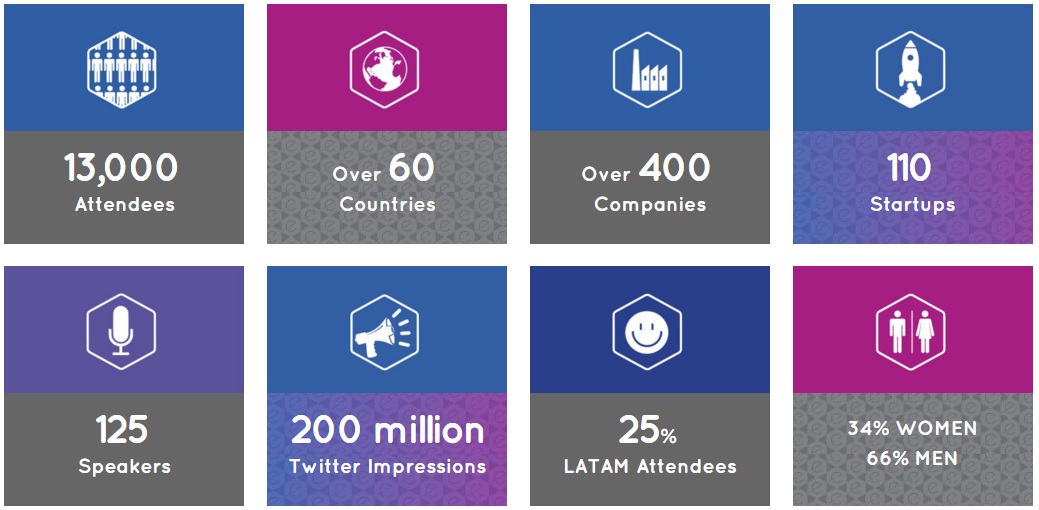
In the commentary in 2014, previewing the inaugural event, the expectation was for 3,000 visitors. This time, just 2 years later, the attendance was 13,000 visitors. Congratulations to the organizers on this successful event. Now let’s plan on another successful one for June 12 – 13, 2017.

The original blog – still relevant – is as follows:
—————

Go Lean Commentary

Master BrokersPositive Change!

It doesn’t just happen. It takes people forging it, guiding it and fostering it. The below news article speaks of the effort in South Florida (from Miami north to West Palm Beach) to establish an economic engine of a “tech hub”.

This is a noble, yet strategic undertaking. Success in this “industry space” would mean more jobs, investment capital, and more technology students remaining in South Florida after matriculating in the area’s colleges. These 3 objectives align this story with the advocacies of the book Go Lean … Caribbean.

The book serves as a roadmap for the introduction and implementation of the Caribbean Union Trade Federation (CU). The prime directive of this organization is to optimize the economic engines of the Caribbean region. We also want to increase jobs and investment capital, plus retain more of our young people aspiring for careers in high technology fields. But the CU wants to harvest these activities in the Caribbean, for the Caribbean and by the people of the Caribbean.

South Florida is germane to the Caribbean conscience. It is the Number One destination for the Caribbean Diaspora, featuring large populations of Cubans, Jamaicans, Dominicans (DR), Puerto Ricans, Bahamians, and Haitians. The book relates this association by declaring the NBA basketball team, Miami Heat, as the “home team” of the Caribbean; (Page 42).

Right time, right place!

The eMerge Americas Techweek is this week. Also, the Miami Heat has just started the playoffs in defense of their consecutive World Championships.

By: Marcia Heroux Pounds and Doreen Hemlock

A movement to make South Florida a technology hub for the Americas kicks off its first conference this week, aiming to draw more than 3,000 people from entrepreneurs to investors to students — from Broward and Palm Beach counties and from around the world.

Organizers want to build on South Florida’s success as a gateway to Latin America for trade, banking and services, extending that prowess into technology, entrepreneurship and capital for startups. They hope the event — eMerge Americas Techweek — can do for tech what the annual Art Basel event in Miami Beach has done for art: put South Florida on the world map.

It’s an exciting chance for entrepreneurs like Boca Raton’s Dan Cane, chief executive of Boca Raton-based Modernizing Medicine, which developed an iPad application for specialty physicians. He’s among influencers named to the event’s “Techweek100” — South Florida leaders who have had a significant impact on business and technology. He will speak at the conference.

“We jumped at the opportunity,” said Cane, whose 3-year-old company had $17.5 million in sales last year. “We hope to find contacts and connections and begin to develop the right ecosystem in the Latin American market” to export south starting next year.

The eMerge push doesn’t strive to make South Florida into Silicon Valley. It aims instead for a tech center specialized in multinationals looking south, Latin American companies moving north, local startup companies, as well as universities and investors.

That’s why Citi Latin America, the regional headquarters for financial giant Citi, is taking part in what is planned as an annual event. The division employs about 750 people in Miami-Dade and Broward counties and is sponsoring the event, sending speakers and bringing clients, said Jorge Ruiz, who heads digital banking.

“This event is a great example of the things we should do more of,” Ruiz said. It showcases the importance of technology to a range of industries, promotes what South Florida already offers and highlights South Florida’s ability to unite from across the Americas for tech business, he said.

“As people come together, they’re going to realize this is the space to invest in,” Ruiz said.

Universities that train talent for tech jobs are eager to participate too.

“We’re going to bring as many students as possible,” said Eric Ackerman, dean and associate professor of the Graduate School of Computer and Information Sciences at Nova Southeastern University, who also is on the Techweek100 list. Nova has more than 500 students studying information technology.

Ackerman said tech graduates often leave South Florida, figuring they will have better job opportunities in larger hubs known for innovation.

“That’s one of the things we are trying to change — to become an innovation zone for new technology, new products and new services,” Ackerman said. “An event like this says, ‘Look what’s here in our own back yard. Why should I go somewhere else?’ ”

Kimberly Gramm, assistant dean and director of FAU’s Adams Center for Entrepreneurship, is taking winners of FAU’s recent business plan competition to eMerge’s Startup Village.

Some of South Florida’s largest tech companies also will exhibit at eMerge. Those include Citrix Systems of Fort Lauderdale, C3 Cloud Computing Concepts of Delray Beach and TriNet Group of Boca Raton, said Lonnie Maier, president of the South Florida Technology Alliance, a group that promotes local tech.

Investors and consultants to startups also are heading to eMerge to network and build business.

New World Angels, a Boca Raton-based group of investors, will share a booth with the Miami Innovation Fund to offer entrepreneurs advice on launching or growing their ventures, said Rhys Williams, executive director of New World Angels and a Techweek 100 leader.

“Technology investing is a contact sport. There are few textbooks or classes of relevance, so this conference is a timely way to keep current on your knowledge base and pick up new knowledge, skills and contacts,” said Williams, who also is a judge in the eMerge Launch competition where more than 200 companies will compete for $150,000 in prizes.

Of course, South Florida faces hurdles in its quest, tech leaders said.

The area needs to overcome a long-time image based on sun and fun. And it needs to show critical mass in tech, especially success stories of entrepreneurs that grew startups to global players — much as conference organizer Manny Medina did, starting Miami-based Terremark and selling it for more than $1.4 billion to Verizon.

Enterprise Development Corp. President Rob Strandberg, whose group works with startups from Boca Raton to Miami, will be busy making introductions between entrepreneurs and potential investors at the conference. He’s also a judge in the Launch competition.

EDC executive director Linda Gove will participate with the Boca Raton incubator’s startup companies.

“Investors are taking notice of South Florida companies to a far greater extent than they were,” Strandberg said.

Joe Levy, CEO of Fort Lauderdale-based startup ClearCi and also named to the Techweek 100, said the perception of the area as a tech hub is changing.

“Folks used to ask me, ‘Why aren’t you in Silicon Valley?’ ” Levy said. “We don’t get that anymore.”

South Florida’s Sun Sentinel Daily Newspaper – April 27, 2014 – http://www.sun-sentinel.com/business/careers/fl-emerge-broward-palm-beach-20140427,0,1252077.story

The Go Lean roadmap calls for agencies within the CU to champion technological start-up endeavors, much like this week’s eMerge initiative.

There is much for the CU’s planners to glean by the observation of the planned events this week. The Go Lean/CU approach, in the absence of the actual establishment of the Trade Federation is simply to:

1. Look
2. Listen
3. Learn
4. Lend-a-hand
5. Lead

This approach is codified in the book, with details of community ethos, strategies, tactics, implementations and advocates; as follows:

Community Ethos – Impact the Future Page 26
Community Ethos – Foster Genius Page 27
Community Ethos – Help Entrepreneurship Page 28
Community Ethos – Promote Intellectual Property Page 29
Community Ethos – Impact R & D Page 30
Community Ethos – Bridge the Digital Divide Page 31
Strategy – Agents of Change: Technology Page 57
Separation of Powers – Patents & Copyrights Page 78
Implementation –  Self-Governing Entities Page 105
Implementation –  Impact Social Media Page 111
Ways to Better Manage Image Page 133
Industries – Ways to Foster Technology Page 197
Industries – Foster e-Commerce Page 198

We hope for success for eMerge Americas Techweek. We hope our Caribbean brothers living and working in South Florida participate, engage in and benefit from this initiative. Then we hope that they would repatriate some of this passion, knowledge, and experience back to their Caribbean homelands.

Lastly, we cheer for further basketball dominance. Go Heat!

Basketball shot

Download the book – Go Lean…Caribbean now!!!

Share this post:
, , , , , ,
[Top]

PC industry swoons …

Go Lean Commentary

“Live by the sword, die by the sword” – Matthew 26:52; The Bible CU Blog - Aereo Founder and CEO Chet Kanojia on the future of TV - Photo 1

The history of the Personal Computer (PC) industry is synonymous with change. The product and industry came along and force change everywhere on everything; not just on businesses, but for families and households as well. Just consider this photo here. All of these transformations happened because of the ubiquity of personal computers … and the internet.

The trend of upward mobility in the PC industry started 35 years ago. The IBM PC, running Microsoft’s MS-DOS operating system – was introduced in 1981. In fact, due to the impact of the PC, Time Magazine named the computer as Man of the Year in 1982.

CU Blog - PC industry swoons - Photo 2

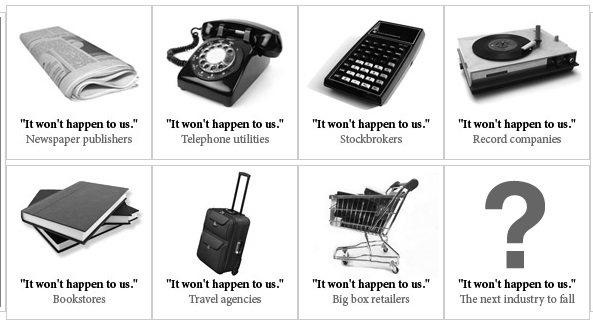
Like most trends, this product has had an arc, a bell-curve per se; but now the curve is trending downward. The PC is being out-maneuvered in transforming society by alternate concepts transforming PC’s. The truth is, businesses and consumers want solutions, more so than technology. So whatever new function or application can perform better than the old function or application will get traction. This aligns with an old business adage:

Build a better mousetrap and the world will beat a path to your door.

This adage has been a “battle cry” since the Industrial Revolution; even more so now in the Information Revolution. The battle is …

  • Man versus machine: Man loses!
  • Old machine versus new machine: Old machine loses.
  • For the jobs of the men (and women) associated with the old machines and old technologies, they continue to lose.

This point also aligns with the book Go Lean…Caribbean which prepares the Caribbean economic, security and governing engines to better anticipate and respond to transformational changes in Internet & Communications Technologies (ICT). The book asserts that the Caribbean region has been losing the battle of globalization and technology. The consequences of our defeat is the abandonment of our people. The assessment of all 30 Caribbean member-states is that every community has lost human capital to emigration; people are moving to where the jobs are; many times the new jobs are tied to innovative companies in the technology industries. This is why so many of our region’s college-educated citizens (more than 70 percent) have fled their homelands for foreign shores.

The below news article asserts that change in the ICT industries goes both ways for the industry players: trends come and go; markets will be up and down. The PC, which has been a great trendsetter is now getting trumped by other trendsetters: mobile devices, tablets and cloud computing. See related stories here:

Title #1: Intel to cut up to 12,000 jobs as PC industry swoons
By: Narottam Medhora
CU Blog - PC industry swoons - Photo 1(Reuters) – Intel Corp said on Tuesday it would cut up to 12,000 jobs globally, or 11 percent of its workforce, as it refocuses its business towards making microchips that power data centers and Internet connected devices and away from the declining personal computer industry it helped found.

Tech companies including the former Hewlett Packard Co and Microsoft Corp have reorganized in the face of the PC industry decline. Many new tech users around the world turn to mobile phones for their computing needs, and corporations increasingly rely on big machines rather than desktop models to run their businesses. Global personal computer shipments fell 11.5 percent in the first quarter, tech research company IDC said on Monday.

Intel, the world’s largest chipmaker, lowered its revenue forecast for the year. It now expects revenue to rise in mid-single digits, down from its previous forecast of mid- to high-single digits.

Intel’s shares were down 2.2 percent at $30.90 in extended trading.

Most of Intel’s factories are in the United States, although it did not identify where cuts would be focused geographically. It said it would record a pretax restructuring charge of $1.2 billion in the second quarter and expected annual savings of $1.4 billion per year starting mid-2017. (http://bit.ly/1WDPfBm)

The company also said Chief Financial Officer Stacy Smith will move to a new role leading sales, manufacturing and operations. Intel said it would begin a formal search process for a new CFO.

Smith said that Intel now expects the PC market to decline by a percentage in the high single digits in 2016 versus a prior forecast of a mid single-digit decline. Declines in China and other emerging markets are also leading to greater than anticipated reductions in worldwide PC supply chain inventory, Intel Chief Executive Brian Krzanich said on a conference call.

“PC demand, at least in the eyes of Intel, is expected to be weaker than the industry originally anticipated,” said Angelo Zino, an equity analyst at S&P Capital Global Market Intelligence.

He added that although the industry has already seen some of the weakness experienced by Intel, the company’s comments dashed any hope of recovery.

The Santa Clara, California-based company has been focusing on its higher-margin data center business as it looks to reduce its dependence on the slowing PC market. Intel has also made inroads into the mobile devices market, although competitors Qualcomm Inc and Samsung Electronics Co dominate there.

Intel said in a statement the job cuts would be carried out by mid-2017 and the restructuring would “accelerate its evolution from a PC company to one that powers the cloud and billions of smart, connected computing devices.”

Sales of products for the data center and the Internet of things accounted for 40 percent of revenue and the majority of operating profit, it added.

Raymond James analyst Hans Mosesmann, who rates Intel “under perform” said the problems leading to the job cuts were likely more about Intel than the broader tech industry.

“The bigger issue is the restructuring and will it be enough for the company to properly adapt to a changing environment where cloud and IoT competitive dynamics are quite different,” Mosesmann added.

On a per share basis, the company earned 42 cents per share, in the first quarter, up from 41 cents a year earlier.

Net revenue rose to $13.70 billion from $12.78 billion.

Non-GAAP net revenue came in at $13.80 billion, compared with analysts’ average estimate of $13.83 billion, according to Thomson Reuters I/B/E/S. Adjusted earnings of 54 cents per share topped Wall Street forecasts of 48 cents.

Up to Tuesday’s close, Intel’s shares had fallen 8.4 percent this year, compared with a slight gain in the broader semiconductor index <.SOX>.

(Reporting by Narottam Medhora in Bengaluru and Peter Henderson in San Francisco; Editing by Sriraj Kalluvila and Diane Craft)
Source: Reuters News Service – Retrieved 04-19-2016 from: https://www.yahoo.com/news/intel-cut-12-000-jobs-pc-industry-swoons-001010341–finance.html

——————————

Title #2: Intel and Microsoft face different challenges in shifts to cloud
By: Sarah McBride
CU Blog - PC industry swoons - Photo 3SAN FRANCISCO (Reuters) – Financial results from Microsoft Corp and Intel Corp this week brought into sharp relief the challenges the onetime PC partners face as they shift more of their emphasis to cloud computing.

Microsoft has seen strong long-term growth in parts of its cloud business, a combination of services and software catering to corporations moving computing functions to remote data centers run by outside providers.

While revenue for its flagship cloud services business Azure more than doubled last quarter, the company said in Thursday’s earning report, the “intelligent cloud” division that includes it saw just 3 percent revenue growth in the period. And operating profits for the division dropped by 14 percent, in part reflecting non-cloud products included under its umbrella, such as traditional server software.

Chipmaker Intel has a less clear path to growth for its cloud operations, and investors have remained skeptical.

The company’s  share price is down about 1 percent over the last year, as software maker Microsoft’s stock rose about 30 percent. Microsoft’s market capitalization of around $440 billion is almost three times Intel’s at $151 billion, compared to about double five years ago.

“Wintel” computers running Windows on Intel chips dominated the personal-computing era, which is slowly ending as more people turn to mobile phones for computing needs and corporations deemphasize desktops. Both Intel and Microsoft, run by relatively new CEOs Brian Krzanich and Satya Nadella, are betting their businesses on the cloud.

Graphic on Intel and Microsoft market value: http://fingfx.thomsonreuters.com/gfx/rngs/1/1368/2143/e2jq021kfn46.htm

At Intel, in a quarter where the company announced plans to cut 12,000 jobs as it shifts away from the PC, data-center business revenue rose 9 percent to $4 billion. That segment includes the chips powering cloud data centers, where the company says it is doing well.

“There’s this perception that Microsoft is more on the cusp and benefiting from this (cloud) trend,” said Dan Morgan, a fund manager at Synovus Trust Co who holds both companies in his portfolio. “Intel is still more drowned out,” meaning not as high-profile.

Microsoft’s best-known play in the cloud is Azure, a set of services for computing and storage as well as tools for software developers.

Azure is gaining ground on Amazon’s AWS unit, the industry heavyweight in cloud computing services. Azure commands about 10 percent of the $23 billion market, estimates Synergy Research, compared with AWS’ 31 percent.

Intel has done well in its category, dominating the market for processor chips that are the brains of data center computers, but the business faces major pressures.

Much of the difference in the companies’ fortunes boils down to Microsoft’s fundamental business as a software company versus Intel’s as a hardware company, said Nick Sturiale, a venture capitalist at Ignition Partners.

Clients are spending an ever-larger part of their technology budget on software, according to research firm Gartner. And Intel’s customer base for data-center chips is consolidating into a few big companies, including Facebook, Google, Amazon and Microsoft itself, from a much wider group.

“The cloud vendors are brutal price negotiators and have more power over Intel,” said Sturiale. Average prices of data center chips fell 3 percent in the last quarter, although Intel said that reflected the fact that cheaper chips were gaining ground the fastest.

Intel could suffer as big data-center builders like Facebook increasingly design their own data-center hardware. So far, Intel has held its own, but one day its customers could extend their cost-cutting to chips.

In a call this week with analysts, Krzanich said Intel’s “top to bottom” understanding of the cloud-based data center and keen eye on competitors would help it stay ahead.

“Always paranoid about the competition, always driving,” he said.

“And you know that we live or die by the performance of our product.”

Intel makes other promising products, including chips for Internet-connected devices known as the Internet of Things. If a blockbuster consumer or business product in that market comes along, those chips could take off.

And Microsoft may be overemphasizing how far it has come. Much of its “intelligent cloud” business comprises software for traditional on-premises servers and other businesses with little to do with the cloud. A spokeswoman said the segment’s name “is to align to the ambition” of building the cloud.

Microsoft also is good at playing up its cloud business. In its January earnings call with investors, the term “cloud” came up 59 times. In Intel’s call this week, it came up 11 times.

(Reporting by Sarah McBride,; additional reporting by Noel Randewich; editing by Andrew Hay)
Source: Posted April 22, 2016 from: https://www.yahoo.com/news/intel-microsoft-face-different-challenges-shifts-cloud-010342392–finance.html?ref=gs

See VIDEO‘s of both Intel and Microsoft’s “Cloud” offering in the Appendices below.

Considering the trends in the foregoing articles – tablets, mobile and web-enabled virtual devices (cloud computing) – the Go Lean book posits that there is a need for the Caribbean to be agile or lean to optimize to benefits from the ever-changing technology industry-space. This requires the stakeholders in the region to re-focus and re-boot the regional engines of commerce so as to benefit from these innovations – keep pace – and to create jobs. These two assignments are among the missions of the Go Lean book, blogs and movement.

The book Go Lean… Caribbean, serves as a roadmap for the introduction and implementation of the technocratic Caribbean Union Trade Federation (CU) with the charter to facilitate jobs in the region. The book posits that ICT (Internet & Communications Technology) can be a great equalizer for the Caribbean to better compete with the rest of the world. The book thereafter details the prime directives (3) of the roadmap:

  • Optimization of economic engines in order to grow the regional economy to $800 Billion and create 2.2 million new jobs.
  • Establishment of a security apparatus to protect the resultant economic engines.
  • Improve Caribbean governance to support all these engines.

Early in the Go Lean book, the mission to create jobs and keep pace with technology was identified as important functions for the CU with these pronouncements in the Declaration of Interdependence (Pages 14):

xxvi.  Whereas the Caribbean region must have new jobs to empower the engines of the economy and create the income sources for prosperity, and encourage the next generation to forge their dreams right at home, the Federation must therefore foster the development of new industries, like that of ship-building, automobile manufacturing, prefabricated housing, frozen foods, pipelines, call centers, and the prison industrial complex. In addition, the Federation must invigorate the enterprises related to existing industries tourism, fisheries and lotteries – impacting the region with more jobs.

xxvii. Whereas the region has endured a spectator status during the Industrial Revolution, we cannot stand on the sidelines of this new economy, the Information Revolution. Rather, the Federation must embrace all the tenets of Internet Communications Technology (ICT) to serve as an equalizing element in competition with the rest of the world. The Federation must bridge the digital divide and promote the community ethos that research/development is valuable and must be promoted and incentivized for adoption.

xxviii. Whereas intellectual property can easily traverse national borders, the rights and privileges of intellectual property must be respected at home and abroad. The Federation must install protections to ensure that no abuse of these rights go with impunity, and to ensure that foreign authorities enforce the rights of the intellectual property registered in our region.

xxx.  Whereas the effects of globalization can be felt in every aspect of Caribbean life, from the acquisition of food and clothing, to the ubiquity of ICT, the region cannot only consume, it is imperative that our lands also produce and add to the international community, even if doing so requires some sacrifice and subsidy.

According to the foregoing articles, changes in computing trends are reshaping the global ICT industry; and the job market is being affected, for better and for worse. The Go Lean book identified that tablet devices must be part-and-parcel to any technology empowerment plan, it detailed the possibilities of deploying low-cost tablets ($35) throughout the Caribbean region.

CU Blog - PC industry swoons - Photo 4

The Aakash UbiSlate 7Ci is a super-cheap tablet that will attempt to connect every student in India to the Internet. Educators have long hoped that cheap computing devices could bridge the global information divide, but previous attempts have been dogged by disappointing performance, lack of Internet access, and financial barriers. The latest version of India’s $35 tablet comes equipped with WiFi and has an optional upgrade ($64) of a cellular Internet package of $2/month for 2 GB of data… – Go Lean … Caribbean (Page 296).

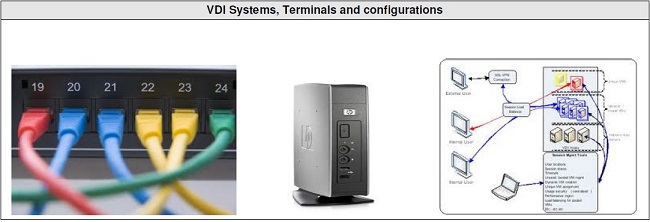
Likewise, the Go Lean book identified the emergence of cloud computing. The roadmap detailed a strategy of forging a Cyber Caribbean with many outsourcing/in-sourcing deployments, plus the assembly of the Caribbean Postal Union (CPU) to consolidate and integrate the region’s postal operations into a 21st Century model, including all the tenets of ICT: email, social media (www.myCaribbean.com), e-Government, etc.. The roadmap there-in describes the role of Virtual Desktop Infrastructure (VDI) as an alternative to expensive Personal Computer installations for corporate and institutional (government and NGO) applications. See a specific reference from the book here:

CU Blog - PC industry swoons - Photo 5
Virtual Desktop Infrastructure (VDI) is a desktop-centric service that hosts user desktop environments on remote servers and/or blade PCs, which are accessed over a network using a remote display protocol. A connection brokering service is used to connect users to their assigned desktop sessions. For users, this means they can access their desktop from any location, without being tied to a single client device. Since the resources are centralized, users moving between work locations can still access the same desktop environment with their applications and data. For IT administrators, this means a more centralized, efficient client environment that is easier to maintain and able to respond more quickly to the changing needs of the user and business
… – Go Lean … Caribbean (Page 295).

The Go Lean book details how jobs are to be created in this new world of cyclical technology trends and in the new Caribbean. The book asserts that certain industries are better than others for generating multiple indirect jobs down the line for each direct job on a company’s payroll. Industries relating to STEM (Science, Technology, Engineering and Mathematics) fields have demonstrated high job-multiplier rates of 3.0 to 4.1 factors (Page 260). In total, the book details the creation of 2.2 million new jobs for the Caribbean region, many embracing ICT skill-sets, by adopting certain community ethos, plus the executions of key strategies, tactics, implementations and advocacies. The following is a sample from the book:

Community Ethos – Deferred Gratification Page 21
Community Ethos – Economic Principle – Economic Systems Influence Choices & Incentives Page 21
Community Ethos – Economic Principle – Voluntary Trade Creates Wealth Page 21
Community Ethos – Consequences of Choices Lie in the Future Page 21
Community Ethos – Job Multiplier Page 22
Community Ethos – Lean Operations Page 24
Community Ethos – Ways to Impact the Future Page 26
Community Ethos – Ways to Foster Genius Page 27
Community Ethos – Ways to Help Entrepreneurship Page 28
Community Ethos – Ways to Promote Intellectual Property Page 29
Community Ethos – Ways to Impact Research & Development Page 30
Community Ethos – Ways to Bridge the Digital Divide Page 31
Strategy – Mission – Education Without Further Brain Drain Page 46
Tactical – Fostering a Technocracy Page 64
Tactical – Tactics to Forge an $800 Billion Economy – High Multiplier Industries Page 70
Tactical – Separation of Powers – Commerce Department – Postal Services/CPU Page 78
Implementation – Trends in Implementing Data Centers Page 106
Implementation – Ways to Improve Mail Service – Caribbean Postal Union Page 108
Implementation – Ways to Impact ICT and Social Media Page 111
Planning – Ways to Improve Trade – e-Commerce to Streamline a Bigger Regional Market Page 128
Advocacy – Ways to Grow the Economy Page 151
Advocacy – Ways to Create Jobs Page 152
Advocacy – Ways to Improve Education – e-Learning Options Page 159
Advocacy – Ways to Foster Technology Page 197
Advocacy – Ways to Foster e-Commerce Page 198
Appendix – Growing 2.2 Million Jobs in 5 Years Page 257
Appendix – Job Multipliers Page 259
Appendix – Virtual Desktop Infrastructure Page 295
Appendix – India’s $35 Tablet Page 296

As depicted in the foregoing news articles, the current trending with ICT innovation nullifies location. The innovations need not come from Silicon Valley – a region just south of San Francisco, California, they can easily come from any beach in the Caribbean.

The Caribbean is arguably the best address on the planet – definitely the best beaches – but jobs are missing. We can fill the void the same way other communities are jockeying to fill the void: innovations for ICT. The Go Lean roadmap posits that we can get the needed innovation from our own people, rather that watching our prospective innovators “take their talents to South Beach”, or South Toronto, or South London or South of San Francisco (Silicon Valley).

The Go Lean/CU roadmap is designed to foster job-creating developments in the Caribbean region. This requires a full-vertical strategy: identifying human resources, developing the skill-sets, incentivizing high-tech start-ups and incubating viable companies. These points have been detailed in many previous Go Lean blog-commentaries; consider this sample:

https://goleancaribbean.com/blog/?p=7806 Skipping School to become Tech Giants
https://goleancaribbean.com/blog/?p=6422 Microsoft Pledges $75 million for Kids in Computer Science
https://goleancaribbean.com/blog/?p=6341 The new Tourism Stewardship: e-Commerce
https://goleancaribbean.com/blog/?p=6151 3D Printing: Here Comes Change
https://goleancaribbean.com/blog/?p=5840 Security Concerns: Computer Glitches Disrupt Business As Usual
https://goleancaribbean.com/blog/?p=5435 China Internet Policing – Model for Caribbean
https://goleancaribbean.com/blog/?p=4793 Truth in Commerce – Learning from Yelp
https://goleancaribbean.com/blog/?p=4381 Net Neutrality: It Matters Here …in the Caribbean
https://goleancaribbean.com/blog/?p=3974 Google and Mobile Phones – Here comes Change
https://goleancaribbean.com/blog/?p=3915 Microsoft’s new Hologram systems – Changing the World View
https://goleancaribbean.com/blog/?p=3881 Intelligence Agencies to Up Cyber Security Cooperation
https://goleancaribbean.com/blog/?p=3187 Robots help Amazon tackle Cyber Monday
https://goleancaribbean.com/blog/?p=2126 Computers Reshaping Global Job Market
https://goleancaribbean.com/blog/?p=689 ‘eMerge’ Conference aims to jump-start Tech Hub
https://goleancaribbean.com/blog/?p=308 CARCIP – CariCom Initiative – Urges Greater Innovation

The primary ingredient for a Caribbean ICT strategy need only be Caribbean people, and the community “will” to engage. This is conceivable, believable and achievable. The Go Lean roadmap describes the need to reform and transform this community “will” as community ethos – national spirit – to spur achievement in this ICT industry space.

We can do this – here at home.

The roadmap goes further and provides the turn-by-turn directions to get “us” to the desired location: a better place to live, work and play. 🙂

Download the book Go Lean…Caribbean now!

————

Appendix VIDEO – Why Intel Cloud Technology – https://youtu.be/P5h1KMk-8Qo

Published on Jan 10, 2014 – Customers want to know what is inside their cloud. This animation provides an overview of the Intel Cloud Technology program, which provides users assurances that their cloud service provider is running on the latest Intel Xeon Processor-based servers, which means taking advantage of technologies including Intel Turbo Boost Technology, Intel TXT, Intel AVX, and Intel AES-NI. Intel Cloud Technology helps increase performance, reduce completion time, and enhance security. Learn more at http://intel.ly/1gpFL5PSubscribe now to Intel on YouTube: http://bit.ly/1BZDtpf
About Intel:
Intel, the world leader in silicon innovation, develops technologies, products and initiatives to continually advance how people work and live. Founded in 1968 to build semiconductor memory products, Intel introduced the world’s first microprocessor in 1971. This decade, our mission is to create and extend computing technology to connect and enrich the lives of every person on earth.
Connect with Intel:

Visit Intel WEBSITE: http://intel.ly/1WXmVMe

————

Appendix VIDEO – Microsoft Cloud: Empowering Businesshttps://youtu.be/HZChlynmtgc

Published on Jan 18, 2016 – See how The Microsoft Cloud is helping businesses around the world scale, connect, transform and reinvent.

Share this post:
, , ,
[Top]

Cancer: Doing More

Go Lean Commentary:

If you had a lot of money and wanted to do good in the world, what causes would you pursue?

  • World hunger
  • Education of girls
  • Childhood vaccinations
  • Cancer

That last one is BIG. And noble. And maybe, just maybe viable.

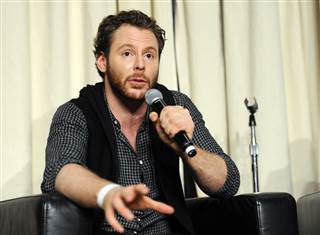
CU Blog - Cancer - Doing More - Photo 1This is the hope of philanthropist-billionaire Sean Parker; (founder of Napster and onetime CEO of Facebook). He is investing his time, talent (business & entrepreneurship) and treasuries in this quest to impact the world of cancer research and treatment.

Kudos, Mr. Parker!

The book Go Lean…Caribbean relates (Page 157) the statement that:

“1-in-3 Americans are due to be diagnosed with cancer … at some point. If 1-in-3 Americans are at risk, then surely Caribbean citizens cannot be far behind”.

This book does not assert to be a roadmap for treating cancer, but rather a roadmap for elevating Caribbean society by optimizing the economic, security and governing engines in the region. Yet, within this roadmap is the strategy to incentivize cancer research and facilitate treatment centers and workable solutions. In fact this roadmap invites role models like this philanthropist-billionaire Sean Parker – featured here in the following VIDEO and article:

VIDEO: Napster Co-Founder Sean Parker Pledges $250M to Fight Cancer
http://www.nbcnews.com/nightly-news/video/napster-co-founder-sean-parker-pledges-250m-to-fight-cancer-665463363805

NBC Nightly News – Posted 04-13-2016 – The Silicon Valley billionaire and Napster co-founder is putting his money behind a new cancer institute focusing on the emerging field of cancer immunotherapy.

News Article Title: Sean Parker Donates $250 Million to Launch Cancer Immunotherapy Institute
By: Reuters
Silicon Valley billionaire Sean Parker – see photo here – will donate $250 million to launch a new institute aimed at developing more effective cancer treatments by fostering collaboration among leading researchers in the field.

“Any breakthrough made at one center is immediately available to another center without any kind of IP (intellectual property) entanglements or bureaucracy,” Parker, the co-founder of music-sharing website Napster and the first president of Facebook, told Reuters in an interview.

The new Parker Institute for Cancer Immunotherapy will focus on the emerging field of cancer immunotherapy, which harnesses the body’s immune system to fight cancer cells.

It will include over 40 laboratories and more than 300 researchers from six key cancer centers: New York’s Memorial Sloan Kettering, Stanford Medicine, the University of California, Los Angeles, the University of California, San Francisco, Houston’s University of Texas MD Anderson and the University of Pennsylvania in Philadelphia.

Recently approved drugs have helped some patients sustain remission. But those first-generation therapies do not work for everyone, and scientists are trying to understand how to make them more effective.

“Very little progress has been made over the last several decades,” Parker said, referring to cancer drug research. “Average life expectancy has only increased three to six months with some of these drugs that cost billions to develop.”

Parker said the current system of cancer drug development discouraged the kinds of risk-taking that could lead to a major breakthrough.

The new institute “is paradigm shifting,” said Dr. Jedd Wolchok, chief of the melanoma and immunotherapeutics unit at Memorial Sloan Kettering Cancer Center.

He said it would alleviate the need for scientists to secure grants, which he said took up at least 30 percent of his time, foster collaboration among accomplished scientists and provide access to the newest information processing and data technology.

“I have no doubt this will allow us to make progress, and to make it much more quickly,” Wolchok said.
Source: NBC Nightly News – Retrieved 04-13-2016 from: http://www.nbcnews.com/health/cancer/sean-parker-donates-250-million-launch-cancer-immunotherapy-institute-n555196 

Related: Mark Zuckerberg’s ‘Initiative’ Adds New Wrinkle to Tech Philanthropy

The Go Lean book serves as a roadmap for the implementation and introduction of the technocratic Caribbean Union Trade Federation (CU). The CU‘s prime directives are identified with the following 3 statements:

  • Optimization of the economic engines in order to grow the regional economy to $800 Billion & create 2.2 million new jobs.
  • Establishment of a security apparatus to protect the resultant economic engines.
  • Improve Caribbean governance to support these engines.

The Go Lean book asserts that healthcare covers all the above 3 facets of the prime directives. Healthcare costs can easily bankrupt a family, community or a nation; economic security, public safety and government entitlements are therefore embedded in any discussion about cancer and its community impact.

The book also posits that one person can make a difference and maybe even change the world. The efforts of Sean Parker may very well fit this advocacy. He is therefore a role model for Caribbean philanthropists; he is doing more! We invite this type of impact in the Caribbean.

The Go Lean roadmap calls for more medical R&D initiatives like what Mr. Parker is pursuing. The roadmap strategizes the adoption of Self-Governing Entities (SGE) to employ medical research and treatment campuses. These dedicated, bordered grounds are ideal for immuno-therapy research and treatment. We hereby extend the invitation to all innovators and facilitators who want to do more in cancer research to come to the Caribbean. These ones will find cooperative and supportive governing structures to facilitate their impact on the world. They can do more … against cancer.

The Go Lean book strategizes economic empowerment in the region, clearly relating that healthcare and pharmaceuticals research/developments are important in the quest to make the Caribbean a better place to live, work, heal and play. At the outset of the Go Lean book, in the Declaration of Interdependence (Page 11), these points are pronounced:

viii.  Whereas the population size is too small to foster good negotiations for products and commodities from international vendors, the Federation must allow the unification of the region as one purchasing agent, thereby garnering better terms and discounts.

ix.  Whereas the realities of healthcare and an aging population cannot be ignored and cannot be afforded without some advanced mitigation, the Federation must arrange for health plans to consolidate premiums of both healthy and sickly people across the wider base of the entire Caribbean population. The mitigation should extend further to disease management, wellness, obesity and smoking cessation programs.

xxviii.  Whereas intellectual property can easily traverse national borders, the rights and privileges of intellectual property must be respected at home and abroad. The Federation must install protections to ensure that no abuse of these rights go with impunity, and to ensure that foreign authorities enforce the rights of the intellectual property registered in our region.

Previous blog/commentaries addressed issues of cancer and other medical research and practices, sampled here:

Using Group Purchasing Organizations to lower HealthCare costs
Role Model Shaking Up the World of Cancer
The Cost of Cancer Drugs
Antibiotics Misuse Linked to Obesity in the US
CHOP Research: Climate Change May Bring More Kidney Stones
Welcoming Innovators and Entrepreneurs under an SGE Structure
Big Pharma & Criminalization of American Business
Medical Research Associates Kidney Stones and Climate Change – Innovative!
New Research and New Hope in the Fight against Alzheimer’s Disease
Research in Diabetes Detection – Novartis and Google develop ‘smart’ contact lens
Health-care fraud in America; criminals take $272 billion a year
New Cuban Cancer medication registered in 28 countries
Puerto Rico’s Comprehensive Cancer Center Project Breaks Ground – Model of Medical SGE

Cancer is a crisis! The Go Lean book declares that a “crisis is a terrible thing to waste”. This premise is loud-and-clear from the foregoing VIDEO, that there is money to be made in this industry-space. But most importantly, there are lives to be saved.

The Go Lean roadmap posits that more innovations will emerge in the region as a direct result of the CU prioritization on science, technology, engineering and medical (STEM) activities on Caribbean R&D campuses and educational institutions. This is based on the assumption that intellectual properties (IP) registered in the Caribbean region will be duly respected around the world.

This IP protection mandate is a heavy-lifting task for the Caribbean Union Trade Federation. This is an example of the issues related to economic, security and governance that need to be managed in a technocracy.

The CU has the prime directive of optimizing these economic, security and governing engines of the Caribbean region. The foregoing article and VIDEO depicts that R&D is very important to medical innovations. So the roadmap thusly focuses on the community ethos to promote R&D as valuable for the region. The following list details this and other community ethos, plus the strategies, tactics, implementations and advocacies to optimize the region’s healthcare deliveries and R&D investments:

Community Ethos – Deferred Gratification Page 21
Community Ethos – Economic Systems Influence Individual Choices and Incentives Page 21
Community Ethos – The Consequences of Choices Lie in the Future Page 21
Community Ethos – Governing Principles – Return on Investments Page 24
Community Ethos – Governing Principles – Cooperatives Page 25
Community Ethos – Non-Government Organizations Page 25
Community Ethos – Ways to Impact Research & Development (R&D) Page 30
Community Ethos – 10 Ways to Promote Happiness Page 36
Community Ethos – Ways to Impact the Greater Good Page 37
Strategy – Integrate and unify region in a Single Market Page 45
Strategy – Agents of Change – Globalization Page 57
Tactical – Fostering a Technocracy Page 64
Tactical – Separation of Powers – Health Department Page 86
Tactical – Separation of Powers – Drug Administration Page 87
Implementation – Ways to Pay for Change Page 101
Implementation – Ways to Implement Self-Government Entities – R&D Campuses Page 105
Implementation – Ways to Deliver Page 109
Planning – Big Ideas for the Caribbean Region Page 127
Planning – Ways to Make the Caribbean Better Page 131
Advocacy – Ways to Improve Healthcare Page 156
Advocacy – Ways to Better Manage the Social Contract Page 170
Advocacy – Ways Foster Cooperatives Page 176
Advocacy – Ways to Improve Emergency Management Page 196
Advocacy – Ways to Impact Foundations Page 219
Advocacy – Ways to Impact Persons with Disabilities Page 228
Appendix – Emergency Management – Medical Trauma Centers Page 336

The Go Lean book or movement does not purport to be an authority on cancer research or any medical best practices. No economic-security-governance empowerment plan should ever dictate the course of direction for cancer research and/or treatment. But the war on cancer has been stagnant for far too long; more needs be done. The solutions must be incentivized for private enterprises and private individuals – role models. The SGE structure invites innovations like that of Sean Parker and many others with this same passion … and some degree of genius.

Now is the time for all of the Caribbean, the people and governing institutions, to lean-in for the empowerments in the book Go Lean … Caribbean. This concept of Self-Government Entities (Page 127) is a Big Idea for the region. Change can really take hold, and thrive. We can do more … for cancer.  We can make the Caribbean a better place to live, work, heal and play. 🙂

Download the free e-book of Go Lean … Caribbean – now!

Share this post:
, , , ,
[Top]

Skipping School to become Tech Giants

Go Lean Commentary

How can we mold young minds for career success?

Apparently, there is more than one way; (notwithstanding starting early). Yes, there is college, but there is another way too: entrepreneurship. Think Bill Gates, Steve Jobs, and Mark Zuckerberg. These ones are notorious for their billionaire success, despite not finishing college.

CU Blog - Skipping School to become Tech Giants - Photo 1Some people think that a 4-year college degree may NOT be entirely essential for career success; these ones say: “there is an alternate path” for success for an individual career and for their community; (some even claim that a 4-year degree may be a bad investments for students).

So there are parallel paths. Let’s consider: education -vs- entrepreneurship …

Many claim that the underlying goal for molding young minds should not be education, but rather competition … with the rest of the world. The question could therefore be codified as: “Is a 4-year college degree necessary for our community to better compete with the world?”

This is a tough one (question), in which there are no easy answers.

The book Go Lean…Caribbean embarks on the quest to elevate the Caribbean societal engines (economics, security and governance); it presents options with education and with entrepreneurship. The book immediately rails against the education status quo; it stakes the claim that Caribbean tertiary education eco-system needs to be reformed and transformed, asserting that the status quo has not served the region as well as expected. Truth is, traditional college education paths may be considered disastrous for the Caribbean region in whole, and for each specific country in particular. Why?

Students leave to study …

… and do not necessarily return. They are “gone and forgotten”*; they run-off with their community investments with little chance for any “return”. (* = Many Caribbean graduates only return for family visits and festivals).

Normally, college education is great for the individual. The Go Lean book relates how economists have established that every additional year of schooling increases a student’s earning potential by about 10% (Page 258). Yet for our Caribbean communities as a whole, the end-result has been different – bad – ending in our incontrovertible brain drain.

How bad?

Previous blogs on this same subject matter have detailed the dysfunction; one example is the report that 70 percent of the tertiary-educated population in the Caribbean has fled. What’s worst in these reports, is the fact that these emigrants have taken their Caribbean-funded education and skill-sets with them; even taking any hope for collecting student loans, thereby imperiling future generations of scholars from their own benefits of a college education.

So education is not the champion – for nation-building – that we would expect. There is room for a challenger-contender. Consider this VIDEO here (and transcript in the Appendix), of young ones quitting college or never enrolling, to pursue entrepreneurial endeavors in the technology space. These ones are being fostered, prodded and nurtured; as related here:

VIDEO – Skipping School to become Tech Giants – http://www.cbsnews.com/videos/investing-in-college-dropouts-with-big-ideas

(VIDEO plays best in Internet Explorer).

The Go Lean movement – book and blogs – asserts that change must come to the region in response to the debilitating status quo in Caribbean life. The book refers to these change factors as Agents of Change, including technology and globalization. The best strategy for contending with both technology and globalization change is to not only consume; communities must develop, innovate and produce as well. The Go Lean book posits therefore that Caribbean regional shepherds should invest in (better) higher education and entrepreneurial options. The bottom-line motive should be the Greater Good.

This book Go Lean book serves as a roadmap for the introduction and implementation of the Caribbean Union Trade Federation (CU). This represents change for the region. The CU/Go Lean roadmap has 3 prime directives:

  • Optimization of the economic engines – including educational empowerments and entrepreneurial incubators – in order to grow the regional economy and create 2.2 million new jobs.
  • Establishment of a security apparatus to protect the resultant economic engines.
  • Improve Caribbean governance to support these engines.

The book relates that forging technology genius is a direct product of perspiration and inspiration. Perspiration as in the training and education needed to excel in this field; and inspiration as in the spark of innovation that is required to conceive, compose and construct competitive products pertaining to hardware, software and communication systems.

The Go Lean roadmap provides turn-by-turn directions on how to foster genius and how to reform the Caribbean tertiary education eco-systems. As a planning tool, the roadmap commences with a Declaration of Interdependence, pronouncing the approach of regional integration (Page 12 & 14) as a viable solution to elevate the opportunities in the region:

xix.  Whereas our legacy in recent times is one of societal abandonment, it is imperative that incentives and encouragement be put in place to first dissuade the human flight, and then entice and welcome the return of our Diaspora back to our shores

xxi.  Whereas the preparation of our labor force can foster opportunities and dictate economic progress for current and future generations, the Federation must ensure that educational and job training opportunities are fully optimized for all residents of all member-states, with no partiality towards any gender or ethnic group. The Federation must recognize and facilitate excellence in many different fields of endeavor, including sciences, languages, arts, music and sports. This responsibility should be executed without incurring the risks of further human flight, as has been the past history.

xxvii.  Whereas the region has endured a spectator status during the Industrial Revolution, we cannot stand on the sidelines of this new economy, the Information Revolution. Rather, the Federation must embrace all the tenets of Internet Communications Technology (ICT) to serve as an equalizing element in competition with the rest of the world. The Federation must bridge the digital divide and promote the community ethos that research/development is valuable and must be promoted and incentivized for adoption.

xxx.   Whereas the effects of globalization can be felt in every aspect of Caribbean life, from the acquisition of food and clothing, to the ubiquity of ICT, the region cannot only consume, it is imperative that our lands also produce and add to the international community, even if doing so requires some sacrifice and subsidy.

The Go Lean book focuses primarily on economic issues, and it recognizes that computer hardware, software and communications systems are the future direction for consumer, corporate and industrial developments. This is where the new jobs are to be found. If we want to arrest societal abandonment occurring in our communities, we must create jobs. The Go Lean roadmap describes the heavy-lifting for people, organizations and governments to foster genius and forge technological innovations here at home in the Caribbean; (i.e. start early).

This commentary is not advocating a practice of “skipping school to rush to try and become tech giants”. But rather, it is advocating education reform, abandoning failed practices, like study abroad and adopting new ones, like e-Learning solutions. After which there should be an effort to provide entrepreneurial incubators to foster more business start-ups.

The Go Lean book posits that education and entrepreneurism are vital advocacies for Caribbean economic empowerment. But there have been flawed decision-making in the past, both individually and community-wise, and so we are now playing catch-up with the rest of the world. Whether we want it or not, there is a competition; globalization features trade wars; wars feature battles; battles feature champions. The vision of the CU is a confederation of the 30 member-states of the Caribbean to do the heavy-lifting of championing better educational and entrepreneurial policies.

The book details those policies; and other ethos to adopt, plus the executions of the following strategies, tactics, implementations and advocacies to impact the Greater Good for the region:

Community Ethos – Deferred Gratification Page 21
Community Ethos – People Respond to Incentives Page 21
Community Ethos – Job Multiplier Page 22
Community Ethos – Lean Operations Page 24
Community Ethos – Return on Investments – ROI Page 24
Community Ethos – Ways to Impact the Future Page 26
Community Ethos – Ways to Foster Genius Page 27
Community Ethos – Ways to Help Entrepreneurship Page 28
Strategy – Agent of Change – Technology Page 57
Strategy – Agent of Change – Globalization Page 57
Tactical – Separation of Powers – Education Department Page 85
Tactical – Separation of Powers – Labor Department Page 89
Implementation – Ways to Impact Social Media Page 111
Advocacy – Ways to Grow the Economy Page 151
Advocacy – Ways to Create Jobs Page 152
Advocacy – Ways to Improve Education Page 159
Advocacy – Ways to Improve Governance Page 169
Advocacy – Ways to Better Manage the Social Contract Page 171
Advocacy – Ways to Foster Cooperatives Page 176
Advocacy – Ways to Improve Libraries Page 187
Advocacy – Ways to Foster Technology Page 197
Advocacy – Ways to Foster e-Commerce Page 198
Appendix – Education and Economic Growth Page 258

Now is the time for all of the Caribbean, the people and governing institutions, to lean-in for the changes described in the book Go Lean … Caribbean. We welcome entrepreneurism and we welcome education; these two activities can be concurrent and complementary. But we need to break from the old-bad practices (i.e. study abroad) and engage new-better practices (i.e. incubators).

So we encourage all young people to get advanced education, but to do it at home. And we encourage all with entrepreneurial dreams to pursue them … here at home.

The new jobs that our region need must come from these initiatives. Let’s get started!  🙂

Download the book Go Lean…Caribbean now!

————–

APPENDIX – Story Transcript: Skipping School to become Tech Giants

A select group of whiz kids seems to be thriving despite having dropped out of college. All any of them seems to need is a high-tech idea, a sofa to sleep on … plus a $100,000 grant. John Blackstone explains:

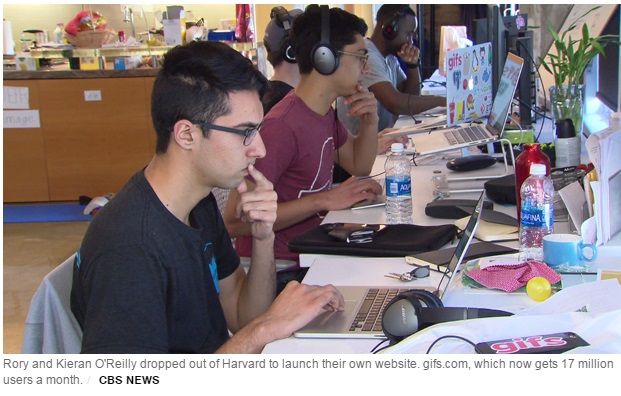
When brothers Kieran and Rory O’Reilly were both accepted to Harvard, their parents marked the accomplishment with new license plates: One read “2 N HRVD”; the other, “HARVRD 2.”

“They might change it to ‘2 DROPOUTS,'” said Rory.

They both quit Harvard as undergrads two years ago. They were just 18 and 19 when they moved to San Francisco with big hopes, and almost nothing else.

“Three bags of clothes — every day we would take it, move from hotel to hotel,” said Rory.

“I remember our bank account was always negative $66, because that’s the overdraft fee,” said Kieran.

They’re now living IN their office. “Every single day our mom tries to call us or send food,” Rory said.

They’ve created a website, gifs.com, a tool for re-editing online videos. Seventeen million people in the past month have used it.

The O’Reillys are on a path made famous by some of the tech industry’s biggest names: Jobs, Gates, Zuckerberg.

“People that drop out of Harvard, maybe the Bill Gateses of the world, the Zuckerbergs, they’re the people that are really changing the entire world, in my opinion,” said Rory. “And yeah, I’m glad to be a part of that.”

The O’Reillys are “part of that” partly because Peter Thiel, one of the billionaire founders of PayPal, gave them $100,000 each.

Thiel started his surprising giveaway five years ago, offering $100,000 to kids who quit college to “build new things.”

Jack Abraham is executive director of the Thiel Fellowship, which distributes the money to 20 new dropouts each year. And what is he encouraging? “If you have a great idea, the time to pursue it is now,” Abraham said. “We also hope to show society that this is an alternate path that people can and should consider and take.”

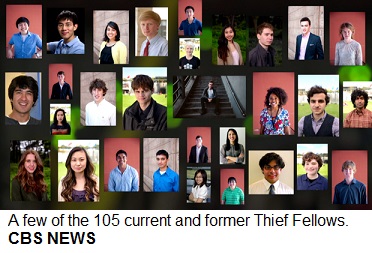
Abraham says the 105 current and former Thiel Fellows have created more than 1,000 jobs and raised $330 million from investors.

CU Blog - Skipping School to become Tech Giants - Photo 2

Only eight have returned to college.

The selection committee is now sorting through 5,000 applications for this year’s 20 fellowships. Most of the applicants would have much better odds getting into the Ivy League.

“It breaks my heart when some of the most promising students don’t fulfill their potential because they’re chasing rainbows,” said Vivek Wadhwa, a fellow at StanfordUniversity, who has been a critic of the Thiel Fellowship from the beginning.”

“It’s like what happens in Hollywood: You have tens of thousands of young people flocking to Hollywood thinking that they’re gonna become a Brad Pitt or an Angelina Jolie; they don’t,” said Wadhwa.

“They don’t become billionaires. There haven’t been many Mark Zuckerbergs after Mark Zuckerberg achieved success.”

And Wadhwa says there is little evidence the Thiel dropouts are doing much that isn’t already being done in Silicon Valley.”Everyone does the same thing: It’s social media, it’s photo sharing apps. Today it’s sharing economy,” Wadhwa said. “It’s ‘Me, too,’ ‘More of the same.'”

But 19-year-old Conrad Kramer and 21-year-old Ari Weinstein were convinced they had a new idea, so when they were awarded Thiel Fellowships in 2014, they both walked away from MIT to work full-time on their app, called Workflow.

“There are some opportunities that come up that you would regret turning down,” Kramer said. “Workflow was definitely one of those.”

“It’s kind of like making your own apps that save you time,” Weinstein said.

When Workflow launched, it was the number one bestseller on Apple’s App Store — and has since won several awards.

They’ve just hired their newest employee, Tim Hsia, a graduate of Stanford’s business and law schools and an Army vet. He’s 33-years-old and says he doesn’t mind taking orders from a teenage boss.

“I’m learning so much because they have such a wealth of experience despite their age,” Hsia said. “In Silicon Valley it’s about meritocracy of ideas. And so if you have a good idea, everyone’s always receptive to listen to it.”

Zach Latta found many people were willing to listen — leaving high school to move to San Francisco on his own, to start a non-profit called Hack Club.

He recalled that when he moved to the city at age 16, “I’d showed up at a gym one day with some friends, and they turned me away at the door because I had to be 18.”

Now he is 18 and works full-time helping high school students learn to code.

“I feel challenged in every single day,” Latta said. “And I think I’m learning as much as I’ve ever been while being happy.”

For now these wannabe tech titans live modestly in homes they share with several others, or in offices that also provide a place to sleep. Instead of meals, some drink Soylent — Silicon Valley’s version of fast food. It apparently contains all the nutrients necessary to stay alive, in a bottle.

“Yeah — breakfast, lunch, snack, dinner,” said Latta.

They are building their companies with money from investors who seem to care little whether they graduated from college.

“It’s actually kind of a badge of honor here, dropping out,” said 23-year-old Stacey Ferreira. She’s dropped out of NYU — twice! The first time she saw a tweet from Richard Branson, the founder of the Virgin Group, offering to meet anyone who gave $2,000 to his charity.

She borrowed the money and met him. She was 18 and starting her first business.

“And make a long story short, he and two of his buddies ended up investing $1.2 million in our business that summer,” Ferreira told Blackstone.

Two years later, she sold that company, MySocialCloud, for a hefty profit, and returned to NYU. But then she had another big idea that couldn’t wait.

“If you can create your own job, why wouldn’t you just do that and not get stuck paying student loans for the rest of your life?” Ferreira said.

Instead of student loans, she has $100,000 from Peter Thiel. She’s working on an app called Forrge that aims to create an on-demand marketplace for hourly workers.

She’s hoping that dropping out of NYU again will pay off again.

Blackstone asked, “Is there a lesson in your story for other young people?”

“Yeah, I think the biggest lesson to learn is just take risks,” Ferreira said.

“What’s the worst that can happen to you when you take the risk?”

“For me, the worst that can happen is I move home and sleep on my parent’s couch for a couple months, until I figure it out,” Ferreira replied.

For more info:


Share this post:
, , ,
[Top]

An Ode to Detroit – Good Luck on Trade!

Go Lean Commentary

It’s now time to say “goodbye and good luck” to the City of Detroit with these passing words, lessons and advice …

A commonly accepted economic principle declares that “Voluntary Trade Creates Wealth”.

Really? The City of Detroit, Michigan seems to have not “gotten the memo”.

The actual principle is summarized in the book Go Lean … Caribbean (Page 21) as follows:

Voluntary Trade Creates Wealth – People specialize in the production of certain goods and services because they expect to gain from it. People trade what they produce with other people when they think they can gain something from the exchange. Some benefits of voluntary trade include higher standards of living and broader choices of goods and services.

Detroit is branded the Motor City or Motown for being the capital of the American Automotive industry, (all the Big 3 car-makers – General Motors, Ford and Chrysler – are based in this metropolitan area). From a trade perspective, automobiles are among the most successful American exports. According to this simple logic  – trade creates wealth and Detroit is home to one of America’s best trade products – there should be win-win for all stakeholders in the vertical automotive industry, including the local communities. Right?

Not quite! This is NOT the reality.

CU Blog - An Ode to Detroit - Good luck on Trade - Photo 1

CU Blog - An Ode to Detroit - Good luck on Trade - Photo 2

This article below, just in time for the US presidential elections – posted on March 8, 2016 – and the arrival of the main candidates for the Democratic and Republican nominations, reveal the truth of life in today’s Detroit … and the dire consequence of free trade:

The City of Detroit has gone from one of the country’s richest in the 1960s to one of the poorest [today].

The once-thriving automotive hub is pocked by blighted homes and crime and has more children living in extreme poverty than any of the nation’s 50 largest cities. Manufacturing job losses devastated neighboring communities, sowing more than 20 years of resentment among white, working-class Democrats over the North American Free Trade Agreement.
Source: MSN Social Media Site; (posted 03-08-2016; retrieved April 9, 2016) .

The publishers of the Go Lean book have been in Detroit to “observe and report” on the turn-around and rebirth of the once-great-but-now-distressed city and its nearby communities; (we have also considered the dysfunction of Flint and the promise of Ann Arbor). There have been so many lessons to learn from Michigan: good, bad and ugly. Consider this sample here conveyed in previous blogs/commentaries:

https://goleancaribbean.com/blog/?p=7601 Beware of Vulture Capitalists
https://goleancaribbean.com/blog/?p=7268 Detroit giving schools their ‘Worst Shot’
https://goleancaribbean.com/blog/?p=7235 Flint, Michigan – A Cautionary Tale
https://goleancaribbean.com/blog/?p=6965 Secrecy, corruption and ‘conflicts of interest’ pervade state governments
https://goleancaribbean.com/blog/?p=6609 Before and After Photos Showing Detroit’s Riverfront Transformation
https://goleancaribbean.com/blog/?p=6269 Education & Economics: Welcome to Detroit, Mr. President
https://goleancaribbean.com/blog/?p=6022 Caribbean Diaspora in Detroit … Celebrating Heritage
https://goleancaribbean.com/blog/?p=5597 The Dire Strait of Unions and Collective Bargaining
https://goleancaribbean.com/blog/?p=5055 A Lesson from an Empowering Family in Detroit
https://goleancaribbean.com/blog/?p=4913 Ann Arbor: Model for ‘Start-up’ Cities
https://goleancaribbean.com/blog/?p=4476 De-icing Detroit’s Winter Roads: Impetuous & Short Term
https://goleancaribbean.com/blog/?p=3713 NEXUS: Facilitating Detroit-Windsor Cross-Border Commerce
https://goleancaribbean.com/blog/?p=3326 M-1 Rail: Alternative Motion in the Motor City
https://goleancaribbean.com/blog/?p=3311 Detroit to exit historic bankruptcy
https://goleancaribbean.com/blog/?p=3164 Michigan Unemployment – Then and Now
https://goleancaribbean.com/blog/?p=2480 A Lesson in History: Community Ethos of WW II
https://goleancaribbean.com/blog/?p=1656 Blue is the New Green – Managing Michigan’s Water Resources
https://goleancaribbean.com/blog/?p=970 JP Morgan Chase’s $100 million Detroit investment – Not just for the Press

The full news article from the MSN Social Media Site is embedded here, retrieved from – http://www.msn.com/en-us/news/politics/michigan-a-critical-showdown-for-sanders-to-mount-comeback/ar-BBqsehO?li=BBnb7Kz&ocid=ieslice:

Title: Michigan ‘a critical showdown’ for Sanders to mount comeback
By: Heidi M. Przybyla

CU Blog - An Ode to Detroit - Good luck on Trade - Photo 3The State of Michigan could be Bernie Sanders’ last, best chance to challenge Hillary Clinton’s hold on the Democratic presidential race.

The Midwestern industrial state, which holds its primary Tuesday [(March 8, 2016)], is the ideal audience for Sanders’ campaign message about “unfair” trade agreements, income inequality and a “rigged economy.”

“This is ground zero for trade,” said Rep. Debbie Dingell, D-Mich. “People are frustrated. It’s been almost 15 years, and they’re not better off than they were,” said the first-term Democrat, who is backing Clinton.

Yet Clinton has consistently led in polls — a Monmouth University Poll out Monday showed her up 13 points. “If he can’t win in Michigan, where can he win besides these small caucus states?” said Susan Demas, publisher of Inside Michigan Politics, a political analysis newsletter. Sanders campaign manager Jeff Weaver is calling Michigan “a critical showdown.”

Mississippi also holds a primary on Tuesday, and Clinton is favored there.

The city of Detroit has gone from one of the country’s richest in the 1960s to one of the poorest.  The once-thriving automotive hub is pocked by blighted homes and crime and has more children living in extreme poverty than any of the nation’s 50 largest cities. Manufacturing job losses devastated neighboring communities, sowing more than 20 years of resentment among white, working-class Democrats over the North American Free Trade Agreement.

Sanders is hitting Clinton hard on the trade issue, including a recent ad picturing abandoned homes and factories. NAFTA was championed by her husband, former president Bill Clinton, though the former first lady is trying to distance herself from a number of those policies.

Michigan could expose some of Clinton’s longer-term vulnerabilities. Some of the state’s most powerful unions, including the Teamsters, the AFL-CIO and the United Auto Workers, traditional Democratic allies, haven’t endorsed a candidate. Many union rank-and-file backed her husband in 1992 and 1996 but are now supporting Sanders or Republican front-runner Donald Trump.

“She’s also competing with Donald Trump, who’s made this a strong issue and not backed down on the currency trade issue,” said Dingell. “There’s a lot of pent-up anger, and Donald Trump let’s them release it,” she said.

Sanders may be indirectly helping Trump. At campaign rallies, he has repeatedly slammed Clinton on trade, listing it as a key area where they disagree. Sanders says he led opposition to NAFTA and permanent normal trade relations with China, which he says resulted in the loss of millions of middle-class jobs and “a race to the bottom.” His campaign, in a March 3 news release, dubbed Clinton the “outsourcer-in-chief.”

Clinton has been trying to distance herself from the 1990s-era policy. In the Flint debate, she tried to distinguish her record from that of her husband’s.  As a senator, she voted against a Central American trade agreement, the only multinational pact that came before her, she said. More recently, she’s come out against the Trans-Pacific Partnership.

Nearing closer to the nomination, Clinton has begun to discuss the role Sanders would need to play in unifying the party. During a town hall forum Monday in Grand Rapids, she talked extensively about how she encouraged her voters to back Barack Obama in 2008.

“I had a lot of passionate supporters who did not feel like they wanted to support then-Sen. Obama. I worked as hard as I could. I nominated him at the convention. I made the case, because he and I shared a lot of the same views,” she said.

“We have differences, but those differences pale in comparison to what we see going on with the Republicans right now,” said Clinton.

Clinton’s supporters acknowledge a Michigan loss is unlikely to deter Sanders. Several testy exchanges in the Flint debate highlighted festering tensions between the two, and Sanders is flush with campaign donations to keep him going.

“I think Hillary Clinton will win Michigan,” said Dingell. “But I think Sen. Sanders plans on staying in this race for a while.”

Contributing writer: Nicole Gaudiano

News Update: Senator Bernie Sanders won the Michigan Democratic primary.

There is a strong current against free trade deals in big industrial cities in the American north. At this juncture (April 9, 2016), Bernie Sanders has won the last 7 state primaries with his “unfair trade” message:

  • Idaho
  • Utah
  • Alaska
  • Hawaii
  • Washington
  • Wisconsin
  • Wyoming

But chances are, these trade agreements will not disappear, even under a new president – to be elected later this year. (Listen to the related AUDIO podcast in the Appendix below).

These free trade agreements are ratified treaties with other countries that are not so easily dismantled. Plus, the US business interest has proven to be formidable in their obstructionism to radical changes to their status quo.

The Go Lean movement asserts that there is a Crony-Capitalistic influence in the US that creates a societal defect for forging change. In this case, trade deals like NAFTA allow big corporations to shift labor costs to alternate locales with lower payroll costs. This commentary has related that the money motivation with this strategy may be too much to overcome in the America of 2016.

Good luck to Detroit.

Hope and Change? Not here, not now.

The book Go Lean… Caribbean urges Caribbean citizens not to be swayed by the false perception of refuge in America. The grass is NOT greener on this side.

Yes, the status quo in the overall US is better than the status quo in the Caribbean, but change is afoot. This movement – book and blogs – posits that it is easier to reform and transform the Caribbean member-states than to attempt to change America. The Go Lean book serves as a roadmap for the introduction and implementation of the technocratic  Caribbean Union Trade Federation (CU). This represents a confederation of the 30 member-states of the Caribbean region, including the US Territories (2): Puerto Rico and the US Virgin Islands); the French Territories (5); 6 Dutch Territories constituted as 1 member; British Overseas Territories (5) and independent states and Republics (17).

This CU/Go Lean roadmap extols a priority of trade in the execution of its prime directives. Economic stability and progress is fundamental to forging an elevated society. As observed in Detroit, dysfunction in a community’s economic engine, brings about dysfunction in other facets of societal life. This explains why Detroit is also plagued with rampant crime. (During the course of the Go Lean movement’s observing-and-reporting on Detroit, there were some acute criminal activities, like the one case where a mother was adjudicated for killing and storing 2 dead children in her kitchen freezer). Likewise, the City has been plagued with one instance after another of ineffectual governance or municipal corruption. (A recent ex-Mayor – Kwame Kilpatrick – lingers in federal prison on federal corruption convictions). This is why the CU prime directives feature economics, security and governance, as defined by these 3 statements here:

  • Optimize the Caribbean economic engines of the region to grow the GDP of the economy to $800 billion and create 2.2 million new jobs.
  • Establish a security apparatus to protect the resultant economic engines in the Caribbean.
  • Improve Caribbean governance – including municipal, state and federal administrations – to support these engines.

The Go Lean roadmap seeks to reform the Caribbean, not the City of Detroit nor America. The roadmap opens with the call for the consolidation of trade negotiation for the region – treating everyone as equals. This point is echoed early, and often, in the book, commencing with these opening pronouncements in the Declaration of Interdependence (Pages 11 – 14), as follows:

viii.   Whereas the population size is too small to foster good negotiations for products and commodities from international vendors, the Federation must allow the unification of the region as one purchasing agent, thereby garnering better terms and discounts.

xi.   Whereas all men are entitled to the benefits of good governance in a free society, “new guards” must be enacted to dissuade the emergence of incompetence, corruption, nepotism and cronyism at the peril of the people’s best interest. The Federation must guarantee the executions of a social contract between government and the governed.

xvi. Whereas security of our homeland is inextricably linked to prosperity of the homeland, the economic and security interest of the region needs to be aligned under the same governance. Since economic crimes … can imperil the functioning of the wheels of commerce for all the citizenry, the accedence of this Federation must equip the security apparatus with the tools and techniques for predictive and proactive interdictions.

xxiv. Whereas a free market economy can be induced and spurred for continuous progress, the Federation must install the controls to better manage aspects of the economy: jobs, inflation, savings rate, investments and other economic principles. Thereby attracting direct foreign investment because of the stability and vibrancy of our economy.

xxx. Whereas the effects of globalization can be felt in every aspect of Caribbean life, from the acquisition of food and clothing, to the ubiquity of ICT, the region cannot only consume, it is imperative that our lands also produce and add to the international community, even if doing so requires some sacrifice and subsidy.

The Go Lean roadmap therefore constitutes a change for the Caribbean. This provides the tools/techniques to bring immediate elevation to the region to benefit one and all member-states. The book details the community ethos to forge such change; plus the executions of the following strategies, tactics, implementations and advocacies to make the changes permanent:

Community Ethos – Deferred Gratification Page 21
Community Ethos – Economic Systems Influence Individual Choices Page 21
Community Ethos – Voluntary Trade Creates Wealth Page 21
Community Ethos – Lean Operations Page 24
Community Ethos – Return on Investments Page 24
Community Ethos – Cooperatives Page 24
Community Ethos – Ways to Improve Negotiations Page 30
Community Ethos – Impact the Greater Good Page 37
Strategy – Unified Region in a Single Market Economy Page 45
Strategy – Customers – The Business Community Page 47
Strategy – Agents of Change – Globalization Page 57
Tactical – Confederating a Permanent Union Page 63
Tactical – Fostering a Technocracy Page 64
Tactical – Growth Approach – Trade and Globalization Page 70
Tactical – Separation of Powers – Interstate Commerce Admin Page 79
Tactical – Separation of Powers – Office of Trade Negotiations Page 80
Implementation – Ways to Pay for Change Page 101
Implementation – Foreign Policy Initiatives at Start-up Page 102
Implementation – Ways to Deliver Page 109
Implementation – Trade Mission Office Objectives Page 116
Planning – Ways to Improve Trade Page 128
Planning – Ways to Improve Interstate Commerce Page 129
Planning – Lessons Learned from Detroit Page 140
Advocacy – Ways to Grow the Economy Page 151
Advocacy – Ways to Create Job Page 152
Advocacy – Ways to Improve Housing – Lesson from Detroit to raze Dilapidated housing Page 161
Advocacy – Ways to Improve Governance Page 168
Advocacy – Ways to Improve Local Government Page 169
Advocacy – Ways to Better Manage the Social Contract Page 170
Advocacy – Ways to Foster Cooperatives Page 176
Advocacy – Ways to Impact Main Street Page 201

The issues in this commentary are important for the development of Caribbean region. There is the need to fully participate in trade agreements; it is the only way to fully compete in a globalized marketplace. But there is the need for a new regulatory regime for the Caribbean market, as free market dynamics are normally based on supply-and-demand. The Caribbean member-states, with their small population and market-sizes have not been able to compete with the voluminous demand nor voluminous supply of some of the bigger countries (i.e. China, India, EU, the US, etc). The consolidated CU market would be different … and better!

The Go Lean book is a detailed turn-by-turn, step-by-step roadmap for how to lean-in to a new trade regime. We now urge everyone in the region – all stakeholders: citizens, visitors, direct foreign investors, trading-partners, business establishments – to lean-in to this roadmap. With this plan, we would have reason to believe in “Hope and Change” for the Caribbean region, for it to be a better place to live, work and play.

So as we move onto another American locale (Miami) for final preparation for an eventual repatriation, here’s our advice to the Caribbean Diaspora living in Detroit: Go home and help with this Go Lean roadmap to elevate the Caribbean …

… and to the people of Detroit, we say: Good luck. We invite you too, to come and visit us in  the Caribbean … often. 🙂

Download the book Go Lean…Caribbean now!

————-

APPENDIX – AUDIO Podcast: Free Trade On The Campaign Trail – http://www.npr.org/podcasts/510053/on-point-with-tom-ashbrook#

Posted March 8, 2016 – From Trump to Sanders, free trade is getting a thumping on the campaign trail. Could, would the United States really turn it around? Plus: inspecting stalled millennial wage growth.

Share this post:
, , , ,
[Top]

A Lesson in History – Buffalo Soldiers

Go Lean Commentary

Welcome to the New World.

Fighting on arrival; fighting for survival“. – Lyrics from song  Buffalo Soldier by Bob Marley.

CU Blog - A Lesson in History - Buffalo Soldiers - Photo 1This is the experience of the Pan-African Diaspora in all of the Americas. Truly a sad origin history, “Coming to America” as slaves. And yet, the African race has proliferated in much of the Americas, most notably in the Caribbean, where the one-time slaves emerged as the majority population in 29 of the 30 member-states; (the only other New World non-Caribbean country with a majority Black population is Brazil). After a few turns in world political developments, these majorities now run the governments in most of these Caribbean countries.

It took “blood, sweat and tears” to reach this accomplishment. This connotes military action, warfare and sacrifice. The most prominent of Black fighting men in the history of the New World is the Buffalo Soldier.

Caribbean Music legend Bob Marley is to be credited for educating much of the world with this history. In his landmark song Buffalo Soldier; he sang their praises – see lyrics in Appendix A.

See the VIDEO-AUDIO of the song here:

VIDEO-AUDIO – Bob Marley Buffalo Soldier – https://youtu.be/IEpSBsUjY-0

Uploaded on May 2, 2011 – This song was released post humorously in 1983, after Bob Marley’s death.

Just who were the Buffalo Soldiers and what are their connections to the Caribbean? See  this encyclopedia reference here:

From 1863 to the early 20th century, African American units were utilized by the Army to combat the Native Americans during the Indian Wars.[14] The most noted among this group were the Buffalo Soldiers:

This nickname was given to the “Negro Cavalry” by the Native American tribes they fought in the Indian Wars. The term eventually became synonymous with all of the African American regiments formed in 1866. At the end of the U.S. Civil War the army reorganized and authorized the formation of two regiments of black cavalry (the 9th and 10th US Cavalry). Four regiments of infantry (the 38th, 39th, 40th and 41st US Infantry) were formed at the same time. In 1869, the four infantry regiments were merged into two new ones (the 24th and 25th US Infantry). These units were composed of black enlisted men commanded by white officers such as Benjamin Grierson, and occasionally, an African-American officer such as Henry O. Flipper. The “Buffalo Soldiers” served a variety of roles along the frontier from building roads to guarding the U.S. mail.[15]

CU Blog - A Lesson in History - Buffalo Soldiers - Photo 2These regiments served at a variety of posts in the southwest United States and Great Plains regions. During this period they participated in most of the military campaigns in these areas and earned a distinguished record. Thirteen enlisted men and six officers from these four regiments earned the Medal of Honor during the Indian Wars.[16]

After the Indian Wars ended in the 1890s, the regiments continued to serve and participated in the Spanish–American War (including the Battle of San Juan Hill in Cuba), where five more Medals of Honor were earned.[17] 

Source: https://en.wikipedia.org/wiki/Military_history_of_African_Americans#Indian_Wars retrieved March 28, 2019.

All of the New World , despite their European colonizers – Dutch, English, French, Portuguese or Spanish – was developed on the same economic policy: slavery!

This ugly institution was so entrenched that only a model war would effectuate its abolition permanently. That war was waged in the United States (1861 – 1865) as a proxy to all the New World territories. Shortly thereafter, the institution was abolished in the remaining countries that still maintained it in the region, i.e. Brazil. (The US was not the first; that distinction belong to Haiti, which endured a slave rebellion and battles for emancipation; the Spanish colonies followed shortly there-after, then the French, then the British).

The Buffalo Soldiers are most noteworthy because they fought for dignity for all the African race in the New World, though this was not pronounced in their commission, only now gleaned from their legacy. See Trailer below for one of the many movies.

The movement and underlying book Go Lean … Caribbean asserts that Caribbean people must now consider the weight of history and re-assign these islands and coastal states as their only homeland. As a people, the African Diaspora have fought and paid for these lands; they have shed “blood, sweat and tears” for their New World homelands. The ancestral home of Africa is no longer relevant. We now need to “prosper where we are planted” here in the Caribbean. Bob Marley said it best:

I mean it, when I analyze the stench –
To me it makes a lot of sense:
How the Dreadlock Rasta was the Buffalo Soldier,
And he was taken from Africa, brought to America,
Fighting on arrival, fighting for survival.

The freedoms we enjoy today, were not free!

They cost our ancestors and predecessors all their had to offer: a full measure of sacrifice and devotion. They gave of their sons and daughters. This is the important lesson to learn in considering the history of these American fighting men. As our ancestors and predecessors, they paid a steep price – “they punched our tickets” – for progress. We must regard their sacrifice.

This is one reason why we must adopt a National Sacrifice community ethos. This vital quality has been missing for far too long. This is why the region has such a deplorable abandonment rate: no [perception of] pain, no gain; no comprehension of sacrifice, no sense of value.

As a region, we must do better. We must discourage the emigration, brain drain and further societal abandonment.

The book Go Lean…Caribbean and accompanying blogs provide lessons from history in considering the fighting men of the American Civil War. The Caribbean region’s debilitating societal abandonment rate – 70 percent of college educated had fled for foreign shores – is proof positive of the absence and lack of this National Sacrifice ethos.

Early in the Go Lean book, this need for careful review of the history of slavery was acknowledged and then placed into perspective with this pronouncement (Declaration of Interdependence – Page 10):

As the history of our region and the oppression, suppression and repression of its indigenous people is duly documented, there is no one alive who can be held accountable for the prior actions, and so we must put aside the shackles of systems of repression to instead formulate efficient and effective systems to steer our own destiny.

As the colonial history of our region was initiated to create economic expansion opportunities for our previous imperial masters, the structures of government instituted in their wake have not fostered the best systems for prosperity of the indigenous people.

So the consideration of the Go Lean book, is to identify and correct all bad community ethos – the fundamental spirit of our culture – and to foster positive community ethos (such as National Sacrifice and deferred gratification). This point was also pronounced in the opening Declaration of Interdependence (Page 13) with this statement:

xix. Whereas our legacy in recent times is one of societal abandonment, it is imperative that incentives and encouragement be put in place to first dissuade the human flight, and then entice and welcome the return of our Diaspora back to our shores. This repatriation should be effected with the appropriate guards so as not to imperil the lives and securities of the repatriated citizens or the communities they inhabit. The right of repatriation is to be extended to any natural born citizens despite any previous naturalization to foreign sovereignties.

This book  Go Lean…Caribbean serves as a roadmap for the introduction and implementation of the technocratic Caribbean Union Trade Federation (CU) to spearhead the elevation of Caribbean society. The book advocates learning lessons from many events and concepts in history, covering all societal engines: economics, security and governance. The roadmap seeks to reboot these engines to ensure that all Caribbean stakeholders have the opportunity for life, liberty and the pursuit of happiness with no abusive exploitation of any ethnic group; no suppression, repression or oppression of any people: African or not!

The Go Lean roadmap seeks to employ “best-practices” to impact the CU prime directives; identified with the following 3 statements:

  • Optimization of the economic engines in order to grow the regional economy to $800 Billion & create 2.2 million new jobs.
  • Establishment of a security apparatus to protect the resultant economic engines and ensure the respect of human rights and public safety.
  • Improve Caribbean governance to support these engines.

The Go Lean book stresses the community ethos, strategies, tactics, implementations and advocacies to reboot, reform and transform the eco-systems of Caribbean society. These points are detailed in the book as follows:

Community Ethos – Deferred Gratification Page 21
Community Ethos – Economic Principles – People Choose Page 21
Community Ethos – Economic Principles – People Respond to Incentives in Predictable Ways Page 21
Community Ethos – Economic Systems Influence Individual Choices Page 21
Community Ethos – Economic Principles – The Consequences of Choices Lie in the Future Page 21
Community Ethos – Governing Principles – Lean Operations Page 24
Community Ethos – Governing Principles – Cooperatives Page 25
Community Ethos – Ways to Impact the Future Page 26
Community Ethos – Ways to Impact a Turn-Around Page 33
Community Ethos – Ways to Promote Happiness Page 36
Community Ethos – Ways to Impact the Greater Good Page 37
Strategy – Vision – Confederate 30 Member-States Page 45
Strategy – Mission – Enact a Defense Pact with Militia and Naval Forces Page 45
Strategy – Mission – Keep the next generation at home Page 46
Tactical – Confederating a Permanent Union Page 63
Tactical – Fostering a Technocracy Page 64
Implementation – Assemble – Incorporating all the existing regional military organizations Page 96
Implementation – Ways to Pay for Change Page 101
Implementation – Security Initiatives at Start-up Page 103
Implementation – Ways to Deliver Page 109
Implementation – Reasons to Repatriate to the Caribbean Page 118
Planning – 10 Big Ideas for the Caribbean – Confederation Without Sovereignty Page 127
Planning – Ways to Make the Caribbean Better Page 131
Advocacy – Ways to Grow the Economy Page 151
Advocacy – Ways to Create Jobs Page 152
Advocacy – Ways to Better Manage the Social Contract Page 170
Advocacy – Ways to Improve Homeland Security Page 181
Advocacy – Ways to Impact the Diaspora Page 217
Advocacy – Ways to Preserve Caribbean Heritage Page 218
Advocacy – Ways to Protect Human Rights Page 220

There are other lessons for the Caribbean to learn from considering history; the following previous blog/commentaries apply:

https://goleancaribbean.com/blog/?p=7682 Frederick Douglass: Role Model for Single Cause – Abolition
https://goleancaribbean.com/blog/?p=6722 A Lesson in History – After the Civil War: Birthright Mandates
https://goleancaribbean.com/blog/?p=6720 A Lesson in History – During the Civil War: Principle over Principal
https://goleancaribbean.com/blog/?p=6718 A Lesson in History – Before the Civil War: Compromising Human Rights
https://goleancaribbean.com/blog/?p=5695 Repenting, Forgiving and Reconciling the Past
https://goleancaribbean.com/blog/?p=5333 A Lesson in History – Legacies: Cause and Effect
https://goleancaribbean.com/blog/?p=5183 A Lesson in History – Cinco De Mayo
https://goleancaribbean.com/blog/?p=5123 A Lesson in History – Royal Charter: Zimbabwe -vs- South Africa
https://goleancaribbean.com/blog/?p=4971 A Lesson in History – Royal Charter: Truth & Consequence
https://goleancaribbean.com/blog/?p=4935 A Lesson in History: the ‘Grand Old Party’ Abolition Roots
https://goleancaribbean.com/blog/?p=2480 A Lesson in History: Community Ethos of WW II
https://goleancaribbean.com/blog/?p=2297 A Lesson in History: Booker T versus Du Bois
https://goleancaribbean.com/blog/?p=1531 A Lesson in History: 100 Years Ago Today – World War I
https://goleancaribbean.com/blog/?p=789 A Lesson in History: America’s War on the Caribbean

The concepts in this commentary are more profound than just the lyrics of a reggae song. It is bigger than music, it relates to life and legacy. The recent legacy of the Afro-Caribbean community is one of dysfunction and abandonment. But the ancient history – Buffalo Soldiers in particular – should give us pause and cause to reflect and reform our commitment to a National Sacrifice ethos.

No appreciation, no sacrifice; no sacrifice, no victory!

The Go Lean roadmap seeks to reform and transform the Caribbean societal engines, urging the adoption of new positive community ethos, such as National Sacrifice. This is an expression of deferred gratification, choosing to focus more on the future than on the present. The Go Lean book relates that the “African Diaspora experience in the New World is one of future gratification, as the generations that sought freedom from slavery knew that their children, not them, would be the beneficiaries of that liberty. This ethos continued with subsequent generations expecting that their “children” would be more successful in the future than the parents may have been”. Deferred gratification is a form of sacrifice.

We should value this sacrifice. Such gratitude makes our community better, more resilient and more long suffering.

Now is the time for all stakeholders in the Caribbean to show proper appreciation for the sacrifices by leaning-in to this roadmap for Caribbean empowerment. All the empowerments in this roadmap require people to fight for their homeland. We can learn so much from the Buffalo Soldiers:

Fighting on arrival, fighting for survival;
Driven from the mainland to the heart of the Caribbean.

If you know your history,
Then you would know where you coming from,
Then you wouldn’t have to ask me,
Who the ‘eck do I think I am.

The Go Lean quest is simple, learn from history and work to make the Caribbean region a better place to live, work and play. 🙂

Download the book Go Lean … Caribbean – now!

———–

Appendix A – Song Buffalo Soldier Lyrics – Sang by Bob Marley

Buffalo Soldier, Dreadlock Rasta:
There was a Buffalo Soldier in the heart of America,
Stolen from Africa, brought to America,
Fighting on arrival, fighting for survival.

I mean it, when I analyze the stench –
To me it makes a lot of sense:
How the Dreadlock Rasta was the Buffalo Soldier,
And he was taken from Africa, brought to America,
Fighting on arrival, fighting for survival.

Said he was a Buffalo Soldier, Dreadlock Rasta –
Buffalo Soldier in the heart of America.

If you know your history,
Then you would know where you coming from,
Then you wouldn’t have to ask me,
Who the ‘eck do I think I am.

I’m just a Buffalo Soldier in the heart of America,
Stolen from Africa, brought to America,
Said he was fighting on arrival, fighting for survival;
Said he was a Buffalo Soldier win the war for America.

Dreadie, woy yoy yoy, woy yoy-yoy yoy,
Woy yoy yoy yoy, yoy yoy-yoy yoy!
Woy yoy yoy, woy yoy-yoy yoy,
Woy yoy yoy yoy, yoy yoy-yoy yoy!
Buffalo Soldier troddin’ through the land, wo-ho-ooh!
Said he wanna ran, then you wanna hand,
Troddin’ through the land, yea-hea, yea-ea.

Said he was a Buffalo Soldier win the war for America;
Buffalo Soldier, Dreadlock Rasta,
Fighting on arrival, fighting for survival;
Driven from the mainland to the heart of the Caribbean.

Singing, woy yoy yoy, woy yoy-yoy yoy,
Woy yoy yoy yoy, yoy yoy-yoy yoy!
Woy yoy yoy, woy yoy-yoy yoy,
Woy yoy yoy yoy, yoy yoy-yoy yoy!

Troddin’ through San Juan in the arms of America;
Troddin’ through Jamaica, a Buffalo Soldier# –
Fighting on arrival, fighting for survival:
Buffalo Soldier, Dreadlock Rasta.

Woy yoy yoy, woy yoy-yoy yoy,
Woy yoy yoy yoy, yoy yoy-yoy yoy!
Woy yoy yoy, woy yoy-yoy yoy,
Woy yoy yoy yoy, yoy yoy-yoy yoy! [fadeout]
———–

Appendix B – VIDEO – Buffalo Soldiers Trailer 1997 – https://youtu.be/Om_BrJhu4gQ

Published on Mar 9, 2015 – Buffalo Soldiers Trailer 1997; Director: Charles Haid; Starring: Danny Glover, Bob Gunton, Carl Lumbly, Tom Bower, Gabriel Casseus.
Official Content From Warner Home Video

Share this post:
, ,
[Top]

Blink Health: The Cure for High Drug Prices

Go Lean Commentary

There are needs and there are wants; medicine and medical services are a hybrid of the two. We all need these services, but we can choose to defer or bypass them; (unless we get sick or injured). The field of medicine and medical services are different than most industries in this regards, it is NOT a basic need (food, clothing or shelter) but it could mean life or death.

This is duplicitous!

This is why different societies have different levels of healthcare deliveries. In some Third World countries, the Public Health mandate of immunization against communicable diseases (Measles, Mumps, Polio, etc.) may be the only standard. While more advanced democracies provide (or require) full medical coverage for basic, specialty and advanced medical care, even up to treatment for chronic conditions (cancer, diabetes, hypertension, etc.). Health care is important; but not a right everywhere; many times, its a privilege.

Consider dental care …

… it is good to get semi-annual teeth cleaning. But many people do not; and yet their health may not be considered deficient. Many people in Third World countries only go to the dentist for tooth extraction.

CU Blog - Blink Health - The Cure for High Drug Prices - Photo 4So the delivery of health care (medical and dental) is not evenly distributed around the world, around the region, around the nation or even around the community. There are uneven supply factors everywhere.

Even prescription medicine prices are unevenly applied in communities. Depending on the State, health insurance carrier, deductible plan or government benefits status, prices can be scattered all over the dollar scale. The one strategy that seems to work more effectively is the single payer scheme for the government health plan for senior citizens (MediCare in the US).

What can we learn from this experience and how can consumers get a benefit for lower prescription prices?

There is now a new option. From the confusions and duplicities of healthcare and prescription pricing in the US, a new company emerged: Blink Health. They unwittingly seem to be following the mandates of noted Economist Paul Romer in his declaration that “a crisis is a terrible thing to waste”. This enterprise serves as a Group Purchasing Organization (GPO) that contracts pricing directly from the pharmaceutical manufacturer, yet still utilizes the distribution supply of local retailers. This model demonstrates the advantages of GPO’s. Consider their business model in this corporate website review here and accompanying VIDEO:

Company Profile: Blink Health

>>>   01   <<<

The Same Low Price, Everywhere
Blink is the first company that allows you to pay for your prescriptions online and pick them up at your pharmacy.
Accepted at over 60,000 pharmacies nationwide
Blink offers the same low price at every major pharmacy and most independent pharmacies including Walmart, Walgreens, CVS, Rite Aid, Target and many more.

>>>   02   <<<

How To Use Blink
No membership fees. Purchases are refundable.
Only pay for the medications you pick up. You can cancel your purchases at any time.

CU Blog - Blink Health - The Cure for High Drug Prices - Photo 2

>>>   03   <<<

The Blink Difference
Blink offers the lowest prices on over 15,000 medications and is accepted at more than 60,000 pharmacies nationwide.

CU Blog - Blink Health - The Cure for High Drug Prices - Photo 3

—————–

>>>   Our Mission   <<<

Blink is the cure for a disease with immeasurable human cost.

That disease is the high cost of prescription drugs.
A cost that takes its toll on human lives in many ways, not just in money but in health itself.
Our mission is to cure this disease, and to make prescription medications available at lower prices to millions of people across America.

Blink Health is committed to ensuring that no one goes without the drugs they need to live a healthy, happy life.

Whether you have good insurance, bad insurance, or no insurance at all, Blink can save you money at over 60,000 pharmacies nationwide.
We’re the first company to develop a proprietary technology to group millions of patients together, creating the strength to negotiate the lowest drug prices possible.
We’re also the first company to allow patients to purchase their medications online and pick them up at their local pharmacy.

Blink Health believes that lower drug prices are healthier for everyone.

Lower drug prices can put an end to skipping doses or stopping medication altogether.
Lower drug prices put an end to sticker shock at the pharmacy counter.
Lower drug prices mean Americans can take the drugs they’re prescribed without worrying about the cost.

Blink Health believes that no one should have to stress about taking their medications.

Many of the drugs that people need every day have unacceptably high prices.  And yet, in spite of the general outrage at the problem, no one seems to know how much a drug actually costs — or how much it should cost.
At Blink Health, we do.  And we offer this transparency to everyone.  Our product is available to all.  With one low price for everyone, everywhere.
The Blink price is the real price.  And the only one you’ll ever have to pay.
We’re proud to be able to fill this long-overdue prescription for American health, and to finally give Americans the drug prices they deserve.

Blink Health. The cure for high drug prices.

Source: https://www.blinkhealth.com/

VIDEO: NBC News profiles “Blink Health”: The Cure for High Drug Prices

Published on Feb 17, 2016 – Blink Health is the first company to allow patients to purchase their medications online and pick them up at their local pharmacy. Blink uses technology to get you affordable prices on your prescription medications.
Category: People & Blogs
License: Standard YouTube License
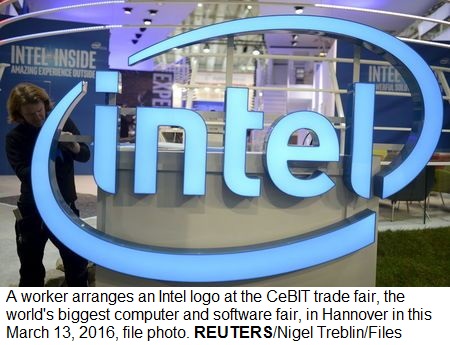
CU Blog - Blink Health - The Cure for High Drug Prices - Photo 1The book Go Lean … Caribbean also quotes that “a crisis is a terrible thing to waste” (Page 8); and that there are exigent circumstances throughout the Caribbean region, in so many  fields of endeavor, that constitute crises. The book therefore strategizes the use of GPO’s for many regional acquisitions including medical supplies and prescription drugs. This strategy maximizing the dynamics of “supply-and-demand”. At its very heart, Economics is all about supply-and-demand. The more advanced the exercise in Economics, the more complex the dimensions of the supply-side and the demand-side of a commodity; in the case of Blink Health, prescription drugs. There is BIG money in healthcare and assuredly too, BIG complications in the economic formulas. Yet still, there is more that the Caribbean community can do to optimize our demand, supply and price factors.

The Go Lean book serves as a roadmap for the introduction and implementation of the technocratic Caribbean Union Trade Federation (CU). This is a call for confederating, collaborating and convening the 30 member-states of the region into a Single Market; and for one federal governmental entity to optimize the economic, security and governing endeavors. The Go Lean/CU roadmap calls for multiple GPO’s and cooperatives. This is part-and-parcel of the prime directives (3) of the CU/Go Lean roadmap:

  • Optimization of the economic engines – accepting that energy is as basic a need as food, clothing and shelter – in order to grow the regional economy to $800 Billion & create 2.2 million new jobs.
  • Establishment of a security apparatus – including public safety and public health concerns – to protect the resultant economic engines.
  • Improve Caribbean governance to support these engines.

The CU seeks to facilitate better mastery of the advanced fields of economics by coordinating pricing, supply and delivery options for the region’s pharmaceutical needs. Public Health stewards will be able to enter into commodities contracts to buy their vaccines, prescriptions and over-the-counter medications days, weeks, months and years in advance. This is the power of the “collective”, or purchasing cooperative, and/or Group Purchasing Organizations.

This commentary asserts that healthcare needs are undeniable to promote a better society. Options abound when the total Caribbean market is leveraged. This is the underlying strategy of the Caribbean Single Market. This point was pronounced from the outset of the Go Lean book in the opening Declaration of Interdependence (Pages 11 & 14), with these statements:

viii. Whereas the population size is too small to foster good negotiations for products and commodities from international vendors, the Federation must allow the unification of the region as one purchasing agent, thereby garnering better terms and discounts.

ix. Whereas the realities of healthcare and an aging population cannot be ignored and cannot be afforded without some advanced mitigation, the Federation must arrange for health plans to consolidate premiums of both healthy and sickly people across the wider base of the entire Caribbean population. The mitigation should extend further to disease management, wellness, mental health, obesity and smoking cessation programs.

xxx. Whereas the effects of globalization can be felt in every aspect of Caribbean life, from the acquisition of food and clothing, to the ubiquity of ICT, the region cannot only consume, it is imperative that our lands also produce and add to the international community, even if doing so requires some sacrifice and subsidy.

The Go Lean/CU roadmap describes the execution of this GPO strategy as heavy-lifting, but worth the effort. The empowerments from GPO’s will surely impact the macro economy; and will surely impact the micro-economy: healthcare costs will reduce and more jobs will emerge!

The Go Lean roadmap identifies 4,000 new jobs tied to cooperatives, and at least 2,000 new jobs tied to the GPO practice (as a subset of new Health and Trade jobs). These empowerment will impact every aspect of Caribbean life. The Caribbean homeland will then be better to compete globally and present more favorable options for our youth to stay home in the region. We fail miserably at youth options now!

The Go Lean book details a series of community ethos, strategies, tactics, implementations and advocacies to foster progress with health and GPO deliveries. The following list applies:

Community Ethos – Lean Operations – Group Purchasing Organizations (GPO) Page 24
Community Ethos – Return on Investments Page 24
Community Ethos – Cooperatives Page 25
Community Ethos – Non-Government Organizations Page 25
Community Ethos – Ways to Impact the Future Page 26
Community Ethos – Ways to Improve Negotiations Page 32
Community Ethos – Ways to Impact the Greater Good Page 32
Strategy – Vision – Confederate to form a Single Market Page 45
Strategy – Mission –  Reform our Health Care – With Cost-savings GPO Schemes Page 46
Tactical – Fostering a Technocracy Page 64
Tactical – Separation of Powers – Department of Health – MediCare Administration Page 86
Tactical – Separation of Powers – Department of Health – Disease Control & Management Page 86
Anecdote – “Lean” in Government Page 93
Implementation – Ways to Pay for Change – GPO’s Page 101
Implementation – Ways to Foster International Aid Page 115
Advocacy – 10 Big Ideas – Single Market Leverage Page 127
Advocacy – Ways to Improve Interstate Commerce Page 129
Advocacy – Ways to Improve Healthcare Page 156
Advocacy – Ways to Impact Entitlements Page 158
Advocacy – Ways to Better Manage the Social Contract Page 170
Advocacy – Ways to Foster Cooperatives Page 176
Advocacy – Ways to Improve Emergency Management Page 196
Advocacy – Ways to Impact Main Street Page 201
Advocacy – Ways to Improve Elder-Care Page 225
Appendix – Disease Management Model – Healthways Page 300
Appendix – Trauma Center Definitions Page 336

This commentary asserts that healthcare needs are undeniable, but options abound when the rise of the total Caribbean market is leveraged. This is the underlying strategy of the Caribbean Single Market. The Go Lean/CU roadmap describes the execution of this roadmap as heavy-lifting, but this “heavy-lifting” is the charter for the lean, agile CU technocracy.

Many of these heavy-lifting issues have been previously identified and addressed in prior Go Lean blog-commentaries. See here, this list, related to direct and peripheral issues of cooperative strategies for healthcare supply-and-demand and for other industries:

https://goleancaribbean.com/blog/?p=7384 Oil Refineries – Strategy for Advanced Economics
https://goleancaribbean.com/blog/?p=6867 How to address high consumer prices – Healthcare a BIG issue
https://goleancaribbean.com/blog/?p=6580 Capitalism of Drug Patents
https://goleancaribbean.com/blog/?p=6016 Hotter than July – The Need for Cooperative Refrigeration
https://goleancaribbean.com/blog/?p=5287 Book Review – ‘Thimerosal: Let The Science Speak’
https://goleancaribbean.com/blog/?p=4720 A Lesson in History – SARS in Hong Kong
https://goleancaribbean.com/blog/?p=4111 Detroit-area Judge to Decide if Kids Need Vaccines
https://goleancaribbean.com/blog/?p=2522 The Cost of Cancer Drugs

The message to the people of the Caribbean region is that there are solutions to these complex solutions like prescription pricing. Whereas the Caribbean may have been a parasite before, now we can function in the role of a protégé. Change is afoot! Plus, as the foregoing Profile and VIDEO reveals, the American eco-system is defective. We must do better!

Now is the time for all Caribbean stakeholders, to lean-in for the optimizations and empowerments described in the book Go Lean … Caribbean. Yes, we can make the region a better homeland to live, work, play and heal.  🙂

Download the free e-Book of Go Lean … Caribbean – now!

Share this post:
, ,
[Top]

Blog # 400 – A Vision of Freeport as a Self-Governing Entity

Go Lean CommentaryBook Cover

This commentary addresses the needs and vision for just one city in the Caribbean, the Bahamian city of Freeport/Lucaya. But this commentary is also a milestone for the movement associated with the book Go Lean … Caribbean; this is Blog # 400.

400 is a lot of insight, analysis and wisdom. Yet, these all focused on the same goal: to make all of the Caribbean – the 30 member-states consisting of all islands and the coastal countries of Belize, Guyana and Suriname – a better place to live, work and play … by elevating the societal engines of economics, security and governance.  This is easier said than done, yet still conceivable, believable and achievable. The following are the totals for these blog categories:

Live 64
Work 73
Play 55
Economics 175
Security 91
Governance 169

The book serves as a roadmap for the introduction and implementation of the Caribbean Union Trade Federation (CU), a technocratic federal government to optimize the societal engines of the 30 Caribbean member-states. The book asserts that many of the member-states are failing … their citizens, and as a result many have fled their homelands in pursuit of refuge in foreign lands. The Caribbean population is 42 million, with a large Diaspora (estimated from 10 to 25 million); many who have pledged not to return (for permanent residency) until their homeland breaks from their ineffectual governing systems, failing economic engines and inadequate security provisions.

While the previous 399 blog-commentaries are promoting the Go Lean book, this one – # 400 – is different. This commentary is promoting the other blogs!

CU Blog - A Vision of Freeport as a SGE - Photo 2While the Go Lean book focuses primarily on the member-states, the only actual city with special mention – an actual advocacy; see photo – was Freeport/Lucaya, the 2nd City in the Bahamas.

Freeport is beautiful! “It has great potential” …

… unfortunately, this has been the descriptor for over 60 years: “Great Potential”. In actuality, this town is the epitome of a failing community as it has been “rocked” by one crisis after another: hurricanes, financial crisis, abandonment by Direct Foreign Investors, abandonment by residents, and the eventual manifestation of deficient planning; bringing the age-old lesson to the fore: “when you fail to plan, you plan to fail”.

The complaint there of the everyday man, everyday, is that the oversight of the city’s affairs by the central government in Nassau is deficient, flawed and shortsighted for Freeport. The critics are demanding a referendum to consider different secession options from Nassau. But the options being considered are not “all of nothing from Nassau”, but rather, Freeport is seeking some degree of autonomy and then becoming a Self-Governing Entity (SGE) of the CU.

There is a lot of history associated with the issues of SGE’s and Freeport.

The closest, most successful SGE is in the Orlando, Florida area: Walt Disney World Resort. This resort is administered as a SGE, empowered by the Reedy Creek Improvement District, a special government district created in 1965 that essentially gave the Walt Disney Company the standard powers and autonomy of an incorporated city. Today, the resort hosts 52.5 million visitors as the most popular vacation destination in the world. But early in the site selection process (1959), Walt Disney’s team toured Freeport for consideration for his planned resort[a]. Today tourism is the primary economic driver for Freeport, but declining, with only less than 280,000[b] annual visitors. (Freeport’s economic history has been likened to the Concorde Supersonic jet airplane; considered advanced for a time and then … the cutting-edge had an expiration date, so it became stagnant and stale in its appeal).

See VIDEO in the Appendix below from a visitor that first came to Freeport in 1971, then again in 2009; though not his intention, he chronicled the “delta”.

There are lessons for Freeport – and the whole Caribbean – to consider in this history and to learn from this SGE experience. Primary lesson: Things that are alive should grow!

CU Blog - Caribbean Ghost Towns - It Could Happen - Photo 11Freeport was planned as a Free Trade Zone, under the Hawksbill Creek Agreement – a “Free Port” – in 1955. This is one of the categories described in the Go Lean book as “Self Governing Entities”. (Other forms of SGE’s include: industrial parks, technology labs, medical campuses, industrial sites, research facilities, etc.). Orlando’s Reedy Creek Improvement District emerged 10 years later, it was a matruation of the SGE concept.

This commentary is advocating for Freeport to return to its root design – the city had envisioned a population of 250,000 people, but never exceeded 70,000 at its peak decades ago – and pursue some form of autonomous rule (not necessarily independence) that was always envisioned, and is so badly needed now. This has been a familiar call for decades. The options now are ideal for a public referendum by the people of Freeport/Lucaya, with the following choices:

Special Taxing District Allow for additional tax revenue, like a surcharge to VAT, for the autonomous administration.
Municipality Full autonomy as a city with Strong Mayor and/or separate Parliament with Prime Minister.
Semi-Autonomous Separation-of-Powers between central government and Freeport allowing some limited control.
Autonomous Expanded Separation-of-Powers between Nassau and Freeport allowing even more control.
Independence Create a separate country.

Freeport is not the only community contemplating these choices. Consider:

There are a lot of lessons – from the worldwide struggle – in this issue for the Caribbean in general and Freeport in particular. Despite Freeport’s demand for autonomous rule, the plan is not to “go at it alone, rather immediately confederate with the CU. This makes any referendum a demand for interdependence with the rest of the Caribbean. The people of Freeport should feel that aligning with the CU and submitting to the technocratic solutions (Security initiatives, Job creations, Caribbean Central Bank) would be preferred to the failed economic and monetary policies from Nassau. The underlying spirit behind this Freeport Re-boot movement would be a quest to learn lessons and “appoint new guards” to make their homeland a better place to live, work and play. This spirit was pronounced in the opening Declaration of Interdependence at the outset of the Go Lean book (Page 12 & 14); consider these statements:

xi. Whereas all men are entitled to the benefits of good governance in a free society, “new guards” must be enacted to dissuade the emergence of incompetence, corruption, nepotism and cronyism at the peril of the people’s best interest. The Federation must guarantee the executions of a social contract between government and the governed.

xxxiii. Whereas lessons can be learned and applied from the study of the recent history of other societies, the Federation must formalize statutes and organizational dimensions to avoid the pitfalls of communities like East Germany, Detroit

The Go Lean roadmap posits that the Climate Change crisis (with the accompanying hurricanes) continues, and that the global financial crisis lingers … to this day. But the roadmap trumpets that “a crisis is a terrible thing to waste”. The best hope to reform and transform Freeport in particular – and the Caribbean in general – is to confederate the CU. Then, real solutions can be forged: growing the regional economy to $800 Billion GDP and creating 2.2 million jobs … leveraging the region’s 42 million people.

How would this vision of Freeport, as a more autonomous city, affect the everyday man, everyday?

This transformational change comes with burdens and responsibilities; the people must therefore be cautious and reserved. There must be a comprehensive plan that considers all the advantages and disadvantages of an autonomous move. Some of the reservations would be:

Debt – The City of Freeport would have to assume all outstanding National Government debt that have been incurred specifically for Freeport’s consumption. Think schools, hospitals, public safety facilities. It would curtail negotiations with Nassau if the expectation is for Nassau to pay for Freeport’s debt.

Rent – Any status, short of independence, would require some separation-of-powers with Nassau. Therefore some degree of government revenue – rent – would have to be remitted to Nassau. It could easily be envisioned for Freeport to make “lease” payments to Nassau equal to, or in excess, annual Freeport contributions to the National Treasury, plus inflation.

How would such an autonomous move make Freeport a better place to live, work and play? How would this roadmap elevate the societal engines of economics, security and governance in this city? Consider here:

Live
  1. Open Borders: The city currently have open borders with the rest of the island. This change now would require for people the way bonded vehicles are managed. This operation – with transponder IDs – can be modeled after the NEXUS program between Detroit and Windsor, as demonstrated in this blog.
  2. Empowering Families: Unity of purpose from a handful of families can facilitate this vision for Freeport; these ones do not have to be rich, just united. This was demonstrated in this blog.
  3. The City should institute a National Service for its youth, and invest further in their future.
  4. Freeport’s flavor of Philadelphia Freedom; revolutionary spirit and freedom to soar …
  5. Intuitive transportation solution: Light Rail and Electric Cars. Fully embracing green energy options so as to use 100% renewables.
  6. Disaster Relief funding …
  7. Better human rights and civil rights compliance.
Work
  1. Empowering Immigration: The investment in time, talent and treasuries to facilitate Freeport’s future must embrace globalization. This was detailed in this blog. Under any plan, Freeport’s immigration policy would be autonomous.
  2. Inviting structure for Direct Foreign Investors; no submission to Nassau.
  3. Waterways ideal for Ship-building/breaking
Play
  1. Re-invest in its musical past and people.
  2. Embrace the business of sports.
Economics
  1. Robust middle-class job creation.
  2. Tertiary Education re-bootLocal supply, not just foreign consumption; thereby creating new jobs.
  3. Fertile ground for Research & Development in all STEM endeavors.
  4. Inviting alternative medical research and practices.
  5. Build-up of current Oil Refinery infrastructure.
  6. The need to micro-manage banking on the local basis with full embrace of electronic payments.
Security
  1. Local control of Police and public safety agencies.
  2. On guard against local and regional threats to protect economic engines.
  3. Overbuilding prisons and detention centers to embrace a Prison Industrial Complex and … new jobs.
  4. Community Ethos:  Priority on life, then property and privacy.
Governance
  1. A separation-of-powers and technocratic management of Common Pool Resources.
  2. VAT and Property Taxes for government income.
  3. Invite responsible and accountable NGO’s.

Freeport was envisioned for a population of 250,000; that can still happen. Positive steps in that direction would only grow the economy. It is an economic fact that more people = economic growth; less people = economic abatement.

Freeport can and must do better … than its status quo or its historical past.

This movement behind this Go Lean roadmap just wants to make our Caribbean homeland – and Freeport – a better place to live, work and play. 🙂

Download the book Go Lean … Caribbean – now!

————

Appendix VIDEO – Freeport VIDEO Tour; first time since 1971 – https://youtu.be/LVFIVbgwjTg

Uploaded on Sep 12, 2009 – Freeport is a city and free trade zone on the island of Grand Bahama, located approximately 100 mi (160 km) east-northeast of Fort Lauderdale, South Florida and gives its name to a district of the Bahamas. Freeport proper has 26,910 people. The city of Freeport has grown to be the second most populated city in The Bahamas (26,910 in 2000) after the capital, Nassau. The Grand Bahama Port Authority (GBPA) operates the free trade zone, under the Hawksbill Creek Agreement signed in August of 1955 whereby the Bahamian Government agreed that businesses in the Freeport area will pay no taxes before 2054. The area of the land grants has been increased to 138,000 acres (558 km²). Freeport Harbour is accessible by even the largest vessels, and has a cruise terminal, a container port, and both a private yacht and ship maintenance facility. Grand Bahama International Airport (IATA airport code: FPO, ICAO airport code: MYGF) [at one time] handled nearly 50,000 flights each year. Tourism complements trade as a revenue earner in Freeport, [at one time] with over a million visitors each year. Much of the tourist industry is displaced to the seaside suburb of Lucaya, owing its name (but little else) to the pre-Columbian Lucayan inhabitants of the island. The city is often promoted as ‘Freeport / Lucaya’.
  • Category: Travel & Events
    License: Standard YouTube License

    Music: “Variations On A Theme From Pachelbel’s Canon In D Major (Live Piano Solo)” by David Lanz

————

Appendix – Book Citations

a. Finnie, Shaun (2006). “Chapter 7 – The Mouse Moves East“; The Disneylands That Never Were. www.Lulu.com Online Publishers. Pages 94 – 96. ISBN 9781847285430

b. Oxford Business Group (2009). “A lot to offer; Grand Bahama Outlook”. The Report: The Bahamas 2009. www.OxfordBusinessGroup.com. Page 77. ISBN 9781902339221.

Share this post:
, , ,
[Top]

‘Crap Happens’ – So What Now?

Go Lean Commentary

The peril of a hurricane is a constant threat for Caribbean life, for all 30 member-states. It is assured that some Caribbean location will be impacted every year. While there is no guarantee for a strike “here or there”, there is a guarantee that there will be a strike somewhere.

“Bad things happen to good people”.

11  I have seen something further under the sun, that the swift do not always win the race, nor do the mighty win the battle, nor do the wise always have the food, nor do the intelligent always have the riches, nor do those with knowledge always have success, because time and unexpected events overtake them all. 12  For man does not know his time. Just as fish are caught in an evil net and birds are caught in a trap, so the sons of men are ensnared in a time of disaster, when it suddenly overtakes them. – Ecclesiastes 9:11,12 NWT

There is concern for the whole region, and for individual communities. Let’s consider one example…

The people of Freeport, Grand Bahama, in the Bahamas are good people! The impact of Hurricane Wilma in October 2005 was a bad thing; (especially after 2 earlier storms in 2004). This is a classic example of “bad things happening to good people”.  See the article reference here:

Title: Effects of Hurricane Wilma in The Bahamas

CU Blog - Crap Happens - So What Now - Photo 1The effects of Hurricane Wilma in The Bahamas were generally unexpected and primarily concentrated on the western portion of Grand Bahama. Hurricane Wilma developed on October 15, 2005 in the Caribbean Sea, and after initially organizing slowly it explosively deepened to reach peak winds of 185 mph (295 km/h) and a record-low pressure of 882 mbar (hPa). It weakened and struck eastern Mexico as a Category 4 hurricane on the Saffir-Simpson scale, and accelerated northeastward to make landfall on southwestern Florida on October 24. After crossing the state, Wilma briefly re-strengthened in the open Atlantic Ocean, moving north of The Bahamas before weakening and later becoming an extra-tropical cyclone.[1]

On October 24, Hurricane Wilma made its closest approach to The Bahamas, passing about 150 km (90 mi) north-northwest of Freeport.[1] While passing the archipelago, Wilma produced hurricane force winds and powerful storm surge, flooding southwestern coastal areas of Grand Bahama and destroying hundreds of buildings. Damage totaled about $100 million (2005 USD), almost entirely on the western half of the island. Central Grand Bahama, including the Freeport area, reported minor to moderate damage, while the eastern end received little to no damage. One child died on the island from the flooding.

Impact
On Grand Bahama Island, Wilma produced sustained winds of 155 km/h (95 mph) and a gust of 178 km/h (111 mph).[4] The hurricane also produced a storm surge of over 3.7 m (12 ft),[1] reportedly as high as 6.1 m (20 ft) along the southwestern portion of the island.[3] The surge, which moved about 305 m (1,000 ft) inland, caused large-scale flooding that washed away or destroyed about 800 homes.[5][6] Damage was estimated at $100 million (2005 USD) on the western portion of the island. Excluding the southwestern region of Grand Bahama, the majority of the island reported minor wind damage, and the eastern end of the island reported little, or no, damage.[5] Over 7,000 people on the island were directly affected by the hurricane, many of whom had not fully recovered from hurricanes Frances and Jeanne during the previous year.[3]

CU Blog - Crap Happens - So What Now - Photo 2Significant damage was reported in coastal areas of Grand Bahama Island, with widespread destruction of roofs and vehicles, along with downed poles and trees.[1] Power and telephone services were disrupted throughout the island.[3] A total of 400 structures sustained damage, of which about 200 commercial buildings were severely damaged and recommended by engineers not to be repaired.[5] Among the destroyed buildings were a police station on the western end and several buildings in Freeport.[7] More than 500 automobiles were flooded,[5] including five police cars.[7] The storm surge also raised 54 corpses in five graveyards on the island.[5] Several resorts were closed for an extended period of time,[5] all on the western portion of the island. One hotel, the Xanadu Beach and Marine Resort, reported about $3.5 million in damage (2005 USD), including numerous destroyed windows designed to withstand hurricane force winds.[8] Further to the east, numerous houses and commercial buildings lost their roofs in the city of Freeport. One serious traffic accident occurred when the winds overturned a bus, inflicting injuries on the driver. Several other traffic accidents were reported in the area, although none were severe. During the passage of the hurricane, five cases of looting were reported, of which one person was caught in the process.[7] Storm surge from the hurricane killed one child,[3] the only casualty directly related to Wilma in the archipelago.[1]

Aftermath
CU Blog - Crap Happens - So What Now - Photo 3By about two days after the passage of Hurricane Wilma, 800 residents on Grand Bahama remained in shelters,[3] including 65 families who lost their homes and stayed in a hotel set up as a government shelter in Freeport.[5] On Bimini, most residents who evacuated to shelters returned to their homes within two days of the hurricane.[3] The Bahamian Red Cross quickly assessed the damage on Grand Bahama and Bimini, and successfully requested to be included under the federation’s hurricane appeal for Central America. Local Red Cross chapters mobilized all available resources to assist the residents most affected. The Bahamian Red Cross began a three-month program to distribute food and other items to 1,000 of the 3,500 affected families, primarily on Grand Bahama; the remaining 2,500 families received assistance from the government and other organizations. Volunteers delivered building materials and provided water vouchers to those affected. In Nassau, the Red Cross disaster contingency stock sent a boat with food items, blankets, health kits, tarpaulins and water.[11] About a week after the hurricane, the United States Agency for International Development began providing $50,000 (2005 USD) to the Bahamian National Emergency Management Agency for the purchase and distribution of emergency supplies. The agency also provided $9,000 (2005 USD) for locally contracted helicopter assessments in the affected areas.[10] Red Cross agencies throughout the Caribbean Sea provided hygienic kits, plastic sheeting, blankets, and jerry cans.[11]

Electricians had power restored to the Freeport area by the day after the storm,[2] and had power restored to most of the western portion of the island within three weeks after the hurricane.[5] Work crews quickly removed road debris and tree limbs, and by the day after the passage of Wilma most roads were cleared. The passage of the hurricane left 1,000–4,000 people and hundreds of animals homeless. In response, the Grand Bahama Humane Society distributed about 340 kg (750 lb) of dog food and treated or euthanized injured animals, depending on their condition.[6] The earlier effects of Wilma on Mexico left many tourist areas in that country closed, leading to a 10% increase in tourism in the Bahamas in December 2005.[12] By about three weeks after the hurricane, the airport on Grand Bahama Island was reopened, and all but one resort were also reopened;[13] the remaining resort was reopened about two months after the hurricane.[14]
Source: Wikipedia Online Reference Source – Retrieved February 13, 2016 from: https://en.wikipedia.org/wiki/Effects_of_Hurricane_Wilma_in The Bahamas

The City of Freeport got special recognition in the book Go Lean … Caribbean. It was cited for this recognition as a token of what was wrong in the Caribbean, plus how to reform and transform the communities. So what lessons can we all learn from Hurricane Wilma’s rampage in Freeport in 2005?

This incident is an example that “Crap Happens”. This represented a ‘Clear and Present Danger’ to everyday life for the everyday man in the City of Freeport and surrounding areas. The lesson is not just for potential “911 dangers” in a community but rather for regional catastrophes, throughout the Caribbean. This includes natural disasters (hurricanes, earthquakes, volcanoes, floods, forest fires, etc.), industrial incidents (chemical & oil spills), bacterial & viral pandemics and terrorism-related events.

This discussion is presented in conjunction with the Go Lean book. It asserts that bad things (and bad actors) will always emerge to disrupt the peace and harmony in communities. All Caribbean member-states need to be on guard and prepared for this possibility.

The Go Lean book (Page 23) prepares for many modes of “bad things/actors”. It defines them as industrial mishaps, natural disasters and other “acts of God”. The book relates that these happenings are historical facts that are bound to be repeated, again and again.

So now that we accept the premise that “Crap Happens”, can we better prepare for the eventuality of bad things happening to good people?

“When we fail to plan, we plan to fail”.

This point is pronounced early in the book with the opening Declaration of Interdependence (Page 12) that claims:

i. Whereas the earth’s climate has undeniably changed resulting in more severe tropical weather storms, it is necessary to prepare to insure the safety and security of life, property and systems of commerce in our geographical region. As nature recognizes no borders in the target of its destruction, we also must set aside border considerations in the preparation and response to these weather challenges.

ii. Whereas the natural formation of the landmass for our lands constitutes some extreme seismic activity, it is our responsibility and ours alone to provide, protect and promote our society to coexist, prepare and recover from the realities of nature’s occurrences.

x. Whereas we are surrounded and allied to nations of larger proportions in land mass, populations, and treasuries, elements in their societies may have ill-intent in their pursuits, at the expense of the safety and security of our citizens. We must therefore appoint “new guards” to ensure our public safety and threats against our society, both domestic and foreign. The Federation must employ the latest advances and best practices … to assuage continuous threats against public safety.

xii. Whereas the legacy in recent times in individual states may be that of ineffectual governance with no redress to higher authority, the accedence of this Federation will ensure accountability and escalation of the human and civil rights of the people for good governance, justice assurances, due process and the rule of law. As such, any threats of a “failed state” status for any member state must enact emergency measures on behalf of the Federation to protect the human, civil and property rights of the citizens, residents, allies, trading partners, and visitors of the affected member state and the Federation as a whole.

xvi. Whereas security of our homeland is inextricably linked to prosperity of the homeland, the economic and security interest of the region needs to be aligned under the same governance. Since economic crimes, including piracy and other forms of terrorism, can imperil the functioning of the wheels of commerce for all the citizenry, the accedence of this Federation must equip the security apparatus with the tools and techniques for predictive and proactive interdictions.

So the Go Lean book relates that the Caribbean must appoint “new guards”, or a security apparatus, to ensure public safety and to include many strategies, tactics and implementations considered “best-practices” for Emergency Management (Preparation and Response). We must be on a constant vigil against these “bad actors”, man-made or natural. This indicates being pro-active in monitoring, mitigating and managing risks. Then when “crap” does happen, as it always will, the region’s “new guards” must be prepared for any “Clear and Present” danger.

The Go Lean book serves as a roadmap for the introduction and implementation of the technocratic Caribbean Union Trade Federation (CU). The CU would roll the charters of all Emergency Management agencies in the region into one initiative, not replacing the individual Emergency Management operations, but rather providing a Unified Command and Control for Emergency operations to share, leverage and collaborate their practice across the whole region. (A previous blog-commentary detailed the historicity – and failures of the current Caribbean Disaster Emergency Management Agency or CDEMA).

The Go Lean/CU roadmap has a focus of optimizing Caribbean society through economic empowerment, and homeland security. Emergency preparedness and response is paramount for this quest. In fact, the Go Lean roadmap has the following 3 prime directives:

  • Optimization of the economic engines in order to grow the regional economy to $800 Billion & create 2.2 million new jobs.
  • Establishment of a security apparatus to protect the resultant economic engines and the Caribbean homeland.
  • Improvement of Caribbean governance to support these engines.

The CU Homeland Security forces have to always be “on guard”, on alert for real or perceived threats. The legal concept is one of being deputized by the sovereign authority for a role/responsibility in the member-state. So when “crap” happens, these CU forces are expected to aid, assist, and support local resources in these member-states. The request is that all Caribbean member-states empower this Homeland Security force to execute this limited scope on their sovereign territories. The legal basis for this empowerment is a Status of Forces Agreement (SOFA), embedded in the CU treaty from Step One/Day One. This would authorize the CU for its role and responsibility for all the “crap” that could happen in jeopardizing the peace and prosperity of the Caribbean people. The CU Trade Federation would lead, fund and facilitate this Emergency Management functionality under the discretion of a regionally elected Commander-in-Chief for the CU.

CU Blog - Caribbean Ghost Towns - It Could Happen - Photo 5The foregoing article relates $100 million of economic impact of Hurricane Wilma on Freepot. Freeport could not afford that! Even now – 10 years later – the community is still reeling from that economic chaos. In some circles, Freeport is considered a “ghost town” – see photo here of the once bustling International Bazaar. So preparing effectively for disasters must include economic and financial solutions as well. The Go Lean roadmap details financial solutions, in preparing for the financial responsibility of the region’s disaster needs. Consider this quotation (Page 196) from the book:

There is also a financial battlefield for Emergency Management. Reinsurance “sidecars” allow investment bonds to be issued in the financial marketplaces to raise casualty insurance capital. The differences between premiums (plus reserves) and claims equal the profit to be shared with investors. The end result should be an insurance fund of last resort.

This reinsurance “sidecar” strategy is a win-win for communities, insurance companies and investors. (Imagine bonuses and dividend checks distributed every year on December 2, as the hurricane season ends on December 1). This type of solution aligns with the popular movement in many US States (and other democracies) that motorists provide financial solutions in face of the risks (to themselves and others) of operating motor vehicles. These provisions are defined as the ‘Financial Responsibility Law’. The technical definition of this provision is as follows:

A law which requires an individual to prove that he or she is able to pay for damages resulting from an accident. A financial responsibility law does not specifically require the individual to have insurance coverage; instead, the law requires the individual to be able to demonstrate the financial capacity to pay, even if the individual is not at fault. This type of law is commonly associated with automobiles.

… many states consider an individual with an insurance policy to be compliant with a financial responsibility law, since most insurance policies have a minimum coverage that meets the State’s standard.

Source: http://www.investopedia.com/terms/f/financial-responsibility-law.asp#ixzz40CobgMfg retrieved February 14, 2016.

Consider the VIDEO here of an American insurance company’s commercial advertising:

VIDEO: Liberty Mutual Insurance TV Commercial – Fully Replace Lost Propertyhttps://youtu.be/P7tkWIsr5zQ

TV Commercial – At Liberty Mutual Insurance, we pay to fully replace damaged property so you don’t have to touch your savings. Learn more here: https://www.libertymutual.com/

The Caribbean is arguably the “greatest address on the planet”, but there is risk associated with living deep in a tropical zone. With the reality of Climate Change, we must not be caught unprepared. We do not want our citizens fleeing their homeland … anymore; we want them to prosper where they are planted. So as a community, we must provide assurances. While this is a heavy-lifting task, this is the purpose of the Go Lean/CU roadmap. So the message is clear:

“We will have the finances to restore the economic engines after any natural disaster”.

The Go Lean book details the series of community ethos, strategies, tactics, implementations and advocacies to provide the proactive and reactive public safety/security in the Caribbean region:

Community Ethos – Economic Systems Influence Individual Choices Page 21
Community Ethos – Consequences of Choices Lie in Future Page 21
Community Ethos – “Crap” Happens Page 23
Community Ethos – Cooperatives Page 25
Community Ethos – Ways to Impact the Future Page 26
Community Ethos – Ways to Improve Sharing Page 35
Community Ethos – Ways to Promote Happiness Page 36
Community Ethos – Ways to Impact the Greater Good Page 37
Strategy – Vision – Confederating a non-sovereign permanent union Page 45
Strategy – Agents of Change – Climate Change Page 57
Tactical – Fostering a Technocracy Page 64
Tactical – How to Grow the Economy – Recover from Disasters Page 70
Tactical – Separation of Powers – Homeland Security Department Page 75
Tactical – Separation of Powers – Emergency Management Agency Page 76
Tactical – Separation of Powers – Meteorological and Geological Service Page 79
Implementation – Ways to Pay for Change Page 101
Implementation – Start-up Homeland Security Initiatives Page 103
Implementation – Ways to Re-boot Freeport Page 112
Implementation – Ways to Foster International Aid Page 115
Planning – 10 Big Ideas – #3: Consolidated Homeland Security Pact Page 130
Planning – Ways to Make the Caribbean Better Page 131
Planning – Ways to Improve Failed-State Indices – Escalation Role Page 134
Advocacy – Ways to Grow the Economy – Quick Disaster Recovery Page 151
Advocacy – Ways to Improve Governance Page 168
Advocacy – Ways to Better Manage the Social Contract Page 170
Advocacy – Ways to Improve Homeland Security Page 180
Advocacy – Ways to Improve Intelligence Gathering & Analysis Page 182
Advocacy – Ways to Improve for Natural Disasters Page 184
Advocacy – Ways to Improve for Emergency Management Page 196
Advocacy – Ways to Impact Wall Street – Adopt Advanced Reinsurance Products Page 200

Other subjects related to Emergency Management, Homeland Security and governing empowerments for the region have been blogged in other Go Lean…Caribbean commentaries, as sampled here:

https://goleancaribbean.com/blog/?p=7327 Zika – An Epidemiology Crisis – A 4-Letter Word
https://goleancaribbean.com/blog/?p=7235 Flint, Michigan – A Cautionary Tale
https://goleancaribbean.com/blog/?p=6893 A Meteorologist’s View On Climate Change
https://goleancaribbean.com/blog/?p=6563 Lessons from Iceland – Model of Recovery
https://goleancaribbean.com/blog/?p=6189 A Lesson in History – Hurricane ‘Katrina’ is helping today’s crises
https://goleancaribbean.com/blog/?p=6103 Sum of All Fears – ‘On Guard’ Against Deadly Threats
https://goleancaribbean.com/blog/?p=5002 Managing a ‘Clear and Present Danger’
https://goleancaribbean.com/blog/?p=4741 Vanuatu and Tuvalu Cyclone – Inadequate response to human suffering
https://goleancaribbean.com/blog/?p=4360 Dreading the ‘Caribbean Basin Security   Initiative’
https://goleancaribbean.com/blog/?p=4185 Caribbean Ghost Towns: It Could Happen…Again
https://goleancaribbean.com/blog/?p=2614 The ‘Great ShakeOut’ Earthquake Drill / Planning / Preparations
https://goleancaribbean.com/blog/?p=2397 Stopping a Clear and Present Danger: Ebola
https://goleancaribbean.com/blog/?p=1817 Caribbean grapples with intense new cycles of flooding & drought
https://goleancaribbean.com/blog/?p=87 Fact, not fiction: 6.5M Earthquake Shakes Eastern Caribbean

The Caribbean is on the frontlines of this Climate Change-induced storm battle! We are not the only ones; there are winners (consider northern cities with milder than normal winters) and losers. The Caribbean has found itself on the losing side; consider the experience of Freeport in the foregoing article. This could mean life-and-death for the people and the economic engines of Caribbean communities.

This reflects the change that the Caribbean region now has to endure. The book Go Lean…Caribbean posits that this “Agent of Change” is too big for just any one member-state to tackle alone, that there must be a regional solution; and presents this roadmap.

The people and institutions of the region are hereby urged to lean-in to this Go Lean roadmap; this plan is conceivable, believable and achievable. We can make the Caribbean a better place to live, work and play.  🙂

Download the book Go Lean … Caribbean – now!

Share this post:
, , ,
[Top]