Category: Strategy

The Road to Restoring Cuba

Go Lean Commentary

CU Blog - The Road to Restoring Cuba - Photo 3In a visit to Jamaica and CariCom leaders in April 2015,  US President Barack Obama concluded that 55 years of indifference towards Cuba was long-enough and that as of December 17, 2014 he had “set the machinery in motion” to normalize relations with Cuba. This descriptor paints the picture of a journey, a marathon and not just a “100-yard dash”.

What is the status of that journey now?

Where are we in the process? How are the issues being addressed?

It turns out this is a weighty task (heavy-lifting), and while many of the issues are minor (i.e. Postal Mail), some are life-and-death (i.e. Human Trafficking).

Firstly, the current restoration of Cuban and American relations is strictly an act of Executive Orders – directives by the US President (currently of the Democratic Party) and not supported by his Republican legislature, the Congress. There is a definitive divide among these Democrats and Republicans in this regard. Here are some updates of those Executive Orders, since the December 2014 baseline:

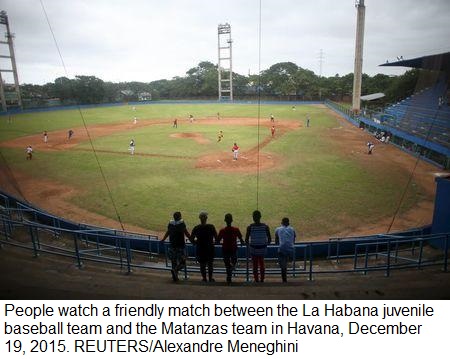
People watch a friendly match between the La Habana juvenile baseball team and the Matanzas team in Havana

People watch a friendly match between the La Habana juvenile baseball team and the Matanzas team in Havana

Cuba needs to have the American Trade Embargo officially lifted! This is a Congressional action and cannot be accomplished by Executive Orders alone.

The book Go Lean…Caribbean was designed with the intent of the eventual integration of Cuba in a Caribbean Single Market. This would allow for technocratic stewardship and oversight of the region’s economic, security and governing engines for all 30 Caribbean member-states. The book therefore serves as a roadmap for the introduction and implementation of the Caribbean Union Trade Federation (CU).

There is no minimizing of the risks and responsibility of Cuba in the Go Lean book. It is clearly recognized that integrating and restoring Cuba is a BIG deal; with heavy-lifting; and other reconciliation descriptors used to depict this monumental effort. See the relevant statement here from the opening Declaration of Interdependence (Page 12):

xiii. Whereas the legacy of dissensions in many member-states (for example: Haiti and Cuba) will require a concerted effort to integrate the exile community’s repatriation, the Federation must arrange for Reconciliation Commissions to satiate a demand for justice.

Though World War II was not directly waged in the Caribbean, the Go Lean/CU roadmap still prescribes a Marshall Plan strategy – a reference to the post-WWII European Rebuilding Plan – for re-building Cuba (and Haiti).

In truth, Cuba is the biggest market in the Caribbean. This one island has the largest landmass among the islands; (notwithstanding the landmasses of South America-situated CU member-states of Guyana and Suriname). They also have the largest population of 11,236,444 people (circa 2010) and the most agricultural output. Cuba needs the Caribbean; and the Caribbean needs Cuba. The entire region needs to act in unison as the challenges the region face are too big for any one country to tackle alone.

All in all, the book and accompanying blogs declare despite an absence of trade embargo in the other Caribbean member-states, that these countries have still failed to deliver to their citizens the standards assumed in any Social Contract. Some member-states are even flirting with Failed-State statuses. People in each Caribbean country are prone to flee the region, at every opportunity. The people of the region deserve better!

There is the need to re-boot … the entire region. This re-boot roadmap commences with the recognition that all the Caribbean is in crisis, and in the “same boat” despite the colonial heritage or language. All 30 geographical member-states need to confederate, collaborate, and convene for solutions. This is the purpose of the Go Lean/CU roadmap, as featured in this declaration of the Go Lean/CU prime directives:

  • Optimization of the economic engines in order to grow the regional economy to $800 Billion & create 2.2 million new jobs.
  • Establishment of a security apparatus to protect the resultant economic engines.
  • Improve Caribbean governance to support these engines.

Consider the start of the ill-fated Cuban-Communism Revolution in 1959, Cuba has lost 57 years in its maturation process. The Go Lean book’s opening Declaration of Interdependence (Page 11) also included this pronouncement that it is beyond time now for Caribbean success stories, rather than the continued Caribbean Failed-State stories:

While our rights to exercise good governance and promote a more perfect society are the natural assumptions among the powers of the earth, no one other than ourselves can be held accountable for our failure to succeed if we do not try to promote the opportunities that a democratic society fosters.

The Go Lean book therefore details the series of community ethos, strategies, tactics, implementations and advocacies to facilitate a re-boot in the region and to final manifest a quality delivery of a regional Social Contract:

Anecdote – Caribbean Single Market & Economy Page 15
Community Ethos – new Economic Principles Page 21
Community Ethos – new Security Principles Page 22
Community Ethos – new Governing Principles Page 24
Community Ethos – Ways to Impact the Future Page 26
Community Ethos – Ways to Manage Reconciliations – TRC Cuba Page 34
Community Ethos – Ways to Impact the Greater Good Page 37
Strategic – Vision – Integrated Region in a Single Market Page 45
Strategic – Vision – Core Competence – Specialty Agriculture Page 58
Tactical – Confederating a Non-sovereign Union Page 63
Tactical – Fostering a Technocracy Page 64
Tactical – CU Member-States   Facts & Figures Page 66
Tactical – Growing to $800 Billion Regional Economy – Marshall Plan Models Page 67
Tactical – Separation of Powers Page 71
Implementation – Ways to Pay for Change Page 101
Implementation – Foreign Policy Initiatives at Start-up Page 102
Implementation – Security Initiatives at Start-up Page 103
Implementation – Ways to Deliver Page 109
Implementation – Reasons to Repatriate Page 118
Planning – Big Ideas for the Caribbean Region – Marshall Plan for Cuba Page 127
Planning – Reasons Why the CU Will Succeed – Lessons from Unifying Germany Page 132
Planning – Ways to Improve Failed-State Indices Page 134
Planning – Lessons from East Germany – Post-Communism Integration Page 139
Planning – Ways to Model the EU – Immediate Integration after WWII Crisis Page 130
Advocacy – Ways to Grow the Economy Page 151
Advocacy – Ways to Improve Governance Page 168
Advocacy – Ways to Better Manage the Social Contract Page 176
Advocacy – Ways to Re-boot Cuba Page 236

The issue of Cuba’s eventual integration into the Caribbean brotherhood has previously been addressed in the following Go Lean commentary-blog entries:

https://goleancaribbean.com/blog/?p=6664 Cuba to Expand Internet Access
https://goleancaribbean.com/blog/?p=4506 Colorism in Cuba … and Beyond
https://goleancaribbean.com/blog/?p=3455 Restoration of Diplomatic Relations with Cuba
https://goleancaribbean.com/blog/?p=3354 CariCom Chairman calls for an end to US Embargo on Cuba
https://goleancaribbean.com/blog/?p=2330 ‘Raul Castro reforms not enough’, Cuba’s bishops say
https://goleancaribbean.com/blog/?p=1609 Cuba mulls economy in Parliament session
https://goleancaribbean.com/blog/?p=554 Cuban cancer medication registered in 28 countries
https://goleancaribbean.com/blog/?p=436 Cuba Approves New “Law on Foreign Investment”

For a long time people have hoped for a restored Cuba. This hope was shared by Cuban people on the island and in the Diaspora abroad. The hope is also shared by neighbors, tourists, trading-partners, and international stakeholders, alike. Maybe, just maybe with President Barack Obama’s Executive Orders, the journey down this road to restoration will be irreversible. (A new President of the US will be sworn-in on January 20, 2017; this one can reverse Obama’s Executive Orders).

The Go Lean roadmap for the CU strives to put the Command-and-Control of Caribbean affairs in the hands of Caribbean people. The book and accompanying blogs declare the desire for the Caribbean to no longer be a parasite of the US, but rather a protégé. This parasite status stems all the way back to the year 1898 – to the start of the Spanish – American War for Cuban Independence.

Enough already! Surely we have grown since 1898 or even since 1959.

The Go Lean…Caribbean movement turns the corner, and instead of an American dependence, or a nationalistic independence, it leads the region in a new direction: neighborly interdependence. The Go Lean…Caribbean book is a turn-by-turn guide (370 pages) for the region to dive deeper in an integrated Single Market.

Now is the time for all of the Caribbean, the people – residents and Diaspora – and governing institutions, to lean-in for this Caribbean and Cuban re-boot. Now is the time to make this region – all 30 countries – a better place to live, work and play.  🙂

Download the book Go Lean … Caribbean – now!

————

Appendix A VIDEO – US-Cuba direct mail services to resume – http://news.yahoo.com/video/us-cuba-direct-mail-services-155808360.html

Posted Dec 12, 2015 – Cuba and the United States are to resume direct postal services after half a century of having to send mail via a third country. Paul Chapman reports.

————

Appendix B – News Article: As MLB seeks legal entry to Cuba, Obama considers playing ball

By: Daniel Trotta, Reuters

HAVANA (Reuters) – Major League Baseball is asking the U.S. government for special permission to sign players in Cuba, handing the administration of U.S. President Barack Obama the opportunity to try some baseball diplomacy while dealing a setback to human traffickers.

The U.S. trade embargo generally bars MLB from any agreement directing money to the Cuban government, but the White House says baseball is one area where it can advance U.S. goals and the Treasury Department’s Office of Foreign Assets Control (OFAC) has authority to allow a deal.

MLB and Cuba are closer than at any time since the 1959 revolution, as evidenced by a goodwill tour last week in which big leaguers, including Cuban defectors, gave clinics to Cuban youth.

“Indeed, baseball has a unique cultural significance to both the United States and Cuba. It is therefore an area where we can further our goals of charting a new course in our relations with Cuba and further engaging and empowering the Cuban people,” a senior administration official told Reuters.

Since Obama and Cuban President Raul Castro broke with Cold War history and announced detente a year ago, Obama has asked Congress to repeal the embargo, but the Republican majority has resisted. Instead the administration has used other means to promote exchanges.

If MLB were able to sign players in Cuba, where baseball is the most popular sport, it could end a wave of defections in which Cuban ballplayers put themselves in the hands of human traffickers and risk their lives on illegal journeys at sea.

Some 130 ballplayers have defected this past year, according to Cuban journalists.

But the best players on the island remain off limits, and the Cuban government stops them from leaving without permission, leading those with big-league dreams to turn to smugglers. In some cases, organized crime rackets force players to sign over huge cuts of future earnings, threatening players and their families.

“It’s not an uncommon story,” said Paul Minoff, a lawyer who represents Leonys Martin, an outfielder now with the Seattle Mariners who earned $15.5 million over the past five seasons with the Texas Rangers.

After defecting, Martin was held by armed men in Mexico for months, and under duress agreed to pay his captors 35 percent of his salary, Minoff said. When Martin reached America, he fought back. The smugglers sued Martin but the suit was dismissed after U.S. prosecutors brought criminal charges against them.

Cuban players have mostly stuck to a code of silence about their defections, but some details emerge through court cases.

When Yasiel Puig of the Los Angeles Dodgers left Cuba in 2012, he soon found himself entangled with Mexico’s notorious Zetas crime organization, which threatened to chop off his arm if it failed to receive a promised $250,000 fee.

While Puig signed a $42 million contract, others are abandoned in foreign countries, never to hit paydirt.

SOLUTION SOUGHT

To normalize the transfer of players, Major League Baseball has asked the Treasury’s OFAC for a specific license. The office has wide latitude to grant such licenses and can issue regulations to approve activity otherwise proscribed by the embargo.

OFAC Acting Director John E. Smith said he could not comment on the baseball case, but in general his office “acts in consultation with the State Department and other relevant U.S. government agencies in determining whether (authorizing transactions) would be consistent with current policy.”

MLB applied for its OFAC license in early June, MLB Chief Legal Officer Dan Halem told Reuters. Halem declined to detail the request except to say it included signing players in Cuba, stressing that baseball’s priority was to provide a safe and legal path for Cuban players.

“There’s a willingness on the part of our government to end the trafficking. The White House has been very sympathetic to helping us end some of the abusive practices,” Halem said.

Legally, experts say, there is no impediment to granting MLB’s request. Politically, it may be tricky to explain a deal that provides revenue for the Cuban government while favoring MLB, a $10 billion industry. The administration’s stated preference is to support Cuba’s private sector.

RETURN OF THE DEFECTORS

Cuba made a significant gesture when it permitted once-shunned defectors to return for the goodwill tour, including Puig and Jose Abreu, who has a $68 million contract with the Chicago White Sox.

When they left Cuba, Puig and Abreu had little hope of returning soon. The trip allowed Abreu to reunite with his 5-year-old son and Puig with a half-brother.

“This demonstrates that Cuba is open to the world, that we are not closed, not even with our players who are playing in MLB,” Higinio Velez, president of the Cuban Baseball Federation, told Reuters.

Attempting to slow the defections, Cuba has increased pay and allowed more players to sign in Japan, Mexico and elsewhere. Those leagues pay Cuba a fee equivalent to 10 percent of the player’s salary, but Cuba is believed to want more from MLB.

“This is a vulnerable time. It’s a reality that the exodus has harmed the level of our baseball,” Heriberto Suarez, Cuba’s National Baseball Commissioner, told Reuters.

With an MLB deal, Cuba could regulate the egress of players and protect its professional league, the country’s greatest sporting attraction. Sixteen teams are the pride of each province, the games infused with a conga beat celebration.

Should legally emigrated stars begin playing in the United States, they would pay taxes to Cuba, which is also likely to seek compensation for player rights. Both measures would require OFAC permission and help preserve the Cuban league.

(Additional reporting by Jeff Mason in Washington)
Source: http://news.yahoo.com/mlb-seeks-legal-entry-cuba-obama-considers-playing-191751615–mlb.html; posted December 23, 2015; retrieved February 4, 2016.

Share this post:
, , , ,

Oil Refineries – Strategy for Advanced Economics

Go Lean Commentary

Energy is a basic need. We need it for a functional life in modern society.

Behavioral Scientist & Psychologist Abraham Maslow provided the world with his definitive Hierarchy of Needs[a]; he identified a pyramid, where at the bottom, or base level, are basic survival elements (food, water, shelter, etc.). Rise above that level, the next need relates to security and/or safety. Any consideration of energy (fuel and oil) need to address it as a basic need. Then once our survival has been facilitated, we then need to elevate and focus more on energy security. At this level, energy (fuel and oil) is not so basic or simple; it becomes a subject of Advanced Economics.

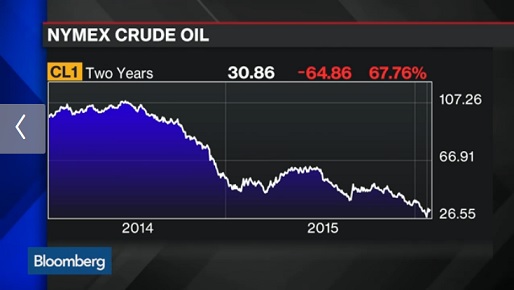
CU Blog - Oil Refineries - Strategic for Advanced Economics - Photo 3Today, gas prices have remained consistently low in the US for the past year and a half. The price per barrel had dipped as low as $30, (on the retail level prices have dropped below $2 per gallon), and now is hovering around $36.

This is good; this is bad. This is due to complexities within the Advanced Economics of crude oil supply-and-demand. Just recently, in 2008, retail gas prices where near $5 per gallon, while the wholesale price per barrel were straddling $130. This cyclical industry is amazingly complicated, and yet it so directly affects the everyday man, everyday. These “peaks and valleys” – “feasts and famine” – call for a more normalized system for oil producing/exporting countries. These cyclical extremes create crises and heighten the need for a more diversified economic system. See Appendix A regarding Saudi Arabia’s efforts to diversify. Now is the time too, for the Caribbean to plan for similar solutions.

The book Go Lean … Caribbean quotes noted Economist Paul Romer in his declaration that “a crisis is a terrible thing to waste”. We need to use the exigency of the current crisis to forge change in the Caribbean region. We can optimize the economic, security and governing engines of our Caribbean communities. There are a number of strategies for accomplishing this goal; one notable one is to apply lessons learned from other communities. We have such a role model in Saudi Arabia; they are known for their abundant oil wealth and yet the economic metrics are trending in the wrong direction:

Saudi Arabia’s reserves dropped to $611.9 billion at the end of 2015, the lowest level since 2011, down from $732 billion a year before, the Saudi Jadwa Investment said in an economic report.
Source: http://news.yahoo.com/saudi-fiscal-reserves-slide-4-low-weak-oil-104815796.html retrieved 02-02-2016.

Another strategy is maximizing the metrics of “supply-and-demand”. At its very heart, Economics is all about supply-and-demand. The more advanced the exercise in Economics, the more complex the dimensions of the supply-side and the demand-side of a commodity; in this case “oil”. There is BIG money in oil and assuredly too, BIG complications in the economic formulas. Yet still, there is more that the Caribbean community can do to optimize our demand and supply factors.

Previously, this commentary delved on the demand-side of the oil-for-energy eco-system; consider these blogs:

https://goleancaribbean.com/blog/?p=7056 Electric Cars: ‘Necessity is the Mother of Invention’
https://goleancaribbean.com/blog/?p=4587 Burlington, Vermont: First city to be powered 100% by renewables
https://goleancaribbean.com/blog/?p=915 Go Green Caribbean – Renewable energy pursuits in the region

Now we focus on the supply side. We can start first with bridging the gap between wholesale and retail prices. How? Oil refineries. There are a number of refineries in the region already. But obviously, not enough. See the list here:

Member-State

Plant

Legacy

Population Capacity – Barrels/day
Aruba

Aruba Refinery (Valero)

Dutch

106,000

275,000

Cuba

Nico López Refinery (Cupet or Cubapetroleo)

Spanish

11,236,444

122,000

Hermanos Díaz Refinery (Cupet)

102,500

Cienfuegos Refinery (Cupet)

76,000

Dominican Republic

Haina Refinery (REFIDOMSA)

Spanish

9,523,209

33,000

Jamaica

Kingston Refinery (PetroJam)

British

2,825,928

50,000

Martinique

Fort de France (SARA)

French

402,000

16,000

Netherlands Antilles

Dutch

231,834

Curaçao

Isla Refinery (PDVSA or Petróleos de Venezuela, S.A.)

320,000

Puerto Rico

Caribbean Petroleum Corporation oil refinery*

USA

3,994,259

0

Trinidad & Tobago

Pointe-à-Pierre Refinery (Petrotrin)

British

1,305,000

165,000

US Virgin Islands

St Croix Refinery (HOVENSA)

USA

108,848

494,000

TOTAL

42,198,874

979,000

* Shuttered in 2009 after a major fire-explosion; had a capacity of 48,000 barrels/day.
Source: Retrieved February 1, 2016 from https://en.wikipedia.org/wiki/List of oil refineries

The book Go Lean… Caribbean, a roadmap for the introduction and implementation of the Caribbean Union Trade Federation (CU), calls for confederating, collaborating and convening the 30 member-states of the region into a Single Market; and to one intergovernmental organization. The CU seeks to facilitate better strategies for Advanced Economics in the Caribbean region. This is part-and-parcel of the prime directives (3) of the CU/Go Lean roadmap:

  • Optimization of the economic engines – accepting that energy is as basic a need as food, clothing and shelter – in order to grow the regional economy to $800 Billion & create 2.2 million new jobs.
  • Establishment of a security apparatus, including energy security, to protect the resultant economic engines.
  • Improve Caribbean governance to support these engines.

By coordinating all the oil refineries in the region – a million barrels a day with the Puerto Rico option – in one concerted effort, there will be benefits for the wholesale and retail markets in the Caribbean. Why? Due to the realities of Advanced Economics.

In many Caribbean locales, gas is still priced near $5.00 per gallon, due to challenges in the supply-chain.

The initiatives addressed here will remediate challenges to the Caribbean energy supply. Then considering all the risk in the global markets, a closer, more technocratic delivery can also mitigate many risks. Consider a scenario of a retail price of $2 per gallon – highly probable as a result of this roadmap – and a wholesale crude price of $30 per barrel (1 barrel = 55 gallons), there is a definitive margin to still cover the cost of production (refinery) and distribution; ($110/barrel versus $30/barrel ). The more mature the eco-system for crude-to-gasoline production, the better the savings on the supply side. So when there are more local refinery capabilities, this leads to better cost dynamics (and profit) for fuel at the retail level.

The goal of the CU is to optimize Caribbean society in the dimensions of confederation, collaboration and consolidation. Consider these queries:

  • Can we deploy more oil refineries?
  • Can we provide more industrial financing for refinery expansion and upgrades?
  • Can we guarantee refineries the needed customers for their end-products?
  • Can we coordinate downtime among the array of refineries to allow for required maintenance windows?
  • Can we deploy pipelines to move crude or finished products from source location to destination?

The answers to all of these questions are “Yes, in the affirmative”. This is the power of the “collective” … for energy solutions. The Go Lean/CU roadmap calls for this type of cooperative effort, with the details of Purchasing Cooperatives and Utility Cooperatives, operating across national borders, within the region. The vision of a Single Market is a paradigm shift that forges benefits for all in the region: producers, wholesalers, retailers and consumers.

Pipelines will undoubtedly lower the cost of shipping fuel (crude or finished) among the island and coastal states.

Then too, consider the positive effects of developing a regional currency and capital market, as prescribed in the Go Lean roadmap. Trading in commodities, like crude oil, will be very viable for regional stakeholders. Local oil producers like Trinidad and Venezuela will be able to enter into commodities contracts to sell their crude oil, days, weeks, months and even years in advance. This too is the power of the “collective”, or Purchasing Cooperative, or Group Purchasing Organizations.

CU Blog - Oil Refineries - Strategic for Advanced Economics - Photo 4But there is a need for caution. The Go Lean/CU is not advocating “doubling down” on an oil-based economy. Rather, the strategy is just the opposite, to pursue the merits of diversification: energy diversity and economic diversity. There is too much pain associated with a mono-industrial economy. This is true for oil and true for tourism. There is always a need to “put the eggs in more than one basket”. But “it is what it is”. Oil is part of the energy solution today and this needs to be optimized. Oil dominated our past, and dominates our present, but hopefully there will be the need for less and less oil in the future. There is an urgency, in general, to wean-off from fossil fuels like oil to arrest Climate Change. The failure to do this has had dire consequences for our region – on the front-lines of global-warming-induced destructive hurricanes and rising sea levels.

The changes to lower the demand for oil needs to be planned and gradual. Sudden changes in the supply-chain creates economic shocks and devastating consequences to the economy. Just consider the impact on West Texas and North Dakota as depicted in this news VIDEO story here:

VIDEO:  The downsides of cheap oil – http://www.cbsnews.com/videos/is-cheap-gas-driving-the-oil-industry-broke

Posted January 31, 2015 – For people in the petroleum business, it’s a slippery slope: The plunge in oil prices that’s a boon for most of us [consumers] is a calamity for others. And it’s not just producers overseas taking the hit. Our Cover Story is reported here by Martha Teichner. (VIDEO plays best in Internet Explorer).

All of these empowerments on the macro-economy will surely make impact on the micro-economy: energy prices will decline and more jobs will emerge!

The Go Lean/CU roadmap proposes many solutions for the region to optimize energy generation, distribution and consumption. The book posits that the average costs of energy can be decreased from an average of US$0.35/kWh to US$0.088/kWh in the course of the 5-year term of this roadmap. This success will be a by-product of diversifying the energy eco-system with many alternative resources, like natural gas, solar, wind and tidal.

The Go Lean roadmap identifies 4,000 new jobs tied to cooperatives, 2,000 new jobs tied to Capital Markets and 2,000 new jobs tied to the Pipeline industry. In truth, these empowerments will impact every aspect of Caribbean life. The Caribbean homeland will then be better to compete globally and present more favorable options for our youth to stay home in the region. We fail miserably at this quest now!

The Go Lean book details a series of community ethos, strategies, tactics, implementations and advocacies to foster progress in the fields of energy generation, distribution, and consumption. The following list applies:

Community Ethos – Lean Operations – Group Purchasing Organizations (GPO) Page 24
Community Ethos – Return on Investments Page 24
Community Ethos – Cooperatives Page 25
Community Ethos – Regional Taxi Commissions – Ideal for Alternative Energy & GPO’s Page 25
Community Ethos – Non-Government Organizations Page 25
Community Ethos – Ways to Impact the Future Page 26
Community Ethos – Ways to Improve Negotiations Page 32
Anecdote – Pipeline Transport – Strategies, Tactics & Implementations Page 43
Strategy – Vision – Confederate to form a Single Market Page 45
Strategy – Mission –  Harness the power of the sun/winds Page 46
Tactical – Fostering a Technocracy Page 82
Tactical – Separation of Powers – Energy Commission Page 82
Anecdote – “Lean” in Government – Energy Permits Page 93
Anecdote – Caribbean Energy Grid Implementation Page 100
Implementation – Ways to Develop Pipeline   Industry Page 107
Implementation – Ways to Improve Energy Usage Page 113
Advocacy – Ways to Impact Public Works Page 175
Advocacy – Ways to Foster Cooperatives Page 176
Advocacy – Reforms for Banking – Create more working capital Page 199
Advocacy – Ways to Impact Wall   Street Page 200
Advocacy – Ways to Impact Monopolies – Utilities and State-owned Oil Companies Page 202
Advocacy – Ways to Improve Transportation Page 205
Advocacy – Ways to Develop the Auto Industry Page 206
Appendix – Sources of New Jobs Page 257

This commentary asserts that energy needs are undeniable. Options abound when the total Caribbean market is leveraged. This is the underlying strategy of the Caribbean Single Market. This point was pronounced from the outset of the Go Lean book in the opening Declaration of Interdependence (Page 11), with these statements as follows:

viii. Whereas the population size is too small to foster good negotiations for products and commodities from international vendors, the Federation must allow the unification of the region as one purchasing agent, thereby garnering better terms and discounts.

xxx. Whereas the effects of globalization can be felt in every aspect of Caribbean life, from the acquisition of food and clothing, to the ubiquity of ICT, the region cannot only consume, it is imperative that our lands also produce and add to the international community, even if doing so requires some sacrifice and subsidy.

The Go Lean/CU roadmap describes the execution of this roadmap as heavy-lifting.

So be it! Bring it on!

This “heavy-lifting” is the charter for the lean, agile operations of the CU technocracy.

Many of these heavy-lifting issues have been previously identified and detailed in prior Go Lean blog-commentaries. See here as some peripheral issues of energy supply-and-demand have been addressed:

https://goleancaribbean.com/blog/?p=6867 How to address high consumer prices – Fuel a BIG issue
https://goleancaribbean.com/blog/?p=6016 Hotter than July – The Need for Cooperative Refrigeration
https://goleancaribbean.com/blog/?p=5396 ‘Significant’ oil deposits found offshore Guyana
https://goleancaribbean.com/blog/?p=5155 Tesla unveils super-battery to power homes
https://goleancaribbean.com/blog/?p=4897 US Backs LNG Distribution Base in Jamaica
https://goleancaribbean.com/blog/?p=4587 Burlington, Vermont: First city to be powered 100% by renewables
https://goleancaribbean.com/blog/?p=926 Conservative heavyweights have solar industry in their sights in the US
https://goleancaribbean.com/blog/?p=915 Go Green Caribbean – Renewable energy pursuits in the region
https://goleancaribbean.com/blog/?p=273 10 Things We Want from the US – American Innovation

The message to the people of the Caribbean region is that there are solutions to these heady issues in the world energy markets. The Caribbean past is not to be the Caribbean future. Change is afoot!

Now is the time for all Caribbean stakeholders, to lean-in for the optimizations and empowerments described in the book Go Lean … Caribbean. Yes, we can make the region a better homeland to live, work and play.  🙂

Download the book Go Lean … Caribbean – now!

————-

Appendix A – Saudi Arabia to diversify economy away from oil

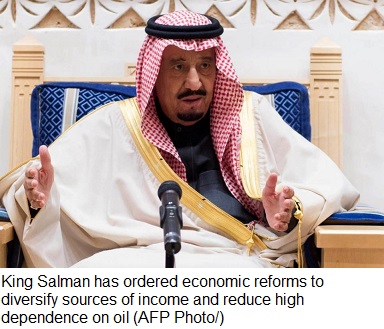
December 23, 2015 – Riyadh (AFP) – Saudi King Salman on Wednesday said he has ordered economic reforms to diversify sources of income and reduce high dependence on oil following a sharp drop in crude prices.

CU Blog - Oil Refineries - Strategic for Advanced Economics - Photo 1“Our vision for economic reform is to increase the efficiency of public spending, utilise economic resources and boost returns from state investment,” he said in an address to the Shura Council.

“I have directed the Council of Economic and Development Affairs to devise the necessary plans, policies and programmes to achieve that,” he told the consultative body, without elaborating.

Oil income accounts for more than 90 percent of public revenues in Saudi Arabia.

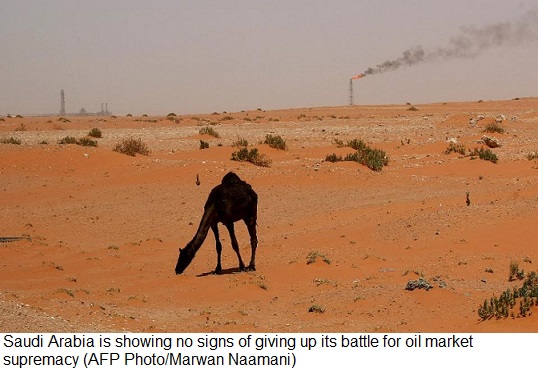
The world’s largest oil exporter, Saudi Arabia is facing an unprecedented budget crunch as the price of oil has dropped by more than 60 percent since mid-2014.

At midday Wednesday, benchmark Brent North Sea crude for delivery in February stood at $36.50 a barrel, hovering just above an 11-year low.

The king said Saudi Arabia carried out a large number of mega infrastructure projects and boosted its fiscal reserves in the past several years when oil prices were high.

The size of the fiscal buffers has enabled the kingdom to overcome the consequences from the sharp decline in oil revenues, said the king, adding that development projects have not been affected by the drop.

Saudi Arabia is projected to post a record budget deficit of around $130 billion for this year, the International Monetary Fund says.

CU Blog - Oil Refineries - Strategic for Advanced Economics - Photo 2The IMF has advised Riyadh to implement reforms, including expanding non-oil revenues, warning that failure to do so would deplete its foreign reserves.

The kingdom, which has been pumping around 10.4 million barrels a day, has withdrawn funds from its foreign reserves and also issued bonds to finance the budget deficit.

At the end of October, its reserves fell to $644 billion from $732 billion at the end of last year.

The finance ministry has issued bonds worth $20 billion for the domestic market.

In 2014, Saudi Arabia posted a budget deficit of $17.5 billion, only its second since 2002.

Source: http://news.yahoo.com/saudi-diversify-economy-away-oil-king-salman-151858656.html retrieved February 2, 2016.

————-

Appendix B – Citatation

a. Maslow, Abraham H. (1943). A Theory of Human Motivation. Psychological Review, 50(4), 370–96. Retrieved February 2, 2016.

Share this post:
, , , , ,
[Top]

ISIS reaches the Caribbean Region

Go Lean Caribbean

See, we told you … repeatedly … that this would happen.

But this is not about being right; this is about being prepared.

The movement behind the book Go Lean … Caribbean – and accompanying blogs – wants to reform and transform the societal engines of the Caribbean. This refers to economics, security and governing aspects in the homeland of the 30 member-states of the Caribbean region: all the Caribbean islands, plus the 2 member-states on the South American mainland (Guyana and Suriname) and 1 member-state on the Central American isthmus (Belize). Despite our difference, the Go Lean book posits that “we are all in the same boat” and need to “have each others’ back”.

The book further relates that once we remediate and mitigate our broken economic engines, we most assuredly will have security challenges to contend with. It turns out, according to the below news article, that we have those security concerns .. anyway; fix or no fix; prosperous or struggling. See the article here:

Title: ISIS reaches the Caribbean Region
Posted by on November 11, 2015; retrieved January 31, 2015.

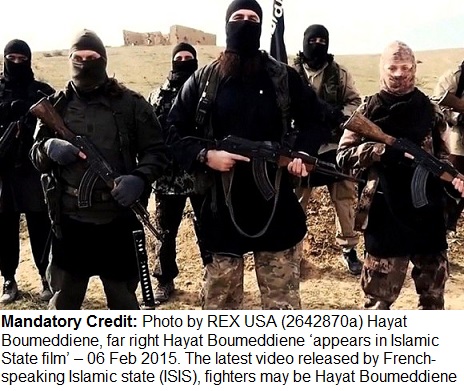
Hayat Boumeddiene 'appears in Islamic State film' - 06 Feb 2015

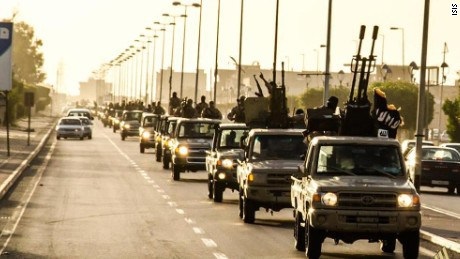
ISTANBUL – Since its emergence in Syria and Iraq, the extremist group of Islamic State (ISIS) has been expanding to reach several countries including Egypt, Libya, Ethiopia, some of the former Soviet republics and recently the Caribbean Islands.

Pro-ISIS activists have recently circulated a video under the banner “Those who Believe and Made the Hijra”, showing a man beside his three children calling on Muslims in the idyllic islands of Trinidad and Tobago to rebel.

“I fled my homeland because Muslims in Trinidad and Tobago were restricted and oppressed,” Abu Zayd al-Muhajir said in the video clip.

“People were free to wear the hijab or other Islamic clothing, but Muslims could only practice what they were told,” he added.

“You cannot practice your true Islamic religion outright,” al-Muhajir said. “I insisted on leaving that land, because my children will grow up without knowing true Islam.”

He said that his three children are now learning English, Math, and Sharia at an ISIS-run school.

Another ISIS militant speaking in the video, identified as Abu Khalid, said he had converted to Islam because “Muslims’ family structure is much stronger”.

“The holy Quran taught me how to be determined to make jihad,” he added.

Abu Mansour al-Muhajir, another ISIS member from the twin island Caribbean country who appeared in the video, said he had travelled to Syria to fight allies of the devil (in reference to Syrian president’s allies, mainly Russia and Iran).

Al-Muhajir pointed out that Islam’s Prophet mentioned that there will come an era when all the nations of the world will gather around to wipe you out; “we the Muslims,” he said.

The man thanked God, saying “we will make jihad for this cause and to gain the reward of Allah.”

Last year, 30 citizens of Trinidad travelled to Syria to fight alongside the terror group, according to the republic’s former national security minister, Gary Griffith.

The United Nations has also warned the country is being a fertile environment for recruiting and training militants to carry out suicide operations.

CU Blog - ISIS reaches the Caribbean Region - Photo 2Earlier this year, an American senior official revealed that dozens of militants have already left Caribbean countries to fight for ISIS in Syria.

“Extremists could potentially get across the U.S. border when they return back home from the war-torn countries,” Marine Gen. John F Kelly, chief of the US Southern Command, has said.

Noteworthy, seventeen EU members including France, Germany, Britain and Belgium inked an international agreement Thursday designed lately to thwart the recruitment of “foreign terrorist fighters” who travel from Europe to conflict zones abroad.

Source: ARA News quoted here: http://www.caribemedianetwork.com/isis-reaches-the-caribbean-region/

This foregoing article speaks of “Jihad”; this has become a scary term in modern society – see Appendices. Since the publishers of this commentary seek a religiously neutral stance, there is not attempt to stereotype all terrorist activities as belonging to Islamic Extremists; (there are White Supremacists and many nationalistic groups that have practiced terrorism). But, the currency of suicide bombers loyal to Muslim groups like ISIS, Boko Haram, Hamas, Hezbollah, the Taliban and al-Qaeda is a real cause for concern around the planet and this reality cannot be ignored.

In a previous blog-commentary, the question was posed as to whether World War III had commenced, with the reality of terrorism campaigns being waged everywhere, around the globe. That assertion was determined to be a bit exaggerated, but still appropriately alarming.  These campaigns are being waged in almost every geographical theater except a few. The Caribbean was previously spared.

Now? According to the foregoing article, “not so much”.

Even if this position here is perceived as another exaggeration, it should be easily accepted that we, the Caribbean, have a lot at stake; we do have terrorist risks and threats; we have to be “on guard” for “bad actors” to emerge, maybe even from within our communities. (In addition to Trinidad & Tobago, Guyana has a large Muslim population).  It is truly time now for our region to “get real” in our preparation: both overtly and covertly!

Overt! And covert!

The book Go Lean … Caribbean addresses the overt and covert security needs for the region. It describes the security pact – Status of Forces Agreement – that must be instituted with the treaty for the Caribbean Union Trade Federation (CU). The CU would be established by the sovereign powers of the 30 Caribbean member-states to empower the region with this Security / Defense Pact (Armed Forces) with a fully-empowered Naval Force and adequately manned Expeditionary Marine Forces to facilitate the region’s security interest. For covert empowerments, the book details the width-and-breadth of an Intelligence Gathering & Analysis Apparatus to fully round-out the security efforts. The Go Lean book therefore serves as a roadmap for full Caribbean integration. This roadmap describes (Page 23) that peace, security and public safety must be tantamount to economic prosperity; that bad things will happen to good people and so the community needs to be prepared to contend with the risks that can imperil the homeland. This mandate is embedded in an advocacy for the Greater Good. In all, the Go Lean roadmap has these 3 prime directives:

  • Optimization of the economic engines in order to grow the regional economy and create new jobs.
  • Establishment of a security apparatus to ensure public safety and to protect the resultant economic engines of the Caribbean homeland.
  • Improvement of Caribbean governance to support these engines.

The priority on homeland security was pronounced early in the Go Lean book with the opening Declaration of Interdependence (Page 12) that claims:

x.   Whereas we are surrounded and allied to nations of larger proportions in land mass, populations, and treasuries, elements in their societies may have ill-intent in their pursuits, at the expense of the safety and security of our citizens. We must therefore appoint “new guards” to ensure our public safety and threats against our society, both domestic and foreign. The Federation must employ the latest advances and best practices … to assuage continuous threats against public safety.

xi. Whereas all men are entitled to the benefits of good governance in a free society, “new guards must be enacted to dissuade the emergence of incompetence, corruption, nepotism and cronyism at the peril of the people’s best interest. The Federation must guarantee the executions of a social contract between government and the governed.

xii. Whereas the legacy in recent times in individual states may be that of ineffectual governance with no redress to higher authority, the accedence of this Federation will ensure accountability and escalation of the human and civil rights of the people for good governance, justice assurances, due process and the rule of law. As such, any threats of a “failed state” status for any member state must enact emergency measures on behalf of the Federation to protect the human, civil and property rights of the citizens, residents, allies, trading partners, and visitors of the affected member state and the Federation as a whole.

xvi. Whereas security of our homeland is inextricably linked to prosperity of the homeland, the economic and security interest of the region needs to be aligned under the same governance. Since economic crimes, including piracy and other forms of terrorism, can imperil the functioning of the wheels of commerce for all the citizenry, the accedence of this Federation must equip the security apparatus with the tools and techniques for predictive and proactive interdictions.

The Caribbean appointing these “new guards” will include many strategies, tactics and implementations considered “best-practices” around the world to ward off “bad actors”. This does not only address the military dimensions, but also other exigent circumstances; the roadmap therefore features a Emergency Management functionality with the Unified Command and Control for Disaster Response, Industrial incidences, epidemiological episodes and anti-crime initiatives.

The Go Lean book details the series of community ethos, strategies, tactics, implementations and advocacies to provide the proactive and reactive public safety/security in the Caribbean region:

Community Ethos – Economic Systems Influence Individual Choices Page 21
Community Ethos – Consequences of Choices Lie in Future Page 21
Community Ethos – Privacy –vs- Public Protection Page 23
Community Ethos – Intelligence Gathering Page 23
Community Ethos – Whistleblower Protection Page 23
Community Ethos – “Crap” Happens Page 23
Community Ethos – Cooperatives Page 25
Community Ethos – Ways to Manage Reconciliations Page 34
Community Ethos – Ways to Improve Sharing Page 35
Community Ethos – Ways to Promote Happiness Page 36
Community Ethos – Ways to Impact the Greater Good Page 37
Strategy – Vision – Confederating a non-sovereign permanent union Page 45
Tactical – Fostering a Technocracy Page 64
Tactical – Separation of Powers – Coast Guard & Naval Authorities Page 75
Tactical – Separation of Powers – Ground Militia Forces Page 75
Tactical – Separation of Powers – Emergency Management Agency Page 76
Tactical – Separation of Powers – CariPol: Marshals & Investigations Page 75
Implementation – Ways to Pay for Change Page 101
Implementation – Start-up Foreign Policy Initiatives Page 102
Implementation – Start-up Security Initiatives Page 103
Implementation – Ways to Foster International Aid Page 115
Planning – 10 Big Ideas – #3: Consolidated Homeland Security Pact Page 130
Planning – Ways to Make the Caribbean Better Page 131
Planning – Ways to Improve Failed-State Indices – Escalation Role Page 134
Planning – Lessons from the American West – Needed Law & Order Page 142
Planning – Lessons from Egypt – Law & Order for Tourism Page 143
Advocacy – Ways to Grow the Economy – Quick Disaster Recovery Page 151
Advocacy – Ways to Improve Governance Page 168
Advocacy – Ways to Better Manage the Social Contract Page 170
Advocacy – Ways to Impact Justice – Policing the Police Page 177
Advocacy – Ways to Reduce Crime – Regional Security Intelligence Page 178
Advocacy – Ways to Improve Homeland Security Page 180
Advocacy – Ways to Mitigate Terrorism Page 181
Advocacy – Ways to Improve Intelligence Gathering & Analysis Page 182
Advocacy – Ways to Improve for Emergency Management Page 196
Advocacy – Ways to Protect Human Rights – Watchful World Page 220

Other subjects related to security and governing empowerments for the region’s defense have been blogged in other Go Lean…Caribbean commentaries, as sampled here:

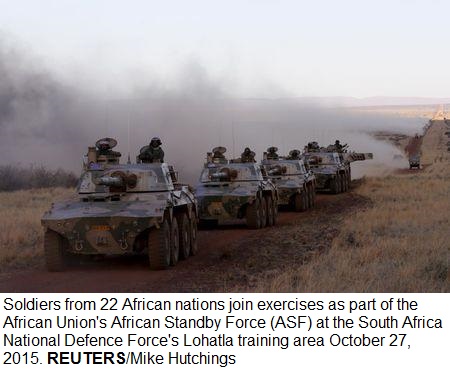
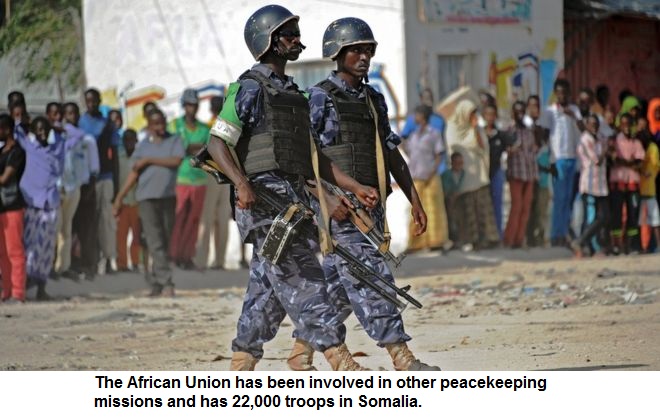
https://goleancaribbean.com/blog/?p=7119 Security Role Model for the Caribbean: African Standby Force
https://goleancaribbean.com/blog/?p=6720 A Lesson in History – During the Civil War: Principle over Principal
https://goleancaribbean.com/blog/?p=6103 Sum of All Fears – ‘On Guard’ Against Deadly Threats
https://goleancaribbean.com/blog/?p=5183 A Lesson in History – Cinco De Mayo and Mexico’s Security Lapses
https://goleancaribbean.com/blog/?p=5002 Managing a ‘Clear and Present Danger’
https://goleancaribbean.com/blog/?p=4809 Americans arrest 2 would-be terrorists – a Clear and Present Danger
https://goleancaribbean.com/blog/?p=4360 Dreading the ‘Caribbean  Basin Security Initiative’
https://goleancaribbean.com/blog/?p=3881 Intelligence Agencies to Up Cyber Security Cooperation
https://goleancaribbean.com/blog/?p=1965 America’s Navy – 100 Percent – Model for Caribbean
https://goleancaribbean.com/blog/?p=1554 Status of Forces Agreement = Security Pact
https://goleancaribbean.com/blog/?p=1531 A Lesson in History: 100 Years Ago – Root Causes of World War I
https://goleancaribbean.com/blog/?p=1076 Trinidad Muslims travel to Venezuela for Jihadist training
https://goleancaribbean.com/blog/?p=809 Muslim officials condemn abductions of Nigerian girls
https://goleancaribbean.com/blog/?p=535 Remembering and learning from Boston
https://goleancaribbean.com/blog/?p=273 10 Things We Want from the US – #4: Pax Americana

An effort to provide a better security solutions in the Caribbean should be welcomed here. But some might argue: “We want to build up for peace not build up for war; the Caribbean should be all about ‘making love not making war'”. This is a valid argument, except that the appearance of peace is very tenuous. Just one incident of a terrorist attack and any pristine peaceful brand would be ruined … for a long time. This has been the case many times over; think Bali in Indonesia after their terrorist bombings in 2002 and again in 2005.

Let those with eyes … see.
Let those with ears … hear.

Our focus is only, to make the Caribbean homeland a better place to live, work and play. But this quest must not be “empty words alone”, there must be strong actions behind the words.

Everyone in the Caribbean – citizens, institutions and governments – are hereby urged to lean-in to this Go Lean roadmap to make the region a better, stronger and safer homeland.

🙂

Download the book Go Lean … Caribbean – now!

———–

Appendix – Jihad

Jihad is an Islamic term referring to the religious duty of Muslims to maintain the religion. In Arabic, the word jihād is a noun meaning the act of “striving, applying oneself, struggling, persevering”.[1] A person engaged in jihad is called a mujahid, the plural of which is mujahideen (مجاهدين). The word jihad appears frequently in the Quran,[2] often in the idiomatic expression “striving in the way of God (al-jihad fi sabil Allah)“, to refer to the act of striving to serve the purposes of God on this earth.[1][3][4][5]

Muslims[6] and scholars do not all agree on its definition. Many observers—both Muslim[7] and non-Muslim[8]—as well as the Dictionary of Islam,[3] talk of jihad having two meanings: an inner spiritual struggle (the “greater jihad”), and an outer physical struggle against the enemies of Islam (the “lesser jihad”)[3][9] which may take a violent or non-violent form.[1][10] Jihad is often translated as “Holy War”,[11][12][13] although this term is controversial.[14][15] According to orientalist Bernard Lewis, “the overwhelming majority of classical theologians, jurists”, and specialists in the hadith “understood the obligation of jihad in a military sense.”[16] Javed Ahmad Ghamidi states that there is consensus among Islamic scholars that the concept of jihad will always include armed struggle against wrong doers.[17]
Source: https://en.wikipedia.org/wiki/Jihad retrieved January 31, 2016.

———–

Appendix VIDEO – https://youtu.be/cD1HQFcav1M – Bill Maher Vs Brian Levin on “Real Time” – Islamophobia

playbutton-300x300

Published on Apr 21, 2013 – Bill Maher’s Debate with Brian Levin, the director of the Center for the Study of Hate & Extremism at California State University in San Bernardino on “Real Time” Friday night, arguing that in this day and age, Islam is more dangerous than other religions.
Share this post:
, ,
[Top]

Death of the ‘Department Store’: Exaggerated or Eventual

Go Lean Commentary

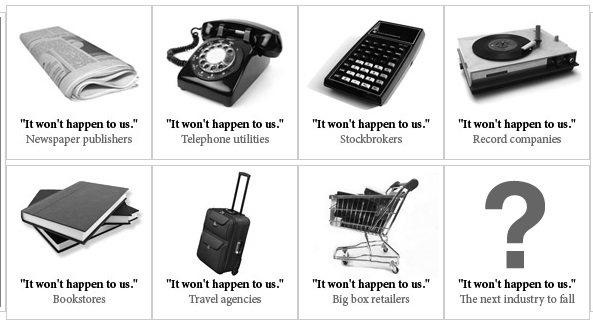
The acceptance of modern technology has transformed so many aspects of Western society. Today’s technology adds a lot to our lives … and takes a lot away, (makes obsolete). Just consider:

Appliances: camera, watch, pager, map, address book, calculator, planning-calendar, payphones, books and more.

Industries: travel agencies, music producers/retailers, book retailers, newspapers, travel agencies, Big Box retailers, etc..

CU Blog - Aereo Founder and CEO Chet Kanojia on the future of TV - Photo 1

Take note – This, transformative change, is perhaps happening again, this time with Department Stores. They are on a death kneel, fighting for survival.

What went wrong? What hope for survival? Can this industry be saved: reformed and transformed?

VIDEO – Are we witnessing the death of the department store? – NBC News (Retrieved 01-21-2016) – http://www.today.com/video/are-we-witnessing-the-death-of-the-department-store-605812291802 – If you loathe a trip to the mall, you might not be alone. With the rise of online shopping, many experts are now suggesting that we’re witnessing the death of department stores. TODAY’s Sheinelle Jones reports:

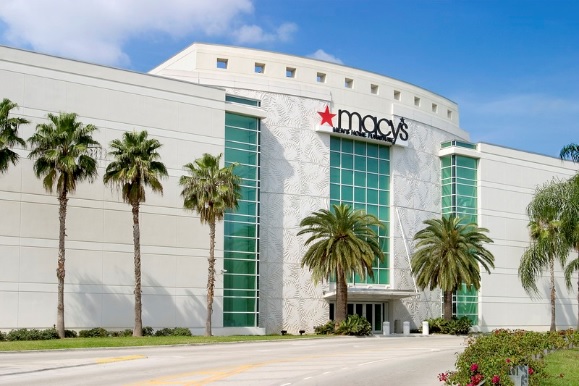
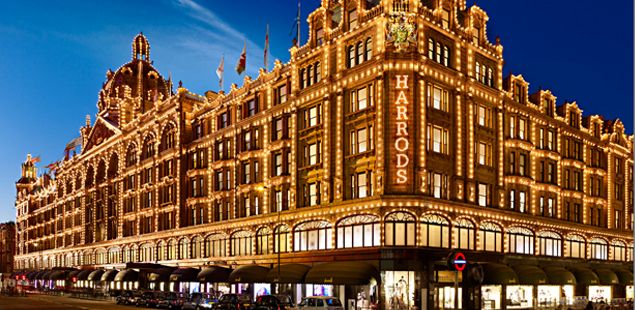
Department Stores are not uniquely American, (for example, London, England has the renowned Harrods’s Department Store). But the focus of this commentary is a review of the American eco-system, past, present and future. The hypothesis is simple, the lessons learned and strategies developed for application in the US can be applied elsewhere, throughout the world, and even in the Caribbean.

CU Blog - Death of the Department Store - Photo 1

CU Blog - Death of the Department Store - Photo 1b

CU Blog - Death of the Department Store - Photo 5

This industry is confronted with a lot of modern challenges. But this commentary is not an obituary of the industry, but rather a prescription on how to correct (mitigate and remediate) the inherent defects. Defects?

  • Technology – Online retailers are able to better compete on price, brand and quality, as long as there is deferred gratification. This is the entire business model of electronic commerce – companies (and websites) like Amazon, eBay and Alibaba – where their market capitalization (value on Wall Street) is greater than traditional companies like Coca Cola.
  • Competition – Factory Outlets have become “all the rage”; these ones have bred new life to older-dying malls in the inter-city. Even the manufacturers can sell directly to consumers, bypassing Department Stores.
  • Changing social values – Americans have become increasingly casual in its fashion-taste. Few people dress-up for work, leisure activities or even Church these days. Blue Jeans are “standard uniform attire” for young and old, men and women, even celebrities; in addition, many men – “millennials” especially – do not even know how to tie a neck-tie.

CU Blog - Death of the Department Store - Photo 3 CU Blog - Death of the Department Store - Photo 2

CU Blog - Death of the Department Store - Photo 4b

CU Blog - Death of the Department Store - Photo 4

These are the agents-of-change that comprise the “present” of this Department Store industry. But if abated, the industry can boast a bright “future”. Take technology for example, the prospects of technology-aids for the retail industry are exciting. Imagine:

  • The “One-Two Punch” of cutting-edge e-Commerce – in the mode of Amazon – but with local store fulfillment; (i.e. order online, pick-up at the store).
  • Smart-phone Apps that find and reserve parking spots at the Department Store or the Shopping Mall in general.

The book Go Lean…Caribbean also focuses heavily on the future, and how to manage, monitor, and mitigate the changes that the future will bring. The acute industry transformations caused by technology, competition and “changing social values” do not have to be a death stroke for Department Stores. Change can be embraced, anticipated and cajoled.

Department Stores can easily be early adopters of innovation. (Though their prior stance was one of orthodoxy).

The Go Lean book posits that the Caribbean region must also be early adopters of innovation; that we cannot wait until our industries are at death’s door, before seeking change. This is the reality of technology; a community cannot only consume technology, but rather must create, develop and contribute to the world of innovation.

Being an early adopter of innovation can also mean jobs.

This point was pronounced early in the book with these visionary statements in the opening Declaration of Interdependence (Page 12 & 14):

xiii.   Whereas the preparation of our labor force can foster opportunities and dictate economic progress for current and future generations, the Federation must ensure that educational and job training opportunities are fully optimized for all residents of all member-states, with no partiality towards any gender or ethnic group. The Federation must recognize and facilitate excellence in many different fields of endeavor, including sciences, languages, arts, music and sports. This responsibility should be executed without incurring the risks of further human flight, as has been the past history.

xxvi.  Whereas the Caribbean region must have new jobs to empower the engines of the economy and create the income sources for prosperity, and encourage the next generation to forge their dreams right at home, the Federation must therefore foster the development of new industries, like that of ship-building, automobile manufacturing, prefabricated housing, frozen foods, pipelines, call centers, and the prison industrial complex. In addition, the Federation must invigorate the enterprises related to existing industries like tourism, fisheries and lotteries – impacting the region with more jobs.

xxvii. Whereas the region has endured a spectator status during the Industrial Revolution, we cannot stand on the sidelines of this new economy, the Information Revolution. Rather, the Federation must embrace all the tenets of Internet Communications Technology (ICT) to serve as an equalizing element in competition with the rest of the world. The Federation must bridge the digital divide and promote the community ethos that research/development is valuable and must be promoted and incentivized for adoption.

xxviii. Whereas intellectual property can easily traverse national borders, the rights and privileges of intellectual property must be respected at home and abroad. The Federation must install protections to ensure that no abuse of these rights go with impunity, and to ensure that foreign authorities enforce the rights of the intellectual property registered in our region.

xxx.   Whereas the effects of globalization can be felt in every aspect of Caribbean life, from the acquisition of food and clothing, to the ubiquity of ICT, the region cannot only consume, it is imperative that our lands also produce and add to the international community, even if doing so requires some sacrifice and subsidy.

The Go Lean book serves as a roadmap for the introduction and implementation of the Caribbean Union Trade Federation (CU), a technocratic federal government to administer and optimize the region’s eco-systems. In fact the book identifies the prime directives of the CU with these statements:

  • Optimization of the economic engines in order to grow the regional economy to $800 Billion & create 2.2 million new jobs.
  • Establishment of a security apparatus to protect the resultant economic engines.
  • Improvement of Caribbean governance to support these engines.

A technocratic framework is what is needed for Department Stores, and what is needed for the Caribbean. Consider how the exercise of technocratic efficiencies have been proven to help the Department Stores industry, in this research project, presented here:

Title: Can department stores compete again?
Research Project Name: Resurgence of the Department Store

WHAT WE DID
We undertook an investigation into the future of the department store under the premise that although we keep hearing about the imminent “death of department stores,” it hasn’t happened. To learn more, we spoke with industry leaders, visited successful stores around the world, and conducted research by scanning business and trade publications. What we concluded is that there are distinct advantages for department stores in today’s business and retail climate, but bold strategies are needed to regain the competitive advantages these businesses once held.

THE CONTEXT
Many department stores currently sit on a precipice: Sales are languishing, malls are struggling, and their future existence is in question. But it doesn’t have to be this way. Exciting new strategies are emerging that capitalize on changing shopping habits and advances in technology. Department stores are uniquely positioned to lead this paradigm shift in the retail experience, a shift that consumers are already demanding. By moving forward with a bold, no-holds-barred approach, and by leveraging what made them successful to begin with, department stores not only can survive, but can thrive— and rise to the top of the retail sector once again.

THE RESULTS
On closer examination, the deck is stacked in favor of department stores. At both the regional and the national levels, department stores have tremendous access to merchandise based on their buying power. They can utilize this power to demand exclusives from designers as limited-run collaborations, exclusive product offerings, or special events.

Department stores are also major stakeholders in malls, and they have the anchor clout to push the daily, weekly, and yearly programming that is vital to driving foot traffic. The specialty stores that are their mall neighbors offer opportunities to develop corporate relationships and forge strategic alliances that result in mutually beneficial synergies.

The fact that department stores often have a significant space advantage, plus they frequently own the buildings in which they sit, provides a real opportunity. Strategic planning of the available space—combined with technology-enhanced product displays, leveraging of websites, and stocking efficiencies enables by RFID (radio frequency identification)—can reduce the amount of physical area required to showcase pure product without reducing offerings. That surplus space can then be used to provide unique guest experiences. Enormous marketing budgets can also be better leveraged.

Budget and space allocations can be shifted from pure commercial advertising to training and community outreach, strengthening department stores’ connections to their local communities and investing in employees to enhance customer service.

And in the end, the one thing shoppers can’t buy is time, which they seem to have less and less of every day. The department store can look to its roots and provide a wide selection of relevant offerings to create one-stop shopping that has a curatorial edge.

WHAT THIS MEANS
Curate products and pursue synergies to deliver the unexpected. Department stores have the power to select and curate their selection of products, to demand exclusives from designers, and to drive the creation of new products. Use this power to develop new and unexpected product synergies. Get feedback by asking customers what they want and delivering what they ask for. And consider platforms that put the customers even more in control, allowing them to “create” their own collections or online stores.

Elevate the guest experience. Department stores need to unify the virtual and physical shopping experience and truly deliver something better. STEP 1: Consistent pricing. STEP 2: Go beyond that by connecting with local communities to deliver something unique and to better understand customers. STEP 3: Remember that the shopping experience always comes first. Technology is a powerful tool, but not an end in itself.

Create a culture of customer service. To get the guest experience right, a culture in which the customer comes first is key. Again, department stores have the advantage: They can use their scale to train staff, share best practices, and deliver service and experiences smaller specialty stores couldn’t dream of. This may require a rethinking of staffing priorities. Consider dropping commissions in favor of training as a long-term investment.

Be socially responsible. Customers want to give their money to companies whose culture they respect, companies they believe share their values, and companies they feel are positive contributors to the community. This sentiment seems to be even stronger in the BRIC countries (Brazil, Russia, India, and China) and in developing nations, where often cash-strapped consumers are making decisions based on what they think a company stands for. Partner with local communities to deliver value and invest in contributions to the community.

WHAT’S NEXT?
The opportunities for department stores to deliver differentiated products and experiences are plenty. The key is to think beyond the ordinary, to make the bold investment, and to gauge the results. But the true challenge will be to continually pursue daring innovations. A one-dimensional strategy isn’t going to cut it. A far-reaching, persistent, unexpected—even risky—strategy for success is what will push stores ahead of the pack. Making that push means daring to be great, and understanding that change must be constant.

The Go Lean book projects a technocratic solution for the Caribbean region: the CU Trade Federation. This CU/Go Lean roadmap estimates that the technology job-creating effect of innovative retail solutions  can amount to thousands of new direct and indirect technology/logistics jobs in the region. This is just one ethos. The Go Lean roadmap was constructed with more community ethos in mind to forge change and build anticipation and excitement for technological transformative changes. The book lists samples of the community ethos, plus the execution of related strategies, tactics, implementations and advocacies:

Community Ethos – Deferred Gratification Page 21
Community Ethos – Economic Principles – People Choose Page 21
Community Ethos – Economic Principles – People Respond to Incentives in Predictable Ways Page 21
Community Ethos – Economic Principles – The Consequences of Choices Lie in the Future Page 21
Community Ethos – Economic Principles – Job Multiplier Page 22
Community Ethos – Governing Principles – Lean Operations Page 24
Community Ethos – Ways to Impact the Future Page 26
Community Ethos – Ways to Foster Genius – Fashion and Art Page 27
Community Ethos – Ways to Promote Intellectual Property Page 29
Community Ethos – Ways to Impact Research & Development Page 30
Community Ethos – Ways to Bridge the Digital Divide Page 31
Community Ethos – Ways to Promote Happiness Page 36
Community Ethos – Ways to Impact the Greater Good Page 37
Strategy – Vision – Confederate 30 Member-States to Create Single Market Page 45
Strategy – Mission – Build and foster local economic engines Page 46
Strategy – Mission – Exploit the benefits and opportunities of globalization Page 46
Tactical – Confederating a Permanent Union Page 63
Tactical – Fostering a Technocracy Page 64
Implementation – Ways to Pay for Change Page 101
Implementation – Steps to Implement Self-Governing Entities Page 105
Implementation – Ways to Improve Mail Service – Caribbean Postal Union Page 108
Implementation – Trends in Implementing Data Centers – Creating the ‘Cloud’ Page 106
Implementation – Ways to Deliver Page 109
Implementation – Ways to Impact Social Media – Caribbean Cloud Page 111
Planning – 10 Big Ideas for the Caribbean Region – Cyber-Caribbean Page 127
Advocacy – Ways to Grow the Economy Page 151
Advocacy – Ways to Create Jobs Page 152
Advocacy – Ways to Better Provide Clothing – Improve Fashion Merchandising Page 163
Advocacy – Ways to Improve Governance – e-Government & e-Delivery Page 168
Advocacy – Ways to Foster Technology Page 197
Advocacy – Ways to Foster e-Commerce Page 198
Advocacy – Ways to Impact Main Street Page 201
Advocacy – Ways to Impact Urban Living Page 234
Appendix – CU Job Creations Page 257

This Go Lean roadmap calls for the heavy-lifting to transform Caribbean society. Technological change is coming … anyway; rather than fight or resist change, we all need to embrace it. The roadmap advocates getting ahead of the change, to shepherd and navigate important aspects of Caribbean life through the “seas of change”. These goals were previously featured in Go Lean blogs/commentaries, as sampled here:

https://goleancaribbean.com/blog/?p=6341 Tourism Stewardship — What’s Next? The need to Master e-Commerce
https://goleancaribbean.com/blog/?p=6151 3D Printing: Here Comes Change
https://goleancaribbean.com/blog/?p=5668 Move over   Mastercard/Visa – The emergence of Caribbean e-Payments
https://goleancaribbean.com/blog/?p=5435 China Internet Policing – Model for Transforming the Caribbean
https://goleancaribbean.com/blog/?p=5155 Transformative Tesla unveils super-battery to power homes
https://goleancaribbean.com/blog/?p=5034 Patents: The Guardians of Innovation
https://goleancaribbean.com/blog/?p=4425 Cash, Credit or iPhone – New Trends in Retail payments
https://goleancaribbean.com/blog/?p=4381 Net Neutrality – This Matters … For Transformation & Innovation
https://goleancaribbean.com/blog/?p=4793 Truth in Commerce – Learning from Yelp
https://goleancaribbean.com/blog/?p=3915 Change the way you see the world; you change the world you see
https://goleancaribbean.com/blog/?p=3490 How One Internet   Entrepreneur Can Rally a Whole Community
https://goleancaribbean.com/blog/?p=3187 Robots help Amazon tackle Cyber Monday
https://goleancaribbean.com/blog/?p=2488 Role Model Jack Ma brings Alibaba to America
https://goleancaribbean.com/blog/?p=1416 Amazon’s new FIRE Smartphone
https://goleancaribbean.com/blog/?p=1350 PayPal expands payment services to 10 markets
https://goleancaribbean.com/blog/?p=308 CARCIP Urges Greater Innovation

The Go Lean book focuses primarily on economic issues;  retail sales fit that distinction. As portrayed in the foregoing VIDEO, the future is bleak for Department Stores if they continue business-as-usual. They must reform and transform.

This analysis is a good study for the Caribbean. We, too, must reform and transform. Change has come; our business models are no longer as assured.

Who moved my cheese?
CU Blog - Death of the Department Store - Photo 6

The Go Lean book offers the turn-by-turn directions of strategies, tactics and implementations so that our communities may keep pace with the agents-of-change. This is not easy; this is heavy-lifting, but this is worth the effort. Everyone in the Caribbean, institutions and individuals alike, are urged to lean-in to this roadmap for empowerment of the region’s societal engines. 🙂

Download the book Go Lean…Caribbean now!

Share this post:
, , , , ,
[Top]

Detroit giving schools their ‘Worst Shot’

Go Lean Commentary

Want to give it ‘your best shot’ …

… then we strongly caution – anyone and everyone – against the practice of taking on debt. Many bad things happen when people depend on debt. A “slippery slope” can ensue … from dependence, to reliance, to requirement, to vital, … to debt slavery. The further one stays away from debt, the better.

Even the Bible admonishes:

“Let no debt remain outstanding, except the continuing debt to love one another…”. Romans 13:8 New International Version

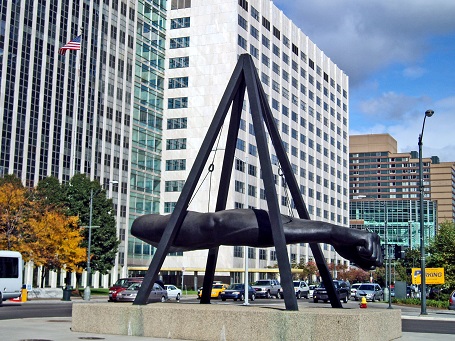
Joe Louis Fist

The Fist – Detroit’s Tribute to Boxing Legend Joe Louis

The problem with debt is that it trades the future for the past! It gives the ‘worst shot’, not  the ‘best shot’. To continue the boxing analogy, debt burdens the boxer down with additional pounds and pressure; bad formula for success.

This is truly the experience in Detroit today. The City’s well-documented Failed-City status (and Bankruptcy) not only impacts its past, but apparently also it’s future – as in the education of its children. The schools in Detroit are below standard, below quality and below acceptability. This applies to their physical structure, budgets, teacher appreciation, student experience and student preparation.

Why?

Detroit, both the “City” and “School District” had been too indebted, so that the first priority of all revenues/funding has to go to debt servicing. This means other vital functioanlities (physical structure, teachers and students) must be de-prioritized or many times outright ignored.

The relevant stakeholders for Detroit Public Schools are truly giving the ‘worst shot’, not the ‘best shot’.

(For Detroit, the municipal City and the School District are separate legal entities. While the City of Detroit filed for Bankruptcy protection and re-organization in 2013, the School District has not).

This dire disposition is not exclusive to Detroit. Unfortunately, this applies to many other communities around the world (think Greece); and even in the Caribbean.

See the news article here conveying the harsh realities that many in the Detroit Public Schools are now faced with:

Title: Detroit school system wants judge to end teacher sickouts

An attorney for the Detroit Public Schools has asked a judge to issue a restraining order and preliminary injunction to force teachers to stop sickouts and return to work, according to court documents filed Wednesday.

The motion names the Detroit Federation of Teachers, interim teachers union president Ivy Bailey and 23 Detroit Public Schools teachers.

“DPS has requested the court’s intervention in addressing the ongoing teacher sickouts that are plaguing the district,” Michelle Zdrodowski, the spokeswoman for the Detroit Public Schools said in a statement.

CU Blog - Detroit Giving Their Schools Their Worst - Photo 3

CU Blog - Detroit Giving Their Schools Their Worst - Photo 1

CU Blog - Detroit Giving Their Schools Their Worst - Photo 2

The teachers union responded to the filing, noting “Detroit deserves better.”

“It is regrettable that the Detroit Public Schools seeks to punish those who speak out about the deplorable conditions in our schools,” Bailey said. “It would be so much more productive to actually do something to fix Detroit schools rather than file restraining orders against those who expose the miserable conditions.”

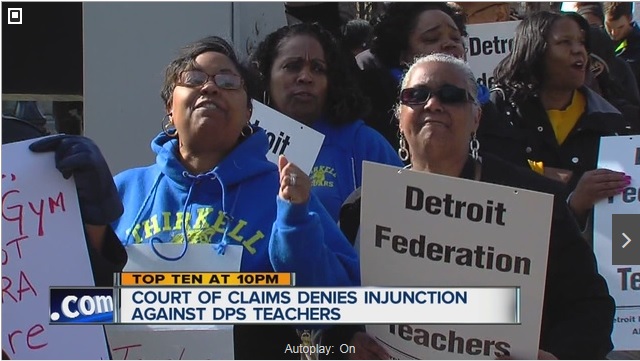
Nearly all Detroit’s public schools were closed Wednesday as many protesting teachers called in sick, turning what was supposed to be a day to celebrate into one shining a harsh spotlight on one of Michigan’s struggling cities.

President Barack Obama was in Detroit for the North American International Auto Show. He praised the American automotive industry’s resurgence, which many people view as a major victory for Detroit.

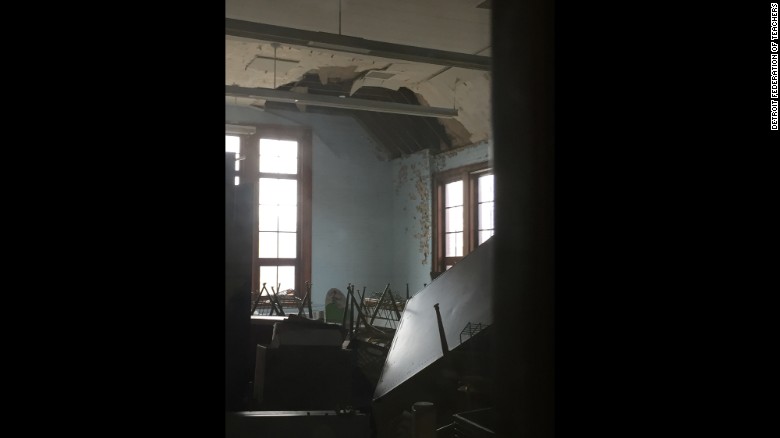
But those inside the city tell a sharply different story, one illustrated in leaflets showing pictures of dead rats found at public schools, mildew taking over ceilings and walls and damage to school buildings.

Detroit teachers have pressed their case against what they call deplorable conditions and inadequate funding. They’ve also decried decisions made by the school system’s emergency manager, who was appointed by Republican Gov. Rick Snyder — criticism that echoes complaints in Flint, a Michigan city mired in a water crisis after state officials largely took over because of budget troubles, just as they did in Detroit.

Detroit teachers have backed up their words with mass sickouts, starting January 11, when 62 schools closed as a result.

Bailey estimated the doors of “over 30 schools” ultimately would be affected.

Zdrodowski said there would be no class Wednesday in 88 schools, about 90% of those in the system.

But as of Wednesday night, the Detroit Public Schools’ Facebook page indicated all schools will be open Thursday. The announcement included a request for students and parents to check the page again for updates.

The speaker of the House in Michigan called for absentee teachers to be dismissed.

“These teachers deserve to be fired for turning their backs on the children in their care,” said Kevin Cotter, a Republican from Mount Pleasant. “Their actions also go against any possible resolution on potential (Detroit Public Schools) reforms, because any long-term agreement on Detroit schools has to put the kids first.”

Cotter said more than 700,000 instructional hours have been lost.

Budgets leave children by wayside in 2 Michigan cities

Obama meets with Detroit’s mayor

The timing — on the day of Obama’s visit to the Detroit auto show, with the national media attention that it brought — was no coincidence.

The Detroit Federation of Teachers indicated as much on its website, saying now is the time to “fight for Detroit kids (who) are struggling in schools with hazardous environmental and safety issues (and) educators have made significant sacrifices for the good of students.”

“As the city celebrates this ‘ultra-luxury’ automobile event,” the teachers union said, “Detroit’s public schools are in a state of crisis.”

Protesters planned to hand out fliers to car show attendees and urge them to sign a petition — which had over 11,000 signatures as of Wednesday morning — entitled “Our Kids Deserve Better.”

“Enough is enough!” the petition states. “… We demand real answers and fully funded schools.”

Obama had lunch with Detroit Mayor Mike Duggan. Before the meeting the White House said they would likely discuss the mass school closures as well as larger funding problems plaguing the city.

Duggan has “met with several teachers and understands what they’re going through,” his spokesman John Roach told CNN. But he doesn’t think that calling in sick is the right approach.

“(The mayor feels) the best thing for them to do is go back to school and teach,” Roach said.

Governor: ‘Time to act is now’

This isn’t just Detroit’s problem. It’s one for all of Michigan, which took control over much of the city’s government due to its well-documented financial woes.

One man who has been a frequent target of critics is Darnell Earley, appointed by Snyder a year ago to oversee Detroit Public Schools.

Michigan Senate Democrats took a swipe at him in a tweet: “Crumbling #DPS schools are a direct result of damage that can be done by unelected emergency managers.”

Bailey, the teachers union chief, piled on, saying, “If the goal was to destroy DPS, emergency management has done an excellent job.”

Before going to Detroit, Earley served as the emergency manager in Flint. He was in that position in April 2014 when Flint’s water supply switched from Lake Huron to the Flint River, a decision reversed more than a year later after reports of corroded pipes and elevated blood lead levels.

How tap water became toxic in Flint

Earley has said he was not responsible for the decision, only for implementing it after it was approved. Whoever was to blame, Flint still faces a serious health crisis and the costly, complicated task of cleaning up its water and possibly replacing damaged water pipes across the city.

Another person Detroit and Flint have in common is Snyder, the governor who sent Earley to both cities and who is officially in charge.

In his State of the State address Tuesday night, the governor called for money spent on debt service, close to $1,200 per student, to be shifted into classroom funding to give teachers what they need to do their jobs.

“(The) time to act is now,” he told lawmakers. “The Detroit schools are in need of a transformational change.

“The state needs to ensure that a complete failure to educate schoolchildren never again happens to this extent in one of Michigan’s districts.”

Governor’s outlook for school reforms

‘Teachers are fed up and have had enough’

A proposal introduced last week in the state Legislature would appear to find a way of doing that while handling the school system’s massive $515 million debt.

It would create a second school district within the city that assumes control over all of its schools and students, while leaving the current Detroit Public Schools system with only the district’s debt, said Republican state Sen. Goeff Hansen, author of the proposal.

“It’s a high priority. It’s an emergency situation,” Hansen said.

About $7,400 of school funding is allocated per student each year. But close to $1,200 of that goes to pay down debt and other costs, Hansen said.

Under the proposal, tax revenue would continue to pay off the debt isolated in the DPS system, but the state would gain room to inject additional funding into the new school system.

It has left many teachers worried that Detroit Public Schools will go out of existence, said Bailey, the teachers union leader. Under the current system, funding could run out by April.

Teachers feel pushed over the edge to protest against a litany of resulting troubles. There have been recent concessions. The school district agreed to demands on staff meetings, sick leave accrual and a labor-management committee on curriculum, the teachers union said.

And last week, Duggan ordered inspections of all the city’s public schools.

Duggan hopes to have the first 20 school buildings fully inspected by month’s end and all of them wrapped up in about three months, according to Roach, his spokesman.

Yet Bailey says a lot more still needs to be done.

“It’s because of the lack of respect that has been displayed toward teachers in this district, the hazardous working conditions, oversize classes, lost preparation periods, decrease in pay, increase in health care cost, uncertainty of their future,” she said.

“I could go on and on. Teachers are fed up and have had enough.”

Detroit teachers demand fix to ‘hazardous’ school

CNN’s Jean Casaraz, John Newsome, Dominique Debucquoy-Dodley, Phil Gast, Steve Almasy, Mallory Simon and Eliott C. McLaughlin contributed to this report.
Source: CNN – (Cable News Network); posted January 20, 2016 retrieved January 21, 2016 from: http://www.cnn.com/2016/01/20/us/detroit-public-schools-michigan-governor/index.html

———

Complimentary Story/VIDEO – Detroit’s Teachers Are Tired Of Their Schools  https://youtu.be/H-h0Db3P4ic

Published on Jan 20, 2016 – Teachers in Detroit have been protesting about their working conditions by taking to the internet. After a mass “sick out,” they’re now going on social media to share the daily difficulties they and their students face in schools.

CU Blog - Detroit Giving Their Schools Their Worst - Photo 4The petition for Judicial action was denied.

Good! Do not just “swipe these issues under the rug”. Deal with them!

A “crisis is a terrible thing to waste”. Detroit needs to use this crisis to re-boot its school eco-system.

First, the School District – see Appendix – needs to petition for its own Chapter 9 Bankruptcy. There is the need to write-off much of that previous debt; “pay pennies on the dollar”. That debt – from the past – is shortchanging the future for Detroit’s children. And since the City is smaller today, population-wise compared to decades ago, many more schools can be closed – sold to creditors – and consolidated to a smaller number (from the 97 today).

Jesus answered … you are anxious and troubled about many things, but only few things are needed… prepare the good part, and it will not be taken away. – Bible Luke 10:41-42 World English Bible paraphrase.

This strong prescription for Detroit Public Schools is a lesson learned from another crisis, the Great Recession of 2008. The events of September 15, 2008 parallel Detroit Public Schools today; this is when the American Investment Bank Lehman Brothers filed for bankruptcy. This action brought the US (and the world’s economy) to the brink of disaster. The ultimate solution for Lehman in 2008 was dissolution and a wind-down of those assets and excessive debt.

Death can sometimes bring peace!

The economy eventually re-bounded. The old debts are only in the past, no future considerations.

This 2008 consideration is part-and-parcel of the book Go Lean…Caribbean which serves as a roadmap for the introduction of the technocratic Caribbean Union Trade Federation (CU) to provide new oversight for the Caribbean region’s economic, security and governing engines. The book was conceived as a result of this 2008 crisis, by stakeholders intimate with the anatomy of the 2008 crisis – worked for Lehman Brothers – and composed a prescription for Caribbean turn-around.

The pretext of the Go Lean roadmap is simple, and applies equally to the Caribbean, and any other community:

Only at the precipice do they change!

The lessons learned, and codified, in the pages of the Go Lean book can now be enhanced with the examination of the realities of Detroit’s Public Schools. This examination considers the reality of the economic, security and governing aspects of this distressed community.

The publishers of the Go Lean book are here in Detroit to “observe and report” the turn-around and rebirth of the once-great-but-now-distressed City of Detroit and its metropolitan areas, including the even more dysfunctional community of Flint. There are so many lessons to learn from Michigan: good, bad and ugly.

Lessons learned from Michigan communities have been frequently conveyed in previous blogs/commentaries. Consider this sample here:

https://goleancaribbean.com/blog/?p=7235 Flint, Michigan – A Cautionary Tale
https://goleancaribbean.com/blog/?p=6609 Before and After Photos Showing Detroit’s Riverfront Transformation
https://goleancaribbean.com/blog/?p=6269 Education & Economics: Welcome to Detroit, Mr. President
https://goleancaribbean.com/blog/?p=6022 Caribbean Diaspora in Detroit … Celebrating Heritage
https://goleancaribbean.com/blog/?p=5597 The Dire Straits of the Unions and Collective   Bargaining
https://goleancaribbean.com/blog/?p=5055 A Lesson from an Empowering Family in Detroit
https://goleancaribbean.com/blog/?p=4913 Ann Arbor: Model for ‘Start-up’ Cities
https://goleancaribbean.com/blog/?p=4476 De-icing Detroit’s Winter Roads: Impetuous & Short Term
https://goleancaribbean.com/blog/?p=3713 NEXUS: Facilitating Detroit-Windsor Cross-Border Commerce
https://goleancaribbean.com/blog/?p=3326 M-1 Rail: Alternative Motion in the Motor City
https://goleancaribbean.com/blog/?p=3311 Detroit to exit historic bankruptcy
https://goleancaribbean.com/blog/?p=3164 Michigan Unemployment – Then and Now
https://goleancaribbean.com/blog/?p=2480 A Lesson in History: Community Ethos of WW II
https://goleancaribbean.com/blog/?p=1656 Blue is the New Green – Managing Detroit’s Water Resources
https://goleancaribbean.com/blog/?p=970 JP Morgan Chase $100 million Detroit investment not just for Press

The CU is designed to do the heavy-lifting of organizing Caribbean society to benefit from the lessons from Detroit and other Michigan communities. The Go Lean book details the community ethos to adopt, plus the executions of the following strategies, tactics, implementations and advocacies to impact the rebirths, reboots and turn-around of Caribbean communities:

Community Ethos – Deferred Gratification Page 21
Community Ethos – People Respond to Incentives Page 21
Community Ethos – “Crap” Happens Page 23
Community Ethos – Lean Operations Page 24
Community Ethos – Return on Investments (ROI) Page 24
Community Ethos – Ways to Impact the Future Page 26
Community Ethos – Ways to Help Entrepreneurship Page 28
Community Ethos – Ways to Impact a Turn-Around Page 33
Community Ethos – Impact the Greater Good Page 37
Strategy – Vision – Integrate a Single Market for more Financial Leverage Page 45
Tactical – Fostering a Technocracy Page 64
Tactical – Modeling Post WW II Recovery: Germany – Marshall Plan Page 68
Tactical – Modeling Post WW II Recovery: Japan – with no Marshall Plan Page 69
Separation of Powers – Public Works & Infrastructure Page 82
Separation of Powers – Housing and Urban Authority Page 83
Implementation – Ways to Pay for Change Page 101
Implementation – Ways to Re-boot Freeport – A Sample Caribbean city needing turn-around Page 112
Implementation – Ways to Better Manage Debt Page 114
Planning – Ways to Improve Failed-State   Indices Page 132
Planning – Lessons Learned from 2008 Page 136
Planning – Lessons Learned from Detroit Page 140
Advocacy – Ways to Grow the Economy Page 151
Advocacy – Ways to Improve Education Page 159
Advocacy – Ways to Improve Local Government Page 169
Advocacy – Ways to Better Manage the Social   Contract Page 170
Advocacy – Ways to Impact Urban Living Page 234
Advocacy – Ways to Re-boot Cuba Page 236
Advocacy – Ways to Re-boot Haiti Page 238
Appendix – American Student Debt Crisis “Ripping Off Young America” Page 286

The Go Lean roadmap posits that change is coming to Detroit, (many Go Lean blog-commentaries have even reported on the change that is now afoot) and also that changes need to come to the Caribbean. Though Detroit is out-of-scope for the Go Lean movement, we can observe-and-report; we can apply the lessons – the good, bad and ugly – for optimization in our Caribbean homeland under the scheme of a Single Market. With the integration of 42 million people in the 30 member-states we will be able to do so much more – effect more turn-around – than anyone member-state can accomplish alone.

The Go Lean book declares: “A crisis is a terrible thing to waste” – quoting noted Economist Paul Romer. The opportunity exists now to forge change in the economic, security and governing engines of the Caribbean, as this cautionary guidance is gleaned from the Detroit crisis.

The roadmap calls for a confederation of the 30 member-states of the Caribbean into a Single Market of 42 million people; thereby allow an adequate size to absorb economic shocks and downward trends. The Go Lean roadmap provides the details for the creation of 2.2 million new jobs and GDP growth to accumulate to $800 Billion. This vision is at the root of the Go Lean roadmap, embedded in the opening Declaration of Interdependence (Page 13):

xxiv.    Whereas a free market economy can be induced and spurred for continuous progress, the Federation must install the controls to better manage aspects of the economy: jobs, inflation, savings rate, investments and other economic principles. Thereby attracting direct foreign investment because of the stability and vibrancy of our economy.

xxv.    Whereas the legacy of international democracies had been imperiled due to a global financial crisis, the structure of the Federation must allow for financial stability and assurance of the Federation’s institutions. To mandate the economic vibrancy of the region, monetary and fiscal controls and policies must be incorporated as proactive and reactive measures. These measures must address threats against the financial integrity of the Federation and of the member-states.

xxxiii.   Whereas lessons can be learned and applied from the study of the recent history of other societies, the Federation must formalize statutes and organizational dimensions to avoid the pitfalls of communities like … Detroit …

Detroit Public Schools should recover…eventually! Their status will go from “bad-to-clean-to-better” but then they would have a reboot, much like many communities around the country and around the world – consider Iceland. This is an established best-practice; paralleling a forest fire in many ways; except these are human lives being impacted, not trees.

The Caribbean also has Failed-State issues to contend with. There are real-and-perceived Failed-States now (Haiti, Cuba, Dominican Republic, Jamaica and Puerto Rico) and many more that are almost there, so we have to master the art-and-science of turn-around strategies for our region.

The Go Lean roadmap declares that the responsibility for fixing the Caribbean though must fall first-and-foremost on the Caribbean, its people and institutions.

The Caribbean must also reboot and “bounce back”; to “step back from the precipice”. The effort is not easy; the Go Lean book describes it as heavy-lifting. We need to burn-off old debris and build new eco-systems. The returns – new Caribbean structures – will be worth the investments and sacrifices. This is true for Detroit … and the Caribbean.

This is the goal of the Go Lean roadmap: set aside the past, catalog the lessons, then forge the future. This is the only way to make the Caribbean a better place to live, work and play.  🙂

Download the book Go Lean … Caribbean – now!

———-

Appendix – Detroit School District

Detroit Public Schools (DPS) is a school district that covers all of the city of Detroit, Michigan, United States and high school students in the insular city of Highland Park. The district has its headquarters in the Fisher Building of the New Center area of Detroit.[6][7]

Students 47,959 (2014–15)
Teachers 3,235 (2012-13)
Staff 15,535 (2007)[3]

Besides DPS, the Education Achievement Authority (EAA) operates 15 of the district’s schools totalling 6,556 students as of the 2014-15 school year.

Emergency Financial Manager

The district is currently under a state of a financial emergency and is currently run by an emergency manager instead of the school board and superintendent.

Currently all matters are under the control of Emergency Manager Darnell Earley was appointed as the new emergency manager for the school district by Snyder, appointed by Governor Rick Snyder in January 2013.[4]

From 2009–2011, DPS finances were managed by Robert Bobb who was appointed by former Governor Jennifer Granholm[33] and from 2011 to January 2015, Roy Roberts who was appointed by Governor Snyder.

Source: https://en.wikipedia.org/wiki/Detroit_Public_Schools retrieved January 22, 2016.


Share this post:
, , , , , ,
[Top]

Crime Specialist Urging: ‘Change Leaders in Crime Fight’

Go Lean Commentary

While we all want to live in a society free of crime, we all recognize that this goal is easier said than done!

Since remediating and mitigating crime is both an “Art” and a “Science”, we have to rely on professionals and Subject Matter Experts (SME) – Police – to do this job. And when these SME’s succeed in their “art and science”, we hardly notice; but when they fail we cannot ignore the failures, as we are all impacted.

Right now, there is no way to ignore what is going on in the Caribbean member-state of the Bahamas; they have an alarming crime problem, one that has the attention of local, regional and international stakeholders. According to the below news article, these numbers highlight the problem:

In 2010, there were 94 murders recorded in the country, a record at the time. The next year there were 127 murders and in 2012 there were 111. There were 120 murders in 2013, 123 in 2014 and a record 149 last year [2015].

For a country of 320,000 people, these numbers are alarmingly high. (This blogger is Bahamas-bred).

- Photo 1

The book Go Lean … Caribbean asserts that to elevate Caribbean society there must be a focus on elevating the region’s economic, security and governing engines. While the book primarily targets economic empowerments (jobs, investments, education, entrepreneurship, etc.), it posits that security concerns must be front-and-center along with these economic efforts.

The book directly relates (Page 23) that with the emergence of new economic drivers that “bad actors” will also emerge thereafter to exploit the opportunities, with good, bad and evil intent. This is a historical fact, and is bound to be repeated again and again. The following news article and related VIDEO convey this point:

Title: ‘Change leaders in crime fight’
Source: BahamasLocal.com – Local Online News Portal; retrieved January 6, 2016 from:
http://www.bahamaslocal.com/newsitem/142707/Change_leaders_in_crime_fight.html

January 04, 2016 – Former Deputy Commissioner of Police Quinn McCartney is renewing his call for a change in leadership in the crime fight following the setting of a new murder record in The Bahamas in 2015, and several serious crimes already recorded for 2016, including two murders and multiple shootings. While McCartney did not identify anyone in his post, his comments are widely viewed as a critique of Commissioner of Police Ellison Greenslade.

- Photo 2

“I promised not to say too much this year, but looks like 2016 is starting off much like 2015 ended, and therefore I feel compelled to say something brief right now,” McCartney wrote on his Facebook page on Sunday night.

“Obviously what we are doing right now is not working. There is, in my humble opinion, a need for drastic changes to be made. Perhaps we should take our cues from sports teams. I am not a sports fanatic, but I do know that when a team continues to lose, sooner or later there is a leadership change [and] the manager/coach is fired.

“Most of the team members stay but new leadership is brought in to hopefully chart a new course for what should be a talented team. With six successive years of unprecedented records, are we at the point where we need to honestly look at a change of the leadership for the team?”

McCartney’s call for new leadership comes exactly six years after Greenslade assumed command of the Royal Bahamas Police Force and one year after he, McCartney, retired as deputy.

In 2010, there were 94 murders recorded in the country, a record at the time. The next year there were 127 murders and in 2012 there were 111. There were 120 murders in 2013, 123 in 2014 and a record 149 last year.

McCartney’s post attracted widespread attention and in response to a comment under his post, McCartney promised to expand on his thoughts later in the week.

“We can only be manipulated to the extent that we allow persons to manipulate us,” he wrote. “The political directorate can only get us to do what they want if we allow them to. We need to de-politicize our institutions or at least the perception that they are politicized. Unfortunately we have allowed them in when it has been expedient for our professional success or advancement. We are to blame.”

Fresh off a record-setting year, a man was shot and killed outside a bar at the intersection of Kemp Road and Wulff Road early Saturday morning, police said. Hours later, Michael Deangelo Bethel, a well-known businessman, was shot and killed after he was ambushed at the traffic light near Montagu Beach early Sunday morning. His wife and two others were injured in the shooting, police said.

This is not first time McCartney has been critical of the leadership in the crime fight. Last November, he said if those charged with addressing the problem are failing to do their jobs, they should be removed.

McCartney left the force after more than 30 years of service. His relationship with the commissioner was reportedly strained in the time leading to his exit. McCartney holds a first degree in chemistry and a master’s degree in forensics from the University of Scotland. He has had extensive professional training since then.

As deputy commissioner, he was responsible for complaints and discipline, fire services and the force’s inspection and review branch, which was reportedly dismantled in 2012.

———-

VIDEO – MAN STABBED AND KILLED IN YELLOW ELDER – https://youtu.be/pRYNzSaGzSw


Published on Dec 29, 2015 – NB12 DECEMBER 29TH, NEWSCAST.
Pardon the opening Advertisement/Commercial.

The foregoing news resources relate the dire status quo in the Bahamas. A similar review in other Caribbean member-states shows similar challenges. So crime is a regional problem. The Go Lean book therefore presents a regional solution. The book features details of mitigations designed from world-class best-practices to remediate crime in the Caribbean region. All of which the current regimes of the 30 separate member-states would be unable to pursue on their own. As the commentator relates in the foregoing article, there is a need for a new regime, as the current structures are failing. The Go Lean book therefore relates “the new Sheriff in Town” – a regional one – with these strategies:

  • Caribbean Police (CariPol)
  • Regional Security Intelligence Bureau
  • Enhanced Witness Protection Solutions
  • Regionally-regulated Private/Commercial First Responders
  • Youth Crime Awareness and Prevention
  • Prison Industrial Complex

This last entry – Prison Industrial Complex – is the focus of this commentary. There is much to learn from the “art and science” of penology and criminology in implementing change in the new Caribbean.

The Go Lean book posits that the Caribbean is in dire straits – society-wise and crime-wise – due fundamentally to one factor: societal abandonment. Evidence is provided when the best-of-the-best flees a community, the consequence is more-and-more turmoil among the remnant.

Consider this: What happens in prisons where/when felons and “bad actors” are all warehoused together?

The fields of penology and criminology are all consistent in their conclusions: Criminals, felons and “bad actors” all learn to become better criminals, felons and “bad actors” in prison. This is why recidivism – the propensity to return to the bad practice – is so high.

Per Psychiatry: Recidivism = the chronic tendency toward repetition of criminal or antisocial behavior patterns.

This commentary – in support of the book Go Lean…Caribbean – has previously established that the societal abandonment rate among the educated classes of the Caribbean average 70%, with some communities experiencing even higher rates; (Jamaica at 85% and Guyana at 89%). This consideration details the “push and pull” reasons why Caribbean citizens flee.

The Go Lean book and this entire movement hereby asserts that the problem of crime in the Bahamas – as related in the foregoing news article, though not exclusive there – is a vicious cycle of cause-and effect that is common and tragic throughout the entire Caribbean region. Imagine this cycle:

  • The Caribbean Remnant – lower skilled and more prone to violence – learn more effective lawlessness
  • Innocent people leave the Caribbean region for refuge abroad
  • The Caribbean Remnant – lower skilled and more prone to violence – learn more effective lawlessness
  • Innocent people leave the Caribbean region for refuge abroad
  • pattern continues

This presumed pattern is based on the premise that foreign governments disallow immigrants with criminal records. So these ones – bad actors – are comprised in the remnant population left behind in the Caribbean. This means that every iteration of the above pattern changes the statistics of felons/non-felons in society; more and more felons, percentage-wise.

So then, what hope is there for the future?

“Do what you’ve always done, get what you’ve always got” – Old Adage.

The declaration of the policing SME in the foregoing article is to “change the leadership in the crime fight”. (Though the quoted article appears to be more political in its indictment).

This is the quest of the Go Lean movement, to change the leadership, stewardship and oversight of the Caribbean eco-system. (This commentary makes no judgments on the actual Commissioner of Police of the Royal Bahamas Police Force; this public servant seems to be an honorable man with only good intentions for his homeland). The Go Lean book serves as a roadmap for the introduction and implementation of the technocratic Caribbean Union Trade Federation (CU) to elevate the region’s economic, security and governing engines beyond their status quo. The roadmap has these 3 prime directives:

  • Optimization of the economic engines in order to grow the regional economy to $800 Billion & create 2.2 million new jobs.
  • Establishment of a security apparatus to provide public safety and protect the resultant economic engines from economic crimes and cross-border threats.
  • Improvement of Caribbean governance to support these engines.

The goal of this roadmap is to confederate all of the Caribbean – all 30 member-states – under a unified entity to provide these societal solutions for the region. But ‘Security’ for the Caribbean has a different meaning than for many of the countries the Caribbean Diaspora flee to, like North America and Europe. The CU security goal is for public safety! The goal of the CU is set to optimize Caribbean society through economic empowerment, and also the security dynamics of the region, since these are inextricably linked to this same endeavor.

The end result of the successful execution of the Go Lean/CU roadmap is improvement of Caribbean society, minimizing the “push-pull” factors that led to more emigration, and incentivizing the return of many Diaspora that have left over the years and decades.

The cause-and-effect of failing economics lead to increasing criminality. The cause-and-effect of improved economics lead to lesser criminal activities. The motivation of this Go Lean/CU roadmap is the basic economic principle, described in the Go Lean book (Page 21), that “Economic Systems Influence Individual Choices and Incentives”. So the advanced field of economics hereby posits that Economic Systems, more so than political systems influence people’s choices and incentives. So the Go Lean/CU seeks to optimize the region’s economic systems to better deliver on the prime directives of the Go Lean roadmap.

This roadmap fully envisions the integration of shepherding – leadership – for the Caribbean region’s economic and security initiatives under the same governance: The Caribbean Union Trade Federation. This point is pronounced early in the Go Lean book with the Declaration of Interdependence (Page 12) that claims:

x.   Whereas we are surrounded and allied to nations of larger proportions in land mass, populations, and treasuries, elements in their societies may have ill-intent in their pursuits, at the expense of the safety and security of our citizens. We must therefore appoint “new guards” to ensure our public safety and threats against our society, both domestic and foreign. The Federation must employ the latest advances and best practices … to assuage continuous threats against public safety.

xi.   Whereas all men are entitled to the benefits of good governance in a free society, “new guards” must be enacted to dissuade the emergence of incompetence, corruption, nepotism and cronyism at the peril of the people’s best interest. The Federation must guarantee the executions of a social contract between government and the governed.

xii.  Whereas the legacy in recent times in individual states may be that of ineffectual governance with no redress to higher authority, the accedence of this Federation will ensure accountability and escalation of the human and civil rights of the people for good governance, justice assurances, due process and the rule of law. As such, any threats of a “failed state” status for any member state must enact emergency measures on behalf of the Federation to protect the human, civil and property rights of the citizens, residents, allies, trading partners, and visitors of the affected member state and the Federation as a whole.

xvi. Whereas security of our homeland is inextricably linked to prosperity of the homeland, the economic and security interest of the region needs to be aligned under the same governance. Since economic crimes, including piracy and other forms of terrorism, can imperil the functioning of the wheels of commerce for all the citizenry, the accedence of this Federation must equip the security apparatus with the tools and techniques for predictive and proactive interdictions.

The Caribbean appointing “new guards”, or a security  apparatus to ensure justice and public safety will include many strategies, tactics and implementations deemed “best-practice” over the years, including an advanced Intelligence Gathering & Analysis effort to mitigate and remediate crime in the region, and also to optimize the “art and science” of crime, including prison reform; (see Page 211 of the Go Lean book). This represents “top-down” and “bottom up” optimization of the security process to better protect the homeland. This comprehensive Homeland Security focus is “Step One, Day One” in the Go Lean roadmap, covering the approach for adequate funding, accountability and control. The Go Lean book details the series of community ethos, strategies, tactics, implementations and advocacies to provide increased public safety & security in the Caribbean region:

Community Ethos – Economic Systems Influence Individual Choices Page 21
Community Ethos – Consequences of Choices Lie in Future Page 21
Community Ethos – Privacy –vs- Public Protection Page 23
Community Ethos – Intelligence Gathering Page 23
Community Ethos – “Crap” Happens Page 23
Community Ethos – Cooperatives Page 25
Community Ethos – Ways to Impact the Greater Good Page 37
Tactical – Vision – Forge a Single Market economy Page 45
Tactical – Confederating a non-sovereign union Page 63
Tactical – Fostering a Technocracy Page 64
Tactical – Separation of Powers – Homeland Security Page 75
Tactical – Separation of Powers – CariPol: Marshals & Investigations Page 75
Implementation – Ways to Pay for Change Page 101
Implementation – Start-up Security Initiatives Page 103
Implementation – Ways to Foster International Aid – Security Assistance Page 115
Implementation – Reasons to Repatriate Page 118
Planning – Ways to Make the Caribbean Better Page 131
Planning – Ways to Improve Failed-State Indices – Mitigate Organized Crime Page 134
Planning – Lessons from the American West – Law & Order Lessons Page 142
Planning – Lessons from Egypt – Lackluster Law & Order affects Economy Page 143
Advocacy – Ways to Grow the Economy Page 151
Advocacy – Ways to Improve Governance Page 168
Advocacy – Ways to Better Manage the Social Contract Page 170
Advocacy – Ways to Improve Leadership Page 171
Advocacy – Ways to Impact Justice Page 177
Advocacy – Ways to Reduce Crime Page 178
Advocacy – Ways to Improve for Gun Control Page 179
Advocacy – Ways to Improve Homeland Security Page 180
Advocacy – Ways to Mitigate Terrorism Page 181
Advocacy – Ways to Improve Intelligence Gathering and Analysis Page 182
Advocacy – Ways to Impact the Prison Industrial Complex Page 211
Advocacy – Ways to Protect Human Rights Page 220

Other subjects related to crime and security empowerments for the region have been blogged in other Go Lean…Caribbean commentaries, as sampled here:

https://goleancaribbean.com/blog/?p=6693 Ten Puerto Rico Police Accused of Criminal Network
https://goleancaribbean.com/blog/?p=6385 Wi-Fi Hot Spots Run By Hackers Are Targeting Tourists
https://goleancaribbean.com/blog/?p=5307 8th Violent Crime Warning to Bahamas Tourists
https://goleancaribbean.com/blog/?p=5435 China Internet Policing – Model for Caribbean
https://goleancaribbean.com/blog/?p=5304 Mitigating the Eventual ‘Abuse of Power’
https://goleancaribbean.com/blog/?p=5238 #ManifestJustice – Lessons for the Prison Eco-System
https://goleancaribbean.com/blog/?p=4863 A Picture is worth a thousand words; a video … a million to expose corruption
https://goleancaribbean.com/blog/?p=4360 Dreading the ‘CaribbeanBasin Security Initiative’
https://goleancaribbean.com/blog/?p=4308 911 – Emergency Response: System in Crisis
https://goleancaribbean.com/blog/?p=3881 Intelligence Agencies to Up Cyber Security Cooperation
https://goleancaribbean.com/blog/?p=2994 Justice Strategy: Special Prosecutors and Commissions of Inquiry
https://goleancaribbean.com/blog/?p=2684 Role Model for Justice, Anti-Crime & Security: The Pinkertons
https://goleancaribbean.com/blog/?p=1554 Status of Forces Agreement = Security Pact
https://goleancaribbean.com/blog/?p=1143 White Collar fraud in America; criminals take $272 billion a year in healthcare
https://goleancaribbean.com/blog/?p=960 NSA records all phone calls in Bahamas, according to Snowden
https://goleancaribbean.com/blog/?p=535 Remembering and learning from the Boston Marathon Terrorist Attacks
https://goleancaribbean.com/blog/?p=392 Jamaica to receive World Bank funds to help in crime fight
https://goleancaribbean.com/blog/?p=273 10 Things We Don’t Want from the US – #6: Criminal Organizations

The vision of the Go Lean roadmap is to make the Caribbean homeland, a better place to live, work and play. This means measurable reduction (mitigation and remediation) of crime in the region.

The premise is that “bad actors” will always emerge, from internal and external origins. We must be prepared and on-guard to defend our homeland against all threats, foreign and domestic, including crime. Plus, we must accomplish this goal with maximum transparency, accountability, and commitment to due-process and the rule-of-law.

An additional mission is to lower the “push” factors (from “push-and-pull” reference) so that our citizens are not led to flee their homeland for foreign (North American and European) shores. Among the many reasons people emigrate, is victimization or fear of crime. There is “good, bad and ugly” in every society. We must not allow all our “good” citizens to leave and the only remaining – the remnant – would be the “bad and the ugly”.

So all stakeholders in the Caribbean – people and institutions – are urged to lean-in to this Go Lean roadmap for the elevation of the Caribbean’s societal engine: economy, security and governance. The roadmap calls for the heavy-lifting so as to impact the Greater Good.   🙂

Download the book Go Lean … Caribbean – now!

Share this post:
, , ,
[Top]

Azerbaijan sets its currency on free float

Go Lean Commentary

Imagine one day you have $100 in your wallet. You put the wallet down at night, and then pick it up the next morning and now that money is only worth $70.

Depressing, isn’t it?!

CU Blog - Azerbaijan sets its currency on free float - Photo 4This is not just “make believe”. This is real! This has happened a number of times in the Caribbean past, and just happened today in an Eastern European/Western Asian country, and former Soviet Republic of Azerbaijan; with their manat currency; see Appendix. This is not “Economics 101”, but rather “Economics 901”.

This is a commentary on the frailties of the modern banking system, and the need for mastery in this field of endeavor. The banking community, in the Caribbean and elsewhere, have to master the agents-of-change in this troubling world. Factors such as: Globalization, Technology, and Climate Change. But, we will see that it’s not just banks, but consumers – the man on Main Street – as well that needs to better understand and manage these dynamics.

This introduction vividly demonstrates how banking fortunes, and misfortunes, easily affect people, all around the world. This point aligns with the book Go Lean…Caribbean; and the underlying movement by the publishers SFE Foundation; these were launched as a direct result of the banking crisis referred to as the Great Recession of 2008. One purpose of the book was to apply lessons learned from the 2008 experience in the quest to empower and optimize Caribbean life and society. In addition to the banking dysfunctions that year, global petroleum prices also wreaked havoc on the world’s economy. (The demand for crude oil is now a “wild card” with the new thrust to adapt Green Energy solutions to arrest Climate Change).

There is now a new set of challenges facing the international (central) banking community. This time with currency valuations, as in this case of Azerbaijan; see the news article here and the Appendix below for detailed definitions:

Title: Azerbaijan sets its currency on free float

Azerbaijan Floating Rate

BAKU, Azerbaijan (AP) — Oil-rich Azerbaijan has let its currency float freely, leading to its sharp depreciation as global oil prices hit new lows.

Azerbaijan’s Central Bank said Monday’s move to let the manat fluctuate was made to “preserve hard currency reserves … and ensure the national economy’s competitiveness on the international arena.”

Following the move, the manat fell by 32 percent. One manat, which was worth around $0.95 Friday, was now trading at $0.65.

The ex-Soviet nation has spent more than half of its hard currency reserves so far this year in an attempt to shore up the embattled currency.

Financial analyst Oqtay Akhverdiyev said the decision to let the manta float was “a necessary measure … what we’re now seeing is the real value of the manta.”

———-

AUDIO-VIDEO – Azerbaijan unpegs currency from dollar devalues 30% – https://youtu.be/dr1yLn_lBvI

Published on Dec 21, 2015
SUBSCRIBE TO “EYES OPEN MEDIA” https://www.youtube.com/channel/UCnLq…
SUBSCRIBE, SHARE, LIKE, AND SUPPORT. THANKS FOR ALL THE LOVE…..:)

While this foregoing article relates to international currencies and central banking, this is more than just a Wall Street issue; this is a Main Street issue. This relates fully to the laws of Supply-and-Demand. A central bank must constantly buy-and-sell foreign currencies to regulate the supply in the general market so as to stabilize the “home” currency. As economic drivers for foreign currency become challenged – such as the decline in crude oil prices for Azerbaijan – it’s takes more and more foreign “cash” reserves to regulate the international prices for “home” currencies.

This foregoing article is in consideration of the Go Lean book; it serves as a roadmap for the introduction and implementation of the technocratic Caribbean Union Trade Federation (CU) and Caribbean Central Bank (CCB) to provide better stewardship, to ensure that the economic/currency failures of the past, in the Caribbean and other regions (like Azerbaijan), do not re-occur here … again in the homeland. This all relates to foreign currency exchange (fx), an advanced subject in the field of Economics.

Economics 901 also asserts that there is now interconnectivity of the financial systems; bank/currency troubles in foreign countries easily become trouble for the Caribbean region. The assumption embedded in the Go Lean roadmap is that while there could be elasticity from these foreign financial contagions, the Caribbean is big enough (42 million people in 30 member-states, as opposed to 9.6 million in Azerbaijan alone) so as to streamline its own viable currency/financial/securities market.

There are lessons to apply from the foregoing news story. In a previous blog-commentary, these fx technical points were detailed:

Capital Controls – This is a necessary responsibility of Central Banks. The Go Lean book dives deeply into the discussion for Capital Controls; consider this direct quotation from Page 315 of the book:

Capital controls are residency-based measures such as transaction taxes, other limits, or outright prohibitions that a nation’s government can use to regulate flows from capital markets into and out of the country’s capital account. Types of capital control include exchange controls that prevent or limit the buying and selling of a national currency at the market rate, caps on the allowed volume for the international sale or purchase of various financial assets, transaction taxes, minimum stay requirements, requirements for mandatory approval, or even limits on the amount of money a private citizen is allowed to remove from the country.

Currency Manipulations – The Central Bank of Azerbaijan has the heavy-lifting tasks of manipulating the supply-and-demand equations to try and keep their currency fixed, against an international standard, like the US dollar. Most Central Banks must undertake this strategy to prevent other parties, “bad actors”, from manipulating the currency themselves. Currency manipulators can inflict harm on a country’s resources for their own personal financial gain.

Human & Capital Flight – When a country’s currency is in distress, there is the threat that citizens may flee with their capital so as to secure the value of their savings and investments. This normally means a loss of future economic activity for the educated and productive segments of society; this results in negatives on the national economy in the short-term and in the long-term. The Caribbean has been plagued with this occurrence again and again. Even now, the region has an alarming 70% brain drain rate among the college education populations of Caribbean heritage.

These lessons must be applied in the technocratic administration of the Caribbean Union Trade Federation, and the Caribbean Central Bank’s (CCB) oversight of the Caribbean Dollar (C$). The Go Lean roadmap calls for the CCB to be a cooperative entity of the existing Central Banks in the region; this will foster interdependence from the political entities allowing the motivation of the regional Greater Good. This need for regional stewardship of Caribbean currencies was pronounced early in the book, in the opening Declaration of Interdependence (Page 13) with these statements:

xxiv. Whereas a free market economy can be induced and spurred for continuous progress, the Federation must install the controls to better manage aspects of the economy: jobs, inflation, savings rate, investments and other economic principles. Thereby attracting direct foreign investment because of the stability and vibrancy of our economy.

xxv.  Whereas the legacy of international democracies had been imperiled due to a global financial crisis, the structure of the Federation must allow for financial stability and assurance of the Federation’s institutions. To mandate the economic vibrancy of the region, monetary and fiscal controls and policies must be incorporated as proactive and reactive measures. These measures must address threats against the financial integrity of the Federation and member-states.

So the planners of the new Caribbean sympathizes with the Central Bank of Azerbaijan. We have learned hard lessons on the issue of currency, as many CU member-states have had to endure painful currency fluctuations over the past decades – on more than one occasion. So we now understand that any attempt to reboot the Caribbean economic landscape must first start with a strenuous oversight of the proposed regional C$ currency.

The Go Lean book, and previous blog/commentaries, stressed the key community ethos, strategies, tactics, implementations and advocacies necessary to establish a strong Caribbean financial eco-systems and strong currency. These points are detailed in the book as follows:

Community Ethos – Economic Principles – Economic Systems Influence Individual Choices Page 21
Community Ethos – Economic Principles – Voluntary Trade Creates Wealth Page 21
Community Ethos – Economic Principles – Consequences of Choices Lie in the Future Page 21
Community Ethos – Economic Principles – Money Multiplier Page 23
Community Ethos – Governing Principles – Lean Operations Page 24
Community Ethos – Governing Principles – Return on Investments Page 24
Community Ethos – Ways to Impact the Future – Count on the Greedy to be Greedy Page 26
Community Ethos – Ways to Impact the Greater Good Page 37
Strategy – Mission – Fortify the Stability of the Securities Markets Page 45
Strategy – Provide Proper Oversight and Support for the Depository Institutions Page 46
Strategy – e-Payments and Card-based Transactions Page 49
Tactical – Growing the Economy – Minimizing Bubbles Page 69
Tactical – Separation-of-Powers – Depository Insurance & Regulatory Agency Page 73
Anecdote – Turning Around CARICOM – Effects of 2008 Financial Crisis Page 92
Implementation – Assemble Caribbean Central Bank as a Cooperative Page 96
Implementation – Ways to Better Manage Debt – Optimizing Wall Street Role Page 114
Planning – 10 Big Ideas – Single Market / Currency Union Page 127
Planning – Lessons Learned from 2008 Page 136
Planning – Lessons Learned from New York City – Wall Street Page 137
Planning – Ways to Measure Progress Page 147
Anecdote – Caribbean Currencies Page 149
Advocacy – Ways to Grow the Economy Page 151
Advocacy – Ways to Control Inflation Page 153
Advocacy – Ways to Better Manage Foreign Exchange (fx) Page 154
Advocacy – Reforms for Banking Regulations Page 199
Advocacy – Ways to Impact Wall Street Page 200
Advocacy – Ways to Impact Main Street Page 201
Appendix – Tool-kits for Capital Controls Page 315
Appendix – Lessons Learned from Floating the Trinidad & Tobago Dollar Page 316
Appendix – Controlling Inflation – Technical Details Page 318
Appendix – e-Government and e-Payments Example: EBT Page 353

As related in previous blog commentaries, there is an ebb-and-flow associated with national/regional economic stewardship. This stewardship constitutes the prime directives of the CU/Go Lean roadmap:

  • Optimization of the economic engines – “Economics 901” – in order to grow the economy and create 2.2 million jobs.
  • Establishment of a security apparatus to protect the resultant regional economic engines.
  • Improvement of Caribbean governance/administration/oversight to support these engines.

The best practice for effective stewardship of an economy’s ebb-and-flow is agile management, the ability to “plan, do and review”, adjust course, then “plan, do and review” again. The points of effective, technocratic banking/economic stewardship, were further elaborated upon in these previous blog/commentaries:

https://goleancaribbean.com/blog/?p=6800 Venezuela sues black market currency website in US
https://goleancaribbean.com/blog/?p=6563 Lessons from Iceland – Model of Recovery
https://goleancaribbean.com/blog/?p=4166 A Lesson in History – Panamanian Balboa
https://goleancaribbean.com/blog/?p=3858 European Central Banks unveils 1 trillion stimulus program
https://goleancaribbean.com/blog/?p=3814 Lessons from the Swiss unpegging the franc
https://goleancaribbean.com/blog/?p=3743 Trinidad cuts 2015 budget as oil prices tumble
https://goleancaribbean.com/blog/?p=3213 Understanding Global Crude Oil Prices – Why Gas Prices Drop Below $2
https://goleancaribbean.com/blog/?p=3028 Why India is doing better than most emerging markets
https://goleancaribbean.com/blog/?p=2930 ‘Too Big To Fail’ – Caribbean Version
https://goleancaribbean.com/blog/?p=2090 The Depth & Breadth of Remediating 2008
https://goleancaribbean.com/blog/?p=833 One currency, divergent economies
https://goleancaribbean.com/blog/?p=518 Analyzing the Data – What Banks learn about financial risks

The Go Lean quest is to elevate our society and economy from the parasite role we have assumed in the world trading cycles. We want to be a protégé not a parasite! This mastery of “Economics 901” is not easy; it is heavy-lifting. Yet still, success is conceivable, believable and achievable.

We have so many lessons to learn from this case study in Azerbaijan. Let’s pay more than the usual attention to this, and other case studies in “Economics 901”.

The Caribbean’s 30 member-states are urged to lean-in to this Go Lean roadmap for the CU, CCB and C$. This roadmap applies the best-of-the-best in terms of best-practices. It serves as turn-by-turn directions to move the region to its new destination: a better homeland to live, work and play.   🙂

Download the book Go Lean … Caribbean – now!

————–

Appendix – Azerbaijani manat

The manat (code: AZN) is the currency of Azerbaijan. It is subdivided into 100 qəpik. The word manat is borrowed from the Russian word “moneta” (coin) which is pronounced as “maneta”. Manat was also the designation of the Soviet ruble in both the Azerbaijani and Turkmen languages.

The Azerbaijani manat symbol,                         , was assigned to Unicode U+20BC in 2013. A lowercase m. or man. can be used as a substitute for the manat symbol.

History

The Azerbaijan Democratic Republic and its successor the Azerbaijani Soviet Socialist Republic issued their own currency between 1919 and 1923. The manat replaced the first Transcaucasian ruble at par and was replaced by the second Transcaucasian ruble after Azerbaijan became part of the Transcaucasian Soviet Federal Socialist Republic.

The second manat was introduced on 15 August 1992[1], following the dissolution of the Soviet Union, it had the ISO 4217 code AZM and replaced the Soviet ruble at a rate of 10 rubles to 1 manat.

From early 2002 to early 2005, the exchange rate was fairly stable (varying within a band of 4770–4990 manat per US dollar). Starting in the spring of 2005 there was a slight but steady increase in the value of the manat against the US dollar; the reason most likely being the increased flow of petrodollars (US dollars earned through exports of petroleum crude oil) into the country, together with the generally high price of oil on the world market. At the end of 2005, one dollar was worth 4591 manat. Banknotes below 100 manat had effectively disappeared by 2005, as had the qəpik coins.

On 1 January 2006, a new manat (ISO 4217 code AZN, also called the “manat (national currency)”) was introduced at a value of 5,000 old manat. [Thus the .95 US Dollar exchange rate as of late].

CU Blog - Azerbaijan sets its currency on free float - Photo 1

CU Blog - Azerbaijan sets its currency on free float - Photo 2

Source: https://en.wikipedia.org/wiki/Azerbaijani_manat retrieved December 21, 2015.

Share this post:
,
[Top]

Role Model: African Standby Force

Go Lean Commentary

Are “we” embarking on World War III?

According to Pope Francis, the Head of the Catholic Church and its 2 Billion members: “Yes, we are.”

CU Blog - Role Model - African Standby Force - Photo 5

He is not the only one with that subjective assessment. Consider:

Editorial Commentary: Wake up! It’s already World War III

By: Linda Stasi, Columnist, New York Daily News

What if they started WWIII and nobody noticed?

News flash: We’re in it and we all better start caring. No? Despite the fact that we have a worldwide terror alert, armed conflicts, religious wars that harken back to the Dark Ages, escalating international terrorism – only one world leader, Pope Francis, has dared to call it what it is: World War Three.

Don’t believe it? Believe this then: Globalsecurity.org estimates that right now in the world there are 30 ongoing wars and 22 conflicts. That’s 52 countries at war or in conflict. The U.S. alone has ground troops in 134 countries.

On Tuesday [November 24], Turkey downed a Russian warplane upping the ante of an official start to WWIII to: Very Scary. Yet what did Britain’s Secretary of State Philip Hammond call it? “Potentially serious.” Seriously?

Warsintheworld.com puts the number of wars being waged right now even higher. Factoring in militias, guerrillas, and terrorist organizations, they estimate the number of countries currently at war at 65. Meantime, only 61 countries were involved in WWII. That’s why Pope Francis calls our current state, the “piecemeal third world war.” And he’s right – with the “piecemeal” being the worst part of the evaluation.

Difference is that during the first two world wars we knew who the enemies were and what countries they called home. Now we don’t. How is that two of the world’s top three superpowers – the U.S. and Russia – whose incredible intelligence fueled the Cold War, have been surprise-attacked by terrorist groups whose threats they underestimated, didn’t understand and didn’t appreciate until it was too late?

The U.S.’s oxymoronic intelligence left our ineffectual president seemingly clueless about who the hell we’re even battling – or should be – from day-to-day. ISIS? Al Qaeda? Boko Haram? The Salafi-Jihadists? What about the homegrown terrorist next door? Russia? China? Iraq? Iran? Syria? Who?

What has the $635.9 billion we spent on intelligence since 2001 bought us? Oh right, 70% of it was spent on independent outside contractors who got rich even as terrorist attacks like Benghazi were being planned. Now like cockroaches, terrorist groups backed by oil money and rich sheiks who shake our hands while stabbing us in the back, are multiplying out of control. And like cockroaches, each time we think we can bomb the latest terrorist organization out of existence, they evolve and multiply into something bigger, different and more elusive, popping up where we don’t expect them with more weaponry at their disposal.

As Lawrence Kolb, VP of the Council on Foreign Relations and assistant Defense Secretary under Reagan recently told Frontline, the enemy of the U.S. and of the world is instability. The president still doesn’t get that.

Interesting factoid to think about as we enter the holidays – in the midst of all this war, who negotiated the release of 98 Assyrian hostages held by ISIS? No, not the ambassadors, but the head of the AssyrianChurch of the East in Syria.

HE’S POPE FRANK-NESS

The pope has declared that this year, Christmas is “all a charade. The world has not understood the way of peace. The whole world is at war.”

He should be known as Pope Francis the Truthful since he’s the first pope to say what’s on his mind instead of what’s on the mind of the Vatican establishment since the Medicis.

Francis also said that folks who sell guns and weapons are hypocrites if they call themselves Christians. What? He doesn’t like those happy Christmas ads for assault weapons? What next? Will he disapprove of kicking off the White Christmas season with Black Friday sales and riots? Positively un-Christian!

Read the full article at: http://www.nydailynews.com/news/national/stasi-wake-world-war-iii-article-1.2446054; published November 30, 2015; retrieved December 17, 2015

With this foregoing news commentary and these following events, there is no doubt that there is a global war on terror:

 CU Blog - Role Model - African Standby Force - Photo 1

CU Blog - Role Model - African Standby Force - Photo 2

Even if “one” concludes that it is not World War III, it is undisputed that there is a cause for alarm.

Despite not being directly in a theater of war, the Caribbean region is not spared. We have a lot at stake; we have risks and threats; we have to be on guard for the Sum of all our Fears.

What now? It’s time to get real!

From the Caribbean perspective, we have some scary propositions:

Undeniable threats … deniable response.

We are not the first region with this status, and will probably not be the last; samples, examples and role models abound. This commentary considers the role model of the African Standby Force (ASF); see their functions in the Appendix below. That region has a history of undeniable threats, and a shameful history of failing responses. Now, the continent attempts to reform and transform. There is a lot for the Caribbean to learn in considering this African role model:

News Title: Africa puts security hopes in foreign-funded, home-grown strike force
By: Wendell Roelf

Soldiers from 22 African nations join exercises as part of the African Union's African Standby Force (ASF) at the South Africa National Defence Force's Lohatla training areaLOHATLA COMBAT TRAINING BASE, South Africa – Backed by tanks, armoured vehicles and plenty of EU cash, thousands of African soldiers took on an imaginary enemy in the arid heart of South Africa this week, the last joint exercises before a homegrown continental strike force goes live.

Standing on far-away hilltops, commanders peered through night vision goggles and issued orders through helmet-mounted radios to the 5,400 troops simulating a dawn assault on rebels in the fictitious city of Kalasi marked out in the bush.

The orderly manoeuvres and high-tech kit elicited purrs of approval from military chiefs who tout the rapid-reaction battalion – a key part of a long-awaited African Standby Force (ASF) – as the antidote to insurrections spiralling into civil war or even genocide.

“This is an important milestone in our endeavour to create a tool that will be at our disposal should we require to intervene to quell violence,” South African Defence Minister Nosiviwe Mapisa-Nqakula said at an opening parade.

But analysts say the ASF, which attains “full operational capability” in December, still faces two major challenges: funding, and forging the political agreement among 54 countries to send in troops – if need be without being invited.

“The big elephant in the room here is political will – the will to deploy without national consent, for instance,” said Thomas Mandrup, an expert in African security and governance at the RoyalDanishDefenceCollege.

CU Blog - Role Model - African Standby Force - Photo 4Under original African Union (AU) plans, each of the continent’s five regions – north, south, east, west and central – are meant to provide a brigade of 5,000 troops to the force.

But in a sign of potential divisions, North Africa sent only staff officers to this month’s exercises, not troops, a reflection of the domestic political turmoil in the region.

Without the likes of Egypt and Algeria, the ASF will lack much of the air-lift capability crucial to any rapid deployment.

Instead, ASF operations are likely to become a “coalition of the willing”, Mandrup said, much as South Africa, Tanzania and Kenya have done in United Nations-backed peacekeeping and intervention missions across Africa.

Recent security crises in Africa include coups in Guinea-Bissau, Mali and Burkina Faso, offensives by Islamist militant groups in Mali, Nigeria and Somalia, and conflict between rebels in eastern Congo and Central African Republic.

FOREIGN FUNDING
The polished nature of this week’s war games stood in contrast to decades of underinvestment that has left African armies poorly equipped and trained, blunting the AU’s ability to launch speedy responses to political or humanitarian crises.

Nowhere was this more evident than Mali in 2013 when former colonial power France, rather than the AU, rushed in troops and planes to block the advance of Islamist jihadists sweeping south from the Sahara.

Since 2004, the European Union has committed more than 1.3 billion euros to African peace operations, including 225 million euros in 2014 for missions to Somalia, the Central African Republic and Mali.

In all, more than 90 percent of AU peace and security efforts are funded by the likes of the EU and United States, although AU member states have pledged to provide a quarter of the funding for operations by 2020.

However, the concern remains that if Africa does control the purse-strings of the military force, it cannot control the outcomes.

Underlining the problem, the EU is even bankrolling this month’s exercises, casting a shadow over the “African solutions for African problems” mantra espoused by politicians in national capitals and the AU headquarters in Addis Ababa.

“The external support for defence spending in Africa is, in my view, a major foreign policy handicap,” said David Anderson, professor of African history at Britain’s University of Warwick.

“African states will truly own their defence and security when they pay for it themselves,” he added. “There is no greater marker of sovereignty and independence than security and defence.”

(Additional reporting by Aaron Maasho in Addis Ababa; Editing by Ed Cropley and Raissa Kasolowsky)
Reuters News Service – Posted October 29, 2015; retrieved December 17, 2015 http://news.yahoo.com/africa-puts-security-hopes-foreign-funded-home-grown-120214991.html

———

VIDEO – AU Africa Standby Force To Be Combat Ready In December – https://youtu.be/U2Wa5HDFwYA

In addition to Africa, there is also the need to reform and transform the Caribbean homeland, the security, governing and economic engines. The assertion in the book Go Lean … Caribbean (Page 23) is that with the emergence of new economic engines, “bad actors” will also emerge thereafter to exploit the opportunities, with good, bad and evil intent. This point is pronounced early in the book with the Declaration of Interdependence (Page 12) that claims:

x.   Whereas we are surrounded and allied to nations of larger proportions in land mass, populations, and treasuries, elements in their societies may have ill-intent in their pursuits, at the expense of the safety and security of our citizens. We must therefore appoint “new guards” to ensure our public safety and threats against our society, both domestic and foreign. The Federation must employ the latest advances and best practices … to assuage continuous threats against public safety.

xii. Whereas the legacy in recent times in individual states may be that of ineffectual governance with no redress to higher authority, the accedence of this Federation will ensure accountability and escalation of the human and civil rights of the people for good governance, justice assurances, due process and the rule of law. As such, any threats of a “failed state” status for any member state must enact emergency measures on behalf of the Federation to protect the human, civil and property rights of the citizens, residents, allies, trading partners, and visitors of the affected member state and the Federation as a whole.

xvi. Whereas security of our homeland is inextricably linked to prosperity of the homeland, the economic and security interest of the region needs to be aligned under the same governance. Since economic crimes, including piracy and other forms of terrorism, can imperil the functioning of the wheels of commerce for all the citizenry, the accedence of this Federation must equip the security apparatus with the tools and techniques for predictive and proactive interdictions.

The Go Lean book serves as a roadmap for the introduction and implementation of the technocratic Caribbean Union Trade Federation (CU). The CU would be established by treaty among the 30 member-states to empower the region, including a Defense Pact for the region’s security interest and more. In all, the Go Lean roadmap has these 3 prime directives:

  • Optimization of the economic engines in order to grow the regional economy and create new jobs.
  • Establishment of a security apparatus to protect the resultant economic engines and the Caribbean homeland.
  • Improvement of Caribbean governance to support these engines.

The Caribbean needs to appoint “new guards”, or a security pact to ensure public safety for the Caribbean region.  This will include many strategies, tactics and implementations considered “best-practices” around the world. According to the foregoing news article, these “best-practices” are obvious in the plan for the African Standby Force. This allows a constant vigil against “bad actors”, present and future. The term “constant vigil” connotes pro-activity in monitoring, mitigating and managing risks. Thusly, the Go Lean roadmap describes an organization structure with Intelligence Gathering and Analysis, a robust Emergency Management functionality, plus the Unified Command and Control for Disaster Response, anti-crime and military preparedness.

The model of the African Standby Force is instructive for the Caribbean effort. The ASF is an extension of the African Union (AU), the multilateral government pact consisting of 54 countries in Africa. The only African state that is not a member is Morocco, although Burkina Faso and the Central African Republic have had their memberships suspended due to the recent coup d’état and ongoing civil war respectively. The AU was established on 26 May 2001 with the Secretariat – the African Union Commission – based in Addis Ababa, Ethiopia. The ASF is enabled by a Constitutive Act in the AU treaty; this establishes the legal right to intervene in a member-state in grave circumstances, namely war crimes, genocide and crimes against humanity. As per Article 13 of the Protocol Relating to the Establishment of the Peace and Security Council of the African Union, the ASF is based on standby arrangements with Africa’s five sub-regions.  – (Source: http://www.peaceau.org/en/page/82-african-standby-force-asf-amani-africa-1#sthash.3ELbjdTQ.dpuf).

In parallel, the CU/Go Lean security organization structure is enabled with a Status of Forces Agreement (SOFA) embedded in the treaty to create the CU Trade Federation. This requirement for the SOFA is “Step One, Day One” in the Go Lean roadmap. The Go Lean book details the series of community ethos, strategies, tactics, implementations and advocacies to provide the proactive and reactive public safety/security in the Caribbean region:

Community Ethos – Economic Systems Influence Individual Choices Page 21
Community Ethos – Consequences of Choices Lie in Future Page 21
Community Ethos – Privacy –vs- Public Protection Page 23
Community Ethos – Intelligence Gathering Page 23
Community Ethos – Whistleblower Protection Page 23
Community Ethos – “Crap” Happens Page 23
Community Ethos – Cooperatives Page 25
Community Ethos – Ways to Manage Reconciliations Page 34
Community Ethos – Ways to Improve Sharing Page 35
Community Ethos – Ways to Promote Happiness Page 36
Community Ethos – Ways to Impact the Greater Good Page 37
Strategy – Vision – Confederating a non-sovereign permanent union Page 45
Tactical – Fostering a Technocracy Page 64
Tactical – Separation of Powers – Coast Guard & Naval Authorities Page 75
Tactical – Separation of Powers – Ground Militia Forces Page 75
Tactical – Separation of Powers – Emergency Management Agency Page 76
Tactical – Separation of Powers – CariPol: Marshals & Investigations Page 75
Implementation – Ways to Pay for Change Page 101
Implementation – Start-up Foreign Policy Initiatives Page 102
Implementation – Start-up Security Initiatives Page 103
Implementation – Ways to Foster International Aid Page 115
Planning – 10 Big Ideas – #3: Consolidated Homeland Security Pact Page 130
Planning – Ways to Make the Caribbean Better Page 131
Planning – Ways to Improve Failed-State Indices – Escalation Role Page 134
Planning – Lessons from the American West – Needed Law & Order Page 142
Planning – Lessons from Egypt – Law & Order for Tourism Page 143
Advocacy – Ways to Grow the Economy – Quick Disaster Recovery Page 151
Advocacy – Ways to Improve Governance Page 168
Advocacy – Ways to Better Manage the Social Contract Page 170
Advocacy – Ways to Impact Justice – Policing the Police Page 177
Advocacy – Ways to Reduce Crime – Regional Security Intelligence Page 178
Advocacy – Ways to Improve Homeland Security Page 180
Advocacy – Ways to Mitigate Terrorism Page 181
Advocacy – Ways to Improve Intelligence Gathering & Analysis Page 182
Advocacy – Ways to Improve for Emergency Management Page 196
Advocacy – Ways to Protect Human Rights – Watchful World Page 220

Other subjects related to security and governing empowerments for the region’s defense have been blogged in other Go Lean…Caribbean commentaries, as sampled here:

https://goleancaribbean.com/blog/?p=6720 A Lesson in History – During the Civil War: Principle over Principal
https://goleancaribbean.com/blog/?p=6103 Sum of All Fears – ‘On Guard’ Against Deadly Threats
https://goleancaribbean.com/blog/?p=5183 A Lesson in History – Cinco De Mayo and Mexico’s Security Lapses
https://goleancaribbean.com/blog/?p=5002 Managing a ‘Clear and Present Danger’
https://goleancaribbean.com/blog/?p=4809 Americans arrest 2 would-be terrorists – a Clear and Present Danger
https://goleancaribbean.com/blog/?p=4360 Dreading the ‘Caribbean  Basin Security Initiative’
https://goleancaribbean.com/blog/?p=3881 Intelligence Agencies to Up Cyber Security Cooperation
https://goleancaribbean.com/blog/?p=1965 America’s Navy – 100 Percent – Model for Caribbean
https://goleancaribbean.com/blog/?p=1554 Status of Forces Agreement = Security Pact
https://goleancaribbean.com/blog/?p=1531 A Lesson in History: 100 Years Ago – Root Causes of World War I
https://goleancaribbean.com/blog/?p=1076 Trinidad Muslims travel to Venezuela for Jihadist training
https://goleancaribbean.com/blog/?p=809 Muslim officials condemn abductions of Nigerian girls
https://goleancaribbean.com/blog/?p=535 Remembering and learning from Boston
https://goleancaribbean.com/blog/?p=273 10 Things We Want from the US – #4: Pax Americana

The continent of Africa is very exotic. The natural beauty and abundance of natural resources is legendary. So too is the lack of peace and security.

There is good, bad and ugly in Africa.

An effort to provide a better security solution should be welcomed there. But, Africa is out-of-scope for the promoters of Go Lean … Caribbean. Our focus is the Caribbean only, to make this homeland a better place to live, work and play.

The Caribbean is arguably the best address of the planet; there are few similar arguments towards Africa. There are also economic realities for the Caribbean: tourism is the primary source for the generation of foreign currency in the region. This is not true of the African region. So security here in our homeland must take on a different priority. Tourists do not visit “hot-spots” with civil war, genocides, active terrorism and rampant crime.

No one wants World War III, waged in their neighborhood; people want to keep the peace. A safe, secure homeland is important for how we live, how we work, and how we and others play here in the Caribbean. So addressing this issue – public safety and security threats – and modeling best practices for mitigation and remediation is a matter of serious concern; our “bread-and-butter” is at stake.

Everyone in the Caribbean – citizens, institutions and governments – are hereby urged to lean-in to this Go Lean roadmap to make the region a better, safer homeland to live, work and play.

🙂

Download the book Go Lean … Caribbean – now!

———–

Appendix – ASF Functions

The range of functions assigned to the ASF includes:

1. Observation and monitoring missions;
2. Other types of peace support operations;
3. Intervention in a member state in respect of grave circumstances or at the request of a member state to restore peace and security, in accordance with Article 4(h) and 4(J) of the AU Constitutive act;
4. Preventive deployment to prevent a dispute or a conflict from escalating, an ongoing violent conflict from spreading to neighboring areas or states and the resurgence of violence after parties to conflict have reached an agreement;
5. Peace building, including post conflict disarmament and demobilization;
6. Humanitarian assistance to alleviate the suffering of civilian population in conflict areas and support efforts to address major natural disasters;
7. Any further functions as may be mandated by the Peace and Security Council or the Assembly of Heads of State.
– See more at: http://www.peaceau.org/en/page/82-african-standby-force-asf-amani-africa-1#sthash.3ELbjdTQ.dpuf

Share this post:
,
[Top]

The Art and Science of ‘Play’

Go Lean Commentary

The book Go Lean…Caribbean calls for the elevation of Caribbean society, to re-focus, re-boot, and optimize all the engines of society so as to make the Caribbean a better place to live, work and play. The activities of “play” are of serious concern; they are Art and Science.

All work and no play, makes Jack a dull boy. All play and no work, makes Jack a dumb boy.

There is the need for balance.

Tourism activities and/or vacations, the primary economic driver in the Caribbean region, are grouped as a “play” activity.

- Photo 3The Go Lean book, serving as a roadmap, posits that tourism will continue to be the primary economic driver in the region for the foreseeable future. Considering the “bread and butter” of the region, it is obvious our “bread is buttered” with “play”. Understanding the science of “play” activities can therefore be critical in the roadmap to grow the region’s GDP and create jobs (2.2 million new jobs projected). There are many other activities considered “play”: sports, parks & recreation, art & culture, media (film, TV, online social networking, etc.) and also … animal companions. People love their pets and even treat them as part of the family. So to make the Caribbean a better place to live, work and play means considering the needs of the 42-million population and their animal companions.

A study of economics must consider the systems of survival, the quest for food, clothing and shelter. This is a science. Research by Behavioral Scientist & Psychologist Abraham Maslow with his Hierarchy of Needs[a], identifies needs as a pyramid, where at the bottom, or base level, are basic, survival elements (food, water, shelter and security/safety). As these are obtained, then there are natural urges for emotional stability (belongingness, self-esteem, social acceptance); accordingly, the top level of the pyramid was defined as complex understanding (beauty, justice, realizing one’s full potential). Where does “play” fit into this hierarchy? Other research now indicates that the need to play nullifies the hierarchy, people and animals seek play at all times and all circumstances, despite whether the other needs are fulfilled. See the example here …

… this VIDEO shows hungry polar bears in the Arctic region and what they do with dogs, despite a potential food source. See here:

Title: He Watched Helplessly As A Starving Bear Approached His Dogs. Then Something Amazing Happened.

Source: http://boredomtherapy.com/watched-helplessly-starving-polar-bear-approached-dogs-something-amazing-happened/

Polar bears and dogs are natural enemies, and bears usually behave quite aggressively toward dogs. Polar bears are the largest land carnivore and are many times larger than even the largest of dogs, so when a hungry polar bear spots a dog, it usually ends very badly for the dog.

This, however, is truly unbelievable. Take a look at the photos and videos here.

- Photo 2

- Photo 1

Renowned nature photographer Norbert Rosing, whose work has appeared in National Geographic, visited Brian and his dogs on several occasions. Here are some of the incredible photos he took.

Here is some incredible footage of these unlikely friends playing together:

Mother nature never ceases to amaze. There’s so much we can learn from these unusual friends about tolerance.

Share this awesome friendship with others. They’ll never expect to see this!

VIDEO 1 – Not Just Man’s Best Friend – http:/youtu.be/5bcl0yrHPwk

VIDEO 2 – Polar Bears and Dogs Playing – http://youtu.be/JE-Nyt4Bmi8

There are lessons here to consider …

… there is a lot that can be learned from the science of “play” by just examining dogs and other animals.

- Photo 4Everyone needs and wants to play … at all levels of the socio-economic ladder: rich, middle-class and poor. So “play” options should be provided in society so that everyone can partake. Since tourism is categorized as “play”. The Go Lean book posits that the region can experience even more growth in tourism than the estimated 80 million people that visit our shores annually, by facilitating more “play” options for all levels of society. (Cruise vacations are known for being more affordable to those with smaller budgets).  The book proposes growth strategies/options, such as:

  • Inter-Island Ferries (Page 280)
  • Cruises options that can start/stop at different Caribbean ports (Page 193)
  • Features of the Sharing Economy (Car and Residence) for Cheaper Vacations (Page 35)
  • Sports eco-system for amateur, professional and inter-collegiate participation (Page 229)
  • Expansion of Parks Eco-system (Page 83)
  • Urban Bicycle Assimilation and Expansions of Bike Paths (Page 352)

The Go Lean book asserts that the requisite investment of the resources (time, talent, treasuries) for these societal elevation goal may be too big for any one Caribbean member-state alone. So the Go Lean book campaigns to shift the responsibility to a region-wide, professionally-managed, deputized technocracy, the Caribbean Union Trade Federation (CU). The book serves as a roadmap for the introduction and implementation of the CU.

The subject of animals and animal companionship is also pivotal in the roadmap for elevating Caribbean society, especially for the security engines. The Go Lean book posits (Page 185) that better command of Animal Husbandry can facilitate better security around the region’s economic engines. Dogs feel a lot less intrusive and less intimidating than formal security screening, or personnel patrolling with AK47 automatic rifles.  Imagine a beautiful Caribbean beach scene with a plain clothes “officer” walking along with specialty dogs, or more exactly:

  • Drug Sniffing Dogs
  • Bomb Sniffing Dogs
  • Service/Therapy Dogs


- Photo 6

- Photo 5The Go Lean book considers the Agent of Change (Page 57) of the “Aging Diaspora” and its effect on the Caribbean’s biggest economic driver: “tourism”. Many former Caribbean citizens left these shores for greater opportunities abroad, but now they are approaching retirement. These ones can be induced to return to the Caribbean … and bring their economic resources with them … provided that their needs are covered.

This includes the needs of their animal companions. (Currently, the requirements for transporting pets to “foreign” countries are exhaustive; they entail many standards and veterinarian assessments).

The goal of the CU is to bring the proper tools and techniques to the Caribbean region to optimize the stewardship of the economic, security and governing engines.  The book posits that the economy can be induced and spurred for continuous progress, with technocratic management and stewardship of a Single Market. As conveyed here in this commentary, and in previous commentaries, this would be better than the status quo.

Change has come to the region. This book Go Lean… Caribbean provides the needed details on how to better manage the challenge of a changing world. Early in the book, the optimization and best-practices was highlighted as a reason the Caribbean region needed to unite, integrate and confederate to a Single Market. These pronouncements were included in the opening Declaration of Interdependence (Pages 11 – 14):

iv.  Whereas the natural formation of the landmass is in a tropical region, the flora and fauna allows for an inherent beauty that is enviable to peoples near and far. The structures must be strenuously guarded to protect and promote sustainable systems of commerce paramount to this reality.

vi.  Whereas the finite nature of the landmass of our lands limits the populations and markets of commerce, by extending the bonds of brotherhood to our geographic neighbors allows for extended opportunities and better execution of the kinetics of our economies through trade. This regional focus must foster and promote diverse economic stimuli.

xix. Whereas our legacy in recent times is one of societal abandonment, it is imperative that incentives and encouragement be put in place to first dissuade the human flight, and then entice and welcome the return of our Diaspora back to our shores. This repatriation should be effected with the appropriate guards so as not to imperil the lives and securities of the repatriated citizens or the communities they inhabit. The right of repatriation is to be extended to any natural born citizens despite any previous naturalization to foreign sovereignties.

xxiv.  Whereas a free market economy can be induced and spurred for continuous progress, the Federation must install the controls to better manage aspects of the economy: jobs, inflation, savings rate, investments and other economic principles. Thereby attracting direct foreign investment because of the stability and vibrancy of our economy.

xxxii. Whereas the cultural arts and music of the region are germane to the quality of Caribbean life, and the international appreciation of Caribbean life, the Federation must implement the support systems to teach, encourage, incentivize, monetize and promote the related industries for arts and music in domestic and foreign markets. These endeavors will make the Caribbean a better place to live, work and play.

The Go Lean… Caribbean book wisely details the community ethos to adopt to proactively facilitate digital campaigns for the changed landscape; plus the executions of the following strategies, tactics, implementations and advocacies:

Community Ethos – Economic Principle – Economic Systems Influence   Individual Choices & Incentives Page 21
Community Ethos – Economic Principle – Consequences of Choices Lie in   the Future Page 21
Community Ethos – Lean Operations Page 24
Community Ethos – Return on Investments (ROI) Page 24
Community Ethos – Ways to Impact the Future Page 26
Community Ethos – Ways to Foster Genius – Athletics, Literary, Art and Music in “Play” activities Page 27
Community Ethos – Impact Research & Development – Including Animal Husbandry Page 30
Community Ethos – Ways to Improve Sharing – Viable for Service Animals Page 35
Community Ethos – Ways to Impact the Greater Good Page 37
Strategy – Vision – Integrate Region in a Single Market Page 45
Strategy – Mission – Enhancing the Tourism Product Page 45
Strategy – Agents of Change – Aging Diaspora Page 57
Tactical – Fostering a Technocracy Page 64
Tactical – Growing the Economy to $800 Billion – Trade and Globalization Page 70
Tactical – Separation of Powers – Tourism Promotions and Administration Page 78
Tactical – Separation of Powers – Fairgrounds Administration Page 83
Tactical – Separation of Powers – Department of Health – Veterinarian Standards Page 86
Implementation – Assembling Regional Organs Page 96
Implementation – Ways to Deliver Page 109
Planning – 10 Big Ideas – Single Market Page 127
Planning – Ways to Make the Caribbean Better – “Play” activities for Rich, Middle Class,   and the Poor Page 131
Advocacy – Ways to Grow the Economy Page 151
Advocacy – Ways to Create Jobs – Many from “Play” activities Page 152
Advocacy – Ways to Foster Cooperatives – Ideal for Animal Husbandry Page 176
Advocacy – Ways to Better Manage Natural Resources – Parks Administration Page 183
Advocacy – Ways to Improve for Natural Disasters – Animal Partners & First Responders Page 184
Advocacy – Ways to Improve Animal Husbandry – Police & Security Canines Page 185
Advocacy – Ways to Enhance Tourism – Expanding Solutions for “Snowbirds” Page 190
Advocacy – Ways to Impact Events – Sharing Economy Page 191
Advocacy – Ways to Promote Fairgrounds – Venues for “Play” activities Page 192
Advocacy – Ways to Impact Cruise Tourism – Appealing for Budget Vacations Page 193
Advocacy – Ways to Improve Transportation – Bicycle-Friendly Culture Page 205
Advocacy – Ways to Improve Elder-Care – Planning for Storm Shelters Page 225
Advocacy – Ways to Improve Sports – For Amateur and Professionals Page 229
Advocacy – Ways to Promote Music – A significant role despite the level of need Page 231
Advocacy – Ways to Impact Urban Living – Storm Shelters for Pets Page 234
Advocacy – Ways to Promote World Heritage Sites – Low-cost Touristic Activities Page 248
Appendix – Sample Inter-Island Ferry Scheme Page 280
Appendix – Sample Urban Bicycle Sharing Scheme Page 352

The CU seeks to foster play options to aid-and-abet tourism and other economic activities. This includes all supporting functions before, during and after visitors come to our shores. Consider the example of Hurricane preparation; there is the need to prepare storm shelters for residents in unsafe areas; these solutions MUST consider pet shelters as well; (Page 234).

In previous Go Lean blogs, related points of the innovative tourism marketing, Aging Diaspora and the need for efficient Animal Husbandry have been detailed; see sample here:

https://goleancaribbean.com/blog/?p=6341 Tourism Stewardship — What’s Next?
https://goleancaribbean.com/blog/?p=5251 Post-Mortem Analysis of Initial Bahamas Carnival Event – Need for Dogs
https://goleancaribbean.com/blog/?p=5210 Cruise Ship Commerce – Getting Ready for Change
https://goleancaribbean.com/blog/?p=4308 911 – Emergency Management/Response Systems in Crisis
https://goleancaribbean.com/blog/?p=2571 Internet Commerce meets Sharing Economy: Airbnb
https://goleancaribbean.com/blog/?p=1364 Uber’s Emergence Transforming Cities
https://goleancaribbean.com/blog/?p=535 Remembering and learning from Boston Terrorists Attacks
https://goleancaribbean.com/blog/?p=273 10 Things We Want from the US – # 2: Tourists
https://goleancaribbean.com/blog/?p=235 Tourism’s changing profile – Less “rich”…

This commentary focuses on the core competence of the Caribbean Union Trade Federation, which is Trade. This refers to the ability to accentuate the economic activities of the region to make the homeland a better place to live, work and play. But this commentary also addresses a passion project: the love of dogs. See the related VIDEO in the Appendix below.

But the integration of core competence and passion can elevate a society. Dogs can definitely have that impact for the Caribbean.

The people and institutions of the Caribbean are urged to lean-in to these new business models to incentivize more tourism and “play” activities for all segments of society. The region is also urged to full employ working canines, as in embedding them with Military & Police units. This is win-win!

Let’s do it! This is the quest of the Go Lean roadmap: elevate the societal engines for all people … and their pet companions & helpers. With the empowerments and elevations portrayed in the roadmap we can succeed in making Caribbean region a better place for citizens and tourists alike to live, work and play.  🙂

Download the book Go Lean…Caribbean now!

———

Appendix – Footnote

a. Maslow, Abraham H. (1943). A Theory of Human Motivation. Psychological Review, 50(4), 370–96. Retrieved November 2013 from http://psychclassics.yorku.ca/Maslow/motivation.htm

———

Appendix – VIDEO “So God Made A Dog” A gift to all of us – https://youtu.be/VDrabmm421I

Published on Aug 18, 2014 – “So God Made a Dog” a takeoff on the Paul Harvey “God made a Farmer”. They are, our friends and part of the family and often with us for to short a time …

Share this post:
, , ,
[Top]

The Future of Money

Go Lean Commentary

CU Blog - The Future of Money - Photo 3Surely the Caribbean can offer more than the African country of Kenya does. Surely?!

… and yet Kenya is providing a role model for the Caribbean to emulate, that of mobile money payment systems.

Let’s play catch-up.

Benefits await the Caribbean, more so than just playing catch-up. We can empower and elevate our economy and society. Notice here how this elevation benefits Kenya – an iconic and typical Third World country – in these news VIDEOs here:

VIDEO 1 – CBS 60 Minutes Story: The Future of Money – http://www.cbsnews.com/videos/the-future-of-money

  • … requires CBS All Access Subscription…

VIDEO 2 – Financial Times: Mobile money keeps Kenya economy moving – https://youtu.be/ayo-rgayDJE

Published on Mar 11, 2013 – Kenya has led Africa’s innovative and revolutionary embrace of mobile telephones, and the country’s technology sector has grown faster than all others in east Africa’s regional economic hub. Bob Collymore, chief executive of Safaricom, parent company of the mobile payment system M-Pesa, talks to Katrina Manson, east Africa correspondent.

This is a familiar advocacy for these Go Lean commentaries. The full width and breadth of electronic payments schemes have been examined, dissected and debated. The benefits are undeniable:

  • Instant access
  • Safer transactions
  • Expanded networks
  • Mitigating fees
  • Expanded money supply
  • Availing credit

CU Blog - The Future of Money - Photo 1
CU Blog - The Future of Money - Photo 4-newB
CU Blog - The Future of Money - Photo 5
CU Blog - The Future of Money - Photo 6-new

Previous blog-commentaries have promoted the following as advocacies integrating technology and money:

https://goleancaribbean.com/blog/?p=6635 New Security Chip in Credit Cards Unveiled
https://goleancaribbean.com/blog/?p=5668 Move over Mastercard/Visa… here comes a Caribbean Solution
https://goleancaribbean.com/blog/?p=4425 Cash, Credit or iPhone …
https://goleancaribbean.com/blog/?p=3889 Caribbean regional banks are ready to accept electronic payments transactions
https://goleancaribbean.com/blog/?p=2074 MetroCard – Model for the Caribbean Dollar
https://goleancaribbean.com/blog/?p=1350 PayPal expands payment services to 10 markets
https://goleancaribbean.com/blog/?p=906 Bitcoin needs regulatory framework to change ‘risky’ image of payments
https://goleancaribbean.com/blog/?p=528 Facebook plans to provide mobile payment services

CU Blog - The Future of Money - Photo 2-newThe world is moving forward with electronic payment systems; the standard of cash registers with cash drawers have passed. Many times, establishments do not even want to accept “cash”. They want the money, but only want it electronically. Consider this photo here, it demonstrates how United Airlines – the 3rd largest airline in the world – will not even accept “cash” for travelling passengers to pay for baggage when they check-in for their flights. They want electronic money only (credit and debit cards). This photo depicts a cash-accepting kiosk to load the cash onto a pre-paid credit card … on the spot at the terminal … at the Metropolitan Detroit International Airport (DTW) in November 2015.

Those involved in tourism commerce must now adapt or perish.

What’s more, even the standard of magnetic stripe credit cards and debit cards have passed. As depicted in the foregoing VIDEO and previously Go Lean blog-commentaries, those involved in retail commerce – in general – must now adapt (or perish) to credit and debit cards … without the card!

This means you, Caribbean merchants (hotels, restaurants, tour operators, retailers, and business establishments). The environment must now change for tourism commerce and ordinary domestic commerce. The stewardship of Caribbean economics must improve to adapt to this changing world. This is a consistent advocacy of these Go Lean blogs: to “lean-in” to better economic stewardship as detailed in the book Go Lean … Caribbean.

The book serves as a roadmap for the introduction and implementation of the Caribbean Union Trade Federation (CU) and the Caribbean Central Bank (CCB). This Go Lean roadmap depicts that these entities will drive change in payment systems, to includes options depicted in the foregoing VIDEO and beyond. Their role will include facilitating and settling transactions for new payment systems: new cards and telephony apps. The Go Lean roadmap calls for a regional currency for the Caribbean Single Market, the Caribbean Dollar (C$), to be used primarily as an electronic currency. These schemes will impact the growth of the regional economy in both the domestic and tourist markets. Consider the real scenario of Cruise Ship passenger-commerce; the solutions must be delivered here and now.

The CU/CCB roadmap anticipates these electronic payment systems from the outset of the Go Lean book; covering more than commerce, but the security and governing issues as well. In fact, the Go Lean roadmap has these 3 prime directives:

  • Optimization of the economic engines in order to grow the regional economy to $800 Billion & create 2.2 million new jobs.
  • Establishment of a security apparatus to protect the resultant economic engines.
  • Improvement of Caribbean governance to support these engines.

As depicted in the foregoing VIDEO, there abound many security benefits with electronic payment schemes, mobile money in this case. In the field of Economics, the “cash currency” is referred to as M0. No doubt, changes for electronic payment system will reduce M0. The greatest benefit though of deploying these electronic payment scheme is the acceleration of M1 in the regional economy. While M0 refers to “cash: paper & coins”, M1 refers to the measurement of “cash” in circulation (the M0) plus overnight bank deposits. As depicted in the Go Lean book, and subsequent blog-commentaries, M1 increases allow central banks – in this case, the CCB – to create money “from thin-air”; referring to the money multiplier principle.

A final feature of M1 is that it normally does not include any Black Market activities. But with electronic payment systems, M0 reduces and M1 increases, thusly nullifying the Black Markets.

The Go Lean book posits that to adapt and thrive in the new global marketplace there must be more strenuous management and technocratic oversight of the region’s currencies. This is the quest of the Go Lean roadmap; it opened with these pronouncements in the Declaration of Interdependence (Page 13 and 14):

xxiv.   Whereas a free market economy can be induced and spurred for continuous progress, the Federation must install the controls to better manage aspects of the economy: jobs, inflation, savings rate, investments and other economic principles. Thereby attracting direct foreign investment because of the stability and vibrancy of our economy.

xxv.    Whereas the legacy of international democracies had been imperiled due to a global financial crisis, the structure of the Federation must allow for financial stability and assurance of the Federation’s institutions. To mandate the economic vibrancy of the region, monetary and fiscal controls and policies must be incorporated as proactive and reactive measures. These measures must address threats against the financial integrity of the Federation and of the member-states.

xxvii. Whereas the region has endured a spectator status during the Industrial Revolution, we cannot stand on the sidelines of this new economy, the Information Revolution. Rather, the Federation must embrace all the tenets of Internet Communications Technology (ICT) to serve as an equalizing element in competition with the rest of the world. The Federation must bridge the digital divide and promote the community ethos that research/development is valuable and must be promoted and incentivized for adoption.

The Go Lean book details a series of community ethos, strategies, tactics, implementations and advocacies to foster the proper controls for electronic/mobile payments in the Caribbean region:

Community Ethos – Economic Principles Page 21
Community Ethos – Money Multiplier Principle Page 22
Community Ethos – Security Principles – Privacy versus Public Protection Page 23
Community Ethos – Governing Principles – Lean Operations Page 24
Community Ethos – Governing Principles – Cooperatives Page 25
Community Ethos – Promote Intellectual Property Page 29
Community Ethos – Ways to Bridge the Digital Divide Page 31
Community Ethos – Ways to Improve Sharing Page 35
Community Ethos – Ways to Impact the Greater Good Page 37
Strategy – Mission – Fortify the monetary needs through a Currency Union Page 45
Tactical – Separation of Powers – Central Banking Page 73
Implementation – Assemble Central Bank Cooperative Page 96
Implementation – Assemble Caribbean Regional Organs Page 96
Implementation – Ways to Deliver Page 109
Planning – 10 Big Ideas – #2: Currency Union / Single Currency Page 127
Anecdote – Caribbean Currencies Page 149
Advocacy – Ways to Grow the Economy Page 151
Advocacy – Ways to Create Jobs Page 152
Advocacy – Ways to Mitigate Black Markets Page 165
Advocacy – Ways to Foster Cooperatives Page 176
Advocacy – Ways to Impact Cruise Tourism – Smartcard scheme Page 193
Advocacy – Ways to Foster Technology Page 197
Advocacy – Ways to Foster e-Commerce Page 198
Advocacy – Reforms for Banking Regulations – Central Banking Efficiencies Page 199
Advocacy – Ways to Impact Main Street – Downtown Wi-Fi – Time and Place Page 201
Appendix – Assembling the Caribbean Telecommunications Union Page 256

The world of electronic payment systems now includes smart cards, mobile payments (like “M-Pesa” in the foregoing VIDEO and apps on Google’s Android and Apple’s iPhone devices). To those in the Caribbean, we admonish you:

Try and keep up!

The benefits of this new “regime” are too enticing to ignore: fostering more e-Commerce, increasing regional M1, mitigation of Black Markets, more cruise tourism spending, growing the economy, creating jobs, enhancing security and optimizing governance.

Now is the time for all stakeholders of the Caribbean, (residents, visitors, merchants, vendors, bankers, and governing institutions), to lean-in for the empowerments described in the book Go Lean … Caribbean. These empowerments can help to make the Caribbean a better place to live, work and play.  🙂

Download the free e-Book for Go Lean … Caribbean – now!

Share this post:
, , , , ,
[Top]