Category: Strategy

Wal-Mart now doing ‘Next Day’ deliveries

Go Lean Commentary

Wal-Mart, the Big-Box store, is now doing Next Day deliveries.

This is earth-shattering news! See the VIDEO here and the full story in the Appendix below.

VIDEO – Wal-Mart rolls out free next-day delivery service – https://finance.yahoo.com/video/walmart-rolls-free-next-day-132555700.html

The whole business model of Big-Box was bringing the customer to one destination, where they can find so many things in one place. Now, instead of the customer coming to the Big-Box, Wal-Mart – America’s largest employer – is coming to the customer.

The retail landscape is undergoing change; this is the actuality of the Retail Apocalypse as we have described in this previous commentary:

The underlying issue with the Retail Apocalypse is not the demand for retail products, it is the supply. Consumers are still demanding and consuming fashion and commodities, just not at shopping malls; e-Commerce is “all the rage”.

In a David versus Goliath analogy, Wal-Mart would be Goliath. (Amazon is equally giant-sized as an e-Commerce offering).

The Empire Strikes Back
The Retail Apocalypse change in this case is the Internet or e-Commerce (Electronic Commerce). But in the Appendix article, we see that the biggest brick-and-mortar retailer – the Empire: Wal-Mart – is striking back. They are using their Big-Box reality to foster an advantage for their business operations. This could be good for consumer choice. It is definitely good for modeling and learning-lessons for the Caribbean.

The topic of Big-Box is familiar for the movement behind the book Go Lean…Caribbean; it includes this excerpt (Page 201):

The Bottom Line on Big-Box Stores

A big-box store (also supercenter, superstore, or megastore) is a physically large retail establishment, usually part of a chain. The term sometimes also refers, by extension, to the company that operates the store. The store may sell general dry goods in which case it is a department store, or may be limited to a particular specialty (such establishments are often called “category killers”) or may also sell groceries. Typical architectural characteristics include the following:

  • Large, free-standing, rectangular, generally single-floor structure built on a concrete slab. The flat roof and ceiling trusses are generally made of steel, the walls are concrete block clad in metal or masonry siding.
  • The structure typically sits in the middle of a large, paved parking lot, sometimes referred to as a “sea of asphalt.” It is meant to be accessed by vehicle, rather than by pedestrians.
  • Floor space several times greater than traditional retailers in the sector, providing for a large amount of merchandise; in North America, generally more than 50,000 square feet, sometimes approaching 200,000 square feet. In cities, like London, where space is at a premium, stores are more likely to have two-plus floors [and smaller numbers overall].

Commercially, big-box stores can be broken down into two categories: general merchandise (examples include Wal-Mart and Target), and specialty stores (such as Menards, Barnes and Noble, or Best Buy) which specialize in goods within a specific range, such as hardware, books, or electronics. In recent years, many traditional retailers – such as Tesco and Praktiker – have opened stores in the big-box-store format in an effort to compete with big-box chains, which are expanding globally.

Some worry about the economic impact of big-box retailers on established downtown merchants or the sprawl-inducing impacts on character of such developments, as these stores are associated with heavy traffic near the stores.

This Big-Box retail concept is not just limited to the US mainland. Many of the Big-Box players have locations in many other countries …

… including the Caribbean. Wal-Mart’s Caribbean locations are only in Puerto Rico:
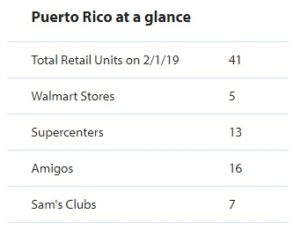
Source: https://corporate.walmart.com/our-story/our-locations#/united-states/puerto-rico

The business model prescribed in the Go Lean book envisions more of such installments in the Self-Governing Entities spread throughout the region; the book serves as a roadmap for the introduction and implementation of the technocratic Caribbean Union Trade Federation (CU), for the elevation of Caribbean economic engines. The book states (Page 234):

Self-Governing Entities
The CU will promote and administer all self-governing entities (SGE) throughout the region. This refers to scientific labs, industrial parks, commercial campuses, experimental hospitals, and even foreign bases. These facilities will not be subject of the laws of the local states of their address, [but] rather CU [federal regulations tied to different standards:] international, foreign sovereignty, or maritime laws; but depend on the local infrastructure to provide basic needs. Thereby creating jobs and economic activity.

Some mixed-use urban initiatives envisioned by the CU include: Main Street / Downtown Developments …

The Go Lean book also provides for effective strategies, tactics and implementations so as to be better in competition with Big-Box stores. See this excerpt here (Page 201):

Big-Box Competition: Cooperatives
The strategy of Big-Box stores is volume discounts. They purchase merchandise in bigger volumes that thereby garner bigger discounts from manufacturers. To compete against this reality, Main Street businesses need the benefits of aggregation and sharing their burdens with aligned firms. The formal Cooperatives movement allows such benefits.

Big-Box Competition: e-Commerce
Electronic commerce holds the promise of “leveling the playing field” so that small merchants can compete against larger merchants. To facilitate e-Commerce, purchased merchandise must get to their destinations as efficiently as possible. The CU’s implementation of the Caribbean Postal Union allows for better logistics for package delivery.

The Go Lean book (Page 57) has identified these trends – Globalization and Technology – as Agents of Change but it can frankly be described as Agents of Disruption or Agents of Destruction. For downtown merchants, Big-Box stores are disrupting their business models. For Big-Box merchants, e-Commerce is disrupting their business models. No matter your station on the retail industry vertical, there will always be competition and Agents of Disruption to contend with.

The lesson-learned for the planners for a new Caribbean is to always be On Guard for competition and to respond accordingly, with the best-practices for strategies, tactics and implementations. This is the Way Forward for retail operations in the Caribbean region. The roadmap describes how an optimized postal operation can be leveraged across 42 million people in the 30 Caribbean member-states, then we would be able to better deploy our e-Commerce offerings. The book states (Page 198):

Regional Postal Services – CPU
The CU will assume the responsibility for mail services in the region; (all member-state postal employees will become federal civil servants). The embrace of the Caribbean Postal Union allows for parcel mail to be optimally shipped and delivered throughout the region, with Customs considerations in place. The CPU will therefore ensure the fulfillment side of e-commerce, even allowing for computer applications for printing electronic stamps/barcodes for value savings.

This theme – fostering an e-Commerce eco-system – aligns with previous blog-commentaries; see these Amazon lessons here:

https://goleancaribbean.com/blog/?p=12291 Amazon’s e-Commerce – The Retailers’ Enemy
https://goleancaribbean.com/blog/?p=1416 Amazon’s Smartphone model for e-Commerce

We need to be On Guard for other disruptions as well. The Caribbean is losing in competition with the rest of the world. We continue to lose our young people to foreign shores. One report has listed the abandonment rate at 70 percent of the tertiary-educated population; many times, the expatriates leave seeking jobs and other economic opportunities. This is not a sustainable reality for us. We must do better.

Consider this Wal-Mart story and the lessons we glean; with more e-Commerce and delivery offerings, we can create jobs and grow our economy right here at home. This will help us make our homeland a better place to live, work and play.  🙂

About the Book
The book Go Lean…Caribbean serves as a roadmap for the introduction and implementation of the technocratic Caribbean Union Trade Federation (CU), for the elevation of Caribbean society – for all member-states. This CU/Go Lean roadmap has these 3 prime directives:

  • Optimization of the economic engines in order to grow the regional economy to $800 Billion & create 2.2 million new jobs.
  • Establishment of a security apparatus to ensure public safety and protect the resultant economic engines.
  • Improve Caribbean governance to support these engines, including a separation-of-powers between the member-states and CU federal agencies.

The Go Lean book provides 370-pages of turn-by-turn instructions on “how” to adopt new community ethos, plus the strategies, tactics, implementations and advocacies to execute so as to reboot, reform and transform the societal engines of Caribbean society.

Download the free e-Book of Go Lean … Caribbean – now!

Who We Are
The movement behind the Go Lean book – a non-partisan, apolitical, religiously-neutral Community Development Foundation chartered for the purpose of empowering and re-booting economic engines – stresses that reforming and transforming the Caribbean societal engines must be a regional pursuit. This was an early motivation for the roadmap, as pronounced in the opening Declaration of Interdependence (Pages 12 – 13):

xi. Whereas all men are entitled to the benefits of good governance in a free society, “new guards” must be enacted to dissuade the emergence of incompetence, corruption, nepotism and cronyism at the peril of the people’s best interest. The Federation must guarantee the executions of a social contract between government and the governed.

xv. Whereas the business of the Federation and the commercial interest in the region cannot prosper without an efficient facilitation of postal services, the Caribbean Union must allow for the integration of the existing mail operations of the governments of the member-states into a consolidated Caribbean Postal Union, allowing for the adoption of best practices and technical advances to deliver foreign/domestic mail in the region.

xxiv.  Whereas a free market economy can be induced and spurred for continuous progress, the Federation must install the controls to better manage aspects of the economy: jobs, inflation, savings rate, investments and other economic principles. Thereby attracting direct foreign investment because of the stability and vibrancy of our economy.

Sign the petition to lean-in for this roadmap for the Caribbean Union Trade Federation.

—————

Appendix – Walmart launches free next-day delivery with no membership fee
By: Julia La Roche, Yahoo Reporter

Walmart (WMT) just upped the stakes in the shipping wars with its latest offering — free next-day delivery with no membership fee.

Shoppers on Walmart.com can access NextDay delivery via a stand-alone function where they can browse up to 220,000 of the most commonly purchased items, everything from diapers to cleaning products to toys and electronics.

“Think of things like Bounty paper towels, some of our Great Value paper lunch plates, flushable wipes, diapers, dog food. Everything from that to a Little Tikes toy set,” Janey Whiteside, Walmart’s chief customer officer, told Yahoo Finance. “It’s a combination of items that you forget that you need and you need them in a rush. If I’m a busy mom and I look at the diary and realize that tomorrow I have a kid’s birthday party and I’ve forgotten to buy a present, there are things in there for that. There are consumable items. You’ll see a range of things that we know the customers are looking for.”

Orders of $35 and up are eligible for NextDay delivery, and the offering will debut in Phoenix and Las Vegas before expanding to Southern California.

“It will roll out gradually over the coming months, with a plan to reach approximately 75% of the U.S. population this year, which includes 40 of the top 50 major U.S. metro areas,” Marc Lore, CEO of Walmart e-Commerce U.S., wrote in a blog post.

In the blog, Lore said the service “isn’t just great for customers, it also makes good business sense.”

“Contrary to what you might think, it will cost us less – not more – to deliver orders the next day,” he wrote.

The reason it won’t cost as much is that the items will ship from one fulfillment center nearest the customer, he explained.

“This means the order ships in one box, or as few as possible, and it travels a shorter distance via inexpensive ground shipping. That’s in contrast to online orders that come in multiple boxes from multiple locations, which can be quite costly,” Lore wrote.

That said, some are still skeptical about the expense associated with the new offering.

“My reaction is that it’s awesome for customers. For you and me, it’s great. We get more options, and it’s going to be faster to get anything we order,” Sucharita Kodali, a retail analyst at Forrester, told Yahoo Finance, before adding, “Is it great in the long-term from an expense standpoint? Is this the most efficient way? I think that question hasn’t been answered.”

Walmart’s NextDay lets customers shop up to 220,000 of the items most frequently purchased items, ranging from diapers and laundry detergent to toys and electronics.

Kodali doesn’t think shoppers are likely to turn down free, expedited shipping.

“The shopper doesn’t value it for what it is — an incredibly expensive endeavor,” Kodali said.

To Walmart’s credit, though, she said the retailer is approaching it in a “smart way,” by launching in a couple of cities with a finite number of eligible items and a threshold of $35.

“[They’re] trying not to lose their shirt while doing it,” she said, later adding, “All of those are incredibly important to making it successful.”

King Kong v. Godzilla
Walmart’s move is helpful in the “King Kong versus Godzilla fight” Walmart is in with Amazon, Kodali added.

In late April, Amazon (AMZNsaid it would spend $800 million in the second quarter to speed up its delivery to one day from two for all its Amazon Prime members. Presently, the e-commerce giant offers free two-day shipping and same-day delivery on $35 orders for eligible items in specific areas. A Prime membership costs $119 per year.

Shortly after the Amazon news broke, Walmart hinted at its future plans around delivery.

“Both retailers are climbing up the next rung of immediacy. It’s another form of convenience,” Laura Kennedy, a vice president at Kantar Consulting, said. “Not every shopper is going to need it or think it’s the most convenient option.”

Forrester’s Kodali sees Walmart’s move as more about maintaining wallet-share and not surrendering that opportunity to Amazon.

“I think that’s really the crux of what this is,” she said.

What’s more, there’s also the potential for Walmart to attract a different shopper from that core shopper.

Kodali believes that Walmart’s online grocery pickup and delivery, especially with the convenience and broad organic offering, has already broadened the retailer’s appeal. The new NextDay offering is billed as a “complement” to Walmart’s same-day grocery delivery, which is expected to reach 1,600 stores by year-end.

“This has the ability to broaden the appeal. It’s all about incremental new customers,” Kodali said.

Julia La Roche is a finance reporter at Yahoo Finance. Follow her on Twitter.

Source: Yahoo Finance – May 14, 2019; retrieved May 22, 2019 from: https://finance.yahoo.com/news/walmart-free-next-day-delivery-040200955.html?.tsrc=notification-brknews


Share this post:
, ,

Moving Forward with Transportation Solutions

Go Lean Commentary

Its been 150 years exactly …
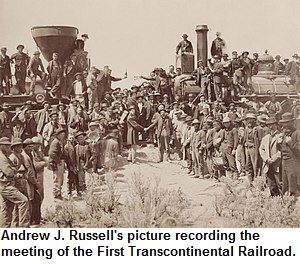
… we cannot just let that milestone for the Union Pacific Railroad go by without some acknowledgement … and reflection.  This history is more than just the story of a train, or a company; its an economic solution, one that was the inspiration for study and modeling, while the writers were in Omaha, Nebraska composing the 2013 book Go Lean…Caribbean. See this excerpt:

The Bottom Line on the Union Pacific Railroad
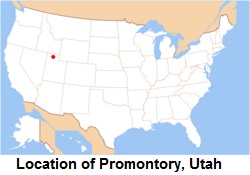
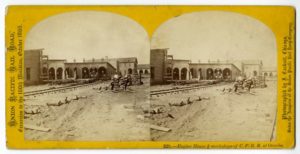
The Union Pacific Railroad, headquartered in Omaha, Nebraska, is the largest railroad network in the US. It has more than 44,000 employees, more than 8,000 locomotives, and runs on 31,900 route-miles in 23 states west of Chicago and New Orleans. The original company, prior to later uniting with the Central Pacific Railroad, was incorporated on July 1, 1862 under an act of Congress entitled Pacific Railroad Act of 1862. The act was approved by President Abraham Lincoln and it provided for the construction of railroads from the Missouri River to the Pacific as a war measure for the preservation of the Union. It was constructed westward from Council Bluffs, Iowa (across the Missouri from Omaha) to meet the Central Pacific line, which was constructed eastwardly from San Francisco Bay. The two lines were joined together at Promontory Summit, Utah, fifty three miles west of Ogden on May 10, 1869, hence creating the first transcontinental railroad in North America. – Book Go Lean…Caribbean Page 205.

The Union Pacific Railroad and the City of Omaha was featured in the Go Lean book as a model for the transportation solutions that would allow the Caribbean region to better move people and goods around the member-states.

There was a lot of fanfare, celebration, pomp-and-pageantry this month for the 150th anniversary. See the news report in this company-produced VIDEO here and in the related article in the Appendix below:

VIDEO – Union Pacific’s Transcontinental Railroad Completion 150th Anniversary Celebration – https://youtu.be/ZOWoPuVSbY0

Union Pacific
Published on May 17, 2019
– Reflections of Union Pacific’s celebration May 9, 2019, marking the 150th anniversary of the transcontinental railroad’s completion.

Yes, there is the need for transportation solutions in the Caribbean. Our failings – unaffordable to bring stay-over tourists to our shores and excessive costs of imported goods – have imperiled our progress in so many ways. We have consistently reported this theme in previous Go Lean commentaries; see a sample list here:

https://goleancaribbean.com/blog/?p=16645 Bad Partners – Cruise Lines Interactions
https://goleancaribbean.com/blog/?p=14767 Caribbean less competitive due to increasing aviation taxes
https://goleancaribbean.com/blog/?p=14761 Flying the Caribbean Skies – New Regional Options
https://goleancaribbean.com/blog/?p=12959 The Defective Shipping Law ‘Jones Act’ needs to be scraped
https://goleancaribbean.com/blog/?p=12322 Ferries 101: Economics, Security and Governance
https://goleancaribbean.com/blog/?p=12146 Commerce of the Seas – Shipbuilding Model – We need Ferries
https://goleancaribbean.com/blog/?p=9179 Snowbirds Tourism – On the 1st day of Autumn, time to head South
https://goleancaribbean.com/blog/?p=6867 How to address high consumer prices: A Ferry Transport System

The book Go Lean … Caribbean, serves as a roadmap for the introduction and implementation of the technocratic Caribbean Union Trade Federation (CU), to facilitate a connected and integrated Single Market. This reality would mandate that we connect all the communities; the same as blood vessels would connect all the organs of a single “body”. Other Single Markets around the world have efficient transportation solutions; think rails and highways in the US and in Western Europe. The book features this one advocacy (Page 205) for implementing Caribbean transportation solutions. This advocacy is entitled: “10 Ways to Improve Transportation“. These “10 Ways” include the following highlights, headlines and excerpts:

1 Lean-in for the Caribbean Single Market – Ratify treaty for the CU.
Embrace the advent of the Caribbean Single Market & Economy Initiative of the Caribbean Union Trade Federation (CU). This will allow for the unification of 42 million people into one market, creating the demand to better move people and goods among the region and import-export to/from other regions. The CU will allow for the emergence of capital markets to sell municipal bonds for Transportation Authorities to raise project funds, as was the case for the Union Pacific Railroad. Bonds are ideal as their long term nature is ideal for slow harvesting returns from transportation solutions.
2 Turnpike: Pneumatic Capsule Pipeline (PCP)

The “Union Atlantic” Turnpike, (modeled after the Union Pacific efforts in the US from 1862), is a big initiative of the CU to logistically connect all CU member-states for easier transport of goods and passengers. The Turnpike is virtual; made up of many physical transportation modes envisioned for the region: Pipeline, Ferry, Highways, and Railroad.

PCP refers to large pneumatic tubes that can handle containers and trailers through underwater, under-ground and above-ground pipelines powered by magnetic levitation systems (ILM). This is modeled, after the freight PCP project envisioned for New York City [187], and the English Channel Tunnel for passengers and cargo.

The CU will construct underwater tunnels for narrow straits in the region, like the 7 miles between Trinidad & Venezuela.

3 Turnpike: Ferries

For the most part, the CU member-states are islands thereby allowing for a viable means of transportation via sea navigation. By deploying ferries, the CU facilitates passenger travel for business and leisure, (see model [of Ferry operations in] Appendix IC on Page 280).

4 Turnpike: Land Highways
5 Turnpike: Railroads
6 Aviation Coordination, Promotion and Safety Regulations
The CU mandate is to facilitate the region’s economics through transportation solutions. Aviation plays a key role, and so there is the need for regional coordination and promotion of the region’s domestic and foreign air carriers. The CU will execute these functions along with Air Traffic Control and Safety regulations, thus mirroring both the FAA & National Transportation Safety Board (NTSB) in the US. The CU will be vested with subpoena and prosecutorial powers.
7 CNG Public Buses and Electric Street Cars with Handicap Access
8 Taxi Administration: Emission-free Inducements & Electronic Payments Systems (EPS)
9 Local Automaker(s)
10 Bicycle Friendly

According to the Go Lean book, the foregoing VIDEO, and the article in the Appendix below, the Union Pacific Railroad was more than just a railroad, it was a transportation and technology eco-system that transformed the American continent. This was a manifestation of the technology of the day, the best-of-the-best of the machinery and methods that defined the greatest industrial might in the history of modern man. The Go Lean book states (Page 57) this succinct reflection on transport technology:

Technological change is more than just [today’s] internet & communications (ICT); though this field is dynamically shifting the world. There are also industrial changes taking place, as in more efficient manufacturing methods, automation-robotics, and transportation options … in response to Climate Change. For example, the CU envisions the supply and demand for Fast Ferries in the region. The modern offerings allow for 40 – 50 (nautical) mph speeds on calm waters. There are many CU destinations that can be serviced within 2 – 3 hours using this mode. This effort will be championed by the CU Turnpike initiative.

The review of the history of the Union Pacific Railroad has done one more thing:
Provide a glimpse of a Caribbean version of a transformative transportation solution. (Consider the Canadian ferry example in the photo here).

Today, the Caribbean is 30 separate and distinct lands with 42 million people; we are 30 separate and distinct member-states; but instead, we need to be one community, a Single Market. Transportation can foster and furnish the needed unity in our neighborhood; this is how we can move forward in our quest to elevate the societal engines: economics, security and governance. This point was eloquently detailed in a previous blog-commentary:

The roadmap calls for the CU to navigate the changed landscape of the globalized air transport industry. There is the need for regional integration, administration, and promotion for Caribbean air travel among local and foreign carriers. The book posits that transportation and logistics empower the economic engines of a community. There must be air carrier solutions to service the transportation and tourism needs of the Caribbean islands. This point is fully appreciated by Caribbean tourism stakeholders; the book relates that the region’s Hotel and Tourism Association channel the vision of Robert Crandall, former Chairman of American Airlines, who remarked at a Caribbean Hotel and Tourism Investment Conference in May 2010 that the region is uniquely dependent on tourism:

    “Everyone involved in travel and tourism knows that our [airline] industry is immensely important to the world economy, generating and supporting – either directly or indirectly – about one in eleven jobs worldwide. Here in the Caribbean, it is even more important. On a number of islands, travel and tourism accounts for more than 50% of all employment, and on some islands for more than 75%. Overall, about 20% of Caribbean employment is travel and tourism dependent – something on the order of 2.5 million jobs.” – Book ‘Go Lean … Caribbean’ – Page 60.

Go Lean asserts that air travel options must be optimized to impact Caribbean society – thus the need for more regional coordination, regulation and promotion of the Caribbean’s aviation industry. New models are detailed in the book in which tourism can be enhanced with “air lifts” to facilitate Caribbean events, and “Air Bridges” to allow for targeting High Net Worth markets. This roadmap also introduces the Union Atlantic Turnpike to offer more transportation solutions (ferries, toll roads, railways, and pipelines) to better facilitate the efficient movement of people and cargo.

Yes, we can …

A more connected region is conceivable, believable and achievable. This is how we can make our homeland a better place to live, work and play. 🙂

About the Book
The book Go Lean…Caribbean serves as a roadmap for the introduction and implementation of the technocratic Caribbean Union Trade Federation (CU), for the elevation of Caribbean society – for all member-states. This CU/Go Lean roadmap has these 3 prime directives:

  • Optimization of the economic engines in order to grow the regional economy to $800 Billion & create 2.2 million new jobs.
  • Establishment of a security apparatus to ensure public safety and protect the resultant economic engines.
  • Improve Caribbean governance to support these engines, including a separation-of-powers between the member-states and CU federal agencies.

The Go Lean book provides 370-pages of turn-by-turn instructions on “how” to adopt new community ethos, plus the strategies, tactics, implementations and advocacies to execute so as to reboot, reform and transform the societal engines of Caribbean society.

Download the free e-Book of Go Lean … Caribbean – now!

Who We Are
The movement behind the Go Lean book – a non-partisan, apolitical, religiously-neutral Community Development Foundation chartered for the purpose of empowering and re-booting economic engines – stresses that reforming and transforming the Caribbean societal engines must be a regional pursuit. This was an early motivation for the roadmap, as pronounced in the opening Declaration of Interdependence (Pages 12 – 13):

xi. Whereas all men are entitled to the benefits of good governance in a free society, “new guards” must be enacted to dissuade the emergence of incompetence, corruption, nepotism and cronyism at the peril of the people’s best interest. The Federation must guarantee the executions of a social contract between government and the governed.

xvi. Whereas security of our homeland is inextricably linked to prosperity of the homeland, the economic and security interest of the region needs to be aligned under the same governance. Since economic crimes … can imperil the functioning of the wheels of commerce for all the citizenry, the accedence of this Federation must equip the security apparatus with the tools and techniques for predictive and proactive interdictions.

xxiv. Whereas a free market economy can be induced and spurred for continuous progress, the Federation must install the controls to better manage aspects of the economy: jobs, inflation, savings rate, investments and other economic principles. Thereby attracting direct foreign investment because of the stability and vibrancy of our economy.

Sign the petition to lean-in for this roadmap for the Caribbean Union Trade Federation.

————

Appendix – Title: Golden Spike 150th Anniversary – 1869 – Omaha, NE

The communities of Council Bluffs, Iowa, and Omaha, Nebraska, would forever be changed by a single decision made by President Abraham Lincoln in 1863. That was the year the president named Council Bluffs as the eastern terminus for Union Pacific, altering that community and Omaha — and, in fact, every community — along the railroad’s western path.
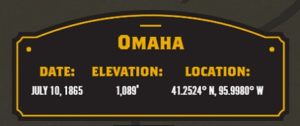
Despite this presidential declaration, there were other forces at play. Union Pacific’s first vice president and general manager, Thomas C. “Doc” Durant, used his influence to make Omaha — and not Council Bluffs, Iowa — the actual starting point. Union Pacific marked the occasion with a groundbreaking ceremony at the Omaha settlement in Nebraska Territory Dec. 2, 1863. A lack of funding delayed the project’s beginning for a short while, but on July 10, 1865, the first rail was finally laid. In 1872, the two communities were united for the first time when a railroad bridge was completed across the Missouri River.

The railroad’s effect on both communities has been extraordinary. Council Bluffs grew from a small, isolated Missouri River town to Iowa’s fifth largest city. The same robust growth has taken place in Omaha. Settlers and immigrants poured into the area beginning more than a century ago, and today this vibrant city has a population of nearly 500,000. This growth was spurred in great part by the passage of the Homestead Act in 1862, and the transcontinental railroad’s completion in 1869. Omaha has been Union Pacific’s operational headquarters since the 1860s, and its 19-story headquarters in the downtown area employs nearly 4,000 employees. Omaha also is home to UP’s Harriman Dispatching Center, one of the country’s largest and most technologically advanced dispatching facilities.

Source: Retrieved May 18, 2019 from: https://www.up.com/goldenspike/omaha-promontory.html

Share this post:
, , ,
[Top]

Marshall Plan – Funding: How to Pay for Change

Go Lean Commentary

About that purse …
… we have been saying here repeatedly:

Will someone walk-up to Cuba/Haiti and give them $13 Billion (or $91 Billion in today’s dollars) to reboot, recover and turn-around their periods of dysfunction?

Probably, not!

So how to ensure that all this talk of a Marshall Plan is not just simply talk?

Answer: We create the purse ourselves.

Purse , noun
a: ResourcesFunds
b: 
a sum of money offered as a prize or present also the total amount of money offered in prizes for a given event

The book Go Lean…Caribbean asserts that the Caribbean region as an entity can create a new regional purse, one that can fund the Marshall Plan that is needed to reform the de facto Failed-States of Cuba, Haiti and other declining member-states.

Once we reform these problematic communities, then we can focus on transforming the entire region. Leverage is the key!

So we can comfortably declare that change is on the way for the Caribbean!

While the purpose of the Go Lean roadmap is NOT just Cuba & Haiti alone, we know that we cannot elevate the societal engines for all of the Caribbean while ignoring these near-Failed States. These member-states constitute 48% of the region’s population and a huge portion of the landmass. There is no Caribbean without these Cuban/Haitian countries and cultures.

So to repeat, if we can fix Cuba & Haiti, we can fix the entire Caribbean region. This is the “Why’ and “How” – Marshall Plan – and these are important considerations; but more importantly, we need to know how to fund our plans.

We must know if “someone” will walk-up to and give us $13 Billion (or $91 Billion in today’s dollars) to reboot, recover and turn-around our dysfunctional member-states. We can now hereby declare:

Probably, not … for any external entities.
Definitely yes … for doing it ourselves … internally.

The Go Lean roadmap asserts that it is up to the Caribbean to solve the Caribbean’s problems. We must plan, fund and execute our own Marshall Plan. Yes, we can!


The next step: graduate from just regional integration – Caribbean Community (CariCom) – to a Single Market.

The book Go Lean … Caribbean, serves as a roadmap for the introduction and implementation of the technocratic Caribbean Union Trade Federation (CU), to facilitate a Single Market. The book features (Page 101) this one advocacy for creating a purse, entitled: “10 Ways to Pay for Change“. These “10 Ways” include the following highlights, headlines and excerpts:

1 Lean-in for the Caribbean Single Market – Ratify treaty for the CU.
This treaty allows for the unification of the region into one market, expanding to an economy of 30 member-states of 42 million people, to impact a GDP of over $800 Billion. In order for the CU to reboot the economic engines of the region, the political entity of the unified Caribbean must be rebooted first. … The CU will generate its own initial funding, as listed here, below.
2 Spectrum Auctions
The CU will function as a government-owned multinational corporation to deliver services for an integrated Caribbean administration. Having the regional authority, the CU will hold auctions for the radio spectrum in the region. This will generate the CU’s own initial revenue stream, as only rights are being awarded; there is no performance – no fabrication of products or rendering of services. With this strategy, there will be revenues to return back to CU share-holders, member-states, even in the 1st year.
3 SGE Licenses
The CU treaty empowers economic engines (Self-Governing Entities – SGE: industrial parks, technology labs, medical campuses, etc.) in and on behalf of the region. These independent entities pay fees to the CU, at the outset, so as to be licensed by the CU.
4 GPO Logistic Fees
An important CU mission is the Group Purchasing Organization (GPO), an extension of the current [CariCom] Office of Trade Negotiations; but the CU will make purchases and fulfill delivery to member-states, for a handling fee.
5 Regional Lottery
The CU will implement a regional lottery, in conjunction with local state lotteries, with winnings awarded in Caribbean dollars (C$). The CU will outsource contracts for distribution, fund management and IT processing. These contracts can serve as an initial funding source.
6 EEZ Exploration Rights
7 Homeland Security – Private Protection Licensing
8 Homeland Security – Hurricane Insurance Fund
9 Warrants
Paying for Change first optimizes the payment terms. All CU payments to member-states will be in the form of warrants attached to bonds; this allows the CU to pay lower interest rates. These warrants make the bonds sellable to the public. [See explanation of Registered Warrants in the Appendix below].
10 Foreign Aid & Grants including Non-Government Organizations (NGOs)

A Caribbean version of the previous European Marshall Plan will be very significant in the roadmap to reform and transform the Caribbean member-states. Planning the Plan is one thing; Executing the Plan is another. But in between the Plan and the Execution is the heavy-lifting task of funding the change. This is why this series of commentaries is so important. This is entry 4-of-5 in this series of commentaries on the Marshall Plan, the historic European one and Caribbean versions. Here, as follows, is the full series being presented this month of May (2019):

  1. Marshall Plan: A Lesson in History
  2. Marshall Plan: Cuba – An imminent need for ‘Free Market’ Emergence
  3. Marshall Plan: Haiti – Past time for Mitigation
  4. Marshall Plan: Funding – What Purse to Fund Our Plans?
  5. Marshall Plan: Is $91 Billion a Redux for Puerto Rico?

In this entry for this series we focus on “How” to fund the Marshall Plan. In the European model, “it” was about the money; for the Caribbean version, money will be equally important. The theme of recovering and rebooting the Caribbean economic landscape has been detailed in many previous Go Lean commentaries; consider this sample list here:

https://goleancaribbean.com/blog/?p=16848 ‘Two Pies’ – Funding Plan for a New Caribbean
https://goleancaribbean.com/blog/?p=16836 Crypto-currency: Here comes ‘Trouble’
https://goleancaribbean.com/blog/?p=16530 Efforts to de-Americanize the world’s economy
https://goleancaribbean.com/blog/?p=16210 In Defense of Trade – The Real Threat of Currency Assassins
https://goleancaribbean.com/blog/?p=15798 Lessons Learned from 2008 Great Recession – Region Still Recovering
https://goleancaribbean.com/blog/?p=14834 Counter-culture – Monetizing the Change
https://goleancaribbean.com/blog/?p=14248 Leading with Money Matters – Almighty Dollar – From US$ to C$
https://goleancaribbean.com/blog/?p=13744 Caribbean Economics – The Quest for a ‘Single Currency’
https://goleancaribbean.com/blog/?p=10513 Transforming ‘Money’ Countrywide
https://goleancaribbean.com/blog/?p=3582 For Canadian Banks – The Caribbean is a ‘Bad Bet’

The hope for a Marshall Plan for Cuba and Haiti will only be an empty promise unless the regional infrastructure accompanies the Planning and Executions. The Way Forward for the Caribbean economic landscape therefore presents these necessary ingredients:

  • Regional Currency – Trading in Caribbean Dollars (C$) rather than local currencies.
  • Regional Capital Markets  – There are 9 Stock Exchanges; these will expand due to C$ adoption; i.e. Warrants.

The current economic landscape is deficient and defective. We must reboot and change all of it: Top-Down and Bottoms-Up. This is a Big Shift being considered here, transforming how we finance government spending: Looking to Capital Markets for fostering a landscape with Registered Warrants instead of “cash”. Wow! (See more on this in the Appendix below). Only with these technocratic strategies, tactics and implementations, can we even contemplate rebooting Cuba and Haiti.

This product offering – Registered Warrants – is part of the Way Forward for the new Caribbean.

Our Way Forward for the entire Caribbean includes the entire Caribbean, with Cuba & Haiti too. So we have to prepare the region for the full inclusion of these problematic countries. With them, we can better leverage the political, social, security and economic fabric of the regional society. This is the Caribbean’s future. This is how we intend to make our homeland, Cuba & Haiti included, better places to live, work and play. 🙂

About the Book
The book Go Lean…Caribbean serves as a roadmap for the introduction and implementation of the technocratic Caribbean Union Trade Federation (CU), for the elevation of Caribbean society – for all member-states. This CU/Go Lean roadmap has these 3 prime directives:

  • Optimization of the economic engines in order to grow the regional economy to $800 Billion & create 2.2 million new jobs.
  • Establishment of a security apparatus to ensure public safety and protect the resultant economic engines.
  • Improve Caribbean governance to support these engines, including a separation-of-powers between the member-states and CU federal agencies.

The Go Lean book provides 370-pages of turn-by-turn instructions on “how” to adopt new community ethos, plus the strategies, tactics, implementations and advocacies to execute so as to reboot, reform and transform the societal engines of Caribbean society.

Download the free e-Book of Go Lean … Caribbean – now!

——-

Who We Are
The movement behind the Go Lean book – a non-partisan, apolitical, religiously-neutral Community Development Foundation chartered for the purpose of empowering and re-booting economic engines – stresses that reforming and transforming the Caribbean societal engines must be a regional pursuit. This was an early motivation for the roadmap, as pronounced in the opening Declaration of Interdependence (Pages 12 – 13):

xi. Whereas all men are entitled to the benefits of good governance in a free society, “new guards” must be enacted to dissuade the emergence of incompetence, corruption, nepotism and cronyism at the peril of the people’s best interest. The Federation must guarantee the executions of a social contract between government and the governed.

xvi. Whereas security of our homeland is inextricably linked to prosperity of the homeland, the economic and security interest of the region needs to be aligned under the same governance. Since economic crimes … can imperil the functioning of the wheels of commerce for all the citizenry, the accedence of this Federation must equip the security apparatus with the tools and techniques for predictive and proactive interdictions.

xxiv. Whereas a free market economy can be induced and spurred for continuous progress, the Federation must install the controls to better manage aspects of the economy: jobs, inflation, savings rate, investments and other economic principles. Thereby attracting direct foreign investment because of the stability and vibrancy of our economy.

Sign the petition to lean-in for this roadmap for the Caribbean Union Trade Federation.

—————

Appendix: Warrants of Payments

In financial transactions, a warrant is a written order from a first person that instructs a second person to pay a specified recipient a specific amount of money or goods at a specific time.[1] The warrant may or may not be negotiable and may authorize payment to the warrant holder on demand or after a maturity date. Governments may choose to pay wages and other accounts payable by issuing warrants instead of checks.

History
In the 18th century, warrants were used by the military to authorize payments to soldiers and suppliers. George Washington, for example, signed warrants that ordered quartermasters to deliver money or acquire supplies.[2] These warrants were used by quartermasters to issue vouchers to acquire food, supplies, munitions, clothing, transportation, etc., for the use of the American military and to maintain Washington’s headquarters. Warrants could be redeemed by the army paymasters, but most often they were used like cash by the recipient. Warrants, like bills of exchange and vouchers, were often heavily discounted and depreciated in value. The fortunes of war could be traced through the discount rates on warrants, vouchers, and Continental dollars.

Modern warrants
In government finance, a warrant is a written order to pay that instructs a federal, state, or county government treasurer to pay the warrant holder on demand or after a maturity date. Such warrants look like checks and clear through the banking system like checks, but are not drawn against cleared funds in a checking account (demand deposit account). Instead, they may be drawn against “available funds” or “out of fund 0027” so that the issuer can collect interest on the float or delay redemption. If the warrant is conditional on funds being available, the warrant is not a negotiable debt instrument. In the U.S., warrants are issued by government entities such as the military and state and county governments. Warrants are issued for payroll to individual employees, accounts payable to vendors, to local governments, to taxpayers receiving tax refunds, to recipients of unemployment benefits, and to owners of unclaimed money. A warrant differs from a check in that the warrant is not drawn on a checking account, is not necessarily payable on demand, and may not be negotiable.[5][6]

Warrants deposited in a bank are routed (based on the MICR routing number) to a collecting bank which processes them as collection items like maturing treasury bills and presents the warrants to the government entity’s treasury department for payment to the bank each business day.

Regular warrants are redeemable by the government treasurer after they are issued. “Registered warrants” bear interest and need not be redeemed by the treasurer until the warrant maturity date.[7] If warrants cannot be immediately redeemed by the issuing entity, the collecting bank may accept the warrants as short term debt instruments and collect interest when redeemed in accordance with a prior agreement with the issuing entity. The collecting bank may refuse to accept a warrant issue, in which case other banks may also refuse to accept them.[8]

“The warrants of a municipal corporation are not negotiable instruments. They do not constitute a new debt, or evidence of a new debt, but are only the prescribed means devised by law for drawing money from the treasury.”[9]

The U.S. Securities and Exchange Commission said on July 9, 2009, that California’s registered warrants are “securities” under federal securities law and will be regulated as municipal securities by the Municipal Securities Rulemaking Board.[10] Under these regulations, anybody who profits by buying and reselling warrants must be registered as a municipal securities broker-dealer.[11]

Although registered warrants are evidence of a municipality’s obligation to pay, because they demonstrate an intent to disburse funds when those funds become available, the US Supreme Court has ruled that a holder of a valid warrant cannot obtain a writ of mandamus for specific performance of the obligation to pay, enforced against a treasurer or other employee of the municipality.[12]

United Kingdom
In the UK, warrants are issued as payment by the NS&I when a Premium Bond is chosen.

The difference between a warrant and a cheque is that a cheque usually places no explicit time frame on when the amount is to be paid.

Source: Retrieved May 13, 2019 from: https://en.wikipedia.org/wiki/Warrant_of_payment

—————

VIDEO – What is WARRANT OF PAYMENT? What does WARRANT OF PAYMENT mean? WARRANT OF PAYMENT meaning – https://youtu.be/9LY7Ol5ec6E

The Audiopedia

Published on Apr 20, 2017 – … Governments may choose to pay wages and other accounts payable by issuing warrants instead of checks …

Share this post:
, ,
[Top]

Industrial Reboot – Amusement Parks

Go Lean Commentary

We need a Way Forward.

We need to double-down in our economic engines and do “it” bigger, stronger, better. The “it” refers to our tourism product offerings. Tourism is already the primary economic driver in the region, but the current harvest is not fertile enough. We need to reboot the amenities-and-attractions and transform the landscape with more industrial options.

One way for industrializing tourism is with Amusement Parks.

Are we talking about Amusement Parks like Disney Land & Disney World?

Maybe!

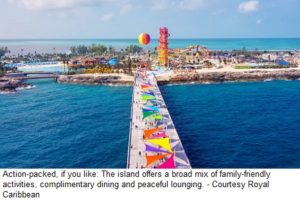
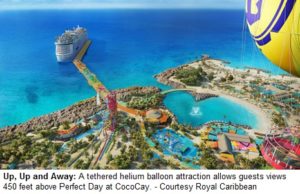
Even more so, we are talking about Amusement Parks at resort hotels and cruise ship private island destinations. See the sample destination in the news story here:

Title: CocoCay: Cruise line’s $250 million private island opens

(CNN) — Thanks to a $250 million transformation, Royal Caribbean’s once-sleepy private island retreat in the Bahamas is offering eye-opening travel amenities to its cruise passengers.

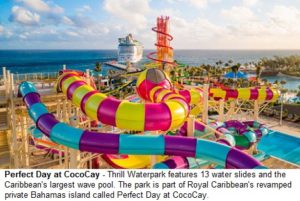
The island, Perfect Day at CocoCay, offers everything from a record-setting water slide and a massive wave pool to five new complimentary dining venues and quiet sandy beaches.

“We are so proud to bring our 50-year legacy of innovation ashore to transform an incredible island that now completely revolutionizes private destinations in the vacation industry,” said Michael Bayley, Royal Caribbean International’s president and CEO, in a statement.

Reviews site Cruise Critic seconds that notion. Colleen McDaniel, the site’s editor-in-chief, said the “revolutionary” island is “really upping the cruise line private island game in terms of activities ashore.”

At CocoCay’s Thrill Waterpark, the fiery red and orange Daredevil’s Peak water slide towers over the park’s other 12 slides. At 135 feet, it’s North America’s tallest water slide.

CocoCay is also home to the Caribbean’s largest wave pool, a 1,600-foot-long zip line and a helium balloon tethered to the ground that provides guests with a vantage point 450 feet high.

Oasis Lagoon, the Caribbean’s largest freshwater pool, has a large swim-up bar and private cabanas.

McDaniel believes Royal Caribbean may create some cruising converts with this private island offering packed with activities.

“Beyond creating incredible experiences for your avid customers, that’s where an investment of this magnitude has the potential to really pay off — to catch the eye of those who might not have ever tried cruising but are intrigued by this exclusive new experience,” she said.

There’s an added benefit to cruise line private islands, McDaniel said. They help the cruise lines stagger their itineraries and relieve crowds in popular ports.

“The Caribbean is the cruise industry’s most popular region, in terms of passengers and ship deployment,” she said. “So having private islands to add to itineraries is quite helpful to the lines to help preserve the in-port guest experience and the port’s own capacity.”

Perfect Day at CocoCay had its grand opening over the weekend. Itineraries that include a stop at the revamped island are listed online.

One area of CocoCay won’t be completed until December. When it opens at the end of the year, Coco Beach Club will feature the Bahamas’ first overwater cabanas, each with its own slide into the ocean. There will also be a 2,600-foot beachfront infinity pool and a club and deck area.

CocoCay is the first in a planned collection of Royal Caribbean Perfect Day islands. Additional private island locations are expected in the Caribbean, Asia and Australia.

Several other cruise lines have private islands in the Bahamas, among them Disney Cruise Line’s Castaway Cay and Holland America’s Half Moon Cay.

Source: CNN Travel’s Play Column – Published May 7, 2019; retrieved May 8, 2019 from: https://edition.cnn.com/travel/article/cococay-royal-caribbean-private-island-bahamas/index.html

Yes, there are Amusement Parks in the Caribbean – think: water slides and a wave pools – and there could/should be more.

Yes, we can!

In fact, in a previous commentary by the movement behind the book Go Lean…Caribbean, it was related how the World’s Largest Amusement Park – Walt Disney World in Orlando, Florida – was first propositioned to be located in the Bahamas. Had we made such a community investment back then, imagine the returns on our economy and infrastructure. The book describes that such an implementation can impact many of the societal engines – think: economy, security and governance.

The Amusement Park-based economy contributes tremendously to the actuality of Orlando, Florida and the State of Florida in general. Now, there is the quest to make more investments like these in Caribbean communities. This is among the Industrial Reboots that we must do to reform and transform our society. This strategy was addressed back in 2013 in the previously identified Go Lean book. The articulated strategy was to invest in Fairgrounds. This summary is detailed on Page 192 of the book under the title – “10 Ways to Promote Fairgrounds“:

# 1 – Lean-in for the Caribbean Single Market & Economy initiative: Caribbean Union Trade Federation (CU).
The CU is chartered to unify the Caribbean region into one Single Market of 42 million people across 30 member-states, thereby re-engineering the economic engines in and on behalf of the region, including the infrastructural needs to enhance tourism. A CU mission to impact events require complete fairgrounds with the facilities to stage festivals, fairs, sporting events, concerts and theatrical performances, much like the Fair Park model in Dallas, Texas. An eco-system around fairgrounds will impact so many aspect of Caribbean life, engaging the domestic and foreign (tourist) markets. …

# 4 – Amusement Parks
The CU region is ideal for the implementation of advance technological amusement parks, the region as a whole enjoy over 10 million cruise passengers – year round. The right mix of computer-aided audio-visual, 3-D, animatronics, live action performers could result in a boom in the region, spinning off jobs, construction, lodgings and other activities.

Investing in Amusement Parks will mean rebooting the industrial landscape of the Caribbean. Rebooting the industrial landscape is not a new subject for this Go Lean movement; this commentary has previously identified a number of industrial initiatives to launch a reboot in the region. See the chronological list of previous submissions on Industrial Reboots here:

  1. Industrial RebootsFerries 101 – Published June 27, 2017
  2. Industrial RebootsPrisons 101 – Published October 4, 2017
  3. Industrial RebootsPipeline 101 – Published October 5, 2017
  4. Industrial RebootsFrozen Foods 101 – Published October 6, 2017
  5. Industrial RebootsCall Centers 101 – Published July 2, 2018
  6. Industrial RebootsPrefab Housing 101 – Published July 14, 2018
  7. Industrial RebootsTrauma 101 – Published July 18, 2018
  8. Industrial RebootsAuto-making 101 – Published July 19, 2018
  9. Industrial RebootsShipbuilding 101 – Published July 20, 2018
  10. Industrial RebootsFisheries 101 – Published July 23, 2018
  11. Industrial RebootsLottery 101 – Published July 24, 2018
  12. Industrial RebootsCulture 101 – Published July 25, 2018
  13. Industrial RebootsTourism 2.0 – Published July 27, 2018
  14. Industrial RebootsCruise Tourism 2.0 – Published July 27, 2018
  15. Industrial RebootsReinsurance Sidecars 101 – Published October 2, 2018
  16. Industrial RebootsNavy Piers 101 – Published October 9, 2018
  17. Industrial RebootsPayment Cards 101 – Published October 11, 2018
  18. Industrial Reboots – Amusements Parks 101 – Published TODAY May 8, 2019

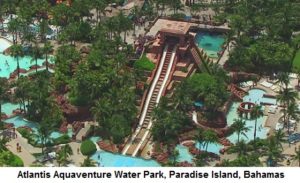
In summary, our Caribbean region needs a better industrial landscape to improve our economics, security and governance. We can easily make investments in small, resort-based Amusement Parks. We are not envisioning the level of Disney World, but rather more like the attraction in the foregoing news article and the infrastructure at Atlantis in Nassau & Paradise Island in the Bahamas. See Photos here and VIDEO in the Appendix below:

We must do more. The Caribbean’s industrial landscape is in crisis. It must reboot!

Amusement Parks can help to optimize our tourism offerings through out the region, in every member-state. In fact, the CU/Go Lean roadmap calls for the introduction and implementation of Self-Governing Entities (SGE) as CU federal promoted ventures to optimize this business model. This SGE concept is ideal for fairgrounds, industrial and Amusement Parks – even ports and piers – with their exclusive federal regulation-promotion activities. Imagine the quick turn-around and cooperative partnerships with local government and municipal authorities. Imagine the jobs …

Within the 370-pages of the Go Lean book are more details of the eco-systems needed to consider these investments. Here is a sample of references to this strategy of Amusement Parks through-out the Go Lean book:

Advocacy – 10 Ways to Grow the Economy

#5 – Enterprise Zones & Empowerment Zones for 2 million jobs
This includes Industrial Parks, Theatre Districts, Amusement Parks, Bonded Warehouses and Duty Free ports, some managed as Self Governing Entities (SGE). Though some zones exist now, the formalization under the CU will bring more tax (sales, property & income tax rebates) and economic incentives (low interest loans & grants) and stimuli (advertising and event promotions)…

Page 151
Advocacy – 10 Ways to Foster Empowering Immigration
# 7 – Carnies – Event Staff
The CU plan calls for the deployment of Fairgrounds throughout the region. With these facilities come amusement park-like rides and events, or carnivals. There is an eco-system for carnival ride operators or “carnies”. These are considered highly skilled and experience is necessary for the operators. Carnies will therefore be invited on these SGE Fairgrounds.
Page 174
Advocacy – 10 Ways to Enhance Tourism

# 3 – Fairgrounds/Amusement Parks Empowerment Zones
Encourage the establishment and promotion of Fairgrounds/Amusement Parks (Disney, Sea World, Busch Gardens-like attractions) that can bring in vast number of visitors. The empowerment zones get special tax incentives and building code variances, or managed as Self Governing Entities (SGE) in which they are beholden only to the CU jurisdiction. Many US and European theme parks are only open during the warm seasons, the opposite can be advocated in the Caribbean region, where theme parks may only be open during the “high season”, or only when cruise ships are in port.

Page 190

This is the vision for more Amusement Parks while we reboot our industrial landscape! This is the type of transformations that will allow us to reboot our societal engines to elevate our communities.

These efforts are Day One / Step One of the Go Lean/CU 5-year roadmap. Let’s get busy!

We urge all Caribbean stakeholders to lean-in to this roadmap for industrial reboots and for Amusement Parks. Yes, we can … make our homelands better places to live, work and play.  🙂

About the Book
The book Go Lean…Caribbean serves as a roadmap for the introduction and implementation of the technocratic Caribbean Union Trade Federation (CU), for the elevation of Caribbean society – for all member-states. This CU/Go Lean roadmap has these 3 prime directives:

  • Optimization of the economic engines in order to grow the regional economy to $800 Billion and create 2.2 million new jobs.
  • Establishment of a security apparatus to ensure public safety and protect the resultant economic engines.
  • Improve Caribbean governance to support these engines, including a separation-of-powers between the member-states and CU federal agencies.

The Go Lean book provides 370-pages of turn-by-turn instructions on “how” to adopt new community ethos, plus the strategies, tactics, implementations and advocacies to execute so as to reboot, reform and transform the societal engines of Caribbean society.

Download the free e-Book of Go Lean … Caribbean – now!

Who We Are
The movement behind the Go Lean book – a non-partisan, apolitical, religiously-neutral Community Development Foundation chartered for the purpose of empowering and re-booting economic engines – stresses that reforming and transforming the Caribbean societal engines must be a regional pursuit. This was an early motivation for the roadmap, as pronounced in the opening Declaration of Interdependence (Pages 11 – 13):

iv. Whereas the natural formation of the landmass is in a tropical region, the flora and fauna allows for an inherent beauty that is enviable to peoples near and far. The structures must be strenuously guarded to protect and promote sustainable systems of commerce paramount to this reality.

xi. Whereas all men are entitled to the benefits of good governance in a free society, “new guards” must be enacted to dissuade the emergence of incompetence, corruption, nepotism and cronyism at the peril of the people’s best interest. The Federation must guarantee the executions of a social contract between government and the governed.

xvi. Whereas security of our homeland is inextricably linked to prosperity of the homeland, the economic and security interest of the region needs to be aligned under the same governance. Since economic crimes … can imperil the functioning of the wheels of commerce for all the citizenry, the accedence of this Federation must equip the security apparatus with the tools and techniques for predictive and proactive interdictions.

xxiv.  Whereas a free market economy can be induced and spurred for continuous progress, the Federation must install the controls to better manage aspects of the economy: jobs, inflation, savings rate, investments and other economic principles. Thereby attracting direct foreign investment because of the stability and vibrancy of our economy.

Sign the petition to lean-in for this roadmap for the Caribbean Union Trade Federation. 

—————

Appendix VIDEO – All Big Water Slides at Atlantis Paradise Island | Nassau, Bahamas- https://youtu.be/oiR8GbeNms0

TUBERIDES
Published on Jul 24, 2016 –
Take a ride on all big water rides at Atlantis Paradise Island, Nassau, Bahamas! The Aquaventure water park at the world-famous Atlantis Resort is home to several slides which are impressively embedded into a landscape of palms, rocks and pools. In this video, we show you onride footage of the major slides at the park.

——-

RIDES:
00:10 Kids’ Slide 1
00:17 The Challenger (Kamikaze Slide) Left
00:34 Jungle Slide
00:50 Kids’ Slide 2
00:54 The Falls
01:18 Leap Of Faith
01:31 The Challenger (Kamikaze Slide) Right
01:42 The Abyss (Drop Slide)
02:01 Green Tube Slide
02:13 The Drop
02:52 Power Tower (Master Blaster)
03:26 Serpent Slide (Shark Water Slide)
04:17 River Rapids
► HOMEPAGE: http://www.tuberides.de
► FACEBOOK: http://www.facebook.com/tuberides
► TWITTER: http://www.twitter.com/tuberides
► INSTAGRAM: http://www.instagram.com/tuberides

Share this post:
, , ,
[Top]

Barbados Diaspora – Not the Panacea

Go Lean Commentary

“Come home Bajans …”
“… in 2020”?

This is the campaign challenge to all Barbadian (Bajan) Disapora, to consider coming back to Barbados. For good! (See the story of a sample repatriate/re-patriot in the VIDEO in the Appendix below).

Is this the vision? Yes, this is the hope that is expressed by the island-nation’s Prime Minister:

During her address, the Prime Minister highlighted some of the struggles this country faced in the past and stressed that democracy was a precious gift that must be nurtured and protected, so persons would always have a voice.

She noted that all Barbadians, not only the 300,000 living here but those overseas, must all work together to build the best Barbados.
(See full article below).

But wait, is the Honorable Prime Minister Mia Amor Mottley openly admitting that the country is NOT yet at that destination? But still, she is calling for Bajans to come home.

In all due respect, Madam Prime Minister, “they” are not listening. The Diaspora – of all Caribbean countries – never listens to the appeals of their former homelands. Alas, Barbados is not the first to waste time, talent and treasuries to engage their Diaspora and urge them to come back and/or to invest in the homeland.

This quest had been pursued throughout the Caribbean. Yet the failures has been loud.

Why? Because they – the Diaspora – are gone!

Yes, there is this preponderance for governments (and citizenry alike) in the region to pursue this same Diaspora strategy. During the calendar year of 2017, we published a number of commentaries on this Caribbean pre-occupation, with these entries relating these homelands:

The Diaspora is not the panacea, or cure-all, for the Caribbean ills. This is the assertion of the movement behind the book Go Lean … Caribbean – available to download for free. Why are we so emphatic in this assertion? The troubling flaw for the Diaspora strategy is that the expectation is that these people who have left ‘here” will now turnaround and fix what is broken here. This is a fallacy! This mistake was committed by these previous governments and unfortunately is being pursued anew in Barbados. See the full news article here:

Title: Come Home Bajans In 2020
By: Sharon Austin

Prime Minister Mia Amor Mottley has urged Barbadians living across the world to come home for 2020.

Ms. Mottley made the appeal tonight at the launch of We Gatherin’ Barbados 2020 in Parliament’s Courtyard before a large crowd, including those “watch parties” of Barbadians and friends in Geneva, New York, Beijing, Canada, Washington and Australia.
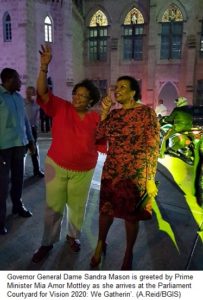
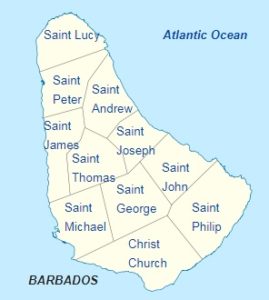
The Prime Minister told her audience: “Coming together in 2020 isn’t about a single moment in time, but it is about a process. It is about the building of a nation from St. Lucy to St. Philip, from the west coast to the east coast….  2020 must be about defining who we are as that one people, in this one space….

“2020 is that point, ironically, where vision is perfected, but we have a bigger vision ahead of us…. We, as Barbadians, will play that role because we…live in a world that we see changing around us, and by 2030 we want to be that country in the world that…will no longer contribute to the destruction of mother earth,  but that will work to make our placement on this earth carbon neutral.”

Ms. Mottley noted that Barbados was accustomed to excellence and highlighted the island’s lead in cane breeding in the 19th century.  She asked how did the country reach such levels of excellence in so many fields, but failed to tell the story to citizens to inspire them to greater heights, not just here, but in the world.

“So 2020, my friends, is about that conversation…telling our story, sharing our passions, coming home for that inspiration…. 2020 is about making that difference to your old primary school or making that difference to the church that helped nurture you in your parish.  2020 is about families recognizing that time on this earth is way too short and we need to get together a little more,” she explained.

She added that Barbados must be that place where global business must be transacted.

During her address, the Prime Minister highlighted some of the struggles this country faced in the past and stressed that democracy was a precious gift that must be nurtured and protected, so persons would always have a voice.

She noted that all Barbadians, not only the 300,000 living here but those overseas, must all work together to build the best Barbados.

We Gatherin’ is a 12-month global celebration of Barbadian excellence, and a recommitment to this country’s successful future and core values that have defined us as a people.  2020 has been designated as the year for Barbadians and those who love this country to come home, reconnect with family and friends, and invest in the rebuilding and development of Barbados.

The initiative will begin in the north of the island in January 2020, and move southward every month, allowing each designated parish to showcase its icons, social life and the food for which it is renowned.  The parish celebrations will culminate in St. Michael in November, and We Gatherin’ will climax in December in Barbados.

[Author Sharon Austin can be reached at:] sharon.austingill-moore@barbados.gov.bb

Source: Posted February 22, 2019; retrieved April 30, 2019 from: http://gisbarbados.gov.bb/blog/come-home-bajans-in-2020/?fbclid=IwAR1toA1bQXh0epcWWvxGYh2KNdWXjIrCt5-uPHLOZRAa-_csRF9zaIb844Q

This seems so innocent, so practical, yet as a strategy to elevate the Barbadian society, it is so flawed. This was eloquently explained in a previous blog-commentary, as follows:

The premise for the criticism of this Diaspora strategy is that the ones that have fled the region have done so for a reason; they have been “pushed” or “pulled” away from their homeland. They may still love their “past” country, but can only do so much from abroad. Plus, history documents that they are less inclined to invest back in their country; they are burdened with the concerns of today and the future, that it is illogical to think that they are concerned about their yesterdays. Thusly, all efforts to outreach the Diaspora are usually futile. All of these prior commentaries relate this basic truth about catering to the Diaspora:

The subtle [Diaspora outreach] message to the Caribbean population is that they need to leave their homeland, go get success and then please remember to invest in us afterwards.

… It is so unfortunate that the people in the Caribbean are beating down the doors to get out of their Caribbean homeland, to seek refuge in these places like the US, Canada and Western Europe. … As a result, we have such a sad state of affairs for our Caribbean eco-system as we are suffering from a bad record of societal abandonment.

Thank you, all Diaspora members that have looked back and lent a hand, but the heavy-lifting of reforming and transforming our society must really come from the people who are in the homeland and in the region. For starters, we must try to dissuade people from leaving in the first place and help them to prosper where planted. The record shows that those who do leave, tend to be the ones that we can least afford to lose. These include the professional classes and highly educated ones; one report presents an abandonment rate of 70 percent of the college-educated populations.

Picture a family with limited food supply, serving dinner and “making extra plates” for family members who have left or passed. This would be illogical. We need to be more pragmatic and work a different strategy to assuage our crisis. We need a strategy that embraces those who are still here, not those that “used to be”.

So the problem of a Diaspora-outreach strategy is that it double-downs on the failure of why the Diaspora left in the first place. We need to employ new strategies for the underlying failures. When we look at our Caribbean homeland and see the many failures, we realize that the people on some islands … and the people in their Diaspora cannot solve the problems in the homeland … alone. No, something bigger and better is needed.

So rather than the strategy to “Invite the Diaspora to Remember Us”, there needs to be a Way Forward with strategies, tactics and implementations to elevate the societal engines of Barbados. This Way Forward has just been exhausted in a series of 9 commentaries for the month of April 2019. The Way Forward is presented in the Go Lean book, as it serves as a roadmap for the introduction and implementation of the Caribbean Union Trade Federation (CU). This will benefit Barbados and the rest of the 30 Caribbean member-states.

The foregoing article asserted that Barbados has been home to excellence in the past. This is so true. A lot of the Diaspora that have left – and/or their children – have excelled in their foreign abodes. Look here at this list:

Reference: Prominent Bajans Around the World

Actors

Musicians (sample)

Source: Retrieved April 30, 2019 from: https://en.wikipedia.org/wiki/List_of_Eastern_Caribbean_people#Barbados

An elevated society, allows for accomplished people to accomplish right at home.

The goal of the Go Lean roadmap is to facilitate the Caribbean to be a better place to live, work and play. We would do the heavy-lifting, not expecting some Diaspora member to “swing in and save all of society”. No, the Diaspora is not coming to the rescue. Rather a Caribbean confederacy, constituted by all 30 member-states, is the Way Forward; it is our best option.

By us pointing focus on the Diaspora, it encourages more and more people to abandon the homeland and join the Diaspora. Any country growing their Diaspora is bad for that country and bad for the Diaspora members. Despite the foregoing list of accomplished Bajans, most Diaspora members, only barely survive in the foreign lands, especially the first generation. So any official policy to encourage emigration and living-working-abroad – on a permanent basis – is a flawed policy, not a panacea.

So policies that double-down on the Diaspora is actually doubling-down on failure. There should be no need “to leave and remember”. We should never want people to have to leave. We strongly urge every stakeholder of Barbados, and all of the Caribbean member-states, to lean-in to this roadmap to elevate our homeland.

Yes, we can make our homelands better places to live, work and play. 🙂

About the Book
The book Go Lean…Caribbean serves as a roadmap for the introduction and implementation of the technocratic Caribbean Union Trade Federation (CU), for the elevation of Caribbean society – for all member-states. This CU/Go Lean roadmap has these 3 prime directives:

  • Optimization of the economic engines in order to grow the regional economy to $800 Billion and create 2.2 million new jobs.
  • Establishment of a security apparatus to ensure public safety and protect the resultant economic engines.
  • Improve Caribbean governance to support these engines, including a separation-of-powers between the member-states and CU federal agencies.

The Go Lean book provides 370-pages of turn-by-turn instructions on “how” to adopt new community ethos, plus the strategies, tactics, implementations and advocacies to execute so as to reboot, reform and transform the societal engines of Caribbean society.

Download the free e-Book of Go Lean … Caribbean – now!

Who We Are
The movement behind the Go Lean book – a non-partisan, apolitical, religiously-neutral Community Development Foundation chartered for the purpose of empowering and re-booting economic engines – stresses that reforming and transforming the Caribbean societal engines must be a regional pursuit. This was an early motivation for the roadmap, as pronounced in the opening Declaration of Interdependence (Pages 12 – 13):

xi. Whereas all men are entitled to the benefits of good governance in a free society, “new guards” must be enacted to dissuade the emergence of incompetence, corruption, nepotism and cronyism at the peril of the people’s best interest. The Federation must guarantee the executions of a social contract between government and the governed.

xvi. Whereas security of our homeland is inextricably linked to prosperity of the homeland, the economic and security interest of the region needs to be aligned under the same governance. Since economic crimes … can imperil the functioning of the wheels of commerce for all the citizenry, the accedence of this Federation must equip the security apparatus with the tools and techniques for predictive and proactive interdictions.

xix. Whereas our legacy in recent times is one of societal abandonment, it is imperative that incentives and encouragement be put in place to first dissuade the human flight, and then entice and welcome the return of our Diaspora back to our shores. This repatriation should be effected with the appropriate guards so as not to imperil the lives and securities of the repatriated citizens or the communities they inhabit. The right of repatriation is to be extended to any natural born citizens despite any previous naturalization to foreign sovereignties.

xx. Whereas the results of our decades of migration created a vibrant Diaspora in foreign lands, the Federation must organize interactions with this population into structured markets. Thus allowing foreign consumption of domestic products, services and media, which is a positive trade impact. These economic activities must not be exploited by others’ profiteering but rather harnessed by Federation resources for efficient repatriations.

xxiv.  Whereas a free market economy can be induced and spurred for continuous progress, the Federation must install the controls to better manage aspects of the economy: jobs, inflation, savings rate, investments and other economic principles. Thereby attracting direct foreign investment because of the stability and vibrancy of our economy.

Sign the petition to lean-in for this roadmap for the Caribbean Union Trade Federation.

—————-

Appendix VIDEO – Moving to Barbados? –  https://youtu.be/zpiNbrk7qXo


Liz Neptune

Published on Sep 1, 2016 – So this is the start of my month-long stay in Barbados, my first attempt at living there. A small intro of things to come. A “vacation” that turned in a self-discovering retreat, an amazing adventure and a 2nd chance at love!!

Rate, comment and Subscribe!

If you enjoy my videos please consider a: 1 Time Donation to Paypal: https://bit.ly/2C3rGyT
or Subscribe to Me: https://www.subscribestar.com/liz-nep…

Check out my MERCHANDISE STORE! https://www.lizneptune.com/shop-1

For photography and film/video services, email liznikols@gmail.com

Connect with me!! IG:
@lizzzneptune
http://www.lizneptune.com
https://www.facebook.com/Neptune-Medi…

SC: tracylorde
TW: @lizzzneptune

Share this post:
, ,
[Top]

Way Forward – ‘Whatever it takes’: Life Imitating Art

Go Lean Commentary

First, we planned the plan …
Now, we must work the plan.

We must pursue the end goals of this plan, ‘whatever it takes’. This is the closing message for our April 2019 series on the Way Forward for the Caribbean. This Way Forward is the plan that was planned, that now needs to be worked.

Why is this plan so important? It might be the best hope for our failing Caribbean homeland.

This Way Forward plan is embedded in the 2013 book Go Lean…Caribbean; this book presents the strategies, tactics and implementations to impact Caribbean society. But first, the book assesses that the 30 member-states of the region are in a crisis – at the precipice of Failed-State status.

The book asserts that all Caribbean islands and coastal states have failed to adapt to these undeniable Agents of Change impacting our society, as well as the whole world:

Globalization, Climate Change, Technology and an Aging Diaspora.

These Agents of Change are devastating Caribbean life … for all people, in all communities. But, a crisis is a terrible thing to waste – according to the Go Lean book (Page 8). The Go Lean book therefore asserts that since we are “all in the same boat” we need to work together – to form the Caribbean Union Trade Federation (CU) – to seek solutions to our problems. This is the Way Forward; this is the plan that we have planned and must now work. But this is more than just a plan; this is a movement.

The movement behind the Go Lean book posits that one identifying symptom is the high societal abandonment rate. The countries of the Caribbean region are experiencing high abandonment rates. Some communities have lost 50 percent of their populations; (think Puerto Rico, USVI, French Antilles, Dutch Antilles); while others have lost 70 percent – on the average – of their college-educated populations – this constitutes a brain drain.

Think that through: 50 percent or half of the population … gone over time.

This reminds us of a recent movie: 2018 “Marvel Studio’s: Avengers Infinity War”. In that plot-line, a villain came along and “snapped his fingers” and wiped out half of the population – see this review here of last year’s movie. At one point that movie was called Avengers Infinity War Part I, to be followed in 2019 by the sequel with the working title Avengers Infinity War Part II. But in the recent months, the formal title was revealed for this movie:

Avengers Endgame.

One of the advertising taglines for this movie is ‘whatever it takes’.

Considering the “Art imitating Life and Life imitating Art” mantra, the reference to this Avengers Endgame movie is spot on for the Caribbean today: Our “life needs to imitate the Art” of Marvel movie-making. We need to work the plan, our Way Forward to bring back our people – the 50 percent – who had left. We must facilitate their return, “whatever it takes”.

See the movie trailer here:

VIDEO – Avengers Endgame | Whatever It Takes – https://youtu.be/Znvv-lUNx8U


Mr. Krepshus

Published on Mar 15, 2019 –

Instagram: @mrkrepshus
Facebook: Mr. Krepshus
Twitter: @MrKrepshus
Become a Patreon today: https://www.patreon.com/mrkrepshus

This is an “Fan-Made” edit for “Avengers: Endgame”
Trailer Music: Really Slow Motion & Giantapes Music – The Last Watch
Outro Music: Lil Pump – Drug Addicts (Instrumental)

Patreon Shoutouts: Shiva, Kaiser Marrero, Daxtyn P Cook, Manny Arriaga, Justin, Chase Minden, Christopher Yee, Ali Paterson, Ana Maria Bobirnea, Andrew B Dahl, George Terrell, Jacob Rowe, Joep Rijsman, John Leffler, Justin, Maison Gamble, NicxMeister, Terence Tuhina.

Copyright Disclaimer Under Section 107 of the Copyright Act 1976, allowance is made for “fair use” for purposes such as criticism, comment, news reporting, teaching, scholarship, and research. Fair use is a use permitted by copyright statute that might otherwise be infringing. Non-profit, educational or personal use tips the balance in favor of fair use. No copyright infringement intended.

#Avengers #Endgame #Marvel #FanEdit

So for the Caribbean, we need to adopt the required community ethos, drop the bad ethos, execute the strategies, tactics and implementations … to elevate our society. We need to do the heavy-lifting,  ‘whatever it takes’; we must succeed.

Lives, livelihoods, identities and cultures are at stake.

This commentary completes this series on the Way Forward for the full Caribbean and the individual member-states. This submission here reminds us that we are losing large numbers of our population – sometimes half – and we need to do the heavy-lifting to bring them back – repatriation. There is a Way Forward for repatriating our Diaspora. This entry 9-of-9 for this April 2019 compilation of commentaries is advocating for heroic team-ups, just like the movie. The full series of commentaries related to the Way Forward is presented as follows:

  1. Way Forward: Puerto Rico learns its “status” with America
  2. Way Forward: Virgin Islands – America’s youngest colony
  3. Way Forward: Bahamas – “Solutions White Paper” – An Inadequate Plan
  4. Way Forward: Jamaica: The need to reconcile the Past
  5. Way Forward: Caribbean Media Strategy & Deliveries
  6. Way Forward: Strategy for Justice: Special Prosecutors et al
  7. Way Forward: Strategy for Energy – ‘Trade’ Winds
  8. Way Forward: Strategy for Independence – Territory Realities
    ———
  9. Way Forward: “Whatever it takes” – Life Imitating Art

This series had asserted that yes, “no man is an island”, and actually “no island is an island” either. No one Caribbean member-state is able to make an impact in the quest to turn-around our failing dispositions. We need the full team of neighbors. We need a collaborative and heroic team-up; we need to do ‘whatever it takes’.

Super-hero movies is a frequent theme for this Go Lean movement. There is a parallel for the stakeholders of our community planning the plan and working the plan. We have published a lot of commentaries reviewing superhero films and depicting their relevance; see a sample list here:

https://goleancaribbean.com/blog/?p=16940 Film: Captain Marvel
Women Empowerment: We need “Sheroes” in Facts and Fiction
https://goleancaribbean.com/blog/?p=14911 Film: Avengers Infinity War
Art Imitating Life – Was ‘Thanos’ Right?
https://goleancaribbean.com/blog/?p=14359 Film: Black Panther
Wakanda Forever – Conceive, Believe and Achieve
https://goleancaribbean.com/blog/?p=13579 Film: Thor Ragnarok
Colonialism’s Bloody History Revisited
https://goleancaribbean.com/blog/?p=12035 Film: Wonder Woman
Lean-in for ‘Wonder Woman Day’
https://goleancaribbean.com/blog/?p=7151 Film: Star Wars – The Force Awakens
The Caribbean is Looking for Heroes … ‘to Return’
https://goleancaribbean.com/blog/?p=5964 Film: Tomorrowland
Feed the right wolf

It is now time for Caribbean people to be heroic. ‘Whatever it takes’, one person can make a difference …

This was related in a previous Go Lean commentary, as follows:

… one man (or woman) can make a difference! Such a person can impact their community, country … and the whole world.

“The only thing necessary for the triumph of evil is for good men to do nothing” – Edmund Burke; 1729 – 1797; an Irish statesman, member of British Parliament and supporter of the American Revolution.

The Go Lean roadmap posits that the CU should foster the genius potential in Caribbean citizens and incubate their potential to maximum production. We should let “heroes be heroes” in their fields of endeavor here at home, no matter how diverse. Many Caribbean Diaspora has done this exactly, abroad in benefiting other communities, while their homelands languish.

We want and need our people back. These ones have joined the Diaspora, whose meaning is “they are scattered about”. These Diaspora members may have left recently for better opportunities or education; (Push & Pull reasons). We can now create the opportunities here in the home region with the emergence of a Single Market as opposed to the local-only status quo they left. We are now prepared to do ‘whatever it takes’; look here, we have now planned these many industrial reboots:

Ferries Prefab Housing Lottery Navy Piers
Prisons Trauma Culture Payment Cards
Pipeline Auto-making Tourism 2.0
Frozen Foods Shipbuilding Cruise Tourism 2.0
Call Centers Fisheries Reinsurance Sidecars

Or perhaps, the Diaspora who left 50, 40, 30 years ago may now be primed to return as retirees. In many cases, their original plan was always to come back home; but “home” was not better, not good, and not even safe. Now, however, we are prepared to do ‘whatever it takes’ to make our communities ready. This was an original motivation for the Go Lean roadmap; the book identified the Agents of Change (Page 57) that imperil our communities:

Aging Diaspora
The demographics of the world we inhabit were shaped by the events in the aftermath of World War II. Many members of the Diaspora avail themselves of opportunities in Europe and North America during their rebuilding effort. So those that repatriated in the 1950’s and 1960’s now comprise an aging Diaspora – with the desire to return to the “town of their boyhood”. They should be welcomed back and incentivized to repatriate.

The “Welcome Mat” comes with challenges; of which the CU is prepared to accommodate: health care, disabilities, elder-care, entitlements, etc. These are all missions for the CU.

Yes, to all of those from this homeland who have fled: We want you back and we will do ‘whatever it takes’.

We are hereby presenting ourselves to do the heroic work, the heavy-lifting of preparing our society to better accommodate these repatriates, in all phases of life, young, mature adults and senior citizens. The Go Lean book therefore provides 370-pages of turn-by-turn instructions on “how” to adopt new community ethos, plus the strategies, tactics, implementations and advocacies to execute so as to reboot the region’s societal engines. Consider the details and headlines here on how the region can better prepare to accommodate the repatriation of the Diaspora to the Caribbean (Page 118):

10 Reasons to Repatriate to the Caribbean

1 Lean-in for the Caribbean Single Market
This treaty allows for the unification of the region into one market, hereby expanding to an economy of 30 countries, 42 million people and a GDP of over $800 Billion (according to 2010 figures). This accedence creates a “new” land of opportunity for so many ventures, and so many protections – the Caribbean will be a better place to live, work and play. The economic engines of the CU should therefore “flash the signs of opportunity” to come back home. The CU will not ignore the reasons why a lot of people emigrated in the first place, in some cases there were political and human rights refugees. Therefore, integral to the repatriation plan is a mission for formal Reconciliation Commissions that will allow many issues to be settled and set aside – punishing the past short circuits the future.
2 “New Guards” for Public Safety
The CU implements the anti-crime measures and provides special protections for classes of repatriates and retirees. Crimes against these special classes are marshaled by the CU, superseding local police. Since the CU will also install a penal system, with probation and parole, the region can institute prisoner exchange programs and in-source detention for foreign governments, especially for detainees of Caribbean heritage.
3 “New Guards” for Economic Stability
A Single Market and currency union, with non-political, technocratic Caribbean Central Bank leadership, will allow for the long-term adoption of monetary and economic best practices. Plus, with a strong currency, viable capital markets, and consumer finance options, a prosperous life for the middle class would be easily sustainable.
4 Citizenship at the CU/Federal Level
Over the decades, many Caribbean expatriates renounced their indigenous citizenship. The CU would extend new citizenship rights to this group, and their children (legacies) which will entitle them to infinite residency, equal civil rights but conditional employment, requiring labor certification or self-owned businesses. They would be issued CU passports.
5 Gerontology Initiatives
The Diaspora is aging! They therefore have special needs germane to senior citizens. The CU will facilitate the needs of the aging repatriates and ensure that the proper institutions are in place and appropriately managed. This includes medical, housing, economic and social areas of responsibility. This issue will be coupled with the CU’s efforts for the host countries to extend entitlement benefits to this region, including medical and Social/National Insurance pensions.
6 US, Canada and EU Closing Doors
7 “No Child Left Behind” Lessons
8 Quick Recovery from Natural Disasters
9 Educational Inducements in the Region
The CU will facilitate e-Learning schemes for institution in the US, Canada and the EU. The repatriates will have an array of educational choices for themselves and their offspring (legacies). This will counter the previous bad experience of students emigrating for advanced educational opportunities and then never returning, resulting in a brain drain.
10 Import US, Canada and EU Cultural Institutions

There have been a number of blog-commentaries by the Go Lean promoters that have detailed the prospects for Caribbean repatriation, the Way Forward. See a sample list here:

https://goleancaribbean.com/blog/?p=15093 ‘Time to Go’ – Windrush: 70th Anniversary of UK Migration
https://goleancaribbean.com/blog/?p=13604 ‘I Want You Back’: Caribbean to the Diaspora
https://goleancaribbean.com/blog/?p=11314 Forging Change: Home Addiction
https://goleancaribbean.com/blog/?p=10566 Funding the Caribbean Security Pact to Better Protect Repatriates
https://goleancaribbean.com/blog/?p=9214 Time to Go: Spot-on for Protest
https://goleancaribbean.com/blog/?p=9219 Time to Go: Logic of Senior Immigration
https://goleancaribbean.com/blog/?p=9646 Time to Go: American Vices; Don’t Follow
https://goleancaribbean.com/blog/?p=7151 The Caribbean is Looking for Heroes … ‘to Return’
https://goleancaribbean.com/blog/?p=5695 Repenting, Forgiving and Reconciling the Past

The foregoing addressed “Pull” factors. Alas, we are also prepared to do ‘whatever it takes’ to address the Push factors …

Many people have fled the Caribbean homeland in search of refuge. While the expansion of the Caribbean Diaspora is a real tragedy, it is not so improbable. Our region has societal defects and dysfunctions that have to be assuaged. We cannot be alarmed when people choose to leave for their prospects and rights for life, liberty and/or property. We must not be surprised when/if these ones turn their back on any interest to even help their former homelands. (This is why the Go Lean movement has consistently urged regional leaders not to invest valuable resources in trying to solicit investment from the Diaspora). There is no excuse for inaction or complacency of the status quo; we need the heavy-lifting to assuage our societal defects.

So yes, the Way Forward means fixing the bad orthodoxies that imperiled our citizens or ignore the needy; think minorities like LGBTDisabilityDomestic-abuseetc.. We cannot change the past; but we can change the future. We must do ‘whatever it takes’.

This is easier said than done. This is why the effort to reform and transform society is considered heroic!

Yes, we can…

Everyone in the Caribbean – residents and Diaspora – are hereby urged to lean-in to this Go Lean roadmap; to be heroic. We can succeed to make our homeland a better place to live, work and play. 🙂

About the Book

The book Go Lean…Caribbean serves as a roadmap for the introduction and implementation of the technocratic Caribbean Union Trade Federation (CU), for the elevation of Caribbean society – for all member-states. This CU/Go Lean roadmap has these 3 prime directives:

  • Optimization of the economic engines in order to grow the regional economy to $800 Billion and create 2.2 million new jobs.
  • Establishment of a security apparatus to ensure public safety and protect the resultant economic engines.
  • Improve Caribbean governance to support these engines, including a separation-of-powers between the member-states and CU federal agencies.

The Go Lean book provides 370-pages of turn-by-turn instructions on “how” to adopt new community ethos, plus the strategies, tactics, implementations and advocacies to execute so as to reboot, reform and transform the societal engines of Caribbean society.

Download the free e-Book of Go Lean … Caribbean – now!

Who We Are

The movement behind the Go Lean book – a non-partisan, apolitical, religiously-neutral Community Development Foundation chartered for the purpose of empowering and re-booting economic engines – stresses that reforming and transforming the Caribbean societal engines must be a regional pursuit. This was an early motivation for the roadmap, as pronounced in the opening Declaration of Interdependence (Pages 12 – 13):

xi. Whereas all men are entitled to the benefits of good governance in a free society, “new guards” must be enacted to dissuade the emergence of incompetence, corruption, nepotism and cronyism at the peril of the people’s best interest. The Federation must guarantee the executions of a social contract between government and the governed.

xvi. Whereas security of our homeland is inextricably linked to prosperity of the homeland, the economic and security interest of the region needs to be aligned under the same governance. Since economic crimes … can imperil the functioning of the wheels of commerce for all the citizenry, the accedence of this Federation must equip the security apparatus with the tools and techniques for predictive and proactive interdictions.

xix. Whereas our legacy in recent times is one of societal abandonment, it is imperative that incentives and encouragement be put in place to first dissuade the human flight, and then entice and welcome the return of our Diaspora back to our shores. This repatriation should be effected with the appropriate guards so as not to imperil the lives and securities of the repatriated citizens or the communities they inhabit. The right of repatriation is to be extended to any natural born citizens despite any previous
naturalization to foreign sovereignties.

xxiv.  Whereas a free market economy can be induced and spurred for continuous progress, the Federation must install the controls to better manage aspects of the economy: jobs, inflation, savings rate, investments and other economic principles. Thereby attracting direct foreign investment because of the stability and vibrancy of our economy.

Sign the petition to lean-in for this roadmap for the Caribbean Union Trade Federation.


Share this post:
, ,
[Top]

Way Forward – For Independence: Territory Realities

Go Lean Commentary

Notwithstanding indigenous Amerindian cultures, the Caribbean represents the oldest civilizations in the New World. Columbus made his New World discovery here in the Caribbean:
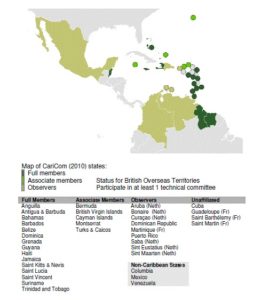
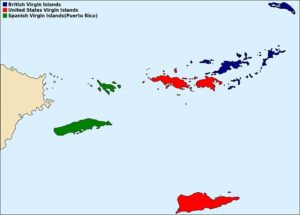
The island of San Salvador in the Bahamas in 1492 …

… and established the first European settlement here:

Santo Domingo, in today’s Dominican Republic in 1496.

So, being the oldest civilization, the expectation should be that we would be the most matured in the hemisphere.

We would be Grown Up … by now?!

Far from it! For many of our Caribbean territories, “grown-up maturity” is far from the truth; they are still dependent colonies. In fact, there are 30 member-states – grouping the Netherland Antilles (N.A.) as 1 member-state – that identify as the political Caribbean. Of that number, 18 of them are considered Dependent Territories without full autonomy to determine their economic, security and governing deliveries for their communities; (this 18 counts each N.A. island).

See this list of “Dependent” territories in the Caribbean:

Member-State Legal Status
Anguilla British Overseas Territory = BOT
Bermuda BOT
British Virgin Islands BOT
Cayman Islands BOT
Guadeloupe French Department
Martinique French Department
Montserrat BOT
Netherlands Antilles
Aruba Netherlands Constituent
Bonaire Netherlands Constituent
Curaçao Netherlands Constituent
Saba Netherlands Constituent
Sint Eustatius Netherlands Constituent
Sint Maarten Netherlands Constituent
Puerto Rico US Territory
Saint Barthélemy French Department
Saint Martin French Department
Turks and Caicos Islands BOT
US Virgin Islands US Territory

Source: https://en.wikipedia.org/wiki/History_of_the_Caribbean#Independence

It is because of this legal status for almost half of the member-states that there is definitely the need for this region to finally grow up and be mature!

The 2013 book Go Lean … Caribbean asserted that the needed maturity can still manifest without changing the legal status from Dependent to Independent territories!

For a long time, right after World War II – 1948 and later, independence was all the rage. People in many communities actually thought that independence was the panacea for their ills in Caribbean communities; (there are even some who want independence for Puerto Rico). But after 70 years and 16 individual independence movements, it is a fallacy to think the independence is the solution. No, it is our conclusion that the best practice for Caribbean prosperity, the Way Forward, is Interdependence … not Independence.

Yes, there is the need for these dependent territories to align with a “bigger organization” structure for better deliveries of the Social Contract – where citizens surrender some of their freedoms and submit to the authority of the State in exchange for protection of remaining natural and legal rights. But the Go Lean book presents the roadmap that this “bigger organization” should be tied to the geographical neighborhood, as opposed to some colonial legacy with an “overseas master” up to 8,000 miles away. The book details this (Page 96) as the Step One (Year 1) of a 5-Year Plan:

Assemble
… this roadmap pursues an assembly of these different institutions and then to supplement them with the creation of new super-national organizations. This approach allows the CU to “stand on the shoulders” of previous efforts and then reach greater heights.

This initial phase entails incorporating all the existing regional organizations – like the ACS and Caribbean Community (CariCom) into the umbrella organizations of the Caribbean Union Trade Federation (CU). These organizations include, (but are not limited to):

  • CariCom Secretariat – 22 Agencies – Appendix BA (Page 256)
  • French Overseas Territory
  • CariCom Office of Trade Negotiations
  • US Overseas Territory (Puerto Rico & US Virgin Islands) – See Appendix IA (Page 278)
  • British Commonwealth / Overseas Territory
  • Netherlands Overseas Territory
  • Association of Caribbean States (ACS)
  • Organization of Eastern Caribbean States (OECS)

As related in a previous blog-commentary

… it is the assessment of this commentary that Independence is so overrated; rather than the independence, the call is for interdependence. A model of this desired interdependence is the inter-state cooperation in the European Union (EU).

Yes, the Europeans did it; they appointed “new guards“. The EU does not possess any sovereignty; that remains with the member-states. The EU is simply a confederacy; a deputized technocracy chartered for the purpose of delivering many of the Social Contract obligations better … than what used to be the norm of the individual states.

The Committee for the Nobel Prize for Peace agreed with this assessment in 2012 … and awarded the Nobel Prize to the EU for that year.

“They” did it; we can too!

For all the Overseas Territories in the Caribbean to embark on a course of action in emulation of the EU, we would be declaring that we too need to “appoint new guards” to make our homelands better places to live, work and play. The Go Lean book opens with the call for all of these 30 Caribbean member-states to make that declaration … for interdependence. This is pronounced early in the book, in the Declaration of Interdependence on Pages 10 thru 12:

Preamble: As the colonial history of our region was initiated to create economic expansion opportunities for our previous imperial masters, the structures of government instituted in their wake have not fostered the best systems for prosperity … . Despite this past, we thrust our energies only to the future, in adapting the best practices and successes of the societies of these previous imperial masters and recognizing the positive spirit of their intent and vow to learn from their past accomplishments and mistakes so as to optimize the opportunities for our own citizenry to create a more perfect bond of union.

… we hold these truths to be self-evident, that all men are created equal, that they are endowed by their Creator with certain unalienable rights, that among these are life, liberty and the pursuit of happiness; that to secure these rights, governments are instituted among men, deriving their just powers from the consent of the governed. That whenever any form of government becomes destructive to these ends … it is their right, it is their duty, to throw off such government, and to provide new guards for their future security.

xi. Whereas all men are entitled to the benefits of good governance in a free society, “new guards” must be enacted to dissuade the emergence of incompetence, corruption, nepotism and cronyism at the peril of the people’s best interest. The Federation must guarantee the executions of a social contract between government and the governed.

This need for “new guards” have been detailed in many previous Go Lean blog-commentaries. Consider this sample:

https://goleancaribbean.com/blog/?p=16668 New Guards for Justice and Economics
https://goleancaribbean.com/blog/?p=16364 New Guards for Technology Deployments
https://goleancaribbean.com/blog/?p=16210 New Guards for Currency Management
https://goleancaribbean.com/blog/?p=16002 New Guards for Corporate Governance
https://goleancaribbean.com/blog/?p=15996 New Guards for Emergencies
https://goleancaribbean.com/blog/?p=15075 New Guards for e-Government
https://goleancaribbean.com/blog/?p=14825 New Guards for Jobs
https://goleancaribbean.com/blog/?p=14480 New Guards for Mental Health
https://goleancaribbean.com/blog/?p=13472 New Guards for Tertiary Education
https://goleancaribbean.com/blog/?p=13321 New Guards for a “Pluralistic Democracy”
https://goleancaribbean.com/blog/?p=13063 New Guards for Civil and Gender Rights
https://goleancaribbean.com/blog/?p=7789 New Guards for Global Trade
https://goleancaribbean.com/blog/?p=7601 New Guards for Caribbean Sovereign Debt
https://goleancaribbean.com/blog/?p=6341 New Guards for Tourism Stewardship
https://goleancaribbean.com/blog/?p=6103 New Guards Against Deadly Threats

In summary, despite all these many words, the Way Forward for stewardship for the many European-and-American Overseas Territories in the Caribbean is simple: Interdependence among the regional neighbors, despite any language or colonial legacies. (This is the same that they did in Europe … and America; we must now do “it” here).

This is easier said than done. This is why there is the need for a detailed roadmap to provide the guidance – turn-by-turn directions – for this Way Forward. The 370 pages of the book Go Lean … Caribbean present the community ethos that must first be adopted to be successful in this endeavor; plus the many strategies, tactics, implementations and advocacies that must be executed to forge collaboration and interdependence in this region. See the specific details from the book in these pages:

Implementation – Ways to Promote Independence Page 120
Planning – Ways to Model the EU Page 130
Planning – Lessons Learned from the West Indies Federation – Previous Interdependence Effort Page 135
Advocacy – Ways to Better Manage the Social Contract Page 170
Advocacy – Ways to Impact US Territories Page 244
Advocacy – Ways to Impact British Territories Page 245
Advocacy – Ways to Impact Dutch Territories Page 246
Advocacy – Ways to Impact French Territories Page 247

This commentary continues the consideration on the Way Forward for the full Caribbean and the individual member-states. This submission here focuses on the 18 member-states that are considered overseas territories. While their needs are the same as everyone, their organizational and governmental structures are different – they have only limited autonomy. Yet, there is a Way Forward. This is entry 8-of-9 for this April 2019 compilation of commentaries; (the list started as 3, grew dynamically to 6 and will finalized with 9). The full series of commentaries related to the Way Forward is presented as follows:

  1. Way Forward: Puerto Rico learns its “status” with America
  2. Way Forward: Virgin Islands – America’s youngest colony
  3. Way Forward: Bahamas – “Solutions White Paper” – An Inadequate Plan
  4. Way Forward: Jamaica: The need to reconcile the Past
  5. Way Forward: Caribbean Media Strategy & Deliveries
  6. Way Forward: Strategy for Justice: Special Prosecutors et al
  7. Way Forward: Strategy for Energy – ‘Trade’ Winds
    ———
  8. Way Forward: Strategy for Independence – Territory Realities
  9. Way Forward: “Whatever it takes” – Life Imitating Art

This series posits that “no man is an island” and further that “no island is an island”; this is the epitome of interdependence. The benefits of a leveraged confederacy in the Caribbean region is a win-win for the people of the Caribbean and their overseas masters burdened with their care.

The Caribbean now wants to grow up and take care of our own affairs. Besides, we can do it better with local oversight to local problems. The label of Overseas Territory is still just a different name for the old practice of:

colonialism.

That is still a flawed concept  – assuming White racial supremacy – with flawed prospects for future success; this is true if its colonialism in the Caribbean, Asia and/or Africa. We reap what we sow; we cannot expect to plant weeds and harvest wheat. See this analysis addresses in this VIDEO here:

VIDEO – Colonialism’s Impact on Africa – https://youtu.be/xhnG8JbBegA

Big Think
Published on Apr 23, 2012 –
The journalist says colonialism was “short enough to destroy leadership in Africa but not long enough to replace it with anything else.”

Notice his hint as to how Internet & Communications Technologies bring New Hope

Notice his hint on how a repatriated Diaspora brings New Hope

Everyone in the Caribbean – citizens, institutions and dependent member-states and  independent member-states – are hereby urged to lean-in to this Go Lean roadmap. The end-result is conceivable, believable and achievable: a better homeland to live, work and play. 🙂

About the Book

The book Go Lean…Caribbean serves as a roadmap for the introduction and implementation of the technocratic Caribbean Union Trade Federation (CU), for the elevation of Caribbean society – for all member-states. This CU/Go Lean roadmap has these 3 prime directives:

  • Optimization of the economic engines in order to grow the regional economy to $800 Billion and create 2.2 million new jobs.
  • Establishment of a security apparatus to ensure public safety and protect the resultant economic engines.
  • Improve Caribbean governance to support these engines, including a separation-of-powers between the member-states and CU federal agencies.

The Go Lean book provides 370-pages of turn-by-turn instructions on “how” to adopt new community ethos, plus the strategies, tactics, implementations and advocacies to execute so as to reboot, reform and transform the societal engines of Caribbean society.

Download the free e-Book of Go Lean … Caribbean – now!

Who We Are

The movement behind the Go Lean book – a non-partisan, apolitical, religiously-neutral Community Development Foundation chartered for the purpose of empowering and re-booting economic engines – stresses that reforming and transforming the Caribbean societal engines – economics, security and governance – must be a regional pursuit. This quest was also an early motivation for the roadmap, as pronounced in the opening Declaration of Interdependence (Pages 12 – 13):

xvi. Whereas security of our homeland is inextricably linked to prosperity of the homeland, the economic and security interest of the region needs to be aligned under the same governance. Since economic crimes … can imperil the functioning of the wheels of commerce for all the citizenry, the accedence of this Federation must equip the security apparatus with the tools and techniques for predictive and proactive interdictions.

xxiii. Whereas many countries in our region are dependent Overseas Territories of imperial powers, the systems of governance can be instituted on a regional and local basis, rather than requiring oversight or accountability from distant masters far removed from their subjects of administration. The Federation must facilitate success in autonomous rule by sharing tools, systems and teamwork within the geographical region.

xxiv.  Whereas a free market economy can be induced and spurred for continuous progress, the Federation must install the controls to better manage aspects of the economy: jobs, inflation, savings rate, investments and other economic principles. Thereby attracting direct foreign investment because of the stability and vibrancy of our economy.

Sign the petition to lean-in for this roadmap for the Caribbean Union Trade Federation.


Share this post:
, , , , ,
[Top]

Way Forward – For Energy: ‘Trade’ Winds

Go Lean Commentary

While the Caribbean is among the best addresses on the planet, it is among the most expensive energy-wise.

So what is the Way Forward for optimizing our energy infrastructure?

While we need to look forward, we also need to look backwards. This was the assertion of the 2013 book Go Lean … Caribbean, which advocates for the installation and deployment of a regional power grid heavily dependent on wind energy. The book states (Page 113):

The Bottom Line on Alternative Energy
The economic history of the Caribbean featured wind power on the merchant sail ships to and from Europe and the African continent during the Slave Trade. Now 250 years later, wind is a source of economic energy once again – this time to power wind turbines to generate electricity for power grids. The winds are so consistent for portions of the Caribbean that the eastern island chain is branded the Windward Islands.

The region also has two other sources for alternative energy: solar and tidal. There is no plan to build or use nuclear energy, beyond any existing facilities. After the Fukushima incident in Japan, March 2011, the economic impact of nuclear is too negative – tourism may be impacted.

The Go Lean book relates a vision of transforming to 100% renewable energy in the Caribbean, asserting that this could bring the energy cost down from one of the highest in the world to one of the lowest. The book continues:

The … installation of a multi-national/regional power grid [will mean] power-sharing between member-states. The end result being lower costs (from $.35/kWh to $.088), lower pollution and less imports of foreign oil – granting energy independence.

This is not just a theoretical plan. No, there are glimpses of this strategy already in motion – for wind – in the Caribbean and the results-successes are undeniable. See this actuality in this sample news article here:

Title: Wind Farm Saves Jamaica $54M on Oil Imports, Energy Minister Says
By: Oswald T. Brown 

April 17, 2019 – Jamaican Energy Minister Fayval Williams said Wigton Windfarm Limited has saved the country’s government over $54 million on oil imports.

The energy minister, speaking Friday at Wigton Windfarm’s Initial Public Offering (IPO) investor briefing at the Montego Bay Convention Centre in Rose Hall, St. James, said the production of clean energy from the facility has enabled the country to avoid the purchase of 800,000 barrels of oil, and the emission of one million tons of carbon dioxide, thereby reducing the country’s carbon footprint, the Jamaica Gleaner reported.
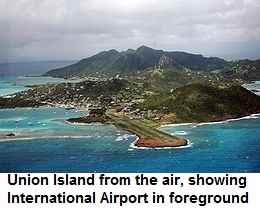
Wigton, located in Rose Hill, South Manchester, is the largest wind energy facility in the English-speaking Caribbean.

The company, which is a subsidiary of the Petroleum Corporation of Jamaica (PCJ), began operating in 2004 with the commissioning of a 20.7 megawatt-generating plant, Wigton I.

This was followed by the development of Wigton II in 2010, which generates 18 megawatts of energy. Wigton III, the 24-megawatt expansion of the facility, was officially commissioned into service in June 2016 by Prime Minister Andrew Holness.

Williams commended the company for the progress made since its inception and lauded the IPO as a “bold strategy.”

“I can say that I am truly pleased with the strides that Wigton has made over these years,” she said. “The growth in [renewable energy] globally will undoubtedly bring greater investment opportunities in the future for a company like Wigton and we want Jamaica to be a part of this growing global movement in an even greater way. I believe we have the will and the capacity, and as a government, we are putting the plans in place to ensure that we maximize our renewable energy potential.”

Jamaicans will have the opportunity to purchase shares in Wigton from when the IPO opened on April 17 to its closure on May 1.

Source: Retrieved April 19, 2019 from: https://washingtoninformer.com/wind-farm-saves-jamaica-54m-on-oil-imports-energy-minister-says/

This news article depicts the manifestation of wisdom and best practices – a delivery from the Go Lean book. This is the Way Forward for Energy for the Caribbean region.

This commentary continues the consideration on the Way Forward for the full Caribbean and the individual member-states. This submission here focuses on energy while many others in the series contemplated how the member-states can reform and transform their societies. This is entry 7-of-9 for this April 2019 compilation of commentaries; (the list started as 3, grew dynamically to 6 and will finalized with 9). The full series of commentaries related to the Way Forward is presented as follows:

  1. Way Forward: Puerto Rico learns its “status” with America
  2. Way Forward: Virgin Islands – America’s youngest colony
  3. Way Forward: Bahamas – “Solutions White Paper” – An Inadequate Plan
  4. Way Forward: Jamaica: The need to reconcile the Past
  5. Way Forward: Caribbean Media Strategy & Deliveries
  6. Way Forward: Strategy for Justice: Special Prosecutors et al
    ———
  7. Way Forward: Strategy for Energy – ‘Trade’ Winds
  8. Way Forward: Strategy for Independence – Territory Realities
  9. Way Forward: “Whatever it takes” – Life Imitating Art

This series posits that “no man is an island” and further that “no island is an island”; so the technocratic deployments for energy – as for other strategies – need the benefits of a leveraged confederacy, as in the Caribbean Union ‘Trade‘ Federation (CU). It is the assertion here that the political Caribbean can elevate society with implementations to harness the trade winds, on the land, at  the coast, and in the territorial waters:

Cape Cod Wind Farm, Massachusetts, USA

Trade winds; how ironic!?

Yellow = Westerly Trade Winds

This is the same natural phenomena – Westerlies – that propelled commercial interest in the Caribbean / New World region; with the ease of westerly winds, this actuality can now contribute to sustainable energy deliveries. We need to pay attention to the “colors of the wind” – see Appendix B VIDEO below.

As related in a previous blog-commentary, wind is not the only option for our alternative energy Way Forward. The full universe of alternative options may include hydro-electric – at waterfalls – and geo-thermal at hot-springs and/or geysers – in volcano zones. Coupled with the implementation of a regional grid, these benefits are too attractive to ignore: environmental (no fossil fuels) and economic (affording conveniences of modern life). While only some Caribbean member-states have the natural features to pursue these foregoing options, all of the 30 member states, on the other hand, can ideally take advantage of these options here:

  • Wind – The wind always blows in the Caribbean – i.e. Trade Winds – and its free.
  • Solar – The sun always shines in the Caribbean and its free. Some member-states are implementing this option now to great fanfare and great results. See the news story in the Appendix A below.
  • Tidal – The tides always rise and fall in the Caribbean and its free..

This theme – environmental and economic benefits of alternative energy – aligns with many previous commentaries from the movement behind the book Go Lean…Caribbean; see this sample list here:

https://goleancaribbean.com/blog/?p=14832 Counter-culture: Manifesting Change – Environmentalism
https://goleancaribbean.com/blog/?p=13985 EU Assists Barbados in Renewable Energy Self-Sufficiency
https://goleancaribbean.com/blog/?p=10367 Science of Sustenance – Green Batteries
https://goleancaribbean.com/blog/?p=7056 Electric Cars – Better energy deliveries solves transportation as well
https://goleancaribbean.com/blog/?p=5155 Tesla unveils super-battery to power homes from wind & solar options
https://goleancaribbean.com/blog/?p=4587 Model: Burlington, Vermont, USA – City powered 100% by renewables
https://goleancaribbean.com/blog/?p=915 Go ‘Green’ … Caribbean

Basic needs are not just limited to food, clothing and shelter in our modern times. No, energy deliveries must be counted as a basic need too. This is why our Caribbean communities spend so much of their family, community and national budgets on electricity supplies (or oil imports); this accounts to a lot of the economic pie. But the consideration for energy in our region goes beyond economics, there is also the consideration for “standards of care”. Our reality in the Summer heat – think: ‘Hotter than July‘ – is that we need air-conditioning solutions. Otherwise life in the homeland is unbearable.

So our Way Forward for Green Energy solution is for the motivation for economic optimization and environmental impact.

Environmental considerations also include combating Climate Change; this is important for Caribbean stakeholders, as Climate Change is one of the great threats that imperil our lives and livelihoods. Our status quo is that we must be prepared in our disaster planning to ‘Rinse and Repeat’ every hurricane season.

Wind energy is therefore a win-win for the Caribbean; solar too – see Appendix A below. The Caribbean energy needs are undeniable. The effects of fossil-fueled-driven Climate Change are undeniable. Lastly, the need for alternate energy, to lower the costs of living in the Caribbean, is undeniable. We hereby urge all Caribbean stakeholders – citizens, businesses and government leaders – to lean-in to this Go Lean … Caribbean roadmap.

This is how we can make the Caribbean homeland a better place to live, work and play.  🙂

About the Book
The book Go Lean…Caribbean serves as a roadmap for the introduction and implementation of the technocratic Caribbean Union Trade Federation (CU), for the elevation of Caribbean society – for all member-states. This CU/Go Lean roadmap has these 3 prime directives:

  • Optimization of the economic engines in order to grow the regional economy to $800 Billion and create 2.2 million new jobs.
  • Establishment of a security apparatus to ensure public safety and protect the resultant economic engines.
  • Improve Caribbean governance to support these engines, including a separation-of-powers between the member-states and CU federal agencies.

The Go Lean book provides 370-pages of turn-by-turn instructions on “how” to adopt new community ethos, plus the strategies, tactics, implementations and advocacies to execute so as to reboot, reform and transform the societal engines of Caribbean society.

Download the free e-Book of Go Lean … Caribbean – now!

Who We Are
The movement behind the Go Lean book – a non-partisan, apolitical, religiously-neutral Community Development Foundation chartered for the purpose of empowering and re-booting economic engines – stresses that reforming and transforming the Caribbean societal engines must be a regional pursuit. This was an early motivation for the roadmap, as pronounced in the opening Declaration of Interdependence (Pages 12 – 13):

xi. Whereas all men are entitled to the benefits of good governance in a free society, “new guards” must be enacted to dissuade the emergence of incompetence, corruption, nepotism and cronyism at the peril of the people’s best interest. The Federation must guarantee the executions of a social contract between government and the governed.

xvi. Whereas security of our homeland is inextricably linked to prosperity of the homeland, the economic and security interest of the region needs to be aligned under the same governance. Since economic crimes … can imperil the functioning of the wheels of commerce for all the citizenry, the accedence of this Federation must equip the security apparatus with the tools and techniques for predictive and proactive interdictions.

xxiv. Whereas a free market economy can be induced and spurred for continuous progress, the Federation must install the controls to better manage aspects of the economy: jobs, inflation, savings rate, investments and other economic principles. Thereby attracting direct foreign investment because of the stability and vibrancy of our economy.

Sign the petition to lean-in for this roadmap for the Caribbean Union Trade Federation.

————

Appendix A – Historic Day on Union Island with electricity produced solely from solar

April 16, 2019 – For the very first time during the day, electricity on Union Island was produced using solely solar photovoltaic (PV) and battery energy storage.

“Today’s historic event is possible after the successful completion of the Union Island Solar PV and Battery Energy Storage project last month. Over the past weeks, we have been testing the system to ensure the process runs smoothly. The Company is pleased with the outcome in this noteworthy project,” a post on VINLEC’s Facebook page said on Tuesday.

“In the near future, the solar PV farm will generate electricity on the island during the day to supply to the grid. We anticipate that on sunny days, the solar plant will generate excess electricity than is required to supply the average daytime load on the island. The excess electricity will be stored in batteries. The expected annual energy output is approximately 32 per cent of the electricity generated in Union Island in 2018.

“VINLEC wishes to express sincerest thanks to the residents of Union Island for their support and understanding during this process,” the post said.

The UAE-CREF Union Island 600KW Solar PV Battery Hybrid Power Plant was officially opened on March 25, 2019. The project was funded under the UAE Caribbean Renewable Energy Fund at a cost of US$3 million and developed in collaboration with VINLEC on behalf of the Government of SVG.

The Solar Power Plant displaces 320,000 litres of diesel fuel per year at savings of EC$500,000.00.

Source: Retrieved April 20, 2019 from: https://searchlight.vc/searchlight/press-release/2019/04/16/historic-day-on-union-island-with-electricity-produced-solely-from-solar/?fbclid=IwAR3E4tyrnqKbveKKZAF0R1bPlglav2rWCkyOZTL1zxv_O9xZfdEOd2tQB9Y

————

Appendix B VIDEO – Pocahontas | Colors of the Wind | Disney Sing-Along – https://youtu.be/O9MvdMqKvpU

Disney
Published on Jul 9, 2016 –
Paint with all the colors of the wind for this sing along.

More Disney!
Instagram: http://Instagram.com/Disney
Twitter: http://Twitter.com/Disney
Facebook: http://Facebook.com/Disney
Tumblr: http://disney.tumblr.com/

A Little Disney History: From humble beginnings as a cartoon studio in the 1920s to its preeminent name in the entertainment industry today, Disney proudly continues its legacy of creating world-class stories and experiences for every member of the family.

Share this post:
, , ,
[Top]

Way Forward – For Justice: Special Prosecutors – Encore

The talk of Special Prosecutors is all the rage today, April 18, 2019:

In the US, the Special Prosecutor looking into the Russian Interference of the 2016 Election, Robert Mueller, has released the Official Report showing the key findings of his two-year investigation; (the 400-page document can be found here). Much of this investigation looked “under the covers” of the current President of the US, Donald J. Trump, his close associates, campaign, corporate and charitable organizations; in total 35 people were indicted, found guilty and/or confessed to federal crimes. (Many state prosecutions are still pending).

This is American justice at work. Will this be satisfying? Will there be accountability and consequences for any wrongdoing?
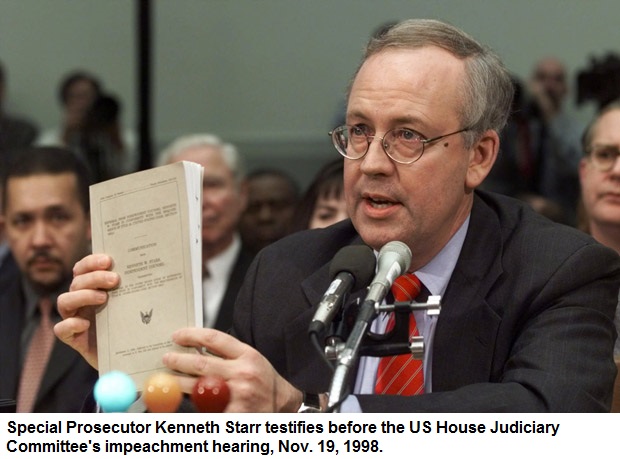
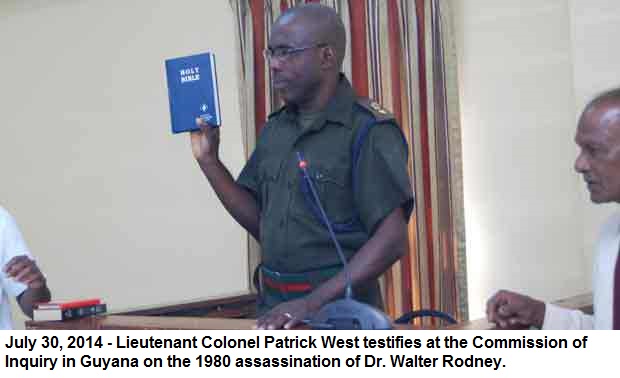
This is the quest and the process – American Style.

Many in the Caribbean long for this aspect of life from the American system. They want to see justice in the Caribbean homeland. They perceive injustice, corruption and inefficiency in the regional institutions for law-and-order. If only we had those deliveries “here” at home.

We do …

The planners for a new Caribbean detailed the Way Forward for Justice in the Caribbean homeland. This was embedded in a roadmap to elevate the societal engines of the region. That roadmap is described in the 2013 book Go Lean…Caribbeanavailable for download now. A previous blog-commentary from November 18, 2014 detailed the justice strategies that are designed in the roadmap for this new Caribbean regime.

On the heels of Robert Mueller in the US, it is a good time to Encore that previous blog – see below.

This commentary continues the consideration on the Way Forward for the full Caribbean region and the individual member-states. The movement behind the Go Lean book queried many stakeholders in and around the Caribbean with the question:

Somebody, anybody … please tell me:
What is the ‘Way Forward‘ for ­­­­­­­­­­­­­­­­­___________ <<< Entered Country Name here >>>?
We cannot continue like this.

(This question was asked on several social media platforms, that cater to populations and Diaspora of Jamaica, Bahamas, Barbados, Saint Vincent & Grenadines, St Lucia, the Turks & Caicos Islands, and just the Caribbean people in general).

The responses all conveyed a similar theme – the need for justice, the complaint of corruption, the lack of law-and-order. So this commentary here addresses all of these concerns by doubling-down on this series for the Way Forward. Each entry in the series depicted how the Caribbean member-states can reform and transform their society. This is entry 6-of-6 for this April 2019 compilation of commentaries; (thus far, subsequent entries may follow). The full series of commentaries related to the Way Forward is presented as follows:

  1. Way Forward: Puerto Rico learns its “status” with America
  2. Way Forward: Virgin Islands – America’s youngest colony
  3. Way Forward: Bahamas – “Solutions White Paper” – An Inadequate Plan
  4. Way Forward: Jamaica: The need to reconcile the Past
  5. Way Forward: Caribbean Media Strategy & Deliveries
    ———
  6. Way Forward: Strategy for Justice: Special Prosecutors et al

This series posits that “no man is an island” and that “no island is an island”; so with the technocratic deployment of a leveraged  confederacy, the political Caribbean can elevate all their societal engines: economics, security and governance.

See that previous blog-commentary entitled “Justice Strategy: Special Prosecutors … et al” here-now:

———-

Go Lean Commentary – Justice Strategy: Special Prosecutors … et al

(Dateline: November 18, 2014) – The quest to elevate Caribbean society is a three-prong approach: economics, security and governance.

Economic optimizations are easiest to introduce; show up with investments (money) and jobs and almost any community will acquiesce. But to introduce empowerments for security and/or governing engines is more complicated, as changes in these categories normally require a political process; implying consensus-building and compromise. (Think: Iraq – “A military solution to a political problem?”; see Footnote 1)

This is what the book Go Lean…Caribbean calls “heavy-lifting”.

This Go Lean book posits that “bad actors” will always emerge in times of economic optimizations to exploit opportunities, with bad or evil intent. In support of this argument, the book relates a number of law-and-order episodes from world history: Pirates of the Caribbean (Page 181) and the Old American West (Page 142). In addition to the direct book references, there are a number previously published blogs/commentaries that covered subjects and dimensions for Caribbean justice institutions:

Role Model for Justice – The Pinkertons
Economic Crime Enforcement – The Criminalization of American Business
America’s Navy – 100 Percent – Model for Caribbean
A Lesson in History: 100 Years Ago – World War I
Here come the Drones … and the Concerns
Caribbean “Terrorists” travel to Venezuela for jihadist training
Jamaica to receive World Bank funds to help in crime fight
US slams Caribbean human rights practices
10 Things We Want from the US and 10 Things We Don’t Want: Pax Americana

It is evident that justice is very important to this roadmap for societal elevation. We do not want to only react (after the fact) to episodes undermining public security or the integrity of law-and-order in the homeland. We want to have a constant sentinel. This will be accomplished with two regional agencies (defined later): Justice Department and Homeland Security Department.

The Caribbean governance structures were developed under the tutelage of 4 European legacies (British, Dutch, French, Spanish) and the United States of America (territories of Puerto Rico & US Virgin Islands and the dominant cultural influence in the region). We now have fitting role models of their societies for the management of justice institutions. This commentary urges their best-practices.

The Go Lean book serves as a roadmap for the introduction and implementation of the technocratic Caribbean Union Trade Federation (CU). Normally, when there are questions of integrity in the due-process in executive, legislative or judicial branches of government, the curative measure is a Special Prosecutor (American) or a Commission of Inquiry (European and United Nations).

As defined in the following encyclopedia source reference, these measures are normally reactive, but for the CU, the strategy is proactive…from Day One:

1. UNITED STATES

A Special Prosecutor generally is a lawyer from outside the government appointed by an Attorney General or, in the United States, by Congress to investigate a government official for misconduct while in office. A reasoning for such an appointment is that the governmental branch or agency may have political connections to those it might be asked to investigate. Inherently, this creates a conflict of interest and a solution is to have someone from outside the department lead the investigation. The term “Special Prosecutor” may have a variety of meanings from one country to the next, from one government branch to the next within the same country, and within different agencies within each government branch. Critics of the use of Special Prosecutors argue that these investigators act as a “fourth branch” to the government because they are not subject to limitations in spending or have deadlines to meet.

STARR

Federal government
Attorneys in the United States may be appointed/hired particularly or employed generally by different branches of the government to investigate. When appointed/hired particularly by the judicial branch to investigate and, if justified, seek indictments in a particular judicial branch case, the attorney is called Special Prosecutor. When appointed/hired particularly by a governmental branch or agency to investigate alleged misconduct within that branch or agency, the attorney is called Independent Counsel.

State government
Special Prosecutors may also be used in a state prosecution case when the prosecutor for the local jurisdiction has a conflict of interest in a case or otherwise may desire another attorney handle a case.
Source: Wikipedia Online Encyclopedia (Retrieved November 17, 2014) – http://en.wikipedia.org/wiki/Special_prosecutor

2. BRITISH DOMINION

A Royal Commission is a major ad-hoc formal public inquiry into a defined issue in some monarchies. They have been held in the United Kingdom, Australia, Canada, New Zealand, Bahrain, Malaysia, Hong Kong and Saudi Arabia. A Royal Commission is similar in function to a Commission of Enquiry (or Inquiry) found in other countries such as Ireland, South Africa, and Hong Kong; (all examples here are from the British Dominion).

CU Blog - Justice Strategy - Special Prosecutors - Photo 1

A Royal Commissioner has considerable powers, generally greater even than those of a judge but restricted to the Terms of Reference of the Commission. The Commission is created by the Head of State (the Sovereign, or his/her representative in the form of a Governor-General or Governor) on the advice of the Government and formally appointed by Letters Patent. In practice—unlike lesser forms of inquiry—once a Commission has started the government cannot stop it. Consequently governments are usually very careful about framing the Terms of Reference and generally include in them a date by which the commission must finish.

Royal Commissions are called to look into matters of great importance and usually controversy. These can be matters such as government structure, the treatment of minorities, events of considerable public concern or economic questions.

Many Royal Commissions last many years and, often, a different government is left to respond to the findings. In Australia—and particularly New South Wales—Royal Commissions have been investigations into police and government corruption and organised crime using the very broad coercive powers of the Royal Commissioner to defeat the protective systems that powerful, but corrupt, public officials had used to shield themselves from conventional investigation.

Royal Commissions usually involve research into an issue, consultations with experts both within and outside of government and public consultations as well. The Warrant may grant immense investigatory powers, including summoning witnesses under oath, offering of indemnities, seizing of documents and other evidence (sometimes including those normally protected, such as classified information), holding hearings in camera if necessary and—in a few cases—compelling all government officials to aid in the execution of the Commission.

The results of Royal Commissions are published in reports, often massive, of findings containing policy recommendations. These reports are often quite influential, with the government enacting some or all recommendations into law.
Source: Wikipedia Online Encyclopedia (Retrieved November 17, 2014) –
http://en.wikipedia.org/wiki/Royal_Commission

3. NETHERLANDS

Though never a member of British Dominion, the Kingdom of the Netherlands has a similar process. An example of a Commission of Inquiry in the Netherlands include this case study:

  • From mid-2010 to December 2011 the Commission of Inquiry carried out an independent study of the sexual abuse of minors in the Roman Catholic Church from 1945 to 2010.

Source: Investigation of Roman Catholic Church Online Site (Retrieved Nov. 17, 2014) –
http://www.onderzoekrk.nl/english-summery.html

4. UNITED NATIONS

a. Commissions and Investigative Bodies

The UN Security Council has established a wide-variety of Commissions to handle a variety of tasks related to the maintenance of international peace and security. Commissions have been created with different structures and a wide variety of mandates including investigation, mediation, or administering compensation. Below is a list of all commissions established by the Security Council, with a short description prepared on the basis of the Repertoire, as well as links to the sections covering them in the Repertoire (Public Relations Publication). They are organized by region, and then under relevant areas or sub-regions, placed chronologically starting with those established most recently:

1946-1951 1952-1955 1956-1958 1959-1963 1964-1965 1966-1968 1969-1971 1972-1974 1975-1980 1981-1984 1985-1988 1989-1992 1993-1995 1996-1999 2000-2003 2004-2007 2008-2009 2010-2011

U.N. peacekeepers drive tank as they patrol past deserted Kibati village

For more information on the investigative and fact-finding powers of the Security Council, see this section on Article 34:

  • Article 34 – Investigation of disputes & fact-finding.
    Article 34 of the UN Charter empowers the Security Council to investigate any dispute, or any situation that is likely to endanger international peace and security. The provision covers investigations and fact-finding missions mandated by the Security Council or by the Secretary-General to which the Council expressed its support or of which it took note. Furthermore, this section has also looked at instances in which Member-States demanded or suggested to the Council that an investigation be carried out or a fact-finding mission be dispatched.

b. UN Commission for Conventional Armaments

The Commission for Conventional Armaments was established on 13 February 1947 to formulate proposals for carrying out General Assembly resolution 41 (I) of 14 December 1946 concerning the general regulation and reduction of armaments. This was a standing Commission, but it was formally dissolved on 30 January 1952.

Source: United Nations Online Archive – Retrieved Nov. 17, 2014 – http://www.un.org/en/sc/repertoire/subsidiary_organs/commissions_and_investigations.shtml

Normally a Special Prosecutor assignment has a limited time expiration. Also a Commission of Inquiry refers to individuals employed, during conciliation (Footnote 2), to investigate the facts of a particular dispute and to submit a report stating the facts and proposing terms for the resolution of the differences. Such a commission is one of many bodies available to governments to inquire/investigate into various issues. The commissions may report findings, give advice and make recommendations; and while their findings may not be legally binding, they can be highly influential.

The declared assignment documents for Special Prosecutors and/or Commissions of Inquiries are called “Warrants”.

The foregoing encyclopedic source explains that “Warrants” may grant immense investigatory powers, including summoning witnesses under oath, offering of indemnities, seizing of documents and other evidence, holding hearings, and compelling aid from government officials. This description provides the role-model for the CU‘s effort in justice and security. The Trade Federation will feature a federal Justice Department, with a separation-of-powers, a ‘Divide’, with the regional member-states. On the CU side of the ‘Divide’ is the jurisdiction for economic crimes, systemic threats, regional escalations and marshaling of any offenses on the federally-regulated grounds, Self-Governing Entities.

This separation-of-powers mandate also dictates that the CU‘s Homeland Security apparatus is the local manifestation of the United Nations Security (Peacekeeping) Forces , except for a regional scope only. This specific federal department will handle a variety of tasks related to the maintenance of regional peace and security.

The book Go Lean…Caribbean posits that the region must prepare its own security apparatus for its own security needs. So the vision is that all Caribbean member-states will authorize the CU as Special Prosecutors and Commissions of Inquiries. These warrants would legally authorize the regional “Justice Institutions”, covering law enforcement and regional defense, all encompassed in the book’s Homeland Security roadmap.

The CU would thusly be set to optimize Caribbean society through economic empowerment, and the aligning security dynamics. In fact, the Go Lean roadmap has 3 prime directives:

  • Optimization of the economic engines in order to grow the regional economy to $800 Billion & create 2.2 million new jobs.
  • Establishment of a security apparatus to protect the resultant economic engines.
  • Improve Caribbean governance to support these engines.

There is the need to ensure the economic engines in all 30 Caribbean member-states; plus extractions (mining, drilling) in the Exclusive Economic Zone (EEZ) of the Caribbean Sea. This point is pronounced early in the book with the Declaration of Interdependence (Page 12) that claims:

x.   Whereas we are surrounded and allied to nations of larger proportions in land mass, populations, and treasuries, elements in their societies may have ill-intent in their pursuits, at the expense of the safety and security of our citizens. We must therefore appoint “new guards” to ensure our public safety and threats against our society, both domestic and foreign. The Federation must employ the latest advances and best practices … to assuage continuous threats against public safety.

xi.  Whereas all men are entitled to the benefits of good governance in a free society, “new guards” must be enacted to dissuade the emergence of incompetence, corruption, nepotism and cronyism at the peril of the people’s best interest. The Federation must guarantee the executions of a social contract between government and the governed.

xii. Whereas the legacy in recent times in individual states may be that of ineffectual governance with no redress to higher authority, the accedence of this Federation will ensure accountability and escalation of the human and civil rights of the people for good governance, justice assurances, due process and the rule of law. As such, any threats of a “failed state” status for any member-state must enact emergency measures on behalf of the Federation to protect the human, civil and property rights of the citizens, residents, allies, trading partners, and visitors of the affected member-state and the Federation as a whole.

xvi. Whereas security of our homeland is inextricably linked to prosperity of the homeland, the economic and security interest of the region needs to be aligned under the same governance. Since economic crimes, including piracy and other forms of terrorism, can imperil the functioning of the wheels of commerce for all the citizenry, the accedence of this Federation must equip the security apparatus with the tools and techniques for predictive and proactive interdictions.

The treaty to establish the “new guards”, the Homeland Security Force and Federal Justice Department within the Caribbean Union Trade Federation gets legal authorization from the provisions of Special Prosecutors and Commissions of Inquiries, therefore enacting a Status of Forces Agreement with the initiation of the confederation. This elaborate process would be “Step One, Day One” in the Go Lean roadmap. The Go Lean book also details a series of community ethos, strategies, tactics, implementations and advocacies to provide increased public accountability and security in the Caribbean region:

Community Ethos – Economic Principle – Consequences of Choices Lie in Future Page 21
Community Ethos – Security Principle – Privacy –vs- Public Protection Page 23
Community Ethos – Security Principle – Whistleblower Protection Page 23
Community Ethos – Security Principle – Witness Security & Protection Page 23
Community Ethos – Security Principle – Anti-Bullying and Mitigation Page 23
Community Ethos – Security Principle – Intelligence Gathering Page 23
Community Ethos – Governing Principle – Minority Equalization Page 24
Community Ethos – Governing Principle – Lean Operations Page 24
Community Ethos – Governing Principle – Cooperatives Page 25
Community Ethos – Ways to Manage Reconciliations Page 34
Community Ethos – Ways to Improve Sharing Page 35
Community Ethos – Ways to Impact the Greater Good Page 37
Strategy – Vision – Trade Federation with Proxy Powers of a Confederacy Page 45
Strategy – Mission – Defense Pact to Defend against Systemic Threats Page 45
Strategy – Mission – Protect Stakeholders   with Vigorous Law-and-Order measures Page 45
Tactical – Confederating a Non-Sovereign Union Page 63
Tactical – Fostering a Technocracy Page 64
Tactical – Separation of Powers – Homeland Security Page 75
Tactical – Separation of Powers – Justice Department – District Attorneys as Special Prosecutors Page 77
Tactical – Separation of Powers – Justice Department – CariPol: Marshals & Investigations Page 77
Tactical – Separation of Powers – Justice Department – Witness Protection Page 77
Tactical – Separation of Powers – Trade Anti-Trust Regulatory Commission Page 77
Implementation – Foreign Policy Initiatives at Start-up Page 102
Implementation – Start-up Security Initiatives Page 103
Implementation – Start-up Benefits from the EEZ – Security – Interdictions & Piracy Page 104
Implementation – Steps to Implement Self-Governing Entities – Security and Justice Page 105
Implementation – Ways to Foster International Aid – Military Aid Page 115
Planning – Ways to Make the Caribbean Better – Safety Measures for the Rich and Poor Page 131
Planning – Ways to Improve Failed-State Indices – Law Enforcement Oversight Page 134
Planning – Lessons Learned from the West Indies (WI)   Federation – Regiment on the Ready Page 135
Planning – Lessons from the American West – Law & Order Needed Enforcements Page 142
Advocacy – Ways to Grow the Economy Page 151
Advocacy – Ways to Create Jobs Page 152
Advocacy – Ways to Improve Governance Page 168
Advocacy – Ways to Better Manage the Social Contract Page 170
Advocacy – Ways to Improve Leadership Page 171
Advocacy – Ways to Impact   Justice Page 177
Advocacy – Ways to Reduce Crime Page 178
Advocacy – Ways to Improve Homeland Security Page 180
Advocacy – Ways to Mitigate Terrorism Page 181
Advocacy – Ways to Improve Intelligence Gathering & Analysis Page 182
Advocacy – Ways to Protect Human Rights Page 220
Appendix – Art of War Chapters – Chapter 7 – Engaging The Security Force Page 327

Everyone in the Caribbean, the people and institutions, are hereby urged to lean-in to this Go Lean roadmap for elevation of Caribbean society. The roadmap calls for the heavy-lifting so that the justice institutions (permanent Special Prosecutors/Commissions of Inquiries) of the CU can execute their role in a just manner, thus impacting the Greater Good; see VIDEO below of South Africa’s example. This produces the output of a technocratic system bent on efficiency and effectiveness. In practice, this would mean accountability, transparency, and checks-and-balances in the execution of the rule-of-law.

This is the change for the Caribbean: elevated Public Safety, Law Enforcement and Homeland Security, all necessary to make the Caribbean a better place to live, work and play.

Download the free e-Book of Go Lean … Caribbean – now!

————–

Footnote:
1 – Iraq: A military solution to a political problem?

2 – Conciliation: The process of adjusting or settling disputes in a friendly manner through extra judicial means.

————–

Video: Marikana Commission of Inquiry has concluded its hearings – http://youtu.be/k0XAfRzjSXc


The Marikana Commission of Inquiry in South Africa has concluded its hearings after two years of attempting to establish what happened during the violent Wage Strike at Lonmin Platinum Mine in August 2012. 34 people were shot and killed in a confrontation with the police. 10 others including 2 police officers and 2 Mine Guards were also killed in the days preceding the August 16th tragedy.

Share this post:
, ,
[Top]

Way Forward – Jamaica: Must reconcile the Past

Go Lean Commentary

“Sometimes we have to reach back to the past before we can launch forward into the future.”

We have all heard this “slingshot analogy” in different variations; like this one:

We have to know where we came from in order to know where we are going.

Any similar theme rings true!

Even in God’s word the Bible, the concept is presented that while a man reaps what he sows, he can be punished for the sins of his father – Exodus 34:7 – because chances are very great that he will commit the same infractions, as his father did; (and see Appendix VIDEO below):

An apple does not fall far from the tree

We are a product of our environment

Our nurture can override our nature

This is a consideration for Jamaica … and how this community can foster a Way Forward, away from its near-Failed-State status quo to a different destination of a prosperous homeland.

This commentary asserts that Jamaica must first reconcile its bad past before it can have a good future.

Why? Because of this premise here:

“If an empire is destroyed by its enemies, it will rise up again.
But if destroyed internally, it will be gone forever”. – Source.

This is the historicity of Jamaica and the sullied past that must be reconciled. This refers to the original plan for integration for the British Caribbean, the West Indies Federation.

Jamaica used to be a colony of the British Empire (United Kingdom); the quest for independence and autonomy was set forth as a long journey; the planners for stewardship of the British Caribbean conceived this West Indies Federation for 10 British territories to have the scale and leverage to be effective and efficient for regional economics, security and governance.

There was a West Indies Dollar, West Indies Regiment (today’s Jamaica Defense Force), University of the West Indies, and the West Indies Cricket Federation just to name a few of the institutions that were formed for this integration purpose – some remain today. But this Federation only lasted 4 years (1958 – 1962). This entity was not destroyed by its enemies, rather it was destroyed internally, by its own people, starting first and foremost with Jamaica. The 2013 book Go Lean … Caribbean – a roadmap for a new integration movement: Caribbean Union Trade Federation (CU) – related this historic summary:

Jamaican Dynamic Appendix (Page 302)
Jamaica’s nationalistic ideals doomed the Federation; they were the largest population base and felt trivialized by the Federation. They believed that the smaller islands were draining Jamaica’s wealth; their share of the seats in the federal parliament was smaller than its share of the total Federation population. Jamaica was also remote to most of the other islands in the Federation, lying several hundred miles to the west. And many in Jamaica were upset that Kingston had not been chosen as the federal capital.

10 Lessons Learned from the West Indies Federation – #3: Jamaican Dynamic (Page 135)
Among the Caribbean nations, Haiti is highest on the 2012 Failed State Index (#7), Jamaica is among the next set of Caribbean countries at #119, just slightly behind South Africa (#115) and Albania (#118). Obviously, the nation-building needs of Jamaica has been truncated, plus the country’s brain drain is worst in the region with almost a matching population living abroad in a Diaspora as opposed to residing in and contributing to the local economy. The CU will ensure better representation of larger populated states by employing a bicameral legislative branch: while the Senate is “one-man-one-vote” (2 Senators per state), the lower house has balanced representation based on population.

Geographically, Jamaica is not the furthest west (Belize), nor south (Aruba) in the region. The Capitol for the CU is slated for a Federal District on the border of Haiti and the Dominican Republic. …

The Way Forward for Jamaica is that this country must now reconcile their bad behavior in the “regional sandbox” and learn how to play nice with others. Only then can the benefits of collaboration, cooperation and confederation come home … finally.

Only then can this country have a good future. (Since 1962, Jamaica has played in the “sandbox” alone, to its own peril). This theme – this Way Forward – aligns with previous commentaries from the Go Lean movement; see this sample list here:

https://goleancaribbean.com/blog/?p=16408 Bad Community Ethos on Violence; Start at Home, spills out to Streets
https://goleancaribbean.com/blog/?p=15521 Caribbean Unity? What a Joke – Tourism Missteps in Jamaica et al
https://goleancaribbean.com/blog/?p=14242 Money Matters – Jamaicans follow the jobs, right out of the country
https://goleancaribbean.com/blog/?p=13040 Jamaican Diaspora – Not the ‘Panacea’; Rather need Region Partners
https://goleancaribbean.com/blog/?p=4840 Jamaican Poll: ‘Bring back the British!’
https://goleancaribbean.com/blog/?p=313 What’s Holding Back Jamaica’s Reforms? – They must reboot!

Jamaica needs to reach back into their past, learn what it was that they did wrong – their fathers did wrong (see Appendix VIDEO below) – accept the learned-lessons, turn a new leaf and then march forward into the future with a determination and devotion to think, feel and act differently and better. This sounds so much like the Serenity Prayer that Alcoholics and Addicts are urged to enchant everyday:

Lord, give me the courage to change the things I can change
The serenity to accept the things I cannot change
And the wisdom to know the difference.

Today, this Way Forward is the courage, serenity and wisdom at work for Jamaica.

This commentary continues this recent series for the Way Forward for many other Caribbean member-states. Just recently, we completed a 3-part series categorized as follows:

  1. Way Forward: Puerto Rico learns its “status” with America
  2. Way Forward: Virgin Islands – America’s youngest colony
  3. Way Forward: Bahamas – “Solutions White Paper” – An Inadequate Plan
    ——–
  4. Way Forward: Jamaica: The need to reconcile the Past

This entire series asserts that “no man is an island” and that in fact “no island is an island”. Jamaica have always needed to collaborate and confederate with its regional neighbors. Their failure to do so, only imperiled their economic, security and governmental engines. Then their people fled; they left and joined communities abroad where the needed integration, cooperation and harmony existed.

This must now be reconciled. The stakeholders in Jamaica and from Jamaica are hereby urged to lean-in to this integration plan, this Go Lean roadmap, to make Jamaica a better homeland to live, work and play. Finally …

🙂

About the Book
The book Go Lean…Caribbean serves as a roadmap for the introduction and implementation of the technocratic Caribbean Union Trade Federation (CU), for the elevation of Caribbean society – for all member-states. This CU/Go Lean roadmap has these 3 prime directives:

  • Optimization of the economic engines in order to grow the regional economy to $800 Billion and create 2.2 million new jobs.
  • Establishment of a security apparatus to ensure public safety and protect the resultant economic engines.
  • Improve Caribbean governance to support these engines, including a separation-of-powers between the member-states and CU federal agencies.

The Go Lean book provides 370-pages of turn-by-turn instructions on “how” to adopt new community ethos, plus the strategies, tactics, implementations and advocacies to execute so as to reboot, reform and transform the societal engines of Caribbean society.

Download the free e-Book of Go Lean … Caribbean – now!

Who We Are
The movement behind the Go Lean book – a non-partisan, apolitical, religiously-neutral Community Development Foundation chartered for the purpose of empowering and re-booting economic engines – stresses that reforming and transforming the Caribbean societal engines must be a regional pursuit. This was an early motivation for the roadmap, as pronounced in the opening Declaration of Interdependence (Pages 12 – 13):

xi. Whereas all men are entitled to the benefits of good governance in a free society, “new guards” must be enacted to dissuade the emergence of incompetence, corruption, nepotism and cronyism at the peril of the people’s best interest. The Federation must guarantee the executions of a social contract between government and the governed.

xvi. Whereas security of our homeland is inextricably linked to prosperity of the homeland, the economic and security interest of the region needs to be aligned under the same governance. Since economic crimes … can imperil the functioning of the wheels of commerce for all the citizenry, the accedence of this Federation must equip the security apparatus with the tools and techniques for predictive and proactive interdictions.

xxiv. Whereas a free market economy can be induced and spurred for continuous progress, the Federation must install the controls to better manage aspects of the economy: jobs, inflation, savings rate, investments and other economic principles. Thereby attracting direct foreign investment because of the stability and vibrancy of our economy.

Sign the petition to lean-in for this roadmap for the Caribbean Union Trade Federation.

—————–

Appendix VIDEO – Does God Punish Children for the Sins of Their Parents? – https://youtu.be/C3OGrGAxqGE

Dr. Sean McDowell
Published on Oct 31, 2018 – 
Does God hold children accountable for when their parents do bad things? Is culpability for sin passed on from one generation to the next? Sean briefly answers these questions.

Share this post:
,
[Top]