Tag: Justice

Good Leadership: Hypocrisy cancels out Law-and-Order

Go Lean Commentary

What is good for the goose is good for the gander. – Ancient Idiom

That is just the standard. Global Standard, that is! It assumes that moral code must be equally applied to all stakeholders. Any violation of this standard is considered hypocrisy, of which the end result is a total disrespect for all standards, rules and/or law-and-order.

For Good Leadership, those at the top must avoid hypocrisy, or hypocritical standards.

This is right, no one should be “above the law”; when there is the manifestation of Bad Actors that operate “above the law” or “without law”, then chaos ensues in society. This is an issue of justice, fairness, mercy and law-and-order. This is the historicity of our regional homeland; remember the Pirates of the Caribbean.

But no one is perfect, right?
Shouldn’t everyone be excused and tolerated even if they commit a misdeed every now and then?

While this is a popular notion – introducing a balance between justice and mercy – this is still a flawed philosophy, as many times the practice of justice and mercy is wielded unevenly. There appears to be a different standard at play: one of pluses and minuses; counting good acts versus evil acts, then taking the average.

This is familiar in the European rationalization. In my school days, there was a system of “Merits and Demerits”:

A point system for benevolent and malevolent behaviors.
Pros and Cons
Advantages and Disadvantages

It’s a flawed concept; it assumes that you will be acceptable, despite your shortcomings, if you only perform some good works … every now and then.

To anyone in leadership and contemplating leadership, I entreat you to flee from this flawed philosophy. This belies the actuality and reality of hypocrisy.

Yes indeed, there are certain demerits that cancels out any meritorious deeds a person may commit. Think murder, rape, child/elder abuse. For the New World, the Slave Trade was more than just a demerit; it was so morally indefensible, that hypocrisy – of the European colonizers – could not be excused, justified, rationalized or minimized.

In fact, go back in ancient history and think of the conduct – atrocities, lawlessness, debauchery, murder, naval hijackings, etc. – of the Pirates of the Caribbean and their actions during the eco-systems during Slave Trade. (Also, consider the very recent examples of the Sheriff eco-system for law-and-order in the United States). There is no doubt as to the historicity of these actors; where there is doubt, it is related to the lessons of the prevailing hypocrisy by the orthodox institutions.

This is the continuation of a Teaching Series on Good Leadership from the movement behind the 2013 book Go Lean…Caribbean; this is entry 4 of 6, which details the lessons-learned from the hypocrisy of orthodox institutions on the demand of the public to abide by law-and-order; they simply do not! The full catalog for this month’s series is listed as follows:

  1. Good Leadership – Inaction could be deadly
  2. Good Leadership – Caring builds trust; trust builds caring
  3. Good Leadership Agile: Next Generation of leadership and project delivery
  4. Good Leadership – Hypocrisy cancels out Law-and-Order
  5. Good Leadership – Example – “Leader of the Free World”?
  6. Good Leadership – Example – For mitigating crime

The days of the Pirates of the Caribbean provides a glimpse for today’s pandemic crisis; the blatant hypocrisy of the times made societal progress difficult. There are no Ands, Ifs or Buts; today, we need Good Leadership – among our political, corporate, religious and civic stakeholders – to survive and thrive as a society. We need to heed, adhere and comply with Good Leadership; we do not need blatant examples of hypocrisy cancelling out the Law-and-Order principles. We needed this hypocrisy-free climate before this COVID-19 pandemic; we need it now in the throes of this crisis – think quarantines, stay-at-home orders, wear masks orders, and isolation orders – and we will need it afterwards.

The theme of the atrocities of the Pirates of the Caribbean thriving amongst the hypocrisy of the colonial orthodoxy- the civilized world – has been accurately depicted in the 2014 premium cable television series called Black Sails; (4 seasons of 38 episodes). Though fictional, the characters portrayed in this drama are loosely based on many historical characters; this is Art imitating Life; Life imitating Art. Consider the actuality of historical characters that were serialized:

A new pirate adventure coming to Starz from Michael Bay in 2014 centers on the tales of Captain Flint and his men, and takes place twenty years prior to Robert Louis Stevenson’s classic “Treasure Island.”

Characters: Captain Flint, Long John Silver, William “Blackbeard” Teach, Anne Bonny, Governor Woodes Rogers, William “Billy” Bones.

See this First Trailer of: https://www.imdb.com/video/vi2814748185?playlistId=tt2375692

Wikipedia Summary: Set roughly two decades before the events of Treasure Island, the 2014 televised series Black Sails follows the adventures of Captain Flint and his pirate crew. His first name is given as James in the episode “VI.” Episodes “IX” and “XIII” further reveal that he is a disgraced former Royal Navy lieutenant named James McGraw, dismissed from the service for falling in love and having an affair with Lord Thomas Hamilton. He was exiled from England with Thomas’ wife, Miranda Barlow, who has subsequently since hidden herself as a lowly Puritan lady on the trading island of Nassau. Lord Thomas Hamilton was the son of Lord Alfred Hamilton, lord proprietor of the Bahama Islands. McGraw adopted the name “Flint” after a mysterious man who boarded his grandfather’s ship while at anchor and then disappeared. He is portrayed by Toby Stephens.

The historicity of the Pirates of the Caribbean is really stark in considering its impact on Caribbean society’s moral code, even down to this day. In a previous submission from the movement behind the Go Lean book, this summary was presented:

The distinction between a privateer and a pirate has always been vague beyond the licensing Letters of Marque. Without the letters, the parties were considered pirates; of which many frequented the Caribbean region. This industry employed many unemployed seafarers as a way to make ends meet, but became increasingly damaging to the region’s economic and commercial prospects.

Licensed (Privateers) versus unlicensed (Pirates) exhibited the same practices, same conduct, same capital offenses and the same value systems, the only difference: one was considered legitimate while the other was illegitimate. This morality – or lack there of – was based on a piece of paper from the established orthodoxy. This was pure and blatant hypocrisy!

No wonder many privateers and pirates alike abandoned adherence to the orthodox moral code of their day. This is proof that any lack of moral authority – clear standards on right versus wrong – does not bode well for Good Leadership. Unequal Justice emerges and thrives in this climate. The Caribbean was doomed … with this Bad Community Ethos; (Community Ethos = the fundamental character or spirit of a culture; the underlying sentiment that informs the beliefs, customs, or practices of a group or society; dominant assumptions of a people or period).

Also, consider this sample of other previous commentaries related to the eco-system of piracy, independently and correlated to the dread of hypocrisy. These experiences are noted in regards to Caribbean society and other communities. See the sample list here::

https://goleancaribbean.com/blog/?p=18337 Title: Unequal Justice: Bullying Magnified to Disrupt Commerce
Analogies abound … as to why it is important to “nip bullying in the bud”. If we do nothing – or not enough – then conditions of Unequal Justice go from “bad to worse”. The bad actor can emerge from terrorizing a family, to a neighborhood, to a community, to a nation, to a region, to a hemisphere, to the whole world. Think: Nazi GermanyImperial JapanSoviet RussiaBritish EmpireNapoleonic FranceSpanish Inquisition, and more …
Unchecked, bad actors in the community become tyrants – they can even affect the local economic engine.
https://goleancaribbean.com/blog/?p=18321 Title: Unequal Justice: Sheriffs and the need for ‘soft’ Tyrannicide
The need for justice can never be undermined, undervalued or questioned.People will abandon everything else – culture, family, home and comforts – in pursuit of justice, for themselves or their children. …
The reality of southern rural life for African Americans was that justice was impeded by one institution, often one character: the County Sheriff.
https://goleancaribbean.com/blog/?p=18100 Title: 400 Years of Slavery – Cop-on-Black Shootings in America’s DNA
Slavery was clearly an oppression, suppression and repression of the African race on American soil. This was true in the Year 1619 … and unfortunately; there is still some truth to this assessment in 2019, 400 years later. …
There is no slavery in America today; yet there is still some racial oppression-suppression-and-repression, especially evident in the dynamic of Cop-on-Black Shootings.
https://goleancaribbean.com/blog/?p=16104 Title: Guy Fawkes – A Lesson in History
Appendix B: Is Guy Fawkes Day relevant to Jamaica?
The Treaty of Madrid obliged Britain to control piracy, and this led to the imprisonment of pirate captain Henry Morgan who was shipped by boat to the Tower of London. But only Morgan could control the pirates, and so King Charles II made him governor of Jamaica to do that. Morgan controlled piracy by selling land cheaply to the pirates and they became the aristocracy. This meant that the ex-pirates became owners of slaves and masters of corruption and criminality that affects many Jamaicans to this day.
https://goleancaribbean.com/blog/?p=13746 Title: Failure to Launch – Security: Caribbean Basin Security Dreams
The Caribbean region has an eclectic history when it comes to security, think the bad actors of the Pirates of the Caribbean. Yet, those Pirates have since all been extinguished, thanks to a multilateral effort among European (and now American) imperial powers. Credit goes to the British, French and the Dutch military/naval powers of the past.
That was a BIG accomplishment in terms of regional security. Can we get that again? Can these championing national powers – and their descendants – come together and provide a modern day shield so as to project Caribbean homeland security anew?
https://goleancaribbean.com/blog/?p=673 Title: Ghost ships – Autonomous cargo vessels without a crew
In many ways automating a ship should be a lot easier than automating aircraft, Mr. Levander believes. For a start, if something did go wrong, instead of falling out of the sky a drone ship could be set by default to cut its engines and drop anchor without harming anyone. As for piracy, with no crew to be taken hostage it would be much easier for the armed forces to intervene. Of course, more modern pirates might try to hack their way into the controls of an autonomous ship to take command. Which is why encrypted data communication is high on the maritime industry’s list of things to do before ghostly vessels ply the trade routes.
https://goleancaribbean.com/blog/?p=546 Title: Book Review- ‘The Divide’- Injustice in the Age of the Wealth Gap

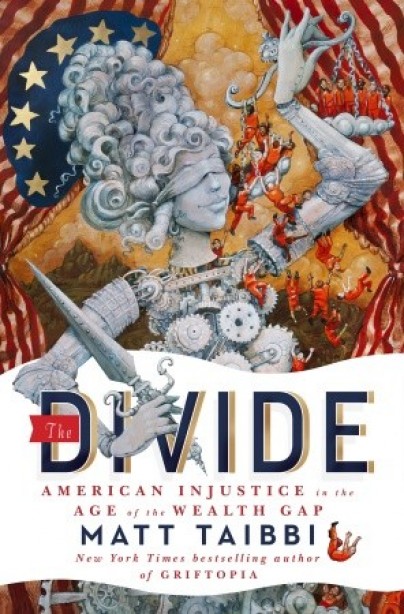
The United States … seems to [have] a Great Divide in justice, one set of standards for the rich, another set for the poor.

The grass is not greener on that (American) side!

https://goleancaribbean.com/blog/?p=341 Title: Hypocritical US slams Caribbean human rights practices
The United States [is] meddling/voicing opinions about issues in other countries, while they themselves have less than a stellar human rights record on this subject. Consider that the State Department’s report many times cited prison conditions in the Caribbean states. This is classic “pot calling kettle black” – the US has the highest incarceration rate in the world[a]. What’s worse is the fact that 60% of the US prison population is Black or Hispanic; even though non-whites only committed 30.7% of the crimes. Obviously justice in the US is dependent on the access to money. Where is the Human Rights outcries there?!

In a previous entry of this 6-part series for May 2020 – Good Leadership #2: Caring builds trust; trust builds caring – it was stressed how important “Trust” is:

Trust is very important for forging Good Leadership. Subjects must feel that they can trust their leaders, that the leaders care and would only have their best interest at heart. So actions of caring and trust are inter-related.

Trust is definitely the opposite of hypocrisy.

As we measure against this proven formula for Good Leadership we see that many of the flaws in the Caribbean past were due to a hypocritical foundation that only made bad times worse. There was no way to look at the institution of slavery and see any good that could come from it – merits and demerits be damned. Then the situation worsened with the Pirates of the Caribbean attempting to exploit the economic gains for themselves.

The “buck stopped with the colonial leaders”. Who were they?

The English colonial organization structures were based on the system of “Lords Proprietors” – see Appendices below. The flaws and frailties of Nassau, Bahamas were dramatized in the premium TV series Black Sails – see the VIDEO Trailer here:

VIDEO – Black Sails | Official Trailer | STARZhttps://youtu.be/rT2Y5jjBNpQ

STARZ
Posted August 11, 2014 – The Golden Age of Piracy. New Providence is a lawless island, controlled by history’s most notorious pirate captains. The most feared – CAPTAIN FLINT.

Watch Black Sails now on the STARZ app: http://starz.tv/WatchSTARZYT

Subscribe now for more Black Sails clips: http://bit.ly/1kalhP0

Like Black Sails on Facebook: http://bit.ly/BlackSailsFacebookYT

Follow Black Sails on Twitter: http://starz.tv/BlackSailsTwitterYT

Follow Black Sails on Instagram: http://starz.tv/BlackSailsInstagramYT

Follow Black Sails on Tumblr:http://starz.tv/BlackSailsTumblrYT

  1. The Golden Age of Piracy. New Providence Island [(Nassau)] is lawless territory, controlled by notorious pirate captains. The most feared—Captain Flint. Driven by ulterior motives, Flint hunts the ultimate prize. But first he must overcome rival captains, the local smuggling kingpin, and a young sailor new to his crew—John Silver.

Like STARZ on Facebook: http://starz.tv/STARZFacebookYT
Follow STARZ on Twitter: http://starz.tv/STARZTwitterYT
Follow STARZ on Instagram: http://starz.tv/STARZInstagramYT 

A lot of this drama was set in Nassau, but Jamaica – think Port Royal – also proliferated with pirates. So there are lessons from this drama for us here in the full Caribbean. These lessons apply right up to this moment in our handling of today’s crises; think Coronavirus-COVID-19. Is there blatant hypocrisies today? Are we mandating one sets of rules for one group of people while ignoring those rules for others – think Black versus White, think rich versus poor, urban versus rural, tourists versus natives, etc..

In summary, the good and bad experiences of Caribbean leadership over the centuries are well documented. We see that the mandate for Good Leadership is uncompromising. We must strive for this at all times, otherwise subjects defy the laws of their leaders. (Many condemned Pirates of the Caribbean were belligerent and cursing the powers-that-be right up to their last words before execution). Bad people feel justified for their bad actions against good people because of the unreconciled hypocrisy. No doubt, we must dissuade organizational hypocrisy, institutional oppression and tolerated discrimination.

Yes, elevating Caribbean society means elevating the Caribbean character; we must start with the man in the mirror.

We hereby urge all Caribbean stakeholders – leaders and followers – to lean-in to this Go Lean roadmap. This is how we will make our homeland a better place to live, work and play. 🙂

About the Book
The book Go Lean…Caribbean serves as a roadmap for the introduction and implementation of the technocratic Caribbean Union Trade Federation (CU), for the elevation of Caribbean society – for all member-states. This CU/Go Lean roadmap has these 3 prime directives:

  • Optimization of the economic engines in order to grow the regional economy to $800 Billion & create 2.2 million new jobs.
  • Establishment of a security apparatus to ensure public safety and protect the resultant economic engines.
  • Improve Caribbean governance to support these engines, including a separation-of-powers between the member-states and CU federal agencies.

The Go Lean book provides 370-pages of turn-by-turn instructions on “how” to adopt new community ethos, plus the strategies, tactics, implementations and advocacies to execute so as to reboot, reform and transform the societal engines of Caribbean society.

Download the free e-Book of Go Lean … Caribbean – now!

Who We Are
The movement behind the Go Lean book – a non-partisan, apolitical, religiously-neutral Community Development Foundation chartered for the purpose of empowering and re-booting economic engines – stresses that reforming and transforming the Caribbean societal engines must be a regional pursuit. This was an early motivation for the roadmap, as pronounced in the opening Declaration of Interdependence (Pages 11 – 13):

xi. Whereas all men are entitled to the benefits of good governance in a free society, “new guards” must be enacted to dissuade the emergence of incompetence, corruption, nepotism and cronyism at the peril of the people’s best interest. The Federation must guarantee the executions of a social contract between government and the governed.

xii. Whereas the legacy in recent times in individual states may be that of ineffectual governance with no redress to higher authority, the accedence of this Federation will ensure accountability and escalation of the human and civil rights of the people for good governance, justice assurances, due process and the rule of law. As such, any threats of a “failed state” status for any member state must enact emergency measures on behalf of the Federation to protect the human, civil and property rights of the citizens, residents, allies, trading partners, and visitors of the affected member state and the Federation as a whole.

xvi. Whereas security of our homeland is inextricably linked to prosperity of the homeland, the economic and security interest of the region needs to be aligned under the same governance. Since economic crimes, including piracy and other forms of terrorism, can imperil the functioning of the wheels of commerce for all the citizenry, the accedence of this Federation must equip the security apparatus with the tools and techniques for predictive and proactive interdictions.

xxiv.  Whereas a free market economy can be induced and spurred for continuous progress, the Federation must install the controls to better manage aspects of the economy: jobs, inflation, savings rate, investments and other economic principles. Thereby attracting direct foreign investment because of the stability and vibrancy of our economy.

Sign the petition to lean-in for this roadmap for the Caribbean Union Trade Federation.

—————–

Appendix A – Lord Proprietor

lord proprietor is a person granted a royal charter for the establishment and government of an English colony in the 17th century. The plural of the term is “lords proprietors” or “lords proprietary”.

Origin
In the beginning of the European colonial era, trade companies such as the East India Company were the most common method used to settle new land.[1] This changed following Maryland’s Royal Grant in 1632, when King Charles I  granted George Calvert, 1st Baron Baltimore proprietary rights to an area east of the Potomac River in exchange for a share of the income derived there.[2][3] Going forward, proprietary colonies became the most common way to settle areas with British subjects. The land was licensed or granted to a proprietor who held expanse power. These powers were commonly written into the land charters by using the “Bishop Durham clause” which recreated the powers and responsibilities once given to the County Palatine of Durham in England.[4][2] Through this clause, the lord proprietor was given the power to create courts and laws, establish governing bodies and churches, and appoint all governing officials.[2]

Governance of proprietary colonies
Each proprietary colony had a unique system of governance reflecting the geographic challenges of the area as well as the personality of the lord proprietor. The colonies of Maryland and New York, based on English law and administration practices, were run effectively. However, other colonies such as Carolina were mismanaged.[5] The colonies of West and East Jersey as well as Pennsylvania were distinct in their diversion from the traditional monarchial system that ruled most colonies of the time.[5] This was due to the large number of Quakers in these areas who shared many views with the lords proprietary.[5]

Effective governance of proprietary colonies relied on the appointment of a governor. The lord proprietor made the governor the head of the province’s military, judicial, and administrative functions. This was typically conducted using a commission established by the lord proprietor. The lord proprietor typically instructed the governor what to do.[6] Only through these instructions could legislation be made.[5]

Source: Retrieved May 23, 2020 from https://en.wikipedia.org/wiki/Lord_proprietor.

—————–

Appendix B – Bahama Islands History; Arrival of the English


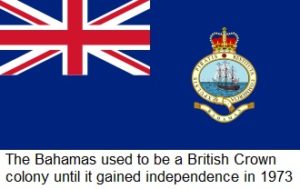
In 1670, King Charles II granted the islands to the Lords Proprietors of the Carolinas in North America. They rented the islands from the king with rights of trading, tax, appointing governors, and administering the country from their base on New Providence.[22][17] Piracy and attacks from hostile foreign powers were a constant threat. In 1684, Spanish corsair Juan de Alcon raided the capital Charles Town (later renamed Nassau),[23] and in 1703, a joint Franco-Spanish expedition briefly occupied Nassau during the War of the Spanish Succession.[24][25]
Appendix B – Bahama Islands History; Arrival of the English


In 1670, King Charles II granted the islands to the Lords Proprietors of the Carolinas in North America. They rented the islands from the king with rights of trading, tax, appointing governors, and administering the country from their base on New Providence.[22][17] Piracy and attacks from hostile foreign powers were a constant threat. In 1684, Spanish corsair Juan de Alcon raided the capital Charles Town (later renamed Nassau),[23] and in 1703, a joint Franco-Spanish expedition briefly occupied Nassau during the War of the Spanish Succession.[24][25]
18th century
During proprietary rule, The Bahamas became a haven for pirates, including Blackbeard (circa 1680–1718).[26] To put an end to the ‘Pirates’ republic‘ and restore orderly government, Great Britain made The Bahamas a crown colony in 1718 under the royal governorship of Woodes Rogers.[17] After a difficult struggle, he succeeded in suppressing piracy.[27]

Source: Retrieved May 23, 2020 from https://en.wikipedia.org/wiki/The_Bahamas#Arrival_of_the_English

Share this post:
, , ,

Better Than … the ‘Bill of Rights’ – Seventh & Eighth Amendments

Go Lean Commentary

We presented a thesis, that despite the public branding of America being the “Greatest” country, we can do better in a new Caribbean. We presented the argument that the American Bill of Rights may not be the masterpiece as people want to believe:

  • It’s First Amendment does not allow for mitigation of the Fake News phenomenon;
  • the Second Amendment does not allow for common sense gun control;
  • the Fourth & Fifth Amendments allows for so many exclusions that they undermine any quest for justice.

Now we make the assessments on the Seventh and Eighth Amendments of the US Constitution. These provide the legal premise of …

Seventh Amendment – Guarantees jury trials in federal civil cases
Eighth Amendment – Restricts against excessive bail and cruel-and-unusual punishments

Surely, these constitutional provisions allow the United States to be a more Perfect Union? Undeniably, No! In fact, these constitutional mandates have resulted in a more unequaled society. As we examine the actuality of America’s criminal justice system, we concur with the critics and scholars, that the legal deficiencies are acute; see these headlines here:

“Increasingly, bail has become a way to lock up the poor regardless to guilt” – VIDEO below.

“War against Poor people” – Criticism of America in previous VIDEO.

These headlines are true because of the painful reality that there are two standards of justice in America:

One for poor people and one for rich people. – See the previous blog-commentaries in Appendix A below.

What is worse: there’s nothing “we” can do about it, as Caribbean people. There is little that American can do about it either. This is the continuation – 5 of 6 – of the November 2019 series from the movement behind the book Go Lean…Caribbean. This series supports the thesis that we, in the Caribbean, can be Better Than America, in words (law) and in action. As related in a previous submission, the American Bill of Rights was designed to be embedded in the country’s legal foundation in such a way so as to prevent subsequent majorities from violating the rights of minorities. This sounds “good on paper”, but it made it near-impossible to change the Constitution. So when deficiencies emerge just through societal evolution, the country’s criminal justice laws have not kept pace; now there is a blatantly unequal, unjust system of law-and-order.

This introduction allows us to define these subsets of the Bill of Rights, the Seventh and Eighth Amendments of the US Constitution, as follows:

Seventh Amendment to the United States Constitution

  • In suits at common law, where the value in controversy shall exceed twenty dollars, the right of trial by jury shall be preserved, and no fact tried by a jury, shall be otherwise re-examined in any court of the United States, than according to the rules of the common law.[93]

The Seventh Amendment guarantees jury trials in federal civil cases that deal with claims of more than twenty dollars. It also prohibits judges from overruling findings of fact by juries in federal civil trials.

Eighth Amendment to the United States Constitution

  • Excessive bail shall not be required, nor excessive fines imposed, nor cruel and unusual punishments inflicted.[93]

The Eighth Amendment forbids the imposition of excessive bails or fines, though it leaves the term “excessive” open to interpretation.[112] The most frequently litigated clause of the amendment is the last, which forbids cruel and unusual punishment.[113][114] This clause was only occasionally applied by the Supreme Court prior to the 1970s, generally in cases dealing with means of execution. In Furman v. Georgia (1972), some members of the Court found capital punishment itself in violation of the amendment, arguing that the clause could reflect “evolving standards of decency” as public opinion changed; others found certain practices in capital trials to be unacceptably arbitrary, resulting in a majority decision that effectively halted executions in the United States for several years.[115] Executions resumed following Gregg v. Georgia (1976), which found capital punishment to be constitutional if the jury was directed by concrete sentencing guidelines.[115] The Court has also found that some poor prison conditions constitute cruel and unusual punishment, as in Estelle v. Gamble (1976) and Brown v. Plata (2011).[113]
Source: Retrieved November 26, 2019 from https://en.wikipedia.org/wiki/United_States_Bill_of_Rights

Note: Rich people are able to hire jury consultants to “stack the deck” in their favor to ensure victory. It’s an art and a science! (See more on this subject here: https://en.wikipedia.org/wiki/Trial_consulting).

The US currently boast a criminal justice system with Cash Bail that imperils the poor. So when a suspect is accused of a crime and does not have the money for bail, they have to stay in jail until their trial. Since they are detained, this actuality is in fact a “cruel and unusual” punishment; especially when they have been innocent all the while. Many times the offences are small and the amount of time away from their normal routines (jobs and family obligations) disrupt their lives severely. See how this has been depicted in this embedded VIDEO here:

VIDEO – Bail: Last Week Tonight with John Oliver (HBO) – https://youtu.be/IS5mwymTIJU

LastWeekTonight
Published Jun 7, 2015 – John Oliver explains why America’s bail system is better for the Reality TV industry than it is for the justice system.

Connect with Last Week Tonight online…

Subscribe to the Last Week Tonight YouTube channel for more almost news as it almost happens: www.youtube.com/user/LastWeekTonight

Find Last Week Tonight on Facebook like your mom would: http://Facebook.com/LastWeekTonight

Follow us on Twitter for news about jokes and jokes about news: http://Twitter.com/LastWeekTonight

Visit our official site for all that other stuff at once: http://www.hbo.com/lastweektonight

Despite the humorous portrayals, this is no laughing matter. Many lives are ruined because of the injustice of the Cash Bail system. America is punishing poor people for being … poor.

This is not our conclusion alone.

There are advocates that are trying to reform and transform this broken eco-system. Kudos to them. There are also organizations that are trying to help the most vulnerable of the victims of this legal dysfunction. These “Do Gooders” should be recognized, honored, promoted and emulated. See the news story of one such group in Atlanta, Georgia in Appendix B below.

(Click here to read the full article).

We too can do good and do better in our Caribbean homeland; we have no Bill of Rights impeding our need for progress. We have always maintained that we can more easily reform our homeland than to fix American society. We have no excuse not to change and improve our communities.

This is the quest of the Go Lean movement to reform and transform Caribbean society. The revelation of the ugly details of American jurisprudence is the purpose of this November 2019 blog series. The full catalog of this series on the Bill of Rights is detailed as follows:

  1. Better than the Bill of Rights: First Amendment – We can do better
  2. Better than the Bill of RightsSecond Amendment – No slavery legacy
  3. Better than the Bill of RightsThird  & Fourth Amendments – Remember, Justice First
  4. Better than the Bill of RightsFifth & Sixth Amendments
  5. Better than the Bill of Rights: Seventh & Eighth Amendments
  6. Better than the Bill of Rights: Ninth & Tenth Amendments

As this series refers to the need for a comprehensive roadmap for elevating the societal engines – economics, security and governance – of the 30 Caribbean member-states, this entry focuses more on the need for a roadmap to help poor people in our Caribbean society. While poverty must not be criminalized, we must also not be satisfied to just stop on criminal justice issues; we must make strenuous effort to forge a society where poverty can be mitigated and its “captors liberated”. Our goal is for the Caribbean homeland to be a place where people can prosper where they are planted. If we fail on the prospering side, then people will be inclined to just abandon their homeland. (This is a Push and a Pull issue).

Oops too late!

We already have an atrocious societal abandonment rate – some reports reflect 70 percent of the professional classes have already left from the independent countries. It is even worse still in dependent territories – 50 percent of everyone!

The Go Lean book provides 370 pages of roadmap posits that economic optimizations must be coupled with security provisions; we cannot have one without the other. This is a Big Idea for the Caribbean to reform and transform its economic and security engines; this requires adopting new community ethos (attitudes and values), plus the executions of new strategies, tactics, implementations and advocacies to empower poor people to elevate their circumstances. In the end, the goal is to find success in the journey to Middle Class. This is the actual title of one advocacy in the Go Lean book. Consider the specific plans, excerpts and headlines here from Page 222, entitled:

10 Battles in the War on Poverty

1 Lean-in for the Caribbean Single Market Confederation Treaty
This regional re-boot will allow for the unification of the region into one market, thereby creating a single economy of 30 member-states, 42 million people and a GDP of over $800 Billion. Following the model of the European Union, the CU will seek to streamline economic engines so as to increase jobs, standards of living and opportunities – increasing GDP. The CU will work to make the Caribbean a better place to live, work and play for all socio-economic classes.
2 Minimize Political Bureaucracy
3 Welfare versus “Work-fare”

Many economists have argued that the US “War Against Poverty” – Welfare first – policies, actually had a negative impact on the economy because of their interventionist nature. This school of thought is that the best way to fight poverty is not through government spending but through economic growth, thus “Work-fare” is a better solution. In 1996 the US implemented a Welfare-to-Work program that had almost immediate results – welfare and poverty rates both declined during the late-1990s, leading many commentators to declare that the legislation was a success. The CU takes a similar stance: lead with jobs!

4 Entrepreneurial Values
5 Repatriation of Time, Talent and Treasuries
6 Family Planning

Third World countries usually have higher birth rates than Developed countries. While not discouraging individual rights, the CU will facilitate better education, women’s health resources and access to prenatal healthcare.

7 Education Goals in Balance
8 Proactive about Healthcare Realities
9 Aging Population

The CU will facilitate for the Caribbean Region to be the world’s best address for senior citizens. This will send the invitation to retirees (Caribbean Diaspora and foreign) to welcome their participation and contributions to CU society. The increase in the pool of participants and beneficiaries will extended added benefits to domestic seniors.

10 Raise Retirement Age

Yes, we can do better in the Caribbean homeland. We are hereby determined and committed to battling poverty in the 30 member-states. The Go Lean roadmap presents the strategies, tactics, implementations and advocacies to do “whatever it takes” to lower the Push and Pull factors that cause people to abandon their communities. It is conceivable, believable and achievable to succeed.

Competing with America is not an option; the very continuation of our Caribbean culture depends on our ability to compete better. Lowering Push and Pull factors, at times, involve just messaging the people on the truth of the American experience.

So yes, we can be Better Than America; we can do better than the Bill of Rights (with its concern for tyranny). We can be more just, and more equal in our public safety mechanisms and the dispensation of justice; and do it without allowing tyranny. We urge all Caribbean stakeholders – citizens and government leaders alike – to lean-in to this roadmap to make our homeland a better place to live, work and play.  🙂

About the Book
The book Go Lean…Caribbean serves as a roadmap for the introduction and implementation of the technocratic Caribbean Union Trade Federation (CU), for the elevation of Caribbean society – for all member-states. This CU/Go Lean roadmap has these 3 prime directives:

  • Optimization of the economic engines in order to grow the regional economy to $800 Billion & create 2.2 million new jobs.
  • Establishment of a security apparatus to ensure public safety and protect the resultant economic engines.
  • Improve Caribbean governance to support these engines, including a separation-of-powers between the member-states and CU federal agencies.

The Go Lean book provides 370-pages of turn-by-turn instructions on “how” to adopt new community ethos, plus the strategies, tactics, implementations and advocacies to execute so as to reboot, reform and transform the societal engines of Caribbean society.

Download the free e-Book of Go Lean … Caribbean – now!

Who We Are
The movement behind the Go Lean book – a non-partisan, apolitical, religiously-neutral Community Development Foundation chartered for the purpose of empowering and re-booting economic engines – stresses that reforming and transforming the Caribbean societal engines must be a regional pursuit. This was an early motivation for the roadmap, as pronounced in the opening Declaration of Interdependence (Pages 12 – 13):

xi. Whereas all men are entitled to the benefits of good governance in a free society, “new guards” must be enacted to dissuade the emergence of incompetence, corruption, nepotism and cronyism at the peril of the people’s best interest. The Federation must guarantee the executions of a social contract between government and the governed.

xvi. Whereas security of our homeland is inextricably linked to prosperity of the homeland, the economic and security interest of the region needs to be aligned under the same governance. Since economic crimes … can imperil the functioning of the wheels of commerce for all the citizenry, the ccidence of this Federation must equip the security apparatus with the tools and techniques for predictive and proactive interdictions.

xxiv. Whereas a free market economy can be induced and spurred for continuous progress, the Federation must install the controls to better manage aspects of the economy: jobs, inflation, savings rate, investments and other economic principles. Thereby attracting direct foreign investment because of the stability and vibrancy of our economy.

Sign the petition to lean-in for this roadmap for the Caribbean Union Trade Federation.

—————–

Appendix A – Observing and Reporting on America’s Criminal Injustice

There have been a number of blog-commentaries by the Go Lean movement over the years that highlighted the inequality in the American Justice System – clearly “justice is blind, deaf and dumb”, as  there is a Great Divide in this country for Black vs White and Rich vs Poor. See a sample list here of those previous submissions:

https://goleancaribbean.com/blog/?p=18421 Introducing Formal Reconciliations: Forging Justice After the Fact
https://goleancaribbean.com/blog/?p=18321 Unequal Justice: Lessons from the American Sheriffs Eco-System
https://goleancaribbean.com/blog/?p=18100 Cop-on-Black Shootings in America’s DNA/Slavery Legacy
https://goleancaribbean.com/blog/?p=17667 Is the US a ‘Just’ Society? Hardly! – Notice how the Rich is treated
https://goleancaribbean.com/blog/?p=17267 Lessons learned for Justice: The need for Special Prosecutors
https://goleancaribbean.com/blog/?p=16668 Justice and Economics – Both needed to forge change
https://goleancaribbean.com/blog/?p=14413 Learning from the History of Lynching: ‘Hurt People Hurt People’
https://goleancaribbean.com/blog/?p=14087 Pharma Injustice: Opioids & the FDA – ‘Fox guarding the Henhouse’
https://goleancaribbean.com/blog/?p=13826 Taking from the Poor to Give to the Rich
https://goleancaribbean.com/blog/?p=13664 High Profile Sexual Harassment Accusers – Hard to get Justice
https://goleancaribbean.com/blog/?p=13081 America’s Race Relations – Spot-on for Protest
https://goleancaribbean.com/blog/?p=10654 Immigration Realities in the US – Better to Stay Home
https://goleancaribbean.com/blog/?p=10532 Learning from Good and Bad Stereotypes: Japanese Internments
https://goleancaribbean.com/blog/?p=5527 American Defects: Racism – Is It Over?
https://goleancaribbean.com/blog/?p=5238 Prisoners for Profit – Mostly Black-and-Brown Victimized
https://goleancaribbean.com/blog/?p=8724 US versus Marcus Garvey: An Obvious Case of Racial Injustice
https://goleancaribbean.com/blog/?p=1143 Easy on White Collar Crimes & Health-care Fraud = $272 Billion/year
https://goleancaribbean.com/blog/?p=546 Book Review: ‘The Divide’ – American Injustice … Age of Wealth Gap

—————–

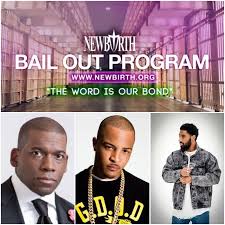
Appendix B – New Birth bails nonviolent offenders out of jail for fresh start
By: Shelia Poole, The Atlanta Journal-Constitution

New Birth Missionary Baptist Church has raised $120,000 to provide bail for first-time, nonviolent offenders in four Georgia counties.

The “Bail Out” program was designed to give men and women a second chance, beginning Easter weekend. [Pastor Jamal] Bryant will share details of the initiative during a press conference at 2 p.m. Saturday at New Birth Missionary Baptist Church, 6400 Woodrow Rd. in Stonecrest.

He is expected to joined by rapper and actor Clifford “T.I.” Harris, VH1’s “Love & Hip Hop” personality Scrapp DeLeon and representatives from local sheriffs’ offices.

The program targets DeKalb, Fulton, Gwinnett and Rockdale counties. It will also help with job readiness.

It began as a $40,000 local challenge within the New Birth congregation and quickly grew to $120,000 and a larger metro movement.

“I looked at what was happening in the prison pipeline and realized that the church voice had been muted on the issue of prison reform,” said Bryant, the megachurch’s senior pastor.  “I realized that we needed to be part of what was taking place.”

And what better time, he noted, than during the observance of Easter, when Christians celebrates the resurrection of Jesus Christ which some churches refer to as “Resurrection Sunday.”
Source:  Posted April 19, 2019; retrieved November 26, 2019 from: https://www.ajc.com/lifestyles/pastor-jamal-bryant-scrapp-deleon-join-forces-help-nonviolent-offenders-get-new-start/0R1JARRBpUSBhW1nBMe1pN/

Share this post:
, , , , ,
[Top]

Refuse to Lose – Direct Foreign Investors ‘Wind-Downs’

Go Lean Commentary

Give and Take …

It is hard to get one without the other. Everything of value has a cost associated with it. That cost may be paid in time, talent or treasury. There is nothing for free.

So for you Caribbean people, who want Direct Foreign Investors, here’s a BIG question: Are you willing to pay the price?

Investors will give …
They will want to take as well.

Not all investors will get their return; not all investments work; not all “bets” win.

Some will actually lose!

How do we Refuse to Lose and yet technocratically manage unsuccessful business endeavors?

It’s call a “Wind Down”:

Definition of wind down – per Merriam-Webster

intransitive verb:
1: to draw gradually toward an end; i.e. the party was winding down
2: RELAXUNWIND wind down with a good book

transitive verb:
to cause a gradual lessening of usually with the intention of bringing to an end

There is an Art and Science to this process; its called “Fail Fast“. Yes, we can adopt the community ethos to Refuse to Lose a commitment by a group or society to the values of quality, success and winning – yet still judiciously manage failures, non-success and bankruptcies.

See this related in the AUDIO-Podcast here:
AUDIO-Podcast – When Failure Is A 4-Letter Word – https://www.npr.org/2019/07/05/738963753/when-failure-is-a-four-letter-word

Posted July 10, 2019 – Silicon Valley gurus tell you to “Fail Fast.” But what if you live in a place where the shame of failure is so strong, and the barriers to success so steep, that the “Failure-Is-Good” advice feels dangerous?

Today, we hear from entrepreneurs around the world who are rewriting the failure mantra to fit the places they live. In the process, they’re changing how their society judges winners and losers.

In summary, Failing Fast (or Failing Forward) allows for quality, success, and winning to come faster. Think “1 step backwards, 2 steps forward”. This is an important consideration for a new Caribbean, where Return of Investment is a priority. See this excerpt from the book Go Lean…Caribbean, (Page 24), a roadmap for the Caribbean Union Trade Federation (CU):

Return on Investments (ROI)
While the CU must govern to meet the current needs of it stakeholders, there must always be a future focus. A lot of CU initiatives must be embarked on for the future return of present investments. This also applies to basic services like education. For the region, fields of study in the class room should reflect not just the realities in the current job market, but also where the job market is moving to. So while there may be no need to teach typing and shorthand, there is abundant need to teach computer programming, web site design and “mobile app” development.

Can the community expect a reasonable return on such educational investments? Absolutely. But only if the graduates remain in the region. Therefore the community ethos must be to embed incentives and inducements to dissuade emigration; as in forgive-able student loans, on-the-job training employment contracts, paid apprenticeships, etc. This ethos also translates into governing principles for federally sponsored business incubators, R&D initiatives, entrepreneurship programs and the regional implementation of Self-Governing Entities (SGE).

This commentary completes the series on the Refuse to Lose ethos; this is Part 6-of-6. The full series is cataloged as follows:

  1. Refuse to Lose: Lesson from Sports
  2. Refuse to Lose: Remediating ‘Columbus Day’
  3. Refuse to Lose: Introducing Formal Reconciliations
  4. Refuse to Lose: Despite American Expansionism
  5. Refuse to Lose: Canada’s Model of Ascent
  6. Refuse to Lose: Direct Foreign Investors Wind-Downs

It is the assertion of this series of commentaries that the Caribbean can win, despite occasional mis-steps or investments with no returns. Yes, we can “Refuse to Lose” despite bankruptcy. We can facilitate technocratic wind-downs.

The Go Lean book presents a full eco-system for “winding-down” failed business endeavors. It detailed a Bankruptcy process for the Caribbean region, where this scope would be the exclusive jurisdiction of the CU Courts. (This is where ‘give and take’ is so important – if you want all the benefits that the Go Lean roadmap brings, you have to give up the responsibility of this vital area. This means ceding to the authority of the CU over the sovereignty of the member-state). See this excerpt from the book (Page 33) here:

10 Ways to Impact Turn-Arounds – #2: Bankruptcy Processing
Upon acceding this treaty, all bankruptcy processing in the region will be assimilated under the CU Federal Courts – applying to individuals, companies and even municipalities – thereby bringing protection to plaintiffs, but also balance and fairness to creditors. (Bankruptcy’s “turn-around” motives would therefore “trump” any preservationist objectives). To apply lessons learned in Detroit in 2008, the CU will apply strategies similar to the federal “managed bankruptcy” for GM/Chrysler to ensure a turn-around of the automotive industry and locales.

Among the 370-pages of the Go Lean book are the turn-by-turn instructions on “how” … to adopt the new community ethos for “Return on Investment”. All investments will not produce a return, we therefore want to Fail Fast, so that we can go back to winning. This means the regional bankruptcy process must also be restructured within this regional economic and governmental reboot. The book presents the strategies, tactics, implementations and advocacies to execute so as to facilitate Caribbean bankruptcies. See this sample of direct Bankruptcy (or “wind-downs”) references in the book:

Page 114 10 Ways to Better Manage Debt – #5: CU Federal Bankruptcies
When debt become too excessive and can no longer be managed by the debtor, the usual solution is bankruptcy. Most advanced economies even allow for governmental entities to avail this privilege. The CU treaty will grant this oversight (and receivership) to CU federal courts, with a mandate to lean towards reorganization, rather than outright dismissal of legitimate debt, though all creditors may have to take a “hair-cut” (minor loss). The courts will appoint direct receivership to Trustees to facilitate the processing of the bankruptcy obligations for municipalities, companies and individuals.
Page 114 10 Ways to Better Manage Debt – #5: Credit Reporting – Sharpening the Tool
With the threat of loss due to a heavy debt induced bankruptcy, there is the need to monitor and assess the collectability of potential and current debtors. This justifies the need for regional credit reporting systems, for individual and institutions. In order to facilitate a win-win from the interest economy, lenders/investors need to know of risks associated with debt.
Page 116 10 Ways to Impact Elections – #5: Campaign Accounting, Debt and Bankruptcy Processing
The CU system will designated each campaign as an incorporated public entity, requiring quarterly reports-disclosures, official payroll and financial accountability. Candidates/campaigns and vendors can even seek bankruptcy protection.
Page 136 10 Lessons Learned from 2008 – #8: Leverage – Common Sense Restraints
Banking risk is managed by controlling leverage, the magnifying factor compared to equity that borrowing money allows for a bank. Banking regulations best practices keeps leverage amount near 12-to-1. In 2008, Lehman Brothers leverage rate was pegged at 31-to-1; the more they borrowed the less capital equity they featured, so profits, and losses, were magnified. The mortgage crisis led to Lehman Brothers massive losses, then bankruptcy; the US largest at $691 Billion.
Page 136 10 Lessons from Detroit – #2: Michigan Take-over
In March 2013, the Governor declared the city insolvent and appointed an Emergency Manager. By July, the city declared bankruptcy. The city had a $327 million deficit, faced more than $14 billion in long term debt and was making ends meet on a daily basis with the help of bond money held in a State escrow account. Austerity and truncated city services ensued; Detroit was a failed city! The CU will apply the lesson by managing Failed-States crises and emergency response for disasters.
Page 136 10 Lessons from Detroit – #3: GM / Chrysler 2008 Bankruptcy
The Great Recession of 2008, plummeted auto sales, access to credit evaporated and the Detroit Three approached insolvency. Declines in Detroit Three production result in losses in US employment, income, and government revenues. To mitigate, the US Federal government coordinated a “managed bankruptcy” for GM and Chrysler; (Ford limped with-out one). The CU treaty allows for the regulation of bankruptcy at the federal level to ensure justice in re-organizations.
Page 136 10 Lessons from Detroit – #4: TARP Bail-out
The “managed” descriptor for the GM/Chrysler bankruptcy entailed $79.7 billion in loans and capital injections (bail-out) from the Toxic Assets Relief Plan (TARP) of October 2008. GM/Chrysler was able to short-pay many creditors, protect pensions and “start anew”. GM re-incorporated and made an IPO of stock in 2010. For the fiscal year of 2010, GM reported profits, interpreted by many Analysts as an industry rebound and an economic recovery for the Detroit
Page 155 10 Ways to Improve Credit Ratings – #8: Bankruptcy
The CU will manage bankruptcies (dissolution and reorganization) for individuals, companies and municipalities. Overseeing this process at the federal level will bring balance and fairness to the creditors and avoid abuse by debtors.
Page 160 10 Ways to Impact Student Loans – #5: Non-Dischargeable with Bankruptcy
The CU will assume jurisdiction over the region’s bankruptcy (BK) process for individuals, and institutions. To guarantee student loan collections, they will be exempted from discharging student loans in the BK process. This strategy guarantees that loans will be collected …eventually. This guarantee lowers the cost/risk for the capital needed for loans.
Page 168 10 Ways to Improve Governance – #8: Economic Crimes and Bankruptcy Jurisdiction
CU agencies will assume jurisdiction for economic crimes; those can have a systemic threat on the region’s financial institutions and economic engines; these includes bank & mail fraud, securities fraud, constitutional-judicial-officers offenses (public integrity), kidnapping, enterprise corruption/RECO, and cyber-crimes. All bankruptcies, individual, companies and municipalities will be litigated at the federal level, so as to assuage abuse and colloquialism.
Page 199 10 Reforms for Banking Regulations – #10: Bankruptcy Reform
The CU will manage bankruptcy for individual, companies and municipalities. This will bring balance and fairness to the creditors and avoid abuse by debtors on student loans, mortgages and other consumer, corporate & institutional debt.
Page 218 10 Ways to Preserve Caribbean Heritage – #9: Turn-around Strategies
While “turn-arounds”, as in the case of Bankruptcies, pursue the economic obligations more so than preservation objectives, the CU, with BK processing at the federal level, will intercede so as to apply a “managed bankruptcy” approach whenever preservation is an issue. This is a lesson learned from the Detroit Auto Makers’ filing in 2008.

The subject of Bankruptcy processing has been addressed in many previous commentaries; consider this sample list here:

https://goleancaribbean.com/blog/?p=17373 Marshall Plan – A Wind-Down/Turn-Around for Haiti
https://goleancaribbean.com/blog/?p=17371 Marshall Plan – A Wind-Down/Turn-Around for Cuba
https://goleancaribbean.com/blog/?p=17379 Marshall Plan – A Wind-Down/Turn-Around for Puerto Rico
https://goleancaribbean.com/blog/?p=16668 Justice and Economics – Reformed Bankruptcies can forge change
https://goleancaribbean.com/blog/?p=16522 Reconciling the IMF’s Past, Present & Future for Sovereign Reboots
https://goleancaribbean.com/blog/?p=15965 Retail Apocalypse and Sears Bankruptcy; Another One Bites the Dust
https://goleancaribbean.com/blog/?p=15796 Lessons Learned from 2008: Righting The Wrong in Housing Industry
https://goleancaribbean.com/blog/?p=15787 Lessons Learned from 2008: Too Big to Fail –vs- Too Small to Thrive
https://goleancaribbean.com/blog/?p=11647 Righting a Wrong: Puerto Rico’s Bankruptcy
https://goleancaribbean.com/blog/?p=3311 Detroit’s Exit from their Historic Bankruptcy

Refusing to Lose and bankruptcies …

… it is amazing how these two subjects align together.

For those with a Judeo-Christian background, the emphasis on repentance and redemption should be familiar:

“a saint is just a sinner who fell down and get back up” – Song “We Fall Down” by Gospel Great Donnie McClurkin

Yes, the old concept of “falling down and getting right back up” is just the new concept of Failing Fast.

The more things change … the more they remain the same.

Winning and Refusing to Lose will help the Caribbean to be a better homeland to live, work and play. But, all efforts will not be successful, and that’s OK. We do not undermine our Refuse to Lose ethos if we Fail Fast and turn-around to adapt to the resultant lessons-learned and analyzed best practices.

This is the nature of a technocracy.

The term technocracy was originally used to designate the application of the scientific method to solving social & economic problems, in counter distinction to the traditional political or philosophic approaches. – Go Lean book Page 64.

The culture of winning and  Refusing to Lose is viable for the new Caribbean. This is conceivable, believable and achievable. Let’s get busy!  🙂

About the Book
The book Go Lean…Caribbean serves as a roadmap for the introduction and implementation of the technocratic Caribbean Union Trade Federation (CU), for the elevation of Caribbean society – for all member-states. This CU/Go Lean roadmap has these 3 prime directives:

  • Optimization of the economic engines in order to grow the regional economy to $800 Billion and create 2.2 million new jobs.
  • Establishment of a security apparatus to ensure public safety and protect the resultant economic engines.
  • Improve Caribbean governance to support these engines, including a separation-of-powers between the member-states and CU federal agencies.

The Go Lean book provides 370-pages of turn-by-turn instructions on “how” to adopt new community ethos, plus the strategies, tactics, implementations and advocacies to execute so as to reboot, reform and transform the societal engines of Caribbean society.

Download the free e-Book of Go Lean … Caribbean – now!

Who We Are
The movement behind the Go Lean book – a non-partisan, apolitical, religiously-neutral Community Development Foundation chartered for the purpose of empowering and re-booting economic engines – stresses that reforming and transforming the Caribbean societal engines must be a regional pursuit. This was an early motivation for the roadmap, as pronounced in the opening Declaration of Interdependence (Pages 12 – 13):

xi. Whereas all men are entitled to the benefits of good governance in a free society, “new guards” must be enacted to dissuade the emergence of incompetence, corruption, nepotism and cronyism at the peril of the people’s best interest. The Federation must guarantee the executions of a social contract between government and the governed.

xvi. Whereas security of our homeland is inextricably linked to prosperity of the homeland, the economic and security interest of the region needs to be aligned under the same governance. Since economic crimes … can imperil the functioning of the wheels of commerce for all the citizenry, the accedence of this Federation must equip the security apparatus with the tools and techniques for predictive and proactive interdictions.

xxiv.  Whereas a free market economy can be induced and spurred for continuous progress, the Federation must install the controls to better manage aspects of the economy: jobs, inflation, savings rate, investments and other economic principles. Thereby attracting direct foreign investment because of the stability and vibrancy of our economy.

Sign the petition to lean-in for this roadmap for the Caribbean Union Trade Federation.

Share this post:
, ,
[Top]

Refuse to Lose – Introducing Formal Reconciliations

Go Lean Commentary

So far this series on Refuse to Lose have established – (according to the previous blog-commentary):

“The practice of U.S. cities eschewing Columbus Day – because of the bad history associated with the Spanish Explorer’s atrocities – to celebrate Indigenous Peoples’ Day began in 1992 …”

See what we did there?

We warmed you up to the idea that “All Lives Matter, Yes, but oppressed groups need to be recognized and commiserated for the hurt that they have endured”.

And you bought it – “hook, line and sinker”.

We just accomplished an informal reconciliation. Now, it is time to pursue a formal reconciliation. (We have Indigenous People and oppressed people in the Caribbean too).

This is a mission of the roadmap embedded in the 2013 book Go Lean…Caribbean. The book introduces the strategy of impaneling Truth and Reconciliation Commissions (TRC) to address age-old (and modern) grievances.

This is part of the new attitude – community ethos – about winning-and-losing . The historicity of the Caribbean is that some demographics won – European Imperialists and loyalists – while others lost.

The human psyche is consistent; when we have been victimized, we want everyone to remember. But, when we have been the perpetrator – the bully – then we want everyone to forget. This applies to individuals and nations alike. – previous Go Lean commentary. 

To make progress in society, there must be a new attitude now. one is for the Greater Good; we want most people to win and few to lose. We want a …

Refusal to lose

That previous blog-commentary defined this community ethos as a commitment by a group or society to the values of quality, success and winning.

This commentary is a continuation of this series on the Refuse to Lose ethos; this is Part 3-of-6. The full series is cataloged as follows:

  1. Refuse to Lose: Lesson from Sports
  2. Refuse to Lose: Remediating ‘Columbus Day’
  3. Refuse to Lose: Introducing Formal Reconciliations
  4. Refuse to Lose: Despite American Expansionism
  5. Refuse to Lose: Canada’s Model of Ascent
  6. Refuse to Lose: Direct Foreign Investors Wind-Downs

This is not the first time this commentary have addressed ‘reconciliations’. These points have been detailed in many previous  Go Lean commentaries; see here:

European Reckoning – Christianity’s Indictment
The Church failed in its job to be the moral compass for the many European empires that have wielded absolute power on the planet. The bad result has been Slave Trade & Slavery, Colonialism and World Wars. These atrocities yielded millions and maybe even billions of victims. ‘White’ is NOT right. There is the need to reconcile that.
A Lesson in History: Jonestown, Guyana
40 years ago – 1978 – a religious atrocity transpired on Caribbean soil; this was the mass-murder/suicides in Jonestown, Guyana of almost 1000 people. Where were the societal stakeholders in this crisis, those charged with the duty to serve and protect. What have we learned? What reforms, if any, have we enacted?
Colonialism’s Bloody History Revisited
There has been a bloody history, tied to European and American colonialism. We must learn from this history; there must be a strenuous effort to dissuade societal defects and orthodoxy. Truth of the matter, colonialism is not dead with 18 Overseas Territories in Caribbean.
‘Loose Lips Sink Ships’ – Leaders Undermine Tourism
Political and religious leaders in Caribbean communities are projecting “a Climate of Hate” towards certain minority groups. This is so bad that it undermines the tourism products and community economics. Reconciling the pasts allows for better economics in the future.
Waging a Successful War on Orthodoxy
It takes a real battle to undo the standards and orthodoxy – many of them religious and colonial – introduced and implemented in society. Some good have come from these practices … and some bad. There needs to be a formal reconciliation of the Good, Bad and the Ugly.
Rwanda’s Catholic bishops apologize for genocide
The Church was not a force for moral good in modern society … in Africa or the Caribbean. The Bishops in Rwanda owned up and apologized for their complicity in their 1990’s genocide. This is an attempt to reconcile the failings of the past.
Repenting, Forgiving and Reconciling the Past
Christendom has a sullied past! For example, the historicity of the Spanish Inquisition is inexcusable. Yet there was a town in Spain that continued with the name “Castrillo Matajudios” — which means “Camp Kill Jews”, which they did. How was this community repent, forgive and reconcile from such a bad legacy? For one, change the name. The town has reverted back to its original name “Castrillo Mota de Judios” (“Jews’ Hill Camp”). This proves that reconciliation is more than just mental acknowledgement; many times heavy-lifting ust also be expended.
In Search Of The Red Cross’ $500 Million In Haiti Relief
The Red Cross is a Disaster Management organization; they abused their power by collecting $500 Million for Haiti’s Earthquake Relief/Recovery and misappropriating the funds. Where did the money go? Can we finally get an answer?

The Caribbean member-states need societal progress; so we must adopt new attitudes that shows that we recognize that old attitudes were bad. This is how we pursue the Greater Good. We want a Refusal to Lose, a Win-Win; we want most people to win and few to lose.

Whew! This is heavy, just thinking about it. How do we get started?

This Go Lean roadmap describes the Way Forward, the heavy-lifting for elevating Caribbean society in the future and to reconcile their past failings. Among the 370-pages of the Go Lean book are the turn-by-turn instructions on “how” to adopt the new community ethos of reconciliation. Consider the headlines, summaries and excerpts here on how the region can better Manage Reconciliations in the Caribbean eco-system, in the domestic homeland and in the Diaspora (Page 34):

10 Ways to Manage Reconciliations

1 Lean-in for the Caribbean Union Trade Federation (CU)
This treaty allows for the unification of the region into one market, expanding to an economy of 30 member-states of 42 million people. This accedence creates a “new” land of opportunity, so after so many decades of abandonment, the CU will “flash the signs” of “Welcome Home” to its far-flung Diaspora. But “old parties” returning can also open “old wounds” therefore it is a mission of the CU to facilitate reconciliations, much like the model in South Africa, so as to assuage these Failed-State indicators/threats: a). “Revenge seeking” groups and b). Group Grievances
2 TRC – Cuba
Cuba, the largest island in the Caribbean, had an armed revolution, conducted by leader Fidel Castro, that started in July 1953 and finally ended with the ouster of dictator Fulgencio Batista on 1 January 1959. Castro revolutionary government later reformed along communist lines, leading to a vast exodus in the subsequent years since. The Cuban Diaspora is estimated to amount to over 1.5 million people and $1.5 Billion in annual remittances to the island.

A goal of the CU is to invite many of the Cuban Diaspora and exiles back to the island. (Many of whom settled nearby in Miami and want to return). After the Castro Brothers, there will be the expectation of reparation and reconciliation. So the CU will convene a Truth & Reconciliation Commission to bring resolution to many issues from the revolution, socialist nationalization, previous coup attempts and the Batista dictatorship. There may be the expectation of reparations.

3 TRC Haiti and Neighbors
Haiti has the unique history of declaring independence since the 1790’s and ever since has had to contend with foreign invaders, internal dissension, domestic terrorism and conflict with its neighbor, the Dominican Republic ([see Page 306 for] Appendix TD). The memory and victimization of these contentions are long and has the potential for spontaneous conflict. Haiti has the highest indicators (#7 [see Page 271 for Appendix F]) on the Failed-State Index of any state in the entire region. In addition to the CU providing special status and protections for repatriates, the CU must convene a TRC to bring resolution to the grievances of the past.
4 International Tribunals – War Crimes – Human Rights Watchers
5 Caribbean Court of Justice
6 Government Debt Buybacks
The CU seeks to buyback (pay-off) many of the international debts incurred by the member states. This process, part of a financial reconciliation, will require a detailed forensic audit of the disbursements and accountabilities of monies.
7 International Grants / Loan Forgiveness
8 CU Foreign Policy/Trade Missions
9 International Court Judgments
Some foreign courts have ruled on cases involving Caribbean states, assessing judgments accordingly, (ie Cuba – $6 Billion in US courts). The CU will pursue negotiations for compromised settlements to clear the docket of these cases.
10 Repatriation After Abandonment

These aspirations are not just “pie in the sky”. This was done, successfully in South Africa. We have that model by which to follow. See the Appendix VIDEO below.

So it is conceivable, believable and achievable to think that we can reconcile our bad Caribbean historicity. Yes, while we cannot change the past, we can apply lessons-learned and change the future. We can move forward, upward, onward together …

… and we have some heavy-lifting to do; consider these examples (click on the links for the Way Forward for these issues):

So ‘Yes We Can’ …

Refusing to Lose is a necessary ethos for the Caribbean Way Forward to start winning, after so many centuries of losing. Let’s put the past behind and move forward.

Let’s all lean-in and foster reconciliations, so that we can all Refuse to Lose; this is the right community ethos to elevate our society to be a better homeland to live, work and play.  🙂

About the Book
The book Go Lean…Caribbean serves as a roadmap for the introduction and implementation of the technocratic Caribbean Union Trade Federation (CU), for the elevation of Caribbean society – for all member-states. This CU/Go Lean roadmap has these 3 prime directives:

  • Optimization of the economic engines in order to grow the regional economy to $800 Billion and create 2.2 million new jobs.
  • Establishment of a security apparatus to ensure public safety and protect the resultant economic engines.
  • Improve Caribbean governance to support these engines, including a separation-of-powers between the member-states and CU federal agencies.

The Go Lean book provides 370-pages of turn-by-turn instructions on “how” to adopt new community ethos, plus the strategies, tactics, implementations and advocacies to execute so as to reboot, reform and transform the societal engines of Caribbean society.

Download the free e-Book of Go Lean … Caribbean – now!

Who We Are
The movement behind the Go Lean book – a non-partisan, apolitical, religiously-neutral Community Development Foundation chartered for the purpose of empowering and re-booting economic engines – stresses that reforming and transforming the Caribbean societal engines must be a regional pursuit. This was an early motivation for the roadmap, as pronounced in the opening Declaration of Interdependence (Pages 12 – 13):

xi. Whereas all men are entitled to the benefits of good governance in a free society, “new guards” must be enacted to dissuade the emergence of incompetence, corruption, nepotism and cronyism at the peril of the people’s best interest. The Federation must guarantee the executions of a social contract between government and the governed.

xiii. Whereas the legacy of dissensions in many member-states (for example: Haiti and Cuba) will require a concerted effort to integrate the exile community’s repatriation, the Federation must arrange for Reconciliation Commissions to satiate a demand for justice.

xvi. Whereas security of our homeland is inextricably linked to prosperity of the homeland, the economic and security interest of the region needs to be aligned under the same governance. Since economic crimes … can imperil the functioning of the wheels of commerce for all the citizenry, the accedence of this Federation must equip the security apparatus with the tools and techniques for predictive and proactive interdictions.

xxiv.  Whereas a free market economy can be induced and spurred for continuous progress, the Federation must install the controls to better manage aspects of the economy: jobs, inflation, savings rate, investments and other economic principles. Thereby attracting direct foreign investment because of the stability and vibrancy of our economy.

Sign the petition to lean-in for this roadmap for the Caribbean Union Trade Federation.

—————–

Appendix VIDEO – Truth Justice Memory: South Africa’s Truth and Reconciliation Process [Introduction] – https://youtu.be/W3taLI3moaM

Justice Reconciliation
Posted Apr 4, 2014 – The TRC provided an opportunity for ordinary South Africans to take the centre stage, to share their stories of suffering and sacrifice. How can we, years later, use this legacy in the building of a generation of reconciling South Africans? This “first-of-its-kind” course aims to expose learners to the TRC event in a sensitive but forthright manner. Twelve DVD clips, each about 20 minutes in length, cover a series of important aspects of the TRC’s work. The accompanying teacher’s guide contains twelve corresponding chapters, complete with content summary, key questions, tasks for learners and teachers as well as additional sources.


Share this post:
, ,
[Top]

Is the US a ‘Just’ Society? Hardly! – ENCORE

People want to live in a just society.

So many Caribbean people have fled their ancestral homelands in search of refuge in foreign lands, like the US. If our expatriates are seeking a more just society, then they will be sadly disappointed with the American experience.

Ah, the American legal system! So many courts – County, Circuit, District, Appeals and Supreme – and yet justice is so elusive. One population groups gets too much mercy and one population group gets too much punishment.

Is there any doubt as to which population group gets what treatment? White people get the privilege, while the Black-and-Brown gets the shaft.

These are not just my words alone. Consider these anecdotes.

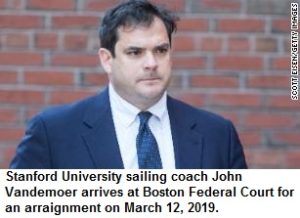
First, we have the sentencing – yesterday June 13, 2019 – of John Vandemoer, the Stanford sailing coach who confessed to racketeering charges in connection with the college entrance scam. He will serve no time in prison. He is White. See the full story here:

Title: Former Stanford sailing coach gets no prison time in the college admissions scam
By:
Mark Morales, CNN
Former Stanford sailing coach John Vandemoer will serve no time in prison in connection with the college entrance scam. He is the first among 50 people charged in connection with the scheme to be sentenced.

Vandemoer was sentenced to two years supervised release and a $10,000 fine. He must spend the first six months of the sentence in home detention with electronic monitoring, Massachusetts Judge Rya Zobel said.

Vandemoer pleaded guilty to conspiracy to commit racketeering for arranging bribes of $110,000 and $160,000 to the sailing program and then designating two applicants, who had no sailing experience, as sailing recruits, according to his criminal complaint.

Neither student completed the application process, university officials said.

The 50 people charged in the scam include coaches, parents, and members of mastermind William Rick Singer‘s inner circle, who were arrested in connection with the scandal in March.

“Mr Vandemoer is probably the least culpable,” Judge Zobel said during sentencing. “They (the others charged) took money for themselves. He did not do that. All the money he took went directly to the sailing program.”

Assistant US Attorney Eric Rosen had recommended a 13-month prison sentence for Vandemoer, arguing that it would help deter others in powerful university positions from similar crimes and that punishment would help restore confidence in the admission system.

“His actions not only deceived and defrauded the university that employed him, but also validated a national cynicism over college admissions by helping wealthy and unscrupulous applicants enjoy an unjust advantage over those who either lack deep pockets or are simply unwilling to cheat to get ahead,” Rosen wrote in a sentencing memorandum filed on June 7.

Vandemoer’s attorney, Robert Fisher, wrote to Judge Zobel in a memorandum on Friday that he should get probation and not a prison sentence, arguing that he didn’t pocket any of the money, didn’t take any money from the university and that this was his only instance of bad judgement.

“Mr. Vandemoer failed in one instance to live up to the high expectations he sets for himself,” Fisher wrote. “He fully accepts responsibility for his mistake. Mr. Vandemoer is determined to make amends for this mistake move on with his life and continue to provide for his family.”

Just two days before Vandemoer’s sentencing, Stanford University officials submitted a victim impact statement which details how Vandemoer, who traded his slots reserved for student-athletes for bribes, has damaged the university.

“Mr. Vandemoer’s actions in this matter are profoundly disappointing and especially so as he had a reputation of caring deeply for his student-athletes,” said Debra Zumwalt, vice president and general counsel for Stanford University in a statement.

The impact statement charged that Vandemoer and Singer not only undermined the public’s trust in the college admissions process, but also cost the university valuable time and money dealing with the fallout from the federal investigation.

Stanford fired Vandemoer the very same day he plead guilty.

“I spent my life trying to be a good, moral person and here, I made a mistake,” Vandemoer said when given a chance to address the court Wednesday.

The former coach apologized to the school, alumni, the sailing team and his family and friends.

“I deserve all of this. I caused it and for that I’m deeply ashamed.”

A third student was identified by the university as having worked with Singer and Vandemoer to get admitted into Stanford, university officials said. That student’s admission was rescinded and their credits were vacated, according to the impact statement.

Stanford officials previously said the Key Worldwide Foundation, Singer’s sham charity, contributed a total of $770,000 to the sailing program in the form of three separate gifts.

That money, Zumwalt said in the statement, was considered tainted, and university officials are working with the California Attorney General to donate that money for the public’s good.

“Stanford does not wish to benefit in any way from Mr. Vandemoer’s conduct,” Zumwalt said.

Twenty-seven letters of support for Vandemoer were sent to Judge Zobel, all pleading for leniency.

“I must say they are an extraordinary group of letters … that speak of the person they love and support,” Judge Zobel said during sentencing. “That is highly unusual in this setting.”

Vandemoer’s wife, Molly Vandemoer, wrote about how the former university sailing coach found a therapist shortly after his firing and is working toward his MBA as a way to put his life back together.

“I know he made a mistake,” Molly wrote. “I know it is extremely costly to his livelihood, to our family, etc. But I know he will never do something like this again.”

Clinton Hayes, once Vandemoer’s top assistant, became the interim head of the sailing team after the coach was fired by the university. Hayes wrote about how Vandemoer put student athletes first, letting them skip out on sailing meets for valuable internships or important trips, something he said spoke to the coach’s selflessness.

“John truly cared that everyone of our student athletes left Stanford a better person and productive member of society…” Hates wrote. “John always did what was right for each individual.”

Other letters came from former students, parents, and other family members.

———-

CNN’s Theresa Waldrop contributed to this report.
Source: Retrieved June 14, 2019 from: https://www.cnn.com/2019/06/11/us/college-admissions-scandal-john-vandemoer/index.html

Just 1 day in prison … Wow!

The defendant in this case gets 1 day in jail, time served, and a 13-month suspended sentence – a “slap on the wrist” for a crime that undermines the entire US college admissions integrity.

At the other end of the spectrum, there is the treatment of Black defendants in the court system. According to this previous blog-commentary by the movement behind the book Go Lean…Caribbean, Black people are usually sentenced for longer jail-time by judges whose political affiliation is associated with the Republican Party.

See the Encore of that full blog-commentary here:

————

Go Lean Commentary – ‘Time to Go’ – Blacks get longer sentences from ‘Republican’ Judges

“Tell me who your friends are and I will tell you who you are” – Old Adage

This Old Adage was drummed in me as a youth; I may have wanted to question its validity, but time has proven its accuracy. As humans, we are affected by the people we associate with; their values, principles, character, aspirations – or lack thereof – will have an effect on us. This statement even harmonizes with the Bible scripture at 1 Corinthians 15:33, which states:

“Bad companions ruin good character.” – Today’s English Version

This commentary highlights a disturbing trend in American jurisprudence; it turns out that among judges that associates with the conservative political parties or the liberal political parties, one group consistently sentences Black defendants to longer prison sentences. This is indicative of more than just the tolerance of criminality; this shows some hidden bias, that severely endangers the Black populations in America. These judges, despite claims of non-partisanship, are affected by their party.

Say it ain’t so!

The party with the harsher sentences is the Republican Party or GOP (for Grand Old Party).

Sometimes, we need to step back and look at the whole picture before we can notice trends and leanings. This is the common sense in the old expression: “One cannot see the forest for the trees”. This was the purpose of a study on judicial bias; it looked at a range of 500,000 cases to summarize its findings. Intelligence and wisdom can be gleaned from this data.

The numbers – and conclusions – must not be ignored. See the full story here:

Title: Black Defendants Get Longer Sentences From Republican-Appointed Judges, Study Finds
By: Adam Liptak

WASHINGTON — Judges appointed by Republican presidents gave longer sentences to black defendants and shorter ones to women than judges appointed by Democrats, according to a new study that analyzed data on more than half a million defendants.

“Republican-appointed judges sentence black defendants to three more months than similar nonblacks and female defendants to two fewer months than similar males compared with Democratic-appointed judges,” the study found, adding, “These differences cannot be explained by other judge characteristics and grow substantially larger when judges are granted more discretion.”

The study was conducted by two professors at Harvard Law School, Alma Cohen and Crystal S. Yang. They examined the sentencing practices of about 1,400 federal trial judges over more than 15 years, relying on information from the Federal Judicial Center, the United States Sentencing Commission and the Transactional Records Access Clearinghouse at Syracuse University.

Douglas A. Berman, an authority on sentencing law at Ohio State University, said the study contained “amazing new empirical research.”

“It’s an extraordinarily important contribution to our statistical understanding of sentencing decision making in federal courts over the last two decades,” he said.

It has long been known that there is an overall racial sentencing gap, with judges of all political affiliations meting out longer sentences to black offenders. The new study confirmed this, finding that black defendants are sentenced to 4.8 months more than similar offenders of other races.

It was also well known, and perhaps not terribly surprising, that Republican appointees are tougher on crime over all, imposing sentences an average of 2.4 months longer than Democratic appointees.

But the study’s findings on how judges’ partisan affiliations affected the racial and gender gaps were new and startling.

“The racial gap by political affiliation is three months, approximately 65 percent of the baseline racial sentence gap,” the authors wrote. “We also find that Republican-appointed judges give female defendants two months less in prison than similar male defendants compared to Democratic-appointed judges, 17 percent of the baseline gender sentence gap.”

The two kinds of gaps appear to have slightly different explanations. “We find evidence that gender disparities by political affiliation are largely driven by violent offenses and drug offenses,” the study said. “We also find that racial disparities by political affiliation are largely driven by drug offenses.”

The authors of the study sounded a note of caution. “The precise reasons why these disparities by political affiliation exist remain unknown and we caution that our results cannot speak to whether the sentences imposed by Republican- or Democratic-appointed judges are warranted or ‘right,’” the authors wrote. “Our results, however, do suggest that Republican- and Democratic-appointed judges treat defendants differently on the basis of their race and gender given that we observe robust disparities despite the random assignment of cases to judges within the same court.”

The study is studded with fascinating tidbits. Black judges treat male and female offenders more equally than white judges do. Black judges appointed by Republicans treat black offenders more leniently than do other Republican appointees.

More experienced judges are less apt to treat black and female defendants differently. Judges in states with higher levels of racism, as measured by popular support for laws against interracial marriage, are more likely to treat black defendants more harshly than white ones.

The Trump administration has been quite successful in stocking the federal bench with its appointees, and by some estimates the share of Republican appointees on the federal district courts could rise to 50 percent in 2020, from 34 percent in early 2017.

The study said these trends were likely to widen the sentencing gaps.

“Our estimates suggest that a 10 percentage point increase in the share of Republican-appointed judges in each court would increase the racial sentencing gap by approximately 5 percent and the gender sentencing gap by roughly 2 percent,” the authors wrote. “During an average four-year term, a Republican president has the potential to alter the partisan composition of the district courts by over 15 percentage points, potentially increasing the racial and gender sentencing gap by 7.5 and 3 percent, respectively.”

There are a couple of reasons to question that prediction. The Trump administration has been more energetic in appointing appeals court judges than trial judges. And in recent years many conservatives have started to shift positions on sentencing policy. The very scope of the study, which considered sentences imposed from 1999 to 2015, could mask trends in the later years.

Supreme Court justices like to say that partisan affiliation plays no role in judicial decision making.

“There’s no such thing as a Republican judge or a Democratic judge,” Justice Neil M. Gorsuch, President Trump’s Supreme Court appointee, said at his confirmation hearing last year. “We just have judges in this country.”

Political scientists have disagreed, finding that Republican appointees are markedly more likely to vote in a conservative direction than Democratic ones. Senate Republicans, by refusing to hold hearings for Judge Merrick B. Garland, President Barack Obama’s Supreme Court nominee, seemed to agree.

So has Mr. Trump. “We need more Republicans in 2018 and must ALWAYS hold the Supreme Court!” he tweeted in March.

But judicial ideology is one thing. The race and gender gaps identified by the new study present a different and difficult set of questions.

Professor Berman said the study should prompt both research and reflection. “It only begins a conversation,” he said, “about what sets of factors really influence judges at sentencing in modern times.”

Follow Adam Liptak on Twitter: @adamliptak.

Source: New York Times – published May 28, 2018; retrieved June 26, 2018 from: https://www.nytimes.com/2018/05/28/us/politics/black-defendants-women-prison-terms-study.html

This article alludes to a stereotype; one where women are sentenced lighter, but Blacks harsher. This stereotype transcends the entire history of the United States … right up to this day. The more things change, the more they remain the same!

This commentary continues the series on Time to Go, considering the reality for life of the Caribbean’s Black-and-Brown population in the US. This entry is Number 10 in this series from the movement behind the book Go Lean … Caribbean which started in September 2016 with the first 6 issues. Now, this revisit, this commentary, examines a disturbing trend with the sentences of federal court judges; these ones are appointed by the President of the United States. Needless to say, Presidents appoint judges that reflect and respect their values – it’s a natural expectation that they would have the same (virtual) association. So “we” can tell a lot about federal judges, just by knowing which President appointed them.

These were the 2016 submissions in this series:

  1. Time to Go: Spot-on for Protest
  2. Time to Go: No Respect for our Hair
  3. Time to Go: Logic of Senior Immigration
  4. Time to Go: Marginalizing Our Vote
  5. Time to Go: American Vices; Don’t Follow
  6. Time to Go: Public Schools for Black-and-Brown

Now, we consider these 5 new entries along that same theme:

  1. Time to Go: Windrush – 70th Anniversary
  2. Time to Go: Mandatory Guns – Say it Ain’t So
  3. Time to Go: Racist History of Loitering
  4. Time to Go: Blacks Get Longer Sentences From ‘Republican’ Judges
  5. Time to Go: States must have Population Increases

All of these commentaries relate to Caribbean people and their disposition in foreign lands – in this case in the US – and why they need to Go Back Home. Surely, it is obvious and evident that institutional racism is “Alive & Well” in the US. We can and must do better at home. The Go Lean book – available to download for free – serves as a roadmap for the technocratic Caribbean Union Trade Federation (CU) to assuage the societal defects in this region. It is “out of scope” for our movement to fix America; our efforts to reform and transform is limited to the Caribbean.

‘Republican’ Judges???

This is as opposed to Democratic Judges! Yes, this is a reference to specific political parties in the US. Yet, we are not making these assessments with any political leaning. Rather, this movement behind the Go Lean book and blogs, the SFE Foundation, is an apolitical organization with no favoritism for one political party over the other. In fact, the first 6 commentaries in this Time to Go series were published during the presidential administration of Barack Obama, a Democrat.

The subject of Optimized Criminal Justice is a failing for all previous presidential administrations – though Blacks lean more to the Democrats – see/listen to the AUDIO-Podcast in the Appendix below. This is a familiar theme for this Go Lean commentary. This movement have consistently related the lack of respect for those in America fitting the Black-and-Brown description; consider these prior submissions:

https://goleancaribbean.com/blog/?p=14627 Cop-on-Black Shootings – In America’s DNA
https://goleancaribbean.com/blog/?p=14413 Repairing the Breach: Hurt People Hurt People
https://goleancaribbean.com/blog/?p=8202 Lessons Learned from American Dysfunctional Minority Relations
https://goleancaribbean.com/blog/?p=8200 Climate of Hate for American Minorities
https://goleancaribbean.com/blog/?p=7221 Street naming for Martin Luther King unveils the real America
https://goleancaribbean.com/blog/?p=5527 American Defects: Racism – Is It Over?
https://goleancaribbean.com/blog/?p=4863 Video of Police Shooting: Worth a Million Words
https://goleancaribbean.com/blog/?p=4447 Probe of Ferguson, Missouri shows cops & court bias
https://goleancaribbean.com/blog/?p=546 Book Review – ‘The Divide’ – Injustice in the Age of the Wealth Gap
https://goleancaribbean.com/blog/?p=341 Hypocritical US slams Caribbean human rights practices

It is a dangerous proposition to be Black in America. This is why this movement consistently urges the Black-and-Brown of the Caribbean to Stay Home! In fact, The Bahamas urged its majority Black population (and the young men) to exercise extreme caution when traveling to the US and dealing with police authorities. There is no doubt that the America of Old – would have been no place for Caribbean people to seek refuge. But now we are asserting that the disposition is still the same:

  • Our Black-and-Brown Diaspora should plan to repatriate back to the Caribbean
  • While our young people, in the homeland, who plan to prosper where planted rather than setting their sights on American shores.

Despite the fact that this society – modern America – is still no place for Black-and-Brown Caribbean people to seek refuge, all 30 member-states of the region continue to suffer from an abominable brain drain rate – one report proclaims 70 percent – in which so many Caribbean citizens have emigrated to the US (and other places). We must resist this bad trend! How?!

  • Good messaging
  • Heavy-lifting to reform and transform the societal engines

The Go Lean book identifies the reasons why people abandon their homeland as “push and pull”. While the “push” refers to the societal defects that people take refuge from, the “pull” is mostly due to messaging. Our people perceive that the US is better for them, and that landing in the US is the panacea – cure-all – for all societal short-comings. Good messaging will mitigate that trend. Yet, still, we must do the hard work for fixing our society.

The Go Lean book asserts that it is easier for the Black-and-Brown populations in the Caribbean to prosper where planted in the Caribbean, rather than in the United States. Plus, we need these people’s help to reform and transform our society. We need some to lead, and some just to follow. We need some to produce, and some just to consume. We need growth! So abandonment is counter-productive.

This is the quest of the Go Lean/CU roadmap. The book presents 370 pages of instructions for how to reform and transform our Caribbean member-states. It stresses the key community ethos that needs to be adopted, plus the strategies, tactics, implementations and advocacies necessary to optimize the societal engines in a community. The CU/Go Lean roadmap has these 3 prime directives for optimizing our societal engines:

As related in this blog series, it is Time to Go! We have a better chance of optimizing our society in the Caribbean for our Black-and-Brown majority populations than the US will do for our people; we can actually be better than America. Just look, their distinguished judges are still adjudicating like its 1868, and not 2018. America has gone “2 steps forward and 1 step backwards”.

Now is the Time to Go and now is the time to lean-in to this Go Lean/CU roadmap. This quest is conceivable, believable and achievable. Yes, we can … reform and transform our society. We can make our homeland a better place to live, work and play. 🙂

Download the free e-Book of Go Lean … Caribbean – now

Sign the petition to lean-in for this roadmap for the Caribbean Union Trade Federation.

————–

AUDIO Podcast – Why Did Black Voters Flee The Republican Party In The 1960s? – https://www.npr.org/sections/codeswitch/2014/07/14/331298996/why-did-black-voters-flee-the-republican-party-in-the-1960s


Posted July 14, 2014 – If you’d walked into a gathering of older black folks 100 years ago, you’d have found that most of them would have been Republican.

Wait… what?

Yep. Republican. Party of Lincoln. Party of the Emancipation. Party that pushed not only black votes but black politicians during that post-bellum period known as Reconstruction.

Today, it’s almost the exact opposite. That migration of black voters away from the GOP reached its last phase 50 years ago this week.

Share this post:
, , , ,
[Top]

Way Forward – For Justice: Special Prosecutors – Encore

The talk of Special Prosecutors is all the rage today, April 18, 2019:

In the US, the Special Prosecutor looking into the Russian Interference of the 2016 Election, Robert Mueller, has released the Official Report showing the key findings of his two-year investigation; (the 400-page document can be found here). Much of this investigation looked “under the covers” of the current President of the US, Donald J. Trump, his close associates, campaign, corporate and charitable organizations; in total 35 people were indicted, found guilty and/or confessed to federal crimes. (Many state prosecutions are still pending).

This is American justice at work. Will this be satisfying? Will there be accountability and consequences for any wrongdoing?
This is the quest and the process – American Style.

Many in the Caribbean long for this aspect of life from the American system. They want to see justice in the Caribbean homeland. They perceive injustice, corruption and inefficiency in the regional institutions for law-and-order. If only we had those deliveries “here” at home.

We do …

The planners for a new Caribbean detailed the Way Forward for Justice in the Caribbean homeland. This was embedded in a roadmap to elevate the societal engines of the region. That roadmap is described in the 2013 book Go Lean…Caribbeanavailable for download now. A previous blog-commentary from November 18, 2014 detailed the justice strategies that are designed in the roadmap for this new Caribbean regime.

On the heels of Robert Mueller in the US, it is a good time to Encore that previous blog – see below.

This commentary continues the consideration on the Way Forward for the full Caribbean region and the individual member-states. The movement behind the Go Lean book queried many stakeholders in and around the Caribbean with the question:

Somebody, anybody … please tell me:
What is the ‘Way Forward‘ for ­­­­­­­­­­­­­­­­­___________ <<< Entered Country Name here >>>?
We cannot continue like this.

(This question was asked on several social media platforms, that cater to populations and Diaspora of Jamaica, Bahamas, Barbados, Saint Vincent & Grenadines, St Lucia, the Turks & Caicos Islands, and just the Caribbean people in general).

The responses all conveyed a similar theme – the need for justice, the complaint of corruption, the lack of law-and-order. So this commentary here addresses all of these concerns by doubling-down on this series for the Way Forward. Each entry in the series depicted how the Caribbean member-states can reform and transform their society. This is entry 6-of-6 for this April 2019 compilation of commentaries; (thus far, subsequent entries may follow). The full series of commentaries related to the Way Forward is presented as follows:

  1. Way Forward: Puerto Rico learns its “status” with America
  2. Way Forward: Virgin Islands – America’s youngest colony
  3. Way Forward: Bahamas – “Solutions White Paper” – An Inadequate Plan
  4. Way Forward: Jamaica: The need to reconcile the Past
  5. Way Forward: Caribbean Media Strategy & Deliveries
    ———
  6. Way Forward: Strategy for Justice: Special Prosecutors et al

This series posits that “no man is an island” and that “no island is an island”; so with the technocratic deployment of a leveraged  confederacy, the political Caribbean can elevate all their societal engines: economics, security and governance.

See that previous blog-commentary entitled “Justice Strategy: Special Prosecutors … et al” here-now:

———-

Go Lean Commentary – Justice Strategy: Special Prosecutors … et al

(Dateline: November 18, 2014) – The quest to elevate Caribbean society is a three-prong approach: economics, security and governance.

Economic optimizations are easiest to introduce; show up with investments (money) and jobs and almost any community will acquiesce. But to introduce empowerments for security and/or governing engines is more complicated, as changes in these categories normally require a political process; implying consensus-building and compromise. (Think: Iraq – “A military solution to a political problem?”; see Footnote 1)

This is what the book Go Lean…Caribbean calls “heavy-lifting”.

This Go Lean book posits that “bad actors” will always emerge in times of economic optimizations to exploit opportunities, with bad or evil intent. In support of this argument, the book relates a number of law-and-order episodes from world history: Pirates of the Caribbean (Page 181) and the Old American West (Page 142). In addition to the direct book references, there are a number previously published blogs/commentaries that covered subjects and dimensions for Caribbean justice institutions:

Role Model for Justice – The Pinkertons
Economic Crime Enforcement – The Criminalization of American Business
America’s Navy – 100 Percent – Model for Caribbean
A Lesson in History: 100 Years Ago – World War I
Here come the Drones … and the Concerns
Caribbean “Terrorists” travel to Venezuela for jihadist training
Jamaica to receive World Bank funds to help in crime fight
US slams Caribbean human rights practices
10 Things We Want from the US and 10 Things We Don’t Want: Pax Americana

It is evident that justice is very important to this roadmap for societal elevation. We do not want to only react (after the fact) to episodes undermining public security or the integrity of law-and-order in the homeland. We want to have a constant sentinel. This will be accomplished with two regional agencies (defined later): Justice Department and Homeland Security Department.

The Caribbean governance structures were developed under the tutelage of 4 European legacies (British, Dutch, French, Spanish) and the United States of America (territories of Puerto Rico & US Virgin Islands and the dominant cultural influence in the region). We now have fitting role models of their societies for the management of justice institutions. This commentary urges their best-practices.

The Go Lean book serves as a roadmap for the introduction and implementation of the technocratic Caribbean Union Trade Federation (CU). Normally, when there are questions of integrity in the due-process in executive, legislative or judicial branches of government, the curative measure is a Special Prosecutor (American) or a Commission of Inquiry (European and United Nations).

As defined in the following encyclopedia source reference, these measures are normally reactive, but for the CU, the strategy is proactive…from Day One:

1. UNITED STATES

A Special Prosecutor generally is a lawyer from outside the government appointed by an Attorney General or, in the United States, by Congress to investigate a government official for misconduct while in office. A reasoning for such an appointment is that the governmental branch or agency may have political connections to those it might be asked to investigate. Inherently, this creates a conflict of interest and a solution is to have someone from outside the department lead the investigation. The term “Special Prosecutor” may have a variety of meanings from one country to the next, from one government branch to the next within the same country, and within different agencies within each government branch. Critics of the use of Special Prosecutors argue that these investigators act as a “fourth branch” to the government because they are not subject to limitations in spending or have deadlines to meet.

STARR

Federal government
Attorneys in the United States may be appointed/hired particularly or employed generally by different branches of the government to investigate. When appointed/hired particularly by the judicial branch to investigate and, if justified, seek indictments in a particular judicial branch case, the attorney is called Special Prosecutor. When appointed/hired particularly by a governmental branch or agency to investigate alleged misconduct within that branch or agency, the attorney is called Independent Counsel.

State government
Special Prosecutors may also be used in a state prosecution case when the prosecutor for the local jurisdiction has a conflict of interest in a case or otherwise may desire another attorney handle a case.
Source: Wikipedia Online Encyclopedia (Retrieved November 17, 2014) – http://en.wikipedia.org/wiki/Special_prosecutor

2. BRITISH DOMINION

A Royal Commission is a major ad-hoc formal public inquiry into a defined issue in some monarchies. They have been held in the United Kingdom, Australia, Canada, New Zealand, Bahrain, Malaysia, Hong Kong and Saudi Arabia. A Royal Commission is similar in function to a Commission of Enquiry (or Inquiry) found in other countries such as Ireland, South Africa, and Hong Kong; (all examples here are from the British Dominion).

CU Blog - Justice Strategy - Special Prosecutors - Photo 1

A Royal Commissioner has considerable powers, generally greater even than those of a judge but restricted to the Terms of Reference of the Commission. The Commission is created by the Head of State (the Sovereign, or his/her representative in the form of a Governor-General or Governor) on the advice of the Government and formally appointed by Letters Patent. In practice—unlike lesser forms of inquiry—once a Commission has started the government cannot stop it. Consequently governments are usually very careful about framing the Terms of Reference and generally include in them a date by which the commission must finish.

Royal Commissions are called to look into matters of great importance and usually controversy. These can be matters such as government structure, the treatment of minorities, events of considerable public concern or economic questions.

Many Royal Commissions last many years and, often, a different government is left to respond to the findings. In Australia—and particularly New South Wales—Royal Commissions have been investigations into police and government corruption and organised crime using the very broad coercive powers of the Royal Commissioner to defeat the protective systems that powerful, but corrupt, public officials had used to shield themselves from conventional investigation.

Royal Commissions usually involve research into an issue, consultations with experts both within and outside of government and public consultations as well. The Warrant may grant immense investigatory powers, including summoning witnesses under oath, offering of indemnities, seizing of documents and other evidence (sometimes including those normally protected, such as classified information), holding hearings in camera if necessary and—in a few cases—compelling all government officials to aid in the execution of the Commission.

The results of Royal Commissions are published in reports, often massive, of findings containing policy recommendations. These reports are often quite influential, with the government enacting some or all recommendations into law.
Source: Wikipedia Online Encyclopedia (Retrieved November 17, 2014) –
http://en.wikipedia.org/wiki/Royal_Commission

3. NETHERLANDS

Though never a member of British Dominion, the Kingdom of the Netherlands has a similar process. An example of a Commission of Inquiry in the Netherlands include this case study:

  • From mid-2010 to December 2011 the Commission of Inquiry carried out an independent study of the sexual abuse of minors in the Roman Catholic Church from 1945 to 2010.

Source: Investigation of Roman Catholic Church Online Site (Retrieved Nov. 17, 2014) –
http://www.onderzoekrk.nl/english-summery.html

4. UNITED NATIONS

a. Commissions and Investigative Bodies

The UN Security Council has established a wide-variety of Commissions to handle a variety of tasks related to the maintenance of international peace and security. Commissions have been created with different structures and a wide variety of mandates including investigation, mediation, or administering compensation. Below is a list of all commissions established by the Security Council, with a short description prepared on the basis of the Repertoire, as well as links to the sections covering them in the Repertoire (Public Relations Publication). They are organized by region, and then under relevant areas or sub-regions, placed chronologically starting with those established most recently:

1946-1951 1952-1955 1956-1958 1959-1963 1964-1965 1966-1968 1969-1971 1972-1974 1975-1980 1981-1984 1985-1988 1989-1992 1993-1995 1996-1999 2000-2003 2004-2007 2008-2009 2010-2011

U.N. peacekeepers drive tank as they patrol past deserted Kibati village

For more information on the investigative and fact-finding powers of the Security Council, see this section on Article 34:

  • Article 34 – Investigation of disputes & fact-finding.
    Article 34 of the UN Charter empowers the Security Council to investigate any dispute, or any situation that is likely to endanger international peace and security. The provision covers investigations and fact-finding missions mandated by the Security Council or by the Secretary-General to which the Council expressed its support or of which it took note. Furthermore, this section has also looked at instances in which Member-States demanded or suggested to the Council that an investigation be carried out or a fact-finding mission be dispatched.

b. UN Commission for Conventional Armaments

The Commission for Conventional Armaments was established on 13 February 1947 to formulate proposals for carrying out General Assembly resolution 41 (I) of 14 December 1946 concerning the general regulation and reduction of armaments. This was a standing Commission, but it was formally dissolved on 30 January 1952.

Source: United Nations Online Archive – Retrieved Nov. 17, 2014 – http://www.un.org/en/sc/repertoire/subsidiary_organs/commissions_and_investigations.shtml

Normally a Special Prosecutor assignment has a limited time expiration. Also a Commission of Inquiry refers to individuals employed, during conciliation (Footnote 2), to investigate the facts of a particular dispute and to submit a report stating the facts and proposing terms for the resolution of the differences. Such a commission is one of many bodies available to governments to inquire/investigate into various issues. The commissions may report findings, give advice and make recommendations; and while their findings may not be legally binding, they can be highly influential.

The declared assignment documents for Special Prosecutors and/or Commissions of Inquiries are called “Warrants”.

The foregoing encyclopedic source explains that “Warrants” may grant immense investigatory powers, including summoning witnesses under oath, offering of indemnities, seizing of documents and other evidence, holding hearings, and compelling aid from government officials. This description provides the role-model for the CU‘s effort in justice and security. The Trade Federation will feature a federal Justice Department, with a separation-of-powers, a ‘Divide’, with the regional member-states. On the CU side of the ‘Divide’ is the jurisdiction for economic crimes, systemic threats, regional escalations and marshaling of any offenses on the federally-regulated grounds, Self-Governing Entities.

This separation-of-powers mandate also dictates that the CU‘s Homeland Security apparatus is the local manifestation of the United Nations Security (Peacekeeping) Forces , except for a regional scope only. This specific federal department will handle a variety of tasks related to the maintenance of regional peace and security.

The book Go Lean…Caribbean posits that the region must prepare its own security apparatus for its own security needs. So the vision is that all Caribbean member-states will authorize the CU as Special Prosecutors and Commissions of Inquiries. These warrants would legally authorize the regional “Justice Institutions”, covering law enforcement and regional defense, all encompassed in the book’s Homeland Security roadmap.

The CU would thusly be set to optimize Caribbean society through economic empowerment, and the aligning security dynamics. In fact, the Go Lean roadmap has 3 prime directives:

  • Optimization of the economic engines in order to grow the regional economy to $800 Billion & create 2.2 million new jobs.
  • Establishment of a security apparatus to protect the resultant economic engines.
  • Improve Caribbean governance to support these engines.

There is the need to ensure the economic engines in all 30 Caribbean member-states; plus extractions (mining, drilling) in the Exclusive Economic Zone (EEZ) of the Caribbean Sea. This point is pronounced early in the book with the Declaration of Interdependence (Page 12) that claims:

x.   Whereas we are surrounded and allied to nations of larger proportions in land mass, populations, and treasuries, elements in their societies may have ill-intent in their pursuits, at the expense of the safety and security of our citizens. We must therefore appoint “new guards” to ensure our public safety and threats against our society, both domestic and foreign. The Federation must employ the latest advances and best practices … to assuage continuous threats against public safety.

xi.  Whereas all men are entitled to the benefits of good governance in a free society, “new guards” must be enacted to dissuade the emergence of incompetence, corruption, nepotism and cronyism at the peril of the people’s best interest. The Federation must guarantee the executions of a social contract between government and the governed.

xii. Whereas the legacy in recent times in individual states may be that of ineffectual governance with no redress to higher authority, the accedence of this Federation will ensure accountability and escalation of the human and civil rights of the people for good governance, justice assurances, due process and the rule of law. As such, any threats of a “failed state” status for any member-state must enact emergency measures on behalf of the Federation to protect the human, civil and property rights of the citizens, residents, allies, trading partners, and visitors of the affected member-state and the Federation as a whole.

xvi. Whereas security of our homeland is inextricably linked to prosperity of the homeland, the economic and security interest of the region needs to be aligned under the same governance. Since economic crimes, including piracy and other forms of terrorism, can imperil the functioning of the wheels of commerce for all the citizenry, the accedence of this Federation must equip the security apparatus with the tools and techniques for predictive and proactive interdictions.

The treaty to establish the “new guards”, the Homeland Security Force and Federal Justice Department within the Caribbean Union Trade Federation gets legal authorization from the provisions of Special Prosecutors and Commissions of Inquiries, therefore enacting a Status of Forces Agreement with the initiation of the confederation. This elaborate process would be “Step One, Day One” in the Go Lean roadmap. The Go Lean book also details a series of community ethos, strategies, tactics, implementations and advocacies to provide increased public accountability and security in the Caribbean region:

Community Ethos – Economic Principle – Consequences of Choices Lie in Future Page 21
Community Ethos – Security Principle – Privacy –vs- Public Protection Page 23
Community Ethos – Security Principle – Whistleblower Protection Page 23
Community Ethos – Security Principle – Witness Security & Protection Page 23
Community Ethos – Security Principle – Anti-Bullying and Mitigation Page 23
Community Ethos – Security Principle – Intelligence Gathering Page 23
Community Ethos – Governing Principle – Minority Equalization Page 24
Community Ethos – Governing Principle – Lean Operations Page 24
Community Ethos – Governing Principle – Cooperatives Page 25
Community Ethos – Ways to Manage Reconciliations Page 34
Community Ethos – Ways to Improve Sharing Page 35
Community Ethos – Ways to Impact the Greater Good Page 37
Strategy – Vision – Trade Federation with Proxy Powers of a Confederacy Page 45
Strategy – Mission – Defense Pact to Defend against Systemic Threats Page 45
Strategy – Mission – Protect Stakeholders   with Vigorous Law-and-Order measures Page 45
Tactical – Confederating a Non-Sovereign Union Page 63
Tactical – Fostering a Technocracy Page 64
Tactical – Separation of Powers – Homeland Security Page 75
Tactical – Separation of Powers – Justice Department – District Attorneys as Special Prosecutors Page 77
Tactical – Separation of Powers – Justice Department – CariPol: Marshals & Investigations Page 77
Tactical – Separation of Powers – Justice Department – Witness Protection Page 77
Tactical – Separation of Powers – Trade Anti-Trust Regulatory Commission Page 77
Implementation – Foreign Policy Initiatives at Start-up Page 102
Implementation – Start-up Security Initiatives Page 103
Implementation – Start-up Benefits from the EEZ – Security – Interdictions & Piracy Page 104
Implementation – Steps to Implement Self-Governing Entities – Security and Justice Page 105
Implementation – Ways to Foster International Aid – Military Aid Page 115
Planning – Ways to Make the Caribbean Better – Safety Measures for the Rich and Poor Page 131
Planning – Ways to Improve Failed-State Indices – Law Enforcement Oversight Page 134
Planning – Lessons Learned from the West Indies (WI)   Federation – Regiment on the Ready Page 135
Planning – Lessons from the American West – Law & Order Needed Enforcements Page 142
Advocacy – Ways to Grow the Economy Page 151
Advocacy – Ways to Create Jobs Page 152
Advocacy – Ways to Improve Governance Page 168
Advocacy – Ways to Better Manage the Social Contract Page 170
Advocacy – Ways to Improve Leadership Page 171
Advocacy – Ways to Impact   Justice Page 177
Advocacy – Ways to Reduce Crime Page 178
Advocacy – Ways to Improve Homeland Security Page 180
Advocacy – Ways to Mitigate Terrorism Page 181
Advocacy – Ways to Improve Intelligence Gathering & Analysis Page 182
Advocacy – Ways to Protect Human Rights Page 220
Appendix – Art of War Chapters – Chapter 7 – Engaging The Security Force Page 327

Everyone in the Caribbean, the people and institutions, are hereby urged to lean-in to this Go Lean roadmap for elevation of Caribbean society. The roadmap calls for the heavy-lifting so that the justice institutions (permanent Special Prosecutors/Commissions of Inquiries) of the CU can execute their role in a just manner, thus impacting the Greater Good; see VIDEO below of South Africa’s example. This produces the output of a technocratic system bent on efficiency and effectiveness. In practice, this would mean accountability, transparency, and checks-and-balances in the execution of the rule-of-law.

This is the change for the Caribbean: elevated Public Safety, Law Enforcement and Homeland Security, all necessary to make the Caribbean a better place to live, work and play.

Download the free e-Book of Go Lean … Caribbean – now!

————–

Footnote:
1 – Iraq: A military solution to a political problem?

2 – Conciliation: The process of adjusting or settling disputes in a friendly manner through extra judicial means.

————–

Video: Marikana Commission of Inquiry has concluded its hearings – http://youtu.be/k0XAfRzjSXc


The Marikana Commission of Inquiry in South Africa has concluded its hearings after two years of attempting to establish what happened during the violent Wage Strike at Lonmin Platinum Mine in August 2012. 34 people were shot and killed in a confrontation with the police. 10 others including 2 police officers and 2 Mine Guards were also killed in the days preceding the August 16th tragedy.

Share this post:
, ,
[Top]

Book Review: ‘The Divide’

Go Lean Commentary

Book Review - The Divide - PhotoSo many Caribbean citizens would love the opportunity to immigrate to the United States. However, the old adage could apply here: “All that glitters is not gold”.

The publishers of the book Go Lean … Caribbean, align with the source book in this review, The Divide by Matt Taibbi. In the Caribbean, we hope to minimize the “push-and-pull” factors that draw our Caribbean youth away. This verse from Matt Taibbi’s book depicts that the US is not the “Promised Land” that many Caribbean expatriates envision:

Violent crime has fallen by 44 percent in America over the past two decades, but during that same period the prison population has more than doubled, skewing heavily black and poor. In essence, poverty itself is being criminalized.

This subject matter aligns with the Go Lean … Caribbean publication, which serves as a roadmap for the introduction and implementation of the Caribbean Union Trade Federation (CU). The Go Lean roadmap calls for the optimization of the Caribbean economic, security and governing engines. We want a society based on justice, but not the “American Justice” we see meted out, as described in the source book.

This Go Lean roadmap first assesses that the Caribbean is in crisis, that we are not able to retain our young people. Many member-states (St Vincent, Puerto Rico, US Virgin Islands, etc.) have lost more than half of their populations to foreign shores. This plight of human flight makes the task of building a functioning society difficult for the remainder, as often our brightest and best talents are the ones that leave. We “fatten frogs for snakes”, as the Jamaican expression depicts.

Many times, the destination of choice is the United States. The goal of Go Lean movement is to forge a better society, to make the Caribbean a better place to live, work and play. While the source book in the foregoing article is indicting the American Justice system, we, in the Caribbean, need to ensure that we are doing even better ourselves in our Caribbean homeland.

Book Review: By Timothy Noah; contributing writer New York Times, April 10, 2014

THE DIVIDE (Spiegel & Grau Publishers)

American Injustice in the Age of the Wealth Gap

By Matt Taibbi

“Low-class people do low-class things.” What’s notable in this reflexive dismissal of those with modest means are not the words themselves. Rather, please turn your attention to the person whom Matt Taibbi, in his ambitious new book documenting America’s unequal administration of justice to rich and poor, quotes saying them: a private attorney hired by New York State to defend low-income people in criminal court. We never learn his name, but Taibbi calls him Waldorf because he resembles the grouchy old balcony heckler on “The Muppet Show.”

Waldorf’s casual contempt for his defendants (and tacit approval of the sloppy policing dragnet that puts them at his mercy) is voiced at the conclusion of a grimly comic vignette worthy of Joseph Heller — one of many deeply reported, highly compelling mini-narratives of dysfunction within the criminal justice system that make “The Divide: American Injustice in the Age of the Wealth Gap” as infuriating as it is impossible to put down.

A 35-year-old black man named Andrew Brown is arrested for “obstructing pedestrian traffic” in Bedford-Stuyvesant. Brown, having been similarly harassed by the cops countless times before, refuses to provide ID and accept a summons, and is consequently brought into court. Once there, Brown explains to Waldorf that he was talking to a friend outside his own apartment building after getting off work, and that, given the lateness of the hour (shortly before 1 a.m.), there wouldn’t have been any pedestrian traffic on Myrtle Avenue to obstruct.

None of this seems to register with Waldorf. “What are you arguing?” he asks. He wonders aloud whether Brown was “being a wise guy” with the cops, and expresses surprise that a person such as Brown would have a job. He advises his client to pay the $25 fine.

Brown refuses and explains it all over again to the judge. The judge turns to Waldorf and asks whether Brown will pay the $25 fine. Waldorf explains, for the second time, that Brown won’t pay, his manner suggesting that for the life of him he can’t figure out why not.

Only then does the judge bestir himself to ask the arresting officer whether he saw any other people on the sidewalk that night. No? “O.K., then,” the judge sighs. “Not guilty.” Out in the hallway, Taibbi asks Waldorf why white people never get arrested for obstructing pedestrian traffic. Oblivious to the lesson that has just played out, and puzzled as to why Taibbi would want to include any of this in a book, Waldorf replies, “Low-class people do low-class things.”

Taibbi wrote “The Divide” to demonstrate that unequal wealth is producing grotesquely unequal outcomes in criminal justice. You might say that’s an old story, but Taibbi believes that, just as income disparities are growing ever wider, so, too, are disparities in who attracts the attention of cops and prosecutors and who doesn’t. Violent crime has fallen by 44 percent in America over the past two decades, but during that same period the prison population has more than doubled, skewing heavily black and poor. In essence, poverty itself is being criminalized. Meanwhile, at the other end of the income distribution, an epidemic of white-collar crime has overtaken the financial sector, indicated, for instance, by a proliferation of record-breaking civil settlements. But partly because of an embarrassing succession of botched Justice Department prosecutions, and partly because of a growing worry (first enunciated by Attorney General Eric Holder when he was Bill Clinton’s deputy attorney general) that any aggressive prosecution of big banks could destabilize the economy, Wall Street has come, under President Obama, to enjoy near-total immunity from criminal prosecution. It had more to fear, ironically, when George W. Bush was president.

The argument isn’t laid out in a particularly rigorous or nuanced manner, but it seems plausible enough. Taibbi, a longtime Rolling Stone writer who is currently developing a publication about political and financial corruption for First Look Media, has in the past written in a blustery style that put me off, but here the gonzo affectation is kept largely in check. What I failed to notice previously — or perhaps what Taibbi shows off to especially good effect here — is what a meticulous reporter he can be, with a facility for rendering complex financial skulduggery intelligible. Especially noteworthy are Taibbi’s detailed accounts of self-­dealing amid the dismantlement of Lehman Brothers — which involved, among other things, hoodwinking Lehman’s bankruptcy judge — and of a vicious harassment campaign waged by hedge fund managers against the employees of a Canadian insurance company whose stock they’d shorted. In both instances, one is struck that, however tricky the standard of proof may be for the white-collar criminal class, the evidence available nowadays in the form of compromising email communications would make Eliot Ness weep with gratitude. And yet the gangsters got away.

Taibbi is similarly skillful at explaining how bureaucratic imperatives in the criminal justice system can spin scarily out of control. In New York City, you start with a “broken windows” theory that says cracking down on petty crime can prevent little criminals from becoming big criminals. Possibly because that’s right, violent crime goes down. But paradoxically, that makes a cop’s life more difficult rather than less, because criminals are getting harder to find even as new computer systems are enabling the police commissioner to keep track of which precincts are making the most arrests. The solution turns out to be aggressive use of a stop-and-frisk policy that gives cops a blank check to “search virtually anyone at any time.” The police start behaving “like commercial fishermen, throwing nets over whole city blocks.” Some of the fish get prosecuted or ticketed for ever-pettier offenses; 20,000 summonses, for instance, are handed out annually for riding a bicycle on the sidewalk. But most fish aren’t guilty of anything and must grow accustomed to being routinely cuffed and ridden around in a police van before they are tossed back into the water. These fish are, of course, typically black and poor. Anecdotal evidence suggests that throwing a similar fishnet over entire Wall Street firms would produce a criminal yield at least as high as any random ghetto block. But innocent Wall Street fish would have a much bigger megaphone with which to proclaim their constitutional rights, and guilty Wall Street fish would have much better lawyers.

One theme implicit in Taibbi’s reporting is the extent to which the justice system’s newer kinds of inequalities are driven by technology. Computers encourage both the government and the banks to operate on a scale at which consideration of

individual circumstance isn’t really possible. The result is unstoppable error by government (say, the frequent miscalculations that leave welfare recipients at constant risk of being wrongly accused of fraud) and unstoppable fraud by banks (say, ­robo-signing endlessly repackaged and resold mortgages and credit card debt). For both government and banks, such scaling up inevitably creates injustices for certain individuals, but so long as the victims are powerless there won’t be much of a legal or political reckoning. The person tossed into jail for welfare fraud he didn’t commit or tossed out of his house because he was mistakenly judged not to be paying his mortgage may or may not get it all sorted out in the end, but even if he does the feedback loop won’t impose too much pain.

We may be approaching a day when any kind of personal attention from a large institution that wields substantial control over your life becomes a luxury available only to the few, like a bespoke suit or designer gown.

New York Times Online –Book Review – “The Justice Gap” – Retrieved 04-15-2014 –http://www.nytimes.com/2014/04/13/books/review/the-divide-by-matt-taibbi.html?_r=0http://www.nytimes.com/2014/04/13/books/review/the-divide-by-matt-taibbi.html_r=0

Even though the Go Lean book is presented as a roadmap for economic empowerment, it immediately recognizes that there must be an effort for justice among Caribbean institutions or rather, people will continue to flee. At the outset of the Go Lean book, in the Declaration of Interdependence (Page 12), this point is pronounced:

xxi. Whereas the legacy in recent times in individual states may be that of ineffectual governance with no redress to higher authority, the accedence of this Federation will ensure accountability and escalation of the human and civil rights of the people for good governance, justice assurances, due process and the rule of law. As such, any threats of a “failed state” status for any member state must enact emergency measures on behalf of the Federation to protect the human, civil and property rights of the citizens, residents, allies, trading partners, and visitors of the affected member state and the Federation as a whole.

How should the Caribbean be different than the United States in the pursuit of justice?

The book Go Lean … Caribbean details strategies, tactic, implementations and advocacies to elevate Caribbean society. Some of the specific features include:

Community Ethos – Juvenile Justice Page 23
10 Ways to Manage Reconciliations Page 34
10 Ways to Impact the Greater Good Page 37
Separation of Powers–Justice Department Page 77
Separation of Powers–Judicial Branch Page 90
10 Ways to Better Manage Image Page 133
10 Ways to Improve Failed-State Indices Page 134
10 Ways to Impact Justice Page 177
10 Ways to Reduce Crime Page 178
10 Ways to Improve Intelligence Page 182
10 Ways to Impact Wall Street Page 200
10 Ways to Impact Prison-Industrial Complex Page 211
10 Ways to Protect Human Rights Page 220
10 Ways to Impact Youth Page 227

The roadmap also cautions that we do not want to repeat America’s mistakes. If we do not learn from history …

In truth, the Caribbean is still reeling from the effects of the Global Financial Crisis of 2008.

What is worse, the US has “hardly” marshaled any persecutions against the culprits and perpetrators of the mortgage fraud that de-stabilized the American securities markets and the world economy. Matt Taibbi further reports:

In a speech last year that chilled Wall Street, New York Federal Reserve President William Dudley said he feared that the tax dodging, money laundering, mortgage fraud and trampling on homeowners by America’s big banks might reflect not just a few bad actors but ethical flaws deep in the fabric of Wall Street.

In 2010, Attorney General Eric Holder Jr. warned that “mortgage-fraud crimes have reached crisis proportions.” He vowed bravely to fight back, but the Justice Department’s inspector general recently reported that, in fact, Holder’s department has made Wall Street crime its lowest priority and that, since 2009, the FBI has closed 747 mortgage-fraud cases with little or no investigation.

800px-Statue_of_Liberty,_NYThere it is, the United States, where there seems to be a Great Divide in justice, one set of standards for the rich, another set for the poor.

The grass is not greener on that (American) side!

The reasons for emigration are “push-and-pull”. This source book identifies and qualifies a “pull” factor, the issue of justice in America. The book informs the reader that America should not be considered alluring from a justice perspective, especially if the reader/audience is poor and of a minority ethnicity.

This leaves the “push” factors. The Caribbean must address its issues, as to why its population is so inclined to emigrate. This is the purpose of the Go Lean roadmap. It features the assessments, strategies, tactics and implementations to make the Caribbean a better place to live, work and play.

Now is the time for the Caribbean region to lean-in for the changes described in the book Go Lean … Caribbean. The benefits of this roadmap are too alluring to ignore: emergence of our own $800 Billion economy, 2.2 million new jobs, new industries, services and optimized justice institutions.

Download the free e-Book of Go Lean … Caribbean – now!


Share this post:
, , , , ,
[Top]