Category: Planning

Lessons from China – Too Big To Ignore

Go Lean Commentary

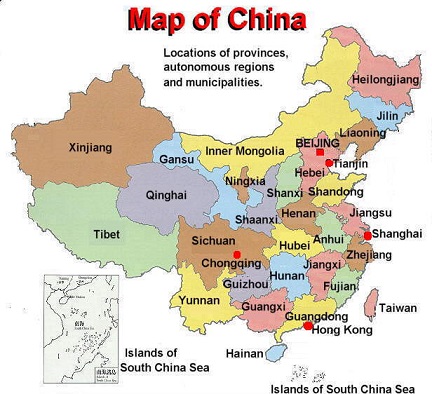
The Caribbean has a serious problem with societal abandonment. Far too many of our citizens flee their Caribbean homelands for life in foreign countries. Most assuredly, the destination country is rarely, if ever, China.
CU Blog - Lessons from China - Too Big To Ignore - Photo 3

They have 1.3 billion people inside their borders; we have 42 million in our entire region. China wouldn’t even notice us, our people and our impact. This is not the case in the United States, where 1 in 11 Black residents may be from the Caribbean.

Still our goal is not to make China notice. Our goal is to mitigate the reasons why our people may want/need to leave in the first place. We want our citizens to prosper where they are planted here at home, and not set their sights on migrating to China, or any other country. But still, we can get a lot of benefits from China, as in trade and … lessons learned from their nation-building. They are too big to ignore.

There are a lot of lessons, good and bad, for us to glean and apply here at home. This commentary is 1 of 6 from the movement behind the book Go Lean … Caribbean, in consideration of lessons from China. The other commentaries detailed in this series are as follows:

  1. History of China Trade: Too Big to Ignore
  2. Why China will soon be Hollywood’s largest market
  3. Organ Transplantation: Facts and Fiction
  4. Mobile Games Apps: The new Playground
  5. South China Seas: Exclusive Economic Zones
  6. WeChat: Model for Caribbean Social Media – www.MyCaribbean.gov

All of these commentaries relate to nation-building, stressing the community investments required to facilitate the short-term, mid-term and long-term needs of our communities.

There used to be a time when we thought of the “closed” country of China only as a country on the other side of the planet…

“I’ve got a whole in my heart that goes all the way to China…” – song by pop singer Cyndi Lauper from movie soundtrack for the 1988 film Vibes. – See Appendix VIDEO.
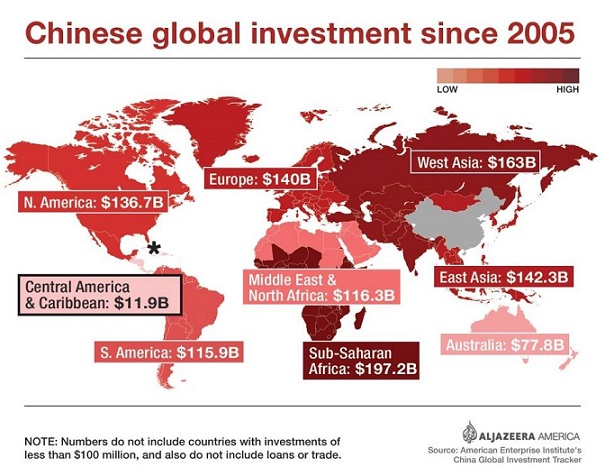
CU Blog - Lessons from China - Too Big To Ignore - Photo 1… but now, we must recognize China as a Super Power; one with a large domestic market and a huge international reach; see this Photo/Chart here.

How did this come about, apparently so quickly? In a word … Trade.

China has grown in the past few decades tremendously by “opening up” and adopting the tenants of this one economic principle, one that is also detailed and recommended for adoption for the Caribbean in the book Go Lean … Caribbean:

Voluntary Trade Creates Wealth: People specialize in the production of certain goods and services because they expect to gain from it. People trade what they produce with other people when they think they can gain something from the exchange. Some benefits of voluntary trade include higher standards of living and broader choices of goods and services.

This analysis of China’s trade development history is part of the technocratic activities needed in the Caribbean, to ensure our region becomes competitive. This effort is inclusive of the Go Lean book as it serves as a roadmap for the introduction and implementation of the technocratic Caribbean Union Trade Federation (CU). The branding “Trade” Federation “gives light” to this economic objective:

Optimize Trade in products and services.

Look at this news article here for a detail discussion on China’s recent history in world trade, their successes and some failures:

Title: How China’s trade concessions made it stronger

It’s still a mystery why.

In negotiations with the U.S. over WTO membership, China made nearly all the concessions. It agreed to cut tariffs, reduce subsidies, lessen the role of state-owned firms and eliminate barriers investment — in other words, to become more like the U.S. economy. All the U.S. did was end an annual renewal of China’s access to the U.S. market, which China’s allies in Congress won every summer, anyway. “Economically, this agreement is the equivalent of a one-way street,” President Bill Clinton said in 2000.

But freer trade with China had outcomes few predicted — especially a surge in imports to the U.S. and a huge U.S. trade deficit. Industries and workers around the U.S. were upended.

To understand what happened, look back to the 1990s. China’s opening to the world was progressing, but suspicion of Beijing ran high in Washington. The 1989 Tiananmen Square massacre made China’s human rights practices a big issue with lawmakers. Congress’s annual review of China’s trading status with the U.S.—what was then called “most favored nation”—became a way to pressure Beijing. While grand-sounding, most-favored status simply meant that China received the same tariffs as nearly every other U.S. trading partner.

From 1990 through 2001, Washington went through an annual theater. The president—whether Republican George H.W. Bush or Democrat Bill Clinton—renewed China’s favored status, and Congress had 90 days to disapprove the measure. Despite frequent threats issued by lawmakers, Congress never came close to overturning the president’s decision.

By the late 1990s, China wanted to join the WTO. To do so, it had to negotiate a deal with every WTO member. None was more important than the U.S., which in 1999, won concession after concession from China to remake its economy in the Western mold. What China wanted in return was an end to the annual most-favored status review. After lobbying by the Clinton administration, Congress agreed to lift the requirement.

“This is a great day for this country and I think it’s a good day for the world because we have opened the doors of trade” to China, said the Republican Speaker of the House Dennis Hastert at the bill signing ceremony at the White House in October 2000.

With lower Chinese tariffs, U.S. exports to China increased more than five-fold from $16 billion in 2000 to $92 billion in 2010. But U.S. imports from China soared far higher, from $100 billion in 2000 to $365 billion a decade later. The trade deficit ballooned.

Why?

Yale economist Peter Schott says that eliminating the most-favored status review gave a huge shot of confidence to Western and Chinese firms that the U.S. market would remain open to China. Investment in China soared from $47 billion in 2001 to $115 billion in 2010 as the country became an ever-larger export platform. Foreign firms also saw China’s vast population as a huge market to be served. “Policy uncertainty can inhibit investment,” Mr. Schott said.

A paper he wrote with Federal Reserve economist Justin Pierce cites a Mattel executive who explained that the toy company wouldn’t invest heavily in China if there was a chance the country could lose its favored trade status. While the risk was small, “the consequences would be catastrophic,” the executive said, because Mattel’s toy imports from China would have been hit with 70% tariffs.

But perhaps even more important than being considered a most-favored nation were the trade “concessions” that China made to get into the WTO. In the I-win, you-lose world of trade negotiating, a tariff reduction is considered a loss because it encourages imports and can endanger jobs. Cutting subsidies is also seen as a loss because it weakens the domestic firms being subsidized.

CU Blog - Lessons from China - Too Big To Ignore - Photo 2But the reality can be very different. China’s “concessions” made it a more attractive place to do business. Reducing tariffs made it much easier for Chinese and Western firms to set up factories in China, import parts, assemble them into final goods, and export them to the U.S. Reducing the role of lumbering, subsidized state-owned enterprises encouraged more competitive private firms to take their place in apparel, furniture and other industries. That made China a far more aggressive exporter.

“In hindsight, we missed the unintended consequences” of China’s trade concessions, says University of California at San Diego economist Gordon Hanson. “These were provisions we were pushing for. China wound up providing cheaper goods for the rest of the world. But we didn’t see the increase in U.S. exports to China” that the U.S. expected.
Source: Wall Street Journal – Columnist Bob Davis – August 13, 2016; retrieved August 25, 2016 from: http://www.msn.com/en-us/money/markets/how-chinas-trade-concessions-made-it-stronger/ar-BBvye3o

Considering lessons that we can learn from China, is it possible that the Caribbean, with a much smaller 42 million population base, can model some of China’s successes – and avoid their failures – to grow our economy further?

Yes, we can.

The Go Lean book explains how; it provides turn-by-turn directions on how to integrate the 30 member-states of the Caribbean region to forge an $800 Billion Single Market economy. In fact, this is inclusive of the prime directives of the Go Lean/CU roadmap:

  • Optimization of the economic engines in order to grow the regional economy and create 2.2 million new jobs.
  • Establishment of a security apparatus to protect the resultant economic engines.
  • Improve Caribbean governance/administration/oversight to support these engines.

At the outset of the book, the roadmap presents the urgent need to enlarge our neighborhood and engage some economies-of-scale benefits to extend our market, economy and population. This was pronounced in this clause in the opening Declaration of Interdependence (Page 11):

viii.   Whereas the population size is too small to foster good negotiations for products and commodities from international vendors, the Federation must allow the unification of the region as one purchasing agent, thereby garnering better terms and discounts.

xxiv.  Whereas a free market economy can be induced and spurred for continuous progress, the Federation must install the controls to better manage aspects of the economy: jobs, inflation, savings rate, investments and other economic principles. Thereby attracting direct foreign investment because of the stability and vibrancy of our economy.

The Go Lean roadmap signals change and empowerment for the Caribbean region. It introduces new measures, new opportunities and new strategies to grow our region. The goal is to reform and transform the economic-security-governing engines of the 30 member-states, collectively and individually so as to lower the “push-pull” reasons why our citizens emigrate. We simply want them to prosper where they are planted here at home.

We do not need 1.3 billion people to succeed; we just need best-practices.

The Go Lean book describes the best-practices as new community ethos, strategies, tactics, implementations and advocates. See a sample list here, as follows:

Community Ethos – Voluntary Trade Creates Wealth Page 21
Community Ethos – Consequences of Choices Lie in the Future Page 21
Community Ethos – Money Multiplier Page 22
Community Ethos – Job Multiplier Page 22
Community Ethos – Cooperatives Page 25
Community Ethos – Impact the Greater Good Page 37
Strategy – CU Vision and Mission Page 45
Strategy – Customers – Foreign Direct Investors Page 48
Strategy – Agents of Change – Globalization Page 57
Tactical – Confederating a Permanent Union Page 63
Tactical – Fostering a Technocracy Page 64
Tactical – $800 Billion Economy – How and When – Trade Page 67
Tactical – Growth Approach – Trade and Globalization Page 70
Tactical – Separation of Powers – Interstate Commerce Admin Page 79
Tactical – Separation of Powers – Office of Trade Negotiations Page 80
Implementation – Ways to Pay for Change Page 101
Implementation – Ways to Deliver Page 109
Implementation – Trade Mission Objectives Page 117
Implementation – Ways to Benefit Globalization Page 119
Planning – Ways to Improve Trade Page 128
Planning – Ways to Improve Interstate Commerce Page 129
Advocacy – Ways to Grow the Economy Page 151
Advocacy – Ways to Create Jobs Page 152
Advocacy – Ways to Improve Governance Page 168
Advocacy – Ways to Better Manage the Social Contract Page 170

The Caribbean region needs to learn from the lessons from China; then we need to do the work, the heavy-lifting, to be able to better compete with them, and the rest of the world in trade and culture. This subject of China and our Caribbean trade empowerment has been directly addressed and further elaborated upon in these previous blog/commentaries:

https://goleancaribbean.com/blog/?p=6231 China’s Caribbean Playbook: America’s Script
https://goleancaribbean.com/blog/?p=5435 China Internet Policing – Model for Caribbean
https://goleancaribbean.com/blog/?p=4767 Welcoming WTO? Say Goodbye to Nationalism
https://goleancaribbean.com/blog/?p=2887 Caribbean must work together to address rum subsidies
https://goleancaribbean.com/blog/?p=2488 Role Model Jack Ma brings Trade Marketplace Alibaba to America
https://goleancaribbean.com/blog/?p=2435 Latin America’s Dream and Trade Role-model: Korea
https://goleancaribbean.com/blog/?p=294 Bahamas and China’s New Visa Agreement

China went from “zero to hero”, in terms of emergence as an economic Super Power.

This fast-paced growth brought growing pains with it – good, bad and ugly – these descriptors are also too big to ignore. Consider the experience in the VIDEO here which depicts the harsh reality of over-crowding in Beijing and the quest to de-populate: http://a.msn.com/00/en-us/BBvye3o?ocid=se

The Caribbean is arguably better, the best address on the planet in terms of terrain, weather, hospitality and culture. But, make no mistakes, our Caribbean region has many deficiencies, as in jobs and economic opportunities.

The end result of our deficiencies has been abandonment. The causes of “push and pull” is greatly related to economics. “Pull”, as in the perception that life is more prosperous abroad; “push” in that the remnant in the region experiences deprivations that causes further societal dysfunctions, blame-gaming and a “climate of hate”. The end-results of our deficiencies has been a loss to the brain drain, one estimate of 70%. Our societal abandonment rate is too big to ignore.

No More! It’s time for the Caribbean to go from “zero to hero”. Everyone is urged to lean-in to this roadmap, to make the Caribbean a better place to live, work and play. 🙂

Download the free e-Book of Go Lean … Caribbean – now!

——————-

Appendix VIDEO – Cyndi Lauper – Hole In My Heart (Vibes Version) – https://youtu.be/8QWXH89U6Jc

Published on Oct 11, 2013 – One of her best songs ever, a top ten hit in NZ, Australia and Japan…
Composer Richard Orange. Copyright Dick James Music Ltd./Universal Music.
No copyright infringement intended. All rights to (C) 1988 Sony BMG Music Entertainment.

  • Category: Music
  • License : Standard YouTube License
Share this post:
, ,

A Lesson in History: Haiti 1804

Go Lean Commentary

There are important lessons to learn from history. This commentary considers one particular lesson: the repercussions and consequences from Slavery and the Slave Trade.

CU Blog - A Lesson in History - Haiti 1804 - Photo 3Today – August 23 – is the official commemoration of the Slave Trade, as declared by UNESCO (United Nations Educational Scientific and Cultural Organization). It measures the date that the 1791 Slave Rebellion in Haiti commenced.

“All of humanity is part of this story, in its transgressions and good deeds” – Irina Bokova, UNESCO Director-General

This is a very important lesson that we glean from this history, no matter our race or homeland. Let’s consider this lesson from the perspective of the Caribbean and for the benefit of Caribbean elevation.

In jurisprudence, there is the concept of felony murder.

… if a perpetrator robs a liquor store and the clerk has a heart-attack and dies, that perpetrator, once caught is tried for felony murder. The definition is the consequence of death in the act of committing a felony. What’s ironic is this charge would also apply if its a co-perpetrator that dies of the heart-attack rather than a victim-clerk.

This justice standard also applies with family discipline. If/when a child is being naughty and accordingly a sibling is unintentionally hurt, the naughty behavior will almost always be punished for the injury, because it was linked to the bad behavior.

A lesson learned from family discipline; and a lesson learned from criminal law. All of these scenarios present consequences to bad, abusive behavior. This sets the stage for better understanding of this important lesson from the international history of the year 1804. After 200 years of the Slave Trade, repercussions and consequences were bound to strike. This happened in the Caribbean country of Haiti. The following catastrophic events transpired in the decade leading up to 1804:

  • 1791 Slave Rebellion – See Appendix A below – A direct spinoff from the French Revolution’s demand for equality
  • Leadership of Louverture – As Governor-General, Toussaint Louverture sought to return Haiti to France without Slavery.
  • Resistance to Slavery – The French planned and attempted to re-instate Slavery
  • Free Republic – The first Black State in the New World
  • 1804 Massacre of the French – See Appendix B below – An illogical solution that killing Whites would prevent future enslavement. 

Make no mistake, the Massacre of 1804 – where 3,000 to 5,000 White men, women and children were killed – was a direct consequence of Slavery and the Slave Trade.

See VIDEO here of a comprehensive TED story:

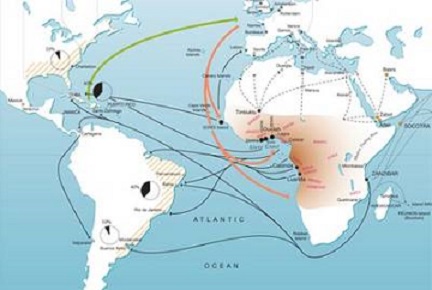
VIDEO – The Atlantic Slave Trade: What too few textbooks told you – https://youtu.be/3NXC4Q_4JVg

Published on Dec 22, 2014 – Slavery has occurred in many forms throughout the world, but the Atlantic slave trade — which forcibly brought more than 10 million Africans to the Americas — stands out for both its global scale and its lasting legacy. Anthony Hazard discusses the historical, economic and personal impact of this massive historical injustice.
Lesson by Anthony Hazard, animation by NEIGHBOR.
View full lesson: http://ed.ted.com/lessons/the-atlanti…

  • Category – Education
  • License – Standard YouTube License
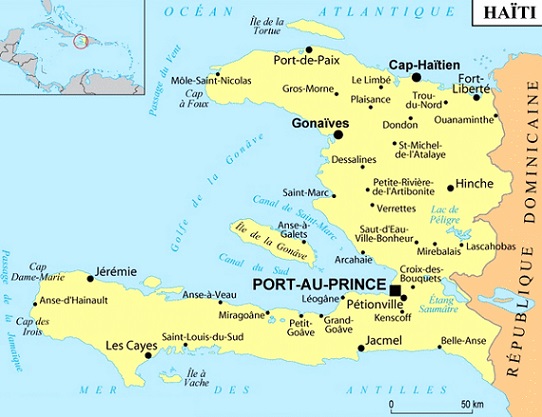
The review of the historic events is more than just an academic discussion, the book Go Lean…Caribbean aspires to economic principles that dictate that “consequences of choices lie in the future”. The book serves as a roadmap for the introduction and implementation of the technocratic Caribbean Union Trade Federation (CU). Haiti – the poorest country in the Western Hemisphere – is one of the 30 member-states for this Caribbean confederacy.

The people of the Caribbean need to understand the cause of this country’s decline and dysfunction; and by extension, the cause of dysfunction for the rest of the Caribbean. It is tied to the events of 1804. How will this lesson help us today?

  • Reality of the Legacy – The new Black State of Haiti was censored, sanctioned and scorned upon by all European powers (White people). According to a previous blog-commentary, to finally be recognized, France required the new country of Haiti to offset the income that would be lost by French settlers and slave owners; they demanded compensation amounting to 150 million gold francs. After a new deal was struck in 1838, Haiti agreed to pay France 90 million gold francs (the equivalent of €17 billion today). It was not until 1952 that Haiti made the final payment on what became known as its “Independence Debt”. Many analysts posit that the compensation Haiti paid to France throughout the 19th century “strangled development” and hindered the “evolution of the country”. The CU/Go Lean book assessed the near-Failed-State status of Haiti – “it is what it is”; Haiti is as bad as advertised – and then strategized solutions to reboot the economic-security-governing engines of this Republic.  
  • Security assurances must be enabled to complement economics objectives – Slavery was introduced to the New World as an economic empowerment strategy, though it was flawed in its premise of oppressing the human rights of a whole class of humans. The only way to succeed for the centuries that it survived was with a strong military backing – fear of immediate death and destruction. The CU/Go Lean premise is that economics engines and security apparatus must work hand-in-hand. This is weaved throughout the roadmap.
  • Minority Equalization – The lessons of slavery is that race divides societies; and when there is this division, there is always the tendency for one group to put themselves above other groups. Many times the divisions are for majority population groups versus minorities. If the planners of the new Caribbean want to apply lessons from Slavery’s history, we must allow for justice institutions to consider the realities of minorities. The CU security pact must defend against regional threats, including domestic terrorism. This includes gangs and their junior counterparts, bullies. The CU plans for community messaging in the campaign for anti-bullying and mitigations.
  • Reconciliation of issues are not optional, more conflict will emerge otherwise – The issues that caused division in Haiti where not dealt with between 1791 and 1803. A “Great Day of Reckoning” could not be avoided. The Natural Law instinct was to avenge for past atrocities – “an eye for an eye”. The CU/Go Lean roadmap accepts that an “eye for an eye” justice stance would result in a lot of “blindness”; so instead of revenge, the strategy is justice by means of Truth & Reconciliation Commissions – a lesson learned from South Africa – to deal with a lot of the  latent issues from the last Caribbean century (i.e. Cuba, Haiti, Dominican Republic, etc).

The purpose of the Go Lean roadmap is to turn-around the downward trends in the Caribbean today, to reverse course and elevate Caribbean society. The CU, applying lessons from best-practices, has prime directives proclaimed as follows:

  • Optimization of the economic engines in order to grow the regional economy to $800 Billion & create 2.2 million new jobs.
  • Establishment of a security apparatus to protect the resultant economic engines.
  • Improve Caribbean governance to support these engines.

The Go Lean book details a series of assessments, community ethos, strategies, tactics, implementations and advocacies to empower all the factions in the Caribbean region:

Community Ethos – Deferred Gratification Page 21
Community Ethos – Economic Systems Influence Choices & Incentives Page 21
Community Ethos – Consequences of Choices Lie in the Future Page 21
Community Ethos – “Crap” Happens Page 23
Community Ethos – Minority Equalization Page 24
Community Ethos – Ways to Impact the Future Page 26
Community Ethos – Ways to Manage Reconciliations Page 34
Community Ethos – Ways to Improve Sharing Page 35
Community Ethos – Ways to Promote Happiness Page 36
Community Ethos – Ways to Impact the Greater Good Page 37
Strategy – Vision –  Integrate region for Economics & Security Page 45
Strategy – Agents of Change – Globalization Page 57
Tactical – Separation of Powers – Department of Homeland Security Page 75
Tactical – Separation of Powers – Department of Justice Page 77
Implementation – Assemble Existing Super-national Institutions Page 96
Implementation – Ways to Pay for Change Page 101
Implementation – Foreign Policy Initiatives at Start-up Page 102
Implementation – Security Initiatives at Start-up Page 103
Implementation – Ways to Deliver Page 109
Implementation – Ways to Promote Independence Page 120
Planning – Ways to Make the Caribbean Better Page 131
Planning – Ways to Improve Failed-State Indices Page 134
Planning – Lessons from the US Constitution Page 145
Advocacy – Ways to Grow the Economy Page 151
Advocacy – Ways to Create Jobs Page 152
Advocacy – Ways to Better Manage the Social Contract Page 170
Advocacy – Ways to Foster Cooperatives Page 176
Advocacy – Ways to Impact Justice Page 177
Advocacy – Ways to Improve Homeland Security Page 180
Advocacy – Ways to Mitigate Terrorism Page 181
Advocacy – Ways to Protect Human Rights Page 220
Advocacy – Battles in the War on Poverty Page 222
Advocacy – Ways to Re-boot Haiti Page 238

Why bother with all this dark talk about Slavery and the Slave Trade?

UNESCO has provided a clear answer for this question with this declarative statement:

Ignorance or concealment of major historical events constitutes an obstacle to mutual understanding, reconciliation and cooperation among peoples. UNESCO has thus decided to break the silence surrounding the Slave Trade and Slavery that have concerned all continents and caused the great upheavals that have shaped our modern societies.

The subject of Slavery and the Slave Trade relates to economic, security and governing functioning in a society. The repercussions and consequences of 1804 lingers down to this day. There have been a number of blog-commentaries by the Go Lean promoters that have developed related topics. See a sample list here:

https://goleancaribbean.com/blog/?p=8724 Remembering African Nationalist Marcus Garvey: Still Relevant Today
https://goleancaribbean.com/blog/?p=7682 Frederick Douglass – Pioneer & Role Model for Single Cause: Abolition
https://goleancaribbean.com/blog/?p=7221 Street naming for Martin Luther King reveals continued racial animosity
https://goleancaribbean.com/blog/?p=5695 Repenting, Forgiving and Reconciling the Past Bad Deeds
https://goleancaribbean.com/blog/?p=5123 A Lesson in History – Royal Charters: Zimbabwe -vs- South Africa
https://goleancaribbean.com/blog/?p=4971 A Lesson in History – Royal Charters: Truth & Consequence
https://goleancaribbean.com/blog/?p=451 CariCom position on Slavery/Colonization Reparations

This commentary purports that there have been watershed events in history since the emergence of the slave economy. They include:

  • 1804 – Haiti’s Massacre of White Slave Advocates
  • 1861 – US Civil War – A Demonstration of the Resolve of the “Pro” and “Anti” Slavery Camps
  • 1914 – World War I: “Line in the Sand”
  • 1948 – United Nations Declaration of Human Rights

No doubt the Massacre of 1804 was a crisis. It was not wasted; it was used in a good way to escalate the abolition of the Slave Trade in 1807. It was also used in a bad way to justify further oppression of the African Diaspora in the New World.

A pivotal year.

Let’s learn from this year of 1804; and from the repercussions and consequences from that year. In many ways, the world has not moved! Racism and the suppression of the African race lingers … even today … in Europe and in the Americas.

Our goal is to reform and transform the Caribbean, not Europe or America. We hereby urge everyone in the Caribbean – people, institutions and governments – to lean-in to this Go Lean roadmap. It is time now to move. We must get the Caribbean region to a new destination, one where opportunity meets preparation. This is the destination where the Caribbean is a better homeland to live, work and play. 🙂

Download the book Go Lean … Caribbean – now!

—————

Appendix A Title: International Day for the Remembrance of the Slave Trade and its Abolition 2016

— Message from Irina Bokova, Director-General of UNESCO —

CU Blog - A Lesson in History - Haiti 1804 - Photo 1In the night of 22 to 23 August 1791, men and women, torn from Africa and sold into slavery, revolted against the slave system to obtain freedom and independence for Haiti, gained in 1804. The uprising was a turning point in human history, greatly impacting the establishment of universal human rights, for which we are all indebted.

The courage of these men and women has created obligations for us. UNESCO is marking International Day for the Remembrance of the Slave Trade and its Abolition to pay tribute to all those who fought for freedom, and, in their name, to continue teaching about their story and the values therein. The success of this rebellion, led by the slaves themselves, is a deep source of inspiration today for the fight against all forms of servitude, racism, prejudice, racial discrimination and social injustice that are a legacy of slavery.

The history of the slave trade and slavery created a storm of rage, cruelty and bitterness that has not yet abated. It is also a story of courage, freedom and pride in newfound freedom. All of humanity is part of this story, in its transgressions and good deeds. It would be a mistake and a crime to cover it up and forget. Through its project The Slave Route, UNESCO intends to find in this collective memory the strength to build a better world and to show the historical and moral connections that unite different peoples.

In this same frame of mind, the United Nations proclaimed the International Decade for People of African Descent (2015-2024). UNESCO is contributing to it through its educational, cultural and scientific programmes so as to promote the contribution of people of African descent to building modern societies and ensuring dignity and equality for all human beings, without distinction.
Source: Retrieved August 23, 2016 from: http://www.unesco.org/new/en/unesco/events/prizes-and-celebrations/celebrations/international-days/slave-trade-and-its-abolition/

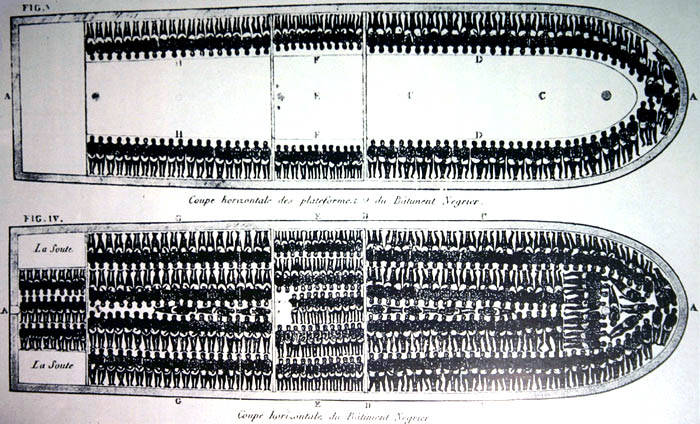
Slave Ship

—————

Appendix B Title: 1804 Haiti Massacre

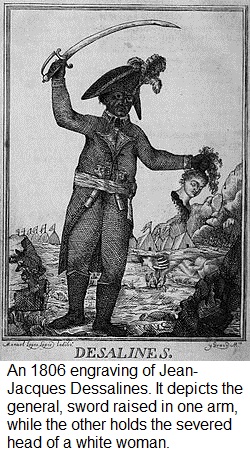
The 1804 Haiti Massacre was a massacre carried out against the remaining white population of native Frenchmen and French Creoles (or Franco-Haitians) in Haiti by Haitian soldiers by the order of Jean-Jacques Dessalines who had decreed that all those suspected of conspiring in the acts of the expelled army should be put to death.[1] Throughout the nineteenth century, these events were well known in the United States where they were referred to as “the horrors of St. Domingo” and particularly polarized Southern public opinion on the question of the abolition of slavery.[2][3]

The massacre, which took place in the entire territory of Haiti, was carried out from early February 1804 until 22 April 1804, and resulted in the deaths of between 3,000 and 5,000 people of all ages and genders.[4]

Squads of soldiers moved from house to house, torturing and killing entire families.[5] Even whites who had been friendly and sympathetic to the black population were imprisoned and later killed.[6] A second wave of massacres targeted white women and children.[6]

Writers Dirk Moses and Dan Stone wrote that it served as a form of revenge by an oppressed group that exacted out against those who had previously dominated them.[7]

Aftermath
By the end of April 1804, some 3,000 to 5,000 people had been killed[23] and the white Haitians were practically eradicated. Only three categories of white people, except foreigners, were selected as exceptions and spared: the Polish soldiers who deserted from the French army; the little group of German colonists invited to Nord-Ouest (North-West), Haiti before the revolution; and a group of medical doctors and professionals.[14] Reportedly, also people with connections to officers in the Haitian army were spared, as well as the women who agreed to marry non-white men.[23]

Dessalines did not try to hide the massacre from the world. In an official proclamation of 8 April 1804, he stated, “We have given these true cannibals war for war, crime for crime, outrage for outrage. Yes, I have saved my country, I have avenged America”.[14] He referred to the massacre as an act of national authority. Dessalines regarded the elimination of the white Haitians an act of political necessity, as they were regarded as a threat to the peace between the black and the colored. It was also regarded as a necessary act of vengeance.[23]

Dessalines was eager to assure that Haiti was not a threat to other nations and that it sought to establish friendly relations also to nations where slavery was still allowed.[26]Dessalines’ secretary Boisrond-Tonnerre stated, “For our declaration of independence, we should have the skin of a white man for parchment, his skull for an inkwell, his blood for ink, and a bayonet for a pen!”[27]

In the 1805 constitution, all citizens were defined as “black”,[28] and white men were banned from owning land.[23][29]

The 1804 massacre had a long-lasting effect on the view of the Haitian Revolution and helped to create a legacy of racial hostility in Haitian society.[28]

At the time of the civil war, a major reason for southern whites, most of whom did not own slaves, to support slave-owners (and ultimately fight for the Confederacy) was fear of a genocide similar to the Haitian Massacre of 1804. This was explicitly referred to in Confederate discourse and propaganda.[30][31]

The torture and massacre of whites in Haiti, normally known at the time as “the horrors of St. Domingo“, was a constant and prominent theme in the discourse of southern political leaders and had influenced American public opinion since the events took place.
Source: Retrieved August 22, 2016 from: https://en.wikipedia.org/wiki/1804_Haiti_massacre

CU Blog - A Lesson in History - Haiti 1804 - Photo 2


Share this post:
, , ,
[Top]

ENCORE: Lesson from MetroCard

They got me … too!

This is not a warning; this is an applause!

Even after describing the MetroCard program’s propensity for retaining unused balances – in the ENCORE below – this writer ends up stuck with 2 active MetroCards with outstanding balances.

Rather than feeling suckered, I feel impressed. (It means “free” cash from the idle balances).

See the story from August 20, 2014 again here, how the MetroCard program always ends up divesting leftover balances. (Note: The all-electronic payment scheme does allow for refunds, using an Old World, snail-mail process with self-addressed-pre-stamped envelopes). Also see the VIDEO in the new Appendix below on how to purchase a MetroCard.

================

Go Lean Commentary: MetroCard – Model for the Caribbean Dollar

CU Blog - MetroCard - Model for CCB - Photo 1The MetroCard, the New York City Metropolitan Transportation Authority’s (MTA) payment system is the subject of the referenced source appendix below. But this subject is about more than just simple bus/subway tokens, instead this subject refers to a whole eco-system that constitutes an electronic payment scheme. This system generates $4 billion (2012) and services the transit needs of 15.1 million people. The MTA drives the NYC regional economy, the largest in the US, facilitating the connection for many to traverse from home to work; then after work, the MTA network enables the NYC metropolitan area (New York, New Jersey, and Connecticut) to get to a host of leisure activities: music, theater, cultural events, sports, and shopping. MetroCard is therefore a de facto currency for this region to live, work and play.

MetroCard is a digital currency and not “hard money”, so there are not paper stock or coinage issues to be managed with this approach. (MetroCard replaced the previous ubiquitous tokens in 2003). This attribute relates to the effort to re-boot and optimize the Caribbean regional economy and society. The book Go Lean…Caribbean points to NYC as a model and source of many lessons that the Caribbean can learn and apply, especially related to the adoption of the regional currency, the Caribbean Dollar (C$).

The book Go Lean…Caribbean serves as a roadmap for the introduction and implementation of the Caribbean Union Trade Federation (CU) and the Caribbean Central Bank (CCB). This Go Lean roadmap has 3 prime directives:

  • Optimization of the economic engines in order to grow the regional economy to $800 Billion & create 2.2 million new jobs.
  • Establishment of a security apparatus to protect the resultant economic engines.
  • Improve Caribbean governance to support these engines.

The Caribbean Central Bank has the role of heavy-lifting in the facilitation of the electronic payments modes of the Caribbean Dollar. While the traditional central banking role of currency/coinage distribution do not come into play, with the e-Payment schemes, there are still many responsibilities and benefits for central bank command-and-control. This refers to the subject of M1 monetary supply. M1 refers to the measurement of the total of currency/money in circulation (M0) plus overnight bank deposits (like demand deposits, travelers’ checks & other checkable deposits). So when digit currencies, as MetroCard, are factored in, there is no M0, but an increase in M1. As M1 values increase, there is a dynamic in the regional banking system that creates money “from thin-air”; this is referred to as the money multiplier. The more M1 money in the system, the more liquidity for investment and development opportunities.

The Caribbean needs this increase in development capital/liquidity.

This subject of electronic payment systems has been previously covered in Go Lean blogs, highlighted here in the following samples:

https://goleancaribbean.com/blog/?p=1350 PayPal expands payment services to 10 markets
https://goleancaribbean.com/blog/?p=906 Bitcoin needs regulatory framework to change ‘risky’ image
https://goleancaribbean.com/blog/?p=528 Facebook plans to provide mobile payment services
https://goleancaribbean.com/blog/?p=360 How to Create Money from Thin Air

This Go Lean/CU/CCB roadmap looks to employ electronic payments / virtual money schemes to impact the growth of the regional economy. There are two CU schemes that relate to this MetroCard structure:

  • Cruise Passenger Smartcards – The Go Lean roadmap posits that the cruise industry needs the Caribbean more than the Caribbean needs the industry. But the cruise lines have embedded rules/regulations designed to maximize their revenues at the expense of the port-side establishments. The CU solution is to deploy a scheme for smartcards that function on the ships and at the port cities (Page 193).
  • e-Commerce Facilitation – The Go Lean roadmap defines that the Caribbean Dollar (C$) will be mostly cashless, an accounting currency. So the Caribbean Central Bank (CCB) will settle all C$ electronic transactions (MasterCard-Visa style or ACH style) and charge interchange/clearance fees (Page 198). This scheme allows for the emergence of full-throttle e-Commerce activities.

Overall, stewardship of the single market economy and single regional currency was envisioned and pronounced early in the Go Lean roadmap with this Verse XXIV (Page 13) of the Declaration of Interdependence, with these words:

Whereas a free market economy can be induced and spurred for continuous progress, the Federation must install the controls to better manage aspects of the economy: jobs, inflation, savings rate, investments and other economic principles…

New York City is a great model for this Caribbean empowerment effort to look, listen, and learn. The same as tourism is the primary economic driver in the Caribbean (80 million visitors), NYC also plays host to 25 million visitors annually. Many NYC tourists ride the MTA public transportation modes and have to acquire a MetroCard – many times, they leave unspent balances  to just sit there. What becomes of those monies? See this news article here:

Unspent MetroCard Money Means Millions for M.T.A.

(http://www.nyctransitforums.com/forums/topic/43954-unspent-metrocard-money-means-millions-for-mta/)

Think of it as New York’s biggest sock drawer, except that instead of nickels, dimes and quarters, what is squirreled away in its dark recesses are millions of lapsed yellow-and-blue MetroCards with digital loose change still dangling from their magnetic strips.

In the decade ending in 2010, nearly $500 million worth of unspent balances on expired bus and subway MetroCards accumulated, and that money can no longer be redeemed.

Cards that are bought, never used but still valid are counted for bookkeeping purposes as a liability, because they might eventually be used. Outdated cards with pending balances become an asset after they expire, about two years from the date of sale. The balances are listed as revenue under the category of “fare media liability.”

Tens of millions of dollars a year may not seem like much out of $4 billion in annual MetroCard revenue for New York City Transit, but there is no stream of cash that the agency scoffs at.

Kevin Ortiz, a spokesman for the Metropolitan Transportation Authority, which includes the transit agency, said: “Expired card value does benefit the M.T.A. It gets counted as fare box revenue.”

The peak year for replenishing New York City Transit’s fare media liability account was 2012, when $95 million was credited. That followed a surge in purchases in 2010, before a fare increase. Those cards, many presumably with outstanding balances, have expired.

Considering the governance for the MetroCard, the MTA has been described with some adjectives of efficiency and effectiveness. Their website described their charter as follows:

While nearly 85 percent of the nation’s workers need automobiles to get to their jobs, four of every five rush-hour commuters to New York City’s central business districts avoid traffic congestion by taking transit service – most of it operated by the MTA. MTA customers travel on America’s largest bus fleet and on more subway and rail cars than all the rest of the country’s subways and commuter railroads combined.

This mobility helps ensure New York’s place as a world center of finance, commerce, culture, and entertainment, and New York ranks near the top among the nation’s best cities for business, Fortune magazine has written, because it has “what every city desires. A workable mass transit system.”

MTA mass transit helps New Yorkers avoid about 17 million metric tons of pollutants while emitting only 2 million metric tons, making it perhaps the single biggest source of greenhouse gas (GHG) avoidance in the United   States. The people living in our service area lead carbon-efficient lives, making New   York the most carbon-efficient state in the nation.

Over the past two decades, the MTA has committed some $72 billion to restore and improve the network so that today it runs at unprecedented levels of efficiency. Our employees at all of our agencies work diligently to maintain high service and safety standards.

(Source: Retrieved August 19, 2014 from: http://web.mta.info//mta/network.htm)

The governance for the MetroCard may be in good hands, a technocratic reflection. Creating a technocratic CU/CCB governance is “Step One, Day One” in the Go Lean roadmap. Implementing this allows for rock-solid monetary integrity for local financial systems, providing the foundation so the regional society can be elevated, economically and governmentally. In this vein, we examine specific lessons & applications in consideration of the MetroCard business model in the Appendix below:

MetroCard Facts Go Lean book considerations/reflections (actual Page Numbers)
MetroCard History Roadmap with Project Delivery Obligations (Page 109); Fostering a Technocracy (Page 64)
Multiple Jurisdictions Confederation of 30 Member-States (Page 45); Fostering Interstate Commerce (Page 129)
Pricing/Cost Increases Unified Command & Control on Inflation (Page 153)
Technology Foster Technology (Page 197); e-Commerce (Page 198); Bridging Digital Divide (Page 31)
Transfers People respond to economic incentives (Page 21)
Card type consideration –   Pay-Per-Ride cards Improve M1 by encouraging stored balances (Page 198)
Card type consideration – Student cards Facilitation Education (Page 159) and Transportation (Page 205)
Card type consideration –   Disabled/Senior Citizens Improve Elder-Care (Page 225) and Impact Persons with Disabilities (Page 228)
Purchase Options – Subway Station   Booths Manage Federal Civil Servants (Page 173)
Purchase Options – Vending   Machines Foster Technology (Page 197); e-Commerce (Page 198); Bridging Digital Divide (Page 31)
Purchase Options – Neighborhood   Merchants Help Entrepreneurship (Page 28); Impact Main Street (Page 201);
Future Impact the Future (Page 26)
Bad Actors: Fraud/Scams Bad Actors Emerge – Reduce Crime (Page 178); Impact the Greater Good (Page 37)

The Go Lean book details additional community ethos, strategies, tactics, implementations and advocacies to foster electronic payment systems, and the unified command & control necessary for its success:

Community Ethos – Money Multiplier Principle Page 22
Community Ethos – Lean Operations Page 24
Community Ethos – Cooperatives Page 25
Tactical – Separation of Powers – Central Banking Page 73
Implementation – Assemble Central Bank Cooperative Page 96
Planning – Lessons Learned from New York City Page 137
Anecdote – Caribbean Currencies Page 149
Advocacy – Ways to Mitigate Black Markets Page 165
Advocacy – Ways to Impact Public Works Page 175
Advocacy – Ways to Foster Cooperatives Page 176
Advocacy – Reforms for Banking Regulations Page 199
Advocacy – Ways to Impact Urban Living Page 234
Appendix – New York City Economy Details Page 277

Now is the time for all of the Caribbean, the people and governing institutions, to lean-in for the empowerments described in the book Go Lean … Caribbean. We can all benefit by studying and modeling the successes of New York City!

Any visitor to the city quickly realizes how unique this jurisdiction is compared to other urban areas in the US, or the world for that matter. Millions of people (31,483,000 according to 2010 census) live in a limited congested area that is the Greater Tri-State area, yet there is a recognizable level of efficiency – some technocratic deliveries. For example, NYC does not have the proliferation of yellow school buses that dot the landscape of most American communities. Most students in the city rely on the MTA, funded by their MetroCard, to get back and forth for school. So in effect, MetroCard services the full community needs to live, work, learn and play.

MetroCard is truly a model for the Caribbean … Dollar.

Download the book Go Lean … Caribbean – now!

——————————————-

Appendix – Reference Source:

MetroCard – New York Metropolitan Transportation Authority’s Payment System

The MetroCard is the payment method for the New York City Subway rapid transit system; New York City Transit buses, including routes operated by Atlantic Express under contract to the Metropolitan Transportation Authority (MTA); MTA Bus, and Nassau Inter-County Express systems; the PATH subway system (an entity of the Port Authority of New York & New Jersey); the Roosevelt Island Tram; AirTrain JFK; and Westchester County’s Bee-Line Bus System.

The MetroCard is a thin, plastic card on which the customer electronically loads fares. It was introduced to enhance the technology of the transit system and eliminate the burden of carrying and collecting tokens. The MTA discontinued the use of tokens in the subway on May 3, 2003, and on buses on December 31, 2003. The MetroCard is managed by a division of the MTA known as MetroCard Operations and manufactured by Cubic Transportation Systems, Inc.

History

01Jun1993 MTA distributes 3,000 MetroCards in the first major test of the technology for the entire subway system and the entire bus system.
06Jan1994 MetroCard live testing with compatible turnstiles at select lines and stations.
15May1997 The last MetroCard turnstiles were installed by this date, and the entire bus and subway system accepted MetroCards
04Jul1997 First free transfers available between bus and subway at any location with MetroCard.
01Jan1998 Bonus free rides (10% of the purchase amount) were given for purchases of $15 or more.
04Jul1998 Unlimited Ride MetroCards introduced, at $17 for 7 days, $63 for 30 days, Express Bus Plus for $120.
01Jan1999 1-Day Fun Pass was introduced: unlimited use for one day for $4.
25Jan1999 The first MetroCard Vending Machines installed.
13Apr2003 Tokens/coins no longer sold.
04May2003 Tokens only accepted as a $1.50 credit towards the $2 MetroCard ride.
02Mar2008 A new 14-day unlimited-ride was introduced for $47
30Dec2010 1-Day Fun Pass and the 14-Day Unlimited Ride MetroCards discontinued.
20Feb2013 Cards can now be refilled with both time and value.
03Mar2013 A $1 fee is imposed on new card purchases in-system

Pricing/Cost increases – since the complete cut-over in 2003

Date

Daily

Weekly

Monthly

04May2003

$2

$21

$70

27Feb2005

$2

$24

$76

02Mar2008

$2

$25

$81

28Jun2009

$2.25

$27

$89

30Dec2010

$2.25

$29

$104

19Dec2012

$2.50

$30

$104

Technology

During a swipe, the MetroCard is read, re-written to, then check-read to verify correct encoding.

Each MetroCard stored value card is assigned a unique, permanent ten-digit serial number when it is manufactured. The value is stored magnetically on the card itself, while the card’s transaction history is held centrally in the Automated Fare Collection (AFC) Database.

When a card is purchased and fares are loaded onto it, the MetroCard Vending Machine or station agent’s computer stores the amount of the purchase onto the card and updates the database, identifying the card by its serial number. Whenever the card is swiped at a turnstile, the value of the card is read, the new value is written, the customer is let through, and then the central database is updated with the new transaction as soon as possible. Cards are not validated in real time against the database when swiped to pay the fare. The AFC Database is necessary to maintain transaction records to track a card if needed. It has actually been used to acquit criminal suspects by placing them away from the scene of a crime. The database also stores a list of MetroCards that have been invalidated for various reasons (such as lost or stolen student or unlimited monthly cards), and it distributes the list to turnstiles in order to deny access to a revoked card.

MetroCard keeps track of the number of swipes at a location in order to allow those same number of people to transfer at a subsequent location, if applicable. The MetroCard system was designed to ensure backward compatibility, which allowed a smooth transition from the old (blue) format to the (gold) format.

Cubic later on used the proprietary MetroCard platform to create the Chicago Card, which is physically identical to the MetroCard except for the labeling.

Transfers

MetroCards allows for transfers (within two hours of initial entry) among the many transportation modes – incentivizing a preferred behavior. (Pricing rules are built into the system for upgrades like Express Buses, PATH, and JFK Airport AirTrain).

One free transfer from:

  • subway to local bus
  • bus to subway
  • bus to local bus
  • express bus to express bus
  • bus or subway to Staten Island Railway
  • subway to subway

Card type – consideration – Pay-Per-Ride MetroCards

  • $5 – $80 initial value in any increment (though vending machines only  sell values in multiples of 5 cents).
  • Card purchases or refills equal to or greater than $5 receive a 5% bonus (ex. $50 buys 21 rides).
  • Cards can be refilled up to $80 in one transaction and up to a total value of $100.
  • Though cards expire, the balance may be transferred to a new cards.

Card type – consideration – Student MetroCards: NYC does not have the propensity of yellow school business as other communities, therefore a partnership is forged between school districts and MTA.

  • MetroCards are issued to some New York City public and private school students allowing discounted access to the NYC Transit buses and trains, depending on the distance traveled between their school and their home. The card program is managed by the NYC-DOE Office of Pupil Transportation.
  • In Nassau County, Student MetroCards are issued by individual schools which have pre-paid for the cards.

Card type – consideration – Disabled/Senior Citizen Reduced-Fare MetroCards

  • Given to senior citizens and the disabled as a combination photo ID and MetroCard.
  • Allows half-fare within the MTA system. (Express Bus during off-peak hours only)
  • Half fare is also available on the 7-day and 30-day Unlimited MetroCards.
  • Card back is color-coded to match gender of card holder.
  • Card face is marked as “Photo ID Pass”

Purchase options

All new MetroCard purchases are charged a $1 fee, except reduced fare customers and those exchanging damaged / expired cards.

Subway Station Booths

Booths are located in all subway stations and are staffed by station agents. Every type of MetroCard can be purchased at a booth with the exception of the SingleRide ticket, and MetroCards specific to other transit systems (PATH, JFK Airtrain). All transactions must be in cash.

MetroCard Vending Machines

CU Blog - MetroCard - Model for CCB - Photo 2MetroCard Vending Machines (MVMs) are machines located in all subway stations and transit centers. They debuted on January 25, 1999 and are now found in two models. Standard MVMs are large vending machines that accept cash, credit cards, and debit cards and are in every subway station. Cash transactions are required for purchases of less than $1, and they can return up to $8 in coin change. There are also smaller versions of these machines that only accept credit and ATM/debit cards. Both machines allow a customer to purchase any type of MetroCard through a touch screen. The MVM can also refill to previously issued cards. PATH fare vending machines can also dispense MetroCards.

The machines are compliant with the Americans with Disabilities Act of 1990 through use of braille and a headset jack.

Neighborhood MetroCard Merchants

MetroCards can be sold by retail merchants not affiliated with MTA. Vendors can apply to sell MTA fare media at their businesses. Only presealed, prevalued cards are available, and no fee is charged.

Future

In 2006 the MTA and Port Authority of NY/NJ announced plans to replace the magnetic strip with smart cards.

On July 1, 2006, MTA launched a six-month pilot program to test the new “contact-less” smart card fare collection system, initially ending on December 31, 2006 but extended until May 31, 2007. This program was tested at all stations on the IRT Lexington Avenue Line and at four stations in the Bronx, Brooklyn and Queens. The testing system utilized Citibank MasterCard’s PayPass keytags. This smart card system is intended to ease congestion near the fare control area by reducing time spent at paying for fare. MTA and other transportation authorities in the region say they will eventually implement system-wide.

Beginning October 7, 2012, MetroCard vending machines scattered throughout Manhattan dispensed something other than the classic blue and gold MetroCard. The MTA has begun to sell advertisement space on the front and back of the card to raise additional revenue. The 2012 ad appearing on the cards was purchased by The Gap [retail stores] and reads: “Be Bright NYC” with multicolored letters on a navy blue background. It encourages New Yorkers to visit Gap’s newly remodeled flagship store at 34th   Street and Broadway starting October 10, 2012. Customers who present the MetroCard at any Gap store were entitled to a 20% discount on merchandise purchases through November 18, 2012. The MTA has been running advertisements on the back of MetroCards since its inception, earning advertiser fees along with expired card value (accruing when purchased fares wind up not being used on a card deemed a collectible by fans). Deals were arranged as early as 1997. However, this Gap deal is the first time the front of the cards have changed in over 10 years. Approximately 10% of the MetroCards sold throughout the system in a typical month will carry the Gap advertising. Future MetroCard advertising campaigns will include the word “MetroCard” on the back of the card, flush right in the white space above the zone available for advertising.

Bad Actors: Fraud and Scams

The MetroCard system is susceptible to various types of frauds, perpetrated by con artists. Usually these frauds involve the con artist preventing or dissuading the commuter from using his or her own MetroCard, and then charging the commuter for entry to the system (entry is gained by a method that costs the con artist nothing).

Also, MetroCard Vending Machines are programmed to disable the bill or coin acceptor after a series of rejected bills or coins, which can result in a row of MVMs all saying “No Bills” or “No Coins”.

CU Blog - MetroCard - Model for CCB - Photo 3If a con artist is not using a stolen or broken card, he or she can use an array of unlimited cards. Multiple cards are needed because of the 18-minute delay between each swipe at the same station. Using unlimited cards, a con artist is able to sell rides for $1 instead of $2.

A report from New York State Senator Martin J. Golden claims this scam is costing the MTA $260,000 a year, and some con artists are making up to $800 a day executing it. All aspects of this scam have been recently prohibited by MTA policy and a New York State law.

The introduction of MetroCards did eliminate one class of criminals. When the NYC subway still used tokens, token suckers would steal tokens by jamming turnstile coin slots, waiting for unsuspecting passengers to deposit tokens (only to discover that the turnstile did not work), then returning to suck out the token. The retirement of tokens in 2003 put the token suckers out of commission.

The MetroCard does have a magnetic stripe, but both the track offsets and the encoding differ from standard Magstripe cards. It is a proprietary format developed by the contractor Cubic. Off-the-shelf reader/writers for the standard cards are useless, and even hypothetically could work only with both physical and software modification. Some have had partial success decoding it using audio tape recorder heads, laptop sound cards, and custom Linux software.
Source: Wikipedia Online – encyclopedic source; retrieved 08/18/2014 from: http://en.wikipedia.org/wiki/MetroCard_(New_York_City)

——————————————-

Appendix VIDEO – Which New York City Subway MetroCard to Buy – https://youtu.be/dB05rRU0qVE

Published on Jan 23, 2015 – Should you buy a pay-per-ride or an unlimited New York City Subway MetroCard? Watch this video for tips on which to buy and how to buy them at the vending machines. Check out the full article on Free Tours by Foot’s website at http://www.freetoursbyfoot.com/how-to…


Share this post:
, , ,
[Top]

ENCORE: Caribbean’s Olympic Dreams

It’s time for the Olympics!

The Olympic Games are considered to be the world’s foremost sports competition.[2] These modern games are the leading international sporting events (featuring summer and winter sports competitions) in which thousands of athletes from around the world – more than 200 nations – participate in the variety of athletic feats.

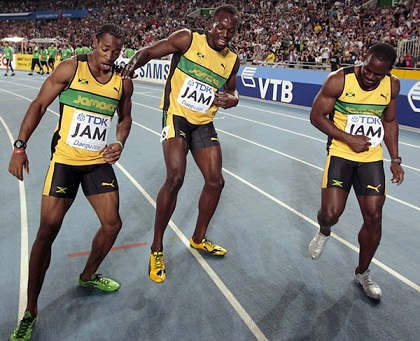
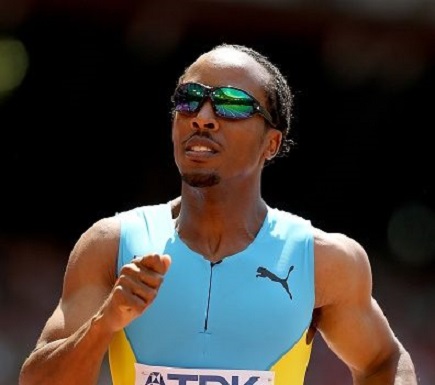
The Caribbean is duly represented, with a variety of athletes competing for their ancestral home countries – see photos in the Appendix below – and even some competing for adopted residential countries. This brings to mind a question of whether the Caribbean can someday, maybe, quite possibly consider the wild dream of hosting the games in one of its member-states. This proposition has been debated and dismissed; see this previous blog-commentary from March 12, 2014 regarding this laughable assertion. Ha ha ha …

This commentary is encored here today, August 5, 2016, on the occasion of the opening day of the XXXI Olympiad in Rio de Janiero, Brazil. See VIDEO here showcasing media coverage in the Caribbean member-state of the Cayman Islands:

VIDEOOlympics 2016 in Rio, Brazil – Flow brings Caribbean coverage – https://youtu.be/5LP9mje0bHo

Retrieved August 5, 2016 – Get ready for the action in Rio with Flow, Official broadcast partner of the 2016 Olympic Games for the Caribbean.

=================

Go Lean Commentary

Freedom of speech is great for the flow of information in a democracy. But freedom of speech has its limits, notwithstanding libel, slander and defamation possibilities. If a person yells out “FIRE, FIRE” in a crowded theater, knowing that there is no fire, the resultant panic and crush of people fleeing for the exits is actually criminally liable. In some jurisdiction, if death results, the culprit can be charged with statues against “depraved indifference”. Wow, that could be serious!

On the other hand, there is the practice of dreaming and acting on dreams. Some of the biggest accomplishments in world history, started as someone’s dreams. Once actuated, one step after another led to the eventual fulfillment of the dream. Once actuated, one step after another led to the eventual fulfillment of the dream. See this article here from Caribbean Journal Online News Site; retrieved 02/12/2014 from http://www.caribjournal.com/2014/02/13/caribbean-idea-could-the-caribbean-host-the-olympic-games/:

thumbWhile the Caribbean has become relatively accustomed to dominating at the Summer Olympics, this year’s crop of Caribbean winter athletes has us thinking. With all of the Caribbean’s continued success in international athletics, why couldn’t the region (or one of the countries in the region host the Summer Olympics? 

The Olympics has been held in the US, Asia, Australia, Europe and (soon) South America, but never in the Caribbean.  So we looked around the region to think about which countries could, at least hypothetically host the Games. The Games must be based in a single city; given much of the region’s size, the Games would likely need to be held across an entire island, though perhaps nominally based in a city.  

A potential Caribbean host country would also need several major qualities: a large enough territory to host the myriad events held in the Summer Games; a high enough level of infrastructural development; a big enough airport and a hotel stock large enough that it could expand without too much difficulty to meet the needs of the Games. We isolated several Caribbean islands: Jamaica, Hispaniola (Haiti and the Dominican Republic), Trinidad and Tobago, Guadeloupe, Puerto Rico.

Jamaica is large enough and its hotel stock is big enough, but its infrastructural development would need work; given Jamaica’s brand equity around the world (and its athletic dominance), this could be a natural choice, with Montego Bay being the best fit for a single city given its topography. Hispaniola would be the most provocative choice: could two neighbors that often have a stormy relationship bridge their divides and come together for international sport? Lack of infrastructure, particularly on the Haitian side, would be an issue, but adding that infrastructure would also enormously benefit the western half of the island.

Could the Games be held in Port-au-Prince and Santo Domingo together? Trinidad and Tobago has the infrastructural development, the territorial size, and the airport, but a small hotel stock. Could Port of Spain host the Games with many events held in Tobago? A system of fast ferries and increased flights would make for an entertaining twin-island Olympics.

 Guadeloupe would be a bit of a wild card; its roads and infrastructural development far outpace much of the region; it has enough undeveloped land and a relatively large size. Could the Games spread across each of the islands of the archipelago? Puerto Rico is large, with developed infrastructure, and it’s part of the United States, with a relatively robust hotel stock and strong existing sports infrastructure. Of course, its debt problems would pose a significant hindrance to hosting the Games in the next few decades.

Cuba is another option, although the continued embargo from the United States would likely be a significant stumbling block. Otherwise, the island has the size, infrastructure and level of development to be considered. There’s another option — what about a regionally-hosted Olympics? Would the IOC ever support something like that? Would the Caribbean grant temporary approval for foreign airlines to operate regional service? Would a fast-ferry company seize on the opportunity?

If the region could source the majority of the funding from sponsorship’s and other external sources, the benefits of new hotels, infrastructure, investment and prestige could be significant. But the Caribbean would need to ensure that the foreign money was enough that it didn’t put it any further into already-crippling debt. Ultimately, the question is this: instead of spending billions on developed countries hosting the Games, why not spend the same money for an Olympic Games that actually leads to development?

Imagine a Trinidad or a Jamaica or a Hispaniola with fresh, modern hotels, large stadia and, crucially, sparkling new roads (not to mention the vast tourism marketing potential of hosting the Games). Of course, there’s another major issue: the weather. Summer in the Caribbean means the risk of hurricanes. But with major storms popping up across the globe, is the Caribbean really alone in that risk anymore? And couldn’t Olympic development be done at a hurricane-proof standard?

What do you think? Could the Caribbean ever host an Olympic Games?

The Caribbean hosting the Olympics is just dreaming, not reporting. Most men and women standing on the podium receiving their winning medals can trace their origins back to some dream. A dream for the athlete, coach and/or parent. Sometimes, too the whole community is dreaming. Is the thought of the Caribbean hosting the Olympics some day just a dream now in 2014 or can the “dominoes” be put in place that once actuated can lead to an eventual successful bid to host some future Olympiad?

Tipping the “dominoes” to enable a better business environment is the mission of the book Go Lean … Caribbean; [it serves as a roadmap for the introduction and implementation of the technocratic Caribbean Union Trade Federation (CU)]. This even applies to sports. The books purports that sports can be a great economic driver for the region, and that the business model of the Olympics can be forged in the region on a minor scale. In fact the book proposes the CU Games as a bi-annual event that encompasses many Olympic-style events, more than just Track & Field. This approach would bring the necessary regional integration necessary to develop any long time plans for a big dream of the Olympics.

This commentary declares that the merits of the foregoing article is pure rubbish. No one Caribbean country possesses the population base and economic engine to make an Olympic bid viable. While comparisons can be made for Greece, the host country for the 2004 Summer Olympics, this example is a better argument for opposition of any Olympic hosting. Greece experienced much financial distress as a result of their Olympic hosting; the country was near insolvency during the European Sovereign Debt crisis of 2009 – 2012, if not for the bail-outs of the European Union.

To the contrary, the entire Caribbean region tallies 42 million people and the results of economic integration can yield a GDP of $800 Billion (2010). Greece on the other hand had a population count of 10.8 million and GDP of $250 for the same period.

Lastly, the Go Lean roadmap calls for the emergence of the Caribbean dollar unified currency. This structure would spur the elevation of the region’s capital markets for stocks and bonds. This approach would satisfy the liquidity needs to finance the construction of any and all sporting facilities required for sporting events.

Download the e-Book of Go Lean … Caribbean – free … now!

—————

Appendix – Caribbean Olympic Hopefuls …

… for example, this sample from Jamaica, Grenada, the Bahamas and Trinidad.

CU Blog - Caribbean's Olympic Dream - Photo 1

CU Blog - Caribbean's Olympic Dream - Photo 4

CU Blog - Caribbean's Olympic Dream - Photo 3

CU Blog - Caribbean's Olympic Dream - Photo 2

Share this post:
, , ,
[Top]

Caribbean Image: ‘Less Than’?

Go Lean Commentary

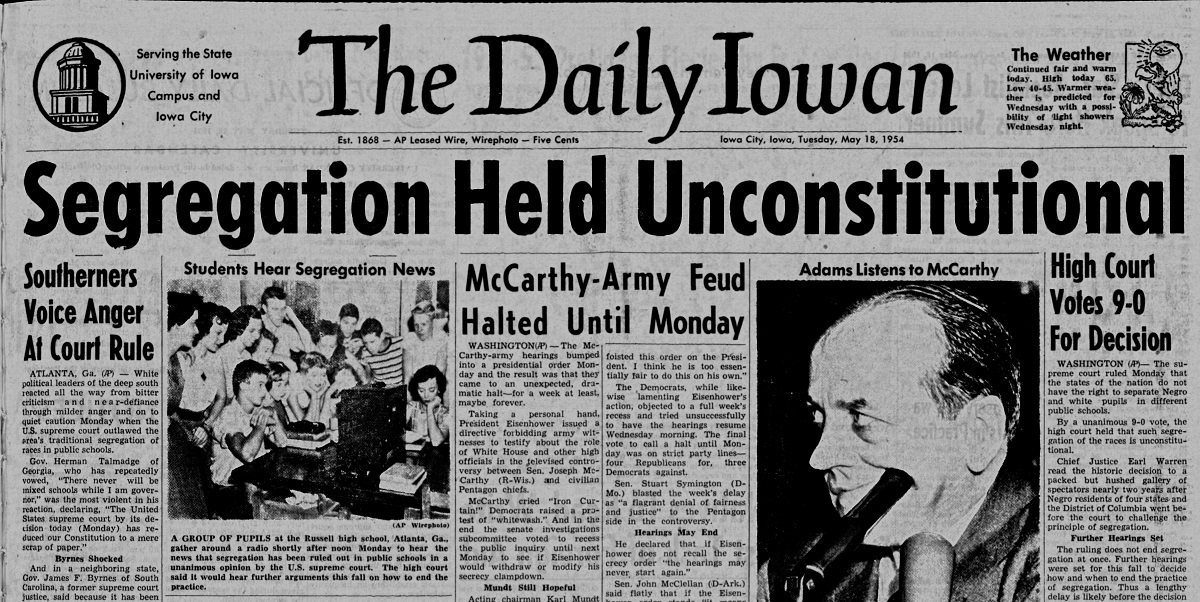
Picture this: The year is 1954, America is faced with a decision:

“Do we tear down the status quo and liberate 20 million African-Americans from a “Less Than” life or do we leave ‘well enough alone’?

If this question was a referendum, how do you think the American people would have voted … in 1954?

No doubt, the decision would have overwhelmingly aligned with words and expressions like “No!”, “Leave us alone”, “It has always been that way“, “this  is our country“, “Go home Niggers“, etc.

This is not just a “what if” scenario. This really happened! But not as a proposition to the whole country of the United States to contest; no, only for 9 men to consider – the Justices of the US Supreme Court. The end result: Unanimous … in favor of change.

- Photo 1

- Photo 2

This commentary is a discussion on image, the facts and fiction of being a minority in a majority world or being an immigrant to a foreign country. This anecdote is related in the book Go Lean…Caribbean, in its Epilogue entitled “The Greater Good”. The book details this experience:

Future Focus – Brown v. Board of Education (1954)
This was a landmark United States Supreme Court case in which the Court declared state laws establishing separate public schools for black and white students unconstitutional. The decision overturned the Plessy v. Ferguson decision of 1896, which allowed state-sponsored segregation, insofar as it applied to public education. Handed down on May 17, 1954, the Warren Court’s (between 1953 and 1969, when Earl Warren served as Chief Justice) unanimous decision (9–0) stated that “separate educational facilities are inherently unequal”. As a result, de jure racial segregation was ruled a violation of the Equal Protection Clause of the United States Constitution (Fourteenth Amendment). This ruling paved the way for integration and was a major victory of the civil rights movement.

This landmark ruling created chaos for nearly 60 years; the animosity created was real and every aspect of American society was affected. (Most legislative assemblies in the southern states passed resolutions and sanctions condemning the Supreme Court decision, though the federal law superseded all state legislations). Cities and urban areas suffered from white flight, where white Americans fled the cities to move out to the suburbs to avoid the integration of urban schools; with their flight went their capital and tax base. Many American cities have still not recovered, for example Detroit filed for Bankruptcy in July 2013 after suffering the pangs of distress from this white flight for 60 years.

So why would the learned men on the Supreme Court make this unanimous ruling and caused so much havoc on American life. Were they not wise, could they not “read the writing on the wall”? The answer is an emphatic No! They knew the real beneficiary of their judgment would come later. Their wisdom was strewn from the experience of modern society waging two world wars, the last of which was just concluded 9 years earlier. They saw the rampage, saw of devastation of 60 million deaths around the world and appreciated the wisdom that a downtrodden people would not stay down, that they would rise and revolt, that they would risk their lives and that of their children to pursue freedom. The Warren Court knew that the status quo of race inequality could not continue, but in order to effectuate that change would take writing-off an entire generation (or two). That time had come, the generation was now (1954); but the hope was with the next generation, and so the curative measures started with the children of that day, so that inevitably, future generations would inhabit an America that would not judge its people by the color of their skins, but rather the content of their character.

The issues pronounced here in the Go Lean book highlights an important factoid: de jure versus de facto

  • de jure = according to law
  • de facto = in reality

As a result of the 1954 Supreme Court’s decision, the de jure policy of the US was that of racial equality. But in reality, that decision didn’t manifest on the streets for the everyday man. The facts did not change the fiction, racism continued to dominate the American eco-system, even today. The aft-mentioned 20 million African-Americans in the US were viewed, treated and labeled as “Less Than“.

Don’t agree; think this is all fiction, speculation or propaganda?! Consider this VIDEO:

VIDEO – Would you want to be treated like blacks?https://youtu.be/RwA_4OamFhI

Published on Jan 19, 2016 – Every white person who wants to be treated how blacks are in this society stand up. [For this white audience, no one did.]

This is a relevant discussion for a Caribbean consideration, as 29 of the 30 member-states have a majority Black population; (St. Barthélemy is the only exception). So the Caribbean Diaspora and their legacies residing in the US – the Migration Policy Institute reported in 2012 that the numbers may be as high as 22 million – fits into the Black-and-Brown demographic. Unfortunately, every year that transpires, more and more Caribbean residents flee to foreign shores, like the US. The same report continues:

… the Caribbean population in the U.S. has surged more than 17-fold over the past half-century. But three-quarters of “Caribbeans” in the country arrived during the last two decades of the 20th century.

Why would they leave their beloved homelands? And what is their experience when they do leave and immigrate to the US?

The Go Lean book delves into the reasons for emigration. It identified them as an equation of “push and pull” factors. These factors highlight reasons that people want to get-away from “home” and seek “refuge” in these foreign countries. “Refuge” is a good word; because of societal defects, many from the Caribbean must leave – think LGBT, Disability, Domestic-abuse, Medically-challenged – for their life, liberty and pursuit of happiness. In addition, the lure of a more prosperous life in the US (and other destinations) drive the “pull” side of the equation. This aligns with the facts: there is always some doing better, and always some doing worse.

But what truly is the experience when these ones arrive in America?

Answer: Less Than!

The experience of new Caribbean Diaspora members is that their work ethic is appreciated by employers; they are welcomed for the mass of blue-collar or menial jobs. White-collar ones, not so much. Then there is the language challenges. Many Caribbean islands speak Creole-derivatives of European languages of Spanish (Cuba, Dominican Republic and Puerto Rico), French (Haiti and the French Caribbean islands), Dutch (Suriname and 6 islands – ABC and SSSIslands). These ones must come to the US and be classified as “English Speakers of Other Languages” (ESOL) for education and employment purposes. As for the English-speaking Caribbean, the consistent experience is one of a foreign accent; broken English spoken with a Caribbean “sing-song”. All in all, language fluency may be challenging.

NYC News - Sept. 1, 2014This is the reality for the Caribbean Diaspora; they may find themselves invisible in the socio-economic relevance of American life; this is more fact than it is fiction. Is it surprising that this “Less Than” experience is preferred to enduring life at home in the Caribbean? This conveys the extent of the Caribbean defects.

An example of Caribbean “Less Than” is evident in the experience of dreadlock hairstyles. Those sporting this hairstyle are just immediately under-valued; treated as “Less Than“.

This is real talk about “Less Than“. This is not a reference to the de jure of American life, but rather the de facto. (Similar experiences are reported from the Diaspora communities in other countries, like in Toronto, Canada and London, England). The purpose of this commentary is to draw attention to the Go Lean book. It serves as a roadmap for the introduction and implementation of the technocratic Caribbean Union Trade Federation (CU). One goal of the roadmap is to lower the “push and pull” factors that lead many residents in the region to abandon their Caribbean homeland for American (or Canadian or European) shores. Another goal is to improve the image of Caribbean people, at home and abroad. We must target the societal defects and fix them. The Go Lean/CU quest is to reform and transform our region so that we may prosper where we are planted in our Caribbean homelands, so that our people do not have to leave to become aliens in a foreign land, to be ridiculed for their skin color, accents, and hairstyles (dreadlocks). This goal is detailed in the Go Lean book, presented as the prime directives, as follows:

  • Optimization of the economic engines in order to grow the regional economy to $800 Billion & create 2.2 million new jobs.
  • Establishment of a security apparatus to protect the resultant economic engines.
  • Improve Caribbean governance to support these engines.

The Go Lean roadmap calls for many changes and empowerments. There is so much we learn from the American experience, past and present. One paramount lesson: basic rights should not be subject to a public referendum. One group (minorities) should not have to seek the permission of another group (majority) to be happy. There should be a recognition of fundamental rights, above and beyond any national opinion polls.

Another important lesson we learn from the American experience is that the image associated with a minority group can be reformed and transformed. Look at the African-Americans populations; now it is considered politically incorrect to hold racist views or to engage in racist activities. The President of the US is actually an African-American. Image or brand management works, if there is someone (or something) working “it”.

The CU is not slated to be a national government, but rather a confederation of national governments (and overseas territories); so the CU does not feature sovereignty; it features the functionality of a Trade Union, capable of promotional activities and peer-pressure on domestic and international stakeholders. The CU/Go Lean effort is to cajole, prod and incentivize these individual member-states to embrace the protocols of international human rights mandates. The CU/Go Lean roadmap calls for fundamental human rights to be codified in regional treaties. These mandates would correspond to the “Universal Declaration of Human Rights”, which declare that:

… civil, economic and social rights should be asserted as part of the “foundation of freedom, justice and peace in the world”. – Go Lean book Page 220

There would be no place for any sub-group within the Caribbean population to feel as “Less Than” while at home.

The CU/Go Lean roadmap does not seek to reform America (or Canada or Europe); that is out-of-scope for our movement. Our quest is to reform and transform the Caribbean only. But we do try to manage impressions and images that these regions consume of Caribbean people, life and culture; we must accentuate the positive (promotion) and dissuade the negative (anti-defamation).

Domestically, there are many defects of Caribbean life that the Go Lean movement seeks to address. Right now internationally, these more advanced democracies, (US, Canada and Europe) may only consider us as parasites, but we would rather be recognized as protégés. This is a matter of image. This point is pronounced early in the book with the Declaration of Interdependence (Pages 12 & 13) with many statements that demonstrate the need to remediate Caribbean communities and enhance the Caribbean world-wide image:

xix. Whereas our legacy in recent times is one of societal abandonment, it is imperative that incentives and encouragement be put in place to first dissuade the human flight, and then entice and welcome the return of our Diaspora back to our shores. This repatriation should be effected with the appropriate guards so as not to imperil the lives and securities of the repatriated citizens or the communities they inhabit. The right of repatriation is to be extended to any natural born citizens despite any previous naturalization to foreign sovereignties.

xx. Whereas the results of our decades of migration created a vibrant Diaspora in foreign lands, the Federation must organize interactions with this population into structured markets. Thus allowing foreign consumption of domestic products, services and media, which is a positive trade impact. These economic activities must not be exploited by others’ profiteering but rather harnessed by Federation resources for efficient repatriations.

xxi. Whereas the preparation of our labor force can foster opportunities and dictate economic progress for current and future generations, the Federation must ensure that educational and job training opportunities are fully optimized for all residents of all member-states, with no partiality towards any gender or ethnic group. The Federation must recognize and facilitate excellence in many different fields of endeavor, including sciences, languages, arts, music and sports. This responsibility should be executed without incurring the risks of further human flight, as has been the past history.

xxiv. Whereas the Caribbean region must have new jobs to empower the engines of the economy and create the income sources for prosperity, and encourage the next generation to forge their dreams right at home, the Federation must therefore foster the development of new industries, like that of ship-building, automobile manufacturing, pre-fabricated housing, frozen foods, pipelines, call centers, and the prison industrial complex. In addition, the Federation must invigorate the enterprises related to existing industries like tourism, fisheries and lotteries – impacting the region with more jobs.

It goes without saying that every Caribbean member-state would prefer to keep their people – especially their educated work force – at “home” to prosper in the homeland. But this is not the de facto reality. It is no small task to assuage this crisis. The Go Lean book describes it as heavy-lifting; the book provides real solutions, detailing a series of community ethos, strategies, tactics, implementations and advocacies to impact the region, member-states, cities and communities economic prospects. See this sample here:

Community Ethos – Deferred Gratification Page 21
Community Ethos – Economic Principle – Economic Systems Influence Choices & Incentives Page 21
Community Ethos – Economic Principle – Voluntary Trade Creates Wealth Page 21
Community Ethos – Job Multiplier Page 22
Community Ethos – Lean Operations Page 24
Community Ethos – Ways to Impact the Future Page 26
Community Ethos – Ways to Foster Genius Page 27
Community Ethos – Ways to Help Entrepreneurship Page 28
Community Ethos – Ways to Impact Research & Development Page 30
Community Ethos – Ways to Promote Happiness Page 36
Community Ethos – Ways to Impact the Greater Good Page 37
Strategy – Mission – Facilitate Job-Creating Industries Page 46
Tactical – Fostering a Technocracy Page 64
Tactical – Tactics to Forge an $800 Billion Economy – High Multiplier Industries Page 70
Tactical – Separation of Powers – Self-Governing Entities Page 80
Implementation – Ways to Pay for Change Page 101
Implementation – Steps to Implement Self-Governing Entities Page 105
Implementation – Ways to Deliver Page 109
Implementation – Reasons to Repatriate to the Caribbean Page 118
Planning – Ways to Make the Caribbean Better Page 131
Planning – Ways to Better Manage Caribbean Image Page 133
Advocacy – Ways to Grow the Economy Page 151
Advocacy – Ways to Create Jobs Page 152
Advocacy – Ways to Improve Governance Page 168
Advocacy – Ways to Better Manage the Social Contract Page 170
Advocacy – Ways to Improve Communications Page 186
Advocacy – Ways to Foster Technology Page 197
Advocacy – Ways to Impact Hollywood Page 203
Advocacy – Ways to Impact the Diaspora Page 217
Advocacy – Ways to Improve the Arts Page 230
Advocacy – Ways to Promote Music Page 231
Advocacy – Ways to Impact US Territories Page 244
Advocacy – Ways to Impact British Territories Page 245
Advocacy – Ways to Impact Dutch Territories Page 246
Advocacy – Ways to Impact French Territories Page 247

It is the quest of every Caribbean leader to minimize the size of the Diaspora. They wish …

… but wishing alone will not accomplish this goal – there must be real solutions to the “push and pull” realities. One member-state alone may not have the leverage and/or economies-of-scale to effect the needed reform. This is why the regional scale is different … and better.  This is the purpose of the Go Lean…Caribbean roadmap: to compose, communicate and compel regional solutions back in the Caribbean homeland to lower the “push and pull” factors.

This subject – “push and pull” – was examined further in other related Go Lean commentaries, as sampled here:

https://goleancaribbean.com/blog/?p=7866 Switching Allegiances: Athletes move on to represent other countries
https://goleancaribbean.com/blog/?p=7682 Role Model Frederick Douglass: Single Cause – Death or Diaspora
https://goleancaribbean.com/blog/?p=7151 The Caribbean is Looking for Heroes … ‘to Return’
https://goleancaribbean.com/blog/?p=5759 Bad example of Greece – Crisis leading to abandonment of Doctors
https://goleancaribbean.com/blog/?p=5733 Better than America? Yes, We Can!
https://goleancaribbean.com/blog/?p=5695 Repenting, Forgiving and Reconciling the Past
https://goleancaribbean.com/blog/?p=5088 Immigrants account for 1 in 11 Blacks in USA
https://goleancaribbean.com/blog/?p=4613 The ‘Luck of the Irish’ – Past, Present and Future of the Diaspora
https://goleancaribbean.com/blog/?p=2547 Miami’s Success versus Caribbean Failure
https://goleancaribbean.com/blog/?p=2251 The Reality of Names of Caribbean people
https://goleancaribbean.com/blog/?p=2025 Image of the Caribbean Diaspora – Butt of the Joke
https://goleancaribbean.com/blog/?p=1433 Caribbean loses more than 70 percent of tertiary educated to brain drain
https://goleancaribbean.com/blog/?p=273 10 Things We Don’t Want from the US – Discrimination of Immigrations

Fact and Fiction

So is an 8-ounce glass with 4-ounces of water half-full or half-empty?

This is the reality of fact and fiction on image.

Mathematically, 4 is half of 8. But the “full” or “empty” label is the perception, impression and image to the beholder; as in:

Beauty is in the eye of the beholder.

The Caribbean has a lot to work with. But our “glass is not empty”! We have been recognized as “best in the world” in certain circles. We feature the best …

winter vacations, best cruises, best foods, best music, best festivals, best cigars and best rums. In the dimension of humans as opposed to destinations, we have some of the greatest athletes in the world. In these respects, we are not “Less Than“. We can argue to be the best address on the planet. But we cannot ignore our dire societal defects and deficiencies.

With some measure of success with the solutions at home, and communicating the facts and fictions of Diasporic life, we should be able to reduce the size of our Caribbean Diaspora, repatriating many to return to the homeland. Even more so, we should reduce the “push and pull” factors that lead many to abandon the region in the first place.  The Caribbean entertains 80 million visitors every year; we are associated with the image of a great place to ‘play’. We now need to complete that visual: a great place to live, work and play.

Yes, we can!

So are we “Less Than” ?

Not here … at home. Our Caribbean region is actually comprised of a diverse array of cultures, races, religions and languages.

So “say it loud” …

We are Black  … and proud.
We are White … and proud.
We are Indo-Caribbean … and proud.
We are Chino-Caribbean … and proud.
We are mixed races … and proud.
We are Caribbean … and proud!

Download the free e-Book of Go Lean … Caribbean – now!

Share this post:
, , ,
[Top]

ENCORE: State of the Caribbean Union

Miami, Florida – The below constitutes a re-distribution of the blog-commentary on the US President’s formal address to his Congress, the State of the Union for 2015. The occasion now is the State of the Union address for 2016. This time is monumental in that it is the final address for the current President, Barack Obama; due to term restrictions in the US Constitution, he can no longer serve as President after this year. The election for his successor is slated for November 2016.

============================================================

Go Lean Commentary

You are invited to watch the State of the Union address that President Barack Obama delivered to the US Congress on Tuesday night (January 20, 2015). You are urged to listen carefully and count the number of times the Caribbean is referred to. The answer:

Once!

The reference to the restoration of diplomatic relations with Cuba.

That’s it!

(The Guantanamo Bay Naval Base is a perpetual leased US territory; so it will not count as Caribbean-specific).

No reference to the US Territories (Puerto Rico and the Virgin Islands); no reference to the Dutch Caribbean; nor to the French Caribbean; and especially not to the English-speaking Caribbean member-states.

The truth of the matter is that the Caribbean is out-of-scope for Obama. It was the State of the Union of the United States of America. Not the State of the Caribbean Union. Even the US territories have to be concerned. They have a voice in the US Congress, but no vote. (A lesson in American Civics teaches that territories have Congressional representation that can vote in committees, but not vote in full Congress).

So all the President’s focus on job creation, energy independence, growing the economy, controlling healthcare costs, securing the homeland, and optimizing government was directed to his American constituency and not to the Caribbean member-states.

VIDEO Title: The State of the Union (SOTU) 2015 – http://youtu.be/cse5cCGuHmE
Watch President Obama’s 1-hour remarks during his 6th SOTU address and learn more below.

Published on Jan 20, 2015
President Barack Obama delivers his sixth State of the Union address, at the United States Capitol, January 20, 2015.

CU Blog - State of the Caribbean Union - Photo 1

CU Blog - State of the Caribbean Union - Photo 2

CU Blog - State of the Caribbean Union - Photo 3

CU Blog - State of the Caribbean Union - Photo 4

We, the Caribbean, are required to focus on the State of our own Union.

The people, the 320 million Americans, elect a President to pursue their best interest, not the world’s best interest. Though the US tries to be a Good Neighbor, there may be times when the priorities of the US conflict with the priorities of the Caribbean, or the rest of the world. In those scenarios, the President is under charge to pursue the American best option.

The 42 million people of the Caribbean homeland are not in his scope!

The foregoing VIDEO and this commentary is being brought into focus in a consideration of the book Go Lean … Caribbean. The book serves as a roadmap for the introduction and implementation of the technocratic Caribbean Union Trade Federation (CU), for the elevation of Caribbean society. This CU/Go Lean roadmap has these 3 prime directives:

  • Optimization of the economic engines in order to grow the regional economy to $800 Billion and create 2.2 million new jobs.
  • Establishment of a security apparatus to protect the resultant economic engines.
  • Improve Caribbean governance to support these engines.

The Go Lean book (Page 3) makes a simple assertion regarding the State of our Union: the Caribbean is in crisis. The book details that there is something wrong in the homeland, that while it is the greatest address in the world, instead of the world “beating a path” to these doors, the people of the Caribbean have “beat down their doors” to get out.

Why do people leave? The book identifies a numberof reasons, classified as “push-and-pull”. There are economic (jobs and entrepreneurial opportunities), security and governance issues.

One mission of the Go Lean roadmap is to minimize these “push-and-pull” factors that contribute to this alarmingly high abandonment rate of Caribbean citizens – one report reflects a 70% brain drain rate.

Considering “pull” factors, the roadmap posits that the United States of America should not be viewed as the panacea for Caribbean ailments; that when the choice of any challenge is “fight or flight” that Caribbean society must now consider anew, the “fight” options. (No violence is implied, but rather a strenuous effort, heavy-lifting, to compete and win economic battles). One strong reason for cautioning Caribbean emigrants is that America is not so welcoming a society for the “Black and Brown” populations from the Caribbean. This was not addressed by Obama; he has to address the needs of all Americans – not just “Black and Brown” – racial discrimination have not been as high a priority among his initiatives, to the chagrin of many in the African-American communities, including the Caribbean Diaspora.

On the other hand, the Go Lean book does not ignore the “push” factors that cause many Caribbean people to flee. The book stresses (early at Pages 12 – 13) the need to be on-guard for “push” factors in these pronouncements in the Declaration of Interdependence:

xii. Whereas the legacy in recent times in individual states may be that of ineffectual governance with no redress to higher authority, the accedence of this Federation will ensure accountability and escalation of the human and civil rights of the people for good governance, justice assurances, due process and the rule of law. As such, any threats of a “failed state” status for any member state must enact emergency measures on behalf of the Federation to protect the human, civil and property rights of the citizens, residents, allies, trading partners, and visitors of the affected member state and the Federation as a whole.

xix. Whereas our legacy in recent times is one of societal abandonment, it is imperative that incentives and encouragement be put in place to first dissuade the human flight, and then entice and welcome the return of our Diaspora back to our shores. This repatriation should be effected with the appropriate guards so as not to imperil the lives and securities of the repatriated citizens or the communities they inhabit. The right of repatriation is to be extended to any natural born citizens despite any previous naturalization to foreign sovereignties.

xx. Whereas the results of our decades of migration created a vibrant Diaspora in foreign lands, the Federation must organize interactions with this population into structured markets. Thus allowing foreign consumption of domestic products, services and media, which is a positive trade impact. These economic activities must not be exploited by others’ profiteering but rather harnessed by Federation resources for efficient repatriations.

xxi. Whereas the preparation of our labor force can foster opportunities and dictate economic progress for current and future generations, the Federation must ensure that educational and job training opportunities are fully optimized for all residents of all member-states, with no partiality towards any gender or ethnic group. The Federation must recognize and facilitate excellence in many different fields of endeavor, including sciences, languages, arts, music and sports. This responsibility should be executed without incurring the risks of further human flight, as has been the past history.

xxvi. Whereas the Caribbean region must have new jobs to empower the engines of the economy and create the income sources for prosperity, and encourage the next generation to forge their dreams right at home, the Federation must therefore foster the development of new industries, like that of ship-building, automobile manufacturing, prefabricated housing, frozen foods, pipelines, call centers, and the prison industrial complex. In addition, the Federation must invigorate the enterprises related to existing industries like tourism, fisheries and lotteries – impacting the region with more jobs.

This commentary previously related details of Caribbean emigration and their experiences (Diaspora), the “push-and-pull” factors in the US, and our region’s own job-creation efforts – State of Our Own Union. Here is a sample of earlier blogs:

https://goleancaribbean.com/blog/?p=3780 National Sacrifice: The Missing Ingredient – Caribbean people not willing to die or live in sacrifice to their homeland
https://goleancaribbean.com/blog/?p=3694 Jamaica-Canada employment program pumps millions into local economy
https://goleancaribbean.com/blog/?p=3662 Migrant flow into US from Caribbean spikes
https://goleancaribbean.com/blog/?p=3446 Forecast for higher unemployment in Caribbean in 2015
https://goleancaribbean.com/blog/?p=3050 Obama’s immigration tweaks – Bad for the Caribbean
https://goleancaribbean.com/blog/?p=2547 Miami’s Success versus Caribbean Failure
https://goleancaribbean.com/blog/?p=2251 What’s In A Name? Plight of “Black and Brown” in the US
https://goleancaribbean.com/blog/?p=1896 American “Pull” Factors – Crisis in Black Homeownership
https://goleancaribbean.com/blog/?p=1698 American “Pull” Factors – STEM Jobs Are Filling Slowly
https://goleancaribbean.com/blog/?p=1596 Book Review: ‘Prosper Where You Are Planted’
https://goleancaribbean.com/blog/?p=1433 Caribbean loses more than 70 percent of tertiary educated to Brain-Drain
https://goleancaribbean.com/blog/?p=1296 Remittances to Caribbean Increased By 3 Percent in 2013
https://goleancaribbean.com/blog/?p=1256 Traditional 4-year College Degree are Terrible Investments for the Caribbean Region Due to Brain-Drain

The Go Lean book and accompanying blogs posit that for the Caribbean Diaspora, fleeing from their homelands to reside in the US is akin to “jumping from the frying pan into the fire” in terms of effort to succeed and thrive in a community. The message of the Go Lean movement is that it takes less effort to remediate the Caribbean than to fix a new adopted homeland. While the Go Lean planners may not be able to change American society, we can – no, we must – impact our own society. This is the charge of the Go Lean…Caribbean roadmap, to do the heavy-lifting, to implement the organization dynamics to impact Caribbean society here and now. The following are the community ethos, strategies, tactics and operational advocacies to effectuate this goal:

Community Ethos – People Respond to Incentives Page 21
Community Ethos – Economic Systems Influences Choices & Incentives Page 21
Community Ethos – The Consequences of Choice Lie in the Future Page 21
Community Ethos – Job Multiplier Page 22
Community Ethos – Minority Equalization Page 24
Community Ethos – Lean Operations Page 24
Community Ethos – Ways to Foster Genius Page 27
Community Ethos – Ways to Improve Negotiations Page 32
Community Ethos – Ways to Impact the Greater Good Page 37
Strategy – Vision – Make the Caribbean the Best Address on Planet Page 45
Strategy – Mission – Repatriate Diaspora Page 46
Strategy – Mission – Dissuade Human Flight/“Brain Drain” Page 46
Tactical – Separation of Powers – Union versus Member-States Page 71
Implementation – Assemble CariCom, Dutch, French, Cuba and US Territories Page 95
Implementation – Enact Territorial Compacts for PR & the Virgin Islands Page 96
Implementation – Foreign Policy Initiatives at Start-up Page 102
Implementation – Ways to Deliver Page 109
Implementation – Reasons to Repatriate Page 118
Implementation – Ways to Benefit from Globalization Page 119
Implementation – Ways to Promote Independence Page 120
Planning – 10 Big Ideas for the Caribbean Page 127
Planning – Lessons from the US Constitution Page 145
Advocacy – Ways to Grow the Economy Page 151
Advocacy – Ways to Create Jobs Page 152
Advocacy – Ways to Improve Governance Page 168
Advocacy – Ways to Improve Homeland Security Page 180
Advocacy – Ways to Impact the Diaspora Page 217
Advocacy – Ways to Preserve Caribbean Heritage Page 218
Advocacy – Ways to Re-boot Cuba Page 236
Advocacy – Ways to Impact US Territories Page 244
Appendix – Interstate Compacts Page 278

This Go Lean book accepts that the current State of Our Own Union is not a permanent disposition. We can do better. This roadmap is a 5-year plan to effect change, to make our homeland a better place to live, work and play. From Day One/Step One, positive change emerges. The roadmap therefore serves as turn-by-turn directions for what-how-when-where-why to apply the needed remediation, mitigations and empowerments.

The scope of this roadmap is change for the Caribbean, not change for American society – though there is the need for some lobbying of American authorities for Interstate/Foreign Compacts (Page 278).

That’s lobbying, not begging

As for the Caribbean US territories – the great American Empire – having a voice, but no vote is disadvantageous. A Congressman from Nebraska would not negotiate with a Congressman from Puerto Rico because there is no vote to offer, compromise or “horse-trade”. American territories are therefore just traditional colonies, parasites and subjective to their imperial masters.

The Caribbean strives to be protégés, no parasites! We can be the world’s best address. How glorious the day when we can declare that as the State of the Caribbean Union!

Now is the time for all of the Caribbean, the people and governing institutions, to lean-in to this Go Lean … Caribbean roadmap. 🙂

Download the book Go Lean … Caribbean – now!

Share this post:
, , , , ,
[Top]

The Caribbean is Looking for Heroes … ‘to Return’

Go Lean Commentary

In the Caribbean, we need a hero, we need lots of heroes …

… need a hero
I’m holding out for a hero ’til the end of the night
He’s gotta be strong
And he’s gotta be fast
And he’s gotta be fresh from the fight
I need a hero
I’m holding out for a hero ’til the morning light
He’s gotta be sure
And it’s gotta be soon
And he’s gotta be larger than life
(Song by Bonnie Tyler 1984; see VIDEO & Lyrics at https://youtu.be/OBwS66EBUcY; see Appendix)

We must reform and transform our Caribbean society. We know that one person – a hero – can make a difference, and we need to encourage those contributions.

Heroes are not born, they are forged. According to noted Mythologist Joseph Campbell, hero candidates go through a consistent pattern of a journey to become bona-fide heroes.

CU Blog - The Caribbean is Looking for Heroes to Return - Photo 1Who is Joseph Campbell and why does his opinion matter? He is the inspiration behind the big hit movie franchise Star Wars. All things Star Wars are en vogue right now. According to IMDB.com, this movie which opened just days ago – Star Wars Episode 7 “The Force Awakens”; (see Appendix) – had the biggest US box office opening of any movie … ever. See the box office results here in the photo, retrieved December 22, 2015.

This is an amazing feat, considering that Joseph Campbell has been dead since 1987. But Star Wars creator, George Lucas drew his story-line from Joseph Campbell’s inspirations in the cataloging of the “Hero’s Journey” in his writings. See article here:

Title: Role Model Joseph Campbell
In 1949 Joseph Campbell (1904-1987) made a big splash in the field of mythology with his book The Hero With a Thousand Faces. This book built on the pioneering work of German anthropologist Adolph Bastian (1826-1905), who first proposed the idea that myths from all over the world seem to be built from the same “elementary ideas.” Swiss psychiatrist Carl Jung (1875-1961) named these elementary ideas “archetypes,” which he believed to be the building blocks not only of the unconscious mind, but of a collective unconscious. In other words, Jung believed that everyone in the world is born with the same basic subconscious model of what a “hero” is, or a “mentor” or a “quest,” and that’s why people who don’t even speak the same language can enjoy the same stories.

Jung developed his idea of archetypes mostly as a way of finding meaning within the dreams and visions of the mentally ill: if a person believes they are being followed by a giant apple pie, it’s difficult to make sense of how to help them. But if the giant apple pie can be understood to represent that person’s shadow, the embodiment of all their fears, then the psychotherapist can help guide them through that fear, just as Yoda guided Luke on Dagoba. If you think of a person as a computer and our bodies as “hardware,” language and culture seem to be the “software.” Deeper still, and apparently common to all homo sapians, is a sort of built-in “operating system” which interprets the world by sorting people, places, things and experiences into archetypes.

CU Blog - The Caribbean is Looking for Heroes to Return - Photo 2Campbell’s contribution was to take this idea of archetypes and use it to map out the common underlying structure behind religion and myth. He proposed this idea in The Hero With a Thousand Faces, which provides examples from cultures throughout history and all over the world. Campbell eloquently demonstrates that all stories are expressions of the same story-pattern, which he named the “Hero’s Journey,” or the “monomyth.” This sounds like a simple idea, but it suggests an incredible ramification, which Campbell summed up with his adage “All religions are true, but none are literal.” That is, he concluded that all religions are really containers for the same essential truth, and the trick is to avoid mistaking the wrappings for the diamond.

[Star Wars Creator George] Lucas had already written two drafts of Star Wars when he rediscovered Joseph Campbell’s The Hero With a Thousand Faces in 1975 (having read it years before in college). This blueprint for “The Hero’s Journey” gave Lucas the focus he needed to draw his sprawling imaginary universe into a single story.

Note that the Wachowski Brothers’ wonderful film The Matrix is carefully built on the same blueprint:

Campbell

Star Wars

The Matrix

I: Departure
The call to adventure Princess Leia’s message “Follow the white rabbit”
Refusal of the call Must help with the harvest Neo won’t climb out window
Supernatural aid Obi-wan rescues Luke from sandpeople Trinity extracts the “bug” from Neo
Crossing the first threshold Escaping Tatooine Neo is taken out of the Matrix for the first time
The belly of the whale Trash compactor Torture room
II: Initiation
The road of trials Lightsaber practice Sparring with Morpheus
The meeting with the goddess Princess Leia (wears white, in earlier     scripts was a “sister” of a mystic order) The Oracle
Temptation away from the true path1 Luke is tempted by the Dark Side Cypher (the failed messiah) is tempted by the world of comfortable illusions
Atonement with the Father Darth and Luke reconcile Neo rescues and comes to agree (that he’s The One) with his father-figure, Morpheus
Apotheosis (becoming god-like) Luke becomes a Jedi Neo becomes The One
The ultimate boon Death Star destroyed Humanity’s salvation now within reach
III: Return
Refusal of the return “Luke, come on!” Luke wants to     stay to avenge Obi-Wan Neo fights agent instead of running
The magic flight Millennium Falcon “Jacking in”
Rescue from without Han saves Luke from Darth Trinity saves Neo from agents
Crossing the return threshold Millennium Falcon destroys pursuing TIE fighters Neo fights Agent Smith
Master of the two worlds Victory ceremony Neo’s declares victory over machines in final phone call
Freedom to live Rebellion is victorious over Empire Humans are victorious over machines

Source: Fan Site for Obscure Star Wars Inspirations; retrieved December 20, 2015 from: http://www.moongadget.com/origins/myth.html

But one can argue, these are just movies, “make believe”; these are not real people nor real life. That would be a true statement of facts (there is no “Luke Skywalker” nor “Neo” as historical characters), but the principles of a “Hero’s Journey” is real, and present in real life. This is just another example of “life imitating art”. In a previous blog-commentary regarding Caribbean Diaspora member and Hollywood great, Sidney Poitier, it was declared that …

“Movies are an amazing business model. People give money to spend a couple of hours watching someone else’s creation and then leave the theater with nothing to show for the investment; except perhaps a different perspective”.

 CU Blog - The Caribbean is Looking for Heroes to Return - Photo 3
 CU Blog - The Caribbean is Looking for Heroes to Return - Photo 4

These movies do bring a different perspective. According to the foregoing, there are Three Acts to the “Hero’s Journey”:

I.   Departure
II.  Initiation
III. Return

The publishers of the book Go Lean…Caribbean recognize the one person can make positive, heroic contributions to his community; and that this role must be forged in society. The book serves as a roadmap for the introduction and implementation of the Caribbean Union Trade Federation (CU). The CU seeks to foster the genius qualifiers in Caribbean citizens. Not everyone can be heroes, but society must be structured to allow heroes to soar. Because …

… one man (or woman) can make a difference! Such a person can impact their community, country … and the whole world.

“The only thing necessary for the triumph of evil is for good men to do nothing” – Edmund Burke; 1729 – 1797; an Irish statesman, member of British Parliament and supporter of the American Revolution.

The Caribbean has fostered the hero process, but according to the Three Acts established by Joseph Campbell, our heroes stopped at Act II, they do not “Return”.

CU Blog - The Caribbean is Looking for Heroes to Return - Photo 5

They make their heroic contributions to other communities and not their homeland. The Caribbean, thusly “fattens frogs for snakes”. Consider the bad consequences of this reality, as in our brain drain among the college-educated population, which is up to a 70% rate within the entire region.

A quest of the Go Lean/CU roadmap is to lower the “Push and Pull” factors that causes so many Caribbean citizens to flee their beloved homeland. In addition, another quest is to incentivize the far-flung Diaspora to return to the Caribbean. Success in these quests will take a “Hero’s Journey”.

The villain in this real-life story is the poor performing Caribbean economy. So the prime directive of the Go Lean book is to elevate Caribbean society, and its societal engines … defined in these declarative statements, as follows:

  • Optimization of the economic engines in order to grow the regional economy and create 2.2 million new jobs.
  • Establishment of a security apparatus to protect the resultant societal engines again foreign and domestic threats.
  • Improvement Caribbean governance to support these engines.

The Go Lean book posits that one person, despite their field of endeavor, can make a difference in the Caribbean, and its impact on the world; that there are many opportunities where one advocate, one champion, one “hero” can elevate society. In this light, the book features 144 different advocacies, so there is inspiration for the “next hero” to emerge and excel right here at home in the Caribbean.

The roadmap specifically encourages the region to lean-in, to foster heroes and champions with these specific community ethos, strategies, tactics, implementations and advocacies:

Community Ethos – Forging Change Page 20
Community Ethos – People Respond to Incentives in Predictable Ways Page 21
Community Ethos – Economic Systems Influence Individual Choices Page 21
Community Ethos – Whistleblower Protection Page 23
Community Ethos – Anti-Bullying and Mitigation Page 23
Community Ethos – Minority Equalization Page 24
Community Ethos – Ways to Foster Genius Page 27
Community Ethos – Ways to Impact the Greater Good Page 37
Strategy – Mission – Dissuade Societal Abandonment Page 45
Strategy – Mission – Incentivize Repatriation Page 45
Strategy – Mission – Protect Repatriates with heightened   Public Safety Page 45
Anatomy of Advocacies – Examples of Individuals Who Made Impact Page 122
Planning – Ways to Make the Caribbean Better Page 131
Advocacy – Ways to Improve Governance Page 168
Advocacy – Ways to Better Manage the Social Contract Page 170
Advocacy – Ways to Improve Leadership Page 171
Advocacy – Ways to Impact Justice Page 177
Advocacy – Ways to Remediate and Mitigate Crime Page 178
Advocacy – Ways to Impact Hollywood – Global Box Office – Imitating Life Page 203
Advocacy – Ways to Preserve Caribbean Heritage Page 218
Advocacy – Ways to Improve the Arts Page 230

The Caribbean region wants a more optimized society.

This book posits that “bad actors” – even villains: the “Dark Side of the Force” – will emerge to exploit inefficient economic, security and governing models.  Early in the book, the pressing need to streamline protections – for citizens and institutions – was pronounced in the Declaration of Interdependence (Page 12), with these opening statements:

x. Whereas we are surrounded and allied to nations of larger proportions in land mass, populations, and treasuries, elements in their societies may have ill-intent in their pursuits, at the expense of the safety and security of our citizens. We must therefore appoint “new guards” to ensure our public safety and threats against our society, both domestic and foreign.

xi. Whereas all men are entitled to the benefits of good governance in a free society, “new guards” must be enacted to dissuade the emergence of incompetence, corruption, nepotism and cronyism at the peril of the people’s best interest. The Federation must guarantee the executions of a social contract between government and the governed.

xii. Whereas the legacy in recent times in individual states may be that of ineffectual governance with no redress to higher authority, the accedence of this Federation will ensure accountability and escalation of the human and civil rights of the people for good governance, justice assurances, due process and the rule of law. As such, any threats of a “failed state” status for any member state must enact emergency measures on behalf of the Federation to protect the human, civil and property rights of the citizens, residents, allies, trading partners, and visitors of the affected member state and the Federation as a whole.

xvi. Whereas security of our homeland is inextricably linked to prosperity of the homeland, the economic and security interest of the region needs to be aligned under the same governance. Since economic crimes, including … forms of terrorism, can imperil the functioning of the wheels of commerce for all the citizenry, the accedence of this Federation must equip the security apparatus with the tools and techniques for predictive and proactive interdictions.

The Go Lean book explicitly acknowledges that optimizing society is not easy; it requires strenuous, heroic efforts; heavy-lifting. That is the quest of the CU/Go Lean roadmap. Other subjects related to heroic efforts of role models have been blogged in other Go Lean…Caribbean commentaries, as sampled here:

https://goleancaribbean.com/blog/?p=5964 Movie Review: ‘Tomorrowland’ – ‘Feed the right wolf’ in Society
https://goleancaribbean.com/blog/?p=5648 Music Role Model Taylor Swift withholds Album from Apple Music
https://goleancaribbean.com/blog/?p=5506 Role Model: Edward Snowden – One Person Making a Difference
https://goleancaribbean.com/blog/?p=3490 How One Entrepreneur Can Rally a Whole Community
https://goleancaribbean.com/blog/?p=2726 Caribbean Role Model – Oscar De La Renta – RIP
https://goleancaribbean.com/blog/?p=1731 Role Model Warren Buffet – An Ode to Omaha
https://goleancaribbean.com/blog/?p=1596 Book Review: ‘Prosper Where You Are Planted’
https://goleancaribbean.com/blog/?p=866 Role Model Bob Marley: The Legend Lives On!
https://goleancaribbean.com/blog/?p=209 Role Model: Advocate Kevin Connolly

The Go Lean roadmap posits that the CU should foster the genius potential in Caribbean citizens and incubate their potential to maximum production. We should let “heroes be heroes” in their fields of endeavor here at home, no matter how diverse. Many Caribbean Diaspora has done this exactly, abroad in benefiting other communities, while their homelands languish.

They have departed – Act I.
They have initiated as heroes – Act II.
But, they have NOT returned – no Act III.

Enough already!

The roadmap pronounces that we need the participation of many advocates on many different paths for progress. By facilitating, fostering and furthering these initiatives, we can have our heroes return to be heroic at home. Only then, will the Caribbean truly become a better place to live, work and play. 🙂

Download the free e-Book of Go Lean … Caribbean – now!

————

Appendix VIDEO – Bonnie Tyler – I Need a Hero (Lyrics) – https://youtu.be/OBwS66EBUcY

————

Appendix VIDEO – Star Wars: The Force Awakens Trailer (Official) – https://youtu.be/sGbxmsDFVnE

Published on Oct 19, 2015 – Watch the official trailer for Star Wars: The Force Awakens, [opened] in theaters December 18, 2015.

Share this post:
, ,
[Top]

Role Model: African Standby Force

Go Lean Commentary

Are “we” embarking on World War III?

According to Pope Francis, the Head of the Catholic Church and its 2 Billion members: “Yes, we are.”

CU Blog - Role Model - African Standby Force - Photo 5

He is not the only one with that subjective assessment. Consider:

Editorial Commentary: Wake up! It’s already World War III

By: Linda Stasi, Columnist, New York Daily News

What if they started WWIII and nobody noticed?

News flash: We’re in it and we all better start caring. No? Despite the fact that we have a worldwide terror alert, armed conflicts, religious wars that harken back to the Dark Ages, escalating international terrorism – only one world leader, Pope Francis, has dared to call it what it is: World War Three.

Don’t believe it? Believe this then: Globalsecurity.org estimates that right now in the world there are 30 ongoing wars and 22 conflicts. That’s 52 countries at war or in conflict. The U.S. alone has ground troops in 134 countries.

On Tuesday [November 24], Turkey downed a Russian warplane upping the ante of an official start to WWIII to: Very Scary. Yet what did Britain’s Secretary of State Philip Hammond call it? “Potentially serious.” Seriously?

Warsintheworld.com puts the number of wars being waged right now even higher. Factoring in militias, guerrillas, and terrorist organizations, they estimate the number of countries currently at war at 65. Meantime, only 61 countries were involved in WWII. That’s why Pope Francis calls our current state, the “piecemeal third world war.” And he’s right – with the “piecemeal” being the worst part of the evaluation.

Difference is that during the first two world wars we knew who the enemies were and what countries they called home. Now we don’t. How is that two of the world’s top three superpowers – the U.S. and Russia – whose incredible intelligence fueled the Cold War, have been surprise-attacked by terrorist groups whose threats they underestimated, didn’t understand and didn’t appreciate until it was too late?

The U.S.’s oxymoronic intelligence left our ineffectual president seemingly clueless about who the hell we’re even battling – or should be – from day-to-day. ISIS? Al Qaeda? Boko Haram? The Salafi-Jihadists? What about the homegrown terrorist next door? Russia? China? Iraq? Iran? Syria? Who?

What has the $635.9 billion we spent on intelligence since 2001 bought us? Oh right, 70% of it was spent on independent outside contractors who got rich even as terrorist attacks like Benghazi were being planned. Now like cockroaches, terrorist groups backed by oil money and rich sheiks who shake our hands while stabbing us in the back, are multiplying out of control. And like cockroaches, each time we think we can bomb the latest terrorist organization out of existence, they evolve and multiply into something bigger, different and more elusive, popping up where we don’t expect them with more weaponry at their disposal.

As Lawrence Kolb, VP of the Council on Foreign Relations and assistant Defense Secretary under Reagan recently told Frontline, the enemy of the U.S. and of the world is instability. The president still doesn’t get that.

Interesting factoid to think about as we enter the holidays – in the midst of all this war, who negotiated the release of 98 Assyrian hostages held by ISIS? No, not the ambassadors, but the head of the AssyrianChurch of the East in Syria.

HE’S POPE FRANK-NESS

The pope has declared that this year, Christmas is “all a charade. The world has not understood the way of peace. The whole world is at war.”

He should be known as Pope Francis the Truthful since he’s the first pope to say what’s on his mind instead of what’s on the mind of the Vatican establishment since the Medicis.

Francis also said that folks who sell guns and weapons are hypocrites if they call themselves Christians. What? He doesn’t like those happy Christmas ads for assault weapons? What next? Will he disapprove of kicking off the White Christmas season with Black Friday sales and riots? Positively un-Christian!

Read the full article at: http://www.nydailynews.com/news/national/stasi-wake-world-war-iii-article-1.2446054; published November 30, 2015; retrieved December 17, 2015

With this foregoing news commentary and these following events, there is no doubt that there is a global war on terror:

 CU Blog - Role Model - African Standby Force - Photo 1

CU Blog - Role Model - African Standby Force - Photo 2

Even if “one” concludes that it is not World War III, it is undisputed that there is a cause for alarm.

Despite not being directly in a theater of war, the Caribbean region is not spared. We have a lot at stake; we have risks and threats; we have to be on guard for the Sum of all our Fears.

What now? It’s time to get real!

From the Caribbean perspective, we have some scary propositions:

Undeniable threats … deniable response.

We are not the first region with this status, and will probably not be the last; samples, examples and role models abound. This commentary considers the role model of the African Standby Force (ASF); see their functions in the Appendix below. That region has a history of undeniable threats, and a shameful history of failing responses. Now, the continent attempts to reform and transform. There is a lot for the Caribbean to learn in considering this African role model:

News Title: Africa puts security hopes in foreign-funded, home-grown strike force
By: Wendell Roelf

Soldiers from 22 African nations join exercises as part of the African Union's African Standby Force (ASF) at the South Africa National Defence Force's Lohatla training areaLOHATLA COMBAT TRAINING BASE, South Africa – Backed by tanks, armoured vehicles and plenty of EU cash, thousands of African soldiers took on an imaginary enemy in the arid heart of South Africa this week, the last joint exercises before a homegrown continental strike force goes live.

Standing on far-away hilltops, commanders peered through night vision goggles and issued orders through helmet-mounted radios to the 5,400 troops simulating a dawn assault on rebels in the fictitious city of Kalasi marked out in the bush.

The orderly manoeuvres and high-tech kit elicited purrs of approval from military chiefs who tout the rapid-reaction battalion – a key part of a long-awaited African Standby Force (ASF) – as the antidote to insurrections spiralling into civil war or even genocide.

“This is an important milestone in our endeavour to create a tool that will be at our disposal should we require to intervene to quell violence,” South African Defence Minister Nosiviwe Mapisa-Nqakula said at an opening parade.

But analysts say the ASF, which attains “full operational capability” in December, still faces two major challenges: funding, and forging the political agreement among 54 countries to send in troops – if need be without being invited.

“The big elephant in the room here is political will – the will to deploy without national consent, for instance,” said Thomas Mandrup, an expert in African security and governance at the RoyalDanishDefenceCollege.

CU Blog - Role Model - African Standby Force - Photo 4Under original African Union (AU) plans, each of the continent’s five regions – north, south, east, west and central – are meant to provide a brigade of 5,000 troops to the force.

But in a sign of potential divisions, North Africa sent only staff officers to this month’s exercises, not troops, a reflection of the domestic political turmoil in the region.

Without the likes of Egypt and Algeria, the ASF will lack much of the air-lift capability crucial to any rapid deployment.

Instead, ASF operations are likely to become a “coalition of the willing”, Mandrup said, much as South Africa, Tanzania and Kenya have done in United Nations-backed peacekeeping and intervention missions across Africa.

Recent security crises in Africa include coups in Guinea-Bissau, Mali and Burkina Faso, offensives by Islamist militant groups in Mali, Nigeria and Somalia, and conflict between rebels in eastern Congo and Central African Republic.

FOREIGN FUNDING
The polished nature of this week’s war games stood in contrast to decades of underinvestment that has left African armies poorly equipped and trained, blunting the AU’s ability to launch speedy responses to political or humanitarian crises.

Nowhere was this more evident than Mali in 2013 when former colonial power France, rather than the AU, rushed in troops and planes to block the advance of Islamist jihadists sweeping south from the Sahara.

Since 2004, the European Union has committed more than 1.3 billion euros to African peace operations, including 225 million euros in 2014 for missions to Somalia, the Central African Republic and Mali.

In all, more than 90 percent of AU peace and security efforts are funded by the likes of the EU and United States, although AU member states have pledged to provide a quarter of the funding for operations by 2020.

However, the concern remains that if Africa does control the purse-strings of the military force, it cannot control the outcomes.

Underlining the problem, the EU is even bankrolling this month’s exercises, casting a shadow over the “African solutions for African problems” mantra espoused by politicians in national capitals and the AU headquarters in Addis Ababa.

“The external support for defence spending in Africa is, in my view, a major foreign policy handicap,” said David Anderson, professor of African history at Britain’s University of Warwick.

“African states will truly own their defence and security when they pay for it themselves,” he added. “There is no greater marker of sovereignty and independence than security and defence.”

(Additional reporting by Aaron Maasho in Addis Ababa; Editing by Ed Cropley and Raissa Kasolowsky)
Reuters News Service – Posted October 29, 2015; retrieved December 17, 2015 http://news.yahoo.com/africa-puts-security-hopes-foreign-funded-home-grown-120214991.html

———

VIDEO – AU Africa Standby Force To Be Combat Ready In December – https://youtu.be/U2Wa5HDFwYA

In addition to Africa, there is also the need to reform and transform the Caribbean homeland, the security, governing and economic engines. The assertion in the book Go Lean … Caribbean (Page 23) is that with the emergence of new economic engines, “bad actors” will also emerge thereafter to exploit the opportunities, with good, bad and evil intent. This point is pronounced early in the book with the Declaration of Interdependence (Page 12) that claims:

x.   Whereas we are surrounded and allied to nations of larger proportions in land mass, populations, and treasuries, elements in their societies may have ill-intent in their pursuits, at the expense of the safety and security of our citizens. We must therefore appoint “new guards” to ensure our public safety and threats against our society, both domestic and foreign. The Federation must employ the latest advances and best practices … to assuage continuous threats against public safety.

xii. Whereas the legacy in recent times in individual states may be that of ineffectual governance with no redress to higher authority, the accedence of this Federation will ensure accountability and escalation of the human and civil rights of the people for good governance, justice assurances, due process and the rule of law. As such, any threats of a “failed state” status for any member state must enact emergency measures on behalf of the Federation to protect the human, civil and property rights of the citizens, residents, allies, trading partners, and visitors of the affected member state and the Federation as a whole.

xvi. Whereas security of our homeland is inextricably linked to prosperity of the homeland, the economic and security interest of the region needs to be aligned under the same governance. Since economic crimes, including piracy and other forms of terrorism, can imperil the functioning of the wheels of commerce for all the citizenry, the accedence of this Federation must equip the security apparatus with the tools and techniques for predictive and proactive interdictions.

The Go Lean book serves as a roadmap for the introduction and implementation of the technocratic Caribbean Union Trade Federation (CU). The CU would be established by treaty among the 30 member-states to empower the region, including a Defense Pact for the region’s security interest and more. In all, the Go Lean roadmap has these 3 prime directives:

  • Optimization of the economic engines in order to grow the regional economy and create new jobs.
  • Establishment of a security apparatus to protect the resultant economic engines and the Caribbean homeland.
  • Improvement of Caribbean governance to support these engines.

The Caribbean needs to appoint “new guards”, or a security pact to ensure public safety for the Caribbean region.  This will include many strategies, tactics and implementations considered “best-practices” around the world. According to the foregoing news article, these “best-practices” are obvious in the plan for the African Standby Force. This allows a constant vigil against “bad actors”, present and future. The term “constant vigil” connotes pro-activity in monitoring, mitigating and managing risks. Thusly, the Go Lean roadmap describes an organization structure with Intelligence Gathering and Analysis, a robust Emergency Management functionality, plus the Unified Command and Control for Disaster Response, anti-crime and military preparedness.

The model of the African Standby Force is instructive for the Caribbean effort. The ASF is an extension of the African Union (AU), the multilateral government pact consisting of 54 countries in Africa. The only African state that is not a member is Morocco, although Burkina Faso and the Central African Republic have had their memberships suspended due to the recent coup d’état and ongoing civil war respectively. The AU was established on 26 May 2001 with the Secretariat – the African Union Commission – based in Addis Ababa, Ethiopia. The ASF is enabled by a Constitutive Act in the AU treaty; this establishes the legal right to intervene in a member-state in grave circumstances, namely war crimes, genocide and crimes against humanity. As per Article 13 of the Protocol Relating to the Establishment of the Peace and Security Council of the African Union, the ASF is based on standby arrangements with Africa’s five sub-regions.  – (Source: http://www.peaceau.org/en/page/82-african-standby-force-asf-amani-africa-1#sthash.3ELbjdTQ.dpuf).

In parallel, the CU/Go Lean security organization structure is enabled with a Status of Forces Agreement (SOFA) embedded in the treaty to create the CU Trade Federation. This requirement for the SOFA is “Step One, Day One” in the Go Lean roadmap. The Go Lean book details the series of community ethos, strategies, tactics, implementations and advocacies to provide the proactive and reactive public safety/security in the Caribbean region:

Community Ethos – Economic Systems Influence Individual Choices Page 21
Community Ethos – Consequences of Choices Lie in Future Page 21
Community Ethos – Privacy –vs- Public Protection Page 23
Community Ethos – Intelligence Gathering Page 23
Community Ethos – Whistleblower Protection Page 23
Community Ethos – “Crap” Happens Page 23
Community Ethos – Cooperatives Page 25
Community Ethos – Ways to Manage Reconciliations Page 34
Community Ethos – Ways to Improve Sharing Page 35
Community Ethos – Ways to Promote Happiness Page 36
Community Ethos – Ways to Impact the Greater Good Page 37
Strategy – Vision – Confederating a non-sovereign permanent union Page 45
Tactical – Fostering a Technocracy Page 64
Tactical – Separation of Powers – Coast Guard & Naval Authorities Page 75
Tactical – Separation of Powers – Ground Militia Forces Page 75
Tactical – Separation of Powers – Emergency Management Agency Page 76
Tactical – Separation of Powers – CariPol: Marshals & Investigations Page 75
Implementation – Ways to Pay for Change Page 101
Implementation – Start-up Foreign Policy Initiatives Page 102
Implementation – Start-up Security Initiatives Page 103
Implementation – Ways to Foster International Aid Page 115
Planning – 10 Big Ideas – #3: Consolidated Homeland Security Pact Page 130
Planning – Ways to Make the Caribbean Better Page 131
Planning – Ways to Improve Failed-State Indices – Escalation Role Page 134
Planning – Lessons from the American West – Needed Law & Order Page 142
Planning – Lessons from Egypt – Law & Order for Tourism Page 143
Advocacy – Ways to Grow the Economy – Quick Disaster Recovery Page 151
Advocacy – Ways to Improve Governance Page 168
Advocacy – Ways to Better Manage the Social Contract Page 170
Advocacy – Ways to Impact Justice – Policing the Police Page 177
Advocacy – Ways to Reduce Crime – Regional Security Intelligence Page 178
Advocacy – Ways to Improve Homeland Security Page 180
Advocacy – Ways to Mitigate Terrorism Page 181
Advocacy – Ways to Improve Intelligence Gathering & Analysis Page 182
Advocacy – Ways to Improve for Emergency Management Page 196
Advocacy – Ways to Protect Human Rights – Watchful World Page 220

Other subjects related to security and governing empowerments for the region’s defense have been blogged in other Go Lean…Caribbean commentaries, as sampled here:

https://goleancaribbean.com/blog/?p=6720 A Lesson in History – During the Civil War: Principle over Principal
https://goleancaribbean.com/blog/?p=6103 Sum of All Fears – ‘On Guard’ Against Deadly Threats
https://goleancaribbean.com/blog/?p=5183 A Lesson in History – Cinco De Mayo and Mexico’s Security Lapses
https://goleancaribbean.com/blog/?p=5002 Managing a ‘Clear and Present Danger’
https://goleancaribbean.com/blog/?p=4809 Americans arrest 2 would-be terrorists – a Clear and Present Danger
https://goleancaribbean.com/blog/?p=4360 Dreading the ‘Caribbean  Basin Security Initiative’
https://goleancaribbean.com/blog/?p=3881 Intelligence Agencies to Up Cyber Security Cooperation
https://goleancaribbean.com/blog/?p=1965 America’s Navy – 100 Percent – Model for Caribbean
https://goleancaribbean.com/blog/?p=1554 Status of Forces Agreement = Security Pact
https://goleancaribbean.com/blog/?p=1531 A Lesson in History: 100 Years Ago – Root Causes of World War I
https://goleancaribbean.com/blog/?p=1076 Trinidad Muslims travel to Venezuela for Jihadist training
https://goleancaribbean.com/blog/?p=809 Muslim officials condemn abductions of Nigerian girls
https://goleancaribbean.com/blog/?p=535 Remembering and learning from Boston
https://goleancaribbean.com/blog/?p=273 10 Things We Want from the US – #4: Pax Americana

The continent of Africa is very exotic. The natural beauty and abundance of natural resources is legendary. So too is the lack of peace and security.

There is good, bad and ugly in Africa.

An effort to provide a better security solution should be welcomed there. But, Africa is out-of-scope for the promoters of Go Lean … Caribbean. Our focus is the Caribbean only, to make this homeland a better place to live, work and play.

The Caribbean is arguably the best address of the planet; there are few similar arguments towards Africa. There are also economic realities for the Caribbean: tourism is the primary source for the generation of foreign currency in the region. This is not true of the African region. So security here in our homeland must take on a different priority. Tourists do not visit “hot-spots” with civil war, genocides, active terrorism and rampant crime.

No one wants World War III, waged in their neighborhood; people want to keep the peace. A safe, secure homeland is important for how we live, how we work, and how we and others play here in the Caribbean. So addressing this issue – public safety and security threats – and modeling best practices for mitigation and remediation is a matter of serious concern; our “bread-and-butter” is at stake.

Everyone in the Caribbean – citizens, institutions and governments – are hereby urged to lean-in to this Go Lean roadmap to make the region a better, safer homeland to live, work and play.

🙂

Download the book Go Lean … Caribbean – now!

———–

Appendix – ASF Functions

The range of functions assigned to the ASF includes:

1. Observation and monitoring missions;
2. Other types of peace support operations;
3. Intervention in a member state in respect of grave circumstances or at the request of a member state to restore peace and security, in accordance with Article 4(h) and 4(J) of the AU Constitutive act;
4. Preventive deployment to prevent a dispute or a conflict from escalating, an ongoing violent conflict from spreading to neighboring areas or states and the resurgence of violence after parties to conflict have reached an agreement;
5. Peace building, including post conflict disarmament and demobilization;
6. Humanitarian assistance to alleviate the suffering of civilian population in conflict areas and support efforts to address major natural disasters;
7. Any further functions as may be mandated by the Peace and Security Council or the Assembly of Heads of State.

– See more at: http://www.peaceau.org/en/page/82-african-standby-force-asf-amani-africa-1#sthash.3ELbjdTQ.dpuf

Share this post:
,
[Top]

COP21 – ‘Climate Change’ Acknowledged

Go Lean Commentary

“If at first you don’t succeed, try and try again” – Old Adage

Keep trying, maybe even up to 21 times.

This is the global experience for the advocacy to arrest greenhouse gases (GHG) in the environment. There have been many conventions and many accords – i.e. Kyoto in 1997 and Copenhagen in 2009 – but they never got the full participation of the world’s major stakeholders.

Now, only now at this 21st Conference of the Parties (COP) in Paris, has the accord come to fruition:

Acknowledged - Photo 2The Paris Agreement is an agreement within the framework of the United Nations Framework Convention on Climate Change (UNFCCC) governing carbon dioxide reduction measures from 2020. The Agreement was negotiated during the 21st Conference of the Parties of the UNFCCC in Paris and adopted by consensus on 12 December 2015, but has not entered into force.[1][2] Conference head Laurent Fabius, France’s foreign minister, said this “ambitious and balanced” plan was a “historic turning point” in the goal of reducing global warming.[3]

This conference had wide participation from rich nations – like big polluters China (#1) and the USA (#2) – and small nations alike; 195 in total. In fact, the requirements of the formal Small Islands Development States (SIDS) were front-and-center among the conference’s agenda. These islands are experiencing real problems from rising sea levels. This is not theory; this is fact! See Appendix relating the “canary in the coal mine” scenario with the Marshall Islands chain in the Pacific Ocean.

Fossil fuels and carbon emission = Climate Change! Acknowledged!

It looks now as if the international agreements to curb fossil fuels / carbon dioxide emissions will finally gain traction. It’s a non-binding agreement, but traction nonetheless. The fact that this agreement is non-binding may not even be an issue as now the “community ethos” has changed. This refers to …

… the fundamental character or spirit of a culture; the underlying sentiment that informs the beliefs, customs, or practices of a group or society; dominant assumptions of a people or period.

This is the technical definition of “community ethos”, as related in the book Go Lean … Caribbean (Page 20). In everyday practical terms, it will now be politically incorrect to pursue policies in denial of Climate Change.

The Go Lean book presents a 370-page roadmap for re-booting, re-organizing and restructuring the economic, security and governmental institutions of the 30 member-states in the Caribbean region, especially in light of the realities of Climate Change. This is a global battle, and we in the Caribbean are on the front lines. Though we may not be the primary culprits – no Caribbean member-state appear high of the list of Green House Gases Emitters; see photos/charts here – we still must participate in the mitigations.

Acknowledged - Photo 1

Acknowledged - Photo 3

The Caribbean cannot expect others to do all the battling; we must fight our battles for ourselves. This has frequently been a prominent subject in previous Go Lean blog/commentaries. The assertion is that we must do our share to “Go Green” to arrest our own carbon footprint, so that we may be less hypocritical and have moral authority to call for reform from the big polluting nations. This sample – as follows – depicts previous blog-commentaries over the short timeframe since the publication of the Go Lean book:

https://goleancaribbean.com/blog/?p=6893 A Meteorologist’s View On Climate Change
https://goleancaribbean.com/blog/?p=6016 ‘Hotter than July’ – Reality in the Caribbean
https://goleancaribbean.com/blog/?p=4673 Climate Change‘ Merchants of Doubt … to Preserve Profits!!
https://goleancaribbean.com/blog/?p=2465 Book Review: ‘This Changes Everything: Capitalism vs. the Climate’
https://goleancaribbean.com/blog/?p=2276 Climate Change May Affect Food Supply Within a Decade
https://goleancaribbean.com/blog/?p=2119 Cooling Effect – Oceans and the Climate
https://goleancaribbean.com/blog/?p=1883 Climate Change May Bring More Kidney Stones
https://goleancaribbean.com/blog/?p=1817 Caribbean grapples with intense new cycles of flooding & drought
https://goleancaribbean.com/blog/?p=1516 Floods in Minnesota, Drought in California – Why Not Share?
https://goleancaribbean.com/blog/?p=926 Conservative heavyweights have solar industry in their sights
https://goleancaribbean.com/blog/?p=915 Go ‘Green’ … Caribbean

In addition, there is the demand from the SIDS countries for financial remuneration from the big polluting countries. Its as if they are saying:

“You break it, you fix it”.

This seems to be the unspoken battle-cry / war-chant emanating from the Caribbean and other SIDS countries. See the news articles here relating these events:

News Title #1: With landmark climate accord, world marks turn from fossil fuels
By: Alister Doyle and Barbara Lewis

PARIS (Reuters) – The global climate summit in Paris forged a landmark agreement on Saturday, setting the course for a historic transformation of the world’s fossil fuel-driven economy within decades in a bid to arrest global warming.

After four years of fraught U.N. talks often pitting the interests of rich nations against poor, imperiled island states against rising economic powerhouses, French Foreign Minister Laurent Fabius declared the pact adopted, to the standing applause and whistles of delegates from almost 200 nations.

“With a small hammer you can achieve great things,” Fabius said as he gaveled the agreement, capping two weeks of tense negotiations at the summit on the outskirts of the French capital.

Hailed as the first truly global climate deal, committing both rich and poor nations to reining in rising emissions blamed for warming the planet, it sets out a sweeping, long-term goal of eliminating net manmade greenhouse gas output this century.

“It is a victory for all of the planet and for future generations,” said U.S. Secretary of State John Kerry, who led the U.S. negotiations in Paris.

“We have set a course here. The world has come together around an agreement that will empower us to chart a new path for our planet, a smart and responsible path, a sustainable path.”

It also creates a system to encourage nations to step up voluntary domestic efforts to curb emissions, and provides billions more dollars to help poor nations cope with the transition to a greener economy powered by renewable energy.

Calling it “ambitious and balanced”, Fabius said the accord would mark a “historic turning point” in efforts to avert the potentially disastrous consequences of an overheated planet.

For U.S. President Barack Obama, it is a legacy-defining accomplishment that, he said at the White House, represents “the best chance we have to save the one planet that we’ve got.”

The final agreement was essentially unchanged from a draft unveiled earlier in the day, including a more ambitious objective of restraining the rise in temperatures to “well below” 2 degrees Celsius (3.6 degrees Fahrenheit) above pre-industrial levels, a mark scientists fear could be a tipping point for the climate. Until now the line was drawn only at 2 degrees.

In some ways, its success was assured before the summit began: 187 nations have submitted detailed national plans for how they will contain the rise in greenhouse gas emissions, commitments that are the core of the Paris deal.

While leaving each country to pursue those measures on its own, the agreement finally sets a common vision and course of action after years of bickering over how to move forward.

Officials hope a unified stance will be a powerful symbol for world citizens and a potent signal to the executives and investors they are counting on to spend trillions of dollars to replace coal-fired power with solar panels and windmills.

“This agreement establishes a clear path to decarbonize the global economy within the lifetimes of many people alive today,” said Paul Polman, the CEO of consumer goods maker Unilever and a leading advocate for sustainable business practices. Polman said it will “drive real change in the real economy”.

TOO MUCH, OR NOT ENOUGH?
Protesters hold posters and banner as they demonstrate during rally held day before start of Paris Climate Change Summit in KievWhile some climate change activists and U.S. Republicans will likely find fault with the accord – either for failing to take sufficiently drastic action, or for overreacting to an uncertain threat – many of the estimated 30,000 officials, academics and campaigners who set up camp on the outskirts of Paris say they see it as a long-overdue turning point.

Six years after the previous climate summit in Copenhagen ended in failure and acrimony, the Paris pact appears to have rebuilt much of the trust required for a concerted global effort to combat climate change, delegates said.

“Whereas we left Copenhagen scared of what comes next, we’ll leave Paris inspired to keep fighting,” said David Turnbull of Oil Change International, a research and advocacy organization opposed to fossil fuel production.

Most climate activists reacted positively, encouraged by long-term targets that were more ambitious than they expected, while warning it was only the first step of many.

“Today we celebrate, tomorrow we have to work,” European Climate Commissioner Miguel Arias Canete said.

From the outset, some criticized the deal for setting too low a bar for success. Scientists warned that the envisaged national emissions cuts will not be enough to keep warming to less than 2 degrees Celsius.

Unlike the Kyoto Protocol, the last major climate deal reached in 1997, the Paris pact will also not be a fully legally binding treaty, something that would almost certainly fail to pass the U.S. Congress.

In the United States, many Republicans will see the pact as a dangerous endeavor that threatens to trade economic prosperity for an uncertain if greener future. Some officials fear U.S. progress could stall if a Republican is elected president next year, a concern Kerry brushed aside.

DESTINIES BOUND
After talks that extended into early morning, the draft text showed how officials had resolved the stickiest points.

In a win for vulnerable low-lying nations who had portrayed the summit as the last chance to avoid the existential threat of rising seas, nations would “pursue efforts” to limit the rise in temperatures to 1.5 degrees Celsius (2.7 degrees Fahrenheit), as they had hoped.

“Our head is above water,” said Olai Uludong, ambassador on climate change for the Pacific island state of Palau.

While scientists say pledges thus far could see global temperatures rise by as much as 3.7 degrees Celsius (6.7 degrees Fahrenheit), the agreement also lays out a roadmap for checking up on progress. The first “stocktake” would occur in 2023, with further reviews every five years to steadily increase or “ratchet up” those measures.

It softened that requirement for countries with longer-term plans extending to 2030, such as China, which had resisted revisiting its goal before then.

And for the first time, the world has agreed on a longer-term aspiration for reaching a peak in greenhouse emissions “as soon as possible” and achieving a balance between output of manmade greenhouse gases and absorption – by forests or the oceans – by the second half of this century.

It also requires rich nations to maintain a $100 billion a year funding pledge beyond 2020, and use that figure as a “floor” for further support agreed by 2025, providing greater financial security to developing nations as they wean themselves away from coal-fired power.

(Reporting By Emmanuel Jarry, Bate Felix, Lesley Wroughton, Nina Chestney, Richard Valdmanis, Valerie Volcovici, Bruce Wallace and David Stanway; Editing by Jonathan Leff and Clelia Oziel)

VIDEO – Reuters News on COP21 – http://news.yahoo.com/video/world-climate-accord-hailed-turning-150537864.html

———

News Article #2: CARICOM negotiators await penultimate Climate Change draft agreement

PARIS, France, Friday, December 11, 2015 – CARICOM negotiators at the UN Climate Change conference (COP 21) are awaiting the penultimate draft of the Paris outcome agreement to assess the extent to which their key issues and concerns are represented.

Conference organizers on Wednesday released a preliminary draft which formed the basis for all night deliberations. The region’s negotiators reviewed the draft text and strategized for the remaining negotiations, as they expressed concerns on several key issues.

At the top of the list is the long-term temperature rise issue, with CARICOM stressing that the goal should be to hold temperature rises to less than 1.5 degrees Celsius and insisting that some of the alternatives proposed in the draft text were not acceptable. The region rejected, in particular, the option to hold temperature increases at two degrees Celsius, stating that it has been established by the Structured Expert Dialogue that figure is too high.

The region also noted the lack of agreement on recognition of the special circumstances of SmallIsland and low-lying Developing States (SIDS). The team has said that the special circumstances are real, have been recognized by the international community and world leaders, and are non-negotiable.

The CARICOM team also wants the text to recognize and respond to the fact that the SIDS, which bear the brunt of the adverse effects of climate change, have specific challenges with accessing finance especially for climate change adaptation and technology, given their capacity and scale of needs.

The team is also pressing for agreement on outstanding differences on the loss and damage effects of climate change, so that it can be a major feature of the outcome document. The negotiators were also concerned that the provisions in the text for compliance were very weak.

However, the CARICOM team has welcomed the provision in the text for five-year global cycles, and is recommending that this is linked to the renewal of mitigation commitments.

Source: Caribbean360 Posted December 11, 2015: http://www.caribbean360.com/news/1128733

From these foregoing articles, we see the compelling need for a funding mechanism to mitigate Climate Change threats in the Caribbean and SIDS countries. But a degree of pragmatism is needed too. We cannot expect to get something for nothing from other people’s money. That is an unbecoming  attitude of entitlement!

The Go Lean book delves into innovative ideas for funding Caribbean member-states for their empowerment efforts. The book serves as a roadmap for the introduction and implementation of the technocratic Caribbean Union Trade Federation (CU). The roadmap depicts how this federal government will “give, not take” for the treasuries of the SIDS of this region. There are many new funding options – economic leverage – that will only be possible with the integration and ratification of a regional Single Market. This vision is embedded in the opening Declaration of Interdependence, pronouncing as follows, (Page 12):

viii. Whereas the population size is too small to foster good negotiations for products and commodities from international vendors, the Federation must allow the unification of the region as one purchasing agent, thereby garnering better terms and discounts.

xiv. Whereas government services cannot be delivered without the appropriate funding mechanisms, “new guards” must be incorporated to assess, accrue, calculate and collect revenues, fees and other income sources for the Federation and member-states. The Federation can spur government revenues directly through cross-border services and indirectly by fostering industries and economic activities not possible without this Union.

The Go Lean book posits that the “whole is worth more than the sum of its parts”; that from this roadmap, Caribbean economies will grow individually and even more collectively as a Single Market. This roadmap advocates the optimization of the economic, security and governing engines and projects so that the region’s economy will grow from $378 Billion (2010) to $800 Billion in a 5 year time span. The international community would therefore have more respect and accountability to a regional Caribbean entity, rather than many individual (30) Small Island Development States.

Unite and take your stand!

As related in the roadmap, the 3 CU prime directives are described as follows:

  • Optimize the economic engines of the Caribbean to elevate the regional economy to grow to $800 Billion and create 2.2 million new jobs.
  • Establish a security apparatus to protect the people and property of the resultant economic engines.
  • Improve Caribbean governance to support these engines.

The Go Lean roadmap calls for the CU to serve as the regional administration to optimize economy, homeland security and governance engines for the Caribbean, especially in flight of Climate Change battleground frontline status. This is the first pronouncement (Page 11) of the same opening Declaration of Interdependence:

i. Whereas the earth’s climate has undeniably changed resulting in more severe tropical weather storms, it is necessary to prepare to insure the safety and security of life, property and systems of commerce in our geographical region. As nature recognizes no borders in the target of its destruction, we also must set aside border considerations in the preparation and response to these weather challenges.

The following details from the Go Lean…Caribbean book highlights the community ethos, strategies, tactics, implementation and advocacies necessary to elevate the regions stance in this global battle consequences on Climate Change:

Community Ethos – Deferred Gratification Page 21
Community Ethos – Economic Systems Influence Individual Choices / Incentives Page 21
Community Ethos – The Consequences of Choices Lie in the Future Page 21
Community Ethos – “Crap” Happens Page 23
Community Ethos – Lean Operations Page 24
Community Ethos – Cooperatives Page 24
Community Ethos – Non-Government Organizations Page 25
Community Ethos – Ways to Impact the Future Page 26
Community Ethos – Ways to Improve Sharing Page 35
Community Ethos – Impact the Greater Good Page 37
Strategy – Vision – Confederating 30 Member-States into a Single Market Page 45
Strategy – Vision – Foster Local Economic Engines for Basic Needs Page 45
Strategy – Mission – Prepare   for Natural Disasters Page 45
Strategy – Agents of Change – Climate Change Page 57
Strategy – Agents of Change – Globalization Page 57
Tactical – Confederating a Permanent Union Page 63
Tactical – Fostering a Technocracy Page 64
Separation of Powers – Emergency Management Page 76
Separation of Powers – Interstate Commerce Administration Page 79
Separation of Powers – Meteorological & Geological Service Page 79
Separation of Powers – Fisheries and Agriculture Department Page 88
Anecdote – “Lean” in Government Page 93
Implementation – Assemble Regional Organs into a Single Market Economy Page 96
Implementation – Ways to Pay for Change Page 101
Implementation – Security Initiatives at Start-up – Unified Command & Control Page 103
Implementation – Industrial Policy for CU Self-Governing Entities Page 103
Implementation – Ways to Deliver Page 109
Implementation – Ways to Foster International Aid Page 115
Implementation – Ways to Benefit from Globalization Page 119
Planning – Big Ideas for the Caribbean Region Page 127
Planning – Ways to Make the Caribbean Better Page 131
Advocacy – Ways to Grow the Economy Page 151
Advocacy – Ways to Create Jobs Page 152
Advocacy – Ways to Improve Governance Page 168
Advocacy – Ways to Better Manage the Social Contract Page 170
Advocacy – Ways to Impact Public Works Page 175
Advocacy – Ways to Foster Cooperatives Page 176
Advocacy – Ways to Improve for Natural Disasters Page 184
Advocacy – Ways to Improve Emergency Management Page 196
Advocacy – Ways to Improve Fisheries Page 210

As detailed in a previous blog-commentary, there is a preponderance of SIDS countries looking to the international community for aid. The Go Lean book describes this dependent attitude as “parasite” and instead advocates for change: a more “protégé” approach.

We can …. no, we must hold the bigger, richer nations accountable for breaking/fixing the environment, in regards to greenhouse gases. But first, we must show some technocracy to arresting our own carbon footprint. We must Go Green in the Caribbean. Then and only then, can we, in good conscience, appeal to the Big Polluters for financial remunerations to fix what they have broken.

This is heavy-lifting.

Yet, this is the quest of the CU/Go Lean roadmap; to make the Caribbean region more self-reliant collectively; to act more proactively and reactively for our own emergencies and natural disaster events; and to be more efficient in our governance.

Change has come to the Caribbean region. If Climate Change is not arrested, then even more devastating consequences will emerge. There is the need for the region to establish a permanent union to provide efficient stewardship for our economic, security and governing engines. According to Paris-COP21, now is the time …

… now is the time for all of the Caribbean, the people and governing institutions, to lean-in to the empowerments described in the book Go Lean … Caribbean. This is the course we must pursue. The future of the islands – for our children – depend on it. We must not allow the region to continue on the existing path to doom and abandonment, but rather pursue this new course to a better destination: a better homeland to live, work and play.  🙂

Download the book Go Lean … Caribbean – now!

———

Appendix – Marshall Islands – A case in point of a Small Island Development State coping/failing with the effects of Climate Change – posted September 17, 2014.

VIDEO – http://america.aljazeera.com/articles/2014/9/17/un-climate-change.html

PHOTOS – 2015 Update – http://america.aljazeera.com/watch/shows/compass/articles/2015/7/7/in-photos-on-the-front-lines-of-climate-change.html


Share this post:
, ,
[Top]

Venezuela sues black market currency website in US

Go Lean Commentary

Circa 1983*, American banks came to grips with the new reality: the old days of 3-6-9 were over, it was now a 24-7-365 world.

3-6-9 refers to the only numbers bankers were required to know: Borrow at 3%; lend at 6%; open the doors at 9am; close the doors at 3pm.

These banks were then faced with these new agents-of-change: Technology, Competition and Deregulation.

Thus started the perilous slide of banking down the path of instability. Two crisis would present themselves in the next 25 years: Savings & Loans Crisis of 1980s/1990s and the Great Recession of 2008. The world is still reeling from these events; this applies to American and International markets; Wall Street and Main Street.

(* In Winter 1983, this writer was an MBA-Commercial Bank Administration student studying the unfurling of these events).

The book Go Lean…Caribbean,  and the underlying movement by the publishers SFE Foundation, was forged as a direct result of the 2008 crisis. The purpose was to apply lessons learned from this American experience in the quest to empower the Caribbean. The book identified additional agents-of-change (i.e. Globalization, Climate Change, Aging Diaspora, etc.) and the battle plan to contend with them all.

Now comes a crisis for Venezuela, but the opportunity is still the same: apply the lessons learned.

The Central Bank of Venezuela has filed a lawsuit in US courts against Miami-based entity DolarToday, alleging that this website undermines the Venezuelan bank, currency and economy by falsifying the country’s exchange rates.

CU Blog - Venezuela sues black market currency website in US - Photo 2

This is a serious issue! See the news article here and the Appendices below for detailed definitions:

Title: Venezuela sues black market currency website in United States
By: Andrew Cawthorne

CARACAS (Reuters) – Venezuela’s Central Bank filed a lawsuit on Friday with allegations of “cyber-terrorism” against a U.S.-based website that tracks the OPEC member’s currency black market.

The DolarToday site has enraged President Nicolas Maduro’s government by publishing a rate in Venezuelan bolivars for the greenback far higher than the three official levels under Venezuela’s 12-year-long currency controls.

The rate has become an unofficial marker in the crisis-ridden economy, with some Venezuelans using it in private transactions or to fix prices of imported goods.

The lawsuit, in the U.S. District Court for the District of Delaware, named three Venezuelans in the United States as being behind the site: Gustavo Diaz, Ivan Lozada and Jose Altuve.

A representative of DolarToday could not immediately be reached by email or telephone for comment.

The Central Bank requested both an injunction and damages, accusing the three of fanning inflation in Venezuela, the world’s highest, and enriching themselves by illegal trading.

“Defendants conspired to use a form of cyber-terrorism to wreak, and in fact they have wreaked, economic and reputational harm on the Central Bank by impeding its ability to manage the Republic’s economy and foreign exchange system,” the lawsuit said.

DolarToday, which takes an aggressively anti-Maduro stance in its publications and says it calculates its rate based on trades on the Venezuela-Colombia border, quoted the dollar at 820 bolivars on Friday.

That is 130 times the strongest official rate of 6.3 bolivars and four times the government’s weakest rate of 200.

Maduro, a former bus driver and foreign minister who won election to replace Hugo Chavez in 2013, frequently lambastes DolarToday as part of an international capitalist conspiracy to sabotage the economy and undermine socialism in Venezuela.

“Arbitrarily manufacturing currency exchange rates creates further turmoil in a country that is working to overcome the obstacles it already faces,” said Adam Fox, a lawyer for U.S. law firm Squire Patton Boggs, which represents the bank.

Critics say Venezuela’s economic mess, with Gross Domestic Product shrinking and shortages widespread, is the result of hardline state policies such as currency controls.

The Central Bank estimated a million people visit the DolarToday site daily. Its Twitter account has 1.93 million followers. “Defendants have been playing ‘a cyber cat-and-mouse game’,” to circumvent government blocks, it said.

Central Bank officials in Caracas had no immediate comment.

(Additional reporting by Corina Pons in Caracas and Diane Bartz in Washington; editing by Grant McCool)
Source: Reuters News Wire – (Posted 10/23/2015; retrieved 10/26/2015) – http://news.yahoo.com/venezuela-sues-black-market-currency-website-united-states-215856233–business.html

This article is in consideration of the book Go Lean…Caribbean; it serves as a roadmap for the introduction and implementation of the technocratic Caribbean Union Trade Federation (CU) and Caribbean Central Bank (CCB) to provide better stewardship, to ensure that the economic and currency failures of the past, in the Caribbean and other regions (like Venezuela), do not re-occur here … again in the homeland.

There is now interconnectivity of the financial systems; see VIDEO in the Appendix below. Troubles for any bank or any currency in foreign countries easily become trouble for the Caribbean region. Plus, Venezuela is a trading partner with most of the Caribbean with the PetroCaribe initiative. The assumption embedded in the Go Lean roadmap is that there could be elasticity from foreign financial structures, but that the Caribbean is big enough – when integrated into a Single Market of 42 million people in the 30 member-states – and can thusly streamline its own viable currency/financial/securities market.

There are many issues (and lessons) in play with the foregoing news story:

o   Cyber-terrorism – from distant corners of the world, a “bad actor” can wreak havoc on a society’s economic engines with the aid of Information & Internet Communication Technologies (ICT). This is a serious allegation the officials of Venezuela is leveling against this website; they have used the term cyber-terrorism, so as to avail themselves of prosecutorial resources in the US and other countries who are conducting a “War on Terrorism”.

o   Capital Controls – the Go Lean book dives deeply into the discussion for Capital Controls; consider this direct quotation from Page 315 of the book:

    Capital controls are residency-based measures such as transaction taxes, other limits, or outright prohibitions that a nation’s government can use to regulate flows from capital markets into and out of the country’s capital account. Types of capital control include exchange controls that prevent or limit the buying and selling of a national currency at the market rate, caps on the allowed volume for the international sale or purchase of various financial assets, transaction taxes, minimum stay requirements, requirements for mandatory approval, or even limits on the amount of money a private citizen is allowed to remove from the country.

o   Currency Manipulations – bad actors emerges in many different scenarios. While not assigning blame nor casting judgement on the case in the foregoing article, it is fully acknowledged that currency manipulators can inflict harm on a country’s resources and perceived brand or image … for their own financial gain.

o   Black Markets – the quest for economic command-and-control runs counter to Black Markets. But electronic payment systems are effective at mitigating these Black Markets.

o   Human & Capital Flight – when a country’s currency is in distress, there is the threat that citizens may flee with their capital so as to secure the value of their savings and investments. The Caribbean has been plagued with this occurrence again and again. Even now, the region has an alarming 70% brain drain rate among the college-educated populations of Caribbean heritage.

The lessons from this consideration must be applied in the technocratic administration of the Caribbean Union Trade Federation, and the Caribbean Central Bank’s (CCB) oversight of the Caribbean Dollar (C$). The Go Lean roadmap calls for a cooperative entity of the existing Central Banks in the region; this will foster interdependence from the political entities allowing only the motivation of the regional Greater Good.

The planners of the new Caribbean sympathizes with the Central Bank of Venezuela. We have learned hard lessons on the issue of currency, as many CU member-states have had to endure painful devaluations over the past decades – on more than one occasion. So we understand that any attempt to reboot the Caribbean economic landscape must first start with a strenuous oversight of the proposed C$ currency – as a mostly electronic currency. Early in the book, this need for regional stewardship of Caribbean currencies was pronounced (Declaration of Interdependence – Page 13) with these statements:

xxiv. Whereas a free market economy can be induced and spurred for continuous progress, the Federation must install the controls to better manage aspects of the economy: jobs, inflation, savings rate, investments and other economic principles. Thereby attracting direct foreign investment because of the stability and vibrancy of our economy.

xxv.  Whereas the legacy of international democracies had been imperiled due to a global financial crisis, the structure of the Federation must allow for financial stability and assurance of the Federation’s institutions. To mandate the economic vibrancy of the region, monetary and fiscal controls and policies must be incorporated as proactive and reactive measures. These measures must address threats against the financial integrity of the Federation and of the member-states.

The Go Lean book, and previous blog/commentaries, stressed the key community ethos, strategies, tactics, implementations and advocacies necessary to establish a strong Caribbean financial eco-system and strong currency; plus mitigate Black Markets. These points are detailed in the book as follows:

Community Ethos – Economic Principles – Economic Systems Influence Individual Choices Page 21
Community Ethos – Economic Principles – Voluntary Trade Creates Wealth Page 21
Community Ethos – Economic Principles – Consequences of Choices Lie in the Future Page 21
Community Ethos – Economic Principles – Money Multiplier Page 23
Community Ethos – Governing Principles – Lean Operations Page 24
Community Ethos – Governing Principles – Return on Investments Page 24
Community Ethos – Ways to Impact the Future – Count on the Greedy to be Greedy Page 26
Community Ethos – Ways to Impact the Greater Good Page 37
Strategy – Mission – Fortify the Stability of the Currency and Securities markets Page 45
Strategy – Provide Proper Oversight and Support for the Depository Institutions Page 46
Strategy – e-Payments and Card-based Transactions Page 49
Tactical – Summary of Confederation Models Page 63
Tactical – Growing the Economy – Minimizing Bubbles Page 69
Tactical – Separation-of-Powers – Depository Insurance & Regulatory Agency Page 73
Anecdote – Turning Around CARICOM – Effects of 2008 Financial Crisis Page 92
Implementation – Assemble Caribbean Central Bank as a Cooperative Page 96
Implementation – Ways to Better Manage Debt – Optimizing Wall Street Role Page 114
Planning – 10 Big Ideas – Single Market / Currency Union Page 127
Planning – Lessons Learned from 2008 Page 136
Planning – Lessons Learned from New York City – Wall Street Page 137
Planning – Ways to Measure Progress Page 147
Anecdote – Caribbean Currencies Page 149
Advocacy – Ways to Grow the Economy Page 151
Advocacy – Ways to Control Inflation Page 153
Advocacy – Ways to Better Manage Foreign Exchange Page 154
Advocacy – Ways to Mitigate Black Markets Page 165
Advocacy – Ways to Foster Electronic Commerce Page 198
Advocacy – Reforms for Banking Regulations Page 199
Advocacy – Ways to Impact Wall Street Page 200
Advocacy – Ways to Impact Main Street Page 201
Appendix – Tool-kits for Capital Controls Page 315
Appendix – Lessons Learned from Floating the Trinidad & Tobago Dollar Page 316
Appendix – Controlling Inflation – Technical Details Page 318
Appendix – e-Government and e-Payments Example: EBT mitigates Black Markets Page 353

A careful study of national economies – a task of the Go Lean book – relates that there is an ebb-and-flow associated with economic stewardship. This stewardship constitutes the prime directives of the CU:

  • Optimization of the economic engines in order to grow the regional economy and create 2.2 million new jobs.
  • Establishment of a security apparatus to protect the resultant economic engines.
  • Improvement of Caribbean governance/administration/oversight to support these engines.

The best practice for effective stewardship of an economy’s ebb-and-flow is the recovery; managing the ability to “bounce back” quickly. The points of effective, technocratic banking/economic stewardship, were further elaborated upon in these previous blog/commentaries:

https://goleancaribbean.com/blog/?p=6635 New Security Chip in Credit Cards Unveiled to Mitigate Fraud/Abuse
https://goleancaribbean.com/blog/?p=6563 Lessons from Iceland – Model of Recovery
https://goleancaribbean.com/blog/?p=4166 A Lesson in History – Panamanian Balboa
https://goleancaribbean.com/blog/?p=3858 European Central Banks unveils 1 trillion stimulus program
https://goleancaribbean.com/blog/?p=3814 Lessons from the Swiss unpegging the franc
https://goleancaribbean.com/blog/?p=3582 For Canadian Banks: Caribbean is a ‘Bad Bet’
https://goleancaribbean.com/blog/?p=3397 A Christmas Present for the Banks from the Omnibus Bill
https://goleancaribbean.com/blog/?p=3028 Why India is doing better than most emerging markets
https://goleancaribbean.com/blog/?p=2930 ‘Too Big To Fail’ – Caribbean Version
https://goleancaribbean.com/blog/?p=2090 The Depth & Breadth of Remediating 2008
https://goleancaribbean.com/blog/?p=1014 Canadian View: All is not well in the sunny Caribbean
https://goleancaribbean.com/blog/?p=833 One currency, divergent economies
https://goleancaribbean.com/blog/?p=518 Analyzing the Data – What Banks learn about financial risks

The Go Lean quest is the coveted role of protégé to our North American, South American and European trading partners, not the parasite role we have thus far assumed. Though this is heavy-lifting, this is conceivable, believable and achievable.

We have so many lessons to learn from the Venezuelan Central Bank crisis. Let’s pay more than the usual attention to this bank’s effort to harness command-and-control of their currency and economic success. Let’s see how this lawsuit develops.

Class is now in session!

The Caribbean’s 30 member-states are urged to lean-in to this Go Lean roadmap for the CU, CCB and C$. This is the turn-by-turn directions, the heavy-lifting, to move the region to its new destination: a better homeland to live, work and play. 🙂

Download the book Go Lean … Caribbean – now!

————

Appendix A – VIDEO – Currency Exchange Rates and You – https://youtu.be/IYdt-16FoC4


Published on Apr 16, 2015 – You might not be an international banker, but you have more involvement in foreign currency exchange than you might realize. Kristen Fanarakis from the Center for Financial Policy at the University of Maryland’s Robert H. Smith School of Business explains how.

————

Appendix B – Venezuelan bolívar

The bolívar fuerte (sign: Bs.F.[3] or Bs.;[4] plural: bolívares fuertes; ISO 4217 code: VEF) has been the currency of Venezuela since 1 January 2008. It is subdivided into 100 céntimos[5] and replaced the original bolívar (sign: Bs.;[3] plural: bolívares; ISO 4217 code: VEB) at the rate of Bs.F. 1 = Bs. 1,000 because of inflation.

History
CU Blog - Venezuela sues black market currency website in US - Photo 1The bolívar was adopted by the monetary law of 1879, replacing the short-lived venezolano at a rate of five bolívares to one venezolano. Initially, the bolívar was defined on the silver standard, equal to 4.5g fine silver, following the principles of the Latin Monetary Union. The monetary law of 1887 made the gold bolívar unlimited legal tender, and the gold standard came into full operation in 1910. Venezuela went off gold in 1930, and in 1934 the bolívar exchange rate was fixed in terms of the U.S. dollar at a rate of 3.914 bolívares = 1 U.S. dollar, revalued to 3.18 bolívares = 1 U.S. dollar in 1937, a rate which lasted until 1941. Until 18 February 1983 (now called Black Friday (Viernes Negro) by many Venezuelans [6]), the bolívar had been the region’s most stable and internationally accepted currency. It then fell prey to high devaluation. Exchange controls were imposed on February 5, 2003 to limit capital flight.[7] The rate was pegged to the U.S. dollar at a fixed exchange rate of 1600 VEB to the dollar.

Bolívar fuerte
The government announced on 7 March 2007 that the bolívar would be revalued at a ratio of 1 to 1000 on 1 January 2008 and renamed the bolívar fuerte in an effort to facilitate the ease of transaction and accounting.[8] The new name is literally translated as “strong bolívar”,[9][10] but also references an old coin called the Peso fuerte worth 10 Spanish reales.[11]. (Fuerte = Spanish Strong)

The name “bolívar fuerte” was only used temporarily to distinguish it from the older currency that was being used along with the bolívar fuerte.[12]

The Central Bank of Venezuela promoted the new currency with an ad campaign and the slogan: “Una economía fuerte, un bolívar fuerte, un país fuerte” (lit. “a strong economy, a strong bolívar, a strong country”).

Some estimations suggest that the government spent more than US$320 million to introduce the new currency.

On 8 January 2010, the value was changed by the government from the fixed exchange rate of 2.15 bolívares fuertes to 2.60 bolívares for some imports (certain foods and healthcare goods) and 4.30 bolívares for other imports like cars, petrochemicals, and electronics.[13]

On 4 January 2011, the fixed exchange rate became 4.30 bolívares for 1.00 USD for both sides of the economy.

It should be noted that the official exchange rate is restricted to individuals by National Center for Foreign Commerce (CADIVI), which imposes an annual limit on the amount available for travel (up to $3000 annually depending on the location and duration of travel) and $400 for electronic purchases.

Since the government of Hugo Chavez established strict currency controls in 2003, there have been a series of five currency devaluations, disrupting the economy.[14] The last devaluation was on 13 February 2013 (to 6.30 bolivars per dollar), in an attempt to counter budget deficits.[15]

Currency black market
The black market value of the bolívar fuerte has been significantly lower than the fixed exchange rate. In November 2013, it was almost 10 times lower than the official fixed exchange rate of 6.3 bolívares per U.S. dollar.[16] In September 2014, the currency black market rate for the Bolivar Fuerte reached 100 VEF/USD;[17] on 25 February 2015, it went over 200 VEF/USD.[18] on 07 May, 2015, it was over 275 VEF/USD and on 22 September, 2015, it was over 730 VEF/USD.[19] Venezuela still had the highest inflation rate in the world, As of July 2015[update].[20]

It is illegal to publish the “parallel exchange rate” in Venezuela.[2] One company that publishes parallel exchange rates is DolarToday, which has also been critical of the Maduro government.[21]

Source: https://en.wikipedia.org/wiki/Venezuelan_bol%C3%ADvar retrieved October 26, 2015.

————

Appendix C – DolarToday

DolarToday is an American website that focuses on Latin American politics and finance. The company is more known for being an exchange rate reference to the Venezuelan bolívar, a currency which is not freely convertible;[2] it also known for the company’s focus in monitoring the Venezuelan economy.[3]

Background
DolarToday was founded on May 18, 2010. It is headquartered in Miami, Florida, United States. Prior to the election of Nicolás Maduro in 2013, DolarToday was the second most popular exchange rate reference in Venezuela, behind of Lechuga Verde. However, when a scandal had caused the demise of the Lechuga Verde,[4] DolarToday became the most popular exchange rate reference.[2]

According to BBC Mundo, DolarToday was founded as “a form of protest against a dictatorship increasingly committed to silence and intimidate the media in Venezuela.”[5] Up until today, the company’s website publishes criticisms about the Maduro administration which the founder states “are selected by the site’s writers based in Venezuela”.[2][1]

Exchange rates
Since its inception, DolarToday has provided black market exchange rates that are updated daily for Venezuelans who cannot exchange currencies with the Venezuelan government for the dwindling supply of the US dollar.[1] The company based its computed exchange rates of the Venezuelan bolívar to the United States dollar from the fees on trades in Cúcuta, Colombia, a city near the border of Venezuela.[6] Currently, with no other reliable source other than the black market exchange rates, these rates are used by Reuters, CNBC, and several media news agencies and networks.[7][8] The Economist states that the rates calculated by DolarToday are “erratic”, but that they are “more realistic than the three official rates” released by the Venezuelan government.[9] The website maintains that the rates are not manipulated in order to undercut the Venezuelan government.[2]

Today the exchange rate of Venezuelan currency, monitored and governed by the Central Bank of Venezuela, is prohibited by the Venezuelan government from being accessed by its citizens. Thus, the exchange rates posted by DolarToday are only accessible outside Venezuela.[10]

Censorship
According to DolarToday, the Venezuelan government had been attempting to censor the website since November 2013.[1] In March 2015, in a televised appearance, Maduro told the nation that he will ask United States [President] Barack Obama for the capture of the owners of the company.[13] In a press statement published in the government’s website, Maduro’s government said that it will exert all legal means against the company in response for defaming the Venezuelan economy.[14] That month, the Venezuelan government attempted to censor the website and brought down websites Amazon, Snapchat, and Pinterest in the process.[15]

Since President Maduro made such comments, DolarToday began to face blockages of their website almost every hour in Venezuela.[1] DolarToday then began using mirror sites on content distribution networks, placing cryptic links on their social media pages to such sites since foreign social media sites are difficult for the Venezuelan government to censor.[1] Each time a mirror site is blocked by the Venezuelan government, DolarToday begins to use a new one, with website engineers finding “ways to automatically create a new mirror site every 20 minutes”. [1]

Source: https://en.wikipedia.org/wiki/DolarToday retrieved October 26, 2015.

Share this post:
, , , , ,
[Top]