Category: Economics

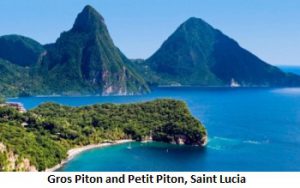
Saint Lucia Recognized as ‘Best Island in the Caribbean’

Go Lean Commentary

Saying that “we are the best”, really does not bring any solace.

Just ask the people in St. Lucia! Do they feel like they are the “best island in the Caribbean”? (Economically, they are below average; their GDP ranking for the region is 18 of 30; see Table 1).

But it is true, the Caribbean does some things well; and some islands do the “well” even better than others:

There are features of Caribbean life that work very well now. We are currently the “best address” in the world. If one has the resources, there is no better place to call home – imagine a lottery winner relocating to a Caribbean paradise. Further, if someone has the resources for only a short time-frame, there is no better place to vacation. And thus, as a regional community, the Caribbean is best at servicing: Tourism, Cruise Operations, Offshore Banking, and Specialty Agriculture.

Tourism
Tourism is the primary economic driver for almost every “CU“ member-state. In economics, a measurement of demand is the price indicator. During the “high” season – winter peak – Caribbean hotels, of a high-quality rating, can be priced at thousands of (US) dollars … per night. There is the demand; then follows, the supply systems to meet the demand. This peak period, throughout the Caribbean, lasts from December to April. – Book Go Lean…Caribbean Page 58.

While we may have the “best of this and the best of that”, our dispositions in the Caribbean are still inadequate, bad and sometimes failing. On the one hand, we may have the best addresses on the planet for tourism, but on the other hand, we have blatant failures in so many other areas of society. So if the goal is to forge a better place to live, work and play, then we need to accept that only the “play” part is enjoying some measure of success and the ranking of “Best” is simply not enough.

See this news article here:

Title: Saint Lucia Recognized as Best Island In the Caribbean

Press Release: Saint Lucia has been recognized as the “Best Island in the Caribbean” by Global Traveler at their Sixth Annual Leisure Lifestyle Awards. Global Traveler is a monthly publication that attracts some 300,000 readers and connects with U.S.-based frequent, affluent, international travellers who have an average net worth of $2 million.

The awards cocktail took place on the rooftop of Sofitel Los Angeles, Beverly Hills. This award marks the destination’s second ‘Best Island in the Caribbean’ honour in the 6-year life of the Global Traveler Leisure Lifestyle Awards, Saint Lucia having won the inaugural award in 2013.

Saint Lucia registered a record-setting year in 2017, with year-to-date numbers for 2018 improving over the same period last year. First quarter figures for 2018 show a 17.8% increase in stay-over arrivals and a 13.5% increase in cruise arrivals over last year’s record.

Remarking on Global Traveler award, Minister for Tourism Hon. Dominic Fedee stated, “This is an award of recognition to the hard work and dedication of every hospitality worker and to every Saint Lucian. It is the Saint Lucian story and its majesty which continues to attract visitors to the destination making it a world-class holiday and business destination for travellers.”

Global Traveler also highlighted Saint Lucia as a ‘dream come true’ port of call for cruise visitors. The award survey was conducted in the Global Traveler magazine through an insert in subscriber copies, as a direct mail questionnaire, online and in emails. Saint Lucia beat out nine other destinations for the top honour, including Aruba, Grand Cayman, Saint Vincent and the Grenadines, the Bahamas, Curaçao, Nevis, Jamaica the British Virgin Islands and the U.S. Virgin Islands.

“We believe Saint Lucia is a unique Caribbean destination which offers something to every traveller and this award is in recognition of our destination’s appeal. We will continue to find creative ways to present Saint Lucia in the marketplace as we seek to increase market penetration, awareness and visitor arrivals,” stated the Executive Chairperson of the Saint Lucia Tourism Authority Agnes Francis.

Each year, Global Traveler awards the GT Tested Reader Survey awards, the Leisure Lifestyle Awards and the Wines on the Wing awards.

Source: Retrieved May 29, 2018 from: https://stluciatimes.com/2018/05/22/saint-lucia-recognized-as-best-island-in-the-caribbean/

So the appeal to the U.S.-based affluent traveler is “spot on” for Saint Lucian tourism; but maybe this is not good enough; see the still low GDP-Per-Capita figures in Table 1. Experiences shows that catering to the rich will ever only generate a limited success, because this is only a limited population – think the One Percent. Imagine if “we”, the entire Caribbean are able to appeal and deliver to the other 99 Percent. Maybe then, there would be more prosperity for a better Caribbean.

This is the assertion of the book Go Lean…Caribbean – available to download for free. It posits that with a unified approach the Caribbean region can launch certain empowerments that can elevate all of the region to better deliver on the tourism product. The book explains that these empowerments will make the region better, not just to play, but to live, work and play.

The Go Lean book serves as a roadmap for the introduction and implementation of the technocratic Caribbean Union Trade Federation (CU), for the elevation of Caribbean society – for all member-states. The book provides 370-pages of turn-by-turn instructions on “how” to adopt new community ethos, plus strategies, tactics, implementations and advocacies to execute so as to transform the economic engines of the region. For example, to supplement the affluent market for tourism stay-overs, the book urges the targeting of an alternate special population with the following advocacies:

  • 10 Ways to Enhance Tourism in the Caribbean Region (Page 19)
The Bottom Line on Snowbirds

A snowbird is someone from the U.S. Northeast, U.S. Midwest, Pacific Northwest, or Canada who spends a large portion of winter in warmer locales such as California, Arizona, Florida, Texas, the Carolinas, or elsewhere along the Sun Belt region of the southern and southwest United States, Mexico, and areas of the Caribbean. Snowbirds are typically retirees, and business owners who have a second home in a warmer location or whose business can be easily moved from place to place, such as flea market and swap meet vendors. Some snowbirds carry their homes with them, as RV’s or campers (mounted on bus or truck frames) or as boats following the east coast Intracoastal waterway. In the past snowbirds were frequently wealthy with independent income who maintained several seasonal residences and shifted residence with the seasons to avail themselves of the best time to be at each location; this custom has declined considerably due to changing patterns of taxation and the relative ease of long distance travel compared with earlier times. Many of these “snowbirds” also use their vacation time to declare permanent residency in low- or no-tax income tax states (where the tax bases are augmented by high tourism taxes), and claim lower non-resident income taxes in their home states. Canadian snowbirds usually make sure they retain residency in Canada in order to retain health benefits.

See Appendix VIDEO below.

  • 10 Ways to Improve Transportation (Page 20)
# 3 Turnpike: Ferries

For the most part, the CU member-states are islands [or coastal states] thereby allowing for a viable means of transportation via sea navigation. By deploying ferries, the CU facilitates passenger travel for business and leisure.

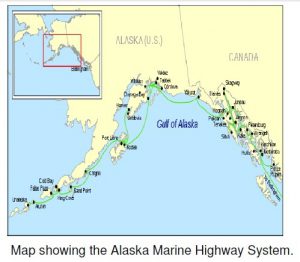
  • APPENDIX IC – Alaska Marine Highway System (Page 28)
Model for the CU

The CU envisions a similar water-based highway system of ferries and docks to facilitate passenger, cargo and vehicle [(i.e. RV’s)] travel connecting the islands of the Caribbean region to the mainland ports. This ferry system will be a component of the Union Atlantic Turnpike.
So kudos to St. Lucia…

… but let’s do even better than the status quo. We have the opportunity to benefit from a year-round tourism product; plus the successful diversification of the regional economy. In fact, this CU/Go Lean roadmap has these 3 prime directives:

  • Optimization of the economic engines in order to grow the regional economy to $800 Billion and create 2.2 million new jobs.
  • Establishment of a security apparatus to ensure public safety and protect the resultant economic engines.
  • Improve Caribbean governance to support these engines, including a separation-of-powers between the member-states and CU federal agencies.

The vision of an interconnected ferry system throughout the region requires a better interdependence among all the Caribbean islands. This is the quest of the Go Lean/CU roadmap. The book stresses that transforming the Caribbean societal engines must be a regional pursuit. This was an early motivation for the roadmap, as pronounced in the opening Declaration of Interdependence (Pages 12 – 14):

xi. Whereas all men are entitled to the benefits of good governance in a free society, “new guards” must be enacted to dissuade the emergence of incompetence, corruption, nepotism and cronyism at the peril of the people’s best interest. The Federation must guarantee the executions of a social contract between government and the governed.

xvi. Whereas security of our homeland is inextricably linked to prosperity of the homeland, the economic and security interest of the region needs to be aligned under the same governance. Since economic crimes … can imperil the functioning of the wheels of commerce for all the citizenry, the accedence of this Federation must equip the security apparatus with the tools and techniques for predictive and proactive interdictions.

xxiv. Whereas a free market economy can be induced and spurred for continuous progress, the Federation must install the controls to better manage aspects of the economy: jobs, inflation, savings rate, investments and other economic principles. Thereby attracting direct foreign investment because of the stability and vibrancy of our economy.

xxvi.  Whereas the Caribbean region must have new jobs to empower the engines of the economy and create the income sources for prosperity, and encourage the next generation to forge their dreams right at home, the Federation must therefore foster the development of new industries … [and] invigorate the enterprises related to existing industries like tourism … – impacting the region with more jobs.

The vision of an interconnected ferry system throughout the Caribbean region has been detailed before in these previous blog-commentaries:

https://goleancaribbean.com/blog/?p=12322 Ferries 101: Economics, Security and Governance
https://goleancaribbean.com/blog/?p=9179 Snowbirds Tourism – First Day of Autumn – Time to Head South
https://goleancaribbean.com/blog/?p=510 Snowbirds Need for Winter Hospitality

Ferries will transform all areas of Caribbean life. So the Go Lean roadmap is conceivable, believable and achievable for transforming the regional tourism product. Our Best can be even better still.

Let’s do this; let’s make our homeland a better place to live, work and play. 🙂

Download the free e-Book of Go Lean … Caribbean – now!

Sign the petition to lean-in for this roadmap for the Caribbean Union Trade Federation.

————

Appendix – Table 1 
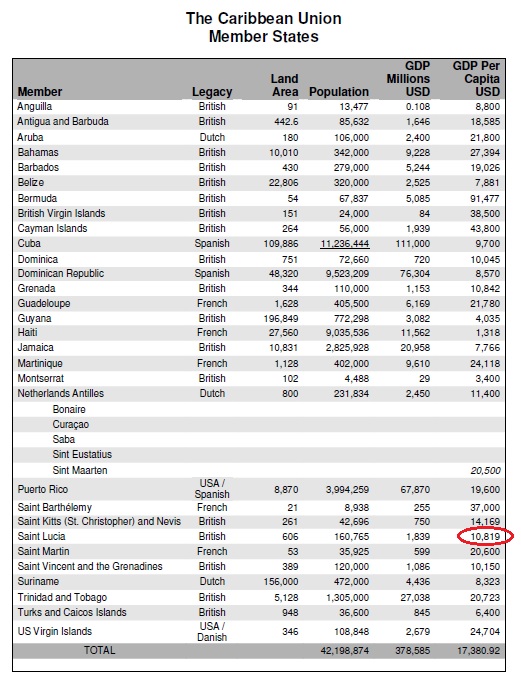
Click on Photo to Enlarge

————

Appendix VIDEO – Anne Murray ~ Snowbird (1970) – https://youtu.be/x0oc3IR4qGQ

Published May 26, 2011 – Music in this video; Learn more

Share this post:
, , ,

Overseas Workers – Not the Panacea

Go Lean Commentary

What do you want to be when you grow up?

This question is usually asked of young ones while they are still fostering their development. This question normally reflects the role models that the young ones perceive.

A similar exercise can be applied to developing countries. So we ask the question of the developing Caribbean nations:

  • What do you want to be when you grow up?
  • Who is your role model?
  • Which country’s template do you want to consider?

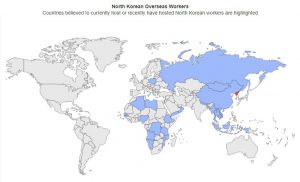
The easy answers could be the US, the EU or Canada, but our practices belie a different role model. Our region seems to be copying North Korea. There is a jobs program that exists in our region that is 100% modeled on North Korea; it is their Overseas Worker program. See more details on the North Korean program here:

Estimates of the number of North Koreans overseas vary considerably. Some researchers, as well as a 2015 report by the UN Special Rapporteur on North Korean Human Rights, cite roughly 50,000 overseas workers. Other analysts have given larger estimates, ranging as high as 120,000 overseas workers. A fact sheet published by the U.S. Mission to the UN in 2017 cites 100,000 overseas workers, bringing in revenue of over $500 million annually.

The reason for this variation hinges mostly on the difficulty of estimating the number of North Korean workers in China. The number of North Koreans legally entering China has increased significantly in recent years, with over 188,000 reported entrants in 2015, including 94,000 entrants identified as “workers and crew”. This may be connected to a reported2012 informal agreement between Beijing and Pyongyang allowing for an increased number of North Koreans to work in China. However, data on the number of reported entrants does not necessarily reflect the total number of North Korean workers in China. On the one hand, some North Korean workers may have been placed in entry categories other than “workers and crew,” and workers might stay longer than one-year periods. One the other hand, it is not clear whether the “worker and crew” category includes transportation workers who may enter China on a routine basis for very short terms, or how often North Korean workers (particularly those stationed in the border area) travel back and forth across the border — in either case, any given worker would be counted as an “entrant” multiple times in a single year.

Successive UN Security Council resolutions have imposed progressively stronger sanctions on the employment of North Korean overseas laborers. The most recent, Resolution 2397 adopted in December 2017, requires member states to repatriate all DPRK nationals earning income in their territory within 24 months.

North Korea’s overseas workers are typically closely managed by DPRK state-run enterprises, which contract with foreign partners to provide labor. While conditions may vary from place to place, human rights advocates note that North Korean overseas workers often labor under intense conditions, face restrictions on their movements, and keep little of their wages. Other analysts argue that work abroad nonetheless provides North Koreans with the opportunity to earn more money than they could at home, and that foreign work is often seen as desirable within North Korea.

While it appears that the majority of state-organized North Korean overseas workers are men, women comprise a majority of the undocumented North Koreans living in China. Due to their vulnerable status, undocumented North Korean women are often subject to sex trafficking or forced marriage.

Source: Retrieved May 23, 2018 from: https://www.northkoreaintheworld.org/economic/north-korean-overseas-workers

Overseas Workers?! There are so many dangers; so many threats; and so many downsides that no government should be encouraging this role model – the North Korean model – for any country. India – see Appendix B – had bad experiences with this practice and have now added new empowerments to better protect its people from the dangers of overseas employment. Yet, our Caribbean member-states seem to be “cruising for a bruising” by inviting their own overseas workers programme. Is this who we want to be when we grow up?

Sad!

Now see this news article here, reflecting the demand for overseas employment in one Caribbean member-state. The demand is so high that the abuse has begun; see the article here:

Title: St Lucia warns of false advertisements for Canadian farm worker programme

CASTRIESThe St Lucia government has warned of “false advertisements” in circulation on the social media and other platforms indicating that the Labour Department here is now accepting applications from nationals for work under the Canadian Farm Worker Programme.
In a statement, the Labour Department said that it has “been swamped with scores of citizens in recent days seeking to register in response to the false notice”.

“Citizens are informed that the Department of Labour is currently not in the process of accepting new applicants to the programme. The department currently has a database of over five hundred citizens registered for the programme. This database is the first point for consideration in the event new opportunities become available,” the Ministry of Labour said in the statement.

St Lucia is among a number of Caribbean countries whose nationals participate in the annual work programme in Canada and the statement quoted Labour Minister Stephenson King as saying that he is “working feverishly with existing and prospective employers for additional opportunities for St Lucians”.

The Department said it also wanted to take the opportunity “to thank employers and all citizens for continuous support,” adding “rest assured we will continue working for you”. (CMC)
Source: Posted May 20, 2018; retrieved May 23, 2018 from: http://www.nationnews.com/nationnews/news/159035/st-lucia-warns-false-advertisements-canadian-farm-worker-programme

So according to the foregoing – “St Lucia is among a number of Caribbean countries whose nationals participate in the annual work programme in Canada” – when the question is asked: Where are the jobs in the Caribbean? The answer in St. Lucia and these other Caribbean countries is:

Overseas!

Commentators conclude that North Korea is Hell on Earth! See the related story in the Appendix VIDEO. We must do better than copying their economic model!

The book Go Lean…Caribbean – available to download for free – serves as a roadmap for the introduction and implementation of the technocratic Caribbean Union Trade Federation (CU), for the elevation of Caribbean society – for all member-states. Our quest is to do better for Caribbean jobs; in fact the CU/Go Lean roadmap has these 3 prime directives:

  • Optimization of the economic engines in order to grow the regional economy to $800 Billion and create 2.2 million new jobs.
  • Establishment of a security apparatus to ensure public safety and protect the resultant economic engines.
  • Improve Caribbean governance to support these engines, including a separation-of-powers between the member-states and CU federal agencies.

Overseas jobs in Canada is not the panacea for what ails the Caribbean economically. Rather than look to Canada, we must look inwardly at our region so as to fix our broken local economic engines, not just look “across the waters” for others to solve our problems for us.

The book stresses that reforming and transforming the Caribbean economic engines must be a regional pursuit. This was an early motivation for the roadmap, as pronounced in the opening Declaration of Interdependence (Pages 12 – 14):

xi. Whereas all men are entitled to the benefits of good governance in a free society, “new guards” must be enacted to dissuade the emergence of incompetence, corruption, nepotism and cronyism at the peril of the people’s best interest. The Federation must guarantee the executions of a social contract between government and the governed.

xvi. Whereas security of our homeland is inextricably linked to prosperity of the homeland, the economic and security interest of the region needs to be aligned under the same governance. Since economic crimes … can imperil the functioning of the wheels of commerce for all the citizenry, the accedence of this Federation must equip the security apparatus with the tools and techniques for predictive and proactive interdictions.

xxiv. Whereas a free market economy can be induced and spurred for continuous progress, the Federation must install the controls to better manage aspects of the economy: jobs, inflation, savings rate, investments and other economic principles. Thereby attracting direct foreign investment because of the stability and vibrancy of our economy.

xxvi. Whereas the Caribbean region must have new jobs to empower the engines of the economy and create the income sources for prosperity, and encourage the next generation to forge their dreams right at home, the Federation must therefore foster the development of new industries, like that of ship-building, automobile manufacturing, prefabricated housing, frozen foods, pipelines, call centers, and the prison industrial complex. In addition, the Federation must invigorate the enterprises related to existing industries like tourism, fisheries and lotteries – impacting the region with more jobs.

The Go Lean book provides 370-pages of turn-by-turn instructions on “how” to adopt new community ethos, plus the strategies, tactics, implementations and advocacies to execute so as to reboot, reform and transform the economic engines of Caribbean society. Just “how” can the stewards for a new Caribbean create local “innovative” jobs in our region? This is the actual title of one advocacy in the Go Lean book. Consider the specific plans, excerpts and headlines here from Page 152, entitled:

10 Ways to Create Jobs … in the Caribbean Region

1 Lean-in for the Caribbean Single Market and Economy
The CU will allow for the unification of the region into one market, thereby creating a single economy of 30 member- states, 42 million people and a GDP of over $800 Billion. The CU’s mission is to create high-paying jobs for the region, beyond the minimum wage (defined below). Many high-wage industries would be promoted, incentivized and regulated at the federal level, even new industries created. Jobs come from trade; the CU goal is to improve trade. The CU will thus institute Enterprise Zones and Empowerment Zones – SGE’s – with tax benefits: rebates, abatements – as job creation pockets. The CU will capture data, micro and macro-economic metrics, to measure the success/failure of these initiatives.
2 Feed Ourselves
The industries of agri-business allow structured commercial systems to grow, harvest and trade in food supplies. Many of the Caribbean member states (Lesser Antilles) acquire all their food in trade, the agricultural footprint is very small, though some countries (Greater Antilles, Belize, Guyana & Suriname) have a low opportunity cost for producing food. But with the Trade Federation in force, intra-region trade will be the first priority. When the demand is qualified, quantified and assured, the supply and quality there in, will catch up.
3 Clothe Ourselves
4 House Ourselves
In the US, it’s a truism of the National Association of Realtors® that “housing creates jobs”. With the repatriation of the Caribbean Diaspora, local building supplies and new “housing starts” will emerge in the Caribbean. Plus, the CU will facilitate mortgage secondary market and pre-fabulous construction thereby fostering new housing sub-industries.
5 Update Our Own Infrastructure and the Industries They Spun

Roads, bridges, ports, ship-building dry-docks, utilities and media outlets create companies and jobs for implementation and maintenance. Many of the infrastructure projects will cover the transportation sector; with improvements here, the result will be more traffic (passenger & cargo). This opens new modes for travelers/visitors/tourists to come to their favorite resort destination. (Consider Fast Ferries boats and Spring Break). Also, the CU will correct the void of no auto manufacturing industry in the Caribbean region, despite a market of 42 million people.

6 Steer More People to S.T.E.M. Education and Careers
7 Help Regional Businesses Find Foreign Markets
8 Welcome Home Emigrants
9 Welcome “Empowering” Immigrants
10 Draw More Tourists
The North American upper-middle-class market should not be the only target, better infrastructure and promotion can channel more tourists to the region. There can be a year round improvement in tourist arrivals, rather than just the “high” season. The CU will promote events with wide appeal to attract more tourists from around the world, year-round. The facilitation, support and promotion of the events will create multitudes of jobs, if only temporary.

Once these new “innovative” local direct jobs are created, then the job multiplier factor is engaged. The Go Lean book (Page 259) describes this factor and effect as follows:

… not only do innovative industries bring “good jobs” and high salaries to the communities where they cluster but that their impact is “much deeper” than their direct effect. … A healthy traded sector benefits the local economy directly, as it generates well-paid jobs, and indirectly as it creates additional jobs in the non-traded sector. What is truly remarkable is that this indirect effect to the local economy is much larger than the direct effect.

The subject of overseas jobs in Canada have been visited before. There was a previous blog-commentary from January 8, 2015 that detailed the experience for Jamaica; this previous study is one reason why we are able to conclude that this type of employment program, overseas, is not the panacea:

Jamaica has one of the highest rates of societal abandonment in the Caribbean. In a previous blog-commentary, it was revealed that the Caribbean loses more than 70 percent of tertiary educated to brain drain, but Jamaica’s rate is at 85%; (plus 35% of the secondary educated population leaves). This Foreign Guest Worker program, in the foregoing article, seems to be a “double down” on the itinerant Jamaican strategy. Imagine the analogy of a teenage runaway leaving his family behind; then when the parents finally discover that prodigal’s son’s whereabouts, they send another child to join them, rather than encourage a return home and a plea to prosper and be planted at home.

The people of Jamaica deserves better.

The people of the Caribbean deserves better. We do not have to repeat the same mistakes as India, North Korea or other Caribbean states; we can … and must do better. We must create local jobs. This is conceivable, believable and achievable. Yes, we can make our homeland a better place to live, work and play. 🙂

Download the free e-Book of Go Lean … Caribbean – now!

Sign the petition to lean-in for this roadmap for the Caribbean Union Trade Federation.

————–

Appendix A VIDEO – North Korea Literal Hell On Earth – https://youtu.be/DGA0_4pyOrw

Paulraj P.

Published on Mar 15, 2017 – Must Read:  WEIRD AND BIZARRE FACTS ABOUT NORTH KOREA, THE MOST REPRESSIVE AUTHORITARIAN COUNTRY IN THE WORLD, A LITERAL HELL ON EARTH

Listen to Yeonmi Park , escaped from North Korea and now a human right activist, who like any other North Koreans  was once forced to  collect  human and animal poo for the government ,  knew about love for the first time, only after watching “Titanic”,  speaking  in One Young World Summit in Dublin. Keep tissues.

————–

Appendix B – India’s Overseas Workers Passport – Emigration Act, 1983

The Emigration Act, 1983 is an Act passed by the Government of India to regulate emigration of people from India, with the stated goal of reducing fraud or exploitation of Indian workers recruited to work overseas. The Act imposed a requirement of obtaining emigration clearance (also called POE clearance) from the office of Protector of Emigrants (POE), Ministry of Overseas Indian Affairs for people emigrating from India for work. As of 2017, this requirement applies only for people going to one of 18 listed countries.[1][2][3][4]

Background

Indians emigrated, both temporarily and permanently, to a number of countries, including the United States, United Kingdom, Germany, Canada, Australia, and the economies of south-east Asia. The bulk of emigration from the 1970s onward was to the Arab states of the Persian Gulf.[3] Recruiting agents played a role in connecting workers to foreign jobs and charged the workers or the employers some share of the revenue. The Emigration Act, 1983 was passed to address concerns related to defrauding and exploitation of workers by the recruiting agents and other problems they might face upon going abroad.[3]

Provisions

Creation of the Office of Protector of Emigrants (Chapter II)

Chapter II, Section 3 of the Act provided that the Central Government may appoint a Protector General of Emigrants and as many Protectors of Emigrants (POE) as it sees fit, as well as their respective areas of operation. Later Sections of Chapter II defined the duties of Protectors of Emigrants in more detail, provided for emigration check-points, and provided for other emigration officers.[2][3]

Registration of recruiting agents (Chapter III)

The Act made the Protector General of Emigrants and other Protectors of Emigrants the authorities who could register recruiting agents. A person could operate as a recruiting agent for emigrants only if registered. The Act also provided details on the application, terms and conditions, renewal, and cancellation of registration.[2][3]

Permits for recruitment by employers (Chapter IV)

All employers were required to recruit either through a recruiting agent with a valid registration, or obtain a permit for recruitment. The procedure for obtaining, validity period, and cancellation of permits was detailed in the law.[2]

Emigration clearance (Chapter V)

Any citizen of India seeking to emigrate was required to have emigration clearance from the Protectorate of Emigrants (POE). The application process for emigration clearance, and potential grounds for rejection, were detailed.[2]

As of 2017, passport holders could either have ECR status (emigration check required) in which case they need to obtain emigration clearance, or have ECNR status (emigration check not required) in which case they do not need to obtain emigration clearance.[3] The ECR/ECNR distinction does not appear to have been stated in the original language of the Emigration Act, 1983, which seems to suggest that anybody emigrating for work is required to obtain emigration clearance.[2] The requirements for getting to ECNR status have been progressively relaxed over time, starting from being restricted to people such as graduates and income tax payers and now applying to a much wider set of people including those who have completed matriculation (class 10 of school).[5][6]

Source: Retrieved May 23, 2018 from: https://en.wikipedia.org/wiki/Emigration_Act,_1983

Share this post:
, , , ,
[Top]

May Day! May Day! We Need Help With Jobs! – ENCORE

Today is May Day!

In many countries, this day is equivalent to Labor Day, a date set aside to honor and celebrate workers, or the movement to empower workers in society. Many of the historicity of these movements were tied to labor unions.

More than 80 countries celebrate International Workers’ Day on May 1 – the ancient European holiday of May Day.

All Caribbean member-states need help with our job-labor eco-system. Our societal engines are so dysfunctional that our people flee … abandoning the homeland in search of jobs.

There is this prospect for help. This previous blog-commentary from June 18, 2015, discussed the trends in the labor markets, which depict a decline in collective bargaining. This Encore of that commentary is presented here with a plan to assuage this bad trend and create 2.2 million new jobs:

==================

Title: Economic Principle: Wage-Seeking – Market Forces -vs- Collective Bargaining

Go Lean Commentary

The field of Economics is unique! We all practice it every day, no matter the level of skill or competence. There is even the subject area in basic education branded Home Economics, teaching the students the fundamentals of maintaining, supporting and optimizing a home environment. Most assuredly, economics is an art and a science, albeit a social science.

In a previous blog/commentary, Scotman’s Adam Smith was identified as the father of modern macro-economics. Though he lived from 1723 to 1790, his writings defined advanced economic concepts even in this 21st Century. His landmark book An Inquiry into the Nature and Causes of the Wealth of Nations qualified the divisions of income into these following categories: profit, wage, and rent.[4] We have previously explored profit-seeking (a positive ethos that needs to be fostered in the Caribbean region) and rent-seeking (a negative effort that proliferates in the Caribbean but needs to be mitigated), so now the focus of this commentary is on the activity of wage-seeking, and the concepts of governance and public choice theory to allow for maximum employment.

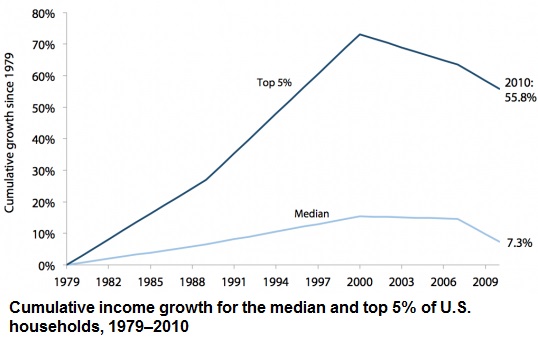
This is hard! Change has come to the world of wage-seekers – the middle classes are under attack; the labor-pool of most industrialized nations have endured decline, not in the numbers, but rather in prosperity. While wage-earners have not kept pace with inflation, top-earners (bonuses, commissions and business profits) have soared; (see Photo).

CU Blog - Economic Principles - Wage-Seeking - Market forces -vs- Collective Bargaining - Photo 2As a direct result, every Caribbean member-state struggles with employment issues in their homeland. In fact, this was an initial motivation for the book Go Lean…Caribbean, stemming from the fall-out of the 2008 Great Recession, this publication was presented as a roadmap for the introduction and implementation of the Caribbean Union Trade Federation (CU) to elevate the economic, security and governing engines of the Caribbean region to create 2.2 million new jobs, despite global challenges.

Needless to say, the global challenge is far more complex than Home Economics. The Go Lean book describes the effort as heavy-lifting; then proceeds to detail the turn-by-turn directions of a roadmap to remediate and mitigate wage-seeking.

The roadmap channels the Economic Principles and best-practices of technocrats like Adam Smith and 11 other named economists, many of them Nobel Laureates. A review of the work of these great men and woman constitute “Lessons in Economic Principles”. Why would these lessons matter in the oversight of Caribbean administration? Cause-and-effect!

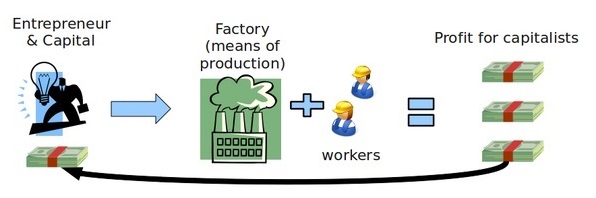
Profit 4The root of the current challenge for wage-seekers is income equality; and this is bigger than just the Caribbean. It is tied to the global adoption of globalization and technology/ automation – a product of global Market Forces as opposed to previous Collective Bargaining factors. This relates back to the fundamental Economic Principle of “supply-and-demand”; but now the “supply” is global. This photo/”process flow” here depicts the ingredients of Market Forces. When there is the need for labor, the principle of comparative analysis is employed, and most times the conclusion is to “off-shore” the labor efforts, and then import the finished products. This is reversed of the colonialism that was advocated by Adam Smith; instead of the developed country providing factory labor for Third World consumption, the developed nation (i.e. United States) is now in the consumer-only role, with less and less production activities, for products fabricated in the Third World. This reality is not sustainable for providing prosperity to the middle classes, to the wage-seekers.

As a community, we may not like the laws of Economics, but we cannot ignore them. The Go Lean book explains the roles and significance of Economic Principles … with this excerpt (Page 21):

While money is not the most important factor in society, the lack of money and the struggle to acquire money creates challenges that cannot be ignored. The primary reason why the Caribbean has suffered so much human flight in the recent decades is the performance of the Caribbean economy. Though this book is not a study in economics, it recommends, applies and embraces these 6 core Economic Principles as sound and relevant to this roadmap:

  1. People Choose: We always want more than we can get and productive resources (human, natural, capital) are always limited. Therefore, because of this major economic problem of scarcity, we usually choose the alternative that provides the most benefits with the least cost.
  2. All Choices Involve Costs: The opportunity cost is the next best alternative you give up when you make a choice. When we choose one thing, we refuse something else at the same time.
  3. People Respond to Incentives in Predictable   Ways: Incentives are actions, awards, or rewards that determine the choices people make. Incentives can be positive or negative. When incentives change, people change their behaviors in predictable ways.
  4. Economic Systems Influence Individual Choices and Incentives: People cooperate and govern their actions through both written and unwritten rules that determine methods of allocating scarce resources. These rules determine what is produced, how it is produced, and for whom it is produced. As the rules change, so do individual choices, incentives, and behavior.
  5. Voluntary Trade Creates Wealth: People specialize in the production of certain goods and services because they expect to gain from it. People trade what they produce with other people when they think they can gain something from the exchange. Some benefits of voluntary trade include higher standards of living and broader choices of goods and services.
  6. The Consequences of Choices Lie in the Future: Economists believe that the cost and benefits of decision making appear in the future, since it is only the future that we can influence. Sometimes our choices can lead to unintended consequences.

Source: Handy Dandy Guide (HDC) by the National Council on Economic Education (2000)

The Go Lean book describes the end result of the application of best-practices in this field of economics over the course of a 5-year roadmap: the CU … as a hallmark of technocracy. But the purpose is not the edification of the region’s economists, rather to make the Caribbean homeland “better places to live, work and play” for its citizens. This branding therefore puts emphasis on the verb “work”; the nouns “jobs” and “wages” must thusly be a constant focus of the roadmap.

Brain Drain 70 percent ChartThis Go Lean book declares that the Caribbean eco-system for job-creation is in crisis … due to the same global dilemma. The roadmap describes the crisis as losing a war, the battle of globalization and technology. The consequence of the defeat is 2 undesirable conditions: income inequality and societal abandonment, citizens driven away to a life in the Diaspora. This assessment currently applies in all 30 Caribbean member-states, as every community has lost human capital to emigration. Some communities, like Puerto Rico and the US Virgin Islands have suffered with an abandonment rate of more than 50% and others have watched more than 70% of college-educated citizens flee their community for foreign shores. Even education is presented as failed investments as those educated in the region and leave to find work do not even return remittances in proportion to their costs of development. (See Table 4.1 in the Photo)

The Go Lean book therefore posits that there is a need to re-focus, re-boot, and optimize the labor/wage-seeking engines so as to create more jobs with livable wages. Alas, this is not just a Caribbean issue, but a global (i.e. American) one as well. See the following encyclopedic references for wage-seeking and Collective Bargaining to fully understand the complexities of these global issues:

Encyclopedia Reference #1: Wage-Seeking
(Source: https://en.wikipedia.org/wiki/Wage)

A wage is monetary compensation paid by an employer to an employee in exchange for work done. Payment may be calculated as a fixed amount for each task completed (a task wage or piece rate), or at an hourly or daily rate, or based on an easily measured quantity of work done.

Wages are an example of expenses that are involved in running a business.

Payment by wage contrasts with salaried work, in which the employer pays an arranged amount at steady intervals (such as a week or month) regardless of hours worked, with commission which conditions pay on individual performance, and with compensation based on the performance of the company as a whole. Waged employees may also receive tips or gratuity paid directly by clients and employee benefits which are non-monetary forms of compensation. Since wage labour is the predominant form of work, the term “wage” sometimes refers to all forms (or all monetary forms) of employee compensation.

Determinants of wage rates
Depending on the structure and traditions of different economies around the world, wage rates will be influenced by market forces (supply and demand), legislation, and tradition. Market forces are perhaps more dominant in the United States, while tradition, social structure and seniority, perhaps play a greater role in Japan.[6]

Wage Differences
Even in countries where market forces primarily set wage rates, studies show that there are still differences in remuneration for work based on sex and race. For example, according to the U.S. Bureau of Labor Statistics, in 2007 women of all races made approximately 80% of the median wage of their male counterparts. This is likely due to the supply and demand for women in the market because of family obligations. [7] Similarly, white men made about 84% the wage of Asian men, and black men 64%.[8] These are overall averages and are not adjusted for the type, amount, and quality of work done.

Real Wage
The term real wages refers to wages that have been adjusted for inflation, or, equivalently, wages in terms of the amount of goods and services that can be bought. This term is used in contrast to nominal wages or unadjusted wages. Because it has been adjusted to account for changes in the prices of goods and services, real wages provide a clearer representation of an individual’s wages in terms of what they can afford to buy with those wages – specifically, in terms of the amount of goods and services that can be bought.

See Table of European Model in the Appendix below. (The European Union is the model for the Caribbean Union).

———-

Encyclopedia Reference #2: Collective Bargaining
(Source: https://en.wikipedia.org/wiki/Collective_bargaining)

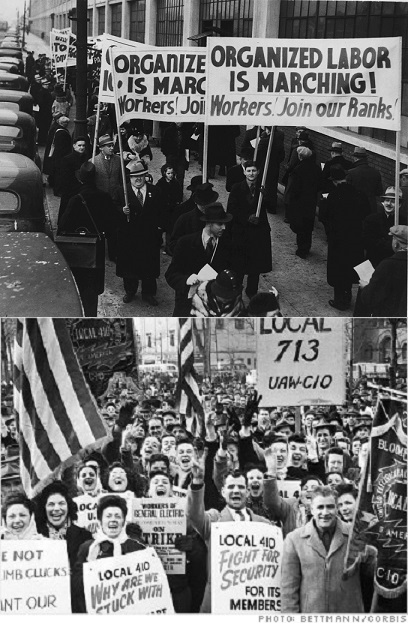
WPR: Marches & PicketsCollective Bargaining is a process of negotiation between employers and a group of employees aimed at reaching agreements to regulate working conditions. The interests of the employees are commonly presented by representatives of a trade union to which the employees belong. The collective agreements reached by these negotiations usually set out wage scales, working hours, training, health and safety, overtime, grievance mechanisms, and rights to participate in workplace or company affairs.[1]

The union may negotiate with a single employer (who is typically representing a company’s shareholders) or may negotiate with a group of businesses, depending on the country, to reach an industry wide agreement. A collective agreement functions as a labor contract between an employer and one or more unions.

The industrial revolution brought a swell of labor-organizing in [to many industrialized countries, like] the US. The American Federation of Labor (AFL) was formed in 1886, providing unprecedented bargaining powers for a variety of workers.[11] The Railway Labor Act (1926) required employers to bargain collectively with unions. While globally, International Labour Organization Conventions (ILO) were ratified in parallel to the United Nations efforts (i.e. Declaration of Human Rights, etc.). There were a total of eight ILO fundamental conventions [3] all ascending between 1930 and 1973, i.e. the Freedom of Association and Protection of the Right to Organise Convention (1949).

The Go Lean book presents a roadmap on how to benefit from the above Economic Principles – and how to empower communities anew – in the midst of tumultuous global challenges. This roadmap addresses more than economics, as there are other areas of societal concern. This is expressed in the CU charter; as defined by these 3 prime directives:

  • Optimization of economic engines in order to grow the regional economy to $800 Billion and create 2.2 million new jobs.
  • Establishment of a security apparatus to protect the resultant economic.
  • Improvement of Caribbean governance to support these engines.

Early in the Go Lean book, the responsibility to create jobs was identified as an important function for the CU with these pronouncements in the Declaration of Interdependence (Pages 14):

xix.  Whereas our legacy in recent times is one of societal abandonment, it is imperative that incentives and encouragement be put in place to first dissuade the human flight, and then entice and welcome the return of our Diaspora back to our shores.

xxi.  Whereas the preparation of our labor force can foster opportunities and dictate economic progress for current and future generations, the Federation must ensure that educational and job training opportunities are fully optimized for all residents of all member-states, with no partiality towards any gender or ethnic group. The Federation must recognize and facilitate excellence in many different fields of endeavor, including sciences, languages, arts, music and sports. This responsibility should be executed without incurring the risks of further human flight, as has been the past history.

xxiv. Whereas a free market economy can be induced and spurred for continuous progress, the Federation must install the controls to better manage aspects of the economy: jobs, inflation, savings rate, investments and other economic principles. Thereby attracting direct foreign investment because of the stability and vibrancy of our economy.

xxvi.  Whereas the Caribbean region must have new jobs to empower the engines of the economy and create the income sources for prosperity, and encourage the next generation to forge their dreams right at home, the Federation must therefore foster the development of new industries, like that of ship-building, automobile manufacturing, prefabricated housing, frozen foods, pipelines, call centers, and the prison industrial complex. In addition, the Federation must invigorate the enterprises related to existing industries tourism, fisheries and lotteries – impacting the region with more jobs.

According to an article from the Economic Policy Institute, entitled The Decline of Collective Bargaining and the Erosion of Middle-class Incomes in Michigan by Lawrence Mishel (September 25, 2012), the challenges to middle class income are indisputable, and the previous solution – Collective Bargaining – is no longer as effective as in the past. (The industrial landscape of Michigan had previously been identified as a model for the Caribbean to consider). See a summary of the article here (italics added) and VIDEO in the Appendix:

In Michigan between 1979 and 2007, the last year before the Great Recession, the state’s economy experienced substantial growth and incomes rose for high-income households. But middle-class incomes did not grow. The Michigan experience is slightly worse than but parallels that of the United States as a whole, where middle-class income gains were modest but still far less than the income gains at the top. What the experience of Michiganders and other Americans makes clear is that income inequality is rising, and it has prevented middle-class incomes from growing adequately in either Michigan or the nation.

The key dynamic driving this income disparity has been the divergence between the growth of productivity—the improvement in the output of goods and services produced per hour worked—and the growth of wages and benefits (compensation) for the typical worker. It has been amply documented that productivity and hourly compensation grew in tandem between the late 1940s and the late 1970s, but split apart radically after 1979. Nationwide, productivity grew by 69.1 percent between 1979 and 2011, but the hourly compensation of the median worker (who makes more than half the workforce but less than the other half) grew by just 9.6 percent (Mishel and Gee 2012; Mishel et al. 2012). In other words, since 1979 the typical worker has hardly benefited from improvements in the economy’s ability to raise living standards and, consequently, middle-class families’ living standards have barely budged since then. This phenomenon has occurred across the nation, including in Michigan.

This divergence between pay and productivity and the corresponding failure of middle-class incomes to grow is strongly related to the erosion of collective bargaining. And collective bargaining has eroded more in Michigan than in the rest of the nation, helping to explain Michigan’s more disappointing outcomes.

Research three decades ago by economist Richard Freeman (1980) showed that collective bargaining reduces wage inequality, and all the research since then (see Freeman 2005) has confirmed his finding. Collective bargaining reduces wage inequality for three reasons. The first is that wage setting in collective bargaining focuses on establishing “standard rates” for comparable work across business establishments and for particular occupations within establishments. The outcome is less differentiation of wages among workers and, correspondingly, less discrimination against women and minorities. A second reason is that wage gaps between occupations tend to be lower where there is collective bargaining, and so the wages in occupations that are typically low-paid tend to be higher under collective bargaining. A third reason is that collective bargaining has been most prevalent among middle-class workers, so it reduces the wage gaps between middle-class workers and high earners (who have tended not to benefit from collective bargaining).

Collective bargaining also reduces wage inequality in a less-direct way. Wage and benefit standards set by collective bargaining are often followed in workplaces not covered by collective bargaining, at least where there is extensive coverage by collective bargaining in particular occupations and industries. This spillover effect means that the impact of collective bargaining on the wages and benefits of middle-class workers extends far beyond those workers directly covered by an agreement.

Source: http://www.epi.org/publication/bp347-collective-bargaining/

The siren call went out 20 years ago, of the emergence of an “Apartheid” economy, a distinct separation between the classes: labor and management. Former US Secretary of Labor Robert Reich (1993 – 1997 during the Clinton Administration’s First Term) identified vividly, in this 1996 Harvard Business Review paper, that something was wrong with the U.S. economy then; (it is worst now):

CU Blog - Economic Principles - Wage-Seeking - Market forces -vs- Collective Bargaining - Photo 3That something is not the country’s productivity, technological leadership, or rate of economic growth, though there is room for improvement in all those areas. That something is an issue normally on the back burner in U.S. public discourse: the distribution of the fruits of economic progress. For many, the rise in AT&T’s stock after it announced plans [on January 3, 1996] to lay off 40,000 employees crystallized the picture of an economy gone haywire, with shareholders gaining and employees losing as a result of innovation and advances in productivity.

Has the distribution of the benefits of economic growth in the United States in fact gone awry? Is the nation heading toward an apartheid economy—one in which the wealthy and powerful prosper while the less well-off struggle? What are the facts? What do they mean? Are there real problems—and can they be solved?

Deploying solutions for the problem of income equality in the Caribbean is the quest of the Go Lean/CU roadmap. The book identified Agents of Change (Page 57) that is confronting the region, (America as well); they include: Globalization and Technology. A lot of the jobs that paid a “living wage” are now being shipped overseas to countries with lower wage levels, or neutralized by the advancement of technology. Yes, computers are reshaping the global job market, so even Collective Bargaining may fail to counter any eventual obsolescence of wage-earners, their valuation and appreciation; (see Encyclopedic Article # 2). The Go Lean book, and previous blog/commentaries, therefore detailed the campaign to not just consume technology, but to also innovate, produce and distribute the computer-enabled end-products. Therefore industries relating to STEM (Science, Technology, Engineering and Mathematics/Medicine) are critical in the roadmap. Not only do these careers yield good-paying direct jobs, but also factor in the indirect job market, and the job-multiplier rate (3.0 to 4.1) for down-the-line employment (Page 260) opportunities.

The Go Lean… Caribbean book details the creation of 2.2 million new jobs for the Caribbean region, many embracing ICT/STEM skill-sets. This is easier said than done, so how does Go Lean purpose to deliver on this quest? By the adoption of certain community ethos, plus the executions of key strategies, tactics, implementations and advocacies. The following is a sample from the book:

Assessment – Puerto Rico – Extreme Unemployment – The Greece of the Caribbean Page 18
Community Ethos – Deferred Gratification Page 21
Community Ethos – Job Multiplier Page 22
Community Ethos – Anti-Bullying and Mitigation Page 23
Community Ethos – Lean Operations Page 24
Community Ethos – Return on Investments Page 24
Community Ethos – Ways to Impact the Future Page 26
Community Ethos – Ways to Foster Genius Page 27
Community Ethos – Ways to Help Entrepreneurship Page 28
Community Ethos – Ways to Promote Intellectual Property – Key to ICT Careers Page 29
Community Ethos – Ways to Impact Research and Development – Germaine for STEM jobs Page 30
Community Ethos – Ways to Close the Digital Divide – Vital for fostering ICT careers Page 31
Strategy – Mission – Education Without Further Brain Drain Page 46
Strategy – Agents of Change – Technology Page 57
Strategy – Agents of Change – Globalization Page 57
Tactical – Fostering a Technocracy Page 64
Tactical – Tactics to Forge an $800 Billion Economy – East Asian Tigers Model Page 69
Tactical – Tactics to Forge an $800 Billion Economy – High Multiplier Industries Page 70
Tactical – Tactics to Forge an $800 Billion Economy – Trade and Globalization Page 70
Tactical – Separation of Powers – Commerce Department – Patents & Copyrights Page 78
Implementation – Steps to Implement Self-Governing Entities – As Job-creating Engines Page 105
Implementation – Ways to Benefit from Globalization – Technology: The Great Equalizer Page 119
Planning – Ways to Improve Trade Page 128
Planning – Ways to Model the EU Page 130
Planning – Lessons Learned from 2008 – Income Equality Now More Pronounced Page 136
Advocacy – Ways to Grow the Economy Page 151
Advocacy – Ways to Create Jobs Page 152
Advocacy – Ways to Improve Education – e-Learning Options Page 159
Advocacy – Ways to Impact Labor Markets and Unions – Collective Bargaining Best-Practices Page 164
Advocacy – Ways to Foster Empowering Immigration – STEM Resources Page 174
Advocacy – Ways to Foster Technology – Credits, Incentives and Investments Page 197
Advocacy – Ways to Foster e-Commerce – Optimize Remittance Methods Page 198
Advocacy – Ways to Help the Middle Class – Exploit Globalization Page 223
Appendix – Growing 2.2 Million Jobs in 5 Years Page 257
Appendix – Job Multipliers – Direct & Indirect Job Correlations Page 259
Appendix – Emigration Bad Example – Puerto Rican Population in the US Mainland Page 304

The CU will foster job-creating developments, incentivizing many high-tech start-ups and incubating viable companies. The primary ingredient for CU success will be Caribbean people, so we must foster and incite participation of many young people into fields currently sharing higher job demands, like ICT and STEM, so as to better impact their communities. A second ingredient will be the support of the community – the Go Lean movement recognizes the limitation that not everyone in the community can embrace the opportunity to lead in these endeavors. An apathetic disposition is fine-and-well; we simply must not allow that to be a hindrance to those wanting to progress – there are both direct jobs and indirect jobs connected with the embrace of ICT/STEM disciplines. The community ethos or national spirit, must encourage and spur “achievers” into roles where “they can be all they can be”. Go Lean asserts that one person can make a difference … to a community (Page 122).

Other subjects related to job empowerments for wage-seekers in the region have been blogged in other Go Lean…Caribbean commentaries, as sampled here:

https://goleancaribbean.com/blog/?p=4240 Immigration Policy Exacerbates Worker Productivity Crisis
https://goleancaribbean.com/blog/?p=3694 Jamaica-Canada employment programme pumps millions into local economy
https://goleancaribbean.com/blog/?p=3473 Haiti to Receive $70 Million Grant to Expand Caracol Industrial Park to Create Jobs and Benefit from Globalization
https://goleancaribbean.com/blog/?p=3446 Forecast for higher unemployment in Caribbean in 2015
https://goleancaribbean.com/blog/?p=3164 Michigan Unemployment Model – Then and Now
https://goleancaribbean.com/blog/?p=2857 Where the Jobs Are – Entrepreneurism in Junk
https://goleancaribbean.com/blog/?p=2800 The Geography of Joblessness
https://goleancaribbean.com/blog/?p=2750 Disney World’s example of Self Governing Entities and Economic Impacts of 70,000 jobs; 847,000+ Puerto Ricans now live in the vicinity.
https://goleancaribbean.com/blog/?p=2126 Where the Jobs Are – Computers Reshaping Global Job Market
https://goleancaribbean.com/blog/?p=2025 Where the Jobs Are – Attitudes & Images of the Caribbean Diaspora in US
https://goleancaribbean.com/blog/?p=2003 Where the Jobs Are – Ship-breaking under the SGE Structure
https://goleancaribbean.com/blog/?p=1698 Where the Jobs Are – STEM Jobs Are Filling Slowly
https://goleancaribbean.com/blog/?p=1683 Where the Jobs Were – British public sector now strike over ‘poverty pay’
https://goleancaribbean.com/blog/?p=1214 Where the Jobs Are – Fairgrounds as SGE & Landlords for Sports Leagues
https://goleancaribbean.com/blog/?p=273 10 Things We Don’t Want from the US – Job Discrimination of Immigrations

The Caribbean is arguably the best address on the planet, but “man cannot live on beauty alone”, there is the need for a livelihood as well. This is the challenge, considering the reality of unemployment in the region; the jobless rate among the youth is even higher.

The crisis of income inequality for the US is a direct result of free trade agreements, like NAFTA, and China’s Preferential Trading Status. Despite this status, we can benefit from the realities of globalization; jobs are being moved to conducive locations with lower labor costs.  We should invite these investors to look for cheaper labor options, here in the Caribbean region (Haiti, Dominican Republic, Jamaica, etc.). This is the same reality as in Europe with different wage levels for the different countries (see Appendix below); the Caribbean also has these wage differences.

The Go Lean roadmap seeks to foster higher-paying job options: Call Centers, Offshore Software Development Centers, R&D Medical campuses, light-manufacturing and assembly plants for “basic needs” products (food, clothing shelter, energy, and transportation) for Caribbean consumption. This is the successful model of Japan, China and the “East Asia Tigers” economies; these are manifestations of effective Economic Principles.

The Go Lean book therefore digs deeper, providing turn-by-turn directions to get to the desired Caribbean results: a better place to live, work and play. 🙂

Download the free e-Book of Go Lean … Caribbean – now!

————-

Appendix – List of European countries by average wage (USA & Japan added for comparison)

(Source: https://en.wikipedia.org/wiki/List_of_European_countries_by_average_wage)

2014 Annual values (in national currency) for a family with two children with one average salary, including tax credits and allowances.[1] Net amount is computed after Taxes, Social Security and Family Allowances; the result is provided in both the National Currency and the Euro, if different. The table, sorted from highest Net amount to the lowest, is presented as follows:

State Gross Net (Natl. Curr) Net (Euro)
Switzerland 90,521.98 86,731.20 71,407.21
Luxembourg 54,560.39 52,041.36 52,041.36
Norway 542,385.96 415,557.87 49.,741.20
Denmark 397,483.78 289,292.48 38,806.20
Iceland 6,856,099.69 5,872.114.66 37,865.07
UNITED STATES 56,067 45,582 37,671
Sweden 407,974.45 335,501.45 36,874.37
Netherlands 48,855.70 36,648.71 36,648.71
United Kingdom 35,632.64 28,960.38 35,925.65
Belgium 46,464.41 35,810.55 35,810.55
Italy 41,462.67 24,539.93 35,539.93
Germany 45,952.05 36,269.23 35,269.23
France 38,427.35 30,776.75 34,776.75
Ireland 34,465.85 34,382.63 34,382.63
Austria 42,573.25 33,666.04 33,666.04
Finland 42,909.72 32,386.59 32,386.59
JAPAN 4,881,994.24 4,132.432.02 29,452.16
Spain 26,161.81 22,129.78 22,129.78
Greece 24,201.50 17,250.24 17,250.24
Slovenia 17,851.28 15,882.53 15,882.53
Portugal 17,435.71 15,140.25 15,140.25
Estonia 12,435.95 11,176.87 11,176.87
Czech Republic 312,083.83 306,153.76 11,118.31
Slovakia 10,342.10 9,778.16 9,778.16
Poland 42,360.01 34,638.77 8,278.27
Hungary 3,009,283.93 2,530.280.97 8,196.30
Turkey 28,370.00 21,072.12 7,250.00

————-

Appendix VideoCollective Bargaining and Shared Prosperity: Michigan, 1979 – 2009 http://youtu.be/PcT4jK89JmE

Published on September 27, 2012 – This VIDEO depicts the positive effects of Collective Bargaining on the quest for income equality in the US State of Michigan; and the sad consequence of the widening income inequality when Collective Bargaining is less pervasive.
This reflect the “Observe and Report” functionality of the Go Lean…Caribbean promoters in the Greater Detroit-Michigan area.

Share this post:
, , , ,
[Top]

‘Loose Lips Sink Ships’ – Undermining College Enrollment

Go Lean Commentary 

Let’s go over this again…

As reported in a previous blog-commentary last year …

Loose lips sink ships …

… this is an American-English idiom meaning “beware of unguarded talk”. The phrase originated on propaganda posters during World War II.[4]  There are similar expressions in other cultures:
The British equivalent used “Careless Talk Costs Lives“, and variations on the phrase “Keep mum“,[5] while in neutral Sweden the State Information Board promoted the wordplay “en svensk tiger” (the Swedish word “tiger” means both “tiger” and “keeping silent”), and Germany used “Schäm Dich, Schwätzer!” (English: “Shame on you, blabbermouth!”).[6]
Source: Retrieved 04-07-2017 from: https://en.wikipedia.org/wiki/Loose_lips_sink_ships

Yes, inappropriate talk can undermine societal engines … and economic engines.

Universities, even not-for-profit ones, need to preserve their economic engines. They must have an influx of new students to replace the ones that graduate every year. Where do these students come from?

The economics of universities are simple, especially state-sponsored universities:

  • In-state students pay a per-credit fee for tuition, since state taxes subsidize schools
  • Out-of-state students pay a higher per-credit fee, sometimes double the in-state rate
  • Foreign students must pay out-of-state tuition every year; there is no in-state option for them
  • More revenues – and no financial aid or discounts – are associated with foreign students.

For many American universities, the appeal to lure international students is a “hen that lays golden eggs”. It will be unbecoming to compromise this business arrangement. Enter …

Donald J. Trump, 45th President of the United States

As reported in that previous blog-commentary, the “United States is suffering the dire consequence of ‘loose lips sinking ships’ right now. The new President – Donald Trump – has made disparaging remarks about certain foreign groups, and then introduced policies that reinforce his disdain for these foreigners”.

As a result, more and more foreign students are refusing to come to the US to matriculate. See the full article here and the Appendix VIDEO below:

Title: Trump blamed as U.S. colleges lure fewer foreign students
Sub-title: U.S. colleges blame the administration’s immigration policies as they fall behind foreign competitors in vying for international students.

American universities are losing out to colleges in other countries in the race to enroll international students, and they’re blaming President Donald Trump.



Foreign competitors are taking advantage of Trump’s anti-immigration rhetoric, aggressively recruiting the types of foreign students and faculty who would have typically come to the United States for their higher education. The data already show that U.S. colleges are falling behind foreign competitors during the Trump era.

New foreign student enrollment in the U.S. dropped by 3 percent during the 2016-17 school year, and that decline is projected to double this school year, data show. At the same time, universities overseas are seeing increases as high as the double digits. The decline in foreign students enrolling in American colleges is just the latest evidence of Trump’s immigration policies shutting doors in America. The U.S. is also granting fewer visitor visas to people from around the world.

Trump is responsible for the decline in student enrollment, U.S. universities argue — especially his travel ban, which goes before the Supreme Court on Wednesday. Dozens of higher education groups wrote in an amicus brief for that case that Trump’s travel ban is a “clarion message of exclusion to millions” that harms universities’ ability to enroll international students and recruit top faculty.

Overseas, they’re gloating. “We don’t actually need to be negative about the American academy, as President Trump is doing more damage to ‘brand America’ on his own than any competitor country ever could,” Phil Honeywood, the CEO of Australia’s international education association, told POLITICO.

“There is no doubt that President Trump’s much-publicized antagonism toward Muslims and migrants has sent out negative messages to students who would otherwise have America at the top of their list as a study destination,” said Honeywood. Australia — long one of America’s top competitors — has seen big jumps in students enrolling from Muslim majority countries, such as Malaysia and Indonesia and in the Middle East, he said.

And it’s not just Australia, which saw a 12 percent increase in international students last year. Universities in Canada, China, New Zealand, Japan and Spain all posted double-digit increases in international enrollment, according to data from the nonprofit Institute of International Education.

Meanwhile, the U.S. decline tracked by the IIE was the first time that number had dropped in the 12 years the group collected such data. While the 2017-18 data are not yet available, the decline was projected to more than double, based on the findings of a separate online enrollment survey IIE conducted in October.

Universities say they need to continue to attract the world’s brightest students for America to maintain its scientific edge. They argue foreign students often become important economic drivers, pointing to famous foreign-born entrepreneurs like Elon Musk, who grew up in South Africa and graduated from the University of Pennsylvania. International students can also help with the bottom line, since they often pay full freight, and some universities charge them more to attend.

“Where the United States retreats, there’s a vacuum, and other countries will rush to fill it,” University of California President Janet Napolitano, who served as Homeland Security secretary in the Obama administration, told POLITICO. “American education has always led the world — and it still leads the world, and it should lead the world. But we are leading the world in an atmosphere where the White House, at least, is sending a very kind of ‘stay away’ message — and that’s a challenge.”

The university groups wrote in the Supreme Court brief that since Trump signed the travel ban, international students have expressed concerns about coming to the U.S. to study, while faculty have turned down jobs and foreign scholars have pulled out of American academic conferences.

“Foreign students, faculty and researchers come to this country because our institutions are rightly perceived as the destinations of choice compared to all others around the globe,” the brief said. The president’s proclamation “altered those positive perceptions with the stroke of a pen,” it said.

In the case, the Supreme Court will hear arguments that Trump overstepped his authority in issuing an order limiting visas to eight countries, six of which are majority Muslim. Among the questions the justices are expected to consider in the case, which was brought by the state of Hawaii and the leader of a Muslim group there, is whether the president’s order violated the Constitution’s ban on establishment of religion by targeting Muslims.

The administration has contended the travel ban is a necessary national-security step, and government attorneys have argued it’s not related to Trump’s vows on the campaign trail to institute a Muslim ban.

It’s not just the travel ban. The Trump administration is considering restricting visas for Chinese citizens, which could hurt Chinese students studying at American universities. Administration officials portray the possible restrictions, as well as steep tariffs, as a response to alleged intellectual property theft.

American colleges, meanwhile, have aggressively pushed for lawmakers to find a way to preserve the Obama-era Deferred Action for Childhood Arrivals program, which protected from deportation and gave work permits to undocumented individuals brought to the country as children. Trump scrapped the program.

Foreign universities have watched the political climate shift and are pouncing on the opportunity to lure away would-be students and faculty.

“At a time of closing borders and closing minds, students from around the world are choosing Canada,” a group of Canadian universities boasted late last year.

Canada saw an 18 percent jump in international enrollment in 2016. New Zealand saw the biggest boost — a 34 percent increase. International enrollment jumped 25 percent in Spain, 13 percent in Japan and 11 percent in China.

“Ten years ago, China wasn’t even on anyone’s radar screen as a competitor,” said Rachel Banks, director of public policy at NAFSA: Association of International Educators, America’s main international education lobbying group. “They were not active. They were not aggressive at all.”

China has set a goal of enrolling half a million students by the year 2020, and the nation is on a path to exceed that goal early, she said. International students have been a big part of that growth.

Many of these countries long have had aggressive strategies to recruit internationally and have built immigration policies around those efforts.

Australia, for example, allows foreign students to stick around for 18 months after graduation to gain experiential training. Graduates in high-need occupations are able to stay and work for as long as four years. And the country has a path to permanent residency for all foreign graduates.

And they’re not just targeting students.

French President Emmanuel Macron last year announced France would give four-year grants to professors, graduate students and other researchers willing to work on climate change research. Just last month, Canada announced its universities had successfully poached 24 faculty members from colleges in other nations. More than half of them came from American universities, including Harvard, Brown and Duke.

Canadian Prime Minister Justin Trudeau has been spending time in Silicon Valley, trying to convince startups there that Canada might be a more friendly place as the U.S. continues to restrict immigration, including through additional scrutiny of work visas.

“That’s pretty telling,” Banks said.

American universities have tried to counter the narrative. Colleges have written letters expressing their continued support for international education, and some have even offered assistance, such as additional housing, for international students. They’ve lobbied aggressively against restrictive immigration policies and entered court battles. The University of California is among the plaintiffs challenging Trump’s decision to scrap DACA.

“The key for us is to be able to still attract the best and the brightest from all over the world,” University of Southern California President C.L. Max Nikias told POLITICO. “That has been part of the strength of who we are as a country.”

Source: Politico – posted April 23, 2018; retrieved April 30, 2018 from: https://www.politico.com/story/2018/04/23/foreign-students-colleges-trump-544717

College is a big investment; yet nobody wants to spend their BIG money in a place where they are not welcomed.

This lesson must be learned in the Caribbean. We have the same threats afoot. But unlike the US, who has the leverage and surety of “richest Single Market economy in the world” to absorb any fall, our Caribbean member-states are mostly Third World and failing. This commentary has previous detailed how societal deficiency has resulted in a Brain Drain among the educated classes in the Caribbean homeland – all due to “push and pull” reasons. We persecute certain groups in our society; at times our community leaders are projecting “a climate of hate”.

In general, neutralizing a “hateful attitude” has been an ongoing theme for the movement behind the book Go Lean … Caribbean. The book presents the Caribbean region a roadmap to elevate all societal engines, including economics, homeland security and governance. In fact, the prime directives of the roadmap includes the following 3 statements:

  • Optimization of the economic engines in order to grow the regional economy to $800 Billion & create 2.2 million new jobs.
  • Establishment of a security apparatus to ensure public safety for all and protect the resultant economic engines.
  • Improve Caribbean governance for all people, even minority groups, to support these economic and security engines.

The Go Lean book introduces the Caribbean Union Trade Federation (CU) as an intergovernmental agency for 30 regional member-states, to provide a better – technocratic – stewardship for the regional economy. We need all community stakeholders to “not sink ships” with their unbridled hatred and disdain for people who may look, act and speak differently than them.

The movement behind the Go Lean book hereby makes this urging to the Caribbean political, social and religious leaders:

Learn from the fallacy of President Trump.

Now is the time for all of the Caribbean – the people and leaders – to lean-in for the empowerments described here-in and in the book Go Lean … Caribbean. This is about jobs and economic opportunities – education included; we need better engines to make our region more prosperous. We can elevate our communities through education!

It is conceivable, believable and achievable to make the Caribbean a better place to live, work, learn and play. 🙂

Sign the petition to lean-in for the roadmap for the Caribbean Union Trade Federation.

Download the free e-book of Go Lean … Caribbean – now!

———–

Appendix VIDEO – US universities experiencing massive drop in foreign students – https://youtu.be/uIVdCg5zm-4

Published Dec 7, 2017 – FRANCE 24 live news stream: all the latest news 24/7 http://f24.my/YTliveEN Decisions made by US President Donald Trump’s administration are having an effect on the number of foreign students coming to America to study.

A new report says dozens of campuses across the country have lost a big chunk of their foreign students and the drop in numbers means a drop in money as well. In the past school year, foreign students contributed some $37 billion to the US economy, and helped fund around 450,000 jobs. Our correspondents report from Indiana University. Also on the show: An Argentinian court has sentenced former military personnel for their involvement in crimes committed at a notorious torture center during the country’s so-called “Dirty War”, some four decades ago. Only a fraction of the estimated 5,000 anti-government activists who were sent there survived. And in Canada, the small town of Chruchill is the scene for a wintery spectacle every year. In October and November, polar bears travel through the town as part of their winter migration. The move is proving popular with tourists who hope to get close up to the furry, white giants. http://www.france24.com/en/taxonomy/e…

Share this post:
, , ,
[Top]

Flying the Caribbean Skies – New Regional Options

Go Lean Commentary

Look back at Economic History and we see a consistent lesson: nations that deploy efficient transportation systems always thrived as world powers. Consider these examples of the interchangeability of transportation and trade:

  • Romans built roads, facilitating trade and military advancement.
  • British, Dutch, French and Spanish empires thrived in trade due to their efficient shipbuilding and navigational artistry.
  • Railroad expansion across North America allowed the manifestation of the greatest industrial might in the history of mankind.
  • Banana boats created foreign markets for a tropical perishable produce, and originated cruise travelling.
  • Highway deployments allowed America to regroup and exceed competitors just as other nations where catching up with rail.
  • The “Jet Age” opened the Caribbean up to be the ideal winter tourism destination; “get there fast and then take it slow”.

This last one, is the focus of this series of commentaries; the economic realities of “flying the Caribbean skies”. This commentary commences a 3-part series on Flying the Caribbean Skies. This entry is 1 of 3 in this series from the movement behind the book Go Lean … Caribbean in consideration of societal defects in the region’s management of air travel. There is a lot wrong and a lot of remediation that needs to be done. The other commentaries in the series are cataloged as follows:

  1. Flying the Caribbean Skies: New Regional Options
  2. Flying the Caribbean Skies: ‘Shooting Ourselves in the Foot’ – ENCORE
  3. Flying the Caribbean Skies: The Need to Manage Airspace

All of these commentaries relate to “how” the stewards for a new Caribbean can empower regional commerce by optimizing the air travel eco-system, and the dependent industries. Our efforts to reform and transform the Caribbean economic engines would be incomplete without re-addressing air travel. Problems emerged in the last decade; there was one dominant airline that used to service most of the Caribbean member-states, and then they downsized their Caribbean footprint. That was American Airlines. In a previous Go Lean commentary, this debilitating history was related:

The 2008 financial crisis placed a heavy strain on the US’s largest carrier: American Airlines. On July 2, 2008, American announced furloughs of up to 950 flight attendants, in addition to the furlough of 20 MD-80 aircraft. American’s hub at Luiz Muñoz Marin Airport in San Juan, Puerto Rico (PR) was truncated from 38 to 18 daily inbound flights. The holding company, AMR Corporation, filed for Chapter 11 bankruptcy protection on November 29, 2011, and the airline made cuts in July 2012 due to the grounding of several aircraft associated with its bankruptcy and lack of pilots due to retirements. American Eagle, the regional carrier, (the Caribbean’s largest), was to retire 35 to 40 regional jets as well as its entire Saab turboprop fleet. [b] American Eagle PR ceased operation in March 2013. This status created dysfunction for the entire Eastern Caribbean region.

The stakeholders for American Airlines met and deliberated; then they made a decision and executed a plan that devastated Caribbean commerce. Caribbean stakeholders were “not at the table” but we were “on the menu”.

Now that American Airlines have downsized, the Caribbean has become totally dysfunctional with the air travel eco-system. A few other airlines, stepped into the void, but not at the same level and production; air travel options are now more limited, and expensive. So more and more tourists are travelling to the Caribbean by cruise ships. With less and less air travel fulfillments, that means less stay-overs, so less hotels, restaurants, taxi cabs, etc.. This type of dysfunction affects all “job multipliers” (indirect employment down the line) in the society.

No wonder our Caribbean member-states are nearing Failed-State status.

With cracks in the economic “chain-link”, the whole job creation utility becomes dysfunctional, and the Caribbean landscape for jobs is dire. We have some work to do, to fill the void.

If the one airline, the foreign American Airlines, is a primary culprit for Caribbean Airspace dysfunction, then facilitating a local airline solution would be moving in the right direction. See one news article here, identifying a new regional carrier:

Title #1: Saint Lucia welcomes new regional airline

Press Release: The inaugural flight of InterCaribbean Airways arrived at the George FL Charles Airport, on Thursday, March 22, at 6:55 pm, from the island of Dominica. The flight marks the commencement of a direct service, 3 times a week, between Saint Lucia’s George FL Charles Airport (SLU) and Dominica’s Douglas–Charles Airport (DOM).

Flight JY293 was welcomed by the Minister of Tourism, Information and Broadcasting the Hon. Dominic Fedee, Chairperson of the Saint Lucia Tourism Authority Agnes Francis, Airport Manager for George FL Charles Kirby Toussaint and other tourism officials. The honoured guests included airline Owner and Chairman Lyndon Gardiner along with CEO Trevor Sadler.  Guests were greeted with steel band music and welcome refreshments upon disembarking the aircraft.

The new route will be serviced by an Embraer EMB120, with a seating capacity of 30. The flights will arrive from DOM at 6:55 pm on Sunday, Monday and Thursday and depart from SLU at 9:00 am on Monday, Tuesday and Friday. The service provides onward connections to the northern Caribbean including the BVI reaching as far north as Havana with an additional direct service to Saint Croix commencing on April 12.

Speaking on the airlines role in regional travel Owner/Chairman Lyndon Gardiner stated, “Our dream is connecting the entire Caribbean, we feel that once we have better air connectivity we will be able to have better integration and be able to market the Caribbean as a single destination, offering more multi-destination vacations in our region”

The airport’s proximity to the island’s main business hub and largest cluster of hotels makes it the ideal point of entry for regional travel. In 2017 the Caribbean market overtook the United Kingdom as the second largest producer of stay-over arrivals, generating 76,349 or 19.8% of total stay-over arrivals to the destination.

Minister of Tourism, Information and Broadcasting the Hon. Dominic Fedee commented on the value of the increased airlift saying, “We look forward to the opportunities that this flight allows, which connects us to even more gateways across the Caribbean.”

Source: Retrieved April 21, 2018 from: https://stluciatimes.com/2018/03/30/saint-lucia-welcomes-new-regional-airline/

There is a heightened deficiency in the region today, and now only a small number of airline carriers have answered the call. This dysfunction has created the urgency for permanent change. This is a prime directive of the book Go Lean … Caribbean, to optimize the region’s economic engines, including enhancements for Caribbean tourism, cruise and “long stay” visitors.

The book Go Lean…Caribbean – available to download for free – serves as a roadmap for the introduction and implementation of the technocratic Caribbean Union Trade Federation (CU), for the elevation of Caribbean society – for all member-states. This CU/Go Lean roadmap fully has these 3 prime directives:

  • Optimization of the economic engines in order to grow the regional economy to $800 Billion and create 2.2 million new jobs.
  • Establishment of a security apparatus to ensure public safety and protect the resultant economic engines.
  • Improve Caribbean governance to support these engines, including a separation-of-powers between the member-states and CU federal agencies.

American Airlines is more than just a regional carrier; they are the world’s largest airline; see VIDEO in the Appendix below. In addition to their planes-flights, they also facilitate an alliance with other carriers around the world, to form the OneWorld Alliance. This alliance was detailed in that previous blog-commentary, listing this inventory as of May 2014:

Airline Base Country / Region
Airberlin Germany – Central Europe
American Airlines USA – North America
British Airways United Kingdom, Western Europe
Cathay Pacific Airways Hong Kong (China), Far East Asia
Finnair Finland – North Europe
Iberia Spain / Portugal – Southern Europe
Japan Airlines Japan – Far East Asia
LAN Airlines Chile/Peru – South America
Malaysia Airlines Malaysia – Southeast Asia
Qantas Australia – Austra-Asia
Qatar Airways Middle East
Royal Jordanian Middle East
S7 Airlines Russia – Siberia
TAM Airlines Brazil – South America
US Airways USA – North America

So the Caribbean took a beating, economically, because of the decline and failure of this one private American company.

You see it, right? You see the “too many vulnerable eggs in one basket”; this is called “country risk”:

Country risk also refers to the broader notion of the degree to which political and economic unrest affect the securities of issuers doing business in a particular country. – Source.

Yes, there is vulnerability of placing our own economic fortunes in the hands of just one foreign entity. This is a consistent complaint of the Go Lean movement against the Caribbean member-states:

We have subjected ourselves to be parasites, rather than protégés.

A more appropriate Caribbean solution would be to forge an equivalent multi-airline alliance. In fact, there is such an effort in place now, though limited. See the news article here identifying a new alliance in the Eastern Caribbean:

Title #2: Caribbean airline alliance promises lower fares

Barbados Nation – Three Caribbean airlines have formed an alliance which promises to make it easier and cheaper for travellers to move between 32 countries.

Antigua-based LIAT, Air Antilles of Guadeloupe and St Maarten’s Winair have joined forces under the CaribSKY project which is co-funded by the European Union’s INTERREG Caribbean programme to the tune of 4.7 million euros.

The details of the project were revealed on Tuesday during a media conference at La Creole Beach Hotel and Spa in Guadeloupe.

Air Antilles chief executive officer Serge Tsygalnitzky said CaribSKY would allow passengers to travel on any of the three airlines on one ticket. This will be facilitated through codeshares and interline agreements.

“Sometimes, a customer has to purchase two tickets, three tickets to get to a single place. Now, what we want you to be able to do is travel seamlessly anywhere you want to with a single ticket,” he told regional media.

Tsygalnitzky said passengers would benefit from more direct flights and connections, lower fares, a better airport experience and a loyalty programme.

At the same time, LIAT, Winair and Air Antilles will be able to share know-how, optimise schedules and bring their teams together while maintaining separate identities.

Together, it projected that the three airlines will operate 25 aircraft and transport 1 400 000 passengers annuals on 70 000 flights.

LIAT’s chief executive officer Julie Reifer-Jones said inter-regional travel was declining and it was hoped that CaribSKY will make it easier for passengers to move through the English, French, Spanish and Dutch-speaking territories.

In brief remarks, LIAT chairman Dr Jean Holder pointed out that the Caribbean was the most airline dependent region in the world and social, economic and cultural life depended on the extent to which there is connectivity.

St Maarten’s Minister of Tourism, Economic Affairs, Transportation and Telecommunications, Cornelius de Weever also highlighted the importance of CaribSKY.

He pointed out that it is often easier and cheaper to cross the Atlantic than to visit a Caribbean territory.

Source: Retrieved April 23, 2018 from: https://stluciatimes.com/2018/04/19/caribbean-airline-alliance-promises-lower-fares/

This too is a good start, though limited to the small Eastern Caribbean sub-region. The Go Lean movement presents the plan to forge an alliance of multiple parties throughout the whole Caribbean region, all 30 member-states in benefit to the 42 million people. The book stresses that regional alliances are the best ways to reform and transform the Caribbean societal engines. This was an early motivation for the roadmap, as pronounced in the opening Declaration of Interdependence (Pages 12 – 13):

viii. Whereas the population size is too small to foster good negotiations for products and commodities from international vendors, the Federation must allow the unification of the region as one … agent, thereby garnering better terms and discounts.

xvi. Whereas security of our homeland is inextricably linked to prosperity of the homeland, the economic and security interest of the region needs to be aligned under the same governance. Since economic crimes … can imperil the functioning of the wheels of commerce for all the citizenry, the accedence of this Federation must equip the security apparatus with the tools and techniques for predictive and proactive interdictions.

xxiv. Whereas a free market economy can be induced and spurred for continuous progress, the Federation must install the controls to better manage aspects of the economy: jobs, inflation, savings rate, investments and other economic principles. Thereby attracting direct foreign investment because of the stability and vibrancy of our economy.

The Go Lean book provides 370-pages of turn-by-turn instructions on “how” to adopt new community ethos, plus the strategies, tactics, implementations and advocacies to execute so as to reboot, reform and transform the societal engines of Caribbean society. One advocacy (Page 205) details the CU’s role in promotion activities for air travel, with this quotation:

Aviation plays a key role, and so there is the need for regional coordination and promotion of the region’s domestic and foreign air carriers.

Yes, we can better promote air travel in the Caribbean; we can make our homeland a better place to live, work, fly & play. 🙂

Download the free e-book of Go Lean … Caribbean – now!

Sign the petition to lean-in for this roadmap for the Caribbean Union Trade Federation.

————-

Appendix VIDEO – World’s largest airline fleet || American Airlines Current And Future Fleet – https://youtu.be/ULGL_yTORMs

Great Aviation
Published on Jan 23, 2018 – American Airlines current as well as the airplanes it has ordered. All the types as well as their seat configurations.


Share this post:
, , , ,
[Top]

Calls for Repatriation Strategy

Go Lean Commentary

“Here I am, send me”!

There are some leaders in Caribbean governance that “see the light”. They know that the member-states in the region have suffered from acute societal abandonment and there is the need to reverse the trend and urge people to return, to repatriate.

This one Caribbean government official – see Appendix – even pleas for “someone” to develop a repatriation strategy.

To this leader, and all others, the movement behind the book Go Lean…Caribbean is standing up, stepping up and speaking up:

“… Here I am, send me” – The Bible; Isaiah 6:8
(New International Version: Then I heard the voice of the Lord saying, “Whom shall I send? And who will go for us?” And I said, “Here am I. Send me!”)

The basic premise of the economic analysis in the Go Lean book is that we need our population to stay, remain and return to the Caribbean; the more people we have in the market the better. Despite all the complexities in the field of Economics, societal growth comes down to this truism, as reported in a prior blog-commentary:

We tend to think economic growth comes from working harder and smarter, but economists attribute up to a third of it [growth] to more people joining the workforce each year than leaving it. The result is more producing, earning and spending.

Yes, the Caribbean needs to retain its people, and recruit its Diaspora to return, but in a previous blog-commentary, it was related that the prospect for return of the younger people – who have left – is not very pragmatic … until their retirement. Maybe though, a strategy can be designed, developed and deployed to recruit Diaspora members in earlier phases of their lives; as the St. Lucian Senator requests in the Appendix news story: “young people, mid-career and senior career” people.

The Go Lean book presented such a strategy …

… along with the tactics, implementations and advocacies to make such a repatriation plan work.

The Go Lean book asserts that the Caribbean region must reform and transform its societal engines, so as to:

  1. Dissuade people from leaving, in the first place.
  2. Invite people who have emigrated to consider a return.

The Go Lean book serves as a roadmap for the introduction and implementation of the technocratic  Caribbean Union Trade Federation (CU) so that all 30 regional member-states can work together – in a formal regional integration – to leverage to economies-of-scale to optimize the organizational dynamics in the region. To accomplish this objective, this CU/Go Lean roadmap presents these 3 prime directives:

  • Optimization of the economic engines in order to grow the regional economy to $800 Billion and create 2.2 million new jobs. There are limited economic (job creation and entrepreneurial) opportunities today, but a regional reboot can create a new industrial landscape with long-sought opportunities.
  • Establishment of a security apparatus to ensure public safety and protect the resultant economic engines. This includes the proactive and reactive empowerments to better prepare and respond to natural and man-made threats.
  • Improvement of Caribbean governance to support these engines, including regional integration with a separation-of-powers between each state and CU There is also a plan to provide stewardship that will help repatriates fully consume their entitlement benefits from foreign countries.

We – the movement behind the Go Lean book – are hereby presenting ourselves to do the heavy-lifting of preparing our society to better accommodate these repatriates, in all phases of life, young, mature adults and senior citizens. “Here I am, send me”! The book previews the required effort; it provides 370-pages of turn-by-turn instructions on “how” to adopt new community ethos, plus the strategies, tactics, implementations and advocacies to reboot the region’s societal engines.
In addition to the book, there have been a number of previous blog-commentaries by the Go Lean promoters that have detailed the prospects and requisites for Caribbean repatriation. See a sample list of such blogs here:

https://goleancaribbean.com/blog/?p=13604 Caribbean Communities Want Diaspora to Retire Back at Home
https://goleancaribbean.com/blog/?p=11314 Forging Change: Home Addiction
https://goleancaribbean.com/blog/?p=10629 Stay Home! – A Series Depicting the Cons > Pros of Leaving
https://goleancaribbean.com/blog/?p=10566 Funding the Caribbean Security Pact to Better Protect Repatriates
https://goleancaribbean.com/blog/?p=9214 Time to Go: A Series Relating Why Caribbean People Should Return
https://goleancaribbean.com/blog/?p=7151 The Caribbean is Looking for Heroes … ‘to Return’
https://goleancaribbean.com/blog/?p=5695 Repenting, Forgiving and Reconciling the Past
https://goleancaribbean.com/blog/?p=665 Real Estate Investment Trusts explained for Repatriates Housing

The St. Lucia Senator – Honorable Dr. Adrian Augier, an Economist – is pushing further and farther than most politicians seeking outreach to the Diaspora. These ones have adopted the lazy approach of just asking for the Diaspora’s money (investments); Dr. Augier on the other hand, is asking for their outright return. This is a big departure from the “lazy approach”, where many Caribbean member-states do not allow their Diaspora to vote in national elections. So in this case, the “lazy” politicians want the money with “no strings attached”; they do not want to be accountable or answerable to these far-flung former residents. See the consistent pattern of these Caribbean member-states advocating for Diaspora investments in these previous blog-commentaries:

When people repatriate, they normally bring their new preferences and standards with them. They will no longer accept a Less Than standard for Social Contract obligations, like public safety and security provisions. For example, imagine hospitals (i.e. Trauma Centers) and first responder (i.e. police) quality levels.

Wanting the Diaspora to return without doing any of the heavy-lifting – to reform and transform – is just plain lazy. The Go Lean planners for a new Caribbean now want the full benefits of a full return. More and more, people are learning that foreign countries are not designed for the Caribbean’s Black and Brown. It is better for the people and the homeland if our citizens can prosper where planted here in the Caribbean.

Rather than being lazy, the Go Lean movement is volunteering – Here I am, Send Me – to do the heavy-lifting to optimize our regional society.  We will do the work necessary to reboot the homelands so that our repatriates-prospects can finally have a opportunity to prosper where planted here in the region.

Yes, this is a regional effort. The Go Lean roadmap asserts this requirement; first calling for an interdependence among the 30 member-states in the region. This was the motivation for the CU/Go Lean roadmap, as pronounced in the opening Declaration of Interdependence (Pages 12 – 13) of the book:

x. Whereas we are surrounded and allied to nations of larger proportions in land mass, populations, and treasuries, elements in their societies may have ill-intent in their pursuits, at the expense of the safety and security of our citizens. We must therefore appoint “new guards” to ensure our public safety and threats against our society, domestic and foreign. …

xi. Whereas all men are entitled to the benefits of good governance in a free society, “new guards” must be enacted to dissuade the emergence of incompetence, corruption, nepotism and cronyism at the peril of the people’s best interest. The Federation must guarantee the executions of a social contract between government and the governed.

xix. Whereas our legacy in recent times is one of societal abandonment, it is imperative that incentives and encouragement be put in place to first dissuade the human flight, and then entice and welcome the return of our Diaspora back to our shores. This repatriation should be effected with the appropriate guards so as not to imperil the lives and securities of the repatriated citizens or the communities they inhabit. The right of repatriation is to be extended to any natural born citizens despite any previous naturalization to foreign sovereignties.

xxiv.  Whereas a free market economy can be induced and spurred for continuous progress, the Federation must install the controls to better manage aspects of the economy: jobs, inflation, savings rate, investments and other economic principles. Thereby attracting direct foreign investment because of the stability and vibrancy of our economy.

How is this for a repatriation strategy?!

This delivery should answer the urging of the Caribbean politician- Economist, as he urges more Diaspora members to come back to  the islands. In fact, Going Back to the Islands is a familiar plea in the region; see this song-VIDEO here:

VIDEO – Baha Men – Going Back to the Islands – https://youtu.be/Zs2-p2MAq5k

Khodi Mack

Published on Feb 10, 2012 –

http://bit.ly/bahamentoday

The group was first called High Voltage for a number of years. In 1991, they changed their name to Baha Men and recorded “Back To The Island” which was their first single recorded as a group signed to “Big Beat” an international record label. Several years later, Baha Men recorded “Who Let The Dogs Out”, their biggest hit ever…..and the rest as they say…….is history. Get this song Directly @ http://bit.ly/back-to-the-island

Yes, come back to the islands …

… all you who have fled. We need you here, not remaining in the Diaspora. Any policy that double-downs on the Diaspora is actually doubling-down on failure. We strongly urge Caribbean stakeholders – politicians and citizens alike – to lean-in to this roadmap to invite the Diaspora back home and make our homeland, all 30 member-states, better places to live, work and play. 🙂

Download the free e-book of Go Lean … Caribbean – now!

Sign the petition to lean-in for this roadmap for the Caribbean Union Trade Federation.

————

Appendix – Adrian Augier calls for repatriation strategy

Press Release:-  [St. Lucian] Independent Senator Hon. Dr. Adrian Augier has called on the government to consider an aggressive repatriation strategy, in order to address the country’s brain drain.

Dr. Augier lamented the fact that too many Saint Lucians are finding their future outside their homeland.

In his presentation to the Senate during the debate on the 2018 Appropriations Bill, Dr. Augier called on the government to compile a database of Saint Lucian expertise residing overseas. He said an aggressive repatriation strategy may help to curb Saint Lucia’s constant reliance on borrowing institutions.

“I would like to see the creation of an environment that attracts not only our brightest and best young people back home, but an aggressive program developed by the government which encourages just that. One that seeks to find out where are human resources are located around the world, young people, mid-career and senior career Saint Lucians who are capable of assisting with the development of this country. I think we are losing out very rapidly, and what we are going to have left in this country is going to be less than optimal in terms of our young nation.”

Meantime, the independent senator has suggested that the mandate of the Saint Lucia National Lotteries Authority be expanded to include support not just to sports but to the creative industries.

“There is absolutely no reason why there should be a dearth of direct support to the arts and creative industries sector,” he said. “Right now there is absolutely nowhere to go for the proponents of our creative genius to be able to get support to express themselves and to express the values of their nation and their community in art and creativity. So I am making a specific recommendation to this honourable House. I am considering a private bill, but I am hoping that wouldn’t be necessary, so that we could have the mandate of the NLA expanded to include not just support for sports, but for arts as culture as well.”

Independent Senator Adrian Augier’s contribution to the debate focused primarily on the importance of maintaining balance and sustainability.

Source: Posted April 19, 2018; retrieved April 20, 2010 from: https://stluciatimes.com/2018/04/19/adrian-augier-calls-for-repatriation-strategy/

Share this post:
, ,
[Top]

Change! Forging Change – Corporate Vigilantism

Go Lean Commentary

It’s the principle, not the money! – Common Expression

Normally the people who can afford to take a stand on principle rather than money are the people who do not need the money.



Who is that in our society?

Rich people, yes!

But try this … Banks!

Yes, one of the America’s biggest banks – Citigroup or Citibank – wants to reform and transform American society in regards to guns. They are putting their money where their mouth is. Or better still, they are “pulling” their money based on causes that their mouth is advocating. See VIDEO summary here:

VIDEO – Citigroup tells business partners to place restrictions on guns – https://youtu.be/JETUE8kZ1ks

Published on Mar 23, 2018 – [Citigroup] plans to prohibit retailers that are customers of the bank from offering bump stocks or selling guns to people who haven’t passed a background check or are younger than 21.

The bank is imposing the restrictions on companies that use it to issue store credit-cards or for lending and other services, according to a memo Thursday. The lender also barred the sale of high-capacity magazines.

“The policy was designed to respect the rights of responsible gun owners while helping to keep firearms out of the wrong hands,” Citigroup Chief Executive Officer Mike Corbat said in the memo to staff. “It is clear to me that most people believe there are areas of agreement and practical changes we can make to find common ground.” ...

Wow, this – corporate vigilantism – can be effective for forging change. Imagine the pressure: no credit line, mortgage, installment loan, credit card processing, nor check-cashing for the business. This can affect a company’s ability to meet payroll or operate as an ongoing concern. This is called controlling the purse strings.

And what is the bank asking for their continuation of business-as-usual?

Common sense gun sale regulations. See these 3 principles here from the Internal Staff Memo in Appendix A below:

(1) they don’t sell firearms to someone who hasn’t passed a background check …

(2) they restrict the sale of firearms for individuals under 21 years of age, and …

(3) they don’t sell bump stocks or high-capacity magazines.

This commentary is written by a Citibank-Staffer, but this information (memo) is not just internal; it is also published in a Press Release. See the New York Times version of the announcement in Appendix B.

The request from Citibank here does not seem like a huge hardship. It seems only reasonable; common sense! Benevolent!

Expect other banks to follow suit, as other companies have deployed new policies and business rules related to guns.

Is this soft power or hard power?

Hard power is the use of military and economic means to influence the behavior or interests of other political bodies. This form of political power is often aggressive (coercion), and is most effective when imposed by one political body upon another of lesser military and/or economic power.[1] Hard power contrasts with soft power, which comes from diplomacyculture and history.[1]Source: Wikipedia.

No doubt, this is hard power; this is corporate vigilantism. But this is an effective way to forge change in a society.

This commentary is about forging change, as demonstrated with the Hot Topic of Common Sense Gun Control. This entry also concludes a short 3-part series on “Change” in society. The full catalog of commentaries in this series are as follows:

  1. Change! Observing the Change – Student Marches for Gun Control Reform and Action
  2. Change! Be the Change – RIP Linda Brown; the little girl in “Brown vs Board of Education”
  3. Change! Forging Change – Citibank’s Model of “Corporate Vigilantism”

All of these commentaries give insights on “how” the stewards of a new Caribbean can persuade people, establishments and institutions to forge change in their communities. Of course, this should be for benevolent purposes.

This thought of ‘forging benevolent change’ is a common theme for the movement behind the book Go Lean … Caribbean for nearly 4 years. See the full catalog here of this one, plus the previous 11 blog-commentaries that detailed approaches for forging change (in reverse chronological order):

  1. Forging Change – Corporate Vigilantism (Today: March 28, 2018)
  2. Forging Change – Soft Power (February 21, 2018)
  3. Forging Change – Collective Bargaining (April 27, 2017)
  4. Forging Change – Addicted to Home (April 14, 2017)
  5. Forging Change – Arts & Artists (December 1, 2016)
  6. Forging Change – Panem et Circenses (November 15, 2016)
  7. Forging Change – Herd Mentality (October 11, 2016)
  8. Forging Change – ‘Something To Lose’ (November 18, 2015)
  9. Forging Change – ‘Food’ for Thought (April 29, 2015)
  10. Forging Change – Music Moves People (December 30, 2014)
  11. Forging Change – The Sales Process (December 22, 2014)
  12. Forging Change – The Fun Theory (September 9, 2014)

As related in these commentaries, forging change in the 3 societal engines of a community – economics, security and governance – is how the roadmap described in the Go Lean book will make our Caribbean homeland a better place to live, work and play.

The premise of this commentary is that it is easier to lead and get people to voluntarily follow – to lean-in – when there is control of the purse strings; this is economic hard power.

Hard power as expressed by Citibank will also have its critics. Who? Mostly those that do not want to be controlled. But there is a truism in business – and in life – satirically referred to as the Golden Rule. It relates:

He, who has the Gold, makes the rules.

The book Go Lean…Caribbean – available to download for free – serves as a roadmap for the introduction and implementation of the technocratic Caribbean Union Trade Federation (CU), to better wield economic power for the consolidated Caribbean region. This is accomplished by better leveraging the economic engines for all 30 member-states in the region. Plus, with the introduction and implementation of the accompanying Caribbean Central Bank (CCB), monetary control can also be wielded for the region, further maximizing benevolent hard power influence in communities. This CU/CCB/Go Lean roadmap describes this benevolence with the following 3 prime directives, as follows:

  • Optimization of the economic engines in order to grow the regional economy to $800 Billion and create 2.2 million new jobs.
  • Establishment of a security apparatus to ensure public safety and protect the resultant economic engines.
  • Improve Caribbean governance to support these engines, including a separation-of-powers between the member-states and CU federal agencies.

There are a lot of benefits to the people of the Caribbean with this roadmap. The Go Lean book stresses this point; that reforming and transforming the Caribbean societal engines is easier by leveraging the entire region; imagine 42 million people and a $800 Billion GDP economy; many regional solutions emerge. Consider these pronouncements from early in the book, embedded in the opening Declaration of Interdependence (Pages 12 – 13):

viii. Whereas the population size is too small to foster good negotiations for products and commodities from international vendors, the Federation must allow the unification of the region as one purchasing agent, thereby garnering better terms and discounts.

xi. Whereas all men are entitled to the benefits of good governance in a free society, “new guards” must be enacted to dissuade the emergence of incompetence, corruption, nepotism and cronyism at the peril of the people’s best interest. The Federation must guarantee the executions of a social contract between government and the governed.

xvi. Whereas security of our homeland is inextricably linked to prosperity of the homeland, the economic and security interest of the region needs to be aligned under the same governance. Since economic crimes … can imperil the functioning of the wheels of commerce for all the citizenry, the accedence of this Federation must equip the security apparatus with the tools and techniques for predictive and proactive interdictions.

xxiv. Whereas a free market economy can be induced and spurred for continuous progress, the Federation must install the controls to better manage aspects of the economy: jobs, inflation, savings rate, investments and other economic principles. Thereby attracting direct foreign investment because of the stability and vibrancy of our economy.

The Go Lean book provides 370-pages of turn-by-turn instructions on “how” to adopt new community ethos, plus the strategies, tactics, implementations and advocacies to execute so as to reboot, reform and transform the societal engines of Caribbean society.

Change will come; but it depends on who controls the purse strings that wields the influence – hard power. We urge everyone that lives in or loves our homeland to lean-in to this roadmap, so as to ensure that Caribbean stakeholders are the ones with the hard power for the Caribbean. This is how we forge change to make our homes better to live, work and play. 🙂

Download the free e-book of Go Lean … Caribbean – now!

Sign the petition to lean-in for this roadmap for the Caribbean Union Trade Federation.

————-

Appendix A – March 22, 2018 Staff Memo – Message From CEO Mike Corbat

Dear Colleagues,

Over the last several weeks, I have had many conversations with clients, colleagues and friends who hold a range of opinions on the regulation of firearms in the U.S. It is clear to me that most people believe there are areas of agreement and practical changes we can make to find common ground.

Citi is ready to do our part to help our country move in that direction. Today, I am proud to announce a new U.S. Commercial Firearms Policy that promotes the adoption of current best practices regarding the sale of firearms. The policy was designed to respect the rights of responsible gun owners while helping to keep firearms out of the wrong hands.

This policy will apply across the firm, including to small business, commercial and institutional clients, as well as credit card partners, whether co-brand or private label. Under the policy, we will require new retail sector clients or partners to adhere to these current best practices: (1) they don’t sell firearms to someone who hasn’t passed a background check, (2) they restrict the sale of firearms for individuals under 21 years of age, and (3) they don’t sell bump stocks or high-capacity magazines.

It is clear our current clients care about these issues as well, and we believe we can make meaningful progress together. We have already begun to engage with them in the hope that they will adopt these best practices over the coming months. If they opt not to, we will respect their decision and work with them to transition their business away from Citi.

We have few relationships with companies that manufacture firearms. For those that do, we will be initiating due diligence conversations to better understand the products they make, what markets and retailers they sell to, and the sales practices of those retailers to ensure adherence with the best practices outlined above. We will apply the same due diligence screening to potential clients going forward.

We know that our efforts cannot lead to real change unless we work with others. To that end, we are initiating a dialogue within the financial services industry and with other stakeholders to understand whether there are additional technology solutions or voluntary standards that can be enacted. We know a solution may not come quickly, but we are committed to the conversation.

As an avid outdoorsman and responsible gun owner, I know that some will find our policy too strict while others will find it too lenient. We don’t have the perfect solution to supporting our Constitution while keeping our children and grandchildren safe. Best practices are going to continue to change, and we understand the limitations of our efforts. But we shouldn’t let that stop us from doing our part.

– Mike

Source: Internal Citi Memo – Authorized for Public Disclosure

————-

Appendix B – Citigroup Sets Restrictions on Gun Sales by Business Partners
By:
 Tiffany Hsu

Citigroup is setting restrictions on the sale of firearms by its business customers, making it the first Wall Street bank to take a stance in the divisive nationwide gun control debate.

The new policy, announced Thursday, prohibits the sale of firearms to customers who have not passed a background check or who are younger than 21. It also bars the sale of bump stocks and high-capacity magazines. It would apply to clients who offer credit cards backed by Citigroup or borrow money, use banking services or raise capital through the company.

The rules, which the company described as “common-sense measures,” echo similar restrictions established by some major retailers, like Walmart. But they also represent the boldest such move to emerge from the banking sector.

Since the deadly school shooting in Parkland, Fla., last month, renewed calls for remedies to firearms violence have led to sweeping consumer boycotts and unprecedented moves by corporate America to distance itself from the powerful gun lobby.

But federal lawmakers have taken limited action, and President Trump quickly abandoned a promise to pursue gun control measures, instead promoting proposals backed by the National Rifle Association to arm teachers.

The financial services and investment community was even less engaged, staying mostly quiet on suggestions that it wield its considerable influence over gun merchants to encourage firearms-related changes.

Citigroup’s gun policy has “been a while coming,” its chief executive, Michael L. Corbat, told The New York Times Thursday. Mr. Corbat, who called himself “an avid outdoorsman and responsible gun owner,” acknowledged that “some will find our policy too strict while others will find it too lenient.”

“We don’t pretend that these answers are perfect, but as we looked at the things we thought we could influence, we felt that, working with our clients, we could make a difference,” he said. “Banks serve a societal purpose — we believe our investors want us to do this and be responsible corporate citizens.”

Citigroup said it had begun to inform existing small business and credit card clients and commercial and institutional partners of its plan and would screen future partners using the new requirements.

The bank said it has few gun manufacturing companies as clients, but those it does work with will be asked to provide details about their product and distribution networks.

If business customers decline Citigroup’s restrictions, the bank said it would work with them to “transition their business away.” The company declined to name clients or describe the extent of affected partnerships but said that “real revenue is at risk” if relationships fall through and customers protest. Some of Citigroup’s clients, like Walmart, already adhere to the new policies.

Citigroup said it did not have the technology nor the legal ability to monitor gun purchases at the payment-processing level, but said that the industry was discussing the possibility.

Edward Skyler, an executive vice president at Citigroup who helped craft the policy, wrote in a blog post that the company’s announcement “will invite passion on both sides.” But he stressed that the policies were “not centered on an ideological mission to rid the world of firearms.”

Following various mass shootings, “we have waited for our grief to turn into action and see our nation adopt common-sense measures that would help prevent firearms from getting into the wrong hands,” he wrote. “That action has sadly never come and as the weeks pass from the most recent mass shooting, it appears we remain in the same cycle of tragedy and inaction.”

The company said it would not enforce a specific deadline and instead hoped to have all of its clients on board with the gun restrictions within a few months. Members of its corporate citizenship group, which also monitors whether clients engaged in coal mining and oil drilling are adhering to Citigroup’s environmental standards, will check in regularly on partners’ gun-selling procedures, the company said.

The Citigroup board was supportive of the decision. Mr. Corbat said that, in many recent discussions about the new policy, “there hasn’t been a consensus, but we also haven’t come to this decision in a vacuum.”

Goldman Sachs, JPMorgan Chase, U.S. Bank and Bank of America declined to comment on whether they had similar plans in the works.

Alan Elias, a spokesman for Wells Fargo, said in a statement that “any solutions on how to address this epidemic will be complicated.”

“This is why our company believes the best way to make progress on these issues is through the political and legislative process,” he said. “We are engaging our customers that legally manufacture firearms and other stakeholders on what we can do together to promote better gun safety for our communities.”

Diane Zappas, a spokeswoman for PNC Financial Services Group, said that the company, which is “continuing to consider these issues,” had discouraged new loans to gun manufacturers since 2013 and had “very limited exposure” to clients that manufacture AR-15-style rifles like the kind used in the Parkland shooting.

Wall Street is deeply tied to the sprawling, opaque gun industry through pension funds that buy into public gun companies, private equity firms with firearms holdings and financial institutions that back sizable loans to handgun and rifle manufacturers.

In recent weeks, both Bank of America and the asset manager BlackRock said they had reached out to firearms manufacturers and distributors to ask about their responses to mass shootings, and strategies to stop them.

American Outdoor Brands, the parent company of the Smith & Wesson gun brand, replied to BlackRock in a public letter earlier this month, saying that it respects the national debate about gun safety and shares “the nation’s grief” over the Parkland killings and “the desire to make our communities safer.”

But American Outdoor, whose stock price has been more than halved since the 2016 election, stressed that “the solution is not to take a politically motivated action” that “results in no increase in public safety.”

Last month, the First National Bank of Omaha, which said it would not renew a contract with the National Rifle Association to issue an N.R.A.-branded Visa card, led a quick succession of companies to cut ties with the trade group.

The N.R.A. did not respond to requests for comment.

YouTube said this week that it would start removing videos next month that promote the sale or manufacture of firearms and accessories, especially those that allow simulated automatic firing, like bump stocks.

On March 12, the gun manufacturer Sturm Ruger addressed shareholder concerns in a letter that promised to continue manufacturing and selling semiautomatic firearms, or what the industry refers to as modern sporting rifles.

In the letter, the company said that “succumbing to political pressure to do what is expedient” would fly “in the face of our fiduciary responsibility as stewards of the company for the benefit of shareholders.”

Source: New York Times – Posted March 22, 2018; retrieved March 28, 2018 from: https://www.nytimes.com/2018/03/22/business/citigroup-gun-control-policy.html

Related Coverage:

  1. YouTube to Ban Videos Promoting Gun Sales – March 22, 2018
  2. Big Investors Have Clout. They Can Use It With Gun Makers – March 5, 2018
  3. ‘Our Values Are Not for Sale,’ Says Delta C.E.O. as Airline Considers Ending Divisive DiscountsMarch 2, 2018
  4. Walmart and Dick’s Raise Minimum Age for Gun Buyers to 21 – February 28, 2018
Share this post:
, ,
[Top]

Repairing the Breach: Image Impacts Economics

Go Lean Commentary

Here is an American experience that the Caribbean region can learn from and take to heart:

  • Martin Luther King was a great man – No Doubt!
  • When a community names a street “Martin Luther King Street/Drive/Boulevard”, the property values … go down!

Wait, What?!

This is a matter of image … impacting economics. This point was highlighted in a previous blog-commentary:

“In many instances (but not all), public opposition has led King’s name to be socially and geographically marginalized within cities, which has worked to stigmatize these streets and create public anxiety about renaming more prominent streets”.

See more in Appendix A below.

This is not about justice; this is about the economic reality.

According to a White Paper by a Caribbean academician, Dr. Donald McCartney of the Bahamas, the Black men and boys of the Caribbean region is a dysfunctional population sub-group. Their outworking on the general society is one of crime, violence and image degradation.  They are victims and villains and have experienced a breach in good citizenship in our society – “hurt people hurt people”. The White Paper addresses the question: “How to repair this breach?”. It also identifies some viable solutions for the region to consider. See that full White Paper here, and an Excerpt as follows:

White Paper Title: Repairing the Breach in the Caribbean – EXCERPT
By: Dr. Donald McCartney

 Questions, regarding Black men and boys, are being raised … these questions are being revived because many, too many Black men and boys are not a part of the economic structure or the body politic. Upon close examination, it becomes clear that many of them are not in community with their ethnic group.

For the most part, Black men and boys live in isolation, better yet, they are marginalized. They find it difficult to connect with society in general and the significant persons in their lives in particular.

The spiraling  murder rate and other acts of violence (particularly against young men and the elderly), makes it clear, that many Black men and boys in the Caribbean, pose a serious and critical problem of interpersonal violence in every corridor and thoroughfare that Caribbean peoples and residents must cross. Consequently, Black men and boys in the Caribbean are feared, demonized and vilified.

Even though [this] question goes far beyond Black men and boys, it is directly related to our young men in particular and their inability to participate and develop within the body politic and the economic structure of the Caribbean:

… How do we expect to engage Black men and boys in constructive dialogue and participation within Caribbean society while, at the same time, refurbishing the image that has now been unfairly placed upon the entire population of Black men and boys?

… In order to accomplish the goal of creating a better society for all stakeholders, there must be an integrated plan of action.

See the full White Paper here: https://goleancaribbean.com/blog/?p=14392

This commentary completes the 4-part series on Repairing the Breach; using the foregoing White Paper by Dr. McCartney as the premise. This entry is 4 of 4 in this series from the movement behind the book Go Lean … Caribbean in consideration of solutions – Way Forward – to assuage the plight of Black men and boys. The other commentaries in the series are cataloged as follows:

  1. Repairing the Breach: Hurt People Hurt People
  2. Repairing the Breach: Crime – Need, Greed, Justice & Honor
  3. Repairing the Breach: One Option – National Youth Service
  4. Repairing the Breach: Image Impacts Economics; Get on board!

While all of these commentaries relate to “how” the stewards for a new Caribbean can assuage the failing dispositions of the Caribbean among our Black men and boys, this final submission highlights the economic consequence of having a substantial segment of the population in a dysfunctional state: it depresses the economic value on the whole community.

Economics is an important consideration for this discussion. There is an “elastic” relationship – see Appendix B – between community economics and community dysfunction. When there are failures in the economic engines, then the good people in the community leave and abandon the homeland. This causes a spiral to a worse disposition in that the number of dysfunctional men and boys increase compared to the overall population. With a majority Black population in 29 of the 30 Caribbean member-states, the focus of this series of commentary has been on the problematic population of Black men and boys.

The opening role model referred to Rev Dr. Martin Luther King, Jr.. His Civil Rights advocacy helped elevate the image of the African American population; his life course made a huge impact. Just before his death (assassination) in 1968, he waged another campaign addressing issues of economic justice; one historic report related:

King traveled the country to assemble “a multiracial army of the poor” that would march on Washington to engage in nonviolent civil disobedience at the Capitol until Congress created an “economic bill of rights” for poor Americans.[156][157]

… The campaign culminated in a march on Washington, D.C., demanding economic aid to the poorest communities of the United States.

King and the SCLC (Southern Christian Leadership Council) called on the government to invest in rebuilding America’s cities. He felt that Congress had shown “hostility to the poor” by spending “military funds with alacrity and generosity.” He contrasted this with the situation faced by poor Americans, claiming that Congress had merely provided “poverty funds with miserliness.”[157] His vision was for change that was more revolutionary than mere reform: he cited systematic flaws of “racism, poverty, militarism and materialism”, and argued that “reconstruction of society itself is the real issue to be faced.”[161]

The Poor People’s Campaign was controversial … [and] its demands were unrealized… .

———

VIDEO – MLK, Poor People’s Campaign, and Economic Justice – https://youtu.be/DNR_28RberA

Published on Jan 20, 2015  

The “baton” for a Poor People’s Campaign has been passed on to a new generation: the Repairers of the Breach, founded in 2015 by the Rev. Dr. William J. Barber, II. This is a nonpartisan not-for-profit organization that seeks to build a moral agenda rooted in a framework that uplifts the deepest moral and constitutional values to redeem the heart and soul of the country (America). They declare that the moral public concerns of faith traditions should be how society treats the poor, women, LGBTQ people, children, workers, immigrants, communities of color, and the sick. The name of this modern Poor People’s Campaign is derived from the same scriptural premise as the foregoing White Paper by Dr. McCartney: Isaiah 58:9-12, to …

“raise up the foundations of many generations and … be called the repairer of the breach, the restorer of streets to dwell in”.

See the portrayal here of the new the Poor People’s Campaign/Repairers of the Breach in this VIDEO:

VIDEORevival: Time for a Moral Revolution of Values https://youtu.be/7UYxPoDxPnU

Repairers of the Breach

Published on Aug 30, 2016 – An overview of the powerful 2016 Revival tour being led by Rev. Dr. William J. Barber, II, Rev. Dr. James A Forbes, Jr., Rev. Traci Blackmon and Sister Simone Campbell.

This discussion is relevant for the movement behind the Go Lean book – there is an advocacy to “Battle Against Poverty“ (Page 222). It delves into strategies, tactics and implementations to mitigate economic chaos in the Caribbean region. In fact, the prime directives of the roadmap strewn from the book is described as follows:

These role players – Rev. Dr. Martin Luther King, Jr. and Rev. Dr. William J. Barber, II – are American role models with a scope of impacting America. There is the need for our own Caribbean effort. This is the quest of the Go Lean book. It serves as a roadmap for the introduction and implementation of the technocratic Caribbean Union Trade Federation (CU). The goal of the roadmap is to elevate Caribbean societal engines, to Repair the Breach for all the population in the region, but especially too, Black men and boys.

The reality of the Black men and boys in the Caribbean is even worse than the disposition of African-Americans in the US (or other Diasporic countries). We are considered “Less Than“, even among the population of “Less Than” North Americans and Europeans. This has been a consistent subject in previous Go Lean blog-commentaries; consider this sample:

https://goleancaribbean.com/blog/?p=11420 ‘Black British’ and ‘Less Than’
https://goleancaribbean.com/blog/?p=8099 Caribbean Image: ‘Less Than’?
https://goleancaribbean.com/blog/?p=5088 Immigrants account for 1 in 11 Blacks in USA
https://goleancaribbean.com/blog/?p=4613 The Image of Ireland and the Irish – A Diasporic People
https://goleancaribbean.com/blog/?p=2547 Image of Miami’s Success Due to Caribbean Failure
https://goleancaribbean.com/blog/?p=2251 The Image and Reality of Ethnic Names
https://goleancaribbean.com/blog/?p=2025 Image of the Caribbean Diaspora – Butt of the Joke
https://goleancaribbean.com/blog/?p=857 Lesser Image of Caribbean “Dreadlock hairstyles”

This is real talk about the Caribbean Black men and boys.

We will not assuage the Caribbean Less Than image until we Repair the Breach. Thank you “Dr. McCartney” for your White Paper, showing us a Way-Forward for effecting change.

This is also the goal of the Go Lean/CU roadmap, to reform and transform our region’s societal engines so that all of our people, including Black men and boys, can prosper where planted here in our Caribbean homeland. We must fix our identified societal defects!

“Fixing our defects” is a point that is pronounced early in the Go Lean book with the Declaration of Interdependence (Pages 12 & 13) with many statements that demonstrate the need to remediate Caribbean communities and elevate the disposition of our young men and women:

xi. Whereas all men are entitled to the benefits of good governance in a free society, “new guards” must be enacted to dissuade the emergence of incompetence, corruption, nepotism and cronyism at the peril of the people’s best interest. The Federation must guarantee the executions of a social contract between government and the governed.

xii. Whereas the legacy in recent times in individual states may be that of ineffectual governance with no redress to higher authority, the accedence of this Federation will ensure accountability and escalation of the human and civil rights of the people for good governance, justice assurances, due process and the rule of law. As such, any threats of a “failed state” status for any member state must enact emergency measures on behalf of the Federation to protect the human, civil and property rights of the citizens, residents, allies, trading partners, and visitors of the affected member state and the Federation as a whole.

xix. Whereas the preparation of our labor force can foster opportunities and dictate economic progress for current and future generations, the Federation must ensure that educational and job training opportunities are fully optimized for all residents of all member-states, with no partiality towards any gender or ethnic group. The Federation must recognize and facilitate excellence in many different fields of endeavor, including sciences, languages, arts, music and sports. This responsibility should be executed without incurring the risks of further human flight, as has been the past history.

xxiv. Whereas the Caribbean region must have new jobs to empower the engines of the economy and create the income sources for prosperity, and encourage the next generation to forge their dreams right at home, the Federation must therefore foster the development of new industries, like that of ship-building, automobile manufacturing, pre-fabricated housing, frozen foods, pipelines, call centers, and the prison industrial complex. In addition, the Federation must invigorate the enterprises related to existing industries like tourism, fisheries and lotteries – impacting the region with more jobs.

The American role models of Rev. Dr. Martin Luther King, Jr. and Rev. Dr. William J. Barber, II does not mean that the US is the desired model for the Caribbean to emulate. While Black men and boys amount to only 6.5 percent of the US population – they are minorities there – but they are the majority population group in their Caribbean homelands – that makes a difference. The majority status allows for race – and other matters outside of an individual’s control – to not be a reason for continuous oppression.  Repairing the Breach is the opposite of oppression.

Repairing the Breach in our societal eco-system for our Caribbean youth would also mean success for our Caribbean image, local and abroad.

The only image we seek is the worldwide recognition as the greatest place on the planet to live, work and play. 🙂

Download the free e-Book of Go Lean … Caribbean – now!

Sign the petition to lean-in for this roadmap for the Caribbean Union Trade Federation.

———–

Appendix A – Additional References on MLK Street Naming Economics

———–

Appendix B – Economic Elasticity

Elasticity is a measure of a variable’s sensitivity to a change in another variable. In business and economics, elasticity refers the degree to which individuals, consumers or producers change their demand or the amount supplied in response to price or income changes.

Source: Investopedia definition for “Elasticity”; retrieved March 7, 2018 from: https://www.investopedia.com/terms/e/elasticity.asp

Share this post:
, ,
[Top]

Wakanda Forever – Conceive, Believe and Achieve

Go Lean Commentary

Movies matter …

Though its fantasy, art and make-believe, they still have an image impact on modern life. This is the reality of all movies; even comic book hero movies.

After 10 years of the Marvel Cinematic Universe (MCU) – and 18 movies – it was time for the impact from/for people of African descent. It was time for the Black Panther movie…

… and the summary declaration from the movie’s critics and box office performance is a line from the movie:

Wakanda forever!

See the full story here:

Title: ‘Black Panther’ Tops $700M With Record-Breaking 2nd Weekend
By: Scott Mendelson , Contributor and Film Industry Analyst

Black Panther earned $108 million on its second Fri-Sun frame, a drop of just 46% from last weekend’s record-crushing $202m Fri-Sun opening. In terms of raw dollars, it is the second-biggest second weekend gross of all time between Universal/Comast Corp.’s Jurassic World ($106.5m) and Lucasfilm’s The Force Awakens ($149m). It has now earned $400m in ten days of release, which makes it the second-fastest grosser of all time (for now) behind only Jurassic World ($404m) and The Force Awakens ($540m). Even if you adjust for inflation, it’s still only behind Warner Bros./Time Warner Inc.’s The Dark Knight, Marvel’s The AvengersJurassic World and The Force Awakens among ten-day domestic totals.

It also joins fellow Walt Disney release The Force Awakens as the only other $200 million+ opener to avoid the “$100m-losers club,” as it fell only $94m between weekends. That 46% second-weekend drop is a record for an MCU flick, holding even better than Paramount/Viacom Inc.’s Iron Man (-49%), Paramount’s Thor (-47%), Walt Disney’s The Avengers (-50%) and Disney’s  Doctor Strange (-49%). Its $47 million Saturday (+66% from Friday) is the second-biggest “day 9” Friday ever behind The Force Awakens. Sure, it dropped more in weekend two than Wonder Woman (-43%) and Spider-Man (-38%), but the Disney tentpole is earning so much so quickly that it’ll be past Sony’s Spider-Man ($403m in 2002, sans 3D or IMAX) and WB’s Wonder Woman ($413m last year) in a matter of days.


Once that happens, then Black Panther will be the third-biggest grossing solo superhero movie ever.  Once it gets past $413 million domestic, it’ll be behind only The Dark Knight Rises ($448m), Avengers: Age of Ultron ($458m), The Dark Knight ($534m) and The Avengers ($623m) among all superhero movies. Once it passes The Dark Knight (sans inflation), Black Panther will be the second-biggest superhero movie and the biggest solo superhero grosser ever in North America. Barring an unlikely comedown, Black Panther will end next weekend just past the $486m domestic total of Finding Dory to be the tenth-biggest North American earner ever and among the top 100 when adjusted for inflation.

Oh, and it may not stay ahead of The Last Jedi for very long. It had a (much) better hold and a larger overall second weekend, but Black Panther won’t have the advantage of Last Jedi’s post-Christmas weekdays. The Star Wars sequel made more on its second Mon-Thurs frame than its first. That’s somewhat normal for a big pre-Christmas release, which is why I wasn’t sounding the alarm bells after The Last Jedi dropped 67% in its second weekend. Now Black Panther may catch up yet again after next weekend, but we should note that The Last Jedi’s $620m domestic total isn’t remotely the bar for Black Panther’s success.

The only thing stopping Black Panther’s momentum is the sheer amount of “big” movies opening next month. And we’ll see just how big Red Sparrow, Walt Disney’s own A Wrinkle in Time (directed by Ava DuVernay and starring Storm Reid, natch), Tomb RaiderPacific Rim: Uprising (starring John Boyega) and Ready Player One turn out to be. Assuming Red Sparrow (which is pretty good but very much for adults and not remotely like Atomic Blonde or Mission: Impossible) doesn’t go crazy, then Black Panther will have at least the three weeks that The Avengers had to run the tables after Battleship and Dark Shadows bombed.

Age of Ultron had to deal with Mad Max: Fury Road and Pitch Perfect 2 in its third weekend, followed by Disney’s Tomorrowland over Memorial Day. Jurassic World ran into Inside Out on its second weekend and faced Minions in weekend four and Ant-Man in weekend five. Even Spider-Man had to contend with Star Wars Episode II: Attack of the Clones over its third frame. We know both that big movies can thrive alongside each other, and that a big and buzzy hit can hurt the competition. But there is something to be said for Black Panther getting relatively clear sailing for nearly a month.

That’s assuming A Wrinkle in Time breaks out, although I shouldn’t have to explain why many who worked on Black Panther will be rooting for A Wrinkle in Time even if it causes the MCU flick to take a big fourth-weekend drop. Heck, we could very well see a late March weekend where the top movies are (in random order) John Boyega’s Pacific Rim: Uprising, Alicia Vikander’s Tomb Raider, Storm Reid’s Wrinkle in Time, Chadwick Boseman’s Black Panther and Jennifer Lawrence’s Red Sparrow. It may be up to Ready Player One to prove that big-budget franchise flicks starring white male leads aren’t box office poison. But that’s a highly ironic conversation for another day.

With Japan and China still on tap, Ryan Coogler’s MCU action drama has already topped $300m overseas for a $704m global total. It should be just over/under $900m worldwide by the end of next weekend, and it has already topped the likes of Man of Steel, Logan and Justice League, with Captain Aor merica: The Winter Soldier ($714m) and The Amazing Spider-Man 2 ($709m) next in its sights. So, as noted above, Black Panther is well on its way to being the biggest solo superhero origin story/non-sequel ever. We’ll see if it can get past The Dark Knight ($1 billion), TheDark Knight Rises ($1.1b) and Iron Man 3 ($1.2b) to become Earth’s mightiest hero.

If you like what you’re reading, follow @ScottMendelson on Twitter, and “like” The Ticket Booth on Facebook. Also, check out my archives for older work HERE.

Source: Posted and retrieved February 25, 2018 from: https://www.forbes.com/sites/scottmendelson/2018/02/25/box-office-black-panther-tops-700m-with-record-breaking-2nd-weekend/#683907bb213f

For many people of color – the African Diaspora, Caribbean included – this movie is more than just a film, “it is an opportunity to reclaim a history that they have never seen”. These are the words of a Caribbean actor in the film, Winston Duke of Trinidad & Tobago; see his interview in the Appendix VIDEO below.

Caribbean actors?

Indeed there are nine of them (actors, actresses, stunts and visual artists), as the story in the Appendix reports.

History not seen?

People of color in the New World have the same origin story…the African Slave Trade. Before this travesty, African society existed with proud culture and traditions among its many tribes. This movie assumes: what if a subset of the African people persisted undisturbed by European colonizers and fostered an advanced technological society. So cool!

That is Wakanda! This is a vision that all people of color can 1. conceive, 2. believe and 3. achieve. This is relevant for a Caribbean consideration as 29 of the 30 countries that caucus as the political Caribbean have a majority Black population. It is what it is! (The only exception is the French Caribbean territory of St. Bartholomew). This vision corresponds with the book Go Lean … Caribbean, which presents a roadmap to reform and transform the Caribbean member-states from our dysfunctional past so as to finally have a prosperous future.

Let’s consider these 3 verbs (conceive, believe and achieve) in relation to the Black Panther movie:

Conceive

This refers to the vision that was developed into comic books and now adapted into this record-breaking movie. Like other cultures around the world, African people also dream dreams, and envision heroes and saviors. In a prior blog-commentary, the Norwegian culture – Norse mythology – was examined in terms of hero story-telling with the movie Thor: Ragnarok.

(Recently, the much aligned president of the United States compared Norway to Africa; he inferred that Norwegian people and immigrants would be preferred to people from Africa – and Haiti – calling them “Shithole” countries).

So Marvel producing a Black-themed movie, with a Black Director and mostly Black cast members, set in Africa sends the message that “Africa and Africans” can produce heroes too. It is legitimate to conceive this vision.

This is the power of movies! They can impact the world by molding an image: positive or negative. This was highlighted in a previous blog/commentary regarding Caribbean Diaspora member and Hollywood great, Sidney Poitier, it stated:

“Movies are an amazing business model. People give money to spend a couple of hours watching someone else’s creation and then leave the theater with nothing to show for the investment; except perhaps a different perspective”.

This Black Panther movie does present some different perspectives. It highlight that the African Diaspora has been repressed worldwide, but it is possible to be heroic and overcome the obstacles facing our society. There is some “art imitating life” in these perspectives; the “art” of this movie does imitate the real life of African-descended people. This includes the Caribbean experience as well. Our history has clearly shown a repression in the societal engines, since the days of slavery right through colonialism. The “shackles” still remain, even today; there are many orthodoxy, and stupidity even, that persist in our Caribbean society and it will take heroic efforts to unseat. As portrayed in the Black Panther movie, there are different kinds of people who can all contribute heroically – in different kinds of ways – to help us reform and transform our society.

Believe

People are consuming this movie. People believe in the high principles of honor and pride that Wakanda stands for.

It had a record Box Office in Week 1. Plus, a record Box Office in Week 2. People believe! They have manifested this belief by their attendance and dollars.

See this portrayed in the VIDEO here.

VIDEO – DL Hughley Talks Black Panther Movie –  https://youtu.be/aQG7uNLp3Qs

DL Hughley

Published on Feb 19, 2018 – DL Hughley talks Black Panter Movie and its affect on our community. Family be sure to SUBSCRIBE LIKE AND FOLLOW me on all my social media. Thanks.

  • Category: Comedy
  • License: Standard YouTube License

In addition to believing that heroes can emerge from Africa, the Go Lean movement also believes that heroes can come from the Caribbean. The book asserts that one person can be a hero and impact their community, their country, the region and the whole world with their advocacy. The book details examples, samples and role models (Page 122), i.e. Frederick Douglass, Mohandas Gandhi, Dr. Martin Luther King, Nelson Mandela and Cesar Chavez.

Achieve

The movie Black Panther, is still just a movie. There is no expectation for a real Warrior-King to emerge from Wakanda.

But heroes can emerge from Black communities around the world and from Caribbean communities. Yes, we can achieve a hero’s journey for many of our citizen’s – residents and Diaspora.

This is the quest of the movement behind the book Go Lean … Caribbean, to achieve …

… to reform and transform the Caribbean member-states from our dysfunctional past so as to finally have a prosperous future. There are lots of lessons for us to consider; some from unusual places; consider the art world / comics book / film world.

As related previously, the edict of “life imitating art and art imitating life” provides a lot of teaching moments for the world in general and the Caribbean in particular. There is a lot we can learn from the art form of film and this newest blockbuster movie Black Panther. (The film has grossed over $700 million in US box office receipts after these first 2 weekends).

For Caribbean life to imitate this art – the Black Panther movie is a product of Caribbean art and artists too (Appendix) – our quest must be to elevate the societal engines so that Caribbean people can prosper where planted here in our region. How?

The Go Lean movement seeks to engage Caribbean heroes; the book serves as a roadmap to introduce the technocratic Caribbean Union Trade Federation (CU) to elevate the region’s societal engines – economics, security and governance – of the 30 Caribbean member-states. In fact, the prime directives of the roadmap includes the following 3 statements:

  • Optimize the economic engines in order to grow the regional economy to $800 Billion & create 2.2 million new jobs.
  • Establish a security apparatus to ensure public safety and protect the resultant economic.
  • Improve Caribbean governance to support these engines, including a separation-of-powers between the member-states and CU federal agencies.

Early in the Go Lean book, in the opening Declaration of Interdependence (Page 12), the point is made for the need for Caribbean heroes and heroics; it claims:

x. Whereas we are surrounded and allied to nations of larger proportions in land mass, populations, and treasuries, elements in their societies may have ill-intent in their pursuits, at the expense of the safety and security of our citizens. We must therefore appoint “new guards” to ensure our public safety and threats against our society, both domestic and foreign. The Federation must employ the latest advances and best practices … to assuage continuous threats against public safety.

xi. Whereas all men are entitled to the benefits of good governance in a free society, “new guards” must be enacted to dissuade the emergence of incompetence, corruption, nepotism and cronyism at the peril of the people’s best interest. The Federation must guarantee the executions of a social contract between government and the governed.

xii. Whereas the legacy in recent times in individual states may be that of ineffectual governance with no redress to higher authority, the accedence of this Federation will ensure accountability and escalation of the human and civil rights of the people for good governance, justice assurances, due process and the rule of law. …

xvi. Whereas security of our homeland is inextricably linked to prosperity of the homeland, the economic and security interest of the region needs to be aligned under the same governance. Since economic crimes, including piracy and other forms of terrorism, can imperil the functioning of the wheels of commerce for all the citizenry, the accedence of this Federation must equip the security apparatus with the tools and techniques for predictive and proactive interdictions.

xxxiii. Whereas lessons can be learned and applied from the study of the recent history of other societies, the Federation must formalize statutes and organizational dimensions to avoid the pitfalls of communities [and] … implement the good examples learned from developments [and] communities …

The Go Lean book describes the need for the Caribbean to appoint “new guards” to effect the necessary empowerments in the Caribbean. We need these “new guards” for our economic, homeland security and governing engines to better prepare our systems of commerce and to protect our homeland from threats and risks, foreign and domestic. The book therefore provides 370-pages of detail instructions of strategies, tactics, implementations and advocacies to achieve the needed societal elevation.

Only then, can we prosper where we are planted.

So we have conceived.

We believe …

Now, let’s achieve our objectives, according to this Go Lean roadmap. The urging here is not fantasy, not just “life imitating art”, but rather a visual demonstration of how our heroism can manifest; how we can make the Caribbean a better place to live, work and play.

We urge all Caribbean stakeholders to lean-in for the empowerments described here in the book Go Lean…Caribbean.

Wakanda forever! 🙂

Download the free e-book of Go Lean … Caribbean – now!

Sign the petition to lean-in for the roadmap for the Caribbean Union Trade Federation.

———

Appendix VIDEO – ‘Black Panther’ Star Winston Duke on Wakanda’s Warriors – http://www.imdb.com/list/ls025849840/videoplayer/vi1664202777

Winston Duke reveals the tradition behind his devastating fighting style in ‘Black Panther,’ and reflects on Ryan Coogler’s unique directing style.

———

Appendix – Caribbean Well Represented In Marvel’s Black Panther Movie

By: Karibbeankollective

Unless you’ve been living under a rock, you would know that the most anticipated movie of the year made it’s US premiere last night to the delight of comic book fans everywhere. Black Pantherheralded as a game changer for Africans in film has a pretty impressive lineup of Hollywood favorites including Chadwick Boseman, Michael, B. Jordan, Lupita Nyong’o, Danai Gurira, Martin Freeman, Forest Whitaker , Andy Serkis and Angela Bassett. Holly-wood big names aside, do you know who was all up and through that film? Caribbean people. From the Bahamas all the way down to Guyana and we are here for every bit of it.  Here’s the cast that’s about to fill you with so much Caribbean Pride:

Source: Posted February 17, 2018; retrieved February 25, 2018 from: https://www.thekaribbeankollective.com/caribbean-actors-black-panther-winston-duke-trinidad-tobago/

Share this post:
, , ,
[Top]

Forging Change: Soft Power – Clean-up or ‘Adios Amazon’

Go Lean Commentary

Speak softly and carry a Big Stick – West African Proverb pronounced by the 26th US President, Theodore Roosevelt

Speak softly and carry a Big Payroll – Modern New Twist 

Welcome to the concept of “soft power” … 2018 style.

There are a number of ways to forge change on a society; military power or hard power is perhaps the most effective. “Leading by the sword” is not in dispute. Anyone willing to protect their life, family and property will comply. But leading by Money Matters is also extremely effective. The prospect of acquiring money or losing money can be a great motivation. This “soft power” is now emerging as the preferred way to forge change on society. We are seeing clear choices presented to different communities:

Clean-up your societal defects or else … face the loss of some economic bonanza.

This is the situation right now in Atlanta, in the US State of Georgia. The issues are so blatant that it is bordering on a “soft power” reality.

Soft power is the ability to attract and co-opt, rather than by coercion (hard power), which is using force or giving money as a means of persuasion. Soft power is the ability to shape the preferences of others through appeal and attraction. A defining feature of soft power is that it is non-coercive; the currency of soft power is culture, political values, and foreign policies. – Source

“Hard power” = involuntary; “soft power” = voluntary.

See the full article here, wherein the Big Tech firm Amazon is weighing Atlanta’s values and community ethos to attract or repel Amazon to consider that location for their Second Headquarters and 50,000 high-paying jobs. See the story here:

Title: ‘Adios Amazon:’ Tech giant sparks Georgia Capitol debate
By:
 Ben Nadler, Associated Press

ATLANTA (AP) — With Atlanta among the 20 cities on the short list to become the home of Amazon’s second headquarters, the corporate giant’s name has become a contentious rallying cry inside the conservative Georgia Capitol.

Lawmakers and lobbyists in Georgia are viewing various pieces of legislation through the lens of how they will affect the city’s chances of winning Amazon’s business — and the estimated 50,000 jobs expected to be generated by the new headquarters.

Two flashpoints have been a “religious liberties” bill — viewed by some as anti-LGBT — as well as a trio of bills that opponents have dubbed “adios Amazon” because they’re related to immigration issues.

“It’s putting a target on our back,” Democratic Rep. Bee Nguyen said of the immigration-related bills, which she said would draw unnecessary scrutiny from the Amazon selection committee.

Amazon has yet to publicly release specific criteria it will use to judge the 20 finalist cities, but its initial call for proposals lists “Cultural Community Fit” as a priority, noting it requires a community with a “diverse population.” Amazon founder and CEO Jeff Bezos is a big-time donor to pro-LGBT causes and has given large amounts of money to fund scholarships for young immigrants.

The potential cost of legislation perceived to be discriminatory can be huge. North Carolina faced months of scrutiny and criticism after the passage of its “bathroom bill,” which effectively blocked the city of Charlotte from allowing transgender people to use restrooms aligned with their gender identity. An Associated Press analysis revealed backlash to the law would cost the state an estimated $3.76 billion over 12 years in business lost from Paypal, the NBA, Adidas, Deutsche Bank and other companies and organizations scuttling planned projects and events in the state.

But some lawmakers are skeptical that state legislation would have any effect on Amazon’s selection.

“It is a smart tactic to create this boogeyman of, ‘Oh, we are going to lose out on economic development,'” Republican Sen. Josh McKoon said. He said there was “zero evidence” that conservative policies make a state less likely to attract employers like Amazon and that state legislators should not be swayed by out-of-state companies that may not share the same values as the people of Georgia.

“Perhaps we should just have their board of directors come down and sit in our seats in the House and Senate,” McKoon said sarcastically.

McKoon is a sponsor of a resolution that would prevent the state government from issuing written driving tests and other official documents in any language other than English. That is one of three measures that opponents have dubbed “adios Amazon” legislation. The other two measures would require a special driver’s license for non-U.S. citizens and would tax out-of-state wire transfers, which are widely used by immigrants.

McKoon is also a supporter of another piece of controversial legislation that some people worry could derail Atlanta’s bid: a “religious liberties” bill that opponents say would allow individuals to deny services to LGBT people based on their religious convictions.

Republican Gov. Nathan Deal vetoed a similar measure in 2016 after pressure from corporate giants including Coca-Cola, a major employer based in Atlanta. But conservative legislators are pushing the measure forward again this year.

The veto highlights another important aspect of the Amazon debate: It’s not just Republican vs. Democrat.

In the run-up to November’s elections, conservative Republican legislators are pushing hot-button social issues that can win votes in rural parts of the state. But the party’s more centrist, business-friendly arm is worried that could turn off Amazon by seeming to be anti-immigrant or anti-LGBT.

Republican Sen. Michael Williams, who is running for governor, said in a statement to The Associated Press that he supported the “religious liberties” bill because his constituents support the measure. “I’ve made it clear that I’m not beholden to the establishment, Party leadership or big corporate,” Williams said.

But Republican House Speaker David Ralston told WABE Radio that he was interested in “growing economic opportunity for every part of Georgia” and that legislation such as the “religious liberties” bill didn’t fit into that plan.

“To the extent that any debate … creates headwinds for that, then I don’t have any interest in doing that, frankly,” he said.

William Hatcher, associate professor in the Department of Social Sciences at Augusta University, said that many of the bills being introduced will appeal to conservative voters, even if they don’t have much chance of becoming law. “There is a lot of symbolic politics going on,” Hatcher said.

“It really represents the conflict you have in the Republican party nationwide, but especially in a number of Southern states … between more economic conservatives and more social-religious conservatives,” he said.

Copyright 2018 The Associated Press. All rights reserved. This material may not be published, broadcast, rewritten or redistributed.

Source: US News & World Report – Posted February 13, 2018; Retrieved February 21, 2018 from: https://www.usnews.com/news/best-states/georgia/articles/2018-02-13/adios-amazon-tech-giant-sparks-georgia-capitol-debate

As related in the foregoing, Amazon HQ2 and the accompanying 50,000 high-paying jobs is the prize. Want it? Well, it will cost you! You have to … be nice.

You have to live … and let live.

This heavy-lifting burden is the price of the ticket … for consideration. Amazon has announced that their Selection Committee will be looking at cities with a “‘Cultural Community Fit’ as a priority, noting it requires a community with a ‘diverse population’.”

Wow, what an expensive price to pay. People in cities like Atlanta actually have to clean-up their societal engines; they have to try and get along or Amazon will not consider them. Plus, Amazon is only considering 1 city, so if a community double-downs on the effort to forge a pluralistic democracy – fair treatment to all despite diverse backgrounds and lifestyles – and they are not selected by Amazon, then they would have loved their neighbors … for nothing.

How sad! This satirical comment is the height of sarcasm, but true!

Companies prefer to inhabit a peaceful, prosperous community and they are willing to “put their money where their mouth is” to forge such communities. The business axiom is fully established: “Happy home life; happy work life”.

So as demonstrated here, the people of Atlanta are being urged to clean-up their society of all past bias, discriminatory practices and abusive behavior – towards minority groups – and there might be a BIG cash pay-out in the end. This is the premise of this recent series of blog-commentaries – from the movement behind the book Go Lean … Caribbean – considering the momentum that Money Matters can have on forging change in the 3 societal engines of a community – economics, security and governance. The conclusion was that it is so much easier to lead and get people to voluntarily follow – to lean-in – through economic means rather than by any security and governing directives. Atlanta – a major Southern city with the de jure segregation past and a de facto segregation present – had been under pressure to widen out its inclusion. (See Appendix VIDEO below). Now with the stakes of 50,000, jobs they are now more willing to capitulate.

This commentary follows up from the 5-part series in consideration of these Money Matters. The other commentaries in the series were cataloged as follows:

  1. Leading with Money Matters: Follow the Jobs
  2. Leading with Money Matters: Competing for New Industries
  3. Leading with Money Matters: Almighty Dollar
  4. Leading with Money Matters: As Goes Housing, Goes the Market
  5. Leading with Money Matters: Lottery Hopes and Dream

All of these previous commentaries related “how” to persuade the Caribbean region’s stakeholders to follow an empowerment roadmap. It is logical to conclude that if we “dangle money in front of our subjects”, we will get their attention; they will buy-in and lean-in because Money Matters.

There is no greater motivation than a crying baby – when hunger sets in and there is no economic solution for food, parents are willing to put aside their prejudices; they would do so willingly. Is it the desperation or is it a learning curve? We have seen the desperation, time and again. We have seen people risk their lives, and that of their children, to seek refuge; think Haiti, Cuba, etc..

The book Go Lean…Caribbean – available to download for free – declares that Caribbean society is in such dire straits, we are flirting with Failed-State status; we are at the precipice.

If people are money motivated – and they are – then economic incentives should work.

The book serves as a roadmap for the introduction and implementation of the technocratic Caribbean Union Trade Federation (CU), for the elevation of Caribbean society – for all member-states. This CU/Go Lean roadmap has these 3 prime directives:

  • Optimization of the economic engines in order to grow the regional economy to $800 Billion and create 2.2 million new jobs.
  • Establishment of a security apparatus to ensure public safety and protect the resultant economic engines.
  • Improve Caribbean governance to support these engines, including a separation-of-powers between the member-states and CU federal agencies.

Is the situation in Atlanta political or economic? (See Appendix VIDEO below). Politically in Georgia, the state is normally considered a RED state – social-religious conservatives – a Republican stronghold; but Republicans are normally also pro-business. Thusly, this conflict exists … in the Republican party nationwide, but especially in many Southern states … between more economic conservatives and more social-religious conservatives.

“Can’t we all just get along?” – Rodney King 1994

We can all get along … when 50,000 jobs hang in the balance.

The Go Lean book stresses this point; that reforming and transforming the Caribbean societal engines is easier when economic benefits are the result. To be successful in our region, we must leverage our regional economy and collaborate on regional solutions. See this portrayal early in the book, as pronounced in the opening Declaration of Interdependence (Pages 12 – 13):

xi. Whereas all men are entitled to the benefits of good governance in a free society, “new guards” must be enacted to dissuade the emergence of incompetence, corruption, nepotism and cronyism at the peril of the people’s best interest. The Federation must guarantee the executions of a social contract between government and the governed.

xvi. Whereas security of our homeland is inextricably linked to prosperity of the homeland, the economic and security interest of the region needs to be aligned under the same governance. Since economic crimes … can imperil the functioning of the wheels of commerce for all the citizenry, the accedence of this Federation must equip the security apparatus with the tools and techniques for predictive and proactive interdictions.

xxiv. Whereas a free market economy can be induced and spurred for continuous progress, the Federation must install the controls to better manage aspects of the economy: jobs, inflation, savings rate, investments and other economic principles. Thereby attracting direct foreign investment because of the stability and vibrancy of our economy.

The Go Lean book provides 370-pages of turn-by-turn instructions on “how” to adopt new community ethos, plus the strategies, tactics, implementations and advocacies to execute so as to reboot, reform and transform the societal engines of Caribbean society.

So religious conservatives are less tolerant of diversity…

The only thing to transcend it – forge change – is The Almighty Dollar

This thought of ‘forging change’ is a common theme by this Go Lean movement. See the full catalog here of this one, plus the previous 10 blog-commentaries that detailed approaches for forging change, in reverse chronological order:

  1. Forging Change – Soft Power (Today: February 21, 2018)
  2. Forging Change – Collective Bargaining (April 27, 2017)
  3. Forging Change – Addicted to Home (April 14, 2017)
  4. Forging Change – Arts & Artists (December 1, 2016)
  5. Forging Change – Panem et Circenses (November 15, 2016)
  6. Forging Change – Herd Mentality (October 11, 2016)
  7. Forging Change – ‘Something To Lose’ (November 18, 2015)
  8. Forging Change – ‘Food’ for Thought (April 29, 2015)
  9. Forging Change – Music Moves People (December 30, 2014)
  10. Forging Change – The Sales Process (December 22, 2014)
  11. Forging Change – The Fun Theory (September 9, 2014)

As related in these commentaries, forging change is how the Go Lean roadmap will make our Caribbean homeland a better place to live, work and play. Change will come! One way or another, so we urge every Caribbean stakeholder to lean-in and embrace the change … as envisioned in this roadmap to elevate the societal engines of the region. 🙂

Download the free e-book of Go Lean … Caribbean – now!

Sign the petition to lean-in for this roadmap for the Caribbean Union Trade Federation.

————

Appendix VIDEO – Atlanta: a segregated city – https://youtu.be/oeIntCp8EgQ

Vivien Morgan
Published on Apr 19, 2017 – The suburbs of Atlanta stretch for miles around the city centre. The affluent black middle classes have chosen residential segregation. It is a strange phenomenon in the city known for its black consciousness roots, birthplace of Martin Luther King and the civil rights movement.


Share this post:
, , , ,
[Top]